AB 40: CURES database: health information technology system.
- Session Year: 2017-2018
- House: Assembly
- Latest Version Date: 2017-10-09
Existing law classifies certain controlled substances into designated schedules. Existing law requires the Department of Justice to maintain the Controlled Substance Utilization Review and Evaluation System (CURES) for the electronic monitoring of the prescribing and dispensing of Schedule II, Schedule III, and Schedule IV controlled substances by a health care practitioner authorized to prescribe, order, administer, furnish, or dispense a Schedule II, Schedule III, or Schedule IV controlled substance.
This bill would, no later than October 1, 2018, require the Department of Justice to make the electronic history of controlled substances dispensed to an individual under a health care practitioners or pharmacists care, based on data contained in the CURES database, available to the practitioner or pharmacist, as specified. The bill would authorize a health care practitioner or pharmacist to submit a query to the CURES database through the departments online portal or through a health information technology system if the entity operating the system has entered into a memorandum of understanding with the department addressing the technical specifications of the system and can certify, among other requirements, that the system meets applicable patient privacy and information security requirements of state and federal law. The bill would also require an entity operating a health information technology system that is requesting to establish an integration with the CURES database to pay a reasonable system maintenance fee. The bill would prohibit the department from accessing patient-identifiable information in an entitys health information technology system. The bill would authorize the department to prohibit integration or terminate a health information technology systems ability to retrieve information in the CURES database if the health information technology system or the entity operating the health information technology system does not comply with specified provisions of the bill.
This bill would declare that it is to take effect immediately as an urgency statute.
Existing law classifies certain controlled substances into designated schedules. Existing law requires the Department of Justice to maintain the Controlled Substance Utilization Review and Evaluation System (CURES) for the electronic monitoring of the prescribing and dispensing of Schedule II, Schedule III, and Schedule IV controlled substances by a health care practitioner authorized to prescribe, order, administer, furnish, or dispense a Schedule II, Schedule III, or Schedule IV controlled substance.
This bill would would, no later than October 1, 2018, require the Department of Justice to make the electronic history of controlled substances dispensed to an individual under a health care practitioners or pharmacists care, based on data contained in the CURES database, available to the practitioner or pharmacist, as specified. The bill would authorize a health care practitioner or pharmacist to submit a query to the CURES database through the departments online portal or through a health information technology system if the entity operating the system has entered into a memorandum of understanding with the department addressing the technical specifications of the system and can certify, among other requirements, that the system meets applicable patient privacy and information security requirements of state and federal law. The bill would also require an entity operating a health information technology system that is requesting to establish an integration with the CURES database to pay a reasonable system maintenance fee. The bill would prohibit the department from accessing patient-identifiable information in an entitys health information technology system. The bill would authorize the department to prohibit integration or terminate a health information technology systems ability to retrieve information in the CURES database if the health information technology system or the entity operating the health information technology system does not comply with specified provisions of the bill. The bill would make these requirements operative on October 1, 2018.
This bill would declare that it is to take effect immediately as an urgency statute.
Existing law classifies certain controlled substances into designated schedules. Existing law requires the Department of Justice to maintain the Controlled Substance Utilization Review and Evaluation System (CURES) for the electronic monitoring of the prescribing and dispensing of Schedule II, Schedule III, and Schedule IV controlled substances by a health care practitioner authorized to prescribe, order, administer, furnish, or dispense a Schedule II, Schedule III, or Schedule IV controlled substance.
This bill would require the Department of Justice to make the electronic history of controlled substances dispensed to an individual under a health care practitioners or pharmacists care, based on data contained in the CURES database, available to the practitioner or pharmacist, as specified. The bill would authorize a health care practitioner or pharmacist to submit a query to the CURES database through the departments online portal or through a health information technology system if the entity operating the system can certify, among other requirements, that the system meets applicable patient privacy and information security requirements of state and federal law. The bill would also require an entity operating a health information technology system that is requesting to establish an integration with the CURES database to pay a reasonable system maintenance fee. The bill would prohibit the department from accessing patient-identifiable information in an entitys health information technology system. The bill would authorize the department to prohibit integration or terminate a health information technology systems ability to retrieve information in the CURES database if the health information technology system or the entity operating the health information technology system does not comply with specified provisions of the bill. The bill would make these requirements operative on October 1, 2018.
This bill would declare that it is to take effect immediately as an urgency statute.
Existing law classifies certain controlled substances into designated schedules. Existing law requires the Department of Justice to maintain the Controlled Substance Utilization Review and Evaluation System (CURES) for the electronic monitoring of the prescribing and dispensing of Schedule II, Schedule III, and Schedule IV controlled substances by a health care practitioner authorized to prescribe, order, administer, furnish, or dispense a Schedule II, Schedule III, or Schedule IV controlled substance.
This bill would require the Department of Justice to make the electronic history of controlled substances dispensed to an individual under a health care practitioners or pharmacists care, based on data contained in the CURES database, available to the practitioner, or a practitioner or pharmacist, as specified, through either an online Internet Web portal or an authorized health information technology system, as defined. specified. The bill would authorize an entity that operates a health information technology system to establish an integration with and submit queries to the CURES database if the entity a health care practitioner or pharmacist to submit a query to the CURES database through the departments online portal or through a health information technology system if the entity operating the system can certify, among other requirements, that the system meets applicable patient privacy and information security requirements of state and federal law. The bill would also require an entity operating a health information technology system that is requesting to establish an integration with the CURES database to pay a reasonable system maintenance fee. The bill would prohibit the department from accessing patient-identifiable information in an entitys health information technology system. The bill would authorize the department to prohibit integration or terminate a health information technology systems ability to retrieve information in the CURES database if the health information technology system or the entity operating the health information technology system does not comply with specified provision provisions of the bill.
This bill would declare that it is to take effect immediately as an urgency statute.
Existing law classifies certain controlled substances into designated schedules. Existing law requires the Department of Justice to maintain the Controlled Substance Utilization Review and Evaluation System (CURES) for the electronic monitoring of the prescribing and dispensing of Schedule II, Schedule III, and Schedule IV controlled substances by a health care practitioner authorized to prescribe, order, administer, furnish, or dispense a Schedule II, Schedule III, or Schedule IV controlled substance.
This bill would require the Department of Justice to make the electronic history of controlled substances dispensed to an individual under a health care practitioners care, based on data contained in the CURES database, available to the practitioner practitioner, or a pharmacist, as specified, through either an online Internet Web portal or an authorized health information technology system, as defined. The bill would authorize an entity that operates a health information technology system to establish an integration with and submit queries to the CURES database if the entity can certify, among other requirements, that the data received from the CURES database will not be used for any purpose other than delivering the data to an authorized health care practitioner or performing data processing activities necessary to enable delivery, and that the system meets applicable patient privacy and information security requirements of state and federal law. The bill would also require an entity operating a health information technology system that is requesting to establish an integration with the CURES database to pay a reasonable system maintenance fee and be subject to enforcement mechanisms, as specified. fee. The bill would prohibit the department from accessing patient-identifiable information in an entitys health information technology system. The bill would authorize the department to prohibit integration or terminate a health information technology systems ability to retrieve information in the CURES database if the health information technology system or the entity operating the health information technology system does not comply with specified provision of the bill.
This bill would declare that it is to take effect immediately as an urgency statute.
Existing law classifies certain controlled substances into designated schedules. Existing law requires the Department of Justice to maintain the Controlled Substance Utilization Review and Evaluation System (CURES) for the electronic monitoring of the prescribing and dispensing of Schedule II, Schedule III, and Schedule IV controlled substances by a health care practitioner authorized to prescribe, order, administer, furnish, or dispense a Schedule II, Schedule III, or Schedule IV controlled substance.
This bill would require the Department of Justice to make the electronic history of controlled substances dispensed to an individual under a health care practitioners care, based on data contained in the CURES database, available to the practitioner through either an online Internet Web portal or an authorized health information technology system, as defined. The bill would authorize an entity that operates a health information technology system to establish an integration with and submit queries to the CURES database if the entity can certify, among other requirements, that the data received from the CURES database will not be used for any purpose other than delivering the data to an authorized health care practitioner or performing data processing activities necessary to enable delivery, and that the system meets applicable patient privacy and information security requirements of state and federal law. The bill would also authorize the Department of Justice to require an entity operating a health information technology system that is requesting to establish an integration with the CURES database to enter into a memorandum of understanding or other agreement setting forth terms and conditions with which the entity must comply. pay a reasonable system maintenance fee and be subject to enforcement mechanisms, as specified.
This bill would declare that it is to take effect immediately as an urgency statute.
Existing law classifies certain controlled substances into designated schedules. Existing law requires the Department of Justice to maintain the Controlled Substance Utilization Review and Evaluation System (CURES) for the electronic monitoring of the prescribing and dispensing of Schedule II, Schedule III, and Schedule IV controlled substances by a health care practitioner authorized to prescribe, order, administer, furnish, or dispense a Schedule II, Schedule III, or Schedule IV controlled substance.
This bill would require the Department of Justice to make the electronic history of controlled substances dispensed to an individual under a health care practitioners care, based on data contained in the CURES database, available to the practitioner through either an online Internet Web portal or an authorized health information technology system, as defined. The bill would authorize an entity that operates a health information technology system to establish an integration with and submit queries to the CURES database if the system entity can certify, among other requirements, that the data received from the CURES database will not be used for any purpose other than delivering the data to an authorized health care practitioner or performing data processing activities necessary to enable delivery, and that the system meets applicable patient privacy and information security requirements of state and federal law. The bill would also authorize the Department of Justice to require an entity operating a health information technology system that is requesting to establish an integration with the CURES database to enter into a memorandum of understanding or other agreement setting forth terms and conditions with which the entity must comply.
This bill would declare that it is to take effect immediately as an urgency statute.
Existing law classifies certain controlled substances into designated schedules. Existing law requires the Department of Justice to maintain the Controlled Substance Utilization Review and Evaluation System (CURES) for the electronic monitoring of the prescribing and dispensing of Schedule II, Schedule III, and Schedule IV controlled substances by a health care practitioner authorized to prescribe, order, administer, furnish, or dispense a Schedule II, Schedule III, or Schedule IV controlled substance.
This bill would require the Department of Justice to make the electronic history of controlled substances dispensed to an individual under a health care practitioners care, based on data contained in the CURES database, available to the practitioner through either an online Internet Web portal or an authorized health information technology system, as defined. The bill would authorize a health information technology system to establish an integration with and submit queries to the CURES database if the system can certify, among other requirements, that the data received from the CURES database will not be used for any purpose other than delivering the data to an authorized health care practitioner or performing data processing activities necessary to enable delivery, and that the system meets applicable patient privacy and information security requirements of state and federal law. The bill would also authorize the Department of Justice to require an entity operating a health information technology system to enter into a memorandum of understanding or other agreement setting forth terms and conditions with which the entity must comply.
Existing law authorizes the Department of Justice to conduct audits of the CURES database and its users.This bill would authorize the Department of Justice to conduct audits of any authorized health information technology system integrated with the CURES database.This bill would declare that it is to take effect immediately as an urgency statute.
Existing law classifies certain controlled substances into designated schedules. Existing law requires the Department of Justice to maintain the Controlled Substance Utilization Review and Evaluation System (CURES) for the electronic monitoring of the prescribing and dispensing of Schedule II, Schedule III, and Schedule IV controlled substances by a health care practitioner authorized to prescribe, order, administer, furnish, or dispense a Schedule II, Schedule III, or Schedule IV controlled substance.
This bill would require the Department of Justice to make the electronic history of controlled substances dispensed to an individual under a health care practitioners care, based on data contained in the CURES database, available to the practitioner through either an online Internet Web portal or an authorized health information technology system, as defined. The bill would authorize a health information technology system to establish an integration with and submit queries to the CURES database if the system can certify, among other requirements, that the data received from the CURES database will not be used for any purpose other than delivering the data to an authorized health care practitioner or performing data processing activities necessary to enable delivery, and that the system meets applicable patient privacy and information security requirements of state and federal law. The bill would also authorize the Department of Justice to require an entity operating a health information technology system to enter into a memorandum of understanding or other agreement setting forth terms and conditions with which the entity must comply.
Existing law authorizes the Department of Justice to conduct audits of the CURES database and its users.
This bill would authorize the Department of Justice to conduct audits of any authorized health information technology system integrated with the CURES database.
This bill would declare that it is to take effect immediately as an urgency statute.
(a)(1)(A)(i)A health care practitioner authorized to prescribe, order, administer, furnish, or dispense Schedule II, Schedule III, or Schedule IV controlled substances pursuant to Section 11150 shall, before July 1, 2016, or upon receipt of a federal Drug Enforcement Administration (DEA) registration, whichever occurs later, submit an application developed by the department to obtain approval to electronically access information regarding the controlled substance history of a patient that is maintained by the department. Upon approval, the department shall release to that practitioner the electronic history of controlled substances dispensed to an individual under his or her care based on data contained in the CURES Prescription Drug Monitoring Program (PDMP).
(ii)A pharmacist shall, before July 1, 2016, or upon licensure, whichever occurs later, submit an application developed by the department to obtain approval to electronically access information regarding the controlled substance history of a patient that is maintained by the department. Upon approval, the department shall release to that pharmacist the electronic history of controlled substances dispensed to an individual under his or her care based on data contained in the CURES PDMP.
(B)An application may be denied, or a subscriber may be suspended, for reasons which include, but are not limited to, the following:
(i)Materially falsifying an application to access information contained in the CURES database.
(ii)Failing to maintain effective controls for access to the patient activity report.
(iii)Having his or her federal DEA registration suspended or revoked.
(iv)Violating a law governing controlled substances or any other law for which the possession or use of a controlled substance is an element of the crime.
(v)Accessing information for a reason other than to diagnose or treat his or her patients, or to document compliance with the law.
(C)An authorized subscriber shall notify the department within 30 days of any changes to the subscriber account.
(D)Commencing no later than October 1, 2018, an approved health care practitioner, pharmacist, and any person acting on behalf of a health care practitioner or pharmacist pursuant to subdivision (b) of Section 209 of the Business and Professions Code may use the departments online portal or a health information technology system that meets the criteria required in subparagraph (E) to access information in the CURES database pursuant to this section. A subscriber who uses a health information technology system that meets the criteria required in subparagraph (E) to access the CURES database may submit automated queries to the CURES database that are triggered by predetermined criteria.
(E)Commencing no later than October 1, 2018, an approved health care practitioner or pharmacist may submit queries to the CURES database through a health information technology system if the entity that operates the health information technology system can certify all of the following:
(i)The entity will not use or disclose data received from the CURES database for any purpose other than delivering the data to an approved health care practitioner or pharmacist or performing data processing activities that may be necessary to enable the delivery unless authorized by, and pursuant to, state and federal privacy and security laws and regulations.
(ii)The health information technology system will authenticate the identity of an authorized health care practitioner or pharmacist initiating queries to the CURES database and, at the time of the query to the CURES database, the health information technology system submits the following data regarding the query to CURES:
(I)The date of the query.
(II)The time of the query.
(III)The first and last name of the patient queried.
(IV)The date of birth of the patient queried.
(V)The identification of the CURES user for whom the system is making the query.
(iii)The health information technology system meets applicable patient privacy and information security requirements of state and federal law.
(iv)The entity has entered into a memorandum of understanding with the department that solely addresses the technical specifications of the health information technology system to ensure the security of the data in the CURES database and the secure transfer of data from the CURES database. The technical specifications shall be universal for all health information technology systems that establish a method of system integration to retrieve information from the CURES database. The memorandum of understanding shall not govern, or in any way impact or restrict, the use of data received from the CURES database or impose any additional burdens on covered entities in compliance with the regulations promulgated pursuant to the federal Health Insurance Portability and Accountability Act of 1996 found in Parts 160 and 164 of Title 45 of the Code of Federal Regulations.
(F)No later than October 1, 2018, the department shall develop a programming interface or other method of system integration to allow health information technology systems that meet the requirements in subparagraph (E) to retrieve information in the CURES database on behalf of an authorized health care practitioner or pharmacist.
(G)The department shall not access patient-identifiable information in an entitys health information technology system.
(H)An entity that operates a health information technology system that is requesting to establish an integration with the CURES database shall pay a reasonable fee to cover the cost of establishing and maintaining integration with the CURES database.
(I)The department may prohibit integration or terminate a health information technology systems ability to retrieve information in the CURES database if the health information technology system fails to meet the requirements of subparagraph (E), or the entity operating the health information technology system does not fulfill its obligation under subparagraph (H).
(2)A health care practitioner authorized to prescribe, order, administer, furnish, or dispense Schedule II, Schedule III, or Schedule IV controlled substances pursuant to Section 11150 or a pharmacist shall be deemed to have complied with paragraph (1) if the licensed health care practitioner or pharmacist has been approved to access the CURES database through the process developed pursuant to subdivision (a) of Section 209 of the Business and Professions Code.
(b)A request for, or release of, a controlled substance history pursuant to this section shall be made in accordance with guidelines developed by the department.
(c)In order to prevent the inappropriate, improper, or illegal use of Schedule II, Schedule III, or Schedule IV controlled substances, the department may initiate the referral of the history of controlled substances dispensed to an individual based on data contained in CURES to licensed health care practitioners, pharmacists, or both, providing care or services to the individual.
(d)The history of controlled substances dispensed to an individual based on data contained in CURES that is received by a practitioner or pharmacist from the department pursuant to this section is medical information subject to the provisions of the Confidentiality of Medical Information Act contained in Part 2.6 (commencing with Section 56) of Division 1 of the Civil Code.
(e)Information concerning a patients controlled substance history provided to a practitioner or pharmacist pursuant to this section shall include prescriptions for controlled substances listed in Sections 1308.12, 1308.13, and 1308.14 of Title 21 of the Code of Federal Regulations.
(f)A health care practitioner, pharmacist, and any person acting on behalf of a health care practitioner or pharmacist, when acting with reasonable care and in good faith, is not subject to civil or administrative liability arising from any false, incomplete, inaccurate, or misattributed information submitted to, reported by, or relied upon in the CURES database or for any resulting failure of the CURES database to accurately or timely report that information.
(g)For purposes of this section, the following terms have the following meanings:
(1)Automated basis means using predefined criteria to trigger an automated query to the CURES database, which can be attributed to a specific health care practitioner or pharmacist.
(2)Department means the Department of Justice.
(3)Entity means an organization that operates, or provides or makes available, a health information technology system to a health care practitioner or pharmacist.
(4)Health information technology system means an information processing application using hardware and software for the storage, retrieval, sharing of or use of patient data for communication, decisionmaking, coordination of care, or the quality, safety, or efficiency of the practice of medicine or delivery of health care services, including, but not limited to, electronic medical record applications, health information exchange systems, or other interoperable clinical or health care information system.
(5)User-initiated basis means an authorized health care practitioner or pharmacist has taken an action to initiate the query to the CURES database, such as clicking a button, issuing a voice command, or taking some other action that can be attributed to a specific health care practitioner or pharmacist.
SEC. 2.This act is an urgency statute necessary for the immediate preservation of the public peace, health, or safety within the meaning of Article IV of the California Constitution and shall go into immediate effect. The facts constituting the necessity are:
In order to enable the Department of Justice to ensure that information in the CURES database will be made available to prescribing physicians no later than October 1, 2018, so they may prevent the dangerous abuse of prescription drugs and to safeguard the health and safety of the people of this state, it is necessary that this act take effect immediately.
(a)(1)(A)(i)A health care practitioner authorized to prescribe, order, administer, furnish, or dispense Schedule II, Schedule III, or Schedule IV controlled substances pursuant to Section 11150 shall, before July 1, 2016, or upon receipt of a federal Drug Enforcement Administration (DEA) registration, whichever occurs later, submit an application developed by the department to obtain approval to electronically access information regarding the controlled substance history of a patient that is maintained by the department. Upon approval, the department shall release to that practitioner the electronic history of controlled substances dispensed to an individual under his or her care based on data contained in the CURES Prescription Drug Monitoring Program (PDMP).
(ii)A pharmacist shall, before July 1, 2016, or upon licensure, whichever occurs later, submit an application developed by the department to obtain approval to electronically access information regarding the controlled substance history of a patient that is maintained by the department. Upon approval, the department shall release to that pharmacist the electronic history of controlled substances dispensed to an individual under his or her care based on data contained in the CURES PDMP.
(B)An application may be denied, or a subscriber may be suspended, for reasons which include, but are not limited to, the following:
(i)Materially falsifying an application to access information contained in the CURES database.
(ii)Failing to maintain effective controls for access to the patient activity report.
(iii)Having his or her federal DEA registration suspended or revoked.
(iv)Violating a law governing controlled substances or any other law for which the possession or use of a controlled substance is an element of the crime.
(v)Accessing information for a reason other than to diagnose or treat his or her patients, or to document compliance with the law.
(C)An authorized subscriber shall notify the department within 30 days of any changes to the subscriber account.
(D)An Commencing no later than October 1, 2018, an approved health care practitioner, pharmacist, and any person acting on behalf of a health care practitioner or pharmacist pursuant to subdivision (b) of Section 209 of the Business and Professions Code may use the departments online portal or a health information technology system that meets the criteria required in subparagraph (E) to access information in the CURES database pursuant to this section. A subscriber who uses a health information technology system that meets the criteria required in subparagraph (E) to access the CURES database may submit automated queries to the CURES database that are triggered by predetermined criteria.
(E)An Commencing no later than October 1, 2018, an approved health care practitioner or pharmacist may submit queries to the CURES database through a health information technology system if the entity that operates the health information technology system can certify all of the following:
(i)The entity will not use or disclose data received from the CURES database for any purpose other than delivering the data to an approved health care practitioner or pharmacist or performing data processing activities that may be necessary to enable the delivery unless authorized by, and pursuant to, state and federal privacy and security laws and regulations.
(ii)The health information technology system will authenticate the identity of an authorized health care practitioner or pharmacist initiating queries to the CURES database and, at the time of the query to the CURES database, the health information technology system submits the following data regarding the query to CURES:
(I)The date of the query.
(II)The time of the query.
(III)The first and last name of the patient queried.
(IV)The date of birth of the patient queried.
(V)The identification of the CURES user for whom the system is making the query.
(iii)The health information technology system meets applicable patient privacy and information security requirements of state and federal law.
(iv)The entity has entered into a memorandum of understanding with the department that solely addresses the technical specifications of the health information technology system to ensure the security of the data in the CURES database and the secure transfer of data from the CURES database. The technical specifications shall be universal for all health information technology systems that establish a method of system integration to retrieve information from the CURES database. The memorandum of understanding shall not govern, or in any way impact or restrict, the use of data received from the CURES database or impose any additional burdens on covered entities in compliance with the regulations promulgated pursuant to the federal Health Insurance Portability and Accountability Act of 1996 found in Parts 160 and 164 of Title 45 of the Code of Federal Regulations.
(F)The No later than October 1, 2018, the department shall develop a programming interface or other method of system integration to allow health information technology systems that meet the requirements in subparagraph (E) to retrieve information in the CURES database on behalf of an authorized health care practitioner or pharmacist.
(G)The department shall not access patient-identifiable information in an entitys health information technology system.
(H)An entity that operates a health information technology system that is requesting to establish an integration with the CURES database shall pay a reasonable fee to cover the cost of establishing and maintaining integration with the CURES database.
(I)The department may prohibit integration or terminate a health information technology systems ability to retrieve information in the CURES database if the health information technology system fails to meet the requirements of subparagraph (E), or the entity operating the health information technology system does not fulfill its obligation under subparagraph (H).
(2)A health care practitioner authorized to prescribe, order, administer, furnish, or dispense Schedule II, Schedule III, or Schedule IV controlled substances pursuant to Section 11150 or a pharmacist shall be deemed to have complied with paragraph (1) if the licensed health care practitioner or pharmacist has been approved to access the CURES database through the process developed pursuant to subdivision (a) of Section 209 of the Business and Professions Code.
(b)A request for, or release of, a controlled substance history pursuant to this section shall be made in accordance with guidelines developed by the department.
(c)In order to prevent the inappropriate, improper, or illegal use of Schedule II, Schedule III, or Schedule IV controlled substances, the department may initiate the referral of the history of controlled substances dispensed to an individual based on data contained in CURES to licensed health care practitioners, pharmacists, or both, providing care or services to the individual.
(d)The history of controlled substances dispensed to an individual based on data contained in CURES that is received by a practitioner or pharmacist from the department pursuant to this section is medical information subject to the provisions of the Confidentiality of Medical Information Act contained in Part 2.6 (commencing with Section 56) of Division 1 of the Civil Code.
(e)Information concerning a patients controlled substance history provided to a practitioner or pharmacist pursuant to this section shall include prescriptions for controlled substances listed in Sections 1308.12, 1308.13, and 1308.14 of Title 21 of the Code of Federal Regulations.
(f)A health care practitioner, pharmacist, and any person acting on behalf of a health care practitioner or pharmacist, when acting with reasonable care and in good faith, is not subject to civil or administrative liability arising from any false, incomplete, inaccurate, or misattributed information submitted to, reported by, or relied upon in the CURES database or for any resulting failure of the CURES database to accurately or timely report that information.
(g)For purposes of this section, the following terms have the following meanings:
(1)Automated basis means using predefined criteria to trigger an automated query to the CURES database, which can be attributed to a specific health care practitioner or pharmacist.
(2)Department means the Department of Justice.
(3)Entity means an organization that operates, or provides or makes available, a health information technology system to a health care practitioner or pharmacist.
(4)Health information technology system means an information processing application using hardware and software for the storage, retrieval, sharing of or use of patient data for communication, decisionmaking, coordination of care, or the quality, safety, or efficiency of the practice of medicine or delivery of health care services, including, but not limited to, electronic medical record applications, health information exchange systems, or other interoperable clinical or health care information system.
(5)User-initiated basis means an authorized health care practitioner or pharmacist has taken an action to initiate the query to the CURES database, such as clicking a button, issuing a voice command, or taking some other action that can be attributed to a specific health care practitioner or pharmacist.
(h)Subparagraphs (D) to (I), inclusive, of paragraph (1) of subdivision (a), and subdivision (g), as added by the act that added this subdivision, shall become operative on October 1, 2018.SEC. 2.This act is an urgency statute necessary for the immediate preservation of the public peace, health, or safety within the meaning of Article IV of the California Constitution and shall go into immediate effect. The facts constituting the necessity are:
In order to enable the Department of Justice to ensure that information in the CURES database will be made available to prescribing physicians no later than October 1, 2018, so they may prevent the dangerous abuse of prescription drugs and to safeguard the health and safety of the people of this state, it is necessary that this act take effect immediately.
(a)(1)(A)(i)A health care practitioner authorized to prescribe, order, administer, furnish, or dispense Schedule II, Schedule III, or Schedule IV controlled substances pursuant to Section 11150 shall, before July 1, 2016, or upon receipt of a federal Drug Enforcement Administration (DEA) registration, whichever occurs later, submit an application developed by the department to obtain approval to electronically access information regarding the controlled substance history of a patient that is maintained by the department. Upon approval, the department shall release to that practitioner the electronic history of controlled substances dispensed to an individual under his or her care based on data contained in the CURES Prescription Drug Monitoring Program (PDMP).
(ii)A pharmacist shall, before July 1, 2016, or upon licensure, whichever occurs later, submit an application developed by the department to obtain approval to electronically access information regarding the controlled substance history of a patient that is maintained by the department. Upon approval, the department shall release to that pharmacist the electronic history of controlled substances dispensed to an individual under his or her care based on data contained in the CURES PDMP.
(B)An application may be denied, or a subscriber may be suspended, for reasons which include, but are not limited to, the following:
(i)Materially falsifying an application to access information contained in the CURES database.
(ii)Failing to maintain effective controls for access to the patient activity report.
(iii)Having his or her federal DEA registration suspended or revoked.
(iv)Violating a law governing controlled substances or any other law for which the possession or use of a controlled substance is an element of the crime.
(v)Accessing information for a reason other than to diagnose or treat his or her patients, or to document compliance with the law.
(C)An authorized subscriber shall notify the department within 30 days of any changes to the subscriber account.
(D)An approved health care practitioner, pharmacist, and any person acting on behalf of a health care practitioner or pharmacist pursuant to subdivision (b) of Section 209 of the Business and Professions Code may use the departments online portal or a health information technology system that meets the criteria required in subparagraph (E) to access information in the CURES database pursuant to this section. A subscriber who uses a health information technology system that meets the criteria required in subparagraph (E) to access the CURES database may submit automated queries to the CURES database that are triggered by predetermined criteria.
(E)An approved health care practitioner or pharmacist may submit queries to the CURES database through a health information technology system if the entity that operates the health information technology system can certify all of the following:
(i)The entity will not use or disclose data received from the CURES database for any purpose other than delivering the data to an approved health care practitioner or pharmacist or performing data processing activities that may be necessary to enable the delivery unless authorized by, and pursuant to, state and federal privacy and security laws and regulations.
(ii)The health information technology system will authenticate the identity of an authorized health care practitioner or pharmacist initiating queries to the CURES database and, at the time of the query to the CURES database, the health information technology system submits the following data regarding the query to CURES:
(I)The date of the query.
(II)The time of the query.
(III)The first and last name of the patient queried.
(IV)The date of birth of the patient queried.
(V)The identification of the CURES user for whom the system is making the query.
(iii)The health information technology system meets applicable patient privacy and information security requirements of state and federal law.
(F)The department shall develop a programming interface or other method of system integration to allow health information technology systems that meet the requirements in subparagraph (E) to retrieve information in the CURES database on behalf of an authorized health care practitioner or pharmacist.
(G)The department shall not access patient-identifiable information in an entitys health information technology system.
(H)An entity that operates a health information technology system that is requesting to establish an integration with the CURES database shall pay a reasonable fee to cover the cost of establishing and maintaining integration with the CURES database.
(I)The department may prohibit integration or terminate a health information technology systems ability to retrieve information in the CURES database if the health information technology system fails to meet the requirements of subparagraph (E), or the entity operating the health information technology system does not fulfill its obligation under subparagraph (H).
(2)A health care practitioner authorized to prescribe, order, administer, furnish, or dispense Schedule II, Schedule III, or Schedule IV controlled substances pursuant to Section 11150 or a pharmacist shall be deemed to have complied with paragraph (1) if the licensed health care practitioner or pharmacist has been approved to access the CURES database through the process developed pursuant to subdivision (a) of Section 209 of the Business and Professions Code.
(b)A request for, or release of, a controlled substance history pursuant to this section shall be made in accordance with guidelines developed by the department.
(c)In order to prevent the inappropriate, improper, or illegal use of Schedule II, Schedule III, or Schedule IV controlled substances, the department may initiate the referral of the history of controlled substances dispensed to an individual based on data contained in CURES to licensed health care practitioners, pharmacists, or both, providing care or services to the individual.
(d)The history of controlled substances dispensed to an individual based on data contained in CURES that is received by a practitioner or pharmacist from the department pursuant to this section is medical information subject to the provisions of the Confidentiality of Medical Information Act contained in Part 2.6 (commencing with Section 56) of Division 1 of the Civil Code.
(e)Information concerning a patients controlled substance history provided to a practitioner or pharmacist pursuant to this section shall include prescriptions for controlled substances listed in Sections 1308.12, 1308.13, and 1308.14 of Title 21 of the Code of Federal Regulations.
(f)A health care practitioner, pharmacist, and any person acting on behalf of a health care practitioner or pharmacist, when acting with reasonable care and in good faith, is not subject to civil or administrative liability arising from any false, incomplete, inaccurate, or misattributed information submitted to, reported by, or relied upon in the CURES database or for any resulting failure of the CURES database to accurately or timely report that information.
(g)For purposes of this section, the following terms have the following meanings:
(1)Automated basis means using predefined criteria to trigger an automated query to the CURES database, which can be attributed to a specific health care practitioner or pharmacist.
(2)Department means the Department of Justice.
(3)Entity means an organization that operates, or provides or makes available, a health information technology system to a health care practitioner or pharmacist.
(4)Health information technology system means an information processing application using hardware and software for the storage, retrieval, sharing of or use of patient data for communication, decisionmaking, coordination of care, or the quality, safety, or efficiency of the practice of medicine or delivery of health care services, including, but not limited to, electronic medical record applications, health information exchange systems, or other interoperable clinical or health care information system.
(5)User-initiated basis means an authorized health care practitioner or pharmacist has taken an action to initiate the query to the CURES database, such as clicking a button, issuing a voice command, or taking some other action that can be attributed to a specific health care practitioner or pharmacist.
(h)Subparagraphs (D) to (I), inclusive, of paragraph (1) of subdivision (a), and subdivision (g), as added by the act that added this subdivision, shall become operative on October 1, 2018.
SEC. 2.This act is an urgency statute necessary for the immediate preservation of the public peace, health, or safety within the meaning of Article IV of the California Constitution and shall go into immediate effect. The facts constituting the necessity are:
In order to enable the Department of Justice to ensure that information in the CURES database is will be made available to prescribing physicians so they may prevent the dangerous abuse of prescription drugs and to safeguard the health and safety of the people of this state, it is necessary that this act take effect immediately.
(a)(1)(A)(i)A health care practitioner authorized to prescribe, order, administer, furnish, or dispense Schedule II, Schedule III, or Schedule IV controlled substances pursuant to Section 11150 shall, before July 1, 2016, or upon receipt of a federal Drug Enforcement Administration (DEA) registration, whichever occurs later, submit an application developed by the department to obtain approval to electronically access information regarding the controlled substance history of a patient through an online Internet Web portal that is maintained by the department, or through an authorized health information technology system. that is maintained by the department. Upon approval, the department shall release to that practitioner, through an online Internet Web portal or an authorized health information technology system, practitioner the electronic history of controlled substances dispensed to an individual under his or her care based on data contained in the CURES Prescription Drug Monitoring Program (PDMP).
(ii)A pharmacist shall, before July 1, 2016, or upon licensure, whichever occurs later, submit an application developed by the department to obtain approval to electronically access information online regarding the controlled substance history of a patient that is stored on the Internet and maintained within the department, or through an authorized health information technology system. maintained by the department. Upon approval, the department shall release to that pharmacist the electronic history of controlled substances dispensed to an individual under his or her care based on data contained in the CURES PDMP.
(B)An application may be denied, or a subscriber may be suspended, for reasons which include, but are not limited to, the following:
(i)Materially falsifying an application to access information contained in the CURES database.
(ii)Failing to maintain effective controls for access to the patient activity report.
(iii)Having his or her federal DEA registration suspended or revoked.
(iv)Violating a law governing controlled substances or any other law for which the possession or use of a controlled substance is an element of the crime.
(v)Accessing information for a reason other than to diagnose or treat his or her patients, or to document compliance with the law.
(C)An authorized subscriber shall notify the department within 30 days of any changes to the subscriber account.
(D)An entity that operates a health information technology system may establish an integration with and submit queries to the CURES database on either a user-initiated basis or an automated basis if the entity can certify all of the following:(i)The health information technology system is authorized to query the CURES database on behalf of an authorized health care practitioner or pharmacist on either a user-initiated basis, an automated basis, or both, for purposes of delivering patient data from the CURES database to assist an authorized health care practitioner or pharmacist to evaluate the need for medical or pharmaceutical treatment or provide medical or pharmaceutical treatment to a patient for whom a health care practitioner or pharmacist is providing or has provided care.(D)An approved health care practitioner, pharmacist, and any person acting on behalf of a health care practitioner or pharmacist pursuant to subdivision (b) of Section 209 of the Business and Professions Code may use the departments online portal or a health information technology system that meets the criteria required in subparagraph (E) to access information in the CURES database pursuant to this section. A subscriber who uses a health information technology system that meets the criteria required in subparagraph (E) to access the CURES database may submit automated queries to the CURES database that are triggered by predetermined criteria.
(E)An approved health care practitioner or pharmacist may submit queries to the CURES database through a health information technology system if the entity that operates the health information technology system can certify all of the following:
(i)The entity will not use or disclose data received from the CURES database for any purpose other than delivering the data to an approved health care practitioner or pharmacist or performing data processing activities that may be necessary to enable the delivery unless authorized by, and pursuant to, state and federal privacy and security laws and regulations.
(ii)The health information technology system will authenticate the identity of an authorized health care practitioner or pharmacist initiating queries to the CURES database on either a user-initiated basis or an automated basis and, at the time of the query to the CURES database, the health information technology system submits the following data regarding the query to CURES:
(I)The date of the query.
(II)The time of the query.
(III)The first and last name of the patient queried.
(IV)The date of birth of the patient queried.
(V)The identification of the CURES user for whom the system is making the query.
(iii)The health information technology system meets applicable patient privacy and information security requirements of state and federal law.
(E)(F)The department shall develop a programming interface or other method of system integration to allow health information technology systems that meet the requirements in subparagraph (D) (E) to retrieve information in the CURES database on behalf of an authorized health care practitioner or pharmacist.
(F)(G)The department shall not access patient-identifiable information in an entitys health information technology system.
(G)(H)An entity that operates a health information technology system that is requesting to establish an integration with the CURES database shall pay a reasonable fee to cover the cost of establishing and maintaining integration with the CURES database.
(H)(I)The department may prohibit integration or terminate a health information technology systems ability to retrieve information in the CURES database if the health information technology system fails to meet the requirements of subparagraph (D), (E), or the entity operating the health information technology system does not fulfill its obligation under subparagraph (G). (H).
(2)A health care practitioner authorized to prescribe, order, administer, furnish, or dispense Schedule II, Schedule III, or Schedule IV controlled substances pursuant to Section 11150 or a pharmacist shall be deemed to have complied with paragraph (1) if the licensed health care practitioner or pharmacist has been approved to access the CURES database through the process developed pursuant to subdivision (a) of Section 209 of the Business and Professions Code.
(b)A request for, or release of, a controlled substance history pursuant to this section shall be made in accordance with guidelines developed by the department.
(c)In order to prevent the inappropriate, improper, or illegal use of Schedule II, Schedule III, or Schedule IV controlled substances, the department may initiate the referral of the history of controlled substances dispensed to an individual based on data contained in CURES to licensed health care practitioners, pharmacists, or both, providing care or services to the individual.
(d)The history of controlled substances dispensed to an individual based on data contained in CURES that is received by a practitioner or pharmacist from the department pursuant to this section is medical information subject to the provisions of the Confidentiality of Medical Information Act contained in Part 2.6 (commencing with Section 56) of Division 1 of the Civil Code.
(e)Information concerning a patients controlled substance history provided to a practitioner or pharmacist pursuant to this section shall include prescriptions for controlled substances listed in Sections 1308.12, 1308.13, and 1308.14 of Title 21 of the Code of Federal Regulations.
(f)A health care practitioner, pharmacist, and any person acting on behalf of a health care practitioner or pharmacist, when acting with reasonable care and in good faith, is not subject to civil or administrative liability arising from any false, incomplete, inaccurate, or misattributed information submitted to, reported by, or relied upon in the CURES database or for any resulting failure of the CURES database to accurately or timely report that information.
(g)For purposes of this section, the following terms have the following meanings:
(1)Automated basis means using predefined criteria established or approved by a health care practitioner or pharmacist to trigger an automated query to the CURES database, which can be attributed to a specific health care practitioner or pharmacist.
(2)Department means the Department of Justice.
(3)Entity means an organization that operates, or provides or makes available, a health information technology system to a health care practitioner or pharmacist.
(3)(4)Health information technology system means an information processing application using hardware and software for the storage, retrieval, sharing of or use of patient data for communication, decisionmaking, coordination of care, or the quality, safety, or efficiency of the practice of medicine or delivery of health care services, including, but not limited to, electronic medical record applications, health information exchange systems, or other interoperable clinical or health care information system.
(4)(5)User-initiated basis means an authorized health care practitioner or pharmacist has taken an action to initiate the query to the CURES database, such as clicking a button, issuing a voice command, or taking some other action that can be attributed to a specific health care practitioner or pharmacist.
SEC. 2.This act is an urgency statute necessary for the immediate preservation of the public peace, health, or safety within the meaning of Article IV of the California Constitution and shall go into immediate effect. The facts constituting the necessity are:
In order to ensure that information in the CURES database is available to prescribing physicians so they may prevent the dangerous abuse of prescription drugs and to safeguard the health and safety of the people of this state, it is necessary that this act take effect immediately.
(a)(1)(A)(i)A health care practitioner authorized to prescribe, order, administer, furnish, or dispense Schedule II, Schedule III, or Schedule IV controlled substances pursuant to Section 11150 shall, before July 1, 2016, or upon receipt of a federal Drug Enforcement Administration (DEA) registration, whichever occurs later, submit an application developed by the department to obtain approval to access information regarding the controlled substance history of a patient through an online Internet Web portal that is maintained by the department, or through an authorized health information technology system. Upon approval, the department shall release to that practitioner, through an online Internet Web portal or an authorized health information technology system, the electronic history of controlled substances dispensed to an individual under his or her care based on data contained in the CURES Prescription Drug Monitoring Program (PDMP).
(ii)A pharmacist shall, before July 1, 2016, or upon licensure, whichever occurs later, submit an application developed by the department to obtain approval to access information online regarding the controlled substance history of a patient that is stored on the Internet and maintained within the department. department, or through an authorized health information technology system. Upon approval, the department shall release to that pharmacist the electronic history of controlled substances dispensed to an individual under his or her care based on data contained in the CURES PDMP.
(B)An application may be denied, or a subscriber may be suspended, for reasons which include, but are not limited to, the following:
(i)Materially falsifying an application to access information contained in the CURES database.
(ii)Failing to maintain effective controls for access to the patient activity report.
(iii)Having his or her federal DEA registration suspended or revoked.
(iv)Violating a law governing controlled substances or any other law for which the possession or use of a controlled substance is an element of the crime.
(v)Accessing information for a reason other than to diagnose or treat his or her patients, or to document compliance with the law.
(C)An authorized subscriber shall notify the department within 30 days of any changes to the subscriber account.
(D)An entity that operates a health information technology system may establish an integration with and submit queries to the CURES database on either a user-initiated basis or an automated basis if the entity can certify all of the following:
(i)The health information technology system is authorized to query the CURES database on behalf of an authorized health care practitioner or pharmacist on either a user-initiated basis, an automated basis, or both, for purposes of delivering patient data from the CURES database to assist an authorized health care practitioner or pharmacist to evaluate the need for medical or pharmaceutical treatment or provide medical or pharmaceutical treatment to a patient for whom a health care practitioner or pharmacist is providing or has provided care.
(ii)The entity will not use or disclose data received from the CURES database for any purpose other than delivering the data to an authorized health care practitioner or performing data processing activities that may be necessary to enable this delivery.(iii)(ii)The health information technology system will authenticate the identity of an authorized health care practitioner or pharmacist initiating queries to the CURES database on either a user-initiated basis or an automated basis and, at the time of the query to the CURES database, the health information technology system submits the following data regarding the query to CURES:
(I)The date of the query.
(II)The time of the query.
(III)The first and last name of the patient queried.
(IV)The date of birth of the patient queried.
(V)The identification of the CURES user for whom the system is making the query.
(iv)(iii)The health information technology system meets applicable patient privacy and information security requirements of state and federal law.
(E)The department may, in its discretion, determine whether to establish a direct system integration between one or more health information technology systems and the CURES database, or whether to develop a gateway system to which multiple health information technology systems can establish an integration for purposes of accessing the CURES database. The CURES database shall not permit access to patient-identifiable information in an entitys health information technology system.(E)The department shall develop a programming interface or other method of system integration to allow health information technology systems that meet the requirements in subparagraph (D) to retrieve information in the CURES database on behalf of an authorized health care practitioner or pharmacist.
(F)The department shall not access patient-identifiable information in an entitys health information technology system.
(F)(G)An entity that operates a health information technology system that is requesting to establish an integration with the CURES database shall: shall pay a reasonable fee to cover the cost of establishing and maintaining integration with the CURES database.
(i)Pay a reasonable fee to cover the cost of establishing and maintaining integration with the CURES database.(ii)Be subject to enforcement mechanisms for failure to comply with oversight or audit activities by the department, up to and including termination of access to the CURES database.(H)The department may prohibit integration or terminate a health information technology systems ability to retrieve information in the CURES database if the health information technology system fails to meet the requirements of subparagraph (D), or the entity operating the health information technology system does not fulfill its obligation under subparagraph (G).
(2)A health care practitioner authorized to prescribe, order, administer, furnish, or dispense Schedule II, Schedule III, or Schedule IV controlled substances pursuant to Section 11150 or a pharmacist shall be deemed to have complied with paragraph (1) if the licensed health care practitioner or pharmacist has been approved to access the CURES database through the process developed pursuant to subdivision (a) of Section 209 of the Business and Professions Code.
(b)A request for, or release of, a controlled substance history pursuant to this section shall be made in accordance with guidelines developed by the department.
(c)In order to prevent the inappropriate, improper, or illegal use of Schedule II, Schedule III, or Schedule IV controlled substances, the department may initiate the referral of the history of controlled substances dispensed to an individual based on data contained in CURES to licensed health care practitioners, pharmacists, or both, providing care or services to the individual. An authorized health care practitioner may use a health information technology system, either on a user-initiated basis or an automated basis, to initiate the referral of the history of controlled substances dispensed to an individual based on data contained in CURES to other licensed health care practitioners, pharmacists, or both.
(d)The history of controlled substances dispensed to an individual based on data contained in CURES that is received by a practitioner or pharmacist from the department pursuant to this section is medical information subject to the provisions of the Confidentiality of Medical Information Act contained in Part 2.6 (commencing with Section 56) of Division 1 of the Civil Code.
(e)Information concerning a patients controlled substance history provided to a practitioner or pharmacist pursuant to this section shall include prescriptions for controlled substances listed in Sections 1308.12, 1308.13, and 1308.14 of Title 21 of the Code of Federal Regulations.
(f)A health care practitioner, pharmacist, and any person acting on behalf of a health care practitioner or pharmacist, when acting with reasonable care and in good faith, is not subject to civil or administrative liability arising from any false, incomplete, inaccurate, or misattributed information submitted to, reported by, or relied upon in the CURES database or for any resulting failure of the CURES database to accurately or timely report that information.
(g)For purposes of this section, the following terms have the following meanings:
(1)Automated basis means using predefined criteria established or approved by a health care practitioner or pharmacist to trigger an automated query to the CURES database, which can be attributed to a specific health care practitioner by an audit trail in the health information technology system. or pharmacist.
(2)Department means the Department of Justice.
(3)Health information technology system means an information processing application using hardware and software for the storage, retrieval, sharing of or use of patient data for communication, decisionmaking, coordination of care, or the quality, safety, or efficiency of the practice of medicine or delivery of health care services, including, but not limited to, electronic medical record applications, health information exchange systems, or other interoperable clinical or health care information system.
(4)User-initiated basis means an authorized health care practitioner or pharmacist has taken an action to initiate the query to the CURES database, such as clicking a button, issuing a voice command, or taking some other action that can be attributed to a specific health care practitioner by an audit trail in the health information technology system. or pharmacist.
SEC. 2.This act is an urgency statute necessary for the immediate preservation of the public peace, health, or safety within the meaning of Article IV of the California Constitution and shall go into immediate effect. The facts constituting the necessity are:
In order to ensure that information in the CURES database is available to prescribing physicians so they may prevent the dangerous abuse of prescription drugs and to safeguard the health and safety of the people of this state, it is necessary that this act take effect immediately.
(a)(1)(A)(i)A health care practitioner authorized to prescribe, order, administer, furnish, or dispense Schedule II, Schedule III, or Schedule IV controlled substances pursuant to Section 11150 shall, before July 1, 2016, or upon receipt of a federal Drug Enforcement Administration (DEA) registration, whichever occurs later, submit an application developed by the department to obtain approval to access information regarding the controlled substance history of a patient through an online Internet Web portal that is maintained by the department, or through an authorized health information technology system, and, upon system. Upon approval, the department shall release to that practitioner, through an online Internet Web portal or an authorized health information technology system, the electronic history of controlled substances dispensed to an individual under his or her care based on data contained in the CURES Prescription Drug Monitoring Program (PDMP).
(ii)A pharmacist shall, before July 1, 2016, or upon licensure, whichever occurs later, submit an application developed by the department to obtain approval to access information online regarding the controlled substance history of a patient that is stored on the Internet and maintained within the department, and, upon department. Upon approval, the department shall release to that pharmacist the electronic history of controlled substances dispensed to an individual under his or her care based on data contained in the CURES PDMP.
(B)An application may be denied, or a subscriber may be suspended, for reasons which include, but are not limited to, the following:
(i)Materially falsifying an application for a subscriber. to access information contained in the CURES database.
(ii)Failure Failing to maintain effective controls for access to the patient activity report.
(iii)Suspended or revoked Having his or her federal DEA registration. registration suspended or revoked.
(iv)Any subscriber who is arrested for a violation of Violating a law governing controlled substances or any other law for which the possession or use of a controlled substance is an element of the crime.
(v)Any subscriber accessing Accessing information for any other a reason other than caring for to diagnose or treat his or her patients. patients, or to document compliance with the law.
(C)Any An authorized subscriber shall notify the department within 30 days of any changes to the subscriber account.
(D)An entity that operates a health information technology system may establish an integration with and submit queries to the CURES database on either a user-initiated basis or an automated basis if the entity can certify all of the following:
(i)The health information technology system is authorized to query the CURES database on behalf of an authorized health care practitioner on either a user-initiated basis, an automated basis, or both, for purposes of delivering patient data from the CURES database to assist an authorized health care practitioner with evaluating to evaluate the need for medical or pharmaceutical treatment or providing provide medical or pharmaceutical treatment to a patient for whom a health care practitioner is providing or has provided care.
(ii)The entity will not use or disclose data received from the CURES database for any purpose other than delivering the data to an authorized health care practitioner or performing data processing activities that may be necessary to enable this delivery.
(iii)The health information technology system will authenticate the identity of any an authorized health care practitioner initiating queries to the CURES database on either a user-initiated basis or an automated basis and, at the time of the query to the CURES database, the health information technology system submits the following data regarding the query to CURES:
(I)The date of the query.
(II)The time of the query.
(III)The first and last name of the patient queried.
(IV)The date of birth of the patient queried.
(V)The identification of the CURES user for whom the system is making the query.
(iv)The health information technology system meets applicable patient privacy and information security requirements of state and federal law.
(E)The department may, in its discretion, determine whether to establish a direct system integration between one or more health information technology systems and the CURES database, or whether to develop a gateway system to which multiple health information technology systems can establish an integration for purposes of accessing the CURES database. The CURES database shall not permit access to patient-identifiable information in an entitys health information technology system.
(F)The department may require an An entity that operates a health information technology system that is requesting to establish an integration with the CURES database to enter into a memorandum of understanding or other agreement that sets forth terms and conditions with which the entity shall comply, including, but not limited to, all of the following: shall:
(i)Paying Pay a reasonable fee to cover the cost of establishing and maintaining integration with the CURES database.
(ii)Enforcement Be subject to enforcement mechanisms for failure to comply with oversight or audit activities by the department, up to and including termination of access to the CURES database.
(iii)Any other term or condition that the department may determine in its reasonable discretion is necessary to carry out the intent of this section.(2)A health care practitioner authorized to prescribe, order, administer, furnish, or dispense Schedule II, Schedule III, or Schedule IV controlled substances pursuant to Section 11150 or a pharmacist shall be deemed to have complied with paragraph (1) if the licensed health care practitioner or pharmacist has been approved to access the CURES database through the process developed pursuant to subdivision (a) of Section 209 of the Business and Professions Code.
(b)Any A request for, or release of, a controlled substance history pursuant to this section shall be made in accordance with guidelines developed by the department.
(c)In order to prevent the inappropriate, improper, or illegal use of Schedule II, Schedule III, or Schedule IV controlled substances, the department may initiate the referral of the history of controlled substances dispensed to an individual based on data contained in CURES to licensed health care practitioners, pharmacists, or both, providing care or services to the individual. An authorized health care practitioner may use a health information technology system, either on a user-initiated basis or an automated basis, to initiate the referral of the history of controlled substances dispensed to an individual based on data contained in CURES to other licensed health care practitioners, pharmacists, or both.
(d)The history of controlled substances dispensed to an individual based on data contained in CURES that is received by a practitioner or pharmacist from the department pursuant to this section is medical information subject to the provisions of the Confidentiality of Medical Information Act contained in Part 2.6 (commencing with Section 56) of Division 1 of the Civil Code.
(e)Information concerning a patients controlled substance history provided to a prescriber practitioner or pharmacist pursuant to this section shall include prescriptions for controlled substances listed in Sections 1308.12, 1308.13, and 1308.14 of Title 21 of the Code of Federal Regulations.
(f)A health care practitioner, pharmacist, and any person acting on behalf of a health care practitioner or pharmacist, when acting with reasonable care and in good faith, is not subject to civil or administrative liability arising from any false, incomplete, inaccurate, or misattributed information submitted to, reported by, or relied upon in the CURES database or for any resulting failure of the CURES database to accurately or timely report that information.
(g)For purposes of this section, the following terms have the following meanings:
(1)Automated basis means using predefined criteria established or approved by a health care practitioner to trigger an automated query to the CURES database, which can be attributed to a specific health care practitioner by an audit trail in the health information technology system.
(2)Department means the Department of Justice.
(3)Health information technology system means an information processing application using hardware and software for the storage, retrieval, sharing of or use of patient data for communication, decisionmaking, coordination of care, or the quality, safety, or efficiency of the practice of medicine or delivery of health care services, including, but not limited to, electronic medical record applications, health information exchange systems, or other interoperable clinical or health care information system.
(4)User-initiated basis means an authorized health care practitioner has taken an action to initiate the query to the CURES database, such as clicking a button, issuing a voice command, or taking some other action that can be attributed to a specific health care practitioner by an audit trail in the health information technology system.
SEC. 2.This act is an urgency statute necessary for the immediate preservation of the public peace, health, or safety within the meaning of Article IV of the California Constitution and shall go into immediate effect. The facts constituting the necessity are:
In order to ensure that information in the CURES database is available to prescribing physicians so they may prevent the dangerous abuse of prescription drugs and to safeguard the health and safety of the people of this state, it is necessary that this act take effect immediately.
(a)(1)(A)(i)A health care practitioner authorized to prescribe, order, administer, furnish, or dispense Schedule II, Schedule III, or Schedule IV controlled substances pursuant to Section 11150 shall, before July 1, 2016, or upon receipt of a federal Drug Enforcement Administration (DEA) registration, whichever occurs later, submit an application developed by the department to obtain approval to access information regarding the controlled substance history of a patient through an online Internet Web portal that is maintained by the department, or through an authorized health information technology system, and, upon approval, the department shall release to that practitioner, through an online Internet Web portal or an authorized health information technology system, the electronic history of controlled substances dispensed to an individual under his or her care based on data contained in the CURES Prescription Drug Monitoring Program (PDMP).
(ii)A pharmacist shall, before July 1, 2016, or upon licensure, whichever occurs later, submit an application developed by the department to obtain approval to access information online regarding the controlled substance history of a patient that is stored on the Internet and maintained within the department, and, upon approval, the department shall release to that pharmacist the electronic history of controlled substances dispensed to an individual under his or her care based on data contained in the CURES PDMP.
(B)An application may be denied, or a subscriber may be suspended, for reasons which include, but are not limited to, the following:
(i)Materially falsifying an application for a subscriber.
(ii)Failure to maintain effective controls for access to the patient activity report.
(iii)Suspended or revoked federal DEA registration.
(iv)Any subscriber who is arrested for a violation of law governing controlled substances or any other law for which the possession or use of a controlled substance is an element of the crime.
(v)Any subscriber accessing information for any other reason than caring for his or her patients.
(C)Any authorized subscriber shall notify the department within 30 days of any changes to the subscriber account.
(D)A An entity that operates a health information technology system may establish an integration with and submit queries to the CURES database on either a user-initiated basis or an automated basis if the system entity can certify all of the following:
(i)The health information technology system can establish it has been is authorized to query the CURES database on behalf of an authorized health care practitioner on either a user-initiated basis, an automated basis, or both, for purposes of delivering patient data from the CURES database to assist an authorized health care practitioner with evaluating the need for medical or pharmaceutical treatment or providing medical or pharmaceutical treatment to a patient for whom a health care practitioner is providing or has provided care.
(ii)The health information technology system entity will not use or disclose data received from the CURES database for any purpose other than delivering the data to an authorized health care practitioner or performing data processing activities that may be necessary to enable this delivery.
(iii)The health information technology system authenticates will authenticate the identity of any authorized health care practitioner initiating queries to the CURES database on either a user-initiated basis or an automated basis and, at the time of the query to the CURES database, the health information technology system submits the following data regarding the query to CURES:
(I)The date of the query.
(II)The time of the query.
(III)The first and last name of the patient queried.
(IV)The date of birth of the patient queried.
(V)The identification of the CURES user for whom the system is making the query.
(iv)The health information technology system meets applicable patient privacy and information security requirements of state and federal law.
(E)The department may, in its discretion, determine whether to establish a direct system integration between one or more health information technology systems and the CURES database, or whether to develop a gateway system to which multiple health information technology systems can establish an integration for purposes of accessing the CURES database.
(F)The department may require an entity that operates a health information technology system that is requesting to establish an integration with the CURES database to enter into a memorandum of understanding or other agreement that sets forth terms and conditions with which the entity shall comply, including, but not limited to, all of the following:
(i)Paying a reasonable fee to cover the cost of establishing and maintaining integration with the CURES database.
(ii)Enforcement mechanisms for failure to comply with oversight or audit activities by the department, up to and including termination of access to the CURES database.
(iii)Any other term or condition that the department may determine in its reasonable discretion is necessary to carry out the intent of this section.
(2)A health care practitioner authorized to prescribe, order, administer, furnish, or dispense Schedule II, Schedule III, or Schedule IV controlled substances pursuant to Section 11150 or a pharmacist shall be deemed to have complied with paragraph (1) if the licensed health care practitioner or pharmacist has been approved to access the CURES database through the process developed pursuant to subdivision (a) of Section 209 of the Business and Professions Code.
(b)Any request for, or release of, a controlled substance history pursuant to this section shall be made in accordance with guidelines developed by the department.
(c)In order to prevent the inappropriate, improper, or illegal use of Schedule II, Schedule III, or Schedule IV controlled substances, the department may initiate the referral of the history of controlled substances dispensed to an individual based on data contained in CURES to licensed health care practitioners, pharmacists, or both, providing care or services to the individual. An authorized health care practitioner may use a health information technology system, either on a user-initiated basis or an automated basis, to initiate the referral of the history of controlled substances dispensed to an individual based on data contained in CURES to other licensed health care practitioners, pharmacists, or both.
(d)The history of controlled substances dispensed to an individual based on data contained in CURES that is received by a practitioner or pharmacist from the department pursuant to this section is medical information subject to the provisions of the Confidentiality of Medical Information Act contained in Part 2.6 (commencing with Section 56) of Division 1 of the Civil Code.
(e)Information concerning a patients controlled substance history provided to a prescriber or pharmacist pursuant to this section shall include prescriptions for controlled substances listed in Sections 1308.12, 1308.13, and 1308.14 of Title 21 of the Code of Federal Regulations.
(f)A health care practitioner, pharmacist, and any person acting on behalf of a health care practitioner or pharmacist, when acting with reasonable care and in good faith, is not subject to civil or administrative liability arising from any false, incomplete, inaccurate, or misattributed information submitted to, reported by, or relied upon in the CURES database or for any resulting failure of the CURES database to accurately or timely report that information.
(g)For purposes of this section, the following terms have the following meanings:
(1)Automated basis means using predefined criteria established or approved by a health care practitioner to trigger an automated query to the CURES database, which can be attributed to a specific health care practitioner by an audit trail in the health information technology system.
(2)Department means the Department of Justice.
(3)Health information technology system means an information processing application using hardware and software for the storage, retrieval, sharing of or use of patient data for communication, decisionmaking, coordination of care, or the quality, safety, or efficiency of the practice of medicine or delivery of health care services, including, but not limited to, electronic medical record applications, health information exchange systems, or other interoperable clinical or health care information system.
(4)User-initiated basis means an authorized health care practitioner has taken an action to initiate the query to the CURES database, such as clicking a button, issuing a voice command, or taking some other action that can be attributed to a specific health care practitioner by an audit trail in the health information technology system.
SEC. 2.This act is an urgency statute necessary for the immediate preservation of the public peace, health, or safety within the meaning of Article IV of the California Constitution and shall go into immediate effect. The facts constituting the necessity are:
In order to ensure that information in the CURES database is available to prescribing physicians so they may prevent the dangerous abuse of prescription drugs and to safeguard the health and safety of the people of this state, it is necessary that this act take effect immediately.
(a)(1)(A)(i)A health care practitioner authorized to prescribe, order, administer, furnish, or dispense Schedule II, Schedule III, or Schedule IV controlled substances pursuant to Section 11150 shall, before July 1, 2016, or upon receipt of a federal Drug Enforcement Administration (DEA) registration, whichever occurs later, submit an application developed by the department to obtain approval to access information regarding the controlled substance history of a patient through an online Internet Web portal that is maintained by the department, or through an authorized health information technology system, and, upon approval, the department shall release to that practitioner, through an online Internet Web portal or an authorized health information technology system, the electronic history of controlled substances dispensed to an individual under his or her care based on data contained in the CURES Prescription Drug Monitoring Program (PDMP).
(ii)A pharmacist shall, before July 1, 2016, or upon licensure, whichever occurs later, submit an application developed by the department to obtain approval to access information online regarding the controlled substance history of a patient that is stored on the Internet and maintained within the department, and, upon approval, the department shall release to that pharmacist the electronic history of controlled substances dispensed to an individual under his or her care based on data contained in the CURES PDMP.
(B)An application may be denied, or a subscriber may be suspended, for reasons which include, but are not limited to, the following:
(i)Materially falsifying an application for a subscriber.
(ii)Failure to maintain effective controls for access to the patient activity report.
(iii)Suspended or revoked federal DEA registration.
(iv)Any subscriber who is arrested for a violation of law governing controlled substances or any other law for which the possession or use of a controlled substance is an element of the crime.
(v)Any subscriber accessing information for any other reason than caring for his or her patients.
(C)Any authorized subscriber shall notify the department within 30 days of any changes to the subscriber account.
(D)A health information technology system may establish an integration with and submit queries to the CURES database on either a user-initiated basis or an automated basis if the system can certify all of the following:
(i)The health information technology system can establish it has been authorized to query the CURES database on behalf of an authorized health care practitioner on either a user-initiated basis, an automated basis, or both, for purposes of delivering patient data from the CURES database to assist an authorized health care practitioner with evaluating the need for medical or pharmaceutical treatment or providing medical or pharmaceutical treatment to a patient for whom a health care practitioner is providing or has provided care.
(ii)The health information technology system will not use or disclose data received from the CURES database for any purpose other than delivering the data to an authorized health care practitioner or performing data processing activities that may be necessary to enable this delivery.
(iii)The health information technology system authenticates the identity of any authorized health care practitioner initiating queries to the CURES database on either a user-initiated basis or an automated basis and maintains an audit trail documenting this authentication. and, at the time of the query to the CURES database, the health information technology system submits the following data regarding the query to CURES:
(I)The date of the query.
(II)The time of the query.
(III)The first and last name of the patient queried.
(IV)The date of birth of the patient queried.
(V)The identification of the CURES user for whom the system is making the query.
(iv)The health information technology system meets applicable patient privacy and information security requirements of state and federal law.
(E)The department may, in its discretion, determine whether to establish a direct system integration between one or more health information technology systems and the CURES database, or whether to develop a gateway system to which multiple health information technology systems can establish an integration for purposes of accessing the CURES database.
(F)The department may require an entity that operates a health information technology system to enter into a memorandum of understanding or other agreement that sets forth terms and conditions with which the entity shall comply, including, but not limited to, all of the following:
(i)Paying a reasonable fee to cover the cost of establishing and maintaining integration with the CURES database.
(ii)Enforcement mechanisms for failure to comply with oversight or audit activities by the department, up to and including termination of access to the CURES database.
(iii)Any other term or condition that the department may determine in its reasonable discretion is necessary to carry out the intent of this section.
(2)A health care practitioner authorized to prescribe, order, administer, furnish, or dispense Schedule II, Schedule III, or Schedule IV controlled substances pursuant to Section 11150 or a pharmacist shall be deemed to have complied with paragraph (1) if the licensed health care practitioner or pharmacist has been approved to access the CURES database through the process developed pursuant to subdivision (a) of Section 209 of the Business and Professions Code.
(b)Any request for, or release of, a controlled substance history pursuant to this section shall be made in accordance with guidelines developed by the department.
(c)In order to prevent the inappropriate, improper, or illegal use of Schedule II, Schedule III, or Schedule IV controlled substances, the department may initiate the referral of the history of controlled substances dispensed to an individual based on data contained in CURES to licensed health care practitioners, pharmacists, or both, providing care or services to the individual. An authorized health care practitioner may use a health information technology system, either on a user-initiated basis or an automated basis, to initiate the referral of the history of controlled substances dispensed to an individual based on data contained in CURES to other licensed health care practitioners, pharmacists, or both.
(d)The history of controlled substances dispensed to an individual based on data contained in CURES that is received by a practitioner or pharmacist from the department pursuant to this section is medical information subject to the provisions of the Confidentiality of Medical Information Act contained in Part 2.6 (commencing with Section 56) of Division 1 of the Civil Code.
(e)Information concerning a patients controlled substance history provided to a prescriber or pharmacist pursuant to this section shall include prescriptions for controlled substances listed in Sections 1308.12, 1308.13, and 1308.14 of Title 21 of the Code of Federal Regulations.
(f)A health care practitioner, pharmacist, and any person acting on behalf of a health care practitioner or pharmacist, when acting with reasonable care and in good faith, is not subject to civil or administrative liability arising from any false, incomplete, inaccurate, or misattributed information submitted to, reported by, or relied upon in the CURES database or for any resulting failure of the CURES database to accurately or timely report that information.
(g)For purposes of this section, the following terms have the following meanings:
(1)Automated basis means using predefined criteria established or approved by a health care practitioner to trigger an automated query to the CURES database, which can be attributed to a specific health care practitioner by an audit trail in the health information technology system.
(2)Department means the Department of Justice.
(3)Health information technology system means an information processing application using hardware and software for the storage, retrieval, sharing of or use of patient data for communication, decisionmaking, coordination of care, or the quality, safety, or efficiency of the practice of medicine or delivery of health care services, including, but not limited to, electronic medical record applications, health information exchange systems, or other interoperable clinical or health care information system.
(4)User-initiated basis means an authorized health care practitioner has taken an action to initiate the query to the CURES database, such as clicking a button, issuing a voice command, or taking some other action that can be attributed to a specific health care practitioner by an audit trail in the health information technology system.
SEC. 2.Section 11165.2 of the Health and Safety Code is amended to read:11165.2.(a)The Department of Justice may conduct audits of the CURES Prescription Drug Monitoring Program system and its users, including any authorized health information technology system, as defined in subdivision (g) of Section 11165.1, integrated with the CURES database.(b)The Department of Justice may establish, by regulation, a system for the issuance to a CURES Prescription Drug Monitoring Program subscriber of a citation which may contain an order of abatement, or an order to pay an administrative fine assessed by the Department of Justice if the subscriber is in violation of any provision of this chapter or any regulation adopted by the Department of Justice pursuant to this chapter.(c)The system shall contain the following provisions:(1)Citations shall be in writing and shall describe with particularity the nature of the violation, including specific reference to the provision of law or regulation of the department determined to have been violated.(2)Whenever appropriate, the citation shall contain an order of abatement establishing a reasonable time for abatement of the violation.(3)In no event shall the administrative fine assessed by the department exceed two thousand five hundred dollars ($2,500) for each violation. In assessing a fine, due consideration shall be given to the appropriateness of the amount of the fine with respect to such factors as the gravity of the violation, the good faith of the subscribers, and the history of previous violations.(4)An order of abatement or a fine assessment issued pursuant to a citation shall inform the subscriber that if the subscriber desires a hearing to contest the finding of a violation, a hearing shall be requested by written notice to the CURES Prescription Drug Monitoring Program within 30 days of the date of issuance of the citation or assessment. Hearings shall be held pursuant to Chapter 5 (commencing with Section 11500) of Part 1 of Division 3 of Title 2 of the Government Code.(5)In addition to requesting a hearing, the subscriber may, within 10 days after service of the citation, request in writing an opportunity for an informal conference with the department regarding the citation. At the conclusion of the informal conference, the department may affirm, modify, or dismiss the citation, including any fine levied or order of abatement issued. The decision shall be deemed to be a final order with regard to the citation issued, including the fine levied or the order of abatement which could include permanent suspension to the system, a monetary fine, or both, depending on the gravity of the violation. However, the subscriber does not waive its right to request a hearing to contest a citation by requesting an informal conference. If the citation is affirmed, a formal hearing may be requested within 30 days of the date the citation was affirmed. If the citation is dismissed after the informal conference, the request for a hearing on the matter of the citation shall be deemed to be withdrawn. If the citation, including any fine levied or order of abatement, is modified, the citation originally issued shall be considered withdrawn and a new citation issued. If a hearing is requested for a subsequent citation, it shall be requested within 30 days of service of that subsequent citation.(6)Failure of a subscriber to pay a fine within 30 days of the date of assessment or comply with an order of abatement within the fixed time, unless the citation is being appealed, may result in disciplinary action taken by the department. If a citation is not contested and a fine is not paid, the subscriber account will be terminated:(A)A citation may be issued without the assessment of an administrative fine.(B)Assessment of administrative fines may be limited to only particular violations of law or department regulations.(d)Notwithstanding any other provision of law, if a fine is paid to satisfy an assessment based on the finding of a violation, payment of the fine shall be represented as a satisfactory resolution of the matter for purposes of public disclosure.(e)Administrative fines collected pursuant to this section shall be deposited in the CURES Program Special Fund, available upon appropriation by the Legislature. These special funds shall provide support for costs associated with informal and formal hearings, maintenance, and updates to the CURES Prescription Drug Monitoring Program.(f)The sanctions authorized under this section shall be separate from, and in addition to, any other administrative, civil, or criminal remedies; however, a criminal action may not be initiated for a specific offense if a citation has been issued pursuant to this section for that offense, and a citation may not be issued pursuant to this section for a specific offense if a criminal action for that offense has been filed.(g)Nothing in this section shall be deemed to prevent the department from serving and prosecuting an accusation to suspend or revoke a subscriber if grounds for that suspension or revocation exist.SEC. 3.SEC. 2.This act is an urgency statute necessary for the immediate preservation of the public peace, health, or safety within the meaning of Article IV of the California Constitution and shall go into immediate effect. The facts constituting the necessity are:
In order to ensure that information in the CURES database is available to prescribing physicians so they may prevent the dangerous abuse of prescription drugs and to safeguard the health and safety of the people of this state, it is necessary that this act take effect immediately.
(a)(1)(A)(i)A health care practitioner authorized to prescribe, order, administer, furnish, or dispense Schedule II, Schedule III, or Schedule IV controlled substances pursuant to Section 11150 shall, before July 1, 2016, or upon receipt of a federal Drug Enforcement Administration (DEA) registration, whichever occurs later, submit an application developed by the Department of Justice department to obtain approval to access information online regarding the controlled substance history of a patient through an online Internet Web portal that is stored on the Internet and maintained within the Department of Justice, by the department, or through an authorized health information technology system, and, upon approval, the department shall release to that practitioner practitioner, through an online Internet Web portal or an authorized health information technology system, the electronic history of controlled substances dispensed to an individual under his or her care based on data contained in the CURES Prescription Drug Monitoring Program (PDMP).
(ii)A pharmacist shall, before July 1, 2016, or upon licensure, whichever occurs later, submit an application developed by the Department of Justice department to obtain approval to access information online regarding the controlled substance history of a patient that is stored on the Internet and maintained within the Department of Justice, department, and, upon approval, the department shall release to that pharmacist the electronic history of controlled substances dispensed to an individual under his or her care based on data contained in the CURES PDMP.
(B)An application may be denied, or a subscriber may be suspended, for reasons which include, but are not limited to, the following:
(i)Materially falsifying an application for a subscriber.
(ii)Failure to maintain effective controls for access to the patient activity report.
(iii)Suspended or revoked federal DEA registration.
(iv)Any subscriber who is arrested for a violation of law governing controlled substances or any other law for which the possession or use of a controlled substance is an element of the crime.
(v)Any subscriber accessing information for any other reason than caring for his or her patients.
(C)Any authorized subscriber shall notify the Department of Justice department within 30 days of any changes to the subscriber account.
(D)A health information technology system may establish an integration with and submit queries to the CURES database on either a user-initiated basis or an automated basis if the system can certify all of the following:
(i)The health information technology system can establish it has been authorized to query the CURES database on behalf of an authorized health care practitioner on either a user-initiated basis, an automated basis, or both, for purposes of delivering patient data from the CURES database to assist an authorized health care practitioner with evaluating the need for medical or pharmaceutical treatment or providing medical or pharmaceutical treatment to a patient for whom a health care practitioner is providing or has provided care.
(ii)The health information technology system will not use or disclose data received from the CURES database for any purpose other than delivering the data to an authorized health care practitioner or performing data processing activities that may be necessary to enable this delivery.
(iii)The health information technology system authenticates the identity of any authorized health care practitioner initiating queries to the CURES database on either a user-initiated basis or an automated basis and maintains an audit trail documenting this authentication.
(iv)The health information technology system meets applicable patient privacy and information security requirements of state and federal law.
(E)The department may, in its discretion, determine whether to establish a direct system integration between one or more health information technology systems and the CURES database, or whether to develop a gateway system to which multiple health information technology systems can establish an integration for purposes of accessing the CURES database.
(F)The department may require an entity that operates a health information technology system to enter into a memorandum of understanding or other agreement that sets forth terms and conditions with which the entity shall comply, including, but not limited to, all of the following:
(i)Paying a reasonable fee to cover the cost of establishing and maintaining integration with the CURES database.
(ii)Enforcement mechanisms for failure to comply with oversight or audit activities by the department, up to and including termination of access to the CURES database.
(iii)Any other term or condition that the department may determine in its reasonable discretion is necessary to carry out the intent of this section.
(2)A health care practitioner authorized to prescribe, order, administer, furnish, or dispense Schedule II, Schedule III, or Schedule IV controlled substances pursuant to Section 11150 or a pharmacist shall be deemed to have complied with paragraph (1) if the licensed health care practitioner or pharmacist has been approved to access the CURES database through the process developed pursuant to subdivision (a) of Section 209 of the Business and Professions Code.
(b)Any request for, or release of, a controlled substance history pursuant to this section shall be made in accordance with guidelines developed by the Department of Justice. department.
(c)In order to prevent the inappropriate, improper, or illegal use of Schedule II, Schedule III, or Schedule IV controlled substances, the Department of Justice department may initiate the referral of the history of controlled substances dispensed to an individual based on data contained in CURES to licensed health care practitioners, pharmacists, or both, providing care or services to the individual. An authorized health care practitioner may use a health information technology system, either on a user-initiated basis or an automated basis, to initiate the referral of the history of controlled substances dispensed to an individual based on data contained in CURES to other licensed health care practitioners, pharmacists, or both.
(d)The history of controlled substances dispensed to an individual based on data contained in CURES that is received by a practitioner or pharmacist from the Department of Justice department pursuant to this section is medical information subject to the provisions of the Confidentiality of Medical Information Act contained in Part 2.6 (commencing with Section 56) of Division 1 of the Civil Code.
(e)Information concerning a patients controlled substance history provided to a prescriber or pharmacist pursuant to this section shall include prescriptions for controlled substances listed in Sections 1308.12, 1308.13, and 1308.14 of Title 21 of the Code of Federal Regulations.
(f)A health care practitioner, pharmacist, and any person acting on behalf of a health care practitioner or pharmacist, when acting with reasonable care and in good faith, is not subject to civil or administrative liability arising from any false, incomplete, inaccurate, or misattributed information submitted to, reported by, or relied upon in the CURES database or for any resulting failure of the CURES database to accurately or timely report that information.
(g)For purposes of this section, the following terms have the following meanings:
(1)Automated basis means using predefined criteria established or approved by a health care practitioner to trigger an automated query to the CURES database, which can be attributed to a specific health care practitioner by an audit trail in the health information technology system.
(2)Department means the Department of Justice.
(3)Health information technology system means an information processing application using hardware and software for the storage, retrieval, sharing of or use of patient data for communication, decisionmaking, coordination of care, or the quality, safety, or efficiency of the practice of medicine or delivery of health care services, including, but not limited to, electronic medical record applications, health information exchange systems, or other interoperable clinical or health care information system.
(4)User-initiated basis means an authorized health care practitioner has taken an action to initiate the query to the CURES database, such as clicking a button, issuing a voice command, or taking some other action that can be attributed to a specific health care practitioner by an audit trail in the health information technology system.
SEC. 2.Section 11165.2 of the Health and Safety Code is amended to read:11165.2.(a)The Department of Justice may conduct audits of the CURES Prescription Drug Monitoring Program system and its users. users, including any authorized health information technology system, as defined in subdivision (g) of Section 11165.1, integrated with the CURES database.
(b)The Department of Justice may establish, by regulation, a system for the issuance to a CURES Prescription Drug Monitoring Program subscriber of a citation which may contain an order of abatement, or an order to pay an administrative fine assessed by the Department of Justice if the subscriber is in violation of any provision of this chapter or any regulation adopted by the Department of Justice pursuant to this chapter.
(c)The system shall contain the following provisions:
(1)Citations shall be in writing and shall describe with particularity the nature of the violation, including specific reference to the provision of law or regulation of the department determined to have been violated.
(2)Whenever appropriate, the citation shall contain an order of abatement establishing a reasonable time for abatement of the violation.
(3)In no event shall the administrative fine assessed by the department exceed two thousand five hundred dollars ($2,500) for each violation. In assessing a fine, due consideration shall be given to the appropriateness of the amount of the fine with respect to such factors as the gravity of the violation, the good faith of the subscribers, and the history of previous violations.
(4)An order of abatement or a fine assessment issued pursuant to a citation shall inform the subscriber that if the subscriber desires a hearing to contest the finding of a violation, a hearing shall be requested by written notice to the CURES Prescription Drug Monitoring Program within 30 days of the date of issuance of the citation or assessment. Hearings shall be held pursuant to Chapter 5 (commencing with Section 11500) of Part 1 of Division 3 of Title 2 of the Government Code.
(5)In addition to requesting a hearing, the subscriber may, within 10 days after service of the citation, request in writing an opportunity for an informal conference with the department regarding the citation. At the conclusion of the informal conference, the department may affirm, modify, or dismiss the citation, including any fine levied or order of abatement issued. The decision shall be deemed to be a final order with regard to the citation issued, including the fine levied or the order of abatement which could include permanent suspension to the system, a monetary fine, or both, depending on the gravity of the violation. However, the subscriber does not waive its right to request a hearing to contest a citation by requesting an informal conference. If the citation is affirmed, a formal hearing may be requested within 30 days of the date the citation was affirmed. If the citation is dismissed after the informal conference, the request for a hearing on the matter of the citation shall be deemed to be withdrawn. If the citation, including any fine levied or order of abatement, is modified, the citation originally issued shall be considered withdrawn and a new citation issued. If a hearing is requested for a subsequent citation, it shall be requested within 30 days of service of that subsequent citation.
(6)Failure of a subscriber to pay a fine within 30 days of the date of assessment or comply with an order of abatement within the fixed time, unless the citation is being appealed, may result in disciplinary action taken by the department. If a citation is not contested and a fine is not paid, the subscriber account will be terminated:
(A)A citation may be issued without the assessment of an administrative fine.
(B)Assessment of administrative fines may be limited to only particular violations of law or department regulations.
(d)Notwithstanding any other provision of law, if a fine is paid to satisfy an assessment based on the finding of a violation, payment of the fine shall be represented as a satisfactory resolution of the matter for purposes of public disclosure.
(e)Administrative fines collected pursuant to this section shall be deposited in the CURES Program Special Fund, available upon appropriation by the Legislature. These special funds shall provide support for costs associated with informal and formal hearings, maintenance, and updates to the CURES Prescription Drug Monitoring Program.
(f)The sanctions authorized under this section shall be separate from, and in addition to, any other administrative, civil, or criminal remedies; however, a criminal action may not be initiated for a specific offense if a citation has been issued pursuant to this section for that offense, and a citation may not be issued pursuant to this section for a specific offense if a criminal action for that offense has been filed.
(g)Nothing in this section shall be deemed to prevent the department from serving and prosecuting an accusation to suspend or revoke a subscriber if grounds for that suspension or revocation exist.
SEC. 3.This act is an urgency statute necessary for the immediate preservation of the public peace, health, or safety within the meaning of Article IV of the California Constitution and shall go into immediate effect. The facts constituting the necessity are:
In order to ensure that information in the CURES database is available to prescribing physicians so they may prevent the dangerous abuse of prescription drugs and to safeguard the health and safety of the people of this state, it is necessary that this act take effect immediately.
|
Date
|
Status
|
|---|---|
| Oct 9, 2017 | Chaptered by Secretary of State - Chapter 607, Statutes of 2017. |
| Oct 9, 2017 | Approved by the Governor. |
| Sep 25, 2017 | Enrolled and presented to the Governor at 12 p.m. |
| Sep 14, 2017 | Senate amendments concurred in. To Engrossing and Enrolling. |
| Sep 14, 2017 | In Assembly. Concurrence in Senate amendments pending. |
| Sep 14, 2017 | Read third time. Urgency clause adopted. Passed. Ordered to the Assembly. |
| Sep 12, 2017 | Ordered to special consent calendar. |
| Sep 11, 2017 | Read second time. Ordered to third reading. |
| Sep 8, 2017 | Read third time and amended. Ordered to second reading. |
| Sep 5, 2017 | Read second time. Ordered to third reading. |
| Sep 1, 2017 | From committee: Amend, and do pass as amended. (Ayes 7. Noes 0.) (September 1). |
| Aug 28, 2017 | In committee: Referred to APPR. suspense file. |
| Aug 22, 2017 | Read second time and amended. Re-referred to Com. on APPR. |
| Aug 21, 2017 | From committee: Amend, and do pass as amended and re-refer to Com. on APPR. (Ayes 7. Noes 0.) (July 18). |
| Jul 10, 2017 | From committee chair, with author's amendments: Amend, and re-refer to committee. Read second time, amended, and re-referred to Com. on JUD. |
| Jul 5, 2017 | Read second time and amended. Re-referred to Com. on JUD. |
| Jul 3, 2017 | From committee: Amend, and do pass as amended and re-refer to Com. on JUD. (Ayes 6. Noes 0.) (July 3). |
| Jun 19, 2017 | In committee: Hearing postponed by committee. |
| Jun 14, 2017 | Referred to Coms. on B., P. & E.D. and JUD. |
| Jun 1, 2017 | In Senate. Read first time. To Com. on RLS. for assignment. |
| May 31, 2017 | Read third time. Urgency clause adopted. Passed. Ordered to the Senate. (Ayes 77. Noes 0. Page 1922.). |
| May 30, 2017 | Read second time. Ordered to third reading. |
| May 26, 2017 | From committee: Amend, and do pass as amended. (Ayes 16. Noes 0.) (May 26). |
| May 17, 2017 | In committee: Set, first hearing. Referred to APPR. suspense file. |
| May 10, 2017 | In committee: Hearing postponed by committee. |
| Apr 25, 2017 | From committee: Do pass and re-refer to Com. on APPR. with recommendation: To Consent Calendar. (Ayes 7. Noes 0.) (April 25). Re-referred to Com. on APPR. |
| Apr 20, 2017 | Re-referred to Com. on PUB. S. |
| Apr 19, 2017 | From committee chair, with author's amendments: Amend, and re-refer to Com. on PUB. S. Read second time and amended. |
| Apr 4, 2017 | From committee: Do pass and re-refer to Com. on PUB. S. (Ayes 15. Noes 0.) (April 4). Re-referred to Com. on PUB. S. |
| Jan 19, 2017 | Referred to Coms. on B. & P. and PUB. S. |
| Dec 6, 2016 | From printer. May be heard in committee January 5. |
| Dec 5, 2016 | Read first time. To print. |
|
Date
|
Description
|
Location
|
Votes
|
|
|---|---|---|---|---|
| Sep 14, 2017 | Special Consent Calendar # AB40 Santiago By Lara Urgency Clause | Senate Floor |
Passed |
|
| Sep 14, 2017 | AB 40 Santiago Special Consent Calendar 1st Day | Assembly Floor |
Passed |
|
| Sep 1, 2017 | Do pass as amended | Senate Standing Committee on Appropriations |
Passed |
|
| Aug 28, 2017 | Placed on suspense file | Senate Standing Committee on Appropriations |
Passed |
|
| Jul 18, 2017 | Do pass as amended, but first amend, and re-refer to the Committee on [Appropriations] | Senate Standing Committee on Judiciary |
Passed |
|
| Jul 3, 2017 | Do pass as amended, but first amend, and re-refer to the Committee on [Judiciary] | Senate Standing Committee on Business, Professions and Economic Development |
Passed |
|
| May 31, 2017 | AB 40 SANTIAGO Third Reading Urgency | Assembly Floor |
Passed |
|
| May 26, 2017 | Do pass as amended. | Assembly Standing Committee on Appropriations |
Passed |
|
| Apr 25, 2017 | Do pass and be re-referred to the Committee on [Appropriations] with recommendation: To Consent Calendar | Assembly Standing Committee on Public Safety |
Passed |
|
| Apr 4, 2017 | Do pass and be re-referred to the Committee on [Public Safety] | Assembly Standing Committee on Business and Professions |
Passed |
This list shows positions taken on this bill by organizations on the date displayed, which is linked to the original source.
Positions by individuals are not included.
CONCURRENCE IN SENATE AMENDMENTS
CSA1 Bill Id:AB 40
Author:(Santiago)
As Amended Ver:September 8, 2017
2/3 vote. Urgency
ASSEMBLY: | 77-0 | (May 31, 2017) | SENATE: | 40-0 | (September 14, 2017) |
Original Committee Reference: B. & P.
SUMMARY: Requires the California Department of Justice (DOJ) to make electronic prescription drug records contained in its Controlled Substance Utilization Review and Evaluation System (CURES) accessible through integration with a health information technology system no later than October 1, 2018, if that system meets certain information security and patient privacy requirements. Specifically, this bill:
- Requires DOJ to develop a programming interface or other method of system integration to allow health information technology systems that meet minimum security and privacy requirements to retrieve information in the CURES database on behalf of an authorized health care practitioner or pharmacist.
- Permits prescribers and pharmacists authorized to access the CURES database to utilize an integrated health information technology system to query the system.
- Prohibits DOJ from accessing any patient-identifiable information contained in a health information technology system integrated with CURES.
- Requires entities operating a health information technology system wishing to integrate with CURES to certify that their system meets the following minimum security and privacy requirements:
- The entity will not use or disclose data received from the CURES database for any purpose other than delivering the data to an approved health care practitioner or pharmacist for lawful use;
- The health information technology system will authenticate the identity of all users querying CURES through the system and will report data on system usage to DOJ;
- The health information technology system meets all applicable patient privacy and information security requirements under both state and federal law.
- Requires health information technology system vendors to pay a reasonable fee to cover the cost of establishing and maintaining integration with the CURES database.
- Permits DOJ to prohibit or terminate integration when a health information technology system fails to pay the required fee or maintain security and privacy standards.
- Delays the rollout of health information technology system integration to October 1, 2018.
- Defines various terms relating to these provisions.
The Senate amendments recast the CURES integration language from providing DOJ with broad discretion regarding what health information technology systems to integrate with and what terms and conditions may be imposed on that agreement with a mandate that DOJ integrate with any system that meets newly codified security and privacy requirements, pays a reasonable fee for service, and enters into a memorandum of understanding; delay the rollout of integration until no later than October 1, 2018; and further clarify the ability of a prescriber or pharmacist to query CURES through a health information technology system.
FISCAL EFFECT: According to the Senate Appropriations Committee, one-time costs of about $1 million per year for two years and ongoing costs of about $750,000 per year for DOJ to make system changes to CURES to allow for integration with health information technology systems, oversee agreements with participating entities, and ensure appropriate access and use.
COMMENTS:
Purpose. This bill is sponsored by the California Chapter of the American College of Emergency Physicians. According to the author, "the overuse of prescription opioids is a significant national public health problem and California communities face rising rates of opioid related deaths. California's prescription drug monitoring program, CURES, is a critical tool that helps combat prescription drug abuse. AB 40 integrates CURES with emergency room health information technology systems. This will allow prescription information to be included in the same patient information that emergency physicians already receive. AB 40 will help reduce stress on California's overcrowded emergency departments by allowing emergency physicians to more efficiently receive information and helps fight prescription drug abuse."
Background. This bill would require DOJ establish a system for integrating the CURES database with third party software vendors that contract with healthcare practitioners to provide health information technology systems. These electronic systems are used as part of daily record management and often facilitate a variety of core functions in daily practice. Currently, CURES can only be accessed through a secure online portal accessed through an internet web browser.
The client-facing iteration of CURES was first established in 1999 as a way to utilize existing prescription drug information gathered through the state's triplicate program to empower safe prescribing in the healthcare professional community. All Schedule II, III, and IV prescribed controlled substances must be reported to the system by dispensing pharmacists for inclusion in a searchable web portal where "patient activity reports" may be obtained by doctors and other licensed health professionals prior to issuing a new prescription. The system is also regularly accessed by regulators and law enforcement for purposes of identifying disciplinary causes of action or criminal offenses such as diversion for street sale.
In 2011, all General Fund allocations for CURES was eliminated in the Budget Act, resulting in significant reductions in accessibility and user support. In response, Attorney General Harris sponsored SB 809 (DeSaulnier), Chapter 400, Statutes of 2013, to provide new licensing fee funding for an improved and enhanced "CURES 2.0" database with greater usability and expanded features. The bill also required every healing arts licensee authorized to prescribe controlled substances to sign up for access to the system. Subsequently, legislation was enacted mandating use of the system prior to a new prescription for a Schedule II, III, or IV drug under certain circumstances (SB 482 (Lara), Chapter 708, Statutes of 2016). This new mandate will go into effect six months following certification by DOJ that it has adequate program staff to provide client support to users once the mandate is in effect.
As awareness of the opioid abuse crisis grows and in anticipation of recently enacted but yet-implemented statutory mandates on prescribers to query CURES prior to making certain prescriptions, ease of use has become a priority for physicians and other prescribers. This is particularly true for those issuing prescriptions in urgent care settings such as emergency rooms. This bill is intended to enable healthcare providers to access CURES data within their existing health information technology system, which supporters say will significantly improve querying time and allow them to more smoothly incorporate use of the system into their daily practice.
Analysis Prepared by: Robert Sumner / B. & P. / (916) 319-3301 FN: 0002246
Office of Senate Floor Analyses (916) 651-1520 Fax: (916) 327-4478 | AB |
THIRD READING
Bill No: AB 40
:
SENATE BUS., PROF. & ECON. DEV. COMMITTEE: 6-0, 7/3/17
AYES: Hill, Dodd, Galgiani, Newman, Pan, Wilk
NO VOTE RECORDED: Fuller, Glazer, Hernandez
SENATE JUDICIARY COMMITTEE: 7-0, 7/18/17
AYES: Jackson, Moorlach, Anderson, Hertzberg, Monning, Stern, Wieckowski
SENATE APPROPRIATIONS COMMITTEE: 7-0, 9/1/17
AYES: Lara, Bates, Beall, Bradford, Hill, Nielsen, Wiener
ASSEMBLY FLOOR: 77-0, 5/31/17 - See last page for vote
SOURCE: California Chapter of the American College of Emergency Physicians
DIGEST:
This bill authorizes an approved health care practitioner, pharmacist and any person acting on behalf of a practitioner or pharmacist to access information contained in the Controlled Substance Utilization Review and Evaluation System (CURES) through a Health IT System if the entity that operates the Health IT System meets certain requirements.
Senate Floor Amendments of 9/8/17 add a requirement for an entity that operates a Health IT System to enter into a Memorandum of Understanding (MOU) with Department of Justice (DOJ) that addresses technical specifications of the Health IT System, which are universal for all systems, to ensure the security of CURES data and prohibit the MOU from governing, impacting or restricting the use of CURES data or imposing any additional burdens on compliance with the federal Health Insurance Portability and Accountability Act of 1996 (HIPAA).
Existing law:
- Establishes CURES for electronic monitoring of Schedule II, III and IV controlled substance prescriptions. CURES provides for the electronic transmission of Schedule II, III and IV controlled substance prescription information to the DOJ at the time prescriptions are dispensed. (HSC § 11165)
- Establishes privacy protections for patient data and specifies that the operation of CURES shall comply with all applicable federal and state privacy and security laws and regulations. Specifies that CURES shall operate under existing provisions of law to safeguard the privacy and confidentiality of patients. Specifies that data obtained from CURES can only be accessed by appropriate state, local and federal persons or public agencies for disciplinary, civil or criminal actions. Specifies that CURES data shall also only be provided, as determined by DOJ, to other agencies or entities for educating practitioners and others, in lieu of disciplinary, civil or criminal actions. Authorizes non-identifying CURES data to be provided to public and private entities for education, research, peer review and statistical analysis. Requires DOJ to establish policies, procedures and regulations regarding the use, access, evaluation, management, implementation, operation, storage, disclosure, and security of the information within CURES. (HSC § 11165 (c) (1) and (c) (2) (A))
- Specifies that a regulatory board whose licensees do not prescribe, order, administer, furnish or dispense controlled substances shall not be provided data obtained from CURES. (HSC § 11165(c)(2)(B))
- Requires a health care practitioner authorized to prescribe, order, administer, furnish, or dispense Schedule II, Schedule III, or Schedule IV controlled substances pursuant to Section 11150 (before July 1, 2016, or upon receipt of a federal Drug Enforcement Administration registration, whichever occurs later) and a pharmacist (before July 1, 2016, or upon licensure, whichever occurs late) to submit an application developed by DOJ to obtain approval to access information online regarding the controlled substance history of a patient that is stored on the Internet and maintained within DOJ. Upon approval, requires DOJ to release the electronic history of controlled substances to a practitioner or pharmacist for an individual under his or her care based on data contained CURES. (HSC § 11165.1(a)(1)(A))
- Requires any request for, or release of, a controlled substance history to be made in accordance with guidelines developed by DOJ. (HSC § 11165.1 (b))
- Authorizes DOJ to initiate the referral of the history of controlled substances dispensed to an individual based on data contained in CURES to licensed health care practitioners, pharmacists, or both, providing care or services to the individual in order to prevent the inappropriate, improper, or illegal use of Schedule II, Schedule III, or Schedule IV controlled substances. (HSC § 11165.1(c))
- States that the history of controlled substances dispensed to an individual based on data contained in CURES that is received by a practitioner or pharmacist from the DOJ is medical information subject to the provisions of the Confidentiality of Medical Information Act (CMIA). (HSC § 11165.1(d))
- Requires a health care practitioner, other than a veterinarian or pharmacist, authorized to prescribe, order, administer, or furnish a controlled substance to consult CURES to review a patient’s controlled substance history before prescribing a Schedule II, Schedule III, or Schedule IV controlled substance to the patient for the first time and at least once every four months thereafter, if the substance remains part of the treatment of the patient. (HSC § 11165.4(a)(1)(A)(i))
- Exempts numerous individuals from the requirements in 8) above. (Id.)
This bill:
- Authorizes an approved health care practitioner, pharmacist and any person acting on behalf of a practitioner or pharmacist to access CURES information and submit queries through a Health IT System if the entity that operates the Health IT System certifies that:
- The entity will not use or disclose CURES data for any purpose other than delivering the data to an approved health care practitioner or pharmacist or performing data processing activities that may be necessary to enable the delivery unless authorized by, and pursuant to, state and federal privacy and security laws and regulations.
- The Health IT System will authenticate the identity of an authorized health care practitioner or pharmacist initiating CURES queries and submits the date, time, first and last name of the patient, date of birth of the patient and identification of the CURES user at the time of a query to CURES.
- The Health IT System meets applicable patient privacy and information security requirements of state and federal law.
- Requires DOJ to develop a programming interface or other method of system integration to allow Health IT Systems to retrieve information in CURES on behalf of an authorized health care practitioner or pharmacist.
- Prohibits DOJ from accessing patient-identifiable information in an entity’s Health IT System.
- Requires an entity that operates a Health IT System to enter into a MOU with DOJ that addresses technical specifications of the Health IT System, which are universal for all systems, to ensure the security of CURES data. Prohibits the MOU from governing, impacting or restricting the use of CURES data or imposing any additional burdens on compliance with HIPAA.
- States that this bill is urgent, and necessary for the immediate preservation of the public peace, health, or safety in order to enable the DOJ to ensure that information in the CURES database will be made available to prescribing physicians, so they may prevent the dangerous abuse of prescription drugs and to safeguard the health and safety of the people of this state.
Background
For the past number of years, abuse of prescription drugs (taking a prescription medication that is not prescribed for you, or taking it for reasons or in dosages other than as prescribed) to get high has become increasingly prevalent. With rising levels of abuse of prescription drugs, prescription drug monitoring programs (PDMPs) are a critical tool in assisting law enforcement and regulatory bodies with their efforts to reduce drug diversion and assisting health care practitioners in care of their patients. There are 49 states that have passed legislation establishing monitoring programs (Missouri is the only state currently without PDMP enabling legislation that has been signed into effect). CURES is the oldest PDMP in the nation. Based on 2017 information from the National Association of Model State Drug Laws and the PDMP Training and Technical Assistance Center at Brandeis University, of these PDMPs throughout the nation, most are housed within a state public health or professional regulation/consumer protection agency or board of pharmacy. California, Georgia, Hawaii and Oklahoma’s PDMPS are housed within a law enforcement agency.
CURES reports all pharmacy (and specified types of prescriber) dispensing of controlled drugs by drug name, quantity, prescriber, patient, and pharmacy. Data from CURES is managed by DOJ. CURES provides information to identify if a person is “doctor shopping” (when a patient, often a prescription-drug addict, visits multiple doctors to obtain multiple prescriptions for drugs, or uses multiple pharmacies to obtain prescription drugs). Information tracked in CURES contains the patient name, prescriber name, pharmacy name, drug name, amount and dosage, and is available to law enforcement agencies, regulatory bodies, prescribers, dispensers, and qualified researchers. The system can also report on the top drugs prescribed for a specific time period, drugs prescribed in a particular county, doctor prescribing data, pharmacy dispensing data, and is a critical tool for assessing whether multiple prescriptions for the same patient may exist.
Since 2009, more than 8,000 doctors and pharmacists have signed up to use CURES, which has records of more than 100 million prescriptions. The system also has been accessed more than one million times for patient activity reports and has been key in investigations of doctor shoppers and nefarious physicians. According to DOJ, CURES assisted in targeting the top 50 doctor shoppers in the state, who averaged more than 100 doctor and pharmacy visits to collect massive quantities of addictive drugs and the crackdown led to the arrest of dozens of suspects. CURES also provided information with the prescribing history of a Southern California physician accused of writing hundreds of fraudulent prescriptions to feed his patients’ drug addictions, seven of whom died from prescription-drug overdoses. The system has also been successful in alerting law enforcement and licensed medical professionals to signs of illegal drug diversions, including a criminal ring that stole the identities of eight doctors, illegally wrote prescriptions, stole the identities of dozens of innocent citizens who they designated as patients in order to fill the fraudulent prescriptions, resulting in the group obtaining more than 11,000 pills of highly addictive drugs like OxyContin and Vicodin.
An upgraded system, CURES 2.0, became operational in late 2015. The new interface has significantly improved timeframes for accessing information, navigating through the system and general usability. Licensees can apply directly within the web based system, a significant shortfall of the prior CURES which required applicants to submit notarized paper applications to DOJ. Prescribers and dispensers are able to easily generate patient activity reports and can securely send communications to one another about a mutual patient through the system. Through CURES 2.0, prescribers can receive daily informational alerts about patients who reach various prescribing thresholds, based on patterns indicative of at-risk patient behavior, which can be used to determine if action by the prescriber is necessary.
Comments
According to the author, existing law does not allow DOJ to create an integration allowing Health IT Systems to connect directly to the CURES database. The author states that this bill is needed to allow Health IT Systems to integrate with CURES to more seamlessly provide the CURES information to registered users.
FISCAL EFFECT: Appropriation: Fiscal Com.: Local:
According to the Senate Appropriations Committee, this bill will result in one-time costs of about $1 million per year for two years and ongoing costs of about $750,000 per year for DOJ to make system changes to CURES to allow Health IT Systems to access data from CURES, oversee agreements with participating entities, and ensure appropriate access and use of data from CURES, funded through reimbursements.
California Chapter of the American College of Emergency Physicians (source)
California Academy of Family Physicians
California Access Coalition
California Health+ Advocates
California Hospital Association
California Medical Association
California Pharmacists Association
California State Board of Pharmacy
Consumer Attorneys of California
County Health Executives Association of California
Health Officers Association of California
McKesson Corporation
Tenet Healthcare
None received
ARGUMENTS IN SUPPORT: The California Chapter of the American College of Emergency Physicians (California ACEP) writes that emergency departments across California use Health IT, such as health information exchanges and electronic medical records, software that draws upon patient information from multiple healthcare providers. According to California ACEP, currently, only after the emergency physician sees the patient and considers whether opioids may be warranted, will the emergency physician manually query the CURES database. The organization believes that providing physicians with access to CURES information early on will not only reduce the time needed to manually obtain the information, but also better informs the emergency physician as they decide the best course of treatment for the patient.
Supporters believe that allowing CURES to integrate with Health IT Systems will allow prescription information to be included in the same patient information that emergency physicians already receive. Supporters note that the integration proposed by this bill balances the needs for shared information and patient privacy in addressing one aspect of the opioid epidemic, stating that the integration in this bill allows for the provision of more efficient and appropriate care, giving providers tools to coordinate care is one step forward in the fight to combat the opioid epidemic and that AB 40 allows healthcare providers in emergency medicine to more effectively manage care for patients who have been prescribed opioids.
ASSEMBLY FLOOR: 77-0, 5/31/17
AYES: Acosta, Aguiar-Curry, Travis Allen, Arambula, Baker, Berman, Bigelow, Bloom, Bocanegra, Bonta, Brough, Burke, Caballero, Calderon, Cervantes, Chau, Chávez, Chen, Chiu, Chu, Cooley, Cooper, Cunningham, Dababneh, Dahle, Daly, Flora, Fong, Frazier, Friedman, Gallagher, Cristina Garcia, Eduardo Garcia, Gipson, Gloria, Gomez, Gonzalez Fletcher, Gray, Grayson, Harper, Holden, Irwin, Jones-Sawyer, Kalra, Kiley, Lackey, Levine, Limón, Low, Maienschein, Mathis, Mayes, McCarty, Medina, Mullin, Muratsuchi, Nazarian, Obernolte, O'Donnell, Patterson, Quirk, Quirk-Silva, Reyes, Ridley-Thomas, Rodriguez, Rubio, Salas, Santiago, Steinorth, Mark Stone, Thurmond, Ting, Voepel, Waldron, Weber, Wood, Rendon
NO VOTE RECORDED: Choi, Eggman, Melendez
9/11/17 20:11:04
**** END ****
Office of Senate Floor Analyses (916) 651-1520 Fax: (916) 327-4478 | AB |
THIRD READING
Bill No: AB 40
: 9/1/17
SENATE BUS., PROF. & ECON. DEV. COMMITTEE: 6-0, 7/3/17
AYES: Hill, Dodd, Galgiani, Newman, Pan, Wilk
NO VOTE RECORDED: Fuller, Glazer, Hernandez
SENATE JUDICIARY COMMITTEE: 7-0, 7/18/17
AYES: Jackson, Moorlach, Anderson, Hertzberg, Monning, Stern, Wieckowski
SENATE APPROPRIATIONS COMMITTEE: 7-0, 9/1/17
AYES: Lara, Bates, Beall, Bradford, Hill, Nielsen, Wiener
ASSEMBLY FLOOR: 77-0, 5/31/17 - See last page for vote
SOURCE: Chapter of the American College of Emergency Physicians
DIGEST:
This bill authorizes an approved health care practitioner, pharmacist and any person acting on behalf of a practitioner or pharmacist to access information contained in the Controlled Substance Utilization Review and Evaluation System (CURES) through a Health IT System if the entity that operates the Health IT system meets certain requirements.
Existing law:
- Classifies controlled substances in five schedules according to their danger and potential for abuse. (Health and Safety Code (HSC) §§ 11054-11058)
- Prohibits any person other than a physician, dentist, podiatrist, veterinarian, naturopathic doctor (according to certain supervision and protocol requirements), pharmacist (according to certain authorization and according to certain policies and procedures), certified nurse-midwife (if furnished or ordered incidentally to the provision of family planning services, routine health care or perinatal care, or care rendered consistent with the certified nurse-midwife’s practice; occurs under physician and surgeon supervision; and is in accordance with standardized procedures or protocols as specified), nurse practitioner (if it is consistent with a nurse practitioner’s educational preparation or for which clinical competency has been established and maintained; occurs under physician and surgeon supervision; and is in accordance with standardized procedures or protocols as specified); a pharmacist or registered nurse or physician assistant acting within the scope of an experimental health workforce project authorized by the Office of Statewide Health Planning and Development (HSC § 128125 et seq.); an optometrist licensed under the Optometry Practice Act., or an out-of-state prescriber acting in an emergency situation from writing or issuing a prescription for a controlled substance. (HSC § 11150)
- Establishes CURES for electronic monitoring of Schedule II, III and IV controlled substance prescriptions. CURES provides for the electronic transmission of Schedule II, III and IV controlled substance prescription information to the Department of Justice (DOJ) at the time prescriptions are dispensed. (HSC § 11165)
- Establishes privacy protections for patient data and specifies that the operation of CURES shall comply with all applicable federal and state privacy and security laws and regulations. Specifies that CURES shall operate under existing provisions of law to safeguard the privacy and confidentiality of patients. Specifies that data obtained from CURES can only be accessed by appropriate state, local and federal persons or public agencies for disciplinary, civil or criminal actions. Specifies that CURES data shall also only be provided, as determined by DOJ, to other agencies or entities for educating practitioners and others, in lieu of disciplinary, civil or criminal actions. Authorizes non-identifying CURES data to be provided to public and private entities for education, research, peer review and statistical analysis. Requires DOJ to establish policies, procedures and regulations regarding the use, access, evaluation, management, implementation, operation, storage, disclosure, and security of the information within CURES. (HSC § 11165 (c) (1) and (c) (2) (A))
- Specifies that a regulatory board whose licensees do not prescribe, order, administer, furnish or dispense controlled substances shall not be provided data obtained from CURES. (HSC § 11165(c)(2)(B))
- Requires a health care practitioner authorized to prescribe, order, administer, furnish, or dispense Schedule II, Schedule III, or Schedule IV controlled substances pursuant to Section 11150 (before July 1, 2016, or upon receipt of a federal Drug Enforcement Administration registration, whichever occurs later) and a pharmacist (before July 1, 2016, or upon licensure, whichever occurs late) to submit an application developed by DOJ to obtain approval to access information online regarding the controlled substance history of a patient that is stored on the Internet and maintained within DOJ. Upon approval, requires DOJ to release the electronic history of controlled substances to a practitioner or pharmacist for an individual under his or her care based on data contained CURES. (HSC § 11165.1(a)(1)(A))
- Requires any request for, or release of, a controlled substance history to be made in accordance with guidelines developed by DOJ. (HSC § 11165.1 (b))
- Authorizes DOJ to initiate the referral of the history of controlled substances dispensed to an individual based on data contained in CURES to licensed health care practitioners, pharmacists, or both, providing care or services to the individual in order to prevent the inappropriate, improper, or illegal use of Schedule II, Schedule III, or Schedule IV controlled substances. (HSC § 11165.1(c))
- States that the history of controlled substances dispensed to an individual based on data contained in CURES that is received by a practitioner or pharmacist from the DOJ is medical information subject to the provisions of the Confidentiality of Medical Information Act (CMIA). (HSC § 11165.1(d))
- Requires a health care practitioner, other than a veterinarian or pharmacist, authorized to prescribe, order, administer, or furnish a controlled substance to consult CURES to review a patient’s controlled substance history before prescribing a Schedule II, Schedule III, or Schedule IV controlled substance to the patient for the first time and at least once every four months thereafter, if the substance remains part of the treatment of the patient. (HSC § 11165.4(a)(1)(A)(i))
- Exempts numerous individuals from the requirements in Item # 10 above. (Id.)
This bill:
- Authorizes, beginning October 1, 2018, an approved health care practitioner, pharmacist and any person acting on behalf of a practitioner or pharmacist to access CURES information and submit queries through a Health IT System if the entity that operates the Health IT system certifies that:
- The entity will not use or disclose CURES data for any purpose other than delivering the data to an approved health care practitioner or pharmacist or performing data processing activities that may be necessary to enable the delivery unless authorized by, and pursuant to, state and federal privacy and security laws and regulations.
- The Health IT system will authenticate the identity of an authorized health care practitioner or pharmacist initiating CURES queries and submits the date, time, first and last name of the patient, date of birth of the patient and identification of the CURES user at the time of a query to CURES.
- The Health IT system meets applicable patient privacy and information security requirements of state and federal law.
- Requires DOJ to develop a programming interface or other method of system integration to allow Health It systems to retrieve information in CURES on behalf of an authorized health care practitioner or pharmacist.
- Prohibits DOJ from accessing patient-identifiable information in an entity’s Health IT System.
- States that this bill is urgent, and necessary for the immediate preservation of the public peace, health, or safety in order to enable the DOJ to ensure that information in the CURES database will be made available to prescribing physicians, so they may prevent the dangerous abuse of prescription drugs and to safeguard the health and safety of the people of this state.
Background
For the past number of years, abuse of prescription drugs (taking a prescription medication that is not prescribed for you, or taking it for reasons or in dosages other than as prescribed) to get high has become increasingly prevalent. With rising levels of abuse of prescription drugs, prescription drug monitoring programs (PDMPs) are a critical tool in assisting law enforcement and regulatory bodies with their efforts to reduce drug diversion and assisting health care practitioners in care of their patients. There are 49 states that have passed legislation establishing monitoring programs (Missouri is the only state currently without PDMP enabling legislation that has been signed into effect). CURES is the oldest PDMP in the nation. Based on 2017 information from the National Association of Model State Drug Laws and the PDMP Training and Technical Assistance Center at Brandeis University, of these PDMPs throughout the nation, most are housed within a state public health or professional regulation/consumer protection agency or board of pharmacy. California, Georgia, Hawaii and Oklahoma’s PDMPS are housed within a law enforcement agency.
CURES reports all pharmacy (and specified types of prescriber) dispensing of controlled drugs by drug name, quantity, prescriber, patient, and pharmacy. Data from CURES is managed by DOJ. CURES provides information to identify if a person is “doctor shopping” (when a patient, often a prescription-drug addict, visits multiple doctors to obtain multiple prescriptions for drugs, or uses multiple pharmacies to obtain prescription drugs). Information tracked in CURES contains the patient name, prescriber name, pharmacy name, drug name, amount and dosage, and is available to law enforcement agencies, regulatory bodies, prescribers, dispensers, and qualified researchers. The system can also report on the top drugs prescribed for a specific time period, drugs prescribed in a particular county, doctor prescribing data, pharmacy dispensing data, and is a critical tool for assessing whether multiple prescriptions for the same patient may exist.
Since 2009, more than 8,000 doctors and pharmacists have signed up to use CURES, which has records of more than 100 million prescriptions. The system also has been accessed more than one million times for patient activity reports and has been key in investigations of doctor shoppers and nefarious physicians. According to DOJ, CURES assisted in targeting the top 50 doctor shoppers in the state, who averaged more than 100 doctor and pharmacy visits to collect massive quantities of addictive drugs and the crackdown led to the arrest of dozens of suspects. CURES also provided information with the prescribing history of a Southern California physician accused of writing hundreds of fraudulent prescriptions to feed his patients’ drug addictions, seven of whom died from prescription-drug overdoses. The system has also been successful in alerting law enforcement and licensed medical professionals to signs of illegal drug diversions, including a criminal ring that stole the identities of eight doctors, illegally wrote prescriptions, stole the identities of dozens of innocent citizens who they designated as patients in order to fill the fraudulent prescriptions, resulting in the group obtaining more than 11,000 pills of highly addictive drugs like OxyContin and Vicodin.
An upgraded system, CURES 2.0, became operational in late 2015. The new interface has significantly improved timeframes for accessing information, navigating through the system and general usability. Licensees can apply directly within the web based system, a significant shortfall of the prior CURES which required applicants to submit notarized paper applications to DOJ. Prescribers and dispensers are able to easily generate patient activity reports and can securely send communications to one another about a mutual patient through the system. Through CURES 2.0, prescribers can receive daily informational alerts about patients who reach various prescribing thresholds, based on patterns indicative of at-risk patient behavior, which can be used to determine if action by the prescriber is necessary.
Comments
According to the author, existing law does not allow DOJ to create an integration allowing Health IT Systems to connect directly to the CURES database. The author states that this bill is needed to allow Health IT Systems to integrate with CURES to more seamlessly provide the CURES information to registered users.
FISCAL EFFECT: Appropriation: Fiscal Com.: Local:
According to the Senate Appropriations Committee, this bill will result in one-time costs of about $1 million per year for two years and ongoing costs of about $750,000 per year for DOJ to make system changes to CURES to allow Health IT systems to access data from CURES, oversee agreements with participating entities, and ensure appropriate access and use of data from CURES, funded through reimbursements.
California Chapter of the American College of Emergency Physicians (source)
California Academy of Family Physicians
California Access Coalition
California Health+ Advocates
California Hospital Association
California Medical Association
California Pharmacists Association
California State Board of Pharmacy
Consumer Attorneys of California
County Health Executives Association of California
Health Officers Association of California
McKesson Corporation
Tenet Healthcare
None received
ARGUMENTS IN SUPPORT: The California Chapter of the American College of Emergency Physicians (California ACEP) writes that emergency departments across California use health IT, such as health information exchanges and electronic medical records, software that draws upon patient information from multiple healthcare providers. According to California ACEP, currently, only after the emergency physician sees the patient and considers whether opioids may be warranted, will the emergency physician manually query the CURES database. The organization believes that providing physicians with access to CURES information early on will not only reduce the time needed to manually obtain the information, but also better informs the emergency physician as they decide the best course of treatment for the patient.
Supporters believe that allowing CURES to integrate with Health IT Systems will allow prescription information to be included in the same patient information that emergency physicians already receive. Supporters note that the integration proposed by this bill balances the needs for shared information and patient privacy in addressing one aspect of the opioid epidemic, stating that the integration in this bill allows for the provision of more efficient and appropriate care, giving providers tools to coordinate care is one step forward in the fight to combat the opioid epidemic and that AB 40 allows healthcare providers in emergency medicine to more effectively manage care for patients who have been prescribed opioids.
ASSEMBLY FLOOR: 77-0, 5/31/17
AYES: Acosta, Aguiar-Curry, Travis Allen, Arambula, Baker, Berman, Bigelow, Bloom, Bocanegra, Bonta, Brough, Burke, Caballero, Calderon, Cervantes, Chau, Chávez, Chen, Chiu, Chu, Cooley, Cooper, Cunningham, Dababneh, Dahle, Daly, Flora, Fong, Frazier, Friedman, Gallagher, Cristina Garcia, Eduardo Garcia, Gipson, Gloria, Gomez, Gonzalez Fletcher, Gray, Grayson, Harper, Holden, Irwin, Jones-Sawyer, Kalra, Kiley, Lackey, Levine, Limón, Low, Maienschein, Mathis, Mayes, McCarty, Medina, Mullin, Muratsuchi, Nazarian, Obernolte, O'Donnell, Patterson, Quirk, Quirk-Silva, Reyes, Ridley-Thomas, Rodriguez, Rubio, Salas, Santiago, Steinorth, Mark Stone, Thurmond, Ting, Voepel, Waldron, Weber, Wood, Rendon
NO VOTE RECORDED: Choi, Eggman, Melendez
9/5/17 19:47:17
**** END ****
SENATE COMMITTEE ON
Senator Ricardo Lara, Chair
2017 - 2018 Regular Session
AB 40 (Santiago) - CURES database: health information technology system
Version: | Policy Vote: |
Urgency: | Mandate: |
Hearing Date: | Consultant: |
Bill Summary:
AB 40 would require the Department of Justice to allow health information technology systems to retrieve information from the Controlled Substance Utilization Review and Evaluation System (CURES).
*********** ANALYSIS ADDENDUM – SUSPENSE FILE ***********
The following information is revised to reflect amendments
adopted by the committee on September 1, 2017
Fiscal Impact:
One-time costs of about $1 million per year for two years and ongoing costs of about $750,000 per year for the Department of Justice to make system changes to CURES to allow health information technology systems to access data from CURES, oversee agreements with participating entities, and ensure appropriate access and use of data from CURES (reimbursements).
Author Amendments:
delay implementation until October 1, 2018.
-- END --
SENATE COMMITTEE ON APPROPRIATIONS
Senator Ricardo Lara, Chair
2017 - 2018 Regular Session
AB 40 (Santiago) - CURES database: health information technology system
Version: August 22, 2017 | Policy Vote: B., P. & E.D. 6 - 0, JUD. 7 - 0 |
Urgency: Yes | Mandate: No |
Hearing Date: August 28, 2017 | Consultant: Brendan McCarthy |
This bill meets the criteria for referral to the Suspense File.
Bill Summary:
AB 40 would require the Department of Justice to allow health information technology systems to retrieve information from the Controlled Substance Utilization Review and Evaluation System (CURES).
Fiscal Impact:
One-time costs of about $1 million per year for two years and ongoing costs of about $750,000 per year for the Department of Justice to make system changes to CURES to allow health information technology systems to access data from CURES, oversee agreements with participating entities, and ensure appropriate access and use of data from CURES (reimbursements).
Background:
Under current law, the California Department of Justice manages the Controlled Substances Utilization Review and Evaluation System (CURES). This system is used to track prescriptions of Schedule II, III, and IV drugs. Pharmacies are required to submit information on those prescriptions when they are dispensed. Prescribers (such as physicians), law enforcement personnel, and regulatory agencies are authorized to access CURES. For example, a physician (who has been approved by the Department of Justice) can access CURES to review whether a patient has already been prescribed controlled substances before issuing a new prescription. Current law generally requires health care providers to consult CURES before prescribing a Schedule II, III, or IV drug to a patient for the first time, with specified exceptions.
Under current practice, health care providers access CURES through a secure website maintained by the Department of Justice.
Proposed Law:
AB 40 would require the Department of Justice to allow health information technology systems to retrieve information from the Controlled Substance Utilization Review and Evaluation System (CURES).
Specific provisions of the bill would:
- Authorize an approved health care practitioner, pharmacist, or person acting on the behalf of a health care practitioner or pharmacist to use either the Department of Justice’s online portal or a health information technology system to access the CURES database;
- Allow an entity that maintains a health information technology system that meets specified requirements, including requirements on data protection, authentication of the user, record keeping, and other requirements to access CURES data;
- Require the Department to develop an interface that would allow health information technology systems to retrieve information from CURES;
- Require an entity that operates a health information technology system that requests integration with CURES to pay a reasonable fee to cover the costs of establishing and maintaining the integration with CURES;
- Authorize the Department to terminate access to CURES, if a health information technology system fails to meet the requirements of the bill.
This bill is an urgency measure.
Staff Comments:
Under current practice, the Department of Consumer Affairs provides reimbursement funding to the Department of Justice to operate CURES. That funding comes from license fees paid by health care practitioners.
The bill would require an entity that is requesting to establish an integration with CURES to pay a reasonable fee to cover the cost of establishing and maintaining the integration. It is likely that the upfront costs to upgrade CURES to allow integration with health information technology systems will be paid for through reimbursements from the Department of Consumer Affairs. Once CURES has been updated to allow access from qualifying health information technology systems, the costs to facilitate that access should be reimbursed by those entities.
-- END --
Senator Hannah-Beth Jackson, Chair
2017-2018 Regular Session
Bill No: AB 40 (Author:Santiago)
Version: July 10, 2017
Hearing Date: July 18, 2017
Fiscal: Yes
Urgency: Yes
Consultant: CK
SUBJECT
CURES database: health information technology system
DESCRIPTION
This bill seeks to modernize the Controlled Substance Utilization Review and Evaluation System (CURES) and how it is accessed by requiring the Department of Justice to develop a programming interface or other method of system integration to allow authorized health care practitioners and pharmacists to retrieve information in the CURES database through health information technology systems that meet specified requirements on either a user-initiated or automated basis.
BACKGROUND
Drug overdose deaths and opioid-involved deaths have rapidly increased in the United States. From 2000 to 2015 more than half a million people died from drug overdoses. The majority of drug overdose deaths (more than six out of ten) involve an opioid. Deaths from prescription opioids—drugs like oxycodone, hydrocodone, and methadone—have more than quadrupled since 1999. Ninety-one Americans die every day from an opioid overdose. Despite the dramatic increase in the amount of prescription opioids sold in the United States, there has not been an overall change in the amount of pain that Americans report.
Prescription Drug Monitoring Programs (PDMPs) are state-run electronic databases used to track the prescribing and dispensing of controlled prescription drugs to patients. They are designed to monitor this information for suspected abuse or diversion (i.e., channeling drugs into illegal use), and can give a prescriber or pharmacist critical information regarding a patient’s controlled substance prescription history. This information can help prescribers and pharmacists identify patients at high-risk who would benefit from early interventions.
PDMPs continue to be among the most promising state-level interventions to improve opioid prescribing, inform clinical practice, and protect patients at risk. In California, the Department of Justice (DOJ) maintains the Controlled Substance Utilization Review and Evaluation System (CURES) for the electronic monitoring of, and Internet access to information regarding, the prescribing and dispensing of Schedule II, Schedule III, and Schedule IV controlled substances by all practitioners authorized to prescribe, order, administer, furnish, or dispense these controlled substances. This bill seeks to modernize the system and how it is accessed by requiring DOJ to develop a programming interface or other method of system integration to allow authorized health care practitioners and pharmacists to retrieve information in the CURES database through health information technology systems that meet specified requirements.
This bill passed out of the Business, Professions, and Economic Development Committee on a 6-0 vote.
CHANGES TO EXISTING LAW
Existing law, the California Uniform Controlled Substances Act, governs the use of controlled substances. (Health & Saf. Code Sec. 11000 et seq.)
Existing law provides that in order to assist health care practitioners in their efforts to ensure appropriate prescribing, ordering, administering, furnishing, and dispensing of controlled substances; law enforcement and regulatory agencies in their efforts to control the diversion and resultant abuse of Schedule II, Schedule III, and Schedule IV controlled substances; and for statistical analysis, education, and research, the Department of Justice (DOJ) shall maintain the Controlled Substance Utilization Review and Evaluation System (CURES) for the electronic monitoring of, and Internet access to information regarding, the prescribing and dispensing of Schedule II, Schedule III, and Schedule IV controlled substances by all practitioners authorized to prescribe, order, administer, furnish, or dispense these controlled substances. (Health & Saf. Code Sec. 11165(a).)
Existing law requires the operation of CURES to comply with all applicable federal and state privacy and security laws and regulations. (Health & Saf. Code Sec. 11165(c).)
Existing law requires CURES to operate under existing provisions of law to safeguard the privacy and confidentiality of patients. Data obtained from CURES can only be provided to appropriate state, local, and federal public agencies for disciplinary, civil, or criminal purposes and to other agencies or entities, as determined by DOJ, for the purpose of educating practitioners and others in lieu of disciplinary, civil, or criminal actions. Data may be provided to public or private entities, as approved by DOJ, for educational, peer review, statistical, or research purposes, provided that patient information, including any information that may identify the patient, is not compromised. Further, data disclosed to any individual or agency shall not be disclosed, sold, or transferred to any third party, unless authorized by, or pursuant to, state and federal privacy and security laws and regulations. A regulatory board whose licensees do not prescribe, order, administer, furnish, or dispense controlled substances shall not be provided data obtained from CURES. (Health & Saf. Code Sec. 11165(c).)
Existing law requires DOJ to establish policies, procedures, and regulations regarding the use, access, evaluation, management, implementation, operation, storage, disclosure, and security of the information within CURES. (Health & Saf. Code Sec. 11165(c).)
Existing law requires that for each prescription for a Schedule II, III, or IV controlled substance, the dispensing pharmacy, clinic, or other dispenser shall report certain information to DOJ as soon as reasonably possible, but not more than seven days after the date a controlled substance is dispensed, including information about the ultimate user, the prescriber, the dispenser, and the quantity of the drug dispensed. (Health & Saf. Code Sec. 11165(d).)
Existing law requires a health care practitioner authorized to prescribe, order, administer, furnish, or dispense Schedule II, Schedule III, or Schedule IV controlled substances to submit an application developed by DOJ to obtain approval to access information online regarding the controlled substance history of a patient that is stored on the Internet and maintained within DOJ. Upon approval, DOJ is required to release to that practitioner the electronic history of controlled substances dispensed to an individual under the practitioner’s care based on data contained in the CURES Prescription Drug Monitoring Program (PDMP). (Health & Saf. Code Sec. 11165.1(a)(1)(A)(i).)
Existing law requires a pharmacist to submit an application developed by DOJ to obtain approval to access information online regarding the controlled substance history of a patient that is stored on the Internet and maintained within DOJ, and, upon approval, DOJ shall release to that pharmacist the electronic history of controlled substances dispensed to an individual under the pharmacist’s care based on data contained in the CURES PDMP. (Health & Saf. Code Sec. 11165.1(a)(1)(A)(ii).)
Existing law provides that an application may be denied, or a subscriber may be suspended, for reasons which include, but are not limited to, the following:
- materially falsifying an application for a subscriber;
- failure to maintain effective controls for access to the patient activity report;
- suspended or revoked federal DEA registration;
- any subscriber who is arrested for a violation of law governing controlled substances or any other law for which the possession or use of a controlled substance is an element of the crime; and
- any subscriber accessing information for any other reason than caring for his or her patients. (Health & Saf. Code Sec. 11165.1(a)(1)(B).)
Existing law provides that specified health care practitioners and pharmacists shall be deemed to have complied with the preceding requirements if they have been approved to access the CURES database through the process developed pursuant to subdivision (a) of Section 209 of the Business and Professions Code. (Health & Saf. Code Sec. 11165.1(a)(2).)
Existing law provides that any request for, or release of, a controlled substance history shall be made in accordance with guidelines developed by DOJ. In order to prevent the inappropriate, improper, or illegal use of Schedule II, Schedule III, or Schedule IV controlled substances, DOJ is authorized to initiate the referral of the history of controlled substances dispensed to an individual based on data contained in CURES to licensed health care practitioners, pharmacists, or both, providing care or services to the individual. The history of controlled substances dispensed to an individual based on data contained in CURES that is received by a practitioner or pharmacist from DOJ is medical information subject to the provisions of the Confidentiality of Medical Information Act contained in Part 2.6 (commencing with Section 56) of Division 1 of the Civil Code. (Health & Saf. Code Sec. 11165.1.)
Existing law provides that a health care practitioner, pharmacist, and any person acting on behalf of a health care practitioner or pharmacist, when acting with reasonable care and in good faith, is not subject to civil or administrative liability arising from any false, incomplete, inaccurate, or misattributed information submitted to, reported by, or relied upon in the CURES database or for any resulting failure of the CURES database to accurately or timely report that information. (Health & Saf. Code Sec. 11165.1(f).)
Existing law requires DOJ, in conjunction with the Department of Consumer Affairs, to:
- identify and implement a streamlined application and approval process to provide access to the CURES PDMP database for licensed health care practitioners eligible to prescribe, order, administer, furnish, or dispense Schedule II, Schedule III, or Schedule IV controlled substances and for pharmacists. Every reasonable effort shall be made to implement a streamlined application and approval process that a licensed health care practitioner or pharmacist can complete at the time that he or she is applying for licensure or renewing his or her license;
- identify necessary procedures to enable licensed health care practitioners and pharmacists with access to the CURES PDMP to delegate their authority to order reports from the CURES PDMP. (Bus. & Prof. Code Sec. 209.)
This bill would provide that authorized health care practitioners must submit an application to DOJ to obtain approval to access information regarding the controlled substance history of a patient through an online Internet Web portal that is maintained by the department, or through an authorized health information technology system. Upon approval, DOJ must release that data from CURES to the practitioner through an online Internet Web portal or an authorized health information technology system.
This bill would provide that an authorized pharmacist must submit an application to DOJ to obtain approval to access information online regarding the controlled substance history of a patient or through an authorized health information technology system. Upon approval, DOJ must release that data from CURES to the pharmacist.
This bill would provide that an application may be denied, or a subscriber may be suspended, for reasons which include, but are not limited to, the following:
- materially falsifying an application to access information contained in the CURES database;
- failing to maintain effective controls for access to the patient activity report;
- having his or her federal DEA registration suspended or revoked;
- violating a law governing controlled substances or any other law for which the possession or use of a controlled substance is an element of the crime; and
- accessing information for a reason other than to diagnose or treat his or her patients, or to document compliance with the law.
This bill provides that an entity that operates a health information technology system may establish an integration with and submit queries to the CURES database on either a user-initiated basis or an automated basis if the entity can certify all of the following:
- the health information technology system is authorized to query the CURES database on behalf of an authorized health care practitioner or pharmacist on either a user-initiated basis, an automated basis, or both, for purposes of delivering patient data from the CURES database to assist an authorized health care practitioner or pharmacist to evaluate the need for medical or pharmaceutical treatment or provide medical or pharmaceutical treatment to a patient for whom a health care practitioner or pharmacist is providing or has provided care;
- the health information technology system will authenticate the identity of an authorized health care practitioner or pharmacist initiating queries to the CURES database on either a user-initiated basis or an automated basis and, at the time of the query to the CURES database, the health information technology system submits the following data regarding the query to CURES: (1) the date of the query; (2) the time of the query; (3) the first and last name of the patient queried; (4) the date of birth of the patient queried; and (5) the identification of the CURES user for whom the system is making the query; and
- the health information technology system meets applicable patient privacy and information security requirements of state and federal law.
This bill requires DOJ to develop a programming interface or other method of system integration to allow health information technology systems that meet the requirements above to retrieve information in the CURES database on behalf of an authorized health care practitioner or pharmacist.
This bill would prohibit DOJ from accessing patient-identifiable information in an entity’s health information technology system.
This bill would require an entity that operates a health information technology system that is requesting to establish an integration with the CURES database to pay a reasonable fee to cover the cost of establishing and maintaining integration with the CURES database.
This bill would authorize DOJ to prohibit integration or terminate a health information technology system’s ability to retrieve information in the CURES database if the health information technology system fails to meet the requirements specified above, or the entity operating the health information technology system does not fulfill its obligations to pay the fee, as specified.
This bill would provide the following definitions:
- “automated basis” means using predefined criteria established or approved by a health care practitioner or pharmacist to trigger an automated query to the CURES database, which can be attributed to a specific health care practitioner or pharmacist;
- “health information technology system” means an information processing application using hardware and software for the storage, retrieval, sharing of or use of patient data for communication, decision making, coordination of care, or the quality, safety, or efficiency of the practice of medicine or delivery of health care services, including, but not limited to, electronic medical record applications, health information exchange systems, or other interoperable clinical or health care information system; and
- “user-initiated basis” means an authorized health care practitioner or pharmacist has taken an action to initiate the query to the CURES database, such as clicking a button, issuing a voice command, or taking some other action that can be attributed to a specific health care practitioner or pharmacist.
This bill would declare it is an urgency statute necessary for the immediate preservation of the public peace, health, or safety within the meaning of Article IV of the California Constitution and shall go into immediate effect. It would provide that, in order to ensure that information in the CURES database is available to prescribing physicians so they may prevent the dangerous abuse of prescription drugs and to safeguard the health and safety of the people of this state, it is necessary that this bill take effect immediately.
COMMENT
1. Stated need for the bill
According to the author:
AB 40 authorizes a health information technology system to submit queries to the CURES database on behalf of a CURES registered user. We know that the overuse of prescription opioids is a significant public health problem. California’s prescription drug monitoring program, CURES, is a critical tool that helps combat prescription drug abuse. Currently, the CURES database is accessed manually via the CURES webpage. This can be a time consuming step for health care practitioners. AB 40 allows CURES to be used more efficiently and effectively while preventing doctor shopping by authorizing the integration of health information technology systems with the CURES database.
2. Modernizing CURES
Existing law requires a health care practitioner authorized to prescribe, order, administer, furnish, or dispense Schedule II, Schedule III, or Schedule IV controlled substances to submit an application developed by the Department of Justice (DOJ) to obtain approval to access information online regarding the controlled substance history of a patient that is stored on the Internet and maintained within DOJ. Upon approval, DOJ is required to release to that practitioner the electronic history of controlled substances dispensed to an individual under the practitioner’s care based on data contained in the CURES Prescription Drug Monitoring Program (PDMP). Similarly, a pharmacist is required to submit an application developed by DOJ to obtain approval to access information online regarding the controlled substance history of a patient, and upon approval, DOJ is required to release to that pharmacist the electronic history of controlled substances dispensed to an individual under the pharmacist’s care based on data contained in the CURES PDMP.
Under current law, DOJ is already required to provide for Internet access to the information contained in CURES. In fact, some contend existing law already authorizes DOJ to create the type of Internet portal and systems integration that this bill would provide for. In any event, the law grants DOJ broad authority on its operation of CURES, placing an obligation on DOJ to establish policies, procedures, and regulations regarding access of the information within CURES.
Current law mandates that every reasonable effort be made to implement a streamlined application and approval process that a licensed health care practitioner or pharmacist can complete at the time that they are applying for licensure or renewing their license. Currently, prescriber and dispenser registration to access CURES is already fully automated as DOJ has established a streamlined registration process that allows prescribers and dispensers to request and receive approval to access CURES entirely online. CURES also allows approved delegates of prescribers and dispensers to run patient report queries that prescribers and dispensers can access.
Currently, a number of other states provide for direct integration between health information technology systems and state PDMPs. A number of states even utilize interstate systems that allow for broader sharing and integration of information. The evidence supports that strong integration between PDMPs and health information technology systems increases the effectiveness and efficiency of the programs.
The California Academy of Family Physicians writes in support: “Currently, the CURES database is accessed manually via the CURES webpage. This can be [] time consuming and disaggregate the information from the patient’s medical record. AB 40 will allow the CURES database to integrate with health information technology systems.”
The California Hospital Association describes the bill as “the next step in more effectively monitoring and combatting prescription drug abuse.”
Although in opposition to the bill, the California Medical Association has expressed its belief that allowing health information technology systems “to interface with CURES will help improve health care provider workflow and encourage the use of CURES to assist physicians in making appropriate prescribing decisions.”
3. Ensuring privacy and security of CURES information
California recognizes that the right to privacy is a fundamental right, and has enshrined that right along with other fundamental rights in article I, section 1 of the California Constitution. Given the sensitivity of the information contained in CURES, it is critical to ensure new systems for transferring and accessing that data are well thought out and contain proper security mechanisms.
Over the four-year period from 2012 to 2015, the Attorney General received reports on over 657 data breaches in California, affecting over 49 million records. (California Department of Justice, California Data Breach Report (Feb. 2016) <https://oag.ca.gov/ breachreport2016> [as of July 15, 2017].) In 2015 alone, nearly three in five Californians were victims of a data breach. These data breaches are not harmless. The Attorney General reports that in 2014, 67 percent of breach victims in the United States were also victims of fraud.
The frequency of data breaches in California and the threat that such breaches pose makes increased security for the release of information from CURES vital to maintaining the right to privacy for California residents. As the Attorney General’s report states “[d]ata breaches, particularly when they involve sensitive information such as Social Security numbers and health records, threaten not only the privacy but also the security and economic wellbeing of consumers.” Health care accounted for 16 percent of the breaches in the Attorney General’s report. The report found that health records were particularly vulnerable and that “malware and hacking breaches are starting to increase as the sector’s transition to electronic medical records progresses.”
Existing law requires the operation of CURES to comply with all applicable federal and state privacy and security laws and regulations. DOJ is statutorily required to operate CURES to safeguard the privacy and confidentiality of patients. Data obtained from CURES is only allowed to be provided to prescribers and dispensers and other appropriate agencies, as specified.
This bill would provide for certain security measures in connection with the integration between CURES and health information technology systems. It would only authorize an entity that operates a health information technology system to establish an integration with and submit queries to the CURES database if it can certify the following:
- the health information technology system is authorized to query the CURES database on behalf of an authorized health care practitioner or pharmacist on either a user-initiated basis, an automated basis, or both, for purposes of delivering patient data from the CURES database to assist an authorized health care practitioner or pharmacist to evaluate the need for medical or pharmaceutical treatment or provide medical or pharmaceutical treatment to a patient for whom a health care practitioner or pharmacist is providing or has provided care;
- the health information technology system will authenticate the identity of an authorized health care practitioner or pharmacist initiating queries to the CURES database on either a user-initiated basis or an automated basis and, at the time of the query to the CURES database, the health information technology system submits the following data regarding the query to CURES: (1) the date of the query; (2) the time of the query; (3) the first and last name of the patient queried; (4) the date of birth of the patient queried; and (5) the identification of the CURES user for whom the system is making the query; and
- the health information technology system meets applicable patient privacy and information security requirements of state and federal law.
If DOJ finds the health information technology system fails to meet these requirements, it can prohibit integration or terminate a system’s ability to retrieve further data. On the other side of the privacy equation, this bill would also prohibit DOJ from accessing patient-identifiable information in an entity’s health information technology system. This is in addition to the technical safeguards that attach to health information technology systems by way of the Health Insurance Portability Act of 1996 (HIPAA) and its attendant regulations.
The California Medical Association (CMA) is in opposition to the bill unless amended. It has had ongoing concerns with the language of the bill related to privacy and the security of the information. The author has taken numerous amendments to address these concerns, as well as the concerns of the Senate Business and Professions Committee. However, CMA contends, as currently drafted, the language would result in health care entities treating the use and disclosure of CURES data differently from the rest of the patient’s medical record creating a significant administrative burden. . . .”
In response to CMA’s concerns, the author has agreed to take the following amendments:
Author’s Amendments
On page 2, line 10, insert “electronically” before “access”
On page 2, lines 11-12, delete “through an online Internet Web portal”
On page 2, line 12, delete “or through an”
On page 3, line 1, delete “authorized health information technology system”
On page 3, lines 2-4, delete “, through an online Internet Web portal or an authorized health information technology system,”
On page 3, line 9, insert “electronically” after “access” and delete “online”
On page 3, lines 10-12, delete “is stored on the Internet and maintained within the department, or through an authorized health information technology system.” and insert “maintained by the department.”
On page 3, after line 33, insert the following:
“(D) An approved health care practitioner, pharmacist, and any person acting on behalf of a health care practitioner or pharmacist pursuant to subdivision (b) of section 209 of the Business and Professions Code may use the department’s online portal or a health information technology system which meets the criteria required in subdivision (E) of this section to access information in the CURES database pursuant to this section. Subscribers who use a health information technology system which meets the criteria required in subdivision (E) to access CURES data may submit automated queries to CURES that are triggered by predetermined criteria.”
On page 3, delete lines 34-40 and insert the following:
“(E) An approved health care practitioner or pharmacist may submit queries to the CURES database through a health information technology system if the entity that operates the health information technology system can certify all of the following:”
On page 4, delete lines 1-6 and insert the following:
“(i) The entity will not use or disclose data received from the CURES database for any purpose other than delivering the data to an approved health care practitioner or pharmacist or performing data processing activities that may be necessary to enable this delivery unless authorized by, and pursuant to, state and federal privacy and security laws and regulations.”
On page 4, lines 14-15 delete “on either a user initiated basis or an automated basis”
On page 6, delete line 25
On page 7, after line 3, insert the following:
“’Entity’ means an organization that operates, or provides or makes available a health information technology system to a health care practitioner or pharmacist.”
These amendments would maintain the existing structure that vests approved health care practitioners and pharmacists, as well as authorized delegates pursuant to Section 209(b) of the Business and Professions Code, with the authority to access CURES. The amendments also clarify certain provisions and make technical corrections. As a result of these amendments, CMA has agreed to remove its opposition.
The Senate Business and Professions Committee’s analysis presented its view on this issue: “Authorizing DOJ to establish a gateway, a new, undefined aspect of CURES as this bill proposes to do, when DOJ has not set forth the rules by which CURES information is accessed, may warrant further clarity, definitions and requirements to ensure the integrity of the system, data and data exchanges.” The Committee may wish to consider whether these concerns justify further detail to be provided in the bill or possibly a delay in authorizing such integration until DOJ has adequately detailed relevant rules and procedures.
For its part, DOJ has submitted language of its own that it believes would properly bolster the privacy and security protections of the bill. This language would add an additional element that an entity would need to certify in order to integrate with CURES:
The entity has entered into an agreement with the department that solely addresses the safeguarding of patient data privacy and the security of the data it receives from the CURES database, and the interoperability between the health information technology system and the CURES database. The terms of the agreement, to be prepared by the department, shall be universal for all entities seeking to establish integration with the CURES database.
A previous version of this bill provided for entities to enter into memorandums of understanding with DOJ setting forth the terms and conditions with which the entity would be required to comply. However, a number of groups expressed concern that this would grant too much authority to DOJ to determine the health systems it would allow to integrate. CMA had argued that it would allow DOJ to establish separate criteria for different entities and favor certain vendors. Others simply argued the MOU requirement was unnecessary and burdensome on the process of integration.
Although this language proposed by DOJ would reintroduce a required agreement, the newly proposed agreement would be limited in scope to the safeguarding of data privacy and security and the interoperability of the health information technology system and CURES. The terms would also be universal for all entities, eliminating the possibility of different rules for different entities.
The Committee may wish to consider whether this language is necessary to ensure that the integration between CURES and health information technology systems protects the privacy of the data. Although opposition formed to earlier language regarding required MOUs with DOJ, the newly crafted language may be a necessary check on the system to ensure the health information technology systems are technically sound and the data protected before integration may be established.
In any event, these challenges surrounding privacy and security are not unique to California. A study from the Centers for Disease Control and Prevention that focused on successful strategies for integration of PDMPs and health information technology systems found frequent “technical challenges [] linked to the level and nature of security encryption needed and the legal responsibility required for sensitive data transmission.” The study concluded that these issues underline the need to gather substantial information on potential issues at the outset for successful integration efforts.
The National Alliance for Model State Drug Laws published a report entitled “Components of a Strong Prescription Monitoring Program.” As one of its recommendations, it encourages the establishment of an advisory committee to provide input and advice on a number of areas, including possible improvements to facilitate the interoperability of the PDMP with electronic health systems as well as other state PDMPs. The Committee may wish to consider whether a task force such as this could be commissioned to draft the sort of agreement the DOJ language would require of entities before being authorized to integrate with CURES. Such a group could be modelled after the advisory group that was put together to assist DOJ when CURES was being redesigned, creating the existing CURES 2.0.
Support: California Academy of Family Physicians; California Access Coalition; California Health+ Advocates; California Hospital Association; California Pharmacists Association; California State Board of Pharmacy; Consumer Attorneys of California; County Health Executives Association of California; Health Officers Association of California; McKesson Corporation; Tenet Healthcare
Opposition: California Dental Association; Osteopathic Physicians & Surgeons of California
HISTORY
Source: California Chapter of the American College of Emergency Physicians
Related Pending Legislation: SB 641 (Lara, 2017) would prohibit DOJ from releasing data obtained from CURES to a law enforcement agency except pursuant to a warrant, as specified. This bill is currently in the Assembly Public Safety Committee.
Prior Legislation: SB 482 (Lara, Ch. 708, Stats. 2016) required prescribers to access and consult CURES prior to prescribing certain controlled substances for the first time and at least once every four months when the drug prescribed remains part of the treatment.
Prior Vote:
Senate Business, Professions, and Economic Development Committee (Ayes 6, Noes 0)
Assembly Floor (Ayes 77, Noes 0)
Assembly Appropriations Committee (Ayes 16, Noes 0)
Assembly Public Safety Committee (Ayes 7, Noes 0)
Assembly Business and Professions Committee (Ayes 15, Noes 0)
**************
SENATE COMMITTEE ON
BUSINESS, PROFESSIONS AND ECONOMIC DEVELOPMENT
Senator Jerry Hill, Chair
2017 - 2018 Regular
Bill No: Hearing Date: July 3, 2017
Author: | |||
Version: |
| ||
Urgency: | Fiscal: | ||
Consultant: | |||
Subject:
SUMMARY:
Authorizes an entity that operates a Health Information Technology System (Health IT System) to establish an integration with, and submit queries to, the Controlled Substance Utilization Review and Evaluation System (CURES) on either a user-initiated basis or automated basis, according to certain requirements.
Existing law:
- Specifies certain requirements regarding the dispensing and furnishing of dangerous drugs and devices, and prohibits a person from furnishing any dangerous drug or device except upon the prescription of a physician, dentist, podiatrist, optometrist, veterinarian or naturopathic doctor. (Business and Professions Code (BPS) § 4059)
- Classifies controlled substances in five schedules according to their danger and potential for abuse. (Health and Safety Code (HSC) §§ 11054-11058)
- Prohibits any person other than a physician, dentist, podiatrist, veterinarian, naturopathic doctor (according to certain supervision and protocol requirements), pharmacist (according to certain authorization and according to certain policies and procedures), certified nurse-midwife (if furnished or ordered incidentally to the provision of family planning services, routine health care or perinatal care, or care rendered consistent with the certified nurse-midwife’s practice; occurs under physician and surgeon supervision; and is in accordance with standardized procedures or protocols as specified), nurse practitioner (if it is consistent with a nurse practitioner’s educational preparation or for which clinical competency has been established and maintained; occurs under physician and surgeon supervision; and is in accordance with standardized procedures or protocols as specified); a pharmacist or registered nurse or physician assistant acting within the scope of an experimental health workforce project authorized by the Office of Statewide Health Planning and Development (HSC § 128125 et seq.); an optometrist licensed under the Optometry Practice Act., or an out-of-state prescriber acting in an emergency situation from writing or issuing a prescription for a controlled substance.
(HSC § 11150) - Specifies that a prescription for a controlled substance shall only be issued for a legitimate medical purpose and establishes responsibility for proper prescribing on the prescribing practitioner. States that a violation shall result in imprisonment for up to one year or a fine of up to $20,000, or both. (HSC § 11153)
- Establishes CURES for electronic monitoring of Schedule II, III and IV controlled substance prescriptions. CURES provides for the electronic transmission of Schedule II, III and IV controlled substance prescription information to the Department of Justice (DOJ) at the time prescriptions are dispensed.
(HSC § 11165) - States that the purpose of CURES is to assist health care practitioners in their efforts to ensure appropriate prescribing, ordering, administering, furnishing, and dispensing of controlled substances, to assist law enforcement and regulatory agencies in controlling diversion and abuse of Schedule II, III and IV controlled substances and for statistical analysis, education and research. (HSC § 11165(a))
- Establishes privacy protections for patient data and specifies that the operation of CURES shall comply with all applicable federal and state privacy and security laws and regulations. Specifies that CURES shall operate under existing provisions of law to safeguard the privacy and confidentiality of patients. Specifies that data obtained from CURES can only be accessed by appropriate state, local and federal persons or public agencies for disciplinary, civil or criminal actions. Specifies that CURES data shall also only be provided, as determined by DOJ, to other agencies or entities for educating practitioners and others, in lieu of disciplinary, civil or criminal actions. Authorizes non-identifying CURES data to be provided to public and private entities for education, research, peer review and statistical analysis. Requires DOJ to establish policies, procedures and regulations regarding the use, access, evaluation, management, implementation, operation, storage, disclosure, and security of the information within CURES. (HSC § 11165 (c) (1) and (c) (2) (A))
- Specifies that a regulatory board whose licensees do not prescribe, order, administer, furnish or dispense controlled substances shall not be provided data obtained from CURES. (HSC § 11165(c)(2)(B))
- Requires a health care practitioner authorized to prescribe, order, administer, furnish, or dispense Schedule II, Schedule III, or Schedule IV controlled substances pursuant to Section 11150 (before July 1, 2016, or upon receipt of a federal Drug Enforcement Administration (DEA) registration, whichever occurs later) and a pharmacist (before July 1, 2016, or upon licensure, whichever occurs late) to submit an application developed by DOJ to obtain approval to access information online regarding the controlled substance history of a patient that is stored on the Internet and maintained within DOJ. Upon approval, requires DOJ to release the electronic history of controlled substances to a practitioner or pharmacist for an individual under his or her care based on data contained CURES. (HSC § 11165.1(a)(1)(A))
- Requires any request for, or release of, a controlled substance history to be made in accordance with guidelines developed by DOJ. (HSC § 11165.1 (b))
- Authorizes DOJ to initiate the referral of the history of controlled substances dispensed to an individual based on data contained in CURES to licensed health care practitioners, pharmacists, or both, providing care or services to the individual in order to prevent the inappropriate, improper, or illegal use of Schedule II, Schedule III, or Schedule IV controlled substances. (HSC § 11165.1(c))
- States that the history of controlled substances dispensed to an individual based on data contained in CURES that is received by a practitioner or pharmacist from the DOJ is medical information subject to the provisions of the Confidentiality of Medical Information Act (CMIA). (HSC § 11165.1(d))
- Requires a health care practitioner, other than a veterinarian or pharmacist, authorized to prescribe, order, administer, or furnish a controlled substance to consult CURES to review a patient’s controlled substance history before prescribing a Schedule II, Schedule III, or Schedule IV controlled substance to the patient for the first time and at least once every four months thereafter, if the substance remains part of the treatment of the patient. (HSC § 11165.4(a)(1)(A)(i))
- Exempts the following individuals from the requirements in Item # 13) above (Id.):
- A health care practitioner who prescribes, orders, administers, or furnishes a controlled substance in the emergency department of a general acute care hospital and the quantity of the controlled substance does not exceed a nonrefillable seven-day supply of the controlled substance to be used in accordance with the directions for use.
- A health care practitioner who prescribes, orders, or furnishes a controlled substance to be administered to a patient while the patient is admitted to a licensed clinic, an outpatient setting as defined, a health facility as defined, and a county medical facility, as defined.
- A health care practitioner who prescribes, orders, administers, or furnishes a controlled substance to a patient as part of the patient’s treatment for a surgical procedure and the quantity of the controlled substance does not exceed a nonrefillable five-day supply of the controlled substance to be used in accordance with the directions for use, in any of the facilities in Item b) above, as well as a place of practice, as defined.
- A health care practitioner who prescribes, orders, administers, or furnishes a controlled substance to a patient currently receiving hospice care.
- A health practitioner or their designee when it is not reasonably possible for a health care practitioner to access the information in CURES in a timely manner..
- A health practitioner when the quantity of controlled substance prescribed, ordered, administered, or furnished does not exceed a nonrefillable five-day supply of the controlled substance to be used in accordance with the directions for use and no refill of the controlled substance is allowed.
- A health practitioner who is not able to access CURES because it is not operational, as determined by DOJ, or when CURES cannot be accessed by a health care practitioner because of a temporary technological or electrical failure.
- A health care practitioner if CURES cannot be accessed because of technological limitations that are not reasonably within his or her control.
- A health care practitioner who determines that consulting CURES would result in a patient’s inability to obtain a prescription in a timely manner and thereby adversely impact the patient’s medical condition, provided that the quantity of the controlled substance does not exceed a nonrefillable five-day supply if the controlled substance were used in accordance with the directions for use
This bill:
- Defines the following:
- “Automated basis” is using predefined criteria established or approved by a health care practitioner to trigger an automated query to the CURES database, which can be attributed to a specific health care practitioner by an audit trail in the Health IT System.
- “Department” is the Department of Justice.
- “Health IT System” is an information processing application using hardware and software for the storage, retrieval, sharing of, or use of patient data for communication, decision making, coordination of care, or the quality, safety, or efficiency of the practice of medicine or delivery of health care services, including, but not limited to, electronic medical record applications, health information exchange systems, or other interoperable clinical or health care information system.
- “User-initiated basis” is when an authorized health care practitioner has taken an action to initiate the query to the CURES database, such as clicking a button, issuing a voice command, or taking some other action that can be attributed to a specific health care practitioner by an audit trail in the Health IT System
- Authorizes a prescriber to apply to DOJ for approval to access CURES through an online Internet Web portal maintained by DOJ, or through an authorized Health IT System and authorizes DOJ to release the electronic history of controlled substances dispensed to an individual under his or her care contained in CURES through an online Internet Web portal, or an authorized Health IT System.
- Authorizes an entity that operates a Health IT System to establish an integration with, and submit queries to, CURES on either a user-initiated basis or automated basis if the entity can certify that:
- The Health IT System is authorized to query CURES on behalf of an authorized health care practitioner on either a user-initiated basis, an automated basis, or both, for purposes of delivering patient data from CURES to assist an authorized health care practitioner with evaluating the need for medical or pharmaceutical treatment, or providing medical or pharmaceutical treatment to a patient for whom a health care practitioner is providing or has provided care.
- The entity will not use or disclose data received from CURES for any purpose other than delivering the data to an authorized health care practitioner or performing data processing activities that may be necessary to enable this delivery.
- The Health IT System will authenticate the identity of any authorized health care practitioner initiating queries to CURES on either a user-initiated basis or an automated basis and, at the time of the query to the CURES database, the Health IT System submits patient information and identification information of the CURES user.
- The Health IT System meets applicable patient privacy and information security requirements of state and federal law.
- Authorizes DOJ, in its discretion, to determine whether to establish a direct-system integration between one or more Health IT Systems and CURES, or whether to develop a gateway system to which multiple Health IT Systems can establish an integration for purposes of accessing CURES.
- Authorizes DOJ to require an entity that operates a Health IT System that is requesting to establish an integration with CURES to enter into a memorandum of understanding (MOU) or other agreement that sets forth terms and conditions with which the entity shall comply, including a fee to cover the cost of establishing and maintaining integration with CURES, enforcement mechanisms for failure to comply with oversight or audit activities by DOJ, any other term or condition that the DOJ may determine in its reasonable discretion is necessary to carry out these requirements.
- Permits an authorized health care practitioner to use a Health IT System on a user-initiated basis or an automated basis to initiate the referral of the history of controlled substances dispensed to an individual to other licensed health care practitioners, pharmacists, or both.
- States that this bill is urgent, and necessary for the immediate preservation of the public peace, health, or safety in order to ensure that information in the CURES database is available to prescribing physicians, so they may prevent the dangerous abuse of prescription drugs and to safeguard the health and safety of the people of this state.
FISCAL EFFECT: This bill is keyed fiscal by Legislative Counsel. According to the Assembly Committee on Appropriations analysis dated May 17, 2017, this bill will result in costs to DOJ of $860,000 for administrative and software development staff and contract costs in 2017-18, $620,000 in 2018-19 and $570,000 in 2019-20, and ongoing, to develop and manage the automated linkage with the CURES system, with reimbursements from fees to health care entities collected pursuant to the bill.
COMMENTS:
- Purpose. This bill is sponsored by the Chapter of the American College of Emergency Physicians (California ACEP). According to the Author, existing law does not allow DOJ to create an integration allowing Health IT Systems to connect directly to the CURES database. The Author states that this bill is needed to allow Health IT Systems to integrate with CURES to more seamlessly provide the CURES information to registered users.
- Prescription Drug Abuse and Impacts. For the past number of years, abuse of prescription drugs (taking a prescription medication that is not prescribed for you, or taking it for reasons or in dosages other than as prescribed) to get high has become increasingly prevalent. Federal data for 2014 shows that abuse of prescription pain killers now ranks second, as the nation’s most widespread illegal drug problem. Abuse can stem from the fact that prescription drugs are legal and potentially more easily accessible, as they can be found at home in a medicine cabinet. Data shows that individuals who misuse prescription drugs, particularly teens, believe these substances are safer than illicit drugs because they are prescribed by a health care professional and thus are safe to take under any circumstances. A 2013 Centers for Disease Control and Prevention (CDC) analysis found that drug overdose deaths increased for the 11th consecutive year in 2010 and prescription drugs, particularly opioid analgesics, are the top drugs leading the list of those responsible for fatalities. According to CDC, 38,329 people died from a drug overdose in 2010, up from 37,004 deaths in 2009, and 16,849 deaths in 1999. CDC found that nearly 60 percent of the overdose deaths in 2010, involved pharmaceutical drugs, with opioids associated with approximately 75 percent of these deaths. Nearly three out of four prescription drug overdoses are caused by opioid pain relievers.
- Prescription Drug Monitoring and CURES. With rising levels of abuse of prescription drugs, prescription drug monitoring programs (PDMPs) are a critical tool in assisting law enforcement and regulatory bodies with their efforts to reduce drug diversion and assisting health care practitioners in care of their patients. There are 49 states that have passed legislation establishing monitoring programs (Missouri is the only state currently without PDMP enabling legislation that has been signed into effect). CURES is the oldest PDMP in the nation. Based on 2017 information from the National Association of Model State Drug Laws and the PDMP Training and Technical Assistance Center at Brandeis University, of these PDMPs throughout the nation, most are housed within a state public health or professional regulation/consumer protection agency or board of pharmacy. California, Georgia, Hawaii and Oklahoma’s PDMPS are housed within a law enforcement agency.
AB 3042 (Takasugi, Chapter 738, Statutes of 1996) established a three year pilot program, beginning in July 1997, for the electronic monitoring of prescribing and dispensing of Schedule II controlled substances. Subsequent legislation (SB 1308, Committee on Business and Professions, Chapter 655, Statutes of 1999) extended the sunset date on the CURES program to July 1, 2003 and required DOJ to submit annual status reports on the program to the Legislature. In 2002, the Legislature passed AB 2655 (Matthews, Chapter 345, Statutes of 2002) which extended the CURES program to 2008 and provided access to CURES data by licensed health care providers. Finally, in 2003, SB 151 (Burton, Chapter 406, Statutes of 2003) made the program permanent. In 2009, then Attorney General Brown launched an online CURES system at DOJ to replace the previous system that required mailing or faxing written requests for information, giving health professionals (doctors, pharmacists, midwives, and registered nurses), law enforcement agencies and medical profession regulatory boards instant computer access to patients' controlled-substance records. SB 809 (De Saulnier, Chapter 400, Statutes of 2013) established a funding mechanism to update and maintain CURES, required all prescribing health care practitioners to apply to access CURES information, and established processes and procedures for regulating prescribing licensees through CURES and securing private information. SB 482 (Lara, Chapter 708, Statutes of 2016) required a health care provider authorized to prescribe, order, administer, or furnish a controlled substance to consult CURES prior to prescribing a Schedule II, III or IV drug to a patient for the first and at least once every four months thereafter if the substance remains part of the patient’s treatment, and established exemptions from this requirement under certain circumstances and for certain settings.
CURES reports all pharmacy (and specified types of prescriber) dispensing of controlled drugs by drug name, quantity, prescriber, patient, and pharmacy. Data from CURES is managed by DOJ. CURES provides information to identify if a person is “doctor shopping” (when a patient, often a prescription-drug addict, visits multiple doctors to obtain multiple prescriptions for drugs, or uses multiple pharmacies to obtain prescription drugs). Information tracked in CURES contains the patient name, prescriber name, pharmacy name, drug name, amount and dosage, and is available to law enforcement agencies, regulatory bodies, prescribers, dispensers, and qualified researchers. The system can also report on the top drugs prescribed for a specific time period, drugs prescribed in a particular county, doctor prescribing data, pharmacy dispensing data, and is a critical tool for assessing whether multiple prescriptions for the same patient may exist.
Since 2009, more than 8,000 doctors and pharmacists have signed up to use CURES, which has records of more than 100 million prescriptions. The system also has been accessed more than 1 million times for patient activity reports and has been key in investigations of doctor shoppers and nefarious physicians. According to DOJ, CURES assisted in targeting the top 50 doctor shoppers in the state, who averaged more than 100 doctor and pharmacy visits to collect massive quantities of addictive drugs and the crackdown led to the arrest of dozens of suspects. CURES also provided information with the prescribing history of a Southern California physician accused of writing hundreds of fraudulent prescriptions to feed his patients’ drug addictions, seven of whom died from prescription-drug overdoses. The system has also been successful in alerting law enforcement and licensed medical professionals to signs of illegal drug diversions, including a criminal ring that stole the identities of eight doctors, illegally wrote prescriptions, stole the identities of dozens of innocent citizens who they designated as patients in order to fill the fraudulent prescriptions, resulting in the group obtaining more than 11,000 pills of highly addictive drugs like OxyContin and Vicodin.
An upgraded system, CURES 2.0, became operational in late 2015. The new interface has significantly improved timeframes for accessing information, navigating through the system and general usability. Licensees can apply directly within the web based system, a significant shortfall of the prior CURES which required applicants to submit notarized paper applications to DOJ. Prescribers and dispensers are able to easily generate patient activity reports and can securely send communications to one another about a mutual patient through the system. Through CURES 2.0, prescribers can receive daily informational alerts about patients who reach various prescribing thresholds, based on patterns indicative of at-risk patient behavior, which can be used to determine if action by the prescriber is necessary.
- Arguments in Support. The California Chapter of the American College of Emergency Physicians (California ACEP) writes that emergency departments across California use health IT, such as health information exchanges and electronic medical records, software that draws upon patient information from multiple healthcare providers. According to California ACEP, currently, only after the emergency physician sees the patient and considers whether opioids may be warranted, will the emergency physician manually query the CURES database. The organization believes that providing physicians with access to CURES information early on will not only reduce the time needed to manually obtain the information, but also better informs the emergency physician as they decide the best course of treatment for the patient.
The California Academy of Family Physicians supports this bill, noting that currently the CURES database is accessed manually via the CURES webpage. The group states that “this can be time consuming and disaggregate the information from the patient’s medical record” and that “allowing CURES to integrate with [Health IT Systems] will allow prescription information to be included in the same patient information that emergency physicians already receive.”
Supporters note that the integration proposed by this bill balances the needs for shared information and patient privacy in addressing one aspect of the opioid epidemic, stating that the integration in this bill would allow for the provision of more efficient and appropriate care, giving providers tools to coordinate care is one step forward in the fight to combat the opioid epidemic and that AB 40 would allow healthcare providers in emergency medicine to more effectively manage care for patients who have been prescribed opioids.
The Medical Board of California (MBC) supports this bill in concept, noting that the integration proposed by this bill will allow CURES to be used more efficiently and effectively as long as adequate protections are maintained. According to MBC, it is important that this integration isn’t limited to a small number of Health IT Systems, stating that it is important that all physicians have access to the CURES integration and associated efficiency proposed by this bill.
- Arguments in Opposition. The California Medical Association (CMA) believes that integration of Health IT Systems and CURES will be beneficial to physicians but the bill must be amended to allow for the broad availability of this interface to California physicians, regardless of what Health IT System they are contracted with. According to CMA, this bill will give DOJ the ability to unduly influence the Health IT System vendor market and limit the availability of the ability to interface with CURES to DOJ’s preferred vendors. CMA notes that the bill contains language that would conflict with state and federal laws and regulations governing the disclosure of protected health information and the required administrative, physician and technical safeguards. CMA asserts that under the bill DOJ would have the sole discretion to establish the criteria for a health care entity to interface with CURES and such a broad authority allows DOJ to establish separate criteria for different entities and establish criteria that favors specific Health IT System vendors. CMA believes that creating a narrow vendor list would disadvantage those providers whose systems are not approved and could influence the market by driving providers to those systems with whom DOJ has established MOUs.
CMA also believes that the bill would result in health care entities treating the use and disclosure of CURES data differently from the rest of the patient’s medical record which creates a significant administrative burden. According to CMA, this bill will insert the DOJ and its unknown contractual requirements into the chain of responsibility for privacy of medical information.
According to the California Dental Association (CDA), the broad authority granted to DOJ in AB 40 is very concerning, as it diminishes the strong privacy protections applicable to confidential medical information, and has the potential to create unfair advantages for certain Health IT Systems over others. CDA supports the efficiency the bill seeks to bring but cites the MOU process as being concerning, and the ability for DOJ to audit any participating Health IT System, at any time, limited only to the terms of the privately-contracted MOU. According to CDA, this essentially creates a means by which DOJ bypasses the state and federal requirements regarding law enforcement access to confidential medical information, by giving them the authority to comb through the entire Health IT System, records included, under their “audit” authority.
- Proposed Author’s Amendments. In response to concerns expressed to the Author by the California Hospital Association that the system integration proposed by this bill could allow the CURES system to access information in the hospital’s electronic health record, and that the requirement for an MOU is unnecessary and will lead to excessive red tape, as well as to make technical and clarifying changes, the Author has proposed the following amendments:
On page 3, in line 3, strike “department, and, upon” and replace with “department. Upon”
On page 3, in line 11, strike “for a subscriber.” and replace with “to access information contained in the CURES PDMP database.”
On page 3, in line 12, strike “Failure” and replace with “Failing”
On page 3, in line 14, strike “Any subscriber who is arrested for a violation of” and replace with “Violating a”
On page 3, in line 16, strike “any”
On page 3, in line 19, strike “Any subscriber accessing” and replace with “Accessing”
On page 3, in line 20, strike “caring for” and replace with “to diagnose or treat”
On page 3, in line 20, strike “patients” and replace with “patients, or to document compliance with the law.”
On page 3, in line 21, strike “Any” and replace with “An”
On page 3, in line 23, strike “may” and replace with “shall be permitted to”
On page 3, in line 32, strike “with evaluating” and replace with “evaluate”
On page 3, in line 33, strike “providing” and replace with “provide”
On page 4, in line 15, after “law.” insert “The health information technology system shall not access patient-identifiable information in an electronic health record maintained by the health care practitioner or pharmacist.”
On page 4, in line 22, strike “The department may require an” and replace with “An”
On page 4, in line 24, insert “shall” between “database” and “to”
On page 4, in line 24, strike “to enter into a memorandum”
On page 4, strike lines 25-27 inclusive
On page 4, in line 28, strike “Paying” and replace with “Pay”
On page 4, in line 30, strike “Enforcement” and replace with “Be subject to enforcement”
On page 4, strike lines 33-35 inclusive
On page 5, in line 25, strike “prescriber” and replace with “practitioner”
- Bill Drafting and Policy Issues.
- This bill allows DOJ "in its discretion determine whether to establish" an integration. If the Author intends for DOJ to establish an integration with Health IT Systems that meet certain requirements, it is unclear whether DOJ would have discretion to establish an integration. The Author should amend this bill to either clearly authorize DOJ to establish an integration with Health IT Systems, or to clearly provide DOJ discretion in determining whether to establish an integration with CURES.
- This same section of the bill authorizes DOJ in its discretion to determine whether to develop a “gateway” system to which multiple health information technology systems can establish an integration to directly access CURES. There is no definition for what this “gateway” system would be in the bill, nor are there proposed parameters for DOJ’s potential gateway.
- The Legislature has considered a number of bills related to CURES since the passage of SB 809 (De Saulnier, Chapter 400, Statutes of 2013), which was the last major bill to address CURES usage, the rationale for which were concerns that DOJ has not yet established guidelines or promulgated regulations related to a request for or release of CURES information. Authorizing DOJ to establish a gateway, a new, undefined aspect of CURES as this bill proposes to do, when DOJ has not set forth the rules by which CURES information is accessed, may warrant further clarity, definitions and requirements to ensure the integrity of the system, data and data exchanges.
- This bill does not permit all pharmacists to apply for CURES access through an authorized Health IT System, as it does for other health practitioners. A Health IT System that is approved for direct access to CURES under this bill, whose physicians and other prescribers would have the added convenience of applying for approval to access CURES directly through that Health IT System, could also be utilized by pharmacists in that same setting. The Author should address this lack of conformity and amend the bill to ensure that pharmacists have the same convenient mechanism by which to apply for CURES access.
NOTE:
Double-referral to the Senate Committee on Judiciary, Second.
SUPPORT AND OPPOSITION:
Support:
California Chapter of the American College of Emergency Physicians (Sponsor)
California Academy of Family Physicians
California Access Coalition
California Health+ Advocates
California Pharmacists Association
County Health Executives Association of California
Health Officers Association of California
Medical Board of California (Support in Concept)
Opposition:
California Dental Association
California Medical Association
-- END --
ASSEMBLY THIRD READING
ATR Bill Id:AB 40
Author:(Santiago)
As Amended Ver:May 26, 2017
2/3 vote. Urgency
Committee | Votes | Ayes | Noes |
Business & Professions | 15-0 | Salas, Brough, Arambula, Baker, Bloom, Chiu, Cunningham, Dahle, Eggman, Gipson, Grayson, Holden, Low, Steinorth, Ting | |
Public Safety | 7-0 | Jones-Sawyer, Lackey, Flora, Gonzalez Fletcher, Quirk, Rubio, Santiago | |
Appropriations | 16-0 | Gonzalez Fletcher, Bigelow, Bloom, Bocanegra, Bonta, Brough, Calderon, McCarty, Quirk, Fong, Friedman, Gallagher, Eduardo Garcia, Gray, Muratsuchi, Reyes |
|
SUMMARY: Requires the California Department of Justice (DOJ) to make the Controlled Substance Utilization Review and Evaluation System (CURES) more readily available to prescribing health care practitioners, through a Web site or software system. Authorizes the DOJ to require entities utilizing the system to enter into a memorandum of understanding setting forth terms and conditions for use of CURES and to conduct audits of any authorized technology system integrated with CURES. Specifically this bill:
- Requires the DOJ to make CURES information available to health care entities through an online Web portal or by permitting interfacing software.
- Stipulates conditions for the approval and use of interfacing technology systems, including, security, use of information, and privacy. Requires health systems utilizing a health information system that would interface with CURES to enter into a memorandum of understanding or other agreement setting terms and conditions for usage.
- Authorizes the DOJ to conduct audits of any interfacing technology systems.
FISCAL EFFECT: Administrative and software development staff and contract costs to the Department of Justice (DOJ) of $860,000 in 2017-18, $620,000 in 2018-19, and $570,000 in 2019-20, and ongoing, to develop and manage the automated linkage with the CURES system (reimbursements from fees to health care entities, collected pursuant to the bill).
COMMENTS:
Purpose. This bill is sponsored by the California Chapter of the American College of Emergency Physicians. According to the author, "The overuse of prescription opioids is a significant national public health problem and California communities face rising rates of opioid related deaths. California's prescription drug monitoring program, CURES, is a critical tool that helps combat prescription drug abuse. AB 40 integrates CURES with emergency room health information technology systems. This will allow prescription information to be included in the same patient information that emergency physicians already receive. AB 40 will help reduce stress on California's overcrowded emergency departments by allowing emergency physicians to more efficiently receive information and helps fight prescription drug abuse."
Background. This bill would require the DOJ to establish a system for evaluating and utilizing outside health management software to allow health care practitioners to more effectively manage care for patients who may be using or need to be prescribed opioids. Utilizing an interfacing technology system, with the potential for automation, would increase ease of use of CURES information and potentially increase positive outcomes for patients. Existing law does not allow the DOJ to authorize health information systems to access CURES. The bill also allows the DOJ to audit any approved technology systems that interface with CURES.
CURES was established in 1997 by AB 3042 (Takasugi), Chapter 738, Statutes of 1996, in response to recommendations of the Controlled Substance Prescription Advisory Council. (SCR 74, 1992.) The program initially was intended to electronically monitor the prescribing and dispensing of Schedule II controlled substances, such as oxycodone. The CURES provides for real-time electronic transmission of specified prescription data to DOJ. Essentially, the data is analyzed for indications that controlled substances are being improperly prescribed, or that drug abusers are obtaining prescriptions from many doctors (doctor shopping). Currently, physicians and pharmacists have access to CURES data through patient activity reports. Currently, physicians must manually query the CURES database, something which, according to the sponsor, does not usually occur unless the physician is planning to prescribe controlled substances.
To support health care practitioners in more efficiently and effectively serving patients, and preventing a variety of health care complications from not being aware of a patient's potential opioid usage, the bill would allow health care technology systems that are approved by DOJ to automatically query the system to pull relevant prescribing information. This is especially relevant in emergency departments where many patients are seeking immediate pain relief and may be prescribed controlled substance medications as a result.
Analysis Prepared by: Jimmy Fremgen / B. & P. / (916) 319-3301 FN: 0000873
Date of Hearing: May 17, 2017
ASSEMBLY COMMITTEE ON APPROPRIATIONS
Lorena Gonzalez Fletcher, Chair
ABPCA Bill Id:AB 40
Author:(Santiago) – As Amended Ver:April 19, 2017
Policy Committee: | Business and Professions | Vote: | 15 - 0 |
Public Safety | 7 - 0 | ||
|
|
Urgency: Yes State Mandated Local Program: No Reimbursable: No
SUMMARY:
This urgency bill allows health information technology systems that meet specified criteria to establish and maintain user-initiated or automated linkage with the Controlled Substance Utilization Review and Evaluation System (CURES) system. In addition, this bill authorizes the Department of Justice (DOJ) to:
- Determine whether to establish a direct link or establish a hub whereby multiple systems can be linked for purposes of integration.
- Require a memorandum of understanding with an entity that operates a health information system, which meets terms and conditions at the department's discretion.
- Charge a participation fee to cover the cost of establishing and maintaining integration with the CURES database.
FISCAL EFFECT:
Administrative and software development staff and contract costs to the Department of Justice (DOJ) of $860,000 in 2017-18, $620,000 in 2018-19, and $570,000 in 2019-20, and ongoing, to develop and manage the automated linkage with the CURES system (reimbursements from fees to health care entities, collected pursuant to the bill).
COMMENTS:
- Purpose. The author indicates this bill is important to allow integration between CURES, California's prescription drug monitoring program, and emergency room health information technology systems.
- Background. CURES was established in 1997, and provide for real-time electronic transmission of specified prescription data to DOJ. Data are analyzed for indications that controlled substances such as opioids are being improperly prescribed, or that patients are obtaining prescriptions from many doctors (doctor shopping). Currently, physicians have access to CURES data, but must manually query the CURES database. In contrast, this bill allows for integration such that approved health care technology systems automatically query the system to pull relevant prescribing information, making the information more accessible within the electronic health records system used by the physician. Such integration could make the data more salient, particularly in a fast-moving emergency room setting.
- Urgency. This bill states it is an urgency statute "in order to ensure information in the CURES database is available to prescribing physicians so they may prevent the dangerous abuse of prescription drugs and to safeguard the health and safety of the people of this state."
- Related Legislation. SB 641 (Lara) revises the privacy provisions of CURES. SB 641 is pending in the Senate Appropriations Committee.
- Clarifying change needed? This bill allows a "health information technology system" to establish a link with the CURES system, and establishes criteria, such as, "The health information technology system will not use or disclose data received from the CURES database" for unauthorized uses. However, the memorandum of understanding will be with the entity that operates a health information technology system, not the system itself. The same could be said of liability for data disclosure or failure to meet other requirements; these responsibilities fall on the operating entity. The author should consider amending provisions of the bill to clarify the authorization to establish integration, as well as responsibility for meeting the specified criteria, applies to an entity that operates a health information technology system, not the system itself.
Also, the bill specifies DOJ may require an entity that operates a health information technology system to enter into a memorandum of understanding or other agreement that sets forth terms and conditions with which the entity shall comply. As this bill allows entities to participate on a voluntary basis, additional clarifying language may be necessary to ensure DOJ's authority to require health information systems comply with specified criteria is limited to systems belonging to entities who have requested to participate in integration.
Analysis Prepared by: Lisa Murawski / APPR. / (916) 319-2081
Date of Hearing: April 25, 2017
Consultant: Adam Smith
ASSEMBLY COMMITTEE ON
Reginald Byron Jones-Sawyer, Sr., Chair
ABPCA Bill Id:
Author:() – As Amended Ver:7
SUMMARY:
Requires the Department of Justice (DOJ) to make the electronic history of controlled substances prescribed to an individual by a health care practitioner available to the practitioner based on data from the Controlled Substance Utilization Review and Evaluation System (CURES). Specifically, this bill:
- Specifies that the electronic history of controlled substances based on data from CURES Prescription Drug Monitoring Program (PDMP) be made available to the practitioner through either an Internet Web portal or an authorized health information technology system.
- States that a health information technology system may establish an integration and submit queries to the CURES database on either a user-initiated basis or an automated basis if the system can certify the following:
- The system can establish it has been authorized to query the CURES database, as specified;
- The system will not use or disclose data received from the CURES database for any purpose other than delivering the data to an authorized health care practitioner or performing data processing activities needed to deliver data;
- The system authenticates the identity of any authorized health care practitioner initiating queries to the CURES database and, at the time of the query, submits data regarding the query to CURES, as specified; and
- The system meets applicable patient privacy and information security requirements of state and federal law.
- The system can establish it has been authorized to query the CURES database, as specified;
- Provides that the DOJ may, in its discretion, determine whether to establish direct system integration between one or more health information technology systems and the CURES database, or whether to develop a gateway system to which multiple health information technology systems can establish integration for purposes of accessing the CURES database.
- Provides that the DOJ may require an entity that operates a health information technology system to enter into a memorandum of understanding or other agreement that sets forth terms and conditions with which the entity shall comply, including, but not limited to the following:
- Paying a reasonable fee to cover the cost of establishing and maintaining integration with the CURES database;
- Enforcement mechanisms for failure to comply with oversight or audit activities by the DOJ, up to and including termination of access to the CURES database; and
- Any other term of condition that the DOJ may determine in its reasonable discretion is necessary.
- Paying a reasonable fee to cover the cost of establishing and maintaining integration with the CURES database;
- States that an authorized health care practitioner, in order to prevent the inappropriate or illegal use of certain controlled substances, may use a health information technology system to initiate the referral of the history of controlled substances dispensed to an individual to other licensed health care practitioners, pharmacists, or both.
- Defines “automated basis” as “using predefined criteria established or approved by a health care practitioner to trigger an automated query to the CURES database, which can be attributed to a specific health care practitioner by an audit trial in the health information technology system.”
- Defines “Department” as “the Department of Justice.”
- Defines “User-initiated basis” as “an authorized health care practitioner had taken an action to initiate the query to the CURES database, such as clicking a button, issuing a voice command, or taking some other action that can be attributed to a specific health care practitioner by an audit trail in the health information technology system.”
- Contains an urgency clause stating that immediate implementation is necessary in order for prescribing physicians to access the CURES database and prevent the abuse of prescription drugs.
EXISTING LAW:
- Establishes the California Uniform Controlled Substances Act which regulates controlled substances. (Health & Saf. Code, § 11000 et seq.)
- Defines controlled substances as any drug, precursor, or substance categorized in any of the five schedules based on their danger and potential for abuse. (Health & Saf. Code, §§ 11007; 11054-11058.)
- Defines “practitioner” as “a physician, dentist, veterinarian, podiatrist, or pharmacist, registered nurse or physician assistant acting within the scope of an experimental health workforce projects authorized by the Office of Statewide Health Planning and Development, a certified nurse-midwife, a nurse practitioner, a physician assistant, or an optometrist licensed under the Optometry Practice Act.” Includes in the definition of “practitioner” as “a pharmacy, hospital, or other institution licensed, registered, or otherwise permitted to distribute, dispense, conduct research with respect to, or to administer, a controlled substance in the course of professional practice or research in this state.” Also includes in the definition of “practitioner” a “scientific investigator, or other person licensed, registered, or otherwise permitted, to distribute, dispense, conduct research with respect to, or administer, a controlled substance in the course of professional practice or research in this state.” (Health & Saf. Code, § 11026.)
- Defines “prescription” as “an oral order or electronic transmission prescription for a controlled substance given individually for the person(s) for whom prescribed, directly from the prescriber to the furnisher or indirectly by means of a written order of the prescriber.” (Health & Saf. Code, §11027.)
- Prohibits any person other than a physician, dentist, podiatrist, veterinarian, naturopathic doctor, pharmacist, certified nurse-midwife, nurse practitioner; a pharmacist or registered nurse or physician assistant acting within the scope of an experimental health workforce project authorized by the Office of Statewide Health Planning and Development (Health & Saf. Code, § 128125 et seq.); an optometrist licensed under the Optometry Practice Act, or an out-of-state prescriber acting in an emergency situation from writing or issuing a prescription for a controlled substance. (Health & Saf. Code, § 11150.)
- Specifies that a prescription for a controlled substance shall only be issued for a legitimate medical purpose and establishes responsibility for proper prescribing on the prescribing practitioner. States that a violation shall result in imprisonment for up to one year or a fine of up to $20,000, or both. (Health & Saf. Code, § 11153.)
- Requires special prescription forms for controlled substances to be obtained from security printers approved by DOJ, establishes certain criteria for features on the forms and requires controlled substance prescriptions to be made on the specified form. (Health & Saf. Code, §§ 11161.5, 11162.1, 11164.)
- Establishes the CURES for electronic monitoring of Schedule II, III and IV controlled substance prescriptions. The CURES provides for the electronic transmission of Schedule II, III and IV controlled substance prescription information to the DOJ at the time prescriptions are dispensed. (Health & Saf. Code, § 11165.)
- States that the purpose of CURES is to assist law enforcement and regulatory agencies in controlling diversion and abuse of Schedule II, III and IV controlled substances and for statistical analysis, education and research. (Health & Saf. Code, § 11165, subd. (a).)
- Establishes privacy protections for patient data and specifies that CURES data can only be accessed by appropriate state, local and federal persons or public agencies for disciplinary, civil or criminal actions. Specifies that CURES data shall also only be provided, as determined by DOJ, to other agencies or entities for educating practitioners and others, in lieu of disciplinary, civil or criminal actions. Authorizes non-identifying CURES data to be provided to public and private entities for education, research, peer review and statistical analysis. (Health & Saf. Code, § 11165, subd. (c).)
- Provides that pharmacies or clinics, in filling a prescription for a federally Scheduled II, III or IV drug, shall provide weekly information to DOJ including the patient's name, date of birth, the name, form, strength and quantity of the drug, and the pharmacy name, pharmacy number and the prescribing physician information. (Health & Saf. Code, § 11165, subd. (d).)
- Provides that a licensed health care practitioner eligible to prescribe Schedule II, III or IV controlled substances, or a pharmacist, shall apply to participate in the CURES PDMP by January 1, 2016. Authorizes DOJ to deny an application or suspend a subscriber for certain violations and falsifying information. Provides that the history of controlled substances dispensed to a patient based on CURES data that is received by a practitioner or pharmacist shall be considered medical information, subject to provisions of the Confidentiality of Medical Information Act. (Health & Saf. Code, § 11165.1.)
- Authorizes the DOJ to conduct audits of the CURES PDMP system and its users and create a system for issuing citations for violations. (Health & Saf. Code, 1165.2, subd. (a) & (b).)
- Requires a health care practitioner authorized to prescribe, order, administer, or furnish a controlled substance to consult the CURES database to review a patient’s controlled substance history, as specified.
- Requires health practitioners who prescribe or administer a controlled substance classified in Schedule II to make a record containing the name and address of the patient, date, and the character, name, strength, and quantity of the controlled substance prescribed, as well as the pathology and purpose for which the controlled substance was administered or prescribed. (Health & Saf. Code, § 11190, subd. (a) and (b).)
- Requires prescribers who are authorized to dispense Schedule II, III or IV controlled substance in their office or place of practice to record and maintain information for three years for each such prescription that includes the patient's name, address, gender, and date of birth, prescriber's license and license number, federal controlled substance registration number, state medical license number, National Drug Code number of the controlled substance dispensed, quantity dispensed, diagnosis code, if available, and original date of dispensing. Requires that this information be provided to DOJ on a monthly basis. (Health & Saf. Code, § 11190, subd. (c).)
FISCAL EFFECT:
Unknown
COMMENTS:
- Author's Statement: According to the author, "Emergency departments (ED) and other health care settings across California use health information technology, such as health information exchanges and electronic medical records; software that draws upon patient information from multiple healthcare providers. This type of information is particularly helpful when patients come into the ED.
“At many EDs, the emergency physician will receive a report on a patient’s known information, including current care plans and recent imaging and tests, prior to seeing that patient. This information provides emergency physicians with a more complete picture of the patient’s health history. What is currently lacking from this patient information that emergency physicians receive is the patient’s prescription history from the Controlled Substances Utilization Review and Evaluation System (CURES).
“AB 40 would allow health information technologies to integrate with and automatically query CURES on behalf of a registered provider. For emergency physicians, this means a summary of a patient’s opioid prescription history would be given directly to them without needing to take time away from patient care to manually check CURES. AB 40 would also benefit office based physicians by providing the same summary from CURES for patients scheduled to be seen in advance of their appointment.
“Allowing CURES to integrate with health information technologies will allow prescription information to be included in the same patient information that physicians already receive. This is an important step towards providing better care while combatting prescription opioid abuse.”
- CURES Integration and Opioid Abuse: According to recent reports regarding America’s opioid epidemic, almost 2 million Americans abused or were dependent on prescription opioids in 2014. In 2015, more than 15,000 people died from overdoses involving prescription opioids. Today, nearly half of all U.S. opioid overdose deaths involve a prescription opioid and, due to the large population that abuses prescription opioids, over 1,000 people are treated in emergency departments for misusing prescription opioids every day. <https://www.cdc.gov/drugoverdose/opioids/prescribed.html> (as of April 14, 2017.)
In order to address the prevalence of prescribed opioid abuses, the DOJ implemented and maintains the CURES PDMP searchable database so that practitioners have increased access to information regarding a patient’s prescription history. However, because current law does not provide authority for the CURES PDMP to integrate with health information technology systems, health care practitioners face several additional burdens including, but not limited to, a delay in access to potentially vital information for rapid treatment, increased opportunities for patients to abuse practitioner services, and decreased peer-to-peer benefits between health information technology providers. During the process of decommissioning the original CURES database and transitioning to CURES 2.0, the current operating system, the DOJ expressed the need to address these concerns through integration. <https://www.cdph.ca.gov/programs/cclho/Documents/SMALL%2020140203%20PDMP%20A%20Powerful%20Tool.pdf> (as of April 14, 2017.)
AB 40 will authorize the CURES PDMP database to integrate with health information technology services and authorize the DOJ to allow peer-to-peer direct integration between health information technologies. By doing so, AB 40 will provide practitioners with more immediate access to records that are instrumental to addressing the opioid abuse epidemic. Furthermore, AB 40 would ensure that health care information technology providers are submitting certain information regarding PDMP queries, which would deter abuse and inappropriate access to information in the CURES database. - Argument in Support: According to The California American College of Emergency Physicians, “AB 40 would allow health information technologies to integrate with and automatically query CURES on behalf of a registered provider. This means a summary of a patient’s opioid prescription history would be given directly to the emergency physician without them needing to take time away from patient care to manually check the Controlled Substances Utilization Review and Evaluation System (CURES).
“Emergency departments (ED) across California use health information technology, such as health information exchanges and electronic medical records; software that draws upon patient information from multiple healthcare providers. This type of information is particularly helpful when patients come into the ED.
“At many EDs, the emergency physician will receive a report on a patient’s known information, including current care plans and recent imaging and tests, prior to seeing that patient. This information provides emergency physicians with a more complete picture of the patient’s health history. What is currently lacking from this patient information is the patient’s prescription history from CURES.
“Currently, only after the emergency physician sees the patient and considers whether opioids may be warranted will the emergency physician manually query the CURES database. Providing physicians with access to CURES information early on will not only reduce the time needed to manually obtain the information, but also better informs the emergency physician as they decide the best course of treatment for the patient.
“Allowing CURES to integrate with health information technologies will allow prescription information to be included in the same patient information that physicians already receive. This will help reduce stress on California’s overcrowded EDs by allowing emergency physicians to more efficiently treat patients, ensuring all patients receive timely care.”
- Related Legislation: SB 641 (Lara), would prohibit the release of data obtained from CURES to a law enforcement agency except pursuant to a valid court order, as specified. SB 641 is set for hearing in Senate Public Safety on April 18th.
- Prior Legislation:
- SB 482 (Lara), Chapter 708, Statutes of 2016, required prescribers to consult the Controlled Substances Utilization Review and Evaluation System (CURES) prior to prescribing a Schedule II or III drug to a patient for the first time and required a dispenser to consult the CURES system prior to dispensing a Schedule II or III drug to a patient for the first time.
- AB 679 (Allen), Chapter 778, Statutes of 2015, extended the date by which specified health care practitioners and pharmacists must register with the CURES PDMP by six months, from January 1, 2016 to July 1, 2016.
- SB 809 (DeSaulnier), Chapter 400, Statutes of 2013, made various changes to the funding and operations of the CURES PDMP, including the requirement that practitioners who prescribe Schedule II, III and IV controlled substances and pharmacists also enroll in and consult the CURES PDMP.
- SB 360 (DeSaulnier), Chapter 418, Statutes of 2011, updated CURES to reflect the new PDMP and authorizes DOJ to initiate administrative enforcement actions to prevent the misuse of confidential information collected through CURES.
- SB 482 (Lara), Chapter 708, Statutes of 2016, required prescribers to consult the Controlled Substances Utilization Review and Evaluation System (CURES) prior to prescribing a Schedule II or III drug to a patient for the first time and required a dispenser to consult the CURES system prior to dispensing a Schedule II or III drug to a patient for the first time.
REGISTERED SUPPORT / OPPOSITION:
Support
California American College of Emergency Physicians (Sponsor)
California Access Coalition
County Health Executives Association of California
Medical Board of California
Tenet Healthcare
Opposition
None
Analysis Prepared by:
Date of Hearing: April 4, 2017
ASSEMBLY COMMITTEE ON BUSINESS AND PROFESSIONS
Rudy Salas, Chair
ABPCA Bill Id:AB 40
Author:(Santiago) – As Introduced Ver:December 5, 2016
NOTE: This bill adds an urgency clause.
SUBJECT: CURES database: health information technology system.
SUMMARY: Requires the California Department of Justice (DOJ) to make the Controlled Substance Utilization Review and Evaluation System (CURES) more readily available to prescribing health care practitioners, through a web site or software system. Authorizes the DOJ to require entities utilizing the system to enter into a memorandum of understanding setting forth terms and conditions for use of CURES and to conduct audits of any authorized technology system integrated with CURES.
EXISTING LAW:
- Directs the DOJ to maintain CURES for the purpose of tracking and ensuring the appropriate dispensing and prescribing of Schedule II, Schedule III, and Schedule IV controlled substances. (Health and Safety Code (HSC) Section 11165)
- Directs health care practitioners and pharmacists to apply for access to CURES, sets standards for application denial, and clarifies actions that may be taken by DOJ and subscribers. (HSC Section 11165.1)
- Establishes the penalties and structure for issuing a citation if a subscriber is in violation with any provision of the chapter. (HSC Section 11165.2)
THIS BILL:
- Requires the DOJ to make CURES information available to physicians, pharmacist, and other health care practitioners through an online web portal or by permitting interfacing software.
- Stipulates conditions for the approval and use of interfacing technology systems, including, security, use of information, and privacy. Requires health systems utilizing a health information system that would interface with CURES to enter into a memorandum of understanding or other agreement setting terms and conditions for usage.
- Authorizes the DOJ to conduct audits of any interfacing technology systems.
FISCAL EFFECT: Unknown. This bill is keyed fiscal by the Legislative Counsel.
COMMENTS:
Purpose. This bill is sponsored by the California Chapter of the American College of Emergency Physicians. According to the author, “The overuse of prescription opioids is a significant national public health problem and California communities face rising rates of opioid related deaths. California’s prescription drug monitoring program, CURES, is a critical tool that helps combat prescription drug abuse. AB 40 integrates CURES with emergency room health information technology systems. This will allow prescription information to be included in the same patient information that emergency physicians already receive. AB 40 will help reduce stress on California’s overcrowded emergency departments by allowing emergency physicians to more efficiently receive information and helps fight prescription drug abuse.”
Background. This bill would require the DOJ to establish a system for evaluating and utilizing outside health management software to allow health care practitioners to more effectively manage care for patients who may be using or need to be prescribed opioids. Utilizing an interfacing technology system, with the potential for automation, would increase ease of use of CURES information and potentially increase positive outcomes for patients. Existing law does not allow the DOJ to authorize health information systems to access CURES. The bill also allows the DOJ to audit any approved technology systems that interface with CURES.
CURES was established in 1997 by AB 3042 (Takasugi), Chapter 738, Statutes of 1996, in response to recommendations of the Controlled Substance Prescription Advisory Council. (SCR 74, 1992.) The program initially was intended to electronically monitor the prescribing and dispensing of Schedule II controlled substances, such as oxycodone. The CURES provides for real-time electronic transmission of specified prescription data to DOJ. Essentially, the data is analyzed for indications that controlled substances are being improperly prescribed, or that drug abusers are obtaining prescriptions from many doctors (doctor shopping). Currently, physicians and pharmacists have access to CURES data through patient activity reports. Currently, physicians must manually query the CURES database, something which, according to the sponsor, does not usually occur unless the physician is planning to prescribe controlled substances.
To support health care practitioners in more efficiently and effectively serving patients, and preventing a variety of health care complications from not being aware of a patient’s potential opioid usage, the bill would allow health care technology systems that are approved by DOJ to automatically query the system to pull relevant prescribing information. This is especially relevant in emergency departments where many patients are seeking immediate pain relief and may be prescribed controlled substance medications as a result.
Current Related Legislation. SB 641 (Lara) revises the privacy provisions of CURES. The bill specifies that, except as specified, information within CURES is confidential, not subject to discovery or admissible in any civil or administrative action, and exempt from public inspection, copying, and disclosure pursuant to the California Public Records Act. The bill specifies to whom the information within CURES may be disclosed or released, including, among others, to a health care practitioner providing care to a current patient, to a pharmacist dispensing a controlled substance to a current patient, and, upon a written request, to certain regulatory boards. The bill requires a pharmacy to provide a specific notification about CURES to each patient who is dispensed a Schedule II, Schedule III, or Schedule IV controlled substance.
Prior Related Legislation.
AB 2968 (Mullin), Chapter 286, Statutes of 2006, added more information to the requirements for a physician to prescribe a controlled substance, and required electronic monitoring of Schedule IV drugs.
SB 151 (Burton), Chapter 406, Statutes of 2004, made the CURES reporting system permanent.
AB 3042 (Takasugi), Chapter 738, Statutes of 1996, established CURES as a three-year pilot program.
ARGUMENTS IN SUPPORT:
California American College of Emergency Physicians – “Allowing CURES to integrate with health information technologies will allow prescription information to beincluded in the same patient information that physicians already receive. This will help reduce stress on California’s overcrowded EDs by allowing emergency physicians to more efficiently treat patients, ensuring all patients receive timely care.”
California Access Coalition – “This bill properly balances the needs for shared information and patient privacy in addressing at least one aspect of the opioid epidemic and we appreciate your efforts on this issue.”
California Medical Board – “The Board believes CURES is a very important enforcement tool and an effective aid for physicians to use to prevent doctor shopping. The Board supports the concept of integrating existing health information technology systems with the CURES database.”
ARGUMENTS IN OPPOSITION:
None on file
IMPLEMENTATION ISSUES:
While supporting the interoperability of CURES and established medical information systems may assist health care practitioners and allow them to provide more effective care, attention must be paid to ensure data security and patient privacy. The DOJ and practitioners must ensure that integrated technology systems do not sacrifice privacy for the sake of convenience. The author should consider amending the bill to strengthen data security and privacy protections.
REGISTERED SUPPORT:
California American College of Emergency Physicians
California Access Coalition
California Medical Board
REGISTERED OPPOSITION:
None on file
Analysis Prepared by: Jimmy Fremgen / B. & P. / 916.319.3301
Discussed in Hearing
 1H
Senate Standing Committee on Appropriations
 5MIN
Senate Standing Committee on Judiciary
 10MIN
Senate Standing Committee on Business, Professions and Economic Development
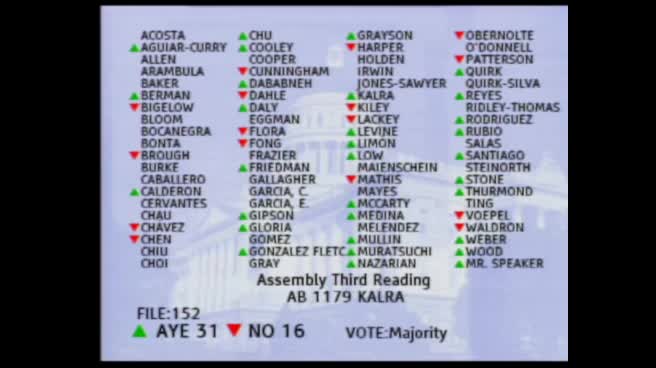 1MIN
Assembly Floor
 1H
Assembly Standing Committee on Appropriations
 2MIN
Assembly Standing Committee on Business and Professions
Bill Author

Bill Co-Author(s):