AB 411: Witness testimony: therapy and facility dogs.
- Session Year: 2017-2018
- House: Assembly
- Latest Version Date: 2017-09-26
Existing law authorizes a prosecuting witness in specified cases to have up to 2 persons of his or her own choosing for support at the preliminary hearing and at trial, or at a juvenile court proceeding, during the testimony of the prosecuting witness, as specified.
This bill would authorize these witnesses, as well as certain child witnesses, to be accompanied by a dog, trained in providing emotional support, while testifying. This bill would set minimum training requirements for these dogs and their handlers and would require a party requesting the use of such a dog to file a motion with the court, specifying the qualifications of and need for the dog. This bill would authorize the court to allow the witness to be accompanied by the dog if certain conditions are met, but would require the court to remove or exclude the dog if the court finds the use of the dog would cause undue prejudice to the defendant or would be unduly disruptive to the court proceeding. The bill would require the court to take appropriate measures to minimize the distraction created by the presence of the dog in the courtroom, including requiring the dog to be accompanied by a handler at all times. The bill would require the court, if the therapy or facility dog is used during a criminal jury trial, to issue, upon request, an appropriate jury instruction designed to prevent prejudice for or against any party.
Existing law authorizes a prosecuting witness in specified cases to have up to 2 persons of his or her own choosing for support at the preliminary hearing and at trial, or at a juvenile court proceeding, during the testimony of the prosecuting witness, as specified.
This bill would authorize these witnesses, as well as certain child witnesses, to be accompanied by a dog, trained in providing emotional support, while testifying. This bill would set minimum training requirements for these dogs and their handlers and would require a party requesting the use of such a dog to file a motion with the court, specifying the qualifications of and need for the dog. This bill would require authorize the court to allow the witness to be accompanied by the dog if certain conditions are met, but would reserve the discretion of require the court to remove or exclude the dog in certain specified situations. if the court finds the use of the dog would cause undue prejudice to the defendant or would be unduly disruptive to the court proceeding. The bill would require the court to take appropriate measures to minimize the distraction created by the presence of the dog in the courtroom, including requiring the dog to be accompanied by a handler at all times. The bill would require the court, if requested, to give appropriate jury instructions if a dog is utilized in a criminal jury trial, to prevent prejudice against any party.
Existing law authorizes a prosecuting witness in specified cases to have up to 2 persons of his or her own choosing for support at the preliminary hearing and at trial, or at a juvenile court proceeding, during the testimony of the prosecuting witness, as specified.
This bill would authorize these witnesses, as well as certain child witnesses, to be accompanied by a dog, trained in providing emotional support, while testifying. This bill would set minimum training requirements for these dogs and their handlers and would require a party requesting the use of such a dog to file a motion with the court, specifying the qualifications of and need for the dog. This bill would require the court to allow the witness to be accompanied by the dog if certain conditions are met, but would reserve the discretion of the court to remove or exclude the dog in certain specified situations. The bill would require the court to take appropriate measures to minimize the distraction created by the presence of the dog in the courtroom, including requiring the dog to be accompanied by a handler at all times. The bill would require the court, if requested, to give appropriate jury instructions if a dog is utilized in a criminal jury trial, to prevent prejudice against any party.
Existing law authorizes a prosecuting witness in specified cases to have up to 2 persons of his or her own choosing for support at the preliminary hearing and at trial, or at a juvenile court proceeding, during the testimony of the prosecuting witness, as specified.
This bill would authorize these witnesses, as well as certain child witnesses, to be accompanied by a dog, trained in providing emotional support, while testifying. This bill would set minimum training requirements for these dogs and their handlers and would require a party requesting the use of such a dog to file a motion with the court, specifying the qualifications of and need for the dog. This bill would require the court to allow the witness to be accompanied by the dog if certain conditions are met, but would reserve the discretion of the court to remove or exclude the dog in certain specified situations. The bill would require that the court to take appropriate measures to minimize the distraction created by the presence of the dog in the courtroom, including requiring the dog to be accompanied by a handler at all times. The bill would require the court court, if requested, to give appropriate jury instructions if a dog is utilized in a criminal jury trial, to prevent prejudice against any party.
Existing law authorizes a prosecuting witness in specified cases to have up to 2 persons of his or her own choosing for support at the preliminary hearing and at trial, or at a juvenile court proceeding, during the testimony of the prosecuting witness, as specified.
This bill would authorize these witnesses, as well as certain child witnesses, to be accompanied by a dog, trained in providing emotional support, while testifying. This bill would set minimum training requirements for these dogs and their handlers and would require a party requesting the use of such a dog to file a motion with the court, specifying the qualifications of and need for the dog. This bill would require the court to allow the witness to be accompanied by the dog if certain conditions are met, but would reserve the discretion of the court to remove or exclude the dog in certain specified situations. The bill would require that the dog be accompanied by a handler at all times. The bill would require the court to give appropriate jury instructions if a dog is utilized in a criminal jury trial, to prevent prejudice against any party.
(a)If requested by either party in a criminal or juvenile hearing, and if a therapy or facility dog is available to the party within the jurisdiction of the judicial district in which the case is being adjudicated, the following individuals shall be afforded the opportunity to have a therapy or facility dog accompany him or her while testifying in court, subject to the approval of the court:
(1)A child witness in a court proceeding involving any serious felony, as defined in subdivision (c) of Section 1192.7, or any violent felony, as defined in subdivision (c) of Section 667.5.
(2)A victim who is entitled to support persons pursuant to Section 868.5, in addition to any support persons selected pursuant to that section.
(b)Before a therapy or facility dog may be used pursuant to subdivision (a), the party seeking to utilize the therapy or facility dog shall file a motion with the court, which shall include the following:
(1)The training or credentials of the therapy or facility dog.
(2)The training of the therapy or facility dog handler.
(3)Facts justifying that the presence of the therapy or facility dog may reduce anxiety or otherwise be helpful to the witness while testifying.
(c)If a party, pursuant to subdivision (b), makes a showing that the therapy or facility dog and handler are suitably qualified and will reasonably assist the testifying witness, the court may grant the motion, unless the court finds the use of a therapy or facility dog would cause undue prejudice to the defendant or would be unduly disruptive to the court proceeding.
(d)The court shall take appropriate measures to make the presence of the therapy or facility dog as unobtrusive and nondisruptive as possible, including requiring the dog to be accompanied by a handler in the courtroom at all times.
(e)If a therapy or facility dog is used during a criminal jury trial, the court shall, upon request, issue an appropriate jury instruction designed to prevent prejudice for or against any party.
(f)This section does not prevent the court from removing or excluding a therapy or facility dog from the courtroom to maintain order or to ensure the fair presentation of evidence, as stated on the record.
(g)(1)It is the intent of the Legislature in adding this section to codify the holding in People v. Chenault (2014) 227 Cal.App.4th 1503 with respect to allowing an individual witness to have a support dog accompany him or her when testifying in proceedings as provided in subdivision (a).
(2)Nothing in this section abrogates the holding in People v. Chenault regarding the need to present appropriate jury instructions.
(3)Nothing in this section limits the use of a service dog, as defined in Section 54.1 of the Civil Code, by a person with a disability.
(h)As used in this section, the following definitions shall apply:
(1)Child witness means any witness who is under the age of 18 at the time he or she testifies.
(2)Facility dog means a dog that has successfully completed a training program in providing emotional comfort in a high-stress environment for the purpose of enhancing the ability of a witness to speak in a judicial proceeding and reducing his or her stress level, provided by an assistance dog organization accredited by Assistance Dogs International or a similar nonprofit organization that sets standards of training for dogs, and that has passed a public access test for service animals.
(3)Handler means a person who has successfully completed training on offering an animal for assistance purposes from an organization accredited by Assistance Dogs International, Therapy Dogs Incorporated, or a similar nonprofit organization, and has received additional training on policies and protocols of the court and the responsibilities of a courtroom dog handler.
(4)Therapy dog means a dog that has successfully completed training, certification, or evaluation in providing emotional support therapy in settings including, but not limited to, hospitals, nursing homes, and schools, provided by the American Kennel Club, Therapy Dogs Incorporated, or a similar nonprofit organization, and has been performing the duties of a therapy dog for not less than one year.
(a)If requested by either party in a criminal or juvenile hearing, and if a therapy or facility dog is available to the party within the jurisdiction of the judicial district in which the case is being adjudicated, the following individuals shall be afforded the opportunity to have a therapy or facility dog accompany him or her while testifying in court, subject to the approval of the court:
(1)A child witness in a court proceeding involving any serious felony felony, as defined in subdivision (c) of Section 1192.7 1192.7, or any violent felony felony, as defined in subdivision (c) of Section 667.5.
(2)A victim who is entitled to support persons pursuant to Section 868.5, in addition to any support persons selected pursuant to that section.
(b)Before a therapy or facility dog may be used pursuant to subdivision (a), the party seeking to utilize the therapy or facility dog shall file a motion with the court, which shall include the following:
(1)The training or credentials of the therapy or facility dog.
(2)The training of the therapy or facility dog handler.
(3)Facts justifying that the presence of the therapy or facility dog may reduce anxiety or otherwise be helpful to the witness while testifying.
(c)If a party, pursuant to subdivision (b), makes a showing that the therapy or facility dog and handler are suitably qualified and will reasonably assist the testifying witness, the court may grant the motion, unless the court finds the use of a therapy or facility dog would cause undue prejudice to the defendant or would be unduly disruptive to the court proceeding.
(d)The court shall take appropriate measures to make the presence of the therapy or facility dog as unobtrusive and nondisruptive as possible, including requiring a the dog to be accompanied by a handler in the courtroom at all times.
(e)If a therapy or facility dog is used during a criminal jury trial, the court shall, upon request, issue an appropriate jury instruction designed to prevent prejudice for or against any party.
(e)(f)This section does not prevent the court from removing or excluding a therapy or facility dog from the courtroom to maintain order or to ensure the fair presentation of evidence, as stated on the record.
(f)(g)(1)It is the intent of the Legislature in adding this section to codify the holding in People v. Chenault (2014) 227 Cal.App.4th 1503 with respect to allowing an individual witness to have a support dog accompany him or her when testifying in proceedings as provided in subdivision (a).
(2)Nothing in this section abrogates the holding in People v. Chenault regarding the need to present appropriate jury instructions.
(3)Nothing in this section limits the use of a service dog, as defined in Section 54.1 of the Civil Code, by a person with a disability.
(g)(h)As used in this section, the following definitions shall apply:
(1)Child witness means any witness who is under the age of 18 at the time he or she testifies.
(2)Facility dog means a dog that has successfully completed a training program in providing emotional comfort in a high-stress environment for the purpose of enhancing the ability of a witness to speak in a judicial proceeding and reducing his or her stress level, provided by an assistance dog organization accredited by Assistance Dogs International or a similar nonprofit organization that sets standards of training for dogs, and that has passed a public access test for service animals.
(3)Handler means a person who has successfully completed training on offering an animal for assistance purposes from an organization accredited by Assistance Dogs International, Therapy Dogs Incorporated, or a similar nonprofit organization, and has received additional training on policies and protocols of the court and the responsibilities of a courtroom dog handler.
(4)Therapy dog means a dog that has successfully completed training, certification, or evaluation in providing emotional support therapy in settings including, but not limited to, hospitals, nursing homes, and schools, provided by the American Kennel Club, Therapy Dogs Incorporated, or a similar nonprofit organization, and has been performing the duties of a therapy dog for not less than one year.
(a)If requested by either party in a criminal or juvenile hearing, and if a therapy or facility dog is available to the party within the jurisdiction of the judicial district in which the case is being adjudicated, the following individuals shall be afforded the opportunity to have a therapy or facility dog accompany him or her while testifying in court, subject to the approval of the court:
(1)A child witness in a court proceeding involving any serious felony as defined in subdivision (c) of Section 1192.7 or any violent felony as defined in subdivision (c) of Section 667.5.
(2)A victim who is entitled to support persons pursuant to Section 868.5, in addition to any support persons selected pursuant to that section.
(b)Before a therapy or facility dog may be used pursuant to subdivision (a), the party seeking to utilize the therapy or facility dog shall file a motion with the court, which shall include the following:
(1)The training or credentials of the therapy or facility dog.
(2)The training of the therapy or facility dog handler.
(3)Facts justifying that the presence of the therapy or facility dog may reduce anxiety or otherwise be helpful to the witness while testifying.
(c)If a party, pursuant to subdivision (b), makes a showing that the therapy or facility dog and handler are suitably qualified and will reasonably assist the testifying witness, the court shall may grant the motion, unless the court finds the use of a therapy or facility dog would cause undue prejudice to the defendant or would be unduly disruptive to the court proceeding.
(d)The court shall take appropriate measures to make the presence of the therapy or facility dog as unobtrusive and nondisruptive as possible, including requiring a dog to be accompanied by a handler in the courtroom at all times.
(e)If a therapy or facility dog is used during a criminal jury trial, the court shall, upon request, present appropriate jury instructions designed to prevent prejudice for or against any party.(f)(e)This section does not prevent the court from removing or excluding a therapy or facility dog from the courtroom to maintain order or to ensure the fair presentation of evidence, as stated on the record.
(f)(1)It is the intent of the Legislature in adding this section to codify the holding in People v. Chenault (2014) 227 Cal.App.4th 1503 with respect to allowing an individual witness to have a support dog accompany him or her when testifying in proceedings as provided in subdivision (a).
(2)Nothing in this section abrogates the holding in People v. Chenault regarding the need to present appropriate jury instructions.
(3)Nothing in this section limits the use of a service dog, as defined in Section 54.1 of the Civil Code, by a person with a disability.
(g)As used in this section, the following definitions shall apply:
(1)Child witness means any witness who is under the age of 18 at the time he or she testifies.
(2)Facility dog means a dog that has successfully completed a training program in providing emotional comfort in a high-stress environment for the purpose of enhancing the ability of a witness to speak in a judicial proceeding and reducing his or her stress level, provided by an assistance dog organization accredited by Assistance Dogs International or a similar nonprofit organization that sets standards of training for dogs, and that has passed a public access test for service animals.
(3)Handler means a person who has successfully completed training on offering an animal for assistance purposes from an organization accredited by Assistance Dogs International, Therapy Dogs Incorporated, or a similar nonprofit organization, and has received additional training on policies and protocols of the court and the responsibilities of a courtroom dog handler.
(4)Therapy dog means a dog that has successfully completed training, certification, or evaluation in providing emotional support therapy in settings including, but not limited to, hospitals, nursing homes, and schools, provided by the American Kennel Club, Therapy Dogs Incorporated, or a similar nonprofit organization, and has been performing the duties of a therapy dog for not less than one year.
(h)Nothing in this section limits the use of a service dog, as defined in Section 54.1 of the Civil Code, by a person with a disability.(a)If requested by either party in a criminal or juvenile hearing, and if a therapy or facility dog is available to the party within the jurisdiction of the judicial district in which the case is being adjudicated, the following individuals shall be afforded the opportunity to have a therapy or facility dog accompany him or her while testifying in court, subject to the approval of the court:
(1)A child witness in a court proceeding involving any serious felony as defined in subdivision (c) of Section 1192.7 or any violent felony as defined in subdivision (c) of Section 667.5.
(2)A victim who is entitled to support persons pursuant to Section 868.5, in addition to any support persons selected pursuant to that section.
(b)Before a therapy or facility dog may be used pursuant to subdivision (a), the party seeking to utilize the therapy or facility dog shall file a motion with the court, which shall include the following:
(1)The training or credentials of the therapy or facility dog.
(2)The training of the therapy or facility dog handler.
(3)Facts justifying that the presence of the therapy or facility dog may reduce anxiety or otherwise be helpful to the witness while testifying.
(c)If a party, pursuant to subdivision (b), makes a showing that the therapy or facility dog and handler are suitably qualified and will reasonably assist the testifying witness, the court shall grant the motion. motion, unless the court finds the use of a therapy or facility dog would cause undue prejudice to the defendant or would be unduly disruptive to the court proceeding.
(d)The court shall take appropriate measures to make the presence of the therapy or facility dog as unobtrusive and nondisruptive as possible, including requiring a dog to be accompanied by a handler in the courtroom at all times.
(e)If a therapy or facility dog is used during a criminal jury trial, the court shall, upon request, present appropriate jury instructions designed to prevent prejudice for or against any party.
(f)This section does not prevent the court from removing or excluding a therapy or facility dog from the courtroom to maintain order or to ensure the fair presentation of evidence, as stated on the record.
(g)As used in this section, the following definitions shall apply:
(1)Child witness means any witness who is under the age of 18 at the time he or she testifies.
(2)Facility dog means a dog that has successfully completed a training program in providing emotional comfort in a high-stress environment for the purpose of enhancing the ability of a witness to speak in a judicial proceeding and reducing his or her stress level, provided by an assistance dog organization accredited by Assistance Dogs International or a similar nonprofit organization that sets standards of training for dogs, and that has passed a public access test for service animals.
(3)Handler means a person who has successfully completed training on offering an animal for assistance purposes from an organization accredited by Assistance Dogs International, Therapy Dogs Incorporated, or a similar nonprofit organization, and has received additional training on policies and protocols of the court and the responsibilities of a courtroom dog handler.
(4)Therapy dog means a dog that has successfully completed training, certification, or evaluation in providing emotional support therapy in settings including, but not limited to, hospitals, nursing homes, and schools, provided by the American Kennel Club, Therapy Dogs Incorporated, or a similar nonprofit organization, and has been performing the duties of a therapy dog for not less than one year.
(h)Nothing in this section limits the use of a service dog, as defined in Section 54.1 of the Civil Code, by a person with a disability.
(a)If requested by either party in a criminal or juvenile hearing, and if a therapy or facility dog is available to the party within the jurisdiction of the judicial district in which the case is being adjudicated, the following individuals shall be afforded the opportunity to have a therapy or facility dog accompany him or her while testifying in court, subject to the approval of the court:
(1)A child witness in a court proceeding involving any serious felony as defined in subdivision (c) of Section 1192.7 or any violent felony as defined in subdivision (c) of Section 667.5.
(2)A victim who is entitled to support persons pursuant to Section 868.5, in addition to any support persons selected pursuant to that section.
(b)Before a therapy or facility dog may be used pursuant to subdivision (a), the party seeking to utilize the therapy or facility dog shall file a motion with the court court, which shall include the following:
(1)The training or credentials of the therapy or facility dog.
(2)The training of the therapy or facility dog handler.
(3)Facts justifying that the presence of the therapy or facility dog may reduce anxiety or otherwise be helpful to the witness while testifying.
(c)If a party, pursuant to subdivision (b), makes a showing that the therapy or facility dog and handler are suitably qualified and will reasonably assist the testifying witness, the court shall grant the motion.
(d)A The court shall take appropriate measures to make the presence of the therapy or facility dog will as unobtrusive and nondisruptive as possible, including requiring a dog to be accompanied by a handler in the courtroom at all times, including when the accompanied witness is testifying. times.
(e)If a therapy or facility dog is used during a criminal jury trial, the court shall shall, upon request, present appropriate jury instructions designed to prevent prejudice for or against any party.
(f)This section does not prevent the court from removing or excluding a therapy or facility dog from the courtroom to maintain order or to ensure the fair presentation of evidence, as stated on the record.
(g)As used in this section, the following definitions shall apply:
(1)Child witness means any witness who is under the age of 18 at the time he or she testifies.
(2)Facility dog means a dog that has successfully completed a training program in providing emotional comfort in a high stress high-stress environment for the purpose of enhancing the ability of a witness to speak in a judicial proceeding and reducing his or her stress level, provided by an assistance dog organization accredited by Assistance Dogs International or a similar nonprofit organization that sets standards of training for dogs, and that has passed a public access test for service animals.
(3)Handler means a person who has successfully completed training on offering an animal for assistance purposes from an organization accredited by Assistance Dogs International, Therapy Dogs Incorporated, or a similar nonprofit organization, and has received additional training on policies and protocols of the court and the responsibilities of a courtroom dog handler.
(4)Therapy dog means a dog that has successfully completed training, certification, or evaluation in providing emotional support therapy in settings including, but not limited to, hospitals, nursing homes, and schools, provided by the American Kennel Club, Therapy Dogs Incorporated, or a similar nonprofit organization, and has been performing the duties of a therapy dog for not less than one year.
(a)If requested by either party in a criminal or juvenile hearing, and if a therapy or facility dog is available to the party within the jurisdiction of the judicial district in which the case is being adjudicated, the following individuals shall be afforded the opportunity to have a therapy or facility dog accompany him or her while testifying in court, subject to the approval of the court:
(1)A child witness in a court proceeding involving any serious felony as defined in subdivision (c) of Section 1192.7 or any violent felony as defined in subdivision (c) of Section 667.5.
(2)A victim who is entitled to support persons pursuant to Section 868.5, in addition to any support persons selected pursuant to that section.
(b)Before a therapy or facility dog may be used pursuant to subdivision (a), the party seeking to utilize the therapy or facility dog shall file a motion with the court which shall include the following:
(1)The training or credentials of the therapy or facility dog.
(2)The training of the therapy or facility dog handler.
(3)Facts justifying that the presence of the therapy or facility dog may reduce anxiety or otherwise be helpful to the witness while testifying.
(c)If a party, pursuant to subdivision (b), makes a showing that the therapy or facility dog and handler are suitably qualified and will reasonably assist the testifying witness, the court shall grant the motion.
(d)A therapy or facility dog will be accompanied by a handler in the courtroom at all times, including when the accompanied witness is testifying.
(e)If a therapy or facility dog is used during a criminal jury trial, the court shall present appropriate jury instructions designed to prevent prejudice for or against any party.
(f)This section does not prevent the court from removing or excluding a therapy or facility dog from the courtroom to maintain order or to ensure the fair presentation of evidence, as stated on the record.
(g)As used in this section, the following definitions shall apply:
(1)Child witness means any witness who is under the age of 18 at the time he or she testifies.
(2)Facility dog means a dog that has successfully completed a training program in providing emotional comfort in a high stress environment for the purpose of enhancing the ability of a witness to speak in a judicial proceeding and reducing his or her stress level, provided by an assistance dog organization accredited by Assistance Dogs International or a similar nonprofit organization that sets standards of training for dogs, and that has passed a public access test for service animals.
(3)Handler means a person who has successfully completed training on offering an animal for assistance purposes from an organization accredited by Assistance Dogs International, Therapy Dogs Incorporated, or a similar nonprofit organization, and has received additional training on policies and protocols of the court and the responsibilities of a courtroom dog handler.
(4)Therapy dog means a dog that has successfully completed training, certification, or evaluation in providing emotional support therapy in settings including, but not limited to, hospitals, nursing homes, and schools, provided by the American Kennel Club, Therapy Dogs Incorporated, or a similar nonprofit organization, and has been performing the duties of a therapy dog for not less than one year.
|
Date
|
Status
|
|---|---|
| Sep 26, 2017 | Chaptered by Secretary of State - Chapter 290, Statutes of 2017. |
| Sep 26, 2017 | Approved by the Governor. |
| Sep 20, 2017 | Enrolled and presented to the Governor at 4:30 p.m. |
| Sep 13, 2017 | Assembly Rule 77(a) suspended. |
| Sep 12, 2017 | In Assembly. Concurrence in Senate amendments pending. May be considered on or after September 14 pursuant to Assembly Rule 77. |
| Sep 11, 2017 | Read third time. Passed. Ordered to the Assembly. |
| Jul 13, 2017 | Ordered to third reading. |
| Jul 11, 2017 | Ordered to special consent calendar. |
| Jul 6, 2017 | Read second time and amended. Ordered to third reading. |
| Jul 5, 2017 | From committee: Amend, and do pass as amended. (Ayes 7. Noes 0.) (June 27). |
| Jun 20, 2017 | From committee chair, with author's amendments: Amend, and re-refer to committee. Read second time, amended, and re-referred to Com. on PUB. S. |
| May 30, 2017 | In committee: Set, first hearing. Hearing canceled at the request of author. |
| May 10, 2017 | Referred to Com. on PUB. S. |
| Apr 27, 2017 | In Senate. Read first time. To Com. on RLS. for assignment. |
| Apr 27, 2017 | Read third time. Passed. Ordered to the Senate. (Ayes 74. Noes 0. Page 1260.) |
| Apr 20, 2017 | Read third time and amended. Ordered to third reading. (Page 1124.) |
| Mar 16, 2017 | Read second time. Ordered to third reading. |
| Mar 15, 2017 | From committee: Do pass. (Ayes 7. Noes 0.) (March 14). |
| Mar 9, 2017 | Re-referred to Com. on PUB. S. |
| Mar 8, 2017 | From committee chair, with author's amendments: Amend, and re-refer to Com. on PUB. S. Read second time and amended. |
| Feb 21, 2017 | Referred to Com. on PUB. S. |
| Feb 10, 2017 | From printer. May be heard in committee March 12. |
| Feb 9, 2017 | Read first time. To print. |
|
Date
|
Description
|
Location
|
Votes
|
|
|---|---|---|---|---|
| Sep 13, 2017 | AB 411 BLOOM Concurrence in Senate Amendments | Assembly Floor |
Passed |
|
| Sep 11, 2017 | Assembly 3rd Reading AB411 Bloom et al. By Mitchell | Senate Floor |
Passed |
|
| Jun 27, 2017 | Do pass as amended | Senate Standing Committee on Public Safety |
Passed |
|
| Apr 27, 2017 | AB 411 BLOOM Assembly Third Reading | Assembly Floor |
Passed |
|
| Mar 14, 2017 | Do pass. | Assembly Standing Committee on Public Safety |
Passed |
This list shows positions taken on this bill by organizations on the date displayed, which is linked to the original source.
Positions by individuals are not included.
CONCURRENCE IN SENATE AMENDMENTS
CSA1 Bill Id:AB 411
Author:(Bloom)
As Amended Ver:July 6, 2017
Majority vote
ASSEMBLY: | 74-0 | (April 27, 2017) | SENATE: | 39-0 | (September 11, 2017) |
Original Committee Reference: PUB. S.
SUMMARY: Authorizes the use of a support dog during the testimony of specified victims and child witnesses.
The Senate amendments:
- Give the court discretion to authorize use of a support dog, rather than require it, when the moving party makes the requisite showing.
- State legislative intent to codify the holding in People v. Chenault (2014) 227 Cal.App.4th 1503.
- Delete the provision regarding use of a dog by a person with disabilities.
EXISTING LAW:
- Declares legislative intent to ensure that all crime victims and witnesses be treated with dignity, respect, courtesy and sensitivity.
- Allows a victim in specified cases to have up to two persons of his or her own choosing for support at the preliminary hearing and at trial, or at a juvenile court proceeding, during his or her testimony.
- Allows a minor 13 years of age or younger who is a victim of a sex offense or child abuse to testify by contemporaneous examination and cross examination by closed-circuit television, as specified.
- Authorizes a minor 13 years of age or younger who is a witness to a "violent" felony, but not a victim, to testify by contemporaneous examination and cross examination by closed-circuit television, as specified.
- Gives the court broad discretion to exercise control over the interrogation of witnesses so as to make interrogation rapid, distinct, and effective for the ascertainment of the truth, and to protect witnesses from undue harassment or embarrassment.
AS PASSED BY THE ASSEMBLY, this bill:
- Allowed the following persons to request court approval to have a therapy dog accompany him or her while testifying:
- Child witnesses in court proceedings involving a serious or violent felony, as specified; and,
- Victims entitled to testify with support persons.
- Required the party seeking to utilize the therapy or facility dog to file a motion with the court which describes:
- The training or credentials of the therapy or facility dog;
- The training of the therapy or facility dog handler; and,
- Facts justifying that the presence of the therapy or facility dog may reduce anxiety or otherwise be helpful to the witness while testifying.
- Required the court to grant the motion if the moving party makes a showing that the dog and handler are suitably qualified and will reasonably assist the testifying witness, unless the court finds that the use of the dog would cause undue prejudice to the defendant or would be unduly disruptive to the court proceedings.
- Required the court to take appropriate measures to make the presence of the dog as unobtrusive and least disruptive as possible, including having a handler accompany the dog in the courtroom at all times.
- Required the court to give appropriate jury instructions, upon request, designed to prevent prejudice for or against any party.
- Allowed the court to remove the dog from the courtroom to maintain order, or to ensure the fair presentation of evidence.
- Defined a "child witness" as any witness who is under the age of 18 at the time of testifying.
- Defined a "facility dog" as one "that has successfully completed a training program in providing emotional comfort in a high stress environment for the purpose of enhancing the ability of a witness to speak in a judicial proceeding and reducing his or her stress level, provided by an assistance dog organization accredited by Assistance Dogs International or a similar nonprofit organization that sets standards of training for dogs, and that has passed a public access test for service animals."
- Defined a "therapy dog" as one "that has successfully completed training, certification, or evaluation in providing emotional support therapy in settings including, but not limited to, hospitals, nursing homes, and schools, provided by the American Kennel Club, Therapy Dogs Incorporated, or a similar nonprofit organization, and has been performing the duties of a therapy dog for not less than one year."
- Defined a "handler" as "a person who has successfully completed training on offering an animal for assistance purposes from an organization accredited by Assistance Dogs International, Therapy Dogs Incorporated, or a similar nonprofit organization, and has received additional training on policies and protocols of the court and the responsibilities of a courtroom dog handler."
- Provided that this section does not limit the use of a service dog by a person with a disability.
FISCAL EFFECT: Unknown. This bill is keyed non-fiscal by the Legislative Counsel.
COMMENTS: According to the author, "It is the state's intention to ensure that all victims and witnesses of crime be treated with dignity, respect, courtesy and sensitivity. To fulfill this commitment it is important to look at new ways to assist victims and witnesses when they are called to testify in high stress environments. Without this bill, vulnerable victims or witnesses may have to testify without a therapy or facility dog, which may harm their mental stability even if the trial judge believes the use of a therapy or facility dog would be appropriate. It is important to leave the decision with the trial judge so each case can be individually evaluated on the need of a facility or therapy dog, rather than a blanket policy."
Analysis Prepared by: Sandy Uribe / PUB. S. / (916) 319-3744 FN: 0002278
Office of Senate Floor Analyses (916) 651-1520 Fax: (916) 327-4478 | AB |
THIRD READING
Bill No: AB 411
:
SENATE PUBLIC SAFETY COMMITTEE: 7-0, 6/27/17
AYES: Skinner, Anderson, Bradford, Jackson, Mitchell, Stone, Wiener
ASSEMBLY FLOOR: 74-0, 4/27/17 - See last page for vote
DIGEST:
This bill authorizes the use of a support dog during the testimony of specified victims and child witnesses in specified cases.
Existing law:
- Declares legislative intent to ensure that all victims and witnesses or crime are treated with dignity, respect, courtesy, and sensitivity. (Pen. Code § 679)
- Allows a victim in specified cases to have up to two persons of his or her choosing, at the preliminary hearing and at trail, at juvenile court proceeding, or during the testimony of the prosecuting witness. Only one of those support persons may accompany the witness to the witness stand, although the other may remain in the courtroom during the witness’ testimony. However, nothing in this section shall preclude a court from exercising its discretion to remove a person from the courtroom whom it believes is prompting, swaying, or influencing the witness. (Pen. Code § 868.5, subd. (a) & (b).)
- Allows a victim of domestic violence or abuse, as defined, has the right to have a domestic violence advocate and a support person of the victim’s choosing present at any interview by law enforcement authorities, prosecutors, or defense attorneys. However, the support person may be excluded from an interview by law enforcement or the prosecutor if the law enforcement authority or the prosecutor determines that the presence of that individual would be detrimental to the purpose of the interview. (Pen. Code § 679.05, subd. (a).)
- Allows a witness who is both a minor and is the victim of a sex offense to provide a witness testimony by video recording, or contemporaneous examination in another place communicated to the courtroom by means of closed-circuit television. (Pen. Code § 868.7)
- Allows a minor 13 years of age or younger who is a witness to a violent felony, but not a victim, to testify by contemporaneous examination and cross examination by closed-circuit television, as specified. (Pen. Code § 1347, subd. (b).)
- Allows the court to exercise reasonable control over the mode of interrogation of a witness so as to make interrogation as rapid, as distinct, and as effective for the ascertainment of the truth, as may be, and to protect the witness from under harassment or embarrassment. (Evid. Code § 765, subd. (a).)
- Allows the court to take special care to protect the witness under the age of 14 or a dependent person with a substantial cognitive impairment from undue harassment or embarrassment. The court shall also take special care to ensure that questions are stated in a form which is appropriate to the age or cognitive level of the witness. (Evid. Code § 765, subd. (b).)
This bill:
- Allows the following persons, if requested by either party in a criminal or juvenile hearing, to be afforded to the opportunity to have a therapy or facility dog accompany him or her while testifying in court, subject to the approval of the court:
- A child witness in a court proceeding involving any serious felony, as specified.
- A victim who is entitled to support persons specified by Penal Code Section 868.5, in addition to any support persons selected pursuant to that section.
- Requires the party seeking to utilize the therapy or facility dog to file a motioning with the court which includes all of the following:
- The training or credentials of the therapy or facility dog.
- The training of the therapy or facility dog handler.
- Facts justifying that the presence of the therapy or facility dog may reduce anxiety or otherwise be helpful to the witness while testifying.
- Allows the court to deny a motion to utilize a therapy or facility dog if the court finds that the use of a therapy or facility dog would cause undue prejudice to the defendant or would be unduly disruptive to the court proceeding.
- Requires the court to take appropriate measures to make the presence of the therapy or facility dog as unobtrusive and non-disruptive as possible, including requiring a dog to be accompanied by a handler in the courtroom at all times.
- Requires the court, upon request, present appropriate jury instructions designed to prevent prejudice for or against any party.
- States that nothing in this bill shall prevent the court from removing or excluding a therapy or facility dog from the courtroom to maintain order or to ensure the fair presentation of evidence.
- Declares legislative intent to codify the holding in People v. Chenault (2014) 227 Cal.App.4th 1503 with respect to allowing an individual witness to have a support dog accompany him or her when testifying in proceedings.
- States that nothing in this bill abrogates the holding in People v. Chenault regarding the need to present appropriate jury instructions.
- States that nothing in this bill limits the use of a service dog, as specified, by a person with a disability.
- Provides definitions, for purposes of this bill, for the following terms:
- “Child witness” as any witness who is under the age of 18 at the time of testifying.
- “Facility dog” as a dog that has successfully completed a training program in providing emotional comfort in a high-stress environment for the purpose of enhancing the ability of a witness to speak in a judicial proceeding and reducing his or her stress level, provided by an assistance dog organization accredited by Assistance Dogs International or a similar nonprofit organization that sets standards of training for dogs, and that has passed a public access test for service animals.
- “Handler” means a person who has successfully completed training on offering an animal for assistance purposes from an organization accredited by Assistance Dogs International, Therapy Dogs Incorporated, or a similar nonprofit organization, and has received additional training on policies and protocols of the court and the responsibilities of a courtroom dog handler.
- “Therapy dog” means a dog that has successfully completed training, certification, or evaluation in providing emotional support therapy in settings including, but not limited to, hospitals, nursing homes, and schools, provided by the American Kennel Club, Therapy Dogs Incorporated, or a similar nonprofit organization, and has been performing the duties of a therapy dog for not less than one year.
FISCAL EFFECT: Appropriation: Fiscal Com.: Local:
Alameda County District Attorney’s Office
California District Attorneys Association
California Youth Empowerment Network
Crime Victims United
Disability Rights California
Mental Health American of California
Sacramento County District Attorney’s Office
San Diego County District Attorney’s Office
California Public Defenders Association
Judicial Council of California
ARGUMENTS IN SUPPORT: The Sacramento District Attorney’s Office states, in support:
Here in Sacramento County, my office has a facility dog who is available to comfort vulnerable witnesses, both adult and children, while they are interviewed by attorneys and victim advocates. Currently, our dog Reggie is permitted to accompany the witness to the courthouse and has been allowed to be present while a witness testifies. However, not all counties in California allow such facility dogs into their respective courthouse.
When a child or other vulnerable witness is subpoenaed to come to court, they often experience fear, anxiety and nervousness. Reggie has a calming effect upon such witnesses and has helped make the courtroom experience less traumatic.
Statutory authority governing the use of facility dogs for child witnesses and other vulnerable victims is essential to ensure all those in need, regardless of location have access to a facility dog when available.
ARGUMENTS IN OPPOSITION: The California Public Defenders Association states, in opposition:
Existing law authorizes a prosecuting witness in specified cases to have up to 2 persons of his or her own choosing for support at the preliminary hearing and at trial, or at a juvenile court proceeding, during the testimony of the prosecuting witness, as specified. This bill would authorize these witnesses, as well as certain child witnesses, to be accompanied by a dog, trained in providing emotional support, while testifying.
The 6th Amendment to the United States Constitution protests the right of unfettered confrontation of an accusation and is critical to obtaining a fair trial. Bringing animals into the courtroom to “support” witnesses who are already entitled to support persons will garner unnecessary sympathy for the witness and substantially interfere with the confrontation and cross examination rights. This interference could easily bias any decision maker tasked with evaluating the credibility and veracity of witnesses.
ASSEMBLY FLOOR: 74-0, 4/27/17
AYES: Acosta, Aguiar-Curry, Travis Allen, Arambula, Baker, Berman, Bigelow, Bloom, Bocanegra, Bonta, Brough, Burke, Caballero, Chau, Chávez, Chen, Chiu, Choi, Chu, Cooper, Cunningham, Dababneh, Dahle, Daly, Eggman, Flora, Fong, Frazier, Friedman, Gallagher, Cristina Garcia, Eduardo Garcia, Gipson, Gloria, Gonzalez Fletcher, Gray, Grayson, Harper, Holden, Irwin, Jones-Sawyer, Kalra, Kiley, Lackey, Levine, Limón, Low, Maienschein, Mathis, Mayes, Medina, Melendez, Mullin, Muratsuchi, Nazarian, Obernolte, O'Donnell, Patterson, Quirk, Quirk-Silva, Reyes, Ridley-Thomas, Rodriguez, Rubio, Salas, Steinorth, Mark Stone, Thurmond, Ting, Voepel, Waldron, Weber, Wood, Rendon
NO VOTE RECORDED: Calderon, Cervantes, Cooley, Gomez, McCarty, Santiago
7/7/17 12:39:27
**** END ****
SENATE COMMITTEE ON PUBLIC SAFETY
Senator Nancy Skinner, Chair
2017 - 2018 Regular
Bill No: AB 411 Hearing Date: June 27, 2017
Author: | Bloom | ||
Version: | June 20, 2017 | ||
Urgency: | No | Fiscal: | No |
Consultant: | NG | ||
Subject: Witness Testimony: Therapy and Facility Dogs
HISTORY
Source: Los Angeles County District Attorney’s Office
Prior Legislation: SB 130 (Corbett) Chapter 44, Statues of 2013
SB 1091 (Pavley) Chapter 148, Statues of 2012
SB 1314 (Battin) Chapter 46, Statues of 2008
Support: Alameda County District Attorney’s Office; California District Attorneys Association; California Youth Empowerment Network; Crime Victims United; Disability Rights California; Sacramento County District Attorney’s Office; San Diego County District Attorney’s Office
Opposition: California Public Defenders Association
Assembly Floor Vote: 74 - 0
PURPOSE
The purpose of this bill is to authorize the use of a support dog during the testimony of specified victims and child witnesses in specified cases.
Existing law declares legislative intent to ensure that all victims and witnesses or crime are treated with dignity, respect, courtesy, and sensitivity. (Pen. Code § 679)
Existing law allows a victim in specified cases to have up to 2 persons of his or her choosing, at the preliminary hearing and at trail, at juvenile court proceeding, or during the testimony of the prosecuting witness. Only one of those support persons may accompany the witness to the witness stand, although the other may remain in the courtroom during the witness’ testimony. However, nothing in this section shall preclude a court from exercising its discretion to remove a person from the courtroom whom it believes is prompting, swaying, or influencing the witness. (Pen. Code § 868.5, subd. (a) & (b).)
Existing law allows a victim of domestic violence or abuse, as defined, has the right to have a domestic violence advocate and a support person of the victim’s choosing present at any interview by law enforcement authorities, prosecutors, or defense attorneys. However, the support person may be excluded from an interview by law enforcement or the prosecutor if the law enforcement authority or the prosecutor determines that the presence of that individual would be detrimental to the purpose of the interview. (Pen. Code § 679.05, subd. (a).)
Existing law allows a witness who is both a minor and is the victim of a sex offense to provide a witness testimony by video recording, or contemporaneous examination in another place communicated to the courtroom by means of closed-circuit television. (Pen. Code § 868.7)
Existing law allows a minor 13 years of age or younger who is a witness to a violent felony, but not a victim, to testify by contemporaneous examination and cross examination by closed-circuit television, as specified. (Pen. Code § 1347, subd. (b).)
Existing law allows the court to exercise reasonable control over the mode of interrogation of a witness so as to make interrogation as rapid, as distinct, and as effective for the ascertainment of the truth, as may be, and to protect the witness from under harassment or embarrassment. (Evid. Code § 765, subd. (a).)
Existing law allows the court to take special care to protect the witness under the age of 14 or a dependent person with a substantial cognitive impairment from undue harassment or embarrassment. The court shall also take special care to ensure that questions are stated in a form which is appropriate to the age or cognitive level of the witness. (Evid. Code § 765, subd. (b).)
This bill allows the following persons, of either party in a criminal or juvenile hearing, to request court approval to have a therapy or facility dog accompany him or her while testifying in court:
- A child witness in a court proceeding involving any serious felony.
- A victim who is entitled to support persons, as specified by Penal Code Section 868.5, in addition to any support persons selected pursuant to that section.
This bill requires the party seeking to utilize the therapy or facility dog to file a motioning with the court which includes all of the following:
- The training or credentials of the therapy or facility dog.
- The training of the therapy or facility dog handler.
- Facts justifying that the presence of the therapy or facility dog may reduce anxiety or otherwise be helpful to the witness while testifying.
This bill allows the court to deny a motion to utilize a therapy or facility dog if the court finds that the use of a therapy or facility dog would cause undue prejudice to the defendant or would be unduly disruptive to the court proceeding.
This bill requires the court to take appropriate measures to make the presence of the therapy or facility dog as unobtrusive and non-disruptive as possible, including requiring a dog to be accompanied by a handler in the courtroom at all times.
This bill states that it does not prevent the court to remove or exclude a therapy or facility dog from the courtroom to maintain order or to ensure the fair presentation of evidence.
This bill states that nothing in this bill limits the use of a service dog, as specified, by a person with a disability.
This bill declares legislative intent to codify the holding in People v. Chenault (2014) 227 Cal. App. 4th 1503, with the respect to allowing an individual witness to have a support dog accompany him or her when testifying in specified proceedings.
This bill defines the following terms, for purposes of this bill, as follows:
- A “child witness” as any witness who is under the age of 18 at the time of testifying.
- A “facility dog” as a dog that has successfully completed a training program in providing emotional comfort in a high-stress environment for the purpose of enhancing the ability of a witness to speak in a judicial proceeding and reducing his or her stress level, provided by an assistance dog organization accredited by Assistance Dogs International or a similar nonprofit organization that sets standards of training for dogs, and that has passed a public access test for service animals.
- A “handler” means a person who has successfully completed training on offering an animal for assistance purposes from an organization accredited by Assistance Dogs International, Therapy Dogs Incorporated, or a similar nonprofit organization, and has received additional training on policies and protocols of the court and the responsibilities of a courtroom dog handler.
- A “Therapy dog” means a dog that has successfully completed training, certification, or evaluation in providing emotional support therapy in settings including, but not limited to, hospitals, nursing homes, and schools, provided by the American Kennel Club, Therapy Dogs Incorporated, or a similar nonprofit organization, and has been performing the duties of a therapy dog for not less than one year.
COMMENTS
1. Need for This Bill
According to the author:
The legislature has declared its intent to ensure that all victims and witnesses of crime be treated with dignity, respect, courtesy and sensitivity. (Penal Code Section 679), and that child victims and witnesses and other vulnerable victims in certain enumerated crimes are entitled to up to two support persons when they testify in court (Penal Code Section 868.5).
Penal Code Section 288(d) mandates that in any prosecution under Penal Code Sections 288 or 288.5, prosecutors and judges shall consider the needs of the child victim or dependent person and do whatever is necessary, within existing budgetary resources and constitutionally permissible, to prevent psychological harm to the child victim or dependent person.
One of the most effective tools to help prevent psychological harm to a child victim/witness or vulnerable person victim/witness is the use of therapy or facility dogs (commonly referred to as comfort dogs). Having a courthouse dog is another step in the process to assist victims and address the need for more compassion in the legal system.
The first use of a comfort dog was in 1989, when the Queens County District Attorney's Office began using a retired facility dog to assist child abuse victims in the Special Victims Bureau.
Comfort dogs provide both a physical benefit (lessen sympathetic nervous systems arousal, reduce blood pressure and lower heart rate) and an emotional benefit (decrease in depression, increase in speech and memory functions and heightened mental clarity) thereby resulting in more accurate testimony. Providing victims and witnesses of crime a comfort dog will make the process easier and more pleasant for victims and witnesses.
There are currently two models for the use of dogs in the criminal justice system in practice throughout the nation: the therapy dog model and the facility dog model. Assembly Bill 411 (Bloom) authorizes the use of both therapy and facility dogs in criminal cases (with the approval of the trial court) to ensure that California counties which have successful therapy dog programs in place will be able to continue using their therapy dogs.
California case law has upheld the use of comfort dogs in criminal cases:
People v. Spence, 212 Cal.App.4th 478 (2012) upheld the trial court’s allowance of a therapy dog to accompany a 10-year-old child victim of molestation by her “step father” to the witness stand.
People v. Chenault, 227 Cal. App. 4th 1503 (2014) upheld the trial court’s allowance of a therapy dog to accompany 11 and 13-year-old girls when they testified without an individualized finding of necessity. “If the trial court finds the presence of a support dog would likely assist or enable the individual witness to give complete and truthful testimony and the record supports that finding, the court generally will act within its discretion under Evidence Code section 765 by granting a request for the presence of the support dog when that witness testifies.”
There are several other states which have case law which upholds the use of facility or therapy dogs. Additionally, Arizona, Arkansas, Florida, Oklahoma, Illinois and Hawaii have statutes which permit facility or therapy dogs.
Using courthouse dogs would contribute significantly to our prosecutions. Law enforcement personnel have to be professional in their interactions with victims and witnesses. We cannot always comfort victims and witnesses even when they need that hug or extra word of encouragement. The dogs can do that. They empower the victims and provide that emotional support in an appropriate manner. They make the continuances and waiting time more pleasant for the participants and they inject something into the process that is loving and non-judgmental.
The use of courthouse dogs can help bring about a major change in how we meet the emotional needs of all involved in the criminal justice system. Their calming presence promotes justice with compassion.
2. What This Bill Does
Existing law allows victims of specified crimes in Penal Code 868.5 to have a support person while testifying in court. The crimes enumerated in Penal Code section 868.5 include the following, among others: murder; mayhem; aggravated mayhem; kidnapping; human trafficking; assault; battery; sexual battery; assault with a deadly weapon or force likely to produce great bodily injury; rape; rape of a spouse; procurement of child under age 16 for lewd or lascivious acts; abduction of person under the age of 18 for purpose of prostitution; sodomy; lewd or lascivious acts; and forcible acts of sexual penetration.
This bill will allow the victims of enumerated crimes in Penal Code 868.5 to be eligible to utilize support from a therapy or facility dog. This bill also allows a child witness in a court proceeding involving any serious felony, to utilize support from a therapy or facility dog.
3. Recent Case Law
In People v. Chenault (2014) 227 Cal.App.4th 1503, Chennault was convicted on 13 counts of lewd acts on a child under 14 years of age and sentenced to 75 years to life in prison. On appeal, the defendant argued that the trail court erred by allowing a support dog to be present during the testimony of two child witness without an individual showing of necessity, and that the presence of the dog was inherently prejudicial and violated his federal constitutional rights to a fair trial and to confront witnesses.
The Court of Appeal rejected the defendant’s arguments, by applying “the reasoning and holdings in the [Penal Code] section 868.5 support person cases to this case and conclude the presence of a support dog pursuant to a trail court’s authority under Evidence Code 765 likewise is not inherently prejudicial and does not, as a matter of law, violate a criminal defendant’s federal constitutional rights to a fair trial and to confront witnesses against him or her.” (People v. Chenault (2014) 227 Cal.App.4th 1503, at pp. 1513-151)
The Court of Appeal provided guidelines on the use of support dogs in trail court. Specifically, the Court of Appeal further stated that “the court should also take appropriate measures to reduce, if not eliminate any prejudice to the defendant possible caused by the presence of the support dog during the witness’s testimony….it may be possible to have the support do lie on the floor near the witness, entirely out of the jurors’ view. If not, the support dog should be positioned, if possible, so its presence is not significantly distracting to the jurors. Furthermore, whenever the support dog’s presence becomes known, or is likely to become known, it generally will be the preferred practice for the court to give an appropriate admonishment to the jury to avoid, or at least minimize, any potential prejudice to the defendant. (Id. at pp. 1517-1518)
This bill declares that it intends to codify the holding in Chenault.
4. Argument in Support
The Sacramento District Attorney’s Office states, in support:
Here in Sacramento County, my office has a facility dog who is available to comfort vulnerable witnesses, both adult and children, while they are interviewed by attorneys and victim advocates. Currently, our dog Reggie is permitted to accompany the witness to the courthouse and has been allowed to be present while a witness testifies. However, not all counties in California allow such facility dogs into their respective courthouse.
When a child or other vulnerable witness is subpoenaed to come to court, they often experience fear, anxiety and nervousness. Reggie has a calming effect upon such witnesses and has helped make the courtroom experience less traumatic.
Statutory authority governing the use of facility dogs for child witnesses and other vulnerable victims is essential to ensure all those in need, regardless of location have access to a facility dog when available.
5. Argument in Opposition
The California Public Defenders Association states, in opposition:
Existing law authorizes a prosecuting witness in specified cases to have up to 2 persons of his or her own choosing for support at the preliminary hearing and at trial, or at a juvenile court proceeding, during the testimony of the prosecuting witness, as specified. This bill would authorize these witnesses, as well as certain child witnesses, to be accompanied by a dog, trained in providing emotional support, while testifying.
The 6th Amendment to the United States Constitution protests the right of unfettered confrontation of an accusation and is critical to obtaining a fair trial. Bringing animals into the courtroom to “support” witnesses who are already entitled to support persons will garner unnecessary sympathy for the witness and substantially interfere with the confrontation and cross examination rights. This interference could easily bias any decision maker tasked with evaluating the credibility and veracity of witnesses.
– END –
ASSEMBLY THIRD READING
ATR Bill Id:AB 411
Author:(Bloom)
As Amended Ver:April 20, 2017
Majority vote
Committee | Votes | Ayes | Noes |
Public Safety | 7-0 | Jones-Sawyer, Lackey, Cunningham, Gonzalez Fletcher, Quirk, Rubio, Santiago |
|
SUMMARY: Authorizes the use of a support dog during the testimony of specified victims and child witnesses. Specifically, this bill:
- Allows the following persons to request court approval to have a therapy dog accompany him or her while testifying:
- Child witnesses in court proceedings involving a serious or violent felony, as specified; and,
- Victims entitled to testify with support persons.
- Requires the party seeking to utilize the therapy or facility dog to file a motion with the court which describes:
- The training or credentials of the therapy or facility dog;
- The training of the therapy or facility dog handler; and,
- Facts justifying that the presence of the therapy or facility dog may reduce anxiety or otherwise be helpful to the witness while testifying.
- Requires the court to grant the motion if the moving party makes a showing that the dog and handler are suitably qualified and will reasonably assist the testifying witness, unless the court finds that the use of the dog would cause undue prejudice to the defendant or would be unduly disruptive to the court proceedings.
- Requires the court to take appropriate measures to make the presence of the dog as unobtrusive and least disruptive as possible, including having a handler accompany the dog in the courtroom at all times.
- Requires the court to give appropriate jury instructions, upon request, designed to prevent prejudice for or against any party.
- Allows the court to remove the dog from the courtroom to maintain order, or to ensure the fair presentation of evidence.
- Defines a "child witness" as any witness who is under the age of 18 at the time of testifying.
- Defines a "facility dog" as one "that has successfully completed a training program in providing emotional comfort in a high stress environment for the purpose of enhancing the ability of a witness to speak in a judicial proceeding and reducing his or her stress level, provided by an assistance dog organization accredited by Assistance Dogs International or a similar nonprofit organization that sets standards of training for dogs, and that has passed a public access test for service animals."
- Defines a "therapy dog" as one "that has successfully completed training, certification, or evaluation in providing emotional support therapy in settings including, but not limited to, hospitals, nursing homes, and schools, provided by the American Kennel Club, Therapy Dogs Incorporated, or a similar nonprofit organization, and has been performing the duties of a therapy dog for not less than one year."
- Defines a "handler" as "a person who has successfully completed training on offering an animal for assistance purposes from an organization accredited by Assistance Dogs International, Therapy Dogs Incorporated, or a similar nonprofit organization, and has received additional training on policies and protocols of the court and the responsibilities of a courtroom dog handler."
- Provides that this section does not limit the use of a service dog by a person with a disability.
EXISTING LAW:
- Declares legislative intent to ensure that all crime victims and witnesses be treated with dignity, respect, courtesy and sensitivity.
- Allows a victim in specified cases to have up to two persons of his or her own choosing for support at the preliminary hearing and at trial, or at a juvenile court proceeding, during his or her testimony.
- Allows a minor 13 years of age or younger who is a victim of a sex offense or child abuse to testify by contemporaneous examination and cross examination by closed-circuit television, as specified.
- Authorizes a minor 13 years of age or younger who is a witness to a "violent" felony, but not a victim, to testify by contemporaneous examination and cross examination by closed-circuit television, as specified.
- Gives the court broad discretion to exercise control over the interrogation of witnesses so as to make interrogation rapid, distinct, and effective for the ascertainment of the truth, and to protect witnesses from undue harassment or embarrassment.
FISCAL EFFECT: Unknown. This bill is keyed non-fiscal by the Legislative Counsel.
COMMENTS: "It is the state's intention to ensure that all victims and witnesses of crime be treated with dignity, respect, courtesy and sensitivity. To fulfill this commitment it is important to look at new ways to assist victims and witnesses when they are called to testify in high stress environments. Without this bill, vulnerable victims or witnesses may have to testify without a therapy or facility dog, which may harm their mental stability even if the trial judge believes the use of a therapy or facility dog would be appropriate. It is important to leave the decision with the trial judge so each case can be individually evaluated on the need of a facility or therapy dog, rather than a blanket policy."
Analysis Prepared by: Sandy Uribe / PUB. S. / (916) 319-3744 FN: 0000131
ASSEMBLY THIRD READING
ATR Bill Id:AB 411
Author:(Bloom)
As Amended Ver:March 8, 2017
Majority vote
Committee | Votes | Ayes | Noes |
Public Safety | 7-0 | Jones-Sawyer, Lackey, Cunningham, Gonzalez Fletcher, Quirk, Rubio, Santiago |
SUMMARY: Authorizes the use of a support dog during the testimony of specified victims and child witnesses. Specifically, this bill:
- Allows the following persons to request court approval to have a therapy dog accompany him or her while testifying:
- Child witnesses in court proceedings involving a serious or violent felony, as specified; and,
- Victims entitled to testify with support persons.
- Requires the party seeking to utilize the therapy or facility dog to file a motion with the court which describes:
- The training or credentials of the therapy or facility dog;
- The training of the therapy or facility dog handler; and,
- Facts justifying that the presence of the therapy or facility dog may reduce anxiety or otherwise be helpful to the witness while testifying.
- Requires the court to grant the motion if the moving party makes a showing that the dog and handler are suitably qualified and will reasonably assist the testifying witness.
- Requires the court to take appropriate measures to make the presence of the dog as unobtrusive and least disruptive as possible, including having a handler accompany the dog in the courtroom at all times.
- Requires the court to give appropriate jury instructions, upon request, designed to prevent prejudice for or against any party.
- Allows the court to remove the dog from the courtroom to maintain order, or to ensure the fair presentation of evidence.
- Defines a "child witness" as any witness who is under the age of 18 at the time of testifying.
- Defines a "facility dog" as one "that has successfully completed a training program in providing emotional comfort in a high stress environment for the purpose of enhancing the ability of a witness to speak in a judicial proceeding and reducing his or her stress level, provided by an assistance dog organization accredited by Assistance Dogs International or a similar nonprofit organization that sets standards of training for dogs, and that has passed a public access test for service animals."
- Defines a "therapy dog" as one "that has successfully completed training, certification, or evaluation in providing emotional support therapy in settings including, but not limited to, hospitals, nursing homes, and schools, provided by the American Kennel Club, Therapy Dogs Incorporated, or a similar nonprofit organization, and has been performing the duties of a therapy dog for not less than one year."
- Defines a "handler" as "a person who has successfully completed training on offering an animal for assistance purposes from an organization accredited by Assistance Dogs International, Therapy Dogs Incorporated, or a similar nonprofit organization, and has received additional training on policies and protocols of the court and the responsibilities of a courtroom dog handler."
EXISTING LAW:
- Declares legislative intent to ensure that all crime victims and witnesses be treated with dignity, respect, courtesy and sensitivity.
- Allows a victim in specified cases to have up to two persons of his or her own choosing for support at the preliminary hearing and at trial, or at a juvenile court proceeding, during his or her testimony.
- Allows a minor 13 years of age or younger who is a victim of a sex offense or child abuse to testify by contemporaneous examination and cross examination by closed-circuit television, as specified.
- Authorizes a minor 13 years of age or younger who is a witness to a "violent" felony, but not a victim, to testify by contemporaneous examination and cross examination by closed-circuit television, as specified.
- Gives the court broad discretion to exercise control over the interrogation of witnesses so as to make interrogation rapid, distinct, and effective for the ascertainment of the truth, and to protect witnesses from undue harassment or embarrassment.
FISCAL EFFECT: Unknown. This bill is keyed non-fiscal by the Legislative Counsel.
COMMENTS: "It is the state's intention to ensure that all victims and witnesses of crime be treated with dignity, respect, courtesy and sensitivity. To fulfill this commitment it is important to look at new ways to assist victims and witnesses when they are called to testify in high stress environments. Without this bill, vulnerable victims or witnesses may have to testify without a therapy or facility dog, which may harm their mental stability even if the trial judge believes the use of a therapy or facility dog would be appropriate. It is important to leave the decision with the trial judge so each case can be individually evaluated on the need of a facility or therapy dog, rather than a blanket policy."
Analysis Prepared by: Sandy Uribe / PUB. S. / (916) 319-3744 FN: 0000031
Date of Hearing: March 14, 2017
Counsel: Sandra Uribe
ASSEMBLY COMMITTEE ON
Reginald Byron Jones-Sawyer, Sr., Chair
ABPCA Bill Id:
Author:() – As Ver:
SUMMARY:
Authorizes the use of a support dog during the testimony of specified victims and child witnesses. Specifically, this bill:
- Allows the following persons to request court approval to have a therapy dog accompany him or her while testifying:
- Child witnesses in court proceedings involving a serious or violent felony, as specified; and,
- Victims entitled to testify with support persons.
- Child witnesses in court proceedings involving a serious or violent felony, as specified; and,
- Requires the party seeking to utilize the therapy or facility dog to file a motion with the court which describes:
- The training or credentials of the therapy or facility dog;
- The training of the therapy or facility dog handler; and,
- Facts justifying that the presence of the therapy or facility dog may reduce anxiety or otherwise be helpful to the witness while testifying.
- The training or credentials of the therapy or facility dog;
- Requires the court to grant the motion if the moving party makes a showing that the dog and handler are suitably qualified and will reasonably assist the testifying witness.
- Requires the court to take appropriate measures to make the presence of the dog as unobtrusive and least disruptive as possible, including having a handler accompany the dog in the courtroom at all times.
- Requires the court to give appropriate jury instructions, upon request, designed to prevent prejudice for or against any party.
- Allows the court to remove the dog from the courtroom to maintain order, or to ensure the fair presentation of evidence.
- Defines a “child witness” as any witness who is under the age of 18 at the time of testifying.
- Defines a “facility dog” as one “that has successfully completed a training program in providing emotional comfort in a high stress environment for the purpose of enhancing the ability of a witness to speak in a judicial proceeding and reducing his or her stress level, provided by an assistance dog organization accredited by Assistance Dogs International or a similar nonprofit organization that sets standards of training for dogs, and that has passed a public access test for service animals.”
- Defines a “therapy dog” as one “that has successfully completed training, certification, or evaluation in providing emotional support therapy in settings including, but not limited to, hospitals, nursing homes, and schools, provided by the American Kennel Club, Therapy Dogs Incorporated, or a similar nonprofit organization, and has been performing the duties of a therapy dog for not less than one year.”
- Defines a “handler” as “a person who has successfully completed training on offering an animal for assistance purposes from an organization accredited by Assistance Dogs International, Therapy Dogs Incorporated, or a similar nonprofit organization, and has received additional training on policies and protocols of the court and the responsibilities of a courtroom dog handler.”
EXISTING LAW:
- Declares legislative intent to ensure that all crime victims and witnesses be treated with dignity, respect, courtesy and sensitivity. (Pen. Code, § 679.)
- Allows a victim in specified cases to have up to two persons of his or her own choosing for support at the preliminary hearing and at trial, or at a juvenile court proceeding, during his or her testimony. (Pen. Code, § 868.5.)
- Allows a minor 13 years of age or younger who is a victim of a sex offense or child abuse to testify by contemporaneous examination and cross examination by closed-circuit television, as specified. (Pen. Code, § 1347, subd. (b).)
- Authorizes a minor 13 years of age or younger who is a witness to a "violent" felony, but not a victim, to testify by contemporaneous examination and cross examination by closed-circuit television, as specified. (Pen. Code, § 1347, subd. (b).)
- Gives the court broad discretion to exercise control over the interrogation of witnesses so as to make interrogation rapid, distinct, and effective for the ascertainment of the truth, and to protect witnesses from undue harassment or embarrassment. (Evid. Code, § 765, subd. (a).)
FISCAL EFFECT:
Unknown
COMMENTS:
- Author's Statement: According to the author, “It is the state’s intention to ensure that all victims and witnesses of crime be treated with dignity, respect, courtesy and sensitivity. To fulfill this commitment it is important to look at new ways to assist victims and witnesses when they are called to testify in high stress environments. Without this bill, vulnerable victims or witnesses may have to testify without a therapy or facility dog, which may harm their mental stability even if the trial judge believes the use of a therapy or facility dog would be appropriate. It is important to leave the decision with the trial judge so each case can be individually evaluated on the need of a facility or therapy dog, rather than a blanket policy.”
- Recent Case Law: In People v. Chenault (2014) 227 Cal.App.4th 1503, the defendant argued that the trial court erred by allowing a support dog to be present during the testimony of two child witnesses without an individualized showing of necessity, and that the presence of the dog was inherently prejudicial and violated his federal constitutional rights to a fair trial and to confront witnesses. The Court of Appeal rejected these arguments, holding that the court had the authority to allow the support dog, and that its presence during the testimony of child sex abuse victims did not prejudice the defendant.
As a preliminary matter, the court said that while Penal Code section 868.5, expressly allows the presence of one or two support persons for a witness in certain circumstances, it does not apply to therapy dogs. (People v. Chenault, supra, 227 Cal.App.4th at pp. 1513-1514.) However, under Evidence Code section 765, the trial court has broad control over the interrogation of witnesses, which includes the authority to allow the presence of a therapy/support dog during a witness's testimony. Therefore the court had the authority to permit use of the support dog under that statute. (Id. at p. 1514.)
The Court of Appeal then held that the presence of a support dog did not violate the defendant’s federal constitutional right to confront the witnesses against him. (Id. at p. 1515.) The court noted that in the context of allowing support persons for victims and witnesses in certain cases, one of whom may accompany the witness to the witness stand, this provision has been found not to violate the Confrontation Clause of the Constitution. (Id. at p. 1515, citing People v. Johns (1997) 56 CalApp.4th 550, 554, 555; and People v. Adams (1993) 19 Cal.App.4th 412, 437, 444.) The court determined that the presence of a support dog is not inherently more prejudicial than the presence of a support person. (Ibid.)
In dicta, the appellate court provided guidance on the use of support dogs in the trial court. First, the court noted that in making a determination to allow a witness to be accompanied by a support dog, the trial court should consider whether the presence of the dog would likely assist the "witness to testify without undue harassment or embarrassment and provide complete and truthful testimony." (Id. at p. 1517.) Next, the trial court should take appropriate measures to reduce prejudice to the defendant by making the dog’s presence unobtrusive. (Id. at p. 1517.) Finally, if the dog’s presence is known, the judge should admonish the jury to minimize any possible prejudice. (Id. at pp. 1517-1518.)
This bill codifies the use of therapy and facility dogs and incorporates best practices suggested by the Court of Appeal. - Different Models for the Use of Dogs in the Courtroom: According to background provided by the author’s office, “There are currently two models for the use of dogs in the criminal justice system in practice throughout the nation: the therapy dog model and the facility dog model.”
“The therapy dog model uses volunteers and personal pets who have undergone training and evaluation together, and are registered by a local or national pet therapy organization. The Humane Association advocates for treating these animals as participants in a mutually beneficial relationship when working with them in the criminal justice system. Therapy animals are not legally defined, but they provide therapeutic support to people.”
“The facility dog model involves a canine trained by a service dog organization that works exclusively with a criminal justice professional in the criminal justice field. A facility dog, also known as a courthouse dog, specializes in assisting individuals with physical, psychological, or emotional trauma caused by criminal conduct. These facility dogs graduate from assistance dog organizations that are accredited members of Assistance Dogs International. These dogs must graduate from the program to ensure that they do not create a public danger and that they are stable, well-behaved, and unobtrusive to the public. In order to get paired with a facility dog, a specific criminal justice professional (not the agency) must apply to the organization for a dog.”
This bill allows for use of either model. Importantly, it should be noted that the dogs must be trained and accompanied by a handler, such that not just any comfort dog lacking proper training will be brought into the courtroom.
- Argument in Support: According to the Los Angeles County District Attorney’s Office, the sponsor of this bill, “One of the most effective tools to help prevent psychological harm to a child victim/witness or vulnerable person victim/witness is the use of therapy or facility dogs (commonly referred to as comfort dogs). Having a courthouse dog is another step in the process to assist victims and address the need for more compassion in the legal system.
“The first use of a comfort dog was in 1989, when the Queens County District Attorney's Office began using a retired facility dog to assist child abuse victims in the Special Victims Bureau.
“Comfort dogs provide both a physical benefit (lessen sympathetic nervous systems arousal, reduce blood pressure and lower heart rate) and an emotional benefit (decrease in depression, increase in speech and memory functions and heightened mental clarity) thereby resulting in more accurate testimony. Providing victims and witnesses of crime a comfort dog will make the process easier and more pleasant for victims and witnesses.…
“Using courthouse dogs would contribute significantly to our prosecutions. Law enforcement personnel have to be professional in their interactions with victims and witnesses. We cannot always comfort victims and witnesses even when they need that hug or extra word of encouragement. The dogs can do that. They empower the victims and provide that emotional support in an appropriate manner. They make the continuances and waiting time more pleasant for the participants and they inject something into the process that is loving and non-judgmental.
“The use of courthouse dogs can help bring about a major change in how we meet the emotional needs of all involved in the criminal justice system. Their calming presence promotes justice with compassion.”
- Argument in Opposition: According to the American Civil Liberties Union, “AB 411 creates the potential for inequity in court proceedings by limiting a court’s discretion to deny use of a dog even when the court believes that the dog’s presence will be prejudicial.
“There is nothing in existing law that prohibits the use of a therapy or facility dog for a witness in a criminal case, if the judge agrees. Several courts in California allow witnesses to be accompanied by support dogs when they testify in some cases. This bill is not needed to allow the use of the dogs, but instead will limit a judge’s discretion to determine whether use of a dog is appropriate, and fair, in a particular case.
“Under AB 411, the court must grant the motion for use of the dog if the requesting party shows that the “dog and handler are suitably qualified and will reasonably assist the testifying witness.” Even if the court were to find that use of the dog in a particular case would be prejudicial or disruptive, the court would not be able to deny the motion on those grounds.
“Although theoretically a defense witness might be able to use a support dog, in practice, it is prosecutor’s offices that have access to trained dogs and handlers. Any prejudice from use of support dogs will therefore likely be to the disadvantage of defendants. Courts should be able to duly consider the potential for prejudice and the rights of the defendant in determining whether to allow a witness to be accompanied by the dog.” - Prior Legislation:
- SB 130 (Corbett), Chapter 44, Statutes of 2013, expanded provisions allowing support persons while testifying to include attempts of the listed crimes.
- SB 1091 (Pavley), Chapter 148, Statutes of 2012, added specified crimes relating to human trafficking, pandering, procurement, prostitution, aggravated sexual assault against a child and child pornography to the crimes for which a prosecuting witness may have support persons while testifying.
- SB 1343 (Battin), Chapter 48, Statutes of 2008, added crimes against elder and dependent adults to the list of offenses for which a prosecuting witness who is an elder or dependent adult, may have support persons during the witness testimony.
- SB 130 (Corbett), Chapter 44, Statutes of 2013, expanded provisions allowing support persons while testifying to include attempts of the listed crimes.
REGISTERED SUPPORT / OPPOSITION:
Support
Los Angeles County District Attorney’s Office (Sponsor)
San Diego County District Attorney’s Office
Opposition
American Civil Liberties Union
California Public Defenders Association
Analysis Prepared by:
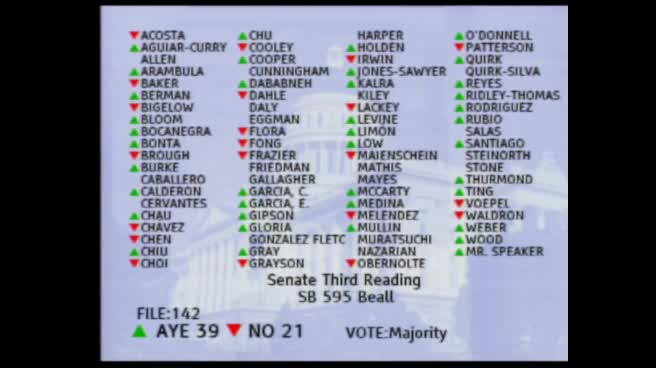
Bill Author

Bill Co-Author(s):
