AB 415: CalFresh: employment social enterprises.
- Session Year: 2017-2018
- House: Assembly
- Latest Version Date: 2017-09-28
Existing federal law provides for the federal Supplemental Nutrition Assistance Program, known in California as CalFresh, under which food assistance benefits are distributed to eligible individuals by the counties. Existing law authorizes counties to participate in the CalFresh Employment and Training Program (CalFresh E&T), established by federal law, and requires participating counties to screen CalFresh work registrants to determine whether they will participate in, or be deferred from, the CalFresh E&T program.
This bill would authorize the State Department of Social Services, to the extent permitted by federal law, to contract directly with an entity that provides services on a regional or statewide basis and that has expertise in, and secures funds for, CalFresh E&T program services. The bill would authorize the department to act as the state entity for receipt of federal reimbursement on behalf of the entity in certain circumstances and would require the department to seek any county consultation necessary to implement the contract. The bill would authorize a county to contract with an employment social enterprise or designated intermediary to provide services to its CalFresh E&T program participants and would require the department to issue guidance instructing counties that elect to participate in CalFresh E&T program services of any special considerations for partnering with employment social enterprises in the development or implementation of their county CalFresh E&T programs. The bill would also make legislative findings and declarations relating to Californias employment social enterprises.
Existing federal law provides for the federal Supplemental Nutrition Assistance Program, known in California as CalFresh, under which food assistance benefits are distributed to eligible individuals by the counties. Existing law authorizes counties to participate in the CalFresh Employment and Training Program (CalFresh E&T), established by federal law, and requires participating counties to screen CalFresh work registrants to determine whether they will participate in, or be deferred from, the CalFresh E&T program.
This bill would authorize the State Department of Social Services, to the extent permitted by federal law, to contract directly with an entity that provides services on a regional or statewide basis and that has expertise in, and secures funds for, CalFresh E&T program services. The bill would authorize the department to act as the state entity for receipt of federal reimbursement on behalf of the entity in certain circumstances and would require the department to seek any county consultation necessary to implement the contract. The bill would require the department, if it does not contract directly with employment social enterprises or a designated intermediary, authorize a county to contract with an employment social enterprise or designated intermediary to provide services to its CalFresh E&T program participants and would require the department to issue guidance instructing counties that elect to participate in CalFresh E&T program services of any special considerations for partnering with employment social enterprises in the development or implementation of their county CalFresh E&T programs. The bill would also make legislative findings and declarations relating to Californias employment social enterprises.
Existing federal law provides for the federal Supplemental Nutrition Assistance Program, known in California as CalFresh, under which food assistance benefits are distributed to eligible individuals by the counties. Existing law authorizes counties to participate in the CalFresh Employment and Training Program (CalFresh E&T), established by federal law, and requires participating counties to screen CalFresh work registrants to determine whether they will participate in, or be deferred from, the CalFresh E&T program.
This bill would authorize the State Department of Social Services Services, to the extent permitted by federal law, to contract directly with employment social enterprises, as defined, or a designated intermediary to provide CalFresh E&T program services and an entity that provides services on a regional or statewide basis and that has expertise in, and secures funds for, CalFresh E&T program services. The bill would authorize the department to act as the state entity for receipt of federal reimbursement on behalf of the entity in certain circumstances and would require the department to seek any county consultation necessary to implement the contract. The bill would require the department, if it does not contract directly with employment social enterprises or a designated intermediary, to issue guidance instructing counties that elect to participate in CalFresh E&T program services of any special considerations for partnering with employment social enterprises in the development of their county CalFresh E&T programs. The bill would also make legislative findings and declarations relating to Californias employment social enterprises.
Existing federal law provides for the federal Supplemental Nutrition Assistance Program, known in California as CalFresh, under which food assistance benefits are distributed to eligible individuals by the counties. Existing law authorizes counties to participate in the CalFresh Employment and Training Program (CalFresh E&T), established by federal law, and requires participating counties to screen CalFresh work registrants to determine whether they will participate in, or be deferred from, the CalFresh E&T program.
This bill would authorize the State Department of Social Services to contract directly with employment social enterprises enterprises, as defined, or a designated intermediary to provide CalFresh E&T program services and would require the department, department to seek any county consultation necessary to implement the contract. The bill would require the department, if it does not contract directly with employment social enterprises, enterprises or a designated intermediary, to issue guidance instructing counties that elect to participate in CalFresh E&T program services of any special considerations for partnering with employment social enterprises in the development of their county CalFresh E&T programs. The bill would also make legislative findings and declarations relating to Californias employment social enterprises.
Existing law continuously appropriates moneys from the General Fund to defray a portion of county costs under the CalWORKs program.This bill would instead provide that the continuous appropriation would not be made for purposes of implementing the bill.Existing law establishes the California Work Opportunity and Responsibility to Kids (CalWORKs) program, under which each county provides cash assistance and other benefits to qualified low-income families using federal, state, and county funds. Existing law requires a recipient of CalWORKs to participate in welfare-to-work activities, which may include private or public subsidized employment, as a condition of eligibility. Existing law authorizes a county to provide welfare-to-work services to former participants who became ineligible for CalWORKs benefits because they became employed through subsidized employment services.
This bill would authorize a county to partner with an employment social enterprise to offer subsidized employment opportunities. The bill would also authorize a county to provide welfare-to-work services to former participants who became ineligible for CalWORKs benefits because they became employed by an employment social enterprise.
Existing federal law provides for the federal Supplemental Nutrition Assistance Program, known in California as CalFresh, under which food assistance benefits are distributed to eligible individuals by the counties. Existing law authorizes counties to participate in the CalFresh Employment and Training Program (CalFresh E&T), established by federal law, and requires participating counties to screen CalFresh work registrants to determine whether they will participate in, or be deferred from, the CalFresh E&T program.
This bill would authorize the State Department of Social Services to contract directly with employment social enterprises to provide CalFresh E&T program services and would require the department, if it does not contract directly with employment social enterprises, to issue guidance instructing counties of any special considerations for partnering with employment social enterprises in the development of their county CalFresh E&T programs.
Existing law continuously appropriates moneys from the General Fund to defray a portion of county costs under the CalWORKs program.
This bill would instead provide that the continuous appropriation would not be made for purposes of implementing the bill.
Existing law provides that, in addition to other rights, a person has, subject to the qualifications and restrictions provided by law, the right of protection from bodily restraint or harm, from personal insult, from defamation, and from injury to his personal relations.This bill would make a nonsubstantive change to that provision.Existing law provides that, in addition to other rights, a person has, subject to the qualifications and restrictions provided by law, the right of protection from bodily restraint or harm, from personal insult, from defamation, and from injury to his personal relations.
This bill would make a nonsubstantive change to that provision.
The Legislature finds and declares all of the following:
(a)Californias employment social enterprises employ people in transitional jobs and prepare people, many of them parents, facing multiple barriers, such as low skill and education attainment, criminal records, homelessness, substance abuse, and mental illness, to secure and retain long-term employment.
(b)Californias employment social enterprises are funded with a mix of public and private dollars and expect to employ over 20,000 people in the next five years.
(c)Through their experience in combining short- or long-term wage-paying employment that combines real work, training and skill development, and supportive services for participants who are overcoming significant barriers to employment, Californias employment social enterprises could leverage CalFresh Employment and Training program funding to expand services to even more Californians.
SEC. 2.Section 18926.7 is added to the Welfare and Institutions Code, to read:18926.7.(a)(1)To the extent permitted under federal law, the department may contract directly with an entity that provides services on a regional or statewide basis and that has expertise in, and secures funds for, CalFresh E&T program services provided to participants that are allowable for partial federal reimbursement.
(2)The department may act as the state entity for receipt of federal reimbursement on behalf of the entity, provided that the entity complies with state and federal contracting requirements and the entity serves participants who face multiple barriers to employment and offers evidence-based skills development that results in a demonstrable increase in employment rates and earnings from work. The entity may include, but is not limited to, any of the following:
(A)An employment social enterprise.
(B)A private nonprofit.
(C)A public postsecondary educational institution, or other state or local agency.
(D)An organization serving as an intermediary for an entity described in subparagraphs (A) to (C), inclusive, and the department.
(b)The department shall seek any county consultation necessary to implement subdivision (a), including, but not limited to, coordination with counties that have contracts in place pursuant to subdivision (c), or who are considering entering into contracts pursuant to subdivision (c).
(c)Notwithstanding subdivision (a), a county may contract with an employment social enterprise or designated intermediary to provide services to its CalFresh E&T program participants. The department shall, no later than June 1, 2018, in consultation with the County Welfare Directors Association, issue guidance instructing counties that elect to participate in CalFresh E&T program services of any special considerations for partnering with employment social enterprises in the development or implementation of their county CalFresh E&T programs.
(d)(1)For purposes of this section, employment social enterprise means a social purpose corporation, a benefit corporation, or a nonprofit corporation that earns 51 percent or more of its enterprise revenue from production or assembly of goods or the provision of services and that demonstrates evidence of its mission to provide employment with on-the-job and life skills training to a direct labor force, not including supervisors, administrators, and trainers, that is comprised of 80 percent or more participants who face multiple barriers to employment.
(2)For purposes of this section, participant who faces multiple barriers to employment means an individual who meets at least two of the following:
(A)An individual with employment barriers, as defined in subdivision (j) of Section 14005 of the Unemployment Insurance Code.
(B)An individual who is or has been a homeless individual, as defined in Section 254b of Title 42 of the United States Code.
(C)An individual who is an out-of-school youth, as defined in Section 3164(a)(1)(B) of Title 29 of the United States Code.
The Legislature finds and declares all of the following:
(a)Californias employment social enterprises employ people in transitional jobs and prepare people, many of them parents, facing multiple barriers, such as low skill and education attainment, criminal records, homelessness, substance abuse, and mental illness, to secure and retain long-term employment.
(b)Californias employment social enterprises are funded with a mix of public and private dollars and expect to employ over 20,000 people in the next five years.
(c)Through their experience in combining short- or long-term wage-paying employment that combines real work, training and skill development, and supportive services for participants who are overcoming significant barriers to employment, Californias employment social enterprises could leverage CalFresh Employment and Training program funding to expand services to even more Californians.
SEC. 2.Section 18926.7 is added to the Welfare and Institutions Code, to read:18926.7.(a)(1)To the extent permitted under federal law, the department may contract directly with an entity that provides services on a regional or statewide basis and that has expertise in, and secures funds for, CalFresh E&T program services provided to participants that are allowable for partial federal reimbursement.
(2)The department may act as the state entity for receipt of federal reimbursement on behalf of the entity, provided that the entity complies with state and federal contracting requirements and the entity is one of serves participants who face multiple barriers to employment and offers evidence-based skills development that results in a demonstrable increase in employment rates and earnings from work. The entity may include, but is not limited to, any of the following:
(A)An employment social enterprise.
(B)A private nonprofit that serves participants who face multiple barriers to employment and offers evidence-based skills development that results in a demonstrable increase in employment rates and earnings from work. nonprofit.
(C)A public postsecondary educational institution, or other state or local agency.
(D)An organization serving as an intermediary for an entity described in subparagraphs (A) to (C), inclusive, and the department.
(b)The department shall seek any county consultation necessary to implement subdivision (a), including, but not limited to, coordination with counties that have contracts in place pursuant to subdivision (c), or who are considering entering into contracts pursuant to subdivision (c).
(c)Notwithstanding subdivision (a), a county may contract with an employment social enterprise or designated intermediary to provide services to its CalFresh E&T program participants. The department shall, no later than June 1, 2018, in consultation with the County Welfare Directors Association, issue guidance instructing counties that elect to participate in CalFresh E&T program services of any special considerations for partnering with employment social enterprises in the development or implementation of their county CalFresh E&T programs.
(d)(1)For purposes of this section, employment social enterprise means a social purpose corporation, a benefit corporation, or a nonprofit corporation that earns 51 percent or more of its enterprise revenue from production or assembly of goods or the provision of services and that demonstrates evidence of its mission to provide employment with on-the-job and life skills training to a direct labor force, not including supervisors, administrators, and trainers, that is comprised of 80 percent or more participants who face multiple barriers to employment.
(2)For purposes of this section, participant who faces multiple barriers to employment means an individual who meets at least two of the following:
(A)An individual with employment barriers, as defined in subdivision (j) of Section 14005 of the Unemployment Insurance Code.
(B)An individual who is or has been a homeless individual, as defined in Section 254 b 254b of Title 42 of the United States Code.
(C)An individual who is an out-of-school youth, as defined in Section 3164(a)(1)(B) of Title 29 of the United States Code.
The Legislature finds and declares all of the following:
(a)Californias employment social enterprises employ people in transitional jobs and prepare people, many of them parents, facing multiple barriers, such as low skill and education attainment, criminal records, homelessness, substance abuse, and mental illness, to secure and retain long-term employment.
(b)Californias employment social enterprises are funded with a mix of public and private dollars and expect to employ over 20,000 people in the next five years.
(c)Through their experience in combining short- or long-term wage-paying employment that combines real work, training and skill development, and supportive services for participants who are overcoming significant barriers to employment, Californias employment social enterprises could leverage CalFresh Employment and Training program funding to expand services to even more Californians.
SEC. 2.Section 18926.7 is added to the Welfare and Institutions Code, to read:18926.7.(a)(1)To the extent permitted under federal law, the department may contract directly with an entity that provides services on a regional or statewide basis and that has expertise in, and secures funds for, CalFresh E&T program services provided to participants that are allowable for partial federal reimbursement.
(2)The department may act as the state entity for receipt of federal reimbursement on behalf of the entity, provided that the entity complies with state and federal contracting requirements and the entity is one of the following:
(A)An employment social enterprise.
(B)A private nonprofit that serves participants who face multiple barriers to employment and offers evidence-based skills development that results in a demonstrable increase in employment rates and earnings from work.
(C)A public postsecondary educational institution, or other state or local agency.
(D)An organization serving as an intermediary for an entity described in subparagraphs (A) to (C), inclusive, and the department.
(b)The department shall seek any county consultation necessary to implement subdivision (a). (a), including, but not limited to, coordination with counties that have contracts in place pursuant to subdivision (c), or who are considering entering into contracts pursuant to subdivision (c).
(c)If the department does not contract directly with employment social enterprises or a designated intermediary, it shall Notwithstanding subdivision (a), a county may contract with an employment social enterprise or designated intermediary to provide services to its CalFresh E&T program participants. The department shall, no later than June 1, 2018, in consultation with the County Welfare Directors Association, issue guidance instructing counties that elect to participate in CalFresh E&T program services of any special considerations for partnering with employment social enterprises in the development or implementation of their county CalFresh E&T programs.
(d)(1)For purposes of this section, employment social enterprise means a social purpose corporation, a benefit corporation, or a nonprofit corporation that earns 51 percent or more of its enterprise revenue from production or assembly of goods or the provision of services and that demonstrates evidence of its mission to provide employment with on-the-job and life skills training to a direct labor force, not including supervisors, administrators, and trainers, that is comprised of 80 percent or more participants who face multiple barriers to employment.
(2)For purposes of this section, participant who faces multiple barriers to employment means an individual who meets at least two of the following:
(A)An individual with employment barriers, as defined in subdivision (j) of Section 14005 of the Unemployment Insurance Code.
(B)An individual who is or has been homeless, as defined by the United States Department of Health and Human Services as of January 1, 2016. a homeless individual, as defined in Section 254 b of Title 42 of the United States Code.
(C)An individual who is an out-of-school youth, as defined in Section 3164(a)(1)(B) of Title 29 of the United States Code.
The Legislature finds and declares all of the following:
(a)Californias employment social enterprises employ people in transitional jobs and prepare people, many of them parents, facing multiple barriers, such as low skill and education attainment, criminal records, homelessness, substance abuse, and mental illness, to secure and retain long-term employment.
(b)Californias employment social enterprises are funded with a mix of public and private dollars and expect to employ over 20,000 people in the next five years.
(c)Through their experience in combining short- or long-term wage-paying employment that combines real work, training and skill development, and supportive services for participants who are overcoming significant barriers to employment, Californias employment social enterprises could leverage CalFresh Employment and Training program funding to expand services to even more Californians.
SEC. 2.Section 18926.7 is added to the Welfare and Institutions Code, to read:18926.7.(a)The (1)To the extent permitted under federal law, the department may contract directly with employment social enterprises or a designated intermediary to provide CalFresh E&T program services. an entity that provides services on a regional or statewide basis and that has expertise in, and secures funds for, CalFresh E&T program services provided to participants that are allowable for partial federal reimbursement.
(2)The department may act as the state entity for receipt of federal reimbursement on behalf of the entity, provided that the entity complies with state and federal contracting requirements and the entity is one of the following:
(A)An employment social enterprise.
(B)A private nonprofit that serves participants who face multiple barriers to employment and offers evidence-based skills development that results in a demonstrable increase in employment rates and earnings from work.
(C)A public postsecondary educational institution, or other state or local agency.
(D)An organization serving as an intermediary for an entity described in subparagraphs (A) to (C), inclusive, and the department.
(b)The department shall seek any county consultation necessary to implement subdivision (a).
(c)If the department does not contract directly with employment social enterprises or a designated intermediary, it shall issue guidance instructing counties that elect to participate in CalFresh E&T program services of any special considerations for partnering with employment social enterprises in the development of their county CalFresh E&T programs.
(d)(1)For purposes of this section, employment social enterprise means a social purpose corporation, a benefit corporation, or a nonprofit corporation that earns 51 percent or more of its enterprise revenue from production or assembly of goods or the provision of services and that demonstrates evidence of its mission to provide employment with on-the-job and life skills training to a direct labor force, not including supervisors, administrators, and trainers, that is comprised of 80 percent or more participants who face multiple barriers to employment.
(2)For purposes of this section, participant who faces multiple barriers to employment means an individual who meets at least two of the following:
(A)An individual with employment barriers, as defined in subdivision (j) of Section 14005 of the Unemployment Insurance Code.
(B)An individual who is or has been homeless, as defined by the United States Department of Health and Human Services as of January 1, 2016.
(C)An individual who is an out-of-school youth, as defined in Section 3164(a)(1)(B) of Title 29 of the United States Code.
The Legislature finds and declares all of the following:
(a)The California Work Opportunity and Responsibility to Kids (CalWORKs) program provides time-limited support for low-income parents to remove barriers to work, participate in employment and training, secure employment, and support job retention.(b)(a)Californias employment social enterprises employ people in transitional jobs and prepare people, many of them parents, facing multiple barriers, such as low skill and education attainment, criminal records, homelessness, substance abuse, and mental illness, to secure and retain long-term employment.
(c)(b)Californias employment social enterprises are funded with a mix of public and private dollars and expect to employ over 20,000 people in the next five years.
(d)For low-income parents who have exceeded eligible months in CalWORKs or for adults without children, the CalFresh Employment and Training program offers another tool to support barrier reduction and training for employment that is supported by significant federal funding.(e)(c)Through their experience in combining short- or long-term wage-paying employment that combines real work, training and skill development, and supportive services for participants who are overcoming significant barriers to employment, Californias employment social enterprises could leverage CalFresh Employment and Training program funding to expand services to even more Californians.
SEC. 2.Section 11322.63 is added to the Welfare and Institutions Code, to read:11322.63.A county may partner with an employment social enterprise, as defined in Section 11323.26, to offer subsidized employment opportunities to CalWORKs applicants and recipients as described in Section 11322.64.SEC. 3.Section 11323.26 is added to the Welfare and Institutions Code, immediately following Section 11323.25, to read:11323.26.(a)A county may continue to provide welfare-to-work services to former participants who became ineligible for CalWORKs benefits because they became employed by an employment social enterprise. The county may provide these services for up to the first 12 months of employment, to the extent they are not available from other sources and are needed for the individual to retain the employment.(b)For the purposes of this section, employment social enterprise means a California-based social purpose corporation, a benefit corporation, or a nonprofit corporation that earns 51 percent or more of its enterprise revenue from production or assembly of goods or the provision of services and that demonstrates evidence of its mission to provide employment with on-the-job and life skills training to a direct labor force, not including supervisors, administrators, and trainers, that is comprised of 80 percent or more participants who face multiple barriers to employment, including, but not limited to, being formerly incarcerated, being homeless, or being a youth disconnected from school and work.SEC. 4.SEC. 2.Section 18926.7 is added to the Welfare and Institutions Code, to read:18926.7.(a)The department may contract directly with employment social enterprises, as defined in Section 11323.26, enterprises or a designated intermediary to provide CalFresh E&T program services. If
(b)The department shall seek any county consultation necessary to implement subdivision (a).
(c)If the department does not contract directly with employment social enterprises, enterprises or a designated intermediary, it shall issue guidance instructing counties that elect to participate in CalFresh E&T program services of any special considerations for partnering with employment social enterprises in the development of their county CalFresh E&T programs.
(d)(1)For purposes of this section, employment social enterprise means a social purpose corporation, a benefit corporation, or a nonprofit corporation that earns 51 percent or more of its enterprise revenue from production or assembly of goods or the provision of services and that demonstrates evidence of its mission to provide employment with on-the-job and life skills training to a direct labor force, not including supervisors, administrators, and trainers, that is comprised of 80 percent or more participants who face multiple barriers to employment.
(2)For purposes of this section, participant who faces multiple barriers to employment means an individual who meets at least two of the following:
(A)An individual with employment barriers, as defined in subdivision (j) of Section 14005 of the Unemployment Insurance Code.
(B)An individual who is or has been homeless, as defined by the United States Department of Health and Human Services as of January 1, 2016.
(C)An individual who is an out-of-school youth, as defined in Section 3164(a)(1)(B) of Title 29 of the United States Code.
SEC. 5.No appropriation pursuant to Section 15200 of the Welfare and Institutions Code shall be made for purposes of implementing this act.The Legislature finds and declares all of the following:
(a)The California Work Opportunity and Responsibility to Kids (CalWORKs) program provides time-limited support for low-income parents to remove barriers to work, participate in employment and training, secure employment, and support job retention.
(b)Californias employment social enterprises employ people in transitional jobs and prepare people, many of them parents, facing multiple barriers, such as low skill and education attainment, criminal records, homelessness, substance abuse, and mental illness, to secure and retain long-term employment.
(c)Californias employment social enterprises are funded with a mix of public and private dollars and expect to employ over 20,000 people in the next five years.
(d)For low-income parents who have exceeded eligible months in CalWORKs or for adults without children, the CalFresh Employment and Training program offers another tool to support barrier reduction and training for employment that is supported by significant federal funding.
(e)Through their experience in combining short- or long-term wage-paying employment that combines real work, training and skill development, and supportive services for participants who are overcoming significant barriers to employment, Californias employment social enterprises could leverage CalFresh Employment and Training program funding to expand services to even more Californians.
SEC. 2.Section 11322.63 is added to the Welfare and Institutions Code, to read:11322.63.A county may partner with an employment social enterprise, as defined in Section 11323.26, to offer subsidized employment opportunities to CalWORKs applicants and recipients as described in Section 11322.64.
SEC. 3.Section 11323.26 is added to the Welfare and Institutions Code, immediately following Section 11323.25, to read:11323.26.(a)A county may continue to provide welfare-to-work services to former participants who became ineligible for CalWORKs benefits because they became employed by an employment social enterprise. The county may provide these services for up to the first 12 months of employment, to the extent they are not available from other sources and are needed for the individual to retain the employment.
(b)For the purposes of this section, employment social enterprise means a California-based social purpose corporation, a benefit corporation, or a nonprofit corporation that earns 51 percent or more of its enterprise revenue from production or assembly of goods or the provision of services and that demonstrates evidence of its mission to provide employment with on-the-job and life skills training to a direct labor force, not including supervisors, administrators, and trainers, that is comprised of 80 percent or more participants who face multiple barriers to employment, including, but not limited to, being formerly incarcerated, being homeless, or being a youth disconnected from school and work.
SEC. 4.Section 18926.7 is added to the Welfare and Institutions Code, to read:18926.7.The department may contract directly with employment social enterprises, as defined in Section 11323.26, to provide CalFresh E&T program services. If the department does not contract directly with employment social enterprises, it shall issue guidance instructing counties of any special considerations for partnering with employment social enterprises in the development of their county CalFresh E&T programs.
SEC. 5.No appropriation pursuant to Section 15200 of the Welfare and Institutions Code shall be made for purposes of implementing this act.
SECTION 1.Section 43 of the Civil Code is amended to read:43.Besides the personal rights mentioned or recognized in the Government Code, every person has, subject to the qualifications and restrictions provided by law, the right of protection from bodily restraint or harm, from personal insult, from defamation, and from injury to his or her personal relations.Besides the personal rights mentioned or recognized in the Government Code, every person has, subject to the qualifications and restrictions provided by law, the right of protection from bodily restraint or harm, from personal insult, from defamation, and from injury to his or her personal relations.
|
Date
|
Status
|
|---|---|
| Sep 28, 2017 | Chaptered by Secretary of State - Chapter 340, Statutes of 2017. |
| Sep 28, 2017 | Approved by the Governor. |
| Sep 18, 2017 | Enrolled and presented to the Governor at 4 p.m. |
| Sep 11, 2017 | Senate amendments concurred in. To Engrossing and Enrolling. |
| Sep 6, 2017 | In Assembly. Concurrence in Senate amendments pending. May be considered on or after September 8 pursuant to Assembly Rule 77. |
| Sep 6, 2017 | Read third time. Passed. Ordered to the Assembly. |
| Aug 31, 2017 | Read second time. Ordered to third reading. |
| Aug 30, 2017 | Ordered to third reading. |
| Aug 21, 2017 | In Senate. Held at Desk. |
| Aug 21, 2017 | Ordered to the Senate. |
| Jul 20, 2017 | In Assembly. Concurrence in Senate amendments pending. May be considered on or after August 18 pursuant to Assembly Rule 77. |
| Jul 20, 2017 | Read third time. Passed. Ordered to the Assembly. |
| Jul 18, 2017 | Read second time. Ordered to Consent Calendar. |
| Jul 17, 2017 | From committee: Be placed on second reading file pursuant to Senate Rule 28.8 and ordered to consent calendar. |
| Jun 29, 2017 | Read second time and amended. Re-referred to Com. on APPR. |
| Jun 28, 2017 | From committee: Amend, and do pass as amended and re-refer to Com. on APPR. with recommendation: To Consent Calendar. (Ayes 5. Noes 0.) (June 27). |
| Jun 8, 2017 | Referred to Com. on HUMAN S. |
| May 30, 2017 | In Senate. Read first time. To Com. on RLS. for assignment. |
| May 30, 2017 | Read third time. Passed. Ordered to the Senate. (Ayes 77. Noes 0. Page 1857.) |
| May 25, 2017 | Read second time. Ordered to Consent Calendar. |
| May 24, 2017 | From committee: Do pass. To Consent Calendar. (Ayes 17. Noes 0.) (May 24). |
| May 18, 2017 | Re-referred to Com. on APPR. |
| May 17, 2017 | From committee chair, with author's amendments: Amend, and re-refer to Com. on APPR. Read second time and amended. |
| Apr 26, 2017 | From committee: Do pass and re-refer to Com. on APPR. with recommendation: To Consent Calendar. (Ayes 7. Noes 0.) (April 25). Re-referred to Com. on APPR. |
| Apr 18, 2017 | Re-referred to Com. on HUM. S. |
| Apr 17, 2017 | From committee chair, with author's amendments: Amend, and re-refer to Com. on HUM. S. Read second time and amended. |
| Apr 4, 2017 | In committee: Set, first hearing. Hearing canceled at the request of author. |
| Mar 22, 2017 | Re-referred to Com. on HUM. S. |
| Mar 21, 2017 | From committee chair, with author's amendments: Amend, and re-refer to Com. on HUM. S. Read second time and amended. |
| Mar 20, 2017 | Referred to Com. on HUM. S. |
| Feb 10, 2017 | From printer. May be heard in committee March 12. |
| Feb 9, 2017 | Read first time. To print. |
|
Date
|
Description
|
Location
|
Votes
|
|
|---|---|---|---|---|
| Sep 11, 2017 | AB 415 CHIU Concurrence in Senate Amendments | Assembly Floor |
Passed |
|
| Sep 6, 2017 | Assembly 3rd Reading AB415 Chiu et al. By Leyva | Senate Floor |
Passed |
|
| Jul 20, 2017 | Consent Calendar 2nd AB415 | Senate Floor |
Passed |
|
| Jun 27, 2017 | Do pass as amended, but first amend, and re-refer to the Committee on [Appropriations] with the recommendation: To Consent Calendar | Senate Standing Committee on Human Services |
Passed |
|
| May 30, 2017 | AB 415 CHIU Consent Calendar Second Day Regular Session | Assembly Floor |
Passed |
|
| May 24, 2017 | Do pass. To Consent Calendar. | Assembly Standing Committee on Appropriations |
Passed |
|
| Apr 25, 2017 | Do pass and be re-referred to the Committee on [Appropriations] with recommendation: To Consent Calendar | Assembly Standing Committee on Human Services |
Passed |
This list shows positions taken on this bill by organizations on the date displayed, which is linked to the original source.
Positions by individuals are not included.
CONCURRENCE IN SENATE AMENDMENTS
CSA1 Bill Id:AB 415
Author:(Chiu and Reyes)
As Amended Ver:August 30, 2017
Majority vote
ASSEMBLY: | 77-0 | (May 30, 2017) | SENATE: | 40-0 | (September 6, 2017) |
Original Committee Reference: HUM. S.
SUMMARY: Allows the Department of Social Services (DSS) to contract with employment social enterprises in order to provide CalFresh Employment and Training Program (CFET) services.
Specifically, this bill:
- Makes a number of Legislative findings and declarations related to employment and CFET.
- Defines "employment social enterprise" as a social purpose corporation, a benefit corporation, or a nonprofit corporation that earns 51% or more of its enterprise revenue from production or assembly of goods or the provision of services, and that demonstrates evidence of its mission to provide employment with on-the-job and life skills training to a labor force, excluding supervisors, administrators, and trainers, comprised of 80% or more participants who face multiple barriers to employment.
- Defines "participant who faces multiple barriers to employment" as an individual who meets two or more of the following criteria, as specified:
- Has employment barriers;
- Is or has been homeless; or
- Is an out-of-school youth.
- Allows DSS, to the extent permitted by federal law, to contract directly with an entity that provides services on a regional or statewide basis and that has expertise in, and secures funds for, CFET program services provided to participants that are allowable for partial federal reimbursement.
- Permits DSS to act as the state entity for receipt of federal reimbursement on behalf of the entity, provided that the entity complies with state and federal contracting requirements, serves participants who face multiple barriers to employment and offers evidence-based skills development that results in a demonstrable increase in employment rates and earnings for work, and may include one of the following:
- An employment social enterprise;
- A private nonprofit;
- A public postsecondary educational institution, or other state or local agency; or
- An organization serving as an intermediary for any of the above three entities and DSS.
- Requires DSS to seek any county consultation necessary to implement the provisions of this bill related to direct contracting for CFET services, including, but not limited to, coordination with counties that have contracts in place or who are considering entering into contracts, as specified in this bill.
- Allows a county to contract with an employment social enterprise or designated intermediary to provide services to its CFET program participants.
- Requires DSS, no later than June 1, 2018, in consultation with the County Welfare Directors Association, to issue guidance instructing counties that elect to participate in CFET program services of any special considerations for partnering with employment social enterprises in the development or implementation of their county CFET programs.
The Senate amendments adopted on 8/30/17:
- Delete, in current language authorizing DSS to act as the state entity for receipt of federal reimbursement on behalf of an entity with which it contracts for CFET services, the requirement that any such private nonprofit entity serve participants who face multiple barriers to employment and offer evidence-based skills development that results in a demonstrable increase in employment rates and earnings from work, and instead add language applying these requirements to any allowable entity with which DSS contracts.
- Make technical changes.
The Senate amendments adopted on 6/29/17:
- Include language specifying that DSS's requirement to seek county consultation regarding direct contracting for CFET services includes, but is not limited to, coordination with counties that have existing contracts in place with, or who are considering entering into contracts with, employment social enterprises for purposes of implementing the provisions of this bill, as specified.
- Delete language that makes the requirement for DSS to issue guidance contingent upon DSS not directly contracting with social enterprises or a designated intermediary, and instead, add language that allows a county to contract with an employment social enterprise or designated intermediary to provide services to CFET program participants and that requires DSS to issue such guidance to counties no later than June 1, 2018 and in consultation with the County Welfare Directors Association.
- Make technical changes.
EXISTING LAW:
- Establishes under federal law the Supplemental Nutrition Assistance Program (SNAP) pursuant to the Food Stamp Act of 1964 and establishes, in California statute, the CalFresh program to administer the provision of federal SNAP benefits to families and individuals meeting certain criteria, as specified. (Welfare and Institutions Code (WIC) 18900 et seq.)
- Establishes the Electronic Benefits Transfer (EBT) Act, and defines the EBT system as the program designed to provide benefits to those eligible to receive public assistance benefits such as CalWORKs and CalFresh. (WIC 10065 et seq.)
- Establishes within CalFresh the federal Employment & Training (SNAP E&T) program to assist members of CalFresh households in gaining skills, training, work, or experience that will increase their ability to obtain regular employment. (7 Code of Federal Regulations (CFR) 273.7, WIC 18926.5)
- Defines in federal statute approved activities under the Employment & Training program including education, as specified, participation in a Workforce Investment Act program, and other activities. (7 United States Code Section 2015(e)(3)(B))
- Requires that a California county that elects to participate in CFET screen CalFresh work registrants to determine whether they will participate in, or be deferred from, the program and further, requires that an individual be deferred from a mandatory placement in the CFET program for a number of specified reasons, including residence in a federally determined work surplus area. (WIC 18926)
FISCAL EFFECT: According to the Assembly Appropriations Committee, this bill may result in minor and absorbable costs to DSS.
COMMENTS:
CalFresh: CalFresh benefits are funded entirely by the federal government through the Supplemental Nutrition Assistance Program (SNAP), and the United States Department of Agriculture (USDA) sets specific eligibility requirements for SNAP programs across the United States, including a gross and net income test, work requirements, and other documentation requirements. The maximum allowable gross income is 200% of the Federal Poverty Level (FPL). Households with elderly or disabled members are not subject to gross income criteria but must have a net monthly income at or below 100% of the FPL. Other households must meet both gross and net monthly income tests. CalFresh is administered locally by county human services agencies, and the federal, state, and county governments share in the cost of the administration of the program.
Benefits are made available on a monthly basis for food purchase through an ATM-like electronic benefit transfer (EBT) card. However, unlike other types of benefits that may be accessed through an EBT card, CalFresh benefits cannot be withdrawn in cash at point-of-sale terminals or at ATM machines. CalFresh benefits can only be used to purchase food items to be prepared and consumed at home, as well as seeds and plants that can be grown at home and produce food. The average monthly benefit for a CalFresh recipient is $149.05 per month, or $4.96 per person per day.
Food Stamp Employment & Training Program (SNAP E&T)/CalFresh Employment & Training Program (CFET): In 1985, the Food Security Act created the Food Stamp Employment & Training Program, now known as SNAP E&T, for the purpose of helping SNAP recipients gain the skills and experience needed to enter the workforce and reduce dependency on public benefits. All states are required by federal law to offer SNAP E&T; in California, this program is known as the CalFresh Employment & Training Program (CFET). Each year, DSS is required to submit the CFET program plan to the USDA Food and Nutrition Service (FNS) for approval. Upon approval, California is eligible for federal matching funds, and in federal fiscal year 2017, the federal government approved an allocation of 100% federal funds totaling $10,335,573.
Until recently, California counties operated mandatory or combined mandatory and voluntary CFET programs, meaning some counties required mandatory CFET participation as a requirement for receiving CalFresh benefits, while other counties required mandatory participation for certain populations while allowing voluntary participation for other populations. However, in 2011 with the signing of SB 43 (Liu), Chapter 507, Statutes of 2011, California required counties that operate a CFET program to implement the program as voluntary for all participants who reside in a federally determined work surplus area, meaning an area in which unemployment is higher than the national average. As of February 2017, the national unemployment rate is 4.7%; this compares to January 2017 unemployment rates of 5.1% in Los Angeles County, 10.5% in Fresno County, and 5.4% in Sacramento County. Currently, all of California has been designated as a work surplus area by the federal government. However, that designation is expected to be retracted in 2018 such that counties that operate a CFET program may choose to make participation in the program mandatory; mandatory participation can only be prohibited through legislation. Currently, 33 counties in California offer voluntary CFET programs.
Employment social enterprises: Employment social enterprises are businesses that hire and assist people who are willing and able to work, but face barriers in attaining employment. Challenges to employment can include youth and lack of experience, homelessness, mental health issues, or previous incarceration. In addition to employment opportunities, social enterprises provide on-the-job soft and hard skills development, counseling, and life-stability supports such as food, clothing, transportation, or housing assistance. An evaluation of outcomes and impacts of social enterprises conducted by Mathematica Policy Research between April 2012 and March 2013 found that social enterprises may help people find jobs, move towards economic self-sufficiency, and improve life stability. The study found that in the year after workers began employment with social enterprises, employment increased from 18% to 51%, average monthly wage and salary income increased by 268%, the total income from government benefits decreased from 71% to 24%, and the share of workers living in stable housing increased from 15% to 53%.
The Center for Employment Opportunities (CEO) is one such example of an employment social enterprise that provides life skills education, transitional employment, job coaching, and full-time job placement for recently incarcerated individuals. CEO currently operates in five states and in 15 cities, including Oakland, San Bernardino, San Diego, Santa Clara, and Los Angeles. Originally created as a pilot project of the Vera Institute of Justice in New York, CEO's program model was specifically designed to address the employment needs of people recently released from incarceration who are at a high risk for recidivism. Specifically, upon enrollment in the program, participants engage in life skills education, in which individuals take a weeklong class where they learn basic work skills and how to answer questions about criminal convictions in job interviews. CEO staff assist participants assemble necessary work documents and provide one-on-one office hours to provide private, individualized support. Once education has been completed, participants work at a CEO transitional work crew where they receive daily feedback, support, and mentoring from site supervisors. Feedback is evaluated and utilized by participants to ensure receipt of necessary supports and services. While participating in transitional work, participants also receive individualized support from job coaches and job developers to identify strengths and weaknesses in terms of workplace skills and behaviors. Job coaches also help participants make connections to community supports including housing, child care, substance abuse treatment, and mental health services to further address barriers to job attainment and retention. Finally, to ensure participants remain in the workforce, CEO offers an intensive and structured retention program for one year following initial job placement to address issues that may arise at work and to assist participants in identifying long-term career goals. Retention services include: workplace counseling, crisis management, job re-placement in the event of job loss, financial counseling and individualized employment coaching.
Need for this bill: According to the author's office,
While unemployment has dramatically declined in recent years, too many Californians continue to face significant barriers to employment. Public programs, such as the CalFresh Employment and Training Program (CFET), support workers to gain skills, training, or work experiences to increase their ability to obtain regular employment that leads to economic self-sufficiency. Yet the State of California and local governments are still facing formidable challenges in supporting economic stability and security among some of its most vulnerable populations. Employment social enterprises have emerged as another opportunity to help reduce barriers to employment. Social enterprises provide transitional employment opportunities and job training to its target populations or 'participants,' people with high barriers to employment such as low skill and education attainment, criminal records, homelessness, substance addictions and/or mental illness. The enterprise provides paid on-the-job training with supportive services, and sells its products or services in the open market to earn revenue that is turned back into the enterprise to support the program. While [CFET] and employment social enterprises are providing crucial services to Californians in need, they are working in silos. [This bill] empowers the state and local CFET programs to partner with employment social enterprises. This partnership will open doors for more federal employment and training funding, resulting in more jobs and training programs to ensure that Californians in need achieve holistic job readiness.
RELATED AND PRIOR LEGISLATION:
AB 563 (Arambula) of the current legislative session, instructs DSS to create the Center for CalFresh Employment & Training Excellence to collect information on effective CalFresh employment and training methodologies. It is currently on the suspense file in the Senate Appropriations Committee.
H.R. 2642 (Lucas), Public Law 113-79, 2014, known as the Agriculture Reform and Risk Management Act of 2014, or Farm Bill, authorized nutrition and agriculture programs in the United States for the years of 2014-2018.
SB 43 (Liu), Chapter 507, Statutes of 2011, required counties that offer CalFresh Employment & Training to make participation voluntary instead of mandatory.
H.R. 2100 (de la Garza), Public Law 99-198, 1985, created the Food Security Act of 1985 which created the Food Stamp Employment & Training Program, now known as SNAP E&T.
Analysis Prepared by: Kelsy Castillo / HUM. S. / (916) 319-2089 FN: 0001606
Office of Senate Floor Analyses (916) 651-1520 Fax: (916) 327-4478 | AB 415 |
THIRD READING
Bill No: AB 415
Author: Chiu (D) and Reyes (D)
Amended: 8/30/17 in Senate
SENATE HUMAN SERVICES COMMITTEE: 5-0, 6/27/17
AYES: Wiener, Berryhill, Glazer, Newman, Nguyen
SENATE APPROPRIATIONS COMMITTEE: Senate Rule 28.8
ASSEMBLY FLOOR: 77-0, 5/30/17 (Consent) - See last page for vote
SUBJECT: CalFresh: employment social enterprises
SOURCE: Roberts Enterprise Development Fund
Western Center on Law and Poverty
DIGEST:
This bill allows the California Department of Social Services (CDSS) to contract with employment social enterprises to provide CalFresh Employment and Training (CalFresh E&T) services.
Senate Floor Amendments of 8/30/17 require that entities that receive federal reimbursement for CalFresh E&T offer evidence based services to a defined population.
Existing law:
- Establishes in federal law the Supplemental Nutrition Assistance Program (SNAP) within the U.S. Department of Agriculture (USDA) to promote the general welfare and to safeguard the health and wellbeing of the nation’s population by raising the levels of nutrition among low-income households, and establishes SNAP eligibility requirements.
- Prohibits an able-bodied adult without dependents (ABAWDs) from being eligible to receive SNAP benefits for more than three months during any three-year period, and permits the USDA to waive the time limit if the unemployment rate in the area in which the ABAWD lives is 10 percent or more.
- Defines approved activities under the SNAP Employment and Training (E&T) program including specified educational activities, participation in a Workforce Investment Act program, and others.
- Establishes federal criteria for eligibility for SNAP benefits to include participation in SNAP E&T, among other criteria.
- Establishes the CalFresh program to administer the provisions of federal SNAP benefits to low-income families and individuals meeting specified criteria.
- Establishes the CalFresh E&T program to assist members of CalFresh households in gaining skills, training, work, or experience that will increase their ability to obtain regular employment.
- Requires a California county that elects to participate in CalFresh E&T screen CalFresh work registrants to determine whether they will participate in, or be deferred from, the program and requires that an individual be deferred from a mandatory placement in the CalFresh E&T program for a number of specified reasons, including residence in a federally determined work surplus area.
- Defines an individual with employment barriers to mean an individual with any characteristic that substantially limits the ability to obtain employment, including indicators of poor work history, lack of work experience, or access to employment in nontraditional occupations, long-term unemployment, lack of educational or occupational skills attainment, dislocation from high-wage and high-benefit employment, low levels of literacy or English proficiency, disability status, or welfare dependency, including, but not limited to individuals with disabilities, older individuals, and ex-offenders.
- Defines an out-of-school youth to mean an individual who is not attending any school (as defined under State law); not younger than age 16 or older than age 24; and is one or more of additional criteria that includes, but is not limited to, a school dropout, an individual who is pregnant or parenting, an English language learner. (29 USC 3164(a)(1)(B))
This bill:
- Makes a series of legislative declarations and findings about California’s employment social enterprises including that they:
- Employ people in transitional jobs and prepare people, many of them parents, facing multiple barriers, such as low skill and education attainment, criminal records, homelessness, substance abuse, and mental illness, to secure and retain long-term employment.
- Are funded with a mix of public and private dollars and expect to employ over 20,000 people in the next five years.
- Could leverage CalFresh E&T funding to expand services to Californians.
- Permits CDSS, to the extent permitted under federal law, to contract directly with an entity that provides services on a regional or statewide basis and that has expertise in, and secures funds for, CalFresh E&T program services provided to participants that are allowable for partial federal reimbursement.
- Permits CDSS to act as the state entity for receipt of federal reimbursement on behalf of the entity, provided that the entity complies with state and federal contracting requirements and the entity serves participants who face multiple barriers to employment and offers evidence-based skills development that results in a demonstrable increase in employment rates and earning from work. The entity may include, but is not limited to, any of the following:
- An employment social enterprise.
- A private nonprofit.
- A public postsecondary educational institution, or other state or local agency.
- An organization serving as an intermediary for an entity listed above and the department.
- Requires CDSS to seek any county consultation necessary when contracting with an entity that provides services for CalFresh E&T, as specified, including, but not limited to, coordination with counties that have contracts in place or are considering entering into contracts with employment social enterprises.
- Permits a county to contract with an employment social enterprise or designated intermediary to provide services to its CalFresh E&T program participants.
- Requires CDSS, no later than June 1, 2018, in consultation with the County Welfare Directors Association, to issue guidance instructing counties that elect to participate in CalFresh E&T program services of any special considerations for partnering with employment social enterprises in the development or implementation of their county CalFresh E&T programs.
- Defines “employment social enterprise” to mean a social purpose corporation, a benefit corporation, or a nonprofit corporation that earns 51 percent or more of its enterprise revenue from production or assembly of goods or the provision of services and that demonstrates evidence of its mission to provide employment with on-the-job and life skills training to a direct labor force, not including supervisors, administrators, and trainers, that is comprised of 80 percent or more participants who face multiple barriers to employment.
- Defines “participant who faces multiple barriers to employment” to mean an individual who meets at least two of the following:
- An individual with employment barriers, as defined.
- An individual who is or has been homeless, as defined.
- An individual who is an out-of-school youth, as defined.
Background
CalFresh is the state’s version of the federal SNAP program. It provides qualified low-income households with Electronic Benefit Transfer (EBT) cards to purchase food items that can be prepared and eaten at home, as well as seeds and plants that can be grown at home to produce food. CalFresh benefits are 100 percent federally funded and eligibility standards and benefit levels are established by the federal government. The program is administered by CDSS at the state level, and by county welfare agencies at the local level.
To participate in CalFresh, households must meet federally defined income-eligibility standards. For most households, monthly gross income must be at or below 200 percent of the Federal Poverty Limit (FPL), which is $3,360 for a family of three. The average monthly CalFresh benefit in FY 2016-17 is projected at $293 per household and $140 per person.
ABAWDs. All SNAP recipients must meet work requirements unless they are exempt due to age, disability, or another specific reason. There are special rules that apply to ABAWDs, who are between 18 and 49 years of age, have no dependents and are not disabled. ABAWDs can only receive SNAP (CalFresh) benefits for three months in three years unless they work at least 80 hours per month, participate in a qualifying education and training activity for at least 80 hours per month, or comply with a workfare program. ABAWDs can also satisfy these requirements by participating in CalFresh E&T.
Due to high unemployment rates, California has been designated a work surplus area and therefore, operating with a waiver to the ABAWD rule since 2008. The waiver allows ABAWDs to receive CalFresh benefits without being subject to the time limit, and without fulfilling the work requirement rule. The waiver will expire on August 31, 2018. Absent another statewide or county specific waiver, ABAWDs will need to comply with federal work requirement rules or they will be subject to the three-month-within-three-years limit on food benefits.
CalFresh E&T Program
In 1985, the Food Security Act created the Food Stamp Employment & Training Program, now known nationally as SNAP E&T, for the purpose of helping SNAP recipients to gain the skills and experience needed to enter the workforce and reduce dependency on public benefits. All states are required by federal law to offer SNAP E&T, or in California, the CalFresh E&T program. While it is mandatory for California to have an E&T program, counties have the discretion as to whether or not they choose to have one. According to CDSS, 34 counties currently operate CalFresh E&T programs, and an additional two counties are projected to join in 2018.
In the past, some California counties required CalFresh E&T participation for all CalFresh recipients, while other counties only required CalFresh E&T participation for certain populations and allowed voluntary participation for others. That changed with passage of SB 43 (Liu, Chapter 507, Statutes of 2011). Counties that operate a CalFresh E&T program are required to implement the program as voluntary for all participants who reside in a federally determined work surplus area, meaning an area in which unemployment is higher than the national average.
The entire state of California has been designated as a work surplus area by the federal government since 2008. That designation is expected to expire in 2018. If that occurs, and absent a state or county-specific waiver, counties that operate a CalFresh E&T program may return to making participation in the CalFresh E&T a mandatory condition of receiving CalFresh benefits.
Employment social enterprises. Employment social enterprises are businesses that hire and assist people who are willing and able to work, but face barriers in attaining employment – often the same people who fit the ABAWD criteria for limited CalFresh benefits. Barriers to employment can include youth and lack of experience, homelessness, mental health issues, or previous incarceration. Employment social enterprises also provide on-the-job soft and hard skills development, counseling, and life-stability supports such as food, clothing, transportation, or housing assistance.
According to independent research by the firm Mathematica Policy Research, the profile of the average employee of an employment social enterprise in California is: male, of color, 25 percent have never had a legitimate job, 70 percent have been convicted of a crime, and 80 percent have experienced housing instability. The research also shows that benefits of employment social enterprises include that employees went from receiving 70 percent of monthly income from public benefits to earning 70 percent of their income in wages. Mathematica calculated that every $1.00 spent by an employment social enterprise generates a return on investment of $2.23 in benefits to society.
Federal funding for CalFresh E&T
Every year, California receives a capped allotment federal funds to provide CalFresh E&T services, which is distributed among counties that have CalFresh E&T programs. The federal government approved more than $100 billion in federal fiscal year 2017 to support CalFresh E&T in California. Counties that wish to spend more than the 100 percent federal dollars to administer CalFresh E&T programs may also receive federal reimbursement for 50 percent of their approved administrative costs. Under this type of funding, counties can claim 50 percent reimbursement for non-federal spending on SNAP E&T activities. This is not capped. This funding is commonly referred to as “50-50 funds,” since the federal government will reimburse 50 percent of the costs of such activities.
Partnering option for CalFresh E&T. California and its counties may partner with third party organizations to offer CalFresh E&T components. They may use either 100 percent administrative funds or 50 percent reimbursement funds, as appropriate, to cover third party expenses. These arrangements are often called third party reimbursement models.
CDSS already has a contract with at least one intermediary, which provides administrative, billing and full oversight function for selected CalFresh E&T programs. The intermediary contracts with local community colleges and community-based organizations to start and manage CalFresh E&T programs in partnership with their counties. Through this program, which is called Fresh Success, CalFresh participants gain access to education and training intended to lead to better employment and a path to economic self-sufficiency.
This bill proposes to facilitate the state’s and counties’ ability leverage public and private dollars by expressly authorizing CDSS’s authority to contract with specified entities that serve people who face multiple barriers to employment in order to expand access to CalFresh E&T programs.
Related/Prior Legislation
AB 563 (Arambula, 2017) instructs CDSS to create the Center for CalFresh Employment & Training Excellence to collect information on effective CalFresh E&T methodologies.
SB 43 (Liu, Chapter 507, Statutes of 2011) required counties that offer CalFresh E&T to make participation voluntary instead of mandatory.
FISCAL EFFECT: Appropriation: Fiscal Com.: Local:
Roberts Enterprise Development Fund (co-source)
Western Center on Law and Poverty (co-source)
Brightline Defense Project
California Association of Local Conservation Corps
Center for Employment Opportunities
Center for Living and Learning
Chrysalis
Coalition for Responsible Community Development
Communities United for Restorative Youth Justice
Community Housing Partnership
Conservation Corps North Bay
Food Shift
Goodwill of Silicon Valley
Goodwill Southern California
Homeboy Recycling
Juma Ventures
JVS
Kingdom Causes Bellflower/Good Soil Industries
Kitchens for Good
Los Angeles area Chamber of Commerce
Los Angeles Black Worker Center
Neighborhood Thrift
New Door Ventures
Reboot & Rebound
San Diego Workforce Partnership
The Alliance for Boy and Men of Color
The Giving Keys
The LA Conservation Corps
The National Employment Law Project
The Weingart Center Association
Transitions-Mental Health Association
YWCA Greater Los Angeles
OPPOSITION: (Verified 8/31/17)
None received
ARGUMENTS IN SUPPORT: The Western Center on Law and Poverty and Roberts Enterprise Development Fund, co-sponsors of this bill, write that this bill will improve access to “quality, skills-based employment and training programs that connect people to work and have proven long-term outcomes.”
ASSEMBLY FLOOR: 77-0, 5/30/17
AYES: Acosta, Aguiar-Curry, Travis Allen, Arambula, Baker, Berman, Bigelow, Bloom, Bocanegra, Bonta, Brough, Burke, Caballero, Calderon, Cervantes, Chávez, Chen, Chiu, Chu, Cooley, Cooper, Cunningham, Dababneh, Dahle, Daly, Flora, Fong, Frazier, Friedman, Gallagher, Cristina Garcia, Eduardo Garcia, Gipson, Gloria, Gomez, Gonzalez Fletcher, Gray, Grayson, Harper, Holden, Irwin, Jones-Sawyer, Kalra, Kiley, Lackey, Levine, Limón, Low, Maienschein, Mathis, Mayes, McCarty, Medina, Melendez, Mullin, Muratsuchi, Nazarian, Obernolte, O'Donnell, Patterson, Quirk, Quirk-Silva, Reyes, Ridley-Thomas, Rodriguez, Rubio, Salas, Santiago, Steinorth, Mark Stone, Thurmond, Ting, Voepel, Waldron, Weber, Wood, Rendon
NO VOTE RECORDED: Chau, Choi, Eggman
Prepared by: Taryn Smith / HUMAN S. /
8/31/17 17:00:38
**** END ****
CONCURRENCE IN SENATE AMENDMENTS
CSA1 Bill Id:AB 415
Author:(Chiu and Reyes)
As Amended Ver:June 29, 2017
Majority vote
ASSEMBLY: | 77-0 | (May 30, 2017) | SENATE: | 38-0 | (July 20, 2017) |
Original Committee Reference: HUM. S.
SUMMARY: Allows the Department of Social Services (DSS) to contract with employment social enterprises in order to provide CalFresh Employment and Training Program (CFET) services.
Specifically, this bill:
- Makes a number of Legislative findings and declarations related to employment and CFET.
- Defines "employment social enterprise" as a social purpose corporation, a benefit corporation, or a nonprofit corporation that earns 51% or more of its enterprise revenue from production or assembly of goods or the provision of services, and that demonstrates evidence of its mission to provide employment with on-the-job and life skills training to a labor force, excluding supervisors, administrators, and trainers, comprised of 80% or more participants who face multiple barriers to employment.
- Defines "participant who faces multiple barriers to employment" as an individual who meets two or more of the following criteria, as specified:
- Has employment barriers;
- Is or has been homeless; or
- Is an out-of-school youth.
- Allows DSS, to the extent permitted by federal law, to contract directly with an entity that provides services on a regional or statewide basis and that has expertise in, and secures funds for, CFET program services provided to participants that are allowable for partial federal reimbursement.
- Permits DSS to act as the state entity for receipt of federal reimbursement on behalf of the entity, provided that the entity complies with state and federal contracting requirements, and is one of the following:
- An employment social enterprise;
- A private nonprofit that serves participants who face multiple barriers to employment and offers evidence-based skills development that results in a demonstrable increase in employment rates and earnings from work;
- A public postsecondary educational institution, or other state or local agency; or
- An organization serving as an intermediary for an entity described by the provisions of this bill, and the department.
- Requires DSS to seek any county consultation necessary to implement the provisions of this bill related to direct contracting for CFET services, including, but not limited to, coordination with counties that have contracts in place or who are considering entering into contracts, as specified.
- Allows a county to contract with an employment social enterprise or designated intermediary to provide services to its CFET program participants.
- Requires DSS, no later than June 1, 2018, in consultation with the County Welfare Directors Association, to issue guidance instructing counties that elect to participate in CFET program services of any special considerations for partnering with employment social enterprises in the development or implementation of their county CFET programs.
The Senate amendments:
- Include language specifying that DSS's requirement to seek county consultation regarding direct contracting for CFET services includes, but is not limited to, coordination with counties that have existing contracts in place with, or who are considering entering into contracts with, employment social enterprises for purposes of implementing the provisions of this bill, as specified.
- Delete language that makes the requirement for DSS to issue guidance contingent upon DSS not directly contracting with social enterprises or a designated intermediary, and instead, add language that allows a county to contract with an employment social enterprise or designated intermediary to provide services to CFET program participants and that requires DSS, no later than June 1, 2018, in consultation with the County Welfare Directors Association, to issue such guidance to counties, and includes special considerations for partnering with employment social enterprises in the implementation of county CFET programs.
- Make technical changes.
EXISTING LAW:
- Establishes under federal law the Supplemental Nutrition Assistance Program (SNAP) pursuant to the Food Stamp Act of 1964 and establishes, in California statute, the CalFresh program to administer the provision of federal SNAP benefits to families and individuals meeting certain criteria, as specified. (Welfare and Institutions Code Section (WIC) 18900 et seq.)
- Establishes the Electronic Benefits Transfer (EBT) Act, and defines the EBT system as the program designed to provide benefits to those eligible to receive public assistance benefits such as CalWORKs and CalFresh. (WIC 10065 et seq.)
- Establishes within CalFresh the federal Employment & Training (SNAP E&T) program to assist members of CalFresh households in gaining skills, training, work, or experience that will increase their ability to obtain regular employment. (7 Code of Federal Regulations 273.7, WIC 18926.5)
- Defines in federal statute approved activities under the Employment & Training program including education, as specified, participation in a Workforce Investment Act program, and other activities. (7 United States Code Section 2015(e)(3)(B))
- Requires that a California county that elects to participate in CFET screen CalFresh work registrants to determine whether they will participate in, or be deferred from, the program and further, requires that an individual be deferred from a mandatory placement in the CFET program for a number of specified reasons, including residence in a federally determined work surplus area. (WIC 18926)
FISCAL EFFECT: According to the Assembly Appropriations Committee on May 24, 2017, this bill may result in minor and absorbable costs to DSS.
COMMENTS:
CalFresh: CalFresh benefits are funded entirely by the federal government through the SNAP, and the USDA sets specific eligibility requirements for SNAP programs across the United States, including a gross and net income test, work requirements, and other documentation requirements. The maximum allowable gross income is 200% of the Federal Poverty Level (FPL). Households with elderly or disabled members are not subject to gross income criteria but must have a net monthly income at or below 100% of the FPL. Other households must meet both gross and net monthly income tests. CalFresh is administered locally by county human services agencies, and the federal, state, and county governments share in the cost of the administration of the program.
Benefits are made available on a monthly basis for food purchase through an ATM-like EBT card. However, unlike other types of benefits that may be accessed through an EBT card, CalFresh benefits cannot be withdrawn in cash at point-of-sale terminals or at ATM machines. CalFresh benefits can only be used to purchase food items to be prepared and consumed at home, as well as seeds and plants that can be grown at home and produce food. The average monthly benefit for a CalFresh recipient is $149.05 per month, or $4.96 per person per day.
Food Stamp Employment & Training Program (SNAP E&T)/ CFET: In 1985, the Food Security Act created the Food Stamp Employment & Training Program, now known as SNAP E&T, for the purpose of helping SNAP recipients gain the skills and experience needed to enter the workforce and reduce dependency on public benefits. All states are required by federal law to offer SNAP E&T; in California, this program is known as the CFET. Each year, DSS is required to submit the CFET program plan to the USDA Food and Nutrition Service (FNS) for approval. Upon approval, California is eligible for federal matching funds, and in federal fiscal year 2017, the federal government approved an allocation of 100% federal funds totaling $10,335,573.
Until recently, California counties operated mandatory or combined mandatory and voluntary CFET programs, meaning some counties required mandatory CFET participation as a requirement for receiving CalFresh benefits, while other counties required mandatory participation for certain populations while allowing voluntary participation for other populations. However, in 2011 with the signing of SB 43 (Liu), Chapter 507, Statutes of 2011, California required counties that operate a CFET program to implement the program as voluntary for all participants who reside in a federally determined work surplus area, meaning an area in which unemployment is higher than the national average. As of February 2017, the national unemployment rate is 4.7%; this compares to January 2017 unemployment rates of 5.1% in Los Angeles County, 10.5% in Fresno County, and 5.4% in Sacramento County. Currently, all of California has been designated as a work surplus area by the federal government. However, that designation is expected to be retracted in 2018 such that counties that operate a CFET program may choose to make participation in the program mandatory; mandatory participation can only be prohibited through legislation. Currently, 33 counties in California offer voluntary CFET programs.
Employment social enterprises: Employment social enterprises are businesses that hire and assist people who are willing and able to work, but face barriers in attaining employment. Challenges to employment can include youth and lack of experience, homelessness, mental health issues, or previous incarceration. In addition to employment opportunities, social enterprises provide on-the-job soft and hard skills development, counseling, and life-stability supports such as food, clothing, transportation, or housing assistance. An evaluation of outcomes and impacts of social enterprises conducted by Mathematica Policy Research between April 2012 and March 2013 found that social enterprises may help people find jobs, move towards economic self-sufficiency, and improve life stability. The study found that in the year after workers began employment with social enterprises, employment increased from 18% to 51%, average monthly wage and salary income increased by 268%, the total income from government benefits decreased from 71% to 24%, and the share of workers living in stable housing increased from 15% to 53%.
The Center for Employment Opportunities (CEO) is one such example of an employment social enterprise that provides life skills education, transitional employment, job coaching, and full-time job placement for recently incarcerated individuals. CEO currently operates in five states and in 15 cities, including Oakland, San Bernardino, San Diego, Santa Clara, and Los Angeles. Originally created as a pilot project of the Vera Institute of Justice in New York, CEO's program model was specifically designed to address the employment needs of people recently released from incarceration who are at a high risk for recidivism. Specifically, upon enrollment in the program, participants engage in life skills education, in which individuals take a weeklong class where they learn basic work skills and how to answer questions about criminal convictions in job interviews. CEO staff assist participants assemble necessary work documents and provide one-on-one office hours to provide private, individualized support. Once education has been completed, participants work at a CEO transitional work crew where they receive daily feedback, support, and mentoring from site supervisors. Feedback is evaluated and utilized by participants to ensure receipt of necessary supports and services. While participating in transitional work, participants also receive individualized support from job coaches and job developers to identify strengths and weaknesses in terms of workplace skills and behaviors. Job coaches also help participants make connections to community supports including housing, child care, substance abuse treatment, and mental health services to further address barriers to job attainment and retention. Finally, to ensure participants remain in the workforce, CEO offers an intensive and structured retention program for one year following initial job placement to address issues that may arise at work and to assist participants in identifying long-term career goals. Retention services include: workplace counseling, crisis management, job re-placement in the event of job loss, financial counseling and individualized employment coaching.
Need for this bill: According to the author's office,
While unemployment has dramatically declined in recent years, too many Californians continue to face significant barriers to employment. Public programs, such as the CalFresh Employment and Training Program (CFET), support workers to gain skills, training, or work experiences to increase their ability to obtain regular employment that leads to economic self-sufficiency. Yet the State of California and local governments are still facing formidable challenges in supporting economic stability and security among some of its most vulnerable populations. Employment social enterprises have emerged as another opportunity to help reduce barriers to employment. Social enterprises provide transitional employment opportunities and job training to its target populations or ‘participants,’ people with high barriers to employment such as low skill and education attainment, criminal records, homelessness, substance addictions and/or mental illness. The enterprise provides paid on-the-job training with supportive services, and sells its products or services in the open market to earn revenue that is turned back into the enterprise to support the program. While [CFET] and employment social enterprises are providing crucial services to Californians in need, they are working in silos. [This bill] empowers the state and local CFET programs to partner with employment social enterprises. This partnership will open doors for more federal employment and training funding, resulting in more jobs and training programs to ensure that Californians in need achieve holistic job readiness."
PRIOR LEGISLATION:
AB 563 (Arambula) of the current legislative session, instructs DSS to create the Center for CalFresh Employment & Training Excellence to collect information on effective CalFresh employment and training methodologies. It is currently awaiting hearing in the Assembly Appropriations Committee.
H.R. 2642 (Lucas), P.L. 113-79, 2014, known as the Agriculture Reform and Risk Management Act of 2014, or Farm Bill, authorized nutrition and agriculture programs in the United States for the years of 2014-2018.
SB 43 (Liu), Chapter 507, Statutes of 2011, required counties that offer CalFresh Employment & Training to make participation voluntary instead of mandatory.
H.R. 2100 (de la Garza), P.L. 99-198, 1985, created the Food Security Act of 1985 which created the Food Stamp Employment & Training Program, now known as SNAP E&T.
Analysis Prepared by: Kelsy Castillo / HUM. S. / (916) 319-2089 FN: 0001261
Office of Senate Floor Analyses (916) 651-1520 Fax: (916) 327-4478 | AB |
CONSENT
Bill No: AB 415
:
SENATE HUMAN SERVICES COMMITTEE: 5-0, 6/27/17
AYES: Wiener, Berryhill, Glazer, Newman, Nguyen
SENATE APPROPRIATIONS COMMITTEE: Senate Rule 28.8
ASSEMBLY FLOOR: 77-0, 5/30/17 (Consent) - See last page for vote
SOURCE: Roberts Enterprise Development Fund
Western Center on Law and Poverty
DIGEST:
This bill allows the California Department of Social Services (CDSS) to contract with employment social enterprises to provide CalFresh Employment and Training (CalFresh E&T) services.
Existing law:
- Establishes in federal law the Supplemental Nutrition Assistance Program (SNAP) within the U.S. Department of Agriculture (USDA) to promote the general welfare and to safeguard the health and wellbeing of the nation’s population by raising the levels of nutrition among low-income households, and establishes SNAP eligibility requirements.
- Prohibits an able-bodied adult without dependents (ABAWDs) from being eligible to receive SNAP benefits for more than three months during any three-year period, and permits the USDA to waive the time limit if the unemployment rate in the area in which the ABAWD lives is 10 percent or more.
- Defines approved activities under the SNAP Employment and Training (E&T) program including specified educational activities, participation in a Workforce Investment Act program, and others.
- Establishes federal criteria for eligibility for SNAP benefits to include participation in SNAP E&T, among other criteria.
- Establishes the CalFresh program to administer the provisions of federal SNAP benefits to low-income families and individuals meeting specified criteria.
- Establishes the CalFresh E&T program to assist members of CalFresh households in gaining skills, training, work, or experience that will increase their ability to obtain regular employment.
- Requires a California county that elects to participate in CalFresh E&T screen CalFresh work registrants to determine whether they will participate in, or be deferred from, the program and requires that an individual be deferred from a mandatory placement in the CalFresh E&T program for a number of specified reasons, including residence in a federally determined work surplus area.
- Defines an individual with employment barriers to mean an individual with any characteristic that substantially limits the ability to obtain employment, including indicators of poor work history, lack of work experience, or access to employment in nontraditional occupations, long-term unemployment, lack of educational or occupational skills attainment, dislocation from high-wage and high-benefit employment, low levels of literacy or English proficiency, disability status, or welfare dependency, including, but not limited to individuals with disabilities, older individuals, and ex-offenders.
- Defines an out-of-school youth to mean an individual who is not attending any school (as defined under State law); not younger than age 16 or older than age 24; and is one or more of additional criteria that includes, but is not limited to, a school dropout, an individual who is pregnant or parenting, an English language learner. (29 USC 3164(a)(1)(B))
This bill:
- Makes a series of legislative declarations and findings about California’s employment social enterprises including that they:
- Employ people in transitional jobs and prepare people, many of them parents, facing multiple barriers, such as low skill and education attainment, criminal records, homelessness, substance abuse, and mental illness, to secure and retain long-term employment.
- Are funded with a mix of public and private dollars and expect to employ over 20,000 people in the next five years.
- Could leverage CalFresh E&T funding to expand services to Californians.
- Permits CDSS, to the extent permitted under federal law, to contract directly with an entity that provides services on a regional or statewide basis and that has expertise in, and secures funds for, CalFresh E&T program services provided to participants that are allowable for partial federal reimbursement.
- Permits CDSS to act as the state entity for receipt of federal reimbursement on behalf of the entity, provided that the entity complies with state and federal contracting requirements and the entity is one of the following:
- An employment social enterprise.
- A private nonprofit that serves participants who face multiple barriers to employment and offers evidence-based skills development that results in a demonstrable increase in employment rates and earnings from work.
- A public postsecondary educational institution, or other state or local agency.
- An organization serving as an intermediary for an entity listed above and the department.
- Requires CDSS to seek any county consultation necessary when contracting with an entity that provides services for CalFresh E&T, as specified, including, but not limited to, coordination with counties that have contracts in place or are considering entering into contracts with employment social enterprises.
- Permits a county to contract with an employment social enterprise or designated intermediary to provide services to its CalFresh E&T program participants.
- Requires CDSS, no later than June 1, 2018, in consultation with the County Welfare Directors Association, to issue guidance instructing counties that elect to participate in CalFresh E&T program services of any special considerations for partnering with employment social enterprises in the development or implementation of their county CalFresh E&T programs.
- Defines “employment social enterprise” to mean a social purpose corporation, a benefit corporation, or a nonprofit corporation that earns 51 percent or more of its enterprise revenue from production or assembly of goods or the provision of services and that demonstrates evidence of its mission to provide employment with on-the-job and life skills training to a direct labor force, not including supervisors, administrators, and trainers, that is comprised of 80 percent or more participants who face multiple barriers to employment.
- Defines “participant who faces multiple barriers to employment” to mean an individual who meets at least two of the following:
- An individual with employment barriers, as defined.
- An individual who is or has been homeless, as defined.
- An individual who is an out-of-school youth, as defined.
Background
CalFresh is the state’s version of the federal SNAP program. It provides qualified low-income households with Electronic Benefit Transfer (EBT) cards to purchase food items that can be prepared and eaten at home, as well as seeds and plants that can be grown at home to produce food. CalFresh benefits are 100 percent federally funded and eligibility standards and benefit levels are established by the federal government. The program is administered by CDSS at the state level, and by county welfare agencies at the local level.
To participate in CalFresh, households must meet federally defined income-eligibility standards. For most households, monthly gross income must be at or below 200 percent of the Federal Poverty Limit (FPL), which is $3,360 for a family of three. The average monthly CalFresh benefit in FY 2016-17 is projected at $293 per household and $140 per person.
ABAWDs. All SNAP recipients must meet work requirements unless they are exempt due to age, disability, or another specific reason. There are special rules that apply to ABAWDs, who are between 18 and 49 years of age, have no dependents and are not disabled. ABAWDs can only receive SNAP (CalFresh) benefits for three months in three years unless they work at least 80 hours per month, participate in a qualifying education and training activity for at least 80 hours per month, or comply with a workfare program. ABAWDs can also satisfy these requirements by participating in CalFresh E&T.
Due to high unemployment rates, California has been designated a work surplus area and therefore, operating with a waiver to the ABAWD rule since 2008. The waiver allows ABAWDs to receive CalFresh benefits without being subject to the time limit, and without fulfilling the work requirement rule. The waiver will expire on August 31, 2018. Absent another statewide or county specific waiver, ABAWDs will need to comply with federal work requirement rules or they will be subject to the three-month-within-three-years limit on food benefits.
CalFresh E&T Program
In 1985, the Food Security Act created the Food Stamp Employment & Training Program, now known nationally as SNAP E&T, for the purpose of helping SNAP recipients to gain the skills and experience needed to enter the workforce and reduce dependency on public benefits. All states are required by federal law to offer SNAP E&T, or in California, the CalFresh E&T program. While it is mandatory for California to have an E&T program, counties have the discretion as to whether or not they choose to have one. According to CDSS, 34 counties currently operate CalFresh E&T programs, and an additional two counties are projected to join in 2018.
In the past, some California counties required CalFresh E&T participation for all CalFresh recipients, while other counties only required CalFresh E&T participation for certain populations and allowed voluntary participation for others. That changed with passage of SB 43 (Liu, Chapter 507, Statutes of 2011). Counties that operate a CalFresh E&T program are required to implement the program as voluntary for all participants who reside in a federally determined work surplus area, meaning an area in which unemployment is higher than the national average.
The entire state of California has been designated as a work surplus area by the federal government since 2008. That designation is expected to expire in 2018. If that occurs, and absent a state or county-specific waiver, counties that operate a CalFresh E&T program may return to making participation in the CalFresh E&T a mandatory condition of receiving CalFresh benefits.
Employment social enterprises. Employment social enterprises are businesses that hire and assist people who are willing and able to work, but face barriers in attaining employment – often the same people who fit the ABAWD criteria for limited CalFresh benefits. Barriers to employment can include youth and lack of experience, homelessness, mental health issues, or previous incarceration. Employment social enterprises also provide on-the-job soft and hard skills development, counseling, and life-stability supports such as food, clothing, transportation, or housing assistance.
According to independent research by the firm Mathematica Policy Research, the profile of the average employee of an employment social enterprise in California is: male, of color, 25 percent have never had a legitimate job, 70 percent have been convicted of a crime, and 80 percent have experienced housing instability. The research also shows that benefits of employment social enterprises include that employees went from receiving 70 percent of monthly income from public benefits to earning 70 percent of their income in wages. Mathematica calculated that every $1.00 spent by an employment social enterprise generates a return on investment of $2.23 in benefits to society.
Federal funding for CalFresh E&T
Every year, California receives a capped allotment federal funds to provide CalFresh E&T services, which is distributed among counties that have CalFresh E&T programs. The federal government approved more than $100 billion in federal fiscal year 2017 to support CalFresh E&T in California. Counties that wish to spend more than the 100 percent federal dollars to administer CalFresh E&T programs may also receive federal reimbursement for 50 percent of their approved administrative costs. Under this type of funding, counties can claim 50 percent reimbursement for non-federal spending on SNAP E&T activities. This is not capped. This funding is commonly referred to as “50-50 funds,” since the federal government will reimburse 50 percent of the costs of such activities.
Partnering option for CalFresh E&T. California and its counties may partner with third party organizations to offer CalFresh E&T components. They may use either 100 percent administrative funds or 50 percent reimbursement funds, as appropriate, to cover third party expenses. These arrangements are often called third party reimbursement models.
CDSS already has a contract with at least one intermediary, which provides administrative, billing and full oversight function for selected CalFresh E&T programs. The intermediary contracts with local community colleges and community-based organizations to start and manage CalFresh E&T programs in partnership with their counties. Through this program, which is called Fresh Success, CalFresh participants gain access to education and training intended to lead to better employment and a path to economic self-sufficiency.
This bill proposes to facilitate the state’s and counties’ ability leverage public and private dollars by expressly authorizing CDSS’s authority to contract with specified entities that serve people who face multiple barriers to employment in order to expand access to CalFresh E&T programs.
Related/Prior Legislation
AB 563 (Arambula, 2017) instructs CDSS to create the Center for CalFresh Employment & Training Excellence to collect information on effective CalFresh E&T methodologies.
SB 43 (Liu, Chapter 507, Statutes of 2011) required counties that offer CalFresh E&T to make participation voluntary instead of mandatory.
FISCAL EFFECT: Appropriation: Fiscal Com.: Local:
Roberts Enterprise Development Fund (co-source)
Western Center on Law and Poverty (co-source)
Brightline Defense Project
California Association of Local Conservation Corps
Center for Employment Opportunities
Center for Living and Learning
Chrysalis
Coalition for Responsible Community Development
Communities United for Restorative Youth Justice
Community Housing Partnership
Conservation Corps North Bay
Food Shift
Goodwill of Silicon Valley
Goodwill Southern California
Homeboy Recycling
Juma Ventures
JVS
Kingdom Causes Bellflower/Good Soil Industries
Kitchens for Good
Los Angeles Area Chamber of Commerce
Los Angeles Black Worker Center
Neighborhood Thrift
New Door Ventures
Reboot & Rebound
San Diego Workforce Partnership
The Alliance for Boys and Men of Color
The Giving Keys
The LA Conservation Corps
The National Employment Law Project
The Weingart Center Association
Transitions-Mental Health Association
YWCA Greater Los Angeles
OPPOSITION: (Verified 7/17/17)
None received
ARGUMENTS IN SUPPORT: The Western Center on Law and Poverty and Roberts Enterprise Development Fund, co-sponsors of this bill, write that this bill will improve access to “quality, skills-based employment and training programs that connect people to work and have proven long-term outcomes.”
ASSEMBLY FLOOR: 77-0, 5/30/17
AYES: Acosta, Aguiar-Curry, Travis Allen, Arambula, Baker, Berman, Bigelow, Bloom, Bocanegra, Bonta, Brough, Burke, Caballero, Calderon, Cervantes, Chávez, Chen, Chiu, Chu, Cooley, Cooper, Cunningham, Dababneh, Dahle, Daly, Flora, Fong, Frazier, Friedman, Gallagher, Cristina Garcia, Eduardo Garcia, Gipson, Gloria, Gomez, Gonzalez Fletcher, Gray, Grayson, Harper, Holden, Irwin, Jones-Sawyer, Kalra, Kiley, Lackey, Levine, Limón, Low, Maienschein, Mathis, Mayes, McCarty, Medina, Melendez, Mullin, Muratsuchi, Nazarian, Obernolte, O'Donnell, Patterson, Quirk, Quirk-Silva, Reyes, Ridley-Thomas, Rodriguez, Rubio, Salas, Santiago, Steinorth, Mark Stone, Thurmond, Ting, Voepel, Waldron, Weber, Wood, Rendon
NO VOTE RECORDED: Chau, Choi, Eggman
7/19/17 15:19:55
**** END ****
SENATE COMMITTEE ON HUMAN SERVICES
Senator Wiener, Chair
2017 - 2018 Regular
Bill No: AB 415
Author: | Chiu | ||
Version: | May 17, 2017 | Hearing Date: | June 27, 2017 |
Urgency: | No | Fiscal: | Yes |
Consultant: | Taryn Smith | ||
Subject: CalFresh: employment social enterprises
SUMMARY
This bill allows the California Department of Social Services (CDSS) to contract with employment social enterprises in order to provide CalFresh Employment and Training (CalFresh E&T) services. In the event CDSS does not enter into such a contract, the bill requires CDSS to issue guidance instructing counties of any special considerations for partnering with employment social enterprises.
ABSTRACT
Existing law:
- Establishes in federal law the Supplemental Nutrition Assistance Program (SNAP) within the US Department of Agriculture (USDA) to promote the general welfare and to safeguard the health and wellbeing of the nation’s population by raising the levels of nutrition among low-income households. It establishes SNAP eligibility requirements, including income that is at or below 130 percent of the federal poverty level and is determined to be a substantial limiting factor in permitting a recipient to obtain a more nutritious diet (7 CFR 271.1; 7 CFR 273.9)
- Provides that no able-bodied adult without dependents (ABAWDs) shall be eligible to receive SNAP benefits for more than three months during any three-year period. Further provides that the USDA Secretary may waive the applicability of the 3-month time limit if the unemployment rate in the area in which the ABAWD resides is 10 percent or higher. (7 CFR 273.24 (6)(o)
- Defines approved activities under the SNAP Employment and Training (E&T) program including specified educational activities, participation in a Workforce Investment Act program, and others. (7 U.S.C. Sec. 2015(e)(3)(B))
- Establishes criteria for eligibility for SNAP benefits to include participation in SNAP E&T, among other criteria. (7 CFR 273.7)
- Establishes in the Electronic Benefits Transfer (EBT) Act a system for the distribution and use of public assistance benefits, such as CalFresh, and requires EBT access to be provided through automated teller machines, point-of-sale devices and other devices that accept EBT transactions. (WIC 10065 et seq.)
- Establishes the CalFresh program to administer the provisions of federal SNAP benefits to low-income families and individuals meeting specified criteria. (WIC 18900 et seq.)
- Establishes the CalFresh E&T (CFET) program to assist members of CalFresh households in gaining skills, training, work, or experience that will increase their ability to obtain regular employment. (WIC 18926.5)
- Requires that a California county that elects to participate in CalFresh E&T screen CalFresh work registrants to determine whether they will participate in, or be deferred from, the program and requires that an individual be deferred from a mandatory placement in the CalFresh E&T program for a number of specified reasons, including residence in a federally determined work surplus area. (WIC 18926.5(b)(1))
- Defines an individual with employment barriers to mean an individual with any characteristic that substantially limits the ability to obtain employment, including indicators of poor work history, lack of work experience, or access to employment in nontraditional occupations, long-term unemployment, lack of educational or occupational skills attainment, dislocation from high-wage and high-benefit employment, low levels of literacy or English proficiency, disability status, or welfare dependency, including, but not limited to individuals with disabilities, older individuals, and ex-offenders. (UIC 14005 (j))
- Defines an out-of-school youth to mean an individual who is not attending any school (as defined under State law); not younger than age 16 or older than age 24; and is one or more of additional criteria that includes but is not limited to, a school dropout, an individual who is pregnant or parenting, an English language learner. (29 USC 3164(a)(1)(B))
This bill:
- Makes the following Legislative declarations and findings:
- California’s employment social enterprises employ people in transitional jobs and prepare people, many of them parents, facing multiple barriers, such as low skill and education attainment, criminal records, homelessness, substance abuse, and mental illness, to secure and retain long-term employment.
- California’s employment social enterprises are funded with a mix of public and private dollars and expect to employ over 20,000 people in the next five years.
- Through their experience in combining short- or long-term wage-paying employment that combines real work, training and skill development, and supportive services for participants who are overcoming significant barriers to employment, California’s employment social enterprises could leverage CalFresh E&T program funding to expand services to even more Californians.
- Permits CDSS, to the extent permitted under federal law, to contract directly with an entity that provides services on a regional or statewide basis and that has expertise in, and secures funds for, CalFresh E&T program services provided to participants that are allowable for partial federal reimbursement.
- Permits CDSS to act as the state entity for receipt of federal reimbursement on behalf of the entity, provided that the entity complies with state and federal contracting requirements and the entity is one of the following:
- An employment social enterprise.
- A private nonprofit that serves participants who face multiple barriers to employment and offers evidence-based skills development that results in a demonstrable increase in employment rates and earnings from work.
- A public postsecondary educational institution, or other state or local agency.
- An organization serving as an intermediary for an entity listed above and the department.
- Requires CDSS to seek any county consultation necessary when contracting with an entity that provides services for CalFresh E&T program services provided to participants that are allowable for partial federal reimbursement, as specified.
- Requires CDSS, if it does not contract directly with employment social enterprises or a designated intermediary, to issue guidance instructing counties that elect to participate in CalFresh E&T program services of any special considerations for partnering with employment social enterprises in the development of their county CalFresh E&T programs.
- Defines “employment social enterprise” to mean a social purpose corporation, a benefit corporation, or a nonprofit corporation that earns 51 percent or more of its enterprise revenue from production or assembly of goods or the provision of services and that demonstrates evidence of its mission to provide employment with on-the-job and life skills training to a direct labor force, not including supervisors, administrators, and trainers, that is comprised of 80 percent or more participants who face multiple barriers to employment.
- Defines “participant who faces multiple barriers to employment” to mean an individual who meets at least two of the following:
- An individual with employment barriers, as defined.
- An individual who is or has been homeless, as defined by the United States Department of Health and Human Services as of January 1, 2016.
- An individual who is an out-of-school youth, as defined.
FISCAL IMPACT
According to an analysis prepared by the Assembly Appropriations Committee, this bill will likely generate minor and absorbable cost to CDSS.
BACKGROUND AND DISCUSSION
Purpose of the bill:
According to the author, unemployment has dramatically declined in recent years, but too many Californians continue to face significant barriers to employment and the State of California and local governments are still facing formidable challenges in supporting economic stability and security among some of its most vulnerable populations.
While public programs, like CalFresh and CalWORKs, support workers to gain skills, training, or work experience to increase their ability to obtain regular employment that leads to economic self-sufficiency, private employment social enterprises have emerged as another way to help reduce barriers to employment, per the author. Employment social enterprises provide transitional employment opportunities and job training to target populations, which include people with high barriers to employment such as such as low skill and education attainment, criminal records, homelessness, substance addictions and/or mental illness. They also provide paid on-the-job training along with supportive services, and sell its products or services in the open market to earn revenue that is turned back into the enterprise to support the program.
According to the author, “AB 415 empowers the state and local CalFresh E&T programs to partner with employment social enterprises. This partnership will open the doors for more federal employment and training funding, resulting in more jobs and training programs to ensure that Californians in need achieve holistic job readiness.”
CalFresh
The CalFresh program provides qualified low-income households with EBT cards which are used to purchase food items to be prepared and consumed at home, as well as seeds and plants that can be grown at home to produce food. CalFresh is California’s version of the federal SNAP program. CalFresh benefits are 100 percent federally funded and national eligibility standards and benefit levels are established by the federal government. The program is administered by CDSS at the state level. California’s 58 counties are responsible for administering the program at the local level.
To participate in CalFresh, households must meet defined income-eligibility standards. Depending on the households’ circumstances, the maximum gross income limit ranges between 100 and 200 percent of the federal poverty level (FPL). For most households, monthly gross income must be at or below 200 percent of FPL, which is $3,360 for a family of three. CalFresh benefit levels are based on the household size and income after certain deductions. The average monthly CalFresh benefit in FY 2016-17 is projected at $293 per household and $140 per person.
Able Bodied Adults Without Dependents
According to SNAP rules, all recipients must meet work requirements unless they are exempt due to age, disability, or another specific reason. There are special rules that apply to Able ABAWDs, who are between 18 and 49 years of age, have no dependents and are not disabled. ABAWDs can only receive SNAP (CalFresh) benefits for three months in three years unless they work at least 80 hours per month, participate in a qualifying education and training activity for at least 80 hours per month, or comply with a workfare program. ABAWDs can also satisfy these requirements by participating in CalFresh E&T.
Due to high unemployment rates, California has been designated a work surplus area and therefore, operating with a waiver to the ABAWD rule since 2008. This allows ABAWDs to receive CalFresh benefits without being subject to the time limit and without fulfilling the work requirement rule, since 2008. The waiver is set to expire in on August 31, 2018.
Absent another statewide or county specific waiver, ABAWDs will need to comply with federal work requirement rules or they will be subject to the three month within three years limit on food benefits.
CalFresh E&T Program
In 1985, the Food Security Act created the Food Stamp Employment & Training Program, now known nationally as SNAP E&T, for the purpose of helping SNAP recipients to gain the skills and experience needed to enter the workforce and reduce dependency on public benefits. All states are required by federal law to offer SNAP E&T. In California, this program is called the CalFresh E&T program.
While it is mandatory for California to have an E&T program, counties have the discretion as to whether or not they choose to have one. According to CDSS, 34 counties currently operate CalFresh E&T programs, and an additional two counties are projected to join in 2018
In the past, some California counties required CalFresh E&T participation for all CalFresh recipients, while other counties only required CalFresh E&T participation for certain populations and allowed voluntary participation for other populations. That changed with passage of SB 43 (Liu), Chapter 507, Statutes of 2011. Counties that operate a CalFresh E&T program are now required to implement the program as voluntary for all participants who reside in a federally determined work surplus area, meaning an area in which unemployment is higher than the national average.
The entire state of California has been designated as a work surplus area by the federal government since 2008. That designation is expected to expire in 2018. If that occurs, and absent a state or county-specific waiver, counties that operate a CalFresh E&T program may return to making participation in the CalFresh E&T a mandatory condition of receiving CalFresh benefits.
Employment social enterprises
Employment social enterprises are businesses that hire and assist people who are willing and able to work, but face barriers in attaining employment – often the same people who fit the ABAWD criteria for limited CalFresh benefits. Barriers to employment can include youth and lack of experience, homelessness, mental health issues, or previous incarceration. Employment social enterprises also provide on-the-job soft and hard skills development, counseling, and life-stability supports such as food, clothing, transportation, or housing assistance.
According to independent research by the firm Mathematica Policy Research, the profile of the average employee of an employment social enterprise in California is: male, of color, 25 percent have never had a legitimate job, 70 percent have been convicted of a crime, and 80 percent have experienced housing instability. The research also shows that benefits of employment social enterprises include:
- Employees went from receiving 70 percent of monthly income from public benefits to earning 70 percent of their income in wages.
- Every $1.00 spent by an employment social enterprise generates a return on investment of $2.23 in benefits to society.
- Revenue generated by employment social enterprise reduces the burden on government and philanthropy for program delivery.
Federal funding for CalFresh E&T
Every year, California receives a capped allotment of 100 percent federal funds to provide CalFresh E&T services. This allocation is distributed among the counties that have CalFresh E&T programs. The federal government approved over $100 billion in federal fiscal year 2017 to support CalFresh E&T in California.
Counties that wish to spend more than the 100 percent federal dollars to administer CalFresh E&T programs may also receive federal reimbursement for 50 percent of their approved administrative costs. Under this type of funding, counties can claim 50 percent reimbursement for non-federal spending on SNAP E&T activities. This is not capped. This funding is commonly referred to as “50-50 funds,” since the federal government will reimburse 50 percent of the costs of such activities.
Partnering option for CalFresh E&T
California and its counties may partner with third party organizations to offer CalFresh E&T components. They may use either 100 percent administrative funds or 50 percent reimbursement funds, as appropriate, to cover third party expenses. These arrangements are often called third party reimbursement models.
CDSS already has a contract with at least one intermediary, which provides administrative, billing and full oversight function for selected CalFresh E&T programs. The intermediary contracts with local community colleges and community-based organizations to start and manage CalFresh E&T programs in partnership with their counties. Through this program, which is called Fresh Success, CalFresh participants gain access to education and training intended to lead to better employment and a path to economic self-sufficiency.
This bill proposes to facilitate the state’s and counties’ ability leverage public and private dollars by expressly authorizing CDSS’s authority to contract with specified entities that serve people who face multiple barriers to employment in order to expand access to CalFresh E&T programs.
Related legislation:
AB 563 (Arambula, 2017) instructs DSS to create the Center for CalFresh Employment & Training Excellence to collect information on effective CalFresh employment and training methodologies.
SB 43 (Liu, Chapter 507, Statutes of 2011) required counties that offer CalFresh Employment & Training to make participation voluntary instead of mandatory.
H.R. 2100 (de la Garza, P.L. 99-198, 1985) created the Food Security Act of 1985 which created the Food Stamp Employment & Training Program, now known as SNAP E&T.
COMMENTS
In order to reflect the fact the some counties are already contracting with employment social enterprises or their intermediaries for CalFresh E&T programs, the committee suggests the following amendments:
18926.7.
(a) (1) To the extent permitted under federal law, the department may contract directly with an entity that provides services on a regional or statewide basis and that has expertise in, and secures funds for, CalFresh E&T program services provided to participants that are allowable for partial federal reimbursement.
(2) The department may act as the state entity for receipt of federal reimbursement on behalf of the entity, provided that the entity complies with state and federal contracting requirements and the entity is one of the following:
(A) An employment social enterprise.
(B) A private nonprofit that serves participants who face multiple barriers to employment and offers evidence-based skills development that results in a demonstrable increase in employment rates and earnings from work.
(C) A public postsecondary educational institution, or other state or local agency.
(D) An organization serving as an intermediary for an entity described in subparagraphs (A) to (C), inclusive, and the department
(b) The department shall seek any county consultation necessary to implement subdivision (a), including but not limited to coordination with counties that have contracts in place pursuant to subdivision (a) or are considering such contracts.
(c) If the department does not contract directly with employment social enterprises or a designated intermediary, it Notwithstanding subdivision (a), a county may contract with an employment social enterprise or designated intermediary as defined in this section to provide services to its CalFresh E&T program participants. Not later than June 1, 2018, the department shall, in consultation with the County Welfare Directors Association, issue guidance instructing counties that elect to participate in CalFresh E&T program services of any special considerations for partnering with employment social enterprises in the development or implementation of their county CalFresh E&T programs.
(d) (1) For purposes of this section, “employment social enterprise” means a social purpose corporation, a benefit corporation, or a nonprofit corporation that earns 51 percent or more of its enterprise revenue from production or assembly of goods or the provision of services and that demonstrates evidence of its mission to provide employment with on-the-job and life skills training to a direct labor force, not including supervisors, administrators, and trainers, that is comprised of 80 percent or more participants who face multiple barriers to employment.
(2) For purposes of this section, “participant who faces multiple barriers to employment” means an individual who meets at least two of the following:
(A) An individual with employment barriers, as defined in subdivision (j) of Section 14005 of the Unemployment Insurance Code.
(B) An individual who is or has been homeless, as defined in section 254(b) of Title 42 of the United States Code by the United States Department of Health and Human Services as of January 1, 2016.
(C) An individual who is an out-of-school youth, as defined in Section 3164(a)(1)(B) of Title 29 of the United States Code.
PRIOR VOTES
Assembly Floor: | 77 - 0 |
Assembly Appropriations Committee: | 17 - 0 |
Assembly Human Services Committee: | 7 - 0 |
POSITIONS
Support:
Western Center on Law and Poverty (Sponsor)
Brightline Defense Project
California Association of Local Conservation Corps
Center for Employment Opportunities
Center for Living and Learning
Chrysalis
Coalition for responsible Community Development
Communities United for Restorative Youth Justice
Community Housing Partnership
Community Housing Partnership
Conservation Corps North Bay
Food Shift
Goodwill of Silicon Valley
Goodwill Southern California
Homeboy Recycling
Juma Ventures
JVS
Kingdom Causes Bellflower/Good Soil Industries
Kitchens for Good
Los Angeles Area Chamber of Commerce
Los Angeles Black Worker Center
Neighborhood Thrift
New Door Ventures
Reboot & Rebound
San Diego Workforce Partnership
The Alliance for Boys and Men of Color
The Giving Keys
The LA Conservation Corps
The National Employment Law Project
The Weingart Center Association
Transitions-Mental Health Association
YWCA Greater Los Angeles
Oppose:
None received.
-- END --
Date of Hearing: May 24, 2017
ASSEMBLY COMMITTEE ON APPROPRIATIONS
Lorena Gonzalez Fletcher, Chair
ABPCA Bill Id:AB 415
Author:(Chiu) – As Amended Ver:May 17, 2017
Policy Committee: | Human Services | Vote: | 7 - 0 |
|
| ||
|
|
Urgency: No State Mandated Local Program: No Reimbursable: No
SUMMARY:
This bill allows the Department of Social Services (DSS) to contract with employment social enterprises in order to provide CalFresh Employment and Training Program (CFET) services. Specifically, this bill:
- Defines “employment social enterprise” as a social purpose corporation, a benefit corporation, or a nonprofit corporation that earns 51% or more of its enterprise revenue from production or assembly of goods or the provision of services, and that demonstrates evidence of its mission to provide employment with on-the-job and life skills training to a labor force, excluding supervisors, administration, and trainers, comprised of 80% or more participants who face multiple barriers to employment.
- Allows DSS to contract directly with an entity that provides services on a regional or statewide basis and has expertise in, and secures funds for, CFET services provided to participants that are allowable for partial federal reimbursement.
- Allows DSS to act as the state entity for receipt of federal reimbursement on behalf of the entity if the entity complies with state and federal contracting requirements and is one of the following:
- An employment social enterprise,
- A private nonprofit that serves participants who face multiple barriers to employment,
- A public postsecondary educational institution, or other state or local agency,
- An organization serving as an intermediary for the above entities and DSS.
- Requires, in the event that DSS does not contract directly with employment social enterprises, DSS to issue guidance instructing counties that choose to participate in CFET program services of any special considerations for partnering with employment social enterprises when developing a county CFET program.
FISCAL EFFECT:
Minor and absorbable cost to DSS.
COMMENTS:
- Purpose. According to the author:
“While unemployment has dramatically declined in recent years, too many Californians continue to face significant barriers to employment. Public programs, such as the CalFresh Employment and Training Program (CFET), support workers to gain skills, training, or work experiences to increase their ability to obtain regular employment that leads to economic self-sufficiency. Yet the State of California and local governments are still facing formidable challenges in supporting economic stability and security among some of its most vulnerable populations. Employment social enterprises have emerged as another opportunity to help reduce barriers to employment. Social enterprises provide transitional employment opportunities and job training to its target populations or ‘participants,’ people with high barriers to employment such as low skill and education attainment, criminal records, homelessness, substance addictions and/or mental illness. The enterprise provides paid on-the-job training with supportive services, and sells its products or services in the open market to earn revenue that is turned back into the enterprise to support the program. While [CFET] and employment social enterprises are providing crucial services to Californians in need, they are working in silos. [This bill] empowers the state and local CFET programs to partner with employment social enterprises. This partnership will open doors for more federal employment and training funding, resulting in more jobs and training programs to ensure that Californians in need achieve holistic job readiness.”
- Background. Federal law requires all states to offer Food Stamp Employment & Training Program, (SNAP E&T) to help SNAP recipients gain the skills and experience necessary to enter the workforce and reduce dependency on public benefits. In California this program is known as the CalFresh Employment & Training Program (CFET). Each year, DSS is required to submit the CFET program plan to the USDA Food and Nutrition Service (FNS) for approval. Upon approval, California is eligible for federal matching funds. In federal fiscal year 2017, the federal government approved an allocation of 100% federal funds totaling $10,335,573.
Until recently, some counties required mandatory participation in CFET for all CalFresh recipients, while other counties required mandatory participation for certain populations. However, since 2011, California requires counties that operate a CFET program to implement the program as voluntary for all participants who reside in a federally determined work surplus area, meaning an area in which unemployment is higher than the national average. Currently, all of California is designated as a work surplus area by the federal government. However, that designation is expected to be retracted in 2018 such that counties that operate a CFET program may choose to make participation in the program mandatory; mandatory participation can only be prohibited through legislation. Currently, 33 counties in California offer voluntary CFET programs.
- Related Legislation. AB 563 (Arambula) instructs DSS to create the Center for CalFresh Employment & Training Excellence to collect information on effective CalFresh employment and training methodologies. It is pending on Suspense in this Committee.
Analysis Prepared by: Jennifer Swenson / APPR. / (916) 319-2081
Date of Hearing: April 25, 2017
ASSEMBLY COMMITTEE ON HUMAN SERVICES
Blanca Rubio, Chair
ABPCA Bill Id:AB 415 (
Author:Chiu/Reyes) – As Amended Ver:April 17, 2017
SUBJECT: CalWORKs: CalFresh: employment social enterprises
SUMMARY: Allows the Department of Social Services (DSS) to contract with employment social enterprises in order to provide CalFresh Employment and Training Program (CFET) services.
Specifically, this bill:
- Makes a number of Legislative findings and declarations related to employment and CFET.
- Defines “employment social enterprise” as a social purpose corporation, a benefit corporation, or a nonprofit corporation that earns 51% or more of its enterprise revenue from production or assembly of goods or the provision of services, and that demonstrates evidence of its mission to provide employment with on-the-job and life skills training to a labor force, excluding supervisors, administration, and trainers, comprised of 80% or more participants who face multiple barriers to employment.
- Defines “participant who faces multiple barriers to employment” as an individual who meets two or more of the following criteria, as specified:
- Is an individual with employment barriers;
- Is or has been homeless; or
- Is an out-of-school youth, as defined by state and federal law.
- Allows DSS to contract directly with employment social enterprises or a designated intermediary in order to provide CFET services, provided it seeks any county consultation necessary to do so.
- Requires, in the event that DSS does not contract directly with employment social enterprises, DSS to issue guidance instructing counties that choose to participate in CFET program services of any special considerations for partnering with employment social enterprises when developing a county CFET program.
EXISTING LAW:
- Establishes under federal law the Supplemental Nutrition Assistance Program (SNAP) pursuant to the Food Stamp Act of 1964 and establishes, in California statute, the CalFresh program to administer the provision of federal SNAP benefits to families and individuals meeting certain criteria, as specified. (WIC 18900 et seq.)
- Establishes the Electronic Benefits Transfer (EBT) Act, and defines the EBT system as the program designed to provide benefits to those eligible to receive public assistance benefits such as CalWORKs and CalFresh. (WIC 10065 et seq.)
- Establishes within CalFresh the federal Employment & Training (SNAP E&T) program to assist members of CalFresh households in gaining skills, training, work, or experience that will increase their ability to obtain regular employment. (7 CFR 273.7, WIC 18926.5)
- Defines in federal statute approved activities under the Employment & Training program including education, as specified, participation in a Workforce Investment Act program, and other activities. (7 U.S.C. Sec. 2015(e)(3)(B))
- Requires that a California county that elects to participate in CFET screen CalFresh work registrants to determine whether they will participate in, or be deferred from, the program and further, requires that an individual be deferred from a mandatory placement in the CFET program for a number of specified reasons, including residence in a federally determined work surplus area. (WIC 18926)
FISCAL EFFECT: Unknown.
COMMENTS:
CalFresh: CalFresh benefits are funded entirely by the federal government through the Supplemental Nutrition Assistance Program (SNAP), and the USDA sets specific eligibility requirements for SNAP programs across the United States, including a gross and net income test, work requirements, and other documentation requirements. The maximum allowable gross income is 200% of the Federal Poverty Level (FPL). Households with elderly or disabled members are not subject to gross income criteria but must have a net monthly income at or below 100% of the FPL. Other households must meet both gross and net monthly income tests. CalFresh is administered locally by county human services agencies, and the federal, state, and county governments share in the cost of the administration of the program.
Benefits are made available on a monthly basis for food purchase through an ATM-like electronic benefit transfer (EBT) card. However, unlike other types of benefits that may be accessed through an EBT card, CalFresh benefits cannot be withdrawn in cash at point-of-sale terminals or at ATM machines. CalFresh benefits can only be used to purchase food items to be prepared and consumed at home, as well as seeds and plants that can be grown at home and produce food. The average monthly benefit for a CalFresh recipient is $149.05 per month, or $4.96 per person per day.
Food Stamp Employment & Training Program (SNAP E&T)/CalFresh Employment & Training Program (CFET): In 1985, the Food Security Act created the Food Stamp Employment & Training Program, now known as SNAP E&T, for the purpose of helping SNAP recipients gain the skills and experience needed to enter the workforce and reduce dependency on public benefits. All states are required by federal law to offer SNAP E&T; in California, this program is known as the CalFresh Employment & Training Program (CFET). Each year, DSS is required to submit the CFET program plan to the USDA Food and Nutrition Service (FNS) for approval. Upon approval, California is eligible for federal matching funds, and in federal fiscal year 2017, the federal government approved an allocation of 100% federal funds totaling $10,335,573.
Until recently, California counties operated mandatory or combined mandatory and voluntary CFET programs, meaning some counties required mandatory CFET participation as a requirement for receiving CalFresh benefits, while other counties required mandatory participation for certain populations while allowing voluntary participation for other populations. However, in 2011 with the signing of SB 43 (Liu), Chapter 507, Statutes of 2011, California required counties that operate a CFET program to implement the program as voluntary for all participants who reside in a federally determined work surplus area, meaning an area in which unemployment is higher than the national average. As of February 2017, the national unemployment rate is 4.7%; this compares to January 2017 unemployment rates of 5.1% in Los Angeles County, 10.5% in Fresno County, and 5.4% in Sacramento County. Currently, all of California has been designated as a work surplus area by the federal government. However, that designation is expected to be retracted in 2018 such that counties that operate a CFET program may choose to make participation in the program mandatory; mandatory participation can only be prohibited through legislation. Currently, 33 counties in California offer voluntary CFET programs.
Employment social enterprises: Employment social enterprises are businesses that hire and assist people who are willing and able to work, but face barriers in attaining employment. Challenges to employment can include youth and lack of experience, homelessness, mental health issues, or previous incarceration. In addition to employment opportunities, social enterprises provide on-the-job soft and hard skills development, counseling, and life-stability supports such as food, clothing, transportation, or housing assistance. An evaluation of outcomes and impacts of social enterprises conducted by Mathematica Policy Research between April 2012 and March 2013 found that social enterprises may help people find jobs, move towards economic self-sufficiency, and improve life stability. The study found that in the year after workers began employment with social enterprises, employment increased from 18% to 51%, average monthly wage and salary income increased by 268%, the total income from government benefits decreased from 71% to 24%, and the share of workers living in stable housing increased from 15% to 53%.
The Center for Employment Opportunities (CEO) is one such example of an employment social enterprise that provides life skills education, transitional employment, job coaching, and full-time job placement for recently incarcerated individuals. CEO currently operates in 5 states and in 15 cities, including Oakland, San Bernardino, San Diego, Santa Clara, and Los Angeles. Originally created as a pilot project of the Vera Institute of Justice in New York, CEO’s program model was specifically designed to address the employment needs of people recently released from incarceration who are at a high risk for recidivism. Specifically, upon enrollment in the program, participants engage in life skills education, in which individuals take a weeklong class where they learn basic work skills and how to answer questions about criminal convictions in job interviews. CEO staff assist participants assemble necessary work documents and provide one-on-one office hours to provide private, individualized support. Once education has been completed, participants work at a CEO transitional work crew where they receive daily feedback, support, and mentoring from site supervisors. Feedback is evaluated and utilized by participants to ensure receipt of necessary supports and services. While participating in transitional work, participants also receive individualized support from job coaches and job developers to identify strengths and weaknesses in terms of workplace skills and behaviors. Job coaches also help participants make connections to community supports including housing, child care, substance abuse treatment, and mental health services to further address barriers to job attainment and retention. Finally, to ensure participants remain in the workforce, CEO offers an intensive and structured retention program for one year following initial job placement to address issues that may arise at work and to assist participants in identifying long-term career goals. Retention services include: workplace counseling, crisis management, job re-placement in the event of job loss, financial counseling and individualized employment coaching.
Need for this bill: According to the author’s office,
“While unemployment has dramatically declined in recent years, too many Californians continue to face significant barriers to employment. Public programs, such as the CalFresh Employment and Training Program (CFET), support workers to gain skills, training, or work experiences to increase their ability to obtain regular employment that leads to economic self-sufficiency. Yet the State of California and local governments are still facing formidable challenges in supporting economic stability and security among some of its most vulnerable populations. Employment social enterprises have emerged as another opportunity to help reduce barriers to employment. Social enterprises provide transitional employment opportunities and job training to its target populations or ‘participants,’ people with high barriers to employment such as low skill and education attainment, criminal records, homelessness, substance addictions and/or mental illness. The enterprise provides paid on-the-job training with supportive services, and sells its products or services in the open market to earn revenue that is turned back into the enterprise to support the program. While [CFET] and employment social enterprises are providing crucial services to Californians in need, they are working in silos. [This bill] empowers the state and local CFET programs to partner with employment social enterprises. This partnership will open doors for more federal employment and training funding, resulting in more jobs and training programs to ensure that Californians in need achieve holistic job readiness.”
PRIOR LEGISLATION:
AB 563 (Arambula), 2017, instructs DSS to create the Center for CalFresh Employment & Training Excellence to collect information on effective CalFresh employment and training methodologies. It is currently awaiting hearing in the Assembly Appropriations Committee.
H.R. 2642 (Lucas), P.L. 113-79, 2014, known as the Agriculture Reform and Risk Management Act of 2014, or Farm Bill, authorized nutrition and agriculture programs in the United States for the years of 2014-2018.
SB 43 (Liu), Chapter 507, Statutes of 2011, required counties that offer CalFresh Employment & Training to make participation voluntary instead of mandatory.
H.R. 2100 (de la Garza), P.L. 99-198, 1985, created the Food Security Act of 1985 which created the Food Stamp Employment & Training Program, now known as SNAP E&T.
REGISTERED SUPPORT / OPPOSITION:
Support
Western Center on Law & Poverty (Co-sponsor)
REDF (Co-sponsor)
Alliance for Boys and Men of Color, Sigma Beta Xi
Brightline Defense Project
California Association of Local Conservation Corps
California Black Health Network
Center for Living and Learning
Chrysalis
Dreams for Change
Fathers and Families of San Joaquin
Giving Keys
HomeboyRecycling
Jewish Vocational Service
Juma Ventures
Kingdom Causes Bellflower d.b.a. Goo Soil Industries
LA Conservation Corps
National Employment Law Project
Neighborhood Thrift
New Door Venture
Root and Rebound
San Diego Workforce Partnership
Weingart Center Association
Opposition
None on file.
Analysis Prepared by: Kelsy Castillo / HUM. S. / (916) 319-2089
Discussed in Hearing
View Older Hearings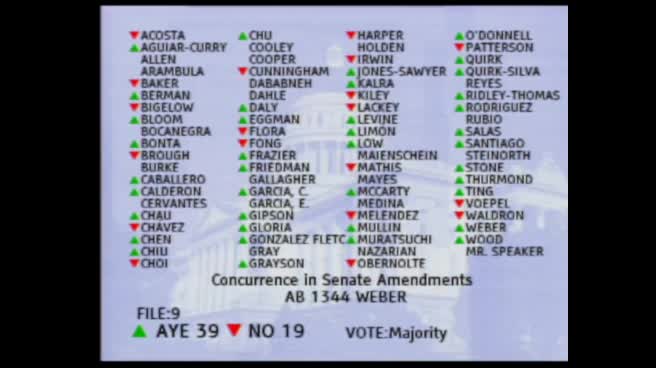


Bill Co-Author(s):