AB 418: Elementary and secondary education: Computer Science Education Grant Pilot Program.
- Session Year: 2017-2018
- House: Assembly
- Latest Version Date: 2017-02-09
Existing law establishes a system of public elementary and secondary schools in this state, and authorizes school districts and other local educational agencies to provide instruction to pupils in kindergarten and grades 1 to 12, inclusive. Existing law establishes a course of study for pupils in these grades.
This bill would establish the Computer Science Education Grant Pilot Program under the administration of the Superintendent of Public Instruction. Under the program, eligible local educational agencies, as defined, could apply to receive grants, not to exceed 2 years, to establish and maintain computer science courses in underserved areas and among pupils from groups historically underrepresented in the field of computer science, and to provide professional development for teachers to teach computer science, either as a stand-alone course or as integrated into other courses.
The bill would authorize any local educational agency in the state to apply for participation in the pilot program. The bill would specify minimum criteria to be applied by the Superintendent in evaluating applicant local educational agencies for possible participation in the pilot program, and authorize the Superintendent to consult with computer science experts to discuss and refine these criteria, as specified.
The bill would establish the Computer Science Education Grant Matching Account in the State Treasury. The bill would authorize the State Treasury to receive, and deposit into the account, any gifts, grants, or donations received for purposes of the bill from private persons or entities. The bill would require local educational agencies receiving grants under the bill to provide local matching resources, which may include in-kind donations, constituting an amount equaling the amount that would be allocated to the local educational agency from the Computer Science Education Grant Matching Account. The bill would express the intent of the Legislature that no moneys from the state General Fund be used to fund the grant pilot program established by the bill.
The bill would provide that the funds deposited in the account would be available, upon appropriation in the annual Budget Act or in another statute, to the Superintendent for purposes of the bill, provided that the Superintendent certifies, in writing, to the Director of Finance that there are sufficient funds, as defined, in the account to implement the bill. The bill would limit expenditures from the account to cover administrative costs to the State Department of Education to no more than 5% of the allocations made from the account in any fiscal year. The bill would authorize the Superintendent to refund to the donor all or a portion of any gift, grant, or donation made to the account by that donor if the funds received from that donor have not been encumbered because there are surplus funds in the account or because this provision has not become operative.
The bill would require the Superintendent to submit an annual report, containing specified data about the grant program, to the Governor and the Legislature on or before January 10, 2020, and on or before January 10 in 2021, 2022, and 2023.
The provisions of the bill would become inoperative on July 1, 2023, and would be repealed as of January 1, 2024.
The Legislature finds and declares all of the following:
(a)Computing is truly a 21st century skill; computer science exposure, when rooted in culturally relevant instruction and rigorous standards, has the potential to foster critical inquiry and develop problem-solving abilities that transcend the study of computer science and are highly relevant for all fields of study.
(1)Broad and coordinated efforts are needed to reverse disparities in computer science access, particularly for underrepresented pupils across the State of California.
(2)Reducing disparities in access to computer science coursework requires state-, district-, school-, and community-level funding and policy commitments.
(3)Computer science course availability is also low within the largest California school districts, most of which serve high populations of pupils of color and low-income pupils. According to a report issued in May 2015:
(A)Ten out of the largest 20 school districts in California do not offer Advanced Placement computer science.
(B)Five out of the largest 20 school districts in California do not offer any computer science courses.
(C)Of the 560,874 high school pupils in the largest 20 California school districts, less than 2 percent (8,136 pupils) are enrolled in any computer science course.
(b)The local control funding formula was enacted in July 2013 (Chapter 47 of the Statutes of 2013).
(1)Previously, more than 40 state categorical programs provided restricted state dollars that school districts could use for only certain activities.
(2)The local control funding formula removed spending restrictions and established grade span-specific base rates.
(3)School districts also receive supplemental and concentration funding for unduplicated counts of pupils who are classified as being English learners or low-income, based on eligibility for a free or reduced-price meal, or foster youths.
(c)For the reasons indicated above, this act keeps with the spirit of local control by developing state-level and district-level funding strategies to increase access to both introductory and advanced placement computer science coursework across all California local educational agencies. Further, it expands and strengthens the states computing teacher workforce by providing funds for professional development on this subject.
(d)This act tries to remedy these inequities by allowing, but not requiring, local educational agencies to use their local control funding formula allocations so they can receive matching grant funds to establish, maintain, and expand computer science courses, and to provide professional development for these purposes under the Computer Science Education Grant Pilot Program. These matching grant funds will be supplied by private contributions and donations, specifically from technology industries.
SEC. 2.Chapter 13.5 (commencing with Section 52975) is added to Part 28 of Division 4 of Title 2 of the Education Code, to read:13.5.Computer Science Education Grant Pilot Program1.General Provisions52975.(a)(1)The Superintendent shall establish a public-private computer science education grant pilot program, the Computer Science Education Grant Pilot Program, through which a participating local educational agency may receive funding to establish and expand computer science courses, to maintain computer science courses previously established or expanded under this program, and to provide professional development for teachers to teach computer science, either as a stand-alone course or as integrated into other courses. Any local educational agency may apply for participation in this grant pilot program.
(2)For purposes of this chapter, local educational agency shall have the same meaning as in Section 421, as that section read on January 1, 2017.
(b)The Superintendent shall provide notice of this pilot program to all local educational agencies throughout the state, and encourage them to apply for participation in this grant pilot program.
(c)The Superintendent shall award grants, not to exceed two years in duration, to local educational agencies under this chapter to applicants he or she deems to be eligible. A local educational agency that receives a grant under this chapter may apply for a grant in a subsequent year, but grants under this chapter shall not be automatically renewed for an additional year or years. The Superintendent shall not award any grant under this chapter unless the Superintendent determines that there are sufficient moneys in the Computer Science Education Grant Matching Account established under Article 3 (commencing with Section 52978) to fund that grant. In order to be deemed eligible for the grant pilot program, a local educational agency, at a minimum, shall meet at least two of the following criteria:
(1)Demonstrate engaged and committed leadership in support of introducing pupils who would not otherwise have these opportunities to study computer science.
(2)Demonstrate a plan to engage these pupils with the subject matter of computer science.
(3)Demonstrate that certificated staff of the local educational agency are appropriately trained to carry out the plan.
(4)Demonstrate the capacity to maximize the use of grant resources by addressing the availability of appropriate physical space and technology, projected enrollment, and other specific requirements set forth by the Superintendent.
(5)Demonstrate a history of successful partnerships within the community and partner support for computer science. Partnership support may include, but is not necessarily limited to, supplying materials or technology, instruction support, internships, mentorships, and apprenticeships.
(6)Demonstrate the capacity to continue in the school years succeeding the initial grant year or years.
(d)The Superintendent may consult with computer science experts to discuss and refine the eligibility criteria listed in subdivision (c). For purposes of this subdivision, the Superintendent may use the same group of computer science experts selected pursuant to Section 60605.4.
2.Computer Science Education Grant Pilot Program Provisions52976.(a)The Computer Science Education Grant Pilot Program is a competitive grant program that is intended to support both of the following:
(1)Innovative ways to introduce pupils in underserved areas and pupils from groups historically underrepresented in the field of computer science who would not otherwise have those opportunities to study computer science and inspire them to enter computer science careers.
(2)Professional development for teachers to acquire the knowledge and skills necessary to teach computer science, either as a stand-alone course or as integrated into other courses.
(b)In awarding grants under this section, the Superintendent shall give priority to applicant local educational agencies with higher percentages of unduplicated pupils, as defined in Section 42238.02, and, as much as feasible, shall award grants to local educational agencies that collectively represent the geographic and socioeconomic diversity of this state. An applicant for a grant under this section shall submit a specific plan, developed in consultation with teachers employed by the applicant local educational agency, for either, or both, of the following:
(1)A computer science course designed to be of maximum value in meeting the particular needs of the pupils of that local educational agency, including pupils from groups historically underrepresented in the field of computer science.
(2)Professional development for teachers employed by that local educational agency to acquire the knowledge and skills necessary to teach computer science to that local educational agencys pupils, either as a stand-alone course or as integrated into other courses.
(c)Grant funds awarded under this section may be used for purposes associated with the costs of establishing or expanding computer science courses, or maintaining computer science courses that were previously established or expanded under this program, including instructional materials, hardware, software, and firmware, and to fund professional development related to computer science education for participating teachers in accordance with the submitted plan.
(d)The grant application for this program shall be on a form developed by the Superintendent and shall include, at a minimum, an itemized budget for use of the grant funds, an identification of local matching resources constituting an amount equaling the amount that would be allocated to the local educational agency from the Computer Science Education Grant Matching Account established by Section 52978, and an agreement by the grant recipient to provide the Superintendent the data needed to complete the report required by Section 52979.
3.Funding and Reporting52978.(a)The Computer Science Education Grant Matching Account is established in the State Treasury. This account shall be used solely and exclusively for the pilot program created in this chapter. The purpose of the account is to provide funds for the Computer Science Education Grant Pilot Program established under Article 2 (commencing with Section 52976). Grants under this chapter, and related administrative costs, shall be funded by a combination of funds from the account and matching funds provided by a participating local educational agency. A local educational agency that receives a grant under this chapter shall provide local matching resources, which may include in-kind donations, constituting an amount equaling the amount that would be allocated to the local educational agency from the Computer Science Education Grant Matching Account. It is the intent of the Legislature that no moneys from the state General Fund be used to fund the grant pilot program established by this chapter.
(b)Notwithstanding any other law, the State Treasury is authorized to receive, and deposit into the account, any gifts, grants, or donations received for purposes of this chapter from private persons or entities. Expenditures from the account, with respect to a particular grant, shall not exceed the amount of corresponding matching funds.
52978.5.(a)The funds deposited in the Computer Science Education Grant Matching Account shall be available, upon appropriation in the annual Budget Act or in another statute, to the Superintendent for purposes of funding the grants established under this chapter, and covering related administrative costs to the department. Unencumbered funds shall be returned to their initial donors pursuant to subdivision (b). The administrative costs of the implementation of this chapter shall be kept to a minimum, and in no event shall expenditures from the account to cover administrative costs to the department exceed 5 percent of the allocations made from the account in any fiscal year.
(b)The Superintendent is authorized to refund to the donor all or a portion of any gift, grant, or donation made to the account by that donor if the funds received from the donor have not been encumbered because the Superintendent has determined that there are surplus funds in the account or because, pursuant to subdivision (c), this section has not become operative.
(c)This section shall not become operative unless and until the Superintendent certifies, in writing, to the Director of Finance that there are sufficient funds in the account to implement this chapter. For purposes of this section, sufficient funds is defined as an amount sufficient to support at least two grants and the associated administrative costs to the department in the program established by this chapter.
52979.The Superintendent shall submit an annual report to the Governor and the Legislature on the programs established under this chapter. This report shall be submitted on or before January 10, 2020, and on or before January 10 in 2021, 2022, and 2023, in compliance with Section 9795 of the Government Code. The report shall include, but not necessarily be limited to, all of the following data:
(a)The number of applicants and grants awarded annually.
(b)The number of pupil participants annually, the number of unduplicated pupils, as defined in Section 42238.02, and pupils from groups historically underrepresented in the field of computer science, who have taken a computer science course, or have taken a computer science course with a teacher trained as a result of this program, and to the extent available, any increase in the number of pupils who enroll or intend to enroll in computer science programs at postsecondary educational institutions.
(c)The increase in the number of courses offered and teachers trained in computer science as a result of the grants made under this chapter.
(d)The amount of grant funds awarded each fiscal year, classified by local educational agency.
52979.5.This chapter shall become inoperative on July 1, 2023, and, as of January 1, 2024, is repealed, unless a later enacted statute, that becomes operative on or before January 1, 2024, deletes or extends the dates on which it becomes inoperative and is repealed.
|
Date
|
Status
|
|---|---|
| Feb 1, 2018 | From committee: Filed with the Chief Clerk pursuant to Joint Rule 56. |
| Jan 31, 2018 | Died pursuant to Art. IV, Sec. 10(c) of the Constitution. |
| May 26, 2017 | In committee: Held under submission. |
| Apr 5, 2017 | In committee: Set, first hearing. Referred to APPR. suspense file. |
| Mar 16, 2017 | From committee: Do pass and re-refer to Com. on APPR. (Ayes 7. Noes 0.) (March 15). Re-referred to Com. on APPR. |
| Feb 21, 2017 | Referred to Com. on ED. |
| Feb 10, 2017 | From printer. May be heard in committee March 12. |
| Feb 9, 2017 | Read first time. To print. |
|
Date
|
Description
|
Location
|
Votes
|
|
|---|---|---|---|---|
| Mar 15, 2017 | Do pass and be re-referred to the Committee on [Appropriations] | Assembly Standing Committee on Education |
Passed |
This list shows positions taken on this bill by organizations on the date displayed, which is linked to the original source.
Positions by individuals are not included.
Date of Hearing: April 5, 2017
ASSEMBLY COMMITTEE ON APPROPRIATIONS
Lorena Gonzalez Fletcher, Chair
ABPCA Bill Id:AB 418
Author:(Chau) – As Introduced Ver:February 9, 2017
Policy Committee: | Education | Vote: | 7 - 0 |
Urgency: No State Mandated Local Program: No Reimbursable: No
SUMMARY:
This bill requires the Superintendent of Public Instruction (SPI) to establish a public-private Computer Science Education Grant pilot program to increase participation in computer science courses, particularly for students historically underrepresented in the field of computer science, and to provide professional development for teachers in computer science. Specifically, this bill:
- States Legislative intent that no funds from the state General Fund be used to fund the grant program established by the bill.
- Requires the SPI to establish a public-private computer science education grant pilot program through which a participating local educational agency (LEA), defined as a school district, a charter school, or a county office of education, may receive funding to establish and expand or maintain computer science courses, and to provide professional development for teachers to teach computer science, either as a stand-alone course or integrated into other courses.
- Authorizes grant funds to be used for purposes associated with the costs of establishing or expanding computer science courses, or maintaining computer science courses that were previously established or expanded pursuant to this bill, including instructional materials, hardware, software, and firmware, and to fund professional development related to computer science education for participating teachers in accordance with the submitted plan.
- Requires the SPI to award grants, not to exceed two years in duration, to applicant LEAs deemed eligible by the SPI. Authorizes an LEA that receives a grant to apply for a grant in a subsequent year, and prohibits grants from being automatically renewed for an additional year. Prohibits the SPI from awarding grants unless he determines there are sufficient funds in the Computer Science Education Grant Matching Account.
- Requires grants, and related administrative costs, to be funded by a combination of funds from the account and matching funds provided by a participating LEA.
- Requires an LEA that receives a grant to provide local matching resources, which may include in-kind donations, constituting an amount equal to the amount that would be allocated to the LEA from the account.
- Requires the funds deposited in the account to be available, upon appropriation in the annual Budget Act or in another statute, to the SPI, for the purpose of funding grants and covering related administrative costs to the California Department of Education (CDE). Limits administrative costs to 5% of the allocations made from the account in any fiscal year.
- Requires the SPI to submit an annual report to the Governor and the Legislature on the grant pilot program. This bill requires the report to be submitted by January 10, beginning in 2020, and annually thereafter through 2023.
- Sunsets the provisions of this bill on July 1, 2023.
FISCAL EFFECT:
Cost to establishing the grant program: The CDE estimates costs of over $232,000 in funds to establish the program by promoting and advocating for donations and/or grants from non-state sources. Staff is needed to develop donor materials, applicant grant guidelines, administer grant donation reporting’s and design a website for donors and applicants. CDE will need ongoing funding to promote or advocate for donations and/or grants from non-state sources.
Administering the program: Administering these new grants will depend on the size and scope of the grants. The bill does not provide a specific grant amount and specifies that the funding shall be contingent upon "sufficient funds” in the newly created fund. Annual administrative cost over $200,000 for the life of the pilot can be expected. Staff will be needed to create and disseminate grant information materials for private donors, develop a grant applicant website with reporting requirements, notify grant recipients, monitor account funds, and collect data to comply with annual reporting requirements. The department will also incur additional costs for the grant selection committee expenses, grant oversight travel, mailings and technical support. However, this bill limits administrative costs to 5% of the funds collected.
COMMENTS:
- Purpose. According to the author, early exposure and equal access is essential for all students to excel in the fundamentals of computer science and its connection to innovation and emerging technologies.
- Local Control. This bill establishes a new grant program. With the establishment of the Local Control Funding Formula (LCFF) in 2013, approximately three-quarters of programs dedicated for specific purposes were eliminated, and the funds previously dedicated for these programs were incorporated into the LCFF. LCFF funds can be used for any purpose in accordance with the LCAP, which is developed locally to meet the needs of each district.
- Related Budget Item. Legislation to establish a computer science strategic plan was recently signed and the Governor now proposes a one year delay in budget trailer bill. AB 2339 (Bonilla) Chapter 693, Statutes of 2016 requires the SPI to convene a 23 member computer science strategic implementation advisory panel to develop recommendations for a computer science strategic implementation plan, to be adopted by the SBE by January 1, 2019. This plan should address many of the aspects of computer science instruction in California.
Analysis Prepared by: Daisy Gonzales / APPR. / (916) 319-2081
Date of Hearing: March 15, 2017
ASSEMBLY COMMITTEE ON EDUCATION
Patrick O'Donnell, Chair
ABPCA Bill Id:AB 418 (
Author:Chau) – As Introduced Ver:February 9, 2017
SUBJECT: Elementary and secondary education: Computer Science Education Grant Pilot Program
SUMMARY: Requires the Superintendent of Public Instruction (SPI) to establish a computer science education grant pilot program to increase participation in computer science courses, particularly for students historically underrepresented in the field of computer science, and to provide professional development for teachers in computer science. Specifically, this bill:
- Makes findings and declarations relative to the importance of instruction in computer science.
- States Legislative intent that no funds from the state General Fund be used to fund the grant program established by the bill.
- Requires the SPI to establish a public-private computer science education grant pilot program through which a participating local educational agency (LEA), defined as a school district, a charter school, or a county office of education, may receive funding to establish and expand or maintain computer science courses, and to provide professional development for teachers to teach computer science, either as a stand-alone course or integrated into other courses.
- Establishes the program as the Computer Science Education Grant Pilot Program, which is intended to support both of the following:
- innovative ways to introduce students in underserved areas and students from groups historically underrepresented in the field to computer science, and to inspire them to enter computer science careers
- professional development for teachers to acquire the knowledge and skills necessary to teach computer science, either as a stand-alone course or as integrated into other courses.
- Requires LEAs to demonstrate at least two of the following criteria to be eligible for a grant:
- engaged and committed leadership in support of introducing students who would not otherwise have opportunities to study computer science
- a plan to engage these students with the subject matter of computer science
- demonstration that certificated staff of the LEA are appropriately trained to carry out the plan
- the capacity to maximize the use of grant resources by addressing the availability of appropriate physical space and technology, projected enrollment, and other specific requirements set forth by the SPI
- a history of successful partnerships within the community and partner support for computer science
- The capacity to continue in the school years succeeding the initial grant year or years.
- Requires the SPI to give priority for awarding grants to applicant LEAs with higher percentages of unduplicated students as identified in the Local Control Funding Formula and as much as feasible, award grants to LEAs that collectively represent the geographic and socioeconomic diversity of the State.
- Authorizes the SPI to consult with computer science experts to discuss and refine the eligibility criteria, and authorizes the SPI to consult with the panel of experts to be convened to develop the computer science content standards, pursuant to current law.
- Requires an applicant LEA to submit a specific plan, developed in consultation with teachers employed by the applicant LEA, for either, or both, of the following:
- a computer science course designed to be of maximum value in meeting the particular needs of the students of that LEA, including students from groups historically underrepresented in the field of computer science
- professional development for teachers employed by that LEA to acquire the knowledge and skills necessary to teach computer science, either as a stand-alone course or as integrated into other courses
- Requires the grant application to be on a form developed by the SPI and include, at a minimum, an itemized budget for the use of the grant funds, an identification of local matching resources constituting an amount equaling the amount that would be allocated from the grant pilot program, and an agreement by the grant recipient to provide the SPI with the data needed to complete a report required by the act.
- Authorizes grant funds to be used for purposes associated with the costs of establishing or expanding computer science courses, or maintaining computer science courses that were previously established or expanded pursuant to this bill, including instructional materials, hardware, software, and firmware, and to fund professional development related to computer science education for participating teachers in accordance with the submitted plan.
- Requires the SPI to award grants, not to exceed two years in duration, to applicant LEAs deemed eligible by the SPI. Authorizes an LEA that receives a grant to apply for a grant in a subsequent year, and prohibits grants from being automatically renewed for an additional year. Prohibits the SPI from awarding grants unless she determines there are sufficient funds in the Computer Science Education Grant Matching Account.
- Establishes the Computer Science Education Grant Matching Account in the State Treasury, to be used solely and exclusively for the grant pilot program pursuant to this bill.
- Requires grants, and related administrative costs, to be funded by a combination of funds from the account and matching funds provided by a participating LEA.
- Requires an LEA that receives a grant to provide local matching resources, which may include in-kind donations, constituting an amount equal to the amount that would be allocated to the LEA from the account.
- Authorizes the State Treasury to receive, and deposit into the Computer Science Education Grant Matching Account, any gifts, grants, or donations received from private persons or entities.
- Requires the funds deposited in the account to be available, upon appropriation in the annual Budget Act or in another statute, to the SPI, for the purpose of funding grants and covering related administrative costs to the California Department of Education (CDE).
- Limits administrative costs to 5% of the allocations made from the account in any fiscal year.
- Requires unencumbered funds to be returned to their initial donors.
- Prohibits the provisions related to the account from becoming operative unless and until the SPI certifies, in writing, to the Director of Finance that there are sufficient funds in the account to implement the grant pilot program. “Sufficient funds” are defined as an amount sufficient to support at least two grants and the associated administrative costs to the CDE.
- Requires the SPI to submit an annual report to the Governor and the Legislature on the grant pilot program. This bill requires the report to be submitted by January 10, beginning in 2020, and annually thereafter through 2023. Requires the report to include the following:
- the number of applicants and grants awarded annually
- the number of student participants annually, the number of unduplicated students and students from groups historically underrepresented in the field of computer science, who have taken a computer science course or a computer science course with a teacher trained pursuant to the grant pilot program, and to the extent available, any increase in the number of students who enroll or intend to enroll in computer science programs at postsecondary educational institutions
- the increase in the number of courses offered and teachers trained in computer science as a result of the grant pilot program
- the amount of grant funds awarded each fiscal year, classified by LEA
- Requires the SPI to provide notice of the grant pilot program to all LEAs and encourage them to apply for participation. Authorizes any LEA to apply for participation in the grant pilot program.
- Sunsets the provisions of this bill on July 1, 2023.
EXISTING LAW:
- Requires the SPI to convene a 23 member computer science strategic implementation advisory panel to develop recommendations for a computer science strategic implementation plan, to be adopted by the SBE by January 1, 2019. Requires the SPI to appoint a statewide computer science liaison to serve the advisory panel.
- Requires the Instructional Quality Commission (IQC) to consider developing and recommending to the SBE, on or before July 31, 2019, computer science content standards for kindergarten and grades 1 to 12 pursuant to recommendations developed by a group of computer science experts.
- Requires that, if the governing board of a school district requires more than two courses in mathematics for graduation from high school, the governing board of the school district may award a pupil up to one mathematics course credit for successfully completing a “category C” approved computer science course.
- Requires that, on or before July 31, 2019, the IQC consider developing and recommending to the state board computer science content standards for kindergarten and grades 1 to 12, inclusive, pursuant to recommendations developed by a group of computer science experts.
- Requires the Trustees of the California State University, and requests the Regents of the University of California, to establish a uniform set of academic standards, and create guidelines for high school computer science courses, to satisfy the “A-G” subject requirements for the area of mathematics for purposes of recognition for undergraduate admission at their respective institutions.
FISCAL EFFECT: Unknown
COMMENTS:
Need for the bill. The author’s office states, “Computer science and the emerging technologies it enables directly impact California’s industries and economy. According to the U.S Bureau of Labor Statistics, it is predicted that by the year 2020, 4.6 million jobs will be in computing or information technology, which is more than all other science, technology, engineering, and mathematics (STEM) fields combined.
California policymakers, business leaders, and educators understand the value of computer science education, as evidenced by the numerous bills signed into law between 2013-2016. The Commission on Teacher Credentialing has also finished modifying its accrediting program for Supplementary Authorization in Computer Science to reflect a change in focus from only teaching basic computer use, keyboarding, and software application to a broader preparation inclusive of a full K-12 computer science education. The changes became effective July 1, 2016, and now require content in computational thinking, computer practice and programing, computer and communication devices, impacts of computing, data structure and algorithms, digital devices, systems and networks, and software design.
As we continue to move towards integrating computer science into all K-12 classrooms, we must also improve the future participation and success of underrepresented populations in this field of study. When we look at the number of students that took the Advanced Placement Computer Science exam in California in 2016, out of the 54,379 students, 146 were African-American, 1,487 were Hispanic, and 2,770 were females. Consequently, there is a need to incentivize school districts to support innovative ways to introduce and engage students from historically underrepresented groups to computer science. At the same time, it is critical to encourage school districts to offer professional development to their teachers on this emerging subject matter.
Early exposure and equal access is essential for all students to excel in the fundamentals of computer science and its connection to innovation and emerging technologies. As the world continues to move towards a technology intensive society, we as state leaders must do more to bring computer science to all California students.”
Legislation to establish a computer science strategic plan recently signed; Governor proposes one year delay and other changes in budget trailer bill. AB 2339 (Bonilla) Chapter 693, Statutes of 2016 requires the SPI to convene a 23 member computer science strategic implementation advisory panel to develop recommendations for a computer science strategic implementation plan, to be adopted by the SBE by January 1, 2019. Current law also requires the SPI to appoint a statewide computer science liaison to serve the advisory panel.
This plan would address many aspects of computer science instruction in California, including recommendations for broadening the pool of teachers to teach computer science, ensuring that all pupils have access to quality computer science courses, removing local policy and regulatory barriers that LEAs face when implementing computer science education, and increasing the participation of pupils traditionally underrepresented in computer science education. With this planning process anticipated to address many of the structural issues keeping students from studying computer science, the Committee may wish to consider whether this bill is premature.
In the Governor’s Budget for 2017-18, the administration proposes a number of changes to the statute authorizing the computer science plan (in trailer bill language), including:
- Delaying by one year the implementation of the bill and moving the deadline for submittal and adoption of the plan from 2019 to 2020
- Shifting of appointment authority from the SPI to the Governor for eight of the eleven members of the panel currently appointed by the SPI
- Making SBE adoption of the plan optional, rather than required
- Eliminating the computer science liaison position
Disparities in access to computer science courses. According to a May 2015 report issued by the Level Playing Field Institute titled Path Not Found: Disparities in Access to Computer Science Courses in California High Schools, access to computer science courses varies considerably. The report found that in California public high schools:
- Of the more than half a million high school students in the largest 20 districts, just 1% are enrolled in any computer science course.
- Nearly 75% of schools with the highest percentage of underrepresented students of color offer no computer sciences courses.
- African-American and Latino students make up 59% of California high school public school students but comprised only 11% of the 2014 AP Computer Science test takers.
- Only 4% of schools with the highest percentage of low-income students offer AP Computer Science.
- Only 8% of schools with the highest percentage of English Learners offered AP Computer Science.
According to the 10th Annual AP Report to the Nation, out of nearly 500,000 California high school seniors, in 2013 only 0.7% took the AP Computer Science exam.
National and state focus on computer science: Computer science is an applied field of STEM learning that allows students to engage in hands-on, real-world interaction with key math, science, and engineering principles. According to the U.S. Bureau of Labor Statistics, it is predicted that by the year 2020, 4.6 million jobs will be in computing or information technology, which is more than all other STEM fields combined. In light of this demand, California policymakers, business leaders, and educators have made a conscious effort to expand computer science education, as evidenced by the numerous bills signed into law in recent Sessions.
In 2016 President Obama proposed a “Computer Science for All Initiative” totaling $4 billion over three years, for the purpose of increasing access to computer science in all classrooms. The proposal included competitive grants for “ambitious computer science expansion efforts” for all students, including traditionally underrepresented students.
While it appears that much of this proposal was not funded, in 2016 the National Science Foundation awarded $25 million in grants aimed at providing K-12 students the opportunity to participate in computer science and computational thinking education. The grants focus on researcher-practitioner partnerships that foster the research and development needed to bring computer science to all schools. Two examples of funded projects in California include one in Orange County aimed at developing a program of study to satisfy California’s new teacher certification pathway in Computer Science and preparing current teachers to teach Exploring Computer Science or Advanced Placement Computer Science Principles, and one in San Marcos on the effect of Latina high school student participation in CSU San Marcos women’s hackathons has on interest in pursuing computer science career pathway.
Status of computer science standards. Current law requires the IQC to consider developing and recommending to the SBE, on or before July 31, 2019, computer science content standards for kindergarten and grades 1 to 12 pursuant to recommendations developed by a group of computer science experts.
According to the CDE, the development of the computer science standards is now underway. Three focus group meetings were held in 2016 and Standards Advisory Committee members are being recruited. Standards are expected to be submitted by the IQC and SPI to the SBE in July, 2018, with adoption by the SBE in September, 2018.
Computer science as a high school graduation requirement. The San Francisco Unified School District (SFUSD) announced plans in June 2015 to phase-in teaching computer science to all students, at all schools, from preschool to 12th grade. While as of 2016, the curriculum was still under development, the district planned to have major concepts taught at each grade level. Even in preschool, students will use blocks to build robots in order to introduce the concepts of procedural thinking, cause and effect, decomposition of complex tasks, and pattern recognition, as well as the ability to notice similarities or common differences, abstraction and algorithm design and the ability to develop a step-by-step strategy for solving a problem.
As of the 2016-17 school year, SFUSD planned to have 13 middle schools will be offer a course, reaching approximately 30 percent of middle school age students with 45 hours of computer science instruction, up from one percent of middle school students who participated in a computer science course in the 2014-2015 school year. SFUSD predicts it will take several years before every student at every grade is learning computer science. Funding for the computer science expansion will come from the district, industry partnerships, and a $5 million grant from a private foundation.
The Chicago Public Schools (the nation’s third largest school district) are also in the process of establishing a K-12 computer science program. According to press reports, in the next three years every high school will offer a foundational computer science course, and in the next five years, at least half will also offer an Advanced Placement computer science course. Starting with this school year’s freshman high school class, students were expected to be required to complete computer science coursework prior to graduation.
Computer science in college admissions. Current state law requires the CSU, and requests the UC, to establish a uniform set of academic standards and to create guidelines for high school computer science courses which satisfy the “A-G” math requirements.
According to the CSU, if a computer science course if fundamentally grounded in math, then the CSU considers placing it in the “C” category. However, because there are vast differences in the types of computer sciences courses offered, the CSU currently evaluates each high school computer science course on a program-by-program basis. Additionally, they have found that the computer science courses offered that do satisfy “category C” requirements are few-and-far between.
Teacher certification in computer science. California has three Single Subject Teaching Credentials (Mathematics, Business, and Industrial and Technology Education) and a supplementary authorization (Computer Concepts and Applications) that authorize a teacher to provide instruction in computer science.
In a 2013 report titled Bugs in the System: Computer Science Teacher Certification in the U.S., the Computer Science Teachers Association wrote that, nationally, “teacher certification programs in this subject are confused, disparate and sometimes absurd,” and that the process is “typified by confounding processes and illogical procedures—bugs in the system that keep it from functioning as intended.” They recommended, among other changes, the establishment of pathways for people to transition from industry to teaching, the development of a Praxis Computer Science examination, and requirements for teacher preparation institutions to include programs to prepare computer science teachers.
California does not have a computer science single subject teaching credential, but does issue supplemental authorizations in computer science, which authorize credentialed teachers to teach it. As the author notes, the Commission on Teacher Credentialing (CTC) recently modified the Computer Concepts and Applications authorization to reflect a change in focus from teaching basic computer use, keyboarding, and software application to broader preparation in computer science education. The CTC also changed the name of the authorization to “Computer Science.” Teachers can now apply for the modified supplementary authorization.
A new grant program in the era of local control. This bill establishes a new categorical program. With the establishment of the Local Control Funding Formula (LCFF) in 2013, approximately three-quarters of all categorical programs were eliminated, and the funds previously dedicated for the programs were incorporated into the LCFF. The Committee may wish to consider whether the strategies proposed by this bill can be incorporated in a school district's Local Control and Accountability Plan (LCAP) and funded locally, either independently or through public-private partnerships. LCFF can be used for any purpose in accordance with the LCAP, which is developed locally to meet the needs of each district.
Prior legislation. AB 1258 (Chau) of the 2015-16 Session would have established a similar program requiring the SPI to establish a computer science education grant pilot program for LEAs to establish, expand and maintain computer science courses and creating a separate program to provide professional development in computer science to teachers. This bill was held in the Senate Appropriations Committee.
AB 2339 (Bonilla) Chapter 693, Statutes of 2016 requires the SPI to convene a computer science strategic implementation advisory panel to develop recommendations for a computer science strategic implementation plan.
AB 2275 (Dababneh) of the 2015-16 Session would have authorized a person who holds a single subject credential in business, industrial and technology education, mathematics or science to teach courses in computer science. This bill was referred to this Committee but was never heard.
AB 1539 (Hagman) Chapter 876, Statutes of 2014 requires the IQC to consider developing and recommending to the SBE, on or before July 31, 2019, computer science content standards for kindergarten and grades 1 to 12 pursuant to recommendations developed by a group of computer science experts.
AB 1530 (Chau) of the 2013-14 Session would have required the SPI to consider identifying existing model curricula for kindergarten to grade 6 on computer science. The bill would also have required the SPI to consider the revision of existing, or the development of new, model curricula on computer science, and to consider submitting any model curricula revised or developed as a result of this bill to the SBE for adoption. This bill was held in the Senate Appropriations Committee.
AB 1540 (Hagman) of the 2013-14 Session would have expanded opportunities for high school pupils to concurrently enroll in a community college to undertake one or more courses in computer science. This bill was held in the Assembly Appropriations Committee.
AB 2110 (Ting) of the 2013-14 Session would have required the IQC to consider incorporating computer science curriculum content into the mathematics, science, history-social science, and English language arts/English language development curriculum frameworks when those frameworks are next revised. This bill was held in the Senate Appropriations Committee.
AB 1764 (Olsen) Chapter 888, Statutes of 2014 authorizes the governing board of a school district that requires more than two courses in mathematics for graduation to award a student up to one mathematics course credit for successfully completing an approved computer science course.
SB 1200 (Padilla) Chapter 158, Statutes of 2014 requires the Trustees of the California State University, and requests the Regents of the University of California, to establish a uniform set of academic standards and create guidelines for high school computer science courses which would satisfy the “A-G” subject requirements for the area of mathematics for purposes of recognition for undergraduate admission at their respective institutions.
REGISTERED SUPPORT / OPPOSITION:
Support
None on file
Opposition
None on file
Analysis Prepared by: Tanya Lieberman / ED. / (916) 319-2087
Discussed in Hearing
 1H
Assembly Standing Committee on Appropriations
 9MIN
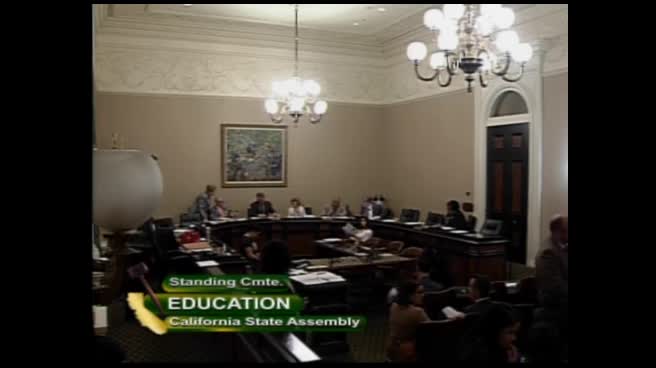
Assembly Standing Committee on Education
Bill Author

Bill Co-Author(s):
