AB 479: Workers’ compensation: permanent disability apportionment.
- Session Year: 2017-2018
- House: Assembly
- Latest Version Date: 2018-08-22
Existing workers compensation law generally requires employers to secure payment of workers compensation, including medical treatment, for injuries incurred by their employees that arise out of, or in the course of, employment. An employer is liable only for the percentage of permanent disability directly caused by the injury arising out of, and occurring in the course of, employment.
Existing law requires apportionment of permanent disability to be based on causation, and a physician who prepares a report addressing the issue of permanent disability due to a claimed industrial injury is required to address the issue of causation of the permanent disability. The physician is required to make an apportionment determination by finding the approximate percentage of permanent disability that was caused by the direct result of injury arising out of and occurring in the course of employment, and the approximate percentage of the permanent disability that was caused by other factors both before and subsequent to the industrial injury, including prior industrial injuries. Existing law requires the determination of the percentages of permanent partial or permanent total disability to incorporate specified descriptions and measurements of physical impairments and provides for disability ratings schedules. Existing law also specifically requires the administrative director to adopt at a public hearing regulations concerning procedures to be followed by all physicians in evaluating the existence and extent of permanent impairment and limitations resulting from an injury in a manner consistent with the provisions governing apportionment, as specified.
The bill would require, if an employee sustains an injury arising out of and in the course of employment resulting in breast cancer, specified impairments to be considered, including the presence or absence of the organ, skin disfigurement, and pain, among other things. The bill would also provide that whether the person is of childbearing age shall not be a determining factor when determining impairment due to breast cancer.
Existing workers compensation law generally requires employers to secure payment of workers compensation, including medical treatment, for injuries incurred by their employees that arise out of, or in the course of, employment. An employer is liable only for the percentage of permanent disability directly caused by the injury arising out of, and occurring in the course of, employment.
Existing law requires apportionment of permanent disability to be based on causation, and a physician who prepares a report addressing the issue of permanent disability due to a claimed industrial injury is required to address the issue of causation of the permanent disability. The physician is required to make an apportionment determination by finding the approximate percentage of permanent disability that was caused by the direct result of injury arising out of and occurring in the course of employment, and the approximate percentage of the permanent disability that was caused by other factors both before and subsequent to the industrial injury, including prior industrial injuries. Existing law requires the determination of the percentages of permanent partial or permanent total disability to incorporate specified descriptions and measurements of physical impairments and provides for disability ratings schedules. Existing law also specifically requires the administrative director to adopt at a public hearing regulations concerning procedures to be followed by all physicians in evaluating the existence and extent of permanent impairment and limitations resulting from an injury in a manner consistent with the provisions governing apportionment, as specified.
The bill would require, when if an employee sustains an injury arising out of and in the course of employment resulting in breast cancer, specified impairments to be considered, including the presence or absence of the organ, skin disfigurement, and pain, among other things. The bill would also provide that whether the person is of childbearing age shall not be a determining factor when determining impairment due to breast cancer.
Existing workers compensation law generally requires employers to secure payment of workers compensation, including medical treatment, for injuries incurred by their employees that arise out of, or in the course of, employment. An employer is liable only for the percentage of permanent disability directly caused by the injury arising out of, and occurring in the course of, employment.
Existing law requires apportionment of permanent disability to be based on causation, and a physician who prepares a report addressing the issue of permanent disability due to a claimed industrial injury is required to address the issue of causation of the permanent disability. The physician is required to make an apportionment determination by finding the approximate percentage of permanent disability that was caused by the direct result of injury arising out of and occurring in the course of employment, and the approximate percentage of the permanent disability that was caused by other factors both before and subsequent to the industrial injury, including prior industrial injuries. Existing law requires the determination of the percentages of permanent partial or permanent total disability to incorporate specified descriptions and measurements of physical impairments and provides for disability ratings schedules. Existing law also specifically requires the administrative director to adopt at a public hearing regulations concerning procedures to be followed by all physicians in evaluating the existence and extent of permanent impairment and limitations resulting from an injury in a manner consistent with the provisions governing apportionment, as specified.
The bill would require, when injury due to breast cancer is claimed, an employee sustains an injury arising out of and in the course of employment resulting in breast cancer, specified impairments to be considered, including the presence or absence of the organ, skin disfigurement, and pain, among other things. The bill would also provide that whether the person is of child bearing childbearing age shall not be a determining factor when determining impairment due to breast cancer.
Existing workers compensation law generally requires employers to secure payment of workers compensation, including medical treatment, for injuries incurred by their employees that arise out of, or in the course of, employment. An employer is liable only for the percentage of permanent disability directly caused by the injury arising out of, and occurring in the course of, employment.
Existing law requires apportionment of permanent disability to be based on causation, and a physician who prepares a report addressing the issue of permanent disability due to a claimed industrial injury is required to address the issue of causation of the permanent disability. The physician is required to make an apportionment determination by finding the approximate percentage of permanent disability that was caused by the direct result of injury arising out of and occurring in the course of employment, and the approximate percentage of the permanent disability that was caused by other factors both before and subsequent to the industrial injury, including prior industrial injuries. Existing law requires the determination of the percentages of permanent partial or permanent total disability to incorporate specified descriptions and measurements of physical impairments and provides for disability ratings schedules. Existing law also specifically requires the administrative director to adopt at a public hearing regulations concerning procedures to be followed by all physicians in evaluating the existence and extent of permanent impairment and limitations resulting from an injury in a manner consistent with the provisions governing apportionment, as specified.
The bill would require, when injury due to breast cancer is claimed, specified impairments to be considered, including the presence or absence of the organ, skin disfigurement, and pain, among other things. The bill would also provide that whether the person is of child bearing age shall not be a determining factor when determining impairment due to breast cancer.
(1)Existing sales and use tax laws impose a tax on retailers measured by the gross receipts from the sale of tangible personal property sold at retail in this state, or on the storage, use, or other consumption in this state of tangible personal property purchased from a retailer for storage, use, or other consumption in this state. The Sales and Use Tax Law provides various exemptions from those taxes, including an exemption for the sale of, or the storage, use, or consumption of, medicines.This bill, beginning January 1, 2018, would exempt from those taxes the gross receipts from the sale in this state of, and the storage, use, or other consumption in this state of, wearable incontinence supplies designed, manufactured, processed, fabricated, or package for use by infants, children, or adults, and of tampons, sanitary napkins, menstrual sponges, and menstrual cups.The Bradley-Burns Uniform Local Sales and Use Tax Law authorizes cities and counties to impose local sales and use taxes in conformity with the Sales and Use Tax Law, and existing laws authorize districts, as specified, to impose transactions and use taxes in accordance with the Transactions and Use Tax Law, which generally conforms to the Sales and Use Tax Law. Amendments to the Sales and Use Tax Law are automatically incorporated into the local tax laws.Existing law requires the state to reimburse cities and counties for revenue losses caused by the enactment of sales and use tax exemptions.This bill would provide that, notwithstanding these provisions, no appropriation is made and the state shall not reimburse cities and counties for sales and use tax revenues lost by them pursuant to this bill.(2)The Alcoholic Beverage Tax Law imposes an excise tax, at specified rates, for the privilege of selling or possessing for sale beer, wine, sparkling wine, sparkling cider, and distilled spirits. The proceeds from the excise tax are deposited in the Alcohol Beverage Control Fund for transfer to the General Fund. The Alcoholic Beverage Tax Law also imposes a surtax, at specified rates, for the privilege of selling or possessing for sale, beer, wine, sparkling cider, and distilled spirits. The proceeds from the surtax are deposited into the General Fund.This bill, beginning on January 1, 2018, would impose an additional surtax, and a related floor stock tax, on distilled spirits at specified rates.By imposing an additional surtax on distilled spirits, this bill would include a change in state statute that would result in a taxpayer paying a higher tax within the meaning of Section 3 of Article XIIIA of the California Constitution, and thus would require for passage the approval of 2/3 of the membership of each house of the Legislature.This bill would take effect immediately as a tax levy.(1)Existing sales and use tax laws imposes impose a tax on retailers measured by the gross receipts from the sale of tangible personal property sold at retail in this state of, state, or on the storage, use, or other consumption in this state of, of tangible personal property purchased from a retailer for storage, use, or other consumption in this state. The Sales and Use Tax Law provides various exemptions from those taxes, including an exemption for the sale of, or the storage, use, or consumption of, medicines.
This bill would make a nonsubstantive change to those provisions.This bill, beginning January 1, 2018, would exempt from those taxes the gross receipts from the sale in this state of, and the storage, use, or other consumption in this state of, wearable incontinence supplies designed, manufactured, processed, fabricated, or package for use by infants, children, or adults, and of tampons, sanitary napkins, menstrual sponges, and menstrual cups.
The Bradley-Burns Uniform Local Sales and Use Tax Law authorizes cities and counties to impose local sales and use taxes in conformity with the Sales and Use Tax Law, and existing laws authorize districts, as specified, to impose transactions and use taxes in accordance with the Transactions and Use Tax Law, which generally conforms to the Sales and Use Tax Law. Amendments to the Sales and Use Tax Law are automatically incorporated into the local tax laws.
Existing law requires the state to reimburse cities and counties for revenue losses caused by the enactment of sales and use tax exemptions.
This bill would provide that, notwithstanding these provisions, no appropriation is made and the state shall not reimburse cities and counties for sales and use tax revenues lost by them pursuant to this bill.
(2)The Alcoholic Beverage Tax Law imposes an excise tax, at specified rates, for the privilege of selling or possessing for sale beer, wine, sparkling wine, sparkling cider, and distilled spirits. The proceeds from the excise tax are deposited in the Alcohol Beverage Control Fund for transfer to the General Fund. The Alcoholic Beverage Tax Law also imposes a surtax, at specified rates, for the privilege of selling or possessing for sale, beer, wine, sparkling cider, and distilled spirits. The proceeds from the surtax are deposited into the General Fund.
This bill, beginning on January 1, 2018, would impose an additional surtax, and a related floor stock tax, on distilled spirits at specified rates.
By imposing an additional surtax on distilled spirits, this bill would include a change in state statute that would result in a taxpayer paying a higher tax within the meaning of Section 3 of Article XIIIA of the California Constitution, and thus would require for passage the approval of 2/3 of the membership of each house of the Legislature.
This bill would take effect immediately as a tax levy.
Existing sales and use tax laws imposes a tax on retailers measured by the gross receipts from the sale of tangible personal property sold at retail in this state of, or on the storage, use, or other consumption in this state of, tangible personal property purchased from a retailer for storage, use, or other consumption in this state. The Sales and Use Tax Law provides various exemptions from those taxes, including an exemption for the sale of, or the storage, use, or consumption of, medicines.
This bill would make a nonsubstantive change to those provisions.
This section applies to injuries occurring on or after January 1, 2013.
(a)In determining the percentages of permanent partial or permanent total disability, account shall be taken of the nature of the physical injury or disfigurement, the occupation of the injured employee, and his or her age at the time of injury.
(b)For purposes of this section, the nature of the physical injury or disfigurement shall incorporate the descriptions and measurements of physical impairments and the corresponding percentages of impairments published in the American Medical Association (AMA) Guides to the Evaluation of Permanent Impairment (5th Edition) with the employees whole person impairment, as provided in the Guides, multiplied by an adjustment factor of 1.4.
(c)(1)Except as provided in paragraph (2), there shall be no increases in impairment ratings for sleep dysfunction, sexual dysfunction, or psychiatric disorder, or any combination thereof, arising out of a compensable physical injury. This section does not limit the ability of an injured employee to obtain treatment for sleep dysfunction, sexual dysfunction, or psychiatric disorder, if any, that are a consequence of an industrial injury.
(2)An increased impairment rating for psychiatric disorder shall not be subject to paragraph (1) if the compensable psychiatric injury resulted from either of the following:
(A)Being a victim of a violent act or direct exposure to a significant violent act within the meaning of Section 3208.3.
(B)A catastrophic injury, including, but not limited to, loss of a limb, paralysis, severe burn, or severe head injury.
(3)If an employee sustains an injury arising out of and in the course of employment resulting in breast cancer, both of the following shall apply:
(A)The impairments to be considered shall include all of the following:
(i)The presence or absence of the organ.
(ii)Any loss of function of the upper extremity or extremities, including loss of the range of motion, neurological deficits, and lymphedema.
(iii)Skin disfigurement.
(iv)Pain.
(v)Other impairments caused by the breast cancer, lack of the organ, or treatment related to the injury.
(B)Notwithstanding subdivision (b), whether the person is of childbearing age shall not be a determining factor when determining impairment.
(d)The administrative director may formulate a schedule of age and occupational modifiers and may amend the schedule for the determination of the age and occupational modifiers in accordance with this section. The Schedule for Rating Permanent Disabilities pursuant to the American Medical Association (AMA) Guides to the Evaluation of Permanent Impairment (5th Edition) and the schedule of age and occupational modifiers shall be available for public inspection and, without formal introduction in evidence, shall be prima facie evidence of the percentage of permanent disability to be attributed to each injury covered by the schedule. Until the schedule of age and occupational modifiers is amended, for injuries occurring on or after January 1, 2013, permanent disabilities shall be rated using the age and occupational modifiers in the permanent disability rating schedule adopted as of January 1, 2005.
(e)The schedule of age and occupational modifiers shall promote consistency, uniformity, and objectivity.
(f)The schedule of age and occupational modifiers and any amendment thereto or revision thereof shall apply prospectively and shall apply to and govern only those permanent disabilities that result from compensable injuries received or occurring on and after the effective date of the adoption of the schedule, amendment, or revision, as the case may be.
(g)This section does not preclude a finding of permanent total disability in accordance with Section 4662.
(h)In enacting Chapter 363 of the Statutes of 2012 it is not the intent of the Legislature to overrule the holding in Milpitas Unified School District v. Workers Comp. Appeals Bd. (Guzman) (2010) 187 Cal.App.4th 808.
(i)The Commission on Health and Safety and Workers Compensation shall conduct a study to compare average loss of earnings for employees who sustained work-related injuries with permanent disability ratings under the schedule, and shall report the results of the study to the appropriate policy and fiscal committees of the Legislature no later than January 1, 2016.
This section shall apply applies to injuries occurring on or after January 1, 2013.
(a)In determining the percentages of permanent partial or permanent total disability, account shall be taken of the nature of the physical injury or disfigurement, the occupation of the injured employee, and his or her age at the time of injury.
(b)For purposes of this section, the nature of the physical injury or disfigurement shall incorporate the descriptions and measurements of physical impairments and the corresponding percentages of impairments published in the American Medical Association (AMA) Guides to the Evaluation of Permanent Impairment (5th Edition) with the employees whole person impairment, as provided in the Guides, multiplied by an adjustment factor of 1.4.
(c)(1)Except as provided in paragraph (2), there shall be no increases in impairment ratings for sleep dysfunction, sexual dysfunction, or psychiatric disorder, or any combination thereof, arising out of a compensable physical injury. This section does not limit the ability of an injured employee to obtain treatment for sleep dysfunction, sexual dysfunction, or psychiatric disorder, if any, that are a consequence of an industrial injury.
(2)An increased impairment rating for psychiatric disorder shall not be subject to paragraph (1) if the compensable psychiatric injury resulted from either of the following:
(A)Being a victim of a violent act or direct exposure to a significant violent act within the meaning of Section 3208.3.
(B)A catastrophic injury, including, but not limited to, loss of a limb, paralysis, severe burn, or severe head injury.
(3)When If an employee sustains an injury arising out of and in the course of employment resulting in breast cancer, both of the following shall apply:
(A)The impairments to be considered shall include all of the following:
(i)The presence or absence of the organ.
(ii)Any loss of function of the upper extremity or extremities, including loss of the range of motion, neurological deficits, and lymphedema.
(iii)Skin disfigurement.
(iv)Pain.
(v)Other impairments caused by the breast cancer, lack of the organ, or treatment related to the injury.
(B)Notwithstanding subdivision (b), whether the person is of childbearing age shall not be a determining factor when determining impairment.
(d)The administrative director may formulate a schedule of age and occupational modifiers and may amend the schedule for the determination of the age and occupational modifiers in accordance with this section. The Schedule for Rating Permanent Disabilities pursuant to the American Medical Association (AMA) Guides to the Evaluation of Permanent Impairment (5th Edition) and the schedule of age and occupational modifiers shall be available for public inspection and, without formal introduction in evidence, shall be prima facie evidence of the percentage of permanent disability to be attributed to each injury covered by the schedule. Until the schedule of age and occupational modifiers is amended, for injuries occurring on or after January 1, 2013, permanent disabilities shall be rated using the age and occupational modifiers in the permanent disability rating schedule adopted as of January 1, 2005.
(e)The schedule of age and occupational modifiers shall promote consistency, uniformity, and objectivity.
(f)The schedule of age and occupational modifiers and any amendment thereto or revision thereof shall apply prospectively and shall apply to and govern only those permanent disabilities that result from compensable injuries received or occurring on and after the effective date of the adoption of the schedule, amendment, or revision, as the case may be.
(g)This section does not preclude a finding of permanent total disability in accordance with Section 4662.
(h)In enacting the act adding this section, Chapter 363 of the Statutes of 2012 it is not the intent of the Legislature to overrule the holding in Milpitas Unified School District v. Workers Comp. Appeals Bd. (Guzman) (2010) 187 Cal.App.4th 808.
(i)The Commission on Health and Safety and Workers Compensation shall conduct a study to compare average loss of earnings for employees who sustained work-related injuries with permanent disability ratings under the schedule, and shall report the results of the study to the appropriate policy and fiscal committees of the Legislature no later than January 1, 2016.
CORRECTIONS: TextPage 4.This section shall apply to injuries occurring on or after January 1, 2013.
(a)In determining the percentages of permanent partial or permanent total disability, account shall be taken of the nature of the physical injury or disfigurement, the occupation of the injured employee, and his or her age at the time of injury.
(b)For purposes of this section, the nature of the physical injury or disfigurement shall incorporate the descriptions and measurements of physical impairments and the corresponding percentages of impairments published in the American Medical Association (AMA) Guides to the Evaluation of Permanent Impairment (5th Edition) with the employees whole person impairment, as provided in the Guides, multiplied by an adjustment factor of 1.4.
(c)(1)Except as provided in paragraph (2), there shall be no increases in impairment ratings for sleep dysfunction, sexual dysfunction, or psychiatric disorder, or any combination thereof, arising out of a compensable physical injury. This section does not limit the ability of an injured employee to obtain treatment for sleep dysfunction, sexual dysfunction, or psychiatric disorder, if any, that are a consequence of an industrial injury.
(2)An increased impairment rating for psychiatric disorder shall not be subject to paragraph (1) if the compensable psychiatric injury resulted from either of the following:
(A)Being a victim of a violent act or direct exposure to a significant violent act within the meaning of Section 3208.3.
(B)A catastrophic injury, including, but not limited to, loss of a limb, paralysis, severe burn, or severe head injury.
(3)When injury due to breast cancer is claimed, an employee sustains an injury arising out of and in the course of employment resulting in breast cancer, both of the following shall apply:
(A)The impairments to be considered shall include all of the following:
(i)The presence or absence of the organ.
(ii)Any loss of function of the upper extremity or extremities, including loss of the range of motion, neurological deficits, and lymphedema.
(iii)Skin disfigurement.
(iv)Pain.
(v)Other impairments caused by the breast cancer, lack of the organ, or treatment related to the injury.
(B)Notwithstanding subdivision (b), whether the person is of child bearing childbearing age shall not be a determining factor when determining impairment.
(d)The administrative director may formulate a schedule of age and occupational modifiers and may amend the schedule for the determination of the age and occupational modifiers in accordance with this section. The Schedule for Rating Permanent Disabilities pursuant to the American Medical Association (AMA) Guides to the Evaluation of Permanent Impairment (5th Edition) and the schedule of age and occupational modifiers shall be available for public inspection and, without formal introduction in evidence, shall be prima facie evidence of the percentage of permanent disability to be attributed to each injury covered by the schedule. Until the schedule of age and occupational modifiers is amended, for injuries occurring on or after January 1, 2013, permanent disabilities shall be rated using the age and occupational modifiers in the permanent disability rating schedule adopted as of January 1, 2005.
(e)The schedule of age and occupational modifiers shall promote consistency, uniformity, and objectivity.
(f)The schedule of age and occupational modifiers and any amendment thereto or revision thereof shall apply prospectively and shall apply to and govern only those permanent disabilities that result from compensable injuries received or occurring on and after the effective date of the adoption of the schedule, amendment, or revision, as the case may be.
(g)This section does not preclude a finding of permanent total disability in accordance with Section 4662.
(h)In enacting the act adding this section, it is not the intent of the Legislature to overrule the holding in Milpitas Unified School District v. Workers Comp. Appeals Bd. (Guzman) (2010) 187 Cal.App.4th 808.
(i)The Commission on Health and Safety and Workers Compensation shall conduct a study to compare average loss of earnings for employees who sustained work-related injuries with permanent disability ratings under the schedule, and shall report the results of the study to the appropriate policy and fiscal committees of the Legislature no later than January 1, 2016.
This section shall apply to injuries occurring on or after January 1, 2013.
(a)In determining the percentages of permanent partial or permanent total disability, account shall be taken of the nature of the physical injury or disfigurement, the occupation of the injured employee, and his or her age at the time of injury.
(b)For purposes of this section, the nature of the physical injury or disfigurement shall incorporate the descriptions and measurements of physical impairments and the corresponding percentages of impairments published in the American Medical Association (AMA) Guides to the Evaluation of Permanent Impairment (5th Edition) with the employees whole person impairment, as provided in the Guides, multiplied by an adjustment factor of 1.4.
(c)(1)Except as provided in paragraph (2), there shall be no increases in impairment ratings for sleep dysfunction, sexual dysfunction, or psychiatric disorder, or any combination thereof, arising out of a compensable physical injury. Nothing in this section shall This section does not limit the ability of an injured employee to obtain treatment for sleep dysfunction, sexual dysfunction, or psychiatric disorder, if any, that are a consequence of an industrial injury.
(2)An increased impairment rating for psychiatric disorder shall not be subject to paragraph (1) if the compensable psychiatric injury resulted from either of the following:
(A)Being a victim of a violent act or direct exposure to a significant violent act within the meaning of Section 3208.3.
(B)A catastrophic injury, including, but not limited to, loss of a limb, paralysis, severe burn, or severe head injury.
(3)When injury due to breast cancer is claimed, both of the following shall apply:
(A)The impairments to be considered shall include all of the following:
(i)The presence or absence of the organ.
(ii)Any loss of function of the upper extremity or extremities, including loss of the range of motion, neurological deficits, and lymphedema.
(iii)Skin disfigurement.
(iv)Pain.
(v)Other impairments caused by the breast cancer, lack of the organ, or treatment related to the injury.
(B)Notwithstanding subdivision (b), whether the person is of child bearing age shall not be a determining factor when determining impairment.
(d)The administrative director may formulate a schedule of age and occupational modifiers and may amend the schedule for the determination of the age and occupational modifiers in accordance with this section. The Schedule for Rating Permanent Disabilities pursuant to the American Medical Association (AMA) Guides to the Evaluation of Permanent Impairment (5th Edition) and the schedule of age and occupational modifiers shall be available for public inspection and, without formal introduction in evidence, shall be prima facie evidence of the percentage of permanent disability to be attributed to each injury covered by the schedule. Until the schedule of age and occupational modifiers is amended, for injuries occurring on or after January 1, 2013, permanent disabilities shall be rated using the age and occupational modifiers in the permanent disability rating schedule adopted as of January 1, 2005.
(e)The schedule of age and occupational modifiers shall promote consistency, uniformity, and objectivity.
(f)The schedule of age and occupational modifiers and any amendment thereto or revision thereof shall apply prospectively and shall apply to and govern only those permanent disabilities that result from compensable injuries received or occurring on and after the effective date of the adoption of the schedule, amendment, or revision, as the case may be.
(g)Nothing in this section shall This section does not preclude a finding of permanent total disability in accordance with Section 4662.
(h)In enacting the act adding this section, it is not the intent of the Legislature to overrule the holding in Milpitas Unified School District v. Workers Comp. Appeals Bd. (Guzman) (2010) 187 Cal.App.4th 808.
(i)The Commission on Health and Safety and Workers Compensation shall conduct a study to compare average loss of earnings for employees who sustained work-related injuries with permanent disability ratings under the schedule, and shall report the results of the study to the appropriate policy and fiscal committees of the Legislature no later than January 1, 2016.
SECTION 1.Section 6369.8 is added to the Revenue and Taxation Code, to read:6369.8.On and after January 1, 2018, there are exempted from the taxes imposed by this part the gross receipts from the sale in this state of, and the storage, use, or other consumption in this state of all of the following:(a)Wearable incontinence supplies designed, manufactured, processed, fabricated, or packages for use by infants, children, or adults.(b)Tampons, sanitary napkins, menstrual sponges, and menstrual cups.SEC. 2.Section 32220 of the Revenue and Taxation Code is amended to read:32220.On and after July 15, 1991, an excise surtax is hereby imposed upon all beer and wine sold in this state by a manufacturer, winegrower, or importer, and upon all distilled spirits sold in this state by a manufacturer, distilled spirits manufacturers agent, brandy manufacturer, winegrower, importer, rectifier, wholesaler, common carrier with respect to distilled spirits sales made upon boats, trains, and airplanes, or persons licensed to sell distilled spirits upon boats, trains, and airplanes, and upon sellers of beer, wine, or distilled spirits with respect to which no tax has been paid within areas over which the United States government exercises jurisdiction, at the following rates:(a)On all beer, sixteen cents ($0.16) per gallon and at a proportionate rate for any other quantity.(b)On all still wines containing not more than 14 percent of absolute alcohol by volume, nineteen cents ($0.19) per wine gallon and at a proportionate rate for any other quantity.(c)On all still wines containing more than 14 percent of absolute alcohol by volume, eighteen cents ($0.18) per wine gallon and at a proportionate rate for any other quantity.(d)On sparkling hard cider, eighteen cents ($0. 18) per wine gallon and at a proportionate rate for any other quantity.(e)(1)On all distilled spirits of proof strength or less, one dollar and thirty cents ($1.30) per wine gallon and at a proportionate rate for any other quantity.(2)On and after January 1, 2018, at 2:01 a.m., on all distilled spirits of proof strength or less, an additional excise surtax of one dollar and twenty cents ($1.20) per wine gallon and at a proportionate rate for any other quantity.(f)(1)On all distilled spirits in excess of proof strength, two dollars and sixty cents ($2.60) per wine gallon and at a proportionate rate for any other quantity.(2)On and after January 1, 2018, at 2:01 a.m., on all distilled spirits in excess of proof strength, an additional excise surtax of two dollars and forty cents ($2.40) per wine gallon and at a proportionate rate for any other quantity.SEC. 3.Section 32221.5 is added to the Revenue and Taxation Code, to read:32221.5.Except with respect to distilled spirits in the possession of a distilled spirits manufacturer, distilled spirits manufacturers agent, brandy manufacturer, rectifier, wholesaler, or common carrier licensed to sell distilled spirits on board boats, trains, and airplanes, floor stock taxes are hereby imposed in amounts equal to the surtaxes imposed by paragraph (2) of subdivision (e) and paragraph (2) of subdivision (f) of Section 32220 upon all alcoholic beverages upon which those surtaxes have not been paid, that are in the possession or under the control of every person licensed under Division 9 (commencing with Section 23000) of the Business and Professions Code at 2:01 a.m. on January 1, 2018. On or before February 15, 2018, each person subject to the tax imposed by this section shall prepare and file with the State Board of Equalization, on a form prescribed by the board, a return showing the amount of units of distilled spirits possessed by him or her at 2:01 a.m. on January 1, 2018, that are subject to the tax imposed by this section, and any other information the board deems necessary for the proper administration of this chapter. The taxpayer shall deliver the return, together with a remittance of the amount of tax due, to the office of the board on or before February 15, 2018.SEC. 4.Notwithstanding Section 2230 of the Revenue and Taxation Code, no appropriation is made by this act and the state shall not reimburse any local agency for any sales and use tax revenues lost by it under this act.SEC. 5.This act provides for a tax levy within the meaning of Article IV of the California Constitution and shall go into immediate effect.On and after January 1, 2018, there are exempted from the taxes imposed by this part the gross receipts from the sale in this state of, and the storage, use, or other consumption in this state of all of the following:
(a)Wearable incontinence supplies designed, manufactured, processed, fabricated, or packages for use by infants, children, or adults.
(b)Tampons, sanitary napkins, menstrual sponges, and menstrual cups.
SEC. 2.Section 32220 of the Revenue and Taxation Code is amended to read:32220.On and after July 15, 1991, an excise surtax is hereby imposed upon all beer and wine sold in this state by a manufacturer, winegrower, or importer, and upon all distilled spirits sold in this state by a manufacturer, distilled spirits manufacturers agent, brandy manufacturer, winegrower, importer, rectifier, wholesaler, common carrier with respect to distilled spirits sales made upon boats, trains, and airplanes, or persons licensed to sell distilled spirits upon boats, trains, and airplanes, and upon sellers of beer, wine, or distilled spirits with respect to which no tax has been paid within areas over which the United States government exercises jurisdiction, at the following rates:
(a)On all beer, sixteen cents ($0.16) per gallon and at a proportionate rate for any other quantity.
(b)On all still wines containing not more than 14 percent of absolute alcohol by volume, nineteen cents ($0.19) per wine gallon and at a proportionate rate for any other quantity.
(c)On all still wines containing more than 14 percent of absolute alcohol by volume, eighteen cents ($0.18) per wine gallon and at a proportionate rate for any other quantity.
(d)On sparkling hard cider, eighteen cents ($0. 18) per wine gallon and at a proportionate rate for any other quantity.
(e)(1)On all distilled spirits of proof strength or less, one dollar and thirty cents ($1.30) per wine gallon and at a proportionate rate for any other quantity.
(2)On and after January 1, 2018, at 2:01 a.m., on all distilled spirits of proof strength or less, an additional excise surtax of one dollar and twenty cents ($1.20) per wine gallon and at a proportionate rate for any other quantity.
(f)(1)On all distilled spirits in excess of proof strength, two dollars and sixty cents ($2.60) per wine gallon and at a proportionate rate for any other quantity.
(2)On and after January 1, 2018, at 2:01 a.m., on all distilled spirits in excess of proof strength, an additional excise surtax of two dollars and forty cents ($2.40) per wine gallon and at a proportionate rate for any other quantity.
SEC. 3.Section 32221.5 is added to the Revenue and Taxation Code, to read:32221.5.Except with respect to distilled spirits in the possession of a distilled spirits manufacturer, distilled spirits manufacturers agent, brandy manufacturer, rectifier, wholesaler, or common carrier licensed to sell distilled spirits on board boats, trains, and airplanes, floor stock taxes are hereby imposed in amounts equal to the surtaxes imposed by paragraph (2) of subdivision (e) and paragraph (2) of subdivision (f) of Section 32220 upon all alcoholic beverages upon which those surtaxes have not been paid, that are in the possession or under the control of every person licensed under Division 9 (commencing with Section 23000) of the Business and Professions Code at 2:01 a.m. on January 1, 2018. On or before February 15, 2018, each person subject to the tax imposed by this section shall prepare and file with the State Board of Equalization, on a form prescribed by the board, a return showing the amount of units of distilled spirits possessed by him or her at 2:01 a.m. on January 1, 2018, that are subject to the tax imposed by this section, and any other information the board deems necessary for the proper administration of this chapter. The taxpayer shall deliver the return, together with a remittance of the amount of tax due, to the office of the board on or before February 15, 2018.
SEC. 4.Notwithstanding Section 2230 of the Revenue and Taxation Code, no appropriation is made by this act and the state shall not reimburse any local agency for any sales and use tax revenues lost by it under this act.
SEC. 5.This act provides for a tax levy within the meaning of Article IV of the California Constitution and shall go into immediate effect.
SECTION 1.Section 6369 of the Revenue and Taxation Code is amended to read:6369.(a)There are exempted from the taxes imposed by this part the gross receipts from the sale in this state of, and the storage, use, or other consumption in this state of, medicines:(1)Prescribed for the treatment of a human being by a person authorized to prescribe the medicines, and dispensed on prescription filled by a registered pharmacist in accordance with law.(2)Furnished by a licensed physician and surgeon, dentist, or podiatrist to his or her own patient for treatment of the patient.(3)Furnished by a health facility for treatment of any person pursuant to the order of a licensed physician and surgeon, dentist, or podiatrist.(4)Sold to a licensed physician and surgeon, podiatrist, dentist, or health facility for the treatment of a human being.(5)Sold to this state or any political subdivision or municipal corporation thereof, for use in the treatment of a human being; or furnished for the treatment of a human being by a medical facility or clinic maintained by this state or any political subdivision or municipal corporation thereof.(6)Furnished without charge by a pharmaceutical manufacturer or distributor to a licensed physician, surgeon, dentist, podiatrist, or health facility for the treatment of a human being, or furnished by a pharmaceutical manufacturer or distributor without charge to an institution of higher education for instruction or research, provided that the exemption provided in this paragraph is limited to medicines of a type that can be dispensed only (A) for the treatment of a human being and (B) pursuant to prescriptions issued by persons authorized to prescribe medicines. The exemption provided in this paragraph shall include the materials used to package, and the constituent elements and ingredients used to produce, the medicines described in this paragraph and is intended to preclude any imposition of tax pursuant to Section 6094 or 6095 with respect to those materials, elements, and ingredients.(b)Medicines as used in this section, means any substance or preparation intended for use by external or internal application to the human body in the diagnosis, cure, mitigation, treatment, or prevention of disease and commonly recognized as a substance or preparation intended for that use. However, medicines does not include any of the following:(1)Any auditory, prosthetic, ophthalmic, or ocular device or appliance.(2)Articles that are in the nature of splints, bandages, pads, compresses, supports, dressings, instruments, apparatus, contrivances, appliances, devices, or other mechanical, electronic, optical, or physical equipment or article or the component parts and accessories thereof.(3)Any alcoholic beverage the manufacture, sale, purchase, possession, or transportation of which is licensed and regulated by the Alcoholic Beverage Control Act (Division 9 (commencing with Section 23000) of the Business and Professions Code).(c)Notwithstanding subdivision (b), medicines as used in this section means and includes any of the following:(1)Sutures, whether or not permanently implanted.(2)Bone screws, bone pins, pacemakers, and other articles, other than dentures, permanently implanted in the human body to assist the functioning of any natural organ, artery, vein, or limb and that remain or dissolve in the body.(3)(A)Orthotic devices, other than orthodontic devices, designed to be worn on the person of the user as a brace, support, or correction for the body structure, and replacement parts for these devices. However, orthopedic shoes and supportive devices for the foot are not exempt unless they are custom-made biomechanical foot orthoses or are an integral part of a leg brace or artificial leg.(B)For purposes of this paragraph, custom-made biomechanical foot orthoses means an individually prescribed foot orthosis which is custom fabricated over a neutral or near neutral subtalar joint with a pronated midtarsal joint position positive plaster model of the patients foot, which model, when the cast is modified to support the osseous position of the forefoot in relationship to the rearfoot, embodies the angular osseous relationships of the anterior and posterior portions of the foot.(4)Prosthetic devices, and replacement parts for those devices, designed to be worn on or in the person of the user to replace or assist the functioning of a natural part of the human body, other than auditory, ophthalmic, and ocular devices or appliances, and other than dentures, removable or fixed bridges, crowns, caps, inlays, artificial teeth, and other dental prosthetic materials and devices.(5)Artificial limbs and eyes, or their replacement parts, for human beings.(6)Programmable drug infusion devices to be worn on or implanted in the human body.(d)Health facility as used in this section has the meaning ascribed to it in Section 1250 of the Health and Safety Code, and also includes any clinic as defined in Section 1200 of the Health and Safety Code.(e)Insulin and insulin syringes furnished by a registered pharmacist to a person for treatment of diabetes as directed by a physician shall be deemed to be dispensed on prescription within the meaning of this section.(f)Orthotic and prosthetic devices, and replacement parts for these devices, furnished pursuant to the written order of a physician or podiatrist, shall be deemed to be dispensed on prescription within the meaning of paragraph (1) of subdivision (a), whether or not the devices are furnished by a registered pharmacist.(g)Mammary prostheses, and any appliances and related supplies necessary as the result of any surgical procedure by which an artificial opening is created in the human body for the elimination of natural waste, shall be deemed to be dispensed on prescription within the meaning of this section.(a)There are exempted from the taxes imposed by this part the gross receipts from the sale in this state of, and the storage, use, or other consumption in this state of, medicines:
(1)Prescribed for the treatment of a human being by a person authorized to prescribe the medicines, and dispensed on prescription filled by a registered pharmacist in accordance with law.
(2)Furnished by a licensed physician and surgeon, dentist, or podiatrist to his or her own patient for treatment of the patient.
(3)Furnished by a health facility for treatment of any person pursuant to the order of a licensed physician and surgeon, dentist, or podiatrist.
(4)Sold to a licensed physician and surgeon, podiatrist, dentist, or health facility for the treatment of a human being.
(5)Sold to this state or any political subdivision or municipal corporation thereof, for use in the treatment of a human being; or furnished for the treatment of a human being by a medical facility or clinic maintained by this state or any political subdivision or municipal corporation thereof.
(6)Furnished without charge by a pharmaceutical manufacturer or distributor to a licensed physician, surgeon, dentist, podiatrist, or health facility for the treatment of a human being, or furnished by a pharmaceutical manufacturer or distributor without charge to an institution of higher education for instruction or research, provided that the exemption provided in this paragraph is limited to medicines of a type that can be dispensed only (A) for the treatment of a human being and (B) pursuant to prescriptions issued by persons authorized to prescribe medicines. The exemption provided in this paragraph shall include the materials used to package, and the constituent elements and ingredients used to produce, the medicines described in this paragraph and is intended to preclude any imposition of tax pursuant to Section 6094 or 6095 with respect to those materials, elements, and ingredients.
(b)Medicines as used in this section, means any substance or preparation intended for use by external or internal application to the human body in the diagnosis, cure, mitigation, treatment, or prevention of disease and commonly recognized as a substance or preparation intended for that use. However, medicines does not include any of the following:
(1)Any auditory, prosthetic, ophthalmic, or ocular device or appliance.
(2)Articles that are in the nature of splints, bandages, pads, compresses, supports, dressings, instruments, apparatus, contrivances, appliances, devices, or other mechanical, electronic, optical, or physical equipment or article or the component parts and accessories thereof.
(3)Any alcoholic beverage the manufacture, sale, purchase, possession, or transportation of which is licensed and regulated by the Alcoholic Beverage Control Act (Division 9 (commencing with Section 23000) of the Business and Professions Code).
(c)Notwithstanding subdivision (b), medicines as used in this section means and includes any of the following:
(1)Sutures, whether or not permanently implanted.
(2)Bone screws, bone pins, pacemakers, and other articles, other than dentures, permanently implanted in the human body to assist the functioning of any natural organ, artery, vein, or limb and which that remain or dissolve in the body.
(3)(A)Orthotic devices, other than orthodontic devices, designed to be worn on the person of the user as a brace, support, or correction for the body structure, and replacement parts for these devices. However, orthopedic shoes and supportive devices for the foot are not exempt unless they are custom-made biomechanical foot orthoses or are an integral part of a leg brace or artificial leg.
(B)For purposes of this paragraph, custom-made biomechanical foot orthoses means an individually prescribed foot orthosis which is custom fabricated over a neutral or near neutral subtalar joint with a pronated midtarsal joint position positive plaster model of the patients foot, which model, when the cast is modified to support the osseous position of the forefoot in relationship to the rearfoot, embodies the angular osseous relationships of the anterior and posterior portions of the foot.
(4)Prosthetic devices, and replacement parts for those devices, designed to be worn on or in the person of the user to replace or assist the functioning of a natural part of the human body, other than auditory, ophthalmic, and ocular devices or appliances, and other than dentures, removable or fixed bridges, crowns, caps, inlays, artificial teeth, and other dental prosthetic materials and devices.
(5)Artificial limbs and eyes, or their replacement parts, for human beings.
(6)Programmable drug infusion devices to be worn on or implanted in the human body.
(d)Health facility as used in this section has the meaning ascribed to it in Section 1250 of the Health and Safety Code, and also includes any clinic as defined in Section 1200 of the Health and Safety Code.
(e)Insulin and insulin syringes furnished by a registered pharmacist to a person for treatment of diabetes as directed by a physician shall be deemed to be dispensed on prescription within the meaning of this section.
(f)Orthotic and prosthetic devices, and replacement parts for these devices, furnished pursuant to the written order of a physician or podiatrist, shall be deemed to be dispensed on prescription within the meaning of paragraph (1) of subdivision (a), whether or not the devices are furnished by a registered pharmacist.
(g)Mammary prostheses, and any appliances and related supplies necessary as the result of any surgical procedure by which an artificial opening is created in the human body for the elimination of natural waste, shall be deemed to be dispensed on prescription within the meaning of this section.
|
Date
|
Status
|
|---|---|
| Sep 23, 2018 | Vetoed by Governor. |
| Aug 24, 2018 | Enrolled and presented to the Governor at 4:30 p.m. |
| Aug 20, 2018 | Senate amendments concurred in. To Engrossing and Enrolling. |
| Aug 14, 2018 | In Assembly. Concurrence in Senate amendments pending. May be considered on or after August 16 pursuant to Assembly Rule 77. |
| Aug 13, 2018 | Read third time. Passed. Ordered to the Assembly. |
| Jul 3, 2018 | Read second time. Ordered to third reading. |
| Jul 2, 2018 | From committee: Be ordered to second reading pursuant to Senate Rule 28.8. |
| Jun 19, 2018 | From committee: Do pass and re-refer to Com. on APPR. (Ayes 5. Noes 0.) (June 19). Re-referred to Com. on APPR. |
| Jun 12, 2018 | In committee: Set, first hearing. Hearing canceled at the request of author. |
| May 22, 2018 | Measure version as amended on May 21 corrected. |
| May 21, 2018 | From committee chair, with author's amendments: Amend, and re-refer to committee. Read second time, amended, and re-referred to Com. on L. & I.R. |
| Apr 19, 2018 | Referred to Com. on L. & I.R. |
| Jan 29, 2018 | In Senate. Read first time. To Com. on RLS. for assignment. |
| Jan 29, 2018 | Read third time. Passed. Ordered to the Senate. |
| Jan 22, 2018 | Read second time. Ordered to Consent Calendar. |
| Jan 18, 2018 | From committee: Do pass. To Consent Calendar. (Ayes 17. Noes 0.) (January 18). |
| Jan 16, 2018 | Re-referred to Com. on APPR. |
| Jan 12, 2018 | From committee chair, with author's amendments: Amend, and re-refer to Com. on APPR. Read second time and amended. |
| Jan 10, 2018 | From committee: Do pass and re-refer to Com. on APPR. (Ayes 11. Noes 0.) (January 10). Re-referred to Com. on APPR. |
| Jan 4, 2018 | From committee: Be re-referred to Com. on INS. Re-referred. (Ayes 9. Noes 0.) (January 4). Re-referred to Com. on INS. |
| Jan 3, 2018 | From committee chair, with author's amendments: Amend, and re-refer to Com. on REV. & TAX. Read second time and amended. |
| May 8, 2017 | In committee: Set, first hearing. Failed passage. Reconsideration granted. |
| Mar 28, 2017 | Re-referred to Com. on REV. & TAX. |
| Mar 27, 2017 | From committee chair, with author's amendments: Amend, and re-refer to Com. on REV. & TAX. Read second time and amended. |
| Mar 23, 2017 | Referred to Coms. on REV. & TAX. and G.O. |
| Feb 14, 2017 | From printer. May be heard in committee March 16. |
| Feb 13, 2017 | Read first time. To print. |
|
Date
|
Description
|
Location
|
Votes
|
|
|---|---|---|---|---|
| Aug 20, 2018 | AB 479 GONZALEZ FLETCHER Concurrence in Senate Amendments | Assembly Floor |
Passed |
|
| Aug 13, 2018 | Assembly 3rd Reading AB479 Gonzalez Fletcher et al. By Lara | Senate Floor |
Passed |
|
| Jun 19, 2018 | Do pass, but first be re-referred to the Committee on [Appropriations] | Senate Standing Committee on Labor and Industrial Relations |
Passed |
|
| Jan 29, 2018 | AB 479 GONZALEZ FLETCHER Consent Calendar Second Day Regular Session | Assembly Floor |
Passed |
|
| Jan 18, 2018 | Do pass. To Consent Calendar. | Assembly Standing Committee on Appropriations |
Passed |
|
| Jan 10, 2018 | Do pass and be re-referred to the Committee on [Appropriations] | Assembly Standing Committee on Insurance |
Passed |
|
| Jan 4, 2018 | Be re-referred to the Committee on [Insurance] | Assembly Standing Committee on Rules |
Passed |
|
| May 8, 2017 | Reconsideration. | Assembly Standing Committee on Revenue and Taxation |
Passed |
|
| May 8, 2017 | Do pass and be re-referred to the Committee on [Governmental Organization] | Assembly Standing Committee on Revenue and Taxation |
Failed |
This list shows positions taken on this bill by organizations on the date displayed, which is linked to the original source.
Positions by individuals are not included.
GOVERNOR'S VETO
GV Bill Id:AB 479
Author:(Gonzalez Fletcher)
As Enrolled Ver:August 24, 2018
2/3 vote
ASSEMBLY: | 75-0 | (January 29, 2018) | SENATE: | 37-0 | (August 13, 2018) |
ASSEMBLY: | 79-0 | (August 20, 2018) |
|
|
Original Committee Reference: REV. & TAX.
SUMMARY: Specifies the methodology to be used when evaluating impairments that result from breast cancer for purposes of determining permanent disability. Specifically, this bill:
- Provides that when an injury due to breast cancer is claimed, the impairments to be considered when evaluating permanent disability shall include:
- The presence or absence of the organ;
- The loss of function of the upper extremity or extremities, including loss of the range of motion, neurological deficits, and lymphedema;
- Skin disfigurement;
- Pain; and
- Other impairments caused by the breast cancer, lack of the organ, or treatment related to the injury.
- States that whether the person is of child bearing age shall not be a determining factor when determining impairment.
The Senate amendments remove a co-author, and make technical, nonsubstantive changes to the bill text.
EXISTING LAW:
- Provides for a comprehensive system to provide workers' compensation benefits for workers whose injuries arise out of or in the course of employment, including medical treatment and financial compensation if the injury or condition has a permanently disabling effect.
- Establishes the Permanent Disability Rating Schedule (PDRS), a methodology for calculating impairment through the use of the American Medical Association Guides to the Evaluation of Permanent Impairment (AMA Guides), and other tools that are used to determine the extent of an injured worker's permanent disability (PD).
- Requires the physician who is making a recommendation on the extent of disability that has followed from an industrial injury to identify, and quantify, causation of the disability that is either prior to or subsequent to the industrial injury, and to evaluate all of the impairments associated with the injury using the AMA Guides.
- Provides that for specified public safety employees (generally peace officers and firefighters), certain injuries and conditions are presumed to be work-related. Among these conditions that are presumed to be work-related is cancer, including breast cancer.
FISCAL EFFECT: According to the Assembly Appropriations Committee, the bill would impose no new costs, as the bill generally appears to align with existing Department of Industrial Relations, Division of Workers' Compensation educational directives with respect to determining impairment due to breast cancer.
COMMENTS:
- Purpose. According to the author, the bill is intended to address glaring inconsistencies in the process by which physicians calculate workers’ impairment ratings in cases of job-related breast cancer. AB 479 is intended to clarify existing law by ensuring that physicians take into account all ratable impairments when determining the extent of permanent disability caused by breast cancer.
- Background. Over the past several years there has been a substantial debate about whether the workers’ compensation system is afflicted by systematic gender bias. A number of bills (see Comment 5, below) as well as a lawsuit filed last year have asserted this bias. A range of interests, including the employer community and the Administration, have disputed this contention. Nonetheless, at least one thing has been clearly established in the course of this debate – some physicians who participate in the workers’ compensation system have handled disability evaluations and apportionment questions with respect to gender issues very poorly.
The AMA Guides were relatively recently adopted in statute as the tool that is used to evaluate impairments. Some physicians may have found it difficult to use, and have not appreciated the flexibility of “rating by analogy” and using the “whole person index” (WPI) as a means to arrive at a proper disability rating. The goal of the bill is to take the concepts from the AMA Guides and place then into statute in order to highlight the proper way to evaluate a breast cancer case.
- Presumptions. In most cases, the employee must prove that an injury is work related. However, certain public safety employees enjoy the benefit of defined “presumptions” that specified conditions are work-related. Cancer is one of these presumptions. The effect of the presumption is that the injured worker does not have to prove that the condition was caused by work. Rather, the employer must prove that the condition was NOT caused by employment in order to deny the claim. In the case of breast cancer, it is rare for an employee to be able to prove the cancer was caused by employment, and as a result, the only breast cancer cases addressed by the workers’ compensation system are the presumptive cases filed by peace officers and firefighters. Consequently, the scope of this bill is fairly narrow.
- Prior legislation. In 2008, SB 1115 (Migden), and in 2011, AB 1155, addressed the apportionment discrimination issue in virtually the same language. Unlike this bill, those bills would have broadly prohibited the use of the protected classes defined in the Unruh Civil Rights Act as a basis to apportion permanent disability awards. Each was vetoed by the Governor.
AB 1643 (Gonzalez) of 2016 and AB 305 (Gonzalez) of 2015, take a different approach to the issue. Rather than addressing the use of protected characteristics, these bills proposed to prohibit apportionment to prior industrial or non-industrial causation using defined gender-specific characteristics. The Governor vetoed both AB 305 and AB 1643.
This bill would require physicians to consider a specific list of impairments when determining a worker's disability for the purposes of workers' compensation when that worker suffers from breast cancer. This proposal is similar to three previous measures that I have vetoed, AB 570 (Gonzalez Fletcher) in 2017, AB 1643 in 2016 and AB 305 in 2015.
This bill and its predecessors have repeatedly singled out specific conditions and proposed a special set of rules that apply to them. This would result in an even more complex workers' compensation system that would essentially be "disease by statute," which would ultimately burden injured workers seeking quick resolution to their claims.
Policy questions about the adequacy of the State's workers' compensation system are best addressed through empirically based research and analysis. Therefore, I am directing the Division of Workers' Compensation Administrative Director, in consultation with the Commission on Health and Safety and Workers' Compensation, to contract with an outside independent research organization to undertake an evidenced based evaluation of the issue. Specifically, the Administrative Director should review the following:
- Do the standards for determining impairment due to occupational injury or illness accurately reflect the level of impairment caused by industrial cancer?
- Study and compare the differences between the fifth and sixth editions of the American Medical Association Guides with respect to determining impairment resulting from industrial cancer.
- Do the standards for determining impairment resulting from industrial cancer exhibit bias based on immutable characteristics such as gender, race or ethnicity?
Every stakeholder in the workers' compensation system, but specifically the injured workers directly affected, has a vested interest in a comprehensive response to the issues raised by this series of bills. I am directing the Administrative Director to report on these questions by March 1, 2020 in order to inform the Legislature and key stakeholders on how best to address the important issues raised by this bill.
Analysis Prepared by: Mark Rakich / INS. / (916) 319-2086 FN: 0005267
CONCURRENCE IN SENATE AMENDMENTS
CSA1 Bill Id:AB 479
Author:(Gonzalez Fletcher)
As Amended Ver:May 21, 2018
Majority vote
ASSEMBLY: | 75-0 | (January 29, 2018) | SENATE: | 37-0 | (August 13, 2018) |
Original Committee Reference: REV. & TAX.
SUMMARY: Specifies the methodology to be used when evaluating impairments that result from breast cancer for purposes of determining permanent disability. Specifically, this bill:
- Provides that when an injury due to breast cancer is claimed, the impairments to be considered when evaluating permanent disability shall include:
- The presence or absence of the organ;
- The loss of function of the upper extremity or extremities, including loss of the range of motion, neurological deficits, and lymphedema;
- Skin disfigurement;
- Pain; and
- Other impairments caused by the breast cancer, lack of the organ, or treatment related to the injury.
- States that whether the person is of child bearing age shall not be a determining factor when determining impairment.
The Senate amendments remove a co-author, and make technical, nonsubstantive changes to the bill text.
EXISTING LAW:
- Provides for a comprehensive system to provide workers' compensation benefits for workers whose injuries arise out of or in the course of employment, including medical treatment and financial compensation if the injury or condition has a permanently disabling effect.
- Establishes the Permanent Disability Rating Schedule (PDRS), a methodology for calculating impairment through the use of the American Medical Association Guides to the Evaluation of Permanent Impairment (AMA Guides), and other tools that are used to determine the extent of an injured worker's permanent disability (PD).
- Requires the physician who is making a recommendation on the extent of disability that has followed from an industrial injury to identify, and quantify, causation of the disability that is either prior to or subsequent to the industrial injury, and to evaluate all of the impairments associated with the injury using the AMA Guides.
- Provides that for specified public safety employees (generally peace officers and firefighters), certain injuries and conditions are presumed to be work-related. Among these conditions that are presumed to be work-related is cancer, including breast cancer.
FISCAL EFFECT: Unknown.
COMMENTS:
- Purpose. According to the author, this bill is intended to address glaring inconsistencies in the process by which physicians calculate workers' impairment ratings in cases of job-related breast cancer. This bill is intended to clarify existing law by ensuring that physicians take into account all ratable impairments when determining the extent of permanent disability caused by breast cancer.
- Background. Over the past several years there has been a substantial debate about whether the workers' compensation system is afflicted by systematic gender bias. A number of bills (see Comment 4, below) as well as a lawsuit filed last year have asserted this bias. A range of interests, including the employer community and the Administration, have disputed this contention. Nonetheless, at least one thing has been clearly established in the course of this debate – some physicians who participate in the workers' compensation system have handled disability evaluations and apportionment questions with respect to gender issues very poorly.
The AMA Guides were relatively recently adopted in statute as the tool that is used to evaluate impairments. Some physicians may have found it difficult to use, and have not appreciated the flexibility of "rating by analogy" and using the "whole person index" (WPI) as a means to arrive at a proper disability rating. The goal of the bill is to take the concepts from the AMA Guides and place then into statute in order to highlight the proper way to evaluate a breast cancer case.
- Presumptions. In most cases, the employee must prove that an injury is work related. However, certain public safety employees enjoy the benefit of defined "presumptions" that specified conditions are work-related. Cancer is one of these presumptions. The effect of the presumption is that the injured worker does not have to prove that the condition was caused by work. Rather, the employer must prove that the condition was NOT caused by employment in order to deny the claim. In the case of breast cancer, it is rare for an employee to be able to prove the cancer was caused by employment, and as a result, the only breast cancer cases addressed by the workers' compensation system are the presumptive cases filed by peace officers and firefighters. Consequently, the scope of this bill is fairly narrow.
- Prior legislation. In 2008, SB 1115 (Migden), and in 2011, AB 1155 (Alejo), addressed the apportionment discrimination issue in virtually the same language. Unlike this bill, those bills would have broadly prohibited the use of the protected classes defined in the Unruh Civil Rights Act as a basis to apportion permanent disability awards. Each was vetoed by the Governor.
AB 1643 (Gonzalez) of 2016, and AB 305 (Gonzalez) of 2015, take a different approach to the issue. Rather than addressing the use of protected characteristics, these bills proposed to prohibit apportionment to prior industrial or non-industrial causation using defined gender-specific characteristics. The Governor vetoed both AB 305 and AB 1643.
Analysis Prepared by: Mark Rakich / INS. / (916) 319-2086 FN: 0004030
Office of Senate Floor Analyses (916) 651-1520 Fax: (916) 327-4478 | AB |
THIRD READING
Bill No: AB 479
:
SENATE LABOR & IND. REL. COMMITTEE: 5-0, 6/19/18
AYES: Lara, Stone, Jackson, Mitchell, Wieckowski
SENATE APPROPRIATIONS COMMITTEE: Senate Rule 28.8
ASSEMBLY FLOOR: 75-0, 1/29/18 (Consent) - See last page for vote
SOURCE: California Applicants’ Attorneys Association
California Professional Firefighters
DIGEST:
This bill explicitly delineates specific requirements for physicians when calculating permanent disability due to breast cancer.
Existing law:
- Establishes a workers’ compensation system that provides benefits to an employee who suffers from an injury or illness that arises out of and in the course of employment, irrespective of fault. This system requires all employers to secure payment of benefits by either securing the consent of the Department of Industrial Relations to self-insure or by securing insurance against liability from an insurance company duly authorized by the state.
- Requires that, if an occupational injury results in a permanent disability (PD), the percentage of disability to total disability shall be determined, and the disability payment computed on the basis of the percentage of disability to total disability. (Labor Code §4658)
- Requires that, when doctors are determining the nature and severity of an occupational injury, the American Medical Association (AMA) Guides to the Evaluation of Permanent Impairment (5th Edition) must be used to measure physical impairment and determine an injured worker’s whole person impairment (WPI). (Labor Code §4660.1)
- Creates the Permanent Disability Ratings Schedule, which increases the WPI by 40% and adjusts for occupation and age to calculate a percentage of PD, also known as a PD rating. (Labor Code §4660.1)
- Codifies Milpitas Unified School District v. Workers’ Comp. Appeals Bd. (Guzman) (2010) 187 Cal.App.4th 808, which allows for the use of all AMA Guides chapters when determining a PD rating. (Labor Code §4660.1)
- Requires that any physician who prepares a report addressing the issue of PD include an apportionment determination, where the physician determines what approximate percentage of the PD was caused by other factors, including prior industrial injuries. (Labor Code §4663)
- Requires workers’ compensation law to be liberally construed by the courts with the purpose of extending their benefits for the protection of persons injured in the course of their employment. (Labor Code §3202)
This bill:
- Requires that, if an injured worker suffers breast cancer as an industrial injury, the impairment rating must include all of the following:
- The presence or absence of the organ.
- Any loss of function of the upper extremity or extremities, including loss of the range of motion, neurological deficits, and lymphedema.
- Skin disfigurement.
- Pain.
- Other impairments caused by the breast cancer, lack of the organ, or treatment related to the injury.
- Requires that, for the purposes of determining an impairment rating due to an injured worker suffering breast cancer as an occupational injury, whether the person is of childbearing age shall not be a determining factor when determining impairment.
Comments
AMA Guides
The AMA Guides were first published in 1971 to provide “a standardized, objective approach to evaluating medical impairments”. The Guides define “impairment” as a loss, loss of use, or derangement of any body part, organ system, or organ function. Excluding the introductory chapters, each chapter of the AMA Guides deals with a specific area of the body or a specific type of permanent impairment and discusses how to measure impairment in a specific individual. This impairment measurement is a percentage known as WPI, with a higher WPI percentage signifying a higher level of impairment.
WPI serves as the foundational calculation for the purposes of calculating a PD rating. In bringing the AMA Guides into the workers’ compensation system in 2004, the goal was to make the measurement of impairment, and by extension PD ratings, more objective and uniform throughout the state and based on the best available medical evidence. Further, as a part of the 2012 reform, the Legislature codified case law that allows doctors to “rate by analogy” or to use other chapters of the AMA Guides if those chapters better explain the nature of the impairment (see Milpitas Unified School District v. Workers’ Comp. Appeals Bd. (Guzman) (2010) 187 Cal.App.4th 808).
Apportionment
Under existing law, every time a doctor prepares a report on if a claimed workplace injury is permanently disabling, the physician must determine causation and what percentage of the injury is due to non-occupational issues, including prior workplace injuries. An injured worker’s PD award is then adjusted down by this percentage. Only a physician can determine if apportionment is appropriate and to what degree.
This makes apportionment a uniquely provocative policy. On one hand, it would be difficult to defend requiring an employer to provide PD awards for an injury that is unrelated to work or occurred at another place of employment. This is why language limiting PD awards to only cover the consequences of a workplace injury has been in law since 1917. While the current apportionment statute dates back to 2004, the idea behind it is nearly a century old.
On the other hand, determining what percentage of an injury is or is not occupational is highly dependent on the judgment of the physician. Workers’ Compensation Appeals Board case law provides that an apportionment finding is only valid if the physician’s medical opinion: (See Escobedo v. Marshalls, (2005) 70 Cal. Comp. Cases 604)
- Framed in terms of reasonable medical probability;
- Not speculative;
- Based on pertinent facts and on an adequate examination;
- Sets forth the reasoning in support of its conclusion; and
- Explains how and why the apportionable factor is responsible for the disability.
Despite the case law guidance, sometimes physicians fail to meet these requirements when making an apportionment determination. For this reason, as well as others, apportionment remains an area of controversy and intense litigation in California’s workers’ compensation system.
One final note on apportionment: the apportioning of a PD award has no impact on the ability of an injured worker to receive medical care. Even in the event that a PD award is apportioned to 0%, the worker has a right to medical care if the injury arises or occurs in the course of employment (See Employers Mutual Liability Ins. Co. of Wisconsin v. Industrial Acc. Com. (Gideon) (1953) 41 Cal.2d 676 and Reyes v. Hart Plastering (2005) 70 Cal.Comp.Cases 223).
Technical Amendments
As currently drafted, AB 479 is an amendment to Labor Code Section 4660.1(c), which deals with impairment increases for sleep dysfunction, sexual dysfunction, and psychiatric disorder. As breast cancer is quite different from those categories, it may cause confusion to include the provisions of AB 479 in this subdivision. The author may wish to move the provisions of AB 479 into a new subdivision (d) in order to clarify the intent of the bill.
Apportionment, AB 479, and Oncology
Since the passage of SB 899 in 2004, apportionment has been a persistent area of controversy in California’s workers’ compensation system. Unfortunately, some stakeholders have spread spurious and unfounded arguments about apportionment in California’s workers’ compensation system, arguing that employers and insurers are fundamentally sexist or racist and inventing perceived bias within the AMA Guides. These specious, toxic allegations did little more than to cloud very significant questions and policy concerns around apportionment and PD benefits for California’s injured workers.
AB 479 stands as an explicit rejection of these mendacious claims. By creating an explicit “check list” for a physician to follow in the case of an industrially-caused case of breast cancer, it helps to ensure that an appropriate impairment rating, utilizing all of the chapters of the AMA Guides (as permitted under Guzman) occurs in all cases. While this is essentially clarifying existing law, it may help to reduce friction and litigation in ensuring the injured worker receives the impairment rating (and by extension PD ratings) that he or she is lawfully entitled to receive.
Moreover, AB 479 ensures that there could never be a “0% rating” due a female injured worker’s perceived ability to have children. While an example of this kind of rating was not found, even the vague possibility of such a rating was extremely problematic.
However, it is likely that the sort of friction created by a lack of guidance for breast cancer cases would occur in other oncology claims. Cancer claims are not extremely common in the workers’ compensation space, which may lead inexperienced physicians to not address all of the impairment issues related to an occupationally-caused cancer case. In order to address this, the author may wish to require that the Medical Director of the Division of Workers’ Compensation convene a panel of experts to develop a list of factors that must be considered in the creation of an impairment rating due to industrially-caused cancer.
Related/Prior Legislation
AB 1643 (Gonzalez, 2016) would have prohibited apportionment in cases of physical injury based on pregnancy, menopause, osteoporosis, and carpal tunnel syndrome. AB 1643 was vetoed by Governor Brown. His veto message read:
I am returning Assembly Bill 1643 without my signature.
On the issue of apportionment, this bill creates broad, gender-based exceptions to the rule that employers are liable only for the percentage of permanent disability directly caused by a work-related injury. As written, the bill would prohibit apportionment to, and thus require employers to pay for, a permanent disability that actually resulted from pregnancy or menopause, or from osteoporosis or carpal tunnel syndrome where these are preexisting conditions or unrelated to work.
As I said last year, there is no place for gender discrimination in the workers' compensation system. Current law, however, already prohibits apportionment to risk factors, including gender, age, and family history. There is ample opportunity within the workers' compensation adjudicatory process for workers, their counsel, and others to raise any concerns or allegations of improper and impermissible gender discrimination in the medical evaluation or apportionment process.
California's workers' compensation system strives to treat all injured workers fairly and to ensure that all workers, regardless of gender, are adequately compensated for any permanent disability directly caused by work-related injuries. Rather than promoting equality, the statutory changes proposed by this measure would create new gender-based classifications and spur additional and costly litigation, undermining the successful reforms enacted in 2012 and the sustainability of the system.
FISCAL EFFECT: Appropriation: Fiscal Com.: Local:
California Applicants’ Attorneys Association (co-source)
California Professional Firefighters (co-source)
California School Employees Association
None received
ARGUMENTS IN SUPPORT: The California Professional Firefighters, writing in support, argue the following:
… [T]his bill ensures that physicians consider all impairments resulting from breast cancer, including those caused by breast cancer treatment, when assessing an employee’s workers’ compensation claim. Additionally, AB 479 further addresses gender bias in workers’ compensation by precluding physicians from using “child-bearing age” as a determining factor when calculating an employee’s permanent disability rating.
Such discrimination within the workers’ compensation system ultimately exacerbates and expands the wage inequality that exists between men and women. For example, permanent disability benefits are often reduced because the effects of some illnesses primarily affecting women, like breast cancer, are considered less disabling than those that affect men. Reducing compensation in this regard ultimately fosters the systemic gender bias that exists.
A firefighter is a firefighter regardless of their gender. Being female is simply not a reason to compensate female firefighters, or other female workers, less when they sustain an injury on the job. For these reasons, we urge your support for AB 479.
ASSEMBLY FLOOR: 75-0, 1/29/18
AYES: Acosta, Aguiar-Curry, Travis Allen, Arambula, Baker, Berman, Bigelow, Bloom, Bonta, Brough, Burke, Caballero, Calderon, Carrillo, Cervantes, Chau, Chávez, Chen, Chiu, Choi, Chu, Cooley, Cooper, Cunningham, Dahle, Daly, Eggman, Flora, Fong, Frazier, Friedman, Cristina Garcia, Eduardo Garcia, Gipson, Gloria, Gonzalez Fletcher, Gray, Grayson, Harper, Holden, Irwin, Jones-Sawyer, Kalra, Kiley, Lackey, Levine, Limón, Low, Maienschein, Mathis, Mayes, Medina, Melendez, Mullin, Muratsuchi, Nazarian, Obernolte, O'Donnell, Patterson, Quirk, Quirk-Silva, Reyes, Rodriguez, Rubio, Salas, Santiago, Steinorth, Mark Stone, Thurmond, Ting, Voepel, Waldron, Weber, Wood, Rendon
NO VOTE RECORDED: Gallagher, McCarty
7/3/18 15:23:10
**** END ****
SENATE COMMITTEE ON LABOR AND INDUSTRIAL RELATIONS
Senator Ricardo Lara, Chair
2017 - 2018 Regular
Bill No: AB 479 Hearing Date: June 19, 2018
Author: | Gonzalez Fletcher | ||
Version: | May 21, 2018 | ||
Urgency: | No | Fiscal: | Yes |
Consultant: | Gideon L. Baum | ||
Subject: Workers’ compensation: permanent disability apportionment
KEY ISSUE
Should the Legislature explicitly delineate specific requirements for physicians when calculating permanent disability due to breast cancer?
ANALYSIS
Existing law:
- Establishes a workers’ compensation system that provides benefits to an employee who suffers from an injury or illness that arises out of and in the course of employment, irrespective of fault. This system requires all employers to secure payment of benefits by either securing the consent of the Department of Industrial Relations to self-insure or by securing insurance against liability from an insurance company duly authorized by the state.
- Requires that, if an occupational injury results in a permanent disability, the percentage of disability to total disability shall be determined, and the disability payment computed on the basis of the percentage of disability to total disability. (Labor Code §4658)
- Requires that, when doctors are determining the nature and severity of an occupational injury, the American Medical Association (AMA) Guides to the Evaluation of Permanent Impairment (5th Edition) must be used to measure physical impairment and determine an injured worker’s whole person impairment (WPI). (Labor Code §4660.1)
- Creates the Permanent Disability Ratings Schedule (PDRS), which increases the WPI by 40% and adjusts for occupation and age to calculate a percentage of permanent disability (PD), also known as a PD rating. (Labor Code §4660.1)
- Codifies Milpitas Unified School District v. Workers’ Comp. Appeals Bd. (Guzman) (2010) 187 Cal.App.4th 808, which allows for the use of all AMA Guide chapters when determining a PD rating. (Labor Code §4660.1)
- Requires that any physician who prepares a report addressing the issue of permanent disability include an apportionment determination, where the physician determines what approximate percentage of the permanent disability was caused by other factors, including prior industrial injuries. (Labor Code §4663)
- Requires workers’ compensation law to be liberally construed by the courts with the purpose of extending their benefits for the protection of persons injured in the course of their employment. (Labor Code §3202)
This bill:
- Requires that, if an injured worker suffers breast cancer as an industrial injury, the impairment rating must include all of the following:
- The presence or absence of the organ.
- Any loss of function of the upper extremity or extremities, including loss of the range of motion, neurological deficits, and lymphedema.
- Skin disfigurement.
- Pain.
- Other impairments caused by the breast cancer, lack of the organ, or treatment related to the injury.
- Requires that, for the purposes of determining an impairment rating due to an injured worker suffering breast cancer as an occupational injury, whether the person is of childbearing age shall not be a determining factor when determining impairment.
COMMENTS
1. A Brief Word on the AMA Guides:
The AMA Guides were first published in 1971 to provide “a standardized, objective approach to evaluating medical impairments”. The Guides define “impairment” as a loss, loss of use, or derangement of any body part, organ system, or organ function. Excluding the introductory chapters, each chapter of the AMA Guides deals with a specific area of the body or a specific type of permanent impairment and discusses how to measure impairment in a specific individual. This impairment measurement is a percentage known as the whole person impairment (WPI), with a higher WPI percentage signifying a higher level of impairment.
WPI serves as the foundational calculation for the purposes of calculating a Permanent Disability (PD) rating. In bringing the AMA Guides into the workers’ compensation system in 2004, the goal was to make the measurement of impairment, and by extension PD ratings, more objective and uniform throughout the state and based on the best available medical evidence. Further, as a part of the 2012 reform, the Legislature codified case law that allows doctors to “rate by analogy” or to use other chapters of the AMA Guides if those chapters better explain the nature of the impairment (see Milpitas Unified School District v. Workers’ Comp. Appeals Bd. (Guzman) (2010) 187 Cal.App.4th 808).
2. A Brief Word on Apportionment:
Under existing law, every time a doctor prepares a report on if a claimed workplace injury is permanently disabling, the physician must determine causation AND what percentage of the injury is due to non-occupational issues, including prior workplace injuries. An injured worker’s PD award is then adjusted down by this percentage. Only a physician can determine if apportionment is appropriate and to what degree.
This makes apportionment a uniquely provocative policy. On one hand, it would be difficult to defend requiring an employer to provide PD awards for an injury that is unrelated to work or occurred at another place of employment. This is why language limiting PD awards to only cover the consequences of a workplace injury has been in law since 1917. While the current apportionment statute dates back to 2004, the idea behind it is nearly a century old.
On the other hand, determining what percentage of an injury is or is not occupational is highly dependent on the judgment of the physician. Workers’ Compensation Appeals Board (WCAB) case law provides that an apportionment finding is only valid if the physician’s medical opinion:
1) Framed in terms of reasonable medical probability;
2) Not speculative;
3) Based on pertinent facts and on an adequate examination;
4) Sets forth the reasoning in support of its conclusion; and
5) Explains how and why the apportionable factor is responsible for the disability.
(See Escobedo v. Marshalls, (2005) 70 Cal. Comp. Cases 604)
Despite the case law guidance, sometimes physicians fail to meet these requirements when making an apportionment determination. For this reason, as well as others, apportionment remains an area of controversy and intense litigation in California’s workers’ compensation system.
One final note on apportionment: the apportioning of a PD award has no impact on the ability of an injured worker to receive medical care. Even in the event that a PD award is apportioned to 0%, the worker has a right to medical care if the injury arises or occurs in the course of employment (See Employers Mutual Liability Ins. Co. of Wisconsin v. Industrial Acc. Com. (Gideon) (1953) 41 Cal.2d 676 and Reyes v. Hart Plastering (2005) 70 Cal.Comp.Cases 223).
3. Staff Comments:
Technical Amendments
As currently drafted, AB 479 is an amendment to LC 4660.1(c), which deals with impairment increases for sleep dysfunction, sexual dysfunction, and psychiatric disorder. As breast cancer is quite different from those categories, it may cause confusion to include the provisions of AB 479 in this subdivision. The author may wish to move the provisions of AB 479 into a new subdivision (d) in order to clarify the intent of the bill.
Apportionment, AB 479, and Oncology
Since the passage of SB 899 in 2004, apportionment has been a persistent area of controversy in California’s workers’ compensation system. Unfortunately, some stakeholders have spread spurious and unfounded arguments about apportionment in California’s workers’ compensation system, arguing that employers and insurers are fundamentally sexist or racist and inventing perceived bias within the AMA Guides. These specious, toxic allegations did little more than to cloud very significant questions and policy concerns around apportionment and PD benefits for California’s injured workers.
AB 479 stands as an explicit rejection of these mendacious claims. By creating an explicit “check list” for a physician to follow in the case of an industrially-caused case of breast cancer, it helps to ensure that an appropriate impairment rating, utilizing all of the chapters of the AMA Guides (as permitted under Guzman) occurs in all cases. While this is essentially clarifying existing law, it may help to reduce friction and litigation in ensuring the injured worker receives the impairment rating (and by extension PD ratings) that he or she is lawfully entitled to receive.
Moreover, AB 479 ensures that there could never be a “0% rating” due a female injured worker’s perceived ability to have children. While an example of this kind of rating was not found, even the vague possibility of such a rating was extremely problematic.
However, it is likely that the sort of friction created by a lack of guidance for breast cancer cases would occur in other oncology claims. Cancer claims are not extremely common in the workers’ compensation space, which may lead inexperienced physicians to not address all of the impairment issues related to an occupationally-caused cancer case. In order to address this, the author may wish to require that the Medical Director of the Division of Workers’ Compensation convene a panel of experts to develop a list of factors that must be considered in the creation of an impairment rating due to industrially-caused cancer.
4. Proponent Arguments:
The California Professional Firefighters, writing in support, argue the following:
“… [T]his bill ensures that physicians consider all impairments resulting from breast cancer, including those caused by breast cancer treatment, when assessing an employee’s workers’ compensation claim. Additionally, AB 479 further addresses gender bias in workers’ compensation by precluding physicians from using “child-bearing age” as a determining factor when calculating an employee’s permanent disability rating.
Such discrimination within the workers’ compensation system ultimately exacerbates and expands the wage inequality that exists between men and women. For example, permanent disability benefits are often reduced because the effects of some illnesses primarily affecting women, like breast cancer, are considered less disabling than those that affect men. Reducing compensation in this regard ultimately fosters the systemic gender bias that exists.
A firefighter is a firefighter regardless of their gender. Being female is simply not a reason to compensate female firefighters, or other female workers, less when they sustain an injury on the job. For these reasons, we urge your support for AB 479.”
5. Opponent Arguments:
None on file.
6. Prior Legislation:
AB 1643 (Gonzalez) of 2016 would have prohibited apportionment in cases of physical injury based on pregnancy, menopause, osteoporosis, and carpal tunnel syndrome. AB 1643 was vetoed by Governor Brown. His veto message read:
"I am returning Assembly Bill 1643 without my signature.
On the issue of apportionment, this bill creates broad, gender-based exceptions to the rule that employers are liable only for the percentage of permanent disability directly caused by a work-related injury. As written, the bill would prohibit apportionment to, and thus require employers to pay for, a permanent disability that actually resulted from pregnancy or menopause, or from osteoporosis or carpal tunnel syndrome where these are preexisting conditions or unrelated to work.
As I said last year, there is no place for gender discrimination in the workers' compensation system. Current law, however, already prohibits apportionment to risk factors, including gender, age, and family history. There is ample opportunity within the workers' compensation adjudicatory process for workers, their counsel, and others to raise any concerns or allegations of improper and impermissible gender discrimination in the medical evaluation or apportionment process.
California's workers' compensation system strives to treat all injured workers fairly and to ensure that all workers, regardless of gender, are adequately compensated for any permanent disability directly caused by work-related injuries. Rather than promoting equality, the statutory changes proposed by this measure would create new gender-based classifications and spur additional and costly litigation, undermining the successful reforms enacted in 2012 and the sustainability of the system."
SUPPORT
California Applicants’ Attorneys Association (Co-sponsor)
California Professional Firefighters (Co-sponsor)
California School Employees Association
OPPOSITION
None on file.
-- END --
Date of Hearing: January 18, 2018
ASSEMBLY COMMITTEE ON APPROPRIATIONS
Lorena Gonzalez Fletcher, Chair
ABPCA Bill Id:AB 479
Author:(Gonzalez Fletcher) – As Amended Ver:January 12, 2018
Policy Committee: | Insurance | Vote: | 11 - 0 |
Urgency: No State Mandated Local Program: No Reimbursable: No
SUMMARY:
This bill specifies how impairment ratings must be calculated for the purposes of determining permanent disability (PD) awards in workers' compensation, in cases of injury due to breast cancer. Specifically, this bill:
- Requires specific impairments be taken into account, including the presence or absence of the organ, loss of function, skin disfigurement, and pain.
- States that whether the person is of child-bearing age shall not be a determining factor when determining impairment notwithstanding references to standardized impairment guides.
FISCAL EFFECT:
No new costs are expected, as this bill generally appears to align with existing Department of Industrial Relations (DIR), Division of Workers' Compensation (DWC) educational directives with respect to determining impairment due to breast cancer.
COMMENTS:
- Purpose. According to the author, the bill is intended to address inconsistencies in the process by which physicians calculate workers’ impairment ratings in cases of job-related breast cancer. It is intended to clarify existing law by ensuring physicians take into account all ratable impairments when determining the extent of permanent disability caused by breast cancer.
- Background. Current law establishes a workers’ compensation system that provides benefits to an employee who suffers from an injury or illness that occurs during the course of employment, irrespective of fault. Workers' compensation benefits include medical treatment and indemnity benefits, including temporary and permanent disability benefits. Gender bias in workers' compensation was the subject of an informational hearing by the Assembly Select Committee on Women in the Workplace on February 23, 2016. Speakers noted the lack of adequate PD compensation for a woman with breast cancer who has a mastectomy, as compared to other compensation for other conditions.
- How are PD Awards Determined? Once an individual's condition is permanent and stationary, they can be evaluated for PD benefits. Most people receiving PD benefits are not 100% disabled, but instead receive permanent partial disability based on impairment. Impairment refers to how the injury affects one's ability to do normal life activities. Under current law, when doctors are determining the nature and severity of an occupational injury, the American Medical Association (AMA) Guides to the Evaluation of Permanent Impairment, 5th Edition must be used to measure physical impairment and determine an injured worker’s whole person impairment (WPI), which is expressed as a percentage. A treating physician issues a report that provides a WPI value and an apportionment determination (i.e., what portion of the impairment is work-related). Based on age, occupation, WPI, and apportionment determinations, a PD award is determined. If WPI is inadequately assessed, a PD award may be lower than is warranted.
- Impairment due to Breast Cancer. The AMA Guide, 5th Edition rates the removal of female breasts at a WPI of up to 5%. However, physicians have flexibility to use other parts of the 5th Edition to accurately describe the impairment, as needed. In 2017, DWC conducted educational training specific to breast and other cancers, noting concern about incomplete or under-evaluation of permanent impairment in these cases. DWC notes the full impact of the cancer and its treatment need to be considered. DWC educational materials specifically note under-evaluation could result in gender discrimination, which is unlawful and impermissible. One part of this bill codifies these DWC guidelines for impairment determination in cases of breast cancer.
- Prior Legislation. AB 1643 (Gonzalez), and AB 305 (Gonzalez), of the 2015-2016 Legislative Session both addressed the issue of PD awards for breast cancer, and prohibited the use of certain gender-related characteristics in the calculation of permanent disability (PD) benefits. Both were vetoed by the Governor, who noted current laws outlaw gender bias. This bill takes a different, more prescriptive approach by requiring certain impairments are taken into account in the case of breast cancer.
- Support. This bill is sponsored by the California Applicants' Attorneys Association (CAAA). The California Professional Firefighters are also in support.
Analysis Prepared by: Lisa Murawski / APPR. / (916) 319-2081
Date of Hearing: January 10, 2018
ASSEMBLY COMMITTEE ON INSURANCE
Tom Daly, Chair
ABPCA Bill Id:AB 479 (
Author:Gonzalez Fletcher) – As Amended Ver:January 3, 2018
SUBJECT: Workers’ compensation: permanent disability apportionment
SUMMARY: Specifies the methodology to be used when evaluating impairments that result from breast cancer for purposes of determining permanent disability. Specifically, this bill:
- Provides that when an injury due to breast cancer is claimed, the impairments to be considered when evaluating permanent disability shall include:
- The presence or absence of the organ;
- The loss of function of the upper extremity or extremities, including loss of the range of motion, neurological deficits, and lymphedema;
- Skin disfigurement;
- Pain; and
- Other impairments caused by the breast cancer, lack of the organ, or treatment related to the injury.
- States that whether the person is of child bearing age shall not be a determining factor when determining impairment.
EXISTING LAW:
- Provides for a comprehensive system to provide workers' compensation benefits for workers whose injuries arise out of or in the course of employment, including medical treatment and financial compensation if the injury or condition has a permanently disabling effect.
- Establishes the Permanent Disability Rating Schedule (PDRS), a methodology for calculating impairment through the use of the American Medical Association Guides to the Evaluation of Permanent Impairment (AMA Guides), and other tools that are used to determine the extent of an injured worker's permanent disability (PD).
- Requires the physician who is making a recommendation on the extent of disability that has followed from an industrial injury to identify, and quantify, causation of the disability that is either prior to or subsequent to the industrial injury, and to evaluate all of the impairments associated with the injury using the AMA Guides.
- Provides that for specified public safety employees (generally peace officers and firefighters), certain injuries and conditions are presumed to be work-related. Among these conditions that are presumed to be work-related is cancer, including breast cancer.
FISCAL EFFECT: Undetermined.
COMMENTS:
- Purpose. According to the author, the bill is intended to address glaring inconsistencies in the process by which physicians calculate workers’ impairment ratings in cases of job-related breast cancer. AB 479 is intended to clarify existing law by ensuring that physicians take into account all ratable impairments when determining the extent of permanent disability caused by breast cancer.
- Background. Over the past several years there has been a substantial debate about whether the workers’ compensation system is afflicted by systematic gender bias. A number of bills (see Comment 5, below) as well as a lawsuit filed last year have asserted this bias. A range of interests, including the employer community and the Administration, have disputed this contention. Nonetheless, at least one thing has been clearly established in the course of this debate – some physicians who participate in the workers’ compensation system have handled disability evaluations and apportionment questions with respect to gender issues very poorly.
The AMA Guides were relatively recently adopted in statute as the tool that is used to evaluate impairments. Some physicians may have found it difficult to use, and have not appreciated the flexibility of “rating by analogy” and using the “whole person index” (WPI) as a means to arrive at a proper disability rating. The goal of the bill is to take the concepts from the AMA Guides and place then into statute in order to highlight the proper way to evaluate a breast cancer case. - Presumptions. In most cases, the employee must prove that an injury is work related. However, certain public safety employees enjoy the benefit of defined “presumptions” that specified conditions are work-related. Cancer is one of these presumptions. The effect of the presumption is that the injured worker does not have to prove that the condition was caused by work. Rather, the employer must prove that the condition was NOT caused by employment in order to deny the claim. In the case of breast cancer, it is rare for an employee to be able to prove the cancer was caused by employment, and as a result, the only breast cancer cases addressed by the workers’ compensation system are the presumptive cases filed by peace officers and firefighters. Consequently, the scope of this bill is fairly narrow.
- Too restrictive? While the bill lists out the primary impairments that should be considered, and includes a “catch-all” provision as well, several knowledgeable observers have advised Committee staff that, despite the good intentions of the bill, it could have the effect of limiting the full scope of considerations that might arise in breast cancer cases. Concern has also been expressed about cluttering statutes with matters that are already well-established in the scientific resource materials. One suggestion, if the goal of the bill is simply to draw attention to the proper method of evaluating impairments in breast cancer cases, might be to instead add the following language, or something similar, to the statute:
When an employee sustains injury arising out of and in the course of the employment resulting in breast cancer, because the AMA Guides do not contain a specific methodology to assess breast cancer impairment, (A) the evaluating physician may consider any the chapter, table, or method of assessing impairment within the AMA Guides that most accurately reflects the injured employee's impairment, and (B) the evaluating physician shall set forth the reasoning behind the physician's opinion, not merely his or her conclusions. - Technical amendment. The author may wish to consider a technical amendment to the current form of the bill. Permanent disability is not evaluated simply because an injury is “claimed.” It is not until the injury is either accepted or adjudicated that the permanent disability evaluation process occurs. It might be more appropriate if the language on page 4, lines 19-20 read: When an employee sustains injury arising out of and in the course of the employment resulting in breast cancer, both of the following shall apply.
- Prior legislation. In 2008, SB 1115 (Migden), and in 2011, AB 1155, addressed the apportionment discrimination issue in virtually the same language. Unlike this bill, those bills would have broadly prohibited the use of the protected classes defined in the Unruh Civil Rights Act as a basis to apportion permanent disability awards. Each was vetoed by the Governor.
AB 1643 (Gonzalez) of 2016, and AB 305 (Gonzalez) of 2015, take a different approach to the issue. Rather than addressing the use of protected characteristics, these bills proposed to prohibit apportionment to prior industrial or non-industrial causation using defined gender-specific characteristics. The Governor vetoed both AB 305 and AB 1643.
REGISTERED SUPPORT / OPPOSITION:
Support
California Applicants' Attorneys Association (CAAA) Sponsor
California Professional Firefighters
Opposition
None on file
Analysis Prepared by: Mark Rakich / INS. / (916) 319-2086
Date of Hearing: May 8, 2017
ASSEMBLY COMMITTEE ON REVENUE AND TAXATION
Sebastian Ridley-Thomas, Chair
ABPCA Bill Id:AB 479 (
Author:Gonzalez Fletcher) – As Amended Ver:March 27, 2017
2/3 vote. Tax levy. Fiscal committee.
SUBJECT: Sales and use taxes: exemption: menstrual and incontinence products: alcoholic beverage taxes: distilled spirits: additional surtax
SUMMARY: Establishes a sales and use tax (SUT) exemption for wearable incontinence supplies, tampons, sanitary napkins, menstrual sponges, and menstrual cups and imposes an additional surtax on distilled spirits at specified rates. Specifically, this bill:
- Establishes, on and after January 1, 2018, a SUT exemption for:
- Wearable incontinence supplies designed, manufactured, processed, fabricated, or packaged for use by infants, children, or adults; and,
- Tampons, sanitary napkins, menstrual sponges, and menstrual cups.
- Provides that, notwithstanding existing law, no appropriation is made by this bill and the state shall not reimburse any local agency for any SUT revenues lost by it under this bill.
- Imposes, on and after January 1, 2018, at 2:01 a.m., on all distilled spirits of proof strength or less, an additional excise surtax of $1.20 per wine gallon and at a proportionate rate for any other quantity.
- Imposes, on and after January 1, 2018, at 2:01 a.m., on all distilled spirits in excess of proof strength, an additional excise surtax of $2.40 per wine gallon and at a proportionate rate for any other quantity.
- Imposes a related floor stock tax.
- Takes immediate effect as a tax levy.
EXISTING LAW:
- Imposes a sales tax on retailers for the privilege of selling tangible personal property (TPP), absent a specific exemption. The tax is based upon the retailer's gross receipts from TPP sales in this state.
- Imposes a complimentary use tax on the storage, use, or other consumption of TPP purchased out-of-state and brought into California. The use tax is imposed on the purchaser; and unless the purchaser pays the use tax to an out-of-state retailer registered to collect California's use tax, the purchaser remains liable for the tax. The use tax is set at the same rate as the state's sales tax and must generally be remitted to the State Board of Equalization (BOE).
- Imposes, under the Alcoholic Beverage Tax Law, an excise tax, at specified rates, for the privilege of selling or possessing for sale beer, wine, sparkling wine, sparkling cider, and distilled spirits. The proceeds are deposited in the Alcohol Beverage Control Fund for transfer to the General Fund.
FISCAL EFFECT: According to the BOE, this bill would result in a net revenue loss of $59 million annually.
COMMENTS:
- The author has provided the following statement in support of this bill:
Diapers are an expensive necessity for every baby, and for many elderly and disabled Californians. Additionally, diapers are necessary for families when they are at their most vulnerable, and the vast majority of families with children are poor or middle class. It's just common sense that we should not tax life necessities like diapers and tampons, and every dollar we can save parents and seniors is critical. We need our tax system to reflect our values.
In order to responsibly exempt these products from sales and use taxes, AB 479 creates an offset for the state general fund by modestly increasing the per-gallon excise tax on distilled spirits, which has not been raised since 1991. Under AB 479, if the increased excise tax were passed down to consumers, the increased cost to a cocktail for example would be less than 2 cents. The opposition has yet to demonstrate how increasing the price of distilled-spirit-based drink by two pennies would lead to the loss of 2,400 jobs, especially given the recent and projected growth for the main industries involved.
- This bill is supported by Planned Parenthood Affiliates of California, which notes the following:
This bill would eliminate sales and use tax on all three necessary health supplies for women, children, and senior or disabled seniors who suffer from incontinence. To compensate for the modest loss in revenue to the general fund that comes from making these products tax-exempt, the Common Cents Tax Reform Act would increase the tax-per-gallon on hard alcohol.
- This bill is opposed by the Distilled Spirits Council, which notes the following:
The thirty-six percent excise tax increase proposed by this legislation will result in higher prices to consumers and businesses resulting in the loss of nearly $170 million in retail sales. As sales decrease, so does employment. Lower sales and higher costs are never growth drivers for any industry. An estimated 2,400 jobs would be lost in hotels, restaurants, bars and industries associated with servicing the hospitality industry.
- The BOE notes the following in its staff analysis of this bill:
- The revenue generated from the surtax would only cover a portion of the revenue lost from the exemptions: "The proposed distilled spirits surtax is estimated to generate $80 million in Fiscal Year (FY) 2018-19 for deposit in the General Fund. Conversely, the estimated revenue loss from the exemptions would be approximately $139 million in FY 2018-19. Since the alcohol beverage surtax is deposited into the General Fund, the overall $59 million revenue shortfall would primarily impact the Local Public Safety Fund, the Local Revenue Funds, Bradley-Burns local taxes to cities and counties, and the [various] local district tax funds."
- A delayed operative date of July 1, 2018 is suggested: "To effectively implement the floor tax and additional surtax on distilled spirits, the BOE must identify and notify taxpayers; develop computer programs; train key staff; create necessary forms and returns; and answer taxpayer inquires. These activities must take place before the tax becomes operative."
- Committee staff comments:
- What is a "tax expenditure"? Existing law provides various credits, deductions, exclusions, and exemptions for particular taxpayer groups. In the late 1960s, U.S. Treasury officials began arguing that these features of the tax law should be referred to as "expenditures" since they are generally enacted to accomplish some governmental purpose and there is a determinable cost associated with each (in the form of foregone revenues).
- How is a tax expenditure different from a direct expenditure? As the Department of Finance notes in its annual Tax Expenditure Report, there are several key differences between tax expenditures and direct expenditures. First, tax expenditures are reviewed less frequently than direct expenditures once they are put in place. Second, there is generally no control over the amount of revenue losses associated with any given tax expenditure. Finally, it should also be noted that, once enacted, it takes a two-thirds vote to rescind an existing tax expenditure absent a sunset date. This effectively results in a "one-way ratchet" whereby tax expenditures can be conferred by majority vote, but cannot be rescinded, irrespective of their efficacy or cost, without a supermajority vote.
- An overview of the SUT Law: California's SUT Law imposes a sales tax on retailers for the privilege of selling TPP, absent a specific exemption. The tax is based upon a retailer's gross receipts from TPP sales in California. The SUT Law also imposes a mirror "use tax" on the storage, use, or other consumption of TPP purchased out-of-state and brought into California. The use tax is imposed on the purchaser, and unless the purchaser pays the use tax to an out-of-state retailer registered to collect California's use tax, the purchaser remains liable for the tax. The use tax is set at the same rate as the state's sales tax and must generally be remitted to the BOE.
- What is a "tax expenditure"? Existing law provides various credits, deductions, exclusions, and exemptions for particular taxpayer groups. In the late 1960s, U.S. Treasury officials began arguing that these features of the tax law should be referred to as "expenditures" since they are generally enacted to accomplish some governmental purpose and there is a determinable cost associated with each (in the form of foregone revenues).
The SUT represents the state's second largest source of General Fund (GF) revenues. Nevertheless, the past 60 years have seen a dramatic reduction in the state's reliance on the SUT and a corresponding increase in its reliance on personal income tax revenues. In fiscal year (FY) 2014-15, SUT revenues were estimated to comprise 23% of the state's GF revenues, down from nearly 60% in FY 1950-51.
- What accounts for the state's reduced reliance on SUT revenues? The SUT Law was enacted in a very different era. In the 1930s, California's economy was largely dominated by manufacturing, and residents mostly bought and sold tangible goods. Thus, in establishing the base for a new consumption tax, it made sense to impose the tax on sales of TPP, defined as personal property that may be "seen, weighed, measured, felt, or touched." Over the past 80 years, however, California's economy has seen dramatic growth in the service and information sectors, resulting in a significant erosion of the SUT base. For example, the Commission on the 21st Century Economy noted that spending on taxable goods represented 34.6% of personal income in 2008, down from 55.4% in 1980. As a result, tax experts and economists from across the political spectrum argue that California should expand its SUT base.
It could be argued that, while well-intentioned, additional SUT exemptions further erode an already shrinking SUT base. This, in turn, increases fiscal pressures to maintain or even increase California's relatively high SUT rate. High rates arguably promote non-compliance and encourage out-of-state purchases, placing California retailers at a competitive disadvantage. High rates also risk impacting consumer decision-making, which runs counter to widely accepted principles of sound tax policy.
- This bill's SUT provisions: This bill's SUT provisions would provide a complete exemption for wearable incontinence supplies, tampons, sanitary napkins, menstrual sponges, and menstrual cups.
- An inherently regressive tax: The SUT has been widely criticized as a regressive exaction that most heavily impacts those least able to pay. For example, a survey by the Nevada Legislative Counsel Bureau long ago concluded that in the case of a retail sales tax with food exempt, "the lowest income group would experience the highest ratio of tax to income . . . ." (Survey of Sales Taxes Applicable to Nevada 59 (Bull. No. 3, May, 1948).) Others, however, contend that a degree of progressivity is provided via the various exemptions built into most state SUT laws (i.e., for certain necessities of life such as food, housing, and medical care).
Proponents of this bill might argue that an exemption for incontinence supplies, tampons, and sanitary napkins would further promote a degree of progressivity in an already regressive tax regime. Proponents might also note that to reduce the regressive nature of the SUT tax exemptions have been enacted for numerous necessities of life, including food and prescription medications. Critics, however, might contend that SUT exemptions are a blunt instrument for affecting social policy. While this bill would provide financial relief to low-income purchasers struggling to make ends meet, it would also provide relief indiscriminately to wealthy consumers who might not even notice the exemption.
- A note on sunsets: In its current form, this bill does not include a sunset provision. This Committee has a longstanding policy favoring the inclusion of sunsets to allow periodic legislative review of tax expenditure programs. As such, the author and Committee may wish to consider adding an appropriate sunset provision to this bill.
- This bill's excise tax provisions: Under existing law, various taxes and surcharges are imposed on the sale of beer, wine, and distilled spirits. These taxes and surcharges are deposited into the Alcohol Beverage Control Fund. The BOE notes that the surtax on beer, wine, and distilled spirits was last modified in 1991. This bill, in turn, would impose an additional surtax on distilled spirits to partially offset the revenue losses resulting from the SUT exemption. The author notes that, based on industry market data, distilled spirit sales have seen at least 16 years of consecutive growth nationally.
- Related legislation: AB 9 (Cristina Garcia) would establish a SUT exemption for tampons, sanitary napkins, menstrual sponges, and menstrual cups. AB 9 is pending hearing in this Committee.
- Prior legislation: AB 717 (Gonzalez), of the 2015-16 Legislative Session, would have established a temporary SUT exemption for diapers designed, manufactured, processed, fabricated, or packaged for use by infants and toddlers, designated size 3 or under. Governor Brown vetoed AB 717 along with several other tax expenditure measures, noting in part:
Each of these bills creates a new tax break or expands an existing tax break. In total, these bills would reduce revenues by about $300 million through 2017-18.
As I said last year, tax breaks are the same as new spending – they both cost the General Fund money. As such, they must be considered during budget deliberations so that all spending proposals are weighed against each other at the same time. This is even more important when the state's budget remains precariously balanced.
- Suggested technical amendments: Committee staff suggests adoption of the following technical amendments:
- On page 3, line 6, strike "packages" and insert "packaged"; and,
- On page 3, line 31, strike "$0. 18" and insert "$0.18".
- Suggested technical amendments: Committee staff suggests adoption of the following technical amendments:
REGISTERED SUPPORT / OPPOSITION:
Support
Alcohol Justice
American Academy of Pediatrics, California
Community Action Fund of Planned Parenthood of Orange and San Bernardino Counties
Planned Parenthood Action Fund of the Pacific Southwest
Planned Parenthood Advocacy Project Los Angeles County
Planned Parenthood Advocates Pasadena and San Gabriel Valley
Planned Parenthood Affiliates of California
Planned Parenthood Central Coast Action Fund
Planned Parenthood Mar Monte
Planned Parenthood Northern California Action Fund
Opposition
Bacardi U.S.A., Inc.
Blinking Owl Distillery
California Artisanal Distillers Guild
California State Association of Counties
California Association of Winegrape Growers
California Chamber of Commerce
California Craft Brewers Association
California Grocers Association
California Manufacturers & Technology Association
California Restaurant Association
California Retailers Association
California Taxpayers Association
California Travel Association
Diageo
Distilled Spirits Council
Family Winemakers of California
Greenbar Distillery
Howard Jarvis Taxpayers Association
League of California
National Federation of Independent Businesses
Southern Glazer's Wine and Spirits
Southwest California Legislative Council
Wine Institute
Wine & Spirits Wholesalers of California, Inc.
Young's Market Company
Analysis Prepared by: M. David Ruff / REV. & TAX. / (916) 319-2098
Discussed in Hearing
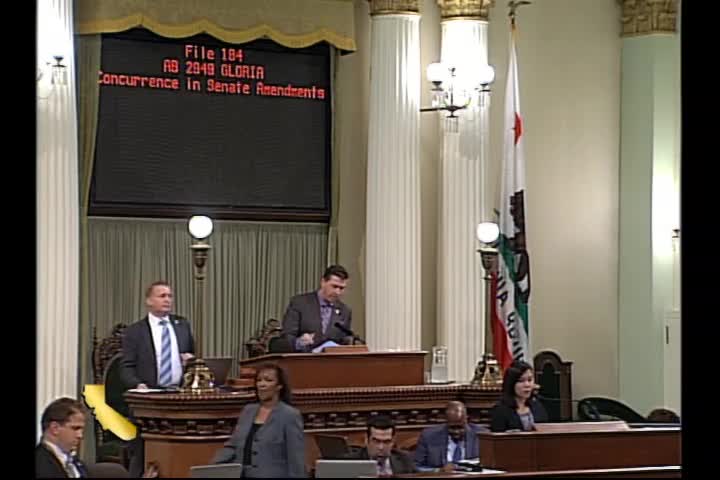 54SEC
Assembly Floor
 2MIN
Senate Floor
 4MIN
Senate Standing Committee on Labor and Industrial Relations
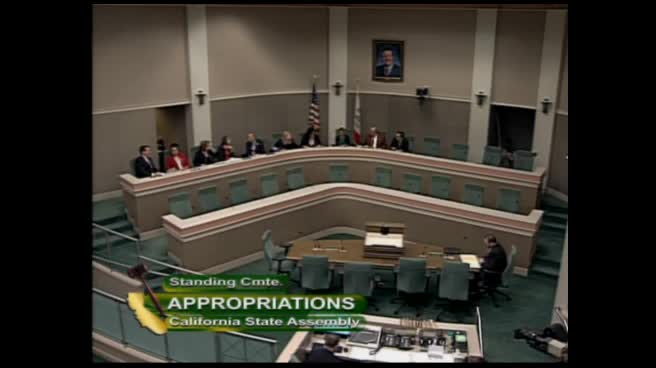 21MIN
Assembly Standing Committee on Appropriations
 43MIN
Assembly Standing Committee on Revenue and Taxation


Bill Co-Author(s):
