AB 5: Employers: Opportunity to Work Act.
- Session Year: 2017-2018
- House: Assembly
- Latest Version Date: 2016-12-05
Existing law creates the Division of Labor Standards Enforcement in the Department of Industrial Relations for the purpose of enforcing labor laws. Existing law, with certain exceptions, establishes 8 hours as a days work and a 40-hour workweek, and requires payment of prescribed overtime compensation for additional hours worked.
This bill would create the Opportunity to Work Act. The bill would require an employer with 10 or more employees to offer additional hours of work to an existing nonexempt employee before hiring an additional employee or subcontractor, except as specified, would require an employer to post a notice of employee rights, as specified, and would require the employer to maintain certain documentation. The bill would authorize an employee to file a complaint for violation of these provisions with the division and to, in the alternative, bring a civil action for remedies under the act. The bill would require the division to enforce these provisions, as specified and would authorize the division to, among other things, adopt rules and regulations. The bill would make a violation of these provisions punishable by a civil penalty. The bill would also define various terms for these purposes.
(a)This section shall be known, and may be cited, as the Opportunity to Work Act.
(b)For the purposes of this section, the following terms shall have the following meanings:
(1)Division shall mean the Division of Labor Standards Enforcement.
(2)Employee shall mean a nonexempt employee in this state.
(3)Employer shall mean any employer with 10 or more employees in this state.
(4)Retaliation shall mean any form of intimidation, threat, reprisal, harassment, discrimination, or adverse employment action, including discipline, discharge, suspension, transfer or assignment to a lesser position in terms of job classification, job security, or other condition of employment, reduction in pay or hours or denial of additional hours, informing another employer that the person has engaged in activities protected by this section, or reporting or threatening to report the actual or suspected citizenship or immigration status of an employee, former employee, or family member of an employee to a federal, state, or local agency because the employee or former employee exercises a right under this section.
(5)Shift shall mean the consecutive hours an employer requires an employee to work or to be on call to work. Breaks totaling two hours or less shall not be considered an interruption of consecutive hours.
(6)Work schedule shall mean all of an employees regular and on-call shifts, including specific start and end times for each shift during a consecutive seven-day period.
(c)An employer shall offer additional hours of work to an existing employee who, in the employers reasonable judgment, has the skills and experience to perform the work before hiring any additional employees or subcontractors, including hiring an additional employee or subcontractor through the use of a temporary employment agency, staffing agency, or similar entity. An employer shall use a transparent and nondiscriminatory process to distribute the additional hours of work among existing employees.
(d)Notwithstanding subdivision (c), an employer shall not be required to offer an employee additional work hours if the employer would be required to compensate the employee with overtime compensation under any law or under a collective bargaining agreement. This section shall not be construed to prohibit an employer from offering additional work hours to an employee that would result in the employer being required to compensate the employee with overtime compensation.
(e)An employer shall retain all of the following:
(1)For any new hire of an employee or subcontractor, documentation that the employer offered additional hours of work to existing employees prior to hiring the new employee or subcontractor.
(2)Work schedules of all employees.
(3)If applicable, the written statement of an employee pursuant to subdivision (k).
(4)Any other records or documents that the division requires the employer to maintain to demonstrate compliance with this section.
(f)The division shall enforce this section and may adopt rules and regulations to carry out this section. The division shall create and publish a posting notice that details employees rights under this section. An employer shall post the notice of employee rights under this section published by the division in a conspicuous place where it may be read by employees during work hours and in all places where notices to employees are posted physically and electronically.
(g)The division may issue guidelines to encourage employers to create training opportunities that permit employees to perform work for which the employer can be expected to have a need for additional hours of work.
(h)An employee may file a complaint for violation of this section with the division. Alternatively, an employee may bring a civil action for the remedies provided by this section in a court of competent jurisdiction. If the employee prevails, the court may award reasonable attorneys fees. Upon the filing of a complaint by an employee with the division, the Labor Commissioner shall enforce this section in accordance with Chapter 4 (commencing with Section 79) of Division 1, including, but not limited to, Sections 92, 96.7, 98, and 98.1 to 98.8, inclusive.
(i)It shall be unlawful for an employer or any other party to discriminate in any manner or take adverse action against any employee in retaliation for exercising his or her rights under this section.
(j)To the extent required by federal law, all or any portion of the applicable requirements of this section may be waived in a bona fide collective bargaining agreement provided that such waiver is explicitly set forth in such agreement in clear and unambiguous terms.
(k)This section shall apply to welfare-to-work programs under which a person is required to perform work in exchange for receipt of benefits, except that a participant employee in such a program shall have the option to file a written statement with his or her employer opting out of the requirements of this section.
(l)A violation of this section shall not be punished as a misdemeanor pursuant to Section 553. A violation of this section shall be punished by a civil penalty as determined by the division.
|
Date
|
Status
|
|---|---|
| Feb 1, 2018 | From committee: Filed with the Chief Clerk pursuant to Joint Rule 56. |
| Jan 31, 2018 | Died pursuant to Art. IV, Sec. 10(c) of the Constitution. |
| Jan 18, 2018 | In committee: Set, first hearing. Referred to APPR. suspense file. |
| May 3, 2017 | In committee: Hearing postponed by committee. |
| Apr 20, 2017 | From committee: Do pass and re-refer to Com. on APPR. (Ayes 5. Noes 2.) (April 19). Re-referred to Com. on APPR. |
| Jan 19, 2017 | Referred to Com. on L. & E. |
| Dec 6, 2016 | From printer. May be heard in committee January 5. |
| Dec 5, 2016 | Read first time. To print. |
|
Date
|
Description
|
Location
|
Votes
|
|
|---|---|---|---|---|
| Apr 19, 2017 | Do pass and be re-referred to the Committee on [Appropriations] | Assembly Standing Committee on Labor and Employment |
Passed |
This list shows positions taken on this bill by organizations on the date displayed, which is linked to the original source.
Positions by individuals are not included.
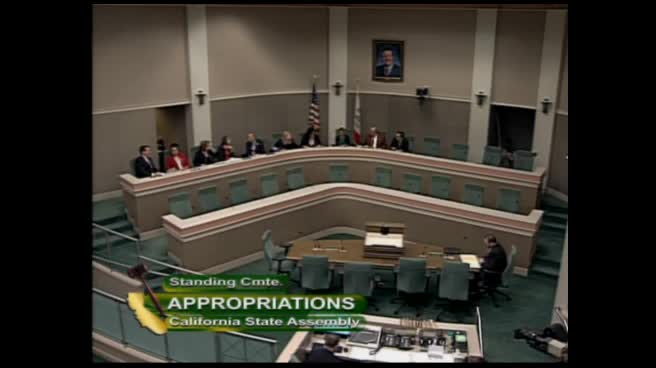
Date of Hearing: January 18, 2018
ASSEMBLY COMMITTEE ON APPROPRIATIONS
Lorena Gonzalez Fletcher, Chair
ABPCA Bill Id:AB 5
Author:(Gonzalez Fletcher) – As Introduced Ver:December 5, 2016
Policy Committee: | Labor and Employment | Vote: | 5 - 2 |
|
|
Urgency: No State Mandated Local Program: No Reimbursable: No
SUMMARY:
This bill requires an employer with 10 or more employees to offer additional hours of work to an existing nonexempt employee before hiring an additional employee or subcontractor, if certain conditions apply.
FISCAL EFFECT:
Significant implementation and enforcement costs in excess of $2.3 million annually for the Department of Industrial Relations. (Labor Enforcement and Compliance Fund).
COMMENTS:
- Background. Part-time workers face a number of significant challenges in the labor market. Many part-time workers want more hours of work but are not offered any, and part-time workers often have unpredictable schedules and low wages, which can place significant strain on these workers and their families.
A key debate among economists and academics is the extent to which there is a structural shift toward part-time work that is unrelated to the ups and downs of the business cycle. As of November 2017, approximately 794,000 Californians were working part-time despite wanting full-time work. This number is lower than it was during the Great Recession and continues to decline. However, thus far the decline has occurred slower than would be expected given the overall rate of job growth, which has raised questions about whether structural issues are limiting the ability for employees to get additional hours of work.
Recent efforts at the local level have tried to address the challenges faced by part-time workers. San Francisco’s Predictable Scheduling and Fair Treatment ordinance requires certain retail employers to offer extra work hours to current qualified part-time employees before hiring new employees or contractors. San Jose’s Opportunity to Work Ordinance, which went into effect in Spring 2017, requires all employers to offer newly available working hours to qualified part-time employees before hiring more.
- Purpose. According to the author, AB 5 will update working hour protections to reflect changes in the post-recession economy. Supporters of the bill, such as the Consumer Attorneys of California, point to the need to create a stable work environment for workers. They point to the negative impact of scheduling volatility on the incomes of families and how insufficient hours can force workers to hold multiple jobs.
- Opposition. Opponents to AB 5 argue that this bill puts unnecessary burden on employers by opening up multiple avenues of litigation. They point to various definitions in the bill that leave open the possibility of excessive threats of litigation for what could amount to technical violations.
Analysis Prepared by: Luke Reidenbach / APPR. / (916) 319-2081
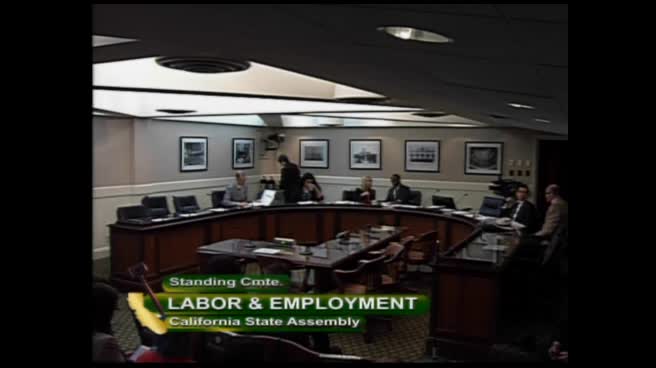
Date of Hearing: April 19, 2017
ASSEMBLY COMMITTEE ON LABOR AND EMPLOYMENT
Tony Thurmond, Chair
ABPCA Bill Id:AB 5 (
Author:Gonzalez) – As Introduced Ver:December 5, 2016
SUBJECT: Employers: Opportunity to Work Act
SUMMARY: Creates the Opportunity to Work Act, which requires an employer with 10 or more employees to offer additional hours of work to an existing nonexempt employee before hiring an additional employee or subcontractor. Specifically, this bill:
- Requires employers to offer additional hours of work to an existing employee if, in the employer's reasonable judgment, the worker has the skills and experience to perform the work.
- Requires employers to use a transparent and nondiscriminatory process to distribute the additional hours of work among existing employees.
- Exempts employers from offering additional work hours if doing so would require paying overtime compensation.
- Authorizes employees to file a complaint with the Labor Commissioner (LC) for a violation or file a civil actions against an employer for a violation.
EXISTING LAW:
- Creates the Division of Labor Standards Enforcement (DLSE) in the Department of Labor Standards Enforcement for the purpose of enforcing labor laws.
- Establishes, with certain exceptions, 8 hours as a day’s work and a 40-hour workweek, and requires payment of prescribed overtime compensation for additional hours worked.
FISCAL EFFECT: unknown
COMMENTS: According to a recent report from the Economic Policy Institute the number and share of workers who are involuntarily working part time is higher now than it was before the Great Recession and during the depths of the early 2000s recession. Data suggests that the elevated level of involuntary part-time work is due less now to cyclical forces, in this case the lingering effects of the recession, than to a structural development driven by more employers that are shifting more jobs and work to part time.
The Current Population Survey (CPS), sponsored jointly by the U.S. Census Bureau and the U.S. Bureau of Labor Statistics, is the primary source of data about the US labor force. When surveying those who are working part time, CPS divides respondents into those who are working part time for voluntary reasons and those who are working part time for economic reasons.
According to February CPS data for California found, there were 912,000 persons working part-time for economic reasons. They comprised 5.0 percent of all persons at work during the survey week. The total number of persons who worked part time for economic reasons in has decreased by 63,000 (6.4 percent) since February 2016.
This data for California can be further divided into those who usually work full time, but are working part time for economic reasons (207,000 or 1.1% of the total workforce) and those who usually work part time and are currently working part time for economic reasons (705,000 or 3.9% of the total workforce).
Among those who usually work part time but are working part time for economic reasons the primary reason cited was “slack work” which means there was insufficient demand for the employer’s goods and services to support more work hours. Slack work is an indicator of cyclical business lows. Among those who usually work part time and are currently working part time for economic reasons the most often stated reason was "inability to find full time work." This is an indicator of structural factors, such as employers only offering part time work.
According to the Economic Policy Institute, nationally, “Involuntary part-time work has gradually decreased since 2009, but almost entirely because fewer workers are working part-time hours due to ‘slack work or business conditions,’ which had ballooned during the Great Recession… those working involuntarily part time because they could find only part time work is just as high as it was at the end of the recession in 2009.”
While some have suggested that the shared responsibility provision of the Affordable Care Act (ACA), which require certain employers to pay a fee if they don’t offer a minimum level of health insurance to employees working 30 or more weekly hours, is behind some of this shift toward part time work, that theory is not supported by the data.
Local California Ordinances
In response to what appear to be long term structural changes in the economy, local municipalities have passed ordinances to address involuntary part time employment.
In 2014, San Francisco passed the Predictable Scheduling and Fair Treatment ordinance, which requires covered employers (large retail chains) to offer extra work hours to current qualified part time employees in writing before hiring new employees or using contractors or staffing agencies to perform additional work. Before hiring new employees or using contractors or a temporary services or staffing agency to perform work,, an employer shall first offer the additional work to existing part-time employees if: the part time employee is qualified to do the additional work and the additional work is the same or similar to work the employees have performed for the employer previously.
In November of last year, the voters in San Jose approved the Opportunity to Work Ordinance. That ordinance, which went into effect last month, requires all employers to offer newly available working hours to qualified part time employees before hiring more part time staff or temporary employees. The employer would be free to set as short a time period as it prefers between announcing the availability of hours and making a new hire. The San Jose ordinance is the first of its kind in the country to apply across all industries. This legislation is modeled on the San Jose ordinance.
Arguments in Support
According to the author, along with the minimum wage, working hour protections date to the first labor laws in the country. Historically these regulations help to sustain families and encourage a level playing field for employers. However, these protections have not kept up with changes in our post-recession economy. When workers have fewer hours through one part-time job, they are put in the position of working multiple jobs. Working one or more part-time jobs also has a negative effect on an individual’s total income. Nationally, part-time work often pays one-third less per hour than full-time work. Additionally, working multiple part time jobs amplifies scheduling difficulties, reduces access to employer-based benefits that are only made available after a certain number of hours are worked, and can easily compound transportation challenges or worsen already limited access to affordable childcare.
Consumer Attorneys write that this bill “is a critical step to creating more stable earning opportunities for Californians with part-time jobs… Part-time workers are more likely to have fluctuating work hours, earn low wages, lack access to employer-provided healthcare, and struggle to make ends meet.” They continue, “According to the Federal Reserve, variable work hours are the single most common reason so many Americans experience income fluctuations from month to month. Working one or more part-time jobs also has a negative effect on total income. Nationally, part-time work often pays one-third less per hour than full-time work”
The California Immigrant Policy Center (CIPC), writes that this legislation is “is key in protecting all workers’ labor rights, and to uphold labor and employment standards for all.” They write that that the bill is important to the “workers in California who want to work more hours and are doing everything they can to afford the necessities of life in our state.”
Arguments in Opposition
A coalition of organizations led by the California Chamber of Commerce writes that this legislation, “will limit employers’ ability to effectively manage their workforce to address both consumer and employee requests, subject employers to costly fines and multiple avenues of litigation for technical violations that do not actually result in any harm to the employee, is inconsistent with existing law, and will limit job opportunities for unemployed workers. Among other concerns, this coalition writes that the bill:
- Applies to employers with as few as 10 employees and would place an unnecessary burden upon small businesses.
- Applies statewide, unlike the recently passed local ordinances that only apply to businesses located in those municipalities. Under the bill, if an employer has facilities in different parts of the state the measure mandates the employer to offer additional hours of work to employees in facilities where the employee does not work.
- Mandates an employer to contact each employee who has the skills and responsibilities to perform the work required, even though that employee may have explicitly told the employer that they aren’t interested in additional hours or are unavailable during that time period.
- Fails to indicate what an employer actually has to do to satisfy the “offer” requirement of additional hours.
- Requires the use a “transparent and nondiscriminatory process” to pick amongst numerous available employees who will ultimately receive the additional hours of work, thus exposing an employer to threats of litigation, fines and administrative complaints when one employee is given the additional time over the other.
- Imposes an unreasonable document retention mandate on employers.
The California State Council of State Human Resource Management (CalSHRM) writes that, “to the extent AB 5 is premised upon the San Jose “Opportunity to Work” Ordinance which only took effect March 13, 2017, the Legislature should see how that ordinance works before rushing to enact a statewide version.” CalSHRM continues that, “AB 5 also reduces flexibility for both employers and employees. Many employers need to hire limited, specialized, or part-time workers in a short timeframe, which stimulate job creation and growth. By frustrating this ability, AB 5’s new procedural hurdles could prolong unemployment for some.” CalSHRM believes that “employers and employees should have the flexibility to develop schedules that work best for them, and that the laws should avoid one-size-fits-all mandates that reduce flexibility or create additional burdens.”
REGISTERED SUPPORT / OPPOSITION:
Support
CA Conference Board of the Amalgamated Transit Union
CA Conference of Machinists
California Federation of Teachers
California Immigrant Policy Center
California Teamsters Public Affairs Council
Consumer Attorneys of California
Engineers & Scientists of CA, Local 20
International Longshore & Warehouse Union
Professional & Technical Engineers, Local 21
SEIU California
UNITE HERE
Utility Workers Union of America
Opposition
ACT 1 Group
African American Farmers of California
Agricultural Council of California
American Fire Sprinkler Association
American Insurance Association
American Petroleum and Convenience Store Associations
AMN Healthcare
Anaheim Chamber of Commerce
Associated Builders and Contractors – Northern California Chapter
Associated Builders and Contractors – San Diego Chapter
Associated General Contractors
Association of California Egg Farmers
A-Star Staffing
Auto Care Association
Brea Chamber of Commerce
California Agricultural Aircraft Association
California Ambulance Association
California Assisted Living Association
California Association for Health Services at Home
California Association of Nurseries and Garden Centers
California Association of Recreation and Park Districts
California Association of Wheat Growers
California Association of Winegrape Growers
California Attractions and Parks Association
California Automatic Vendors Council
California Bankers Association
California Building Industry Association
California Business Properties Association
California Cable & Telecommunications Association
California Chamber of Commerce
California Citizens Against Lawsuit Abuse
California Cotton Ginners and Growers Association
California Employment Law Council
California Farm Bureau Federation
California Fresh Fruit Association
California Gaming Association
California Grain and Feed Association
California Hospital Association
California Hotel and Lodging Association
California Independent Oil Marketers Association
California League of Food Processors
California Manufacturers and Technology Association
California New Car Dealers Association
California Pear Growers Association
California Professional Association of Specialty Contractors
California Restaurant Association
California Retailers Association
California Staffing Professionals
California State Council of the Society for Human Resources Management
California Strawberry Commission
California Tomato Growers Association
California Travel Association
California Trucking Association
Camarillo Chamber of Commerce
Carlsbad Chamber of Commerce
CAWA – Representing the Automotive Parts Industry
Cerritos Regional Chamber of Commerce
Chambers of Commerce Alliance Ventura & Santa Barbara Counties
Chino Valley Chamber of Commerce
City of Diamond Bar
City of Palm Desert
East Bay Leadership Council
El Centro Chamber of Commerce and Visitors Bureau
El Dorado Hills Chamber of Commerce
Family Business Association
Family Winemakers of California
Far West Equipment Dealers Association
Fresno Chamber of Commerce
Gilroy Chamber of Commerce
Greater Bakersfield Chamber of Commerce
Greater Conejo Valley Chamber of Commerce
Greater Riverside Chambers of Commerce
Greater San Fernando Valley Chamber of Commerce
Hesperia Chamber of Commerce
Independent Roofing Contractors of California, Inc.
Labor Finders
Lodi Chamber of Commerce
Long Beach Area Chamber of Commerce
Los Angeles Area Chamber of Commerce
M2C3 Inc. dba PrideStaff
Mountain View Chamber of Commerce
National Association of Theatre Owners of California/Nevada
National Federation of Independent Business
Nisei Farmers League
Norco Area Chamber of Commerce & Visitors Center
North Orange County Chamber of Commerce
Orange County Business Council
Oxnard Chamber of Commerce
Pacific Egg and Poultry Association
Palm Desert Area Chamber of Commerce
Personal Insurance Federation of California
Plumbing-Heating-Cooling Contractors of California
Randstad North America, Inc.
Redondo Beach Chamber of Commerce & Visitors Bureau
Retail Industry Leaders Association
Ryals & Associates, Inc.
San Diego County Apartment Association
San Diego Regional Chamber of Commerce
Santa Ana Chamber of Commerce
Santa Maria Valley Chamber of Commerce Visitor and Convention Bureau
Simi Valley Chamber of Commerce and Visitor Center
Society for Human Resource Management
South Bay Association of Chambers of Commerce
Southwest CA Legislative Council
Southwest California Legislative Council
The Chamber of the Santa Barbara Region
The People Connection Inc.
The Silicon Valley Organization
Torrance Area Chamber of Commerce
Tulare Chamber of Commerce
Vacaville Chamber of Commerce
Victor Valley Chamber of Commerce
Western Agricultural Processors Association
Western Carwash Association
Western Electrical Contractors Association
Western Growers Association
Wine Institute
Analysis Prepared by: Jennifer Richard / L. & E. /
Discussed in Hearing
 21MIN
Assembly Standing Committee on Appropriations
 35MIN