AB 514: Registered sex offenders: day care facilities.
- Session Year: 2017-2018
- House: Assembly
- Latest Version Date: 2018-09-05
Existing law, the Sex Offender Registration Act, requires persons convicted of specified sex offenses, or of attempts to commit those offenses, to register with local law enforcement agencies while residing in the state or while attending school or working in the state. Existing law, as amended by Proposition 83 of the November 7, 2006, statewide general election, prohibits a person who is required to register pursuant to the Sex Offender Registration Act from residing within 2,000 feet of any public or private school, or park where children regularly gather. Existing law authorizes a designated law enforcement entity to provide information to the public about a person required to register as a sex offender, by whatever means the entity deems appropriate, when necessary to ensure the public safety based upon information available to the entity, as specified.
This bill would require the State Department of Social Services to notify a child day care facility, as defined, when a person who is required to register pursuant to the act registers a new residence within 1,000 feet of the facility, if one or more of the victims of the offense for which the person is required to register was 14 years of age or younger at the time the crime was committed, except as specified. The bill would additionally require the State Department of Justice to work with the State Department of Social Services to develop a system for the Department of Justice to communicate to the State Department of Social Services when a person who is required to register pursuant to the act changes his or her address.
Existing law, the Sex Offender Registration Act, requires persons convicted of specified sex offenses, or of attempts to commit those offenses, to register with local law enforcement agencies while residing in the state or while attending school or working in the state. Existing law, as amended by Proposition 83 of the November 7, 2006, statewide general election, prohibits a person who is required to register pursuant to the Sex Offender Registration Act from residing within 2,000 feet of any public or private school, or park where children regularly gather. Existing law authorizes a designated law enforcement entity to provide information to the public about a person required to register as a sex offender, by whatever means the entity deems appropriate, when necessary to ensure the public safety based upon information available to the entity, as specified.
This bill would require local law enforcement the State Department of Social Services to notify a child day care facility, as defined, when a person who is required to register with that law enforcement agency pursuant to the act registers a new residence within 1,000 feet of the facility, if one or more of the victims of the offense for which the person is required to register was 14 years of age or younger at the time the crime was committed, except as specified. By imposing additional duties on local law enforcement, the bill would impose a state-mandated local program. The bill would additionally require the State Department of Justice to work with the State Department of Social Services to develop a system for the Department of Justice to communicate to the State Department of Social Services when a person who is required to register pursuant to the act changes his or her address.
The California Constitution requires the state to reimburse local agencies and school districts for certain costs mandated by the state. Statutory provisions establish procedures for making that reimbursement.This bill would provide that, if the Commission on State Mandates determines that the bill contains costs mandated by the state, reimbursement for those costs shall be made pursuant to the statutory provisions noted above.Existing law, the Sex Offender Registration Act, requires persons convicted of specified sex offenses, or of attempts to commit those offenses, to register with local law enforcement agencies while residing in the state or while attending school or working in the state. Existing law, as amended by Proposition 83 of the November 7, 2006, statewide general election, prohibits a person who is required to register pursuant to the Sex Offender Registration Act from residing within 2,000 feet of any public or private school, or park where children regularly gather. Existing law authorizes a designated law enforcement entity to provide information to the public about a person required to register as a sex offender, by whatever means the entity deems appropriate, when necessary to ensure the public safety based upon information available to the entity, as specified.
This bill would require local law enforcement to notify a child day care facility, as defined, when a person who is required to register with that law enforcement agency pursuant to the act registers a new residence within 1,000 feet of the facility, if one or more of the victims of the offense for which the person is required to register was 14 years of age or younger at the time the crime was committed, except as specified. By imposing additional duties on local law enforcement, the bill would impose a state-mandated local program.
The California Constitution requires the state to reimburse local agencies and school districts for certain costs mandated by the state. Statutory provisions establish procedures for making that reimbursement.
This bill would provide that, if the Commission on State Mandates determines that the bill contains costs mandated by the state, reimbursement for those costs shall be made pursuant to the statutory provisions noted above.
This bill would prohibit a person who is required to register pursuant to the act from residing within 1,000 feet of a day care center or a family day care home, as defined, if one or more of the victims of the offense for which the person is required to register was 14 years of age or younger at the time the crime was committed. By creating a new crime, this bill would impose a state-mandated local program.The California Constitution requires the state to reimburse local agencies and school districts for certain costs mandated by the state. Statutory provisions establish procedures for making that reimbursement.This bill would provide that no reimbursement is required by this act for a specified reason.Existing law, the Sex Offender Registration Act, requires persons convicted of specified sex offenses, or of attempts to commit those offenses, to register with local law enforcement agencies while residing in the state or while attending school or working in the state. Existing law, as amended by Proposition 83 of the November 7, 2006, statewide general election, prohibits a person who is required to register pursuant to the Sex Offender Registration Act from residing within 2,000 feet of any public or private school, or park where children regularly gather.
This bill would prohibit a person who is required to register pursuant to the act from residing within 1,000 feet of a day care center or a family day care home, as defined, if one or more of the victims of the offense for which the person is required to register was 14 years of age or younger at the time the crime was committed. By creating a new crime, this bill would impose a state-mandated local program.
The California Constitution requires the state to reimburse local agencies and school districts for certain costs mandated by the state. Statutory provisions establish procedures for making that reimbursement.
This bill would provide that no reimbursement is required by this act for a specified reason.
Existing law, the Medical Waste Management Act, administered by the State Department of Public Health, regulates the management, handling, and disposal of medical waste, as defined, including pharmaceutical waste. The act provides that transporting, storing, treating, disposing, or causing the treatment or disposal of medical waste in a manner not authorized by permit or registration, or by the act, is a crime, except as specified. For purposes of the act, the term pharmaceutical is defined to mean a prescription or over-the-counter human or veterinary drug, including, but not limited to, a drug defined in the Federal Food, Drug, and Cosmetic Act, but does not include a pharmaceutical regulated pursuant to the federal Resource Conservation and Recovery Act of 1976 or the Radiation Control Law.This bill would additionally except from the definition of pharmaceutical herbal-based remedies, homeopathic drugs, remedies, and any other product with a National Drug Code identifying the product as homeopathic, and cosmetics, soap, shampoo, sunscreen, toothpaste, lip balm, antiperspirant, and saline products.Existing law, the Medical Waste Management Act, administered by the State Department of Public Health, regulates the management, handling, and disposal of medical waste, as defined, including pharmaceutical waste. The act provides that transporting, storing, treating, disposing, or causing the treatment or disposal of medical waste in a manner not authorized by permit or registration, or by the act, is a crime, except as specified. For purposes of the act, the term pharmaceutical is defined to mean a prescription or over-the-counter human or veterinary drug, including, but not limited to, a drug defined in the Federal Food, Drug, and Cosmetic Act, but does not include a pharmaceutical regulated pursuant to the federal Resource Conservation and Recovery Act of 1976 or the Radiation Control Law.
This bill would additionally except from the definition of pharmaceutical herbal-based remedies, homeopathic drugs, remedies, and any other products, product with a National Drug Code identifying the product as homeopathic, and cosmetics, soap, shampoo, sunscreen, toothpaste, lip balm, antiperspirant, and saline products.
Existing law, the Medical Waste Management Act, administered by the State Department of Public Health, regulates the management, handling, and disposal of medical waste, as defined, including pharmaceutical waste. The act provides that transporting, storing, treating, disposing, or causing the treatment or disposal of medical waste in a manner not authorized by permit or registration, or by the act, is a crime, except as specified. For purposes of the act, the term pharmaceutical is defined to mean a prescription or over-the-counter human or veterinary drug, including, but not limited to, a drug defined in the Federal Food, Drug, and Cosmetic Act, but does not include a pharmaceutical regulated pursuant to the federal Resource Conservation and Recovery Act of 1976 or the Radiation Control Law.
This bill would additionally except from the definition of pharmaceutical herbal-based remedies, homeopathic drugs, remedies, and other products, and cosmetics, soap, shampoo, sunscreen, toothpaste, lip balm, antiperspirant, and saline products.
Existing law requires the Department of Toxic Substances Control to convene a Retail Waste Working Group, as prescribed, to consider and make findings and recommendations relating to requirements for the management of surplus household consumer products, waste reduction opportunities for those products, and waste management requirements, as specified. Existing law requires the working group to report these findings and recommendations to the Legislature by June 1, 2017.This bill would express the intent of the Legislature to adopt those recommendations later in the current legislative session.Existing law requires the Department of Toxic Substances Control to convene a Retail Waste Working Group, as prescribed, to consider and make findings and recommendations relating to requirements for the management of surplus household consumer products, waste reduction opportunities for those products, and waste management requirements, as specified. Existing law requires the working group to report these findings and recommendations to the Legislature by June 1, 2017.
This bill would express the intent of the Legislature to adopt those recommendations later in the current legislative session.
(a)The State Department of Social Services shall notify a child day care facility, as defined in Section 1596.750 of the Health and Safety Code, when a person for whom registration is required pursuant to Section 290 registers a new residence within 1,000 feet of the facility, if one or more of the victims of the crimes for which the person is required to register was 14 years of age or younger at the time the crime was committed. The State Department of Social Services shall only notify facilities of persons as to whom information may be available to the public pursuant to the Internet Web site as provided in Section 290.46.
(b)The Department of Justice shall work with the State Department of Social Services to develop a system for the Department of Justice to communicate to the State Department of Social Services when a person for whom registration is required pursuant to Section 290 changes his or her address.
(c)The implementation of this section is contingent upon an express appropriation in the annual Budget Act for these purposes.
A law enforcement agency (a)The State Department of Social Services shall notify a child day care facility, as defined in Section 1596.750 of the Health and Safety Code, when a person for whom registration with that law enforcement agency is required pursuant to Section 290 registers a new residence within 1,000 feet of the facility, if one or more of the victims of the crimes for which the person is required to register was 14 years of age or younger at the time the crime was committed. Law enforcement The State Department of Social Services shall only notify facilities of persons as to whom information may be available to the public pursuant to the Internet Web site as provided in Section 290.46.
(b)The Department of Justice shall work with the State Department of Social Services to develop a system for the Department of Justice to communicate to the State Department of Social Services when a person for whom registration is required pursuant to Section 290 changes his or her address.
(c)The implementation of this section is contingent upon an express appropriation in the annual Budget Act for these purposes.
SEC. 2.If the Commission on State Mandates determines that this act contains costs mandated by the state, reimbursement to local agencies and school districts for those costs shall be made pursuant to Part 7 (commencing with Section 17500) of Division 4 of Title 2 of the Government Code.A law enforcement agency shall notify a child day care facility, as defined in Section 1596.750 of the Health and Safety Code, when a person for whom registration with that law enforcement agency is required pursuant to Section 290 registers a new residence within 1,000 feet of the facility, if one or more of the victims of the crimes for which the person is required to register was 14 years of age or younger at the time the crime was committed. Law enforcement shall only notify facilities of persons as to whom information may be available to the public pursuant to the Internet Web site as provided in Section 290.46.
SEC. 2.If the Commission on State Mandates determines that this act contains costs mandated by the state, reimbursement to local agencies and school districts for those costs shall be made pursuant to Part 7 (commencing with Section 17500) of Division 4 of Title 2 of the Government Code.
SECTION 1.Section 3003.5 of the Penal Code is amended to read:3003.5.(a)Notwithstanding any other law, when a person is released on parole after having served a term of imprisonment in state prison for an offense for which registration is required pursuant to Section 290, that person may not, during the period of parole, reside in a single family dwelling with any other person also required to register pursuant to Section 290, unless those persons are legally related by blood, marriage, or adoption. For purposes of this section, single family dwelling does not include a residential facility that serves six or fewer persons.(b)Notwithstanding any other law, it is unlawful for a person for whom registration is required pursuant to Section 290 to reside within 2,000 feet of a public or private school, or park where children regularly gather.(c)Notwithstanding any other law, it is unlawful for a person for whom registration is required pursuant to Section 290 to reside within 1,000 feet of a day care center or family day care home, as defined in Sections 1596.76 and 1596.78 of the Health and Safety Code, respectively, if one or more of the victims of the crimes for which the person is required to register was 14 years of age or younger at the time the crime was committed.(d)This section does not prohibit municipal jurisdictions from enacting local ordinances that further restrict the residency of a person for whom registration is required pursuant to Section 290.SEC. 2.No reimbursement is required by this act pursuant to Section 6 of Article XIIIB of the California Constitution because the only costs that may be incurred by a local agency or school district will be incurred because this act creates a new crime or infraction, eliminates a crime or infraction, or changes the penalty for a crime or infraction, within the meaning of Section 17556 of the Government Code, or changes the definition of a crime within the meaning of Section 6 of Article XIIIB of the California Constitution.(a)Notwithstanding any other provision of law, when a person is released on parole after having served a term of imprisonment in state prison for any an offense for which registration is required pursuant to Section 290, that person may not, during the period of parole, reside in any a single family dwelling with any other person also required to register pursuant to Section 290, unless those persons are legally related by blood, marriage, or adoption. For purposes of this section, single family dwelling shall does not include a residential facility which that serves six or fewer persons.
(b)Notwithstanding any other provision of law, it is unlawful for any a person for whom registration is required pursuant to Section 290 to reside within 2000 2,000 feet of any a public or private school, or park where children regularly gather.
(c)Notwithstanding any other law, it is unlawful for a person for whom registration is required pursuant to Section 290 to reside within 1,000 feet of a day care center or family day care home, as defined in Sections 1596.76 and 1596.78 of the Health and Safety Code, respectively, if one or more of the victims of the crimes for which the person is required to register was 14 years of age or younger at the time the crime was committed.
(c)Nothing in this section shall(d)This section does not prohibit municipal jurisdictions from enacting local ordinances that further restrict the residency of any a person for whom registration is required pursuant to Section 290.
SEC. 2.No reimbursement is required by this act pursuant to Section 6 of Article XIIIB of the California Constitution because the only costs that may be incurred by a local agency or school district will be incurred because this act creates a new crime or infraction, eliminates a crime or infraction, or changes the penalty for a crime or infraction, within the meaning of Section 17556 of the Government Code, or changes the definition of a crime within the meaning of Section 6 of Article XIIIB of the California Constitution.
SECTION 1.Section 117690 of the Health and Safety Code is amended to read:117690.(a)Medical waste means any biohazardous, pathology, pharmaceutical, or trace chemotherapy waste not regulated by the federal Resource Conservation and Recovery Act of 1976 (Public Law 94-580), as amended; sharps and trace chemotherapy wastes generated in a health care setting in the diagnosis, treatment, immunization, or care of humans or animals; waste generated in autopsy or necropsy; waste generated during preparation of a body for final disposition such as cremation or interment; waste generated in research pertaining to the production or testing of microbiologicals; waste generated in research using human or animal pathogens; sharps and laboratory waste that poses a potential risk of infection to humans generated in the inoculation of animals in commercial farming operations; waste generated from the consolidation of home-generated sharps; and waste generated in the cleanup of trauma scenes. Biohazardous, pathology, pharmaceutical, sharps, and trace chemotherapy wastes that meet the conditions of this section are not subject to any of the hazardous waste requirements found in Chapter 6.5 (commencing with Section 25100) of Division 20.(b)For purposes of this part the following definitions apply:(1)Biohazardous waste includes all of the following:(A)(i)Regulated medical waste, clinical waste, or biomedical waste that is a waste or reusable material derived from the medical treatment of a human or from an animal that is suspected by the attending veterinarian of being infected with a pathogen that is also infectious to humans, which includes diagnosis and immunization; or from biomedical research, which includes the production and testing of biological products.(ii)Regulated medical waste or clinical waste or biomedical waste suspected of containing a highly communicable disease.(B)Laboratory waste such as human specimen cultures or animal specimen cultures that are infected with pathogens that are also infectious to humans; cultures and stocks of infectious agents from research; wastes from the production of bacteria, viruses, spores, discarded live and attenuated vaccines used in human health care or research, discarded animal vaccines, including Brucellosis and Contagious Ecthyma, as defined by the department; culture dishes, devices used to transfer, inoculate, and mix cultures; and wastes identified by Section 173.134 of Title 49 of the Code of Federal Regulations as Category B once wasted for laboratory wastes.(C)Waste that, at the point of transport from the generators site or at the point of disposal contains recognizable fluid human blood, fluid human blood products, containers, or equipment containing human blood that is fluid, or blood from animals suspected by the attending veterinarian of being contaminated with infectious agents known to be contagious to humans.(D)Waste containing discarded materials contaminated with excretion, exudate, or secretions from humans or animals that are required to be isolated by the infection control staff, the attending physician and surgeon, the attending veterinarian, or the local health officer, to protect others from highly communicable diseases or diseases of animals that are communicable to humans.(2)Pathology waste includes both of the following:(A)Human body parts, with the exception of teeth, removed at surgery and surgery specimens or tissues removed at surgery or autopsy that are suspected by the health care professional of being contaminated with infectious agents known to be contagious to humans or having been fixed in formaldehyde or another fixative.(B)Animal parts, tissues, fluids, or carcasses suspected by the attending veterinarian of being contaminated with infectious agents known to be contagious to humans.(3)Pharmaceutical waste means a pharmaceutical, as defined in Section 117747, including trace chemotherapy waste, that is a waste, as defined in Section 25124, except that a pharmaceutical that meets either of the following criteria shall not be considered a waste pursuant to Section 25124:(A)The pharmaceutical is being sent out of the state to a reverse distributor, as defined in Section 4040.5 of the Business and Professions Code, that is licensed as a wholesaler of dangerous drugs by the California State Board of Pharmacy pursuant to Section 4161 of the Business and Professions Code.(B)The pharmaceutical is being sent by a reverse distributor, as defined in Section 4040.5 of the Business and Professions Code, offsite for treatment and disposal in accordance with applicable laws, or to a reverse distributor that is licensed as a wholesaler of dangerous drugs by the California State Board of Pharmacy pursuant to Section 4160 of the Business and Professions Code and as a permitted transfer station if the reverse distributor is located within the state.(4)Sharps waste means a device that has acute rigid corners, edges, or protuberances capable of cutting or piercing, including, but not limited to, hypodermic needles, hypodermic needles with syringes, blades, needles with attached tubing, acupuncture needles, root canal files, broken glass items used in health care such as Pasteur pipettes and blood vials contaminated with biohazardous waste, and any item capable of cutting or piercing from trauma scene waste.(5)Trace chemotherapeutic waste means waste that is contaminated through contact with, or having previously contained, chemotherapeutic agents, including, but not limited to, gloves, disposable gowns, towels, and intravenous solution bags and attached tubing that are empty. A biohazardous waste that meets the conditions of this paragraph is not subject to the hazardous waste requirements of Chapter 6.5 (commencing with Section 25100) of Division 20.(6)Trauma scene waste means waste that is a regulated waste, as defined in Section 5193 of Title 8 of the California Code of Regulations, and that has been removed, is to be removed, or is in the process of being removed, from a trauma scene by a trauma scene waste management practitioner.SEC. 2.Section 117747 of the Health and Safety Code is amended to read:117747.(a)Pharmaceutical means a prescription or over-the-counter human or veterinary drug, including, but not limited to, a drug as defined in Section 109925 or in Section 201 of the Federal Food, Drug, and Cosmetic Act, as amended, (21 U.S.C.A. Sec. 321(g)(1)).(b)For purposes of this part, pharmaceutical does not include any pharmaceutical that is regulated pursuant to either of the following:(1)The federal Resource Conservation and Recovery Act of 1976, as amended (42 U.S.C.A. Sec. 6901 et seq.). This waste stream shall be handled as a hazardous waste under the authority of Chapter 6.5 (commencing with Section 25100) of Division 20.(2)The Radiation Control Law (Chapter 8 (commencing with Section 114960) of Part 9).(c)For purposes of this part, pharmaceutical does not include any of the following products if the product can be lawfully sold without a prescription:(1)Homeopathic drugs, remedies, and any other product with a National Drug Code identifying the product as homeopathic in the National Drug Code Directory.(2)Cosmetics, as defined in Section 201 of the Federal Food, Drug, and Cosmetic Act, as amended (21 U.S.C.A. Sec. 321(i)).(3)Soap, shampoo, sunscreen, toothpaste, lip balm, antiperspirant, and saline products.(a)Medical waste means any biohazardous, pathology, pharmaceutical, or trace chemotherapy waste not regulated by the federal Resource Conservation and Recovery Act of 1976 (Public Law 94-580), as amended; sharps and trace chemotherapy wastes generated in a health care setting in the diagnosis, treatment, immunization, or care of humans or animals; waste generated in autopsy or necropsy; waste generated during preparation of a body for final disposition such as cremation or interment; waste generated in research pertaining to the production or testing of microbiologicals; waste generated in research using human or animal pathogens; sharps and laboratory waste that poses a potential risk of infection to humans generated in the inoculation of animals in commercial farming operations; waste generated from the consolidation of home-generated sharps; and waste generated in the cleanup of trauma scenes. Biohazardous, pathology, pharmaceutical, sharps, and trace chemotherapy wastes that meet the conditions of this section are not subject to any of the hazardous waste requirements found in Chapter 6.5 (commencing with Section 25100) of Division 20.
(b)For purposes of this part the following definitions apply:
(1)Biohazardous waste includes all of the following:
(A)(i)Regulated medical waste, clinical waste, or biomedical waste that is a waste or reusable material derived from the medical treatment of a human or from an animal that is suspected by the attending veterinarian of being infected with a pathogen that is also infectious to humans, which includes diagnosis and immunization; or from biomedical research, which includes the production and testing of biological products.
(ii)Regulated medical waste or clinical waste or biomedical waste suspected of containing a highly communicable disease.
(B)Laboratory waste such as human specimen cultures or animal specimen cultures that are infected with pathogens that are also infectious to humans; cultures and stocks of infectious agents from research; wastes from the production of bacteria, viruses, spores, discarded live and attenuated vaccines used in human health care or research, discarded animal vaccines, including Brucellosis and Contagious Ecthyma, as defined by the department; culture dishes, devices used to transfer, inoculate, and mix cultures; and wastes identified by Section 173.134 of Title 49 of the Code of Federal Regulations as Category B once wasted for laboratory wastes.
(C)Waste that, at the point of transport from the generators site or at the point of disposal contains recognizable fluid human blood, fluid human blood products, containers, or equipment containing human blood that is fluid, or blood from animals suspected by the attending veterinarian of being contaminated with infectious agents known to be contagious to humans.
(D)Waste containing discarded materials contaminated with excretion, exudate, or secretions from humans or animals that are required to be isolated by the infection control staff, the attending physician and surgeon, the attending veterinarian, or the local health officer, to protect others from highly communicable diseases or diseases of animals that are communicable to humans.
(2)Pathology waste Pathology waste includes both of the following:
(A)Human body parts, with the exception of teeth, removed at surgery and surgery specimens or tissues removed at surgery or autopsy that are suspected by the health care professional of being contaminated with infectious agents known to be contagious to humans or having been fixed in formaldehyde or another fixative.
(B)Animal parts, tissues, fluids, or carcasses suspected by the attending veterinarian of being contaminated with infectious agents known to be contagious to humans.
(3)Pharmaceutical waste means a pharmaceutical, as defined in Section 117747, including trace chemotherapy waste, that is a waste, as defined in Section 25124. For purposes of this part, pharmaceutical waste does not include a pharmaceutical that meets either of the following criteria: 25124, except that a pharmaceutical that meets either of the following criteria shall not be considered a waste pursuant to Section 25124:
(A)The pharmaceutical is being sent out of the state to a reverse distributor, as defined in Section 4040.5 of the Business and Professions Code, that is licensed as a wholesaler of dangerous drugs by the California State Board of Pharmacy pursuant to Section 4161 of the Business and Professions Code.
(B)The pharmaceutical is being sent by a reverse distributor, as defined in Section 4040.5 of the Business and Professions Code, offsite for treatment and disposal in accordance with applicable laws, or to a reverse distributor that is licensed as a wholesaler of dangerous drugs by the California State Board of Pharmacy pursuant to Section 4160 of the Business and Professions Code and as a permitted transfer station if the reverse distributor is located within the state.
(4)Sharps waste means a device that has acute rigid corners, edges, or protuberances capable of cutting or piercing, including, but not limited to, hypodermic needles, hypodermic needles with syringes, blades, needles with attached tubing, acupuncture needles, root canal files, broken glass items used in health care such as Pasteur pipettes and blood vials contaminated with biohazardous waste, and any item capable of cutting or piercing from trauma scene waste.
(5)Trace chemotherapeutic waste means waste that is contaminated through contact with, or having previously contained, chemotherapeutic agents, including, but not limited to, gloves, disposable gowns, towels, and intravenous solution bags and attached tubing that are empty. A biohazardous waste that meets the conditions of this paragraph is not subject to the hazardous waste requirements of Chapter 6.5 (commencing with Section 25100) of Division 20.
(6)Trauma scene waste means waste that is a regulated waste, as defined in Section 5193 of Title 8 of the California Code of Regulations, and that has been removed, is to be removed, or is in the process of being removed, from a trauma scene by a trauma scene waste management practitioner.
SECTION 1.SEC. 2.Section 117747 of the Health and Safety Code is amended to read:117747.(a)Pharmaceutical means a prescription or over-the-counter human or veterinary drug, including, but not limited to, a drug as defined in Section 109925 or in Section 201 of the Federal Food, Drug, and Cosmetic Act, as amended, (21 U.S.C.A. Sec. 321(g)(1)).
(b)For purposes of this part, pharmaceutical does not include any pharmaceutical that is regulated pursuant to either of the following:
(1)The federal Resource Conservation and Recovery Act of 1976, as amended (42 U.S.C.A. Sec. 6901 et seq.). This waste stream shall be handled as a hazardous waste under the authority of Chapter 6.5 (commencing with Section 25100) of Division 20.
(2)The Radiation Control Law (Chapter 8 (commencing with Section 114960) of Part 9).
(c)For purposes of this part, pharmaceutical does not include any of the following products if the product can be lawfully sold without a prescription:
(1)Herbal-based remedies.(2)(1)Homeopathic drugs, remedies, and any other products. product with a National Drug Code identifying the product as homeopathic in the National Drug Code Directory.
(3)(2)Cosmetics, as defined in Section 201 of the Federal Food, Drug, and Cosmetic Act, as amended (21 U.S.C.A. Sec. 321(i)).
(4)(3)Soap, shampoo, sunscreen, toothpaste, lip balm, antiperspirant, and saline products.
(a)Pharmaceutical means a prescription or over-the-counter human or veterinary drug, including, but not limited to, a drug as defined in Section 109925 or in Section 201 of the Federal Food, Drug, and Cosmetic Act, as amended, (21 U.S.C.A. Sec. 321(g)(1)).
(b)For purposes of this part, pharmaceutical does not include any pharmaceutical that is regulated pursuant to either of the following:
(1)The federal Resource Conservation and Recovery Act of 1976, as amended (42 U.S.C.A. Sec. 6901 et seq.). This waste stream shall be handled as a hazardous waste under the authority of Chapter 6.5 (commencing with Section 25100) of Division 20.
(2)The Radiation Control Law (Chapter 8 (commencing with Section 114960) of Part 9).
(c)For purposes of this part, pharmaceutical does not include the following products if the product can be lawfully sold without a prescription:
(1)Herbal-based remedies.
(2)Homeopathic drugs, remedies, and other products.
(3)Cosmetics, as defined in Section 201 of the Federal Food, Drug, and Cosmetic Act, as amended (21 U.S.C.A. Sec. 321(i)).
(4)Soap, shampoo, sunscreen, toothpaste, lip balm, antiperspirant, and saline products.
SECTION 1.It is the intent of the Legislature to adopt the recommendations made by the Retail Waste Working Group pursuant to subdivision (a) of Section 25218.14 of the Health and Safety Code later in the current legislative session.It is the intent of the Legislature to adopt the recommendations made by the Retail Waste Working Group pursuant to subdivision (a) of Section 25218.14 of the Health and Safety Code later in the current legislative session.
|
Date
|
Status
|
|---|---|
| Sep 27, 2018 | Vetoed by Governor. |
| Sep 11, 2018 | Enrolled and presented to the Governor at 4:30 p.m. |
| Aug 31, 2018 | Senate amendments concurred in. To Engrossing and Enrolling. |
| Aug 30, 2018 | From committee: That the Senate amendments be concurred in. (Ayes 7. Noes 0.) (August 30). |
| Aug 29, 2018 | Re-referred to Com. on PUB. S. pursuant to Assembly Rule 77.2. |
| Aug 28, 2018 | In Assembly. Concurrence in Senate amendments pending. May be considered on or after August 30 pursuant to Assembly Rule 77. |
| Aug 28, 2018 | Read third time. Passed. Ordered to the Assembly. |
| Aug 24, 2018 | Read second time. Ordered to third reading. |
| Aug 23, 2018 | Read third time and amended. Ordered to second reading. |
| Aug 22, 2018 | Ordered to third reading. |
| Aug 21, 2018 | Ordered to special consent calendar. |
| Aug 17, 2018 | From committee: Do pass. (Ayes 7. Noes 0.) (August 16). |
| Aug 6, 2018 | In committee: Referred to APPR. suspense file. |
| Jul 5, 2018 | Read second time and amended. Re-referred to Com. on APPR. |
| Jul 3, 2018 | From committee: Amend, and do pass as amended and re-refer to Com. on APPR. (Ayes 6. Noes 0.) (June 26). |
| Jun 20, 2018 | Re-referred to Com. on PUB. S. |
| Jun 18, 2018 | Withdrawn from committee. |
| Jun 14, 2018 | From committee chair, with author's amendments: Amend, and re-refer to committee. Read second time, amended, and re-referred to Com. on EQ. |
| Jul 5, 2017 | In committee: Set, second hearing. Hearing canceled at the request of author. |
| Jun 15, 2017 | In committee: Set, first hearing. Hearing canceled at the request of author. |
| Jun 8, 2017 | Referred to Com. on EQ. |
| May 30, 2017 | In Senate. Read first time. To Com. on RLS. for assignment. |
| May 30, 2017 | Read third time. Passed. Ordered to the Senate. (Ayes 77. Noes 0. Page 1857.) |
| May 25, 2017 | Read second time. Ordered to Consent Calendar. |
| May 24, 2017 | From committee: Do pass. To Consent Calendar. (Ayes 17. Noes 0.) (May 24). |
| Apr 26, 2017 | From committee: Do pass and re-refer to Com. on APPR. (Ayes 7. Noes 0.) (April 25). Re-referred to Com. on APPR. |
| Apr 18, 2017 | Re-referred to Com. on E.S. & T.M. |
| Apr 17, 2017 | From committee chair, with author's amendments: Amend, and re-refer to Com. on E.S. & T.M. Read second time and amended. |
| Apr 3, 2017 | Re-referred to Com. on E.S. & T.M. |
| Mar 30, 2017 | Referred to Com. on E.S. & T.M. |
| Feb 14, 2017 | From printer. May be heard in committee March 16. |
| Feb 13, 2017 | Read first time. To print. |
|
Date
|
Description
|
Location
|
Votes
|
|
|---|---|---|---|---|
| Aug 31, 2018 | AB 514 SALAS Concurrence in Senate Amendments | Assembly Floor |
Passed |
|
| Aug 30, 2018 | With recommendation: That Senate amendments be concurred in. | Assembly Standing Committee on Public Safety |
Passed |
|
| Aug 28, 2018 | Assembly 3rd Reading AB514 Salas By Jackson | Senate Floor |
Passed |
|
| Aug 16, 2018 | Do pass | Senate Standing Committee on Appropriations |
Passed |
|
| Aug 6, 2018 | Placed on suspense file | Senate Standing Committee on Appropriations |
Passed |
|
| Jun 26, 2018 | Do pass as amended, but first amend, and re-refer to the Committee on [Appropriations] | Senate Standing Committee on Public Safety |
Passed |
|
| May 30, 2017 | AB 514 SALAS Consent Calendar Second Day Regular Session | Assembly Floor |
Passed |
|
| May 24, 2017 | Do pass. To Consent Calendar. | Assembly Standing Committee on Appropriations |
Passed |
|
| Apr 25, 2017 | Do pass and be re-referred to the Committee on [Appropriations] | Assembly Standing Committee on Environmental Safety and Toxic Materials |
Passed |
This list shows positions taken on this bill by organizations on the date displayed, which is linked to the original source.
Positions by individuals are not included.
GOVERNOR'S VETO
GV Bill Id:AB 514
Author:(Salas)
As Enrolled Ver:September 11, 2018
2/3 vote
ASSEMBLY: |
| (May 30, 2017) | SENATE: | 36-0 | (August 28, 2018) |
(vote not relevant)
COMMITTEE VOTE: | 7-0 | (August 30, 2018) | RECOMMENDATION: | concur |
(Pub. S.)
ASSEMBLY: | 80-0 | (August 31, 2018) |
|
|
|
Original Committee Reference: PUB. S.
SUMMARY: Requires the State Department of Social Services (DSS) to notify child day care facilities when a person required to register pursuant to California's Sex Offender Registration Act registers a new residence within 1,000 feet of the facility.
The Senate amendments:
- Provide that DSS may only notify facilities of persons who register a new residence if one of the victims of the offense for which the person is required to register was 14 years of age or younger at the time the offense was committed.
- State that DSS shall only notify facilities about persons whose information is available to the public on the Internet web site as specified in Penal Code Section 290.46.
- Require the Department of Justice (DOJ) to work with DSS to develop a system to communicate to DSS when a person for whom registration is required changes his or her address.
- State that implementation is contingent upon an express appropriation in the annual Budget.
EXISTING LAW:
- Defines "Child Day Care Facility" as a facility that provides nonmedical care to children less than 18 years of age in need of personal services, supervision, or assistance on less than a 24-hour basis. "Child Day Care Facility" includes day care centers, employer-sponsored child care centers, and family day care homes.
- Prohibits persons required to register, based upon the commission of an offense against a minor, from residing, except as a client, and from working or volunteering in any of the following in a child day care facility or children's residential facility that is licensed by the DSS, a home certified by a foster family agency, or a home approved by a county child welfare services agency. Violation of this section is a misdemeanor offense.
- Requires the DOJ to make information available concerning persons who are required to register pursuant to Penal Code Section 290 to the public via an Internet Web site and requires the DOJ to update the web site on an ongoing basis.
- Requires, at the time of acceptance of each child into a licensed child day care facility, the licensee to provide the child's parent or guardian with a copy of the Family Child Care Home Notification of Parents' Rights provided by the DSS, which includes information stating that the registered sex offender database is available to the public via an Internet Web site maintained by the Department of Justice as www.meganslaw.ca.gov.
- States that a child day care facility is not required to provide any information regarding the location and proximity of registered sex offenders who reside in the community where the child care facility or family day care home is located. The provision of the information to parents and guardians of a child in their care shall not subject the provider to any liability or cause of action against the provider by a registered sex offender identified in the database.
- Allows any designated law enforcement entity to provide information to the public about a person required to register as a sex offender, by whatever means the entity deems appropriate, when necessary to ensure the public safety based upon information available to the entity concerning that specific person. This provision is repealed as of January 1, 2021.
- Allows any designated law enforcement entity to provide information to the public about a person required to register as a sex offender, by whatever means the entity deems appropriate, when necessary to ensure the public safety based upon information available to the entity concerning that specific person's current risk of sexual or violent re-offense, including, but not limited to, the person's static, dynamic, and violence risk levels on the State Authorized Risk Assessment Tools for Sex Offenders (SARATSO) risk tools. This section will become operative January 1, 2021.
- Prohibits a person who is released on parole for child molestation pursuant to Sections 288 or 288.5, and whom the Department of Corrections and Rehabilitation (CDCR) determines poses a high risk to the public, from residing within one-half mile of a public or private school, for the duration of his or her parole.
- Requires every person who is convicted of a specified sex offense, while residing, attending school, or working in California, to register with the local law enforcement in the city or county in which he or she is residing, within five working days of coming into or changing his or her residence within any city, county, or campus in California, pursuant to the Sex Offender Registration Act.
- Defines "Residence" as one or more addresses at which a person regularly resides, regardless of the number of days or nights spent there, such as a shelter or structure that can be located by a street address, including, but not limited to, houses, apartment buildings, motels, hotels, homeless shelters, and recreational and other vehicles.
- Requires a registrant to register annually within five working days of his or her birthday.
- States that a registrant who changes his or her residential address, shall, within five working days of the move, inform the law enforcement agency where the person was last registered of the move and new address.
- Requires law enforcement agencies to forward a copy of the change of address information to the DOJ within three working days after the receipt of the information and requires the DOJ to forward appropriate registration data to the law enforcement agency or agencies having local jurisdiction of the registrant's new place of residence.
- Requires a registrant to reregister upon release from incarceration, placement, commitment, or release on probation, unless the period of incarceration was less than 30 days and the registrant returns to the last registered address.
- Provides that if a person fails to register upon release from incarceration, a district attorney in the jurisdiction where the person is paroled or on probation shall have the authority to prosecute the person for failing to register.
- States that it is a misdemeanor to willfully fail to register, if a person is required to register based on a misdemeanor conviction, punishable by imprisonment in the county jail not to exceed one year.
- States that it is a felony to willfully fail to register, if a person is required to register based on a felony conviction, punishable by imprisonment in the state prison for 16 months, or two or three years.
- Provides that a tier one offender is subject to registration for a minimum of 10 years, a tier two offender is subject to registration for a minimum of 20 years; and a tier three offender is subject to registration for life.
AS PASSED BY THE ASSEMBLY, this bill would have exempted specified personal care products from the Medical Waste Management Act.
FISCAL EFFECT: According to the Senate Appropriations Committee, significant reimbursable ongoing local costs ranging from minor and absorbable to tens of thousands of dollars for increased workloads on local law enforcement agencies to determine present locations of child day care facilities and notify each facility whenever a person who has committed a specified offense registers a residence within the specified distance from the facility. Local costs to comply with this bill would be subject to reimbursement by the state from the General Fund to the extent that the Commission on State Mandates determines that this bill imposes a state-mandated local program. Considering that there are over 500 local law enforcement agencies across the state, costs to implement this measure could range from hundreds of thousands of dollars to millions of dollars in the aggregate. (General Fund/local funds)
COMMENTS: According to the author, "AB 514 would require law enforcement agencies to notify a child day care facility, including licensed family day care homes, when a registered sex offender who committed an offense against a minor, age 14 and under, registers a new residence within 1,000 feet of the facility.
"Day care providers open up their small businesses inside their homes, often oblivious to the fact that sex offenders live within 1,000 feet. This measure seeks to expand public awareness of and access to available information regarding registered sex offenders living in the community."
This bill requires the State Department of Social Services to notify child day care facilities when a person with specified convictions requiring sex offender registration moves to a new residence within 1,000 feet of the facility.
The Department of Social Services currently informs new licensed child care providers about the sex offender registry website and encourages them to access it. This bill would create a new overlapping process that provides information that is already quickly and easily accessible on the internet.
Analysis Prepared by: Liah Burnley / PUB. S. / (916) 319-3744 FN: 0005294
CONCURRENCE IN SENATE AMENDMENTS
CSA2 Bill Id:AB 514
Author:(Salas)
As Amended Ver:August 23, 2018
Majority vote
ASSEMBLY: |
| (May 30, 2017) | SENATE: | 36-0 | (August 28, 2018) |
(vote not relevant)
COMMITTEE VOTE: | 7-0 | (August 30, 2018) | RECOMMENDATION: | concur |
(Pub. S.)
Original Committee Reference: PUB. S.
SUMMARY: Requires the State Department of Social Services (DSS) to notify child day care facilities when a person required to register pursuant to California's Sex Offender Registration Act registers a new residence within 1,000 feet of the facility.
The Senate amendments:
- Provide that DSS may only notify facilities of persons who register a new residence if one of the victims of the offense for which the person is required to register was 14 years of age or younger at the time the offense was committed.
- State that DSS shall only notify facilities about persons whose information is available to the public on the Internet web site as specified in Penal Code Section 290.46.
- Require the Department of Justice (DOJ) to work with DSS to develop a system to communicate to DSS when a person for whom registration is required changes his or her address.
- State that implementation is contingent upon an express appropriation in the annual Budget.
EXISTING LAW:
- Defines "Child Day Care Facility" as a facility that provides nonmedical care to children less than 18 years of age in need of personal services, supervision, or assistance on less than a 24-hour basis. "Child Day Care Facility" includes day care centers, employer-sponsored child care centers, and family day care homes.
- Prohibits persons required to register, based upon the commission of an offense against a minor, from residing, except as a client, and from working or volunteering in any of the following in a child day care facility or children's residential facility that is licensed by the DSS, a home certified by a foster family agency, or a home approved by a county child welfare services agency. Violation of this section is a misdemeanor offense.
- Requires the DOJ to make information available concerning persons who are required to register pursuant to Penal Code Section 290 to the public via an Internet Web site and requires the DOJ to update the web site on an ongoing basis.
- Requires, at the time of acceptance of each child into a licensed child day care facility, the licensee to provide the child's parent or guardian with a copy of the Family Child Care Home Notification of Parents' Rights provided by the DSS, which includes information stating that the registered sex offender database is available to the public via an Internet Web site maintained by the Department of Justice as www.meganslaw.ca.gov.
- States that a child day care facility is not required to provide any information regarding the location and proximity of registered sex offenders who reside in the community where the child care facility or family day care home is located. The provision of the information to parents and guardians of a child in their care shall not subject the provider to any liability or cause of action against the provider by a registered sex offender identified in the database.
- Allows any designated law enforcement entity to provide information to the public about a person required to register as a sex offender, by whatever means the entity deems appropriate, when necessary to ensure the public safety based upon information available to the entity concerning that specific person. This provision is repealed as of January 1, 2021.
- Allows any designated law enforcement entity to provide information to the public about a person required to register as a sex offender, by whatever means the entity deems appropriate, when necessary to ensure the public safety based upon information available to the entity concerning that specific person's current risk of sexual or violent re-offense, including, but not limited to, the person's static, dynamic, and violence risk levels on the State Authorized Risk Assessment Tools for Sex Offenders (SARATSO) risk tools. This section will become operative January 1, 2021.
- Prohibits a person who is released on parole for child molestation pursuant to Sections 288 or 288.5, and whom the Department of Corrections and Rehabilitation (CDCR) determines poses a high risk to the public, from residing within one-half mile of a public or private school, for the duration of his or her parole.
- Requires every person who is convicted of a specified sex offense, while residing, attending school, or working in California, to register with the local law enforcement in the city or county in which he or she is residing, within five working days of coming into or changing his or her residence within any city, county, or campus in California, pursuant to the Sex Offender Registration Act.
- Defines "Residence" as one or more addresses at which a person regularly resides, regardless of the number of days or nights spent there, such as a shelter or structure that can be located by a street address, including, but not limited to, houses, apartment buildings, motels, hotels, homeless shelters, and recreational and other vehicles.
- Requires a registrant to register annually within five working days of his or her birthday.
- States that a registrant who changes his or her residential address, shall, within five working days of the move, inform the law enforcement agency where the person was last registered of the move and new address.
- Requires law enforcement agencies to forward a copy of the change of address information to the DOJ within three working days after the receipt of the information and requires the DOJ to forward appropriate registration data to the law enforcement agency or agencies having local jurisdiction of the registrant's new place of residence.
- Requires a registrant to reregister upon release from incarceration, placement, commitment, or release on probation, unless the period of incarceration was less than 30 days and the registrant returns to the last registered address.
- Provides that if a person fails to register upon release from incarceration, a district attorney in the jurisdiction where the person is paroled or on probation shall have the authority to prosecute the person for failing to register.
- States that it is a misdemeanor to willfully fail to register, if a person is required to register based on a misdemeanor conviction, punishable by imprisonment in the county jail not to exceed one year.
- States that it is a felony to willfully fail to register, if a person is required to register based on a felony conviction, punishable by imprisonment in the state prison for 16 months, or two or three years.
- Provides that a tier one offender is subject to registration for a minimum of 10 years, a tier two offender is subject to registration for a minimum of 20 years; and a tier three offender is subject to registration for life.
AS PASSED BY THE ASSEMBLY, this bill would have exempted specified personal care products from the Medical Waste Management Act.
FISCAL EFFECT: According to the Senate Appropriations Committee, significant reimbursable ongoing local costs ranging from minor and absorbable to tens of thousands of dollars for increased workloads on local law enforcement agencies to determine present locations of child day care facilities and notify each facility whenever a person who has committed a specified offense registers a residence within the specified distance from the facility. Local costs to comply with this bill would be subject to reimbursement by the state from the General Fund to the extent that the Commission on State Mandates determines that this bill imposes a state-mandated local program. Considering that there are over 500 local law enforcement agencies across the state, costs to implement this measure could range from hundreds of thousands of dollars to millions of dollars in the aggregate. (General Fund/local funds)
COMMENTS: According to the author, "AB 514 would require law enforcement agencies to notify a child day care facility, including licensed family day care homes, when a registered sex offender who committed an offense against a minor, age 14 and under, registers a new residence within 1,000 feet of the facility.
"Day care providers open up their small businesses inside their homes, often oblivious to the fact that sex offenders live within 1,000 feet. This measure seeks to expand public awareness of and access to available information regarding registered sex offenders living in the community."
Analysis Prepared by: Liah Burnley / PUB. S. / (916) 319-3744 FN: 0005185
CONCURRENCE IN SENATE AMENDMENTS
CSA1 Bill Id:AB 514
Author:(Salas)
As Amended Ver:August 23, 2018
Majority vote
ASSEMBLY: |
| (May 30, 2017) | SENATE: | 36-0 | (August 28, 2018) |
(vote not relevant)
Original Committee Reference: E.S. & T.M.
SUMMARY: Requires the State Department of Social Services (DSS) to notify child day care facilities when a person required to register pursuant to California's Sex Offender Registration Act registers a new residence within 1,000 feet of the facility.
The Senate amendments:
- Provide that DSS may only notify facilities of persons who register a new residence if one of the victims of the offense for which the person is required to register was 14 years of age or younger at the time the offense was committed.
- State that DSS shall only notify facilities about persons whose information is available to the public on the Internet web site as specified in Penal Code Section 290.46.
- Require the Department of Justice (DOJ) to work with DSS to develop a system to communicate to DSS when a person for whom registration is required changes his or her address.
- State that implementation is contingent upon an express appropriation in the annual Budget.
EXISTING LAW:
- Defines "Child Day Care Facility" as a facility that provides nonmedical care to children less than 18 years of age in need of personal services, supervision, or assistance on less than a 24-hour basis. "Child Day Care Facility" includes day care centers, employer-sponsored child care centers, and family day care homes.
- Prohibits persons required to register, based upon the commission of an offense against a minor, from residing, except as a client, and from working or volunteering in any of the following in a child day care facility or children's residential facility that is licensed by the DSS, a home certified by a foster family agency, or a home approved by a county child welfare services agency. Violation of this section is a misdemeanor offense.
- Requires the DOJ to make information available concerning persons who are required to register pursuant to Section 290 to the public via an Internet Web site and requires the DOJ to update the web site on an ongoing basis.
- Requires, at the time of acceptance of each child into a licensed child day care facility, the licensee to provide the child's parent or guardian with a copy of the Family Child Care Home Notification of Parents' Rights provided by the DSS, which includes information stating that the registered sex offender database is available to the public via an Internet Web site maintained by the Department of Justice as www.meganslaw.ca.gov.
- States that a child day care facility is not required to provide any information regarding the location and proximity of registered sex offenders who reside in the community where the child care facility or family day care home is located. The provision of the information to parents and guardians of a child in their care shall not subject the provider to any liability or cause of action against the provider by a registered sex offender identified in the database.
- Allows any designated law enforcement entity to provide information to the public about a person required to register as a sex offender, by whatever means the entity deems appropriate, when necessary to ensure the public safety based upon information available to the entity concerning that specific person. This provision is repealed as of January 1, 2021.
- Allows any designated law enforcement entity to provide information to the public about a person required to register as a sex offender, by whatever means the entity deems appropriate, when necessary to ensure the public safety based upon information available to the entity concerning that specific person's current risk of sexual or violent re-offense, including, but not limited to, the person's static, dynamic, and violence risk levels on the State Authorized Risk Assessment Tools for Sex Offenders (SARATSO) risk tools. This section will become operative January 1, 2021.
- Prohibits a person who is released on parole for child molestation pursuant to Sections 288 or 288.5, and whom the Department of Corrections and Rehabilitation (CDCR) determines poses a high risk to the public, from residing within one-half mile of a public or private school, for the duration of his or her parole.
- Requires every person who is convicted of a specified sex offense, while residing, attending school, or working in California, to register with the local law enforcement in the city or county in which he or she is residing, within five working days of coming into or changing his or her residence within any city, county, or campus in California, pursuant to the Sex Offender Registration Act.
- Defines "Residence" as one or more addresses at which a person regularly resides, regardless of the number of days or nights spent there, such as a shelter or structure that can be located by a street address, including, but not limited to, houses, apartment buildings, motels, hotels, homeless shelters, and recreational and other vehicles.
- Requires a registrant to register annually within five working days of his or her birthday.
- States that a registrant who changes his or her residential address, shall, within five working days of the move, inform the law enforcement agency where the person was last registered of the move and new address.
- Requires law enforcement agencies to forward a copy of the change of address information to the DOJ within three working days after the receipt of the information and requires the DOJ to forward appropriate registration data to the law enforcement agency or agencies having local jurisdiction of the registrant's new place of residence.
- Requires a registrant to reregister upon release from incarceration, placement, commitment, or release on probation, unless the period of incarceration was less than 30 days and the registrant returns to the last registered address.
- Provides that if a person fails to register upon release from incarceration, a district attorney in the jurisdiction where the person is paroled or on probation shall have the authority to prosecute the person for failing to register.
- States that it is a misdemeanor to willfully fail to register, if a person is required to register based on a misdemeanor conviction, punishable by imprisonment in the county jail not to exceed one year.
- States that it is a felony to willfully fail to register, if a person is required to register based on a felony conviction, punishable by imprisonment in the state prison for 16 months, or two or three years.
- Provides that a tier one offender is subject to registration for a minimum of 10 years, a tier two offender is subject to registration for a minimum of 20 years; and a tier three offender is subject to registration for life.
AS PASSED BY THE ASSEMBLY, this bill would have exempted specified personal care products from the Medical Waste Management Act.
FISCAL EFFECT: Unknown.
COMMENTS: According to the author, "AB 514 would require law enforcement agencies to notify a child day care facility, including licensed family day care homes, when a registered sex offender who committed an offense against a minor, age 14 and under, registers a new residence within 1,000 feet of the facility.
"Day care providers open up their small businesses inside their homes, often oblivious to the fact that sex offenders live within 1,000 feet. This measure seeks to expand public awareness of and access to available information regarding registered sex offenders living in the community."
Analysis Prepared by: Liah Burnley / PUB. S. / (916) 319-3744 FN: 0005116
Office of Senate Floor Analyses (916) 651-1520 Fax: (916) 327-4478 | AB |
THIRD READING
Bill No: AB 514
:
SENATE PUBLIC SAFETY COMMITTEE: 6-0, 6/26/18
AYES: Skinner, Anderson, Bradford, Jackson, Stone, Wiener
NO VOTE RECORDED: Mitchell
SENATE APPROPRIATIONS COMMITTEE: 7-0, 8/16/18
AYES: Portantino, Bates, Beall, Bradford, Hill, Nielsen, Wiener
ASSEMBLY FLOOR: 77-0, 5/30/17 (Consent) - See last page for vote
SUBJECT: Registered sex offenders: day care facilities
DIGEST:
This bill requires the Department of Social Services (DSS) to notify child day care facilities when a person who is required to register with that pursuant to the Sex Offender Registration Act, because of specified offenses, registers a new residence within 1,000 feet of the facility.
Senate Floor Amendments of 8/23/18 do the following: 1) require DSS notify child day care facilities when a person registers as a sex offender within 1,000 feet of a day care facility; 2) delete the requirement that law enforcement notify day care facilities when a person registers as a sex offender within 1,000 feet of a day care facility; and 3) require the Department of Justice (DOJ) with DSS to develop a system for the DOJ communicate to DSS when a person required to register pursuant to the act changes his or her address.
Existing law:
- Provides that the residency restrictions contained in subdivision (b) of Penal Code Section 3003.5 “are unconstitutional as applied across the board to petitioners and similarly situated registered sex offenders on parole in San Diego County.” (In Re Taylor [2015] 60 Cal. 4th 1019.)
- Requires persons convicted of enumerated sex offenses to register within five working days of coming into a city or county, with specified law enforcement officials in the city, county or city and county where he or she is domiciled, as specified. (Penal Code § 290.) Registration generally must be updated annually, within five working days of a registrant’s birthday. (Penal Code § 290.012(a).) In some instances, registration must be updated once every 30 or 90 days, as specified. (Penal Code §§ 290.011, 290.012.)
- Provides it “is unlawful for any person for whom registration is required pursuant to the Sex Offender Registration Act to reside within 2,000 feet of any public or private school, or areas of a park where children regularly gather.” (Pen. Code § 3003.5 (b).)
- Authorizes municipal jurisdictions to enact local ordinances that further restrict the residency of any person required to register as a sex offender. (Penal Code § 3003.5(c).)
This bill requires DSS to notify child day care facilities when a person who is required to register with that pursuant to the Sex Offender Registration Act, because of specified offenses, registers a new residence within 1,000 feet of the facility.
Background
In March of 2015, the California Supreme Court unanimously ruled that the provisions in state law prohibiting sex offenders from living within 2,000 feet of schools or parks, as applied in San Diego County, are unconstitutional and bear "no rational relationship to advancing the state's legitimate goal of protecting children from sexual predators." (In Re Taylor [2015] 60 Cal. 4th 1019). In that case, petitioners pursued habeas corpus relief “by challenging the constitutionality of the residency restrictions as applied to them and other similarly situated registered sex offenders on supervised parole in San Diego County, based on evidence adduced at an eight-day evidentiary hearing ordered by this court.” (Id. at 1038-39, citation omitted.)
The Court stated in part:
In this case, however, we need not decide whether rational basis or heightened strict scrutiny review should be invoked in scrutinizing petitioners' constitutional challenges to section 3003.5(b). As we next explain, we are persuaded that blanket enforcement of the mandatory residency restrictions of Jessica's Law, as applied to registered sex offenders on parole in San Diego County, cannot survive even the more deferential rational basis standard of constitutional review. Such enforcement has imposed harsh and severe restrictions and disabilities on the affected parolees' liberty and privacy rights, however limited, while producing conditions that hamper, rather than foster, efforts to monitor, supervise, and rehabilitate these persons. Accordingly, it bears no rational relationship to advancing the state's legitimate goal of protecting children from sexual predators, and has infringed the affected parolees' basic constitutional right to be free of official action that is unreasonable, arbitrary, and oppressive. (In Re Taylor, supra, 60 Cal.4th at 1038. (emphasis added)
It appears that the reasoning of Taylor now would apply in any jurisdiction seeking to apply a residency restriction on registered sex offenders. Additionally, the reasoning contradicts the reasoning for this bill. As enumerated by the Court, the trial court made a number of findings of fact in the San Diego case:
- Despite certain imprecisions, the map book prepared by (the) San Diego County crime analyst . . . is the most accurate assessment of housing that is reasonably available to registered sex offender parolees in San Diego County.
- Registered sex offender parolees are unlikely candidates to rent single-family homes; they are most likely to be housed in apartments or low-cost residential hotels.
- By virtue of the residency restrictions alone, registered sex offender parolees are effectively barred from access to approximately 97 percent of the existing rental property that would otherwise be available to them.
- The remaining 3 percent of multifamily rental housing outside the exclusion areas is not necessarily available to registered sex offender parolees for a variety of reasons, including San Diego County's low vacancy rate, high rents, and the unwillingness of some landlords to rent to such persons.
- In addition to CDCR's policy prohibiting parole agents from supplying registered sex offender parolees with specific information about the location of compliant housing, parole authorities in San Diego County have taken affirmative steps to prevent parole agents from helping parolees find compliant housing.
- Rigid application of the residency restrictions results in large groups of registered sex offender parolees having to sleep in alleys and riverbeds, a circumstance that did not exist prior to Jessica's Law.
- The residency restrictions place burdens on registered sex offender parolees that are disruptive in a way that hinders their treatment, jeopardizes their health and undercuts their ability to find and maintain employment, significantly undermining any effort at rehabilitation. (Id. at 1034.)
This bill requires law enforcement agencies to notify child day care facilities when a person who is required to register with that pursuant to the Sex Offender Registration Act, because of specified offenses, registers a new residence within 1,000 feet of the facility. This bill will therefore be compliant with in Re Taylor as it is not imposing residency restrictions upon sex offenders.
FISCAL EFFECT: Appropriation: Fiscal Com.: Local: No
According to the Senate Appropriations Committee, significant reimbursable ongoing local costs ranging from minor and absorbable to tens of thousands of dollars for increased workloads on local law enforcement agencies to determine present locations of child day care facilities and notify each facility whenever a person who has committed a specified offense registers a residence within the specified distance from the facility. Local costs to comply with this bill would be subject to reimbursement by the state from the General Fund to the extent that the Commission on State Mandates determines that this bill imposes a state-mandated local program. Considering that there are over 500 local law enforcement agencies across the state, costs to implement this measure could range from hundreds of thousands of dollars to millions of dollars in the aggregate. (General Fund/local funds)
None received
OPPOSITION: (Verified 8/23/18)
American Civil Liberties Union of California
Alliance for Constitutional Sex Offense Laws
California Public Defenders Association
Numerous individuals
ASSEMBLY FLOOR: 77-0, 5/30/17
AYES: Acosta, Aguiar-Curry, Travis Allen, Arambula, Baker, Berman, Bigelow, Bloom, Bocanegra, Bonta, Brough, Burke, Caballero, Calderon, Cervantes, Chávez, Chen, Chiu, Chu, Cooley, Cooper, Cunningham, Dababneh, Dahle, Daly, Flora, Fong, Frazier, Friedman, Gallagher, Cristina Garcia, Eduardo Garcia, Gipson, Gloria, Gomez, Gonzalez Fletcher, Gray, Grayson, Harper, Holden, Irwin, Jones-Sawyer, Kalra, Kiley, Lackey, Levine, Limón, Low, Maienschein, Mathis, Mayes, McCarty, Medina, Melendez, Mullin, Muratsuchi, Nazarian, Obernolte, O'Donnell, Patterson, Quirk, Quirk-Silva, Reyes, Ridley-Thomas, Rodriguez, Rubio, Salas, Santiago, Steinorth, Mark Stone, Thurmond, Ting, Voepel, Waldron, Weber, Wood, Rendon
NO VOTE RECORDED: Chau, Choi, Eggman
8/24/18 14:45:14
**** END ****
Office of Senate Floor Analyses (916) 651-1520 Fax: (916) 327-4478 | AB |
THIRD READING
Bill No: AB 514
:
SENATE PUBLIC SAFETY COMMITTEE: 6-0, 6/26/18
AYES: Skinner, Anderson, Bradford, Jackson, Stone, Wiener
NO VOTE RECORDED: Mitchell
SENATE APPROPRIATIONS COMMITTEE: 7-0, 8/16/18
AYES: Portantino, Bates, Beall, Bradford, Hill, Nielsen, Wiener
ASSEMBLY FLOOR: 77-0, 5/30/17 (Consent) - See last page for vote
SUBJECT: Registered sex offenders: day care facilities
DIGEST:
This bill requires law enforcement agencies to notify child day care facilities when a person who is required to register with that pursuant to the Sex Offender Registration Act, because of specified offenses, registers a new residence within 1,000 feet of the facility.
Existing law:
- Provides that the residency restrictions contained in subdivision (b) of Penal Code Section 3003.5 “are unconstitutional as applied across the board to petitioners and similarly situated registered sex offenders on parole in San Diego County.” (In Re Taylor [2015] 60 Cal. 4th 1019.)
- Requires persons convicted of enumerated sex offenses to register within five working days of coming into a city or county, with specified law enforcement officials in the city, county or city and county where he or she is domiciled, as specified. (Penal Code § 290.) Registration generally must be updated annually, within five working days of a registrant’s birthday. (Penal Code § 290.012(a).) In some instances, registration must be updated once every 30 or 90 days, as specified. (Penal Code §§ 290.011, 290.012.)
- Provides it “is unlawful for any person for whom registration is required pursuant to the Sex Offender Registration Act to reside within 2,000 feet of any public or private school, or areas of a park where children regularly gather.” (Pen. Code § 3003.5 (b).)
- Authorizes municipal jurisdictions to enact local ordinances that further restrict the residency of any person required to register as a sex offender. (Penal Code § 3003.5(c).)
This bill requires law enforcement agencies to notify child day care facilities when a person who is required to register with that pursuant to the Sex Offender Registration Act, because of specified offenses, registers a new residence within 1,000 feet of the facility.
Background
In March of 2015, the California Supreme Court unanimously ruled that the provisions in state law prohibiting sex offenders from living within 2,000 feet of schools or parks, as applied in San Diego County, are unconstitutional and bear "no rational relationship to advancing the state's legitimate goal of protecting children from sexual predators." (In Re Taylor [2015] 60 Cal. 4th 1019). In that case, petitioners pursued habeas corpus relief “by challenging the constitutionality of the residency restrictions as applied to them and other similarly situated registered sex offenders on supervised parole in San Diego County, based on evidence adduced at an eight-day evidentiary hearing ordered by this court.” (Id. at 1038-39, citation omitted.)
The Court stated in part:
In this case, however, we need not decide whether rational basis or heightened strict scrutiny review should be invoked in scrutinizing petitioners' constitutional challenges to section 3003.5(b). As we next explain, we are persuaded that blanket enforcement of the mandatory residency restrictions of Jessica's Law, as applied to registered sex offenders on parole in San Diego County, cannot survive even the more deferential rational basis standard of constitutional review. Such enforcement has imposed harsh and severe restrictions and disabilities on the affected parolees' liberty and privacy rights, however limited, while producing conditions that hamper, rather than foster, efforts to monitor, supervise, and rehabilitate these persons. Accordingly, it bears no rational relationship to advancing the state's legitimate goal of protecting children from sexual predators, and has infringed the affected parolees' basic constitutional right to be free of official action that is unreasonable, arbitrary, and oppressive. (In Re Taylor, supra, 60 Cal.4th at 1038. (emphasis added)
It appears that the reasoning of Taylor now would apply in any jurisdiction seeking to apply a residency restriction on registered sex offenders. Additionally, the reasoning contradicts the reasoning for this bill. As enumerated by the Court, the trial court made a number of findings of fact in the San Diego case:
- Despite certain imprecisions, the map book prepared by (the) San Diego County crime analyst . . . is the most accurate assessment of housing that is reasonably available to registered sex offender parolees in San Diego County.
- Registered sex offender parolees are unlikely candidates to rent single-family homes; they are most likely to be housed in apartments or low-cost residential hotels.
- By virtue of the residency restrictions alone, registered sex offender parolees are effectively barred from access to approximately 97 percent of the existing rental property that would otherwise be available to them.
- The remaining 3 percent of multifamily rental housing outside the exclusion areas is not necessarily available to registered sex offender parolees for a variety of reasons, including San Diego County's low vacancy rate, high rents, and the unwillingness of some landlords to rent to such persons.
- In addition to CDCR's policy prohibiting parole agents from supplying registered sex offender parolees with specific information about the location of compliant housing, parole authorities in San Diego County have taken affirmative steps to prevent parole agents from helping parolees find compliant housing.
- Rigid application of the residency restrictions results in large groups of registered sex offender parolees having to sleep in alleys and riverbeds, a circumstance that did not exist prior to Jessica's Law.
- The residency restrictions place burdens on registered sex offender parolees that are disruptive in a way that hinders their treatment, jeopardizes their health and undercuts their ability to find and maintain employment, significantly undermining any effort at rehabilitation. (Id. at 1034.)
This bill requires law enforcement agencies to notify child day care facilities when a person who is required to register with that pursuant to the Sex Offender Registration Act, because of specified offenses, registers a new residence within 1,000 feet of the facility. This bill will therefore be compliant with in Re Taylor as it is not imposing residency restrictions upon sex offenders.
FISCAL EFFECT: Appropriation: Fiscal Com.: Local:
According to the Senate Appropriations Committee, significant reimbursable ongoing local costs ranging from minor and absorbable to tens of thousands of dollars for increased workloads on local law enforcement agencies to determine present locations of child day care facilities and notify each facility whenever a person who has committed a specified offense registers a residence within the specified distance from the facility. Local costs to comply with this bill would be subject to reimbursement by the state from the General Fund to the extent that the Commission on State Mandates determines that this bill imposes a state-mandated local program. Considering that there are over 500 local law enforcement agencies across the state, costs to implement this measure could range from hundreds of thousands of dollars to millions of dollars in the aggregate. (General Fund/local funds)
None received
OPPOSITION: (Verified 8/16/18)
American Civil Liberties Union of California
Alliance for Constitutional Sex Offense Laws
California Public Defenders Association
Numerous individuals
ASSEMBLY FLOOR: 77-0, 5/30/17
AYES: Acosta, Aguiar-Curry, Travis Allen, Arambula, Baker, Berman, Bigelow, Bloom, Bocanegra, Bonta, Brough, Burke, Caballero, Calderon, Cervantes, Chávez, Chen, Chiu, Chu, Cooley, Cooper, Cunningham, Dababneh, Dahle, Daly, Flora, Fong, Frazier, Friedman, Gallagher, Cristina Garcia, Eduardo Garcia, Gipson, Gloria, Gomez, Gonzalez Fletcher, Gray, Grayson, Harper, Holden, Irwin, Jones-Sawyer, Kalra, Kiley, Lackey, Levine, Limón, Low, Maienschein, Mathis, Mayes, McCarty, Medina, Melendez, Mullin, Muratsuchi, Nazarian, Obernolte, O'Donnell, Patterson, Quirk, Quirk-Silva, Reyes, Ridley-Thomas, Rodriguez, Rubio, Salas, Santiago, Steinorth, Mark Stone, Thurmond, Ting, Voepel, Waldron, Weber, Wood, Rendon
NO VOTE RECORDED: Chau, Choi, Eggman
8/18/18 13:20:27
**** END ****
SENATE COMMITTEE ON APPROPRIATIONS
Senator Anthony Portantino, Chair
2017 - 2018 Regular Session
AB 514 (Salas) - Registered sex offenders: day care facilities
Version: July 5, 2018 | Policy Vote: PUB. S. 6 - 0 |
Urgency: No | Mandate: Yes |
Hearing Date: August 6, 2018 | Consultant: Shaun Naidu |
This bill meets the criteria for referral to the Suspense File.
Bill Summary:
AB 514 would require a law enforcement agency to notify a child day care facility when a person who is required to register with that pursuant to the Sex Offender Registration Act, because of specified offenses, registers a new residence within 1,000 feet of the facility.
Fiscal Impact:
Significant reimbursable ongoing local costs ranging from minor and absorbable to tens of thousands of dollars for increased workloads on local law enforcement agencies to determine present locations of child day care facilities and notify each facility whenever a person who has committed a specified offense registers a residence within the specified distance from the facility. Local costs to comply with this measure would be subject to reimbursement by the state from the General Fund to the extent that the Commission on State Mandates determines that this bill imposes a state-mandated local program. Considering that there are over 500 local law enforcement agencies across the state, costs to implement this measure could range from hundreds of thousands of dollars to millions of dollars in the aggregate. (General Fund/local funds)
Background:
Any person who has been convicted of specified sex offenses must register according to the Sex Offender Registration Act. The person must register with the chief of police of the city in which he or she resides or the sheriff of the county if he or she lives in an unincorporated area or city that has no police department. Additionally, the Sex Offender Punishment, Control, and Containment Act of 2006 prohibits a person who is on the registry from being in any school building or upon any school grounds without lawful business and without written permission from the chief administrative official of that school.
Proposition 83, passed by the voters in November 2006, prohibited a registrant from residing within 2,000 feet of any public or private school, or park where children regularly gather. In March of 2015, the California Supreme Court unanimously ruled that this provision, as applied in San Diego County, are unconstitutional and bear "no rational relationship to advancing the state's legitimate goal of protecting children from sexual predators." (In re Taylor (2015) 60 Cal.4th 1019.)
Additionally, existing law authorizes a designated law enforcement entity to provide information to the public about a registrant, by whatever means the entity deems appropriate, when necessary to ensure the public safety based upon information available to the entity, as specified.
Lastly, current law defines “child day care facility” as a facility that provides nonmedical care to children under eighteen years of age in need of personal services, supervision, or assistance essential for sustaining the activities of daily living or for the protection of the individual on less than a 24-hour basis. Child day care facility includes day care centers, employer-sponsored child care centers, and family day care homes.
Proposed Law:
This bill would require a law enforcement agency to notify a child day care facility, as defined, when a person who is required to register pursuant to the Sex Offender Registration Act registers a new residence within 1,000 feet of the facility, if one or more of the victims of the crimes for which the person is required to register was fourteen years of age or younger at the time the crime was committed.
Related Legislation:
SB 1143 (Vidak, 2018) would have, among other things, limited the ability of specified persons who are required to register pursuant to the Sex Offender Registration Act to purchase or rent residential housing within a quarter mile of schools, parks, or child care facilities. SB 1143 failed passage in the Senate Committee on Public Safety.
SB 1221 (Gaines, 2018) would have made it a misdemeanor for a person who is on the sex offender registry to enter the building or grounds of a public or private preschool without permission. SB 1221 was held on the Suspense File of this Committee.
SB 54 (Runner, 2011) and SB 54 (Runner, 2015) would have made certain changes to the residency restrictions for persons required to register pursuant to the Sex Offender Registration Act. Both bills failed passage in the Senate Committee on Public Safety.
Staff Comments:
Costs of this bill would vary by law enforcement agencies depending on a number of factors, including the size of the agency (and its attendant resources), the population density and geographic size of the jurisdiction, the number of child day care facilities in the jurisdiction (and how many are licensed and unlicensed), and how often child day care facilities move locations and how often registrants register a new residence. Some agencies estimate minimal costs associated with notifying affected child day care facilities. Other agencies anticipate a large enough workload increase to warrant a half-time employee at $60,000 annually.
A large part of the workload would be associated with the law enforcement agencies locating the child day care facilities. Locating facilities would be particularly problematic in the case of those that do not require a license or registration from the state (e.g., small family day care homes) and are not locatable on a centralized database or index. Additionally, while the Department of Social Services maintains a list of licensed child day care facilities, existing law prohibits the disclosure of information on that list except to specified parties for specified purposes. Law enforcement agencies are not included within that exception to access that information, making it more difficult for law enforcement agencies to determine the location of all child day care facilities that they would be required to notify pursuant to this bill. Consequently, the author may wish to consider providing law enforcement access for this limited purpose.
-- END --
SENATE COMMITTEE ON PUBLIC SAFETY
Senator Nancy Skinner, Chair
2017 - 2018 Regular
Bill No: AB 514 Hearing Date: June 26, 2018
Author: | Salas | ||
Version: | June 14, 2018 | ||
Urgency: | No | Fiscal: | Yes |
Consultant: | GC | ||
Subject: Registered Sex Offenders: Residential Limitations: Day Care Facilities
HISTORY
Source: Author
Prior Legislation: SB 54 (Runner) – 2015, failed passage in Senate Public Safety
SB 54 (Runner) – 2011, failed passage Senate Public Safety
Support: Unknown
Opposition: American Civil Liberties Union of California; Alliance for Constitutional Sex Offense Laws; California Public Defenders Association; individuals
Assembly Floor Vote: Not relevant
PURPOSE
The purpose of this bill is to prohibit a person who is required to register pursuant to the act from residing within 1,000 feet of a day care center or a family day care home, as defined, if one or more of the victims of the offense for which the person is required to register was 14 years of age or younger at the time the crime was committed.
Existing case law provides that the residency restrictions contained in subdivision (b) of Penal Code section 3003.5 “are unconstitutional as applied across the board to petitioners and similarly situated registered sex offenders on parole in San Diego County.” (In Re Taylor [2015] 60 Cal. 4th 1019.)
Existing law generally requires persons convicted of enumerated sex offenses to register within five working days of coming into a city or county, with specified law enforcement officials in the city, county or city and county where he or she is domiciled, as specified.[1] (Penal Code § 290.) Registration generally must be updated annually, within five working days of a registrant’s birthday. (Penal Code § 290.012(a).) In some instances, registration must be updated once every 30 or 90 days, as specified. (Penal Code §§ 290.011, 290.012.)
Existing law provides it “is unlawful for any person for whom registration is required pursuant to the Sex Offender Registration Act to reside within 2,000 feet of any public or private school, or areas of a park where children regularly gather.” (Pen. Code § 3003.5 (b).)
Existing law explicitly authorizes municipal jurisdictions to enact local ordinances that further restrict the residency of any person required to register as a sex offender. (Penal Code § 3003.5(c).)
This bill prohibits a person who is required to register pursuant to the act from residing within 1,000 feet of a day care center or a family day care home, as defined, if one or more of the victims of the offense for which the person is required to register was 14 years of age or younger at the time the crime was committed.
COMMENTS
- Supreme Court Ruling on Residency Restrictions
In March of 2015, the California Supreme Court unanimously ruled that the provisions in state law prohibiting sex offenders from living within 2,000 feet of schools or parks, as applied in San Diego County, are unconstitutional and bear "no rational relationship to advancing the state's legitimate goal of protecting children from sexual predators." (In Re Taylor [2015] 60 Cal. 4th 1019). In that case, petitioners pursued habeas corpus relief “by challenging the constitutionality of the residency restrictions as applied to them and other similarly situated registered sex offenders on supervised parole in San Diego County, based on evidence adduced at an eight-day evidentiary hearing ordered by this court.” (Id. at 1038-39, citation omitted.)
The Court stated in part:
In this case, however, we need not decide whether rational basis or heightened strict scrutiny review should be invoked in scrutinizing petitioners' constitutional challenges to section 3003.5(b). As we next explain, we are persuaded that blanket enforcement of the mandatory residency restrictions of Jessica's Law, as applied to registered sex offenders on parole in San Diego County, cannot survive even the more deferential rational basis standard of constitutional review. Such enforcement has imposed harsh and severe restrictions and disabilities on the affected parolees' liberty and privacy rights, however limited, while producing conditions that hamper, rather than foster, efforts to monitor, supervise, and rehabilitate these persons. Accordingly, it bears no rational relationship to advancing the state's legitimate goal of protecting children from sexual predators, and has infringed the affected parolees' basic constitutional right to be free of official action that is unreasonable, arbitrary, and oppressive. (In Re Taylor, supra, 60 Cal.4th at 1038. (emphasis added)
- Considerations in Light of In Re Taylor
As explained in detail above, this bill prohibits a person who is required to register pursuant to the act from residing within 1,000 feet of a day care center or a family day care home, as defined, if one or more of the victims of the offense for which the person is required to register was 14 years of age or younger at the time the crime was committed.
Members may wish to discuss, in light of the decision in the Taylor case, the viability of this bill’s provisions and how they might work. The Taylor decision states in part:
. . . (W)e agree that section 3003.5(b)'s residency restrictions are unconstitutional as applied across the board to petitioners and similarly situated registered sex offenders on parole in San Diego County. Blanket enforcement of the residency restrictions against these parolees has severely restricted their ability to find housing in compliance with the statute, greatly increased the incidence of homelessness among them, and hindered their access to medical treatment, drug and alcohol dependency services, psychological counseling and other rehabilitative social services available to all parolees, while further hampering the efforts of parole authorities and law enforcement officials to monitor, supervise, and rehabilitate them in the interests of public safety. It thus has infringed their liberty and privacy interests, however limited, while bearing no rational relationship to advancing the state's legitimate goal of protecting children from sexual predators, and has violated their basic constitutional right to be free of unreasonable, arbitrary, and oppressive official action.
Nonetheless, as the lower courts made clear, CDCR retains the statutory authority, under provisions in the Penal Code separate from those found in section 3003.5(b), to impose special restrictions on registered sex offenders in the form of discretionary parole conditions, including residency restrictions that may be more or less restrictive than those found in section 3003.5(b), as long as they are based on, and supported by, the particularized circumstances of each individual parolee. (In re Taylor, supra, 60 Cal.4th at 1023.)
It appears that the reasoning of Taylor now would apply in any jurisdiction seeking to apply a residency restriction on registered sex offenders. Additionally, the reasoning contradict the reasoning for this legislation. As enumerated by the Court, the trial court made a number of findings of fact in the San Diego case:
- Despite certain imprecisions, the map book prepared by (the) San Diego County crime analyst . . . is the most accurate assessment of housing that is reasonably available to registered sex offender parolees in San Diego County.
- Registered sex offender parolees are unlikely candidates to rent single-family homes; they are most likely to be housed in apartments or low-cost residential hotels.
- By virtue of the residency restrictions alone, registered sex offender parolees are effectively barred from access to approximately 97 percent of the existing rental property that would otherwise be available to them.
- The remaining 3 percent of multifamily rental housing outside the exclusion areas is not necessarily available to registered sex offender parolees for a variety of reasons, including San Diego County's low vacancy rate, high rents, and the unwillingness of some landlords to rent to such persons.
- In addition to CDCR's policy prohibiting parole agents from supplying registered sex offender parolees with specific information about the location of compliant housing, parole authorities in San Diego County have taken affirmative steps to prevent parole agents from helping parolees find compliant housing.
- Rigid application of the residency restrictions results in large groups of registered sex offender parolees having to sleep in alleys and riverbeds, a circumstance that did not exist prior to Jessica's Law.
- The residency restrictions place burdens on registered sex offender parolees that are disruptive in a way that hinders their treatment, jeopardizes their health and undercuts their ability to find and maintain employment, significantly undermining any effort at rehabilitation. (Id. at 1034.)
This bill would prohibit a person who is required to register pursuant to the act from residing within 1,000 feet of a day care center or a family day care home, as defined, if one or more of the victims of the offense for which the person is required to register was 14 years of age or younger at the time the crime was committed.
- Measuring 1,000 Feet for Purposes of the Residency Restriction
In its January 2008 initial report, the California Sex Offender Management Board noted that some of the terms in the existing residency restrictions are not defined by the initiative, and are not clear:
Proposition 83 added Section (b) to Penal Code Section 3003.5 which makes it unlawful for any person required to register pursuant to Penal Code Section 290 to live within 2,000 feet of any “public or private school, or park where children regularly gather.”
- The term “park where children regularly gather” is not defined by the initiative.
- It is unclear if this term refers to the entire grounds of a park (sizeable portions in which children may not routinely gather) or the portion (such as location where a play structure is located) where children are intended to be present.
- It is unclear how often children need to be present at a park to meet the threshold of the phrase “regularly gather.”
- Proposition 83 does not prescribe a method for determining how to measure the 2,000 residency restriction.
- It is unclear what physical point on a site should be used to begin measurement. For example, some localities measure from the center-point of a property and some measure from the border edges of the property.
- It is unclear how the 2,000 foot distance should be measured. Should practitioners determine the distance by roads or routes a car would travel? Should the distance be determined using straight lines or ‘as the crow flies’?
This bill would provide that a 1,000 feet is the acceptable distance for a specified registered sex offender to reside from a day care facility or a family day care home.
- Day Care Facility and Family Day Care Home
Additionally, this bill fails to define what constitutes a day care facility or a family day care. Committee members may wish to discuss what constitutes a family day care home or a day care facility. Furthermore what is the remedy if a sex offender is living in his or her home and his or her neighbor decides to open up a family day care home? Must the sex offender become homeless in order to comply with the provisions of this bill?
- Argument in Opposition
According to the American Civil Liberties Union of California:
The American Civil Liberties Union of California regrets to inform you that we oppose your AB 514, which seeks to revive the residency restrictions for people required to register for a sex offense. AB 514 would increase homelessness among people required to register for a sex offense—making it more difficult to manage this population and putting public safety at risk—and would be unconstitutional as applied.
AB 514 prohibits a person on parole who is required to register for a sex offense from living in a single-family home with another person also required to register, unless related by blood or marriage or if the dwelling is a residential facility serving six of fewer people. The bill further prohibits individuals required to register, including those no longer on parole, from residing within 2,000 feet of any “public or private school, or park where children regularly gather.” Finally, if the person is required to register for an offense in which one or more of the victims was 14 years old or younger, then AB 514 prohibits that person from residing within 1,000 feet of a daycare center.
In 2015, the California Supreme Court invalidated the statewide residency requirements for sex offenders as applied to parolees living in San Diego County. (In re Taylor (2015) 60 Cal.4th 1019, 1042.) In its analysis, the Supreme Court noted that:
. . . . all parolees retain certain basic rights and liberty interests, and enjoy a measure of constitutional protection against the arbitrary, oppressive and unreasonable curtailment of “the core values of unqualified liberty” [citation], even while they remain in the constructive legal custody of state prison authorities until officially discharged from parole.
(In re Taylor (2015) 60 Cal.4th 1019, 1042.)
In analyzing the constitutionality of the statewide residency restrictions, the Supreme Court quoted the findings of the California Department of Corrections and Rehabilitations’ Sex Offender Supervision and GPS Monitoring Task Force (Task Force), as follows:
The Task Force studied the increased rate of homelessness among paroled sex offenders following the enactment of section 3003.5(b)'s residency restrictions and reported that between 2007 and 2010, the number of homeless sex offender parolees statewide reflected an alarming increase of “approximately 24 times.” [Citation.] A specific finding was made that “[h]omeless sex offenders put the public at risk. These offenders are unstable and more difficult to supervise for a myriad of reasons.” [Citation.]
(In re Taylor, supra, 60 Cal.4th at p. 1033.)
The Supreme Court ultimately held that:
Blanket enforcement of the residency restrictions against these parolees has severely restricted their ability to find housing in compliance with the statute, greatly increased the incidence of homelessness among them, and hindered their access to medical treatment, drug and alcohol dependency services, psychological counseling and other rehabilitative social services available to all parolees, while further hampering the efforts of parole authorities and law enforcement officials to monitor, supervise, and rehabilitate them in the interests of public safety. It thus has infringed their liberty and privacy interests, however limited, while bearing no rational relationship to advancing the state's legitimate goal of protecting children from sexual predators, and has violated their basic constitutional right to be free of unreasonable, arbitrary, and oppressive official action.
(In re Taylor, supra, 60 Cal.4th at p. 1023.)
Although the Supreme Court’s ruling only addressed parolees living in San Diego County, the California Department of Corrections and Rehabilitation (CDCR) concluded that the reasoning applies statewide. As a result, the Department no longer enforces the blanket residency restriction but instead makes an individual determination about what residency restrictions, if any, are appropriate for each individual parolee.
AB 514 simply seeks to reinstate these unconstitutional residency restrictions. As stated by the Supreme Court, these restrictions bear no relationship to the state’s legitimate interest in protecting public safety because they have the opposite result, pushing people convicted of sex offenses into homelessness and making it more difficult to prevent recidivism. For these reasons, we must oppose AB 514.
-- END –
Penal Code section 290(b) provides: “Every person described in subdivision (c) for the for the period specified in subdivision (d) while residing in, or, if he or she has no residence, while located within California, or while attending school or working in California, as described in section 290.002 and 290.01, shall be required to register with the chief of police of the city in which he or she is residing, or if he or she has no residence, is located, or the sheriff of the county if he or she is residing, or if he or she has no residence, is located, in an unincorporated area or city that has no police department, and, additionally, with the chief of police of a campus of the University of California, the California State University, or community college if he or she is residing, or if he or she has no residence, is located upon the campus or in any of its facilities, within five working days of coming into, or changing his or her residence or location within, any city, county, or city and county, or campus in which he or she temporarily resides, or, if he or she has no residence, is located.” ↑
SENATE COMMITTEE ON ENVIRONMENTAL QUALITY
Senator Wieckowski, Chair
2017 - 2018 Regular
Bill No: AB 514
Author: | Salas | ||
Version: | 4/17/2017 | Hearing Date: | 7/5/2017 |
Urgency: | No | Fiscal: | Yes |
Consultant: | Rachel Machi Wagoner | ||
SUBJECT: Medical waste: pharmaceuticals.
ANALYSIS:
Existing federal law:
- Under the Food, Drug, and Cosmetic Act (FDCA), the Food and Drug Administration (FDA) is authorized to oversee the safety of food, drugs, and cosmetics.
- Under the Resource Conservation and Recovery Act (RCRA) of 1976, the management of solid and hazardous wastes is regulated. In the context of pharmaceuticals, RCRA imposes strict protocols for the collection of controlled substances.
Existing state law:
- Under the Medical Waste Management Act (MWMA), administered by the State Department of Public Health (DPH),
- Regulates the management, handling, and disposal of medical waste, as defined, including pharmaceutical waste.
- Defines “pharmaceutical” as a prescription or over-the-counter human or veterinary drug including, but not limited to, a drug as defined in the Sherman Food, Drug and Cosmetic Law or the Federal Food, Drug, and Cosmetic Act. “Pharmaceutical” does not include any pharmaceutical that is regulated pursuant to either RCRA or the Radiation Control Law; and certain items, such as household waste, are specifically excluded from the definition of medical waste.
- Defines “pharmaceutical waste” as any pharmaceutical that for any reason may no longer be sold or dispensed for use as a drug and excludes from this definition those pharmaceuticals that still have potential value to the generator because they are being returned to a reverse distributor for possible manufacturer credit.
- Specifies that waste comprised only of pharmaceuticals is hazardous, and is considered “medical waste,” although it is not subject to hazardous waste laws, as specified.
- Under the Hazardous Waste Control Act (HWCA), administered by the Department of Toxic Substances Control, regulates the management, handling and disposal of hazardous waste, as defined.
- Requires the California Department of Toxic Substances Control (DTSC) to convene a Retail Waste Working Group to identify regulatory and policy directives that need clarification for managing consumer products, and adopt consensus recommendations for waste reduction opportunities and report to the Legislature by June 1, 2017 on those findings and recommendations.
This bill: Exempts specified personal care products from the Medical Waste Management Act (MWMA). Specifically:
- Exempts the following pharmaceutical wastes from the definition of “waste”: pharmaceuticals being sent out of the state to a reverse distributor that is licensed as a wholesaler of dangerous drugs by the California State Board of Pharmacy; and, pharmaceuticals being sent by a reverse distributor offsite for treatment and disposal, or to a reverse distributor that is licensed as a wholesaler of dangerous drugs by the California State Board of Pharmacy and as a permitted transfer station if the reverse distributor is located within the state.
- Amends the existing definition for “pharmaceutical” in the MWMA to exclude the following products if lawfully sold without a prescription:
- Homeopathic drugs, remedies, and any other product with a National Drug Code identifying the product as “homeopathic” in the National Drug Code Directory;
- Cosmetics, as defined in Section 201 of the Federal Food, Drug, and Cosmetic Act, as amended (21 U.S.C.A. Sec. 321(i)); and,
- Soap, shampoo, sunscreen, toothpaste, lip balm, antiperspirant, and saline products.
Background
- Medical Waste Management Act (MWMA): The MWMA was created to comprise a single, integrated, and complementary approach to the storage, treatment, transportation, and disposal of medical waste.
Medical waste is defined as waste materials generated at health care facilities, such as hospitals, clinics, physician’s offices, dental practices, blood banks, and veterinary hospitals/clinics, as well as medical research facilities and laboratories. Medical waste includes pharmaceutical waste, including prescription or over-the-counter human or veterinary drugs.
Under the MWMA, pharmaceutical waste has to be incinerated at a permitted medical waste treatment facility; treated at temperatures in excess of 1300 degrees Fahrenheit; or steam sterilized at a permitted medical waste treatment facility.
- When a product is a medical waste in California: FDCA defines “drug” as an article recognized in the official United States Pharmacopoeia, official Homoeopathic Pharmacopoeia of the United States, or official National Formulary, or any supplement to any of them; and articles intended for use in the diagnosis, cure, mitigation, treatment, or prevention of disease.
In California, a “pharmaceutical” is a prescription or over-the-counter human or veterinary “drug”, including, but not limited to, a drug as defined in Section 109925 of the Food, Drug and Cosmetic Act.
A drug fact label is affixed to any product that makes a health claim. The FDA regulates, under the Fair Packaging and Labeling Act, the drug facts that are required to be labeled on a product. These pharmaceutical products must meet specified federal Food and Drug Administration (FDA) ingredient testing, disclosure, labeling and verification of health claim requirements. This includes prescription and over-the-counter drugs as well as some consumer products that make health claims.
As an exception, a food, dietary ingredient, or dietary supplement is not a drug under the FDCA if it contains the following statement on the label: “This statement has not been evaluated by the Food and Drug Administration. This product is not intended to diagnose, treat, cure, or prevent any disease.”
Simply put, federal law defines what a drug is and dictates drug labeling requirements, and the state’s MWMA dictates how pharmaceuticals, which is anything considered a drug under federal law, should be managed at the time of disposal.
- When a cosmetic is considered a drug: AB 514 would exempt cosmetics, as defined in the FDCA, and all soap, shampoo, sunscreen, toothpaste, lip balm, antiperspirant, and saline products that are sold over-the-counter from being managed as a medical waste.
The FDCA defines cosmetics by their intended use, as “articles intended to be rubbed, poured, sprinkled, or sprayed on, introduced into, or otherwise applied to the human body...for cleansing, beautifying, promoting attractiveness, or altering the appearance.” (§201(i)) Among the products included in this definition are skin moisturizers, perfumes, lipsticks, fingernail polishes, eye and facial makeup preparations, cleansing shampoos, permanent waves, hair colors, and deodorants, as well as any substance intended for use as a component of a cosmetic product.
Some products meet the definitions of both cosmetics and drugs. This may happen when a product has two intended uses. For example, a shampoo is a cosmetic because its intended use is to clean hair. An antidandruff shampoo is a drug because its intended use is to treat dandruff. Consequently, an antidandruff shampoo is both a cosmetic and a drug. Among other cosmetic/drug combinations are toothpastes that contain fluoride, Sun Protection Factor (SPF)-containing products intended to protect against sunburn, deodorants that are also antiperspirants, and moisturizers and makeup marketed with sun-protection claims. Products that are cosmetics but are also intended to treat or prevent disease, or affect the structure or functions of the human body, are also considered drugs and must comply with both the drug and cosmetic provisions of federal law. Most currently marketed cosmetics which are also drugs are over-the-counter drugs. Such products must comply with the requirements for both cosmetics and drugs.
This bill would exempt cosmetics and other over-the-counter products from the MWMA, which would afford retailers the ability to dispose those products as solid waste (unless it is hazardous waste) and not medical waste.
Importantly, before those products become wastes, they would still be regulated as both “drugs” and “cosmetics” under federal law.
- Retail Waste Working Group: SB 423 (Bates, Chapter 771, Statutes of 2016) required the Department of Toxic Substances Control (DTSC) to convene a Retail Waste Workgroup (Workgroup) tasked with identifying regulatory and policy directives that need clarification for managing consumer products. Specifically, the Workgroup is actively discussing California’s hazardous waste regulatory requirements, challenges faced by the retail industry in complying with hazardous waste laws and the MWMA, making accurate hazardous waste determinations, and properly managing unsold retail consumer products. The Workgroup is comprised of representatives of large retailers, small retailers, district attorneys, certified unified program agencies, non-government organizations, local governments, other relevant state agencies as determined by DTSC (such as DPH and the California Department of Resources Recycling and Recovery), manufacturers, reverse distributors, and other interested stakeholders.
DTSC is required, pursuant to SB 423, to report on workgroup recommendations for waste reduction opportunities and provide recommendations to the Legislature no later than June 1, 2017. This report has been delayed however at the request of one of the retail workgroup stakeholders. A draft of the report was released on June 30. 2017. The report outlines, from stakeholders perspectives, the difficulties managing within the current regulatory scheme.
Comments
- Purpose of Bill. According to the author, “Under current law, certain wastes generated by retail companies that sell consumer products may also be subject to federal and California hazardous waste laws and regulations. Surplus products, such as unsold over-the-counter medicines, seasonal products or products in outdated packaging, that are no longer available for sale are oftentimes discarded. Uncertainty regarding when a product becomes a waste has created a situations where retailers are often disposing of surplus products instead of finding alternatives, such a donating, liquidating or recycling unsold products. AB 514 seeks to clarify waste management requirements for many consumer products including shampoos, deodorant, vitamins, sunscreen, aspirin and many others.”
- The confusion over “pharmaceutical waste.” According to federal and California law, a pharmaceutical is anything that contains a “drug fact” label. A drug fact label is affixed to any product that makes a health claim. These products must meet specified federal Food and Drug Administration ingredient testing, disclosure, labeling and verification of health claim requirements. This includes prescription and over-the-counter drugs as well as some consumer products that make health claims, such as sunscreen, toothpastes, mouthwashes or lotions that contain sunscreen.
Pharmaceuticals are medical waste and are required to be managed under MWMA, which is designed to ensure that medical waste does not enter the environment and does not present a risk to public health.
However, toothpaste, mouthwashes, lotions and other over-the-counter products are handled differently depending on if they are a pharmaceutical or not. Additionally, depending on their characteristics and risks posed they may be classified as a hazardous waste.
Retail establishments argue that the various statutory and regulatory requirements of when a product becomes a waste and how it must be handled make it difficult for their employees to determine the appropriate handling.
Additionally, MWMA requires that medical waste be incinerated. The retailers argue that because of the complexity of the current regulatory scheme, they are currently not separating products that may be able to be donated or liquidated from those that are deemed waste if there is any question that they may instead be required to be disposed of, in order to ensure that they don’t violate the various statutory waste handling requirements. The retailers assert that the result is a far greater than necessary rate of disposal/incineration of items that could have been retained for their useful life.
- Striking a balance. MWMA, HWCA and other state and federal waste laws have specific requirements for handling, transportation and disposal to protect public health and the environment. When alternative management standards are adopted, the standards are narrowly crafted and contain specific conditions for tracking, handling, transportation and disposal to accommodate the unique nature of the waste stream. However, it is unclear what would be the potential impact of this particular exemption because it is not fully understood what is being exempted and at what quantity. What are the specific products that would be exempt? What quantity of products would be exempt? Therefore, what is the potential impact on the waste stream?
- What is the impact of this MWMA exemption? Because the full extent of the universe of products that are exempted is unknown, it is not possible to fully know the impact of this exemption.
For example, currently, sunscreen with a drug fact would be handled and managed as medical waste. Under this bill it would be exempt. However, not all sunscreen is the same. Sunscreen in a bottle or tube is very different than that in an aerosol can.
In the case of this product, it may not be the product itself that warrants specialized handling but the container.
The propellant that makes the can spray, itself may be hazardous under either or both federal and state hazardous waste laws and therefore, require hazardous waste disposal. If the aerosol can is emptied before disposal, it will be excluded from regulation as hazardous waste. That said, for the management of hazardous waste, the word “empty” has a meaning that differs in major ways from the standard, everyday definition. Making a container “RCRA or hazardous waste empty,” in other words, is more complex than deciding if a gallon-container of milk is empty or not. Under federal law it may require rinsing or a threshold of residue remaining or it could be specified by the amount of compressed gas remaining.
Because this waste is currently specially handled under the medical waste statute, it receives specialized handling. However, with this exemption it may not.
This is likely to create further confusion and could lead to further non-compliance or potential mismanagement. This is just one example.
The bill lists toothpaste as a specifically exempted product. Is there an ingredient in a tube of toothpaste that would make it hazardous waste? If not in one tube, what about in a case of toothpaste?
What are “homeopathic drugs, remedies or any other product with a National Drug Code identified as homeopathic”? What all does this encompass?
The answers to these questions are still unclear and as such, under the proposed exemption, it is unclear what the full impact of this exemption would be as the full universe of products that would be exempted is unknown.
Therefore, it is unknown what the potential harm could be by exempting these products. As stated by the proponents, incineration of these products causes environmental health harm, but without knowing the full impact of this exemption, how do we ensure we are not trading one harm for another?
- Solid? Hazardous? Or Medical? The proponents of the bill state that it is difficult to determine under which statute a waste is to be handled. It is unclear as to whether or not this exemption will help to alleviate the confusion caused by three waste statutes or make more prone the mismanagement of an environmental damaging waste. As mentioned above, exempting the aerosol sunscreen, even though it may technically need to be treated as hazardous waste, could potentially be consolidated with all the other sunscreens and disposed of as solid waste in a dumpster. Unfortunately, if a waste is mismanaged or allowed by law to be disposed of in the solid waste stream, it is extremely unlikely that it would be discovered until environmental damage is done. Even if it is discovered there would be no way to determine where it came from to prevent future damage because that law does not require tracking or any specialized management.
- Suggested amendments - Sunset date, tracking and reporting. Should the committee wish to move this bill forward, the bill should be amended to add some safeguards similar to those required for other waste streams in which exemptions have been provided. Temporarily authorizing this exemption, for 2 years, requiring that the waste be manifested and tracked, reported to DTSC and then requiring a report to the Legislature will allow DTSC and the Legislature time to analyze the true extent of the problem and determine whether this is an appropriate exemption and suggest/implement policy changes that make this alternative management scheme work best while protecting human health and the environment.
- Does this bill indicate (again) a need to reform MWMA for pharmaceutical waste? The California Legislature has heard bills each year reforming the MWMA for the management concerning the reuse of unused prescription drugs, transport of unused prescription drugs from retails, take-back of prescription drug waste for disposal, take back and disposal of sharps waste. Disposal of pharmaceutical waste that is not drug waste is now the most recent indicator that this waste law is not working for the stakeholders and may not be providing the environmental protection it is meant to provide. Is this bill further indication that MWMA needs to be reformed to better accommodate California’s pharmaceutical waste?
Related/Prior Legislation
SB 423 (Bates, Chapter 771, Statutes of 2015) requires the California Department of Toxic Substances Control (DTSC) to convene a Retail Waste Working Group to identify regulatory and policy directives that need clarification for managing consumer products, and adopt consensus recommendations for waste reduction opportunities.
AB 1442 (Wieckowski, Chapter 689, Statutes of 2012) excludes pharmaceuticals being sent to reverse distributors from the storage, disposal, and transport requirements of the MWMA. It also relaxes hauling requirements for pharmaceutical medical waste that is not reverse-distributed if the generator meets certain conditions.
SOURCE:
California Retailers Association
SUPPORT:
American Chemistry Council
American Cleaning Institute
California Chamber of Commerce
California Manufacturers and Technology Association
California Retailers Association
Chemical Industry Council of California
Consumer Specialty Products Association
Industrial Environmental Association
League of Women Voters of California
Personal Care Products Council
OPPOSITION:
None received
-- END --
Date of Hearing: May 24, 2017
ASSEMBLY COMMITTEE ON APPROPRIATIONS
Lorena Gonzalez Fletcher, Chair
ABPCA Bill Id:AB 514
Author:(Salas) – As Amended Ver:April 17, 2017
Policy Committee: | Environmental Safety and Toxic Materials | Vote: | 7 - 0 |
|
| ||
|
|
Urgency: No State Mandated Local Program: No Reimbursable: No
SUMMARY:
This bill exempts specified personal care products from the Medical Waste Management Act (MWMA). Specifically, this bill amends the existing definition for "pharmaceutical" in the MWMA to exclude the following products if lawfully sold without a prescription:
- Homeopathic drugs, remedies, and any other product with a National Drug Code identifying the product as "homeopathic”;
- Cosmetics, as defined in Section 201 of the Federal Food, Drug, and Cosmetic Act, as amended (21 U.S.C.A. Sec. 321(i)); and,
- Soap, shampoo, sunscreen, toothpaste, lip balm, antiperspirant, and saline products.
FISCAL EFFECT:
No additional state costs.
COMMENTS:
- Purpose. According to the author, "This bill would exclude cosmetics, homeopathic remedies, and other personal care products from the Medical Waste Management Act (MWMA). The MWMA mandates special containment, storage, and incineration for pharmaceutical waste, including over-the-counter pharmaceuticals (OTCs) and other health care products. This appears to be the unintended consequence of adding all pharmaceutical waste not regulated under federal hazardous waste management requirements to the definition of "biohazardous waste" in 1996. Under the Act, "biohazardous waste" is by definition "medical waste," which must be incinerated. Some regulators and prosecutors have interpreted the Act to apply to retailers and the OTC pharmaceuticals or products with "Drug Facts" labels in their stores.
“AB 514 would promote waste reduction benefits and would allow retailers to consolidate management of OTCs and health care products with other waste programs currently in place for the management of other consumer products. This would enhance compliance implementation for retailers and would ensure these products are managed based on the products’ characteristics rather than how they are labeled."
- Background. The MWMA was created to comprise a single, integrated, and complementary approach to the storage, treatment, transportation, and disposal of medical waste.
Medical waste is defined as waste materials generated at health care facilities, such as hospitals, clinics, physician's offices, dental practices, blood banks, and veterinary hospitals/clinics, as well as medical research facilities and laboratories. Medical waste includes pharmaceutical waste, including prescription or over-the-counter human or veterinary drugs.
Under the MWMA, pharmaceutical waste has to be incinerated at a permitted medical waste treatment facility; treated at temperatures in excess of 1300 degrees Fahrenheit; or steam sterilized at a permitted medical waste treatment facility.
Pharmaceutical wastes were added to the MWMA in 1996 (SB 1996, Wright, Chapter 536, Statutes of 1996).
AB 1442 (Wieckowski) Chapter 689, Statutes of 2012, excluded pharmaceuticals being sent to reverse distributors from the storage, disposal, and transport from the requirements of the MWMA. It also relaxed hauling requirements for pharmaceutical medical waste that is not reverse-distributed if the generator meets certain conditions.
Analysis Prepared by: Jennifer Galehouse / APPR. / (916) 319-2081
Date of Hearing: April 25, 2017
ASSEMBLY COMMITTEE ON ENVIRONMENTAL SAFETY AND TOXIC MATERIALS
Bill Quirk, Chair
ABPCA Bill Id:AB 514 (
Author:Salas) – As Amended Ver:April 17, 2017
SUBJECT: Medical waste: pharmaceuticals
SUMMARY: Exempts specified personal care products from the Medical Waste Management Act (MWMA). Specifically, this bill:
- Exempts the following pharmaceutical wastes from the definition of "waste": pharmaceuticals being sent out of the state to a reverse distributor that is licensed as a wholesaler of dangerous drugs by the California State Board of Pharmacy; and, pharmaceuticals being sent by a reverse distributor offsite for treatment and disposal, or to a reverse distributor that is licensed as a wholesaler of dangerous drugs by the California State Board of Pharmacy and as a permitted transfer station if the reverse distributor is located within the state.
- Amends the existing definition for "pharmaceutical" in the MWMA to exclude the following products if lawfully sold without a prescription:
- Homeopathic drugs, remedies, and any other product with a National Drug Code identifying the product as "homeopathic" in the National Drug Code Directory;
- Cosmetics, as defined in Section 201 of the Federal Food, Drug, and Cosmetic Act, as amended (21 U.S.C.A. Sec. 321(i)); and,
- Soap, shampoo, sunscreen, toothpaste, lip balm, antiperspirant, and saline products.
EXISTING LAW:
- Defines "drug" under the Federal Food, Drug, and Cosmetic Act (FD&C Act) as any article recognized in the official United States Pharmacopoeia, official Homoeopathic Pharmacopoeia of the United States, or official National Formulary, or any supplement to any of them. (21 United States Code (USC) Sec. 231 (g)(1))
- Defines "cosmetic" as 1) articles intended to be rubbed, poured, sprinkled, or sprayed on, introduced into, or otherwise applied to the human body or any part thereof for cleansing, beautifying, promoting attractiveness, or altering the appearance; and, 2) articles intended for use as a component of any such articles; except that such term shall not include soap. (21 USC Sec. 321(i))
- Defines "waste" as any solid, liquid, semisolid, or contained gaseous discarded material. (Health & Safety Code (HSC) § 25124)
- Estblishes the MWMA to govern medical waste management at any facility where waste is generated, at transfer stations, and at treatment facilities. (HSC § 117600, et seq.)
- Defines pharmaceutical waste as a prescription or over-the-counter human or veterinary drug, including, but not limited to, a drug as defined in Section 109925 of the FD&C Act. (HSC § 117747 (a))
- Regulates the safety, adulteration, and labeling requirements for food, drugs, and cosmetics under the Sherman, Food, Drug & Cosmetic Act. (HSC § 110398)
FISCAL EFFECT: Unknown.
COMMENTS:
Need for the bill: According to the author,
"This bill would exclude cosmetics, homeopathic remedies, and other personal care products from the Medical Waste Management Act (MWMA). The MWMA mandates special containment, storage, and incineration for pharmaceutical waste, including over-the-counter pharmaceuticals (OTCs) and other health care products. This appears to be the unintended consequence of adding all pharmaceutical waste not regulated under federal hazardous waste management requirements to the definition of "biohazardous waste" in 1996. Under the Act, "biohazardous waste" is by definition "medical waste," which must be incinerated. Some regulators and prosecutors have interpreted the Act to apply to retailers and the OTC pharmaceuticals or products with "Drug Facts" labels in their stores.
The requirement to specially manage and incinerate OTCs, including some personal care products, as medical waste means that retailers selling these products are currently unable to manage them the same as other potentially hazardous or solid wastes, or to manage them in a way to reduce waste through recycling or other waste reduction options available for non-medical wastes under current law. This issue is unique to California and the longer it remains unresolved, the greater the impact to the state and its businesses.
AB 514 would promote waste reduction benefits and would allow retailers to consolidate management of OTCs and health care products with other waste programs currently in place for the management of other consumer products. This would enhance compliance implementation for retailers and would ensure these products are managed based on the products’ characteristics rather than how they are labeled."
Medical Waste Management Act (MWMA): The MWMA was created to comprise a single, integrated, and complementary approach to the storage, treatment, transportation, and disposal of medical waste.
Medical waste is defined as waste materials generated at health care facilities, such as hospitals, clinics, physician's offices, dental practices, blood banks, and veterinary hospitals/clinics, as well as medical research facilities and laboratories. Medical waste includes pharmaceutical waste, including prescription or over-the-counter human or veterinary drugs.
Under the MWMA, pharmaceutical waste has to be incinerated at a permitted medical waste treatment facility; treated at temperatures in excess of 1300 degrees Fahrenheit; or steam sterilized at a permitted medical waste treatment facility.
Regulating pharmaceuticals: Pharmaceutical wastes were added to the MWMA in 1996 (SB 1996, Wright, Chapter 536). That legislation moved the regulation of pharmaceutical waste as hazardous waste by DTSC to the Department of Healthcare Services (now the California Department of Public Health (CDPH)) because pharmaceutical waste was not considered hazardous waste under federal law or as medical waste under the MWMA. SB 1996 did not, however, include under the definition of "pharmaceutical wastes" any pharmaceutical wastes regulated as solid waste pursuant to the California Integrated Waste Management Act.
AB 1442 (Wieckowski, Chapter 689, Statutes of 2012) excluded pharmaceuticals being sent to reverse distributors from the storage, disposal, and transport requirements of the MWMA. It also relaxed hauling requirements for pharmaceutical medical waste that is not reverse-distributed if the generator meets certain conditions. As a result, any non-saleable pharmaceutical that is returned to a licensed reverse distributor (and that is not hazardous under the federal Resource Conservation and Recovery Act (RCRA) or radioactive under the federal Radiation Control Law) is not considered pharmaceutical or medical waste, and is therefore not regulated by the MWMA. This has the effect of allowing most non-saleable pharmaceuticals to be transferred to reverse distributors without fear of violating the strict disposal and transportation requirements for medical waste.
AB 514 would expand on AB 1442 by exempting pharmaceuticals from the definition of "waste" if they are being sent out of the state to a reverse distributor that is licensed as a wholesaler of dangerous drugs by the California State Board of Pharmacy, or are pharmaceuticals being sent by a reverse distributor offsite for treatment and disposal, or to a reverse distributor that is licensed as a wholesaler of dangerous drugs by the California State Board of Pharmacy and as a permitted transfer station if the reverse distributor is located within the state.
When a product is a medical waste in California: The FD&C Act defines "drug" as an article recognized in the official United States Pharmacopoeia, official Homoeopathic Pharmacopoeia of the United States, or official National Formulary, or any supplement to any of them; and articles intended for use in the diagnosis, cure, mitigation, treatment, or prevention of disease. (FD&C Act § 201(g)(1))
In California, a "pharmaceutical" is a prescription or over-the-counter human or veterinary "drug", including, but not limited to, a drug as defined in Section 109925 of the FD&C Act (HSC § 117747).
A drug fact label is affixed to any product that makes a health claim. The FDA regulates, under the Fair Packaging and Labeling Act, the drug facts that are required to be labeled on a product. These pharmaceutical products must meet specified federal Food and Drug Administration (FDA) ingredient testing, disclosure, labeling and verification of health claim requirements. This includes prescription and over-the-counter drugs as well as some consumer products that make health claims.
As an exception, a food, dietary ingredient, or dietary supplement is not a drug under the FD&C Act if it contains the following statement on the label: "This statement has not been evaluated by the Food and Drug Administration. This product is not intended to diagnose, treat, cure, or prevent any disease."
Simply put, federal law defines what a drug is and dictates drug labeling requirements, and the state's MWMA dictates how pharmaceuticals, which is anything considered a drug under federal law, should be managed at the time of disposal.
When a cosmetic is considered a drug: AB 514 would exempt cosmetics, as defined in the FD&C Act, and all soap, shampoo, sunscreen, toothpaste, lip balm, antiperspirant, and saline products that are sold over-the-counter from being managed as a medical waste.
The FD&C Act defines cosmetics by their intended use, as "articles intended to be rubbed, poured, sprinkled, or sprayed on, introduced into, or otherwise applied to the human body...for cleansing, beautifying, promoting attractiveness, or altering the appearance." (§ 201(i)) Among the products included in this definition are skin moisturizers, perfumes, lipsticks, fingernail polishes, eye and facial makeup preparations, cleansing shampoos, permanent waves, hair colors, and deodorants, as well as any substance intended for use as a component of a cosmetic product.
Some products meet the definitions of both cosmetics and drugs. This may happen when a product has two intended uses. For example, a shampoo is a cosmetic because its intended use is to clean hair. An antidandruff shampoo is a drug because its intended use is to treat dandruff. Consequently, an antidandruff shampoo is both a cosmetic and a drug. Among other cosmetic/drug combinations are toothpastes that contain fluoride, Sun Protection Factor (SPF)-containing products intended to protect against sunburn, deodorants that are also antiperspirants, and moisturizers and makeup marketed with sun-protection claims. Products that are cosmetics but are also intended to treat or prevent disease, or affect the structure or functions of the human body, are also considered drugs and must comply with both the drug and cosmetic provisions of federal law. Most currently marketed cosmetics which are also drugs are over-the-counter drugs. Such products must comply with the requirements for both cosmetics and drugs.
Under the MWMA, pharmaceutical waste has to be incinerated at a permitted medical waste treatment facility; treated temperatures in excess of 1300 degrees Fahrenheit; or steam sterilized at a permitted medical waste treatment facility (HSC § 118215). This bill would exempt cosmetics and other over-the-counter products from the MWMA, which would afford retailers the ability to dispose those products as solid waste and not medical waste.
Importantly, before those products become wastes, they would still be regulated as both "drugs" and "cosmetics" under federal law.
Broad categorical exemption: Simply exempting "Soap, shampoo, sunscreen, toothpaste, lip balm, antiperspirant, and saline products" is a seemingly broad and undefined category of products.
The language is inspired by local drug take-back programs that are authorized by local jurisdictions to provide safe and convenient disposal for unwanted or unused pharmaceuticals, which have to be managed as medical wastes. The intent of these local programs is to ensure the proper management of pharmaceutical waste to prevent illegal disposal, flushing, and potential illegal use.
The Alameda County Safe Drug Disposal Ordinance (Ordinance) (Title 6, Alameda County HSC § 6.53.010 – 6.53.120), for example, allows constituents to return their pharmaceuticals for the County to manage, but excludes cosmetics, soap, laundry detergent, bleach, household cleaning products, shampoos, sunscreens, toothpaste, lip balm, antiperspirants, or other personal care products that are regulated as both cosmetics and Nonprescription Drugs under the FD&C Act. San Mateo County similarly passed the San Mateo County Safe Medicine Disposal Ordinance, which exempted the same category of products from the eligible drugs that could be taken back by the County.
Other hazardous traits: It is important to note that exemption from the MWMA does not preclude a product from the Hazardous Waste Control Law (HWCL) if it exhibits hazardous characteristics.
The MWMA and HWCL specifically exempt medical wastes from regulation as hazardous waste (HSC § 25117(b), HSC§ 117690) unless the waste is a pharmaceutical that is regulated under RCRA. In that case, the waste is not medical waste, but hazardous waste. A medical waste could exhibit a hazardous waste characteristic, in which case it will be managed in accordance with the HWCL.
Exemptions are not just for retail stores: The changes to the MWMA under this bill would apply to all medical waste generators in California that are required to comply with the provisions of the MWMA.
According to the CDPH, approximately 100 million pounds of medical waste is treated annually at permitted offsite treatment facilities using steam sterilization (autoclaving) in California. The MWMA does not track the amount of medical waste treated by generators who perform treatment onsite.
Unfortunately, CDPH does not have data on medical waste generated and treated in California broken down by category, so it is unknown how much of the medical waste stream is made up of the products that would be exempt from this bill.
Retail Waste Working Group: SB 423 (Bates, Chapter 771, Statutes of 2016) required the Department of Toxic Substances Control (DTSC) to convene a Retail Waste Workgroup (Workgroup) tasked with identifying regulatory and policy directives that need clarification for managing consumer products. Specifically, the Workgroup is actively discussing California's hazardous waste regulatory requirements, challenges faced by the retail industry in complying with hazardous waste laws and the MWMA, making accurate hazardous waste determinations, and properly managing unsold retail consumer products. The Workgroup is comprised of representatives of large retailers, small retailers, district attorneys, certified unified program agencies, non-government organizations, local governments, other relevant state agencies as determined by DTSC (such as CDPH and the California Department of Resources Recycling and Recovery), manufacturers, reverse distributors, and other interested stakeholders.
The Workgroup is required, pursuant to SB 423, to adopt consensus recommendations for waste reduction opportunities. Recommendations are due June 1, 2017.
REGISTERED SUPPORT / OPPOSITION:
Support
American Cleaning Institute
California Retailers Association
Consumer Specialty Products Association
Personal Care Products Council
Opposition
None on file.
Analysis Prepared by: Paige Brokaw / E.S. & T.M. /
Discussed in Hearing
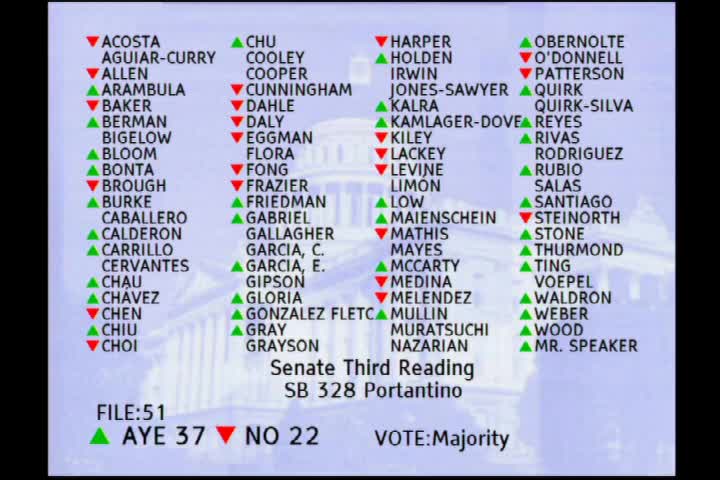 43SEC
Assembly Floor
 11MIN
Assembly Standing Committee on Public Safety
 3MIN
Senate Floor
 1H
Senate Standing Committee on Appropriations
 3MIN
Assembly Standing Committee on Environmental Safety and Toxic Materials
Bill Author

Bill Co-Author(s):