AB 551: Political Reform Act of 1974: postemployment restrictions.
- Session Year: 2017-2018
- House: Assembly
- Latest Version Date: 2017-09-01
The Political Reform Act of 1974 prohibits, for a period of one year after the official leaves his or her position, elected and other specified local officials who held positions with a local government agency, as defined, from acting as agents or attorneys for, or otherwise representing, for compensation, any other person, by appearing before, or communicating with, that local government agency, or any committee, subcommittee, or present member of that local government agency, or any officer or employee of the local government agency, if the appearance or communication is made for the purpose of influencing administrative or legislative action, as specified, or influencing any action or proceeding involving the issuance, amendment, awarding, or revocation of a permit, license, grant, or contract, or the sale or purchase of goods or property. Existing law excludes from this prohibition appearances and communications by a board member, officer, or employee of another local government agency, or an employee or representative of a public agency, as specified, if the individual is appearing or communicating on behalf of that agency.
This bill would specify that the one-year prohibition applies to independent contractors of a local government agency or a public agency who are appearing or communicating on behalf of that agency. The bill would also make other nonsubstantive changes.
A violation of the act is punishable as a misdemeanor. By expanding the scope of an existing crime, this bill would impose a state-mandated local program.
The California Constitution requires the state to reimburse local agencies and school districts for certain costs mandated by the state. Statutory provisions establish procedures for making that reimbursement.
This bill would provide that no reimbursement is required by this act for a specified reason.
The Political Reform Act of 1974, an initiative measure, provides that the Legislature may amend the act to further the acts purposes upon a 2/3 vote of each house of the Legislature and compliance with specified procedural requirements.
This bill would declare that it furthers the purposes of the act.
The Political Reform Act of 1974 prohibits, for a period of one year after the official leaves his or her position, elected and other specified local officials who held positions with a local government agency, as defined, from acting as agents or attorneys for, or otherwise representing, for compensation, any other person, by appearing before, or communicating with, that local government agency, or any committee, subcommittee, or present member of that local government agency, or any officer or employee of the local government agency, if the appearance or communication is made for the purpose of influencing administrative or legislative action, as specified, or influencing any action or proceeding involving the issuance, amendment, awarding, or revocation of a permit, license, grant, or contract, or the sale or purchase of goods or property. Existing law excludes from this prohibition appearances and communications by a board member, officer, or employee of another local government agency, or an employee or representative of a public agency, as specified, in which the individual is appearing or communicating on behalf of that agency.
This bill would remove this exclusion, thereby making these appearances or communications on behalf of an individuals agency subject to specify that the one-year prohibition. prohibition applies to independent contractors of a local government agency or a public agency who are appearing or communicating on behalf of that agency. The bill would also make other nonsubstantive changes.
A violation of the act is punishable as a misdemeanor. By expanding the scope of an existing crime, this bill would impose a state-mandated local program.
The California Constitution requires the state to reimburse local agencies and school districts for certain costs mandated by the state. Statutory provisions establish procedures for making that reimbursement.
This bill would provide that no reimbursement is required by this act for a specified reason.
The Political Reform Act of 1974, an initiative measure, provides that the Legislature may amend the act to further the acts purposes upon a 2/3 vote of each house of the Legislature and compliance with specified procedural requirements.
This bill would declare that it furthers the purposes of the act.
The Political Reform Act of 1974 prohibits, for a period of one year after the official leaves his or her position, elected and other specified local officials who held positions with a local government agency, as defined, from acting as agents or attorneys for, or otherwise representing, for compensation, any other person, by appearing before, or communicating with, that local government agency, or any committee, subcommittee, or present member of that local government agency, or any officer or employee of the local government agency, if the appearance or communication is made for the purpose of influencing administrative or legislative action, as specified, or influencing any action or proceeding involving the issuance, amendment, awarding, or revocation of a permit, license, grant, or contract, or the sale or purchase of goods or property. Existing law excludes from this prohibition appearances and communications by a board member, officer, or employee of another local government agency, or an employee or representative of a public agency, as specified, in which the individual is appearing or communicating on behalf of that agency.
This bill would remove this exclusion, thereby making these appearances or communications on behalf of an individuals agency subject to the one-year prohibition. The bill would also make other nonsubstantive changes.
A violation of the act is punishable as a misdemeanor. By expanding the scope of an existing crime, this bill would impose a state-mandated local program.
The California Constitution requires the state to reimburse local agencies and school districts for certain costs mandated by the state. Statutory provisions establish procedures for making that reimbursement.
This bill would provide that no reimbursement is required by this act for a specified reason.
The Political Reform Act of 1974, an initiative measure, provides that the Legislature may amend the act to further the acts purposes upon a 2/3 vote of each house and compliance with specified procedural requirements.This bill would declare that it furthers the purposes of the act.The Political Reform Act of 1974, an initiative measure, provides that the Legislature may amend the act to further the acts purposes upon a 2/3 vote of each house of the Legislature and compliance with specified procedural requirements.
This bill would declare that it furthers the purposes of the act.
The Political Reform Act of 1974 generally prohibits a public official, as defined, from making, participating in making, or using his or her official position to influence a governmental decision in which the official has a financial interest. The act also requires the disclosure of specified financial interests of certain public officials on a statement of economic interests, which is filed annually. The act imposes certain restrictions on postgovernmental employment of specified public officials of state and local agencies.
This bill would prohibit an elected or appointed officer of a state or local agency, while holding office and for a period of one year after leaving office, from engaging in specified conduct, including maintaining employment with, as specified, or being a compensated consultant of that agency or, for compensation, aiding, advising, consulting with, or assisting an entity with a permit, regulatory action, or enforcement action pending before the agency.
A violation of the act is punishable as a misdemeanor. By expanding the scope of an existing crime, this bill would impose a state-mandated local program.
The California Constitution requires the state to reimburse local agencies and school districts for certain costs mandated by the state. Statutory provisions establish procedures for making that reimbursement.
This bill would provide that no reimbursement is required by this act for a specified reason.
The Political Reform Act of 1974, an initiative measure, provides that the Legislature may amend the act to further the acts purposes upon a 2/3 vote of each house and compliance with specified procedural requirements.
This bill would declare that it furthers the purposes of the act.
(a)A local elected official, chief administrative officer of a county, city manager, or general manager or chief administrator of a special district who held a position with a local government agency as defined in Section 82041 shall not, for a period of one year after leaving that office or employment, act as agent or attorney for, or otherwise represent, for compensation, any other person, by making any formal or informal appearance before, or by making any oral or written communication to, that local government agency, or any committee, subcommittee, or present member of that local government agency, or any officer or employee of the local government agency, if the appearance or communication is made for the purpose of influencing administrative or legislative action, or influencing any action or proceeding involving the issuance, amendment, awarding, or revocation of a permit, license, grant, or contract, or the sale or purchase of goods or property.
(b)(1)Subdivision (a) does not apply to an individual who is, at the time of the appearance or communication, a board member, officer, or employee of another local government agency or an employee or representative of a public agency and is appearing or communicating on behalf of that agency.
(2)Subdivision (a) applies to an individual who is, at the time of the appearance or communication, an independent contractor of a local government agency or a public agency and is appearing or communicating on behalf of that agency.
(c)This section does not preclude a local government agency from adopting an ordinance or policy that restricts the appearance of a former local official before that local government agency if that ordinance or policy is more restrictive than subdivision (a).
(d)Notwithstanding Sections 82002 and 82037, the following definitions apply for purposes of this section only:
(1)Administrative action means the proposal, drafting, development, consideration, amendment, enactment, or defeat by any local government agency of any matter, including any rule, regulation, or other action in any regulatory proceeding, whether quasi-legislative or quasi-judicial. Administrative action does not include any action that is solely ministerial.
(2)Legislative action means the drafting, introduction, modification, enactment, defeat, approval, or veto of any ordinance, amendment, resolution, report, nomination, or other matter by the legislative body of a local government agency or by any committee or subcommittee thereof, or by a member or employee of the legislative body of the local government agency acting in his or her official capacity.
SEC. 2.No reimbursement is required by this act pursuant to Section 6 of Article XIIIB of the California Constitution because the only costs that may be incurred by a local agency or school district will be incurred because this act creates a new crime or infraction, eliminates a crime or infraction, or changes the penalty for a crime or infraction, within the meaning of Section 17556 of the Government Code, or changes the definition of a crime within the meaning of Section 6 of Article XIIIB of the California Constitution.
SEC. 3.The Legislature finds and declares that this bill furthers the purposes of the Political Reform Act of 1974 within the meaning of subdivision (a) of Section 81012 of the Government Code.
(a)A local elected official, chief administrative officer of a county, city manager, or general manager or chief administrator of a special district who held a position with a local government agency as defined in Section 82041 shall not, for a period of one year after leaving that office or employment, act as agent or attorney for, or otherwise represent, for compensation, any other person, by making any formal or informal appearance before, or by making any oral or written communication to, that local government agency, or any committee, subcommittee, or present member of that local government agency, or any officer or employee of the local government agency, if the appearance or communication is made for the purpose of influencing administrative or legislative action, or influencing any action or proceeding involving the issuance, amendment, awarding, or revocation of a permit, license, grant, or contract, or the sale or purchase of goods or property.
(b)(1)Subdivision (a) does not apply to an individual who is, at the time of the appearance or communication, a board member, officer, or employee of another local government agency or an employee or representative of a public agency and is appearing or communicating on behalf of that agency.
(2)Subdivision (a) applies to an individual who is, at the time of the appearance or communication, an independent contractor of a local government agency or a public agency and is appearing or communicating on behalf of that agency.
(b)(c)This section does not preclude a local government agency from adopting an ordinance or policy that restricts the appearance of a former local official before that local government agency if that ordinance or policy is more restrictive than subdivision (a).
(c)(d)Notwithstanding Sections 82002 and 82037, the following definitions apply for purposes of this section only:
(1)Administrative action means the proposal, drafting, development, consideration, amendment, enactment, or defeat by any local government agency of any matter, including any rule, regulation, or other action in any regulatory proceeding, whether quasi-legislative or quasi-judicial. Administrative action does not include any action that is solely ministerial.
(2)Legislative action means the drafting, introduction, modification, enactment, defeat, approval, or veto of any ordinance, amendment, resolution, report, nomination, or other matter by the legislative body of a local government agency or by any committee or subcommittee thereof, or by a member or employee of the legislative body of the local government agency acting in his or her official capacity.
SEC. 2.No reimbursement is required by this act pursuant to Section 6 of Article XIIIB of the California Constitution because the only costs that may be incurred by a local agency or school district will be incurred because this act creates a new crime or infraction, eliminates a crime or infraction, or changes the penalty for a crime or infraction, within the meaning of Section 17556 of the Government Code, or changes the definition of a crime within the meaning of Section 6 of Article XIIIB of the California Constitution.
SEC. 3.The Legislature finds and declares that this bill furthers the purposes of the Political Reform Act of 1974 within the meaning of subdivision (a) of Section 81012 of the Government Code.
(a)A local elected official, chief administrative officer of a county, city manager, or general manager or chief administrator of a special district who held a position with a local government agency as defined in Section 82041 shall not, for a period of one year after leaving that office or employment, act as agent or attorney for, or otherwise represent, for compensation, any other person, by making any formal or informal appearance before, or by making any oral or written communication to, that local government agency, or any committee, subcommittee, or present member of that local government agency, or any officer or employee of the local government agency, if the appearance or communication is made for the purpose of influencing administrative or legislative action, or influencing any action or proceeding involving the issuance, amendment, awarding, or revocation of a permit, license, grant, or contract, or the sale or purchase of goods or property.
(b)Subdivision (a) shall not apply to any individual who is, at the time of the appearance or communication, a board member, officer, or employee of another local government agency or an employee or representative of a public agency and is appearing or communicating on behalf of that agency.(c)(b)Nothing in this section shall This section does not preclude a local government agency from adopting an ordinance or policy that restricts the appearance of a former local official before that local government agency if that ordinance or policy is more restrictive than subdivision (a).
(d)(c)Notwithstanding Sections 82002 and 82037, the following definitions shall apply for purposes of this section only:
(1)Administrative action means the proposal, drafting, development, consideration, amendment, enactment, or defeat by any local government agency of any matter, including any rule, regulation, or other action in any regulatory proceeding, whether quasi-legislative or quasi-judicial. Administrative action does not include any action that is solely ministerial.
(2)Legislative action means the drafting, introduction, modification, enactment, defeat, approval, or veto of any ordinance, amendment, resolution, report, nomination, or other matter by the legislative body of a local government agency or by any committee or subcommittee thereof, or by a member or employee of the legislative body of the local government agency acting in his or her official capacity.
(e)This section shall become operative on July 1, 2006.SECTION 1.Section 87406.5 is added to the Government Code, to read:87406.5.An elected or appointed officer of a state or local agency, while holding office and for a period of one year after leaving office, shall not do either of the following:(a)Maintain employment with or be a compensated consultant of an entity that has any business before the state or local agency. For purposes of this section, employment does not include the currently held appointive office or any elective office of the state or local agency.(b)Aid, advise, consult with, or assist an entity, for compensation, with a permit, regulatory action, or enforcement action pending before the state or local agency.SEC. 2.No reimbursement is required by this act pursuant to Section 6 of Article XIIIB of the California Constitution because the only costs that may be incurred by a local agency or school district will be incurred because this act creates a new crime or infraction, eliminates a crime or infraction, or changes the penalty for a crime or infraction, within the meaning of Section 17556 of the Government Code, or changes the definition of a crime within the meaning of Section 6 of Article XIIIB of the California Constitution.
SEC. 3.The Legislature finds and declares that this bill furthers the purposes of the Political Reform Act of 1974 within the meaning of subdivision (a) of Section 81012 of the Government Code.
An elected or appointed officer of a state or local agency, while holding office and for a period of one year after leaving office, shall not do either of the following:
(a)Maintain employment with or be a compensated consultant of an entity that has any business before the state or local agency. For purposes of this section, employment does not include the currently held appointive office or any elective office of the state or local agency.
(b)Aid, advise, consult with, or assist an entity, for compensation, with a permit, regulatory action, or enforcement action pending before the state or local agency.
SEC. 2.No reimbursement is required by this act pursuant to Section 6 of Article XIIIB of the California Constitution because the only costs that may be incurred by a local agency or school district will be incurred because this act creates a new crime or infraction, eliminates a crime or infraction, or changes the penalty for a crime or infraction, within the meaning of Section 17556 of the Government Code, or changes the definition of a crime within the meaning of Section 6 of Article XIIIB of the California Constitution.
SEC. 3.The Legislature finds and declares that this bill furthers the purposes of the Political Reform Act of 1974 within the meaning of subdivision (a) of Section 81012 of the Government Code.
|
Date
|
Status
|
|---|---|
| Sep 1, 2017 | Chaptered by Secretary of State - Chapter 196, Statutes of 2017. |
| Sep 1, 2017 | Approved by the Governor. |
| Aug 25, 2017 | Enrolled and presented to the Governor at 3 p.m. |
| Aug 22, 2017 | In Assembly. Ordered to Engrossing and Enrolling. |
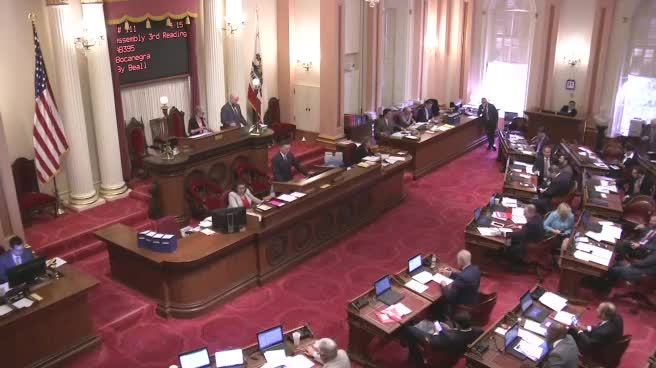
| Aug 21, 2017 | Read third time. Passed. Ordered to the Assembly. |
| Jul 11, 2017 | Read second time. Ordered to third reading. |
| Jul 10, 2017 | From committee: Be ordered to second reading pursuant to Senate Rule 28.8. |
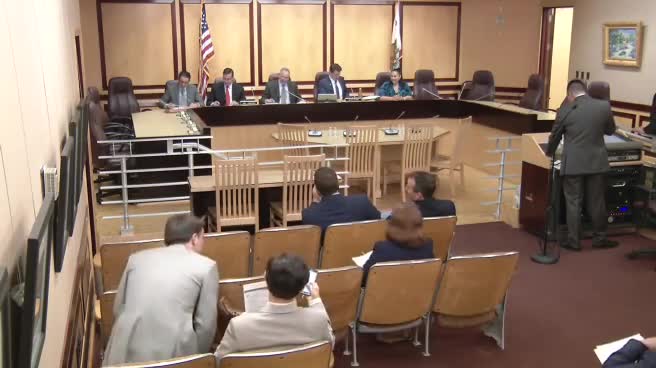
| Jun 21, 2017 | From committee: Do pass and re-refer to Com. on APPR. (Ayes 5. Noes 0.) (June 20). Re-referred to Com. on APPR. |
| May 31, 2017 | In committee: Set, first hearing. Hearing canceled at the request of author. |
| May 18, 2017 | Referred to Com. on E. & C.A. |
| May 8, 2017 | In Senate. Read first time. To Com. on RLS. for assignment. |
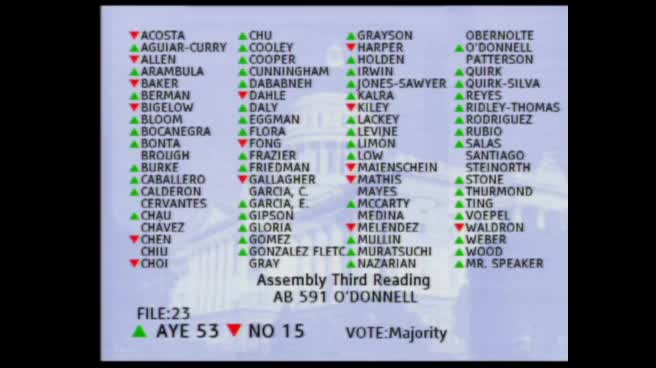
| May 8, 2017 | Read third time. Passed. Ordered to the Senate. (Ayes 72. Noes 1. Page 1420.) |
| Apr 27, 2017 | Read second time. Ordered to third reading. |
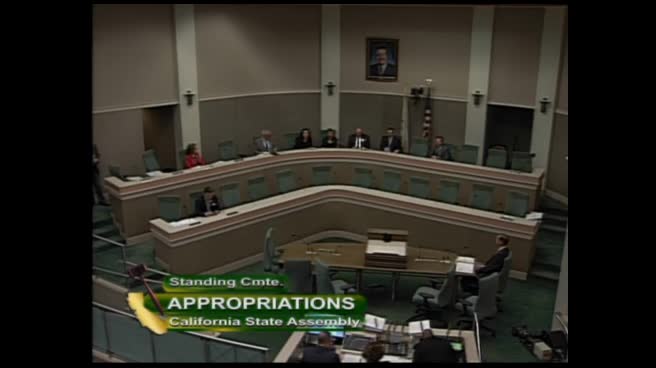
| Apr 26, 2017 | From committee: Do pass. (Ayes 15. Noes 1.) (April 26). |
| Apr 19, 2017 | Re-referred to Com. on APPR. |
| Apr 18, 2017 | Read second time and amended. |
| Apr 17, 2017 | From committee: Amend, and do pass as amended and re-refer to Com. on APPR. (Ayes 6. Noes 1.) (April 5). |
| Mar 14, 2017 | Re-referred to Com. on E. & R. |
| Mar 13, 2017 | From committee chair, with author's amendments: Amend, and re-refer to Com. on E. & R. Read second time and amended. |
| Feb 27, 2017 | Referred to Com. on E. & R. |
| Feb 15, 2017 | From printer. May be heard in committee March 17. |
| Feb 14, 2017 | Read first time. To print. |
|
Date
|
Description
|
Location
|
Votes
|
|
|---|---|---|---|---|
| Aug 21, 2017 | Assembly 3rd Reading AB551 Levine By Anderson | Senate Floor |
Passed |
|
| Jun 20, 2017 | Do pass, but first be re-referred to the Committee on [Appropriations] | Senate Standing Committee on Elections and Constitutional Amendments |
Passed |
|
| May 8, 2017 | AB 551 LEVINE Assembly Third Reading | Assembly Floor |
Passed |
|
| Apr 26, 2017 | Do pass. | Assembly Standing Committee on Appropriations |
Passed |
|
| Apr 5, 2017 | Do pass as amended and be re-referred to the Committee on [Appropriations] | Assembly Standing Committee on Elections and Redistricting |
Passed |
This list shows positions taken on this bill by organizations on the date displayed, which is linked to the original source.
Positions by individuals are not included.
Office of Senate Floor Analyses (916) 651-1520 Fax: (916) 327-4478 | AB |
THIRD READING
Bill No: AB 551
:
SENATE ELECTIONS & C.A. COMMITTEE: 5-0, 6/20/17
AYES: Stern, Anderson, Allen, Hertzberg, Leyva
SENATE APPROPRIATIONS COMMITTEE: Senate Rule 28.8
ASSEMBLY FLOOR: 72-1, 5/8/17 - See last page for vote
DIGEST:
This bill prohibits specified former local government officials, for a year after leaving that position, from appearing before or communicating with their former agency, for compensation, as an independent contractor for another government agency.
Existing law:
- Prohibits former members and specified former employees of state administrative agencies from representing any other person by appearing before or communicating with the agencies of which those individuals were members, or by which they were employed, for 12 months after leaving office if the appearance or communication is for the purpose of influencing legislative or administrative action. This restriction does not apply to any individual who is an officer or employee of another state agency, board, or commission and is appearing or communicating on behalf of that agency, board, or commission. This prohibition also does not apply to an official holding an elective office of a local government agency who is appearing or communicating on behalf of that agency.
- Prohibits former local elected officials and specified former employees of local governments from representing any other person by appearing before or communicating with their former agency in an attempt to influence agency decisions that involve the making of general rules (such as regulations or legislation), or to influence certain proceedings involving a permit, license, contract, or transaction involving the sale or purchase of property or goods. This restriction does not apply to an individual who is, at the time of the appearance or communication, a board member, officer, or employee of another local government agency, or an employee or representative of a public agency, and is appearing or communicating on behalf of that agency.
- Prohibits a public official from making, participating in making, or in any way attempting to use his or her official position to influence a governmental decision in which the official knows or has reason to know he or she has a financial interest.
- Prohibits a public official from making, participating in making, or using his or her official position to influence any governmental decision directly relating to any person with whom he or she is negotiating, or has any arrangement concerning, prospective employment.
This bill:
- Prohibits a local elected official, chief administrative officer of a county, city manager, or general manager or chief administrator of a special district, for a year after leaving that position, from appearing before or communicating with their former agency, for compensation, as an independent contractor for another government agency.
- Makes other nonsubstantive changes.
Background
"Revolving Door" Restrictions on Former Government Officials. Existing law restricts the post-governmental activities of certain former public officials. These restrictions are commonly known as a "revolving door ban." One of the main types of revolving door restrictions in the Political Reform Act (PRA) is a one-year ban that prohibits certain officials, for one year after leaving public service, from representing any other person by appearing before or communicating with, for compensation, their former agency in an attempt to influence agency decisions that involve the making of general rules (such as regulations or legislation), or to influence certain proceedings involving a permit, license, contract, or transaction involving the sale or purchase of property or goods.
When this one-year ban was first enacted, it applied only to former Members of the Legislature, former elected state officers, and specified officers, employees, and consultants of state administrative agencies. The ban included an exemption that allows a person who is subject to the ban to communicate with or appear before his or her former agency on behalf of another state agency, board, or commission of which the person becomes an officer or employee. This exception ensures that the one-year ban does not serve to restrict a state officer or employee's ability to act on behalf of the state when interacting with other state agencies.
Additionally, the one-year ban subsequently was amended to create an additional exception that permits a local elected official to appear before his or her former agency as a representative of the local government body to which he or she was elected. After the state one-year ban was enacted, subsequent measures adopted by the Legislature imposed similar bans on specified air district officials and employees, and on other specified local officials and employees.
AB 3214 (Pringle, Chapter 747, Statutes of 1994) created a one-year ban for former board members and designated employees of air pollution control districts and air quality management districts. An early version of the bill contained an exception to the one-year ban to allow a former air district board member or designated employee to appear before the air district on behalf of another district; after questions were raised in committee about whether the exception was broad enough, that exception subsequently was broadened to apply to appearances made by an employee or representative of any public agency.
SB 8 (Soto, Chapter 680, Statutes of 2005) created a one-year ban for specified former local officials and employees that is similar to the one-year ban that applies to specified former state officials and employees, and to specified former air district board members and employees. SB 8 included an exception that allows former local officials and employees to appear before their former agencies on behalf of other public agencies; this exception was modeled after the exception to the one-year ban for former air district board members and employees.
Comments
- According to the author, in December of 2016 a county supervisor in my district was awarded a 50,000 lobbying contract on behalf of one of the cities in my district that would begin the day after he left office. Ordinarily such a contract would be prohibited by law for one year if its purpose was to have a local government official lobby the position they had just left. However, an exemption was made to the revolving door ban for employment with other government agencies.
This bill would narrow that exemption for local elected officials from serving as a private contractor, for compensation, to another local government agency for the purposes of appearing before or communicating with the office they had previously held for the purposes of influencing legislation. - Where’s the harm? Existing law provides that the revolving door ban does not apply to a person who is communicating with or appearing before his or her former agency on behalf of another government agency. That policy was enacted to specifically differentiate between former government officials who seek to represent private versus public interests before their former agencies. It is unclear why this bill seeks to reverse that longstanding policy. However, assuming there is agreement that this policy reversal has merit, why does the bill only apply to former local government officials who are compensated as independent contractors? This bill would not apply to former local officials who serve as employees rather that independent contractors for the local government agencies they are now representing. Why should the manner in which these former local government officials are compensated determine the propriety of what they are doing?
Related/Prior Legislation
SB 8 (Soto, Chapter 680, Statutes of 2005) extended revolving door to local governments.
AB 3214 (Pringle, Chapter 747, Statutes of 1994) created a one-year ban for former board members and designated employees of air pollution control districts and air quality management districts.
FISCAL EFFECT: Appropriation: Fiscal Com.: Local:
None received
OPPOSITION: (Verified 7/10/17)
None received
ASSEMBLY FLOOR: 72-1, 5/8/17
AYES: Acosta, Aguiar-Curry, Arambula, Baker, Berman, Bigelow, Bloom, Bocanegra, Bonta, Brough, Burke, Caballero, Calderon, Cervantes, Chau, Chávez, Chiu, Choi, Chu, Cooley, Cooper, Cunningham, Dababneh, Dahle, Daly, Eggman, Flora, Frazier, Friedman, Gallagher, Cristina Garcia, Eduardo Garcia, Gipson, Gloria, Gomez, Gonzalez Fletcher, Gray, Grayson, Holden, Irwin, Jones-Sawyer, Kalra, Kiley, Lackey, Levine, Limón, Low, Maienschein, Mathis, Mayes, McCarty, Melendez, Mullin, Muratsuchi, Nazarian, Obernolte, O'Donnell, Quirk, Quirk-Silva, Reyes, Rodriguez, Rubio, Salas, Santiago, Steinorth, Mark Stone, Thurmond, Ting, Voepel, Weber, Wood, Rendon
NOES: Waldron
NO VOTE RECORDED: Travis Allen, Chen, Fong, Harper, Medina, Patterson, Ridley-Thomas
7/12/17 11:12:08
**** END ****
SENATE COMMITTEE ON
ELECTIONS AND CONSTITUTIONAL AMENDMENTS
Senator Henry Stern, Chair
2017 - 2018 Regular
Bill No: AB Hearing Date: 6/20/17
Author: | |||
Version: | 4/18/17 | ||
Urgency: | No | Fiscal: | Yes |
Consultant: | Darren Chesin | ||
Subject: Political Reform Act of 1974: postemployment restrictions
DIGEST
This bill prohibits specified former local government officials, for a year after leaving that position, from appearing before or communicating with their former agency, for compensation, as an independent contractor for another government agency.
ANALYSIS
Existing law:
- Prohibits former members and specified former employees of state administrative agencies from representing any other person by appearing before or communicating with the agencies of which those individuals were members, or by which they were employed, for 12 months after leaving office if the appearance or communication is for the purpose of influencing legislative or administrative action. This restriction does not apply to any individual who is an officer or employee of another state agency, board, or commission and is appearing or communicating on behalf of that agency, board, or commission. This prohibition also does not apply to an official holding an elective office of a local government agency who is appearing or communicating on behalf of that agency.
- Prohibits former local elected officials and specified former employees of local governments from representing any other person by appearing before or communicating with their former agency in an attempt to influence agency decisions that involve the making of general rules (such as regulations or legislation), or to influence certain proceedings involving a permit, license, contract, or transaction involving the sale or purchase of property or goods. This restriction does not apply to an individual who is, at the time of the appearance or communication, a board member, officer, or employee of another local government agency, or an employee or representative of a public agency, and is appearing or communicating on behalf of that agency.
- Prohibits a public official from making, participating in making, or in any way attempting to use his or her official position to influence a governmental decision in which the official knows or has reason to know he or she has a financial interest.
- Prohibits a public official from making, participating in making, or using his or her official position to influence any governmental decision directly relating to any person with whom he or she is negotiating, or has any arrangement concerning, prospective employment.
This bill:
- Prohibits a local elected official, chief administrative officer of a county, city manager, or general manager or chief administrator of a special district, for a year after leaving that position, from appearing before or communicating with their former agency, for compensation, as an independent contractor for another government agency.
- The bill would also make other nonsubstantive changes.
BACKGROUND
"Revolving Door" Restrictions on Former Government Officials. Existing law restricts the post-governmental activities of certain former public officials. These restrictions are commonly known as a "revolving door ban." One of the main types of revolving door restrictions in the Political Reform Act (PRA) is a one-year ban that prohibits certain officials, for one year after leaving public service, from representing any other person by appearing before or communicating with, for compensation, their former agency in an attempt to influence agency decisions that involve the making of general rules (such as regulations or legislation), or to influence certain proceedings involving a permit, license, contract, or transaction involving the sale or purchase of property or goods.
When this one-year ban was first enacted, it applied only to former Members of the Legislature, former elected state officers, and specified officers, employees, and consultants of state administrative agencies. The ban included an exemption that allows a person who is subject to the ban to communicate with or appear before his or her former agency on behalf of another state agency, board, or commission of which the person becomes an officer or employee. This exception ensures that the one-year ban does not serve to restrict a state officer or employee's ability to act on behalf of the state when interacting with other state agencies.
Additionally, the one-year ban subsequently was amended to create an additional exception that permits a local elected official to appear before his or her former agency as a representative of the local government body to which he or she was elected. After the state one-year ban was enacted, subsequent measures adopted by the Legislature imposed similar bans on specified air district officials and employees, and on other specified local officials and employees.
AB 3214 (Pringle, Ch. 747, Statutes of 1994), created a one-year ban for former board members and designated employees of air pollution control districts and air quality management districts. An early version of the bill contained an exception to the one-year ban to allow a former air district board member or designated employee to appear before the air district on behalf of another district; after questions were raised in committee about whether the exception was broad enough, that exception subsequently was broadened to apply to appearances made by an employee or representative of any public agency.
SB 8 (Soto, Ch. 680, Statutes of 2005), created a one-year ban for specified former local officials and employees that is similar to the one-year ban that applies to specified former state officials and employees, and to specified former air district board members and employees. SB 8 included an exception that allows former local officials and employees to appear before their former agencies on behalf of other public agencies; this exception was modeled after the exception to the one-year ban for former air district board members and employees.
COMMENTS
- According to the author: In December of 2016 a county supervisor in my district was awarded a 50,000 lobbying contract on behalf of one of the cities in my district that would begin the day after he left office. Ordinarily such a contract would be prohibited by law for one year if its purpose was to have a local government official lobby the position they had just left. However, an exemption was made to the revolving door ban for employment with other government agencies.
This bill would narrow that exemption for local elected officials from serving as a private contractor, for compensation, to another local government agency for the purposes of appearing before or communicating with the office they had previously held for the purposes of influencing legislation. - Where’s the harm? Existing law provides that the revolving door ban does not apply to a person who is communicating with or appearing before his or her former agency on behalf of another government agency. That policy was enacted to specifically differentiate between former government officials who seek to represent private versus public interests before their former agencies. It is unclear why this bill seeks to reverse that longstanding policy. However, assuming the committee agrees this policy reversal has merit, why does the bill only apply to former local government officials who are compensated as independent contractors? This bill would not apply to former local officials who serve as employees rather that independent contractors for the local government agencies they are now representing. Should the manner in which these former local government officials are compensated determine the propriety of what they are doing?
RELATED/PRIOR LEGISLATION
SB 8 (Soto, Ch. 680, Statutes of 2005), extended revolving door to local governments.
AB 3214 (Pringle, Ch. 747, Statutes of 1994), created a one-year ban for former board members and designated employees of air pollution control districts and air quality management districts.
PRIOR ACTION
Assembly Floor: | |
Assembly Appropriations Committee: | |
Assembly Elections and Redistricting Committee: |
|
POSITIONS
Sponsor: Author
Support: None received
Oppose: None received
-- END --
ASSEMBLY THIRD READING
ATR Bill Id:AB 551
Author:(Levine)
As Amended Ver:April 18, 2017
2/3 vote
Committee | Votes | Ayes | Noes |
Elections | 6-1 | Low, Berman, Calderon, Cunningham, Medina, Weber | Harper |
Appropriations | 15-1 | Gonzalez Fletcher, Bigelow, Bloom, Bocanegra, Bonta, Brough, McCarty, Chau, Eggman, Friedman, Eduardo Garcia, Gray, Muratsuchi, Obernolte, Reyes | Fong |
SUMMARY: Prohibits a former local elected official or top administrator for a local agency, for a year after leaving that position, from appearing before or communicating with the former agency, for compensation, as an independent contractor for another government agency. Specifically, this bill prohibits a person who is a former local elected official, former chief administrative officer of a county, former city manager, or former general manager or chief administrator of a special district, for a year after leaving that position, from communicating with or appearing before the person's former agency for compensation as an independent contractor for another government agency.
FISCAL EFFECT: According to the Assembly Appropriations Committee, negligible fiscal effect.
COMMENTS: According to the author, "While our current laws account for the revolving door into the private industry, they exempt what has become a recent trend of government spending on lobbyists… This bill recognizes the reality that local governments are spending more for lobbying by requiring a one year cooling off period for local government officials from taking lobbyist positions immediately upon leaving their jobs."
Existing law restricts the post-governmental activities of certain former public officials. These restrictions are commonly known as a "revolving door ban." One of the main types of revolving door restrictions in the Political Reform Act (PRA) is a one-year ban that prohibits certain officials, for one year after leaving public service, from representing any other person by appearing before or communicating with, for compensation, their former agency in an attempt to influence agency decisions that involve the making of general rules (such as regulations or legislation), or to influence certain proceedings involving a permit, license, contract, or transaction involving the sale or purchase of property or goods. The revolving door ban generally includes an exception that allows former officials and employees to appear before their former agencies on behalf of other public agencies. This bill creates an exception to that exception, making the revolving door ban applicable to former local elected officials and top agency administrators who are communicating with or appearing before their former agency for compensation as an independent contractor for another government agency.
California voters passed an initiative, Proposition 9, in 1974 that created the Fair Political Practices Commission and codified significant restrictions and prohibitions on candidates, officeholders, and lobbyists. That initiative is commonly known as the PRA. Amendments to the PRA that are not submitted to the voters, such as those contained in this bill, must further the purposes of the initiative and require a two-thirds vote of both houses of the Legislature.
Please see the policy committee analysis for a full discussion of this bill.
Analysis Prepared by: Ethan Jones / E. & R. / (916) 319-2094 FN: 0000181
Date of Hearing: April 26, 2017
ASSEMBLY COMMITTEE ON APPROPRIATIONS
Lorena Gonzalez Fletcher, Chair
ABPCA Bill Id:AB 551
Author:(Levine) – As Amended Ver: April 18, 2017
Policy Committee: | Elections and Redistricting | Vote: | 6 - 1 |
|
| ||
|
|
Urgency: No State Mandated Local Program: Yes Reimbursable: No
SUMMARY:
This bill prohibits a former local elected official or top administrator for a local agency, for a year after leaving that position, from appearing before or communicating with the former agency, for compensation, as an independent contractor for another government agency.
FISCAL EFFECT:
Negligible fiscal effect.
COMMENTS:
- Background. Existing law prohibits former local elected officials and specified former employees of local governments from representing any other person by appearing before or communicating with their former agency in an attempt to influence specified agency decisions. Existing law also provides that this restriction does not apply to an individual, who at the time of the appearance or communication, is a board member, officer, or employee of another local government agency, or an employee or representative of a public agency, and is appearing or communicating on behalf of that agency.
- Purpose. According to the author, “While our current laws account for the revolving door into the private industry, they exempt what has become a recent trend of government spending on lobbyists.” The author also states, “This bill recognizes the reality that local governments are spending more for lobbying by requiring a one year cooling off period for local government officials from taking lobbyist positions immediately upon leaving their jobs.”
Analysis Prepared by: Jessica Peters / APPR. / (916) 319-2081
Date of Hearing: April 5, 2017
ASSEMBLY COMMITTEE ON ELECTIONS AND REDISTRICTING
Evan Low, Chair
ABPCA Bill Id:AB 551 (
Author:Levine) – As Amended Ver:March 13, 2017
SUBJECT: Political Reform Act of 1974: postemployment restrictions.
SUMMARY: Prohibits a former local elected official or top administrator for a local agency, for a year after leaving that position, from appearing before or communicating with the former agency, for compensation, on behalf of another government agency. Specifically, this bill repeals a provision of law that allows a person who is a former local elected official, former chief administrative officer of a county, former city manager, or former general manager or chief administrator of a special district, for a year after leaving that position, to communicate with or appear before the person's former agency for compensation on behalf of another government agency, notwithstanding a provision of law that otherwise generally prohibits such appearances or communications on behalf of non-governmental entities.
EXISTING LAW:
- Creates the Fair Political Practices Commission (FPPC), and makes it responsible for the impartial, effective administration and implementation of the Political Reform Act (PRA).
- Prohibits former members and specified former employees of state administrative agencies from representing any other person by appearing before or communicating with the agencies of which those individuals were members, or by which they were employed, for 12 months after leaving office if the appearance or communication is for the purpose of influencing legislative or administrative action. Provides that this restriction does not apply to any individual who is an officer or employee of another state agency, board, or commission and is appearing or communicating on behalf of that agency, board, or commission. Provides that this prohibition does not apply to an official holding an elective office of a local government agency who is appearing or communicating on behalf of that agency.
- Prohibits former local elected officials and specified former employees of local governments from representing any other person by appearing before or communicating with their former agency in an attempt to influence agency decisions that involve the making of general rules (such as regulations or legislation), or to influence certain proceedings involving a permit, license, contract, or transaction involving the sale or purchase of property or goods. Provides that this restriction does not apply to an individual who is, at the time of the appearance or communication, a board member, officer, or employee of another local government agency, or an employee or representative of a public agency, and is appearing or communicating on behalf of that agency.
- Prohibits a public official from making, participating in making, or in any way attempting to use his or her official position to influence a governmental decision in which the official knows or has reason to know he or she has a financial interest.
- Prohibits a public official from making, participating in making, or using his or her official position to influence any governmental decision directly relating to any person with whom he or she is negotiating, or has any arrangement concerning, prospective employment.
FISCAL EFFECT: Unknown. State-mandated local program; contains a crimes and infractions disclaimer.
COMMENTS:
- Purpose of the Bill: According to the author:
In 2016, Supervisor Kinsey from the County of Marin engaged in a contract with the City of San Rafael to serve as an advisor to the city on transportation issues. The City of San Rafael is concerned with the Sonoma Marin Area Rail Transit's plan to extend to Larkspur, which will potentially disrupt the city's downtown Bettini Transit Center. Supervisor Kinsey negotiated a contract that would be capped at $50,000 dollars while he was still sitting on the County Board of Supervisors and the Metropolitan Transportation Commission. His contract was to begin after he left office…
Current law prohibits County Board of Supervisors from taking lobbying positions for one year after they leave office that will require them to appear in any way before the boards they previously sat on. This one year cooling off period is meant to prevent any self-dealing in the member's final year, as well as to prohibit any organization from taking advantage of the relationships that member had built while sitting on the Board.
In recent years, the top spender on lobbying power has not been oil and gas or business interests, but local government. According to KQED "The money spent on lobbying by government agencies — cities, counties, school districts, water agencies, even rent control boards across the Golden State — consistently ranks at or near the top of the heap. Recent state filings show the government sector spent $22.3 million on lobbying and influence efforts in the first six months of 2015, on top of the $87.8 million spent in the previous two year legislative session."…
While our current laws account for the revolving door into the private industry, they exempt what has become a recent trend of government spending on lobbyists. As a result of existing law, the contract Supervisor Kinsey took for up to $50,000 while still serving as an elected official was allowed because of an exemption for taking positions as a lobbyist for local government…
This bill recognizes the reality that local governments are spending more for lobbying by requiring a one year cooling off period for local government officials from taking lobbyist positions immediately upon leaving their jobs.
- "Revolving Door" Restrictions on Former Government Officials: Existing law restricts the post-governmental activities of certain former public officials. These restrictions are commonly known as a "revolving door ban." One of the main types of revolving door restrictions in the PRA is a one-year ban that prohibits certain officials, for one year after leaving public service, from representing any other person by appearing before or communicating with, for compensation, their former agency in an attempt to influence agency decisions that involve the making of general rules (such as regulations or legislation), or to influence certain proceedings involving a permit, license, contract, or transaction involving the sale or purchase of property or goods.
When this one-year ban was first enacted, it applied only to former Members of the Legislature, former elected state officers, and specified officers, employees, and consultants of state administrative agencies. The ban included an exemption that allows a person who is subject to the ban to communicate with or appear before his or her former agency on behalf of another state agency, board, or commission of which the person becomes an officer or employee. This exception ensures that the one-year ban does not serve to restrict a state officer or employee's ability to act on behalf of the state when interacting with other state agencies. Additionally, the one-year ban subsequently was amended to create an additional exception that permits a local elected official to appear before his or her former agency as a representative of the local government body to which he or she was elected.
After the state one-year ban was enacted, subsequent measures adopted by the Legislature imposed similar bans on specified air district officials and employees, and on other specified local officials and employees. AB 3214 (Pringle), Chapter 747, Statutes of 1994, created a one-year ban for former board members and designated employees of air pollution control districts and air quality management districts. An early version of the bill contained an exception to the one-year ban to allow a former air district board member or designated employee to appear before the air district on behalf of another district; after questions were raised in committee about whether the exception was broad enough, that exception subsequently was broadened to apply to appearances made by an employee or representative of any public agency. SB 8 (Soto), Chapter 680, Statutes of 2005, created a one-year ban for specified former local officials and employees that is similar to the one-year ban that applies to specified former state officials and employees, and to specified former air district board members and employees. SB 8 included an exception that allows former local officials and employees to appear before their former agencies on behalf of other public agencies; this exception was modeled after the exception to the one-year ban for former air district board members and employees. - Broad Application and Suggested Amendment: As detailed above, the "revolving door" bans that have been enacted by the Legislature generally have included exceptions for government-to-government communications. These exceptions may reflect a policy determination that communications made between governmental entities do not present the same types of potential conflict-of-interest concerns as communications that are made by private entities to governmental entities. By eliminating the government-to-government communication exception to the local one-year revolving door ban, this bill will significantly restrict the employment options of certain former local officials and employees. Additionally, this bill will significantly restrict flexibility that public agencies otherwise have to employ former local officials and employees who may have governmental and subject-matter expertise.
Eliminating the government-to-government exception to the local one-year revolving door ban would not necessarily prevent a former local official or employee from going to work for another governmental agency. That's because the one-year ban only prohibits a former official or employee from appearing before or communicating with the person's former agency. A former city council member, for example, could be hired by a county, and could advise the county on projects and issues pending before the city that the person previously represented, as long as the former council member did not appear before or communicate with the city. For certain governmental positions, however, appearances before and communications with other governmental agencies are an inevitable and essential part of the job, and this bill could prevent qualified individuals from being eligible to serve in such positions.
For example, if a county was in the process of hiring a new executive officer, the pool of applicants for that position might include current city managers from cities located in the county. Under this bill, however, if a city manager was hired to become the county executive officer, that person would be prohibited from appearing before or communicating with the city in an attempt to influence certain city decisions. It is unclear whether a county executive officer could effectively perform his or her job, and appropriately advocate on behalf of the county's interests, if that officer is prohibited from communicating with one of the cities in that county.
As another example, if a member of the Legislature hired a former school board member to serve as a staff member in his or her office, this bill could prohibit that person from working with the school district where he or she previously served as a board member to develop legislation related to education policy and funding.
Finally, as currently drafted, the provisions of this bill could even prevent elected officials from advocating on behalf of their constituents. A county supervisor who was termed out of office and who was elected to serve on the city council could not, in his or her position as a city council member, appear before the board of supervisors for a year after leaving the board.
The situation described by the author as being the impetus for this bill involved a county supervisor who agreed to work as a contractor for one of the cities in the county once the supervisor's term of office ended. To more directly address the situation cited by the author, while still ensuring that governmental agencies have the flexibility to communicate with each other, the committee may wish to consider amending this bill to provide that the government-to-government exception to the local one-year ban does not apply to individuals who are working as contractors for or on behalf of public agencies while communicating with or appearing before their former agency. In other situations, the government-to-government exception to the local one-year ban would remain in place. Such a policy change would allow public officials and direct employees of public agencies to communicate or appear before local agencies where they previously worked, while still addressing the concerns expressed by the author. - Arguments in Opposition: In opposition to this bill, the California Special Districts Association, California State Association of Counties, and League of California Cities write:
AB 551 is an Unnecessary Measure that Creates an Uneven Playing Field
At the present we are unaware of what problem requires the solution set forth in AB 551… While each local agency is unique in the services they provide and the necessary delivery methods of those services, often the skills gained by employees at one agency are applicable and transferable to another agency. However, AB 551 would prevent a board member or an employee from moving from one agency to another that would work with their current agency…
AB 551 Creates Unintended Consequences
Applying the provisions of AB 551 to all local public agencies will have significant unintended consequences. This bill would prevent some agency boards from recruiting board members based on their board structure. For example, a water district in southern California has a 38-member board of directors, representing each of their 26 member agencies. Each member agency is represented by one or more directors based on the assessed property valuation of its jurisdiction. Under AB 551, after one of the 38-member board of directors has completed his or her term, they would not be able to represent their home agency to the 38-member board, which they would continue to have significant business dealings with.
AB 551 does not Increase Transparency and Will Discourage Qualified Candidates to Serve the Public
…[B]y placing a one year general employment ban on all employment activity relating to specific skills or experience that makes that person a qualified local government official or staff, AB 551 will discourage qualified local agency officials whose intent is to serve in their communities from engaging in local government employment.
- Political Reform Act of 1974: California voters passed an initiative, Proposition 9, in 1974 that created the FPPC and codified significant restrictions and prohibitions on candidates, officeholders, and lobbyists. That initiative is commonly known as the PRA. Amendments to the PRA that are not submitted to the voters, such as those contained in this bill, must further the purposes of the initiative and require a two-thirds vote of both houses of the Legislature.
REGISTERED SUPPORT / OPPOSITION:
Support
None on file.
Opposition
California Special Districts Association
California State Association of Counties
League of California Cities
Analysis Prepared by: Ethan Jones / E. & R. / (916) 319-2094
Discussed in Hearing
 1MIN
Senate Floor
 6MIN
Senate Standing Committee on Elections and Constitutional Amendments
 1MIN
Assembly Floor
 2MIN
Assembly Standing Committee on Appropriations
 4MIN
Assembly Standing Committee on Elections and Redistricting
Bill Author

Bill Co-Author(s):