AB 56: California Infrastructure and Economic Development Bank: housing.
- Session Year: 2017-2018
- House: Assembly
- Latest Version Date: 2017-09-26
The Bergeson-Peace Infrastructure and Economic Development Bank Act authorizes the California Infrastructure and Economic Development Bank, governed by a board of directors, to, among other things, make loans, issue bonds, and provide other financial assistance for various types of projects that qualify as public development or economic development facilities. The act defines, among other things, the term public development facilities for these purposes to mean real and personal property, structures, conveyances, equipment, thoroughfares, buildings, and supporting components thereof, excluding any housing, that are directly related to providing, among other things, city streets, county highways, and educational facilities. The act establishes the California Infrastructure and Economic Development Bank Fund, a continuously appropriated fund, for support of the bank.
This bill would revise the definition of the term public development facilities for purposes of the act to mean real and personal property, structures, conveyances, equipment, thoroughfares, buildings, and supporting components thereof, excluding any housing, that are directly related to providing, among other things, housing-related infrastructure, which includes city streets; drainage, water supply, and flood control; environmental mitigation measures; power and communications; public transit improvement that directly supports transit-oriented housing; sewage collection and treatment; and water treatment and distribution. By expanding the banks authority to expend funds in a continuously appropriated fund, the bill would make an appropriation.
The Bergeson-Peace Infrastructure and Economic Development Bank Act authorizes the California Infrastructure and Economic Development Bank, governed by a board of directors, to, among other things, make loans, issue bonds, and provide other financial assistance for various types of projects that qualify as public development or economic development facilities. The act defines, among other things, the terms economic development facilities and term public development facilities for these purposes to exclude housing. mean real and personal property, structures, conveyances, equipment, thoroughfares, buildings, and supporting components thereof, excluding any housing, that are directly related to providing, among other things, city streets, county highways, and educational facilities. The act establishes the California Infrastructure and Economic Development Bank Fund, a continuously appropriated fund, for support of the bank.
This bill would revise the definitions of the terms economic development facilities and definition of the term public development facilities for purposes of the act by deleting the prohibition on the financing of housing projects, thereby authorizing the bank to provide financial assistance to a housing project that otherwise meets the definition of economic development facilities or public development facilities. to mean real and personal property, structures, conveyances, equipment, thoroughfares, buildings, and supporting components thereof, excluding any housing, that are directly related to providing, among other things, housing-related infrastructure, which includes city streets; drainage, water supply, and flood control; environmental mitigation measures; power and communications; public transit improvement that directly supports transit-oriented housing; sewage collection and treatment; and water treatment and distribution. By expanding the banks authority to expend funds in a continuously appropriated fund, the bill would make an appropriation.
The Bergeson-Peace Infrastructure and Economic Development Bank Act authorizes the California Infrastructure and Economic Development Bank, governed by a board of directors, to, among other things, make loans, issue bonds, and provide other financial assistance for various types of projects that qualify as public development or economic development facilities. The act defines, among other things, the terms economic development facilities and public development facilities for these purposes to exclude housing. The act establishes the California Infrastructure and Economic Development Bank Fund, a continuously appropriated fund, for support of the bank.
This bill would revise the definitions of the terms economic development facilities and public development facilities for purposes of the act by deleting the prohibition on the financing of housing projects, thereby authorizing the bank to provide financial assistance to a housing project that otherwise meets the definition of economic development facilities or public development facilities. By expanding the banks authority to expend funds in a continuously appropriated fund, the bill would make an appropriation.
Under existing law, there are programs providing assistance for, among other things, emergency housing, multifamily housing, farmworker housing, homeownership for very low and low-income households, and downpayment assistance for first-time home buyers.This bill would state the intent of the Legislature to enact legislation that would provide for the redevelopment of impoverished areas in the San Gabriel Valley and the San Bernardino-Riverside metropolitan area, by creating affordable housing opportunities, and establish a novel source of revenue to offset the costs of this program.Under existing law, there are programs providing assistance for, among other things, emergency housing, multifamily housing, farmworker housing, homeownership for very low and low-income households, and downpayment assistance for first-time home buyers.
This bill would state the intent of the Legislature to enact legislation that would provide for the redevelopment of impoverished areas in the San Gabriel Valley and the San Bernardino-Riverside metropolitan area, by creating affordable housing opportunities, and establish a novel source of revenue to offset the costs of this program.
For purposes of this division, the following words and terms shall have the following meanings unless the context clearly indicates or requires another or different meaning or intent:
(a)Act means the Bergeson-Peace Infrastructure and Economic Development Bank Act.
(b)Bank means the California Infrastructure and Economic Development Bank.
(c)Board or bank board means the Board of Directors of the California Infrastructure and Economic Development Bank.
(d)Bond purchase agreement means a contractual agreement executed between the bank and a sponsor, or a special purpose trust authorized by the bank or a sponsor, or both, whereby the bank or special purpose trust authorized by the bank agrees to purchase bonds of the sponsor for retention or sale.
(e)Bonds means bonds, including structured, senior, and subordinated bonds or other securities; loans; notes, including bond, revenue, tax, or grant anticipation notes; commercial paper; floating rate and variable maturity securities; and any other evidences of indebtedness or ownership, including certificates of participation or beneficial interest, asset backed certificates, or lease-purchase or installment purchase agreements, whether taxable or excludable from gross income for federal income taxation purposes.
(f)Cost, as applied to a project or portion thereof financed under this division, means all or any part of the cost of construction, renovation, and acquisition of all lands, structures, real or personal property, rights, rights-of-way, franchises, licenses, easements, and interests acquired or used for a project; the cost of demolishing or removing any buildings or structures on land so acquired, including the cost of acquiring any lands to which the buildings or structures may be moved; the cost of all machinery, equipment, and financing charges; interest prior to, during, and for a period after completion of construction, renovation, or acquisition, as determined by the bank; provisions for working capital; reserves for principal and interest and for extensions, enlargements, additions, replacements, renovations, and improvements; and the cost of architectural, engineering, financial and legal services, plans, specifications, estimates, administrative expenses, and other expenses necessary or incidental to determining the feasibility of any project or incidental to the construction, acquisition, or financing of any project, and transition costs in the case of an electrical corporation.
(g)Economic development facilities means real and personal property, structures, buildings, equipment, and supporting components thereof that are used to provide industrial, recreational, research, commercial, utility, goods movement, or service enterprise facilities, community, educational, cultural, or social welfare facilities and any parts or combinations thereof, and all facilities or infrastructure necessary or desirable in connection therewith, including provision for working capital, but shall not include any housing.
(h)Electrical corporation has the meaning set forth in Section 218 of the Public Utilities Code.
(i)Executive director means the Executive Director of the California Infrastructure and Economic Development Bank appointed pursuant to Section 63021.
(j)Financial assistance in connection with a project, includes, but is not limited to, any combination of grants, loans, the proceeds of bonds issued by the bank or special purpose trust, insurance, guarantees or other credit enhancements or liquidity facilities, and contributions of money, property, labor, or other things of value, as may be approved by resolution of the board or the sponsor, or both; the purchase or retention of bank bonds, the bonds of a sponsor for their retention or for sale by the bank, or the issuance of bank bonds or the bonds of a special purpose trust used to fund the cost of a project for which a sponsor is directly or indirectly liable, including, but not limited to, bonds, the security for which is provided in whole or in part pursuant to the powers granted by Section 63025.1; bonds for which the bank has provided a guarantee or enhancement, including, but not limited to, the purchase of the subordinated bonds of the sponsor, the subordinated bonds of a special purpose trust, or the retention of the subordinated bonds of the bank pursuant to Chapter 4 (commencing with Section 63060); or any other type of assistance deemed appropriate by the bank or the sponsor, except that no direct loans shall be made to nonpublic entities other than in connection with the issuance of rate reduction bonds pursuant to a financing order or in connection with a financing for an economic development facility.
For purposes of this subdivision, grant does not include grants made by the bank except when acting as an agent or intermediary for the distribution or packaging of financing available from federal, private, or other public sources.
(k)Financing order has the meaning set forth in Section 840 of the Public Utilities Code.
(l)Guarantee trust fund means the California Infrastructure Guarantee Trust Fund.
(m)Infrastructure bank fund means the California Infrastructure and Economic Development Bank Fund.
(n)Loan agreement means a contractual agreement executed between the bank or a special purpose trust and a sponsor that provides that the bank or special purpose trust will loan funds to the sponsor and that the sponsor will repay the principal and pay the interest and redemption premium, if any, on the loan.
(o)Participating party means any person, company, corporation, association, state, or municipal governmental entity, partnership, firm, or other entity or group of entities, whether organized for profit or not for profit, engaged in business or operations within the state and that applies for financing from the bank in conjunction with a sponsor for the purpose of implementing a project. However, in the case of a project relating to the financing of transition costs or the acquisition of transition property, or both, on the request of an electrical corporation, or in connection with financing for an economic development facility, or for the financing of insurance claims, the participating party shall be deemed to be the same entity as the sponsor for the financing.
(p)Project means designing, acquiring, planning, permitting, entitling, constructing, improving, extending, restoring, financing, and generally developing public development facilities or economic development facilities within the state or financing transition costs or the acquisition of transition property, or both, upon approval of a financing order by the Public Utilities Commission, as provided in Article 5.5 (commencing with Section 840) of Chapter 4 of Part 1 of Division 1 of the Public Utilities Code.
(q)Public development facilities means real and personal property, structures, conveyances, equipment, thoroughfares, buildings, and supporting components thereof, excluding any housing, that are directly related to providing the following:
(1)City streets including any street, avenue, boulevard, road, parkway, drive, or other way that is any of the following:
(A)An existing municipal roadway.
(B)Is shown upon a plat approved pursuant to law and includes the land between the street lines, whether improved or unimproved, and may comprise pavement, bridges, shoulders, gutters, curbs, guardrails, sidewalks, parking areas, benches, fountains, plantings, lighting systems, and other areas within the street lines, as well as equipment and facilities used in the cleaning, grading, clearance, maintenance, and upkeep thereof.
(2)County highways including any county highway as defined in Section 25 of the Streets and Highways Code, that includes the land between the highway lines, whether improved or unimproved, and may comprise pavement, bridges, shoulders, gutters, curbs, guardrails, sidewalks, parking areas, benches, fountains, plantings, lighting systems, and other areas within the street lines, as well as equipment and facilities used in the cleaning, grading, clearance, maintenance, and upkeep thereof.
(3)Drainage, water supply, and flood control including, but not limited to, ditches, canals, levees, pumps, dams, conduits, pipes, storm sewers, and dikes necessary to keep or direct water away from people, equipment, buildings, and other protected areas as may be established by lawful authority, as well as the acquisition, improvement, maintenance, and management of floodplain areas and all equipment used in the maintenance and operation of the foregoing.
(4)Educational facilities including libraries, child care facilities, including, but not limited to, day care facilities, and employment training facilities.
(5)Environmental mitigation measures including required construction or modification of public infrastructure and purchase and installation of pollution control and noise abatement equipment.
(6)Parks and recreational facilities including local parks, recreational property and equipment, parkways, and property.
(7)Port facilities including airports, landports, waterports, railports, docks, harbors, ports of entry, piers, ships, small boat harbors and marinas, and any other facilities, additions, or improvements in connection therewith, that transport goods or persons.
(8)Power and communications including facilities for the transmission or distribution of electrical energy, natural gas, and telephone and telecommunications service.
(9)Public transit including air and rail transport, airports, guideways, vehicles, rights-of-way, passenger stations, maintenance and storage yards, and related structures, including public parking facilities, and equipment used to provide or enhance transportation by bus, rail, ferry, or other conveyance, either publicly or privately owned, that provides to the public general or special service on a regular and continuing basis.
(10)Sewage collection and treatment including pipes, pumps, and conduits that collect wastewater from residential, manufacturing, and commercial establishments, the equipment, structures, and facilities used in treating wastewater to reduce or eliminate impurities or contaminants, and the facilities used in disposing of, or transporting, remaining sludge, as well as all equipment used in the maintenance and operation of the foregoing.
(11)Solid waste collection and disposal including vehicles, vehicle-compatible waste receptacles, transfer stations, recycling centers, sanitary landfills, and waste conversion facilities necessary to remove solid waste, except that which is hazardous as defined by law, from its point of origin.
(12)Water treatment and distribution including facilities in which water is purified and otherwise treated to meet residential, manufacturing, or commercial purposes and the conduits, pipes, and pumps that transport it to places of use.
(13)Defense conversion including, but not limited to, facilities necessary for successfully converting military bases consistent with an adopted base reuse plan.
(14)Public safety facilities including, but not limited to, police stations, fire stations, court buildings, jails, juvenile halls, and juvenile detention facilities.
(15)State highways including any state highway as described in Chapter 2 (commencing with Section 230) of Division 1 of the Streets and Highways Code, and the related components necessary for safe operation of the highway.
(16)(A)Military infrastructure, including, but not limited to, facilities on or near a military installation, that enhance the military operations and mission of one or more military installations in this state. To be eligible for funding, the project shall be endorsed by the Office of Planning and Research.
(B)For purposes of this subdivision, military installation means any facility under the jurisdiction of the Department of Defense, as defined in paragraph (1) of subsection (e) of Section 2687 of Title 10 of the United States Code.
(17)Goods movement-related infrastructure including port facilities, roads, rail, and other facilities and projects that move goods, energy, and information.
(18)Housing-related infrastructure including city streets; drainage, water supply, and flood control; environmental mitigation measures; power and communications; public transit improvement that directly supports transit-oriented housing; sewage collection and treatment; and water treatment and distribution.
(r)Rate reduction bonds has the meaning set forth in Section 840 of the Public Utilities Code.
(s)Revenues means all receipts, purchase payments, loan repayments, lease payments, and all other income or receipts derived by the bank or a sponsor from the sale, lease, or other financing arrangement undertaken by the bank, a sponsor, or a participating party, including, but not limited to, all receipts from a bond purchase agreement, and any income or revenue derived from the investment of any money in any fund or account of the bank or a sponsor and any receipts derived from transition property. Revenues shall not include moneys in the General Fund of the state.
(t)Special purpose trust means a trust, partnership, limited partnership, association, corporation, nonprofit corporation, or other entity authorized under the laws of the state to serve as an instrumentality of the state to accomplish public purposes and authorized by the bank to acquire, by purchase or otherwise, for retention or sale, the bonds of a sponsor or of the bank made or entered into pursuant to this division and to issue special purpose trust bonds or other obligations secured by these bonds or other sources of public or private revenues. Special purpose trust also means any entity authorized by the bank to acquire transition property or to issue rate reduction bonds, or both, subject to the approvals by the bank and powers of the bank as are provided by the bank in its resolution authorizing the entity to issue rate reduction bonds.
(u)Sponsor means any subdivision of the state or local government including departments, agencies, commissions, cities, counties, nonprofit corporations formed on behalf of a sponsor, special districts, assessment districts, and joint powers authorities within the state or any combination of these subdivisions that makes an application to the bank for financial assistance in connection with a project in a manner prescribed by the bank. This definition shall not be construed to require that an applicant have an ownership interest in the project. In addition, an electrical corporation shall be deemed to be the sponsor as well as the participating party for any project relating to the financing of transition costs and the acquisition of transition property on the request of the electrical corporation and any person, company, corporation, partnership, firm, or other entity or group engaged in business or operation within the state that applies for financing of any economic development facility, shall be deemed to be the sponsor as well as the participating party for the project relating to the financing of that economic development facility.
(v)State means the State of California.
(w)Transition costs has the meaning set forth in Section 840 of the Public Utilities Code.
(x)Transition property has the meaning set forth in Section 840 of the Public Utilities Code.
For purposes of this division, the following words and terms shall have the following meanings unless the context clearly indicates or requires another or different meaning or intent:
(a)Act means the Bergeson-Peace Infrastructure and Economic Development Bank Act.
(b)Bank means the California Infrastructure and Economic Development Bank.
(c)Board or bank board means the Board of Directors of the California Infrastructure and Economic Development Bank.
(d)Bond purchase agreement means a contractual agreement executed between the bank and a sponsor, or a special purpose trust authorized by the bank or a sponsor, or both, whereby the bank or special purpose trust authorized by the bank agrees to purchase bonds of the sponsor for retention or sale.
(e)Bonds means bonds, including structured, senior, and subordinated bonds or other securities; loans; notes, including bond, revenue, tax, or grant anticipation notes; commercial paper; floating rate and variable maturity securities; and any other evidences of indebtedness or ownership, including certificates of participation or beneficial interest, asset backed certificates, or lease-purchase or installment purchase agreements, whether taxable or excludable from gross income for federal income taxation purposes.
(f)Cost, as applied to a project or portion thereof financed under this division, means all or any part of the cost of construction, renovation, and acquisition of all lands, structures, real or personal property, rights, rights-of-way, franchises, licenses, easements, and interests acquired or used for a project; the cost of demolishing or removing any buildings or structures on land so acquired, including the cost of acquiring any lands to which the buildings or structures may be moved; the cost of all machinery, equipment, and financing charges; interest prior to, during, and for a period after completion of construction, renovation, or acquisition, as determined by the bank; provisions for working capital; reserves for principal and interest and for extensions, enlargements, additions, replacements, renovations, and improvements; and the cost of architectural, engineering, financial and legal services, plans, specifications, estimates, administrative expenses, and other expenses necessary or incidental to determining the feasibility of any project or incidental to the construction, acquisition, or financing of any project, and transition costs in the case of an electrical corporation.
(g)Economic development facilities means real and personal property, structures, buildings, equipment, and supporting components thereof that are used to provide industrial, recreational, research, commercial, utility, goods movement, or service enterprise facilities, community, educational, cultural, or social welfare facilities and any parts or combinations thereof, and all facilities or infrastructure necessary or desirable in connection therewith, including provision for working capital. capital, but shall not include any housing.
(h)Electrical corporation has the meaning set forth in Section 218 of the Public Utilities Code.
(i)Executive director means the Executive Director of the California Infrastructure and Economic Development Bank appointed pursuant to Section 63021.
(j)Financial assistance in connection with a project, includes, but is not limited to, any combination of grants, loans, the proceeds of bonds issued by the bank or special purpose trust, insurance, guarantees or other credit enhancements or liquidity facilities, and contributions of money, property, labor, or other things of value, as may be approved by resolution of the board or the sponsor, or both; the purchase or retention of bank bonds, the bonds of a sponsor for their retention or for sale by the bank, or the issuance of bank bonds or the bonds of a special purpose trust used to fund the cost of a project for which a sponsor is directly or indirectly liable, including, but not limited to, bonds, the security for which is provided in whole or in part pursuant to the powers granted by Section 63025.1; bonds for which the bank has provided a guarantee or enhancement, including, but not limited to, the purchase of the subordinated bonds of the sponsor, the subordinated bonds of a special purpose trust, or the retention of the subordinated bonds of the bank pursuant to Chapter 4 (commencing with Section 63060); or any other type of assistance deemed appropriate by the bank or the sponsor, except that no direct loans shall be made to nonpublic entities other than in connection with the issuance of rate reduction bonds pursuant to a financing order or in connection with a financing for an economic development facility.
For purposes of this subdivision, grant does not include grants made by the bank except when acting as an agent or intermediary for the distribution or packaging of financing available from federal, private, or other public sources.
(k)Financing order has the meaning set forth in Section 840 of the Public Utilities Code.
(l)Guarantee trust fund means the California Infrastructure Guarantee Trust Fund.
(m)Infrastructure bank fund means the California Infrastructure and Economic Development Bank Fund.
(n)Loan agreement means a contractual agreement executed between the bank or a special purpose trust and a sponsor that provides that the bank or special purpose trust will loan funds to the sponsor and that the sponsor will repay the principal and pay the interest and redemption premium, if any, on the loan.
(o)Participating party means any person, company, corporation, association, state, or municipal governmental entity, partnership, firm, or other entity or group of entities, whether organized for profit or not for profit, engaged in business or operations within the state and that applies for financing from the bank in conjunction with a sponsor for the purpose of implementing a project. However, in the case of a project relating to the financing of transition costs or the acquisition of transition property, or both, on the request of an electrical corporation, or in connection with financing for an economic development facility, or for the financing of insurance claims, the participating party shall be deemed to be the same entity as the sponsor for the financing.
(p)Project means designing, acquiring, planning, permitting, entitling, constructing, improving, extending, restoring, financing, and generally developing public development facilities or economic development facilities within the state or financing transition costs or the acquisition of transition property, or both, upon approval of a financing order by the Public Utilities Commission, as provided in Article 5.5 (commencing with Section 840) of Chapter 4 of Part 1 of Division 1 of the Public Utilities Code.
(q)Public development facilities means real and personal property, structures, conveyances, equipment, thoroughfares, buildings, and supporting components thereof thereof, excluding any housing, that are directly related to providing the following:
(1)City streets including any street, avenue, boulevard, road, parkway, drive, or other way that is any of the following:
(A)An existing municipal roadway.
(B)Is shown upon a plat approved pursuant to law and includes the land between the street lines, whether improved or unimproved, and may comprise pavement, bridges, shoulders, gutters, curbs, guardrails, sidewalks, parking areas, benches, fountains, plantings, lighting systems, and other areas within the street lines, as well as equipment and facilities used in the cleaning, grading, clearance, maintenance, and upkeep thereof.
(2)County highways including any county highway as defined in Section 25 of the Streets and Highways Code, that includes the land between the highway lines, whether improved or unimproved, and may comprise pavement, bridges, shoulders, gutters, curbs, guardrails, sidewalks, parking areas, benches, fountains, plantings, lighting systems, and other areas within the street lines, as well as equipment and facilities used in the cleaning, grading, clearance, maintenance, and upkeep thereof.
(3)Drainage, water supply, and flood control including, but not limited to, ditches, canals, levees, pumps, dams, conduits, pipes, storm sewers, and dikes necessary to keep or direct water away from people, equipment, buildings, and other protected areas as may be established by lawful authority, as well as the acquisition, improvement, maintenance, and management of floodplain areas and all equipment used in the maintenance and operation of the foregoing.
(4)Educational facilities including libraries, child care facilities, including, but not limited to, day care facilities, and employment training facilities.
(5)Environmental mitigation measures including required construction or modification of public infrastructure and purchase and installation of pollution control and noise abatement equipment.
(6)Parks and recreational facilities including local parks, recreational property and equipment, parkways, and property.
(7)Port facilities including airports, landports, waterports, railports, docks, harbors, ports of entry, piers, ships, small boat harbors and marinas, and any other facilities, additions, or improvements in connection therewith, that transport goods or persons.
(8)Power and communications including facilities for the transmission or distribution of electrical energy, natural gas, and telephone and telecommunications service.
(9)Public transit including air and rail transport, airports, guideways, vehicles, rights-of-way, passenger stations, maintenance and storage yards, and related structures, including public parking facilities, and equipment used to provide or enhance transportation by bus, rail, ferry, or other conveyance, either publicly or privately owned, that provides to the public general or special service on a regular and continuing basis.
(10)Sewage collection and treatment including pipes, pumps, and conduits that collect wastewater from residential, manufacturing, and commercial establishments, the equipment, structures, and facilities used in treating wastewater to reduce or eliminate impurities or contaminants, and the facilities used in disposing of, or transporting, remaining sludge, as well as all equipment used in the maintenance and operation of the foregoing.
(11)Solid waste collection and disposal including vehicles, vehicle-compatible waste receptacles, transfer stations, recycling centers, sanitary landfills, and waste conversion facilities necessary to remove solid waste, except that which is hazardous as defined by law, from its point of origin.
(12)Water treatment and distribution including facilities in which water is purified and otherwise treated to meet residential, manufacturing, or commercial purposes and the conduits, pipes, and pumps that transport it to places of use.
(13)Defense conversion including, but not limited to, facilities necessary for successfully converting military bases consistent with an adopted base reuse plan.
(14)Public safety facilities including, but not limited to, police stations, fire stations, court buildings, jails, juvenile halls, and juvenile detention facilities.
(15)State highways including any state highway as described in Chapter 2 (commencing with Section 230) of Division 1 of the Streets and Highways Code, and the related components necessary for safe operation of the highway.
(16)(A)Military infrastructure, including, but not limited to, facilities on or near a military installation, that enhance the military operations and mission of one or more military installations in this state. To be eligible for funding, the project shall be endorsed by the Office of Planning and Research.
(B)For purposes of this subdivision, military installation means any facility under the jurisdiction of the Department of Defense, as defined in paragraph (1) of subsection (e) of Section 2687 of Title 10 of the United States Code.
(17)Goods movement-related infrastructure including port facilities, roads, rail, and other facilities and projects that move goods, energy, and information.
(18)Housing-related infrastructure including city streets; drainage, water supply, and flood control; environmental mitigation measures; power and communications; public transit improvement that directly supports transit-oriented housing; sewage collection and treatment; and water treatment and distribution.
(r)Rate reduction bonds has the meaning set forth in Section 840 of the Public Utilities Code.
(s)Revenues means all receipts, purchase payments, loan repayments, lease payments, and all other income or receipts derived by the bank or a sponsor from the sale, lease, or other financing arrangement undertaken by the bank, a sponsor, or a participating party, including, but not limited to, all receipts from a bond purchase agreement, and any income or revenue derived from the investment of any money in any fund or account of the bank or a sponsor and any receipts derived from transition property. Revenues shall not include moneys in the General Fund of the state.
(t)Special purpose trust means a trust, partnership, limited partnership, association, corporation, nonprofit corporation, or other entity authorized under the laws of the state to serve as an instrumentality of the state to accomplish public purposes and authorized by the bank to acquire, by purchase or otherwise, for retention or sale, the bonds of a sponsor or of the bank made or entered into pursuant to this division and to issue special purpose trust bonds or other obligations secured by these bonds or other sources of public or private revenues. Special purpose trust also means any entity authorized by the bank to acquire transition property or to issue rate reduction bonds, or both, subject to the approvals by the bank and powers of the bank as are provided by the bank in its resolution authorizing the entity to issue rate reduction bonds.
(u)Sponsor means any subdivision of the state or local government including departments, agencies, commissions, cities, counties, nonprofit corporations formed on behalf of a sponsor, special districts, assessment districts, and joint powers authorities within the state or any combination of these subdivisions that makes an application to the bank for financial assistance in connection with a project in a manner prescribed by the bank. This definition shall not be construed to require that an applicant have an ownership interest in the project. In addition, an electrical corporation shall be deemed to be the sponsor as well as the participating party for any project relating to the financing of transition costs and the acquisition of transition property on the request of the electrical corporation and any person, company, corporation, partnership, firm, or other entity or group engaged in business or operation within the state that applies for financing of any economic development facility, shall be deemed to be the sponsor as well as the participating party for the project relating to the financing of that economic development facility.
(v)State means the State of California.
(w)Transition costs has the meaning set forth in Section 840 of the Public Utilities Code.
(x)Transition property has the meaning set forth in Section 840 of the Public Utilities Code.
For purposes of this division, the following words and terms shall have the following meanings unless the context clearly indicates or requires another or different meaning or intent:
(a)Act means the Bergeson-Peace Infrastructure and Economic Development Bank Act.
(b)Bank means the California Infrastructure and Economic Development Bank.
(c)Board or bank board means the Board of Directors of the California Infrastructure and Economic Development Bank.
(d)Bond purchase agreement means a contractual agreement executed between the bank and a sponsor, or a special purpose trust authorized by the bank or a sponsor, or both, whereby the bank or special purpose trust authorized by the bank agrees to purchase bonds of the sponsor for retention or sale.
(e)Bonds means bonds, including structured, senior, and subordinated bonds or other securities; loans; notes, including bond, revenue, tax, or grant anticipation notes; commercial paper; floating rate and variable maturity securities; and any other evidences of indebtedness or ownership, including certificates of participation or beneficial interest, asset backed certificates, or lease-purchase or installment purchase agreements, whether taxable or excludable from gross income for federal income taxation purposes.
(f)Cost, as applied to a project or portion thereof financed under this division, means all or any part of the cost of construction, renovation, and acquisition of all lands, structures, real or personal property, rights, rights-of-way, franchises, licenses, easements, and interests acquired or used for a project; the cost of demolishing or removing any buildings or structures on land so acquired, including the cost of acquiring any lands to which the buildings or structures may be moved; the cost of all machinery, equipment, and financing charges; interest prior to, during, and for a period after completion of construction, renovation, or acquisition, as determined by the bank; provisions for working capital; reserves for principal and interest and for extensions, enlargements, additions, replacements, renovations, and improvements; and the cost of architectural, engineering, financial and legal services, plans, specifications, estimates, administrative expenses, and other expenses necessary or incidental to determining the feasibility of any project or incidental to the construction, acquisition, or financing of any project, and transition costs in the case of an electrical corporation.
(g)Economic development facilities means real and personal property, structures, buildings, equipment, and supporting components thereof that are used to provide industrial, recreational, research, commercial, utility, goods movement, or service enterprise facilities, community, educational, cultural, or social welfare facilities and any parts or combinations thereof, and all facilities or infrastructure necessary or desirable in connection therewith, including provision for working capital, but shall not include any housing. capital.
(h)Electrical corporation has the meaning set forth in Section 218 of the Public Utilities Code.
(i)Executive director means the Executive Director of the California Infrastructure and Economic Development Bank appointed pursuant to Section 63021.
(j)Financial assistance in connection with a project, includes, but is not limited to, any combination of grants, loans, the proceeds of bonds issued by the bank or special purpose trust, insurance, guarantees or other credit enhancements or liquidity facilities, and contributions of money, property, labor, or other things of value, as may be approved by resolution of the board or the sponsor, or both; the purchase or retention of bank bonds, the bonds of a sponsor for their retention or for sale by the bank, or the issuance of bank bonds or the bonds of a special purpose trust used to fund the cost of a project for which a sponsor is directly or indirectly liable, including, but not limited to, bonds, the security for which is provided in whole or in part pursuant to the powers granted by Section 63025.1; bonds for which the bank has provided a guarantee or enhancement, including, but not limited to, the purchase of the subordinated bonds of the sponsor, the subordinated bonds of a special purpose trust, or the retention of the subordinated bonds of the bank pursuant to Chapter 4 (commencing with Section 63060); or any other type of assistance deemed appropriate by the bank or the sponsor, except that no direct loans shall be made to nonpublic entities other than in connection with the issuance of rate reduction bonds pursuant to a financing order or in connection with a financing for an economic development facility.
For purposes of this subdivision, grant does not include grants made by the bank except when acting as an agent or intermediary for the distribution or packaging of financing available from federal, private, or other public sources.
(k)Financing order has the meaning set forth in Section 840 of the Public Utilities Code.
(l)Guarantee trust fund means the California Infrastructure Guarantee Trust Fund.
(m)Infrastructure bank fund means the California Infrastructure and Economic Development Bank Fund.
(n)Loan agreement means a contractual agreement executed between the bank or a special purpose trust and a sponsor that provides that the bank or special purpose trust will loan funds to the sponsor and that the sponsor will repay the principal and pay the interest and redemption premium, if any, on the loan.
(o)Participating party means any person, company, corporation, association, state, or municipal governmental entity, partnership, firm, or other entity or group of entities, whether organized for profit or not for profit, engaged in business or operations within the state and that applies for financing from the bank in conjunction with a sponsor for the purpose of implementing a project. However, in the case of a project relating to the financing of transition costs or the acquisition of transition property, or both, on the request of an electrical corporation, or in connection with financing for an economic development facility, or for the financing of insurance claims, the participating party shall be deemed to be the same entity as the sponsor for the financing.
(p)Project means designing, acquiring, planning, permitting, entitling, constructing, improving, extending, restoring, financing, and generally developing public development facilities or economic development facilities within the state or financing transition costs or the acquisition of transition property, or both, upon approval of a financing order by the Public Utilities Commission, as provided in Article 5.5 (commencing with Section 840) of Chapter 4 of Part 1 of Division 1 of the Public Utilities Code.
(q)Public development facilities means real and personal property, structures, conveyances, equipment, thoroughfares, buildings, and supporting components thereof, excluding any housing, thereof that are directly related to providing the following:
(1)City streets including any street, avenue, boulevard, road, parkway, drive, or other way that is any of the following:
(A)An existing municipal roadway.
(B)Is shown upon a plat approved pursuant to law and includes the land between the street lines, whether improved or unimproved, and may comprise pavement, bridges, shoulders, gutters, curbs, guardrails, sidewalks, parking areas, benches, fountains, plantings, lighting systems, and other areas within the street lines, as well as equipment and facilities used in the cleaning, grading, clearance, maintenance, and upkeep thereof.
(2)County highways including any county highway as defined in Section 25 of the Streets and Highways Code, that includes the land between the highway lines, whether improved or unimproved, and may comprise pavement, bridges, shoulders, gutters, curbs, guardrails, sidewalks, parking areas, benches, fountains, plantings, lighting systems, and other areas within the street lines, as well as equipment and facilities used in the cleaning, grading, clearance, maintenance, and upkeep thereof.
(3)Drainage, water supply, and flood control including, but not limited to, ditches, canals, levees, pumps, dams, conduits, pipes, storm sewers, and dikes necessary to keep or direct water away from people, equipment, buildings, and other protected areas as may be established by lawful authority, as well as the acquisition, improvement, maintenance, and management of floodplain areas and all equipment used in the maintenance and operation of the foregoing.
(4)Educational facilities including libraries, child care facilities, including, but not limited to, day care facilities, and employment training facilities.
(5)Environmental mitigation measures including required construction or modification of public infrastructure and purchase and installation of pollution control and noise abatement equipment.
(6)Parks and recreational facilities including local parks, recreational property and equipment, parkways, and property.
(7)Port facilities including airports, landports, waterports, railports, docks, harbors, ports of entry, piers, ships, small boat harbors and marinas, and any other facilities, additions, or improvements in connection therewith, that transport goods or persons.
(8)Power and communications including facilities for the transmission or distribution of electrical energy, natural gas, and telephone and telecommunications service.
(9)Public transit including air and rail transport, airports, guideways, vehicles, rights-of-way, passenger stations, maintenance and storage yards, and related structures, including public parking facilities, and equipment used to provide or enhance transportation by bus, rail, ferry, or other conveyance, either publicly or privately owned, that provides to the public general or special service on a regular and continuing basis.
(10)Sewage collection and treatment including pipes, pumps, and conduits that collect wastewater from residential, manufacturing, and commercial establishments, the equipment, structures, and facilities used in treating wastewater to reduce or eliminate impurities or contaminants, and the facilities used in disposing of, or transporting, remaining sludge, as well as all equipment used in the maintenance and operation of the foregoing.
(11)Solid waste collection and disposal including vehicles, vehicle-compatible waste receptacles, transfer stations, recycling centers, sanitary landfills, and waste conversion facilities necessary to remove solid waste, except that which is hazardous as defined by law, from its point of origin.
(12)Water treatment and distribution including facilities in which water is purified and otherwise treated to meet residential, manufacturing, or commercial purposes and the conduits, pipes, and pumps that transport it to places of use.
(13)Defense conversion including, but not limited to, facilities necessary for successfully converting military bases consistent with an adopted base reuse plan.
(14)Public safety facilities including, but not limited to, police stations, fire stations, court buildings, jails, juvenile halls, and juvenile detention facilities.
(15)State highways including any state highway as described in Chapter 2 (commencing with Section 230) of Division 1 of the Streets and Highways Code, and the related components necessary for safe operation of the highway.
(16)(A)Military infrastructure, including, but not limited to, facilities on or near a military installation, that enhance the military operations and mission of one or more military installations in this state. To be eligible for funding, the project shall be endorsed by the Office of Planning and Research.
(B)For purposes of this subdivision, military installation means any facility under the jurisdiction of the Department of Defense, as defined in paragraph (1) of subsection (e) of Section 2687 of Title 10 of the United States Code.
(17)Goods movement-related infrastructure including port facilities, roads, rail, and other facilities and projects that move goods, energy, and information.
(r)Rate reduction bonds has the meaning set forth in Section 840 of the Public Utilities Code.
(s)Revenues means all receipts, purchase payments, loan repayments, lease payments, and all other income or receipts derived by the bank or a sponsor from the sale, lease, or other financing arrangement undertaken by the bank, a sponsor, or a participating party, including, but not limited to, all receipts from a bond purchase agreement, and any income or revenue derived from the investment of any money in any fund or account of the bank or a sponsor and any receipts derived from transition property. Revenues shall not include moneys in the General Fund of the state.
(t)Special purpose trust means a trust, partnership, limited partnership, association, corporation, nonprofit corporation, or other entity authorized under the laws of the state to serve as an instrumentality of the state to accomplish public purposes and authorized by the bank to acquire, by purchase or otherwise, for retention or sale, the bonds of a sponsor or of the bank made or entered into pursuant to this division and to issue special purpose trust bonds or other obligations secured by these bonds or other sources of public or private revenues. Special purpose trust also means any entity authorized by the bank to acquire transition property or to issue rate reduction bonds, or both, subject to the approvals by the bank and powers of the bank as are provided by the bank in its resolution authorizing the entity to issue rate reduction bonds.
(u)Sponsor means any subdivision of the state or local government including departments, agencies, commissions, cities, counties, nonprofit corporations formed on behalf of a sponsor, special districts, assessment districts, and joint powers authorities within the state or any combination of these subdivisions that makes an application to the bank for financial assistance in connection with a project in a manner prescribed by the bank. This definition shall not be construed to require that an applicant have an ownership interest in the project. In addition, an electrical corporation shall be deemed to be the sponsor as well as the participating party for any project relating to the financing of transition costs and the acquisition of transition property on the request of the electrical corporation and any person, company, corporation, partnership, firm, or other entity or group engaged in business or operation within the state that applies for financing of any economic development facility, shall be deemed to be the sponsor as well as the participating party for the project relating to the financing of that economic development facility.
(v)State means the State of California.
(w)Transition costs has the meaning set forth in Section 840 of the Public Utilities Code.
(x)Transition property has the meaning set forth in Section 840 of the Public Utilities Code.
SECTION 1.(a)The Legislature finds and declares that many areas in southern California lack affordable housing for low-income individuals and families and that state action and resources are needed to supplement local action and resources in order to adequately address this problem. The Legislature further finds and declares all of the following:(1)According to the San Gabriel Valley Economic Partnership, the price for houses and condominiums in the area have continued to rise, despite the failure of local resident purchasing power to similarly increase.(2)Studies by the Counties of San Bernardino and Riverside indicate that their homeless population has risen in the past three years.(3)A report in the San Gabriel Valley Tribune also highlights the difficulty renters face, where residents of the County of Los Angeles paid up to 30 percent of their income on rent, which is the highest percentage in the entire country.(b)It is the intent of the Legislature to enact legislation that would provide for the redevelopment of impoverished areas in the San Gabriel Valley and the San Bernardino-Riverside metropolitan area by creating affordable housing opportunities.(c)It is further the intent of the Legislature to establish a novel source of revenue to offset the costs of this program.(a)The Legislature finds and declares that many areas in southern California lack affordable housing for low-income individuals and families and that state action and resources are needed to supplement local action and resources in order to adequately address this problem. The Legislature further finds and declares all of the following:
(1)According to the San Gabriel Valley Economic Partnership, the price for houses and condominiums in the area have continued to rise, despite the failure of local resident purchasing power to similarly increase.
(2)Studies by the Counties of San Bernardino and Riverside indicate that their homeless population has risen in the past three years.
(3)A report in the San Gabriel Valley Tribune also highlights the difficulty renters face, where residents of the County of Los Angeles paid up to 30 percent of their income on rent, which is the highest percentage in the entire country.
(b)It is the intent of the Legislature to enact legislation that would provide for the redevelopment of impoverished areas in the San Gabriel Valley and the San Bernardino-Riverside metropolitan area by creating affordable housing opportunities.
(c)It is further the intent of the Legislature to establish a novel source of revenue to offset the costs of this program.
|
Date
|
Status
|
|---|---|
| Sep 26, 2017 | Chaptered by Secretary of State - Chapter 289, Statutes of 2017. |
| Sep 26, 2017 | Approved by the Governor. |
| Sep 7, 2017 | Enrolled and presented to the Governor at 3 p.m. |
| Aug 31, 2017 | In Assembly. Ordered to Engrossing and Enrolling. |
| Aug 31, 2017 | Read third time. Passed. Ordered to the Assembly. |
| Jul 11, 2017 | Read second time. Ordered to third reading. |
| Jul 10, 2017 | From committee: Be ordered to second reading pursuant to Senate Rule 28.8. |
| Jun 27, 2017 | From committee: Do pass and re-refer to Com. on APPR. (Ayes 9. Noes 0.) (June 26). Re-referred to Com. on APPR. |
| Jun 13, 2017 | From committee: Do pass and re-refer to Com. on B., P. & E.D. (Ayes 12. Noes 1.) (June 13). Re-referred to Com. on B., P. & E.D. |
| Jun 1, 2017 | Referred to Coms. on T. & H. and B., P. & E.D. |
| May 22, 2017 | In Senate. Read first time. To Com. on RLS. for assignment. |
| May 22, 2017 | Read third time. Passed. Ordered to the Senate. (Ayes 61. Noes 13. Page 1661.) |
| May 18, 2017 | Read second time. Ordered to third reading. |
| May 17, 2017 | From committee: Do pass. (Ayes 12. Noes 4.) (May 17). |
| Apr 25, 2017 | From committee: Do pass and re-refer to Com. on APPR. (Ayes 6. Noes 1.) (April 25). Re-referred to Com. on APPR. |
| Apr 20, 2017 | Re-referred to Com. on J., E.D., & E. |
| Apr 19, 2017 | From committee chair, with author's amendments: Amend, and re-refer to Com. on J., E.D., & E. Read second time and amended. |
| Apr 19, 2017 | From committee: Do pass and re-refer to Com. on J., E.D., & E. (Ayes 7. Noes 0.) (April 19). Re-referred to Com. on J., E.D., & E. |
| Mar 29, 2017 | Re-referred to Com. on H. & C.D. |
| Mar 28, 2017 | From committee chair, with author's amendments: Amend, and re-refer to Com. on H. & C.D. Read second time and amended. |
| Mar 27, 2017 | Referred to Coms. on H. & C.D. and J., E.D., & E. |
| Jan 4, 2017 | Read first time. |
| Dec 7, 2016 | From printer. May be heard in committee January 6. |
| Dec 6, 2016 | Read first time. To print. |
|
Date
|
Description
|
Location
|
Votes
|
|
|---|---|---|---|---|
| Aug 31, 2017 | Assembly 3rd Reading AB56 Holden By Atkins | Senate Floor |
Passed |
|
| Jun 26, 2017 | Do pass, but first be re-referred to the Committee on [Appropriations] | Senate Standing Committee on Business, Professions and Economic Development |
Passed |
|
| Jun 13, 2017 | Do pass, but first be re-referred to the Committee on [Business, Professions and Economic Development] | Senate Standing Committee on Transportation and Housing |
Passed |
|
| May 22, 2017 | AB 56 HOLDEN Assembly Third Reading | Assembly Floor |
Passed |
|
| May 17, 2017 | Do pass. | Assembly Standing Committee on Appropriations |
Passed |
|
| Apr 25, 2017 | Do pass and be re-referred to the Committee on [Appropriations] | Assembly Standing Committee on Jobs, Economic Development, and the Economy |
Passed |
|
| Apr 19, 2017 | Do pass and be re-referred to the Committee on [Jobs, Economic Development, and the Economy] | Assembly Standing Committee on Housing and Community Development |
Passed |
This list shows positions taken on this bill by organizations on the date displayed, which is linked to the original source.
Positions by individuals are not included.
Office of Senate Floor Analyses (916) 651-1520 Fax: (916) 327-4478 | AB |
THIRD READING
Bill No: AB 56
:
SENATE TRANS. & HOUSING COMMITTEE: 12-1, 6/13/17
AYES: Beall, Cannella, Allen, Atkins, Bates, Gaines, McGuire, Mendoza, Roth, Skinner, Wieckowski, Wiener
NOES: Morrell
SENATE BUS., PROF. & ECON. DEV. COMMITTEE: 9-0, 6/26/17
AYES: Hill, Fuller, Dodd, Galgiani, Glazer, Hernandez, Newman, Pan, Wilk
SENATE APPROPRIATIONS COMMITTEE: Senate Rule 28.8
ASSEMBLY FLOOR: 61-13, 5/22/17 - See last page for vote
DIGEST:
This bill clarifies the definition of housing-related infrastructure for the purposes of programs administered through the California Infrastructure and Economic Development Bank (IBank), including projects funded through the Infrastructure State Revolving Fund (ISRF).
Existing law:
- Establishes the IBank within the Governor's Office of Business and Economic Development (GO-Biz) and authorizes it to undertake a variety of infrastructure related financial activities including, but not limited to, the administration of a revolving loan fund, oversight of the Small Business Finance Center, and the issuance of tax-exempt and taxable revenue bonds.
- Defines “project” for purposes of the IBank to mean designing, acquiring, planning, permitting, entitling, constructing, improving, extending, restoring, financing and generally development of public development facilities, or economic development facilities within the state, or financing transition costs or the acquisition of property, or both, upon approval of financing order by the Public Utilities Commission.
- Defines “economic development facilities” to mean real personal property, structures buildings, equipment, and supporting components that are used to provide industrial, recreational, research, commercial, utility, goods movement, or service enterprise facilities, community, education, cultural or social welfare facilities and any parts and all facilities or infrastructure necessary or desirable, including for working capital, but specifically excluding housing.
- Defines “public development facilities” to mean real and personal property, structures, conveyances, equipment, thoroughfares, buildings, and supporting components excluding housing that related to various infrastructure projects or improvements.
This bill clarifies that “economic development facilities” includes housing-related infrastructure such as city streets; drainage, water supply, and flood control; environmental mitigation measures; power and communications; public transit improvement that directly support transit-oriented housing; sewage collection and treatment; and water treatment and distribution.
Comments
- Purpose. According to the author, “local governments and private developers can run into problems if IBank funds are used for housing development. This bill pools together existing definitions to provide clarity and relieve ambiguity.”
- Overview of the IBank. The IBank was established in 1994 to promote “economic revitalization, enable future development, and encourage a healthy climate for jobs in California.” Housed within GO-Biz, it is governed by a five-member board of directors comprised of the Director of GO-Biz (chair), the State Treasurer, and the Director of the Department of Finance, the Transportation Agency, and a Governor’s appointee. With the exception of funds for program support and the Small Business Loan Guarantee Program administration, which must be annually appropriated by the State Legislature, all IBank funds are continuously appropriated without regard to fiscal year. The IBank administers three programs: (a) the ISRF, which provides direct low-cost financing to public agencies for a variety of public infrastructure projects; (b) the Conduit Bond Program, which provides financing for manufacturing companies, public benefit nonprofit organizations, public agencies, and other eligible entities; and (c) the Small Business Finance Center, which helps small businesses access private financing through loan guarantees, direct loans, and performance bond guarantees.
The IBank does not receive any ongoing General Fund support. It is financed through fees, interest income, and other revenues derived from its public and private sector financing activities. There is no pledge of IBank or state general funds for any of the conduit revenue bonds.
The ISRF. The ISRF is administered by the IBank. It provides financing to public entities, nonprofit organizations, and private entities to assist in the development of a wide variety of infrastructure and economic development projects. ISRF funding is available in amounts ranging from $50,000 to $25,000,000, with loan terms of up to 30 years.
Examples of eligible projects include, but are not limited to: drainage, water supply and flood control; libraries and other educational facilities; environmental mitigation measures; sewage collection and treatment; solid waste collection and disposal; water treatment and distribution; and public safety facilities.
The IBank recently approved $56.3 million in loans to state and local governmental entities and local government-sponsored not-for-profit organizations for necessary infrastructure and economic expansion projects. The total ISRF loan outstanding balance, as of October 2015, was $294 million.
- Sharpening a Fuzzy Line. The IBank is precluded from financing housing projects. This bill clarifies that the IBank can finance house-related infrastructure, such as streets, drainage, water supply, and flood control facilities.
- Other Financing Programs. The California Department of Housing and Community Development (HCD) administer similar housing infrastructure programs, such as the Infill Infrastructure Grant program, the Affordable Housing and Sustainable Communities program, and the Transit Oriented Development program. These programs are often grants or deferred loan programs funded by general obligation bonds, such as Proposition 1C, making them much more financially attractive than the revenue bond-financed programs of the IBank. Moreover, housing developers are much more accustomed to looking to HCD for infrastructure funding, rather than the IBank. Consequently, this bill will likely be of modest consequence. Nevertheless, given California’s housing crisis it can’t hurt to have an additional infrastructure financing option.
FISCAL EFFECT: Appropriation: Fiscal Com.: Local:
California Apartment Association
California Downtown Association
City of Santa Monica
OPPOSITION: (Verified 7/10/17)
None received
ASSEMBLY FLOOR: 61-13, 5/22/17
AYES: Acosta, Aguiar-Curry, Arambula, Baker, Berman, Bloom, Bocanegra, Burke, Caballero, Calderon, Cervantes, Chau, Chiu, Choi, Chu, Cooley, Cooper, Cunningham, Dababneh, Daly, Eggman, Flora, Frazier, Friedman, Cristina Garcia, Eduardo Garcia, Gipson, Gloria, Gomez, Gonzalez Fletcher, Gray, Grayson, Holden, Irwin, Jones-Sawyer, Kalra, Lackey, Levine, Limón, Low, Maienschein, McCarty, Medina, Mullin, Muratsuchi, O'Donnell, Quirk, Quirk-Silva, Reyes, Ridley-Thomas, Rodriguez, Rubio, Salas, Santiago, Steinorth, Mark Stone, Thurmond, Ting, Waldron, Weber, Rendon
NOES: Travis Allen, Bigelow, Brough, Chávez, Dahle, Gallagher, Harper, Kiley, Mathis, Melendez, Obernolte, Patterson, Voepel
NO VOTE RECORDED: Bonta, Chen, Fong, Mayes, Nazarian, Wood
7/12/17 9:34:35
**** END ****
SENATE COMMITTEE ON
BUSINESS, PROFESSIONS AND ECONOMIC DEVELOPMENT
Senator Jerry Hill, Chair
2017 - 2018 Regular
Bill No: Hearing Date: June 26, 2017
Author: | |||
Version: | April 19, 2017 | ||
Urgency: | No | Fiscal: | Yes |
Consultant: | Sarah Mason | ||
Subject:
SUMMARY:
Clarifies the definition of housing-related infrastructure for the purposes of programs administered through the California Infrastructure and Economic Development Bank (IBank).
NOTE: This measure was considered by the Senate Committee on Transportation on June 13, 2017 and passed out of that Committee on a 12-1 vote.
Existing law:
- Establishes GO-Biz within the Governor's Office for the purpose of serving as the lead state entity for economic strategy and marketing of California on issues relating to business development, private sector investment and economic growth. (Government Code (GC) §§ 12096 – 12098.5)
- Authorizes under the Bergeson-Peace Infrastructure and Economic Development Bank Act (Act), the creation of the IBank within GO-Biz to promote economic revitalization, enable future development, and encourage a healthy climate for jobs in California. (GC § 63000 et seq.)
- Defines “economic development facilities” for purposes of the Act as real and personal property, structures, buildings, equipment, and supporting components thereof that are used to provide industrial, recreational, research, commercial, utility, goods movement, or service enterprise facilities, community, educational, cultural, or social welfare facilities and any parts or combinations thereof, and all facilities or infrastructure necessary or desirable in connection with these, including provision for working capital, but does include any housing. (GC § 63010 (g))
- Defines “public development facilities” for purposes of the Act as real and personal property, structures, conveyances, equipment, thoroughfares, buildings, and supporting components, excluding any housing, that are directly related to providing city streets; county highways; drainage, water supply and flood control; educational facilities; environmental mitigation measures; parks and recreational facilities; port facilities; power and communications; public transit; sewage collection and treatment; solid waste collection and disposal; water treatment and distribution; defense conversion; public safety facilities; state highways; military infrastructure; and goods movement infrastructure. (GC § 63010 (q))
This bill updates the definition of public development facilities to include housing-related infrastructure like city streets; drainage, water supply, and flood control; environmental mitigation measures; power and communications; public transit improvement that directly supports transit-oriented housing; sewage collection and treatment; and water treatment and distribution.
FISCAL EFFECT: This bill is keyed fiscal by Legislative Counsel. According to the Assembly Committee on Appropriations analysis dated May 17, 2017, this bill will result in negligible fiscal impact to the IBank.
COMMENTS:
- Purpose. The Author is the Sponsor of this measure. According to the Author, the intent of the bill is to clarify which projects are available to fund through the IBank. and seeks to add language to make funds available to projects that may relate to building affordable housing, but are not housing directly. The Author notes that this bill “addresses the concerns of local governments and entities receiving funding from IBank by clarifying the types of funds that are housing-related, but not housing directly. Therefore, a project could be completed that may lead to housing, but IBank dollars would not be spent on housing directly. This bill adds language to make funds available to projects that are housing-related, but not housing in particular. The language pools together certain types of projects that help facilitate housing. These types of projects include city streets; drainage, water supply, and flood control; environmental mitigation measures; power and communications; public transit improvement that directly support transit oriented housing; sewage collection and treatment; and water treatment and distribution.”
- Background.
- Governor's Office of Business and Economic Development (GO-Biz).
In February 2010, the Little Hoover Commission undertook a review of the state's economic and workforce development programs. In its final report, Making up for Lost Ground: Creating a Governor's Office of Economic Development, it analyzed the status and effectiveness of current programs since the 2003 demise of the Technology, Trade and Commerce Agency and recommended the creation of a new governmental entity to fill the void left by the dismantled agency.
The report called for a single entity that would promote greater economic development, foster job creation, serve as a policy advisor and deliver specific services (i.e., permitting, tax, regulatory, and other information) directly to the California business community. In April 2010, Governor Schwarzenegger issued Executive Order S-05-10 as a means to operationalize the report recommendations including the creation of the Governor's Office of Economic Development (GOED).
In October 2011,Governor Brown signed AB 29 (John A. Pérez, Chapter 475, Statutes of 2011), which effectively codified GOED and changed its name to GO-Biz. Since its inception, the office has served thousands of businesses, 95 percent of which are small businesses. The most frequent types of assistance include help with permit streamlining, starting a business, relocation and expansion of businesses, and regulatory challenges.
In March 2012, Governor Brown initiated a reorganization process to realign the state's administrative structure. Key changes include dismantling of the Business, Transportation and Housing Agency and the shifting of a number of key programs to GO-Biz including the Small Business Loan Guarantee Program, the California Travel and Tourism Commission, the California Film Commission, the Film California First Program and the IBank. GO-Biz administers the “Made In California” program for the purpose of encouraging consumer product awareness and to foster the purchases of products manufactured in California. A key initiative of GO-Biz is the "strike teams" which can be mobilized to help attract and/or retain specific businesses. Among these other programs, GO-Biz also administers the Innovation Hub (iHub) program, an effort to harness and enhance California's innovative spirit. The iHubs aim to improve the state's national and global competitiveness by stimulating partnerships, economic development, and job creation around specific research clusters through state-designated iHubs.
GO-Biz also administers the California Competes Tax Credit Program under which “businesses who want to come, stay, or grow in California”, as noted on the GO-Biz website, can receive and income tax credit. Tax credit agreements are negotiated between GO-Biz and the taxpayer, and approved by a committee, consisting of the State Treasurer, the Director of the Department of Finance, the Director of GO-Biz, and one appointee each by the Speaker of the Assembly and Senate Committee on Rules. Allocations are based on certain specified factors, but mainly focus on the amount of investment, the impact of a project, and the number of jobs the taxpayer will create or retain in California. The program is open to taxpayers of all sizes but creates preferential treatment for “small businesses”, defined as those making less than $2 million in revenue per year.
GO-Biz also has authority for undertaking international trade and foreign investment activities, including establishing any international trade and investment office. GO-Biz has partnered with the Bay Area Council to open a California-China Trade and Investment office (CCTO) in Shanghai's downtown Yangpu district. The 2015 CCTO Annual Report noted that “In fulfilling this mission the CCTO engages with California companies seeking to enter into or expand in the Chinese market as well as with Chinese entities looking to invest in California. The CCTO has had direct engagement with 69 entities between January 2014 and October 2015.” The report outlined efforts to expand opportunities and to increase the state’s presence in China to other cities and provide a broader representation of regions in California.
GO-Biz is additionally stated, under the Control, Regulate and Tax Adult Use of Marijuana Act (AUMA) enacted by voters through Proposition 64 in 2016, to administer a community reinvestments grants program to local health departments and at least 50 percent to qualified community-based nonprofit organizations to support job placement, mental health treatment, substance use disorder treatment, system navigation services, legal services to address barriers to reentry and linkages to medical care for communities disproportionately affected by past federal and state drug policies. GO-Biz must solicit input from community-based job skills, job placement, and legal service providers with relevant expertise as to the administration of the grants program, as well as periodically evaluate the programs, and its funding to determine the effectiveness of the programs, spending no more than four percent for administrative costs related to implementation, evaluation and oversight of the programs.
- IBank. The IBank was established in 1994 to promote economic revitalization, enable future development, and encourage a healthy climate for jobs in California. Housed within GO-Biz, it is governed by a five-member board of directors comprised of the Director of GO-Biz (Chair), State Treasurer, Director of the Department of Finance, Secretary of the Transportation Agency, and a Governor’s appointee. The day-to-day operations of the IBank are directed by the Executive Director who is an appointee of the Governor and is subject to confirmation by the California State Senate.
The IBank does not receive any ongoing General Fund support, rather it is financed through fees, interest income, and other revenues derived from its public and private sector financing activities. The IBank’s programs include:
- The Infrastructure State Revolving Fund which provides direct low-cost financing to public agencies for a variety of public infrastructure projects.
- The Revenue Bond Financing Program which provides financing for manufacturing companies, public benefit nonprofit organizations, public agencies and other eligible entities.
- The California Lending for Energy and Environmental Needs Center which provides low-cost financing to eligible State and local governments, and public universities, schools, and hospitals. The approved eligible projects include those with commercially proven technologies that are expected to result in carbon reduction benefits or other environmental benefits within the State, including energy efficiency, renewable energy, energy storage, alternative technologies, alternative fuels, transportation and water.
- The Small Business Finance Center which offers direct loans, loan guarantees, letters of credit and surety bond guarantees and the IBank Board of Directors has the authority to approve new debt and credit enhancement programs to assist small businesses meet changing market needs.
According to the 2015-2016 IBank Annual Report, since its creation in 1994, IBank has loaned, financed, or participated in the financing of $37.5 billion of infrastructure and economic expansion projects, including $426.9 million in industrial development bonds to help manufacturing and processing companies expand the State’s economy, and created or retained more than 55,000 jobs. IBank is California’s only general purpose financing authority, with broad powers to issue tax-exempt and taxable revenue bonds, provide financing to public agencies, provide credit enhancements, acquire or lease facilities, and leverage State and Federal funds. IBank also helps small businesses through the loan guarantee programs and the farm loan program in the Small Business Finance Center.
- Related Legislation This Year. SB 62 (Jackson) enacts the Affordable Senior Housing Program within GO-Biz with a purpose of guiding and serving as a catalyst for the development of senior housing within the state. (Status: The measure is pending in the Assembly Committee on Jobs, Economic Development and the Economy.)
AB 962 (Allen) would require the IBank, after consulting with appropriate state and local agencies, to establish criteria, priorities, and guidelines for the selection of infrastructure development and equipment purchase projects submitted by harbor agencies. (Status: The measure is pending in the Assembly Committee on Local Government.)
AB 1561 (Quirk-Silva) would revise the description of port facilities to specifically include inland ports. (Status: The measure is pending in the Assembly Committee on Local Government.)
- Prior Related Legislation. AB 2319 (Gordon) of 2016 would have authorized the the financing of an affordable housing project by the IBank. (Status: The bill was held in the Assembly Committee on Appropriations.)
AB 1247 (Medina, Chapter 537, Statutes of 2013) transferred the administration of the small business FDC managed programs from BTH to the IBank within GO-Biz.
AB 2523 (Hueso) of 2012 authorized the IBank to enter into participation loan agreements and syndicated loan agreements with financial institutions for loans they make to small businesses. (Status: The bill was held in the Senate Committee on Appropriations.)
- Arguments in Support. The League of California Cities notes that this bill gives cities additional resources to fund projects that assist in the development of infrastructure, economic development and encourage housing development.
SUPPORT AND OPPOSITION:
Support:
League of California Cities
Opposition:
None on file as of June 20, 2017
-- END --
SENATE COMMITTEE ON TRANSPORTATION AND HOUSING
Senator Jim Beall, Chair
2017 - 2018 Regular
Bill No: Hearing Date: 6/13/2017
Author: | Holden | ||
Version: | 4/19/2017 | ||
Urgency: | No | Fiscal: | Yes |
Consultant: | Randy Chinn | ||
SUBJECT: .
DIGEST: This bill clarifies the definition of housing-related infrastructure for the purposes of programs administered through the California Infrastructure and Economic Development Bank (IBank), including projects funded through the Infrastructure State Revolving Fund (ISRF).
ANALYSIS:
Existing law:
- Establishes the IBank within the Governor's Office of Business and Economic Development (GO-Biz) and authorizes it to undertake a variety of infrastructure related financial activities including, but not limited to, the administration of a revolving loan fund, oversight of the Small Business Finance Center, and the issuance of tax-exempt and taxable revenue bonds.
- Defines "project" for purposes of the IBank to mean designing, acquiring, planning, permitting, entitling, constructing, improving, extending, restoring, financing and generally development of public development facilities, or economic development facilities within the state, or financing transition costs or the acquisition of property, or both, upon approval of financing order by the Public Utilities Commission.
- Defines "economic development facilities" to mean real personal property, structures buildings, equipment, and supporting components that are used to provide industrial, recreational, research, commercial, utility, goods movement, or service enterprise facilities, community, education, cultural or social welfare facilities and any parts and all facilities or infrastructure necessary or desirable, including for working capital, but specifically excluding housing.
- Defines "public development facilities" to mean real and personal property, structures, conveyances, equipment, thoroughfares, buildings, and supporting components excluding housing that related to various infrastructure projects or improvements.
This bill clarifies that “economic development facilities” includes housing-related infrastructure such as city streets; drainage, water supply, and flood control; environmental mitigation measures; power and communications; public transit improvement that directly support transit-oriented housing; sewage collection and treatment; and water treatment and distribution.
COMMENTS:
- Purpose. According to the author, “local governments and private developers can run into problems if IBank funds are used for housing development. This bill pools together existing definitions to provide clarity and relieve ambiguity.”
- Overview of the IBank. The IBank was established in 1994 to promote "economic revitalization, enable future development, and encourage a healthy climate for jobs in California." Housed within GO-Biz, it is governed by a five-member board of directors comprised of the Director of GO-Biz (chair), the State Treasurer, and the Director of the Department of Finance, the Transportation Agency, and a Governor’s appointee. With the exception of funds for program support and the Small Business Loan Guarantee Program administration, which must be annually appropriated by the State Legislature, all IBank funds are continuously appropriated without regard to fiscal year. The IBank administers three programs: (1) the Infrastructure State Revolving Fund (ISRF), which provides direct low-cost financing to public agencies for a variety of public infrastructure projects; (2) the Conduit Bond Program, which provides financing for manufacturing companies, public benefit nonprofit organizations, public agencies, and other eligible entities; and (3) the Small Business Finance Center, which helps small businesses access private financing through loan guarantees, direct loans, and performance bond guarantees.
The IBank does not receive any ongoing General Fund support. It is financed through fees, interest income, and other revenues derived from its public and private sector financing activities. There is no pledge of IBank or state general funds for any of the conduit revenue bonds.
The Infrastructure State Revolving Fund (ISRF). The ISRF is administered by the IBank. It provides financing to public entities, nonprofit organizations, and private entities to assist in the development of a wide variety of infrastructure and economic development projects. ISRF funding is available in amounts ranging from $50,000 to $25,000,000, with loan terms of up to 30 years.
Examples of eligible projects include, but are not limited to: drainage, water supply and flood control; libraries and other educational facilities; environmental mitigation measures; sewage collection and treatment; solid waste collection and disposal; water treatment and distribution; and public safety facilities.
The IBank recently approved $56.3 million in loans to state and local governmental entities and local government-sponsored not-for-profit organizations for necessary infrastructure and economic expansion projects. The total ISRF loan outstanding balance, as of October 2015, was $294 million.
- Sharpening a Fuzzy Line. This bill recasts existing IBank authority under the heading of “housing-related infrastructure”. Because the IBank is precluded from financing housing projects, this bill helpfully clarifies the demarcation between what the IBank can and cannot do.
- Other Financing Programs. The California Department of Housing and Community Development (HCD) administer similar housing infrastructure programs, such as the Infill Infrastructure Grant program, the Affordable Housing and Sustainable Communities program, and the Transit Oriented Development program. These programs are often grants or deferred loan programs funded by general obligation bonds, such as Proposition 1C, making them much more financially attractive than the revenue bond-financed programs of the IBank. Moreover, housing developers are much more accustomed to looking to HCD for infrastructure funding, rather than the IBank. Consequently, this bill will likely be of modest consequence. Nevertheless, given California’s housing crisis it can’t hurt to have an additional infrastructure financing option.
- Double Referral. The bill has been double-referred to the Senate Business, Professions and Economic Development Committee.
FISCAL EFFECT: Appropriation: Yes Fiscal Com.: Yes Local: No
POSITIONS: (Communicated to the committee before noon on Wednesday,
June 7, 2017.)
SUPPORT:
California Apartment Association
California Downtown Association
City of Santa Monica
OPPOSITION:
None received.
-- END --
ASSEMBLY THIRD READING
ATR Bill Id:AB 56
Author:(Holden)
As Amended Ver:April 19, 2017
2/3 vote
Committee | Votes | Ayes | Noes |
Housing | 7-0 | Chiu, Steinorth, Bocanegra, Chau, Choi, Kalra, Limón | |
Jobs | 6-1 | Quirk-Silva, Berman, Cervantes, Grayson, Rodriguez, Steinorth | Travis Allen |
Appropriations | 12-4 | Gonzalez Fletcher, Bloom, Levine, Bonta, Calderon, Quirk, Eggman, Thurmond, Eduardo Garcia, Gray, Muratsuchi, Reyes | Bigelow, Brough, Gallagher, Obernolte |
SUMMARY: Defines housing-related infrastructure for the purposes of programs administered through the California Infrastructure and Economic Development Bank (IBank), including projects funded through the Infrastructure State Revolving Fund (ISRF). Specifically, this bill: Defines housing-related infrastructure to mean city streets; drainage, water supply, and flood control; environmental mitigation measures; power and communications; public transit improvement that directly support transit oriented housing; sewage collection and treatment; and water treatment and distribution.
EXISTING LAW:
- Establishes the IBank within the Governor's Office of Business and Economic Development (GO-Biz) and authorizes it to undertake a variety of infrastructure related financial activities including, but not limited to, the administration of a revolving loan fund, oversight of the Small Business Finance Center, and the issuance of tax-exempt and taxable revenue bonds.
- Defines "project" for purposes of the IBank to mean designing, acquiring, planning, permitting, entitling, constructing, improving, extending, restoring, financing and generally development of public development facilities, or economic development facilities within the state, or financing transition costs or the acquisition of property, or both upon approval of financing order by the Public Utilities Commission.
- Defines "economic development facilities" to mean real personal property, structures buildings, equipment, and supporting components that are used to provide industrial, recreational, research, commercial, utility, goods movement, or service enterprise facilities, community, education, cultural or social welfare facilities and any parts and all facilities or infrastructure necessary or desirable, including for working capital, but not including housing.
- Defines "public development facilities" to mean real and personal property, structures, conveyances, equipment, thoroughfares, buildings, and supporting components excluding housing that related to various infrastructure projects or improvements.
FISCAL EFFECT: According to the Assembly Appropriations Committee: Negligible fiscal impact to the IBank. The bill restates or clarifies existing authority.
COMMENTS: Since the dissolution of redevelopment agencies, local governments and affordable housing developers have struggled to identity funding streams to pay for the infrastructure needed to support housing developments. Infill development, in particular, requires significant infrastructure upgrades and retrofit. According to the Department of Housing and Community Development, California needs to build an additional 180,000 new homes annually to meet demand and the state has a shortfall of 1.5 million homes affordable to extremely-low and very low-income households.
This bill is intended to clarify that the IBank can provide funding to infrastructure that supports housing production.
Overview of the IBank: The IBank was established in 1994 to promote "economic revitalization, enable future development, and encourage a healthy climate for jobs in California." Housed within GO-Biz, it is governed by a five-member board of directors comprised of the Director of GO-Biz (chair), the State Treasurer, the Director of the Department of Finance, the Transportation Agency, and a Governor's appointee. With the exception of funds for program support and the Small Business Loan Guarantee Program administration, which must be annually appropriated by the State Legislature, all IBank funds are continuously appropriated without regard to fiscal year. The IBank administers three programs: 1) the Infrastructure State Revolving Fund which provides direct low-cost financing to public agencies for a variety of public infrastructure projects; 2) the Conduit Bond Program which provides financing for manufacturing companies, public benefit nonprofit organizations, public agencies and other eligible entities; and 3) the Small Business Finance Center which helps small businesses access private financing through loan guarantees, direct loans, and performance bond guarantees. The IBank does not receive any ongoing General Fund support, rather it is financed through fees, interest income and other revenues derived from its public and private sector financing activities. There is no pledge of IBank or state general funds for any of the conduit revenue bonds.
Since its inception, the IBank has loaned, financed, or participated in over $34.7 billion in infrastructure and economic expansion projects. This includes over $400 million to local and state agencies, developing a high-level of expertise in the financing of public infrastructure. The IBank also serves as the state's only general purpose financing authority with broad statutory powers to issue revenue bonds, make loans, and provide guarantees. Over $33 billion in conduit revenue bonds have been issued by the IBank since 2000. As of last year, the IBank had approximately $300 million of infrastructure loans in its pipeline.
The Infrastructure State Revolving Fund (ISRF): The ISRF provides financing to public entities, nonprofit organizations, and private entities to assist in the development of a wide variety of infrastructure and economic development projects. ISRF funding is available in amounts ranging from $50,000 to $25,000,000, with loan terms of up to 30 years.
Examples of eligible projects include, but are not limited to: drainage, water supply and flood control; libraries and other educational facilities; environmental mitigation measures; sewage collection and treatment; solid waste collection and disposal; water treatment and distribution; and public safety facilities.
The IBank recently approved $56.3 million in loans to state and local governmental entities and local government-sponsored not-for-profit organizations for necessary infrastructure and economic expansion projects. The total ISRF loan outstanding balance, as of October 2015, was $294 million.
Analysis Prepared by: Lisa Engel / H. & C.D. / (916) 319-2085 FN: 0000464
Date of Hearing: May 17, 2017
ASSEMBLY COMMITTEE ON APPROPRIATIONS
Lorena Gonzalez Fletcher, Chair
ABPCA Bill Id:AB 56
Author:(Holden) – As Amended Ver:April 19, 2017
Policy Committee: | Housing and Community Development | Vote: | 7 - 0 |
Jobs, Economic Development, and the Economy | 6 - 1 |
Urgency: No State Mandated Local Program: No Reimbursable: No
SUMMARY: This bill clarifies that the California Infrastructure and Economic Development Bank (IBank) can finance infrastructure in support of housing projects. It does so by defining housing-related infrastructure for the purposes of programs administered through the IBank, including projects funded through the Infrastructure State Revolving Fund (ISRF). Specifically, this bill:
Defines housing-related infrastructure to mean city streets; drainage, water supply, and flood control; environmental mitigation measures; power and communications; public transit improvement that directly support transit oriented housing; sewage collection and treatment; and water treatment and distribution.
FISCAL EFFECT:
Negligible fiscal impact to the IBank. The bill restates or clarifies existing authority.
COMMENTS:
- Purpose. Since the dissolution of redevelopment agencies, local governments and affordable housing developers have struggled to identity funding streams to pay for the infrastructure needed to support housing developments. Infill development, in particular, requires significant infrastructure upgrades and retrofit. According to the Department of Housing and Community Development, California needs to build an additional 180,000 new homes annually to meet demand and the state has a shortfall of 1.5 million homes affordable to extremely-low and very low-income households.
This bill is intended to clarify that the IBank can provide funding to infrastructure that supports housing production.
- Background. Since its inception in 1994, the IBank has loaned, financed, or participated in over $34.7 billion in infrastructure and economic expansion projects. This includes over $400 million to local and state agencies, developing a high-level of expertise in the financing of public infrastructure. The IBank also serves as the state's only general purpose financing authority with broad statutory powers to issue revenue bonds, make loans, and provide guarantees. Over $33 billion in conduit revenue bonds have been issued by the IBank since 2000. As of last year, the IBank had approximately $300 million of infrastructure loans in its pipeline. The IBank does not receive any ongoing General Fund support, rather it is financed through fees, interest income and other revenues derived from its public and private sector financing activities.
The Infrastructure State Revolving Fund (ISRF) is administered by the IBank and provides financing to public entities, nonprofit organizations, and private entities to assist in the development of a wide variety of infrastructure and economic development projects. ISRF funding is available in amounts ranging from $50,000 to $25,000,000, with loan terms of up to 30 years.
The IBank recently approved $56.3 million in loans to state and local governmental entities and local government-sponsored not-for-profit organizations for necessary infrastructure and economic expansion projects. The total ISRF loan outstanding balance, as of October 2015, was $294 million.
California's rising housing costs have prompted the Legislature to seek additional funds and financing methods for affordable housing. This measure clarifies the eligible housing-related infrastructure which can be financed through the IBank.
Analysis Prepared by: Jennifer Swenson / APPR. / (916) 319-2081
Date of Hearing: April 25, 2017
ASSEMBLY COMMITTEE ON JOBS, ECONOMIC DEVELOPMENT, AND THE ECONOMY
Sharon Quirk-Silva, Chair
ABPCA Bill Id:AB 56 (
Author:Holden) – As Amended Ver:April 19, 2017
SUBJECT: California Infrastructure and Economic Development Bank: housing
SUMMARY: Defines housing-related infrastructure for the purposes of programs administered through the California Infrastructure and Economic Development Bank (IBank), including projects funded through the Infrastructure State Revolving Fund (ISRF).
More specifically, the bill defines housing-related infrastructure to mean city streets; drainage, water supply, and flood control; environmental mitigation measures; power and communications; public transit improvement that directly support transit oriented housing; sewage collection and treatment; and water treatment and distribution.
EXISTING LAW:
- Establishes the IBank within the Governor's Office of Business and Economic Development (GO-Biz) and authorizes it to undertake a variety of infrastructure related financial activities including, but not limited to, the administration of the ISRF, oversight of the Small Business Finance Center, and the issuance of tax-exempt and taxable revenue bonds.
- Defines an “economic development facility” to mean real and personal property, structures, buildings, equipment, and supporting components thereof that are used to provide industrial, recreational, research, commercial, utility, goods movement, or service enterprise facilities, community, educational, cultural, or social welfare facilities and any parts or combinations thereof, and all facilities or infrastructure necessary or desirable in connection therewith, including provision for working capital, excluding housing.
- Defines a “project” to mean designing, acquiring, planning, permitting, entitling, constructing, improving, extending, restoring, financing, and generally developing public development facilities or economic development facilities within the state. These projects may be funded through the ISRF. Projects for the purpose of financing transition costs or the acquisition of transition property, or both, may be funded through a financing order by the Public Utilities Commission, as specified.
- Defines a “public development facility” to mean real and personal property, structures, conveyances, equipment, thoroughfares, buildings, and supporting components thereof, excluding any housing, that are directly related to providing the following:
- City streets, county highways, and state highways, as specified;
- Drainage, water supply, and flood control, as specified;
- Sewage collection and treatment, as specified;
- Solid waste collection and disposal including, but not limited to, vehicles, transfer stations, recycling centers, sanitary landfills, and waste conversion facilities;
- Water treatment and distribution; as specified;
- Educational facilities including libraries, child care facilities, and employment training facilities;
- Environmental mitigation measures, as specified;
- Public safety facilities including, but not limited to, police stations, fire stations, court buildings, jails, juvenile halls, and juvenile detention facilities;
- Parks and recreational facilities, as specified;
- Port facilities including, but not limited to, airports, landports, waterports, railports, docks, harbors, ports of entry, piers, ships, and marinas, as specified;
- Power and communications including facilities for the transmission or distribution of electrical energy, natural gas, and telephone and telecommunications service.
- Public transit, including, but not limited to, air and rail transport, airports, passenger stations, maintenance and storage yards, and related structures, as specified;
- Defense conversion including, but not limited to, facilities necessary for successfully converting military bases consistent with an adopted base reuse plan;
- Military infrastructure, including, but not limited to, facilities on or near a military installation, that enhance the military operations and mission of one or more military installations in this state; and
- Goods movement-related infrastructure including, but not limited to, port facilities, roads, rail, and other facilities and projects that move goods, energy, and information.
- Defines persons and families of low- or moderate-income to mean persons and families whose income does not exceed 120% of area median income, adjusted for family size and revised annually, as specified.
- Defines “very low income households” to mean persons and families whose incomes do not exceed the 50% of area median income, adjusted for family size and revised annually, as specified.
- Defines “extremely low income households” to mean persons and families whose incomes do not exceed 30% of area median income, adjusted for family size and revised annually, as specified and revised annually.
FISCAL EFFECT: Unknown
POLICY ISSUE FRAME
California's rising housing costs have prompted the Legislature to seek additional funds and financing methods for affordable housing. This measure clarifies the eligible housing-related infrastructure which can be financed through the IBank.
The analysis provides background on the IBank, the current uses for the ISRF funds, and the need for a comprehensive and balanced approach to addressing the state's affordable housing crisis.
COMMENTS:
- Background on the IBank: The IBank was established in 1994 to finance public infrastructure and private development that promotes a healthy climate for jobs, contributes to a strong economy, and improves the quality of life in California communities. Housed within GO-Biz, it is governed by a five-member board of directors comprised of the Director of GO-Biz (chair), the State Treasurer, the Director of the Department of Finance, the Secretary of the Transportation Agency, and an appointee of the Governor. The day-to-day operations of the IBank are directed by the Executive Director who is an appointee of the Governor and is subject to confirmation by the California State Senate.
The IBank does not receive any ongoing General Fund support, rather it is financed through fees, interest income and other revenues derived from its public and private sector financing activities. State contracts to small business financial development corporations are supported through an annual General Fund appropriation $861,000.
The IBank administers four core programs: (1) the ISRF which provides direct low-cost financing for public infrastructure projects and economic development facilities; (2) the Revenue Bond Financing Program which provides tax exempt and taxable bond financing for manufacturing companies, public benefit nonprofit organizations, public agencies and other eligible entities; (3) the California Small Business Finance Center which assists small businesses access to private financing through loan guarantees, direct loans, and performance bond guarantees; and (4) the California Lending for Energy and Environmental Needs Center or CLEEN Center, which provides financing for municipal governments, public universities, schools, and hospitals (MUSH).
Since its inception through March 2017, the IBank has loaned, financed, or participated in over $38 billion in infrastructure and economic expansion projects, including $426.9 million in industrial development bonds. This includes over $600 million to local and state agencies, developing a high-level of expertise in the financing of public infrastructure.
The IBank also serves as the state's only general purpose financing authority with broad statutory powers to issue revenue bonds, make loans, and provide guarantees. There is no pledge of IBank or state general funds for any of the conduit revenue bonds. Over $38 billion in conduit revenue bonds have been issued by the IBank since 2000.
The IBank estimates that, since inception, it has supported the creation and retention of over 100,000 jobs, including over 22,000 from the ISRF program; 37,000 from bond financing activities; and 41,000 through the Small Business Finance Center.
- Highlights from 2015-16 Annual Report: In November 2016, the I-Bank issued its annual report for the 2015-16 fiscal year. Among other activities, the IBank recapitalized the ISRF Program and adopted program guidelines for the new green infrastructure bank. Additional details on these projects and other highlights are provided below:
- Clean Energy Finance Center: Established in 2014-15, the IBank approved criteria, priorities and guidelines for the selection of projects financed through the CLEEN Center. The goal of the CLEEN Center is to support the state in meeting its greenhouse gas emission reduction goals by providing low-cost financing to eligible state agency and MUSH entities. Among other clean energy and environmental projects, the new center will finance projects that support energy generation, distribution, transmission and storage of electrical energy, energy conservation measures, environmental mitigation measures, and water treatment and distribution. The CLEEN Center currently operates the:
- Statewide Energy Efficiency Program (SWEEP), which will provide low-cost financing to state and local governments for energy efficiency projects.
- Light Emitting Diode (LED) Street Lighting Program, which finances the instillation of LED street lights
- Clean Energy Finance Center: Established in 2014-15, the IBank approved criteria, priorities and guidelines for the selection of projects financed through the CLEEN Center. The goal of the CLEEN Center is to support the state in meeting its greenhouse gas emission reduction goals by providing low-cost financing to eligible state agency and MUSH entities. Among other clean energy and environmental projects, the new center will finance projects that support energy generation, distribution, transmission and storage of electrical energy, energy conservation measures, environmental mitigation measures, and water treatment and distribution. The CLEEN Center currently operates the:
The first CLEEN Center project was approved in November 2016, a $7.7 million loan to the City of Huntington Beach for the purchase of 11,000 high pressure sodium streetlights and the retrofit and instillation of LED lighting technology. Annual energy savings is expected to be about 3.5 million kilowatt-hours in the first year. Over the next 20-years, savings to the City's General Fund is anticipated to be as high as $14 million.
- Infrastructure Funds: The IBank issued $141.6 million in ISRF Bonds to recapitalize the revolving loan fund, which provides low-cost financing to local governments and nonprofits to build roads, city halls, fire stations, water treatment facilities, among other projects. The 2016 ISRF bonds received Moody's Investor Services' highest rating of "AAa". This strong rating resulted in the IBank selling these bonds at a premium and receiving $171 million, nearly $30 million above the bonds face value.
- Conduit Revenue Bonds: The IBank issued $502 million in conduit revenue bonds for qualified 501(c)(3) nonprofit entities and $3.8 million for a Sacramento manufacturing company to create and retain jobs and enhance the local community.
- Green Bonds: The IBank issued $410.7 million of public agency revenue bonds (Green Bonds). The proceeds will be used to recapitalize the State Water Board's Clean Water State Revolving Fund Program.
- The Infrastructure State Revolving Fund: The ISRF provides financing to public entities, nonprofit organizations, and private entities to assist in the development of a wide variety of infrastructure and economic development projects. ISRF Program funding is available in amounts ranging from $50,000 to $25,000,000, with loan terms of up to 30 years.
Examples of eligible projects include, but are not limited to: drainage, water supply and flood control; libraries and other educational facilities; environmental mitigation measures; sewage collection and treatment; solid waste collection and disposal; water treatment and distribution; and public safety facilities.
In 2015-16, The ISRF approved seven projects for $86.6 million in loans for infrastructure and economic expansion projects. These projects are expected to result in 1,600 new jobs, with 1,500 gained in the construction phase, and will leverage an additional $35.4 million in other funds.
Among other projects financed during the fiscal year, the I-Bank assisted the City of Half Moon Bay with a $5.6 million loan with a 3.44% interest rate to construct a new pump station, install new pipeline, and replace or renovate existing pipelines. The City of Santa Cruz received a $25 million loan with a 3.24% interest rate to support the replacement and upgrade of its water treatment facilities, which leverage $6.9 million of other dollars.
The total ISRF loan outstanding balance, as of March 1, 2017, was $324 million. As of January 1, 2017, the IBank has financed over $500 million in ISRF loans. The chart below shows the ISRF's 2015-16 project pipeline.
Infrastructure State Revolving Fund – April 10, 2017 | ||
State of Project Review | Number of Applications | Dollar Amounts |
In Review | 6 | $80,100,000 |
Pending Applications | 12 | $88,626,000 |
In Underwriting | 2 | $6,870,000 |
Source: California Infrastructure and Economic Development Bank, April 2017 | ||
The ISRF Program operates as a “leveraged loan program,” which means its funding is derived through the issuance of revenue bonds secured by the repayments received from approved ISRF Program Financings. IBank has issued several series of tax-exempt revenue bonds to provide additional ISRF Program financing. Since inception, the IBank has issued six rounds of tax exempt revenue bonds date (2004, 2005, 2008, 2014, 2015, 2016) total $480,175,000. ISRF bonds are paid solely from repayments received from ISRF borrowers, and are neither backed nor guaranteed by the state or other IBank funds.
- Unscheduled Update to the State Housing Plan: In response to rapidly rising housing costs, especially in California's coastal areas, the Department of Housing and Community Development (HCD) issued an unscheduled update to the State Housing Plan in 2014. Among other concerns, HCD's update underscored the following:
- Lower income households were disproportionately being impacted by the worsening trend in housing affordability. As both employment gains and wages continued to lag, renters are facing higher rents and potential homebuyers are having to contend with tightening lending standards;
- Building starts continue to be sluggish, even as storages in housing supply continued to increase in coastal areas;
- Tens of thousands of affordable housing units were at-risk of converting to market rents within the next five years;
- Aging baby boomers and young millennials were shifting traditional housing demands to meet their different lifestyle choices; and
- The effects of the financial crisis were continuing to impact households who never recovered losing their homes, loss of employment, lower credit scores due to old debt, and other pre-crisis lifestyle opportunities.
 The update to the State Housing Plan also identified the impacts of the housing crisis on California renters, which included the overpayment for rent and increasingly overcrowded conditions. For prospective homeowners, prices were rising too quickly for households to rationally keep pace. While the financial crisis resulted in significant foreclosures, HCD's Housing Plan update noted that these units were not adequate to meet the housing need based on type, tenure, and location. In February 2014, the median sales price of a home was $404,250, which was over 21% higher than in February 2013.
In its conclusion, the update to the State Housing Plan called for not only more housing, but noted that production was only one part of the solution. The state needed an integrated approach to housing development, a strategy that also considered such things as education, health, access to economic opportunity, and transportation. Further, that the interconnectivity between jobs, housing, health care, and infrastructure was particularly important to vulnerable populations.
AB 56 assists communities who are seeking to implement integrated housing strategies by clarifying which IBank funds can support affordable housing and which are available for economic development facilities and other public infrastructure purposes.
- Legislative Analyst’s Study on Housing Needs and Impact on the Poor: In March 2015, the Legislative Analyst's Office (LAO) issued a report on the state's rising housing costs and impacts. The report shows that only Hawaii has higher housing prices than California. In fact, California housing costs are more than double that of the U.S average, $437,000 v. $179,000. The report also notes that housing costs vary within California, with the highest being in the coastal areas. Increasing housing costs, however, are not limited to the coastal counties.
Rising costs, the report notes, have been particularly challenging for lower income households who have been forced to spend a greater share of their income for shelter, live in crowded housing conditions, commute further to work, and, sometimes, having to change jobs. Higher housing costs also impair the ability of renters to save to purchase a home. California's homeownership rate (55.3%) is well below the national average of 64.9%.
Among other reasons, the LAO report identifies the lack of new construction one of the primary reasons housing costs are rising. Other contributing factors include higher land and building costs in coastal areas. While this analysis seems to provide a very straight forward market resolution thorough supply and demand, the LAO report also noted that the private market has not responded in a way that would historically have been expected. As other economists have looked at similar unusual patterns, there is a growing awareness that high levels of poverty and income inequality distort general market mechanisms.
The LAO report identifies further examples of traditional market breakdowns. Housing construction in Seattle was twice that of San Francisco and San Jose over the past two decades with construction in California's coastal metro areas remaining low by both national and historical standards, between 1980 and 2010. The report estimates if housing production in California had kept pace with the national average, the state would have added up to 100,000 additional units per year between 1980 and 2010. These units would have been predominantly in coastal areas, a higher percentage in inner cities, and have been considerably denser. The consequence of not producing more housing units is that shelter has become a greater burden on household finances. For low-income households, paying for housing costs require spending 67% of their income, which leaves very little left for food, health care, education, transportation, and emergencies.
In addition, the LAO report notes other significant housing challenges that inordinately impact certain areas of the state and groups of people, including: (1) facilitating housing options for the state’s homeless individuals and families; (2) mitigating adverse health effects related to living in substandard housing or housing near sources of pollution; and (3) removing noneconomic barriers to housing, such as race, ethnicity, gender, and disability status.
- Draft State Housing Plan: In January 2017, HCD released its mandated update to the statewide housing assessment, which includes a 10-year assessment of housing needs and issues. According to the report, the state faces three key challenges:
- Challenge 1 – Housing supply continues to not keep pace with demand and the existing system of land-use planning and regulation creates barriers to development. During the 2003-14 planning cycle, housing production was inadequate in every region of the state.
- Challenge 2 – High housing growth is expected in communities with environmental and socio-economic disparities. During the 2003-2014 planning cycle, counties with high job availability experienced lower housing production.
- Challenge 3 – Unstable funding for affordable housing development is impeding the state's ability to meet housing needs, particularly for lower-income households.
Housing for renters is in the greatest need with two units being needed for every one unit of market rate. At the same time as affordable housing need is increasing, federal funding is declining. In 2003, California received $729.5 million in federal Community Development Block Grant funds and $351 million in Home moneys. In 2015, CDBG was down to $356.8 million and $120.5 million for Home funds.
While AB 56 does not produce funds to cover total housing development costs, the bill does identify an existing source of capital that can finance portions of those costs, including city streets; water supply and treatment; and public transit improvement that directly support transit oriented housing.
- Double Referral: This measure has been double referred to the Assembly Committee on Housing and Community Development (HCD) and the Assembly Committee on Jobs, Economic Development, and the Economy. AB 56 passed HCD on a vote of 7 to 0.
REGISTERED SUPPORT / OPPOSITION:
Support
None on file
Opposition
None on file
Analysis Prepared by: Toni Symonds / J., E.D., & E. /
Date of Hearing: April 19, 2017
ASSEMBLY COMMITTEE ON HOUSING AND COMMUNITY DEVELOPMENT
David Chiu, Chair
ABPCA Bill Id:AB 56 (
Author:Holden) – As Amended Ver:March 28, 2017
SUBJECT: California Infrastructure and Economic Development Bank: housing
SUMMARY: Authorizes the Bergeson-Peace Infrastructure and Economic Development Bank (IBank) to provide financial assistance to a housing project. Specifically, this bill: Revises the definition of "economic development facilities" and "public development facilities" to delete the prohibition on financing housing projects thereby authorizing the IBank to provide financial assistance to housing projects.
EXISTING LAW:
- Establishes the IBank within the Governor's Office of Business and Economic Development (GO-Biz) and authorizes it to undertake a variety of infrastructure related financial activities including, but not limited to, the administration of a revolving loan fund, oversight of the Small Business Finance Center, and the issuance of tax-exempt and taxable revenue bonds.
- Defines "project" for purposes of the IBank to mean designing, acquiring, planning, permitting, entitling, constructing, improving, extending, restoring, financing and generally development of public development facilities, or economic development facilities within the state, or financing transition costs or the acquisition of property, or both upon approval of financing order by the Public Utilities Commission.
- Defines "economic development facilities" to mean real personal property, structures buildings, equipment, and supporting components that are used to provide industrial, recreational, research, commercial, utility, goods movement, or service enterprise facilities, community, education, cultural or social welfare facilities and any parts and all facilities or infrastructure necessary or desirable, including for working capita,l but not including housing.
- Defines "public development facilities" to mean real and personal property, structures, conveyances, equipment, thoroughfares, buildings, and supporting components excluding housing that related to various infrastructure projects or improvements.
FISCAL EFFECT: Unknown
COMMENTS:
Since the dissolution of redevelopment agencies, local governments and affordable housing developers have struggled to identity funding streams to pay for the infrastructure needed to support housing developments. Infill development, in particular, requires significant infrastructure upgrades and retrofit. According to the Department of Housing and Community Development, California needs to build an additional 180,000 new homes annually to meet demand and the state has a shortfall of 1.5 million homes affordable to extremely-low and very low-income households.
This bill is intended to to clarify that the IBank can provide funding to infrastructure that supports housing production.
Overview of the IBank: The IBank was established in 1994 to promote "economic revitalization, enable future development, and encourage a healthy climate for jobs in California." Housed within GO-Biz, it is governed by a five-member board of directors comprised of the Director of GO-Biz (chair), the State Treasurer, the Director of the Department of Finance, the Transportation Agency, and a Governor’s appointee. With the exception of funds for program support and the Small Business Loan Guarantee Program administration, which must be annually appropriated by the State Legislature, all IBank funds are continuously appropriated without regard to fiscal year. The IBank administers three programs: (1) the Infrastructure State Revolving Fund which provides direct low-cost financing to public agencies for a variety of public infrastructure projects; (2) the Conduit Bond Program which provides financing for manufacturing companies, public benefit nonprofit organizations, public agencies and other eligible entities; and (3) the Small Business Finance Center which helps small businesses access private financing through loan guarantees, direct loans, and performance bond guarantees. The IBank does not receive any ongoing General Fund support, rather it is financed through fees, interest income and other revenues derived from its public and private sector financing activities. There is no pledge of IBank or state general funds for any of the conduit revenue bonds.
Since its inception, the IBank has loaned, financed, or participated in over $34.7 billion in infrastructure and economic expansion projects. This includes over $400 million to local and state agencies, developing a high-level of expertise in the financing of public infrastructure. The IBank also serves as the state's only general purpose financing authority with broad statutory powers to issue revenue bonds, make loans, and provide guarantees. Over $33 billion in conduit revenue bonds have been issued by the IBank since 2000. As of last year, the IBank had approximately $300 million of infrastructure loans in its pipeline.
The Infrastructure State Revolving Fund (ISRF): The ISRF provides financing to public entities, nonprofit organizations, and private entities to assist in the development of a wide variety of infrastructure and economic development projects. ISRF funding is available in amounts ranging from $50,000 to $25,000,000, with loan terms of up to 30 years.
Examples of eligible projects include, but are not limited to: drainage, water supply and flood control; libraries and other educational facilities; environmental mitigation measures; sewage collection and treatment; solid waste collection and disposal; water treatment and distribution; and public safety facilities.
The IBank recently approved $56.3 million in loans to state and local governmental entities and local government-sponsored not-for-profit organizations for necessary infrastructure and economic expansion projects. The total ISRF loan outstanding balance, as of October 2015, was $294 million.
Staff comments: The IBank does not provide loans for the direct development of housing however it does provide loans for infrastructure. In order to achieve the goals of the author, while also conforming to the role of the IBank in financing the cost of infrastructure, the committee may wish to consider amendments to restore the prohibition on the IBank financing housing directly and add a definition of the kinds of housing infrastructure that can be financed through the IBank.
Committee amendments:
On page 3, line 29-30, replace "capital, but shall not include any housing" and delete "capital"
On page 5, line 16 and 17 replace "thereof, excluding any housing" and delete "therof"
On page, 7, after line 24 insert the following language:
18) "Housing-related infrastructure" including city streets; drainage, water supply, and flood control; environmental mitigation measures; power and communications; public transit improvement that directly support transit oriented housing; sewage collection and treatment; and water treatment and distribution.
Double referral: If AB 56 passes out of this committee, the bill will be referred to the Committee on Jobs, Economic Development, and the Economy.
REGISTERED SUPPORT / OPPOSITION:
Support
None on file
Opposition
None on File
Analysis Prepared by: Lisa Engel / H. & C.D. / (916) 319-2085
Discussed in Hearing
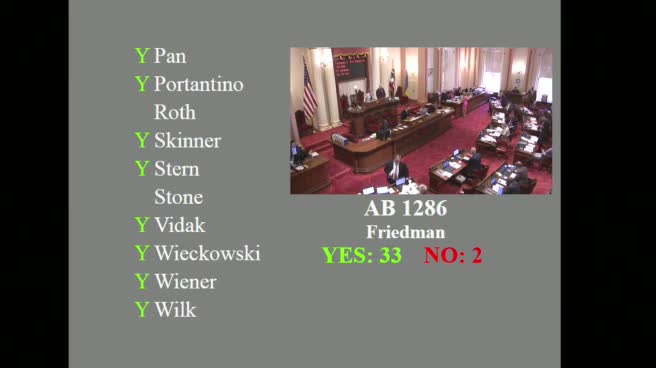 2MIN
Senate Floor
 2MIN
Senate Standing Committee on Business, Professions and Economic Development
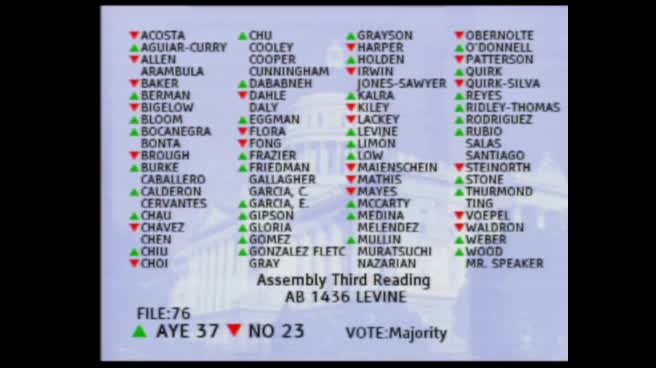 1MIN
Assembly Floor
 1MIN
Assembly Standing Committee on Appropriations
 2MIN
Assembly Standing Committee on Jobs, Economic Development, and the Economy
 2MIN
Assembly Standing Committee on Housing and Community Development
Bill Author
Bill Co-Author(s):