AB 569: Discrimination: reproductive health.
- Session Year: 2017-2018
- House: Assembly
- Latest Version Date: 2017-09-15
The California Fair Employment and Housing Act prohibits discrimination in employment based upon specified personal characteristics, including the race, religious creed, color, national origin, ancestry, physical disability, mental disability, medical condition, genetic information, marital status, sex, gender, gender identity, gender expression, age, sexual orientation, or military and veteran status of any person.
Existing law creates the Division of Labor Standards Enforcement in the Department of Industrial Relations for the purpose of enforcing labor laws.
This bill would make legislative findings and declarations relating to the right to privacy. The bill would amend provisions of labor law relating to the prohibition on an employer from taking any adverse action against an employee or their dependent or family member for their reproductive health decisions, including, but not limited to, the timing thereof, or the use of any drug, device, or medical service. The bill would also specify that any contract or agreement, express or implied, made by an employee to waive this benefit is null and void. The bill would require an employer that requires compliance with an employee handbook to include in the handbook notice of the employee rights and remedies under the provisions of this bill.
The California Fair Employment and Housing Act prohibits discrimination in employment based upon specified personal characteristics, including the race, religious creed, color, national origin, ancestry, physical disability, mental disability, medical condition, genetic information, marital status, sex, gender, gender identity, gender expression, age, sexual orientation, or military and veteran status of any person.
Existing law creates the Division of Labor Standards Enforcement in the Department of Industrial Relations for the purpose of enforcing labor laws.
This bill would make legislative findings and declarations relating to the right to privacy. The bill would amend provisions of labor law relating to the obligations of an employer to prohibit an employer from taking any adverse action against an employee or their dependent or family member for their reproductive health decisions, including, but not limited to, the timing thereof, or the use of any drug, device, or medical service. The bill would also specify that any contract or agreement, express or implied, made by an employee to waive this benefit is null and void. The bill would require an employer that requires compliance with an employee handbook to include in the handbook notice of the employee rights and remedies under the provisions of this bill.
The California Fair Employment and Housing Act prohibits discrimination in employment based upon specified personal characteristics, including the race, religious creed, color, national origin, ancestry, physical disability, mental disability, medical condition, genetic information, marital status, sex, gender, gender identity, gender expression, age, sexual orientation, or military and veteran status of any person.
Existing law creates the Division of Labor Standards Enforcement in the Department of Industrial Relations for the purpose of enforcing labor laws.
This bill would make legislative findings and declarations relating to the right to privacy. The bill would amend provisions of labor law relating to the obligations of an employer to prohibit an employer from taking any adverse employment action, as defined, action against an employee based on the employees or their dependent or family member for their reproductive health care decisions, methods, including, but not limited to, the timing thereof, or the use of any drug, device, or medical service related to reproductive health by an employee or employees dependent. service. The bill would also prohibit requiring an employee to sign, agree to, or adhere to a code of conduct or similar document that purports to deny any employee the right to make the employees own reproductive health care decisions, including the use of a particular drug, device, or medical service. specify that any contract or agreement, express or implied, made by an employee to waive this benefit is null and void. The bill would require an employer that requires compliance with an employee handbook to include in the handbook notice of the employee rights and remedies under the provisions of this bill.
The California Fair Employment and Housing Act prohibits discrimination in employment based upon specified personal characteristics, including the race, religious creed, color, national origin, ancestry, physical disability, mental disability, medical condition, genetic information, marital status, sex, gender, gender identity, gender expression, age, sexual orientation, or military and veteran status of any person.
Existing law creates the Division of Labor Standards Enforcement in the Department of Industrial Relations for the purpose of enforcing labor laws.
This bill would make legislative findings and declarations relating to the right to privacy. The bill would amend provisions of labor law relating to the obligations of an employer to prohibit an employer from taking any adverse employment action, as defined, against an employee based on his or her the employees reproductive health care decisions, methods, or the use of any drug, device, or medical service related to reproductive health by an employee or employees dependent. The bill would also prohibit requiring an employee to sign sign, agree to, or adhere to a code of conduct or similar document that purports to deny any employee the right to make his or her the employees own reproductive health care decisions, including the use of a particular drug, device, or medical service. The bill would require an employer that provides requires compliance with an employee handbook to its employees to include in the handbook notice of the employee rights and remedies under the provisions of this bill.
The California Fair Employment and Housing Act prohibits discrimination in employment based upon specified personal characteristics, including the race, religious creed, color, national origin, ancestry, physical disability, mental disability, medical condition, genetic information, marital status, sex, gender, gender identity, gender expression, age, sexual orientation, or military and veteran status of any person.
Existing law creates the Division of Labor Standards Enforcement in the Department of Industrial Relations for the purpose of enforcing labor laws.
This bill would amend provisions of labor law relating to the obligations of an employer to prohibit an employer from taking any adverse employment action, as defined, against an employee based on his or her reproductive health care decisions, methods, or the use of any drug, device, or medical service related to reproductive health by an employee or employees dependent or dependent. The bill would also prohibit requiring an employee to sign a waiver or other code of conduct or similar document that purports to deny any employee the right to make his or her own reproductive health care decisions, including the use of a particular drug, device, or medical service. The bill would require an employer that provides an employee handbook to its employees to include in the handbook notice of the employee rights and remedies under the provisions of this bill.
The California Fair Employment and Housing Act prohibits discrimination in employment based upon specified personal characteristics, including the race, religious creed, color, national origin, ancestry, physical disability, mental disability, medical condition, genetic information, marital status, sex, gender, gender identity, gender expression, age, sexual orientation, or military and veteran status of any person.
Existing law creates the Division of Labor Standards Enforcement in the Department of Industrial Relations for the purpose of enforcing labor laws.
This bill would amend provisions of labor law relating to the obligations of an employer to prohibit an employer from taking any adverse employment action, as defined, against an employee based on the use of any drug, device, or medical service related to reproductive health by an employee or employees dependent or requiring an employee to sign a waiver or other document that purports to deny any employee the right to make his or her own reproductive health care decisions, including the use of a particular drug, device, or medical service. The bill would require an employer that provides an employee handbook to its employees to include in the handbook notice of the employee rights and remedies under the provisions of this bill.
The Legislature finds that employees of religiously affiliated institutions are entitled to the same protections as any other employee under the California Labor Code, unless the employee is the functional equivalent of minister, and therefore subject to a ministerial exception as developed in First Amendment case law. The Legislature agrees with the concurring opinion of Justice Alito in Hosanna-Tabor Evangelical Lutheran Church and School v. E.E.O.C. (2012) 565 U.S. 171, 199, which argues that the ministerial exception should apply only to an employee who leads a religious organization, conducts worship services or important religious ceremonies or rituals, or serves as a messenger or teacher of its faith.
SEC. 2.Section 2810.7 is added to the Labor Code, to read:2810.7.(a)The Legislature finds and declares that it is the longstanding policy of the State of California to protect for its citizens the right to privacy as articulated in Section 1 of Article I of the California Constitution. As such, Californians freedom to make reproductive health decisions free of interference from their employers is a matter of fundamental and substantial public policy import.
(b)An employer, or any person acting on behalf of an employer, shall not take any adverse action against an employee or their dependent or family member for their reproductive health decisions, including, but not limited to, the timing thereof, or the use of any drug, device, or medical service.
(c)An employer, or any person acting on behalf of an employer, who takes any adverse employment action against an employee in violation of subdivision (b) is liable to the aggrieved employee who shall recover a penalty pursuant to Section 98.6 and obtain any other appropriate relief to remedy the violation, including, but not limited to, reinstatement, reimbursement of lost wages and interest thereon, and other compensation or equitable relief appropriate to the circumstances.
(d)Any contract or agreement, express or implied, made by an employee to waive the benefits of this section is null and void.
(e)An employer that requires compliance with an employee handbook shall include in the handbook notice of the employee rights and remedies under this section.
(f)For purposes of this section, family member shall have the same meaning as defined in subdivision (c) of Section 245.5.
(g)The rights and remedies conferred by this section are in addition to, and not in limitation of, any right or remedy lawfully granted under the California Fair Employment and Housing Act (Part 2.8 (commencing with Section 12900) of Division 3 of Title 2 of the Government Code).
(h)This section does not create a new basis upon which an employee can accrue or use benefits relating to paid or protected time off.
The Legislature finds that employees of religiously affiliated institutions are entitled to the same protections as any other employee under the California Labor Code, unless the employee is the functional equivalent of minister, and therefore subject to a ministerial exception as developed in First Amendment case law. The Legislature agrees with the concurring opinion of Justice Alito in Hosanna-Tabor Evangelical Lutheran Church and School v. E.E.O.C. (2012) 565 U.S. 171, 199, which argues that the ministerial exception should apply only to an employee who leads a religious organization, conducts worship services or important religious ceremonies or rituals, or serves as a messenger or teacher of its faith.
SEC. 2.Section 2810.7 is added to the Labor Code, to read:2810.7.(a)The Legislature finds and declares that it is the long-standing longstanding policy of the State of California to protect for its citizens the right to privacy as articulated in Section 1 of Article I of the California Constitution. As such, Californians freedom to make reproductive health decisions free of interference from their employers is a matter of fundamental and substantial public policy import.
(b)An employer shall not do either of the following:(1)Take any adverse employment action against an employee based on the employees reproductive health care decisions, including the timing thereof, methods, or the use of any drug, device, or medical service related to reproductive health by an employee or an employees dependent.(2)Require an employee to sign, agree to, or adhere to a code of conduct or similar document that purports to deny any employee the right to make the employees own reproductive health care decisions, including the use of a particular drug, device, or medical service.(b)An employer, or any person acting on behalf of an employer, shall not take any adverse action against an employee or their dependent or family member for their reproductive health decisions, including, but not limited to, the timing thereof, or the use of any drug, device, or medical service.
(c)An employer, or any person acting on behalf of an employer, who takes any adverse employment action against an employee in violation of subdivision (b) is liable to the aggrieved employee who shall recover a penalty pursuant to Section 98.6 and obtain any other appropriate relief to remedy the violation, including, but not limited to, reinstatement, reimbursement of lost wages and interest thereon, and other compensation or equitable relief appropriate to the circumstances.
(d)Any contract or agreement, express or implied, made by an employee to waive the benefits of this section is null and void.
(c)(e)An employer that requires compliance with an employee handbook shall include in the handbook notice of the employee rights and remedies under this section.
(d)For purposes of this section, adverse employment action includes, but is not limited to, termination, demotion or refusal to promote or advance, loss of career specialty, reassignment to a different shift, reduction of hours, reduction of wages or benefits, refusal to provide training opportunities or transfer to a different department, adverse administrative action, or any other penalty or disciplinary or retaliatory action.(f)For purposes of this section, family member shall have the same meaning as defined in subdivision (c) of Section 245.5.
(g)The rights and remedies conferred by this section are in addition to, and not in limitation of, any right or remedy lawfully granted under the California Fair Employment and Housing Act (Part 2.8 (commencing with Section 12900) of Division 3 of Title 2 of the Government Code).
The Legislature finds that employees of religiously affiliated institutions are entitled to the same protections as any other employee under the California Labor Code, unless the employee is the functional equivalent of minister, and therefore subject to a ministerial exception as developed in First Amendment case law. The Legislature agrees with the concurring opinion of Justice Alito in Hosanna-Tabor Evangelical Lutheran Church and School v. E.E.O.C. (2012) 565 U.S. 171, 199, which argues that the ministerial exception should apply only to an employee who leads a religious organization, conducts worship services or important religious ceremonies or rituals, or serves as a messenger or teacher of its faith.
SEC. 2.Section 2810.7 is added to the Labor Code, to read:2810.7.(a)An The Legislature finds and declares that it is the long-standing policy of the State of California to protect for its citizens the right to privacy as articulated in Section 1 of Article I of the California Constitution. As such, Californians freedom to make reproductive health decisions free of interference from their employers is a matter of fundamental and substantial public policy import.
(b)An employer shall not do either of the following:
(1)Take any adverse employment action against an employee based on his or her the employees reproductive health care decisions, including the timing thereof, methods, or the use of any drug, device, or medical service related to reproductive health by an employee or an employees dependent.
(2)Require an employee to sign sign, agree to, or adhere to a code of conduct or similar document that purports to deny any employee the right to make his or her the employees own reproductive health care decisions, including the use of a particular drug, device, or medical service.
(b)(c)An employer that provides requires compliance with an employee handbook to its employees shall include in the handbook notice of the employee rights and remedies under this section.
(c)(d)For purposes of this section, adverse employment action includes, but is not limited to, termination, demotion or refusal to promote or advance, loss of career specialty, reassignment to a different shift, reduction of hours, reduction of wages or benefits, refusal to provide training opportunities or transfer to a different department, adverse administrative action, or any other penalty or disciplinary or retaliatory action.
The Legislature finds that employees of religiously affiliated institutions are entitled to the same protections as any other employee under the California Labor Code, unless the employee is the functional equivalent of minister, and therefore subject to a ministerial exception as developed in First Amendment case law. The Legislature agrees with the concurring opinion of Justice Alito in Hosanna-Tabor Evangelical Lutheran Church and School v. E.E.O.C. (2012) 565 U.S. 171, 199, which argues that the ministerial exception should apply only to an employee who leads a religious organization, conducts worship services or important religious ceremonies or rituals, or serves as a messenger or teacher of its faith.
SECTION 1.SEC. 2.Section 2810.7 is added to the Labor Code, to read:2810.7.(a)An employer shall not do either of the following:
(1)Take any adverse employment action against an employee based on his or her reproductive health care decisions, including the timing thereof, methods, or the use of any drug, device, or medical service related to reproductive health by an employee or employees dependent.
(2)Require an employee to sign a waiver or other code of conduct or similar document that purports to deny any employee the right to make his or her own reproductive health care decisions, including the use of a particular drug, device, or medical service.
(b)An employer that provides an employee handbook to its employees shall include in the handbook notice of the employee rights and remedies under this section.
(c)For purposes of this section, adverse employment action includes, but is not limited to, termination, demotion or refusal to promote or advance, loss of career specialty, reassignment to a different shift, reduction of hours, reduction of wages or benefits, refusal to provide training opportunities or transfer to a different department, adverse administrative action, or any other penalty or disciplinary or retaliatory action.
REVISIONS: HeadingLine 2.(a)An employer shall not do either of the following:
(1)Take any adverse employment action against an employee based on the use of any drug, device, or medical service related to reproductive health by an employee or employees dependent.
(2)Require an employee to sign a waiver or other document that purports to deny any employee the right to make his or her own reproductive health care decisions, including the use of a particular drug, device, or medical service.
(b)An employer that provides an employee handbook to its employees shall include in the handbook notice of the employee rights and remedies under this section.
(c)For purposes of this section, adverse employment action includes, but is not limited to, termination, demotion or refusal to promote or advance, loss of career specialty, reassignment to a different shift, reduction of hours, reduction of wages or benefits, refusal to provide training opportunities or transfer to a different department, adverse administrative action, or any other penalty or disciplinary or retaliatory action.
|
Date
|
Status
|
|---|---|
| Jan 12, 2018 | Stricken from file. |
| Jan 3, 2018 | Consideration of Governor's veto pending. |
| Oct 15, 2017 | Vetoed by Governor. |
| Sep 25, 2017 | Enrolled and presented to the Governor at 12 p.m. |
| Sep 14, 2017 | Senate amendments concurred in. To Engrossing and Enrolling. |
| Sep 14, 2017 | Senate amendments concurred in. To Engrossing and Enrolling. (Ayes 55. Noes 20. Page 3369.). |
| Sep 13, 2017 | Assembly Rule 77(a) suspended. |
| Sep 13, 2017 | In Assembly. Concurrence in Senate amendments pending. May be considered on or after September 15 pursuant to Assembly Rule 77. |
| Sep 12, 2017 | Read third time. Passed. Ordered to the Assembly. |
| Sep 11, 2017 | Read second time. Ordered to third reading. |
| Sep 7, 2017 | Read third time and amended. Ordered to second reading. |
| Sep 5, 2017 | Read second time. Ordered to third reading. |
| Sep 1, 2017 | From committee: Amend, and do pass as amended. (Ayes 5. Noes 2.) (September 1). |
| Aug 21, 2017 | In committee: Referred to APPR. suspense file. |
| Jul 18, 2017 | Read second time and amended. Re-referred to Com. on APPR. |
| Jul 17, 2017 | From committee: Amend, and do pass as amended and re-refer to Com. on APPR. (Ayes 5. Noes 2.) (July 11). |
| Jun 28, 2017 | From committee: Do pass and re-refer to Com. on JUD. (Ayes 3. Noes 1.) (June 28). Re-referred to Com. on JUD. |
| Jun 14, 2017 | Referred to Coms. on L. & I.R. and JUD. |
| Jun 1, 2017 | In Senate. Read first time. To Com. on RLS. for assignment. |
| May 31, 2017 | Read third time. Passed. Ordered to the Senate. (Ayes 54. Noes 17. Page 1909.) |
| May 30, 2017 | Read second time. Ordered to third reading. |
| May 26, 2017 | Coauthors revised. |
| May 10, 2017 | In committee: Set, first hearing. Referred to APPR. suspense file. |
| Apr 25, 2017 | From committee: Do pass and re-refer to Com. on APPR. (Ayes 9. Noes 1.) (April 25). Re-referred to Com. on APPR. |
| Apr 20, 2017 | Re-referred to Com. on JUD. |
| Apr 19, 2017 | From committee chair, with author's amendments: Amend, and re-refer to Com. on JUD. Read second time and amended. |
| Mar 30, 2017 | From committee: Do pass and re-refer to Com. on JUD. (Ayes 5. Noes 2.) (March 29). Re-referred to Com. on JUD. |
| Feb 27, 2017 | Referred to Coms. on L. & E. and JUD. |
| Feb 15, 2017 | From printer. May be heard in committee March 17. |
| Feb 14, 2017 | Read first time. To print. |
|
Date
|
Description
|
Location
|
Votes
|
|
|---|---|---|---|---|
| Sep 14, 2017 | AB 569 GONZALEZ FLETCHER Concurrence in Senate Amendments | Assembly Floor |
Passed |
|
| Sep 12, 2017 | Assembly 3rd Reading AB569 Gonzalez Fletcher By Atkins | Senate Floor |
Passed |
|
| Sep 1, 2017 | Do pass as amended | Senate Standing Committee on Appropriations |
Passed |
|
| Aug 21, 2017 | Placed on suspense file | Senate Standing Committee on Appropriations |
Passed |
|
| Jul 11, 2017 | Do pass as amended, but first amend, and re-refer to the Committee on [Appropriations] | Senate Standing Committee on Judiciary |
Passed |
|
| Jun 28, 2017 | Do pass, but first be re-referred to the Committee on [Judiciary] | Senate Standing Committee on Labor and Industrial Relations |
Passed |
|
| May 31, 2017 | AB 569 GONZALEZ FLETCHER Assembly Third Reading | Assembly Floor |
Passed |
|
| May 26, 2017 | Do pass. | Assembly Standing Committee on Appropriations |
Passed |
|
| Apr 25, 2017 | Do pass and be re-referred to the Committee on [Appropriations] | Assembly Standing Committee on Judiciary |
Passed |
|
| Mar 29, 2017 | Do pass and be re-referred to the Committee on [Judiciary] | Assembly Standing Committee on Labor and Employment |
Passed |
This list shows positions taken on this bill by organizations on the date displayed, which is linked to the original source.
Positions by individuals are not included.
GOVERNOR'S VETO
GV Bill Id:AB 569
Author:(Gonzalez Fletcher)
As Enrolled Ver:September 15, 2017
2/3 vote
ASSEMBLY: | 54-17 | (May 31, 2017) | SENATE: | 27-13 | (September 12, 2017) |
ASSEMBLY: | 55-20 | (September 14, 2017) |
Original Committee Reference: L. & E.
SUMMARY: Prohibits an employer, or any person acting on behalf of an employer, from taking any adverse action against an employee or their dependent or family member for their reproductive health decisions, including, but not limited to, the timing thereof, or the use of any drug, device, or medical service. Specifies that an employer who takes any adverse employment action against an employee in violation of these provisions is liable to the aggrieved employee who shall recover a penalty and obtain any other appropriate relief to remedy the violation, as specified.
The Senate amendments:
- Make legislative finding and declarations relating to the right to privacy.
- Specify that an employer, or any person acting on behalf of the employer, who takes any adverse employment action against an employee in violation of these provisions is liable to the aggrieved employee who shall recover a penalty pursuant to Labor Code Section 98.6 and obtain any other appropriate relief to remedy the violation, including, but not limited to, reinstatement, reimbursement of lost wages and interest thereon, and other compensation or equitable relief appropriate to the circumstances.
- Provide that any contract or agreement, express or implied, made by an employee to waive the benefits of this bill is null and void.
- Strike the provisions of the bill that prohibited an employer from requiring an employee to sign, agree to, or adhere to a code of conduct or similar document that purports to deny any employee the right to make the employee's own reproductive health care decisions, including the use of a particular drug, device, or medical service.
- Strike the definition of "adverse employment action."
- Define "family member" to have the same meaning as contained in Labor Code Section 245.5(c).
- Clarify that the rights and remedies conferred by this section are in addition to, and not in limitation of, any right or remedy lawfully granted under the California Fair Employment and Housing Act (FEHA).
- Clarify that the bill does not create a new basis upon which an employee can accrue or use benefits relating to paid or protected time off.
EXISTING LAW:
- Prohibits, under the FEHA enforced by the Department of Fair Employment and Housing (DFEH), discrimination in employment based upon specified personal characteristics, including, among others, race, religious creed, color, physical/mental disability, marital status, sex (including harassment based on pregnancy, childbirth, or related medical condition), gender, age, sexual orientation, or military and veteran status of any person.
- Specifies that, for purpose of FEHA, an "employer" does not include a religious association or corporation not organized for private profit. However, an "employer" does include a religious corporation or association with respect to employees who perform other than religious duties at a health care facility operated by the religious corporation or association, as specified.
- Permits a nonprofit public benefit corporation formed by, or affiliated with, a particular religion and that operates an educational facility as its sole or primary activity, to restrict employment, including promotion, in any or all employment categories to individuals of a particular religion. However, such a nonprofit public benefit corporation shall be subject to FEHA in all other respects, including, but not limited to, the prohibitions against discrimination made unlawful by FEHA.
- Prohibits employers from discriminating, discharging or refusing to hire an employee based on an employee's lawful conduct during nonworking hours away from the employer's premises.
- Entitles any employee who is discharged, threatened with discharge, demoted, suspended, retaliated against, subjected to an adverse action, or in any other manner discriminated against in the terms and conditions of his or her employment because the employee engaged in any protected conduct, as specified, to reinstatement and reimbursement for lost wages and work benefits caused by those acts of the employer.
- Allows any person who believes that he or she has been discharged or otherwise discriminated against in violation of any law under the jurisdiction of the Labor Commission to file a complaint with the Department of Labor Standards Enforcement, within the Department of Industrial Relations.
FISCAL EFFECT: According to the Senate Appropriations Committee, the fiscal impact of this bill would depend on the number of claims filed with the Division of Labor Standards and Enforcement within the Department of Industrial Relations (DIR). DIR lacks sufficient data to reliably estimate how many claims it would anticipate under this bill. DIR would potentially incur annual costs in the hundreds of thousands of dollars to implement the provisions of this bill.
COMMENTS:
While not removing the Chamber of Commerce's opposition to the bill, recent amendments address one of the Chamber of Commerce's concerns by clarifying that, while an aggrieved employee may still be entitled to lost wages and work benefits, including the accrual of paid or protected time off, the bill does not provide a new basis upon which an employee can accrue or use benefits relating to paid or protected time off.
The author notes that a number of women in California, and around the nation, have suffered adverse employment actions because of their reproductive health choices. The bill's sponsors, NARAL Pro Choice California and Latinas for Reproductive Rights, argue that all women should have the ability to make private decisions that affect their health and economic security.
The California Family Council, which opposes this bill, argues that, "By their nature, codes of conduct are often 'discriminatory,' but every organization in existence has them. Furthermore, an organization specifically chartered to support or oppose a specific set of beliefs or actions cannot fulfill its mission without requiring adherence to a code of conduct."
Assembly Bill 569 would add to the labor code a prohibition against any employer from taking an action against an employee because of that employee's reproductive decision.
The California Fair Employment and Housing Act has long banned such adverse actions, except for religious institutions. I believe these types of claims should remain within the jurisdiction of the Department of Fair Employment and Housing.
For this reason, I am returning AB 569 without my signature.
Analysis Prepared by: Jennifer Richard / L. & E. / (916) 319-2091 FN: 0002465
CONCURRENCE IN SENATE AMENDMENTS
CSA1 Bill Id:AB 569
Author:(Gonzalez Fletcher)
As Amended Ver:September 7, 2017
Majority vote
ASSEMBLY: | 54-17 | (May 31, 2017) | SENATE: | 27-13 | (September 12, 2017) |
Original Committee Reference: L. & E.
SUMMARY: Prohibits an employer, or any person acting on behalf of an employer, from taking any adverse action against an employee or their dependent or family member for their reproductive health decisions, including, but not limited to, the timing thereof, or the use of any drug, device, or medical service. Specifies that an employer who takes any adverse employment action against an employee in violation of these provisions is liable to the aggrieved employee who shall recover a penalty and obtain any other appropriate relief to remedy the violation, as specified.
The Senate amendments:
- Make legislative finding and declarations relating to the right to privacy.
- Specify that an employer, or any person acting on behalf of the employer, who takes any adverse employment action against an employee in violation of these provisions is liable to the aggrieved employee who shall recover a penalty pursuant to Labor Code Section 98.6 and obtain any other appropriate relief to remedy the violation, including, but not limited to, reinstatement, reimbursement of lost wages and interest thereon, and other compensation or equitable relief appropriate to the circumstances.
- Provide that any contract or agreement, express or implied, made by an employee to waive the benefits of this bill is null and void.
- Strike the provisions of the bill that prohibited an employer from requiring an employee to sign, agree to, or adhere to a code of conduct or similar document that purports to deny any employee the right to make the employee's own reproductive health care decisions, including the use of a particular drug, device, or medical service.
- Strike the definition of "adverse employment action."
- Define "family member" to have the same meaning as contained in Labor Code Section 245.5(c).
- Clarify that the rights and remedies conferred by this section are in addition to, and not in limitation of, any right or remedy lawfully granted under the California Fair Employment and Housing Act (FEHA).
- Clarify that the bill does not create a new basis upon which an employee can accrue or use benefits relating to paid or protected time off.
EXISTING LAW:
- Prohibits, under the FEHA enforced by the Department of Fair Employment and Housing (DFEH), discrimination in employment based upon specified personal characteristics, including, among others, race, religious creed, color, physical/mental disability, marital status, sex (including harassment based on pregnancy, childbirth, or related medical condition), gender, age, sexual orientation, or military and veteran status of any person.
- Specifies that, for purpose of FEHA, an "employer" does not include a religious association or corporation not organized for private profit. However, an "employer" does include a religious corporation or association with respect to employees who perform other than religious duties at a health care facility operated by the religious corporation or association, as specified.
- Permits a nonprofit public benefit corporation formed by, or affiliated with, a particular religion and that operates an educational facility as its sole or primary activity, to restrict employment, including promotion, in any or all employment categories to individuals of a particular religion. However, such a nonprofit public benefit corporation shall be subject to FEHA in all other respects, including, but not limited to, the prohibitions against discrimination made unlawful by FEHA.
- Prohibits employers from discriminating, discharging or refusing to hire an employee based on an employee's lawful conduct during nonworking hours away from the employer's premises.
- Entitles any employee who is discharged, threatened with discharge, demoted, suspended, retaliated against, subjected to an adverse action, or in any other manner discriminated against in the terms and conditions of his or her employment because the employee engaged in any protected conduct, as specified, to reinstatement and reimbursement for lost wages and work benefits caused by those acts of the employer.
- Allows any person who believes that he or she has been discharged or otherwise discriminated against in violation of any law under the jurisdiction of the Labor Commission to file a complaint with the Department of Labor Standards Enforcement, within the Department of Industrial Relations.
FISCAL EFFECT: According to the Senate Appropriations Committee, the fiscal impact of this bill would depend on the number of claims filed with the Division of Labor Standards and Enforcement within the Department of Industrial Relations (DIR). DIR lacks sufficient data to reliably estimate how many claims it would anticipate under this bill. DIR would potentially incur annual costs in the hundreds of thousands of dollars to implement the provisions of this bill.
COMMENTS:
While not removing the Chamber of Commerce's opposition to the bill, recent amendments address one of the Chamber of Commerce's concerns by clarifying that, while an aggrieved employee may still be entitled to lost wages and work benefits, including the accrual of paid or protected time off, the bill does not provide a new basis upon which an employee can accrue or use benefits relating to paid or protected time off.
The author notes that a number of women in California, and around the nation, have suffered adverse employment actions because of their reproductive health choices. The bill's sponsors, NARAL Pro Choice California and Latinas for Reproductive Rights, argue that all women should have the ability to make private decisions that affect their health and economic security.
The California Family Council, which opposes this bill, argues that, "By their nature, codes of conduct are often 'discriminatory,' but every organization in existence has them. Furthermore, an organization specifically chartered to support or oppose a specific set of beliefs or actions cannot fulfill its mission without requiring adherence to a code of conduct."
Analysis Prepared by: Jennifer Richard / L. & E. / (916) 319-2091 FN: 0002232
Office of Senate Floor Analyses (916) 651-1520 Fax: (916) 327-4478 | AB |
THIRD READING
Bill No: AB 569
: 9/7
SENATE LABOR & IND. REL. COMMITTEE: 3-1, 6/28/17
AYES: Bradford, Atkins, Jackson
NOES: Stone
NO VOTE RECORDED: Mitchell
SENATE JUDICIARY COMMITTEE: 5-2, 7/11/17
AYES: Jackson, Hertzberg, Monning, Stern, Wieckowski
NOES: Moorlach, Anderson
SENATE APPROPRIATIONS COMMITTEE: 5-2, 9/1/17
AYES: Lara, Beall, Bradford, Hill, Wiener
NOES: Bates, Nielsen
ASSEMBLY FLOOR: 54-17, 5/31/17 - See last page for vote
SOURCE: California Latinas for Reproductive Justice
NARAL Pro-Choice California
DIGEST:
This bill prohibits an employer, or any person acting on behalf of an employer, from taking any adverse action against an employee or their dependent or family member for their reproductive health decisions, including, but not limited to, the timing thereof, or the use of any drug, device, or medical service. This bill specifies that an employer who takes any adverse employment action against an employee in violation of these provisions is liable to the aggrieved employee who can recover a penalty and any other appropriate relief to remedy the violation.
Senate Floor Amendments of 9/7/17 specify that the provisions of this bill do not create a new basis upon which an employee can accrue or use benefits relating to paid or protected time off. However, this bill does require reinstatement and reimbursement of lost wages, including work benefits, lost because of an adverse action of an employer in violation of the provisions of this bill.
Existing law:
- Prohibits, under the Fair Employment and Housing Act (FEHA), enforced by the Department of Fair Employment and Housing (DFEH), discrimination in employment based upon specified personal characteristics, including, among others, race, religious creed, color, physical/mental disability, marital status, sex (including harassment based on pregnancy, childbirth, or related medical condition), gender, age, sexual orientation, or military and veteran status of any person. (Government Code §12940.)
- Specifies that, for purpose of FEHA, an "employer" does not include a religious association or corporation not organized for private profit. However, an "employer" does include a religious corporation or association with respect to employees who perform other than religious duties at a health care facility operated by the religious corporation or association, as specified. (Government Code §12926 (d) and §12926.2 (c))
- Permits a nonprofit public benefit corporation formed by, or affiliated with, a particular religion and that operates an educational facility as its sole or primary activity, to restrict employment, including promotion, in any or all employment categories to individuals of a particular religion. However, such a nonprofit public benefit corporation shall be subject to FEHA in all other respects, including, but not limited to, the prohibitions against discrimination made unlawful by FEHA. (Government Code §12926.2 (f)1-2)
- Prohibits employers from discriminating, discharging or refusing to hire an employee based on an employee’s lawful conduct during nonworking hours away from the employer’s premises. (Labor Code §96(k) & 98.6)
- Entitles any employee who is discharged, threatened with discharge, demoted, suspended, retaliated against, subjected to an adverse action, or in any other manner discriminated against in the terms and conditions of his or her employment because the employee engaged in any protected conduct, as specified, to reinstatement and reimbursement for lost wages and work benefits caused by those acts of the employer. (Labor Code §98.6)
- Allows any person who believes that he or she has been discharged or otherwise discriminated against in violation of any law under the jurisdiction of the Labor Commission to file a complaint with the Department of Labor Standards Enforcement (DLSE), within the Department of Industrial Relations (DIR). (Labor Code § 98.7.)
This bill:
- Prohibits an employer, or any person acting on behalf of an employer, from taking any adverse action against an employee or their dependent or family member for their reproductive health decisions, including, but not limited to, the timing thereof, or the use of any drug, device, or medical service.
- Specifies that an employer, or any person acting on behalf of the employer, who takes any adverse employment action against an employee in violation of these provisions is liable to the aggrieved employee who shall recover a penalty pursuant to Labor Code Section 98.6 and obtain any other appropriate relief to remedy the violation, including, but not limited to, reinstatement, reimbursement of lost wages and interest thereon, and other compensation or equitable relief appropriate to the circumstances.
- Specifies that any contract or agreement, express or implied, made by an employee to waive the benefits of this section is null and void.
- Specifies that an employer that requires compliance with an employee handbook must include notice of these employee rights and remedies.
- Defines “family member” as specified in Labor Code Section 245.5(c).
- Specifies that the rights and remedies conferred by these provisions are in addition to, and not in limitation of, any right or remedy lawfully granted under FEHA.
- Specifies that the provisions of this bill do not create a new basis upon which an employee can accrue or use benefits relating to paid or protected time off.
- Makes legislative findings declaring that:
- Employees of religiously affiliated institutions are entitled to the same protection as any other employee under the Labor Code, unless the employee is subject to the "ministerial exception," as specified.
- It is the longstanding policy of the State of California to protect for its citizens the right to privacy as articulated in the Constitution and, as such, freedom to make reproductive health decisions, as specified.
Background
Existing law does not specifically address the discrimination addressed in this bill. (NOTE: Please see Senate Labor Committee analysis for more background information.)
FISCAL EFFECT: Appropriation: Fiscal Com.: Local:
According to the Senate Appropriations Committee, the fiscal impact of this bill would depend on the number of claims filed with the DLSE, within DIR. DIR lacks sufficient data to reliably estimate how many claims it would anticipate under this bill. DIR would potentially incur annual costs in the hundreds of thousands of dollars to implement the provisions of this bill.
California Latinas for Reproductive Justice (co-source)
NARAL Pro-Choice California (co-source)
1beatProductions, San Francisco
About Face and Body, Berkeley
Acacia Home LLC, San Francisco
ACCESS Women’s Health Justice
ACT for Women and Girls
AKI Funding, Whittier
Alana’s Cafe, Burlingame
Alchemy Bottle Shop, Oakland
American Association of University Women
American Civil Liberties Union
American Congress of Obstetricians and Gynecologists
American Federation of State, County and Municipal Employees, AFL-CIO
American Nurses Association, California
American Society for Reproductive Medicine
Ansus Technologies, Los Angeles
Antiques on Second, Napa
Bend the Arc: A Jewish Partnership for Justice
Berra Stross & Wallacker, San Mateo
Bills Trading Post & Gem Gallery, Berkeley
Black Women for Wellness
Blue Fourno Grill, San Diego
Broken Guitars LLC, Oakland
Brother & Sisters Flower Shop, Oakland
Business and Professional Women of Nevada County
California Church IMPACT
California Conference Board of the Amalgamated Transit Union
California Conference of Machinists
California Employment Lawyers Association
California Federation of Teachers
California Health+ Advocates
California Immigrant Policy Center
California Immigrant Youth Justice Alliance
California Labor Federation, AFL-CIO
California Pan-Ethnic Health Network
California Partnership
California Teamsters Public Affairs Council
California Women’s Law Center
Carousel Consignment, San Francisco
Catholics for Choice
Charmelle 28, Burlingame
Cherins Appliance, San Francisco
Childcare Law Center
Chrome Industries, San Francisco
Church in Ocean Park
City of West Hollywood
Comix Experience, San Francisco
Command the Room! Palo Alto
Consumer Attorneys of CA
Courage Campaign
CSA, Inc., San Francisco
Dean, Los Angeles
Dermiafilia Tattoo, San Francisco
DMG Creative Solutions, Oceanside
Don Perico Restaurant, Napa
Dustmuffin, Los Angeles
E. L. Goldberg & Associates, Menlo Park
Eddie’s Cafe, San Francisco
Elemental Green, San Francisco
Elements, Berkeley
Eltera, San Francisco
Engineers and Scientists of California, IFPTE Local 20, AFL-CIO
Equal Rights Advocates
Equilibrium Services Group, Inc., San Francisco
ETA-USA, Morgan Hill
Everlasting Tattoo, San Francisco
Fashionably Fit, Los Angeles
Feminist Majority Foundation
Floral Art & Decor, Burlingame
Fly, San Francisco
Foggy Notion, San Francisco
Folio, Larkspur
FoodHall, San Francisco
Forward Together
Four Barrel Coffee, San Francisco
Gamescape, San Francisco
Ginger Rubio Salon, San Francisco
Gioia’s Room, San Diego
Global Justice Institute
Good Stock, Oakland
Greater Good Coaching, Oakland
Green & Go, Berkeley
Green Earth, San Francisco
Greenwood Electric Inc., San Rafael
Grit Labs, Menlo Park
Gypsy Road Studio, Oakland
Happy Moose Juice, San Francisco
Having Our Say Coalition
Heliotrope LLC, San Francisco
Hog’s Apothecary, Oakland
If/When/How
Integrated Science Solutions, Inc., Danville
Interfaith Communities United for Justice and Peace
International Longshore & Warehouse Union
InYoga Center, Inc., Valley Village
Jambeyang Film, Malibu
Jewish Public Affairs Committee of California
Jewish Public Affairs of California
Keshet
Kids Park Northridge
Kish Studio, San Francisco
Kronnerburger, Oakland
L’Amiente, Larkspur
Laku, San Francisco
Lark Theater, Larkspur
Latino Coalition for a Healthy California
Life in Full Color, Fairfax
Little Paper Planes Shop, San Francisco
Los Angeles County Professional Peace Officers Association
Love and Luxe, San Francisco
Madusalon, San Francisco
Manifesto Bicycles, Oakland
Matrushka Construction, Los Angeles
Mental Health Hookup, Valencia
Mercy Vintage, Oakland
Metro Hotel, San Francisco
Metropolitan Community Churches
MRKT Silverlake, Los Angeles
Muddy Waters Coffee House, San Francisco
Mujeres Unidas Y Activas and the CA Domestic Workers Coalition
Muslims for Progressive Values
Napa Running Company, Napa
National Asian Pacific American Women's Forum
National Association of Social Workers-California Chapter
National Council of Jewish Women, California
National Council of Jewish Women, Los Angeles
National Women’s Law Center
Neighbor, Oakland
Nevada County Citizens for Choice
New Improved Recording, Oakland
New Start Accounting, Chula Vista
Nia Community Investments LLC, Oakland
Niz Realty, Larkspur
No Shop, San Francisco
Nooworks, San Francisco
Oak Common, Oakland
Oakland Yard, Oakland
Old Yak Bazaar, Berkeley
Oloorea Beauty, Oakland
Onyx, San Francisco
Orange County Immigrant Youth United
Ordinaire Wine Bar & Wine Shop, Oakland
Organization of SMUD Employees
Our Poke Place, San Francisco
Palo Alto Outcomes Research, Palo Alto
Parent Voices CA
Peterson’s Consign and Design, Corte Madera
Physicians for Reproductive Health
Planned Parenthood Affiliates of California
Planned Parenthood Mar Monte
Planned Parenthood Northern California Action Fund
Polsky Perlstein Architects, Larkspur
Positive Women’s Network
Powder, San Francisco
Pretty Please Bakeshop, San Francisco
Professional and Technical Engineers, IFPTE Local 21, AFL-CIO
Puerto Alegre, San Francisco
Ragg Mopp Vintage, Los Angeles
Rare Device, San Francisco
Religious Action Center of Reform Judaism
Religious Coalition for Reproductive Choice
RESOLVE: The National Infertility Association
Rev. Diane Weible, Northern CA Nevada Conference, United Church of Christ
Ryba Consultants, Woodside
San Diego County Court Employees Association
San Francisco Prosthetic Orthotic Service, Inc., San Francisco
San Jalisco, San Francisco
San Luis Obispo County Employees Association
Sapore Italiano, Burlingame
Save My Seat, San Francisco
Schauplatz, San Francisco
Service Employees International Union
Sick City Records, Los Angeles
Sierra Nevada Trading Company, Oakhurst
Sixto’s Cantina, Burlingame
Skin City, San Francisco
Slash, Berkeley
SoleSpace, Oakland
South Asian Network
Souvla, San Francisco
Spectator Books, Oakland
Stranded, San Francisco
Stronger California Advocates Network
T Johnston Consulting, Garden Valley
Tail of the Yak, Berkeley
Tanner Goods, San Francisco
The 14 Karats, Berkeley
The Now, Los Angeles
The Roost, Napa
Therapy Stores Inc., San Francisco
Thought Leadership Lab, Redwood City
Trickster Inc, Berkeley
Unitarian Universalist Justice Ministry of California
Unite for Reproductive & Gender Equity
United Public Employees
UNITE-HERE, AFL-CIO
Utility Workers of America
Van Gorder Photo, Glendale
Veo Optics, San Francisco
Verluxe LLC, Los Angeles
Vintage Berkeley, Berkeley
Vivian Chen Photography, Oakland
Voices for Progress Education Fund
West of Pecos, San Francisco
Western Center on Law and Poverty
Western Methodist Justice Movement
Wine on Piedmont, Oakland
Winstead & Co, San Diego
Women’s Center for Creative Work, Los Angeles
Women’s Foundation of California
Woods Beer Co., Oakland
Yes, You Can Speak, Belmont
California Catholic Conference
California Chamber of Commerce
California Family Council
California Manufacturers and Technology Association
California Retailers Association
Civil Justice Association of California
National Center for Law and Policy
William Jessup University
ARGUMENTS IN SUPPORT: According to proponents, women around the country have been threatened or fired because of reproductive healthcare decisions. The sponsors argue that all women should have the ability to make private decisions that affect their reproductive health, economic security, and other aspects of their lives without employers intruding. Workers should be judged on their performance, not their personal private reproductive health care decisions.
ARGUMENTS IN OPPOSITION: Opponents argue that this bill creates another pathway of costly litigation, under the Private Attorneys General Act, against an employer for issues that are already protected under multiple laws. Moreover, they argue that because such actions are already protected under FEHA (DFEH), this bill (under DIR, Labor Code) exposes employers to different state agencies with different procedural and investigative requirements.
The California Catholic Conference argues that nothing in the supporting documents for this bill suggest that this sort of discrimination is currently taking place in any California workplaces. The California Family Council argues that this bill sadly ignores a legitimate concern about religious freedom and instead directly attacks every faith-based institution and organization in the state.
ASSEMBLY FLOOR: 54-17, 5/31/17
AYES: Aguiar-Curry, Arambula, Baker, Berman, Bloom, Bocanegra, Bonta, Burke, Caballero, Calderon, Cervantes, Chau, Chiu, Chu, Cooley, Cooper, Dababneh, Daly, Friedman, Cristina Garcia, Eduardo Garcia, Gipson, Gloria, Gomez, Gonzalez Fletcher, Gray, Holden, Irwin, Jones-Sawyer, Kalra, Levine, Limón, Low, Maienschein, McCarty, Medina, Mullin, Muratsuchi, Nazarian, O'Donnell, Quirk, Quirk-Silva, Reyes, Ridley-Thomas, Rodriguez, Rubio, Salas, Santiago, Mark Stone, Thurmond, Ting, Weber, Wood, Rendon
NOES: Acosta, Bigelow, Brough, Chávez, Dahle, Flora, Fong, Gallagher, Harper, Kiley, Lackey, Mathis, Mayes, Obernolte, Patterson, Voepel, Waldron
NO VOTE RECORDED: Travis Allen, Chen, Choi, Cunningham, Eggman, Frazier, Grayson, Melendez, Steinorth
9/9/17 14:30:58
**** END ****
Office of Senate Floor Analyses (916) 651-1520 Fax: (916) 327-4478 | AB |
THIRD READING
Bill No: AB 569
: 9/1
SENATE LABOR & IND. REL. COMMITTEE: 3-1, 6/28/17
AYES: Bradford, Atkins, Jackson
NOES: Stone
NO VOTE RECORDED: Mitchell
SENATE JUDICIARY COMMITTEE: 5-2, 7/11/17
AYES: Jackson, Hertzberg, Monning, Stern, Wieckowski
NOES: Moorlach, Anderson
SENATE APPROPRIATIONS COMMITTEE: 5-2, 9/1/17
AYES: Lara, Beall, Bradford, Hill, Wiener
NOES: Bates, Nielsen
ASSEMBLY FLOOR: 54-17, 5/31/17 - See last page for vote
SOURCE: California Latinas for Reproductive Justice
NARAL Pro-Choice California
DIGEST:
This bill prohibits an employer, or any person acting on behalf of an employer, from taking any adverse action against an employee or their dependent or family member for their reproductive health decisions, including, but not limited to, the timing thereof, or the use of any drug, device, or medical service. This bill specifies that an employer who takes any adverse employment action against an employee in violation of these provisions is liable to the aggrieved employee who shall recover a penalty and obtain any other appropriate relief to remedy the violation, as specified.
Existing law:
- Prohibits, under the Fair Employment and Housing Act (FEHA), enforced by the Department of Fair Employment and Housing (DFEH), discrimination in employment based upon specified personal characteristics, including, among others, race, religious creed, color, physical/mental disability, marital status, sex (including harassment based on pregnancy, childbirth, or related medical condition), gender, age, sexual orientation, or military and veteran status of any person. (Government Code §12940.)
- Specifies that, for purpose of FEHA, an "employer" does not include a religious association or corporation not organized for private profit. However, an "employer" does include a religious corporation or association with respect to employees who perform other than religious duties at a health care facility operated by the religious corporation or association, as specified. [Government Code §12926 (d) and §12926.2 (c)]
- Permits a nonprofit public benefit corporation formed by, or affiliated with, a particular religion and that operates an educational facility as its sole or primary activity, to restrict employment, including promotion, in any or all employment categories to individuals of a particular religion. However, such a nonprofit public benefit corporation shall be subject to FEHA in all other respects, including, but not limited to, the prohibitions against discrimination made unlawful by FEHA. [Government Code §12926.2 (f)1-2]
- Prohibits employers from discriminating, discharging or refusing to hire an employee based on an employee’s lawful conduct during nonworking hours away from the employer’s premises. [Labor Code §96(k) & 98.6]
- Entitles any employee who is discharged, threatened with discharge, demoted, suspended, retaliated against, subjected to an adverse action, or in any other manner discriminated against in the terms and conditions of his or her employment because the employee engaged in any protected conduct, as specified, to reinstatement and reimbursement for lost wages and work benefits caused by those acts of the employer. (Labor Code §98.6)
- Allows any person who believes that he or she has been discharged or otherwise discriminated against in violation of any law under the jurisdiction of the Labor Commission to file a complaint with the Department of Labor Standards Enforcement (DLSE), within the Department of Industrial Relations. (Labor Code § 98.7.)
This bill:
- Prohibits an employer, or any person acting on behalf of an employer, from taking any adverse action against an employee or their dependent or family member for their reproductive health decisions, including, but not limited to, the timing thereof, or the use of any drug, device, or medical service.
- Specifies that an employer, or any person acting on behalf of the employer, who takes any adverse employment action against an employee in violation of these provisions is liable to the aggrieved employee who shall recover a penalty pursuant to Labor Code Section 98.6 and obtain any other appropriate relief to remedy the violation, including, but not limited to, reinstatement, reimbursement of lost wages and interest thereon, and other compensation or equitable relief appropriate to the circumstances.
- Specifies that any contract or agreement, express or implied, made by an employee to waive the benefits of this section is null and void.
- Specifies that an employer that requires compliance with an employee handbook must include notice of these employee rights and remedies.
- Defines “family member” as specified in Labor Code Section 245.5(c).
- Specifies that the rights and remedies conferred by these provisions are in addition to, and not in limitation of, any right or remedy lawfully granted under FEHA.
- Makes legislative findings declaring that:
- Employees of religiously affiliated institutions are entitled to the same protection as any other employee under the Labor Code, unless the employee is subject to the "ministerial exception," as specified.
- It is the longstanding policy of the State of California to protect for its citizens the right to privacy as articulated in the Constitution and, as such, freedom to make reproductive health decisions, as specified.
Background
Existing law does not specifically address the discrimination addressed in this bill. Please see Senate Labor Committee analysis for more background information.
FISCAL EFFECT: Appropriation: Fiscal Com.: Local:
According to the Senate Appropriations Committee, the fiscal impact of this bill would depend on the number of claims filed with the Division of Labor Standards and Enforcement within the Department of Industrial Relations (DIR). DIR lacks sufficient data to reliably estimate how many claims it would anticipate under this bill. DIR would potentially incur annual costs in the hundreds of thousands of dollars to implement the provisions of this bill.
California Latinas for Reproductive Justice (co-source)
NARAL Pro-Choice California (co-source)
1beatProductions, San Francisco
About Face and Body, Berkeley
Acacia Home LLC, San Francisco
ACCESS Women’s Health Justice
ACT for Women and Girls
AKI Funding, Whittier
Alana’s Cafe, Burlingame
Alchemy Bottle Shop, Oakland
American Association of University Women
American Civil Liberties Union
American Congress of Obstetricians and Gynecologists
American Federation of State, County and Municipal Employees, AFL-CIO
American Nurses Association, California
American Society for Reproductive Medicine
Ansus Technologies, Los Angeles
Antiques on Second, Napa
Bend the Arc: A Jewish Partnership for Justice
Berra Stross & Wallacker, San Mateo
Bills Trading Post & Gem Gallery, Berkeley
Black Women for Wellness
Blue Fourno Grill, San Diego
Broken Guitars LLC, Oakland
Brother & Sisters Flower Shop, Oakland
Business and Professional Women of Nevada County
California Church IMPACT
California Conference Board of the Amalgamated Transit Union
California Conference of Machinists
California Employment Lawyers Association
California Federation of Teachers
California Health+ Advocates
California Immigrant Policy Center
California Immigrant Youth Justice Alliance
California Labor Federation, AFL-CIO
California Pan-Ethnic Health Network
California Partnership
California Teamsters Public Affairs Council
California Women’s Law Center
Carousel Consignment, San Francisco
Catholics for Choice
Charmelle 28, Burlingame
Cherins Appliance, San Francisco
Childcare Law Center
Chrome Industries, San Francisco
Church in Ocean Park
City of West Hollywood
Comix Experience, San Francisco
Command the Room!, Palo Alto
Consumer Attorneys of CA
Courage Campaign
CSA, Inc., San Francisco
Dean, Los Angeles
Dermiafilia Tattoo, San Francisco
DMG Creative Solutions, Oceanside
Don Perico Restaurant, Napa
Dustmuffin, Los Angeles
E. L. Goldberg & Associates, Menlo Park
Eddie’s Cafe, San Francisco
Elemental Green, San Francisco
Elements, Berkeley
Eltera, San Francisco
Engineers and Scientists of California, IFPTE Local 20, AFL-CIO
Equal Rights Advocates
Equilibrium Services Group, Inc., San Francisco
ETA-USA, Morgan Hill
Everlasting Tattoo, San Francisco
Fashionably Fit, Los Angeles
Feminist Majority Foundation
Floral Art & Decor, Burlingame
Fly, San Francisco
Foggy Notion, San Francisco
Folio, Larkspur
FoodHall, San Francisco
Forward Together
Four Barrel Coffee, San Francisco
Gamescape, San Francisco
Ginger Rubio Salon, San Francisco
Gioia’s Room, San Diego
Global Justice Institute
Good Stock, Oakland
Greater Good Coaching, Oakland
Green & Go, Berkeley
Green Earth, San Francisco
Greenwood Electric Inc., San Rafael
Grit Labs, Menlo Park
Gypsy Road Studio, Oakland
Happy Moose Juice, San Francisco
Having Our Say Coalition
Heliotrope LLC, San Francisco
Hog’s Apothecary, Oakland
If/When/How
Integrated Science Solutions, Inc., Danville
Interfaith Communities United for Justice and Peace
International Longshore & Warehouse Union
InYoga Center, Inc., Valley Village
Jambeyang Film, Malibu
Jewish Public Affairs Committee of California
Jewish Public Affairs of California
Keshet
Kids Park Northridge
Kish Studio, San Francisco
Kronnerburger, Oakland
L’Amiente, Larkspur
Laku, San Francisco
Lark Theater, Larkspur
Latino Coalition for a Healthy California
Life in Full Color, Fairfax
Little Paper Planes Shop, San Francisco
Los Angeles County Professional Peace Officers Association
Love and Luxe, San Francisco
Madusalon, San Francisco
Manifesto Bicycles, Oakland
Matrushka Construction, Los Angeles
Mental Health Hookup, Valencia
Mercy Vintage, Oakland
Metro Hotel, San Francisco
Metropolitan Community Churches
MRKT Silverlake, Los Angeles
Muddy Waters Coffee House, San Francisco
Mujeres Unidas Y Activas and the CA Domestic Workers Coalition
Muslims for Progressive Values
Napa Running Company, Napa
National Asian Pacific American Women's Forum
National Association of Social Workers-California Chapter
National Council of Jewish Women, California
National Council of Jewish Women, Los Angeles
National Women’s Law Center
Neighbor, Oakland
Nevada County Citizens for Choice
New Improved Recording, Oakland
New Start Accounting, Chula Vista
Nia Community Investments LLC, Oakland
Niz Realty, Larkspur
No Shop, San Francisco
Nooworks, San Francisco
Oak Common, Oakland
Oakland Yard, Oakland
Old Yak Bazaar, Berkeley
Oloorea Beauty, Oakland
Onyx, San Francisco
Orange County Immigrant Youth United
Ordinaire Wine Bar & Wine Shop, Oakland
Organization of SMUD Employees
Our Poke Place, San Francisco
Palo Alto Outcomes Research, Palo Alto
Parent Voices CA
Peterson’s Consign and Design, Corte Madera
Physicians for Reproductive Health
Planned Parenthood Affiliates of California
Planned Parenthood Mar Monte
Planned Parenthood Northern California Action Fund
Polsky Perlstein Architects, Larkspur
Positive Women’s Network
Powder, San Francisco
Pretty Please Bakeshop, San Francisco
Professional and Technical Engineers, IFPTE Local 21, AFL-CIO
Puerto Alegre, San Francisco
Ragg Mopp Vintage, Los Angeles
Rare Device, San Francisco
Religious Action Center of Reform Judaism
Religious Coalition for Reproductive Choice
RESOLVE: The National Infertility Association
Rev. Diane Weible, Northern California Nevada Conference, United Church of Christ
Ryba Consultants, Woodside
San Diego County Court Employees Association
San Francisco Prosthetic Orthotic Service, Inc., San Francisco
San Jalisco, San Francisco
San Luis Obispo County Employees Association
Sapore Italiano, Burlingame
Save My Seat, San Francisco
Schauplatz, San Francisco
Service Employees International Union
Sick City Records, Los Angeles
Sierra Nevada Trading Company, Oakhurst
Sixto’s Cantina, Burlingame
Skin City, San Francisco
Slash, Berkeley
SoleSpace, Oakland
South Asian Network
Souvla, San Francisco
Spectator Books, Oakland
Stranded, San Francisco
Stronger California Advocates Network
T Johnston Consulting, Garden Valley
Tail of the Yak, Berkeley
Tanner Goods, San Francisco
The 14 Karats, Berkeley
The Now, Los Angeles
The Roost, Napa
Therapy Stores Inc., San Francisco
Thought Leadership Lab, Redwood City
Trickster Inc, Berkeley
Unitarian Universalist Justice Ministry of California
Unite for Reproductive & Gender Equity
United Public Employees
UNITE-HERE, AFL-CIO
Utility Workers of America
Van Gorder Photo, Glendale
Veo Optics, San Francisco
Verluxe LLC, Los Angeles
Vintage Berkeley, Berkeley
Vivian Chen Photography, Oakland
Voices for Progress Education Fund
West of Pecos, San Francisco
Western Center on Law and Poverty
Western Methodist Justice Movement
Wine on Piedmont, Oakland
Winstead & Co, San Diego
Women’s Center for Creative Work, Los Angeles
Women’s Foundation of California
Woods Beer Co., Oakland
Yes, You Can Speak, Belmont
California Catholic Conference
California Chamber of Commerce
California Family Council
California Manufacturers and Technology Association
California Retailers Association
Civil Justice Association of California
National Center for Law and Policy
ARGUMENTS IN SUPPORT: According to proponents, women around the country have been threatened or fired from their jobs because of reproductive healthcare decisions. The sponsors of this bill argue that all women should have the ability to make private decisions that affect their reproductive health, economic security, and other aspects of their lives without employers intruding. They argue that workers should be judged on their performance, not their personal private reproductive health care decisions.
ARGUMENTS IN OPPOSITION: Opposition from a coalition of employers including the California Chamber of Commerce argue that this bill creates another pathway of costly litigation, under the Private Attorneys General Act, against an employer for issues that are already protected under multiple laws. Moreover, they argue that because such actions are already protected under FEHA (Department of Fair Employment and Housing), and this bill exposes employers to different state agencies with different procedural and investigative requirements.
According to the California Catholic Conference, nothing in the supporting documents for this bill suggest that this sort of discrimination is currently taking place in any California workplaces. The California Family Council argues that this bill sadly ignores a legitimate concern about religious freedom and instead directly attacks every faith-based institution and organization in the state.
ASSEMBLY FLOOR: 54-17, 5/31/17
AYES: Aguiar-Curry, Arambula, Baker, Berman, Bloom, Bocanegra, Bonta, Burke, Caballero, Calderon, Cervantes, Chau, Chiu, Chu, Cooley, Cooper, Dababneh, Daly, Friedman, Cristina Garcia, Eduardo Garcia, Gipson, Gloria, Gomez, Gonzalez Fletcher, Gray, Holden, Irwin, Jones-Sawyer, Kalra, Levine, Limón, Low, Maienschein, McCarty, Medina, Mullin, Muratsuchi, Nazarian, O'Donnell, Quirk, Quirk-Silva, Reyes, Ridley-Thomas, Rodriguez, Rubio, Salas, Santiago, Mark Stone, Thurmond, Ting, Weber, Wood, Rendon
NOES: Acosta, Bigelow, Brough, Chávez, Dahle, Flora, Fong, Gallagher, Harper, Kiley, Lackey, Mathis, Mayes, Obernolte, Patterson, Voepel, Waldron
NO VOTE RECORDED: Travis Allen, Chen, Choi, Cunningham, Eggman, Frazier, Grayson, Melendez, Steinorth
9/5/17 9:41:27
**** END ****
SENATE COMMITTEE ON
Senator Ricardo Lara, Chair
2017 - 2018 Regular Session
AB 569 (Gonzalez Fletcher) - Discrimination: reproductive health
Version: | Policy Vote: |
Urgency: | Mandate: |
Hearing Date: | Consultant: |
*********** ANALYSIS ADDENDUM – SUSPENSE FILE ***********
The following information is revised to reflect amendments
adopted by the committee on September 1, 2017
Bill Summary:
AB 569 would prohibit employers from (1) taking any adverse employment action against employees based on their reproductive health care decisions; and (2) forcing an employee to sign a code of conduct or similar document that purports to deny any employee the right to make his or her own reproductive health care decisions.
Fiscal Impact:
The fiscal impact of this bill would depend on the number of claims filed with the Division of Labor Standards and Enforcement (DLSE) within the Department of Industrial Relations (DIR). DIR lacks sufficient data to reliably estimate how many claims it would anticipate under the bill. The department would potentially incur annual costs in the hundreds of thousands of dollars to implement the provisions of the bill.
Author Amendments:
(1) Delete the definition of “adverse employment action” and add a cross reference which outlines existing law and remedies for workplace retaliation, (2) replace the provision about codes of conduct with language that makes any contract between employer and employee null and void if they waive they benefits of this new code section, (3) expand protections to include family members, and (4) add a provision protecting the timing of reproductive healthcare decisions.
-- END --
SENATE COMMITTEE ON APPROPRIATIONS
Senator Ricardo Lara, Chair
2017 - 2018 Regular Session
AB 569 (Gonzalez Fletcher) - Discrimination: reproductive health
Version: July 18, 2017 | Policy Vote: L. & I.R. 3 - 1, JUD. 5 - 2 |
Urgency: No | Mandate: No |
Hearing Date: August 21, 2017 | Consultant: Robert Ingenito |
This bill meets the criteria for referral to the Suspense File.
Bill Summary:
AB 569 would prohibit employers from (1) taking any adverse employment action against employees based on their reproductive health care decisions; and (2) forcing an employee to sign a code of conduct or similar document that purports to deny any employee the right to make his or her own reproductive health care decisions.
Fiscal Impact:
The fiscal impact of this bill would depend on the number of claims filed with the Division of Labor Standards and Enforcement (DLSE) within the Department of Industrial Relations (DIR). DIR lacks sufficient data to reliably estimate how many claims it would anticipate under the bill. However, DIR indicates that, as an order of magnitude, for 50 claims it would incur first-year costs for additional staff of $455,000 and ongoing costs of $413,000 (special fund). If 100 claims were filed, DIR’s costs would be $994,000 and $913,000 respectively.
Background:
The Fair Employment and Housing Act (FEHA) protect employees against employment discrimination based on various characteristics, including religion, race, gender, and marital status. FEHA provides a religious exemption under the definition of “employer” that excludes a religious association or corporation not organized for private profit; examples include a church or synagogue. This exemption, however, does not include a religious corporation or association operating a health care facility if (1) the employees perform nonreligious duties for the provision of health care, and (2) the facility is not restricted to members of that religion.
Also under FEHA, a religious nonprofit public benefit corporation (such as a religious school, hospital or charity) formed by, or affiliated with, a particular religion and that operates an educational institution as its sole or primary activity, may restrict employment (including promotion) in any or all employment categories to individuals of a particular religion. These provisions allow religious nonprofit employers to maintain hiring preferences for employees of that particular faith. These nonprofit public benefit employers, however, must still abide by anti-discrimination and unlawful employment provisions under FEHA.
Thus, most cases of gender or pregnancy discrimination are prohibited under current law; however, there is no explicit protection from discrimination on the basis of reproductive health decisions.
Proposed Law:
This bill would, among other things, do the following:
- Prohibit an employer from doing either of the following:
- Taking an adverse employment action against an employee based on the employee’s reproductive health care decisions, including the timing thereof, methods, or use of any drug, device, or medical service related to reproductive health by an employee or an employee’s dependent.
- Requiring an employee to sign, agree to, or adhere to a code of conduct or similar document that purports to deny any employee the right to make the employee’s reproductive health care decisions, including the use of a particular drug, device, or medical service.
- Require employers who require compliance with an employee handbook to include notice of the employee's rights and remedies under the provisions of this bill.
- Provide that “adverse employment action” includes, but is not limited to, termination, demotion or refusal to promote or advance, loss of career specialty, reassignment to a different shift, reduction of hours, reduction of wages or benefits, refusal to provide training opportunities or transfer to a different department, adverse administrative action, or any other penalty or disciplinary or retaliatory action.
Staff Comments:
As noted above, the primary cost driver of this bill is the number of claims that would be filed with DIR. Though the exact number is unknown, DIR indicates that it could see 50 to 100 cases filed annually, at an annual cost of up to $913,000.
-- END --
Senator Hannah-Beth Jackson, Chair
2017-2018 Regular Session
Bill No: AB 569 (Author:Gonzalez Fletcher)
Version: April 19, 2017
Hearing Date: July 11, 2017
Fiscal: Yes
Urgency: No
Consultant: TSG
SUBJECT
Discrimination: reproductive health
DESCRIPTION
This bill would prohibit California private sector employers from: (1) taking any adverse employment action against an employee based on his or her reproductive health care decisions; and (2) forcing an employee to sign a code of conduct or similar document that purports to deny any employee the right to make his or her own reproductive health care decisions. It would also require that employee handbooks notify employees of their rights and remedies under its terms.
BACKGROUND
Within the bounds of the law, Californians are free to control their reproductive health decisions as they see fit. In most instances, there is nothing their employer can do about it if that employer objects to those choices. California’s Fair Employment and Housing Act (FEHA) prohibits employment discrimination based on gender, sex, marital status, pregnancy, and pregnancy-related medical conditions. (Gov. Code Sec. 12940.) Many -- perhaps all – reproductive health decisions are closely connected with those protected grounds. An employer who fired workers for getting an abortion, having a vasectomy done, or having premarital sex, for instance, would presumably be found to have engaged in sex, gender or marital status discrimination. Thus, California employers are mostly barred from taking adverse action against their employees for making these types of reproductive health decisions.
There are, however, some California employers that are exempt from FEHA. For example, FEHA only applies to employers with more than five employees total. (Gov. Code Sec. 12926 (d).) ) FEHA also excludes certain non-profit, religious institutions from its mandate. (Ibid.) The proponents of this bill assert that a few institutions have utilized these exemptions to fire employees who became pregnant out of wedlock and who became pregnant through in vitro fertilization. Similarly, they allege, some employers have used their exemption from FEHA to require employees to agree to and adhere to “codes of conduct” that include limitations on the employees’ reproductive health choices.
It is also at least theoretically conceivable that there are some reproductive health decisions out there that do not fall under FEHA protections. As just one example, Committee staff knows of no case law specifically applying FEHA to circumstances like firing a worker for becoming pregnant by in vitro fertilization or using Viagra. In such cases, a court could perhaps conclude that the adverse decision was based not on pregnancy, gender, or marital status, but rather on the decision to attempt to get pregnant by a certain means or by a choice to use certain medications.
This bill would foreclose all real and theoretical employer limitations on the reproductive health decisions of their employees by prohibiting all private sector employers in California from taking adverse action against their employees for those decisions. In addition, the bill would prohibit those employers from requiring employees to sign a code of conduct or similar document that purports to deny any employee the right to make his or her own reproductive health care decisions. The only exception would be in the case of people employed in the role of “minister” for a religious institution, in accordance with applicable First Amendment law. (See Comment 5, below, for details about this exception.)
This bill passed out of the Senate Committee on Labor and Industrial Relations by a 3-1 vote.
CHANGES TO EXISTING LAW
Existing law establishes a constitutionally based right to privacy, including the right to make certain reproductive health choices. (Griswold v. Connecticut (1965) 381 U.S. 479; Eisenstadt v. Baird (1972) 405 U.S. 438.)
Existing law forbids Congress from making any law prohibiting the free exercise of religion. (U.S. Const., amend. 1.)
Existing law extends the states from violating the Free Exercise Clause of the First Amendment through by way of incorporation into the Due Process Clause of the 14th Amendment. (Cantwell v. Connecticut (1940) 310 U.S. 296.)
Existing law gives each Californian an “inalienable right” to pursue and obtain “privacy.” (Cal. Const., art. 1, Sec. 1.)
Existing law holds that Californian’s constitutional right to privacy protects workers against intrusion into their privacy by their employers. (Wilkinson v. Times Mirror Corp. (1989) 215 Cal.App.3d 1034, 1040-44; Hill v. National Collegiate Athletic Association (1994) 7 Cal.4th 1, 16-20.)
Existing law prohibits, under the Fair Employment and Housing Act (FEHA), discrimination in employment based upon specified personal characteristics, including the race, religious creed, color, national origin, ancestry, physical disability, mental disability, medical condition, genetic information, marital status, sex (including harassment based on pregnancy, childbirth, or related medical condition), gender, gender identity, gender expression, age, sexual orientation, or military and veteran status of any person. (Gov. Code Sec. 12940.)
Existing law specifies that, for purposes of FEHA, an “employer” does not include a non-profit religious association or corporation, but does include a religious corporation or association with respect to employees who perform other than religious duties at a health care facility operated by the religious corporation or association, as specified. (Gov. Code Secs. 12926 (d) and 12926.2 (c).)
Existing law permits a nonprofit public benefit corporation formed by, or affiliated with, a particular religion and that operates an educational facility as its sole or primary activity, to restrict employment, including promotion, in any or all employment categories to individuals of a particular religion. However, such a nonprofit public benefit corporation shall be subject to FEHA in all other respects, including, but not limited to, the prohibitions against discrimination made unlawful by FEHA. (Gov. Code Sec. 12926.2 (f)(1-2).)
Existing law allows any person who believes that he or she has been discharged or otherwise discriminated against in violation of any law under the jurisdiction of the Labor Commission to file a complaint with the Department of Labor Standards Enforcement (DLSE), within the Department of Industrial Relations. (Lab. Code Sec. 98.7.)
Existing law prohibits employers from discriminating, discharging or refusing to hire an employee based on an employee’s lawful conduct during nonworking hours away from the employer’s premises. (Lab. Code Secs. 96(k) and 98.6.)
This bill would prohibit an employer from taking an adverse employment action against an employee based on his or her reproductive health care decisions, including the timing thereof, methods, or use of any drug, device, or medical service related to reproductive health by an employee or employee’s dependent.
This bill would forbid an employer from requiring an employee to sign a code of conduct or similar document that purports to deny any employee the right to make his or her own reproductive health care decisions, including the use of a particular drug, device, or medical service.
This bill would require employers who provide an employee handbook to their employees to include notice of the employee’s rights and remedies under the provisions of this bill.
This bill would define “adverse employment action” for purposes of this bill, to include, among other things, termination, demotion or refusal to promote or advance, loss of career specialty, reassignment to a different shift, reduction of hours, reduction of wages or benefits, refusal to provide training opportunities or transfer to a different department, adverse administrative action, or any other penalty or disciplinary or retaliatory action.
This bill would make legislative findings declaring that employees of religiously affiliated institutions are entitled to the same protection as any other employee under the California Labor Code, unless the employee is the functional equivalent of a minister such that he or she is subject to the "ministerial exception," as developed in First Amendment case law.
This bill would assert the Legislature’s agreement with the concurring opinion of Justice Alito in Hosanna-Tabor Evangelical Lutheran Church and School v. E.E.O.C. (2012) 565 U.S. 171, 199, to the effect that the “ministerial exception” should apply only to an “employee who leads a religious organization, conducts worship services or important religious ceremonies or rituals, or serves as a messenger or teacher of its faith.”
COMMENT
1. Stated need for the bill
According to the author:
We know there are employers who cross the line by invading the privacy and personal lives of the women who work for them, and far too often women are punished financially for becoming pregnant and having children. It’s unacceptable. A woman should never face repercussions in the workplace for her reproductive choices.
In support, the American Civil Liberties Union of California writes:
Everyone should have the ability to make decisions regarding their reproductive health and other private aspects of their lives without intrusion from their employer. When employers interfere with their employees’ health care decisions, patient care is undermined. AB 569 will ensure that employees and their families can make their own health decisions, including whether, when, and how to start a family and what the size of their family should be, without fear of losing their jobs or facing retribution from their employers because of private, non-work related decisions.
2. Expressed concerns with the bill
In opposition to the bill, the California Family Council writes:
As written, AB 569 is a flagrant violation of the religious freedom rights protected by our state and federal constitutions. Since our founding, America has given great protection to individuals who form organizations and institutions (including churches and schools) around shared beliefs, convictions, and practices. Our laws specifically and explicitly protect minority religious groups whose beliefs and practices are unpopular or even offensive to the majority…
[A]n organization specifically chartered to support or oppose a specific set of beliefs or actions cannot fulfill its mission without requiring adherence to a code of conduct. Private organizations, and especially religious ones, must have the freedom to operate without government interference if freedom of religion is to have any meaning at all.
In further opposition to the bill, the California Catholic Conference, Inc., writes:
[…]AB 569 seems to intentionally and egregiously target conscience and religious liberty rights of faith-based organizations and employers. […] We believe ample discretion must be provided to religious employers so as to enable them to fully and adequately carry out their mission and purpose while simultaneously treating all of their employees on an equal, non-discriminatory basis.
In further opposition to the bill, the California Chamber of Commerce, the California Manufacturers and Technology Association, the California Retailers Association, and the Civil Justice Association of California write:
[…] [T]he Fair Employment and Housing Act (FEHA) already prohibits discrimination based upon pregnancy, perceived pregnancy, childbirth, or medical condition related to pregnancy. FEHA also precludes discrimination on the basis of marital status, gender, or sex. Accordingly, there are multiples levels of protection that exist to protect an employee from any adverse action for medical/reproductive health related issues that expose employer to costly litigation and damages. AB 569 does not add any layer of protection, just another avenue of litigation under the Private Attorneys General Act (PAGA) […].
3. Examples of the problem this bill purports to address
As evidence of the need for this bill, the author points to an incident in which employers took adverse action against employees on account of their reproductive health decisions. Specifically, the author believes that:
- in 2012, a college in San Diego county fired one of its financial aid specialists for code of conduct violations after she had become pregnant while unmarried.
The author also highlights incidents in which employers sought to impose codes of conduct on their staff that contain limitations on reproductive health choices. For instance:
- in San Francisco in 2015, the Catholic Archbishop attempted to add codes of conduct to teacher contracts that prohibited the use of birth control as well as assisted reproductive technologies; and
- the Diocese of Santa Rosa has allegedly attempted to adopt a similar policy.
4. Constitutional considerations
The U.S. Supreme Court has ruled that, though not spelled out explicitly in the federal Constitution, all people in the country have a constitutional right to privacy, including decisions regarding their reproductive health care. (See, e.g. Griswold v. Connecticut (1965) 381 U.S. 479; Eisenstadt v. Baird (1972) 405 U.S. 438.) California’s State Constitution goes further, explicitly stating that all Californians have an “inalienable” right to privacy. (Cal. Const., art. 1, Sec. 1.) California’s courts have determined that this state constitutional right to privacy shields Californians not just from government intrusions, but from private sector intrusions as well. Schmidt v. Superior Court (1987) 43 Cal. 3d 1060, 240 Cal. Rptr. 160.) This includes private employers. (Wilkinson v. Times Mirror Corp. (1989) 215 Cal.App.3d 1034, 1040-44; Hill v. National Collegiate Athletic Association (1994) 7 Cal.4th 1, 16-20.)
Since this bill’s primary purpose is to keep private sector employers from intruding upon the private reproductive health decisions of their workers, it arguably falls well within California constitutional bounds. Indeed, one subset of the opposition to this bill is based on the argument that the private reproductive health care decisions this bill addresses are already fully protected by the state constitution, among other sources of law.
Opponents of the bill urge that it would infringe on religious employers’ constitutional right to free exercise of religion. (U.S. Const., amend. 1.) However, U.S. Supreme Court interpretation of the Free Exercise Clause holds that a neutral law of general applicability is constitutionally sound so long as it does not single out religious behavior for punishment and was not motivated by a desire to interfere with religion. (Employment Division v. Smith (1990) 494 U.S. 872.) AB 569 arguably appears to meet the Smith test. It is a neutral law and generally applicable. It does not single out religious behavior for punishment, but rather forbids all employers from interfering with the reproductive health decisions of its employees. AB 569 is motivated by a desire to protect the private reproductive health choices of all Californians, rather than to interfere with religion. It is true that, because AB 569 would cover the non-profit, religious employers that FEHA does not, AB 569’s impact will fall on employers of that description. AB 569’s impact is not at all exclusive to those employers, however. Indeed, the largest category of employers impacted by AB 569 is small entities employing five people or less. Much like non-profit, religious employers, these small employers are exempt from FEHA (though not the California Constitution, which also prohibits discrimination on the grounds of gender), but will not be exempt from AB 569 if enacted.
The U.S. Supreme Court’s decision in Hosanna-Tabor Evangelical Lutheran Church and School v. E.E.O.C. (2012) 565 U.S. 171, discussed in Comment 5, below, provides the only employment law exception to the general Smith rule. Though the policy debate at issue in AB 569 contains some similarity to the case Burwell v. Hobby Lobby (2014) 134 S.Ct. 2751, the holding in that case is not applicable to AB 569. In Hobby Lobby, the U.S. Supreme Court struck down certain provisions of the Affordable Care Act (sometimes referred to as “Obamacare”) that required private employers to cover birth control coverage as part of their employee’s health insurance benefits options. The basis for that conclusion was not the Free Exercise Clause, however, but rather the Religious Freedom Restoration Act (RFRA). RFRA is a federal law passed with the express intent of overturning the impact of the Smith decision. RFRA purports to restore strict scrutiny as the standard for judicial review of statutes burdening the free exercise of religion. (43 U.S.C. Sec. 2000bb.)
Due to a different U.S. Supreme Court ruling, however, RFRA does not apply to state and local governments. (City of Boerne v. Flores (1997) 521 U.S. 507.) Consequently, as to a state statute, such as the one proposed by AB 569, it is the Smith decision’s holding regarding the Free Exercise Clause, not Hobby Lobby, that controls.
5. Relevance of case law cited in the legislative intent
As part of the Labor Code, the statute that this bill proposes to enact would apply to all private sector employers in California. However, because it is constitutionally based, an exception for people employed by religious institutions as “ministers” or the functional equivalent would apply. Apparently acknowledging this, Section 1 of the bill states that:
The Legislature finds that employees of religiously affiliated institutions are entitled to the same protections as any other employee under the California Labor Code, unless the employee is the functional equivalent of minister, and therefore subject to a “ministerial exception” as developed in First Amendment case law.
The language is referring to a line of cases arising out of what the federal courts have viewed as a conflict between employment discrimination laws and the U.S. Constitution’s admonition that Congress shall make no law prohibiting the free exercise of religion. (U.S. Const., amend. 1) As the U.S. Supreme Court has written:
The members of a religious group put their faith in the hands of their ministers. Requiring a church to accept or retain an unwanted minister, or punishing a church for failing to do so, intrudes upon more than a mere employment decision. Such action interferes with the internal governance of the church, depriving the church of control over the selection of those who will personify its beliefs. By imposing an unwanted minister, the state infringes the Free Exercise Clause, which protects a religious group’s rights to shape its own faith and mission through its appointments. (Hosanna-Tabor Evangelical Lutheran Church and School v. E.E.O.C. (2012) 565 U.S. 171, 188.)
As a result, the court concluded, employment discrimination laws that would be applicable in most other contexts do not apply to the employment relationship between a religious institution and people it hires to personify its beliefs. Hence: the “ministerial exception.”
Just how far the ministerial exception extends, however, is an open question. The majority opinion in Hosanna-Tabor explicitly ducked the issue: “[w]e are reluctant… to adopt a rigid formula for deciding when an employee qualifies as a minister.” (Hosanna-Tabor, supra, 565 U.S. 171, 190.) In his concurring opinion, by contrast, Justice Alito was not quite so shy. He wrote separately to state his belief that the ministerial exception should apply only to an “employee who leads a religious organization, conducts worship services or important religious ceremonies or rituals, or serves as a messenger or teacher of its faith.” (Id. at 199.) This is a relatively narrow reading of the exception. In theory, the exception could be viewed as encompassing any employee who represents the religious institution with a public face.
The intent language in this bill indicates that the Legislature agrees with Justice Alito’s conclusion regarding the scope of the “ministerial exception.” Of course, the Legislature’s agreement with a concurring U.S. Supreme Court opinion does not have the effect of making it law. Where the majority opinion explicitly left the matter for another day, however, the intent language expressed in the bill should at least help to guide California courts in the event they are called upon to interpret the scope of the ministerial exception to the statute and the U.S. Supreme Court still has not spoken definitively.
6. Remedies
Among this bill’s provisions is a requirement that employee handbooks include notification to employees of their “rights and remedies under this section.” While the employee’s rights are spelled out in the section itself, the employee’s remedies are not.
An employee aggrieved by a violation of the Labor Code may, at a minimum, file a complaint with the Labor Commission seeking redress. To clarify what other remedies an aggrieved employee might have, if any, the author may wish to consider adding a provision to the bill addressing that point head on.
These remedies would be in addition to any remedies that might be available to the employee on the basis of a claim under the Fair Employment and Housing Act (FEHA) or the California Constitution.
7. Amendments
The author proposes to accept the following amendments in Committee.
First, the bill includes gender specific terminology unnecessarily. To make the statute fully inclusive of those who are not or do not identify as either male or female, the author may wish to amend the bill to use gender neutral language.
Second, the bill prohibits an employer from requiring an employee to “sign” a code of conduct or other similar document. Yet an employer could easily seek to force an employee to agree or adhere to a code of conduct without demanding a signature. Thus, the author may wish to amend the bill to make it clear that it is the conduct required of the employee, and not the signature itself, that is operative.
Third, the bill mandates the inclusion of a notification to employees of their rights and remedies under the bill, in any employee handbook that an employer “provides” to its employees. While “providing” a handbook probably does not require passing out a physical copy, it is conceivably open to that interpretation. In any event, the real concern is not whether the employer provides the handbook, but whether the employer demands compliance with the handbook. It is a very technical point, but the author may wish to amend the language slightly to reflect it.
Finally, while the bill is clearly intended to serve the longstanding public policy end of protecting California workers’ fundamental privacy rights and freedom to make health care decisions, that is not explicitly stated in the bill. As a result, it is not certain that a court would view an adverse action against an employee in violation of the terms of this bill as an action taken in violation of public policy. If not, an aggrieved worker’s remedies might be entirely limited to filing an administrative complaint with the California Labor Commissioner. With this in mind, the author may wish to include intent language making it clear that the bill protects long-standing, fundamental, and substantial public policy.
The specific proposed amendments are:
Amendment 1
On page 2, in line 15, after 2810.7 insert:
The Legislature finds and declares that the long-standing policy of the State of California is to protect the right to privacy for its citizens as articulated in Article I Section 1 of the California Constitution. As such, Californian’s freedom to make reproductive health decisions free of interference from their employers is a matter of fundamental and substantial public policy import. Therefore:
Amendment 2
On page 2, in line 17, strike out “his or her” and insert:
the employee’s
Amendment 3
On page 2, in line 21, strike out “sign” and insert:
sign, agree to, or adhere to
Amendment 4
On page 2, in line 23, strike out “his or her” and insert:
the employee’s
Amendment 5
On page 2, in line 25, strike out “provides” and insert:
requires compliance with
Amendment 6
On page 2, in lines 25 and 26, strike out “to its employees”
Support: 1beatProductions, San Francisco; About Face and Body, Berkeley; Acacia Home LLC, San Francisco; ACCESS Women’s Health Justice; ACT for Women and Girls; AKI Funding, Whittier; Alana’s Cafe, Burlingame; Alchemy Bottle Shop, Oakland; American Association of University Women; American Civil Liberties Union of California; American Congress of Obstetricians and Gynecologists; American Federation of State, County and Municipal Employees, AFL-CIO; American Nurses Association, California; American Society for Reproductive Medicine; Ansus Technologies, Los Angeles; Antiques on Second, Napa; Bend the Arc: A Jewish Partnership for Justice; Berra Stross & Wallacker, San Mateo; Bills Trading Post & Gem Gallery, Berkeley; Black Women for Wellness; Blue Fourno Grill, San Diego; Broken Guitars LLC, Oakland; Brother & Sisters Flower Shop, Oakland; Business and Professional Women of Nevada County; California Asset Building Coalition; California Church IMPACT; California Commission on the Status of Women; California Conference Board of the Amalgamated Transit Union; California Conference of Machinists; California Domestic Workers Coalition; California Employment Lawyers Association; California Federation of Teachers; California Health+ Advocates; California Immigrant Policy Center; California Immigrant Youth Justice Alliance; California Labor Federation, AFL-CIO; California Pan-Ethnic Health Network; California Partnership; California Teamsters Public Affairs Council; California Women’s Law Center; California Work and Family Coalition; Career Ladders Project; Carousel Consignment, San Francisco; Catholics for Choice; Charmelle 28, Burlingame; Cherins Appliance, San Francisco; Childcare Law Center; Chrome Industries, San Francisco; Church in Ocean Park; City of West Hollywood; Comix Experience, San Francisco; Command the Room!, Palo Alto; Consumer Attorneys of California; Courage Campaign; CSA, Inc., San Francisco; Dean, Los Angeles; Dermiafilia Tattoo, San Francisco; DMG Creative Solutions, Oceanside; Don Perico Restaurant, Napa; Dustmuffin, Los Angeles; E. L. Goldberg & Associates, Menlo Park; Eddie’s Cafe, San Francisco; Elemental Green, San Francisco; Elements, Berkeley; Eltera, San Francisco; Engineers and Scientists of California, IFPTE Local 20, AFL-CIO; Equal Rights Advocates; Equilibrium Services Group, Inc., San Francisco; ETA-USA, Morgan Hill; Everlasting Tattoo, San Francisco; Fashionably Fit, Los Angeles; Feminist Majority Foundation; Floral Art & Decor, Burlingame; Fly, San Francisco; Foggy Notion, San Francisco; Folio, Larkspur; FoodHall, San Francisco; Forward Together; Four Barrel Coffee, San Francisco; Gamescape, San Francisco; Ginger Rubio Salon, San Francisco; Gioia’s Room, San Diego; Global Justice Institute; Good Stock, Oakland; Greater Good Coaching, Oakland; Green & Go, Berkeley; Green Earth, San Francisco; Greenwood Electric Inc., San Rafael; Grit Labs, Menlo Park; Gypsy Road Studio, Oakland; Happy Moose Juice, San Francisco; Having Our Say Coalition; Heliotrope LLC, San Francisco; Hog’s Apothecary, Oakland; If/When/How; Integrated Science Solutions, Inc., Danville; Interfaith Communities United for Justice and Peace (ICUJP); International Longshore & Warehouse Union; InYoga Center, Inc., Valley Village; Jambeyang Film, Malibu; Jewish Public Affairs Committee of California; Jewish Public Affairs of California; Keshet; Kids Park Northridge; Kish Studio, San Francisco; Kronnerburger, Oakland; L’Amiente, Larkspur; Laku, San Francisco; Lark Theater, Larkspur; Latino Coalition for a Healthy California; Life in Full Color, Fairfax; Little Paper Planes Shop, San Francisco; Los Angeles County Professional Peace Officers Association; Love and Luxe, San Francisco; Madusalon, San Francisco; Manifesto Bicycles, Oakland; Matrushka Construction, Los Angeles; Mental Health Hookup, Valencia; Mercy Vintage, Oakland; Metro Hotel, San Francisco; Metropolitan Community Churches; MRKT Silverlake, Los Angeles; Muddy Waters Coffee House, San Francisco; Mujeres Unidas Y Activas and the CA Domestic Workers Coalition; Muslims for Progressive Values; Napa Running Company, Napa; National Asian Pacific American Women's Forum (NAPAWF); National Association of Social Workers-California Chapter; National Council of Jewish Women, California; National Council of Jewish Women, Los Angeles; National Women’s Law Center; Neighbor, Oakland; Nevada County Citizens for Choice; New Improved Recording, Oakland; New Start Accounting, Chula Vista; Nia Community Investments LLC, Oakland; Niz Realty, Larkspur; No Shop, San Francisco; Nooworks, San Francisco; Oak Common, Oakland; Oakland Yard, Oakland; Old Yak Bazaar, Berkeley; Oloorea Beauty, Oakland; Onyx, San Francisco; Orange County Immigrant Youth United; Ordinaire Wine Bar & Wine Shop, Oakland; Organization of SMUD Employees; Our Poke Place, San Francisco; Palo Alto Outcomes Research, Palo Alto; Parent Voices CA; Peterson’s Consign and Design, Corte Madera; Physicians for Reproductive Health; Planned Parenthood Affiliates of California; Planned Parenthood Mar Monte; Planned Parenthood Northern California Action Fund; Polsky Perlstein Architects, Larkspur; Positive Women’s Network; Powder, San Francisco; Pretty Please Bakeshop, San Francisco; Professional and Technical Engineers, IFPTE Local 21, AFL-CIO; Puerto Alegre, San Francisco; Ragg Mopp Vintage, Los Angeles; Rare Device, San Francisco; Religious Action Center of Reform Judaism; Religious Coalition for Reproductive Choice; RESOLVE: The National Infertility Association; Rev. Diane Weible, Northern California Nevada Conference, United Church of Christ; Ryba Consultants, Woodside; San Diego County Court Employees Association; San Francisco Prosthetic Orthotic Service, Inc., San Francisco; San Jalisco, San Francisco; San Luis Obispo County Employees Association; Sapore Italiano, Burlingame; Save My Seat, San Francisco; Schauplatz, San Francisco; Service Employees International Union California; Sick City Records, Los Angeles; Sierra Nevada Trading Company, Oakhurst; Sixto’s Cantina, Burlingame; Skin City, San Francisco; Slash, Berkeley; SoleSpace, Oakland; South Asian Network; Souvla, San Francisco; Spectator Books, Oakland; Stranded, San Francisco; Stronger California Advocates Network; T Johnston Consulting, Garden Valley; Tail of the Yak, Berkeley; Tanner Goods, San Francisco; The 14 Karats, Berkeley; The Now, Los Angeles; The Roost, Napa; Therapy Stores Inc., San Francisco; Thought Leadership Lab, Redwood City; Trickster, Inc, Berkeley; Unitarian Universalist Justice Ministry of California; Unite for Reproductive & Gender Equity (URGE); United Public Employees; UNITE-HERE, AFL-CIO; Utility Workers of America; Van Gorder Photo, Glendale; Veo Optics, San Francisco; Verluxe LLC, Los Angeles; Vintage Berkeley, Berkeley; Vivian Chen Photography, Oakland; Voices for Progress Education Fund; West of Pecos, San Francisco; Western Center on Law and Poverty; Western Methodist Justice Movement; Wine on Piedmont, Oakland; Winstead & Co, San Diego; Women’s Center for Creative Work, Los Angeles; Women’s Foundation of California; Woods Beer Co., Oakland; Yes, You Can Speak, Belmont; 9 to 5
Opposition: California Catholic Conference, Inc.; California Chamber of Commerce; California Family Council; California Manufacturers and Technology Association; California Retailers Association; Civil Justice Association of California; Faith and Public Policy; National Center for Law and Policy; William Jessup University; 1 individual
HISTORY
Source: California Latinas for Reproductive Justice; NARAL Pro-Choice California National Abortion Rights Action League
Related Pending Legislation: None known
Prior Legislation: None known
Prior Vote:
Senate Labor and Industrial Relations Committee (Ayes 3, Noes 1)
Assembly Floor (Ayes 54, Noes 17)
Assembly Appropriations Committee (Ayes 12, Noes 5)
Assembly Judiciary Committee (Ayes 9, Noes 1)
Assembly Labor and Employment Committee (Ayes 5, Noes 2)
**************
SENATE COMMITTEE ON LABOR AND INDUSTRIAL RELATIONS
Senator Steven Bradford, Chair
2017 - 2018 Regular
Bill No: AB 569 Hearing Date: June 28, 2017
Author: | Gonzalez Fletcher | ||
Version: | April 19, 2017 | ||
Urgency: | No | Fiscal: | Yes |
Consultant: | Alma Perez-Schwab | ||
Subject: Discrimination: reproductive health
KEY ISSUES
Should an employer be allowed to interfere with an employee’s fundamental right to make private reproductive health care decisions?
Should the Legislature prohibit an employer from taking an adverse employment action – such as termination or demotion – against an employee because of his/her reproductive health care decisions?
ANALYSIS
Existing law:
- Prohibits, under the Fair Employment and Housing Act (FEHA), enforced by the Department of Fair Employment and Housing (DFEH), discrimination in employment based upon specified personal characteristics, including the race, religious creed, color, national origin, ancestry, physical disability, mental disability, medical condition, genetic information, marital status, sex (including harassment based on pregnancy, childbirth, or related medical condition), gender, gender identity, gender expression, age, sexual orientation, or military and veteran status of any person. (Government Code §12940.)
- Specifies that, for purpose of FEHA, an "employer" does not include a religious association or corporation not organized for private profit. However, an "employer" does include a religious corporation or association with respect to employees who perform other than religious duties at a health care facility operated by the religious corporation or association, as specified. [Government Code §12926 (d) and §12926.2 (c)]
- Permits a nonprofit public benefit corporation formed by, or affiliated with, a particular religion and that operates an educational facility as its sole or primary activity, to restrict employment, including promotion, in any or all employment categories to individuals of a particular religion. However, such a nonprofit public benefit corporation shall be subject to FEHA in all other respects, including, but not limited to, the prohibitions against discrimination made unlawful by FEHA. [Government Code §12926.2 (f)1-2]
- Allows any person who believes that he or she has been discharged or otherwise discriminated against in violation of any law under the jurisdiction of the Labor Commission to file a complaint with the Department of Labor Standards Enforcement (DLSE), within the Department of Industrial Relations. (Labor Code § 98.7.)
- Prohibits employers from discriminating, discharging or refusing to hire an employee based on an employee’s lawful conduct during nonworking hours away from the employer’s premises. [Labor Code §96(k) & 98.6]
This Bill:
- Prohibits an employer from doing either of the following:
- Taking an adverse employment action against an employee based on his or her reproductive health care decisions, including the timing thereof, methods, or use of any drug, device, or medical service related to reproductive health by an employee or employee’s dependent.
- Requiring an employee to sign a code of conduct or similar document that purports to deny any employee the right to make his or her own reproductive health care decisions, including the use of a particular drug, device, or medical service.
- Requires employers who provide an employee handbook to its employees to include notice of the employee's rights and remedies under the provisions of this bill.
- Provides that “adverse employment action” includes, but is not limited to, termination, demotion or refusal to promote or advance, loss of career specialty, reassignment to a different shift, reduction of hours, reduction of wages or benefits, refusal to provide training opportunities or transfer to a different department, adverse administrative action, or any other penalty or disciplinary or retaliatory action.
- Makes legislative findings declaring that employees of religiously affiliated institutions are entitled to the same protection as any other employee under the California Labor Code, unless the employee is the functional equivalent of a minister such that he or she is subject to the "ministerial exception," as developed in First Amendment case law.
COMMENTS
1. Background on Existing Anti-Discrimination Protections and Religious Employers:
As noted above, the Fair Employment and Housing Act (FEHA) exists to protect employees against discrimination in employment based on various characteristics including race, religion, marital status, and gender, among others. FEHA provides a narrow religious exemption under the definition of “employer” that excludes a religious association or corporation not organized for private profit, such as a church or synagogue. This exemption, however, does not include a religious corporation or association operating a health care facility if the employees perform nonreligious duties for the provision of health care and if the facility is not restricted to members of that religion.
Also under FEHA, a religious nonprofit public benefit corporation (such as a religious school, hospital or charity) formed by, or affiliated with, a particular religion and that operates an educational institution as its sole or primary activity, may restrict employment (including promotion) in any or all employment categories to individuals of a particular religion. These provisions allow religious nonprofit employers to maintain hiring preferences for employees of that particular faith. These nonprofit public benefit employers, however, must still abide by anti-discrimination and unlawful employment provisions under FEHA. (Government Code §12926.2)
According to the Assembly Judiciary Committee analysis of this bill “Because this measure will most often affect religious employers, it raises competing constitutional claims. On the one side, employees enjoy a right to privacy that includes reproductive rights, and under the California Constitution courts have consistently held that right is protected against infringement by both public and private actors. (Hill v. National Collegiate Athletic Association (1994) 7 Cal. 4th 1, 18.) On the other hand, employers have a right to the "free exercise" of religion, and many employers (and some courts) believe that this includes the right to demand that employees, if they chose to work for a religious employer, conform to the tenets of the religion.” As noted above, California law reflects these competing claims.
Existing law, however, does not specifically address the discrimination addressed in this bill. As noted in the Assembly Judiciary Committee analysis, “Opponents correctly point out that FEHA expressly prohibits discrimination on the basis of marital status, gender, or sex. Moreover, California appellate courts have construed these protected characteristics as prohibiting discrimination based on pregnancy, childbirth, or any medical condition related to pregnancy. However, it is not entirely clear that discrimination based on pregnancy, as a medical condition, is the same as discrimination based on the use of birth control or having an abortion. It is perhaps conceivable that a court could extend the logic of existing case law to both pregnancy and abortion, for example, as comparable reproductive health care choices; but to the Committee's knowledge no court has thus far done that.”
2. Need for this bill?
According to information provided by the author, there are various examples of women in California and around the nation who have suffered adverse employment actions due to their reproductive health choices. Specifically, the author cites examples of religious schools that have fired female teachers who became pregnant while unmarried or became pregnant using in vitro fertilization. In San Francisco in 2015, the Catholic Archbishop attempted to add codes of conduct to teacher contracts that prohibited the use of birth control as well as assisted reproductive technologies. The Diocese of Santa Rosa, according to the author, has attempted to adopt a similar policy.
The Assembly Committee on Labor and Employment notes the following, “The number of people, who are at risk of such discrimination, is large. US Census data shows that about a third of pregnant women are unmarried, and the number of unmarried parents is over 13 million. Of unmarried parents who live with their children, women outnumber men by a factor of nearly six. Additionally, many parents, about two million, choose to raise their children together while unmarried.”
The author argues that while most instances of gender or pregnancy discrimination are prohibited under existing law in California, state code does not expressly protect employees from discrimination for utilizing a full range of reproductive health services. According to the author, this means there are real loopholes in our state law and concern about reproductive health policy objectives at the federal level.
This measure is intended to protect the right of employees to make personal and private reproductive choices without fear of retaliation by an employer, religious or not, who happens to object to those reproductive health care choices. The bill would also prohibit an employer from requiring an employee to sign a code of conduct or similar agreement that limits the employee's right to make his or her own reproductive health care decisions. Finally, the bill would require that any employee handbook provided by an employer to include notice of the employee's rights under this bill.
3. Legislative Efforts in Other States:
As noted above, across the country, employees are being discriminated against because of their personal reproductive health care decisions from being threatened or fired for using birth control, undergoing in vitro fertilization to get pregnant or having sex without being married. Several states have begun to take action to protect employees from this type of discriminatory behavior. According to the author, since 2014, twelve states (Illinois, Michigan, North Carolina, Ohio, New York, Missouri, Virginia, Washington, Maine, Delaware, Wisconsin, and Oklahoma) and Washington D.C. have considered legislation to explicitly prohibit workplace discrimination based on reproductive health decisions. Among these, Washington D.C. and Delaware have enacted the policy.
4. Double Referral:
This bill has been double referred and, if approved by this committee today, it will be sent to the Senate Judiciary Committee for a hearing.
5. Proponent Arguments:
According to proponents, women around the country have been threatened or fired from their jobs because of reproductive healthcare decisions. They argue that nothing in current law explicitly protects workers from adverse employment actions for personal decisions related to reproductive health. Proponents argue that the kind of discrimination that this bill prohibits should be a thing of the past in the 21st century and, unfortunately, some employers want to inject their religious beliefs into the workplace and foist those beliefs onto their workers.
The sponsors of the measure argue that all women should have the ability to make private decisions that affect their reproductive health, economic security, and other aspects of their lives without employers intruding. They argue that when employers interfere with health care, patient care is undermined. This bill will ensure that employees and their families can make their own health decisions, including whether, when, and how to start a family and what the size of their family should be, without fear of losing their jobs or facing retribution from their employers because of private, non-work related decisions. Further, they argue that workers should be judged on their performance, not their personal private reproductive health care decisions.
6. Opponent Arguments:
Opposition from a coalition of employers including the California Chamber of Commerce argue that this bill creates another pathway of costly litigation, under the Private Attorneys General Act (PAGA), against an employer for issues that are already protected under multiple laws, as well as holding employers liable for providing insurance coverage as a benefit to employees. Moreover, they argue that because such actions are already protected under FEHA, this bill exposes employers to different state agencies with different procedural and investigative requirements. Claims under FEHA go to the Department of Fair Employment and Housing, whereas claims under the Labor Code would be subject to enforcement through the Labor Code.
According to the California Catholic Conference, this bill invites questions of whether this is a solution in search of a problem. They argue that nothing in the supporting documents for this bill suggest that this sort of discrimination is currently taking place in any California workplaces. They note that of the examples cited by the author only one took place in California. They argue that existing law already protects against discrimination based on pregnancy and inserting antidiscrimination provisions in the Labor Code will create inevitable discrepancies in enforcement and interpretation.
The California Family Council argues that this bill sadly ignores a legitimate concern [about religious freedom] and instead directly attacks every faith-based institution and organization in the state. They believe that this bill is a flagrant violation of the religious freedom rights protected by our state and federal constitution. With regards to codes of conduct, they argue that while supporters certainly have every right to publicly condemn them and encourage others to do so, they don’t have the constitutional authority to outlaw religious of codes of conduct simply because they find them offensive. They conclude by stating that private organizations, and especially religious ones, must have the freedom to operate without government interference if freedom of religion is to have any meaning at all.
SUPPORT
California Latinas for Reproductive Justice (Co-Sponsor)
NARAL Pro-Choice California (Co-Sponsor)
1beatProductions, San Francisco
About Face and Body, Berkeley
Acacia Home LLC, San Francisco
ACCESS Women’s Health Justice
ACT for Women and Girls
AKI Funding, Whittier
Alana’s Cafe, Burlingame
Alchemy Bottle Shop, Oakland
American Association of University Women
American Civil Liberties Union
American Congress of Obstetricians and Gynecologists
American Federation of State, County and Municipal Employees, AFL-CIO
American Nurses Association, California
American Society for Reproductive Medicine
Ansus Technologies, Los Angeles
Antiques on Second, Napa
Bend the Arc: A Jewish Partnership for Justice
Berra Stross & Wallacker, San Mateo
Bills Trading Post & Gem Gallery, Berkeley
Black Women for Wellness
Blue Fourno Grill, San Diego
Broken Guitars LLC, Oakland
Brother & Sisters Flower Shop, Oakland
Business and Professional Women of Nevada County
California Church IMPACT
California Conference Board of the Amalgamated Transit Union
California Conference of Machinists
California Employment Lawyers Association
California Federation of Teachers
California Health+ Advocates
California Immigrant Policy Center
California Immigrant Youth Justice Alliance
California Labor Federation, AFL-CIO
California Pan-Ethnic Health Network
California Partnership
California Teamsters Public Affairs Council
California Women’s Law Center
Carousel Consignment, San Francisco
Catholics for Choice
Charmelle 28, Burlingame
Cherins Appliance, San Francisco
Childcare Law Center
Chrome Industries, San Francisco
Church in Ocean Park
City of West Hollywood
Comix Experience, San Francisco
Command the Room!, Palo Alto
Consumer Attorneys of CA
Courage Campaign
CSA, Inc., San Francisco
Dean, Los Angeles
Dermiafilia Tattoo, San Francisco
DMG Creative Solutions, Oceanside
Don Perico Restaurant, Napa
Dustmuffin, Los Angeles
E. L. Goldberg & Associates, Menlo Park
Eddie’s Cafe, San Francisco
Elemental Green, San Francisco
Elements, Berkeley
Eltera, San Francisco
Engineers and Scientists of California, IFPTE Local 20, AFL-CIO
Equal Rights Advocates
Equilibrium Services Group, Inc., San Francisco
ETA-USA, Morgan Hill
Everlasting Tattoo, San Francisco
Fashionably Fit, Los Angeles
Feminist Majority Foundation
Floral Art & Decor, Burlingame
Fly, San Francisco
Foggy Notion, San Francisco
Folio, Larkspur
FoodHall, San Francisco
Forward Together
Four Barrel Coffee, San Francisco
Gamescape, San Francisco
Ginger Rubio Salon, San Francisco
Gioia’s Room, San Diego
Global Justice Institute
Good Stock, Oakland
Greater Good Coaching, Oakland
Green & Go, Berkeley
Green Earth, San Francisco
Greenwood Electric Inc., San Rafael
Grit Labs, Menlo Park
Gypsy Road Studio, Oakland
Happy Moose Juice, San Francisco
Having Our Say Coalition
Heliotrope LLC, San Francisco
Hog’s Apothecary, Oakland
If/When/How
Integrated Science Solutions, Inc., Danville
Interfaith Communities United for Justice and Peace (ICUJP)
International Longshore & Warehouse Union
InYoga Center, Inc., Valley Village
Jambeyang Film, Malibu
Jewish Public Affairs Committee of California
Jewish Public Affairs of California
Keshet
Kids Park Northridge
Kish Studio, San Francisco
Kronnerburger, Oakland
L’Amiente, Larkspur
Laku, San Francisco
Lark Theater, Larkspur
Latino Coalition for a Healthy California
Life in Full Color, Fairfax
Little Paper Planes Shop, San Francisco
Los Angeles County Professional Peace Officers Association
Love and Luxe, San Francisco
Madusalon, San Francisco
Manifesto Bicycles, Oakland
Matrushka Construction, Los Angeles
Mental Health Hookup, Valencia
Mercy Vintage, Oakland
Metro Hotel, San Francisco
Metropolitan Community Churches
MRKT Silverlake, Los Angeles
Muddy Waters Coffee House, San Francisco
Mujeres Unidas Y Activas and the CA Domestic Workers Coalition
Muslims for Progressive Values
Napa Running Company, Napa
National Asian Pacific American Women's Forum (NAPAWF)
National Association of Social Workers-California Chapter
National Council of Jewish Women, California
National Council of Jewish Women, Los Angeles
National Women’s Law Center
Neighbor, Oakland
Nevada County Citizens for Choice
New Improved Recording, Oakland
New Start Accounting, Chula Vista
Nia Community Investments LLC, Oakland
Niz Realty, Larkspur
No Shop, San Francisco
Nooworks, San Francisco
Oak Common, Oakland
Oakland Yard, Oakland
Old Yak Bazaar, Berkeley
Oloorea Beauty, Oakland
Onyx, San Francisco
Orange County Immigrant Youth United
Ordinaire Wine Bar & Wine Shop, Oakland
Organization of SMUD Employees
Our Poke Place, San Francisco
Palo Alto Outcomes Research, Palo Alto
Parent Voices CA
Peterson’s Consign and Design, Corte Madera
Physicians for Reproductive Health
Planned Parenthood Affiliates of California
Planned Parenthood Mar Monte
Planned Parenthood Northern California Action Fund
Polsky Perlstein Architects, Larkspur
Positive Women’s Network
Powder, San Francisco
Pretty Please Bakeshop, San Francisco
Professional and Technical Engineers, IFPTE Local 21, AFL-CIO
Puerto Alegre, San Francisco
Ragg Mopp Vintage, Los Angeles
Rare Device, San Francisco
Religious Action Center of Reform Judaism
Religious Coalition for Reproductive Choice
RESOLVE: The National Infertility Association
Rev. Diane Weible, Northern California Nevada Conference, United Church of Christ
Ryba Consultants, Woodside
San Diego County Court Employees Association
San Francisco Prosthetic Orthotic Service, Inc., San Francisco
San Jalisco, San Francisco
San Luis Obispo County Employees Association
Sapore Italiano, Burlingame
Save My Seat, San Francisco
Schauplatz, San Francisco
Service Employees International Union
Sick City Records, Los Angeles
Sierra Nevada Trading Company, Oakhurst
Sixto’s Cantina, Burlingame
Skin City, San Francisco
Slash, Berkeley
SoleSpace, Oakland
South Asian Network
Souvla, San Francisco
Spectator Books, Oakland
Stranded, San Francisco
Stronger California Advocates Network
T Johnston Consulting, Garden Valley
Tail of the Yak, Berkeley
Tanner Goods, San Francisco
The 14 Karats, Berkeley
The Now, Los Angeles
The Roost, Napa
Therapy Stores Inc., San Francisco
Thought Leadership Lab, Redwood City
Trickster Inc, Berkeley
Unitarian Universalist Justice Ministry of California
Unite for Reproductive & Gender Equity (URGE)
United Public Employees
UNITE-HERE, AFL-CIO
Utility Workers of America
Van Gorder Photo, Glendale
Veo Optics, San Francisco
Verluxe LLC, Los Angeles
Vintage Berkeley, Berkeley
Vivian Chen Photography, Oakland
Voices for Progress Education Fund
West of Pecos, San Francisco
Western Center on Law and Poverty
Western Methodist Justice Movement
Wine on Piedmont, Oakland
Winstead & Co, San Diego
Women’s Center for Creative Work, Los Angeles
Women’s Foundation of California
Woods Beer Co., Oakland
Yes, You Can Speak, Belmont
OPPOSITION
California Catholic Conference
California Chamber of Commerce
California Family Council
California Manufacturers and Technology Association
California Retailers Association
Civil Justice Association of California
National Center for Law and Policy
-- END --
ASSEMBLY THIRD READING
ATR Bill Id:AB 569
Author:(Gonzalez Fletcher)
As Amended Ver:April 19, 2017
Majority vote
Committee | Votes | Ayes | Noes |
Labor | 5-2 | Thurmond, Calderon, Kalra, McCarty, Reyes | Flora, Harper |
Judiciary | 9-1 | Mark Stone, Chau, Chiu, Cristina Garcia, Holden, Kalra, Maienschein, Reyes, Ting | Kiley |
Appropriations | 12-5 | Gonzalez Fletcher, Bloom, Bocanegra, Bonta, Calderon, McCarty, Quirk, Friedman, Eduardo Garcia, Gray, Muratsuchi, Reyes | Bigelow, Brough, Fong, Gallagher, Obernolte |
SUMMARY:
- Prohibits an employer from taking any adverse employment action, as defined, against an employee based on his or her reproductive health care decisions, methods, or the use of any drug, device, or medical service related to reproductive health by an employee or employee's dependent.
- Prohibits an employer from requiring an employee to sign a code of conduct or similar document that purports to deny any employee the right to make his or her own reproductive health care decisions, including the use of a particular drug, device, or medical service.
- Requires an employer that provides an employee handbook to its employees to include in the handbook notice of the employee rights and remedies under the provisions of this bill.
EXISTING LAW:
- Prohibits, under the Fair Employment and Housing Act (FEHA), discrimination in employment based upon specified personal characteristics, including the race, religious creed, color, national origin, ancestry, physical disability, mental disability, medical condition, genetic information, marital status, sex, gender, gender identity, gender expression, age, sexual orientation, or military and veteran status of any person. (Government Code Section 12940.)
- Specifies that, for purpose of FEHA, an "employer" does not include a religious association or corporation not organized for private profit. However, an "employer" does include a religious corporation or association with respect to employees who perform other than religious duties at a health care facility operated by the religious corporation or association, as specified. (Government Code Sections 12926 (d) and 12926.2 (c).)
- Permits a nonprofit public benefit corporation formed by, or affiliated with, a particular religion and that operates an educational facility as its sole or primary activity, to restrict employment, including promotion, in any or all employment categories to individuals of a particular religion. However, such a nonprofit public benefit corporation shall be subject to FEHA in all other respects, including, but not limited to, the prohibitions against discrimination made unlawful by FEHA. (Government Code Section 12926.2 (f) (1)-(2).)
- Allows any person who believes that he or she has been discharged or otherwise discriminated against in violation of any law under the jurisdiction of the Labor Commission to file a complaint with the Department of Labor Standards Enforcement (DLSE). (Labor Code Section 98.7.)
- Holds that the California Constitution Article I, Section I protects a person's right to privacy against infringement by both public and private actors. (Porten v. University of San Francisco (1976) 64 Cal. App. 3d 825, 829-830; Hill v. National Collegiate Athletic Association (1994) 7 Cal. 4th 1, 18.)
FISCAL EFFECT: According to the Assembly Appropriations Committee, the cost of this bill depends on the number of claims that the Division of Labor Standards and Enforcement (DLSE) receives as a result of this bill. The expected number of new claims is expected to be modest, though there could be an initial influx of cases in initial years. For example, if there were 40 claims in the first year, and 15 claims each year thereafter, costs would be approximately $360,000 in the first year and $120,000 each year thereafter.
COMMENTS: The author notes that a number of women in California, and around the nation, have suffered adverse employment actions because of their reproductive health choices. For instance, in San Francisco in 2015, the Catholic Archbishop attempted to add codes of conduct to teacher contracts that prohibited the use of birth control as well as assisted reproductive technologies.
The bill’s sponsors, NARAL Pro Choice California and Latinas for Reproductive Rights, argue that all women should have the ability to make private decisions that affect their health and economic security.
The California Family Council, which opposes the bill, argues that, "By their nature, codes of conduct are often 'discriminatory,' but every organization in existence has them. Furthermore, an organization specifically chartered to support or oppose a specific set of beliefs or actions cannot fulfill its mission without requiring adherence to a code of conduct."
Analysis Prepared by: Jennifer Richard / L. & E. / (916) 319-2091 FN: 0000661
Date of Hearing: May 10, 2017
ASSEMBLY COMMITTEE ON APPROPRIATIONS
Lorena Gonzalez Fletcher, Chair
ABPCA Bill Id:AB 569
Author:(Gonzalez Fletcher) – As Amended Ver:April 19, 2017
Policy Committee: | Labor and Employment | Vote: | 5 - 2 |
Judiciary | 9 - 1 |
Urgency: No State Mandated Local Program: No Reimbursable: No
SUMMARY:
This bill prohibits an employer from interfering with an employee's right to make reproductive health care decisions. Specifically, this bill:
- Prohibits an employer from taking an adverse employment action against an employee based on his or her reproductive health care decisions, as defined.
- Prohibits an employer from requiring an employee to sign a code of conduct or similar document that purports to deny any employee the right to make his or her own reproductive health care decisions, as defined.
- Requires employers who provide an employee handbook to include notice of the employee's rights and remedies under the provisions of the bill.
FISCAL EFFECT:
The costs of this bill depend on the number of claims that the Division of Labor Standards and Enforcement (DLSE) receives as a result of this bill. The expected number of new claims is expected to be modest, though there could be an initial influx of cases in initial years. For example, if there were 40 claims in the first year, and 15 claims each year thereafter, costs would be approximately $360,000 in the first year and $120,000 each year thereafter.
COMMENTS:
- Background. Under California law, the Fair Employment and Housing Act (FEHA) prohibits employment discrimination on the basis of sex, which is defined to include pregnancy and medical conditions related to pregnancy. FEHA also prohibits discrimination on the basis of marital status. Among other requirements, employers are prohibited from asking prospective employees questions related to pregnancy, childbirth, birth control or marital status and employers are prohibited from taking any adverse employment action on those bases. However, the author of AB 569 points out that that while most cases of gender or pregnancy discrimination are prohibited under the law, there is no explicit protection from discrimination on the basis of reproductive health decisions.
- Purpose. The author notes that a number of women in California, and around the nation, have suffered adverse employment actions because of their reproductive health choices. For instance, in San Francisco in 2015, the Catholic Archbishop attempted to add codes of conduct to teacher contracts that prohibited the use of birth control as well as assisted reproductive technologies. The bill’s sponsors, NARAL Pro Choice California and Latinas for Reproductive Rights, argue that all women should have the ability to make private decisions that affect their health and economic security.
- Who is protected? In some cases, AB 569’s protections will be subject to the “ministerial exception,” which will limit the types of employers likely to be affected. The ministerial exception is a judicially-created doctrine that can limit the ability of an employee to press an employment discrimination claim against his or her religious employer. However, the Assembly Committee on Judiciary’s analysis of this bill notes that even with this exception applied, AB 569 could still provide additional protections to certain employees of religiously affiliated employers. This is because, as the bill states in its legislative findings, the ministerial exception applies to an employee either “who leads a religious organization, ducts worship services or important religious ceremonies or rituals, or serves as a messenger or teacher of its faith.” Therefore, the application of AB 569’s additional protections will depend on the facts of each case and the degree of legal separation between an employer and the religious employer, as well as the duties performed by the employee.
Analysis Prepared by: Luke Reidenbach / APPR. / (916) 319-2081
Date of Hearing: March 29, 2017
ASSEMBLY COMMITTEE ON LABOR AND EMPLOYMENT
Tony Thurmond, Chair
ABPCA Bill Id:AB 569 (
Author:Gonzalez Fletcher) – As Introduced Ver:February 14, 2017
SUBJECT: Discrimination: reproductive health
SUMMARY:
- Prohibits an employer from taking an adverse employment action against an employee based on the use of any drug, device, or medical service related to reproductive health by an employee or employee’s dependent
- Prohibits an employer from requiring an employee’s dependent or requiring an employee to sign a waiver or other document that purports to deny any employee the right to make his or her own reproductive health care decisions, including the use of a particular drug, device, or medical service.
- Requires employers who provide an employee handbook, to provide notice of the employee rights and remedies under the provisions of the bill.
EXISTING LAW:
- Creates the Department of Fair Employment and Housing (Government Code section 12920), which enforce several key civil rights laws, including the Fair Employment and Housing Act (FEHA).
- Prohibits, under FEHA, discrimination in employment based upon specified personal characteristics, including the race, religious creed, color, national origin, ancestry, physical disability, mental disability, medical condition, genetic information, marital status, sex, gender, gender identity, gender expression, age, sexual orientation, or military and veteran status of any person. (Government Code section 12940)
- Creates the Division of Labor Standards Enforcement (DLSE) in the Department of Industrial Relations for the purpose of enforcing labor laws. (Labor Code section 79)
- Allows any person who believes that he or she has been discharged or otherwise discriminated against in violation of any law under the jurisdiction of the Labor Commission to file a complaint with the DLSE. (Labor Code section 98.7)
FISCAL EFFECT: Unknown
COMMENTS: In the news there are a growing number of legal challenges against employers who fire unmarried workers for becoming pregnant or for using reproductive technologies such as in vitro fertilization. The number of people, who are at risk of such discrimination, is large. US Census data shows that about a third of pregnant women are unmarried, and the number of unmarried parents is over 13 million. Of unmarried parents who live with their children, women outnumber men by a factor of nearly six. Additionally, many parents, about two million, choose to raise their children together while unmarried.
The author states that women around the country have been threatened or fired from their jobs because of reproductive health decisions. Among other cases, the author cites the case of a financial aid specialist at San Diego Christian College, who was fired after becoming pregnant while unmarried in 2012. Many of the cases cited involve employees of religiously affiliated schools, who were fired for violating the school’s code of conduct.
In 2015, the Assembly Judiciary Committee held an informational hearing titled, “Workers’ Rights and Religious Employers after Hosanna-Tabor” to explore the impact of Hosana-Tabor v. EEOC (2012) on the enforcement of employment discrimination laws in California. In that case the U.S. Supreme Court affirmed that the “ministerial exception,” creates a constitutional bar on the ability of a “minister” to press an employment discrimination claim against his or her religious employer. At the time of the hearing, press reports were conflating the “ministerial exception” affirmed by Hosanna-Tabor with a controversial morality clause in the employment contract proposed by the San Francisco Archdiocese that condemned among other things, pre-marital sex, sperm donation and other assisted reproductive technologies.
As discussed at the Judiciary Committee's informational hearing the ministerial exception is a constitutionally-required exception to the application of employment discrimination laws, and it applies whether or not the employee is subject to an employment contract with a morality clause in the code of conduct. Likewise, an employment contract with a code of conduct is enforceable as a matter of contract law, and can be enforced even if the ministerial exception does not apply, as long as it is not in violation of public policy.
California has a long standing public policy against employment discrimination. Among other provisions, FEHA prohibits employment discrimination on the basis of sex, which is defined to include pregnancy and medical conditions related to pregnancy. FEHA also prohibits discrimination on the basis of marital status. Among other requirements, employers are prohibited from asking prospective employees questions related to pregnancy, childbirth, birth control or marital status and employers are prohibited from taking any adverse employment action on those bases.
The author states that while most instances of gender or pregnancy discrimination are prohibited under the law, California does not expressly protect employees from discrimination on the basis of reproductive health decisions. The author argues that there are gaps in state law and concern about reproductive health policy objectives at the federal level. The author continues that “Due to a patchwork of case law, federal agency guidance, and existing statutes on various aspects of reproductive health and employment, the need for a policy solution has been called for all over the country. Between 2014 and 2016, eleven states (Illinois, Michigan, North Carolina, Ohio, New York, Missouri, Virginia, Washington, Maine, Delaware, and Wisconsin) considered legislation to explicitly prohibit discrimination in the workplace based on reproductive health decisions.”
The Religious Exemption
FEHA has a narrow religious exemption that defines an employer to exclude a religious association or corporation not organized for private profit, such as a church or synagogue. This exemption from the provisions of FEHA, does not apply to a religiously affiliated nonprofit public benefit corporation, such as a school, hospital or charity, with the exception of allowing these types of employers to discriminate on the basis of religion. This allows an employer at a religiously affiliated nonprofit public benefit corporation to maintain a hiring preference for employees of that particular faith tradition. The Labor Code, which is amended by this bill, has no explicit exemption for religious employers. Though just as is the case for employment discrimination protections afforded by FEHA, the ministerial exception also applies to the employment discrimination protections afforded by the Labor Code.
Arguments in Support
NARAL Pro Choice California and Latinas for Reproductive Justice (Sponsors) argue, “All women should have the ability to make private decisions that affect their reproductive health, economic security, and other aspects of their lives without employers intruding. When employers interfere with health care, patient care is undermined. This bill will ensure that employees and their families can make their own health decisions, including whether, when, and how to start a family and what the size of their family should be, without fear of losing their jobs or facing retribution from their employers because of private, non-work related decisions.” They argue further that workers should be judged on their performance, not their personal private reproductive health care decisions.
National Women’s Law Center writes, “California has always been at the forefront of both protecting employees from discrimination in the workplace and protecting a woman’s legal right to make reproductive health care decisions, such as whether to obtain an abortion.”
Arguments in Opposition
The California Chamber of Commerce and others argue the bill creates another pathway of costly litigation against an employer for issues that are already protected under existing law. The Chamber and others also argues that an employer could be subject to liability because the insurance provided to employees does not cover all potential aspects of reproductive health care decisions or services.
The California Family Council argues that, “By their nature, codes of conduct are often ‘discriminatory,’ but every organization in existence has them. Furthermore, an organization specifically chartered to support or oppose a specific set of beliefs or actions cannot fulfill its mission without requiring adherence to a code of conduct.”
This bill is double-referred to Judiciary Committee upon passage from this Committee.
REGISTERED SUPPORT / OPPOSITION:
Support
ACCESS Women’s Health Justice
ACT for Women and Girls
American Academy of Pediatrics, California
American Association of University Women of California
American Civil Liberties Union
American Congress of Obstetricians and Gynecologists, District IX
American Federation of State, County and Municipal Employees
American Nurses Association, California
American Society for Reproductive Medicine
Black Women for Wellness
CA Conference Board of the Amalgamated Transit Union
CA Conference of Machinists
California Church IMPACT
California Immigrant Policy Center
California Labor Federation, AFL-CIO
California Latinas for Reproductive Justice (sponsor)
California Pan-Ethnic Health Network
California Teamsters Public Affairs Council
California Women’s Law Center
Catholics for Choice
Courage Campaign
Engineers and Scientists of CA, Local 20
Equal Rights Advocates
Feminist Majority Foundation
Forward Together
Global Justice Institute
Having Our Say Coalition
International Longshore & Warehouse Union
Latino Coalition for a Healthy California
Lindsey Horvath, West Hollywood City Councilmember
Los Angeles County Professional Peace Officers Association
Metropolitan Community Churches
NARAL Pro-Choice California (sponsor)
National Council of Jewish Women, California
National Women’s Law Center
Nevada County Citizens for Choice
Organization of SMUD Employees
Physicians for Reproductive Health
Planned Parenthood Affiliates of California
Positive Women’s Network
Professional and Technical Engineers, Local 21
Religious Action Center of Reform Judaism
RESOLVE: The National Infertility Association
San Diego County Court Employees Association
San Luis Obispo County Employees Association
SEIU California
South Asian Network
Stronger California Advocates Network
Unite for Reproductive & Gender Equity (URGE)
United Public Employees
UNITE-HERE
Utility Workers of America
Voices for Progress Education Fund
Opposition
California Catholic Conference
California Chamber of Commerce
California Family Council
California League of Cities
California Retailers Association
California Right to Life Committee, Inc.
Civil Justice Association of California
Mr. & Mrs Mastrangelo
Analysis Prepared by: Jennifer Richard / L. & E. /
Date of Hearing: April 25, 2017
ASSEMBLY COMMITTEE ON JUDICIARY
Mark Stone, Chair
ABPCA Bill Id:AB 569
Author:(Gonzalez Fletcher) – As Amended Ver:April 19, 2017
SUBJECT: Discrimination: reproductive health
KEY ISSUE: Should an employer be allowed to interfere with an employee's fundamental right to make private reproductive health care decisions – whether that interfernce takes the form of adverse action Against the employee, or requiring THE employee to waive his or her freedom to make reproductive choices as a condItion of employment?
SYNOPSIS
This bill would protect an employee's right to make very personal and private reproductive choices without interference from, or retaliation by, an employer. For the most part, it is difficult to imagine why an employer would ever have any interest in interfering with an employee's reproductive choices. However, according to the author and co-sponsors, there are "countless stories" of women across the country who have been fired, or threatened with termination, because of reproductive choices that they have made, including using birth control, in vitro fertilization, or other procedures or technologies to which an employer objected. Some schools, and in particular religious schools, have adopted "codes of conduct" that prohibit employees from using birth control, having abortions, or becoming pregnant before they are married, among other things. This bill would prohibit an employer from taking an adverse action against an employee because of his or her reproductive choices, and it would prohibit an employer from requiring employees to sign codes of conduct or other documents that purport to restrict an employee's right to use a full range of reproductive health services depending upon his or her needs or desires. The bill is co-sponsored by NARAL Pro-Choice California and California Latinas for Reproductive Justice. The bill is opposed by faith-based groups who contend that this bill violates an employer's religious freedom. A number of business groups, including the California Chamber of Commerce also oppose this bill, albeit for somewhat different reasons. Business groups contend that such discrimination is already prohibited under the Fair Employment and Housing Act (FEHA), and that the bill's "broad and ambiguous language" will create "another pathway of costly litigation against an employer for issues that are already protected under multiple laws." As noted in the analysis, however, it is debatable whether the problem identified by the author is addressed by FEHA or other existing laws. Notwithstanding the concerns of the faith-based opponents, the Committee believes that the bill is constitutional; however, in certain circumstances, the bill's application may be limited by the "ministerial exception," as described. This bill passed out of the Assembly Labor and Employment Committee on March 29 on a 5-2 vote.
SUMMARY: Prohibits an employer from interfering with an employee's right to make reproductive health care decisions. Specifically, this bill:
- Prohibits an employer from doing either of the following:
- Taking an adverse employment action against an employee based on his or her reproductive health care decisions, including the timing thereof, methods, or use of any drug, device, or medical service related to reproductive health by an employee or employee’s dependent.
- Requiring an employee to sign a code of conduct or similar document that purports to deny any employee the right to make his or her own reproductive health care decisions, including the use of a particular drug, device, or medical service.
- Requires employers who provide an employee handbook to include notice of the employee's rights and remedies under the provisions of the bill.
- Makes legislative findings declaring that employees of religiously affiliated institutions are entitled to the same protection as any other employee under the California Labor Code, unless the employee is the functional equivalent of a minister such that he or she is subject to the "ministerial exception," as developed in First Amendment case law.
EXISTING LAW:
- Prohibits, under the Fair Employment and Housing Act (FEHA), discrimination in employment based upon specified personal characteristics, including the race, religious creed, color, national origin, ancestry, physical disability, mental disability, medical condition, genetic information, marital status, sex, gender, gender identity, gender expression, age, sexual orientation, or military and veteran status of any person. (Government Code Section 12940.)
- Specifies that, for purpose of FEHA, an "employer" does not include a religious association or corporation not organized for private profit. However, an "employer" does include a religious corporation or association with respect to employees who perform other than religious duties at a health care facility operated by the religious corporation or association, as specified. (Government Code Sections 12926 (d) and 12926.2 (c).)
- Permits a nonprofit public benefit corporation formed by, or affiliated with, a particular religion and that operates an educational facility as its sole or primary activity, to restrict employment, including promotion, in any or all employment categories to individuals of a particular religion. However, such a nonprofit public benefit corporation shall be subject to FEHA in all other respects, including, but not limited to, the prohibitions against discrimination made unlawful by FEHA. (Government Code Section 12926.2 (f) (1)-(2).)
- Allows any person who believes that he or she has been discharged or otherwise discriminated against in violation of any law under the jurisdiction of the Labor Commission to file a complaint with the Department of Labor Standards Enforcement (DLSE). (Labor Code Section 98.7.)
- Holds that Article I, Section I of California Constitution protects a person's right to privacy against infringement by both public and private actors. (Porten v. University of San Francisco (1976) 64 Cal. App. 3d 825, 829-830; Hill v. National Collegiate Athletic Association (1994) 7 Cal. 4th 1, 18.)
FISCAL EFFECT: As currently in print this bill is keyed fiscal.
COMMENTS: According to the author, a number of women in California and around the nation have suffered adverse employment actions due to their reproductive health choices. Specifically, the author cites examples of religious schools that have fired female teachers who became pregnant while unmarried or became pregnant using in vitro fertilization. In San Francisco in 2015, the Catholic Archbishop attempted to add codes of conduct to teacher contracts that prohibited the use of birth control as well as assisted reproductive technologies. The Diocese of Santa Rosa, according to the author, has attempted to adopt a similar policy. This measure is intended to protect the right of employees to make personal and private reproductive choices without fear of retaliation by an employer who happens to object to those reproductive health care choices. The bill would also prohibit an employer from requiring an employee to sign a "code of conduct" or similar agreement that purports to limit the employee's right to make his or her own reproductive health care decisions. Finally, the bill would require that any employee handbook provided by an employer to include notice of the employee's rights under this bill. Although this bill would apply to either religious or secular employers, the primary target appears to be religious employers – especially religious schools – that try to compel employees to adhere to the employer's religious views on issues like birth control, abortion, in vitro fertilization, and out-of-wedlock pregnancies.
Anti-Discrimination Law and Religious Employers in California: Because this measure will most often affect religious employers, it raises competing constitutional claims. On the one side, employees enjoy a right to privacy that includes reproductive rights, and under the California Constitution courts have consistently held that right is protected against infringement by both public and private actors. (Hill v. National Collegiate Athletic Association (1994) 7 Cal. 4th 1, 18.) On the other hand, employers have a right to the "free exercise" of religion, and many employers (and some courts) believe that this includes the right to demand that employees, if they chose to work for a religious employer, conform to the tenets of the religion.
California law reflects these competing constitutional claims. For example, provisions of FEHA recognize the free exercise rights of religious employers by expressly excluding a "religious corporation" from the definition of "employer," except in the case of a religious corporation that runs a health care facility that serves persons who are not members of the religion. As to employees who perform nonreligious duties in the health care facility, the religious corporation is deemed an employer and the employee is protected by California anti-discrimination laws. Similarly, FEHA allows a religious school that is affiliated with a religious corporation, but organized as a separate "nonprofit public benefit corporation," to restrict employment to members of the faith. However, "in all other respects," employees of the separately organized religious school are protected by FEHA's anti-discrimination provisions. (See e.g. Henry v. Red Hill Evangelical Lutheran Church (2011) 210 Cal. App. 4th 1041, holding that a school operated by a church that had no independent legal status apart from the church was not a "nonprofit public benefit corporation" subject to FEHA prohibitions; see also Bohnert v. Roman Catholic Archbishop of San Francisco (N.D. Cal. 2014) 67 F. Supp. 3d 1091.)
Existing law does not clearly prevent the type of discrimination identified by the author. Business groups opposing this bill argue that an employer would already be barred from taking an adverse action against an employee based on an employee's reproductive choices. Opponents correctly point out that FEHA expressly prohibits discrimination on the basis of marital status, gender, or sex. Moreover, California appellate courts have construed these protected characteristics as prohibiting discrimination based on pregnancy, childbirth, or any medical condition related to pregnancy. However, it is not entirely clear that discrimination based on pregnancy, as a medical condition, is the same as discrimination based on the use of birth control or having an abortion. It is perhaps conceivable that a court could extend the logic of existing case law to both pregnancy and abortion, for example, as comparable reproductive health care choices; but to the Committee's knowledge no court has thus far done that. In addition, in the cases cited by the author, religious schools did not fire teachers for becoming pregnant per se, but rather terminated them for engaging in pre-marital sex, presumably a violation of the school's religious tenets or the employee code of conduct. In addition to preventing adverse actions, this bill would also prohibit an employer from requiring an employee to sign a code of conduct or otherwise waive his or her reproductive rights. In sum, existing anti-discrimination may prohibit some of the forms of discrimination identified by the author, but certainly not all of them.
The "Ministerial Exception" and State Labor Law: Because this bill adds substantive language to the Labor Code rather than to FEHA, it is not entirely clear that FEHA's definitions of "employer" – with its distinction between "religious corporations" and affiliated "nonprofit public benefit corporations" – would apply to this bill. As noted, this bill would apply to any employer, whether a religious or a secular employer. Moreover, without the distinctions made by FEHA, it would seemingly protect employees of either a religious corporation or an affiliated nonprofit public benefit corporation. However, whether the language of this bill is placed in FEHA or in the Labor Code may not matter; for in either case, the provisions of this bill would be subject to the "ministerial exception" – a judicially-created doctrine that courts have located in the religion clauses of the First Amendment.
The two religion clauses of the First Amendment, as applied to the states by the Fourteenth Amendment, prohibit any government actor from enacting or enforcing any law "respecting the establishment of religion, or prohibiting the free exercise thereof." Most likely, the Establishment clause was originally intended to prevent the newly-created national government from establishing an official national church, akin to the Church of England. The Free Exercise clause, it appears, was originally intended only to prohibit laws that persecuted people for practicing an unpopular religion. Over time, however, the Establishment clause expanded to mean not only that the government may not establish an official religion, but also to provide that the government may not take actions that support or favor one religion over another. Similarly, the Free Exercise clause has expanded to mean not only that the government may not persecute people for practicing their faith, but also to mean that the government may not do anything that unduly "burdens" the free exercise of religion or discriminates against a particular religion. The two clauses can come into conflict when a court must decide whether religious persons may be exempted from "laws of general applicability." To exempt a religious person from an otherwise generally applicable law arguably violates the establishment clause by favoring one religion over another, or religion over non-religion. On the other hand, applying a law of general applicability to a religious person may unreasonably infringe upon a person's right to freely exercise his or her religion. (Edwin Gaustad, Proclaim Liberty Throughout the Land: A History of Church and State in America. (New York: 1999), p. x. See also Cutter v. Wilkinson (2005) 544 U.S. 709; Employment Division v. Smith (1990) 494 U.S. 872; and Everson v. Board of Education (1947) 330 U.S. 1.)
In its 2012 Hosanna-Tabor ruling, the U.S. Supreme Court considered “whether the Establishment and Free Exercise Clauses of the First Amendment bar [an employment discrimination suit] when the employer is a religious group and the employee is one of the group's ministers.” (Hosanna-Tabor Evangelical Lutheran Church v. EEOC (2012) 565 U.S. 171.) At issue was the so-called "ministerial exception," a doctrine adopted by the several federal circuit courts holding that the First Amendment religion clauses effectively prohibit courts from inquiring into a religious institution's motive for terminating the services of one of its ministers or clergy. Although the different circuit courts have developed slightly different tests for determining when a religious employee qualifies as a "minister" for purposes of the exception, they all agree that the ministerial exception is "required" by both the Free Exercise and Establishment clauses and that, when it applies, it prevents the application of state or federal anti-discrimination laws to the religious employer-minster relationship. Some courts have found the exception to be rooted more in the Free Exercise clause, holding that such laws, as applied to religious employers, infringe upon the religious group's freedom to shape its message by deciding who can disseminate that message. Other courts have reasoned that the ministerial exception is rooted in the Establishment clause, holding that a court's inquiry into the legitimacy of a church's motives constitutes an "excessive entanglement" that breaches the proper separation of church and state. In either case, the results of applying the ministerial exception are harsh for the employee. If the court determines, as a preliminary matter, that the employee is a "minister," then the court's proper response is to grant summary judgment in favor of the employer, and the employee's "day in court" comes to an abrupt end.
In Hosanna-Tabor, the Supreme Court upheld the ministerial exception as a constitutionally-required affirmative defense to an anti-discrimination suit that was brought by a minister against his or her religious employer. However, the Court refused to provide a "rigid formula" for determining if an employee is a minister for purposes of the exception. It only held that, in that particular case, the trial court had reasonably concluded, under the totality of the circumstances, that the teacher was a minister. The facts included the following: (1) she was by her own reckoning a "called" (as opposed to a "lay") teacher; (2) she held a minister's certificate that required several additional courses in religion and theology; (3) she taught religious classes; (4) she held herself out as a minister, including by filing a tax return that claimed a deduction available only to ministers; and (5) she led religious services. The Court did not say whether any one of these factors was critical to the determination of whether an employee was a minister, leaving the matter decidedly undecided. Justices Alito and Kagan wrote separately to make the point that having or not having the title of "minister" was not dispositive. The title of "minister" might be a factor, but it was not a dispositive one, just as the absence of the title did not mean that the exception did not apply. Instead, nearly all of the justices seemed to accept a "functional" approach that considered whether the employee's duties were critical to performing the mission and spreading the message of the religious group. As Justice Alito put it, the ministerial exception applies to an "employee who leads a religious organization, conducts worship services or important religious ceremonies or rituals, or serves as a messenger or teacher of its faith." (Hosanna-Tabor Evangelical Lutheran Church v. EEOC (2012) 565 U.S. 171, 199 (Alito, J., concurring).)
The ministerial exception would not prohibit the application of AB 569 in most cases. According to its legislative findings, this bill follows the lead of Justices Alito and Kagan and declares that employees of religiously affiliated institutions are entitled to the same protections as any other employee under state labor laws, unless the employee is the functional equivalent of a minister. In short, the ministerial exception only applies to an "employee who leads a religious organization, conducts worship services or important religious ceremonies or rituals, or serves as a messenger or teacher of its faith." Thus, a teacher like the one in Hosana-Tabor who had religious training, taught religious subjects, and led religious services would not likely be protected by the provisions of this bill. On the other hand, a teacher at an independent but religiously affiliated school who was primarily engaged in teaching secular subjects, or an employee who performed nonreligious duties, would be considered employees and therefore protected by the provisions of this bill. No doubt, whether a court applies the ministerial exception, and thereby denies an employee the protections afforded by this bill, will be highly dependent upon the facts of the case, especially the degree of legal separation between the affiliated school or entity and the religious corporation, as well as the specific duties performed by the employee. There may well be close cases – for example, a history or literature teacher who spends an equal amount of time teaching the tenets of the faith. But at the very least, this bill will provide an employee with a clear statutory basis for challenging an employer's effort to interfere with the employee's reproductive rights and freedom. This bill cannot eliminate the ministerial exception, but the exception would be applied on a case-by-case basis.
ARGUMENTS IN SUPPORT: NARAL Pro Choice California and Latinas for Reproductive Justice (sponsors) argue, “All women should have the ability to make private decisions that affect their reproductive health, economic security, and other aspects of their lives without employers intruding. When employers interfere with health care, patient care is undermined. This bill will ensure that employees and their families can make their own health decisions, including whether, when, and how to start a family and what the size of their family should be, without fear of losing their jobs or facing retribution from their employers because of private, non-work related decisions.” They argue further that workers should be judged on their performance, not their personal private reproductive health care decisions.
National Women’s Law Center writes, “California has always been at the forefront of both protecting employees from discrimination in the workplace and protecting a woman’s legal right to make reproductive health care decisions, such as whether to obtain an abortion.”
ARGUMENTS IN OPPOSITION: The California Chamber of Commerce and other business groups argue that this bill creates "another pathway of costly litigation" against an employer for issues that are already protected under existing law. The Chamber and others also argue that an employer could be subject to liability because the insurance provided to employees does not cover all potential aspects of reproductive health care decisions or services.
The California Family Council (CFC) argues that, “By their nature, codes of conduct are often ‘discriminatory,’ but every organization in existence has them. Furthermore, an organization specifically chartered to support or oppose a specific set of beliefs or actions cannot fulfill its mission without requiring adherence to a code of conduct.” CFC argues that AB 569 "sadly ignores a legitimate concern [about religious freedom] and instead directly attacks every faith-based institution and organization in the state. As written, AB 569 is a flagrant violation of the religious freedom rights protected by our state and federal constitution." CFC contends that while the supporters "certainly have every right to publicly condemn [codes of conduct] and encourage others to do so," that state does not "have the constitutional authority to outlaw religious of codes of conduct simply because [the state] finds them offensive." CFC concludes that "private organizations, and especially religious ones, must have the freedom to operate without government interference if freedom of religion is to have any meaning at all."
The California Right to Life Committee (CLRC) writes that it "opposes discrimination against females, preborn and born." CLRC argues that "AB 569 itself is discriminating against certain religious and private institutions, churches, hospitals, and colleges that believe in protection of preborn female babies. The employers for these groups are not seeking to control the private lives of their employees, but they do strive for employees who maintain and practice the moral values of the [religious entity] such as a college." Finally, CLRC adds that "prospective employees are made aware of these values and standards before they choose to be hired."
REGISTERED SUPPORT / OPPOSITION:
Support
California Latinas for Reproductive Justice (co-sponsor)
NARAL Pro-Choice California (co-sponsor)
ACCESS Women’s Health Justice
ACT for Women and Girls
American Academy of Pediatrics, California
American Association of University Women of California
American Civil Liberties Union
American Congress of Obstetricians and Gynecologists, District IX
American Federation of State, County and Municipal Employees
American Nurses Association, California
American Society for Reproductive Medicine
Bend the Arc: A Jewish Partnership for Justice
Black Women for Wellness
CA Conference Board of the Amalgamated Transit Union
CA Conference of Machinists
California Church IMPACT
California Immigrant Policy Center
California Immigrant Youth Justice Alliance
California Labor Federation, AFL-CIO
California Pan-Ethnic Health Network
California Teamsters Public Affairs Council
California Women’s Law Center
Catholics for Choice
Church in Ocean Park
City of West Hollywood
Courage Campaign
Engineers and Scientists of CA, Local 20
Equal Rights Advocates
Feminist Majority Foundation
Forward Together
Global Justice Institute
Having Our Say Coalition
If/When/How
Interfaith Communities United for Justice
International Longshore & Warehouse Union
Jewish Community Relations Council
Keshet
Latino Coalition for a Healthy California
Lindsey Horvath, West Hollywood City Councilmember
Los Angeles County Professional Peace Officers Association
Metropolitan Community Churches
Muslims for Progressive Values
National Asian Pacific American Women's Forum
National Association of Social Workers, California
National Council of Jewish Women, California
National Council of Jewish Women, Los Angeles
National Women’s Law Center
Nevada County Citizens for Choice
Orange County Immigrant Youth United
Organization of SMUD Employees
Physicians for Reproductive Health
Planned Parenthood Action Fund of the Pacific Southwest
Planned Parenthood Advocates Pasadena and San Gabriel Valley
Planned Parenthood Advocacy Project, Los Angeles County
Planned Parenthood Affiliates of California
Planned Parenthood Central Coast Action Fund
Planned Parenthood Community Action Fund of Orange and San Bernardino Counties
Planned Parenthood Mar Monte
Planned Parenthood Northern California Action Fund
Positive Women’s Network
Professional and Technical Engineers, Local 21
Religious Action Center of Reform Judaism
Religious Coalition for Reproductive Choice
RESOLVE: The National Infertility Association
Rev. Diane Weible, Northern California Nevada Conference, United Church of Christ
San Diego County Court Employees Association
San Luis Obispo County Employees Association
SEIU California
South Asian Network
Stronger California Advocates Network
Unitarian Universalist Justice Ministry of California
Unite for Reproductive & Gender Equity (URGE)
United Public Employees
UNITE-HERE
Utility Workers of America
Voices for Progress Education Fund
Western Center on Law and Poverty
Western Methodist Justice Movement
Women's Foundation of California
Opposition
California Catholic Conference
California Chamber of Commerce
California Family Council
California League of Cities
California Retailers Association
California Right to Life Committee, Inc.
Civil Justice Association of California
Pacific Justice Institute – Center for Public Policy
Several individuals
Analysis Prepared by: Thomas Clark / JUD. / (916) 319-2334
Discussed in Hearing
 3MIN
Assembly Floor
 2MIN
Senate Floor
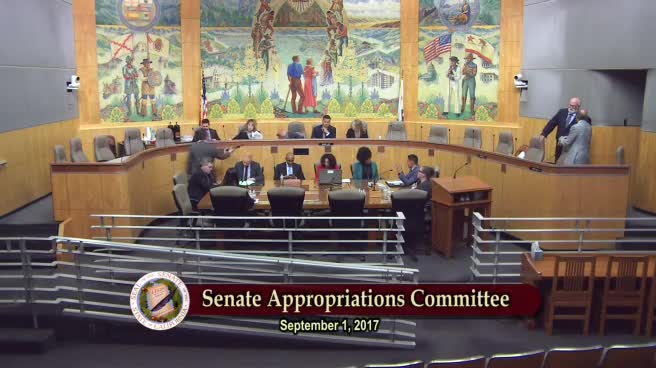 1H
Senate Standing Committee on Appropriations
 22MIN
Senate Standing Committee on Judiciary
 11MIN
Senate Standing Committee on Labor and Industrial Relations
 1MIN
Assembly Floor
 1H
Assembly Standing Committee on Appropriations
 20MIN
Assembly Standing Committee on Judiciary
Bill Author

Bill Co-Author(s):