AB 1748: Pupils: pupil health: opioid antagonist.
- Session Year: 2015-2016
- House: Assembly
- Latest Version Date: 2016-09-24
(1)Existing law authorizes a pharmacy to furnish epinephrine auto-injectors to a school district, county office of education, or charter school if certain conditions are met. Existing law requires the school district, county office of education, or charter school to maintain records regarding the acquisition and disposition of epinephrine auto-injectors furnished by the pharmacy for a period of 3 years from the date the records were created.
This bill would authorize a pharmacy to furnish naloxone hydrochloride or another opioid antagonist to a school district, county office of education, or charter school if certain conditions are met. The bill would require the school district, county office of education, or charter school to maintain records regarding the acquisition and disposition of naloxone hydrochloride or another opioid antagonist furnished by the pharmacy for a period of 3 years from the date the records were created.
(2)Under existing law, the governing board of a school district is required to give diligent care to the health and physical development of pupils and may employ properly certified persons for that work. Existing law requires school districts, county offices of education, and charter schools to provide emergency epinephrine auto-injectors to school nurses or trained volunteer personnel and authorizes school nurses and trained personnel to use epinephrine auto-injectors to provide emergency medical aid to persons suffering, or reasonably believed to be suffering, from an anaphylactic reaction, as provided.
This bill would authorize a school district, county office of education, or charter school to provide emergency naloxone hydrochloride or another opioid antagonist to school nurses and trained personnel who have volunteered, as specified, and authorizes school nurses and trained personnel to use naloxone hydrochloride or another opioid antagonist to provide emergency medical aid to persons suffering, or reasonably believed to be suffering, from an opioid overdose. The bill would expressly authorize each public and private elementary and secondary school in the state to voluntarily determine whether or not to make emergency naloxone hydrochloride or another opioid antagonist and trained personnel available at its school and to designate one or more school personnel to receive prescribed training regarding naloxone hydrochloride or another opioid antagonist from individuals in specified positions.
The bill would require the Superintendent of Public Instruction to establish minimum standards of training for the administration of naloxone hydrochloride or another opioid antagonist, to review these standards every 5 years or sooner as specified, and to consult with organizations and providers with expertise in administering naloxone hydrochloride or another opioid antagonist and administering medication in a school environment in developing and reviewing those standards. The bill would require the State Department of Education to include on its Internet Web site a clearinghouse for best practices in training nonmedical personnel to administer naloxone hydrochloride or another opioid antagonist to pupils.
The bill would require a school district, county office of education, or charter school choosing to exercise the authority to provide emergency naloxone hydrochloride or another opioid antagonist to provide the training for the volunteers at no cost to the volunteers and during the volunteers regular working hours. The bill would require a qualified supervisor of health or administrator at a school district, county office of education, or charter school electing to utilize naloxone hydrochloride or another opioid antagonist for emergency medical aid to obtain the prescription for naloxone hydrochloride or another opioid antagonist from an authorizing physician and surgeon, as defined, and would authorize the prescription to be filled by local or mail order pharmacies or naloxone hydrochloride or another opioid antagonist manufacturers.
The bill would authorize school nurses or, if the school does not have a school nurse, a person who has received training regarding naloxone hydrochloride or another opioid antagonist to immediately administer naloxone hydrochloride or another opioid antagonist under certain circumstances. The bill would provide that volunteers may administer naloxone hydrochloride or another opioid antagonist only by nasal spray or by auto-injector, as specified.
The bill would prohibit an authorizing physician and surgeon from being subject to professional review, being liable in a civil action, or being subject to criminal prosecution for any act in the issuing of a prescription or order, pursuant to these provisions, unless the act constitutes gross negligence or willful or malicious conduct. The bill would prohibit a person trained under these provisions who administers naloxone hydrochloride or another opioid antagonist, in good faith and not for compensation, to a person who appears to be experiencing an opioid overdose from being subject to professional review, being liable in a civil action, or being subject to criminal prosecution for this administration.
(1)Existing law authorizes a pharmacy to furnish epinephrine auto-injectors to a school district, county office of education, or charter school if certain conditions are met. Existing law requires the school district, county office of education, or charter school to maintain records regarding the acquisition and disposition of epinephrine auto-injectors furnished by the pharmacy for a period of 3 years from the date the records were created.
This bill would authorize a pharmacy to furnish naloxone hydrochloride or another opioid antagonist to a school district, county office of education, or charter school if certain conditions are met. The bill would require the school district, county office of education, or charter school to maintain records regarding the acquisition and disposition of naloxone hydrochloride or another opioid antagonist furnished by the pharmacy for a period of 3 years from the date the records were created.
(2)Under existing law, the governing board of a school district is required to give diligent care to the health and physical development of pupils and may employ properly certified persons for that work. Existing law requires school districts, county offices of education, and charter schools to provide emergency epinephrine auto-injectors to school nurses or trained volunteer personnel and authorizes school nurses and trained personnel to use epinephrine auto-injectors to provide emergency medical aid to persons suffering, or reasonably believed to be suffering, from an anaphylactic reaction, as provided.
This bill would authorize a school district, county office of education, or charter school to provide emergency naloxone hydrochloride or another opioid antagonist to school nurses and trained personnel who have volunteered, as specified, and authorizes school nurses and trained personnel to use naloxone hydrochloride or another opioid antagonist to provide emergency medical aid to persons suffering, or reasonably believed to be suffering, from an opioid overdose. The bill would expressly authorize each public and private elementary and secondary school in the state to voluntarily determine whether or not to make emergency naloxone hydrochloride or another opioid antagonist and trained personnel available at its school and to designate one or more school personnel to receive prescribed training regarding naloxone hydrochloride or another opioid antagonist from individuals in specified positions. The
The bill would require the Superintendent of Public Instruction to establish minimum standards of training for the administration of naloxone hydrochloride or another opioid antagonist, to review these standards every 5 years or sooner as specified, and to consult with organizations and providers with expertise in administering naloxone hydrochloride or another opioid antagonist and administering medication in a school environment in developing and reviewing those standards. The bill would require the State Department of Education to include on its Internet Web site a clearinghouse for best practices in training nonmedical personnel to administer naloxone hydrochloride or another opioid antagonist to pupils. The
The bill would require a school district, county office of education, or charter school choosing to exercise the authority to provide emergency naloxone hydrochloride or another opioid antagonist to provide the training for the volunteers at no cost to the volunteers and during the volunteers regular working hours. The bill would require a qualified supervisor of health or administrator at a school district, county office of education, or charter school electing to utilize naloxone hydrochloride or another opioid antagonist for emergency medical aid to obtain the prescription for naloxone hydrochloride or another opioid antagonist from an authorizing physician and surgeon, as defined, and would authorize the prescription to be filled by local or mail order pharmacies or naloxone hydrochloride or another opioid antagonist manufacturers. The
The bill would authorize school nurses or, if the school does not have a school nurse, a person who has received training regarding naloxone hydrochloride or another opioid antagonist to immediately administer naloxone hydrochloride or another opioid antagonist under certain circumstances. The bill would provide that volunteers may administer naloxone hydrochloride or another opioid antagonist only by nasal spray or by auto-injector, as specified. The
The bill would prohibit an authorizing physician and surgeon from being subject to professional review, being liable in a civil action, or being subject to criminal prosecution for any act in the issuing of a prescription or order, pursuant to these provisions, unless the act constitutes gross negligence or willful or malicious conduct. The bill would prohibit a person trained under these provisions who administers naloxone hydrochloride or another opioid antagonist, in good faith and not for compensation, to a person who appears to be experiencing an opioid overdose from being subject to professional review, being liable in a civil action, or being subject to criminal prosecution for this administration.
(1)Existing law authorizes a pharmacy to furnish epinephrine auto-injectors to a school district, county office of education, or charter school if certain conditions are met. Existing law requires the school district, county office of education, or charter school to maintain records regarding the acquisition and disposition of epinephrine auto-injectors furnished by the pharmacy for a period of 3 years from the date the records were created.
This bill would authorize a pharmacy to furnish naloxone hydrochloride or another opioid antagonist to a school district, county office of education, or charter school if certain conditions are met. The bill would require the school district, county office of education, or charter school to maintain records regarding the acquisition and disposition of naloxone hydrochloride or another opioid antagonist furnished by the pharmacy for a period of 3 years from the date the records were created.
(2)Under existing law, the governing board of a school district is required to give diligent care to the health and physical development of pupils and may employ properly certified persons for that work. Existing law requires school districts, county offices of education, and charter schools to provide emergency epinephrine auto-injectors to school nurses or trained volunteer personnel and authorizes school nurses and trained personnel to use epinephrine auto-injectors to provide emergency medical aid to persons suffering, or reasonably believed to be suffering, from an anaphylactic reaction, as provided.
This bill would authorize a school district, county office of education, or charter school to provide emergency naloxone hydrochloride or another opioid antagonist to school nurses and trained personnel who have volunteered, as specified, and authorizes school nurses and trained personnel to use naloxone hydrochloride or another opioid antagonist to provide emergency medical aid to persons suffering, or reasonably believed to be suffering, from an opioid overdose. The bill would expressly authorize each public and private elementary and secondary school in the state to voluntarily determine whether or not to make emergency naloxone hydrochloride or another opioid antagonist and trained personnel available at its school and to designate one or more school personnel to receive prescribed training regarding naloxone hydrochloride or another opioid antagonist from individuals in specified positions. The bill would require the Superintendent of Public Instruction to establish minimum standards of training for the administration of naloxone hydrochloride or another opioid antagonist, to review these standards every 5 years or sooner as specified, and to consult with organizations and providers with expertise in administering naloxone hydrochloride or another opioid antagonist and administering medication in a school environment in developing and reviewing those standards. The bill would require the State Department of Education to include on its Internet Web site a clearinghouse for best practices in training nonmedical personnel to administer naloxone hydrochloride or another opioid antagonist to pupils. The bill would require a school district, county office of education, or charter school choosing to exercise the authority to provide emergency naloxone hydrochloride or another opioid antagonist to provide the training for the volunteers at no cost to the volunteers and during the volunteers regular working hours. The bill would require a qualified supervisor of health or administrator at a school district, county office of education, or charter school electing to utilize naloxone hydrochloride or another opioid antagonist for emergency medical aid to obtain the prescription for naloxone hydrochloride or another opioid antagonist from an authorizing physician and surgeon, as defined, and would authorize the prescription to be filled by local or mail order pharmacies or naloxone hydrochloride or another opioid antagonist manufacturers. The bill would authorize school nurses or, if the school does not have a school nurse, a person who has received training regarding naloxone hydrochloride or another opioid antagonist to immediately administer naloxone hydrochloride or another opioid antagonist under certain circumstances. The bill would provide that volunteers may only administer naloxone hydrochloride or another opioid antagonist only by nasal spray. spray or by auto-injector, as specified. The bill would prohibit an authorizing physician and surgeon from being subject to professional review, being liable in a civil action, or being subject to criminal prosecution for any act in the issuing of a prescription or order, pursuant to these provisions, unless the act constitutes gross negligence or willful or malicious conduct. The bill would prohibit a person trained under these provisions who administers naloxone hydrochloride or another opioid antagonist, in good faith and not for compensation, to a person who appears to be experiencing an opioid overdose from being subject to professional review, being liable in a civil action, or being subject to criminal prosecution for this administration.
(1)Existing law authorizes a pharmacy to furnish epinephrine auto-injectors to a school district, county office of education, or charter school if certain conditions are met. Existing law requires the school district, county office of education, or charter school to maintain records regarding the acquisition and disposition of epinephrine auto-injectors furnished by the pharmacy for a period of 3 years from the date the records were created.
This bill would authorize a pharmacy to furnish naloxone hydrochloride or another opioid antagonist to a school district, county office of education, or charter school if certain conditions are met. The bill would require the school district, county office of education, or charter school to maintain records regarding the acquisition and disposition of naloxone hydrochloride or another opioid antagonist furnished by the pharmacy for a period of 3 years from the date the records were created.
(2)Under existing law, the governing board of any a school district is required to give diligent care to the health and physical development of pupils and may employ properly certified persons for that work. Existing law requires school districts, county offices of education, and charter schools to provide emergency epinephrine auto-injectors to school nurses or trained volunteer personnel and authorizes school nurses and trained personnel to use epinephrine auto-injectors to provide emergency medical aid to persons suffering, or reasonably believed to be suffering, from an anaphylactic reaction, as provided.
This bill would authorize a school district, county office of education, or charter school to provide emergency naloxone hydrochloride or another opioid antagonist to school nurses and trained personnel who have volunteered, as specified, and authorizes school nurses and trained personnel to use naloxone hydrochloride or another opioid antagonist to provide emergency medical aid to persons suffering, or reasonably believed to be suffering, from an opioid overdose. The bill would expressly authorize each public and private elementary and secondary school in the state to voluntarily determine whether or not to make emergency naloxone hydrochloride or another opioid antagonist and trained personnel available at its school and to designate one or more school personnel to receive prescribed training regarding naloxone hydrochloride or another opioid antagonist from individuals in specified positions. The bill would require the Superintendent of Public Instruction to establish minimum standards of training for the administration of naloxone hydrochloride or another opioid antagonist, to review these standards every 5 years or sooner as specified, and to consult with organizations and providers with expertise in administering naloxone hydrochloride or another opioid antagonist and administering medication in a school environment in developing and reviewing those standards. The bill would require the State Department of Education to include on its Internet Web site a clearinghouse for best practices in training nonmedical personnel to administer naloxone hydrochloride or another opioid antagonist to pupils. The bill would require a school district, county office of education, or charter school choosing to exercise the authority to provide emergency naloxone hydrochloride or another opioid antagonist to provide the training for the volunteers at no cost to the volunteers and during the volunteers regular working hours. The bill would require a qualified supervisor of health or administrator at a school district, county office of education, or charter school electing to utilize naloxone hydrochloride or another opioid antagonist for emergency medical aid to obtain the prescription for naloxone hydrochloride or another opioid antagonist from an authorizing physician and surgeon, as defined, and would authorize the prescription to be filled by local or mail order pharmacies or naloxone hydrochloride or another opioid antagonist manufacturers. The bill would authorize school nurses or, if the school does not have a school nurse, a person who has received training regarding naloxone hydrochloride or another opioid antagonist to immediately administer naloxone hydrochloride or another opioid antagonist under certain circumstances. The bill would provide that volunteers may only administer naloxone hydrochloride or another opioid antagonist by nasal spray. The bill would prohibit an authorizing physician and surgeon from being subject to professional review, being liable in a civil action, or being subject to criminal prosecution for any act in the issuing of a prescription or order, pursuant to these provisions, unless the act constitutes gross negligence or willful or malicious conduct. The bill would prohibit a person trained under these provisions who administers naloxone hydrochloride or another opioid antagonist, in good faith and not for compensation, to a person who appears to be experiencing an opioid overdose from being subject to professional review, being liable in a civil action, or being subject to criminal prosecution for this administration.
(1)Existing law authorizes a pharmacy to furnish epinephrine auto-injectors to a school district, county office of education, or charter school if certain conditions are met. Existing law requires the school district, county office of education, or charter school to maintain records regarding the acquisition and disposition of epinephrine auto-injectors furnished by the pharmacy for a period of 3 years from the date the records were created.
This bill would authorize a pharmacy to furnish naloxone hydrochloride or another opioid antagonist to a school district, county office of education, or charter school if certain conditions are met. The bill would require the school district, county office of education, or charter school to maintain records regarding the acquisition and disposition of naloxone hydrochloride or another opioid antagonist furnished by the pharmacy for a period of 3 years from the date the records were created.
(2)Under existing law, the governing board of any school district is required to give diligent care to the health and physical development of pupils, pupils and may employ properly certified persons for that work. Existing law requires school districts, county offices of education, and charter schools to provide emergency epinephrine auto-injectors to school nurses or trained volunteer personnel and authorizes school nurses and trained personnel to use epinephrine auto-injectors to provide emergency medical aid to persons suffering, or reasonably believed to be suffering, from an anaphylactic reaction, as provided.
This bill would authorize a school district, county office of education, or charter school to provide emergency naloxone hydrochloride or another opioid antagonist to school nurses and trained personnel who have volunteered, as specified, and authorizes school nurses and trained personnel to use naloxone hydrochloride or another opioid antagonist to provide emergency medical aid to persons suffering, or reasonably believed to be suffering, from an opioid overdose. The bill would expressly authorize each public and private elementary and secondary school in the state to voluntarily determine whether or not to make emergency naloxone hydrochloride or another opioid antagonist and trained personnel available at its school and to designate one or more school personnel to receive prescribed training regarding naloxone hydrochloride or another opioid antagonist from individuals in specified positions. The bill would require the Superintendent of Public Instruction to establish minimum standards of training for the administration of naloxone hydrochloride or another opioid antagonist, to review these standards every 5 years or sooner as specified, and to consult with organizations and providers with expertise in administering naloxone hydrochloride or another opioid antagonist and administering medication in a school environment in developing and reviewing those standards. The bill would require the State Department of Education to include on its Internet Web site a clearinghouse for best practices in training nonmedical personnel to administer naloxone hydrochloride or another opioid antagonist to pupils. The bill would require a school district, county office of education, or charter school choosing to exercise the authority to provide emergency naloxone hydrochloride or another opioid antagonist to provide the training for the volunteers at no cost to the volunteers and during the volunteers regular working hours. The bill would require a qualified supervisor of health or administrator at a school district, county office of education, or charter school electing to utilize naloxone hydrochloride or another opioid antagonist for emergency medical aid to obtain the prescription for naloxone hydrochloride or another opioid antagonist from an authorizing physician and surgeon, as defined, and would authorize the prescription to be filled by local or mail order pharmacies or naloxone hydrochloride or another opioid antagonist manufacturers. The bill would authorize school nurses or, if the school does not have a school nurse, a person who has received training regarding naloxone hydrochloride or another opioid antagonist to immediately administer naloxone hydrochloride or another opioid antagonist under certain circumstances. The bill would require those individuals to initiate emergency medical services or other appropriate medical followup in accordance with written training materials. The bill would provide that volunteers may only administer naloxone hydrochloride or another opioid antagonist by nasal spray. The bill would prohibit an authorizing physician and surgeon from being subject to professional review, being liable in a civil action, or being subject to criminal prosecution for any act in the issuing of a prescription or order, pursuant to these provisions, unless the act constitutes gross negligence or willful or malicious conduct. The bill would prohibit a person trained under these provisions, who acts with reasonable care in administering provisions who administers naloxone hydrochloride or another opioid antagonist, in good faith, faith and not for compensation, to a person who is experiencing or is suspected of appears to be experiencing an opioid overdose from being subject to professional review, being liable in a civil action, or being subject to criminal prosecution for this administration.
(1)Existing law authorizes a pharmacy to furnish epinephrine auto-injectors to a school district, county office of education, or charter school if certain conditions are met. Existing law requires the school district, county office of education, or charter school to maintain records regarding the acquisition and disposition of epinephrine auto-injectors furnished by the pharmacy for a period of 3 years from the date the records were created.
This bill would authorize a pharmacy to furnish naloxone hydrochloride or another opioid antagonist to a school district, county office of education, or charter school if certain conditions are met. The bill would require the school district, county office of education, or charter school to maintain records regarding the acquisition and disposition of naloxone hydrochloride or another opioid antagonist furnished by the pharmacy for a period of 3 years from the date the records were created.
(2)Under existing law, the governing board of any school district is required to give diligent care to the health and physical development of pupils, and may employ properly certified persons for that work. Existing law requires school districts, county offices of education, and charter schools to provide emergency epinephrine auto-injectors to school nurses or trained volunteer personnel and authorizes school nurses and trained personnel to use epinephrine auto-injectors to provide emergency medical aid to persons suffering suffering, or reasonably believed to be suffering, from an anaphylactic reaction, as provided.
This bill would authorize a school district, county office of education, or charter school to provide emergency naloxone hydrochloride or another opioid antagonist to school nurses and trained personnel who have volunteered, as specified, and authorizes school nurses and trained personnel to use naloxone hydrochloride or another opioid antagonist to provide emergency medical aid to persons suffering, or reasonably believed to be suffering, from an opioid overdose. The bill would expressly authorize each public and private elementary and secondary school in the state to voluntarily determine whether or not to make emergency naloxone hydrochloride or another opioid antagonist and trained personnel available at its school and to designate one or more school personnel to receive prescribed training regarding naloxone hydrochloride or another opioid antagonist from individuals in specified positions. The bill would require the Superintendent of Public Instruction to establish minimum standards of training for the administration of naloxone hydrochloride or another opioid antagonist, to review these standards every 5 years or sooner as specified, and to consult with organizations and providers with expertise in administering naloxone hydrochloride or another opioid antagonist and administering medication in a school environment in developing and reviewing those standards. The bill would require a qualified supervisor of health or administrator at a school district, county office of education, or charter school electing to utilize naloxone hydrochloride or another opioid antagonist for emergency medical aid to obtain the prescription for naloxone hydrochloride or another opioid antagonist from an authorizing physician and surgeon, as defined, and would authorize the prescription to be filled by local or mail order pharmacies or naloxone hydrochloride or another opioid antagonist manufacturers. The bill would authorize school nurses or, if the school does not have a school nurse, a person who has received training regarding naloxone hydrochloride or another opioid antagonist, antagonist to immediately administer naloxone hydrochloride or another opioid antagonist under certain circumstances. The bill would require those individuals to initiate emergency medical services or other appropriate medical followup in accordance with written training materials. The bill would prohibit an authorizing physician and surgeon from being subject to professional review, being liable in a civil action, or being subject to criminal prosecution for any act in the issuing of a prescription or order, pursuant to these provisions, unless the act constitutes gross negligence or willful or malicious conduct. The bill would prohibit a person trained under these provisions, who acts with reasonable care in administering naloxone hydrochloride or another opioid antagonist, in good faith, to a person who is experiencing or is suspected of experiencing an opioid overdose from being subject to professional review, being liable in a civil action, or being subject to criminal prosecution for this administration.
(1)Existing law authorizes a pharmacy to furnish epinephrine auto-injectors to a school district, county office of education, or charter school if certain conditions are met. Existing law requires the school district, county office of education, or charter school to maintain records regarding the acquisition and disposition of epinephrine auto-injectors furnished by the pharmacy for a period of 3 years from the date the records were created.
This bill would authorize a pharmacy to furnish naloxone hydrochloride or another opioid antagonist to a school district, county office of education, or charter school if certain conditions are met. The bill would require the school district, county office of education, or charter school to maintain records regarding the acquisition and disposition of naloxone hydrochloride or another opioid antagonist furnished by the pharmacy for a period of 3 years from the date the records were created.
(2)Under existing law, the governing board of any school district is required to give diligent care to the health and physical development of pupils, and may employ properly certified persons for that work. Existing law requires school districts, county offices of education, and charter schools to provide emergency epinephrine auto-injectors to school nurses or trained volunteer personnel and authorizes school nurses and trained personnel to use epinephrine auto-injectors to provide emergency medical aid to persons suffering or reasonably believed to be suffering, from an anaphylactic reaction, as provided.
This bill would authorize a school district, county office of education, or charter school to provide emergency naloxone hydrochloride or another opioid antagonist to school nurses and trained personnel who have volunteered, as specified, and authorizes school nurses and trained personnel to use naloxone hydrochloride or another opioid antagonist to provide emergency medical aid to persons suffering, or reasonably believed to be suffering, from an opioid overdose. The bill would expressly authorize each public and private elementary and secondary school in the state to voluntarily determine whether or not to make emergency naloxone hydrochloride or another opioid antagonist and trained personnel available at its school and to designate one or more school personnel to receive prescribed training regarding naloxone hydrochloride or another opioid antagonist from individuals in specified positions. The bill would require the Superintendent of Public Instruction to establish minimum standards of training for the administration of naloxone hydrochloride or another opioid antagonist, to review these standards every 5 years or sooner as specified, and to consult with organizations and providers with expertise in administering naloxone hydrochloride or another opioid antagonist and administering medication in a school environment in developing and reviewing those standards. The bill would require a qualified supervisor of health or administrator at a school district, county office of education, or charter school electing to utilize naloxone hydrochloride or another opioid antagonist for emergency medical aid to obtain the prescription for naloxone hydrochloride or another opioid antagonist from an authorizing physician and surgeon, as defined, and would authorize the prescription to be filled by local or mail order pharmacies or naloxone hydrochloride or another opioid antagonist manufacturers. The bill would authorize school nurses or, if the school does not have a school nurse, a person who has received training regarding naloxone hydrochloride or another opioid antagonist, to immediately administer naloxone hydrochloride or another opioid antagonist under certain circumstances. The bill would require those individuals to initiate emergency medical services or other appropriate medical followup in accordance with written training materials. The bill would prohibit an authorizing physician and surgeon from being subject to professional review, being liable in a civil action, or being subject to criminal prosecution for any act in the issuing of a prescription or order, pursuant to these provisions, unless the act constitutes gross negligence or willful or malicious conduct. The bill would prohibit a person trained under these provisions, who acts with reasonable care in administering naloxone hydrochloride or another opioid antagonist, in good faith, to a person who is experiencing or is suspected of experiencing an opioid overdose from being subject to professional review, being liable in a civil action, or being subject to criminal prosecution for this administration.
Existing law authorizes the teacher of any class from which a pupil is suspended to require the suspended pupil to complete any assignments and tests missed during the suspension.
This bill would make a nonsubstantive change to this provision.
Existing law authorizes the teacher of any class from which a pupil is suspended to require the suspended pupil to complete any assignments and tests missed during the suspension.
This bill would make a nonsubstantive change to this provision.
(a)Notwithstanding any other law, a pharmacy may furnish naloxone hydrochloride or another opioid antagonist to a school district, county office of education, or charter school pursuant to Section 49414.3 of the Education Code if all of the following are met:
(1)The naloxone hydrochloride or another opioid antagonist is furnished exclusively for use at a school district schoolsite, county office of education schoolsite, or charter school.
(2)A physician and surgeon provides a written order that specifies the quantity of naloxone hydrochloride or another opioid antagonist to be furnished.
(b)Records regarding the acquisition and disposition of naloxone hydrochloride or another opioid antagonist furnished pursuant to subdivision (a) shall be maintained by the school district, county office of education, or charter school for a period of three years from the date the records were created. The school district, county office of education, or charter school shall be responsible for monitoring the supply of naloxone hydrochloride or another opioid antagonist and ensuring the destruction of expired naloxone hydrochloride or another opioid antagonist.
SEC. 2.Section 49414.3 is added to the Education Code, to read:49414.3.(a)School districts, county offices of education, and charter schools may provide emergency naloxone hydrochloride or another opioid antagonist to school nurses or trained personnel who have volunteered pursuant to subdivision (d), and school nurses or trained personnel may use naloxone hydrochloride or another opioid antagonist to provide emergency medical aid to persons suffering, or reasonably believed to be suffering, from an opioid overdose.
(b)For purposes of this section, the following terms have the following meanings:
(1)Authorizing physician and surgeon may include, but is not limited to, a physician and surgeon employed by, or contracting with, a local educational agency, a medical director of the local health department, or a local emergency medical services director.
(2)Auto-injector means a disposable delivery device designed for the automatic injection of a premeasured dose of an opioid antagonist into the human body and approved by the federal Food and Drug Administration for layperson use.
(3)Opioid antagonist means naloxone hydrochloride or another drug approved by the federal Food and Drug Administration that, when administered, negates or neutralizes in whole or in part the pharmacological effects of an opioid in the body, and has been approved for the treatment of an opioid overdose.
(4)Qualified supervisor of health may include, but is not limited to, a school nurse.
(5)Volunteer or trained personnel means an employee who has volunteered to administer naloxone hydrochloride or another opioid antagonist to a person if the person is suffering, or reasonably believed to be suffering, from an opioid overdose, has been designated by a school, and has received training pursuant to subdivision (d).
(c)Each public and private elementary and secondary school in the state may voluntarily determine whether or not to make emergency naloxone hydrochloride or another opioid antagonist and trained personnel available at its school. In making this determination, a school shall evaluate the emergency medical response time to the school and determine whether initiating emergency medical services is an acceptable alternative to naloxone hydrochloride or another opioid antagonist and trained personnel. A private elementary or secondary school choosing to exercise the authority provided under this subdivision shall not receive state funds specifically for purposes of this subdivision.
(d)(1)Each public and private elementary and secondary school in the state may designate one or more volunteers to receive initial and annual refresher training, based on the standards developed pursuant to subdivision (e), regarding the storage and emergency use of naloxone hydrochloride or another opioid antagonist from the school nurse or other qualified person designated by an authorizing physician and surgeon. A benefit shall not be granted to or withheld from any individual based on his or her offer to volunteer, and there shall be no retaliation against any individual for rescinding his or her offer to volunteer, including after receiving training. Any school district, county office of education, or charter school choosing to exercise the authority provided under this subdivision shall provide the training for the volunteers at no cost to the volunteer and during the volunteers regular working hours.
(2)An employee who volunteers pursuant to this section may rescind his or her offer to administer emergency naloxone hydrochloride or another opioid antagonist at any time, including after receipt of training.
(e)(1)The Superintendent shall establish minimum standards of training for the administration of naloxone hydrochloride or another opioid antagonist that satisfies the requirements of paragraph (2). Every five years, or sooner as deemed necessary by the Superintendent, the Superintendent shall review minimum standards of training for the administration of naloxone hydrochloride or other opioid antagonists that satisfy the requirements of paragraph (2). For purposes of this subdivision, the Superintendent shall consult with organizations and providers with expertise in administering naloxone hydrochloride or another opioid antagonist and administering medication in a school environment, including, but not limited to, the California Society of Addiction Medicine, the Emergency Medical Services Authority, the California School Nurses Organization, the California Medical Association, the American Academy of Pediatrics, and others.
(2)Training established pursuant to this subdivision shall include all of the following:
(A)Techniques for recognizing symptoms of an opioid overdose.
(B)Standards and procedures for the storage, restocking, and emergency use of naloxone hydrochloride or another opioid antagonist.
(C)Basic emergency followup procedures, including, but not limited to, a requirement for the school or charter school administrator or, if the administrator is not available, another school staff member to call the emergency 911 telephone number and to contact the pupils parent or guardian.
(D)Recommendations on the necessity of instruction and certification in cardiopulmonary resuscitation.
(E)Written materials covering the information required under this subdivision.
(3)Training established pursuant to this subdivision shall be consistent with the most recent guidelines for medication administration issued by the department.
(4)A school shall retain for reference the written materials prepared under subparagraph (E) of paragraph (2).
(5)The department shall include on its Internet Web site a clearinghouse for best practices in training nonmedical personnel to administer naloxone hydrochloride or another opioid antagonist to pupils.
(f)Any school district, county office of education, or charter school electing to utilize naloxone hydrochloride or another opioid antagonist for emergency aid shall distribute a notice at least once per school year to all staff that contains the following information:
(1)A description of the volunteer request stating that the request is for volunteers to be trained to administer naloxone hydrochloride or another opioid antagonist to a person if the person is suffering, or reasonably believed to be suffering, from an opioid overdose.
(2)A description of the training that the volunteer will receive pursuant to subdivision (d).
(3)The right of an employee to rescind his or her offer to volunteer pursuant to this section.
(4)A statement that no benefit will be granted to or withheld from any individual based on his or her offer to volunteer and that there will be no retaliation against any individual for rescinding his or her offer to volunteer, including after receiving training.
(g)(1)A qualified supervisor of health at a school district, county office of education, or charter school electing to utilize naloxone hydrochloride or another opioid antagonist for emergency aid shall obtain from an authorizing physician and surgeon a prescription for each school for naloxone hydrochloride or another opioid antagonist. A qualified supervisor of health at a school district, county office of education, or charter school shall be responsible for stocking the naloxone hydrochloride or another opioid antagonist and restocking it if it is used.
(2)If a school district, county office of education, or charter school does not have a qualified supervisor of health, an administrator at the school district, county office of education, or charter school shall carry out the duties specified in paragraph (1).
(3)A prescription pursuant to this subdivision may be filled by local or mail order pharmacies or naloxone hydrochloride or another opioid antagonist manufacturers.
(4)An authorizing physician and surgeon shall not be subject to professional review, be liable in a civil action, or be subject to criminal prosecution for the issuance of a prescription or order pursuant to this section, unless the physician and surgeons issuance of the prescription or order constitutes gross negligence or willful or malicious conduct.
(h)(1)A school nurse or, if the school does not have a school nurse or the school nurse is not onsite or available, a volunteer may administer naloxone hydrochloride or another opioid antagonist to a person exhibiting potentially life-threatening symptoms of an opioid overdose at school or a school activity when a physician is not immediately available. If the naloxone hydrochloride or another opioid antagonist is used it shall be restocked as soon as reasonably possible, but no later than two weeks after it is used. Naloxone hydrochloride or another opioid antagonist shall be restocked before its expiration date.
(2)Volunteers may administer naloxone hydrochloride or another opioid antagonist only by nasal spray or by auto-injector.
(3)A volunteer shall be allowed to administer naloxone hydrochloride or another opioid antagonist in a form listed in paragraph (2) that the volunteer is most comfortable with.
(i)A school district, county office of education, or charter school electing to utilize naloxone hydrochloride or another opioid antagonist for emergency aid shall ensure that each employee who volunteers under this section will be provided defense and indemnification by the school district, county office of education, or charter school for any and all civil liability, in accordance with, but not limited to, that provided in Division 3.6 (commencing with Section 810) of Title 1 of the Government Code. This information shall be reduced to writing, provided to the volunteer, and retained in the volunteers personnel file.
(j)(1)Notwithstanding any other law, a person trained as required under subdivision (d), who administers naloxone hydrochloride or another opioid antagonist, in good faith and not for compensation, to a person who appears to be experiencing an opioid overdose shall not be subject to professional review, be liable in a civil action, or be subject to criminal prosecution for his or her acts or omissions in administering the naloxone hydrochloride or another opioid antagonist.
(2)The protection specified in paragraph (1) shall not apply in a case of gross negligence or willful and wanton misconduct of the person who renders emergency care treatment by the use of naloxone hydrochloride or another opioid antagonist.
(3)Any public employee who volunteers to administer naloxone hydrochloride or another opioid antagonist pursuant to subdivision (d) is not providing emergency medical care for compensation, notwithstanding the fact that he or she is a paid public employee.
(k)A state agency, the department, or a public school may accept gifts, grants, and donations from any source for the support of the public school carrying out the provisions of this section, including, but not limited to, the acceptance of naloxone hydrochloride or another opioid antagonist from a manufacturer or wholesaler.
(a)Notwithstanding any other law, a pharmacy may furnish naloxone hydrochloride or another opioid antagonist to a school district, county office of education, or charter school pursuant to Section 49414.3 of the Education Code if all of the following are met:
(1)The naloxone hydrochloride or another opioid antagonist is furnished exclusively for use at a school district schoolsite, county office of education schoolsite, or charter school.
(2)A physician and surgeon provides a written order that specifies the quantity of naloxone hydrochloride or another opioid antagonist to be furnished.
(b)Records regarding the acquisition and disposition of naloxone hydrochloride or another opioid antagonist furnished pursuant to subdivision (a) shall be maintained by the school district, county office of education, or charter school for a period of three years from the date the records were created. The school district, county office of education, or charter school shall be responsible for monitoring the supply of naloxone hydrochloride or another opioid antagonist and ensuring the destruction of expired naloxone hydrochloride or another opioid antagonist.
SEC. 2.Section 49414.3 is added to the Education Code, to read:49414.3.(a)School districts, county offices of education, and charter schools may provide emergency naloxone hydrochloride or another opioid antagonist to school nurses or trained personnel who have volunteered pursuant to subdivision (d), and school nurses or trained personnel may use naloxone hydrochloride or another opioid antagonist to provide emergency medical aid to persons suffering, or reasonably believed to be suffering, from an opioid overdose.
(b)For purposes of this section, the following terms have the following meanings:
(1)Authorizing physician and surgeon may include, but is not limited to, a physician and surgeon employed by, or contracting with, a local educational agency, a medical director of the local health department, or a local emergency medical services director.
(2)Auto-injector means a disposable delivery device designed for the automatic injection of a premeasured dose of an opioid antagonist into the human body and approved by the federal Food and Drug Administration for layperson use.
(3)Opioid antagonist means naloxone hydrochloride or another drug approved by the federal Food and Drug Administration that, when administered, negates or neutralizes in whole or in part the pharmacological effects of an opioid in the body, and has been approved for the treatment of an opioid overdose.
(4)Qualified supervisor of health may include, but is not limited to, a school nurse.
(5)Volunteer or trained personnel means an employee who has volunteered to administer naloxone hydrochloride or another opioid antagonist to a person if the person is suffering, or reasonably believed to be suffering, from an opioid overdose, has been designated by a school, and has received training pursuant to subdivision (d).
(c)Each public and private elementary and secondary school in the state may voluntarily determine whether or not to make emergency naloxone hydrochloride or another opioid antagonist and trained personnel available at its school. In making this determination, a school shall evaluate the emergency medical response time to the school and determine whether initiating emergency medical services is an acceptable alternative to naloxone hydrochloride or another opioid antagonist and trained personnel. A private elementary or secondary school choosing to exercise the authority provided under this subdivision shall not receive state funds specifically for purposes of this subdivision.
(d)(1)Each public and private elementary and secondary school in the state may designate one or more volunteers to receive initial and annual refresher training, based on the standards developed pursuant to subdivision (e), regarding the storage and emergency use of naloxone hydrochloride or another opioid antagonist from the school nurse or other qualified person designated by an authorizing physician and surgeon. A benefit shall not be granted to or withheld from any individual based on his or her offer to volunteer volunteer, and there shall be no retaliation against any individual for rescinding his or her offer to volunteer, including after receiving training. Any school district, county office of education, or charter school choosing to exercise the authority provided under this subdivision shall provide the training for the volunteers at no cost to the volunteer and during the volunteers regular working hours.
(2)An employee who volunteers pursuant to this section may rescind his or her offer to administer emergency naloxone hydrochloride or another opioid antagonist at any time, including after receipt of training.
(e)(1)The Superintendent shall establish minimum standards of training for the administration of naloxone hydrochloride or another opioid antagonist that satisfies the requirements of paragraph (2). Every five years, or sooner as deemed necessary by the Superintendent, the Superintendent shall review minimum standards of training for the administration of naloxone hydrochloride or other opioid antagonists that satisfy the requirements of paragraph (2). For purposes of this subdivision, the Superintendent shall consult with organizations and providers with expertise in administering naloxone hydrochloride or another opioid antagonist and administering medication in a school environment, including, but not limited to, the State Department of Public Health, California Society of Addiction Medicine, the Emergency Medical Services Authority, the California School Nurses Organization, the California Medical Association, the American Academy of Pediatrics, and others.
(2)Training established pursuant to this subdivision shall include all of the following:
(A)Techniques for recognizing symptoms of an opioid overdose.
(B)Standards and procedures for the storage, restocking, and emergency use of naloxone hydrochloride or another opioid antagonist.
(C)Basic emergency followup procedures, including, but not limited to, a requirement for the school or charter school administrator or, if the administrator is not available, another school staff member to call the emergency 911 telephone number and to contact the pupils parent or guardian. The requirement for the school or charter school administrator or other school staff member to call the emergency 911 telephone number shall not require a pupil to be transported to an emergency room.
(D)Recommendations on the necessity of instruction and certification in cardiopulmonary resuscitation.
(E)Written materials covering the information required under this subdivision.
(3)Training established pursuant to this subdivision shall be consistent with the most recent guidelines for medication administration issued by the department.
(4)A school shall retain for reference the written materials prepared under subparagraph (E) of paragraph (2).
(5)The department shall include on its Internet Web site a clearinghouse for best practices in training nonmedical personnel to administer naloxone hydrochloride or another opioid antagonist to pupils.
(f)Any school district, county office of education, or charter school electing to utilize naloxone hydrochloride or another opioid antagonist for emergency aid shall distribute a notice at least once per school year to all staff that contains the following information:
(1)A description of the volunteer request stating that the request is for volunteers to be trained to administer naloxone hydrochloride or another opioid antagonist to a person if the person is suffering, or reasonably believed to be suffering, from an opioid overdose.
(2)A description of the training that the volunteer will receive pursuant to subdivision (d).
(3)The right of an employee to rescind his or her offer to volunteer pursuant to this section.
(4)A statement that no benefit will be granted to or withheld from any individual based on his or her offer to volunteer and that there will be no retaliation against any individual for rescinding his or her offer to volunteer, including after receiving training.
(g)(1)A qualified supervisor of health at a school district, county office of education, or charter school electing to utilize naloxone hydrochloride or another opioid antagonist for emergency aid shall obtain from an authorizing physician and surgeon a prescription for each school for naloxone hydrochloride or another opioid antagonist. A qualified supervisor of health at a school district, county office of education, or charter school shall be responsible for stocking the naloxone hydrochloride or another opioid antagonist and restocking it if it is used.
(2)If a school district, county office of education, or charter school does not have a qualified supervisor of health, an administrator at the school district, county office of education, or charter school shall carry out the duties specified in paragraph (1).
(3)A prescription pursuant to this subdivision may be filled by local or mail order pharmacies or naloxone hydrochloride or another opioid antagonist manufacturers.
(4)An authorizing physician and surgeon shall not be subject to professional review, be liable in a civil action, or be subject to criminal prosecution for the issuance of a prescription or order pursuant to this section, unless the physician and surgeons issuance of the prescription or order constitutes gross negligence or willful or malicious conduct.
(h)(1)A school nurse or, if the school does not have a school nurse or the school nurse is not onsite or available, a volunteer may administer naloxone hydrochloride or another opioid antagonist to a person exhibiting potentially life-threatening symptoms of an opioid overdose at school or a school activity when a physician is not immediately available. If the naloxone hydrochloride or another opioid antagonist is used it shall be restocked as soon as reasonably possible, but no later than two weeks after it is used. Naloxone hydrochloride or another opioid antagonist shall be restocked before its expiration date.
(2)Volunteers may administer naloxone hydrochloride or another opioid antagonist only by nasal spray or by auto-injector.
(3)A volunteer shall be allowed to administer naloxone hydrochloride or another opioid antagonist in a form listed in paragraph (2) that the volunteer is most comfortable with.
(i)A school district, county office of education, or charter school electing to utilize naloxone hydrochloride or another opioid antagonist for emergency aid shall ensure that each employee who volunteers under this section will be provided defense and indemnification by the school district, county office of education, or charter school for any and all civil liability, in accordance with, but not limited to, that provided in Division 3.6 (commencing with Section 810) of Title 1 of the Government Code. This information shall be reduced to writing, provided to the volunteer, and retained in the volunteers personnel file.
(j)(1)Notwithstanding any other law, a person trained as required under subdivision (d), who administers naloxone hydrochloride or another opioid antagonist, in good faith and not for compensation, to a person who appears to be experiencing an opioid overdose shall not be subject to professional review, be liable in a civil action, or be subject to criminal prosecution for his or her acts or omissions in administering the naloxone hydrochloride or another opioid antagonist.
(2)The protection specified in paragraph (1) shall not apply in a case of gross negligence or willful and wanton misconduct of the person who renders emergency care treatment by the use of naloxone hydrochloride or another opioid antagonist.
(3)Any public employee who volunteers to administer naloxone hydrochloride or another opioid antagonist pursuant to subdivision (d) is not providing emergency medical care for compensation, notwithstanding the fact that he or she is a paid public employee.
(k)A state agency, the department, or a public school may accept gifts, grants, and donations from any source for the support of the public school carrying out the provisions of this section, including, but not limited to, the acceptance of naloxone hydrochloride or another opioid antagonist from a manufacturer or wholesaler.
(a)Notwithstanding any other law, a pharmacy may furnish naloxone hydrochloride or another opioid antagonist to a school district, county office of education, or charter school pursuant to Section 49414.3 of the Education Code if all of the following are met:
(1)The naloxone hydrochloride or another opioid antagonist is furnished exclusively for use at a school district schoolsite, county office of education schoolsite, or charter school.
(2)A physician and surgeon provides a written order that specifies the quantity of naloxone hydrochloride or another opioid antagonist to be furnished.
(b)Records regarding the acquisition and disposition of naloxone hydrochloride or another opioid antagonist furnished pursuant to subdivision (a) shall be maintained by the school district, county office of education, or charter school for a period of three years from the date the records were created. The school district, county office of education, or charter school shall be responsible for monitoring the supply of naloxone hydrochloride or another opioid antagonist and ensuring the destruction of expired naloxone hydrochloride or another opioid antagonist.
SEC. 2.Section 49414.3 is added to the Education Code, to read:49414.3.(a)School districts, county offices of education, and charter schools may provide emergency naloxone hydrochloride or another opioid antagonist to school nurses or trained personnel who have volunteered pursuant to subdivision (d), and school nurses or trained personnel may use naloxone hydrochloride or another opioid antagonist to provide emergency medical aid to persons suffering, or reasonably believed to be suffering, from an opioid overdose.
(b)For purposes of this section, the following terms have the following meanings:
(1)Authorizing physician and surgeon may include, but is not limited to, a physician and surgeon employed by, or contracting with, a local educational agency, a medical director of the local health department, or a local emergency medical services director.
(2)Auto-injector means a disposable delivery device designed for the automatic injection of a premeasured dose of an opioid antagonist into the human body and approved by the federal Food and Drug Administration for layperson use.
(2)
(3)Opioid antagonist means naloxone hydrochloride or another drug approved by the federal Food and Drug Administration that, when administered, negates or neutralizes in whole or in part the pharmacological effects of an opioid in the body, and has been approved for the treatment of an opioid overdose.
(3)
(4)Qualified supervisor of health may include, but is not limited to, a school nurse.
(4)
(5)Volunteer or trained personnel means an employee who has volunteered to administer naloxone hydrochloride or another opioid antagonist to a person if the person is suffering, or reasonably believed to be suffering, from an opioid overdose, has been designated by a school, and has received training pursuant to subdivision (d).
(c)Each public and private elementary and secondary school in the state may voluntarily determine whether or not to make emergency naloxone hydrochloride or another opioid antagonist and trained personnel available at its school. In making this determination, a school shall evaluate the emergency medical response time to the school and determine whether initiating emergency medical services is an acceptable alternative to naloxone hydrochloride or another opioid antagonist and trained personnel. A private elementary or secondary school choosing to exercise the authority provided under this subdivision shall not receive state funds specifically for purposes of this subdivision.
(d)(1)Each public and private elementary and secondary school in the state may designate one or more volunteers to receive initial and annual refresher training, based on the standards developed pursuant to subdivision (e), regarding the storage and emergency use of naloxone hydrochloride or another opioid antagonist from the school nurse or other qualified person designated by an authorizing physician and surgeon. A benefit shall not be granted to or withheld from any individual based on his or her offer to volunteer and there shall be no retaliation against any individual for rescinding his or her offer to volunteer, including after receiving training. Any school district, county office of education, or charter school choosing to exercise the authority provided under this subdivision shall provide the training for the volunteers at no cost to the volunteer and during the volunteers regular working hours.
(2)An employee who volunteers pursuant to this section may rescind his or her offer to administer emergency naloxone hydrochloride or another opioid antagonist at any time, including after receipt of training.
(e)(1)The Superintendent shall establish minimum standards of training for the administration of naloxone hydrochloride or another opioid antagonist that satisfies the requirements of paragraph (2). Every five years, or sooner as deemed necessary by the Superintendent, the Superintendent shall review minimum standards of training for the administration of naloxone hydrochloride or other opioid antagonists that satisfy the requirements of paragraph (2). For purposes of this subdivision, the Superintendent shall consult with organizations and providers with expertise in administering naloxone hydrochloride or another opioid antagonist and administering medication in a school environment, including, but not limited to, the State Department of Public Health, the Emergency Medical Services Authority, the California School Nurses Organization, the California Medical Association, the American Academy of Pediatrics, and others.
(2)Training established pursuant to this subdivision shall include all of the following:
(A)Techniques for recognizing symptoms of an opioid overdose.
(B)Standards and procedures for the storage, restocking, and emergency use of naloxone hydrochloride or another opioid antagonist.
(C)Basic emergency followup procedures, including, but not limited to, a requirement for the school or charter school administrator or, if the administrator is not available, another school staff member to call the emergency 911 telephone number and to contact the pupils parent or guardian. The requirement for the school or charter school administrator or other school staff member to call the emergency 911 telephone number shall not require a pupil to be transported to an emergency room.
(D)Recommendations on the necessity of instruction and certification in cardiopulmonary resuscitation.
(E)Written materials covering the information required under this subdivision.
(3)Training established pursuant to this subdivision shall be consistent with the most recent guidelines for medication administration issued by the department.
(4)A school shall retain for reference the written materials prepared under subparagraph (E) of paragraph (2).
(5)The department shall include on its Internet Web site a clearinghouse for best practices in training nonmedical personnel to administer naloxone hydrochloride or another opioid antagonist to pupils.
(f)Any school district, county office of education, or charter school electing to utilize naloxone hydrochloride or another opioid antagonist for emergency aid shall distribute a notice at least once per school year to all staff that contains the following information:
(1)A description of the volunteer request stating that the request is for volunteers to be trained to administer naloxone hydrochloride or another opioid antagonist to a person if the person is suffering, or reasonably believed to be suffering, from an opioid overdose.
(2)A description of the training that the volunteer will receive pursuant to subdivision (d).
(3)The right of an employee to rescind his or her offer to volunteer pursuant to this section.
(4)A statement that no benefit will be granted to or withheld from any individual based on his or her offer to volunteer and that there will be no retaliation against any individual for rescinding his or her offer to volunteer, including after receiving training.
(g)(1)A qualified supervisor of health at a school district, county office of education, or charter school electing to utilize naloxone hydrochloride or another opioid antagonist for emergency aid shall obtain from an authorizing physician and surgeon a prescription for each school for naloxone hydrochloride or another opioid antagonist. A qualified supervisor of health at a school district, county office of education, or charter school shall be responsible for stocking the naloxone hydrochloride or another opioid antagonist and restocking it if it is used.
(2)If a school district, county office of education, or charter school does not have a qualified supervisor of health, an administrator at the school district, county office of education, or charter school shall carry out the duties specified in paragraph (1).
(3)A prescription pursuant to this subdivision may be filled by local or mail order pharmacies or naloxone hydrochloride or another opioid antagonist manufacturers.
(4)An authorizing physician and surgeon shall not be subject to professional review, be liable in a civil action, or be subject to criminal prosecution for the issuance of a prescription or order pursuant to this section, unless the physician and surgeons issuance of the prescription or order constitutes gross negligence or willful or malicious conduct.
(h)(1)A school nurse or, if the school does not have a school nurse or the school nurse is not onsite or available, a volunteer may administer naloxone hydrochloride or another opioid antagonist to a person exhibiting potentially life-threatening symptoms of an opioid overdose at school or a school activity when a physician is not immediately available. If the naloxone hydrochloride or another opioid antagonist is used it shall be restocked as soon as reasonably possible, but no later than two weeks after it is used. Naloxone hydrochloride or another opioid antagonist shall be restocked before its expiration date.
(2)Volunteers may only administer naloxone hydrochloride or another opioid antagonist only by nasal spray. spray or by auto-injector.
(3)A volunteer shall be allowed to administer naloxone hydrochloride or another opioid antagonist in a form listed in paragraph (2) that the volunteer is most comfortable with.
(i)A school district, county office of education, or charter school electing to utilize naloxone hydrochloride or another opioid antagonist for emergency aid shall ensure that each employee who volunteers under this section will be provided defense and indemnification by the school district, county office of education, or charter school for any and all civil liability, in accordance with, but not limited to, that provided in Division 3.6 (commencing with Section 810) of Title 1 of the Government Code. This information shall be reduced to writing, provided to the volunteer, and retained in the volunteers personnel file.
(j)(1)Notwithstanding any other law, a person trained as required under subdivision (d), who administers naloxone hydrochloride or another opioid antagonist, in good faith and not for compensation, to a person who appears to be experiencing an opioid overdose shall not be subject to professional review, be liable in a civil action, or be subject to criminal prosecution for his or her acts or omissions in administering the naloxone hydrochloride or another opioid antagonist.
(2)The protection specified in paragraph (1) shall not apply in a case of gross negligence or willful and wanton misconduct of the person who renders emergency care treatment by the use of naloxone hydrochloride or another opioid antagonist.
(3)Any public employee who volunteers to administer naloxone hydrochloride or another opioid antagonist pursuant to subdivision (d) is not providing emergency medical care for compensation, notwithstanding the fact that he or she is a paid public employee.
(k)A state agency, the department, or a public school may accept gifts, grants, and donations from any source for the support of the public school carrying out the provisions of this section, including, but not limited to, the acceptance of naloxone hydrochloride or another opioid antagonist from a manufacturer or wholesaler.
(a)Notwithstanding any other law, a pharmacy may furnish naloxone hydrochloride or another opioid antagonist to a school district, county office of education, or charter school pursuant to Section 49414.3 of the Education Code if all of the following are met:
(1)The naloxone hydrochloride or another opioid antagonist is furnished exclusively for use at a school district schoolsite, county office of education schoolsite, or charter school.
(2)A physician and surgeon provides a written order that specifies the quantity of naloxone hydrochloride or another opioid antagonist to be furnished.
(b)Records regarding the acquisition and disposition of naloxone hydrochloride or another opioid antagonist furnished pursuant to subdivision (a) shall be maintained by the school district, county office of education, or charter school for a period of three years from the date the records were created. The school district, county office of education, or charter school shall be responsible for monitoring the supply of naloxone hydrochloride or another opioid antagonist and ensuring the destruction of expired naloxone hydrochloride or another opioid antagonist.
SEC. 2.Section 49414.3 is added to the Education Code, to read:49414.3.(a)School districts, county offices of education, and charter schools may provide emergency naloxone hydrochloride or another opioid antagonist to school nurses or trained personnel who have volunteered pursuant to subdivision (d), and school nurses or trained personnel may use naloxone hydrochloride or another opioid antagonist to provide emergency medical aid to persons suffering, or reasonably believed to be suffering, from an opioid overdose.
(b)For purposes of this section, the following terms have the following meanings:
(1)Authorizing physician and surgeon may include, but is not limited to, a physician and surgeon employed by, or contracting with, a local educational agency, a medical director of the local health department, or a local emergency medical services director.
(2)Opioid antagonist means naloxone hydrochloride or another drug approved by the federal Food and Drug Administration that, when administered, negates or neutralizes in whole or in part the pharmacological effects of an opioid in the body, and has been approved for the treatment of an opioid overdose.
(3)Qualified supervisor of health may include, but is not limited to, a school nurse.
(4)Volunteer or trained personnel means an employee who has volunteered to administer naloxone hydrochloride or another opioid antagonist to a person if the person is suffering, or reasonably believed to be suffering, from an opioid overdose, has been designated by a school, and has received training pursuant to subdivision (d).
(c)Each public and private elementary and secondary school in the state may voluntarily determine whether or not to make emergency naloxone hydrochloride or another opioid antagonist and trained personnel available at its school. In making this determination, a private school shall evaluate the emergency medical response time to the school and determine whether initiating emergency medical services is an acceptable alternative to naloxone hydrochloride or another opioid antagonist and trained personnel. A private elementary or secondary school choosing to exercise the authority provided under this subdivision shall not receive state funds specifically for purposes of this subdivision.
(d)(1)Each public and private elementary and secondary school in the state may designate one or more volunteers to receive initial and annual refresher training, based on the standards developed pursuant to subdivision (e), regarding the storage and emergency use of naloxone hydrochloride or another opioid antagonist from the school nurse or other qualified person designated by an authorizing physician and surgeon. A benefit shall not be granted to or withheld from any individual based on his or her offer to volunteer and there shall be no retaliation against any individual for rescinding his or her offer to volunteer, including after receiving training. Any school district, county office of education, or charter school choosing to exercise the authority provided under this subdivision shall provide the training for the volunteers at no cost to the volunteer and during the volunteers regular working hours.
(2)An employee who volunteers pursuant to this section may rescind his or her offer to administer emergency naloxone hydrochloride or another opioid antagonist at any time, including after receipt of training.
(e)(1)The Superintendent shall establish minimum standards of training for the administration of naloxone hydrochloride or another opioid antagonist that satisfies the requirements of paragraph (2). Every five years, or sooner as deemed necessary by the Superintendent, the Superintendent shall review minimum standards of training for the administration of naloxone hydrochloride or other opioid antagonists that satisfy the requirements of paragraph (2). For purposes of this subdivision, the Superintendent shall consult with organizations and providers with expertise in administering naloxone hydrochloride or another opioid antagonist and administering medication in a school environment, including, but not limited to, the State Department of Public Health, the Emergency Medical Services Authority, the California School Nurses Organization, the California Medical Association, the American Academy of Pediatrics, and others.
(2)Training established pursuant to this subdivision shall include all of the following:
(A)Techniques for recognizing symptoms of an opioid overdose.
(B)Standards and procedures for the storage, restocking, and emergency use of naloxone hydrochloride or another opioid antagonist.
(C)Basic emergency followup procedures, including, but not limited to, a requirement for the school or charter school administrator or, if the administrator is not available, another school staff member to call the emergency 911 telephone number and to contact the pupils parent or guardian. The requirement for the school or charter school administrator or other school staff member to call the emergency 911 telephone number shall not require a pupil to be transported to an emergency room.
(D)Recommendations on the necessity of instruction and certification in cardiopulmonary resuscitation.
(E)Written materials covering the information required under this subdivision.
(3)Training established pursuant to this subdivision shall be consistent with the most recent guidelines for medication administration issued by the department.
(4)A school shall retain for reference the written materials prepared under subparagraph (E) of paragraph (2).
(5)The department shall include on its Internet Web site a clearinghouse for best practices in training nonmedical personnel to administer naloxone hydrochloride or another opioid antagonist to pupils.
(f)Any school district, county office of education, or charter school electing to utilize naloxone hydrochloride or another opioid antagonist for emergency aid shall distribute a notice at least once per school year to all staff that contains the following information:
(1)A description of the volunteer request stating that the request is for volunteers to be trained to administer naloxone hydrochloride or another opioid antagonist to a person if the person is suffering, or reasonably believed to be suffering, from an opioid overdose.
(2)A description of the training that the volunteer will receive pursuant to subdivision (d).
(3)The right of an employee to rescind his or her offer to volunteer pursuant to this section.
(4)A statement that no benefit will be granted to or withheld from any individual based on his or her offer to volunteer and that there will be no retaliation against any individual for rescinding his or her offer to volunteer, including after receiving training.
(g)(1)A qualified supervisor of health at a school district, county office of education, or charter school electing to utilize naloxone hydrochloride or another opioid antagonist for emergency aid shall obtain from an authorizing physician and surgeon a prescription for each school for naloxone hydrochloride or another opioid antagonist. A qualified supervisor of health at a school district, county office of education, or charter school shall be responsible for stocking the naloxone hydrochloride or another opioid antagonist and restocking it if it is used.
(2)If a school district, county office of education, or charter school does not have a qualified supervisor of health, an administrator at the school district, county office of education, or charter school shall carry out the duties specified in paragraph (1).
(3)A prescription pursuant to this subdivision may be filled by local or mail order pharmacies or naloxone hydrochloride or another opioid antagonist manufacturers.
(4)An authorizing physician and surgeon shall not be subject to professional review, be liable in a civil action, or be subject to criminal prosecution for the issuance of a prescription or order pursuant to this section, unless the physician and surgeons issuance of the prescription or order constitutes gross negligence or willful or malicious conduct.
(h)(1)A school nurse or, if the school does not have a school nurse or the school nurse is not onsite or available, a volunteer may administer naloxone hydrochloride or another opioid antagonist to a person exhibiting potentially life-threatening symptoms of an opioid overdose at school or a school activity when a physician is not immediately available. If the naloxone hydrochloride or another opioid antagonist is used it shall be restocked as soon as reasonably possible, but no later than two weeks after it is used. Naloxone hydrochloride or another opioid antagonist shall be restocked before its expiration date.
(2)Volunteers may only administer naloxone hydrochloride or another opioid antagonist by nasal spray.
(i)A school district, county office of education, or charter school electing to utilize naloxone hydrochloride or another opioid antagonist for emergency aid shall ensure that each employee who volunteers under this section will be provided defense and indemnification by the school district, county office of education, or charter school for any and all civil liability, in accordance with, but not limited to, that provided in Division 3.6 (commencing with Section 810) of Title 1 of the Government Code. This information shall be reduced to writing, provided to the volunteer, and retained in the volunteers personnel file.
(j)(1)Notwithstanding any other law, a person trained as required under subdivision (d), who administers naloxone hydrochloride or another opioid antagonist, in good faith and not for compensation, to a person who appears to be experiencing an opioid overdose shall not be subject to professional review, be liable in a civil action, or be subject to criminal prosecution for his or her acts or omissions in administering the naloxone hydrochloride or another opioid antagonist.
(2)The protection specified in paragraph (1) shall not apply in a case of gross negligence or willful and wanton misconduct of the person who renders emergency care treatment by the use of naloxone hydrochloride or another opioid antagonist.
(3)Any public employee who volunteers to administer naloxone hydrochloride or another opioid antagonist pursuant to subdivision (d) is not providing emergency medical care for compensation, notwithstanding the fact that he or she is a paid public employee.
(k)A state agency, the department, or a public school may accept gifts, grants, and donations from any source for the support of the public school carrying out the provisions of this section, including, but not limited to, the acceptance of naloxone hydrochloride or another opioid antagonist from a manufacturer or wholesaler.
(a)Notwithstanding any other law, a pharmacy may furnish naloxone hydrochloride or another opioid antagonist to a school district, county office of education, or charter school pursuant to Section 49414.3 of the Education Code if all of the following are met:
(1)The naloxone hydrochloride or another opioid antagonist is furnished exclusively for use at a school district schoolsite, county office of education schoolsite, or charter school.
(2)A physician and surgeon provides a written order that specifies the quantity of naloxone hydrochloride or another opioid antagonist to be furnished.
(b)Records regarding the acquisition and disposition of naloxone hydrochloride or another opioid antagonist furnished pursuant to subdivision (a) shall be maintained by the school district, county office of education, or charter school for a period of three years from the date the records were created. The school district, county office of education, or charter school shall be responsible for monitoring the supply of naloxone hydrochloride or another opioid antagonist and ensuring the destruction of expired naloxone hydrochloride or another opioid antagonist.
SEC. 2.Section 49414.3 is added to the Education Code, to read:49414.3.(a)School districts, county offices of education, and charter schools may provide emergency naloxone hydrochloride or another opioid antagonist to school nurses or trained personnel who have volunteered pursuant to subdivision (d), and school nurses or trained personnel may use naloxone hydrochloride or another opioid antagonist to provide emergency medical aid to persons suffering, or reasonably believed to be suffering, from an opioid overdose. Any school district, county office of education, or charter school choosing to exercise the authority provided under this subdivision shall not receive state funds specifically for purposes of this subdivision.
(b)For purposes of this section, the following terms have the following meanings:
(1)Authorizing physician and surgeon may include, but is not limited to, a physician and surgeon employed by, or contracting with, a local educational agency, a medical director of the local health department, or a local emergency medical services director.
(2)Opioid antagonist means naloxone hydrochloride or another drug approved by the federal Food and Drug Administration that, when administered, negates or neutralizes in whole or in part the pharmacological effects of an opioid in the body, and has been approved for the treatment of an opioid overdose.
(3)Qualified supervisor of health may include, but is not limited to, a school nurse.
(4)Volunteer or trained personnel means an employee who has volunteered to administer naloxone hydrochloride or another opioid antagonist to a person if the person is suffering, or reasonably believed to be suffering, from an opioid overdose, has been designated by a school, and has received training pursuant to subdivision (d).
(c)Each private elementary and secondary school in the state may voluntarily determine whether or not to make emergency naloxone hydrochloride or another opioid antagonist and trained personnel available at its school. In making this determination, a private school shall evaluate the emergency medical response time to the school and determine whether initiating emergency medical services is an acceptable alternative to naloxone hydrochloride or another opioid antagonist and trained personnel. A private elementary or secondary school choosing to exercise the authority provided under this subdivision shall not receive state funds specifically for purposes of this subdivision.
(d)(1)Each public and private elementary and secondary school in the state may designate one or more volunteers to receive initial and annual refresher training, based on the standards developed pursuant to subdivision (e), regarding the storage and emergency use of naloxone hydrochloride or another opioid antagonist from the school nurse or other qualified person designated by an authorizing physician and surgeon. A benefit shall not be granted to or withheld from any individual based on his or her offer to volunteer and there shall be no retaliation against any individual for rescinding his or her offer to volunteer, including after receiving training. Any school district, county office of education, or charter school choosing to exercise the authority provided under this subdivision shall not receive state funds specifically for purposes of this subdivision. provide the training for the volunteers at no cost to the volunteer and during the volunteers regular working hours.
(2)An employee who volunteers pursuant to this section may rescind his or her offer to administer emergency naloxone hydrochloride or another opioid antagonist at any time, including after receipt of training.
(3)A volunteer shall be allowed to administer naloxone hydrochloride or another opioid antagonist in the available form the volunteer is most comfortable with.
(e)(1)The Superintendent shall establish minimum standards of training for the administration of naloxone hydrochloride or another opioid antagonist that satisfies the requirements of paragraph (2). Every five years, or sooner as deemed necessary by the Superintendent, the Superintendent shall review minimum standards of training for the administration of naloxone hydrochloride or other opioid antagonists that satisfy the requirements of paragraph (2). For purposes of this subdivision, the Superintendent shall consult with organizations and providers with expertise in administering naloxone hydrochloride or another opioid antagonist and administering medication in a school environment, including, but not limited to, the State Department of Public Health, the Emergency Medical Services Authority, the California School Nurses Organization, the California Medical Association, the American Academy of Pediatrics, and others.
(2)Training established pursuant to this subdivision shall include all of the following:
(A)Techniques for recognizing symptoms of an opioid overdose.
(B)Standards and procedures for the storage, restocking, and emergency use of naloxone hydrochloride or another opioid antagonist.
(C)Emergency Basic emergency followup procedures, including calling including, but not limited to, a requirement for the school or charter school administrator or, if the administrator is not available, another school staff member to call the emergency 911 telephone number and contacting, if possible, to contact the pupils parent and physician. or guardian. The requirement for the school or charter school administrator or other school staff member to call the emergency 911 telephone number shall not require a pupil to be transported to an emergency room.
(D)Recommendations on the necessity of instruction and certification in cardiopulmonary resuscitation.
(E)Written materials covering the information required under this subdivision.
(3)Training established pursuant to this subdivision shall be consistent with the most recent guidelines for medication administration issued by the department.
(4)A school shall retain for reference the written materials prepared under subparagraph (E) of paragraph (2).
(5)The department shall include on its Internet Web site a clearinghouse for best practices in training nonmedical personnel to administer naloxone hydrochloride or another opioid antagonist to pupils.
(f)Any school district, county office of education, or charter school electing to utilize naloxone hydrochloride or another opioid antagonist for emergency aid shall distribute a notice at least once per school year to all staff that contains the following information:
(1)A description of the volunteer request stating that the request is for volunteers to be trained to administer naloxone hydrochloride or another opioid antagonist to a person if the person is suffering, or reasonably believed to be suffering, from an opioid overdose.
(2)A description of the training that the volunteer will receive pursuant to subdivision (d).
(3)The right of an employee to rescind his or her offer to volunteer pursuant to this section.
(4)A statement that no benefit will be granted to or withheld from any individual based on his or her offer to volunteer and that there will be no retaliation against any individual for rescinding his or her offer to volunteer, including after receiving training.
(g)(1)A qualified supervisor of health at a school district, county office of education, or charter school electing to utilize naloxone hydrochloride or another opioid antagonist for emergency aid shall obtain from an authorizing physician and surgeon a prescription for each school for naloxone hydrochloride or another opioid antagonist. A qualified supervisor of health at a school district, county office of education, or charter school shall be responsible for stocking the naloxone hydrochloride or another opioid antagonist and restocking it if it is used.
(2)If a school district, county office of education, or charter school does not have a qualified supervisor of health, an administrator at the school district, county office of education, or charter school shall carry out the duties specified in paragraph (1).
(3)A prescription pursuant to this subdivision may be filled by local or mail order pharmacies or naloxone hydrochloride or another opioid antagonist manufacturers.
(4)An authorizing physician and surgeon shall not be subject to professional review, be liable in a civil action, or be subject to criminal prosecution for the issuance of a prescription or order pursuant to this section, unless the physician and surgeons issuance of the prescription or order constitutes gross negligence or willful or malicious conduct.
(h)(1)A school nurse or, if the school does not have a school nurse or the school nurse is not onsite or available, a volunteer may administer naloxone hydrochloride or another opioid antagonist to a person exhibiting potentially life-threatening symptoms of an opioid overdose at school or a school activity when a physician is not immediately available. If the naloxone hydrochloride or another opioid antagonist is used it shall be restocked as soon as reasonably possible, but no later than two weeks after it is used. Naloxone hydrochloride or another opioid antagonist shall be restocked before their its expiration date.
(2)Volunteers may only administer naloxone hydrochloride or another opioid antagonist by nasal spray.
(i)A volunteer shall initiate emergency medical services or other appropriate medical followup in accordance with the training materials retained pursuant to paragraph (4) of subdivision (e).
(j)
(i)A school district, county office of education, or charter school electing to utilize naloxone hydrochloride or another opioid antagonist for emergency aid shall ensure that each employee who volunteers under this section will be provided defense and indemnification by the school district, county office of education, or charter school for any and all civil liability, in accordance with, but not limited to, that provided in Division 3.6 (commencing with Section 810) of Title 1 of the Government Code. This information shall be reduced to writing, provided to the volunteer, and retained in the volunteers personnel file.
(k)
(j)(1)Notwithstanding any other law, a person trained as required under subdivision (d), who acts with reasonable care in administering administers naloxone hydrochloride or another opioid antagonist, in good faith, faith and not for compensation, to a person who is experiencing or is suspected of appears to be experiencing an opioid overdose shall not be subject to professional review, be liable in a civil action, or be subject to criminal prosecution for this administration. his or her acts or omissions in administering the naloxone hydrochloride or another opioid antagonist.
(2)The protection specified in paragraph (1) shall not apply in a case of gross negligence or willful and wanton misconduct of the person who renders emergency care treatment by the use of naloxone hydrochloride or another opioid antagonist.
(3)Any public employee who volunteers to administer naloxone hydrochloride or another opioid antagonist pursuant to subdivision (d) is not providing emergency medical care for compensation, notwithstanding the fact that he or she is a paid public employee.
(l)
(k)A state agency, the department, or a public school may accept gifts, grants, and donations from any source for the support of the public school carrying out the provisions of this section, including, but not limited to, the acceptance of naloxone hydrochloride or another opioid antagonist from a manufacturer or wholesaler.
(a)Notwithstanding any other law, a pharmacy may furnish naloxone hydrochloride or another opioid antagonist to a school district, county office of education, or charter school pursuant to Section 49414.3 of the Education Code if all of the following are met:
(1)The naloxone hydrochloride or another opioid antagonist is furnished exclusively for use at a school district schoolsite, county office of education schoolsite, or charter school.
(2)A physician and surgeon provides a written order that specifies the quantity of naloxone hydrochloride or another opioid antagonist to be furnished.
(b)Records regarding the acquisition and disposition of naloxone hydrochloride or another opioid antagonist furnished pursuant to subdivision (a) shall be maintained by the school district, county office of education, or charter school for a period of three years from the date the records were created. The school district, county office of education, or charter school shall be responsible for monitoring the supply of naloxone hydrochloride or another opioid antagonist and ensuring the destruction of expired naloxone hydrochloride or another opioid antagonist.
SEC. 2.Section 49414.3 is added to the Education Code, to read:49414.3.(a)School districts, county offices of education, and charter schools may provide emergency naloxone hydrochloride or another opioid antagonist to school nurses or trained personnel who have volunteered pursuant to subdivision (d), and school nurses or trained personnel may use naloxone hydrochloride or another opioid antagonist to provide emergency medical aid to persons suffering, or reasonably believed to be suffering, from an opioid overdose. Any school district, county office of education, or charter school choosing to exercise the authority provided under this subdivision shall not receive state funds specifically for purposes of this subdivision.
(b)For purposes of this section, the following terms have the following meanings:
(1)Authorizing physician and surgeon may include, but is not limited to, a physician and surgeon employed by, or contracting with, a local educational agency, a medical director of the local health department, or a local emergency medical services director.
(2)Opioid antangonist antagonist means naloxone hydrochloride or another drug approved by the federal Food and Drug Administration that, when administered, negates or neutralizes in whole or in part the pharmacological effects of an opioid in the body, and has been approved for the treatment of an opioid overdose.
(3)Qualified supervisor of health may include, but is not limited to, a school nurse.
(4)Volunteer or trained personnel means an employee who has volunteered to administer naloxone hydrochloride or another opioid antagonist to a person if the person is suffering, or reasonably believed to be suffering, from an opioid overdose, has been designated by a school, and has received training pursuant to subdivision (d).
(c)Each private elementary and secondary school in the state may voluntarily determine whether or not to make emergency naloxone hydrochloride or another opioid antagonist and trained personnel available at its school. In making this determination, a private school shall evaluate the emergency medical response time to the school and determine whether initiating emergency medical services is an acceptable alternative to naloxone hydrochloride or another opioid antagonist and trained personnel. A private elementary or secondary school choosing to exercise the authority provided under this subdivision shall not receive state funds specifically for purposes of this subdivision.
(d)(1)Each public and private elementary and secondary school in the state may designate one or more volunteers to receive initial and annual refresher training, based on the standards developed pursuant to subdivision (e), regarding the storage and emergency use of naloxone hydrochloride or another opioid antagonist from the school nurse or other qualified person designated by an authorizing physician and surgeon. Any school choosing to exercise the authority provided under this subdivision shall not receive state funds specifically for purposes of this subdivision.
(2)An employee who volunteers pursuant to this section may rescind his or her offer to administer emergency naloxone hydrochloride or another opioid antagonist at any time, including after receipt of training.
(3)A volunteer shall be allowed to administer naloxone hydrochloride or another opioid antagonist in the available form the volunteer is most comfortable with.
(e)(1)The Superintendent shall establish minimum standards of training for the administration of naloxone hydrochloride or another opioid antagonist that satisfies the requirements of paragraph (2). Every five years, or sooner as deemed necessary by the Superintendent, the Superintendent shall review minimum standards of training for the administration of naloxone hydrochloride or other opioid antagonists that satisfy the requirements of paragraph (2). For purposes of this subdivision, the Superintendent shall consult with organizations and providers with expertise in administering naloxone hydrochloride or another opioid antagonist and administering medication in a school environment, including, but not limited to, the State Department of Public Health, the Emergency Medical Services Authority, the California School Nurses Organization, the California Medical Association, the American Academy of Pediatrics, and others.
(2)Training established pursuant to this subdivision shall include all of the following:
(A)Techniques for recognizing symptoms of an opioid overdose.
(B)Standards and procedures for the storage, restocking, and emergency use of naloxone hydrochloride or another opioid antagonist.
(C)Emergency followup procedures, including calling the emergency 911 telephone number and contacting, if possible, the pupils parent and physician.
(D)Recommendations on the necessity of instruction and certification in cardiopulmonary resuscitation.
(E)Written materials covering the information required under this subdivision.
(3)Training established pursuant to this subdivision shall be consistent with the most recent guidelines for medication administration issued by the department.
(4)A school shall retain for reference the written materials prepared under subparagraph (E) of paragraph (2).
(f)Any school district, county office of education, or charter school electing to utilize naloxone hydrochloride or another opioid antagonist for emergency aid shall distribute a notice at least once per school year to all staff that contains the following information:
(1)A description of the volunteer request stating that the request is for volunteers to be trained to administer naloxone hydrochloride or another opioid antagonist to a person if the person is suffering, or reasonably believed to be suffering, from an opioid overdose.
(2)A description of the training that the volunteer will receive pursuant to subdivision (d).
(3)The right of an employee to rescind his or her offer to volunteer pursuant to this section.
(g)(1)A qualified supervisor of health at a school district, county office of education, or charter school electing to utilize naloxone hydrochloride or another opioid antagonist for emergency aid shall obtain from an authorizing physician and surgeon a prescription for each school for naloxone hydrochloride or another opioid antagonist. A qualified supervisor of health at a school district, county office of education, or charter school shall be responsible for stocking the naloxone hydrochloride or another opioid antagonist and restocking it if it is used.
(2)If a school district, county office of education, or charter school does not have a qualified supervisor of health, an administrator at the school district, county office of education, or charter school shall carry out the duties specified in paragraph (1).
(3)A prescription pursuant to this subdivision may be filled by local or mail order pharmacies or naloxone hydrochloride or another opioid antagonist manufacturers.
(4)An authorizing physician and surgeon shall not be subject to professional review, be liable in a civil action, or be subject to criminal prosecution for the issuance of a prescription or order pursuant to this section, unless the physician and surgeons issuance of the prescription or order constitutes gross negligence or willful or malicious conduct.
(h)A school nurse or, if the school does not have a school nurse or the school nurse is not onsite or available, a volunteer may administer naloxone hydrochloride or another opioid antagonist to a person exhibiting potentially life-threatening symptoms of an opioid overdose at school or a school activity when a physician is not immediately available. If the naloxone hydrochloride or another opioid antagonist is used it shall be restocked as soon as reasonably possible, but no later than two weeks after it is used. Naloxone hydrochloride or another opioid antagonist shall be restocked before their expiration date.
(i)A volunteer shall initiate emergency medical services or other appropriate medical followup in accordance with the training materials retained pursuant to paragraph (4) of subdivision (e).
(j)A school district, county office of education, or charter school electing to utilize naloxone hydrochloride or another opioid antagonist for emergency aid shall ensure that each employee who volunteers under this section will be provided defense and indemnification by the school district, county office of education, or charter school for any and all civil liability, in accordance with, but not limited to, that provided in Division 3.6 (commencing with Section 810) of Title 1 of the Government Code. This information shall be reduced to writing, provided to the volunteer, and retained in the volunteers personnel file.
(k)Notwithstanding any other law, a person trained as required under subdivision (d), who acts with reasonable care in administering naloxone hydrochloride or another opioid antagonist, in good faith, to a person who is experiencing or is suspected of experiencing an opioid overdose shall not be subject to professional review, be liable in a civil action, or be subject to criminal prosecution for this administration.
(l)A state agency, the department, or a public school may accept gifts, grants, and donations from any source for the support of the public school carrying out the provisions of this section, including, but not limited to, the acceptance of naloxone hydrochloride or another opioid antagonist from a manufacturer or wholesaler.
(a)Notwithstanding any other law, a pharmacy may furnish naloxone hydrochloride or another opioid antagonist to a school district, county office of education, or charter school pursuant to Section 49414.3 of the Education Code if all of the following are met:
(1)The naloxone hydrochloride or another opioid antagonist is furnished exclusively for use at a school district schoolsite, county office of education schoolsite, or charter school.
(2)A physician and surgeon provides a written order that specifies the quantity of naloxone hydrochloride or another opioid antagonist to be furnished.
(b)Records regarding the acquisition and disposition of naloxone hydrochloride or another opioid antagonist furnished pursuant to subdivision (a) shall be maintained by the school district, county office of education, or charter school for a period of three years from the date the records were created. The school district, county office of education, or charter school shall be responsible for monitoring the supply of naloxone hydrochloride or another opioid antagonist and ensuring the destruction of expired naloxone hydrochloride or another opioid antagonist.
SEC. 2.Section 49414.3 is added to the Education Code, to read:49414.3.(a)School districts, county offices of education, and charter schools may provide emergency naloxone hydrochloride or another opioid antagonist to school nurses or trained personnel who have volunteered pursuant to subdivision (d), and school nurses or trained personnel may use naloxone hydrochloride or another opioid antagonist to provide emergency medical aid to persons suffering, or reasonably believed to be suffering, from an opioid overdose. Any school district, county office of education, or charter school choosing to exercise the authority provided under this subdivision shall not receive state funds specifically for purposes of this subdivision.
(b)For purposes of this section, the following terms have the following meanings:
(1)Authorizing physician and surgeon may include, but is not limited to, a physician and surgeon employed by, or contracting with, a local educational agency, a medical director of the local health department, or a local emergency medical services director.
(2)Opioid antangonist means naloxone hydrochloride or another drug approved by the federal Food and Drug Administration that, when administered, negates or neutralizes in whole or in part the pharmacological effects of an opioid in the body, and has been approved for the treatment of an opioid overdose.
(3)Qualified supervisor of health may include, but is not limited to, a school nurse.
(4)Volunteer or trained personnel means an employee who has volunteered to administer naloxone hydrochloride or another opioid antagonist to a person if the person is suffering, or reasonably believed to be suffering, from an opioid overdose, has been designated by a school, and has received training pursuant to subdivision (d).
(c)Each private elementary and secondary school in the state may voluntarily determine whether or not to make emergency naloxone hydrochloride or another opioid antagonist and trained personnel available at its school. In making this determination, a private school shall evaluate the emergency medical response time to the school and determine whether initiating emergency medical services is an acceptable alternative to naloxone hydrochloride or another opioid antagonist and trained personnel. A private elementary or secondary school choosing to exercise the authority provided under this subdivision shall not receive state funds specifically for purposes of this subdivision.
(d)Each public and private elementary and secondary school in the state may designate one or more volunteers to receive initial and annual refresher training, based on the standards developed pursuant to subdivision (e), regarding the storage and emergency use of naloxone hydrochloride or another opioid antagonist from the school nurse or other qualified person designated by an authorizing physician and surgeon. Any school choosing to exercise the authority provided under this subdivision shall not receive state funds specifically for purposes of this subdivision.
(e)(1)The Superintendent shall establish minimum standards of training for the administration of naloxone hydrochloride or another opioid antagonist that satisfies the requirements of paragraph (2). Every five years, or sooner as deemed necessary by the Superintendent, the Superintendent shall review minimum standards of training for the administration of naloxone hydrochloride or other opioid antagonists that satisfy the requirements of paragraph (2). For purposes of this subdivision, the Superintendent shall consult with organizations and providers with expertise in administering naloxone hydrochloride or another opioid antagonist and administering medication in a school environment, including, but not limited to, the State Department of Public Health, the Emergency Medical Services Authority, the California School Nurses Organization, the California Medical Association, the American Academy of Pediatrics, and others.
(2)Training established pursuant to this subdivision shall include all of the following:
(A)Techniques for recognizing symptoms of an opioid overdose.
(B)Standards and procedures for the storage, restocking, and emergency use of naloxone hydrochloride or another opioid antagonist.
(C)Emergency followup procedures, including calling the emergency 911 telephone number and contacting, if possible, the pupils parent and physician.
(D)Recommendations on the necessity of instruction and certification in cardiopulmonary resuscitation.
(E)Written materials covering the information required under this subdivision.
(3)Training established pursuant to this subdivision shall be consistent with the most recent guidelines for medication administration issued by the department.
(4)A school shall retain for reference the written materials prepared under subparagraph (E) of paragraph (2).
(f)Any school district, county office of education, or charter school electing to utilize naloxone hydrochloride or another opioid antagonist for emergency aid shall distribute a notice at least once per school year to all staff that contains the following information:
(1)A description of the volunteer request stating that the request is for volunteers to be trained to administer naloxone hydrochloride or another opioid antagonist to a person if the person is suffering, or reasonably believed to be suffering, from an opioid overdose.
(2)A description of the training that the volunteer will receive pursuant to subdivision (d).
(g)(1)A qualified supervisor of health at a school district, county office of education, or charter school electing to utilize naloxone hydrochloride or another opioid antagonist for emergency aid shall obtain from an authorizing physician and surgeon a prescription for each school for naloxone hydrochloride or another opioid antagonist. A qualified supervisor of health at a school district, county office of education, or charter school shall be responsible for stocking the naloxone hydrochloride or another opioid antagonist and restocking it if it is used.
(2)If a school district, county office of education, or charter school does not have a qualified supervisor of health, an administrator at the school district, county office of education, or charter school shall carry out the duties specified in paragraph (1).
(3)A prescription pursuant to this subdivision may be filled by local or mail order pharmacies or naloxone hydrochloride or another opioid antagonist manufacturers.
(4)An authorizing physician and surgeon shall not be subject to professional review, be liable in a civil action, or be subject to criminal prosecution for the issuance of a prescription or order pursuant to this section, unless the physician and surgeons issuance of the prescription or order constitutes gross negligence or willful or malicious conduct.
(h)A school nurse or, if the school does not have a school nurse or the school nurse is not onsite or available, a volunteer may administer naloxone hydrochloride or another opioid antagonist to a person exhibiting potentially life-threatening symptoms of an opioid overdose at school or a school activity when a physician is not immediately available. If the naloxone hydrochloride or another opioid antagonist is used it shall be restocked as soon as reasonably possible, but no later than two weeks after it is used. Naloxone hydrochloride or another opioid antagonist shall be restocked before their expiration date.
(i)A volunteer shall initiate emergency medical services or other appropriate medical followup in accordance with the training materials retained pursuant to paragraph (4) of subdivision (e).
(j)A school district, county office of education, or charter school electing to utilize naloxone hydrochloride or another opioid antagonist for emergency aid shall ensure that each employee who volunteers under this section will be provided defense and indemnification by the school district, county office of education, or charter school for any and all civil liability, in accordance with, but not limited to, that provided in Division 3.6 (commencing with Section 810) of Title 1 of the Government Code. This information shall be reduced to writing, provided to the volunteer, and retained in the volunteers personnel file.
(k)Notwithstanding any other law, a person trained as required under subdivision (d), who acts with reasonable care in administering naloxone hydrochloride or another opioid antagonist, in good faith, to a person who is experiencing or is suspected of experiencing an opioid overdose shall not be subject to professional review, be liable in a civil action, or be subject to criminal prosecution for this administration.
(l)A state agency, the department, or a public school may accept gifts, grants, and donations from any source for the support of the public school carrying out the provisions of this section, including, but not limited to, the acceptance of naloxone hydrochloride or another opioid antagonist from a manufacturer or wholesaler.
SECTION 1.Section 48913 of the Education Code is amended to read:48913.The teacher of a class from which a pupil is suspended may require the suspended pupil to complete any assignments and tests missed during the suspension.
The teacher of any a class from which a pupil is suspended may require the suspended pupil to complete any assignments and tests missed during the suspension.
|
Date
|
Status
|
|---|---|
| Aug 31, 2016 | Enrolled and presented to the Governor at 4 p.m. |
| Aug 24, 2016 | Senate amendments concurred in. To Engrossing and Enrolling. (Ayes 78. Noes 1. Page 6205.). |
| Aug 24, 2016 | Senate amendments concurred in. To Engrossing and Enrolling. |
| Aug 19, 2016 | Read third time. Passed. Ordered to the Assembly. (Ayes 37. Noes 0. Page 5159.). |
| Aug 19, 2016 | In Assembly. Concurrence in Senate amendments pending. May be considered on or after August 21 pursuant to Assembly Rule 77. |
| Aug 19, 2016 | Read third time. Passed. Ordered to the Assembly. (Ayes 37. Noes 0.). |
| Aug 15, 2016 | Read second time. Ordered to third reading. |
| Aug 11, 2016 | From committee: Do pass. (Ayes 7. Noes 0.) (August 11). |
| Aug 1, 2016 | In committee: Referred to APPR. suspense file. |
| Aug 1, 2016 | From committee chair, with author's amendments: Amend, and re-refer to committee. Read second time, amended, and re-referred to Com. on APPR. |
| Jun 29, 2016 | From committee: Do pass and re-refer to Com. on APPR. (Ayes 7. Noes 0.) (June 28). Re-referred to Com. on APPR. |
| Jun 20, 2016 | From committee chair, with author's amendments: Amend, and re-refer to committee. Read second time, amended, and re-referred to Com. on JUD. |
| Jun 15, 2016 | From committee: Do pass and re-refer to Com. on JUD. (Ayes 9. Noes 0.) (June 15). Re-referred to Com. on JUD. |
| Jun 2, 2016 | Referred to Coms. on ED. and JUD. |
| May 23, 2016 | Read third time. Passed. Ordered to the Senate. (Ayes 74. Noes 3. Page 4899.) |
| May 23, 2016 | Read third time. Passed. Ordered to the Senate. (Ayes 74. Noes 3.) |
| May 23, 2016 | In Senate. Read first time. To Com. on RLS. for assignment. |
| May 23, 2016 | Read third time. Passed. Ordered to the Senate. |
| May 19, 2016 | Read second time. Ordered to third reading. |
| May 18, 2016 | From committee: Do pass. (Ayes 20. Noes 0.) (May 18). |
| May 12, 2016 | Re-referred to Com. on APPR. |
| May 11, 2016 | From committee chair, with author's amendments: Amend, and re-refer to Com. on APPR. Read second time and amended. |
| Apr 26, 2016 | Re-referred to Com. on APPR. |
| Apr 25, 2016 | Read second time and amended. |
| Apr 21, 2016 | From committee: Amend, and do pass as amended and re-refer to Com. on APPR. (Ayes 9. Noes 1.) (April 19). |
| Apr 18, 2016 | Re-referred to Com. on JUD. |
| Apr 14, 2016 | From committee chair, with author's amendments: Amend, and re-refer to Com. on JUD. Read second time and amended. |
| Apr 14, 2016 | From committee: Do pass and re-refer to Com. on JUD. (Ayes 7. Noes 0.) (April 13). Re-referred to Com. on JUD. |
| Mar 28, 2016 | Re-referred to Com. on ED. |
| Mar 18, 2016 | From committee chair, with author's amendments: Amend, and re-refer to Com. on ED. Read second time and amended. |
| Mar 17, 2016 | Referred to Coms. on ED. and JUD. |
| Feb 3, 2016 | From printer. May be heard in committee March 4. |
| Feb 2, 2016 | Read first time. To print. |
|
Date
|
Description
|
Location
|
Votes
|
|
|---|---|---|---|---|
| Aug 24, 2016 | AB 1748 MAYES Concurrence in Senate Amendments | Assembly Floor |
Passed |
|
| Aug 19, 2016 | Assembly 3rd Reading AB1748 Mayes By Pan | Senate Floor |
Passed |
|
| Aug 11, 2016 | Do pass | Senate Standing Committee on Appropriations |
Passed |
|
| Aug 1, 2016 | Placed on suspense file | Senate Standing Committee on Appropriations |
Passed |
|
| Jun 28, 2016 | Do pass, but first be re-referred to the Committee on [Appropriations] | Senate Standing Committee on Judiciary |
Passed |
|
| Jun 15, 2016 | Do pass, but first be re-referred to the Committee on [Judiciary] | Senate Standing Committee on Education |
Passed |
|
| May 23, 2016 | AB 1748 MAYES Assembly Third Reading | Assembly Floor |
Passed |
|
| May 18, 2016 | Do pass. | Assembly Standing Committee on Appropriations |
Passed |
|
| Apr 19, 2016 | Do pass as amended and be re-referred to the Committee on [Appropriations] | Assembly Standing Committee on Judiciary |
Passed |
|
| Apr 13, 2016 | Do pass and be re-referred to the Committee on [Judiciary] | Assembly Standing Committee on Education |
Passed |
This list shows positions taken on this bill by organizations on the date displayed, which is linked to the original source.
Positions by individuals are not included.
CONCURRENCE IN SENATE AMENDMENTS
CSA1 Bill Id:AB 1748
Author:(Mayes)
As Amended Ver:August 1, 2016
Majority vote
ASSEMBLY: | 74-3 | (May 23, 2016) | SENATE: | 37-0 | (August 19, 2016) |
Original Committee Reference: ED.
SUMMARY: Authorizes school nurses and other trained personnel to use naloxone hydrochloride (naloxone) or another opioid antagonist to provide emergency medical aid to persons suffering, or reasonably believed to be suffering, from an opioid overdose. Specifically, this bill:
- Authorizes, in the Business and Professions Code, a pharmacy to furnish naloxone or another opioid antagonist to a school district, county office of education (COE), or charter school if all the naloxone or another opioid antagonist is furnished exclusively for use at a school district schoolsite, COE schoolsite, or charter school, and a physician and surgeon provides a written order that specifies the quantity of naloxone or another opioid antagonist to be furnished.
- Requires records regarding the acquisition and disposition of naloxone or another opioid antagonist furnished to be maintained by the school district, COE, or charter school for a period of three years from the date the records were created. Requires the school district, COE, or charter school to be responsible for monitoring the supply of naloxone or another opioid antagonist and ensuring the destruction of expired naloxone or another opioid antagonist.
- Authorizes school districts, COEs and charter schools to provide emergency naloxone or another opioid antagonist to school nurses or trained personnel for the purpose of providing emergency medical aid to persons suffering, or reasonably believed to be suffering, from an opioid overdose. Establishes the following definitions:
- "Authorizing physician and surgeon" may include, but is not limited to, a physician and surgeon employed by, or contracting with, a local educational agency, a medical director of the local health department, or a local emergency medical services director.
- "Auto-injector" means a disposable delivery device designed for the automatic injection of a premeasured dose of an opioid antagonist into the human body and approved by the federal Food and Drug Administration (FDA) for layperson use.
- "Opioid antagonist" means naloxone or another drug approved by the federal FDA that, when administered, negates or neutralizes in whole or in part the pharmacological effects of an opioid in the body, and has been approved for the treatment of an opioid overdose.
- "Qualified supervisor of health" may include, but is not limited to, a school nurse.
- "Volunteer" or "trained personnel" means an employee who has volunteered to administer naloxone or another opioid antagonist to a person if the person is suffering, or reasonably believed to be suffering, from an opioid overdose, has been designated by a school, and has received specified training.
- Authorizes each public and private elementary and secondary school to voluntarily determine whether or not to make emergency naloxone or another opioid antagonist and trained personnel available at its school. Requires a school to evaluate the emergency medical response time to the school and determine whether initiating emergency medical services is an acceptable alternative to naloxone or another opioid antagonist and trained personnel. Prohibits a private elementary or secondary school choosing to exercise the authority provided by this bill from receiving state funds for this purpose.
- Authorizes each public and private elementary and secondary school to designate one or more volunteers to receive initial and annual refresher training regarding the storage and emergency use of naloxone or another opioid antagonist from the school nurse or other qualified person designated by an authorizing physician and surgeon. Specifies that a benefit shall not be granted to or withheld from any individual based on his or her offer to volunteer and prohibits retaliation against any individual for rescinding his or her offer to volunteer, including after receiving training. Specifies that a school district, COE, or charter school choosing to exercise the authority provided by this bill shall provide the training for the volunteers at no cost to the volunteer and during the volunteer's regular working hours.
- Specifies that an employee who volunteers may rescind his or her offer to administer emergency naloxone or another opioid antagonist at any time, including after receipt of training.
- Requires the Superintendent of Public Instruction (SPI) to establish minimum standards of training for the administration of naloxone or another opioid antagonist and to review the minimum standards of training every five years, or sooner as deemed necessary by the SPI. Requires the SPI to consult with organizations and providers with expertise in administering naloxone or another opioid antagonist and administering medication in a school environment, including, but not limited to, the California Society of Addiction Medicine, the Emergency Medical Services Authority, the California School Nurses Organization, the California Medical Association, the American Academy of Pediatrics, and others.
- Requires the training to include all of the following:
- Techniques for recognizing symptoms of an opioid overdose;
- Standards and procedures for the storage, restocking, and emergency use of naloxone or another opioid antagonist;
- Basic emergency follow-up procedures, including, but not limited to, a requirement for the school or charter school administrator or, if the administrator is not available, another school staff member to call the emergency 911 telephone number and to contact the pupil's parent or guardian;
- Recommendations on the necessity of instruction and certification in cardiopulmonary resuscitation (CPR); and,
- Written materials covering the information required in the training.
- Requires training to be consistent with the most recent guidelines for medication administration issued by the California Department of Education (CDE).
- Requires a school to retain for reference the written materials developed for the training.
- Requires the CDE to include on its Internet Web site a clearinghouse for best practices in training nonmedical personnel to administer naloxone or another opioid antagonist to pupils.
- Requires any school district, COE, or charter school electing to utilize naloxone or another opioid antagonist for emergency aid to distribute a notice at least once per school year to all staff containing the following information:
- A description of the volunteer request stating that the request is for volunteers to be trained to administer naloxone or another opioid antagonist to a person if the person is suffering, or reasonably believed to be suffering, from an opioid overdose;
- A description of the training that the volunteer will receive;
- The right of an employee to rescind his or her offer to volunteer; and,
- A statement that no benefit will be granted to or withheld from any individual based on his or her offer to volunteer and that there will be no retaliation against any individual for rescinding his or her offer to volunteer, including after receiving training.
- Requires a qualified supervisor of health at a school district, COE, or charter school electing to utilize naloxone or another opioid antagonist for emergency aid to do the following:
- Obtain from an authorizing physician and surgeon a prescription for each school for naloxone or another opioid antagonist.
- Be responsible for stocking the naloxone or another opioid antagonist and restocking it if it is used.
- Specifies that if a school district, COE, or charter school does not have a qualified supervisor of health, an administrator at the school district, COE, or charter school shall carry out the duties.
- Provides that a prescription may be filled by local or mail order pharmacies or naloxone or another opioid antagonist manufacturer.
- Specifies that an authorizing physician and surgeon shall not be subject to professional review, be liable in a civil action, or be subject to criminal prosecution for the issuance of a prescription or order pursuant to this bill, unless the physician and surgeon's issuance of the prescription or order constitutes gross negligence or willful or malicious conduct.
- Specifies that a school nurse or, if the school does not have a school nurse or the school nurse is not onsite or available, a volunteer may administer naloxone or another opioid antagonist to a person exhibiting potentially life-threatening symptoms of an opioid overdose at school or a school activity when a physician is not immediately available. Provides that if the naloxone or another opioid antagonist is used it shall be restocked as soon as reasonably possible, but no later than two weeks after it is used. Naloxone or another opioid antagonist shall be restocked before their expiration date.
- Specifies that volunteers may administer naloxone or another opioid antagonist only by nasal spray or by auto-injector.
- Specifies that volunteers shall be allowed to administer naloxone or another opioid antagonist in the authorized form the volunteer is most comfortable with.
- Requires a school district, COE, or charter school electing to utilize naloxone or another opioid antagonist for emergency aid to ensure that each employee who volunteers under this section will be provided defense and indemnification by the school district, COE, or charter school for any and all civil liability, in accordance with, but not limited to, that provided in Government Code, Division 3.6 (commencing with Section 810) of Title 1. Requires this information to be reduced to writing, provided to the volunteer, and retained in the volunteer's personnel file.
- Specifies that a person trained to provide naloxone or another opioid antagonist who administers naloxone or another opioid antagonist, in good faith and not for compensation, to a person who appears to be experiencing an opioid overdose shall not be subject to professional review, be liable in a civil action, or be subject to criminal prosecution for his or her acts or omissions in administering the naloxone or another opioid antagonist. Specifies that the protection shall not apply in as case of gross negligence or willful and wanton misconduct of the person who renders emergency care treatment by the use of naloxone or another opioid antagonist. Specifies that any public employee who volunteers to administer naloxone or another opioid antagonist is not providing emergency medical care "for compensation" notwithstanding the fact that he or she is a paid public employee.
- Authorizes a state agency, the CDE, or a public school to accept gifts, grants, and donations from any source for the support of the public school carrying out the provisions of this bill, including, but not limited to, the acceptance of naloxone or another opioid antagonist from a manufacturer or wholesaler.
The Senate amendments:
- Authorize volunteers to administer naloxone hydrochloride or another opioid antagonist by auto-injector, in addition to nasal spray.
- Establish the definition for "auto-injector."
- Strike the requirement for the SPI to consult with the State Department of Public Health and instead require the SPI to consult with the California Society of Addition Medicine, among others, in establishing minimum standards for training.
- Strike the provision specifying that the requirement for the school or charter school administrator or other staff member to call 911 shall not require a pupil to be transported to an emergency room.
FISCAL EFFECT: According to the Senate Appropriations Committee, CDE anticipates one-time costs to implement this bill of about $60,000 (General Fund) for a half of a position. This position would develop the minimum training standards, consult with specified entities in developing those standards, and develop a clearinghouse on its website for best practices in training nonmedical personnel to administer an emergency opioid antagonist. There are minor ongoing costs to review the minimum standards at least every five years.
COMMENTS: This bill authorizes school districts, COEs and charter schools to obtain naloxone or another opioid antagonist and allow school nurses or other trained volunteer personnel to provide naloxone or another opioid antagonist to persons suffering, or reasonably believed to be suffering from an opioid overdose, if a prescription is received from a physician and surgeon. This bill requires the SPI to establish minimum standards for training, in consultation with specified organizations.
This bill is modeled after the provisions allowing school nurses or trained personnel to use epinephrine auto-injectors to provide emergency medical aid to persons suffering, or reasonably believed to be suffering, from an anaphylactic reaction. The major difference is that this bill simply authorizes local educational agencies to obtain and administer opioid antagonist while school districts, COEs and charter schools are required to stock epinephrine auto-injectors.
Symptoms of drug overdose. The Opioid Overdose Toolkit from the Substance Abuse and Mental Health Services Administration (SAMHSA), a division of the United States Department of Health and Human Services, states that symptoms of drug overdose may include extreme sleepiness, slow heartbeat and/or low blood pressure, very small pupils in the eyes, fingernails or lips turning blue/purple and breathing problems.
Naloxone hydrochloride. Naloxone is approved by the FDA as an antidote to reverse opioid overdose. According to SAMHSA, "The safety profile of naloxone is remarkably high, especially when used in low doses and titrated to effect. When given to individuals who are not opioid-intoxicated or opioid-dependent, naloxone produces no clinical effects, even at high doses. Moreover, although rapid opioid withdrawal in tolerant patients may be unpleasant, it is not life-threatening."
Naloxone is administered by a syringe or an auto-injector into a large muscle or given under the skin. It was recently approved by the FDA in a nasal spray form. Naloxone can reverse the effects of an opioid overdose very quickly. As communities and states throughout the country increased the use of naloxone, prices have increased, particularly for the nasal spray. According to the author, the Clinton Health Matters Initiative has partnered with the manufacturer of the nasal spray version to offer a discounted public interest price and provide two free doses to every high school in the United States. This bill allows a school to obtain naloxone from a pharmacy or a manufacturer, including accepting donations from a manufacturer.
Volunteers. According to the California School Nurses Association, the ratio of school nurse to student in 2014-15 was 1:3,048, with just a total of 2,391 nurses for 6.2 million students in the state. Without a nurse located at each schoolsite, several recent new laws have tapped volunteers to administer medical aid for varying conditions, including epilepsy, diabetes, and anaphylactic reactions. When this bill passed the Assembly, volunteers were allowed to use nasal spray only in the administration of naloxone. Senate amendments added auto-injectors.
Analysis Prepared by: Sophia Kwong Kim / ED. / (916) 319-2087 FN: 0004136 FN:
Office of Senate Floor Analyses (916) 651-1520 Fax: (916) 327-4478 | AB |
THIRD READING
Bill No: AB 1748
:
SENATE EDUCATION COMMITTEE: 9-0, 6/15/16
AYES: Liu, Block, Hancock, Huff, Leyva, Mendoza, Monning, Pan, Vidak
SENATE JUDICIARY COMMITTEE: 7-0, 6/28/16
AYES: Jackson, Moorlach, Anderson, Hertzberg, Leno, Monning, Wieckowski
SENATE APPROPRIATIONS COMMITTEE: 7-0, 8/11/16
AYES: Lara, Bates, Beall, Hill, McGuire, Mendoza, Nielsen
ASSEMBLY FLOOR: 74-3, 5/23/16 - See last page for vote
DIGEST: This bill authorizes local educational agencies to provide an emergency opioid antagonist to school nurses or trained personnel and authorizes a school nurse or trained personnel to administer an opioid antagonist to a person suffering from an opioid overdose.
Existing law:
- Requires a school district or county office of education to provide emergency epinephrine auto-injectors to voluntarily trained personnel, and authorizes a school nurse or trained personnel to use an epinephrine auto-injector to provide emergency medical aid to a person suffering from an anaphylactic reaction. (Education Code § 49414)
- Authorizes a pharmacy to furnish epinephrine auto-injectors to a school district, county office of education, or charter school if certain conditions are met. (Business & Professions Code § 4119.2)
- Authorizes, in the absence of a credentialed school nurse or other licensed nurse onsite at the school, non-medical school personnel, who volunteer to do so, to administer medication to a student in an emergency, after receiving specified training:
- Glucagon may be administered to students with diabetes suffering
from severe hypoglycemia. (EC § 49414.5) - Emergency anti-seizure medication may be administered to students with epilepsy suffering from seizures. (EC § 49414.7)
- Glucagon may be administered to students with diabetes suffering
- Authorizes a licensed health care provider who is authorized by law to prescribe an opioid antagonist to prescribe and subsequently dispense or distribute an opioid antagonist to a person at risk of an opioid-related overdose or to a family member, friend, or other person in a position to assist a person at risk of an opioid-related overdose. (Civil Code §1714.22)
This bill:
- Authorizes school districts, county offices of education, and charter schools to provide emergency naloxone hydrochloride or another opioid antagonist to school nurses or trained personnel who have volunteered, pursuant to #4-7.
- Authorizes school nurses or trained personnel to use naloxone hydrochloride or another opioid antagonist to provide emergency medical aid to a person suffering, or reasonably believed to be suffering, from an opioid overdose.
- Limits the method of administration of naloxone hydrochloride or another opioid antagonist to nasal spray or auto-injector, and states that a volunteer shall be allowed to administer naloxone hydrochloride or another opioid antagonist in a form that the volunteer is most comfortable with.
Volunteers
- Authorizes each public and private school to voluntarily determine whether or not to make emergency naloxone hydrochloride or another opioid antagonist and trained personnel available at its school. This bill requires schools, in making this determination, to evaluate the emergency medical response time to the school and determine whether initiating emergency medical services is an acceptable alternative to naloxone hydrochloride or another opioid antagonist and trained personnel. This bill prohibits a private school from receiving state funds specifically for the purposes of this bill.
- Authorizes each public and private school to designate one or more volunteers to receive initial and annual refresher training, based on the standards developed pursuant to #8, from the school nurse or other qualified person designated by an authorizing physician and surgeon.
- Authorizes an employee who volunteers to rescind his or her offer to administer emergency naloxone hydrochloride or another opioid antagonist at any time, including after the receipt of training.
- Prohibits a benefit from being granted to or withheld from any individual based on his or her offer to volunteer and prohibits retaliation against any individual for rescinding the offer to volunteer, including after receiving training.
Training
- Requires the Superintendent of Public Instruction (SPI) to establish minimum standards of training for the administration of naloxone hydrochloride or another opioid antagonist that satisfies the requirements of #9. This bill requires the SPI to review minimum standards of training every five years or sooner as deemed necessary by the SPI.
- Requires training to include all of the following:
- Techniques for recognizing symptoms of an opioid overdose.
- Standards and procedures for the storage, restocking, and emergency use of naloxone hydrochloride or another opioid antagonist.
- Basic emergency follow-up procedures, including but not limited to, a requirement for the school or charter school administrator, or if the administrator is not available, another school staff member to call 911 and to contact the student’s parent or guardian.
- Recommendations on the necessity of instruction and certification in cardiopulmonary resuscitation.
- Written materials covering the information from the training, and requires schools to retain the written materials for reference.
- Requires the California Department of Education (CDE) to include on its Web site a clearinghouse for best practices in training non-medical personnel to administer naloxone hydrochloride or another opioid antagonist to students.
- Requires the SPI to consult with organizations and providers with expertise in administering naloxone hydrochloride or another opioid antagonist and administering medication in a school environment, including but not limited to, the California Society of Addiction Medicine, the Emergency Medical Services Authority, the California School Nurses Organization, the California Medical Association, the American Academy of Pediatrics, and others.
- Requires any local educational agency (LEA) choosing to provide an emergency opioid antagonist and trained personnel to provide the training for the volunteers at no costs to the volunteer and during the volunteer’s regular working hours.
- Requires training to be consistent with the most recent guidelines for medication administration issued by the CDE.
Employee protections
- Requires an LEA to ensure that each employee who volunteers will be provided defense and indemnification by the LEA for any and all civil liability. This bill requires this information to be reduced to writing, provided to the volunteer, and retained in the volunteer’s personnel file.
- Prohibits a person who has been trained and who administers naloxone hydrochloride or another opioid antagonist, in good faith and not for compensation, from being subject to professional review, be liable in a civil action, or be subject to criminal prosecution for acts or omissions in administering the naloxone hydrochloride and another opioid antagonist.
- Prohibits the protection in #15 from applying in a case of gross negligence or willful and wanton misconduct of the person who renders emergency care treatment by the use of naloxone hydrochloride or another opioid antagonist.
Prescription
- Authorizes a pharmacy to furnish naloxone hydrochloride or another opioid antagonist to a LEA if all of the following are met:
- The naloxone hydrochloride or another opioid antagonist is furnished exclusively for use at an LEA.
- A physician and surgeon provide a written order that specifies the quantity of naloxone hydrochloride or another opioid antagonist to be furnished.
- Requires records regarding the acquisition and disposition of naloxone hydrochloride or another opioid antagonist to be maintained by the LEA for a period of three years from the date the records were created.
- Requires a qualified supervisor of health at an LEA that elects to use naloxone hydrochloride or another opioid antagonist for emergency aid to obtain from an authorizing physician and surgeon a prescription for each school. This bill requires a qualified supervisor of health to be responsible for stocking the naloxone hydrochloride or another opioid antagonist and restocking it if it is used. This bill requires the naloxone hydrochloride or another opioid antagonist to be restocked as soon as reasonably possible, but no later than two weeks after it is used, and requires it to be restocked before its expiration date.
- Requires the LEA to be responsible for monitoring the supply of naloxone hydrochloride or another opioid antagonist and ensuring the destruction of expired naloxone hydrochloride or another opioid antagonist.
- Requires an administrator at the LEA to carry out the duties in #19 if there is no qualified supervisor of health.
- Authorizes a prescription to be filled by local or mail order pharmacies or manufacturers of naloxone hydrochloride or another opioid antagonist.
- Prohibits an authorizing physician and surgeon from being subject to professional review, be liable in a civil action, or be subject to criminal prosecution for the issuance of a prescription or order, unless the physician and surgeon’s issuance of the prescription or order constitutes gross negligence or willful or malicious conduct.
Miscellaneous
- Requires any LEA electing to use naloxone hydrochloride or another opioid antagonist for emergency aid to distribute a notice at least once per school year to all staff that contains the following information:
- A description of the volunteer request stating that the request is for volunteers to be trained to administer naloxone hydrochloride or another opioid antagonist to a person who is suffering, or reasonably believed to be suffering, from an opioid overdose.
- A description of the training that the volunteer will receive.
- The right of an employee to rescind the offer to volunteer.
- A statement that no benefit will be granted to or withheld from any person based on his or her offer to volunteer and that there will be no retaliation against any person for rescinding the offer to volunteer, including after receiving training.
- Provides that any public employee who volunteers to administer naloxone hydrochloride or another opioid antagonist is not providing emergency medical care “for compensation” notwithstanding the fact that the person is a paid public employee.
- Authorizes a state agency, the CDE, or a public school to accept gifts, grants, and donations from any source for the support of carrying out the provisions of this bill, including but not limited to the acceptance of naloxone hydrochloride or another opioid antagonist from a manufacturer or wholesaler.
- Includes the following definitions:
- “Authorizing physician and surgeon” may include but is not limited to, a physician and surgeon employed by, or contracting with, an LEA, a medical director of the local health department, or a local emergency medical services director.
- “Auto-injector” as a disposable delivery device designed for the automatic injection of a premeasured dose of an opioid antagonist into the human body and approved by the federal Food and Drug Administration (FDA) for layperson use.
- “Opioid antagonist” as naloxone hydrochloride or another drug approved by the federal FDA that, when administered, negates or neutralizes in whole or in part the pharmacological effects of an opioid in the body, and has been approved for the treatment of an opioid overdose.
- “Qualified supervisor of health” may include but is not limited to, a school nurse.
- “Volunteer” or “trained personnel” as an employee who has volunteered to administer naloxone hydrochloride or another opioid antagonist to a person if the person is suffering, or reasonably believed to be suffering, from an opioid overdose, has been assigned by a school, and has received training pursuant to #9.
Comments
Very similar to existing law for other medications. This bill is modeled after existing provisions allowing school nurses or trained personnel to use epinephrine auto-injectors to provide emergency medical aid to a person suffering, or reasonably believed to be suffering, from an anaphylactic reaction. However, this bill authorizes schools to obtain a prescription while existing law requires schools to obtain a prescription for epinephrine auto-injectors.
This bill is also very similar to existing provisions authorizing non-medical school personnel who volunteer, in the absence of a credentialed school nurse or other licensed nurse onsite at the school, to administer medication to a student in an emergency, after receiving specified training. Those provisions relate to the administration of glucagon to students with diabetes suffering from severe hypoglycemia, and emergency anti-seizure medication to students with epilepsy suffering from seizures. In both scenarios, the medication must be prescribed for that student.
Existing law, as well as provisions in this bill, protects volunteering school personnel from liability, as specified, requires LEAs to provide defense and indemnification, and authorizes the volunteer to rescind his or her offer to administer medication.
FISCAL EFFECT: Appropriation: Fiscal Com.: Local:
According to the Senate Appropriations Committee:
- The CDE anticipates one-time costs to implement this bill of about $60,000 for a half of a position. This position would develop the minimum training standards, consult with specified entities in developing those standards, and develop a clearinghouse on its Web site for best practices in training nonmedical personnel to administer an emergency opioid antagonist. (General Fund)
- Minor ongoing costs to review the minimum standards at least every five years.
California State PTA
County Behavioral Health Directors Association
Drug Policy Alliance
OPPOSITION: (Verified 8/12/16)
None received
ASSEMBLY FLOOR: 74-3, 5/23/16
AYES: Achadjian, Alejo, Travis Allen, Atkins, Baker, Bigelow, Bloom, Bonilla, Bonta, Brough, Brown, Burke, Calderon, Campos, Chang, Chau, Chávez, Chiu, Chu, Cooley, Cooper, Dababneh, Dahle, Daly, Dodd, Frazier, Beth Gaines, Gallagher, Cristina Garcia, Eduardo Garcia, Gatto, Gipson, Gomez, Gonzalez, Gordon, Gray, Grove, Hadley, Harper, Roger Hernández, Holden, Irwin, Jones, Jones-Sawyer, Kim, Lackey, Levine, Linder, Lopez, Low, Maienschein, Mathis, Mayes, McCarty, Melendez, Mullin, Nazarian, Obernolte, O'Donnell, Olsen, Quirk, Ridley-Thomas, Rodriguez, Salas, Santiago, Steinorth, Mark Stone, Wagner, Waldron, Weber, Wilk, Williams, Wood, Rendon
NOES: Medina, Thurmond, Ting
NO VOTE RECORDED: Arambula, Eggman, Patterson
8/17/16 16:28:08
Office of Senate Floor Analyses (916) 651-1520 Fax: (916) 327-4478 | AB 1748 |
THIRD READING
Bill No: AB 1748
Amended: 8/1/16 in Senate
SENATE EDUCATION COMMITTEE: 9-0, 6/15/16
AYES: Liu, Block, Hancock, Huff, Leyva, Mendoza, Monning, Pan, Vidak
SENATE JUDICIARY COMMITTEE: 7-0, 6/28/16
AYES: Jackson, Moorlach, Anderson, Hertzberg, Leno, Monning, Wieckowski
SENATE APPROPRIATIONS COMMITTEE: 7-0, 8/11/16
AYES: Lara, Bates, Beall, Hill, McGuire, Mendoza, Nielsen
ASSEMBLY FLOOR: 74-3, 5/23/16 - See last page for vote
SUBJECT: Pupils: pupil health: opioid antagonist
DIGEST: This bill authorizes local educational agencies to provide an emergency opioid antagonist to school nurses or trained personnel and authorizes a school nurse or trained personnel to administer an opioid antagonist to a person suffering from an opioid overdose.
Existing law:
- Requires a school district or county office of education to provide emergency epinephrine auto-injectors to voluntarily trained personnel, and authorizes a school nurse or trained personnel to use an epinephrine auto-injector to provide emergency medical aid to a person suffering from an anaphylactic reaction. (Education Code § 49414)
- Authorizes a pharmacy to furnish epinephrine auto-injectors to a school district, county office of education, or charter school if certain conditions are met. (Business & Professions Code § 4119.2)
- Authorizes, in the absence of a credentialed school nurse or other licensed nurse onsite at the school, non-medical school personnel, who volunteer to do so, to administer medication to a student in an emergency, after receiving specified training:
- Glucagon may be administered to students with diabetes suffering
from severe hypoglycemia. (EC § 49414.5) - Emergency anti-seizure medication may be administered to students with epilepsy suffering from seizures. (EC § 49414.7)
- Glucagon may be administered to students with diabetes suffering
- Authorizes a licensed health care provider who is authorized by law to prescribe an opioid antagonist to prescribe and subsequently dispense or distribute an opioid antagonist to a person at risk of an opioid-related overdose or to a family member, friend, or other person in a position to assist a person at risk of an opioid-related overdose. (Civil Code §1714.22)
This bill:
- Authorizes school districts, county offices of education, and charter schools to provide emergency naloxone hydrochloride or another opioid antagonist to school nurses or trained personnel who have volunteered, pursuant to #4-7.
- Authorizes school nurses or trained personnel to use naloxone hydrochloride or another opioid antagonist to provide emergency medical aid to a person suffering, or reasonably believed to be suffering, from an opioid overdose.
- Limits the method of administration of naloxone hydrochloride or another opioid antagonist to nasal spray or auto-injector, and states that a volunteer shall be allowed to administer naloxone hydrochloride or another opioid antagonist in a form that the volunteer is most comfortable with.
Volunteers
- Authorizes each public and private school to voluntarily determine whether or not to make emergency naloxone hydrochloride or another opioid antagonist and trained personnel available at its school. This bill requires schools, in making this determination, to evaluate the emergency medical response time to the school and determine whether initiating emergency medical services is an acceptable alternative to naloxone hydrochloride or another opioid antagonist and trained personnel. This bill prohibits a private school from receiving state funds specifically for the purposes of this bill.
- Authorizes each public and private school to designate one or more volunteers to receive initial and annual refresher training, based on the standards developed pursuant to #8, from the school nurse or other qualified person designated by an authorizing physician and surgeon.
- Authorizes an employee who volunteers to rescind his or her offer to administer emergency naloxone hydrochloride or another opioid antagonist at any time, including after the receipt of training.
- Prohibits a benefit from being granted to or withheld from any individual based on his or her offer to volunteer and prohibits retaliation against any individual for rescinding the offer to volunteer, including after receiving training.
Training
- Requires the Superintendent of Public Instruction (SPI) to establish minimum standards of training for the administration of naloxone hydrochloride or another opioid antagonist that satisfies the requirements of #9. This bill requires the SPI to review minimum standards of training every five years or sooner as deemed necessary by the SPI.
- Requires training to include all of the following:
- Techniques for recognizing symptoms of an opioid overdose.
- Standards and procedures for the storage, restocking, and emergency use of naloxone hydrochloride or another opioid antagonist.
- Basic emergency follow-up procedures, including but not limited to, a requirement for the school or charter school administrator, or if the administrator is not available, another school staff member to call 911 and to contact the student’s parent or guardian.
- Recommendations on the necessity of instruction and certification in cardiopulmonary resuscitation.
- Written materials covering the information from the training, and requires schools to retain the written materials for reference.
- Requires the California Department of Education (CDE) to include on its Web site a clearinghouse for best practices in training non-medical personnel to administer naloxone hydrochloride or another opioid antagonist to students.
- Requires the SPI to consult with organizations and providers with expertise in administering naloxone hydrochloride or another opioid antagonist and administering medication in a school environment, including but not limited to, the California Society of Addiction Medicine, the Emergency Medical Services Authority, the California School Nurses Organization, the California Medical Association, the American Academy of Pediatrics, and others.
- Requires any local educational agency (LEA) choosing to provide an emergency opioid antagonist and trained personnel to provide the training for the volunteers at no costs to the volunteer and during the volunteer’s regular working hours.
- Requires training to be consistent with the most recent guidelines for medication administration issued by the CDE.
Employee protections
- Requires an LEA to ensure that each employee who volunteers will be provided defense and indemnification by the LEA for any and all civil liability. This bill requires this information to be reduced to writing, provided to the volunteer, and retained in the volunteer’s personnel file.
- Prohibits a person who has been trained and who administers naloxone hydrochloride or another opioid antagonist, in good faith and not for compensation, from being subject to professional review, be liable in a civil action, or be subject to criminal prosecution for acts or omissions in administering the naloxone hydrochloride and another opioid antagonist.
- Prohibits the protection in #15 from applying in a case of gross negligence or willful and wanton misconduct of the person who renders emergency care treatment by the use of naloxone hydrochloride or another opioid antagonist.
Prescription
- Authorizes a pharmacy to furnish naloxone hydrochloride or another opioid antagonist to a LEA if all of the following are met:
- The naloxone hydrochloride or another opioid antagonist is furnished exclusively for use at an LEA.
- A physician and surgeon provide a written order that specifies the quantity of naloxone hydrochloride or another opioid antagonist to be furnished.
- Requires records regarding the acquisition and disposition of naloxone hydrochloride or another opioid antagonist to be maintained by the LEA for a period of three years from the date the records were created.
- Requires a qualified supervisor of health at an LEA that elects to use naloxone hydrochloride or another opioid antagonist for emergency aid to obtain from an authorizing physician and surgeon a prescription for each school. This bill requires a qualified supervisor of health to be responsible for stocking the naloxone hydrochloride or another opioid antagonist and restocking it if it is used. This bill requires the naloxone hydrochloride or another opioid antagonist to be restocked as soon as reasonably possible, but no later than two weeks after it is used, and requires it to be restocked before its expiration date.
- Requires the LEA to be responsible for monitoring the supply of naloxone hydrochloride or another opioid antagonist and ensuring the destruction of expired naloxone hydrochloride or another opioid antagonist.
- Requires an administrator at the LEA to carry out the duties in #19 if there is no qualified supervisor of health.
- Authorizes a prescription to be filled by local or mail order pharmacies or manufacturers of naloxone hydrochloride or another opioid antagonist.
- Prohibits an authorizing physician and surgeon from being subject to professional review, be liable in a civil action, or be subject to criminal prosecution for the issuance of a prescription or order, unless the physician and surgeon’s issuance of the prescription or order constitutes gross negligence or willful or malicious conduct.
Miscellaneous
- Requires any LEA electing to use naloxone hydrochloride or another opioid antagonist for emergency aid to distribute a notice at least once per school year to all staff that contains the following information:
- A description of the volunteer request stating that the request is for volunteers to be trained to administer naloxone hydrochloride or another opioid antagonist to a person who is suffering, or reasonably believed to be suffering, from an opioid overdose.
- A description of the training that the volunteer will receive.
- The right of an employee to rescind the offer to volunteer.
- A statement that no benefit will be granted to or withheld from any person based on his or her offer to volunteer and that there will be no retaliation against any person for rescinding the offer to volunteer, including after receiving training.
- Provides that any public employee who volunteers to administer naloxone hydrochloride or another opioid antagonist is not providing emergency medical care “for compensation” notwithstanding the fact that the person is a paid public employee.
- Authorizes a state agency, the CDE, or a public school to accept gifts, grants, and donations from any source for the support of carrying out the provisions of this bill, including but not limited to the acceptance of naloxone hydrochloride or another opioid antagonist from a manufacturer or wholesaler.
- Includes the following definitions:
- “Authorizing physician and surgeon” may include but is not limited to, a physician and surgeon employed by, or contracting with, an LEA, a medical director of the local health department, or a local emergency medical services director.
- “Auto-injector” as a disposable delivery device designed for the automatic injection of a premeasured dose of an opioid antagonist into the human body and approved by the federal Food and Drug Administration (FDA) for layperson use.
- “Opioid antagonist” as naloxone hydrochloride or another drug approved by the federal FDA that, when administered, negates or neutralizes in whole or in part the pharmacological effects of an opioid in the body, and has been approved for the treatment of an opioid overdose.
- “Qualified supervisor of health” may include but is not limited to, a school nurse.
- “Volunteer” or “trained personnel” as an employee who has volunteered to administer naloxone hydrochloride or another opioid antagonist to a person if the person is suffering, or reasonably believed to be suffering, from an opioid overdose, has been assigned by a school, and has received training pursuant to #9.
Comments
Very similar to existing law for other medications. This bill is modeled after existing provisions allowing school nurses or trained personnel to use epinephrine auto-injectors to provide emergency medical aid to a person suffering, or reasonably believed to be suffering, from an anaphylactic reaction. However, this bill authorizes schools to obtain a prescription while existing law requires schools to obtain a prescription for epinephrine auto-injectors.
This bill is also very similar to existing provisions authorizing non-medical school personnel who volunteer, in the absence of a credentialed school nurse or other licensed nurse onsite at the school, to administer medication to a student in an emergency, after receiving specified training. Those provisions relate to the administration of glucagon to students with diabetes suffering from severe hypoglycemia, and emergency anti-seizure medication to students with epilepsy suffering from seizures. In both scenarios, the medication must be prescribed for that student.
Existing law, as well as provisions in this bill, protects volunteering school personnel from liability, as specified, requires LEAs to provide defense and indemnification, and authorizes the volunteer to rescind his or her offer to administer medication.
FISCAL EFFECT: Appropriation: No Fiscal Com.: Yes Local: No
According to the Senate Appropriations Committee:
- The CDE anticipates one-time costs to implement this bill of about $60,000 for a half of a position. This position would develop the minimum training standards, consult with specified entities in developing those standards, and develop a clearinghouse on its Web site for best practices in training nonmedical personnel to administer an emergency opioid antagonist. (General Fund)
- Minor ongoing costs to review the minimum standards at least every five years.
California State PTA
County Behavioral Health Directors Association
OPPOSITION: (Verified 8/12/16)
None received
ASSEMBLY FLOOR: 74-3, 5/23/16
AYES: Achadjian, Alejo, Travis Allen, Atkins, Baker, Bigelow, Bloom, Bonilla, Bonta, Brough, Brown, Burke, Calderon, Campos, Chang, Chau, Chávez, Chiu, Chu, Cooley, Cooper, Dababneh, Dahle, Daly, Dodd, Frazier, Beth Gaines, Gallagher, Cristina Garcia, Eduardo Garcia, Gatto, Gipson, Gomez, Gonzalez, Gordon, Gray, Grove, Hadley, Harper, Roger Hernández, Holden, Irwin, Jones, Jones-Sawyer, Kim, Lackey, Levine, Linder, Lopez, Low, Maienschein, Mathis, Mayes, McCarty, Melendez, Mullin, Nazarian, Obernolte, O'Donnell, Olsen, Quirk, Ridley-Thomas, Rodriguez, Salas, Santiago, Steinorth, Mark Stone, Wagner, Waldron, Weber, Wilk, Williams, Wood, Rendon
NOES: Medina, Thurmond, Ting
NO VOTE RECORDED: Arambula, Eggman, Patterson
Prepared by: Lynn Lorber / ED. / (916) 651-4105
8/17/16 16:28:18
Office of Senate Floor Analyses (916) 651-1520 Fax: (916) 327-4478 | AB |
THIRD READING
Bill No: AB 1748
:
SENATE EDUCATION COMMITTEE: 9-0, 6/15/16
AYES: Liu, Block, Hancock, Huff, Leyva, Mendoza, Monning, Pan, Vidak
SENATE JUDICIARY COMMITTEE: 7-0, 6/28/16
AYES: Jackson, Moorlach, Anderson, Hertzberg, Leno, Monning, Wieckowski
SENATE APPROPRIATIONS COMMITTEE: 7-0, 8/11/16
AYES: Lara, Bates, Beall, Hill, McGuire, Mendoza, Nielsen
ASSEMBLY FLOOR: 74-3, 5/23/16 - See last page for vote
DIGEST: This bill authorizes local educational agencies to provide an emergency opioid antagonist to school nurses or trained personnel and authorizes a school nurse or trained personnel to administer an opioid antagonist to a person suffering from an opioid overdose.
Existing law:
- Requires a school district or county office of education to provide emergency epinephrine auto-injectors to voluntarily trained personnel, and authorizes a school nurse or trained personnel to use an epinephrine auto-injector to provide emergency medical aid to a person suffering from an anaphylactic reaction. (Education Code § 49414)
- Authorizes a pharmacy to furnish epinephrine auto-injectors to a school district, county office of education, or charter school if certain conditions are met. (Business & Professions Code § 4119.2)
- Authorizes, in the absence of a credentialed school nurse or other licensed nurse onsite at the school, non-medical school personnel, who volunteer to do so, to administer medication to a student in an emergency, after receiving specified training:
- Glucagon may be administered to students with diabetes suffering
from severe hypoglycemia. (EC § 49414.5) - Emergency anti-seizure medication may be administered to students with epilepsy suffering from seizures. (EC § 49414.7)
- Glucagon may be administered to students with diabetes suffering
- Authorizes a licensed health care provider who is authorized by law to prescribe an opioid antagonist to prescribe and subsequently dispense or distribute an opioid antagonist to a person at risk of an opioid-related overdose or to a family member, friend, or other person in a position to assist a person at risk of an opioid-related overdose. (Civil Code §1714.22)
This bill:
- Authorizes school districts, county offices of education, and charter schools to provide emergency naloxone hydrochloride or another opioid antagonist to school nurses or trained personnel who have volunteered, pursuant to #4-7.
- Authorizes school nurses or trained personnel to use naloxone hydrochloride or another opioid antagonist to provide emergency medical aid to a person suffering, or reasonably believed to be suffering, from an opioid overdose.
- Limits the method of administration of naloxone hydrochloride or another opioid antagonist to nasal spray or auto-injector, and states that a volunteer shall be allowed to administer naloxone hydrochloride or another opioid antagonist in a form that the volunteer is most comfortable with.
Volunteers
- Authorizes each public and private school to voluntarily determine whether or not to make emergency naloxone hydrochloride or another opioid antagonist and trained personnel available at its school. This bill requires schools, in making this determination, to evaluate the emergency medical response time to the school and determine whether initiating emergency medical services is an acceptable alternative to naloxone hydrochloride or another opioid antagonist and trained personnel. This bill prohibits a private school from receiving state funds specifically for the purposes of this bill.
- Authorizes each public and private school to designate one or more volunteers to receive initial and annual refresher training, based on the standards developed pursuant to #8, from the school nurse or other qualified person designated by an authorizing physician and surgeon.
- Authorizes an employee who volunteers to rescind his or her offer to administer emergency naloxone hydrochloride or another opioid antagonist at any time, including after the receipt of training.
- Prohibits a benefit from being granted to or withheld from any individual based on his or her offer to volunteer and prohibits retaliation against any individual for rescinding the offer to volunteer, including after receiving training.
Training
- Requires the Superintendent of Public Instruction (SPI) to establish minimum standards of training for the administration of naloxone hydrochloride or another opioid antagonist that satisfies the requirements of #9. This bill requires the SPI to review minimum standards of training every five years or sooner as deemed necessary by the SPI.
- Requires training to include all of the following:
- Techniques for recognizing symptoms of an opioid overdose.
- Standards and procedures for the storage, restocking, and emergency use of naloxone hydrochloride or another opioid antagonist.
- Basic emergency follow-up procedures, including but not limited to, a requirement for the school or charter school administrator, or if the administrator is not available, another school staff member to call 911 and to contact the student’s parent or guardian.
- Recommendations on the necessity of instruction and certification in cardiopulmonary resuscitation.
- Written materials covering the information from the training, and requires schools to retain the written materials for reference.
- Requires the California Department of Education (CDE) to include on its Web site a clearinghouse for best practices in training non-medical personnel to administer naloxone hydrochloride or another opioid antagonist to students.
- Requires the SPI to consult with organizations and providers with expertise in administering naloxone hydrochloride or another opioid antagonist and administering medication in a school environment, including but not limited to, the California Society of Addiction Medicine, the Emergency Medical Services Authority, the California School Nurses Organization, the California Medical Association, the American Academy of Pediatrics, and others.
- Requires any local educational agency (LEA) choosing to provide an emergency opioid antagonist and trained personnel to provide the training for the volunteers at no costs to the volunteer and during the volunteer’s regular working hours.
- Requires training to be consistent with the most recent guidelines for medication administration issued by the CDE.
Employee protections
- Requires an LEA to ensure that each employee who volunteers will be provided defense and indemnification by the LEA for any and all civil liability. This bill requires this information to be reduced to writing, provided to the volunteer, and retained in the volunteer’s personnel file.
- Prohibits a person who has been trained and who administers naloxone hydrochloride or another opioid antagonist, in good faith and not for compensation, from being subject to professional review, be liable in a civil action, or be subject to criminal prosecution for acts or omissions in administering the naloxone hydrochloride and another opioid antagonist.
- Prohibits the protection in #15 from applying in a case of gross negligence or willful and wanton misconduct of the person who renders emergency care treatment by the use of naloxone hydrochloride or another opioid antagonist.
Prescription
- Authorizes a pharmacy to furnish naloxone hydrochloride or another opioid antagonist to a LEA if all of the following are met:
- The naloxone hydrochloride or another opioid antagonist is furnished exclusively for use at an LEA.
- A physician and surgeon provide a written order that specifies the quantity of naloxone hydrochloride or another opioid antagonist to be furnished.
- Requires records regarding the acquisition and disposition of naloxone hydrochloride or another opioid antagonist to be maintained by the LEA for a period of three years from the date the records were created.
- Requires a qualified supervisor of health at an LEA that elects to use naloxone hydrochloride or another opioid antagonist for emergency aid to obtain from an authorizing physician and surgeon a prescription for each school. This bill requires a qualified supervisor of health to be responsible for stocking the naloxone hydrochloride or another opioid antagonist and restocking it if it is used. This bill requires the naloxone hydrochloride or another opioid antagonist to be restocked as soon as reasonably possible, but no later than two weeks after it is used, and requires it to be restocked before its expiration date.
- Requires the LEA to be responsible for monitoring the supply of naloxone hydrochloride or another opioid antagonist and ensuring the destruction of expired naloxone hydrochloride or another opioid antagonist.
- Requires an administrator at the LEA to carry out the duties in #19 if there is no qualified supervisor of health.
- Authorizes a prescription to be filled by local or mail order pharmacies or manufacturers of naloxone hydrochloride or another opioid antagonist.
- Prohibits an authorizing physician and surgeon from being subject to professional review, be liable in a civil action, or be subject to criminal prosecution for the issuance of a prescription or order, unless the physician and surgeon’s issuance of the prescription or order constitutes gross negligence or willful or malicious conduct.
Miscellaneous
- Requires any LEA electing to use naloxone hydrochloride or another opioid antagonist for emergency aid to distribute a notice at least once per school year to all staff that contains the following information:
- A description of the volunteer request stating that the request is for volunteers to be trained to administer naloxone hydrochloride or another opioid antagonist to a person who is suffering, or reasonably believed to be suffering, from an opioid overdose.
- A description of the training that the volunteer will receive.
- The right of an employee to rescind the offer to volunteer.
- A statement that no benefit will be granted to or withheld from any person based on his or her offer to volunteer and that there will be no retaliation against any person for rescinding the offer to volunteer, including after receiving training.
- Provides that any public employee who volunteers to administer naloxone hydrochloride or another opioid antagonist is not providing emergency medical care “for compensation” notwithstanding the fact that the person is a paid public employee.
- Authorizes a state agency, the CDE, or a public school to accept gifts, grants, and donations from any source for the support of carrying out the provisions of this bill, including but not limited to the acceptance of naloxone hydrochloride or another opioid antagonist from a manufacturer or wholesaler.
- Includes the following definitions:
- “Authorizing physician and surgeon” may include but is not limited to, a physician and surgeon employed by, or contracting with, an LEA, a medical director of the local health department, or a local emergency medical services director.
- “Auto-injector” as a disposable delivery device designed for the automatic injection of a premeasured dose of an opioid antagonist into the human body and approved by the federal Food and Drug Administration (FDA) for layperson use.
- “Opioid antagonist” as naloxone hydrochloride or another drug approved by the federal FDA that, when administered, negates or neutralizes in whole or in part the pharmacological effects of an opioid in the body, and has been approved for the treatment of an opioid overdose.
- “Qualified supervisor of health” may include but is not limited to, a school nurse.
- “Volunteer” or “trained personnel” as an employee who has volunteered to administer naloxone hydrochloride or another opioid antagonist to a person if the person is suffering, or reasonably believed to be suffering, from an opioid overdose, has been assigned by a school, and has received training pursuant to #9.
Comments
Very similar to existing law for other medications. This bill is modeled after existing provisions allowing school nurses or trained personnel to use epinephrine auto-injectors to provide emergency medical aid to a person suffering, or reasonably believed to be suffering, from an anaphylactic reaction. However, this bill authorizes schools to obtain a prescription while existing law requires schools to obtain a prescription for epinephrine auto-injectors.
This bill is also very similar to existing provisions authorizing non-medical school personnel who volunteer, in the absence of a credentialed school nurse or other licensed nurse onsite at the school, to administer medication to a student in an emergency, after receiving specified training. Those provisions relate to the administration of glucagon to students with diabetes suffering from severe hypoglycemia, and emergency anti-seizure medication to students with epilepsy suffering from seizures. In both scenarios, the medication must be prescribed for that student.
Existing law, as well as provisions in this bill, protects volunteering school personnel from liability, as specified, requires LEAs to provide defense and indemnification, and authorizes the volunteer to rescind his or her offer to administer medication.
FISCAL EFFECT: Appropriation: Fiscal Com.: Local:
According to the Senate Appropriations Committee:
- The CDE anticipates one-time costs to implement this bill of about $60,000 for a half of a position. This position would develop the minimum training standards, consult with specified entities in developing those standards, and develop a clearinghouse on its Web site for best practices in training nonmedical personnel to administer an emergency opioid antagonist. (General Fund)
- Minor ongoing costs to review the minimum standards at least every five years.
California State PTA
County Behavioral Health Directors Association
OPPOSITION: (Verified 8/12/16)
None received
ASSEMBLY FLOOR: 74-3, 5/23/16
AYES: Achadjian, Alejo, Travis Allen, Atkins, Baker, Bigelow, Bloom, Bonilla, Bonta, Brough, Brown, Burke, Calderon, Campos, Chang, Chau, Chávez, Chiu, Chu, Cooley, Cooper, Dababneh, Dahle, Daly, Dodd, Frazier, Beth Gaines, Gallagher, Cristina Garcia, Eduardo Garcia, Gatto, Gipson, Gomez, Gonzalez, Gordon, Gray, Grove, Hadley, Harper, Roger Hernández, Holden, Irwin, Jones, Jones-Sawyer, Kim, Lackey, Levine, Linder, Lopez, Low, Maienschein, Mathis, Mayes, McCarty, Melendez, Mullin, Nazarian, Obernolte, O'Donnell, Olsen, Quirk, Ridley-Thomas, Rodriguez, Salas, Santiago, Steinorth, Mark Stone, Wagner, Waldron, Weber, Wilk, Williams, Wood, Rendon
NOES: Medina, Thurmond, Ting
NO VOTE RECORDED: Arambula, Eggman, Patterson
8/15/16 20:26:55
SENATE COMMITTEE ON
Senator Ricardo Lara, Chair
2015 - 2016 Regular Session
AB 1748 (Mayes) - Pupils: pupil health: opioid antagonist
Version: | Policy Vote: |
Urgency: | Mandate: |
Hearing Date: | Consultant: |
This bill meets the criteria for referral to the Suspense File.
Bill Summary:
This bill authorizes local educational agencies (LEAs) to provide an emergency opioid antagonist to school nurses or trained personnel to administer an opioid antagonist to a person suffering from an opioid overdose.
Fiscal Impact:
- The California Department of Education (CDE) anticipates one-time costs to implement this bill of about $60,000 for a half of a position. This position would develop the minimum training standards, consult with specified entities in developing those standards, and develop a clearinghouse on its website for best practices in training nonmedical personnel to administer an emergency opioid antagonist. (General Fund)
- Minor ongoing costs to review the minimum standards at least every five years.
Background:
This bill is modeled after existing provisions allowing school nurses or trained personnel to use epinephrine auto-injectors to provide emergency medical aid to a person suffering, or reasonably believed to be suffering, from an anaphylactic reaction. However, this bill authorizes schools to obtain a prescription for an emergency opioid antagonist which may be injected or administered by nasal spray, while existing law requires schools to obtain a prescription for epinephrine auto-injectors.
This bill is also very similar to existing provisions authorizing non-medical, school personnel who volunteer, in the absence of a credentialed school nurse or other licensed nurse onsite at the school, to administer medication to a student in an emergency, after receiving specified training. Those provisions relate to the administration of glucagon to students with diabetes suffering from severe hypoglycemia, and emergency anti-seizure medication to students with epilepsy suffering from seizures. In both scenarios, the medication must be prescribed for that student.
Existing law, as well as provisions in this bill, protect volunteering school personnel from liability, require LEAs to provide defense and indemnification, and authorize the volunteer to rescind his or her offer to administer medication.
According to the author, according to the Centers for Disease Control and Prevention, the number of deaths resulting from opioid overdoses has been steadily increasing over the past decade, and now exceeds the number of deaths resulting from automobile accidents. Naloxone (sold under the brand name Narcan) is a medication that can block the effects of opioid overdoses. In November 2015, the federal Food and Drug Administration approved an easy-to-use variant, administered by nasal spray, and in January 2016, at the Clinton Health Matters Summit, the manufacturer offered two free doses of Narcan nasal spray to every high school in the United States. Unfortunately, current California law does not provide clear authority for schools to accept, stock, or administer opioid overdose antidotes.
Proposed Law:
This bill authorizes LEAs to provide an opioid antagonist to school nurses or trained personnel to administer an opioid antagonist to a person suffering, or reasonably believed to suffering, from an opioid overdose.
This bill authorizes each elementary and secondary public and private school to voluntarily determine whether or not to make available at its school: (1) an emergency opioid antagonist, and (2) trained personnel.
This bill defines “opioid antagonist” as naloxone hydrochloride or another drug approved by the federal Food and Drug Administration that, when administered, neutralizes the pharmacological effects of an opioid in the body, and has been approved for the treatment of an opioid overdose.
Volunteer Training
Each school may designate one or more volunteers to receive initial and annual training from the school nurse or other qualified person, as specified. The LEA is required to provide this training for the volunteers at no cost and during the volunteer’s regular working hours.
This bill requires the Superintendent to establish minimum standards of training and review these standards at least every five years.
The training must include:
- Techniques for recognizing symptoms of an opioid overdose.
- Procedures for the storage and emergency use of an opioid antagonist.
- Basic emergency follow-up procedures such as calling 911 and contacting the student’s parent or guardian.
- Recommendations on the necessity of instruction and certification in cardiopulmonary resuscitation (CPR).
- Relevant written materials.
The CDE is also required to include a clearinghouse on its website for best practices in training nonmedical personnel to administer an opioid antagonist to students.
An LEA electing to utilize an opioid antagonist for emergency aid is required to distribute a notice at least once a year to all staff that contains specified information such as a description of the volunteer request, a description of the training the volunteer will receive, and the right to rescind an offer to volunteer.
Employee and Physician Protections
This bill provides trained volunteers with immunity from civil liability, except where there has been gross negligence or willful or wanton misconduct of the person rendering the emergency care. It requires that volunteers be provided defense and indemnification by the LEA for any and all civil liability, as specified. This bill would also ensure that an authorizing physician and surgeon shall not be subject to professional review, be liable in a civil action, or be subject to criminal prosecution for the issuance of a prescription, unless the physician and surgeon’s issuance of the prescription or order constitutes gross negligence or willful or malicious conduct.
Prescription
This bill authorizes a pharmacy to furnish an opioid antagonist to an LEA if certain conditions are met. A qualified supervisor of health (i.e. a nurse) at an LEA is required to obtain a prescription from a physician and surgeon for each school for an opioid antagonist.
Related Legislation: AB 1719 (Rodriguez, 2016) requires CPR instruction in grades 9 through 12 and provides for various legal immunities relating to the instruction of students in compression-only CPR or use of an automatic external defibrillator. AB 1719 pending in this committee.
Staff Comments:
Opioid overdoses are characterized by central nervous system and respiratory depression, leading to coma and death. Once administered, naloxone takes effect after around a minute, with effects lasting around 45 minutes, potentially saving the person’s life.
This bill provides schools with the discretion to obtain and administer an opioid antagonist consistent with the requirements of this bill. Therefore any costs incurred to take advantage of this authority would not be eligible for reimbursement as a state mandated activity. This bill allows a state agency or a public school to accept gifts, grants, and donations from any source to implement this bill, including but not limited to the acceptance of naloxone hydrochloride or another opioid antagonist from a manufacturer or wholesaler.
-- END --
Senator Hannah-Beth Jackson, Chair
2015-2016 Regular Session
Bill No: AB 1748 (Author:Mayes)
Version: June 17, 2016
Hearing Date: June 28, 2016
Fiscal: Yes
Urgency: No
Consultant: RD
SUBJECT
Pupils: pupil health: opioid antagonist
DESCRIPTION
This bill would authorize specified educational agencies to provide an emergency opioid antagonist to school nurses or trained personnel and would authorize a school nurse or trained personnel (volunteers) to administer an opioid antagonist to a person suffering from an opioid overdose, as specified.
This bill would, for these purposes, provide trained volunteers with immunity from civil liability, except where there has been gross negligence or willful or wanton misconduct of the person rendering the emergency care, and would require that volunteers be provided defense and indemnification by the school district, county office of education, or charter school for any and all civil liability, in accordance with, but not limited to, that provided in Division 3.6 (commencing with Section 810) of Title 1 of the Government Code, as specified. This bill would also ensure that an authorizing physician and surgeon shall not be subject to professional review, be liable in a civil action, or be subject to criminal prosecution for the issuance of a prescription or order pursuant to this section, unless the physician and surgeon’s issuance of the prescription or order constitutes gross negligence or willful or malicious conduct.
BACKGROUND
Opioid overdoses are characterized by central nervous system and respiratory depression, leading to coma and death. While there are various opioid antagonists, the most popular appears to be naloxone, which has the ability to counteract depression of the central nervous and respiratory system caused by an opioid overdose. Naloxone is administered by either injection into vein or muscle or via a nasal atomizer. Once administered, naloxone takes effect after around a minute, with effects lasting around 45 minutes, potentially saving the person’s life. The New York Times August 21, 2005 article entitled The Shot That Saves, noted:
If given early enough, naloxone can prevent damage to the brain caused by lack of oxygen and leave the victim unharmed. According to research . . . at least 75 percent of overdose deaths involve multiple drugs, usually mixtures of heroin and other depressants like alcohol. Removing the opioid from the mix with naloxone is often enough to revive victims.
Naloxone itself is virtually harmless. Its most common side effects are withdrawal symptoms like nausea, shakiness and agitation in those who are physically dependent on opioids. While uncomfortable, these symptoms are not dangerous. Rarely, seizures can occur, but this risk is far lower than the risk to those who are not treated. The drug has no effect on those who haven’t taken opioids.
. . .
According to a study published in the journal Drug and Alcohol Dependence, 57 percent of 1,184 hard drug users interviewed had witnessed at least one overdose. Medical help was sought in only two-thirds of the instances, and this was usually only after efforts to revive the victim by hitting him or rubbing him with ice had failed . . . . More than half of the drug users in the study cited fear of arrest as the main reason for delaying or failing to seek help.
In 2007, in order to facilitate the prescription of naloxone to trained individuals in California, SB 767 (Ridley-Thomas, Ch. 477, Stats. 2007) established a seven county pilot program through January 1, 2010, that provided licensed health care providers with a qualified immunity from civil liability or criminal prosecution when they prescribed naloxone. That immunity only applies where the health care provider dispensed that drug in connection with an opioid overdose prevention and training program – those programs, either registered or run by a local health jurisdiction, train individuals for how to recognize and respond to an opiate overdose. AB 2145 (Ammiano, Ch. 545, Stats. 2010) extended the sunset date for the program to January 1, 2016, extended the deadline for the reporting requirements, and added a new qualified immunity for unlicensed trained persons who administer an opioid antidote in emergency situations where they believe, in good faith, that the other person is experiencing a drug overdose.
Subsequently, in 2013 AB 635 (Ammiano, Ch. 707, Stats. 2013) expanded this program statewide, deleted the sunset and the reporting requirements, and, among other things, modified the limited liability provisions for both licensed health care professionals who prescribe, dispense or distribute naloxone, as well as unlicensed persons who act with reasonable care to administer naloxone to a person who is experiencing or is suspected to be experiencing an overdose.
This bill would now expand the use of opioid antagonists into schools, similar to how the Legislature has previously done in the context of automatic external defibrillators and epinephrine auto-injectors. To help encourage and facilitate this emergency care, the bill would provide qualified immunities to both trained volunteers and physicians writing prescriptions for use by schools, as specified.
This bill was heard in the Senate Education Committee on June 15, 2016, and passed out on a vote of 9-0.
CHANGES TO EXISTING LAW
Existing law requires school districts, county offices of education, and charter schools to provide emergency epinephrine auto-injectors to school nurses or trained personnel who have volunteered, as specified, and provides that school nurses or trained personnel may use epinephrine auto-injectors to provide emergency medical aid to persons suffering, or reasonably believed to be suffering, from an anaphylactic reaction. Existing law provides for the defense and indemnification of any employees who volunteer under this law, from any and all civil liability, in accordance with, but not limited to, the Government Tort Claims Act, as specified. (Ed. Code Sec. 49414(a), (j).)
Existing law provides that an authorizing physician and surgeon shall not be subject to professional review, be liable in a civil action, or be subject to criminal prosecution for the issuance of a prescription or order, for the above purposes, unless the physician and surgeon’s issuance of the prescription or order constitutes gross negligence or willful or malicious conduct. (Ed. Code Sec. 49414(g)(4).)
Existing law authorizes a pharmacy, notwithstanding any other provision of law, to furnish epinephrine auto-injectors to a school district, county office of education, or charter school pursuant to specified law, if:
- the auto-injectors are furnished exclusively for use at a school district site or county office of education; and
- a physician and surgeon provides a written order that specifies the quantity of auto-injectors to be furnished. (Bus. & Prof. Code Sec. 4119.2(a).)
Existing law requires a school district, county office of education, or charter school to keep certain records of epinephrine auto-injectors furnished pursuant to the law, above, and makes the entities responsible for monitoring the supply of auto-injectors and ensuring the destruction of expired auto-injectors. (Bus. & Prof. Code Sec. 4119.2(b).)
Existing law provides that any prehospital emergency medical care person or lay rescuer who administers an epinephrine auto-injector, in good faith and not for compensation, to another person who appears to be experiencing anaphylaxis at the scene of an emergency situation is not liable for any civil damages resulting from his or her acts or omissions in administering the epinephrine auto-injector, if that person has complied with the requirements and standards of the Health and Safety Code, as speciifed. This protection from civil liability does not apply in a case of personal injury or wrongful death that results from the gross negligence or willful or wanton misconduct of the person who renders emergency care treatment by the use of an epinephrine auto-injector. (Civ. Code Sec. 1714.23(b), (c).)
Existing law provides that a person or entity that acquires an automatic external defibrillator (AED) for emergency use is not liable for any civil damages resulting from any acts or omissions when the AED is used to render emergency care, provided that the person or entity has complied with certain notice, maintenance, and other reasonable care requirements under the Health and Safety Code, as specified. (Civ. Code Sec. 1714.21(d)(1).) These requirements include that the person or entity must:
- comply with all regulations governing the placement of an AED;
- notify an agent of the local EMS agency of the existence, location, and type of AED acquired;
- ensure that the AED is maintained and tested according to the operation and maintenance guidelines set forth by the manufacturer;
- ensure that the AED is tested at least biannually and after each use;
- ensure that an inspection is made of all AEDs on the premises at least every 90 days for potential issues related to operability of the device, as specified; and
- ensure, when an AED is placed in a building, that at least once a year a demonstration is made to at least one person associated with the building so that the person can be walked through how to use an AED properly in an emergency, and that instructions are posted next to the AED, as specified, on how to use the AED. (Health & Saf. Code Sec. 1797.196(b).)
Existing law provides that the qualified immunities described above do not apply in the case of personal injury or wrongful death which results from the gross negligence or willful or wanton misconduct of the person who uses the AED to render emergency care. (Civ. Code Sec. 1714.21(f).)
Existing law provides that a licensed health care provider who acts with reasonable care and issues a prescription for, or an order for the administration of, an opioid antagonist to a person experiencing or suspected of experiencing an opioid overdose is not subject to professional review, liable in a civil action, or subject to criminal prosecution for issuing the prescription or order. Existing law also provides that a person who is not otherwise licensed to administer an opioid antagonist, but who meets certain other conditions, is not subject to professional review, liable in a civil action, or subject to criminal prosecution for administering an opioid antagonist. (Civ. Code Sec. 1714.22(e), (f).) For these purposes, existing law defines “opioid antagonist” to mean naloxone hydrochloride that is approved by the federal Food and Drug Administration for the treatment of an opioid overdose. (Civ. Code Sec. 1714.22(a)(1).)
This bill would authorize school districts, county offices of education, and charter schools to provide emergency naloxone hydrochloride or another opioid antagonist, as defined, to school nurses or trained personnel and would authorize a school nurse or trained volunteers to administer naloxone hydrochloride or another opioid antagonist to provide emergency medical aid to a person suffering, or reasonably believed to be suffering, from an opioid overdose, as specified.
This bill authorizes each public and private elementary and secondary school to voluntarily determine whether or not to make emergency naloxone hydrochloride or another opioid antagonist and trained personnel available at its school, as specified. This bill would authorize these schools to designate one or more volunteers to receive initial and annual refresher training, based on specified standards, from the school nurse or other qualified person designated by an authorizing physician and surgeon. Those minimum standards, to be established by the Superintendent, as specified, must include, among other things:
- techniques for recognizing symptoms of an opioid overdose;
- standards and procedures for the storage, restocking, and emergency use of naloxone hydrochloride or another opioid antagonist; and
- basic emergency follow-up procedures, including but not limited to, a requirement for the school or charter school administrator, or if the administrator is not available, another school staff member to call 911 and to contact the student’s parent or guardian.
This bill would generally require a qualified supervisor of health at a school district, county office of education, or charter school electing to utilize naloxone hydrochloride or another opioid antagonist for emergency aid, to obtain from an authorizing physician and surgeon a prescription for each school for naloxone hydrochloride or another opioid antagonist. The qualified supervisor of health at a school district, county office of education, or charter school shall be responsible for stocking the naloxone hydrochloride or another opioid antagonist and restocking it if it is used. A qualified supervisor of health may include, but is not limited to, a school nurse.
This bill would authorize a school nurse or, if the school does not have a school nurse or the school nurse is not onsite or available, a volunteer to administer naloxone hydrochloride or another opioid antagonist to a person exhibiting potentially life-threatening symptoms of an opioid overdose at school or a school activity when a physician is not immediately available. Volunteers may administer naloxone hydrochloride or another opioid antagonist only by nasal spray or by auto-injector. Furthermore, a volunteer shall be allowed to administer naloxone hydrochloride or another opioid antagonist in whatever form (nasal spray or auto-injector) that the volunteer is most comfortable with. An “auto-injector” means a disposable delivery device designed for the automatic injection of a premeasured dose of an opioid antagonist into the human body and approved by the federal Food and Drug Administration for layperson use.
This bill would require that a school district, county office of education, or charter school electing to utilize naloxone hydrochloride or another opioid antagonist for emergency aid ensure that each employee who volunteers is provided defense and indemnification by the school for any and all civil liability in accordance with, but not limited to, that provided in Division 3.6 (commencing with Section 810) of Title 1 of the Government Code. This bill would require this information to be reduced to writing, provided to the volunteer, and retained in the volunteer’s personnel file.
This bill would provide that a person who has been trained and who administers naloxone hydrochloride or another opioid antagonist, in good faith and not for compensation, shall not be subject to professional review, be liable in a civil action, or be subject to criminal prosecution for acts or omissions in administering the naloxone hydrochloride and another opioid antagonist. This bill would specify that any public employee who volunteers to administer naloxone hydrochloride or another opioid antagonist is not providing emergency medical care “for compensation,” notwithstanding the fact that the person is a paid public employee.
This bill would provide that an authorizing physician and surgeon shall not be subject to professional review, be liable in a civil action, or be subject to criminal prosecution for the issuance of a prescription or order, unless the physician and surgeon’s issuance of the prescription or order constitutes gross negligence or willful or malicious conduct.
This bill would provide that notwithstanding any other law, a pharmacy may furnish naloxone hydrochloride or another opioid antagonist to a school district, county office of education, or charter school pursuant to Section 49414.3 of the Education Code, as added by this bill, if all of the following are met:
- the naloxone hydrochloride or another opioid antagonist is furnished exclusively for use at a school district schoolsite, county office of education schoolsite, or charter school; and
- a physician and surgeon provides a written order that specifies the quantity of naloxone hydrochloride or another opioid antagonist to be furnished.
This bill would require the school district, county office of education, or charter school to maintain records regarding the acquisition and disposition of naloxone hydrochloride or another opioid antagonist furnished pursuant to the above for a period of three years from the date the records were created. This bill would further require the school district, county office of education, or charter school shall be responsible for monitoring the supply of naloxone hydrochloride or another opioid antagonist and ensuring the destruction of expired naloxone hydrochloride or another opioid antagonist.
This bill would authorize an employee who volunteers for these purposes to rescind his or her offer to administer emergency naloxone hydrochloride or another opioid antagonist at any time, including after the receipt of training.
This bill would prohibit a benefit from being granted to or withheld from any individual based on his or her offer to volunteer and would prohibit retaliation against any individual for rescinding the offer to volunteer, including after receiving training.
This bill would define “opioid antagonist” as naloxone hydrochloride or another drug approved by the federal Food and Drug Administration that, when administered, negates or neutralizes in whole or in part the pharmacological effects of an opioid in the body, and has been approved for the treatment of an opioid overdose.
This bill would define “volunteer” or “trained personnel” as an employee who has volunteered to administer naloxone hydrochloride or another opioid antagonist to a person if the person is suffering, or reasonably believed to be suffering, from an opioid overdose, has been assigned by a school, and has received specified training.
COMMENT
1. Stated need for the bill
The author cites information from the Centers for Disease Control and Prevention reporting that there were over 4,500 deaths caused by drug overdoses in California in 2014—nearly 50 [percent] higher than the 3,074 traffic fatalities that occurred in the state for that same time period. The author also provides the Committee with information supporting that Naloxone is a medication that can block the effects of opioid overdoses, noting that in November 2015, the Food and Drug Administration (FDA) approved an easy-to-use variant, administered by nasal spray. (FDA News Release, FDA moves quickly to approve easy-to-use nasal spray to treat opioid overdose (Nov. 18, 2015) <http://www.fda.gov/NewsEvents/Newsroom/PressAnnouncements/ucm473505.htm> [as of Jun. 19, 2016].) Further information provided by the author supports that Naloxone has few side effects on individuals not using opioids. When administered to an individual who has been using opioids, the side effects are typically opioid withdrawal symptoms, since the medication blocks the effects of the opioids. These withdrawal symptoms are not life-threatening. (Drugs.com Naloxone Side Effects <https://www.drugs.com/sfx/naloxone-side-effects.html> [as of Jun. 19, 2016].)
As such, as stated by the author:
This bill provides clear statutory authority for schools to stock, and for trained employees to administer, opioid antagonists like naloxone. Importantly, the bill directs [the California Department of Education] to produce training standards, authorizes pharmacists to issue prescriptions to schools, includes employee protection provisions, and provides certain liability benefits to individuals acting under the section. The bill exempts from liability:
- An authorizing physician or surgeon who provides a prescription for an opioid antagonist to a school.
- A person trained to administer an opioid antagonist, as specified, and who administers an opioid antagonist to an individual the person believes, in good faith and not for compensation, to be experiencing an overdose.
Additionally, the bill requires that school districts that choose to stock an opioid antagonist provide authorized employees with defense and indemnification from civil liability.
2. Long history of Good Samaritan laws encouraging life-saving treatment by way of granting trained volunteers qualified immunity from any resulting liability
In 1999, the Legislature passed and the Governor signed SB 911 (Figueroa, Ch. 163, Stats. 1999) which created a qualified immunity from civil liability for trained persons who use automatic external defibrillators (AEDs[1]) in good faith and without compensation when rendering emergency care or treatment at the scene of an emergency. SB 911 also provided qualified immunity from liability for building owners who installed AEDs as long as they ensured that expected AED users completed a training course. AB 2041 (Vargas, Ch. 718, Stats. 2002) expanded this immunity by repealing the training requirements for good faith users and also relaxing the requirement that building owners must ensure that expected users complete training as a condition of immunity. AB 2041 was enacted with a five-year sunset which was extended another five years to January 1, 2013, by AB 2083 (Vargas, Ch. 85, Stats. 2006). Most recently, SB 1436 (Lowenthal, Ch. 71, Stats. 2012) was enacted to delete the sunset, thereby extending the operation of those provisions indefinitely.
Additionally, in 2005, AB 254 (Nakanishi, Ch. 111, Stats. 2005) amended the above provisions to specify that, if an AED is placed in a public or private K-12 school, the school principal must annually provide school administrators and staff with a brochure describing the proper use of an AED, post similar information next to the AED, and designate trained employees to be available to respond to an emergency that may involve the use of an AED during normal operating hours. In 2014, AB 2217 (Melendez, Ch. 812, Stats. 2012) was enacted to state the intent of the Legislature to encourage all public schools to acquire and maintain at least one AED and allow schools to solicit and receive nonstate funds for that purpose. That bill also provided a qualified immunity for a school district and its employees who use, attempt to use, or do not use an AED to render emergency care or treatment.
Separately, over the years, California law has been amended to permit school districts or county offices of education to provide emergency epinephrine auto-injectors (commonly known as “epi pens”) to trained personnel, and to permit trained personnel to utilize the auto-injectors to provide emergency medical aid to persons suffering from an anaphylactic reaction, as it is not uncommon for children to come into contact with specific allergens (such as bee stings) or accidentally ingest foods they are allergic to at school. (See AB 559 (Wiggins, Ch. 458, Stats. 2001); see also SB 1266 (Huff, Ch. 321, Stats. 2014), which was subsequently enacted to require, as opposed to simply authorize, school districts, county offices of education, and charter schools to provide emergency epinephrine auto-injectors to voluntary, trained personnel who, consistent with existing law, may use the auto-injectors to provide emergency medical aid to persons suffering from an anaphylactic reaction.)
More recently, in 2013, California law was expanded to also permit certain Good Samaritans (specifically, prehospital emergency medical care persons or lay rescuers), to obtain and administer epinephrine auto-injectors to provide emergency medical aid to persons suffering from anaphylactic shock. (SB 669 (Huff, Ch. 725, Stats. 2013).) In doing so, the legislation granted such individuals, acting in good faith and not for compensation, immunity for any civil damages resulting from any acts or omissions in administering the auto-injector to a person who appears to be experiencing anaphylaxis at the scene of an emergency, as long as the person did not act with gross negligence or willful or wanton misconduct and otherwise complies with certain requirements and standards, including training requirements.
Additionally, just this last year, SB 738 (Huff, Ch. 132, Stats. 2015) was brought to address an issue of concern for doctors who are needed to write these prescriptions so that schools may obtain and stock epinephrine auto-injectors as required by these bills. The proponents of SB 738 reported that schools were having difficulty obtaining epinephrine auto-injectors because doctors were declining to write those prescriptions out of fear of both professional disciplinary action and both civil and criminal liability from any resulting acts or omissions in relation to the administration of the prescribed auto-injector in an emergency. While such Good Samaritan laws encouraging life-saving emergency treatment have largely stopped short (intentionally so) of providing immunity to individuals for negligent acts or omissions in the performance of their professional duties, it has also become clear that doctors, in their ordinary practice of medicine, do not and cannot prescribe medication to third persons. Accordingly, SB 738 was enacted to grant any physician or surgeon issuing a prescription or order for these purposes immunity from any potential civil or criminal liability or from professional disciplinary action, unless the physician and surgeon’s issuance constitutes gross negligence or willful or malicious conduct.
Lastly, of particular relevance to this bill was AB 635 (Ammiano, Ch. 707, Stats. 2013), which, building on many of the above bills, provided qualified immunities to encourage the prescription and administration of opioid antagonists to save lives of individuals who have overdosed. (See Background.)
3. Qualified immunities under this bill follow models used for AEDs and epi-pens
As a general rule, California law provides that everyone is responsible, not only for the result of his or her willful acts, but also for an injury occasioned to another by his or her want of ordinary care or skill in the management of his or her property or person, except so far as the latter has, willfully or by want of ordinary care, brought the injury upon himself or herself. (Civ. Code Sec. 1714(a).) Although immunity provisions are rarely preferable because they, by their nature, prevent an injured party from seeking a particular type of recovery, the Legislature has in limited scenarios approved limited immunity from liability (as opposed to blanket immunities) to promote other policy goals that could benefit the public. Along these lines, this Legislature has on multiple occasions enacted legislation that encourages the use of life saving medications or medical interventions (such as automatic external defibrillators (AEDs), epinephrine auto-injectors (epi-pens), and opioid antagonists) in order to avoid preventable deaths by limiting the liability of “Good Samaritans,” as long as certain minimal requirements are met. In doing so, however, the Legislature has consistently ensured that the qualified immunity does not apply in the case of personal injury or wrongful death which results from the gross negligence or willful or wanton misconduct by the person who renders the care. (See Civ. Code Sec. 1714.21.)
With respect to epi-pens, specifically, as noted in Comment 2 above, California law already encourages the use of this life-saving medication to avoid preventable deaths in both schools and in the general public. In this vein, the Civil Code provides certain Good Samaritans—namely, prehospital emergency care persons and lay persons, as defined—acting in good faith and not for compensation, qualified immunity from civil damages for any of their acts or omissions in administering the epi-pen to a person who appears to be suffering from anaphylaxis at the scene of emergency, if the person complies with certain requirements and standards, including training requirements. As mentioned above, this immunity is, however, qualified (i.e., limited), insofar as it does not apply to protect the person from civil damages in any personal injury or wrongful death case involving gross negligence or willful or wanton misconduct in rendering emergency care treatment by use of the auto-injector. Separately, recognizing that public employees (in particular, school nurses) already enjoy liability protections under the Government Tort Claims Act, existing law requires that schools provide defense and indemnification to employees who volunteer for training to administer epi-pens in emergency situations from any and all civil liability, in accordance with, but not limited to, that Act. (See Ed. Code Sec 49414.)
Recognizing that employees may hesitate to volunteer to be trained to administer opioid antagonists in emergencies to individuals suffering from overdose out of fear of personal liability, this bill would, modeled upon those existing statutes, now add similar protection from civil liability for trained school employee volunteers who administer naloxone hydrochloride or another opioid antagonist, in good faith and not for compensation, to a person who appears to be experiencing an opioid overdose shall not be subject to professional review, be liable in a civil action, or be subject to criminal prosecution for his or her acts or omissions in administering the naloxone hydrochloride or another opioid antagonist. At the same time, however, like the previous qualified immunities provided in the context of epi-pens and AEDs, this protection from liability would not apply in a case of gross negligence or willful and wanton misconduct of the person who renders emergency care treatment by the use of naloxone hydrochloride or another opioid antagonist. At the same time, the bill, similar to SB 1266 (Huff, Ch. 321, Stats. 2014), which required schools to maintain epi-pens for use by trained volunteers and required indemnification of volunteers for those purposes, this bill would require that a school district, county office of education, or charter school electing to utilize naloxone hydrochloride or another opioid antagonist for emergency aid shall ensure that each employee who volunteers under this section will be provided defense and indemnification by the school district, county office of education, or charter school for any and all civil liability, as specified. This information would also have to be reduced to writing, provided to the volunteer, and retained in the volunteer’s personnel file.
Staff notes, however, that in the context of epi-pens and schools, school employees who otherwise volunteer for this training are not currently provided any specific qualified immunity under the Education Code, recognizing that public employees are generally protected under the Government Tort Claims Act. Arguably, it might have sufficed for this bill to follow the Education Code and SB 1266 model for school volunteers, which provides for defense and indemnification of school employees, and not the Civil Code model that provides qualified immunity to lay persons and pre-hospital emergency personnel. That being said, to the extent that the concern is that these employees are volunteering outside of the scope of their ordinary duties, this bill provides for a measured, qualified immunity that is consistent with existing law in comparable situations.
4. Recent need to add qualified physician immunities to help effectuate these laws
This bill seeks to provide immunity for doctors who write a prescription for opioid antagonists to a qualified supervisor of health (e.g. a school nurse) at a school district, county office of education, or charter school for purposes of rendering emergency care to another person who appears to be suffering from an overdose.
With respect to the doctors who are relied upon to write the prescription or orders for the medication or medical device, similar liability protection has been provided in both the AED and opioid antagonist context. Most recently, it was also applied in the epi-pen context, but only insofar as the prescription was for a school. As discussed in Comment 2, above, just last year, SB 738 (Huff, Ch. 132, Stats. 2015) added a similar provision in law for physicians and surgeons who issue prescriptions or orders for epi-pens to schools, in furtherance of existing California law that requires schools to provide emergency epinephrine auto-injectors to trained personnel who may use the auto-injectors to provide emergency medical aid to persons suffering from anaphylactic reaction. That provision was based, in part, upon those provisions already in place with respect to AEDs and naloxone.
For example, existing law provides physicians who are involved with the placement of an AED protection against any civil liability for any civil damages resulting from any acts or omissions of a person who renders emergency care using that AED, if that physician, person, or entity has complied with existing law requirements. That law also provides that any limited liability protection does not apply in the case of personal injury or wrongful death which results from the gross negligence or willful or wanton misconduct of the person who renders emergency care or treatment by the use of an AED. (See Civ. Code Sec. 1714.21.) Separately, in 2013, AB 635 (Ammiano, Ch. 707, Stats. 2013) was enacted to provide that a licensed health care provider who acts with reasonable care shall not be subject to professional review, found liable in a civil action, or be subject to criminal prosecution for issuing a prescription or standing order for an opioid antagonist to a person at risk of an opioid-related overdose or to a family member, friend, or other person in a position to assist a person at risk of an opioid-related overdose, as specified. (See Civ. Code Sec. 1714.22.)
Similar to those bills, this bill ensures that an authorizing physician and surgeon shall not be subject to professional review, be liable in a civil action, or be subject to criminal prosecution for the issuance of a prescription or order pursuant to this section, unless the physician and surgeon’s issuance of the prescription or order constitutes gross negligence or willful or malicious conduct.
5. Nasal sprays versus auto-injectors
As noted in Comment 1, the FDA recently approved nasal spray forms of naloxone. In its press release, the FDA explained that:
Until this approval, naloxone was only approved in injectable forms, most commonly delivered by syringe or auto-injector. Many first responders and primary caregivers, however, feel a nasal spray formulation of naloxone is easier to deliver, and eliminates the risk of a contaminated needle stick. As a result, there has been widespread use of unapproved naloxone kits that combine an injectable formulation of naloxone with an atomizer that can deliver naloxone nasally. Now, people have access to an FDA-approved product for which the drug and its delivery device have met the FDA’s high standards for safety, efficacy and quality.
This bill, as recently amended, allows for the trained volunteers to choose either version of the medication that they are comfortable administering in an emergency. For purposes of limited liability, both of these are FDA-approved methods of administering this life-saving medication to an individual who is, or appears to be, suffering from an opioid overdose, and the Committee is unaware of any information suggesting that such medication could cause harm to someone who is not suffering from an overdose.
6. Opposition
The California Teachers Association writes in opposition that they have a long-standing organizational policy stating that “‘CTA believes the health and safety of children are best met through the services of a credentialed school nurse’ and ‘certificated instructional staff shall not be required to perform these services.’ Given the flexibility to [local education agencies] under the Local Control Funding Formula, there is absolutely no reason for education employees, other than trained school nurses, to be recruited to administer medications. In many school settings, probationary and temporary educators, along with classified employees are ‘asked’ to be a trained volunteer. Their failure to agree to volunteer impacts their contract status. While we are extremely sympathetic to every occurrence during the school day resulting in medical intervention, there is no language in the measure prohibiting school administrators from unduly influencing and/or pressuring non-medically trained school employees to volunteer to be trained to respond to this type of medical emergency.” In response, the author writes:
Unfortunately, every school does not have a nurse present at every time. Even if every school in California did have a full-time school nurse, it would still be necessary to allow trained volunteer employees to administer emergency medication. For instance, a need might arise when the nurse cannot be quickly located. Even a few moments’ delay can mean the difference between full recovery and death.
Allowing schools to recruit volunteers to administer certain medications in emergency situations is not new. SB 1266 (Huff, 2014) passed the Legislature without a single No vote, and AB 1748 closely mirrors its language.
Regarding naloxone specifically, public health experts strongly support expanded access to the medication, including providing it to laypersons. A 2009 article in the American Journal of Public Health, written by researchers at the American Medical Association, Tufts University, and Yale University, concluded that “lay persons are consistently successful in safely administering naloxone and reversing opioid overdose.” Additionally, the article found:
Naloxone is an eminently safe and nonabusable substance that has 1 pharmacological function: to reverse the effects of opioids on the brain and respiratory system in order to prevent the ultimate adverse event, death…Current medico-legal biases and regulations have nonetheless unduly restricted the availability of naloxone for those who need it most.
Support: American Nurses Association/California; California Pharmacists Association;
California School Nurses Organization; California Society of Addiction Medicine;
Drug Policy Alliance
Opposition: California Teachers Association
HISTORY
Source: Author
Related Pending Legislation:
AB 1719 (Rodriguez, 2016) would provide for various immunities relating to the instruction of students in compression-only CPR or use of an AED. AB 1719 bill is also set to be heard by this Committee.
AB 1386 (Low, 2016) would permit “authorized entities,” as defined to include both private and government entities, to obtain epinephrine auto-injectors for the use of any one of their employees, volunteers, or agents, who is a lay rescuer, as specified, to render emergency care to another person, and would provide various immunities for these purposes. AB 1386 was recently approved by this Committee.
Prior Legislation: See Comment 2
Prior Vote:
Senate Education Committee (Ayes 9, Noes 0)
Assembly Floor (Ayes 74, Noes 3)
Assembly Appropriations Committee (Ayes 20, Noes 0)
Assembly Judiciary Committee (Ayes 9, Noes 1)
Assembly Education Committee (Ayes 7, Noes 0)
**************
An AED is a medical device which is used to administer an electric shock through the chest wall to the heart after someone suffers cardiac arrest. Built-in computers assess the patient’s heart rhythm, determine whether the person is in cardiac arrest, and signal whether to administer the shock. Audible cues guide the user through the process. ↑
SENATE COMMITTEE ON EDUCATION
Senator Carol Liu, Chair
2015 - 2016 Regular
Bill No:
Author: | Mayes | ||
Version: | Hearing Date: June 15, 2016 | ||
Urgency: | Fiscal: | ||
Consultant: | |||
Subject:
NOTE: This bill has been referred to the Committees on Education and Judiciary. A "do pass" motion should include referral to the Committee on Judiciary.
SUMMARY
This bill authorizes local educational agencies to provide an emergency opioid antagonist to school nurses or trained personnel and authorizes a school nurse or trained personnel to administer an opioid antagonist to a person suffering from an opioid overdose.
BACKGROUND
Existing law:
- Requires a school district or county office of education to provide emergency epinephrine auto-injectors to voluntarily trained personnel, and authorizes a school nurse or trained personnel to use an epinephrine auto-injector to provide emergency medical aid to a person suffering from an anaphylactic reaction. (Education Code § 49414)
- Authorizes a pharmacy to furnish epinephrine auto-injectors to a school district, county office of education, or charter school if certain conditions are met. (Business & Professions Code § 4119.2)
- Authorizes, in the absence of a credentialed school nurse or other licensed nurse onsite at the school, non-medical school personnel, who volunteer to do so, to administer medication to a student in an emergency, after receiving specified training:
- Glucagon may be administered to students with diabetes suffering
from severe hypoglycemia. (EC § 49414.5) - Emergency anti-seizure medication may be administered to students with epilepsy suffering from seizures. (EC § 49414.7)
- Glucagon may be administered to students with diabetes suffering
- Authorizes a licensed health care provider who is authorized by law to prescribe an opioid antagonist to prescribe and subsequently dispense or distribute an opioid antagonist to a person at risk of an opioid-related overdose or to a family member, friend, or other person in a position to assist a person at risk of an opioid-related overdose. (Civil Code §1714.22)
ANALYSIS
This bill authorizes local educational agencies to provide an emergency opioid antagonist to school nurses or trained personnel and authorizes a school nurse or trained personnel to administer an opioid antagonist to a person suffering from an opioid overdose. Specifically, this bill:
- Authorizes school districts, county offices of education, and charter schools to provide emergency naloxone hydrochloride or another opioid antagonist to school nurses or trained personnel who have volunteered, pursuant to #4-7.
- Authorizes school nurses or trained personnel to use naloxone hydrochloride or another opioid antagonist to provide emergency medical aid to a person suffering, or reasonably believed to be suffering, from an opioid overdose.
- Limits the method of administration of naloxone hydrochloride or another opioid antagonist to nasal spray.
Volunteers
- Authorizes each public and private school to voluntarily determine whether or not to make emergency naloxone hydrochloride or another opioid antagonist and trained personnel available at its school. This bill requires schools, in making this determination, to evaluate the emergency medical response time to the school and determine whether initiating emergency medical services is an acceptable alternative to naloxone hydrochloride or another opioid antagonist and trained personnel. This bill prohibits a private school from receiving state funds specifically for the purposes of this bill.
- Authorizes each public and private school to designate one or more volunteers to receive initial and annual refresher training, based on the standards developed pursuant to #8, from the school nurse or other qualified person designated by an authorizing physician and surgeon.
- Authorizes an employee who volunteers to rescind his or her offer to administer emergency naloxone hydrochloride or another opioid antagonist at any time, including after the receipt of training.
- Prohibits a benefit from being granted to or withheld from any individual based on his or her offer to volunteer and prohibits retaliation against any individual for rescinding the offer to volunteer, including after receiving training.
Training
- Requires the Superintendent of Public Instruction (SPI) to establish minimum standards of training for the administration of naloxone hydrochloride or another opioid antagonist that satisfies the requirements of #9. This bill requires the SPI to review minimum standards of training every five years or sooner as deemed necessary by the Superintendent of Public Instruction (SPI).
- Requires training to include all of the following:
- Techniques for recognizing symptoms of an opioid overdose.
- Standards and procedures for the storage, restocking, and emergency use of naloxone hydrochloride or another opioid antagonist.
- Basic emergency follow-up procedures, including but not limited to, a requirement for the school or charter school administrator, or if the administrator is not available, another school staff member to call 911 and to contact the student’s parent or guardian. This bill prohibits the requirement to call 911 from requiring the student to be transported to an emergency room.
- Recommendations on the necessity of instruction and certification in cardiopulmonary resuscitation.
- Written materials covering the information from the training, and requires schools to retain the written materials for reference.
- Techniques for recognizing symptoms of an opioid overdose.
- Requires the California Department of Education (CDE) to include on its Web site a clearinghouse for best practices in training non-medical personnel to administer naloxone hydrochloride or another opioid antagonist to students.
- Requires the SPI to consult with organizations and providers with expertise in administering naloxone hydrochloride or another opioid antagonist and administering medication in a school environment, including but not limited to, the State Department of Public Health, the Emergency Medical Services Authority, the California School Nurses Organization, the California Medical Association, the American Academy of Pediatrics, and others.
- Requires any local educational agency (LEA) choosing to provide an emergency opioid antagonist and trained personnel to provide the training for the volunteers at no costs to the volunteer and during the volunteer’s regular working hours.
- Requires training to be consistent with the most recent guidelines for medication administration issued by the CDE.
Employee protections
- Requires an LEA to ensure that each employee who volunteers will be provided defense and indemnification by the LEA for any and all civil liability. This bill requires this information to be reduced to writing, provided to the volunteer, and retained in the volunteer’s personnel file.
- Prohibits a person who has been trained and who administers naloxone hydrochloride or another opioid antagonist, in good faith and not for compensation, from being subject to professional review, be liable in a civil action, or be subject to criminal prosecution for acts or omissions in administering the naloxone hydrochloride and another opioid antagonist.
- Prohibits the protection in #15 from applying in a case of gross negligence or willful and wanton misconduct of the person who renders emergency care treatment by the use of naloxone hydrochloride or another opioid antagonist.
Prescription
- Authorizes a pharmacy to furnish naloxone hydrochloride or another opioid antagonist to a local educational agency (LEA) if all of the following are met:
- The naloxone hydrochloride or another opioid antagonist is furnished exclusively for use at an LEA.
- A physician and surgeon provide a written order that specifies the quantity of naloxone hydrochloride or another opioid antagonist to be furnished.
- The naloxone hydrochloride or another opioid antagonist is furnished exclusively for use at an LEA.
- Requires records regarding the acquisition and disposition of naloxone hydrochloride or another opioid antagonist to be maintained by the LEA for a period of three years from the date the records were created.
- Requires a qualified supervisor of health at an LEA that elects to use naloxone hydrochloride or another opioid antagonist for emergency aid to obtain from an authorizing physician and surgeon a prescription for each school. This bill requires a qualified supervisor of health to be responsible for stocking the naloxone hydrochloride or another opioid antagonist and restocking it if it is used. This bill requires the naloxone hydrochloride or another opioid antagonist to be restocked as soon as reasonably possible, but no later than two weeks after it is used, and requires it to be restocked before its expiration date.
- Requires the LEA to be responsible for monitoring the supply of naloxone hydrochloride or another opioid antagonist and ensuring the destruction of expired naloxone hydrochloride or another opioid antagonist.
- Requires an administrator at the LEA to carry out the duties in #19 if there is no qualified supervisor of health.
- Authorizes a prescription to be filled by local or mail order pharmacies or manufacturers of naloxone hydrochloride or another opioid antagonist.
- Prohibits an authorizing physician and surgeon from being subject to professional review, be liable in a civil action, or be subject to criminal prosecution for the issuance of a prescription or order, unless the physician and surgeon’s issuance of the prescription or order constitutes gross negligence or willful or malicious conduct.
Miscellaneous
- Requires any local educational agency (LEA) electing to use naloxone hydrochloride or another opioid antagonist for emergency aid to distribute a notice at least once per school year to all staff that contains the following information:
- A description of the volunteer request stating that the request is for volunteers to be trained to administer naloxone hydrochloride or another opioid antagonist to a person who is suffering, or reasonably believed to be suffering, from an opioid overdose.
- A description of the training that the volunteer will receive.
- The right of an employee to rescind the offer to volunteer.
- A statement that no benefit will be granted to or withheld from any person based on his or her offer to volunteer and that there will be no retaliation against any person for rescinding the offer to volunteer, including after receiving training.
- A description of the volunteer request stating that the request is for volunteers to be trained to administer naloxone hydrochloride or another opioid antagonist to a person who is suffering, or reasonably believed to be suffering, from an opioid overdose.
- Provides that any public employee who volunteers to administer naloxone hydrochloride or another opioid antagonist is not providing emergency medical care “for compensation” notwithstanding the fact that the person is a paid public employee.
- Authorizes a state agency, the California Department of Education, or a public school to accept gifts, grants, and donations from any source for the support of carrying out the provisions of this bill, including but not limited to the acceptance of naloxone hydrochloride or another opioid antagonist from a manufacturer or wholesaler.
- Includes the following definitions:
- “Authorizing physician and surgeon” may include but is not limited to, a physician and surgeon employed by, or contracting with, an LEA, a medical director of the local health department, or a local emergency medical services director.
- “Opioid antagonist” as naloxone hydrochloride or another drug approved by the federal Food and Drug Administration that, when administered, negates or neutralizes in whole or in part the pharmacological effects of an opioid in the body, and has been approved for the treatment of an opioid overdose.
- “Qualified supervisor of health” may include but is not limited to, a school nurse.
- “Volunteer” or “trained personnel” as an employee who has volunteered to administer naloxone hydrochloride or another opioid antagonist to a person if the person is suffering, or reasonably believed to be suffering, from an opioid overdose, has been assigned by a school, and has received training pursuant to #9.
- “Authorizing physician and surgeon” may include but is not limited to, a physician and surgeon employed by, or contracting with, an LEA, a medical director of the local health department, or a local emergency medical services director.
STAFF COMMENTS
- Need for the bill. According to the author, “According to the Centers for Disease Control and Prevention, the number of deaths resulting from opioid overdoses has been steadily increasing over the past decade. In California, the number of drug overdose deaths is not 50% higher than the number of deaths resulting from automobile accidents. Naloxone (sold under the brand name Narcan) is a medication that can block the effects of opioid overdoses. In November 2015, the FDA approved an easy-to-use variant, administered by nasal spray, and in January 2016, at the Clinton Health Matters Summit, the manufacturer offered two free doses of Narcan nasal spray to every high school in the United States. Unfortunately, current California law does not provide clear authority for schools to accept, stock, or administer opioid overdose antidotes.”
- Opioids. According to the Centers for Disease Control and Prevention (CDCP), opioids are a class of drugs used to reduce pain. Opioid such as oxycodone (OxyContin), hydrocodone (Vicodin), morphine, and methadone may be prescribed by a physician. Fentanyl is a synthetic opioid pain reliever that is many times more powerful than other opioids and is approved for treating severe pain, typically advanced cancer pain. Illegally made and distributed fentanyl has been on the rise in several states. Heroin is an illegal opioid. Symptoms of opioid intoxication may include confusion or delirium, very slow breathing, extreme sleepiness, vomiting and small pupils.
Also according to the (CDCP), more people died from drug overdoses in 2014 than in any year on record. The majority of drug overdose deaths (more than six out of ten) involve an opioid. Since 1999, the rate of overdose deaths involving opioids (including prescription opioids and heroin) nearly quadrupled. From 2000 to 2014, nearly half a million people died from drug overdoses. Seventy eight Americans die every day from an opioid overdose. - Very similar to existing law for other medications. This bill is modeled after existing provisions allowing school nurses or trained personnel to use epinephrine auto-injectors to provide emergency medical aid to a person suffering, or reasonably believed to be suffering, from an anaphylactic reaction. However, this bill authorizes schools to obtain a prescription while existing law requires schools to obtain a prescription for epinephrine auto-injectors.
This bill is also very similar to existing provisions authorizing non-medical school personnel who volunteer, in the absence of a credentialed school nurse or other licensed nurse onsite at the school, to administer medication to a student in an emergency, after receiving specified training. Those provisions relate to the administration of glucagon to students with diabetes suffering
from severe hypoglycemia, and emergency anti-seizure medication to students with epilepsy suffering from seizures. In both scenarios, the medication must be prescribed for that student.
Existing law, as well as provisions in this bill, protects volunteering school personnel from liability, as specified, requires local educational agencies (LEA) to provide defense and indemnification, and authorizes the volunteer to rescind his or her offer to administer medication. - Nasal spray only. This bill limits the method of administration of naloxone hydrochloride or another opioid antagonist to nasal spray. A prior version of this bill permitted volunteers to administer naloxone hydrochloride or other opioid antagonist in the form the volunteer is most comfortable with (i.e. syringe, auto-injector or nasal spray). Amendments taken in the Assembly Judiciary Committee deleted and replaced this provision with language specifying that volunteers may only administer naloxone hydrochloride or another opioid antagonist by nasal spray, and not in any other form. These amendments address various concerns raised by the California School Employee Association about the rights and responsibilities of their members. The federal Food and Drug Administration has approved an opioid antagonist auto-injector, which does not have an exposed needle or require the measuring of dosage. Existing law authorizes trained non-medical school personnel to administer an epinephrine auto-injector to provide emergency medical aid to a person suffering from an anaphylactic reaction. The author is continuing to work with the school employees on this issue.
- How many nurses. According to data files maintained by the California Department of Education, there were a total of 2,391 school nurses for California’s 6.2 million students, and about one-half of school districts do not have a school nurse. In those areas, the county office of education should provide a nurse but it is possible that no nursing coverage exists for some school districts. Some schools have a school nurse but only on a part-time basis.
- School staff currently administering medication. No data is maintained by the State as to the number of school districts that choose to allow staff to receive training to administer, or assist with the administration of, medication to pupils.
- Fiscal impact. According to the Assembly Appropriations Committee analysis, this bill imposes General Fund administrative costs to the California Department of Education (CDE) of approximately $60,000 in the first year of implementation to develop minimum standards of training and to provide a clearinghouse for best practices in training. Ongoing costs of approximately $12,000 (General Fund) for the CDE to review and update standards as necessary.
SUPPORT
American Nurses Association/California
California Pharmacists Association
California School Nurses Organization
California Society of Addiction Medicine
Drug Policy Alliance
OPPOSITION
California Teachers Association
-- END --
Date of Hearing: May 18, 2016
ASSEMBLY COMMITTEE ON APPROPRIATIONS
Lorena Gonzalez, Chair
ABPCA Bill Id:AB 1748
Author:(Mayes) – As Amended Ver:May 11, 2016
Policy Committee: | Education | Vote: | 7 - 0 |
Judiciary | 9 - 1 |
Urgency: No State Mandated Local Program: No Reimbursable: No
SUMMARY:
This bill authorizes local education agencies (LEAs), to provide emergency naloxone hydrochloride (NH), or another opioid antagonist, to school nurses or trained personnel who have volunteered, as specified, so they may provide emergency medical aid to persons suffering, or reasonably believed to be suffering, from an opioid overdose. Volunteers may only issue the medication through nasal spray. Specifically, this bill:
- Authorizes a pharmacy to furnish an opioid antagonist to an LEA if it is provided exclusively for use at the LEA requesting the medication, per written physician order, as specified. Requires records of the acquisition and disposition of the medication to be maintained by the LEA for at least three years.
- Authorizes public and private schools to voluntarily determine whether or not to make an opioid antagonist available at its school. States private schools cannot receive state funds for this purpose.
- Authorizes each public or private school to designate one or more volunteers to receive initial and annual refresher training on storage and use of the medication, based on standards developed by the Superintendent of Public Instruction (SPI), from the school nurse or other qualified person designated by an authorizing physician and surgeon. Requires the LEA to provide training at no cost to the volunteer and during the volunteer’s regular working hours.
- Requires the SPI to establish minimum standards of training for the administration of an opioid antagonist, as specified, and review these standards of training every five years.
- Requires the SPI to include a clearinghouse on the department website for best practices in training nonmedical personnel to administer an opioid antagonist to pupils.
- Requires LEAs, choosing to utilize an opioid antagonist for emergency aid, to distribute an informational notice at least once per school year to all staff stating procedures for volunteers and training.
- Requires a qualified supervisor of health or administrator at the LEA, to obtain a prescription from an authorizing physician and surgeon for each school choosing to provide an opioid antagonist. This person is also responsible for stocking and restocking the medication.
- Specifies an authorizing physician and surgeon is not subject to professional review, is not liable in a civil action, or subject to criminal prosecution for the issuance of a prescription or order, unless it constitutes gross negligence or willful or malicious conduct.
- Requires LEAs to ensure that each employee who volunteers to provide the medication will be provided defense and indemnification by the LEA for any and all civil liability, as specified. Further specifies the person trained to administer an opioid antagonist cannot be subject to professional review, be liable in a civil action, or be subject to criminal prosecution for his or her acts or omissions in administering the medication.
- Authorizes a state agency, the California Department of Education (CDE) or a public school to accept gifts, grants, and donations from any source for the support of the public school carrying out the authorized activities in this bill, including, but not limited to, the acceptance of an opioid antagonist from a manufacturer or wholesaler.
Bottom of Form
FISCAL EFFECT:
General Fund administrative costs to the CDE of approximately $60,000 in the first year of implementation to develop minimum standards of training for the administration of an opioid antagonist and to provide a clearinghouse for best practices in training. Ongoing costs of approximately $12,000 GF for the CDE to review and update standards as necessary.
COMMENTS:
- Purpose. The number of deaths resulting from opioid overdoses has been steadily increasing over the past decade. According to the author, there is no clear statutory authority for schools to accept, stock, or administer opioid overdose antidotes. This medication, which could potentially save lives, should be available to schools that choose to stock it.
- Background. Opioid antagonists are medications that rapidly reverse the effects of a person suspected to be overdosing on opioids such as heroin, methadone, or oxycodone. The most common type of opioid antagonist is known as naloxone hydrochloride (or its brand name "Narcan"). An opioid antagonist is administered to counteract a depression of the nervous system and to return breathing to normal. This medication blocks receptors in the brain to prevent the action of opioids and is potentially life-saving for someone experiencing an overdose but causes no noticeable clinical effect if a person is not experiencing an overdose.
In November 2015, the federal Food and Drug Administration (FDA) approved an easy-to-use variant, administered by nasal spray. In January 2016, Adapt Pharma announced an offer of a free Narcan carton (2 doses) for every high school in the U.S. and a grant to the National Association of School Nurses (NASN) to develop school directed educational materials about opioid overdose risks and prevention.
- Opposition. The California Teachers Association (CTA) is opposed to this bill. According to CTA, the organization has a long standing policy that the health and safety of children are best met through the services of a credentialed nurse.
Analysis Prepared by: Misty Feusahrens / APPR. / (916) 319-2081
ASSEMBLY THIRD READING
ATR Bill Id:AB 1748
Author:(Mayes)
As Amended Ver:May 11, 2016
Majority vote
Committee | Votes | Ayes | Noes |
Education | 7-0 | O'Donnell, Olsen, Kim, McCarty, Santiago, Thurmond, Weber | |
Judiciary | 9-1 | Mark Stone, Wagner, Alejo, Chau, Chiu, Gallagher, Cristina Garcia, Holden, Maienschein | Ting |
Appropriations | 20-0 | Gonzalez, Bigelow, Bloom, Bonilla, Bonta, Calderon, Patterson, Daly, Eggman, Gallagher, Eduardo Garcia, Roger Hernández, Holden, Jones, Obernolte, Quirk, Santiago, Wagner, Weber, Wood |
SUMMARY: Authorizes school nurses and other trained personnel to use naloxone hydrochloride (naloxone) or another opioid antagonist to provide emergency medical aid to persons suffering, or reasonably believed to be suffering, from an opioid overdose. Specifically, this bill:
- Authorizes, in the Business and Professions Code, a pharmacy to furnish naloxone or another opioid antagonist to a school district, county office of education (COE), or charter school if all the naloxone or another opioid antagonist is furnished exclusively for use at a school district schoolsite, COE schoolsite, or charter school, and a physician and surgeon provides a written order that specifies the quantity of naloxone or another opioid antagonist to be furnished.
- Requires records regarding the acquisition and disposition of naloxone or another opioid antagonist furnished to be maintained by the school district, COE, or charter school for a period of three years from the date the records were created. Requires the school district, COE, or charter school to be responsible for monitoring the supply of naloxone or another opioid antagonist and ensuring the destruction of expired naloxone or another opioid antagonist.
- Authorizes school districts, COEs and charter schools to provide emergency naloxone or another opioid antagonist to school nurses or trained personnel for the purpose of providing emergency medical aid to persons suffering, or reasonably believed to be suffering, from an opioid overdose. Establishes the following definitions:
- "Authorizing physician and surgeon" may include, but is not limited to, a physician and surgeon employed by, or contracting with, a local educational agency, a medical director of the local health department, or a local emergency medical services director.
- "Opioid antagonist" means naloxone or another drug approved by the federal Food and Drug Administration (FDA) that, when administered, negates or neutralizes in whole or in part the pharmacological effects of an opioid in the body, and has been approved for the treatment of an opioid overdose.
- "Qualified supervisor of health" may include, but is not limited to, a school nurse.
- "Volunteer" or "trained personnel" means an employee who has volunteered to administer naloxone or another opioid antagonist to a person if the person is suffering, or reasonably believed to be suffering, from an opioid overdose, has been designated by a school, and has received specified training.
- Authorizes each public and private elementary and secondary school to voluntarily determine whether or not to make emergency naloxone or another opioid antagonist and trained personnel available at its school. Requires a school to evaluate the emergency medical response time to the school and determine whether initiating emergency medical services is an acceptable alternative to naloxone or another opioid antagonist and trained personnel. Prohibits a private elementary or secondary school choosing to exercise the authority provided by this bill from receiving state funds for this purpose.
- Authorizes each public and private elementary and secondary school to designate one or more volunteers to receive initial and annual refresher training regarding the storage and emergency use of naloxone or another opioid antagonist from the school nurse or other qualified person designated by an authorizing physician and surgeon. Specifies that a benefit shall not be granted to or withheld from any individual based on his or her offer to volunteer and prohibits retaliation against any individual for rescinding his or her offer to volunteer, including after receiving training. Specifies that a school district, COE, or charter school choosing to exercise the authority provided by this bill shall provide the training for the volunteers at no cost to the volunteer and during the volunteer's regular working hours.
- Specifies that an employee who volunteers may rescind his or her offer to administer emergency naloxone or another opioid antagonist at any time, including after receipt of training.
- Requires the Superintendent of Public Instruction (SPI) to establish minimum standards of training for the administration of naloxone or another opioid antagonist and to review the minimum standards of training every five years, or sooner as deemed necessary by the SPI. Requires the SPI to consult with organizations and providers with expertise in administering naloxone or another opioid antagonist and administering medication in a school environment, including, but not limited to, the State Department of Public Health, the Emergency Medical Services Authority, the California School Nurses Organization, the California Medical Association, the American Academy of Pediatrics, and others.
- Requires the training to include all of the following:
- Techniques for recognizing symptoms of an opioid overdose;
- Standards and procedures for the storage, restocking, and emergency use of naloxone or another opioid antagonist;
- Basic emergency follow-up procedures, including, but not limited to, a requirement for the school or charter school administrator or, if the administrator is not available, another school staff member to call the emergency 911 telephone number and to contact the pupil's parent or guardian. Specifies that the requirement for the school or charter school administrator or other school staff member to call the emergency 911 telephone number shall not require a pupil to be transported to an emergency room;
- Recommendations on the necessity of instruction and certification in cardiopulmonary resuscitation (CPR); and,
- Written materials covering the information required in the training.
- Requires training to be consistent with the most recent guidelines for medication administration issued by the California Department of Education (CDE).
- Requires a school to retain for reference the written materials developed for the training.
- Requires the CDE to include on its Internet Web site a clearinghouse for best practices in training nonmedical personnel to administer naloxone or another opioid antagonist to pupils.
- Requires any school district, COE, or charter school electing to utilize naloxone or another opioid antagonist for emergency aid to distribute a notice at least once per school year to all staff containing the following information:
- A description of the volunteer request stating that the request is for volunteers to be trained to administer naloxone or another opioid antagonist to a person if the person is suffering, or reasonably believed to be suffering, from an opioid overdose;
- A description of the training that the volunteer will receive;
- The right of an employee to rescind his or her offer to volunteer; and,
- A statement that no benefit will be granted to or withheld from any individual based on his or her offer to volunteer and that there will be no retaliation against any individual for rescinding his or her offer to volunteer, including after receiving training.
- Requires a qualified supervisor of health at a school district, COE, or charter school electing to utilize naloxone or another opioid antagonist for emergency aid to do the following:
- Obtain from an authorizing physician and surgeon a prescription for each school for naloxone or another opioid antagonist.
- Be responsible for stocking the naloxone or another opioid antagonist and restocking it if it is used.
- Specifies that if a school district, COE, or charter school does not have a qualified supervisor of health, an administrator at the school district, COE, or charter school shall carry out the duties.
- Provides that a prescription may be filled by local or mail order pharmacies or naloxone or another opioid antagonist manufacturer.
- Specifies that an authorizing physician and surgeon shall not be subject to professional review, be liable in a civil action, or be subject to criminal prosecution for the issuance of a prescription or order pursuant to this bill, unless the physician and surgeon's issuance of the prescription or order constitutes gross negligence or willful or malicious conduct.
- Specifies that a school nurse or, if the school does not have a school nurse or the school nurse is not onsite or available, a volunteer may administer naloxone or another opioid antagonist to a person exhibiting potentially life-threatening symptoms of an opioid overdose at school or a school activity when a physician is not immediately available. Provides that if the naloxone or another opioid antagonist is used it shall be restocked as soon as reasonably possible, but no later than two weeks after it is used. Naloxone or another opioid antagonist shall be restocked before their expiration date.
- Specifies that volunteers may only administer naloxone or another opioid antagonist by nasal spray.
- Requires a school district, COE, or charter school electing to utilize naloxone or another opioid antagonist for emergency aid to ensure that each employee who volunteers under this section will be provided defense and indemnification by the school district, COE, or charter school for any and all civil liability, in accordance with, but not limited to, that provided in Government Code, Division 3.6 (commencing with Section 810) of Title 1. Requires this information to be reduced to writing, provided to the volunteer, and retained in the volunteer's personnel file.
- Specifies that a person trained to provide naloxone or another opioid antagonist who administers naloxone or another opioid antagonist, in good faith and not for compensation, to a person who appears to be experiencing an opioid overdose shall not be subject to professional review, be liable in a civil action, or be subject to criminal prosecution for his or her acts or omissions in administering the naloxone or another opioid antagonist. Specifies that the protection shall not apply in as case of gross negligence or willful and wanton misconduct of the person who renders emergency care treatment by the use of naloxone or another opioid antagonist. Specifies that any public employee who volunteers to administer naloxone or another opioid antagonist is not providing emergency medical care "for compensation" notwithstanding the fact that he or she is a paid public employee.
- Authorizes a state agency, the CDE, or a public school to accept gifts, grants, and donations from any source for the support of the public school carrying out the provisions of this bill, including, but not limited to, the acceptance of naloxone or another opioid antagonist from a manufacturer or wholesaler.
FISCAL EFFECT: According to the Assembly Appropriations Committee, General Fund (GF) administrative costs to the CDE of approximately $60,000 in the first year of implementation to develop minimum standards of training for the administration of an opioid antagonist and to provide a clearinghouse for best practices in training. Ongoing costs of approximately $12,000 GF for the CDE to review and update standards as necessary.
COMMENTS: This bill authorizes school districts, COEs and charter schools to obtain naloxone or another opioid antagonist and allow school nurses or other trained volunteer personnel to provide naloxone or another opioid antagonist to persons suffering, or reasonably believed to be suffering from an opioid overdose, if a prescription is received from a physician and surgeon. This bill requires the SPI to establish minimum standards for training, in consultation with the State Department of Public Health, the Emergency Medical Services Authority, the California School Nurses Organization, the California Medical Association, the American Academy of Pediatrics, and others.
This bill is modeled after the provisions allowing school nurses or trained personnel to use epinephrine auto-injectors to provide emergency medical aid to persons suffering, or reasonably believed to be suffering, from an anaphylactic reaction. The major difference is that this bill simply authorizes local educational agencies to obtain and administer opioid antagonist while school districts, COEs and charter schools are required to stock epinephrine auto-injectors.
Opioid overdose. According to the author, "Drug overdoses are now the leading cause of injury death in the United States (US), surpassing motor vehicle crash deaths." According to the Centers for Disease Control and Prevention, from 2000 to 2014, nearly half a million people died from drug overdoses; the majority of drug overdose deaths involve an opioid, including prescription pain relievers and heroin. The most common prescription drugs involved in overdose deaths include methadone, oxycodone (OxyContin ®) and hydrocodone (Vicodin ®). More recently, fentanyl, a pain reliever that is 50 to 100 times more potent than morphine, has been found in prescription painkiller Norco or what individuals thought was Norco, killing 10 people in the Sacramento area within a two week period.
Problem among youth. The 2014 National Survey on Drug Use and Health reported that 50.5% of people who misused prescription painkillers got them from a friend or relative. The survey also reported an estimated 0.7% of adolescents aged 12 to 17 (approximately 168,000) had a pain reliever use disorder in 2014, while 28,000, representing 0.1% of adolescents in the same age group, had a heroin use disorder in 2014.
Symptoms of drug overdose. The Opioid Overdose Toolkit from the Substance Abuse and Mental Health Services Administration (SAMHSA), a division of the US Department of Health and Human Services, states that symptoms of drug overdose may include extreme sleepiness, slow heartbeat and/or low blood pressure, very small pupils in the eyes, fingernails or lips turning blue/purple and breathing problems.
Naloxone hydrochloride. Naloxone is approved by the FDA as an antidote to reverse opioid overdose. According to SAMHSA, "The safety profile of naloxone is remarkably high, especially when used in low doses and titrated to effect. When given to individuals who are not opioid-intoxicated or opioid-dependent, naloxone produces no clinical effects, even at high doses. Moreover, although rapid opioid withdrawal in tolerant patients may be unpleasant, it is not life-threatening."
Naloxone is administered by a syringe or an auto-injector into a large muscle or given under the skin. It was recently approved by the FDA in a nasal spray form. Naloxone can reverse the effects of an opioid overdose very quickly. As communities and states throughout the country increased the use of naloxone, prices have increased, particularly for the nasal spray. According to the author, the Clinton Health Matters Initiative has partnered with the manufacturer of the nasal spray version to offer a discounted public interest price and provide two free doses to every high school in the United States. This bill allows a school to obtain naloxone from a pharmacy or a manufacturer, including accepting donations from a manufacturer.
Volunteers. According to the California School Nurses Association, the ratio of school nurse to student in 2014-15 was 1:3,048, with just a total of 2,391 nurses for 6.2 million students in the state. Without a nurse located at each schoolsite, several recent new laws have tapped volunteers to administer medical aid for varying conditions, including epilepsy, diabetes, and anaphylactic reactions. The Legislature may wish to consider whether individuals with no or little medical background should be given more and more medical-type duties.
Training. This bill requires the SPI to develop minimum standards for training volunteers, which is provided by a school nurse or other qualified person designated by an authorizing physician and surgeon. The training must cover techniques for recognizing symptoms of an opioid overdose; standards and procedures for storage, restocking, and emergency use of naloxone; emergency follow-up procedures; and the importance of instruction and certification in cardiopulmonary resuscitation. The training shall also include written materials on the topics covered by the training. According to the author's office, the training is intended to include hands-on experience in administering naloxone.
Writing in support of the bill, the Drug Policy Alliance states, "Naloxone is non-narcotic, does not produce intoxication, and has no potential for addiction or abuse… Public health experts agree that increasing access to naloxone is a key strategy in preventing drug overdose deaths. The American Medical Association, the White House office of National Drug Control Policy, the US Department of Justice, and the Director of the National Institutes of Drug Abuse, among others, have called for expanded access to naloxone."
The California Teachers Association (CTA) is opposed to this bill. According to the CTA, the organization has a long standing policy that the health and safety of children are best met through the services of a credentialed nurse.
Analysis Prepared by: Sophia Kwong Kim / ED. / (916) 319-2087 FN: 0003017
Date of Hearing: April 19, 2016
ASSEMBLY COMMITTEE ON JUDICIARY
Mark Stone, Chair
ABPCA Bill Id:AB 1748
Author:(Mayes) – As Amended Ver:April 14, 2016
As Proposed to be Amended
SUBJECT: PUPIL HEALTH: OPIOID ANTAGONIST: LIABILITY
KEY ISSUES:
- SHOULD A PHYSICIAN WHO ISSUES A PRESCRIPTION FOR AN OPIOID ANTAGONIST TO A SCHOOL DISTRICT, COUNTY OFFICE OF EDUCATION, OR CHARTER SCHOOL IN ACCORDANCE WITH THE PROVISIONS OF EXISTING LAW BE GIVEN QUALIFIED IMMUNITY FROM CIVIL AND CRIMINAL LIABILITY FOR NEGLIGENCE, BUT NOT GROSS NEGLIGENCE OR WILLFUL OR MALICIOUS MISCONDUCT, IN CONNECTION WITH THE ISSUANCE OF THE PRESCRIPTION?
- SHOULD A VOLUNTEER TRAINED BY THE SCHOOL WHO ACTS WITH REASONABLE CARE IN ADMINISTERING AN OPIOID ANTAGONIST IN AN EMERGENCY TO PREVENT THE POSSIBLE DRUG OVERDOSE OF ANOTHER PERSON BE GIVEN QUALIFIED IMMUNITY FROM CIVIL AND CRIMINAL LIABILITY?
SYNOPSIS
In response to a growing epidemic of opioid-related overdoses, this bill seeks to authorize schools to obtain and stock a supply of the prescription-only drug naloxone (or other so-called opioid antagonists) which can reverse the effects of an overdose and save the life of the person experiencing an overdose. This bill would require public schools to provide naloxone or another opioid antagonist to trained personnel who have volunteered to provide emergency medical aid to persons suffering, or reasonably believed to be suffering, from an opioid overdose. As proposed to be amended, the bill also would authorize school nurses and other trained volunteers to administer naloxone or another opioid antagonist in emergency overdose situations, and would provide qualified immunity for prescribing and administering an opioid antagonist, as specified. The bill also sets forth various procedures for tracking the use of such auto-injectors in such school emergencies, and it requires public schools to ensure that each employee who volunteers is provided defense and indemnification by the school district, county office of education, or charter school for any and all civil liability, as specified. Finally, the bill would also authorize a public school to accept gifts, grants, and donations from any source for the support of the public school carrying out these provisions. The author has proposed a number of amendments to the bill to address the concerns of the California School Employees Association (CSEA) regarding workability and liability issues for their members, many of whom serve as trained volunteers to provide emergency care in other situations. At the time of this analysis, it is believed that CSEA has removed its opposition with the author's commitment to take the proposed amendments discussed in this analysis.
Keen observers of the Legislature will recognized that lawmakers have enacted a number of bills in recent years authorizing lay people and trained volunteers in schools to voluntarily render medical aid in specific emergency situations, such as administering cardiopulmonary resuscitation (CPR), an automated external defibrillator (AED), an epinephrine auto-injector (epi-pen), naloxone hydrocholoride (or other opioid antagonist), and emergency antiseizure medication to students with epilepsy (Diastat), among other things. The California Teachers Association opposes this bill because it is apparently concerned about a growing trend towards enacting new laws that make teachers and other school employees increasingly responsible for administering emergency medical care to students, even if nominally done on a "volunteer" basis after receiving basic training. They contend that the health and safety of children are best met through the services of credentialed school nurses, and that "there is absolutely no reason for education employees, other than trained school nurses, to be recruited to administer medications." This bill previously passed the Assembly Education by a 7-0 vote.
SUMMARY: Provides qualified immunity to a physician who issues a prescription for an opioid antagonist to a school district, county office of education, or charter school, and to a trained volunteer at the school who administers it to a person experiencing an overdose. Specifically, this bill, among other things:
- Authorizes a pharmacy to furnish naloxone or another opioid antagonist to a school district, county office of education (COE), or charter school if both of the following are true: (a) the naloxone or another opioid antagonist is furnished exclusively for use at a school district schoolsite, COE schoolsite, or charter school; and (b) a physician and surgeon provides a written order that specifies the quantity of naloxone or other opioid antagonist to be furnished.
- Authorizes school districts, COEs and charter schools to provide emergency naloxone or another opioid antagonist to school nurses or trained personnel for the purpose of providing emergency medical aid to persons suffering, or reasonably believed to be suffering, from an opioid overdose. Requires the school district, COE, or charter school to provide the required training at no cost to the volunteer and during the volunteer's regular working hours if it chooses to exercise this authority.
- Defines the following terms:
- “Authorizing physician and surgeon” may include, but is not limited to, a physician and surgeon employed by, or contracting with, a local educational agency, a medical director of the local health department, or a local emergency medical services director.
- “Volunteer” or “trained personnel” means an employee who has volunteered to administer naloxone or another opioid antagonist to a person if the person is suffering, or reasonably believed to be suffering, from an opioid overdose, has been designated by a school, and has received specified training.
- Authorizes each public and private elementary and secondary school to designate one or more volunteers to receive initial and annual refresher training regarding the storage and emergency use of naloxone from the school nurse or other qualified person designated by an authorizing physician and surgeon. Requires the school district, COE, or charter school to provide the required training at no cost to the volunteer and during the volunteer's regular working hours if it chooses to exercise this authority.
- Clarifies that no benefit shall be granted to or withheld from any individual based on his or her offer to volunteer and there shall be no retaliation against any individual for rescinding his or her offer to volunteer, including after receiving training.
- Requires the Superintendent of Public Instruction (SPI) to establish minimum standards of training for the administration of naloxone or another opioid antagonist and to review the minimum standards of training every five years, or sooner as deemed necessary by the SPI. Requires the SPI to consult with organizations and providers with expertise in administering naloxone and administering medication in a school environment.
- Requires the training to include, among other things: (a) techniques for recognizing symptoms of an opioid overdose; (b) standards and procedures for the storage, restocking, and emergency use of naloxone; and (c) written materials covering the information required in the training.
- Requires the Department of Education to include, on its Internet Web site, a clearinghouse for best practices in training nonmedical personnel to administer an emergency opioid antagonist medication to pupils. Further requires the training to specify basic emergency follow-up procedures, including, but not limited to, a requirement for the school or charter school administrator or, if the administrator is not available, another school staff member to call the emergency 911 telephone number and to contact the pupil’s parent or guardian. Clarifies that the requirement for the school or charter school administrator or other school staff member to call the emergency 911 telephone number shall not require a pupil to be transported to an emergency room.
- Requires any school district, COE, or charter school electing to utilize naloxone for emergency aid to distribute a notice at least once per school year to all staff containing the following information:
- A description of the volunteer request stating that the request is for volunteers to be trained to administer naloxone or another opioid antagonist to a person if the person is suffering, or reasonably believed to be suffering, from an opioid overdose; and,
- A description of the training that the volunteer will receive.
- The right of an employee to rescind his or her offer to volunteer.
- A statement that no benefit will be granted to or withheld from any individual based on his or her offer to volunteer and there will be no retaliation against any individual for rescinding his or her offer to volunteer, including after receiving the training.
- Requires a qualified supervisor of health at a school district, COE, or charter school electing to utilize naloxone or another opioid antagonist for emergency aid to do the following:
- Obtain from an authorizing physician and surgeon a prescription for each school for naloxone or another opioid antagonist.
- Be responsible for stocking the naloxone or another opioid antagonist and restocking it if it is used.
- Provides that a school nurse or, if the school does not have a school nurse or the school nurse is not onsite or available, a volunteer may administer naloxone or another opioid antagonist to a person exhibiting potentially life-threatening symptoms of an opioid overdose at school or a school activity when a physician is not immediately available. Clarifies that a volunteer may only administer naloxone or another opioid antagonist by nasal spray.
- Provides that an authorizing physician and surgeon shall not be subject to professional review, be liable in a civil action, or be subject to criminal prosecution for the issuance of a prescription or order pursuant to this bill, unless the physician and surgeon’s issuance of the prescription or order constitutes gross negligence or willful or malicious conduct.
- Requires a school district, COE, or charter school electing to utilize naloxone or another opioid antagonist for emergency aid to ensure that each employee who volunteers under this section will be provided defense and indemnification by the school district, COE, or charter school for any and all civil liability, in accordance with, but not limited to, that provided in Division 3.6 (commencing with Section 810) of Title 1 of the Government Code. Further requires this information to be reduced to writing, provided to the volunteer, and retained in the volunteer’s personnel file.
- Provides, notwithstanding any other law, that a person trained as required under this act, who administers naloxone hydrochloride or another opioid antagonist, in good faith and not for compensation, to a person who appears to be experiencing an opioid overdose shall not be subject to professional review, be liable in a civil action, or be subject to criminal prosecution for his or her acts or omissions in administering the naloxone hydrochloride or another opioid antagonist. Provides, however, that this protection shall not apply in a case of gross negligence or willful or wanton misconduct of the person who renders emergency care treatment by the use of naloxone hydrochloride or another opioid antagonist.
- Clarifies that any public employee who volunteers to administer naloxone or another opioid antagonist under this act is not providing emergency medical care "for compensation," notwithstanding the fact that he or she is a paid public employee.
- Authorizes a state agency, the department, or a public school to accept gifts, grants, and donations from any source for the support of the public school carrying out this act, including, but not limited to, the acceptance of naloxone hydrochloride or another opioid antagonist from a manufacturer or wholesaler.
EXISTING LAW:
- Under the Government Tort Claims Act, establishes that except as otherwise provided by statute, a public employee is not liable for an injury resulting from his act or omission where the act or omission was the result of the exercise of the discretion vested in him, whether or not such discretion be abused. (Government Code Section 820.2.)
- Provides that no person who in good faith, and not for compensation, renders emergency medical or nonmedical care at the scene of an emergency shall be liable for any civil damages resulting from any act or omission other than an act or omission constituting gross negligence or willful or wanton misconduct. (Health and Safety Code Section 1799.102.)
- Provides that a licensed health care provider who is authorized by law to prescribe an opioid antagonist may, if acting with reasonable care, prescribe and subsequently dispense or distribute an opioid antagonist to a person at risk of an opioid-related overdose or to a family member, friend, or other person in a position to assist a person at risk of an opioid-related overdose. (Civil Code Section 1714.22 (b).)
- Provides that a licensed health care provider who is authorized by law to prescribe an opioid antagonist may issue standing orders for the distribution or the administration of an opioid antagonist to a person at risk of an opioid-related overdose or to a family member, friend, or other person in a position to assist a person at risk of an opioid-related overdose. (Civil Code Section 1714.22 (c).)
- Provides that a licensed health care provider who acts with reasonable care shall not be subject to professional review, be liable in a civil action, or be subject to criminal prosecution for issuing a prescription or order pursuant to these provisions. (Civil Code Section 1714.22 (e).)
- Provides that notwithstanding any other law, a person who possesses or distributes an opioid antagonist pursuant to a prescription or standing order shall not be subject to professional review, be liable in a civil action, or be subject to criminal prosecution for this possession or distribution. Further provides that a person not otherwise licensed to administer an opioid antagonist, but trained as required and who acts with reasonable care in administering an opioid antagonist, in good faith and not for compensation, to a person who is experiencing or is suspected of experiencing an overdose shall not be subject to professional review, be liable in a civil action, or be subject to criminal prosecution for this administration. (Civil Code Section 1714.22 (f).)
- Establishes a similar program to have public schools provide emergency epinephrine auto-injectors to trained personnel who have volunteered to provide emergency medical aid to persons suffering, or reasonably believed to be suffering, from an anaphylactic reaction. (Education Code Section 49414, Business & Professions Code Section 4119.2.)
FISCAL EFFECT: As currently in print this bill is keyed fiscal.
COMMENTS: In response to a growing epidemic of opioid-related overdoses, this bill seeks to authorize schools to obtain and stock a supply of the prescription-only drug naloxone (or other so-called opioid antagonists) which can reverse the effects of an overdose and save the life of the person experiencing an overdose. The bill also would authorize school nurses and other trained volunteers to administer naloxone or another opioid antagonist in emergency overdose situations, and would provide qualified immunity for prescribing and administering an opioid antagonist, as specified. Among other things, the bill would also require the Superintendent of Public Instruction (SPI) to establish minimum standards for training, in consultation with appropriate organizations having expertise in administering naloxone.
According to the author:
Naloxone (sold under the brand name Narcan) is a medication that can block the effects of opioid overdoses. In November 2015, the FDA approved an easy-to-use variant, administered by nasal spray, and in January 2016 at the Clinton Health Matters Summit, the manufacturer offered two free doses of Narcan nasal spray to every high school in the United States. Unfortunately, current California law does not provide the authority for schools to accept, stock, or administer opioid overdose antidotes. Recognizing the life-saving promise of the medication, other states have already passed legislation providing this authority, including Illinois, New York, Oklahoma, and Rhode Island.
Closely paralleling existing statutes, AB 1748 provides schools with the authority to stock opioid antagonists like naloxone, and grants school nurses and other trained, volunteer employees the authority to administer it. It also provides certain exemptions from liability for individuals acting in good faith. AB 1748 will directly address the growing epidemic of opioid abuse, potentially saving the lives of young Californians.
Background on opioid overdose epidemic. According to the author, data show that drug overdoses are now the leading cause of injury death in the United States, even surpassing motor vehicle crash deaths. According to the Centers for Disease Control and Prevention (CDC), nearly half a million people died from drug overdoses from 2000 to 2014, and the majority of drug overdose deaths involve an opioid, including prescription pain relievers and heroin. The most common prescription drugs involved in overdose deaths include methadone, oxycodone (OxyContin) and hydrocodone (Vicodin). More recently, fentanyl, a pain reliever that is 50 to 100 times more potent than morphine, has been found in prescription painkiller Norco or what individuals thought was Norco, killing 10 people in the Sacramento area within a two week period.
Overdose is a growing problem even among school-age youth. The 2014 National Survey on Drug Use and Health reported an estimated 0.7 percent of adolescents aged 12 to 17 (approximately 168,000 adolescents) had a pain reliever use disorder in 2014, while 18,000 adolescents, representing 0.1 percent of those in the same age group, had a heroin use disorder in 2014. The survey also showed that 50.5% of people who misused prescription painkillers obtained them from a friend or relative, and not through a personal prescription.
Background on properties of naloxone, a common opioid antagonist. Opioid antagonists are a group of drugs routinely used in hospitals and in pre-hospital settings (i.e. by paramedics in the field) on patients who are suspected to be overdosing on opioids such as heroin, methadone, or oxycodone. The most common type of opioid antagonist is known as naloxone hydrochloride (or its brand name "Narcan"), and is approved by the federal Food and Drug Administration for the treatment of an opioid overdose. (Hereafter, this analysis will use the term "naloxone" interchangeably with the term "opioid antagonist.")
Opioid overdoses are characterized by central nervous system and respiratory depression, leading to coma and death. Naloxone, like other opioid antagonists, has the ability to counteract depression of the central nervous and respiratory system caused by an opioid overdose. Naloxone is administered by a syringe or an auto-injector into a large muscle or given under the skin, and was recently approved by the FDA in a nasal spray form. Naloxone takes effect after around two minutes, with effects lasting around 45 minutes, potentially saving the person’s life. A New York Times article published August 21, 2005 ("The Shot That Saves ") noted:
If given early enough, naloxone can prevent damage to the brain caused by lack of oxygen and leave the victim unharmed. According to research … at least 75 percent of overdose deaths involve multiple drugs, usually mixtures of heroin and other depressants like alcohol. Removing the opioid from the mix with naloxone is often enough to revive victims.
Naloxone itself is virtually harmless. Its most common side effects are withdrawal symptoms like nausea, shakiness and agitation in those who are physically dependent on opioids. While uncomfortable, these symptoms are not dangerous. Rarely, seizures can occur, but this risk is far lower than the risk to those who are not treated. The drug has no effect on those who haven't taken opioids.
Naloxone can reverse the effects of an opioid overdose very quickly. Naloxone is effective for 20 to 90 minutes, during which time emergency services should be sought for the patient. When injected into an overdose victim whose heart is still beating, "it's virtually 100% effective," said Wilson Compton, deputy director at the National Institute on Drug Abuse.
Role of trained volunteers in preventing opioid overdoses in schools. According to the California School Nurses Organization, the ratio of school nurse to student in 2014-15 was 1 to 3,048, with just a total of 2,391 nurses for the 6.2 million students in the state. As noted by the Assembly Education Committee, without a nurse located at each schoolsite, there have been several recent laws that have authorized employee volunteers, after receiving training, to administer particular forms of immediate medical aid to students in varying degrees of distress (e.g., an epi-pen in response to an anaphylactic reaction; an automated external defibrillator (AED) in response to an episode of cardiac arrest). Like those examples, this bill seeks to authorize volunteers, as defined, to administer naloxone or another opioid antagonist to persons who may be experiencing an opioid overdose. Here, the trained volunteer is only permitted to administer the naloxone if the school does not have a school nurse, or if the school nurse is not onsite or available at the time the naloxone needs to be administered to a person exhibiting potentially life-threatening symptoms of an opioid overdose.
Under this bill, a "volunteer" is defined as someone who is an employee who: (1) has volunteered to administer naloxone to a person experiencing an overdose; (2) is designated by the school; and (3) had received specified training from the school. This bill requires the Superintendent of Public Instruction to develop minimum standards for training volunteers, with the training to be provided by a school nurse or other qualified person designated by an authorizing physician and surgeon. The bill requires the training to cover techniques for recognizing symptoms of an opioid overdose; standards and procedures for storage, restocking, and emergency use of naloxone; emergency follow-up procedures; and the importance of instruction and certification in cardiopulmonary resuscitation.
Volunteers' roles and responsibilities: Proposed author's amendments. The author has proposed to amend the bill in this Committee to further clarify the role of volunteers within the new statutory framework to enable emergency naloxone treatment in school emergencies. Recent amendments made in Education Committee allow a volunteer to rescind his or her offer to act as a volunteer at any time, including after having received the training. As proposed to be amended, the bill would establish protections against retaliation for not volunteering or rescinding an offer to volunteer. Specifically, the proposed amendment establishes in the Education Code that no benefit shall be granted to or withheld from any individual based on his or her offer to volunteer, and there shall be no retaliation against any individual for rescinding his or her offer to volunteer, including after receiving training. In addition, the author proposes an amendment to require an existing annual notice to inform all staff of a volunteer's right to rescind his or her agreement to be a volunteer, and to contain a statement describing the above anti-retaliation protections. Proposed amendments also would delete language requiring volunteers "to initiate emergency medical services or other appropriate medical follow-up," and instead expand the required training materials to include directions for administrators or other persons to call emergency 911 and the pupil's family when there is an emergency.
Finally, as proposed to be amended, recent language allowing volunteers to administer naloxone or other opioid antagonist in the form the volunteer is most comfortable with (i.e. syringe, auto-injector or nasal spray) is deleted and replaced with language specifying that volunteers may only administer naloxone or another opioid antagonist by nasal spray, and not in any other form. These proposed amendments are intended to address various concerns raised by the California School Employee Association (CSEA) about the rights and responsibilities of their members, who often feel pressured to serve as trained volunteers to provide emergency care despite not having medical judgment or training.
Funding concerns: Proposed author's amendments. In order to address CSEA concerns that the bill should ensure funding for the training and costs of the medication, lest the financial burden fall upon school employees, the author proposes to amend the bill to state that the school district, COE, or charter school shall provide the required training at no cost to the volunteer and during the volunteer's regular working hours, if it chooses to establish a trained volunteer program for naloxone administration.
Volunteer immunity from liability: Proposed author's amendments. In recent years this Committee has heard, and the Legislature has enacted, bills seeking an express immunity from liability for lay people (or off-duty professionals) who voluntarily render medical aid in a specific emergency situation, such as administering cardiopulmonary resuscitation (CPR) or applying an automated external defibrillator (AED), among other voluntary actions. Under existing common law tort rules, however, a person who voluntarily comes to the aid of another person suffering a medical emergency would be immune from liability so long as that person acted in a reasonably prudent manner under the circumstances. In addition, in 2009, California adopted a so-called "Good Samaritan" statute, Heath & Safety Code Section 1799.102, which grants qualified immunity to any person who renders medical or non-medical aid in an emergency, so long as that person acts in good faith and not for compensation, and so long as that person's conduct is not grossly negligent or willful or wanton.
As currently in print, however, this bill provides far more immunity from liability to a trained volunteer who administers naloxone than is appropriate, and far more than the Good Samaritan statute or other similar laws provide. (See, e.g., Civil Code Section 1714.23, subd. (b) and (c), providing immunity from liability for persons administering an epinephrine auto-injector in an anaphylaxis emergency situation.) In fact, this bill provides near complete immunity to a trained volunteer because there is no exception made even when that person's actions constitute gross negligence or willful or wanton misconduct.
In order to address this apparent oversight, the author proposes to amend the bill to revise the immunity from liability provisions for trained volunteers so that it closely reflects the same standard that applies in the epinephrine auto-injector statute, Civil Code Section 1714.23, the same statute that, according to the author, this bill is closely modeled after. Accordingly, the proposed amendment requires the person administering the naloxone emergency care to be acting in good faith and not for compensation, and does not provide immunity to conduct constituting gross negligence or willful or wanton misconduct.
The proposed amendment, at the request of CSEA, also includes clarifying language about the meaning of the term "not for compensation." It clarifies that a public employee shall, for purposes of determining immunity from liability, be considered to be administering emergency naloxone care "not for compensation" notwithstanding the fact that the person is a paid public employee compensated for performing his or her ordinary job duties. Because a trained volunteer in the naloxone program described here is indeed volunteering to be trained and to assume this responsibility—and is not receiving any compensation for this volunteer task—it is entirely appropriate to clarify that they act "not for compensation" when they administer emergency naloxone or another opioid antagonist care in an overdose situation. The Committee believes this is true even if a trained volunteer were to receive reimbursement for ordinary travel costs associated with, for example, attending a naloxone training—especially in light of other proposed amendments that require the school or school district to provide the required training at no cost to the volunteer and during the volunteer's regular working hours.
These amendments appear below for illustrative purposes:
On page 7, delete lines 33 to 39, and insert:
(k) (1) Notwithstanding any other law, a person trained as required under subdivision (d), who administers naloxone hydrochloride or another opioid antagonist, in good faith and not for compensation, to a person who appears to be experiencing an opioid overdose shall not be subject to professional review, be liable in a civil action, or be subject to criminal prosecution for his or her acts or omissions in administering the naloxone hydrochloride or another opioid antagonist.
(2) The protection specified in paragraph (1) shall not apply in a case of gross negligence or willful or wanton misconduct of the person who renders emergency care treatment by the use of naloxone hydrochloride or another opioid antagonist.
(3) Any public employee who volunteers to administer naloxone or another opioid antagonist pursuant to subdivision (d) is not providing emergency medical care "for compensation," notwithstanding the fact that he or she is a paid public employee.
Indemnification and defense for volunteers. This bill would authorize public schools, COEs, and charter schools to provide emergency naloxone or another opioid antagonist to trained personnel who have volunteered to provide emergency medical aid to persons suffering, or reasonably believed to be suffering, from an opioid overdose. Private schools may voluntarily determine whether or not to make available naloxone or other opioid antagonists and personnel trained in administering it.
Accordingly, this bill would require that a school district, COE, or charter school ensure that each employee who volunteers to administer naloxone be provided defense and indemnification by the school district, COE, or charter school for any and all civil liability. This language is modeled upon an existing provision of the Education Code that provides authorization for schools to allow nonmedical employees to administer medical assistance to pupils with epilepsy suffering from seizures. (See Education Code Section 49414.7 (i).) The language would appear to preserve any recourse that the students and their families might have under existing law for injuries suffered as a result of the administration of the naloxone or other opioid antagonist, while still affording adequate protection from the costs of litigation and any liability for damages thereof to volunteering employees who attempt to render life-saving emergency care in accordance with their training.
Immunity for doctors and school nurses. The bill authorizes public schools, COEs, and charter schools to provide emergency naloxone or another opioid antagonist to school nurses (in addition to trained volunteers) for the purpose of providing emergency medical aid to persons suffering, or reasonably believed to be suffering, from an opioid overdose. Unlike school employees serving as trained volunteers in this case, school nurses are professionally trained and compensated for the specific purpose of rendering medical care, in both emergency and non-emergency settings. As such they are held to a higher standard of care and entitled to less immunity for their negligent actions. In the performance of his or her professional duties, a nurse is required to exercise ordinary or reasonable care to see that no unnecessary harm comes to his or her patient. (Ybarra v Spangard (1944) 25 Cal2d 486; Oldis v La Societe Francaise De Bienfaisance Mutuelle (1955) 130 Cal App2d 461.) Accordingly, school nurses do not receive the immunity from liability specified in subdivision (k) of this bill.
It should be noted, however, that because school nurses are public employees, they are covered under the Government Tort Claims Act, which establishes that, except as otherwise provided by statute, a public employee is not liable for an injury resulting from his act or omission where the act or omission was the result of the exercise of the discretion vested in him, whether or not such discretion be abused. (Gov. Code Section 820.2.)
With respect to doctors, this bill does provide a special immunity not for the act of administering naloxone treatment, but for prescribing the drug or issuing a standing order to furnish some amount of the drug to a school or school district. Specifically, the bill provides that an authorizing physician and surgeon shall not be subject to professional review, be liable in a civil action, or be subject to criminal prosecution for the issuance of a prescription or order pursuant to this bill, unless the physician and surgeon’s issuance of the prescription or order constitutes gross negligence or willful or malicious conduct. This reflects existing immunity provisions already extended to doctors for prescribing naloxone that was enacted by AB 635 (Ammiano) Chap. 707, Stats. 2013, which at the time was approved to encourage more doctors to prescribe the drug or issue standing orders for its increased distribution. (See Civil Code Sec. 1714.22 (e).)
ARGUMENTS IN SUPPORT: The Drug Policy Alliance supports this bill, writing:
As drug overdose is now the leading cause of accidental death in California and the United States, with opioids being the leading cause--all appropriate steps must be taken to make the antidote to opioid overdose as widely available as possible.
Naloxone hydrochloride is a safe, low-cost generic medication first approved by the FDA in 1971. It has been extensively researched and widely used for four decades by physicians and other healthcare providers responding to an overdose. Naloxone is nonnarcotic, does not produce intoxication, and has no potential for addiction or abuse. It is easy to administer, either by injection or intra-nasally via a nasal-spray atomizer. It has no effect if administered to someone who is not overdosing on opioids.
Public health experts agree that increasing access to naloxone is a key strategy in preventing drug overdose deaths. The American Medical Association, the White House Office of National Drug Control Policy, the US Department of Justice, and the Director of the National Institutes of Drug Abuse, among others, have called for expanded access to naloxone.
California law currently provides for administration of naloxone by laypersons that meet specified training standards under Civil Code 1714.22. However, there is no explicit statutory authority for schools to accept, stock, or administer opioid overdose antidotes. For these reasons, Drug Policy Alliance supports AB 1748.
ARGUMENTS IN OPPOSITION: The California Teachers Association opposes this bill because it is apparently concerned about a growing trend towards enacting new laws that make teachers and other school employees increasingly responsible for administering emergency medical care to students, even if nominally done on a "volunteer" basis after receiving basic training. As mentioned above, the Legislature has enacted a number of bills in recent years authorizing lay people, and particularly trained volunteers in schools, to voluntarily render medical aid in specific emergency situations, such as administering cardiopulmonary resuscitation (CPR), an automated external defibrillator (AED), an epinephrine auto-injector (epi-pen), naloxone hydrocholoride (or other opioid antagonist), and emergency antiseizure medication to students with epilepsy (Diastat), among other things. CTA states:
Our teachers have long standing organizational policy, written and adopted by CTA elected leaders stating "CTA believes the health and safety of children are best met through the services of a credentialed school nurse" and "certificated instructional staff shall not be required to perform these services." Given the flexibility to local education agencies under the Local Control Funding Formula, there is absolutely no reason for education employees, other than trained school nurses, to be recruited to administer medications.
In many school settings, probationary and temporary educators, along with classified employees, are "asked" to be a trained volunteer. Their failure to agree to volunteer impacts their contract status. While we are extremely sympathetic to every occurrence during the school day resulting in medical intervention, there is no language in the measure prohibiting school administrators from unduly influencing and/or pressuring non-medically trained school employees to volunteer to be trained to respond in this kind of medical emergency.
As discussed earlier, the author has proposed amendments to establish protections for school employees against retaliation for not volunteering or rescinding an offer to volunteer to administrate naloxone within the framework proposed by this bill. It is not known whether this amendment, which was taken to address concerns raised by CSEA, is also sufficient to address CTA's particular concerns as expressed in the second paragraph of their letter above.
Prior Legislation: SB 1266 (Huff), Chap. 321, Stats. 2014, required school districts, COEs, and charter schools to provide emergency epinephrine auto-injectors to school nurses or trained personnel who have volunteered, as specified. Among other things, this bill also authorized school nurses or trained personnel to use the epinephrine auto-injectors to provide emergency medical aid to persons suffering, or reasonably believed to be suffering, from an anaphylactic reaction.
AB 635 (Ammiano), Chap. 707, Stats. 2013, revised certain provisions from the current pilot program authorizing prescription of opioid antagonists for treatment of drug overdose and limiting civil and criminal liability, expanded these provisions statewide, and removed the 2016 sunset date for the pilot program. Among other things, this bill permitted a licensed health care provider who is authorized by law to prescribe an opioid antagonist, if acting with reasonable care, to prescribe and subsequently dispense or distribute an opioid antagonist to a person at risk of an opioid-related overdose or a family member, friend, or other person in a position to assist the person at risk, and limited the professional and civil liability of licensed health care providers and persons who possess or distribute opioid antagonists, as specified.
SB 1438 (Pavley), Chap. 491, Stats. 2014, required the development of training and other standards for the administration of naloxone by emergency medical technicians and other pre-hospital emergency care personnel.
SB 669 (Huff), Chap. 725, Stats. 2013, among other things, authorized a trained pre-hospital emergency medical care person, first responder, or lay rescuer to obtain and use epinephrine auto-injectors to render emergency care to another person, pursuant to specified requirements, and granted them limited liability, as specified.
SB 161 (Huff), Chap. 560, Stats. 2011, authorized a school district, county office of education, or charter school to participate in a program to provide nonmedical school employees with voluntary emergency medical training to provide, in the absence of a credentialed school nurse or other licensed nurse onsite at the school or charter school, emergency medical assistance to pupils with epilepsy suffering from seizures, in accordance with specified guidelines.
REGISTERED SUPPORT / OPPOSITION:
Support
Drug Policy Alliance
California School Nurses Organization (support if amended)
Opposition (to previous version)
California School Employees Association
Opposition
California Teachers Association
Analysis Prepared by: Anthony Lew / JUD. / (916) 319-2334
Date of Hearing: April 13, 2016
ASSEMBLY COMMITTEE ON EDUCATION
Patrick O'Donnell, Chair
ABPCA Bill Id:AB 1748 (
Author:Mayes) – As Amended Ver:March 18, 2016
[Note: This bill is double-referred to the Judiciary Committee and will be heard by that Committee as it relates to issues under its jurisdiction.]
SUBJECT: Pupils: pupil health: opioid antagonist
SUMMARY: Authorizes school nurses and other trained personnel to use naloxone hydrochloride (naloxone) or another opioid antagonist to provide emergency medical aid to persons suffering, or reasonably believed to be suffering, from an opioid overdose. Specifically, this bill:
- Authorizes, in the Business and Professions Code, a pharmacy to furnish naloxone or another opioid antagonist to a school district, county office of education (COE), or charter school if all the naloxone or another opioid antagonist is furnished exclusively for use at a school district schoolsite, COE schoolsite, or charter school; and a physician and surgeon provides a written order that specifies the quantity of naloxone or another opioid antagonist to be furnished.
- Requires records regarding the acquisition and disposition of naloxone or another opioid antagonist furnished to be maintained by the school district, COE, or charter school for a period of three years from the date the records were created. Requires the school district, COE, or charter school to be responsible for monitoring the supply of naloxone or another opioid antagonist and ensuring the destruction of expired naloxone or another opioid antagonist.
- Authorizes school districts, COEs and charter schools to provide emergency naloxone or another opioid antagonist to school nurses or trained personnel for the purpose of providing emergency medical aid to persons suffering, or reasonably believed to be suffering, from an opioid overdose. Prohibits school districts, COEs and charter schools from receiving state funds for this purpose.
- Establishes the following definitions:
- “Authorizing physician and surgeon” may include, but is not limited to, a physician and surgeon employed by, or contracting with, a local educational agency, a medical director of the local health department, or a local emergency medical services director.
- “Opioid antagonist” means naloxone or another drug approved by the federal Food and Drug Administration (FDA) that, when administered, negates or neutralizes in whole or in part the pharmacological effects of an opioid in the body, and has been approved for the treatment of an opioid overdose.
- “Qualified supervisor of health” may include, but is not limited to, a school nurse.
- “Volunteer” or “trained personnel” means an employee who has volunteered to administer naloxone or another opioid antagonist to a person if the person is suffering, or reasonably believed to be suffering, from an opioid overdose, has been designated by a school, and has received specified training.
- Authorizes each private elementary and secondary school to voluntarily determine whether or not to make emergency naloxone or another opioid antagonist and trained personnel available at its school. Requires a private school to evaluate the emergency medical response time to the school and determine whether initiating emergency medical services is an acceptable alternative to naloxone or another opioid antagonist and trained personnel. Prohibits a private elementary or secondary school choosing to exercise the authority provided by this bill from receiving state funds for this purpose.
- Authorizes each public and private elementary and secondary school to designate one or more volunteers to receive initial and annual refresher training regarding the storage and emergency use of naloxone or another opioid antagonist from the school nurse or other qualified person designated by an authorizing physician and surgeon. Prohibits any school choosing to exercise the authority provided by this bill from receiving state funds for this purpose.
- Requires the Superintendent of Public Instruction (SPI) to establish minimum standards of training for the administration of naloxone or another opioid antagonist and to review the minimum standards of training every five years, or sooner as deemed necessary by the SPI. Requires the SPI to consult with organizations and providers with expertise in administering naloxone or another opioid antagonist and administering medication in a school environment, including, but not limited to, the State Department of Public Health, the Emergency Medical Services Authority, the California School Nurses Organization, the California Medical Association, the American Academy of Pediatrics, and others.
- Requires the training to include all of the following:
- Techniques for recognizing symptoms of an opioid overdose;
- Standards and procedures for the storage, restocking, and emergency use of naloxone or another opioid antagonist;
- Emergency followup procedures, including calling the emergency 911 telephone number and contacting, if possible, the pupil’s parent and physician;
- Recommendations on the necessity of instruction and certification in cardiopulmonary resuscitation (CPR); and,
- Written materials covering the information required in the training.
- Requires training to be consistent with the most recent guidelines for medication administration issued by the California Department of Education (CDE).
- Requires a school to retain for reference the written materials developed for the training.
- Requires any school district, COE, or charter school electing to utilize naloxone or another opioid antagonist for emergency aid to distribute a notice at least once per school year to all staff containing the following information:
- A description of the volunteer request stating that the request is for volunteers to be trained to administer naloxone or another opioid antagonist to a person if the person is suffering, or reasonably believed to be suffering, from an opioid overdose; and,
- A description of the training that the volunteer will receive.
- Requires a qualified supervisor of health at a school district, COE, or charter school electing to utilize naloxone or another opioid antagonist for emergency aid to do the following:
- Obtain from an authorizing physician and surgeon a prescription for each school for naloxone or another opioid antagonist.
- Be responsible for stocking the naloxone or another opioid antagonist and restocking it if it is used.
- Specifies that if a school district, COE, or charter school does not have a qualified supervisor of health, an administrator at the school district, COE, or charter school shall carry out the duties.
- Provides that a prescription may be filled by local or mail order pharmacies or naloxone or another opioid antagonist manufacturer.
- Specifies that an authorizing physician and surgeon shall not be subject to professional review, be liable in a civil action, or be subject to criminal prosecution for the issuance of a prescription or order pursuant to this bill, unless the physician and surgeon’s issuance of the prescription or order constitutes gross negligence or willful or malicious conduct.
- Specifies that a school nurse or, if the school does not have a school nurse or the school nurse is not onsite or available, a volunteer may administer naloxone or another opioid antagonist to a person exhibiting potentially life-threatening symptoms of an opioid overdose at school or a school activity when a physician is not immediately available. Provides that if the naloxone or another opioid antagonist is used it shall be restocked as soon as reasonably possible, but no later than two weeks after it is used. Naloxone or another opioid antagonist shall be restocked before their expiration date.
- Requires a volunteer to initiate emergency medical services or other appropriate medical followup in accordance with the training materials.
- Requires a school district, COE, or charter school electing to utilize naloxone or another opioid antagonist for emergency aid to ensure that each employee who volunteers under this section will be provided defense and indemnification by the school district, COE, or charter school for any and all civil liability, in accordance with, but not limited to, that provided in Division 3.6 (commencing with Section 810) of Title 1 of the Government Code. Requires this information to be reduced to writing, provided to the volunteer, and retained in the volunteer’s personnel file.
- Specifies that a person trained to provide naloxone or another opioid antagonist who acts with reasonable care in administering naloxone or another opioid antagonist, in good faith, to a person who is experiencing or is suspected of experiencing an opioid overdose shall not be subject to professional review, be liable in a civil action, or be subject to criminal prosecution for this administration.
- Authorizes a state agency, the CDE, or a public school to accept gifts, grants, and donations from any source for the support of the public school carrying out the provisions of this bill, including, but not limited to, the acceptance of naloxone or another opioid antagonist from a manufacturer or wholesaler.
EXISTING LAW:
- Requires school districts, COEs, and charter schools to provide emergency epinephrine auto-injectors to school nurses or trained personnel who have volunteered, and authorizes school nurses or trained personnel to use epinephrine auto-injectors to provide emergency medical aid to persons suffering, or reasonably believed to be suffering, from an anaphylactic reaction. (Education Code (EC) Section 49414 et seq.)
- Authorizes, in the absence of a credentialed school nurse or other licensed nurse onsite at the school, non-medical school personnel to administer medication to a pupil in an emergency, after receiving specified training:
- Glucagon to be administered to students with diabetes suffering from severe hypoglycemia. (EC Section 49414.5)
- Emergency anti-seizure medication to be administered to students with epilepsy suffering from seizures. (EC Section 49414.7)
- Authorizes peace officers to administer an opioid antagonist to a person at risk of an opioid-related overdose. Requires the Emergency Medical Services Authority to develop and adopt training and standards for all prehospital emergency care personnel regarding the use and administration of naloxone and other opioid antagonists and to include the administration of naloxone in the training and scope of practice, consistent with current law, for emergency medical technician I certification. (Health and Safety Code Section 1797.170)
- Authorizes a licensed health care provider who is authorized by law to prescribe an opioid antagonist to prescribe and subsequently dispense or distribute an opioid antagonist to a person at risk of an opioid-related overdose or to a family member, friend, or other person in a position to assist a person at risk of an opioid-related overdose. (Civil Code Section 1714.22)
- Permits a pharmacist to furnish naloxone pursuant to standardized procedures or protocols developed and approved by the California Board of Pharmacy and the Medical Board of California. (Business and Professions Code Section 4052.01)
FISCAL EFFECT: Unknown
COMMENTS: This bill authorizes school districts, COEs and charter schools to obtain naloxone or another opioid antagonist and allow school nurses or other trained volunteer personnel to provide naloxone or another opioid antagonist to persons suffering, or reasonably believed to be suffering from an opioid overdose, if a prescription is received from a physician and surgeon. The bill requires the SPI to establish minimum standards for training, in consultation with the State Department of Public Health, the Emergency Medical Services Authority, the California School Nurses Organization, the California Medical Association, the American Academy of Pediatrics, and others.
This bill is modeled after the provisions allowing school nurses or trained personnel to use epinephrine auto-injectors to provide emergency medical aid to persons suffering, or reasonably believed to be suffering, from an anaphylactic reaction. The major difference is that this bill simply authorizes local educational agencies to obtain and administer opioid antagonist while school districts, COEs and charter schools are required to stock epinephrine auto-injectors.
Opioid overdose. According to the author, "Drug overdoses are now the leading cause of injury death in the United States, surpassing motor vehicle crash deaths." According to the Centers for Disease Control and Prevention (CDC), from 2000 to 2014, nearly half a million people died from drug overdoses; the majority of drug overdose deaths involve an opioid, including prescription pain relievers and heroin. The most common prescription drugs involved in overdose deaths include methadone, oxycodone (OxyContin ®) and hydrocodone (Vicodin ®). More recently, fentanyl, a pain reliever that is 50 to 100 times more potent than morphine, has been found in prescription painkiller Norco or what individuals thought was Norco, killing 10 people in the Sacramento area within a two week period.
Problem among youth. The 2014 National Survey on Drug Use and Health reported that 50.5% of people who misused prescription painkillers got them from a friend or relative. The survey also reported an estimated .7 percent of adolescents aged 12 to 17 (approximately 168,000) had a pain reliever use disorder in 2014, while 18,000, representing .1 percent of adolescents in the same age group, had a heroin use disorder in 2014.
Symptoms of drug overdose. The Opioid Overdose Toolkit from the Substance Abuse and Mental Health Services Administration (SAMHSA), a division of the United States Department of Health and Human Services, states that symptoms of drug overdose may include extreme sleepiness, slow heartbeat and/or low blood pressure, very small pupils in the eyes, fingernails or lips turning blue/purple and breathing problems.
Naloxone hydrochloride. Naloxone is approved by the FDA as an antidote to reverse opioid overdose. According to SAMHSA, "The safety profile of naloxone is remarkably high, especially when used in low doses and titrated to effect. When given to individuals who are not opioid-intoxicated or opioid-dependent, naloxone produces no clinical effects, even at high doses. Moreover, although rapid opioid withdrawal in tolerant patients may be unpleasant, it is not life-threatening."
Naloxone is administered by a syringe or an auto-injector into a large muscle or given under the skin. It was recently approved by the FDA in a nasal spray form. Naloxone can reverse the effects of an opioid overdose very quickly. In a 2014 National Public Radio story, a deputy fire chief from Revere, Massachusetts, said, "It's just incredible, it's like magic….There's somebody who's on the ground who's literally dead. They have no pulse. Sometimes they're blue, sometimes they're black. And you administer this stuff and sometimes, in a minute or two or three, they're actually up and talking to you." Naloxone is effective for 20 to 90 minutes, during which time emergency services should be sought for the patient. When injected into an overdose victim whose heart is still beating, "it's virtually 100% effective," said Wilson Compton, deputy director at the National Institute on Drug Abuse.
As communities and states throughout the country increased the use of naloxone, prices have increased, particularly for the nasal spray. According to the author, the Clinton Health Matters Initiative has partnered with the manufacturer of the nasal spray version to offer a discounted public interest price and provide two free doses to every high school in the United States. This bill allows a school to obtain naloxone from a pharmacy or a manufacturer, including accepting donations from a manufacturer.
Volunteers. According to the California School Nurses Association, the ratio of school nurse to student in 2014-15 was 1:3,048, with just a total of 2,391 nurses for 6.2 million students in the state. Without a nurse located at each schoolsite, several recent new laws have tapped volunteers to administer medical aid for varying conditions, including epilepsy, diabetes, and anaphylactic reactions. Even with training, the Committee may wish to consider whether individuals with no or little medical background should be given more and more medical-type duties.
Training. This bill requires the SPI to develop minimum standards for training volunteers, which is provided by a school nurse or other qualified person designated by an authorizing physician and surgeon. The training must cover techniques for recognizing symptoms of an opioid overdose; standards and procedures for storage, restocking, and emergency use of naloxone; emergency followup procedures; and the importance of instruction and certification in cardiopulmonary resuscitation. The training shall also include written materials on the topics covered by the training. According to the author's office, the training is intended to include hands-on experience in administering naloxone.
The California School Employees Association (CSEA) expresses concerns about the over-reliance on the use of school personnel (often classified employees) as volunteers. While "voluntary," CSEA is concerned that classified employees are often pressured into stepping into volunteer roles. The bill contains language requiring a school district, COE, or charter school to ensure that volunteers will be provided defense and indemnification for any and all civil liability in accordance with the Government Code. The bill also specifies that a volunteer who acts with reasonable care in administering naloxone or another opioid antagonist in good faith shall not be subject to professional review, be liable in a civil action or be subject to criminal prosecution for this administration. To strengthen protections for volunteers, staff recommends the following amendments:
- Clarify that a volunteer may rescind his or her offer to act as a volunteer at any time, including after receipt of training.
- Require the notice to all staff to include information about a volunteer's right to rescind his or her agreement to be a volunteer.
- Allow a volunteer to administer naloxone hydrochloride or another opioid antagonist in the form the volunteer is most comfortable with (syringe, auto-injector or nasal spray).
Immunity for school nurses. In addition to providing immunity for volunteers, the bill also specifies that an authorizing physician and surgeon shall not be subject to professional review, be liable in a civil action, or be subject to criminal prosecution for issuance of a prescription unless the action constitutes gross negligence or willful or malicious conduct. The California School Nurses Organization (CSNO) has a "Support if Amended" position and seeks an amendment to provide protection to school nurses similar to those provided to physician and surgeons and volunteers. Since this bill is double-referred to the Judiciary Committee, which will consider these legal issues, the author may wish to consider the CSNO's request in that Committee.
Writing in support of the bill, the Drug Policy Alliance states, "Naloxone is non-narcotic, does not produce intoxication, and has no potential for addiction or abuse….Public health experts agree that increasing access to naloxone is a key strategy in preventing drug overdose deaths. The American Medical Association, the White House office of National Drug Control Policy, the US Department of Justice, and the Director of the National Institutes of Drug Abuse, among others, have called for expanded access to naloxone."
REGISTERED SUPPORT / OPPOSITION:
Support
California School Nurses Organization (if amended)
Drug Policy Alliance
Opposition
None on file
Analysis Prepared by: Sophia Kwong Kim / ED. / (916) 319-2087
Discussed in Hearing
 54SEC
Assembly Floor
 3MIN
Senate Floor
 6MIN
Senate Standing Committee on Judiciary
 6MIN
Senate Standing Committee on Education
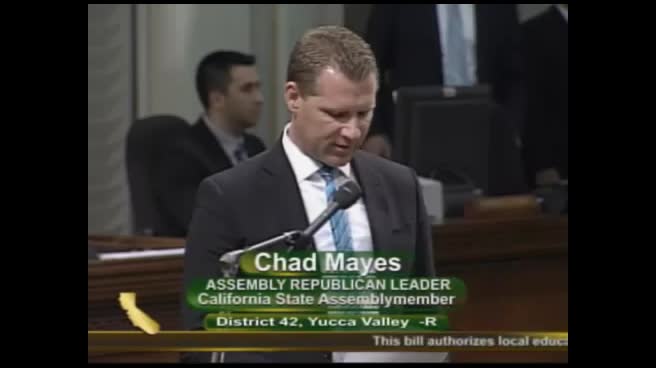 1MIN
Assembly Floor
 3MIN
Assembly Standing Committee on Appropriations
 10MIN
Assembly Standing Committee on Judiciary
Bill Author

Bill Co-Author(s):