AB 583: Emergency medical air transportation.
- Session Year: 2017-2018
- House: Assembly
- Latest Version Date: 2017-02-14
Under existing law, the Emergency Medical Air Transportation Act, a penalty of $4 is imposed upon every conviction for a violation of the Vehicle Code, or a local ordinance adopted pursuant to the Vehicle Code, other than a parking offense. Existing law requires the county or the court that imposed the fine to transfer the moneys collected pursuant to this act to the Emergency Medical Air Transportation Act Fund. Under existing law, the assessment of these penalties will terminate on January 1, 2018, and any moneys unexpended and unencumbered in the Emergency Medical Air Transportation Act Fund on June 30, 2019, will transfer to the General Fund. Existing law repeals the Emergency Medical Air Transportation Act on January 1, 2020.
This bill would extend the dates of the Emergency Medical Air Transportation Act, so that the assessment of the penalties will terminate commencing January 1, 2028, and any moneys unexpended and unencumbered in the Emergency Medical Air Transportation Act Fund on June 30, 2029, will transfer to the General Fund. The bill would extend the operation of the Emergency Medical Air Transportation Act until January 1, 2030.
The Legislature finds and declares all of the following:
(a)Emergency air medical services, also known as air ambulances, provide a valuable lifesaving service throughout California.
(b)Many emergency air transports originate in rural areas where ground transportation can take a long time. In some instances, however, emergency air transportation may be needed in urban areas where traffic congestion inhibits rapid transportation.
(c)Air ambulance service providers transport all emergency patients, without knowing if the patient has any form of medical insurance or the ability to pay for the service.
(d)Many emergency patients transported by air ambulances have no insurance and no ability to pay for the service, but these patients are given the same high-level care as those with medical insurance.
(e)The Medi-Cal program reimburses air ambulance service providers far below what it costs the providers to provide emergency air transportation and pays nothing if the patient is indigent and not eligible for Medi-Cal.
(f)The Medi-Cal reimbursement rates for air ambulance services has not increased in over 20 years.
(g)Air ambulances routinely respond to the scene of traffic accidents with severe injuries, most of which are a direct result of a motor vehicle violation.
(h)A minimal four-dollar additional penalty on motor vehicle violations has been in place to augment the Medi-Cal funding for air ambulance services since 2011, without undo hardship on the public or local governments.
(i)Air ambulance services play a key role in the statewide emergency medical services system, including disaster response and homeland security, so it is important for California to continue to support these vital services.
SEC. 2.Section 76000.10 of the Government Code is amended to read:76000.10.(a)This section shall be known, and may be cited, as the Emergency Medical Air Transportation Act.
(b)For purposes of this section:
(1)Department means the State Department of Health Care Services.
(2)Director means the Director of Health Care Services.
(3)Provider means a provider of emergency medical air transportation services.
(4)Rotary wing means a type of aircraft, commonly referred to as a helicopter, that generates lift through the use of wings, known as rotor blades, that revolve around a mast.
(5)Fixed wing means a type of aircraft, commonly referred to as an airplane, that generates lift through the use of the forward motion of the aircraft and wings that do not revolve around a mast but are fixed in relation to the fuselage of the aircraft.
(6)Air mileage rate means the per-mileage reimbursement rate paid for services rendered by rotary-wing and fixed-wing providers.
(c)(1)For purposes of implementing this section, a penalty of four dollars ($4) shall be imposed upon every conviction for a violation of the Vehicle Code or a local ordinance adopted pursuant to the Vehicle Code, except parking offenses subject to Article 3 (commencing with Section 40200) of Chapter 1 of Division 17 of the Vehicle Code.
(2)The penalty described in this subdivision shall be in addition to the state penalty assessed pursuant to Section 1464 of the Penal Code. However, this penalty shall not be included in the base fine used to calculate the state penalty assessment pursuant to subdivision (a) of Section 1464 of the Penal Code, the state surcharge levied pursuant to Section 1465.7 of the Penal Code, and the state court construction penalty pursuant to Section 70372 of this code, and to calculate the other additional penalties levied pursuant to this chapter.
(d)The county or the court that imposed the fine shall, in accordance with the procedures set out in Section 68101, transfer moneys collected pursuant to this section to the Treasurer for deposit into the Emergency Medical Air Transportation Act Fund, which is hereby established in the State Treasury. Notwithstanding Section 16305.7, the Emergency Medical Air Transportation Act Fund shall include interest and dividends earned on money in the fund.
(e)(1)The Emergency Medical Air Transportation Act Fund shall be administered by the State Department of Health Care Services. Moneys in the Emergency Medical Air Transportation Act Fund shall be made available, upon appropriation by the Legislature, to the department to be used as follows:
(A)For payment of the administrative costs of the department in administering this section.
(B)Twenty percent of the fund remaining after payment of administrative costs pursuant to subparagraph (A) shall be used to offset the state portion of the Medi-Cal reimbursement rate for emergency medical air transportation services.
(C)Eighty percent of the fund remaining after payment of administrative costs pursuant to subparagraph (A) shall be used to augment emergency medical air transportation reimbursement payments made through the Medi-Cal program, as set forth in paragraphs (2) and (3).
(2)(A)The department shall seek to obtain federal matching funds by using the moneys in the Emergency Medical Air Transportation Act Fund for the purpose of augmenting Medi-Cal reimbursement paid to emergency medical air transportation providers.
(B)The director shall do all of the following:
(i)By March 1, 2011, meet with medical air transportation providers to determine the most appropriate methodology to distribute the funds for medical air services.
(ii)Implement the methodology determined most appropriate in a timely manner.
(iii)Develop the methodology in collaboration with the medical air providers.
(iv)Submit any state plan amendments or waiver requests that may be necessary to implement this section.
(v)Submit any state plan amendment or waiver request that may be necessary to implement this section. (vi)(v)Seek federal approvals or waivers as may be necessary to implement this section and to obtain federal financial participation to the maximum extent possible for the payments under this section. If federal approvals are not received, moneys in the fund may be distributed pursuant to this section until federal approvals are received.
(C)The director may give great weight to the needs of the emergency medical air services providers, as discussed through the development of the methodology.
(3)(A)Upon appropriation by the Legislature, the department shall use moneys in the Emergency Medical Air Transportation Act Fund and any federal matching funds to increase the Medi-Cal reimbursement for emergency medical air transportation services in an amount not to exceed normal and customary charges charged by the providers.
(B)Notwithstanding any other law, and pursuant to this section, the department shall increase the Medi-Cal reimbursement for emergency medical air transportation services if both of the following conditions are met:
(i)Moneys in the Emergency Medical Air Transportation Act Fund will cover the cost of increased payments pursuant to subparagraph (A).
(ii)The state does not incur any General Fund expense to pay for the Medi-Cal emergency medical air transportation services increase.
(f)The assessment of penalties pursuant to this section shall terminate on January 1, 2018. 2028. Penalties assessed before January 1, 2018, 2028, shall continue to be collected, administered, and distributed pursuant to this section until exhausted or until June 30, 2019, 2029, whichever occurs first. On June 30, 2019, 2029, moneys remaining unexpended and unencumbered in the Emergency Medical Air Transportation Act Fund shall be transferred to the General Fund, to be available, upon appropriation by the Legislature, for the purposes of augmenting Medi-Cal reimbursement for emergency medical air transportation and related costs, generally.
(g)Notwithstanding the rulemaking provisions of Chapter 3.5 (commencing with Section 11340) of Part 1 of Division 3 of Title 2, the department may implement, interpret, or make specific this section and any applicable federal waivers and state plan amendments by means of all-county letters, plan letters, plan or provider bulletins, or similar instructions without taking regulatory action.
(h)This section shall remain in effect only until January 1, 2020, 2030, and as of that date is repealed, unless a later enacted statute, that is enacted before January 1, 2020, 2030, deletes or extends that date.
SEC. 3.Section 10752 of the Welfare and Institutions Code is amended to read:10752.The department shall, by March 1, 2017, in coordination with the Department of Finance, notify the Legislature of the fiscal impact on the Medi-Cal program resulting from, and the planned reimbursement methodology for emergency medical air transportation services after, the termination of penalty assessments pursuant to subdivision (f) of Section 76000.10 of the Government Code on January 1, 2018. 2028.
REVISIONS: HeadingLine 2.|
Date
|
Status
|
|---|---|
| Feb 1, 2018 | From committee: Filed with the Chief Clerk pursuant to Joint Rule 56. |
| Jan 31, 2018 | Died pursuant to Art. IV, Sec. 10(c) of the Constitution. |
| May 26, 2017 | In committee: Held under submission. |
| May 10, 2017 | In committee: Set, first hearing. Referred to APPR. suspense file. |
| Apr 19, 2017 | Coauthors revised. |
| Feb 27, 2017 | Referred to Com. on HEALTH. |
| Feb 15, 2017 | From printer. May be heard in committee March 17. |
| Feb 14, 2017 | Read first time. To print. |
|
Date
|
Description
|
Location
|
Votes
|
|
|---|---|---|---|---|
| Apr 18, 2017 | Do pass and be re-referred to the Committee on [Appropriations] | Assembly Standing Committee on Health |
Passed |
This list shows positions taken on this bill by organizations on the date displayed, which is linked to the original source.
Positions by individuals are not included.
Date of Hearing: May 10, 2017
ASSEMBLY COMMITTEE ON APPROPRIATIONS
Lorena Gonzalez Fletcher, Chair
ABPCA Bill Id:AB 583
Author:(Wood) – As Introduced Ver:February 14, 2017
Policy Committee: | Health | Vote: | 14 - 0 |
|
|
Urgency: No State Mandated Local Program: No Reimbursable: No
SUMMARY:
This bill extends the sunset date of the $4 penalty assessment for Vehicle Code violations, other than parking offenses, and related funding provisions, from January 1, 2018 to January 1, 2028, to continue raising revenues to augment funding for emergency medical air transportation Medi-Cal providers.
FISCAL EFFECT:
- Based on penalty revenues collected since 2013-14, between $8 and $10 million per year for an additional ten years, until 2028 (Emergency Medical Air Transportation Act Fund). Annual revenues fluctuate depending on the number of vehicle code violations that result in convictions, as well as other factors. The numbers below are based on an assumption of $8 million in annual revenue.
- Reduced GF expenditures of around $1.4 million per year for Medi-Cal payments, by using penalty revenues to offset GF expenditures for emergency air ambulance services for Medi-Cal beneficiaries. An administrative set-aside is also taken out of the total revenues each year.
- Annual expenditures of around $10.4 million per year for supplemental payments to private emergency air medical service providers (Emergency Medical Air Transportation Act Fund, matched 1:1 with federal funds).
COMMENTS:
- Purpose. The author indicates this bill is needed to extend supplemental Medi-Cal payments to emergency air transportation providers, who must provide access to everyone regardless of ability to pay. Without this bill, Medi-Cal reimbursement received by these providers would be cut substantially.
- Background. AB 2173 (Beall), Chapter 547, Statutes of 2010 (Emergency Medical Air Transportation Act), imposed an additional penalty of $4 upon every conviction involving a vehicle violation, except certain parking offenses, effective January 1, 2011. The bill required the county or court that imposed the fine to transfer the money to the Treasurer for deposit into the Emergency Air Medical Transportation Act (EMATA) Fund. After payment of the Department of Health Care Services’s administrative costs, 20% of the remaining EMATA funds are used to offset the State’s portion of the MediCal reimbursement rate for emergency medical air transportation services. The remaining 80% of the fund is matched with federal funds and used to augment funding for air medical transportation by providing supplemental payments.
- Penalty Assessments. In recent years, there has been increasing concern about the ever-growing burden of additional penalties, fines, and assessments applied to criminal and traffic convictions. The $4 penalty assessment that is the subject of this bill is one of numerous penalty assessments placed on traffic fines. Currently, a $100 traffic ticket becomes more than $500 when all the various assessments are included. In their analysis of the prior bill extending this assessment (SB 326 (Beall), Chapter 797, Statutes of 2015), the Department of Finance also noted concern with "traffic penalties as a funding mechanism for state programs, because these penalties place a financial burden on a narrow class of citizens for the costs of programs that should be properly borne by the public at large." The Lawyers' Committee for Civil Rights of the San Francisco Bay Area released a report in April 2015 titled "Not Just a Ferguson Problem: How Traffic Courts Drive Inequality in California" that recommends reforms to mitigate the harsh impact of traffic fines on low-income people, including reducing the burden of "exorbitant fines, fees, and assessments." The report points out that these fees perpetuate a cycle of poverty and inequality, given that low-income people are more likely to miss payments. When payments are missed, the report notes it results in a cycle of increasing fines and penalties, often culminating in suspension of drivers' licenses or even jail time for failure to pay, with concomitant poor labor market and social outcomes for these individuals.
- Prior Legislation. SB 326 (Beall), Chapter 797, Statutes of 2015 extended this assessment and program for two years. In that bill, the Legislature expressed findings that penalty assessments have been used to fund an increasing number of programs that should properly be funded by broad-based financing mechanisms and that high fines and assessments can perpetuate a cycle of poverty and inequality, given that individuals with lower incomes are more likely to miss payments and suffer the consequences. The Legislature also expressed the intent for the $4 penalty assessment that is the subject of this bill to terminate on January 1, 2018. To this end, the authorizing statute required the department to submit a funding plan for the air ambulance rates after the program and fee authorization terminates. Trailer bill legislation subsequently changed the required funding plan to a notification of the fiscal impact on the Medi-Cal program resulting from, and the planned reimbursement methodology for emergency medical air transportation services after, the termination of penalty assessments. This notification was submitted to the Legislature on April 11, 2017, and is described below.
- Department of Health Care Services (DHCS) Notification Letter. In their letter, DHCS indicates the current Medi-Cal fee-for-service rates are $1,800 and $1,200 for rotary and fixed-wing aircraft, respectively. The supplemental payments are added to the normal rates, and alone are more than double the normal rates: $4,310 and $3,053 for rotary and fixed-wing aircraft, respectively. Including federal matching funds, this program raised about $10.6 million for emergency air transportation supplemental payments in 2015-16. When the fee and program expires on January 1, 2018, the supplemental payment rates will be eliminated. The administration has not proposed an alternative payment rate nor to continue the assessment.
- LAO Report on Fine and Fee Revenue. A 2016 LAO review of the state's existing fine and fee structure identifies numerous problems. LAO finds it is difficult for the Legislature to control use of fine and fee revenues, and that revenue distributions are generally not based on need, among other issues. The LAO recommends reevaluating the overall structure of the fine and fee system, including defining goals and evaluating current programs funded by these revenues. LAO also recommends increasing legislative control over the use of criminal fine and fee revenue to ensure that its uses are in line with legislative priorities by: (1) requiring that most criminal fine and fee revenue be deposited in the state General Fund, (2) consolidating most fines and fees into a single, statewide charge, (3) evaluating the existing programs supported by fine and fee revenues, and (4) mitigating the impacts of potential changes to the fine and fee system on local governments.
- Staff Comment. Although the $4 assessment in this bill is a small percentage of the total amount of penalty assessments and surcharges, it is worth noting, as did the Legislative findings in the last extension of this assessment, the significant unintended consequences of the cumulative effect of these additional financial penalties for traffic and criminal violations.
Analysis Prepared by: Lisa Murawski / APPR. / (916) 319-2081
Date of Hearing: April 18, 2017
ASSEMBLY COMMITTEE ON HEALTH
Jim Wood, Chair
ABPCA Bill Id:AB 583
Author:(Wood) – As Introduced Ver:February 14, 2017
SUBJECT: Emergency medical air transportation.
SUMMARY: Extends the sunset date of the Emergency Medical Air Transportation Act (EMATA) to January 1, 2030; and, extends to January 1, 2028, the $4 assessment of penalties collected from every conviction for a violation of the Vehicle Code or local ordinance, other than a parking offense, to be used for purposes of EMATA.
EXISTING LAW:
- Establishes the Medi-Cal program administered by the Department of Health Care Services (DHCS), to provide comprehensive health benefits to low-income individuals who meet specified eligibility criteria.
- Establishes EMATA until January 1, 2020, to fund emergency medical transportation services, as specified.
- Imposes under EMATA a $4 penalty fee for every conviction for a violation of the Vehicle Code or local ordinance except for parking offenses, as specified. Sunsets this provision on January 1, 2018.
FISCAL EFFECT: This bill has not yet been analyzed by a fiscal committee.
COMMENTS:
- PURPOSE OF THIS BILL. According to the author, air ambulance services provide lifesaving emergency transportation for the most critical patients directly to trauma centers. In rural areas where emergencies happen far from treatment centers or in difficult to reach places, air ambulances are often the patient’s only hope. In addition, emergency helicopter air ambulance provides a critical link between rural areas and urban tertiary care hospitals (trauma centers, heart/stroke centers, burn units, etc.). Air ambulances are an essential part of the statewide emergency medical services system and play a key role in disaster response and homeland security.
The Medi-Cal fee schedule pays air ambulance services far below the cost of providing emergency air transportation, and pays nothing if the patient is indigent. Prior to EMATA, Medi-Cal funding for air ambulances had not increased for nearly 20 years. This bill will continue to provide critical funding to this essential lifesaving service, and will prevent funding for air ambulances from reverting back to 1993 levels. Currently, 80% of the funds are matched with federal dollars. Failure to pass this bill would cost the state $8 million in matching federal funds and reduce the Medi-Cal funding by approximately $2 million per year, both of which would need to be replaced with money from the General Fund (GF).
- BACKGROUND.
- EMATA. AB 2173 (Beall), Chapter 547, Statutes of 2010, levied an additional $4 penalty on Vehicle Code violations (excluding parking tickets). After payment of the DHCS administrative costs, 20% of the remaining EMATA funds will be used to offset the state’s portion of the Medi-Cal reimbursement rate for emergency medical air transportation services. The remaining 80% of the funds will be matched with federal funds and used to provide augmentation or supplemental payments for eligible Medi-Cal emergency medical air transportation services. The augmentation payment amount is per transport and calculated annually.
To be eligible for the supplemental payments, air medical transportation providers must:- Be actively enrolled as a Medi-Cal air transportation provider;
- Operate an aircraft that meets the definition of an “air ambulance,” and,
- Be certified by the Federal Aviation Agency to use the aircraft for the purpose of being an air medical transportation provider.
- EMATA. AB 2173 (Beall), Chapter 547, Statutes of 2010, levied an additional $4 penalty on Vehicle Code violations (excluding parking tickets). After payment of the DHCS administrative costs, 20% of the remaining EMATA funds will be used to offset the state’s portion of the Medi-Cal reimbursement rate for emergency medical air transportation services. The remaining 80% of the funds will be matched with federal funds and used to provide augmentation or supplemental payments for eligible Medi-Cal emergency medical air transportation services. The augmentation payment amount is per transport and calculated annually.
According to the DHCS, based on estimated fee collections, the estimated payments on a cash basis are:
(Dollars in Thousands)
FY 2016-17 | Total Funds | GF | EMATA | FFP* |
GF Offset | $0 | ($1,441) | $1,441 | $0 |
Augment Payment | 14,500 | $0 | $7,250 | $7250 |
Total | $14,500 | ($1,441) | $8,691 | $7,250 |
FY 2017-18 | Total Funds | GF | EMATA | FFP* |
GF Offset | $0 | ($1,538) | $11,538 | $0 |
Augment Payment | $11,000 | $0 | $5,500 | $5,500 |
Total | $11,000 | ($1,538) | $7,038 | $5,500 |
(*FFP: Federal Financial Participation)
- Vehicle Code violations. According to the Department of Motor Vehicles Internet Website, traffic fines in California are difficult to pinpoint due to additional penalty assessment fees and surcharges that vary by county. For example, a traffic ticket with a $35 base fine may actually cost $146. There is also a 20% surcharge on all traffic tickets. Additional fees include: state penalty assessment; county penalty assessment; court facility construction penalty assessment; DNA identification fund penalty assessment; and, Emergency Medical Services Penalty assessment.
- EMATA Report. SB 833 (Committee on Budget and Fiscal Review), Chapter 30, Statutes of 2016, required DHCS, in coordination with the Department of Finance, to notify the Legislature of the following: i) fiscal impact on the Medi-Cal program if the $4 penalty assessment is terminated; and, ii) the planned reimbursement methodology for emergency medical air transports after. On April 11, 2017, DHCS submitted a letter to the Legislature indicating that if the $4 penalty assessment is terminated, reimbursement for emergency medical air transports would return to the current Medi-Cal fee-for-service (FFS) rotary and fixed wing base rates of $1,800 and $1,200 respectively, which is significantly lower that what these providers receive with the penalty assessment. Below is an excerpt from the notification:
The Emergency Medical Air Transportation Act (EMATA) program provides an augmentation payment for eligible Medi-Cal Fee-For-Service (FFS) emergency medical air transports. The augmentation payments are funded by the $4 penalty assessment levied by the EMATA program, which is then deposited in to the EMATA Fund. After payment of the DHCS administrative cost, 20% of the remaining EMATA funds are used for the State's portion of the Medi-Cal reimbursement rate for emergency medical air transportation services.
For the 2015-16 Fiscal Year, the 20% used for the State's portion of costs totaled $2,322,000 and was transferred to the General Fund (GF). The remaining 80% is matched with Federal Funds (FF) and used to provide augmentation payments for eligible Medi-Cal emergency medical air transportation services. For FY 2015-16 augmentation payments were $10,633,000 Total Funds ($5,316,500 FF). DHCS develops two augmentation rates, one for rotary wing aircraft and another for fixed wing aircraft.
The 2015-16 Rate Year augmentation payment amounts were $4,310 for rotary wing and $3,053 for fixed wing transports. In FY 2015-16 there were 602 fixed wing and 1,993 rotary wing claims eligible for an augmentation payment. These augmentation payments are in addition to the current Medi-Cal FFS rotary and fixed wing base rates, which are $1,800 and $1,200 respectively.
- SUPPORT. The California Association of Air Medical Services, the sponsor of this bill, and the Rural County Representatives of California state that rural residents face significant geographical, environmental, and climatic barriers in accessing land-based emergency transportation services and access to air ambulance services is commonly a matter of life or death in rural areas. The California Hospital Association points out that air ambulance services are provided regardless of a patient’s ability to pay. Medi-Cal reimbursement for air ambulance services is far below the cost of providing it. Air ambulance providers do not receive disproportionate share of Maddy Emergency Medical Services and indigent funding. The California Fire Chiefs Association and the Fire Districts Association of California point out that 80% of EMATA funds are matched by federal funds and failure to enact this bill would cost the state over $8 million in matching funds.
- PREVIOUS LEGISLATION.
- SB 326 (Beall), Chapter 792, Statutes of 2015, extends the sunset date of EMATA to January 1, 2020 and the $4 penalty assessment for Vehicle Code violations other than parking offenses, until January 1, 2018. Requires DHCS to develop a funding plan that ensures adequate reimbursement to emergency medical air transportation providers following the termination of penalty assessments under this bill on January 1, 2018.
- AB 2173 establishes the EMATA until January 1, 2018, and the $4 penalty assessment until July 1, 2016.
REGISTERED SUPPORT / OPPOSITION:
Support
California Association of Air Medical Services (sponsor)
Air Methods
American Federation of State, County and Municipal Employees, AFL-CIO
American Legion Post 108
Avalon Health Care
California Chapter of the American College of Emergency Physicians
California Children's Hospital Association
California Fire Chiefs Association
California Hospital Association
Cal-Ore Life Flight
CALSTAR Air Ambulance
Care Flight
Critical Care Air Ambulance
Fire Districts Association of California
Manteca District Ambulance Service
Plumas District Hospital
REACH Air Medical Services
Rural County Representatives of California
San Andreas Fire District
Trinity Center Volunteer Fire Department
Trinity County Life Support
Trinity County Sheriff’s Office
Trinity Superior Court Marshal
Several individuals
Opposition
None on file.
Analysis Prepared by: Rosielyn Pulmano / HEALTH / (916) 319-2097
Discussed in Hearing
 1H
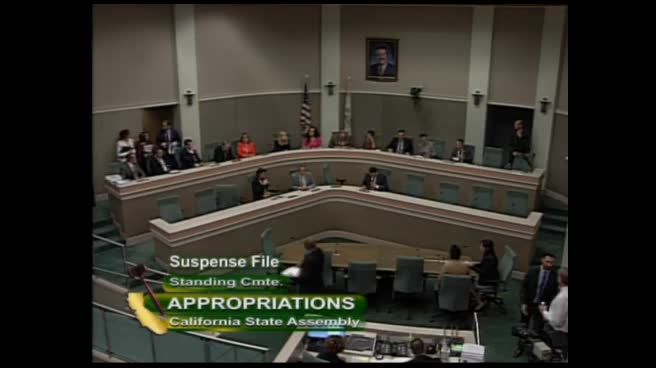
Assembly Standing Committee on Appropriations
 10MIN
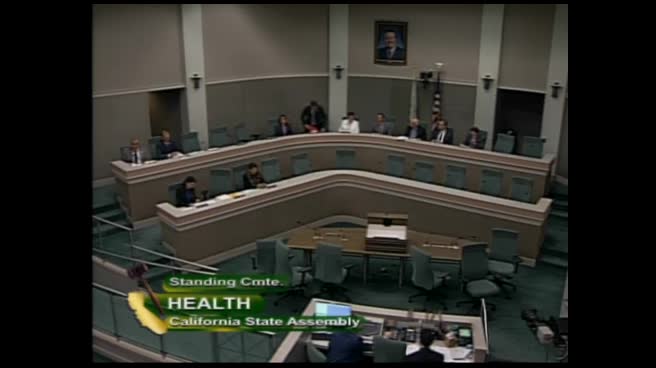
Assembly Standing Committee on Health
Bill Author