AB 595: Health care service plans: mergers and acquisitions.
- Session Year: 2017-2018
- House: Assembly
- Latest Version Date: 2018-09-07
Existing law, the Knox-Keene Health Care Service Plan Act of 1975, provides for the licensure and regulation of health care service plans by the Department of Managed Health Care and makes a willful violation of the act a crime. Existing law requires every nonprofit health care service plan applying to restructure, as defined, or convert its activities to secure the approval of the Director of the Department of Managed Health Care. Under existing law, a health care service plan is required to notify the director of any material modifications of its plan or operations, as specified.
This bill would require a health care service plan that intends to merge or consolidate with, or enter into an agreement resulting in its purchase, acquisition, or control by, any entity, as defined, including another health care service plan or a licensed health insurer, to give notice to, and secure prior approval from, the Director of the Department of Managed Health Care. The bill would require the health care service plan to meet specified requirements and to provide information necessary for the director to make the determination to approve, conditionally approve, or disapprove the transaction or agreement, as specified. The bill also would require the department, prior to approval, conditional approval, or denial of the proposed agreement or transaction, to hold a public meeting on the proposal and make specified findings. The bill would require the director to prepare a statement if the director determines that a material amount of the health care service plans assets are subject to merger, consolidation, acquisition, purchase, or control, as specified, and would require the department to make the statement available prior to the public meeting. The bill would authorize the director to give conditional approval for a transaction or agreement as described in the bill, under specified circumstances. The bill would deem any material modification filed by a health care service plan that is a transaction or agreement as described in the bill to be subject to specified fees and costs related to the approval, conditional approval, or disapproval process. Because a willful violation of the bills provisions applicable to a health care service plan would be a crime, it would impose a state-mandated local program.
The California Constitution requires the state to reimburse local agencies and school districts for certain costs mandated by the state. Statutory provisions establish procedures for making that reimbursement.
This bill would provide that no reimbursement is required by this act for a specified reason.
Existing law, the Knox-Keene Health Care Service Plan Act of 1975, provides for the licensure and regulation of health care service plans by the Department of Managed Health Care and makes a willful violation of the act a crime. Existing law requires every nonprofit health care service plan applying to restructure, as defined, or convert its activities to secure the approval of the Director of the Department of Managed Health Care. Under existing law, a health care service plan is required to notify the director of any material modifications of its plan or operations, as specified.
This bill would require a health care service plan that intends to merge or consolidate with, or enter into an agreement resulting in its purchase, acquisition, or control by, any entity, as defined, including another health care service plan or a licensed health insurer, to give notice to, and secure prior approval from, the Director of the Department of Managed Health Care. The bill would require the health care service plan to meet specified requirements and to provide information necessary for the director to make the determination to approve, conditionally approve, or disapprove the transaction or agreement, as specified. The bill also would require the department, prior to approval, conditional approval, or denial of the proposed agreement or transaction, to hold a public meeting on the proposal and make specified findings. The bill would require the director to prepare a statement if the director determines that a material amount of the health care service plans assets are subject to merger, consolidation, acquisition, purchase, or control, as specified, and would require the department to make the statement available prior to the public meeting. The bill would authorize the director to give conditional approval for a transaction or agreement as described in the bill, under specified circumstances. The bill would deem any material modification filed by a health care service plan that is a transaction or agreement as described in the bill to be subject to specified fees and costs related to the approval, conditional approval, or disapproval process. Because a willful violation of the bills provisions applicable to a health care service plan would be a crime, it would impose a state-mandated local program.
The California Constitution requires the state to reimburse local agencies and school districts for certain costs mandated by the state. Statutory provisions establish procedures for making that reimbursement.
This bill would provide that no reimbursement is required by this act for a specified reason.
Existing law, the Knox-Keene Health Care Service Plan Act of 1975, provides for the licensure and regulation of health care service plans by the Department of Managed Health Care and makes a willful violation of the act a crime. Existing law requires every nonprofit health care service plan applying to restructure, as defined, or convert its activities to secure the approval of the Director of the Department of Managed Health Care. Under existing law, a health care service plan is required to notify the director of any material modifications of its plan or operations, as specified.
This bill would require a health care service plan that intends to merge or consolidate with, or enter into an agreement resulting in its purchase, acquisition, or control by, any entity, as defined, including another health care service plan or a licensed health insurer, to give notice to, and secure prior approval from, the Director of the Department of Managed Health Care. The bill would require the health care service plan to meet specified requirements and to provide information necessary for the director to make the determination to approve, conditionally approve, or disapprove the transaction or agreement, as specified. The bill also would require the department, prior to approval, conditional approval, or denial of the proposed agreement or transaction, to hold a public meeting on the proposal and make specified findings. The bill would require the director to prepare a statement if the director determines that a material amount of the health care service plans assets are subject to merger, consolidation, acquisition, purchase, or control, as specified, and would require the department to make the statement available prior to the public meeting. The bill would authorize the director to give conditional approval for a transaction or agreement as described in the bill, under specified circumstances. The bill would deem any material modification filed by a health care service plan that is a transaction or agreement as described in the bill to be subject to specified fees and costs related to the approval, conditional approval, or disapproval process. Because a willful violation of the bills provisions applicable to a health care service plan would be a crime, it would impose a state-mandated local program.
The California Constitution requires the state to reimburse local agencies and school districts for certain costs mandated by the state. Statutory provisions establish procedures for making that reimbursement.
This bill would provide that no reimbursement is required by this act for a specified reason.
Existing law, the Knox-Keene Health Care Service Plan Act of 1975, provides for the licensure and regulation of health care service plans by the Department of Managed Health Care and makes a willful violation of the act a crime. Existing law requires every nonprofit health care service plan applying to restructure, as defined, or convert its activities to secure the approval of the Director of the Department of Managed Health Care. Under existing law, a health care service plan is required to notify the director of any material modifications of its plan or operations, as specified.
This bill would require a health care service plan that intends to merge or consolidate with, or enter into an agreement resulting in its purchase, acquisition, or control by, any entity, as defined, including another health care service plan or a licensed health insurer, to give notice to, and secure prior approval from, the Director of the Department of Managed Health Care. The bill would require the health care service plan to meet specified requirements and to provide information necessary for the director to make the determination to approve, conditionally approve, or disapprove the transaction or agreement, as specified. The bill also would authorize require the department, prior to approval, conditional approval, or denial of the proposed agreement or transaction, to hold a public hearing meeting on the proposal and make specified findings. The bill would require the director to prepare an independent health care impact a statement if the director determines that a material amount of the health care service plans assets are subject to merger, consolidation, acquisition, purchase, or control, as specified. specified, and would require the department to make the statement available prior to the public meeting. The bill would authorize the director to give conditional approval for a transaction or agreement as described in the bill, under specified circumstances. The bill would deem any material modification filed by a health care service plan that is a transaction or agreement as described in the bill to be subject to specified fees and costs related to the approval, conditional approval, or disapproval process. Because a willful violation of the bills provisions applicable to a health care service plan would be a crime, it would impose a state-mandated local program.
The California Constitution requires the state to reimburse local agencies and school districts for certain costs mandated by the state. Statutory provisions establish procedures for making that reimbursement.
This bill would provide that no reimbursement is required by this act for a specified reason.
Existing law, the Knox-Keene Health Care Service Plan Act of 1975, provides for the licensure and regulation of health care service plans by the Department of Managed Health Care and makes a willful violation of the act a crime. Existing law requires every nonprofit health care service plan applying to restructure, as defined, or convert its activities to secure the approval of the Director of the Department of Managed Health Care. Under existing law, a health care service plan is required to notify the director of any material modifications of its plan or operations, as specified.
This bill would require specified entities that intend to merge with, consolidate, acquire, purchase, or control, directly or indirectly, a health care service plan doing business in this state a health care service plan that intends to merge or consolidate with, or enter into an agreement resulting in its purchase, acquisition, or control by, any entity, as defined, including another health care service plan or a licensed health insurer, to give notice to, and secure prior approval from, the Director of the Department of Managed Health Care. The bill would require that entity to apply for licensure as a health care service plan. the health care service plan to meet specified requirements and to provide information necessary for the director to make the determination to approve, conditionally approve, or disapprove the transaction or agreement, as specified. The bill also would require authorize the department, prior to approval, conditional approval, or denial of the proposed agreement or transaction, to hold a public hearing on the proposal and make specified findings. The bill would require the department director to prepare an independent health care impact statement if the director determines that a material amount of the health care service plans assets are subject to merger, consolidation, acquisition, purchase, or control, as specified. The bill would authorize the director to give conditional approval for a transaction or agreement as described in the bill, under specified circumstances. The bill would deem any material modification filed by a health care service plan that is a transaction or agreement as described in the bill to be subject to specified fees and costs related to the approval, conditional approval, or disapproval process. Because a willful violation of the bills provisions applicable to a health care service plan would be a crime, it would impose a state-mandated local program.
The California Constitution requires the state to reimburse local agencies and school districts for certain costs mandated by the state. Statutory provisions establish procedures for making that reimbursement.
This bill would provide that no reimbursement is required by this act for a specified reason.
Existing law, the Knox-Keene Health Care Service Plan Act of 1975, provides for the licensure and regulation of health care service plans by the Department of Managed Health Care and makes a willful violation of the act a crime. Existing law requires every nonprofit health care service plan applying to restructure, as defined, or convert its activities to secure the approval of the Director of the Department of Managed Health Care. Under existing law, a health care service plan is required to notify the director of any material modifications of its plan or operations, as specified.
This bill would require specified entities that intend to merge with, consolidate, acquire, purchase, or control, directly or indirectly, a health care service plan doing business in this state to give notice to, and secure the prior approval from, the Director of the Department of Managed Health Care. The bill would require that entity to apply for licensure as a health care service plan. The bill also would require the department, prior to approval, conditional approval, or denial of the proposed agreement or transaction, to hold a public hearing on the proposal and make specified findings. The bill would require the department to prepare an independent health care impact statement if the director determines that a material amount of the health care service plans assets are subject to merger, consolidation, acquisition, purchase, or control, as specified. The bill would authorize the director to give conditional approval for a transaction or agreement as described in the bill, under specified circumstances. Because a willful violation of the bills provisions applicable to a health care service plan would be a crime, it would impose a state-mandated local program.
Existing law provides for the regulation of insurers, including health insurers, by the Insurance Commissioner. The Insurance Holding Company System Regulatory Act requires, among other provisions, each insurer that is authorized to do business in this state and that is a member of an insurance holding company system to register with the commissioner and to file a registration statement containing specified information. The act also prohibits a person from making a tender offer for, or a request or invitation for tenders of, or from entering into an agreement to exchange securities for or acquire in the open market, any voting security, or any security convertible into a voting security, of a domestic insurer or of any other person controlling a domestic insurer, if the other person is not substantially engaged in any businesses other than insurance, if that would result in the person acquiring control of the insurer. The act also prohibits a person from entering into an agreement to merge with or otherwise acquire control of a domestic insurer unless specified conditions are met.This bill would require any entity that intends to merge with, consolidate, acquire, purchase, or control, directly or indirectly, any insurer engaged in the business of health insurance and doing business in California to give notice to, and secure prior approval from, the commissioner. The bill would specify that an insurer domiciled or commercially domiciled in California additionally would be subject to the requirements of the Insurance Holding Company System Regulatory Act, if applicable. The bill also would require the department, prior to approval, conditional approval, or denial of the proposed transaction or agreement, to hold a public hearing on the proposal and make specified findings. The bill would require the commissioner to prepare an independent health care impact statement if the commissioner determines that a material amount of the insurers assets are subject to merger, consolidation, acquisition, purchase, or control, as specified. The bill would authorize the commissioner to give conditional approval for a transaction or agreement as described in the bill, under specified circumstances.The California Constitution requires the state to reimburse local agencies and school districts for certain costs mandated by the state. Statutory provisions establish procedures for making that reimbursement.
This bill would provide that no reimbursement is required by this act for a specified reason.
Existing law, the Knox-Keene Health Care Service Plan Act of 1975, provides for the licensure and regulation of health care service plans by the Department of Managed Health Care and makes a willful violation of the act a crime. Existing law requires every nonprofit health care service plan applying to restructure, as defined, or convert its activities to secure the approval of the Director of the Department of Managed Health Care. Under existing law, a health care service plan is required to notify the director of any material modifications of its plan or operations, as specified.
This bill would require specified entities that intend to merge with, consolidate, acquire, purchase, or control, directly or indirectly, a health care service plan doing business in this state to give notice to, and secure the prior approval from, the Director of the Department of Managed Health Care. The bill would require that entity to apply for licensure as a health care service plan. The bill also would require the department, prior to approval, conditional approval, or denial of the proposed agreement or transaction, to hold a public hearing on the proposal and make specified findings. The bill would require the department to prepare an independent health care impact statement if the director determines that a material amount of the health care service plans assets are subject to merger, consolidation, acquisition, purchase, or control, as specified. The bill would authorize the director to give conditional approval for a transaction or agreement as described in the bill, under specified circumstances. Because a willful violation of the bills provisions applicable to a health care service plan would be a crime, it would impose a state-mandated local program.
Existing law provides for the regulation of insurers, including health insurers, by the Insurance Commissioner. The Insurance Holding Company System Regulatory Act requires, among other provisions, each insurer that is authorized to do business in this state and that is a member of an insurance holding company system to register with the commissioner and to file a registration statement containing specified information. The act also prohibits a person from making a tender offer for, or a request or invitation for tenders of, or from entering into an agreement to exchange securities for or acquire in the open market, any voting security, or any security convertible into a voting security, of a domestic insurer or of any other person controlling a domestic insurer, if the other person is not substantially engaged in any businesses other than insurance, if that would result in the person acquiring control of the insurer. The act also prohibits a person from entering into an agreement to merge with or otherwise acquire control of a domestic insurer unless specified conditions are met.
This bill would require any entity that intends to merge with, consolidate, acquire, purchase, or control, directly or indirectly, any insurer engaged in the business of health insurance and doing business in California to give notice to, and secure prior approval from, the commissioner. The bill would specify that an insurer domiciled or commercially domiciled in California additionally would be subject to the requirements of the Insurance Holding Company System Regulatory Act, if applicable. The bill also would require the department, prior to approval, conditional approval, or denial of the proposed transaction or agreement, to hold a public hearing on the proposal and make specified findings. The bill would require the commissioner to prepare an independent health care impact statement if the commissioner determines that a material amount of the insurers assets are subject to merger, consolidation, acquisition, purchase, or control, as specified. The bill would authorize the commissioner to give conditional approval for a transaction or agreement as described in the bill, under specified circumstances.
The California Constitution requires the state to reimburse local agencies and school districts for certain costs mandated by the state. Statutory provisions establish procedures for making that reimbursement.
This bill would provide that no reimbursement is required by this act for a specified reason.
(a)(1)A health care service plan that intends to merge or consolidate with, or enter into an agreement resulting in its purchase, acquisition, or control by, any entity, including another health care service plan or a health insurer licensed under the Insurance Code, shall give notice to, and secure prior approval from, the director.
(2)The transactions or agreements described in paragraph (1) may not be completed until the director approves the transaction or agreement.
(3)A health care service plan described in paragraph (1) shall meet all of the requirements of this chapter. The health care service plan shall file all the information necessary for the director to make the determination to approve, conditionally approve, or disapprove the transaction or agreement described in paragraph (1), including, but not limited to, a complete description of the proposed transaction or agreement, any modified exhibits for plan licensure pursuant to Section 1351, any approvals by federal or other state agencies required for the transaction or agreement, and any supporting documentation required by the director.
(4)The director may conditionally approve the transaction or agreement, contingent upon the health care service plans agreement to fulfill one or more conditions to benefit subscribers and enrollees of the health care service plan, provide for a stable health care delivery system, and impose other conditions specific to the transaction or agreement in furtherance of this chapter. The director shall engage stakeholders in determining the measures for improvement. For a major transaction or agreement, the director shall obtain an independent analysis of the impact of the transaction or agreement on subscribers and enrollees, the stability of the health care delivery system, and other relevant provisions of this chapter. For any other transaction or agreement, the director may obtain an independent analysis consistent with this paragraph.
(5)If an entity involved in the transaction or agreement is a nonprofit corporation described in Section 5046 of the Corporations Code, the health care service plan shall file all the information required by Article 11 (commencing with Section 1399.70).
(b)In addition to any grounds for disapproval as a result of information provided by a health care service plan pursuant to paragraph (3) of subdivision (a), the director may disapprove the transaction or agreement if the director finds the transaction or agreement would substantially lessen competition in health care service plan products or create a monopoly in this state, including, but not limited to, health coverage products for a specific line of business. In making this finding, the director may obtain an opinion from a consultant or consultants with the expertise to assess the competitive impact of the transaction or agreement.
(c)Prior to approving, conditionally approving, or disapproving a major transaction or agreement, the department shall hold a public meeting on the proposed transaction or agreement. For any other transaction or agreement, the department may hold a public meeting on the proposed transaction or agreement. The public meeting shall be conducted pursuant to the Bagley-Keene Open Meeting Act (Article 9 (commencing with Section 11120) of Chapter 1 of Part 1 of Division 3 of Title 2 of the Government Code). The meeting shall permit the parties to the proposed transaction and members of the public to provide written and verbal comments regarding the proposed transaction. If a substantive change in the proposed transaction or agreement is submitted to the director after the initial public meeting, the director may conduct an additional public meeting to hear comments from interested parties with respect to that change. The director shall consider the testimony and comments received at the public meeting in making the determination to approve, conditionally approve, or disapprove the transaction or agreement.
(d)If the director determines a material amount of assets of a health care service plan is subject to purchase, acquisition, or control, the director shall prepare a statement describing the proposed transaction or agreement subject to subdivision (a) and make it available to the public. The statement shall be made available before the public meeting.
(e)This section does not limit the authority of the director to enforce any other provision of this chapter.
(f)For purposes of this section, entity means a health care service plan, an individual, a corporation, a limited liability company, a partnership, an association, a joint stock company, a business trust, an unincorporated organization, any similar entity, or any combination thereof acting in concert.
(g)(1)For purposes of this section, major transaction or agreement means a transaction or agreement that meets any of the following criteria:
(A)Affects a significant number of enrollees.
(B)Involves a material amount of assets.
(C)Adversely affects either the subscribers or enrollees or the stability of the health care delivery system because of the entitys market position, including, but not limited to, the entitys market exit from a market segment or the entitys dominance of a market segment.
(2)The director shall, upon request, make available to the public his or her determination of whether a transaction or agreement meets the criteria set forth in this subdivision.
1399.66.(a) Notwithstanding subdivision (d) of Section 1352, a health care service plan that files a material modification that is a transaction or agreement described in subdivision (a) of Section 1399.65 shall be subject to the same fees required by subdivision (a) of Section 1356.
(b)(1)In addition to paying the fees described in subdivision (a), the health care service plan shall reimburse the director for the reasonable costs of all of the following:
(A)The independent analysis described in paragraph (4) of subdivision (a) of Section 1399.65.
(B)The opinion described in subdivision (b) of Section 1399.65.
(C)The public meeting described in subdivision (c)
(D)The statement described in subdivision (d) of Section 1399.65.
(2)The reimbursement required by this subdivision shall be irrespective of the directors approval, conditional approval, or disapproval of the transaction or agreement described in subdivision (a) of Section 1399.65.
(3)If a transaction described in subdivision (a) of Section 1399.65 involves two health care service plans, the director shall determine whether the reimbursement requirements of this subdivision apply to one or both of the plans.
SEC. 2.No reimbursement is required by this act pursuant to Section 6 of Article XIIIB of the California Constitution because the only costs that may be incurred by a local agency or school district will be incurred because this act creates a new crime or infraction, eliminates a crime or infraction, or changes the penalty for a crime or infraction, within the meaning of Section 17556 of the Government Code, or changes the definition of a crime within the meaning of Section 6 of Article XIIIB of the California Constitution.
(a)(1)A health care service plan that intends to merge or consolidate with, or enter into an agreement resulting in its purchase, acquisition, or control by, any entity, including another health care service plan or a health insurer licensed under the Insurance Code, shall give notice to, and secure prior approval from, the director.
(2)The transactions or agreements described in paragraph (1) may not be completed until the director approves the transaction or agreement.
(3)A health care service plan described in paragraph (1) shall meet all of the requirements of this chapter. The health care service plan shall file all the information necessary for the director to make the determination to approve, conditionally approve, or disapprove the transaction or agreement described in paragraph (1), including, but not limited to, a complete description of the proposed transaction or agreement, any modified exhibits for plan licensure pursuant to Section 1351, any approvals by federal or other state agencies required for the transaction or agreement, and any supporting documentation required by the director.
(4)The director may conditionally approve the transaction or agreement, contingent upon the health care service plans agreement to fulfill one or more conditions to benefit subscribers and enrollees of the health care service plan, provide for a stable health care delivery system, and impose other conditions specific to the transaction or agreement in furtherance of this chapter. The director shall engage stakeholders in determining the measures for improvement. For a major transaction or agreement, the director shall obtain an independent analysis of the impact of the transaction or agreement on subscribers and enrollees, the stability of the health care delivery system, and other relevant provisions of this chapter. For any other transaction or agreement, the director may obtain an independent analysis consistent with this paragraph.
(5)If an entity involved in the transaction or agreement is a nonprofit corporation described in Section 5046 of the Corporations Code, the health care service plan shall file all the information required by Article 11 (commencing with Section 1399.70).
(b)In addition to any grounds for disapproval as a result of information provided by a health care service plan pursuant to paragraph (3) of subdivision (a), the director may disapprove the transaction or agreement if the director finds the transaction or agreement would substantially lessen competition in health care service plan products or create a monopoly in this state, including, but not limited to, health coverage products for a specific line of business. In making this finding, the director may obtain an opinion from a consultant or consultants with the expertise to assess the competitive impact of the transaction or agreement.
(c)Prior to approving, conditionally approving, or disapproving a major transaction or agreement, the department shall hold a public meeting on the proposed transaction or agreement. For any other transaction or agreement, the department may hold a public meeting on the proposed transaction or agreement. The public meeting shall be conducted pursuant to the Bagley-Keene Open Meeting Act (Article 9 (commencing with Section 11120) of Chapter 1 of Part 1 of Division 3 of Title 2 of the Government Code). The meeting shall permit the parties to the proposed transaction and members of the public to provide written and verbal comments regarding the proposed transaction. If a substantive change in the proposed transaction or agreement is submitted to the director after the initial public meeting, the director may conduct an additional public meeting to hear comments from interested parties with respect to that change. The director shall consider the testimony and comments received at the public meeting in making the determination to approve, conditionally approve, or disapprove the transaction or agreement.
(d)If the director determines a material amount of assets of a health care service plan is subject to purchase, acquisition, or control, the director shall prepare a statement describing the proposed transaction or agreement subject to subdivision (a) and make it available to the public. The statement shall be made available before the public meeting.
(e)This section does not limit the authority of the director to enforce any other provision of this chapter.
(f)For purposes of this section, entity means a health care service plan, an individual, a corporation, a limited liability company, a partnership, an association, a joint stock company, a business trust, an unincorporated organization, any similar entity, or any combination thereof acting in concert.
(g)(1)For purposes of this section, major transaction or agreement means a transaction or agreement that meets any of the following criteria:
(A)Affects a significant number of enrollees.
(B)Involves a material amount of assets.
(C)Adversely affects either the subscribers or enrollees or the stability of the health care delivery system because of the entitys market position, including, but not limited to, the entitys market exit from a market segment or the entitys dominance of a market segment.
(2)The director shall, upon request, make available to the public his or her determination of whether a transaction or agreement meets the criteria set forth in this subdivision.
1399.66.(a) Notwithstanding subdivision (d) of Section 1352, a health care service plan that files a material modification that is a transaction or agreement described in subdivision (a) of Section 1399.65 shall be subject to the same fees required by subdivision (a) of Section 1356.
(b)(1)In addition to paying the fees described in subdivision (a), the health care service plan shall reimburse the director for the reasonable costs of all of the following:
(A)The independent analysis described in paragraph (4) of subdivision (a) of Section 1399.65.
(B)The opinion described in subdivision (b) of Section 1399.65.
(C)The public meeting described in subdivision (c)
(D)The statement described in subdivision (d) of Section 1399.65.
(2)The reimbursement required by this subdivision shall be irrespective of the directors approval, conditional approval, or disapproval of the transaction or agreement described in subdivision (a) of Section 1399.65.
(3)If a transaction described in subdivision (a) of Section 1399.65 involves two health care service plans, the director shall determine whether the reimbursement requirements of this subdivision apply to one or both of the plans.
SEC. 2.No reimbursement is required by this act pursuant to Section 6 of Article XIIIB of the California Constitution because the only costs that may be incurred by a local agency or school district will be incurred because this act creates a new crime or infraction, eliminates a crime or infraction, or changes the penalty for a crime or infraction, within the meaning of Section 17556 of the Government Code, or changes the definition of a crime within the meaning of Section 6 of Article XIIIB of the California Constitution.
(a)(1)A health care service plan that intends to merge or consolidate with, or enter into an agreement resulting in its purchase, acquisition, or control by, any entity, including another health care service plan or a health insurer licensed under the Insurance Code, shall give notice to, and secure prior approval from, the director.
(2)The transactions or agreements described in paragraph (1) may not be made completed until the director approves the transaction or agreement.
(3)A health care service plan described in paragraph (1) shall meet all of the requirements of this chapter. The health care service plan shall file all the information necessary for the director to make the determination to approve, conditionally approve, or disapprove the transaction or agreement described in paragraph (1), including, but not limited to, a complete description of the proposed transaction or agreement, any modified exhibits for plan licensure pursuant to Section 1351, any approvals by federal or other state agencies required for the transaction or agreement, and any supporting documentation required by the director.
(4)The director may conditionally approve the transaction or agreement, contingent upon the health care service plans agreement to fulfill one or more conditions to benefit subscribers and enrollees of the health care service plan, provide for a stable health care delivery system, and impose other conditions specific to the transaction or agreement in furtherance of this chapter. The director shall engage stakeholders in determining the measures for improvement. The For a major transaction or agreement, the director shall obtain an independent analysis of the impact of the transaction or agreement on subscribers and enrollees, the stability of the health care delivery system, and other relevant provisions of this chapter. For any other transaction or agreement, the director may obtain an independent analysis consistent with this paragraph.
(5)If an entity involved in the transaction or agreement is a nonprofit corporation described in Section 5046 of the Corporations Code, the health care service plan shall file all the information required by Article 11 (commencing with Section 1399.70).
(b)In addition to any grounds for disapproval as a result of information provided by a health care service plan pursuant to paragraph (3) of subdivision (a), the director may disapprove the transaction or agreement if the director finds the transaction or agreement would substantially lessen competition in health care service plan products or create a monopoly in this state, including, but not limited to, health coverage products for a specific line of business. In making this finding, the director may obtain an opinion from a consultant or consultants with the expertise to assess the competitive impact of the transaction or agreement.
(c)Prior to approving, conditionally approving, or disapproving the transaction or agreement described in subdivision (a), a major transaction or agreement, the department shall hold a public meeting on the proposed transaction or agreement. For any other transaction or agreement, the department may hold a public meeting on the proposed transaction or agreement. The public meeting shall be conducted pursuant to the Bagley-Keene Open Meeting Act (Article 9 (commencing with Section 11120) of Chapter 1 of Part 1 of Division 3 of Title 2 of the Government Code). The meeting shall permit the parties to the proposed transaction and members of the public to provide written and verbal comments regarding the proposed transaction. If a substantive change in the proposed agreement or transaction or agreement is submitted to the director after the initial public meeting, the director may conduct an additional public meeting to hear comments from interested parties with respect to that change. The director shall consider the testimony and comments received at the public meeting in making the determination to approve, conditionally approve, or disapprove the transaction or agreement.
(d)If the director determines a material amount of assets of a health care service plan is subject to purchase, acquisition, or control, the director shall prepare a statement describing the proposed transaction or agreement subject to subdivision (a) and make it available to the public. The statement shall be made available before the public meeting.
(e)This section does not limit the authority of the director to enforce any other provision of this chapter.
(f)For purposes of this section, entity means a health care service plan, an individual, a corporation, a limited liability company, a partnership, an association, a joint stock company, a business trust, an unincorporated organization, any similar entity, or any combination thereof acting in concert.
(g)(1)For purposes of this section, major transaction or agreement means a transaction or agreement that meets any of the following criteria:
(A)Affects a significant number of enrollees.
(B)Involves a material amount of assets.
(C)Adversely affects either the subscribers or enrollees or the stability of the health care delivery system because of the entitys market position, including, but not limited to, the entitys market exit from a market segment or the entitys dominance of a market segment.
(2)The director shall, upon request, make available to the public his or her determination of whether a transaction or agreement meets the criteria set forth in this subdivision.
1399.66.(a) Notwithstanding subdivision (d) of Section 1352, a health care service plan that files a material modification that is a transaction or agreement described in subdivision (a) of Section 1399.65 shall be subject to the same fees required by subdivision (a) of Section 1356.
(b)(1)In addition to paying the fees described in subdivision (a), the health care service plan shall reimburse the director for the reasonable costs of the opinion all of the following:
(A)The independent analysis described in paragraph (4) of subdivision (a) of Section 1399.65.
(B)The opinion described in subdivision (b) of, the public of Section 1399.65.
(C)The public meeting described in subdivision (c) of, and the statement
(D)The statement described in subdivision (d) of, of Section 1399.65. The
(2)The reimbursement required by this subdivision shall be irrespective of the directors approval, conditional approval, or disapproval of the transaction or agreement described in subdivision (a) of Section 1399.65.
(2)(3)If a transaction described in subdivision (a) of Section 1399.65 involves two health care service plans, the director shall determine whether the reimbursement requirements of this subdivision apply to one or both of the plans.
SEC. 2.No reimbursement is required by this act pursuant to Section 6 of Article XIIIB of the California Constitution because the only costs that may be incurred by a local agency or school district will be incurred because this act creates a new crime or infraction, eliminates a crime or infraction, or changes the penalty for a crime or infraction, within the meaning of Section 17556 of the Government Code, or changes the definition of a crime within the meaning of Section 6 of Article XIIIB of the California Constitution.
(a)(1)A health care service plan that intends to merge or consolidate with, or enter into an agreement resulting in its purchase, acquisition, or control by, any entity, including another health care service plan or a health insurer licensed under the Insurance Code, shall give notice to, and secure prior approval from, the director.
(2)The purchases, exchanges, mergers, or other acquisitions of control transactions or agreements described in paragraph (1) may not be made until the director approves the purchases, exchanges, mergers, or other acquisitions of control. transaction or agreement.
(3)A health care service plan described in paragraph (1) shall meet all of the requirements of this chapter. The health care service plan shall file all the information necessary for the director to make the determination to approve, conditionally approve, or disapprove the transaction or agreement described in paragraph (1), including, but not limited to, a complete description of the proposed transaction, transaction or agreement, any modified exhibits for plan licensure pursuant to Section 1351, any approvals by federal or other state agencies required for the transaction, transaction or agreement, and any supporting documentation required by the director.
(4)The director may conditionally approve the transaction or agreement, contingent upon the health care service plans agreement to fulfill one or more conditions to benefit subscribers and enrollees of the health care service plan or plan, provide for a stable health care delivery system. The conditions shall require a health care service plan to improve quality and reduce health disparities. system, and impose other conditions specific to the transaction or agreement in furtherance of this chapter. The director shall engage stakeholders in determining the measures for improvement. The director shall obtain an independent analysis of the impact of the transaction or agreement on subscribers and enrollees, the stability of the health care delivery system, and other relevant provisions of this chapter.
(5)If an entity involved in the transaction or agreement is a nonprofit corporation described in Section 5046 of the Corporations Code, the health care service plan shall file all the information required by Article 11 (commencing with Section 1399.70).
(b)In addition to any grounds for disapproval as a result of information provided by a health care service plan pursuant to paragraph (3) of subdivision (a), the director may disapprove the transaction or agreement if the director finds the purchases, exchanges, mergers, or other acquisitions of control transaction or agreement would substantially lessen competition in health care service plan products or create a monopoly in this state, including, but not limited to, health coverage products for a specific line of business. In making this finding, the director may obtain an opinion from a consultant or consultants with the expertise to assess the competitive impact of the transaction. transaction or agreement.
(c)Prior to approving, conditionally approving, or disapproving the transaction or agreement described in subdivision (a), the department may shall hold a public meeting on the proposed transaction. transaction or agreement. The public meeting shall be conducted pursuant to the Bagley-Keene Open Meeting Act (Article 9 (commencing with Section 11120) of Chapter 1 of Part 1 of Division 3 of Title 2 of the Government Code). The meeting shall permit the parties to the proposed transaction and members of the public to provide written and verbal comments regarding the proposed transaction. If a substantive change in the proposed agreement or transaction is submitted to the director after the initial public meeting, the director may conduct an additional public meeting to hear comments from interested parties with respect to that change. The director shall consider the testimony and comments received at the public meeting in making the determination to approve, conditionally approve, or disapprove the transaction. transaction or agreement.
(d)If the director determines a material amount of assets of a health care service plan is subject to purchase, acquisition, or control, the director shall prepare an independent health care impact statement a statement describing the proposed transaction or agreement subject to subdivision (a) and make it available to the public. If the department holds a public meeting pursuant to subdivision (c), the health care impact statement shall be made available at least 30 days The statement shall be made available before the public meeting.
(e)This section does not limit the authority of the director to enforce any other provision of this chapter.
(f)For purposes of this section, entity means a health care service plan, an individual, a corporation, a limited liability company, a partnership, an association, a joint stock company, a business trust, an unincorporated organization, any similar entity, or any combination thereof acting in concert.
1399.66.(a) Notwithstanding subdivision (d) of Section 1352, a health care service plan that files a material modification that is a transaction or agreement described in subdivision (a) of Section 1399.65 shall be subject to the same fees required by subdivision (a) of Section 1356.
(b)(1)In addition to paying the fees described in subdivision (a), the health care service plan shall reimburse the director for the reasonable costs of the opinion described in subdivision (b) of, the public meeting described in subdivision (c) of, and the independent health care impact statement described in subdivision (d) of, Section 1399.65. The reimbursement required by this subdivision shall be irrespective of the directors approval, conditional approval, or disapproval of the transaction or agreement described in subdivision (a) of Section 1399.65.
(2)If a transaction described in subdivision (a) of Section 1399.65 involves two health care service plans, the director shall determine whether the reimbursement requirements of this subdivision apply to one or both of the plans.
SEC. 2.No reimbursement is required by this act pursuant to Section 6 of Article XIIIB of the California Constitution because the only costs that may be incurred by a local agency or school district will be incurred because this act creates a new crime or infraction, eliminates a crime or infraction, or changes the penalty for a crime or infraction, within the meaning of Section 17556 of the Government Code, or changes the definition of a crime within the meaning of Section 6 of Article XIIIB of the California Constitution.
(a)(1)A health care service plan that intends to merge or consolidate with, or enter into an agreement resulting in its purchase, acquisition, or control by, any entity, including another health care service plan or a health insurer licensed under the Insurance Code, shall give notice to, and secure prior approval from, the director.
(2)The purchases, exchanges, mergers, or other acquisitions of control may not be made until the director approves the purchases, exchanges, mergers, or other acquisitions of control.
(3)A health care service plan described in paragraph (1) shall meet all of the requirements of this chapter. The health care service plan shall file all the information necessary for the director to make the determination to approve, conditionally approve, or disapprove the transaction or agreement described in paragraph (1), including, but not limited to, a complete description of the proposed transaction, any modified exhibits for plan licensure pursuant to Section 1351, any approvals by federal or other state agencies required for the transaction, and any supporting documentation required by the director.
(4)The director may conditionally approve the transaction or agreement, contingent upon the health care service plans agreement to fulfill one or more conditions to benefit subscribers and enrollees of the health care service plan or provide for a stable health care delivery system. The conditions shall require a health care service plan to improve quality and reduce health disparities. The director shall engage stakeholders in determining the measures for improvement.
(5)If an entity involved in the transaction is a nonprofit corporation described in Section 5046 of the Corporations Code, the health care service plan shall file all the information required by Article 11 (commencing with Section 1399.70).
(b)In addition to any grounds for disapproval as a result of information provided by a health care service plan pursuant to paragraph (3) of subdivision (a), the director may disapprove the transaction or agreement if the director finds the purchases, exchanges, mergers, or other acquisitions of control would substantially lessen competition in health care service plan products or create a monopoly in this state, including, but not limited to, health coverage products for a specific line of business. In making this finding, the director may obtain an opinion from a consultant or consultants with the expertise to assess the competitive impact of the transaction.
(c)Prior to approving, conditionally approving, or disapproving the transaction or agreement described in subdivision (a), the department may hold a public meeting on the proposed transaction. The public meeting shall be conducted pursuant to the Bagley-Keene Open Meeting Act (Article 9 (commencing with Section 11120) of Chapter 1 of Part 1 of Division 3 of Title 2 of the Government Code). The meeting shall permit the parties to the proposed transaction and members of the public to provide written and verbal comments regarding the proposed transaction. If a substantive change in the proposed agreement or transaction is submitted to the director after the initial public meeting, the director may conduct an additional public meeting to hear comments from interested parties with respect to that change. The director shall consider the testimony and comments received at the public meeting in making the determination to approve, conditionally approve, or disapprove the transaction.
(d)If the director determines a material amount of assets of a health care service plan is subject to purchase, acquisition, or control, the director shall prepare an independent health care impact statement and make it available to the public. If the department holds a public meeting pursuant to subdivision (c), the health care impact statement shall be made available at least 30 days before the public meeting.
(e)This section does not limit the authority of the director to enforce any other provision of this chapter.
(f)For purposes of this section, entity means a health care service plan, an individual, a corporation, a limited liability company, a partnership, an association, a joint stock company, a business trust, an unincorporated organization, any similar entity, or any combination thereof acting in concert.
1399.66.(a) Notwithstanding subdivision (d) of Section 1352, a health care service plan that files a material modification that is a transaction or agreement described in subdivision (a) of Section 1399.65 shall be subject to the same fees required by subdivision (a) of Section 1356.
(b)(1)In addition to paying the fees described in subdivision (a), the health care service plan shall reimburse the director for the reasonable costs of the opinion described in subdivision (b) of, the public meeting described in subdivision (c) of, and the independent health care impact statement described in subdivision (d) of, Section 1399.65. The reimbursement required by this subdivision shall be irrespective of the directors approval, conditional approval, or disapproval of the transaction described in subdivision (a) of Section 1399.65.
(2)If a transaction described in subdivision (a) of Section 1399.65 involves two health care service plans, the director shall determine whether the reimbursement requirements of this subdivision apply to one or both of the plans.
SEC. 2.No reimbursement is required by this act pursuant to Section 6 of Article XIIIB of the California Constitution because the only costs that may be incurred by a local agency or school district will be incurred because this act creates a new crime or infraction, eliminates a crime or infraction, or changes the penalty for a crime or infraction, within the meaning of Section 17556 of the Government Code, or changes the definition of a crime within the meaning of Section 6 of Article XIIIB of the California Constitution.
(a)An entity that intends to merge with, consolidate, acquire, purchase, or control, directly or indirectly, any health care service plan doing business in this state shall give notice to, and secure the prior approval from, the director.
(b)An entity that intends to merge with, consolidate, acquire, purchase, or control, directly or indirectly, any health care service plan shall apply for licensure as a health care service plan pursuant to Article 3 (commencing with Section 1349).
(c)This article shall apply only to an entity that holds a license as a health care service plan under this act or a health insurer licensed under the Insurance Code. act.
(d)The director may approve, conditionally approve, or deny an application for licensure under this article.
1399.66.(a)Prior to approving, conditionally approving, or denying a transaction or agreement described in Section 1399.65, the department shall do all of the following:
(1)Hold a public hearing on the proposal.
(2)Make a finding that the proposal meets all of the following criteria:
(A)Provides short-term and long-term benefits to purchasers, subscribers, enrollees, and patients in the form of lower prices, better quality, improved access to care, and reduced health disparities.
(B)Does not adversely affect competition. In making this finding, the director shall request an advisory opinion from the Attorney General regarding whether competition would be adversely affected and what mitigation measures could be adopted to avoid that result.
(C)Does not jeopardize the financial stability of the parties or prejudice the interests of their purchasers, subscribers, enrollees, and patients.
(D)Does not result in a significant effect on the availability or accessibility of existing health care services.
(3)Determine whether the applicant is of reputable and responsible character. The department shall consider any available information that the applicant has demonstrated a pattern and practice of violations of state or federal laws and regulations.
(4)Determine whether the applicant has the ability to comply with this chapter and the rules and regulations adopted under this chapter. The department shall consider all of the following:
(A)A history of noncompliance with applicable state or federal laws, regulations, or requirements related to providing, or arranging to provide for, health care services or benefits in this state or another state.
(B)A history of noncompliance with applicable state or federal laws, regulations, or requirements related to providing, or arranging to provide for, health care services or benefits authorized for reimbursement under the Medicare Program or the Medicaid program.
(C)A history of noncompliance with applicable state or federal laws, regulations, or requirements related to providing, or arranging to provide for, health care services as a licensed health professional or an individual or entity contracting with a health care service plan or health insurer in this state or another state.
(b)If the director determines that a material amount of the assets of a health care service plan is subject to merger, consolidation, acquisition, purchase, or control, either directly or indirectly, the director shall prepare an independent health care impact statement.
(1)The independent health care impact statement shall contain the following information about the short-term and long-term effects of the proposed transaction:
(A)An assessment of the effect of the transaction on health care costs to purchasers and consumers.
(B)An assessment of the effect of the transaction on quality of care.
(C)An assessment of the effect of the transaction on access to care and health disparities.
(D)An(D)An assessment of the effect of the transaction on reducing health disparities.
(E)An assessment of the effectiveness of any mitigation measures proposed by the applicant to reduce any potential adverse effect on cost, quality, access to services, or health disparities identified in the independent impact statement.
(F)Recommendations for additional feasible mitigation measures that would reduce or eliminate any significant adverse effect on cost, quality, access to services, or health disparities identified in the impact statement.
(2)The information contained in the independent health care impact statement shall be used in considering whether the transaction meets the criteria set forth in paragraph (2) of subdivision (a). Copies of the health care impact statement shall be made available to the public at least 30 days before the departments public hearing.
(c)If the entity involved in the transaction is a nonprofit corporation described in Section 5046 of the Corporations Code, the department shall seek an independent valuation of the assets of the nonprofit corporation in order to ensure that the assets of the nonprofit corporation are not undervalued in the transaction.
(d)The director may give conditional approval for any transaction or agreement described in Section 1399.65 if the parties to the transaction or agreement commit to taking action to prevent adverse impacts on competition, or health care costs, access, and quality of care in this state.
SEC. 2.Section 10133.61 is added to the Insurance Code, to read:10133.61.(a)An entity that intends to merge with, consolidate, acquire, purchase, or control, directly or indirectly, any insurer engaged in the business of health insurance, as defined in subdivision (b) of Section 106, doing business in this state shall give notice to, and secure prior approval from, the commissioner.(b)The requirements of Section 1215.2 shall apply for insurers domiciled or commercially domiciled in California.(c)The commissioner may approve, conditionally approve, or deny the application.SEC. 3.Section 10133.62 is added to the Insurance Code, to read:10133.62.(a)Prior to approving, conditionally approving, or denying a transaction or agreement described in Section 10133.61, the department shall do both of the following:(1)Hold a public hearing on the proposal.(2)Make a finding that the proposal meets all of the following criteria:(A)Provides short-term and long-term benefits to purchasers, policyholders, insureds, and patients in the form of lower prices, better quality, improved access to care, and reduced health disparities.(B)Does not adversely affect competition. In making this finding, the commissioner shall request an advisory opinion from the Attorney General regarding whether competition would be adversely affected and what mitigation measures could be adopted to avoid that result.(C)Does not jeopardize the financial stability of the parties or prejudice the interests of their purchasers, policyholders, insureds, and patients.(D)Does not result in a significant effect on the availability or accessibility of existing health care services.(3)Determine whether the applicant is of reputable and responsible character. The commissioner shall consider any available information that the applicant has demonstrated a pattern and practice of violations of state or federal laws and regulations.(4)Determine whether the applicant has the ability to comply with this chapter and the rules and regulations adopted under this chapter. The commissioner shall consider all of the following:(A)A history of noncompliance with applicable state or federal laws, regulations, or requirements related to providing, or arranging to provide for, health care services or benefits in this state or another state.(B)A history of noncompliance with applicable state or federal laws, regulations, or requirements related to providing, or arranging to provide for, health care services or benefits authorized for reimbursement under the Medicare Program or the Medicaid program.(C)A history of noncompliance with applicable state or federal laws, regulations, or requirements related to providing, or arranging to provide for, health care services as a licensed health professional or an individual or entity contracting with a health care service plan or health insurer in this state or another state.(b)If the commissioner determines that a material amount of the assets of a health insurer is subject to merger, consolidation, acquisition, purchase, or control, either directly or indirectly, the commissioner shall prepare an independent health care impact statement.(1)The independent health care impact statement shall contain the following information about the short-term and long-term effects of the proposed transaction:(A)An assessment of the effect of the transaction on health care costs to purchasers and consumers.(B)An assessment of the effect of the transaction on quality of care.(C)An assessment of the effect of the transaction on access to care and health disparities.(D)An assessment of the effect of the transaction on reducing health disparities.(E)An assessment of the effectiveness of any mitigation measures proposed by the applicant to reduce any potential adverse effect on cost, quality, access to services, or health disparities identified in the independent impact statement.(F)Recommendations for additional feasible mitigation measures that would reduce or eliminate any significant adverse effect on cost, quality, access to services, or health disparities identified in the impact statement.(2)The information contained in the independent health care impact statement shall be used in considering whether the transaction meets the criteria set forth in paragraph (2) of subdivision (a). Copies of the health care impact statement shall be made available to the public at least 30 days before the departments public hearing.(c)If the entity involved in the transaction is a nonprofit corporation described in Section 5046 of the Corporations Code, the commissioner shall seek an independent valuation of the assets of the nonprofit corporation in order to ensure that the assets of the nonprofit corporation are not undervalued in the transaction.(d)The commissioner may give conditional approval for any transaction or agreement described in Section 10133.61 if the parties to the transaction or agreement commit to taking action to prevent adverse impacts on competition, or health care costs, access, and quality of care in this state.SEC. 4.SEC. 2.No reimbursement is required by this act pursuant to Section 6 of Article XIIIB of the California Constitution because the only costs that may be incurred by a local agency or school district will be incurred because this act creates a new crime or infraction, eliminates a crime or infraction, or changes the penalty for a crime or infraction, within the meaning of Section 17556 of the Government Code, or changes the definition of a crime within the meaning of Section 6 of Article XIIIB of the California Constitution.
(a)An entity that intends to merge with, consolidate, acquire, purchase, or control, directly or indirectly, any health care service plan doing business in this state shall give notice to, and secure the prior approval from, the director.
(b)An entity that intends to merge with, consolidate, acquire, purchase, or control, directly or indirectly, any health care service plan shall apply for licensure as a health care service plan pursuant to Article 3 (commencing with Section 1349).
(c)This article shall apply only to an entity that holds a license as a health care service plan under this act or a health insurer licensed under the Insurance Code.
(d)The director may approve, conditionally approve, or deny an application for licensure under this article.
1399.66.(a)Prior to approving, conditionally approving, or denying a transaction or agreement described in Section 1399.65, the department shall do all of the following:
(1)Hold a public hearing on the proposal.
(2)Make a finding that the proposal meets all of the following criteria:
(A)Provides short-term and long-term benefits to purchasers, subscribers, enrollees, and patients in the form of lower prices, better quality, improved access to care, and reduced health disparities.
(B)Does not adversely affect competition. In making this finding, the director shall request an advisory opinion from the Attorney General regarding whether competition would be adversely affected and what mitigation measures could be adopted to avoid that result.
(C)Does not jeopardize the financial stability of the parties or prejudice the interests of their purchasers, subscribers, enrollees, and patients.
(D)Does not result in a significant effect on the availability or accessibility of existing health care services.
(3)Determine whether the applicant is of reputable and responsible character. The department shall consider any available information that the applicant has demonstrated a pattern and practice of violations of state or federal laws and regulations.
(4)Determine whether the applicant has the ability to comply with this chapter and the rules and regulations adopted under this chapter. The department shall consider all of the following:
(A)A history of noncompliance with applicable state or federal laws, regulations, or requirements related to providing, or arranging to provide for, health care services or benefits in this state or another state.
(B)A history of noncompliance with applicable state or federal laws, regulations, or requirements related to providing, or arranging to provide for, health care services or benefits authorized for reimbursement under the Medicare Program or the Medicaid program.
(C)A history of noncompliance with applicable state or federal laws, regulations, or requirements related to providing, or arranging to provide for, health care services as a licensed health professional or an individual or entity contracting with a health care service plan or health insurer in this state or another state.
(b)If the director determines that a material amount of the assets of a health care service plan is subject to merger, consolidation, acquisition, purchase, or control, either directly or indirectly, the director shall prepare an independent health care impact statement.
(1)The independent health care impact statement shall contain the following information about the short-term and long-term effects of the proposed transaction:
(A)An assessment of the effect of the transaction on health care costs to purchasers and consumers.
(B)An assessment of the effect of the transaction on quality of care.
(C)An assessment of the effect of the transaction on access to care and health disparities.
(D)An assessment of the effect of the transaction on reducing health disparities.
(E)An assessment of the effectiveness of any mitigation measures proposed by the applicant to reduce any potential adverse effect on cost, quality, access to services, or health disparities identified in the independent impact statement.
(F)Recommendations for additional feasible mitigation measures that would reduce or eliminate any significant adverse effect on cost, quality, access to services, or health disparities identified in the impact statement.
(2)The information contained in the independent health care impact statement shall be used in considering whether the transaction meets the criteria set forth in paragraph (2) of subdivision (a). Copies of the health care impact statement shall be made available to the public at least 30 days before the departments public hearing.
(c)If the entity involved in the transaction is a nonprofit corporation described in Section 5046 of the Corporations Code, the department shall seek an independent valuation of the assets of the nonprofit corporation in order to ensure that the assets of the nonprofit corporation are not undervalued in the transaction.
(d)The director may give conditional approval for any transaction or agreement described in Section 1399.65 if the parties to the transaction or agreement commit to taking action to prevent adverse impacts on competition, or health care costs, access, and quality of care in this state.
SEC. 2.Section 10133.61 is added to the Insurance Code, to read:10133.61.(a)An entity that intends to merge with, consolidate, acquire, purchase, or control, directly or indirectly, any insurer engaged in the business of health insurance, as defined in subdivision (b) of Section 106, doing business in this state shall give notice to, and secure prior approval from, the commissioner.
(b)The requirements of Section 1215.2 shall apply for insurers domiciled or commercially domiciled in California.
(c)The commissioner may approve, conditionally approve, or deny the application.
SEC. 3.Section 10133.62 is added to the Insurance Code, to read:10133.62.(a)Prior to approving, conditionally approving, or denying a transaction or agreement described in Section 10133.61, the department shall do both of the following:
(1)Hold a public hearing on the proposal.
(2)Make a finding that the proposal meets all of the following criteria:
(A)Provides short-term and long-term benefits to purchasers, policyholders, insureds, and patients in the form of lower prices, better quality, improved access to care, and reduced health disparities.
(B)Does not adversely affect competition. In making this finding, the commissioner shall request an advisory opinion from the Attorney General regarding whether competition would be adversely affected and what mitigation measures could be adopted to avoid that result.
(C)Does not jeopardize the financial stability of the parties or prejudice the interests of their purchasers, policyholders, insureds, and patients.
(D)Does not result in a significant effect on the availability or accessibility of existing health care services.
(3)Determine whether the applicant is of reputable and responsible character. The commissioner shall consider any available information that the applicant has demonstrated a pattern and practice of violations of state or federal laws and regulations.
(4)Determine whether the applicant has the ability to comply with this chapter and the rules and regulations adopted under this chapter. The commissioner shall consider all of the following:
(A)A history of noncompliance with applicable state or federal laws, regulations, or requirements related to providing, or arranging to provide for, health care services or benefits in this state or another state.
(B)A history of noncompliance with applicable state or federal laws, regulations, or requirements related to providing, or arranging to provide for, health care services or benefits authorized for reimbursement under the Medicare Program or the Medicaid program.
(C)A history of noncompliance with applicable state or federal laws, regulations, or requirements related to providing, or arranging to provide for, health care services as a licensed health professional or an individual or entity contracting with a health care service plan or health insurer in this state or another state.
(b)If the commissioner determines that a material amount of the assets of a health insurer is subject to merger, consolidation, acquisition, purchase, or control, either directly or indirectly, the commissioner shall prepare an independent health care impact statement.
(1)The independent health care impact statement shall contain the following information about the short-term and long-term effects of the proposed transaction:
(A)An assessment of the effect of the transaction on health care costs to purchasers and consumers.
(B)An assessment of the effect of the transaction on quality of care.
(C)An assessment of the effect of the transaction on access to care and health disparities.
(D)An assessment of the effect of the transaction on reducing health disparities.
(E)An assessment of the effectiveness of any mitigation measures proposed by the applicant to reduce any potential adverse effect on cost, quality, access to services, or health disparities identified in the independent impact statement.
(F)Recommendations for additional feasible mitigation measures that would reduce or eliminate any significant adverse effect on cost, quality, access to services, or health disparities identified in the impact statement.
(2)The information contained in the independent health care impact statement shall be used in considering whether the transaction meets the criteria set forth in paragraph (2) of subdivision (a). Copies of the health care impact statement shall be made available to the public at least 30 days before the departments public hearing.
(c)If the entity involved in the transaction is a nonprofit corporation described in Section 5046 of the Corporations Code, the commissioner shall seek an independent valuation of the assets of the nonprofit corporation in order to ensure that the assets of the nonprofit corporation are not undervalued in the transaction.
(d)The commissioner may give conditional approval for any transaction or agreement described in Section 10133.61 if the parties to the transaction or agreement commit to taking action to prevent adverse impacts on competition, or health care costs, access, and quality of care in this state.
SEC. 4.No reimbursement is required by this act pursuant to Section 6 of Article XIIIB of the California Constitution because the only costs that may be incurred by a local agency or school district will be incurred because this act creates a new crime or infraction, eliminates a crime or infraction, or changes the penalty for a crime or infraction, within the meaning of Section 17556 of the Government Code, or changes the definition of a crime within the meaning of Section 6 of Article XIIIB of the California Constitution.
|
Date
|
Status
|
|---|---|
| Sep 7, 2018 | Chaptered by Secretary of State - Chapter 292, Statutes of 2018. |
| Sep 7, 2018 | Approved by the Governor. |
| Sep 4, 2018 | Enrolled and presented to the Governor at 3 p.m. |
| Aug 27, 2018 | Senate amendments concurred in. To Engrossing and Enrolling. |
| Aug 23, 2018 | In Assembly. Concurrence in Senate amendments pending. May be considered on or after August 25 pursuant to Assembly Rule 77. |
| Aug 23, 2018 | Read third time. Passed. Ordered to the Assembly. |
| Aug 20, 2018 | Read second time. Ordered to third reading. |
| Aug 17, 2018 | From committee: Amend, and do pass as amended. (Ayes 6. Noes 1.) (August 16). |
| Aug 6, 2018 | In committee: Referred to APPR. suspense file. |
| Jun 25, 2018 | Withdrawn from committee. |
| Jun 21, 2018 | From committee chair, with author's amendments: Amend, and re-refer to committee. Read second time, amended, and re-referred to Com. on JUD. |
| Jun 21, 2018 | From committee: Do pass and re-refer to Com. on JUD. (Ayes 7. Noes 1.) (June 20). Re-referred to Com. on JUD. |
| Jun 11, 2018 | In committee: Hearing postponed by committee. |
| Mar 15, 2018 | Referred to Coms. on HEALTH and JUD. |
| Jan 29, 2018 | In Senate. Read first time. To Com. on RLS. for assignment. |
| Jan 29, 2018 | Read third time. Passed. Ordered to the Senate. |
| Jan 23, 2018 | Read second time. Ordered to third reading. |
| Jan 22, 2018 | Read second time and amended. Ordered returned to second reading. |
| Jan 18, 2018 | From committee: Amend, and do pass as amended. (Ayes 13. Noes 4.) (January 18). |
| May 26, 2017 | In committee: Hearing postponed by committee. |
| May 3, 2017 | In committee: Set, first hearing. Referred to APPR. suspense file. |
| Apr 6, 2017 | Re-referred to Com. on APPR. pursuant to Assembly Rule 96. |
| Apr 5, 2017 | From committee: Do pass and re-refer to Com. on INS. (Ayes 12. Noes 2.) (April 4). Re-referred to Com. on INS. |
| Apr 4, 2017 | Re-referred to Com. on HEALTH. |
| Apr 3, 2017 | From committee chair, with author's amendments: Amend, and re-refer to Com. on HEALTH. Read second time and amended. |
| Feb 27, 2017 | Referred to Coms. on HEALTH and INS. |
| Feb 15, 2017 | From printer. May be heard in committee March 17. |
| Feb 14, 2017 | Read first time. To print. |
|
Date
|
Description
|
Location
|
Votes
|
|
|---|---|---|---|---|
| Aug 27, 2018 | AB 595 WOOD Concurrence in Senate Amendments | Assembly Floor |
Passed |
|
| Aug 23, 2018 | Assembly 3rd Reading AB595 Wood By Monning | Senate Floor |
Passed |
|
| Aug 16, 2018 | Do pass as amended | Senate Standing Committee on Appropriations |
Passed |
|
| Aug 6, 2018 | Placed on suspense file | Senate Standing Committee on Appropriations |
Passed |
|
| Jun 20, 2018 | Do pass, but first be re-referred to the Committee on [Judiciary] | Senate Standing Committee on Health |
Passed |
|
| Jan 29, 2018 | AB 595 WOOD Assembly Third Reading | Assembly Floor |
Passed |
|
| Jan 18, 2018 | Do pass as amended. | Assembly Standing Committee on Appropriations |
Passed |
|
| Apr 4, 2017 | Do pass and be re-referred to the Committee on [Insurance] | Assembly Standing Committee on Health |
Passed |
This list shows positions taken on this bill by organizations on the date displayed, which is linked to the original source.
Positions by individuals are not included.
CONCURRENCE IN SENATE AMENDMENTS
CSA1 Bill Id:AB 595
Author:(Wood)
As Amended Ver:August 17, 2018
Majority vote
ASSEMBLY: | 54-22 | (January 29, 2018) | SENATE: | 24-13 | (August 23, 2018) |
Original Committee Reference: HEALTH
SUMMARY: Requires prior approval by the Department of Managed Health Care (DMHC) Director for a health care service plan (health plan) that intends to merge or consolidate with, or enters into an agreement resulting in its purchase, acquisition or control by, any entity and allows the DMHC director to disapprove a transaction if the transaction would substantially lessen competition.
The Senate amendments:
- Delete the requirement that a conditional approval require a health plan to improve quality and reduce health disparities, and instead allows the DMHC Director to impose other conditions specific to the transaction or agreement in furtherance with existing law.
- Require, for a major transaction or agreement, the DMHC Director to obtain an independent analysis and permits an independent analysis for any other transaction or agreement.
- Require DMHC to hold a public meeting on a proposed major transaction or agreement and permits a public meeting for any other transaction or agreement.
- Require DMHC to prepare a statement describing the proposed transaction or agreement, and make it available to the public before the public meeting, if the director determines a material amount of assets of a health plan is subject to purchase, acquisition, or control.
- Defines "major transaction or agreement" as a transaction or agreement that affects a significant number of enrollees, involves a material amount of assets, adversely affects either the subscribers or enrollees or the stability of the health care delivery system because of the entity's market position, include market exit, or dominance of a market segment.
- Requires a health plan to be subject to licensing fees, as specified, and to reimburse DMHC for the reasonable costs of the independent analysis, opinion, the public meeting, and the statement.
- Make other technical changes.
FISCAL EFFECT: According to the Senate Appropriations Committee, traditionally, DMHC has about one to two major mergers for which it has traditionally exercised its discretion to hold public hearings. The fiscal analysis assumes maybe up to one-two mergers in the first year after enactment that would require a public hearing, in addition to other mergers that may be eligible for public hearing that the DMHC elects to exercise holding a public hearing:
- Range of costs from $300,000 (Managed Care Fund) to $1 million (Managed Care Fund), annually, as covered through fees assessed on health plans, for administrative costs and conducting a public hearing. This assumes that each hearing costs around $300,000 with additional personnel year workload of no more than $50,000, related to the mandatory meeting requirements for the public hearings for major transactions, and if possible, any other transaction or agreements.
- Around $250,000 in contract costs (Managed Care Fund), which would be reimbursed by the health plan, for DMHC to obtain an independent analysis of the impact of the transaction or agreement on subscribers and enrollees and the stability of the health care delivery system.
COMMENTS:
- Author's statement. According to the author, health plans propose acquisitions on the basis of scale economies (i.e., administrative cost savings), negotiating leverage in hospital and physician contracting, and diversification (i.e., entering a new market). However, consolidation in the health insurance industry can often mean fewer choices and competition, with little to no benefit for consumers or purchasers. In California, more than 14 million individuals are enrolled in private or commercial health coverage and 10.6 million Californians are enrolled in managed care plans through the Medi-Cal program. Additionally, private insurance premiums and out-of-pocket spending are high and projected to grow. Health insurance premiums for family coverage have seen a cumulative 216% increase since 2002, compared to a 37% increase in overall prices. Given these factors, a state regulator must critically evaluate any significant changes in the private health plan market, which includes mergers, and their impact on consumers and purchasers, and the health system as a whole. In the last couple years, California has seen a number of proposed major health plan mergers and if the industry is expected to further consolidate, the state regulator needs to be able to scrutinize these deals and ensure that these mergers are good for California consumers.
- Recent merger reviews in California. Nationally the five largest health insurance companies are: United Health Group, Anthem, Aetna, Humana, and Cigna. In California, the five biggest companies in the market overall are: Blue Shield, Anthem, Kaiser, Health Net, and Molina. In 2015, there were at least four health insurance company mergers considered with implications nationally and in California: Blue Shield of California's acquisition of Care 1st, Aetna's acquisition of Humana, Anthem's acquisition of Cigna, and Centene's acquisition of Health Net. These mergers would have reduced the top five plans to three. The U.S. Department of Justice blocked both the Anthem-Cigna and the Aetna-Humana mergers as anticompetitive. The Blue Shield-Care 1st and Centene-Health Net mergers were permitted. Anthem's acquisition of Cigna would have made it the largest health insurance company in the U.S. putting United Health into second place. An August 2015 analysis by Cattaneo and Stroud of the impacts of the proposed mergers on California indicated that there would have been minor changes in enrollment numbers resulting in three plans representing 55% of the market, but there would also have been fewer competitors in many counties. With the Anthem-Cigna merger, competitiveness would have been reduced in 31 counties, and Aetna-Humana would have reduced competitiveness in eight counties. The study concluded that major concentration had already occurred prior to the proposed mergers and/or acquisitions. However, the proposed transactions would have further exacerbated the concentrations, and, there would have been a reduction of competing plans in the majority of California counties, which would likely have resulted in increased contracting pressure on delegated medical groups. More recently, Cigna has filed to begin acquisition of Express Scripts; CVS has taken steps to acquire Aetna, and Optum Inc. has taken steps to acquire Davita Health Plan of California.
Health Access California writes in support that although health plans and insurers claim mergers will lead to more efficiencies, lower costs, higher quality, and better value, history shows quite the opposite. Economic studies have found that past health insurer mergers raise health care premiums for consumers; result in reduced payments to providers, savings are not usually passed on to consumers; have no demonstrated effect on improving health care quality; and, yield no evidence that larger insurers are more likely to implement innovative payment and care management programs. Although California has a competitive insurance market, three companies control nearly 80% of the market and the top five insurers control over 90% of the market. This bill will ensure the public has an opportunity to participate in reviews of proposed mergers and consumers are not stuck with higher premiums. Consumers Union writes in support that this bill would fortify DMHC's ability to block a merger that is not in the interests of the public. The California Labor Federation, also in support, writes that consolidations and mergers of health plans directly impact their purchasing.
The California Department of Insurance (CDI) is opposed to this bill because amendments taken in the Assembly deleted the Insurance Code provisions. Unless amended, the California Association of Health Plans (CAHP) and the Association of California Life and Health Insurance Companies (ACLHIC) oppose this bill because they believe it provides DMHC with authority to impose new requirements that are not currently required under law or may contradict existing standards; presupposes the exact conditions that shall be included in any conditional approval of a merger or other transaction (even if the DMHC sees no issue in those areas); and unnecessarily adds new administrative cost by requiring an ill-defined "independent health care impact statement." CAHP and ACLHIC believe that any legislation on mergers and acquisitions should reflect existing practice as closely as possible or use elements of model legislation developed by the National Association of Insurance Commissioner as a guide. The California Medical Association (CMA) believes this bill fails to address the robustness of provider networks and the elimination of provisions that included CDI weaken California's ability to scrutinize proposed insurer mergers and consolidation. CMA urges that the impact statement include an assessment of the effect of the transaction on the entity's provider network, including primary care providers, specialist physician services, and inpatient hospital services in network.
Analysis Prepared by: Kristene Mapile / HEALTH / (916) 319-2097 FN: 0004487
Office of Senate Floor Analyses (916) 651-1520 Fax: (916) 327-4478 | AB |
THIRD READING
Bill No: AB 595
Amended: 8/17/18 in Senate
SENATE HEALTH COMMITTEE: 7-1, 6/20/18
AYES: Pan, Beall, Hernandez, Leyva, Mitchell, Monning, Roth
NOES: Nguyen
NO VOTE RECORDED: Nielsen
SENATE APPROPRIATIONS COMMITTEE: 6-1, 8/16/18
AYES: Portantino, Beall, Bradford, Hill, Nielsen, Wiener
NOES: Bates
ASSEMBLY FLOOR: 54-22, 1/29/18 - See last page for vote
SOURCE: Health Access California
DIGEST:
- This bill requires prior approval by the director of the Department of Managed Health Care (DMHC) for a health plan that intends to merge or consolidate with, or enter into an agreement resulting in its purchase, acquisition or control by, any entity and allows the DMHC director to disapprove a transaction if the transaction would substantially lessen competition.
Existing law:
- Establishes the DMHC to regulate health plans under the Knox-Keene Health Care Service Plan Act of 1975 (Knox-Keene Act) and the California Department of Insurance (CDI) to regulate health insurance. [HSC §1340, et seq. and INS §106, et seq.]
- Requires a health plan to give notice to DMHC for approval of any mergers or acquisitions of controlling interests, which are considered material modifications to the plan. [HSC §1352 and CCR §1300.51.3]
- Permits the Insurance Commissioner to disapprove the purchase, exchange, merger, or other acquisition of control of a domestic insurer if the commissioner finds any of the following:
- After a change in control the domestic insurer could not satisfy the requirements for the issuance of a license to write the line or lines of insurance for which it is presently licensed;
- The purchases, exchanges, mergers, or other acquisitions of control would substantially lessen competition in insurance in this state or create a monopoly therein;
- The financial condition of an acquiring person might jeopardize the financial stability of the insurer, or prejudice the interests of its policyholders;
- The plans or proposals which the acquiring person has to liquidate the insurer, to sell its assets, or to merge it with any person, or to make any other major change in its business or corporate structure or management, are not fair and reasonable to policyholders; or,
- The competence, experience, and integrity of those persons who would control the operation of the insurer indicate that it would not be in the interest of policyholders or the public to permit them to do so. [INS §1215.2]
This bill:
- Requires a health plan that intends to merge or consolidate with, or enter into an agreement resulting in its purchase, acquisition, or control by, any entity, including another health plan or a health insurer, to give notice to, and secure prior approval from, the DMHC director.
- Prohibits transactions or agreements described in 1) above from being completed until it is approved by the director.
- Requires a health plan under 1) above to meet all the requirements of the Knox-Keene Act, and file all the information necessary for the director to make the determination including, but not limited to, a complete description of the proposed transaction or agreement, any modified exhibits for plan licensure, any approvals by federal or other state agencies required for the transaction or agreement, and any supporting documentation required by the director.
- Permits the director to conditionally approve the transaction or agreement, contingent upon the health plan’s agreement to fulfill one or more conditions to benefit subscribers and enrollees of the health plan or provide for a stable health care delivery system, and impose other conditions specific to the transaction or agreement on subscribers and enrollees, the stability of the health care delivery system, and other relevant provisions, as specified. Requires the director to engage stakeholders in determining the measures for improvement.
- Requires, for a major transaction or agreement, the director to obtain an independent analysis and permits an independent analysis for any other transaction or agreement.
- Requires the health plan to file all the information specified in existing law if an entity involved in the transaction or agreement is a nonprofit corporation as described in existing law, as specified.
- Permits the director to disapprove the transaction or agreement if the director finds the purchasers, exchanges, mergers, or other acquisitions of control would substantially lessen competition in health plan products or create a monopoly in this state, including, but not limited to, health coverage products for a specific line of business. Permits DMHC to obtain an opinion from a consultant or consultants with the expertise to assess the competitive impact of the transaction or agreement.
- Requires DMHC to hold a public meeting on a proposed major transaction or agreement, conducted pursuant to the Bagley-Keene Open Meeting Act, as specified, and permits the parties to the proposed transaction and members of the public to provide written and verbal comments regarding the proposed transaction. Permits an additional public meeting if there is a substantive change after the initial public meeting. Requires DMHC to consider the testimony and comments received in making the determination to approve, conditionally approve, or disapprove the transaction.
- Requires DMHC to prepare a statement describing the proposed transaction or agreement, and make it available to the public before the public meeting, if the director determines a material amount of assets of a health plan is subject to purchase, acquisition, or control.
- Requires a health plan under 1) above to be subject to licensing fees, as specified, and to reimburse DMHC for the reasonable costs of the independent analysis, opinion, the public meeting, and the statement. Requires the DMHC director to determine whether the reimbursement requirements apply to one or both plans if the transaction involves two health plans.
- Defines “major transaction or agreement” as a transaction or agreement that affects a significant number of enrollees, involves a material amount of assets, adversely affects either the subscribers or enrollees or the stability of the health care delivery system because of the entity’s market position, include market exit, or dominance of a market segment.
Comments
- Author’s statement. According to the author, health plans propose acquisitions on the basis of scale economies (i.e., administrative cost savings), negotiating leverage in hospital and physician contracting, and diversification (i.e., entering a new market). However, consolidation in the health insurance industry can often mean fewer choices and competition, with little to no benefit for consumers or purchasers. In California, more than 14 million individuals are enrolled in private or commercial health coverage and 10.6 million Californians are enrolled in managed care plans through the Medi-Cal program. Additionally, private insurance premiums and out-of-pocket spending are high and projected to grow. Health insurance premiums for family coverage have seen a cumulative 216% increase since 2002, compared to a 37% increase in overall prices. Given these factors, a state regulator must critically evaluate any significant changes in the private health plan market, which includes mergers, and their impact on consumers and purchasers, and the health system as a whole. In the last couple years, California has seen a number of proposed major health plan mergers and if the industry is expected to further consolidate, the state regulator needs to be able to scrutinize these deals and ensure that these mergers are good for California consumers.
- Recent merger reviews in California. Nationally the five largest health insurance companies are: United Health Group, Anthem, Aetna, Humana, and Cigna. In California, the five biggest companies in the market overall are: Blue Shield, Anthem, Kaiser, Health Net, and Molina. In 2015, there were at least four health insurance company mergers considered with implications nationally and in California: Blue Shield of California’s acquisition of Care 1st, Aetna’s acquisition of Humana, Anthem’s acquisition of Cigna, and Centene’s acquisition of Health Net. These mergers would have reduced the top five plans to three. The U.S. Department of Justice blocked both the Anthem-Cigna and the Aetna-Humana mergers as anticompetitive. The Blue Shield-Care 1st and Centene-Health Net mergers were permitted. Anthem’s acquisition of Cigna would have made it the largest health insurance company in the US putting United Health into second place. An August 2015 analysis by Cattaneo and Stroud of the impacts of the proposed mergers on California indicated that there would have been minor changes in enrollment numbers resulting in three plans representing 55% of the market, but there would also have been fewer competitors in many counties. With the Anthem-Cigna merger competitiveness would have been reduced in 31 counties, and Aetna-Humana would have reduced competitiveness in eight counties. The study concluded that major concentration had already occurred prior to the proposed mergers and/or acquisitions. However, the proposed transactions would have further exacerbated the concentrations, and, there would have been a reduction of competing plans in the majority of California counties, which would likely have resulted in increased contracting pressure on delegated medical groups. More recently Cigna has filed to begin acquisition of Express Scripts; CVS has taken steps to acquire Aetna, and Optum Inc. has taken steps to acquire Davita Health Plan of California.
- Regulators authority. DMHC and CDI both have authority in approving health plan and insurer mergers to varying degrees for companies under their jurisdictions. Health plans under the Knox-Keene Act, must give notice to the DMHC director for approval of any mergers or acquisitions of controlling interests, which are considered material modifications to the plan. A notice of material modification of its operations or any plan contract is required to be filed as an amendment to the license application. According to the DMHC director, DMHC examines proposed mergers to ensure enrollees of all plans involved in the transaction are protected and have continued access to appropriate health care services, and examines organizational and corporate structure, administrative capacity changes, health care delivery system changes, product or subscriber changes, the effect of the transaction on financial viability of the plan, the financing for the transaction and its impact on consumers. DMHC does not currently have authority to review transactions for effects on competition.
The Insurance Commissioner has indicated that existing law provides CDI broad authority to determine if a transaction would lessen competition in insurance in this state or create a monopoly. The Insurance Commissioner has the duty to monitor competition in the insurance industry, including any attempts to monopolize the insurance business. The Insurance Commissioner may refuse to allow specified transactions of a domestic insurer if they will substantially lessen competition or are otherwise a restraint on competition or monopolization attempt.
FISCAL EFFECT: Appropriation: No Fiscal Com.: Yes Local: Yes
According to the Senate Appropriations Committee, traditionally, DMHC has about one to two major mergers for which it has traditionally exercised its discretion to hold public hearings. The fiscal analysis assumes maybe up to one-two mergers in the first year after enactment that would require a public hearing, in addition to other mergers that may be eligible for public hearing that the DMHC elects to exercise holding a public hearing:
- Range of costs from $300,000 (Managed Care Fund) to $1 million (Managed Care Fund), annually, as covered through fees assessed on health plans, for administrative costs and conducting a public hearing. This assumes that each hearing costs around $300,000 with additional PY workload of no more than $50,000, related to the mandatory meeting requirements for the public hearings for major transactions, and if possible, any other transaction or agreements.
- Around $250,000 in contract costs (Managed Care Fund), which would be reimbursed by the health plan, for DMHC to obtain an independent analysis of the impact of the transaction or agreement on subscribers and enrollees and the stability of the health care delivery system.
Health Access California (source)
ACCE Action
American Federation of State, County and Municipal Employees
Asian Law Alliance
California Black Health Network
California Chapter of the American College of Emergency Physicians
CaliforniaHealth+ Advocates
California Immigrant Policy Center
California Labor Federation
California LGBT Health and Human Services Network
California Pan-Ethnic Health Network
California Physicians Alliance
California Professional Firefighters
CALPIRG
Congress of California Seniors
Consumer Union
Courage Campaign
National Association of Social Workers, California Chapter
National Health Law Program
San Francisco Senior & Disability Action
The Greenlining Institute
Western Center on Law and Poverty
OPPOSITION: (Verified 8/15/18)
Association of California Life and Health Insurance Companies
California Association of Health Plans
California Medical Association
California Department of Insurance
ARGUMENTS IN SUPPORT: Health Access California writes that although health plans and insurers claim mergers will lead to more efficiencies, lower costs, higher quality, and better value, history shows quite the opposite. Economic studies have found that past health insurer mergers raise health care premiums for consumers; result in reduced payments to providers, savings are not usually passed on to consumers; have no demonstrated effect on improving health care quality; and yield no evidence that larger insurers are more likely to implement innovative payment and care management programs. Although California has a competitive insurance market, three companies control nearly 80% of the market and the top five insurers control over 90% of the market. This bill will ensure the public has an opportunity to participate in reviews of proposed mergers and consumers are not stuck with higher premiums. Consumers Union writes that this bill would fortify DMHC’s ability to block a merger that is not in the interests of the public. The California Labor Federation writes that consolidations and mergers of health plans directly impact their purchasing. The California Chapter of the American College of Emergency Physicians writes that this is an important measure that would require any entity that intends to merge with or acquire a health plan to receive prior approval from the regulator. This bill will require additional oversight and scrutiny of mergers to ensure patients will still have access to adequate provider networks.
ARGUMENTS IN OPPOSITION: CDI is opposed to this bill because amendments taken in the Assembly deleted the Insurance Code provisions. According to CDI, one of the shortcomings in the existing law is that it gives the Insurance Commissioner approval and disapproval authority over health insurance mergers if the health insurer is domiciled or commercially domiciled in California. Despite California being the largest insurance market in the country, when it comes to health insurance mergers, CDI lacks the authority to adequately protect consumers that are anticompetitive because most health insurers are not domiciled or commercially domiciled in California. In two of the past three proposed mergers of significant concern, the Insurance Commissioner lacked authority to block these mega-mergers because the companies were not domiciled or commercially domiciled in California.
Unless amended, the California Association of Health Plans (CAHP) and the Association of California Life and Health Insurance Companies (ACLHIC) oppose this bill because they believe it provides DMHC with authority to impose new requirements that are not currently required under law or may contradict existing standards; presupposes the exact conditions that shall be included in any conditional approval of a merger or other transaction (even if the DMHC sees no issue in those areas); and unnecessarily adds new administrative cost by requiring an ill-defined “independent health care impact statement.” CAHP and ACLHIC believe that any legislation on mergers and acquisitions should reflect existing practice as closely as possible or use elements of model legislation developed by the NAIC as a guide. The California Medical Association believes this bill fails to address the robustness of provider networks and the elimination of provisions that included CDI weaken California’s ability to scrutinize proposed insurer mergers and consolidation. CMA urges that the impact statement include an assessment of the effect of the transaction on the entity’s provider network, including primary care providers, specialist physician services, and inpatient hospital services in network.
ASSEMBLY FLOOR: 54-22, 1/29/18
AYES: Aguiar-Curry, Arambula, Berman, Bloom, Bonta, Burke, Caballero, Calderon, Carrillo, Cervantes, Chau, Chiu, Chu, Cooley, Cooper, Dahle, Daly, Eggman, Frazier, Friedman, Gallagher, Cristina Garcia, Eduardo Garcia, Gipson, Gloria, Gonzalez Fletcher, Gray, Grayson, Holden, Irwin, Jones-Sawyer, Kalra, Levine, Limón, Low, McCarty, Medina, Mullin, Muratsuchi, Nazarian, O'Donnell, Quirk, Quirk-Silva, Reyes, Rodriguez, Rubio, Salas, Santiago, Mark Stone, Thurmond, Ting, Weber, Wood, Rendon
NOES: Acosta, Travis Allen, Baker, Bigelow, Brough, Chávez, Chen, Choi, Cunningham, Flora, Fong, Harper, Kiley, Lackey, Mathis, Mayes, Melendez, Obernolte, Patterson, Steinorth, Voepel, Waldron
NO VOTE RECORDED: Maienschein
8/19/18 13:40:20
SENATE COMMITTEE ON APPROPRIATIONS
Senator Anthony Portantino, Chair
2017 - 2018 Regular Session
AB 595 (Wood) - Health care service plans: mergers and acquisitions
Version: June 21, 2018 | Policy Vote: HEALTH 7 - 1 |
Urgency: No | Mandate: Yes |
Hearing Date: August 16, 2018 | Consultant: Samantha Lui |
Bill Summary:
Requires a health plan that intends to merge or consolidate with, or enter into an agreement resulting in its purchase, acquisition or control by, any entity to notify and secure prior approval from the Director of Managed Health Care (DMHC); and authorizes the DMHC director to disapprove a transaction if the transaction would substantially lessen competition.
*********** ANALYSIS ADDENDUM – SUSPENSE FILE ***********
The following information is revised to reflect amendments
adopted by the committee on August 16, 2018
Fiscal Impact:
Staff notes, traditionally, DMHC has about one to two major mergers for which it has traditionally exercised its discretion to hold public hearings. The analysis assumes may be up to one-two mergers in the first year after enactment that would require a public hearing, in addition to other mergers that may be eligible for public hearing that the DMHC elects to exercise holding a public hearing:
- Range of costs from $300,000 (Managed Care Fund) to $1 million (Managed Care Fund), annually, as covered through fees assessed on health plans, for administrative costs and conducting a public hearing. This assumes that each hearing costs around $300,000 with additional PY workload of no more than $50,000, related to the mandatory meeting requirements for the public hearings for major transactions, and if possible, any other transaction or agreements.
- Around $250,000 in contract costs (Managed Care Fund), which would be reimbursed by the health plan, for DMHC to obtain an independent analysis of the impact of the transaction or agreement on subscribers and enrollees and the stability of the health care delivery system.
The prior fiscal estimate assumed $1.1 million (Managed Care Fund) in FY 2018-19, $1.4 million (Managed Care Fund) in FY 2019-20 and 2020-21, and $1.3 million in FY 2021-22, assuming that there would be eight mergers – regardless of whether it was a major transaction – and associated public hearings.
Author Amendments:
- Requires DMHC to approve or disapprove a major transaction or agreement, and to make permissive the public hearing for any other non-major transaction or agreement.
- Defines “major transaction or agreement” as a transaction or agreement that meets any of the following criteria:
- Affects a significant number of enrollees.
- Involves a material amount of assets.
- Adversely affects either the subscribers or enrollees or the stability of the health care delivery system.
- Authorizes the Director of DMHC to, upon request, make available to the public their determination of whether the transaction or agreement meets the specified criteria as a major transaction or agreement.
- Requires the health plan to reimburse the director the reasonable costs for the independent analysis.
-- END --
SENATE COMMITTEE ON APPROPRIATIONS
Senator Anthony Portantino, Chair
2017 - 2018 Regular Session
AB 595 (Wood) - Health care service plans: mergers and acquisitions
Version: June 21, 2018 | Policy Vote: HEALTH 7 - 1 |
Urgency: No | Mandate: Yes |
Hearing Date: August 6, 2018 | Consultant: Samantha Lui |
This bill meets the criteria for referral to the Suspense File.
Bill Summary:
Requires a health plan that intends to merge or consolidate with, or enter into an agreement resulting in its purchase, acquisition or control by, any entity to notify and secure prior approval from the Director of Managed Health Care (DMHC); and authorizes the DMHC director to disapprove a transaction if the transaction would substantially lessen competition.
Fiscal Impact:
The Department of Managed Health Care estimates total costs to be $1.1 million (Managed Care Fund) and 1.5 PY in fiscal year (FY) 2018-19, $1.4 million (Managed Care Fund) and 2.0 PY in FY 2019-20, $1.4 million (Managed Care Fund) and 1.9 PY in FY 2020-21, and $1.3 million and 1.3 PY in FY 2021-22 and annually thereafter, and covered through fees assessed on health plans. The DMHC assumes eight applicable mergers would be subject to the bill the first year after enactment, with ten per year after that. Of those estimated mergers, DMHC’s experience suggests that 1-2 will be the type of major merger for which the DMHC has traditionally exercised its discretion to hold public meetings.
For more information about how the bill would be distributed across several units within the DMHC (Managed Care Fund), please see Staff Comments.
Background:
- DMHC and the Department of Insurance have authority in approving health plan and insurer mergers to varying degrees for companies under their jurisdictions. Health plans, under the Knox-Keene Act, must give notice to the DMHC director for approval of any mergers or acquisitions of controlling interests, which are considered material modifications to the plan. A notice of material modification of its operations or any plan contract is required to be filed as an amendment to the license application. DMHC examines proposed mergers to ensure enrollees of all plans involved in the transaction are protected and have continued access to appropriate health care services, and examines organizational and corporate structure, administrative capacity changes, health care delivery system changes, product or subscriber changes, the effect of the transaction on financial viability of the plan, the financing for the transaction and its impact on consumers. Additionally, any nonprofit health plan that intends to restructure its activities, as defined, must secure approval from the DMHC director, and the Knox-Keene Act describes the rules that nonprofit health plans must follow when restructuring or converting their activities from nonprofit to for profit. As part of the approval process, the nonprofit health plan must submit a public benefit program that identifies activities to be undertaken. Currently, DMHC does not have authority to review transactions for effects on competition.
Proposed Law:
The bill includes the following provisions, among others:
- Requires a health care service plan that intends to merge or consolidate with, or enter into an agreement resulting in its purchase, acquisition, or control by, any entity, including another health care service plan or a health insurer licensed under the Insurance Code, to give notice to, and secure prior approval from, the director of the Department of Managed Health Care.
- Prohibits transactions or agreements described above from being made until the director approves the transaction or agreement.
- Requires a health care service plan to file all the information necessary for the director to make the determination to approve, conditionally approve, or disapprove the transaction or agreement, including, but not limited to, a complete description of the proposed transaction or agreement, any modified exhibits for plan licensure pursuant to existing law, any approvals by federal or other state agencies required for the transaction or agreement, and any supporting documentation required by the director.
- Authorizes the director to conditionally approve the transaction or agreement, contingent upon the health care service plan’s agreement to fulfill one or more conditions to benefit subscribers and enrollees of the health care service plan, provide for a stable health care delivery system, and impose other conditions specific to the transaction or agreement in furtherance of this chapter.
- Requires the director to engage stakeholders in determining the measures for improvement.
- Requires the director to obtain an independent analysis of the impact of the transaction or agreement on subscribers and enrollees, the stability of the health care delivery system, and other relevant provisions of this chapter.
- Provides specified filing instructions if an entity involved in the transaction or agreement is a nonprofit corporation, as described in state statute (e.g., nonprofit public benefit corporation, nonprofit mutual benefit corporation, nonprofit religious corporation), among others).
- Authorizes the director to disapprove the transaction or agreement if the director finds the transaction or agreement would substantially lessen competition in health care service plan products or create a monopoly in this state, including, but not limited to, health coverage products for a specific line of business. In making this finding, the bill authorizes the director to obtain an opinion from a consultant or consultants with the expertise to assess the competitive impact of the transaction or agreement.
- Requires the department to hold a public meeting, pursuant to the Bagley-Keene Open meeting Act, on the proposed transaction or agreement, prior to approving, conditionally approving, or disapproving the transaction or agreement.
- Requires the director to prepare a statement describing the proposed transaction or agreement and make it available to the public before the public meeting, if the director determines a material amount of assets of a health care service plan is subject to purchase, acquisition, or control.
- Clarifies that this section does not limit the authority of the director to enforce any other provision of this chapter.
- Defines “entity” for purposes of the section to mean a health care service plan, an individual, a corporation, a limited liability company, a partnership, an association, a joint stock company, a business trust, an unincorporated organization, any similar entity, or any combination thereof acting in concert.
- Requires a health care service plan that files a material modification that is a transaction or agreement to be subject to the existing fees. Requires the health care service plan to reimburse the director for the reasonable costs of the opinion, the public meeting, and the statement. The reimbursement required by this subdivision must be irrespective of the director’s approval, conditional approval, or disapproval of the transaction or agreement, as specified. If a transaction involves two health care service plans, the director must determine whether the reimbursement requirements of this subdivision apply to one or both of the plans.
Related Legislation:
The Legislature has considered similar policies, including:
- SB 932 (Hernandez, 2015) would have banned seven specified provisions from contracts between health care providers and payors and required prior approval from DMHC for mergers and other transactions between health plans, risk-based and other organizations. SB 932 was held under submission in the Senate Appropriations Committee.
- AB 351 (Steinberg, 1999) would have required the Attorney General to approve in advance any merger, acquisition or change in control of a health plan doing business in California to ensure that such transaction would not substantially lessen competition or create a monopoly in the state. Governor Davis’s vote message read:
While I agree with the author that this issue should receive scrutiny at the state level, I think the responsibility to examine a merger or acquisitions impact on patient care and competition should reside in my new Department of Managed Care. I would consider signing carefully crafted legislation that provides the Department of Managed Care with the authority to consider anti-competitive concerns arising out of such transactions, in consultation with the Attorney General of the State of California and federal regulators.
Staff Comments:
Nationally the five largest health insurance companies are: United Health Group, Anthem, Aetna, Humana, and Cigna. In California, the five biggest companies in the market overall are: Blue Shield, Anthem, Kaiser, Health Net, and Molina. In 2015, there were at least four health insurance company mergers considered with implications nationally and in California: Blue Shield of California’s acquisition of Care 1st, Aetna’s acquisition of Humana, Anthem’s acquisition of Cigna, and Centene’s acquisition of Health Net. The U.S. Department of Justice blocked both the Anthem-Cigna and the Aetna-Humana mergers as anticompetitive. The Blue Shield-Care 1st and Centene-Health Net mergers were permitted.
Staff notes the anticipated fiscal impact would be spread across several units within the DMHC (Managed Care Fund), specifically:
- The Office of Financial Review impact of $828,000 and 0.2 PY in FY 2018-19, $1.0 million and 0.2 PY in FY 2019-20, and $1.0 million and 0.2 PY in FY 2020-21 and annually thereafter, for workload related to health service plans asset information subject to merger and to develop a public statement. These amounts include $800,000 in FY 2018-19, $1.0 million in FY 2019-20 and ongoing, for consultant funding to analyze the impact of the transaction agreement on subscribers and enrollees and the stability of the health care delivery system.
- The Office of Plan Licensing impact of $159,000 and 0.8 PY in FY 2018-19, $204,000 and 1.0 PY in FY 2019-20, and $196,000 and 1.0 PY in FY 2020-21 and annually thereafter, to review, facilitate, and draft documents and presentation materials related to the mandatory meeting requirements.
- The Office of Legal Services impact of $73,000 and 0.4 PY in FY 2018-19, $129,000 and 0.7 PY in FY 2019-20, and $114,000 and 0.6 PY in FY 2020-21 to conduct legal research and draft policy and/or three legal memoranda, as well as promulgate regulations to provide guidance and clarification on compliance.
The Office of Administrative Services impact of $34,000 and 0.1 PY in FY 2018-19, $40,000 and 0.1 PY in FY 2019-20, $39,000 and 0.1 PY in FY 2020-21 and the same amount annually thereafter, for workload related to the mandatory meeting requirements for eight public meetings in FY 2018-19 and 10 public meetings annually, beginning in FY 2019-20 for proposed mergers required by this bill.
-- END --
SENATE COMMITTEE ON HEALTH
Senator Dr. Richard Pan, Chair
BILL NO: AB 595
AUTHOR: | Wood | ||
VERSION: | January 22, 2018 | ||
HEARING DATE: | June 20, 2018 | ||
CONSULTANT: | Teri Boughton | ||
SUBJECT: Health care service plans: mergers and acquisitions
SUMMARY:
- Requires prior approval by the director of the Department of Managed Health Care (DMHC) for a health plan that intends to merge or consolidate with, or enter into an agreement resulting in its purchase, acquisition or control by, any entity and allows the DMHC director to disapprove a transaction if the transaction would substantially lessen competition.
Existing law:
- Establishes the DMHC to regulate health plans under the Knox-Keene Health Care Service Plan Act of 1975 (Knox-Keene Act) and the California Department of Insurance (CDI) to regulate health insurance. [HSC §1340, et seq. and INS §106, et seq.]
- Requires a health plan to give notice to DMHC for approval of any mergers or acquisitions of controlling interests, which are considered material modifications to the plan and requires the filing fee to be the actual cost of processing the notice, including overhead, but not to exceed $750. Pursuant to regulations, requires a notice of material modification to be filed as an amendment to the license application. [HSC §1352 and CCR §1300.51.3]
- Requires each plan applying for licensure to reimburse DMHC for the actual cost of processing the application, including overhead, up to an amount not to exceed $25,000 and its share of all costs and expenses associated with routine financial examinations, grievances, and complaints, as specified. [HSC §1356]
- Requires a nonprofit mutual benefit health plan that holds assets subject to a charitable trust obligation to apply to DMHC to restructure or convert its activities and provide specified information such as its original and amended articles of incorporation and bylaws, and a report summarizing activities undertaken by the plan to meet its nonprofit obligations as directed by the DMHC director. [HSC §1399.75]
- Permits the Insurance Commissioner to disapprove the purchase, exchange, merger, or other acquisition of control of a domestic insurer if the commissioner finds any of the following:
- After a change in control the domestic insurer could not satisfy the requirements for the issuance of a license to write the line or lines of insurance for which it is presently licensed;
- The purchases, exchanges, mergers, or other acquisitions of control would substantially lessen competition in insurance in this state or create a monopoly therein;
- The financial condition of an acquiring person might jeopardize the financial stability of the insurer, or prejudice the interests of its policyholders;
- The plans or proposals which the acquiring person has to liquidate the insurer, to sell its assets, or to merge it with any person, or to make any other major change in its business or corporate structure or management, are not fair and reasonable to policyholders; or,
- The competence, experience, and integrity of those persons who would control the operation of the insurer indicate that it would not be in the interest of policyholders or the public to permit them to do so. [INS §1215.2]
- Requires the Public Utilities Commission to request an advisory opinion from the Attorney General regarding whether competition will be adversely affected and what mitigation measures could be adopted to avoid this result when approving mergers, acquisitions or direct or indirect control of any public utility organized and doing business in California. [PUC §854]
This bill:
- Requires a health plan that intends to merge or consolidate with, or enter into an agreement resulting in its purchase, acquisition, or control by, any entity, including another health plan or a health insurer, to give notice to, and secure prior approval from, the DMHC director.
- Prohibits the purchases, exchanges, mergers, or other acquisitions of control from being made until it is approved by the director.
- Requires a health plan under 1) above to meet all the requirements of the Knox-Keene Act, and file all the information necessary for the director to make the determination including, but not limited to, a complete description of the proposed transaction, any modified exhibits for plan licensure, any approvals by federal or other state agencies required for the transaction, and any supporting documentation required by the director.
- Permits the director to conditionally approve the transaction or agreement, contingent upon the health plan’s agreement to fulfill one or more conditions to benefit subscribers and enrollees of the health plan or provide for a stable health care delivery system. Requires the conditions to require a health plan to improve quality and reduce health disparities. Requires the director to engage stakeholders in determining the measures for improvement.
- Requires the health plan to file all the information specified in existing law if an entity involved in the transaction is a nonprofit corporation as described in existing law, as specified.
- Permits the director to disapprove the transaction or agreement if the director finds the purchasers, exchanges, mergers, or other acquisitions of control would substantially lessen competition in health plan products or create a monopoly in this state, including, but not limited to, health coverage products for a specific line of business. Permits DMHC to obtain an opinion from a consultant or consultants with the expertise to assess the competitive impact of the transaction.
- Permits DMHC to hold a public meeting on the proposed transaction, conducted pursuant to the Bagley-Keene Open Meeting Act, as specified, and permits the parties to the proposed transaction and members of the public to provide written and verbal comments regarding the proposed transaction. Permits an additional public meeting if there is a substantive change after the initial public meeting. Requires DMHC to consider the testimony and comments received in making the determination to approve, conditionally approve, or disapprove the transaction.
- Requires DMHC to prepare an independent health care impact statement, and make it available to the public at least 30 days before the public meeting, if the director determines a material amount of assets of a health plan is subject to purchase, acquisition, or control.
- States that this bill does not limit the authority of DMHC to enforce any other provision of the Knox-Keene Act.
- Defines “entity” as a health plan, an individual, a corporation, a limited liability company, a partnership, an association, a joint stock company, a business trust, an unincorporated organization, any similar entity, or any combination thereof acting in concert.
- Requires a health plan under 1) above to be subject to licensing fees, as specified, and to reimburse DMHC for the reasonable costs of the opinion, the public meeting, and the independent health care impact statement. Requires the DMHC director to determine whether the reimbursement requirements apply to one or both plans if the transaction involves two health plans.
FISCAL EFFECT:
According to the Assembly Appropriations Committee analysis:
According to the Assembly Appropriations Committee, estimated costs to DMHC of approximately $540,000 for the first three years and $445,000 ongoing thereafter (Managed Care Fund). The fiscal estimate is subject to some uncertainty. It is unknown what volume of transactions would need to be reviewed pursuant to this bill.
PRIOR VOTES:
Assembly Floor: | 54 - 22 |
Assembly Appropriations Committee: | 13 - 4 |
Assembly Health Committee: | 12 - 2 |
COMMENTS:
- Author’s statement. According to the author, health plans propose acquisitions on the basis of scale economies (i.e., administrative cost savings), negotiating leverage in hospital and physician contracting, and diversification (i.e., entering a new market). However, consolidation in the health insurance industry can often mean fewer choices and competition, with little to no benefit for consumers or purchasers. In California, more than 14 million individuals are enrolled in private or commercial health coverage and 10.6 million Californians are enrolled in managed care plans through the Medi-Cal program. Additionally, private insurance premiums and out-of-pocket spending are high and projected to grow. Health insurance premiums for family coverage have seen a cumulative 216% increase since 2002, compared to a 37% increase in overall prices. Given these factors, a state regulator must critically evaluate any significant changes in the private health plan market, which includes mergers, and their impact on consumers and purchasers, and the health system as a whole. In the last couple years, California has seen a number of proposed major health plan mergers and if the industry is expected to further consolidate, the state regulator needs to be able to scrutinize these deals and ensure that these mergers are good for California consumers.
- Recent merger reviews in California. Nationally the five largest health insurance companies are: United Health Group, Anthem, Aetna, Humana, and Cigna. In California, the five biggest companies in the market overall are: Blue Shield, Anthem, Kaiser, Health Net, and Molina. In 2015, there were at least four health insurance company mergers considered with implications nationally and in California: Blue Shield of California’s acquisition of Care 1st, Aetna’s acquisition of Humana, Anthem’s acquisition of Cigna, and Centene’s acquisition of Health Net. These mergers would have reduced the top five plans to three. The U.S. Department of Justice blocked both the Anthem-Cigna and the Aetna-Humana mergers as anticompetitive. The Blue Shield-Care 1st and Centene-Health Net mergers were permitted. Anthem’s acquisition of Cigna would have made it the largest health insurance company in the US putting United Health into second place. An August 2015 analysis by Cattaneo and Stroud of the impacts of the proposed mergers on California indicated that there would have been minor changes in enrollment numbers resulting in three plans representing 55% of the market, but there would also have been fewer competitors in many counties. With the Anthem-Cigna merger competitiveness would have been reduced in 31 counties, and Aetna-Humana would have reduced competitiveness in eight counties. The study concluded that major concentration had already occurred prior to the proposed mergers and/or acquisitions. However, the proposed transactions would have further exacerbated the concentrations, and, there would have been a reduction of competing plans in the majority of California counties, which would likely have resulted in increased contracting pressure on delegated medical groups. More recently Cigna has filed to begin acquisition of Express Scripts; CVS has taken steps to acquire Aetna, and Optum Inc. has taken steps to acquire Davita Health Plan of California.
- Regulators authority. DMHC and CDI both have authority in approving health plan and insurer mergers to varying degrees for companies under their jurisdictions. Health plans under the Knox-Keene Act, must give notice to the DMHC director for approval of any mergers or acquisitions of controlling interests, which are considered material modifications to the plan. A notice of material modification of its operations or any plan contract is required to be filed as an amendment to the license application. According to the DMHC director, DMHC examines proposed mergers to ensure enrollees of all plans involved in the transaction are protected and have continued access to appropriate health care services, and examines organizational and corporate structure, administrative capacity changes, health care delivery system changes, product or subscriber changes, the effect of the transaction on financial viability of the plan, the financing for the transaction and its impact on consumers. Additionally, any nonprofit health plan that intends to restructure its activities, as defined, must secure approval from the DMHC director, and the Knox-Keene Act describes the rules that nonprofit health plans must follow when restructuring or converting their activities from nonprofit to for profit. As part of the approval process, the nonprofit health plan must submit a public benefit program that identifies activities to be undertaken. DMHC does not currently have authority to review transactions for effects on competition.
The Insurance Commissioner has indicated that existing law provides CDI broad authority to determine if a transaction would lessen competition in insurance in this state or create a monopoly. The Insurance Commissioner has the duty to monitor competition in the insurance industry, including any attempts to monopolize the insurance business. The Insurance Commissioner may refuse to allow specified transactions of a domestic insurer if they will substantially lessen competition or are otherwise a restraint on competition or monopolization attempt. Under the Insurance Code, the burden of compliance is on the applicant for a permit to operate an insurance business, rather than on the government or complaining party. CDI regulations specify the documents to be submitted by a health insurer to the Insurance Commissioner and the fees to be paid, when an insurer mergers into another insurer.
- Public meetings. Public meetings have been held by the regulators to inform stakeholders of these transactions and to obtain public comment. There was significant public interest in DMHC’s review of the Blue Shield-Care 1st merger because of Blue Shield’s nonprofit status and there was disagreement among the parties over how the 25th plan undertaking was to be interpreted. In other public hearings, advocates urged regulators not to allow the mergers to proceed unless the companies could show that no harm to California consumers would come and that lower prices and better care would be realized. Specifically, advocates called for improved quality ratings, a commitment to Medi-Cal and Covered California, support for safety-net providers, improved access in rural and underserved communities, and increased transparency and improvements in the system as a whole. Advocates also called on regulators to restrict unjustified rate increases. Provider and patient groups also raised questions about premium impacts, restricted networks and impacts on timely access to care. Legal scholars and economists weighed in referencing studies that found that higher health insurance concentration was associated with lower hospital prices but, even if insurers were able to negotiate lower provider reimbursement rates, there was substantial evidence that these cost savings might not be passed on to employers and consumers in the form of lower premiums.
- National Association of Insurance Commissioners. The Insurance Holding Company System Regulatory Act (Act) is a model regulation published in 2015 by the National Association of Insurance Commissioners (NAIC) that includes provisions for insurance regulators related to acquisitions of control of, or merger with, a domestic insurer, as well as other provisions. Relevant to this bill, the model regulation states that specified actions to acquire control of, or enter an agreement to merge with, a domestic insurer must be approved by the Insurance Commissioner in a manner prescribed by the Act. The Act requires the Insurance Commissioner to approve any merger or other acquisition of control, as specified, unless, after a public hearing, the Insurance Commissioner finds that the domestic insurer, among other provisions, would not be able to satisfy the requirements for licensure or the effect of the merger or other acquisition of control would be substantially to lessen competition in insurance in the state or tend to create a monopoly.
- Double referral. This bill is double referred. Should it pass out of this committee, it will be referred to the Senate Judiciary Committee.
- Prior legislation. SB 932 (Hernandez of 2015) would have banned seven specified provisions from contracts between health care providers and payors and required prior approval from DMHC for mergers and other transactions between health plans, risk-based and other organizations. SB 932 was held at the request of the author in the Senate Appropriations Committee.
AB 351 (Steinberg of 1999) would have required the Attorney General to approve in advance any merger, acquisition or change in control of a health plan doing business in California to ensure that such transaction would not substantially lessen competition or create a monopoly in the state. AB 351 was vetoed, In his veto message, Governor Davis wrote:
This bill requires the Attorney General to review and approve mergers and other acquisitions involving health care service plans to ensure that these transactions do not substantially lessen competition or create a monopoly in California.
While I agree with the author that this issue should receive scrutiny at the state level, I think the responsibility to examine a merger or acquisitions impact on patient care and competition should reside in my new Department of Managed Care. I would consider signing carefully crafted legislation that provides the Department of Managed Care with the authority to consider anti-competitive concerns arising out of such transactions, in consultation with the Attorney General of the State of California and federal regulators.
- Support. Health Access California writes that although health plans and insurers claim mergers will lead to more efficiencies, lower costs, higher quality, and better value, history shows quite the opposite. Economic studies have found that past health insurer mergers raise health care premiums for consumers; result in reduced payments to providers, savings are not usually passed on to consumers; have no demonstrated effect on improving health care quality; and yield no evidence that larger insurers are more likely to implement innovative payment and care management programs. Although California has a competitive insurance market, three companies control nearly 80% of the market and the top five insurers control over 90% of the market. This bill will ensure the public has an opportunity to participate in reviews of proposed mergers and consumers are not stuck with higher premiums. Consumers Union writes that this bill would fortify DMHC’s ability to block a merger that is not in the interests of the public. The California Labor Federation writes that consolidations and mergers of health plans directly impact their purchasing. As an example, the Anthen-Cigna merger would have resulted in the companies controlling 61% of Administrative Services Only market in California, which would have eroded competition and reduced choices for self-insured purchasers, like employers and union trust funds. A federal judge blocked the merger, but next time we may not be able to depend on federal oversight of mergers. The California Chapter of the American College of Emergency Physicians writes that this is an important measure that would require any entity that intends to merge with or acquire a health plan to receive prior approval from the regulator. This bill will require additional oversight and scrutiny of mergers to ensure patients will still have access to adequate provider networks.
- Opposition unless amended. The California Association of Health Plans (CAHP) and the Association of California Life and Health Insurance Companies (ACLHIC) oppose this bill because they believe it provides DMHC with authority to impose new requirements that are not currently required under law or may contradict existing standards; presupposes the exact conditions that shall be included in any conditional approval of a merger or other transaction (even if the DMHC sees no issue in those areas); and unnecessarily adds new administrative cost by requiring an ill-defined “independent health care impact statement.” CAHP and ACLHIC believe that any legislation on mergers and acquisitions should reflect existing practice as closely as possible or use elements of model legislation developed by the NAIC as a guide. The California Medical Association believes this bill fails to address the robustness of provider networks and the elimination of provisions that included CDI weaken California’s ability to scrutinize proposed insurer mergers and consolidation. CMA urges that the impact statement include an assessment of the effect of the transaction on the entity’s provider network, including primary care providers, specialist physician services, and inpatient hospital services in network.
- Oppose. CDI is opposed to this bill because amendments taken in the Assembly deleted the Insurance Code provisions. According to CDI, one of the shortcomings in the existing law is that it gives the Insurance Commissioner approval and disapproval authority over health insurance mergers if the health insurer is domiciled or commercially domiciled in California. Despite California being the largest insurance market in the country, when it comes to health insurance mergers, CDI lacks the authority to adequately protect consumers that are anticompetitive because most health insurers are not domiciled or commercially domiciled in California. In two of the past three proposed mergers of significant concern, the Insurance Commissioner lacked authority to block these mega-mergers because the companies were not domiciled or commercially domiciled in California.
- Policy comment. Although this bill states that it does not limit the authority of the director to enforce any other provision of the Knox-Keene Act some have interpreted the bill to limit the director’s authority with regard to plan undertakings and conditional approval. This is because the bill authorizes the director to conditionally approve the transaction, contingent upon the health plan agreement to fulfill one or more conditions to benefit subscribers and enrollees or provide for a stable health care delivery system. Furthermore, the bill requires the conditions to require a health plan to improve quality and reduce health disparities. Currently the director can develop a range of undertakings specific to issues associated with the transaction.
SUPPORT AND OPPOSITION:
Support: Health Access California (sponsor)
ACCE Action
American Federation of State, County and Municipal Employees
Asian Law Alliance
California Black Health Network
California Chapter of the American College of Emergency Physicians
CaliforniaHealth+ Advocates
California Immigrant Policy Center
California Labor Federation
California LGBT Health and Human Services Network
California Pan-Ethnic Health Network
California Physicians Alliance
California Professional Firefighters
CALPIRG
Congress of California Seniors
Consumer Union
Courage Campaign
National Association of Social Workers, California Chapter
National Health Law Program
San Francisco Senior & Disability Action
The Greenlining Institute
Western Center on Law and Poverty
Oppose: Association of California Life and Health Insurance Companies
California Association of Health Plans
California Medical Association
Department of Insurance
-- END --
SENATE COMMITTEE ON HEALTH
Senator Dr. Richard Pan, Chair
BILL NO: AB 595
AUTHOR: | Wood | ||
VERSION: | January 22, 2018 | ||
HEARING DATE: | June 13, 2018 | ||
CONSULTANT: | Teri Boughton | ||
SUBJECT: Health care service plans: mergers and acquisitions
SUMMARY:
- Requires prior approval by the director of the Department of Managed Health Care (DMHC) for a health plan that intends to merge or consolidate with, or enter into an agreement resulting in its purchase, acquisition or control by, any entity and allows the DMHC director to disapprove a transaction if the transaction would substantially lessen competition.
Existing law:
- Establishes the Department of Managed Health Care (DMHC) to regulate health plans under the Knox-Keene Health Care Service Plan Act of 1975 (Knox-Keene Act) and the California Department of Insurance (CDI) to regulate health insurance. [HSC §1340, et seq. and INS §106, et seq.]
- Requires a health plan to give notice to DMHC for approval of any mergers or acquisitions of controlling interests, which are considered material modifications to the plan and requires the filing fee to be the actual cost of processing the notice, including overhead, but not to exceed $750. Pursuant to regulations, requires a notice of material modification to be filed as an amendment to the license application. [HSC §1352 and CCR §1300.51.3]
- Requires each plan applying for licensure to reimburse DMHC for the actual cost of processing the application, including overhead, up to an amount not to exceed $25,000 and its share of all costs and expenses associated with routine financial examinations, grievances, and complaints, as specified. [HSC §1356]
- Requires a nonprofit mutual benefit health plan that holds assets subject to a charitable trust obligation to apply to DMHC to restructure or convert its activities and provide specified information such as its original and amended articles of incorporation and bylaws, and a report summarizing activities undertaken by the plan to meet its nonprofit obligations as directed by the DMHC director. [HSC §1399.75]
- Permits the Insurance Commissioner to disapprove the purchase, exchange, merger, or other acquisition of control of a domestic insurer if the commissioner finds any of the following:
- After a change in control the domestic insurer could not satisfy the requirements for the issuance of a license to write the line or lines of insurance for which it is presently licensed;
- The purchases, exchanges, mergers, or other acquisitions of control would substantially lessen competition in insurance in this state or create a monopoly therein;
- The financial condition of an acquiring person might jeopardize the financial stability of the insurer, or prejudice the interests of its policyholders;
- The plans or proposals which the acquiring person has to liquidate the insurer, to sell its assets, or to merge it with any person, or to make any other major change in its business or corporate structure or management, are not fair and reasonable to policyholders; or,
- The competence, experience, and integrity of those persons who would control the operation of the insurer indicate that it would not be in the interest of policyholders or the public to permit them to do so. [INS §1215.2]
- Requires the Public Utilities Commission to request an advisory opinion from the Attorney General regarding whether competition will be adversely affected and what mitigation measures could be adopted to avoid this result when approving mergers, acquisitions or direct or indirect control of any public utility organized and doing business in California. [PUC §854]
This bill:
- Requires a health plan that intends to merge or consolidate with, or enter into an agreement resulting in its purchase, acquisition, or control by, any entity, including another health plan or a health insurer, to give notice to, and secure prior approval from, the DMHC director.
- Prohibits the purchases, exchanges, mergers, or other acquisitions of control from being made until it is approved by the director.
- Requires a health plan under 1) above to meet all the requirements of the Knox-Keene Act, and file all the information necessary for the director to make the determination including, but not limited to, a complete description of the proposed transaction, any modified exhibits for plan licensure, any approvals by federal or other state agencies required for the transaction, and any supporting documentation required by the director.
- Permits the director to conditionally approve the transaction or agreement, contingent upon the health plan’s agreement to fulfill one or more conditions to benefit subscribers and enrollees of the health plan or provide for a stable health care delivery system. Requires the conditions to require a health plan to improve quality and reduce health disparities. Requires the director to engage stakeholders in determining the measures for improvement.
- Requires the health plan to file all the information specified in existing law if an entity involved in the transaction is a nonprofit corporation as described in existing law, as specified.
- Permits the director to disapprove the transaction or agreement if the director finds the purchasers, exchanges, mergers, or other acquisitions of control would substantially lessen competition in health plan products or create a monopoly in this state, including, but not limited to, health coverage products for a specific line of business. Permits DMHC to obtain an opinion from a consultant or consultants with the expertise to assess the competitive impact of the transaction.
- Permits DMHC to hold a public meeting on the proposed transaction, conducted pursuant to the Bagley-Keene Open Meeting Act, as specified, and permits the parties to the proposed transaction and members of the public to provide written and verbal comments regarding the proposed transaction. Permits an additional public meeting if there is a substantive change after the initial public meeting. Requires DMHC to consider the testimony and comments received in making the determination to approve, conditionally approve, or disapprove the transaction.
- Requires DMHC to prepare an independent health care impact statement, and make it available to the public at least 30 days before the public meeting, if the director determines a material amount of assets of a health plan is subject to purchase, acquisition, or control.
- States that this bill does not limit the authority of DMHC to enforce any other provision of the Knox-Keene Act.
- Defines “entity” as a health plan, an individual, a corporation, a limited liability company, a partnership, an association, a joint stock company, a business trust, an unincorporated organization, any similar entity, or any combination thereof acting in concert.
- Requires a health plan under 1) above to be subject to licensing fees, as specified, and to reimburse DMHC for the reasonable costs of the opinion, the public meeting, and the independent health care impact statement. Requires the DMHC director to determine whether the reimbursement requirements apply to one or both plans if the transaction involves two health plans.
FISCAL EFFECT:
According to the Assembly Appropriations Committee analysis:
According to the Assembly Appropriations Committee, estimated costs to DMHC of approximately $540,000 for the first three years and $445,000 ongoing thereafter (Managed Care Fund). The fiscal estimate is subject to some uncertainty. It is unknown what volume of transactions would need to be reviewed pursuant to this bill.
PRIOR VOTES:
Assembly Floor: | 54 - 22 |
Assembly Appropriations Committee: | 13 - 4 |
Assembly Health Committee: | 12 - 2 |
COMMENTS:
- Author’s statement. According to the author, health plans propose acquisitions on the basis of scale economies (i.e., administrative cost savings), negotiating leverage in hospital and physician contracting, and diversification (i.e., entering a new market). However, consolidation in the health insurance industry can often mean fewer choices and competition, with little to no benefit for consumers or purchasers. In California, more than 14 million individuals are enrolled in private or commercial health coverage and 10.6 million Californians are enrolled in managed care plans through the Medi-Cal program. Additionally, private insurance premiums and out-of-pocket spending are high and projected to grow. Health insurance premiums for family coverage have seen a cumulative 216% increase since 2002, compared to a 37% increase in overall prices. Given these factors, a state regulator must critically evaluate any significant changes in the private health plan market, which includes mergers, and their impact on consumers and purchasers, and the health system as a whole. In the last couple years, California has seen a number of proposed major health plan mergers and if the industry is expected to further consolidate, the state regulator needs to be able to scrutinize these deals and ensure that these mergers are good for California consumers.
- Recent merger reviews in California. Nationally the five largest health insurance companies are: United Health Group, Anthem, Aetna, Humana, and Cigna. In California, the five biggest companies in the market overall are: Blue Shield, Anthem, Kaiser, Health Net, and Molina. In 2015, there were at least four health insurance company mergers considered with implications nationally and in California: Blue Shield of California’s acquisition of Care 1st, Aetna’s acquisition of Humana, Anthem’s acquisition of Cigna, and Centene’s acquisition of Health Net. These mergers would have reduced the top five plans to three. The U.S. Department of Justice blocked both the Anthem-Cigna and the Aetna-Humana mergers as anticompetitive. The Blue Shield-Care 1st and Centene-Health Net mergers were permitted. Anthem’s acquisition of Cigna would have made it the largest health insurance company in the US putting United Health into second place. An August 2015 analysis by Cattaneo and Stroud of the impacts of the proposed mergers on California indicated that there would have been minor changes in enrollment numbers resulting in three plans representing 55% of the market, but there would also have been fewer competitors in many counties. With the Anthem-Cigna merger competitiveness would have been reduced in 31 counties, and Aetna-Humana would have reduced competitiveness in eight counties. The study concluded that major concentration had already occurred prior to the proposed mergers and/or acquisitions. However, the proposed transactions would have further exacerbated the concentrations, and, there would have been a reduction of competing plans in the majority of California counties, which would likely have resulted in increased contracting pressure on delegated medical groups. More recently Cigna has filed to begin acquisition of Express Scripts; CVS has taken steps to acquire Aetna, and Optum Inc. has taken steps to acquire Davita Health Plan of California.
- Regulators authority. DMHC and CDI both have authority in approving health plan and insurer mergers to varying degrees for companies under their jurisdictions. Health plans under the Knox-Keene Act, must give notice to the DMHC director for approval of any mergers or acquisitions of controlling interests, which are considered material modifications to the plan. A notice of material modification of its operations or any plan contract is required to be filed as an amendment to the license application. According to the DMHC director, DMHC examines proposed mergers to ensure enrollees of all plans involved in the transaction are protected and have continued access to appropriate health care services, and examines organizational and corporate structure, administrative capacity changes, health care delivery system changes, product or subscriber changes, the effect of the transaction on financial viability of the plan, the financing for the transaction and its impact on consumers. Additionally, any nonprofit health plan that intends to restructure its activities, as defined, must secure approval from the DMHC director, and the Knox-Keene Act describes the rules that nonprofit health plans must follow when restructuring or converting their activities from nonprofit to for profit. As part of the approval process, the nonprofit health plan must submit a public benefit program that identifies activities to be undertaken. DMHC does not currently have authority to review transactions for effects on competition.
The Insurance Commissioner has indicated that existing law provides CDI broad authority to determine if a transaction would lessen competition in insurance in this state or create a monopoly. The Insurance Commissioner has the duty to monitor competition in the insurance industry, including any attempts to monopolize the insurance business. The Insurance Commissioner may refuse to allow specified transactions of a domestic insurer if they will substantially lessen competition or are otherwise a restraint on competition or monopolization attempt. Under the Insurance Code, the burden of compliance is on the applicant for a permit to operate an insurance business, rather than on the government or complaining party. CDI regulations specify the documents to be submitted by a health insurer to the Insurance Commissioner and the fees to be paid, when an insurer mergers into another insurer.
- Public meetings. Public meetings have been held by the regulators to inform stakeholders of these transactions and to obtain public comment. There was significant public interest in DMHC’s review of the Blue Shield-Care 1st merger because of Blue Shield’s nonprofit status and there was disagreement among the parties over how the 25th plan undertaking was to be interpreted. In other public hearings, advocates urged regulators not to allow the mergers to proceed unless the companies could show that no harm to California consumers would come and that lower prices and better care would be realized. Specifically, advocates called for improved quality ratings, a commitment to Medi-Cal and Covered California, support for safety-net providers, improved access in rural and underserved communities, and increased transparency and improvements in the system as a whole. Advocates also called on regulators to restrict unjustified rate increases. Provider and patient groups also raised questions about premium impacts, restricted networks and impacts on timely access to care. Legal scholars and economists weighed in referencing studies that found that higher health insurance concentration was associated with lower hospital prices but, even if insurers were able to negotiate lower provider reimbursement rates, there was substantial evidence that these cost savings might not be passed on to employers and consumers in the form of lower premiums.
- National Association of Insurance Commissioners. The Insurance Holding Company System Regulatory Act (Act) is a model regulation published in 2015 by the National Association of Insurance Commissioners (NAIC) that includes provisions for insurance regulators related to acquisitions of control of, or merger with, a domestic insurer, as well as other provisions. Relevant to this bill, the model regulation states that specified actions to acquire control of, or enter an agreement to merge with, a domestic insurer must be approved by the Insurance Commissioner in a manner prescribed by the Act. The Act requires the Insurance Commissioner to approve any merger or other acquisition of control, as specified, unless, after a public hearing, the Insurance Commissioner finds that the domestic insurer, among other provisions, would not be able to satisfy the requirements for licensure or the effect of the merger or other acquisition of control would be substantially to lessen competition in insurance in the state or tend to create a monopoly.
- Double referral. This bill is double referred. Should it pass out of this committee, it will be referred to the Senate Judiciary Committee.
- Prior legislation. SB 932 (Hernandez of 2015) would have banned seven specified provisions from contracts between health care providers and payors and required prior approval from DMHC for mergers and other transactions between health plans, risk-based and other organizations. SB 932 was held at the request of the author in the Senate Appropriations Committee.
AB 351 (Steinberg of 1999) would have required the Attorney General to approve in advance any merger, acquisition or change in control of a health plan doing business in California to ensure that such transaction would not substantially lessen competition or create a monopoly in the state. AB 351 was vetoed, In his veto message, Governor Davis wrote:
This bill requires the Attorney General to review and approve mergers and other acquisitions involving health care service plans to ensure that these transactions do not substantially lessen competition or create a monopoly in California.
While I agree with the author that this issue should receive scrutiny at the state level, I think the responsibility to examine a merger or acquisitions impact on patient care and competition should reside in my new Department of Managed Care. I would consider signing carefully crafted legislation that provides the Department of Managed Care with the authority to consider anti-competitive concerns arising out of such transactions, in consultation with the Attorney General of the State of California and federal regulators.
- Support. Health Access California writes that although health plans and insurers claim mergers will lead to more efficiencies, lower costs, higher quality, and better value, history shows quite the opposite. Economic studies have found that past health insurer mergers raise health care premiums for consumers; result in reduced payments to providers, savings are not usually passed on to consumers; have no demonstrated effect on improving health care quality; and yield no evidence that larger insurers are more likely to implement innovative payment and care management programs. Although California has a competitive insurance market, three companies control nearly 80% of the market and the top five insurers control over 90% of the market. This bill will ensure the public has an opportunity to participate in reviews of proposed mergers and consumers are not stuck with higher premiums. Consumers Union writes that this bill would fortify DMHC’s ability to block a merger that is not in the interests of the public. The California Labor Federation writes that consolidations and mergers of health plans directly impact their purchasing. As an example, the Anthen-Cigna merger would have resulted in the companies controlling 61% of Administrative Services Only market in California, which would have eroded competition and reduced choices for self-insured purchasers, like employers and union trust funds. A federal judge blocked the merger, but next time we may not be able to depend on federal oversight of mergers. The California Chapter of the American College of Emergency Physicians writes that this is an important measure that would require any entity that intends to merge with or acquire a health plan to receive prior approval from the regulator. This bill will require additional oversight and scrutiny of mergers to ensure patients will still have access to adequate provider networks.
- Opposition unless amended. The California Association of Health Plans (CAHP) and the Association of California Life and Health Insurance Companies (ACLHIC) oppose this bill because they believe it provides DMHC with authority to impose new requirements that are not currently required under law or may contradict existing standards; presupposes the exact conditions that shall be included in any conditional approval of a merger or other transaction (even if the DMHC sees no issue in those areas); and unnecessarily adds new administrative cost by requiring an ill-defined “independent health care impact statement.” CAHP and ACLHIC believe that any legislation on mergers and acquisitions should reflect existing practice as closely as possible or use elements of model legislation developed by the NAIC as a guide. The California Medical Association believes this bill fails to address the robustness of provider networks and the elimination of provisions that included CDI weaken California’s ability to scrutinize proposed insurer mergers and consolidation. CMA urges that the impact statement include an assessment of the effect of the transaction on the entity’s provider network, including primary care providers, specialist physician services, and inpatient hospital services in network.
- Oppose. CDI is opposed to this bill because amendments taken in the Assembly deleted the Insurance Code provisions. According to CDI, one of the shortcomings in the existing law is that it gives the Insurance Commissioner approval and disapproval authority over health insurance mergers if the health insurer is domiciled or commercially domiciled in California. Despite California being the largest insurance market in the country, when it comes to health insurance mergers, CDI lacks the authority to adequately protect consumers that are anticompetitive because most health insurers are not domiciled or commercially domiciled in California. In two of the past three proposed mergers of significant concern, the Insurance Commissioner lacked authority to block these mega-mergers because the companies were not domiciled or commercially domiciled in California.
- Policy comment. Although this bill states that it does not limit the authority of the director to enforce any other provision of the Knox-Keene Act some have interpreted the bill to limit the director’s authority with regard to plan undertakings and conditional approval. This is because the bill authorizes the director to conditionally approve the transaction, contingent upon the health plan agreement to fulfill one or more conditions to benefit subscribers and enrollees or provide for a stable health care delivery system. Furthermore, the bill requires the conditions to require a health plan to improve quality and reduce health disparities. Currently the director can develop a range of undertakings specific to issues associated with the transaction.
SUPPORT AND OPPOSITION:
Support: Health Access California (sponsor)
ACCE Action
American Federation of State, County and Municipal Employees
Asian Law Alliance
California Black Health Network
California Chapter of the American College of Emergency Physicians
CaliforniaHealth+ Advocates
California Immigrant Policy Center
California Labor Federation
California LGBT Health and Human Services Network
California Pan-Ethnic Health Network
California Physicians Alliance
California Professional Firefighters
CALPIRG
Congress of California Seniors
Consumer Union
Courage Campaign
National Association of Social Workers, California Chapter
National Health Law Program
San Francisco Senior & Disability Action
The Greenlining Institute
Western Center on Law and Poverty
Oppose: Association of California Life and Health Insurance Companies
California Association of Health Plans
California Medical Association
Department of Insurance
-- END --
ASSEMBLY THIRD READING
ATR Bill Id:AB 595
Author:(Wood)
As Amended Ver:January 22, 2018
Majority vote
Committee | Votes | Ayes | Noes |
Health | 12-2 | Wood, Maienschein, Bonta, Burke, Gallagher, Limón, McCarty, Nazarian, Quirk-Silva, Rodriguez, Santiago, Thurmond | Patterson, Waldron |
Appropriations | 13-4 | Gonzalez Fletcher, Bloom, Bonta, Calderon, Carrillo, Chau, Eggman, Friedman, Gallagher, Eduardo Garcia, Jones-Sawyer, Quirk, Reyes | Bigelow, Brough, Fong, Obernolte |
SUMMARY: Requires prior approval by the Department of Managed Health Care (DMHC) for mergers and other transactions of health care service plans (health plans). Specifically, this bill:
- Requires a health plan that intends to merge with, consolidate, or enter into an agreement resulting in its purchase, acquisition, or control by, any entity, including another health plan and health insurer to give notice to, and secure prior approval from the DMHC Director (Director).
- Requires health plans to meet existing requirements and to file all necessary information, including, but not limited to, a complete description of the proposed transaction, any modified exhibits for plan licensure, any approvals by federal or other state agencies required for the transaction, and any supporting documentation required by the Director.
- Allows the Director to conditionally approve the transaction, contingent upon the health plan's agreement to fulfill one or more conditions to benefit health plan subscribers and enrollees or provide for a stable health care delivery system.
- States that the conditions require a health plan to improve quality and reduce health disparities. Requires the Director to engage stakeholders in determining the improvement measures.
- Requires a health plan that is also a nonprofit corporation to file information required in existing law.
- Permits the Director to disapprove the transaction or agreement if the Director finds the transaction would substantially lessen competition in health plan products or create a monopoly in this state, including, but not limited to, health coverage products for a specific line of business. Allows the Director to obtain an opinion from a consultant with expertise to assess the competitive impact of the transaction.
- Permits the DMHC to hold a public meeting on the proposed transaction prior to approving, conditionally approving, or disapproving the transaction. Requires the public meeting to be conducted pursuant to the Bagley-Keene Open Meeting Act and allows the parties to the proposed transaction and members of the public to provide written and verbal comments. Allows the Director to conduct an additional public meeting if a substantive change is submitted to the DMHC after the initial public meeting. Requires the Director to consider the testimony and comments received in the public meeting in making the determination to approve, conditionally approve, or disapprove the transaction.
- Requires the Director to prepare an independent health care impact statement if the Director determines that a material amount of the assets of a health plan is subject to purchase, acquisition, or control. Requires the health care impact statement to be available at least 30 days before the public meeting described in 7) above.
- States that the provisions of this bill do not limit the Director's authority to enforce any other provisions of existing law.
- Defines an entity as a health plan, individual, a corporation, a limited liability company, a partnership, an association, a joint stock company, a business trust, an unincorporated organization, any similar entity, or any combination thereof acting in concert.
- Requires filing fees to be subject to the same fees required by a plan applying for licensure.
- Requires the health plan to reimburse the Director for reasonable costs of the opinion in 6) above, the public meeting in 7) above, and the independent impact statement in 8) above, and requires reimbursement to be irrespective of the Director's approval, conditional approval, or disapproval of the proposed transaction.
- Requires the Director to determine whether the reimbursement requirements of this subdivision will apply to one or both health plans if the transaction involves two health plans.
FISCAL EFFECT: According to the Assembly Appropriations Committee, estimated costs to DMHC of approximately $540,000 for the first three years and $445,000 ongoing thereafter (Managed Care Fund). The fiscal estimate is subject to some uncertainty. It is unknown what volume of transactions would need to be reviewed pursuant to this bill.
COMMENTS: According to the author, health plans propose acquisitions on the basis of scale economies (i.e., administrative cost savings), negotiating leverage in hospital and physician contracting, and diversification (i.e., entering a new market). However, consolidation in the health insurance industry can often mean fewer choices and competition, with little to no benefit for consumers or purchasers. In California, more than 14 million individuals are enrolled in private or commercial health coverage and 10.6 million Californians are enrolled in managed care plans through the Medi-Cal program. The author states in addition, private insurance premiums and out-of-pocket spending are high and projected to grow. Health insurance premiums for family coverage have seen a cumulative 216% increase since 2002, compared to a 37% increase in overall prices. Given these factors, a state regulator must critically evaluate any significant changes in the private health plan market, which includes mergers, and their impact on consumers and purchasers, and the health system as a whole. The author concludes, in the last couple years, California has seen a number of proposed major health plan mergers and if the industry is expected to further consolidate, the state regulator needs to be able to scrutinize these deals and ensure that these mergers are good for California consumers.
- DMHC Review of Mergers. DMHC regulates health coverage for 25 million Californians, including nearly 13 million who get coverage in the commercial market. Pursuant to existing law, mergers are treated as a Notice of Material Modification (NMM), or amendments, of an existing license rather than a new license. The health plan undergoing the change of control files a NMM to their license with the DMHC. DMHC's review is limited to compliance with existing law, which provides some, but not all consumer protections that may be relevant in the context of a merger. For example, existing law does not require DMHC to consider the impact of a merger on health care quality or competition in health plan products. DMHC can approve an NMM with conditions. Additionally, DMHC is not required to hold a public hearing on mergers. DMHC's review of these transactions include the following:
- Organizational and administrative changes, such as changes to grievance and appeals processes, utilization management, and clinical decision making;
- Health delivery system changes, such as changes to provider networks;
- Any product or subscriber contract changes that could impact enrollees; and,
- Financial changes, including the impact to tangible net equity, working capital, operations and claims payment, and organization structure, as well as the financing of the transaction and the impact to the plan's financial stability.
In addition, if a merger involves a nonprofit health plan that is converting or restructuring to a for-profit health plan, DMHC reviews the transaction under specified requirements of the Knox-Keene Act, including issuing public notice of the application and seeking public review and comment. In the last couple of years, DMHC has reviewed the following mergers:
- Blue Shield of California's (Blue Shield) $1.2 billion acquisition of Care1st Health Plan (Care 1st). This transaction brought Blue Shield into the Medi-Cal program for the first time because Care 1st is a Medi-Cal plan in Southern California. As a condition of approval, the DMHC negotiated 25 commitments, known as undertakings. These undertakings included investing $60 million in several healthcare initiatives, a statewide provider directory database, money for consumer assistance programs, and providing a minimum of $140 million to the Blue Shield Foundation over 10 years. Blue Shield, a nonprofit health plan, converted Care1st, a for-profit health plan, to nonprofit status after the merger was approved.
- Centene Corporations' (Centene) $6.8 billion acquisition of Health Net, Inc. (Health Net). DMHC's approval of the Centene and Health Net merger included numerous undertakings, including a total of $340 million in community investments to improve the health care safety net and create jobs in California. Centene committed to investing $75 million to improve the state's health care infrastructure for underserved patients, $200 million to build a service center in an economically distressed community, employing at least 300 people; and, $65 million to support community health and consumer assistance programs.
- Aetna Inc.'s $37 billion acquisition of Humana Inc. As a condition of DMHC's approval of this transaction, DMHC negotiated several undertakings, including a total of $49.5 million in community investments: $6 million to support consumer assistance programs; $3 million to provide dental services to low-income and underserved communities, $23 million to support the health industry in an economically distressed community; $1 million to expand telehealth services; and, $16.5 million to support California's health infrastructure. Subsequent to the DMHC's approval, the United States (U.S.) Department of Justice (DOJ) sued to block this merger in July 2016. The merger was blocked by a federal judge on January 23, 2017, on the grounds that it would likely substantially lessen competition in markets for individual insurance and Medicare Advantage plans.
- Anthem Inc.'s acquisition of Cigna Corporation valued at $54.2 billion. A federal judge blocked the merger on February 8, 2017. The federal judge's ruling was based on the grounds it would likely result in higher prices and have other anticompetitive effects.
- Antitrust Review of Mergers. Among the key provisions in U.S. antitrust law is one designed to prevent anticompetitive mergers or acquisitions. Under the Hart-Scott-Rodino Act, the Federal Trade Commission and the DOJ review most of the proposed transactions that affect commerce in the United States and are over a certain size, and either agency can take legal action to block deals that it believes would "substantially lessen competition."
- Impact of Mergers on Consumers. According to the Commonwealth Fund, research shows consolidation in the private health insurance industry leads to premium increases, even though insurers with larger local market shares generally obtain lower prices from health care providers. Additionally, mergers tend to:
- Raise health care premiums for consumers;
- Result in reduced payments to providers, although savings are not usually passed to consumers;
- Have no demonstrable effect on improving health care quality; and,
- Yield no evidence that larger insurers are more likely to implement innovative payment and care management programs.
A study on the United Health Group and Sierra Health Services merger found that premiums in Nevada markets increased by 13.7% after the merger relative to the control group. Those findings suggest that the merging parties exploited the market power gained from the merger. Another study of the 1999 Aetna–Prudential merger found a relative reduction in health care employment and wages, in those geographic areas where there was more substantial market overlap between the two insurers.
Health Access California (HAC), sponsor of this bill, writes that there are only five national competing major insurers, making health insurance markets highly consolidated. HAC states, although California has a relatively more competitive insurance market, three companies control nearly 80% of the market and the top five insurers control over 90% of the market. Since mergers are likely to result in fewer choices and higher prices, state regulators must critically evaluate proposed mergers to ensure that bigger is actually better for consumers.
The California Association of Health Plans and the Association of California Life and Health Insurance Companies, in an oppose unless amended position, state that this bill presupposes exact conditions to be included in any conditional approval of a merger and unnecessarily adds administrative cost by requiring an ill-defined "independent health care impact statement."
Analysis Prepared by: Kristene Mapile / HEALTH / (916) 319-2097 FN: 0002561
Date of Hearing: May 3, 2017
ASSEMBLY COMMITTEE ON APPROPRIATIONS
Lorena Gonzalez Fletcher, Chair
ABPCA Bill Id:AB 595
Author:(Wood) – As Amended Ver:April 3, 2017
Policy Committee: | Health | Vote: | 12 - 2 |
|
|
Urgency: No State Mandated Local Program: Yes Reimbursable: No
SUMMARY:
This bill requires prior approval for health plan mergers. Specifically, this bill:
- Requires, if the Department of Managed Health Care (DMHC) determines that a "material amount of the assets of a health care service plan" is subject to merger, consolidation, acquisition, purchase, or control, the department to prepare an independent health care impact statement that examines costs, quality, access, and health disparities.
- Requires DMHC to approve, conditionally approve, or deny plans to merge with, consolidate, acquire, purchase, or control any health plan.
- Requires, prior to the approval, conditional approval, or denial, DMHC to find the proposal meets specified criteria related to the characteristics examined in (1) and does not negatively affect competition, and also to assess whether the applicant is of reputable character and has sufficient ability to comply with specified rules and regulations.
- Requires, in an assessment of the effect on competition, the DMHC to request an advisory opinion from the Attorney General.
- Requires DMHC to seek an independent valuation of the assets of a nonprofit corporation, if the transaction involves the nonprofit corporation.
- Allows the director to give conditional approval for a transaction, if the parties to the transaction commit to taking action to prevent adverse impacts identified in the review.
FISCAL EFFECT:
- Estimated costs to DMHC of $540,000-$615,000 for the first three years and $475,000 ongoing thereafter (Managed Care Fund).
- Estimated GF costs to the Department of Justice, potentially in the range of $570,000 ongoing for legal staff and contract fees.
- The fiscal estimate for both departments is subject to some uncertainty. First, it is unknown what volume of transactions would need to be reviewed pursuant to this bill. Second, the stringency of review and the enforcement approach would have a significant bearing on the number of proposals submitted and associated resource needs. If the high bar this bill sets for approval is strictly enforced, it could reduce the number of proposals submitted for review because most transactions would not meet all the requirements. If, in contrast, conditional approval authority is used often, a greater number of proposals would likely be submitted.
COMMENTS:
- Purpose. According to the author, health plans propose acquisitions on the basis of economies of scale, leverage in hospital and physician contracting, and diversification. However, consolidation in the health insurance industry can mean fewer choices and competition, with little to no benefit for consumers or purchasers. This bill is intended to ensure mergers and consolidations result in consumer benefit, such as lower costs or better access to care. Health Access is the sponsor.
- Background. DMHC currently licenses and oversees health plans, including compliance with laws and rules on network adequacy, access to care, contractual agreements, and financial solvency. DMHC currently receives notices of "material modification" to a health plan's license when a merger is proposed, but the review is limited to the ability of the licensee to meet existing standards. The Attorney General's Antitrust Law Section also enforces California and federal antitrust laws through reviews of proposed mergers and acquisitions, investigations of potential violations of the law, and, where necessary, litigation. However, neither the DMHC review nor the Attorney General's review contains the level of scrutiny this bill requires.
- Support and Opposition. Health Access and a variety of labor and health consumer advocacy groups support this bill. The California Association of Health Plans opposes, contending the scope of this bill is too broad, and that it institutes unreasonably high approval standards, is unclear with respect to the independent assessment provisions, and exceeds model law on insurance transactions.
- Prior Legislation.
SB 932 (Hernandez) of 2016 contained provisions that were substantially similar to this bill, in addition to other provisions related to health care plan contracting. SB 932 was held in the Senate Appropriations Committee.
AB 351 (Steinberg) of 1999 would have established various requirements and Attorney General oversight of mergers of nonprofit health care service plans. AB 351 was vetoed by then-Governor Gray Davis, who indicated willingness to implement such scrutiny at the state level if the authority resided within DMHC.
- Staff Comments. This bill needs at least one technical and clarifying change. The bill requires DMHC to make a finding that the transaction meets specified criteria prior to approving, conditionally approving, or denying a deal. But DMHC may seek to deny a deal specifically because it does not meet the specified criteria. The bill should be amended to clarify this process.
Analysis Prepared by: Lisa Murawski / APPR. / (916) 319-2081
Date of Hearing: April 4, 2017
ASSEMBLY COMMITTEE ON HEALTH
Jim Wood, Chair
ABPCA Bill Id:AB 595
Author:(Wood) – As Amended Ver:April 3, 2017
SUBJECT: Health care service plans: mergers and acquisitions
SUMMARY: Requires prior approval by the Department of Managed Health Care (DMHC) for mergers and other transactions of health care service plans (health plans). Specifically, this bill:
- Requires an entity that intends to merge with, consolidate, acquire, purchase, or control any health plan and health insurer to give notice to, and secure prior approval from the DMHC Director (Director).
- Requires an entity that intends to merge pursuant to 1) above to apply for licensure as a health plan. Applies the requirements of this bill to an entity that holds a license as a health plan.
- Requires DMHC to do the following prior to approving, conditionally approving, or denying a transaction or agreement:
- Hold a public hearing on the proposal;
- Make a finding that the proposal meets all of the following criteria:
- Provides short-term and long-term benefits to purchasers, subscribers, enrollees, and patients in the form of lower prices, better quality, improved access to care, and reduced health disparities;
- Does not adversely affect competition. Requires the Director to request an advisory opinion from the Attorney General (AG) regarding whether competition would be adversely affected and what mitigation measures could be adopted to avoid that result;
- Does not jeopardize the financial stability of the parties or prejudice the interests of their purchasers, subscribers, enrollees, and patients; and,
- Does not result in a significant effect on the availability or accessibility of existing health care services.
- Determine whether the applicant is of reputable and responsible character and consider all of the following:
- A history of noncompliance with applicable existing laws, as specified, or requirements related to providing, or arranging to provide for, health care services or benefits in this state or another state, or authorized for reimbursement under the Medicare program or the Medicaid program, or as a licensed health professional or an individual or entity contracting with a health plan or health insurer in this state or another state.
- Requires the Director to prepare an independent health care impact statement if the Director determines that a material amount of the assets of a health plan is subject to merger, consolidation, acquisition, purchase, or control, either directly or indirectly.
- Requires the independent health care impact statement in 4) above to include the following assessment information about the short- and long-term effects of the proposed transaction:
- Health care costs to purchasers and consumers;
- Quality of care;
- Access to care and health disparities;
- Reducing health disparities;
- The effectiveness of any mitigation measures proposed by the applicant to reduce any potential adverse effect on cost, quality, access to services, or health disparities; and,
- Recommendations of additional feasible mitigation measures that would reduce or eliminate any significant adverse effect on cost, quality, and access to services or health disparities.
- Provides for the information included in the impact statement to be used in considering whether the transaction meets the criteria in 3) b) above and requires copies of the impact statement to be available to the public at least 30 days before the public hearing.
- Requires the Director to seek an independent valuation of the assets of the nonprofit corporation as specified, if nonprofit corporations are involved in the transaction.
- Permits the Director to approve, conditionally approve, or deny the license application.
EXISTING LAW:
- Establishes DMHC to regulate health plans through the Knox-Keene Health Care Service Plan Act of 1975 (Knox-Keene).
- Requires a health plan to give notice to DMHC for review and approval of any mergers or acquisitions of controlling interests by way of a Notice of Material Modification (NMM) to the health plan’s license.
- Requires a nonprofit health plan that is a nonprofit mutual benefit health plan and holds assets subject to a charitable trust obligation to apply to DMHC to restructure or convert its activities and provide specified information such as its original and amended articles of incorporation and bylaws, and a report summarizing activities undertaken by the plan to meet its nonprofit obligations as directed by the Director.
- Establishes under federal law, the Federal Trade Commission (FTC) to enforce the antitrust laws in health care markets to prevent anticompetitive conduct that would deprive consumers of the benefits of competition.
FISCAL EFFECT: This bill has not yet been analyzed by a fiscal committee.
COMMENTS:
- PURPOSE OF THIS BILL. According to the author, health plans propose acquisitions on the basis of scale economies (i.e., administrative cost savings), negotiating leverage in hospital and physician contracting, and diversification (i.e., entering a new market). However, consolidation in the health insurance industry can often mean fewer choices and competition, with little to no benefit for consumers or purchasers. In California, more than 14 million individuals are enrolled in private or commercial health coverage and 10.6 million Californians are enrolled in managed care plans through the Medi-Cal program. The author states in addition, private insurance premiums and out-of-pocket spending are high and projected to grow. Health insurance premiums for family coverage have seen a cumulative 216% increase since 2002, compared to a 37% increase in overall prices. Given these factors, a state regulator must critically evaluate any significant changes in the private health plan market, which includes mergers, and their impact on consumers and purchasers, and the health system as a whole. The author concludes, in the last couple years, California has seen a number of proposed major health plan mergers and if the industry is expected to further consolidate, the state regulator needs to be able to scrutinize these deals and ensure that these mergers are good for California consumers.
- BACKGROUND.
- DMHC Review of Mergers. DMHC regulates health coverage for 25 million Californians, including nearly 13 million who get coverage in the commercial market. Pursuant to existing law, mergers are treated as “NMM,” or amendments, of an existing license rather than a new license. The health plan undergoing the change of control files a NMM to their license with the DMHC. DMHC’s review is limited to compliance with existing law, which provides some, but not all consumer protections that are relevant in the context of a merger. For example, existing law does not require DMHC to consider the impact of a merger on premiums or improvements in health care quality. DMHC can approve an NMM with conditions. Additionally, DMHC is not required to hold a public hearing on mergers. DMHC’s review of these transactions include the following:
- Organizational and administrative changes, such as changes to grievance and appeals processes, utilization management, and clinical decision making;
- Health delivery system changes, such as changes to provider networks;
- Any product or subscriber contract changes that could impact enrollees; and,
- Financial changes, including the impact to tangible net equity, working capital, operations and claims payment, and organization structure, as well as the financing of the transaction and the impact to the plan’s financial stability.
In addition, if a merger involves a nonprofit health plan that is converting or restructuring to a for-profit health plan, DMHC reviews the transaction under specified requirements of the Knox-Keene Act, including issuing public notice of the application and seeking public review and comment. In the last couple of years, DMHC has reviewed the following mergers: - Blue Shield of California’s (Blue Shield) $1.2 billion acquisition of Care1st Health Plan (Care 1st). This transaction brought Blue Shield into the Medi-Cal program for the first time because Care 1st is a Medi-Cal plan in Southern California. As a condition of approval, the DMHC negotiated 25 commitments, known as undertakings. These undertakings included investing $60 million in several healthcare initiatives, a statewide provider directory database, money for consumer assistance programs, and providing a minimum of $140 million to the Blue Shield Foundation over 10 years. Blue Shield, a nonprofit health plan, converted Care1st, a for-profit health plan, to nonprofit status after the merger was approved.
- Centene Corporations’ (Centene) $6.8 billion acquisition of Health Net, Inc. (Health Net). DMHC’s approval of the Centene and Health Net merger included numerous undertakings, including a total of $340 million in community investments to improve the health care safety net and create jobs in California. Centene committed to investing $75 million to improve the state’s health care infrastructure for underserved patients, $200 million to build a service center in an economically distressed community, employing at least 300 people; and, $65 million to support community health and consumer assistance programs.
- Aetna Inc.’s (Aetna) $37 billion acquisition of Humana Inc. (Humana). As a condition of DMHC’s approval of this transaction, DMHC negotiated several undertakings, including a total of $49.5 million in community investments: $6 million to support consumer assistance programs; $3 million to provide dental services to low-income and underserved communities, $23 million to support the health industry in an economically distressed community; $1 million to expand telehealth services; and, $16.5 million to support California’s health infrastructure. Subsequent to the DMHC’s approval, the U.S. Department of Justice (DOJ) sued to block this merger in July 2016. The merger was blocked by a federal judge on January 23, 2017, on the grounds that it would likely substantially lessen competition in markets for individual insurance and Medicare Advantage plans.
- Anthem Inc.’s (Anthem) acquisition of Cigna Corporation (Cigna) valued at $54.2 billion. DMHC’s review of this transaction is pending. A federal judge blocked the merger on February 8, 2017. The federal judge’s ruling was based on the grounds it would likely result in higher prices and have other anticompetitive effects.
- Antitrust Review of Mergers. Among the key provisions in U.S. antitrust law is one designed to prevent anticompetitive mergers or acquisitions. Under the Hart-Scott-Rodino Act, the FTC and the DOJ review most of the proposed transactions that affect commerce in the United States and are over a certain size, and either agency can take legal action to block deals that it believes would “substantially lessen competition.”
- Impact of Mergers on Consumers. According to the Commonwealth Fund, research shows consolidation in the private health insurance industry leads to premium increases, even though insurers with larger local market shares generally obtain lower prices from health care providers. Additionally, mergers tend to:
- Raise health care premiums for consumers;
- Result in reduced payments to providers, although savings are not usually passed to consumers;
- Have no demonstrable effect on improving health care quality; and,
- Yield no evidence that larger insurers are more likely to implement innovative payment and care management programs.
- DMHC Review of Mergers. DMHC regulates health coverage for 25 million Californians, including nearly 13 million who get coverage in the commercial market. Pursuant to existing law, mergers are treated as “NMM,” or amendments, of an existing license rather than a new license. The health plan undergoing the change of control files a NMM to their license with the DMHC. DMHC’s review is limited to compliance with existing law, which provides some, but not all consumer protections that are relevant in the context of a merger. For example, existing law does not require DMHC to consider the impact of a merger on premiums or improvements in health care quality. DMHC can approve an NMM with conditions. Additionally, DMHC is not required to hold a public hearing on mergers. DMHC’s review of these transactions include the following:
A study on the United Health Group and Sierra Health Services merger found that premiums in Nevada markets increased by 13.7% after the merger relative to the control group. Those findings suggest that the merging parties exploited the market power gained from the merger. Another study of the 1999 Aetna–Prudential merger found a relative reduction in health care employment and wages, in those geographic areas where there was more substantial market overlap between the two insurers.
- SUPPORT. Health Access California (HAC), sponsor of this bill, writes that there are only five national competing major insurers, making health insurance markets highly consolidated. HAC states, although California has a relatively more competitive insurance market, three companies control nearly 80% of the market and the top five insurers control over 90% of the market. Since mergers are likely to result in fewer choices and higher prices, state regulators must critically evaluate proposed mergers to ensure that bigger is actually better for consumers. The California Labor Federation, AFL-CIO (CLF) states that employers and trust funds rely on a functioning, competitive health care market in order to get the best value for their enrollees. According to CLF, that the consolidation and mergers of health plans directly impact their purchasing as for example, the Anthem-Cigna merger would have resulted in market dominance, which would have significantly eroded competition and reduced consumer choices. Consumers Union states that this bill would ensure that mergers likely to be detrimental to consumers, other purchasers, or the health care system are not finalized.
- OPPOSITION. The California Association of Health Plans contends that the scope of this bill is too broad, institutes unreasonably high approval standards, is unclear with respect to the independent assessment provisions, and exceeds model law on insurance transactions. The Association of California Life & Health Insurance Companies opposes this bill as it would upset the concept of state-based insurance regulation and would halt the healthy competition that drives the vast majority of transactions identified in this bill. It should be noted that his bill was recently amended to remove Insurance Code provisions.
- PREVIOUS LEGISLATION.
- SB 932 (Hernandez) of 2016 was substantially similar to this bill, and among other provisions, would have required any person that intends to merge with, consolidate, acquire, purchase, or control, directly or indirectly, any health plan to give notice to, and to secure the prior approval from, the Director and would require the Director to hold a public hearing and make specified findings regarding the proposal prior to approving these transactions. SB 932 was held in the Senate Appropriations Committee.
- AB 351 (Steinberg) of 1999 would have established various requirements governing the merger, acquisition, or change of control of a nonprofit health care service plan doing business in the state, including notice to the AG, solicitation of public comments regarding the proposed transaction, and the consent or conditional consent of the AG. AB 351 was vetoed by the Governor, who indicated:
“This bill requires the Attorney General to review and approve mergers and other acquisitions involving health care service plans to ensure that these transactions do not substantially lessen competition or create a monopoly in California.
While I agree with the author that this issue should receive scrutiny at the state level, I think the responsibility to examine a merger or acquisitions impact on patient care and competition should reside in my new Department of Managed Care. I would consider signing carefully crafted legislation that provides the Department of Managed Care with the authority to consider anti-competitive concerns arising out of such transactions, in consultation with the Attorney General of the State of California and federal regulators.”
- DOUBLE REFERRAL. This bill is double referred; upon passage in this Committee, this bill will be referred to the Assembly Committee on Insurance.
- AUTHOR’S AMENDMENTS. The author has recently amended this bill to remove provisions relating to the Insurance Code.
REGISTERED SUPPORT / OPPOSITION:
Support
Health Access California (sponsor)
Asian Law Alliance
California Black Health Network
California Immigrant Policy Center
California Labor Federation AFL-CIO
California LGBT Health & Human Services Network
California Professional Firefighters
Congress of California Seniors
ConsumersUnion
Greenlining Institute
Senior & Disability Action
Western Center on Law & Poverty
Opposition
Association of California Life & Health Insurance Companies
California Association of Health Plans
Analysis Prepared by: Kristene Mapile / HEALTH / (916) 319-2097
Discussed in Hearing
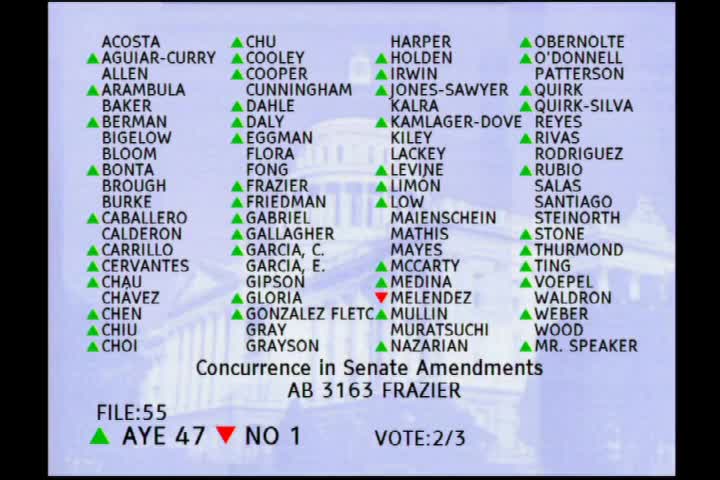 1MIN
Assembly Floor
 2MIN
Senate Floor
 1H
Senate Standing Committee on Appropriations
 6MIN
Assembly Floor
 21MIN
Assembly Standing Committee on Appropriations
 1H
Assembly Standing Committee on Appropriations
 18MIN
Assembly Standing Committee on Health
Bill Author

Bill Co-Author(s):