AB 60: Subsidized child care and development services: stages of child care: CalWORKs.
- Session Year: 2017-2018
- House: Assembly
- Latest Version Date: 2018-08-31
The Child Care and Development Services Act has a purpose to provide a comprehensive, coordinated, and cost-effective system of child care and development services for children from infancy to 13 years of age and their parents, including a full range of supervision, health, and support services through full- and part-time programs. The act provides that it is the intent of the Legislature to ensure that recipients and former recipients of CalWORKs are connected as soon as possible to local child care resources, make stable child care arrangements, and continue to receive subsidized child care services after they no longer receive aid as long as they require those services and meet eligibility requirements. The act establishes 3 stages of child care services through which a recipient of CalWORKs will pass.
This bill would prohibit the first stage or the 2nd stage of child care services from being discontinued until confirmation is received from the administrator of the subsequent stage of child care that the family has been enrolled in the subsequent stage of child care, or that the family is ineligible for services in the subsequent stage of child care, in order to ensure that there is no disruption in child care services due to the planned transition between the stages of CalWORKs child care.
Existing law makes confidential and prohibits the release of information about applicants for public social services. Notwithstanding this prohibition, existing law authorizes a county welfare department to share information necessary for the administration of child care programs and the CalWORKs program.
This bill would require that specified information be made available by a county welfare department to a contractor that provides child care services. The bill would require, beginning no later than November 1, 2019, a county welfare department to provide a monthly report to stage 2 contractors containing specified information. The bill would require that report to be jointly designed with representatives from the State Department of Social Services, the County Welfare Directors Association of California, and Parent Voices, and in consultation with county welfare departments and the Statewide Automated Welfare System. The bill would require a county welfare department to provide training on security protocols and confidentiality of individual family data to a contractor who is given access to data pursuant to those provisions. By imposing new duties on county welfare departments, this bill would create a state-mandated local program.
The California Constitution requires the state to reimburse local agencies and school districts for certain costs mandated by the state. Statutory provisions establish procedures for making that reimbursement.
This bill would provide that, if the Commission on State Mandates determines that the bill contains costs mandated by the state, reimbursement for those costs shall be made pursuant to the statutory provisions noted above.
The Child Care and Development Services Act has a purpose to provide a comprehensive, coordinated, and cost-effective system of child care and development services for children from infancy to 13 years of age and their parents, including a full range of supervision, health, and support services through full- and part-time programs. The act provides that it is the intent of the Legislature to ensure that recipients and former recipients of CalWORKs are connected as soon as possible to local child care resources, make stable child care arrangements, and continue to receive subsidized child care services after they no longer receive aid as long as they require those services and meet eligibility requirements. The act establishes 3 stages of child care services through which a recipient of CalWORKs will pass.
This bill would prohibit the first stage or the 2nd stage of child care services from being discontinued until the county receives confirmation is received from the administrator of the 2nd subsequent stage of child care that the family has been enrolled in the 2nd subsequent stage of child care, or that the family is ineligible for services in the subsequent stage of child care, in order to ensure that there is no disruption in child care services due to the planned transition between stages. the stages of CalWORKs child care.
Existing law makes confidential and prohibits the release of information about applicants for public social services. Notwithstanding this prohibition, existing law authorizes a county welfare department to share information necessary for the administration of child care programs and the CalWORKs program.
This bill would require that specified information be made available by a county welfare department to a contractor that provides child care services. The bill would require, beginning no later than November 1, 2019, a county welfare department to provide a monthly report to stage 2 contractors containing specified information. The bill would require that report to be jointly designed with representatives from the State Department of Social Services, the County Welfare Directors Association of California, and Parent Voices, and in consultation with county welfare departments and the Statewide Automated Welfare System. The bill would require a county welfare department to provide training on security protocols and confidentiality of individual family data to a contractor who is given access to data pursuant to those provisions. By imposing new duties on county welfare departments, this bill would create a state-mandated local program.
The California Constitution requires the state to reimburse local agencies and school districts for certain costs mandated by the state. Statutory provisions establish procedures for making that reimbursement.
This bill would provide that, if the Commission on State Mandates determines that the bill contains costs mandated by the state, reimbursement for those costs shall be made pursuant to the statutory provisions noted above.
The Child Care and Development Services Act has a purpose to provide a comprehensive, coordinated, and cost-effective system of child care and development services for children from infancy to 13 years of age and their parents, including a full range of supervision, health, and support services through full- and part-time programs. The act provides that it is the intent of the Legislature to ensure that recipients and former recipients of CalWORKs are connected as soon as possible to local child care resources, make stable child care arrangements, and continue to receive subsidized child care services after they no longer receive aid as long as they require those services and meet eligibility requirements. The act establishes 3 stages of child care services through which a recipient of CalWORKs will pass.
This bill would prohibit the first stage of child care from being discontinued until the county receives confirmation from the administrator of the 2nd stage of child care that the family has been enrolled in the 2nd stage of child care, in order to ensure that there is no disruption in child care services due to the transition between stages.
Existing law makes confidential and prohibits the release of information about applicants for public social services. Notwithstanding this prohibition, existing law authorizes a county welfare department to share information necessary for the administration of child care programs and the CalWORKs program.
This bill would require that specified information be made available by a county welfare department to a contractor that provides child care services. By imposing new duties on county welfare departments, this bill would create a state-mandated local program.
The California Constitution requires the state to reimburse local agencies and school districts for certain costs mandated by the state. Statutory provisions establish procedures for making that reimbursement.
This bill would provide that, if the Commission on State Mandates determines that the bill contains costs mandated by the state, reimbursement for those costs shall be made pursuant to the statutory provisions noted above.
Existing law, the Child Care and Development Services Act, requires the Superintendent of Public Instruction to administer child care and development programs that offer a full range of services for eligible children from infancy to 13 years of age. Existing law requires the Superintendent to adopt rules and regulations on eligibility, enrollment, and priority of services needed to implement the act. The act, and regulations adopted pursuant to the act, set forth eligibility requirements for families to receive federal and state subsidized child development services and impose various time limits for receipt of services and recertification for continued services. This bill would require that a family, upon establishing initial eligibility or ongoing eligibility for services under the act, be considered to meet all eligibility requirements for those services for not less than 12 months, receive those services for not less than 12 months before having its eligibility redetermined, and not be required to report changes to income or other changes for at least 12 months, except as provided. The bill would revise the definition of income eligible and provide that the definition applies for purposes of establishing initial income eligibility for services under the act, and would add a definition of ongoing income eligible for purposes of establishing ongoing income eligibility for services under the act. The bill would, except as provided, prohibit a payment made by a child development program for a child, during the period between a familys most recent eligibility determination or redetermination and its next eligibility redetermination, from being considered an error or an improper payment due to a change in the familys circumstances during that same period. The bill would, notwithstanding specified law, authorize the State Department of Education to implement this provision through management bulletins or similar letters of instruction until regulations are filed with the Secretary of State to implement the provision. The bill would require the department to initiate a rulemaking action to implement the provision on or before December 31, 2018. The bill would require the department, before initiating this rulemaking action, to convene a workgroup of parents, advocates, department staff, child development program representatives, and other stakeholders to develop recommendations regarding implementing the provision. The bill would repeal certain provisions that impose time limits for services under the act and a provision that authorizes the Superintendent to grant an extension of services, as specified. The bill would make other conforming changes.Existing law, the Child Care and Development Services Act, requires the Superintendent of Public Instruction to administer child care and development programs that offer a full range of services for eligible children from infancy to 13 years of age. Existing law requires the Superintendent to adopt rules and regulations on eligibility, enrollment, and priority of services needed to implement the act. The act, and regulations adopted pursuant to the act, set forth eligibility requirements for families to receive federal and state subsidized child development services and impose various time limits for receipt of services and recertification for continued services.
This bill would require that a family, upon establishing initial eligibility or ongoing eligibility for services under the act, be considered to meet all eligibility requirements for those services for not less than 12 months, receive those services for not less than 12 months before having its eligibility redetermined, and not be required to report changes to income or other changes for at least 12 months, except as provided. The bill would revise the definition of income eligible and provide that the definition applies for purposes of establishing initial income eligibility for services under the act, and would add a definition of ongoing income eligible for purposes of establishing ongoing income eligibility for services under the act.
The bill would, except as provided, prohibit a payment made by a child development program for a child, during the period between a familys most recent eligibility determination or redetermination and its next eligibility redetermination, from being considered an error or an improper payment due to a change in the familys circumstances during that same period. The bill would, notwithstanding specified law, authorize the State Department of Education to implement this provision through management bulletins or similar letters of instruction until regulations are filed with the Secretary of State to implement the provision. The bill would require the department to initiate a rulemaking action to implement the provision on or before December 31, 2018. The bill would require the department, before initiating this rulemaking action, to convene a workgroup of parents, advocates, department staff, child development program representatives, and other stakeholders to develop recommendations regarding implementing the provision.
The bill would repeal certain provisions that impose time limits for services under the act and a provision that authorizes the Superintendent to grant an extension of services, as specified. The bill would make other conforming changes.
(a)It is the intent of the Legislature in enacting this article to ensure that recipients of aid under Chapter 2 (commencing with Section 11200) of Part 3 of Division 9 of the Welfare and Institutions Code, or any successor program, and former recipients who have left aid for employment, are connected as soon as possible to local child care resources, make stable child care arrangements, and continue to receive subsidized child care services after they no longer receive aid as long as they require those services and meet the eligibility requirements set forth in Sections 8263 and 8263.1.
(b)This article establishes three stages of child care services through which a recipient of aid under Chapter 2 (commencing with Section 11200) of Part 3 of Division 9 of the Welfare and Institutions Code, or any successor program, will pass. Further, as families child care needs are met by county welfare departments and later by other local child care and development contractors, it is the intent of the Legislature that families experience no break in their child care services due to a transition between the three stages of child care services.
(c)In order to ensure that there is no disruption in child care services due to the planned transitions between the stages of CalWORKs child care, the first stage or the second stage of child care services shall not be discontinued until confirmation is received from the administrator of the subsequent stage of child care that the family has been enrolled in the subsequent stage of child care, or that the family is ineligible for services in the subsequent stage of child care.
SEC. 2.Section 11323.4 of the Welfare and Institutions Code is amended to read:11323.4.(a)Payments for supportive services, as described in Section 11323.2, shall be advanced to the participant, wherever necessary, and when desired by the participant, so that the participant need not use his or her funds to pay for these services. Payments for child care services shall be made in accordance with Article 15.5 (commencing with Section 8350) of Chapter 2 of Part 6 of the Education Code.
(b)The county welfare department shall take all reasonable steps necessary to promptly correct any overpayment or underpayment of supportive services payments to a recipient or a service provider, including, but not limited to, all cases involving fraud and abuse, consistent with procedures developed by the department.
(c)Notwithstanding any other provision of this article, any participant in on-the-job training who becomes ineligible for aid under this chapter due to earned income or hours worked, shall remain a participant in the program under this article for the duration of the on-the-job training assignment and shall be eligible for supportive services for the duration of the on-the-job training, provided this duration does not exceed the time limits otherwise applicable to the recipient.
(d)Notwithstanding any other provision of this article, any participant in on-the-job training, grant-based on-the-job training, supported work, or transitional employment who remains eligible for aid pursuant to this chapter, shall be eligible for transportation and ancillary expenses pursuant to paragraphs (2) and (3) of subdivision (a) of Section 11323.2.
(e)(1)Participants shall be encouraged to apply for financial aid, including educational grants, scholarships, and awards.
(2)To the extent permitted by federal law, the county shall coordinate with financial aid offices to establish procedures whereby the educational expenses of participants are met through available financial aid and the supportive services described in Section 11323.2. These procedures shall not result in duplication of payments, and shall require determinations to be made on an individual basis to ensure that using financial aid will not prevent the persons participation in his or her welfare-to-work plan.
(f)(1)Notwithstanding Section 10850, for purposes of child care supportive services, county welfare departments shall share information necessary for the administration of the child care programs and the CalWORKs program.
(2)By no later than October 1, 2019, a county welfare department shall provide limited, read-only, online access through individual county-level Statewide Automated Welfare System (SAWS) databases to local contractors providing stage two and stage three child care services. Access provided pursuant to this paragraph shall include a single summary page that contains current individual family data needed to enroll a family in stage two or stage three CalWORKs child care services or to transfer a family between stages. This data shall include, but not be limited to, all of the following items, if applicable:
(A)All of the information required in subdivision (a) of Section 18409 of Title 5 of the California Code of Regulations, or any successor regulation thereto.
(B)If the family is no longer receiving CalWORKs cash aid, the date that a parent or adult caretaker last received CalWORKs cash aid.
(3)Paragraph (2) does not supersede any agreement between a county and a stage one, stage two, or stage three contractor that was in effect on January 1, 2019, and provides for online access to the data described in that paragraph.
(4)Beginning no later than November 1, 2019, a county welfare department shall provide to stage two contractors on a monthly basis a report of all families for which the parents cash aid has been discontinued, the parent has remained off of aid for at least one month, and the parent has children in the home who are eligible for child care services. The report shall include the parents most up-to-date contact information. The report shall be jointly designed with representatives from the department, the County Welfare Directors Association of California, and Parent Voices, in consultation with county welfare departments and SAWS.
(5)A county welfare department shall provide training on security protocols and confidentiality of individual family data to a contractor who is given access to data pursuant to this subdivision.
(6)This subdivision is not intended to limit the information shared for the administration of child care in addition to the data described in paragraph (2).
SEC. 3.If the Commission on State Mandates determines that this act contains costs mandated by the state, reimbursement to local agencies and school districts for those costs shall be made pursuant to Part 7 (commencing with Section 17500) of Division 4 of Title 2 of the Government Code.
(a)It is the intent of the Legislature in enacting this article to ensure that recipients of aid under Chapter 2 (commencing with Section 11200) of Part 3 of Division 9 of the Welfare and Institutions Code, or any successor program, and former recipients who have left aid for employment, are connected as soon as possible to local child care resources, make stable child care arrangements, and continue to receive subsidized child care services after they no longer receive aid as long as they require those services and meet the eligibility requirements set forth in Sections 8263 and 8263.1.
(b)This article establishes three stages of child care services through which a recipient of aid under Chapter 2 (commencing with Section 11200) of Part 3 of Division 9 of the Welfare and Institutions Code, or any successor program, will pass. Further, as families child care needs are met by county welfare departments and later by other local child care and development contractors, it is the intent of the Legislature that families experience no break in their child care services due to a transition between the three stages of child care services.
(c)In order to ensure that there is no disruption in child care services due to a transition the planned transitions between stages, the stages of CalWORKs child care, the first stage or the second stage of child care services shall not be discontinued until the county receives confirmation is received from the administrator of the second subsequent stage of child care that the family has been enrolled in the second subsequent stage of child care. care, or that the family is ineligible for services in the subsequent stage of child care.
SEC. 2.Section 11323.4 of the Welfare and Institutions Code is amended to read:11323.4.(a)Payments for supportive services, as described in Section 11323.2, shall be advanced to the participant, wherever necessary, and when desired by the participant, so that the participant need not use his or her funds to pay for these services. Payments for child care services shall be made in accordance with Article 15.5 (commencing with Section 8350) of Chapter 2 of Part 6 of the Education Code.
(b)The county welfare department shall take all reasonable steps necessary to promptly correct any overpayment or underpayment of supportive services payments to a recipient or a service provider, including, but not limited to, all cases involving fraud and abuse, consistent with procedures developed by the department.
(c)Notwithstanding any other provision of this article, any participant in on-the-job training who becomes ineligible for aid under this chapter due to earned income or hours worked, shall remain a participant in the program under this article for the duration of the on-the-job training assignment and shall be eligible for supportive services for the duration of the on-the-job training, provided this duration does not exceed the time limits otherwise applicable to the recipient.
(d)Notwithstanding any other provision of this article, any participant in on-the-job training, grant-based on-the-job training, supported work, or transitional employment who remains eligible for aid pursuant to this chapter, shall be eligible for transportation and ancillary expenses pursuant to paragraphs (2) and (3) of subdivision (a) of Section 11323.2.
(e)(1)Participants shall be encouraged to apply for financial aid, including educational grants, scholarships, and awards.
(2)To the extent permitted by federal law, the county shall coordinate with financial aid offices to establish procedures whereby the educational expenses of participants are met through available financial aid and the supportive services described in Section 11323.2. These procedures shall not result in duplication of payments, and shall require determinations to be made on an individual basis to ensure that using financial aid will not prevent the persons participation in his or her welfare-to-work plan.
(f)(1)Notwithstanding Section 10850, for purposes of child care supportive services, county welfare departments shall share information necessary for the administration of the child care programs and the CalWORKs program.
(2)By no later than October 1, 2019, a county welfare department shall provide limited, read-only, online access through individual county-level Statewide Automated Welfare System (SAWS) databases to local contractors providing stage two and stage three child care services. Access provided pursuant to this paragraph shall include a single summary page that contains current individual family data needed to enroll a family in stage two or stage three CalWORKs child care services or to transfer a family between stages. This data shall include, but not be limited to, all of the following items, if applicable:
(A)All of the information required in subdivision (a) of Section 18409 of Title 5 of the California Code of Regulations, or any successor regulation thereto.
(B)If the family is no longer receiving CalWORKs cash aid, the date that a parent or adult caretaker last received CalWORKs cash aid.
(3)Paragraph (2) does not supersede any agreement between a county and a stage two one, stage two, or stage three contractor that was in effect on January 1, 2019, and provides for online access to the data described in that paragraph.
(4)Beginning no later than November 1, 2019, a county welfare department shall provide to stage two contractors on a monthly basis a report of all families for which the parents cash aid has been discontinued, the parent has remained off of aid for at least one month, and the parent has children in the home who are eligible for child care services. The report shall include the parents most up-to-date contact information. The report shall be jointly designed with representatives from the department, the County Welfare Directors Association of California, and Parent Voices, in consultation with county welfare departments and SAWS.
(4)(5)A county welfare department may shall provide training on security protocols and confidentiality of individual family data to a contractor who is given access to data pursuant to this subdivision.
(5)(6)This subdivision is not intended to limit the information shared for the administration of child care in addition to the data described in paragraph (2).
SEC. 3.If the Commission on State Mandates determines that this act contains costs mandated by the state, reimbursement to local agencies and school districts for those costs shall be made pursuant to Part 7 (commencing with Section 17500) of Division 4 of Title 2 of the Government Code.
(a)It is the intent of the Legislature in enacting this article to ensure that recipients of aid under Chapter 2 (commencing with Section 11200) of Part 3 of Division 9 of the Welfare and Institutions Code, or any successor program, and former recipients who have left aid for employment, are connected as soon as possible to local child care resources, make stable child care arrangements, and continue to receive subsidized child care services after they no longer receive aid as long as they require those services and meet the eligibility requirements set forth in Sections 8263 and 8263.1.
(b)This article establishes three stages of child care services through which a recipient of aid under Chapter 2 (commencing with Section 11200) of Part 3 of Division 9 of the Welfare and Institutions Code, or any successor program, will pass. Further, as families child care needs are met by county welfare departments and later by other local child care and development contractors, it is the intent of the Legislature that families experience no break in their child care services due to a transition between the three stages of child care services.
(c)In order to ensure that there is no disruption in child care services due to a transition between stages, the first stage of child care shall not be discontinued until the county receives confirmation from the administrator of the second stage of child care that the family has been enrolled in the second stage of child care.
SEC. 2.Section 11323.4 of the Welfare and Institutions Code is amended to read:11323.4.(a)Payments for supportive services, as described in Section 11323.2, shall be advanced to the participant, wherever necessary, and when desired by the participant, so that the participant need not use his or her funds to pay for these services. Payments for child care services shall be made in accordance with Article 15.5 (commencing with Section 8350) of Chapter 2 of Part 6 of the Education Code.
(b)The county welfare department shall take all reasonable steps necessary to promptly correct any overpayment or underpayment of supportive services payments to a recipient or a service provider, including, but not limited to, all cases involving fraud and abuse, consistent with procedures developed by the department.
(c)Notwithstanding any other provision of this article, any participant in on-the-job training who becomes ineligible for aid under this chapter due to earned income or hours worked, shall remain a participant in the program under this article for the duration of the on-the-job training assignment and shall be eligible for supportive services for the duration of the on-the-job training, provided this duration does not exceed the time limits otherwise applicable to the recipient.
(d)Notwithstanding any other provision of this article, any participant in on-the-job training, grant-based on-the-job training, supported work, or transitional employment who remains eligible for aid pursuant to this chapter, shall be eligible for transportation and ancillary expenses pursuant to paragraphs (2) and (3) of subdivision (a) of Section 11323.2.
(e)(1)Participants shall be encouraged to apply for financial aid, including educational grants, scholarships, and awards.
(2)To the extent permitted by federal law, the county shall coordinate with financial aid offices to establish procedures whereby the educational expenses of participants are met through available financial aid and the supportive services described in Section 11323.2. These procedures shall not result in duplication of payments, and shall require determinations to be made on an individual basis to ensure that using financial aid will not prevent the persons participation in his or her welfare-to-work plan.
(f)(1)Notwithstanding Section 10850, for purposes of child care supportive services, county welfare departments shall share information necessary for the administration of the child care programs and the CalWORKs program.
(2)By no later than October 1, 2019, a county welfare department shall provide limited, read-only, online access through individual county-level Statewide Automated Welfare System (SAWS) databases to local contractors providing stage two and stage three child care services. Access provided pursuant to this paragraph shall include a single summary page that contains current individual family data needed to enroll a family in stage two or stage three CalWORKs child care services or to transfer a family between stages. This data shall include, but not be limited to, all of the following items, if applicable:
(A)All of the information required in subdivision (a) of Section 18409 of Title 5 of the California Code of Regulations, or any successor regulation thereto.
(B)If the family is no longer receiving CalWORKs cash aid, the date that a parent or adult caretaker last received CalWORKs cash aid.
(3)Paragraph (2) does not supersede any agreement between a county and a stage two or stage three contractor that was in effect on January 1, 2019, and provides for online access to the data described in that paragraph.
(4)A county welfare department may provide training on security protocols and confidentiality of individual family data to a contractor who is given access to data pursuant to this subdivision.
(5)This subdivision is not intended to limit the information shared for the administration of child care in addition to the data described in paragraph (2).
SEC. 3.If the Commission on State Mandates determines that this act contains costs mandated by the state, reimbursement to local agencies and school districts for those costs shall be made pursuant to Part 7 (commencing with Section 17500) of Division 4 of Title 2 of the Government Code.
All matter omitted in this version of the bill appears in the bill as introduced in the Assembly December 7, 2016. (JR11)(a)(1)The Superintendent shall adopt rules and regulations on eligibility, enrollment, and priority of services needed to implement this chapter. In order to be eligible for federal and state subsidized child development services, families shall meet at least one requirement in each of the following areas:
(A)A family is (i) a current aid recipient, (ii) income eligible, (iii) homeless, or (iv) one whose children are recipients of protective services, or whose children have been identified as being abused, neglected, or exploited, or at risk of being abused, neglected, or exploited.
(B)A family needs the child care services (i) because the child is identified by a legal, medical, or social services agency, a local educational agency liaison for homeless children and youths designated pursuant to Section 11432(g)(1)(J)(ii) of Title 42 of the United States Code, a Head Start program, or an emergency or transitional shelter as (I) a recipient of protective services, (II) being neglected, abused, or exploited, or at risk of neglect, abuse, or exploitation, or (III) being homeless or (ii) because the parents are (I) engaged in vocational training leading directly to a recognized trade, paraprofession, or profession, (II) employed or seeking employment, (III) seeking permanent housing for family stability, or (IV) incapacitated.
(2)If only one parent has signed an application for enrollment in child care services, as required by this chapter or regulations adopted to implement this chapter, and the information provided on the application indicates that there is a second parent who has not signed the application, the parent who has signed the application shall self-certify the presence or absence of the second parent under penalty of perjury. The parent who has signed the application shall not be required to submit additional information documenting the presence or absence of the second parent.
(b)Except as provided in Article 15.5 (commencing with Section 8350), priority for federal and state subsidized child development services is as follows:
(1)(A)First priority shall be given to neglected or abused children who are recipients of child protective services, or children who are at risk of being neglected or abused, upon written referral from a legal, medical, or social services agency. If an agency is unable to enroll a child in the first priority category, the agency shall refer the family to local resource and referral services to locate services for the child.
(B)A family who is receiving child care on the basis of being a child at risk of abuse, neglect, or exploitation, as defined in subdivision (k) of Section 8208, is eligible to receive services pursuant to subparagraph (A) for up to three months, unless the family becomes eligible pursuant to subparagraph (C).(C)A family may receive child care services for up to 12 months on the basis of a certification by the county child welfare agency that child care services continue to be necessary or, if the child is receiving child protective services during that period of time, and the family requires child care and remains otherwise eligible. This time limit does not apply if the familys child care referral is recertified by the county child welfare agency.(2)Second priority shall be given equally to eligible families, regardless of the number of parents in the home, who are income eligible. Within this priority, families with the lowest gross monthly income in relation to family size, as determined by a schedule adopted by the Superintendent, shall be admitted first. If two or more families are in the same priority in relation to income, the family that has a child with exceptional needs shall be admitted first. If there is no family of the same priority with a child with exceptional needs, the same priority family that has been on the waiting list for the longest time shall be admitted first. For purposes of determining order of admission, the grants of public assistance recipients shall be counted as income.
(3)The Superintendent shall set criteria for, and may grant specific waivers of, the priorities established in this subdivision for agencies that wish to serve specific populations, including children with exceptional needs or children of prisoners. These new waivers shall not include proposals to avoid appropriate fee schedules or admit ineligible families, but may include proposals to accept members of special populations in other than strict income order, as long as appropriate fees are paid.
(c)Notwithstanding any other law, in order to promote continuity of services, a family enrolled in a state or federally funded child care and development program whose services would otherwise be terminated because the family no longer meets the program income, eligibility, or need criteria may continue to receive child development services in another state or federally funded child care and development program if the contractor is able to transfer the familys enrollment to another program for which the family is eligible before the date of termination of services or to exchange the familys existing enrollment with the enrollment of a family in another program, provided that both families satisfy the eligibility requirements for the program in which they are being enrolled. The transfer of enrollment may be to another program within the same administrative agency or to another agency that administers state or federally funded child care and development programs.
(d)In order to promote continuity of services, the Superintendent may extend the 60-working-day period specified in subdivision (a) of Section 18086.5 of Title 5 of the California Code of Regulations for an additional 60 working days if he or she determines that opportunities for employment have diminished to the degree that one or both parents cannot reasonably be expected to find employment within 60 working days and granting the extension is in the public interest. The scope of extensions granted pursuant to this subdivision shall be limited to the necessary geographic areas and affected persons, which shall be described in the Superintendents order granting the extension. It is the intent of the Legislature that extensions granted pursuant to this subdivision improve services in areas with high unemployment rates and areas with disproportionately high numbers of seasonal agricultural jobs.(e)(d)A physical examination and evaluation, including age-appropriate immunization, shall be required before, or within six weeks of, enrollment. A standard, rule, or regulation shall not require medical examination or immunization for admission to a child care and development program of a child whose parent or guardian files a letter with the governing board of the child care and development program stating that the medical examination or immunization is contrary to his or her religious beliefs, or provide for the exclusion of a child from the program because of a parent or guardian having filed the letter. However, if there is good cause to believe that a child is suffering from a recognized contagious or infectious disease, the child shall be temporarily excluded from the program until the governing board of the child care and development program is satisfied that the child is not suffering from that contagious or infectious disease.
(f)(e)Regulations formulated and promulgated pursuant to this section shall include the recommendations of the State Department of Health Care Services relative to health care screening and the provision of health care services. The Superintendent shall seek the advice and assistance of these health authorities in situations where service under this chapter includes or requires care of children who are ill or children with exceptional needs.
(g)(f)The Superintendent shall establish guidelines for the collection of employer-sponsored child care benefit payments from a parent whose child receives subsidized child care and development services. These guidelines shall provide for the collection of the full amount of the benefit payment, but not to exceed the actual cost of child care and development services provided, notwithstanding the applicable fee based on the fee schedule.
(h)(g)The Superintendent shall establish guidelines according to which the director or a duly authorized representative of the child care and development program will certify children as eligible for state reimbursement pursuant to this section.
(h)(1)Except as provided in paragraphs (2) to (4), inclusive, upon establishing initial eligibility or ongoing eligibility for services under this chapter, a family shall be considered to meet all eligibility requirements for those services for not less than 12 months, shall receive those services for not less than 12 months before having their eligibility redetermined, and shall not be required to report changes to income or other changes for at least 12 months.
(2)A family shall report increases in income that exceed the threshold for ongoing income eligibility as described in subdivision (b) of Section 8263.1, and the familys ongoing eligibility for services shall at that time be redetermined.
(3)A family that establishes initial eligibility or ongoing eligibility on the basis of seeking employment shall receive services under this chapter as follows:
(A)If seeking employment is the basis for initial eligibility, the family shall receive services under this chapter for not less than six months.
(B)If seeking employment is the only basis for ongoing eligibility at the time of redetermination, the family shall receive services under this chapter for six additional months unless the family becomes eligible on another basis pursuant to subparagraph (B) of paragraph (1) of subdivision (a).
(4)A family may at any time voluntarily report income or other changes. This information shall be used, as applicable, to reduce the familys fees, increase the familys subsidy, or extend the period of the familys eligibility before redetermination.
(i)(1)Because a family that meets eligibility requirements at its most recent eligibility determination or redetermination is considered eligible until the next redetermination, as provided in subdivision (h), a payment made by a child development program for a child during this period shall not be considered an error or an improper payment due to a change in the familys circumstances during that same period.
(2)Notwithstanding paragraph (1), the state or its designated agent may seek to recover payments that are the result of fraud.
(j)(1)Notwithstanding the rulemaking provisions of the Administrative Procedure Act (Chapter 3.5 (commencing with Section 11340) of Part 1 of Division 3 of Title 2 of the Government Code) and Section 33308.5 of this code, until regulations are filed with the Secretary of State to implement subdivision (h), the department may implement this section through management bulletins or similar letters of instruction.
(2)The department shall initiate a rulemaking action to implement subdivision (h) on or before December 31, 2018. Before initiating a rulemaking action pursuant to this paragraph, the department shall convene a workgroup of parents, advocates, department staff, child development program representatives, and other stakeholders to develop recommendations regarding implementing subdivision (h).
(i)(k)Public funds shall not be paid directly or indirectly to an agency that does not pay at least the minimum wage to each of its employees.
SEC. 2.Section 8263.1 of the Education Code is amended to read:8263.1.(a)For purposes of establishing initial income eligibility for services under this chapter, income eligible means that a familys adjusted monthly income is at or below 70 percent of the state median income, adjusted for family size, and adjusted annually. based on the most recent data on state median income published by the United States Census Bureau, for a family of the same size.
(b)Notwithstanding any other law, for the 201112 fiscal year, the income eligibility limits that were in effect for the 200708 fiscal year shall be reduced to 70 percent of the state median income that was in use for the 200708 fiscal year, adjusted for family size, effective July 1, 2011.(c)Notwithstanding any other law, for the 201213, 201314, 201415, 201516, and 201617 fiscal years, the income eligibility limits shall be 70 percent of the state median income that was in use for the 200708 fiscal year, adjusted for family size.(b)For purposes of establishing ongoing income eligibility under this chapter, ongoing income eligible means that a familys adjusted monthly income is at or below 85 percent of the state median income, based on the most recent data on state median income published by the United States Census Bureau, for a family of the same size.
(d)(c)The income of a recipient of federal supplemental security income benefits pursuant to Title XVI of the federal Social Security Act (42 U.S.C. Sec. 1381 et seq.) and state supplemental program benefits pursuant to Title XVI of the federal Social Security Act and Chapter 3 (commencing with Section 12000) of Part 3 of Division 9 of the Welfare and Institutions Code shall not be included as income for purposes of determining eligibility for child care under this chapter.
SEC. 3.Section 8273.1 of the Education Code is amended to read:8273.1.(a)Families receiving services pursuant to subparagraph (B) of paragraph (1) of subdivision (b) of Section 8263 may be exempt from family fees for up to three months.(b)Families receiving(a)A family that receives services pursuant to subparagraph (C) of paragraph (1) of subdivision (b) of Section 8263 may be exempt from family fees for up to 12 months.
(c)The cumulative period of time of exemption from family fees for families receiving services pursuant to paragraph (1) of subdivision (b) of Section 8263 shall not exceed 12 months.(d)(b)Notwithstanding any other law, a family receiving CalWORKs cash aid shall not be charged a family fee.
(e)(c)Notwithstanding any other law, commencing with the 201415 fiscal year, family fees shall not be assessed for the part-day California preschool program to income eligible families whose children are enrolled in that program pursuant to Article 7 (commencing with Section 8235).
SEC. 4.Section 11323.2 of the Welfare and Institutions Code is amended to read:11323.2.(a)Necessary supportive services shall be available to every participant in order to participate in the program activity to which he or she is assigned or to accept employment or the participant shall have good cause for not participating under subdivision (f) of Section 11320.3. As provided in the welfare-to-work plan entered into between the county and participant pursuant to this article, supportive services shall include all of the following:
(1)Child care.
(A)Paid child care shall be available to every participant with a dependent child in the assistance unit who needs paid child care if the child is 10 years of age or under, or requires child care or supervision due to a physical, mental, or developmental disability or other similar condition as verified by the county welfare department, or who is under court supervision.
(B)To the extent funds are available available, paid child care shall be available to a participant with a dependent child in the assistance unit who needs paid child care if the child is 11 or 12 years of age.
(C)Necessary child care services shall be available to every former recipient for up to two years, pursuant to Article 15.5 (commencing with Section 8350) of Chapter 2 of Part 6 of Division 1 of Title 1 of the Education Code.
(D)A child in foster care receiving benefits under Title IV-E of the federal Social Security Act (42 U.S.C. Sec. 670 et seq.) or a child who would become a dependent child except for the receipt of federal Supplemental Security Income benefits pursuant to Title XVI of the federal Social Security Act (42 U.S.C. Sec. 1381 et seq.) shall be deemed to be a dependent child for the purposes of this paragraph.
(E)The provision of care and payment rates under this paragraph shall be governed by Article 15.5 (commencing with Section 8350) of Chapter 2 of Part 6 of Division 1 of Title 1 of the Education Code. Parent fees shall be governed by subdivisions (g) and (h) of Section 8263 of the Education Code.
(2)Transportation costs, which shall be governed by regional market rates as determined in accordance with regulations established by the department.
(3)Ancillary expenses, which shall include the cost of books, tools, clothing specifically required for the job, fees, and other necessary costs.
(4)Personal counseling. A participant who has personal or family problems that would affect the outcome of the welfare-to-work plan entered into pursuant to this article shall, to the extent available, receive necessary counseling or therapy to help him or her and his or her family adjust to his or her job or training assignment.
(b)If provided in a county plan, the county may continue to provide case management and supportive services under this section to former participants who become employed. The county may provide these services for up to the first 12 months of employment to the extent they are not available from other sources and are needed for the individual to retain the employment.
REVISIONS: HeadingLine 1.|
Date
|
Status
|
|---|---|
| Sep 30, 2018 | Vetoed by Governor. |
| Sep 6, 2018 | Enrolled and presented to the Governor at 3 p.m. |
| Aug 29, 2018 | Senate amendments concurred in. To Engrossing and Enrolling. |
| Aug 24, 2018 | In Assembly. Concurrence in Senate amendments pending. May be considered on or after August 26 pursuant to Assembly Rule 77. |
| Aug 24, 2018 | Read third time. Passed. Ordered to the Assembly. |
| Aug 21, 2018 | Ordered to special consent calendar. |
| Aug 17, 2018 | From committee: Do pass. (Ayes 7. Noes 0.) (August 16). |
| Jul 2, 2018 | In committee: Referred to APPR. suspense file. |
| Jun 21, 2018 | In committee: Hearing postponed by committee. |
| Jun 13, 2018 | From committee: Do pass and re-refer to Com. on APPR. (Ayes 6. Noes 0.) (June 12). Re-referred to Com. on APPR. |
| Jun 6, 2018 | From committee chair, with author's amendments: Amend, and re-refer to committee. Read second time, amended, and re-referred to Com. on HUMAN S. |
| May 8, 2018 | In committee: Hearing postponed by committee. |
| May 7, 2018 | Withdrawn from committee. |
| May 1, 2018 | From committee chair, with author's amendments: Amend, and re-refer to committee. Read second time, amended, and re-referred to Com. on ED. |
| Jun 29, 2017 | In committee: Set, first hearing. Hearing canceled at the request of author. |
| Jun 19, 2017 | In committee: Hearing postponed by committee. |
| Jun 8, 2017 | Referred to Coms. on ED. and HUMAN S. |
| May 30, 2017 | In Senate. Read first time. To Com. on RLS. for assignment. |
| May 30, 2017 | Read third time. Passed. Ordered to the Senate. (Ayes 75. Noes 0. Page 1806.) |
| May 26, 2017 | From committee: Do pass. (Ayes 17. Noes 0.) (May 26). |
| May 17, 2017 | In committee: Set, first hearing. Referred to APPR. suspense file. |
| Mar 8, 2017 | Coauthors revised. |
| Jan 19, 2017 | Referred to Com. on HUM. S. |
| Jan 4, 2017 | Read first time. |
| Dec 8, 2016 | From printer. May be heard in committee January 7. |
| Dec 7, 2016 | Read first time. To print. |
|
Date
|
Description
|
Location
|
Votes
|
|
|---|---|---|---|---|
| Aug 29, 2018 | AB 60 SANTIAGO Concurrence in Senate Amendments | Assembly Floor |
Passed |
|
| Aug 24, 2018 | Special Consent AB60 Santiago | Senate Floor |
Passed |
|
| Aug 16, 2018 | Do pass | Senate Standing Committee on Appropriations |
Passed |
|
| Jul 2, 2018 | Placed on suspense file | Senate Standing Committee on Appropriations |
Passed |
|
| Jun 12, 2018 | Do pass, but first be re-referred to the Committee on [Appropriations] | Senate Standing Committee on Human Services |
Passed |
|
| May 30, 2017 | AB 60 SANTIAGO Assembly Third Reading | Assembly Floor |
Passed |
|
| May 26, 2017 | Do pass. | Assembly Standing Committee on Appropriations |
Passed |
|
| Mar 7, 2017 | Do pass and be re-referred to the Committee on [Appropriations] | Assembly Standing Committee on Human Services |
Passed |
This list shows positions taken on this bill by organizations on the date displayed, which is linked to the original source.
Positions by individuals are not included.
GOVERNOR'S VETO
GV Bill Id:AB 60
Author:(Santiago)
As Enrolled Ver:September 6, 2018
2/3 vote
ASSEMBLY: | (May 30, 2017) | SENATE: | 39-0 | (August 24, 2018) |
(vote not relevant)
ASSEMBLY: | 80-0 | (August 29, 2018) |
|
|
|
Original Committee Reference: HUM. S.
SUMMARY: Stipulates that California Work Opportunity and Responsibility to Kids (CalWORKs) Stage One and Stage Two child care may not be discontinued until it is confirmed that a family has transitioned to a subsequent stage of child care or is no longer eligible for that stage of child care and requires the sharing of certain information by county welfare departments aimed at reducing disruptions in child care services.
Specifically, this bill:
- Prohibits the first and second stages of CalWORKs child care services from being discontinued until confirmation is received from the administrator of the subsequent stage of child care that the family has been enrolled in that stage, or that the family is ineligible for services in that stage of child care, as specified.
- Requires a county welfare department to, no later than October 1, 2019, provide limited, read-only, online access, including summary information of certain data required for enrollment in and transfer between stages, through individual county-level Statewide Automated Welfare System (SAWS) databases to local contractors providing Stage One and Stage Two CalWORKs child care services, and, further, stipulates that this requirement does not supersede any agreement between a county and a Stage One, Stage Two, or Stage Three contractor that was in effect on January 1, 2019, and provides for online access to the specified data.
- Requires a county welfare department, by November 1, 2019, to provide Stage Two contractors a monthly report, to be designed by specified stakeholders and to include up-to-date contact information for the parents, of all families for which:
- The parent's cash aid has been discontinued;
- The parent has remained off of aid for at least one month; and
- The parent has children in the home who are eligible for child care services.
- Requires a county welfare department to provide training on security protocols and confidentiality of individual family data to a contractor who is given access to data pursuant to the provisions of this bill.
- Stipulates that the provisions of this bill are not intended to limit the information shared for the administration of child care, as specified.
The Senate amendments delete the Assembly version of this bill and instead add language to:
- Prohibit the first and second stages of CalWORKs child care services from being discontinued until confirmation is received from the administrator of the subsequent stage of child care that the family has been enrolled in that stage, or that the family is ineligible for services in that stage of child care, as specified.
- Require a county welfare department to, no later than October 1, 2019, provide limited, read-only, online access, including summary information of certain data required for enrollment in and transfer between stages, through individual county-level Statewide Automated Welfare System (SAWS) databases to local contractors providing Stage One and Stage Two CalWORKs child care services, and, further, stipulate that this requirement does not supersede any agreement between a county and a Stage One, Stage Two, or Stage Three contractor that was in effect on January 1, 2019, and provides for online access to the specified data.
- Require a county welfare department, by November 1, 2019, to provide Stage Two contractors a monthly report, to be designed by specified stakeholders and to include up-to-date contact information for the parents, of all families for which:
- The parent's cash aid has been discontinued;
- The parent has remained off of aid for at least one month; and
- The parent has children in the home who are eligible for child care services.
- Require a county welfare department to provide training on security protocols and confidentiality of individual family data to a contractor who is given access to data pursuant to the provisions of this bill.
- Stipulate that the provisions of this bill are not intended to limit the information shared for the administrator of child care, as specified.
EXISTING LAW:
- Establishes the Child Care and Development Services Act to provide child care and development services as part of a coordinated, comprehensive, and cost-effective system serving children from birth to 13 years old and their parents, and including a full range of supervision, health, and support services through full- and part-time programs. (Education Code Section (EDC) 8200 et seq.)
- Defines "child care and development services" to mean services designed to meet a wide variety of children's and families' needs while parents and guardians are working, in training, seeking employment, incapacitated, or in need of respite. (EDC 8208)
- States the intent of the Legislature that all families have access to child care and development services, through resource and referral where appropriate, and regardless of demographic background or special needs, and that families are provided the opportunity to attain financial stability through employment, while maximizing growth and development of their children, and enhancing their parenting skills through participation in child care and development programs. (EDC 8202)
- Requires the Superintendent of Public Instruction to administer general child care and development programs to include, among other things as specified, age- and developmentally-appropriate activities, supervision, parenting education and involvement, and nutrition. Further allows such programs to be designed to meet child-related needs identified by parents or guardians, as specified. (EDC 8240 and 8241)
- Provides for, and establishes requirements and authorizations regarding, three stages of child care for eligible CalWORKs families, as specified. (EDC 8350 et seq.)
FISCAL EFFECT: According to the Senate Appropriations Committee on July 2, 2018, this bill may result in the following costs:
- One-time estimated costs of $3 million for the consortia to update SAWS; and
- Ongoing costs, likely in the high hundreds of thousands of dollars for increased workload for county welfare departments, in conjunction with DSS, the County Welfare Directors Association of California, and Parent Voices, to produce monthly reports.
COMMENTS:
CalWORKs: CalWORKs is a county-administered public assistance program that is funded in part by the federal TANF block grant and that aims to help children and families meet basic needs and move out of poverty. Families receive cash assistance and have access to a variety of services, including, where applicable, child care, as well as services aimed at addressing mental health needs, substance use disorders, instances of domestic violence, and learning disabilities, among other issues. Parents must develop and participate in a welfare-to-work plan, unless exempted or otherwise not required to participate. The maximum CalWORKs grant for a family of three living in a high cost county, if the family has no other income, is $714 per month. For Fiscal Year 2017-18, the average monthly CalWORKs cash grant is $564 per household. In Fiscal Year 2016-17, the average monthly CalWORKs caseload was 452,770 households, of which 154,005 were single-parent households and 234,766 were households where only the child or children received aid.
Subsidized child care: California's subsidized child care system is designed to provide assistance to parents and guardians who are working, in training, seeking employment, incapacitated, or in need of respite. This child care is available through a number of programs; additionally, California offers State Preschool Programs to eligible three-and four-year-olds. Across the various subsidized child care programs, there are estimated to be over 190,000 slots (not including State Preschool). State Preschool contains over 163,000 additional slots.
Parents participating in CalWORKs, as well as families transitioning off of and no longer receiving CalWORKs aid, can be eligible for child care, which is offered in three "stages." CDE also administers non-CalWORKs child care. The largest programs are: General Child Care, which includes contracted centers and family child care homes; the California State Preschool Program, which provides developmentally, culturally, and linguistically appropriate curriculum to eligible three- and four-year olds; and Alternative Payment Programs (APPs), which provide vouchers that can be used to obtain child care in a center, family child care home, or from a license-exempt provider. Waitlists for non-CalWORKs child care are common.
The CalWORKs child care program is designed to assist families in participating in work, school, and/or training and other related activities as they work to comply with their welfare-to-work plans. Children may receive care through CalWORKs child care programs up until they turn 13 years of age. Based on their stage in, and after, the CalWORKs program, families are placed in Stage One, Stage Two, or Stage Three CalWORKs child care. DSS administers Stage One, which begins upon entry into the CalWORKs program, through county welfare departments; during this stage, a family typically receives child care subsidies until the county welfare department determines that the family is stable. Families usually transition to Stage Two after six months or when their situation is determined to be stable, and when a slot is available in Stage Two or Stage Three child care. Stages Two and Three are administered by the California Department of Education (CDE) through contracts with Alternative Payment Program (APP) agencies. Families who have transitioned to Stage Two CalWORKs child care may be eligible to receive services at this stage for up to two years after they are no longer eligible for the CalWORKs program itself. Stage Three child care is available to eligible families who formerly received CalWORKs; it begins when a space is available and after having received 24 months of child care, after transitioning off of CalWORKs.
Need for this bill: According to the author, "The Legislature promised that CalWORKs families would continue to receive child care as they moved from immediate need for cash aid, through work-related activities and to employment. This bill will help fulfill that promise by ensuring that families don't fall through the cracks due to a failure to transmit the necessary information. Parents will get the continuous CalWORKs child care they were promised and their children will get the safe, nurturing care they need to grow up happy and healthy."
This bill would require certain information to be automatically shared between county welfare departments and local child care contractors to facilitate an effortless transition of families between child care programs. This is a good goal, as any interruption in child care coverage for a family can be devastating, particularly for working parents in the CalWORKS program.
However, this bill impacts an entitlement program and the changes contemplated in this bill have the potential to cost the state $50 million a year and is more properly considered as part of the budget process.
Analysis Prepared by: Daphne Hunt / HUM. S. / (916) 319-2089 FN: 0005358
CONCURRENCE IN SENATE AMENDMENTS
CSA1 Bill Id:AB 60
Author:(Santiago)
As Amended Ver:June 6, 2018
Majority vote
ASSEMBLY: | 75-0 | (May 30, 2017) | SENATE: | 39-0 | (August 24, 2018) |
Original Committee Reference: HUM. S.
SUMMARY: Stipulates that California Work Opportunity and Responsibility to Kids (CalWORKs) Stage One and Stage Two child care may not be discontinued until it is confirmed that a family has transitioned to a subsequent stage of child care or is no longer eligible for that stage of child care and requires the sharing of certain information by county welfare departments aimed at reducing disruptions in child care services.
Specifically, this bill:
- Prohibits the first and second stages of CalWORKs child care services from being discontinued until confirmation is received from the administrator of the subsequent stage of child care that the family has been enrolled in that stage, or that the family is ineligible for services in that stage of child care, as specified.
- Requires a county welfare department to, no later than October 1, 2019, provide limited, read-only, online access, including summary information of certain data required for enrollment in and transfer between stages, through individual county-level Statewide Automated Welfare System (SAWS) databases to local contractors providing Stage One and Stage Two CalWORKs child care services, and, further, stipulates that this requirement does not supersede any agreement between a county and a Stage One, Stage Two, or Stage Three contractor that was in effect on January 1, 2019, and provides for online access to the specified data.
- Requires a county welfare department, by November 1, 2019, to provide Stage Two contractors a monthly report, to be designed by specified stakeholders and to include up-to-date contact information for the parents, of all families for which:
- The parent's cash aid has been discontinued;
- The parent has remained off of aid for at least one month; and
- The parent has children in the home who are eligible for child care services.
- Requires a county welfare department to provide training on security protocols and confidentiality of individual family data to a contractor who is given access to data pursuant to the provisions of this bill.
- Stipulates that the provisions of this bill are not intended to limit the information shared for the administration of child care, as specified.
The Senate amendments delete the Assembly version of the bill and instead add language to:
- Prohibit the first and second stages of CalWORKs child care services from being discontinued until confirmation is received from the administrator of the subsequent stage of child care that the family has been enrolled in that stage, or that the family is ineligible for services in that stage of child care, as specified.
- Require a county welfare department to, no later than October 1, 2019, provide limited, read-only, online access, including summary information of certain data required for enrollment in and transfer between stages, through individual county-level Statewide Automated Welfare System (SAWS) databases to local contractors providing Stage One and Stage Two CalWORKs child care services, and, further, stipulate that this requirement does not supersede any agreement between a county and a Stage One, Stage Two, or Stage Three contractor that was in effect on January 1, 2019, and provides for online access to the specified data.
- Require a county welfare department, by November 1, 2019, to provide Stage Two contractors a monthly report, to be designed by specified stakeholders and to include up-to-date contact information for the parents, of all families for which:
- The parent's cash aid has been discontinued;
- The parent has remained off of aid for at least one month; and
- The parent has children in the home who are eligible for child care services.
- Require a county welfare department to provide training on security protocols and confidentiality of individual family data to a contractor who is given access to data pursuant to the provisions of this bill.
- Stipulate that the provisions of this bill are not intended to limit the information shared for the administrator of child care, as specified.
EXISTING LAW:
- Establishes the Child Care and Development Services Act to provide child care and development services as part of a coordinated, comprehensive, and cost-effective system serving children from birth to 13 years old and their parents, and including a full range of supervision, health, and support services through full- and part-time programs. (Education Code Section (EDC) 8200 et seq.)
- Defines "child care and development services" to mean services designed to meet a wide variety of children's and families' needs while parents and guardians are working, in training, seeking employment, incapacitated, or in need of respite. (EDC 8208)
- States the intent of the Legislature that all families have access to child care and development services, through resource and referral where appropriate, and regardless of demographic background or special needs, and that families are provided the opportunity to attain financial stability through employment, while maximizing growth and development of their children, and enhancing their parenting skills through participation in child care and development programs. (EDC 8202)
- Requires the Superintendent of Public Instruction to administer general child care and development programs to include, among other things as specified, age- and developmentally-appropriate activities, supervision, parenting education and involvement, and nutrition. Further allows such programs to be designed to meet child-related needs identified by parents or guardians, as specified. (EDC 8240 and 8241)
- Provides for, and establishes requirements and authorizations regarding, three stages of child care for eligible CalWORKs families, as specified. (EDC 8350 et seq.)
FISCAL EFFECT: According to the Senate Appropriations Committee on July 2, 2018, this bill may result in the following costs:
- One-time estimated costs of $3 million for the consortia to update SAWS; and
- Ongoing costs, likely in the high hundreds of thousands of dollars for increased workload for county welfare departments, in conjunction with DSS, the County Welfare Directors Association of California, and Parent Voices, to produce monthly reports.
COMMENTS:
CalWORKs: CalWORKs is a county-administered public assistance program that is funded in part by the federal TANF block grant and that aims to help children and families meet basic needs and move out of poverty. Families receive cash assistance and have access to a variety of services, including, where applicable, child care, as well as services aimed at addressing mental health needs, substance use disorders, instances of domestic violence, and learning disabilities, among other issues. Parents must develop and participate in a welfare-to-work plan, unless exempted or otherwise not required to participate. The maximum CalWORKs grant for a family of three living in a high cost county, if the family has no other income, is $714 per month. For Fiscal Year 2017-18, the average monthly CalWORKs cash grant is $564 per household. In Fiscal Year 2016-17, the average monthly CalWORKs caseload was 452,770 households, of which 154,005 were single-parent households and 234,766 were households where only the child or children received aid.
Subsidized child care: California's subsidized child care system is designed to provide assistance to parents and guardians who are working, in training, seeking employment, incapacitated, or in need of respite. This child care is available through a number of programs; additionally, California offers State Preschool Programs to eligible three-and four-year-olds. Across the various subsidized child care programs, there are estimated to be over 190,000 slots (not including State Preschool). State Preschool contains over 163,000 additional slots.
Parents participating in CalWORKs, as well as families transitioning off of and no longer receiving CalWORKs aid, can be eligible for child care, which is offered in three "stages." CDE also administers non-CalWORKs child care. The largest programs are: General Child Care, which includes contracted centers and family child care homes; the California State Preschool Program, which provides developmentally, culturally, and linguistically appropriate curriculum to eligible three- and four-year olds; and Alternative Payment Programs (APPs), which provide vouchers that can be used to obtain child care in a center, family child care home, or from a license-exempt provider. Waitlists for non-CalWORKs child care are common.
The CalWORKs child care program is designed to assist families in participating in work, school, and/or training and other related activities as they work to comply with their welfare-to-work plans. Children may receive care through CalWORKs child care programs up until they turn 13 years of age. Based on their stage in, and after, the CalWORKs program, families are placed in Stage One, Stage Two, or Stage Three CalWORKs child care. DSS administers Stage One, which begins upon entry into the CalWORKs program, through county welfare departments; during this stage, a family typically receives child care subsidies until the county welfare department determines that the family is stable. Families usually transition to Stage Two after six months or when their situation is determined to be stable, and when a slot is available in Stage Two or Stage Three child care. Stages Two and Three are administered by the California Department of Education (CDE) through contracts with Alternative Payment Program (APP) agencies. Families who have transitioned to Stage Two CalWORKs child care may be eligible to receive services at this stage for up to two years after they are no longer eligible for the CalWORKs program itself. Stage Three child care is available to eligible families who formerly received CalWORKs; it begins when a space is available and after having received 24 months of child care, after transitioning off of CalWORKs.
Need for this bill: According to the author, "The Legislature promised that CalWORKs families would continue to receive child care as they moved from immediate need for cash aid, through work-related activities and to employment. This bill will help fulfill that promise by ensuring that families don't fall through the cracks due to a failure to transmit the necessary information. Parents will get the continuous CalWORKs child care they were promised and their children will get the safe, nurturing care they need to grow up happy and healthy."
Analysis Prepared by: Daphne Hunt / HUM. S. / (916) 319-2089 FN: 0004900
Office of Senate Floor Analyses (916) 651-1520 Fax: (916) 327-4478 | AB |
THIRD READING
Bill No: AB 60
:
SENATE HUMAN SERVICES COMMITTEE: 6-0, 6/12/18
AYES: Wiener, Glazer, Leyva, McGuire, Nguyen, Portantino
NO VOTE RECORDED: Berryhill
SENATE APPROPRIATIONS COMMITTEE: 7-0, 8/16/18
AYES: Portantino, Bates, Beall, Bradford, Hill, Nielsen, Wiener
ASSEMBLY FLOOR: 75-0, 5/30/17 - See last page for vote
DIGEST:
This bill requires the sharing of certain defined information between a county welfare department and local child care contractors that provide California Work Opportunity and Responsibility to Kids (CalWORKs) Stage 2 and Stage 3 child care services in order to ensure there is no disruption in child care services when a family transitions between CalWORKs child care stages.
Existing law:
- Establishes the Child Care and Development Services Act to provide child care and development services as part of a coordinated, comprehensive, and cost-effective system serving children (from birth to 13 years old) and their parents, and including a full range of supervision, health, and support services through full- and part-time programs. (EDC 8200 et seq.)
- States the intent of the Legislature that all families have access to child care and development services, through resource and referral where appropriate, regardless of demographic background or special needs, and that families are provided the opportunity to attain financial stability through employment while maximizing growth and development of their children and enhancing their parenting skills through participation in child care and development programs. (EDC 8202)
- Defines "child care and development services" to mean services designed to meet a wide variety of children's and families' needs while parents and guardians are working, in training, seeking employment, incapacitated, or in need of respite. (EDC 8208)
- Establishes several programs providing subsidized child care and development services that serve low-income families who are working, seeking work, in training, or providing community service. These programs are administered by the California Department of Education (CDE) and require the Superintendent of Public Instruction to adopt rules and regulations on eligibility, enrollment, family fees, provider rates, and priority services. (EDC 8235 and 8263)
- Requires the Superintendent of Public Instruction to administer general child care and development programs to include, among other things, age- and developmentally-appropriate activities, supervision, parenting education and involvement, and nutrition. (EDC 8240 and 8241)
- Provides that it is the intent of the Legislature to ensure that recipients of aid under CalWORKs, and former recipients who have left aid for employment, are connected as soon as possible to local child care resources, make stable child care arrangements, and continue to receive subsidized child care services after they no longer receive aid as long as they require those services and meet the eligibility requirements, as specified. (EDC 8350 (a))
- Establishes three stages of child care services through which a CalWORKs recipient, or any successor program, will pass. Further provides that, as families’ child care needs are met by county welfare departments and later by other local child care and development contractors, it is the intent of the Legislature that families experience no break in their child care services due to a transition between the three stages of child care services. (EDC 8350 (b))
- Provides that current CalWORKs recipients are eligible for subsidized child care services as long as they continue to receive CalWORKs aid. (WIC 8350.5)
- Provides that the county welfare department shall manage the first stage of CalWORKs child care during which a family shall receive a child care subsidy for any legal care chosen by the parent. (WIC 8351 (b))
- Requires, as soon as appropriate, a county welfare department to refer families needing child care services to the local child care resource and referral program, staff for which shall co-locate with a county welfare department’s case management offices or arrange other means of swift communication with parents and case managers of this aid. Requires the local child care resource and referral program to assist families to establish stable child care arrangements as soon as possible. (WIC 8352)
- Requires that the second stage of CalWORKs child care begins when the county determines that the recipient’s work or approved work activity is stable or when a recipient is transitioning off of aid and child care is available through a local Stage 2 program, as specified. Further requires that the second stage shall be administered by agencies contracting with CDE, as specified. (WIC 8353)
- Requires that the third stage of CalWORKs child care, which shall be administered by programs contracting with CDE, begins when a funded space is available. (WIC 8354)
- Requires, except as otherwise provided, all applications and records concerning any individual made or kept by any public officer or agency in connection with the administration of public social services for which grants-in-aid are received by the state of California from the United States government shall be confidential. (WIC 10850)
- Requires county welfare departments to share information necessary for the administration of the child care programs and the CalWORKs program, notwithstanding existing confidentiality mandates. (WIC 11323.4(f)(1))
Requires a family to be transferred into Stage 2 from a county welfare department's Stage 1 program or another contractor's Stage 2 program when specified information is obtained by the receiving contractor from the transferring agency. (5 CCR 18409 (a))
This bill:
- Requires that, in order to ensure that there is no disruption in child care services due to the planned transitions between the stages of CalWORKs child care, the first stage or the second stage of child care services shall not be discontinued until confirmation is received from the administrator of the subsequent stage of child care that the family has been enrolled in the subsequent stage of child care, or that the family is ineligible for services in the subsequent stage of child care.
- Requires a county welfare department, by no later than October 1, 2019, to provide limited, read-only, online access through individual county-level Statewide Automated Welfare System (SAWS) databases to local contractors providing Stage 2 and Stage 3 child care services. Further requires that access shall include a single summary page that contains current individual family data needed to enroll a family in Stage 2 or Stage 3 CalWORKs child care services or to transfer a family between stages, as specified. Requires the shared data to include, but not be limited to all of the information required by applicable regulations and , if the family is no longer receiving CalWORKs cash aid, the date that a parent or adult caretaker last received CalWORKs cash aid.
- Provides that the new data sharing requirement does not supersede any agreement between a county and a Stage 1, Stage 2, or Stage 3 contractor that was in effect on January 1, 2019.
- Requires a county welfare department to provide to Stage 2 contractors on a monthly basis a report of all families for which the parent’s cash aid has been discontinued, the parent has remained off of aid for at least one month, and the parent has children in the home who are eligible for child care services, beginning no later than November 1, 2019.
- Requires the monthly report to include the parent’s most up-to-date contact information and that it shall be jointly designed with representatives from the California Department of Social Services (CDSS), the County Welfare Directors Association of California, and Parent Voices, in consultation with county welfare departments and SAWS.
- Requires a county welfare department to provide training on security protocols and confidentiality of individual family data to a contractor who is given access to the data.
- Provides that the bill is not intended to limit the information shared for the administration of child care.
Background
According to the author, “The Legislature promised that CalWORKs families would continue to receive child care as they moved from immediate need for cash aid, through work-related activities and to employment. This bill will help fulfill that promise by ensuring that families don’t fall through the cracks due to a failure to transmit the necessary information…by creating a secure, online summary page from the county databases that contains the necessary information to transfer families. This technological fix will allow eligible families to move through the CalWORKs stages without any breaks in their affordable child care.”
The Child Care and Development Services Act provides a comprehensive, coordinated, and cost-effective system of child care and development services for children from infancy to 13 years of age and their parents, including a full range of supervision, health, and support services through full- and part-time programs.
The Act provides that it is the intent of the Legislature to ensure that recipients and former recipients of CalWORKs are connected as soon as possible to local child care resources, make stable child care arrangements, and continue to receive subsidized child care services after they no longer receive aid as long as they require those services and meet eligibility requirements.
For families with infants and toddlers in California, child care with licensed providers is largely unavailable and often prohibitively expensive. Families may be eligible for state and federally subsidized child care through participation in CalWORKs or based on income and need for child care services, including state preschool. Parents participating in CalWORKs, as well as families transitioning off of and no longer receiving CalWORKs aid, can be eligible for subsidized child care. Income eligibility for families who are not on CalWORKs require that a family cannot earn more than 70 percent of the state median income, as calculated by the Department of Finance, when they are initially being certified as eligible for subsidized child care. As of July 1, 2018, this amount was $4,502 per month for a family of three.
The Act establishes three stages of child care services through which a recipient of CalWORKs will pass. The first stage is administered at the county level. Stages 2 and 3 are administered by CDE, as such transferring from Stage 1 to Stage 2 requires the exchange of case information which may entail transferring information to different administrators and providers.
Local child care contractors must receive specified information, which includes, but is not limited to, the parents’ name and contact information, name and birthdate of the children, number of hours of child care needed, in order to enroll the child in Stage 2 child care. Because the transition from CalWORKs Stage 1 to Stage 2 requires a hand-off of the families’ case information, it has been observed that, in some cases, child care services are terminated due to a breakdown in the transfer of key data elements. If the required information is not received, families may be deemed ineligible for subsidized child care, which could jeopardize the family’s child care and the parents’ employment.
Data drawn from CDSS and CDE reports show the number of children who were dropped in the transfer from Stage 1 to Stage 2 from July 2015 through March 2016. During that period, 24,162 Stage 1 children were transferred by county welfare departments, but only 18,921 children were transferred directly from Stage 1 into Stage 2 by local contractors. In other words, 5,241 (22 percent) of children were not seamlessly transferred to Stage 2. While there may be many reasons for the drop off, one problem may be that they were dropped in the transfer process.
All of the data required to transfer a family from CalWORKs Stage 1 to Stage 2 is maintained in SAWS, which is the technology that automates business processes for California county welfare departments.
This bill proposes to require county welfare departments to provide limited, read-only, online access to SAWS to local contractors providing Stage 2 and Stage 3 child care services, a practice that is already taking place in some counties. According to an All County Information Notice issued by CDSS, “It is the responsibility of the Stage 1 administrator to provide supporting documentation to the Stage 2 contractor. Some counties have chosen to use existing technology to share this data by allowing the Stage 2 administrator access to their State Automated Welfare (SAWs) database. This access may be limited to a few critical screens that allow the Stage 2 administrator to identify relevant data elements, or full access in order to ensure a thorough data exchange between the agencies administering Stages 1 and 2.” (ACIN I-19-17)
Related/Prior Legislation
AB 99 (Committee on Budget, Chapter 15, Statutes of 2017) enacted the education budget for Fiscal Year 2017-18, which among other things, specified that families who meet eligibility and need requirements for subsidized child care services shall receive services for not less than 12 months and made related changes.
AB 2150 (Santiago, 2016) was substantially similar to this bill. It did not pass out of the Senate Appropriations Committee.
FISCAL EFFECT: Appropriation: Fiscal Com.: Local:
According to the Senate Appropriations Committee, this bill will likely generate one-time estimated costs of $3 million for the consortia to update SAWS and ongoing costs, likely in the high hundreds of thousands of dollars for increased workload for county welfare departments, in conjunction with CDSS, the County Welfare Directors Association of California, and Parent Voices, to produce monthly reports.
Child Care Law Center (source)
AFSCME
BANANNAS
Bay Area Equal Voice Coalition
California Alternative Payment Program Association
California Women’s Law Center
Center for Law and Social Policy/The National Women’s Law Center
Child Action, Inc.
Child Care Resource & Referral Network
Children Now
Common Sense Kids Action
Mujeres Unidas y Activas
National Association of Social Workers
Northern Directors Group
San Francisco Office of Early Care and Education
Stronger California Advocates Network
Women Lawyers of Sacramento
Women’s Foundation of California
OPPOSITION: (Verified 8/16/18)
Department of Finance
ARGUMENTS IN SUPPORT: The Child Care Law Center, which is a sponsor of AB 60, writes the following in support of this bill, “Families are thrown into crisis when they lose their child care; without child care, parents cannot work, make rent, pay bills, or buy basic necessities. This level of stress is toxic on children and has lasting negative effects. Parents have asked for AB 60’s technological solution to ensure their child care is not interrupted during the CalWORKs child care transfer process.”
ARGUMENTS IN OPPOSITION: The Department of Finance opposes this bill because “it results in significant General Fund costs that are not included in the Administration's current fiscal plan. Furthermore, it is unclear whether necessary automation changes to SAWS could be completed by October 2019, as required by this bill.”
ASSEMBLY FLOOR: 75-0, 5/30/17
AYES: Acosta, Aguiar-Curry, Travis Allen, Arambula, Baker, Berman, Bigelow, Bloom, Bocanegra, Bonta, Brough, Burke, Caballero, Calderon, Cervantes, Chávez, Chiu, Chu, Cooley, Cooper, Cunningham, Dababneh, Dahle, Daly, Flora, Fong, Frazier, Friedman, Gallagher, Cristina Garcia, Eduardo Garcia, Gipson, Gloria, Gomez, Gonzalez Fletcher, Gray, Grayson, Harper, Holden, Irwin, Jones-Sawyer, Kalra, Kiley, Lackey, Levine, Limón, Low, Maienschein, Mathis, Mayes, McCarty, Medina, Melendez, Muratsuchi, Nazarian, Obernolte, O'Donnell, Patterson, Quirk, Quirk-Silva, Reyes, Ridley-Thomas, Rodriguez, Rubio, Salas, Santiago, Steinorth, Mark Stone, Thurmond, Ting, Voepel, Waldron, Weber, Wood, Rendon
NO VOTE RECORDED: Chau, Chen, Choi, Eggman, Mullin
8/18/18 13:23:31
**** END ****
SENATE COMMITTEE ON
Senator Anthony Portantino, Chair
2017 - 2018 Regular Session
AB 60 (Santiago) - Subsidized child care and development services: stages of child care: CalWORKs
Version: | Policy Vote: |
Urgency: | Mandate: |
Hearing Date: | Consultant: |
This bill meets the criteria for referral to the Suspense File.
Bill Summary:
This bill would require the sharing of certain defined information between a county welfare department and local child care contractors that provide California Work Opportunity and Responsibility to Kids (CalWORKs) stage 2 and stage 3 child care services in order to ensure that there is no disruption in child care services when a family transitions between CalWORKs child care stages.
Fiscal Impact:
- One-time estimated costs of $3 million for the consortia to update the State Automated Welfare System (SAWS).
- Ongoing costs, likely in the high hundreds of thousands of dollars for increased workload for county welfare departments, in conjunction with CDSS, the County Welfare Directors Association of California, and Parent Voices, to produce monthly reports.
Background:
The Child Care and Development Services Act provides a comprehensive, coordinated, and cost-effective system of child care and development services for children from infancy to 13 years of age and their parents, including a full range of supervision, health, and support services through full- and part-time programs. The act provides that it is the intent of the Legislature to ensure that recipients and former recipients of CalWORKs are connected as soon as possible to local child care resources, make stable child care arrangements, and continue to receive subsidized child care services after they no longer receive aid as long as they require those services and meet eligibility requirements.
Families may be eligible for state and federally subsidized child care through participation in CalWORKs or based on income and need for child care services, including state preschool. Parents participating in CalWORKs, as well as families transitioning off and no longer receiving CalWORKs aid, can be eligible for subsidized child care. Income eligibility for families who are not on CalWORKs require that a family cannot earn more than 70% of the state median income, as calculated by the Department of Finance, when they are initially being certified as eligible for subsidized child care. As of July 1, 2017 this amount was $4,340 per month for a family of three.
The Act establishes three stages of child care services through which a recipient of CalWORKs will pass. The first stage is administered at the county level. Stages 2 and 3 are administered by the California Department of Education (CDE); as such transferring from Stage 1 to Stage 2 requires the exchange of case information which may entail transferring information to different administrators and providers.
Data drawn from CDSS and CDE reports show that 22% of children were not seamlessly transferred from Stage 1 to Stage 2 from July 2015 through March 2016. While there may be many reasons for the drop off, one problem may be that they were dropped in the transfer process.
According to an All County Information Notice issued by CDSS, “it is the responsibility of the Stage 1 administrator to provide supporting documentation to the Stage 2 contractor. Some counties have chosen to use existing technology to share this data by allowing the Stage 2 administrator access to their SAWS database. This access may be limited to a few critical screens that allow the Stage 2 administrator to identify relevant data elements, or full access in order to ensure a thorough data exchange between the agencies administering Stages 1 and 2.”
This bill proposes to require county welfare departments to provide limited, read-only, online access to SAWS to local contractors providing Stage 2 and Stage 3 child care services, a practice that is already taking place in some counties.
Proposed Law:
This bill would:
- Require that, in order to ensure that there is no disruption in child care services due to the planned transitions between the stages of CalWORKs child care, the first stage or the second stage of child care services shall not be discontinued until confirmation is received from the administrator of the subsequent stage of child care that the family has been enrolled in the subsequent stage of child care, or that the family is ineligible for services in the subsequent stage of child care;
- Require a county welfare department, by no later than October 1, 2019, to provide limited, read only, online access through individual county-level SAWS databases to local contractors providing stage two and stage three child care services, as specified;
- Provide that the new data sharing requirement does not supersede any agreement between a county and a stage one, stage two, or stage three contractor that was in effect on January 1, 2019;
- Require, beginning no later than November 1, 2019, a county welfare department to provide to stage two contractors on a monthly basis a report of all families for which the parent’s cash aid has been discontinued, the parent has remained off of aid for at least one month, and the parent has children in the home who are eligible for child care services, as specified. The report shall be jointly designed with representatives from the department, the County Welfare Directors Association of California, and Parent Voices, in consultation with county welfare departments and SAWS;
- Require a county welfare department to provide training on security protocols and confidentiality of individual family data to a contractor who is given access to these data;
- Provide that this information is not intended to limit the information shared for the administration of child care.
Related Legislation:
AB 99 (Committee on Budget, Chapter 15, Statutes of 2017) enacted the education budget for Fiscal Year 2017-18, which among other things, specified that families who meet eligibility and need requirements for subsidized child care services shall receive services for not less than 12 months and makes related changes.
AB 2150 (Santiago, 2016) would have made changes to eligibility determination and re-determination requirements for subsidized child care to promote continuity of services for no less than 12 months. This bill was held in the Senate Appropriations Committee.
-- END --
SENATE COMMITTEE ON HUMAN SERVICES
Senator Wiener, Chair
2017 - 2018 Regular
Bill No: AB 60
Author: | Santiago | ||
Version: | June 6, 2018 | Hearing Date: | June 12, 2018 |
Urgency: | No | Fiscal: | Yes |
Consultant: | Taryn Smith | ||
Subject: Subsidized child care and development services: stages of child care: CalWORKs
SUMMARY
This bill requires the sharing of certain defined information between a county welfare department and local child care contractors that provide California Work Opportunity and Responsibility to Kids (CalWORKs) Stage 2 and Stage 3 child care services in order to ensure there is no disruption in child care services when a family transitions between CalWORKs child care stages.
ABSTRACT
Existing law:
- Establishes the Child Care and Development Services Act (Act) to provide child care and development services as part of a coordinated, comprehensive, and cost-effective system serving children (from birth to 13 years old) and their parents, and including a full range of supervision, health, and support services through full- and part-time programs. (EDC 8200 et seq.)
- States the intent of the Legislature that all families have access to child care and development services, through resource and referral where appropriate, and regardless of demographic background or special needs, and that families are provided the opportunity to attain financial stability through employment, while maximizing growth and development of their children, and enhancing their parenting skills through participation in child care and development programs. (EDC 8202)
- Defines "child care and development services" to mean services designed to meet a wide variety of children's and families' needs while parents and guardians are working, in training, seeking employment, incapacitated, or in need of respite. (EDC 8208)
- Establishes several programs providing subsidized child care and development services that serve low-income families who are working, seeking work, in training, or providing community service. These programs are administered by the California Department of Education (CDE) and require the Superintendent of Public Instruction to adopt rules and regulations on eligibility, enrollment, family fees, provider rates, and priority services. (EDC 8235 and 8263)
- Requires the Superintendent of Public Instruction to administer general child care and development programs to include, among other things as specified, age- and developmentally-appropriate activities, supervision, parenting education and involvement, and nutrition. Further allows such programs to be designed to meet child-related needs identified by parents or guardians, as specified. (EDC 8240 and 8241)
- Provides that it is the intent of the Legislature to ensure that recipients of aid under CalWORKs, and former recipients who have left aid for employment, are connected as soon as possible to local child care resources, make stable child care arrangements, and continue to receive subsidized child care services after they no longer receive aid as long as they require those services and meet the eligibility requirements, as specified. (EDC 8350 (a))
Establishes three stages of child care services through which a CalWORKs recipient, or any successor program, will pass. Further provides that, as families’ child care needs are met by county welfare departments and later by other local child care and development contractors, it is the intent of the Legislature that families experience no break in their child care services due to a transition between the three stages of child care services. (EDC 8350 (b))
Provides that current CalWORKs recipients are eligible for subsidized child care services as long as they continue to receive CalWORKs aid. (WIC 8350.5)
Provides that the county welfare department shall manage the first stage of CalWORKs child care during which a family shall receive a child care subsidy for any legal care chosen by the parent. The first stage begins upon the entry into the CalWORKs program and a county shall move recipients out of this first response stage as quickly as possible after the county determines that the need for child care is stable. (WIC 8351 (b))
Requires, as soon as appropriate, a county welfare department to refer families needing child care services to the local child care resource and referral program, staff for which shall co-locate with a county welfare department’s case management offices or arrange other means of swift communication with parents and case managers of this aid. Requires the local child care resource and referral program to assist families to establish stable child care arrangements as soon as possible. (WIC 8352)
Requires that the second stage of CalWORKs child care begins when the county determines that the recipient’s work or approved work activity is stable or when a recipient is transitioning off of aid and child care is available through a local Stage 2 program, as specified. Further requires that the second stage shall be administered by agencies contracting with CDE, as specified. (WIC 8353)
Requires that the third stage of child care, which shall be administered by programs contracting with CDE, begins when a funded space is available. (WIC 8354)
Requires, except as otherwise provided, all applications and records concerning any individual made or kept by any public officer or agency in connection with the administration of public social services for which grants-in-aid are received by the state of California from the United States government shall be confidential. (WIC 10850)
Requires county welfare departments to share information necessary for the administration of the child care programs and the CalWORKs program, notwithstanding existing confidentiality mandates. (WIC 11323.4(f)(1))
Requires a family to be transferred into Stage 2 from a county welfare department's Stage 1 program or another contractor's Stage 2 program when the following information is obtained by the receiving contractor from the transferring agency:
The parent's(s) full name(s), address(es), and telephone number(s);
The names and birth dates of all children under the age of 18 living with the family, regardless of whether they are served in the CalWORKs program;
The number of hours of child care needed each day for each child;
The names of other family members in the household who are related by blood, marriage, or adoption;
The reason for needing child care services;
Family size and adjusted monthly income;
Employment or training information for parent(s) including name and address of employer(s) or training institutions(s) and days and hours of employment or training;
Rate of payment; and
The name, address, and telephone number of the child care provider and the type of eligible provider, as specified (5 CCR 18409 (a))
This bill:
- Requires that, in order to ensure that there is no disruption in child care services due to the planned transitions between the stages of CalWORKs child care, the first stage or the second stage of child care services shall not be discontinued until confirmation is received from the administrator of the subsequent stage of child care that the family has been enrolled in the subsequent stage of child care, or that the family is ineligible for services in the subsequent stage of child care.
- Requires a county welfare department, by no later than October 1, 2019, to provide limited, read-only, online access through individual county-level Statewide Automated Welfare System (SAWS) databases to local contractors providing Stage 2 and Stage 3 child care services. Further requires that access shall include a single summary page that contains current individual family data needed to enroll a family in Stage 2 or Stage 3 CalWORKs child care services or to transfer a family between stages. Requires the shared data to include, but not be limited to, all of the following items, if applicable:
- All of the information required by applicable regulations.
- If the family is no longer receiving CalWORKs cash aid, the date that a parent or adult caretaker last received CalWORKs cash aid.
- Provides that the new data sharing requirement does not supersede any agreement between a county and a Stage 1, Stage 2, or Stage 3 contractor that was in effect on January 1, 2019.
- Requires a county welfare department to provide to Stage 2 contractors on a monthly basis a report of all families for which the parent’s cash aid has been discontinued, the parent has remained off of aid for at least one month, and the parent has children in the home who are eligible for child care services, beginning no later than November 1, 2019.
- Requires the monthly report to include the parent’s most up-to-date contact information and that it shall be jointly designed with representatives from the California Department of Social Services, the County Welfare Directors Association of California, and Parent Voices, in consultation with county welfare departments and SAWS.
- Requires a county welfare department to provide training on security protocols and confidentiality of individual family data to a contractor who is given access to the data.
- Provides that the bill is not intended to limit the information shared for the administration of child care.
FISCAL IMPACT
This bill was significantly amended on May 1, 2018 and the current version of this bill has not been analyzed by a fiscal committee.
BACKGROUND AND DISCUSSION
Purpose of the bill:
According to the author, “The Legislature promised that CalWORKs families would continue to receive child care as they moved from immediate need for cash aid, through work-related activities and to employment. This bill will help fulfill that promise by ensuring that families don’t fall through the cracks due to a failure to transmit the necessary information…by creating a secure, online summary page from the county databases that contains the necessary information to transfer families. This technological fix will allow eligible families to move through the CalWORKs stages without any breaks in their affordable child care.”
Subsidized Child Care
The Child Care and Development Services Act provides a comprehensive, coordinated, and cost-effective system of child care and development services for children from infancy to 13 years of age and their parents, including a full range of supervision, health, and support services through full- and part-time programs. The act provides that it is the intent of the Legislature to ensure that recipients and former recipients of CalWORKs are connected as soon as possible to local child care resources, make stable child care arrangements, and continue to receive subsidized child care services after they no longer receive aid as long as they require those services and meet eligibility requirements.
For infants and toddlers in California, child care with licensed providers is largely unavailable and often prohibitively expensive. Families may be eligible for state and federally subsidized child care through participation in CalWORKs or based on income and need for child care services, including state preschool. Parents participating in CalWORKs, as well as families transitioning off of and no longer receiving CalWORKs aid, can be eligible for subsidized child care. Income eligibility for families who are not on CalWORKs require that a family cannot earn more than 70 percent of the state median income, as calculated by the Department of Finance, when they are initially being certified as eligible for subsidized child care. As of July 1, 2017 this amount was $4,340 per month for a family of three.
The Act establishes three stages of child care services through which a recipient of CalWORKs will pass. The first stage is administered at the county level. Stages 2 and 3 are administered by CDE, as such transferring from Stage 1 to Stage 2 requires the exchange of case information which may entail transferring information to different administrators and providers.
Local child care contractors must receive specified information, which includes, but is not limited to, the parents’ name and contact information, name and birthdate of the children, number of hours of child care needed, in order to enroll the child in Stage 2 child care. Because the transition from CalWORKs Stage 1 to Stage 2 requires a hand-off of the families’ case information, it has been observed that in some cases child care services are terminated due to a breakdown in the transfer of key data elements. If the required information is not received, families may be deemed ineligible for subsidized child care, which could jeopardize the family’s child care and the parents’ employment.
Data drawn from CDSS and CDE reports show the number of children who were dropped in the transfer from Stage 1 to Stage 2 from July 2015 through March 2016. During that period, 24,162 Stage 1 children were transferred by county welfare departments, but only 18,921 children were transferred directly from Stage 1 into Stage 2 by local contractors. In other words, 5,241 (22 percent) of children were not seamlessly transferred to Stage 2. While there may be many reasons for the drop off, one problem may be that they were dropped in the transfer process.
All of the data required to transfer a family from CalWORKs Stage 1 to Stage 2 is maintained in SAWS, which is the technology that automates business processes for California county welfare departments. SAWS includes three county-level consortia welfare systems and a state-level database to supports six core programs: CalWORKs, CalFresh, Medi-Cal, Foster Care, Refugee Assistance, and County Medical Services. It encompasses the following functions: eligibility determination, benefit computation, benefit delivery, case management, and information management.
This bill proposes to require county welfare departments to provide limited, read-only, online access to SAWS to local contractors providing Stage 2 and Stage 3 child care services, a practice that is already taking place in some counties.
According to an All County Information Notice issued by CDSS, “It is the responsibility of the Stage 1 administrator to provide supporting documentation to the Stage 2 contractor. Some counties have chosen to use existing technology to share this data by allowing the Stage 2 administrator access to their State Automated Welfare (SAWs) database. This access may be limited to a few critical screens that allow the Stage 2 administrator to identify relevant data elements, or full access in order to ensure a thorough data exchange between the agencies administering Stages 1 and 2.” (ACIN I-19-17)
Related legislation:
AB 99 (Committee on Budget, Chapter 15, Statutes of 2017) enacted the education budget for Fiscal Year 2017-18, which among other things, specified that families who meet eligibility and need requirements for subsidized child care services shall receive services for not less than 12 months and makes related changes.
AB 2150 (Santiago, 2016) was substantially similar to this bill. It did not pass out of the Senate Appropriations Committee.
PRIOR VOTES
Assembly Floor: | 75 - 0 |
Assembly Appropriations Committee: | 17 - 0 |
Assembly Human Services Committee: | 7 - 0 |
POSITIONS
Support:
The Child Care Law Center (Sponsor)
AFSCME
BANANNAS
California Alternative Payment Program Association
California Women’s Law Center
Child Action, Inc.
Children Now
Common Sense Kids Action
Mujeres Unidas y Activas
National Association of Social Workers
Northern Directors Group
The Center for Law and Social Policy/The National Women’s Law Center
The Child Care Resource & Referral Network
The San Francisco Office of early Care and Education
The Women’s Foundation of California
Oppose:
None received
-- END --
ASSEMBLY THIRD READING
ATR Bill Id:AB 60
Author:(Santiago and Gonzalez)
As Introduced Ver:December 7, 2016
Majority vote
Committee | Votes | Ayes | Noes |
Human Services | 7-0 | Rubio, Choi, Arambula, Gonzalez Fletcher, Maienschein, Mark Stone, Thurmond | |
Appropriations | 17-0 | Gonzalez Fletcher, Bigelow, Bloom, Bocanegra, Bonta, Brough, Calderon, McCarty, Quirk, Fong, Friedman, Gallagher, Eduardo Garcia, Gray, Muratsuchi, Obernolte, Reyes |
|
SUMMARY: Provides for changes to eligibility determination and redetermination for subsidized child care. Specifically, this bill:
- Requires a family, upon establishing initial or ongoing eligibility for subsidized child care services, as specified, to:
- Be considered to meet all eligibility requirements for a period of not less than 12 months, unless the family established eligibility on the basis of seeking employment, as specified;
- Receive subsidized child care services for not less than 12 months prior to having their eligibility redetermined, unless the family established eligibility on the basis of seeking employment, as specified; and
- Not be required to report changes to income or other changes for at least 12 months, unless the family attains an income that exceeds the threshold for ongoing eligibility, as specified, at which point a family must report increases in income that exceed this threshold and their ongoing eligibility for services would be redetermined.
- Requires a family that establishes initial eligibility on the basis of seeking employment to receive services for not less than six months and further requires a family that establishes ongoing eligibility on the basis of seeking employment to receive services for six additional months unless the family becomes otherwise eligible, as specified.
- Permits a family to, at any time, voluntarily report income or other changes for purposes of reducing a family's fees, increasing a family's subsidy, or extending the period of the family's eligibility prior to redetermination.
- Prohibits a payment made by a child development program for a child during an eligible family's period of continuous eligibility from being considered an error or an improper payment due to the family's circumstances during that period, as specified, but permits the state or its designated agent to seek to recover payments that are the result of fraud.
- Permits the California Department of Education (CDE) to implement certain provisions of this bill related to continuous eligibility through management bulletins or similar letters of instruction until regulations are filed with the Secretary of State and further, requires CDE to convene a workgroup of specified stakeholders to develop recommendations for implementing continuous eligibility prior to initiating a rulemaking action by December 31, 2018, as specified.
- Specifies that, for purposes of establishing initial income eligibility for subsidized child care services, "income eligible" means that a family's adjusted monthly income is at or below 70% of the state median income (SMI) based on the most recent data published by the United States Census Bureau for a family of the same size.
- Defines, for purposes of establishing ongoing income eligibility for subsidized child care services, "ongoing income eligible" to mean that a family's adjusted monthly income is at or below 85% of the SMI based on the most recent data published by the United States Census Bureau for a family of the same size.
- Authorizes any family that receives first priority for subsidized child care services, as specified, to be exempt from family fees for up to 12 months.
- Makes technical amendments, including removing provisions that specify or refer to eligibility determination thresholds and periods that conflict with the provisions contained in this bill.
EXISTING LAW:
- Establishes the Child Care and Development Services Act to provide child care and development services as part of a coordinated, comprehensive, and cost-effective system serving children from birth to 13 years old and their parents, and including a full range of supervision, health, and support services through full- and part-time programs. (Education Code (EDC) 8200 et seq.)
- Defines "child care and development services" to mean services designed to meet a wide variety of children's and families' needs while parents and guardians are working, in training, seeking employment, incapacitated, or in need of respite. (EDC 8208)
- States the intent of the Legislature that all families have access to child care and development services, through resource and referral where appropriate, and regardless of demographic background or special needs, and that families are provided the opportunity to attain financial stability through employment, while maximizing growth and development of their children, and enhancing their parenting skills through participation in child care and development programs. (EDC 8202)
- Requires the Superintendent of Public Instruction to administer general child care and development programs to include, among other things as specified, age- and developmentally-appropriate activities, supervision, parenting education and involvement, and nutrition. Further allows such programs to be designed to meet child-related needs identified by parents or guardians, as specified. (EDC 8240 and 8241)
- To allow for maximum parental choice, authorizes the operation of Alternative Payment Programs (APPs) and provision of alternative payments and support services to parents and child care providers by local government agencies or non-profit organizations that contract with CDE. (EDC 8220)
- Establishes rules and requirements for APPs and providers, as contracted agencies with CDE, to observe, including but not limited to accounting and auditing requirements, attendance monitoring requirements, referral requirements where applicable, and reimbursement and payment procedures. (EDC 8220 et seq.)
- Requires the Superintendent of Public Instruction to adopt rules and regulations regarding eligibility, enrollment, and priority of services. (EDC 8263)
- Requires the Superintendent to adopt rules, regulations, and guidelines to facilitate funding and reimbursement procedures for subsidized child care. (EDC 8269)
- Requires the Superintendent to establish a family fee schedule for subsidized child care, as specified, contingent on income and subject to a cap. (EDC 8273)
FISCAL EFFECT: According the Assembly Appropriations Committee:
Staff notes that both the Assembly and Senate Budget Subcommittees provided $20 million in ongoing General Fund to update the state's outdated income eligibility requirements for subsidized child care and preschool, similar to the provisions of this bill.
- Unknown costs, potentially $1 million to $5 million (General Fund) annually, for CalWORKS Stage 2 and Stage 3, to provide eligibility for services for 12 months, despite changes in family circumstances, due to less program attrition. This assumes between 2% and 10% of the existing number of children leaving childcare each month would instead continue under this bill;
- Significant increase in cost pressure for capped child care programs. Providing guaranteed eligibility for 12 months results in longer waitlists for programs that have a capped number of slots due to children remaining in programs despite changes in income or need that would have otherwise caused them to become ineligible, thus freeing up a slot for a waiting family. This bill further reduces program attrition in out years by increasing the ongoing income eligibility threshold. It also allows more families to qualify for services by updating the initial income eligibility threshold, thereby adding families to existing waitlists;
- One-time administrative costs of approximately $60,000 (General Fund) over an 18 month timeline to CDE to update regulations; and
- State and local administrative workload could be reduced due to less paperwork related to reporting changes that affect eligibility.
COMMENTS:
Subsidized child care: California's subsidized child care system is designed to provide assistance to parents and guardians who are working, in training, seeking employment, incapacitated, or in need of respite. This child care is available through a number of programs; additionally, California offers State Preschool Programs to eligible three-and four-year-olds.
Parents participating in CalWORKs, as well as families transitioning off of and no longer receiving CalWORKs aid, can be eligible for child care, which is offered in three "stages." DSS administers Stage 1, and CDE administers Stages 2 and 3. CDE also administers non-CalWORKs child care. The largest programs are: General Child Care, which includes contracted centers and family child care homes; the California State Preschool Program, which provides developmentally, culturally, and linguistically appropriate curriculum to eligible three- and four-year olds; and APPs, which provide vouchers that can be used to obtain child care in a center, family child care home, or from a license-exempt provider. Waitlists for non-CalWORKs child care are common.
Families are typically eligible for subsidized child care if their income is less than 70% of the 2007-08 State Median Income (about $42,000 per year for a family of 3), if the parents have a need related to work, training, or education, and if the children are up to 12 years old (or 21 years old for youth with exceptional needs). The current income ceiling for a family of 3 is $3,518 per month ($42,216 per year).
The Superintendent of Public Instruction is required to establish a fee schedule whereby families may be charged a "family fee" depending on their income. For a family of 3, for example, subsidized child care remains at no cost for families earning less than $1,950 per month. However, with incomes between $1,950 a month and the monthly income ceiling of $3,518, a family fee is charged, the amount of which increases with income, but never to surpass 10% of a family's income. For a family of three with a monthly income of $1,950, the family fee per month for full-time care is $42; for a family of three earning $3,518 per month, this fee is $345.
Across the various subsidized child care programs, there are estimated to be over 190,000 slots (not including State Preschool). State Preschool contains over 163,000 additional slots.
Minimum wage increases: SB 3 (Leno), Chapter 4, Statutes of 2016, among other things, adopted increases to the state minimum wage. These increases are to take place in specific increments over a period of six years and then according to an adjustment factor each year afterwards, with the increases beginning January 1, 2017, for employers with 26 or more employees and beginning January 1, 2018, for employers with 25 or fewer employees. By 2023, the minimum wage for all covered employees will be at least $15 per hour.
Need for this bill: Many working families face a conundrum when it comes to child care: it is essential to parents being able to work outside of the home, yet child care can be costly – in essence, reducing wages earned. For low-income workers, this dilemma can be stark. Consider a family where both parents work full-time, year-round and earn the minimum wage of $10.50 per hour, bringing in a total pre-tax household income of $43,860 per year. If this family had one preschool-age child placed in a family child care home at the 2014 (the most data recent available) average cost in California for this type of care ($7,850 per year), the family would be paying 18% of their pre-tax income on care. If this family had an infant placed in a child care center at average 2014 rates? They would be paying $13,327 per year – 30% of their pre-tax income. Yet this family, with an annual income of $43,860, would not qualify for subsidized child care because they earned too much to be eligible per current law.
According to the author:
"Currently, burdensome child care reporting rules in California cause eligible families to churn between child care programs and long waiting lists for the programs. Churning disrupts children's school readiness and development; makes it impossible for child care providers to balance ledgers or plan for quality investments; and burdens employers and education providers to sign off on endless paperwork.
The increase in state minimum wage is a great achievement for California, but it's still not enough to afford child care, the very thing that enables families to work. [This bill] ensures that children can stay in the child care they love for as long as their families need it and keeps them working. This measure will help eligible families achieve stability by eliminating punitive interim reporting requirements that keep eligible families from losing their child care. It also defrosts the income guidelines that have been frozen for over a decade and creates a pathway out of poverty for families. With continuous child care, children will learn in a healthy, stable environment, and develop the skills they need for Kindergarten. Moreover, stable child care helps child care providers plan for quality improvements to their programs and allows them to keep serving families."
PRIOR LEGISLATION:
AB 2150 (Santiago) of 2016, was substantially similar to this bill. It died in the Senate Appropriations Committee.
SB 3 (Leno), Chapter 4, Statutes of 2016, among other things, adopted increases to the state minimum wage.
Analysis Prepared by: Daphne Hunt / HUM. S. / (916) 319-2089 FN: 0000644
Date of Hearing: May 17, 2017
ASSEMBLY COMMITTEE ON APPROPRIATIONS
Lorena Gonzalez Fletcher, Chair
ABPCA Bill Id:AB 60
Author:(Santiago) – As Introduced Ver:December 7, 2016
Policy Committee: | Human Services | Vote: | 7 - 0 |
|
| ||
|
|
Urgency: No State Mandated Local Program: No Reimbursable: No
SUMMARY:
This bill changes eligibility determination and redetermination for subsidized child care statewide. Specifically, this bill:
- For purposes of establishing initial income eligibility for subsidized child care services, updates the state median income (SMI) threshold for entering families to 70% of the current SMI.
- For purposes of establishing ongoing income eligibility for subsidized child care services, updates the income threshold at which families exit to 85% of the current SMI.
- Guarantees eligibility for child care for 12 months upon receiving a child care subsidy.
- Eliminates the required interim reporting during the 12 month eligibility period unless family income exceeds 86% SMI or the initial certification is on the basis of seeking employment, in which case the family must report at six months.
- Authorizes a family to voluntarily report income or other changes which would be used to reduce a family’s fees, increase the family’s subsidy, or extend the period of the family’s eligibility before redetermination.
- Requires the CDE to initiate a rulemaking action to implement these requirements by December 31, 2018. The CDE must, beforehand, convene a workgroup of parents, advocates, department staff, child development program representatives, and other stakeholders to develop recommendations regarding implementation.
FISCAL EFFECT:
- Unknown costs, potentially $1 million to $5 million (GF) annually, for CalWORKS Stage 2 and Stage 3, to provide eligibility for services for 12 months, despite changes in family circumstances, due to less program attrition. This assumes between 2% and 10% of the existing number of children leaving childcare each month would instead continue under this bill.
- Significant increase in cost pressure for capped child care programs. Providing guaranteed eligibility for 12 months results in longer waitlists for programs that have a capped number of slots due to children remaining in programs despite changes in income or need that would have otherwise caused them to become ineligible, thus freeing up a slot for a waiting family. This bill further reduces program attrition in out years by increasing the ongoing income eligibility threshold. It also allows more families to qualify for services by updating the initial income eligibility threshold, thereby adding families to existing waitlists.
- One-time administrative costs of approximately $60,000 (GF) over an 18 month timeline to CDE to update regulations.
- State and local administrative workload could be reduced due to less paperwork related to reporting changes that affect eligibility.
COMMENTS:
- Purpose. According to the author:
“Currently, burdensome child care reporting rules in California cause eligible families to churn between child care programs and long waiting lists for the programs. Churning disrupts children’s school readiness and development; makes it impossible for child care providers to balance ledgers or plan for quality investments; and burdens employers and education providers to sign off on endless paperwork.
“The increase in state minimum wage is a great achievement for California, but it's still not enough to afford child care, the very thing that enables families to work. [This bill] ensures that children can stay in the child care they love for as long as their families need it and keeps them working. This measure will help eligible families achieve stability by eliminating punitive interim reporting requirements that keep eligible families from losing their child care. It also defrosts the income guidelines that have been frozen for over a decade and creates a pathway out of poverty for families. With continuous child care, children will learn in a healthy, stable environment, and develop the skills they need for Kindergarten. Moreover, stable child care helps child care providers plan for quality improvements to their programs and allows them to keep serving families.”
- Background. California’s subsidized child care system provides assistance to parents and guardians who are working, in training, seeking employment, incapacitated, or in need of respite. Across the various subsidized child care programs, it is estimated there are over 190,000 slots, not including State Preschool. State Preschool contains over 163,000 additional slots.
Families are typically eligible for subsidized child care if their income is less than 70% of the 2007-08 State Median Income (about $42,000 per year for a family of 3), if the parents have a need related to work, training, or education, and if the children are up to 12 years old (or 21 years old for youth with exceptional needs).
The federal Child Care and Development Block Grant (CCDBG) Act of 1990 was reauthorized in 2014. This reauthorization brought about a number of changes including establishing a 12-month eligibility redetermination period for families, regardless of changes in income (provided income does not exceed 85 percent of state median income), or temporary changes in participation in work, training, or education activities.
State regulations require families to notify their child care contractor within five days of any changes in family income, family size, or the need for services. Families receiving services because the child is at risk of, or has experienced actual, abuse, neglect or exploitation are recertified at once every six months. All other families are recertified at least once each contract period, but not to exceed 12 months. There is some debate as to whether California’s current eligibility provisions will meet the new federal requirement.
According to the author’s office, this bill seeks to provide stability to families and ensure that California is incompliance with the federal CCDBG Act which specifies the minimum period of eligibility to be 12 months for each child who receives assistance.
- Related Legislation. Four additional bills before this Committee today address similar issues by instead creating pilot programs in nine separate counties:
- AB 258 (Arambula) establishes the Fresno County individualized county child care subsidy plan pilot project, to sunset 2025.
- AB 300 (Caballero) establishes the Monterey County, San Benito County, and Santa Cruz County individualized county child care subsidy plan pilot projects, to sunset 2025, and makes changes to Santa Clara County’s subsidized child care pilot program.
- AB 377 (Frazier) establishes the San Diego County and Solano County individualized county child care subsidy plan pilot projects, to sunset 2025.
- AB 435 (Thurmond) establishes the Contra Costa County Marin County, and Sonoma County individualized county child care subsidy plan pilot projects, to sunset 2025, and makes changes to Alameda County’s subsidized child care pilot program.
AB 26 (Caballero) requires CDE to establish and administer a pilot program to support license-exempt child care providers in Monterey, San Benito, Santa Clara, and Santa Cruz Counties. This bill is also before this Committee today.
- Prior Legislation.
AB 2150 (Santiago), of the 2015-16 Legislative Session, was substantially similar to this bill. It was held on the Suspense File in the Senate Appropriations Committee.
SB 3 (Leno), Chapter 4, Statutes of 2016, among other things, adopted increases to the state minimum wage.
Analysis Prepared by: Jennifer Swenson / APPR. / (916) 319-2081
Date of Hearing: March 7, 2017
ASSEMBLY COMMITTEE ON HUMAN SERVICES
Blanca Rubio, Chair
ABPCA Bill Id:AB 60 (
Author:Santiago/Gonzalez Fletcher) – As Introduced Ver:December 7, 2016
SUBJECT: Subsidized child care and development services: eligibility periods
SUMMARY: Provides for changes to eligibility determination and redetermination for subsidized child care.
Specifically, this bill:
- Requires a family, upon establishing initial or ongoing eligibility for subsidized child care services, as specified, to:
- Be considered to meet all eligibility requirements for a period of not less than 12 months, unless the family established eligibility on the basis of seeking employment, as specified;
- Receive subsidized child care services for not less than 12 months prior to having their eligibility redetermined, unless the family established eligibility on the basis of seeking employment, as specified; and
- Not be required to report changes to income or other changes for at least 12 months, unless the family attains an income that exceeds the threshold for ongoing eligibility, as specified, at which point a family must report increases in income that exceed this threshold and their ongoing eligibility for services would be redetermined.
- Requires a family that establishes initial eligibility on the basis of seeking employment to receive services for not less than six months and further requires a family that establishes ongoing eligibility on the basis of seeking employment to receive services for six additional months unless the family becomes otherwise eligible, as specified.
- Permits a family to, at any time, voluntarily report income or other changes for purposes of reducing a family’s fees, increasing a family’s subsidy, or extending the period of the family’s eligibility prior to redetermination.
- Prohibits a payment made by a child development program for a child during an eligible family’s period of continuous eligibility from being considered an error or an improper payment due to the family’s circumstances during that period, as specified, but permits the state or its designated agent to seek to recover payments that are the result of fraud.
- Permits the California Department of Education (CDE) to implement certain provisions of this bill related to continuous eligibility through management bulletins or similar letters of instruction until regulations are filed with the Secretary of State and further, requires CDE to convene a workgroup of specified stakeholders to develop recommendations for implementing continuous eligibility prior to initiating a rulemaking action by December 31, 2018, as specified.
- Specifies that, for purposes of establishing initial income eligibility for subsidized child care services, “income eligible” means that a family’s adjusted monthly income is at or below 70% of the state median income (SMI) based on the most recent data published by the United States Census Bureau for a family of the same size.
- Defines, for purposes of establishing ongoing income eligibility for subsidized child care services, “ongoing income eligible” to mean that a family’s adjusted monthly income is at or below 85% of the SMI based on the most recent data published by the United States Census Bureau for a family of the same size.
- Authorizes any family that receives first priority for subsidized child care services, as specified, to be exempt from family fees for up to 12 months.
- Makes technical amendments, including removing provisions that specify or refer to eligibility determination thresholds and periods that conflict with the provisions contained in this bill.
EXISTING LAW:
- Establishes the Child Care and Development Services Act to provide child care and development services as part of a coordinated, comprehensive, and cost-effective system serving children from birth to 13 years old and their parents, and including a full range of supervision, health, and support services through full- and part-time programs. (EDC 8200 et seq.)
- Defines “child care and development services” to mean services designed to meet a wide variety of children’s and families’ needs while parents and guardians are working, in training, seeking employment, incapacitated, or in need of respite. (EDC 8208)
- States the intent of the Legislature that all families have access to child care and development services, through resource and referral where appropriate, and regardless of demographic background or special needs, and that families are provided the opportunity to attain financial stability through employment, while maximizing growth and development of their children, and enhancing their parenting skills through participation in child care and development programs. (EDC 8202)
- Requires the Superintendent of Public Instruction to administer general child care and development programs to include, among other things as specified, age- and developmentally-appropriate activities, supervision, parenting education and involvement, and nutrition. Further allows such programs to be designed to meet child-related needs identified by parents or guardians, as specified. (EDC 8240 and 8241)
- To allow for maximum parental choice, authorizes the operation of Alternative Payment Programs (APPs) and provision of alternative payments and support services to parents and child care providers by local government agencies or non-profit organizations that contract with CDE. (EDC 8220)
- Establishes rules and requirements for APPs and providers, as contracted agencies with CDE, to observe, including but not limited to accounting and auditing requirements, attendance monitoring requirements, referral requirements where applicable, and reimbursement and payment procedures. (EDC 8220 et seq.)
- Requires the Superintendent of Public Instruction to adopt rules and regulations regarding eligibility, enrollment, and priority of services. (EDC 8263)
- Requires the Superintendent to adopt rules, regulations, and guidelines to facilitate funding and reimbursement procedures for subsidized child care. (EDC 8269)
- Requires the Superintendent to establish a family fee schedule for subsidized child care, as specified, contingent on income and subject to a cap. (EDC 8273)
FISCAL EFFECT: Unknown.
COMMENTS:
Subsidized child care: California’s subsidized child care system is designed to provide assistance to parents and guardians who are working, in training, seeking employment, incapacitated, or in need of respite. This child care is available through a number of programs; additionally, California offers State Preschool Programs to eligible three-and four-year-olds.
Parents participating in CalWORKs, as well as families transitioning off of and no longer receiving CalWORKs aid, can be eligible for child care, which is offered in three “stages.” DSS administers Stage 1, and CDE administers Stages 2 and 3. CDE also administers non-CalWORKs child care. The largest programs are: General Child Care, which includes contracted centers and family child care homes; the California State Preschool Program, which provides developmentally, culturally, and linguistically appropriate curriculum to eligible three- and four-year olds; and APPs, which provide vouchers that can be used to obtain child care in a center, family child care home, or from a license-exempt provider. Waitlists for non-CalWORKs child care are common.
Contracted providers are funded through the receipt of the Standard Reimbursement Rate (SRR) based on the number of children enrolled and the hours of care provided. Families may also be required to pay a family fee if they earn above a certain threshold income for their family size. The SRR for general child care programs adopted in the Budget Act of 2016 (SB 826 [Leno], Chapter 23, Statutes of 2016) was $42.12 per child per full day of care, effective January 1, 2017; however, due to challenges with implementing two rates in the same contract year, CDE adopted a policy to average the approved rate ($38.29) and the adjusted rate ($42.12) into a blended rate ($40.20), until July 1, 2017, when the adjusted rate of $42.12 will be utilized for the entire year. Additionally, adjustment factors are applied to the SRR in some instances to reflect the increased cost of care for the different ages and needs of children.
The Regional Market Rate (RMR) survey calculates the market rates for child care in each of California’s 58 counties and uses these to establish maximum child care reimbursement rates for child care services for families in various APPs or other voucher child care programs. States are required to conduct a market rate survey every two years, but are not currently required to use the most recent survey to set rates. Reimbursement rates for licensed providers accepting vouchers are currently derived by selecting the higher of the following: 1) the 75th percentile of the 2014 RMR survey, or 2) the RMR ceilings as they existed prior to 2017. (As of July 1, 2018, the RMR for licensed providers will be set at the 75th percentile of the 2014 RMR survey.) License-exempt providers are reimbursed at 70% of the Family Child Care Home ceilings. In Los Angeles County, for example, the full-time daily RMR for a preschool-age child in a child care center is $64.21. For that same child in a family child care home, the RMR is $50.44, and with a license-exempt provider, the RMR is $35.31.
Families are typically eligible for subsidized child care if their income is less than 70% of the 2007-08 State Median Income (about $42,000 per year for a family of 3), if the parents have a need related to work, training, or education, and if the children are up to 12 years old (or 21 years old for youth with exceptional needs). The following table shows current income ceilings by family size:
Family Size | Family Monthly Income | Family Yearly Income |
1-2 | $3,283 | $39,396 |
3 | $3,518 | $42,216 |
4 | $3,908 | $46,896 |
5 | $4,534 | $54,408 |
6 | $5,159 | $61,908 |
7 | $5,276 | $63,312 |
8 | $5,394 | $64,728 |
9 | $5,511 | $66,132 |
10 | $5,628 | $67,536 |
11 | $5,745 | $68,940 |
12 | $5,863 | $70,356 |
(Source: California Department of Education)
The Superintendent of Public Instruction is required to establish a fee schedule whereby families may be charged a “family fee” depending on their income. For a family of 3, for example, subsidized child care remains at no cost for families earning less than $1,950 per month. However, with incomes between $1,950 a month and the monthly income ceiling of $3,518, a family fee is charged, the amount of which increases with income, but never to surpass 10% of a family’s income. For a family of three with a monthly income of $1,950, the family fee per month for full-time care is $42; for a family of three earning $3,518 per month, this fee is $345.
Across the various subsidized child care programs, there are estimated to be over 190,000 slots (not including State Preschool). State Preschool contains over 163,000 additional slots.
Minimum wage increases: SB 3 (Leno), Chapter 4, Statutes of 2016, among other things, adopted increases to the state minimum wage. These increases are to take place in specific increments over a period of six years and then according to an adjustment factor each year afterwards, with the increases beginning January 1, 2017, for employers with 26 or more employees and beginning January 1, 2018, for employers with 25 or fewer employees, as detailed in the table below:
Employers with 26 or more employees | Employers with 25 or fewer employees | |
Minimum wage beginning January 1, 2017 | $10.50/hour ($21,840/year) | (stays at $10/hour, or $20,800/year) |
Minimum wage beginning January 1, 2018 | $11/hour ($22,880/year) | $10.50/hour ($21,840/year) |
Minimum wage beginning January 1, 2019 | $12/hour ($24,960/year) | $11/hour ($22,880/year) |
Minimum wage beginning January 1, 2020 | $13/hour ($27,040/year) | $12/hour ($24,960/year) |
Minimum wage beginning January 1, 2021 | $14/hour ($29,120/year) | $13/hour ($27,040/year) |
Minimum wage beginning January 1, 2022 | $15/hour ($31,200/year) | $14/hour ($29,120/year) |
Minimum wage beginning January 1, 2023 | ($15/hour, plus an annual adjustment) | $15/hour ($31,200/year) |
Need for this bill: Many working families face a conundrum when it comes to child care: it is essential to parents being able to work outside of the home, yet child care can be costly – in essence, reducing wages earned. For low-income workers, this dilemma can be stark. Consider a family where both parents work full-time, year-round and earn the minimum wage of $10.50 per hour, bringing in a total pre-tax household income of $43,860 per year. If this family had one preschool-age child placed in a family child care home at the 2014 (the most data recent available) average cost in California for this type of care ($7,850 per year), the family would be paying 18% of their pre-tax income on care. If this family had an infant placed in a child care center at average 2014 rates? They would be paying $13,327 per year – 30% of their pre-tax income. Yet this family, with an annual income of $43,860, would not qualify for subsidized child care because they earned too much to be eligible per current law.
According to the author:
“Currently, burdensome child care reporting rules in California cause eligible families to churn between child care programs and long waiting lists for the programs. Churning disrupts children’s school readiness and development; makes it impossible for child care providers to balance ledgers or plan for quality investments; and burdens employers and education providers to sign off on endless paperwork.
The increase in state minimum wage is a great achievement for California, but it's still not enough to afford child care, the very thing that enables families to work. [This bill] ensures that children can stay in the child care they love for as long as their families need it and keeps them working. This measure will help eligible families achieve stability by eliminating punitive interim reporting requirements that keep eligible families from losing their child care. It also defrosts the income guidelines that have been frozen for over a decade and creates a pathway out of poverty for families. With continuous child care, children will learn in a healthy, stable environment, and develop the skills they need for Kindergarten. Moreover, stable child care helps child care providers plan for quality improvements to their programs and allows them to keep serving families.”
PRIOR LEGISLATION:
AB 2150 (Santiago), 2016, was substantially similar to this bill. It died in the Senate Appropriations Committee.
SB 3 (Leno), Chapter 4, Statutes of 2016, among other things, adopted increases to the state minimum wage.
REGISTERED SUPPORT / OPPOSITION:
Support
24 Hour Oakland Parent Teacher Children Center
4C’s of Alameda County
4C’s of San Mateo County
9to5, National Association of Working Women
A Stronger California Advocates Network
Advancement Project
Alameda County Early Care and Education Planning Council
Alum Rock Counseling Center (ARCC)
American Academy of Pediatrics
BANANAS
Bay Area Hispano Institute for Advancement, Inc.
California Alternative Payment Program Association (CAPPA)
California Child Care Coordinators Association
California Child Care Resource and Referral Network
California Child Development Administrators (CCDAA)
California Department of Education
California Family Child Care Network
California Head Start Association
California Women’s Law Center
Center for Law and Social Policy (CLASP)
Central Valley Children’s Services Networks
Child Action, Inc.
Child Care Alliance of Los Angeles
Child Care Law Center (Co-sponsor)
Child Care Links
Child Care Planning Council of San Luis Obispo County
Child Development Associates, Inc.
Child Development Center and Continuing Development
Children Now
Children’s Council of San Francisco
Choices for Children
Coalition of California Welfare Rights Organizations, Inc. (Co-sponsor)
Commerce San Jose
Common Sense Kids Action
Community Action Partnership of San Luis Obispo
Community Child Care Council of Alameda County
Community Child Care Council of Sonoma County
Congregation Beth Am
Crystal Stairs, Inc.
Del Norte Child Care Council
EarlyEdge California
Educare California at Silicon Valley
Educational Enrichment Systems, Inc.
Equal Rights Advocates
First 5 Association of California
First 5 California (Co-sponsor)
First 5 Monterey County
First 5 Sacramento
First 5 San Mateo County
First 5 Santa Clara County
Honorable Tom Torlakson, State Superintendent of Education
Institute for Human and Social Development (IHSD)
Kidango
KinderCare Education
LAUP
Los Angeles Area Chamber of Commerce
Los Angeles Unified School District
Marin Child Care Council
Marin Family Child Care Association
MomsRising
National Association of Social Workers, CA Chapter
National Council of Jewish Women California (NCJW CA)
Northern California Child Development, Inc.
Parent Voices CA (Co-sponsor)
Parent Voices Oakland (CPAC)
San Francisco Board of Supervisors (Katy Tang, Supervisor)
San Luis Obispo Co. Child Care Planning Council
San Mateo County Child Care Partnership Council
San Mateo County Office of Education
Santa Clara Co. Office of Education
SEIU California
Services Employees International Union (SEIU)
Shasta Head Start Child Development, Inc.
Sierra Nevada Children’s Services
Silicon Valley Organization (The SVO)
Siskiyou Child Care Council
The Resource Connection of Amador and Calaveras Counties, Inc.
Toddle Flexible Preschool
UDW/AFSCME Local 3930
United Way of San Diego County
Voices for Progress
Western Center on Law and Poverty
Wu Yee Children’s Services
Yolo County Office of Education
2 Individuals
Opposition
None on file.
Analysis Prepared by: Daphne Hunt / HUM. S. / (916) 319-2089
Discussed in Hearing
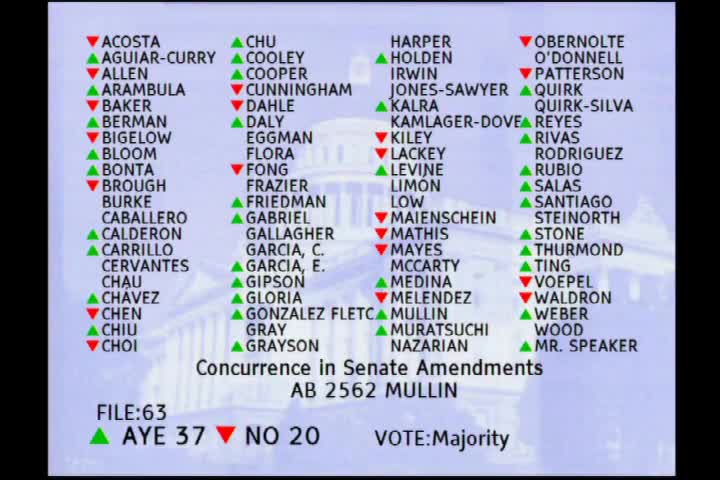 45SEC
Assembly Floor
 1H
Senate Standing Committee on Appropriations
 1MIN
Senate Standing Committee on Appropriations
 7MIN
Senate Standing Committee on Human Services
 1MIN
Assembly Floor
 1H
Assembly Standing Committee on Appropriations
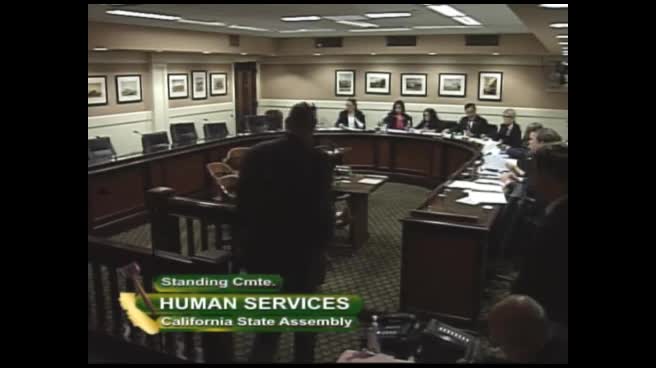 13MIN
Assembly Standing Committee on Human Services


Bill Co-Author(s):





