AB 611: Mandated reporters of suspected financial abuse of an elder or dependent adult: powers of attorney.
- Session Year: 2017-2018
- House: Assembly
- Latest Version Date: 2017-10-02
Existing law requires a mandated reporter of suspected financial abuse of an elder or dependent adult, as defined, to report financial abuse in a specified manner. Existing law provides for the creation and effect of powers of attorney.
This bill would authorize a mandated reporter of suspected financial abuse of an elder or dependent adult to not honor a power of attorney as to an attorney-in-fact about whom he or she made a report to an adult protective services agency or a local law enforcement agency of any state that the natural person who executed the power of attorney may be an elder or dependent adult subject to financial abuse by that attorney-in-fact.
Existing law requires a mandated reporter of suspected financial abuse of an elder or dependent adult, as defined, to report financial abuse in a specified manner. Existing law provides for the creation and effect of powers of attorney.
This bill would authorize a mandated reporter of suspected financial abuse of an elder or dependent adult to not honor a power of attorney as to an attorney-in-fact about whom he or she made a report to an adult protective services agency or a local law enforcement agency of any state that the natural person who executed the power of attorney may be an elder or dependent adult subject to financial abuse. abuse by that attorney-in-fact.
Existing law requires a mandated reporter of suspected financial abuse of an elder or dependent adult, as defined, to report financial abuse in a specified manner. Existing law provides for the creation and effect of powers of attorney.
This bill would authorize a mandated reporter of suspected financial abuse of an elder or dependent adult to not honor any a power of attorney if he or she makes as to an attorney-in-fact about whom he or she made a report to an adult protective services agency or a local law enforcement agency of any state that the natural person who executed the power of attorney may be an elder or dependent adult subject to financial abuse.
Existing law requires a mandated reporter of suspected financial abuse of an elder or dependent adult, as defined, to report financial abuse in a specified manner. Existing law provides for the creation and effect of powers of attorney.
This bill would authorize a mandated reporter of suspected financial abuse of an elder or dependent adult to not honor any power of attorney if he or she makes, or has actual knowledge that any other person has made, makes a report to an adult protective services agency or a local law enforcement agency of any state that the natural person who executed the power of attorney may be an elder or dependent adult subject to financial abuse.
Existing law requires a mandated reporter of suspected financial abuse of an elder or dependent adult, as defined, to report financial abuse in a specified manner. Existing law provides for the creation and effect of powers of attorney.
This bill would authorize a mandated reporter of suspected financial abuse of an elder or dependent adult to not honor any power of attorney if he or she makes, or has actual knowledge that any other person has made, a report to an adult protective services agency or a local law enforcement agency of any state that the natural person who executed the power of attorney may be an elder or dependent adult subject to financial abuse.
(a)As used in this section, mandated reporter of suspected financial abuse of an elder or dependent adult means all officers and employees of financial institutions.
(b)As used in this section, the term financial institution means any of the following:
(1)A depository institution, as defined in Section 3(c) of the Federal Deposit Insurance Act (12 U.S.C. Sec. 1813(c)).
(2)An institution-affiliated party, as defined in Section 3(u) of the Federal Deposit Insurance Act (12 U.S.C. Sec. 1813(u)).
(3)A federal credit union or state credit union, as defined in Section 101 of the Federal Credit Union Act (12 U.S.C. Sec. 1752), including, but not limited to, an institution-affiliated party of a credit union, as defined in Section 206(r) of the Federal Credit Union Act (12 U.S.C. Sec. 1786(r)).
(c)As used in this section, financial abuse has the same meaning as in Section 15610.30.
(d)(1)Any mandated reporter of suspected financial abuse of an elder or dependent adult who has direct contact with the elder or dependent adult or who reviews or approves the elder or dependent adults financial documents, records, or transactions, in connection with providing financial services with respect to an elder or dependent adult, and who, within the scope of his or her employment or professional practice, has observed or has knowledge of an incident, that is directly related to the transaction or matter that is within that scope of employment or professional practice, that reasonably appears to be financial abuse, or who reasonably suspects that abuse, based solely on the information before him or her at the time of reviewing or approving the document, record, or transaction in the case of mandated reporters who do not have direct contact with the elder or dependent adult, shall report the known or suspected instance of financial abuse by telephone or through a confidential Internet reporting tool, as authorized pursuant to Section 15658, immediately, or as soon as practicably possible. If reported by telephone, a written report shall be sent, or an Internet report shall be made through the confidential Internet reporting tool established in Section 15658, within two working days to the local adult protective services agency or the local law enforcement agency.
(2)When two or more mandated reporters jointly have knowledge or reasonably suspect that financial abuse of an elder or a dependent adult for which the report is mandated has occurred, and when there is an agreement among them, the telephone report or Internet report, as authorized by Section 15658, may be made by a member of the reporting team who is selected by mutual agreement. A single report may be made and signed by the selected member of the reporting team. Any member of the team who has knowledge that the member designated to report has failed to do so shall thereafter make that report.
(3)If the mandated reporter knows that the elder or dependent adult resides in a long-term care facility, as defined in Section 15610.47, the report shall be made to the local ombudsman or local law enforcement agency.
(e)An allegation by the elder or dependent adult, or any other person, that financial abuse has occurred is not sufficient to trigger the reporting requirement under this section if both of the following conditions are met:
(1)The mandated reporter of suspected financial abuse of an elder or dependent adult is aware of no other corroborating or independent evidence of the alleged financial abuse of an elder or dependent adult. The mandated reporter of suspected financial abuse of an elder or dependent adult is not required to investigate any accusations.
(2)In the exercise of his or her professional judgment, the mandated reporter of suspected financial abuse of an elder or dependent adult reasonably believes that financial abuse of an elder or dependent adult did not occur.
(f)Failure to report financial abuse under this section shall be subject to a civil penalty not exceeding one thousand dollars ($1,000) or if the failure to report is willful, a civil penalty not exceeding five thousand dollars ($5,000), which shall be paid by the financial institution that is the employer of the mandated reporter to the party bringing the action. Subdivision (h) of Section 15630 shall not apply to violations of this section.
(g)(1)The civil penalty provided for in subdivision (f) shall be recovered only in a civil action brought against the financial institution by the Attorney General, district attorney, or county counsel. No action shall be brought under this section by any person other than the Attorney General, district attorney, or county counsel. Multiple actions for the civil penalty may not be brought for the same violation.
(2)Nothing in the Financial Elder Abuse Reporting Act of 2005 shall be construed to limit, expand, or otherwise modify any civil liability or remedy that may exist under this or any other law.
(h)As used in this section, suspected financial abuse of an elder or dependent adult occurs when a person who is required to report under subdivision (a) observes or has knowledge of behavior or unusual circumstances or transactions, or a pattern of behavior or unusual circumstances or transactions, that would lead an individual with like training or experience, based on the same facts, to form a reasonable belief that an elder or dependent adult is the victim of financial abuse as defined in Section 15610.30.
(i)Reports of suspected financial abuse of an elder or dependent adult made by an employee or officer of a financial institution pursuant to this section are covered under subdivision (b) of Section 47 of the Civil Code.
(j)(1)A mandated reporter of suspected financial abuse of an elder or dependent adult is authorized to not honor a power of attorney described in Division 4.5 (commencing with Section 4000) of the Probate Code as to an attorney-in-fact, if the mandated reporter of suspected financial abuse of an elder or dependent adult makes a report to an adult protective services agency or a local law enforcement agency of any state that the principal may be subject to financial abuse, as described in this chapter or as defined in similar laws of another state, by that attorney-in-fact or person acting for or with that attorney-in-fact.
(2)If a mandated reporter of suspected financial abuse of an elder or dependent adult does not honor a power of attorney as to an attorney-in-fact pursuant to paragraph (1), the power of attorney shall remain enforceable as to every other attorney-in-fact also designated in the power of attorney about whom a report has not been made.
(3)For purposes of this subdivision, the terms principal and attorney-in-fact shall have the same meanings as those terms are used in Division 4.5 (commencing with Section 4000) of the Probate Code.
(a)As used in this section, mandated reporter of suspected financial abuse of an elder or dependent adult means all officers and employees of financial institutions.
(b)As used in this section, the term financial institution means any of the following:
(1)A depository institution, as defined in Section 3(c) of the Federal Deposit Insurance Act (12 U.S.C. Sec. 1813(c)).
(2)An institution-affiliated party, as defined in Section 3(u) of the Federal Deposit Insurance Act (12 U.S.C. Sec. 1813(u)).
(3)A federal credit union or state credit union, as defined in Section 101 of the Federal Credit Union Act (12 U.S.C. Sec. 1752), including, but not limited to, an institution-affiliated party of a credit union, as defined in Section 206(r) of the Federal Credit Union Act (12 U.S.C. Sec. 1786(r)).
(c)As used in this section, financial abuse has the same meaning as in Section 15610.30.
(d)(1)Any mandated reporter of suspected financial abuse of an elder or dependent adult who has direct contact with the elder or dependent adult or who reviews or approves the elder or dependent adults financial documents, records, or transactions, in connection with providing financial services with respect to an elder or dependent adult, and who, within the scope of his or her employment or professional practice, has observed or has knowledge of an incident, that is directly related to the transaction or matter that is within that scope of employment or professional practice, that reasonably appears to be financial abuse, or who reasonably suspects that abuse, based solely on the information before him or her at the time of reviewing or approving the document, record, or transaction in the case of mandated reporters who do not have direct contact with the elder or dependent adult, shall report the known or suspected instance of financial abuse by telephone or through a confidential Internet reporting tool, as authorized pursuant to Section 15658, immediately, or as soon as practicably possible. If reported by telephone, a written report shall be sent, or an Internet report shall be made through the confidential Internet reporting tool established in Section 15658, within two working days to the local adult protective services agency or the local law enforcement agency.
(2)When two or more mandated reporters jointly have knowledge or reasonably suspect that financial abuse of an elder or a dependent adult for which the report is mandated has occurred, and when there is an agreement among them, the telephone report or Internet report, as authorized by Section 15658, may be made by a member of the reporting team who is selected by mutual agreement. A single report may be made and signed by the selected member of the reporting team. Any member of the team who has knowledge that the member designated to report has failed to do so shall thereafter make that report.
(3)If the mandated reporter knows that the elder or dependent adult resides in a long-term care facility, as defined in Section 15610.47, the report shall be made to the local ombudsman or local law enforcement agency.
(e)An allegation by the elder or dependent adult, or any other person, that financial abuse has occurred is not sufficient to trigger the reporting requirement under this section if both of the following conditions are met:
(1)The mandated reporter of suspected financial abuse of an elder or dependent adult is aware of no other corroborating or independent evidence of the alleged financial abuse of an elder or dependent adult. The mandated reporter of suspected financial abuse of an elder or dependent adult is not required to investigate any accusations.
(2)In the exercise of his or her professional judgment, the mandated reporter of suspected financial abuse of an elder or dependent adult reasonably believes that financial abuse of an elder or dependent adult did not occur.
(f)Failure to report financial abuse under this section shall be subject to a civil penalty not exceeding one thousand dollars ($1,000) or if the failure to report is willful, a civil penalty not exceeding five thousand dollars ($5,000), which shall be paid by the financial institution that is the employer of the mandated reporter to the party bringing the action. Subdivision (h) of Section 15630 shall not apply to violations of this section.
(g)(1)The civil penalty provided for in subdivision (f) shall be recovered only in a civil action brought against the financial institution by the Attorney General, district attorney, or county counsel. No action shall be brought under this section by any person other than the Attorney General, district attorney, or county counsel. Multiple actions for the civil penalty may not be brought for the same violation.
(2)Nothing in the Financial Elder Abuse Reporting Act of 2005 shall be construed to limit, expand, or otherwise modify any civil liability or remedy that may exist under this or any other law.
(h)As used in this section, suspected financial abuse of an elder or dependent adult occurs when a person who is required to report under subdivision (a) observes or has knowledge of behavior or unusual circumstances or transactions, or a pattern of behavior or unusual circumstances or transactions, that would lead an individual with like training or experience, based on the same facts, to form a reasonable belief that an elder or dependent adult is the victim of financial abuse as defined in Section 15610.30.
(i)Reports of suspected financial abuse of an elder or dependent adult made by an employee or officer of a financial institution pursuant to this section are covered under subdivision (b) of Section 47 of the Civil Code.
(j)(1)A mandated reporter of suspected financial abuse of an elder or dependent adult is authorized to not honor a power of attorney described in Division 4.5 (commencing with Section 4000) of the Probate Code as to an attorney-in-fact, if the mandated reporter of suspected financial abuse of an elder or dependent adult makes a report to an adult protective services agency or a local law enforcement agency of any state that the principal may be subject to financial abuse, as described in this chapter or as defined in similar laws of another state, by that attorney-in-fact or person acting for or with that attorney-in-fact.
(2)If a mandated reporter of suspected financial abuse of an elder or dependent adult does not honor a power of attorney as to an attorney-in-fact pursuant to paragraph (1), he or she shall continue to honor the power of attorney shall remain enforceable as to every other attorney-in-fact also designated in the power of attorney about whom he or she has not made a report. a report has not been made.
(3)For purposes of this subdivision, the terms principal and attorney-in-fact shall have the same meanings as those terms are used in Division 4.5 (commencing with Section 4000) of the Probate Code.
(a)As used in this section, mandated reporter of suspected financial abuse of an elder or dependent adult means all officers and employees of financial institutions.
(b)As used in this section, the term financial institution means any of the following:
(1)A depository institution, as defined in Section 3(c) of the Federal Deposit Insurance Act (12 U.S.C. Sec. 1813(c)).
(2)An institution-affiliated party, as defined in Section 3(u) of the Federal Deposit Insurance Act (12 U.S.C. Sec. 1813(u)).
(3)A federal credit union or state credit union, as defined in Section 101 of the Federal Credit Union Act (12 U.S.C. Sec. 1752), including, but not limited to, an institution-affiliated party of a credit union, as defined in Section 206(r) of the Federal Credit Union Act (12 U.S.C. Sec. 1786(r)).
(c)As used in this section, financial abuse has the same meaning as in Section 15610.30.
(d)(1)Any mandated reporter of suspected financial abuse of an elder or dependent adult who has direct contact with the elder or dependent adult or who reviews or approves the elder or dependent adults financial documents, records, or transactions, in connection with providing financial services with respect to an elder or dependent adult, and who, within the scope of his or her employment or professional practice, has observed or has knowledge of an incident, that is directly related to the transaction or matter that is within that scope of employment or professional practice, that reasonably appears to be financial abuse, or who reasonably suspects that abuse, based solely on the information before him or her at the time of reviewing or approving the document, record, or transaction in the case of mandated reporters who do not have direct contact with the elder or dependent adult, shall report the known or suspected instance of financial abuse by telephone or through a confidential Internet reporting tool, as authorized pursuant to Section 15658, immediately, or as soon as practicably possible. If reported by telephone, a written report shall be sent, or an Internet report shall be made through the confidential Internet reporting tool established in Section 15658, within two working days to the local adult protective services agency or the local law enforcement agency.
(2)When two or more mandated reporters jointly have knowledge or reasonably suspect that financial abuse of an elder or a dependent adult for which the report is mandated has occurred, and when there is an agreement among them, the telephone report or Internet report, as authorized by Section 15658, may be made by a member of the reporting team who is selected by mutual agreement. A single report may be made and signed by the selected member of the reporting team. Any member of the team who has knowledge that the member designated to report has failed to do so shall thereafter make that report.
(3)If the mandated reporter knows that the elder or dependent adult resides in a long-term care facility, as defined in Section 15610.47, the report shall be made to the local ombudsman or local law enforcement agency.
(e)An allegation by the elder or dependent adult, or any other person, that financial abuse has occurred is not sufficient to trigger the reporting requirement under this section if both of the following conditions are met:
(1)The mandated reporter of suspected financial abuse of an elder or dependent adult is aware of no other corroborating or independent evidence of the alleged financial abuse of an elder or dependent adult. The mandated reporter of suspected financial abuse of an elder or dependent adult is not required to investigate any accusations.
(2)In the exercise of his or her professional judgment, the mandated reporter of suspected financial abuse of an elder or dependent adult reasonably believes that financial abuse of an elder or dependent adult did not occur.
(f)Failure to report financial abuse under this section shall be subject to a civil penalty not exceeding one thousand dollars ($1,000) or if the failure to report is willful, a civil penalty not exceeding five thousand dollars ($5,000), which shall be paid by the financial institution that is the employer of the mandated reporter to the party bringing the action. Subdivision (h) of Section 15630 shall not apply to violations of this section.
(g)(1)The civil penalty provided for in subdivision (f) shall be recovered only in a civil action brought against the financial institution by the Attorney General, district attorney, or county counsel. No action shall be brought under this section by any person other than the Attorney General, district attorney, or county counsel. Multiple actions for the civil penalty may not be brought for the same violation.
(2)Nothing in the Financial Elder Abuse Reporting Act of 2005 shall be construed to limit, expand, or otherwise modify any civil liability or remedy that may exist under this or any other law.
(h)As used in this section, suspected financial abuse of an elder or dependent adult occurs when a person who is required to report under subdivision (a) observes or has knowledge of behavior or unusual circumstances or transactions, or a pattern of behavior or unusual circumstances or transactions, that would lead an individual with like training or experience, based on the same facts, to form a reasonable belief that an elder or dependent adult is the victim of financial abuse as defined in Section 15610.30.
(i)Reports of suspected financial abuse of an elder or dependent adult made by an employee or officer of a financial institution pursuant to this section are covered under subdivision (b) of Section 47 of the Civil Code.
(j)(1)A mandated reporter of suspected financial abuse of an elder or dependent adult is authorized to not honor any a power of attorney described in Division 4.5 (commencing with Section 4000) of the Probate Code as to an attorney-in-fact, if the mandated reporter of suspected financial abuse of an elder or dependent adult makes a report to an adult protective services agency or a local law enforcement agency of any state that the principal may be subject to financial abuse, as described in this chapter or as defined in similar laws of another state, by the agent that attorney-in-fact or person acting for or with the agent. that attorney-in-fact.
(2)If a mandated reporter of suspected financial abuse of an elder or dependent adult does not honor a power of attorney as to an attorney-in-fact pursuant to paragraph (1), he or she shall continue to honor the power of attorney as to every other attorney-in-fact also designated in the power of attorney about whom he or she has not made a report.
(2)(3)For purposes of this subdivision, the terms principal and agent attorney-in-fact shall have the same meanings as those terms are used in Division 4.5 (commencing with Section 4000) of the Probate Code.
(a)As used in this section, mandated reporter of suspected financial abuse of an elder or dependent adult means all officers and employees of financial institutions.
(b)As used in this section, the term financial institution means any of the following:
(1)A depository institution, as defined in Section 3(c) of the Federal Deposit Insurance Act (12 U.S.C. Sec. 1813(c)).
(2)An institution-affiliated party, as defined in Section 3(u) of the Federal Deposit Insurance Act (12 U.S.C. Sec. 1813(u)).
(3)A federal credit union or state credit union, as defined in Section 101 of the Federal Credit Union Act (12 U.S.C. Sec. 1752), including, but not limited to, an institution-affiliated party of a credit union, as defined in Section 206(r) of the Federal Credit Union Act (12 U.S.C. Sec. 1786(r)).
(c)As used in this section, financial abuse has the same meaning as in Section 15610.30.
(d)(1)Any mandated reporter of suspected financial abuse of an elder or dependent adult who has direct contact with the elder or dependent adult or who reviews or approves the elder or dependent adults financial documents, records, or transactions, in connection with providing financial services with respect to an elder or dependent adult, and who, within the scope of his or her employment or professional practice, has observed or has knowledge of an incident, that is directly related to the transaction or matter that is within that scope of employment or professional practice, that reasonably appears to be financial abuse, or who reasonably suspects that abuse, based solely on the information before him or her at the time of reviewing or approving the document, record, or transaction in the case of mandated reporters who do not have direct contact with the elder or dependent adult, shall report the known or suspected instance of financial abuse by telephone or through a confidential Internet reporting tool, as authorized pursuant to Section 15658, immediately, or as soon as practicably possible. If reported by telephone, a written report shall be sent, or an Internet report shall be made through the confidential Internet reporting tool established in Section 15658, within two working days to the local adult protective services agency or the local law enforcement agency.
(2)When two or more mandated reporters jointly have knowledge or reasonably suspect that financial abuse of an elder or a dependent adult for which the report is mandated has occurred, and when there is an agreement among them, the telephone report or Internet report, as authorized by Section 15658, may be made by a member of the reporting team who is selected by mutual agreement. A single report may be made and signed by the selected member of the reporting team. Any member of the team who has knowledge that the member designated to report has failed to do so shall thereafter make that report.
(3)If the mandated reporter knows that the elder or dependent adult resides in a long-term care facility, as defined in Section 15610.47, the report shall be made to the local ombudsman or local law enforcement agency.
(e)An allegation by the elder or dependent adult, or any other person, that financial abuse has occurred is not sufficient to trigger the reporting requirement under this section if both of the following conditions are met:
(1)The mandated reporter of suspected financial abuse of an elder or dependent adult is aware of no other corroborating or independent evidence of the alleged financial abuse of an elder or dependent adult. The mandated reporter of suspected financial abuse of an elder or dependent adult is not required to investigate any accusations.
(2)In the exercise of his or her professional judgment, the mandated reporter of suspected financial abuse of an elder or dependent adult reasonably believes that financial abuse of an elder or dependent adult did not occur.
(f)Failure to report financial abuse under this section shall be subject to a civil penalty not exceeding one thousand dollars ($1,000) or if the failure to report is willful, a civil penalty not exceeding five thousand dollars ($5,000), which shall be paid by the financial institution that is the employer of the mandated reporter to the party bringing the action. Subdivision (h) of Section 15630 shall not apply to violations of this section.
(g)(1)The civil penalty provided for in subdivision (f) shall be recovered only in a civil action brought against the financial institution by the Attorney General, district attorney, or county counsel. No action shall be brought under this section by any person other than the Attorney General, district attorney, or county counsel. Multiple actions for the civil penalty may not be brought for the same violation.
(2)Nothing in the Financial Elder Abuse Reporting Act of 2005 shall be construed to limit, expand, or otherwise modify any civil liability or remedy that may exist under this or any other law.
(h)As used in this section, suspected financial abuse of an elder or dependent adult occurs when a person who is required to report under subdivision (a) observes or has knowledge of behavior or unusual circumstances or transactions, or a pattern of behavior or unusual circumstances or transactions, that would lead an individual with like training or experience, based on the same facts, to form a reasonable belief that an elder or dependent adult is the victim of financial abuse as defined in Section 15610.30.
(i)Reports of suspected financial abuse of an elder or dependent adult made by an employee or officer of a financial institution pursuant to this section are covered under subdivision (b) of Section 47 of the Civil Code.
(j)(1)A mandated reporter of suspected financial abuse of an elder or dependent adult is authorized to not honor any power of attorney described in Division 4.5 (commencing with Section 4000) of the Probate Code if the mandated reporter of suspected financial abuse of an elder or dependent adult makes, or has actual knowledge that any other person has made, makes a report to an adult protective services agency or a local law enforcement agency of any state that the principal may be subject to financial abuse, as described in this chapter or as defined in similar laws of another state, by the agent or person acting for or with the agent.
(2)For purposes of this subdivision, the terms principal and agent shall have the same meanings as those terms used in Division 4.5 (commencing with Section 4000) of the Probate Code.
(a)As used in this section, mandated reporter of suspected financial abuse of an elder or dependent adult means all officers and employees of financial institutions.
(b)As used in this section, the term financial institution means any of the following:
(1)A depository institution, as defined in Section 3(c) of the Federal Deposit Insurance Act (12 U.S.C. Sec. 1813(c)).
(2)An institution-affiliated party, as defined in Section 3(u) of the Federal Deposit Insurance Act (12 U.S.C. Sec. 1813(u)).
(3)A federal credit union or state credit union, as defined in Section 101 of the Federal Credit Union Act (12 U.S.C. Sec. 1752), including, but not limited to, an institution-affiliated party of a credit union, as defined in Section 206(r) of the Federal Credit Union Act (12 U.S.C. Sec. 1786(r)).
(c)As used in this section, financial abuse has the same meaning as in Section 15610.30.
(d)(1)Any mandated reporter of suspected financial abuse of an elder or dependent adult who has direct contact with the elder or dependent adult or who reviews or approves the elder or dependent adults financial documents, records, or transactions, in connection with providing financial services with respect to an elder or dependent adult, and who, within the scope of his or her employment or professional practice, has observed or has knowledge of an incident, that is directly related to the transaction or matter that is within that scope of employment or professional practice, that reasonably appears to be financial abuse, or who reasonably suspects that abuse, based solely on the information before him or her at the time of reviewing or approving the document, record, or transaction in the case of mandated reporters who do not have direct contact with the elder or dependent adult, shall report the known or suspected instance of financial abuse by telephone or through a confidential Internet reporting tool, as authorized pursuant to Section 15658, immediately, or as soon as practicably possible. If reported by telephone, a written report shall be sent, or an Internet report shall be made through the confidential Internet reporting tool established in Section 15658, within two working days to the local adult protective services agency or the local law enforcement agency.
(2)When two or more mandated reporters jointly have knowledge or reasonably suspect that financial abuse of an elder or a dependent adult for which the report is mandated has occurred, and when there is an agreement among them, the telephone report or Internet report, as authorized by Section 15658, may be made by a member of the reporting team who is selected by mutual agreement. A single report may be made and signed by the selected member of the reporting team. Any member of the team who has knowledge that the member designated to report has failed to do so shall thereafter make that report.
(3)If the mandated reporter knows that the elder or dependent adult resides in a long-term care facility, as defined in Section 15610.47, the report shall be made to the local ombudsman or local law enforcement agency.
(e)An allegation by the elder or dependent adult, or any other person, that financial abuse has occurred is not sufficient to trigger the reporting requirement under this section if both of the following conditions are met:
(1)The mandated reporter of suspected financial abuse of an elder or dependent adult is aware of no other corroborating or independent evidence of the alleged financial abuse of an elder or dependent adult. The mandated reporter of suspected financial abuse of an elder or dependent adult is not required to investigate any accusations.
(2)In the exercise of his or her professional judgment, the mandated reporter of suspected financial abuse of an elder or dependent adult reasonably believes that financial abuse of an elder or dependent adult did not occur.
(f)Failure to report financial abuse under this section shall be subject to a civil penalty not exceeding one thousand dollars ($1,000) or if the failure to report is willful, a civil penalty not exceeding five thousand dollars ($5,000), which shall be paid by the financial institution that is the employer of the mandated reporter to the party bringing the action. Subdivision (h) of Section 15630 shall not apply to violations of this section.
(g)(1)The civil penalty provided for in subdivision (f) shall be recovered only in a civil action brought against the financial institution by the Attorney General, district attorney, or county counsel. No action shall be brought under this section by any person other than the Attorney General, district attorney, or county counsel. Multiple actions for the civil penalty may not be brought for the same violation.
(2)Nothing in the Financial Elder Abuse Reporting Act of 2005 shall be construed to limit, expand, or otherwise modify any civil liability or remedy that may exist under this or any other law.
(h)As used in this section, suspected financial abuse of an elder or dependent adult occurs when a person who is required to report under subdivision (a) observes or has knowledge of behavior or unusual circumstances or transactions, or a pattern of behavior or unusual circumstances or transactions, that would lead an individual with like training or experience, based on the same facts, to form a reasonable belief that an elder or dependent adult is the victim of financial abuse as defined in Section 15610.30.
(i)Reports of suspected financial abuse of an elder or dependent adult made by an employee or officer of a financial institution pursuant to this section are covered under subdivision (b) of Section 47 of the Civil Code.
(j)(1)A mandated reporter of suspected financial abuse of an elder or dependent adult is authorized to not honor any power of attorney described in Division 4.5 (commencing with Section 4000) of the Probate Code if the mandated reporter of suspected financial abuse of an elder or dependent adult makes, or has actual knowledge that any other person has made, a report to an adult protective services agency or a local law enforcement agency of any state that the principal may be subject to financial abuse, as described in this chapter or as defined in similar laws of another state, by the agent or person acting for or with the agent.
(2)For purposes of this subdivision, the terms principal and agent shall have the same meanings as those terms used in Division 4.5 (commencing with Section 4000) of the Probate Code.
|
Date
|
Status
|
|---|---|
| Oct 2, 2017 | Chaptered by Secretary of State - Chapter 408, Statutes of 2017. |
| Oct 2, 2017 | Approved by the Governor. |
| Sep 19, 2017 | Enrolled and presented to the Governor at 3 p.m. |
| Sep 11, 2017 | Senate amendments concurred in. To Engrossing and Enrolling. |
| Sep 6, 2017 | In Assembly. Concurrence in Senate amendments pending. May be considered on or after September 8 pursuant to Assembly Rule 77. |
| Sep 6, 2017 | Read third time. Passed. Ordered to the Assembly. |
| Aug 28, 2017 | Read second time. Ordered to third reading. |
| Aug 24, 2017 | Read third time and amended. Ordered to second reading. |
| Aug 24, 2017 | From Consent Calendar. |
| Jul 20, 2017 | Read second time. Ordered to Consent Calendar. |
| Jul 19, 2017 | From committee: Do pass. To Consent Calendar. (Ayes 7. Noes 0.) (July 18). |
| Jun 26, 2017 | From committee chair, with author's amendments: Amend, and re-refer to committee. Read second time, amended, and re-referred to Com. on JUD. |
| Jun 7, 2017 | From committee: Do pass and re-refer to Com. on JUD. (Ayes 11. Noes 0.) (June 7). Re-referred to Com. on JUD. |
| May 24, 2017 | Referred to Coms. on I., B. & F.I. and JUD. |
| May 15, 2017 | In Senate. Read first time. To Com. on RLS. for assignment. |
| May 15, 2017 | Read third time. Passed. Ordered to the Senate. (Ayes 78. Noes 0. Page 1530.) |
| May 10, 2017 | Read second time. Ordered to third reading. |
| May 9, 2017 | From committee: Do pass. (Ayes 11. Noes 0.) (May 9). |
| May 3, 2017 | Re-referred to Com. on JUD. |
| May 2, 2017 | From committee chair, with author's amendments: Amend, and re-refer to Com. on JUD. Read second time and amended. |
| Apr 19, 2017 | From committee: Do pass and re-refer to Com. on JUD. (Ayes 7. Noes 0.) (April 18). Re-referred to Com. on JUD. |
| Mar 20, 2017 | Referred to Coms. on AGING & L.T.C. and JUD. |
| Feb 15, 2017 | From printer. May be heard in committee March 17. |
| Feb 14, 2017 | Read first time. To print. |
|
Date
|
Description
|
Location
|
Votes
|
|
|---|---|---|---|---|
| Sep 11, 2017 | AB 611 DABABNEH Concurrence in Senate Amendments | Assembly Floor |
Passed |
|
| Sep 6, 2017 | Assembly 3rd Reading AB611 Dababneh By Mendoza | Senate Floor |
Passed |
|
| Jul 18, 2017 | Do pass and be ordered to the Consent Calendar | Senate Standing Committee on Judiciary |
Passed |
|
| Jun 7, 2017 | Do pass, but first be re-referred to the Committee on [Judiciary] | Senate Standing Committee on Insurance, Banking and Financial Institutions |
Passed |
|
| May 15, 2017 | AB 611 DABABNEH Assembly Third Reading | Assembly Floor |
Passed |
|
| May 9, 2017 | Do pass. | Assembly Standing Committee on Judiciary |
Passed |
|
| Apr 18, 2017 | Do pass and be re-referred to the Committee on [Judiciary] | Assembly Standing Committee on Aging and Long-Term Care |
Passed |
This list shows positions taken on this bill by organizations on the date displayed, which is linked to the original source.
Positions by individuals are not included.
CONCURRENCE IN SENATE AMENDMENTS
CSA1 Bill Id:AB 611
Author:(Dababneh)
As Amended Ver:August 24, 2017
Majority vote
ASSEMBLY: | 78-0 | (May 15, 2017) | SENATE: | 40-0 | (September 6, 2017) |
Original Committee Reference: AGING & L.T.C.
SUMMARY: Authorizes a mandated reporter of elder financial abuse (an officer or employee of a financial institution) to refuse to honor a power of attorney as to an attorney-in-fact if the mandated reporter has made a report that the principal may be subject to elder financial abuse by the person exercising the power of attorney.
The Senate amendments:
- Replace the term "agent" with "attorney-in-fact" to be consistent with the terms used in Division 4.5 (commencing with Section 4000) of the Probate Code.
- Clarifies that a power of attorney shall remain enforceable as to every other attorney-in-fact also designated in the power of attorney about whom the mandated reporter has not made a report.
EXISTING LAW:
- The Elder and Dependent Adult Civil Protection Act, was enacted to prevent elder and dependent adult abuse and neglect, and to prosecute those that inflict that abuse or neglect on elders and dependent adults.
- Defines "financial abuse" of an elder or dependent adult as the taking, secreting, appropriation or retention of real or personal property of the elder or dependent adult to a wrongful use or with intent to defraud, or both, or assisting another person in the above activities, and deems the taking, secreting, appropriating, or retaining of property for a wrongful use, if it is done in bad faith.
- Requires mandated reporters who observe or have knowledge of elder or dependent adult physical or financial abuse or neglect, or is told by the elder or dependent adult that he/she has experienced abuse, to immediately report the known or suspected abuse.
- Defines "mandated reporter" as any person who is a provider of care to the elder or dependent adult, a health practitioner, clergy member, employee of county adult protective services or a member of local law enforcement.
- Defines "mandated reporter of suspected financial abuse of an elder or dependent adult" as all officers and employees of financial institutions, and defines "financial institution" as a depository institution, an institution-affiliated party, or a federal, state, or institution-affiliated party credit union.
- Provides that a mandated reporter of suspected financial abuse of an elder or dependent adult who fails to report financial abuse shall be subject to a civil penalty not exceeding $1,000. If the failure to report is willful, the civil penalty may be up to $5,000.
- Specifies that the civil penalty shall be paid by the financial institution who is the employer of the mandated reporter to the party bringing the action.
FISCAL EFFECT: This bill is keyed non-fiscal by the Legislative Counsel.
COMMENTS:
Author's Statement: "This bill provides additional protection for elders and dependent adults by preventing financial abuse before it occurs. Officers and employees of financial institutions can stop financial transactions if they have filed … a financial abuse report on an individual, even if that individual has a power of attorney. The individual with the power of attorney may appeal the action to a Judge."
Elder Financial Abuse: The California Department of Social Services reports that for fiscal year 2015/16 Adult Protective Services received 12,177 reports of financial abuse from financial institutions. This represented 7% of all reports of abuse and neglect and an average of 1,014 reports from financial institutions per month. There was an average of 756 reports of abuse confirmed each month in fiscal year 2015/16. There were an additional 1,556 inconclusive financial abuses cases each month. Inconclusive means that the Department had reason to believe that the abuse occurred but, no proof. Bank officers and employees are regularly presented with situations that require them to honor a power of attorney despite having knowledge that a financial elder abuse report has been filed on the holder of the power of attorney.
According to the True Link Report on Elder Financial Abuse 2015, $16.99 billion is lost to financial exploitation annually, $12.76 billion is lost to criminal fraud or identity theft annually, and $6.67 billion is lost to deceit or theft enabled by a trusting relationship annually.
How Can a Power of Attorney be Used? A Power of Attorney can be used to give another person the right to sell a car, home, or other property in the place of the maker of the Power of Attorney. A Power of Attorney might be used to allow another person to sign a contract for the maker of the Power of Attorney (the person who makes a power of attorney is called the "principal").
It can be used to give another person the authority to make health care decisions, conduct financial transactions, or sign legal documents that the principal cannot do for one reason or another. With few exceptions, Powers of Attorney can give others the right to do any legal acts that the makers of the Powers of Attorney could do them themselves.
The Uniform Power of Attorney Act (UPOAA) was drafted and adopted in 2006 by the Uniform Law Commission to replace the former Uniform Durable Power of Attorney Act. The purpose of UPOAA is to provide uniformity throughout the states, and enhance the usefulness of durable powers while protecting the principal, the agent, and those who deal with the agent. Section 120 of UPOAA provides that a third person is not required to honor a power of attorney if the third person makes, or has actual knowledge that another person has made, a report to the local adult protective services agency or the local law enforcement agency. To date, 21 states have adopted the UPOAA.
Analysis Prepared by: Barry Brewer / AGING & L.T.C. / (916) 319-3990 FN: 0001508
Office of Senate Floor Analyses (916) 651-1520 Fax: (916) 327-4478 | AB |
THIRD READING
Bill No: AB 611
:
SENATE INS., BANK. & FIN. COMMITTEE: 11-0, 6/7/17
AYES: Mendoza, Berryhill, Gaines, Galgiani, Glazer, Hueso, Lara, Morrell, Newman, Portantino, Roth
NO VOTE RECORDED: Hernandez, Mitchell
SENATE JUDICIARY COMMITTEE: 7-0, 7/18/17
AYES: Jackson, Moorlach, Anderson, Hertzberg, Monning, Stern, Wieckowski
ASSEMBLY FLOOR: 78-0, 5/15/17 - See last page for vote
SOURCE: California Bankers Association
DIGEST:
This bill authorizes a mandated reporter of suspected elder or dependent adult financial abuse to refuse to honor a power of attorney, as defined, if that mandated reporter makes a report that the elder or dependent adult may be subject to financial abuse, as specified.
Senate Floor Amendments of 8/24/17 clarify the enforceability of a power of attorney following a decision by a mandated reporter of elder and dependent adult financial abuse to decline to enforce that power of attorney.
Existing law:
- Makes all officers and employees of financial institutions, as defined, mandated reporters of suspected financial abuse of an elder or dependent adult (Welfare and Institutions Code Section 15630.1).
- Requires a mandated reporter of suspected elder or dependent adult financial abuse, who has direct contact with the elder or dependent adult, or who reviews or approves the elder or dependent adult’s financial documents, records, or transactions in his or her role as a financial services provider, and who has observed or has knowledge of an incident that reasonably appears to be financial abuse, or who reasonably suspects such abuse, to report the known or suspected abuse as soon as practicably possible to the local adult protective services agency or the local law enforcement agency (Welfare and Institutions Code Section 15630.1).
- Provides that “suspected financial abuse of an elder or dependent adult” occurs when a mandated reporter observes or has knowledge of behavior or unusual circumstances or transactions, or a pattern of behavior or unusual circumstances or transactions, that would lead an individual with like training or experience, based on the same facts, to form a reasonable belief that an elder or dependent adult is the victim of financial abuse, as defined (Welfare and Institutions Code Section 15630.1).
- Clarifies that an allegation by an elder or dependent adult or by any other person that financial abuse has occurred is not sufficient to trigger the requirement that a mandated reporter report such abuse, if both of the following conditions are met (Welfare and Institutions Code Section 15630.1):
- The mandated reporter is aware of no other corroborating or independent evidence of the alleged financial abuse.
- In the exercise of his or her professional judgment, the mandated reporter reasonably believes that financial abuse of the elder or dependent adult did not occur.
- The mandated reporter is aware of no other corroborating or independent evidence of the alleged financial abuse.
- Provides that failure of a mandated reporter to report financial abuse is subject to a civil penalty not exceeding $1,000 ($5,000 if the failure to report is willful), which must be paid by the financial institution that employs the mandated reporter (Welfare and Institutions Code Section 15630.1).
This bill:
- Authorizes a mandated reporter of suspected elder or dependent adult financial abuse to refuse to honor a power of attorney, as defined, if that mandated reporter makes a report to an adult protective services agency or local law enforcement agency of any state that the elder or dependent adult who granted the power of attorney may be subject to financial abuse, as defined under California law or in similar laws of another state, by the person seeking to act under the authority of the power of attorney.
- Clarifies that if a mandated reporter does not allow a person authorized to act under the authority of a power of attorney to conduct business on behalf of the elder or dependent adult that granted the power of attorney, because the mandated reporter suspects that the person seeking to act under the authority of that power of attorney may be engaging in elder or dependent adult financial abuse, that power of attorney remains enforceable as to every other person granted authority under the power of attorney about whom a report of suspected elder or dependent adult financial abuse has not been made.
Background
California’s Financial Elder Abuse Reporting Act was enacted in 2005. The Act is designed to empower bank and credit union employees to spot and report suspected instances of financial elder or dependent adult abuse before vulnerable adults can be defrauded. AB 611 will add another tool for use by bank and credit union employees to help spot and stop suspected elder and dependent adult financial abuse – the ability to refuse to honor a power of attorney presented by the agent of an elder or dependent adult, if a bank or credit union employee makes a report that the elder or dependent adult may be subject to financial abuse by that agent.
This bill is intended as a preventative measure. Although this bill’s author and sponsor do not have specific examples of instances in which California banks and credit unions have been unable to stop the financial abuse of elder and dependent adults by agents acting under powers of attorney, the author and sponsor are aware of other states in which provisions similar to the one contained in this bill have been helpful for protecting customers’ assets.
Comments
While clearly well-intentioned, AB 611 raises a question in the minds of many who have been or are likely to be granted a power of attorney over the financial affairs of another. Specifically, could a well-intentioned bank or credit union employee reach a false conclusion about the intentions of someone attempting to act under a power of attorney and prevent that individual from transacting time-sensitive, important financial business on another’s behalf? Virtually all baby boomers are watching their parents and other family members age, and many have been asked to help their elderly relatives manage their financial affairs, sometimes through use of a power of attorney. It is not uncommon for someone helping an elder with financial matters to realize, quite late, that a bill is due or past due, and must be paid right away if significant financial consequences are to be avoided. If a person vested with a power of attorney enters a bank or credit union, seeking to transact important financial business on behalf of the person who granted them that power, and is denied that opportunity by a well-meaning bank or credit union employee, it is unclear what recourse that person would have against the bank or credit union, if financial harm befalls the elder or dependent adult or their estate as a result of the actions of the bank or credit union employee.
In response to these concerns, this bill’s sponsor (California Bankers Association) states that AB 611 allows, but does not require, the bank or credit union to dishonor the power of attorney. This discretion will allow the bank or credit union to consider the specific facts of each individual circumstance. Further, under existing law (Probate Code Section 4406), the person granted power of attorney (the agent) has recourse against a third party – in this case, the bank or credit union. Specifically, the agent may bring an action in court to compel the third party to honor the agent’s exercise of authority. The same section of the Probate Code requires the court to award attorney’s fees to the agent, if the court finds that the third person acted unreasonably in refusing to accept the agent’s authority. Given the remedy available to an agent under Probate Code Section 4406, this bill’s sponsor believes that banks and credit unions will judiciously use the authority granted by AB 611.
Finally, the sponsor notes that, given the existing statutory mandate for a bank or credit union to report financial abuse of an elder or dependent adult, that same bank or credit union should reasonably be granted the statutory authority to dishonor suspected wrongdoing perpetrated by an agent acting under a power of attorney granted by that elder or dependent adult. In the absence of the authority contained in AB 611, a bank or credit union is, on one hand, required to report suspected financial abuse of the elder or dependent adult, but is, on the other hand, required to stand down while an agent of that elder or dependent adult perpetrates such abuse.
SB 1018 (Simitian, Chapter 140, Statutes of 2005) enacted the Financial Elder Abuse Reporting Act of 2005, operative January 1, 2007, and originally scheduled to sunset on January 1, 2013.
SB 33 (Simitian, Chapter 372, Statutes of 2011) deleted the sunset date on the Financial Elder Abuse Reporting Act.
FISCAL EFFECT: Appropriation: Fiscal Com.: Local:
California Bankers Association (source)
California Commission on Aging
California Community Banking Network
California Credit Union League
California District Attorneys Association
California Retired Teachers Association
California State Sheriffs’ Association
Los Angeles County District Attorney’s Office
National Association of Social Workers
OPPOSITION: (Verified 8/24/17)
None received
ARGUMENTS IN SUPPORT: California Bankers Association (CBA) is sponsoring AB 611 to add California to the list of 21 other states that have adopted similar provisions. According to CBA, the Uniform Power of Attorney Act (UPOAA) was drafted and adopted in 2006 by the Uniform Law Commission to replace the former Uniform Durable Power of Attorney Act. The stated purpose of UPOAA is to provide uniformity and enhance the usefulness of durable powers while protecting the principal, the agent, and those who deal with the agent. Section 120 of the UPOAA provides that a third person is not required to honor a power of attorney if the third person makes, or has actual knowledge that another person has made, a report to the local adult protective services agency or the local law enforcement agency.
ASSEMBLY FLOOR: 78-0, 5/15/17
AYES: Acosta, Aguiar-Curry, Travis Allen, Arambula, Baker, Berman, Bigelow, Bloom, Bocanegra, Bonta, Brough, Burke, Caballero, Calderon, Cervantes, Chau, Chávez, Chen, Chiu, Choi, Chu, Cooley, Cooper, Cunningham, Dababneh, Dahle, Daly, Flora, Fong, Frazier, Friedman, Gallagher, Cristina Garcia, Eduardo Garcia, Gipson, Gloria, Gomez, Gonzalez Fletcher, Gray, Grayson, Harper, Irwin, Jones-Sawyer, Kalra, Kiley, Lackey, Levine, Limón, Low, Maienschein, Mathis, Mayes, McCarty, Medina, Melendez, Mullin, Muratsuchi, Nazarian, Obernolte, O'Donnell, Patterson, Quirk, Quirk-Silva, Reyes, Ridley-Thomas, Rodriguez, Rubio, Salas, Santiago, Steinorth, Mark Stone, Thurmond, Ting, Voepel, Waldron, Weber, Wood, Rendon
NO VOTE RECORDED: Eggman, Holden
8/29/17 10:59:26
**** END ****
Office of Senate Floor Analyses (916) 651-1520 Fax: (916) 327-4478 | AB |
CONSENT
Bill No: AB 611
:
SENATE INS., BANK. & FIN. COMMITTEE: 11-0, 6/7/17
AYES: Mendoza, Berryhill, Gaines, Galgiani, Glazer, Hueso, Lara, Morrell, Newman, Portantino, Roth
NO VOTE RECORDED: Hernandez, Mitchell
SENATE JUDICIARY COMMITTEE: 7-0, 7/18/17
AYES: Jackson, Moorlach, Anderson, Hertzberg, Monning, Stern, Wieckowski
ASSEMBLY FLOOR: 78-0, 5/15/17 - See last page for vote
SOURCE: California Bankers Association
DIGEST:
This bill authorizes a mandated reporter of suspected elder or dependent adult financial abuse to refuse to honor a power of attorney, as defined, if that mandated reporter makes a report that the elder or dependent adult may be subject to financial abuse, as specified.
Existing law:
- Makes all officers and employees of financial institutions, as defined, mandated reporters of suspected financial abuse of an elder or dependent adult (Welfare and Institutions Code Section 15630.1).
- Requires a mandated reporter of suspected elder or dependent adult financial abuse, who has direct contact with the elder or dependent adult, or who reviews or approves the elder or dependent adult’s financial documents, records, or transactions in his or her role as a financial services provider, and who has observed or has knowledge of an incident that reasonably appears to be financial abuse, or who reasonably suspects such abuse, to report the known or suspected abuse as soon as practicably possible to the local adult protective services agency or the local law enforcement agency (Welfare and Institutions Code Section 15630.1).
- Provides that “suspected financial abuse of an elder or dependent adult” occurs when a mandated reporter observes or has knowledge of behavior or unusual circumstances or transactions, or a pattern of behavior or unusual circumstances or transactions, that would lead an individual with like training or experience, based on the same facts, to form a reasonable belief that an elder or dependent adult is the victim of financial abuse, as defined (Welfare and Institutions Code Section 15630.1).
- Clarifies that an allegation by an elder or dependent adult or by any other person that financial abuse has occurred is not sufficient to trigger the requirement that a mandated reporter report such abuse, if both of the following conditions are met (Welfare and Institutions Code Section 15630.1):
- The mandated reporter is aware of no other corroborating or independent evidence of the alleged financial abuse.
- In the exercise of his or her professional judgment, the mandated reporter reasonably believes that financial abuse of the elder or dependent adult did not occur.
- The mandated reporter is aware of no other corroborating or independent evidence of the alleged financial abuse.
- Provides that failure of a mandated reporter to report financial abuse is subject to a civil penalty not exceeding $1,000 ($5,000 if the failure to report is willful), which must be paid by the financial institution that employs the mandated reporter (Welfare and Institutions Code Section 15630.1).
This bill:
- Authorizes a mandated reporter of suspected elder or dependent adult financial abuse to refuse to honor a power of attorney, as defined, if that mandated reporter makes a report to an adult protective services agency or local law enforcement agency of any state that the elder or dependent adult who granted the power of attorney may be subject to financial abuse, as defined under California law or in similar laws of another state, by the person seeking to act under the authority of the power of attorney.
- Clarifies that if a mandated reporter does not allow a person authorized to act under the authority of a power of attorney to conduct business on behalf of the elder or dependent adult that granted the power of attorney, because the mandated reporter suspects that the person seeking to act under the authority of that power of attorney may be engaging in elder or dependent adult financial abuse, the mandated reporter must continue to honor that power of attorney as to every other person granted authority under the power of attorney about whom the mandated reporter has not made a report of suspected elder or dependent adult financial abuse.
Background
California’s Financial Elder Abuse Reporting Act was enacted in 2005. The Act is designed to empower bank and credit union employees to spot and report suspected instances of financial elder or dependent adult abuse before vulnerable adults can be defrauded. AB 611 will add another tool for use by bank and credit union employees to help spot and stop suspected elder and dependent adult financial abuse – the ability to refuse to honor a power of attorney presented by the agent of an elder or dependent adult, if a bank or credit union employee makes a report that the elder or dependent adult may be subject to financial abuse by that agent.
This bill is intended as a preventative measure. Although this bill’s author and sponsor do not have specific examples of instances in which California banks and credit unions have been unable to stop the financial abuse of elder and dependent adults by agents acting under powers of attorney, the author and sponsor are aware of other states in which provisions similar to the one contained in this bill have been helpful for protecting customers’ assets.
Comments
While clearly well-intentioned, AB 611 raises a question in the minds of many who have been or are likely to be granted a power of attorney over the financial affairs of another. Specifically, could a well-intentioned bank or credit union employee reach a false conclusion about the intentions of someone attempting to act under a power of attorney and prevent that individual from transacting time-sensitive, important financial business on another’s behalf? Virtually all baby boomers are watching their parents and other family members age, and many have been asked to help their elderly relatives manage their financial affairs, sometimes through use of a power of attorney. It is not uncommon for someone helping an elder with financial matters to realize, quite late, that a bill is due or past due, and must be paid right away if significant financial consequences are to be avoided. If a person vested with a power of attorney enters a bank or credit union, seeking to transact important financial business on behalf of the person who granted them that power, and is denied that opportunity by a well-meaning bank or credit union employee, it is unclear what recourse that person would have against the bank or credit union, if financial harm befalls the elder or dependent adult or their estate as a result of the actions of the bank or credit union employee.
In response to these concerns, this bill’s sponsor (California Bankers Association) states that AB 611 allows, but does not require, the bank or credit union to dishonor the power of attorney. This discretion will allow the bank or credit union to consider the specific facts of each individual circumstance. Further, under existing law (Probate Code Section 4406), the person granted power of attorney (the agent) has recourse against a third party – in this case, the bank or credit union. Specifically, the agent may bring an action in court to compel the third party to honor the agent’s exercise of authority. The same section of the Probate Code requires the court to award attorney’s fees to the agent, if the court finds that the third person acted unreasonably in refusing to accept the agent’s authority. Given the remedy available to an agent under Probate Code Section 4406, this bill’s sponsor believes that banks and credit unions will judiciously use the authority granted by AB 611.
Finally, the sponsor notes that, given the existing statutory mandate for a bank or credit union to report financial abuse of an elder or dependent adult, that same bank or credit union should reasonably be granted the statutory authority to dishonor suspected wrongdoing perpetrated by an agent acting under a power of attorney granted by that elder or dependent adult. In the absence of the authority contained in AB 611, a bank or credit union is, on one hand, required to report suspected financial abuse of the elder or dependent adult, but is, on the other hand, required to stand down while an agent of that elder or dependent adult perpetrates such abuse.
SB 1018 (Simitian, Chapter 140, Statutes of 2005) enacted the Financial Elder Abuse Reporting Act of 2005, operative January 1, 2007, and originally scheduled to sunset on January 1, 2013.
SB 33 (Simitian, Chapter 372, Statutes of 2011) deleted the sunset date on the Financial Elder Abuse Reporting Act.
FISCAL EFFECT: Appropriation: Fiscal Com.: Local:
California Bankers Association (source)
California Community Banking Network
California Commission on Aging
California Credit Union League
California District Attorneys Association
California Retired Teachers Association
California State Sheriffs’ Association
Los Angeles County District Attorney’s Office
National Association of Social Workers
OPPOSITION: (Verified 7/31/17)
None received
ARGUMENTS IN SUPPORT: California Bankers Association (CBA) is sponsoring AB 611 to add California to the list of 21 other states that have adopted similar provisions. According to CBA, the Uniform Power of Attorney Act (UPOAA) was drafted and adopted in 2006 by the Uniform Law Commission to replace the former Uniform Durable Power of Attorney Act. The stated purpose of UPOAA is to provide uniformity and enhance the usefulness of durable powers while protecting the principal, the agent, and those who deal with the agent. Section 120 of the UPOAA provides that a third person is not required to honor a power of attorney if the third person makes, or has actual knowledge that another person has made, a report to the local adult protective services agency or the local law enforcement agency.
ASSEMBLY FLOOR: 78-0, 5/15/17
AYES: Acosta, Aguiar-Curry, Travis Allen, Arambula, Baker, Berman, Bigelow, Bloom, Bocanegra, Bonta, Brough, Burke, Caballero, Calderon, Cervantes, Chau, Chávez, Chen, Chiu, Choi, Chu, Cooley, Cooper, Cunningham, Dababneh, Dahle, Daly, Flora, Fong, Frazier, Friedman, Gallagher, Cristina Garcia, Eduardo Garcia, Gipson, Gloria, Gomez, Gonzalez Fletcher, Gray, Grayson, Harper, Irwin, Jones-Sawyer, Kalra, Kiley, Lackey, Levine, Limón, Low, Maienschein, Mathis, Mayes, McCarty, Medina, Melendez, Mullin, Muratsuchi, Nazarian, Obernolte, O'Donnell, Patterson, Quirk, Quirk-Silva, Reyes, Ridley-Thomas, Rodriguez, Rubio, Salas, Santiago, Steinorth, Mark Stone, Thurmond, Ting, Voepel, Waldron, Weber, Wood, Rendon
NO VOTE RECORDED: Eggman, Holden
8/17/17 11:22:05
**** END ****
Senator Hannah-Beth Jackson, Chair
2017-2018 Regular Session
Bill No: AB 611 (Author:Dababneh)
Version: June 26, 2017
Hearing Date: July 18, 2017
Fiscal: No
Urgency: No
Consultant: MS
SUBJECT
Mandated reporters of suspected financial abuse of an elder or dependent adult: powers of attorney
DESCRIPTION
This bill would authorize a mandated reporter of suspected financial abuse of an elder or dependent adult to not honor a power of attorney as to an attorney-in-fact about whom he or she made a report to an adult protective services agency or a local law enforcement agency of any state that the natural person who executed the power of attorney may be an elder or dependent adult subject to financial abuse.
BACKGROUND
In 2006, the Legislature enacted the Financial Elder Abuse Reporting Act of 2005 (the Act). (SB 1018, Simitian, Ch. 140, Stats. 2005.) The Act, which was originally set to sunset January 1, 2013, was enacted so that individuals in a position of witnessing elder or dependent adult financial abuse would make timely reports to law enforcement or adult protective services in order to protect elderly and dependent adults from financial predators. Under the Act, all officials and employees of specified financial institutions are considered mandated reporters of financial elder abuse. The Act immunizes these mandated reporters from civil or criminal liability for making these reports but provides civil penalties for failing to report financial abuse and the failure to report resulted in death or great bodily injury.
The Act became operative on January 1, 2007. In April 2007, Adult Protective Services of the California Department of Social Services began tracking reports of financial abuse of elder and dependent adults. Between April 2007 and 2010, financial institutions submitted 26,402 reports of elder financial abuse. (SB 33 (Simitian, Ch. 372, Stats. 2011) Senate Judiciary Committee Analysis (April 12, 2011).) In 2011, the 2013 Sunset provision was removed because of the success of the program. Proponents of the removal argued that the protections provided by the Act were critical to the financial protection of seniors and dependent adults. It was said to have “helped stem the tide of financial abuse cases against elder and dependent adults… [because] the financial service providers at banks and credit unions are in a key position to spot financial exploitation and make timely reports to law enforcement or Adult Protective services.” (Id.) The timely reporting was said to be critical to preventing the swift depletion of an elderly or dependent adult’s life savings by a financial predator. (Id.)
This bill would expand the tools available to financial service providers at banks and credit unions, as provided, by allowing these mandated reporters of financial elder abuse to not honor a power of attorney as to an attorney-in-fact whom the financial service provider has suspected of financial abuse of an elder or dependent adult and reported to an adult protective services agency or a local law enforcement agency. This bill would provide that the financial service provider shall continue to honor the power of attorney as to every other attorney-in-fact also designated in the power of attorney about whom the financial service provider has not made a report.
This bill passed out of Senate Insurance, Banking and Financial Institutions Committee with an 11 to 0 vote.
CHANGES TO EXISTING LAW
Existing law provides that “mandated reporter of suspected financial abuse of an elder or dependent adult” means all officers and employees of financial institutions, including banks, credit unions, and other depository institutions. (Welf. & Inst. Code Sec. 15630.1.)
Existing law provides that a mandated reporter of suspected financial abuse who has direct contact with the elder or dependent adult or who reviews or approves the elder or dependent adult’s financial documents, records, or transactions, or who has observed or has knowledge of an incident that reasonably appears to be financial abuse, or who reasonably suspects that abuse to report the known or suspected financial abuse to an adult protective services agency or local law enforcement agency as soon as practicably possible. (Welf. & Inst. Code Sec. 15630.1.)
Existing law provides for the manner of reporting when two or more mandated reporters jointly have knowledge or reasonable suspicion of financial abuse. (Welf. & Inst. Code Sec. 15630.1.)
Existing law provides that an allegation by the elder or dependent adult, or any other person, that financial abuse has occurred is not sufficient to trigger the reporting requirement if the mandated reporter is not aware of any other corroborating evidence, or, if in the exercise of their professional judgment, financial abuse did not occur. (Welf. & Inst. Code Sec. 15630.1(e).)
Existing law provides that a mandated reporter of financial abuse who fails to make a report, as required, is subject to a civil penalty not to exceed $1,000, unless the failure is deemed willful, then a civil penalty not to exceed $5,000 shall be paid by the financial institution to the Attorney General, district attorney, or county attorney bringing the action. (Welf. & Inst. Code Sec. 15630.1(f).)
Existing law provides that the provision for civil penalty, shall only be recovered in a civil action brought against the financial institution by the Attorney General, district attorney, or county counsel, and no action shall be brought by any person other than the Attorney General, district attorney, or county counsel. (Welf. & Inst. Code Sec. 15630.1(g).)
This bill would provide that a mandated reporter of suspected financial abuse is authorized to not honor a power of attorney as to an attorney-in-fact, as provided, if the mandated reporter makes a report to an adult protective services agency or a local law enforcement agency of any state that the principal may be subject to financial abuse, as defined, by that attorney-in-fact or person acting for or with that attorney-in-fact.
This bill would provide that a mandated reporter of financial abuse shall continue to honor the power of attorney as to every other attorney-in-fact also designated in the power of attorney about whom the mandated reporter has not made a report.
COMMENT
- Stated need for this bill
According to the Author:
This bill provides additional protection for elders and dependent adults by preventing financial abuse before it occurs. Officers and employees of financial institutions can stop financial transactions if they have filed a financial abuse report on an individual even if that individual has a power of attorney.
- Power of Attorney
In 2006, the Uniform Law Commission adopted the Uniform Power of Attorney Act. This uniform act considers “power of attorney” (POA) to be a term of art for any legal instrument that authorizes one person (the agent) to act on behalf of another person who executed the POA (the principal). California has not enacted the Uniform Power of Attorney Act. Existing California law defines “power of attorney” as a written instrument that is executed by a natural person having the capacity to contract and that grants authority to an attorney-in-fact. It may be durable or nondurable. (Prob. Code Sec. 4022.) “Attorney-in-fact” is currently defined as a person granted authority to act for the principal in a power of attorney, regardless of whether that person is known as an attorney-in-fact or agent, or by some other term. (Prob. Code Sec. 4014.) A POA is typically used to empower an agent to make important legal decisions on the principal’s behalf and in the principal’s name. Such actions include the buying or selling of property, making financial transactions, signing contracts, making health care decisions, and day to day decisions related to the personal care of the principal, including determining where the principal will live, providing meals, handling mail, providing transportation, among others. (Prob. Code Sec. 4123 et seq.)
This bill is modeled upon a provision of the Uniform Power of Attorney Act, which states that a person is not required to accept an acknowledged power of attorney if the person makes, or has actual knowledge that another person has made a report stating a good faith belief that the principal may be subject to physical or financial abuse, neglect, exploitation, or abandonment by the agent or person acting for or with the agent. (Uniform Power of Attorney Act Sec. 120(b)(6).) Due to concerns from the California Advocates of Nursing Home Reform (CANHR), this bill was modified from what is provided for in the Uniform Act. As currently in print, this bill provides a narrower exception for when a mandated reporter may not honor a POA. Specifically, this bill would provide that a mandated reporter of financial abuse is authorized to not honor a POA if the mandated reporter has made a report to an adult protective services agency or a local law enforcement agency of any state that the principal may be subject to financial abuse.
These changes to the provision found in the uniform act were made to ensure that a legitimate agent is able to exercise a POA of behalf on an elder or dependent adult. CANHR feared that without a higher evidentiary standard, one beyond a mere report, that the potential consequences of not honoring a legitimate agent because of a single and potentially false or malicious claim were too great. As currently in print, this bill would only result in a financial institution not honoring a POA when they have enough reasonable suspicion to trigger their mandatory reporting of the attorney-in-fact. This allows the bank, or other financial institution, to not allow an individual they have reported for suspected financial abuse, thus preventing that individual from removing additional funds from the account of the elder or dependent adult.
In support, the California Credit Union League writes:
AB 611 will allow a mandated reporter of suspected financial abuse of an elder or dependent to decline any power of attorney (POA) if he or she makes a report to adult protective services or a local law enforcement agency that the person who executed the power of attorney may be an elder or dependent adult subject to financial abuse.
Currently, our credit union employees, as mandated reporters, must report suspected abuse immediately or as soon as possible by telephone, followed by a written report within 2 working days. APS [Adult Protective Services] or local law enforcement then investigates and follows-up on the report, which could allow a potential abuser enough time to obtain a power of attorney (POA) and seize control of the elder or dependent’s account at the credit union.
As mandated reporters of financial abuse, credit unions support efforts to protect our members’ financial well-being and believe AB 611 will simply allow credit unions an extra tool to prevent abuse by allowing them to decline a power of attorney when they have reported abuse to APS or local law enforcement.
- Application across state lines
As currently written, this bill would allow a mandated reporter of financial abuse to not honor or recognize a power of attorney if the mandated reporter makes a report to an adult protective services agency or a local law enforcement agency of any state that the principal may be subject to financial abuse, as described in existing California law or in similar laws of another state. Existing law regarding mandated reporters of suspected financial abuse, does not seem to consider financial abuse across state lines, but rather requires reporting through specified forms or a confidential Internet reporting to the local adult protective services agency or the local law enforcement agency, as provided. (Welf. & Inst. Code Secs. 15630.1, 15658.)
The California Bankers Association, the sponsor of this bill, believes this inclusion of adult protective services agency or a local law enforcement agency of any state and the inclusion of similar elder abuse laws of another state is necessary due to many of their members being national banks that operate in multiple states, some of which share a border with California. This inclusion of “any state” or “another state” is intended to allow a bank or credit union that has reported to the activity at a branch located outside of California to notify all branches of the suspected financial abuse and thus prevent the attorney in fact, once reported for this abuse, from being able to access the account at a different branch.
As discussed in the Assembly Judiciary Committee analysis of this bill, the Uniform Power of Attorney Act (UPOAA) contains a provision allowing the mandated reporter to not honor a POA if the mandated reporter makes, or has actual knowledge that another person has made, a report to adult protective services or a local law enforcement agency. This bill modified the UPOAA to remove the provision for the mandated reporter having actual knowledge that another person has made the report, because of concerns that this could result in a POA not being honored based off bad information, and that rather it should only not be honored if the bank or credit union had made the report itself. It is not clear from this analysis whether the Assembly Judiciary Committee intended this limitation to mean only the branch of the bank or credit union that made the report should be allowed to not honor the POA, or whether it was intended to allow all the branches of that reporting bank or credit union to deny the attorney in fact access to the principal’s account following a report of alleged financial abuse.
The intention of this bill is to protect an elder or dependent adult who is the subject of a financial abuse investigation from having further financial abuse occur after the report of alleged financial abuse has been made. It is arguably in keeping with the goals of this legislation to allow branches of the same bank or credit union from recognizing a POA when one of their branches has reported that attorney in fact for financial abuse. This Committee may wish to consider whether a branch of a credit union or bank who receives notice of a report from another branch of the same credit union or bank has the information needed to ensure the report is made on valid claims and justifies not honoring the POA.
Support: California Commission on Aging; California Community Banking Network; California Credit Union League; California Retired Teachers Association; Jackie Lacey, Los Angeles County District Attorney
Opposition: None Known
HISTORY
Source: California Bankers Association
Related Pending Legislation: None Known
Prior Legislation:
SB 33 (Simitian, Ch. 372, Stats. 2011) See Background.
SB 1018 (Simitian, Ch. 140, Stats. 2005) See Background.
Prior Vote:
Senate Insurance, Banking and Financial Institutions Committee (Ayes 11, Noes 0)
Assembly Floor (Ayes 78, Noes 0)
Assembly Judiciary Committee (Ayes 11, Noes 0)
Assembly Aging and Long Term Care Committee (Ayes 7, Noes 0)
**************
SENATE COMMITTEE ON
Senator Tony Mendoza, Chair
2017 - 2018 Regular
Bill No: Hearing Date: June 7, 2017
Author: | |||
Version: | Amended | ||
Urgency: | Fiscal: | ||
Consultant: | |||
Subject:
SUMMARY
This bill authorizes a mandated reporter of suspected elder or dependent adult financial abuse to refuse to honor a power of attorney, if that mandated reporter makes a report that the elder or dependent adult may be subject to financial abuse, as specified.
DIGEST
Existing law
- Makes all officers and employees of financial institutions, as defined, mandated reporters of suspected financial abuse of an elder or dependent adult (Welfare and Institutions Code Section 15630.1).
- Requires a mandated reporter of suspected elder or dependent adult financial abuse, who has direct contact with the elder or dependent adult, or who reviews or approves the elder or dependent adult’s financial documents, records, or transactions in his or her role as a financial services provider, and who has observed or has knowledge of an incident that reasonably appears to be financial abuse, or who reasonably suspects such abuse, to report the known or suspected abuse as soon as practicably possible to the local adult protective services agency or the local law enforcement agency (Welfare and Institutions Code Section 15630.1).
- Provides that “suspected financial abuse of an elder or dependent adult” occurs when a mandated reporter observes or has knowledge of behavior or unusual circumstances or transactions, or a pattern of behavior or unusual circumstances or transactions, that would lead an individual with like training or experience, based on the same facts, to form a reasonable belief that an elder or dependent adult is the victim of financial abuse, as defined (Welfare and Institutions Code Section 15630.1).
- Clarifies that an allegation by an elder or dependent adult or by any other person that financial abuse has occurred is not sufficient to trigger the requirement that a mandated reporter report such abuse, if both of the following conditions are met (Welfare and Institutions Code Section 15630.1):
- The mandated reporter is aware of no other corroborating or independent evidence of the alleged financial abuse.
- In the exercise of his or her professional judgment, the mandated reporter reasonably believes that financial abuse of the elder or dependent adult did not occur.
- The mandated reporter is aware of no other corroborating or independent evidence of the alleged financial abuse.
- Provides that failure of a mandated reporter to report financial abuse is subject to a civil penalty not exceeding $1,000 ($5,000 if the failure to report is willful), which must be paid by the financial institution that employs the mandated reporter (Welfare and Institutions Code Section 15630.1).
This bill
- Authorizes a mandated reporter of suspected elder or dependent adult financial abuse to refuse to honor a power of attorney, as defined, if that mandated reporter makes a report that the elder or dependent adult may be subject to financial abuse, as defined under California law or in similar laws of another state, by the person seeking to act under the authority of the power of attorney.
COMMENTS
- Purpose of the bill: This bill is sponsored by the California Bankers Association to provide an additional mechanism by which financial abuse of elder and dependent adults may be prevented before it occurs.
- Background: California’s Financial Elder Abuse Reporting Act was enacted in 2005. The Act is designed to empower bank and credit union employees to spot and report suspected instances of financial elder or dependent adult abuse before vulnerable adults can be defrauded. AB 611 will add another tool for use by bank and credit union employees to help spot and stop suspected elder and dependent adult financial abuse – the ability to refuse to honor a power of attorney presented by the agent of an elder or dependent adult, if a bank or credit union employee makes a report that the elder or dependent adult may be subject to financial abuse by that agent.
This bill is intended as a preventative measure. Although this bill’s author and sponsor do not have specific examples of instances in which California banks and credit unions have been unable to stop the financial abuse of elder and dependent adults by agents acting under powers of attorney, the author and sponsor are aware of other states in which provisions similar to the one contained in this bill have been helpful for protecting customers’ assets. - Ensuring That Those With Powers of Attorney May Act When Necessary: While clearly well-intentioned, AB 611 raises a question in the minds of many who have been or are likely to be granted a power of attorney over the financial affairs of another. Specifically, could a well-intentioned bank or credit union employee reach a false conclusion about the intentions of someone attempting to act under a power of attorney and prevent that individual from transacting time-sensitive, important financial business on another’s behalf? Virtually all baby boomers are watching their parents and other family members age, and many have been asked to help their elderly relatives manage their financial affairs, sometimes through use of a power of attorney. It is not uncommon for someone helping an elder with financial matters to realize, quite late, that a bill is due or past due, and must be paid right away if significant financial consequences are to be avoided. If a person vested with a power of attorney enters a bank or credit union, seeking to transact important financial business on behalf of the person who granted them that power, and is denied that opportunity by a well-meaning bank or credit union employee, it is unclear what recourse that person would have against the bank or credit union, if financial harm befalls the elder or dependent adult or their estate as a result of the actions of the bank or credit union employee.
In response to these concerns, this bill’s sponsor states that AB 611 allows, but does not require, the bank or credit union to dishonor the power of attorney. This discretion will allow the bank or credit union to consider the specific facts of each individual circumstance. Further, under existing law (Probate Code Section 4406), the person granted power of attorney (the agent) has recourse against a third party – in this case, the bank or credit union. Specifically, the agent may bring an action in court to compel the third party to honor the agent’s exercise of authority. The same section of the Probate Code requires the court to award attorney’s fees to the agent, if the court finds that the third person acted unreasonably in refusing to accept the agent’s authority. Given the remedy available to an agent under Probate Code Section 4406, this bill’s sponsor believes that banks and credit unions will judiciously use the authority granted by AB 611.
Finally, the sponsor notes that, given the existing statutory mandate for a bank or credit union to report financial abuse of an elder or dependent adult, that same bank or credit union should reasonably be granted the statutory authority to dishonor suspected wrongdoing perpetrated by an agent acting under a power of attorney granted by that elder or dependent adult. In the absence of the authority contained in AB 611, a bank or credit union is, on one hand, required to report suspected financial abuse of the elder or dependent adult, but is, on the other hand, required to stand down while an agent of that elder or dependent adult perpetrates such abuse. - Support:
- The California Bankers Association (CBA) is sponsoring AB 611 to add California to the list of 21 other states that have adopted similar provisions. According to CBA, the Uniform Power of Attorney Act (UPOAA) was drafted and adopted in 2006 by the Uniform Law Commission to replace the former Uniform Durable Power of Attorney Act. The stated purpose of UPOAA is to provide uniformity and enhance the usefulness of durable powers while protecting the principal, the agent, and those who deal with the agent. Section 120 of UPOAA provides that a third person is not required to honor a power of attorney if the third person makes, or has actual knowledge that another person has made, a report to the local adult protective services agency or the local law enforcement agency.
- The California Credit Union League, California District Attorneys Association, and California State Sheriffs’ Association support the bill for similar reasons.
- The California Bankers Association (CBA) is sponsoring AB 611 to add California to the list of 21 other states that have adopted similar provisions. According to CBA, the Uniform Power of Attorney Act (UPOAA) was drafted and adopted in 2006 by the Uniform Law Commission to replace the former Uniform Durable Power of Attorney Act. The stated purpose of UPOAA is to provide uniformity and enhance the usefulness of durable powers while protecting the principal, the agent, and those who deal with the agent. Section 120 of UPOAA provides that a third person is not required to honor a power of attorney if the third person makes, or has actual knowledge that another person has made, a report to the local adult protective services agency or the local law enforcement agency.
- Opposition: None received.
- Prior and Related Legislation:
- SB 1018 (Simitian), Chapter 140, Statutes of 2005 enacted the Financial Elder Abuse Reporting Act of 2005, operative January 1, 2007, and originally scheduled to sunset on January 1, 2013.
- SB 33 (Simitian), Chapter 372, Statutes of 2011 deleted the sunset date on the Financial Elder Abuse Reporting Act.
- SB 1018 (Simitian), Chapter 140, Statutes of 2005 enacted the Financial Elder Abuse Reporting Act of 2005, operative January 1, 2007, and originally scheduled to sunset on January 1, 2013.
POSITIONS
Support
California Bankers Association (sponsor)
California Credit Union League
California District Attorneys Association
California State Sheriffs’ Association
Oppose
None received
-- END --
ASSEMBLY THIRD READING
ATR Bill Id:AB 611
Author:(Dababneh)
As Amended Ver:May 2, 2017
Majority vote
Committee | Votes | Ayes | Noes |
Aging | 7-0 | Kalra, Voepel, Acosta, Caballero, Gipson, Gloria, Gray | |
Judiciary | 11-0 | Mark Stone, Cunningham, Chau, Chiu, Cristina Garcia, Holden, Kalra, Kiley, Maienschein, Reyes, Ting |
|
SUMMARY: Authorizes a mandated reporter of elder financial abuse (an officer or employee of a financial institution) to refuse to honor any power of attorney if the mandated reporter has made a report that the principal may be subject to elder financial abuse by the agent exercising the power of attorney.
EXISTING LAW:
- The Elder and Dependent Adult Civil Protection Act, was enacted to prevent elder and dependent adult abuse and neglect, and to prosecute those that inflict that abuse or neglect on elders and dependent adults.
- Defines "financial abuse" of an elder or dependent adult as the taking, secreting, appropriation or retention of real or personal property of the elder or dependent adult to a wrongful use or with intent to defraud, or both, or assisting another person in the above activities, and deems the taking, secreting, appropriating, or retaining of property for a wrongful use, if it is done in bad faith.
- Requires mandated reporters who observe or have knowledge of elder or dependent adult physical or financial abuse or neglect, or is told by the elder or dependent adult that he/she has experienced abuse, to immediately report the known or suspected abuse.
- Defines "mandated reporter" as any person who is a provider of care to the elder or dependent adult, a health practitioner, clergy member, employee of county adult protective services or a member of local law enforcement.
- Defines "mandated reporter of suspected financial abuse of an elder or dependent adult" as all officers and employees of financial institutions, and defines "financial institution" as a depository institution, an institution-affiliated party, or a federal, state, or institution-affiliated party credit union.
- Provides that a mandated reporter of suspected financial abuse of an elder or dependent adult who fails to report financial abuse shall be subject to a civil penalty not exceeding $1,000. If the failure to report is willful, the civil penalty may be up to $5,000.
- Specifies that the civil penalty shall be paid by the financial institution who is the employer of the mandated reporter to the party bringing the action.
FISCAL EFFECT: This bill is keyed non-fiscal by the Legislative Counsel.
COMMENTS:
Author's Statement: "This bill provides additional protection for elders and dependent adults by preventing financial abuse before it occurs. Officers and employees of financial institutions can stop financial transactions if they have filed, or know of anyone else that has filed, a financial abuse report on an individual, even if that individual has a power of attorney. The individual with the power of attorney may appeal the action to a Judge."
Elder Financial Abuse: The California Department of Social Services reports that for fiscal year 2015/16 Adult Protective Services received 12,177 reports of financial abuse from financial institutions. This represented 7% of all reports of abuse and neglect and an average of 1,014 reports from financial institutions per month. There was an average of 756 reports of abuse confirmed each month in fiscal year 2015/16. There were an additional 1,556 inconclusive financial abuses cases each month. Inconclusive means that the Department had reason to believe that the abuse occurred but, no proof. Bank officers and employees are regularly presented with situations that require them to honor a power of attorney despite having knowledge that a financial elder abuse report has been filed on the holder of the power of attorney.
According to the True Link Report on Elder Financial Abuse 2015, $16.99 billion is lost to financial exploitation annually, $12.76 billion is lost to criminal fraud or identity theft annually, and $6.67 billion is lost to deceit or theft enabled by a trusting relationship annually.
How Can a Power of Attorney be Used? A Power of Attorney can be used to give another person the right to sell a car, home, or other property in the place of the maker of the Power of Attorney. A Power of Attorney might be used to allow another person to sign a contract for the maker of the Power of Attorney (the person who makes a power of attorney is called the "principal").
It can be used to give another person the authority to make health care decisions, conduct financial transactions, or sign legal documents that the principal cannot do for one reason or another. With few exceptions, Powers of Attorney can give others the right to do any legal acts that the makers of the Powers of Attorney could do them themselves.
The Uniform Power of Attorney Act (UPOAA) was drafted and adopted in 2006 by the Uniform Law Commission to replace the former Uniform Durable Power of Attorney Act. The purpose of UPOAA is to provide uniformity throughout the states, and enhance the usefulness of durable powers while protecting the principal, the agent, and those who deal with the agent. Section 120 of UPOAA provides that a third person is not required to honor a power of attorney if the third person makes, or has actual knowledge that another person has made, a report to the local adult protective services agency or the local law enforcement agency. To date, 21 states have adopted the UPOAA.
Analysis Prepared by: Barry Brewer / AGING & L.T.C. / (916) 319-3990 FN: 0000298
Date of Hearing: May 9, 2017
ASSEMBLY COMMITTEE ON JUDICIARY
Mark Stone, Chair
ABPCA Bill Id:AB 611
Author:(Dababneh) – As Amended Ver:May 2, 2017
SUBJECT: Mandated reporters of suspected financial abuse of an elder or dependent adult: powers of attorney
KEY ISSUE: Should mandated reporters OF elder financial abuse be permitted to refuse to honor a power of attorney, if the reporter has made a report that the AGENT (THE PERSON holding the power of attorney) has financIALLY ABUSED THE PRINCIPAL (THE eLDER)?
SYNOPSIS
Existing law generally requires officers and employees of banks and credit unions to report suspected financial abuse of an elder or dependent adult to an Adult Protective Services agency or a law enforcement agency. As a "mandated reporter of suspected financial abuse of an elder or dependent adult," an officer or employee of a financial institution who fails to make a report as required is subject to a civil penalty not exceeding $1,000, or if the failure is willful, a civil penalty not exceeding $5,000. This bill would additionally authorize a mandated reporter of financial abuse to refuse to honor a power of attorney if the reporter makes a report that the elder or dependent adult has been subjected to financial abuse by the person attempting to exercise the power of attorney. The bill is supported by associations representing banks and credit unions, as well as by social workers and the California Senior Legislature. If a financial institution suspects that a power of attorney may be exploiting an elder or dependent adult, the author and proponents believe, it should not allow the suspected abuser to make financial transactions, including possibly emptying the principal's bank account. The bill as introduced was opposed by California Advocates for Nursing Home Reform (CANHR), because the introduced version would have allowed the financial institution to refuse to honor a power of attorney based not only on its own report, but also if it had actual knowledge that another person had reported the suspected abuse. CANHR feared that this would prevent a legitimate agent from acting on the principal's behalf based on a single and potentially unsubstantiated, and unwarranted, allegation. Refusing to honor the power of attorney in such a case would harm the elder or dependent adult by blocking access to money needed for food, medicine, or shelter. The bill was recently amended, however, so that the bank or credit union can only refuse to honor the power of attorney if it has made the report itself; it could not refuse to honor the POA based on knowledge of a report made by another. It is unclear whether this amendment has removed CANHR's opposition, though it certainly appears to address the concern. This bill recently passed out of the Assembly Aging and Long-Term Care Committee by a 7-0 vote.
SUMMARY: Authorizes a mandated reporter of elder financial abuse (an officer or employee of a financial institution) to refuse to honor any power of attorney if the mandated reporter has made a report that the principal may be subject to elder financial abuse by the agent exercising the power of attorney. Specifically, this bill:
- Authorizes a mandated reporter of suspected financial abuse of an elder or dependent adult to not honor any power of attorney, as described, if the mandated reporter of suspected financial abuse of an elder or dependent adult makes a report to an adult protective services agency or a local law enforcement agency that the principal may be subject to financial abuse, as described, by the agent or person acting for or with the agent.
- Defines the following terms for purposes of the above:
- "Principal" means a natural person who executes a power of attorney.
- "Agent" means a person granted authority to act for the principal in a power of attorney, regardless of whether the person is known as an attorney-in-fact or agent, or by some other term.
EXISTING LAW:
- Requires a mandated reporter of suspected financial abuse of an elder or dependent adult who has direct contact with the elder or dependent adult or who reviews or approves the elder's or dependent adult's financial documents, records, or transactions, or who has observed or has knowledge of an incident that reasonably appears to be financial abuse, or who reasonably suspects that abuse, as specified, to report the known or suspected financial abuse to an adult protective services agency or law enforcement agency as soon as practicably possible. Specifies the manner of reporting when two or more mandated reporters jointly have knowledge or reasonable suspicion of financial abuse. (Welfare & Institutions Code Section 15630.1.)
- Defines "mandated reporter of suspected financial abuse of an elder or dependent adult" to mean all officers and employees of financial institutions, including banks, credit unions, and other depository institutions. (Welfare & Institutions Code Section 15630.1 (a)-(b).)
- Specifies that an allegation by the elder or dependent adult, or any other person, that financial abuse has occurred is not sufficient to trigger the reporting requirement if the mandated reporter is aware of no other corroborating evidence, or, if in the exercise of his or her professional judgment, financial abuse did not occur. (Welfare & Institutions Code Section 15630.1 (e).)
- Subjects a mandated reporter of financial abuse who fails to make a report, as required, to a civil penalty not exceeding $1000, or if the failure is willful, a civil penalty not to exceed $5,000, which shall be paid by the financial institution to the Attorney General, district attorney, or county attorney bringing the action. Specifies that no action shall be brought by any person other than the Attorney General, district attorney, or county counsel. (Welfare & Institutions Code Section 15630.1 (f)-(g).)
FISCAL EFFECT: As currently in print this bill is keyed non-fiscal.
COMMENTS: The Elder and Dependent Adult Civil Protection Act was enacted to prevent elder and dependent adult abuse and neglect – both physical and financial – and to prosecute those who commit abuse or neglect on elders and dependent adults. Existing law defines “financial abuse” of an elder or dependent adult as appropriating the real or personal property of the elder or dependent adult for a wrongful use or with intent to defraud, or both, or assisting another person to do the same. In order to combat this problem, existing law designates certain persons as "mandated reporters" who are required to report suspected cases of elder and dependent adult abuse to an adult protective services agency or law enforcement. Mandated reporters are generally those whose occupations place them in a position to observe, or otherwise have knowledge of, elder or dependent adult abuse, including health care providers, clergy, employees of county adult protective services, or members of local law enforcement. This bill concerns a more specialized group of "mandated reporter[s] of suspected financial abuse of an elder or dependent adult,” which is defined to include officers and employees of banks and credit unions who have the opportunity to review an elder or dependent adult's financial records and documents. A mandated reporter of financial abuse who fails to make a report as required is subject to a civil penalty not exceeding $1,000, or if the failure is willful, a civil penalty not exceeding $5,000.
This bill is modeled upon, but modifies, a provision of the Uniform Power of Attorney Act, which was adopted by the Uniform Law Commission Act in 2006. A "power of attorney" (POA) is legal term of art for any legal instrument that authorizes one person (the agent) to act on behalf of another person who executed the POA (the principal). The POA empowers the agent to make important legal decisions on the principal's behalf and in the principal's name, such as buying or selling property, making financial transactions, signing contracts, or making critical health care and end of life decisions. This bill would authorize a mandated reporter of elder or dependent adult financial abuse – that is, an officer or employee of a bank or credit union – to refuse to honor a power of attorney if the reporter makes a report that the elder or dependent adult has been subjected to financial abuse by the person attempting to exercise the POA. According to the author and supporters, this bill is a common sense measure that allows officers and employees of banks and credit unions to protect the assets of an elder and dependent adult if they suspect that the agent is attempting to commit fraud or financial abuse against a vulnerable elder of dependent adult.
As introduced, this would have mirrored exactly Section 120 of Uniform Power of Attorney Act (UPOAA), which provides that a third person is not required to honor a POA if the third person makes, or has actual knowledge that another person has made, a report to an adult protective services agency or a local law enforcement agency. As most recently amended, however, this bill only authorizes a bank or credit union to refuse to honor a POA if the bank or credit union has made the report itself; this bill as recently amended, therefore, would not authorize the bank or credit union to refuse to honor the POA based only upon knowledge that "another person" has made a report. This amendment was made, at least in part, to address a concern raised by California Advocates of Nursing Home Reform (CANHR) who feared that this bill could prevent a legitimate agent from exercising a POA on behalf of the elder or dependent adult based upon a single and potentially false or malicious claim. As such, the elder or dependent adult could be denied access to funds that are critically needed to pay for food, health care, or shelter. Given the potential consequences if the POA is not honored, CANHR argued that there needed to be a higher evidentiary standard, other than a mere report, before refusing to honor a POA. By removing the provision that allowed the bank or credit union to refuse to honor a POA based on knowledge that another person had made the report, the author appears to have addressed CANHR's concern about unsubstantiated or deliberately false reports. If a financial institution has enough reasonable suspicion to trigger a mandatory report, then it would follow that it has enough suspicion to refuse to honor the POA. It seems unrealistic, if not outright foolish, to require a bank or credit union to report a suspected financial abuser to an adult protective services or law enforcement agency, but then require the bank or credit union to honor the POA and allow the suspected abuser to empty the account of the elder or dependent adult.
The Agent's Remedy: If the mandatory reporter's suspicion about financial abuse turns out to be incorrect, the agent who is denied the right to exercise the POA may, under the Probate Code, obtain a court order forcing the bank or credit union to honor the POA. In addition to providing injunctive relief, the court may also award the agent attorney's fees if it finds that the bank or credit union acted unreasonably in refusing to honor the POA. This would seem to discourage a bank or credit union to refuse to honor a POA capriciously or arbitrarily. (Probate Code Section 4406.)
ARGUMENTS IN SUPPORT: According the sponsor, the California Bankers Association (CBA), AB 611 "allows a bank or credit union, as a mandated reporter [of elder or dependent adult financial abuse] to decline a power of attorney" if the bank has made a report of financial elder abuse involving the person attempting to exercise the power of attorney. CBA notes that this measure is based on a similar provision in the Uniform Power of Attorney Act (UPOAA) adopted by the Uniform Law Commission. CBA believes that "this measure enhances existing protections for elders and dependent adults by ensuring mandated reporters have the statutory authority to prevent financial abuse perpetrated by agents with a power of attorney who may be stealing money and assets."
The California Community Banking Network (CCBN) writes that community banks "play an integral role in protecting elder and dependent adults, who are much too frequently targets of financial abuse." CCBN cites a 2015 report finding that "the national cost of elder financial abuse is over $36 billion annually." CCBN adds that "with many seniors and dependent adults on low and fixed incomes, CCBN is supportive of measures to mitigate the financial exploitation and safeguard the assets and financial security of susceptible Californians."
The National Association of Social Workers of California (NASW-CA) supports this bill for many of the same reasons articulated by CBA and CCBN. NASW-CA adds, however, that in fiscal year 2015-016, "Adult Protective Services received 12,177 reports of financial abuse of seniors from financial institutions . . . Sometimes the person who may defraud a senior is a person they may trust, such as someone who has the power of attorney. This bill adds protections for seniors against those with a power of attorney that may intend to commit financial fraud." NASW-CA notes that an individual with the power of attorney who is refused by the financial institution may appeal to a judge.
ARGUMENTS IN OPPOSITION (to pre-amended version): The California Advocates for Nursing Home Reform (CANHR) opposed this bill as introduced because it would "permit bank tellers to refuse to honor a valid power of attorney – and presumably freeze all access to an elder or dependent adults funds to pay for their food, medicine and shelter – based on a single, unsubstantiated report to Adult Protective Services of alleged financial abuse." In short, because the bill as introduced allowed a bank to refuse to honor a power of attorney based not only on its own report, but also on the report of another, the bill would have allowed denial based on a potentially unsubstantiated and false report. As recently amended the bill would only allow the bank to refuse to honor the power of attorney if the bank had made a report. It is unclear whether this amendment has removed CANHR's opposition, though it certainly appears to address the concern.
REGISTERED SUPPORT / OPPOSITION:
Support
California Bankers Association (sponsor)
California Community Banking Network
California Credit Union League
California District Attorneys Association
California Senior Legislature
California State Sheriffs' Association
National Association of Social Workers
Opposition
California Advocates for Nursing Home Reform (CANHR) (to pre-amended version)
Analysis Prepared by: Thomas Clark / JUD. / (916) 319-2334
Date of Hearing: April 18, 2017
ASSEMBLY COMMITTEE ON AGING AND LONG-TERM CARE
Ash Kalra, Chair
ABPCA Bill Id:AB 611 (
Author:Dababneh) – As Introduced Ver:February 14, 2017
SUBJECT: Mandated reporters of suspected financial abuse of an elder or dependent adult: powers of attorney.
SUMMARY: Authorizes mandated reporters of financial institutions to not honor any power of attorney if they make, or have actual knowledge that another person has made a report to an adult protective services agency or a local law enforcement agency, if they believe the elder or dependent adult who executed the power of attorney may be subject to financial abuse.
EXISTING LAW:
- The Elder and Dependent Adult Civil Protection Act, was enacted to prevent elder and dependent adult abuse and neglect, and to prosecute those that inflict that abuse or neglect on elders and dependent adults.
- Defines “financial abuse” of an elder or dependent adult as the taking, secreting, appropriation or retention of real or personal property of the elder or dependent adult to a wrongful use or with intent to defraud, or both, or assisting another person in the above activities, and deems the taking, secreting, appropriating, or retaining of property for a wrongful use, if it is done in bad faith.
- Requires mandated reporters who observe or have knowledge of elder or dependent adult physical or financial abuse or neglect, or is told by the elder or dependent adult that he/she has experienced abuse, to immediately report the known or suspected abuse.
- Defines “mandated reporter” as any person who is a provider of care to the elder or dependent adult, a health practitioner, clergy member, employee of county adult protective services or a member of local law enforcement.
- Defines “mandated reporter of suspected financial abuse of an elder or dependent adult” as all officers and employees of financial institutions, and defines “financial institution” as a depository institution, an institution-affiliated party, or a federal, state, or institution-affiliated party credit union.
- Provides that a mandated reporter of suspected financial abuse of an elder or dependent adult who fails to report financial abuse shall be subject to a civil penalty not exceeding $1,000. If the failure to report is willful, the civil penalty may be up to $5,000.
- Specifies that the civil penalty shall be paid by the financial institution who is the employer of the mandated reporter to the party bringing the action.
FISCAL EFFECT: Unknown.
COMMENTS:
Author’s Statement: “This bill provides additional protection for elders and dependent adults by preventing financial abuse before it occurs. Officers and employees of financial institutions can stop financial transactions if they have filed, or know of anyone else that has filed, a financial abuse report on an individual, even if that individual has a power of attorney. The individual with the power of attorney may appeal the action to a Judge.”
Elder Financial Abuse: The California Department of Social Services reports that for fiscal year 2015/16 Adult Protective Services received 12,177 reports of financial abuse from financial institutions. This represented 7% of all reports of abuse and neglect and an average of 1,014 reports from financial institutions per month. There was an average of 756 reports of abuse confirmed each month in fiscal year 2015/16. There were an additional 1,556 inconclusive financial abuses cases each month. Inconclusive means that the Department had reason to believe that the abuse occurred but, no proof. Bank officers and employees are regularly presented with situations that require them to honor a power of attorney despite having knowledge that a financial elder abuse report has been filed on the holder of the power of attorney.
According to the True Link Report on Elder Financial Abuse 2015, $16.99 billion is lost to financial exploitation annually, $12.76 billion is lost to criminal fraud or identity theft annually, and $6.67 billion is lost to deceit or theft enabled by a trusting relationship annually.
How Can a Power of Attorney be Used? A Power of Attorney can be used to give another person the right to sell a car, home, or other property in the place of the maker of the Power of Attorney. A Power of Attorney might be used to allow another person to sign a contract for the maker of the Power of Attorney (the person who makes a power of attorney is called the “principal”).
It can be used to give another person the authority to make health care decisions, conduct financial transactions, or sign legal documents that the principal cannot do for one reason or another. With few exceptions, Powers of Attorney can give others the right to do any legal acts that the makers of the Powers of Attorney could do them themselves.
The Uniform Power of Attorney Act (UPOAA) was drafted and adopted in 2006 by the Uniform Law Commission to replace the former Uniform Durable Power of Attorney Act. The purpose of UPOAA is to provide uniformity throughout the states, and enhance the usefulness of durable powers while protecting the principal, the agent, and those who deal with the agent. Section 120 of UPOAA provides that a third person is not required to honor a power of attorney if the third person makes, or has actual knowledge that another person has made, a report to the local adult protective services agency or the local law enforcement agency. To date, 21 states have adopted the UPOAA.
Arguments in Support: According to the California Bankers Association, “This measure enhances existing protections for elders and dependent adults by ensuring mandated reporters have the statutory authority to prevent financial abuse perpetrated by agents with a power of attorney who may be stealing money and assets.”
Arguments in Opposition: “California Advocates for Nursing Home Reform opposes AB 611, a bill that would permit bank tellers to refuse to honor a valid power of attorney (POA) – and presumably freeze all access to an elder or dependent adult’s funds to pay for their food, medicine, and shelter – based on a single, unsubstantiated report to Adult Protective Services (APS) or alleged financial abuse. …
“We expect that AB 611 would lead to more harm than good by depriving elder and dependent adults access to vital funds. …
“If we want to empower banks to refuse to accept valid powers of attorney, the evidentiary requirement should be greater than a single report to APS, which anyone can cause simply by making a phone call.”
REGISTERED SUPPORT / OPPOSITION:
Support
California Bankers Association – Sponsor
California Community Banking Network
California Credit Union League
California Retired Teachers Association (CalRTA)
California Senior Legislature
California State Sheriffs’ Association (CSSA)
National Association of Social Workers, California Chapter (NASW-CA)
Opposition
California Advocates for Nursing Home Reform (CANHR)
Analysis Prepared by: Barry Brewer / AGING & L.T.C. / (916) 319-3990
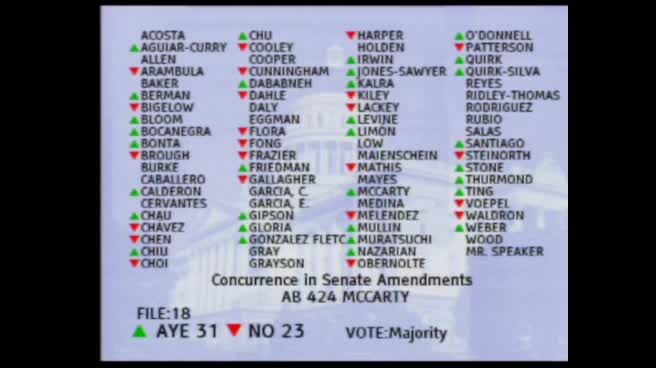
Bill Author

Bill Co-Author(s):