AB 621: Classified employees: Classified School Employees Summer Furlough Fund.
- Session Year: 2017-2018
- House: Assembly
- Latest Version Date: 2017-09-15
(1)Existing law authorizes the governing board of any school district not paying the annual or monthly salaries of persons employed by the school district in 12 equal monthly payments to withhold, upon election by the individual employee, a designated amount from each payment made to that employee.
This bill, notwithstanding the existing law referenced above, commencing with the 201819 school year, would authorize certain classified employees of school districts that do not pay the annual or monthly salaries of their classified employees in 12 equal monthly payments to participate in the Classified School Employees Summer Furlough Fund. The bill would require school districts to deposit the amounts withheld from the paychecks of a participating classified employee in accordance with that employees choices in an account within its general fund, to be known as the Classified School Employees Summer Furlough Fund.
The bill would require the State Department of Education to apportion moneys to each school district with a classified employee who has opted to participate in the fund. The bill would specify that the apportionment would be in the amount of $2 for each $1, up to the equivalent of the amount paid to the classified employee during 80 hours of employment, or 10 days of employment, whichever is greater, during the school year, that has been deposited in the school districts Classified School Employees Summer Furlough Fund.
The bill would require the school district to pay the participating classified employee from the Classified School Employees Summer Furlough Fund the amounts withheld in accordance with the employees choices, plus the amount apportioned by the department that is attributable to the amount withheld from that employees paychecks during the school year, as specified.
Because this bill would impose new duties on school districts, it would constitute a state-mandated local program.
(2)The California Constitution requires the state to reimburse local agencies and school districts for certain costs mandated by the state. Statutory provisions establish procedures for making that reimbursement.
This bill would provide that, if the Commission on State Mandates determines that the bill contains costs mandated by the state, reimbursement for those costs shall be made pursuant to the statutory provisions noted above.
(1)Existing law authorizes the governing board of any school district not paying the annual or monthly salaries of persons employed by the school district in 12 equal monthly payments to withhold, upon election by the individual employee, a designated amount from each payment made to that employee.
This bill, notwithstanding the existing law referenced above, commencing with the 201819 school year, would authorize certain classified employees of school districts that do not pay the annual or monthly salaries of their classified employees in 12 equal monthly payments to participate in the Classified School Employees Summer Furlough Fund. The bill would require school districts to deposit the amounts withheld from the paychecks of a participating classified employee in accordance with that employees choices in an account within its general fund, to be known as the Classified School Employees Summer Furlough Fund.
The bill would require the State Department of Education to apportion moneys to each school district with a classified employee who has opted to participate in the fund. The bill would specify that the apportionment would be in the amount of $2 for each $1, up to the equivalent of the amount paid to the classified employee during 80 hours of employment, or 10 days of employment, whichever is greater, during the school year, that has been deposited in the school districts Classified School Employees Summer Furlough Fund. The bill would express the intent of the Legislature that the apportionments required by this bill be funded by an appropriation made in the annual Budget Act or another statute.
The bill would require the school district to pay the participating classified employee from the Classified School Employees Summer Furlough Fund the amounts withheld in accordance with the employees choices, plus the amount apportioned by the department that is attributable to the amount withheld from that employees paychecks during the school year, as specified.
Because this bill would impose new duties on school districts, it would constitute a state-mandated local program.
(2)The California Constitution requires the state to reimburse local agencies and school districts for certain costs mandated by the state. Statutory provisions establish procedures for making that reimbursement.
This bill would provide that, if the Commission on State Mandates determines that the bill contains costs mandated by the state, reimbursement for those costs shall be made pursuant to the statutory provisions noted above.
(1)Existing law authorizes the governing board of any school district not paying the annual or monthly salaries of persons employed by the school district in 12 equal monthly payments to withhold, upon election by the individual employee, a designated amount from each payment made to that employee.
This bill, notwithstanding the existing law referenced above, commencing with the 201819 school year, would authorize a classified employee of a school district that does certain classified employees of school districts that do not pay the annual or monthly salaries of its their classified employees in 12 equal monthly payments to participate in the Classified School Employees Summer Furlough Fund. The bill would require school districts to deposit the amounts withheld from the paychecks of a participating classified employee in accordance with that employees choices in an account within its general fund, to be known as the Classified School Employees Summer Furlough Fund.
The bill would require the State Department of Education to apportion moneys to each school district with a classified employee who has opted to participate in the fund. The bill would specify that the apportionment would be in the amount of $2 for each dollar, $1, up to the equivalent of the amount paid to the classified employee during 80 hours of employment, or 10 days of employment, whichever is greater, during the school year, that has been deposited in the school districts Classified School Employees Summer Furlough Fund. The bill would express the intent of the Legislature that the apportionments required by this bill be funded by an appropriation made in the annual Budget Act or another statute.
The bill would require the school district to pay the participating classified employee from the Classified School Employees Summer Furlough Fund the amounts withheld in accordance with the employees choices, plus the amount apportioned by the department that is attributable to the amount withheld from that employees paychecks during the school year, as specified.
Because this bill would impose new duties on school districts, it would constitute a state-mandated local program.
(2)The California Constitution requires the state to reimburse local agencies and school districts for certain costs mandated by the state. Statutory provisions establish procedures for making that reimbursement.
This bill would provide that, if the Commission on State Mandates determines that the bill contains costs mandated by the state, reimbursement for those costs shall be made pursuant to the statutory provisions noted above.
(1)Existing law authorizes the governing board of any school district not paying the annual or monthly salaries of persons employed by the school district in 12 equal monthly payment payments to withhold, upon election by the individual employee, a designated amount from each payment made to that employee.
This bill, notwithstanding the existing law referenced above, commencing with the 201819 school year, would authorize a classified employee of a school district that does not pay the annual or monthly salaries of its classified employees in 12 equal monthly payments to participate in the Classified School Employees Summer Furlough Fund. The bill would require school districts to deposit the amounts withheld from the paychecks of a participating classified employee in accordance with that employees choices in an account within its general fund, to be known as the Classified School Employees Summer Furlough Fund.
The bill would require the State Department of Education to apportion moneys to each school district with a classified employee who has opted to participate in the fund. The bill would specify that the apportionment would be in the amount of $2 for each dollar dollar, up to the equivalent of the amount paid to the classified employee during 80 hours of employment, or 10 days of employment, whichever is greater, during the school year, that has been deposited in the school districts Classified School Employees Summer Furlough Fund. The bill would express the intent of the Legislature that the apportionments required by this bill be funded by an appropriation made in the annual Budget Act or another statute.
The bill would require the school district to pay the participating classified employee from the Classified School Employees Summer Furlough Fund the amounts withheld in accordance with the employees choices, plus the amount apportioned by the department that is attributable to the amount withheld from that employees paychecks during the school year, as specified.
Because this bill would impose new duties on school districts, it would constitute a state-mandated local program.
(2)The California Constitution requires the state to reimburse local agencies and school districts for certain costs mandated by the state. Statutory provisions establish procedures for making that reimbursement.
This bill would provide that, if the Commission on State Mandates determines that the bill contains costs mandated by the state, reimbursement for those costs shall be made pursuant to the statutory provisions noted above.
(1)Existing law authorizes the governing board of any school district not paying the annual or monthly salaries of persons employed by the school district in 12 equal monthly payment to withhold, upon election by the individual employee, a designated amount from each payment made to that employee.
This bill, notwithstanding the existing law referenced above, commencing with the 201819 school year, would authorize a classified employee of a school district that does not pay the annual or monthly salaries of its classified employees in 12 equal monthly payments to participate in the Classified School Employees Summer Furlough Fund. The bill would require school districts to deposit the amounts withheld from the paychecks of a participating classified employee in accordance with that employees choices in an account within its general fund, to be known as the Classified Employees Summer Furlough Fund.
The bill would require the State Department of Education to apportion moneys to each school district with a classified employee who has opted to participate in the fund. The bill would specify that the apportionment would be in the amount of $2 for each dollar that has been deposited in the school districts Classified School Employees Summer Furlough Fund. The bill would express the intent of the Legislature that the apportionments required by this bill be funded by an appropriation made in the annual Budget Act or another statute.
The bill would require the school district to pay the participating classified employee from the Classified School Employees Summer Furlough Fund the amounts withheld in accordance with the employees choices, plus the amount apportioned by the department that is attributable to the amount withheld from that employees paychecks during the school year, as specified.
Because this bill would impose new duties on school districts, it would constitute a state-mandated local program.
(2)The California Constitution requires the state to reimburse local agencies and school districts for certain costs mandated by the state. Statutory provisions establish procedures for making that reimbursement.
This bill would provide that, if the Commission on State Mandates determines that the bill contains costs mandated by the state, reimbursement for those costs shall be made pursuant to the statutory provisions noted above.
(a)(1)Notwithstanding Section 45165, commencing with the 201819 school year, a classified employee of a school district that does not pay the annual or monthly salaries of its classified employees in 12 equal monthly payments may opt to participate in the Classified School Employees Summer Furlough Fund. The employee may participate in the fund by informing the school district, in writing, no more than 30 calendar days after the beginning of the fall term of the school year or 30 calendar days after the employee begins employment with the school district, whichever is later, on a form developed and approved by the department, that he or she wishes to participate in the fund, and specifying the amounts that will be withheld from his or her paychecks during that school year and whether he or she chooses to have the amounts withheld paid out during the summer recess period in one or two payments.
(2)(A)A classified employee shall not be eligible to participate in the Classified School Employees Summer Furlough Fund if the employees regular annual pay received directly from the school district is more than two and one-half times the full-time pay during the school year of an employee paid at the state minimum wage at the time of enrollment.
(B)A classified employee shall not be eligible to participate in the Classified School Employees Summer Furlough Fund if the employees adjusted gross income is double the income threshold identified in subparagraph (A) or greater, adjusted for inflation, if filing taxes jointly as married or as a registered domestic partner.
(b)The school district shall deposit the amounts withheld in accordance with the choices made by participating classified employees pursuant to subdivision (a) in an account within its general fund, to be known as the Classified School Employees Summer Furlough Fund.
(c)(1)The department shall apportion moneys to each school district with a classified employee who has opted to participate in the fund. This apportionment shall be in the amount of two dollars ($2) for each one dollar ($1), up to the equivalent of the amount paid to the classified employee during 80 hours of employment, or 10 days of employment, whichever is greater, during the school year, that has been deposited in the school districts Classified School Employees Summer Furlough Fund.
(2)A participating classified employee may withhold an amount in excess of the amount paid to the classified employee during 80 hours or 10 days of employment, but the classified employee shall not receive matching funds from the school district or the department for the excess amount.
(d)The school district shall pay to the participating classified employee from the Classified School Employees Summer Furlough Fund the amounts withheld in accordance with the employees choices, plus the amount apportioned by the department that is attributable to the amount withheld from that employees paychecks during the school year. This amount shall be paid to the participating classified employee during the summer recess period, in either one or two payments, in accordance with the employees option under subdivision (a). The Legislature finds and declares that payments made pursuant to this section are deferred compensation for the services rendered by the classified employee during the school year.
(e)Nothing in this section shall be construed to authorize a certificated employee or confidential employee of a school district to participate in the Classified School Employees Summer Furlough Fund.
SEC. 2.If the Commission on State Mandates determines that this act contains costs mandated by the state, reimbursement to local agencies and school districts for those costs shall be made pursuant to Part 7 (commencing with Section 17500) of Division 4 of Title 2 of the Government Code.
(a)(1)Notwithstanding Section 45165, commencing with the 201819 school year, a classified employee of a school district that does not pay the annual or monthly salaries of its classified employees in 12 equal monthly payments may opt to participate in the Classified School Employees Summer Furlough Fund. The employee may participate in the fund by informing the school district, in writing, no more than 30 calendar days after the beginning of the fall term of the school year or 30 calendar days after the employee begins employment with the school district, whichever is later, on a form developed and approved by the department, that he or she wishes to participate in the fund, and specifying the amounts that will be withheld from his or her paychecks during that school year and whether he or she chooses to have the amounts withheld paid out during the summer recess period in one or two payments.
(2)(A)A classified employee shall not be eligible to participate in the Classified School Employees Summer Furlough Fund if the employees regular annual pay received directly from the school district is more than three two and one-half times the full-time pay during the school year of an employee paid at the state minimum wage at the time of enrollment.
(B)A classified employee shall not be eligible to participate in the Classified School Employees Summer Furlough Fund if the employees adjusted gross income is one hundred forty thousand dollars ($140,000) per year double the income threshold identified in subparagraph (A) or greater, adjusted for inflation, if filing taxes jointly as married or as a registered domestic partner.
(b)The school district shall deposit the amounts withheld in accordance with the choices made by participating classified employees pursuant to subdivision (a) in an account within its general fund, to be known as the Classified School Employees Summer Furlough Fund.
(c)(1)The department shall apportion moneys to each school district with a classified employee who has opted to participate in the fund. This apportionment shall be in the amount of two dollars ($2) for each one dollar ($1), up to the equivalent of the amount paid to the classified employee during 80 hours of employment, or 10 days of employment, whichever is greater, during the school year, that has been deposited in the school districts Classified School Employees Summer Furlough Fund.
(2)A participating classified employee may withhold an amount in excess of the amount paid to the classified employee during 80 hours or 10 days of employment, but the classified employee shall not receive matching funds from the school district or the department for the excess amount.
(d)The school district shall pay to the participating classified employee from the Classified School Employees Summer Furlough Fund the amounts withheld in accordance with the employees choices, plus the amount apportioned by the department that is attributable to the amount withheld from that employees paychecks during the school year. This amount shall be paid to the participating classified employee during the summer recess period, in either one or two payments, in accordance with the employees option under subdivision (a). The Legislature finds and declares that payments made pursuant to this section are deferred compensation for the services rendered by the classified employee during the school year.
(e)Nothing in this section shall be construed to authorize a certificated employee or confidential employee of a school district to participate in the Classified School Employees Summer Furlough Fund.
SEC. 2.If the Commission on State Mandates determines that this act contains costs mandated by the state, reimbursement to local agencies and school districts for those costs shall be made pursuant to Part 7 (commencing with Section 17500) of Division 4 of Title 2 of the Government Code.
(a)(1)Notwithstanding Section 45165, commencing with the 201819 school year, a classified employee of a school district that does not pay the annual or monthly salaries of its classified employees in 12 equal monthly payments may opt to participate in the Classified School Employees Summer Furlough Fund. The employee may participate in the fund by informing the school district, in writing, no more than 30 calendar days after the beginning of the fall term of the school year or 30 calendar days after the employee begins employment with the school district, whichever is later, on a form developed and approved by the department, that he or she wishes to participate in the fund, and specifying the amounts that will be withheld from his or her paychecks during that school year and whether he or she chooses to have the amounts withheld paid out during the summer recess period in one or two payments.
(2)(A)A classified employee shall not be eligible to participate in the Classified School Employees Summer Furlough Fund if the employees regular annual pay received directly from the school district is more than three times the full-time pay during the school year of an employee paid at the state minimum wage at the time of enrollment.
(B)A classified employee shall not be eligible to participate in the Classified School Employees Summer Furlough Fund if the employees adjusted gross income is one hundred forty thousand dollars ($140,000) per year or greater, adjusted for inflation, if filing taxes jointly as married or as a registered domestic partner.
(b)The school district shall deposit the amounts withheld in accordance with the choices made by participating classified employees pursuant to subdivision (a) in an account within its general fund, to be known as the Classified School Employees Summer Furlough Fund.
(c)(1)The department shall apportion moneys to each school district with a classified employee who has opted to participate in the fund. This apportionment shall be in the amount of two dollars ($2) for each one dollar ($1), up to the equivalent of the amount paid to the classified employee during 80 hours of employment, or 10 days of employment, whichever is greater, during the school year, that has been deposited in the school districts Classified School Employees Summer Furlough Fund.
(2)A participating classified employee may withhold an amount in excess of the amount paid to the classified employee during 80 hours or 10 days of employment, but the classified employee shall not receive matching funds from the school district or the department for the excess amount.
(3)It is the intent of the Legislature that the apportionments required by this subdivision shall be funded by an appropriation made in the annual Budget Act or another statute.(d)The school district shall pay to the participating classified employee from the Classified School Employees Summer Furlough Fund the amounts withheld in accordance with the employees choices, plus the amount apportioned by the department that is attributable to the amount withheld from that employees paychecks during the school year. This amount shall be paid to the participating classified employee during the summer recess period, in either one or two payments, in accordance with the employees option under subdivision (a). The Legislature finds and declares that payments made pursuant to this section are deferred compensation for the services rendered by the classified employee during the school year.
(e)Nothing in this section shall be construed to authorize a certificated employee or confidential employee of a school district to participate in the Classified School Employees Summer Furlough Fund.
SEC. 2.If the Commission on State Mandates determines that this act contains costs mandated by the state, reimbursement to local agencies and school districts for those costs shall be made pursuant to Part 7 (commencing with Section 17500) of Division 4 of Title 2 of the Government Code.
(a)(1)Notwithstanding Section 45165, commencing with the 201819 school year, a classified employee of a school district that does not pay the annual or monthly salaries of its classified employees in 12 equal monthly payments may opt to participate in the Classified School Employees Summer Furlough Fund. The employee may participate in the fund by informing the school district, in writing, no more than 30 calendar days after the beginning of the fall term of the school year or 30 calendar days after the employee begins employment with the school district, whichever is later, on a form developed and approved by the department, that he or she wishes to participate in the fund, and specifying the amounts that will be withheld from his or her paychecks during that school year and whether he or she chooses to have the amounts withheld paid out during the summer recess period in one or two payments.
(2)A classified employee shall not be eligible to participate in the Classified School Employees Summer Furlough Fund if the employees hourly wages received directly from the school district are more than three times the state minimum wage regular annual pay received directly from the school district is more than three times the full-time pay during the school year of an employee paid at the state minimum wage at the time of enrollment.
(b)The school district shall deposit the amounts withheld in accordance with the choices made by participating classified employees pursuant to subdivision (a) in an account within its general fund, to be known as the Classified School Employees Summer Furlough Fund.
(c)(1)The department shall apportion moneys to each school district with a classified employee who has opted to participate in the fund. This apportionment shall be in the amount of two dollars ($2) for each one dollar ($1), up to the equivalent of the amount paid to the classified employee during 80 hours of employment, or 10 days of employment, whichever is greater, during the school year, that has been deposited in the school districts Classified School Employees Summer Furlough Fund.
(2)A participating classified employee may withhold an amount in excess of the amount paid to the classified employee during 80 hours or 10 days of employment, but the classified employee shall not receive matching funds from the school district or the department for the excess amount.
(3)It is the intent of the Legislature that the apportionments required by this subdivision shall be funded by an appropriation made in the annual Budget Act or another statute.
(d)The school district shall pay to the participating classified employee from the Classified School Employees Summer Furlough Fund the amounts withheld in accordance with the employees choices, plus the amount apportioned by the department that is attributable to the amount withheld from that employees paychecks during the school year. This amount shall be paid to the participating classified employee during the summer recess period, in either one or two payments, in accordance with the employees option under subdivision (a). The Legislature finds and declares that payments made pursuant to this section are deferred compensation for the services rendered by the classified employee during the school year.
(e)Nothing in this section shall be construed to authorize a certificated employee or confidential employee of a school district to participate in the Classified School Employees Summer Furlough Fund.
SEC. 2.If the Commission on State Mandates determines that this act contains costs mandated by the state, reimbursement to local agencies and school districts for those costs shall be made pursuant to Part 7 (commencing with Section 17500) of Division 4 of Title 2 of the Government Code.
(a)(1)Notwithstanding Section 45165, commencing with the 201819 school year, a classified employee of a school district that does not pay the annual or monthly salaries of its classified employees in 12 equal monthly payments may opt to participate in the Classified School Employees Summer Furlough Fund. The employee may participate in the fund by informing the school district, in writing, no more than 30 calendar days after the beginning of the fall term of the school year, year or 30 calendar days after the employee begins employment with the school district, whichever is later, on a form developed and approved by the department, that he or she wishes to participate in the fund, and specifying the amounts that will be withheld from his or her paychecks during that school year and whether he or she chooses to have the amounts withheld paid out during the summer recess period in one or two payments.
(2)A classified employee shall not be eligible to participate in the Classified School Employees Summer Furlough Fund if the employees hourly wages received directly from the school district are more than three times the state minimum wage at the time of enrollment.
(b)The school district shall deposit the amounts withheld in accordance with the choices made by participating classified employees pursuant to subdivision (a) in an account within its general fund, to be known as the Classified School Employees Summer Furlough Fund.
(c)(1)The department shall apportion moneys to each school district with a classified employee who has opted to participate in the fund. This apportionment shall be in the amount of two dollars ($2) for each dollar, one dollar ($1), up to the equivalent of the amount paid to the classified employee during 80 hours of employment, or 10 days of employment, whichever is greater, during the school year, that has been deposited in the school districts Classified School Employees Summer Furlough Fund.
(2)A participating classified employee may withhold an amount in excess of the amount paid to the classified employee during 80 hours or 10 days of employment, but the classified employee shall not receive matching funds from the school district or the department for the excess amount.
(3)It is the intent of the Legislature that the apportionments required by this subdivision shall be funded by an appropriation made in the annual Budget Act or another statute.
(d)The school district shall pay to the participating classified employee from the Classified School Employees Summer Furlough Fund the amounts withheld in accordance with the employees choices, plus the amount apportioned by the department that is attributable to the amount withheld from that employees paychecks during the school year. This amount shall be paid to the participating classified employee during the summer recess period, in either one or two payments, in accordance with the employees option under subdivision (a). The Legislature finds and declares that payments made pursuant to this section are deferred compensation for the services rendered by the classified employee during the school year.
(e)Nothing in this section shall be construed to authorize a certificated employee or confidential employee of a school district to participate in the Classified School Employees Summer Furlough Fund.
SEC. 2.If the Commission on State Mandates determines that this act contains costs mandated by the state, reimbursement to local agencies and school districts for those costs shall be made pursuant to Part 7 (commencing with Section 17500) of Division 4 of Title 2 of the Government Code.
(a)Notwithstanding Section 45165, commencing with the 201819 school year, a classified employee of a school district that does not pay the annual or monthly salaries of its classified employees in 12 equal monthly payments may opt to participate in the Classified School Employees Summer Furlough Fund. The employee may participate in the fund by informing the school district, in writing, no more than 30 calendar days after the beginning of the fall term of the school year, on a form developed and approved by the department, that he or she wishes to participate in the fund, and specifying the amounts that will be withheld from his or her paychecks during that school year and whether he or she chooses to have the amounts withheld paid out during the summer recess period in one or two payments.
(b)The school district shall deposit the amounts withheld in accordance with the choices made by participating classified employees pursuant to subdivision (a) in an account within its general fund, to be known as the Classified School Employees Summer Furlough Fund.
(c)(1)The department shall apportion moneys to each school district with a classified employee who has opted to participate in the fund. This apportionment shall be in the amount of two dollars ($2) for each dollar dollar, up to the equivalent of the amount paid to the classified employee during 80 hours of employment, or 10 days of employment, whichever is greater, during the school year, that has been deposited in the school districts Classified School Employees Summer Furlough Fund. It
(2)A participating classified employee may withhold an amount in excess of the amount paid to the classified employee during 80 hours or 10 days of employment, but the classified employee shall not receive matching funds from the school district or the department for the excess amount.
(3)It is the intent of the Legislature that the apportionments required by this subdivision shall be funded by an appropriation made in the annual Budget Act or another statute.
(d)The school district shall pay to the participating classified employee from the Classified School Employees Summer Furlough Fund the amounts withheld in accordance with the employees choices, plus the amount apportioned by the department that is attributable to the amount withheld from that employees paychecks during the school year. This amount shall be paid to the participating classified employee during the summer recess period, in either one or two payments, in accordance with the employees option under subdivision (a). The Legislature finds and declares that payments made pursuant to this section are deferred compensation for the services rendered by the classified employee during the school year.
SEC. 2.If the Commission on State Mandates determines that this act contains costs mandated by the state, reimbursement to local agencies and school districts for those costs shall be made pursuant to Part 7 (commencing with Section 17500) of Division 4 of Title 2 of the Government Code.
(a)Notwithstanding Section 45165, commencing with the 201819 school year, a classified employee of a school district that does not pay the annual or monthly salaries of its classified employees in 12 equal monthly payments may opt to participate in the Classified School Employees Summer Furlough Fund. The employee may participate in the fund by informing the school district, in writing, no more than 30 calendar days after the beginning of the fall term of the school year, on a form developed and approved by the department, that he or she wishes to participate in the fund, and specifying the amounts that will be withheld from his or her paychecks during that school year and whether he or she chooses to have the amounts withheld paid out during the summer recess period in one or two payments.
(b)The school district shall deposit the amounts withheld in accordance with the choices made by participating classified employees pursuant to subdivision (a) in an account within its general fund, to be known as the Classified School Employees Summer Furlough Fund.
(c)The department shall apportion moneys to each school district with a classified employee who has opted to participate in the fund. This apportionment shall be in the amount of two dollars ($2) for each dollar that has been deposited in the school districts Classified School Employees Summer Furlough Fund. It is the intent of the Legislature that the apportionments required by this subdivision shall be funded by an appropriation made in the annual Budget Act or another statute.
(d)The school district shall pay to the participating classified employee from the Classified School Employees Summer Furlough Fund the amounts withheld in accordance with the employees choices, plus the amount apportioned by the department that is attributable to the amount withheld from that employees paychecks during the school year. This amount shall be paid to the participating classified employee during the summer recess period, in either one or two payments, in accordance with the employees option under subdivision (a). The Legislature finds and declares that payments made pursuant to this section are deferred compensation for the services rendered by the classified employee during the school year.
SEC. 2.If the Commission on State Mandates determines that this act contains costs mandated by the state, reimbursement to local agencies and school districts for those costs shall be made pursuant to Part 7 (commencing with Section 17500) of Division 4 of Title 2 of the Government Code.
|
Date
|
Status
|
|---|---|
| Jan 12, 2018 | Stricken from file. |
| Jan 3, 2018 | Consideration of Governor's veto pending. |
| Oct 8, 2017 | Vetoed by Governor. |
| Sep 25, 2017 | Enrolled and presented to the Governor at 12 p.m. |
| Sep 14, 2017 | Senate amendments concurred in. To Engrossing and Enrolling. |
| Sep 14, 2017 | Senate amendments concurred in. To Engrossing and Enrolling. (Ayes 55. Noes 24. Page 3370.). |
| Sep 13, 2017 | Assembly Rule 77(a) suspended. |
| Sep 13, 2017 | In Assembly. Concurrence in Senate amendments pending. May be considered on or after September 15 pursuant to Assembly Rule 77. |
| Sep 12, 2017 | Read third time. Passed. Ordered to the Assembly. |
| Sep 11, 2017 | Read second time. Ordered to third reading. |
| Sep 8, 2017 | Read third time and amended. Ordered to second reading. |
| Sep 5, 2017 | Read second time. Ordered to third reading. |
| Sep 1, 2017 | From committee: Amend, and do pass as amended. (Ayes 5. Noes 2.) (September 1). |
| Aug 21, 2017 | In committee: Referred to APPR. suspense file. |
| Jul 12, 2017 | From committee: Do pass and re-refer to Com. on APPR. (Ayes 4. Noes 1.) (July 12). Re-referred to Com. on APPR. |
| Jun 19, 2017 | From committee chair, with author's amendments: Amend, and re-refer to committee. Read second time, amended, and re-referred to Com. on L. & I.R. |
| Jun 14, 2017 | Referred to Com. on L. & I.R. |
| Jun 1, 2017 | In Senate. Read first time. To Com. on RLS. for assignment. |
| May 31, 2017 | Read third time. Passed. Ordered to the Senate. (Ayes 53. Noes 21. Page 1958.) |
| May 30, 2017 | Read second time and amended. Ordered returned to second reading. |
| May 26, 2017 | From committee: Amend, and do pass as amended. (Ayes 12. Noes 5.) (May 26). |
| May 3, 2017 | In committee: Set, second hearing. Referred to APPR. suspense file. |
| Apr 26, 2017 | Re-referred to Com. on APPR. |
| Apr 25, 2017 | From committee chair, with author's amendments: Amend, and re-refer to Com. on APPR. Read second time and amended. |
| Mar 29, 2017 | From committee: Do pass and re-refer to Com. on APPR. (Ayes 5. Noes 2.) (March 29). Re-referred to Com. on APPR. |
| Feb 27, 2017 | Referred to Com. on P.E., R., & S.S. |
| Feb 15, 2017 | From printer. May be heard in committee March 17. |
| Feb 14, 2017 | Read first time. To print. |
|
Date
|
Description
|
Location
|
Votes
|
|
|---|---|---|---|---|
| Sep 14, 2017 | AB 621 BOCANEGRA Concurrence in Senate Amendments | Assembly Floor |
Passed |
|
| Sep 12, 2017 | Assembly 3rd Reading AB621 Bocanegra et al. By Lara | Senate Floor |
Passed |
|
| Sep 1, 2017 | Do pass as amended | Senate Standing Committee on Appropriations |
Passed |
|
| Aug 21, 2017 | Placed on suspense file | Senate Standing Committee on Appropriations |
Passed |
|
| Jul 12, 2017 | Do pass, but first be re-referred to the Committee on [Appropriations] | Senate Standing Committee on Labor and Industrial Relations |
Passed |
|
| May 31, 2017 | AB 621 BOCANEGRA Assembly Third Reading | Assembly Floor |
Passed |
|
| May 26, 2017 | Do pass as amended. | Assembly Standing Committee on Appropriations |
Passed |
|
| Mar 29, 2017 | Do pass and be re-referred to the Committee on [Appropriations] | Assembly Standing Committee on Public Employees, Retirement, and Social Security |
Passed |
This list shows positions taken on this bill by organizations on the date displayed, which is linked to the original source.
Positions by individuals are not included.
GOVERNOR'S VETO
GV Bill Id:AB 621
Author:(Bocanegra)
As Enrolled Ver:September 15, 2017
2/3 vote
ASSEMBLY: | 53-21 | (May 31, 2017) | SENATE: | 27-13 | (September 12, 2017) |
ASSEMBLY: | 55-24 | (September 14, 2017) |
Original Committee Reference: P.E.,R., & S.S.
SUMMARY: Establishes a partially self-funded account that would allow classified school employees, as specified, to voluntarily contribute earnings that are matched by the state on a 2-to-1 ratio, for the purpose of covering their payroll during periods of school recess.
The Senate amendments:
- Change the eligibility requirements for a classified employee to participate in the program by prohibiting a classified employee from participating if:
- The employee's regular annual pay received directly from the school district is more than two and one-half times the full-time pay during the school year of an employee paid at the rate of the state minimum wage, at the time of enrollment, and
- The employee's adjusted gross income is double the identified rate of more than two and one-half times the full-time pay during the school year if the employee is paid at the rate of the state minimum wage, at the time of enrollment.
- Delete legislative intent which states required apportionments by the California Department of Education (CDE) to be funded by an appropriation made in the annual Budget Act or another statute.
EXISTING LAW:
- Defines "classification" within a school district as having a designated title, a regular minimum number of assigned hours per day, days per week, and months per year, a specific statement of the duties required to be performed by the employees in each such position, and the regular monthly salary ranges for each such position, as well as associated benefits.
- Allows school districts to employ and classify nonacademic employees who do not require certification, and requires those employees be placed in the "classified service."
- Provides for payment of compensation to employees of a school district who are employed for less than 12 months per year.
- Authorizes the governing board of a school district to withhold, upon election by the individual, a designated amount from the employee's salary when the school district is not paying the annual or monthly salaries of employees in 12 equal monthly payments.
- Specifies payment schedules and amounts to be paid to an employee of a school district who is employed for less than a year, and the period in which they are to be compensated.
FISCAL EFFECT: According to the Senate Appropriations Committee, this bill would result in costs to match, at a rate of two-to-one, the eligible amount that qualified classified employees withhold from their paychecks. The magnitude of the cost is unknown, and subject to considerable uncertainty, but would likely range from the tens of millions of dollars to up to $200 million annually. Matching funds would likely come from the General Fund. The author's amendment would restrict eligibility, which would likely reduce the fiscal impact of the bill; however, administrative costs to verify the new eligibility requirement would potentially be as high as the hundreds of thousands of dollars annually (General Fund).
By requiring school districts to administer payroll withholdings, this bill creates a state-mandated local program. To the extent the Commission on State Mandates determines that the provisions of this bill create a new program or impose a higher level of service on local agencies, local agencies could claim reimbursement of those costs (General Fund). The amount is unknown, but at a minimum would be in the hundreds of thousands [of dollars] annually across all school districts.
Finally, the CDE indicates that it would incur annual costs of $87,000 (General Fund) to implement its provisions of the bill.
COMMENTS: Please see the policy committee analyses for a full discussion of this bill.
This bill creates a fund to allow specific classified school employees to contribute earnings voluntarily that are matched by the state on a two-to-one basis, for the purposes of providing income during times when these employees are not receiving a salary.
Employee compensation is a matter subject to local collective bargaining. This bill reduces the flexibility of local educational agencies and bargaining units to agree on employee compensation in a manner that reflects local needs, resources and priorities.
For these reasons, I cannot sign this bill.
Analysis Prepared by: Michael Bolden / P.E.,R., & S.S. / (916) 319-3957 FN: 0002441
CONCURRENCE IN SENATE AMENDMENTS
CSA1 Bill Id:AB 621
Author:(Bocanegra)
As Amended Ver:September 8, 2017
Majority vote
ASSEMBLY: | 53-21 | (May 31, 2017) | SENATE: | 27-13 | (September 12, 2017) |
Original Committee Reference: P.E.,R., & S.S.
SUMMARY: Establishes a partially self-funded account that would allow classified school employees, as specified, to voluntarily contribute earnings that are matched by the state on a 2-to-1 ratio, for the purpose of covering their payroll during periods of school recess.
The Senate amendments:
- Change the eligibility requirements for a classified employee to participate in the program by prohibiting a classified employee from participating if:
- The employee's regular annual pay received directly from the school district is more than two and one-half times the full-time pay during the school year of an employee paid at the rate of the state minimum wage, at the time of enrollment, and
- The employee's adjusted gross income is double the identified rate of more than two and one-half times the full-time pay during the school year if the employee is paid at the rate of the state minimum wage, at the time of enrollment.
- Delete legislative intent which states required apportionments by the California Department of Education (CDE) to be funded by an appropriation made in the annual Budget Act or another statute.
EXISTING LAW:
- Defines "classification" within a school district as having a designated title, a regular minimum number of assigned hours per day, days per week, and months per year, a specific statement of the duties required to be performed by the employees in each such position, and the regular monthly salary ranges for each such position, as well as associated benefits.
- Allows school districts to employ and classify nonacademic employees who do not require certification, and requires those employees be placed in the "classified service."
- Provides for payment of compensation to employees of a school district who are employed for less than 12 months per year.
- Authorizes the governing board of a school district to withhold, upon election by the individual, a designated amount from the employee's salary when the school district is not paying the annual or monthly salaries of employees in 12 equal monthly payments.
- Specifies payment schedules and amounts to be paid to an employee of a school district who is employed for less than a year, and the period in which they are to be compensated.
FISCAL EFFECT: According to the Senate Appropriations Committee, this bill would result in costs to match, at a rate of two-to-one, the eligible amount that qualified classified employees withhold from their paychecks. The magnitude of the cost is unknown, and subject to considerable uncertainty, but would likely range from the tens of millions of dollars to up to $200 million annually. Matching funds would likely come from the General Fund. The author's amendment would restrict eligibility, which would likely reduce the fiscal impact of the bill; however, administrative costs to verify the new eligibility requirement would potentially be as high as the hundreds of thousands of dollars annually (General Fund).
By requiring school districts to administer payroll withholdings, this bill creates a state-mandated local program. To the extent the Commission on State Mandates determines that the provisions of this bill create a new program or impose a higher level of service on local agencies, local agencies could claim reimbursement of those costs (General Fund). The amount is unknown, but at a minimum would be in the hundreds of thousands [of dollars] annually across all school districts.
Finally, the CDE indicates that it would incur annual costs of $87,000 (General Fund) to implement its provisions of the bill.
COMMENTS: Please see the policy committee analyses for a full discussion of this bill.
Analysis Prepared by: Michael Bolden / P.E.,R., & S.S. / (916) 319-3957 FN: 0002209
Office of Senate Floor Analyses (916) 651-1520 Fax: (916) 327-4478 | AB |
THIRD READING
Bill No: AB 621
:
SENATE LABOR & IND. REL. COMMITTEE: 4-1, 7/12/17
AYES: Bradford, Atkins, Jackson, Mitchell
NOES: Stone
SENATE APPROPRIATIONS COMMITTEE: 5-2, 9/1/17
AYES: Lara, Beall, Bradford, Hill, Wiener
NOES: Bates, Nielsen
ASSEMBLY FLOOR: 53-21, 5/31/17 - See last page for vote
DIGEST:
This bill creates a fund to allow classified school employees to contribute earnings voluntarily that are matched by the state on a two-to-one ratio, for the purposes of providing income during times when these employees are not receiving a salary.
Senate Floor Amendments of 9/8/17 reduce the income threshold prohibiting a classified employee from participating in the Fund. Under the amendments, an employee is prohibited from participation if their pay is more than two and one-half times the full-time pay of an employee paid at the state minimum wage. Also, if an employee, filing taxes jointly as married or as a registered domestic partner, has an adjusted gross income that is double the new threshold mentioned previously, they are ineligible for participation in the Fund.
Existing law:
- Defines “classification” within a school district as having a designated title, a regular minimum number of assigned hours per day, days per week, and months per year, a specific statement of the duties required to be performed by the employees in each such position, and the regular monthly salary ranges for each such position, as well as associated benefits (Education Code §45100-§45101).
- Allows school districts to employ and classify non-academic employees who do not require certification, and requires those employees be placed in the “classified service” (Education Code §45103).
- Provides for payment of compensation to employees of a school district who are employed for less than 12 months per year (Education Code §45160 and §45165).
- Authorizes the governing board of a school district, upon request by an employee, to withhold and disburse later, a designated amount from the employee’s salary when the school district is not paying that employee the annual or monthly salaries in 12 equal monthly payments (Education Code §45165).
- Specifies payment schedules and amounts to be paid to an employee of a school district who is employed for less than a year, and the period in which they are to be compensated (Education Code §45165).
This bill:
- Establishes the Classified School Employees Summer Furlough Fund (Fund), an account within a school district's general fund.
- Permits classified employees of a school district who are not employed for 12 months annually to specify amounts that may be withheld from his or her paychecks during the school year and placed in the Fund, and to choose whether to have these amounts, along with certain matching funds from the State, paid to them during the summer recess in one or two payments.
- Directs the California Department of Education (CDE) to apportion and deposit in the Fund, matching amounts to each school district that has a classified employee participating in the Fund. This apportionment must be $2 for each $1 contributed by the employee. This can total no more than the equivalent of the amount paid to the classified employee during 80 hours of employment, or 10 days of employment, whichever is greater.
- Requires that participants inform the school district in writing of their choices regarding Fund contributions no more than 30 calendar days after the beginning of the fall term of the school year, or 30 calendar days after the employee begins employment, whichever is later, on a form developed and approved by the CDE.
- Prohibits a classified employee from participating in the Fund if the employee's regular annual pay received directly from the school district is more than two and one-half times the full-time pay during the school year of an employee paid at the state minimum wage at the time of enrollment.
- Prohibits a classified employee from participating in the Fund if the employee's adjusted gross income is double the two and one-half times full-time pay threshold mentioned above, if filing taxes jointly as married or as a registered domestic partner.
- Specifies that a participating classified employee may withhold an amount in excess of the amounts described above, but will not receive matching contributions from the school district or the CDE for the excess withholding.
- Prohibits a school district’s certificated or confidential employees from participating in the Fund. Confidential employees are those who develop management positions with respect to employer-employee relations or have duties that normally require access to confidential information that is used to contribute significantly to the development of management positions.
- Provides for reimbursement from the state, to local agencies and school districts for costs if the Commission on State Mandates determines that there are costs mandated by the state.
Comments
CDE Definition of “Classified Staff”. A classified employee is an employee of a school district who is in a position not requiring certification. Those who compromise classified staff are often divided into three subgroups. The "paraprofessional" subgroup consists of teaching assistants, teacher's aides, pupil services aides, and library aides. The "office/clerical" staff are the employees who perform clerical or administrative support duties, such as a school secretary. The "other" subgroup consists of the remaining non-certificated staff, such as custodians, bus drivers, and cafeteria workers.
Need for this bill? According to the author, more than 284,000 education workers do not receive income during summer months when school is out of session because employers are reluctant to hire and invest in a short-term employee, and most schools have limited summer employment openings. The author goes on to add that classified employees suffer further hardship as they are unable to access unemployment insurance (UI) benefits, unlike all other workers that are employed on a periodic or seasonal basis. The author contends that despite numbers suggesting that extending UI benefits would stimulate $187.3 million in wealth for the state, create more than 1,100 jobs in California, and lift 2,000 education workers out of poverty, all prior legislative attempts to extend UI benefits to classified workers have failed.
The author states that each year, when schools let out for summer break, the classified employees who work to feed students, clean classrooms, and care for students are left unemployed and without benefits to carry themselves through the summer. While certified school employees, such as administrators, teachers, librarians, and nurses earn middle class incomes that often last through summer breaks, classified employees do not. The poverty rate for classified workers employed in California public school districts is almost ten percent, a level higher than most other California industry sectors.
The author concludes that classified school employees serve California’s public schools with immense dedication, and sacrifice a great deal to help students. The author concedes that while this program will not eradicate the unfair exclusion of these workers from accessing unemployment benefits, it will create a temporary, cost-effective solution that allows for classified workers to support their families during recess periods.
FISCAL EFFECT: Appropriation: Fiscal Com.: Local:
According to the Senate Appropriations Committee, this bill will result in costs to match, at a two-to-one rate, the eligible amount that qualified classified employees withhold from their paychecks. The magnitude of the cost is unknown, and subject to considerable uncertainty, but would likely range from the tens of millions of dollars to up to $200 million annually. Matching funds would likely come from the General Fund.
By requiring school districts to administer payroll withholdings, this bill creates a state-mandated local program. To the extent the Commission on State Mandates determines that the provisions of this bill create a new program or impose a higher level of service on local agencies, local agencies could claim reimbursement of those costs (General Fund). The amount is unknown, but at a minimum would be in the hundreds of thousands annually across all school districts.
Finally, CDE indicates that it would incur annual costs of $87,000 (General Fund) to implement its provisions of the bill.
American Federation State, County, and Municipal Employees
California Labor Federation, AFL-CIO
California School Employees Association
California Teachers Association
Courage Campaign
LIUNA, Local 777
Service Employees International Union, State Council
Western Center on Law and Poverty
OPPOSITION: (Verified 8/31/17)
Association of California School Administrators
California Association of School Business Officials
California Association of Suburban Schools
Orange County Department of Education
Riverside County Superintendent of Schools
ARGUMENTS IN SUPPORT: Proponents argue that classified school employees do the essential work that keeps our schools running. Classified employees such as food service providers and school bus drivers help make education possible for low-income children. Despite this role, proponents feel that they are often in the background and do not receive fair compensation, thereby increasing the number of low-income working poor in California, where nearly 80 percent of low-income families are working families.
Proponents add that a classified school employee’s median salary is $10 - $16 an hour and that these wages often mean workers are living paycheck to paycheck. One-third of classified employees are the sole income provider and three fourths of classified employees live in rent- overburdened areas, where more than 30 percent of their income goes to rent. Proponents state that classified employees receive, on average, a starting salary that is three times lower than starting administrators, certificated employees, and faculty. Additionally, proponents contend that unlike their peers, many classified employees cannot participate in a program that pays out over 12 months because their wages are insufficient.
Proponents conclude that without income, access to unemployment benefits, and temporary employment, classified school employees face a difficult position during the summer months and end up relying on food banks, CalFresh and accruing debt to pay for basic necessities. They believe that this bill allows employees to participate in a fund that prevents them from homelessness, hunger, and extreme poverty during the summer months.
ARGUMENTS IN OPPOSITION: Opponents state that this bill does not acknowledge the financial uncertainty at both the state and federal level, and creates a new spending priority that can potentially divert as much as $700 million away from school services to fund a program limited to some employees, without any recognition that the state’s primary purpose is to serve students.
In order to address the financial stability of employees who do not work twelve months annually on school campuses, opponents believe the state will need to provide additional support above the current Proposition 98 allocation to avoid disruption of current services and programs. Opponents contend that the state currently has an unfunded mandate backlog of $1 billion, and that AB 621 creates a new financial obligation for the state, which would lead to a reduction in support for students’ educational needs.
Opponents also believe that in the end, this new program would not address the underlining needs of low-wage earning employees, who may find themselves in financial distress during the summer periods. Opponents state that every employee should have access to professional development and career growth. However, they believe AB 621 does not promote services and support to help individuals progress in their worksite, and it diverts funding towards a stop-gap measure will not assist that goal in the long run.
Opponents believe the Legislature must prioritize fully funding public education and paying off the $1 billion mandate obligation, which will allow school districts the ability to support their staff, raise wages and benefits, and close the achievement gap of students. Until that time, opponents state that they will oppose any proposal that redirects funding to support a new program not geared towards supporting students’ academic goals, including AB 621.
ASSEMBLY FLOOR: 53-21, 5/31/17
AYES: Aguiar-Curry, Arambula, Berman, Bloom, Bocanegra, Bonta, Burke, Caballero, Calderon, Chau, Chiu, Chu, Cooley, Cooper, Dababneh, Daly, Frazier, Friedman, Cristina Garcia, Eduardo Garcia, Gipson, Gloria, Gomez, Gonzalez Fletcher, Gray, Grayson, Holden, Irwin, Jones-Sawyer, Kalra, Levine, Limón, Low, McCarty, Medina, Mullin, Muratsuchi, Nazarian, O'Donnell, Quirk, Quirk-Silva, Reyes, Ridley-Thomas, Rodriguez, Rubio, Salas, Santiago, Mark Stone, Thurmond, Ting, Weber, Wood, Rendon
NOES: Acosta, Travis Allen, Baker, Bigelow, Brough, Chávez, Cunningham, Dahle, Flora, Fong, Gallagher, Harper, Kiley, Lackey, Maienschein, Mathis, Mayes, Obernolte, Patterson, Voepel, Waldron
NO VOTE RECORDED: Cervantes, Chen, Choi, Eggman, Melendez, Steinorth
9/9/17 16:09:52
**** END ****
Office of Senate Floor Analyses (916) 651-1520 Fax: (916) 327-4478 | AB |
THIRD READING
Bill No: AB 621
:
SENATE LABOR & IND. REL. COMMITTEE: 4-1, 7/12/17
AYES: Bradford, Atkins, Jackson, Mitchell
NOES: Stone
SENATE APPROPRIATIONS COMMITTEE: 5-2, 9/1/17
AYES: Lara, Beall, Bradford, Hill, Wiener
NOES: Bates, Nielsen
ASSEMBLY FLOOR: 53-21, 5/31/17 - See last page for vote
DIGEST:
This bill creates a fund to allow classified school employees to contribute earnings voluntarily that are matched by the state on a two-to-one ratio, for the purposes of providing income during times when these employees are not receiving a salary.
Existing law:
- Defines “classification” within a school district as having a designated title, a regular minimum number of assigned hours per day, days per week, and months per year, a specific statement of the duties required to be performed by the employees in each such position, and the regular monthly salary ranges for each such position, as well as associated benefits (Education Code §45100-§45101).
- Allows school districts to employ and classify non-academic employees who do not require certification, and requires those employees be placed in the “classified service” (Education Code §45103).
- Provides for payment of compensation to employees of a school district who are employed for less than 12 months per year (Education Code §45160 and §45165).
- Authorizes the governing board of a school district, upon request by an employee, to withhold and disburse later, a designated amount from the employee’s salary when the school district is not paying that employee the annual or monthly salaries in 12 equal monthly payments (Education Code §45165).
- Specifies payment schedules and amounts to be paid to an employee of a school district who is employed for less than a year, and the period in which they are to be compensated (Education Code §45165).
This bill:
- Establishes the Classified School Employees Summer Furlough Fund (Fund), an account within a school district's general fund.
- Permits classified employees of a school district who are not employed for 12 months annually to specify amounts that may be withheld from his or her paychecks during the school year and placed in the Fund, and to choose whether to have these amounts, along with certain matching funds from the State, paid to them during the summer recess in one or two payments.
- Directs the California Department of Education (CDE) to apportion and deposit in the Fund, matching amounts to each school district that has a classified employee participating in the Fund. This apportionment must be $2 for each $1 contributed by the employee. This can total no more than the equivalent of the amount paid to the classified employee during 80 hours of employment, or 10 days of employment, whichever is greater.
- Requires that participants inform the school district in writing of their choices regarding Fund contributions no more than 30 calendar days after the beginning of the fall term of the school year, or 30 calendar days after the employee begins employment, whichever is later, on a form developed and approved by the CDE.
- Prohibits a classified employee from participating in the Fund if the employee's regular annual pay received directly from the school district is more than three times the full-time pay during the school year of an employee paid at the state minimum wage at the time of enrollment.
- Prohibits a classified employee from participating in the Fund if the employee's adjusted gross income is $140,000 or more annually, if filing taxes jointly as married or as a registered domestic partner.
- Specifies that a participating classified employee may withhold an amount in excess of the amounts described above, but will not receive matching contributions from the school district or the CDE for the excess withholding.
- Prohibits a school district’s certificated or confidential employees from participating in the Fund. Confidential employees are those who develop management positions with respect to employer-employee relations or have duties that normally require access to confidential information that is used to contribute significantly to the development of management positions.
- Provides for reimbursement from the state, to local agencies and school districts for costs if the Commission on State Mandates determines that there are costs mandated by the state.
Comments
CDE Definition of “Classified Staff” - A classified employee is an employee of a school district who is in a position not requiring certification. Those who compromise classified staff are often divided into three subgroups. The "paraprofessional" subgroup consists of teaching assistants, teacher's aides, pupil services aides, and library aides. The "office/clerical" staff are the employees who perform clerical or administrative support duties, such as a school secretary. The "other" subgroup consists of the remaining non-certificated staff, such as custodians, bus drivers, and cafeteria workers.
Need for this bill? According to the author, more than 284,000 education workers do not receive income during summer months when school is out of session because employers are reluctant to hire and invest in a short-term employee, and most schools have limited summer employment openings. The author goes on to add that classified employees suffer further hardship as they are unable to access unemployment insurance (UI) benefits, unlike all other workers that are employed on a periodic or seasonal basis. The author contends that despite numbers suggesting that extending UI benefits would stimulate $187.3 million in wealth for the state, create more than 1,100 jobs in California, and lift 2,000 education workers out of poverty, all prior legislative attempts to extend UI benefits to classified workers have failed.
The author states that each year, when schools let out for summer break, the classified employees who work to feed students, clean classrooms, and care for students are left unemployed and without benefits to carry themselves through the summer. While certified school employees, such as administrators, teachers, librarians, and nurses earn middle class incomes that often last through summer breaks, classified employees do not. The poverty rate for classified workers employed in California public school districts is almost ten percent, a level higher than most other California industry sectors.
The author concludes that classified school employees serve California’s public schools with immense dedication, and sacrifice a great deal to help students. The author concedes that while this program will not eradicate the unfair exclusion of these workers from accessing unemployment benefits, it will create a temporary, cost-effective solution that allows for classified workers to support their families during recess periods.
FISCAL EFFECT: Appropriation: Fiscal Com.: Local:
According to the Senate Appropriations Committee, this bill will result in costs to match, at a two-to-one rate, the eligible amount that qualified classified employees withhold from their paychecks. The magnitude of the cost is unknown, and subject to considerable uncertainty, but would likely range from the tens of millions of dollars to up to $200 million annually. Matching funds would likely come from the General Fund.
By requiring school districts to administer payroll withholdings, this bill creates a state-mandated local program. To the extent the Commission on State Mandates determines that the provisions of this bill create a new program or impose a higher level of service on local agencies, local agencies could claim reimbursement of those costs (General Fund). The amount is unknown, but at a minimum would be in the hundreds of thousands annually across all school districts.
Finally, CDE indicates that it would incur annual costs of $87,000 (General Fund) to implement its provisions of the bill.
American Federation State, County, and Municipal Employees
California Labor Federation, AFL-CIO
California School Employees Association
California Teachers Association
Courage Campaign
LIUNA, Local 777
Service Employees International Union, State Council
Western Center on Law and Poverty
OPPOSITION: (Verified 8/31/17)
Association of California School Administrators
California Association of School Business Officials
California Association of Suburban Schools
Orange County Department of Education
Riverside County Superintendent of Schools
ARGUMENTS IN SUPPORT: Proponents argue that classified school employees do the essential work that keeps our schools running. Classified employees such as food service providers and school bus drivers help make education possible for low-income children. Despite this role, proponents feel that they are often in the background and do not receive fair compensation, thereby increasing the number of low-income working poor in California, where nearly 80 percent of low-income families are working families.
Proponents add that a classified school employee’s median salary is $10 - $16 an hour and that these wages often mean workers are living paycheck to paycheck. One third of classified employees are the sole income provider and three fourths of classified employees live in rent- overburdened areas, where more than 30 percent of their income goes to rent. Proponents state that classified employees receive, on average, a starting salary that is three times lower than starting administrators, certificated employees, and faculty. Additionally, proponents contend that unlike their peers, many classified employees cannot participate in a program that pays out over twelve months because their wages are insufficient.
Proponents conclude that without income, access to unemployment benefits, and temporary employment, classified school employees face a difficult position during the summer months and end up relying on food banks, CalFresh and accruing debt to pay for basic necessities. They believe that this bill allows employees to participate in a fund that prevents them from homelessness, hunger, and extreme poverty during the summer months.
ARGUMENTS IN OPPOSITION: Opponents state that this bill does not acknowledge the financial uncertainty at both the state and federal level, and creates a new spending priority that can potentially divert as much as $700 million away from school services to fund a program limited to some employees, without any recognition that the state’s primary purpose is to serve students.
In order to address the financial stability of employees who do not work twelve months annually on school campuses, opponents believe the state will need to provide additional support above the current Proposition 98 allocation to avoid disruption of current services and programs. Opponents contend that the state currently has an unfunded mandate backlog of $1 billion, and that AB 621 creates a new financial obligation for the state, which would lead to a reduction in support for students’ educational needs.
Opponents also believe that in the end, this new program would not address the underlining needs of low-wage earning employees, who may find themselves in financial distress during the summer periods. Opponents state that every employee should have access to professional development and career growth. However they believe AB 621 does not promote services and support to help individuals progress in their worksite, and it diverts funding towards a stop-gap measure will not assist that goal in the long run.
Opponents believe the Legislature must prioritize fully funding public education and paying off the $1 billion mandate obligation, which will allow school districts the ability to support their staff, raise wages and benefits, and close the achievement gap of students. Until that time, opponents state that they will oppose any proposal that redirects funding to support a new program not geared towards supporting students’ academic goals, including AB 621.
ASSEMBLY FLOOR: 53-21, 5/31/17
AYES: Aguiar-Curry, Arambula, Berman, Bloom, Bocanegra, Bonta, Burke, Caballero, Calderon, Chau, Chiu, Chu, Cooley, Cooper, Dababneh, Daly, Frazier, Friedman, Cristina Garcia, Eduardo Garcia, Gipson, Gloria, Gomez, Gonzalez Fletcher, Gray, Grayson, Holden, Irwin, Jones-Sawyer, Kalra, Levine, Limón, Low, McCarty, Medina, Mullin, Muratsuchi, Nazarian, O'Donnell, Quirk, Quirk-Silva, Reyes, Ridley-Thomas, Rodriguez, Rubio, Salas, Santiago, Mark Stone, Thurmond, Ting, Weber, Wood, Rendon
NOES: Acosta, Travis Allen, Baker, Bigelow, Brough, Chávez, Cunningham, Dahle, Flora, Fong, Gallagher, Harper, Kiley, Lackey, Maienschein, Mathis, Mayes, Obernolte, Patterson, Voepel, Waldron
NO VOTE RECORDED: Cervantes, Chen, Choi, Eggman, Melendez, Steinorth
9/4/17 12:33:33
**** END ****
SENATE COMMITTEE ON APPROPRIATIONS
Senator Ricardo Lara, Chair
2017 - 2018 Regular Session
AB 621 (Bocanegra) - Classified employees: Classified School Employees Summer Furlough Fund
Version: June 19, 2017 | Policy Vote: L. & I.R. 4 - 1 |
Urgency: No | Mandate: Yes |
Hearing Date: September 1, 2017 | Consultant: Robert Ingenito |
*********** ANALYSIS ADDENDUM – SUSPENSE FILE ***********
The following information is revised to reflect amendments
adopted by the committee on September 1, 2017
Bill Summary:
AB 621 would create a fund to allow classified school employees to contribute earnings voluntarily that are matched by the state on a two-to-one basis, for the purposes of providing income during times when these employees are not receiving a salary
Fiscal Impact:
This bill would result in costs to match, at a two-to-one rate, the eligible amount that qualified classified employees withhold from their paychecks. The magnitude of the cost is unknown, and subject to considerable uncertainty, but would likely range from the tens of millions of dollars to up to $200 million annually. Matching funds would likely come from the General Fund. The author’s amendment would restrict eligibility, which would likely reduce the fiscal impact of the bill. However, administrative costs to verify the new eligibility requirement would potentially be as high as the hundreds of thousands of dollars annually (General Fund).
By requiring school districts to administer payroll withholdings, this bill creates a state-mandated local program. To the extent the Commission on State Mandates determines that the provisions of this bill create a new program or impose a higher level of service on local agencies, local agencies could claim reimbursement of those costs (General Fund). The amount is unknown, but at a minimum would be in the hundreds of thousands annually across all school districts.
Finally, the California Department of Education (CDE) indicates that it would incur annual costs of $87,000 (General Fund) to implement its provisions of the bill.
Author Amendments:
Delete Legislative intent that funding be provided in the budget, and add additional eligibility income limit of $140,000 (adjusted annually for inflation) if the employee files taxes jointly or registers as a domestic partner.
-- END --
SENATE COMMITTEE ON APPROPRIATIONS
Senator Ricardo Lara, Chair
2017 - 2018 Regular Session
AB 621 (Bocanegra) - Classified employees: Classified School Employees Summer Furlough Fund
Version: June 19, 2017 | Policy Vote: L. & I.R. 4 - 1 |
Urgency: No | Mandate: Yes |
Hearing Date: August 21, 2017 | Consultant: Robert Ingenito |
This bill meets the criteria for referral to the Suspense File.
Bill Summary:
AB 621 would create a fund to allow classified school employees to contribute earnings voluntarily that are matched by the state on a two-to-one basis, for the purposes of providing income during times when these employees are not receiving a salary.
Fiscal Impact: This bill would result in costs to match, at a two-to-one rate, the eligible amount that qualified classified employees withhold from their paychecks. The magnitude of the cost is unknown, and subject to considerable uncertainty, but would likely range from the tens of millions of dollars to up to $200 million annually. Matching funds would likely come from the General Fund.
By requiring school districts to administer payroll withholdings, this bill creates a state-mandated local program. To the extent the Commission on State Mandates determines that the provisions of this bill create a new program or impose a higher level of service on local agencies, local agencies could claim reimbursement of those costs (General Fund). The amount is unknown, but at a minimum would be in the hundreds of thousands annually across all school districts.
Finally, the California Department of Education (CDE) indicates that it would incur annual costs of $87,000 (General Fund) to implement its provisions of the bill.
Background:
A classified employee is an employee of a school district who is in a position not requiring certification. Those who comprise classified staff are often divided into three subgroups. The "paraprofessional" subgroup consists of teaching assistants, teacher's aides, pupil services aides, and library aides. The "office/clerical" staff refer to employees who perform clerical or administrative support duties, such as a school secretary. The "other" subgroup consists of the remaining non-certificated staff, such as custodians, bus drivers, and cafeteria workers.
Current law allows a school district to withhold a designated amount from employee paychecks when the district does not pay annual or monthly salaries in 12 equal payments for future use in summer months; however, some of these individuals are low-wage earners and still face significant financial insecurity during these summer months.
Proposed Law:
This bill would, among other things, do the following:
- Establish the Classified School Employees Summer Furlough Fund (Fund), an account within a school district's general fund.
- Permit classified employees of a school district who are not employed for 12 months annually to specify amounts that may be withheld from their paychecks during the school year and placed in the Fund, and to choose whether to have these amounts, along with certain matching funds from the State, paid to them during the summer recess in one or two payments.
- Direct CDE to apportion and deposit in the Fund, matching amounts to each school district that has a classified employee participating in the Fund. This apportionment must be $2 for each $1 contributed by the employee. This can total no more than the equivalent of the amount paid to the classified employee during 80 hours of employment, or 10 days of employment, whichever is greater.
- Require that participants inform the school district in writing of their choices regarding Fund contributions no more than 30 calendar days after the beginning of the fall term of the school year, or 30 calendar days after the employee begins employment, whichever is later, on a form developed and approved by the CDE.
- Prohibit a classified employee from participating in the Fund if the employee's regular annual pay received directly from the school district is more than three times the full-time pay during the school year of an employee paid at the state minimum wage at the time of enrollment.
- Specify that a participating classified employee may withhold an amount in excess of the amounts described above, but will not receive matching contributions from the school district or the CDE for the excess withholding.
- Prohibit a school district’s certificated or confidential employees from participating in the Fund. Confidential employees are those who develop management positions with respect to employer-employee relations or have duties that normally require access to confidential information that is used to contribute significantly to the development of management positions.
- Provide for reimbursement from the State, to local agencies and school districts for costs if the Commission on State Mandates determines that there are costs mandated by the state.
Related Legislation:
AB 2197 (Garcia, 2016) would have permitted classified school employees to be eligible to collect unemployment insurance benefits between school years with or without a reasonable assurance of being employed in the next academic year. The bill was vetoed by the Governor.
Staff Comments:
The bill would incentivize qualifying classified employees to withhold a portion of their salary to receive a two-to-one match to supplement their income during the summer months. The primary cost drivers of the bill would be (1) the percentage of qualifying employees that elect to participate, and (2) the amount they choose to withhold for matching purposes. Both of these variables are unknown, and in tandem they would significantly impact the amount of state matching funds that would be required. One the one hand, some of the impacted employees earn relatively low incomes; consequently, they would not be in a position to divert a significant portion of their monthly income for matching purposes, as perhaps they are living paycheck-to-paycheck. On the other hand, to the extent that these employees either have a spouse or live in a household whose other members have a sufficiently high income, they might be in a position to have a significantly larger portion of their income withheld, up to the caps specified in the bill.
For the purpose of illustration, of the assumed 250,000 eligible classified employees, if 25 percent participated, and each withheld $10 per month over a 10-month school year (or $100 per year), matching costs would be $12.5 million per year. Alternatively, if the participation rate was 40 percent, and each employee withheld $100 per month over a 10-month school year (or $1,000 per year), matching costs would be $200 million per year.
-- END --
SENATE COMMITTEE ON LABOR AND INDUSTRIAL RELATIONS
Senator Steven Bradford, Chair
2017 - 2018 Regular
Bill No: AB 621 Hearing Date: July 12, 2017
Author: | Bocanegra | ||
Version: | June 19, 2017 | ||
Urgency: | No | Fiscal: | Yes |
Consultant: | Brandon Seto | ||
Subject: Classified employees: Classified School Employees Summer Furlough Fund
KEY ISSUE
Should the Legislature create a fund to allow classified school employees to contribute earnings voluntarily that are matched by the state on a two-to-one ratio, for the purposes of providing income during times when these employees are not receiving a salary?
ANALYSIS
Existing law
- Defines “classification” within a school district as having a designated title, a regular minimum number of assigned hours per day, days per week, and months per year, a specific statement of the duties required to be performed by the employees in each such position, and the regular monthly salary ranges for each such position, as well as associated benefits (Education Code §45100-§45101).
- Allows school districts to employ and classify non-academic employees who do not require certification, and requires those employees be placed in the “classified service” (Education Code §45103).
- Provides for payment of compensation to employees of a school district who are employed for less than 12 months per year (Education Code §45160 and §45165).
- Authorizes the governing board of a school district, upon request by an employee, to withhold and disburse later, a designated amount from the employee’s salary when the school district is not paying that employee the annual or monthly salaries in 12 equal monthly payments (Education Code §45165).
- Specifies payment schedules and amounts to be paid to an employee of a school district who is employed for less than a year, and the period in which they are to be compensated (Education Code §45165).
This Bill
- Establishes the Classified School Employees Summer Furlough Fund (Fund), an account within a school district's general fund.
- Permits classified employees of a school district who are not employed for 12 months annually to specify amounts that may be withheld from his or her paychecks during the school year and placed in the Fund, and to choose whether to have these amounts, along with certain matching funds from the State, paid to them during the summer recess in one or two payments.
- Directs the California Department of Education (CDE) to apportion and deposit in the Fund, matching amounts to each school district that has a classified employee participating in the Fund. This apportionment must be $2 for each $1 contributed by the employee. This can total no more than the equivalent of the amount paid to the classified employee during 80 hours of employment, or 10 days of employment, whichever is greater.
- Requires that participants inform the school district in writing of their choices regarding Fund contributions no more than 30 calendar days after the beginning of the fall term of the school year, or 30 calendar days after the employee begins employment, whichever is later, on a form developed and approved by the CDE.
- Prohibits a classified employee from participating in the Fund if the employee's regular annual pay received directly from the school district is more than three times the full-time pay during the school year of an employee paid at the state minimum wage at the time of enrollment.
- States legislative intent that these apportionments be funded through the annual Budget Act or other statute.
- Specifies that a participating classified employee may withhold an amount in excess of the amounts described above, but will not receive matching contributions from the school district or the CDE for the excess withholding.
- Prohibits a school district’s certificated or confidential employees from participating in the Fund. Confidential employees are those who develop management positions with respect to employer-employee relations or have duties that normally require access to confidential information that is used to contribute significantly to the development of management positions.
- Provides for reimbursement from the state, to local agencies and school districts for costs if the Commission on State Mandates determines that there are costs mandated by the state.
COMMENTS
1. California Department of Education Definition of “Classified Staff”
A classified employee is an employee of a school district who is in a position not requiring certification. Those who compromise classified staff are often divided into three subgroups. The "paraprofessional" subgroup consists of teaching assistants, teacher's aides, pupil services aides, and library aides. The "office/clerical" staff are the employees who perform clerical or administrative support duties, such as a school secretary. The "other" subgroup consists of the remaining non-certificated staff, such as custodians, bus drivers, and cafeteria workers.
2. Need for this bill?
According to the author, more than 284,000 education workers do not receive income during summer months when school is out of session because employers are reluctant to hire and invest in a short-term employee, and most schools have limited summer employment openings. The author goes on to add that classified employees suffer further hardship as they are unable to access unemployment insurance (UI) benefits, unlike all other workers that are employed on a periodic or seasonal basis. The author contends that despite numbers suggesting that extending UI benefits would stimulate $187.3 million in wealth for the state, create more than 1,100 jobs in California, and lift 2,000 education workers out of poverty, all prior legislative attempts to extend UI benefits to classified workers have failed.
The author states that each year, when schools let out for summer break, the classified employees who work to feed students, clean classrooms, and care for students are left unemployed and without benefits to carry themselves through the summer. While certified school employees, such as administrators, teachers, librarians, and nurses earn middle class incomes that often last through summer breaks, classified employees do not. The poverty rate for classified workers employed in California public school districts is almost ten percent, a level higher than most other California industry sectors.
The author concludes that classified school employees serve California’s public schools with immense dedication, and sacrifice a great deal to help students. The author concedes that while this program will not eradicate the unfair exclusion of these workers from accessing unemployment benefits, it will create a temporary, cost-effective solution that allows for classified workers to support their families during recess periods.
3. Proponent Arguments:
Proponents argue that classified school employees do the essential work that keeps our schools running. Classified employees such as food service providers and school bus drivers help make education possible for low-income children. Despite this role, proponents feel that they are often in the background and do not receive fair compensation, thereby increasing the number of low-income working poor in California, where nearly 80 percent of low-income families are working families.
Proponents add that a classified school employee’s median salary is $10 - $16 an hour and that these wages often mean workers are living paycheck to paycheck. One third of classified employees are the sole income provider and three fourths of classified employees live in rent- overburdened areas, where more than 30 percent of their income goes to rent. Proponents state that classified employees receive, on average, a starting salary that is three times lower than starting administrators, certificated employees, and faculty. Additionally, proponents contend that unlike their peers, many classified employees cannot participate in a program that pays out over twelve months because their wages are insufficient.
Proponents conclude that without income, access to unemployment benefits, and temporary employment, classified school employees face a difficult position during the summer months and end up relying on food banks, CalFresh and accruing debt to pay for basic necessities. They believe that this bill allows employees to participate in a fund that prevents them from homelessness, hunger, and extreme poverty during the summer months.
4. Opponent Arguments:
Opponents state that this bill does not acknowledge the financial uncertainty at both the state and federal level, and would create a new spending priority that can potentially divert as much as $700 million away from school services to fund a program limited to some employees, without any recognition that the state’s primary purpose is to serve students.
In order to address the financial stability of employees who do not work twelve months annually on school campuses, opponents believe the state will need to provide additional support above the current Proposition 98 allocation to avoid disruption of current services and programs. Opponents contend that the state currently has an unfunded mandate backlog of $1 billion, and that AB 621 would create a new financial obligation for the state, which would lead to a reduction in support for students’ educational needs.
Opponents also believe that in the end, this new program would not address the underlining needs of low-wage earning employees, who may find themselves in financial distress during the summer periods. Opponents state that every employee should have access to professional development and career growth. However they believe AB 621 does not promote services and support to help individuals progress in their worksite, and it diverts funding towards a stop-gap measure will not assist that goal in the long run.
Opponents believe the Legislature must prioritize fully funding public education and paying off the $1 billion mandate obligation, which will allow school districts the ability to support their staff, raise wages and benefits, and close the achievement gap of students. Until that time, opponents state that they will oppose any proposal that redirects funding to support a new program not geared towards supporting students’ academic goals, including AB 621.
5. Prior Legislation:
AB 2197 (Garcia), 2016, Vetoed, would have permitted classified school employees to be eligible to collect UI benefits between school years with or without a reasonable assurance of being employed in the next academic year.
Governor Brown’s Veto Message:
This bill creates several conformity issues with the federal Unemployment Insurance laws, which could result in sanctions from the federal government, including the loss of significant tax credits for California's employers.
AB 399 (Ridley-Thomas), 2015, Held on Assembly Appropriations Suspense File, would have allowed classified, non-certificated public school employees to collect UI benefits between school years. Beginning July 1, 2016 with two weeks of benefits, the bill would have phased in the level of benefits by two-week increments over four years, up to a total of eight weeks per year by July 1, 2019.
AB 1638 (Bocanegra), 2014, Held on Assembly Appropriations Suspense File, would have allowed employees of government and non-profit educational institutions who are not in an instructional or administrative role to collect UI benefits between school years, regardless of whether they have a reasonable assurance of employment.
AB 615 (Bocanegra), 2013, Held on Assembly Appropriations Suspense File, would have allowed employees of government and non-profit educational institutions who are not in an instructional or administrative role to collect UI benefits between school years.
SUPPORT
American Federation State, County, and Municipal Employees
California Labor Federation, AFL-CIO
California School Employees Association
California Teachers Association
Courage Campaign
LIUNA, Local 777
Service Employees International Union, State Council
Western Center on Law and Poverty
OPPOSITION
Association of California School Administrators
California Association of School Business Officials
California Association of Suburban Schools
Orange County Department of Education
Riverside County Superintendent of Schools
-- END --
Date of Hearing: May 3, 2017
ASSEMBLY COMMITTEE ON APPROPRIATIONS
Lorena Gonzalez Fletcher, Chair
ABPCA Bill Id:AB 621
Author:(Bocanegra) – As Amended Ver:April 25, 2017
Policy Committee: | Public Employees, Retirement/Soc Sec | Vote: | 5 - 2 |
|
|
Urgency: No State Mandated Local Program: Yes Reimbursable: Yes
SUMMARY:
This bill allows classified school employees who do not receive their salaries in 12 equal monthly payments to participate in the Classified School Employees Summer Furlough Fund. Specifically, this bill:
- Allows an eligible classified school employee to specify an amount to be withheld from a paycheck during the school year to be paid back in one or two payments during the summer recess period.
- Requires school districts to deposit the withheld amounts into an account within its general fund called the Classified School Employees Furlough Fund (Furlough Fund).
- Requires the Department of Education to match $2 for every $1 deposited by an employee into each district’s Furlough Fund, up to a certain amount. The state match can be up to the amount the employee earns during 80 hours of employment or 10 days of employment, whichever is greater. The school district then pays the employee the amount withheld plus the state match to the employee during summer recess period.
FISCAL EFFECT:
- Significant costs, possibly in the range of tens of millions of dollars to hundreds of millions of dollars annually, to match double the amount that eligible classified employees withhold from their paychecks. Funds for the match would come from a Budget Act appropriation, presumably from the General Fund (GF).
The costs of this bill depend on the number of classified employees participating and the amounts they withhold. For example, if only 25% of California’s 250,000 classified school employees participate and these employees set aside an average $50 a month, state costs would be in the range of $56.3 million.
- Unknown, possibly significant costs to reimburse school districts to update payroll systems if the Commission on State Mandates determines there is a reimbursable mandate. If 100 school districts needed to expend $10,000 for updating payroll systems, then the cost would be $1 million (Proposition 98 GF).
- Minor administrative costs in the range of $30,000 (GF) annually for the Department of Education to develop forms and procedures to facilitate the state match.
COMMENTS:
- Background and Purpose. Existing law allows a school district to withhold a designated amount from the employee’s salary when the district does not pay annual or monthly salaries in 12 equal payments. However, while classified employees have the ability to withhold some wages for future use in summer months, supporters of AB 621 note that many of these workers who are low-wage earners and face significant financial insecurity during these summer months.
According to the author, AB 621 will help classified employees who are left unemployed or without benefits to achieve financial security in the summer months after the end of the school year. The author notes that classified employees often earn low incomes and that the poverty rate for classified school employees is almost 10%, a level higher than most other industry sectors.
- State match. Recent author amendments clarify the state’s obligation in matching employee contributions to the Fund. The state must match $2 for every $1 contributed by an employee, until this match reaches what the employee earns after 80 hours of work or 10 days of employment, whichever is greater during the school year. For example, if a classified employee earns $15 an hour, the state cannot contribute more than $1,200 into the Fund, which is what that employee earns after 80 hours of work. In order to reach this cap, this employee would need to contribute $600 in that school year.
- Previous legislation. AB 2197 (Garcia), of the 2015-16 Legislative Session, would have allowed classified employees to collect unemployment insurance benefits between school years. That bill was vetoed by the Governor, whose veto message stated:
“This bill allows classified school employees to collect unemployment insurance benefits between school years. This bill creates several conformity issues with the federal Unemployment Insurance laws, which could result in sanctions from the federal government, including the loss of significant tax credits for California's employers.”
Analysis Prepared by: Luke Reidenbach / APPR. / (916) 319-2081
ASSEMBLY THIRD READING
ATR Bill Id:AB 621
Author:(Bocanegra)
As Amended Ver:May 30, 2017
Majority vote
Committee | Votes | Ayes | Noes |
Public Employees | 5-2 | Rodriguez, Cervantes, Bonta, Cooper, O'Donnell | Travis Allen, Brough |
Appropriations | 12-5 | Gonzalez Fletcher, Bloom, Bocanegra, Bonta, Calderon, McCarty, Quirk, Friedman, Eduardo Garcia, Gray, Muratsuchi, Reyes | Bigelow, Brough, Fong, Gallagher, Obernolte |
SUMMARY: Establishes a partially self-funded account that would allow classified school employees to voluntarily contribute earnings that are matched by the state on a two-to-one ratio, for purposes of providing an income during periods of school recess. Specifically, this bill:
- Establishes the Classified School Employees Summer Furlough Fund (Fund) – an account within a school district's general fund.
- Permits classified employees of a school district who are not employed for 12 months to voluntarily participate by specifying the amounts that may be withheld from his or her paychecks during the school year, and whether he or she chooses to have the amounts withheld and paid to them during the summer recess in one or two payments.
- Requires the school district to deposit to the Fund, the amounts withheld in accordance with the classified employee's choice.
- Requires that participants inform the school district in writing no more than 30 calendar days after the beginning of the fall term of the school year, or 30 calendar days after the employee begins employment with the school district (whichever is later), on a form developed and approved by the state Department of Education (department).
- Prohibits a classified employee from participating in the Fund if the employee's hourly wages received directly from the school district are more than three times the state minimum wage at the time of enrollment.
- Requires the department to apportion moneys to each school district that has a classified employee participating in the Fund, and that the apportionment must be $2 for each $1, up to the equivalent of the amount paid to the classified employee during 80 hours of employment, or 10 days of employment (whichever is greater) during the school year, deposited in the school district's Fund.
- States legislative intent that apportionments be funded through the annual Budget Act or other statute.
- Requires the school district to pay amounts withheld in accordance to the employee's choices, plus the amount apportioned by the department attributable to that withheld from the employee's paychecks during the school year.
- Requires that the amounts paid to the classified employee during the summer recess period are in one or two payments, based on the employee's choice.
- Prohibits certificated or confidential employees of a school district from participating in the Fund.
- Provides for reimbursement from the state, to local agencies and school districts for costs if the Commission on State Mandates determines that there are costs mandated by the state.
EXISTING LAW:
- Provides for payment of compensation of employees of a school district who are employed for less than 12 months per year.
- Authorizes the governing board of a school district that has adopted a merit system, to withhold, upon election by the individual, a designated amount from the employee's salary when the school district is not paying the annual or monthly salaries of employees in 12 equal monthly payments.
- Specifies the amount to be paid to an employee of a school district who is employed for less than a year, and the period in which they are to be compensated.
FISCAL EFFECT: According to the Assembly Appropriations Committee:
- Significant costs, possibly in the range of tens of millions of dollars to hundreds of millions of dollars annually, to match double the amount that eligible classified employees withhold from their paychecks. Funds for the match would come from a Budget Act appropriation, presumably from the General Fund (GF).
The costs of this bill depend on the number of classified employees participating and the amounts they withhold. For example, if only 25% of California's 250,000 classified school employees participate and these employees set aside an average $50 a month, state costs would be in the range of $56.3 million.
- Unknown, possibly significant costs to reimburse school districts to update payroll systems if the Commission on State Mandates determines there is a reimbursable mandate. If 100 school districts needed to expend $10,000 for updating payroll systems, then the cost would be $1 million (Proposition 98 GF).
COMMENTS: None.
Analysis Prepared by: Michael Bolden / P.E.,R., & S.S. / (916) 319-3957 FN: 0000681
Date of Hearing:
ASSEMBLY COMMITTEE ON PUBLIC EMPLOYEES, RETIREMENT, AND SOCIAL SECURITY
Freddie Rodriguez, Chair
ABPCA Bill Id:AB 621 (
Author:Bocanegra) – As Introduced Ver:February 14, 2017
SUBJECT: Classified employees: Classified School Employees Summer Furlough Fund
SUMMARY: Establishes a partially self-funded account that would allow classified school employees, as specified, to voluntarily contribute earnings that are matched by the state on a 2-to-1 ratio, for the purposes of covering their payroll during periods of school recess. Specifically, this bill:
- Establishes the Classified School Employees Summer Furlough Fund (Fund) – an account within a school district’s general fund.
- Permits classified employees of a school district who are not employed for 12 months to voluntarily participate by specifying the amounts that may be withheld from his or her paychecks and during the school year, and whether he or she chooses to have the amounts withheld paid out during the summer recess in one or two payments.
- Requires the school district to deposit to the Fund, the amounts withheld in accordance with the classified employee’s choice.
- Requires that classified employees who choose to participate, to inform the school district in writing no more than 30 calendar days after the beginning of the fall term of the school year on a form developed and approved by the state Department of Education (department).
- Requires the department to apportion moneys to each school district that has a classified employee participating in the Fund.
- Specifies that the apportionment must be two dollars for each dollar deposited in the school district’s Fund.
- Specifies that it is the intent of the Legislature that apportionments be funded through the annual Budget Act or other statute.
- Requires the school district to pay amounts withheld in accordance to the employee’s choices, plus the amount apportioned by the department attributable to that withheld from the employee’s paychecks during the school year.
- Requires that the amounts paid to the classified employee during the summer recess period in one or two payments, based on the employee’s choice.
- Provides for reimbursement from the state, to local agencies and school districts for costs if the Commission on State Mandates determines that there are costs mandated by the state.
EXISTING LAW:
- Provides for payment of compensation of employees of a school district who are employed for less than 12 months per year.
- Authorizes the governing board of a school district to withhold, upon election by the individual, a designated amount from the employee’s salary when the school district is not paying the annual or monthly salaries of employees in 12 equal monthly payments.
- Specifies the amount to be paid to an employee of a school district who is employed for less than a year, and the period in which they are to be compensated.
FISCAL EFFECT: Unknown.
COMMENTS: According to the author, “[e]ach year, when schools let out for summer break, the classified employees who work to feed our students, clean our classrooms, and care for our students are left unemployed and without benefits to carry themselves through the summer. While certified school employees, such as administrators, teachers, librarians, and nurses earn middle-class incomes that often last through summer breaks, classified employees do not. The poverty rate for classified workers employed in California public school districts is almost ten percent, a level higher than most other California industry sectors.”
The author further adds that, “[m]ore than 284,000 education workers do not receive income during summer months when school is out of session because employers are reluctant to hire and invest in a short-term employee, and most schools have limited summer employment openings. Classified employees suffer further hardship as they are unable to access unemployment insurance benefits, unlike all other workers that are employed on a periodic or seasonal basis.”
Prior legislation:
2016: AB 2197 (Garcia), vetoed by the Governor.
2015: AB 399 (Ridley-Thomas), held on Assembly Appropriations Suspense File.
2014: AB 1638 (Bocanegra), held on Assembly Appropriations Suspense File.
2013: AB 615 (Bocanegra), held on Assembly Appropriations Suspense File.
REGISTERED SUPPORT / OPPOSITION:
Support
California Labor Federation, AFL-CIO
California State Council of the Service Employees International Union
Opposition
None on file.
Analysis Prepared by: Michael Bolden / P.E.,R., & S.S. / (916) 319-3957
Discussed in Hearing
 4MIN
Assembly Floor
 4MIN
Senate Floor
 1H
Senate Standing Committee on Appropriations
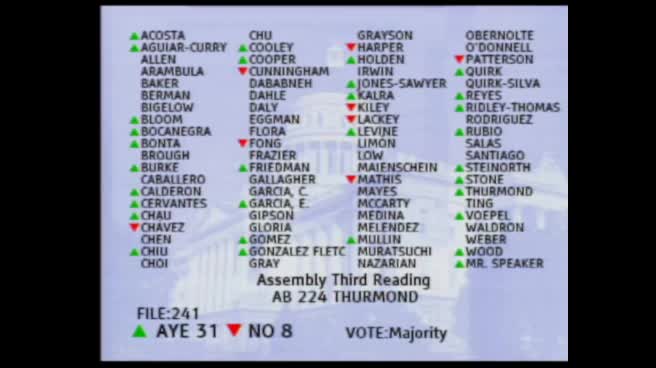 5MIN
Assembly Floor
 1H
Assembly Standing Committee on Appropriations
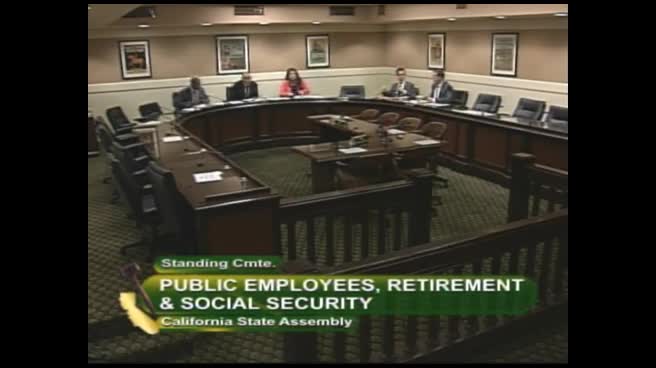 12MIN
Assembly Standing Committee on Public Employees, Retirement, and Social Security
Bill Author

Bill Co-Author(s):
