AB 632: Small Business Procurement and Contract Act: small business and disabled veteran business enterprises.
- Session Year: 2017-2018
- House: Assembly
- Latest Version Date: 2017-03-21
The Small Business Procurement and Contract Act requires state agencies to provide for small business preference in the award of contracts for goods, information technology, services, and construction, with a 5% bid preference on applicable bid specifications. This act also authorizes a state agency to award a contract for the acquisition of goods, services, or information technology that has an estimated value of greater than $5,000, but less than $250,000, to a certified small business, including a microbusiness, or to a disabled veteran business enterprise, as long as the agency obtains price quotations from 2 or more certified small business, including a microbusiness, or from a disabled veterans veteran business enterprise. enterprise, without complying with specified competitive bidding requirements. Existing law requires a bidder under these provisions to submit a written declaration under penalty of perjury.
This bill would increase the value of the contract to greater than $5,000, but less than $500,000, for disabled veteran business enterprises under these provisions. The bill also would specify that a certified small business or disabled veteran business enterprise that utilizes this streamlined process as an alternative to the competitive bidding requirements cannot also receive the small business preference or the disabled veteran business enterprise participation incentive, as specified. By expanding the scope of contracts that may be awarded to a disabled veteran business enterprise under these provisions, the bill would expand the crime of perjury and impose a state-mandated local program.
The California Constitution requires the state to reimburse local agencies and school districts for certain costs mandated by the state. Statutory provisions establish procedures for making that reimbursement.
This bill would provide that no reimbursement is required by this act for a specified reason.
Existing law authorizes a state agency to award a contract for the acquisition of goods, services, or information technology that has an estimated value of greater than $5,000, but less than $250,000, to a certified small business, including a microbusiness, or to a disabled veteran business enterprise, as long as the agency obtains price quotations from 2 or more certified small business, including a microbusiness, or disabled veterans business enterprises. Existing law requires a bidder under these provisions to submit a written declaration under penalty of perjury.
This bill would increase the value of the contract to greater than $5,000, but less than $500,000, for disabled veteran business enterprises under these provisions. By expanding the scope of contracts that may be awarded to a disabled veteran business enterprise under these provisions, the bill would expand the crime of perjury and impose a state-mandated local program.
The California Constitution requires the state to reimburse local agencies and school districts for certain costs mandated by the state. Statutory provisions establish procedures for making that reimbursement.
This bill would provide that no reimbursement is required by this act for a specified reason.
(a)Notwithstanding the advertising, bidding, and protest provisions of Chapter 6 (commencing with Section 14825) of this part and Chapter 2 (commencing with Section 10290) and Chapter 3 (commencing with Section 12100) of Part 2 of Division 2 of the Public Contract Code, a state agency may award a contract for the acquisition of goods, services, or information technology that has an estimated value of the following:
(1)Greater than five thousand dollars ($5,000), but less than two hundred fifty thousand dollars ($250,000), to a certified small business, including a microbusiness, as long as the agency obtains price quotations from two or more certified small businesses, including microbusinesses.
(2)Greater than five thousand dollars ($5,000), but less than five hundred thousand dollars ($500,000), to a disabled veteran business enterprise, as long as the agency obtains price quotations from two or more disabled veterans business enterprises.
(b)In carrying out subdivision (a), a state agency shall consider a responsive offer timely received from a responsible certified small business, including a microbusiness, or from a disabled veteran business enterprise.
(c)If the estimated cost to the state is less than five thousand dollars ($5,000) for the acquisition of goods, services, or information technology, or a greater amount as administratively established by the director, a state agency shall obtain at least two price quotations from responsible suppliers whenever there is reason to believe a response from a single source is not a fair and reasonable price.
(d)A certified small business or disabled veteran business enterprise that utilizes the streamlined process set forth in this section shall not, on the contract value, also receive the small business preference set forth in subdivision (b) of Section 14838 or the disabled veteran business enterprise participation incentive provided in Section 999.5 of the Military and Veterans Code.
SEC. 2.No reimbursement is required by this act pursuant to Section 6 of Article XIIIB of the California Constitution because the only costs that may be incurred by a local agency or school district will be incurred because this act creates a new crime or infraction, eliminates a crime or infraction, or changes the penalty for a crime or infraction, within the meaning of Section 17556 of the Government Code, or changes the definition of a crime within the meaning of Section 6 of Article XIIIB of the California Constitution.
(a)Notwithstanding the advertising, bidding, and protest provisions of Chapter 6 (commencing with Section 14825) of this part and Chapter 2 (commencing with Section 10290) and Chapter 3 (commencing with Section 12100) of Part 2 of Division 2 of the Public Contract Code, a state agency may award a contract for the acquisition of goods, services, or information technology that has an estimated value of greater the following:
(1)Greater than five thousand dollars ($5,000), but less than two hundred fifty thousand dollars ($250,000), to a certified small business, including a microbusiness, or to a disabled veteran business enterprise, as long as the agency obtains price quotations from two or more certified small businesses, including microbusinesses, or from two or more disabled veterans business enterprises. microbusinesses.
(2)Greater than five thousand dollars ($5,000), but less than five hundred thousand dollars ($500,000), to a disabled veteran business enterprise, as long as the agency obtains price quotations from two or more disabled veterans business enterprises.
(b)In carrying out subdivision (a), a state agency shall consider a responsive offer timely received from a responsible certified small business, including a microbusiness, or from a disabled veteran business enterprise.
(c)If the estimated cost to the state is less than five thousand dollars ($5,000) for the acquisition of goods, services, or information technology, or a greater amount as administratively established by the director, a state agency shall obtain at least two price quotations from responsible suppliers whenever there is reason to believe a response from a single source is not a fair and reasonable price.
SEC. 2.No reimbursement is required by this act pursuant to Section 6 of Article XIIIB of the California Constitution because the only costs that may be incurred by a local agency or school district will be incurred because this act creates a new crime or infraction, eliminates a crime or infraction, or changes the penalty for a crime or infraction, within the meaning of Section 17556 of the Government Code, or changes the definition of a crime within the meaning of Section 6 of Article XIIIB of the California Constitution.
|
Date
|
Status
|
|---|---|
| Feb 1, 2018 | From committee: Filed with the Chief Clerk pursuant to Joint Rule 56. |
| Jan 31, 2018 | Died pursuant to Art. IV, Sec. 10(c) of the Constitution. |
| May 26, 2017 | In committee: Held under submission. |
| May 17, 2017 | In committee: Set, first hearing. Referred to APPR. suspense file. |
| Apr 26, 2017 | From committee: Do pass and re-refer to Com. on APPR. (Ayes 4. Noes 1.) (April 26). Re-referred to Com. on APPR. |
| Apr 4, 2017 | From committee: Do pass and re-refer to Com. on A. & A.R. (Ayes 7. Noes 0.) (March 28). Re-referred to Com. on A. & A.R. |
| Mar 22, 2017 | Re-referred to Com. on J., E.D., & E. |
| Mar 21, 2017 | From committee chair, with author's amendments: Amend, and re-refer to Com. on J., E.D., & E. Read second time and amended. |
| Mar 2, 2017 | Referred to Coms. on J., E.D., & E. and A. & A.R. |
| Feb 15, 2017 | From printer. May be heard in committee March 17. |
| Feb 14, 2017 | Read first time. To print. |
|
Date
|
Description
|
Location
|
Votes
|
|
|---|---|---|---|---|
| Apr 26, 2017 | Do pass and be re-referred to the Committee on [Appropriations] | Assembly Standing Committee on Accountability and Administrative Review |
Passed |
|
| Mar 28, 2017 | Do pass and be re-referred to the Committee on [Accountability and Administrative Review] | Assembly Standing Committee on Jobs, Economic Development, and the Economy |
Passed |
This list shows positions taken on this bill by organizations on the date displayed, which is linked to the original source.
Positions by individuals are not included.
Date of Hearing: May 17, 2017
ASSEMBLY COMMITTEE ON APPROPRIATIONS
Lorena Gonzalez Fletcher, Chair
ABPCA Bill Id:AB 632
Author:(Acosta) – As Amended Ver:March 21, 2017
Policy Committee: | Jobs, Economic Development, and the Economy | Vote: | 7 - 0 |
Accountability and Administrative Review | 4 - 1 | ||
|
|
Urgency: No State Mandated Local Program: Yes Reimbursable: No
SUMMARY:
This bill increases the maximum amount for which a state agency can directly contract with a certified small business (SB) or a disabled veteran business enterprise (DVBE) from $250,000 to $500,000.
FISCAL EFFECT:
- Minor and absorbable costs for rule-making and policy development associated with implementing changes to the Department of General Services (DGS).
- On-going cost pressures for state agencies. In 2015-16, the state awarded 15,767 contracts utilizing the Small Business/DVBE Option at a value of $458 million. There were 1,716 contracts with costs between $250,000 and $500,000, valued at a total of nearly $602 million. Although awarding a contract through the Small Business/DVBE Option entails less administrative workload than awarding it through full competition, limiting competition for these contracts is likely to result in higher prices overall. For example, if this process resulted in just 5% higher costs, the additional costs would exceed $30.1 million General Fund and numerous special funds.
COMMENTS:
- Background and Purpose. Existing law designates DGS as the lead purchasing and procurement agency for the State of California. Under current law, certain state contracts with SBs and DVBEs for goods, services, or information technology can bypass formal competitive bidding requirements. Specifically, state agencies are allowed to contract directly with a SB or DVBE after obtaining price quotes from at least two firms before awarding the contract. Contracts offered under this streamlined SB/DVBE option are currently limited to between $5,000 and $250,000 in value. This bill increases the maximum amount to $500,000.
According to the author, "Use of the informal bidding process option is a major tool in the State's efforts to meet its 3% DVBE goal for state contracts. The increase in the maximum contracting amount in this bill is intended to help DVBEs to better compete for state contracts against their big business counterparts while recognizing those who sacrificed a great deal to defend our country."
- Related Legislation. AB 2358 (Bigelow), of the 2015-16 Legislative Session, was substantially similar to this bill but subsequently amended to address a different subject matter.
AB 1445 (Brown) of 2015 and SB 276 (Roth), of the 2013-14 Legislative Session, were both substantively identical to this bill and held in the Assembly and Senate Appropriations Committees, respectively.
Analysis Prepared by: Daisy Gonzales / APPR. / (916) 319-2081
Date of Hearing: April 26, 2017
ASSEMBLY COMMITTEE ON ACCOUNTABILITY AND ADMINISTRATIVE REVIEW
Susan Talamantes Eggman, Chair
ABPCA Bill Id:AB 632 (
Author:Acosta) – As Amended Ver:March 21, 2017
SUBJECT: Small Business Procurement and Contract Act: small business and disabled veteran business enterprises
SUMMARY: Increases the maximum amount for which a state agency can directly contract with a certified small business (SB) or a disabled veteran business enterprise (DVBE) from $250,000 to $500,000.
EXISTING LAW:
- Designates the Department of General Services (DGS) as the lead purchasing and procurement agency for the State of California.
- Establishes the certified SB/DVBE option in state contracting, which allows a state agency to award a contract for goods, services, or information technology to a certified SB or DVBE without complying with formal advertising and bidding requirements if the following conditions are met:
- The contract award is greater than $5,000 and less than $250,000; and,
- Quotes are obtained from two or more SBs or from two or more DVBEs.
- Requires certain state contracts to have annual statewide participation goals of at least 3% for DVBEs and 25% for small businesses (through executive order).
FISCAL EFFECT: Unknown
COMMENTS: Under current law, certain state contracts with SBs and DVBEs for goods, services, or information technology can bypass formal competitive bidding requirements. Specifically, state agencies are allowed to contract directly with a SB or DVBE after obtaining price quotes from at least two firms before awarding the contract. Contracts offered under this streamlined SB/DVBE option are currently limited to between $5,000 and $250,000 in value. This bill increases the maximum amount to $500,000.
According to the author, "Use of the informal bidding process option is a major tool in the State's efforts to meet its 3% DVBE goal for state contracts. The increase in the maximum contracting amount in this bill is intended to help DVBEs to better compete for state contracts against their big business counterparts while recognizing those who sacrificed a great deal to defend our country."
DGS' most recent consolidated annual report notes that 15,676 contracts were awarded using the SB/DVBE option for fiscal year 2015-16. It is unclear whether or not increasing the maximum contract value under the option to $500,000 will increase the number of participating SB or DVBE firms. Hypothetically, state agencies could, if they wish, pick specific firms with whom they have done business before and invite them to make offers since formal bidding requirements do not apply.
Supporters of this bill state that the ability to compete for contracts at a higher threshold from $250,000 to$500,000 will provide additional opportunities for more disabled veteran business owners.
The Coalition of Small and Disabled Veteran Businesses objects to the contracting increase in this bill and is concerned that these types of contracts will only benefit a relatively small subset of DVBE firms that enjoy the major part of the State’s business.
PRIOR LEGISLATION:
- AB 2358 (Bigelow) of 2016 was substantially similar to this bill but subsequently amended to address a different subject matter.
- AB 1445 (Brown) of 2015 and SB 276 (Roth) of 2013 were both substantively identical to this bill and held in the Assembly and Senate Appropriations Committees, respectively.
- AB 550 (Brown) of 2013 would have made a number of changes to improve state procurement practices relating to SB and DVBE contract participation, including a provision substantively identical to this bill. AB 550 was held in the Assembly Appropriations Committee.
- AB 31 (Price), Chapter 212, Statutes of 2009, includes, among other provisions, the increase in the maximum threshold for contracts under the SB/DVBE option from $100,000 to the current $250,000 limit.
DOUBLE REFERRAL: This measure was previously heard in the Assembly Jobs, Economic Development and the Economy Committee on March 28, 2017, with a vote of 7-0.
REGISTERED SUPPORT / OPPOSITION:
Support
2020 Vet Intelligent Logistics Solutions
Arktos Incorporated
CMG Alliance
CommTech Systems
D.A. DUE Compliance & Logistics
Fueltec, Inc.
Global Blue DVBE
Global Environmental Network, Inc.
Global Executive Security
Granite Data Solutions
Greater Los Angeles African American Chamber of Commerce
Interval Equipment Solutions, Inc.
KKO Labs Construction
KMEA
Maid Fast Construction
Phazer Electric, Inc.
Solar Energy Fields
Summit Glass Corporation
The Sanberg Group, Inc.
V. Lopez Jr. and Sons, Inc.
Veterans Painting Contractor, Inc.
Opposition
Coalition of Small and Disabled Veteran Businesses
Analysis Prepared by: Cassie Royce / A. & A.R. / (916) 319-3600
Date of Hearing: March 28, 2017
ASSEMBLY COMMITTEE ON JOBS, ECONOMIC DEVELOPMENT, AND THE ECONOMY
Sharon Quirk-Silva, Chair
ABPCA Bill Id:AB 632 (
Author:Acosta) – As Introduced Ver:March 21, 2017
SUBJECT: Small Business Procurement and Contract Act: disabled veteran business enterprise
SUMMARY: Increases the maximum contract amount for direct source contracting with a disabled veteran owned business enterprise (DVBE) under the Streamline Procurement Option from $250,000 to $500,000. Prior to making the award, existing law, not modified in this bill, requires the agency to obtain price quotations from two or more DVBEs.
EXISTING LAW:
- Establishes the California Disabled Veteran Business Enterprise Program, administered by Department of General Services (DGS), for the purpose of addressing the special needs of disabled veterans seeking rehabilitation and training through entrepreneurship, and to recognize the sacrifices California's disabled veterans made during their military service. Contracts for professional bond services are administered through the State Treasurer's Office.
- Applies the 3% DVBE participation goal on each awarding state agency, department, and officer that enters into a contract for materials, supplies, equipment, alteration, repair, or improvement. This requirement can be waived on a specific contract with the approval of the department director or another designated person. Contracts with a DVBE for equipment rentals do not count toward the goal.
- Authorizes a state agency to utilize the Streamline Procurement Option when awarding a contract for the acquisition of goods, services, or information technology to a certified small business, including a microbusiness, or to a DVBE, if the estimated value is greater than $5,000, but less than $250,000. Prior to making the award, the agency is required to obtain price quotations from two or more certified small business, including a microbusiness, or DVBEs.
- Defines the following terms:
- A DVBE contractor, subcontractor, or supplier is any person or entity that has been certified by the administering agency and that performs a commercially useful function, as defined.
- A disabled veteran is a veteran of the military, naval, or air service of the U.S. who has a service-connected disability of at least 10% and who is domiciled in the state.
- A DVBE is a business certified by the administering agency as meeting all of the following requirements:
- The legal structure of the business is a:
- Sole proprietorship with at least 51% owned by one or more disabled veterans;
- Publicly owned business with at least 51% of its stock unconditionally owned by one or more disabled veterans;
- Subsidiary that is wholly owned by a parent corporation, but only if at least 51% of the voting stock of the parent corporation is unconditionally owned by one or more disabled veterans; or
- Joint venture in which at least 51% of the joint venture’s management, control, and earnings are held by one or more disabled veterans.
- The management and control of the daily business operations are by one or more disabled veterans. The disabled veterans who exercise management and control are not required to be the same disabled veterans as the owners of the business.
- It has a home office located in the United States, which is not a branch or subsidiary of a foreign corporation, foreign firm, or other foreign-based business.
- The legal structure of the business is a:
FISCAL EFFECT: Unknown
POLICY FRAMEWORK:
Each year, California state government enters into billions of dollars in contracts. In 2015-16, $8.1 billion in contracts were awarded through 159 different department and agencies. These moneys present an important revenue stream for businesses, including the 21,739 contracts which were awarded to DVBEs.
The state has developed a number of programs to encourage contract participation by DVBEs and small businesses. Among those incentives is a Streamlined Procurement Option, which allows a state entity to bypass the more timely and complex bidding process and, instead, directly contact with a DVBE or small business. Costs are contained by limiting the size of the contracts to only those between $5,000 and $250,000 and requiring comparable price quotations from two or more small businesses or DVBEs.
This bill would increase the maximum dollar amount for contracts with DVBEs to as high as $500,000, while leaving the current $250,000 limit for contracts with small businesses. While this is intended to be beneficial to DVBEs, the two tier approach of small businesses having certain limits and DVBEs having another could inadvertently remove some of the advantages of the Streamlined Procurement Option.
The Coalition of Small and Disabled Veteran Businesses, opposed to this bill, raised concerns over the state's overall use of the Streamlined Procurement Option and does not support expanding its use. Opposition arguments are discussed in Comment 7. The analysis also includes background on the DVBE Program, the Streamlined Procurement Option, and an extended list of related legislation.
COMMENTS:
- Small Business Procurement and Contract Act: The Small Business Procurement and Contract Act (Small Business Procurement Act), administered through DGS, was implemented more than 30 years ago to establish a small business preference within the state's procurement process that would increase the number of contracts between the state and small businesses. A DBVE component was added in 1989.
The Small Business Procurement Act states that it is the policy of the State of California that the state aid the interests of small businesses in order to preserve free competitive enterprise and to ensure that a fair portion of the total purchases and contracts of the state be placed with these enterprises. The statute further states that DVBE participation is strongly encouraged to address the special needs of disabled veterans seeking rehabilitation and training through entrepreneurship, and to recognize the sacrifices of California's disabled military veterans. Statute sets an annual 3% DVBE participation goal, and a 25% goal is set through executive order for small businesses and microbusinesses.
In 2015-16 there were 25,834 certified small businesses and microbusinesses and 1,736 certified DVBEs. A majority of DVBEs are smaller size firms with 75.4% of holding a dual certification as a DVBE and microbusiness and 9.6% having a dual DVBE and small business certification. The remaining 15% of DVBEs operate with only a single DVBE certification.
- Streamlined Procurement Option: To assist the state in reaching the small business and DVBE procurement goals, contracting entities have the option of using a streamlined procurement method. This method allows the awarding entity to bypass the general advertising, bidding, and protest provisions in the State Contract Act and use special provisions to directly contract with a certified small business or DVBE. Prior to entering into the contact, the state entity is required to assess the appropriateness of the proposed contract price by checking the rate with two or more small businesses or DVBEs.
Contracts offered under the Streamlined Procurement Option are currently limited to contracts between $5,000 and $250,000. AB 632 would increase the amount to $500,000 for DVBE contracts issued for goods, services, and information technology. In 2015-16, 15,207 contracts were initiated using this Streamlined Procurement Option, which accounts for over $426 million in contracting. The California State University System reported using this process for 560 contracts totaling $31 million in contracts.
DGS is currently not able to provide data on the number of contracts that were awarded to small business vs. DVBE using the Streamlined Procurement Option. In the future, beginning with contracting activity on or after January 2016, FI$Cal will be able to track and report each of the targeted procurement categories separately.
While prior bills have proposed increasing the contracting cap on both small business and DVBEs, this bill creates a two tier system. Given that less than 7% of DVBEs are not dually certified as a small or microbusiness, the overall impact on contracting activity may be small. According to the author, this disparity is necessary in order to limit the bills projected fiscal impact on the General Fund and is appropriate given DVBE's sacrifices and service to the county.
- Impact of Increasing Contracting Limit: According to data from the State Contract & Procurement Registration System, in FY 2015-16, there were a total of 160,143 contracts valued between $1 and $499,999, including those that were awarded using the Streamlined Procurement Option and those awarded under all other bidding procedures. Of these contracts, only 718 (0.45%) were valued between $250,000 and $499,999.
- The DVBE Program: The 3% DVBE procurement participation goal applies to the state agency or department's overall contracting activities in the given fiscal year and may be achieved by awarding state contracts to DVBEs as prime contractors or when DVBEs are used as a subcontractor.
Awarding departments have an option of including DVBE participation in every contract or making alternative arrangements, as long as the 3% objective is met at the end of the year. Each agency and department is required to designate a small business and DVBE contracting liaison to facilitate it in meeting the 3% DVBE goal and the 25% small business goal.
Departments also have the option of offering a 1% to 5% contracting incentive to strengthen the competitiveness of DVBE primes and non-DVBE primes that subcontract with DVBEs. Although not currently being utilized, statute includes authority for bidders that are unable or unwilling to include a DVBE in a contract to submit a utilization plan to DGS that commits the businesses to using DVBEs in the future. DGS is authorized to audit businesses that submit utilization plans to ensure compliance.
State departments that fail to meet the annual 3% goal can have their delegated contracting authority removed, although DGS has never removed program authority solely based on an agency or department's failure to meet its DVBE contracting goal.
DGS' has a range of responsibilities relating to the implementation of the DVBE Program including:
- Certification of DVBEs (2,043 DVBEs certified in 2015-16);
- Certification of small businesses and microbusinesses (25,824 small businesses and microbusinesses certified in 2015-16);
- Outreach to the potential bidders and the veteran community (191 events in FY 2015-16);
- Marketing of the DVBE program to state agencies;
- Partnering with CalVet on meetings with departments that are not meeting participation goals.
- Consulting with the California Procurement Contracting Academy on the DVBE training of state contracting staff;
- Preparation of an annual consolidated report on DVBE, small business, and microbusinesses participation within state contracting activities; and
- Program oversight to identify abuses by bidders and failures to preform by state agencies.
In a further effort to increase oversight and enhance small business and DVBE contracting activities DGS and the California Department of Veterans Affairs, met with 13 departments during 2015-16 that did not achieve one or both of their goals, including:
- High spend state entities with over $20 million in annual contracting: California High Speed Rail Authority; California Public Utilities Commission, and the Office of Systems Integration.
- Small and medium-spend state entities with under $20 million in annual contracts: Agricultural Labor Relations Board; California Housing Finance Agency; California Arts Council; California Human Resources/State Personnel Board; California Science Center; Delta Stewardship Council; Department of Managed Health Care; Governor's Office of Business and Economic Development; Office of Environmental Health Hazard Assessment; and the California Coastal Conservancy.
Below are charts displaying five years of DVBE participation rates. The charts include information on mandatory reporting entities and all reporting entities. Under both reporting metrics, it appears that the state is consistently meeting its DVBE procurement participation goals.
DVBE Five-Year Contracting Activity – Mandated Agencies (dollars in millions) | ||||
Fiscal Year | Total Contract Dollars | Total DVBE Dollars | Total DVBE Percent | Total DVBE Contracts |
2015-16 | $5,855 | $274 | 4.67% | 18,638 |
2014-15 | $8,105 | $314 | 3.87% | 16,192 |
2013-14 | $6,566 | $241 | 3.67% | 12,777 |
2012-13 | $7,151 | $216 | 3.03% | 14,907 |
2011-12 | $7,173 | $340 | 4.74% | 16,246 |
Average | $6,970 | $277 | 4.00% | 15,752 |
DGS Consolidated Reports for specified contracting periods | ||||
DVBE Five-Year Contracting Activity – All Reporting Agencies (dollars in in millions) | ||||
Fiscal Year | Total Contract Dollars | Total DVBE Dollars | Total DVBE Percent | Total DVBE Contracts |
2015-16 | $8,090 | $349 | 4.41% | 21,739 |
2014-15 | $10,073 | $407 | 4.04% | 18,228 |
2013-14 | $8,233 | $299 | 3.64% | 14,305 |
2012-13 | $8,573 | $267 | 3.12% | 16,776 |
2011-12 | $8,508 | $373 | 4.39% | 17,835 |
Average | $8,695 | $339 | 3.92% | 17776 |
DGS Consolidated Reports for specified contracting periods | ||||
While the year-to-year percentages are useful to review, it is also important to note that consistency among which agencies report or even which agencies believe that they are mandated to report varies. As an example, in 2011-12 86% of the mandatory reporting entities reported their contracting activity to DGS. For 2013-14, 2014-15, and 2015-16 only 80% of mandatory reporters provided the required data to DGS.
- Opposition: The Coalition of Small and Disabled Veteran Businesses, opposed to this bill, has raised concerns over the state's overall use of the Streamlined Procurement Option and does not support expanding its use. Based on previous enforcement actions against small businesses who have allegedly colluded to set artificially high contract prices and the findings from the 2014 State Audit, they state that "this proposed measure is extremely dangerous and virtually guaranteed [not] to provide the proposed benefits the sponsors claim."
The Coalition of Small and Disabled Veteran Businesses further states that the previous increase in the contract cap did not actually result in increased DVBE and small business contracting. In 2016, the Coalition of Small and Disabled Veteran Businesses hired a consultant to examine the number of state contracts valued at less than $250,000 which were awarded to small businesses and DVBE's following the implementation of 2010 increase in contract size, AB 31 (Price), Chapter 212, Statutes of 2009. According to the assessment, the number of small businesses and DVBEs being awarded contracts below $250,000 decreased significantly from prior periods.
Another area of concern raised by the Coalition of Small and Disabled Veteran Businesses relates the small number of prime contractors that are DVBEs. According to a 2014 state audit, “The top 30 DVBE firms from fiscal year 2012–13 made up 83 percent of the total amount the State awarded to DVBE businesses directly—and these top 30 DVBE firms also accounted for 76 percent of the total number of DVBE contracts awarded. Although SCPRS may not include all lower value DVBE contracts, the data in SCPRS nevertheless provide a strong indicator that only a relatively small subset of DVBE firms enjoy the major part of the State’s business.”
DGS acknowledges that the 2014 audit identified a number areas where program delivery could be strengthened and have made changes. Among other activities, DGS negotiated more small business and DVBE contracting "off-ramps" to the state large strategically sourced contracts, as well as modifying guidance documents and staff training curriculum. DGS also increased engagement with low performing state agencies (as discussed above) and publically committed to more closely monitoring the use of the Streamlined Procurement Option. Beginning in 2016, DGS transferred to the state's multiagency computer platform, FI$CAL. This new online platform should provide DGS with new tools to track contracting activities.
At the writing of this analysis, the author had requested, but had not yet met with the opposition. Mr. Acosta provided this statement: “I fully support DGS’ efforts and commitment to address any issues with bad actors who are utilizing the streamlined contracting process for small businesses and DVBEs. DGS has recognized there is an issue and has the authority to pursue enforcement actions against these bad actors within the program. I have reached out to the opposition to discuss their issues and explore options to possibly resolve those issues.”
- Related Legislation: Below is a list of related measures.
- AB 31 (Price) Public Contracts: Small Business Procurement and Contract Act: This bill increased the maximum contract threshold amount for awards to small business (SME), including microbusiness, and DVBEs under the state's streamlined procurement process, from $100,000 to $250,000, as specified. This bill requires contractors to report the contract amount allocated to SMEs and DVBE 's with which they made contract commitments. Status: The bill was signed by the Governor, Chapter 212, Statutes of 2009.
- AB 1445 (Brown) Streamlined Contracting Authority: This bill would have increased the maximum amount a state agency is authorized to directly contract with a certified small business or disabled veteran business enterprise, from $250,000 to $500,000. Status: Held on the Suspense File of the Assembly Committee on Appropriations, 2015.
- AB 1568 (Grove) Quotes for Public Contracts: This bill would have required state agencies that opt to acquire goods, services, or information technology through a specified small business and disabled veteran business enterprise contracting option to solicit at least three price quotes, and obtain at least two quotes before awarding the contract. Status: Held on the Suspense File in the Senate Committee on Appropriations, 2014.
- AB 2358 (Bigelow and Wood) Streamlined Contracting Authority: This bill, as passed by the Assembly, would have increased the maximum amount for which a state agency can directly contract with a certified small business or a disabled veteran business enterprise from $250,000 to $300,000. Status: The contracting related language was removed in the Senate and the bill became a vehicle for an unrelated issue. Signed by the Governor, Chapter 298, Statutes of 2016.
- SB 276 (Roth) Streamlined Contracting Authority: This bill would have increased the maximum amount a state agency is authorized to directly contract with a certified small business or disabled veteran business enterprise, from $250,000 to $500,000. Status: Held on the Suspense File of the Senate Committee on Appropriations, 2013.
REGISTERED SUPPORT / OPPOSITION:
Support
2020 VET
CMG Alliance
CommTech
Global Blue
Global Environmental Network, Inc.
Granite Data Solutions
KKO Labs
Sandberg Group
Opposition
Coalition of Small and Disabled Veteran Businesses
Analysis Prepared by: Toni Symonds / J., E.D., & E. /
Discussed in Hearing
 1H
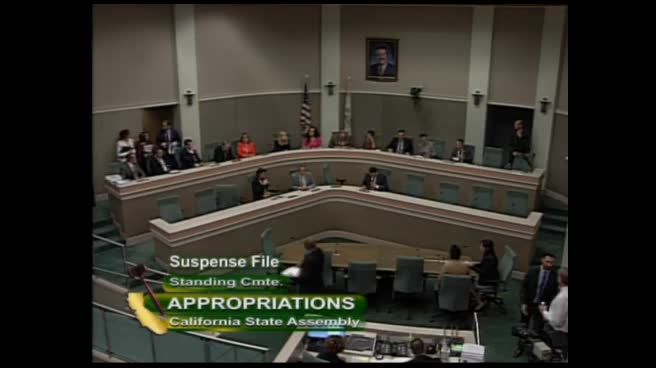
Assembly Standing Committee on Appropriations
 14MIN
Assembly Standing Committee on Accountability and Administrative Review
 10MIN
Assembly Standing Committee on Jobs, Economic Development, and the Economy
Bill Author


