AB 638: Immigration consultants.
- Session Year: 2017-2018
- House: Assembly
- Latest Version Date: 2018-08-24
(1)Existing law regulates the practice of immigration consultants who provide nonlegal assistance or advice in an immigration matter. Existing law prohibits any person, for compensation, from engaging in the business or acting in the capacity of an immigration consultant in this state, unless that person complies with the regulations in state law governing the practice of immigration consultants, is an attorney, or is authorized by federal law to represent persons before the Board of Immigration Appeals or the United States Citizenship and Immigration Services. Existing law provides that immigration consultants, attorneys, notaries public, and organizations accredited by the United States Board of Immigration Appeals shall be the only individuals authorized to charge clients or prospective clients a fee for providing services associated with filing an application under a federal program referred to as the deferred action program, and prohibits immigration consultants, attorneys, notaries public, and organizations accredited by the United States Board of Immigration Appeals from participating in practices that amount to price gouging, as defined, when a client or prospective client solicits these services. Existing law establishes both criminal and civil penalties for a violation of specified provisions related to immigration consultants.
This bill, beginning on January 1, 2019, 2020, would make it unlawful for a person, for compensation, other than a person authorized to practice law in this state, or a person authorized to represent others under federal law in an immigration matter, or a paralegal acting under the active supervision of an attorney, to engage in the business or act in the capacity of an immigration consultant in this state. The bill would provide that the provisions described above do not apply to an automated immigration form population service. The bill would require the Secretary of State, in coordination with specified state agencies, to develop an Internet Web site that would include specified information related to immigration services available in California, including information related to persons recognized or accredited as authorized providers of immigration services by the United States Department of Justice. The bill would remove notaries public from the provisions described above relating to the federal deferred action program, and would, instead, authorize a paralegal to charge fees for services related to the deferred action program and subject a paralegal to the price gouging prohibition described above. By expanding the scope of an existing crime, this bill would impose a state-mandated local program.
(2)The California Constitution requires the state to reimburse local agencies and school districts for certain costs mandated by the state. Statutory provisions establish procedures for making that reimbursement.
This bill would provide that no reimbursement is required by this act for a specified reason.
(1)Existing law regulates the practice of immigration consultants who provide nonlegal assistance or advice in an immigration matter. Existing law prohibits any person, for compensation, from engaging in the business or acting in the capacity of an immigration consultant in this state, unless that person complies with the regulations in state law governing the practice of immigration consultants, is an attorney, or is authorized by federal law to represent persons before the Board of Immigration Appeals or the United States Citizenship and Immigration Services. Existing law provides that immigration consultants, attorneys, notaries public, and organizations accredited by the United States Board of Immigration Appeals shall be the only individuals authorized to charge clients or prospective clients a fee for providing services associated with filing an application under a federal program referred to as the deferred action program, and prohibits immigration consultants, attorneys, notaries public, and organizations accredited by the United States Board of Immigration Appeals from participating in practices that amount to price gouging, as defined, when a client or prospective client solicits these services. Existing law establishes both criminal and civil penalties for a violation of specified provisions related to immigration consultants.
This bill, beginning on January 1, 2019, would make it unlawful for a person, for compensation, other than a person authorized to practice law in this state, including a paralegal who is supervised by a person authorized to practice law, or a person authorized to represent others under federal law in an immigration matter, or a paralegal acting under the active supervision of an attorney, to engage in the business or act in the capacity of an immigration consultant in this state. This The bill would provide that the provisions described above do not apply to an automated immigration form population service. The bill would require the Secretary of State, in coordination with specified state agencies, to develop an Internet Web site that would include specified information related to immigration services available in California, including information related to persons recognized or accredited as authorized providers of immigration services by the United States Department of Justice. The bill would remove notaries public from the provisions described above relating to the federal deferred action program, and would, instead, authorize a paralegal to charge fees for services related to the deferred action program and subject a paralegal to the price gouging prohibition described above. By expanding the scope of an existing crime, this bill would impose a state-mandated local program.
(2)The California Constitution requires the state to reimburse local agencies and school districts for certain costs mandated by the state. Statutory provisions establish procedures for making that reimbursement.
This bill would provide that no reimbursement is required by this act for a specified reason.
(1)Existing law regulates the practice of immigration consultants who provide nonlegal assistance or advice in an immigration matter. Existing law prohibits any person, for compensation, from engaging in the business or acting in the capacity of an immigration consultant in this state, unless that person complies with the regulations in state law governing the practice of immigration consultants, is an attorney, or is authorized by federal law to represent persons before the Board of Immigration Appeals or the United States Citizenship and Immigration Services. Existing law requires a person seeking to engage in the business or act in the capacity of an immigration consultant in this state to file a bond of a specified amount, and other related forms, with the Secretary of State. Existing law requires the Secretary of State to conduct a background check of any person who files a bond of that nature, and requires the Secretary of State to post on its Internet Web site information on any person who has complied with the requirement to file a bond and passed the requisite background check. Existing law provides that immigration consultants, attorneys, notaries public, and organizations accredited by the United States Board of Immigration Appeals shall be the only individuals authorized to charge clients or prospective clients a fee for providing services associated with filing an application under a federal program referred to as the deferred action program, and prohibits immigration consultants, attorneys, notaries public, and organizations accredited by the United States Board of Immigration Appeals from participating in practices that amount to price gouging, as defined, when a client or prospective client solicits these services. Existing law establishes both criminal and civil penalties for a violation of specified provisions related to immigration consultants.
This bill, beginning on January 1, 2019, would make it unlawful for a person, for compensation, other than a person authorized to practice law in this state, including a paralegal who is supervised by a person authorized to practice law, or a person authorized to represent others under federal law in an immigration matter, or a paralegal acting under the active supervision of an attorney, to engage in the business or act in the capacity of an immigration consultant in this state. This bill would remove notaries public from the provisions described above relating to the federal deferred action program, and would, instead, authorize a paralegal to charge fees for services related to the deferred action program and subject a paralegal to the price gouging prohibition described above. By expanding the scope of an existing crime, this bill would impose a state-mandated local program.
(2)The California Constitution requires the state to reimburse local agencies and school districts for certain costs mandated by the state. Statutory provisions establish procedures for making that reimbursement.
This bill would provide that no reimbursement is required by this act for a specified reason.
This bill, the Immigration Fraud Prevention Act of 2017, would prohibit a person who was not listed on the Secretary of States Internet Web site as being in compliance with the bond and background check requirements described above before January 1, 2018, from submitting a bond after that date or from engaging in the business or acting in the capacity of an immigration consultant. This bill would repeal those provisions, as well as related provisions, as of January 1, 2019, and, instead, beginning January 1, 2019, would make it unlawful for a person, other than a person authorized to practice law in this state, including a paralegal who is supervised by a person authorized to practice law, or a person authorized to represent others under federal law in an immigration matter, to engage in the practice of law in an immigration matter. The bill would also make it unlawful for a person, other than a person authorized to practice law in this state, or a person authorized to represent others under federal law in an immigration matter, to engage in specified acts and practices. The bill would prohibit a person licensed as a notary public from advertising in a manner that conveys or implies that he or she possesses professional legal skills in the areas of immigration law. The bill also would prohibit a person authorized to practice law in this state or to represent others under federal law in an immigration matter from participating in practices that amount to price gouging, as defined, when a client or prospective client solicits these services. The bill would make it unlawful for any person providing any assistance in an immigration matter, including a person authorized to practice law in this state, to do specified acts.The bill would require the Secretary of State, by January 1, 2019, to notify any person who was registered as an active immigration consultant at any time on or after January 1, 2016, that immigration consulting is prohibited as of January 1, 2019. The bill would require a person who was registered as an active immigration consultant at any time on or after January 1, 2016, to provide each existing client specified files in his or her possession by March 1, 2018, and to, until January 1, 2020, post a sign on his or her place of business informing the public of the prohibition on immigration consulting.This bill would establish both criminal and civil penalties for a violation of the provisions described above, and would thereby impose a state-mandated local program.(2)Existing law, the State Bar Act, provides for the licensure and regulation of attorneys by the State Bar of California, a public corporation. Existing law provides it is a violation of specified provisions of law relating to the unauthorized practice of law for any person who is not an attorney to literally translate from English into another language the phrases notary public, notary, licensed, attorney, lawyer, or any other terms that imply that the person is an attorney. Existing law requires that a civil action brought under those provisions be commenced within 4 years after the cause of action accrues.This bill, on or after January 1, 2019, would require a civil action brought under the provisions described above to be commenced within 5 years, instead of 4 years, after the cause of action accrues, and would require that the cause of action would not be deemed to accrue until the discovery, by the aggrieved party, of the facts constituting the violation. The bill would provide that it would be a violation of the provision described above as an unlawful practice of law for a person to hold himself or herself out as an immigration consultant or as a person authorized to provide advice in an immigration matter, unless that person is otherwise authorized to practice law or otherwise permitted to represent others under federal law in an immigration matter.(3)Existing law provides that, under specified conditions, a public entity has a privilege to refuse, and to prevent another from disclosing, official information acquired in confidence by a public employee in the course of his or her duty, and not open, or officially disclosed, to the public prior to the time the claim of privilege is made. Under existing law, custodial or peace officer records are accessible provided that the information is relevant to the subject matter involved in the pending litigation.This bill would deem any client records or information obtained during the scope of an investigation relating to immigration consultants as privileged as official information.(4)Existing constitutional provisions require that a statute that limits the right of access to the meetings of public bodies or the writings of public officials and agencies be adopted with findings demonstrating the interest protected by the limitation and the need for protecting that interest.This bill would make legislative findings to that effect.(5)The California Constitution requires the state to reimburse local agencies and school districts for certain costs mandated by the state. Statutory provisions establish procedures for making that reimbursement.This bill would provide that no reimbursement is required by this act for a specified reason.(1)Existing law regulates the practice of immigration consultants who provide nonlegal assistance or advice in an immigration matter. Existing law prohibits any person, for compensation, from engaging in the business or acting in the capacity of an immigration consultant in this state, unless that person complies with the regulations in state law governing the practice of immigration consultants, is an attorney, or is authorized by federal law to represent persons before the Board of Immigration Appeals or the United States Citizenship and Immigration Services. Existing law requires a person seeking to engage in the business or act in the capacity of an immigration consultant in this state to file a bond of a specified amount, and other related forms, with the Secretary of State. Existing law requires the Secretary of State to conduct a background check of any person who files a bond of that nature, and requires the Secretary of State to post on its Internet Web site information on any person who has complied with the requirement to file a bond and passed the requisite background check.
This bill, the Immigration Fraud Prevention Act of 2017, would prohibit a person who was not listed on the Secretary of States Internet Web site as being in compliance with the bond and background check requirements described above before January 1, 2018, from submitting a bond after that date or from engaging in the business or acting in the capacity of an immigration consultant. This bill would repeal those provisions, as well as related provisions, as of January 1, 2019, and, instead, beginning January 1, 2019, would make it unlawful for a person, other than a person authorized to practice law in this state, including a paralegal who is supervised by a person authorized to practice law, or a person authorized to represent others under federal law in an immigration matter, to engage in the practice of law in an immigration matter. The bill would also make it unlawful for a person, other than a person authorized to practice law in this state, or a person authorized to represent others under federal law in an immigration matter, to engage in specified acts and practices. The bill would prohibit a person licensed as a notary public from advertising in a manner that conveys or implies that he or she possesses professional legal skills in the areas of immigration law. The bill also would prohibit a person authorized to practice law in this state or to represent others under federal law in an immigration matter from participating in practices that amount to price gouging, as defined, when a client or prospective client solicits these services. The bill would make it unlawful for any person providing any assistance in an immigration matter, including a person authorized to practice law in this state, to do specified acts.
The bill would require the Secretary of State, by January 1, 2019, to notify any person who was registered as an active immigration consultant at any time on or after January 1, 2016, that immigration consulting is prohibited as of January 1, 2019. The bill would require a person who was registered as an active immigration consultant at any time on or after January 1, 2016, to provide each existing client specified files in his or her possession by March 1, 2018, and to, until January 1, 2020, post a sign on his or her place of business informing the public of the prohibition on immigration consulting.
This bill would establish both criminal and civil penalties for a violation of the provisions described above, and would thereby impose a state-mandated local program.
(2)Existing law, the State Bar Act, provides for the licensure and regulation of attorneys by the State Bar of California, a public corporation. Existing law provides it is a violation of specified provisions of law relating to the unauthorized practice of law for any person who is not an attorney to literally translate from English into another language the phrases notary public, notary, licensed, attorney, lawyer, or any other terms that imply that the person is an attorney. Existing law requires that a civil action brought under those provisions be commenced within 4 years after the cause of action accrues.
This bill, on or after January 1, 2019, would require a civil action brought under the provisions described above to be commenced within 5 years, instead of 4 years, after the cause of action accrues, and would require that the cause of action would not be deemed to accrue until the discovery, by the aggrieved party, of the facts constituting the violation. The bill would provide that it would be a violation of the provision described above as an unlawful practice of law for a person to hold himself or herself out as an immigration consultant or as a person authorized to provide advice in an immigration matter, unless that person is otherwise authorized to practice law or otherwise permitted to represent others under federal law in an immigration matter.
(3)Existing law provides that, under specified conditions, a public entity has a privilege to refuse, and to prevent another from disclosing, official information acquired in confidence by a public employee in the course of his or her duty, and not open, or officially disclosed, to the public prior to the time the claim of privilege is made. Under existing law, custodial or peace officer records are accessible provided that the information is relevant to the subject matter involved in the pending litigation.
This bill would deem any client records or information obtained during the scope of an investigation relating to immigration consultants as privileged as official information.
(4)Existing constitutional provisions require that a statute that limits the right of access to the meetings of public bodies or the writings of public officials and agencies be adopted with findings demonstrating the interest protected by the limitation and the need for protecting that interest.
This bill would make legislative findings to that effect.
(5)The California Constitution requires the state to reimburse local agencies and school districts for certain costs mandated by the state. Statutory provisions establish procedures for making that reimbursement.
This bill would provide that no reimbursement is required by this act for a specified reason.
(1)Existing law regulates the practice of immigration consultants who provide nonlegal assistance or advice in an immigration matter. Existing law prohibits any person, for compensation, from engaging in the business or acting in the capacity of an immigration consultant in this state, unless that person complies with the regulations in state law governing the practice of immigration consultants, is an attorney, or is authorized by federal law to represent persons before the Board of Immigration Appeals or the United States Citizenship and Immigration Services. Existing law requires a person seeking to engage in the business or act in the capacity of an immigration consultant in this state to file a bond of a specified amount, and other related forms, with the Secretary of State. Existing law requires the Secretary of State to conduct a background check of any person who files a bond of that nature, and requires the Secretary of State to post on its Internet Web site information on any person who has complied with the requirement to file a bond and passed the requisite background check.
This bill bill, the Immigration Fraud Prevention Act of 2017, would prohibit a person who was not listed on the Secretary of States Internet Web site as being in compliance with the bond and background check requirements described above before January 1, 2018, from submitting a bond after that date or from engaging in the business or acting in the capacity of an immigration consultant. This bill would repeal those provisions, as well as related provisions, as of January 1, 2019, and, instead, by beginning January 1, 2019, prohibit any person, for compensation, from engaging in the business or acting in the capacity of an immigration consultant in this state, as provided. The bill would, notwithstanding that prohibition, authorize specified actors to act in the capacity of an immigration consultant, including attorneys and a person or entity authorized under federal law to represent persons before the United States Department of Homeland Security or the United States Department of Justice. The bill would provide that attorneys and organizations accredited by the Executive Office for Immigration Review shall be the only individuals authorized to charge clients or prospective clients a fee for providing services associated with filing an application related to an immigration matter. would make it unlawful for a person, other than a person authorized to practice law in this state, including a paralegal who is supervised by a person authorized to practice law, or a person authorized to represent others under federal law in an immigration matter, to engage in the practice of law in an immigration matter. The bill would also make it unlawful for a person, other than a person authorized to practice law in this state, or a person authorized to represent others under federal law in an immigration matter, to engage in specified acts and practices. The bill would prohibit a person licensed as a notary public from advertising in a manner that conveys or implies that he or she possesses professional legal skills in the areas of immigration law. The bill also would prohibit attorneys and organizations accredited by the Executive Office for Immigration Review a person authorized to practice law in this state or to represent others under federal law in an immigration matter from participating in practices that amount to price gouging, as defined, when a client or prospective client solicits these services. The bill would make it unlawful for any person engaged in business or acting in the capacity of an immigration consultant providing any assistance in an immigration matter, including a person authorized to practice law in this state, to do specified acts.
The bill would require the Secretary of State, by January 1, 2019, to notify any person who was registered as an active immigration consultant at any time on or after January 1, 2016, that immigration consulting is prohibited as of January 1, 2019. The bill would require a person who was registered as an active immigration consultant at any time on or after January 1, 2016, to provide each existing client specified files in his or her possession by March 1, 2018, and to, until January 1, 2020, post a sign on his or her place of business informing the public of the prohibition on immigration consulting.
This bill would establish both criminal and civil penalties for a violation of the provisions described above, and would thereby impose a state-mandated local program. The bill would provide that a violation of certain provisions of the State Bar Act that make it an unauthorized practice of law for any person who is not an attorney to literally translate from English into another language the phrases notary public, notary, licensed, attorney, lawyer, or any other terms that imply that the person is an attorney constitutes a violation of these provisions.
(2)Existing law, the State Bar Act, provides for the licensure and regulation of attorneys by the State Bar of California, a public corporation. Existing law provides it is a violation of specified provisions of law relating to the unauthorized practice of law for any person who is not an attorney to literally translate from English into another language the phrases notary public, notary, licensed, attorney, lawyer, or any other terms that imply that the person is an attorney. Existing law requires that a civil action brought under those provisions be commenced within 4 years after the cause of action accrues.
This bill, on or after January 1, 2019, would require a civil action brought under the provisions described above to be commenced within 5 years, instead of 4 years, after the cause of action accrues, and would require that the cause of action would not be deemed to accrue until the discovery, by the aggrieved party, of the facts constituting the violation. The bill would provide that it would be a violation of the provision described above as an unlawful practice of law for a person to hold himself or herself out as an immigration consultant or as a person authorized to provide advice in an immigration matter, unless that person is otherwise authorized to practice law or otherwise permitted to represent others under federal law in an immigration matter.
(2)(3)Existing law provides that, under specified conditions, a public entity has a privilege to refuse, and to prevent another from disclosing, official information acquired in confidence by a public employee in the course of his or her duty, and not open, or officially disclosed, to the public prior to the time the claim of privilege is made. Under existing law, custodial or peace officer records are accessible provided that the information is relevant to the subject matter involved in the pending litigation.
This bill would deem any client records or information obtained during the scope of an investigation relating to immigration consultants as privileged as official information.
(3)(4)Existing constitutional provisions require that a statute that limits the right of access to the meetings of public bodies or the writings of public officials and agencies be adopted with findings demonstrating the interest protected by the limitation and the need for protecting that interest.
This bill would make legislative findings to that effect.
(4)(5)The California Constitution requires the state to reimburse local agencies and school districts for certain costs mandated by the state. Statutory provisions establish procedures for making that reimbursement.
This bill would provide that no reimbursement is required by this act for a specified reason.
(1)Existing law regulates the practice of immigration consultants who provide nonlegal assistance or advice in an immigration matter. Existing law prohibits any person, for compensation, from engaging in the business or acting in the capacity of an immigration consultant in this state, unless that person complies with the regulations in state law governing the practice of immigration consultants, is an attorney, or is authorized by federal law to represent persons before the Board of Immigration Appeals or the United States Citizenship and Immigration Services.
This bill would repeal those provisions, as well as related provisions, as of January 1, 2019, and, instead, by January 1, 2019, prohibit any person, for compensation, from engaging in the business or acting in the capacity of an immigration consultant in this state, as provided. The bill would, notwithstanding that prohibition, authorize specified actors to act in the capacity of an immigration consultant, including attorneys and a person or entity authorized under federal law to represent persons before the United States Department of Homeland Security or the United States Department of Justice. The bill would provide that attorneys and organizations accredited by the Executive Office for Immigration Review shall be the only individuals authorized to charge clients or prospective clients a fee for providing services associated with filing an application related to an immigration matter. The bill also would prohibit attorneys and organizations accredited by the Executive Office for Immigration Review from participating in practices that amount to price gouging, as defined, when a client or prospective client solicits these services. The bill would make it unlawful for any person engaged in business or acting in the capacity of an immigration consultant to do specified acts.
The bill would require the Secretary of State, by January 1, 2019, to notify any person who was registered as an active immigration consultant at any time on or after January 1, 2016, that immigration consulting is prohibited as of January 1, 2019. The bill would require a person who was registered as an active immigration consultant at any time on or after January 1, 2016, to provide each existing client specified files in his or her possession by March 1, 2018, and to, until January 1, 2020, post a sign on his or her place of business informing the public of the prohibition on immigration consulting.
This bill would establish both criminal and civil penalties for a violation of the provisions described above, and would thereby impose a state-mandated local program. The bill would provide that a violation of certain provisions of the State Bar Act that make it an unauthorized practice of law for any person who is not an attorney to literally translate from English into another language the phrases notary public, notary, licensed, attorney, lawyer, or any other terms that imply that the person is an attorney constitutes a violation of these provisions.
(2)Existing law provides that, under specified conditions, a public entity has a privilege to refuse, and to prevent another from disclosing, official information acquired in confidence by a public employee in the course of his or her duty, and not open, or officially disclosed, to the public prior to the time the claim of privilege is made. Under existing law, custodial or peace officer records are accessible provided that the information is relevant to the subject matter involved in the pending litigation.
This bill would deem any client records or information obtained during the scope of an investigation relating to immigration consultants as privileged as official information.
(3)Existing constitutional provisions require that a statute that limits the right of access to the meetings of public bodies or the writings of public officials and agencies be adopted with findings demonstrating the interest protected by the limitation and the need for protecting that interest.
This bill would make legislative findings to that effect.
(4)The California Constitution requires the state to reimburse local agencies and school districts for certain costs mandated by the state. Statutory provisions establish procedures for making that reimbursement.
This bill would provide that no reimbursement is required by this act for a specified reason.
(1)Existing law regulates the practice of immigration consultants who provide nonlegal assistance or advice in an immigration matter. Existing law prohibits any person, for compensation, from engaging in the business or acting in the capacity of an immigration consultant in this state, unless that person complies with the regulations in state law governing the practice of immigration consultants, is an attorney, or is authorized by federal law to represent persons before the Board of Immigration Appeals or the United States Citizenship and Immigration Services.
This bill would repeal those provisions, as well as related provisions, as of January 1, 2019, and, instead, by March 1, 2018, January 1, 2019, prohibit any person, for compensation, from engaging in the business or acting in the capacity of an immigration consultant in this state, as provided. The bill would make it unlawful for any person engaged in the business or acting in the capacity of an immigration consultant to do specified acts. The would, notwithstanding that prohibition, authorize specified actors to act in the capacity of an immigration consultant, including attorneys and a person or entity authorized under federal law to represent persons before the United States Department of Homeland Security or the United States Department of Justice. The bill would provide that attorneys and organizations accredited by the Executive Office for Immigration Review shall be the only individuals authorized to charge clients or prospective clients a fee for providing services associated with filing an application related to an immigration matter. The bill also would prohibit attorneys and organizations accredited by the Executive Office for Immigration Review from participating in practices that amount to price gouging, as defined, when a client or prospective client solicits these services. The bill would make it unlawful for any person engaged in business or acting in the capacity of an immigration consultant to do specified acts.
The bill would require the Secretary of State, by January 1, 2018, 2019, to notify any person who was registered as an active immigration consultant at any time on or after January 1, 2016, that immigration consulting is prohibited as of March 1, 2018. January 1, 2019. The bill would require a person who was registered as an active immigration consultant at any time on or after January 1, 2016, to provide each existing client specified files in his or her possession, possession by March 1, 2018, and to, until January 1, 2019, 2020, post a sign on his or her place of business informing the public of the prohibition on immigration consulting.
This bill would establish both criminal and civil penalties for a violation of the provisions described above, and would thereby impose a state-mandated local program. The bill would provide that a violation of certain provisions of the State Bar Act that make it an unauthorized practice of law for any person who is not an attorney to literally translate from English into another language the phrases notary public, notary, licensed, attorney, lawyer, or any other terms that imply that the person is an attorney constitutes a violation of these provisions, and is subject to both criminal and civil penalties. provisions.
This bill would establish both criminal and civil penalties for a violation of the provisions described above, and would thereby impose a state-mandated local program. The bill would provide that the prohibitions described above do not apply to specified actors, including attorneys and a person or entity authorized under federal law to represent persons before the United States Department of Homeland Security or the United States Department of Justice. The bill would provide that attorneys and organizations accredited by the Executive Office for Immigration Review shall be the only individuals authorized to charge clients or prospective clients a fee for providing services associated with filing an application related to an immigration matter. The bill also would prohibit attorneys and organizations accredited by the Executive Office for Immigration Review from participating in practices that amount to price gouging, as defined, when a client or prospective client solicits these services.(2)Existing law provides that, under specified conditions, a public entity has a privilege to refuse, and to prevent another from disclosing, official information acquired in confidence by a public employee in the course of his or her duty, and not open, or officially disclosed, to the public prior to the time the claim of privilege is made. Under existing law, custodial or peace officer records are accessible provided that the information is relevant to the subject matter involved in the pending litigation.
This bill would deem any client records or information obtained during the scope of an investigation relating to immigration consultants as privileged as official information.
(3)Existing constitutional provisions require that a statute that limits the right of access to the meetings of public bodies or the writings of public officials and agencies be adopted with findings demonstrating the interest protected by the limitation and the need for protecting that interest.
This bill would make legislative findings to that effect.
(4)The California Constitution requires the state to reimburse local agencies and school districts for certain costs mandated by the state. Statutory provisions establish procedures for making that reimbursement.
This bill would provide that no reimbursement is required by this act for a specified reason.
(1)Existing law regulates the practice of immigration consultants who provide nonlegal assistance or advice in an immigration matter. Existing law prohibits any person, for compensation, from engaging in the business or acting in the capacity of an immigration consultant in this state, unless that person complies with the regulations in state law governing the practice of immigration consultants, is an attorney, or is authorized by federal law to represent persons before the Board of Immigration Appeals or the United States Citizenship and Immigration Services.
This bill would repeal those provisions, and, instead, by March 1, 2018, prohibit any person, for compensation, from engaging in the business or acting in the capacity of an immigration consultant in this state, as provided. The bill would make it unlawful for any person engaged in the business or acting in the capacity of an immigration consultant to do specified acts. The bill would require the Secretary of State, by January 1, 2018, to notify any person who was registered as an active immigration consultant at any time on or after January 1, 2016, that immigration consulting is prohibited as of March 1, 2018. The bill would require a person who was registered as an active immigration consultant at any time on or after January 1, 2016, to provide each existing client specified files in his or her possession, and to, until January 1, 2019, post a sign on his or her place of business informing the public of the prohibition on immigration consulting.
This bill would provide that a violation of certain provisions of the State Bar Act that make it an unauthorized practice of law for any person who is not an attorney to literally translate from English into another language the phrases notary public, notary, licensed, attorney, lawyer, or any other terms that imply that the person is an attorney constitutes a violation of these provisions, and is subject to both criminal and civil penalties.
This bill would establish both criminal and civil penalties for a violation of the provisions described above, and would thereby impose a state-mandated local program. The bill would provide that the prohibitions described above do not apply to specified actors, including attorneys and a person or entity authorized under federal law to represent persons before the United States Department of Homeland Security or the United States Department of Justice. The bill would provide that attorneys and organizations accredited by the Executive Office for Immigration Review shall be the only individuals authorized to charge clients or prospective clients a fee for providing services associated with filing an application related to an immigration matter. The bill also would prohibit attorneys and organizations accredited by the Executive Office for Immigration Review from participating in practices that amount to price gouging, as defined, when a client or prospective client solicits these services.
(2)Existing law provides that, under specified conditions, a public entity has a privilege to refuse, and to prevent another from disclosing, official information acquired in confidence by a public employee in the course of his or her duty, and not open, or officially disclosed, to the public prior to the time the claim of privilege is made. Under existing law, custodial or peace officer records are accessible provided that the information is relevant to the subject matter involved in the pending litigation.
This bill would deem any client records or information obtained during the scope of an investigation relating to immigration consultants as privileged as official information.
(3)Existing constitutional provisions require that a statute that limits the right of access to the meetings of public bodies or the writings of public officials and agencies be adopted with findings demonstrating the interest protected by the limitation and the need for protecting that interest.
This bill would make legislative findings to that effect.
(4)The California Constitution requires the state to reimburse local agencies and school districts for certain costs mandated by the state. Statutory provisions establish procedures for making that reimbursement.
This bill would provide that no reimbursement is required by this act for a specified reason.
Existing law regulates the practice of immigration consultants who provide nonlegal assistance or advice in an immigration matter. Existing law prohibits any person, for compensation, from engaging in the business or acting in the capacity of an immigration consultant in this state, unless that person complies with the regulations in state law governing the practice of immigration consultants, is an attorney, or is authorized by federal law to represent persons before the Board of Immigration Appeals or the United States Citizenship and Immigration Services.This bill would make nonsubstantive changes in the provision of law making it unlawful for certain persons to engage in the business or act in the capacity of an immigration consultant in this state.Existing law regulates the practice of immigration consultants who provide nonlegal assistance or advice in an immigration matter. Existing law prohibits any person, for compensation, from engaging in the business or acting in the capacity of an immigration consultant in this state, unless that person complies with the regulations in state law governing the practice of immigration consultants, is an attorney, or is authorized by federal law to represent persons before the Board of Immigration Appeals or the United States Citizenship and Immigration Services.
This bill would make nonsubstantive changes in the provision of law making it unlawful for certain persons to engage in the business or act in the capacity of an immigration consultant in this state.
(a)It is unlawful for any person, for compensation, other than persons authorized to practice law or authorized by federal law to represent persons before the United States Board of Immigration Appeals or the United States Citizenship and Immigration Services, to engage in the business or act in the capacity of an immigration consultant within this state except as provided by this chapter.
(b)This section shall remain in effect only until January 1, 2019, 2020, and as of that date is repealed.
SEC. 2.Section 22440 is added to the Business and Professions Code, to read:22440.(a)It is unlawful for any person, for compensation, other than a person described in subdivision (b), to engage in the business or act in the capacity of an immigration consultant within this state.
(b)The following persons may, for compensation, engage in the business or act in the capacity of an immigration consultant within this state consistent with the requirements of this chapter:
(1)A person authorized to practice law.
(2)A person authorized by federal law to represent persons before the United States Department of Homeland Security or the United States Department of Justice.
(3)A paralegal acting under the active supervision of an attorney.
(c)This chapter does not apply to a person who operates an automated immigration form population service. This subdivision does not authorize a person who operates an automated immigration form population service to provide legal advice or otherwise engage in the unauthorized practice of law.
(d)This section shall become operative on January 1, 2019. 2020.
SEC. 3.Section 22441 of the Business and Professions Code is amended to read:22441.(a)A person engages in the business or acts in the capacity of an immigration consultant when that person gives nonlegal assistance or advice on an immigration matter. That assistance or advice includes, but is not limited to, the following:
(1)Completing a form provided by a federal or state agency but not advising a person as to his or her answers on those forms.
(2)Translating a persons answers to questions posed in those forms.
(3)Securing for a person supporting documents, such as birth certificates, which may be necessary to complete those forms.
(4)Submitting completed forms on a persons behalf and at his or her request to the United States Citizenship and Immigration Services.
(5)Making referrals to persons who could undertake legal representation activities for a person in an immigration matter.
(b)For purposes of this chapter:
(1)Immigration matter means any proceeding, filing, or action affecting the immigration or citizenship status of any person which arises under immigration and naturalization law, executive order or presidential proclamation, or action of the United States Citizenship and Immigration Services, the United States Department of State, or the United States Department of Labor.
(2)Compensation means money, property, or anything else of value.
(c)Every person engaged in the business or acting in the capacity of an immigration consultant shall only offer nonlegal assistance or advice in an immigration matter as defined in subdivision (a). Any act in violation of subdivision (a) is a violation of this chapter.
(d)This section shall remain in effect only until January 1, 2019, 2020, and as of that date is repealed.
SEC. 4.Section 22441 is added to the Business and Professions Code, to read:22441.(a)A person engages in the business or acts in the capacity of an immigration consultant when that person gives nonlegal assistance or advice on an immigration matter. That assistance or advice includes, but is not limited to, the following:
(1)Completing a form provided by a federal or state agency but not advising a person as to his or her answers on those forms.
(2)Translating a persons answers to questions posed in those forms.
(3)Securing for a person supporting documents, such as birth certificates, which may be necessary to complete those forms.
(4)Submitting completed forms on a persons behalf and at his or her request to the United States Citizenship and Immigration Services.
(5)Making referrals to persons who could undertake legal representation activities for a person in an immigration matter.
(b)For purposes of this chapter:
(1)Immigration matter means any proceeding, filing, or action affecting the immigration or citizenship status of any person which arises under immigration and naturalization law, executive order or presidential proclamation, or action of the United States Citizenship and Immigration Services, the United States Department of State, or the United States Department of Labor.
(2)Compensation means money, property, or anything else of value.
(3)Automated immigration form population service means an Internet Web site or mobile application that assists a user of that site or application to complete a form provided by a federal or state agency that is to be used in an immigration matter. That assistance includes providing guidance to the user on how to fill out the form, and reviewing the form for errors. However, that assistance does not include providing the user legal advice.
(c)Every person engaged in the business or acting in the capacity of an immigration consultant shall only offer nonlegal assistance or advice in an immigration matter as defined in subdivision (a). Any act in violation of subdivision (a) is a violation of this chapter.
(d)This section shall become operative on January 1, 2019. 2020.
SEC. 5.Section 22441.1 of the Business and Professions Code is amended to read:22441.1.(a)A person engaged in the business or acting in the capacity of an immigration consultant shall satisfactorily pass a background check conducted by the Secretary of State.
(b)The Secretary of State shall disqualify an individual from acting as an immigration consultant for any of the following reasons:
(1)Conviction of a felony.
(2)Conviction of a disqualifying misdemeanor where not more than 10 years have passed since the completion of probation. A conviction after a plea of nolo contendere is deemed to be a conviction within the meaning of this paragraph. The list of disqualifying misdemeanors shall be the same as the disqualifying misdemeanors applicable to notaries public appointed and commissioned pursuant to Chapter 3 (commencing with Section 8200) of Division 1 of Title 2 of the Government Code.
(3)Failure to disclose any arrest or conviction in the disclosure form required pursuant to subdivision (c) of Section 22443.1.
(c)The Secretary of State shall complete a background check on every person engaged in the business or acting in the capacity of an immigration consultant who was bonded and qualified pursuant to this chapter on or before December 31, 2006.
(d)The Secretary of State shall not file a bond, disclosure form, or photograph from a person who has failed to pass the background check required by this section.
(e)This section shall remain in effect only until January 1, 2019, 2020, and as of that date is repealed.
SEC. 6.Section 22441.1 is added to the Business and Professions Code, to read:22441.1.(a)The Secretary of State shall, in coordination with the Attorney General, the Office of Immigrant Assistance of the Department of Justice, Justice and the State Bar, establish an Internet Web site that does all of the following:
(1)Inform the public about how a person may become recognized or accredited as an authorized provider of immigration services by the United States Department of Justice.
(2)Provide the public with a list, to be updated annually, of persons or entities recognized or accredited as authorized providers of immigration services by the United States Department of Justice.
(3)Provide the public with a list of entities funded by the state that provide assistance in immigration matters, including, but not limited to, the Office of Immigrant Assistance of the Department of Justice. matters.
(4)Provide any other legal resources related to immigration matters.
(5)Provide the public with information of any complaint hotline regarding immigration related immigration-related services operated by the Office of Immigrant Assistance of the Department of Justice, and provide the public with information on how to file a complaint with the State Bar.
(b)This section shall become operative on January 1, 2019. 2020.
SEC. 7.Section 22442.2 of the Business and Professions Code is amended to read:22442.2.(a)An immigration consultant shall conspicuously display in his or her office a notice that shall be at least 12 by 20 inches with boldface type or print with each character at least one inch in height and width in English and in the native language of the immigration consultants clientele, that contains the following information:
(1)The full name, address, and evidence of compliance with any applicable bonding requirement including the bond number, if any.
(2)A statement that the immigration consultant is not an attorney.
(3)The services that the immigration consultant provides and the current and total fee for each service.
(4)The name of each immigration consultant employed at each location.
(b)Prior to providing any services, an immigration consultant shall provide the client with a written disclosure in the native language of the client that shall include the following information:
(1)The immigration consultants name, address, and telephone number.
(2)The immigration consultants agent for service of process.
(3)The legal name of the employee who consulted with the client, if different from the immigration consultant.
(4)Evidence of compliance with any applicable bonding requirement, including the bond number, if any.
(c)(1)Except as provided in paragraph (2) or (3), an immigration consultant who prints, displays, publishes, distributes, or broadcasts, or who causes to be printed, displayed, published, distributed, or broadcasted, any advertisement for services as an immigration consultant, within the meaning of Section 22441, shall include in that advertisement a clear and conspicuous statement that the immigration consultant is not an attorney.
(2)Notwithstanding paragraph (1), a person engaging in the business or acting in the capacity of an immigration consultant who is not licensed as an attorney in any state or territory of the United States, but is authorized by federal law to represent persons before the Board of Immigration Appeals or the United States Citizenship and Immigration Services, shall include in any advertisement for services as an immigration consultant a clear and conspicuous statement that the immigration consultant is not an attorney but is authorized by federal law to represent persons before the Board of Immigration Appeals or the United States Citizenship and Immigration Services.
(3)Notwithstanding paragraph (1), a person who is not an active member of the State Bar of California, but is an attorney licensed in another state or territory of the United States and is admitted to practice before the Board of Immigration Appeals or the United States Citizenship and Immigration Services, shall include in any advertisement for immigration services a clear and conspicuous statement that he or she is not an attorney licensed to practice law in California but is an attorney licensed in another state or territory of the United States and is authorized by federal law to represent persons before the Board of Immigration Appeals or the United States Citizenship and Immigration Services.
(4)If an advertisement subject to this subdivision is in a language other than English, the statement required by this subdivision shall be in the same language as the advertisement.
(d)This section shall remain in effect only until January 1, 2019, 2020, and as of that date is repealed.
SEC. 8.Section 22442.4 of the Business and Professions Code is amended to read:22442.4.(a)A person engaged in the business or acting in the capacity of an immigration consultant shall submit to the Department of Justice, fingerprint images and related information required by the Department of Justice for the purpose of obtaining information as to the existence and content of a record of state and federal convictions and arrests and information as to the existence and content of a record of state and federal arrests for which the Department of Justice establishes that the person is free on bail, or on his or her own recognizance, pending trial or appeal. An immigration consultant who has been issued a bond as described in Section 22443.1 on or before December 31, 2006, shall submit the fingerprint images and related information to the Department of Justice on or before July 1, 2007.
(b)The Department of Justice shall forward the fingerprint images and related information received pursuant to subdivision (a) to the Federal Bureau of Investigation and request a federal summary of criminal information.
(c)The Department of Justice shall review the information returned from the Federal Bureau of Investigation and compile and disseminate a response to the Secretary of State pursuant to paragraph (1) of subdivision (p) of Section 11105 of the Penal Code.
(d)The Secretary of State shall request from the Department of Justice subsequent arrest notification service, pursuant to Section 11105.2 of the Penal Code, for each person who submitted information pursuant to subdivision (a).
(e)The Department of Justice shall charge a fee sufficient to cover the cost of processing the requests described in this section.
(f)The Secretary of State shall not post on its Internet Web site information received from the Department of Justice.
(g)This section shall remain in effect only until January 1, 2019, 2020, and as of that date is repealed.
SEC. 9.Section 22443.1 of the Business and Professions Code is amended to read:22443.1.(a)(1)Prior to engaging in the business, or acting in the capacity, of an immigration consultant, each person shall file with the Secretary of State a bond of one hundred thousand dollars ($100,000) executed by a corporate surety admitted to do business in this state and conditioned upon compliance with this chapter. The total aggregate liability on the bond shall be limited to one hundred thousand dollars ($100,000).
(2)The bond may be terminated pursuant to Section 995.440 of, and Article 13 (commencing with Section 996.310) of Chapter 2 of Title 14 of Part 2 of, the Code of Civil Procedure.
(b)The bond required by this section shall be in favor of, and payable to, the people of the State of California and shall be for the benefit of any person damaged by any fraud, misstatement, misrepresentation, unlawful act or omission, or failure to provide the services of the immigration consultant or the agents, representatives, or employees of the immigration consultant, while acting within the scope of that employment or agency.
(c)An immigration consultant who is required to file a surety bond with the Secretary of State shall also file a disclosure form with the Secretary of State that contains all of the following information:
(1)The immigration consultants name, date of birth, residence address, business address, residence telephone number, and business telephone number.
(2)The name and address of the immigration consultants agent for service of process if one is required to be or has been appointed.
(3)Whether the immigration consultant has ever been convicted of a violation of this chapter or of Section 6126.
(4)Whether the immigration consultant has ever been arrested or convicted of a crime.
(5)If applicable, the name, business address, business telephone number, and agent for service of process of the corporation or partnership employing the immigration consultant.
(d)An immigration consultant shall notify the Secretary of States office in writing within 30 days when the surety bond required by this section is renewed, and of any change of name, address, telephone number, or agent for service of process.
(e)The Secretary of State shall post information on its Internet Web site demonstrating that an immigration consultant is in compliance with the bond required by this section and has satisfactorily passed the background check required under Section 22441.1, and shall also post a copy of the immigration consultants photograph. The Secretary of State shall ensure that the information is current and shall update the information at least every 30 days. The Secretary of State shall only post this information and photograph on its Internet Web site if the person has filed and maintained the bond, filed the disclosure form and photograph required to be filed with the Secretary of State, and passed the background check required by Section 22441.1.
(f)The Secretary of State shall develop the disclosure form required to file a bond under this section and make it available to any immigration consultant filing a bond pursuant to this section.
(g)An immigration consultant shall submit all of the following with the disclosure form:
(1)A copy of valid and current photo identification to determine the immigration consultants identity, such as a California drivers license or identification card, passport, or other identification acceptable to the Secretary of State.
(2)A photograph of himself or herself with the dimensions and in the style that would be acceptable to the United States Department of State for obtaining a United States passport, as instructed by the Secretary of State.
(h)The Secretary of State shall charge and collect a filing fee to cover the cost of filing the bond.
(i)The Secretary of State shall enforce the provisions of this chapter that govern the filing and maintenance of bonds.
(j)This section does not apply to employees of nonprofit, tax-exempt corporations who help clients complete application forms in an immigration matter free of charge or for a nominal fee, including reasonable costs, consistent with that authorized by the Board of Immigration Appeals under Section 292.2 of Title 8 of the Code of Federal Regulations.
(k)This section shall remain in effect only until January 1, 2019, 2020, and as of that date is repealed.
SEC. 10.Section 22443.2 of the Business and Professions Code is amended to read:22443.2.(a)The Secretary of State shall issue a cease and desist order to a person subject to this chapters provisions who has failed to comply with the provisions governing the filing and maintenance of bonds or who does not satisfactorily pass a background check required by Section 22441.1, and shall give notice of the persons noncompliance or failure to satisfactorily pass the background check to the Attorney General. Prior to issuing a cease and desist order to a person pursuant to this subdivision, the Secretary of State shall provide the person with notice and an opportunity to demonstrate that grounds do not exist for disqualification.
(b)For orders issued for failure to comply with the provisions governing the filing and maintenance of bonds, the order shall include a statement that notice of the persons noncompliance shall be sent to the Attorney General.
(c)This section shall remain in effect only until January 1, 2019, 2020, and as of that date is repealed.
SEC. 11.Section 22443.3 of the Business and Professions Code is amended to read:22443.3.(a)It is unlawful for any person to disseminate by any means any statement indicating directly or by implication that the person engages in the business or acts in the capacity of an immigration consultant, or proposes to engage in the business or act in the capacity of an immigration consultant, unless the person has on file with the Secretary of State a disclosure statement and a bond, in the amount of, and subject to the terms described in, Section 22443.1, that is maintained throughout the period covered by the statement, such as, but not limited to, the period of a Yellow Pages listing.
(b)This section shall remain in effect only until January 1, 2019, 2020, and as of that date is repealed.
SEC. 12.Section 22449 of the Business and Professions Code is amended to read:22449.(a)Immigration consultants, attorneys, notaries public, and organizations accredited by the United States Board of Immigration Appeals shall be the only persons authorized to charge clients or prospective clients fees for providing consultations, legal advice, or notary public services, respectively, associated with filing an application under the federal Deferred Action for Childhood Arrivals program announced by the United States Secretary of Homeland Security on June 15, 2012.
(b)(1)Immigration consultants, attorneys, notaries public, and organizations accredited by the United States Board of Immigration Appeals shall be prohibited from participating in practices that amount to price gouging when a client or prospective client solicits services associated with filing an application for deferred action for childhood arrivals as described in subdivision (a).
(2)For the purposes of this section, price gouging means any practice that has the effect of pressuring the client or prospective client to purchase services immediately because purchasing them at a later time will result in the client or prospective client paying a higher price for the same services.
(c)(1)In addition to the civil and criminal penalties described in Section 22445, a violation of this section by an attorney shall be cause for discipline by the State Bar pursuant to Chapter 4 (commencing with Section 6000) of Division 3.
(2)In addition to the civil and criminal penalties described in Section 22445, a violation of this section by a notary public shall be cause for the revocation or suspension of his or her commission as a notary public by the Secretary of State and the application of any other applicable penalties pursuant to Chapter 3 (commencing with Section 8200) of Division 1 of Title 2 of the Government Code.
(d)This section shall remain in effect only until January 1, 2019, 2020, and as of that date is repealed.
SEC. 13.Section 22449 is added to the Business and Professions Code, to read:22449.(a)Attorneys, paralegals, and organizations accredited by the United States Department of Justice shall be the only persons authorized to charge clients or prospective clients fees for providing consultations, legal advice, or paralegal services, respectively, associated with filing an application under the federal Deferred Action for Childhood Arrivals program announced by the United States Secretary of Homeland Security on June 15, 2012.
(b)(1)Attorneys, paralegals, and organizations accredited by the United States Department of Justice shall be prohibited from participating in practices that amount to price gouging when a client or prospective client solicits services associated with filing an application for deferred action for childhood arrivals as described in subdivision (a).
(2)For the purposes of this section, price gouging means any practice that has the effect of pressuring the client or prospective client to purchase services immediately because purchasing them at a later time will result in the client or prospective client paying a higher price for the same services.
(c)In addition to the civil and criminal penalties described in Section 22445, a violation of this section by an attorney shall be cause for discipline by the State Bar pursuant to Chapter 4 (commencing with Section 6000) of Division 3.
(d)This section shall become operative on January 1, 2019. 2020.
SEC. 14.Section 8223 of the Government Code is amended to read:8223.(a)A notary public who holds himself or herself out as being an immigration specialist, immigration consultant, or any other title or description reflecting an expertise in immigration matters shall not advertise in any manner whatsoever that he or she is a notary public.
(b)A notary public qualified and bonded as an immigration consultant under Chapter 19.5 (commencing with Section 22440) of Division 8 of the Business and Professions Code may enter data, provided by the client, on immigration forms provided by a federal or state agency. The fee for this service shall not exceed fifteen dollars ($15) per individual for each set of forms. If notary services are performed in relation to the set of immigration forms, additional fees may be collected pursuant to Section 8211. This fee limitation shall not apply to an attorney, who is also a notary public, who is rendering professional services regarding immigration matters.
(c)This section shall not be construed to exempt a notary public who enters data on an immigration form at the direction of a client, or otherwise performs the services of an immigration consultant, as defined by Section 22441 of the Business and Professions Code, from the requirements of Chapter 19.5 (commencing with Section 22440) of Division 8 of the Business and Professions Code. A notary public who is not qualified and bonded as an immigration consultant under Chapter 19.5 (commencing with Section 22440) of Division 8 of the Business and Professions Code may not enter data provided by a client on immigration forms nor or otherwise perform the services of an immigration consultant.
(d)This section shall remain in effect only until January 1, 2019, 2020, and as of that date is repealed.
SEC. 15.No reimbursement is required by this act pursuant to Section 6 of Article XIIIB of the California Constitution because the only costs that may be incurred by a local agency or school district will be incurred because this act creates a new crime or infraction, eliminates a crime or infraction, or changes the penalty for a crime or infraction, within the meaning of Section 17556 of the Government Code, or changes the definition of a crime within the meaning of Section 6 of Article XIIIB of the California Constitution.
(a)It is unlawful for any person, for compensation, other than persons authorized to practice law or authorized by federal law to represent persons before the United States Board of Immigration Appeals or the United States Citizenship and Immigration Services, to engage in the business or act in the capacity of an immigration consultant within this state except as provided by this chapter.
(b)This section shall remain in effect only until January 1, 2019, and as of that date is repealed.
SEC. 2.Section 22440 is added to the Business and Professions Code, to read:22440.(a)It is unlawful for any person, for compensation, other than a person authorized to practice law, or authorized by federal law to represent persons before the United States Board of Immigration Appeals or the United States Citizenship and Immigration Services, or a paralegal acting under the active supervision of an attorney, described in subdivision (b), to engage in the business or act in the capacity of an immigration consultant within this state.
(b)The following persons may, for compensation, engage in the business or act in the capacity of an immigration consultant within this state consistent with the requirements of this chapter:
(1)A person authorized to practice law.
(2)A person authorized by federal law to represent persons before the United States Department of Homeland Security or the United States Department of Justice.
(3)A paralegal acting under the active supervision of an attorney.
(c)This chapter does not apply to a person who operates an automated immigration form population service. This subdivision does not authorize a person who operates an automated immigration form population service to provide legal advice or otherwise engage in the unauthorized practice of law.
(b)(d)This section shall become operative on January 1, 2019.
SEC. 3.Section 22441 of the Business and Professions Code is amended to read:22441.(a)A person engages in the business or acts in the capacity of an immigration consultant when that person gives nonlegal assistance or advice on an immigration matter. That assistance or advice includes, but is not limited to, the following:
(1)Completing a form provided by a federal or state agency but not advising a person as to their his or her answers on those forms.
(2)Translating a persons answers to questions posed in those forms.
(3)Securing for a person supporting documents, such as birth certificates, which may be necessary to complete those forms.
(4)Submitting completed forms on a persons behalf and at their his or her request to the United States Citizenship and Immigration Services.
(5)Making referrals to persons who could undertake legal representation activities for a person in an immigration matter.
(b)Immigration For purposes of this chapter:
(1)Immigration matter means any proceeding, filing, or action affecting the immigration or citizenship status of any person which arises under immigration and naturalization law, executive order or presidential proclamation, or action of the United States Citizenship and Immigration Services, the United States Department of State, or the United States Department of Labor.
(c)(2)Compensation means money, property, or anything else of value.
(d)(c)Every person engaged in the business or acting in the capacity of an immigration consultant shall only offer nonlegal assistance or advice in an immigration matter as defined in subdivision (a). Any act in violation of subdivision (a) is a violation of this chapter.
(d)This section shall remain in effect only until January 1, 2019, and as of that date is repealed.
SEC. 4.Section 22441 is added to the Business and Professions Code, to read:22441.(a)A person engages in the business or acts in the capacity of an immigration consultant when that person gives nonlegal assistance or advice on an immigration matter. That assistance or advice includes, but is not limited to, the following:
(1)Completing a form provided by a federal or state agency but not advising a person as to his or her answers on those forms.
(2)Translating a persons answers to questions posed in those forms.
(3)Securing for a person supporting documents, such as birth certificates, which may be necessary to complete those forms.
(4)Submitting completed forms on a persons behalf and at his or her request to the United States Citizenship and Immigration Services.
(5)Making referrals to persons who could undertake legal representation activities for a person in an immigration matter.
(b)For purposes of this chapter:
(1)Immigration matter means any proceeding, filing, or action affecting the immigration or citizenship status of any person which arises under immigration and naturalization law, executive order or presidential proclamation, or action of the United States Citizenship and Immigration Services, the United States Department of State, or the United States Department of Labor.
(2)Compensation means money, property, or anything else of value.
(3)Automated immigration form population service means an Internet Web site or mobile application that assists a user of that site or application to complete a form provided by a federal or state agency that is to be used in an immigration matter. That assistance includes providing guidance to the user on how to fill out the form, and reviewing the form for errors. However, that assistance does not include providing the user legal advice.
(c)Every person engaged in the business or acting in the capacity of an immigration consultant shall only offer nonlegal assistance or advice in an immigration matter as defined in subdivision (a). Any act in violation of subdivision (a) is a violation of this chapter.
(d)This section shall become operative on January 1, 2019.
SEC. 3.SEC. 5.Section 22441.1 of the Business and Professions Code is amended to read:22441.1.(a)A person engaged in the business or acting in the capacity of an immigration consultant shall satisfactorily pass a background check conducted by the Secretary of State.
(b)The Secretary of State shall disqualify an individual from acting as an immigration consultant for any of the following reasons:
(1)Conviction of a felony.
(2)Conviction of a disqualifying misdemeanor where not more than 10 years have passed since the completion of probation. A conviction after a plea of nolo contendere is deemed to be a conviction within the meaning of this paragraph. The list of disqualifying misdemeanors shall be the same as the disqualifying misdemeanors applicable to notaries public appointed and commissioned pursuant to Chapter 3 (commencing with Section 8200) of Division 1 of Title 2 of the Government Code.
(3)Failure to disclose any arrest or conviction in the disclosure form required pursuant to subdivision (c) of Section 22443.1.
(c)The Secretary of State shall complete a background check on every person engaged in the business or acting in the capacity of an immigration consultant who was bonded and qualified pursuant to this chapter on or before December 31, 2006.
(d)The Secretary of State shall not file a bond, disclosure form, or photograph from a person who has failed to pass the background check required by this section.
(e)This section shall remain in effect only until January 1, 2019, and as of that date is repealed.
SEC. 6.Section 22441.1 is added to the Business and Professions Code, to read:22441.1.(a)The Secretary of State shall, in coordination with the Attorney General, the Office of Immigrant Assistance of the Department of Justice, and the State Bar, establish an Internet Web site that does all of the following:
(1)Inform the public about how a person may become recognized or accredited as an authorized provider of immigration services by the United States Department of Justice.
(2)Provide the public with a list, to be updated annually, of persons or entities recognized or accredited as authorized providers of immigration services by the United States Department of Justice.
(3)Provide the public with a list of entities funded by the state that provide assistance in immigration matters, including, but not limited to, the Office of Immigrant Assistance of the Department of Justice.
(4)Provide any other legal resources related to immigration matters.
(5)Provide the public with information of any complaint hotline regarding immigration related services operated by the Office of Immigrant Assistance of the Department of Justice, and provide the public with information on how to file a complaint with the State Bar.
(b)This section shall become operative on January 1, 2019.
SEC. 4.SEC. 7.Section 22442.2 of the Business and Professions Code is amended to read:22442.2.(a)An immigration consultant shall conspicuously display in his or her office a notice that shall be at least 12 by 20 inches with boldface type or print with each character at least one inch in height and width in English and in the native language of the immigration consultants clientele, that contains the following information:
(1)The full name, address, and evidence of compliance with any applicable bonding requirement including the bond number, if any.
(2)A statement that the immigration consultant is not an attorney.
(3)The services that the immigration consultant provides and the current and total fee for each service.
(4)The name of each immigration consultant employed at each location.
(b)Prior to providing any services, an immigration consultant shall provide the client with a written disclosure in the native language of the client that shall include the following information:
(1)The immigration consultants name, address, and telephone number.
(2)The immigration consultants agent for service of process.
(3)The legal name of the employee who consulted with the client, if different from the immigration consultant.
(4)Evidence of compliance with any applicable bonding requirement, including the bond number, if any.
(c)(1)Except as provided in paragraph (2) or (3), an immigration consultant who prints, displays, publishes, distributes, or broadcasts, or who causes to be printed, displayed, published, distributed, or broadcasted, any advertisement for services as an immigration consultant, within the meaning of Section 22441, shall include in that advertisement a clear and conspicuous statement that the immigration consultant is not an attorney.
(2)Notwithstanding paragraph (1), a person engaging in the business or acting in the capacity of an immigration consultant who is not licensed as an attorney in any state or territory of the United States, but is authorized by federal law to represent persons before the Board of Immigration Appeals or the United States Citizenship and Immigration Services, shall include in any advertisement for services as an immigration consultant a clear and conspicuous statement that the immigration consultant is not an attorney but is authorized by federal law to represent persons before the Board of Immigration Appeals or the United States Citizenship and Immigration Services.
(3)Notwithstanding paragraph (1), a person who is not an active member of the State Bar of California, but is an attorney licensed in another state or territory of the United States and is admitted to practice before the Board of Immigration Appeals or the United States Citizenship and Immigration Services, shall include in any advertisement for immigration services a clear and conspicuous statement that he or she is not an attorney licensed to practice law in California but is an attorney licensed in another state or territory of the United States and is authorized by federal law to represent persons before the Board of Immigration Appeals or the United States Citizenship and Immigration Services.
(4)If an advertisement subject to this subdivision is in a language other than English, the statement required by this subdivision shall be in the same language as the advertisement.
(d)This section shall remain in effect only until January 1, 2019, and as of that date is repealed.
SEC. 5.SEC. 8.Section 22442.4 of the Business and Professions Code is amended to read:22442.4.(a)A person engaged in the business or acting in the capacity of an immigration consultant shall submit to the Department of Justice, fingerprint images and related information required by the Department of Justice for the purpose of obtaining information as to the existence and content of a record of state and federal convictions and arrests and information as to the existence and content of a record of state and federal arrests for which the Department of Justice establishes that the person is free on bail, or on his or her recognizance, pending trial or appeal. An immigration consultant who has been issued a bond as described in Section 22443.1 on or before December 31, 2006, shall submit the fingerprint images and related information to the Department of Justice on or before July 1, 2007.
(b)The Department of Justice shall forward the fingerprint images and related information received pursuant to subdivision (a) to the Federal Bureau of Investigation and request a federal summary of criminal information.
(c)The Department of Justice shall review the information returned from the Federal Bureau of Investigation and compile and disseminate a response to the Secretary of State pursuant to paragraph (1) of subdivision (p) of Section 11105 of the Penal Code.
(d)The Secretary of State shall request from the Department of Justice subsequent arrest notification service, pursuant to Section 11105.2 of the Penal Code, for each person who submitted information pursuant to subdivision (a).
(e)The Department of Justice shall charge a fee sufficient to cover the cost of processing the requests described in this section.
(f)The Secretary of State shall not post on its Internet Web site information received from the Department of Justice.
(g)This section shall remain in effect only until January 1, 2019, and as of that date is repealed.
SEC. 6.SEC. 9.Section 22443.1 of the Business and Professions Code is amended to read:22443.1.(a)(1)Prior to engaging in the business, or acting in the capacity, of an immigration consultant, each person shall file with the Secretary of State a bond of one hundred thousand dollars ($100,000) executed by a corporate surety admitted to do business in this state and conditioned upon compliance with this chapter. The total aggregate liability on the bond shall be limited to one hundred thousand dollars ($100,000).
(2)The bond may be terminated pursuant to Section 995.440 of, and Article 13 (commencing with Section 996.310) of Chapter 2 of Title 14 of Part 2 of, the Code of Civil Procedure.
(b)The bond required by this section shall be in favor of, and payable to, the people of the State of California and shall be for the benefit of any person damaged by any fraud, misstatement, misrepresentation, unlawful act or omission, or failure to provide the services of the immigration consultant or the agents, representatives, or employees of the immigration consultant, while acting within the scope of that employment or agency.
(c)An immigration consultant who is required to file a surety bond with the Secretary of State shall also file a disclosure form with the Secretary of State that contains all of the following information:
(1)The immigration consultants name, date of birth, residence address, business address, residence telephone number, and business telephone number.
(2)The name and address of the immigration consultants agent for service of process if one is required to be or has been appointed.
(3)Whether the immigration consultant has ever been convicted of a violation of this chapter or of Section 6126.
(4)Whether the immigration consultant has ever been arrested or convicted of a crime.
(5)If applicable, the name, business address, business telephone number, and agent for service of process of the corporation or partnership employing the immigration consultant.
(d)An immigration consultant shall notify the Secretary of States office in writing within 30 days when the surety bond required by this section is renewed, and of any change of name, address, telephone number, or agent for service of process.
(e)The Secretary of State shall post information on its Internet Web site demonstrating that an immigration consultant is in compliance with the bond required by this section and has satisfactorily passed the background check required under Section 22441.1, and shall also post a copy of the immigration consultants photograph. The Secretary of State shall ensure that the information is current and shall update the information at least every 30 days. The Secretary of State shall only post this information and photograph on its Internet Web site if the person has filed and maintained the bond, filed the disclosure form and photograph required to be filed with the Secretary of State, and passed the background check required by Section 22441.1.
(f)The Secretary of State shall develop the disclosure form required to file a bond under this section and make it available to any immigration consultant filing a bond pursuant to this section.
(g)An immigration consultant shall submit all of the following with the disclosure form:
(1)A copy of valid and current photo identification to determine the immigration consultants identity, such as a California drivers license or identification card, passport, or other identification acceptable to the Secretary of State.
(2)A photograph of himself or herself with the dimensions and in the style that would be acceptable to the United States Department of State for obtaining a United States passport, as instructed by the Secretary of State.
(h)The Secretary of State shall charge and collect a filing fee to cover the cost of filing the bond.
(i)The Secretary of State shall enforce the provisions of this chapter that govern the filing and maintenance of bonds.
(j) This section does not apply to employees of nonprofit, tax-exempt corporations who help clients complete application forms in an immigration matter free of charge or for a nominal fee, including reasonable costs, consistent with that authorized by the Board of Immigration Appeals under Section 292.2 of Title 8 of the Code of Federal Regulations.
(k)This section shall remain in effect only until January 1, 2019, and as of that date is repealed.
SEC. 7.SEC. 10.Section 22443.2 of the Business and Professions Code is amended to read:22443.2.(a)The Secretary of State shall issue a cease and desist order to a person subject to this chapters provisions who has failed to comply with the provisions governing the filing and maintenance of bonds or who does not satisfactorily pass a background check required by Section 22441.1, and shall give notice of the persons noncompliance or failure to satisfactorily pass the background check to the Attorney General. Prior to issuing a cease and desist order to a person pursuant to this subdivision, the Secretary of State shall provide the person with notice and an opportunity to demonstrate that grounds do not exist for disqualification.
(b)For orders issued for failure to comply with the provisions governing the filing and maintenance of bonds, the order shall include a statement that notice of the persons noncompliance shall be sent to the Attorney General.
(c)This section shall remain in effect only until January 1, 2019, and as of that date is repealed.
SEC. 8.SEC. 11.Section 22443.3 of the Business and Professions Code is amended to read:22443.3.(a)It is unlawful for any person to disseminate by any means any statement indicating directly or by implication that the person engages in the business or acts in the capacity of an immigration consultant, or proposes to engage in the business or act in the capacity of an immigration consultant, unless the person has on file with the Secretary of State a disclosure statement and a bond, in the amount of, and subject to the terms described in, Section 22443.1, that is maintained throughout the period covered by the statement, such as, but not limited to, the period of a Yellow Pages listing.
(b)This section shall remain in effect only until January 1, 2019, and as of that date is repealed.
SEC. 9.SEC. 12.Section 22449 of the Business and Professions Code is amended to read:22449.(a)Immigration consultants, attorneys, notaries public, and organizations accredited by the United States Board of Immigration Appeals shall be the only individuals persons authorized to charge clients or prospective clients fees for providing consultations, legal advice, or notary public services, respectively, associated with filing an application under the federal Deferred Action for Childhood Arrivals program announced by the United States Secretary of Homeland Security on June 15, 2012.
(b)(1)Immigration consultants, attorneys, notaries public, and organizations accredited by the United States Board of Immigration Appeals shall be prohibited from participating in practices that amount to price gouging when a client or prospective client solicits services associated with filing an application for deferred action for childhood arrivals as described in subdivision (a).
(2)For the purposes of this section, price gouging means any practice that has the effect of pressuring the client or prospective client to purchase services immediately because purchasing them at a later time will result in the client or prospective client paying a higher price for the same services.
(c)(1)In addition to the civil and criminal penalties described in Section 22445, a violation of this section by an attorney shall be cause for discipline by the State Bar pursuant to Chapter 4 (commencing with Section 6000) of Division 3.
(2)In addition to the civil and criminal penalties described in Section 22445, a violation of this section by a notary public shall be cause for the revocation or suspension of his or her commission as a notary public by the Secretary of State and the application of any other applicable penalties pursuant to Chapter 3 (commencing with Section 8200) of Division 1 of Title 2 of the Government Code.
(d)This section shall remain in effect only until January 1, 2019, and as of that date is repealed.
SEC. 10.SEC. 13.Section 22449 is added to the Business and Professions Code, to read:22449.(a)Attorneys, paralegals, and organizations accredited by the United States Board of Immigration Appeals Department of Justice shall be the only individuals persons authorized to charge clients or prospective clients fees for providing consultations, legal advice, or paralegal services, respectively, associated with filing an application under the federal Deferred Action for Childhood Arrivals program announced by the United States Secretary of Homeland Security on June 15, 2012.
(b)(1)Attorneys, paralegals, and organizations accredited by the United States Board of Immigration Appeals Department of Justice shall be prohibited from participating in practices that amount to price gouging when a client or prospective client solicits services associated with filing an application for deferred action for childhood arrivals as described in subdivision (a).
(2)For the purposes of this section, price gouging means any practice that has the effect of pressuring the client or prospective client to purchase services immediately because purchasing them at a later time will result in the client or prospective client paying a higher price for the same services.
(c)In addition to the civil and criminal penalties described in Section 22445, a violation of this section by an attorney shall be cause for discipline by the State Bar pursuant to Chapter 4 (commencing with Section 6000) of Division 3.
(d)This section shall become operative on January 1, 2019.
SEC. 14.Section 8223 of the Government Code is amended to read:8223.(a)A notary public who holds himself or herself out as being an immigration specialist, immigration consultant, or any other title or description reflecting an expertise in immigration matters shall not advertise in any manner whatsoever that he or she is a notary public.
(b)A notary public qualified and bonded as an immigration consultant under Chapter 19.5 (commencing with Section 22440) of Division 8 of the Business and Professions Code may enter data, provided by the client, on immigration forms provided by a federal or state agency. The fee for this service shall not exceed fifteen dollars ($15) per individual for each set of forms. If notary services are performed in relation to the set of immigration forms, additional fees may be collected pursuant to Section 8211. This fee limitation shall not apply to an attorney, who is also a notary public, who is rendering professional services regarding immigration matters.
(c)This section shall not be construed to exempt a notary public who enters data on an immigration form at the direction of a client, or otherwise performs the services of an immigration consultant, as defined by Section 22441 of the Business and Professions Code, from the requirements of Chapter 19.5 (commencing with Section 22440) of Division 8 of the Business and Professions Code. A notary public who is not qualified and bonded as an immigration consultant under Chapter 19.5 (commencing with Section 22440) of Division 8 of the Business and Professions Code may not enter data provided by a client on immigration forms nor otherwise perform the services of an immigration consultant.
(d)This section shall remain in effect only until January 1, 2019, and as of that date is repealed.
SEC. 11.SEC. 15.No reimbursement is required by this act pursuant to Section 6 of Article XIIIB of the California Constitution because the only costs that may be incurred by a local agency or school district will be incurred because this act creates a new crime or infraction, eliminates a crime or infraction, or changes the penalty for a crime or infraction, within the meaning of Section 17556 of the Government Code, or changes the definition of a crime within the meaning of Section 6 of Article XIIIB of the California Constitution.
(a)It is unlawful for any person, for compensation, other than persons authorized to practice law or authorized by federal law to represent persons before the United States Board of Immigration Appeals or the United States Citizenship and Immigration Services, to engage in the business or act in the capacity of an immigration consultant within this state except as provided by this chapter.
(b)This section shall remain in effect only until January 1, 2019, and as of that date is repealed.
SEC. 2.Section 22440 is added to the Business and Professions Code, to read:22440.(a)It is unlawful for any person, for compensation, other than a person authorized to practice law, or authorized by federal law to represent persons before the United States Board of Immigration Appeals or the United States Citizenship and Immigration Services, or a paralegal acting under the active supervision of an attorney, to engage in the business or act in the capacity of an immigration consultant within this state.
(b)This section shall become operative on January 1, 2019.
SEC. 3.Section 22441.1 of the Business and Professions Code is amended to read:22441.1.(a)A person engaged in the business or acting in the capacity of an immigration consultant shall satisfactorily pass a background check conducted by the Secretary of State.
(b)The Secretary of State shall disqualify an individual from acting as an immigration consultant for any of the following reasons:
(1)Conviction of a felony.
(2)Conviction of a disqualifying misdemeanor where not more than 10 years have passed since the completion of probation. A conviction after a plea of nolo contendere is deemed to be a conviction within the meaning of this paragraph. The list of disqualifying misdemeanors shall be the same as the disqualifying misdemeanors applicable to notaries public appointed and commissioned pursuant to Chapter 3 (commencing with Section 8200) of Division 1 of Title 2 of the Government Code.
(3)Failure to disclose any arrest or conviction in the disclosure form required pursuant to subdivision (c) of Section 22443.1.
(c)The Secretary of State shall complete a background check on every person engaged in the business or acting in the capacity of an immigration consultant who was bonded and qualified pursuant to this chapter on or before December 31, 2006.
(d)The Secretary of State shall not file a bond, disclosure form, or photograph from a person who has failed to pass the background check required by this section.
(e)This section shall remain in effect only until January 1, 2019, and as of that date is repealed.
SEC. 4.Section 22442.2 of the Business and Professions Code is amended to read:22442.2.(a)An immigration consultant shall conspicuously display in his or her office a notice that shall be at least 12 by 20 inches with boldface type or print with each character at least one inch in height and width in English and in the native language of the immigration consultants clientele, that contains the following information:
(1)The full name, address, and evidence of compliance with any applicable bonding requirement including the bond number, if any.
(2)A statement that the immigration consultant is not an attorney.
(3)The services that the immigration consultant provides and the current and total fee for each service.
(4)The name of each immigration consultant employed at each location.
(b)Prior to providing any services, an immigration consultant shall provide the client with a written disclosure in the native language of the client that shall include the following information:
(1)The immigration consultants name, address, and telephone number.
(2)The immigration consultants agent for service of process.
(3)The legal name of the employee who consulted with the client, if different from the immigration consultant.
(4)Evidence of compliance with any applicable bonding requirement, including the bond number, if any.
(c)(1)Except as provided in paragraph (2) or (3), an immigration consultant who prints, displays, publishes, distributes, or broadcasts, or who causes to be printed, displayed, published, distributed, or broadcasted, any advertisement for services as an immigration consultant, within the meaning of Section 22441, shall include in that advertisement a clear and conspicuous statement that the immigration consultant is not an attorney.
(2)Notwithstanding paragraph (1), a person engaging in the business or acting in the capacity of an immigration consultant who is not licensed as an attorney in any state or territory of the United States, but is authorized by federal law to represent persons before the Board of Immigration Appeals or the United States Citizenship and Immigration Services, shall include in any advertisement for services as an immigration consultant a clear and conspicuous statement that the immigration consultant is not an attorney but is authorized by federal law to represent persons before the Board of Immigration Appeals or the United States Citizenship and Immigration Services.
(3)Notwithstanding paragraph (1), a person who is not an active member of the State Bar of California, but is an attorney licensed in another state or territory of the United States and is admitted to practice before the Board of Immigration Appeals or the United States Citizenship and Immigration Services, shall include in any advertisement for immigration services a clear and conspicuous statement that he or she is not an attorney licensed to practice law in California but is an attorney licensed in another state or territory of the United States and is authorized by federal law to represent persons before the Board of Immigration Appeals or the United States Citizenship and Immigration Services.
(4)If an advertisement subject to this subdivision is in a language other than English, the statement required by this subdivision shall be in the same language as the advertisement.
(d)This section shall remain in effect only until January 1, 2019, and as of that date is repealed.
SEC. 5.Section 22442.4 of the Business and Professions Code is amended to read:22442.4.(a)A person engaged in the business or acting in the capacity of an immigration consultant shall submit to the Department of Justice, fingerprint images and related information required by the Department of Justice for the purpose of obtaining information as to the existence and content of a record of state and federal convictions and arrests and information as to the existence and content of a record of state and federal arrests for which the Department of Justice establishes that the person is free on bail, or on his or her recognizance, pending trial or appeal. An immigration consultant who has been issued a bond as described in Section 22443.1 on or before December 31, 2006, shall submit the fingerprint images and related information to the Department of Justice on or before July 1, 2007.
(b)The Department of Justice shall forward the fingerprint images and related information received pursuant to subdivision (a) to the Federal Bureau of Investigation and request a federal summary of criminal information.
(c)The Department of Justice shall review the information returned from the Federal Bureau of Investigation and compile and disseminate a response to the Secretary of State pursuant to paragraph (1) of subdivision (p) of Section 11105 of the Penal Code.
(d)The Secretary of State shall request from the Department of Justice subsequent arrest notification service, pursuant to Section 11105.2 of the Penal Code, for each person who submitted information pursuant to subdivision (a).
(e)The Department of Justice shall charge a fee sufficient to cover the cost of processing the requests described in this section.
(f)The Secretary of State shall not post on its Internet Web site information received from the Department of Justice.
(g)This section shall remain in effect only until January 1, 2019, and as of that date is repealed.
SEC. 6.Section 22443.1 of the Business and Professions Code is amended to read:22443.1.(a)(1)Prior to engaging in the business, or acting in the capacity, of an immigration consultant, each person shall file with the Secretary of State a bond of one hundred thousand dollars ($100,000) executed by a corporate surety admitted to do business in this state and conditioned upon compliance with this chapter. The total aggregate liability on the bond shall be limited to one hundred thousand dollars ($100,000).
(2)The bond may be terminated pursuant to Section 995.440 of, and Article 13 (commencing with Section 996.310) of Chapter 2 of Title 14 of Part 2 of, the Code of Civil Procedure.
(b)The bond required by this section shall be in favor of, and payable to, the people of the State of California and shall be for the benefit of any person damaged by any fraud, misstatement, misrepresentation, unlawful act or omission, or failure to provide the services of the immigration consultant or the agents, representatives, or employees of the immigration consultant, while acting within the scope of that employment or agency.
(c)An immigration consultant who is required to file a surety bond with the Secretary of State shall also file a disclosure form with the Secretary of State that contains all of the following information:
(1)The immigration consultants name, date of birth, residence address, business address, residence telephone number, and business telephone number.
(2)The name and address of the immigration consultants agent for service of process if one is required to be or has been appointed.
(3)Whether the immigration consultant has ever been convicted of a violation of this chapter or of Section 6126.
(4)Whether the immigration consultant has ever been arrested or convicted of a crime.
(5)If applicable, the name, business address, business telephone number, and agent for service of process of the corporation or partnership employing the immigration consultant.
(d)An immigration consultant shall notify the Secretary of States office in writing within 30 days when the surety bond required by this section is renewed, and of any change of name, address, telephone number, or agent for service of process.
(e)The Secretary of State shall post information on its Internet Web site demonstrating that an immigration consultant is in compliance with the bond required by this section and has satisfactorily passed the background check required under Section 22441.1, and shall also post a copy of the immigration consultants photograph. The Secretary of State shall ensure that the information is current and shall update the information at least every 30 days. The Secretary of State shall only post this information and photograph on its Internet Web site if the person has filed and maintained the bond, filed the disclosure form and photograph required to be filed with the Secretary of State, and passed the background check required by Section 22441.1.
(f)The Secretary of State shall develop the disclosure form required to file a bond under this section and make it available to any immigration consultant filing a bond pursuant to this section.
(g)An immigration consultant shall submit all of the following with the disclosure form:
(1)A copy of valid and current photo identification to determine the immigration consultants identity, such as a California drivers license or identification card, passport, or other identification acceptable to the Secretary of State.
(2)A photograph of himself or herself with the dimensions and in the style that would be acceptable to the United States Department of State for obtaining a United States passport, as instructed by the Secretary of State.
(h)The Secretary of State shall charge and collect a filing fee to cover the cost of filing the bond.
(i)The Secretary of State shall enforce the provisions of this chapter that govern the filing and maintenance of bonds.
(j) This section does not apply to employees of nonprofit, tax-exempt corporations who help clients complete application forms in an immigration matter free of charge or for a nominal fee, including reasonable costs, consistent with that authorized by the Board of Immigration Appeals under Section 292.2 of Title 8 of the Code of Federal Regulations.
(k)This section shall become operative on July 1, 2014.(k)This section shall remain in effect only until January 1, 2019, and as of that date is repealed.
SEC. 7.Section 22443.2 of the Business and Professions Code is amended to read:22443.2.(a)The Secretary of State shall issue a cease and desist order to a person subject to this chapters provisions who has failed to comply with the provisions governing the filing and maintenance of bonds or who does not satisfactorily pass a background check required by Section 22441.1, and shall give notice of the persons noncompliance or failure to satisfactorily pass the background check to the Attorney General. Prior to issuing a cease and desist order to a person pursuant to this subdivision, the Secretary of State shall provide the person with notice and an opportunity to demonstrate that grounds do not exist for disqualification.
(b)For orders issued for failure to comply with the provisions governing the filing and maintenance of bonds, the order shall include a statement that notice of the persons noncompliance shall be sent to the Attorney General.
(c)This section shall remain in effect only until January 1, 2019, and as of that date is repealed.
SEC. 8.Section 22443.3 of the Business and Professions Code is amended to read:22443.3.(a)It is unlawful for any person to disseminate by any means any statement indicating directly or by implication that the person engages in the business or acts in the capacity of an immigration consultant, or proposes to engage in the business or act in the capacity of an immigration consultant, unless the person has on file with the Secretary of State a disclosure statement and a bond, in the amount of, and subject to the terms described in, Section 22443.1, that is maintained throughout the period covered by the statement, such as, but not limited to, the period of a Yellow Pages listing.
(b)This section shall remain in effect only until January 1, 2019, and as of that date is repealed.
SEC. 9.Section 22449 of the Business and Professions Code is amended to read:22449.(a)Immigration consultants, attorneys, notaries public, and organizations accredited by the United States Board of Immigration Appeals shall be the only individuals authorized to charge clients or prospective clients fees for providing consultations, legal advice, or notary public services, respectively, associated with filing an application under the federal Deferred Action for Childhood Arrivals program announced by the United States Secretary of Homeland Security on June 15, 2012.
(b)(1)Immigration consultants, attorneys, notaries public, and organizations accredited by the United States Board of Immigration Appeals shall be prohibited from participating in practices that amount to price gouging when a client or prospective client solicits services associated with filing an application for deferred action for childhood arrivals as described in subdivision (a).
(2)For the purposes of this section, price gouging means any practice that has the effect of pressuring the client or prospective client to purchase services immediately because purchasing them at a later time will result in the client or prospective client paying a higher price for the same services.
(c)(1)In addition to the civil and criminal penalties described in Section 22445, a violation of this section by an attorney shall be cause for discipline by the State Bar pursuant to Chapter 4 (commencing with Section 6000) of Division 3.
(2)In addition to the civil and criminal penalties described in Section 22445, a violation of this section by a notary public shall be cause for the revocation or suspension of his or her commission as a notary public by the Secretary of State and the application of any other applicable penalties pursuant to Chapter 3 (commencing with Section 8200) of Division 1 of Title 2 of the Government Code.
(d)This section shall remain in effect only until January 1, 2019, and as of that date is repealed.
SEC. 10.Section 22449 is added to the Business and Professions Code, to read:22449.(a)Attorneys, paralegals, and organizations accredited by the United States Board of Immigration Appeals shall be the only individuals authorized to charge clients or prospective clients fees for providing consultations, legal advice, or paralegal services, respectively, associated with filing an application under the federal Deferred Action for Childhood Arrivals program announced by the United States Secretary of Homeland Security on June 15, 2012.
(b)(1)Attorneys, paralegals, and organizations accredited by the United States Board of Immigration Appeals shall be prohibited from participating in practices that amount to price gouging when a client or prospective client solicits services associated with filing an application for deferred action for childhood arrivals as described in subdivision (a).
(2)For the purposes of this section, price gouging means any practice that has the effect of pressuring the client or prospective client to purchase services immediately because purchasing them at a later time will result in the client or prospective client paying a higher price for the same services.
(c)In addition to the civil and criminal penalties described in Section 22445, a violation of this section by an attorney shall be cause for discipline by the State Bar pursuant to Chapter 4 (commencing with Section 6000) of Division 3.
(d)This section shall become operative on January 1, 2019.
SEC. 11.No reimbursement is required by this act pursuant to Section 6 of Article XIIIB of the California Constitution because the only costs that may be incurred by a local agency or school district will be incurred because this act creates a new crime or infraction, eliminates a crime or infraction, or changes the penalty for a crime or infraction, within the meaning of Section 17556 of the Government Code, or changes the definition of a crime within the meaning of Section 6 of Article XIIIB of the California Constitution.
All matter omitted in this version of the bill appears in the bill as amended in the Senate, June 26, 2017. (JR11)This act shall be known as the Immigration Fraud Prevention Act of 2017.
SEC. 2.Section 6126.4 of the Business and Professions Code is amended to read:6126.4.Section 6126.3 shall apply to a person acting in the capacity of an immigration consultant pursuant to Chapter 19.5 (commencing with Section 22440) who advertises or holds himself or herself out as practicing or entitled to practice law, or otherwise practices law.
This section shall remain in effect only until January 1, 2019, and as of that date is repealed.
SEC. 3.Section 6126.7 of the Business and Professions Code is amended to read:6126.7.(a)It is a violation of subdivision (a) of Section 6126 for any person who is not an attorney to literally translate from English into another language, in any document, including an advertisement, stationery, letterhead, business card, or other comparable written material, any words or titles, including, but not limited to, notary public, notary, licensed, attorney, or lawyer, that imply that the person is an attorney. As provided in this subdivision, the literal translation of the phrase notary public into Spanish as notario publico or notario, is expressly prohibited.
(b)For purposes of this section, literal translation of or to literally translate a word, title, or phrase from one language means the translation of a word, title, or phrase without regard to the true meaning of the word or phrase in the language that is being translated.
(c)(1)In addition to any other remedies and penalties prescribed in this article, a person who violates this section shall be subject to a civil penalty not to exceed one thousand dollars ($1,000) per day for each violation, to be assessed and collected in a civil action brought by the State Bar.
(2)In assessing the amount of the civil penalty, the court may consider relevant circumstances presented by the parties to the case, including, but not limited to, the following:
(A)The nature and severity of the misconduct.
(B)The number of violations.
(C)The length of time over which the misconduct occurred, and the persistence of the misconduct.
(D)The wilfulness of the misconduct.
(E)The defendants assets, liabilities, and net worth.
(3)The court shall grant a prevailing plaintiff reasonable attorneys fees and costs.
(4)A civil action brought under this section shall be commenced within four years after the cause of action accrues.
(5)In a civil action brought by the State Bar under this section, the civil penalty collected shall be paid to the State Bar and allocated to the fund established pursuant to Section 6033 to provide free legal services related to immigration reform act services to clients of limited means or to a fund for the purposes of mitigating unpaid claims of injured immigrant clients under Section 22447, as directed by the Board of Trustees of the State Bar. The board shall annually report any collection and expenditure of funds for the preceding calendar year, as authorized by this section, to the Assembly and Senate Committees on Judiciary. The report required by this section may be included in the report described in Section 6086.15.
(d)This section shall remain in effect only until January 1, 2019, and as of that date is repealed.
SEC. 4.Section 6126.7 is added to the Business and Professions Code, to read:6126.7.(a)It is a violation of subdivision (a) of Section 6126 for any person who is not an attorney to literally translate from English into another language, in any document, including an advertisement, stationery, letterhead, business card, or other comparable written material, any words or titles, including, but not limited to, notary public, notary, licensed, attorney, or lawyer, that imply that the person is an attorney. As provided in this subdivision, the literal translation of the phrase notary public into Spanish as notario publico or notario, is expressly prohibited.
(b)For purposes of this section, literal translation of or to literally translate a word, title, or phrase from one language means the translation of a word, title, or phrase without regard to the true meaning of the word or phrase in the language that is being translated.
(c)It is a violation of subdivision (a) of Section 6126 for any person, other than a person authorized to practice law in this state, or otherwise permitted to practice law or represent others under federal law in an immigration matter, to hold himself or herself out as an immigration consultant or as a person otherwise authorized to provide advice in immigration matters.
(d)(1)In addition to any other remedies and penalties prescribed in this article, a person who violates this section shall be subject to a civil penalty not to exceed one thousand dollars ($1,000) per day for each violation, to be assessed and collected in a civil action brought by the State Bar.
(2)In assessing the amount of the civil penalty, the court may consider relevant circumstances presented by the parties to the case, including, but not limited to, the following:
(A)The nature and severity of the misconduct.
(B)The number of violations.
(C)The length of time over which the misconduct occurred, and the persistence of the misconduct.
(D)The wilfulness of the misconduct.
(E)The defendants assets, liabilities, and net worth.
(3)In a private civil action, the court shall grant a prevailing plaintiff reasonable attorneys fees and costs.
(4)A civil action brought under this section shall be commenced within five years after the cause of action accrues. The cause of action is not to be deemed to have accrued until the discovery, by the aggrieved party, of the facts constituting the violation.
(5)In a civil action brought by the State Bar under this section, the civil penalty collected shall be paid to the State Bar and allocated to the fund established pursuant to Section 6033 to provide free legal services related to immigration reform act services to clients of limited means or to a fund for the purposes of mitigating unpaid claims of injured immigrant clients under Section 22447, as directed by the Board of Trustees of the State Bar. The board shall annually report any collection and expenditure of funds for the preceding calendar year, as authorized by this section, to the Assembly and Senate Committees on Judiciary. The report required by this section may be included in the report described in Section 6086.15.
(e)In addition to any other remedies and penalties prescribed by this article, a person who violates this section shall be subject to the remedies and penalties provided by Chapter 19.5 (commencing with Section 22440) of Division 8.
(f)This section shall become operative on January 1, 2019.
SEC. 5.Chapter 19.5 (commencing with Section 22440) is added to Division 8 of the Business and Professions Code, to read:19.5.Immigration Services22440.Immigration matter means any proceeding, filing, or action affecting the immigration or citizenship status of any person which that arises under immigration and naturalization law, nonimmigrant visa, executive order or presidential proclamation, or action of the United States Department of Homeland Security, the United States Department of State, the United States Department of Justice, the United States Department of Labor, the United States Department of Justices Executive Office for Immigration Review, or any other entity or agency having jurisdiction over immigration law.
22441.(a)It is unlawful for any person, other than a person authorized to practice law in this state, a paralegal working under the direction and supervision of a person authorized to practice law in this state, or a person authorized to represent others under federal law in an immigration matter, to engage in the practice of law in an immigration matter.
(b)It is unlawful for any person, other than a person authorized to practice law in this state, or a person authorized to represent others under federal law in an immigration matter, to engage in the following acts or practices:
(1)Advising or assisting another person in determining the persons immigration status or potential eligibility for an immigration benefit.
(2)Selecting or assisting another in selecting, or advising another as to his or her answers on, a government agency form or document in an immigration matter.
(3)Selecting or assisting another in selecting, or advising another in selecting, a benefit, visa, or program to apply for in an immigration matter.
(4)Soliciting to prepare documents for, or otherwise representing the interests of, another in a judicial or administrative proceeding in an immigration matter.
(5)Explaining, advising, or otherwise interpreting the meaning or intent of a question on a government agency form in an immigration matter.
(6)Selecting, drafting, or completing legal documents affecting the legal rights of another in an immigration matter.
(7)Advising another as to the supporting documents which that may be necessary to complete any application, brief, document, petition, or other paper provided by a federal or state agency in an immigration matter.
(8)Submitting completed forms on a persons behalf to the United States Citizenship and Immigration Services or any other entity in connection with an immigration matter.
(9)Charging a fee for referring another to a person authorized to practice law.
(c)It is unlawful for any person, other than a person authorized to practice law in this state, or authorized to represent others under federal law in an immigration matter, to engage in the following acts or practices:
(1)Representing, either orally or in writing, including, but not limited to, any document, letterhead, advertisement, stationery, business card, Internet Web site, or other comparable written material, that he or she is a notario publico, notario, immigration assistant, immigration consultant, immigration specialist, or using any other designation or title, in any language, that conveys or implies that he or she possesses professional legal skills in the area of immigration law.
(2)Representing, in any language, either orally or in writing, including, but not limited to, in any document, letterhead, advertisement, stationery, business card, Internet Web site, or other comparable written material, that he or she can or is willing to provide services in an immigration matter, if those services would constitute the practice of law.
(d)In addition to complying with the prohibitions of subdivisions (a) through (c), inclusive, a person licensed as a notary public under Chapter 3 (commencing with Section 8200) of Division 1 of Title 2 of the Government Code who is not authorized to practice law in this state, shall not use the term notario publico, notario, immigration assistant, immigration consultant, immigration specialist, or any other designation or title, in any language, that conveys or implies that he or she possesses professional legal skills in the areas of immigration law, when advertising notary public services in the conduct of his or her business. A violation of any provision of this chapter by a person licensed as a notary public shall constitute a violation of subdivision (d) of section 8214.1 of the Government Code.
(e)A violation of this section shall also constitute a violation of subdivision (a) of Section 6126 as an unlawful practice of law.
22442.(a)It is unlawful for a person authorized to practice law in this state, or a person authorized to represent others under federal law in an immigration matter, to participate in practices that amount to price gouging when a client or prospective client solicits services associated with filing an application related to an immigration matter.
(b)For the purposes of this section, price gouging means any practice that has the effect of pressuring the client or prospective client to purchase services immediately because purchasing them at a later time will result in the client or prospective client paying a higher price for the same services.
(c)In addition to the civil and criminal penalties described in Sections 22446 and 22447, a violation of this subdivision by an attorney shall be cause for discipline by the State Bar pursuant to Chapter 4 (commencing with Section 6000) of Division 3.
22443.It is unlawful for any person providing any assistance in an immigration matter, including a person authorized to practice law in this state, to do any of the following acts:
(a)Make false or misleading statements to a prospective, current, or former client about an immigration matter.
(b)Make any guarantee or promise to a prospective or current client, unless the guarantee or promise is in writing, the guarantee or promise is substantiated by facts, and the person making the guarantee or promise has those facts in his or her possession at the time the guarantee or promise is made.
(c)Make any statement that suggests or implies that the person can or will obtain special favors from or has special influence with the United States Citizenship and Immigration Services, or any other governmental agency, employee, or official, that may have a bearing on a clients immigration matter.
(d)Charge a client a fee for referral of the client to another for services which that the referring party cannot or will not provide to the client.
22444.(a)By January 1, 2019, the Secretary of State shall notify any individual or entity registered as an active immigration consultant under former Chapter 19.5 (commencing with Section 22440) at any time on or after January 1, 2016, and listed on the Secretary of States Internet Web site pursuant to subdivision (e) of former Section 22443.1, of the prohibition on immigration consulting under this chapter and the operative date of that prohibition.
(b)By March 1, 2019, any individual who was registered as an active immigration consultant at any time on or after January 1, 2016, shall provide each existing client a full and complete copy of his or her file or any other records that the consultant has regarding that client, and shall return to that client any original documents that the client had provided to the consultant. The former immigration consultant may charge his or her former client reasonable fees for photocopying of any records, not to exceed fifty cents ($0.50) per page.
(c)A person who was registered as an active immigration consultant at any time on or after January 1, 2016, shall, until January 1, 2020, post a clear and conspicuous sign, using the language developed by the Secretary of State, on his or her business informing the public of the prohibition on immigration consulting in the state. The Secretary of State shall develop, and provide to the former consultant, appropriate language for this purpose.
(d)Notwithstanding Section 22449, this section shall become operative on January 1, 2018.
22445.Any client records or information obtained during the scope of an investigation relating to immigration consultants by any state or local officer shall be privileged as official information within the meaning of Section 1040 of the Evidence Code.
22446.(a)A violation of this chapter is a misdemeanor punishable by a fine of not less than two thousand dollars ($2,000) or more than ten thousand dollars ($10,000), as to each client with respect to whom a violation occurs, or imprisonment in the county jail for not more than one year, or by both fine and imprisonment. However, payment of restitution to a client, including a civil judgment or criminal restitution order, shall take precedence over payment of a fine.
(b)A second or subsequent violation of Section 22443 or 22444 is a misdemeanor subject to the penalties specified in subdivision (a). A second or subsequent violation of any other provision of Section 22441 is a felony punishable by imprisonment in county jail.
(c)A criminal action brought pursuant to this section shall be commenced within five years after discovery of the commission of the offense.
(d)An action brought in the name of the people of the State of California shall not preclude an action being brought by an injured person.
22447.(a)A person who violates this chapter shall be subject to a civil penalty not to exceed one hundred thousand dollars ($100,000) for each violation, to be assessed and collected in a civil action brought by any person injured by the violation.
(b)The court shall impose a civil penalty for each violation of this chapter. In assessing the amount of the civil penalty, the court may consider relevant circumstances presented by the parties to the case, including, but not limited to, the following:
(1)The nature and seriousness of the misconduct.
(2)The number of violations.
(3)The persistence of the misconduct.
(4)The length of time over which the misconduct occurred.
(5)The willfulness of the defendants misconduct.
(6)The defendants assets, liabilities, and net worth.
(c)A person claiming to be aggrieved by a violation of this chapter by an immigration consultant may bring a civil action for injunctive relief or damages, or both. If the court finds that the defendant has violated a provision of this chapter, it shall award actual damages, plus an amount equal to treble the amount of actual damages or one thousand dollars ($1,000) per violation, whichever is greater. The calculation of damages includes, but is not limited to, fees paid for services, whether the services are rendered or not, described in Section 22441, as well as fees paid to any governmental entity in relation to those services. The court shall also grant a prevailing plaintiff reasonable attorneys fees and costs.
(d)Any person or entity may, upon information and belief, bring an action for injunctive relief on behalf of itself or the general public and, upon prevailing, shall recover reasonable attorneys fees and costs. Any person or entity may recover fees and costs associated with any violations of this chapter, including, but not limited to, reasonable costs associated with the person or entity procuring immigration legal services to remedy those violations.
(e)A civil action brought under this chapter shall be set for trial at the earliest possible date, and shall take precedence over all other cases, except older matters of the same character and matters to which special preference may be given by law.
22448.Any civil action to enforce any cause of action pursuant to this chapter shall be commenced within five years after the cause of action has accrued. The cause of action is not to be deemed to have accrued until the discovery, by the aggrieved party, of the facts constituting the violation.
22449.Except as provided in Section 22444, this chapter shall become operative on January 1, 2019.
SEC. 6.Section 22443.1 of the Business and Professions Code is amended to read:22443.1.(a)(1)Before January 1, 2018, prior to engaging in the business, or acting in the capacity, of an immigration consultant, each person shall file with the Secretary of State a bond of one hundred thousand dollars ($100,000) executed by a corporate surety admitted to do business in this state and conditioned upon compliance with this chapter. The total aggregate liability on the bond shall be limited to one hundred thousand dollars ($100,000).
(2)The bond may be terminated pursuant to Section 995.440 of, and Article 13 (commencing with Section 996.310) of Chapter 2 of Title 14 of Part 2 of, the Code of Civil Procedure.
(b)The bond required by this section shall be in favor of, and payable to, the people of the State of California and shall be for the benefit of any person damaged by any fraud, misstatement, misrepresentation, unlawful act or omission, or failure to provide the services of the immigration consultant or the agents, representatives, or employees of the immigration consultant, while acting within the scope of that employment or agency.
(c)An immigration consultant who is required to file a surety bond with the Secretary of State shall also file a disclosure form with the Secretary of State that contains all of the following information:
(1)The immigration consultants name, date of birth, residence address, business address, residence telephone number, and business telephone number.
(2)The name and address of the immigration consultants agent for service of process if one is required to be or has been appointed.
(3)Whether the immigration consultant has ever been convicted of a violation of this chapter or of Section 6126.
(4)Whether the immigration consultant has ever been arrested or convicted of a crime.
(5)If applicable, the name, business address, business telephone number, and agent for service of process of the corporation or partnership employing the immigration consultant.
(d)An immigration consultant shall notify the Secretary of States office in writing within 30 days when the surety bond required by this section is renewed, and of any change of name, address, telephone number, or agent for service of process.
(e)The Secretary of State shall post information on its Internet Web site demonstrating that an immigration consultant is in compliance with the bond required by this section and has satisfactorily passed the background check required under Section 22441.1, and shall also post a copy of the immigration consultants photograph. The Secretary of State shall ensure that the information is current and shall update the information at least every 30 days. The Secretary of State shall only post this information and photograph on its Internet Web site if the person has filed and maintained the bond, filed the disclosure form and photograph required to be filed with the Secretary of State, and passed the background check required by Section 22441.1.
(f)The Secretary of State shall develop the disclosure form required to file a bond under this section and make it available to any immigration consultant filing a bond pursuant to this section.
(g)An immigration consultant shall submit all of the following with the disclosure form:
(1)A copy of valid and current photo identification to determine the immigration consultants identity, such as a California drivers license or identification card, passport, or other identification acceptable to the Secretary of State.
(2)A photograph of himself or herself with the dimensions and in the style that would be acceptable to the United States Department of State for obtaining a United States passport, as instructed by the Secretary of State.
(h)The Secretary of State shall charge and collect a filing fee to cover the cost of filing the bond.
(i)The Secretary of State shall enforce the provisions of this chapter that govern the filing and maintenance of bonds.
(j) This section does not apply to employees of nonprofit, tax-exempt corporations who help clients complete application forms in an immigration matter free of charge or for a nominal fee, including reasonable costs, consistent with that authorized by the Board of Immigration Appeals under Section 292.2 of Title 8 of the Code of Federal Regulations.
(k)(1)On and after January 1, 2018, a person who is seeking to engage in the business, or acting in the capacity of an immigration consultant, and was not listed on the Secretary of States Internet Web site as being in compliance with this chapter under subdivision (c) before January 1, 2018, shall not submit a bond, or any of the other forms required by this section, to the Secretary of State.
(2)On or after January 1, 2018, a person who is seeking to engage in the business, or acting in the capacity of an immigration consultant, and was not listed on the Secretary of States Internet Web site as being in compliance with this chapter under subdivision (c) before January 1, 2018, shall not engage in the business or act in the capacity of an immigration consultant.
SEC. 7.Section 22449.5 is added to the Business and Professions Code, to read:22449.5.This chapter shall remain in effect only until January 1, 2019, and as of that date is repealed.
SEC. 8.Section 8223 of the Government Code is amended to read:8223.(a)A notary public who holds himself or herself out as being an immigration specialist, immigration consultant, or any other title or description reflecting an expertise in immigration matters shall not advertise in any manner whatsoever that he or she is a notary public.
(b)A notary public qualified and bonded as an immigration consultant under Chapter 19.5 (commencing with Section 22440) of Division 8 of the Business and Professions Code may enter data, provided by the client, on immigration forms provided by a federal or state agency. The fee for this service shall not exceed fifteen dollars ($15) per individual for each set of forms. If notary services are performed in relation to the set of immigration forms, additional fees may be collected pursuant to Section 8211. This fee limitation shall not apply to an attorney, who is also a notary public, who is rendering professional services regarding immigration matters.
(c)This section shall not be construed to exempt a notary public who enters data on an immigration form at the direction of a client, or otherwise performs the services of an immigration consultant, as defined by Section 22441 of the Business and Professions Code, from the requirements of Chapter 19.5 (commencing with Section 22440) of Division 8 of the Business and Professions Code. A notary public who is not qualified and bonded as an immigration consultant under Chapter 19.5 (commencing with Section 22440) of Division 8 of the Business and Professions Code may not enter data provided by a client on immigration forms nor otherwise perform the services of an immigration consultant.
(d)This section shall remain in effect only until January 1, 2019, and as of that date is repealed.
SEC. 9.The Legislature finds and declares that Section 3 of this act, which adds Section 22445 of the Business and Professions Code, imposes a limitation on the publics right of access to the meetings of public bodies or the writings of public officials and agencies within the meaning of Section 3 of Article I of the California Constitution. Pursuant to that constitutional provision, the Legislature makes the following findings to demonstrate the interest protected by this limitation and the need for protecting that interest:
It is necessary to protect the privacy of client records obtained during the course of an investigation.
SEC. 10.The provisions of this act are severable. If any provision of this act or its application is held invalid, that invalidity shall not affect other provisions or applications that can be given effect without the invalid provision or application.
SEC. 11.No reimbursement is required by this act pursuant to Section 6 of Article XIIIB of the California Constitution because the only costs that may be incurred by a local agency or school district will be incurred because this act creates a new crime or infraction, eliminates a crime or infraction, or changes the penalty for a crime or infraction, within the meaning of Section 17556 of the Government Code, or changes the definition of a crime within the meaning of Section 6 of Article XIIIB of the California Constitution.
This act shall be known as the Immigration Fraud Prevention Act of 2017.
SECTION 1.SEC. 2.Section 6126.4 of the Business and Professions Code is amended to read:6126.4.Section 6126.3 shall apply to a person acting in the capacity of an immigration consultant pursuant to Chapter 19.5 (commencing with Section 22440) who advertises or holds himself or herself out as practicing or entitled to practice law, or otherwise practices law.
This section shall remain in effect only until January 1, 2019, and as of that date is repealed.
SEC. 2.SEC. 3.Section 6126.7 of the Business and Professions Code is amended to read:6126.7.(a)It is a violation of subdivision (a) of Section 6126 for any person who is not an attorney to literally translate from English into another language, in any document, including an advertisement, stationery, letterhead, business card, or other comparable written material, any words or titles, including, but not limited to, notary public, notary, licensed, attorney, or lawyer, that imply that the person is an attorney. As provided in this subdivision, the literal translation of the phrase notary public into Spanish as notario publico or notario, is expressly prohibited.
(b)For purposes of this section, literal translation of or to literally translate a word, title, or phrase from one language means the translation of a word, title, or phrase without regard to the true meaning of the word or phrase in the language that is being translated.
(c)(1)In addition to any other remedies and penalties prescribed in this article, a person who violates this section shall be subject to a civil penalty not to exceed one thousand dollars ($1,000) per day for each violation, to be assessed and collected in a civil action brought by the State Bar.
(2)In assessing the amount of the civil penalty, the court may consider relevant circumstances presented by the parties to the case, including, but not limited to, the following:
(A)The nature and severity of the misconduct.
(B)The number of violations.
(C)The length of time over which the misconduct occurred, and the persistence of the misconduct.
(D)The wilfulness of the misconduct.
(E)The defendants assets, liabilities, and net worth.
(3)The court shall grant a prevailing plaintiff reasonable attorneys fees and costs.
(4)A civil action brought under this section shall be commenced within four years after the cause of action accrues.
(5)In a civil action brought by the State Bar under this section, the civil penalty collected shall be paid to the State Bar and allocated to the fund established pursuant to Section 6033 to provide free legal services related to immigration reform act services to clients of limited means or to a fund for the purposes of mitigating unpaid claims of injured immigrant clients under Section 22447, as directed by the Board of Trustees of the State Bar. The board shall annually report any collection and expenditure of funds for the preceding calendar year, as authorized by this section, to the Assembly and Senate Committees on Judiciary. The report required by this section may be included in the report described in Section 6086.15.
(d)This section shall remain in effect only until January 1, 2019, and as of that date is repealed.
SEC. 3.SEC. 4.Section 6126.7 is added to the Business and Professions Code, to read:6126.7.(a)It is a violation of subdivision (a) of Section 6126 for any person who is not an attorney to literally translate from English into another language, in any document, including an advertisement, stationery, letterhead, business card, or other comparable written material, any words or titles, including, but not limited to, notary public, notary, licensed, attorney, or lawyer, that imply that the person is an attorney. As provided in this subdivision, the literal translation of the phrase notary public into Spanish as notario publico or notario, is expressly prohibited.
(b)For purposes of this section, literal translation of or to literally translate a word, title, or phrase from one language means the translation of a word, title, or phrase without regard to the true meaning of the word or phrase in the language that is being translated.
(c)It is a violation of subdivision (a) of Section 6126 for any person, other than a person authorized to practice law in this state, or otherwise permitted to practice law or represent others under federal law in an immigration matter, to hold himself or herself out as an immigration consultant or as a person otherwise authorized to provide advice in immigration matters.
(c)(d)(1)In addition to any other remedies and penalties prescribed in this article, a person who violates this section shall be subject to a civil penalty not to exceed one thousand dollars ($1,000) per day for each violation, to be assessed and collected in a civil action brought by the State Bar.
(2)In assessing the amount of the civil penalty, the court may consider relevant circumstances presented by the parties to the case, including, but not limited to, the following:
(A)The nature and severity of the misconduct.
(B)The number of violations.
(C)The length of time over which the misconduct occurred, and the persistence of the misconduct.
(D)The wilfulness of the misconduct.
(E)The defendants assets, liabilities, and net worth.
(3)The In a private civil action, the court shall grant a prevailing plaintiff reasonable attorneys fees and costs.
(4)A civil action brought under this section shall be commenced within four five years after the cause of action accrues. The cause of action is not to be deemed to have accrued until the discovery, by the aggrieved party, of the facts constituting the violation.
(5)In a civil action brought by the State Bar under this section, the civil penalty collected shall be paid to the State Bar and allocated to the fund established pursuant to Section 6033 to provide free legal services related to immigration reform act services to clients of limited means or to a fund for the purposes of mitigating unpaid claims of injured immigrant clients under Section 22447, as directed by the Board of Trustees of the State Bar. The board shall annually report any collection and expenditure of funds for the preceding calendar year, as authorized by this section, to the Assembly and Senate Committees on Judiciary. The report required by this section may be included in the report described in Section 6086.15.
(d)(e)In addition to any other remedies and penalties prescribed by this article, a person who violates this section shall be subject to the remedies and penalties provided by Chapter 19.5 (commencing with Section 22440) of Division 8.
(e)(f)This section shall become operative on January 1, 2019.
SEC. 4.SEC. 5.Chapter 19.5 (commencing with Section 22440) is added to Division 8 of the Business and Professions Code, to read:19.5.Immigration Consultants Services22440.For purposes of this chapter, the following terms have the following meanings:(a)Compensation means money, property, or anything else of monetary value.(b)22440.Immigration matter means any proceeding, filing, or action affecting the immigration or citizenship status of any person which arises under immigration and naturalization law, nonimmigrant visa, executive order or presidential proclamation, or action of the United States Department of Homeland Security, the United States Department of State, or the United States Department of Justice, the United States Department of Labor. Labor, the United States Department of Justices Executive Office for Immigration Review, or any other entity or agency having jurisdiction over immigration law.
22441.A person engages in the business or acts in the capacity of an immigration consultant when that person gives legal or nonlegal assistance, advice, or services on an immigration matter. That assistance or advice includes, but is not limited to, the following:(a)Drafting an application, brief, document, petition, or other paper, or completing a form provided by a federal or state agency in an immigration matter.(b)Advising a person as to the supporting documents which may be necessary to complete any application, brief, document, petition, or other paper provided by a federal or state agency in an immigration matter.(c)Submitting completed forms on a persons behalf to the United States Citizenship and Immigration Services or any other entity in connection with an immigration matter.(d)Making referrals to persons who could undertake legal representation activities for a person in an immigration matter.22442.(a)(1)It is unlawful for any person, for compensation, to engage in the business or act in the capacity as an immigration consultant in this state, except as provided by this chapter.(2)A violation of this subdivision shall also constitute a violation of subdivision (a) of Section 6126 as an unlawful practice of law.(b)Notwithstanding subdivision (a), the following persons may act in the capacity as an immigration consultant:(1)A person, or qualified designated entity authorized by federal law to represent persons before the United States Department of Homeland Security or the United States Department of Justice.(2)An attorney, or a paralegal working under the direction and supervision of an attorney.(3)An employee of a nonprofit tax-exempt corporations from helping clients complete application forms in an immigration matter free of charge or for a nominal fee, including reasonable costs, consistent with that authorized by the Executive Office for Immigration Review under Section 292.2 of Title 8 of the Code of Federal Regulations.(c)Attorneys and organizations accredited by the Executive Office for Immigration Review shall be the only individuals authorized to charge clients or prospective clients fees for providing consultations, legal advice, or any other services associated with filing any application related to an immigration matter.(d)(1)Attorneys and organizations accredited by the Executive Office for Immigration Review shall be prohibited from participating in practices that amount to price gouging when a client or prospective client solicits services associated with filing an application related to an immigration matter.(2)For the purposes of this section, price gouging means any practice that has the effect of pressuring the client or prospective client to purchase services immediately because purchasing them at a later time will result in the client or prospective client paying a higher price for the same services.(3)In addition to the civil and criminal penalties described in Section 22446, a violation of this subdivision by an attorney shall be cause for discipline by the State Bar pursuant to Chapter 4 (commencing with Section 6000) of Division 3. (e)This chapter does not authorize a notary public to engage in the business or act in the capacity of an immigration consultant, unless that person would otherwise be authorized pursuant to subdivision (b). However, this chapter does not prohibit a notary public from providing services that he or she is authorized to provide under any other law, including Chapter 3 (commencing with Section 8200) of Division 1 of Title 2 of the Government Code.22441.(a)It is unlawful for any person, other than a person authorized to practice law in this state, a paralegal working under the direction and supervision of a person authorized to practice law in this state, or a person authorized to represent others under federal law in an immigration matter, to engage in the practice of law in an immigration matter.
(b)It is unlawful for any person, other than a person authorized to practice law in this state, or a person authorized to represent others under federal law in an immigration matter, to engage in the following acts or practices:
(1)Advising or assisting another person in determining the persons immigration status or potential eligibility for an immigration benefit.
(2)Selecting or assisting another in selecting, or advising another as to his or her answers on, a government agency form or document in an immigration matter.
(3)Selecting or assisting another in selecting, or advising another in selecting, a benefit, visa, or program to apply for in an immigration matter.
(4)Soliciting to prepare documents for, or otherwise representing the interests of, another in a judicial or administrative proceeding in an immigration matter.
(5)Explaining, advising, or otherwise interpreting the meaning or intent of a question on a government agency form in an immigration matter.
(6)Selecting, drafting, or completing legal documents affecting the legal rights of another in an immigration matter.
(7)Advising another as to the supporting documents which may be necessary to complete any application, brief, document, petition, or other paper provided by a federal or state agency in an immigration matter.
(8)Submitting completed forms on a persons behalf to the United States Citizenship and Immigration Services or any other entity in connection with an immigration matter.
(9)Charging a fee for referring another to a person authorized to practice law.
(c)It is unlawful for any person, other than a person authorized to practice law in this state, or authorized to represent others under federal law in an immigration matter, to engage in the following acts or practices:
(1)Representing, either orally or in writing, including, but not limited to, any document, letterhead, advertisement, stationery, business card, Internet Web site, or other comparable written material, that he or she is a notario publico, notario, immigration assistant, immigration consultant, immigration specialist, or using any other designation or title, in any language, that conveys or implies that he or she possesses professional legal skills in the area of immigration law.
(2)Representing, in any language, either orally or in writing, including, but not limited to, in any document, letterhead, advertisement, stationery, business card, Internet Web site, or other comparable written material, that he or she can or is willing to provide services in an immigration matter, if those services would constitute the practice of law.
(d)In addition to complying with the prohibitions of subdivisions (a) through (c), inclusive, a person licensed as a notary public under Chapter 3 (commencing with Section 8200) of Division 1 of Title 2 of the Government Code who is not authorized to practice law in this state, shall not use the term notario publico, notario, immigration assistant, immigration consultant, immigration specialist, or any other designation or title, in any language, that conveys or implies that he or she possesses professional legal skills in the areas of immigration law, when advertising notary public services in the conduct of his or her business. A violation of any provision of this chapter by a person licensed as a notary public shall constitute a violation of subdivision (d) of section 8214.1 of the Government Code.
(e)A violation of this section shall also constitute a violation of subdivision (a) of Section 6126 as an unlawful practice of law.
22442.(a)It is unlawful for a person authorized to practice law in this state, or a person authorized to represent others under federal law in an immigration matter, to participate in practices that amount to price gouging when a client or prospective client solicits services associated with filing an application related to an immigration matter.
(b)For the purposes of this section, price gouging means any practice that has the effect of pressuring the client or prospective client to purchase services immediately because purchasing them at a later time will result in the client or prospective client paying a higher price for the same services.
(c)In addition to the civil and criminal penalties described in Sections 22446 and 22447, a violation of this subdivision by an attorney shall be cause for discipline by the State Bar pursuant to Chapter 4 (commencing with Section 6000) of Division 3.
22443.It is unlawful for any person engaged in the business or acting in the capacity of an immigration consultant to do any of the following acts: providing any assistance in an immigration matter, including a person authorized to practice law in this state, to do any of the following acts:
(a)Make false or misleading statements to a client while providing services to that client. prospective, current, or former client about an immigration matter.
(b)Make any guarantee or promise provided to a prospective or current client, unless the guarantee or promise is in writing writing, the guarantee or promise is substantiated by facts, and the person has some basis in fact for making the guarantee or promise. promise has those facts in his or her possession at the time the guarantee or promise is made.
(c)Make any statement that suggests or implies that the person can or will obtain special favors from or has special influence with the United States Citizenship and Immigration Services, or any other governmental agency, employee, or official, that may have a bearing on a clients immigration matter.
(d)Charge a client a fee for referral of the client to another for services which the referring party cannot or will not provide to the client.
22444.(a)By January 1, 2019, the Secretary of State shall notify any individual or entity registered as an active immigration consultant under former Chapter 19.5 (commencing with Section 22440) at any time on or after January 1, 2016, and listed on the Secretary of States Internet Web site pursuant to subdivision (e) of former Section 22443.1, of the prohibition on immigration consulting under this chapter and the operative date of that prohibition.
(b)By March 1, 2019, any individual who was registered as an active immigration consultant at any time on or after January 1, 2016, shall provide each existing client a full and complete copy of his or her file or any other records that the consultant has regarding that client, and shall return to that client any original documents that the client had provided to the consultant. The former immigration consultant may charge his or her former client reasonable fees for photocopying of any records, not to exceed fifty cents ($0.50) per page.
(c)A person who was registered as an active immigration consultant at any time on or after January 1, 2016, shall, until January 1, 2020, post a clear and conspicuous sign, using the language developed by the Secretary of State, on his or her business informing the public of the prohibition on immigration consulting in the state. The Secretary of State shall develop, and provide to the former consultant, appropriate language for this purpose.
(d)Notwithstanding Section 22449, this section shall become operative on January 1, 2018.
22445.Any client records or information obtained during the scope of an investigation relating to immigration consultants by any state or local officer shall be privileged as official information within the meaning of Section 1040 of the Evidence Code.
22446.(a)(1)A person who violates this chapter shall be subject to a civil penalty not to exceed one hundred thousand dollars ($100,000) for each violation, to be assessed and collected in a civil action brought by any person injured by the violation or in a civil action brought in the name of the people of the State of California by the Attorney General, a district attorney, or a city attorney. An action brought in the name of the people of the State of California shall not preclude an action being brought by an injured person.(2)The court shall impose a civil penalty for each violation of this chapter. In assessing the amount of the civil penalty, the court may consider relevant circumstances presented by the parties to the case, including, but not limited to, the following: the nature and seriousness of the misconduct, the number of violations, the persistence of the misconduct, the length of time over which the misconduct occurred, the willfulness of the defendants misconduct, and the defendants assets, liabilities, and net worth.(3)Any action brought pursuant to this section by the Attorney General, a district attorney, or a city attorney shall also seek relief under subdivision (c) of Section 22447.(4)If the Attorney General brings the action, one-half of the civil penalty collected shall be paid to the treasurer of the county in which the judgment was entered, and one-half to the General Fund. If a district attorney brings the action, the civil penalty collected shall be paid to the treasurer of the county in which the judgment was entered. If a city attorney brings the action, one-half of the civil penalty collected shall be paid to the treasurer of the city in which the judgment was entered, and one-half to the treasurer of the county in which the judgment was entered.(b)In addition to the provisions of subdivision (a), a violation of this chapter is a misdemeanor punishable by a fine of not less than two thousand dollars ($2,000) or more than ten thousand dollars ($10,000), as to each client with respect to whom a violation occurs, or imprisonment in the county jail for not more than one year, or by both fine and imprisonment. However, payment of restitution to a client shall take precedence over payment of a fine.(c)A second or subsequent violation of Section 22443 or 22444 is a misdemeanor subject to the penalties specified in subdivisions (a) and (b). A second or subsequent violation of Section 22442 is a felony punishable by imprisonment in county jail.(d)A criminal action brought pursuant to this section shall be commenced within five years after discovery of the commission of the offense.22447.(a)A person claiming to be aggrieved by a violation of this chapter by an individual or entity who is engaged in the business or acting in the capacity of an immigration consultant in violation of this chapter may bring a civil action for injunctive relief or damages, or both. If the court finds that the defendant has violated a provision of this chapter, it shall award actual damages, plus an amount equal to treble the amount of actual damages or one thousand dollars ($1,000) per violation, whichever is greater. The court shall also grant a prevailing plaintiff reasonable attorneys fees and costs.(b)Any other party who, upon information and belief, claims that an individual or entity has engaged in the business or acted in the capacity of an immigration consultant in violation of this chapter may bring a civil action for injunctive relief on behalf of the general public and, upon prevailing, shall recover reasonable attorneys fees and costs.(c)A district attorney or a city attorney who claims a violation of this chapter has been committed by an individual or entity engaged in the business of or acting in the capacity of an immigration consultant, may bring a civil action for injunctive relief, restitution, and other equitable relief against the immigration consultant in the name of the people of the State of California.(d)A civil action brought under this chapter shall be set for trial at the earliest possible date, and shall take precedence over all other cases, except older matters of the same character and matters to which special preference may be given by law.22446.(a)A violation of this chapter is a misdemeanor punishable by a fine of not less than two thousand dollars ($2,000) or more than ten thousand dollars ($10,000), as to each client with respect to whom a violation occurs, or imprisonment in the county jail for not more than one year, or by both fine and imprisonment. However, payment of restitution to a client, including a civil judgment or criminal restitution order, shall take precedence over payment of a fine.
(b)A second or subsequent violation of Section 22443 or 22444 is a misdemeanor subject to the penalties specified in subdivision (a). A second or subsequent violation of any other provision of Section 22441 is a felony punishable by imprisonment in county jail.
(c)A criminal action brought pursuant to this section shall be commenced within five years after discovery of the commission of the offense.
(d)An action brought in the name of the people of the State of California shall not preclude an action being brought by an injured person.
22447.(a)A person who violates this chapter shall be subject to a civil penalty not to exceed one hundred thousand dollars ($100,000) for each violation, to be assessed and collected in a civil action brought by any person injured by the violation.
(b)The court shall impose a civil penalty for each violation of this chapter. In assessing the amount of the civil penalty, the court may consider relevant circumstances presented by the parties to the case, including, but not limited to, the following:
(1)The nature and seriousness of the misconduct.
(2)The number of violations.
(3)The persistence of the misconduct.
(4)The length of time over which the misconduct occurred.
(5)The willfulness of the defendants misconduct.
(6)The defendants assets, liabilities, and net worth.
(c)A person claiming to be aggrieved by a violation of this chapter by an immigration consultant may bring a civil action for injunctive relief or damages, or both. If the court finds that the defendant has violated a provision of this chapter, it shall award actual damages, plus an amount equal to treble the amount of actual damages or one thousand dollars ($1,000) per violation, whichever is greater. The calculation of damages includes, but is not limited to, fees paid for services, whether the services are rendered or not, described in Section 22441, as well as fees paid to any governmental entity in relation to those services. The court shall also grant a prevailing plaintiff reasonable attorneys fees and costs.
(d)Any person or entity may, upon information and belief, bring an action for injunctive relief on behalf of itself or the general public and, upon prevailing, shall recover reasonable attorneys fees and costs. Any person or entity may recover fees and costs associated with any violations of this chapter, including, but not limited to, reasonable costs associated with the person or entity procuring immigration legal services to remedy those violations.
(e)A civil action brought under this chapter shall be set for trial at the earliest possible date, and shall take precedence over all other cases, except older matters of the same character and matters to which special preference may be given by law.
22448.Any civil action to enforce any cause of action pursuant to this chapter shall be commenced within five years after the cause of action has accrued. The cause of action is not to be deemed to have accrued until the discovery, by the aggrieved party, of the facts constituting the violation.
22449.Except as provided in Section 22444, this chapter shall become operative on January 1, 2019.
SEC. 6.Section 22443.1 of the Business and Professions Code is amended to read:22443.1.(a)(1)Prior to Before January 1, 2018, prior to engaging in the business, or acting in the capacity, of an immigration consultant, each person shall file with the Secretary of State a bond of one hundred thousand dollars ($100,000) executed by a corporate surety admitted to do business in this state and conditioned upon compliance with this chapter. The total aggregate liability on the bond shall be limited to one hundred thousand dollars ($100,000).
(2)The bond may be terminated pursuant to Section 995.440 of, and Article 13 (commencing with Section 996.310) of Chapter 2 of Title 14 of Part 2 of, the Code of Civil Procedure.
(b)The bond required by this section shall be in favor of, and payable to, the people of the State of California and shall be for the benefit of any person damaged by any fraud, misstatement, misrepresentation, unlawful act or omission, or failure to provide the services of the immigration consultant or the agents, representatives, or employees of the immigration consultant, while acting within the scope of that employment or agency.
(c)An immigration consultant who is required to file a surety bond with the Secretary of State shall also file a disclosure form with the Secretary of State that contains all of the following information:
(1)The immigration consultants name, date of birth, residence address, business address, residence telephone number, and business telephone number.
(2)The name and address of the immigration consultants agent for service of process if one is required to be or has been appointed.
(3)Whether the immigration consultant has ever been convicted of a violation of this chapter or of Section 6126.
(4)Whether the immigration consultant has ever been arrested or convicted of a crime.
(5)If applicable, the name, business address, business telephone number, and agent for service of process of the corporation or partnership employing the immigration consultant.
(d)An immigration consultant shall notify the Secretary of States office in writing within 30 days when the surety bond required by this section is renewed, and of any change of name, address, telephone number, or agent for service of process.
(e)The Secretary of State shall post information on its Internet Web site demonstrating that an immigration consultant is in compliance with the bond required by this section and has satisfactorily passed the background check required under Section 22441.1, and shall also post a copy of the immigration consultants photograph. The Secretary of State shall ensure that the information is current and shall update the information at least every 30 days. The Secretary of State shall only post this information and photograph on its Internet Web site if the person has filed and maintained the bond, filed the disclosure form and photograph required to be filed with the Secretary of State, and passed the background check required by Section 22441.1.
(f)The Secretary of State shall develop the disclosure form required to file a bond under this section and make it available to any immigration consultant filing a bond pursuant to this section.
(g)An immigration consultant shall submit all of the following with the disclosure form:
(1)A copy of valid and current photo identification to determine the immigration consultants identity, such as a California drivers license or identification card, passport, or other identification acceptable to the Secretary of State.
(2)A photograph of himself or herself with the dimensions and in the style that would be acceptable to the United States Department of State for obtaining a United States passport, as instructed by the Secretary of State.
(h)The Secretary of State shall charge and collect a filing fee to cover the cost of filing the bond.
(i)The Secretary of State shall enforce the provisions of this chapter that govern the filing and maintenance of bonds.
(j) This section does not apply to employees of nonprofit, tax-exempt corporations who help clients complete application forms in an immigration matter free of charge or for a nominal fee, including reasonable costs, consistent with that authorized by the Board of Immigration Appeals under Section 292.2 of Title 8 of the Code of Federal Regulations.
(k)This section shall become operative on July 1, 2014.(k)(1)On and after January 1, 2018, a person who is seeking to engage in the business, or acting in the capacity of an immigration consultant, and was not listed on the Secretary of States Internet Web site as being in compliance with this chapter under subdivision (c) before January 1, 2018, shall not submit a bond, or any of the other forms required by this section, to the Secretary of State.
(2)On or after January 1, 2018, a person who is seeking to engage in the business, or acting in the capacity of an immigration consultant, and was not listed on the Secretary of States Internet Web site as being in compliance with this chapter under subdivision (c) before January 1, 2018, shall not engage in the business or act in the capacity of an immigration consultant.
SEC. 5.SEC. 7.Section 22449.5 is added to the Business and Professions Code, to read:22449.5.This chapter shall remain in effect only until January 1, 2019, and as of that date is repealed.
SEC. 6.SEC. 8.Section 8223 of the Government Code is amended to read:8223.(a)A notary public who holds himself or herself out as being an immigration specialist, immigration consultant, or any other title or description reflecting an expertise in immigration matters shall not advertise in any manner whatsoever that he or she is a notary public.
(b)A notary public qualified and bonded as an immigration consultant under Chapter 19.5 (commencing with Section 22440) of Division 8 of the Business and Professions Code may enter data, provided by the client, on immigration forms provided by a federal or state agency. The fee for this service shall not exceed fifteen dollars ($15) per individual for each set of forms. If notary services are performed in relation to the set of immigration forms, additional fees may be collected pursuant to Section 8211. This fee limitation shall not apply to an attorney, who is also a notary public, who is rendering professional services regarding immigration matters.
(c)This section shall not be construed to exempt a notary public who enters data on an immigration form at the direction of a client, or otherwise performs the services of an immigration consultant, as defined by Section 22441 of the Business and Professions Code, from the requirements of Chapter 19.5 (commencing with Section 22440) of Division 8 of the Business and Professions Code. A notary public who is not qualified and bonded as an immigration consultant under Chapter 19.5 (commencing with Section 22440) of Division 8 of the Business and Professions Code may not enter data provided by a client on immigration forms nor otherwise perform the services of an immigration consultant.
(d)This section shall remain in effect only until January 1, 2019, and as of that date is repealed.
SEC. 7.SEC. 9.The Legislature finds and declares that Section 3 of this act, which adds Section 22445 of the Business and Professions Code, imposes a limitation on the publics right of access to the meetings of public bodies or the writings of public officials and agencies within the meaning of Section 3 of Article I of the California Constitution. Pursuant to that constitutional provision, the Legislature makes the following findings to demonstrate the interest protected by this limitation and the need for protecting that interest:
It is necessary to protect the privacy of client records obtained during the course of an investigation.
SEC. 8.SEC. 10.The provisions of this act are severable. If any provision of this act or its application is held invalid, that invalidity shall not affect other provisions or applications that can be given effect without the invalid provision or application.
SEC. 9.SEC. 11.No reimbursement is required by this act pursuant to Section 6 of Article XIIIB of the California Constitution because the only costs that may be incurred by a local agency or school district will be incurred because this act creates a new crime or infraction, eliminates a crime or infraction, or changes the penalty for a crime or infraction, within the meaning of Section 17556 of the Government Code, or changes the definition of a crime within the meaning of Section 6 of Article XIIIB of the California Constitution.
Section 6126.3 shall apply to a person acting in the capacity of an immigration consultant pursuant to Chapter 19.5 (commencing with Section 22440) who advertises or holds himself or herself out as practicing or entitled to practice law, or otherwise practices law.
This section shall remain in effect only until January 1, 2019, and as of that date is repealed.
SEC. 2.Section 6126.7 of the Business and Professions Code is amended to read:6126.7.(a)It is a violation of subdivision (a) of Section 6126 for any person who is not an attorney to literally translate from English into another language, in any document, including an advertisement, stationery, letterhead, business card, or other comparable written material, any words or titles, including, but not limited to, notary public, notary, licensed, attorney, or lawyer, that imply that the person is an attorney. As provided in this subdivision, the literal translation of the phrase notary public into Spanish as notario publico or notario, is expressly prohibited.
(b)For purposes of this section, literal translation of or to literally translate a word, title, or phrase from one language means the translation of a word, title, or phrase without regard to the true meaning of the word or phrase in the language that is being translated.
(c)(1)In addition to any other remedies and penalties prescribed in this article, a person who violates this section shall be subject to a civil penalty not to exceed one thousand dollars ($1,000) per day for each violation, to be assessed and collected in a civil action brought by the State Bar.
(2)In assessing the amount of the civil penalty, the court may consider relevant circumstances presented by the parties to the case, including, but not limited to, the following:
(A)The nature and severity of the misconduct.
(B)The number of violations.
(C)The length of time over which the misconduct occurred, and the persistence of the misconduct.
(D)The wilfulness of the misconduct.
(E)The defendants assets, liabilities, and net worth.
(3)The court shall grant a prevailing plaintiff reasonable attorneys fees and costs.
(4)A civil action brought under this section shall be commenced within four years after the cause of action accrues.
(5)In a civil action brought by the State Bar under this section, the civil penalty collected shall be paid to the State Bar and allocated to the fund established pursuant to Section 6033 to provide free legal services related to immigration reform act services to clients of limited means or to a fund for the purposes of mitigating unpaid claims of injured immigrant clients under Section 22447, as directed by the Board of Trustees of the State Bar. The board shall annually report any collection and expenditure of funds for the preceding calendar year, as authorized by this section, to the Assembly and Senate Committees on Judiciary. The report required by this section may be included in the report described in Section 6086.15.
(d)This section shall remain in effect only until January 1, 2019, and as of that date is repealed.
SEC. 3.Section 6126.7 is added to the Business and Professions Code, to read:6126.7.(a)It is a violation of subdivision (a) of Section 6126 for any person who is not an attorney to literally translate from English into another language, in any document, including an advertisement, stationery, letterhead, business card, or other comparable written material, any words or titles, including, but not limited to, notary public, notary, licensed, attorney, or lawyer, that imply that the person is an attorney. As provided in this subdivision, the literal translation of the phrase notary public into Spanish as notario publico or notario, is expressly prohibited.
(b)For purposes of this section, literal translation of or to literally translate a word, title, or phrase from one language means the translation of a word, title, or phrase without regard to the true meaning of the word or phrase in the language that is being translated.
(c)(1)In addition to any other remedies and penalties prescribed in this article, a person who violates this section shall be subject to a civil penalty not to exceed one thousand dollars ($1,000) per day for each violation, to be assessed and collected in a civil action brought by the State Bar.
(2)In assessing the amount of the civil penalty, the court may consider relevant circumstances presented by the parties to the case, including, but not limited to, the following:
(A)The nature and severity of the misconduct.
(B)The number of violations.
(C)The length of time over which the misconduct occurred, and the persistence of the misconduct.
(D)The wilfulness of the misconduct.
(E)The defendants assets, liabilities, and net worth.
(3)The court shall grant a prevailing plaintiff reasonable attorneys fees and costs.
(4)A civil action brought under this section shall be commenced within four years after the cause of action accrues.
(5)In a civil action brought by the State Bar under this section, the civil penalty collected shall be paid to the State Bar and allocated to the fund established pursuant to Section 6033 to provide free legal services related to immigration reform act services to clients of limited means or to a fund for the purposes of mitigating unpaid claims of injured immigrant clients under Section 22447, as directed by the Board of Trustees of the State Bar. The board shall annually report any collection and expenditure of funds for the preceding calendar year, as authorized by this section, to the Assembly and Senate Committees on Judiciary. The report required by this section may be included in the report described in Section 6086.15.
(d)In addition to any other remedies and penalties prescribed by this article, a person who violates this section shall be subject to the remedies and penalties provided by Chapter 19.5 (commencing with Section 22440) of Division 8.
(e)This section shall become operative on January 1, 2019.
SEC. 4.Chapter 19.5 (commencing with Section 22440) is added to Division 8 of the Business and Professions Code, to read:19.5.Immigration Consultants22440.For purposes of this chapter, the following terms have the following meanings:
(a)Compensation means money, property, or anything else of monetary value.
(b)Immigration matter means any proceeding, filing, or action affecting the immigration or citizenship status of any person which arises under immigration and naturalization law, nonimmigrant visa, executive order or presidential proclamation, or action of the United States Citizenship and Immigration Services, Department of Homeland Security, the United States Department of State, or the United States Department of Labor.
22441.A person engages in the business or acts in the capacity of an immigration consultant when that person gives legal or nonlegal assistance, advice, or services on an immigration matter. That assistance or advice includes, but is not limited to, the following:
(a)Drafting an application, brief, document, petition, or other paper, or completing a form provided by a federal or state agency in an immigration matter.
(b)Advising a person as to the supporting documents which may be necessary to complete any application, brief, document, petition, or other paper provided by a federal or state agency in an immigration matter.
(c)Submitting completed forms on a persons behalf to the United States Citizenship and Immigration Services or any other entity in connection with an immigration matter.
(d)Making referrals to persons who could undertake legal representation activities for a person in an immigration matter.
22442.(a)(1)It is unlawful for any person, for compensation, to engage in the business or act in the capacity as an immigration consultant in this state, except as provided by this chapter.
(2)A violation of this subdivision shall also constitute a violation of subdivision (a) of Section 6126 as an unlawful practice of law.
(b)Notwithstanding subdivision (a), the following persons may act in the capacity as an immigration consultant:
(1)A person, or qualified designated entity authorized by federal law to represent persons before the United States Department of Homeland Security or the United States Department of Justice.
(2)An attorney, or a paralegal working under the direction and supervision of an attorney.
(3)An employee of a nonprofit tax-exempt corporations from helping clients complete application forms in an immigration matter free of charge or for a nominal fee, including reasonable costs, consistent with that authorized by the Executive Office for Immigration Review under Section 292.2 of Title 8 of the Code of Federal Regulations.
(c)Attorneys and organizations accredited by the Executive Office for Immigration Review shall be the only individuals authorized to charge clients or prospective clients fees for providing consultations, legal advice, or any other services associated with filing any application related to an immigration matter.
(d)(1)Attorneys and organizations accredited by the Executive Office for Immigration Review shall be prohibited from participating in practices that amount to price gouging when a client or prospective client solicits services associated with filing an application related to an immigration matter.
(2)For the purposes of this section, price gouging means any practice that has the effect of pressuring the client or prospective client to purchase services immediately because purchasing them at a later time will result in the client or prospective client paying a higher price for the same services.
(3)In addition to the civil and criminal penalties described in Section 22446, a violation of this subdivision by an attorney shall be cause for discipline by the State Bar pursuant to Chapter 4 (commencing with Section 6000) of Division 3.
(e)This chapter does not authorize a notary public to engage in the business or act in the capacity of an immigration consultant, unless that person would otherwise be authorized pursuant to subdivision (b). However, this chapter does not prohibit a notary public from providing services that he or she is authorized to provide under any other law, including Chapter 3 (commencing with Section 8200) of Division 1 of Title 2 of the Government Code.
22443.It is unlawful for any person engaged in the business or acting in the capacity of an immigration consultant to do any of the following acts:
(a)Make false or misleading statements to a client while providing services to that client.
(b)Make any guarantee or promise provided to a client, unless the guarantee or promise is in writing and the person has some basis in fact for making the guarantee or promise.
(c)Make any statement that the person can or will obtain special favors from or has special influence with the United States Citizenship and Immigration Services, or any other governmental agency, employee, or official, that may have a bearing on a clients immigration matter.
(d)Charge a client a fee for referral of the client to another for services which the referring party cannot or will not provide to the client.
22444.(a)By January 1, 2019, the Secretary of State shall notify any individual or entity registered as an active immigration consultant at any time on or after January 1, 2016, and listed on the Secretary of States Internet Web site pursuant to subdivision (e) of former Section 22443.1, of the prohibition on immigration consulting under this chapter and the operative date of that prohibition.
(b)By March 1, 2019, any individual who was registered as an active immigration consultant at any time on or after January 1, 2016, shall provide each existing client a full and complete copy of his or her file or any other records that the consultant has regarding that client, and shall return to that client any original documents that the client had provided to the consultant. The former immigration consultant may charge his or her former client reasonable fees for photocopying of any records, not to exceed fifty cents ($0.50) per page.
(c)A person who was registered as an active immigration consultant at any time on or after January 1, 2016, shall, until January 1, 2020, post a clear and conspicuous sign, using the language developed by the Secretary of State, on his or her business informing the public of the prohibition on immigration consulting in the state. The Secretary of State shall develop, and provide to the former consultant, appropriate language for this purpose.
(d)Notwithstanding Section 22449, this section shall become operative on January 1, 2018.
22445.Any client records or information obtained during the scope of an investigation relating to immigration consultants by any state or local officer shall be privileged as official information within the meaning of Section 1040 of the Evidence Code.
22446.(a)(1)A person who violates this chapter shall be subject to a civil penalty not to exceed one hundred thousand dollars ($100,000) for each violation, to be assessed and collected in a civil action brought by any person injured by the violation or in a civil action brought in the name of the people of the State of California by the Attorney General, a district attorney, or a city attorney. An action brought in the name of the people of the State of California shall not preclude an action being brought by an injured person.
(2)The court shall impose a civil penalty for each violation of this chapter. In assessing the amount of the civil penalty, the court may consider relevant circumstances presented by the parties to the case, including, but not limited to, the following: the nature and seriousness of the misconduct, the number of violations, the persistence of the misconduct, the length of time over which the misconduct occurred, the willfulness of the defendants misconduct, and the defendants assets, liabilities, and net worth.
(3)Any action brought pursuant to this section by the Attorney General, a district attorney, or a city attorney shall also seek relief under subdivision (c) of Section 22447.
(4)If the Attorney General brings the action, one-half of the civil penalty collected shall be paid to the treasurer of the county in which the judgment was entered, and one-half to the General Fund. If a district attorney brings the action, the civil penalty collected shall be paid to the treasurer of the county in which the judgment was entered. If a city attorney brings the action, one-half of the civil penalty collected shall be paid to the treasurer of the city in which the judgment was entered, and one-half to the treasurer of the county in which the judgment was entered.
(b)In addition to the provisions of subdivision (a), a violation of this chapter is a misdemeanor punishable by a fine of not less than two thousand dollars ($2,000) or more than ten thousand dollars ($10,000), as to each client with respect to whom a violation occurs, or imprisonment in the county jail for not more than one year, or by both fine and imprisonment. However, payment of restitution to a client shall take precedence over payment of a fine.
(c)A second or subsequent violation of Section 22443 22443 or 22444 is a misdemeanor subject to the penalties specified in subdivisions (a) and (b). A second or subsequent violation of any other provision of this chapter Section 22442 is a felony punishable by imprisonment in state prison. county jail.
(d)A criminal action brought pursuant to this section shall be commenced within five years after discovery of the commission of the offense.
22447.(a)A person claiming to be aggrieved by a violation of this chapter by an individual or entity who is engaged in the business or acting in the capacity of an immigration consultant in violation of this chapter may bring a civil action for injunctive relief or damages, or both. If the court finds that the defendant has violated a provision of this chapter, it shall award actual damages, plus an amount equal to treble the amount of actual damages or one thousand dollars ($1,000) per violation, whichever is greater. The court shall also grant a prevailing plaintiff reasonable attorneys fees and costs.
(b)Any other party who, upon information and belief, claims that an individual or entity has engaged in the business or acted in the capacity of an immigration consultant in violation of this chapter may bring a civil action for injunctive relief on behalf of the general public and, upon prevailing, shall recover reasonable attorneys fees and costs.
(c)The Attorney General, a district attorney, A district attorney or a city attorney who claims a violation of this chapter has been committed by an individual or entity engaged in the business of or acting in the capacity of an immigration consultant, may bring a civil action for injunctive relief, restitution, and other equitable relief against the immigration consultant in the name of the people of the State of California.
(d)A civil action brought under this chapter shall be set for trial at the earliest possible date, and shall take precedence over all other cases, except older matters of the same character and matters to which special preference may be given by law.
22448.Any civil action to enforce any cause of action pursuant to this chapter shall be commenced within five years after the cause of action has accrued. The cause of action is not to be deemed to have accrued until the discovery, by the aggrieved party, of the facts constituting the violation.
22449.Except as provided in Section 22444, this chapter shall become operative on January 1, 2019.
SEC. 5.Section 22449.5 is added to the Business and Professions Code, to read:22449.5.This chapter shall remain in effect only until January 1, 2019, and as of that date is repealed.
SEC. 6.Section 8223 of the Government Code is amended to read:8223.(a)A notary public who holds himself or herself out as being an immigration specialist, immigration consultant, or any other title or description reflecting an expertise in immigration matters shall not advertise in any manner whatsoever that he or she is a notary public.
(b)A notary public qualified and bonded as an immigration consultant under Chapter 19.5 (commencing with Section 22440) of Division 8 of the Business and Professions Code may enter data, provided by the client, on immigration forms provided by a federal or state agency. The fee for this service shall not exceed fifteen dollars ($15) per individual for each set of forms. If notary services are performed in relation to the set of immigration forms, additional fees may be collected pursuant to Section 8211. This fee limitation shall not apply to an attorney, who is also a notary public, who is rendering professional services regarding immigration matters.
(c)This section shall not be construed to exempt a notary public who enters data on an immigration form at the direction of a client, or otherwise performs the services of an immigration consultant, as defined by Section 22441 of the Business and Professions Code, from the requirements of Chapter 19.5 (commencing with Section 22440) of Division 8 of the Business and Professions Code. A notary public who is not qualified and bonded as an immigration consultant under Chapter 19.5 (commencing with Section 22440) of Division 8 of the Business and Professions Code may not enter data provided by a client on immigration forms nor otherwise perform the services of an immigration consultant.
(d)This section shall remain in effect only until January 1, 2019, and as of that date is repealed.
SEC. 7.The Legislature finds and declares that Section 3 of this act, which adds Section 22445 of the Business and Professions Code, imposes a limitation on the publics right of access to the meetings of public bodies or the writings of public officials and agencies within the meaning of Section 3 of Article I of the California Constitution. Pursuant to that constitutional provision, the Legislature makes the following findings to demonstrate the interest protected by this limitation and the need for protecting that interest:
It is necessary to protect the privacy of client records obtained during the course of an investigation.
SEC. 8.The provisions of this act are severable. If any provision of this act or its application is held invalid, that invalidity shall not affect other provisions or applications that can be given effect without the invalid provision or application.
SEC. 8.SEC. 9.No reimbursement is required by this act pursuant to Section 6 of Article XIIIB of the California Constitution because the only costs that may be incurred by a local agency or school district will be incurred because this act creates a new crime or infraction, eliminates a crime or infraction, or changes the penalty for a crime or infraction, within the meaning of Section 17556 of the Government Code, or changes the definition of a crime within the meaning of Section 6 of Article XIIIB of the California Constitution.
Section 6126.3 shall apply to a person acting in the capacity of an immigration consultant pursuant to Chapter 19.5 (commencing with Section 22440) who advertises or holds himself or herself out as practicing or entitled to practice law, or otherwise practices law.
This section shall remain in effect only until January 1, 2019, and as of that date is repealed.
SEC. 2.Section 6126.7 of the Business and Professions Code is amended to read:6126.7.(a)It is a violation of subdivision (a) of Section 6126 for any person who is not an attorney to literally translate from English into another language, in any document, including an advertisement, stationery, letterhead, business card, or other comparable written material, any words or titles, including, but not limited to, notary public, notary, licensed, attorney, or lawyer, that imply that the person is an attorney. As provided in this subdivision, the literal translation of the phrase notary public into Spanish as notario publico or notario, is expressly prohibited.
(b)For purposes of this section, literal translation of or to literally translate a word, title, or phrase from one language means the translation of a word, title, or phrase without regard to the true meaning of the word or phrase in the language that is being translated.
(c)(1)In addition to any other remedies and penalties prescribed in this article, a person who violates this section shall be subject to a civil penalty not to exceed one thousand dollars ($1,000) per day for each violation, to be assessed and collected in a civil action brought by the State Bar.
(2)In assessing the amount of the civil penalty, the court may consider relevant circumstances presented by the parties to the case, including, but not limited to, the following:
(A)The nature and severity of the misconduct.
(B)The number of violations.
(C)The length of time over which the misconduct occurred, and the persistence of the misconduct.
(D)The wilfulness of the misconduct.
(E)The defendants assets, liabilities, and net worth.
(3)The court shall grant a prevailing plaintiff reasonable attorneys fees and costs.
(4)A civil action brought under this section shall be commenced within four years after the cause of action accrues.
(5)In a civil action brought by the State Bar under this section, the civil penalty collected shall be paid to the State Bar and allocated to the fund established pursuant to Section 6033 to provide free legal services related to immigration reform act services to clients of limited means or to a fund for the purposes of mitigating unpaid claims of injured immigrant clients under Section 22447, as directed by the Board of Trustees of the State Bar. The board shall annually report any collection and expenditure of funds for the preceding calendar year, as authorized by this section, to the Assembly and Senate Committees on Judiciary. The report required by this section may be included in the report described in Section 6086.15.
(d)This section shall remain in effect only until January 1, 2019, and as of that date is repealed.
SEC. 3.Section 6126.7 is added to the Business and Professions Code, to read:6126.7.(a)It is a violation of subdivision (a) of Section 6126 for any person who is not an attorney to literally translate from English into another language, in any document, including an advertisement, stationery, letterhead, business card, or other comparable written material, any words or titles, including, but not limited to, notary public, notary, licensed, attorney, or lawyer, that imply that the person is an attorney. As provided in this subdivision, the literal translation of the phrase notary public into Spanish as notario publico or notario, is expressly prohibited.
(b)For purposes of this section, literal translation of or to literally translate a word, title, or phrase from one language means the translation of a word, title, or phrase without regard to the true meaning of the word or phrase in the language that is being translated.
(c)(1) In addition to any other remedies and penalties prescribed in this article, a person who violates this section shall be subject to a civil penalty not to exceed one thousand dollars ($1,000) per day for each violation, to be assessed and collected in a civil action brought by the State Bar.
(2)In assessing the amount of the civil penalty, the court may consider relevant circumstances presented by the parties to the case, including, but not limited to, the following:
(A)The nature and severity of the misconduct.
(B)The number of violations.
(C)The length of time over which the misconduct occurred, and the persistence of the misconduct.
(D)The wilfulness of the misconduct.
(E)The defendants assets, liabilities, and net worth.
(3)The court shall grant a prevailing plaintiff reasonable attorneys fees and costs.
(4)A civil action brought under this section shall be commenced within four years after the cause of action accrues.
(5)In a civil action brought by the State Bar under this section, the civil penalty collected shall be paid to the State Bar and allocated to the fund established pursuant to Section 6033 to provide free legal services related to immigration reform act services to clients of limited means or to a fund for the purposes of mitigating unpaid claims of injured immigrant clients under Section 22447, as directed by the Board of Trustees of the State Bar. The board shall annually report any collection and expenditure of funds for the preceding calendar year, as authorized by this section, to the Assembly and Senate Committees on Judiciary. The report required by this section may be included in the report described in Section 6086.15.
(d)In addition to any other remedies and penalties prescribed by this article, a person who violates this section shall be subject to the remedies and penalties provided by Chapter 19.5 (commencing with Section 22440) of Division 8.
(e)This section shall become operative on January 1, 2019.
SEC. 3.SEC. 4.Chapter 19.5 (commencing with Section 22440) is added to Division 8 of the Business and Professions Code, to read:19.5.Immigration Consultants22440.For purposes of this chapter, the following terms have the following meanings:
(a)Compensation means money, property, or anything else of monetary value.
(b)Immigration matter means any proceeding, filing, or action affecting the immigration or citizenship status of any person which arises under immigration and naturalization law, nonimmigrant visa, executive order or presidential proclamation, or action of the United States Citizenship and Immigration Services, the United States Department of State, or the United States Department of Labor.
22441.(a)It is unlawful for any person, for compensation, to engage in the business or act in the capacity as an immigration consultant in this state, except as provided in Section 22449.(b)22441.A person engages in the business or acts in the capacity of an immigration consultant when that person gives legal or nonlegal assistance, advice, or services on an immigration matter. That assistance or advice includes, but is not limited to, the following:
(1)(a)Drafting an application, brief, document, petition, or other paper, or completing a form provided by a federal or state agency in an immigration matter.
(2)(b)Advising a person as to the supporting documents which may be necessary to complete any application, brief, document, petition, or other paper provided by a federal or state agency in an immigration matter.
(3)(c)Submitting completed forms on a persons behalf to the United States Citizenship and Immigration Services or any other entity in connection with an immigration matter.
(4)(d)Making referrals to persons who could undertake legal representation activities for a person in an immigration matter.
(c)Any act in violation of this section is a violation of this chapter.(d)A violation of this section shall constitute a violation of subdivision (a) of Section 6126 as an unlawful practice of law.(e)This section shall become operative on March 1, 2018.22442.(a)(1)It is unlawful for any person, for compensation, to engage in the business or act in the capacity as an immigration consultant in this state, except as provided by this chapter.
(2)A violation of this subdivision shall also constitute a violation of subdivision (a) of Section 6126 as an unlawful practice of law.
(b)Notwithstanding subdivision (a), the following persons may act in the capacity as an immigration consultant:
(1)A person, or qualified designated entity authorized by federal law to represent persons before the United States Department of Homeland Security or the United States Department of Justice.
(2)An attorney, or a paralegal working under the direction and supervision of an attorney.
(3)An employee of a nonprofit tax-exempt corporations from helping clients complete application forms in an immigration matter free of charge or for a nominal fee, including reasonable costs, consistent with that authorized by the Executive Office for Immigration Review under Section 292.2 of Title 8 of the Code of Federal Regulations.
(c)Attorneys and organizations accredited by the Executive Office for Immigration Review shall be the only individuals authorized to charge clients or prospective clients fees for providing consultations, legal advice, or any other services associated with filing any application related to an immigration matter.
(d)(1) Attorneys and organizations accredited by the Executive Office for Immigration Review shall be prohibited from participating in practices that amount to price gouging when a client or prospective client solicits services associated with filing an application related to an immigration matter.
(2)For the purposes of this section, price gouging means any practice that has the effect of pressuring the client or prospective client to purchase services immediately because purchasing them at a later time will result in the client or prospective client paying a higher price for the same services.
(3)In addition to the civil and criminal penalties described in Section 22446, a violation of this subdivision by an attorney shall be cause for discipline by the State Bar pursuant to Chapter 4 (commencing with Section 6000) of Division 3.
(e)This chapter does not authorize a notary public to engage in the business or act in the capacity of an immigration consultant, unless that person would otherwise be authorized pursuant to subdivision (b). However, this chapter does not prohibit a notary public from providing services that he or she is authorized to provide under any other law, including Chapter 3 (commencing with Section 8200) of Division 1 of Title 2 of the Government Code.
22442.22443.It is unlawful for any person engaged in the business or acting in the capacity of an immigration consultant to do any of the following acts:
(a)Make false or misleading statements to a client while providing services to that client.
(b)Make any guarantee or promise provided to a client, unless the guarantee or promise is in writing and the person has some basis in fact for making the guarantee or promise.
(c)Make any statement that the person can or will obtain special favors from or has special influence with the United States Citizenship and Immigration Services, or any other governmental agency, employee, or official, that may have a bearing on a clients immigration matter.
(d)Charge a client a fee for referral of the client to another for services which the referring party cannot or will not provide to the client.
22443.(a)A violation of Section 6126.7 constitutes a violation of this chapter. (b)(1)In addition to the remedies and penalties prescribed in this chapter, a person who commits a violation described in subdivision (a) shall be subject to a civil penalty not to exceed one thousand dollars ($1,000) per day for each violation, to be assessed and collected in a civil action brought by any person injured by the violation or in a civil action brought in the name of the people of the State of California by the Attorney General, a district attorney, or a city attorney.(2)In assessing the amount of the civil penalty, the court may consider relevant circumstances presented by the parties to the case, including, but not limited to, the following:(A)The nature and severity of the misconduct.(B)The number of violations.(C)The length of time over which the misconduct occurred, and the persistence of the misconduct.(D)The willfulness of the misconduct.(E)The defendants assets, liabilities, and net worth.(3)If the Attorney General brings the action, one-half of the civil penalty collected shall be paid to the treasurer of the county in which the judgment was entered, and one-half to the General Fund. If a district attorney brings the action, the civil penalty collected shall be paid to the treasurer of the county in which the judgment was entered. If a city attorney brings the action, one-half of the civil penalty collected shall be paid to the treasurer of the city in which the judgment was entered, and one-half to the treasurer of the county in which the judgment was entered.(4)The court shall grant a prevailing plaintiff reasonable attorneys fees and costs.22444.(a)By January 1, 2018, 2019, the Secretary of State shall notify any individual or entity registered as an active immigration consultant at any time on or after January 1, 2016, and listed on the Secretary of States Internet Web site pursuant to subdivision (e) of former Section 22443.1, of the prohibition on immigration consulting under this chapter and the operative date of that prohibition.
(b)By March 1, 2018, 2019, any individual who was registered as an active immigration consultant at any time on or after January 1, 2016, shall provide each existing client a full and complete copy of his or her file or any other records that the consultant has regarding that client, and shall return to that client any original documents that the client had provided to the consultant. The former immigration consultant may charge his or her former client reasonable fees for photocopying of any records, not to exceed fifty cents ($0.50) per page.
(c)A person who was registered as an active immigration consultant at any time on or after January 1, 2016, shall, until January 1, 2019, 2020, post a clear and conspicuous sign, using the language developed by the Secretary of State, on his or her business informing the public of the prohibition on immigration consulting in the state. The Secretary of State shall develop, and provide to the former consultant, appropriate language for this purpose.
(d)Notwithstanding Section 22449, this section shall become operative on January 1, 2018.
22445.Any client records or information obtained during the scope of an investigation relating to immigration consultants by any state or local officer shall be privileged as official information within the meaning of Section 1040 of the Evidence Code.
22446.(a)(1)A person who violates this chapter shall be subject to a civil penalty not to exceed one hundred thousand dollars ($100,000) for each violation, to be assessed and collected in a civil action brought by any person injured by the violation or in a civil action brought in the name of the people of the State of California by the Attorney General, a district attorney, or a city attorney. An action brought in the name of the people of the State of California shall not preclude an action being brought by an injured person.
(2)The court shall impose a civil penalty for each violation of this chapter. In assessing the amount of the civil penalty, the court may consider relevant circumstances presented by the parties to the case, including, but not limited to, the following: the nature and seriousness of the misconduct, the number of violations, the persistence of the misconduct, the length of time over which the misconduct occurred, the willfulness of the defendants misconduct, and the defendants assets, liabilities, and net worth.
(3)Any action brought pursuant to this section by the Attorney General, a district attorney, or a city attorney shall also seek relief under subdivision (c) of Section 22447.
(4)If the Attorney General brings the action, one-half of the civil penalty collected shall be paid to the treasurer of the county in which the judgment was entered, and one-half to the General Fund. If a district attorney brings the action, the civil penalty collected shall be paid to the treasurer of the county in which the judgment was entered. If a city attorney brings the action, one-half of the civil penalty collected shall be paid to the treasurer of the city in which the judgment was entered, and one-half to the treasurer of the county in which the judgment was entered.
(b)In addition to the provisions of subdivision (a), a violation of this chapter is a misdemeanor punishable by a fine of not less than two thousand dollars ($2,000) or more than ten thousand dollars ($10,000), as to each client with respect to whom a violation occurs, or imprisonment in the county jail for not more than one year, or by both fine and imprisonment. However, payment of restitution to a client shall take precedence over payment of a fine.
(c)A second or subsequent violation of Section 22443 is a misdemeanor subject to the penalties specified in subdivisions (a) and (b). A second or subsequent violation of any other provision of this chapter is a felony punishable by imprisonment in state prison.
(d)An A criminal action brought pursuant to this section shall be commenced within five years after discovery of the commission of the offense.
22447.(a)A person claiming to be aggrieved by a violation of this chapter by an individual or entity who is engaged in the business or acting in the capacity of an immigration consultant in violation of this chapter may bring a civil action for injunctive relief or damages, or both. If the court finds that the defendant has violated a provision of this chapter, it shall award actual damages, plus an amount equal to treble the amount of actual damages or one thousand dollars ($1,000) per violation, whichever is greater. The court shall also grant a prevailing plaintiff reasonable attorneys fees and costs.
(b)Any other party who, upon information and belief, claims that an individual or entity has engaged in the business or acted in the capacity of an immigration consultant in violation of this chapter may bring a civil action for injunctive relief on behalf of the general public and, upon prevailing, shall recover reasonable attorneys fees and costs.
(c)The Attorney General, a district attorney, or a city attorney who claims a violation of this chapter has been committed by an individual or entity engaged in the business of or acting in the capacity of an immigration consultant, may bring a civil action for injunctive relief, restitution, and other equitable relief against the immigration consultant in the name of the people of the State of California.
(d)An A civil action brought under this chapter shall be set for trial at the earliest possible date, and shall take precedence over all other cases, except older matters of the same character and matters to which special preference may be given by law.
22448.Any civil action to enforce any cause of action pursuant to this chapter shall be commenced within five years after the cause of action has accrued. The cause of action is not to be deemed to have accrued until the discovery, by the aggrieved party, of the facts constituting the violation.
22449.(a)This chapter shall not prohibit the following:(1)A person, or qualified designated entity authorized by federal law to represent persons before the United States Department of Homeland Security or the United States Department of Justice.(2)An attorney from providing legal advice in an immigration manner.(3)An employee of a nonprofit tax-exempt corporations from helping clients complete application forms in an immigration matter free of charge or for a nominal fee, including reasonable costs, consistent with that authorized by the Executive Office for Immigration Review under Section 292.2 of Title 8 of the Code of Federal Regulations.(4)A notary public from providing services that he or she is authorized to provide under any other law, including Chapter 3 (commencing with Section 8200) of Division 1 of Title 2 of the Government Code. But a notary public shall not engage in the business or act in the capacity of an immigration consultant.(b)Attorneys and organizations accredited by the Executive Office for Immigration Review shall be the only individuals authorized to charge clients or prospective clients fees for providing consultations, legal advice, or any other services associated with filing any application related to an immigration matter.(c)(1)Attorneys and organizations accredited by the Executive Office for Immigration Review shall be prohibited from participating in practices that amount to price gouging when a client or prospective client solicits services associated with filing an application related to an immigration matter.(2)For the purposes of this section, price gouging means any practice that has the effect of pressuring the client or prospective client to purchase services immediately because purchasing them at a later time will result in the client or prospective client paying a higher price for the same services.(d)In addition to the civil and criminal penalties described in Section 22446, a violation of this section by an attorney shall be cause for discipline by the State Bar pursuant to Chapter 4 (commencing with Section 6000) of Division 3.22449.Except as provided in Section 22444, this chapter shall become operative on January 1, 2019.
SEC. 4.Section 8223 of the Government Code is repealed.SEC. 5.Section 22449.5 is added to the Business and Professions Code, to read:22449.5.This chapter shall remain in effect only until January 1, 2019, and as of that date is repealed.
SEC. 6.Section 8223 of the Government Code is amended to read:8223.(a)A notary public who holds himself or herself out as being an immigration specialist, immigration consultant, or any other title or description reflecting an expertise in immigration matters shall not advertise in any manner whatsoever that he or she is a notary public.
(b)A notary public qualified and bonded as an immigration consultant under Chapter 19.5 (commencing with Section 22440) of Division 8 of the Business and Professions Code may enter data, provided by the client, on immigration forms provided by a federal or state agency. The fee for this service shall not exceed fifteen dollars ($15) per individual for each set of forms. If notary services are performed in relation to the set of immigration forms, additional fees may be collected pursuant to Section 8211. This fee limitation shall not apply to an attorney, who is also a notary public, who is rendering professional services regarding immigration matters.
(c)This section shall not be construed to exempt a notary public who enters data on an immigration form at the direction of a client, or otherwise performs the services of an immigration consultant, as defined by Section 22441 of the Business and Professions Code, from the requirements of Chapter 19.5 (commencing with Section 22440) of Division 8 of the Business and Professions Code. A notary public who is not qualified and bonded as an immigration consultant under Chapter 19.5 (commencing with Section 22440) of Division 8 of the Business and Professions Code may not enter data provided by a client on immigration forms nor otherwise perform the services of an immigration consultant.
(d)This section shall remain in effect only until January 1, 2019, and as of that date is repealed.
SEC. 5.SEC. 7.The Legislature finds and declares that Section 3 of this act, which adds Section 22445 of the Business and Professions Code, imposes a limitation on the publics right of access to the meetings of public bodies or the writings of public officials and agencies within the meaning of Section 3 of Article I of the California Constitution. Pursuant to that constitutional provision, the Legislature makes the following findings to demonstrate the interest protected by this limitation and the need for protecting that interest:
It is necessary to protect the privacy of client records obtained during the course of an investigation.
SEC. 6.SEC. 8.No reimbursement is required by this act pursuant to Section 6 of Article XIIIB of the California Constitution because the only costs that may be incurred by a local agency or school district will be incurred because this act creates a new crime or infraction, eliminates a crime or infraction, or changes the penalty for a crime or infraction, within the meaning of Section 17556 of the Government Code, or changes the definition of a crime within the meaning of Section 6 of Article XIIIB of the California Constitution.
For purposes of this chapter, the following terms have the following meanings:
(a)Compensation means money, property, or anything else of monetary value.
(b)Immigration matter means any proceeding, filing, or action affecting the immigration or citizenship status of any person which arises under immigration and naturalization law, nonimmigrant visa, executive order or presidential proclamation, or action of the United States Citizenship and Immigration Services, the United States Department of State, or the United States Department of Labor.
22441.(a)It is unlawful for any person, for compensation, to engage in the business or act in the capacity as an immigration consultant in this state, except as provided in Section 22449.
(b)A person engages in the business or acts in the capacity of an immigration consultant when that person gives legal or nonlegal assistance, advice, or services on an immigration matter. That assistance or advice includes, but is not limited to, the following:
(1)Drafting an application, brief, document, petition, or other paper, or completing a form provided by a federal or state agency in an immigration matter.
(2)Advising a person as to the supporting documents which may be necessary to complete any application, brief, document, petition, or other paper provided by a federal or state agency in an immigration matter.
(3)Submitting completed forms on a persons behalf to the United States Citizenship and Immigration Services or any other entity in connection with an immigration matter.
(4)Making referrals to persons who could undertake legal representation activities for a person in an immigration matter.
(c)Any act in violation of this section is a violation of this chapter.
(d)A violation of this section shall constitute a violation of subdivision (a) of Section 6126 as an unlawful practice of law.
(e)This section shall become operative on March 1, 2018.
22442.It is unlawful for any person engaged in the business or acting in the capacity of an immigration consultant to do any of the following acts:
(a)Make false or misleading statements to a client while providing services to that client.
(b)Make any guarantee or promise provided to a client, unless the guarantee or promise is in writing and the person has some basis in fact for making the guarantee or promise.
(c)Make any statement that the person can or will obtain special favors from or has special influence with the United States Citizenship and Immigration Services, or any other governmental agency, employee, or official, that may have a bearing on a clients immigration matter.
(d)Charge a client a fee for referral of the client to another for services which the referring party cannot or will not provide to the client.
22443.(a)A violation of Section 6126.7 constitutes a violation of this chapter.
(b)(1)In addition to the remedies and penalties prescribed in this chapter, a person who commits a violation described in subdivision (a) shall be subject to a civil penalty not to exceed one thousand dollars ($1,000) per day for each violation, to be assessed and collected in a civil action brought by any person injured by the violation or in a civil action brought in the name of the people of the State of California by the Attorney General, a district attorney, or a city attorney.
(2)In assessing the amount of the civil penalty, the court may consider relevant circumstances presented by the parties to the case, including, but not limited to, the following:
(A)The nature and severity of the misconduct.
(B)The number of violations.
(C)The length of time over which the misconduct occurred, and the persistence of the misconduct.
(D)The willfulness of the misconduct.
(E)The defendants assets, liabilities, and net worth.
(3)If the Attorney General brings the action, one-half of the civil penalty collected shall be paid to the treasurer of the county in which the judgment was entered, and one-half to the General Fund. If a district attorney brings the action, the civil penalty collected shall be paid to the treasurer of the county in which the judgment was entered. If a city attorney brings the action, one-half of the civil penalty collected shall be paid to the treasurer of the city in which the judgment was entered, and one-half to the treasurer of the county in which the judgment was entered.
(4)The court shall grant a prevailing plaintiff reasonable attorneys fees and costs.
22444.(a)By January 1, 2018, the Secretary of State shall notify any individual or entity registered as an active immigration consultant at any time on or after January 1, 2016, and listed on the Secretary of States Internet Web site pursuant to subdivision (e) of former Section 22443.1, of the prohibition on immigration consulting under this chapter and the operative date of that prohibition.
(b)By March 1, 2018, any individual who was registered as an active immigration consultant at any time on or after January 1, 2016, shall provide each existing client a full and complete copy of his or her file or any other records that the consultant has regarding that client, and shall return to that client any original documents that the client had provided to the consultant. The former immigration consultant may charge his or her former client reasonable fees for photocopying of any records, not to exceed fifty cents ($0.50) per page.
(c)A person who was registered as an active immigration consultant at any time on or after January 1, 2016, shall, until January 1, 2019, post a clear and conspicuous sign, using the language developed by the Secretary of State, on his or her business informing the public of the prohibition on immigration consulting in the state. The Secretary of State shall develop, and provide to the former consultant, appropriate language for this purpose.
22445.Any client records or information obtained during the scope of an investigation relating to immigration consultants by any state or local officer shall be privileged as official information within the meaning of Section 1040 of the Evidence Code.
22446.(a)(1)A person who violates this chapter shall be subject to a civil penalty not to exceed one hundred thousand dollars ($100,000) for each violation, to be assessed and collected in a civil action brought by any person injured by the violation or in a civil action brought in the name of the people of the State of California by the Attorney General, a district attorney, or a city attorney. An action brought in the name of the people of the State of California shall not preclude an action being brought by an injured person.
(2)The court shall impose a civil penalty for each violation of this chapter. In assessing the amount of the civil penalty, the court may consider relevant circumstances presented by the parties to the case, including, but not limited to, the following: the nature and seriousness of the misconduct, the number of violations, the persistence of the misconduct, the length of time over which the misconduct occurred, the willfulness of the defendants misconduct, and the defendants assets, liabilities, and net worth.
(3)Any action brought pursuant to this section by the Attorney General, a district attorney, or a city attorney shall also seek relief under subdivision (c) of Section 22447.
(4)If the Attorney General brings the action, one-half of the civil penalty collected shall be paid to the treasurer of the county in which the judgment was entered, and one-half to the General Fund. If a district attorney brings the action, the civil penalty collected shall be paid to the treasurer of the county in which the judgment was entered. If a city attorney brings the action, one-half of the civil penalty collected shall be paid to the treasurer of the city in which the judgment was entered, and one-half to the treasurer of the county in which the judgment was entered.
(b)In addition to the provisions of subdivision (a), a violation of this chapter is a misdemeanor punishable by a fine of not less than two thousand dollars ($2,000) or more than ten thousand dollars ($10,000), as to each client with respect to whom a violation occurs, or imprisonment in the county jail for not more than one year, or by both fine and imprisonment. However, payment of restitution to a client shall take precedence over payment of a fine.
(c)A second or subsequent violation of Section 22443 is a misdemeanor subject to the penalties specified in subdivisions (a) and (b). A second or subsequent violation of any other provision of this chapter is a felony punishable by imprisonment in state prison.
(d)An action brought pursuant to this section shall be commenced within five years after discovery of the commission of the offense.
22447.(a)A person claiming to be aggrieved by a violation of this chapter by an individual or entity who is engaged in the business or acting in the capacity of an immigration consultant in violation of this chapter may bring a civil action for injunctive relief or damages, or both. If the court finds that the defendant has violated a provision of this chapter, it shall award actual damages, plus an amount equal to treble the amount of actual damages or one thousand dollars ($1,000) per violation, whichever is greater. The court shall also grant a prevailing plaintiff reasonable attorneys fees and costs.
(b)Any other party who, upon information and belief, claims that an individual or entity has engaged in the business or acted in the capacity of an immigration consultant in violation of this chapter may bring a civil action for injunctive relief on behalf of the general public and, upon prevailing, shall recover reasonable attorneys fees and costs.
(c)The Attorney General, a district attorney, or a city attorney who claims a violation of this chapter has been committed by an individual or entity engaged in the business of or acting in the capacity of an immigration consultant, may bring a civil action for injunctive relief, restitution, and other equitable relief against the immigration consultant in the name of the people of the State of California.
(d)An action brought under this chapter shall be set for trial at the earliest possible date, and shall take precedence over all other cases, except older matters of the same character and matters to which special preference may be given by law.
22448.Any civil action to enforce any cause of action pursuant to this chapter shall be commenced within five years after the cause of action has accrued. The cause of action is not to be deemed to have accrued until the discovery, by the aggrieved party, of the facts constituting the violation.
22449.(a)This chapter shall not prohibit the following:
(1)A person, or qualified designated entity authorized by federal law to represent persons before the United States Department of Homeland Security or the United States Department of Justice.
(2)An attorney from providing legal advice in an immigration manner.
(3)An employee of a nonprofit tax-exempt corporations from helping clients complete application forms in an immigration matter free of charge or for a nominal fee, including reasonable costs, consistent with that authorized by the Executive Office for Immigration Review under Section 292.2 of Title 8 of the Code of Federal Regulations.
(4)A notary public from providing services that he or she is authorized to provide under any other law, including Chapter 3 (commencing with Section 8200) of Division 1 of Title 2 of the Government Code. But a notary public shall not engage in the business or act in the capacity of an immigration consultant.
(b)Attorneys and organizations accredited by the Executive Office for Immigration Review shall be the only individuals authorized to charge clients or prospective clients fees for providing consultations, legal advice, or any other services associated with filing any application related to an immigration matter.
(c)(1)Attorneys and organizations accredited by the Executive Office for Immigration Review shall be prohibited from participating in practices that amount to price gouging when a client or prospective client solicits services associated with filing an application related to an immigration matter.
(2)For the purposes of this section, price gouging means any practice that has the effect of pressuring the client or prospective client to purchase services immediately because purchasing them at a later time will result in the client or prospective client paying a higher price for the same services.
(d)In addition to the civil and criminal penalties described in Section 22446, a violation of this section by an attorney shall be cause for discipline by the State Bar pursuant to Chapter 4 (commencing with Section 6000) of Division 3.
SEC. 4.Section 8223 of the Government Code is repealed.8223.(a)A notary public who holds himself or herself out as being an immigration specialist, immigration consultant, or any other title or description reflecting an expertise in immigration matters shall not advertise in any manner whatsoever that he or she is a notary public.(b)A notary public qualified and bonded as an immigration consultant under Chapter 19.5 (commencing with Section 22440) of Division 8 of the Business and Professions Code may enter data, provided by the client, on immigration forms provided by a federal or state agency. The fee for this service shall not exceed fifteen dollars ($15) per individual for each set of forms. If notary services are performed in relation to the set of immigration forms, additional fees may be collected pursuant to Section 8211. This fee limitation shall not apply to an attorney, who is also a notary public, who is rendering professional services regarding immigration matters.(c)This section shall not be construed to exempt a notary public who enters data on an immigration form at the direction of a client, or otherwise performs the services of an immigration consultant, as defined by Section 22441 of the Business and Professions Code, from the requirements of Chapter 19.5 (commencing with Section 22440) of Division 8 of the Business and Professions Code. A notary public who is not qualified and bonded as an immigration consultant under Chapter 19.5 (commencing with Section 22440) of Division 8 of the Business and Professions Code may not enter data provided by a client on immigration forms nor otherwise perform the services of an immigration consultant.SEC. 5.The Legislature finds and declares that Section 3 of this act, which adds Section 22445 of the Business and Professions Code, imposes a limitation on the publics right of access to the meetings of public bodies or the writings of public officials and agencies within the meaning of Section 3 of Article I of the California Constitution. Pursuant to that constitutional provision, the Legislature makes the following findings to demonstrate the interest protected by this limitation and the need for protecting that interest:
It is necessary to protect the privacy of client records obtained during the course of an investigation.
SEC. 6.No reimbursement is required by this act pursuant to Section 6 of Article XIIIB of the California Constitution because the only costs that may be incurred by a local agency or school district will be incurred because this act creates a new crime or infraction, eliminates a crime or infraction, or changes the penalty for a crime or infraction, within the meaning of Section 17556 of the Government Code, or changes the definition of a crime within the meaning of Section 6 of Article XIIIB of the California Constitution.
SECTION 1.Section 22440 of the Business and Professions Code is amended to read:22440.It is unlawful for any person, for compensation, other than a person authorized to practice law or authorized by federal law to represent persons before the Board of Immigration Appeals or the United States Citizenship and Immigration Services, to engage in the business or act in the capacity of an immigration consultant within this state, except as provided by this chapter.It is unlawful for any person, for compensation, other than persons a person authorized to practice law or authorized by federal law to represent persons before the Board of Immigration Appeals or the United States Citizenship and Immigration Services, to engage in the business or act in the capacity of an immigration consultant within this state state, except as provided by this chapter.
|
Date
|
Status
|
|---|---|
| Aug 30, 2018 | Read third time. Refused passage. |
| Aug 27, 2018 | Read second time. Ordered to third reading. |
| Aug 24, 2018 | Read third time and amended. Ordered to second reading. |
| Aug 17, 2018 | From committee: Do pass. (Ayes 5. Noes 2.) (August 16). |
| Jun 25, 2018 | In committee: Referred to APPR. suspense file. |
| Aug 30, 2017 | In committee: Set, first hearing. Hearing canceled at the request of author. |
| Aug 24, 2017 | In committee: Hearing postponed by committee. |
| Aug 21, 2017 | In committee: Hearing postponed by committee. |
| Aug 21, 2017 | From committee chair, with author's amendments: Amend, and re-refer to committee. Read second time, amended, and re-referred to Com. on APPR. |
| Jul 18, 2017 | Read second time and amended. Re-referred to Com. on APPR. |
| Jul 17, 2017 | From committee: Amend, and do pass as amended and re-refer to Com. on APPR. (Ayes 4. Noes 2.) (July 11). |
| Jun 26, 2017 | From committee chair, with author's amendments: Amend, and re-refer to committee. Read second time, amended, and re-referred to Com. on JUD. |
| Jun 22, 2017 | From committee chair, with author's amendments: Amend, and re-refer to committee. Read second time, amended, and re-referred to Com. on JUD. |
| Jun 14, 2017 | Referred to Com. on JUD. |
| Jun 1, 2017 | In Senate. Read first time. To Com. on RLS. for assignment. |
| May 31, 2017 | Read third time. Passed. Ordered to the Senate. (Ayes 52. Noes 21. Page 1959.) |
| May 30, 2017 | Read second time and amended. Ordered returned to second reading. |
| May 26, 2017 | From committee: Amend, and do pass as amended. (Ayes 12. Noes 5.) (May 26). |
| May 3, 2017 | In committee: Set, first hearing. Referred to APPR. suspense file. |
| Apr 25, 2017 | Re-referred to Com. on APPR. |
| Apr 24, 2017 | Read second time and amended. |
| Apr 20, 2017 | From committee: Amend, and do pass as amended and re-refer to Com. on APPR. (Ayes 8. Noes 3.) (April 18). |
| Mar 27, 2017 | Re-referred to Com. on JUD. |
| Mar 23, 2017 | Referred to Com. on JUD. |
| Feb 15, 2017 | From printer. May be heard in committee March 17. |
| Feb 14, 2017 | Read first time. To print. |
|
Date
|
Description
|
Location
|
Votes
|
|
|---|---|---|---|---|
| Aug 30, 2018 | Assembly 3rd Reading AB638 Caballero et al. By Monning | Senate Floor |
Failed |
|
| Aug 16, 2018 | Do pass | Senate Standing Committee on Appropriations |
Passed |
|
| Jun 25, 2018 | Placed on suspense file | Senate Standing Committee on Appropriations |
Passed |
|
| Jul 11, 2017 | Do pass as amended, but first amend, and re-refer to the Committee on [Appropriations] | Senate Standing Committee on Judiciary |
Passed |
|
| May 31, 2017 | AB 638 CABALLERO Assembly Third Reading | Assembly Floor |
Passed |
|
| May 26, 2017 | Do pass as amended. | Assembly Standing Committee on Appropriations |
Passed |
|
| Apr 18, 2017 | Do pass as amended and be re-referred to the Committee on [Appropriations] | Assembly Standing Committee on Judiciary |
Passed |
This list shows positions taken on this bill by organizations on the date displayed, which is linked to the original source.
Positions by individuals are not included.
Office of Senate Floor Analyses (916) 651-1520 Fax: (916) 327-4478 | AB |
THIRD READING
Bill No: AB 638
: 8
SENATE JUDICIARY COMMITTEE: 4-2, 7/11/17
AYES: Jackson, Hertzberg, Monning, Wieckowski
NOES: Moorlach, Anderson
NO VOTE RECORDED: Stern
SENATE APPROPRIATIONS COMMITTEE: 5-2, 8/16/18
AYES: Portantino, Beall, Bradford, Hill, Wiener
NOES: Bates, Nielsen
ASSEMBLY FLOOR: 52-21, 5/31/17 - See last page for vote
SOURCE: California Rural Legal Assistance Foundation
Central American Resource Center of California
Coalition for Humane Immigrant Rights
DIGEST:
This bill repeals California’s immigration consultant law and does away with the immigration consultant industry as of January 1, 2020. Specifically, this bill makes it unlawful for a person, for compensation, other than a person authorized to practice law in this state, or a person authorized to represent others under federal law in an immigration matter, or a paralegal acting under the active supervision of an attorney, to engage in the business or act in the capacity of an immigration consultant in this state, as specified.
Senate Floor Amendments of 8/24/18 update dates to reflect that this bill is before the Senate floor in 2018 instead of 2017.
Existing law:
- Provides that no person shall practice law in California unless the person is an active member of the State Bar; anyone engaged in the unauthorized practice of law is guilty of a misdemeanor punishable by up to one year in a county jail or by a fine of up to $1,000, or by both. Provides for increased penalties for second or subsequent convictions. (Bus. & Prof. Code Sec. 6125, 6126.)
- Provides that it is unlawful for any person, for compensation, other than persons authorized to practice law or authorized by federal law, to represent persons before the Board of Immigration Appeals or the United States Citizenship and Immigration Services (USCIS), to engage in the business or act in the capacity of an immigration consultant within this state except as provided under the Immigration Consultants Chapter. (Bus. & Prof. Code Sec. 22440.)
- Establishes that a person engages in the business or acts in the capacity of an immigration consultant when that person gives nonlegal assistance or advice on an immigration matter. Assistance or advice includes, but is not limited to, the following:
- completing a form provided by a federal or state agency, but not advising a person as to their answers on those forms;
- translating a person’s answers to questions posed in those forms;
- securing for a person supporting documents, such as birth certificates, which may be necessary to complete those forms; and
- submitting completed forms on a person’s behalf and at their request to the United States Citizenship and Immigration Services. (Bus. & Prof. Code Sec. 22441(a).)
- Provides that a person engaged in the business or acting in the capacity of an immigration consultant shall only offer nonlegal assistance or advice in an immigration matter. (Bus. & Prof. Code Sec. 22441(d).)
- Prohibits an immigration consultant from making the following statements to a client orally or including the following provisions in the written contract: any guarantee or promise, unless the immigration consultant has some basis in fact for making the guarantee or promise; or any statement that the immigration consultant can or will obtain special favors from or has special influence with the USCIS, or any other governmental agency, employee, or official, that may have a bearing on a client’s immigration matter. (Bus. & Prof. Code Sec. 22442(c).)
- Establishes certain requirements on immigration consultants when they advertise services, including that they are not an attorney, as specified. Attorneys licensed in other states shall include in any advertisement for immigration services a clear and conspicuous statement that he or she is not a California licensed attorney but is licensed in another state or territory of the United States and is authorized by federal law to represent persons before the USCIS or Board of Immigration Appeals. If the advertisement is in a language other than English, the required statements must also be in the other language. (Bus. & Prof. Code Sec. 22442.2(c).)
- Requires a person seeking to engage in the business or act in the capacity of an immigration consultant in this state to file a bond for $100,000, and other related forms, with the Secretary of State. (Bus. & Prof. Code Sec. 22443.1(a), (c), (f), (g) & (h).) Requires the Secretary of State to conduct a background check of any person who files a bond of that nature, and requires the Secretary of State to post on its Internet Web site information on any person who has complied with the requirement to file a bond and passed the requisite background check. (Bus. & Prof. Code Sec. 22441.1 & 22443.1(e).)
- Provides for the licensure and regulation of attorneys by the State Bar of California, a public corporation. Provides it is a violation of specified provisions of law relating to the unauthorized practice of law for any person who is not an attorney to literally translate from English into another language the phrases “notary public,” “notary,” “licensed,” “attorney,” “lawyer,” or any other terms that imply that the person is an attorney. Requires that a civil action brought under those provisions be commenced within 4 years after the cause of action accrues. (Bus & Prof. Code Secs. 6000 et. seq. & 6126.7.)
This bill:
- Provides that it is unlawful for any person, for compensation, other than the following, to engage in the business or act in the capacity of an immigration consultant within this state: a person authorized to practice law; a person authorized by federal law to represent persons before the United States Department of Homeland Security or the United States Department of Justice; and a paralegal acting under the active supervision of an attorney.
- Provides that a person engages in the business or acts in the capacity of an immigration consultant when that person gives nonlegal assistance or advice on an immigration matter. Provides that assistance or advice includes, but is not limited to, the following:
- completing a form provided by a federal or state agency but not advising a person as to his or her answers on those forms;
- translating a person’s answers to questions posed in those forms;
- securing for a person supporting documents, such as birth certificates, which may be necessary to complete those forms;
- submitting completed forms on a person’s behalf and at his or her request to the United States Citizenship and Immigration Services; and
- making referrals to persons who could undertake legal representation activities for a person in an immigration matter.
- Defines the following terms as follows:
- “immigration matter” means any proceeding, filing, or action affecting the immigration or citizenship status of any person which arises under immigration and naturalization law, executive order or presidential proclamation, or action of the United States Citizenship and Immigration Services, the United States Department of State, or the United States Department of Labor;
- “compensation” means money, property, or anything else of value; and
- Provides that every person engaged in the business or acting in the capacity of an immigration consultant shall only offer nonlegal assistance or advice in an immigration matter.
- Requires the Secretary of State, in coordination with the Department of Justice and the State Bar, to establish an Internet Web site that does all of the following:
- inform the public about how a person may become recognized or accredited as an authorized provider of immigration services by the United States Department of Justice;
- provide the public with a list, to be updated annually, of persons or entities recognized or accredited as authorized providers of immigration services by the United States Department of Justice;
- provide the public with a list of entities funded by the state that provide assistance in immigration matters;
- provide any other legal resources related to immigration matters; and
- provide the public with information of any complaint hotline regarding immigration-related services and provide the public with information on how to file a complaint with the State Bar.
- Provides that attorneys, paralegals, and organizations accredited by the United States Department of Justice shall be the only persons authorized to charge clients or prospective clients fees for providing consultations, legal advice, or paralegal services, respectively, associated with filing an application under the federal Deferred Action for Childhood Arrivals. Provides that attorneys, paralegals, and organizations accredited by the United States Department of Justice shall be prohibited from participating in practices that amount to price gouging, as defined, when a client or prospective client solicits services associated with filing an application for deferred action for childhood arrivals.
- Provides that in addition to the civil and criminal penalties described in Section 22445, a violation of the above provision by an attorney shall be cause for discipline by the State Bar. Provides an exception to a person who operates an automated immigration form population service, as specified.
Background
Immigrants in California are grappling with a heightened fear of adverse immigration actions since the election of President Donald Trump. Some immigrants consult with attorneys or Board of Immigrant Appeals (BIA) accredited representatives for immigration advice. An attorney trained in immigration law and a BIA accredited representative can hear an immigrant’s story and ask the correct questions to figure out which forms of relief, if any, an immigrant may be eligible for. The attorney or BIA accredited representative can then fill out the necessary applications and guide the process, including the gathering of documents. In California, there is another group of individuals who are authorized by statute to complete immigration forms. Their title is “immigration consultant.” Immigration consultants can only give nonlegal assistance or advice on immigration matters. Assistance or advice includes, but is not limited to, the following: (a) completing forms provided by a federal or state agency but not advising a person as to their answers on those forms; (b) translating a person’s answers to questions posed in those forms; (c) securing for a person supporting documents, such as birth certificates, which may be necessary to complete those forms; and (d) submitting completed forms on a person’s behalf and at their request to the United States Citizenship and Immigration Services. There is no competency requirement under California law for an immigration consultant. In fact, a person could never before have seen or worked on an immigration form and nonetheless hold themselves out to be a bonded immigration consultant registered with the Secretary of State.
A person can become an “immigration consultant” in California by simply passing a background check and submitting the following items to the Secretary of State: a copy of a current surety bond in the amount of $100,000 obtained from a corporate surety admitted to do business in California; a completed immigration consultant disclosure form; copy of a valid and current photo identification; a passport photo; and a $30 filing fee. (See Secretary of State Web site’s Immigration Consultant Checklist available at <http://www.sos.ca.gov/business-programs/special-filings/immigration-consultant-checklist/ [as of August 17, 2018].)
Proponents of this bill argue that immigration consultants should no longer exist as a profession. They point to numerous examples of people who are registered immigration consultants, and people who are not registered immigration consultants who have advised immigrants to apply for immigration relief for which they were not eligible, thus leading the immigrants into detention and deportation. Proponents argue that only attorneys and BIA accredited representatives may lawfully counsel immigrants on what type of immigration relief they are eligible for as well as the consequences of such things as crossing the border unlawfully, being apprehended at the border, being arrested, and overstaying a Visa. This bill would repeal California’s immigration consultant law and do away with the immigration consultant industry as of January 1, 2020. Opponents argue that there is a need for reputable immigration consultants and that the good actors abide by the statute. They argue that enacting the bill will force low income immigrants to rely more heavily on underground unlicensed immigration help or force immigrants to erroneously fill out forms themselves.
Comments
The author writes:
AB 638 addresses a critical issue regarding legal services for immigrants in California. This bill prohibits any person from acting as an immigration consultant, unless the person is an attorney or an “accredited representative” authorized by federal law, in effect eliminating the “immigration consultant” designation in the California Business and Professions Code. The term “immigration consultant” furthers the widespread misperception in immigrant communities that these individuals are state licensed experts authorized to provide advice in immigration matters. However, California statute does not require any training. Immigration matters are extremely complex and any petition filed on behalf of an immigrant child, adolescent, or adult has long term consequences on the individual and family. It could result in years of litigation in immigration court, denial of the petition, and deportation. Fraud perpetrated by immigration consultants who are bonded and register with the Secretary of State is commonplace; and stories of rampant overcharging for filing paperwork and errors in accessing the families legal status is, as well. Sadly, over the years we have seen individuals seeking immigration relief apprehended or placed in deportation proceedings because the immigration consultants did not have a comprehensive knowledge and understanding of the intricacies of immigration law. The reality is immigration law should be handled by those who understand the law and who have been trained as required and who can correctly file documents and adequately represent their clients. AB 638 modernizes and adds consumer protections for those that need assistance in immigration matters.
FISCAL EFFECT: Appropriation: No Fiscal Com.: Yes Local: Yes
According to the Senate Appropriations Committee:
- State Prison: Unknown, potential increase in state costs for new commitments to state prison for persons found guilty of violating the restrictions on immigration consultants imposed by this bill. The proposed 2018-19 per capita cost to house a person in a state prison is $80,729 annually, with an annual marginal rate per inmate of between $10,000 and $12,000. The average contract-prison rate cost per inmate is over $30,000 annually. The actual costs would depend on how many defendants are sentenced to prison. (General Fund)
- Court: Unknown, potentially-significant cost pressures to the court to adjudicate charges brought against defendants who act as immigration consultants but are not within one of the three allowed type of person. While the superior courts are not funded on a workload basis, an increase in workload could result in delayed court services and would put pressure on the General Fund to fund additional staff and resources. (General Fund- Trial Court Trust Fund)
- Information compiling & posting: The Secretary of State (SOS) anticipates minor and absorbable costs to gather and post specified information online. The Department of Justice similarly anticipates minor and absorbable costs in coordinating with the SOS.
- Prosecution & incarceration: Unknown potential increase in non-reimbursable local enforcement and incarceration costs to prosecute and incarcerate those charged with and found guilty of conduct proscribed by this bill. Costs would be offset, to a degree, by fee and assessment revenue. (Local funds)
California Rural Legal Assistance Foundation (co-source)
Central American Resource Center of California (co-source)
Coalition for Humane Immigrant Rights (co-source)
Asian Americans Advancing Justice – Los Angeles
Black Women for Wellness
California Catholic Conference
California Immigrant Policy Center
California Pan-Ethnic Health Network Catholic Legal Immigration Network, Inc. Central California Asthma Collaborative
Consumer Attorneys of California Council on American-Islamic Relations – California Chapter
Cruz Reynoso Bar Association
Fresno Economic Opportunities Commission
Friends Committee on Legislation of California
Immigrant Center for Women and Children
InnerCity Struggle
Korean Community Center of the East Bay
Korean Resource Center
La Cooperative Campesina de California
La Mesa Cooperative Campesina de California
Latino Coalition for a Healthy California
Legal Aid Foundation of Los Angeles
Los Angeles Center for Law and Justice
Los Angeles District Attorney’s Office
Mexican American Bar Association
Mi Familia Vota
Monterey County District Attorney
National Council of La Raza
National Day Laborer Organizing Network
NextGen California
Organize California
Organize Sacramento
Service Employees International Union
United Farm Workers
Western Center on Law and Poverty
Two individuals
OPPOSITION: (Verified 8/17/18)
Comité de Defensa y Grupo de Defensa para los padres en peligro de deportación
Comité de Padres Unidos
Federación de Guerrero
File Right LLC
Financial Literacy Coalition
Grupo Sin Papeles
Hank Lacayo Youth and Family Center
Hermandad Hank Lacayo
Hermandad Mexicana Humanitarian Foundation
Hispanic Association of Professional Services
Hispanic Chambers of Commerce of San Francisco
Latinos Unidos del Valle de Napa y Solano
L & F Investor Services
Ministerio de la Virgen de Uquila
Napa Hispanic Chamber of Commerce
National Association of Immigration Consultants
National Notary Association
Padres de Futuros Votantes
The Center for Applied Local Research
Dozens of individual immigration consultants
Over two hundred individuals
ASSEMBLY FLOOR: 52-21, 5/31/17
AYES: Aguiar-Curry, Arambula, Berman, Bloom, Bocanegra, Bonta, Burke, Caballero, Calderon, Cervantes, Chau, Chávez, Chiu, Chu, Cooley, Cooper, Dababneh, Frazier, Friedman, Gallagher, Eduardo Garcia, Gipson, Gloria, Gomez, Gonzalez Fletcher, Gray, Holden, Irwin, Jones-Sawyer, Kalra, Levine, Limón, Low, McCarty, Medina, Mullin, Muratsuchi, O'Donnell, Quirk, Quirk-Silva, Reyes, Ridley-Thomas, Rodriguez, Rubio, Salas, Santiago, Mark Stone, Thurmond, Ting, Weber, Wood, Rendon
NOES: Acosta, Travis Allen, Baker, Bigelow, Brough, Cunningham, Dahle, Flora, Fong, Grayson, Harper, Kiley, Lackey, Maienschein, Mathis, Mayes, Obernolte, Patterson, Steinorth, Voepel, Waldron
NO VOTE RECORDED: Chen, Choi, Daly, Eggman, Cristina Garcia, Melendez, Nazarian
Office of Senate Floor Analyses (916) 651-1520 Fax: (916) 327-4478 | AB |
THIRD READING
Bill No: AB 638
:
SENATE JUDICIARY COMMITTEE: 4-2, 7/11/17
AYES: Jackson, Hertzberg, Monning, Wieckowski
NOES: Moorlach, Anderson
NO VOTE RECORDED: Stern
SENATE APPROPRIATIONS COMMITTEE: 5-2, 8/16/18
AYES: Portantino, Beall, Bradford, Hill, Wiener
NOES: Bates, Nielsen
ASSEMBLY FLOOR: 52-21, 5/31/17 - See last page for vote
SOURCE: California Rural Legal Assistance Foundation
Central American Resource Center of California
Coalition for Humane Immigrant Rights
DIGEST:
This bill repeals California’s immigration consultant law and does away with the immigration consultant industry as of January 1, 2019. Specifically, this bill makes it unlawful for a person, for compensation, other than a person authorized to practice law in this state, or a person authorized to represent others under federal law in an immigration matter, or a paralegal acting under the active supervision of an attorney, to engage in the business or act in the capacity of an immigration consultant in this state, as specified.
Existing law:
- Provides that no person shall practice law in California unless the person is an active member of the State Bar; anyone engaged in the unauthorized practice of law is guilty of a misdemeanor punishable by up to one year in a county jail or by a fine of up to $1,000, or by both. Provides for increased penalties for second or subsequent convictions. (Bus. & Prof. Code Sec. 6125, 6126.)
- Provides that it is unlawful for any person, for compensation, other than persons authorized to practice law or authorized by federal law, to represent persons before the Board of Immigration Appeals or the United States Citizenship and Immigration Services (USCIS), to engage in the business or act in the capacity of an immigration consultant within this state except as provided under the Immigration Consultants Chapter. (Bus. & Prof. Code Sec. 22440.)
- Establishes that a person engages in the business or acts in the capacity of an immigration consultant when that person gives nonlegal assistance or advice on an immigration matter. Assistance or advice includes, but is not limited to, the following:
- completing a form provided by a federal or state agency, but not advising a person as to their answers on those forms;
- translating a person’s answers to questions posed in those forms;
- securing for a person supporting documents, such as birth certificates, which may be necessary to complete those forms; and
- submitting completed forms on a person’s behalf and at their request to the United States Citizenship and Immigration Services. (Bus. & Prof. Code Sec. 22441(a).)
- Provides that a person engaged in the business or acting in the capacity of an immigration consultant shall only offer nonlegal assistance or advice in an immigration matter. (Bus. & Prof. Code Sec. 22441(d).)
- Prohibits an immigration consultant from making the following statements to a client orally or including the following provisions in the written contract: any guarantee or promise, unless the immigration consultant has some basis in fact for making the guarantee or promise; or any statement that the immigration consultant can or will obtain special favors from or has special influence with the USCIS, or any other governmental agency, employee, or official, that may have a bearing on a client’s immigration matter. (Bus. & Prof. Code Sec. 22442(c).)
- Establishes certain requirements on immigration consultants when they advertise services, including that they are not an attorney, as specified. Attorneys licensed in other states shall include in any advertisement for immigration services a clear and conspicuous statement that he or she is not a California licensed attorney but is licensed in another state or territory of the United States and is authorized by federal law to represent persons before the USCIS or Board of Immigration Appeals. If the advertisement is in a language other than English, the required statements must also be in the other language. (Bus. & Prof. Code Sec. 22442.2(c).)
- Requires a person seeking to engage in the business or act in the capacity of an immigration consultant in this state to file a bond for $100,000, and other related forms, with the Secretary of State. (Bus. & Prof. Code Sec. 22443.1(a), (c), (f), (g) & (h).) Requires the Secretary of State to conduct a background check of any person who files a bond of that nature, and requires the Secretary of State to post on its Internet Web site information on any person who has complied with the requirement to file a bond and passed the requisite background check. (Bus. & Prof. Code Sec. 22441.1 & 22443.1(e).)
- Provides for the licensure and regulation of attorneys by the State Bar of California, a public corporation. Provides it is a violation of specified provisions of law relating to the unauthorized practice of law for any person who is not an attorney to literally translate from English into another language the phrases “notary public,” “notary,” “licensed,” “attorney,” “lawyer,” or any other terms that imply that the person is an attorney. Requires that a civil action brought under those provisions be commenced within 4 years after the cause of action accrues. (Bus & Prof. Code Secs. 6000 et. seq. & 6126.7.)
This bill:
- Provides that it is unlawful for any person, for compensation, other than the following, to engage in the business or act in the capacity of an immigration consultant within this state: a person authorized to practice law; a person authorized by federal law to represent persons before the United States Department of Homeland Security or the United States Department of Justice; and a paralegal acting under the active supervision of an attorney.
- Provides that a person engages in the business or acts in the capacity of an immigration consultant when that person gives nonlegal assistance or advice on an immigration matter. Provides that assistance or advice includes, but is not limited to, the following:
- completing a form provided by a federal or state agency but not advising a person as to his or her answers on those forms;]
- translating a person’s answers to questions posed in those forms;
- securing for a person supporting documents, such as birth certificates, which may be necessary to complete those forms;
- submitting completed forms on a person’s behalf and at his or her request to the United States Citizenship and Immigration Services; and
- making referrals to persons who could undertake legal representation activities for a person in an immigration matter.
- Defines the following terms as follows:
- “immigration matter” means any proceeding, filing, or action affecting the immigration or citizenship status of any person which arises under immigration and naturalization law, executive order or presidential proclamation, or action of the United States Citizenship and Immigration Services, the United States Department of State, or the United States Department of Labor;
- “compensation” means money, property, or anything else of value; and
- Provides that every person engaged in the business or acting in the capacity of an immigration consultant shall only offer nonlegal assistance or advice in an immigration matter.
- Requires the Secretary of State, in coordination with the Attorney General, the Office of Immigrant Assistance of the Department of Justice, and the State Bar, to establish an Internet Web site that does all of the following:
- inform the public about how a person may become recognized or accredited as an authorized provider of immigration services by the United States Department of Justice;
- provide the public with a list, to be updated annually, of persons or entities recognized or accredited as authorized providers of immigration services by the United States Department of Justice;
- provide the public with a list of entities funded by the state that provide assistance in immigration matters, including, but not limited to, the Office of Immigrant Assistance of the Department of Justice;
- provide any other legal resources related to immigration matters; and
- provide the public with information of any complaint hotline regarding immigration related services operated by the Office of Immigrant Assistance of the Department of Justice, and provide the public with information on how to file a complaint with the State Bar.
- Provides that attorneys, paralegals, and organizations accredited by the United States Department of Justice shall be the only persons authorized to charge clients or prospective clients fees for providing consultations, legal advice, or paralegal services, respectively, associated with filing an application under the federal Deferred Action for Childhood Arrivals. Provides that attorneys, paralegals, and organizations accredited by the United States Department of Justice shall be prohibited from participating in practices that amount to price gouging, as defined, when a client or prospective client solicits services associated with filing an application for deferred action for childhood arrivals.
- Provides that in addition to the civil and criminal penalties described in Section 22445, a violation of the above provision by an attorney shall be cause for discipline by the State Bar.
Background
Immigrants in California are grappling with a heightened fear of adverse immigration actions since the election of President Donald Trump. Some immigrants consult with attorneys or Board of Immigrant Appeals (BIA) accredited representatives for immigration advice. An attorney trained in immigration law and a BIA accredited representative can hear an immigrant’s story and ask the correct questions to figure out which forms of relief, if any, an immigrant may be eligible for. The attorney or BIA accredited representative can then fill out the necessary applications and guide the process, including the gathering of documents. In California, there is another group of individuals who are authorized by statute to complete immigration forms. Their title is “immigration consultant.” Immigration consultants can only give nonlegal assistance or advice on immigration matters. Assistance or advice includes, but is not limited to, the following: (a) completing forms provided by a federal or state agency but not advising a person as to their answers on those forms; (b) translating a person’s answers to questions posed in those forms; (c) securing for a person supporting documents, such as birth certificates, which may be necessary to complete those forms; and (d) submitting completed forms on a person’s behalf and at their request to the United States Citizenship and Immigration Services. There is no competency requirement under California law for an immigration consultant. In fact, a person could never before have seen or worked on an immigration form and nonetheless hold themselves out to be a bonded immigration consultant registered with the Secretary of State.
A person can become an “immigration consultant” in California by simply passing a background check and submitting the following items to the Secretary of State: a copy of a current surety bond in the amount of $100,000 obtained from a corporate surety admitted to do business in California; a completed immigration consultant disclosure form; copy of a valid and current photo identification; a passport photo; and a $30 filing fee. (See Secretary of State Web site’s Immigration Consultant Checklist available at <http://www.sos.ca.gov/business-programs/special-filings/immigration-consultant-checklist/ [as of August 17, 2018].)
Proponents of this bill argue that immigration consultants should no longer exist as a profession. They point to numerous examples of people who are registered immigration consultants, and people who are not registered immigration consultants who have advised immigrants to apply for immigration relief for which they were not eligible, thus leading the immigrants into detention and deportation. Proponents argue that only attorneys and BIA accredited representatives may lawfully counsel immigrants on what type of immigration relief they are eligible for as well as the consequences of such things as crossing the border unlawfully, being apprehended at the border, being arrested, and overstaying a Visa. This bill would repeal California’s immigration consultant law and do away with the immigration consultant industry as of January 1, 2019. Opponents argue that there is a need for reputable immigration consultants and that the good actors abide by the statute. They argue that enacting the bill will force low income immigrants to rely more heavily on underground unlicensed immigration help or force immigrants to erroneously fill out forms themselves.
Comments
The author writes:
AB 638 addresses a critical issue regarding legal services for immigrants in California. This bill prohibits any person from acting as an immigration consultant, unless the person is an attorney or an “accredited representative” authorized by federal law, in effect eliminating the “immigration consultant” designation in the California Business and Professions Code. The term “immigration consultant” furthers the widespread misperception in immigrant communities that these individuals are state licensed experts authorized to provide advice in immigration matters. However, California statute does not require any training. Immigration matters are extremely complex and any petition filed on behalf of an immigrant child, adolescent, or adult has long term consequences on the individual and family. It could result in years of litigation in immigration court, denial of the petition, and deportation. Fraud perpetrated by immigration consultants who are bonded and register with the Secretary of State is commonplace; and stories of rampant overcharging for filing paperwork and errors in accessing the families legal status is, as well. Sadly, over the years we have seen individuals seeking immigration relief apprehended or placed in deportation proceedings because the immigration consultants did not have a comprehensive knowledge and understanding of the intricacies of immigration law. The reality is immigration law should be handled by those who understand the law and who have been trained as required and who can correctly file documents and adequately represent their clients. AB 638 modernizes and adds consumer protections for those that need assistance in immigration matters.
FISCAL EFFECT: Appropriation: No Fiscal Com.: Yes Local: Yes
According to the Senate Appropriations Committee:
- State Prison: Unknown, potential increase in state costs for new commitments to state prison for persons found guilty of violating the restrictions on immigration consultants imposed by this bill. The proposed 2018-19 per capita cost to house a person in a state prison is $80,729 annually, with an annual marginal rate per inmate of between $10,000 and $12,000. The average contract-prison rate cost per inmate is over $30,000 annually. The actual costs would depend on how many defendants are sentenced to prison. (General Fund)
- Court: Unknown, potentially-significant cost pressures to the court to adjudicate charges brought against defendants who act as immigration consultants but are not within one of the three allowed type of person. While the superior courts are not funded on a workload basis, an increase in workload could result in delayed court services and would put pressure on the General Fund to fund additional staff and resources. (General Fund- Trial Court Trust Fund)
- Information compiling & posting: The Secretary of State (SOS) anticipates minor and absorbable costs to gather and post specified information online. The Department of Justice similarly anticipates minor and absorbable costs in coordinating with the SOS.
- Prosecution & incarceration: Unknown potential increase in non-reimbursable local enforcement and incarceration costs to prosecute and incarcerate those charged with and found guilty of conduct proscribed by this bill. Costs would be offset, to a degree, by fee and assessment revenue. (Local funds)
California Rural Legal Assistance Foundation (co-source)
Central American Resource Center of California (co-source)
Coalition for Humane Immigrant Rights (co-source)
Asian Americans Advancing Justice – Los Angeles
Black Women for Wellness
California Catholic Conference
California Immigrant Policy Center
California Pan-Ethnic Health Network Catholic Legal Immigration Network, Inc. Central California Asthma Collaborative
Consumer Attorneys of California Council on American-Islamic Relations – California Chapter
Cruz Reynoso Bar Association
Fresno Economic Opportunities Commission
Friends Committee on Legislation of California
Immigrant Center for Women and Children
InnerCity Struggle
Korean Community Center of the East Bay
Korean Resource Center
La Cooperative Campesina de California
La Mesa Cooperative Campesina de California
Latino Coalition for a Healthy California
Legal Aid Foundation of Los Angeles
Los Angeles Center for Law and Justice
Los Angeles District Attorney’s Office
Mexican American Bar Association
Mi Familia Vota
Monterey County District Attorney
National Council of La Raza
National Day Laborer Organizing Network
NextGen California
Organize California
Organize Sacramento
Service Employees International Union
United Farm Workers
Western Center on Law and Poverty
Two individuals
OPPOSITION: (Verified 8/17/18)
Comité de Defensa y Grupo de Defensa para los padres en peligro de deportación
Comité de Padres Unidos
Federación de Guerrero
File Right LLC
Financial Literacy Coalition
Grupo Sin Papeles
Hank Lacayo Youth and Family Center
Hermandad Hank Lacayo
Hermandad Mexicana Humanitarian Foundation
Hispanic Association of Professional Services
Hispanic Chambers of Commerce of San Francisco
Latinos Unidos del Valle de Napa y Solano
L & F Investor Services
Ministerio de la Virgen de Uquila
Napa Hispanic Chamber of Commerce
National Association of Immigration Consultants
National Notary Association
Padres de Futuros Votantes
The Center for Applied Local Research
Dozens of individual immigration consultants
Over two hundred individuals
ASSEMBLY FLOOR: 52-21, 5/31/17
AYES: Aguiar-Curry, Arambula, Berman, Bloom, Bocanegra, Bonta, Burke, Caballero, Calderon, Cervantes, Chau, Chávez, Chiu, Chu, Cooley, Cooper, Dababneh, Frazier, Friedman, Gallagher, Eduardo Garcia, Gipson, Gloria, Gomez, Gonzalez Fletcher, Gray, Holden, Irwin, Jones-Sawyer, Kalra, Levine, Limón, Low, McCarty, Medina, Mullin, Muratsuchi, O'Donnell, Quirk, Quirk-Silva, Reyes, Ridley-Thomas, Rodriguez, Rubio, Salas, Santiago, Mark Stone, Thurmond, Ting, Weber, Wood, Rendon
NOES: Acosta, Travis Allen, Baker, Bigelow, Brough, Cunningham, Dahle, Flora, Fong, Grayson, Harper, Kiley, Lackey, Maienschein, Mathis, Mayes, Obernolte, Patterson, Steinorth, Voepel, Waldron
NO VOTE RECORDED: Chen, Choi, Daly, Eggman, Cristina Garcia, Melendez, Nazarian
SENATE COMMITTEE ON APPROPRIATIONS
Senator Ricardo Lara, Chair
2017 - 2018 Regular Session
AB 638 (Caballero) - Immigration consultants
Version: August 21, 2017 | Policy Vote: JUD. 4 - 2 |
Urgency: No | Mandate: Yes |
Hearing Date: June 25, 2018 | Consultant: Shaun Naidu |
This bill meets the criteria for referral to the Suspense File.
Bill Summary:
AB 638 would reform who, for compensation, may engage in the business or act in the capacity of an immigration consultant.
Fiscal Impact:
- State Prison: Unknown, potential increase in state costs for new commitments to state prison for persons found guilty of violating the restrictions on immigration consultants imposed by this bill. The proposed 2018-19 per capita cost to house a person in a state prison is $80,729 annually, with an annual marginal rate per inmate of between $10,000 and $12,000. The average contract-prison rate cost per inmate is over $30,000 annually. The actual costs would depend on how many defendants are sentenced to prison. (General Fund)
- Court: Unknown, potentially-significant cost pressures to the court to adjudicate charges brought against defendants who act as immigration consultants but are not within one of the three allowed type of person. While the superior courts are not funded on a workload basis, an increase in workload could result in delayed court services and would put pressure on the General Fund to fund additional staff and resources. (General Fund*)
- Information compiling & posting: The Secretary of State (SOS) anticipates minor and absorbable costs to gather and post specified information online. The Department of Justice similarly anticipates minor and absorbable costs in coordinating with the SOS.
- Prosecution & incarceration: Unknown potential increase in non-reimbursable local enforcement and incarceration costs to prosecute and incarcerate those charged with and found guilty of conduct proscribed by this bill. Costs would be offset, to a degree, by fee and assessment revenue. (Local funds)
*Trial Court Trust Fund
Background:
Current law provides that a person, for compensation, engaged in the business or acting in the capacity of an immigration consultant may offer only non-legal assistance or advice in an immigration matter. Current law establishes that a person engages in the business or acts in the capacity of an immigration consultant when that person gives non-legal assistance or advice on an immigration matter. Assistance or advice includes, but is not limited to, the following:
- completing a form provided by a federal or state agency but not advising a person as to their answers on those forms;
- translating a person’s answers to questions posed in those forms;
- securing for a person supporting documents, such as birth certificates, which may be necessary to complete those forms; and,
- submitting completed forms on a person’s behalf and at their request to the U.S. Citizenship and Immigration Services.
Current law defines immigration matter as any proceeding, filing, or action affecting the immigration or citizenship status of any person that arises under immigration and naturalization law, executive order or presidential proclamation, or action of the U.S. Citizenship and Immigration Services, the U.S. Department of State, or the U.S. Department of Labor.
In order to become an immigration consultant in California, a person must satisfactorily pass a background check and submit the following items to the SOS: a copy of a current surety bond in the amount of $100,000 obtained from a corporate surety admitted to do business in California, a completed immigration consultant disclosure form, copy of a valid and current photo identification, a passport photo, and a filing fee.
It is unlawful to engage in the business or act in the capacity of an immigration consultant outside of these criteria. A violation is subject to a civil penalty of up to $100,000 per violation and punishable as a misdemeanor with up to one year of imprisonment in jail, a base fine of between $2,000 and $10,000, or both the imprisonment and fine. Subsequent violations of certain provisions are punishable as a felony with imprisonment in state prison for sixteen months, two years, or three years.
Proposed Law:
This bill would:
- Make it unlawful, starting January 1, 2019, for a person, for compensation, to engage in the business or act in the capacity of an immigration consultant in this state, unless one of the following applies:
- the person is authorized to practice law in this state;
- the person is authorized to represent others before the U.S. departments of Homeland Security or Justice; or,
- the person is a paralegal acting under the active supervision of an attorney.
- Provide that the provisions related to who may engage in the business or acting in the capacity of an immigration consultant do not apply to an automated immigration form population service, as defined. It also would provide that this exception for automated immigration form population service providers to provide legal advice or otherwise engage in the unauthorized practice of law.
- Require the SOS, in coordination with the Attorney General, the Office of Immigrant Assistance of the Department of Justice, and the State Bar, to develop a website that would include specified information related to immigration services available in California, including information related to persons recognized or accredited as authorized providers of immigration services by the U.S. Department of Justice.
- Remove the ability of notaries public to charge clients or prospective clients a fee for providing services associated with the federal deferred action program. Instead, it would authorize a paralegal to charge fees for services related to the deferred action program and subject a paralegal to a price gouging prohibition.
Staff Comments:
The fiscal impact of this bill cannot be known with certainty, as the actual impact will be dependent on numerous factors, including, but not limited to, judicial and prosecutorial discretion, the criminal history of the a person charged with violating the immigration consultant requirements, and the factors unique to each case. A violation of the immigration consultant provisions is a misdemeanor; multiple violations are a state prison felony. To the extent even one additional defendant is committed to state prison as a result of this bill, state incarceration costs would surpass the Suspense File threshold. Additionally, as the crime created by this bill is punishable with the potential for incarceration, certain rights to the defendants are attached to the proceedings, including the right to a jury trial and the right to counsel (at public expense if the defendants are unable to afford the costs of representation) which could lead to lengthier court proceedings. Consequently, to the extent that the court adjudicates a dozen or more of these new crimes as misdemeanors, on average, that otherwise would not have been filed or resulted in a criminal action but for the alleged violation of the new restrictions added by this bill, costs to the court resulting from this bill would be significant.
This bill would, starting January 1, 2019, allow only attorneys, individuals authorized to represent people before the federal government, and paralegals under the active supervision of an attorney to be compensated immigration consultants. Current law and this bill provide that immigration consultants may give non-legal assistance or advice. Specifically, the proposed changes to Business and Professions Code section 24411, subdivision (c) of this bill (and subdivision (d) of that section under current law) state that immigration consultants “shall only offer nonlegal assistance or advice in an immigration matter.” Staff notes, as attorneys are allowed currently to offer legal assistance and advice on immigration matters, as applied to licensed attorneys, this provision creates ambiguity with respect to what type of advice—legal and non-legal or non-legal only—that attorneys could provide should this bill be enacted.
Relatedly, subdivision (c) of section 24411 limits the type of non-legal assistance and advice immigration consultants may provide to the conduct described in subdivision (a) of that section. Subdivision (a) provides an explicit list of permissible conduct but states that the assistance or advice “is not limited to” those activities. The open-endedness of permissible conduct could lead to difficulty in determining what conduct not explicitly listed is within or outside the scope of an immigration consultant. This ambiguity could lead to an increase of prosecutions (and could raise issues of vagueness), resulting in the use of additional resources and time by the court and other state and non-state entities.
This bill would require the SOS, in coordination with specified entities, to establish a website that, among other things, provides “any other legal resources related to immigration matters.” The author may wish to explore if this requirement could include, if read broadly, the need to provide online legal assistance or advice and, if so, if that is the intent behind this provision.
-- END --
Senator Hannah-Beth Jackson, Chair
2017-2018 Regular Session
Bill No: AB 638 (Author:Caballero)
Version: June 26, 2017
Hearing Date: July 11, 2017
Fiscal: Yes
Urgency: No
Consultant: MEC
SUBJECT
Immigration consultants
DESCRIPTION
This bill would repeal California’s immigration consultant law and do away with the immigration consultant industry as of January 1, 2019.
BACKGROUND
California is home to an estimated 3 million undocumented immigrants, including immigrants eligible for immigration relief including visa programs and 361,000 immigrants eligible for Deferred Action for Childhood Arrival (DACA). Immigrants in California are grappling with a heightened fear of adverse immigration actions since the election of President Donald Trump. During his campaign for President, and ahead of his inauguration, President Trump promised to deport millions of immigrants. Soon after his swearing in, the President began moving forward with his threats of mass deportation. On January 25, 2017, the President issued an Executive Order that aims to greatly increase the number of immigration officials and expand the population of Californians targeted for deportation. Executive Order 13768, titled “Enhancing Public Safety in the Interior of the United States,” greatly expands the categories of people classified as priorities for removal.
Legal permanent residents are seeking to become naturalized citizens, DACA eligible Californians are assessing whether to apply for DACA, and DACA recipients are weighing whether to reapply for the program. Other undocumented immigrants who have been living in the shadows, sometimes for decades, are also in desperate need of immigration relief. Indeed, undocumented immigrants may qualify for immigration relief such as asylum, a victim of crime visa (U-Visa), a trafficking visa (T-visa), Violence Against Women Act (VAWA) immigration relief, and Special Immigrant Juvenile Status (SIJS).
Some immigrants consult with attorneys or Board of Immigrant Appeals (BIA) accredited representatives for immigration advice. An attorney trained in immigration law and a BIA accredited representative can hear an immigrant’s story and ask the correct questions to figure out which forms of relief, if any, an immigrant may be eligible for. The attorney or BIA accredited representative can then fill out the necessary applications and guide the process, including the gathering of documents. In California, there is another group of individuals who are authorized by statute to complete immigration forms. Their title is “immigration consultant.” Immigration consultants can only give nonlegal assistance or advice on immigration matters. Assistance or advice includes, but is not limited to, the following: (a) completing forms provided by a federal or state agency but not advising a person as to their answers on those forms; (b) translating a person’s answers to questions posed in those forms; (c) securing for a person supporting documents, such as birth certificates, which may be necessary to complete those forms; and (d) submitting completed forms on a person’s behalf and at their request to the United States Citizenship and Immigration Services. There is no competency requirement under California law for an immigration consultant. In fact, a person could never before have seen or worked on an immigration form and nonetheless hold themselves out to be a bonded immigration consultant registered with the Secretary of State.
A person can become an “immigration consultant” in California by simply passing a background check and submitting the following items to the Secretary of State: a copy of a current surety bond in the amount of $100,000 obtained from a corporate surety admitted to do business in California; a completed immigration consultant disclosure form; copy of a valid and current photo identification; a passport photo; and a $30 filing fee. (See Secretary of State Web site’s Immigration Consultant Checklist available at <http://www.sos.ca.gov/business-programs/special-filings/immigration-consultant-checklist/> [as of July 8, 2017].)
Proponents of this bill argue that immigration consultants should no longer exist as a profession. They point to numerous examples of people who are registered immigration consultants, and people who are not registered immigration consultants who have advised immigrants to apply for immigration relief for which they were not eligible, thus leading the immigrants into detention and deportation. Proponents argue that only attorneys and BIA accredited representatives may lawfully counsel immigrants on what type of immigration relief they are eligible for as well as the consequences of such things as crossing the border unlawfully, being apprehended at the border, being arrested, and overstaying a Visa. This bill would repeal California’s immigration consultant law and do away with the immigration consultant industry as of January 1, 2019. Opponents argue that there is a need for reputable immigration consultants and that the good actors abide by the statute. They argue that enacting the bill will force low income immigrants to rely more heavily on underground unlicensed immigration help or force immigrants to erroneously fill out forms themselves.
CHANGES TO EXISTING LAW
Existing law prohibits the federal government from returning to their home countries people whose life or freedom would be threatened because of the alien’s race, religion, nationality, membership in a particular social group, or political opinion. (8 U.S.C. Sec. 1231(b)(3).)
Existing law provides for the protection of people who have fled persecution on account of race, religion, nationality, political opinion, or membership in a particular social group. (UN General Assembly, Universal Declaration of Human Rights, Dec. 10, 1948, 217A(III), Art. 14.)
Existing law protects all asylum seekers by prohibiting the federal government from returning to their home countries people who have fled persecution on account of race, religion, nationality, political opinion, or membership in a particular social group. (8 U.S.C. Sec. 1101(a)(42)(A).)
Existing law provides that youth may have temporary protection from deportation and work authorization for two-year periods, as specified. (See Janet Napolitano, June 15, 2012 policy memorandum announcing the DACA program, <https://www.dhs.gov/xlibrary/assets/s1-exercising-prosecutorial-discretion-individuals-who-came-to-us-as-children.pdf> [as of Dec. 1, 2016].)
Existing law provides that victims of certain crimes may obtain immigration relief through a Victim of Crime Visa (U-Visa) and victims of human trafficking may obtain immigration relief through a Victim of Trafficking Visa (T-Visa). (8 U.S.C. Sec. 1101(a)(15)(U); 8 U.S.C. Sec. 1101(a)(15)(T).)
Existing law provides immigration relief that relies on a state’s interest in the welfare of children by providing for Special Immigrant Juvenile Status where a state determines that reunification with one or both of the immigrant’s parents is not viable due to abuse, neglect, abandonment, or similar basis found under state law and that it would not be in the child’s best interest to return to their home country. (8 U.S.C. Sec. 1101 (a)(27)(J).)
Existing law provides that no person shall practice law in California unless the person is an active member of the State Bar. (Bus. & Prof. Code Sec. 6125.)
Existing law provides that anyone engaged in the unauthorized practice of law is guilty of a misdemeanor punishable by up to one year in a county jail or by a fine of up to $1,000, or by both. Existing law provides for increased penalties for second or subsequent convictions. (Bus. & Prof. Code Sec. 6126.)
Existing law provides that it is unlawful for any person, for compensation, other than persons authorized to practice law or authorized by federal law, to represent persons before the Board of Immigration Appeals or the United States Citizenship and Immigration Services (USCIS), to engage in the business or act in the capacity of an immigration consultant within this state except as provided under the Immigration Consultants Chapter. (Bus. & Prof. Code Sec. 22440.)
Existing law establishes that a person engages in the business or acts in the capacity of an immigration consultant when that person gives nonlegal assistance or advice on an immigration matter. Assistance or advice includes, but is not limited to, the following:
- completing a form provided by a federal or state agency, but not advising a person as to their answers on those forms;
- translating a person’s answers to questions posed in those forms;
- securing for a person supporting documents, such as birth certificates, which may be necessary to complete those forms; and
- submitting completed forms on a person’s behalf and at their request to the United States Citizenship and Immigration Services. (Bus. & Prof. Code Sec. 22441(a).)
Existing law defines “immigration matter” as any proceeding, filing, or action affecting the immigration or citizenship status of any person which arises under immigration and naturalization law, executive order or presidential proclamation, or action of the USCIS, the United States Department of State, or the United States Department of Labor.
Existing law provides that a person engaged in the business or acting in the capacity of an immigration consultant shall only offer nonlegal assistance or advice in an immigration matter. (Bus. & Prof. Code Sec. 22441(d).)
Existing law provides that a person must pass a background check by the Secretary of State, as specified, to engage in the business or act in the capacity of an immigration consultant. (Bus. & Prof. Code Sec. 22441.1(a).)
Existing law provides that every person engaged in the business, or acting in the capacity of an immigration consultant who enters into a contract or agreement with a client to provide services shall, prior to providing any services, provide the client with a written contract, as specified. (Bus. & Prof. Code Sec. 22442(a).)
Existing law specifies that an immigration consultant’s written contract must include the following:
- an itemization and explanation of the purpose and process of each service to be performed;
- the cost of each itemized service to be performed;
- a 10-point boldface type statement that the immigration consultant is not an attorney and may not perform the legal services that an attorney performs;
- a list of documents to be prepared with the purpose, process, and cost for preparing each document;
- a statement of the purpose for which the immigration consultant has been hired and the actions to be taken by the immigration consultant regarding each document, including the agency and office where they will be filed and the approximate processing times according to current published agency guidelines;
- information regarding where the client may report complaints related to immigration consultants and the unauthorized practice of law; and (Bus. & Prof. Code Sec. 22442(b).)
- a statement that the client shall have the right to rescind the contract within 72 hours of signing the contract. (Bus. & Prof. Code Sec. 22442(f).)
Existing law prohibits an immigration consultant from making the following statements to a client orally or including the following provisions in the written contract: any guarantee or promise, unless the immigration consultant has some basis in fact for making the guarantee or promise; or any statement that the immigration consultant can or will obtain special favors from or has special influence with the USCIS, or any other governmental agency, employee, or official, that may have a bearing on a client’s immigration matter. (Bus. & Prof. Code Sec. 22442(c).)
Existing law provides that the written contract must be in English and the client’s native language, and is void if not in both languages. (Bus. & Prof. Code Sec. 22442(d) & (e).)
Existing law provides that the contract requirements do not apply to employees of nonprofit, tax-exempt corporations who help clients complete application forms in an immigration matter free of charge or for a nominal fee, as specified. (Bus. & Prof. Code Sec. 22442(h).)
Existing law provides that immigration consultants shall provide receipts and statements of accounting, as specified. (Bus. & Prof. Code Sec. 22442.1 (a) & (b).)
Existing law provides that an immigration consultant shall conspicuously display in their office a notice that shall be at least 12 by 20 inches with boldface type or print, as specified, in English and in the native language of the immigration consultant’s clientele, that contains specified information, including a statement that the immigration consultant is not an attorney, evidence of compliance with any applicable bonding requirement, the particular services provided, and the current and total fee for each service. (Bus. & Prof. Code Sec. 22442.2(a).)
Existing law establishes certain requirements on immigration consultants when they advertise services, including that they are not an attorney, as specified. Attorneys licensed in other states shall include in any advertisement for immigration services a clear and conspicuous statement that he or she is not a California licensed attorney but is licensed in another state or territory of the United States and is authorized by federal law to represent persons before the USCIS or Board of Immigration Appeals. If the advertisement is in a language other than English, the required statements must also be in the other language. (Bus. & Prof. Code Sec. 22442.2(c).)
Existing law requires a person seeking to engage in the business or act in the capacity of an immigration consultant in this state to file a bond for $100,000, and other related forms, with the Secretary of State. (Bus. & Prof. Code Sec. 22443.1(a), (c), (f), (g) & (h).)
Existing law requires the Secretary of State to conduct a background check of any person who files a bond of that nature, and requires the Secretary of State to post on its Internet Web site information on any person who has complied with the requirement to file a bond and passed the requisite background check. (Bus. & Prof. Code Sec. 22441.1 & 22443.1(e).)
This bill would codify the Immigration Fraud Prevention Act of 2017, which would prohibit a person who was not listed on the Secretary of State’s Internet Web site as being in compliance with the bond and background check requirements described above before January 1, 2018, from submitting a bond after that date or from engaging in the business or acting in the capacity of an immigration consultant.
This bill would, as of January 1, 2019, make it unlawful for a person, other than a person authorized to practice law in this state, including a paralegal who is supervised by a person authorized to practice law, or a person authorized to represent others under federal law in an immigration matter, to engage in the practice of law in an immigration matter.
This bill would also make it unlawful for a person, other than a person authorized to practice law in this state, or a person authorized to represent others under federal law in an immigration matter, to engage in specified acts and practices.
This bill would prohibit a person authorized to practice law in this state or to represent others under federal law in an immigration matter from participating in practices that amount to price gouging, as defined, when a client or prospective client solicits these services.
This bill would require the Secretary of State, by January 1, 2019, to notify any person who was registered as an active immigration consultant at any time on or after January 1, 2016, that immigration consulting is prohibited as of January 1, 2019.
This bill would require a person who was registered as an active immigration consultant at any time on or after January 1, 2016, to provide each existing client specified files in his or her possession by March 1, 2018, and to, until January 1, 2020, post a sign on his or her place of business informing the public of the prohibition on immigration consulting.
This bill would establish both criminal and civil penalties for a violation of the provisions described above.
Existing law, the State Bar Act, provides for the licensure and regulation of attorneys by the State Bar of California, a public corporation. Existing law provides it is a violation of specified provisions of law relating to the unauthorized practice of law for any person who is not an attorney to literally translate from English into another language the phrases “notary public,” “notary,” “licensed,” “attorney,” “lawyer,” or any other terms that imply that the person is an attorney. Existing law requires that a civil action brought under those provisions be commenced within 4 years after the cause of action accrues. (Bus & Prof. Code Secs. 6000 et. seq. & 6126.7.)
This bill, on or after January 1, 2019, would require a civil action brought under the provisions described above to be commenced within 5 years, instead of 4 years, after the cause of action accrues, and would require that the cause of action would not be deemed to accrue until the discovery, by the aggrieved party, of the facts constituting the violation. The bill would provide that it would be a violation of the provision described above as an unlawful practice of law for a person to hold himself or herself out as an immigration consultant or as a person authorized to provide advice in an immigration matter, unless that person is otherwise authorized to practice law or otherwise permitted to represent others under federal law in an immigration matter.
This bill would deem any client records or information obtained during the scope of an investigation relating to immigration consultants as privileged.
Existing constitutional provisions require that a statute that limits the right of access to the meetings of public bodies or the writings of public officials and agencies be adopted with findings demonstrating the interest protected by the limitation and the need for protecting that interest. (Cal. Const., art. I, Sec. 3(b)(7).)
This bill would make legislative findings to that effect.
COMMENT
1. Stated need for the bill
According to the author:
AB 638 addresses a critical issue regarding legal services for immigrants in California. This bill prohibits any person from acting as an immigration consultant, unless the person is an attorney or an “accredited representative” authorized by federal law, in effect eliminating the “immigration consultant” designation in the California Business and Professions Code. The term “immigration consultant” furthers the widespread misperception in immigrant communities that these individuals are state licensed experts authorized to provide advice in immigration matters. However, California statute does not require any training. Immigration matters are extremely complex and any petition filed on behalf of an immigrant child, adolescent, or adult has long term consequences on the individual and family. It could result in years of litigation in immigration court, denial of the petition, and deportation. Fraud perpetrated by immigration consultants who are bonded and register with the Secretary of State is commonplace; and stories of rampant overcharging for filing paperwork and errors in accessing the families legal status is, as well. Sadly, over the years we have seen individuals seeking immigration relief apprehended or placed in deportation proceedings because the immigration consultants did not have a comprehensive knowledge and understanding of the intricacies of immigration law. The reality is immigration law should be handled by those who understand the law and who have been trained as required and who can correctly file documents and adequately represent their clients. AB 638 modernizes and adds consumer protections for those that need assistance in immigration matters.
According to a recent report by American University and the Catholic Legal Immigration Network, Inc.:[1]
Nine states label some non-attorney providers as “immigration consultants” or “immigration service providers” and then regulate their activities. These states do not require them to undergo training on immigration laws and procedures to acquire the knowledge and skills needed to provide assistance with immigration issues. Allowing these individuals to offer assistance on such complex legal matters not only creates a misconception that they are qualified to provide these services, it creates opportunity for them to dispense legal advice beyond what is allowed by the statutes that regulate their activities. States that have these laws in place should repeal them and limit immigration services to only attorneys and DOJ-accredited representatives who have training and expertise to offer these services.
The Central American Resource Center (CARECEN), Coalition of Humane Immigrant Rights (CHIRLA), and California Rural Legal Assistance Foundation (CRLAF), all sponsors of this bill write:
Immigration law is extremely complex. Federal courts have compared U.S. immigration law to “King Mino’s labyrinth in ancient Crete” and “second only to the Internal Revenue Code in complexity. [citing to Lok v. INS, 548 F.2d 37, 38 (2d Cir. 1977); and Castro-O’Ryan v. INS, 847 F.2d 1307, 1312 (9th Cir. 1988)] Changes in recent years have added layers of complexity, while heightening the risk of deportation for non-citizens whose applications are denied. [citing to http://www.immigration policy.org/just-facts/growth-us-deportation-machine]
Existing California law authorizes non-attorneys to complete immigration forms, while prohibiting them from providing legal advice or services that attorneys perform. Unfortunately, California law also contributes to the misperception that consultants are immigration experts. The very term “immigration consultant” implies that such an individual is authorized to consult on immigration matters. Required signage to demonstrate compliance with the state law furthers the impression that the consultant is a trained, state-certified professional.
Completing even basic immigration applications requires the provision of legal advice at various stages. Assessing eligibility for immigration benefits requires a thorough understanding of U.S. immigration law. Answering questions such as which form to use, or how a customer should answer a question on a form, requires training and legal judgment. A consultant who abides by the law and refrains from giving legal advice has little to offer a customer. Thus, despite having no legal training, consultants frequently cross the line into the unauthorized practice of law, dispensing legal advice to individuals desperate for immigration relief.
In support, the California Immigrant Policy Center explains:
The harm that “immigration consultants” inflict on immigrants and their families cannot be overstated. The fees of many consultants are comparable or higher than market rates of immigration attorneys in private practice. Consultants often charge substantial fees for form preparation that nonprofit legal programs offer at low-cost or free of charge. Botched immigration forms also leave immigrants vulnerable to deportation, tearing apart families after they have lost years of hard-earned savings. If a case can be salvaged, the burden falls disproportionately on resource-strapped nonprofit organizations. Meanwhile, consultants rarely face consequences for defrauding customers or botch applications that expose immigrants to deportation proceedings. Victims often discover the harm years after their initial contact with the consultant. By that time, they are afraid to report unscrupulous consultants out of fear of deportation.
This Committee has received numerous letters of support for repealing the state’s immigration consultant law. The letters document incidents where immigrants were harmed by immigration consultants. Letters also documents where immigrants were harmed by persons who are not registered immigration consultants. The Committee has been contacted by law enforcement officers who have provided details regarding immigrants who have been harmed by immigration consultants and those who are not registered as immigration consultants.
The District Attorney of Monterey County, in support, writes:
In essence, it outlaws “immigration consultants” an industry created in the mid-1980s to handle the big wave of amnesty applications, found in Bus. & Prof. Code sections 22440-22449. In fact, this designated “profession” has attracted thousands of con artists with no expertise who charge top dollar and usually do nothing for their “clients.”
On July 7, 2017, the State Bar of California announced that it obtained an interim court order to assist about 2,000 clients who had paid for legal advice from a Los Angeles immigration practice, Service Latino Legal Office, SLLSCO Inc., that was operating without authority. The interim order allows the State Bar to seize client files and other records of the unauthorized law practice. The unauthorized practitioner had promised an investigator posing as a potential client that there was an 85- to 90-percent chance he could obtain her asylum if she paid an advance fee of $5,000. The unauthorized practitioner is not licensed by the State Bar of California and is not authorized under federal law to represent consumers before the Board of Immigration Appeals or the U.S. Citizenship and Immigration Services. On April 10, the unauthorized practitioner pleaded no contest to the unauthorized practice of law and received probation, along with fines and penalties. On June 30, after a follow-up investigation showed the office was continuing to operate out of compliance, the unauthorized practitioner’s probation was revoked, leading to additional fines and penalties.
Numerous examples of immigration consultants violating the immigration consultant statutes have been presented to the Committee. For example, San Francisco City Attorney Dennis J. Herrera sued a fraudulent immigration consulting business for unlawfully providing legal services. According to the City Attorney, for “decades, Lacayo & Associates defrauded clients with large fees for services they were neither qualified nor legally authorized to provide—risking clients’ immigration cases.” The lawsuit alleged “that in deceptively operating their immigration consulting business, the Lacayos consistently violated a long list of safeguards mandated by the California Immigration Consultant Act.” As another recent example, an immigration consultant was charged by the Santa Clara County District Attorney for violating the Immigration Consultant Act. (Jason Green, Bay Area immigration consultant charged (June 8, 2017) The Mercury News <http://www.mercurynews.com/2017/06/08/bay-area-immigration-consultant-charged/> [as of July 10, 2017].) Her actions, according to prosecutors, resulted in a victim being stranded in a foreign country. Id. The immigration consultant allegedly had her staff fill out immigration paperwork and then she signed it as though she prepared it. Id.
The Legal Aid Foundation of Los Angeles (LAFLA) explains that [i]mmigration consultants, by the very nature of filling out an application are likely to cross the line into the unauthorized practice of law, dispensing legal advice to individuals desperate for immigration relief.” As LAFLA explains, “errors can lead to deportation and destruction of a family.” LAFLA highlights the example of an unscrupulous consultant who had been given legal assistance by an immigration consultant “who filled out the initial asylum application with errors.” Since the client “signed the asylum application under penalty of perjury, USCIS is now arguing that he is not credible because he ‘lied’ on his asylum application.” Now the immigrant is in danger of being placed in removal proceedings.
2. Opposition
This Committee has received numerous letters in opposition to this bill from immigration consultants. The Committee has also received letters in opposition to this bill from over two hundred individuals who have been helped by immigration consultants and praise their work.
The opposition argues that this bill will result in unintended consequences for the immigrants this legislation seeks to help. For example, the opposition argues that repealing the immigration consultant act will result in a larger underground market of unscrupulous document preparers. Opposition also notes that more immigrants of limited financial means will be forced to complete their own forms with errors that will jeopardize their ability to receive immigration relief they may otherwise be entitled to.
In opposition, a DACA recipient writes the following to explain how immigration consulting services are less expensive than attorney services:
The [immigration consultant] has aided me in the completion of the DACA paperwork for a few years and I believe that this in the best interest, for myself and other families with similar situations, for services such as Ms. Romero’s to remain available for the immigrant community in the state of California.
In addition, Ms. Romero’s professional help has been significantly more affordable than other alternatives. Ms. Romero charged my family $450 for the initial DACA application and $275 for her help with the renewal; an attorney would charge my family around $1000 dollars for the same service. I come from a low-income family, and many people who seek legal aid from Ms. Romero and other public notaries face the very economic limitations my family does.
Another happy customer of an immigration consultant wrote about how she was charged $120 by an immigration consultant to fill out her naturalization application in contrast to the $3500 and $4500 attorneys were offering to charge her.
Another opponent of AB 638 wrote the following:
[T]he criminalization of any effort to help an undocumented immigrant will have an extreme chilling effect among all those like me who have been inclined to help people [ . . .] The proponents of the bill may argue that no reasonable DA would pursue charges against someone like me. But when I read the text of AB-638, and I have many times over, the essence of it screams to me no one other than an Immigration Attorney can touch an undocumented immigrant’s plight with a ten-foot pole, with the penalty of incarceration ensuring I don’t even try to parse fine details.
Staff notes that some of the letters the Committee received in opposition to the bill actually highlight how some immigration consultants may be out of compliance with the law as well as the confusion around whether the immigration consultant is, in fact, acting as an attorney.
In one letter of opposition by a bonded immigration consultant, the immigration consultant wrote that she has “been working as an Immigration Paralegal since 1993.” In another letter, a client of an immigration consultant wrote that she consulted attorneys who “were so incompetent they fumbled with the law and couldn’t answer simple questions” but when she “consulted” the immigration consultant, she charged her “a meager amount for reviewing” her case, and gave her straight answers,” and “knew the law like the back of her hand” and gave her “a solution at a FRACTION of the cost of every other person.” In another letter, a client writes about her satisfaction with a man who helped her with her green card. She states that in her letter that she “was told that he was a very good attorney that he was not a lawyer.” Although this individual referred to her helper as an “attorney,” he is actually an immigration consultant registered with the Secretary of State.
3. Immigration consultants
Current law provides that a person engaged in the business or acting in the capacity of an immigration consultant shall only offer nonlegal assistance or advice in an immigration matter. Current law establishes that a person engages in the business or acts in the capacity of an immigration consultant when that person gives nonlegal assistance or advice on an immigration matter. Assistance or advice includes, but is not limited to, the following:
- completing a form provided by a federal or state agency but not advising a person as to their answers on those forms;
- translating a person’s answers to questions posed in those forms;
- securing for a person supporting documents, such as birth certificates, which may be necessary to complete those forms; and
- submitting completed forms on a person’s behalf and at their request to the United States Citizenship and Immigration Services. (Bus. & Prof. Code Sec. 22441(a).)
Immigration matter is defined under the law as any proceeding, filing, or action affecting the immigration or citizenship status of any person which arises under immigration and naturalization law, executive order or presidential proclamation, or action of the USCIS, the United States Department of State, or the United States Department of Labor.
In order to become an immigration consultant in California, a person must simply pass a background check and submit the following items to the Secretary of State: a copy of a current surety bond in the amount of $100,000 obtained from a corporate surety admitted to do business in California; a completed immigration consultant disclosure form; copy of a valid and current photo identification; a passport photo; and a $30.00 filing fee. (See Secretary of State Web site’s Immigration Consultant Checklist available at <http://www.sos.ca.gov/business-programs/special-filings/immigration-consultant-checklist/> [as of July 8, 2017].)
4. Most immigration forms are complex and require legal judgment for proper completion to avoid negative consequences for the applicant
a. The problem with immigration consultants completing the form I-485
Immigration consultants should arguably be prohibited from completing form I-485, a form that was once fairly straightforward but is now complicated and usually requires legal advice to get right. Section 245(i) of the Immigration and Nationality Act (INA) provided a mechanism whereby a person who entered the United States without inspection or fell out of status could pay a penalty fee and obtain permanent residence through a family petition process. Beneficiaries of section 245(i) went through a fairly straightforward application process, the final stage of which included completion of form I-485. Immigration consultants commonly completed applications for these persons that were successful. INA section 245(i) expired on April 30, 2001. Since then, the adjustment of status process has become complicated and usually requires legal advice.
A small percentage of the undocumented population is still eligible to adjust status through section 245(i). This includes persons still waiting for a visa to become current, and certain other individuals who are “grandfathered” through a previous petition process. However, most of the undocumented population is not eligible to adjust status in the U.S. because section 245(i) no longer exists and/or the immigrant has triggered other grounds of inadmissibility. For example, departing the U.S. after being out of status for a year and returning unlawfully permanently bars the immigrant from adjusting status.
Determining whether or not an undocumented person is eligible to adjust status in the U.S. by filing form I-485 now requires a complex analysis requiring substantial legal training and judgment. In many cases, immigrants are not eligible to adjust status in the US and must proceed abroad, a process which requires approval of discretionary inadmissibility waivers in order for them to return. Some immigrants require complex waivers of inadmissibility along with their I-485 application, or they are permanently barred from adjustment of status due to adverse immigration or criminal history. The I-485 application has also grown in length and complexity. Once a 4-page application, the recent version, that was updated on June 26, 2017, is now 18 pages and includes questions whose answers necessitate legal judgment. Removal proceedings are often initiated against ineligible immigrants who file form I-485. The I-485 application fee of $1,225 is considerable, though the total fee in many cases is $2,760 for a single applicant, when including a penalty fee and related I-130 fee.
b. The problem with immigration consultants completing the I-589 (Asylum Application)
The I-589 application has long been a vehicle for immigration fraud. Seeking asylum in the U.S. is a complex legal process and government data shows that a majority of applicants are denied. The I-589 application form asks general questions regarding why the individual is seeking asylum, how they have been harmed, and why they fear returning to their country. Determining the legally relevant facts to include on a successful application requires substantial legal judgment and training in U.S. asylum law. Moreover, the supporting documentation submitted with the application, including evidence of persecution and country conditions evidence are critical components of a successful application. For example, the Real ID Act of 2005 made a difficult application process even stricter, heightening the burden of proof for applicants and imposing a requirement of corroborating evidence in many cases.
The Department of Homeland Security (DHS) initiates removal proceedings against all out of status asylum applicants whose cases are denied. However, asylum applicants whose cases are not adjudicated within 180 days become eligible for employment authorization. Unscrupulous individuals use the asylum application process as a means of obtaining a work permit for clients. Due to adjudication backlogs, many individuals receive a work permit for a period of time before the DHS denies their application and initiates removal proceedings.
Given the complexity of asylum law and the near certainty that removal proceedings will be initiated against unsuccessful applicants, immigration consultants should arguably never be allowed to complete I-589 asylum applications.
c. The problem with immigration consultants completing inadmissibility waivers
Inadmissibility waivers require legal advice and judgment at all stages of the application process. Filling out biographic information on a form is but a small part of the process for a successful applicant. Analyzing whether an immigrant is subject to a ground of inadmissibility and thus necessitating the waiver application, is a legal determination. The applicant’s answers to questions on the waiver, as well as the determination about what evidence to include in support of the waiver, are individualized determinations that require legal advice and judgment. The consequences of poor advice and judgment can be severe. Denied applicants often have no other means of obtaining legal status. The I-601A provisional unlawful presence waiver is arguably among the most likely waiver form completed by immigration consultants. But even when this waiver is approved by U.S. Citizenship & Immigration Services, the immigrant must still proceed abroad to complete the process of obtaining permanent residence. Information not revealed or properly addressed on the waiver application may still arise at the consular interview conducted by the U.S. Department of State and result in denial of residence despite the prior approval of the I-601A provisional waiver. This may result in prolonged family separation and in some circumstances even a permanent bar from returning to the United States.
d. The problem with immigration consultants completing documents for immigration relief through the U Visa, T Visa, VAWA, and Special Immigrant Juvenile Status
U Visa, T Visa, VAWA, and Special Immigrant Juvenile Status applications are generally complex cases requiring legal advice and judgment at all stages of the process. Some immigration consultants complete U Visa applications, including law enforcement certification form I-918B. Even if a law enforcement agency signs the certification form, a requirement to submit a U Visa application, a form completed in an incorrect or incomplete manner may cause a delay or result in denial of the application by U.S. Citizenship & Immigration Services. Moreover, the evidence submitted with the application, including the statement by the victim and other supporting documentation, are essential to successful applications. Simply filling out the applicant’s biographic information on the forms, even if done correctly, is generally insufficient to obtain case approval. The type of evidence that should be submitted can vary widely in each case and virtually always requires legal judgment. Initial review/pre-adjudication of U Visa applications now takes up to 3 years, leaving crime victims vulnerable and in legal limbo. If an application is denied and must be resubmitted, the victim will languish for years without legal status despite being eligible for an immigration benefit.
5. An alternative to repealing California’s immigration consultant law
Should this Committee choose not to repeal California’s immigration consultant law, the Committee may instead wish to consider the following suggestions.
a. The title “Immigration Consultant” is misleading and should be changed
In support of the bill, NextGen California writes:
Unfortunately, current California law contributes to the misperception that immigration consultants are immigration experts because the very term “immigration consultant” implies that such an individual is authorized to provide legal advice on all immigration matters. The truth of the matter is that even completing the basic immigration application process involves the provision of legal advice and assessing eligibility for immigration benefits requires a thorough understanding of U.S. immigration law.
Opponents of the bill, the National Notary Association, in their letter of opposition to the elimination of immigration consultants suggests, among other things, to change the name “immigration consultant” to a name that better reflects the nature of the limited services that an “immigration consultant” can provide.
To address the misleading nature of the title of “immigration consultant,” this Committee may wish to amend out the words immigration consultant throughout the statute and replace with the words “form preparer”.
b. Limiting the immigration forms “immigration consultants” can complete
Staff notes that the letters received by the Committee demonstrate that a large portion of the forms immigration consultants complete are the Application for Naturalization and Application to Replace Permanent Resident Card. Moreover, as detailed in Comment 3, above, in order to appropriately complete a number of forms without negative immigration consequences, the preparer of the form must engage in a legal evaluation. Thus, this Committee may wish to limit the forms immigration consultants may lawfully complete to only include the N-400 (Application for Naturalization) and the I-90 (Application to Replace Permanent Resident Card). Alternatively, the Committee may wish to ban immigration consultants from completing the problematic forms highlighted in Comment 3.
c. Instituting fee caps on immigration consultants, prohibiting new registrations of immigration consultants, and grandfathering in immigration consultants who are currently registered with the Secretary of State
Should this Committee decide not to do away with the immigration consultant industry, this Committee may instead wish to prohibit new registrations with the Secretary of State while allowing current licensed immigration consultants to continue to operate. This Committee has received numerous letters from immigration consultants who have been registered for years and are in fear of losing their livelihood. Grandfathering in these immigration consultants is arguably appropriate. However, because a person can become an immigration consultant simply by filling out some forms, passing a background check, paying a small filing fee, and obtaining a bond, and because the stakes are so high for the customer if the forms are completed improperly, it is arguably appropriate to stop new entrants into the industry. Staff notes that there is business that purports to train immigration consultants in a weekend seminar and advertises that an immigration consultant can “earn $2,000 to $12,000 monthly providing the most common services.” See <http://latinimmigration.org/wp-content/uploads/2016/07/Webinar_June2016_Ver1.3.pdf> [as of July 10, 2017].
Moreover, the author may wish to explore imposing fee caps on the services provided by the immigration consultants. Under current law, a notary public who fills out forms can only charge $15 per individual for each set of forms. The training business that provides the live “2-Day Training Seminar” referenced above, lists out a menu of “common services” and “average pricing structures.” Id. The price list includes the following: $300 for a U-Visa Supplement B certification; $150-$500 for an application for naturalization; $500-$750 for an application for permanent residence or adjust status; $500-$750 for petition for alien relative; and $75 for application to replace acceptance permanent resident card. This Committee may wish to consider setting a fee limit comparable to the City of Chicago’s limit. The City of Chicago sets maximum charges allowed for immigration assistance service providers. Chicago’s maximum fee which may be charged to customers for the preparation and completion of forms, letters and affidavits, is the lower of either “$10.00 per page completed or $5.00 per quarter hour (not including applicable filing fees).” The maximum charges allowed in Chicago for “[t]ranscribing responses to a government agency form that is related to an immigration matter is $5.00 per quarter hour.”[2]
5. Opposition from an online service
In their letter of opposition, File Right LLC, explains that they provide immigrants who wish to change their immigration status “access to easy-to-use, online software that makes it easier for them to prepare their own immigration forms for filing, similar to TurboTax for tax returns.” File Right LLC writes:
This bill could overwhelm the immigration law infrastructure stranding many immigrants who either can’t access or can’t afford an immigration lawyer. It also makes illegal the good faith acts of all those non-lawyers trying to assist immigrants in finding and completing the right forms.
Unfortunately, as currently written, your proposed legislation could be read as prohibiting File Right from offering its service to California consumers, even if that is not the bill’s intent. This unintended problem comes from the bill’s broad definition of the types of non-legal assistance that would be restricted to lawyers only. The types of prohibited non-legal assistance are defined so broadly that they could include File Right’s automated computer services and website, as well as other publications discussing immigration law, or even non-legal assistance from family members. The bill makes helping a friend or family member fill out an immigration form illegal.
Should this Committee determine not to repeal the state’s immigration consultant law, an amendment to address File Right LLC’s concern would be unnecessary. On the other hand, if the Committee decides to repeal the state’s immigration consultant law as provided in the bill before the Committee, the Committee may wish to amend the bill, as File Right LLC requests, to clarify that “online tools used by consumers to research and complete immigration forms for self-filing are not prohibited by the proposed legislation.” However, this Committee may wish to also include in the File Right LLC amendment that it shall not be construed to authorize an online tool that is engaging in the unauthorized practice of law. Making a determination regarding whether online tools are engaged in the unauthorized practice of law is outside of the scope of this bill.
Support: Asian Americans Advancing Justice – Los Angeles; Black Women for Wellness; California Catholic Conference; California Immigrant Policy Center; California Pan-Ethnic Health Network; Catholic Legal Immigration Network, Inc.; Central California Asthma Collaborative; Consumer Attorneys of California; Council on American-Islamic Relations – California Chapter; Cruz Reynoso Bar Association; Fresno Economic Opportunities Commission; Friends Committee on Legislation of California; Immigrant Center for Women and Children; InnerCity Struggle; Korean Community Center of the East Bay; Korean Resource Center; La Cooperative Campesina de California; La Mesa Cooperative Campesina de California; Latino Coalition for a Healthy California; Legal Aid Foundation of Los Angeles; Los Angeles Center for Law and Justice; Los Angeles District Attorney’s Office; Mexican American Bar Association; Mi Familia Vota; Monterey County District Attorney; National Council of La Raza; National Day Laborer Organizing Network; NextGen California; Organize California; Organize Sacramento; Service Employees International Union; United Farm Workers; Western Center on Law and Poverty; individuals (2)
Opposition: Comité de Auto Defensa; Comité de Defensa y Grupo de Defensa para los padres en peligro de deportación; Comité de Padres Unidos; Federación de Guerrero; File Right LLC; Financial Literacy Coalition; Grupo Sin Papeles; Hank Lacayo Youth and Family Center; Hermandad Hank Lacayo; Hermandad Mexicana Humanitarian Foundation; Hispanic Association of Professional Services; Hispanic Chambers of Commerce of San Francisco; Latinos Unidos del Valle de Napa y Solano; L & F Investor Services; Ministerio de la Virgen de Uquila; Napa Hispanic Chamber of Commerce; National Association of Immigration Consultants; National Notary Association; Padres de Futuros Votantes; The Center for Applied Local Research; dozens of individual immigration consultants; over two hundred individuals;
HISTORY
Source: California Rural Legal Assistance Foundation; Central American Resource Center of California; Coalition for Humane Immigrant Rights
Related Pending Legislation: None Known
Prior Legislation: None Known
Prior Vote:
Assembly Floor (Ayes 52, Noes 21)
Assembly Appropriations Committee (Ayes 12, Noes 5)
Assembly Judiciary Committee (Ayes 8, Noes 3)
*************
Stopping Immigration Services Scams: A Tool for Advocates and Lawmakers (2017) American University and the Catholic Legal Immigration Network, Inc. <https://cliniclegal.org/sites/default/files/advocacy/Stopping-Immigration-Services-Scams-A-Tool-for-Advocates-and-Lawmakers.pdf> p.30 [as of July 8, 2017]. ↑
(See <https://www.cityofchicago.org/city/en/depts/bacp/supp_info/immigration_assistancelaws.html> [as of July 10, 2017].) ↑
ASSEMBLY THIRD READING
ATR Bill Id:AB 638
Author:(Caballero and Gonzalez Fletcher)
As Amended Ver:May 30, 2017
Majority vote
Committee | Votes | Ayes | Noes |
Judiciary | 8-3 | Mark Stone, Chau, Chiu, Cristina Garcia, Holden, Kalra, Reyes, Ting | Cunningham, Kiley, Maienschein |
Appropriations | 12-5 | Gonzalez Fletcher, Bloom, Bocanegra, Bonta, Calderon, McCarty, Quirk, Friedman, Eduardo Garcia, Gray, Muratsuchi, Reyes | Bigelow, Brough, Fong, Gallagher, Obernolte |
SUMMARY: Repeals statutory authorization, beginning January 1, 2019, to engage in the business or act in the capacity as an immigration consultant, as defined, unless that person is an attorney, paralegal, works for a qualifying nonprofit, or is a federally recognized entity, as specified. Specifically, this bill:
- Repeals Chapter 19.5 of the Business and Professions Code (BPC), relating to the regulation of Immigration Consultants.
- Provides that a person engages in the business or acts in the capacity of an immigration consultant when that person gives legal or non-legal assistance, advice, or services on an immigration matter, including, but not limited to:
- Drafting an application, brief, document, petition, or other paper, or completing a form provided by a federal or state agency in an immigration matter.
- Advising a person as to the supporting documents which may be necessary to complete any application, brief, document, petition, or other paper provided by a federal or state agency in an immigration matter.
- Submitting completed forms on a person's behalf to United States Citizenship and Immigration Services or any other entity in connection with an immigration matter.
- Making referrals to persons who could undertake legal representation activities for a person in an immigration matter.
- Prohibits any person, for compensation, to engage in the business or act in the capacity as an immigration consultant in this state, except for:
- A person, or qualified entity authorized by federal law to represent persons before the United States Department of Homeland Security or the United States Department of Justice.
- An attorney or a paralegal under the direction and supervision of an attorney.
- An employee of a nonprofit tax-exempt corporation helping clients complete applications forms in an immigration matter free of charge or for a nominal fee, including reasonable costs, consistent with that authorized by the Executive Office for Immigration Review under Section 292.2 of Title 8 of the Code of Federal Regulations.
- Prohibits any person acting in the capacity of an immigration consultant from making false or misleading statements to a client while providing services to that client, making a guarantee or promise unless it is in writing, making a statement that a person can obtain special favors, and charging a client a fee for referral of the client to another service which the referring party cannot or will not provide to the client.
- Expands remedies for the unlawful practice of law to a person who is not an attorney and literally translates from English into another language, any document, or any words, including "notary public," "notary," "attorney," "licensed," or "lawyer," that imply that the person is an attorney.
- Provides that any person in violation of these provisions shall be subject to civil penalty not to exceed $100,000 for each violation.
- Provides that any violation of these provisions is a misdemeanor, punishable by a fine of not less than $2,000 or more than $10,000 as to each client, or imprisonment in the county jail for not more than one year, or both. Clarifies that a second or subsequent violation of certain provisions is still a misdemeanor, while a second or subsequent violation of BPC Section 22442 (requiring a written contract to be provided to the client) is a felony punishable by imprisonment in county jail.
- Provides that the statute of limitations for a civil violation of the above provisions is five years after the cause of action has accrued, or, in the case of a criminal violation, five years after discovery of the commission of the offense.
- Provides that an individual aggrieved by a person acting in violation of this chapter may bring a civil action for injunctive relief, or damages, or both, and requires the court to award actual damages plus an amount equal to three times the amount of actual damages, or $1,000 per violation, whichever is greater.
- Requires, by January 1, 2019, the Secretary of State (SOS) to notify any individual or entity who registered as an active immigration consultant on or after January 1, 2016, of the prohibition on immigration consulting established by this bill and the operative date of the prohibition.
- Requires, by March 1, 2019, any individual who was registered as an active immigration consultant to provide each existing client with a full and complete copy of his or her file, or any other records that the consultant has regarding that client, and return any original documents provided to the client.
- Requires a person who was registered as an immigration consultant to post a notification, until January 1, 2020, on his or her place of business, notifying the public of the state's prohibition on immigration consulting.
- Repeals additional sections of law relating to immigration consultants that lie outside of Chapter 19.5 of the Business and Professions Code.
- Provides for a delayed implementation of the bill, so that it will take effect on January 1, 2019.
- Includes a severability clause that allows the rest of the act to be given effect even if one or more provisions are later held to be invalid.
FISCAL EFFECT: According to the Assembly Appropriations Committee:
- Minor potential revenue to the GF to the extent the Attorney General brings and prevails in civil actions against people who violate the provisions of this bill. Revenue could be potentially offset by increased costs to the Attorney General for the workload associated with these cases.
- Minor and absorbable costs to the Secretary of State to notify immigration consultants of the prohibitions established in this bill and respond to calls and questions.
- Potential nonreimbursable local incarceration costs, offset to some extent by fines.
COMMENTS: This bill would, beginning January 1, 2019, repeal the statutory authorization for a person to act as an immigration consultant, unless that person is an attorney, paralegal, or an accredited representative authorized by the federal government, as specified. Recent amendments to the bill add a severability clause, clarify misdemeanor penalty provisions, and make technical changes.
Minimal qualifications and the inherent risk of unauthorized practice of law. In 1986, the Legislature passed the Immigration Consultants Act (ICA) in an attempt to legitimize and regulate an unregulated industry where many immigrants reported being defrauded by bad actors. Under the ICA, immigration consultants must satisfy certain requirements legally operate in the state. First, an immigration consultant must submit to a background check conducted by the Department of Justice (DOJ). To pass the background check the person applying to be an immigration consultant must 1) not be convicted of a felony, 2) not have been convicted of a disqualifying misdemeanor within 10 years of the background check, and 3) disclose any arrest or conviction. Second, upon an application for registration within the state, the immigration consultant must file a $100,000 surety bond with the SOS. This bond is payable to the people of the state for the benefit of any person damaged by fraud, misstatement, misrepresentation, unlawful act or omission, or failure to provide the services of the immigration consultant or the agents, representatives, or employees of the immigration consultant. Third, after satisfying these requirements, the immigration consultant must register with the SOS.
Despite the requirements to become an immigration consultant and the restrictions in operation that apply thereafter, there is no requirement for the immigration consultant to demonstrate any degree of competency in naturalization and immigration law. Immigration consultants that wish to serve their clients effectively take it upon themselves to receive the necessary education and take continuing education programs, which are often expensive, resulting in many immigration consultants being self-taught. The lack of a competency requirement often places immigration consultants down a path that may conflict with the law and places the immigrant community at risk of the immigration consultant's fraud, misrepresentation, and negligence, as well as possible deportation.
Currently, approximately 1,000 immigration consultants have registered with the SOS pursuant to ICA. Opponents of this bill contend there are very few, if any, documented claims against the $100,000 bonds that these immigration consultants have posted. Even if apparently true, however, proponents contend there is significant troubling evidence of major violations by immigration consultants in recent years. The author believes that the best solution to this difficult issue, in order to better protect the vulnerable immigrant community, is to strictly limit who may provide the services performed by immigration consultants. According to the author:
Upon his first day in office President Trump signed an Executive Order (EO) commonly known as "Enhancing Public Safety and in the Interior of the United States" which broadens who is considered a priority for deportation. Under this EO, all undocumented individuals in the United States are considered a priority for removal. With this EO in place, it is crucial that persons seeking immigration relief have experts to review their case and prepare and submit applications to ensure deportation is not the result of misfiling of immigration relief applications.
In order to protect the public from the unauthorized practice of law, this bill repeals the current authorization and registration system for immigration consultants and restricts the practice of immigration consulting to attorneys or those supervised by attorneys. Despite additional amendments and reforms to the ICA since it was first enacted, proponents of this bill contend that the practices of immigration consultants often blur the line between assisting immigrants with immigration documents and offering legal advice, which amounts to the unlawful practice of law. According to the author, previous reforms have not been effective at preventing abuses of immigrant clients, and have not provided bright line rules to prohibit the unlawful practice of law, something that many immigration consultants do, or at least flirt with. In the event this occurs and the person is deported, it is infinitely more difficult to have the person return to their family in the United States. Because of these consequences, a person seeking help with an immigration matter should only consult with an individual who is competency in naturalization and immigration law.
In order to protect the public from the unauthorized practice of law, this bill restricts the future practice of immigration consulting to attorneys, those supervised by attorneys, and those authorized by federal law to do so. Proponents assert that this standard should be adopted because it is also consistent with federal regulations, which require an attorney to either directly represent a client, or supervise any person who is doing so. Specifically, the bill limits the practice to the following categories of practitioners: 1) a person, or qualified entity authorized by federal law to represent persons before the United States Department of Homeland Security or the DOJ ("federally recognized persons or entities"); 2) an employee of a nonprofit tax-exempt corporation who helps clients complete applications forms in an immigration matter free of charge, or for a nominal fee, including reasonable costs, consistent with that authorized by the Executive Office for Immigration Review; 3) an attorney; and 4) a paralegal, authorized to work under the direction and supervision of an attorney.
It should also be noted that this bill prohibits a notary public from engaging in the business, or acting in the capacity, of an immigration consultant, unless explicitly authorized under one of the other categories. Many existing notaries also function as registered immigration consultants pursuant to the ICA, but would no longer be able to do so if this bill were enacted. This bill clarifies that these provisions do not prohibit a notary public from providing any services that he or she is authorized to provide under any other law; thus notaries, of course, can continue to provide notarizing services pursuant to their duties and scope of practice under existing law.
In order to provide the SOS more time to notify individuals who are registered as active immigration consultants about the prohibition established by this bill, implementation of the bill is delayed until January 1, 2019. The bill requires the SOS to provide notice to registered immigration consultants by January 1, 2019, and requires immigration consultants to provide, by March 1, 2019, a full and complete copy of their records to each existing client. Finally, immigration consultants would be required to post, until January 1, 2020, required signage about the prohibition on immigration consulting enacted by this bill.
Remedies and penalties. Under this bill, the unauthorized practice of immigration consulting carries strong potential penalties for those not specifically authorized to engage in the practice. First, the bill authorizes a civil penalty of up to $100,000 for each violation in a suit brought by a public prosecutor. Second, the bill provides for a misdemeanor criminal penalty, punishable by a fine ranging from $2,000 to $10,000, accompanied by up to one year in jail. Third, the bill allows a private right of action by an aggrieved person for injunctive relief, damages, or both. The statute of limitations remains five years for both criminal offenses and civil violations under the bill. The bill also extends these remedies and penalties to violations of BPC Section 6126.7, which bars the unlawful practice of law by the intentionally misleading act of translating, from English to another language, that the person is an attorney, lawyer, or notary public.
The bill is supported by a number of immigrant rights organizations and legal aid providers, who believe that services provided to undocumented immigrants should only be conducted by individuals with a greater understanding of legal requirements, especially because of the potential ramifications for deportation if legal advice is needed but cannot legally be given. It should be noted that the SOS has adopted a Support if Amended position on the bill, stating: "The bill would clearly protect immigrants from fraud by eliminating the immigrant consultant profession but the bill has not yet identified what legitimate services will be provided instead. I would like to work with you and the sponsors to ensure that immigrants can access affordable and legitimate services in California."
The bill is opposed by the National Notary Association, as well as a number of other industry associations that represent immigration consultants. In addition, the Judiciary Committee has received dozens of letters, faxes, and emails from current immigration consultants and other individuals who would personally be affected by the prohibitions sought by this bill. These opponents generally support mandatory educational standards and requirements for immigration consultants, rather than a prohibition on their business, and contend the bill will eliminate a low-cost option for immigrants seeking to file for a change or adjustment to their immigration status.
Analysis Prepared by: Anthony Lew / JUD. / (916) 319-2334 FN: 0000807
Date of Hearing: May 3, 2017
ASSEMBLY COMMITTEE ON APPROPRIATIONS
Lorena Gonzalez Fletcher, Chair
ABPCA Bill Id:AB 638
Author:(Caballero) – As Amended Ver:April 24, 2017
Policy Committee: | Judiciary | Vote: | 8 - 3 |
|
| ||
|
|
Urgency: No State Mandated Local Program: Yes Reimbursable: No
SUMMARY:
This bill makes it unlawful to engage in business as an immigration consultant, as defined, and except as provided in this bill. In doing so, this bill creates new crimes and specifies the punishment for those crimes. Specifically, this bill:
- Makes it a crime, effective January 1, 2019, for a person to engage in business (for compensation) as an immigration consultant, as defined, unless they meet specified criteria. This bill specifies that a first violation of this provision is a misdemeanor punishable by fines and/or imprisonment in county jail and a second violation is a felony punishable in state prison.
- Requires the Secretary of State (SOS) to notify all currently registered immigration consultants of the prohibitions on engaging in business as an immigration consultant and to post this information on the SOS’s website.
- Requires any person registered as an immigration consultant on or after January 1, 2016, to provide a copy of each client’s file and records to that client by March 1, 2019. In addition, these immigration consultants must post a sign on his or her business informing the public of the prohibition on immigration consulting in the state. The language on the sign must be developed by the SOS and the sign must be posted from January 1, 2019 through January 1, 2020. A first violation of the requirements to provide a copy of the record and post the required sign is a misdemeanor punishable by fines and/or imprisonment in county jail. A second violation of these provisions is a felony punishable in state prison.
- Establishes civil penalties for violating the provisions of the bill, and specifies the allocation of those funds. Specifically, funds collected from an action brought by the Attorney General will be allocated with half to the county in which the judgement was entered and half to the General Fund. For funds collected from an action brought by a district attorney, the entire amount will be paid to the county treasurer. For funds collected from an action brought by a city attorney, funds are allocated half to the city and half to the county in which the judgement was entered.
- Allows for individuals to engage in business as an immigration consultant only if they meet specified qualifications, such as being an attorney, a paralegal working under the supervision of an attorney, or having specific accreditation from the federal government.
FISCAL EFFECT:
- Unknown GF costs, likely in the hundreds of thousands of dollars annually to incarcerate in state prison people who violate the provisions of this bill. For example, assuming a two-year prison term and $29,000 annual incarceration costs, if five people each year were convicted of the felony violations in the bill, costs would be $145,000 in the first year, and $290,000 in the second year and ongoing.
- Minor potential revenue to the GF to the extent the Attorney General brings and prevails in civil actions against people who violate the provisions of this bill. Revenue could be potentially offset by increased costs to the Attorney General for the workload associated with these cases.
- Minor and absorbable costs to the SOS to notify immigrations consultants of the prohibitions established in this bill and respond to calls and questions.
- Potential nonreimbursable local incarceration costs, offset to some extent by fines.
COMMENTS:
- Background. Existing law requires a person engaged in business as an immigration consultant to register with the SOS, have a $100,000 bond, and submit fingerprints and other information to the Department of Justice. While existing law prohibits immigration consultants from engaging in specified bad business practices or illegal acts, state law does not require immigration consultants to have specific training or certifications to ensure that they have sufficient knowledge to appropriately help their clients navigate the complexities of immigration law. In addition, existing law prohibits the practice of law by individuals who are not attorneys. However, it is possible that some existing immigration consultants may be violating this provision by offering what amounts to legal advice when they are not attorneys.
- Purpose. According to the author, “California law has contributed to the widespread misperception that individuals with no training or professional standards are experts who are authorized to provide advice in immigration matters.” The author further states, “AB 638 will prohibit any individual acting as an immigrant consultant who is not an attorney or accredited representative with the federal government.”
- Punishment in State Prison is Costly. It costs $29,000 each year, on average, to incarcerate someone in state prison. In order to reduce the costs of this bill, the author may wish to limit the new crimes created in the bill that are punishable in state prison. For example, the author may wish to make a second violation of the requirements to provide copies of files and post a specified sign a misdemeanor, rather than a felony. In addition, the author could consider allowing people convicted of the felony provisions of the bill to serve their sentences in county jail, rather than state prison. This would reduce costs to the state, although it would increase nonreimbursable costs to counties.
Analysis Prepared by: Jessica Peters / APPR. / (916) 319-2081
Date of Hearing:
ASSEMBLY COMMITTEE ON
, Chair
ABPCA Bill Id:
Author:() – As Ver:
As Proposed to be Amended
SUBJECT:
KEY ISSUE: IN ORDER TO PROTECT AGAINST THE UNAUTHORIZED PRACTICE OF LAW, PARTICULARLY IN IMMIGRANT COMMUNITIES, SHOULD THE LEGISLATURE REPEAL AND REPLACE EXISTING LAWS REGULATING THE FIELD OF IMMIGRATION CONSULTANTS IN ORDER TO EFFECTIVELY PROHIBIT ANY PERSON FROM WORKING AS AN IMMIGRATION CONSULTANT UNLESS THAT PERSON IS AN ATTORNEY, IS SUPERVISED BY AN ATTORNEY, OR MEETS OTHER FEDERALLY RECOGNIZED QUALIFICATIONS?
SYNOPSIS
The Immigration Consultants Act (ICA) was enacted in 1986 to regulate activities of immigration consultants who perform a variety of services for persons who seek adjustment of their immigrant status. The explosion of applications for legal status, a result of the 1986 federal and amnesty law revisions necessitated the regulation of these persons. The ICA and its subsequent amendments now require immigration consultants to, among other things, do the following: (1) pass a background check; (2) file a $100,000 surety bond with the Secretary of State; and (3) conspicuously display a notice with specified information (including that the consultant is not an attorney). Immigration consultants, despite not being lawyers, are allowed to complete immigration forms for clients. Nevertheless, they are prohibited from providing legal advice or other services that attorneys perform. Violation of those provisions is a misdemeanor, and also subjects a person to stiff civil penalties of up to $100,000 per violation.
According to the author, because of the immigration policies of the Trump Administration, it is more important than ever that we ensure those seeking immigration relief can be provided with accurate information and expert services. Proponents of the bill, including many longtime immigrant rights advocates, contend that the classification of "immigration consultant," as created by the ICA, is fundamentally misleading, and leads those seeking immigration help to believe that these consultants have a certain level of expertise in immigration matters. Because of a lack of education and training in immigration law, immigration consultants have reportedly caused some of their clients to inadvertently be subject to deportation due to improper filing of applications. They contend that immigrants are put at risk by well-meaning immigrant consultants, who are not able to perform proper legal intake and analysis to determine if an applicant would qualify for immigration relief. In addition, they contend, there are many individuals who are not well-meaning and who therefore take advantage of immigrants by scamming them for money or services never provided, or that constitute the unauthorized practice of law. Accordingly, the author and supporters believe that further regulation of immigration consultants is fruitless, as long as they continue to operate without legal training, supervision, or expertise, and that the better policy approach is to redefine who may act as a immigration consultant.
As proposed to be amended, this bill would, beginning January 1, 2019, repeal statutory authorization to engage in the business, or act in the capacity, of an immigration consultant, as defined, unless that person is an attorney, paralegal acting under the supervision of an attorney, or an accredited representative authorized by the federal government, as specified. Proposed amendments reorganize the bill, clarify the remedies for people who have experienced a violation of the act, and establish a delayed implementation date in order to give the Secretary of State and existing consultants more time to transition to a new regulatory scheme. Supporters contend that the bill will better protect undocumented immigrants by ensuring that those who assist with drafting documents, advising on proper immigration forms, and handling other matters are limited to legal professionals and those who are authorized by federal law.
The bill is opposed by trade associations representing immigration consultants and notaries (who often are dually-registered as immigration consultants)—as well as by dozens of individuals who contacted the Committee to register their opposition and to share their fears and objections that this bill will effectively put many of them out of business. These opponents contend that the bill unfairly targets honest practitioners who are registered with the Secretary of State and who have faithfully followed all of the requirements of the ICA. They assert that repealing the existing ICA will not reduce immigration fraud because most of those who commit fraud are not registered, and that greater enforcement against unscrupulous wrong-doers is the better approach. They also note that eliminating registered immigration consultants will eliminate a low-cost option for immigrants who only need help filling out basic immigration forms, and will instead force them to either be unassisted, or pay much more to a lawyer.
SUMMARY: Repeals statutory authorization, beginning January 1, 2019, to engage in the business or act in the capacity as an immigration consultant, as defined, unless that person is an attorney, paralegal, works for a qualifying nonprofit, or is a federally recognized entity, as specified. Specifically, this bill:
- Repeals Chapter 19.5 of the Business and Professions Code, relating to the regulation of Immigration Consultants.
- Provides that a person engages in the business or acts in the capacity of an immigration consultant when that person gives legal or non-legal assistance, advice, or services on an immigration matter, including, but not limited to:
- Drafting an application, brief, document, petition, or other paper, or completing a form provided by a federal or state agency in an immigration matter.
- Advising a person as to the supporting documents which may be necessary to complete any application, brief, document, petition, or other paper provided by a federal or state agency in an immigration matter.
- Submitting completed forms on a person’s behalf to United States Citizenship and Immigration Services or any other entity in connection with an immigration matter.
- Making referrals to persons who could undertake legal representation activities for a person in an immigration matter.
- Prohibits any person, for compensation, to engage in the business or act in the capacity as an immigration consultant in this state, except for:
- A person, or qualified entity authorized by federal law to represent persons before the United States Department of Homeland Security or the United States Department of Justice.
- An attorney or a paralegal under the direction and supervision of an attorney.
- An employee of a nonprofit tax-exempt corporation helping clients complete applications forms in an immigration matter free of charge or for a nominal fee, including reasonable costs, consistent with that authorized by the Executive Office for Immigration Review under Section 292.2 of Title 8 of the Code of Federal Regulations.
- Prohibits any person acting in the capacity of an immigration consultant from making false or misleading statements to a client while providing services to that client, making a guarantee or promise unless it is in writing, making a statement that a person can obtain special favors, and charging a client a fee for referral of the client to another service which the referring party cannot or will not provide to the client.
- Expands remedies for the unlawful practice of law to a person who is not an attorney and literally translates from English into another language, any document, or any words, including “notary public,” “notary,” “attorney,” “licensed,” or “lawyer,” that imply that the person is an attorney.
- Provides that any person in violation of these provisions shall be subject to civil penalty not to exceed $100,000 for each violation.
- Provides that any violation of these provisions is a misdemeanor, punishable by a fine of not less than $2,000 or more than $10,000 as to each client, or imprisonment in the county jail for not more than one year, or both.
- Provides that the statute of limitations for a civil violation of the above provisions is five years after the cause of action has accrued, or, in the case of a criminal violation, five years after discovery of the commission of the offense.
- Provides that an individual aggrieved by a person acting in violation of this chapter may bring a civil action for injunctive relief, or damages, or both, and requires the court to award actual damages plus an amount equal to three times the amount of actual damages, or $1,000 per violation, whichever is greater.
- Requires, by January 1, 2019, the Secretary of State to notify any individual or entity who registered as an active immigration consultant on or after January 1, 2016, of the prohibition on immigration consulting established by this bill and the operative date of the prohibition.
- Requires, by March 1, 2019, any individual who was registered as an active immigration consultant to provide each existing client with a full and complete copy of his or her file, or any other records that the consultant has regarding that client, and return any original documents provided to the client.
- Requires a person who was registered as an immigration consultant to post a notification, until January 1, 2020, on his or her place of business, notifying the public of the state’s prohibition on immigration consulting.
- Repeals additional sections of law relating to immigration consultants that lie outside of Chapter 19.5 of the Business and Professions Code.
- Provides for a delayed implementation of the bill, so that it will take effect on January 1, 2019.
EXISTING LAW:
- Prohibits an immigration consultant to advertise or holds himself or herself out as practicing or entitled to practice law, or to otherwise practice law. (Business and Professions Code Section 6126.4. All further code references are to the Business and Professions Code, unless otherwise stated.)
- Provides that a person acts as an immigration consultant when that person gives non-legal assistance or advice on an immigration matter, including by doing any of the following:
- Completing a form provided by a federal or state agency, but not advising a person as to their answers on those forms.
- Translating a person’s answers to questions posed on those forms.
- Securing for a person’s supporting documents, such as a birth certificate, which may be necessary to complete a form.
- Submitting completed form on a person’s behalf and at their request to the United States Citizenship and Immigration Services.
- Making referrals to persons who could undertake legal representation for a person in an immigration matter. (Section 22441 (a).)
- Prohibits an immigration consultant, with the intent to mislead, from literally translating, from English into another language, any words or titles, including but not limited to, “notary public,” “notary,” “licensed,” “attorney,” or “lawyer,” that imply that the person is an attorney, in any document, including an advertisement, stationery, letterhead, business card, or other comparable written material describing the immigration consultant. (Section 22442.3.)
- Requires a person engaged in the business, or acting in the capacity of an immigration consultant, to submit to the Department of Justice (DOJ), fingerprint images and related information required by the DOJ for the purpose of obtaining information as to the existence and content of a record of state and federal convictions and arrests. (Section 22442.4.)
- Requires a person, prior to engaging in the business or acting in the capacity of an immigration consultant, to file with the Secretary of State a bond of one hundred thousand dollars ($100,000) executed by a corporate surety admitted to do business in this state. (Section 22443.1.)
- Prohibits an immigration consultant from doing any of the following: a) making a false or misleading statement to a client while providing services to that client; b) making any guarantee or promise to a client, unless that guarantee or promise is in writing and the immigration consultant has some basis in fact for making the guarantee or promise; c) making any statement that the immigration consultant may obtain special favors; and d) charging a client for a referral of the client to another for services which the immigration consultant cannot or will not provide to the client. (Section 22444.)
- Prohibits any person who is not an attorney from literally translating from English into another language, in any document, including an advertisement, stationary, letterhead, business card, or other comparable written material with any words or titles including “notary public, notary, licensed, attorney, or lawyer” that imply the person is an attorney. (Section 6126.7.)
- Prohibits a notary public from advertising himself or herself as an immigration specialist. (Government Code Section 8223.)
- Defines “paralegal” to mean a person who holds himself or herself out to be a paralegal, who is qualified by education, training, or work experience, who either contracts with or is employed by an attorney, law firm, corporation, governmental agency, or other entity, and who performs substantial legal work under the direction and supervision of an active member of the State Bar of California. (Section 6450 (a).)
FISCAL EFFECT: As currently in print this bill is keyed fiscal.
COMMENTS: As proposed to be amended, this bill would, beginning January 1, 2019, repeal the statutory authorization for a person to act as an immigration consultant, unless that person is an attorney, paralegal, or an accredited representative authorized by the federal government, as specified. Proposed amendments reorganize the bill, clarify the remedies for people who have experienced a violation of the provisions of the bill, and establish a delayed implementation date in order to give the Secretary of State and existing consultants more time to transition to a new regulatory scheme.
Background on the Immigration Consultants Act and the Effect on Immigration Services: In the 1980s, there was a significant amount of public pressure to address undocumented immigrants living in the United States. In response, President Reagan signed into law the Immigration Reform and Control Act of 1986 (IRCA). This legislation allowed millions of undocumented immigrants to apply for visas, green cards, purchase homes, and pursue naturalization. As a result, the immigration population in the United States grew, and underground markets for documentation and fraudulent applications appeared. In California, the immigrant community was already finding itself victimized by “notarios,” individuals preyed upon undocumented immigrants by offering assistance in filling out immigration forms and offering legal assistance for a small fee, but never providing that assistance. Many undocumented immigrants were swindled out of money. Even worse, some were deported or barred from asylum as a result of the improper or missing paperwork.
Understanding there would be a surge in immigration applications as a result of the IRCA and because of the advocacy of immigration groups, the Legislature passed the Immigration Consultants Act (ICA) in 1986. The practice of providing documents or legal “assistance” was so widespread that policymakers believed that the only way to curb this business practices was to legitimize and regulate the industry. The ICA was an attempt to provide that legitimization and regulation. It required notaries, or any other individual providing immigration services, to register with the Secretary of State (SOS) and prohibited immigration consultants from providing legal advice. The ICA has had many amendments in the following decades. Both proponents and opponents of this bill agree that many immigration consultants have properly registered and bonded with the state since the ICA, violations—including fraud by those who fail to register and become bonded—are common.
Minimal qualifications and the inherent risk of unauthorized practice of law. Under the ICA, immigration consultants must satisfy certain requirements legally operate in the state. First, an immigration consultant must submit to a background check conducted by the Department of Justice (DOJ). To pass the background check the person applying to be an immigration consultant must 1) not be convicted of a felony, 2) not have been convicted of a disqualifying misdemeanor within 10 years of the background check, and 3) disclose any arrest or conviction. Second, upon an application for registration within the state, the immigration consultant must file a $100,000 surety bond with the SOS. This bond is payable to the people of the state for the benefit of any person damaged by fraud, misstatement, misrepresentation, unlawful act or omission, or failure to provide the services of the immigration consultant or the agents, representatives, or employees of the immigration consultant. Third, after satisfying these requirements, the immigration consultant must register with the SOS.
Despite the requirements to become an immigration consultant and the restrictions in operation that apply thereafter, there is no requirement for the immigration consultant to demonstrate any degree of competency in naturalization and immigration law. Immigration consultants that wish to serve their clients effectively take it upon themselves to receive the necessary education and take continuing education programs, which are often expensive, resulting in many immigration consultants being self-taught. The lack of a competency requirement often places immigration consultants down a path that may conflict with the law and places the immigrant community at risk of the immigration consultant’s fraud, misrepresentation, and negligence, as well as possible deportation.
Currently, approximately 1,000 immigration consultants have registered with the SOS pursuant to ICA. Opponents of this bill contend there are very few, if any, documented claims against the $100,000 bonds that these immigration consultants have posted. Even if apparently true, however, proponents contend there is significant troubling evidence of major violations by immigration consultants in recent years. For example:
- In August of 2016, GDS, an immigration consultant, pleaded guilty to the unauthorized practice of law, which negatively impacted the immigration status of her clients.
- Also in August of 2016, the San Francisco City Attorney field suit against one couple for falsely misleading clients into believing they were immigration attorneys.
- In 2008, JR was found liable for ICA violations for misleading his clients into believing that he could get the plaintiffs work permits and legal residence, if each plaintiff paid him $16,000.
- In 2011, the Department of Homeland Security made several arrests of persons serving as immigration consultants who defrauded hundreds of Chinese immigrants with the promise of asylum.
Opponents of the bill, including the Latin American Immigration Association and many others, contend, in response, that ICA violations by some unscrupulous immigration consultants should not be attributed to the entire profession, and that by many accounts, there are large numbers of immigration consultants who provide respectable and necessary services.
Author's stated need for the bill. Nevertheless, the author believes that the best solution to this difficult issue, in order to better protect the vulnerable immigrant community, is to strictly limit who may provide the services performed by immigration consultants. In light of growing uncertainty about federal immigration policy, the author contends that services provided to undocumented immigrants should only be conducted by individuals with a greater understanding of legal requirements and ramifications. According to the author:
In the state of California “immigrant consultants” who are bonded and licensed through the Secretary of State can translate and prepare documents for those seeking to apply for immigration relief but are not able to provide legal and non-legal services or advice. This becomes problematic as immigration law is extremely complex and cases should be handled individually as each case is unique requiring those providing legal and non-legal services to assess which eligibility for relief is available if any. With the limited scope of practice many of those acting as “immigration consultants” cross the line into unauthorized practice of law if inquiring about eligibility and recommending certain applications/forms.
For decades’ city and district attorneys along with law enforcement agencies have prosecuted cases involving fraud and misconduct from licensed and unlicensed “immigrant consultants”. In fact, the state of California leads the nation in cases of fraud being reported. However, many cases go unreported due to the fear of deportation. Common involvements of fraud include promises of immigration relief, having clients pay up front, falsifying documents, and withholding original documents provided by the client among others.
Upon his first day in office President Trump signed an Executive Order (EO) commonly known as “Enhancing Public Safety and in the Interior of the United States” which broadens who is considered a priority for deportation. Under this EO all undocumented individuals in the United States are considered a priority for removal. With this EO in place, it is crucial that those seeking immigration relief have experts to review their case and prepare and submit applications to ensure deportation is not the result of misfiling of immigration relief applications.
In order to protect the public from the unauthorized practice of law, this bill repeals the current authorization and registration system for immigration consultants and restricts the practice of immigration consulting to attorneys or those supervised by attorneys. Despite additional amendments and reforms to the ICA since it was first enacted, proponents of this bill contend that the practices of immigration consultants often blur the line between assisting immigrants with immigration documents and offering legal advice, which amounts to the unlawful practice of law. Follow-up legislation to the ICA over the years has attempted to strengthen and clarify the duties of immigration consultants by requiring immigration consultants to do all of the following: 1) be bonded up to $100,000; 2) provide clients with written contracts; 3) provide notice that the immigration consultant is not an attorney; 4) pass a background check; and 5) refrain from making false or misleading statements or guarantees. According to the author, previous reforms have not been effective at preventing abuses of immigrant clients, and have not provided bright line rules to prohibit the unlawful practice of law, something that many immigration consultants do, or at least flirt with.
As previously mentioned, immigration consultants do not have to demonstrate a degree of expertise in naturalization and immigration law. If an immigration consultant is bonded, registered, and passes a background check, he or she is able to provide services in relation to immigration matters. The standard that this bill would establish ensures that those providing immigration services have a higher degree of competency in immigration matters before they can have clients. Proponents emphasize that immigration matters are very complex and failure to correctly fill out the proper forms may result in serious consequences, such as deportation. The Coalition of Humane Immigrant Rights (CHIRLA) writes:
Existing California law authorizes non-attorneys to complete immigration forms, while prohibiting them from providing legal advice or services that attorneys perform. Unfortunately, California law also contributes to the misperception that consultants are immigration experts. The very term “immigration consultant” implies that such an individual is authorized to consult on immigration matters. Required signage to demonstrate compliance with the state law furthers the impression that the consultant is a trained, state-certified professional. Completing even basic immigration applications requires the provision of legal advice at various stages. Assessing eligibility for immigration benefits requires a thorough understanding of U.S. immigration law. Answering questions such as which form to use, or how a customer should answer a question on a form, requires training and legal judgment. A consultant who abides by the law and refrains from giving legal advice has little to offer a customer. Thus, despite having no legal training, consultants frequently cross the line into the unauthorized practice of law, dispensing legal advice to individuals desperate for immigration relief.
In the event this occurs, it is infinitely more difficult to have the person return to their family in the United States. Because of these consequences, a person seeking help with an immigration matter should only consult with an individual who is competency in naturalization and immigration law.
In order to protect the public from the unauthorized practice of law, this bill restricts the future practice of immigration consulting to attorneys, those supervised by attorneys, and those authorized by federal law to do so. Proponents assert that this standard should be adopted because it is also consistent with federal regulations, which require an attorney to either directly represent a client, or supervise any person who is doing so.
Specifically, this bill, as now in print, repeals the authorization in current law for any person to engage in the business or act as an immigration consultant, and prohibits the practice, except when done so by a person who falls in one of the following categories:
1) A person, or qualified entity authorized by federal law to represent persons before the United States Department of Homeland Security or the United States Department of Justice ("federally recognized persons or entities"). (These are individuals who are authorized to represent people in immigration court by the federal government, even if not an attorney. For example, law students or recent law graduates may represent a person before the Board of Immigration Appeals, so long as that student or recent graduate is under the supervision of a law school professor, an attorney, or an accredited representative on behalf of an accredited organization).
2) An employee of a nonprofit tax-exempt corporation who helps clients complete applications forms in an immigration matter free of charge, or for a nominal fee, including reasonable costs, consistent with that authorized by the Executive Office for Immigration Review under Section 292.2 of Title 8 of the Code of Federal Regulations ("accredited non-profit"). (An accredited representative does not need to be an attorney, though it would be helpful if they were. To be approved as an accredited representative, the person must be nominated by an accredited organization and upon submitting the application must include all proof of knowledge or expertise on naturalization and immigration law to the Executive Office of Immigration Review. Based upon the expertise and knowledge demonstrated, including a finding of good moral character, the person may be approved as an accredited representative.)
3) An attorney.
Proposed amendment to authorize paralegals. To address the concerns that this bill will decrease the supply of people able to offer services related to immigration matters, the author proposes an amendment to include a fourth category of persons who meet the criteria to engage in immigration consulting services under the bill:
4) A paralegal.
Under state law, paralegals are authorized to work under the direction and supervision of an attorney, and can perform tasks, such as case planning, development, and management; legal research; interviewing clients; fact gathering and retrieving information; drafting and analyzing legal documents; and representing clients before a state or federal administrative agency if that representation is permitted by statute, court rule, or administrative rule or regulation. (Section 6450.)
It should also be noted that this bill prohibits a notary public from engaging in the business, or acting in the capacity, of an immigration consultant, unless explicitly authorized under one of the other categories. Many existing notaries also function as registered immigration consultants pursuant to the ICA, but would no longer be able to do so if this bill were enacted. This bill clarifies that these provisions do not prohibit a notary public from providing any services that he or she is authorized to provide under any other law; thus notaries, of course, can continue to provide notarizing services pursuant to their duties and scope of practice under existing law.
Proposed amendments delay implementation of this bill until 2019 and make corresponding changes to transition dates. As currently in print, this bill would require the SOS, by January 1, 2018, to notify individuals who are registered as active immigration consultants about the prohibition on immigration consulting established by this bill. However, this is not practical, because it requires the SOS to provide notice to individuals on the same day when the law takes effect. In addition, the current timelines of the bill do allow adequate time for current immigration consultants, who may need to change their business model as a result of this bill, to change their business practices.
Accordingly, the author proposes to delay the implementation date for this bill by one year, so that it would become effective on January 1, 2019, rather than January 1, 2018. In addition, the proposed amendments would adjust the various transition dates by one year into the future. As proposed to be amended, the SOS would be required to provide notice by January 1, 2019 to each immigrant consultant of the provisions of the bill; each immigration consultant would have to provide, by March 1, 2019, a full and complete copy of his or her records to each existing client with; and immigration consultants would be required to post, until January 1, 2020, required signage about the prohibition on immigration consulting enacted by this bill.
It is true, as many opponents of this bill allege, that this bill will prohibit many individuals from continuing to serve as immigration consultants. It is conceivable that nearly all of the roughly 1,000 people who are registered with the state will not qualify to continue to operate as immigration consultants and may need to adjust their business models, or find other employment opportunities. Whether inadvertent or not, this bill punishes many individuals who have abided by the laws and followed the rules that this state has implemented. Although the author has prudently decided to amend the bill to postpone the implementation date of this bill by one year, she may wish to consider whether it might be appropriate to craft a safe harbor provision that would allow some existing immigration consultants to keep working in the field, if certain conditions were met, or that specified what limited acts can be carried out by a person who does not qualify as an “immigration consultant” under the bill, such as making forms available to the public, as long as no advice is offered about which forms are necessary, or how to fill out the forms.
Proposed amendments clarify and reorganize the significant remedies for violations of this bill. Under this bill, the unauthorized practice of immigration consulting for those who are not specifically authorized to engage in the practice carries strong potential penalties. First, the bill authorizes a civil penalty of up to $100,000 for each violation in a suit brought by a public prosecutor. Second, the bill provides for a misdemeanor criminal penalty, punishable by a fine ranging from $2,000 to $10,000, accompanied by up to one year in jail. Third, the bill allows a private right of action by an aggrieved person for injunctive relief, damages, or both. The statute of limitations remains five years for both criminal offenses and civil violations under the bill.
As proposed to be amended, this bill would extend these significant remedies and penalties to violations of Section 6126.7, which bars the unlawful practice of law by the intentionally misleading act of translating, from English to another language, that the person is an attorney, lawyer, or notary public. In addition, the bill repeals other code sections that cross reference the ICA in order to achieve greater consistency between the codes.
ARGUMENTS IN SUPPORT: The bill is supported by a number of immigrant rights organizations and legal aid providers. The Coalition for Humane Immigration Rights, one of the bill's co-sponsors, states: "The complexity of immigration is only second to the Internal Revenue Code. The basic immigration application requires legal advice at various stages, which immigration consultants are prohibited from providing. The costs immigration consultants are comparable with attorney fees without the expertise attorneys provide with the potential for harm immigrants are better served going to an attorney."
The California Immigrant Policy Center writes in support: "The harm immigration consultants can inflict on immigrants is substantial. The costs are comparable or higher than market rates for immigration attorneys, often charge high fees for document preparation that on-profits typically perform for low to no cost. Immigration consultants are not often sued because discovery of fraud occurs years later and by that time the victim is too afraid to report it out of fear of deportation."
Finally, Western Center on Law and Poverty writes "This bill would align federal and state law by prohibiting any person from acting as an immigration consultant unless the person is an attorney, or an 'accredited representative' authorized by federal law. The harm that consults can inflict on immigrants is not just financial, but can result in botched applications that expose immigrants to deportation proceedings."
In addition, the SOS has adopted a Support if Amended position on the bill, stating: "The bill would clearly protect immigrants from fraud by eliminating the immigrant consultant profession but the bill has not yet identified what legitimate services will be provided instead. I would like to work with you and the sponsors to ensure that immigrants can access affordable and legitimate services in California."
ARGUMENTS IN OPPOSITION: The bill is opposed by the National Notary Association, as well as a number of other industry associations that represent immigration consultants. In addition, the Committee has received dozens of letters, faxes, and emails from current immigration consultants and other individuals who would personally be affected by the prohibitions sought by this bill.
The National Notary Association opposes the bill on several grounds, stating:
1) Repealing the current Immigration Consultants Act (ICA) will eliminate a low-cost option for immigrants seeking to file for a change or adjustment to their immigration status, making it more difficult for them to emerge from the shadows and openly contribute to the economy, life and culture of the state of California.
2) Prohibiting anyone from engaging in the business of an immigration consultant for compensation will not root out the bad actors who harm the public. We believe the strong penalties and remedies in the current ICA suffice and should be more vigorously enforced against these individuals.
3) Repealing the ICA, which also will repeal the mandatory $100,000 surety bond required of immigration consultants today, will eliminate the one effective and secure means of financial protection available to immigrants injured by immigration consultants. A surety bond is effective because the surety must pay losses on the bond even if the immigration consultant has limited assets or is unable to pay damages or restitution awarded by a court. Paying the sizable $1,700 to $1,800 bond premium incentivizes the immigration consultant to engage in lawful and ethical conduct. We know this works because in the over 17 years the NNA has provided immigration consultant bonds, we have not seen a single loss on a bond of a California immigration consultant.
4) Repealing the current ICA will displace hundreds of honest and upstanding immigration consultants who provide legitimate and valuable non-legal immigration assistance to a segment of California’s immigrant population.
In short, AB 638 will not eliminate or reduce immigration consultant fraud, and will in fact hurt the immigrant population it seeks to protect.
The Latin American Immigration Association, like the Notary Association and other opponents of the bill, supports mandatory educational standards and requirements for immigration consultants, rather than a prohibition on their business. They write:
In addition to enforcing laws, we feel the current language of AB 638 should be replaced with provisions requiring immigration consultants to provide the Secretary of State with proof of completion of a mandatory educational course on the responsibilities and ethics of immigration consultants upon their initial . . . registration filing. Additionally, we believe that immigration consultants should be required to complete a continuing education refresher course every two years when their immigration bonds come up for renewal. These provisions for mandatory pre-license and continuing education courses are the common standard for most licensed professionals, and they should be mandatory for immigration consultants as well.
Carlos Sotomayor, an immigration consultant from Downey, writes in opposition:
AB 638 could have been something positive with good intentions but sadly it has been misguided and appears to be another tool to monopolize an entire industry. Going after good-innocent-ethical-hardworking people will only negatively affect the immigrant community which we seek to protect and serve.
We have always viewed alignment with the goals and standards of the USCIS as the primary ingredient to providing a first class service to our clients. . . Having such a close relationship with USCIS Los Angeles and being dedicated to continuing to work towards the mutual goal of providing services to immigrants, we are extremely concerned with the current tone of AB 638 and its criticism towards non-attorney organizations as a whole and would welcome the opportunity to work with you to find a solution that provides the best results for those we are serving, our immigrant community.
We understand the boundaries of the services we specialize in and provide and we choose to remain within these boundaries. What our industry needs is a certification program that focuses solely on the filling out of forms and preparation of documents service we routinely perform and limits the scope of work members can participate in to safeguard against fraudulent or unqualified representation. This will ensure the immigrant community is provided with an adequate number of high quality affordable service alternatives to choose from. We believe if a certification is created which all can support, immigrants will be able to easily locate quality service providers and the incidents of fraud will decrease. Most importantly this will provide our immigrants with access to affordable and credible assistance while decreasing financial exploitation at the hands of a certain profession.
Julian Rosenberg, an individual from San Francisco, writes:
My mother is a self-employed immigration consultant in San Francisco and this bill will put her out of business. She has been doing this for 30 years. She had a day named after her in Oakland, CA for the benefits to the immigrant community that have come from her tireless work. I have spent a couple summers working with her and we fill a needed gap for immigrants - where they don't need a lawyer but navigating all the paperwork and appointments, etc., is simply too much for someone not familiar with the immigration system to figure out, especially if they speak English as a second language.
My mom helps families stay together. She'll charge $700 for work that a lawyer charges $5,000, and do a better job and put more time and attention into it. Immigration consultants are what keep immigrants able to afford good immigration help. Don't send them out of business; it will be a huge blow to immigrants all over the state.
REGISTERED SUPPORT / OPPOSITION:
Support
California Rural Legal Assistance Foundation (co-sponsor)
Central American Resource Center of California (co-sponsor)
Coalition for Humane Immigrant Rights (co-sponsor)
California Catholic Conference
California Immigrant Policy Center
California Pan-Ethnic Health Network
Cruz Reynoso Bar Association
Korean Community Center of East Bay
Korean Resource Center
Mi Familia Vota
Organize CA
Western Center on Law and Poverty
Support (If Amended)
California Secretary of State Alex Padilla
Opposition
Immigration Nation US
Infinity Schools
Latin American Immigration Association
Latin American Agents Association
National Association of Immigration Professionals
National Notary Association
Approximately 80 individuals
Analysis Prepared by: Karim Troost and
Discussed in Hearing
 1H
Senate Floor
 1H
Senate Standing Committee on Appropriations
 59MIN
Senate Standing Committee on Judiciary
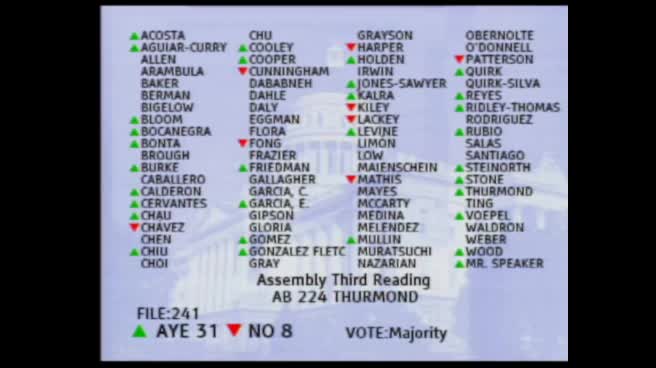 3MIN
Assembly Floor
 1H
Assembly Standing Committee on Appropriations
 40MIN



