AB 746: Public health: potable water systems: lead testing: schoolsites.
- Session Year: 2017-2018
- House: Assembly
- Latest Version Date: 2017-10-13
Existing law, the California Safe Drinking Water Act, requires the State Water Resources Control Board to administer provisions relating to the regulation of drinking water to protect public health, including, but not limited to, conducting research, studies, and demonstration programs relating to the provision of a dependable, safe supply of drinking water, enforcing the federal Safe Drinking Water Act, adopting implementing regulations, and conducting studies and investigations to assess the quality of water in private domestic water supplies. The act requires the state board to establish a grant program, in consultation with the State Department of Education, to award grants to local educational agencies for the purposes of improving access to, and the quality of, drinking water in public schools serving kindergarten or any of grades 1 to 12, inclusive, and preschools and child day care facilities located on public school property.
This bill would require a community water system that serves a schoolsite of a local educational agency with a building constructed before January 1, 2010, to test for lead in the potable water system of the schoolsite before January 1, 2019. The bill would require the community water system to report its findings to the schoolsite, as specified, and, if the schoolsites lead level exceeds a certain level, to test a water sample from the point at which the schoolsite connects to the community water systems supply network. The bill would require the local educational agency, if the lead level exceeds the specified level at a schoolsite, to notify the parents and guardians of the pupils who attend the schoolsite or preschool. The bill would require the local educational agency to take immediate steps to make inoperable and shut down from use all fountains and faucets where the excess lead levels may exist and would require the local educational agency to work with the school site to ensure that a potable source of drinking water is provided for students. The bill would require a community water system to prepare a sampling plan for each schoolsite where lead sampling is required under these provisions. By imposing additional duties on local educational agencies, this bill would impose a state-mandated local program.
The California Constitution requires the state to reimburse local agencies and school districts for certain costs mandated by the state. Statutory provisions establish procedures for making that reimbursement.
This bill would provide that, if the Commission on State Mandates determines that the bill contains costs mandated by the state, reimbursement for those costs shall be made pursuant to the statutory provisions noted above.
Existing law, the California Safe Drinking Water Act, requires the State Water Resources Control Board to administer provisions relating to the regulation of drinking water to protect public health, including, but not limited to, conducting research, studies, and demonstration programs relating to the provision of a dependable, safe supply of drinking water, enforcing the federal Safe Drinking Water Act, adoption of adopting implementing regulations, and conducting studies and investigations to assess the quality of water in private domestic water supplies. The act requires the state board to establish a grant program, in consultation with the State Department of Education, to award grants to local educational agencies for the purposes of improving access to, and the quality of, drinking water in public schools serving kindergarten or any of grades 1 to 12, inclusive, and preschools and child day care facilities located on public school property.
This bill would require a local educational agency, as defined, to test for lead in the potable water system, as defined, at every schoolsite within its jurisdiction at least once a year or once every 3 years, depending on whether a building was constructed before or after January 1, 1993. The bill would require, if a test reveals that a schoolsites lead level is greater than the United States Environmental Protection Agencys drinking water standards for lead, as those standards existed on January 1, 2017, the local educational agency to notify parents and guardians of the elevated level and provide information on lead developed by an agency with expertise on lead, as specified. The bill would require a local educational agency to make inoperable and shut down from use any part of a schoolsites potable water system that has an elevated lead level. By imposing additional duties on local educational agencies, the bill would impose a state-mandated local program.This bill would require a community water system that serves a schoolsite of a local educational agency with a building constructed before January 1, 2010, to test for lead in the potable water system of the schoolsite before January 1, 2019. The bill would require the community water system to report its findings to the schoolsite, as specified, and, if the schoolsites lead level exceeds a certain level, to test a water sample from the point in which the schoolsite connects to the community water systems supply network. The bill would require the local educational agency, if the lead level exceeds the specified level at a schoolsite, to notify the parents and guardians of the pupils who attend the schoolsite or preschool. The bill would require the local educational agency to take immediate steps to make inoperable and shut down from use all fountains and faucets where the excess lead levels may exist and would require the local educational agency to work with the school site to ensure that a potable source of drinking water is provided for students. The bill would require a community water system to prepare a sampling plan for each schoolsite where lead sampling is required under these provisions. By imposing additional duties on local educational agencies, this bill would impose a state-mandated local program.
The California Constitution requires the state to reimburse local agencies and school districts for certain costs mandated by the state. Statutory provisions establish procedures for making that reimbursement.
This bill would provide that, if the Commission on State Mandates determines that the bill contains costs mandated by the state, reimbursement for those costs shall be made pursuant to the statutory provisions noted above.
Existing law, the California Safe Drinking Water Act, requires the State Water Resources Control Board to administer provisions relating to the regulation of drinking water to protect public health, including, but not limited to, conducting research, studies, and demonstration programs relating to the provision of a dependable, safe supply of drinking water, enforcing the federal Safe Drinking Water Act, adoption of implementing regulations, and conducting studies and investigations to assess the quality of water in private domestic water supplies. The act requires the state board to establish a grant program, in consultation with the State Department of Education, to award grants to local educational agencies for the purposes of improving access to, and the quality of, drinking water in public schools serving kindergarten or any of grades 1 to 12, inclusive, and preschools and child day care facilities located on public school property.
This bill would require a local educational agency, the Board of Governors of the California Community Colleges, and the Trustees of the California State University agency, as defined, to test for lead in the potable water system system, as defined, at every schoolsite or campus within their respective jurisdictions its jurisdiction at least once a year or once every 3 years, depending on whether a building was constructed before or after January 1, 1993. The bill would require, if a test reveals that a schoolsites or campus lead level is greater than the United States Environmental Protection Agencys drinking water standards for lead, as those standards existed on January 1, 2017, the local educational agency to notify parents and guardians, and the board of governors and the trustees to notify students, guardians of the elevated level and provide information on lead developed by an agency with expertise on lead, as specified. The bill would require a local educational agency, the board of governors, and the trustees agency to make inoperable and shut down from use any part of a schoolsite or campus schoolsites potable water system that has an elevated lead level. By imposing additional duties on local educational agencies and community college districts, agencies, the bill would impose a state-mandated local program. The bill would encourage the Regents of the University of California to adopt an appropriate resolution to implement these provisions for the University of California.
The California Constitution requires the state to reimburse local agencies and school districts for certain costs mandated by the state. Statutory provisions establish procedures for making that reimbursement.
This bill would provide that, if the Commission on State Mandates determines that the bill contains costs mandated by the state, reimbursement for those costs shall be made pursuant to the statutory provisions noted above.
Existing law, the California Safe Drinking Water Act, requires the State Water Resources Control Board to administer provisions relating to the regulation of drinking water to protect public health, including, but not limited to, conducting research, studies, and demonstration programs relating to the provision of a dependable, safe supply of drinking water, enforcing the federal Safe Drinking Water Act, adoption of implementing regulations, and conducting studies and investigations to assess the quality of water in private domestic water supplies. The act requires the state board to establish a grant program, in consultation with the State Department of Education, to award grants to local educational agencies for the purposes of improving access to, and the quality of, drinking water in public schools serving kindergarten or any of grades 1 to 12, inclusive, and preschools and child day care facilities located on public school property.
This bill would require a local educational agency, the Board of Governors of the California Community Colleges, and the Trustees of the California State University to test for lead in the potable water system at every schoolsite or campus within their respective jurisdictions at least once a year or once every 3 years, depending on whether a building was constructed before or after January 1, 1986. 1993. The bill would require, if a test reveals that a schoolsites or campus lead level is greater than the United States Environmental Protection Agency Agencys drinking water standards for lead, as those standards existed on January 1, 2017, the local educational agency to notify parents and guardians, and the board of governors and the trustees to notify students, of the elevated level and provide information on how to obtain physician testing for any pupil or student who may be affected. on lead developed by an agency with expertise on lead, as specified. The bill would require a local educational agency, the board of governors, and the trustees to make inoperable and shut down from use any part of a schoolsite or campus potable water system that has an elevated lead level. By imposing additional duties on local educational agencies and community college districts, the bill would impose a state-mandated local program. The bill would encourage the Regents of the University of California to adopt an appropriate resolution to implement these provisions for the University of California.
The California Constitution requires the state to reimburse local agencies and school districts for certain costs mandated by the state. Statutory provisions establish procedures for making that reimbursement.
This bill would provide that, if the Commission on State Mandates determines that the bill contains costs mandated by the state, reimbursement for those costs shall be made pursuant to the statutory provisions noted above.
Existing law, the California Safe Drinking Water Act, requires the State Water Resources Control Board to administer provisions relating to the regulation of drinking water to protect public health, including, but not limited to, conducting research, studies, and demonstration programs relating to the provision of a dependable, safe supply of drinking water, enforcing the federal Safe Drinking Water Act, adoption of implementing regulations, and conducting studies and investigations to assess the quality of water in private domestic water supplies. The act requires the state board to establish a grant program, in consultation with the State Department of Education, to award grants to local educational agencies for the purposes of improving access to, and the quality of, drinking water in public schools serving kindergarten or any of grades 1 to 12, inclusive, and preschools and child day care facilities located on public school property.
This bill would require a local educational agency, the Board of Governors of the California Community Colleges, and the Trustees of the California State University, at least once a year, University to test for lead in the potable water system at every schoolsite, including preschool locations, schoolsite or campus within their respective jurisdictions. jurisdictions at least once a year or once every 3 years, depending on whether a building was constructed before or after January 1, 1986. The bill would require, if a test reveals that a schoolsites or campus lead level is greater than the United States Environmental Protection Agency drinking water standards for lead, as those standards existed on January 1, 2017, the local educational agency to notify parents and guardians, and the board of governors and the trustees to notify students, of the elevated level and provide information on how to obtain physician testing for any pupil or student who may be affected. The bill would require a local educational agency, the board of governors, and the trustees to make inoperable and shut down from use any part of a schoolsite or campus potable water system that has an elevated lead level. By imposing additional duties on local educational agencies and community college districts, the bill would impose a state-mandated local program. The bill would encourage the Regents of the University of California to adopt an appropriate resolution to implement these provisions for the University of California.
The California Constitution requires the state to reimburse local agencies and school districts for certain costs mandated by the state. Statutory provisions establish procedures for making that reimbursement.
This bill would provide that, if the Commission on State Mandates determines that the bill contains costs mandated by the state, reimbursement for those costs shall be made pursuant to the statutory provisions noted above.
Existing law, the California Safe Drinking Water Act, requires the State Water Resources Control Board to administer provisions relating to the regulation of drinking water to protect public health, including, but not limited to, conducting research, studies, and demonstration programs relating to the provision of a dependable, safe supply of drinking water, enforcing the federal Safe Drinking Water Act, adoption of implementing regulations, and conducting studies and investigations to assess the quality of water in private domestic water supplies. The act requires the state board to establish a grant program, in consultation with the State Department of Education, to award grants to local educational agencies for the purposes of improving access to, and the quality of, drinking water in public schools serving kindergarten or any of grades 1 to 12, inclusive, and preschools and child day care facilities located on public school property.
This bill would require a local educational agency, the Board of Governors of the California Community Colleges, and the Trustees of the California State University, at least once a year, to test for lead in the potable water system at every schoolsite, including preschool locations, or campus within their respective jurisdictions. The bill would require, if a test reveals that a schoolsites or campus lead level is greater than the United States Environmental Protection Agency drinking water standards for lead, as those standards existed on January 1, 2017, the local educational agency to notify parents and guardians, and the board of governors and the trustees to notify students, of the elevated level and provide information on how to obtain physician testing for any pupil or student who may be affected. The bill would require a local educational agency, the board of governors, and the trustees to make inoperable and shut down from use any part of a schoolsite or campus potable water system that has an elevated lead level. By imposing additional duties on local educational agencies and community college districts, the bill would impose a state-mandated local program. The bill would encourage the Regents of the University of California to adopt an appropriate resolution to implement these provisions for the University of California.
The California Constitution requires the state to reimburse local agencies and school districts for certain costs mandated by the state. Statutory provisions establish procedures for making that reimbursement.
This bill would provide that, if the Commission on State Mandates determines that the bill contains costs mandated by the state, reimbursement for those costs shall be made pursuant to the statutory provisions noted above.
Existing law establishes the State Board of Education to consist of 10 members appointed by the Governor with the advice and consent of2/3 of the Senate.This bill would make a nonsubstantive change to these State Board of Education provisions.Existing law establishes the State Board of Education to consist of 10 members appointed by the Governor with the advice and consent of2/3 of the Senate.
This bill would make a nonsubstantive change to these State Board of Education provisions.
(a)(1)A community water system that serves a schoolsite of a local educational agency with a building constructed before January 1, 2010, on that schoolsite shall test for lead in the potable water system of the schoolsite on or before July 1, 2019.
(2)The community water system shall report its findings to the schoolsite within 10 business days after the community water system receives the results from the testing laboratory or within two business days if it is found that the schoolsites lead level exceeds 15 parts per billion.
(3)If the lead level exceeds 15 parts per billion, the community water system shall also test a water sample from the point in which the schoolsite connects to the community water systems supply network to determine the lead level of the water entering the schoolsite from the community water systems water supply network.
(b)(1)A local educational agency shall allow the community water system access to each of the local educational agencys schoolsites that are subject to subdivision (a) to conduct testing.
(2)If the lead level exceeds 15 parts per billion, the local educational agency shall notify the parents and guardians of the pupils who attend the schoolsite or preschool where the elevated lead levels are found.
(c)(1)If lead levels exceed 15 parts per billion, the local educational agency shall take immediate steps to make inoperable and shut down from use all fountains and faucets where the excess lead levels may exist. Additional testing may be required to determine if all or just some of the schools fountains and faucets are required to be shut down.
(2)Each local educational agency shall work with the schoolsites within its service area to ensure that a potable source of drinking water is provided for students at each schoolsite where fountains or faucets have been shut down due to elevated lead levels. Providing a potable source of drinking water may include, but is not limited to, replacing any pipes or fixtures that are contributing to the elevated lead levels, providing onsite water filtration, or providing bottled water as a short-term remedy.
(d)Each community water system, in cooperation with the appropriate corresponding local educational agency, shall prepare a sampling plan for each schoolsite where lead sampling is required under subdivision (a). The community water system and the local educational agency may request assistance from the state board or any local health agency responsible for regulating community water systems in developing the plan.
(e)This section shall not apply to a schoolsite that is subject to any of the following:
(1)The schoolsite was constructed or modernized after January 1, 2010.
(2)The local educational agency of the schoolsite is currently permitted as a public water system and is currently required to test for lead in the potable water system.
(3)The local educational agency completed lead testing of the potable water system after January 1, 2009, and posts information about the lead testing on the local educational agencys public Internet Web site, including, at a minimum, identifying any schoolsite where the level of lead in drinking water exceeds 15 parts per billion.
(4)The local educational agency has requested testing from its community water system consistent with the requirements of this section.
(f)For purposes of this section, the following definitions apply:
(1)Local educational agency means a school district, county office of education, or charter school located in a public facility.
(2)Potable water system means water fountains and faucets used for drinking or preparing food.
(g)This section shall become inoperative on July 1, 2019, and, as of January 1, 2020, is repealed.
SEC. 2.If the Commission on State Mandates determines that this act contains costs mandated by the state, reimbursement to local agencies and school districts for those costs shall be made pursuant to Part 7 (commencing with Section 17500) of Division 4 of Title 2 of the Government Code.
(a)(1)A community water system that serves a schoolsite of a local educational agency with a building constructed before January 1, 2010, on that schoolsite shall test for lead in the potable water system of the schoolsite on or before July 1, 2019.
(2)The community water system shall report its findings to the schoolsite within 10 business days after the community water system receives the results from the testing laboratory or within two business days if it is found that the schoolsites lead level exceeds 15 parts per billion.
(3)If the lead level exceeds 15 parts per billion, the community water system shall also test a water sample from the point in which the schoolsite connects to the community water systems supply network to determine the lead level of the water entering the schoolsite from the community water systems water supply network.
(b)(1)A local educational agency shall allow the community water system access to each of the local educational agencys schoolsites that are subject to subdivision (a) to conduct testing.
(2)If the lead level exceeds 15 parts per billion, the local educational agency shall notify the parents and guardians of the pupils who attend the schoolsite or preschool where the elevated lead levels are found.
(c)(1)If lead levels exceed 15 parts per billion, the local educational agency shall take immediate steps to make inoperable and shut down from use all fountains and faucets where the excess lead levels may exist. Additional testing may be required to determine if all or just some of the schools fountains and faucets are required to be shut down.
(2)Each local educational agency shall work with the schoolsites within its service area to ensure that a potable source of drinking water is provided for students at each schoolsite where fountains or faucets have been shut down due to elevated lead levels. Providing a potable source of drinking water may include, but is not limited to, replacing any pipes or fixtures that are contributing to the elevated lead levels, providing onsite water filtration, or providing bottled water as a short-term remedy.
(d)Each community water system, in cooperation with the appropriate corresponding local educational agency, shall prepare a sampling plan for each schoolsite where lead sampling is required under subdivision (a). The community water system and the local educational agency may request assistance from the state board or any local health agency responsible for regulating community water systems in developing the plan.
(e)This section shall not apply to a schoolsite that is subject to any of the following:
(1)The schoolsite was constructed or modernized after January 1, 2010.
(2)The local educational agency of the schoolsite is currently permitted as a public water system and is currently required to test for lead in the potable water system.
(3)The local educational agency completed lead testing of the potable water system after January 1, 2009, and posts information about the lead testing on the local educational agencys public Internet Web site, including, at a minimum, identifying any schoolsite where the level of lead in drinking water exceeds 15 parts per billion.
(4)The local educational agency has requested testing from its community water system consistent with the requirements of this section.
(f)For purposes of this section, the following definitions apply:
(1)Local educational agency means a school district, county office of education, or charter school located in a public facility.
(2)Potable water system means water fountains and faucets used for drinking or preparing food.
(g)This section shall become inoperative on July 1, 2019, and, as of January 1, 2020, is repealed.
SECTION 1.Section 116277 is added to the Health and Safety Code, to read:116277.(a)(1)At least once a year, a local educational agency shall test for lead in the potable water system at every schoolsite with a building constructed before January 1, 1993, including preschool locations, within the jurisdiction of the local educational agency.(2)At least once every three years, a local educational agency shall test for lead in the potable water system at every schoolsite with a building constructed on or after January 1, 1993, including preschool locations, within the jurisdiction of the local educational agency. (3)If a test reveals that a schoolsites lead level is greater than the United States Environmental Protection Agencys drinking water standards for lead, as those standards existed on January 1, 2017, the local educational agency shall notify, within seven days of receiving test results, the parents and guardians of the pupils who attend the school or preschool where the elevated lead level was found of the elevated level and provide information on lead developed by an agency with expertise on lead, such as the United States Centers for Disease Control and Prevention, the United States Environmental Protection Agency, the State Department of Public Health, the State Water Resources Control Board, or another agency.(4)A local educational agency shall make inoperable and shut down from use any part of a schoolsites potable water system that has an elevated lead level.(5)If a test reveals that a schoolsites lead level is greater than 5 parts per billion, every potable water system at the schoolsite shall be tested that year. (b)A local educational agency may do the following:(1)Contract with a third party to conduct testing required by this section.(2)Seek the assistance of a local health agency, a community water system, or the State Water Resources Control Board to ensure compliance with this section.(c)A local educational agency shall use the State Water Resources Control Boards protocol for testing water.(d)For purposes of this section, the following definitions apply:(1)Local educational agency means a school district, county office of education, or charter school.(2)Potable water system means the water fountains and faucets used for drinking and preparing food.SEC. 2.If the Commission on State Mandates determines that this act contains costs mandated by the state, reimbursement to local agencies and school districts for those costs shall be made pursuant to Part 7 (commencing with Section 17500) of Division 4 of Title 2 of the Government Code.
(a)(1)At least once a year, a local educational agency shall test for lead in the potable water system at every schoolsite with a building constructed before January 1, 1993, including preschool locations, within the jurisdiction of the local educational agency.
(2)At least once every three years, a local educational agency shall test for lead in the potable water system at every schoolsite with a building constructed on or after January 1, 1993, including preschool locations, within the jurisdiction of the local educational agency.
(3)If a test reveals that a schoolsites lead level is greater than the United States Environmental Protection Agencys drinking water standards for lead, as those standards existed on January 1, 2017, the local educational agency shall notify, within seven days of receiving test results, the parents and guardians of the pupils who attend the school or preschool where the elevated lead level was found of the elevated level and provide information on lead developed by an agency with expertise on lead, such as the United States Centers for Disease Control and Prevention, the United States Environmental Protection Agency, the State Department of Public Health, the State Water Resources Control Board, or another agency.
(4)A local educational agency shall make inoperable and shut down from use any part of a schoolsite schoolsites potable water system that has an elevated lead level.
(5)If a test reveals that a schoolsites lead level is greater than 5 parts per billion, every potable water system at the schoolsite shall be tested that year.
(b)(1)At least once a year, the Board of Governors of the California Community Colleges and the Trustees of the California State University shall test for lead in the potable water system at every campus with a building constructed before January 1, 1993, within their respective jurisdictions.(2)At least once every three years, the Board of Governors of the California Community Colleges and the Trustees of the California State University shall test for lead in the potable water system at every campus with a building constructed on or after January 1, 1993, within their respective jurisdictions. (3)If a test reveals that a campus lead level is greater than the United States Environmental Protection Agencys drinking water standards for lead, as those standards existed on January 1, 2017, the Board of Governors of the California Community Colleges or the Trustees of the California State University shall notify, within seven days of receiving test results, students who attend the campus where the elevated lead level was found of the elevated level and provide information on lead developed by an agency with expertise on lead, such as the United States Centers for Disease Control and Prevention, the United States Environmental Protection Agency, the State Department of Public Health, the State Water Resources Control Board, or another agency.(4)The Board of Governors of the California Community Colleges and the Trustees of the California State University shall make inoperable and shut down from use any part of a campus potable water system that has an elevated lead level.(5)If a test reveals that a campus lead level is greater than 5 parts per billion, every potable water system at the campus shall be tested that year.(c)The Regents of the University of California are encouraged to adopt an appropriate resolution to implement subdivision (b) for the University of California. (d)(b)A local educational agency, the Board of Governors of the California Community Colleges, and the Trustees of the California State University agency may do the following:
(1)Contract with a third party to conduct testing required by this section.
(2)Seek the assistance of a local health agency, a community water system, or the State Water Resources Control Board to ensure compliance with this section.
(e)(c)A local educational agency, the Board of Governors of the California Community Colleges, and the Trustees of the California State University agency shall use the State Water Resources Control Boards protocol for testing water.
(f)
(d)For purposes of this section, the following definitions apply:
(1)Local educational agency means a school district, county office of education, or charter school.
(2)Potable water system means the water fountains and faucets used for drinking and preparing food.
SEC. 2.If the Commission on State Mandates determines that this act contains costs mandated by the state, reimbursement to local agencies and school districts for those costs shall be made pursuant to Part 7 (commencing with Section 17500) of Division 4 of Title 2 of the Government Code.
(a)(1)At least once a year, a local educational agency shall test for lead in the potable water system at every schoolsite with a building constructed before January 1, 1986, 1993, including preschool locations, within the jurisdiction of the local educational agency.
(2)At least once every three years, a local educational agency shall test for lead in the potable water system at every schoolsite with a building constructed on or after January 1, 1986, 1993, including preschool locations, within the jurisdiction of the local educational agency.
(3)If a test reveals that a schoolsites lead level is greater than the United States Environmental Protection Agency Agencys drinking water standards for lead, as those standards existed on January 1, 2017, the local educational agency shall notify, within seven days of receiving test results, the parents and guardians of the pupils who attend the school or preschool where the elevated lead level was found of the elevated level and provide information to those parents and guardians on how to obtain physician testing for any pupil who may be affected by the elevated lead level. on lead developed by an agency with expertise on lead, such as the United States Centers for Disease Control and Prevention, the United States Environmental Protection Agency, the State Department of Public Health, the State Water Resources Control Board, or another agency.
(4)A local educational agency shall make inoperable and shut down from use any part of a schoolsite potable water system that has an elevated lead level.
(5)If a test reveals that a schoolsites lead level is greater than 5 parts per billion, every potable water system at the schoolsite shall be tested that year.
(b)(1)At least once a year, the Board of Governors of the California Community Colleges and the Trustees of the California State University shall test for lead in the potable water system at every campus with a building constructed before January 1, 1986, 1993, within their respective jurisdictions.
(2)At least once every three years, the Board of Governors of the California Community Colleges and the Trustees of the California State University shall test for lead in the potable water system at every campus with a building constructed on or after January 1, 1986, 1993, within their respective jurisdictions.
(3)If a test reveals that a campus lead level is greater than the United States Environmental Protection Agency Agencys drinking water standards for lead, as those standards existed on January 1, 2017, the Board of Governors of the California Community Colleges or the Trustees of the California State University shall notify, within seven days of receiving test results, students who attend the campus where the elevated lead level was found of the elevated level and provide information to those students on how to obtain physician testing for any student who may be affected by the elevated lead level. on lead developed by an agency with expertise on lead, such as the United States Centers for Disease Control and Prevention, the United States Environmental Protection Agency, the State Department of Public Health, the State Water Resources Control Board, or another agency.
(4)The Board of Governors of the California Community Colleges and the Trustees of the California State University shall make inoperable and shut down from use any part of a campus potable water system that has an elevated lead level.
(5)If a test reveals that a campus lead level is greater than 5 parts per billion, every potable water system at the campus shall be tested that year.
(c)The Regents of the University of California are encouraged to adopt an appropriate resolution to implement subdivision (b) for the University of California.
(d)A local educational agency, the Board of Governors of the California Community Colleges, and the Trustees of the California State University may do the following:
(1)Contract with a third party to conduct testing required by this section.
(2)Seek the assistance of a local health agency, a community water system, or the State Water Resources Control Board to ensure compliance with this section.
(e)A local educational agency, the Board of Governors of the California Community Colleges, and the Trustees of the California State University shall use the State Water Resources Control Boards protocol for testing water.
(f)For purposes of this section, the following definitions apply:
(1)Local educational agency means a school district, county office of education, or charter school.
(2)Potable water system means the water fountains and faucets used for drinking and preparing food.
SEC. 2.If the Commission on State Mandates determines that this act contains costs mandated by the state, reimbursement to local agencies and school districts for those costs shall be made pursuant to Part 7 (commencing with Section 17500) of Division 4 of Title 2 of the Government Code.
(a)(1)At least once a year, a local educational agency shall test for lead in the potable water system at every schoolsite, schoolsite with a building constructed before January 1, 1986, including preschool locations, within the jurisdiction of the local educational agency.
(2)At least once every three years, a local educational agency shall test for lead in the potable water system at every schoolsite with a building constructed on or after January 1, 1986, including preschool locations, within the jurisdiction of the local educational agency.
(2)(3)If a test reveals that a schoolsites lead level is greater than the United States Environmental Protection Agency drinking water standards for lead, as those standards existed on January 1, 2017, the local educational agency shall notify, within seven days of receiving test results, the parents and guardians of the pupils who attend the school or preschool where the elevated lead level was found of the elevated level and provide information to those parents and guardians on how to obtain physician testing for any pupil who may be affected by the elevated lead level.
(3)(4)A local educational agency shall make inoperable and shut down from use any part of a schoolsite potable water system that has an elevated lead level.
(5)If a test reveals that a schoolsites lead level is greater than 5 parts per billion, every potable water system at the schoolsite shall be tested that year.
(b)(1)At least once a year, the Board of Governors of the California Community Colleges and the Trustees of the California State University shall test for lead in the potable water system at every campus with a building constructed before January 1, 1986, within their respective jurisdictions.
(2)At least once every three years, the Board of Governors of the California Community Colleges and the Trustees of the California State University shall test for lead in the potable water system at every campus with a building constructed on or after January 1, 1986, within their respective jurisdictions.
(2)(3)If a test reveals that a campus lead level is greater than the United States Environmental Protection Agency drinking water standards for lead, as those standards existed on January 1, 2017, the Board of Governors of the California Community Colleges or the Trustees of the California State University shall notify, within seven days of receiving test results, students who attend the campus where the elevated lead level was found of the elevated level and provide information to those students on how to obtain physician testing for any student who may be affected by the elevated lead level.
(3)(4)The Board of Governors of the California Community Colleges and the Trustees of the California State University shall make inoperable and shut down from use any part of a campus potable water system that has an elevated lead level.
(5)If a test reveals that a campus lead level is greater than 5 parts per billion, every potable water system at the campus shall be tested that year.
(c)The Regents of the University of California are encouraged to adopt an appropriate resolution to implement subdivision (b) for the University of California.
(d)A local educational agency, the Board of Governors of the California Community Colleges, and the Trustees of the California State University may do the following:
(1)Contract with a third party to conduct testing required by this section.
(2)Seek the assistance of a local health agency, a community water system, or the State Water Resources Control Board to ensure compliance with this section.
(e)A local educational agency, the Board of Governors of the California Community Colleges, and the Trustees of the California State University shall use the State Water Resources Control Boards protocol for testing water.
(f)For purposes of this section, the following definitions apply:
(1)Local educational agency means a school district, county office of education, or charter school.
(2)Potable water system means the water fountains and faucets used for drinking and preparing food.
SEC. 2.If the Commission on State Mandates determines that this act contains costs mandated by the state, reimbursement to local agencies and school districts for those costs shall be made pursuant to Part 7 (commencing with Section 17500) of Division 4 of Title 2 of the Government Code.
(a)(1)At least once a year, a local educational agency shall test for lead in the potable water system at every schoolsite, including preschool locations, within the jurisdiction of the local educational agency.
(2)If a test reveals that a schoolsites lead level is greater than the United States Environmental Protection Agency drinking water standards for lead, as those standards existed on January 1, 2017, the local educational agency shall notify, within seven days of receiving test results, the parents and guardians of the pupils who attend the school or preschool where the elevated lead level was found of the elevated level and provide information to those parents and guardians on how to obtain physician testing for any pupil who may be affected by the elevated lead level.
(3)A local educational agency shall make inoperable and shut down from use any part of a schoolsite potable water system that has an elevated lead level.
(b)(1)At least once a year, the Board of Governors of the California Community Colleges and the Trustees of the California State University shall test for lead in the potable water system at every campus within their respective jurisdictions.
(2)If a test reveals that a campus lead level is greater than the United States Environmental Protection Agency drinking water standards for lead, as those standards existed on January 1, 2017, the Board of Governors of the California Community Colleges or the Trustees of the California State University shall notify, within seven days of receiving test results, students who attend the campus where the elevated lead level was found of the elevated level and provide information to those students on how to obtain physician testing for any student who may be affected by the elevated lead level.
(3)The Board of Governors of the California Community Colleges and the Trustees of the California State University shall make inoperable and shut down from use any part of a campus potable water system that has an elevated lead level.
(c)The Regents of the University of California are encouraged to adopt an appropriate resolution to implement subdivision (b) for the University of California.
SEC. 2.If the Commission on State Mandates determines that this act contains costs mandated by the state, reimbursement to local agencies and school districts for those costs shall be made pursuant to Part 7 (commencing with Section 17500) of Division 4 of Title 2 of the Government Code.
SECTION 1.Section 33000 of the Education Code is amended to read:33000.There is in the state government a State Board of Education, consisting of 10 members, who are all appointed by the Governor with the advice and consent of two-thirds of the Senate.There is in the state government a State Board of Education, consisting of 10 members, who are all appointed by the Governor with the advice and consent of two-thirds of the Senate.
|
Date
|
Status
|
|---|---|
| Oct 13, 2017 | Chaptered by Secretary of State - Chapter 746, Statutes of 2017. |
| Oct 13, 2017 | Approved by the Governor. |
| Sep 25, 2017 | Enrolled and presented to the Governor at 12 p.m. |
| Sep 14, 2017 | Senate amendments concurred in. To Engrossing and Enrolling. |
| Sep 14, 2017 | Senate amendments concurred in. To Engrossing and Enrolling. (Ayes 78. Noes 0. Page 3374.). |
| Sep 13, 2017 | Assembly Rule 77(a) suspended. |
| Sep 13, 2017 | In Assembly. Concurrence in Senate amendments pending. May be considered on or after September 15 pursuant to Assembly Rule 77. |
| Sep 12, 2017 | Read third time. Passed. Ordered to the Assembly. |
| Sep 11, 2017 | Read second time. Ordered to third reading. |
| Sep 8, 2017 | Read third time and amended. Ordered to second reading. |
| Sep 5, 2017 | Read second time. Ordered to third reading. |
| Sep 1, 2017 | From committee: Do pass. (Ayes 7. Noes 0.) (September 1). |
| Jul 17, 2017 | In committee: Referred to APPR. suspense file. |
| Jul 6, 2017 | From committee: Do pass and re-refer to Com. on APPR. (Ayes 7. Noes 0.) (July 5). Re-referred to Com. on APPR. |
| Jun 28, 2017 | From committee: Do pass and re-refer to Com. on EQ. (Ayes 7. Noes 0.) (June 28). Re-referred to Com. on EQ. |
| Jun 14, 2017 | Referred to Coms. on ED. and EQ. |
| Jun 1, 2017 | In Senate. Read first time. To Com. on RLS. for assignment. |
| May 31, 2017 | Read third time. Passed. Ordered to the Senate. (Ayes 76. Noes 0. Page 1935.) |
| May 30, 2017 | Read second time. Ordered to third reading. |
| May 26, 2017 | From committee: Amend, and do pass as amended. (Ayes 16. Noes 0.) (May 26). |
| May 24, 2017 | In committee: Set, first hearing. Referred to APPR. suspense file. |
| May 17, 2017 | In committee: Hearing postponed by committee. |
| May 4, 2017 | Re-referred to Com. on APPR. |
| May 3, 2017 | Read second time and amended. |
| May 2, 2017 | From committee: Amend, and do pass as amended and re-refer to Com. on APPR. (Ayes 7. Noes 0.) (April 26). |
| Apr 19, 2017 | Re-referred to Com. on ED. |
| Apr 18, 2017 | From committee chair, with author's amendments: Amend, and re-refer to Com. on ED. Read second time and amended. |
| Apr 5, 2017 | From committee: Do pass and re-refer to Com. on ED. (Ayes 7. Noes 0.) (April 4). Re-referred to Com. on ED. |
| Apr 3, 2017 | Re-referred to Com. on E.S. & T.M. |
| Mar 30, 2017 | From committee chair, with author's amendments: Amend, and re-refer to Com. on E.S. & T.M. Read second time and amended. |
| Feb 16, 2017 | From printer. May be heard in committee March 18. |
| Feb 15, 2017 | Read first time. To print. |
|
Date
|
Description
|
Location
|
Votes
|
|
|---|---|---|---|---|
| Sep 14, 2017 | AB 746 GONZALEZ FLETCHER Concurrence in Senate Amendments | Assembly Floor |
Passed |
|
| Sep 12, 2017 | Assembly 3rd Reading AB746 Gonzalez Fletcher By Allen | Senate Floor |
Passed |
|
| Sep 1, 2017 | Do pass | Senate Standing Committee on Appropriations |
Passed |
|
| Jul 17, 2017 | Placed on suspense file | Senate Standing Committee on Appropriations |
Passed |
|
| Jul 5, 2017 | Do pass, but first be re-referred to the Committee on [Appropriations] | Senate Standing Committee on Environmental Quality |
Passed |
|
| Jun 28, 2017 | Do pass, but first be re-referred to the Committee on [Environmental Quality] | Senate Standing Committee on Education |
Passed |
|
| May 31, 2017 | AB 746 GONZALEZ FLETCHER Assembly Third Reading | Assembly Floor |
Passed |
|
| May 26, 2017 | Do pass as amended. | Assembly Standing Committee on Appropriations |
Passed |
|
| Apr 26, 2017 | Do pass as amended and be re-referred to the Committee on [Appropriations] | Assembly Standing Committee on Education |
Passed |
|
| Apr 4, 2017 | Do pass and be re-referred to the Committee on [Education] | Assembly Standing Committee on Environmental Safety and Toxic Materials |
Passed |
This list shows positions taken on this bill by organizations on the date displayed, which is linked to the original source.
Positions by individuals are not included.
CONCURRENCE IN SENATE AMENDMENTS
CSA1 Bill Id:AB 746
Author:(Gonzalez Fletcher, et al.)
As Amended Ver:September 8, 2017
Majority vote
ASSEMBLY: | 76-0 | (May 31, 2017) | SENATE: | 40-0 | (September 12, 2017) |
Original Committee Reference: E.S. & T.M.
SUMMARY: Requires drinking water to be tested for lead at schoolsites. Specifically, this bill:
- Requires a community water system (CWS) that serves a schoolsite built before January 1, 2010, to test for lead in the potable water system of the schoolsite on or before July 1, 2019.
- Requires the CWS to report its findings to the schoolsite within 10 business days after the CWS receives the test results, or within two business days if the test results indicate the schoolsite's lead levels in exceedance of 15 parts per billion (ppb).
- Requires the CWS, when the lead level exceeds 15ppb, to test a water sample from the point in which the schoolsite connects to the CWS's supply network to determine the lead level of the water entering the schoolsite from the CWS's water supply.
- Requires a local education agency (LEA) to notify parents and guardians of the pupils who attend the schoolsite where the elevated lead levels are found. Requires the LEA, when the lead level exceeds 15ppb, to take immediate steps to make inoperable and shut down from use all foundations and faucets where the excess lead levels may exist. States that additional testing may be required to determine if all or just some of the school's fountains and faucets are required to be shut down.
- Requires each LEA to work with the schoolsites within its service area to ensure that a potable source of drinking water is provided for students where faucets or fountains have been shut down. Requires each CWS, in cooperation with the LEA, to prepare a sampling plan for each schoolsite where lead sampling is required.
- Exempts schoolsites built or modernized after January 1, 2010; LEAs that are permitted as a public water system and are currently testing water for lead; LEAs that completed lead testing after January 1, 2009, and posted information about the lead testing on-line; and, LEAs that have requested testing from its CWS consistent with the testing prescribed by this bill.
- Sunsets the provisions of the bill on July 1, 2019.
The Senate amendments:
- Change, from January 1, 1993, to January 1, 2010, the construction date by which schoolsites must be tested for lead.
- Strike the requirement that the LEA be responsible for lead testing at schoolsites and replace with requirement that the CWS to be responsible for the lead testing.
- Delete the requirement that an LEA, when notifying parents and guardians of pupils about detection of elevated lead levels, also provide information on lead developed by an agency with expertise on lead.
- Delete the requirement that every potable water system at a schoolsite be tested if a test reveals that a schoolsite’s lead level is greater than five parts per billion and replace with a statement that additional testing may be required to determine if all or just some of the school's fountains and faucets are required to be shut down.
- Establish exemptions for specific schoolsites and LEAs from the lead testing requirements.
- Establish a sunset date of July 1, 2019.
EXISTING LAW:
- Requires, pursuant to the federal Lead and Copper Rule (LCR), that all public drinking water systems regularly test a sample of high-risk homes for lead at the tap.
- Requires, pursuant to the Lead-Safe Schools Protection Act, that the California Department of Public Health work with the California Department of Education to develop voluntary guidelines for distribution to request schools to ensure that lead hazards are minimized in the course of school repair and maintenance programs and abatement procedures.
- Requires a school district to provide access to free, fresh drinking water during meal times in the food service areas of the schools under its jurisdiction, including, but not necessarily limited to, areas where reimbursable meals under the National School Lunch Program or the federal School Breakfast Program are served or consumed. Authorizes a school district to comply with this requirement by, among other means, providing cups and containers of water or soliciting or receiving donated bottled water.
- Requires the provision of at least one drinking fountain for every 150 people on a school campus.
- Requires a school district to notify parents, pupils, teachers, and other school personnel of drinking water results immediately if the school district is required to provide alternative drinking water sources.
FISCAL EFFECT: According to the Senate Appropriations Committee, enactment of this bill could result in unknown state reimbursable mandated costs, potentially ranging from the high hundreds of thousands to more than a million dollars in Proposition 98 General Funds, for school districts to test for lead at every schoolsite and to provide notifications to parents and guardians of the test results. Free water lead testing currently provided by the State Water Resources Control Board (State Water Board), while more limited in scope compared to the bill’s requirements, may offset the mandate.
COMMENTS: The problem with lead: Lead has been listed under California's Proposition 65 since 1987 as a substance that can cause reproductive damage and birth defects and has been on the list of chemicals known to cause cancer since 1992. Even at low levels, lead may cause a range of health effects including behavioral problems and learning disabilities. Children six years old and younger are most at risk because this is when the brain is developing. The U.S. Environmental Protection Agency estimates that 10% to 20% of the total lead exposure for young children comes from drinking water.
Lead in water: The most prevalent sources of lead in drinking water are from pipes, fixtures, and associated hardware from which the lead can leach. The amount of lead in tap water can depend on several factors, including the age and material of the pipes, concentration of lead in water delivered by the public utility, and corrosivity of the water. More corrosive water can cause greater leaching from pipes. As pipes age, mineral deposits will form a coating on the inside of the pipes that protect against further corrosion. However, older buildings with lead pipes can still have significant concentrations of lead in their tap water.
Recent events have highlighted lead in school water: In February 2017, the safety of drinking water was questioned after elevated levels of lead, copper, and bacteria were discovered at three campuses in the San Ysidro School District. In addition, Folsom Cordova Unified started testing water last year at schools built before 1960 that have galvanized steel pipes. The testing was prompted by elevated levels of copper, iron, and lead in water coming from a classroom tap in 2015 at Cordova Lane Center, which serves preschoolers and special education students.
Because testing drinking water at schools is not mandatory, it is unknown whether these are isolated incidents or roughly representative of school districts around the state. Conducting sample tests at each schoolsite is one way to determine the scope of the problem.
Funding for lead testing: On January 17, 2017, the State Water Board announced that all K-12 schools in the state can receive free testing for lead under a new initiative. The State Water Board is requiring all CWSs to test school drinking water upon request by the school's officials. Under this initiative, CWSs are now required to collect and analyze up to five water samples from drinking water fountains and regularly-used drinking water faucets at a school. This voluntary lead sampling program is a resource available to school districts that wish to test for the presence of lead in the drinking water at schoolsites.
Analysis Prepared by: Paige Brokaw / E.S. & T.M. / (916) 319-3965 FN: 0002233
Office of Senate Floor Analyses (916) 651-1520 Fax: (916) 327-4478 | AB |
THIRD READING
Bill No: AB 746
:
SENATE EDUCATION COMMITTEE: 7-0, 6/28/17
AYES: Allen, Wilk, Galgiani, Leyva, Mendoza, Pan, Vidak
SENATE ENVIRONMENTAL QUALITY COMMITTEE: 7-0, 7/5/17
AYES: Wieckowski, Stone, Gaines, Hill, Lara, Skinner, Stern
SENATE APPROPRIATIONS COMMITTEE: 7-0, 9/1/17
AYES: Lara, Bates, Beall, Bradford, Hill, Nielsen, Wiener
ASSEMBLY FLOOR: 76-0, 5/31/17 - See last page for vote
DIGEST:
This bill requires a community water system that serves a schoolsite with a building constructed before January 2010, to test for lead in the potable water system of the schoolsite by July 1, 2019.
Senate Floor Amendments of 9/8/17 require community water systems to test for lead in schoolsites, rather than requiring schools to be responsible for this testing.
Existing law:
Drinking water quality
- Enacts the federal Safe Drinking Water Act (SDWA) authorizing the United States Environmental Protection Agency to set standards for drinking water quality and to oversee the states, localities and water suppliers who implement those standards. The California SDWA requires the State Water Resources Control Board (SWRCB) to regulate drinking water and to enforce the federal SDWA and other related regulations. The duties and responsibilities related to the regulation and oversight of drinking water were transferred from the California Department of Public Health (CDPH) to the SWRCB in 2014. (HSC § 116270 et. seq.)
- Regulates, pursuant to the SWRCB’s Division of Drinking Water, over 8,000 public water systems by inspecting the systems, issuing permits, taking enforcement actions and implementing new requirements due to changes in federal or state law or regulations.
- Requires schools that receive notification from a public water system regarding non-compliance with any primary drinking water standard or a violation of monitoring requirements, to notify school employees, students and parents. (HSC § 116450)
Lead-Safe Schools Protection Act
- Prohibits, beginning January 1, 1994, the use of lead-based paint, lead plumbing and solders, or other potential sources of lead contamination in the construction of any new school facility or the modernization or renovation of any existing school facility. (Education Code § 32244)
- Requires the Department of Health Services (now called CDPH) to:
- Conduct a sample survey of schools to determine the likely extent and distribution of lead exposure to children from paint on the school, the soil in play areas at the school, drinking water at the tap, and other potential sources. Risk factors include the location in relation to high-risk areas, the age of the facility, likely use of lead paint in or around the facility, numbers of children enrolled under the age of six, and results of lead screening programs.
- Notify the principal of the school of the survey results within 60 days of the completion of testing. School principals are required to notify the teachers and other school personnel and parents of survey results within 45 days of receiving the survey results.
- Advise any school that has been determined to have significant risk factors for lead, and the school is required to notify teachers, other personnel and parents within 45 days.
- Make recommendations to the legislature and California Department of Education (CDE) on the feasibility and necessity of conducting statewide lead testing and any additional action needed relating to lead contamination in schools.
- Develop environmental lead testing methods and standards.
- Work with the CDE to develop voluntary guidelines to ensure that lead hazards are minimized in the course of school repair and maintenance and abatement procedures. (EC § 32241, § 32242, and § 32243)
Drinking water at schools
- Requires interior and exterior drinking fountains to be functional, accessible, and free of leaks, and with adequate water pressure. Drinking fountain water must be clear and without unusual taste or odor and have no evidence of moss, mold, or excessive staining. Drinking fountains must appear to have been cleaned each day that the school is in session. (EC § 17002)
- Requires school districts to provide access to free, fresh drinking water during meal times in the food service areas. School districts may adopt a resolution stating that it is unable to comply with this requirement and demonstrate the reasons why it is unable to comply due to fiscal constraints or health and safety concerns. (EC § 38086)
- Requires the SWRCB to establish a program, in consultation with the CDE, to award grants to LEAs for the purposes of improving access to, and the quality of, drinking water in public schools consistent with the Legislature’s intent that school facilities be maintained in “good repair.” Existing law provides that eligible entities are limited to LEAs serving K-12, and preschools and child day care facilities located on a LEA’s property. Existing law requires the program to include, but not be limited to, funding for at least one of the following:
- Installation of water bottle filling stations.
- Installation or replacement of drinking water fountains with devices that are capable of removing contaminants that are present in the facility’s water supply.
- Installation of point-of-entry or point-of-use treatment devices for drinking fountains, and up to three years of post-installation replacement filters, and operation, maintenance, and monitoring of the devices, including training on how to operate and maintain the treatment devices and community outreach and education about their use. (Health & Safety Code § 116276)
- Requires the governing board of a school district to adopt a local control and accountability plan and specifies state priorities, including the priority for school facilities to be maintained in good repair. (EC § 52060)
This bill:
- Requires a community water system that serves a schoolsite with a building constructed before January 2010, to test for lead in the potable water system of the schoolsite by July 1, 2019.
- Exempts a schoolsite that is subject to any of the following:
- The schoolsite was constructed or modernized after January 1, 2010.
- The LEA is currently permitted as a public water system and is currently required to test for lead in the potable water system.
- The LEA completed lead testing of the potable water system after January 1, 2009, and posts information about the lead testing on the LEA’s public Web site including, at a minimum, identifying any schoolsite where the level of lead in drinking water exceeds 15 parts per billion.
- The LEA has requested testing from its community water system consistent with the requirements of this bill.
- Requires the community water system, if the lead level exceeds 15 parts per billion, to also test a water sample from the point in which the schoolsite connects to the community water system’s supply network to determine the lead level of the water entering the schoolsite from the community water system’s water supply network.
- Requires the community water system to report its findings to the schoolsite within 10 business days after the community water system receives the results from the testing laboratory or within two business days if it is found that the schoolsite’s lead level exceeds 15 parts per billion.
- Requires the LEA, if lead levels exceed 15 parts per billion, to take immediate steps to make inoperable or shut down from use all fountains or faucets where the excess lead levels may exist. This bill provides that additional testing may be required to determine if all or just some of the school’s fountains and faucets are required to be shut down.
- Requires the LEA, if lead levels exceed 15 parts per billion, to notify the parents and guardians of the students who attend the schoolsite or preschool where the elevated lead levels are found.
- Exempts from these requirements a schoolsite that was constructed or modernized after January 2010, the LEA is currently permitted as a public water system, lead testing was completed after January 2009, or if the LEA has requested testing from its community water system.
- Requires a LEA to allow the community water system access to each of the LEA’s schoolsites that are subject to testing.
- Requires each LEA to work with the schoolsites within its service area to ensure that a potable source of drinking water is provided for students at each schoolsite where fountains or faucets have been shut down due to elevated lead levels. This bill authorizes the provision of a potable source of drinking water to include but is not limited to replacing any pipes or fixtures that are contributing to the elevated lead levels, providing onsite water filtration, or providing bottled water as a short-term remedy.
- Requires each community water system, in cooperation with the appropriate corresponding LEA, to prepare a sampling plan for each schoolsite where lead sampling is required. This bill authorizes the community water system and the LEA to request assistance from the SWRCB or any local health agency responsible for regulating community water systems in developing the plan.
- Defines:
- “Local educational agency” as a school district, county office of education, or charter school located in a public facility.
- “Potable water system” as water fountains and faucets used for drinking or preparing food.
- Sunsets these requirements on July 1, 2019.
Comments
- New program for free lead testing. The SWRCB announced a new initiative on January 17, 2017, for K-12 schools to receive free testing for lead. Specifically, the SWRCB is requiring all community water systems to test school drinking water upon request by school officials. Testing is voluntary for schools; if a school makes a written request, the community water system is required to collect samples within three months and report the results back to the school within 10 business days after receiving the results from the laboratory, or two business days if a result exceeds 15 parts per billion. The SWRCB requires community water systems to collect up to five samples at each school requesting assistance. Sampling locations may include drinking fountains, cafeteria and food preparation areas, and reusable water bottle filling stations.
This initiative will end on November 1, 2019. Any school that does not make a written request for free lead testing through this SWRCB initiative by the November 2019 deadline will not receive free lead testing. - Budget funding. The 2016-17 Budget Act provided $9.5 million to provide grants to LEAs to improve access to and the quality of drinking water in schools. The grant is administered by the SWRCB and may be used by LEAs and preschools and child care facilities located on public school property to install water bottle filling stations, install or replace drinking water fountains with devices that are capable of removing contaminants, install point-of-entry or point-of-use treatment devices for drinking fountains, and costs for up to three years of post-installation replacement filters. Funds can also be used for training and education.
NOTE: Please refer to the policy committees’ analyses for additional information.
FISCAL EFFECT: Appropriation: Fiscal Com.: Local:
The most recent fiscal analysis is no longer relevant because the recent amendments shift the responsibility for lead testing at schoolsites from LEAs to community water systems. This bill could result in additional cost pressure for schools to repair school infrastructure and pipes to address water that does not meet standards for lead.
American Heart Association/American Stroke Association
A Voice for Choice Advocacy
California State PTA
California Teachers Association
San Ysidro School District Trustee, Antonio Martinez
None received
ASSEMBLY FLOOR: 76-0, 5/31/17
AYES: Acosta, Aguiar-Curry, Travis Allen, Arambula, Baker, Berman, Bigelow, Bloom, Bocanegra, Bonta, Brough, Burke, Caballero, Calderon, Cervantes, Chau, Chávez, Chen, Chiu, Chu, Cooley, Cooper, Cunningham, Dababneh, Dahle, Daly, Flora, Fong, Frazier, Friedman, Gallagher, Cristina Garcia, Eduardo Garcia, Gipson, Gloria, Gomez, Gonzalez Fletcher, Gray, Grayson, Harper, Holden, Irwin, Jones-Sawyer, Kalra, Kiley, Lackey, Levine, Limón, Low, Maienschein, Mathis, Mayes, McCarty, Medina, Mullin, Muratsuchi, Nazarian, Obernolte, O'Donnell, Quirk, Quirk-Silva, Reyes, Ridley-Thomas, Rodriguez, Rubio, Salas, Santiago, Steinorth, Mark Stone, Thurmond, Ting, Voepel, Waldron, Weber, Wood, Rendon
NO VOTE RECORDED: Choi, Eggman, Melendez, Patterson
9/9/17 16:09:52
**** END ****
Office of Senate Floor Analyses (916) 651-1520 Fax: (916) 327-4478 | AB |
THIRD READING
Bill No: AB 746
:
SENATE EDUCATION COMMITTEE: 7-0, 6/28/17
AYES: Allen, Wilk, Galgiani, Leyva, Mendoza, Pan, Vidak
SENATE ENVIRONMENTAL QUALITY COMMITTEE: 7-0, 7/5/17
AYES: Wieckowski, Stone, Gaines, Hill, Lara, Skinner, Stern
SENATE APPROPRIATIONS COMMITTEE: 7-0, 9/1/17
AYES: Lara, Bates, Beall, Bradford, Hill, Nielsen, Wiener
ASSEMBLY FLOOR: 76-0, 5/31/17 - See last page for vote
DIGEST:
This bill requires a local educational agency (LEA) to annually test for lead in the potable water system at every schoolsite with a building constructed before 1993, and every three years at every schoolsite with a building constructed in or after 1993.
Existing law:
Drinking water quality
- Enacts the federal Safe Drinking Water Act (SDWA) authorizing the United States Environmental Protection Agency to set standards for drinking water quality and to oversee the states, localities and water suppliers who implement those standards. The California SDWA requires the State Water Resources Control Board (SWRCB) to regulate drinking water and to enforce the federal SDWA and other related regulations. The duties and responsibilities related to the regulation and oversight of drinking water were transferred from the California Department of Public Health (CDPH) to the SWRCB in 2014. (HSC § 116270 et. seq.)
- Regulates, pursuant to the SWRCB’s Division of Drinking Water, over 8,000 public water systems by inspecting the systems, issuing permits, taking enforcement actions and implementing new requirements due to changes in federal or state law or regulations.
- Requires schools that receive notification from a public water system regarding non-compliance with any primary drinking water standard or a violation of monitoring requirements, to notify school employees, students and parents. (HSC § 116450)
Lead-Safe Schools Protection Act
- Prohibits, beginning January 1, 1994, the use of lead-based paint, lead plumbing and solders, or other potential sources of lead contamination in the construction of any new school facility or the modernization or renovation of any existing school facility. (Education Code § 32244)
- Requires the Department of Health Services (now called CDPH) to:
- Conduct a sample survey of schools to determine the likely extent and distribution of lead exposure to children from paint on the school, the soil in play areas at the school, drinking water at the tap, and other potential sources. Risk factors include the location in relation to high-risk areas, the age of the facility, likely use of lead paint in or around the facility, numbers of children enrolled under the age of six, and results of lead screening programs.
- Notify the principal of the school of the survey results within 60 days of the completion of testing. School principals are required to notify the teachers and other school personnel and parents of survey results within 45 days of receiving the survey results.
- Advise any school that has been determined to have significant risk factors for lead, and the school is required to notify teachers, other personnel and parents within 45 days.
- Make recommendations to the legislature and California Department of Education (CDE) on the feasibility and necessity of conducting statewide lead testing and any additional action needed relating to lead contamination in schools.
- Develop environmental lead testing methods and standards.
- Work with the CDE to develop voluntary guidelines to ensure that lead hazards are minimized in the course of school repair and maintenance and abatement procedures. (EC § 32241, § 32242, and § 32243)
- Conduct a sample survey of schools to determine the likely extent and distribution of lead exposure to children from paint on the school, the soil in play areas at the school, drinking water at the tap, and other potential sources. Risk factors include the location in relation to high-risk areas, the age of the facility, likely use of lead paint in or around the facility, numbers of children enrolled under the age of six, and results of lead screening programs.
Drinking water at schools
- Requires interior and exterior drinking fountains to be functional, accessible, and free of leaks, and with adequate water pressure. Drinking fountain water must be clear and without unusual taste or odor and have no evidence of moss, mold, or excessive staining. Drinking fountains must appear to have been cleaned each day that the school is in session. (EC § 17002)
- Requires school districts to provide access to free, fresh drinking water during meal times in the food service areas. School districts may adopt a resolution stating that it is unable to comply with this requirement and demonstrate the reasons why it is unable to comply due to fiscal constraints or health and safety concerns. (EC § 38086)
- Requires the SWRCB to establish a program, in consultation with the CDE, to award grants to LEAs for the purposes of improving access to, and the quality of, drinking water in public schools consistent with the Legislature’s intent that school facilities be maintained in “good repair.” Existing law provides that eligible entities are limited to LEAs serving K-12, and preschools and child day care facilities located on a LEA’s property. Existing law requires the program to include, but not be limited to, funding for at least one of the following:
- Installation of water bottle filling stations.
- Installation or replacement of drinking water fountains with devices that are capable of removing contaminants that are present in the facility’s water supply.
- Installation of point-of-entry or point-of-use treatment devices for drinking fountains, and up to three years of post-installation replacement filters, and operation, maintenance, and monitoring of the devices, including training on how to operate and maintain the treatment devices and community outreach and education about their use. (Health & Safety Code § 116276)
- Requires the governing board of a school district to adopt a local control and accountability plan and specifies state priorities, including the priority for school facilities to be maintained in good repair. (EC § 52060)
This bill:
- Requires an LEA, at least once a year, to test for lead in the potable water system at every schoolsite with a building constructed before January 1, 1993, including preschool locations, within the jurisdiction of the LEA.
- Requires an LEA, at least once every three years, to test for lead in the potable water system at every schoolsite with a building constructed after January 1, 1993, including preschool locations, within the jurisdiction of the LEA.
- Requires the LEA, if a test reveals that a schoolsite’s lead level is greater than the United States Environmental Protection Agency’s drinking water standards for lead (15 part per billion), to notify the parents and guardians within seven days of receiving test results of the elevated level and provide information on lead developed by an agency with expertise on lead, such as the United States Environmental Protection Agency, the State Department of Public Health, the SWRCB, or another agency.
- Requires an LEA to make inoperable and shut down from use any part of a schoolsite’s potable water system that has an elevated lead level (exceeds 15 parts per billion).
- Requires every potable water system at the schoolsite to be tested, that year, if a test reveals that a schoolsite’s lead level is greater than 5 parts per billion.
- Requires an LEA to use the SWRCB’s protocol for testing water.
- Authorizes an LEA to do the following:
- Contract with a third party to conduct testing.
- Seek the assistance of a local health agency, a community water system, or the SWRCB to ensure compliance.
- Contract with a third party to conduct testing.
- Defines:
- “Local educational agency” as a school district, county office of education, or charter school.
- “Potable water system” as the water fountains and faucets used for drinking and preparing food.
- “Local educational agency” as a school district, county office of education, or charter school.
Comments
- New program for free lead testing. The SWRCB announced a new initiative on January 17, 2017, for K-12 schools to receive free testing for lead. Specifically, the SWRCB is requiring all community water systems to test school drinking water upon request by school officials. Testing is voluntary for schools; if a school makes a written request, the community water system is required to collect samples within three months and report the results back to the school within 10 business days after receiving the results from the laboratory, or two business days if a result exceeds 15 parts per billion. The SWRCB requires community water systems to collect up to five samples at each school requesting assistance. Sampling locations may include drinking fountains, cafeteria and food preparation areas, and reusable water bottle filling stations.
This initiative will end on November 1, 2019. Any school that does not make a written request for free lead testing through this SWRCB initiative by the November 2019 deadline will not receive free lead testing. - Budget funding. The 2016-17 Budget Act provided $9.5 million to provide grants to LEAs to improve access to and the quality of drinking water in schools. The grant is administered by the SWRCB and may be used by LEAs and preschools and child care facilities located on public school property to install water bottle filling stations, install or replace drinking water fountains with devices that are capable of removing contaminants, install point-of-entry or point-of-use treatment devices for drinking fountains, and costs for up to three years of post-installation replacement filters. Funds can also be used for training and education.
NOTE: Please refer to the policy committees’ analyses for additional information.
FISCAL EFFECT: Appropriation: Fiscal Com.: Local:
According to the Senate Appropriations Committee, this bill imposes unknown state reimbursable mandated costs, potentially ranging from the high hundreds of thousands to over a million dollars in Proposition 98 General Fund, for school districts to test for lead at every school site and to provide notifications to parents and guardians of the test results. Free water lead testing currently provided by the SWRCB, while more limited in scope compared to the bill’s requirements, may offset the mandate. This bill may also result in additional cost pressure for schools to repair school infrastructure and pipes to address water that does not meet the bill’s standards for lead.
The CDPH indicates that if it were required to develop materials to provide to schools with lead in potable water that exceeds the specified standards, CDPH would need one position at a cost of about $129,000 to draft content for dissemination to parents and guardians. This position would also help respond to public inquiries related to lead exposure as a result of this bill.
American Heart Association/American Stroke Association
A Voice for Choice Advocacy
California State PTA
California Teachers Association
San Ysidro School District Trustee, Antonio Martinez
OPPOSITION: (Verified 8/31/17)
None received
ASSEMBLY FLOOR: 76-0, 5/31/17
AYES: Acosta, Aguiar-Curry, Travis Allen, Arambula, Baker, Berman, Bigelow, Bloom, Bocanegra, Bonta, Brough, Burke, Caballero, Calderon, Cervantes, Chau, Chávez, Chen, Chiu, Chu, Cooley, Cooper, Cunningham, Dababneh, Dahle, Daly, Flora, Fong, Frazier, Friedman, Gallagher, Cristina Garcia, Eduardo Garcia, Gipson, Gloria, Gomez, Gonzalez Fletcher, Gray, Grayson, Harper, Holden, Irwin, Jones-Sawyer, Kalra, Kiley, Lackey, Levine, Limón, Low, Maienschein, Mathis, Mayes, McCarty, Medina, Mullin, Muratsuchi, Nazarian, Obernolte, O'Donnell, Quirk, Quirk-Silva, Reyes, Ridley-Thomas, Rodriguez, Rubio, Salas, Santiago, Steinorth, Mark Stone, Thurmond, Ting, Voepel, Waldron, Weber, Wood, Rendon
NO VOTE RECORDED: Choi, Eggman, Melendez, Patterson
9/4/17 12:19:18
**** END ****
SENATE COMMITTEE ON
Senator Ricardo Lara, Chair
2017 - 2018 Regular Session
AB 746 (Gonzalez Fletcher) - Public health: potable water systems: lead testing: schoolsites
Version: | Policy Vote: |
Urgency: | Mandate: |
Hearing Date: | Consultant: |
This bill meets the criteria for referral to the Suspense File.
Bill Summary:
This bill requires a local educational agency (LEA) to annually test for lead in the potable water system at every schoolsite with a building constructed before 1993, and every three years at every schoolsite with a building constructed after 1993.
Fiscal Impact:
- Unknown state reimbursable mandated costs, potentially ranging from the high hundreds of thousands to over a million dollars in Proposition 98 General Fund, for school districts to test for lead at every school site and to provide notifications to parents and guardians of the test results. Free water lead testing currently provided by the State Water Resources Control Board (SWRCB), while more limited in scope compared to the bill’s requirements, may offset the mandate. This bill may also result in additional cost pressure for schools to repair school infrastructure and pipes to address water that does not meet the bill’s standards for lead.
- The California Department of Public Health (CDPH) indicates that if it were required to develop materials to provide to schools with lead in potable water that exceeds the specified standards, CDPH would need one position at a cost of about $129,000 to draft content for dissemination to parents and guardians. This position would also help respond to public inquiries related to lead exposure as a result of this bill.
Background:
Existing law:
- Under the Childhood Lead Poisoning Prevention Act, provides services for the purpose of increasing awareness regarding the hazards of lead exposure, reducing lead exposure and increasing the number of children assessed and their blood tested for lead poisoning. The Childhood Lead Poisoning Prevention Program offers home visitation, environmental home inspections and nutritional assessments to families of children found to be severely lead-poisoned.
- Under the federal Safe Drinking Water Act and California Safe Drinking Water Act, requires drinking water to meet specified standards for contamination (maximum contaminant levels) as set by the EPA or the State Water Resources Control Board.
- Prohibits the use of any pipe, pipe or plumbing fitting or fixture, solder or flux that is not “lead free,” as defined in statute, in the installation or repair of any public water system or any plumbing in a facility providing water for human consumption after January 1, 2010.
- Requires a school district to provide access to free, fresh drinking water during meal times in school food service areas.
- Authorizes the governing board of a school district to adopt a resolution stating that it is unable to comply with the above requirement. The school board must demonstrate the reasons why it is unable to comply due to fiscal constraints or health and safety concerns. The resolution must be publicly noticed on at least two consecutive meeting agendas and approved by at least a majority of the governing board of the school district.
Under the Lead-Safe Schools Protection Act, the California Department of Public Health is required to perform various activities related to reducing the risk of exposure to lead hazards in public schools, including identification of potential lead exposure risks.
Proposed Law:
This bill requires an LEA, at least once a year, to test for lead in the potable water system at every schoolsite with a building constructed before January 1, 1993, including preschool locations, within the jurisdiction of the LEA. Further, this bill requires an LEA, at least once every three years, to test for lead in the potable water system at every schoolsite with a building constructed after January 1, 1993, including preschool locations, within the jurisdiction of the LEA.
This bill provides that the LEA, if a test reveals that a schoolsite’s lead level is greater than the United States Environmental Protection Agency’s drinking water standards for lead (15 part per billion), shall notify the parents and guardians within seven days of receiving test results of the elevated level and provide information on lead developed by an agency with expertise on lead, such as the United States Environmental Protection Agency, the State Department of Public Health, the State Water Resources Control Board (SWRCB), or another agency. This bill also requires the LEA to make inoperable and shut down from use any part of a schoolsite’s potable water system that has an elevated lead level (exceeds 15 parts per billion). Further, this bill requires every potable water system at the schoolsite to be tested, that year, if a test reveals that a schoolsite’s lead level is greater than 5 parts per billion.
This bill requires an LEA to use the SWRCB’s protocol for testing water, and also authorizes an LEA to contract with a third party to conduct testing or seek the assistance of a local health agency, a community water system, or the SWRCB to ensure compliance.
The bill defines “local educational agency” as a school district, county office of education, or charter school, and “potable water system” as the water fountains and faucets used for drinking and preparing food.
Related Legislation:
SB 210 (Leyva) requires the State Water Resources Control Board, as part of its Safe Drinking Water in School Program to establish additional priority criteria in awarding the grants. Specifically, the board would be required to give priority to projects for schools that have tested their drinking water sources and have contamination issues. This bill is pending in the Assembly Education Committee.
SB 334 (Leyva, 2016), similar to this bill, would have prohibited drinking water that does not meet the EPA standards for lead from being provided at a school. This measure was vetoed by the Governor with the following message:
I am returning Senate Bill 334 without my signature.
This bill requires a school district that has a drinking water source that does not meet the Environmental Protection Agency's drinking water standards to provide alternative drinking water to their students.
I agree that all California students should have access to safe drinking water but this bill creates a state mandate of uncertain but possibly very large magnitude.
As our first order of business, local schools should understand the nature of their water quality problem, if there is one. Accordingly, I am directing the State Water Resources Control Board to work with school districts and local public water systems to incorporate water quality testing in schools as part of their lead and copper rule. School districts should utilize this information to ensure all students are provided safe water.
Staff Comments:
This bill will likely drive significant costs to the state, including a new reimbursable state mandate on school districts. These costs are unknown but could be in the high hundreds of thousands to over a million dollars in Proposition 98 General Fund. Reimbursable activities include the annual testing of lead in the potable water system at every schoolsite with a building constructed prior to January 1, 1993, and the testing of lead every three years for school sites with a building constructed after January 1, 1993. Schools would incur additional reimbursable costs to provide notifications to parents of water test results (if the water is found contain specified level of lead) and report this information to a state or federal agency.
The State Water Resources Control Board (SWRCB) announced a new initiative on January 17, 2017, for K-12 schools to receive free testing for lead. Specifically, the SWRCB is requiring all community water systems to test school drinking water upon request by school officials. Testing is voluntary for schools; if a school makes a written request, the community water system is required to collect samples within three months and report the results back to the school within 10 business days after receiving the results from the laboratory, or two business days if a result exceeds 15 parts per billion. The SWRCB requires community water systems to collect up to five samples at each school requesting assistance. Sampling locations may include drinking fountains, cafeteria and food preparation areas, and reusable water bottle filling stations. This initiative will end on November 1, 2019. Any school that does not make a written request for free lead testing through this SWRCB initiative by the November 2019 deadline will not receive free lead testing. The bill provides that LEAs shall use the SWRCB protocol for testing water. Therefore the free tests provided through the initiative, while limited in scope compared to the bill’s requirements for lead testing, may be determined to offset the mandate.
The 2016-17 Budget Act provided $9.5 million in one-time Proposition 98 funds to provide grants to LEAs to improve access to and the quality of drinking water in schools. The grant is administered by the SWRCB and may be used by LEAs and preschools and child care facilities located on public school property to install water bottle filling stations, install or replace drinking water fountains with devices that are capable of removing contaminants, install point-of-entry or point-of-use treatment devices for drinking fountains, and costs for up to three years of post-installation replacement filters. Funds can also be used for training and education. These funds may also be determined to offset the mandated costs.
-- END --
SENATE COMMITTEE ON ENVIRONMENTAL QUALITY
Senator Wieckowski, Chair
2017 - 2018 Regular
Bill No: AB 746
Author: | Gonzalez Fletcher, et al. | ||
Version: | 5/26/2017 | Hearing Date: | 07/05/17 |
Urgency: | No | Fiscal: | Yes |
Consultant: | Rachel Machi Wagoner | ||
SUBJECT: Public health: potable water systems: lead testing: schoolsites.
ANALYSIS:
Existing law:
- Under the federal Safe Drinking Water Act and California Safe Drinking Water Act, requires drinking water to meet specified standards for contamination (maximum contaminant levels) as set by the United States Environmental Protection Agency (US EPA) or the State Water Resources Control Board (SWRCB).
- Under the California Human Right to Water Act states that all “human beings have the right to safe, clean, affordable, and accessible water.”
- Prohibits the use of any pipe, pipe or plumbing fitting or fixture, solder or flux that is not “lead free,” as defined in statute, in the installation or repair of any public water system or any plumbing in a facility providing water for human consumption after January 1, 2010.
- Requires a school district to provide access to free, fresh drinking water during meal times in school food service areas.
- Authorizes the governing board of a school district to adopt a resolution stating that it is unable to comply with the above requirement. The school board must demonstrate the reasons why it is unable to comply due to fiscal constraints or health and safety concerns. The resolution must be publicly noticed on at least two consecutive meeting agendas and approved by at least a majority of the governing board of the school district.
- Under the Lead-Safe Schools Protection Act, the California Department of Public Health (DPH) is required to perform various activities related to reducing the risk of exposure to lead hazards in public schools, including identification of potential lead exposure risks.
The Childhood Lead Poisoning Prevention Act provides services for the purpose of increasing awareness regarding the hazards of lead exposure, reducing lead exposure and increasing the number of children assessed and their blood tested for lead poisoning. The Childhood Lead Poisoning Prevention Program offers home visitation, environmental home inspections and nutritional assessments to families of children found to be severely lead-poisoned.
- Prohibits, beginning January 1, 1994, the use of lead-based paint, lead plumbing and solders, or other potential sources of lead contamination in the construction of any new school facility or the modernization or renovation of any existing school facility. (Education Code §32244)
- Requires the State Department of Health Services (now called the Department of Public Health) to:
- Conduct a sample survey of schools to determine the likely extent and distribution of lead exposure to children from paint on the school, soil in play areas at the school, drinking water at the tap, and other potential sources. Risk factors include location in relation to high-risk areas, age of the facility, likely use of lead paint in or around the facility, numbers of children enrolled under the age of six, and results of lead screening programs.
- Notify the principal of the school of the survey results within 60 days of the completion of testing. School principals are required to notify the teachers and other school personnel and parents of survey results within 45 days of receiving the survey results.
- Advise any school that has been determined to have significant risk factors for lead, and the school is required to notify teachers, other personnel and parents within 45 days.
- Make recommendations to the Legislature and California Department of Education (CDE) on the feasibility and necessity of conducting statewide lead testing and any additional action needed relating to lead contamination in schools.
- Develop environmental lead testing methods and standards.
- Work with the CDE to develop voluntary guidelines to ensure that lead hazards are minimized in the course of school repair and maintenance and abatement procedures.
- Conduct a sample survey of schools to determine the likely extent and distribution of lead exposure to children from paint on the school, soil in play areas at the school, drinking water at the tap, and other potential sources. Risk factors include location in relation to high-risk areas, age of the facility, likely use of lead paint in or around the facility, numbers of children enrolled under the age of six, and results of lead screening programs.
This bill: requires a local educational agency (LEA) to annually test for lead in the potable water system at every schoolsite with a building constructed before 1993, and every three years at every schoolsite with a building constructed in or after 1993. Specifically, this bill:
- Requires an LEA, at least once a year, to test for lead in the potable water system at every schoolsite with a building constructed before January 1, 1993, including preschool locations, within the jurisdiction of the LEA.
- Requires an LEA, at least once every three years, to test for lead in the potable water system at every schoolsite with a building constructed after January 1, 1993, including preschool locations, within the jurisdiction of the LEA.
- Requires the LEA, if a test reveals that a schoolsite’s lead level is greater than the United States Environmental Protection Agency’s drinking water standards for lead (15 part per billion), to notify the parents and guardians within seven days of receiving test results of the elevated level and provide information on lead developed by an agency with expertise on lead, such as the US EPA, DPH, SWRCB, or another agency.
- Requires an LEA to make inoperable and shut down from use any part of a schoolsite’s potable water system that has an elevated lead level (exceeds 15 parts per billion).
- Requires every potable water system at the schoolsite to be tested that year if a test reveals that a schoolsite’s lead level is greater than 5 parts per billion.
- Requires an LEA to use the SWRCB’s protocol for testing water.
- Authorizes an LEA to do the following:
- Contract with a third party to conduct testing.
- Seek the assistance of a local health agency, a community water system, or the SWRCB to ensure compliance.
- Contract with a third party to conduct testing.
- Defines:
- “Local educational agency” as a school district, county office of education, or charter school.
- “Potable water system” as the water fountains and faucets used for drinking and preparing food.
- “Local educational agency” as a school district, county office of education, or charter school.
Background
- Lead: Recognized Hazards.
Lead has been listed under Proposition 65 since 1987 as a substance that can cause reproductive damage and birth defects, and has been on the list of chemicals known to cause cancer since 1992. Lead is a neurotoxin and is particularly hazardous to children.
Lead in young children even at very minute levels can result in reduced IQ, learning disabilities, attention deficit disorders, behavioral problems, stunted growth, impaired hearing, and kidney damage.
For adults, high levels of exposure to lead can result in kidney problems, high blood pressure, nerve disorders, fertility problems, muscle and joint pain, irritability, memory and concentration problems. Furthermore, pregnant women can pass lead contained in their bodies to their fetuses.
The Centers for Disease Control states there is no evidence of a threshold below which adverse effects are not experienced.
- Lead in Plumbing.
Lead is a common additive in plumbing materials such as lead solder, brass, bronze and other alloys. Any plumbing product containing lead that is in contact with water is a potential source of drinking water contamination.
Lead primarily enters drinking water from the corrosion of plumbing materials that contain lead and are in contact with the water. Lead that leaches from pipes and faucets into drinking water cannot be easily detected nor removed.
As noted above, exposure to lead in drinking water can cause a variety of adverse health effects, especially in children and infants.
- Survey of Schools. Current law requires DPH to conduct a sample survey of schools to determine the likely extent and distribution of lead exposure to children from paint on the school, soil in play areas at the school, drinking water at the tap, and other potential sources. The Department of Health Services conducted a study, beginning in 1994, of the extent of lead contamination in paint, soil and water in California schools. Data was collected from 200 randomly selected schools between 1995 and 1997; the report was submitted to the Legislature in 1998. The report states:
The United States Environmental Protection Agency (US EPA) has set the action level for lead in drinking water at 15 parts lead per billion (ppb) parts water. The action recommended by US EPA is to remove the drinking water outlet from service immediately until the lead content falls below the action level. Study data indicate that an estimated 18.1% of California schools are likely to have lead in drinking water at or above the federal action level. Lead exceeding this level was found at 10.5% of schools where the sampled outlet had been used within 24 hours of testing. These findings indicate that in some situations drinking water from school water outlets could contribute to children’s lead exposure, and demonstrate a need for monitoring lead from drinking water outlets in schools. Water from outlets that have been left standing for 24 hours are generally more likely to contain higher lead levels than water from outlets that have recently been flushed. However, within the study, this flushing procedure did not always reduce lead content to below the action level. The age of the school was not a significant factor in the amount of lead in drinking water.
Current law requires the DPH to work with the California Department of Education (CDE) to develop guidelines to ensure that lead hazards are minimized in the course of school repair and maintenance and abatement procedures. These guidelines were never developed.
- Los Angeles Unified.
The Los Angeles Unified School District (LAUSD) requires all drinking water fountains, faucets and food service faucets to be flushed for a minimum of 30 seconds prior to the first use each day. Reference Guide REF-3930.3 states:
Water that remains stationary within standard piping for extended periods of time can leach lead out of pipes joined with lead-containing solder as well as brass fixtures or galvanized pipes. Flushing fixtures has been found to be an effective means of reducing lead levels below the Action Level set by the Environmental Protection Agency. Based on past studies and current data, all drinking water fountains, faucets and food service faucets must be flushed for a minimum of 30 seconds prior to the first use each day. Faucets not used for human consumption which are labeled “Hand Wash Only” or “Laboratory Use Only” are not required to be flushed daily.
According to the LAUSD, the district tested drinking fountains for lead annually between 1988 and 2009, but halted testing due to budget reductions. In 2013, the LAUSD Board of Education requested an audit titled “Maintaining School Cleanliness and Safety” after the board expressed concerns about the effectiveness of the district’s cleanliness, safety and custodial programs due to the declining budget for maintenance and operations.
One of the audit’s objectives was to assess the daily flushing of drinking fountains. The audit found, of the 35 schoolsites visited, 23 had drinking fountains inside the classroom; six of the 23 schoolsites did not flush the drinking faucets for a minimum of 30 seconds prior to the first use each day. The audit also found that, although the classroom drinking faucets had not been flushed, the administrators at the six schoolsites had certified that all applicable fixtures had been flushed.
The LAUSD reports it has replaced drinking fountains at 200 schoolsites at a cost of $15,000 - $20,000 per drinking fountain.
- Existing Requirement to Provide Drinking Water. Current law requires school districts to provide access to free, fresh drinking water during meal times in the food service areas. School districts currently have the authority to adopt a resolution stating that it is unable to comply with this requirement and demonstrate the reasons why it is unable to comply due to fiscal constraints or health and safety concerns. This bill eliminates the ability for school districts to adopt a resolution exempting themselves from providing fresh drinking water during meals. It is unclear how many districts adopted such a resolution, or the reasons for not being able to meet the requirement to provide free, fresh drinking water during meal times.
- Schoolsite Water Testing. Current law requires drinking fountain water to be clear and without unusual taste or odor, and have no evidence of moss, mold, or excessive staining. There is no requirement in current law regarding the testing of drinking water, for lead or any other contaminants, at schoolsites.
However, in January, 2017, the Drinking Water Division of SWRCB in collaboration with the California Department of Education, announced that they will begin testing drinking water in schools (K-12) for lead. Schools may request assistance from their public water system to conduct water sampling for lead and to provide technical assistance if an elevated lead sample site is found.
Additionally, the 2016 budget includes $9.5 million in one-time Proposition 98 funds for SWRCB to establish a grant program to improve access to and the quality of drinking water in public schools and preschools and day care centers located on public school property. Priority for projects will be given to schools within (or serving pupils from) small, disadvantaged communities and to projects that will increase access to safe drinking water at schools. Grants may be used to install water bottle filling stations, drinking water fountains that remove contaminants, and point-of-entry treatment devices for drinking fountains.
This initiative will end on November 1, 2019. Any school that does not make a written request for free lead testing through this SWRCB initiative by the November 2019 deadline will not receive free lead testing.
Comments
- Purpose of Bill. According to the author, “In February 2017, the safety of drinking water was questioned after heavy metals and bacteria were found in water fountains and faucets in San Ysidro public schools. AB 746 will require all schools to test the water source for lead contaminants and to give assurance to parents and the school community that the water is lead free or lead is revealed. School administrators are responsible for limiting lead exposure in their school facilities. But existing law does not require California school to test their water for lead. Currently, the testing is only initiated once a school superintendent or administrator requests it.”
- Ensuring the problem is addressed. There are more than 10,000 schools in California in more than 1,000 school districts. This bill requires an LEA, at least once a year, to test for lead in the potable water system at every schoolsite with a building constructed before January 1, 1993, and at least once every three years if constructed after January 1, 1993, including preschool locations, within the jurisdiction of the local educational agency (LEA).
This is likely to have a costly and overwhelming impact, in larger districts because they will have many schools to test and also in smaller districts because they will not have the personnel to manage the testing schedules and data collection and parental notification. Additionally, if lead is not present today it is not going to be there next year.
- Is required retesting too frequent? It may be more prudent to have a more manageable and effective schedule.
An amendment should be taken to have all schools test every three years unless lead is found and then test annually until the water tests clean for a year or more.
- Why 5 ppm? The bill specifies that an LEA shall make inoperable and shut down from use any part of a schoolsite’s potable water system that has an elevated lead level and states that if a test reveals that a schoolsite’s lead level is greater than 5 parts per billion, every potable water system at the schoolsite shall be tested that year. Why 5 ppm? Should this level be set by SWRCB as appropriate?
- Should new schools be exempt? Or maybe at least for a period of time? It is not likely that new schools will have corroded or failing potable drinking water sources and certainly will not have lead in the solder that would be breaking down. It again may be more prudent to focus efforts on those most likely to have problems.
An amendment should be taken to exempt schools until they are 15 years old.
- If yes, then what? If lead contamination is found, the bill requires parental notification, it requires that the sources of water be shut down from use on any part of a schoolsite’s potable water system that has an elevated lead level, but then does not provide for the lead contamination to be addressed or for alternate water to be provided to students in that area of the school.
The bill should be amended to address both of these issues by requiring the schools to devise a schedule for remediation of the contamination by replacement of plumbing and to require schools provide bottled water that meets Safe Drinking Water Act standards for lead and other Maximum Contaminant Levels.
- Set in statute. The bill specifies, if a test reveals that a schoolsite’s lead level is greater than US EPA’s drinking water standards for lead, as those standards existed on January 1, 2017, the local educational agency shall take specified actions. Water quality standards are updated on a fairly regulated basis especially for contaminants like lead.
An amendment should be taken to allow for the standard to be updated as needed.
- Technical amendment. The provisions of this bill are placed in the Pure and Safe Drinking Water section of the California Safe Drinking Water Act.
As the provisions of this bill are related to school facilities, an amendment is needed to relocate the provisions of this bill to the Education Code near the Lead-Safe Schools Protections Act.
Related/Prior Legislation
AB 305 (Arambula) requires each school district to conduct an assessment of the drinking water access points at each schoolsite and to submit a report to the California Department of Education (CDE) and requires the CDE to compile these assessments, post the information on its Internet Web site, and transmit the compiled assessments to the State Water Resources Control Board for posting on its Internet Web site. AB 305 was never heard.
AB 567 (Quirk-Silva) requires a school district to ensure that every drinking water fountain at each school under its jurisdiction is equipped with both a water fountain and a spigot, or a combination water fountain and spigot, for filling water bottles. AB 567 was never heard.
AB 885 (Rubio) requires each school to develop and adopt a plan of action to prevent elevated lead levels in all water used for drinking or cooking at the school, and requires a community water system to test schools annually for presence of lead. AB 885 was held in the Assembly Appropriations Committee.
SB 210 (Leyva) requires the State Water Resources Control Board, as part of its Safe Drinking Water in School Program to establish additional priority criteria in awarding the grants to give priority to projects for schools that have tested their drinking water sources and have contamination issues. SB 210 is pending in the Assembly Environmental Safety and Toxic Materials Committee.
SB 334 (Leyva, 2015) prohibited drinking water that does not meet the United States Environmental Protection Agency drinking water standards for lead from being provided at a school facility, requires schools that have lead-containing plumbing components to flush all drinking water sources at the beginning of each schoolday, and deletes the authority for school district governing boards to adopt a resolution stating that it is unable to comply with the requirement to provide access to free, fresh drinking water during meal times in the food service areas. SB 334 was vetoed; the Governor’s veto message read:
I agree that all California students should have access to safe drinking water but this bill creates a state mandate of uncertain but possibly very large magnitude.
As our first order of business, local schools should understand the nature of their water quality problem, if there is one. Accordingly, I am directing the State Water Resources Control Board to work with school districts and local public water systems to incorporate water quality testing in schools as part of their lead and copper rule. School districts should utilize this information to ensure all students are provided safe water.
DOUBLE REFERRAL:
This measure was heard in Senate Education Committee on June 28, 2017, and passed out of committee with a vote of 7-0.
SOURCE:
Author
SUPPORT:
None received
OPPOSITION:
None received
-- END --
SENATE COMMITTEE ON EDUCATION
Senator Benjamin Allen, Chair
2017 - 2018 Regular
Bill No: AB 746 Hearing Date: June 28, 2017
Author: | |||
Version: | May 26, 2017 | ||
Urgency: | No | Fiscal: | Yes |
Consultant: | Lynn Lorber | ||
Subject: Public health: potable water systems: lead testing: schoolsites
NOTE: This bill has been referred to the Committees on Education and Environmental Quality. A "do pass" motion should include referral to the Committee on Environmental Quality.
SUMMARY
This bill requires a local educational agency to annually test for lead in the potable water system at every schoolsite with a building constructed before 1993, and every three years at every schoolsite with a building constructed in or after 1993.
BACKGROUND
The Childhood Lead Poisoning Prevention Act provides services for the purpose of increasing awareness regarding the hazards of lead exposure, reducing lead exposure and increasing the number of children assessed and appropriated blood tested for lead poisoning. The Childhood Lead Poisoning Prevention Program offers home visitation, environmental home inspections and nutritional assessments to families of children found to be severely lead-poisoned. (Health and Safety Code § 105275 et. seq.)
Drinking water quality
- The federal Safe Drinking Water Act (SDWA) authorizes the United States Environmental Protection Agency to set standards for drinking water quality and to oversee the states, localities and water suppliers who implement those standards. The California SDWA requires the State Water Resources Control Board (SWRCB) to regulate drinking water and to enforce the federal SDWA and other related regulations. The duties and responsibilities related to the regulation and oversight of drinking water were transferred from the California Department of Public Health to the State Water Resources Control Board in 2014. (HSC § 116270 et. seq.)
- The SWRCB’s Division of Drinking water regulates over 8,000 public water systems by inspecting the systems, issuing permits, taking enforcement actions and implementing new requirements due to changes in federal or state law or regulations.
- Existing law requires schools that receive notification from a public water system regarding non-compliance with any primary drinking water standard or a violation of monitoring requirements, to notify school employees, students and parents. (HSC § 116450)
Lead-Safe Schools Protection Act
Existing law:
- Prohibits, beginning January 1, 1994, the use of lead-based paint, lead plumbing and solders, or other potential sources of lead contamination in the construction of any new school facility or the modernization or renovation of any existing school facility. (Education Code § 32244)
- Requires the State Department of Health Services (now called the Department of Public Health) to:
- Conduct a sample survey of schools to determine the likely extent and distribution of lead exposure to children from paint on the school, the soil in play areas at the school, drinking water at the tap, and other potential sources. Risk factors include the location in relation to high-risk areas, the age of the facility, likely use of lead paint in or around the facility, numbers of children enrolled under the age of six, and results of lead screening programs.
- Notify the principal of the school of the survey results within 60 days of the completion of testing. School principals are required to notify the teachers and other school personnel and parents of survey results within 45 days of receiving the survey results.
- Advise any school that has been determined to have significant risk factors for lead, and the school is required to notify teachers, other personnel and parents within 45 days.
- Make recommendations to the legislature and California Department of Education (CDE) on the feasibility and necessity of conducting statewide lead testing and any additional action needed relating to lead contamination in schools.
- Develop environmental lead testing methods and standards.
- Work with the CDE to develop voluntary guidelines to ensure that lead hazards are minimized in the course of school repair and maintenance and abatement procedures. (EC § 32241, § 32242, and § 32243)
- Conduct a sample survey of schools to determine the likely extent and distribution of lead exposure to children from paint on the school, the soil in play areas at the school, drinking water at the tap, and other potential sources. Risk factors include the location in relation to high-risk areas, the age of the facility, likely use of lead paint in or around the facility, numbers of children enrolled under the age of six, and results of lead screening programs.
Drinking water at schools
Existing law requires:
- Interior and exterior drinking fountains to be functional, accessible, and free of leaks, and with adequate water pressure. Drinking fountain water must be clear and without unusual taste or odor and have no evidence of moss, mold, or excessive staining. Drinking fountains must appear to have been cleaned each day that the school is in session. (EC § 17002)
- School districts to provide access to free, fresh drinking water during meal times in the food service areas. School districts may adopt a resolution stating that it is unable to comply with this requirement and demonstrate the reasons why it is unable to comply due to fiscal constraints or health and safety concerns. (EC § 38086)
- Requires the State Water Resources Control Board (SWRCB) to establish a program, in consultation with the California Department of Education, to award grants to local educational agencies (LEAs) for the purposes of improving access to, and the quality of, drinking water in public schools consistent with the Legislature’s intent that school facilities be maintained in “good repair.” Existing law provides that eligible entities are limited to LEAs serving K-12, and preschools and child day care facilities located on a LEA’s property. Existing law requires the program to include but not be limited to funding for at least one of the following:
- Installation of water bottle filling stations.
- Installation or replacement of drinking water fountains with devices that are capable of removing contaminants that are present in the facility’s water supply.
- Installation of point-of-entry or point-of-use treatment devices for drinking fountains, and up to three years of post-installation replacement filters, and operation, maintenance, and monitoring of the devices, including training on how to operate and maintain the treatment devices and community outreach and education about their use. (Health & Safety Code § 116276)
- Installation of water bottle filling stations.
- The governing board of a school district to adopt a local control and accountability plan (LCAP) and specifies state priorities, including the priority for school facilities to be maintained in good repair. (EC § 52060)
ANALYSIS
This bill requires a LEA to annually test for lead in the potable water system at every schoolsite with a building constructed before 1993, and every three years at every schoolsite with a building constructed in or after 1993. Specifically, this bill:
- Requires a LEA, at least once a year, to test for lead in the potable water system at every schoolsite with a building constructed before January 1, 1993, including preschool locations, within the jurisdiction of the LEA.
- Requires a LEA, at least once every three years, to test for lead in the potable water system at every schoolsite with a building constructed after January 1, 1993, including preschool locations, within the jurisdiction of the LEA.
- Requires the local educational agency (LEA), if a test reveals that a schoolsite’s lead level is greater than the United States Environmental Protection Agency’s drinking water standards for lead (15 part per billion), to notify the parents and guardians within seven days of receiving test results of the elevated level and provide information on lead developed by an agency with expertise on lead, such as the United States Environmental Protection Agency, the State Department of Public Health, the State Water Resources Control Board (SWRCB), or another agency.
- Require a LEA to make inoperable and shut down from use any part of a schoolsite’s potable water system that has an elevated lead level (exceeds 15 parts per billion).
- Requires every potable water system at the schoolsite to be tested, that year, if a test reveals that a schoolsite’s lead level is greater than 5 parts per billion.
- Requires a LEA to use the SWRCB’s protocol for testing water.
- Authorizes a LEA to do the following:
- Contract with a third party to conduct testing.
- Seek the assistance of a local health agency, a community water system, or the SWRCB to ensure compliance.
- Contract with a third party to conduct testing.
- Defines:
- “Local educational agency” as a school district, county office of education, or charter school.
- “Potable water system” as the water fountains and faucets used for drinking and preparing food.
- “Local educational agency” as a school district, county office of education, or charter school.
STAFF COMMENTS
- Need for the bill. According to the author, “In February 2017, the safety of drinking water was questioned after heavy metals and bacteria were found in water fountains and faucets in San Ysidro public schools. AB 746 will require all schools to test the water source for lead contaminants and to give assurance to parents and the school community that the water is lead free or lead is revealed. School administrators are responsible for limiting lead exposure in their school facilities. But existing law does not require California schools to test their water for lead. Currently, the testing is only initiated once a school superintendent or administrator requests it.”
- New program for free lead testing. The State Water Resources Control Board (SWRCB) announced a new initiative on January 17, 2017, for K-12 schools to receive free testing for lead. Specifically, the SWRCB is requiring all community water systems to test school drinking water upon request by school officials. Testing is voluntary for schools; if a school makes a written request, the community water system is required to collect samples within three months and report the results back to the school within 10 business days after receiving the results from the laboratory, or two business days if a result exceeds 15 parts per billion. The State Water Resources Control Board (SWRCB) requires community water systems to collect up to five samples at each school requesting assistance. Sampling locations may include drinking fountains, cafeteria and food preparation areas, and reusable water bottle filling stations.
Community water systems are responsible for the costs associated with:- Collecting, analyzing, and reporting drinking water samples for lead testing at up to five locations at each school.
- Conducting repeat sampling at the school to confirm elevated lead levels and the effectiveness of any corrective action taken by the school.
- Collecting, analyzing, and reporting drinking water samples for lead testing at up to five locations at each school.
Community water systems are not responsible for the costs associated with:
- Conducting sampling at any locations other than the five locations chosen for initial sampling, even if elevated lead levels (over 15 parts per billion (ppb)) are found during initial sampling.
- Any maintenance or corrections needed at the school if elevated lead levels are found in the drinking water.
- Repeat sampling at a sample site if the school chooses to remove the tap from service.
- Conducting sampling at any locations other than the five locations chosen for initial sampling, even if elevated lead levels (over 15 parts per billion (ppb)) are found during initial sampling.
This initiative will end on November 1, 2019. Any school that does not make a written request for free lead testing through this SWRCB initiative by the November 2019 deadline will not receive free lead testing.
- Lead levels. The United States Environmental Protection Agency (EPA) has established 15 ppb as the “action level” for lead sampling in schools. The EPA’s 3Ts (Training, Testing and Telling) Program for Schools currently uses 20 ppb in a 250-milliliter sample as the trigger level for follow-up testing.
This bill requires every potable water system at the schoolsite to be tested, that year, if a test reveals that a schoolsite’s lead level is greater than 5 ppb.
Is this threshold too low?
Should every potable water system at the schoolsite to be tested only if 10 percent of the initial test samples exceed 5 ppb (10 percent is consistent with the EPA’s Lead and Copper Rule trigger for action including service line replacement)? - Frequency of testing. This bill requires a local educational agency, at least once a year, to test for lead in the potable water system at every schoolsite with a building constructed before January 1, 1993, and at least once every three years if constructed after January 1, 1993, including preschool locations, within the jurisdiction of the local educational agency (LEA).
Is required retesting too frequent?
Should testing be required only in areas of the state known to have corrosive water, or testing be prioritized for such areas (the free testing program ends in 2019)?
Should new schools be exempt, or required to test only if located in an area of the state known to have corrosive water? - Budget funding. The 2016-17 Budget Act provided $9.5 million to provide grants to LEAs to improve access to and the quality of drinking water in schools. The grant is administered by the State Water Resources Control Board and may be used by LEAs and preschools and child care facilities located on public school property to install water bottle filling stations, install or replace drinking water fountains with devices that are capable of removing contaminants, install point-of-entry or point-of-use treatment devices for drinking fountains, and costs for up to three years of post-installation replacement filters. Funds can also be used for training and education.
- Technical amendment suggested. The provisions of this bill are placed in the Pure and Safe Drinking Water section of the California Safe Drinking Water Act. Staff recommends an amendment, to be adopted in the Senate Environmental Quality Committee, to relocate the provisions of this bill to an area in the Education Code near the Lead-Safe Schools Protections Act (sections 32240-32245).
- Fiscal impact. According to the Assembly Appropriations Committee, this bill would impose “unknown potential Proposition 98/General Fund reimbursable mandated costs to schools for lead testing. Much of the cost will be offset through free testing by community water systems, as required by the State Water Board.”
- Related legislation. AB 305 (Arambula) requires each school district to conduct an assessment of the drinking water access points at each schoolsite and to submit a report to the California Department of Education (CDE) and requires the CDE to compile these assessments, post the information on its website, and transmit the compiled assessments to the State Water Resources Control Board for posting on its website. AB 305 was never heard.
AB 567 (Quirk-Silva) requires a school district to ensure that every drinking water fountain at each school under its jurisdiction is equipped with both a water fountain and a spigot, or a combination water fountain and spigot, for filling water bottles. AB 567 was never heard.
AB 885 (Rubio) requires each school to develop and adopt a plan of action to prevent elevated lead levels in all water used for drinking or cooking at the school and requires a community water system to test schools annually for the presence of lead. AB 885 was held in the Assembly Appropriations Committee.
SB 210 (Leyva) requires the State Water Resources Control Board, as part of its Safe Drinking Water in School Program to establish additional priority criteria in awarding the grants to give priority to projects for schools that have tested their drinking water sources and have contamination issues. SB 210 is pending in the Assembly Environmental Safety and Toxic Materials Committee. - Prior legislation. SB 334 (Leyva, 2015) prohibited drinking water that does not meet the United States Environmental Protection Agency drinking water standards for lead from being provided at a school facility, requires schools that have lead-containing plumbing components to flush all drinking water sources at the beginning of each schoolday, and deletes the authority for school district governing boards to adopt a resolution stating that it is unable to comply with the requirement to provide access to free, fresh drinking water during meal times in the food service areas. SB 334 was vetoed; the Governor’s veto message read:
I agree that all California students should have access to safe drinking water but this bill creates a state mandate of uncertain but possibly very large magnitude.
As our first order of business, local schools should understand the nature of their water quality problem, if there is one. Accordingly, I am directing the State Water Resources Control Board to work with school districts and local public water systems to incorporate water quality testing in schools as part of their lead and copper rule. School districts should utilize this information to ensure all students are provided safe water.
SUPPORT
American Heart Association/American Stroke Association
California Teachers Association
OPPOSITION
None received
-- END --
ASSEMBLY THIRD READING
ATR Bill Id:AB 746
Author:(Gonzalez Fletcher, et al.)
As Amended Ver:May 26, 2017
Majority vote
Committee | Votes | Ayes | Noes |
Environmental Safety | 7-0 | Quirk, Dahle, Arambula, Chen, Cristina Garcia, Friedman, Holden | |
Education | 7-0 | O'Donnell, Flora, Gloria, Kiley, McCarty, Thurmond, Weber | |
Appropriations | 16-0 | Gonzalez Fletcher, Bigelow, Bloom, Bocanegra, Bonta, Brough, Calderon, McCarty, Quirk, Fong, Friedman, Gallagher, Eduardo Garcia, Gray, Muratsuchi, Reyes |
|
SUMMARY: Requires drinking water to be tested at schoolsites for lead. Specifically, this bill:
- Requires, at least once a year, a local education agency (LEA) to test for lead in the potable water system at every schoolsite with a building constructed before January 1, 1993, including preschool locations, within the jurisdiction of the LEA. Requires testing at schoolsites built after 1993 at least once every three years.
- Requires the LEA, if the tests reveal a lead level greater than the United States Environmental Protection Agency's (US EPA) drinking water standards for lead, to notify, within seven days of receiving the test results, the parents and guardians of the pupils who attend the school or preschool of the elevated lead level and provide information on lead developed by an agency with expertise on lead.
- Requires an LEA to make any part of a potable water system at a schoolsite inoperable if that potable water system has elevated lead levels. Requires, if a test reveals that a schoolsite's lead level is greater than five parts per billion, every potable water system at the schoolsite be tested that year.
- Authorizes an LEA to do the following: (1) Contract with a third party to conduct testing; and, (2) Seek the assistance of a local health agency, a community water system, or the State Water Resources Control Board (State Water Board) to ensure compliance with this bill.
- Requires an LEA to use the State Water Board's protocol for testing water.
FISCAL EFFECT: According to the Assembly Appropriations Committee, enactment of this bill would result in unknown potential Proposition 98/General Fund reimbursable mandated costs to schools for lead testing. Much of the cost will be offset through free testing by community water systems, as required by the State Water Board, at the request of the school.
COMMENTS: Need for the bill: According to the author, "Assembly Bill 746 will require all drinking water outlets in Pre K-16 schools be tested annually for lead. AB 746 will help approximately 9,000 K-12 California schools ensure safe drinking water for our children and school community. AB 746 will be a mandatory step to help ensure that all water outlets are identified as lead-free or lead-tainted."
The problem with lead: Lead has been listed under California's Proposition 65 since 1987 as a substance that can cause reproductive damage and birth defects and has been on the list of chemicals known to cause cancer since 1992. Even at low levels, lead may cause a range of health effects including behavioral problems and learning disabilities. Children six years old and younger are most at risk because this is when the brain is developing. The US EPA estimates that 10 to 20% of the total lead exposure for young children comes from drinking water.
Lead in water: The most prevalent sources of lead in drinking water are from pipes, fixtures, and associated hardware from which the lead can leach. The amount of lead in tap water can depend on several factors, including the age and material of the pipes, concentration of lead in water delivered by the public utility (or, for private domestic wells, the concentration of lead in raw groundwater), and corrosivity (acidity, temperature, and the concentration of other mineral components) of the water. More corrosive water can cause greater leaching from pipes. As pipes age, mineral deposits will form a coating on the inside of the pipes that protect against further corrosion. However, older homes with lead pipes can still have significant concentrations of lead in their tap water.
Recent events have highlighted lead in school water: In February 2017, the safety of drinking water was questioned after elevated levels of lead, copper, and bacteria were discovered at three campuses in the San Ysidro School District. In addition, Folsom Cordova Unified started testing water last year at schools built before 1960 that have galvanized steel pipes. The testing was prompted by elevated levels of copper, iron, and lead in water coming from a classroom tap in 2015 at Cordova Lane Center, which serves preschoolers and special education students.
Because testing drinking water at schools is not mandatory, it is unknown whether these are isolated incidents or roughly representative of school districts around the state. Conducting sample tests at each schoolsite is one way to determine the scope of the problem.
Funding for lead testing: On January 17, 2017, the State Water Board announced that all K-12 schools in the state can receive free testing for lead under a new initiative. The State Water Board is requiring all community water systems to test school drinking water upon request by the school’s officials. Under this initiative, community water systems are now required to collect and analyze up to five water samples from drinking water fountains and regularly-used drinking water faucets at a school, if the testing is requested by appropriate school or school district personnel. This voluntary lead sampling program is a resource available to school districts and their campuses that wish to test for the presence of lead in the drinking water at school sites.
Analysis Prepared by: Paige Brokaw / E.S. & T.M. / (916) 319-3965 FN: 0000782
Date of Hearing: May 24, 2017 REVISED
ASSEMBLY COMMITTEE ON APPROPRIATIONS
Lorena Gonzalez Fletcher, Chair
ABPCA Bill Id:AB 746
Author:(Gonzalez Fletcher) – As Amended Ver:May 3, 2017
Policy Committee: | Environmental Safety and Toxic Materials | Vote: | 7 - 0 |
Education | 7 - 0 | ||
|
|
Urgency: No State Mandated Local Program: Yes Reimbursable: Yes
SUMMARY:
This bill requires a local education agency (LEA), the Board of Governor of the California Community Colleges (CCC), and the Trustees of the California State University(CSU) to test the drinking water at school sites or campuses for lead. This bill encourages the Regents of the University of California (UC) to adopt a resolution to implement similar provisions. Specifically, this bill:
- Requires, at least once a year, a local education agency (LEA) to test for lead in the potable water system at every schoolsite with a building constructed before 1993, including preschool locations, within the jurisdiction of the LEA, and every three years for a building constructed after 1993.
- Requires the LEA, if the tests reveal a lead level greater than the United States Environmental Protection Agency's (US EPA) drinking water standards for lead, to notify, within seven days of receiving the test results, the parents and guardians of the pupils who attend the school or preschool of the elevated lead level and provide information developed by an agency with expertise, such as the United States Centers for Disease Control, the U.S.EPA, the State Department of Public Health (CDPH), the State Water Resources Control Board (SWRCB), or another agency.
- Requires an LEA to make any part of a potable water system at a schoolsite inoperable if that potable water system has elevated lead levels.
- Essentially, places the same requirements on the Board of Governors of the Community Colleges and the Trustees of the California State University as is required of the LEAs.
- Encourages the Regents of the University of California to adopt an appropriate resolution to implement testing plans for drinking water similar to what the bill requires of the Board of Governors of the California Community Colleges and Trustees of the California State University.
FISCAL EFFECT:
- Unknown potential Proposition 98/GF reimbursable mandated costs to schools for lead testing. Much of the cost will be offset by through free testing by community water systems, as required by SWRCB at the request of the school. However, through the SWRCB initiative, the community water system is only required to collect and analyze up to five water samples from drinking water fountains and regularly-used drinking water faucets at each school. State building codes require one drinking fountain for every 150 students. So, costs will vary by the size of the student body.
- CSU estimates annual testing costs of $5 million if every drinking water outlet at every campus built before 1993 is required to be tested every year; and an additional $3 million if every drinking water outlet at every campus built after 1993 is required to be tested every three years. Instead, if five of the busiest campus locations are required to be tested every one (pre-1993) or three years (post-1993), as used in U.S EPA guidelines, costs are absorbable.
- CCC estimates annual testing costs of $700,000 and administrative costs ranging from approximately $140,000 to $480,000 to administer the testing and oversee corrective actions. (It should be noted, however, the corrective actions are cost pressures, this bill only requires the shutting down of the contaminated outlet.)
- Unknown UC costs should they system accept the Legislature's recommendation and adopt a resolution.
COMMENTS:
- Purpose. According to the author, "AB 885 would help prevent lead exposures by requiring public early education and K-12 schools to install and maintain filters certified to remove lead on taps used for drinking or cooking by April 1, 2018. In addition, the bill requires schools to develop and adopt a plan for replacing any lead-bearing parts in their water delivery systems. Finally, the bill requires periodic water testing at every public school in California. To help minimize costs and any undue burdens for schools, AB 885 also allows exemptions for schools that can prove their water delivery systems are free of lead pipes and lead-bearing parts."
- Lead. Lead has been listed under California's Proposition 65 since 1987 as a substance that can cause reproductive damage and birth defects and has been on the list of chemicals known to cause cancer since 1992. Even at low levels, lead may cause a range of health effects including behavioral problems and learning disabilities. Children six years old and younger are most at risk because this is when the brain is developing. The US EPA estimates that 10 to 20% of the total lead exposure for young children comes from drinking water.
There is no level of lead that has been proven safe, either for children or for adults. Both the U.S. Centers for Disease Control and Prevention (CDC) and the California DHS (now CDPH) consider any blood lead level more than 10 μg/dl (micrograms of lead per deciliter of blood) to be unsafe for children.
Lead in water: The most prevalent sources of lead in drinking water are from pipes, fixtures, and associated hardware from which the lead can leach. The amount of lead in tap water can depend on several factors, including the age and material of the pipes, concentration of lead in water delivered by the public utility (or, for private domestic wells, the concentration of lead in raw groundwater), and corrosivity (acidity, temperature, and the concentration of other mineral components) of the water. More corrosive water can cause greater leaching from pipes. As pipes age, mineral deposits will form a coating on the inside of the pipes that protect against further corrosion. However, older homes with lead pipes can still have significant concentrations of lead in their tap water.
- Lead in Schools. There are approximately 9,000 K-12 schools in California, most of which are served by more than 3,000 community water systems in the state. While these community water systems extensively and regularly test their drinking water sources for lead, lead could get into clean water at a school campus if there were corroded pipes or old fixtures at the school that contain lead. Approximately 71% of schools in California were built prior to 1993.
In February 2017, the safety of drinking water was questioned after elevated levels of lead, copper, and bacteria were discovered at three campuses in the San Ysidro School District. As a result, the City of San Diego began testing for lead in water systems at San Diego Unified School District (SDUSD) campuses on April 4, 2017. Up to five samples will be taken at each schoolsite, from drinking fountains, cafeterias, and food preparation areas. If test results indicate that lead is present above allowable levels, the SDUSD will determine the source of contamination and take appropriate action on a case-by-case basis, for example, turning off water, replacing fixtures, or making plumbing repairs.
Current law requires the Department of Health Services (DHS) to conduct a sample survey of schools to determine the likely extent and distribution of lead exposure to children from paint on the school, soil in play areas at the school, drinking water at the tap, and other potential sources. In 1994, DHS conducted the study to determine the extent of lead contamination in California schools based on a representative sample of 200 of California’s public elementary schools and daycare facilities. According to the report, water can be contaminated with lead by the source water system or by corrosion of lead plumbing or fixtures. Plumbing installed prior to 1930 is considered most likely to contain lead.
On January 17, 2017, the SWRCB announced that all K-12 schools in the state can receive free testing for lead under a new initiative. Under this initiative, community water systems are now required to collect and analyze up to five water samples from drinking water fountains and regularly-used drinking water faucets at a school, if the testing is requested by appropriate school or school district personnel. This voluntary lead sampling program is a resource available to school districts and their campuses that wish to test for the presence of lead in the drinking water at school sites.
The SWRCB also created the Drinking Water For Schools Grant Program to provide $9.5 million in funding to improve access to, and the quality of, drinking water in public schools.
- Related Legislation. AB 885 (Rubio) requires each school to develop and adopt a plan of action to prevent elevated lead levels in all water used for drinking or cooking at the school, and requires a community water system to test schools annually for presence of lead. This bill is pending in the Committee.
Analysis Prepared by: Jennifer Galehouse / APPR. / (916) 319-2081
Date of Hearing: April 26, 2017
ASSEMBLY COMMITTEE ON EDUCATION
Patrick O'Donnell, Chair
ABPCA Bill Id:AB 746 (
Author:Gonzalez Fletcher) – As Amended Ver:April 18, 2017
[Note: This bill was doubled referred to the Assembly Environmental Safety and Toxic Materials Committee and was heard by that Committee as it relates to issues under its jurisdiction.]
SUBJECT: Public health: potable water: lead testing: schoolsites and campuses
SUMMARY: Requires a local educational agency (LEA), the Board of Governors (BOG) of the California Community Colleges (CCC), and the Trustees of the California State University (CSU) to test for lead in potable water systems and inform parents, guardians and students on how to obtain physician testing. Specifically, this bill:
- Requires a LEA to do the following:
- Test the potable water system for lead at least once a year at every schoolsite with a building constructed before January 1, 1986, including preschool locations, within the jurisdiction of the LEA.
- Test the potable water system for lead at least once every three years at every schoolsite with a building constructed after January 1, 1986, including preschool locations, within the jurisdiction of the LEA.
- Requires the BOG and the Trustees of the CSU to do the following:
- Test the potable water system for lead at least once a year at every campus with a building constructed before January 1, 1986, within their respective jurisdictions.
- Test the potable water system for lead at least once every three years at every campus with a building constructed after January 1, 1986, within their respective jurisdictions.
- Requires, if a test reveals that the lead level at a schoolsite or campus is greater than the United States Environmental Protection Agency (USEPA) drinking water standards for lead, as those standards existed on January 1, 2017, the LEA, BOG or Trustees of the CSU to notify, within seven days of receiving test results, the parents or guardians of students attending a K-12 school and students who attend the CCC or CSU campus, and provide information on how to obtain physician testing for any student who may be affected by the elevated lead level.
- Requires a LEA, the BOG and the Trustees of the CSU to make inoperable and shut down from use any part of a schoolsite or campus potable water system that has an elevated lead level.
- Specifies that if a test reveals that a schoolsite or campus’ lead level is greater than 5 parts per billion, every potable water system at the schoolsite or campus shall be tested that year.
- Encourages the Regents of the University to adopt an appropriate resolution to implement the provisions of this bill for the University of California.
- Authorizes a LEA, BOG or Trustees of the CSU to do the following:
- Contract with a third party to conduct testing required by this bill.
- Seek the assistance of a local health agency, a community water system, or the State Water Resources Control Board to ensure compliance with this bill.
- Requires a LEA, BOG or Trustees of the CSU to use the State Water Resources Control Board’s protocol for testing water.
- Defines “LEA” as a school district, county office of education, or charter school.
- Defines “potable water system” as water fountains and faucets used for drinking and preparing food.
EXISTING LAW:
- Requires a school district to provide access to free, fresh drinking water during meal times in the food service areas of the schools under its jurisdiction, including, but not necessarily limited to, areas where reimbursable meals under the National School Lunch Program or the federal School Breakfast Program are served or consumed. Authorizes a school district to comply with this requirement by, among other means, providing cups and containers of water or soliciting or receiving donated bottled water. (Education Code (EC) Section 38086)
- Authorizes the governing board of a school district to adopt a resolution stating that it is unable to comply with the requirement to provide access to free, fresh drinking water during meal times and demonstrating the reasons why it is unable to comply due to fiscal constraints or health and safety concerns. Requires the resolution to be publicly noticed on at least two consecutive meeting agendas, first as an information item and second as an action item, and approved by at least a majority of the governing board. (EC Section 38086)
- Establishes the Lead-Safe Schools Protection Act, enacted in 1992, which required the Department of Health Services (DHS) to conduct a sampling survey of schools to determine the likely extent and distribution of lead exposure to children from paint on the school, soil in play areas, drinking water at the tap, and other potential sources identified by DHS; required DHS to evaluate the most current cost-effective lead abatement technologies; and required DHS to work with CDE to develop voluntary guidelines for distribution to requesting schools to ensure that lead hazards are minimized in the course of school repair and maintenance programs and abatement procedures. (EC Sections 32240-32243)
- Prohibits the use of lead-based paint, lead plumbing and solders, or other potential sources of lead contamination in the construction of any new school facility or the modernization or renovation of any existing school facility. (EC Section 32244)
- Requires the governing board of a school district to adopt a local control and accountability plan (LCAP) and specifies state priorities, including the priority for school facilities to be maintained in good repair. (EC Section 52060)
- Defines "good repair" as a facility that is maintained in a manner that assures that it is clean, safe, and functional as determined by school facility inspection and evaluation instrument approved by the State Allocation Board or a local evaluation instrument. Requires the school facility inspection and evaluation instrument and local evaluation instruments to include criteria as specified, including: 1) interior and exterior drinking fountains that are functional, accessible, and free of leaks; 2) drinking fountain water pressure is adequate; and 3) foundation water is clear and without unusual taste or odor, and moss, mold, or excessive staining is not evident. (EC Section 17002)
- Specifies that whenever a school or school system, the owner or operator of residential rental property, or the owner or operator of a business property receives a notification of lack of compliance with drinking water standard from a person operating a public water system water system, the school or school system shall notify school employees, students and parents if the students are minors, the owner or operator of a residential rental property shall notify tenants, and the owner or operator of business property shall notify employees of businesses located on the property. (Health and Safety Code Section 116450)
- Prohibits the use of any pipe or plumbing fitting or fixture, solder or flux that is not lead free. Defines “lead free,” consistent with the requirements of federal law, as not more than 0.2 percent lead when used with respect to solder and flux and not more than 8 percent when used with respect to pipes and pipe fittings. (Health and Safety Code Section 116875)
FISCAL EFFECT: The Legislative Counsel has keyed this bill as a state-mandated local program.
COMMENTS: This bill requires testing of lead at water fountains and faucets used for drinking and preparing food every schoolsite at least once a year, including at preschool locations, if the site has a building constructed before January 1, 1986. A schoolsite with a building constructed after January 1, 1986 is required to conduct testing of lead once every three years. If the test shows lead above the USEPA recommended level for drinking water, LEAs are required to shut down from use any part of a schoolsite potable water system that has an elevated level of lead, notify parents and guardians of pupils of affected schoolsites within seven days of receipt of the test result, and provide information on how to obtain physician testing. The bill applies the same requirements on CCCs and CSUs and requests the UC Board of Regents to do the same.
The author states, “Recent events in cities across the United States have shown that lead in drinking water remains an ongoing public health challenge. Lead in public water systems represents a threat to public health, and any related risks should be assessed and mitigated by the public water systems.”
Dangers of lead. Children are especially susceptible to high levels of exposure to lead and other toxic chemicals because their bodies absorb these metals at higher rates than the average adult. Research shows that long-term exposure to high levels of lead can cause irreversible damage to the brain, red blood cells, and kidneys. Exposure at low levels of lead can cause low IQ, hearing impairment, reduced attention span, and poor classroom performance.
The most prevalent sources of lead in drinking water are from pipes, fixtures, and associated hardware from which the lead can leach. The amount of lead in tap water can depend on several factors, including the age and material of the pipes, concentration of lead in water delivered by the public utility (or, for private domestic wells, the concentration of lead in raw groundwater), and corrosivity (acidity, temperature, and the concentration of other mineral components) of the water. More corrosive water can cause greater leaching from pipes. As pipes age, mineral deposits will form a coating on the inside of the pipes that protect against further corrosion. However, older homes with lead pipes can still have significant concentrations of lead in their tap water.
Recent incidences. In February, the safety of drinking water was questioned after elevated levels of lead, copper, and bacteria were discovered at three campuses in the San Ysidro School District.
As a result, the City of San Diego will begin testing for lead in water systems at San Diego Unified School District (SDUSD) campuses. Up to five samples will be taken at each schoolsite, from drinking fountains, cafeterias, and food preparation areas. If test results indicate that lead is present above allowable levels, the SDUSD will determine the source of contamination and take appropriate action on a case-by-case basis -- like turning off water, replacing fixtures, or making plumbing repairs.
On February 12, 2017, the Sacramento Bee reported that 85 drinking fountains, bottle-filling stations, and sinks were shut down at Sacramento State University after elevated lead levels were discovered by students and teachers as part of a school project.
The Sacramento Bee also reported that Folsom Cordova Unified School District started testing water last year at schools built before 1960 that have galvanized steel pipes. The testing was prompted by elevated levels of copper, iron, and lead in water coming from a classroom tap in 2015 at Cordova Lane Center, which serves preschoolers and special education students. Additional tests at that school revealed high lead levels from spigots in a storage room, staff room, and a multipurpose room-kitchen. The original parts of the campus were completed in 1959 and had aging water lines that required repair. Follow-up tests showed no signs of lead.
Prior state efforts. The state has initiated several lead identification and prevention efforts in schools. Enacted in 1992, the Lead-Safe Schools Protection Act required the DHS, now called the Department of Public Health (DPH), to conduct a study to determine the prevalence of lead in paint, soil and water in public elementary school and childcare facilities. The study began in 1994 and was completed with a report to the Legislature in April, 1998. The study reported that most elementary schools contain paint with a lead content level above federal recommended level and that six percent of public elementary schools have bare soils with lead levels that exceed the USEPA recommended level for bare soil areas where children play.
Using weighted sample analysis, the study estimated that 18.1% of schools may have water outlets with lead content that exceeds federal recommended level. While lead content was highest in schools built before 1940, schools in all ages had water samples with lead content above the federal recommended levels. The report recommended evaluating lead content of drinking water in public schools using USEPA guidelines, including collecting water using standard USEPA sampling technique that should be analyzed only by laboratories certified by DHS.
According to the report, water can be contaminated with lead by the source water system or by corrosion of lead plumbing or fixtures. Plumbing installed prior to 1930 is considered most likely to contain lead. However, lead could also leak from lead plumbing solder.
Funds for lead testing in schools. In 1998, as part of the Budget Act, SB 1564 (Schiff), Chapter 330, Statutes of 1998, the education trailer bill, provided $1.053 million to fund lead testing in drinking water in public elementary and secondary schools. The budget allocated $120 to each elementary schoolsite and $230 to each junior high, middle and high school for this purpose. A water collection guideline developed for the test recommended prioritizing testing of school buildings constructed prior to 1986, when lead plumbing solder was banned for use in drinking water plumbing systems by Congress.
Volunteer testing of lead. In response to recent events across the United States relating to lead found in drinking water, the State Water Resources Control Board, in collaboration with CDE, launched a testing program in January, whereby at the request of a school, the municipality, a water district, mutual water company, other public water system serving the school will collect and analyze up to five water samples at each school. Additional testing and assistance will be provided if results show an elevated lead level.
Drinking Water for Schools Grant Program. The 2016-17 budget provided $10 million to provide grants to LEAs to improve access to and the quality of drinking water in schools. Enacted through SB 828, Chapter 29, Statutes of 2016, the grant is administered by the State Water Resources Control Board and may be used by LEAs and preschools and child care facilities located on public school property to install water bottle filling stations, install or replace drinking water fountains with devices that are capable of removing contaminants, install point-of-entry or point-of-use treatment devices for drinking fountains, and costs for up to three years of postinstallation replacement filters. Funds can also be used for training and education. The State Water Resources Control Board anticipates adopting guidelines for the program by May 16, 2017 and accepting applications around July 2017.
The Committee may wish to consider whether to give the voluntary testing and water grant programs time to be implemented before imposing additional requirements.
Similar testing bills. There are several bills introduced this legislative session that require testing of lead in schools. This Committee heard AB 885 (Rubio) at its April 5th hearing. One of the major differences between this bill and AB 885 is what constitutes elevated levels of lead. AB 885 uses a more stringent one part per billion in water while this bill uses the USEPA recommended level of 15 parts per billion for drinking water. It is likely that AB 885 will result in nearly all, if not all, schoolsites as being identified with elevated levels of lead. Under current law, “lead free,” is defined as components that contain no more than 0.2 percent lead when used with respect to solder and flux and no more than 8 percent when used with respect to pipes and pipe fittings.
Prior lead testing bills have allowed testing based on samples at a schoolsite and limited testing to schoolsites located in specified areas of the state that may have higher risk of lead and built before the state banned lead products, including plumbing and solders, in the construction of schools. Recent amendments to AB 746 specify that testing shall be done according to the State Water Resources Control Board’s protocol for testing, which utilizes a sampling method at a schoolsite. However, the bill requires testing of all water fountains and faucets used for drinking and preparing food at a schoolsite if a test reveals that a schoolsite or campus’ lead level is greater than 5 parts per billion.
This bill requires LEAs to notify parents and guardians within seven days of receiving results showing elevated levels of lead at a schoolsite and inform parents and guardians of how to obtain physician testing. Opposition of the bill raises concerns regarding the lack of expertise about lead by LEAs and requests an amendment to require LEAs to instead share information developed by organizations with expertise in lead issues, such as the Department of Public Health or the State Water Resources Control Board.
Unlike other bills, this bill is simply a testing and notification bill and does not require LEAs to develop mitigations or a plan to address elevated levels of lead in schools.
Committee amendments: Staff recommends the following amendments:
- The bill specifies the frequency of testing based on the age of buildings (annually if constructed before 1986 and once every three years if after 1986). The Committee has previously recommended testing based on the year the Education Code banned the use of lead in the construction and modernization of schools, which is 1993. Staff recommends amending the date a building was constructed from 1986 to 1993.
- Instead of requiring information on how to obtain physician testing to be provided to parents, guardians and students, staff recommends requiring the provision of information on lead developed by an agency with expertise on lead, such as the United States Center for Disease Control and Prevention, the USEPA, the DPH, the State Water Resources Control Board, or another agency.
Related legislation. AB 305 (Arambula), pending in this Committee, requires each school district to conduct an assessment of the drinking water access points at each schoolsite and to submit a report to the CDE and requires the CDE to compile these assessments, post the information on its Internet Web site, and transmit the compiled assessments to the State Water Resources Control Board for posting on its Internet Web site.
AB 567 (Quirk-Silva), pending in this Committee, requires a school district to ensure that every drinking water fountain at each school under its jurisdiction is equipped with both a water fountain and a spigot, or a combination water fountain and spigot, for filling water bottles.
AB 885 (Rubio), pending in the Assembly Environmental Safety and Toxic Materials Committee, requires local community water systems to test water outlets at all schools within their boundaries for the presence of lead and requires all schools to develop and adopt a plan of action to prevent elevated lead levels.
SB 210 (Leyva), pending in the Senate Appropriations Committee, prohibits drinking water that does not meet the USEPA or state regulations for lead and other contaminants from being provided at a school facility, and requires schools that have contaminated water to immediately close access to those drinking water sources. This bill also requires the State Water Resources Control Board, as part of the Drinking Water for Schools Grant Program, to give priority to projects for schools that have tested their drinking water sources and have contamination issues.
Prior related legislation. SB 828, Chapter 29, Statutes of 2016, established the Drinking Water for Schools Grant Program.
AB 496 (Rendon), Chapter 664, Statutes of 2015, requires the CDE to identify available sources of funding to fund school water quality and infrastructure and post the information on its Internet Web site.
SB 334 (Leyva), vetoed by the Governor in 2015, prohibits drinking water that does not meet the USEPA drinking water standards for lead from being provided at a school facility and deletes the authority of a governing board of a school district to adopt a resolution stating that it is unable to comply with the requirement to provide access to free, fresh drinking water during meal times in the food service areas.
AB 629 (Krekorian), held in the Assembly Appropriations Committee suspense file in 2009, would have required a school district, by January 1, 2012, to conduct a one-time analysis of the level of lead in water in schools that were constructed before January 1, 1993.
AB 2965 (Krekorian), held in the Assembly Appropriations Committee suspense file in 2008, would have required a school district to conduct a one-time assessment of water toxicity levels at point of entry and delivery in schools 40 years of age or older.
REGISTERED SUPPORT / OPPOSITION:
Support
A Voice for Choice Advocacy
American Heart Association/American Stroke Association
California State PTA
Opposition
California School Boards Association (unless amended)
Analysis Prepared by: Sophia Kwong Kim / ED. / (916) 319-2087
Date of Hearing: April 4, 2017
ASSEMBLY COMMITTEE ON ENVIRONMENTAL SAFETY AND TOXIC MATERIALS
Bill Quirk, Chair
ABPCA Bill Id:AB 746 (
Author:Gonzalez Fletcher) – As Amended Ver:March 30, 2017
SUBJECT: Public health: potable water: lead testing: schoolsites and campuses
SUMMARY: Requires drinking water to be tested at schoolsites for lead. Specifically, this bill:
- Requires, at least once a year, a local education agency (LEA) to test for lead in the potable water system at every schoolsite, including preschool locations, within the jurisdiction of the LEA.
- Requires the LEA, if the tests reveal a lead level greater than the United States Environmental Protection Agency's (US EPA) drinking water standards for lead, to notify, within seven days of receiving the test results, the parents and guardians of the pupils who attend the school or preschool of the elevated lead level and provide information to those parents and guardians on how to obtain blood lead testing for any pupil who may be affected by the lead exposure.
- Requires an LEA to make any part of a potable water system at a schoolsite inoperable if that potable water system has elevated lead levels.
- Requires, at least once a year, the Board of Governors of the California Community Colleges and Trustees of the California State University to test for lead in the potable water systems at every campus within their respective jurisdictions.
- Requires the Board of Governors of the California Community Colleges and Trustees of the California State University, if the tests reveal a lead level greater than the US EPA's drinking water standards for lead, to notify, within seven days of receiving the test results, students who attend the campus of the elevated lead level and provide information to those students on how to obtain blood lead testing for any pupil who may be affected by the lead exposure.
- Requires the Board of Governors of the California Community Colleges and Trustees of the California State University to make any part of a potable water system at a campus inoperable if that potable water system has elevated lead levels.
- Encourages the Regents of the University of California to adopt an appropriate resolution to implement testing plans for drinking water similar to what the bill requires the Board of Governors of the California Community Colleges and Trustees of the California State University to do.
EXISTING LAW:
- Establishes as policy of the state that every human being has the right to safe, clean, affordable, and accessible water adequate for human consumption, cooking, and sanitary purposes. (Water Code (WC) § 106.3)
- Requires, pursuant to the federal Safe Drinking Water Act (SDWA) and California SDWA, drinking water to meet specified standards for contamination (maximum contaminant levels (MCL)) as set by the US EPA or the State Water Resources Control Board (State Water Board). (Health and Safety Code (HSC) § 116270)
- Declares childhood lead exposure as the most significant childhood environmental health problem in the state and establishes the Childhood Lead Poisoning Prevention Program to reduce the incidence of childhood lead exposure in California. (HSC § 124125, et seq.)
- Requires, pursuant to the federal Lead and Copper Rule (LCR), that all public drinking water systems regularly test a sample of high-risk homes for lead at the tap. (Code of Federal Regulations 40 CFR Part 141)
- Establishes the Lead-Safe Schools Protection Act and requires the State Department of Health Services (DHS) to conduct a sample survey of schools in this state for the purpose of developing risk factors to predict lead contamination in public schools. (Education Code (EC) § 32240-32245)
- Requires, pursuant to the Lead-Safe Schools Protection Act, that the California Department of Public Health (CDPH) work with the California Department of Education to develop voluntary guidelines for distribution to request schools to ensure that lead hazards are minimized in the course of school repair and maintenance programs and abatement procedures. (EC § 32242 (g)
- Requires a school district to provide access to free, fresh drinking water during meal times in the food service areas of the schools under its jurisdiction, including, but not necessarily limited to, areas where reimbursable meals under the National School Lunch Program or the federal School Breakfast Program are served or consumed. Authorizes a school district to comply with this requirement by, among other means, providing cups and containers of water or soliciting or receiving donated bottled water. (EC Section 38086)
- Requires a school district to notify parents, pupils, teachers, and other school personnel of drinking water results immediately if the school district is required to provide alternative drinking water sources, and authorizes a school district to comply with that requirement by providing notification of the test results during the next regularly scheduled public school meeting. (H&S § 116450)
FISCAL EFFECT: Unknown.
COMMENTS:
Need for the bill: According to the author, "Assembly Bill 746 will require all drinking water outlets in Pre K-16 schools be tested annually for lead. AB 746 will help approximately 9,000 K-12 California schools ensure safe drinking water for our children and school community. AB 746 will be a mandatory step to help ensure that all water outlets are identified as lead-free or lead-tainted."
The problem with lead: Lead has been listed under California's Proposition 65 since 1987 as a substance that can cause reproductive damage and birth defects and has been on the list of chemicals known to cause cancer since 1992. Even at low levels, lead may cause a range of health effects including behavioral problems and learning disabilities. Children six years old and younger are most at risk because this is when the brain is developing. The US EPA estimates that 10 to 20 percent of the total lead exposure for young children comes from drinking water.
There is no level of lead that has been proven safe, either for children or for adults. Both the U.S. Centers for Disease Control and Prevention (CDC) and the California DHS (now CDPH) consider any blood lead level more than 10 μg/dl (micrograms of lead per deciliter of blood) to be unsafe for children.
Lead in water: The most prevalent sources of lead in drinking water are from pipes, fixtures, and associated hardware from which the lead can leach. The amount of lead in tap water can depend on several factors, including the age and material of the pipes, concentration of lead in water delivered by the public utility (or, for private domestic wells, the concentration of lead in raw groundwater), and corrosivity (acidity, temperature, and the concentration of other mineral components) of the water. More corrosive water can cause greater leaching from pipes. As pipes age, mineral deposits will form a coating on the inside of the pipes that protect against further corrosion. However, older homes with lead pipes can still have significant concentrations of lead in their tap water.
How many schools have lead contaminated water?: Current law required DHS to conduct a sample survey of schools to determine the likely extent and distribution of lead exposure to children from paint on the school, soil in play areas at the school, drinking water at the tap, and other potential sources. In 1994, DHS conducted the study, "Lead Hazards in California’s Public Elementary Schools and Child Care Facilities," to determine the extent of lead contamination in California schools based on a representative sample of 200 of California’s public elementary schools and daycare facilities.
According to the study, water can be contaminated with lead by the source water system or by corrosion of lead plumbing or fixtures. Plumbing installed prior to 1930 is considered most likely to contain lead. However, lead could also leak from lead plumbing solder, which was commonly used until it was banned in 1984.
Additionally, the study found that, "US EPA has set the action level for lead in drinking water at 15 parts lead per billion (ppb) parts water. The action recommended by US EPA is to remove the drinking water outlet from service immediately until the lead content falls below the action level. Study data indicate that an estimated 18.1 percent of California schools are likely to have lead in drinking water at or above the federal action level. Lead exceeding this level was found at 10.5% of schools where the sampled outlet had been used within 24 hours of testing. These findings indicate that in some situations drinking water from school water outlets could contribute to children’s lead exposure, and demonstrate a need for monitoring lead from drinking water outlets in schools … Lead may be present in drinking water in up to one in five of California public elementary schools and child care facilities. A testing and replacement program will identify and eliminate this potential source of exposure."
Recent events have highlighted lead in school water: There are approximately 9,000 K-12 schools in California, most of which are served by more than 3,000 community water systems in the state. While these community water systems extensively and regularly test their drinking water sources for lead, lead could get into clean water at a school campus if there were corroded pipes or old fixtures at the school that contain lead.
In February 2017, the safety of drinking water was questioned after elevated levels of lead, copper, and bacteria were discovered at three campuses in the San Ysidro School District.
As a result, the City of San Diego will begin testing for lead in water systems at San Diego Unified School District (SDUSD) campuses beginning April 4, 2017. Up to five samples will be taken at each schoolsite, from drinking fountains, cafeterias, and food preparation areas. If test results indicate that lead is present above allowable levels, the SDUSD will determine the source of contamination and take appropriate action on a case-by-case basis -- like turning off water, replacing fixtures, or making plumbing repairs.
On February 12, 2017, the Sacramento Bee reported that 85 drinking fountains, bottle-filling stations, and sinks were shut down at Sacramento State University after elevated lead levels were discovered by students and teachers as part of a school project.
The Sacramento Bee also reported that Folsom Cordova Unified started testing water last year at schools built before 1960 that have galvanized steel pipes. The testing was prompted by elevated levels of copper, iron, and lead in water coming from a classroom tap in 2015 at Cordova Lane Center, which serves preschoolers and special education students. Additional tests at that school revealed high lead levels from spigots in a storage room, staff room, and a multipurpose room-kitchen. The original parts of the campus were completed in 1959 and had aging water lines that required repair. Follow-up tests showed no signs of lead.
Because testing drinking water at schools is not mandatory, it is unknown whether these are isolated incidents or roughly representative of school districts around the state. Conducting sample tests at each schoolsite is one way to determine the scope of the problem.
Guidance on testing school water: The US EPA recommends drinking fountains and kitchen sinks among the highest priority sites for testing drinking water at a schoolsite. The US EPA provides guidance for schools and child care facilities for conducting their own drinking water testing to ascertain whether or not the drinking water has lead contamination. The US EPA has developed the 3Ts (Training, Testing, and Telling) to help schools implement simple strategies for managing the health risks of lead in schools and drinking water. Despite such guidance, in 2006, only 56% of school districts in the United States required drinking water inspections for lead, and only 22% of districts had model drinking water quality policies.
Federal lead testing requirements: Under the SDWA, the US EPA is mandated to set enforceable MCLs for contaminants. While there is no MCL for lead, in 1991, the US EPA adopted the Lead and Copper Rule (LCR), which established "action levels" for lead of 15 μg/L (or 15 ppb). The LCR requires schools that have their own water supply and are considered non-transient, non-community water systems to test water at the tap at a sample of their customers served (students) for lead levels. The sample size is based on the average daily attendance served by the school. If more than 10 percent of the samples collected are at or exceed the action level for lead, it can trigger "actions" that include public education, water quality parameter monitoring, corrosion control treatment, source water monitoring/treatment, public education, and lead service line replacement. The LCR requires lead samples to be collected every 6 months.
According to the State Water Board, approximately 220 schools in California are also public water systems, and these schools have been doing lead and copper sampling since the federal regulations became effective.
Funding for lead testing: The 2016-017 Budget Act included additional funding to increase compliance with the US EPA's federal requirements related to drinking water. That includes funding for the State Water Board to prepare guidance documents and engage in outreach to schools to assist local efforts for water quality testing, and support public water systems in improving compliance with federal LCR reporting requirements.
As a result, the State Water Board announced on January 17, 2017, that all K-12 schools in the state can receive free testing for lead under a new initiative. The State Water Board is requiring all community water systems to test school drinking water upon request by the school’s officials. Under this initiative, community water systems are now required to collect and analyze up to five water samples from drinking water fountains and regularly-used drinking water faucets at a school, if the testing is requested by appropriate school or school district personnel. This voluntary lead sampling program is a resource available to school districts and their campuses that wish to test for the presence of lead in the drinking water at school sites.
The State Water Board also created the Drinking Water For Schools Grant Program to provide $9.5 million in funding to improve access to, and the quality of, drinking water in public schools.
Testing water can cost around $800 for samples from two classrooms, according to bills sent to the Sacramento City Unified School District as reported by the Sacramento Bee. The author may wish to explore whether to coordinate this bill with the State Water Board's initiative to see if those resources can be used to satisfy the proposed testing requirements under this bill.
Lead testing: CDPH administers the Childhood Lead Poisoning Prevention Program (Program) to eliminate childhood lead poisoning by identifying and caring for lead burdened children and preventing environmental exposures to lead. Under the Program, physicians are required to offer verbal guidance, at each well-child check-up, to parents or legal guardians about the risks of lead exposure and to order a blood lead level screening for all children on government assistance programs or children who are deemed at high risk for lead exposure. Children are deemed "at risk" if they live in or spend a majority of time in a structure built before 1978 with chipped or peeling paint. The physicians' risk assessment does not currently take into consideration lead pipes at schools, perhaps because it is unknown where schools may have lead-contaminated water.
AB 746 requires an LEA to notify all parents and legal guardians of elevated lead levels found on a schoolsite, and to include in that notification information about how to obtain blood lead testing for any pupil who may be affected by the lead exposure.
Technical questions: There are some outstanding issues with the bill that the author may wish to address with future technical amendments, including:
- The bill does not define "potable water system." It is unclear if the bill is intended to include drinking water fountains and other fixtures that are intended to convey water for human consumption, or if it is intended to be something else. The author may wish to provide a definition to clarify what will need to be tested.
- The bill does not clearly state whether every potable water system at every schoolsite will need to be tested every year, or whether just a sample of potable water systems would need to be tested. Clarifying the specific requirements will help an LEA better comply with the requirements.
- The author may wish to clarify how the LEA does the testing, perhaps by referring to existing standards for testing water at the tap so the same protocols are used at every potable water system at every school.
- The author may wish to consider whether an LEA will be authorized to contract with a third party to conduct the testing.
- The author may wish to consider whether voluntary testing under the State Water Board's initiative to offer drinking water testing at schools suffices for meeting the requirements of this bill, or whether the requirements on the LEA should somehow be linked to the resources available from the State Water Board.
Related legislation:
AB 305 (Arambula). This bill would require a report on drinking water access points to be included in the school accountability report card. It has been re-referred to the Assembly Education Committee.
AB 567 (Quirk-Silva). This bill would require, on and after July 1, 2018, all new construction projects submitted to the Division of the State Architect to include drinking water fountains equipped with both a water fountain and a spigot for filling water bottles. It has been referred to the Assembly Education Committee.
AB 885 (Rubio). This bill would require a public or private school to request water quality testing, including lead testing, from the State Water Board. It has been referred to the Assembly Education Committee.
SB 1398 (Leyva, 2016). Requires a public water system to identify and replace known leaded plumbing. Chapter 731, Statutes of 2016.
AB 1694 (Lackey, 2016) would have required the State Water Board to establish a $10 million grant program to award grants to public elementary and secondary schools to improve access to, and the quality of, drinking water. It was held in the Assembly Environmental Safety &Toxic Materials Committee.
AB 2124 (E. Garcia, Lackey, 2016) would have required a public water system to include in its water analysis samples from schools, day care facilities, and health care facilities, to the extent those locations are within the public water system. It was held in Senate Environmental Quality Committee.
SB 334 (Leyva, 2015). This bill would have required CDPH to test drinking water sources at a sample of schoolsites for lead, and establish the intent of the Legislature to prioritize testing of schoolsites that have high risk factors. It was vetoed.
Double referral: Should AB 746 be approved by the Assembly Environmental Safety & Toxic Materials Committee, it will be re-referred to the Assembly Education Committee.
REGISTERED SUPPORT / OPPOSITION:
Support
California League of Conservation Voters
CALPIRG
Consumer Attorneys of California
Environment California
Environmental Justice Coalition for Water
Food & Water Watch
Opposition
None on file.
Analysis Prepared by: Paige Brokaw / E.S. & T.M. /
Discussed in Hearing
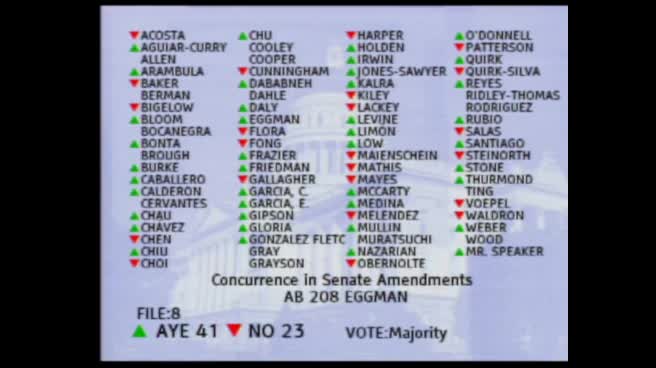 1MIN
Assembly Floor
 40SEC
Senate Floor
 1H
Senate Standing Committee on Appropriations
 20MIN
Senate Standing Committee on Environmental Quality
 14MIN
Senate Standing Committee on Education
 1MIN
Assembly Floor
 1H
Assembly Standing Committee on Appropriations
 7MIN
Assembly Standing Committee on Education



Bill Co-Author(s):