AB 761: Pupil assessment: optional history-social science performance task assessments.
- Session Year: 2017-2018
- House: Assembly
- Latest Version Date: 2018-01-03
Existing law establishes the California Assessment of Student Performance and Progress (CAASPP) as the statewide system of pupil assessments, under which various assessments are required or authorized to be administered in public schools, as specified. Existing law requires the Superintendent of Public Instruction to submit to the State Board of Education recommendations on expanding the CAASPP to include additional assessments, including a history-social science assessment.
This bill would require the Superintendent to develop, and the state board to adopt, a history-social science assessment, optional performance task assessments in history-social science, as specified. The bill would require, before developing the history-social science assessment, the Superintendent to develop, and the state board to adopt, the purpose of a history-social science assessment. The bill would require the Superintendent to administer the history-social science assessment in grades 4, 8, and one of grades 9 to 12, inclusive, develop the optional performance task assessments within the time period approved by the state board. The bill would authorize the optional performance task assessments to be administered in grades 4 and 8, and in high school. The bill would make these provisions operative only to the extent that funding is provided in the annual Budget Act or another statute for this purpose. purposes of the CAASPP.
Existing law establishes the California Assessment of Student Performance and Progress (CAASPP) as the statewide system of pupil assessments, under which various assessments are required or authorized to be administered in public schools, as specified. Existing law requires the Superintendent of Public Instruction to submit to the State Board of Education recommendations on expanding the CAASPP to include additional assessments, including a history-social science assessment.
This bill would require the Superintendent to develop, and the state board to adopt, a history-social science assessment, as specified. The bill would require, before developing the history-social science assessment, the Superintendent to develop, and the state board to adopt, the purpose of a history-social science assessment. The bill would require the Superintendent to administer the history-social science assessment in grades 4, 8, and one of grades 9 to 12, inclusive, within the time period approved by the state board. The bill would make these provisions operative only to the extent that funding is provided in the annual Budget Act or another statute for this purpose.
Existing law establishes the California Assessment of Student Performance and Progress (CAASPP) as the statewide system of pupil assessments, under which various assessments are required or authorized to be administered in public schools, as specified. Existing law requires the Superintendent of Public Instruction to submit to the State Board of Education recommendations on expanding the CAASPP to include additional assessments, including a history-social science assessment.
This bill would require the Superintendent to develop, and the state board to adopt, a history-social science assessment, as specified. The bill would require the Superintendent to administer the history-social science assessment in grades 4, 8, and one of grades 9 to 12, inclusive, within the time period approved by the state board. The bill would make these provisions operative only to the extent that funding is provided in the annual Budget Act or another statute for this purpose.
(a)There is hereby established the California Assessment of Student Performance and Progress, to be known as the CAASPP.
(b)Commencing with the 201314 school year, the CAASPP shall be composed of all of the following:
(1)(A)A consortium summative assessment in English language arts and mathematics for grades 3 to 8, inclusive, and grade 11 that measures content standards adopted by the state board.
(B)In the 201314 school year, the consortium summative assessment in English language arts and mathematics shall be a field test only, to enable the consortium to gauge the validity and reliability of these assessments and to conduct all necessary psychometric procedures and studies, including, but not necessarily limited to, achievement standard setting, and to allow the department to conduct studies regarding full implementation of the assessment system. These field tests and results shall not be used for any other purpose, including the calculation of any accountability measure.
(2)(A)Science grade level assessments in grades 5, 8, and 10 that measure content standards adopted pursuant to Section 60605, until a successor assessment is implemented pursuant to subparagraph (B).
(B)For science assessments, the Superintendent shall make a recommendation to the state board as soon as is feasible after the adoption of science content standards pursuant to former Section 60605.85, as that section read on June 30, 2014, regarding the assessment of the newly adopted standards. Before making recommendations, the Superintendent shall consult with stakeholders, including, but not necessarily limited to, California science teachers, individuals with expertise in assessing English learners and pupils with disabilities, parents, and measurement experts, regarding the grade level and type of assessment. The recommendations shall include cost estimates and a plan for implementation of at least one assessment in each of the following grade spans:
(i)Grades 3 to 5, inclusive.
(ii)Grades 6 to 9, inclusive.
(iii)Grades 10 to 12, inclusive.
(3)The California Alternate Performance Assessment in grades 2 to 11, inclusive, in English language arts and mathematics and science in grades 5, 8, and 10, which measures content standards adopted pursuant to Section 60605 until a successor assessment is implemented. The successor assessment shall be limited to the grades and subject areas assessed pursuant to paragraph (1) and subparagraph (B) of paragraph (2).
(4)The Early Assessment Program established by Chapter 6 (commencing with Section 99300) of Part 65 of Division 14 of Title 3.
(5)(A)A local educational agency may administer a primary language assessment aligned to the English language arts standards adopted pursuant to Section 60605, as it read on January 1, 2013, to pupils who are identified as limited English proficient and enrolled in any of grades 2 to 11, inclusive, until a subsequent primary language assessment aligned to the common core standards in English language arts adopted pursuant to Section 60605.8 is developed pursuant to subparagraph (E).
(B)If a local educational agency chooses to administer a primary language assessment to pupils identified as limited English proficient and enrolled in any of grades 2 to 11, inclusive, pursuant to subparagraph (A), it shall notify the department in a manner to be determined by the department and the costs shall be paid by the state and included as part of the testing contract, and the department shall provide the local educational agency a per pupil apportionment for administering the assessment pursuant to subdivision (l).
(C)The Superintendent shall consult with stakeholders, including assessment and English learner experts, to determine the content and purpose of a stand-alone language arts summative assessment in primary languages other than English that aligns with the English language arts content standards. The Superintendent shall consider the appropriate purpose for this assessment, including, but not necessarily limited to, support for the State Seal of Biliteracy and accountability. It is the intent of the Legislature that an assessment developed pursuant to this section be included in the state accountability system.
(D)The Superintendent shall report and make recommendations to the state board at a regularly scheduled public meeting no sooner than one year after the first full administration of the consortium computer-adaptive assessments in English language arts and mathematics summative assessments in grades 3 to 8, inclusive, and grade 11, regarding an implementation timeline and estimated costs of a stand-alone language arts summative assessment in primary languages other than English.
(E)The Superintendent shall develop, and the state board shall adopt, a primary language assessment. The Superintendent shall administer this assessment no later than the 201617 school year.
(F)This paragraph shall be operative only to the extent that funding is provided in the annual Budget Act or another statute for the purpose of this section.
(6)(A)Pursuant to recommendations developed under subdivision (c), the Superintendent shall develop, and the state board shall adopt, a history-social science assessment. Before developing the history-social science assessment, the Superintendent shall develop, and the state board shall adopt, the purpose of a history-social science assessment. performance task assessments in history-social science that a local educational agency shall have the option to offer to pupils and that can be locally administered, scored, and maintained. The Superintendent shall administer this assessment develop these optional performance task assessments within the time period approved by the state board.
(B)The history-social science assessment optional performance task assessments in history-social science, including civics, shall be developed and may be administered in grades 4, 8, and one of grades 9 to 12, inclusive, 4 and 8, and in high school, and shall measure content standards adopted pursuant to Section 60605.
(C)(i)The optional performance task assessments in history-social science assessments shall be computer-based.
(ii)The optional performance task assessments in history-social science assessments shall be based on the standards articulated in the history-social science framework adopted by the state board, with a focus on historical and social science analytical skills.
(iii)The optional performance task assessments in history-social science assessments administered in grade 8 and in one of grades 9 to 12, inclusive, in high school shall incorporate content standards that are related to civic civics education.
(iv)The optional performance task assessments in history-social science may include, but are not limited to, writing prompts or mock trial protocol.
(v)The optional performance task assessments in history-social science may be supported by ancillary materials that may include, but are not limited to, administration guides, scoring rubrics, and other teacher scoring materials.
(vi)The optional performance task assessments in history-social science may also be supported by ancillary training that may include, but is not limited to, educator training in the hand scoring process and a train-the-trainer session for county offices of education.
(D)This paragraph shall be operative only to the extent that funding is provided in the annual Budget Act or another statute for the purpose of this section.
(c)No later than March 1, 2016, the Superintendent shall submit to the state board recommendations on expanding the CAASPP to include additional assessments, for consideration at a regularly scheduled public meeting. The Superintendent shall also submit these recommendations to the appropriate policy and fiscal committees of the Legislature and to the Director of Finance in accordance with all of the following:
(1)In consultation with stakeholders, including, but not necessarily limited to, California teachers, individuals with expertise in assessing English learners and pupils with disabilities, parents, and measurement experts, the Superintendent shall make recommendations regarding assessments, including the grade level, content, and type of assessment. These recommendations shall take into consideration the assessments already administered or planned pursuant to subdivision (b). The Superintendent shall consider the use of consortium-developed assessments, various item types, computer-based testing, and a timeline for implementation.
(2)The recommendations shall consider assessments in subjects, including, but not necessarily limited to, history-social science, technology, visual and performing arts, and other subjects as appropriate, as well as English language arts, mathematics, and science assessments to augment the assessments required under subdivision (b), and the use of various assessment options, including, but not necessarily limited to, computer-based tests, locally scored performance tasks, and portfolios.
(3)The recommendations shall include the use of an assessment calendar that would schedule the assessments identified pursuant to paragraph (2) over several years, the use of matrix sampling, if appropriate, and the use of population sampling.
(4)The recommendations shall include a timeline for test development, and shall include cost estimates for subject areas, as appropriate.
(5)Upon approval by the state board and the appropriation of funding for this purpose, the Superintendent shall develop and administer approved assessments. The state board shall approve test blueprints, achievement level descriptors, testing periods, performance standards, and a reporting plan for each approved assessment.
(6)The Superintendent shall convene an advisory panel, consisting of, but not necessarily limited to, secondary teachers, school administrators, school board members, parents, a student chosen from among the two finalists who were not appointed by the Governor to serve as the student member on the state board pursuant to Section 33000.5, representatives of a dropout recovery charter school operating pursuant to subdivision (g) of Section 47605.1, measurement experts, and individuals with expertise in assessing English learners and pupils with disabilities, to provide recommendations to the Superintendent on the continuation of the high school exit examination, described in former Chapter 9 (commencing with Section 60850), as that chapter read on December 31, 2017, and on alternative pathways to satisfy the high school graduation requirements pursuant to Sections 51224.5 and 51225.3.
(d)For the 201314 and 201415 school years, the department shall make available to local educational agencies Standardized Testing and Reporting Program test forms no longer required by the CAASPP. The cost of implementing this subdivision, including, but not necessarily limited to, shipping, printing, scoring, and reporting per pupil shall be the same for all local educational agencies, and shall not exceed the marginal cost of the assessment, including any cost the department incurs to implement this section. A local educational agency that chooses to administer an assessment pursuant to this subdivision shall do so at its own expense, and shall enter into an agreement for that purpose with a contractor, subject to the approval of the department.
(e)The Superintendent shall make available a paper and pencil version of any computer-based CAASPP assessment for use by pupils who are unable to access the computer-based version of the assessment for a maximum of three years after a new operational test is first administered.
(f)(1)From the funds available for that purpose, each local educational agency shall administer assessments to each of its pupils pursuant to subdivision (b). As allowable by federal statute, recently arrived English learner pupils are exempted from taking the assessment in English language arts. The state board shall establish a testing period to provide that all schools administer these tests to pupils at approximately the same time during the instructional year. The testing period established by the state board shall take into consideration the need of local educational agencies to provide makeup days for pupils who were absent during testing, as well as the need to schedule testing on electronic computing devices.
(2)For the 201314 school year, each local educational agency shall administer the field tests in a manner described by the department in consultation with the president or executive director of the state board. Additional participants in the field test beyond the representative sample may be approved by the department, and the department shall use existing contract savings to fund local educational agency participation in one or more tests per participant. Funds for this purpose shall be used to allow for maximum participation in the field tests across the state. To the extent savings in the current contract are not available to fully fund this participation, the department shall prorate available funds by test. Local educational agencies shall bear any additional costs to administer these assessments that are in excess of the contracted amount. With the approval of the state board and the Director of Finance, the department shall amend the existing assessment contract to accommodate field testing beyond the representative sample, and to allow for special studies using information collected from the field tests.
(g)From the funds available for that purpose, each local educational agency shall administer assessments as determined by the state board pursuant to paragraph (5) of subdivision (c).
(h)As feasible, the CAASPP field tests shall be conducted in a manner that will minimize the testing burden on individual schools. The CAASPP field tests shall not produce individual pupil scores unless it is determined that these scores are valid and reliable.
(i)The governing board of a school district may administer achievement tests in grades other than those required by this section as it deems appropriate.
(j)Subject to the approval of the state board, the department may make available to local educational agencies a primary language assessment aligned to the English language arts standards adopted pursuant to Section 60605, as it read on January 1, 2013, for assessing pupils who are enrolled in a dual language immersion program that includes the primary language of the assessment and who are either nonlimited English proficient or redesignated fluent English proficient until a subsequent primary language assessment aligned to the common core standards in English language arts adopted pursuant to Section 60605.8 is developed pursuant to paragraph (5) of subdivision (b). The cost for the assessment shall be the same for all local educational agencies and shall not exceed the marginal cost of the assessment, including any cost the department incurs to implement this section. A local educational agency that elects to administer a primary language assessment pursuant to this subdivision shall do so at its own expense and shall enter into an agreement for that purpose with the state testing contractor, subject to the approval of the department.
(k)Pursuant to Section 1412(a)(16) of Title 20 of the United States Code, individuals with exceptional needs, as defined in Section 56026, shall be included in the testing requirement of subdivision (b) with appropriate accommodations in administration, where necessary, and the individuals with exceptional needs who are unable to participate in the testing, even with accommodations, shall be given an alternate assessment.
(l)(1)The Superintendent shall apportion funds appropriated for these purposes to local educational agencies to enable them to meet the requirements of subdivisions (b) and (c).
(A)For the CAASPP field tests administered in the 201314 school year or later school years, the Superintendent shall apportion funds to local educational agencies if funds are specifically provided for this purpose in the annual Budget Act.
(B)The Superintendent shall apportion funds to local educational agencies to enable them to administer assessments used to satisfy the voluntary Early Assessment Program in the 201314 school year pursuant to paragraph (4) of subdivision (b).
(2)The state board annually shall establish the amount of funding to be apportioned to local educational agencies for each test administered and annually shall establish the amount that each contractor shall be paid for each test administered under the contracts required pursuant to Section 60643. The amounts to be paid to the contractors shall be determined by considering the cost estimates submitted by each contractor each September and the amount included in the annual Budget Act, and by making allowance for the estimated costs to local educational agencies for compliance with the requirements of subdivisions (b) and (c). The state board shall take into account changes to local educational agency test administration activities under the CAASPP, including, but not limited to, the number and type of tests administered and changes in computerized test registration and administration procedures, when establishing the amount of funding to be apportioned to local educational agencies for each test administered.
(3)An adjustment to the amount of funding to be apportioned per test shall not be valid without the approval of the Director of Finance. A request for approval of an adjustment to the amount of funding to be apportioned per test shall be submitted in writing to the Director of Finance and the chairpersons of the fiscal committees of both houses of the Legislature with accompanying material justifying the proposed adjustment. The Director of Finance is authorized to approve only those adjustments related to activities required by statute. The Director of Finance shall approve or disapprove the amount within 30 days of receipt of the request and shall notify the chairpersons of the fiscal committees of both houses of the Legislature of the decision.
(m)For purposes of making the computations required by Section 8 of Article XVI of the California Constitution, the appropriation for the apportionments made pursuant to paragraph (1) of subdivision (l), and the payments made to the contractors under the contracts required pursuant to Section 60643 or subparagraph (C) of paragraph (1) of subdivision (a) of Section 60605 between the department and the contractor, are General Fund revenues appropriated for school districts, as defined in subdivision (c) of Section 41202, for the applicable fiscal year, and included within the total allocations to school districts and community college districts from General Fund proceeds of taxes appropriated pursuant to Article XIIIB, as defined in subdivision (e) of Section 41202, for that fiscal year.
(n)As a condition to receiving an apportionment pursuant to subdivision (l), a local educational agency shall report to the Superintendent all of the following:
(1)The pupils enrolled in the local educational agency in the grades in which assessments were administered pursuant to subdivisions (b) and (c).
(2)The pupils to whom an achievement test was administered pursuant to subdivisions (b) and (c) in the local educational agency.
(3)The pupils in paragraph (1) who were exempted from the test pursuant to this section.
(o)The Superintendent and the state board are authorized and encouraged to assist postsecondary educational institutions to use the assessment results of the CAASPP, including, but not necessarily limited to, the grade 11 consortium summative assessments in English language arts and mathematics, for academic credit, placement, or admissions processes.
(p)Subject to the availability of funds in the annual Budget Act for this purpose, and exclusive of the consortium assessments, the Superintendent, with the approval of the state board, annually shall release to the public test items from the achievement tests pursuant to Section 60642.5 administered in previous years. Where feasible and practicable, the minimum number of test items released per year shall be equal to 25 percent of the total number of test items on the test administered in the previous year.
(q)On or before July 1, 2014, Sections 850 to 868, inclusive, of Title 5 of the California Code of Regulations shall be revised by the state board to conform to the changes made to this section in the first year of the 201314 Regular Session. The state board shall adopt initial regulations as emergency regulations to immediately implement the CAASPP assessments, including, but not necessarily limited to, the administration, scoring, and reporting of the tests, as the adoption of emergency regulations is necessary for the immediate preservation of the public peace, health, safety, or general welfare within the meaning of Section 11346.1 of the Government Code. The emergency regulations shall be followed by the adoption of permanent regulations, in accordance with the Administrative Procedure Act (Chapter 3.5 (commencing with Section 11340) of Part 1 of Division 3 of Title 2 of the Government Code).
(a)There is hereby established the California Assessment of Student Performance and Progress, to be known as the CAASPP.
(b)Commencing with the 201314 school year, the CAASPP shall be composed of all of the following:
(1)(A)A consortium summative assessment in English language arts and mathematics for grades 3 to 8, inclusive, and grade 11 that measures content standards adopted by the state board.
(B)In the 201314 school year, the consortium summative assessment in English language arts and mathematics shall be a field test only, to enable the consortium to gauge the validity and reliability of these assessments and to conduct all necessary psychometric procedures and studies, including, but not necessarily limited to, achievement standard setting, and to allow the department to conduct studies regarding full implementation of the assessment system. These field tests and results shall not be used for any other purpose, including the calculation of any accountability measure.
(2)(A)Science grade level assessments in grades 5, 8, and 10 that measure content standards adopted pursuant to Section 60605, until a successor assessment is implemented pursuant to subparagraph (B).
(B)For science assessments, the Superintendent shall make a recommendation to the state board as soon as is feasible after the adoption of science content standards pursuant to former Section 60605.85, as that section read on June 30, 2014, regarding the assessment of the newly adopted standards. Before making recommendations, the Superintendent shall consult with stakeholders, including, but not necessarily limited to, California science teachers, individuals with expertise in assessing English learners and pupils with disabilities, parents, and measurement experts, regarding the grade level and type of assessment. The recommendations shall include cost estimates and a plan for implementation of at least one assessment in each of the following grade spans:
(i)Grades 3 to 5, inclusive.
(ii)Grades 6 to 9, inclusive.
(iii)Grades 10 to 12, inclusive.
(3)The California Alternate Performance Assessment in grades 2 to 11, inclusive, in English language arts and mathematics and science in grades 5, 8, and 10, which measures content standards adopted pursuant to Section 60605 until a successor assessment is implemented. The successor assessment shall be limited to the grades and subject areas assessed pursuant to paragraph (1) and subparagraph (B) of paragraph (2).
(4)The Early Assessment Program established by Chapter 6 (commencing with Section 99300) of Part 65 of Division 14 of Title 3.
(5)(A)A local educational agency may administer a primary language assessment aligned to the English language arts standards adopted pursuant to Section 60605, as it read on January 1, 2013, to pupils who are identified as limited English proficient and enrolled in any of grades 2 to 11, inclusive, until a subsequent primary language assessment aligned to the common core standards in English language arts adopted pursuant to Section 60605.8 is developed pursuant to subparagraph (E).
(B)If a local educational agency chooses to administer a primary language assessment to pupils identified as limited English proficient and enrolled in any of grades 2 to 11, inclusive, pursuant to subparagraph (A), it shall notify the department in a manner to be determined by the department and the costs shall be paid by the state and included as part of the testing contract, and the department shall provide the local educational agency a per pupil apportionment for administering the assessment pursuant to subdivision (l).
(C)The Superintendent shall consult with stakeholders, including assessment and English learner experts, to determine the content and purpose of a stand-alone language arts summative assessment in primary languages other than English that aligns with the English language arts content standards. The Superintendent shall consider the appropriate purpose for this assessment, including, but not necessarily limited to, support for the State Seal of Biliteracy and accountability. It is the intent of the Legislature that an assessment developed pursuant to this section be included in the state accountability system.
(D)The Superintendent shall report and make recommendations to the state board at a regularly scheduled public meeting no sooner than one year after the first full administration of the consortium computer-adaptive assessments in English language arts and mathematics summative assessments in grades 3 to 8, inclusive, and grade 11, regarding an implementation timeline and estimated costs of a stand-alone language arts summative assessment in primary languages other than English.
(E)The Superintendent shall develop, and the state board shall adopt, a primary language assessment. The Superintendent shall administer this assessment no later than the 201617 school year.
(F)This paragraph shall be operative only to the extent that funding is provided in the annual Budget Act or another statute for the purpose of this section.
(6)(A)Pursuant to recommendations developed under subdivision (c), the Superintendent shall develop, and the state board shall adopt, a history-social science assessment. Before developing the history-social science assessment, the Superintendent shall develop, and the state board shall adopt, the purpose of a history-social science assessment. The Superintendent shall administer this assessment within the time period approved by the state board.
(B)The history-social science assessment shall be administered in grades 4, 8, and one of grades 9 to 12, inclusive, and shall measure content standards adopted pursuant to Section 60605.
(C)(i)The history-social science assessments shall be computer-based.
(ii)The history-social science assessments shall be based on the standards articulated in the history-social science framework adopted by the state board, with a focus on historical and social science analytical skills.
(iii)The history-social science assessments administered in grade 8 and in one of grades 9 to 12, inclusive, shall incorporate content standards that are related to civic education.
(D)This paragraph shall be operative only to the extent that funding is provided in the annual Budget Act or another statute for the purpose of this section.
(c)No later than March 1, 2016, the Superintendent shall submit to the state board recommendations on expanding the CAASPP to include additional assessments, for consideration at a regularly scheduled public meeting. The Superintendent shall also submit these recommendations to the appropriate policy and fiscal committees of the Legislature and to the Director of Finance in accordance with all of the following:
(1)In consultation with stakeholders, including, but not necessarily limited to, California teachers, individuals with expertise in assessing English learners and pupils with disabilities, parents, and measurement experts, the Superintendent shall make recommendations regarding assessments, including the grade level, content, and type of assessment. These recommendations shall take into consideration the assessments already administered or planned pursuant to subdivision (b). The Superintendent shall consider the use of consortium-developed assessments, various item types, computer-based testing, and a timeline for implementation.
(2)The recommendations shall consider assessments in subjects, including, but not necessarily limited to, history-social science, technology, visual and performing arts, and other subjects as appropriate, as well as English language arts, mathematics, and science assessments to augment the assessments required under subdivision (b), and the use of various assessment options, including, but not necessarily limited to, computer-based tests, locally scored performance tasks, and portfolios.
(3)The recommendations shall include the use of an assessment calendar that would schedule the assessments identified pursuant to paragraph (2) over several years, the use of matrix sampling, if appropriate, and the use of population sampling.
(4)The recommendations shall include a timeline for test development, and shall include cost estimates for subject areas, as appropriate.
(5)Upon approval by the state board and the appropriation of funding for this purpose, the Superintendent shall develop and administer approved assessments. The state board shall approve test blueprints, achievement level descriptors, testing periods, performance standards, and a reporting plan for each approved assessment.
(6)The Superintendent shall convene an advisory panel, consisting of, but not necessarily limited to, secondary teachers, school administrators, school board members, parents, a student chosen from among the two finalists who were not appointed by the Governor to serve as the student member on the state board pursuant to Section 33000.5, representatives of a dropout recovery charter school operating pursuant to subdivision (g) of Section 47605.1, measurement experts, and individuals with expertise in assessing English learners and pupils with disabilities, to provide recommendations to the Superintendent on the continuation of the high school exit examination, described in Chapter 9 (commencing with Section 60850), and on alternative pathways to satisfy the high school graduation requirements pursuant to Sections 51224.5 and 51225.3.
(d)For the 201314 and 201415 school years, the department shall make available to local educational agencies Standardized Testing and Reporting Program test forms no longer required by the CAASPP. The cost of implementing this subdivision, including, but not necessarily limited to, shipping, printing, scoring, and reporting per pupil shall be the same for all local educational agencies, and shall not exceed the marginal cost of the assessment, including any cost the department incurs to implement this section. A local educational agency that chooses to administer an assessment pursuant to this subdivision shall do so at its own expense, and shall enter into an agreement for that purpose with a contractor, subject to the approval of the department.
(e)The Superintendent shall make available a paper and pencil version of any computer-based CAASPP assessment for use by pupils who are unable to access the computer-based version of the assessment for a maximum of three years after a new operational test is first administered.
(f)(1)From the funds available for that purpose, each local educational agency shall administer assessments to each of its pupils pursuant to subdivision (b). As allowable by federal statute, recently arrived English learner pupils are exempted from taking the assessment in English language arts. The state board shall establish a testing period to provide that all schools administer these tests to pupils at approximately the same time during the instructional year. The testing period established by the state board shall take into consideration the need of local educational agencies to provide makeup days for pupils who were absent during testing, as well as the need to schedule testing on electronic computing devices.
(2)For the 201314 school year, each local educational agency shall administer the field tests in a manner described by the department in consultation with the president or executive director of the state board. Additional participants in the field test beyond the representative sample may be approved by the department, and the department shall use existing contract savings to fund local educational agency participation in one or more tests per participant. Funds for this purpose shall be used to allow for maximum participation in the field tests across the state. To the extent savings in the current contract are not available to fully fund this participation, the department shall prorate available funds by test. Local educational agencies shall bear any additional costs to administer these assessments that are in excess of the contracted amount. With the approval of the state board and the Director of Finance, the department shall amend the existing assessment contract to accommodate field testing beyond the representative sample, and to allow for special studies using information collected from the field tests.
(g)From the funds available for that purpose, each local educational agency shall administer assessments as determined by the state board pursuant to paragraph (5) of subdivision (c).
(h)As feasible, the CAASPP field tests shall be conducted in a manner that will minimize the testing burden on individual schools. The CAASPP field tests shall not produce individual pupil scores unless it is determined that these scores are valid and reliable.
(i)The governing board of a school district may administer achievement tests in grades other than those required by this section as it deems appropriate.
(j)Subject to the approval of the state board, the department may make available to local educational agencies a primary language assessment aligned to the English language arts standards adopted pursuant to Section 60605, as it read on January 1, 2013, for assessing pupils who are enrolled in a dual language immersion program that includes the primary language of the assessment and who are either nonlimited English proficient or redesignated fluent English proficient until a subsequent primary language assessment aligned to the common core standards in English language arts adopted pursuant to Section 60605.8 is developed pursuant to paragraph (5) of subdivision (b). The cost for the assessment shall be the same for all local educational agencies and shall not exceed the marginal cost of the assessment, including any cost the department incurs to implement this section. A local educational agency that elects to administer a primary language assessment pursuant to this subdivision shall do so at its own expense and shall enter into an agreement for that purpose with the state testing contractor, subject to the approval of the department.
(k)Pursuant to Section 1412(a)(16) of Title 20 of the United States Code, individuals with exceptional needs, as defined in Section 56026, shall be included in the testing requirement of subdivision (b) with appropriate accommodations in administration, where necessary, and the individuals with exceptional needs who are unable to participate in the testing, even with accommodations, shall be given an alternate assessment.
(l)(1)The Superintendent shall apportion funds appropriated for these purposes to local educational agencies to enable them to meet the requirements of subdivisions (b) and (c).
(A)For the CAASPP field tests administered in the 201314 school year or later school years, the Superintendent shall apportion funds to local educational agencies if funds are specifically provided for this purpose in the annual Budget Act.
(B)The Superintendent shall apportion funds to local educational agencies to enable them to administer assessments used to satisfy the voluntary Early Assessment Program in the 201314 school year pursuant to paragraph (4) of subdivision (b).
(2)The state board annually shall establish the amount of funding to be apportioned to local educational agencies for each test administered and annually shall establish the amount that each contractor shall be paid for each test administered under the contracts required pursuant to Section 60643. The amounts to be paid to the contractors shall be determined by considering the cost estimates submitted by each contractor each September and the amount included in the annual Budget Act, and by making allowance for the estimated costs to local educational agencies for compliance with the requirements of subdivisions (b) and (c). The state board shall take into account changes to local educational agency test administration activities under the CAASPP, including, but not limited to, the number and type of tests administered and changes in computerized test registration and administration procedures, when establishing the amount of funding to be apportioned to local educational agencies for each test administered.
(3)An adjustment to the amount of funding to be apportioned per test shall not be valid without the approval of the Director of Finance. A request for approval of an adjustment to the amount of funding to be apportioned per test shall be submitted in writing to the Director of Finance and the chairpersons of the fiscal committees of both houses of the Legislature with accompanying material justifying the proposed adjustment. The Director of Finance is authorized to approve only those adjustments related to activities required by statute. The Director of Finance shall approve or disapprove the amount within 30 days of receipt of the request and shall notify the chairpersons of the fiscal committees of both houses of the Legislature of the decision.
(m)For purposes of making the computations required by Section 8 of Article XVI of the California Constitution, the appropriation for the apportionments made pursuant to paragraph (1) of subdivision (l), and the payments made to the contractors under the contracts required pursuant to Section 60643 or subparagraph (C) of paragraph (1) of subdivision (a) of Section 60605 between the department and the contractor, are General Fund revenues appropriated for school districts, as defined in subdivision (c) of Section 41202, for the applicable fiscal year, and included within the total allocations to school districts and community college districts from General Fund proceeds of taxes appropriated pursuant to Article XIIIB, as defined in subdivision (e) of Section 41202, for that fiscal year.
(n)As a condition to receiving an apportionment pursuant to subdivision (l), a local educational agency shall report to the Superintendent all of the following:
(1)The pupils enrolled in the local educational agency in the grades in which assessments were administered pursuant to subdivisions (b) and (c).
(2)The pupils to whom an achievement test was administered pursuant to subdivisions (b) and (c) in the local educational agency.
(3)The pupils in paragraph (1) who were exempted from the test pursuant to this section.
(o)The Superintendent and the state board are authorized and encouraged to assist postsecondary educational institutions to use the assessment results of the CAASPP, including, but not necessarily limited to, the grade 11 consortium summative assessments in English language arts and mathematics, for academic credit, placement, or admissions processes.
(p)Subject to the availability of funds in the annual Budget Act for this purpose, and exclusive of the consortium assessments, the Superintendent, with the approval of the state board, annually shall release to the public test items from the achievement tests pursuant to Section 60642.5 administered in previous years. Where feasible and practicable, the minimum number of test items released per year shall be equal to 25 percent of the total number of test items on the test administered in the previous year.
(q)On or before July 1, 2014, Sections 850 to 868, inclusive, of Title 5 of the California Code of Regulations shall be revised by the state board to conform to the changes made to this section in the first year of the 201314 Regular Session. The state board shall adopt initial regulations as emergency regulations to immediately implement the CAASPP assessments, including, but not necessarily limited to, the administration, scoring, and reporting of the tests, as the adoption of emergency regulations is necessary for the immediate preservation of the public peace, health, safety, or general welfare within the meaning of Section 11346.1 of the Government Code. The emergency regulations shall be followed by the adoption of permanent regulations, in accordance with the Administrative Procedure Act (Chapter 3.5 (commencing with Section 11340) of Part 1 of Division 3 of Title 2 of the Government Code).
(a)There is hereby established the California Assessment of Student Performance and Progress, to be known as the CAASPP.
(b)Commencing with the 201314 school year, the CAASPP shall be composed of all of the following:
(1)(A)A consortium summative assessment in English language arts and mathematics for grades 3 to 8, inclusive, and grade 11 that measures content standards adopted by the state board.
(B)In the 201314 school year, the consortium summative assessment in English language arts and mathematics shall be a field test only, to enable the consortium to gauge the validity and reliability of these assessments and to conduct all necessary psychometric procedures and studies, including, but not necessarily limited to, achievement standard setting, and to allow the department to conduct studies regarding full implementation of the assessment system. These field tests and results shall not be used for any other purpose, including the calculation of any accountability measure.
(2)(A)Science grade level assessments in grades 5, 8, and 10 that measure content standards adopted pursuant to Section 60605, until a successor assessment is implemented pursuant to subparagraph (B).
(B)For science assessments, the Superintendent shall make a recommendation to the state board as soon as is feasible after the adoption of science content standards pursuant to former Section 60605.85 60605.85, as that section read on June 30, 2014, regarding the assessment of the newly adopted standards. Before making recommendations, the Superintendent shall consult with stakeholders, including, but not necessarily limited to, California science teachers, individuals with expertise in assessing English learners and pupils with disabilities, parents, and measurement experts, regarding the grade level and type of assessment. The recommendations shall include cost estimates and a plan for implementation of at least one assessment in each of the following grade spans:
(i)Grades 3 to 5, inclusive.
(ii)Grades 6 to 9, inclusive.
(iii)Grades 10 to 12, inclusive.
(3)The California Alternate Performance Assessment in grades 2 to 11, inclusive, in English language arts and mathematics and science in grades 5, 8, and 10, which measures content standards adopted pursuant to Section 60605 until a successor assessment is implemented. The successor assessment shall be limited to the grades and subject areas assessed pursuant to paragraph (1) and subparagraph (B) of paragraph (2).
(4)The Early Assessment Program established by Chapter 6 (commencing with Section 99300) of Part 65 of Division 14 of Title 3.
(5)(A)A local educational agency may administer a primary language assessment aligned to the English language arts standards adopted pursuant to Section 60605, as it read on January 1, 2013, to pupils who are identified as limited English proficient and enrolled in any of grades 2 to 11, inclusive, until a subsequent primary language assessment aligned to the common core standards in English language arts adopted pursuant to Section 60605.8 is developed pursuant to subparagraph (E).
(B)If a local educational agency chooses to administer a primary language assessment to pupils identified as limited English proficient and enrolled in any of grades 2 to 11, inclusive, pursuant to subparagraph (A), it shall notify the department in a manner to be determined by the department and the costs shall be paid by the state and included as part of the testing contract, and the department shall provide the local educational agency a per pupil apportionment for administering the assessment pursuant to subdivision (l).
(C)The Superintendent shall consult with stakeholders, including assessment and English learner experts, to determine the content and purpose of a stand-alone language arts summative assessment in primary languages other than English that aligns with the English language arts content standards. The Superintendent shall consider the appropriate purpose for this assessment, including, but not necessarily limited to, support for the State Seal of Biliteracy and accountability. It is the intent of the Legislature that an assessment developed pursuant to this section be included in the state accountability system.
(D)The Superintendent shall report and make recommendations to the state board at a regularly scheduled public meeting no sooner than one year after the first full administration of the consortium computer-adaptive assessments in English language arts and mathematics summative assessments in grades 3 to 8, inclusive, and grade 11, regarding an implementation timeline and estimated costs of a stand-alone language arts summative assessment in primary languages other than English.
(E)The Superintendent shall develop, and the state board shall adopt, a primary language assessment. The Superintendent shall administer this assessment no later than the 201617 school year.
(F)This paragraph shall be operative only to the extent that funding is provided in the annual Budget Act or another statute for the purpose of this section.
(6)(A)Pursuant to recommendations developed under subdivision (c), the Superintendent shall develop, and the state board shall adopt, a history-social science assessment. The Superintendent shall administer this assessment within the time period approved by the state board.
(B)The history-social science assessment shall be administered in grades 4, 8, and one of grades 9 to 12, inclusive, and shall measure content standards adopted pursuant to Section 60605.
(C)(i)The history-social science assessments shall be computer-based.
(ii)The history-social science assessments shall be based on the standards articulated in the history-social science framework adopted by the state board, with a focus on historical and social science analytical skills.
(iii)The history-social science assessments administered in grade 8 and in one of grades 9 to 12, inclusive, shall incorporate content standards that are related to civic education.
(D)This paragraph shall be operative only to the extent that funding is provided in the annual Budget Act or another statute for the purpose of this section.
(c)No later than March 1, 2016, the Superintendent shall submit to the state board recommendations on expanding the CAASPP to include additional assessments, for consideration at a regularly scheduled public meeting. The Superintendent shall also submit these recommendations to the appropriate policy and fiscal committees of the Legislature and to the Director of Finance in accordance with all of the following:
(1)In consultation with stakeholders, including, but not necessarily limited to, California teachers, individuals with expertise in assessing English learners and pupils with disabilities, parents, and measurement experts, the Superintendent shall make recommendations regarding assessments, including the grade level, content, and type of assessment. These recommendations shall take into consideration the assessments already administered or planned pursuant to subdivision (b). The Superintendent shall consider the use of consortium-developed assessments, various item types, computer-based testing, and a timeline for implementation.
(2)The recommendations shall consider assessments in subjects, including, but not necessarily limited to, history-social science, technology, visual and performing arts, and other subjects as appropriate, as well as English language arts, mathematics, and science assessments to augment the assessments required under subdivision (b), and the use of various assessment options, including, but not necessarily limited to, computer-based tests, locally scored performance tasks, and portfolios.
(3)The recommendations shall include the use of an assessment calendar that would schedule the assessments identified pursuant to paragraph (2) over several years, the use of matrix sampling, if appropriate, and the use of population sampling.
(4)The recommendations shall include a timeline for test development, and shall include cost estimates for subject areas, as appropriate.
(5)Upon approval by the state board and the appropriation of funding for this purpose, the Superintendent shall develop and administer approved assessments. The state board shall approve test blueprints, achievement level descriptors, testing periods, performance standards, and a reporting plan for each approved assessment.
(6)The Superintendent shall convene an advisory panel, consisting of, but not necessarily limited to, secondary teachers, school administrators, school board members, parents, a student chosen from among the two finalists who were not appointed by the Governor to serve as the student member on the state board pursuant to Section 33000.5, representatives of a dropout recovery charter school operating pursuant to subdivision (g) of Section 47605.1, measurement experts, and individuals with expertise in assessing English learners and pupils with disabilities, to provide recommendations to the Superintendent on the continuation of the high school exit examination, described in Chapter 9 (commencing with Section 60850), and on alternative pathways to satisfy the high school graduation requirements pursuant to Sections 51224.5 and 51225.3.
(d)For the 201314 and 201415 school years, the department shall make available to local educational agencies Standardized Testing and Reporting Program test forms no longer required by the CAASPP. The cost of implementing this subdivision, including, but not necessarily limited to, shipping, printing, scoring, and reporting per pupil shall be the same for all local educational agencies, and shall not exceed the marginal cost of the assessment, including any cost the department incurs to implement this section. A local educational agency that chooses to administer an assessment pursuant to this subdivision shall do so at its own expense, and shall enter into an agreement for that purpose with a contractor, subject to the approval of the department.
(e)The Superintendent shall make available a paper and pencil version of any computer-based CAASPP assessment for use by pupils who are unable to access the computer-based version of the assessment for a maximum of three years after a new operational test is first administered.
(f)(1)From the funds available for that purpose, each local educational agency shall administer assessments to each of its pupils pursuant to subdivision (b). As allowable by federal statute, recently arrived English learner pupils are exempted from taking the assessment in English language arts. The state board shall establish a testing period to provide that all schools administer these tests to pupils at approximately the same time during the instructional year. The testing period established by the state board shall take into consideration the need of local educational agencies to provide makeup days for pupils who were absent during testing, as well as the need to schedule testing on electronic computing devices.
(2)For the 201314 school year, each local educational agency shall administer the field tests in a manner described by the department in consultation with the president or executive director of the state board. Additional participants in the field test beyond the representative sample may be approved by the department, and the department shall use existing contract savings to fund local educational agency participation in one or more tests per participant. Funds for this purpose shall be used to allow for maximum participation in the field tests across the state. To the extent savings in the current contract are not available to fully fund this participation, the department shall prorate available funds by test. Local educational agencies shall bear any additional costs to administer these assessments that are in excess of the contracted amount. With the approval of the state board and the Director of Finance, the department shall amend the existing assessment contract to accommodate field testing beyond the representative sample, and to allow for special studies using information collected from the field tests.
(g)From the funds available for that purpose, each local educational agency shall administer assessments as determined by the state board pursuant to paragraph (5) of subdivision (c).
(h)As feasible, the CAASPP field tests shall be conducted in a manner that will minimize the testing burden on individual schools. The CAASPP field tests shall not produce individual pupil scores unless it is determined that these scores are valid and reliable.
(i)The governing board of a school district may administer achievement tests in grades other than those required by this section as it deems appropriate.
(j)Subject to the approval of the state board, the department may make available to local educational agencies a primary language assessment aligned to the English language arts standards adopted pursuant to Section 60605, as it read on January 1, 2013, for assessing pupils who are enrolled in a dual language immersion program that includes the primary language of the assessment and who are either nonlimited English proficient or redesignated fluent English proficient until a subsequent primary language assessment aligned to the common core standards in English language arts adopted pursuant to Section 60605.8 is developed pursuant to paragraph (5) of subdivision (b). The cost for the assessment shall be the same for all local educational agencies and shall not exceed the marginal cost of the assessment, including any cost the department incurs to implement this section. A local educational agency that elects to administer a primary language assessment pursuant to this subdivision shall do so at its own expense and shall enter into an agreement for that purpose with the state testing contractor, subject to the approval of the department.
(k)Pursuant to Section 1412(a)(16) of Title 20 of the United States Code, individuals with exceptional needs, as defined in Section 56026, shall be included in the testing requirement of subdivision (b) with appropriate accommodations in administration, where necessary, and the individuals with exceptional needs who are unable to participate in the testing, even with accommodations, shall be given an alternate assessment.
(l)(1)The Superintendent shall apportion funds appropriated for these purposes to local educational agencies to enable them to meet the requirements of subdivisions (b) and (c).
(A)For the CAASPP field tests administered in the 201314 school year or later school years, the Superintendent shall apportion funds to local educational agencies if funds are specifically provided for this purpose in the annual Budget Act.
(B)The Superintendent shall apportion funds to local educational agencies to enable them to administer assessments used to satisfy the voluntary Early Assessment Program in the 201314 school year pursuant to paragraph (4) of subdivision (b).
(2)The state board annually shall establish the amount of funding to be apportioned to local educational agencies for each test administered and annually shall establish the amount that each contractor shall be paid for each test administered under the contracts required pursuant to Section 60643. The amounts to be paid to the contractors shall be determined by considering the cost estimates submitted by each contractor each September and the amount included in the annual Budget Act, and by making allowance for the estimated costs to local educational agencies for compliance with the requirements of subdivisions (b) and (c). The state board shall take into account changes to local educational agency test administration activities under the CAASPP, including, but not limited to, the number and type of tests administered and changes in computerized test registration and administration procedures, when establishing the amount of funding to be apportioned to local educational agencies for each test administered.
(3)An adjustment to the amount of funding to be apportioned per test shall not be valid without the approval of the Director of Finance. A request for approval of an adjustment to the amount of funding to be apportioned per test shall be submitted in writing to the Director of Finance and the chairpersons of the fiscal committees of both houses of the Legislature with accompanying material justifying the proposed adjustment. The Director of Finance is authorized to approve only those adjustments related to activities required by statute. The Director of Finance shall approve or disapprove the amount within 30 days of receipt of the request and shall notify the chairpersons of the fiscal committees of both houses of the Legislature of the decision.
(m)For purposes of making the computations required by Section 8 of Article XVI of the California Constitution, the appropriation for the apportionments made pursuant to paragraph (1) of subdivision (l), and the payments made to the contractors under the contracts required pursuant to Section 60643 or subparagraph (C) of paragraph (1) of subdivision (a) of Section 60605 between the department and the contractor, are General Fund revenues appropriated for school districts, as defined in subdivision (c) of Section 41202, for the applicable fiscal year, and included within the total allocations to school districts and community college districts from General Fund proceeds of taxes appropriated pursuant to Article XIIIB, as defined in subdivision (e) of Section 41202, for that fiscal year.
(n)As a condition to receiving an apportionment pursuant to subdivision (l), a local educational agency shall report to the Superintendent all of the following:
(1)The pupils enrolled in the local educational agency in the grades in which assessments were administered pursuant to subdivisions (b) and (c).
(2)The pupils to whom an achievement test was administered pursuant to subdivisions (b) and (c) in the local educational agency.
(3)The pupils in paragraph (1) who were exempted from the test pursuant to this section.
(o)The Superintendent and the state board are authorized and encouraged to assist postsecondary educational institutions to use the assessment results of the CAASPP, including, but not necessarily limited to, the grade 11 consortium summative assessments in English language arts and mathematics, for academic credit, placement, or admissions processes.
(p)Subject to the availability of funds in the annual Budget Act for this purpose, and exclusive of the consortium assessments, the Superintendent, with the approval of the state board, annually shall release to the public test items from the achievement tests pursuant to Section 60642.5 administered in previous years. Where feasible and practicable, the minimum number of test items released per year shall be equal to 25 percent of the total number of test items on the test administered in the previous year.
(q)On or before July 1, 2014, Sections 850 to 868, inclusive, of Title 5 of the California Code of Regulations shall be revised by the state board to conform to the changes made to this section in the first year of the 201314 Regular Session. The state board shall adopt initial regulations as emergency regulations to immediately implement the CAASPP assessments, including, but not necessarily limited to, the administration, scoring, and reporting of the tests, as the adoption of emergency regulations is necessary for the immediate preservation of the public peace, health, safety, or general welfare within the meaning of Section 11346.1 of the Government Code. The emergency regulations shall be followed by the adoption of permanent regulations, in accordance with the Administrative Procedure Act (Chapter 3.5 (commencing with Section 11340) of Part 1 of Division 3 of Title 2 of the Government Code).
|
Date
|
Status
|
|---|---|
| Feb 1, 2018 | From committee: Filed with the Chief Clerk pursuant to Joint Rule 56. |
| Jan 31, 2018 | Died pursuant to Art. IV, Sec. 10(c) of the Constitution. |
| Jan 18, 2018 | In committee: Set, first hearing. Referred to APPR. suspense file. |
| Jan 10, 2018 | From committee: Do pass and re-refer to Com. on APPR. (Ayes 6. Noes 0.) (January 10). Re-referred to Com. on APPR. |
| Jan 4, 2018 | Re-referred to Com. on ED. |
| Jan 3, 2018 | From committee chair, with author's amendments: Amend, and re-refer to Com. on ED. Read second time and amended. |
| Apr 5, 2017 | In committee: Set, second hearing. Hearing canceled at the request of author. |
| Apr 5, 2017 | In committee: Hearing postponed by committee. |
| Mar 30, 2017 | Re-referred to Com. on ED. |
| Mar 29, 2017 | From committee chair, with author's amendments: Amend, and re-refer to Com. on ED. Read second time and amended. |
| Mar 22, 2017 | In committee: Set, first hearing. Hearing canceled at the request of author. |
| Mar 2, 2017 | Referred to Com. on ED. |
| Feb 16, 2017 | From printer. May be heard in committee March 18. |
| Feb 15, 2017 | Read first time. To print. |
|
Date
|
Description
|
Location
|
Votes
|
|
|---|---|---|---|---|
| Jan 10, 2018 | Do pass and be re-referred to the Committee on [Appropriations] | Assembly Standing Committee on Education |
Passed |
This list shows positions taken on this bill by organizations on the date displayed, which is linked to the original source.
Positions by individuals are not included.
Date of Hearing: January 18, 2018
ASSEMBLY COMMITTEE ON APPROPRIATIONS
Lorena Gonzalez Fletcher, Chair
ABPCA Bill Id:AB 761
Author:(Mullin) – As Amended Ver:January 3, 2018
Policy Committee: | Education | Vote: | 6-0 |
Urgency: No State Mandated Local Program: No Reimbursable: Yes
SUMMARY:
This bill requires the Superintendent of Public Instruction (SPI) to develop performance task history-social science assessments that school districts may administer in grades 4 and 8 and in high school. Specifically, this bill:
- Requires the SPI to develop and the State Board of Education (SBE) to adopt computer-based performance task assessments in history-social science that a local educational agency (LEA) may offer to pupils that can be locally administered, scored, and maintained.
- Requires the SPI to apportion funds appropriated for these purposes to LEA’s.
- Provides the requirement to develop the assessments to be operative only to the extent that funding is provided in the annual Budget Act or another statute for this purpose.
FISCAL EFFECT:
- Approximately $2 million General Fund (GF)/Prop 98 in years one and two and $2.1 million GF/Prop 98 in years 3 through 6 to develop the assessments. The California Department of Education (CDE) will have to develop and provide performance tasks for students in grades 4, 8 and high school, which will require a review of the framework, standards, task models, task development, scoring rubrics, educator trainings and ancillary materials. This estimate assumes that no changes are necessary for the Digital Library to host these materials. Should changes be necessary the cost could be approximately $1.5 million, with an ongoing cost of approximately $300,000 annually to update the Digital Library.
- Unknown, but likely zero costs for LEA apportionment funds. The assessments are meant to be optional and thus, no apportionment should be appropriated.
COMMENTS:
Background and Purpose. Existing law establishes the California Assessment of Student Performance and Progress (CAASPP), which consists of assessments in English language arts and mathematics in grades 3 to 8, inclusive, and grade 11 that measures content standards adopted by the SBE. State law also requires the SPI to submit recommendations to the SBE no later than March 1, 2016 on expanding CAASPP to include additional assessments. The SBE did not approve the recommendations for a new history-social science assessment at either the March 2016 meeting or any subsequent meeting.
Analysis Prepared by: Daisy Gonzales / APPR. / (916) 319-2081
Date of Hearing: January 10, 2018
ASSEMBLY COMMITTEE ON EDUCATION
Patrick O'Donnell, Chair
ABPCA Bill Id:AB 761 (
Author:Mullin) – As Amended Ver:January 3, 2018
SUBJECT: Pupil assessment: history-social science assessments
SUMMARY: Requires the Superintendent of Public Instruction (SPI) to develop performance task history-social science assessments that school districts may administer in grades 4 and 8 and in high school.
Specifically, this bill:
- Requires the SPI to develop and the State Board of Education (SBE) to adopt performance task assessments in history-social science that a local educational agency (LEA) shall have the option to offer to pupils and that can be locally administered, scored, and maintained.
- Requires the performance task assessments to:
- Include civics;
- Be available for use in 4, 8, and high school;
- Measure content standards adopted by the SBE and be based on the history-social science framework adopted by the SBE, with a focus on historical and social science analytical skills; and
- Be computer-based.
- Provides that the performance task assessments:
- May include, but not necessarily be limited to, writing prompts or mock trial protocol;
- May be supported by ancillary materials that may include, but not necessarily be limited to, administration guides, scoring rubrics, and other teacher scoring materials; and
- May be supported by ancillary training that may include, but not necessarily be limited to, educator training in the hand scoring process and a train-the-trainer session for county offices of education.
- Requires the SPI to develop the performance task assessments within the time period approved by the state board.
- Provides the requirement to develop the assessments shall be operative only to the extent that funding is provided in the annual Budget Act or another statute for this purpose.
- Makes a technical correction to an Education Code reference.
EXISTING LAW:
- Establishes the California Assessment of Student Performance and Progress (CAASPP), which consists of assessments in English language arts and mathematics in grades 3 to 8, inclusive, and grade 11 that measures content standards adopted by the SBE.
- Requires the SPI to submit recommendations to the SBE no later than March 1, 2016 on expanding CAASPP to include additional assessments.
FISCAL EFFECT: Unknown
COMMENTS: Pursuant to statutory requirements, the SPI submitted a report entitled "Recommendations for Expanding California's Comprehensive Assessment System" to the SBE at its March 2016 meeting. The report made four recommendations, one of which was to develop and administer three computer-based summative assessments for history-social science in elementary, middle, and high school.
The report outlines a five year plan for the history-social science test development, as follows:
2017-18 | 2018-19 | 2019-20 | 2020-21 | 2021-22 | |
Planning | Development | Pilot Testing | Field Testing | Administration, Scoring and Reporting | |
State Operations Costs | $154,000 | $154,000 | $154,000 | $154,000 | $154,000 |
Local Assistance Costs | $3.5 million | $5.5 million | $6.5 million | $6.0 million | |
Total Costs | $154,000 | $3.654 million | $5.654 million | $6.654 million | $6.154 million |
The SBE did not act on the recommendations. Existing law requires the SPI to develop and administer new assessments approved by the SBE. However, the SBE did not approve the recommendations for a new history-social science assessment at either the March 2016 meeting or any subsequent meeting. The minutes from the March 2016 meeting state only that no action was taken and do not describe the discussion that occurred, if any. This bill requires the development of the new history-social science performance task assessments absent SBE approval. "Performance tasks" are defined in the Education Code (§60603) to mean "a collection of questions or activities that relate to a single scenario that include pupil interaction with stimulus. Performance tasks are a means to assess more complex skills such as writing, research, and analysis." While a summative history-social assessment would be an end-of-year exam measuring achievement across a broad range of knowledge, performance task assessments would be used by teachers during the year to assess progress and inform instruction is specific areas. Because the assessments would be optional, the local assistance costs identified in the table on the prior page would not apply. State operations costs would depend on the number of individual performance task assessments developed.
Existing assessments. CAASPP currently consists of assessments in English language arts and math in grades 3 to 8, inclusive, and grade 11. In addition, the state is in the process of developing a California Science Test (CAST) in compliance with federal requirements. CAST will be administered in grades 5 and 8 and in one grade in high school and was pilot tested in the Spring of 2017. It is scheduled to be operational in the 2018-19 school year. In addition to the required battery of CAASPP assessments, many districts administer optional interim assessments developed by the Smarter Balanced consortium and other providers. Interim assessments are administered during the school year and are designed to give teachers immediate feedback on whether their students are meeting content standards.
The demand for this assessment is not known. The CDE, the sponsor of this bill, provided information indicating that the recommendation for the summative history/social science assessment is based on input from stakeholders, who included "educators, administrators, subject matter experts, measurement specialists, experienced curriculum designers, and members of the higher education, policymaking, and business communities." (Although the recommendation is for a new summative assessment, and not for performance task assessments.) Of the total stakeholders, it is not known how many represent potential developers of the assessment versus how many represent potential users of the assessment, and it is not possible to estimate how many schools or districts would use the optional assessments, if they were to be developed.
REGISTERED SUPPORT / OPPOSITION:
Support
California Council for the Social Studies
Los Angeles County Office of Education
State Superintendent of Public Instruction, Tom Torlakson
Opposition
None on file
Analysis Prepared by: Rick Pratt / ED. / (916) 319-2087
Discussed in Hearing
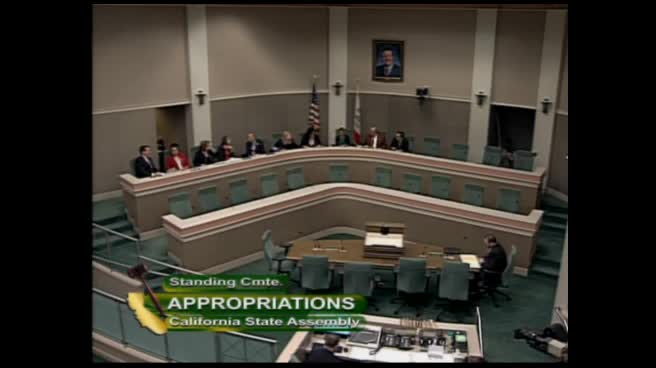 21MIN
Assembly Standing Committee on Appropriations
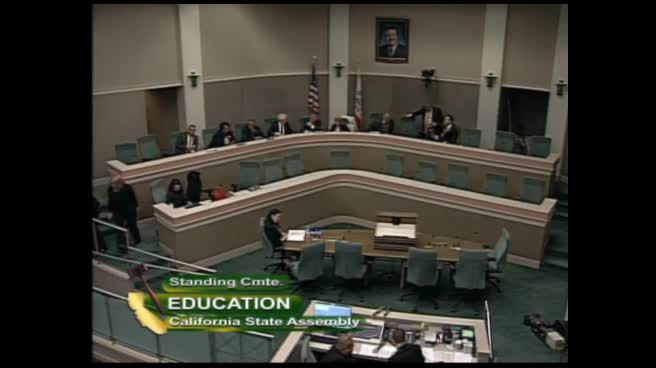 10MIN
Assembly Standing Committee on Education
Bill Author

Bill Co-Author(s):