AB 1767: Tribal gaming: compact ratification.
- Session Year: 2015-2016
- House: Assembly
- Latest Version Date: 2016-09-12
Existing federal law, the Indian Gaming Regulatory Act of 1988, provides for the negotiation and execution of tribal-state gaming compacts for the purpose of authorizing certain types of gaming on Indian lands within a state. The California Constitution authorizes the Governor to negotiate and conclude tribal-state gaming compacts, subject to ratification by the Legislature. Existing law expressly ratifies a number of tribal-state gaming compacts, and amendments of tribal-state gaming compacts, between the State of California and specified Indian tribes.
The California Environmental Quality Act (CEQA) requires a lead agency to prepare, or cause to be prepared, and certify the completion of, an environmental impact report on a project, as defined, that it proposes to carry out or approve that may have a significant effect on the environment, as defined, or to adopt a negative declaration if it finds that the project will not have that effect.
This bill would ratify the amendment to the tribal-state gaming compact entered into between the State of California and the Jackson Rancheria Band of Miwuk Indians, executed on June 22, 2016. The bill would provide that, in deference to tribal sovereignty, certain actions related to that amended compact are not projects for purposes of CEQA.
This bill would declare that it is to take effect immediately as an urgency statute.
Existing law, the Alcoholic Beverage Control Act, generally prohibits a manufacturer, winegrower, distiller, bottler, or wholesaler, among other licensees, or agents of these licensees, from paying a retailer for advertising. The act creates a variety of exceptions from this prohibition, including permitting licensees to purchase advertising space and time from, or on behalf of, an on-sale retail licensee that is an owner, manager, or major tenant of certain stadiums, parks, entertainment complexes, fairgrounds, and arenas, subject to specified conditions. Among these conditions, the act requires that the advertising space or time be purchased only in connection with events held on the premises of the exposition park, stadium, or arena owned by the on-sale licensee.
This bill would permit the purchase of advertising space or time, as described above, on the premises of the exposition, park, stadium, or arena leased by the on-sale licensee.
Existing federal law, the Indian Gaming Regulatory Act of 1988, provides for the negotiation and execution of tribal-state gaming compacts. The California Constitution authorizes the Governor to negotiate and conclude compacts, subject to ratification by the Legislature. Existing law expressly ratifies a number of tribal-state gaming compacts, including the tribal-state gaming compact entered into between the State of California and the United Auburn Indian Community, executed on August 14, 2015.
This bill would make a technical, nonsubstantive change to that provision.
(a)The amendment to the tribal-state gaming compact entered into in accordance with the federal Indian Gaming Regulatory Act of 1988 (18 U.S.C. Secs. 1166 to 1168, inclusive, and 25 U.S.C. Sec. 2701 et seq.) between the State of California and the Jackson Rancheria Band of Miwuk Indians, executed on June 22, 2016, is hereby ratified.
(b)(1)In deference to tribal sovereignty, none of the following shall be deemed a project for purposes of the California Environmental Quality Act (Division 13 (commencing with Section 21000) of the Public Resources Code):
(A)The execution of an amendment to the tribal-state gaming compact ratified by this section.
(B)The execution of the amended tribal-state gaming compact ratified by this section.
(C)The execution of an intergovernmental agreement between a tribe and a county or city government negotiated pursuant to the express authority of, or as expressly referenced in, the amended tribal-state gaming compact ratified by this section.
(D)The execution of an intergovernmental agreement between a tribe and the Department of Transportation, or other state agency, negotiated pursuant to the express authority of, or as expressly referenced in, the amended tribal-state gaming compact ratified by this section.
(E)The on-reservation impacts of compliance with the terms of the amended tribal-state gaming compact ratified by this section.
(F)The sale of compact assets, as defined in subdivision (a) of Section 63048.6, or the creation of the special purpose trust established pursuant to Section 63048.65.
(2)Except as expressly provided in this section, this subdivision does not exempt a city, county, or city and county, or the Department of Transportation, or any state agency or local jurisdiction, from the requirements of the California Environmental Quality Act.
SEC. 2.This act is an urgency statute necessary for the immediate preservation of the public peace, health, or safety within the meaning of Article IV of the Constitution and shall go into immediate effect. The facts constituting the necessity are:
In order to enhance, at the earliest possible time, the economic development, long-term stability, and self-sufficiency of the Jackson Rancheria Band of Miwuk Indians, and to protect the interests of the tribe and its members, the surrounding community, and the California public, it is necessary for this act to take effect immediately.
SECTION 1.Section 25503.6 of the Business and Professions Code is amended to read:25503.6.(a)Notwithstanding any other provision of this chapter, a beer manufacturer, the holder of a winegrowers license, a distilled spirits rectifier, a distilled spirits manufacturer, or distilled spirits manufacturers agent may purchase advertising space and time from, or on behalf of, an on-sale retail licensee subject to all of the following conditions:
(1)The on-sale licensee is the owner, manager, agent of the owner, assignee of the owners advertising rights, or the major tenant of the owner of any of the following:
(A)An outdoor stadium or a fully enclosed arena with a fixed seating capacity in excess of 10,000 seats located in Sacramento County or Alameda County.
(B)A fully enclosed arena with a fixed seating capacity in excess of 18,000 seats located in Orange County or Los Angeles County.
(C)An outdoor stadium or fully enclosed arena with a fixed seating capacity in excess of 8,500 seats located in Kern County.
(D)An exposition park of not less than 50 acres that includes an outdoor stadium with a fixed seating capacity in excess of 8,000 seats and a fully enclosed arena with an attendance capacity in excess of 4,500 people, located in San Bernardino County.
(E)An outdoor stadium with a fixed seating capacity in excess of 10,000 seats located in Yolo County.
(F)An outdoor stadium and a fully enclosed arena with fixed seating capacities in excess of 10,000 seats located in Fresno County.
(G)An athletic and entertainment complex of not less than 50 acres that includes within its boundaries an outdoor stadium with a fixed seating capacity of at least 8,000 seats and a second outdoor stadium with a fixed seating capacity of at least 3,500 seats located in Riverside County.
(H)An outdoor stadium with a fixed seating capacity in excess of 1,500 seats located in Tulare County.
(I)A motorsports entertainment complex of not less than 50 acres that includes within its boundaries an outdoor speedway with a fixed seating capacity of at least 50,000 seats, located in San Bernardino County.
(J)An exposition park, owned or operated by a bona fide nonprofit organization, of not less than 400 acres with facilities including a grandstand with a seating capacity of at least 8,000 people, at least one exhibition hall greater than 100,000 square feet, and at least four exhibition halls, each greater than 30,000 square feet, located in the City of Pomona or the City of La Verne in Los Angeles County.
(K)An outdoor soccer stadium with a fixed seating capacity of at least 25,000 seats, an outdoor tennis stadium with a fixed capacity of at least 7,000 seats, an outdoor track and field facility with a fixed seating capacity of at least 7,000 seats, and an indoor velodrome with a fixed seating capacity of at least 2,000 seats, all located within a sports and athletic complex built before January 1, 2005, in the City of Carson in Los Angeles County.
(L)An outdoor professional sports facility with a fixed seating capacity of at least 4,200 seats located in San Joaquin County.
(M)A fully enclosed arena with a fixed seating capacity in excess of 13,000 seats in the City of Inglewood.
(N)(i)An outdoor stadium with a fixed seating capacity of at least 68,000 seats located in the City of Santa Clara.
(ii)A beer manufacturer, the holder of a winegrowers license, a distilled spirits rectifier, a distilled spirits manufacturer, or distilled spirits manufacturers agent may purchase advertising space and time from, or on behalf of, a major tenant of an outdoor stadium described in clause (i), provided the major tenant does not hold a retail license, and the advertising may include the placement of advertising in an on-sale licensed premises operated at the outdoor stadium.
(O)A complex of not more than 50 acres located on the campus of, and owned by, Sonoma State University dedicated to presenting live artistic, musical, sports, food, beverage, culinary, lifestyle, or other cultural and entertainment events and performances with venues that include a concert hall with a seating capacity of approximately 1,500 seats, a second concert hall with a seating capacity of up to 300 seats, an outdoor area with a seating capacity of up to 5,000 seats, and a further outdoor area with a seating capacity of up to 10,000 seats. With respect to this complex, advertising space and time may also be purchased from or on behalf of the owner of the complex, a long-term tenant or licensee of the venue, whether or not the owner, long-term tenant, or licensee holds an on-sale license.
(P)A fairgrounds with a horse racetrack and equestrian and sports facilities located in San Diego County.
(2)The outdoor stadium or fully enclosed arena described in paragraph (1) is not owned by a community college district.
(3)The advertising space or time is purchased only in connection with the events to be held on the premises of the exposition park, stadium, or arena owned or leased by the on-sale licensee. With respect to an exposition park as described in subparagraph (J) of paragraph (1) that includes at least one hotel, the advertising space or time shall not be displayed on or in any hotel located in the exposition park, or purchased in connection with the operation of any hotel located in the exposition park. With respect to the complex described in subparagraph (O) of paragraph (1), the advertising space or time shall be purchased only in connection with live artistic, musical, sports, food, beverage, culinary, lifestyle, or other cultural and entertainment events and performances to be held on the premises of the complex.
(4)The on-sale licensee serves other brands of beer distributed by a competing beer wholesaler in addition to the brand manufactured or marketed by the beer manufacturer, other brands of wine distributed by a competing wine wholesaler in addition to the brand produced by the winegrower, and other brands of distilled spirits distributed by a competing distilled spirits wholesaler in addition to the brand manufactured or marketed by the distilled spirits rectifier, the distilled spirits manufacturer, or the distilled spirits manufacturers agent that purchased the advertising space or time.
(b)Any purchase of advertising space or time pursuant to subdivision (a) shall be conducted pursuant to a written contract entered into by the beer manufacturer, the holder of the winegrowers license, the distilled spirits rectifier, the distilled spirits manufacturer, or the distilled spirits manufacturers agent and any of the following:
(1)The on-sale licensee.
(2)With respect to clause (ii) of subparagraph (N) of paragraph (1) of subdivision (a), the major tenant of the outdoor stadium.
(3)With respect to subparagraph (O) of paragraph (1) of subdivision (a), the owner, a long-term tenant of the complex, or licensee of the complex, whether or not the owner, long-term tenant, or licensee holds an on-sale license.
(c)Any beer manufacturer or holder of a winegrowers license, any distilled spirits rectifier, any distilled spirits manufacturer, or any distilled spirits manufacturers agent who, through coercion or other illegal means, induces, directly or indirectly, a holder of a wholesalers license to fulfill all or part of those contractual obligations entered into pursuant to subdivision (a) or (b) shall be guilty of a misdemeanor and shall be punished by imprisonment in the county jail not exceeding six months, or by a fine in an amount equal to the entire value of the advertising space, time, or costs involved in the contract, whichever is greater, plus ten thousand dollars ($10,000), or by both imprisonment and fine. The person shall also be subject to license revocation pursuant to Section 24200.
(d)Any on-sale retail licensee, as described in subdivision (a), who, directly or indirectly, solicits or coerces a holder of a wholesalers license to solicit a beer manufacturer, a holder of a winegrowers license, a distilled spirits rectifier, a distilled spirits manufacturer, or a distilled spirits manufacturers agent to purchase advertising space or time pursuant to subdivision (a) or (b) shall be guilty of a misdemeanor and shall be punished by imprisonment in the county jail not exceeding six months, or by a fine in an amount equal to the entire value of the advertising space or time involved in the contract, whichever is greater, plus ten thousand dollars ($10,000), or by both imprisonment and fine. The person shall also be subject to license revocation pursuant to Section 24200.
(e)For the purposes of this section, beer manufacturer includes any holder of a beer manufacturers license, any holder of an out-of-state beer manufacturers certificate, or any holder of a beer and wine importers general license.
(f)The Legislature finds that it is necessary and proper to require a separation among manufacturing interests, wholesale interests, and retail interests in the production and distribution of alcoholic beverages in order to prevent suppliers from dominating local markets through vertical integration and to prevent excessive sales of alcoholic beverages produced by overly aggressive marketing techniques. The Legislature further finds that the exceptions established by this section to the general prohibition against tied interests shall be limited to their express terms so as not to undermine the general prohibition and intends that this section be construed accordingly.
(a)Notwithstanding any other provision of this chapter, a beer manufacturer, the holder of a winegrowers license, a distilled spirits rectifier, a distilled spirits manufacturer, or distilled spirits manufacturers agent may purchase advertising space and time from, or on behalf of, an on-sale retail licensee subject to all of the following conditions:
(1)The on-sale licensee is the owner, manager, agent of the owner, assignee of the owners advertising rights, or the major tenant of the owner of any of the following:
(A)An outdoor stadium or a fully enclosed arena with a fixed seating capacity in excess of 10,000 seats located in Sacramento County or Alameda County.
(B)A fully enclosed arena with a fixed seating capacity in excess of 18,000 seats located in Orange County or Los Angeles County.
(C)An outdoor stadium or fully enclosed arena with a fixed seating capacity in excess of 8,500 seats located in Kern County.
(D)An exposition park of not less than 50 acres that includes an outdoor stadium with a fixed seating capacity in excess of 8,000 seats and a fully enclosed arena with an attendance capacity in excess of 4,500 people, located in San Bernardino County.
(E)An outdoor stadium with a fixed seating capacity in excess of 10,000 seats located in Yolo County.
(F)An outdoor stadium and a fully enclosed arena with fixed seating capacities in excess of 10,000 seats located in Fresno County.
(G)An athletic and entertainment complex of not less than 50 acres that includes within its boundaries an outdoor stadium with a fixed seating capacity of at least 8,000 seats and a second outdoor stadium with a fixed seating capacity of at least 3,500 seats located in Riverside County.
(H)An outdoor stadium with a fixed seating capacity in excess of 1,500 seats located in Tulare County.
(I)A motorsports entertainment complex of not less than 50 acres that includes within its boundaries an outdoor speedway with a fixed seating capacity of at least 50,000 seats, located in San Bernardino County.
(J)An exposition park, owned or operated by a bona fide nonprofit organization, of not less than 400 acres with facilities including a grandstand with a seating capacity of at least 8,000 people, at least one exhibition hall greater than 100,000 square feet, and at least four exhibition halls, each greater than 30,000 square feet, located in the City of Pomona or the City of La Verne in Los Angeles County.
(K)An outdoor soccer stadium with a fixed seating capacity of at least 25,000 seats, an outdoor tennis stadium with a fixed capacity of at least 7,000 seats, an outdoor track and field facility with a fixed seating capacity of at least 7,000 seats, and an indoor velodrome with a fixed seating capacity of at least 2,000 seats, all located within a sports and athletic complex built before January 1, 2005, in the City of Carson in Los Angeles County.
(L)An outdoor professional sports facility with a fixed seating capacity of at least 4,200 seats located in San Joaquin County.
(M)A fully enclosed arena with a fixed seating capacity in excess of 13,000 seats in the City of Inglewood.
(N)(i)An outdoor stadium with a fixed seating capacity of at least 68,000 seats located in the City of Santa Clara.
(ii)A beer manufacturer, the holder of a winegrowers license, a distilled spirits rectifier, a distilled spirits manufacturer, or distilled spirits manufacturers agent may purchase advertising space and time from, or on behalf of, a major tenant of an outdoor stadium described in clause (i), provided the major tenant does not hold a retail license, and the advertising may include the placement of advertising in an on-sale licensed premises operated at the outdoor stadium.
(O)A complex of not more than 50 acres located on the campus of, and owned by, Sonoma State University dedicated to presenting live artistic, musical, sports, food, beverage, culinary, lifestyle, or other cultural and entertainment events and performances with venues that include a concert hall with a seating capacity of approximately 1,500 seats, a second concert hall with a seating capacity of up to 300 seats, an outdoor area with a seating capacity of up to 5,000 seats, and a further outdoor area with a seating capacity of up to 10,000 seats. With respect to this complex, advertising space and time may also be purchased from or on behalf of the owner of the complex, a long-term tenant or licensee of the venue, whether or not the owner, long-term tenant, or licensee holds an on-sale license.
(P)A fairgrounds with a horse racetrack and equestrian and sports facilities located in San Diego County.
(2)The outdoor stadium or fully enclosed arena described in paragraph (1) is not owned by a community college district.
(3)The advertising space or time is purchased only in connection with the events to be held on the premises of the exposition park, stadium, or arena owned or leased by the on-sale licensee. With respect to an exposition park as described in subparagraph (J) of paragraph (1) that includes at least one hotel, the advertising space or time shall not be displayed on or in any hotel located in the exposition park, or purchased in connection with the operation of any hotel located in the exposition park. With respect to the complex described in subparagraph (O) of paragraph (1), the advertising space or time shall be purchased only in connection with live artistic, musical, sports, food, beverage, culinary, lifestyle, or other cultural and entertainment events and performances to be held on the premises of the complex.
(4)The on-sale licensee serves other brands of beer distributed by a competing beer wholesaler in addition to the brand manufactured or marketed by the beer manufacturer, other brands of wine distributed by a competing wine wholesaler in addition to the brand produced by the winegrower, and other brands of distilled spirits distributed by a competing distilled spirits wholesaler in addition to the brand manufactured or marketed by the distilled spirits rectifier, the distilled spirits manufacturer, or the distilled spirits manufacturers agent that purchased the advertising space or time.
(b)Any purchase of advertising space or time pursuant to subdivision (a) shall be conducted pursuant to a written contract entered into by the beer manufacturer, the holder of the winegrowers license, the distilled spirits rectifier, the distilled spirits manufacturer, or the distilled spirits manufacturers agent and any of the following:
(1)The on-sale licensee.
(2)With respect to clause (ii) of subparagraph (N) of paragraph (1) of subdivision (a), the major tenant of the outdoor stadium.
(3)With respect to subparagraph (O) of paragraph (1) of subdivision (a), the owner, a long-term tenant of the complex, or licensee of the complex, whether or not the owner, long-term tenant, or licensee holds an on-sale license.
(c)Any beer manufacturer or holder of a winegrowers license, any distilled spirits rectifier, any distilled spirits manufacturer, or any distilled spirits manufacturers agent who, through coercion or other illegal means, induces, directly or indirectly, a holder of a wholesalers license to fulfill all or part of those contractual obligations entered into pursuant to subdivision (a) or (b) shall be guilty of a misdemeanor and shall be punished by imprisonment in the county jail not exceeding six months, or by a fine in an amount equal to the entire value of the advertising space, time, or costs involved in the contract, whichever is greater, plus ten thousand dollars ($10,000), or by both imprisonment and fine. The person shall also be subject to license revocation pursuant to Section 24200.
(d)Any on-sale retail licensee, as described in subdivision (a), who, directly or indirectly, solicits or coerces a holder of a wholesalers license to solicit a beer manufacturer, a holder of a winegrowers license, a distilled spirits rectifier, a distilled spirits manufacturer, or a distilled spirits manufacturers agent to purchase advertising space or time pursuant to subdivision (a) or (b) shall be guilty of a misdemeanor and shall be punished by imprisonment in the county jail not exceeding six months, or by a fine in an amount equal to the entire value of the advertising space or time involved in the contract, whichever is greater, plus ten thousand dollars ($10,000), or by both imprisonment and fine. The person shall also be subject to license revocation pursuant to Section 24200.
(e)For the purposes of this section, beer manufacturer includes any holder of a beer manufacturers license, any holder of an out-of-state beer manufacturers certificate, or any holder of a beer and wine importers general license.
(f)The Legislature finds that it is necessary and proper to require a separation among manufacturing interests, wholesale interests, and retail interests in the production and distribution of alcoholic beverages in order to prevent suppliers from dominating local markets through vertical integration and to prevent excessive sales of alcoholic beverages produced by overly aggressive marketing techniques. The Legislature further finds that the exceptions established by this section to the general prohibition against tied interests shall be limited to their express terms so as not to undermine the general prohibition and intends that this section be construed accordingly.
SECTION 1.Section 12012.68 of the Government Code is amended to read:12012.68.(a)The tribal-state gaming compact entered into in accordance with the federal Indian Gaming Regulatory Act of 1988 (18 U.S.C. Sec. 1166 to 1168, inclusive, and 25 U.S.C. Sec. 2701 et seq.) between the State of California and the United Auburn Indian Community, executed on August 14, 2015, is hereby ratified.
(b)(1)In deference to tribal sovereignty, the following shall not be deemed a project for purposes of the California Environmental Quality Act (Division 13 (commencing with Section 21000) of the Public Resources Code):
(A)The execution of an amendment to the tribal-state gaming compact ratified by this section.
(B)The execution of the tribal-state gaming compact ratified by this section.
(C)The execution of an intergovernmental agreement between a tribe and a county or city government negotiated pursuant to the express authority of, or as expressly referenced in, the tribal-state gaming compact ratified by this section.
(D)The execution of an intergovernmental agreement between a tribe and the Department of Transportation negotiated pursuant to the express authority of, or as expressly referenced in, the tribal-state gaming compact ratified by this section.
(E)The on-reservation impacts of compliance with the terms of the tribal-state gaming compact ratified by this section.
(F)The sale of compact assets, as defined in subdivision (a) of Section 63048.6, or the creation of the special purpose trust established pursuant to Section 63048.65.
(2)Except as expressly provided herein, this subdivision does not exempt a city, county, or city and county, or the Department of Transportation, from the requirements of the California Environmental Quality Act.
(a)The tribal-state gaming compact entered into in accordance with the federal Indian Gaming Regulatory Act of 1988 (18 U.S.C. Sec. 1166 to 1168, inclusive, and 25 U.S.C. Sec. 2701 et seq.) between the State of California and the United Auburn Indian Community, executed on August 14, 2015, is hereby ratified.
(b)(1)In deference to tribal sovereignty, none of the following shall not be deemed a project for purposes of the California Environmental Quality Act (Division 13 (commencing with Section 21000) of the Public Resources Code):
(A)The execution of an amendment to the tribal-state gaming compact ratified by this section.
(B)The execution of the tribal-state gaming compact ratified by this section.
(C)The execution of an intergovernmental agreement between a tribe and a county or city government negotiated pursuant to the express authority of, or as expressly referenced in, the tribal-state gaming compact ratified by this section.
(D)The execution of an intergovernmental agreement between a tribe and the Department of Transportation negotiated pursuant to the express authority of, or as expressly referenced in, the tribal-state gaming compact ratified by this section.
(E)The on-reservation impacts of compliance with the terms of the tribal-state gaming compact ratified by this section.
(F)The sale of compact assets, as defined in subdivision (a) of Section 63048.6, or the creation of the special purpose trust established pursuant to Section 63048.65.
(2)Except as expressly provided herein, this subdivision does not exempt a city, county, or city and county, or the Department of Transportation, from the requirements of the California Environmental Quality Act.
|
Date
|
Status
|
|---|---|
| Sep 12, 2016 | Chaptered by Secretary of State - Chapter 291, Statutes of 2016. |
| Sep 12, 2016 | Approved by the Governor. |
| Aug 30, 2016 | Enrolled and presented to the Governor at 4 p.m. |
| Aug 23, 2016 | Urgency clause adopted. Senate amendments concurred in. To Engrossing and Enrolling. (Ayes 80. Noes 0. Page 6141.). |
| Aug 23, 2016 | Urgency clause adopted. Senate amendments concurred in. To Engrossing and Enrolling. |
| Aug 17, 2016 | Read third time. Urgency clause adopted. Passed. Ordered to the Assembly. (Ayes 39. Noes 0. Page 5059.). |
| Aug 17, 2016 | Read third time. Urgency clause adopted. Passed. Ordered to the Assembly. (Ayes 39. Noes 0.). |
| Aug 17, 2016 | In Assembly. Concurrence in Senate amendments pending. May be considered on or after August 19 pursuant to Assembly Rule 77. |
| Aug 17, 2016 | Read third time. Urgency clause adopted. Passed. Ordered to the Assembly. |
| Aug 15, 2016 | Read second time. Ordered to third reading. |
| Aug 11, 2016 | Ordered to second reading. |
| Aug 11, 2016 | Withdrawn from committee. |
| Aug 9, 2016 | Re-referred to Com. on RLS. |
| Aug 9, 2016 | Withdrawn from committee. |
| Jun 30, 2016 | From committee chair, with author's amendments: Amend, and re-refer to committee. Read second time, amended, and re-referred to Com. on G.O. |
| Jun 28, 2016 | In committee: Set, first hearing. Hearing canceled at the request of author. |
| May 26, 2016 | Referred to Com. on G.O. |
| May 19, 2016 | Read third time. Passed. Ordered to the Senate. (Ayes 76. Noes 0. Page 4869.) |
| May 19, 2016 | Read third time. Passed. Ordered to the Senate. (Ayes 76. Noes 0.) |
| May 19, 2016 | In Senate. Read first time. To Com. on RLS. for assignment. |
| May 19, 2016 | Read third time. Passed. Ordered to the Senate. |
| May 12, 2016 | Read second time. Ordered to Consent Calendar. |
| May 11, 2016 | From committee: Do pass. To Consent Calendar. (Ayes 20. Noes 0.) (May 11). |
| May 4, 2016 | In committee: Hearing postponed by committee. |
| Apr 21, 2016 | From committee: Do pass and re-refer to Com. on APPR. with recommendation: To Consent Calendar. (Ayes 21. Noes 0.) (April 20). Re-referred to Com. on APPR. |
| Mar 28, 2016 | Re-referred to Com. on G.O. |
| Mar 17, 2016 | From committee chair, with author's amendments: Amend, and re-refer to Com. on G.O. Read second time and amended. |
| Mar 17, 2016 | Referred to Com. on G.O. |
| Feb 4, 2016 | From printer. May be heard in committee March 5. |
| Feb 3, 2016 | Read first time. To print. |
|
Date
|
Description
|
Location
|
Votes
|
|
|---|---|---|---|---|
| Aug 23, 2016 | AB 1767 BIGELOW Concurrence - Urgency Added | Assembly Floor |
Passed |
|
| Aug 17, 2016 | Assembly 3rd Reading AB1767 Bigelow By Berryhill Urgency Clause | Senate Floor |
Passed |
|
| May 19, 2016 | AB 1767 BIGELOW Consent Calendar Second Day Regular Session | Assembly Floor |
Passed |
|
| May 11, 2016 | Do pass. To Consent Calendar. | Assembly Standing Committee on Appropriations |
Passed |
|
| Apr 20, 2016 | Do pass and be re-referred to the Committee on [Appropriations] with recommendation: To Consent Calendar | Assembly Standing Committee on Governmental Organization |
Passed |
This list shows positions taken on this bill by organizations on the date displayed, which is linked to the original source.
Positions by individuals are not included.
CONCURRENCE IN SENATE AMENDMENTS
CSA1 Bill Id:AB 1767
Author:(Bigelow)
As Amended Ver:June 30, 2016
2/3 vote. Urgency
ASSEMBLY: |
| (May 19, 2016) | SENATE: | 39-0 | (August 17, 2016) |
(vote not relevant)
Original Committee Reference: G.O.
SUMMARY: Ratifies the amended tribal-state gaming compact (Amended Compact or Compact) entered into between the State of California and the Jackson Rancheria Band of Miwuk Indians (Tribe) executed on June 22, 2016. Additionally, this bill provides that, in deference to tribal sovereignty, certain actions are not deemed projects for purposes of the California Environmental Quality Act (CEQA); and, stipulates, except as expressly provided, that none of the provisions shall be construed to exempt a city, county, or city and county, or the Department of Transportation from CEQA requirements.
The Senate amendments delete the Assembly version of this bill, and instead:
- Ratify amendments to the Tribal-State Compact entered into between the State of California and the Jackson Rancheria Band of Miwuk Indians, executed June 22, 2016.
- Modifies provisions regarding the Tribe's payments to the Revenue Sharing Trust Fund (RSTF) and Tribal Nation Grant Fund (TGNF). Specifically, the Amended Compact provides for a 6% of net win, or equivalent, payment instead of 8%, into the RSTF or the TNGF, and an annual credit for the Tribe of up to 60% instead of 40%, with no reference to a minimum payment for 900 gaming devices. This Amended Compact also makes technical clarifications about the use of credits, as specified. All other provisions of the existing compact remain intact.
- Provide that, in deference to tribal sovereignty, certain actions are not deemed projects for purposes of the California Environmental Quality Act (CEQA); and, stipulate, except as expressly provided, that none of the provisions shall be construed to exempt a city, county, or city and county, or the Department of Transportation from CEQA requirements.
- Contain an urgency clause, allowing this bill to take effect immediately upon enactment.
EXISTING LAW:
- Provides, under the Indian Gaming Regulatory Act (IGRA), for the negotiation and conclusion of compacts between federally recognized Indian tribes and the State for the purpose of conducting Class III gaming activities on Indian lands within a State as a means of promoting tribal economic development, self-sufficiency, and strong tribal governments.
- Authorizes expressly a number of tribal-state gaming compacts between the State of California and specified Indian tribes.
- Authorizes the conduct of Class III gaming activities to the extent such activities are permitted by state law, a gaming compact has been concluded by a federally recognized tribe and the State, and the compact has been approved by the Secretary of the Interior.
- Limits the operation of Class III gaming activities to Indian lands acquired on or before October 17, 1988. Provides for certain exceptions to conduct gaming activities on Indian lands acquired after October 17, 1988.
- Defines Indian lands to mean all lands within the limits of any Indian reservation, and any lands title to which is either held in trust by the United States (U.S.) for the benefit of any Indian tribe, or individual, or held by any Indian tribe or individual subject to restriction by the U.S. against alienation and over which an Indian tribe exercises governmental power.
- Requires the State to negotiate to conclude a compact in good faith with an Indian tribe having jurisdiction over the Indian lands upon which the Class III gaming activity is to be conducted. Provides the U.S. district courts with jurisdiction over any cause of action initiated by a tribal government alleging that the State failed to negotiate in good faith to conclude a compact. Prescribes the remedy, mediation supervised by the courts, if it is found that the State failed to negotiate in good faith to conclude a compact.
- Authorizes the Governor, under the California Constitution, to negotiate and conclude compacts, subject to ratification by the Legislature.
FISCAL EFFECT: Unknown
COMMENTS: On August 11, 2016, the Assembly Governmental Organization Committee held an informational hearing on the amended tribal gaming compact entered into between the State of California and the Jackson Rancheria Band of Miwuk Indians.
Brief Overview of the Tribe/Compact: The Jackson Rancheria has been a federally recognized band of Miwuk Indians since 1895 and occupies over 1,400 acres of land near the city of Jackson in Amador County. According to information provided by the Tribe, the Jackson Rancheria is a small tribe (18-voting members) that is deeply involved in the community and economic life of the County. The Tribe is a responsible steward of its tribal lands, which encompass a diverse ecosystem in the Sierra foothills.
In 1991, with backing from investors, Jackson Indian Bingo opened its doors. Following the passage of Proposition 5, the Tribal Government Gaming and Economic Self-Sufficiency Act, in 1998, Jackson was one of 57 tribes that signed compacts with the State of California to operate Class III gaming.
Over the years the metal building that housed the first Bingo Hall has grown into a casino complex (Jackson Rancheria Casino Resort) that includes multiple restaurants, a Hotel, RV Park, General Store & Gas Station, and the first LEED certified building in the county. The Tribe has also built new homes for its residents, a medical and dental clinic, water and sewage treatment plants, an auto mechanic shop, childcare center for employees' children, and an off-reservation apartment complex. The Jackson Rancheria Casino Resort is now the largest employer in the County, has spent, and donated tens of millions of dollars into the local economy.
In June 2015, the Tribe was the first of a significant number of California tribes that had not previously amended or renegotiated their 1999 compacts to enter into a new Class III gaming compact with the State. According to the Tribe, the ratified Compact (AB 475 (Bigelow), Chapter 8, Statutes of 2015) represented a significant improvement over the 1999 Compact. The Tribe states that this newly Amended Compact will further secure the long-term viability of the casino and the Tribe’s ability to continue to contribute to the State of California.
The amendments in this Compact modify a specific section of last year's agreement, which was approved by the Secretary of the Interior on October 16, 2015 by bringing revenue contribution amounts in line with more recently executed and ratified Tribal-State compacts. Those compacts provided that a tribe pay 6.0% of its "Net Win" from its operation of gaming devices in excess of 350 to the RSTF or TNGF rather than 8.0% as Jackson pays under its 2015 Compact. In addition, this Compact extends incentives for the Tribe to work directly with city, county, and other local governing bodies by rebating back to the Tribe up to 60% of its RSTF payments rather than 40% under the existing 2015 Compact provisions for projects undertaken by the Tribe designed to mitigate the impact of the casino on the surrounding communities.
The Compact provides that its terms may be amended at any time by mutual agreement of the parties.
Specific Compact Details:
Amends provisions relating to the RSTF and TNGF: The Tribe will contribute approximately 6% of its "Net Win" from gaming devices to the RSTF and TNGF, which benefit non-gaming or limited gaming tribes in California, in excess of 350 (currently, Jackson operates 1,650 Class III gaming devices). The Tribe may take credits for up to 60% of its payments to the RSTF and TNGF for the following:
- Payments to Amador County and local jurisdictions for purposes of improved fire, law enforcement, public transit, education, tourism, and other services and infrastructure improvements intended to serve off-reservation needs of County residents;
- Payments to reimburse Amador County for any loss of specified sales tax revenues to the County that would otherwise be due if the gaming facility and hotel were not located on Indian lands;
- Non-gaming related capital investments and economic development projects by the Tribe on tribal trust lands that provide mutual benefits to the Tribe and the State because, for instance, they have cultural, social, or environmental value or diversify the sources of revenue for the Tribe's general fund;
- Investments in renewable energy projects.
- Payments to support capital improvements or operating expenses for facilities that provide health care services to tribal members and other members of the community.
Deletes provision from 2015 Compact: During any quarter in which the Tribe operates less than 900 gaming devices, the Tribe shall pay to the California Gambling Control Commission (CGCC) the sum paid in the most recent quarter in which it operated at least 900 gaming devices in order to ensure the solvency of the RSTF.
Additional Background Information:
Rincon Decision: In 2004, the Rincon Band of Mission Indians sued the State in federal court after negotiations for a new gambling agreement with then-Governor Schwarzenegger fell apart. The Tribe believed the Governor was violating federal law by insisting that tribes pay money into the state's General Fund in exchange for more slot machines.
In July 2011, the United States Supreme Court declined to review a Ninth Circuit Court's decision that ruled the state could not require the Rincon Band tribe to pay a percentage of slot machine revenue into California's General Fund for more gaming devices. The Ninth Circuit had affirmed a lower court decision that the new financial concessions were nothing more than a state tax on tribal casino revenues, which is prohibited by IGRA. The court concluded that a "non-negotiable, mandatory payment of 10% of net win into the State treasury for unrestricted use yields public revenue and is [therefore] a tax and that the court was therefore required to consider the State's demand as evidence of bad faith under IGRA's statutes."
The Rincon decision has changed the dynamics of tribal-state compact negotiations in California.
SDF: Existing law creates the SDF in the State Treasury for the receipt of revenue contributions made by tribal governments pursuant to the terms of the 1999 model Tribal-State Gaming compacts and authorizes the Legislature to appropriate money from the SDF for the following purposes: 1) grants for programs designed to address gambling addiction; 2) grants for the support of state and local government agencies impacted by tribal government gaming; 3) compensation for regulatory costs incurred by CGCC and the DOJ in connection with the implementation and administration of compacts; 4) payment of shortfalls that may occur in the Indian Gaming RSTF; 5) disbursements for the purpose of implementing the terms of tribal labor relations ordinances promulgated in accordance with the terms of the 1999 compacts; and, 6) any other purpose specified by law. The distribution formula "sunsets" on January 1, 2021.
RSTF: Existing law also creates in the State Treasury the RSTF for the receipt and deposit of moneys derived from gaming device license fees that are paid into the RSTF pursuant to the terms of specified tribal-state gaming compacts for the purpose of making distributions to non-compacted tribes (e.g., federally-recognized non-gaming and tribes that operate casinos with fewer than 350 slot machines). Revenue in the RSTF is available to CGCC, upon appropriation by the Legislature, for making distributions of $1.1 million annually to non-compact tribes. The RSTF was created as part of the 1999 compacts, which, in conjunction with the passage of Proposition 1A (2000), created gaming compacts with approximately 60 California tribes. Non-compact tribes are considered third-party beneficiaries of the 1999 compacts.
According to CGCC, which administers the RSTF, a revenue shortfall of approximately $15.5 million is anticipated this fiscal year. According to the Department of Finance (DOF), the SDF has sufficient funds in it for fiscal year 2016-2017 to cover the RSTF shortfall. However, DOF indicates that it projects a $1.6 million SDF balance deficiency in fiscal year 2017-2018 assuming a $25 million transfer to the RSTF. To cover the anticipated shortfall in 2017-2018, approximately $1.6 million will need to be transferred from the General Fund in order to ensure full RSTF payments are made to non-gaming and limited-gaming tribes. A similar amount was redirected in 2015-2016. Recent compacts, including this one, have attempted to alleviate the shortfall situation by requiring payments by Tribes directly to the RSTF. This model appears to be a template for future compacts, as well.
TNGF: The TNGF was created in the Graton Rancheria compact [AB 517 (Hall), Chapter 12, Statutes of 2012], as a new destination for gaming revenue for distribution of funds to non-gaming and limited-gaming tribes, upon application of such tribes for purposes related to effective self-governance, self-determined community, and economic development. The fund is designed to be fluid and payments are intended to be made to non-gaming tribes on a "need" basis, upon application by non-gaming tribes. The TNGF currently does not receive funding.
Related legislation: AB 629 (Gonzalez) of the current legislative session. Would ratify the tribal-state gaming compact entered into between the State and the Pala Band of Mission Indians, executed on May 6, 2016.
SB 187 (Hall) of the current legislative session. Would ratify the tribal-state gaming compact entered into between the State and the Jamul Indian Village, executed August 8, 2016.
AB 2915 (Eduardo Garcia) of the current legislative session. Provides for the ratification of a new Tribal-State gaming compact between the State and Agua Caliente Band of Cahuilla Indians, executed on August 4, 2016.
AB 1977 (Wood) of the current legislative session. Would ratify the first amendment to the 2006 tribal-state gaming compact entered into between the State and the Yurok Tribe, executed August 4, 2016.
SB 1313 (Hall) of the current legislative session. Would ratify the tribal-state gaming compact entered into between the State and the Yocha Dehe Wintun Nation, executed on August 4, 2016.
AB 1282 (Gray) of the current legislative session. Would ratify the tribal-state gaming compact entered into between the State and the Buena Vista Rancheria of Me-Wuk Indians, executed on June 28, 2016.
AB 2358 (Gonzalez) of the current legislative session. Would ratify the tribal-state gaming compact entered into between the State and the Pechanga Band of Luiseno Indians, executed August 4, 2016.
SB 404 (De León) of the current legislative session. Would ratify the tribal-state gaming compact entered into between the State and the Viejas Band of Kumeyaay Indians, executed on June 22, 2016.
AB 291 (Atkins) of the current legislative session. Would ratify the tribal-state gaming compact entered into between the State and the Barona Band of Mission Indians, executed on June 22, 2016.
Prior legislation: AB 795 (Atkins), Chapter 520, Statutes of 2015. Ratified the tribal state gaming compact entered into between the State and the Sycuan Band of Kumeyaay Nation, executed on September 2, 2015.
AB 1540 (Gray), Chapter 531, Statutes of 2015. Ratified the tribal-state gaming compact entered into between the State and the Santa Ynez Band of Chumash Indians, executed on August 26, 2015.
AB 315 (Bigelow), Chapter 512, Statutes of 2015. Ratified the amended and restated tribal-state gaming compact entered into between the State and the United Auburn Indian Community, executed on August 14, 2015.
AB 475 (Bigelow), Chapter 8, Statutes of 2015. Ratified the tribal-state gaming compact entered into between the State and Jackson Rancheria Band of Miwuk Indians, executed on February 1, 2015.
SB 1356 (De León), Chapter 314, Statutes of 2014. Ratified the amendment to the tribal-state gaming compact entered into between the State and the Viejas Band of Kumeyaay Indians, executed on August 12, 2014.
SB 1224 (Correa), Chapter 300, Statutes of 2014. Ratified the tribal-state gaming compact entered into between the State and the Karuk Tribe, executed on December 4, 2013.
AB 1245 (V. Manuel Perez), Chapter 462, Statutes of 2013. Ratified the tribal-state gaming compact entered into between the State and the Ramona Band of Cahuilla Indians located in Riverside County, executed on June 10, 2013.
AB 277 (Hall), Chapter 51, Statutes of 2013. Ratified two new compacts entered into between the State and the following tribes: North Fork Rancheria, executed on August 31, 2012, and the Wiyot Tribe, executed on March 20, 2013.
AB 1267 (Hall), Chapter 6, Statutes of 2013. Ratified the amended tribal-state gaming compact entered into between the State and the Shingle Springs Band of Miwok Indians, executed on November 15, 2012.
SB 668 (Fuller), Chapter 67, Statutes of 2013. Ratified the tribal-state gaming compact entered into between the State and the Fort Independence Indian Community of Paiute Indians, executed on February 28, 2013.
AB 517 (Hall), Chapter 12, Statutes of 2012. Ratified the tribal-state gaming compact entered into between the State and the Federated Indians of Graton Rancheria of Sonoma County, executed on March 27, 2012.
AB 787 (Chesbro), Chapter 340, Statutes of 2012. Ratified the amendment to the tribal-state gaming compact entered into between the State and the Coyote Valley Band of Pomo Indians, executed on July 25, 2012.
AB 1418 (Hall), Chapter 412, Statutes of 2011. Repealed those provisions ratifying the tribal-state gaming compact entered into between the State and Pinoleville Pomo Nation, executed on March 9, 2009, and instead ratified the tribal-state gaming compact entered into between the State and the Pinoleville Pomo Nation, executed on August 8, 2011.
AB 1020 (Chesbro), Chapter 27, Statutes of 2011. Repealed the ratification of the tribal-state gaming compact entered into between the State and the Habematolel Pomo of Upper Lake, executed on September 2, 2009, and instead ratified a new tribal-state gaming compact entered into between the State and the Habematolel Pomo of Upper Lake, executed on March 17, 2011.
SB 89 (Budget and Fiscal Review Committee), Chapter 1, Statutes of 2010. Ratified the tribal-state gaming compact entered into between the State and the Habematolel Pomo of Upper Lake, executed on September 2, 2009.
AB 122 (Coto), Chapter 3, Statutes of 2010. Ratified the tribal-state gaming compact entered into between the State and the Pinoleville Pomo Nation, executed on March 10, 2009.
AB 3072 (Price), Chapter 334, Statutes of 2008. Ratified the first amendment to a tribal-state gaming compact entered into between the State and the Shingle Springs Band of Miwok Indians, executed on June 30, 2008.
SB 106 (Wiggins), Chapter 37, Statutes of 2007. Ratified a new compact between the State and the Yurok Tribe of the Yurok Reservation.
SB 174 (Ducheny), Chapter 38, Statutes of 2007. Ratified the first compact amendment to the compact between the State and Sycuan.
SB 175 (Ducheny), Chapter 39, Statutes of 2007. Ratified the first compact amendment to the compact between the State and Morongo.
SB 903 (Padilla), Chapter 40, Statutes of 2007. Ratified the first compact amendment to the compact between the State and Pechanga.
SB 941 (Padilla), Chapter 226, Statutes of 2007. Ratified the first compact amendment to the compact between the State and San Manuel.
SB 957 (Torlakson), Chapter 41, Statutes of 2007. Ratified the first compact amendment to the compact between the State and Agua Caliente.
SB 470 (Ducheny), Chapter 527, Statutes of 2006. Ratified the first amendment to the compact between the State and the Quechan Tribe of the Fort Yuma Reservation.
SB 1117 (Burton), Chapter 856, Statutes of 2004. Ratified two new and two amended compacts entered into between the State and the following tribes: Coyote Valley Band of Pomo Indians (new compact); Fort Mojave Indian Tribe (new compact); Buena Vista Rancheria of Me-Wuk Indians (amended compact); and, Ewiiaapaayp Band of Kumeyaay Indians (amended compact).
AB 687 (Núñez), Chapter 91, Statutes of 2004. Ratified amendments to five compacts entered into between the State and the following tribes: Pala Band of Mission Indians; Pauma Band of Luiseno Mission Indians of the Pauma and Yuima Reservation; Rumsey Band of Wintun Indians; United Auburn Indian Communities; and, Viejas Group of Kumeyaay Indians.
SB 930 (Burton), Chapter 802, Statutes of 2003. Ratified a compact between the State and the Torres-Martinez Desert Cahuilla Indians.
SB 411 (Ducheny), Chapter 790, Statutes of 2003. Ratified compacts between the State and the La Posta Band of Diegueno Mission Indians and the Santa Ysabel Band of Diegueno Mission Indians in San Diego County.
Proposition 1A, adopted by the people of California on March 7, 2000. Modified the prohibition against casinos and lotteries in the California Constitution to authorize the Governor to negotiate compacts, subject to legislative ratification, for the operation of slot machines, lottery games, and banking and percentage card games by federally recognized Indian tribes on Indian lands in California, in accordance with federal law. Authorized slot machines, lottery games, and banking and percentage card games to be conducted and operated on Indian lands subject to the compacts.
AB 1385 (Battin), Chapter 874, Statutes of 1999. Designated the Governor as the state officer responsible for negotiating and executing compacts between the State and federally recognized Indian tribes located in the State. Also, ratified 57 compacts and created two special funds in the State Treasury (SDF and RSTF), as specified.
SB 287 (Burton), Chapter 409, Statutes of 1998. Ratified 11 compacts negotiated between the State and Indian tribes that permitted class III video gaming devices on tribal lands and established a process for ratifying other compacts.
Analysis Prepared by: Eric Johnson / G.O. / (916) 319-2531 FN: 0004422
Office of Senate Floor Analyses (916) 651-1520 Fax: (916) 327-4478 | AB |
THIRD READING
Bill No: AB 1767
:
PRIOR VOTES NOT RELEVANT
NOTE: On August 9, 2016, the Senate Governmental Organization Committee held an informational hearing on the amended tribal gaming compact entered into between the State of California and the Jackson Rancheria Band of Miwuk Indians.
DIGEST: This bill ratifies the amended tribal-state gaming compact (Amended Compact) entered into between the State of California and the Jackson Rancheria Band of Miwuk Indians (hereafter “Tribe”) executed on June 22, 2016. Additionally, this bill provides that, in deference to tribal sovereignty, certain actions are not deemed projects for purposes of the California Environmental Quality Act (CEQA); and, stipulates, except as expressly provided, that none of the provisions shall be construed to exempt a city, county, or city and county, or the Department of Transportation from CEQA requirements.
Existing law:
- Provides, under the Indian Gaming Regulatory Act (IGRA), for the negotiation and conclusion of compacts between federally recognized Indian tribes and the State for the purpose of conducting Class III gaming activities on Indian lands within a State as a means of promoting tribal economic development, self-sufficiency, and strong tribal governments.
- Authorizes expressly a number of tribal-state gaming compacts between the State of California and specified Indian tribes.
- Authorizes the conduct of Class III gaming activities to the extent such activities are permitted by state law, a gaming compact has been concluded by a federally recognized tribe and the State, and the compact has been approved by the Secretary of the Interior.
- Limits the operation of Class III gaming activities to Indian lands acquired on or before October 17, 1988. Provides for certain exceptions to conduct gaming activities on Indian lands acquired after October 17, 1988.
- Defines Indian lands to mean all lands within the limits of any Indian reservation, and any lands title to which is either held in trust by the United States for the benefit of any Indian tribe, or individual, or held by any Indian tribe or individual subject to restriction by the U.S. against alienation and over which an Indian tribe exercises governmental power.
- Requires the State to negotiate to conclude a compact in good faith with an Indian tribe having jurisdiction over the Indian lands upon which the Class III gaming activity is to be conducted. Provides the U.S. district courts with jurisdiction over any cause of action initiated by a tribal government alleging that the State failed to negotiate in good faith to conclude a compact. Prescribes the remedy, mediation supervised by the courts, if it is found that the State failed to negotiate in good faith to conclude a compact.
- Authorizes the Governor, under the California Constitution, to negotiate and conclude compacts, subject to ratification by the Legislature.
This bill ratifies the Amended Compact entered into between the State of California and the Jackson Rancheria Band of Miwuk Indians executed on June 22, 2016. The Amended Compact conforms the revenue sharing provisions of the Tribe’s existing compact (ratified in 2015) to those of more recent compacts. All other provisions of the existing compact remain intact.
In 2015, the Tribe entered into a new tribal-state compact that authorized it to operate a maximum of 1,800 gaming devices (slot machines) at no more than two gaming facilities, and only on those Indian lands held in trust for the Tribe as of the execution date of the compact, as described.
Under terms of the 2015 compact, the Tribe agreed to contribute into the Special Distribution Fund (SDF) its pro rata share of the State’s regulatory costs which include programs that provide education, counseling and treatment for Californians affected by problem gambling.
Additionally, the Tribe agreed to contribute 8% of the casino’s net win from its operation of gaming devices in excess of three hundred fifty (350) to the Revenue Sharing Trust Fund (RSTF) or the Tribal Nation Grant Fund (TNGF) to be shared with tribes that are not gaming or that otherwise are not substantially benefiting from gaming. Also, under terms of the 2015 compact, during any quarter in which the Tribe operates less than nine hundred (900) gaming devices the Tribe must pay to the State the sum paid in the most recent quarter in which it operated at least nine hundred (900) gaming devices to ensure the solvency of the RSTF.
Furthermore, the 2015 compact allowed the State to provide the Tribe with annual credits for up to forty percent (40%) of the payments otherwise due to be paid into the RSTF or TNGF for, among other things, the following: incentives for investments in renewable energy projects, non-gaming related economic development projects and health care facilities that provide a mutual benefit to the Tribe and the local community.
The 2015 compact allows the Tribe or the State to request the reopening of negotiations regarding RSFT payments if, among other things, the balance of funds within the RSTF is not expected to fall short of the amount reasonably required to meet the long-term obligations of that fund. The 2015 compact also provides that its terms may be amended at any time by mutual agreement of the parties.
The 2016 Amended Compact modifies the provisions regarding the Tribe’s payments to the RSTF and TNGF. Specifically, the 2016 Amended Compact provides for a six percent (6%) of net win, or equivalent, payment instead of eight percent (8%), into the RSTF or the TNGF, and an annual credit for the Tribe of up to sixty percent (60%) instead of forty percent (40%), with no reference to a minimum payment for nine hundred (900) gaming devices. This Amended Compact also makes technical clarifications about the use of credits, as specified.
Brief History of the Jackson Rancheria Band if Miwuk Indians
The Jackson Rancheria has been a federally recognized band of Miwuk Indians since 1895 and occupies over 1,400 acres of land near the city of Jackson in Amador County. The Tribe has operated a bingo hall since 1985 and initially entered into a compact with the State of California for Class III gaming in 1999. That compact enabled the Tribe, through revenues generated by its gaming operation, to improve the governance, environment, education, health, safety, and general welfare of its citizens, and to promote a strong tribal government, self-sufficiency, and to provide essential government services to its citizens.
The Jackson Rancheria is a small tribe (18-voting members) that is deeply involved in the community and economic life of Amador County. The Tribe is a responsible steward of its tribal lands, which encompass a diverse ecosystem in the Sierra foothills. The Tribe references that its beautiful RV Park, which is tastefully situated in a secluded forest setting, is a regional attraction and nationally recognized as an elite facility.
The Tribe emphasizes that it has demonstrated its dedication to economic development and public projects benefitting both the Tribe and the community – these include long-standing tribal contributions to law enforcement and other public safety programs in Amador County, such as fire protection, as well as significant contributions to the hospital, recreational facilities (including the Indian Grinding Rock State Park), and the County Fair. Additionally, the Tribe points out that in the past ten years, it has provided millions of dollars to support a host of community programs ranging from schools and the arts, drug and alcohol abuse prevention, care for the elderly, and employment of Native American youth. Furthermore, the Tribe notes that it has invested in programs which have enhanced its workforce (e.g., establishment of a local health clinic and adoption of a minimum wage that exceeds California’s minimum wage).
The Tribe’s current casino operation, known as the Jackson Rancheria Casino Resort, has approximately 1,650 Class III gaming devices (slot machines), offers 36 table games, five restaurants, a hotel with 86 rooms, and both indoor and outdoor entertainment venues. The casino resort complex also employs approximately 1,200 people.
Details Of The Amended Compact
- Payments to the RSTF or the TNGF. If the Tribe operates more than three hundred fifty (350) gaming devices at any time in a given calendar year, it shall thereafter, including in that calendar year, pay to the State Gaming Agency, for deposit into the RSTF or the TNGF, six percent (6%) of its “net win” from its operation of gaming devices in excess of three hundred fifty (350).
“Net Win” is defined as the drop from gaming devices, plus the redemption value of expired tickets, less fills, less payouts, less participation fees (e.g., payments made to gaming resource suppliers on a periodic basis by the gaming operation for the right to lease or otherwise offer for play gaming devices), less that portion of the gaming operation’s payments to a third-party wide-area progressive jackpot system provider that is contributed only to the progressive jackpot amount.
- Credits Applied to the RSTF or the TNGF. The State agrees to provide the Tribe with an annual credit for up to sixty percent (60%) of the payments otherwise due to be paid into the RSTF or TNGF for the following:
- Payments by the Tribe to the County of Amador and local jurisdictions operating facilities or providing services within the County for purposes of improved fire, law enforcement, public transit, education, tourism, and other services and infrastructure improvements intended to serve off-reservation needs of County residents – such payments shall be subject to approval by the County or local jurisdiction in the County and at least twenty percent (20%) of the annual credits must be utilized for the above stated purposes;
- Payments by the Tribe to reimburse Amador County for any loss of sales tax revenues to the County that would otherwise be due for retail sales at the Tribe’s gaming facility or transient occupancy tax at the Tribe’s hotel if it was not located on Indian lands. Such reimbursements shall be subject to approval by the County;
- Payments to support operating expenses and capital improvements for non-tribal governmental agencies or facilities operating within Amador County;
- Non-gaming related capital investments and economic development projects by the Tribe on tribal trust lands that the State or State designated agency agrees provides mutual benefits to the Tribe and the State because, for instance, they have particular cultural, social or environmental value, or diversify the sources of revenue for the Tribe’s general fund;
- Investments in, and any funds paid to the State in connection with, renewable energy projects that, in part, serve the gaming facility, to include facilities that incorporate charging stations for electric or other zero-emission vehicles that are available to patrons and employees of the gaming facility; and,
- Payments (not including direct or indirect state or federal funding) to support capital improvements and operating expenses for facilities within California that provide health care services to tribal members, Indians, and non-Indians.
All excess authorized credits that cannot be applied in any one year because they would exceed the sixty percent (60%) may be applied as an annual credit in all following years that this Compact is in effect, in the same percentages, until completely exhausted.
Additional Background Information
Indian Gaming Regulatory Act (IGRA)
In 1988, Congress enacted the Indian Gaming Regulatory Act (IGRA) to provide a statutory basis for the operation and regulation of gaming on Indian lands. IGRA provides that an Indian tribe may conduct gaming activity on Indian lands if the activity “is not specifically prohibited by federal law and is conducted within a State which does not prohibit such gaming activity.”
IGRA distinguishes between three classes of gaming (Class I, Class II, and Class III) and provides for different forms of regulation for each class. Class I gaming includes “social games” for minor prizes or “traditional forms of Indian gaming.” Class II gaming is defined to include bingo and card games that are explicitly authorized by the laws of the state, or that are not explicitly prohibited by the laws of the state and are played at any location in the State, so long as the card games are played in conformity with those laws and regulations. Class III gaming includes such things as slot machines, casino games and banked card games such as black jack and baccarat. Class III gaming may only be conducted under terms of a compact negotiated between an Indian tribe and a State.
IGRA was enacted against a legal background in which Indian tribes and individuals generally are exempt from state taxation within their own territory. IGRA provides that with the exception of assessments permitted under the statute, to defray the State’s costs of regulating gaming activity, IGRA shall not be interpreted as conferring upon a State authority to impose any tax, fee, charge, or other assessment upon an Indian tribe to engage in Class III activity. Nor may a State refuse to enter into negotiations based on the lack of authority to impose such a tax, fee, charge, or other assessment.
When a tribe requests negotiations for a Class III compact, IGRA requires the State to negotiate with the Indian tribe in good faith. IGRA provides a comprehensive process to prevent an impasse in compact negotiations, which is triggered when a tribe files suit alleging that the State has refused to negotiate or has failed to negotiate in good faith.
Before 2000, the California Constitution prohibited Class III gaming. In 2000, California voters approved Proposition 1A which had been proposed by the Governor and passed by the Legislature. Proposition 1A amended the California Constitution to permit the State to negotiate compacts with federally recognized Indian tribes for certain Class III gaming activities. Because non-Indian parties were still forbidden from operating gaming facilities, Proposition 1A granted Indian tribes a “constitutionally protected monopoly on most types of Class III games in California.”
Rincon Decision
The U.S. Supreme Court in July 2011 refused to consider the decision of the Ninth Circuit Court of Appeals rejecting a Class III Tribal-State Gaming Compact negotiated by then Governor Schwarzenegger with the Rincon Band of Luiseno Mission Indians. The issue of this case's impact on Indian gaming throughout the country has been a topic of great debate.
As noted, IGRA authorizes states to receive compensation for costs related to tribal gaming such as regulation and gaming addiction, and to offset the effects of casinos on surrounding communities. However, states are prohibited from assessing taxes on tribal casino revenues, so unjustified payments to a state's General Fund are no longer permissible unless the tribes are getting something in return for the required payments, such as those authorized by IGRA.
Any payments to the State, above those needed to mitigate impacts of gaming must be in exchange for a benefit deemed "exclusive" to the tribe.
The Rincon Band challenged the legality of California's "second generation" compacts pursuant to which the signatory tribes would be entitled to increase their slot machine count in return for paying percentages of the new slot machine revenue to the state's General Fund. The Ninth Circuit had affirmed a lower court decision that the new financial concessions were nothing more than a state tax on tribal casino revenues which is prohibited by IGRA.
Rincon refused to sign the amended compact which had already been executed by several other tribes choosing instead to demand that it be given the expanded gaming opportunity without making the new financial concessions. The Ninth Circuit Court of Appeals concluded that a “non-negotiable, mandatory payment of 10% of net win into the State treasury for unrestricted use yields public revenue, and is [therefore] a tax, and that the court was therefore required to consider the State’s demand as evidence of bad faith under IGRA’s statutes.”
The court noted that “the State could rebut the presumption of bad faith by demonstrating that the revenue demanded was to be used for the public interest, public safety, criminality, financial integrity, and adverse economic impacts on existing activities, but the State’s need for general tax revenue was insufficient to demonstrate good faith.”
Special Distribution Fund (SDF)
Existing law creates the SDF in the State Treasury for the receipt of revenue contributions made by tribal governments pursuant to the terms of the 1999 model Tribal-State Gaming Compacts and authorizes the Legislature to appropriate money from the SDF for the following purposes: (a) grants for programs designed to address gambling addiction; (b) grants for the support of state and local government agencies impacted by tribal government gaming; (c) compensation for regulatory costs incurred by the California Gambling Control Commission (CGCC) and the Department of Justice (DOJ) in connection with the implementation and administration of compacts; (d) payment of shortfalls that may occur in the RSTF; (e) disbursements for the purpose of implementing the terms of tribal labor relations ordinances promulgated in accordance with the terms of the 1999 compacts; and, (f) any other purpose specified by law. (Pursuant to compact renegotiations that took place with several of the larger gaming tribes during the Schwarzenegger administration, revenue from those tribes is directed into the state General Fund, instead of the SDF.)
The law establishes a method of calculating the distribution of appropriations from the SDF for grants to local government agencies impacted by tribal gaming. This method includes a requirement that the State Controller, in consultation with the CGCC, deposit funds into County Tribal Casino Accounts and Individual Tribal Casino Accounts based upon a process that takes into consideration whether the county has tribes that pay, or do not pay, into the SDF. The distribution formula "sunsets" on January 1, 2021.
Existing law also establishes an Indian Gaming Local Community Benefit Committee in each county in which gaming is conducted, specifies the composition and responsibilities of that committee, and requires that committee to make the selection of grants from the casino accounts. Among other things, the committee is responsible for establishing all application policies and procedures for grants from the casino accounts. Additionally, existing law requires the State Auditor to conduct an audit every three years and report its findings to the Legislature regarding the allocation and use of SDF grant monies.
Revenue Sharing Trust Fund (RSTF)
Existing law creates in the State Treasury the RSTF for the receipt and deposit of moneys derived from gaming device license fees that are paid into the RSTF pursuant to the terms of specified tribal-state gaming compacts for the purpose of making distributions to non-compacted California tribes (e.g., federally-recognized non-gaming tribes and tribes that operate casinos with fewer than 350 slot machines). Revenue in the RSTF is available to CGCC, upon appropriation by the Legislature, for making distributions of $1.1 million annually to non-compact tribes. The RSTF was created as part of the 1999 compacts, which, in conjunction with the passage of Proposition 1A, created gaming compacts with approximately 60 California tribes. Non-compact tribes are considered third-party beneficiaries of the 1999 compacts.
Tribal Nation Grant Fund (TNGF)
This particular fund (referenced in recent compacts) was created to complement the RSTF and provides for the distribution of funds to non-gaming tribes, upon application of such tribes for purposes related to effective self-governance, self-determined community, and economic development. Payments from this fund are intended to be made to non-gaming tribes on a “need” basis, upon application.
Prior Legislation
AB 795 (Atkins, Chapter 520, Statutes of 2015) ratified the tribal-state gaming compact entered into between the State of California and the Sycuan Band of Kumeyaay Nation, executed on September 2, 2015.
AB 1540 (Gray, Chapter 531, Statutes of 2015) ratified the tribal-state gaming compact entered into between the State of California and the Santa Ynez Band of Chumash Indians, executed on August 26, 2015.
AB 315 (Bigelow, Chapter 512, Statutes of 2015) ratified the amended and restated tribal-state gaming compact entered into between the State of California and the United Auburn Indian Community, executed on August 14, 2015.
AB 475 (Bigelow, Chapter 8, Statutes of 2015) ratified the tribal-state gaming compact entered into between the State of California and Jackson Rancheria Band of Miwuk Indians, executed on February 1, 2015.
SB 1356 (De León, Chapter 314, Statutes of 2014) ratified the amendment to the tribal-state gaming compact entered into between the State of California and the Viejas Band of Kumeyaay Indians, executed on August 12, 2014.
SB 1224 (Correa, Chapter 300, Statutes of 2014) ratified the tribal-state gaming compact entered into between the State of California and the Karuk Tribe, executed on December 4, 2013.
FISCAL EFFECT: Appropriation: Fiscal Com.: Local:
Agua Caliente Band of Cahuilla Indians
Barona Band of Mission Indians
California Labor Federation
County of Amador
Jackson Rancheria Band of Miwuk Indians
Jamul Indian Village
Pechanga Band of Luiseno Indians
Teamsters
UNITE HERE, AFL-CIO
Viejas Band of Kumeyaay Indians
Yocha Dehe Wintun Nation
OPPOSITION: (Verified 8/15/16)
None received
8/15/16 19:36:06
**** END ****
SENATE COMMITTEE ON GOVERNMENTAL ORGANIZATION
Senator Isadore Hall, III
Chair
2015 - 2016 Regular
Bill No: 1767 Hearing Date: 6/28/2016
Author: | |||
Version: | 3/17/2016 Amended | ||
Urgency: | No | Fiscal: | Yes |
Consultant: | Arthur Terzakis | ||
SUBJECT: Alcoholic beverages: tied-house restrictions: advertising
DIGEST: This bill expands the specified conditions under which designated alcoholic beverage licensees may purchase advertising space or time in connection with events held on the premises of an exposition, park, stadium or arena owned by the on-sale licensee to include circumstances in which the premises are “leased” by the on-sale licensee.
ANALYSIS:
Existing law:
- Establishes the Department of Alcoholic Beverage Control (ABC) and grants it exclusive authority to administer the provisions of the ABC Act in accordance with laws enacted by the Legislature. This involves licensing individuals and businesses associated with the manufacture, importation and sale of alcoholic beverages in this state and the collection of license fees for this purpose.
- Separates the alcoholic beverage industry into three component parts, or tiers (referred to as the “tied-house” law or “three-tier” system), of manufacturer (including breweries, wineries and distilleries), wholesaler, and retailer (both on-sale and off-sale). The original policy rationale for this body of law was to: (a) promote the state’s interest in an orderly market; (b) prohibit the vertical integration and dominance by a single producer in the market place; (c) prohibit commercial bribery and to protect the public from predatory marketing practices; and, (d) discourage and/or prevent the intemperate use of alcoholic beverages. Generally, other than exceptions granted by the Legislature, the holder of one type of license is not permitted to do business as another type of licensee within the “three-tier” system.
- Prohibits, in general, an alcohol manufacturer, wholesaler, or any officer, director, or agent of any such person from owning, directly, or indirectly, any interest in any on-sale license, or from providing anything of value to retailers, be it free goods, services, or advertising.
- Prohibits paid advertising by winegrowers, beer manufacturers and distilled spirits producers in cases where a retail licensee also owns a sports or entertainment venue. Over the years numerous exceptions to this prohibition have been added to the ABC Act [e.g., Sleep Train Arena (formerly known as ARCO Arena) in Sacramento, Oakland Coliseum in Oakland, Arrowhead Pond Arena in Anaheim, Kern County Arena in Bakersfield, the National Orange Show Event Center in San Bernardino, California Speedway in Fontana, Grizzly Stadium in downtown Fresno, Raley Field in West Sacramento, HP Pavilion in San Jose, the Home Depot Center in the City of Carson, the Forum in the City of Inglewood, Levi’s Stadium in the City of Santa Clara, and other venues].
This bill expands the specified conditions under which designated alcoholic beverage licensees may purchase advertising space or time in connection with events held on the premises of an exposition, park, stadium or arena owned by the on-sale licensee to include circumstances in which the premises are “leased” by the on-sale licensee.
Background
Purpose of AB 1767. According to the author’s office, this bill is intended to expand existing tied-house exceptions to circumstances in which the on-sale licensee is not actually the owner of a stadium or arena in which the paid-for advertising is allowed. The author’s office notes that due to the evolving ownership structure of sports and entertainment venues, it is rare that the on-sale licensee is the owner of the venue. Thus, this bill will ensure that existing tied-house exceptions remain intact even if there is a change in ownership.
Prior/Related Legislation
AB 1971 (Cooper, 2016) creates a stand-alone tied-house exception in the ABC Act to allow holders of manufacturer licenses, as specified, to purchase advertising from retail licensees at outdoor stadiums and indoor arenas, subject to specified conditions. (Pending in Senate Appropriations Committee)
AB 866 (Garcia, 2016) extends an existing tied-house exception in the ABC Act pertaining to the general prohibition against advertising arrangements between retail, wholesale and manufacturer licensees to include outdoor stadiums with specified seating capacities located in the Cities of Inglewood and San Diego, specifically, the future home of the National Football League Los Angeles Rams and Petco Park, home of the San Diego Padres Major League Baseball team. (Pending on Senate floor)
SB 557 (Hall, Chapter 420, Statutes of 2015) extended an existing tied-house exception pertaining to the general prohibition against advertising arrangements between retail, wholesale and manufacturer licensees to include a fairgrounds with a horse racetrack and equestrian and sports facilities located in San Diego County.
SB 462 (Wolk, Chapter 315, Statutes of 2015) among other things, extended an existing tied-house exception pertaining to the general prohibition against advertising arrangements between retail, wholesale and manufacturer licensees to include a specified entertainment complex, known as the Green Music Center, located on the campus of Sonoma State University.
AB 600 (Bonta, Chapter 139, Statutes of 2014) extended an existing tied-house exception pertaining to the general prohibition against advertising arrangements between retail, wholesale and manufacturer licensees to include an outdoor stadium with a fixed seating capacity of at least 68,000 seats located in the City of Santa Clara (Levi’s Stadium – new home of the San Francisco 49ers).
SB 324 (Wright, Chapter 164, Statutes of 2013) extended an existing tied-house exception pertaining to the general prohibition against advertising arrangements between retail, wholesale and manufacturer licensees to include a fully enclosed arena with a fixed seating capacity in excess of 13,000 seats (the Forum) in the City of Inglewood.
SB 351 (Negrete-McLeod, 2007) would have extended an existing tied-house exception pertaining to the general prohibition against advertising arrangements between retail, wholesale and manufacturer licensees so that alcoholic beverage manufacturers may purchase advertising from on-sale retail licensees in order to promote “safe ride home programs” at specified stadiums and arenas. (Placed on Assembly inactive file)
AB 776 (Aghazarian, Chapter 221, Statutes of 2007) created a new tied-house exception by authorizing a beer manufacturer to sponsor or purchase advertising space and time from, or on behalf of, an off-sale retail licensee that is an owner or co-owner of a professional sports team (California Cougars indoor soccer team) that plays its home games, in an arena with a fixed seating capacity of 10,000 seats (Stockton Arena) located in San Joaquin County.
AB 663 (Galgiani, Chapter 745, Statutes of 2007) extended an existing tied-house exception pertaining to the general prohibition against advertising arrangements between retail, wholesale and manufacturer licensees to include an outdoor professional sports facility with a fixed seating capacity of at least 4,200 (Banner Island Ballpark – home of the Stockton Ports Class A baseball team) located in San Joaquin County.
AB 3046 (Chavez, Chapter 587, Statutes of 2006) extended an existing tied-house exception pertaining to the general prohibition against advertising arrangements between retail, wholesale and manufacturer licensees to the HP Pavilion in Santa Clara County.
AB 1442 (Horton, Chapter 617, Statutes of 2005) extended an existing tied-house exception pertaining to the general prohibition against advertising arrangements between retail, wholesale and manufacturer licensees to the Home Depot Center, a sports and athletic complex within the City of Carson in Los Angeles and the Nokia Theater, located within the Los Angeles Sports and Entertainment District, adjacent to STAPLES Center.
SB 1647 (Perata, Chapter 275, Statutes of 2004) extended an existing tied-house exception pertaining to the general prohibition against advertising arrangements between retail, wholesale and manufacturer licensees to the Oakland Coliseum in Alameda County.
SB 1189 (Costa, Chapter 47, Statutes of 2002) extended an existing tied-house exception pertaining to the general prohibition against advertising arrangements between retail, wholesale and manufacturer licensees to the Visalia Oaks Stadium in Visalia and the California Speedway in Fontana.
FISCAL EFFECT: Appropriation: Fiscal Com.: Local:
SUPPORT:
None received
OPPOSITION:
Alcohol Justice
ARGUMENTS IN OPPOSITION: Writing in opposition, Alcohol Justice believes that “AB 1767 will increase catastrophic alcohol-related harms and costs to the state because it erodes the separation of the three tiers, especially by promoting alcohol advertising by big producers in sports stadiums and entertainment venues where vast quantities of over-consumption already take place.”
Date of Hearing: May 11, 2016
ASSEMBLY COMMITTEE ON APPROPRIATIONS
Lorena Gonzalez, Chair
ABPCA Bill Id:AB 1767
Author:(Bigelow) – As Amended Ver:March 17, 2016
Policy Committee: | Governmental Organization | Vote: | 21 - 0 |
|
| ||
|
|
Urgency: No State Mandated Local Program: No Reimbursable: No
SUMMARY:
This bill permits designated alcohol licensees to purchase advertising space or time, on the premises of an exposition, park, stadium, or arena leased by the on-sale licensee.
FISCAL EFFECT:
Negligible fiscal costs.
COMMENTS:
- Purpose. According to the author’s office, this bill would expand existing tied-house exceptions to circumstances in which the on-sale licensee is not actually the owner of a stadium or arena in which the paid-for advertising is allowed.
Due to the evolving ownership structures of larger sports and entertainment venues, it is rare that the on-sale licensee is the owner of the venue. However, this measure would ensure that existing tied-house exceptions are able to continue in effect even if the ownership of the venue changes.
- Background. Current "tied-house" law, also called “three-tier” law, prohibits paid advertising by winegrowers, beer manufacturers and distilled spirits producers in cases where a retail licensee also owns a sports or entertainment venue. California’s three-tier law is designed to prevent vertical integration between alcohol producers, wholesalers, and retailers. Limiting the ability for an alcoholic beverage producer or winegrower to pay a retail licensee, including a stadium or arena, for advertising its product is one way to protect consumers from predatory marketing.
However, over the years numerous exceptions to this prohibition have been added to the ABC Act (such as Sleep Train Arena in Sacramento, Oakland Coliseum in Oakland, Levi’s Stadium in Santa Clara). In these cases, an owner in one tier (Bud Light, for example) can pay a retail licensee (Santa Clara Stadium Authority, for example) for displaying advertising.
Analysis Prepared by: Luke Reidenbach / APPR. / (916) 319-2081
Date of Hearing: April 20, 2016
ASSEMBLY COMMITTEE ON GOVERNMENTAL ORGANIZATION
Adam Gray, Chair
ABPCA Bill Id:AB 1767 (
Author:Bigelow) – As Amended Ver:March 17, 2016
SUBJECT: Alcoholic beverages: tied-house restrictions: advertising
SUMMARY: Would permit designated alcohol licensees to purchase advertising space or time, on the premises of an exposition, park, stadium, or arena leased by the on-sale licensee, as defined.
EXISTING LAW:
1) The enactment of the 21st Amendment to the U.S. Constitution in 1933 repealed the 18th Amendment and ended the era of Prohibition. Accordingly, states were granted the authority to establish alcoholic beverage laws and administrative structures to regulate the sale and distribution of alcoholic beverages.
2) Establishes Department of Alcoholic Beverage Control (ABC) and grants it exclusive authority to administer the provisions of the Alcoholic Beverage Control Act (ABC Act) in accordance with laws enacted by the Legislature. This involves licensing individuals and businesses associated with the manufacture, importation and sale of alcoholic beverages in this state and the collection of license fees or occupation taxes for this purpose.
3) Existing law, known as the "Tied-house" law or "three-tier" system, separates the alcoholic beverage industry into three component parts of manufacturer (the first tier), wholesaler (the second tier), and retailer (the third tier). The original policy rationale for this body of law was to prohibit the vertical integration of the alcohol industry and to protect the public from predatory marketing practices.
4) Tied-house laws generally prohibit suppliers and retailers from sharing common owners and legally restrict alcohol beverage suppliers' ability to gain control over retailers through indirect means. Generally, other than exemptions granted by the Legislature, the holder of one type of license is not permitted to do business as another type of licensee within the "three-tier" system.
5) Prohibits an alcoholic beverage supplier from paying money, or giving or furnishing anything of value, for the privilege of placing or painting a sign or advertisement, or window display, on or in premises selling alcoholic beverages at retail.
6) Prohibits paid advertising by winegrowers, beer manufacturers and distilled spirits producers in cases where a retail licensee also owns a sports or entertainment venue. Over the years numerous exceptions to this prohibition have been added to the ABC Act (e.g., Sleep Train Arena in Sacramento, Oakland Coliseum in Oakland, Arrowhead Pond Arena in Anaheim, Kern County Arena in Bakersfield, the National Orange Show Event Center in San Bernardino, California Speedway in Fontana, Grizzly Stadium in downtown Fresno, Raley Field in West Sacramento, HP Pavilion in San Jose, the Home Depot Center in the City of Carson and other venues).
7) Defines an "On-sale" license as authorizing the sale of all types of alcoholic beverages namely, beer, wine and distilled spirits, for consumption on the premises (such as at a restaurant or bar).
FISCAL EFFECT: Unknown
COMMENTS:
Purpose of the bill: According to the author's office, this bill would expand existing tied-house exceptions to circumstances in which the on-sale licensee is not actually the owner of the venue (stadium or arena) in which the paid-for advertising is permitted.
Due to the evolving ownership structures of larger sports and entertainment venues, it is rare that the on-sale licensee is the owner of the venue. However, this measure would ensure that existing tied-house exceptions are able to continue in effect even if the ownership of the venue changes.
Tied-house law: As noted above, existing tied-house laws prohibit an alcoholic beverage supplier, or any officer, director or agent of an alcoholic beverage supplier, from providing anything of value to an on-sale retailer licensee, be it free goods, money, services or advertising.
Tied-house Law refers to the statutory scheme restricting any cross-ownership among the three independent tiers of the alcohol industry: a) manufacturers; b) distributors/wholesalers; and, c) retailers. The term "Tied-house" refers to a practice which was common in this country prior to prohibition, and is still occurring in England today, where a bar or "public house" is tied to the products of a particular manufacturer.
Over the years, numerous exceptions to this prohibition have been added to the ABC Act encompassing various venues throughout the state. Generally, the business community is interested in removing unnecessary business regulations and creating conditions that facilitate investment and expansion opportunities for companies that have some degree of ownership in multiple segments of the industry.
Related legislation: AB 2096 (Low) of 2016. Adds leased premises to a specified condition in law that allows designated licensees to purchase advertising space or time from, or on behalf of, an on-sale retail licensee in connection with events which are held on the premises of an exposition park, stadium, or arena owned by the on-sale licensee. (Pending in Assembly G.O. Committee)
Prior legislation: SB 557 (Hall), Chapter 420, Statutes of 2015. Extended an existing Tied-house exception in the ABC Act pertaining to the general prohibition against advertising arrangements between retail, wholesale and manufacturer licensees to include a fairgrounds with a horse racetrack and equestrian and sports facilities (Del Mar Fairgrounds) in San Diego County.
AB 527 (Dodd), Chapter 517, Statutes of 2015. Created a new tied-house exception in the ABC Act that authorizes certain alcoholic beverage licensees to sponsor a limited number of events promoted by or to purchase advertising space and time from, or on behalf of, a live entertainment marketing company that conducts live artistic, musical, sports, food, beverage, culinary, or other cultural entertainment events at venues located solely in the County of Napa, under specified conditions.
SB 600 (Bonta), Chapter 139, Statutes of 2014. Extends an existing "Tied-house" exception in the ABC Act pertaining to the general prohibition against advertising arrangements between retail, wholesale and manufacturer licensees to include an outdoor stadium with a fixed seating capacity of at least 68,000 seats located in the City of Santa Clara (Levi's Stadium – San Francisco 49ers new stadium).
SB 324 (Wright), Chapter 164, Statutes of 2013. Provided a "Tied-house" exception to the ABC Act pertaining to the general prohibition against advertising arrangements between retail, wholesale and manufacturer licensees and the Los Angeles Forum in the City of Inglewood.
AB 776 (Aghazarian), Chapter 221, Statutes of 2007. Created a new "Tied-house" exception by authorizing a beer manufacturer to sponsor or purchase advertising space and time from, or on behalf of, an off-sale retail licensee that is an owner or co-owner of a professional sports team (California Cougars indoor soccer team) that plays its home games, in an arena with a fixed seating capacity of 10,000 seats (Stockton Arena) located in San Joaquin County.
AB 663 (Galgiani), Chapter 745, Statutes of 2007. Extended an existing "Tied-house" exception pertaining to the general prohibition against advertising arrangements between retail, wholesale and manufacturer licensees to include an outdoor professional sports facility with a fixed seating capacity of at least 4,200 (Banner Island Ballpark) located in San Joaquin County.
AB 1442 (Horton), Chapter 617, Statutes of 2005. Extended an existing "Tied-house" exception pertaining to the general prohibition against advertising arrangements between retail, wholesale and manufacturer licensees to the Home Depot Center, a sports and athletic complex within the City of Carson in Los Angeles and the Nokia Theater, located within the Los Angeles Sports and Entertainment District, adjacent to Staples Center.
AB 3085 (Governmental Organization Committee), Chapter 437, Statutes of 2004. Provided the Los Angeles County Fair with an exemption from tied-house laws so that so that alcohol manufacturers may purchase advertising from, or on behalf of, the on-sale licensees at this venue.
REGISTERED SUPPORT / OPPOSITION:
Support
None on file
Opposition
None on file
Analysis Prepared by: Eric Johnson / G.O. / (916) 319-2531
Discussed in Hearing
 7MIN
Senate Standing Committee on Education
 1MIN
Assembly Floor
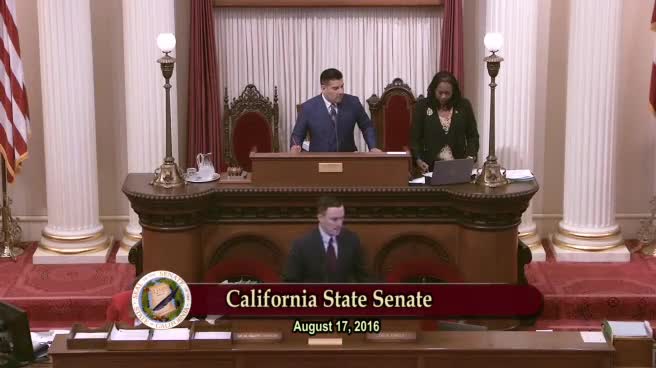 3MIN
Senate Floor
Bill Author

Bill Co-Author(s):