AB 791: Sacramento-San Joaquin Delta: State Water Project and federal Central Valley Project: new conveyance facility.
- Session Year: 2017-2018
- House: Assembly
- Latest Version Date: 2017-03-21
Existing law, the Sacramento-San Joaquin Delta Reform Act of 2009, prohibits construction of a new Delta conveyance facility from being initiated until the persons or entities that contract to receive water from the State Water Project and the federal Central Valley Project or a joint powers authority representing those entities have made arrangements or entered into contracts to pay for certain costs required for the construction, operation, and maintenance of the facility and full mitigation of property tax or assessments levied for land used in the construction, location, mitigation, or operation of the facility.
This bill would make nonsubstantive changes in these provisions. require, before a water contractor enters into a contract to pay for these costs, that the lead agency provide the breakdown of costs for each water contractor entering into a contract and what benefits each contractor will receive based on the proportion it has financed of the proposed conveyance project.
Existing law, the Sacramento-San Joaquin Delta Reform Act of 2009, prohibits construction of a new Delta conveyance facility from being initiated until the persons or entities that contract to receive water from the State Water Project and the federal Central Valley Project or a joint powers authority representing those entities have made arrangements or entered into contracts to pay for certain costs required for the construction, operation, and maintenance of the facility and full mitigation of property tax or assessments levied for land used in the construction, location, mitigation, or operation of the facility.
This bill would make nonsubstantive changes in these provisions.
(a)Construction of a new Delta conveyance facility shall not be initiated until the persons or entities that contract to receive water from the State Water Project and the federal Central Valley Project or a joint powers authority representing those entities have made arrangements or entered into contracts to pay for both of the following:
(a)(1)The costs of the environmental review, planning, design, construction, and mitigation, including mitigation required pursuant to Division 13 (commencing with Section 21000) of the Public Resources Code, required for the construction, operation, and maintenance of any new Delta water conveyance facility.
(b)(2)Full mitigation of property tax or assessments levied by local governments or special districts for land used in the construction, location, mitigation, or operation of new Delta conveyance facilities.
(b)Before a water contractor enters into a contract to pay for the costs described in subdivision (a), the lead agency shall provide both of the following:
(1)The breakdown of costs for each water contractor entering into a contract.
(2)What benefits each contractor will receive based on the proportion the contractor has financed of the new Delta conveyance facility.
Construction of a new Delta conveyance facility shall not be initiated until the persons or entities that contract to receive water from the State Water Project and the federal Central Valley Project or a joint powers authority representing those entities have made arrangements or entered into contracts to pay for both of the following:
(a)The costs of the environmental review, planning, design, construction, and mitigation, including mitigation required pursuant to Division 13 (commencing with Section 21000 21000) of the Public Resources Code), Code, required for the construction, operation, and maintenance of any new Delta water conveyance facility.
(b)Full mitigation of property tax or assessments levied by local governments or special districts for land used in the construction, location, mitigation, or operation of new Delta conveyance facilities.
|
Date
|
Status
|
|---|---|
| Feb 1, 2018 | From committee: Filed with the Chief Clerk pursuant to Joint Rule 56. |
| Jan 31, 2018 | Died pursuant to Art. IV, Sec. 10(c) of the Constitution. |
| May 26, 2017 | In committee: Held under submission. |
| May 10, 2017 | In committee: Set, first hearing. Referred to APPR. suspense file. |
| Apr 26, 2017 | From committee: Do pass and re-refer to Com. on APPR. (Ayes 8. Noes 7.) (April 25). Re-referred to Com. on APPR. |
| Mar 30, 2017 | In committee: Set, first hearing. Hearing canceled at the request of author. |
| Mar 22, 2017 | Re-referred to Com. on W.,P., & W. |
| Mar 21, 2017 | From committee chair, with author's amendments: Amend, and re-refer to Com. on W.,P., & W. Read second time and amended. |
| Mar 20, 2017 | Referred to Com. on W.,P., & W. |
| Feb 16, 2017 | From printer. May be heard in committee March 18. |
| Feb 15, 2017 | Read first time. To print. |
|
Date
|
Description
|
Location
|
Votes
|
|
|---|---|---|---|---|
| Apr 25, 2017 | Do pass and be re-referred to the Committee on [Appropriations] | Assembly Standing Committee on Water, Parks, and Wildlife |
Passed |
This list shows positions taken on this bill by organizations on the date displayed, which is linked to the original source.
Positions by individuals are not included.
Date of Hearing: May 10, 2017
ASSEMBLY COMMITTEE ON APPROPRIATIONS
Lorena Gonzalez Fletcher, Chair
ABPCA Bill Id:AB 791
Author:(Frazier) – As Amended Ver:March 21, 2017
Policy Committee: | Water, Parks and Wildlife | Vote: | 8 - 7 |
|
| ||
|
|
Urgency: No State Mandated Local Program: No Reimbursable: No
SUMMARY:
This bill requires the lead agency to provide the following information on the proposed Delta water conveyance project prior to water contractors entering into specified agreements including:
- The breakdown of costs for each water contractor (federal and state), entering into the contracts.
- The benefits each contractor will receive based on the proportion they have financed of the proposed conveyance project.
FISCAL EFFECT:
Assuming the Department of Water Resources (DWR) is the lead agency, significant one-time costs to determine the breakdown of costs for each of DWR's 29 water contractors, likely $200,000 per contractor on average, for a total of $5.8 million plus potential construction delays. The "benefits received" is largely a local determination.
COMMENTS:
- Purpose. According to the author, this bill will provide important protections for taxpayers and ratepayers throughout California by ensuring that essential information regarding the financing of any proposed new water conveyance project (such as WaterFix) is available for review by water agencies throughout the state before they enter into contracts to pay for the proposed project.
- Background. The Sacramento-San Joaquin Delta is formed by the confluence of the Sacramento and San Joaquin rivers and covers about 1,150 square miles in Sacramento, San Joaquin, Contra Costa, Solano, and Yolo counties. The Delta comprises about 70 islands that have been created from what was historically tidal marshland through the construction of over 1,100 miles of levees. About three-fourths of the water flowing into the Delta comes from the Sacramento River. In addition, the Suisun Marsh, the San Francisco Bay, and the Pacific Ocean affect the Delta through the tides and the flow of saltwater.
The SWP is a water storage and delivery system of reservoirs, aqueducts, power plants and pumping plants that store and distribute water to urban and agricultural water suppliers in Northern, Central, and Southern California, parts of the Bay Area and Central Coast. Of the contracted water supply, 70% goes to urban users and 30% to agricultural users. The projects make deliveries to two-thirds of California's population.
The CVP is a federal water project operated by the U.S. Bureau of Reclamation. The CVP includes 22 reservoirs with a combined storage of 11 million acre-feet, of which 7 million acre-feet is delivered in an average year. In comparison, the SWP’s 20 major reservoirs can hold 5.8 million acre-feet, with annual deliveries averaging up to 3 million acre-feet. CVP water irrigates more than 3 million acres of farmland and provides drinking water to nearly 2 million consumers. SWP deliveries are 70% urban and 30% agriculture, meeting the needs of 20 million Californians and more than 600,000 irrigated acres, respectively. The CVP has long-term contracts with more than 250 contractors in 29 out of 58 counties; while 29 agencies have 50-year contracts with the SWP.
The SWP and CVP store water in dams upstream of the Delta and use rivers to transport it to the Delta. The water then moves through the Delta’s waterways to pumps in the southern part of the Delta, where the SWP and the CVP then pump, or export, that water to the Central Valley, Southern California, and parts of the San Francisco Bay Area.
- California Water Fix. The California WaterFix is the state’s plan to upgrade outdated infrastructure in the Sacramento-San Joaquin Delta to secure California’s water
supplies and improve the Delta’s ecosystem. Over the last ten years, the project has made significant progress, with 2016 marking completion of the environmental review documents. The proposal also prepares for possible threats to the water system such as climate change and seismic activity. The estimated $15.5 to $17 billion project would tunnel two pipes 40 feet in diameter for 35 miles under the fragile ecosystem that serves as the hub of the state’s water-delivery network.
Analysis Prepared by: Jennifer Galehouse / APPR. / (916) 319-2081
Date of Hearing: April 25, 2017
ASSEMBLY COMMITTEE ON WATER, PARKS, AND WILDLIFE
Eduardo Garcia, Chair
ABPCA Bill Id:AB 791 (
Author:Frazier) – As Amended Ver:March 21, 2017
SUBJECT: Sacramento-San Joaquin Delta: State Water Project and federal Central Valley Project: new conveyance facility
SUMMARY: Requires the provision of financial information on the Delta conveyance facility. Specifically, this bill:
Requires the lead agency to provide the following information on the proposed Delta water conveyance project prior to water contractors entering into specified agreements including:
- The breakdown of costs for each water contractor (federal and state), entering into the contracts.
- The benefits each contractor will receive based on the proportion they have financed of the proposed conveyance project.
EXISTING LAW:
- Authorizes the DWR to operate and maintain the State Water Project (SWP) that provides water supplies for urban and some agricultural uses in the state. Funds from the sale of general obligation and revenue bonds have provided about 78 percent of the financing for construction of the SWP, repayment of which is made by the SWP beneficiaries. The contractors repay water supply related costs of the SWP that include about 94 percent of the annual costs for operation and maintenance of the SWP facilities.
- Authorizes the issuance of bonds and loans to finance expenditures of the SWP, and authorizes the DWR to enter into contracts and establish prices, rates, and charges to produce the revenues needed to pay for the costs of operation and maintenance of the SWP.
- Authorizes the Central Valley Project (CVP), a federal water project operated by the U.S. Bureau of Reclamation that provides water primarily for agricultural purposes but also supplies water for some urban uses in the state.
- Requires the DWR, in fixing and establishing prices, rates, and charges for water and power, to include as a reimbursable cost of any state water project an amount sufficient to repay all costs incurred for the preservation of fish and wildlife and determined to be allocable to the costs of the project constructed for the development of that water and power. Costs incurred for enhancement of fish and wildlife or for the development of public recreation are not included as reimbursable costs.
- Authorizes the DWR to use revenue bonds or other funds available for the purposes of the SWP to finance, in whole or in part, water conservation programs and facilities that reduce demands by the sponsoring contractor for project water from the system and increase the supply of project water available in the Delta for distribution.
- Requires that construction of a new Delta water conveyance facility not be initiated until those persons or entities (contractors) to receive water from the State Water Project or federal Central Valley Project, or a joint powers authority representing those entities do the following: (1) make arrangements or enter into contracts to pay for the public and private costs of the development, operation and maintenance of the facility; and, (2) make arrangements to pay for the full mitigation of property tax assessments for land used by the facility.
- Requires, at least 60 days prior to the final approval of the renewal or extension of a long-term water supply contract between the DWR and a State Water Project contractor, the department to present at an informational hearing before the Legislature, the details of the terms and conditions of the contract and how they serve as a template for the remaining long-term water supply contracts. This information is required to be submitted to the Joint Legislative Budget Committee and all relevant fiscal and policy committees. The department is required to submit a copy of one long-term contract to the Joint Legislative Budget Committee no less than 30 days prior to the scheduled hearing.
FISCAL EFFECT: Unknown
COMMENTS:
Author’s Statement: This bill would provide important protections for taxpayers and ratepayers throughout California by ensuring that essential information regarding the financing of any proposed new water conveyance project (such as WaterFix) is available for review by water agencies throughout the state before they enter into contracts to pay for the proposed project.
Background: The Sacramento-San Joaquin Delta. The Delta is formed by the confluence of the Sacramento and San Joaquin rivers and covers about 1,150 square miles in Sacramento, San Joaquin, Contra Costa, Solano, and Yolo counties. The Delta comprises about 70 islands that have been created from what was historically tidal marshland through the construction of over 1,100 miles of levees. About three-fourths of the water flowing into the Delta comes from the Sacramento River. In addition, the Suisun Marsh, the San Francisco Bay, and the Pacific Ocean affect the Delta through the tides and the flow of saltwater.
Although the Delta is geographically located in one part of the state, it affects the rest of the state in four important ways. The Delta is (1) a biologically diverse ecosystem, (2) essential to the state’s water system, (3) a place with economic and cultural value to the state, and (4) an important infrastructure corridor. The Delta is the largest estuary on the west coast and contains a variety of habitat types for over 700 species of fish and wildlife. In addition, many of the state’s native fish species migrate through the Delta. As a result, the Delta is important for maintaining biodiversity in California and the United States and essential to state’s water system. Water supply in California does not naturally occur where demand is highest. Much of the state’s precipitation occurs in the northern and eastern parts of the state, while much of the demand occurs in the south and on the coast because of the locations of population centers and agricultural lands. As a result, two large water projects—the State Water Project (SWP) and the federal Central Valley Project (CVP)— were built to store and transport water throughout the state. These projects store water in dams upstream of the Delta and use rivers to transport it to the Delta. The water then moves through the Delta’s waterways to pumps in the southern part of the Delta, where the SWP and the CVP then pump, or “export,” that water to the Central Valley, Southern California, and parts of the San Francisco Bay Area.
The State Water Project (SWP) and Central Valley Project (CVP). California's two largest water projects are the SWP and the CVP. The SWP is a water storage and delivery system of reservoirs, aqueducts, power plants and pumping plants that store and distribute water to urban and agricultural water suppliers in Northern, Central, and Southern California, parts of the Bay Area and Central Coast. Of the contracted water supply, 70 percent goes to urban users and 30 percent to agricultural users. The projects make deliveries to two-thirds of California's population.
The CVP is a federal water project operated by the U.S. Bureau of Reclamation. The CVP includes 22 reservoirs with a combined storage of 11 million acre-feet, of which 7 million acre-feet is delivered in an average year. In comparison, the SWP’s 20 major reservoirs can hold 5.8 million acre-feet, with annual deliveries averaging up to 3 million acre-feet. CVP water irrigates more than 3 million acres of farmland and provides drinking water to nearly 2 million consumers. SWP deliveries are 70 percent urban and 30 percent agriculture, meeting the needs of 20 million Californians and more than 600,000 irrigated acres, respectively. The CVP has long-term contracts with more than 250 contractors in 29 out of 58 counties; while 29 agencies have 50-year contracts with the SWP.
The Burns-Porter Act Ratified in 1960. The original design of the State Water Project included the development of a conveyance facility through the Delta. Specifically, the Burns-Porter Act, a $1.75 billion bond issued for development of a major north-south transfer of water including multiple reservoirs and conveyance systems, was ratified in 1960. In 1982, Proposition 9 was overwhelmingly defeated in a statewide vote. Proposition 9 was a referendum on legislation designed to specifically deny the development of water infrastructure including the Peripheral Canal (a peripheral Delta water conveyance facility).
Davis-Dolwig Act of 1961. AB 261 (Davis), Chapter 867, Statutes of 1961—the Davis-Dolwig Act—states the broad intent of the Legislature that SWP facilities be constructed “in a manner consistent with the full utilization of their potential for the enhancement of fish and wildlife and to meet recreational needs.” The DWR is charged with implementing the act as part of planning for construction of SWP facilities. The Davis-Dolwig Act does not provide criteria specifying what kinds of recreation facilities or fish and wildlife enhancements are to be developed, nor does it require legislative review or approval of such facilities or enhancements that the DWR chooses to develop in the course of implementing the law.
The Davis-Dolwig Act states that the cost of fish and wildlife enhancements and recreation is a non–reimbursable cost to SWP contractors. That is, under the act, the DWR is not to include costs of fish and wildlife enhancements and recreation in charges levied on the SWP contractors. The act states the intent of the Legislature that such costs be paid for by an annual appropriation from the General Fund. The act, however, did not actually appropriate any General Fund monies to pay for Davis–Dolwig costs. Since one Legislature cannot bind another Legislature to a future action, and the State Constitution prohibits the Legislature from creating certain debts or liabilities without voter approval, we are advised that the legislative intent language of Davis–Dolwig does not create a legal obligation for the General Fund to cover the costs of these fish and wildlife enhancements or recreation. It is up to the Legislature, at its complete discretion, whether to provide funding in accordance with the act.
Proposition 9. In the intervening years between the defeat of Proposition 9 and today, Delta water conveyance and water quality has been the topic of much discussion, legislation and regulation. The comprehensive discussion has included water quality, water rights, environmental considerations and land use decisions. Many have concluded that the current method of conveying water through the Delta is not sustainable in the long run, for a variety of reasons. Others argue that the delta, as it exists today, should be maintained in perpetuity.
Comments: The focus of AB 791 is not to approve or disapprove a Delta conveyance facility. Rather, this legislation builds upon previous requests of the Legislature to provide the public, including those contracting for water flowing through the Delta, with financial information about the project. As a state public facility, the water conveyance structure may impact financially over two-thirds of the state, through water rates, land use impacts, or otherwise. This bill seeks to inform the public and the Legislature about the cost of the project. An argument can be made that this information should be made public in any case and on the norm.
Financing of State Water Project facilities is a complicated matter. For the most part, water contractors are required to pay for the cost of developing, maintaining and operating the system. However there are exceptions to this when costs relate to public benefits (such as recreation, restoration of habitat not related to mitigation, and others). Because of the size of the delta conveyance facility, it is not possible to easily estimate what the public and private costs of the project will be. The complications of Davis-Dolwig, ongoing Delta restoration, economic impact analyses, among others, must be factored into the overall cost of the project. Many of these costs will not be known until final permits have been obtained for the project.
Previous Legislative Actions. On August 9, 2016, the Joint Legislative Audit Committee voted to direct the State Auditor to delve into how the Administration has spent an estimated quarter-billion dollars on planning related to WaterFix and how the state plans to finance its multi-billion-dollar cost.
Supporting Arguments. Supporters argue that requiring DWR to explain to water districts wh want to invest ratepayer funds into the Delta tunnels project what their costs and benefits will be, before committing to the project, is a common sense measure that provides ratepayer protection.
Opposing Arguments. Those in opposition argue that the bill would impose new and unnecessary requirements on the lead agency (presumably DWR) for three reasons: (1) current law requires financing contracts to be in place prior to new Delta conveyance infrastructure construction; (2) public water agencies have an incentive already to determine benefits and costs of the project prior to finalizing construction agreements; and, (3) it is beyond DWR’s expertise to forecast financial risk for project beneficiaries.
REGISTERED SUPPORT / OPPOSITION:
Support
Center for Food Safety, The
Clean Water Action
Delta Counties Coalition
Foothill Conservancy
Sierra Club California
Wholly H2O
Opposition
Alameda County Water District
Alameda County Zone 7 Water Agency
Antelope Valley East Kern Water Agency
BizFed
Building Industry Association of Southern California Inc.
Burbank Water and Power
California Building Industry Association
California Business Properties Association
California Chamber of Commerce
Calleguas Municipal Water District
Central Basin Municipal Water District
Central Coast Water Authority
Chambers of Commerce Alliance
City of Corona Department of Water and Power, The
Coachella Valley Water District
Crestline-Lake Arrowhead Water Agency
Cucamonga Valley Water District
Desert Water Agency
Eastern Municipal Water District
El Monte/South El Monte Chamber of Commerce
Elsinore Valley Municipal Water District
Foothill Municipal Water District
Inland Empire Utilities Agency
Irvine Ranch Water District
Kern County Water Agency
Las Virgenes Municipal Water District
Long Beach Area Chamber of Commerce
Long Beach Water Department
Los Angeles Area Chamber of Commerce
Mesa Water District
Metropolitan Water District of Southern California
Mojave Water Agency
Municipal Water District of Orange County
Oxnard Chamber of Commerce
Palmdale Water District
Pomona Chamber of Commerce
Rancho California Water District
San Bernardino Valley Municipal Water District
San Gabriel Valley Municipal Water District
San Gorgonio Pass Water Agency
Santa Margarita Water District
Simi Valley Chamber of Commerce
South Bay Association of Chambers of Commerce
Southern California Water Committee
Three Valleys Municipal Water District
United Chambers of Commerce
Valley Industry & Commerce Association
Walnut Valley Water District
West Basin Municipal Water District
Western Growers Association
Western Municipal Water District
Westlands Water District
Yorba Linda Water District
Analysis Prepared by: Catherine Freeman / W., P., & W. /
Discussed in Hearing
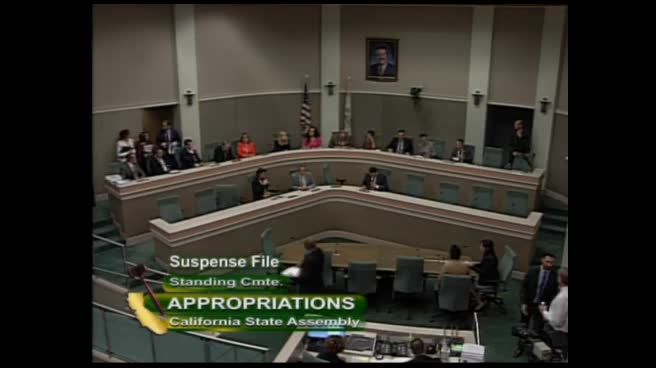 1H
Assembly Standing Committee on Appropriations
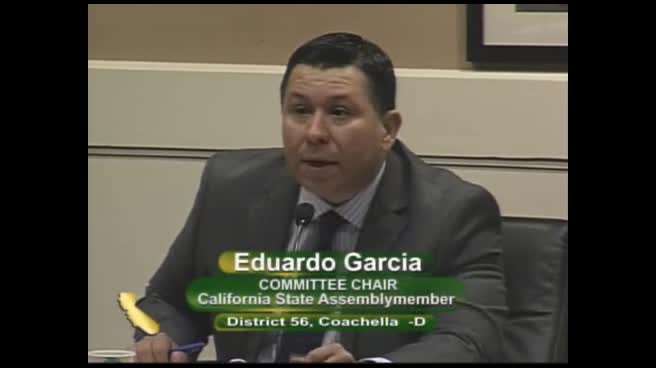 15MIN
Assembly Standing Committee on Water, Parks, and Wildlife
Bill Author
Bill Co-Author(s):