AB 796: Public social services: SSI/SSP.
- Session Year: 2017-2018
- House: Assembly
- Latest Version Date: 2017-03-28
Existing law provides for the State Supplementary Program for the Aged, Blind and Disabled (SSP), which requires the State Department of Social Services to contract with the United States Secretary of Health and Human Services to make payments to SSP recipients to supplement Supplemental Security Income (SSI) payments made available pursuant to the federal Social Security Act.
Under existing law, benefit payments under SSP are calculated by establishing the maximum level of nonexempt income and federal SSI and state SSP benefits for each category of eligible recipient. The state SSP payment is the amount required, when added to the nonexempt income and SSI benefits available to the recipient, to provide the maximum benefit payment. Existing law prohibits, for each calendar year, commencing with the 2011 calendar year, any cost-of-living adjustment from being made to the maximum benefit payment unless otherwise specified by statute, except for the pass along of any cost-of-living increase in the federal SSI benefits. Existing law continuously appropriates funds for the implementation of SSP.
This bill would reinstate the cost-of-living adjustment beginning January 1 of the 2018 calendar year. The bill would also require a maximum aid payment provided to an individual or a married couple that does not equal or exceed 96% of the 2017 federal poverty level based on family size commencing January 1, 2019,, level, or 100% of the 2018 federal poverty level based on family size, level, as specified, to be increased to an amount that equals 96% or 100% of the federal poverty level, respectively.
By reinstating the cost-of-living adjustment and by increasing the amount of benefits paid under the SSP, this bill would make an appropriation.
Existing law provides for the State Supplementary Program for the Aged, Blind and Disabled (SSP), which requires the State Department of Social Services to contract with the United States Secretary of Health and Human Services to make payments to SSP recipients to supplement Supplemental Security Income (SSI) payments made available pursuant to the federal Social Security Act.
Under existing law, benefit payments under SSP are calculated by establishing the maximum level of nonexempt income and federal SSI and state SSP benefits for each category of eligible recipient. The state SSP payment is the amount required, when added to the nonexempt income and SSI benefits available to the recipient, to provide the maximum benefit payment. Existing law prohibits, for each calendar year, commencing with the 2011 calendar year, any cost-of-living adjustment from being made to the maximum benefit payment unless otherwise specified by statute, except for the pass along of any cost-of-living increase in the federal SSI benefits. Existing law continuously appropriates funds for the implementation of SSP.
This bill would reinstate the cost-of-living adjustment beginning January 1 of the 2018 calendar year. The bill would also require a maximum aid payment that does not equal or exceed 96% of the 2017 federal poverty level based on family size commencing January 1, 2019,, or 100% of the 2018 federal poverty level based on family size, to be increased to an amount that equals 96% or 100% of the federal poverty level, respectively.
By reinstating the cost-of-living adjustment and by increasing the amount of benefits paid under the SSP, this bill would make an appropriation.
(a)Commencing January 1, 2018, any maximum aid payment provided to an individual pursuant to Section 12200 and adjusted pursuant to Section 12201 that does not equal or exceed 96 percent of the 2017 federal poverty level based on family size for a household of one shall be increased to an amount that equals 96 percent of the 2017 federal poverty level based on family size. for a household of one.
(b)Commencing January 1, 2018, any maximum aid payment provided to a married couple pursuant to Section 12200 and adjusted pursuant to Section 12201 that does not equal or exceed 96 percent of the 2017 federal poverty level for a household of two shall be increased to an amount that equals 96 percent of the 2017 federal poverty level for a household of two.
(b)(c)Commencing January 1, 2019, any maximum aid payment provided to an individual pursuant to Section 12200 and adjusted pursuant to Section 12201 that does not equal or exceed 100 percent of the 2018 federal poverty level based on family size for a household of one shall be increased to an amount that equals 100 percent of the 2018 federal poverty level based on family size. for a household of one.
(d)Commencing January 1, 2019, any maximum aid payment provided to a married couple pursuant to Section 12200 and adjusted pursuant to Section 12201 that does not equal or exceed 100 percent of the 2018 federal poverty level for a household of two shall be increased to an amount that equals 100 percent of the 2018 federal poverty level for a household of two.
(c)(e)This section is not intended to result in the reduction of any payment provided to an individual that exceeds 96 percent of the 2017 federal poverty level based on family size for a household of one during the 2018 calendar year, or that exceeds 100 percent of the 2018 federal poverty level based on family size for a household of one during the 2019 calendar year. year and each subsequent calendar year.
(f)This section is not intended to result in the reduction of any payment provided to a married couple that exceeds 96 percent of the 2017 federal poverty level for a household of two during the 2018 calendar year, or that exceeds 100 percent of the 2018 federal poverty level for a household of two during the 2019 calendar year and each subsequent calendar year.
SEC. 2.Section 12201 of the Welfare and Institutions Code is amended to read:12201.(a)Except as provided in subdivision (d), the payment schedules set forth in Section 12200 shall be adjusted annually to reflect any increases or decreases in the cost of living. Except as provided in subdivision (e) or (f), these adjustments shall become effective January 1 of each year. The cost-of-living adjustment shall be based on the changes in the California Necessities Index, which as used in this section shall be the weighted average of changes for food, clothing, fuel, utilities, rent, and transportation for low-income consumers. The computation of annual adjustments in the California Necessities Index shall be made in accordance with the following steps:
(1)The base period expenditure amounts for each expenditure category within the California Necessities Index used to compute the annual grant adjustment are:
Food | $3,027 |
Clothing (apparel and upkeep) | 406 |
Fuel and other utilities | 529 |
Rent, residential | 4,883 |
Transportation | 1,757 |
Total | $10,602 |
(2)Based on the appropriate components of the Consumer Price Index for All Urban Consumers, as published by the United States Department of Labor, Bureau of Labor Statistics, the percentage change shall be determined for the 12-month period that ends 12 months prior to the January in which the cost-of-living adjustment will take effect, for each expenditure category specified in paragraph (1) within the following geographical areas: Los Angeles-Long Beach-Anaheim, San Francisco-Oakland, San Diego, and, to the extent statistically valid information is available from the Bureau of Labor Statistics, additional geographical areas within the state that include not less than 80 percent of recipients of aid under this chapter.
(3)Calculate a weighted percentage change for each of the expenditure categories specified in paragraph (1) using the applicable weighting factors for each area used by the Department of Industrial Relations to calculate the California Consumer Price Index (CCPI).
(4)Calculate a category adjustment factor for each expenditure category in paragraph (1) by (1) adding 100 to the applicable weighted percentage change as determined in paragraph (2) and (2) dividing the sum by 100.
(5)Determine the expenditure amounts for the current year by multiplying each expenditure amount determined for the prior year by the applicable category adjustment factor determined in paragraph (4).
(6)Determine the overall adjustment factor by dividing (1) the sum of the expenditure amounts as determined in paragraph (4) for the current year by (2) the sum of the expenditure amounts as determined in paragraph (4) for the prior year.
(b)The overall adjustment factor determined by the preceding computational steps shall be multiplied by the payment schedules established pursuant to Section 12200 as are in effect during the month of December preceding the calendar year in which the adjustments are to occur, and the product rounded to the nearest dollar. The resultant amounts shall constitute the new schedules for the categories given under subdivisions (a), (b), (c), (d), (e), (f), and (g) of Section 12200, and shall be filed with the Secretary of State. The amount as set forth in subdivision (h) of Section 12200 shall be adjusted annually pursuant to this section in the event that the secretary agrees to administer payment under that subdivision. The payment schedule for subdivision (i) of Section 12200 shall be computed as specified, based on the new payment schedules for subdivisions (a), (b), (c), and (d) of Section 12200.
(c)The department shall adjust any amounts of aid under this chapter to ensure that the minimum level required by the Social Security Act in order to maintain eligibility for funds under Title XIX of that act is met.
(d)(1)No adjustment shall be made under this section for the 1991, 1992, 1993, 1994, 1995, 1996, 1997, 1998, 2004, 2006, 2007, 2008, 2009, and 2010 calendar years to reflect any change in the cost of living. Elimination of the cost-of-living adjustment pursuant to this paragraph shall satisfy the requirements of Section 12201.05, and no further reduction shall be made pursuant to that section.
(2)Any cost-of-living adjustment granted under this section for any calendar year shall not include adjustments for any calendar year in which the cost-of-living adjustment was suspended pursuant to paragraph (1).
(e)For the 2003 calendar year, the adjustment required by this section shall become effective June 1, 2003.
(f)For the 2005 calendar year, the adjustment required by this section shall become effective April 1, 2005.
(a)Commencing January 1, 2018, any maximum aid payment provided pursuant to Section 12200 and adjusted pursuant to Section 12201 that does not equal or exceed 96 percent of the 2017 federal poverty level based on family size shall be increased to an amount that equals 96 percent of the 2017 federal poverty level based on family size.
(b)Commencing January 1, 2019, any maximum aid payment that does not equal or exceed 100 percent of the 2018 federal poverty level based on family size shall be increased to an amount that equals 100 percent of the 2018 federal poverty level based on family size.
(c)This section is not intended to result in the reduction of any payment that exceeds 96 percent of the 2017 federal poverty level based on family size during the 2018 calendar year, or that exceeds 100 percent of the 2018 federal poverty level based on family size during the 2019 calendar year.
SEC. 2.Section 12201 of the Welfare and Institutions Code is amended to read:12201.(a)Except as provided in subdivision (d), the payment schedules set forth in Section 12200 shall be adjusted annually to reflect any increases or decreases in the cost of living. Except as provided in subdivision (e), (f), or (g), (e) or (f), these adjustments shall become effective January 1 of each year. The cost-of-living adjustment shall be based on the changes in the California Necessities Index, which as used in this section shall be the weighted average of changes for food, clothing, fuel, utilities, rent, and transportation for low-income consumers. The computation of annual adjustments in the California Necessities Index shall be made in accordance with the following steps:
(1)The base period expenditure amounts for each expenditure category within the California Necessities Index used to compute the annual grant adjustment are:
Food | $3,027 |
Clothing (apparel and upkeep) | 406 |
Fuel and other utilities | 529 |
Rent, residential | 4,883 |
Transportation | 1,757 |
Total | $10,602 |
(2)Based on the appropriate components of the Consumer Price Index for All Urban Consumers, as published by the United States Department of Labor, Bureau of Labor Statistics, the percentage change shall be determined for the 12-month period which that ends 12 months prior to the January in which the cost-of-living adjustment will take effect, for each expenditure category specified in paragraph (1) within the following geographical areas: Los Angeles-Long Beach-Anaheim, San Francisco-Oakland, San Diego, and, to the extent statistically valid information is available from the Bureau of Labor Statistics, additional geographical areas within the state which that include not less than 80 percent of recipients of aid under this chapter.
(3)Calculate a weighted percentage change for each of the expenditure categories specified in paragraph (1) using the applicable weighting factors for each area used by the Department of Industrial Relations to calculate the California Consumer Price Index (CCPI).
(4)Calculate a category adjustment factor for each expenditure category in paragraph (1) by (1) adding 100 to the applicable weighted percentage change as determined in paragraph (2) and (2) dividing the sum by 100.
(5)Determine the expenditure amounts for the current year by multiplying each expenditure amount determined for the prior year by the applicable category adjustment factor determined in paragraph (4).
(6)Determine the overall adjustment factor by dividing (1) the sum of the expenditure amounts as determined in paragraph (4) for the current year by (2) the sum of the expenditure amounts as determined in paragraph (4) for the prior year.
(b)The overall adjustment factor determined by the preceding computational steps shall be multiplied by the payment schedules established pursuant to Section 12200 as are in effect during the month of December preceding the calendar year in which the adjustments are to occur, and the product rounded to the nearest dollar. The resultant amounts shall constitute the new schedules for the categories given under subdivisions (a), (b), (c), (d), (e), (f), and (g) of Section 12200, and shall be filed with the Secretary of State. The amount as set forth in subdivision (h) of Section 12200 shall be adjusted annually pursuant to this section in the event that the secretary agrees to administer payment under that subdivision. The payment schedule for subdivision (i) of Section 12200 shall be computed as specified, based on the new payment schedules for subdivisions (a), (b), (c), and (d) of Section 12200.
(c)The department shall adjust any amounts of aid under this chapter to ensure that the minimum level required by the Social Security Act in order to maintain eligibility for funds under Title XIX of that act is met.
(d)(1)No adjustment shall be made under this section for the 1991, 1992, 1993, 1994, 1995, 1996, 1997, 1998, 2004, 2006, 2007, 2008, 2009, and 2010 calendar years to reflect any change in the cost of living. Elimination of the cost-of-living adjustment pursuant to this paragraph shall satisfy the requirements of Section 12201.05, and no further reduction shall be made pursuant to that section.
(2)Any cost-of-living adjustment granted under this section for any calendar year shall not include adjustments for any calendar year in which the cost-of-living adjustment was suspended pursuant to paragraph (1).
(e)For the 2003 calendar year, the adjustment required by this section shall become effective June 1, 2003.
(f)For the 2005 calendar year, the adjustment required by this section shall become effective April 1, 2005.
(g)(1)For the 2011 calendar year and each calendar year thereafter, no adjustment shall be made under this section unless otherwise specified by statute. (2)Notwithstanding paragraph (1), the pass along of federal benefits provided for in Section 12201.05 shall be effective on January 1 of each calendar year.|
Date
|
Status
|
|---|---|
| Feb 1, 2018 | From committee: Filed with the Chief Clerk pursuant to Joint Rule 56. |
| Jan 31, 2018 | Died pursuant to Art. IV, Sec. 10(c) of the Constitution. |
| May 26, 2017 | In committee: Held under submission. |
| Apr 26, 2017 | In committee: Set, first hearing. Referred to APPR. suspense file. |
| Mar 29, 2017 | Re-referred to Com. on APPR. |
| Mar 28, 2017 | Read second time and amended. |
| Mar 27, 2017 | From committee: Amend, and do pass as amended and re-refer to Com. on APPR. (Ayes 7. Noes 0.) (March 21). |
| Mar 2, 2017 | Referred to Com. on HUM. S. |
| Feb 16, 2017 | From printer. May be heard in committee March 18. |
| Feb 15, 2017 | Read first time. To print. |
|
Date
|
Description
|
Location
|
Votes
|
|
|---|---|---|---|---|
| Mar 21, 2017 | Do pass as amended and be re-referred to the Committee on [Appropriations] | Assembly Standing Committee on Human Services |
Passed |
This list shows positions taken on this bill by organizations on the date displayed, which is linked to the original source.
Positions by individuals are not included.
Date of Hearing: April 26, 2017
ASSEMBLY COMMITTEE ON APPROPRIATIONS
Lorena Gonzalez Fletcher, Chair
ABPCA Bill Id:AB 796
Author:(Kalra) – As Amended Ver:March 28, 2017
Policy Committee: | Human Services | Vote: | 7 - 0 |
|
|
Urgency: No State Mandated Local Program: No Reimbursable: No
SUMMARY:
This bill reinstates the annual cost-of-living adjustment (COLA) to the State Supplementary Program for the Aged, Blind, and Disabled (SSP), and requires the maximum aid payment for Supplemental Security Income (SSI)/SSP be indexed to specified percentages of the federal poverty level (FPL). Specifically, this bill:
- Requires annual COLAs, as measured by the California Necessities Index, to be applied to SSI/SSP payment schedules, as of January 1, 2018.
- Requires, beginning January 1, 2018, maximum SSI/SSP aid payments to an individual that do not equal or exceed 96% of the 2017 FPL based on a household of one to be increased to an amount equal to 96% of the 2017 FPL for a household of one.
- Requires, beginning January 1, 2019, maximum SSI/SSP aid payments to an individual that do not equal 100% of the 2018 FPL based on a household of one to be increased to an amount equal to 100% of the 2018 FPL for a household of one.
- Requires, beginning January 1, 2019, maximum SSI/SSP aid payments to a married couple that do not equal 100% of the 2018 FPL based on a household of two to be increased to an amount equal to 100% of the 2018 FPL for a household of two.
- States that the requirements to index the maximum aid payments to 96% or 100% of the FPL are not intended to reduce any payments that already exceed 96% or 100% of the FPL, as specified.
FISCAL EFFECT:
- Estimated costs to the Department of Social Services (DSS) of: 1) $0.4 billion (GF) for FY 2017-18 to increase grants to 96% of the FPL; 2) $1.0 billion (GF) for FY 2018-19, to increase grants to 96% of the FPL for July–Dec 2018 and to 100% of the FPL for Jan–June 2019; and 3) $1.2 billion (GF) per year starting in FY 2019-20 to increase grants to 100% of the FPL.
COMMENTS:
- Purpose. According to the author, “SSI/SSP grant cuts are the last major cuts made during the recession that have not been restored by the Legislature. The cuts have reduced the maximum grant from 100.6% of the poverty level to 89.1%. The vast majority of SSI recipients are unable to work due to their disability or age and must rely entirely on the SSI/SSP grant to make ends meet. But in recent years we are seeing more and more recipients not making ends meet. They are having to choose between medicine and food and utilities and are becoming more reliant on emergency assistance. The state has saved an estimated $10 billion from the cuts to these recipients and it is wrong to continue building our budget surplus on their backs. [This bill] sets out a three step process for restoring the cuts and ensuring that no SSI recipient ever lives below the poverty level again.”
- Background. The 2016 Federal Poverty Guidelines set 100% FPL at $1,005 per month for an individual and $1,353 per month for a couple. In 2013, the US Census Bureau issued a report that indicated that nearly a quarter of California’s residents were living in poverty. The California Elder Economic Security Standard Index (Elder Index) measures the minimum income necessary to cover basic expenses for people 65 years of age or older in each of California’s counties. According to the Elder Index, on average statewide, a single renter living alone in a one-bedroom apartment needs $1,926 per month to pay for basic expenses, which increases to $2,667 for a couple renting that same apartment.
The SSI/SSP program provides monthly cash benefits to qualified low-income seniors and people with disabilities to help them pay for basic living expenses such as food, clothing, and shelter. Qualified SSI recipients are automatically qualified for SSP. SSI is a federal benefit, while the SSP benefit is funded with the state’s General Fund. The estimated SSI/SSP caseload for fiscal year 2016-17 is 1.31 million cases, with approximately 81% individual cases and 19% couples cases.
The current SSI/SSP maximum grant level $895.72 per month ($160.72 SSP) for an individual and $1,510.14 per month ($407.14 SSP) for couples. This places individuals at 89% of FPL and couples at 111.6% of FPL.
The federal Social Security Administration provides an annual COLA to the SSI based on the Consumer Price Index. This federal COLA is passed through to SSI/SSP recipients in California, which allows SSI/SSP grants to remain at the minimum level allowed under federal law, thereby allowing the state to maintain its federal Medicaid funding. The state’s SSP COLA was at its lowest in June 2011 at $156.40 which has not been increased since then, and the SSP COLA was permanently repealed in 2011 through statute.
AB 1603 (Assembly Committee on Budget), Chapter 25, Statutes of 2016, included a one-time 2.76% increase to the SSP beginning January 1, 2017. This gave individuals an increase of $4.32 per month and couples an increase of $10.94 per month.
- Prior Legislation.
AB 1584 (Brown), of the 2015-16 Legislative Session, would have reinstated the cost-of-living adjustment (COLA) for the State SSP. That bill was vetoed by the Governor.
AB 1603 (Assembly Committee on Budget), Chapter 25, Statutes of 2016, included a one-time cost-of-living increase to the SSP beginning January 1, 2017, that was equal to the California Necessities Index (CNI) of 2.76%.
AB 474 (Brown), 2015, would have, beginning with the 2015-16 fiscal year, required the state maximum SSP grant to be annually adjusted such that the maximum SSI/SSP payment would equal 112% of the FPL. That bill was held in the Assembly Budget Committee.
Analysis Prepared by: Jennifer Swenson / APPR. / (916) 319-2081
Date of Hearing: March 21, 2017
ASSEMBLY COMMITTEE ON HUMAN SERVICES
Blanca Rubio, Chair
ABPCA Bill Id:AB 796 (
Author:Kalra/Thurmond) – As Introduced Ver:February 15, 2017
SUBJECT: Public social services: SSI/SSP
SUMMARY: Reinstates the annual cost-of-living adjustment (COLA) to the State Supplementary Program for the Aged, Blind, and Disabled (SSP), and requires the maximum aid payment for Supplemental Security Income (SSI)/SSP be indexed to specified percentages of the federal poverty level.
Specifically, this bill:
- Indexes the SSP to the federal poverty level as follows:
- As of January 1, 2018, any maximum aid payment for SSI/SSP that is less than 96% of the 2017 federal poverty level based on family size must be increased to an amount equal to 96% of the 2017 federal poverty level based on family size;
- As of January 1, 2019, any maximum aid payment for SSI/SSP that is less than 100% of the 2018 federal poverty level based on family size must be increased to an amount equal to 100% of the 2018 federal poverty level based on family size.
- Clarifies that the provisions of this bill that index the maximum aid payment for SSI/SSP to the federal poverty level are not intended to result in the reduction of any payment that exceeds those index thresholds (96% of the 2017 federal poverty level for the 2018 calendar year and 100% of the 2018 federal poverty level commencing January 1, 2019).
- Reinstates, as of January 1, 2018, the annual cost-of-living adjustment (COLA) to the SSP.
- Makes technical amendments.
EXISTING LAW:
- Establishes in federal law the Supplemental Security Income for the Aged, Blind, and Disabled (SSI) Program to provide cash assistance to meet the basic needs of aged and blind individuals and individuals with disabilities. (42 U.S.C. 1381-1383(f))
- Establishes the State Supplementary Program for Aged, Blind and Disabled, which is intended to supplement SSI and provide persons whose need results from age, blindness or disability with assistance and services that help them meet basic needs and maintain or increase independence. (WIC 12000 et seq.)
- Provides that eligibility requirements for SSP match federal SSI criteria, and requires a minimum level of SSP benefits to be provided in order to maintain federal Medicaid funding, as specified. (WIC 12000 et seq.)
- Defines the California Necessities Index (CNI) to be the weighted average of changes for food, clothing, fuel, utilities, rent, and transportation for low-income consumers, and specifies the methods with which the computation of annual adjustments to the CNI shall be made. (WIC 12201)
- Requires annual adjustments, based on the CNI, to SSI/SSP payment schedules to reflect increases or decreases in the cost of living, as specified, but further stipulates that such adjustments shall not be made, unless otherwise required by statute, for the 2011 calendar year and each calendar year thereafter. (WIC 12201)
FISCAL EFFECT: Unknown.
COMMENTS:
SSI/SSP: Needy aged and blind individuals and couples and individuals and couples with disabilities are provided a monthly case benefit via the SSI/SSP program to help them pay for basic living expenses, such as food, clothing and shelter. Individuals are eligible for SSI/SSP if they are 65 years of age or older, blind, or have disabilities (children who are blind or have disabilities can qualify); they must also meet certain federal income and resource requirements. The SSI portion of the benefit is federally-funded and only provided through an approved application to the Social Security Administration (SSA), while the SSP portion is paid for with General Fund dollars, and a qualified SSI recipient is automatically qualified for SSP. The SSI portion of the grant is meant to provide an income floor for qualifying low-income individuals and couples.
A number of factors play into SSI/SSP grant adjustments: whether a recipient is aged, blind or living with disabilities, the individual’s or couple’s living arrangement, a recipient’s marital status, and a recipient’s status as a minor. The current SSI/SSP maximum grant levels for the most commonly used payment standard are $895.72 per month for an individual ($160.72 SSP) and $1,510.14 per month for couples ($407.14 SSP), which places individuals at 89% of poverty and couples at 111.6% of poverty based on federal guidelines. The estimated average monthly SSI/SSP caseload for 2016-17 is 1.3 million cases.
Each year, the SSA applies a COLA to the SSI portion of the grant which is tied to annual increases in the Consumer Price Index (CPI). This federal COLA is passed through to SSI/SSP recipients in California, which allows SSI/SSP grants to remain at the minimum level allowed under federal law for individuals and couples, thereby allowing the state to maintain its federal Medicaid funding. The SSI/SSP program was one of many safety net programs negatively impacted during the Great Recession. California used to apply a COLA to the SSP amount; this was made inoperative as part of the 2009-10 Budget Act.
AB 1603 (Assembly Committee on Budget), Chapter 25, Statutes of 2016, included a one-time cost-of-living increase to the SSP beginning January 1, 2017, that is equal to the California Necessities Index (CNI) of 2.76%. This resulted in the SSI/SSP monthly maximum grant amounts increasing by $4.32 for individuals and $10.94 for couples.
Need for this bill: A Sacramento Bee article from March of last year found that there were twice as many Californians, ages 65 and older, living in poverty as there were a decade prior. The article stated that, “Statewide, the number of impoverished residents age 65 and older increased by 85%, to roughly 520,000, between 1999 and 2014, more than double the rate of population growth among the elderly. Poverty among seniors is not new, but has been exacerbated in recent years by a cyclone of factors, especially in California. Seniors statewide caught at the edge of poverty are mostly single; the large majority are women. They’re often minorities.”
According to the author, “SSI/SSP grant cuts are the last major cuts made during the recession that have not been restored by the Legislature. The cuts have reduced the maximum grant from 100.6% of the poverty level to 89.1%. The vast majority of SSI recipients are unable to work due to their disability or age and must rely entirely on the SSI/SSP grant to make ends meet. But in recent years we are seeing more and more recipients not making ends meet. They are having to choose between medicine and food and utilities and are becoming more reliant on emergency assistance. The state has saved an estimated $10 billion from the cuts to these recipients and it is wrong to continue building our budget surplus on their backs. [This bill] sets out a three step process for restoring the cuts and ensuring that no SSI recipient ever lives below the poverty level again.”
Recommended amendments: In order to make clear that, when indexing the SSI/SSP maximum aid payment to the FPL, the individual payment amount should be compared to the FPL for a household of one and the couple’s payment compared to the FPL for a household of two, and in order to clarify that the indexing to 100% of the FPL is to occur in 2019 and each year thereafter, committee staff recommends the following amendments beginning on line 4 of page 2 of the bill:
3
12200.7. (a) Commencing January 1, 2018, any maximum aid
4
payment provided to an individual pursuant to Section 12200 and adjusted pursuant
5
to Section 12201 that does not equal or exceed 96 percent of the
6
2017 federal poverty level based on family size for a household of one shall be increased
7
to an amount that equals 96 percent of the 2017 federal poverty
8
level based on family size. for a household of one.
(b) Commencing January 1, 2018, any maximum aid payment provided to a married couple pursuant to Section 12200 and adjusted pursuant to Section 12201 that does not equal or exceed 96 percent of the 2017 federal poverty level for a household of two shall be increased to an amount that equals 96 percent of the 2017 federal poverty level for a household of two.
9
(b) (c) Commencing January 1, 2019, any maximum aid payment provided to an individual pursuant to Section 12200 and adjusted pursuant to Section 12201
10
that does not equal or exceed 100 percent of the 2018 federal
11
poverty level based on family size for a household of one shall be increased to an amount
12
that equals 100 percent of the 2018 federal poverty level based on
13
family size. for a household of one.
(d) Commencing January 1, 2019, any maximum aid payment provided to a married couple pursuant to Section 12200 and adjusted pursuant to Section 12201 that does not equal or exceed 100 percent of the 2018 federal poverty level for a household of two shall be increased to an amount that equals 100 percent of the 2018 federal poverty level for a household of two.
14
(c) (e) This section is not intended to result in the reduction of any
15
payment provided to an individual that exceeds 96 percent of the 2017 federal poverty level
16
based on family size for a household of one during the 2018 calendar year, or that exceeds
17
100 percent of the 2018 federal poverty level based on family size for a household of one
18
during the 2019 calendar year. commencing January 1, 2019.
(f) This section is not intended to result in the reduction of any payment provided to a married couple that exceeds 96 percent of the 2017 federal poverty level for a household of two during the 2018 calendar year, or that exceeds 100 percent of the 2018 poverty level for a household of two commencing January 1, 2019.
PRIOR LEGISLATION:
AB 1584 (Brown), 2016, would have reinstated the cost-of-living adjustment (COLA) for the State Supplementary Program for the Aged, Blind and Disabled (SSP). It was vetoed by the Governor.
AB 1603 (Assembly Committee on Budget), Chapter 25, Statutes of 2016, included a one-time cost-of-living increase to the SSP beginning January 1, 2017, that is equal to the California Necessities Index (CNI) of 2.76%.
AB 474 (Brown), 2015, would have, beginning with the 2015-16 fiscal year, required the state maximum SSP grant to be annually adjusted such that the maximum SSI/SSP combined payment would have equaled 112% of the federal poverty level. It died in the Assembly Budget Committee pursuant to Article IV, Sec. 10(c) of the Constitution.
REGISTERED SUPPORT / OPPOSITION:
Support
Alameda County Community Food Bank
American Civil Liberties Union of CA
American Federation of State, County and Municipal Employees
California Catholic Conference
California Food Policy Advocates
California Partnership
County Welfare Directors Association of CA
Food Bank of Contra Costa & Solano County
Hunger Action Los Angeles
Jewish Public Affairs Committee of CA (JPAC)
Justice in Aging
Los Angeles Community Action Network
National Association of Social Workers, CA Chapter
Personal Assistance Services Council
San Francisco Food Security Task Force
San Francisco Marin Food Bank
San Francisco Senior and Disability Action
Santa Clara County Board of Supervisors
St. Mary’s Center
Women Organizing Resources Knowledge & Services
Yolo Food Bank
Opposition
None on file.
Analysis Prepared by: Daphne Hunt / HUM. S. / (916) 319-2089
Discussed in Hearing
 1H
Assembly Standing Committee on Appropriations
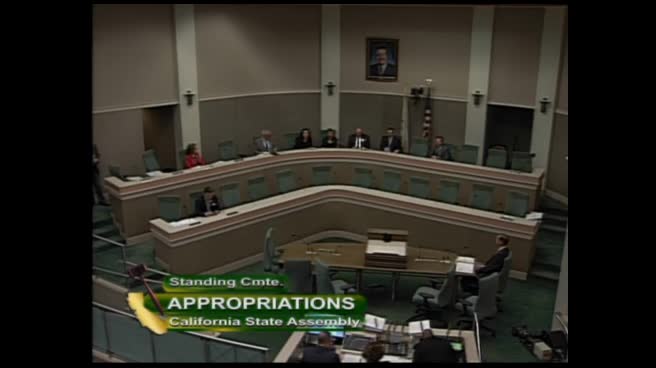 7MIN
Assembly Standing Committee on Appropriations
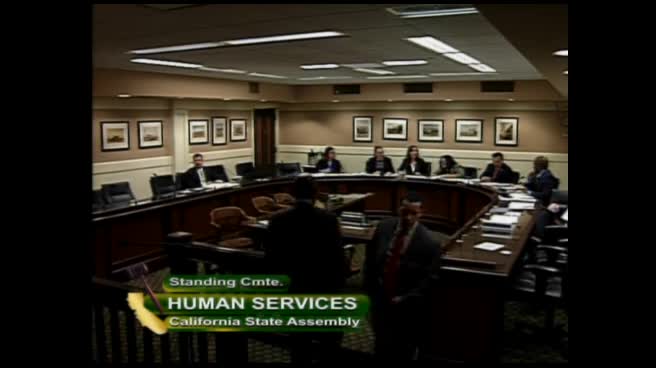 12MIN
Assembly Standing Committee on Human Services


Bill Co-Author(s):