AB 809: Pupil instruction: Cyber Secure Youth Act.
- Session Year: 2017-2018
- House: Assembly
- Latest Version Date: 2018-06-18
(1)Existing law requires the adopted course of study for grades 1 to 6, inclusive, and grades 7 to 12, inclusive, to include courses in specified areas of study. Existing law declares the policy of the State of California that all students enrolled in the states public elementary and secondary schools, regardless of race, creed, color, national origin, gender, gender identity, gender expression, physical disability, geographic location, or socioeconomic background, shall have equitable access to educational programs designed to strengthen technological skills, including, but not limited to, computer education programs.
This bill, the Cyber Secure Youth Act, would require instruction in cyber hygiene education, as specified, to be provided by school districts and county offices of education to pupils at least once during kindergarten and grades 1 to 6, inclusive, and at least once during grades 7 to 12, inclusive. Because this bill would impose additional requirements on school districts and county offices of education, the bill would impose a state-mandated local program.
(2)The California Constitution requires the state to reimburse local agencies and school districts for certain costs mandated by the state. Statutory provisions establish procedures for making that reimbursement.
This bill would provide that, if the Commission on State Mandates determines that the bill contains costs mandated by the state, reimbursement for those costs shall be made pursuant to the statutory provisions noted above.
(1)Existing law sets forth the missions and functions of the public institutions of higher education in the state, which include the California Community Colleges, the California State University, and the University of California. Existing law requires the California State University and each community college district, and requests the University of California, to grant, with respect to each campus in their respective segments that administers a priority enrollment system, priority registration for enrollment to a member or former member of the Armed Forces of the United States who is a resident of California and who has received an honorable discharge, a general discharge, or an other than honorable discharge, and to any member or former member of the State Military Reserve who has not received a specified discharge, for any academic term attended at one of these institutions within 15 years of leaving state or federal active duty. Existing law further requires this priority registration for enrollment to apply to enrollment for all degree and certificate programs offered by the institution after the military or veteran status of the student has been verified by the institution he or she attends.Existing law also requires the California State University and each community college district, and requests the University of California, to grant, with respect to each campus in their respective segments that administers a priority enrollment system, priority registration for enrollment to a foster youth or former foster youth, as defined, or, until January 1, 2020, to a homeless youth, as defined. Existing law also requires each community college district that administers a priority enrollment system to grant priority registration for enrollment to students in the California Community College Extended Opportunity Programs and Services and to disabled students, as defined.This bill would require that the priority registration for enrollment for members and former members of the Armed Forces of the United States and for members and former members of the State Military Reserve that is required by existing law, as described above, be applied notwithstanding any other law. To the extent that this provision would create new duties for community college districts, it would constitute a state-mandated local program.(2)Existing law authorizes a community college registered nursing program to use any diagnostic assessment tool that is commonly used in registered nursing programs and approved by the Chancellor of the California Community Colleges. Existing law also authorizes a community college registered nursing program to use additional multicriteria screening measures, administered in accordance with specified requirements, if it determines that the number of applicants to that registered nursing program exceeds its capacity. Existing law also authorizes such a community college registered nursing program to admit students in accordance with a random selection process or a blended combination of random selection and a multicriteria screening process, as specified.This bill would provide that these provisions not be construed to interfere with, conflict with, or in any way diminish the priority registration for enrollment granted, pursuant to the provision of the existing law described in (1) above, to an eligible member or former member of the Armed Forces of the United States or to an eligible member or former member of the State Military Reserve.(3)The California Constitution requires the state to reimburse local agencies and school districts for certain costs mandated by the state. Statutory provisions establish procedures for making that reimbursement.This bill would provide that, if the Commission on State Mandates determines that the bill contains costs mandated by the state, reimbursement for those costs shall be made pursuant to the statutory provisions noted above.(1)Existing law sets forth the missions and functions of the public institutions of higher education in the state, which include the California Community Colleges, the California State University, and the University of California. Existing law requires the California State University and each community college district, and requests the University of California, to grant, with respect to each campus in their respective segments that administers a priority enrollment system, priority registration for enrollment to a member or former member of the Armed Forces of the United States who is a resident of California and who has received an honorable discharge, a general discharge, or an other than honorable discharge, and to any member or former member of the State Military Reserve who has not received a specified discharge, for any academic term attended at one of these institutions within 15 years of leaving state or federal active duty. Existing law further requires this priority registration for enrollment to apply to enrollment for all degree and certificate programs offered by the institution after the military or veteran status of the student has been verified by the institution he or she attends.
Existing law also requires the California State University and each community college district, and requests the University of California, to grant, with respect to each campus in their respective segments that administers a priority enrollment system, priority registration for enrollment to a foster youth or former foster youth, as defined, or, until January 1, 2020, to a homeless youth, as defined. Existing law also requires each community college district that administers a priority enrollment system to grant priority registration for enrollment to students in the California Community College Extended Opportunity Programs and Services and to disabled students, as defined.
This bill would require that the priority registration for enrollment for members and former members of the Armed Forces of the United States and for members and former members of the State Military Reserve that is required by existing law, as described above, be applied notwithstanding any other law. To the extent that this provision would create new duties for community college districts, it would constitute a state-mandated local program.
(2)Existing law authorizes a community college registered nursing program to use any diagnostic assessment tool that is commonly used in registered nursing programs and approved by the Chancellor of the California Community Colleges. Existing law also authorizes a community college registered nursing program to use additional multicriteria screening measures, administered in accordance with specified requirements, if it determines that the number of applicants to that registered nursing program exceeds its capacity. Existing law also authorizes such a community college registered nursing program to admit students in accordance with a random selection process or a blended combination of random selection and a multicriteria screening process, as specified.
This bill would provide that these provisions not be construed to interfere with, conflict with, or in any way diminish the priority registration for enrollment granted, pursuant to the provision of the existing law described in (1) above, to an eligible member or former member of the Armed Forces of the United States or to an eligible member or former member of the State Military Reserve.
(3)The California Constitution requires the state to reimburse local agencies and school districts for certain costs mandated by the state. Statutory provisions establish procedures for making that reimbursement.
This bill would provide that, if the Commission on State Mandates determines that the bill contains costs mandated by the state, reimbursement for those costs shall be made pursuant to the statutory provisions noted above.
Existing law provides various programs to support the education and employment of veterans.This bill would state the intent of the Legislature to enact legislation to develop workforce training for veterans.Existing law provides various programs to support the education and employment of veterans.
This bill would state the intent of the Legislature to enact legislation to develop workforce training for veterans.
This article shall be known, and may be cited, as the Cyber Secure Youth Act.
51291.It is the intent of the Legislature to do all of the following:
(a)Provide pupils with the knowledge and skills necessary to protect themselves while utilizing technology to communicate, access the Internet, and conduct online activities.
(b)Provide pupils with the knowledge and skills they need to develop healthy attitudes concerning the use of social media, the storing and use of personal information online, and online communication.
(c)Promoting understanding of the security issues surrounding the use of technology.
(d)Ensuring pupils receive integrated, comprehensive, accurate, and unbiased instruction to promote the use of healthy cyber hygiene habits.
51292.(a)Instruction in cyber hygiene education, as described in this section, shall be provided by school districts and county offices of education to pupils at least once during kindergarten and grades 1 to 6, inclusive, and at least once during grades 7 to 12, inclusive.
(b)Cyber hygiene education shall include, based on the age of the pupil, all of the following:
(1)Account maintenance.
(2)Secure Internet Web site recognition.
(3)Source evaluation.
(4)Content maintenance.
(5)Safe online behavior.
(6)Computer literacy.
(7)Community responsibility.
SEC. 2.If the Commission on State Mandates determines that this act contains costs mandated by the state, reimbursement to local agencies and school districts for those costs shall be made pursuant to Part 7 (commencing with Section 17500) of Division 4 of Title 2 of the Government Code.
SECTION 1.Section 66025.8 of the Education Code is amended to read:66025.8.(a)Notwithstanding any other law:(1)The California State University and each community college district shall, and the University of California is requested to, with respect to each campus in their respective jurisdictions that administers a priority enrollment system, grant priority in that system for registration for enrollment to any member or former member of the Armed Forces of the United States, and who is a resident of California, who has received an honorable discharge, a general discharge, or an other than honorable discharge, and to any member or former member of the State Military Reserve, for any academic term attended at one of these institutions for four academic years after he or she has left state or federal active duty, which he or she shall use within 15 years of leaving state or federal active duty.(2)A former member of the Armed Forces of the United States or the State Military Reserve who received a dishonorable discharge or a bad conduct discharge is not eligible for priority registration for enrollment pursuant to this section.(3)The priority registration for enrollment provided pursuant to this section shall apply to enrollment for all degree and certificate programs offered by the institution after the military or veteran status of the student has been verified by the institution he or she attends.(4)Students who receive priority registration for enrollment pursuant to this section shall comply with the requirements of subdivision (a) of Section 78212.(b)(1)For the purposes of this section, Armed Forces of the United States means the Air Force, Army, Coast Guard, Marine Corps, National Guard, Naval Militia, Navy, and the reserve components of each of those forces, including the California National Guard.(2)As used in this section, member or former member of the Armed Forces of the United States includes, but is not necessarily limited to, any student who is called to active military duty compelling that student to take an academic leave of absence.SEC. 2.Section 78261.3 of the Education Code is amended to read:78261.3.Notwithstanding any other law:(a)Any community college district, irrespective of whether it participates in the program established by this article, may use any diagnostic assessment tool that is commonly used in registered nursing programs and is approved by the chancellor.(b)If, after using an approved diagnostic assessment tool, a community college registered nursing program determines that the number of applicants to that program exceeds its capacity, the program is authorized to use additional multicriteria screening measures. This subdivision does not prohibit or prevent a community college registered nursing program from using an approved diagnostic assessment tool before or during a multicriteria screening process.(c)A community college district may not do either of the following:(1)Exclude an applicant to a registered nursing program on the basis that the applicant is not a resident of that district or has not completed prerequisite courses in that district.(2)Implement policies, procedures, and systems, including, but not limited to, priority registration systems, that have the effect of excluding an applicant or student who is not a resident of that district from a registered nursing program of that district.(d)This section shall not be construed to interfere with, conflict with, or in any way diminish the priority registration for enrollment granted, pursuant to Section 66025.8, to an eligible member or former member of the Armed Forces of the United States or to an eligible member or former member of the State Military Reserve.SEC. 3.Section 78261.5 of the Education Code is amended to read:78261.5.(a)A community college registered nursing program that determines that the number of applicants to that program exceeds its capacity may admit students in accordance with any of the following procedures:(1)Administration of a multicriteria screening process, as authorized by Section 78261.3, in a manner that is consistent with the standards set forth in subdivision (b).(2)A random selection process.(3)A blended combination of random selection and a multicriteria screening process.(b)A community college registered nursing program that elects, on or after January 1, 2008, to use a multicriteria screening process to evaluate applicants pursuant to this article shall apply those measures in accordance with all of the following:(1)The criteria applied in a multicriteria screening process under this article shall include, but shall not necessarily be limited to, all of the following:(A)Academic degrees or diplomas, or relevant certificates, held by an applicant.(B)Grade-point average in relevant coursework.(C)Any relevant work or volunteer experience.(D)Life experiences or special circumstances of an applicant, including, but not necessarily limited to, the following experiences or circumstances:(i)Disabilities.(ii)Low family income.(iii)First generation of family to attend college.(iv)Need to work.(v)Disadvantaged social or educational environment.(vi)Difficult personal and family situations or circumstances.(vii)Refugee or veteran status.(E)Proficiency or advanced level coursework in languages other than English. Credit for languages other than English shall be received for languages that are identified by the chancellor as high-frequency languages, as based on census data. These languages may include, but are not necessarily limited to, any of the following:(i)American Sign Language.(ii)Arabic.(iii)Chinese, including its various dialects.(iv)Farsi.(v)Russian.(vi)Spanish.(vii)Tagalog.(viii)The various languages of the Indian subcontinent and Southeast Asia.(2)Additional criteria, such as a personal interview, a personal statement, letter of recommendation, or the number of repetitions of prerequisite classes, or other criteria, as approved by the chancellor, may be used, but are not required.(3)A community college registered nursing program using a multicriteria screening process under this article may use an approved diagnostic assessment tool, in accordance with Section 78261.3, before, during, or after the multicriteria screening process.(4)As used in this section:(A)Disabilities has the same meaning as used in Section 2626 of the Unemployment Insurance Code.(B)Disadvantaged social or educational environment includes, but is not necessarily limited to, the status of a student who has participated in Extended Opportunity Programs and Services (EOPS).(C)Grade-point average refers to the same fixed set of required prerequisite courses that all applicants to the nursing program administering the multicriteria screening process are required to complete.(D)Low family income shall be measured by a community college registered nursing program in terms of a students eligibility for, or receipt of, financial aid under a program that may include, but is not necessarily limited to, a fee waiver from the board of governors under Section 76300, the Cal Grant Program under Chapter 1.7 (commencing with Section 69430) of Part 42 of Division 5, the federal Pell Grant program, or CalWORKs.(E)Need to work means that the student is working at least part time while completing academic work that is a prerequisite for admission to the nursing program.(5)A community college registered nursing program that uses a multicriteria screening process pursuant to this article shall report its nursing program admissions policies to the chancellor annually, in writing. The admissions policies reported under this paragraph shall include the weight given to any criteria used by the program, and shall include demographic information relating to both the persons admitted to the program and the persons of that group who successfully completed that program.(c)The chancellor is encouraged to develop, and make available to community college registered nursing programs by July 1, 2008, a model admissions process based on this section.(d)(1)The chancellor shall submit a report on or before March 1, 2015, and on or before each March 1 thereafter, to the Legislature and the Governor that examines and includes, but is not necessarily limited to, both of the following:(A)The participation, retention, and completion rates in community college registered nursing programs of students admitted through a multicriteria screening process, as described in this section, disaggregated by the age, gender, ethnicity, and the language spoken at the home of those students.(B)Information on the annual impact, if any, the Seymour-Campbell Student Success Act had on the matriculation services for students admitted through the multicriteria screening process, as described in this section.(2)The chancellor shall submit the annual report required in paragraph (1) in conjunction with its annual report on associate degree nursing programs required by subdivision (g) of Section 78261.(e)This section shall not be construed to interfere with, conflict with, or in any way diminish the priority registration for enrollment granted, pursuant to Section 66025.8, to an eligible member or former member of the Armed Forces of the United States or to an eligible member or former member of the State Military Reserve.(f)This section shall remain in effect only until January 1, 2020, and as of that date is repealed, unless a later enacted statute, that is enacted before January 1, 2020, deletes or extends that date.SEC. 4.If the Commission on State Mandates determines that this act contains costs mandated by the state, reimbursement to local agencies and school districts for those costs shall be made pursuant to Part 7 (commencing with Section 17500) of Division 4 of Title 2 of the Government Code.(a)The Notwithstanding any other law:
(1)The California State University and each community college district shall, and the University of California is requested to, with respect to each campus in their respective jurisdictions that administers a priority enrollment system, grant priority in that system for registration for enrollment to any member or former member of the Armed Forces of the United States, and who is a resident of California, who has received an honorable discharge, a general discharge, or an other than honorable discharge, and to any member or former member of the State Military Reserve, for any academic term attended at one of these institutions for four academic years after he or she has left state or federal active duty, which he or she shall use within 15 years of leaving state or federal active duty.
(b)(2)A former member of the Armed Forces of the United States or the State Military Reserve who received a dishonorable discharge or a bad conduct discharge is not eligible for priority registration for enrollment pursuant to this section.
(c)(3)The priority registration for enrollment provided pursuant to this section shall apply to enrollment for all degree and certificate programs offered by the institution after the military or veteran status of the student has been verified by the institution he or she attends.
(d)(4)Students who receive priority registration for enrollment pursuant to this section shall comply with the requirements of subdivision (a) of Section 78212.
(e)(b)(1)For the purposes of this section, Armed Forces of the United States means the Air Force, Army, Coast Guard, Marine Corps, National Guard, Naval Militia, Navy, and the reserve components of each of those forces, including the California National Guard.
(2)As used in this section, member or former member of the Armed Forces of the United States includes, but is not necessarily limited to, any student who is called to active military duty compelling that student to take an academic leave of absence.
SEC. 2.Section 78261.3 of the Education Code is amended to read:78261.3.Notwithstanding any other provision of law:
(a)Any community college district, irrespective of whether it participates in the program established by this article, may use any diagnostic assessment tool that is commonly used in registered nursing programs and is approved by the chancellor.
(b)If, after using an approved diagnostic assessment tool, a community college registered nursing program determines that the number of applicants to that program exceeds its capacity, the program is authorized to use additional multicriteria screening measures. This subdivision does not prohibit or prevent a community college registered nursing program from using an approved diagnostic assessment tool before or during a multicriteria screening process.
(c)A community college district may not do either of the following:
(1)Exclude an applicant to a registered nursing program on the basis that the applicant is not a resident of that district or has not completed prerequisite courses in that district.
(2)Implement policies, procedures, and systems, including, but not limited to, priority registration systems, that have the effect of excluding an applicant or student who is not a resident of that district from a registered nursing program of that district.
(d)This section shall not be construed to interfere with, conflict with, or in any way diminish the priority registration for enrollment granted, pursuant to Section 66025.8, to an eligible member or former member of the Armed Forces of the United States or to an eligible member or former member of the State Military Reserve.
SEC. 3.Section 78261.5 of the Education Code is amended to read:78261.5.(a)A community college registered nursing program that determines that the number of applicants to that program exceeds its capacity may admit students in accordance with any of the following procedures:
(1)Administration of a multicriteria screening process, as authorized by Section 78261.3, in a manner that is consistent with the standards set forth in subdivision (b).
(2)A random selection process.
(3)A blended combination of random selection and a multicriteria screening process.
(b)A community college registered nursing program that elects, on or after January 1, 2008, to use a multicriteria screening process to evaluate applicants pursuant to this article shall apply those measures in accordance with all of the following:
(1)The criteria applied in a multicriteria screening process under this article shall include, but shall not necessarily be limited to, all of the following:
(A)Academic degrees or diplomas, or relevant certificates, held by an applicant.
(B)Grade-point average in relevant coursework.
(C)Any relevant work or volunteer experience.
(D)Life experiences or special circumstances of an applicant, including, but not necessarily limited to, the following experiences or circumstances:
(i)Disabilities.
(ii)Low family income.
(iii)First generation of family to attend college.
(iv)Need to work.
(v)Disadvantaged social or educational environment.
(vi)Difficult personal and family situations or circumstances.
(vii)Refugee or veteran status.
(E)Proficiency or advanced level coursework in languages other than English. Credit for languages other than English shall be received for languages that are identified by the chancellor as high-frequency languages, as based on census data. These languages may include, but are not necessarily limited to, any of the following:
(i)American Sign Language.
(ii)Arabic.
(iii)Chinese, including its various dialects.
(iv)Farsi.
(v)Russian.
(vi)Spanish.
(vii)Tagalog.
(viii)The various languages of the Indian subcontinent and Southeast Asia.
(2)Additional criteria, such as a personal interview, a personal statement, letter of recommendation, or the number of repetitions of prerequisite classes, or other criteria, as approved by the chancellor, may be used, but are not required.
(3)A community college registered nursing program using a multicriteria screening process under this article may use an approved diagnostic assessment tool, in accordance with Section 78261.3, before, during, or after the multicriteria screening process.
(4)As used in this section:
(A)Disabilities has the same meaning as used in Section 2626 of the Unemployment Insurance Code.
(B)Disadvantaged social or educational environment includes, but is not necessarily limited to, the status of a student who has participated in Extended Opportunity Programs and Services (EOPS).
(C)Grade-point average refers to the same fixed set of required prerequisite courses that all applicants to the nursing program administering the multicriteria screening process are required to complete.
(D)Low family income shall be measured by a community college registered nursing program in terms of a students eligibility for, or receipt of, financial aid under a program that may include, but is not necessarily limited to, a fee waiver from the board of governors under Section 76300, the Cal Grant Program under Chapter 1.7 (commencing with Section 69430) of Part 42 of Division 5, the federal Pell Grant program, or CalWORKs.
(E)Need to work means that the student is working at least part time while completing academic work that is a prerequisite for admission to the nursing program.
(5)A community college registered nursing program that uses a multicriteria screening process pursuant to this article shall report its nursing program admissions policies to the chancellor annually, in writing. The admissions policies reported under this paragraph shall include the weight given to any criteria used by the program, and shall include demographic information relating to both the persons admitted to the program and the persons of that group who successfully completed that program.
(c)The chancellor is encouraged to develop, and make available to community college registered nursing programs by July 1, 2008, a model admissions process based on this section.
(d)(1)The chancellor shall submit a report on or before March 1, 2015, and on or before each March 1 thereafter, to the Legislature and the Governor that examines and includes, but is not necessarily limited to, both of the following:
(A)The participation, retention, and completion rates in community college registered nursing programs of students admitted through a multicriteria screening process, as described in this section, disaggregated by the age, gender, ethnicity, and the language spoken at the home of those students.
(B)Information on the annual impact, if any, the Seymour-Campbell Student Success Act had on the matriculation services for students admitted through the multicriteria screening process, as described in this section.
(2)The chancellor shall submit the annual report required in paragraph (1) in conjunction with its annual report on associate degree nursing programs required by subdivision (h) (g) of Section 78261.
(e)This section shall not be construed to interfere with, conflict with, or in any way diminish the priority registration for enrollment granted, pursuant to Section 66025.8, to an eligible member or former member of the Armed Forces of the United States or to an eligible member or former member of the State Military Reserve.
(e)(f)This section shall remain in effect only until January 1, 2020, and as of that date is repealed, unless a later enacted statute, that is enacted before January 1, 2020, deletes or extends that date.
SEC. 4.If the Commission on State Mandates determines that this act contains costs mandated by the state, reimbursement to local agencies and school districts for those costs shall be made pursuant to Part 7 (commencing with Section 17500) of Division 4 of Title 2 of the Government Code.
SECTION 1.It is the intent of the Legislature to enact legislation to develop workforce training for veterans.It is the intent of the Legislature to enact legislation to develop workforce training for veterans.
|
Date
|
Status
|
|---|---|
| Jun 27, 2018 | In committee: Set, first hearing. Hearing canceled at the request of author. |
| Jun 18, 2018 | From committee chair, with author's amendments: Amend, and re-refer to committee. Read second time, amended, and re-referred to Com. on ED. |
| Apr 19, 2018 | Referred to Coms. on ED. and V.A. |
| Jan 29, 2018 | In Senate. Read first time. To Com. on RLS. for assignment. |
| Jan 29, 2018 | Read third time. Passed. Ordered to the Senate. |
| Jan 22, 2018 | Read second time. Ordered to Consent Calendar. |
| Jan 18, 2018 | From committee: Do pass. To Consent Calendar. (Ayes 17. Noes 0.) (January 18). |
| Jan 9, 2018 | From committee: Do pass and re-refer to Com. on APPR. (Ayes 13. Noes 0.) (January 9). Re-referred to Com. on APPR. |
| Apr 25, 2017 | In committee: Set, first hearing. Hearing canceled at the request of author. |
| Mar 27, 2017 | Re-referred to Com. on HIGHER ED. |
| Mar 23, 2017 | From committee chair, with author's amendments: Amend, and re-refer to Com. on HIGHER ED. Read second time and amended. |
| Mar 23, 2017 | Referred to Com. on HIGHER ED. |
| Feb 16, 2017 | From printer. May be heard in committee March 18. |
| Feb 15, 2017 | Read first time. To print. |
|
Date
|
Description
|
Location
|
Votes
|
|
|---|---|---|---|---|
| Jan 29, 2018 | AB 809 QUIRK-SILVA Consent Calendar Second Day Regular Session | Assembly Floor |
Passed |
|
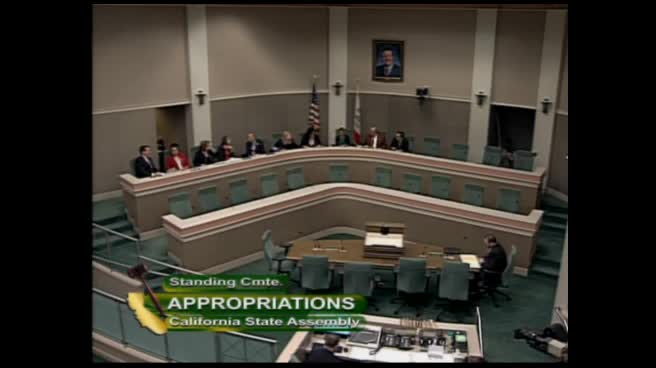
| Jan 18, 2018 | Do pass. To Consent Calendar. | Assembly Standing Committee on Appropriations |
Passed |
|
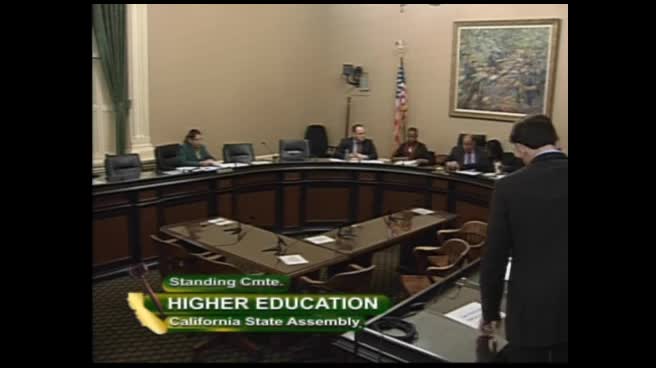
| Jan 9, 2018 | Do pass and be re-referred to the Committee on [Appropriations] | Assembly Standing Committee on Higher Education |
Passed |
This list shows positions taken on this bill by organizations on the date displayed, which is linked to the original source.
Positions by individuals are not included.
SENATE COMMITTEE ON EDUCATION
Senator Benjamin Allen, Chair
2017 - 2018 Regular
Bill No: Hearing Date: June 27, 2018
Author: | |||
Version: |
| ||
Urgency: | Fiscal: | ||
Consultant: | |||
Subject: .
NOTE: This bill has been amended to replace its contents and this is the first time the bill is being heard in its current form. This bill has been referred to the Committees on Education and Veteran Affairs. A "do pass" motion should include referral to the Committee Veteran Affairs.
SUMMARY
This bill requires school district and county offices of education to provide instruction in cyber hygiene education to students at least once during kindergarten and grades 1 to 6 and at least once during grades 7 to 12.
BACKGROUND
Existing law:
1) Requires the Superintendent of Public Instruction (SPI) to convene a computer science strategic implementation advisory panel by March 1, 2018, to develop recommendations for a computer science strategic implementation plan.
(Education Code § 53310)
2) Requires the computer science strategic implementation advisory panel hold public meetings, post the location and time of the meetings, and post agendas online, and requires members of the advisory panel shall possess expertise in computer science. (EC § 53310)
3) Requires the computer science strategic implementation advisory panel to submit recommendations for a computer science strategic implementation plan to the SPI, the State Board of Education, and the Legislature by January 15, 2019.
(EC § 53311)
4) Requires the recommendations for a computer science strategic implementation plan to include recommendations on at least all of the following:
a) Broadening the pool of teachers to teach computer science. These recommendations may provide, among other things, for the following:
i) Providing training and professional development for education in computer science.
ii) Creating a teacher certification pathway in computer science.
iii) Expanding scholarship eligibility and loan forgiveness programs for computer science teachers in low-income and underserved school districts and rural and urban school districts.
b) Defining computer science education principles that meet the needs of pupils in kindergarten and grades 1 to 12, inclusive.
c) Ensuring that all pupils have access to quality computer science courses. These recommendations may provide, among other things, for the following:
i) Scaling up computer science education coursework so that all high schools teach at least one computer science course.
ii) Providing access to computer science in both college and career pathways.
iii) Ensuring school districts have adequate broadband connectivity and infrastructure and access to hardware and software. This may include, but is not limited to, the development of grant programs that prioritize high-need school districts.
iv) Removing local policy and regulatory barriers that local educational agencies face when implementing computer science education.
v) Increasing the participation of pupils traditionally underrepresented in computer science education. (EC § 53312)
5) Requires the Superintendent of Public Instruction (SPI) to receive the recommendations submitted by the computer science strategic implementation advisory panel, and requires the SPI to develop, and the State Board of Education (SBE) to consider adopting, a computer science strategic implementation plan by July 15, 2019. (EC § 53313)
6) Requires the SPI submit the computer science strategic implementation plan, if adopted by the SBE, to the Legislature by July 15, 2019. (EC § 53313)
7) Requires the Instructional Quality Commission (IQC), by July 31, 2019, to consider developing and recommending to the SBE computer science content standards for kindergarten and grades 1 to 12, inclusive, pursuant to recommendations developed by a group of computer science experts.
(EC § 60605.4)
8) Requires the IQC to consider existing computer science content standards, which include, but are not limited to, the national K–12 computer science content standards developed by the Computer Science Teachers Association, and consider content standards that include, but are not necessarily limited to, standards for teaching coding. (EC § 60605.4)
ANALYSIS
This bill requires school district and county offices of education to provide instruction in cyber hygiene education to students at least once during kindergarten and grades 1 to 6 and at least once during grades 7 to 12. Specifically, this bill:
1) Specifies that it shall be known, and may be cited, as the Cyber Secure Youth Act.
2) States that it is the intent of the Legislature to do all of the following:
a) Provide pupils with the knowledge and skills necessary to protect themselves while utilizing technology to communicate, access the Internet, and conduct online activities.
b) Provide pupils with the knowledge and skills they need to develop healthy attitudes concerning the use of social media, the storing and use of personal information online, and online communication.
c) Promoting understanding of the security issues surrounding the use of technology.
d) Ensuring pupils receive integrated, comprehensive, accurate, and unbiased instruction to promote the use of healthy cyber hygiene habits.
3) Require instruction in cyber hygiene education to be provided by school districts and county offices of education to students at least once during kindergarten and grades 1 to 6, inclusive, and at least once during grades 7 to 12, inclusive.
4) Requires cyber hygiene education to include, based on the age of the pupil, all of the following:
a) Account maintenance.
b) Secure Internet Web site recognition.
c) Source evaluation.
d) Content maintenance.
e) Safe online behavior.
f) Computer literacy.
g) Community responsibility.
STAFF COMMENTS
- Need for the bill. According to the author, “the purpose of the Cyber Secure Youth Act is to ensure that just as we teach students to wash their hands and use other practices to avoid sickness, we must teach cyber hygiene practices to protect their identities and livelihood. In addition, students must be prepared to enter a workforce that must maintain cybersecurity in order to protect not only their employers, but the country at large.”
- Disrupts the computer science implementation plan process. As indicated above, the California Department of Education, State Board of Education (SBE), and Legislature have begun the process for developing the new California computer science strategic implementation plan. The 23 members of the computer science strategic implementation advisory panel were appointed or designated by the Governor, the President of SBE, the Senate Committee on Rules, the Speaker of the Assembly, and the Superintendent of Public Instruction (SPI) in January of this year. The members of the computer science strategic implementation advisory panel possess expertise in computer science. Additionally, below is the schedule of signification events for the computer science strategic implementation plan:
Computer science strategic implementation advisory panel convenes to develop recommendations for the strategic implementation plan:
| March 2018–June 2018 |
Computer science strategic implementation advisory panel presents the recommendations for the strategic implementation plan to the SBE | September 2018 |
Instructional Quality Commission (IQC) Education Technology Committee reviews draft Computer Science Strategic Implementation Plan | September 2018 |
IQC and SPI recommend draft Computer Science Strategic Implementation Plan for 30-day public review period | September 2018 |
30-day public review period prior to IQC recommendation to SBE | October–November 2018 |
IQC Education Technology Committee analyzes public review comments for edits to draft Computer Science Strategic Implementation Plan | January 2019 |
IQC and SPI recommend draft Computer Science Strategic Implementation Plan to the SBE | March 2019 |
Statutory Deadline for SSPI to submit Computer Science Strategic Implementation Plan to the Legislature | July 15, 2019 |
This bill mandates specific computer science instruction before completion of the computer science strategic implementation plan, and accordingly is premature. The committee may wish to consider whether it is appropriate to supersede the activities the advisory panel, IQC, SPI, and SBE in this regard before the computer science strategic implementation plan is completed.
- Computer science content standards under development. Additionally, The California Department of Education, Instructional Quality Commission (IQC), and State Board of Education (SBE) have already commenced the process for developing new California computer science content standards. On July 12, 2017, the SBE appointed 21 members to the Computer Science Standards Advisory Committee (CSSAC). The CSSAC is assisting in the development of the California Computer Science Standards. On July 12, 2017, the SBE also approved guidelines to direct the work of the CSSAC, which include, but are not limited to, the following:
a) Include an introduction that clearly states the basic overarching purpose and goals of computer science instruction and states a clear definition of computer science and clarifies the distinction between computer science and digital literacy and citizenship.
b) Provide substantive guidance while also allowing for flexibility and innovation across local educational agencies to determine from a variety of approaches how best to incorporate computer science into their curricula based on local capacity and context.
c) Be written in language accessible to teachers, curriculum leaders, and students.
d) Be designed for the grade spans K–2, 3–5, 6–8, 9–12 and include options for full courses in middle and high school.
e) Reflect an awareness of industry trends and the dynamic nature of the computer science industry.
f) Describe the concepts and practices that a student should know and be able to do in computer science in kindergarten through grade twelve (K–12).
g) Be vertically aligned and coherent across grade spans.
h) Be computing language, hardware, and platform independent.
i) Be consistent with, supportive of, and showing integration with all other SBE-adopted curriculum standards.
j) For secondary grades, be compatible with any University of California approved computer science course and the California Standards for Career Technical Education Career Pathways;
j) Address the legal and safe use of all of their personal devices without harming themselves or others;
k) Encourage student critical thinking and discussion about the broader ethical and social implications and questions related to the growing capabilities of technology, such as spreading of fake news through social media, the loss of jobs to automation, and others.
l) Include a glossary of computer science terms used throughout the standards.
The Instructional Quality Commission (IQC) approved the Draft Computer Science Standards for public review and comment on March 23, 2018. This public review and comment period just ended on June 20, 2018. Education Technology SMC will now public review results and staff recommendations for edits to draft Computer Science Standards, and the IQC and Superintendent of Public Instruction (SPI) will recommend draft Computer Science Standards to the State Board of Education (SBE) in July of this year, for action by the SBE in September at a public meeting. This bill imposes specific instruction without regard to the computer science standards under development, and is thus premature. The committee may wish to consider whether it is appropriate to supersede the activities of the Computer Science Standards Advisory Committee, IQC, SPI, and SBE in this regard before the computer science standards are adopted.
- Previous legislation. AB 2329 (Bonilla, Chapter 693, Statutes of 2016) Requires the SPI to convene a computer science strategic implementation advisory panel to develop recommendations for a computer science strategic implementation plan.
AB 1539 (Hagman, Chapter 876, Statutes of 2014) Requires the Instructional IQC and the SBE to consider developing computer science content standards.
AB 1530 (Chau, 2014) required the SPI to consider identifying, developing or revising model curriculum on computer science for kindergarten - 6th grade. AB 1530 was held in the Senate Appropriations Committee.
AB 2110 (Ting, 2014) required the IQC to consider incorporating computer science curriculum content into the mathematics, science, history-social science, and English language arts/English language development frameworks. AB 2110 was held in the Senate Appropriations Committee.
SUPPORT
None received
OPPOSITION
None received
-- END --
Date of Hearing: January 18, 2018
ASSEMBLY COMMITTEE ON APPROPRIATIONS
Lorena Gonzalez Fletcher, Chair
ABPCA Bill Id:AB 809
Author:(Quirk-Silva) – As Amended Ver:March 23, 2017
Policy Committee: | Higher Education | Vote: | 13-0 |
|
| ||
|
|
Urgency: No State Mandated Local Program: Yes Reimbursable: No
SUMMARY:
This bill clarifies public postsecondary priority registration for members and former members of the Armed Forces of the United States and for members and former members of the State Military Reserve to be applied notwithstanding any other law.
FISCAL EFFECT:
Minor and absorbable costs. A member or former member of the Armed Forces of the United States who is a resident of California is already granted priority registration under state law.
COMMENTS:
- Background. Existing law requires the California State University and each community college district, and requests the University of California, to grant, with respect to each campus in their respective segments that administers a priority enrollment system, priority registration for enrollment to a member or former member of the Armed Forces of the United States who is a resident of California and who has received an honorable discharge, a general discharge, or an other than honorable discharge, and to any member or former member of the State Military Reserve who has not received a specified discharge, for any academic term attended at one of these institutions within 15 years of leaving state or federal active duty, for all degree and certificate programs offered by the institution. State law also authorizes a community college registered nursing program to use additional multicriteria screening measures, if it determines that the number of applicants to that registered nursing program exceeds its capacity.
- Purpose. Though veterans and servicemembers are currently granted priority registration in the Education Code, there seems to be confusion on some campuses that use additional multicriteria screening measures. According to the author, there are millions of veterans who previously served in the US Armed Forces that possess unique skills training. By allowing priority registration in nursing programs for veterans and current servicemembers, the author believes that California could capitalize on the prior education, experience, and skills of veteran military personnel and significantly reduce California’s projected nursing shortage.
- Prior Legislation. AB 2133 (Blumenfield), Chapter 400, Statutes of 2012, allows a former member of the Armed Forces of the United States to use his or her four years of priority registration enrollment at the CSU and the CCC within 15 years of leaving active duty.
SB 813 (Committee on Veterans Affairs), Chapter 375, Statutes of 2010, extended priority enrollment for veterans from two to four years.
SB 1309 (Scott), Chapter 837, Statutes of 2006, enacted a wide range of responses to the nursing shortage, including authorizing grants to CCC districts to expand enrollment, provide diagnostic assessments, developing and offering pre-entry coursework to prospective nursing students, and requiring colleges with attrition rates above 15% to use nationally validated assessment tools that determine the likelihood of success in order to qualify for funds.
Analysis Prepared by: Daisy Gonzales / APPR. / (916) 319-2081
Date of Hearing: January 9, 2018
ASSEMBLY COMMITTEE ON HIGHER EDUCATION
Jose Medina, Chair
ABPCA Bill Id:AB 809 (
Author:Quirk-Silva) – As Amended Ver:March 23, 2017
SUBJECT: Veterans: public postsecondary education: veterans’ priority registration for enrollment
SUMMARY: Requires that the priority registration for enrollment for members and former members of the Armed Forces of the United States and for members and former members of the State Military Reserve be applied. Specifically, this bill:
- Requires that the priority registration for enrollment for members and former members of the Armed Forces of the United States and for members and former members of the State Military Reserve currently required by existing law be applied notwithstanding any other law.
- Provides that these provisions not be construed to interfere with, conflict with, or in any way diminish the priority registration for enrollment granted, pursuant to the provision of the existing law described in (1) above, to an eligible member or former member of the Armed Forces of the United States or to an eligible member or former member of the State Military Reserve.
EXISTING LAW:
- Sets forth the missions and functions of the public institutions of higher education in the state, which includes the California Community Colleges (CCC), the California State University (CSU), and the University of California (UC) (Education Code (EC) Section 66000, et seq.).
- Requires the California State University and each community college district, and requests the University of California, to grant, with respect to each campus in their respective segments that administers a priority enrollment system, priority registration for enrollment to a member or former member of the Armed Forces of the United States who is a resident of California and who has received an honorable discharge, a general discharge, or an other than honorable discharge, and to any member or former member of the State Military Reserve who has not received a specified discharge, for any academic term attended at one of these institutions within 15 years of leaving state or federal active duty (EC Section 66025.8.).
- Requires this priority registration for enrollment to apply to enrollment for all degree and certificate programs offered by the institution after the military or veteran status of the student has been verified by the institution he or she attends (EC Section 66025.8.)..
- Requires the California State University and each community college district, and requests the University of California, to grant, with respect to each campus in their respective segments that administers a priority enrollment system, priority registration for enrollment to a foster youth or former foster youth, as defined, or, until January 1, 2020, to a homeless youth, as defined (EC Section 66025.9.).
- Requires each community college district that administers a priority enrollment system to grant priority registration for enrollment to students in the CCC Extended Opportunity Programs and Services (EOPS) and to disabled students, as defined (EC Section 66025.91.).
- Requires each community college district that administers a priority enrollment system to grant priority registration for enrollment to students in the California Work Opportunity and Responsibility to Kids (CalWORKs) or Tribal Temporary Assistance for Needy Families (TANF) recipient (EC Section 66025.91.).
- Authorizes a community college registered nursing program to use any diagnostic assessment tool that is commonly used in registered nursing programs and approved by the Chancellor of the California Community Colleges. (EC Section 78261).
- Authorizes a community college registered nursing program to use additional multicriteria screening measures, administered in accordance with specified requirements, if it determines that the number of applicants to that registered nursing program exceeds its capacity. (EC Section 78261.3)
- Authorizes such a community college registered nursing program to admit students in accordance with a random selection process or a blended combination of random selection and a multicriteria screening process, as specified. (EC Section 78261.5)
FISCAL EFFECT: Unknown.
COMMENTS: Purpose of this bill. According to the author, there are millions of veterans who previously served in the US Armed Forces that possess unique skills training. By allowing priority registration in nursing programs for veterans and current servicemembers, the author believes that California could capitalize on the prior education, experience, and skills of veteran military personnel and significantly reduce California’s projected nursing shortage.
Though veterans and servicemembers are currently granted priority registration in the Education Code, there seems to be confusion on some campuses that use additional multicriteria screening measures. These additional measures were added to state law in order to improve retention rates in CCC nursing programs, and list veteran status as one of many criteria that can be factored into admission.
This bill would clarify that current servicemembers and veterans would receive priority registration enrollment status notwithstanding any other law – including in nursing programs using multicriteria screening measures.
Background. In the early 1990s, a controversy arose over merit-based or competitive admissions to Associate Degree of Nursing (ADN) programs. The Mexican-American Legal Defense and Education Fund (MALDEF) threatened a lawsuit because students of color were being disproportionately denied admission to impacted programs. In the negotiations that ensued, MALDEF agreed not to bring suit, and the CCC Board of Governors (BOG) agreed to develop program admissions criteria that would be validated as relevant to future performance. BOG regulations in the mid-1990s prohibited ADN programs from using evaluative mechanisms - usually grade point average (GPA) - unless the district could validate its practices in a complex research initiative. Lotteries and wait lists were instituted; completion rates fell.
The CCC Chancellor's Office (CCCCO) then began a project (as a district grant) to research a full range of variables, seeking those that would be statistically correlated with nursing program student success in the hopes of finding six colleges for which validation could be achieved. In 2002, the CCCCO announced results, finding that four factors best predict student success in completing nursing programs: Overall college GPA, English GPA, Core Biology GPA (Anatomy, Physiology, Microbiology), and Core Biology course repetitions. (Students with fewer repetitions have a higher probability of success.) CCC districts were then advised in an October 2002 memo that they could begin using these criteria, but in order to do so, local research must first be performed, "If the decision is made to adopt the measures as a prerequisite, and to set cut scores that will result in defined program completion rates, then districts must analyze and monitor the possibility of disproportionate impact on particular groups of students defined in terms of race, ethnicity, gender, age, or disability."
The districts were also warned, "It is appropriate to consider potential risks of implementing this research. The adoption of the prerequisite measures and the implementation of the composite formula could result in rationing access. Unless the implementation of these measures is done carefully according to the guidelines discussed later in this memo, it could conflict with the requirement for open access."
AB 1559 (Berryhill). Assembly Member Berryhill introduced AB 1559 (Chapter 712, Statutes of 2007), 15 years after the controversy. AB 1559 sought to address the fact that some CCC districts had been left with "non-evaluative" mechanisms, that is, a lottery or a waiting list because they simply had not found the resources to comply with the resource-intensive rules promulgated by the CCCCO (as described above).
AB 1559 authorized community colleges to use multicriteria screening measures and a random selection, or process, blending the two, administered in accordance with specified requirements, if it determines that the number of applicants to that registered nursing program exceeds its capacity. Annual reporting is required, and the most recent report released in 2017 noted that “…of the 77 California community colleges that have registered nursing programs, 40 colleges (51 percent of the total offering nursing programs) reported in the survey that they began using the multi-criteria process between 2008 and 2016. The colleges starting to use the multi-criteria process in the recent years have experienced a decrease in attrition rates.”
Nursing shortage? Various studies and reports indicate that the demand for nurses is strong and/or project that the demand for nurses will be greater than supply. The California Employment Development Department (EDD) projected in January 2017 that between 2014 and 2024, California will have 105,000 openings for registered nurses.
The Bureau of Registered Nursing’s Employment Projections 2012-2022, released in December 2013, notes that registered nursing is among the top occupations for job growth and will require an increase of 19 percent by 2022. Between workforce growth and the need for replacements due to retirements and attrition, the Bureau estimates 1.05 million nurses will be needed by 2022.
As noted in a 2017 LAO analysis on the CSU’s Doctor of Nursing Practice program, “…the large number of nursing graduations in the state (which has held reasonably stable at about 11,000 per year) likely is sufficient to ensure an adequate nursing workforce in the state for decades to come. Some hospital officials still report difficulty, however, with recruiting experienced registered nurses (RNs) for certain specialized positions and attracting nurses to work in certain regions of the state (such as the Inland Empire and rural areas).”
Priority enrollment. Priority registration enrollment decisions are made at the campus level at each segment. This process allows specified students access to classes ahead of the general student population. Though efforts have been made by all three segments to address course and program impaction, some campuses are still unable to accommodate all students who enroll in the course. Thus, students who have priority registration enrollment status have a significant advantage over other students, particularly at CCCs.
Current law stipulates that, in addition to veterans and current servicemembers, priority enrollment is granted to: foster youth or former foster youth, homeless youth, CCC EOPS students, to disabled students, to CalWORKs recipients, and to Tribal TANF recipients.
Jobs for Veterans Act. On November 7, 2002, the Jobs for Veterans Act (JVA), Public Law (P.L.) 107-288 was signed into law. One provision of the JVA, codified at 38 U.S.C. 4215, establishes a priority of service requirement for covered persons (i.e., veterans and eligible spouses, including widows and widowers, as defined by this statute) in qualified job training programs.
From 2005-2010, several CCC ADN programs received federal Workforce Investment Act (WIA) funding to provide for the expansion of existing ADN programs by increasing the number of clinical groups taught by the faculty at the community colleges. As stipulated by the JVA, these programs were required to provide a priority service requirement to veterans and their spouses. WIA was reauthorized as the Workforce Innovation and Opportunity Act (WIOA) in 2014, and a priority service requirement the veteran for any federal Department of Labor-funded program.
From 2010-2017, several California Community College consortiums received federal Trade Adjustment Assistance Community College and Career Training (TAACCCT) funding. The following programs would have been required to provide a priority to veterans: Saddleback College, Los Angeles City College, Los Angeles Trade Tech College, Los Angeles Harbor College, Los Angeles Southwest College, and LA Valley College, among others.
Staff comments. The higher education staff analysis of AB 2133 (Blumenfield, 2012), which modified the current definition of priority registration enrollment for veterans and current servicemembers, noted that “…it is staff's understanding that existing law and practice provide priority enrollment for veterans and active duty military regardless of the course or degree program”. Staff notes that the intent of the author and the understanding of staff at the time was that the priority being granted would include nursing programs.
As noted in the “priority enrollment” section above, there are other categories of students that are granted a priority registration enrollment under current law. The author may wish to consider if the provisions of this bill should be expanded to explicitly include other groups of students for whom priority registration enrollment is otherwise clearly granted under current law.
Prior legislation. AB 548 (Salas), Chapter 203, Statutes of 2014, extended the sunset on the CCC districts' ADN programs admissions process until January 1, 2020; and, requires the CCC Chancellor to submit a report annually to the Governor and the Legislature that examines and includes specified information on nursing students admitted through the multicriteria screening process.
AB 2133 (Blumenfield) Chapter 400, Statutes of 2012, allows a former member of the Armed Forces of the United States to use his or her four years of priority registration enrollment at the CSU and the CCC within 15 years of leaving active duty.
AB 1559 (Berryhill), see above for description.
SB 813 (Committee on Veterans Affairs), Chapter 375, Statutes of 2010, extended priority enrollment for veterans from two to four years.
SB 272 (Runner), Chapter 356, Statutes of 2007, as chaptered, established priority registration for two years for members of the military.
SB 1309 (Scott), Chapter 837, Statutes of 2006, enacted a wide range of responses to the nursing shortage, including authorizing grants to CCC districts to expand enrollment, provide diagnostic assessments, developing and offering pre-entry coursework to prospective nursing students, and requiring colleges with attrition rates above 15% to use nationally validated assessment tools that determine the likelihood of success in order to qualify for funds.
AB 2177 (Jackson) of 2004, which required CCC-ADN programs to implement merit-based admissions and incorporated the four validated factors in the CCCCO study, stalled on the Assembly Floor.
REGISTERED SUPPORT / OPPOSITION:
Support
None Received
Opposition
None Received
Analysis Prepared by: Kevin J. Powers / HIGHER ED. / (916) 319-3960
Discussed in Hearing
 21MIN
Assembly Standing Committee on Appropriations
 4MIN
Assembly Standing Committee on Higher Education
Bill Author

Bill Co-Author(s):