AB 81: English learners: identification: notice.
- Session Year: 2017-2018
- House: Assembly
- Latest Version Date: 2017-10-09
Existing law requires each school district to make a determination of the primary language of a pupil when the pupil enrolls in the school district and requires each parent or guardian of a pupil enrolled in a public school to receive notice of an assessment of a pupils English proficiency no later than 30 days after the start of the school year that includes, among other things, the reason for the pupils classification as an English learner.
This bill would require the notice of assessment of a childs English proficiency to include specified additional information, including whether a child is a long-term English learner or is an English learner at risk of becoming a long-term English learner, and would authorize a local educational agency or charter school to send an alternative notice to comply with this requirement, as specified.
Because the bill would impose additional requirements on local educational agencies and charter schools, the bill would impose a state-mandated local program.
The California Constitution requires the state to reimburse local agencies and school districts for certain costs mandated by the state. Statutory provisions establish procedures for making that reimbursement.
This bill would provide that, if the Commission on State Mandates determines that the bill contains costs mandated by the state, reimbursement for those costs shall be made pursuant to the statutory provisions noted above.
Existing law requires each school district to make a determination of the primary language of a pupil when the pupil enrolls in the school district and requires each parent or guardian of a pupil enrolled in a public school to receive notice of an assessment of a pupils English proficiency no later than 30 days after the start of the school year that includes, among other things, the reason for the pupils classification as an English learner.
This bill would require the notice of assessment of a childs English proficiency to include specified additional information, including whether a child is a long-term English learner or is an English learner at risk of becoming a long-term English learner, and would authorize a local educational agency or charter school to send an alternative notice to comply with this requirement, as specified. The bill would require a school district to provide a notification letter to a pupils parent or guardian at the time a home language survey is provided that explains the purpose of the home language survey and the procedures for identification and reclassification of English learners. The bill would require the State Department of Education to make a sample notification letter available to public schools.
Because the bill would impose additional requirements on local educational agencies, agencies and charter schools, the bill would impose a state-mandated local program.
The California Constitution requires the state to reimburse local agencies and school districts for certain costs mandated by the state. Statutory provisions establish procedures for making that reimbursement.
This bill would provide that, if the Commission on State Mandates determines that the bill contains costs mandated by the state, reimbursement for those costs shall be made pursuant to the statutory provisions noted above.
Existing law requires each school district to make a determination of the primary language of a pupil when the pupil enrolls in the school district and requires each parent or guardian of a pupil enrolled in a public school to receive notice of an assessment of a pupils English proficiency no later than 30 days after the start of the school year that includes, among other things, the reason for the pupils classification as an English learner.
This bill would require the notice of assessment of a childs English proficiency to include specified additional information, including whether a child is a long-term English learner or is an English learner at risk of becoming a long-term English learner. learner, and would authorize a local educational agency or charter school to send an alternative notice to comply with this requirement, as specified. The bill would require a school district to provide a notification letter to a pupils parent or guardian at the time a home language survey is provided that explains the purpose of the home language survey and the procedures for identification and reclassification of English learners. The bill would require the State Department of Education to make a sample notification letter available to public schools.
Because the bill would impose additional requirements on local educational agencies, the bill would impose a state-mandated local program.
The California Constitution requires the state to reimburse local agencies and school districts for certain costs mandated by the state. Statutory provisions establish procedures for making that reimbursement.
This bill would provide that, if the Commission on State Mandates determines that the bill contains costs mandated by the state, reimbursement for those costs shall be made pursuant to the statutory provisions noted above.
Existing law requires each school district to make a determination of the primary language of a pupil when the pupil enrolls in the school district and requires each parent or guardian of a pupil enrolled in a public school to receive notice of an assessment of a pupils English proficiency no later than 30 days after the start of the school year that includes, among other things, the reason for the pupils classification as an English learner.
This bill would require the notice of assessment of a childs English proficiency to include specified additional information, including whether a child is a long-term English learner or is an English learner at risk of becoming a long-term English learner. The bill would require a school district to provide a notification letter to a pupils parent or guardian at the time a home language survey is provided that explains the purpose of the home language survey and the procedures for identification and reclassification of English learners. The bill would require the State Department of Education to make a sample notification letter available to public schools.
Because the bill would impose additional requirements on local educational agencies, the bill would impose a state-mandated local program.
The California Constitution requires the state to reimburse local agencies and school districts for certain costs mandated by the state. Statutory provisions establish procedures for making that reimbursement.
This bill would provide that, if the Commission on State Mandates determines that the bill contains costs mandated by the state, reimbursement for those costs shall be made pursuant to the statutory provisions noted above.
(a)The department shall annually ascertain the number of pupils in each school district and school, including a school that is within the jurisdiction of a county office of education and a charter school, who are, or are at risk of becoming, long-term English learners, as those terms are defined in Section 313.1.
(b)The department shall annually provide the information described in subdivision (a) to school districts and schools and post on the departments Internet Web site the number of long-term English learners and English learners at risk of becoming long-term English learners in the state.
(c)In addition to the information specified in subdivision (b) of Section 440, the notice of assessment of a childs English proficiency shall also contain all of the following information:
(1)Whether the child is a long-term English learner or English learner at risk of becoming a long-term English learner, as those terms are defined in Section 313.1.
(2)The manner in which the program for English language development instruction will meet the educational strengths and needs of long-term English learners or English learners at risk of becoming long-term English learners.
(3)The manner in which the program for English language development instruction will help long-term English learners or English learners at risk of becoming long-term English learners develop English proficiency and meet age-appropriate academic standards.
(d)A local educational agency or charter school may, to comply with the requirements of subdivision (c), send a notice to parents and guardians that identifies pupils as long-term English learners or English learners at risk of becoming long-term English learners, including pupils in addition to those who meet the definitions in Section 313.1, if all of the following conditions are met:
(1)The definitions used by the local educational agency or charter school are broader than those in Section 313.1 and consequently include all pupils who meet the definitions in Section 313.1.
(2)The notice states that the definitions used by the local educational agency or charter school are broader than those in state law.
(3)The notice includes the information specified in paragraphs (2) and (3) of subdivision (c).
SEC. 2.If the Commission on State Mandates determines that this act contains costs mandated by the state, reimbursement to local agencies and school districts for those costs shall be made pursuant to Part 7 (commencing with Section 17500) of Division 4 of Title 2 of the Government Code.
(a)The department shall annually ascertain the number of pupils in each school district and school, including a school that is within the jurisdiction of a county office of education and a charter school, who are, or are at risk of becoming, long-term English learners, as those terms are defined in Section 313.1.
(b)The department shall annually provide the information described in subdivision (a) to school districts and schools and post on the departments Internet Web site the number of long-term English learners and English learners at risk of becoming long-term English learners in the state.
(c)In addition to the information specified in subdivision (b) of Section 440, the notice of assessment of a childs English proficiency shall also contain all of the following information:
(1)Whether the child is a long-term English learner or English learner at risk of becoming a long-term English learner, as those terms are defined in Section 313.1.
(2)The manner in which the program for English language development instruction will meet the educational strengths and needs of long-term English learners or English learners at risk of becoming long-term English learners.
(3)The manner in which the program for English language development instruction will help long-term English learners or English learners at risk of becoming long-term English learners develop English proficiency and meet age-appropriate academic standards.
(d)A local educational agency or charter school may, to comply with the requirements of subdivision (c), send a notice to parents and guardians that identifies pupils as long-term English learners or English learners at risk of becoming long-term English learners, including pupils in addition to those who meet the definitions in Section 313.1, if all of the following conditions are met:
(1)The definitions used by the local educational agency or charter school are broader than those in Section 313.1 and consequently include all pupils who meet the definitions in Section 313.1.
(2)The notice states that the definitions used by the local educational agency or charter school are broader than those in state law.
(3)The notice includes the information specified in paragraphs (2) and (3) of subdivision (c).
SEC. 2.Section 313.3 is added to the Education Code, to read:313.3.(a)The department shall make available to public schools a sample notification letter that shall be provided with the home language survey used to determine the primary language of the pupil at the time of enrollment in accordance with Section 52164.1. The notification letter shall explain the purpose of the home language survey and the procedures for identification and reclassification of English learners.(b)The notification letter shall include, but is not limited to, both of the following statements:If a language other than English is noted on your childs home language survey, the law requires us to test your childs English language proficiency.Once your childs English language proficiency is tested and your child is identified as an English learner, changing the home language survey will not change your childs identification as an English learner.(c)A school district shall provide the notification letter to the parent or guardian of a pupil at the time the home language survey is provided.SEC. 3.SEC. 2.If the Commission on State Mandates determines that this act contains costs mandated by the state, reimbursement to local agencies and school districts for those costs shall be made pursuant to Part 7 (commencing with Section 17500) of Division 4 of Title 2 of the Government Code.
(a)The department shall annually ascertain the number of pupils in each school district and school, including a school that is within the jurisdiction of a county office of education and a charter school, who are, or are at risk of becoming, long-term English learners, as those terms are defined in Section 313.1.
(b)The department shall annually provide the information described in subdivision (a) to school districts and schools and post on the departments Internet Web site the number of long-term English learners and English learners at risk of becoming long-term English learners in the state.
(c)In addition to the information specified in subdivision (b) of Section 440, the notice of assessment of a childs English proficiency shall also contain all of the following information:
(1)Whether the child is a long-term English learner or English learner at risk of becoming a long-term English learner, as those terms are defined in Section 313.1.
(2)The manner in which the program for English language development instruction will meet the educational strengths and needs of long-term English learners or English learners at risk of becoming long-term English learners.
(3)The manner in which the program for English language development instruction will help long-term English learners or English learners at risk of becoming long-term English learners develop English proficiency and meet age-appropriate academic standards.
(d)A local educational agency or charter school may, to comply with the requirements of subdivision (c), send a notice to parents and guardians that identifies pupils as long-term English learners or English learners at risk of becoming long-term English learners, including pupils in addition to those who meet the definitions in Section 313.1, if all of the following conditions are met:
(1)The definitions used by the local educational agency or charter school are broader than those in Section 313.1 and consequently include all pupils who meet the definitions in Section 313.1.
(2)The notice states that the definitions used by the local educational agency or charter school are broader than those in state law.
(3)The notice includes the information specified in paragraphs (2) and (3) of subdivision (c).
SEC. 2.Section 313.3 is added to the Education Code, to read:313.3.(a)The department shall make available to public schools a sample notification letter that shall be provided with the home language survey used to determine the primary language of the pupil at the time of enrollment in accordance with Section 52164.1. The notification letter shall explain the purpose of the home language survey and the procedures for identification and reclassification of English learners.
(b)The notification letter shall include, but is not limited to, both of the following statements:
If a language other than English is noted on your childs home language survey, the law requires us to test your childs English language proficiency.
Once your childs English language proficiency is tested and your child is identified as an English learner, changing the home language survey will not change your childs identification as an English learner.
(c)A school district shall provide the notification letter to the parent or guardian of a pupil at the time the home language survey is provided.
SEC. 3.If the Commission on State Mandates determines that this act contains costs mandated by the state, reimbursement to local agencies and school districts for those costs shall be made pursuant to Part 7 (commencing with Section 17500) of Division 4 of Title 2 of the Government Code.
(a)The department shall annually ascertain the number of pupils in each school district and school, including a school that is within the jurisdiction of a county office of education and a charter school, who are, or are at risk of becoming, long-term English learners, as those terms are defined in Section 313.1.
(b)The department shall annually provide the information described in subdivision (a) to school districts and schools and post on the departments Internet Web site the number of long-term English learners and English learners at risk of becoming long-term English learners in the state.
(c)In addition to the information specified in subdivision (b) of Section 440, the notice of assessment of a childs English proficiency shall also contain all of the following information:
(1)Whether the child is a long-term English learner or English learner at risk of becoming a long-term English learner, as those terms are defined in Section 313.1.
(2)The manner in which the program for English language development instruction will meet the educational strengths and needs of long-term English learners or English learners at risk of becoming long-term English learners.
(3)The manner in which the program for English language development instruction will help long-term English learners or English learners at risk of becoming long-term English learners develop English proficiency and meet age-appropriate academic standards.
SEC. 2.Section 313.3 is added to the Education Code, to read:313.3.(a)The department shall make available to public schools a sample notification letter that shall be provided with the home language survey used to determine the primary language of the pupil at the time of enrollment in accordance with Section 52164.1. The notification letter shall explain the purpose of the home language survey and the procedures for identification and reclassification of English learners.
(b)The notification letter shall include, but is not limited to, both of the following statements:
If a language other than English is noted on your childs home language survey, the law requires us to test your childs English language proficiency.
Once your childs English language proficiency is tested and your child is identified as an English learner, changing the home language survey will not change your childs identification as an English learner.
(c)A school district shall provide the notification letter to the parent or guardian of a pupil at the time the home language survey is provided.
SEC. 3.If the Commission on State Mandates determines that this act contains costs mandated by the state, reimbursement to local agencies and school districts for those costs shall be made pursuant to Part 7 (commencing with Section 17500) of Division 4 of Title 2 of the Government Code.
|
Date
|
Status
|
|---|---|
| Oct 9, 2017 | Chaptered by Secretary of State - Chapter 609, Statutes of 2017. |
| Oct 9, 2017 | Approved by the Governor. |
| Sep 20, 2017 | Enrolled and presented to the Governor at 4:30 p.m. |
| Sep 13, 2017 | Assembly Rule 77(a) suspended. |
| Sep 12, 2017 | In Assembly. Concurrence in Senate amendments pending. May be considered on or after September 14 pursuant to Assembly Rule 77. |
| Sep 11, 2017 | Read third time. Passed. Ordered to the Assembly. |
| Sep 5, 2017 | Read second time. Ordered to third reading. |
| Sep 1, 2017 | From committee: Amend, and do pass as amended. (Ayes 7. Noes 0.) (September 1). |
| Jun 26, 2017 | In committee: Referred to suspense file. |
| Jun 7, 2017 | From committee: Do pass and re-refer to Com. on APPR. (Ayes 7. Noes 0.) (June 7). Re-referred to Com. on APPR. |
| May 18, 2017 | Referred to Com. on ED. |
| May 4, 2017 | In Senate. Read first time. To Com. on RLS. for assignment. |
| May 4, 2017 | Read third time. Passed. Ordered to the Senate. (Ayes 76. Noes 0. Page 1387.) |
| Apr 27, 2017 | Read second time. Ordered to Consent Calendar. |
| Apr 26, 2017 | From committee: Do pass. To Consent Calendar. (Ayes 16. Noes 0.) (April 26). |
| Apr 17, 2017 | Re-referred to Com. on APPR. |
| Apr 6, 2017 | Read second time and amended. |
| Apr 5, 2017 | From committee: Amend, and do pass as amended and re-refer to Com. on APPR. (Ayes 7. Noes 0.) (March 22). |
| Jan 19, 2017 | Referred to Com. on ED. |
| Jan 6, 2017 | From printer. May be heard in committee February 5. |
| Jan 5, 2017 | Read first time. To print. |
|
Date
|
Description
|
Location
|
Votes
|
|
|---|---|---|---|---|
| Sep 13, 2017 | AB 81 GONZALEZ FLETCHER Concurrence in Senate Amendments | Assembly Floor |
Passed |
|
| Sep 11, 2017 | Assembly 3rd Reading AB81 Gonzalez Fletcher By Lara | Senate Floor |
Passed |
|
| Sep 1, 2017 | Do pass as amended | Senate Standing Committee on Appropriations |
Passed |
|
| Jun 26, 2017 | Placed on suspense file | Senate Standing Committee on Appropriations |
Passed |
|
| Jun 7, 2017 | Do pass, but first be re-referred to the Committee on [Appropriations] | Senate Standing Committee on Education |
Passed |
|
| May 4, 2017 | AB 81 GONZALEZ FLETCHER Consent Calendar Second Day Regular Session | Assembly Floor |
Passed |
|
| Apr 26, 2017 | Do pass. To Consent Calendar. | Assembly Standing Committee on Appropriations |
Passed |
|
| Mar 22, 2017 | Do pass as amended and be re-referred to the Committee on [Appropriations] | Assembly Standing Committee on Education |
Passed |
This list shows positions taken on this bill by organizations on the date displayed, which is linked to the original source.
Positions by individuals are not included.
CONCURRENCE IN SENATE AMENDMENTS
CSA1 Bill Id:AB 81
Author:(Gonzalez Fletcher)
As Amended Ver:September 1, 2017
Majority vote
ASSEMBLY: | 76-0 | (May 3, 2017) | SENATE: | 39-0 | (September 11, 2017) |
Original Committee Reference: ED.
SUMMARY: Requires local educational agencies and charter schools to annually notify parents if their child is identified as a long term English learner (LTEL) or at risk of becoming a LTEL (ARLTEL).
The Senate amendments:
- Delete the requirement that the California Department of Education (CDE) make available a sample notification letter to be provided to parents with the home language survey which explains that:
- if a language other than English is noted on a child's home language survey, the law requires that the student's English language proficiency be assessed, and
- once a child's English language proficiency is tested and a child is identified as an English learner (EL), changing the home language survey will not change the child's identification as an EL.
- Delete the requirement that local educational agencies (LEAs) provide the notification letter to the parent or guardian of a pupil at the time the home language survey is provided.
FISCAL EFFECT: According to the Senate Appropriations Committee, this bill modifies the contents of the required parent notice of assessment for his or her child's English language proficiency by requiring information on how English learners will benefit from the program for English language development instruction and develop English proficiency. While this requirement may be deemed consistent with federal law, the bill also requires the notification to include information on whether the child is a long-term English learner or at risk of becoming one. This provision may be deemed a state reimbursable mandate as it does not appear to be tied to federal law, resulting in unknown but likely minor Proposition 98 General Fund costs. This notice would go out to all parents of roughly 1.4 million designated English learner students in the state.
COMMENTS:
Need for the bill. This bill is intended to provide parents information on their children's status as English learners, and to prevent students from being misclassified as English learners upon initial enrollment at a school.
According to the author, while federal law requires parental notification of a student's English proficiency within 30 days of the start of school, no information is currently provided to parents regarding students who are LTELs or ARLTELs. This bill is intended to increase parent/teacher engagement and the development of specific plans in order to reduce the number of students who are designated LTELs. Additionally, the author is concerned that the home language survey does not provide parents with information regarding the purpose of the Home Language Survey (HLS) and the procedures for identification and reclassification of English Learners.
New data on LTELs and ARLTELs In accordance with SB 750 (Mendoza), Chapter 660, Statutes of 2015, the CDE published has data on LTELs and ARLTELs on its DataQuest website. The data shows that, in the 2015-16 school year, of the 460,000 ELs in grades 6-12, 239,000 are LTELs, representing 62.6% of all ELs who have been ELs for 6 or more years. Of the 872,000 ELs in grades 3 to 12, 157,000 are ARLTELs.
Who determines which students are LTELs and ARLTELs? The CDE currently provides LEAs reports on students they have determined meet the statutory definition of LTEL and ARLTEL. The CDE sends these reports in the spring, and makes the determination based on enrollment and assessment information they maintain. Under this bill, it appears that LEAs would have a choice: they could use the CDE report as the basis for the parent notification of LTEL/ARLTEL status, or they could make the determination themselves using their own data. This decision has implications for the accuracy of the information provided to parents.
The challenge of providing current information to parents under the current LTEL definition.
Providing accurate information about LTEL/ARLTEL status is difficult because of the statutory definition of LTEL/ARLTEL, which requires the use of prior year assessment data. This definition provides schools with important information for instructional planning, but cannot generate "point in time" information regarding students' status.
Issue may need to be revisited as EL reclassification criteria and ELD assessment are in transition. Two elements of English learner policy which are related to LTEL/ARLTEL definitions are in transition, and may require that the issues in this bill be revisited.
The state's English language development assessment is also in transition. According to CDE, field testing of the new English Language Proficiency Assessment for California (ELPAC) assessment will begin in the fall of 2017, the first summative ELPAC administration will be in the spring of 2018, and the first full year of ELPAC administration will be in the 2018-19 school year. The ELPAC test window will also be shifted from summer/fall to winter/spring. In addition, the Every Student Succeeds Act (ESSA) requires that states establish standardized, statewide exit procedures to reclassify ELs. SB 463 (Lara) of the current legislative session, would establish statewide reclassification criteria for ELs.
Analysis Prepared by: Tanya Lieberman / ED. / (916) 319-2087 FN: 0001799
Office of Senate Floor Analyses (916) 651-1520 Fax: (916) 327-4478 | AB |
THIRD READING
Bill No: AB 81
Amended: 9/1/17 in Senate
SENATE EDUCATION COMMITTEE: 7-0, 6/7/17
AYES: Allen, Wilk, Galgiani, Leyva, Mendoza, Pan, Vidak
SENATE APPROPRIATIONS COMMITTEE: 7-0, 9/1/17
AYES: Lara, Bates, Beall, Bradford, Hill, Nielsen, Wiener
ASSEMBLY FLOOR: 76-0, 5/4/17 (Consent) - See last page for vote
DIGEST:
This bill requires information on whether a child is or at risk of becoming a long-term English learner (EL) to be included in the notification for English proficiency.
Existing law:
- Defines a long-term EL and a student at risk of becoming a long-term EL. (Education Code § 313.1)
- Requires that the California Department of Education (CDE) annually ascertain and report the number of students who are, or are at risk of becoming, long-term ELs and to provide this information to districts and schools. (EC § 313.2)
- Requires the determination of a student’s primary language upon enrollment and assessment of the language skills of all students whose primary language is other than English. (EC § 52164.1)
- Requires, under federal law, that a school district that receives federal funds for providing a language instruction education program for limited English proficient students to provide notice to a parent within 30 days of the start of the school year of specified information if their child has been identified for participation in the program. In addition, state law requires that, in conformance with these provisions, that the notice include specified information. (Title 20, § 7012, USC)
- Requires, under federal and state law, that each school district with English language learners annually assess these students' English language development until they are redesignated as English proficient. (EC § 313)
This bill requires information on whether a child is or at risk of becoming a long-term EL to be included in the notification for English proficiency. Specifically, this bill:
- Expands parental notification requirements regarding the assessment of a student’s English language proficiency to additionally contain the following information:
- Whether the child is a long-term EL or at risk of coming a long-term EL.
- The manner in which the English language development instruction will:
- Meet the long-term EL or at risk of becoming a long-term ELs educational strengths and needs.
- Help the ELs or at risk of becoming long-term EL develop English proficiency and meet age-appropriate academic standards.
- Authorizes a local educational agency (LEA) or charter school to send a notice to parents and guardians that identifies students as long-term ELs or at risk of becoming long-term English, that include students in addition to those who meet the state’s definition of long-term ELs, if all of the following conditions are met:
- The definitions used by the LEA or charter schools are broader than those defined under existing state law and consequently include all students who meet that definition.
- The notice states that the definitions used by the LEA or charter school are broader than those in state law.
- The notice includes the information specified in i) and ii) above.
Comments
- Need for the bill. According to the author, while federal law requires parental notification of a student’s English proficiency within 30 days of the start of school, no information is currently provided regarding students who are long term ELs or who are at risk of coming long-term ELs. Additionally, the author is concerned that the home language survey required under sunset California law does not provide parents with an understanding of the purpose of the survey and the procedures for identification and reclassification of ELs. This bill is intended to provide information to parents on whether a child is or at risk of becoming a long-term EL to be included in the notification for English proficiency.
- Long-term EL. A 2010 report by Californians Together, Reparable Harm: Fulfilling the Unkept Promise of Educational Opportunity for California’s Long-Term English Learners, presented survey data collected from 40 school districts. Major findings of the survey included the following:
- The majority (59 percent) of secondary school ELs are “Long-Term English Learners” (defined as being in US schools for more than six years without sufficient English proficiency to be reclassified).
- California school districts that do not have a shared definition of long-term ELs.
- Several contributing factors include; no receipt of language development programs, being given elementary school curricula and materials that were not designed to meet EL needs, weak language development program models, inconsistent programs, social and linguistic isolation and other things.
- Few districts have designated programs or formal approaches designed for long-Term ELs.
As a result of this report, legislation was enacted (AB 2193, Lara, Chapter 427, Statutes of 2012) to statutorily define “long-term English learner” and “at risk of becoming a long-term English learner” and to require that the CDE ascertain and provide the number of students who meet these definitions to districts and schools.
This bill requires that existing notification requirements regarding the assessment of a student’s English language proficiency include specific information for students identified as a long-term EL or at risk of becoming a long-term EL.
- Flexibility for broader local identification and notification. This bill allows districts that use a broader definition of long-term ELs to notify parents based on that definition rather than the state’s definition. This allows districts like Los Angeles Unified School District that bases its long-term EL determination solely on the number of years the student has been an EL, and the grade level of the student to send a notice to parents/guardians that identifies students as long-term ELs or at risk of becoming long-term English. This provides for more current information to be provided to parents, since a student’s EL classification is revisited frequently.
- English learners. The CDE provides the following information on ELs in California's public schools:
- In the 2015-16 school year there were approximately 1.374 million ELs in California public schools, constituting 22.1 percent of the total enrollment.
- Over 2.6 million students (42.8 percent of public school enrollment) spoke a language other than English in their home.
- 73 percent of ELs are enrolled in the elementary grades (K-6) with the remaining 27 percent enrolled in grades 7-12.
- Although EL data is collected for 60 language groups, 94 percent speak one of the top 10 languages in the state, which include Spanish (83.5 percent), Vietnamese, Pilipino (Filipino or Tagalog), Cantonese, Mandarin, Arabic, Hmong, Korean, Punjabi, and Russian.
- During 2013-14 the CDE administered the California English Language Development Test to 1.4 million students, 1.1 million of whom were tested under the annual assessment window.
- The statewide average rate of annual reclassification of ELs to English proficient is approximately 11 percent.
FISCAL EFFECT: Appropriation: Fiscal Com.: Local:
According to the Senate Appropriations Committee, this bill modifies the contents of the required parent notice of assessment for his or her child’s English language proficiency by requiring information on how ELs will benefit from the program for English language development instruction and develop English proficiency. While this requirement may be deemed consistent with federal law, this bill also requires the notification to include information on whether the child is a long-term EL or at risk of becoming one. This provision may be deemed a state reimbursable mandate as it does not appear to be tied to federal law, resulting in unknown but likely minor Proposition 98 General Fund costs. This notice would go out to all parents of roughly 1.4 million designated EL students in the state.
Association of California School Administrators
California Association for Bilingual Education
California Federation of Teachers
California Immigrant Policy Center
California Teachers Association
Californians Together Coalition
Los Angeles Unified School District
San Francisco Unified School District
The Education Trust-West
None received
ASSEMBLY FLOOR: 76-0, 5/4/17
AYES: Acosta, Aguiar-Curry, Arambula, Baker, Berman, Bloom, Bocanegra, Bonta, Brough, Burke, Caballero, Calderon, Cervantes, Chau, Chávez, Chen, Chiu, Choi, Chu, Cooley, Cooper, Cunningham, Dababneh, Dahle, Daly, Eggman, Flora, Fong, Frazier, Friedman, Gallagher, Eduardo Garcia, Gipson, Gloria, Gomez, Gonzalez Fletcher, Gray, Grayson, Harper, Holden, Irwin, Jones-Sawyer, Kalra, Kiley, Lackey, Levine, Limón, Low, Maienschein, Mathis, Mayes, McCarty, Medina, Melendez, Mullin, Muratsuchi, Nazarian, Obernolte, O'Donnell, Quirk, Quirk-Silva, Reyes, Ridley-Thomas, Rodriguez, Rubio, Salas, Santiago, Steinorth, Mark Stone, Thurmond, Ting, Voepel, Waldron, Weber, Wood, Rendon
NO VOTE RECORDED: Travis Allen, Bigelow, Cristina Garcia, Patterson
9/5/17 9:41:21
**** END ****
SENATE COMMITTEE ON APPROPRIATIONS
Senator Ricardo Lara, Chair
2017 - 2018 Regular Session
AB 81 (Gonzalez Fletcher) - English learners: identification: notice
Version: April 6, 2017 | Policy Vote: ED. 7 - 0 |
Urgency: No | Mandate: Yes |
Hearing Date: September 1, 2017 | Consultant: Lenin Del Castillo |
Bill Summary:
This bill requires information on whether a child is or at risk of becoming a long-term English learner to be included in the notification for English proficiency.
*********** ANALYSIS ADDENDUM – SUSPENSE FILE ***********
The following information is revised to reflect amendments
adopted by the committee on September 1, 2017
Fiscal Impact:
This bill modifies the contents of the required parent notice of assessment for his or her child’s English language proficiency by requiring information on how English learners will benefit from the program for English language development instruction and develop English proficiency. While this requirement may be deemed consistent with federal law, the bill also requires the notification to include information on whether the child is a long-term English learner or at risk of becoming one. This provision may be deemed a state reimbursable mandate as it does not appear to be tied to federal law, resulting in unknown but likely minor Proposition 98 General Fund costs. This notice would go out to all parents of roughly 1.4 million designated English learner students in the state.
Author Amendments:
Remove the requirement for the California Department of Education to develop a sample notification letter that discloses the purpose of the home language survey.
-- END --
SENATE COMMITTEE ON APPROPRIATIONS
Senator Ricardo Lara, Chair
2017 - 2018 Regular Session
AB 81 (Gonzalez Fletcher) - English learners: identification: notice
Version: April 6, 2017 | Policy Vote: ED. 7 - 0 |
Urgency: No | Mandate: Yes |
Hearing Date: June 26, 2017 | Consultant: Lenin Del Castillo |
This bill meets the criteria for referral to the Suspense File.
Bill Summary:
This bill requires the California Department of Education (CDE) to develop a sample notification letter disclosing the purpose of the home language survey and the procedures for identification and reclassification of English learners, and also requires school districts to provide the letter to parents at the time the home language survey is provided.
Fiscal Impact:
- CDE indicates one-time General Fund costs of $11,400 to develop the sample notification letter and ongoing General Fund costs of $28,000 to provide technical support to school districts and charter schools.
- State reimbursable mandated costs, potentially in the low hundreds of thousands of dollars in Proposition 98 General Fund, for school districts to provide the notification letter to parents and expand the information to be included in the parent notice of assessment of his or her child’s English language proficiency.
Background:
Existing law requires the determination of a student’s primary language upon enrollment and assessment of the language skills of all students whose primary language is other than English.
Federal law requires a school district that receives federal funds for providing a language instruction education program for limited English proficient students to provide notice to a parent within 30 days of the start of the school year of specified information if their child has been identified for participation in the program. In addition, state law requires that, in conformance with these provisions, the notice include specified information.
Both federal and state law require that each school district with English language learners annually assess these students' English language development until they are redesignated as English proficient.
This bill is intended to respond to concerns that the current home language survey process “misidentifies” students as English learners and makes it difficult to correct any “misidentifications”. According to the CDE, pending regulations create a corrective action process that, if adopted, would allow for a change in a child’s English learner identification. Also, according to the author, no information is currently provided in the parental notification of a student’s English proficiency regarding students who are long-term English learners or at risk of becoming one.
Proposed Law:
This bill requires that in addition to the information already required to be included in the notice of assessment of a child’s English language proficiency, a public school is also required to include whether the child is, or is at-risk of becoming, a long-term English learner; and the manner in which the program for English language development instruction will meet the educational strengths and needs of those at risk of becoming, or those who are, long-term English learners and the manner in which the program will help them develop English proficiency and meet age-appropriate academic standards.
This bill also requires the CDE to make a sample notification letter available to public schools that is required to be provided with the home language survey used to determine the primary language of the student at the time of enrollment. The notification letter must explain the purpose of the home language survey and the procedures for identification and reclassification of English learners.
The notification must include, but is not limited to, the following statements:
- “If a language other than English is noted on your child’s home language survey, the law requires us to test your child’s English and primary language proficiency.”
- “Once your child’s English and primary language proficiency is tested and your child is identified as an English learner, changing the home language survey will not change your child’s identification as an English learner.”
Further, this bill authorizes a local educational agency (LEA) or charter school to send a notice to parents and guardians that identifies students as long-term English learners or at risk of becoming long-term English, that include students in addition to those who meet the state’s definition of long-tern English learners, if all of the following conditions are met:
- The definitions used by the LEA or charter schools are broader than those defined under existing state law and consequently include all students who meet that definition.
- The notice states that the definitions used by the LEA or charter school are broader than those in state law.
- The notice includes the information specified above.
Related Legislation:
SB 463 (Lara, 2017) would establish a statewide standard for the reclassification of a student from ELs to English proficient by requiring a local educational agency to determine reclassification according to the specified criteria. SB 463 is pending in the Assembly Education Committee.
SB 491 (Gonzalez, 2016) substantially similar to this bill, would have expanded parental notification requirements relative to long-term ELs, require the CDE to develop a sample notification letter disclosing the use of the results of the home language survey used to determine the primary language of a student upon enrollment, and require districts to provide the letter to parents at the time the home language survey is provided. Unlike, this bill SB 491 included the following sentence from the text of the proposed parental notification letter: “You may dispute the school district’s determination of your child’s primary language and ask the school district to redetermine your child’s primary language.” SB 491 would have allowed schools to send to notify parents using a broader definition of long-term English learners and those at risk. SB 491 was vetoed by the Governor whose message read:
“Given that English learners constitute approximately one-fourth of students enrolled in California public schools, I agree that we need to do a better job explaining to parents how their student may be designated as an English learner and what happens once they receive this designation.
The specific statements included in this bill, however, are not clear and will cause more confusion for parents, not less.
This is an important matter that we have to get right.”
Staff Comments:
CDE indicates one-time General Fund costs of $11,400 to develop the sample notification letter and ongoing General Fund costs of $28,000 to provide technical support to school districts and charter schools.
This bill also requires each school district to provide the notification letter developed by the CDE to the parents or guardians of a student at the time the home language survey is provided. This notice would go out to all parents of roughly 6 million public school students in the state. To the extent that the Commission on State Mandates determines this to be reimbursable activity, the bill could result in a new mandate. Based on uniform costs developed by the Commission on State Mandates for the existing annual parent notification mandate, the cost for these notifications could be in the low hundreds of thousands of dollars statewide.
This bill makes modifications to the required contents of the parent notice of assessment of his or her child’s English language proficiency. It requires greater specificity by requiring information on how English learners will benefit from the program for English language development instruction and develop English proficiency and meet age-appropriate academic standards. While this requirement may be deemed consistent with federal law, the bill requires the notification to also include information on whether the child is a long-term English learner or at risk of becoming one. This requirement may be deemed a state reimbursable mandate as it does not appear to be a federal requirement, resulting in unknown but likely minor Proposition 98 General Fund costs. This notice would go out to all parents of roughly 1.4 million designated English learner students in the state.
-- END --
SENATE COMMITTEE ON EDUCATION
Senator Benjamin Allen, Chair
2017 - 2018 Regular
Bill No: AB 81 Hearing Date: June 7, 2017
Author: | |||
Version: | April 6, 2017 | ||
Urgency: | No | Fiscal: | Yes |
Consultant: | Olgalilia Ramirez | ||
Subject: English learners: identification: notice
SUMMARY
This bill expands parental notification requirements relative to long-term English learners, requires the California Department of Education (CDE) to develop a sample notification letter disclosing the use of the results of the home language survey used to determine the primary language of a student upon enrollment, and requires districts to provide the letter to parents at the time the home language survey is provided.
BACKGROUND
Existing law:
- Defines a long-term English learner and a student at risk of becoming a long-term English learner. (Education Code § 313.1)
- Requires that the CDE annually ascertain and report the number of students who are, or are at risk of becoming, long-term English learners and to provide this information to districts and schools. (EC § 313.2)
- Requires the determination of a student’s primary language upon enrollment and assessment of the language skills of all students whose primary language is other than English. (EC § 52164.1)
- Federal law requires that a school district that receives federal funds for providing a language instruction education program for limited English proficient students to provide notice to a parent within 30 days of the start of the school year of specified information if their child has been identified for participation in the program. In addition, state law requires that, in conformance with these provisions, that the notice include specified information. (Title 20, § 7012, USC)
- Under federal and state law, requires that each school district with English language learners annually assess these students' English language development until they are redesignated as English proficient. (EC § 313)
ANALYSIS
This bill:
- Expands parental notification requirements regarding the assessment of a student’s English language proficiency to additionally contain the following information:
- Whether the child is a long-term English learner or at risk of coming a
long-term English learner.
- The manner in which the English language development instruction will:
- Meet the long-term English learner or at risk of becoming a long-
- The manner in which the English language development instruction will:
term English learners educational strengths and needs.
- Help the English learners or at risk of becoming long-term English
learner develop English proficiency and meet age-appropriate academic standards.
- Authorizes a local educational agency (LEA) or charter school to send a notice to parents and guardians that identifies students as long-term English learners or at risk of becoming long-term English, that include students in addition to those who meet the state’s definition of long-tern English learners, if all of the following conditions are met:
- The definitions used by the LEA or charter
- Authorizes a local educational agency (LEA) or charter school to send a notice to parents and guardians that identifies students as long-term English learners or at risk of becoming long-term English, that include students in addition to those who meet the state’s definition of long-tern English learners, if all of the following conditions are met:
schools are broader than those defined under existing state law and consequently include all students who meet that definition.
- The notice states that the definitions used by the LEA or charter school are broader than those in state law.
- The notice includes the information specified in i) and ii) above.
- Requires the California Department of Education to develop and make
available a sample notification letter explaining the purposes of the home language survey letter and the procedures for identification and reclassification of English learners. Additionally, it:
- Requires that the notification letter include specified statements
advising parents how they can dispute the schools’ determination.
- Requires that districts provide the notification letter to the
parent/guardian at the same time the home language survey is provided.
STAFF COMMENTS
- Need for the bill. According to the author, while federal law requires parental notification of a student’s English proficiency within 30 days of the start of school, no information is currently provided regarding students who are long term English learners or who are at risk of coming long-term English learners. Additionally, the author is concerned that the home language survey required under sunset California law does not provide parents with an understanding of the purpose of the survey and the procedures for identification and reclassification of English learners. This bill is intended to prevent students from being misclassified upon initial enrollment at a school.
- Long-term English Learners (EL). A 2010 report by Californians Together, Reparable Harm: Fulfilling the Unkept Promise of Educational Opportunity for California’s Long-Term English Learners, presented survey data collected from 40 school districts. Major findings of the survey included the following:
- The majority (59 percent) of secondary school ELs are “Long-Term English Learners (defined as being in US schools for more than six years without sufficient English proficiency to be reclassified).
- California school districts that do not have a shared definition of Long-term ELs.
- Several contributing factors include; no receipt of language development programs, being given elementary school curricula and materials that were not designed to meet EL needs, weak language development program models, inconsistent programs, social and linguistic isolation and other things.
- Few districts have designated programs or formal approaches designed for Long-Term ELs.
As a result of this report, legislation was enacted (AB 2193, Lara, Chapter 427, Statutes of 2012) to statutorily define “long-term English learner” and “at risk of becoming a long-term English learner” and to require that the California Department of Education (CDE) ascertain and provide the number of students who meet these definitions to districts and schools.
This bill requires that existing notification requirements regarding the assessment of a student’s English language proficiency include specific information for students identified as a long-term EL or at risk of becoming a long-term EL.
- Flexibility for broader local identification and notification. This bill was recently amended to allow districts that use a broader definition of long-term English Learners to notify parents based on that definition rather than the state’s definition. This allows districts like Los Angeles Unified School District that bases its long-term English Learner determination solely on the number of years the student has been an English Learner, and the grade level of the student to send a notice to parents/guardians that identifies students as long-term English learners or at risk of becoming long-term English. This provides for more current information to be provided to parents, since a student’s English Learner classification is revisited frequently.
- Home Language Survey. Existing law requires schools to determine the language(s) spoken in the home of each student. This determination begins with a home language survey (HLS), which is completed by the parents or guardians at the time the student is first enrolled. The California Department of Education (CDE) provides a sample form, available in various languages to assist with this identification process.
According to the CDE, per newly adopted regulations prior to administration of the initial assessment for English proficiency local educational agencies (LEAs) are required to notify a parent/guardian in writing that the student will be assessed. Additionally, if a language other than English was inaccurately included on the home language survey (HLS), a parent/guardian may request correction before the student is initially assessed. Following the administration of the initial assessment but before the summative assessment a parent may also request review of its determination based on specified evidence. However, if a pupil has already completed a California English Language Development Test (CELDT) pupil must take the assessment annually until they are reclassified fluent English proficient. Committee staff notes that CDE is transitioning from the CELDT to the English Language Proficiency Assessment for California (ELPAC) as the state English Language proficiency assessment by 2018.
This bill is intended to respond to concerns that the current home language survey process “misidentifies” students as ELs and makes it difficult to correct any “misidentifications”. The bill requires that the home language survey information includes disclosures regarding the purpose of the home language survey, and the inability to make any changes once the child has been tested and identified as an EL.
- Are there issues? In March 2013, in response to concerns regarding inaccurate identification of ELs, CDE gathered suggestions for possible HLS revisions from the statewide Bilingual Coordinators’ Network of district and county professionals. In September 2013, the CDE participated in a national working session with several states, stakeholders, and researchers convened by the Council of Chief State School Officers aimed at strengthening the reliability, accuracy, and usefulness of HLS questions and processes. In February and May of 2014, the CDE met with representatives from five local educational agencies, researchers, and other stakeholders to review the current HLS and make recommendations for revising the tool. From these meetings, the workgroup developed survey questions to be used in an HLS Pilot Study conducted by the West Ed Regional Education Laboratory-West and California Comprehensive Center in collaboration with the University of California Los Angeles Graduate School of Education & Information Studies.
The Hone Language Survey Pilot Study examined the clarity of the HLS questions and the extent to which these may better predict which students are potential ELs and need to be assessed. Approximately 20 schools participated in the study from five participating districts including ABC Unified School District, Coachella Valley Unified School District, Inglewood Unified School District, Robla Elementary School District, and Torrance Unified School District.
According to the CDE, because the sample size was limited to 150 students, the results of the pilot study do not yield sufficient information to recommend policy decisions.
- English learners (ELs). The California Department of Education (CDE) provides the following information on ELs in California's public schools:
- In the 2015-16 school year there were approximately 1.374 million ELs in California public schools, constituting 22.1 percent of the total enrollment.
- Over 2.6 million students (42.8 percent of public school enrollment) spoke a language other than English in their home.
- 73 percent of ELs are enrolled in the elementary grades (K-6) with the remaining 27 percent enrolled in grades 7-12.
- Although EL data is collected for 60 language groups, 94 percent speak one of the top ten languages in the state, which include Spanish (83.5 percent), Vietnamese, Pilipino (Filipino or Tagalog), Cantonese, Mandarin, Arabic, Hmong, Korean, Punjabi, and Russian.
- During 2013-14 the CDE administered the California English Language Development Test to 1.4 million students, 1.1 million of whom were tested under the annual assessment window.
- The statewide average rate of annual reclassification of English learners to English proficient is approximately 11 percent.
- Related and prior legislation.
SB 463 (Lara, 2017) would establish a statewide standard for the reclassification of a student from ELs to English proficient by requiring a local educational agency to determine reclassification according to the specified criteria. SB 463 was approved by the Senate and sent to the Assembly.
SB 491 (Gonzalez, 2016) substantially similar to this bill, would have expanded parental notification requirements relative to long-term ELs, required the CDE to develop a sample notification letter disclosing the use of the results of the home language survey used to determine the primary language of a student upon enrollment, and requires districts to provide the letter to parents at the time the home language survey is provided. Unlike, this bill SB 491 included the following sentence from the text of the proposed parental notification letter: “You may dispute the school district’s determination of your child’s primary language and ask the school district to redetermine your child’s primary language.” SB 491 also allows schools to send to notify parents using a broader definition of long-term English learners and those at risk. SB 491 was vetoed by the Governor whose message read:
“Given that English learners constitute approximately one-fourth of students enrolled in California public schools, I agree that we need to do a better job explaining to parents how their student may be designated as an English learner and what happens once they receive this designation.
The specific statements included in this bill, however, are not clear and will cause more confusion for parents, not less.
This is an important matter that we have to get right.”
SUPPORT
Association of California School Administrators
California Association for Bilingual Education
California Federation of Teachers
California Immigrant Policy Center
Californians Together Coalition
Los Angeles Unified School District
San Francisco Unified School District
OPPOSITION
None received
-- END --
Date of Hearing: April 26, 2017
ASSEMBLY COMMITTEE ON APPROPRIATIONS
Lorena Gonzalez Fletcher, Chair
ABPCA Bill Id:AB 81
Author:(Gonzalez Fletcher) – As Amended Ver:April 6, 2017
Policy Committee: | Education | Vote: | 7 - 0 |
|
| ||
|
|
Urgency: No State Mandated Local Program: Yes Reimbursable: No
SUMMARY:
This bill requires local educational agencies or charter schools to annually notify parents if their child is identified as a long term English learner (LTEL) or at risk of becoming LTEL (ARLTEL) and requires the California Department of Education (CDE) to develop a sample notification letter providing parents information about the home language survey. Specifically, this bill:
- Expands existing parental notification requirements regarding the assessment of a student's English proficiency.
- Requires the CDE to make available to schools a sample notification letter and requires that it be provided with the home language survey used to determine the primary language of a student at the time of enrollment.
- Requires that the notification letter explain the purpose of the home language survey and the procedures for classification and reclassification of English learners.
FISCAL EFFECT:
- Cost to CDE of approximately $11,400 (GF) to develop the sample notification letter. While not required by the bill, CDE also estimated $28,000 (GF) in on-going cost to provide technical support to school districts and charter schools.
- Minor and absorbable Proposition 98/GF reimbursable state mandated costs to LEA’s should the Commission on State Mandates determine this bill imposes a higher level of service. This bill clarifies existing practice for many local educational agencies (LEA’s) who are already required to assess students and notify parents of their child’s English proficiency status by federal law. However, the additional costs would likely be insufficient to trigger any reimbursement by the state.
COMMENTS:
- Purpose. According to the author, while federal law requires parental notification of a student’s English proficiency within 30 days of the start of school, no information is currently provided to parents regarding students who are LTELs or ARLTELs. This bill is intended to increase parent/teacher engagement and the development of specific plans in order to reduce the number of students who are designated LTELs. Additionally, the author is concerned that the home language survey does not provide parents with information regarding the purpose of the Home Language Survey (HLS) and the procedures for identification and reclassification of English Learners. This bill is intended to provide parents information on their children’s status as English learners, and to prevent students from being misclassified as English learners upon initial enrollment at a school.
- Background. Existing law requires school districts to assess the English language development of students who may be English learners within 30 days of initial enrollment, and if determined to be English learners annually thereafter to assess until the students are redesignated as fluent English proficient. Federal law also requires, in accordance with Title 20, for LEA’s to provide notice to each parent of the assessment of his or her child’s English language proficiency not later than 30 days after the start of the school year.
California law also requires the CDE to annually ascertain and report the number of LTELs and ARTELs students, and to provide this information to districts and schools.
Analysis Prepared by: Daisy Gonzales / APPR. / (916) 319-2081
Date of Hearing: March 22, 2017
ASSEMBLY COMMITTEE ON EDUCATION
Patrick O'Donnell, Chair
ABPCA Bill Id:AB 81 (
Author:Gonzalez Fletcher) – As Introduced Ver:January 5, 2017
SUBJECT: English learners: identification: notice
SUMMARY: Requires that parents be annually informed if their children are long term English learners (LTELs) or at risk of becoming LTELs (ARLTELs), and requires the California Department of Education (CDE) to develop a sample notification letter providing parents information about the home language survey. Specifically, this bill:
- Expands existing parental notification requirements regarding the assessment of a student's English proficiency to contain information on:
- whether the child is an LTEL or an ARLTEL
- the manner in which the district's program for English language development (ELD) instruction will meet the educational strengths and needs of LTELSs or ARLTELs
- the manner in which the program for ELD instruction will help LTELs and ARLTELs develop English proficiency and meet age-appropriate academic standards
- Requires the CDE to make available to schools a sample notification letter and requires that it be provided with the home language survey used to determine the primary language of a student at the time of enrollment.
- Requires that the notification letter explain the purpose of the home language survey and the procedures for classification and reclassification of English learners.
- Requires the notification letter to include, but not be limited to, the following statements:
- "If a language other than English is noted on your child's home language survey, the law requires us to test your child's English language proficiency."
- “Once your child’s English language proficiency is tested and your child is identified as an English learner, changing the home language survey will not change your child’s identification as an English learner.”
EXISTING LAW:
- Requires each school district to assess the English language development of students who may be English learners within 30 days of initial enrollment, and if determined to be English learners annually thereafter to assess until the students are redesignated as fluent English proficient.
- Defines “Long-term English learner” to mean an English learner who:
- is enrolled in any of grades 6 to 12
- has been enrolled in schools in the United States for six years or more
- has remained at the same English language proficiency level for two or more consecutive prior years, or has regressed to a lower English language proficiency level, as determined by the English language development test or a score determined by the Superintendent of Public Instruction (SPI) on any successor test
- for a student in any of grades 6 to 9, has scored far below basic or below basic on the prior year’s English language arts standards-based achievement test, or a score determined by the Superintendent on any successor test.
- Defines “English learner at risk of becoming a long-term English learner” as an English learner who:
- is enrolled in any of grades 3 to 12
- has been enrolled in schools in the United States for four to five years
- has scored at the intermediate level or below on the prior year’s English language development test identified or developed pursuant to Section 60810, or a score determined by the SPI on any successor test.
- for a student in any of grades 3 to 9, has scored in the fourth or fifth year at the below basic or far below basic level on the prior year’s English language arts test, or a score determined by the SPI on any successor test.
- Requires that the CDE annually ascertain and report the number of students who are, or are at risk of becoming, LTELs and to provide this information to districts and schools.
- Requires, in accordance with federal law (Title 20, § 7012, USC), local educational agencies (LEAs) to provide notice to each parent of the assessment of his or her child’s English language proficiency not later than 30 days after the start of the school year.
- Requires (EC 440b) that the notice include all of the following:
- the reason for the child’s classification as limited English proficient
- the level of English proficiency
- a description of the program for the English language development instruction, including:
- a description of all the manner in which the program will meet the educational strengths and needs of the child
- the manner in which the program will help the child develop his or her English proficiency and meet age appropriate academic standards
- the specific exit requirements for the program
- the expected rate of transition from the program into classrooms that are not tailored for limited-English-proficient children
- the expected rate of graduation from secondary school for the program
- where the child has been identified as having exceptional needs, the manner in which the program meets the requirements of the child’s individualized education plan
- Information regarding a parent or guardian’s option to decline to allow the child to become enrolled in the program or to choose to allow the child to become enrolled in an alternative program.
- Information designed to assist a parent or guardian in selecting among available programs, if more than one program is offered.
- Requires the SPI to prescribe census taking methods for the determination of the primary language of students. Requires that this determination occur when students enroll, and once determined need not be redetermined unless the parent or guardian claims that there is an error. States that home language determinations are made only once, unless the parent disputes them (EC 52164).
FISCAL EFFECT: The Office of Legislative Counsel has keyed this bill as a state-mandated local program.
COMMENTS:
Need for the bill. This bill is intended to provide parents information on their children’s status as English learners, and to prevent students from being misclassified as English learners upon initial enrollment at a school.
According to the author, while federal law requires parental notification of a student’s English proficiency within 30 days of the start of school, no information is currently provided to parents regarding students who are LTELs or ARLTELs. This bill is intended to increase parent/teacher engagement and the development of specific plans in order to reduce the number of students who are designated LTELs. Additionally, the author is concerned that the home language survey does not provide parents with information regarding the purpose of the Home Language Survey (HLS) and the procedures for identification and reclassification of English Learners.
Similar bill vetoed last year. AB 491 (Gonzalez) of the 2015-16 Session, was substantially similar to this bill. It was vetoed by Governor Brown, who stated:
This bill would, among other things, require school districts to provide parents, at the time of enrolling their student, information explaining how their responses to a home language survey may lead to their student being designated as an English learner.
Given that English learners constitute approximately one-fourth of students enrolled in California public schools, I agree that we need to do a better job explaining to parents how their student may be designated as an English learner and what happens once they receive this designation. The specific statements included in this bill, however, are not clear and will cause more confusion for parents, not less.
This is an important matter that we have to get right.
This bill is identical to AB 491 except for the deletion of the following sentence from the text of the proposed parental notification letter: “You may dispute the school district’s determination of your child’s primary language and ask the school district to redetermine your child’s primary language.”
Who determines which students are LTELs and ARLTELs? The CDE currently provides LEAs reports on students they have determined meet the statutory definition of LTEL and ARLTEL. The CDE sends these reports in the spring, and makes the determination based on enrollment and assessment information they maintain.
Under this bill, it appears that LEAs would have a choice: they could use the CDE report as the basis for the parent notification of LTEL/ARLTEL status, or they could make the determination themselves using their own data. As demonstrated below, the decision has implications for the accuracy of the information provided to parents.
The challenge of providing current information to parents under the current LTEL definition.
Providing accurate information about LTEL/ARLTEL status is difficult because of the statutory definition of LTEL/ARLTEL, which requires the use of prior year assessment data. This definition provides schools with important information for instructional planning, but cannot generate “point in time” information regarding students’ status.
To understand which information would be used in the parent notification letter, it may be useful to imagine the case of an 8th grade English learner student who takes the CELDT or ELPAC (hereafter CELDT) the summer before or during the first few months of her 8th grade year, during the testing window of July 1 to October 31. As required by this bill, the parent notification letter regarding her status is sent during the first 30 days of her 8th grade school year.
- CDE-determined LTEL/ARLTEL status: The LEA may choose to send the parent the notification based on the student’s 7th grade CDE report. This student’s 7th grade report includes CELDT data from the summers before her 5th grade and 6th grade years. If she has taken the CELDT in between the CDE’s 7th grade report and the beginning of her 8th grade year, this information is not included in the determination of LTEL/ARLTEL status. Her 7th grade ELA scores also cannot be used, because statute requires that the report include data from the prior year (in this case, 6th grade). Even if the statute allowed for current year ELA scores to be used, this student’s 7th grade scores are not available when the CDE report is generated. If this student’s CELDT scores improve in 6th, 7th, or 8th grade, or her ELA scores improved in her 7th grade year, she may not meet the criteria to be classified as an LTEL/ARLTEL at the beginning of 8th grade.
- LEA-determined LTEL/ARLTEL status: The LEA may choose to make the determination of whether this 8th grade student is an LTEL/ARLTEL on its own. The LEA will require enrollment and assessment data to make this determination, and for unified districts this should not present a problem. If she has recently transferred, or has moved from an elementary to a high school district it is not clear if this information will be readily available. Assuming that it is, the LEA combines this information with CELDT scores from the summers before her 6th and 7th grade years. The LEA may use ELA scores from the 7th grade year, if those results are received in time. If this student’s CELDT scores improved in 7th, or 8th grade, or her ELA scores improved in her 7th grade year, she may not meet the criteria to be classified as an LTEL/ARLTEL.
Whichever set of information parents are provided, the definition in current law means that some data which might alter the student’s status will be excluded. If the parent notice were required to be sent in the spring of her 8th grade year, LEAs could use the CDE report as the basis for their notifications. This would occur prior to the summer/fall administration of the CELDT, so the information would be more current. However, sending this notice in the fall, as required by this bill, would likely allow for the incorporation of more recent ELA scores.
Given the potential for some parents to be misinformed about their children’s status as LTELs or ARLTELs, the Committee may wish to consider if parents should be informed that more recent data may have changed their student’s status, and encourage them to consult with their schools for the most up-to-date information.
Permit broader local identification and notification. The Los Angeles Unified School District (LAUSD) already provides information to parents about their students’ LTEL/ARLTEL status. LAUSD provides twice-annual notification to parents, followed by two parent-teacher conferences to review current language status, program placement, test results, and goals for achieving reclassification, and accelerated academic progress targets.
Notably, LAUSD does not use the state definition of LTEL, instead choosing to use a broader definition which does not include any assessment or other academic data. LAUSD bases its LTEL determination solely on the number of years the student has been an EL (using five years instead of six as the benchmark), and the grade level of the student (grade 6 or higher). This allows for more current information to be provided to parents, since a student’s EL classification is revisited frequently.
Given that this district is already providing notification to parents, that the criteria used result in a more accurate notice, and that the district is using a local definition of LTEL which is broader than the one in state law, staff recommends that the bill be amended to permit school districts to notify parents using a broader definition of LTEL and ARLTEL, provided that this definition includes all students who are designated under state law, and that they also notify parents that their criteria are not the same as those in state law.
New data on LTELs and ARLTELs In accordance with SB 750 (Mendoza, Chapter 660, Statutes of 2015) the CDE published has data on LTELs and ARLTELs on its DataQuest website. The data shows that, in the 2015-16 school year, of the 460,000 ELs in grades 6-12, 239,000 are LTELs, representing 62.6% of all ELs who have been ELs for 6 or more years. Of the 872,000 ELs in grades 3 to 12, 157,000 are ARLTELs.
Top of Form
Bottom of Form
Issue may need to be revisited as EL reclassification criteria and ELD assessment are in transition. Two elements of English learner policy which are related to LTEL/ARLTEL definitions are in transition, and may require that the issues in this bill be revisited.
The Every Student Succeeds Act (ESSA) requires that states establish standardized, statewide exit procedures to reclassify ELs. SB 463 (Lara) of this Session would establish statewide reclassification criteria for ELs, and is pending in the Senate Education Committee.
In addition, the state’s English language development assessment is also in transition. According to CDE, field testing of the new English Language Proficiency Assessment for California (ELPAC) assessment will begin in the fall of 2017, the first summative ELPAC administration will be in the spring of 2018, and the first full year of ELPAC administration will be in the 2018-19 school year. The ELPAC test window will also be shifted from summer/fall to winter/spring.
The Committee may wish to consider whether, should statewide reclassification criteria be adopted, the definitions of LTEL and ARLTEL should be simplified and made consistent with those criteria. Using a definition such as the one in use in LAUSD, for example, could make parental notification administratively easier as well as more accurate.
Concerns about the home language survey. Current law requires schools to determine the language(s) spoken in the home of each student. This determination begins with the parent’s completion of the home language survey when time the student is first enrolled. The CDE provides a sample form, available in two languages, to assist with this identification process.
Current law requires school districts to redetermine the primary language of a student only if the results are disputed by a parent or guardian. If a language other than English was inaccurately included on the HLS, a parent/guardian may request to update the HLS to accurately reflect the language(s) spoken in the home. However, once a student has taken the CELDT and has been designated an English learner, the student must take the assessment annually until they are reclassified as fluent English proficient.
This bill is intended to respond to concerns that the current home language survey process misidentifies students as English learners and makes it difficult to correct any misidentifications. The bill would require that parents be informed that if a language other than English is noted on the HLS, the law requires that the student be tested. It also requires that parents be informed that once a student’s English proficiency is tested and the student is identified as an English learner, no changes to the HLS will alter the student’s identification as an EL.
In 2013, in response to concerns regarding inaccurate identification of ELs, the CDE gathered suggestions for possible HLS revisions from the statewide Bilingual Coordinators’ Network of district and county professionals. Later that year, the CDE participated in a national working session with several states, stakeholders, and researchers convened by the Council of Chief State School Officers aimed at strengthening the reliability, accuracy, and usefulness of HLS questions and processes. In 2014, the CDE met with representatives from five local educational agencies, researchers, and other stakeholders to review the current HLS and make recommendations for revising the tool. From these meetings, the workgroup developed survey questions to be used in an HLS Pilot Study conducted by the WestEd Regional Education Laboratory-West and California Comprehensive Center in collaboration with the University of California, Los Angeles Graduate School of Education and Information Studies.
The HLS Pilot Study examined the clarity of the HLS questions and the extent to which these may better predict which students are potential ELs and need to be assessed. Approximately 20 schools participated in the study from five participating districts.
According to the CDE, because the sample size was limited to 150 students, the results of the pilot study do not yield sufficient information to recommend policy decisions. The CDE recommended a more extensive and systematic study be conducted at a later date when the ELPAC is operational.
CDE revises their sample home language survey notification letter. In December, 2016, the CDE revised its HLS template form, in response to the issues raised by AB 491 (Gonzalez). The CDE added the following statements to the template:
“The process begins with determining the language(s) spoken in the home of each student. The responses to the home language survey will assist in determining if a student’s proficiency in English should be tested.”
“If an error is made completing this home language survey, you may request correction before your student’s English proficiency is assessed.”
In addition, ELPAC draft regulations, which CDE anticipates will be operative by July, 2017, require that parents be notified in writing of districts’ plans to assess students. This may present an opportunity for parents to correct an error in the home language survey prior to the administration of the assessment.
Related and prior legislation. AB 491 (Gonzalez) of the 2016-16 Session, was substantially similar to this bill. It required that parents be annually informed if their children are LTELs or ARLTELs, required the CDE to develop a sample notification letter informing parents of their right to dispute school districts' determinations of primary language, and required districts to provide the letter to parents at the time the home language survey is provided. As noted above, this bill was vetoed (see above for veto message).
SB 463 (Lara) of this Session would establish statewide reclassification criteria for ELs, as specified, and as required by federal law. SB 463 is pending in the Senate Education Committee.
SB 750 (Mendoza, Chapter 660, Statutes of 2015) modified the definitions of a LTEL and ARLTEL and required the CDE to post on its website the number of long-term English learners and English learners at risk of becoming long-term English learners in the state. regarding these students.
AB 2193 (Lara, Chapter 427, Statutes of 2012) “long-term English learner” and “English learner at risk of becoming a long-term English learner” and required the CDE to annually ascertain and provide to school districts and schools the number of students in each school district and school who are, or are at risk of becoming, long-term English learners.
REGISTERED SUPPORT / OPPOSITION:
Support
Association of California School Administrators
California Federation of Teachers
California School Boards Association
California State PTA
Coalition for Humane Immigrant Rights
San Francisco Unified School District
Opposition
None on file
Analysis Prepared by: Tanya Lieberman / ED. / (916) 319-2087
Discussed in Hearing
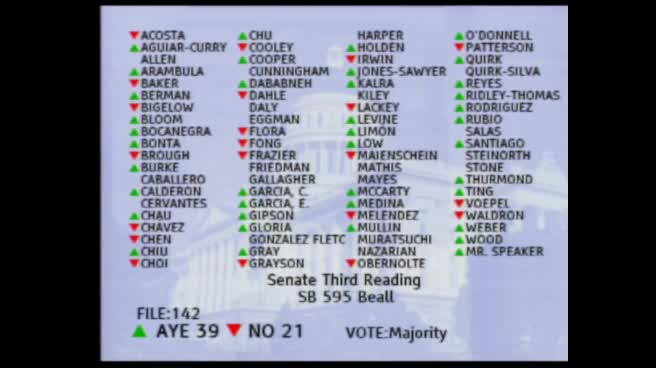 44SEC
Assembly Floor
 2MIN
Senate Floor
 1H
Senate Standing Committee on Appropriations
 9MIN
Senate Standing Committee on Education
Bill Author

Bill Co-Author(s):