AB 82: Vital records: diacritical marks.
- Session Year: 2017-2018
- House: Assembly
- Latest Version Date: 2017-09-15
Existing law prescribes the duties of the State Registrar of Vital Statistics (State Registrar) and local registrars of births and deaths with respect to the registration of certificates of live birth, fetal death, or death, and marriage licenses. Existing law requires the State Registrar to prescribe and furnish all record forms for use in carrying out the provisions governing vital records and prohibits the use of any record form or format other than those prescribed by the State Registrar. Existing law requires every live birth, fetal death, death, and marriage that occurs in the state to be registered with the local registrar. Existing law requires certificates of live birth, fetal death, or death, and a marriage license to include specified information, such as the full name of the child on a certificate of live birth and the full names of the parties to be married on a marriage license.
This bill would require the State Registrar to require the use of a diacritical mark on an English letter to be properly recorded, when applicable, on a certificate of live birth, fetal death, or death, and a marriage license and would require the use of a diacritical mark to be deemed an acceptable entry by the State Registrar. The bill would provide that the absence of a diacritical mark on a certificate of live birth, fetal death, or death, or a marriage license does not render the document invalid nor affect any constructive notice imparted by proper recordation of the document. The bill would authorize, if a name is not accurately recorded because of the absence of a diacritical mark on an English letter in any certificate of live birth, fetal death, death, or marriage already registered, the person asserting the omission, or the persons conservator, or if a minor, the persons parent or guardian, to submit a written request to the State Registrar for the issuance of a new certificate of birth, fetal death, death, or marriage stating the changes necessary to make the name correct. The bill would require the State Registrar to review the request and, if the request is accompanied with the payment of a specified fee, to issue a new certificate of live birth, fetal death, death, or marriage with the accurate name identified in the request.
Existing law prescribes the duties of the State Registrar of Vital Statistics (State Registrar) and local registrars of births and deaths with respect to the registration of certificates of live birth, fetal death, or death, and marriage licenses. Existing law requires the State Registrar to prescribe and furnish all record forms for use in carrying out the provisions governing vital records and prohibits the use of any record form or format other than those prescribed by the State Registrar. Existing law requires every live birth, fetal death, death, and marriage that occurs in the state to be registered with the local registrar. Existing law requires certificates of live birth, fetal death, or death, and a marriage license to include specified information, such as the full name of the child on a certificate of live birth and the full names of the parties to be married on a marriage license.
This bill would require the State Registrar to require the use of diacritical mark on an English letter to be properly recorded, when applicable, on a certificate of live birth, fetal death, or death, and a marriage license and would require the use of a diacritical mark to be deemed an acceptable entry by the State Registrar. The bill would provide that the absence of a diacritical mark on a certificate of live birth, fetal death, or death, or a marriage license does not render the document invalid nor affect any constructive notice imparted by proper recordation of the document. The bill would authorize, if a name is not accurately recorded because of the absence of a diacritical mark on an English letter in any certificate of live birth, fetal death, death, or marriage already registered, the person asserting the omission, or the persons conservator, or if a minor, the persons parent or guardian, to submit a written request to the State Registrar for the issuance of a new certificate of birth, fetal death, death, or marriage stating the changes necessary to make the name correct. The bill would require the State Registrar to review the request and, if the request is accompanied with the payment of a specified fee, to issue a new certificate of live birth, fetal death, death, or marriage with the accurate name identified in the request.
Existing law prescribes the duties of the State Registrar of Vital Statistics (State Registrar) and local registrars of births and deaths with respect to the registration of certificates of live birth, fetal death, or death, and marriage licenses. Existing law requires the State Registrar to prescribe and furnish all record forms for use in carrying out the provisions governing vital records and prohibits the use of any record form or format other than those prescribed by the State Registrar. Existing law requires every live birth, fetal death, death, and marriage that occurs in the state to be registered with the local registrar. Existing law requires certificates of live birth, fetal death, or death, and a marriage license to include specified information, such as the full name of the child on a certificate of live birth and the full names of the parties to be married on a marriage license.
This bill would require the State Registrar to require the use of diacritical mark on an English letter to be properly recorded, when applicable, on a certificate of live birth, fetal death, or death, and a marriage license and would require the use of a diacritical mark to be deemed an acceptable entry by the State Registrar. The bill would provide that the absence of a diacritical mark on a certificate of live birth, fetal death, or death, or a marriage license does not render the document invalid nor affect any constructive notice imparted by proper recordation of the document.
Existing law prescribes the duties of the State Registrar of Vital Statistics (State Registrar) and local registrars of births and deaths with respect to the registration of certificates of live birth, fetal death, or death, and marriage licenses. Existing law requires the State Registrar to prescribe and furnish all record forms for use in carrying out the provisions governing vital records and prohibits the use of any record form or format other than those prescribed by the State Registrar. Existing law requires every live birth, fetal death, death, and marriage that occurs in the state to be registered with the local registrar. Existing law requires certificates of live birth, fetal death, or death, and a marriage license to include specified information, such as the full name of the child on a certificate of live birth and the full names of the parties to be married on a marriage license.
This bill would require the State Registrar to require the use of diacritical mark on an English letter to be properly recorded, when applicable, on a certificate of live birth, fetal death, or death, and a marriage license and would require the use of a diacritical mark to be deemed an acceptable entry by the State Registrar.
(a)The State Registrar shall require the use of a diacritical mark on an English letter to be properly recorded, when applicable, on a certificate of live birth, fetal death, or death, and a marriage license. The use of a diacritical mark on an English letter shall be deemed an acceptable entry on a certificate of live birth, fetal death, or death, and a marriage license by the State Registrar.
(b)The absence of a diacritical mark on a document listed in subdivision (a) shall not render the document invalid nor affect any constructive notice imparted by proper recordation of the document.
(c)For purposes of this section, a diacritical mark includes, but is not limited to, accents, tildes, graves, umlauts, and cedillas.
SEC. 2.Section 103227 is added to the Health and Safety Code, to read:103227.(a)If a name is not accurately recorded because of the absence of a diacritical mark on an English letter in any certificate of live birth, fetal death, death, or marriage already registered, the person asserting the omission, or the persons conservator, or if a minor, the persons parent or guardian, may submit a written request to the State Registrar for the issuance of a new certificate of birth, fetal death, death, or marriage stating the changes necessary to make the name correct.
(b)The State Registrar shall review the request and, if the request is accompanied with the payment of the fee required by Section 103700, shall issue a new certificate of live birth, fetal death, death, or marriage with the accurate name identified in the request.
(a)The State Registrar shall require the use of a diacritical mark on an English letter to be properly recorded, when applicable, on a certificate of live birth, fetal death, or death, and a marriage license. The use of a diacritical mark on an English letter shall be deemed an acceptable entry on a certificate of live birth, fetal death, or death, and a marriage license by the State Registrar. For
(b)The absence of a diacritical mark on a document listed in subdivision (a) shall not render the document invalid nor affect any constructive notice imparted by proper recordation of the document.
(c)For purposes of this section, a diacritical mark includes, but is not limited to, accents, tildes, graves, umlauts, and cedillas.
The State Registrar shall require the use of a diacritical mark on an English letter to be properly recorded, when applicable, on a certificate of live birth, fetal death, or death, and a marriage license. The use of a diacritical mark on an English letter shall be deemed an acceptable entry on a certificate of live birth, fetal death, or death, and a marriage license by the State Registrar. For purposes of this section, a diacritical mark includes, but is not limited to, accents, tildes, graves, umlauts, and cedillas.
|
Date
|
Status
|
|---|---|
| Jan 12, 2018 | Stricken from file. |
| Jan 3, 2018 | Consideration of Governor's veto pending. |
| Oct 9, 2017 | Vetoed by Governor. |
| Sep 25, 2017 | Enrolled and presented to the Governor at 12 p.m. |
| Sep 14, 2017 | In Assembly. Concurrence in Senate amendments pending. |
| Sep 13, 2017 | Read third time. Passed. Ordered to the Assembly. |
| Sep 5, 2017 | Read second time. Ordered to third reading. |
| Sep 1, 2017 | From committee: Amend, and do pass as amended. (Ayes 7. Noes 0.) (September 1). |
| Aug 21, 2017 | In committee: Referred to APPR. suspense file. |
| Jul 13, 2017 | From committee: Do pass and re-refer to Com. on APPR. (Ayes 8. Noes 0.) (July 12). Re-referred to Com. on APPR. |
| Jun 14, 2017 | Referred to Com. on HEALTH. |
| Jun 1, 2017 | In Senate. Read first time. To Com. on RLS. for assignment. |
| May 31, 2017 | Read third time. Passed. Ordered to the Senate. (Ayes 68. Noes 2. Page 1950.) |
| May 30, 2017 | Read second time and amended. Ordered returned to second reading. |
| May 26, 2017 | From committee: Amend, and do pass as amended. (Ayes 12. Noes 0.) (May 26). |
| Apr 26, 2017 | In committee: Set, first hearing. Referred to APPR. suspense file. |
| Mar 22, 2017 | From committee: Do pass and re-refer to Com. on APPR. (Ayes 15. Noes 0.) (March 21). Re-referred to Com. on APPR. |
| Jan 19, 2017 | Referred to Com. on HEALTH. |
| Jan 6, 2017 | From printer. May be heard in committee February 5. |
| Jan 5, 2017 | Read first time. To print. |
|
Date
|
Description
|
Location
|
Votes
|
|
|---|---|---|---|---|
| Sep 14, 2017 | AB 82 Medina Concurrence in Senate Amendments | Assembly Floor |
Passed |
|
| Sep 13, 2017 | Assembly 3rd Reading AB82 Medina et al. By Lara | Senate Floor |
Passed |
|
| Sep 1, 2017 | Do pass as amended | Senate Standing Committee on Appropriations |
Passed |
|
| Aug 21, 2017 | Placed on suspense file | Senate Standing Committee on Appropriations |
Passed |
|
| Jul 12, 2017 | Do pass, but first be re-referred to the Committee on [Appropriations] | Senate Standing Committee on Health |
Passed |
|
| May 31, 2017 | AB 82 MEDINA Assembly Third Reading | Assembly Floor |
Passed |
|
| May 26, 2017 | Do pass as amended. | Assembly Standing Committee on Appropriations |
Passed |
|
| Mar 21, 2017 | Do pass and be re-referred to the Committee on [Appropriations] | Assembly Standing Committee on Health |
Passed |
This list shows positions taken on this bill by organizations on the date displayed, which is linked to the original source.
Positions by individuals are not included.
GOVERNOR'S VETO
GV Bill Id:AB 82
Author:(Medina)
As Enrolled Ver:September 15, 2017
2/3 vote
ASSEMBLY: | 68-2 | (May 31, 2017) | SENATE: | 39-1 | (September 13, 2017) |
ASSEMBLY: | 69-2 | (September 14, 2017) |
Original Committee Reference: HEALTH
SUMMARY: Requires the State Registrar of Vital Statistics (State Registrar) to require the use of a diacritical mark on an English letter to be properly recorded, when applicable, on a certificate of live birth, fetal death, or death, and a marriage license, and deems the use of diacritical marks as an acceptable entry on these certificates and licenses. Permits a person to submit a written request to the State Registrar for the issuance of a new certificate of birth, fetal death, death, or marriage stating the changes necessary to make the name correct if a name is not accurately recorded because of the absence of a diacritical mark, and requires the State Registrar to issue a new certificate of live birth, fetal death, death, or marriage with the accurate name if the request is accompanied with the payment of the required fee.
The Senate amendments provide a mechanism for an individual to correct his or her name on a certificate that has not been accurately recorded because of the absence of a diacritical mark.
FISCAL EFFECT: According to the Senate Appropriations Committee:
- One-time costs of $230,000 for information technology costs to reprogram the computer system that records births and deaths maintained by Department of Public Health (DPH) (Health Statistics Special Fund).
- Potential annual staff costs in the low millions per year for DPH to process requests for amended vital records and manually record existing birth certificates as deceased (Health Statistics Special Fund). According to DPH, if 50% of the existing state population with a foreign born parent requests an update to one or more vital records to include a diacritical mark, the costs would be about $2 million per year. In addition, DPH currently cross matches death certificates with existing birth certificates, so that the birth certificate of a deceased person can be notated as deceased. Current birth certificates do not include diacritical marks. As death certificates with diacritical marks are filed by county recorders, DPH will likely need to manually verify that the appropriate birth certificate is notated as deceased.
- Annual revenue loss up to $450,000 per year to DPH (Health Statistics Special Fund). Under current law, DPH transmits birth and death information electronically to the federal Social Security Administration. This data allows the Social Security Administration to automatically issue a social security number to children born in the state and allows the Social Security Administration to ensure that benefits are not improperly paid after a beneficiary's death. Under current practice, the Social Security Administration pays DPH $3 for each individual record. However, federal law prohibits the use of diacritical marks and the Social Security Administration will not accept names with diacritical marks. Therefore, any names transmitted to the Social Security Administration will be rejected and the state will not be paid for those records. DPH assumes that up to 50% of vital records for foreign born persons or the children of foreign born persons could have a diacritical mark under the bill, and therefore not be eligible for federal payment.
- One-time reimbursable mandate costs, potentially up to $12 million, for the state to reimburse county clerks and recorders for information technology updates to allow diacritical marks to be used on marriage certificates (General Fund (GF)). Under current practice, county clerks use their own information technology systems to record marriage certificates. DPH estimates that the costs to reprogram such a system to be about $200,000. While some counties may use the same information technology system to record marriage certificates, there is not a uniform system used across the state. The cost estimate above assumes that each county incurs programming costs to comply with the requirements of the bill. In practice, to the extent that multiple counties use the same system, overall costs would be lower.
- One-time costs of $1 million to $3 million for the Department of Health Care Services (DHCS) to make computer system changes (GF and federal funds). Under current practice, DHCS uses vital records to verify an applicant's citizenship or to remove deceased beneficiaries from the Medi-Cal program. Under current practice, DPH provides records for electronic verification. The information technology system used by DHCS does not recognize diacritical marks. (And to meet federal requirements, it cannot be modified to do so.) Under this bill, DHCS would be required to update their information technology systems to accept vital records with diacritical marks and then modify those records to remove the diacritical marks for comparison with existing enrollee information.
- Unknown administrative costs to the Department of Social Services to make information system changes to accept vital record information with diacritical marks for eligibility verifications (GF).
COMMENTS: According to the author, California residents should be able to choose the names of their children and themselves without limits from the government. Currently, the government prohibits the use of letters with diacritical marks. This is fundamentally problematic because a name is the most basic and arguably the most important part of a person's paper identity. The author states that prior to 1986, diacritical marks were used on all vital records, such as birth certificates, death certificates, and marriage licenses. In 1986, Proposition 63 declared English the official language of California. Thereafter, the state, erroneously according to the author, eliminated the use of diacritical marks on vital records. The author argues that California should not preclude its residents from keeping their cultural identity.
This bill mandates the State Registrar to require the use of diacritical marks on names to be recorded on birth, death, and marriage certificates.
Mandating the use of diacritical marks on certain state and local vital records without a corresponding requirement for all state and federal government records is a difficult and expensive proposition. This bill would create inconsistencies in vital records and require significant state funds to replace or modify existing registration systems.
For these reasons, I cannot sign this bill.
Analysis Prepared by: John Gilman / HEALTH / (916) 319-2097 FN: 0002451
CONCURRENCE IN SENATE AMENDMENTS
CSA1 Bill Id:AB 82
Author:(Medina)
As Amended Ver:September 1, 2017
Majority vote
ASSEMBLY: | 68-2 | (May 31, 2017) | SENATE: | 39-1 | (September 13, 2017) |
Original Committee Reference: HEALTH
SUMMARY: Requires the State Registrar of Vital Statistics (State Registrar) to require the use of a diacritical mark on an English letter to be properly recorded, when applicable, on a certificate of live birth, fetal death, or death, and a marriage license, and deems the use of diacritical marks as an acceptable entry on these certificates and licenses. Permits a person to submit a written request to the State Registrar for the issuance of a new certificate of birth, fetal death, death, or marriage stating the changes necessary to make the name correct if a name is not accurately recorded because of the absence of a diacritical mark, and requires the State Registrar to issue a new certificate of live birth, fetal death, death, or marriage with the accurate name if the request is accompanied with the payment of the required fee.
The Senate amendments provide a mechanism for an individual to correct his or her name on a certificate that has not been accurately recorded because of the absence of a diacritical mark.
FISCAL EFFECT: According to the Senate Appropriations Committee:
- One-time costs of $230,000 for information technology costs to reprogram the computer system that records births and deaths maintained by Department of Public Health (DPH) (Health Statistics Special Fund).
- Potential annual staff costs in the low millions per year for DPH to process requests for amended vital records and manually record existing birth certificates as deceased (Health Statistics Special Fund). According to DPH, if 50% of the existing state population with a foreign born parent requests an update to one or more vital records to include a diacritical mark, the costs would be about $2 million per year. In addition, DPH currently cross matches death certificates with existing birth certificates, so that the birth certificate of a deceased person can be notated as deceased. Current birth certificates do not include diacritical marks. As death certificates with diacritical marks are filed by county recorders, DPH will likely need to manually verify that the appropriate birth certificate is notated as deceased.
- Annual revenue loss up to $450,000 per year to DPH (Health Statistics Special Fund). Under current law, DPH transmits birth and death information electronically to the federal Social Security Administration. This data allows the Social Security Administration to automatically issue a social security number to children born in the state and allows the Social Security Administration to ensure that benefits are not improperly paid after a beneficiary's death. Under current practice, the Social Security Administration pays DPH $3 for each individual record. However, federal law prohibits the use of diacritical marks and the Social Security Administration will not accept names with diacritical marks. Therefore, any names transmitted to the Social Security Administration will be rejected and the state will not be paid for those records. DPH assumes that up to 50% of vital records for foreign born persons or the children of foreign born persons could have a diacritical mark under the bill, and therefore not be eligible for federal payment.
- One-time reimbursable mandate costs, potentially up to $12 million, for the state to reimburse county clerks and recorders for information technology updates to allow diacritical marks to be used on marriage certificates (General Fund (GF)). Under current practice, county clerks use their own information technology systems to record marriage certificates. DPH estimates that the costs to reprogram such a system to be about $200,000. While some counties may use the same information technology system to record marriage certificates, there is not a uniform system used across the state. The cost estimate above assumes that each county incurs programming costs to comply with the requirements of the bill. In practice, to the extent that multiple counties use the same system, overall costs would be lower.
- One-time costs of $1 million to $3 million for the Department of Health Care Services (DHCS) to make computer system changes (GF and federal funds). Under current practice, DHCS uses vital records to verify an applicant's citizenship or to remove deceased beneficiaries from the Medi-Cal program. Under current practice, DPH provides records for electronic verification. The information technology system used by DHCS does not recognize diacritical marks. (And to meet federal requirements, it cannot be modified to do so.) Under this bill, DHCS would be required to update their information technology systems to accept vital records with diacritical marks and then modify those records to remove the diacritical marks for comparison with existing enrollee information.
- Unknown administrative costs to the Department of Social Services to make information system changes to accept vital record information with diacritical marks for eligibility verifications (GF).
COMMENTS: According to the author, California residents should be able to choose the names of their children and themselves without limits from the government. Currently, the government prohibits the use of letters with diacritical marks. This is fundamentally problematic because a name is the most basic and arguably the most important part of a person's paper identity. The author states that prior to 1986, diacritical marks were used on all vital records, such as birth certificates, death certificates, and marriage licenses. In 1986, Proposition 63 declared English the official language of California. Thereafter, the state, erroneously according to the author, eliminated the use of diacritical marks on vital records. The author argues that California should not preclude its residents from keeping their cultural identity.
Analysis Prepared by: John Gilman / HEALTH / (916) 319-2097 FN: 0001811
Office of Senate Floor Analyses (916) 651-1520 Fax: (916) 327-4478 | AB 82 |
THIRD READING
Bill No: AB 82
Amended: 9/1/17 in Senate
SENATE HEALTH COMMITTEE: 8-0, 7/12/17
AYES: Hernandez, Nguyen, Atkins, Leyva, Mitchell, Monning, Newman, Roth
NO VOTE RECORDED: Nielsen
SENATE APPROPRIATIONS COMMITTEE: 7-0, 9/1/17
AYES: Lara, Bates, Beall, Bradford, Hill, Nielsen, Wiener
ASSEMBLY FLOOR: 68-2, 5/31/17 - See last page for vote
SUBJECT: Vital records: diacritical marks
DIGEST:
- This bill requires the State Registrar to require the use of a diacritical mark on an English letter to be properly recorded, when applicable, on a certificate of live birth, fetal death, or death, and a marriage license.
Existing law:
- Establishes the Office of Vital Records within the Department of Public Health (DPH) to maintain a uniform system for registration and a permanent central registry with a comprehensive and continuous index for all birth, death, fetal death, marriage and dissolution certificates registered for vital events which occur in California. Requires the Director of DPH, acting as the State Registrar, to administer the registration of births, deaths, fetal deaths, and marriages.
- Requires every live birth, fetal death, death, and marriage that occurs in the state to be registered with the local registrar.
- Requires that each certified copy of a birth, death, or marriage record contain specified information and be printed on sensitized security paper with specified security features.
This bill:
- Requires the State Registrar to require the use of a diacritical mark on an English letter to be properly recorded, when applicable, on a certificate of live birth, fetal death, or death, and a marriage license.
- Requires the use of a diacritical mark on an English letter to be deemed an acceptable entry on a certificate of live birth, fetal death, or death, and a marriage license by the State Registrar.
- Prohibits the absence of a diacritical mark on a vital record from rendering the document invalid nor from affecting any constructive notice imparted by proper recordation of the document.
- Defines, for purposes of this bill, a diacritical mark to include, but not be limited to, accents, tildes, graves, umlauts, and cedillas.
- Permits, if a name is not accurately recorded because of the absence of a diacritical mark on an English letter in any certificate of live birth, fetal death, death, or marriage already registered, the person asserting the omission, or the person’s conservator, or if a minor, the person’s parent or guardian, to submit a written request to the State Registrar for the issuance of a new certificate of birth, fetal death, death, or marriage stating the changes necessary to make the name correct.
- Requires the State Registrar to review the request and, if the request is accompanied with the payment of the required fee, to issue a new certificate of live birth, fetal death, death, or marriage with the accurate name identified in the request.
Background
- The Office of Vital Records within DPH is charged with maintaining a uniform system for registration and a permanent central registry with a comprehensive and continuous index for all birth, death, fetal death, marriage, and dissolution certificates registered for vital events which occur in California, which are over one million events each year. Certified copies of vital records are available from DPH, 58 county recorders, and 61 local health jurisdictions. According to DPH, it maintains, and can provide, birth and death records from 1905 to the present. For marriage records, DPH maintains and can provide those from 1946 to the present, with some years excluded. At the local level, birth and death records for current-year events and one year prior are available from the county health department; records for all years are maintained by the county recorder. Public marriage records may be obtained from the county recorder; confidential marriage records are available only through the county clerk of the county where the license was issued.
- Diacritical marks. Diacritical marks include, but are not limited to: grave or acute accents (è or á) and tildes (ñ or ã) commonly found in Spanish language names or umlauts (ö or ü) used in German and cedillas (ç or ş) found in French, Turkish, and other languages. Federal law required all federal databases to follow standards determined by the National Institute of Standards and Technology and to use the 26 letters of the alphabet without diacritical marks (Public Law 100-235). California law is silent on diacritical marks, however Health and Safety Code Section 102200 states that the State Registrar “…shall prescribe and furnish all record forms for use in carrying out the purposes of this part, or shall prescribe the format, quality, and content of forms electronically produced in each county, and no record forms or formats other than those prescribed shall be used.”
Comments
- Author’s statement. According to the author, prior to 1986, diacritical marks such as accent marks, umlauts, tildes and cedillas were used on all vital records, such as birth certificates, death certificates and marriage licenses. The passage of Proposition 63, which declared English the official language of California, erroneously eliminated the use of diacritical marks on vital records, as the proper nouns used in such records should not preclude California residents from keeping their cultural identity when in fact it was permitted prior to this proposition. This is fundamentally problematic because a name is the most basic and arguably the most important part of a person’s identity. California residents cannot choose their name independent of government control. No legitimate reason exists for such a limitation.
Related/Prior Legislation
AB 2528 (Skinner, 2014) was similar to this bill but also applied to certificates of registered domestic partnerships, driver’s licenses, and Department of Motor Vehicles identification cards. AB 2528 was held on suspense in the Assembly Appropriations Committee.
FISCAL EFFECT: Appropriation: No Fiscal Com.: Yes Local: No
According to the Senate Appropriations Committee:
- One-time costs of $230,000 for information technology costs to reprogram the computer system that records births and deaths maintained by DPH (Health Statistics Special Fund).
- Potential annual staff costs in the low millions per year for DPH to process requests for amended vital records and manually record existing birth certificates as deceased (Health Statistics Special Fund). According to DPH, if 50% of the existing state population with a foreign born parent requests an update to one or more vital records to include a diacritical mark, the costs would be about $2 million per year. In addition, DPH currently cross matches death certificates with existing birth certificates, so that the birth certificate of a deceased person can be notated as deceased. Current birth certificates do not include diacritical marks. As death certificates with diacritical marks are filed by county recorders, DPH will likely need to manually verify that the appropriate birth certificate is notated as deceased.
- Annual revenue loss up to $450,000 per year to DPH (Health Statistics Special Fund). Under current law, DPH transmits birth and death information electronically to the federal Social Security Administration. This data allows the Social Security Administration to automatically issue a social security number to children born in the state and allows the Social Security Administration to ensure that benefits are not improperly paid after a beneficiary’s death. Under current practice, the Social Security Administration pays DPH $3 for each individual record. However, federal law prohibits the use of diacritical marks and the Social Security Administration will not accept names with diacritical marks. Therefore, any names transmitted to the Social Security Administration will be rejected and the state will not be paid for those records. DPH assumes that up to 50% of vital records for foreign born persons or the children of foreign born persons could have a diacritical mark under the bill, and therefore not be eligible for federal payment.
- One-time reimbursable mandate costs, potentially up to $12 million, for the state to reimburse county clerks and recorders for information technology updates to allow diacritical marks to be used on marriage certificates (General Fund). Under current practice, county clerks use their own information technology systems to record marriage certificates. DPH estimates that the costs to reprogram such a system to be about $200,000. While some counties may use the same information technology system to record marriage certificates, there is not a uniform system used across the state. The cost estimate above assumes that each county incurs programming costs to comply with the requirements of the bill. In practice, to the extent that multiple counties use the same system, overall costs would be lower.
- One-time costs of $1 million to $3 million for the Department of Health Care Services to make computer system changes (General Fund and federal funds). Under current practice, the Department of Health Care Services uses vital records to verify an applicant’s citizenship or to remove deceased beneficiaries from the Medi-Cal program. Under current practice, DPH provides records for electronic verification. The information technology system used by the Department of Health Care Services does not recognize diacritical marks. (And to meet federal requirements, it cannot be modified to do so.) Under this bill, the Department of Health Care Services would be required to update their information technology systems to accept vital records with diacritical marks and then modify those records to remove the diacritical marks for comparison with existing enrollee information.
- Unknown administrative costs to the Department of Social Services to make information system changes to accept vital record information with diacritical marks for eligibility verifications (General Fund).
None received
OPPOSITION: (Verified 8/30/17)
California Association of Clerks and Election Officials
California Department of Public Health
County Recorders’ Association of California
ASSEMBLY FLOOR: 68-2, 5/31/17
AYES: Acosta, Aguiar-Curry, Arambula, Baker, Berman, Bloom, Bocanegra, Bonta, Brough, Burke, Caballero, Calderon, Cervantes, Chau, Chávez, Chiu, Chu, Cooley, Cooper, Cunningham, Dababneh, Daly, Flora, Frazier, Friedman, Gallagher, Cristina Garcia, Eduardo Garcia, Gipson, Gloria, Gomez, Gonzalez Fletcher, Gray, Grayson, Holden, Irwin, Jones-Sawyer, Kalra, Lackey, Levine, Limón, Low, Maienschein, Mayes, McCarty, Medina, Mullin, Muratsuchi, Nazarian, Obernolte, O'Donnell, Quirk, Quirk-Silva, Reyes, Ridley-Thomas, Rodriguez, Rubio, Salas, Santiago, Steinorth, Mark Stone, Thurmond, Ting, Voepel, Waldron, Weber, Wood, Rendon
NOES: Bigelow, Mathis
NO VOTE RECORDED: Travis Allen, Chen, Choi, Dahle, Eggman, Fong, Harper, Kiley, Melendez, Patterson
9/5/17 9:54:56
**** END ****
SENATE COMMITTEE ON
Senator Ricardo Lara, Chair
2017 - 2018 Regular Session
AB 82 (Medina) - Vital records: diacritical marks
Version: | Policy Vote: |
Urgency: | Mandate: |
Hearing Date: | Consultant: |
Bill Summary:
AB 82 would require diacritical marks to be allowed on birth certificates, death certificates, and marriage licenses.
*********** ANALYSIS ADDENDUM – SUSPENSE FILE ***********
The following information is revised to reflect amendments
adopted by the committee on September 1, 2017
Fiscal Impact:
- One-time costs of $230,000 for information technology costs to reprogram the computer system that records births and deaths maintained by the Department of Public health (Health Statistics Special Fund).
- Potential annual staff costs in the low millions per year for the Department of Public Health to process requests for amended vital records and manually record existing birth certificates as deceased (Health Statistics Special Fund). According to the Department, if 50% of the existing state population with a foreign born parent requests an update to one or more vital records to include a diacritical mark, the costs would be about $2 million per year. In addition, the Department currently cross matches death certificates with existing birth certificates, so that the birth certificate of a deceased person can be notated as deceased. Current birth certificates do not include diacritical marks. As death certificates with diacritical marks are filed by county recorders, the Department will likely need to manually verify that the appropriate birth certificate is notated as deceased.
- Annual revenue loss up to $450,000 per year to the Department of Public Health (Health Statistics Special Fund). Under current law, the Department transmits birth and death information electronically to the federal Social Security Administration. This data allows the Social Security Administration to automatically issue a social security number to children born in the state and allows the Social Security Administration to ensure that benefits are not improperly paid after a beneficiary’s death. Under current practice, the Social Security Administration pays the Department $3 for each individual record. However, federal law prohibits the use of diacritical marks and the Social Security Administration will not accept names with diacritical marks. Therefore, any names transmitted to the Social Security Administration will be rejected and the state will not be paid for those records. The Department assumes that up to 50% of vital records for foreign born persons or the children of foreign born persons could have a diacritical mark under the bill, and therefore not be eligible for federal payment.
- One-time reimbursable mandate costs, potentially up to $12 million, for the state to reimburse county clerks and recorders for information technology updates to allow diacritical marks to be used on marriage certificates (General Fund). Under current practice, county clerks use their own information technology systems to record marriage certificates. The Department of Public Health estimates that the costs to reprogram such a system to be about $200,000. While some counties may use the same information technology system to record marriage certificates, there is not a uniform system used across the state. The cost estimate above assumes that each county incurs programming costs to comply with the requirements of the bill. In practice, to the extent that multiple counties use the same system, overall costs would be lower.
- One-time costs of $1 million to $3 million for the Department of Health Care Services to make computer system changes (General Fund and federal funds). Under current practice, the Department of Health Care Services uses vital records to verify an applicant’s citizenship or to remove deceased beneficiaries from the Medi-Cal program. Under current practice, the Department of Public Health provides records for electronic verification. The information technology system used by the Department of Health Care Services does not recognize diacritical marks. (And to meet federal requirements, it cannot be modified to do so.) Under this bill, the Department of Health Care Services would be required to update their information technology systems to accept vital records with diacritical marks and then modify those records to remove the diacritical marks for comparison with existing enrollee information.
- Unknown administrative costs to the Department of Social Services to make information system changes to accept vital record information with diacritical marks for eligibility verifications (General Fund).
Author Amendments:
specifically authorize an individual to request a new birth certificate, death certificate, or marriage license to accurately reflect the requester’s name.
-- END --
SENATE COMMITTEE ON
Senator Ricardo Lara, Chair
2017 - 2018 Regular Session
AB 82 (Medina) - Vital records: diacritical marks
Version: | Policy Vote: |
Urgency: | Mandate: |
Hearing Date: | Consultant: |
This bill meets the criteria for referral to the Suspense File.
Bill Summary:
AB 82 would require diacritical marks to be allowed on birth certificates, death certificates, and marriage licenses.
Fiscal Impact:
- One-time costs of $230,000 for information technology costs to reprogram the computer system that records births and deaths maintained by the Department of Public health (Health Statistics Special Fund).
- Potential annual staff costs in the low millions per year for the Department of Public Health to process requests for amended vital records and manually record existing birth certificates as deceased (Health Statistics Special Fund). According to the Department, if 50% of the existing state population with a foreign born parent requests an update to one or more vital records to include a diacritical mark, the costs would be about $2 million per year. In addition, the Department currently cross matches death certificates with existing birth certificates, so that the birth certificate of a deceased person can be notated as deceased. Current birth certificates do not include diacritical marks. As death certificates with diacritical marks are filed by county recorders, the Department will likely need to manually verify that the appropriate birth certificate is notated as deceased.
- Annual revenue loss up to $450,000 per year to the Department of Public Health (Health Statistics Special Fund). Under current law, the Department transmits birth and death information electronically to the federal Social Security Administration. This data allows the Social Security Administration to automatically issue a social security number to children born in the state and allows the Social Security Administration to ensure that benefits are not improperly paid after a beneficiary’s death. Under current practice, the Social Security Administration pays the Department $3 for each individual record. However, federal law prohibits the use of diacritical marks and the Social Security Administration will not accept names with diacritical marks. Therefore, any names transmitted to the Social Security Administration will be rejected and the state will not be paid for those records. The Department assumes that up to 50% of vital records for foreign born persons or the children of foreign born persons could have a diacritical mark under the bill, and therefore not be eligible for federal payment.
- One-time reimbursable mandate costs, potentially up to $12 million, for the state to reimburse county clerks and recorders for information technology updates to allow diacritical marks to be used on marriage certificates (General Fund). Under current practice, county clerks use their own information technology systems to record marriage certificates. The Department of Public Health estimates that the costs to reprogram such a system to be about $200,000. While some counties may use the same information technology system to record marriage certificates, there is not a uniform system used across the state. The cost estimate above assumes that each county incurs programming costs to comply with the requirements of the bill. In practice, to the extent that multiple counties use the same system, overall costs would be lower.
- One-time costs of $1 million to $3 million for the Department of Health Care Services to make computer system changes (General Fund and federal funds). Under current practice, the Department of Health Care Services uses vital records to verify an applicant’s citizenship or to remove deceased beneficiaries from the Medi-Cal program. Under current practice, the Department of Public Health provides records for electronic verification. The information technology system used by the Department of Health Care Services does not recognize diacritical marks. (And to meet federal requirements, it cannot be modified to do so.) Under this bill, the Department of Health Care Services would be required to update their information technology systems to accept vital records with diacritical marks and then modify those records to remove the diacritical marks for comparison with existing enrollee information.
- Unknown administrative costs to the Department of Social Services to make information system changes to accept vital record information with diacritical marks for eligibility verifications (General Fund).
Background:
Diacritical marks are glyphs that are added to standard letters to influence the pronunciation of the letter or word. The most common diacritical marks used by residents of California are accents and tildes. However, there are almost forty diacritical marks that are commonly used with Latin-alphabet languages.
Under current law, the state does not recognize diacritical marks in official documents. While their use is not explicitly prohibited, current standards for state documents established by the State Registrar do not allow for the use of diacritical marks. Federal law prohibits the use of diacritical marks in official documents.
Under current law, the State Recorder (within the Department of Public Health) is responsible for maintaining a registry of vital documents to record all births, deaths, and marriages that occur in the state. Under current practice, the Department maintains the electronic system for recording births and deaths. Birth and death information is input into that system by local registrars, hospitals, and funeral homes. While birth and death certificates are issued at the county level, the underlying information technology system is maintained by the state and the state system contains the official registry of those documents. Marriage certificates are issued and recorded at the county level, using county-maintained systems.
Under current practice, there are many systems in place for the electronic transmission of birth and death information between local, state, and federal agencies. For example, the Department of Public Health transmits birth and death records electronically to the Social Security Administration. Doing so allows the Social Security Administration to automatically issue a social security number and card to any child born in the state, without the child’s parents needing to make a separate application. Additionally, death records are used to terminate Social Security benefits, to ensure no improper payments are made once a beneficiary is deceased. Similarly, records of death are transmitted electronically to various state and local programs. For example, that information is transmitted to local elections officials to ensure that deceased individuals are removed from voter registration systems.
Proposed Law:
AB 82 would require diacritical marks to be allowed on birth certificates, death certificates, and marriage licenses.
Specific provisions of the bill would:
- Require the State Registrar to require the use of a diacritical mark to be properly recorded on a certificate of live birth, certificate of fetal death, certificate of death, and a marriage license;
- Prohibit the use of a diacritical mark from rendering a document invalid;
- Define diacritical mark to include, but not be limited to, certain specific examples.
Related Legislation:
AB 2528 (Skinner, 2014) was similar to this bill, but would have also applied to additional documents such as driver’s licenses. That bill was held on the Assembly Appropriations Committee’s Suspense File.
Staff Comments:
Under this bill, a limited number of state official documents would include diacritical marks. However, the majority of state documents and systems would not be required to use or recognize diacritical marks. Similarly, federal documents and systems are prohibited from using diacritical marks. The bill would therefore create substantial problems for state and local agencies, as well as any individual whose birth certificate or marriage license included a diacritical mark. For example, any parent who opted to use a diacritical mark on a child’s birth certificate would not be eligible to automatically have that child issued a social security number or card. Instead the parent would have to apply to the Social Security Administration. In addition, because almost all other identifying documents (such as passports and driver’s licenses) would not include diacritical marks, individuals with a diacritical mark on their birth certificate may have difficulty when using those identifying documents, given that the spelling of their name will be inconsistent across official documents. Also, individuals applying to participate in state benefit programs, such as Medi-Cal or Covered California, may have their application delayed because the underlying eligibility systems for those programs do not recognize diacritical marks and therefore may not be able to electronically verify information such as US citizenship.
-- END --
SENATE COMMITTEE ON HEALTH
Senator Ed Hernandez, O.D., Chair
BILL NO: AB 82
AUTHOR: | Medina | ||
VERSION: | May 30, 2017 | ||
HEARING DATE: | July 12, 2017 | ||
CONSULTANT: | Melanie Moreno | ||
SUBJECT: Vital records: diacritical marks
SUMMARY:
- Requires the State Registrar to require the use of a diacritical mark on an English letter to be properly recorded, when applicable, on a certificate of live birth, fetal death, or death, and a marriage license.
Existing law:
- Establishes the Office of Vital Records within the Department of Public Health (DPH) to maintain a uniform system for registration and a permanent central registry with a comprehensive and continuous index for all birth, death, fetal death, marriage and dissolution certificates registered for vital events which occur in California. Requires the Director of the DPH, acting as the State Registrar, to administer the registration of births, deaths, fetal deaths, and marriages.
- Requires every live birth, fetal death, death, and marriage that occurs in the state to be registered with the local registrar.
- Requires that each certified copy of a birth, death, or marriage record contain specified information and be printed on sensitized security paper with specified security features.
This bill:
- Requires the State Registrar to require the use of a diacritical mark on an English letter to be properly recorded, when applicable, on a certificate of live birth, fetal death, or death, and a marriage license.
- Requires the use of a diacritical mark on an English letter to be deemed an acceptable entry on a certificate of live birth, fetal death, or death, and a marriage license by the State Registrar.
- Prohibits the absence of a diacritical mark on a vital record from rendering the document invalid nor from affecting any constructive notice imparted by proper recordation of the document.
- Defines, for purposes of this bill, a diacritical mark to include, but not be limited to, accents, tildes, graves, umlauts, and cedillas.
FISCAL EFFECT:
According to the Assembly Appropriations Committee:
- Assuming an implementation date of January 1, 2020, information technology costs to the DPH of $230,000 to reprogram vital records registration systems for birth, fetal death, and death (Health Statistics Special Fund).
- For every 10,000 people requesting an amended vital record to add a diacritical mark, costs of $225,000 to DPH, recovered by fees (Health Statistics Special Fund).
- Expected revenue loss of approximately $35,000 for every 10,000 birth or death records with a diacritical mark (Health Statistics Special Fund), which cannot be submitted to the Social Security Administration.
- Unknown, significant state-reimbursable mandate costs related to local information technology system changes. For example, costs would be $11.6 million General Fund, assuming reprogramming costs an average of $200,000 per each of 58 counties.
- Counties may also incur related unknown costs, but costs are not expected to be significant.
- Unknown cost pressure to various information technology systems used by other state. To the extent the ability to match records in an automated way is compromised due to different systems with varying policies on diacritical marks, there could be increased costs, workload, and inefficiency in performance of various government functions.
PRIOR VOTES:
Assembly Floor: | 68 - 2 |
Assembly Appropriations Committee: | 12 - 0 |
Assembly Health Committee: | 15 - 0 |
COMMENTS:
- Author’s statement. According to the author, prior to 1986, diacritical marks such as accent marks, umlauts, tildes and cedillas were used on all vital records, such as birth certificates, death certificates and marriage licenses. The passage of Proposition 63, which declared English the official language of California, erroneously eliminated the use of diacritical marks on vital records, as the proper nouns used in such records should not preclude California residents from keeping their cultural identity when in fact it was permitted prior to this proposition. This is fundamentally problematic because a name is the most basic and arguably the most important part of a person’s identity. California residents cannot choose their name independent of government control. No legitimate reason exists for such a limitation.
- Background. The Office of Vital Records within DPH is charged with maintaining a uniform system for registration and a permanent central registry with a comprehensive and continuous index for all birth, death, fetal death, marriage, and dissolution certificates registered for vital events which occur in California, which are over one million events each year. Certified copies of vital records are available from DPH, 58 county recorders, and 61 local health jurisdictions. According to DPH, it maintains, and can provide, birth and death records from 1905 to the present. For marriage records, DPH maintains and can provide those from 1946 to the present, with some years excluded. At the local level, birth and death records for current-year events and one year prior are available from the county health department; records for all years are maintained by the county recorder. Public marriage records may be obtained from the county recorder; confidential marriage records are available only through the county clerk of the county where the license was issued.
- Diacritical marks. Diacritical marks include, but are not limited to: grave or acute accents (è or á) and tildes (ñ or ã) commonly found in Spanish language names or umlauts (ö or ü) used in German and cedillas (ç or ş) found in French, Turkish, and other languages. Federal law required all federal databases to follow standards determined by the National Institute of Standards and Technology and to use the 26 letters of the alphabet without diacritical marks (Public Law 100-235). California law is silent on diacritical marks, however Health and Safety Code Section 102200 states that the State Registrar “…shall prescribe and furnish all record forms for use in carrying out the purposes of this part, or shall prescribe the format, quality, and content of forms electronically produced in each county, and no record forms or formats other than those prescribed shall be used.”
- Prior legislation. AB 2528 (Skinner of 2014) was similar to this bill but also applied to certificates of registered domestic partnerships, driver’s licenses, and Department of Motor Vehicles (DMV) identification cards. AB 2528 was held on suspense in the Assembly Appropriations Committee.
- Oppose unless amended. The California Association of Clerks and Election Officials and the County Recorders’ Association of California write that all electronic indexes have only been programmed to use 26 alphabetical characters, and the various software systems that are currently in use throughout the state will need to be modified to accept diacritical marks. These opponents are also concerned that this bill would affect customers on the federal level since the marriage license is used as a legal name change document in the state and may cause issues with the issuance of federal passports and interaction with Social Security offices. The opponents state that in order to ensure that local governments, the state and federal government continue to work in a uniform and cohesive manner, CACEO urges that the measure be amended to impose this policy change from the “top down” to ensure that vital records and identification documents are created on a solid foundation of traceable, consistent information that uses the same rules and guidelines.
- Opposition. DPH writes that the inclusion of diacritical marks on vital records certificates is inconsistent with federal law and that this bill creates inconsistencies and incompatibilities with identification documents issued by federal agencies that do not allow diacritical marks on federal records or systems. DPH writes that this lack of clarity would likely increase inaccuracies not only in data entry but ultimately in identification of individuals. DPH gives several examples where the use of diacritical marks would be inconsistent with existing systems, including the SSA Enumeration at Birth Program (which allows parents to request a Social Security card at the time the birth certificate is created), the Electronic Death Registration System, the Fetal Death Registration System, DMV identification systems, and Department of Health Care Services program eligibility systems.
SUPPORT AND OPPOSITION:
Support: None received
Oppose: California Association of Clerks and Election Officials (unless amended)
California Department of Public Health
County Recorders’ Association of California (unless amended)
-- END --
ASSEMBLY THIRD READING
ATR Bill Id:AB 82
Author:(Medina)
As Introduced Ver:May 30, 2017
Majority vote
Committee | Votes | Ayes | Noes |
Health | 15-0 | Wood, Maienschein, Bonta, Burke, Gallagher, Limón, McCarty, Nazarian, Patterson, Quirk-Silva, Chiu, Rodriguez, Santiago, Thurmond, Waldron | |
Appropriations | 12-0 | Gonzalez Fletcher, Bloom, Bocanegra, Bonta, Calderon, McCarty, Quirk, Friedman, Eduardo Garcia, Gray, Muratsuchi, Reyes |
|
SUMMARY: Requires the State Registrar of Vital Statistics (State Registrar) to require the use of a diacritical mark on an English letter to be properly recorded, when applicable, on a certificate of live birth, fetal death, or death, and a marriage license, and deems the use of diacritical marks as an acceptable entry on these certificates and licenses. States that the absence of a diacritical mark on a document shall not render the document invalid nor affect any constructive notice imparted by imparted by proper recordation of the document. States that diacritical marks include, but are not limited to, accents, tildes, graves, umlauts, and cedillas.
FISCAL EFFECT: According to the Assembly Appropriations Committee:
- Assuming an implementation date of January 1, 2020, information technology costs to the California Department of Public Health (DPH) of $230,000 to reprogram vital records registration systems for birth, fetal death, and death (Health Statistics Special Fund).
- For every 10,000 people requesting an amended vital record to add a diacritical mark, costs of $225,000 to DPH, recovered by fees (Health Statistics Special Fund).
- Expected revenue loss of approximately $35,000 for every 10,000 birth or death records with a diacritical mark (Health Statistics Special Fund), which cannot be submitted to the Social Security Administration.
- Unknown, significant state-reimbursable mandate costs related to local information technology system changes. For example, costs would be $11.6 million General Fund, assuming reprogramming costs an average of $200,000 per each of 58 counties.
- Counties may also incur related unknown costs, but costs are not expected to be significant.
- Unknown cost pressure to various information technology systems used by other state. To the extent the ability to match records in an automated way is compromised due to different systems with varying policies on diacritical marks, there could be increased costs, workload, and inefficiency in performance of various government functions.
COMMENTS: According to the author, California residents should be able to choose the names of their children and themselves without limits from the government. Currently, the government prohibits the use of letters with diacritical marks. This is fundamentally problematic because a name is the most basic and arguably the most important part of a person's paper identity. The author states that prior to 1986, diacritical marks were used on all vital records, such as birth certificates, death certificates, and marriage licenses. In 1986, Proposition 63 declared English the official language of California. Thereafter, the state, erroneously according to the author, eliminated the use of diacritical marks on vital records. The author argues that California should not preclude its residents from keeping their cultural identity.
Proposition 63 declared that English is the official language of the State of California. Proposition 63 directed the Legislature to enact legislation to "preserve the role of English as the state's common language," and prohibited it from "passing laws which diminish or ignore the role of English as the state's common language." The proposition also stated that its intent was to "preserve, protect and strengthen the English language, and not to supersede any of the rights guaranteed to the people by this Constitution."
The Office of Vital Records: Birth and Death Registration Handbook, referencing the provisions of Proposition 63, states that forms are "to be completed using the 26 alphabetical characters of the English language." The handbook also explicitly states that unacceptable marks include "diacritical marks – any of various marks added to a letter to indicate its pronunciation or to distinguish it in some way, e.g., è, ñ, ç." Diacritical marks include, but are not limited to: grave or acute accents (è or á) and tildes (ñ or ã) commonly found in Spanish language names, umlauts (ö or ü) used in German names, and cedillas (ç or ş) found in French, Turkish, and other languages.
In a 2011 George Washington Law Review article, entitled "Naming Baby: The Constitutional Dimensions of Parental Naming Rights," UC Davis Law Professor, Carlton F.W. Larson noted, "The state operates Año Nuevo State Park and Montaña de Oro State Park, both of which are labeled as such on California's State Parks Website. On Interstate 80, the state erected a sign noting the exit for Peña Adobe Road. If these names are manageable for naming parks and roads, why are they so difficult to manage for naming people? Indeed, under California's policy, parents cannot name their child after one of the state's own parks." Professor Larson concludes that the prohibition against diacritical marks on birth certificates is a violation of the U.S. Constitution's due process clause because such a prohibition is "not narrowly tailored to serve a compelling state interest."
Although most other states prohibit diacritical marks and other symbols on birth certificates, at least six states allow diacritical marks: Alaska, Hawaii, Illinois, Kansas, North Carolina, and Oregon. All U.S. Passports lettering is in block capitals and does not include diacritical marks. Names on Social Security cards may include only letters, spaces, hyphens, or apostrophes.
Analysis Prepared by: John Gilman / HEALTH / (916) 319-2097 FN: 0000718
Date of Hearing: April 26, 2017
ASSEMBLY COMMITTEE ON APPROPRIATIONS
Lorena Gonzalez Fletcher, Chair
ABPCA Bill Id:AB 82
Author:(Medina) – As Introduced Ver:January 5, 2017
Policy Committee: | Health | Vote: | 15 - 0 |
Urgency: No State Mandated Local Program: No Reimbursable: Yes
SUMMARY:
This bill allows the use of diacritical marks (including, but not limited to, accents, tildes, graves, umlauts, and cedillas) on California vital records.
Specifically, this bill requires the State Registrar to require the use of a diacritical mark on an English letter to be properly recorded, when applicable, on marriage licenses as well as birth, death, and fetal death certificates.
FISCAL EFFECT:
- Assuming an implementation date of January 1, 2020, information technology costs to the California Department of Public Health (CDPH) of $230,000 to reprogram vital records registration systems for birth, death, and fetal death (Health Statistics Special Fund). For diacritical marks to be recorded sooner than 2020, a manual, paper-based process would be used, resulting in significantly higher costs.
- For every 10,000 people requesting an amended vital record to add a diacritical mark, costs of $225,000 to CDPH, recovered by fees (Health Statistics Special Fund).
- Expected revenue loss of approximately $35,000 for every 10,000 birth or death record with a diacritical mark (Health Statistics Special Fund), which cannot be submitted to the Social Security Administration. CDPH transmits data directly to SSA and receives a fee for each electronic submission. However, the SSA will not accept records with a diacritical mark in the data file.
- Unknown, significant state-reimbursable mandate costs related to local information technology system changes. For example, costs would be $11.6 million GF if reprogramming costs an average of $200,000 per each of the 58 counties. Although the state vital records system is statewide, each county recorder maintains their own indexing system for local birth certificate data that is transmitted to the state, and county clerks also maintain their own systems to track marriage licenses. Costs may be lower if multiple counties that use the same contractor can negotiate a lower cost for changes.
- Counties may also incur related costs, such as increased ongoing costs for training and technical assistance to clients regarding diacritical marks. The likelihood and costs of mandate claims for ongoing workload as a result of this bill are unknown, but costs are not expected to be significant.
- Unknown cost pressure to various information technology systems used by other state departments to conform to or develop workarounds for matching data with CDPH vital records data. It does not appear there are direct cost impacts to the Secretary of State (SOS), Department of Motor Vehicles (DMV), or other departments such as Child Support Services, Employment Development Department, Department of Health Care Services (DHCS), or Franchise Tax Board. However, allowing diacritical marks on vital records would make it more difficult for a number of departments to match their data with birth and death records. For instance, if DHCS attempted to verify they were not paying for health care services on behalf of a deceased enrollee, death records may not match the name in DHCS's eligibility system. To the extent the ability to match records in an automated way is compromised due to different systems with varying policies on diacritical marks, there could be increased costs, workload, and inefficiency in performance of various government functions. This could potentially be mitigated with system changes that allows flexibility to match names with or without diacritical marks.
COMMENTS:
- Purpose. According to the author, names are symbolic, stick with a person forever, and are often tied to cultural traditions. The author believes the state should ensure the proper recording of names on birth certificates and other identifying documents.
- Background. Diacritical marks include, but are not limited to: grave or acute accents (è or á) and tildes (ñ or ã) commonly found in Spanish language names, umlauts (ö or ü) used in German, and cedillas (ç or ş) found in French, Turkish, and other languages. Many IT systems in use at state departments appear to be unable to accept such markings. State policy of the CDPH, the SOS, and the DMV is to accept only standard English characters on identifying documents. Systems have been developed to only accept such characters. The data system used by DMV cannot even accept lower-case letters, for example.
The use of 26 standard English letters is consistent with the policy of federal agencies such as the U.S. Department of State, which issues passports. Names on Social Security cards may include only letters, spaces, hyphens, or apostrophes. Although most other states prohibit diacritical marks on birth certificates, at least six states allow them.
- How are Vital Records Created and Accessed? There are approximately 500,000 births, 260,000 deaths, 2,000 fetal deaths, and 200,000 marriages each year in California. Two local entities share responsibility for creating vital records based on these events. County clerks issue marriage licenses, while county recorders register births and deaths, as well as maintain all vital records filed with the county. Some counties have clerk-recorders that handle both functions. Records are also maintained, indexed, and accessed at the state level by the Office of Vital Records within CDPH.
Local clerks and recorders explain there are different software systems used by different counties to create and populate the forms, as well as separate systems that maintain, index, and search for records. Significant system modifications may be necessary to allow counties to accept diacritic marks. The state maintains a comprehensive central registry that would also have to accept vital records created by local entities. CDPH indicates the state registrar has never allowed the use of diacritical marks on vital records, because diacritical marks are not accepted by federal entities.
- Opposition. The County Recorder's Association of California notes concerns with this bill, particularly around how it may impact their ability to create a searchable index from birth certificates, which would allow them to locate a person's birth certificate record. They indicate if marks are inaccurately coded in the process of creating a searchable index, it may result in a delayed response time or the inability to locate the record. County clerks note similar concerns.
- Prior Legislation. AB 2528 (Skinner), of the 2013-14 Legislative Session, was similar to this bill but also applied to certificates of registered domestic partnerships, driver's licenses, and DMV identification cards. AB 2528 was held on this committee's Suspense File.
- Staff comments. Because of the critical importance of maintaining accurate records, and the potentially serious consequences to individuals if vital records cannot be located or verified, changes to vital records systems must be undertaken carefully and deliberately. Staff notes the following considerations and potential implementation issues:
- Automated Data Linkage and Potential for Mismatch with Federal Identification or other Documents. As noted in Fiscal Effect #6, accepting diacritical marks on California identifying documents raises the potential issue of mismatch with federal identification or other state documents. Automated data linkages are also used to establish and maintain eligibility for health insurance affordability programs like Medi-Cal, for instance. It is unclear precisely which data matches are conducted with vital records data, but numerous data linkages exist across the state and federal government, and new ones will be created to leverage further opportunities to integrate programs and improve service. Changing how a name appears on a vital record without reflecting the same changes in other systems means significant numbers of records may not be able to be verified automatically. This could: 1) increase costs for manual verification in various programs; 2) create barriers to the management and improvement of state programs; and 3) impact the ability of people to seamlessly access and maintain benefits.
- Standardization. Numerous diacritical marks exist. The author may wish to consider standardizing, or authorizing the department to standardize, the set of diacritical marks that are acceptable for purposes of state identifying documents in order to limit cost impacts and ensure systems can exchange information in a compatible manner. It is reasonable to believe some standardization would have to occur in order to maintain accurate records, but the bill is unclear as to what criteria should be used to decide which diacritical marks to accept.
Analysis Prepared by: Lisa Murawski / APPR. / (916) 319-2081
Date of Hearing: March 21, 2017
ASSEMBLY COMMITTEE ON HEALTH
Jim Wood, Chair
ABPCA Bill Id:AB 82
Author:(Medina) – As Introduced Ver:January 5, 2017
SUBJECT: Vital records: diacritical marks.
SUMMARY: Requires the State Registrar of Vital Statistics (State Registrar) to require the use of a diacritical mark on an English letter to be properly recorded, when applicable, on a certificate of live birth, fetal death, or death, and a marriage license, and deems the use of diacritical marks as an acceptable entry on these certificates and licenses. States that diacritical marks include, but are not limited to, accents, tildes, graves, umlauts, and cedillas.
EXISTING LAW:
- Requires the State Registrar to prescribe and furnish all record forms for use in carrying out the provisions governing vital records and prohibits the use of any record form or format other than those prescribed by the State Registrar.
- Requires every live birth, fetal death, death, and marriage that occurs in the state to be registered with the local registrar.
- Requires certificates of live birth, fetal death, or death, and marriage licenses to include specified information, such as the full name of the child on a birth certificate and the full names of the parties to be married on a marriage license.
- Provides that English is the common language of the people of the United States and the State of California, and that English is the official language of the State of California.
- Requires the Legislature to enforce the provisions of 4) above by appropriate legislation, to take all steps necessary to insure that the role of English as the common language of the state is preserved and enhanced, and to make no law which diminishes or ignores the role of English as the states common language.
FISCAL EFFECT: This bill has not yet been analyzed by a fiscal committee.
COMMENTS:
- PURPOSE OF THIS BILL. According to the author, California residents should be able to choose the names of their children and themselves without limits from the government. Currently, the government prohibits the use of letters with diacritical marks. This is fundamentally problematic because a name is the most basic and arguably the most important part of a person’s paper identity. The author states that prior to 1986, diacritical marks were used on all vital records, such as birth certificates, death certificates, and marriage licenses. In 1986, Proposition 63 declared English the official language of California. Thereafter, the state, erroneously according to the author, eliminated the use of diacritical marks on vital records. The author argues that California should not preclude its residents from keeping their cultural identity.
- BACKGROUND. Proposition 63 declared that English is the official language of the State of California. Proposition 63 directed the Legislature to enact legislation to "preserve the role of English as the state's common language," and prohibited it from "passing laws which diminish or ignore the role of English as the state's common language." The proposition also stated that its intent was to “preserve, protect and strengthen the English language, and not to supersede any of the rights guaranteed to the people by this Constitution.”
The Office of Vital Records: Birth and Death Registration Handbook, referencing the provisions of Proposition 63, states that forms are “to be completed using the 26 alphabetical characters of the English language.” The handbook also explicitly states that unacceptable marks include “diacritical marks—any of various marks added to a letter to indicate its pronunciation or to distinguish it in some way, e.g., è, ñ, ç.” Diacritical marks include, but are not limited to: grave or acute accents (è or á) and tildes (ñ or ã) commonly found in Spanish language names, umlauts (ö or ü) used in German names, and cedillas (ç or ş) found in French, Turkish, and other languages.
In a 2011 George Washington Law Review article, entitled “Naming Baby: The Constitutional Dimensions of Parental Naming Rights,” UC Davis Law Professor, Carlton F.W. Larson noted, "The state operates Año Nuevo State Park and Montaña de Oro State Park, both of which are labeled as such on California’s State Parks Website. On Interstate 80, the state erected a sign noting the exit for Peña Adobe Road. If these names are manageable for naming parks and roads, why are they so difficult to manage for naming people? Indeed, under California’s policy, parents cannot name their child after one of the state’s own parks." Professor Larson concludes that the prohibition against diacritical marks on birth certificates is a violation of the U.S. Constitution’s due process clause because such a prohibition is “not narrowly tailored to serve a compelling state interest.”
- OTHER JURISDICTIONS. Although most other states prohibit diacritical marks and other symbols on birth certificates, at least six states allow diacritical marks: Alaska, Hawaii, Illinois, Kansas, North Carolina, and Oregon. All U.S. Passports lettering is in block capitals and does not include diacritical marks. Names on Social Security cards may include only letters, spaces, hyphens, or apostrophes.
- PREVIOUS LEGISLATION. AB 2528 (Skinner) of 2014 was similar to this bill but also applied to certificates of registered domestic partnerships, driver’s licenses, and Department of Motor Vehicles identification cards. AB 2528 was held in the Assembly Appropriations Committee.
- OPPOSE UNLESS AMENDED. The County Recorders’ Association of California and the California Association of Clerks and Election Officials oppose this bill unless amended. Both organizations state that individual counties may encounter unique and costly issues in attempting to comply with this bill and that all electronic indexes have only been programmed to use and accept 26 alphabetical characters, thus requiring modification of currently used software systems to accept diacritical marks. Finally, both organizations argue that, in order to ensure uniformity between local, state and federal levels, this bill should be amended so that the policy change called for is implemented from the “top down.”
REGISTERED SUPPORT / OPPOSITION:
Support
None on file.
Opposition
None on file.
Analysis Prepared by: John Gilman/HEALTH/(916)319-2097
Discussed in Hearing
 2MIN
Assembly Floor
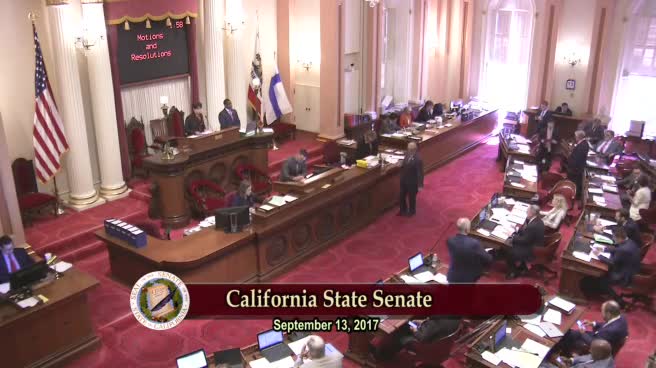 1MIN
Senate Floor
 1H
Senate Standing Committee on Appropriations
 9MIN
Senate Standing Committee on Health
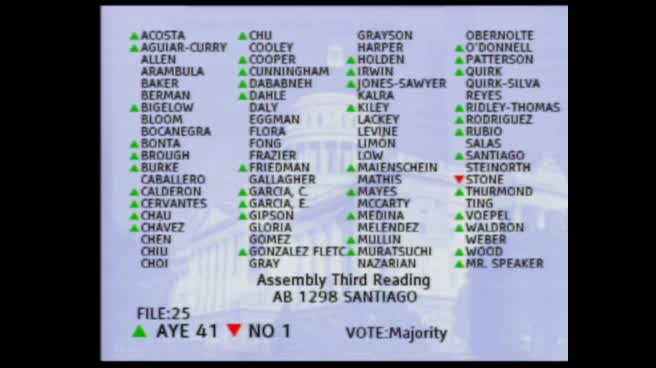 1MIN
Assembly Floor
 1H
Assembly Standing Committee on Appropriations
 16MIN
Assembly Standing Committee on Health
Bill Author




