AB 824: Transitional Housing for Homeless Youth Grant Program.
- Session Year: 2017-2018
- House: Assembly
- Latest Version Date: 2017-04-18
Existing law establishes the Homeless Youth and Exploitation Program, under which homeless youth emergency service projects are established in the Counties of Los Angeles, Santa Clara, San Diego, and the City and County of San Francisco through a grant program to eligible private, nonprofit agencies with a demonstrated record of success in the delivery of services to homeless youth. Under existing law, this program is administered by the Office of Emergency Services. Existing law requires each project to provide specified services, including food and access to overnight shelter, counseling to address immediate emotional crises and problems, and long-term stabilization planning.
This bill would establish the Transitional Housing for Homeless Youth Grant Program to be administered by the Office of Emergency Services to award grants to qualified nonprofit entities to provide transitional living services, such as long-term residential services, access to resources, and counseling services, to homeless youth ages 18 to 24 years of age, inclusive, for a period of up to 36 months. The bill would require the office, in consultation with specified stakeholders, to establish minimum standards and procedures for awarding the grant moneys. The bill would require each grant recipient to submit a report to the office on or before January 31, 2020, and on or before January 31 each year thereafter, that contains specified information regarding services provided during the previous calendar year, including the number of youth served that year and the average length of stay for each youth who left the program. The bill would require the office to submit a report to the Legislature on or before March 31, 2020, and on or before March 31 each year thereafter, that contains, in aggregate form, the information the grant recipients submitted to the office. The bill would appropriate $15,000,000 from the General Fund to the Office of Emergency Services for the purpose of awarding grants under the program.
Existing law establishes the Homeless Youth and Exploitation Program, under which homeless youth emergency service projects are established in the Counties of Los Angeles, Santa Clara, San Diego, and the City and County of San Francisco through a grant program to eligible private, nonprofit agencies with a demonstrated record of success in the delivery of services to homeless youth. Under existing law, this program is administered by the Office of Emergency Services. Existing law requires each project to provide specified services, including food and access to overnight shelter, counseling to address immediate emotional crises and problems, and long-term stabilization planning.
This bill would establish the Transitional Housing for Homeless Youth Grant Program to be administered by the Office of Emergency Services to award grants to qualified nonprofit entities to provide transitional living services, such as long-term residential services, access to resources, and counseling services, to homeless youth ages 18 to 24 years of age, inclusive, for a period of up to 36 months. The bill would require the office, in consultation with specified stakeholders, to establish minimum standards and procedures for awarding the grant moneys. The bill would appropriate $15,000,000 from the General Fund to the Office of Emergency Services for the purpose of awarding grants under the program.
This chapter shall be known and may be cited as the Transitional Housing for Homeless Youth Grant Program.
13711.(a)The Transitional Housing for Homeless Youth Grant Program is established in the Office of Emergency Services for the purpose of awarding grants to qualified nonprofit entities to provide homeless youth a safety net and a strong support system that will help them become self-sufficient. It is the intent of the Legislature that qualified nonprofit entities awarded grants under this program will provide transitional living services, which includes, but is include, but are not limited to, long-term residential services, access to resources, and counseling services, to homeless youth ages 18 to 24 years of age, inclusive, for a period of up to 36 months.
(b)The Transitional Housing for Homeless Youth Grant Program shall be administered by the Office of Emergency Services.
13712.For purposes of this chapter, the following definitions shall apply:
(a)Homeless youth means a youth 18 to 24 years of age, inclusive, who is in the need of transitional living services and without a fixed, regular, and adequate place of nighttime residence.
(b)Office means the Office of Emergency Services.
(c)Program means the Transitional Housing for Homeless Youth Grant Program.
13713.(a)The program shall award grants to qualified nonprofit entities that demonstrate the ability to provide transitional living services designed to help homeless youth make a successful transition to self-sufficient living. A qualified nonprofit entity awarded a grant under this program shall offer all of the following services:
(1)(A)Residential services, either directly or by referral, that provide a safe and clean living environment and that may include, but are not limited to, any of the following: host family dwellings and supervised apartments.
(i)Group homes operated specifically for homeless youth.(ii)Maternity group homes operated specifically for homeless youth.(iii)Host family dwellings.(iv)Supervised apartments.(B)For purposes of this section, residential services includes publicly or privately supervised shelters exclusively operated for homeless youth or living situations with friends, family members, or other temporary living accommodations.
(2)An established plan for referral services to any of the following programs or services to help integrate and coordinate those services for homeless youth:
(A)Social services.
(B)Law enforcement.
(C)Educational services.
(D)Vocational training.
(E)Welfare services.
(F)Legal services.
(G)Health care programs.
(H)Affordable child care or child educational programs, or both, as indicated or as necessary.
(3)Basic life skills resources and counseling services that may include, but are not limited to, any of the following:
(A)Education and educational advancement and resources.
(B)Aid in getting and keeping a job.
(C)Money management.
(D)Decision-making. Decisionmaking.
(E)Interpersonal skill building.
(F)Mental and physical health care.
(G)Individual or group counseling, or both.
(H)Parent-child counseling or parenting skills, or both, for homeless youth who are parents.
(4)Outreach programs designed to connect with homeless youth to participate in the program.
(b)In selecting applicants for grants under subdivision (a), priority shall be given to applicants who have demonstrated experience working with runaway or homeless youth and applicants in a city or county that lacks existing transitional housing programs for homeless youth.
13714.(a)The office, in consultation with current and former homeless youth and representatives from advocacy groups serving homeless youth, shall establish minimum standards and procedures for the selection of grantees and the determination of grant amounts, which shall take into consideration, at a minimum, all of the following:
(1)A demonstrated need for a transitional housing program for homeless youth.
(2)A demonstrated ability to effectively administer the program.
(3)A demonstrated ability to provide comprehensive, transitional living services to meet the needs of homeless youth.
(b)Each grant recipient shall be required to ensure that participants in the program are engaged in at least one activity that will lead to self-sufficiency. self-sufficiency, unless a participant is found to have good cause, as defined during the establishment of minimum standards and procedures pursuant to subdivision (a), for not engaging in that activity.
(c)Each grant recipient shall screen participants for eligibility for programs and services, including, but not limited to, those described in this chapter and Chapter 3 (commencing with Section 12000) of this part, and in Chapter 10 (commencing with Section 18900) of Part 6.
(d)Each grant recipient shall work with youth to engage in family reunification efforts, if appropriate, in the best interests of, and desired by, the youth.
13715.(a)Each grant recipient shall submit a report to the office on or before January 31, 2020, and on or before January 31 each year thereafter, that contains the following information regarding the services provided during the previous calendar year:
(1)Number of youth served that year.
(2)Average length of stay for each youth who left the program and what type of setting the youth exited to.
(3)Number of youth required to participate in at least one activity and number of youth determined to have good cause to not participate.
(4)Number of youth for whom family reunification efforts were engaged in, and number of youth for whom family reunification occurred.
(5)Number of youth screened for benefits or services, and number of youth who received benefits or services.
(b)(1)The office shall submit a report to the Legislature on or before March 31, 2020, and on or before March 31 each year thereafter, that contains, in aggregate form, the information grant recipients submitted pursuant to subdivision (a).
(2)The report required to be submitted pursuant to paragraph (1) shall be submitted in compliance with Section 9795 of the Government Code.
SEC. 2.The sum of fifteen million dollars ($15,000,000) is hereby appropriated from the General Fund to the Office of Emergency Services for the purpose of awarding grants under the Transitional Housing for Homeless Youth Grant Program established pursuant to Chapter 6.1 (commencing with Section 13710) of Part 3 of Division 9 of the Welfare and Institutions Code.
This chapter shall be known and may be cited as the Transitional Housing for Homeless Youth Grant Program.
13711.(a)The Transitional Housing for Homeless Youth Grant Program is established in the Office of Emergency Services for the purpose of awarding grants to qualified nonprofit entities to provide homeless youth a safety net and a strong support system that will help them become self-sufficient. It is the intent of the Legislature that qualified nonprofit entities awarded grants under this program will provide transitional living services, which includes, but is not limited to, long-term residential services, access to resources, and counseling services, to homeless youth ages 18 to 24 years of age, inclusive, for a period of up to 36 months.
(b)The Transitional Housing for Homeless Youth Grant Program shall be administered by the Office of Emergency Services.
13712.For purposes of this chapter, the following definitions shall apply:
(a)Homeless youth means a youth 18 to 24 years of age, inclusive, who is in the need of transitional living services and without a fixed, regular, and adequate place of nighttime residence.
(b)Office means the Office of Emergency Services.
(c)Program means the Transitional Housing for Homeless Youth Grant Program.
13713.(a)The program shall award grants to qualified nonprofit entities that demonstrate the ability to provide transitional living services designed to help homeless youth make a successful transition to self-sufficient living. A qualified nonprofit entity awarded a grant under this program shall offer all of the following services:
(1)(A)Residential services, either directly or by referral, that provide a safe and clean living environment and that may include, but are not limited to, any of the following:
(i)Group homes operated specifically for homeless youth.
(ii)Maternity group homes operated specifically for homeless youth.
(iii)Host family dwellings.
(iv)Supervised apartments.
(B)For purposes of this section, residential services includes publicly or privately supervised shelters exclusively operated for homeless youth or living situations with friends, family members, or other temporary living accommodations.
(2)An established plan for referral services to any of the following programs or services to help integrate and coordinate those services for homeless youth:
(A)Social services.
(B)Law enforcement.
(C)Educational services.
(D)Vocational training.
(E)Welfare services.
(F)Legal services.
(G)Health care programs.
(H)Affordable child care or child educational programs, or both, as indicated or as necessary.
(3)Basic life skills resources and counseling services that may include, but are not limited to, any of the following:
(A)Education and educational advancement and resources.
(B)Aid in getting and keeping a job.
(C)Money management.
(D)Decision-making.
(E)Interpersonal skill building.
(F)Mental and physical health care.
(G)Individual or group counseling, or both.
(H)Parent-child counseling or parenting skills, or both, for homeless youth who are parents.
(4)Outreach programs designed to connect with homeless youth to participate in the program.
(b)In selecting applicants for grants under subdivision (a), priority shall be given to applicants who have demonstrated experience working with runaway or homeless youth. youth and applicants in a city or county that lacks existing transitional housing programs for homeless youth.
13714.(a)The office, in consultation with current and former homeless youth and representatives from advocacy groups serving homeless youth, shall establish minimum standards and procedures for the selection of grantees and the determination of grant amounts, which shall take into consideration, at a minimum, all of the following:
(1)A demonstrated need for a transitional housing program for homeless youth.
(2)A demonstrated ability to effectively administer the program.
(3)A demonstrated ability to provide comprehensive, transitional living services to meet the needs of homeless youth.
(b)Each grant recipient shall be required to ensure that participants in the program are engaged in at least one activity that will lead to self-sufficiency.
SEC. 2.The sum of fifteen million dollars ($15,000,000) is hereby appropriated from the General Fund to the Office of Emergency Services for the purpose of awarding grants under the Transitional Housing for Homeless Youth Grant Program established pursuant to Chapter 6.1 (commencing with Section 13710) of Part 3 of Division 9 of the Welfare and Institutions Code.
This chapter shall be known and may be cited as the Transitional Housing for Homeless Youth Grant Program.
13711.(a)The Transitional Housing for Homeless Youth Grant Program is established in the Office of Emergency Services for the purpose of awarding grants to qualified entities to provide homeless youth a safety net and a strong support system that will help them become self-sufficient. It is the intent of the Legislature that qualified entities awarded grants under this program will provide transitional living services, which includes, but is not limited to, long-term residential services, access to resources, and counseling services, to homeless youth ages 18 to 24 years of age, inclusive, for a period of up to 36 months.
(b)The Transitional Housing for Homeless Youth Grant Program shall be administered by the Office of Emergency Services.
13712.For purposes of this chapter, the following definitions shall apply:
(a)Homeless youth means a youth 18 to 24 years of age, inclusive, who is in the need of transitional living services and without a fixed, regular, and adequate place of nighttime residence.
(b)Office means the Office of Emergency Services.
(c)Program means the Transitional Housing for Homeless Youth Grant Program.
13713.(a)The program shall award grants to qualified nonprofit entities that demonstrate the ability to provide transitional living services designed to help homeless youth make a successful transition to self-sufficient living. A qualified entity awarded a grant under this program shall offer all of the following services:
(1)(A)Residential services, either directly or by referral, that provide a safe and clean living environment and that may include, but are not limited to, any of the following:
(i)Group homes operated specifically for homeless youth.
(ii)Maternity group homes operated specifically for homeless youth.
(iii)Host family dwellings.
(iv)Supervised apartments.
(B)For purposes of this section, residential services includes publicly or privately supervised shelters exclusively operated for homeless youth or living situations with friends, family members, or other temporary living accommodations.
(2)An established plan for referral services to any of the following programs or services to help integrate and coordinate those services for homeless youth:
(A)Social services.
(B)Law enforcement.
(C)Educational services.
(D)Vocational training.
(E)Welfare services.
(F)Legal services.
(G)Health care programs.
(H)Affordable child care or child educational programs, or both, as indicated or as necessary.
(3)Basic life skills resources and counseling services that may include, but are not limited to, any of the following:
(A)Education and educational advancement and resources.
(B)Aid in getting and keeping a job.
(C)Money management.
(D)Decision-making.
(E)Interpersonal skill building.
(F)Mental and physical health care.
(G)Individual or group counseling, or both.
(H)Parent-child counseling or parenting skills, or both, for homeless youth who are parents.
(4)Outreach programs designed to connect with homeless youth to participate in the program.
(b)In selecting applicants for grants under subdivision (a), priority shall be given to applicants who have demonstrated experience working with runaway or homeless youth.
13714.(a)The office, in consultation with current and former homeless youth and representatives from advocacy groups serving homeless youth, shall establish minimum standards and procedures for the selection of grantees and the determination of grant amounts, which shall take into consideration, at a minimum, all of the following:
(1)A demonstrated need for a transitional housing program for homeless youth.
(2)A demonstrated ability to effectively administer the program.
(3)A demonstrated ability to provide comprehensive, transitional living services to meet the needs of homeless youth.
(b)Each grant recipient shall be required to ensure that participants in the program are engaged in at least one activity that will lead to self-sufficiency.
SEC. 2.The sum of fifteen million dollars ($15,000,000) is hereby appropriated from the General Fund to the Office of Emergency Services for the purpose of awarding grants under the Transitional Housing for Homeless Youth Grant Program established pursuant to Chapter 6.1 (commencing with Section 13710) of Part 3 of Division 9 of the Welfare and Institutions Code.
|
Date
|
Status
|
|---|---|
| Feb 1, 2018 | From committee: Filed with the Chief Clerk pursuant to Joint Rule 56. |
| Jan 31, 2018 | Died pursuant to Art. IV, Sec. 10(c) of the Constitution. |
| May 26, 2017 | In committee: Held under submission. |
| May 3, 2017 | In committee: Set, first hearing. Referred to APPR. suspense file. |
| Apr 19, 2017 | Re-referred to Com. on APPR. |
| Apr 18, 2017 | Read second time and amended. |
| Apr 17, 2017 | From committee: Amend, and do pass as amended and re-refer to Com. on APPR. (Ayes 7. Noes 0.) (April 4). |
| Mar 21, 2017 | In committee: Hearing postponed by committee. |
| Mar 16, 2017 | Re-referred to Com. on HUM. S. |
| Mar 15, 2017 | From committee chair, with author's amendments: Amend, and re-refer to Com. on HUM. S. Read second time and amended. |
| Mar 2, 2017 | Referred to Com. on HUM. S. |
| Feb 17, 2017 | From printer. May be heard in committee March 19. |
| Feb 16, 2017 | Read first time. To print. |
|
Date
|
Description
|
Location
|
Votes
|
|
|---|---|---|---|---|
| Apr 4, 2017 | Do pass as amended and be re-referred to the Committee on [Appropriations] | Assembly Standing Committee on Human Services |
Passed |
This list shows positions taken on this bill by organizations on the date displayed, which is linked to the original source.
Positions by individuals are not included.
Date of Hearing: May 3, 2017
ASSEMBLY COMMITTEE ON APPROPRIATIONS
Lorena Gonzalez Fletcher, Chair
ABPCA Bill Id:AB 824
Author:(Lackey) – As Amended Ver:April 18, 2017
Policy Committee: | Human Services | Vote: | 7 - 0 |
|
| ||
|
|
Urgency: No State Mandated Local Program: No Reimbursable: No
SUMMARY: This bill creates the Transitional Housing for Homeless Youth Grant Program in the Office of Emergency Services (OES) to award grants to nonprofit entities providing residential, referral, life skills and counseling, and outreach services to homeless youth ages 18 to 24. The bill also requires each grant recipient to annually report to OES specified information regarding services provided. The bill contains a $15 million (GF) appropriation to fund the grant program.
FISCAL EFFECT:
- Appropriates $15 million (GF) to OES to award grants under the program.
Staff notes that a $15 million GF appropriation for this program is also being requested in the Budget process as a Legislative augmentation. The Assembly Budget Subcommittee on Public Safety (Sub 5) will consider the proposal on May 8, 2017. A $25 million request is pending consideration in the Senate Budget Subcommittee on State Administration and General Government (Sub 4).
- $146,000 (GF) annual cost to OES for administrative costs for the development of the RFP, and to implement and maintain a new $15 million program.
COMMENTS:
- Purpose. According to the author, “Last year’s $10 million appropriation was the first increase to the Homeless Youth and Exploitation Program in nearly 30 years. However, these resources only fund crisis and stabilization services with no funding for transitional living programs that would give young people the skills and training to get off the streets for good. Given that there are still more than 10,000 unaccompanied homeless youth, there is still much work to be done. AB 824 would provide $15 million for homeless youth transitional living grants for a period of up to 36 months, create access to education and employment assistance, and teach independent living skills, family engagement and reunification. These funds would be available to any qualified nonprofit from any of California’s 58 counties and operate out of a separate account at OES.”
- Background. The Homeless Youth Act of 1985 (AB 1596 (Agnos), Chapter 1445, Statutes of 1985) established pilot projects to develop a network of youth services in San Francisco and Los Angeles, and required the state to collect data on runaway youth in Santa Clara and San Diego counties. This bill appropriated state General Fund monies to the former Office of Criminal Justice Planning to administer the program. SB 508 (Presley), Chapter 288, Statutes of 1988, extended the Homeless Youth Act, deleting references to pilot projects and making provisions permanent.
By 2015-16, the Homeless Youth and Exploitation Program was administered by OES and operating in four agencies, each representing a separate county: San Diego Youth Services, Children’s Hospital of Los Angeles, Larkin Street Youth Services (San Francisco), and the Bill Wilson Center (Santa Clara County). Total 2015-16 funding for the projects was almost $1.1 million, ($356,000 GF, the remainder State Victim Witness Assistance Funds). OES reported that, for the 2014-15 fiscal year, the Homeless Youth and Exploitation Program (across all four county projects), among other things: provided 9,988 youth with outreach services; provided 661 youth with shelter; assisted 319 youth with family reunification; and provided training on independent living and survival skills to 1,082 youth.
AB 1622 (Assembly Committee on Budget), Chapter 44, Statutes of 2016, carved out $10 million from funds previously appropriated for the California Emergency Solutions Grants Program and redirected these monies to the Homeless Youth and Exploitation Program to fund additional pilot projects in Orange, El Dorado, Fresno, and San Bernardino counties over five years.
The US Department of Housing and Urban Development (HUD), in its Annual Homeless Assessment Report (AHAR), reported that on a single night in 2016, there were 118,142 people experiencing homelessness in California, 22% of the national total. That same report revealed that California reported 11,222 unaccompanied homeless youth, the largest number of any state and nearly 31% of the homeless youth in the United States. About 92% of these youth were between the ages of 18 and 24 (10,375), with nearly 900 under the age of 18.
These numbers are for a single night and are neither exhaustive of the number of Californians experiencing homelessness on a daily basis nor the number of Californians who experience homelessness each year.
- Prior Legislation. In addition to AB 1596, SB 508 and AB 1622 mentioned above, AB 1699 (Kim), of the 2015-16 Legislative Session, would have expanded homeless youth emergency service projects to additional counties and required these projects to provide transitional living services. That bill was held on this Committee's Suspense.
Analysis Prepared by: Jennifer Swenson / APPR. / (916) 319-2081
Date of Hearing: April 4, 2017
ASSEMBLY COMMITTEE ON HUMAN SERVICES
Blanca Rubio, Chair
ABPCA Bill Id:AB 824 (
Author:Lackey) – As Amended Ver:March 15, 2017
SUBJECT: Transitional Housing for Homeless Youth Grant Program
SUMMARY: Creates the Transitional Housing for Homeless Youth Grant Program in the Office of Emergency Services (OES) to award grants to nonprofit entities providing residential, referral, life skills and counseling, and outreach services to homeless youth ages 18 to 24.
Specifically, this bill:
- Establishes the Transitional Housing for Homeless Youth Grant Program to be housed in and administered by OES to award grants to qualified nonprofit entities for the provision of services to homeless youth, as specified.
- States Legislative intent that qualified nonprofit entities that are awarded grants will provide transitional living services, as specified, to homeless youth between the ages of 18 and 24 for up to 36 months.
- Defines “homeless youth” to mean a youth between the ages of 18 and 24 who lacks a fixed, regular, and adequate place of nighttime residence and who is in need of transitional living services.
- Defines “residential services” to include publicly or privately supervised shelters operated exclusively for homeless youth, or living situations with friends, family members, or other temporary living accommodations.
- Requires grants to be awarded to qualified nonprofit entities that demonstrate the ability to provide transitional living services, as specified, and that offer all of the following services:
- Residential services, either directly or through referral, as specified;
- An established plan for referral services to specified programs or services to help integrate and coordinate those services for homeless youth;
- Life skills resources and counseling services, as specified; and
- Outreach programs designed to connect with homeless youth to participate in the program.
- Requires OES to, in consultation with current and former homeless youth and representatives from advocacy groups serving homeless youth, establish minimum standards and procedures to be used in selecting grantees and establishing grant amounts that take into consideration at least all of the following:
- Demonstrated need for a transitional housing program for homeless youth;
- Demonstrated ability to effectively administer the program; and
- Demonstrated ability to provide comprehensive transitional living services for homeless youth.
- Requires priority to be given to applicant entities who:
- Have demonstrated experience working with runaway or homeless youth; and
- Are in a city or county that lacks existing transitional housing programs for homeless youth.
- Requires each grant recipient to ensure that program participants are engaged in at least one activity that will lead to self-sufficiency.
- Appropriates $15 million from the General Fund to OES for the purpose of awarding Transitional Housing for Homeless Youth grants, as specified.
EXISTING LAW:
- Establishes homeless youth emergency service projects in Los Angeles, San Francisco, San Diego, and Santa Clara counties. (WIC 13700 et seq.)
- Requires each homeless youth emergency project to provide services, as specified and including, but not limited to: food and access to overnight shelter; counseling to address immediate emotional crises or problems; outreach services; screening for basic health needs and referral to public and private agencies for health care; linkage to other services; long-term stabilization planning; and follow-up services to ensure that any return to the family or placement outside of the family is stable. (WIC 13701)
- Requires each of the four county-based projects to be operated by an agency in accordance with a grant award agreement with the Office of Criminal Justice Planning (now the Office of Emergency Services [OES]), and permits each project to have one central location or more than one location, as specified. Further requires that, to be eligible, grantees must be private, nonprofit agencies with a demonstrated record of success in the delivery of services to homeless youth, and sets criteria for granting preference, as specified. (WIC 13703)
- Requires OES to monitor the homeless youth emergency service projects, as specified. (WIC 13704)
FISCAL EFFECT: Unknown.
COMMENTS:
Homeless youth in California: The federal McKinney-Vento Homeless Assistance Act of 2001 defines homeless children and youths as individuals who “lack a fixed, regular, and adequate nighttime residence,” to include children and youths who: have to share housing with others due to loss of housing or economic hardship; are living in motels, hotels, trailer parks, or camp grounds because they lack other accommodations; are living in emergency or transitional shelters; are awaiting foster placement; or have a primary nighttime residence that is not designed as a regular sleeping accommodation for human beings.
The US Department of Housing and Urban Development (HUD), in its Annual Homeless Assessment Report (AHAR), reported that on a single night in 2016, there were 549,928 homeless people counted in the United States (194,716 of these individuals were people who were part of homeless families with children). That same report revealed that 22% (118,142) of those people experiencing homelessness were counted in California, 78,390 of which were unsheltered. It is important to note that this number is for a single night and is neither exhaustive of the number of Californians experiencing homelessness on a daily basis nor the number of Californians who experience homelessness each year. The 2016 AHAR found that 50,001 of the homeless individuals they counted across the country were between the ages of 18 and 24, 16,720 of whom were unsheltered.
Homeless youth emergency service projects: The Homeless Youth Act of 1985 (AB 1596 (Agnos), Chapter 1445, Statutes of 1985) established pilot projects to develop a network of youth services in San Francisco and Los Angeles, and required the state to collect data on runaway youth in Santa Clara and San Diego counties. This bill appropriated state General Fund monies to the former Office of Criminal Justice Planning to administer the program. SB 508 (Presley), Chapter 288, Statutes of 1988, extended the Homeless Youth Act, deleting references to pilot projects and making provisions permanent.
By 2015-16, the Homeless Youth and Exploitation Program was administered by OES and operating in four agencies, each representing a separate county: San Diego Youth Services, Children’s Hospital of Los Angeles, Larkin Street Youth Services (San Francisco), and the Bill Wilson Center (Santa Clara County). Total 2015-16 funding for the projects was almost $1.1 million, $356,000 of which was General Fund (the remaining funds were State Victim Witness Assistance Funds). OES reported that, for the 2014-15 fiscal year, the Homeless Youth and Exploitation Program (across all four county projects), among other things: provided 9,988 youth with outreach services; provided 661 youth with shelter; assisted 319 youth with family reunification; and provided training on independent living and survival skills to 1,082 youth.
AB 1622 (Assembly Committee on Budget), Chapter 44, Statutes of 2016, carved out $10 million from funds previously appropriated for the California Emergency Solutions Grants Program and redirected these monies to the Homeless Youth and Exploitation Program to fund additional pilot projects in Orange, El Dorado, Fresno, and San Bernardino counties over five years.
Continuum of Care Reform: SB 1013 (Senate Committee on Budget and Fiscal Review), Chapter 35, Statutes of 2012, realigned child welfare services to counties, placed a moratorium on the licensure of new group homes, and directed DSS to convene a working group to examine the use of group homes in California. This culminated in DSS submitting a report to the Legislature in January 2015 that contained a number of recommendations intended to reform the foster care system and reduce California’s reliance on group homes as a viable placement for foster youth. These efforts were initially named “Congregate Care Reform,” but were later renamed “Continuum of Care Reform” (CCR) to reflect the need to strengthen the state’s system of home-based care and supports while decreasing reliance on group homes. AB 403 (Stone), Chapter 773, Statutes of 2015, and AB 1997 (Stone), Chapter 612, Statutes of 2016, adopted many of the CCR report recommendations into law, including enacting a sunset for existing licensure, rate-setting, and other provisions for group homes and providing for a new licensure category of Short-Term Residential Therapeutic Programs (STRTPs) to offer temporary housing and intensive up-front services for youth prior to placing them with a family.
Differing approaches to addressing homelessness: There are a number of different models for addressing homelessness through the facilitation and/or provision of temporary and more permanent housing and support services. Emergency shelters are at one end of the spectrum: these are temporary accommodations that may typically have communal living spaces and often serve as the entry point into the system of homeless services. While emergency shelters can serve as a short-term stop-gap when an individual or family is facing a crisis, they are meant to be a very temporary solution and do not offer an appropriate setting for family stability and child well-being.
Transitional housing generally offers a housing subsidy along with supportive services in a range of residential settings. According to a 2015 research report from the Urban Institute entitled, “Rapid Re-housing: What the Research Says”:
“By design, transitional housing stays are intended to be longer than stays in emergency shelter. Implicit in this program is the assumption that families are not yet ‘housing ready’ and that the skills they obtain from using their program’s services focused on employment and self-sufficiency will help them become ready to maintain independent housing…Evidence shows that transitional housing has high barriers to entry: many programs screen for motivation, conduct drug tests, and require demonstrated willingness to work with the program through engagement in services. …The most recent study found that, among the 53 transitional housing programs in the sample, on average 23 percent of families do not ‘graduate’ successfully from transitional housing programs; this means they leave before completing the program, which the programs usually defined as getting permanent housing, getting a job, or both. Usually, failure to graduate occurs because families do not follow program requirements.”
Permanent supportive housing is designed to provide individuals with mental illness or disabilities an opportunity to live independently in their communities through the provision of housing assistance and supportive services such as case management, advocacy, substance abuse and/or mental health counseling, assistance securing employment, and the like. According to the United States Interagency Council on Homelessness, “Permanent Supportive Housing is a proven solution for people who have experienced chronic homelessness as well as other people with disabilities, including people leaving institutional and restrictive settings.” Permanent supportive housing can often be seen as a “housing first” approach, which is grounded in the notion that everyone can attain stability in permanent housing directly from homelessness, and that stable housing creates the basis for achieving other health and social services objectives.
Rapid re-housing also embodies a housing-first approach; according to the 2015 Urban Institute report, it is:
“an intervention designed to move homeless families into permanent housing as quickly as possible. Rapid re-housing was developed by local service providers attempting to address a specific problem in their communities. These providers noticed that many homeless families were stuck in shelters, transitional housing, and other temporary housing situations because they could not afford permanent, affordable housing. This left too many families in stressful, temporary shelter conditions for many months, which made it more difficult to find space for additional families as they became homeless and needed shelter. Rapid re-housing programs focus on eliminating barriers to moving families quickly into permanent housing by providing housing location services and financial assistance for housing related expenses (e.g., rent arrears, ongoing rent assistance, moving costs). Rather than providing services to get families ready for housing before permanent placement, a philosophy many transitional housing programs use, rapid re-housing services are designed with a housing first approach to get families in permanent housing and keep them stable once they are there.”
National Alliance to End Homelessness data indicate that, while rapid re-housing is increasingly seen as an important model for addressing homelessness, it makes up a relatively small portion of the homeless system; in 2014, the percentage of crisis-response beds for households with children that were rapid re-housing was 8%, while the percentage of beds for other approaches were as follows: 34% emergency shelter, 26% transitional housing, and 32% permanent supportive housing.
Need for this bill: According to the author:
“Last year’s $10 million appropriation was the first increase to the Homeless Youth and Exploitation Program in nearly 30 years. However, these resources only fund crisis and stabilization services with no funding for transitional living programs that would give young people the skills and training to get off the streets for good. Given that there are still more than 10,000 unaccompanied homeless youth, there is still much work to be done. AB 824 would provide $15 million for homeless youth transitional living grants for a period of up to 36 months, create access to education and employment assistance, and teach independent living skills, family engagement and reunification. These funds would be available to any qualified nonprofit from any of California’s 58 counties and operate out of a separate account at OES.”
Staff comments: The goal of this bill is an important one: to ensure that California is taking further steps to house and support its population of homeless youth. The funding and support this bill proposes for residential and other services for individuals between the ages of 18 and 24 who are facing homelessness could result in positive outcomes for many young adults; however, there are some concerning aspects of the current proposal, described below.
Some components of this bill go counter to reforms and philosophies of the child welfare system, which can have significant overlap with efforts to serve homeless youth. Specifically, this bill’s references to group homes is confusing and concerning, seeming to offer endorsement of and support for a housing model that the state, through CCR, is taking significant steps to move away from in the child welfare system. Additionally, family reunification is, when appropriate and in the best interests of the youth, a key goal in the child welfare services system and, yet, is not featured in the proposal at hand. This bill also does not require grantees to screen youth for various services – such as CalWORKs, SSI/SSP, and foster care benefits – and thus misses an opportunity to connect youth to key supports and services.
This bill also requires engagement in at least one activity “that will lead to self-sufficiency” as a condition of program participation. Research on approaches to homelessness and trends in federal supports and programs indicate that a “housing first” model that focuses on just that – helping individuals to achieve stable housing as a foundation that can lead to redressing other issues – may result in better long-term outcomes. Participation requirements can create barriers, particularly to serving some of the most vulnerable individuals facing homelessness.
Lastly, $15 million is a significant infusion of state funds into efforts carried out by various grantees across the state. The bill as currently written lacks any sort of reporting requirements and oversight mechanism for the Legislature to receive feedback on the use of these funds and attendant outcomes achieved for the state’s homeless youth.
Recommended amendments: In order to address the concerns raised above, committee staff recommends the following amendments:
In order to remove references to group homes, committee staff recommends the following amendments starting on line 12 of page 3 of the bill:
10
(1) (A) Residential services, either directly or by referral, that
11
provide a safe and clean living environment and that may include,
12
but are not limited to, host family dwellings and supervised apartments. any of the following:
13
(i) Group homes operated specifically for homeless youth.
14
(ii) Maternity group homes operated specifically for homeless
15
youth.
16
(iii) Host family dwellings.
17
(iv) Supervised apartments.
In order to allow for good-cause exemptions to participation requirements, ensure that eligibility for programs and services and family reunification are sought where appropriate, and to include reporting and oversight measures, committee staff recommends the following amendments starting on line 25 of page 4 of the bill:
23
(b) Each grant recipient shall be required to ensure that
24
participants in the program are engaged in at least one activity that
25
will lead to self-sufficiency, unless a participant is found to have good cause, as defined during the establishment of minimum standards and procedures pursuant to subdivision (a), for not engaging in such an activity.
(c) Each grant recipient shall screen participants for eligibility for programs and services, including, but not limited to, those described in Chapter 2 of Part 3 (commencing with section 11200), Chapter 3 of Part 3 (commencing with section 12000), and Chapter 10 of Part 6 (commencing with section 18900).
(d) Each grant recipient shall work with youth to engage in family reunification efforts, where appropriate, in the best interests of, and desired by the youth.
13715.
- Each grant recipient shall submit a report to the Office by January 31, 2020, and by January 31 each year thereafter, that contains the following information:
- Number of youth served that year;
- Average length of stay for each youth who left the program and what type of setting the youth exited to;
- Number of youth required to participate in at least one activity and number of youth determined to have good cause to not participate;
- Number of youth for whom family reunification efforts were engaged in, and number of youth for whom family reunification occurred;
- Number of youth screened for benefits or services, and number of youth who received benefits or services.
- The Office must submit a report to the Legislature by March 31, 2020, and by March 31 each year thereafter, that contains the information grant recipients submitted pursuant to subdivision (a) in aggregate form.
PRIOR LEGISLATION:
AB 404 (Stone), 2017, furthers Continuum of Care Reform efforts made by AB 403 and AB 1997. This bill is currently awaiting hearing in the Assembly Human Services Committee.
AB 1622 (Assembly Committee on Budget), Chapter 44, Statutes of 2016, among other things, carved out $10 million from funds previously appropriated for the California Emergency Solutions Grants Program and redirected these monies to the Homeless Youth and Exploitation Program to fund additional pilot projects in Orange, El Dorado, Fresno, and San Bernardino counties over five years.
AB 1997 (Stone), Chapter 612, Statutes of 2016, furthered Continuum of Care Reform efforts.
AB 1699 (Kim), 2016, would have expanded homeless youth emergency service projects to additional counties and required these projects to provide transitional living services. It died in the Assembly Appropriations Committee.
AB 403 (Stone), Chapter 773, Statutes of 2015, implemented Continuum of Care Reform recommendations to better serve children and youth in California’s child welfare services system.
SB 508 (Presley), Chapter 288, Statutes of 1988, extended the Homeless Youth Act, deleting references to pilot projects and making provisions permanent.
AB 1596 (Agnos), Chapter 1445, Statutes of 1985, established the Homeless Youth Act of 1985 to create pilot projects to develop a network of youth services in San Francisco and Los Angeles, and required the state to collect data on runaway youth in Santa Clara and San Diego counties. Further, it appropriated state General Fund monies to the former Office of Criminal Justice Planning to administer the program.
REGISTERED SUPPORT / OPPOSITION:
Support
Advancing Communities Together
American Academy of Pediatrics, CA
Antelope Valley Boys & Girls Club
Antelope Valley Community Clinic
Antelope Valley Council on Alcoholism and Drug Dependency
Antelope Valley Fair
Bob Wilson Center
Build Futures
California ACCESS Coalition
California Catholic Conference
California Catholic Conference
California Coalition for Youth
California Youth Empowerment Network
Catholic Charities of CA United
Children’s Advocacy Institute
City of Palmdale
City of Santa Monica
Coalition to Abolish Slavery & Trafficking (CASDT)
Desert Vineyard Church
Family Assistance Program
Mental Health America of California
National Alliance on Mental Illness
Northern Directors Group
Palmdale Chamber of Commerce
Social Advocates for Youth
Village Family Services
Youth Law Center
18 individuals
Opposition
None on file.
Analysis Prepared by: Daphne Hunt / HUM. S. / (916) 319-2089
Discussed in Hearing
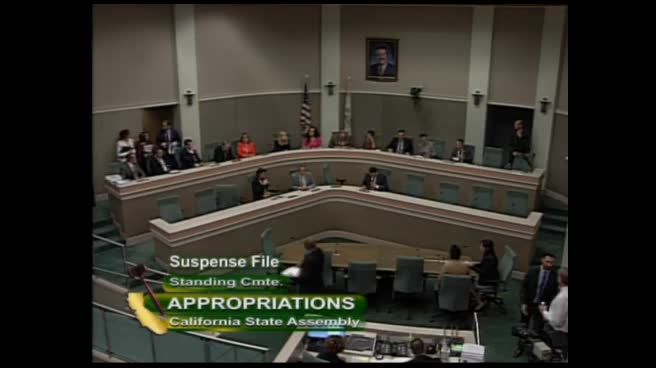 1H
Assembly Standing Committee on Appropriations
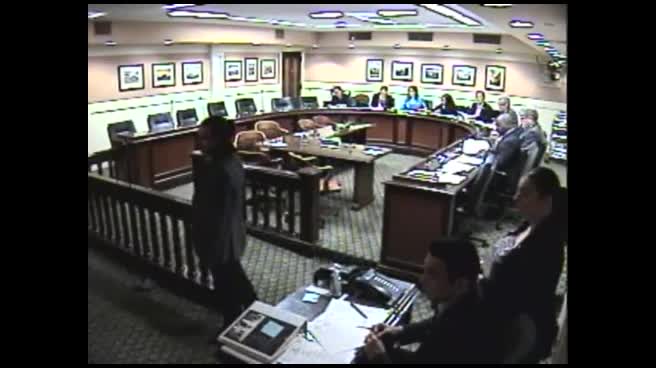 23MIN
Assembly Standing Committee on Human Services
Bill Author