AB 1773: Local government renewable energy self-generation program.
- Session Year: 2015-2016
- House: Assembly
- Latest Version Date: 2016-09-26
Under existing law, the Public Utilities Commission is vested with regulatory authority over public utilities. Existing law authorizes a local governmental entity, except a joint powers authority, to receive a bill credit to a designated benefiting account, for electricity exported to the electrical grid by an eligible renewable generating facility and requires the commission to adopt a rate tariff for the benefiting account.
This bill would include as a local governmental entity for this purpose a joint powers authority, except as specified.
Under existing law, a violation of the Public Utilities Act or an order or direction of the commission is a crime. Because the provisions of this bill would require an order or other action of the commission to implement and a violation of that order or action would be a crime, the bill would impose a state-mandated local program by creating a new crime.
The California Constitution requires the state to reimburse local agencies and school districts for certain costs mandated by the state. Statutory provisions establish procedures for making that reimbursement.
This bill would provide that no reimbursement is required by this act for a specified reason.
Under existing law, the Public Utilities Commission is vested with regulatory authority over public utilities. Existing law authorizes a local governmental entity, except a joint powers authority, to receive a bill credit to a designated benefiting account, for electricity exported to the electrical grid by an eligible renewable generating facility and requires the commission to adopt a rate tariff for the benefiting account.
This bill would include as a local governmental entity for this purpose a joint powers authority. authority, except as specified.
Under existing law, a violation of the Public Utilities Act or an order or direction of the commission is a crime. Because the provisions of this bill would require an order or other action of the commission to implement and a violation of that order or action would be a crime, the bill would impose a state-mandated local program by creating a new crime.
The California Constitution requires the state to reimburse local agencies and school districts for certain costs mandated by the state. Statutory provisions establish procedures for making that reimbursement.
This bill would provide that no reimbursement is required by this act for a specified reason.
Under existing law, the Public Utilities Commission is vested with regulatory authority over public utilities. Existing law authorizes a local governmental entity, except a joint powers authority, to receive a bill credit to a designated benefiting account, for electricity exported to the electrical grid by an eligible renewable generating facility and requires the commission to adopt a rate tariff for the benefiting account.
This bill would include as a local governmental entity for this purpose a joint powers authority.
Under existing law, a violation of the Public Utilities Act or an order or direction of the commission is a crime. Because the provisions of this bill would require an order or other action of the commission to implement and a violation of that order or action would be a crime, the bill would impose a state-mandated local program by creating a new crime.
The California Constitution requires the state to reimburse local agencies and school districts for certain costs mandated by the state. Statutory provisions establish procedures for making that reimbursement.
This bill would provide that no reimbursement is required by this act for a specified reason.
(a)As used in this section, the following terms have the following meanings:
(1)Benefiting account means an electricity account, or more than one account, that satisfies either of the following:
(A)The account or accounts are located within the geographical boundaries of a local government or, for a campus, within the geographical boundary of the city, county, or city and county in which the campus is located, with the account or accounts being mutually agreed upon by the local government or campus and an electrical corporation.
(B)The account or accounts belong to members of a joint powers authority and are located within the geographical boundaries of the group of public agencies that formed the joint powers authority, if the eligible renewable generating facility and electricity account or accounts are wholly located within the confines of a single county within which the joint powers authority is located and electric service is provided by a single electrical corporation, with the account or accounts being mutually agreed upon by the joint powers authority and the electrical corporation.
(2)Bill credit means an amount of money credited to a benefiting account that is calculated based upon the time-of-use electricity generation component of the electricity usage charge of the generating account, multiplied by the quantities of electricity generated by an eligible renewable generating facility that are exported to the grid during the corresponding time period. Electricity is exported to the grid if it is generated by an eligible renewable generating facility, is not utilized onsite by the local government, and the electricity flows through the meter site and on to the electrical corporations distribution or transmission infrastructure.
(3)Campus means an individual community college campus, individual California State University campus, or individual University of California campus.
(4)Eligible renewable generating facility means a generation facility that meets all of the following requirements:
(A)Has a generating capacity of no more than five megawatts.
(B)Is an eligible renewable energy resource, as defined in Article 16 (commencing with Section 399.11) of Part 1.
(C)Is located within the geographical boundary of the local government or, for a campus, within the geographical boundary of the city or city and county, if the campus is located in an incorporated area, or county, if the campus is located in an unincorporated area.
(D)Is owned by, operated by, or on property under the control of the local government or campus.
(E)Is sized to offset all or part of the electrical load of the benefiting account. For these purposes, premises that are leased by a local government or campus are under the control of the local government or campus.
(5)Generating account means the time-of-use electric service account of the local government or campus where the eligible renewable generating facility is located.
(6)Local government means a city, county, whether general law or chartered, city and county, special district, school district, political subdivision, other local public agency, or a joint powers authority formed pursuant to the Joint Exercise of Powers Act (Chapter 5 (commencing with Section 6500) of Division 7 of Title 1 of the Government Code) that has as members public agencies located within the same county and same electrical corporation service territory, but shall not mean the state, any agency or department of the state, other than an individual campus of the University of California or the California State University, or any joint powers authority that has as members public agencies located in different counties or different electrical corporation service territories, or that has as a member the federal government, any federal department or agency, this or another state, or any department or agency of this state or another state.
(b)Subject to the limitation in subdivision (h), a local government may elect to receive electric service pursuant to this section if all of the following conditions are met:
(1)The local government designates one or more benefiting accounts to receive a bill credit.
(2)A benefiting account receives service under a time-of-use rate schedule.
(3)The benefiting account is the responsibility of, and serves property that is owned, operated, or on property under the control of the same local government that owns, operates, or controls the eligible renewable generating facility.
(4)The electrical output of the eligible renewable generating facility is metered for time of use to allow calculation of the bill credit based upon when the electricity is exported to the grid.
(5)All costs associated with the metering requirements of paragraphs (2) and (4) are the responsibility of the local government.
(6)All costs associated with interconnection are the responsibility of the local government. For purposes of this paragraph, interconnection has the same meaning as defined in Section 2803, except that it applies to the interconnection of an eligible renewable generating facility rather than the energy source of a private energy producer.
(7)The local government does not sell electricity exported to the electrical grid to a third party.
(8)All electricity exported to the grid by the local government that is generated by the eligible renewable generating facility becomes the property of the electrical corporation to which the facility is interconnected, but shall not be counted toward the electrical corporations total retail sales for purposes of Article 16 (commencing with Section 399.11) of Chapter 2.3 of Part 1. Ownership of the renewable energy credits, as defined in Section 399.12, shall be the same as the ownership of the renewable energy credits associated with electricity that is net metered pursuant to Section 2827.
(9)An electrical corporation shall not be required to compensate a local government for electricity generated from an eligible renewable facility pursuant to this section in excess of the bill credits applied to the designated benefiting account. A local government renewable generation facility participating pursuant to this section shall not be eligible for any other tariff or program that requires an electrical corporation to purchase generation from that facility while participating in the local government renewable energy self-generation program pursuant to this section.
(c)(1)A benefiting account shall be billed for all electricity usage, and for each bill component, at the rate schedule applicable to the benefiting account, including any cost-responsibility surcharge or other cost recovery mechanism, as determined by the commission, to reimburse the Department of Water Resources for purchases of electricity, pursuant to Division 27 (commencing with Section 80000) of the Water Code.
(2)The bill shall then subtract the bill credit applicable to the benefiting account. The generation component credited to the benefiting account shall not include the cost-responsibility surcharge or other cost recovery mechanism, as determined by the commission, to reimburse the Department of Water Resources for purchases of electricity, pursuant to Division 27 (commencing with Section 80000) of the Water Code. The electrical corporation shall ensure that the local government receives the full bill credit.
(3)If, during the billing cycle, the generation component of the electricity usage charges exceeds the bill credit, the benefiting account shall be billed for the difference.
(4)If, during the billing cycle, the bill credit applied pursuant to paragraph (2) exceeds the generation component of the electricity usage charges, the difference shall be carried forward as a financial credit to the next billing cycle.
(5)After the electricity usage charge pursuant to paragraph (1) and the credit pursuant to paragraph (2) are determined for the last billing cycle of a 12-month period, any remaining credit resulting from the application of this section shall be reset to zero.
(d)The commission shall ensure that the transfer of a bill credit to a benefiting account does not result in a shifting of costs to bundled service subscribers. The costs associated with the transfer of a bill credit shall include all billing-related expenses.
(e)Not more frequently than once per year, and upon providing the electrical corporation with a minimum of 60 days notice, the local government may elect to change a benefiting account. Any credit resulting from the application of this section earned prior to the change in a benefiting account that has not been used as of the date of the change in the benefiting account shall be applied, and may only be applied, to a benefiting account as changed.
(f)A local government shall provide the electrical corporation to which the eligible renewable generating facility will be interconnected with not less than 60 days notice prior to the eligible renewable generating facility becoming operational. The electrical corporation shall file an advice letter with the commission that complies with this section not later than 30 days after receipt of the notice proposing a rate tariff for a benefiting account. The commission, within 30 days of the date of filing, shall approve the proposed tariff or specify conforming changes to be made by the electrical corporation to be filed in a new advice letter.
(g)The local government may terminate its election pursuant to subdivision (b), upon providing the electrical corporation with a minimum of 60 days notice. Should the local government sell its interest in the eligible renewable generating facility, or sell the electricity generated by the eligible renewable generating facility, in a manner other than required by this section, upon the date of either event, and the earliest date if both events occur, no further bill credit pursuant to paragraph (3) of subdivision (b) may be earned. Only credit earned prior to that date shall be made to a benefiting account.
(h)An electrical corporation is not obligated to provide a bill credit to a benefiting account that is not designated by a local government prior to the point in time that the combined statewide cumulative rated generating capacity of all eligible renewable generating facilities within the service territories of the states three largest electrical corporations reaches 250 megawatts. Only those eligible renewable generating facilities that are providing bill credits to benefiting accounts pursuant to this section shall count toward reaching this 250-megawatt limitation. Each electrical corporation shall only be required to offer service or contracts under this section until that electrical corporation reaches its proportionate share of the 250-megawatt limitation based on the ratio of its peak demand to the total statewide peak demand of all electrical corporations.
(i)This chapter does not apply to an electrical corporation with 60,000 or fewer customer accounts.
SEC. 2.No reimbursement is required by this act pursuant to Section 6 of Article XIIIB of the California Constitution because the only costs that may be incurred by a local agency or school district will be incurred because this act creates a new crime or infraction, eliminates a crime or infraction, or changes the penalty for a crime or infraction, within the meaning of Section 17556 of the Government Code, or changes the definition of a crime within the meaning of Section 6 of Article XIIIB of the California Constitution.
(a)As used in this section, the following terms have the following meanings:
(1)Benefiting account means an electricity account, or more than one account, located within the geographical boundaries of a local government or, for a campus, within the geographical boundary of the city, county, or city and county in which the campus is located, or for a joint powers authority, within the geographic boundaries of the group of public agencies that formed the joint powers authority, that is mutually agreed upon by the local government, campus, or joint powers authority and an electrical corporation. that satisfies either of the following:
(A)The account or accounts are located within the geographical boundaries of a local government or, for a campus, within the geographical boundary of the city, county, or city and county in which the campus is located, with the account or accounts being mutually agreed upon by the local government or campus and an electrical corporation.
(B)The account or accounts belong to members of a joint powers authority and are located within the geographical boundaries of the group of public agencies that formed the joint powers authority, if the eligible renewable generating facility and electricity account or accounts are wholly located within the confines of a single county within which the joint powers authority is located and electric service is provided by a single electrical corporation, with the account or accounts being mutually agreed upon by the joint powers authority and the electrical corporation.
(2)Bill credit means an amount of money credited to a benefiting account that is calculated based upon the time-of-use electricity generation component of the electricity usage charge of the generating account, multiplied by the quantities of electricity generated by an eligible renewable generating facility that are exported to the grid during the corresponding time period. Electricity is exported to the grid if it is generated by an eligible renewable generating facility, is not utilized onsite by the local government, and the electricity flows through the meter site and on to the electrical corporations distribution or transmission infrastructure.
(3)Campus means an individual community college campus, individual California State University campus, or individual University of California campus.
(4)Eligible renewable generating facility means a generation facility that meets all of the following requirements:
(A)Has a generating capacity of no more than five megawatts.
(B)Is an eligible renewable energy resource, as defined in Article 16 (commencing with Section 399.11) of Part 1.
(C)Is located within the geographical boundary of the local government or, for a campus, within the geographical boundary of the city or city and county, if the campus is located in an incorporated area, or county, if the campus is located in an unincorporated area.
(D)Is owned by, operated by, or on property under the control of the local government or campus.
(E)Is sized to offset all or part of the electrical load of the benefiting account. For these purposes, premises that are leased by a local government or campus are under the control of the local government or campus.
(5)Generating account means the time-of-use electric service account of the local government or campus where the eligible renewable generating facility is located.
(6)Local government means a city, county, whether general law or chartered, city and county, special district, school district, political subdivision, other local public agency, or a joint powers authority formed pursuant to the Joint Exercise of Powers Act (Chapter 5 (commencing with Section 6500) of Division 7 of Title 1 of the Government Code), Code) that has as members public agencies located within the same county and same electrical corporation service territory, but shall not mean the state, any agency or department of the state, other than an individual campus of the University of California or the California State University, or any joint powers authority that has as members public agencies located in different counties or different electrical corporation service territories, or that has as a member the federal government, any federal department or agency, this or another state, or any department or agency of this state or another state.
(b)Subject to the limitation in subdivision (h), a local government may elect to receive electric service pursuant to this section if all of the following conditions are met:
(1)The local government designates one or more benefiting accounts to receive a bill credit.
(2)A benefiting account receives service under a time-of-use rate schedule.
(3)The benefiting account is the responsibility of, and serves property that is owned, operated, or on property under the control of the same local government that owns, operates, or controls the eligible renewable generating facility.
(4)The electrical output of the eligible renewable generating facility is metered for time of use to allow calculation of the bill credit based upon when the electricity is exported to the grid.
(5)All costs associated with the metering requirements of paragraphs (2) and (4) are the responsibility of the local government.
(6)All costs associated with interconnection are the responsibility of the local government. For purposes of this paragraph, interconnection has the same meaning as defined in Section 2803, except that it applies to the interconnection of an eligible renewable generating facility rather than the energy source of a private energy producer.
(7)The local government does not sell electricity exported to the electrical grid to a third party.
(8)All electricity exported to the grid by the local government that is generated by the eligible renewable generating facility becomes the property of the electrical corporation to which the facility is interconnected, but shall not be counted toward the electrical corporations total retail sales for purposes of Article 16 (commencing with Section 399.11) of Chapter 2.3 of Part 1. Ownership of the renewable energy credits, as defined in Section 399.12, shall be the same as the ownership of the renewable energy credits associated with electricity that is net metered pursuant to Section 2827.
(9)An electrical corporation shall not be required to compensate a local government for electricity generated from an eligible renewable facility pursuant to this section in excess of the bill credits applied to the designated benefiting account. A local government renewable generation facility participating pursuant to this section shall not be eligible for any other tariff or program that requires an electrical corporation to purchase generation from that facility while participating in the local government renewable energy self-generation program pursuant to this section.
(c)(1)A benefiting account shall be billed for all electricity usage, and for each bill component, at the rate schedule applicable to the benefiting account, including any cost-responsibility surcharge or other cost recovery mechanism, as determined by the commission, to reimburse the Department of Water Resources for purchases of electricity, pursuant to Division 27 (commencing with Section 80000) of the Water Code.
(2)The bill shall then subtract the bill credit applicable to the benefiting account. The generation component credited to the benefiting account shall not include the cost-responsibility surcharge or other cost recovery mechanism, as determined by the commission, to reimburse the Department of Water Resources for purchases of electricity, pursuant to Division 27 (commencing with Section 80000) of the Water Code. The electrical corporation shall ensure that the local government receives the full bill credit.
(3)If, during the billing cycle, the generation component of the electricity usage charges exceeds the bill credit, the benefiting account shall be billed for the difference.
(4)If, during the billing cycle, the bill credit applied pursuant to paragraph (2) exceeds the generation component of the electricity usage charges, the difference shall be carried forward as a financial credit to the next billing cycle.
(5)After the electricity usage charge pursuant to paragraph (1) and the credit pursuant to paragraph (2) are determined for the last billing cycle of a 12-month period, any remaining credit resulting from the application of this section shall be reset to zero.
(d)The commission shall ensure that the transfer of a bill credit to a benefiting account does not result in a shifting of costs to bundled service subscribers. The costs associated with the transfer of a bill credit shall include all billing-related expenses.
(e)Not more frequently than once per year, and upon providing the electrical corporation with a minimum of 60 days notice, the local government may elect to change a benefiting account. Any credit resulting from the application of this section earned prior to the change in a benefiting account that has not been used as of the date of the change in the benefiting account shall be applied, and may only be applied, to a benefiting account as changed.
(f)A local government shall provide the electrical corporation to which the eligible renewable generating facility will be interconnected with not less than 60 days notice prior to the eligible renewable generating facility becoming operational. The electrical corporation shall file an advice letter with the commission that complies with this section not later than 30 days after receipt of the notice proposing a rate tariff for a benefiting account. The commission, within 30 days of the date of filing, shall approve the proposed tariff or specify conforming changes to be made by the electrical corporation to be filed in a new advice letter.
(g)The local government may terminate its election pursuant to subdivision (b), upon providing the electrical corporation with a minimum of 60 days notice. Should the local government sell its interest in the eligible renewable generating facility, or sell the electricity generated by the eligible renewable generating facility, in a manner other than required by this section, upon the date of either event, and the earliest date if both events occur, no further bill credit pursuant to paragraph (3) of subdivision (b) may be earned. Only credit earned prior to that date shall be made to a benefiting account.
(h)An electrical corporation is not obligated to provide a bill credit to a benefiting account that is not designated by a local government prior to the point in time that the combined statewide cumulative rated generating capacity of all eligible renewable generating facilities within the service territories of the states three largest electrical corporations reaches 250 megawatts. Only those eligible renewable generating facilities that are providing bill credits to benefiting accounts pursuant to this section shall count toward reaching this 250-megawatt limitation. Each electrical corporation shall only be required to offer service or contracts under this section until that electrical corporation reaches its proportionate share of the 250-megawatt limitation based on the ratio of its peak demand to the total statewide peak demand of all electrical corporations.
(i)This chapter does not apply to an electrical corporation with 60,000 or fewer customer accounts.
SEC. 2.No reimbursement is required by this act pursuant to Section 6 of Article XIIIB of the California Constitution because the only costs that may be incurred by a local agency or school district will be incurred because this act creates a new crime or infraction, eliminates a crime or infraction, or changes the penalty for a crime or infraction, within the meaning of Section 17556 of the Government Code, or changes the definition of a crime within the meaning of Section 6 of Article XIIIB of the California Constitution.
(a)As used in this section, the following terms have the following meanings:
(1)Benefiting account means an electricity account, or more than one account, located within the geographical boundaries of a local government or, for a campus, within the geographical boundary of the city, county, or city and county in which the campus is located, or for a joint powers authority, within the geographic boundaries of the group of public agencies that formed the joint powers authority, that is mutually agreed upon by the local government or campus government, campus, or joint powers authority and an electrical corporation.
(2)Bill credit means an amount of money credited to a benefiting account that is calculated based upon the time-of-use electricity generation component of the electricity usage charge of the generating account, multiplied by the quantities of electricity generated by an eligible renewable generating facility that are exported to the grid during the corresponding time period. Electricity is exported to the grid if it is generated by an eligible renewable generating facility, is not utilized onsite by the local government, and the electricity flows through the meter site and on to the electrical corporations distribution or transmission infrastructure.
(3)Campus means an individual community college campus, individual California State University campus, or individual University of California campus.
(4)Eligible renewable generating facility means a generation facility that meets all of the following requirements:
(A)Has a generating capacity of no more than five megawatts.
(B)Is an eligible renewable energy resource, as defined in Article 16 (commencing with Section 399.11) of Part 1.
(C)Is located within the geographical boundary of the local government or, for a campus, within the geographical boundary of the city or city and county, if the campus is located in an incorporated area, or county, if the campus is located in an unincorporated area.
(D)Is owned by, operated by, or on property under the control of the local government or campus.
(E)Is sized to offset all or part of the electrical load of the benefiting account. For these purposes, premises that are leased by a local government or campus are under the control of the local government or campus.
(5)Generating account means the time-of-use electric service account of the local government or campus where the eligible renewable generating facility is located.
(6)Local government means a city, county, whether general law or chartered, city and county, special district, school district, political subdivision, or other local public agency, including or a joint powers authority, authority formed pursuant to the Joint Exercise of Powers Act (Chapter 5 (commencing with Section 6500) of Division 7 of Title 1 of the Government Code), but shall not mean the state or state, any agency or department of the state, other than an individual campus of the University of California or the California State University. University, or any joint powers authority that has as a member the federal government, any federal department or agency, this or another state, or any department or agency of this state or another state.
(b)Subject to the limitation in subdivision (h), a local government may elect to receive electric service pursuant to this section if all of the following conditions are met:
(1)The local government designates one or more benefiting accounts to receive a bill credit.
(2)A benefiting account receives service under a time-of-use rate schedule.
(3)The benefiting account is the responsibility of, and serves property that is owned, operated, or on property under the control of the same local government that owns, operates, or controls the eligible renewable generating facility.
(4)The electrical output of the eligible renewable generating facility is metered for time of use to allow calculation of the bill credit based upon when the electricity is exported to the grid.
(5)All costs associated with the metering requirements of paragraphs (2) and (4) are the responsibility of the local government.
(6)All costs associated with interconnection are the responsibility of the local government. For purposes of this paragraph, interconnection has the same meaning as defined in Section 2803, except that it applies to the interconnection of an eligible renewable generating facility rather than the energy source of a private energy producer.
(7)The local government does not sell electricity exported to the electrical grid to a third party.
(8)All electricity exported to the grid by the local government that is generated by the eligible renewable generating facility becomes the property of the electrical corporation to which the facility is interconnected, but shall not be counted toward the electrical corporations total retail sales for purposes of Article 16 (commencing with Section 399.11) of Chapter 2.3 of Part 1. Ownership of the renewable energy credits, as defined in Section 399.12, shall be the same as the ownership of the renewable energy credits associated with electricity that is net metered pursuant to Section 2827.
(9)An electrical corporation shall not be required to compensate a local government for electricity generated from an eligible renewable facility pursuant to this section in excess of the bill credits applied to the designated benefiting account. A local government renewable generation facility participating pursuant to this section shall not be eligible for any other tariff or program that requires an electrical corporation to purchase generation from that facility while participating in the local government renewable energy self-generation program pursuant to this section.
(c)(1)A benefiting account shall be billed for all electricity usage, and for each bill component, at the rate schedule applicable to the benefiting account, including any cost-responsibility surcharge or other cost recovery mechanism, as determined by the commission, to reimburse the Department of Water Resources for purchases of electricity, pursuant to Division 27 (commencing with Section 80000) of the Water Code.
(2)The bill shall then subtract the bill credit applicable to the benefiting account. The generation component credited to the benefiting account shall not include the cost-responsibility surcharge or other cost recovery mechanism, as determined by the commission, to reimburse the Department of Water Resources for purchases of electricity, pursuant to Division 27 (commencing with Section 80000) of the Water Code. The electrical corporation shall ensure that the local government receives the full bill credit.
(3)If, during the billing cycle, the generation component of the electricity usage charges exceeds the bill credit, the benefiting account shall be billed for the difference.
(4)If, during the billing cycle, the bill credit applied pursuant to paragraph (2) exceeds the generation component of the electricity usage charges, the difference shall be carried forward as a financial credit to the next billing cycle.
(5)After the electricity usage charge pursuant to paragraph (1) and the credit pursuant to paragraph (2) are determined for the last billing cycle of a 12-month period, any remaining credit resulting from the application of this section shall be reset to zero.
(d)The commission shall ensure that the transfer of a bill credit to a benefiting account does not result in a shifting of costs to bundled service subscribers. The costs associated with the transfer of a bill credit shall include all billing-related expenses.
(e)Not more frequently than once per year, and upon providing the electrical corporation with a minimum of 60 days notice, the local government may elect to change a benefiting account. Any credit resulting from the application of this section earned prior to the change in a benefiting account that has not been used as of the date of the change in the benefiting account shall be applied, and may only be applied, to a benefiting account as changed.
(f)A local government shall provide the electrical corporation to which the eligible renewable generating facility will be interconnected with not less than 60 days notice prior to the eligible renewable generating facility becoming operational. The electrical corporation shall file an advice letter with the commission that complies with this section not later than 30 days after receipt of the notice proposing a rate tariff for a benefiting account. The commission, within 30 days of the date of filing, shall approve the proposed tariff or specify conforming changes to be made by the electrical corporation to be filed in a new advice letter.
(g)The local government may terminate its election pursuant to subdivision (b), upon providing the electrical corporation with a minimum of 60 days notice. Should the local government sell its interest in the eligible renewable generating facility, or sell the electricity generated by the eligible renewable generating facility, in a manner other than required by this section, upon the date of either event, and the earliest date if both events occur, no further bill credit pursuant to paragraph (3) of subdivision (b) may be earned. Only credit earned prior to that date shall be made to a benefiting account.
(h)An electrical corporation is not obligated to provide a bill credit to a benefiting account that is not designated by a local government prior to the point in time that the combined statewide cumulative rated generating capacity of all eligible renewable generating facilities within the service territories of the states three largest electrical corporations reaches 250 megawatts. Only those eligible renewable generating facilities that are providing bill credits to benefiting accounts pursuant to this section shall count toward reaching this 250-megawatt limitation. Each electrical corporation shall only be required to offer service or contracts under this section until that electrical corporation reaches its proportionate share of the 250-megawatt limitation based on the ratio of its peak demand to the total statewide peak demand of all electrical corporations.
(i)This chapter does not apply to an electrical corporation with 60,000 or fewer customer accounts.
SEC. 3.SEC. 2.No reimbursement is required by this act pursuant to Section 6 of Article XIIIB of the California Constitution because the only costs that may be incurred by a local agency or school district will be incurred because this act creates a new crime or infraction, eliminates a crime or infraction, or changes the penalty for a crime or infraction, within the meaning of Section 17556 of the Government Code, or changes the definition of a crime within the meaning of Section 6 of Article XIIIB of the California Constitution.
(a)As used in this section, the following terms have the following meanings:
(1)Benefiting account means an electricity account, or more than one account, located within the geographical boundaries of a local government or, for a campus, within the geographical boundary of the city, county, or city and county in which the campus is located, that is mutually agreed upon by the local government or campus and an electrical corporation.
(2)Bill credit means an amount of money credited to a benefiting account that is calculated based upon the time-of-use electricity generation component of the electricity usage charge of the generating account, multiplied by the quantities of electricity generated by an eligible renewable generating facility that are exported to the grid during the corresponding time period. Electricity is exported to the grid if it is generated by an eligible renewable generating facility, is not utilized onsite by the local government, and the electricity flows through the meter site and on to the electrical corporations distribution or transmission infrastructure.
(3)Campus means an individual community college campus, individual California State University campus, or individual University of California campus.
(4)Eligible renewable generating facility means a generation facility that meets all of the following requirements:
(A)Has a generating capacity of no more than five megawatts.
(B)Is an eligible renewable energy resource, as defined in Article 16 (commencing with Section 399.11) of Part 1.
(C)Is located within the geographical boundary of the local government or, for a campus, within the geographical boundary of the city or city and county, if the campus is located in an incorporated area, or county, if the campus is located in an unincorporated area.
(D)Is owned by, operated by, or on property under the control of the local government or campus.
(E)Is sized to offset all or part of the electrical load of the benefiting account. For these purposes, premises that are leased by a local government or campus are under the control of the local government or campus.
(5)Generating account means the time-of-use electric service account of the local government or campus where the eligible renewable generating facility is located.
(6)Local government means a city, county, whether general law or chartered, city and county, special district, school district, political subdivision, or other local public agency, but shall not mean including a joint powers authority, but shall not mean the state or any agency or department of the state, other than an individual campus of the University of California or the California State University.
(b)Subject to the limitation in subdivision (h), a local government may elect to receive electric service pursuant to this section if all of the following conditions are met:
(1)The local government designates one or more benefiting accounts to receive a bill credit.
(2)A benefiting account receives service under a time-of-use rate schedule.
(3)The benefiting account is the responsibility of, and serves property that is owned, operated, or on property under the control of the same local government that owns, operates, or controls the eligible renewable generating facility.
(4)The electrical output of the eligible renewable generating facility is metered for time of use to allow calculation of the bill credit based upon when the electricity is exported to the grid.
(5)All costs associated with the metering requirements of paragraphs (2) and (4) are the responsibility of the local government.
(6)All costs associated with interconnection are the responsibility of the local government. For purposes of this paragraph, interconnection has the same meaning as defined in Section 2803, except that it applies to the interconnection of an eligible renewable generating facility rather than the energy source of a private energy producer.
(7)The local government does not sell electricity exported to the electrical grid to a third party.
(8)All electricity exported to the grid by the local government that is generated by the eligible renewable generating facility becomes the property of the electrical corporation to which the facility is interconnected, but shall not be counted toward the electrical corporations total retail sales for purposes of Article 16 (commencing with Section 399.11) of Chapter 2.3 of Part 1. Ownership of the renewable energy credits, as defined in Section 399.12, shall be the same as the ownership of the renewable energy credits associated with electricity that is net metered pursuant to Section 2827.
(9)An electrical corporation shall not be required to compensate a local government for electricity generated from an eligible renewable facility pursuant to this section in excess of the bill credits applied to the designated benefiting account. A local government renewable generation facility participating pursuant to this section shall not be eligible for any other tariff or program that requires an electrical corporation to purchase generation from that facility while participating in the local government renewable energy self-generation program pursuant to this section.
(c)(1)A benefiting account shall be billed for all electricity usage, and for each bill component, at the rate schedule applicable to the benefiting account, including any cost-responsibility surcharge or other cost recovery mechanism, as determined by the commission, to reimburse the Department of Water Resources for purchases of electricity, pursuant to Division 27 (commencing with Section 80000) of the Water Code.
(2)The bill shall then subtract the bill credit applicable to the benefiting account. The generation component credited to the benefiting account shall not include the cost-responsibility surcharge or other cost recovery mechanism, as determined by the commission, to reimburse the Department of Water Resources for purchases of electricity, pursuant to Division 27 (commencing with Section 80000) of the Water Code. The electrical corporation shall ensure that the local government receives the full bill credit.
(3)If, during the billing cycle, the generation component of the electricity usage charges exceeds the bill credit, the benefiting account shall be billed for the difference.
(4)If, during the billing cycle, the bill credit applied pursuant to paragraph (2) exceeds the generation component of the electricity usage charges, the difference shall be carried forward as a financial credit to the next billing cycle.
(5)After the electricity usage charge pursuant to paragraph (1) and the credit pursuant to paragraph (2) are determined for the last billing cycle of a 12-month period, any remaining credit resulting from the application of this section shall be reset to zero.
(d)The commission shall ensure that the transfer of a bill credit to a benefiting account does not result in a shifting of costs to bundled service subscribers. The costs associated with the transfer of a bill credit shall include all billing-related expenses.
(e)Not more frequently than once per year, and upon providing the electrical corporation with a minimum of 60 days notice, the local government may elect to change a benefiting account. Any credit resulting from the application of this section earned prior to the change in a benefiting account that has not been used as of the date of the change in the benefiting account shall be applied, and may only be applied, to a benefiting account as changed.
(f)A local government shall provide the electrical corporation to which the eligible renewable generating facility will be interconnected with not less than 60 days notice prior to the eligible renewable generating facility becoming operational. The electrical corporation shall file an advice letter with the commission that complies with this section not later than 30 days after receipt of the notice proposing a rate tariff for a benefiting account. The commission, within 30 days of the date of filing, shall approve the proposed tariff or specify conforming changes to be made by the electrical corporation to be filed in a new advice letter.
(g)The local government may terminate its election pursuant to subdivision (b), upon providing the electrical corporation with a minimum of 60 days notice. Should the local government sell its interest in the eligible renewable generating facility, or sell the electricity generated by the eligible renewable generating facility, in a manner other than required by this section, upon the date of either event, and the earliest date if both events occur, no further bill credit pursuant to paragraph (3) of subdivision (b) may be earned. Only credit earned prior to that date shall be made to a benefiting account.
(h)An electrical corporation is not obligated to provide a bill credit to a benefiting account that is not designated by a local government prior to the point in time that the combined statewide cumulative rated generating capacity of all eligible renewable generating facilities within the service territories of the states three largest electrical corporations reaches 250 megawatts. Only those eligible renewable generating facilities that are providing bill credits to benefiting accounts pursuant to this section shall count toward reaching this 250-megawatt limitation. Each electrical corporation shall only be required to offer service or contracts under this section until that electrical corporation reaches its proportionate share of the 250-megawatt limitation based on the ratio of its peak demand to the total statewide peak demand of all electrical corporations.
(i)This chapter does not apply to an electrical corporation with 60,000 or fewer customer accounts.
SEC. 3.No reimbursement is required by this act pursuant to Section 6 of Article XIIIB of the California Constitution because the only costs that may be incurred by a local agency or school district will be incurred because this act creates a new crime or infraction, eliminates a crime or infraction, or changes the penalty for a crime or infraction, within the meaning of Section 17556 of the Government Code, or changes the definition of a crime within the meaning of Section 6 of Article XIIIB of the California Constitution.
|
Date
|
Status
|
|---|---|
| Aug 25, 2016 | Enrolled and presented to the Governor at 5 p.m. |
| Aug 19, 2016 | In Assembly. Ordered to Engrossing and Enrolling. |
| Aug 18, 2016 | Read third time. Passed. Ordered to the Assembly. (Ayes 36. Noes 0. Page 5131.). |
| Aug 18, 2016 | Read third time. Passed. Ordered to the Assembly. (Ayes 36. Noes 0.). |
| Aug 18, 2016 | Read third time. Passed. Ordered to the Assembly. |
| Aug 2, 2016 | Read second time. Ordered to third reading. |
| Aug 1, 2016 | From committee: Be placed on second reading file pursuant to Senate Rule 28.8. |
| Jun 21, 2016 | From committee: Do pass and re-refer to Com. on APPR. (Ayes 10. Noes 0.) (June 21). Re-referred to Com. on APPR. |
| Jun 8, 2016 | In committee: Hearing postponed by committee. |
| May 19, 2016 | Referred to Com. on E., U., & C. |
| May 12, 2016 | Read third time. Passed. Ordered to the Senate. (Ayes 78. Noes 0. Page 4786.) |
| May 12, 2016 | Read third time. Passed. Ordered to the Senate. (Ayes 78. Noes 0.) |
| May 12, 2016 | In Senate. Read first time. To Com. on RLS. for assignment. |
| May 12, 2016 | Read third time. Passed. Ordered to the Senate. |
| May 5, 2016 | Read second time. Ordered to Consent Calendar. |
| May 4, 2016 | From committee: Do pass. To Consent Calendar. (Ayes 20. Noes 0.) (May 4). |
| Apr 21, 2016 | From committee: Do pass and re-refer to Com. on APPR. with recommendation: To Consent Calendar. (Ayes 9. Noes 0.) (April 20). Re-referred to Com. on APPR. |
| Apr 14, 2016 | Re-referred to Com. on L. GOV. |
| Apr 13, 2016 | Read second time and amended. |
| Apr 12, 2016 | From committee: Amend, and do pass as amended and re-refer to Com. on L. GOV. with recommendation: To Consent Calendar. (Ayes 15. Noes 0.) (April 6). |
| Mar 29, 2016 | Re-referred to Com. on U. & C. |
| Mar 28, 2016 | From committee chair, with author's amendments: Amend, and re-refer to Com. on U. & C. Read second time and amended. |
| Mar 17, 2016 | Referred to Coms. on U. & C. and L. GOV. |
| Feb 4, 2016 | From printer. May be heard in committee March 5. |
| Feb 3, 2016 | Read first time. To print. |
|
Date
|
Description
|
Location
|
Votes
|
|
|---|---|---|---|---|
| Aug 18, 2016 | Assembly 3rd Reading AB1773 Obernolte By Pavley | Senate Floor |
Passed |
|
| Jun 21, 2016 | Do pass, but first be re-referred to the Committee on [Appropriations] | Senate Standing Committee on Energy, Utilities and Communications |
Passed |
|
| May 12, 2016 | AB 1773 OBERNOLTE Consent Calendar Second Day Regular Session | Assembly Floor |
Passed |
|
| May 4, 2016 | Do pass. To Consent Calendar. | Assembly Standing Committee on Appropriations |
Passed |
|
| Apr 20, 2016 | Do pass and be re-referred to the Committee on [Appropriations] with recommendation: To Consent Calendar | Assembly Standing Committee on Local Government |
Passed |
|
| Apr 6, 2016 | Do pass as amended, and be re-referred to the Committee on [Local Government] with recommendation: To Consent Calendar | Assembly Standing Committee on Utilities and Commerce |
Passed |
This list shows positions taken on this bill by organizations on the date displayed, which is linked to the original source.
Positions by individuals are not included.
Office of Senate Floor Analyses (916) 651-1520 Fax: (916) 327-4478 | AB |
THIRD READING
Bill No: AB 1773
:
SENATE ENERGY, U. & C. COMMITTEE: 10-0, 6/21/16
AYES: Hueso, Morrell, Cannella, Gaines, Hertzberg, Lara, Leyva, McGuire, Pavley, Wolk
NO VOTE RECORDED: Hill
SENATE APPROPRIATIONS COMMITTEE: Senate Rule 28.8
ASSEMBLY FLOOR: 78-0, 5/12/16 (Consent) - See last page for vote
SOURCE: Victor Valley Wastewater Reclamation Authority
DIGEST: This bill expands the Renewable Energy Self-Generation Bill Credit Transfer (RES-BCT) program to allow participation by joint powers authority (JPA) that are public agencies located within the same county and within same electrical corporation service territory. The RES-BCT program allows a local governmental entity to operate a small renewable electricity generating facility in one location and have the utility credit the output of that facility against electricity the local government consumes at another location.
Existing law:
- Establishes the RES-BCT program, which provides that a city, county, city and county, special district, school district, political subdivision, or other local public agency may elect to designate another account or accounts controlled by the governmental entity to receive bill credits for electricity generated by a renewable generating facility located within the boundaries of the governmental entity. (Public Utilities Code §2830)
- Excludes JPA from participating in the RES-BCT program. (Public Utilities Code §2830)
- Requires the three largest electrical corporations to offer contracts to local governments under the RES-BCT program until the combined statewide cumulative generating capacity of all eligible renewable facilities within their service territories reaches 250 megawatts (MW). (Public Utilities Code §2830)
- Requires the California Public Utilities Commission (CPUC) to ensure the transfer of a bill credit to a benefiting account does not result in a shifting of costs onto bundled service subscribers. (Public Utilities Code §2830)
- Enables two or more public agencies by contractual agreement to jointly exercise any power common to the contracting agencies, thus creating a JPA. (Government Code §6500)
This bill:
- Authorizes a limited expansion of the RES-BCT program to allow specified JPAs to participate in the program. The JPAs’ members must be public agencies that are located within the same county and within same electrical corporation service territory. Specifically, this bill:
- Expands the definition of "local government" for purposes of the RES-BCT program to include a JPA that has as members public agencies located within the same county and same electrical corporation service territory.
- Excludes a JPA from participating in the RES-BCT program, if it has as members public agencies located in different counties or different electrical corporation service territories, or, if the JPA has as a member the federal government, any federal department or agency, this or another state, or any department or agency of this state or another state.
- Expands the definition of "benefitting account" for purposes of the RES-BCT program to include an account or accounts that belong to members of a JPA and are located within the geographical boundaries of the group of public agencies that formed the JPA, if the eligible renewable generating facility and electricity account or accounts are wholly located within the confines of a single county within which the JPA is located and electric service is provided by a single electrical corporation, with the account or accounts being mutually agreed upon by the JPA and the electrical corporation.
- Specifies the following requirements:
- The benefitting account or accounts must belong to members of the JPA and be located within the geographical boundaries of the group of public agencies that formed the JPA;
- The eligible renewable generating facility and the electricity account or accounts must be wholly located within the confines of a single county within which the JPA is located;
- Electric service must be provided by a single electrical corporation; and,
- The account or accounts must be mutually agreed upon by the JPA and the electrical corporation.
Background
RES-BCT allows a local governmental entity to operate a small renewable electricity generating facility (up to five MW) in one location and have the utility credit the output of that facility against electricity the local government consumes at another location, known as benefitting accounts. Under current law, JPAs are not eligible to participate in the RES-BCT program. This is because a JPA can include the federal government or any federal department or agency, this state, another state or any state department or agency, a county, county board of education, county superintendent of schools, city, public corporation, public district, regional transportation commission of this state or another state, a federally recognized Indian tribe, or any JPA formed, pursuant to the Joint Exercise of Powers Act, by any of these agencies. Therefore, contracts between JPAs and investor-owned utilities might include benefitting accounts and generation facilities that cross county and even state lines and utility territories.
This bill limits the geographical scope of participating JPAs by allowing participation only by JPAs whose members are in the same county and served by the same electrical corporation. Furthermore, AB 1773 limits participating JPAs by allowing only JPAs whose benefitting accounts belong to members of the JPA and are located within the geographical boundaries of the group of public agencies that formed the JPA. In addition, the eligible renewable generating facility and the electricity account or accounts must be wholly located within the confines of a single county within which the JPA is located, and the account or accounts must be mutually agreed upon by the JPA and the electrical corporation.
Related/Prior Legislation
AB 512 (Gordon, Chapter 478, Statutes of 2011) increased the maximum size for renewable energy generating systems eligible under the RES-BCT program from one MW to five MW.
AB 2693 (Blumenfield, 2010) would have attempted to expand the RES-BCT program to allow the participation of JPAs. Died in the Assembly Committee on Utilities and Commerce.
AB 1031 (Blumenfield, Chapter 380, Statutes of 2009) expanded the RES-BCT program to allow individual public college and university campuses to participate.
AB 2466 (Laird, Chapter 540, Statutes of 2008) created the RES-BCT program, which allowed a local governmental entity to operate a small renewable electricity generating facility in one location and have the utility credit the output of that facility against electricity the local government consumes at another location.
FISCAL EFFECT: Appropriation: Fiscal Com.: Local:
Victor Valley Wastewater Reclamation Authority (source)
Association of California Water Agencies
California Association of Sanitation Agencies
None received
ARGUMENTS IN SUPPORT: According to the author:
In 2008, AB 2466 established the RES-BCT program to provide local governments with an avenue to maximize their utilization of self-generated renewable energy, which would be otherwise economically infeasible under previously existing programs. The RES-BCT program allows local government entities to credit energy generated from renewable sources against electricity used at more than just the facility where the renewable energy is generated.
Joint powers authorities were explicitly prohibited from participating in the program, regardless of their geographic scope. Organizations like the Victor Valley Wastewater Reclamation Authority (VVWRA) that may still operate within the bounds of a local government entity are prohibited from participating based on their status as a JPA. While participation in the program has grown, there is still a fair amount of room available under the cap of the program.
AB 1773 would expand the program to allow certain JPAs to participate in the program. This bill would limit the JPAs that could participate to those that are operating with the geographic bounds of the local entities that created them. AB 1773 would promote the adoption of more renewable energy sources while still limiting the program to local entity participation.
The VVWRA, the sponsor of this bill, asserts that "Current law explicitly excludes joint powers authorities from eligibility to participate in the RES-BCT Program, even if they operate with the geographic bounds of a local government entity. The VVWRA resides in the geographic boundary of the city of Victorville. VVWRA's Waste to Energy program is a leader in the wastewater industry with the capability of producing enough green energy to power our entire plant with electricity left over. VVWRA is also in the position to expand the program and generate even more sustainable energy. But current law does not allow VVWRA, as a JPA, to export that power to the grid. AB 1773 would eliminate the barriers VVWRA is facing and allow a new green, environmentally friendly power source for our region.”
Additionally, the Association of California Water Agencies (ACWA) notes that “Energy efficiency is a fundamental operating mission for ACWA’s member agencies, and the RES-BCT program incentivizes this by authorizing a local government entity to receive a credit on their electric bill for power generated from a renewable energy facility that generates more energy than is needed to serve the electrical load of that entity. ACWA believes that the expansion of this program to utilization by JPA’s would continue to promote smart energy policy and the increased generation of renewable energy.”
AYES: Achadjian, Alejo, Travis Allen, Arambula, Atkins, Baker, Bigelow, Bloom, Bonilla, Bonta, Brough, Brown, Calderon, Campos, Chang, Chau, Chávez, Chiu, Chu, Cooley, Cooper, Dababneh, Dahle, Daly, Dodd, Eggman, Frazier, Beth Gaines, Gallagher, Cristina Garcia, Eduardo Garcia, Gatto, Gipson, Gomez, Gonzalez, Gordon, Gray, Grove, Hadley, Harper, Roger Hernández, Holden, Irwin, Jones, Kim, Lackey, Levine, Linder, Lopez, Low, Maienschein, Mathis, Mayes, McCarty, Medina, Melendez, Mullin, Nazarian, Obernolte, O'Donnell, Olsen, Patterson, Quirk, Ridley-Thomas, Rodriguez, Salas, Santiago, Steinorth, Mark Stone, Thurmond, Ting, Wagner, Waldron, Weber, Wilk, Williams, Wood, Rendon
NO VOTE RECORDED: Burke, Jones-Sawyer
8/3/16 18:40:24
**** END ****
SENATE COMMITTEE ON ENERGY, UTILITIES AND COMMUNICATIONS
Senator Ben Hueso, Chair
2015 - 2016 Regular
Bill No: AB 1773 Hearing Date: 6/21/2016
Author: | Obernolte | ||
Version: | 4/13/2016 As Amended | ||
Urgency: | No | Fiscal: | Yes |
Consultant: | Aaron Brieno, Jay Dickenson | ||
SUBJECT: Local government renewable energy self-generation program
DIGEST: This bill expands the Renewable Energy Self-Generation Bill Credit Transfer (RES-BCT) program, which provides that a city, county, city and county, special district, school district, political subdivision, or other local public agency may elect to designate another account or accounts controlled by the governmental entity to receive bill credits for electricity generated by a renewable generating facility located within the boundaries of the governmental entity.
ANALYSIS:
Existing law:
- Established the RES-BCT program, which provides that a city, county, city and county, special district, school district, political subdivision, or other local public agency may elect to designate another account or accounts controlled by the governmental entity to receive bill credits for electricity generated by a renewable generating facility located within the boundaries of the governmental entity. (Public Utilities Code §2830)
- Excludes joint powers authority (JPA) from participating in the RES-BCT program. (Public Utilities Code §2830)
- Defines an eligible "benefitting account" under the RES-BCT program to mean an electricity account, or more than one account, located within the geographical boundaries of a local government or, for a campus, within the geographical boundary of the city, county, or city and county in which the campus is located, that is mutually agreed upon by the local government or campus and an electrical corporation. (Public Utilities Code §2830)
- Requires benefitting accounts under the RES-BCT program to receive service under a time-of-use rate schedule and calculates the BCT amount based on when the electricity was exported to the grid. (Public Utilities Code §2830)
- Requires the three largest electrical corporations to offer contracts to local governments under the RES-BCT program until the combined statewide cumulative generating capacity of all eligible renewable facilities within their service territories reaches 250 megawatts (MW). (Public Utilities Code §2830)
- Requires the California Public Utilities Commission (CPUC) to ensure the transfer of a bill credit to a benefiting account does not result in a shifting of costs onto bundled service subscribers. (Public Utilities Code §2830)
- Enables two or more public agencies by contractual agreement to jointly exercise any power common to the contracting agencies, thus creating a JPA. (Government Code §6500)
This bill:
- Authorizes a limited expansion of the RES-BCT program to allow specified JPAs to participate in the program. The JPAs’ members must be public agencies that are located within the same county and within same electrical corporation service territory. Specifically, this bill:
- Expands the definition of "local government" for purposes of the RES-BCT program to include a JPA that has as members public agencies located within the same county and same electrical corporation service territory.
- Excludes a JPA from participating in the RES-BCT program, if it has as members public agencies located in different counties or different electrical corporation service territories, or, if the JPA has as a member the federal government, any federal department or agency, this or another state, or any department or agency of this state or another state.
- Expands the definition of "benefitting account" for purposes of the RES-BCT program to include an account or accounts that belong to members of a JPA and are located within the geographical boundaries of the group of public agencies that formed the JPA, if the eligible renewable generating facility and electricity account or accounts are wholly located within the confines of a single county within which the JPA is located and electric service is provided by a single electrical corporation, with the account or accounts being mutually agreed upon by the JPA and the electrical corporation.
- Specifies the following requirements:
- The benefitting account or accounts must belong to members of the JPA and be located within the geographical boundaries of the group of public agencies that formed the JPA;
- The eligible renewable generating facility and the electricity account or accounts must be wholly located within the confines of a single county within which the JPA is located;
- Electric service must be provided by a single electrical corporation; and,
- The account or accounts must be mutually agreed upon by the JPA and the electrical corporation.
Background
The RES-BCT program was established by the passage of AB 2466 (Laird, Chapter 540, Statutes of 2008) effective January 1, 2009 and is codified in Section 2830 of the Public Utilities Code. RES-BCT allows a local governmental entity to operate a small renewable electricity generating facility in one location and have the utility credit the output of that facility against electricity the local government consumes at another location.
AB 1031 (Blumenfield, Chapter 380, Statutes of 2009), expanded the RES-BCT program to local universities and AB 512 (Gordon, Chapter 478, Statutes of 2011), effective on January 1, 2012, further modified this program to increase the generator size limit to five MW per generation account.
The RES-BCT allows a local governmental entities to install up to five MW of renewable generation per location (generating account) within its geographic boundary, offset any coincident usage at the generator site, and convert excess electricity exported to the utility grid to credits that can be used to offset generation component charges at one or more other locations (benefitting accounts) within the same geographic boundary
Under the RES-BCT program, local governments such as cities and counties, school districts, special districts, political subdivisions, and public agencies may participate, as well as individual college campuses. In addition, the program requires that the transfer of a bill credit to a benefiting account does not result in a shifting of costs to bundled service subscribers.
How does the RES-BCT work? A local government entity (or third party) can install an eligible renewable generator on property that is owned or under the control of the local governmental entity and located within its geographic boundary, which is called the “generating account”. The generator account may or may not have electrical usage (load) on it.
The utility service provider will install a generator account meter that separately measures both the electricity drawn from the utility grid and that exported to the grid; the metered exports to the grid are used to calculate the generation credits.
The local governmental entity will identify and provide the allocation percent among the designated “benefiting account(s)”; up to 50 accounts per “arrangement” may be designated to receive these generation credits. Under existing law, the benefiting accounts must be within the local government entity’s geographic boundaries, and on property that it owns, operates, or controls.
RES-BCT Expansions. According to the CPUC, in 2011 no local governments were participating in the RES-BCT program in any of the three investor-owned utility (IOU) territories. To increase participation in the RES-BCT program, the Legislature passed AB 512, which increased the maximum size for renewable energy generating systems eligible for the program from one MW to five MW. In addition to supporting AB 512, the CPUC recommended that the program be expanded further so that all customers could be eligible to participate, not just local governments and college campuses. According to the most recent available data, the statewide cumulative amount of energy generated within the RES-BCT program is now 50 MW, which leaves 200 MW available under the total statewide program capacity.
RES-BCT Program and JPAs. At the RES-BCT programs formation under AB 2466, JPAs were explicitly excluded because of geographical concerns. These concerns were raised because JPAs across the state are extremely diverse in their goals, size, members, and locations. The territory of a JPA varies and depends on the makeup of its members.
A JPA as defined can include the federal government or any federal department or agency, this state, another state or any state department or agency, a county, county board of education, county superintendent of schools, city, public corporation, public district, regional transportation commission of this state or another state, a federally recognized Indian tribe, or any JPA formed, pursuant to the Joint Exercise of Powers Act, by any of these agencies.
Had JPAs been included in AB 2466, contracts between JPAs and IOUs could have included benefitting accounts and generation facilities spread out across large geographical areas, crossing county and even state lines and utility territories.
AB 1031 raised these concerns when it attempted to expand the RES-BCT program to allow the participation of public colleges and universities, which exist in large statewide systems similar to JPAs. To address this geographical concern, AB 1031 limited eligibility for the program to individual campuses.
RES-BCT Program Cap
At noted above, existing law requires the three largest IOU’s to offer contracts to local governments under the RES-BCT program until the combined statewide cumulative generating capacity of all eligible renewable facilities within their service territories reaches 250 MW. (Public Utilities Code §2830)
Based on information provided to this committee by the California Public Utilities Commission (CPUC), the state’s three largest IOU’s existing contracts with local governments are well under the program statutory cap of 250 MW.
Utility | Cap (MW) | Installed (MW) |
SCE | 123.8 | 29.8567 |
PG&E | 105.25 | 22.3 |
SDG&E | 20 | 6.81 |
Committee Findings. This bill seeks a limited expansion of the RES-BCT program to allow certain JPAs to participate. AB 1773 attempts to address many of the initial concerns which excluded JPA’s from the RES-BCT program at the program’s inception. Specifically, this bill attempts to limit the geographical size of participating JPAs by allowing participation only by JPAs whose members are in the same county and are served by the same electrical corporation. Furthermore, AB 1773 limits participating JPAs by allowing only JPAs whose benefitting accounts belong to members of the JPA and are located within the geographical boundaries of the group of public agencies that formed the JPA. In addition, the eligible renewable generating facility and the electricity account or accounts must be wholly located within the confines of a single county within which the JPA is located, and the account or accounts must be mutually agreed upon by the JPA and the electrical corporation.
While participation in the RES-BCT program has grown, as the data provided by the CPUC indicates, there is still a fair amount of room available under the program’s statutory cap for growth.
Prior/Related Legislation
AB 512 (Gordon, Chapter 478, Statutes of 2011) increased the maximum size for renewable energy generating systems eligible under the RES-BCT program from one MW to five MW.
AB 2693 (Blumenfield, 2010) would have attempted to expand the RES-BCT program to allow the participation of JPAs. Died in the Assembly Committee on Utilities and Commerce.
AB 1031 (Blumenfield, Chapter 380, Statutes of 2009) expanded the RES-BCT program to allow individual public college and university campuses to participate.
AB 2466 (Laird, Chapter 540, Statutes of 2008) created the RES-BCT program, which allowed a local governmental entity to operate a small renewable electricity generating facility in one location and have the utility credit the output of that facility against electricity the local government consumes at another location.
FISCAL EFFECT: Appropriation: No Fiscal Com.: Yes Local: Yes
SUPPORT:
Victor Valley Wastewater Reclamation Authority (Source)
Association of California Water Agencies
California Association of Sanitation Agencies
OPPOSITION:
None received
ARGUMENTS IN SUPPORT: According to the author, “In 2008, AB 2466 established the RES-BCT program to provide local governments with an avenue to maximize their utilization of self-generated renewable energy, which would be otherwise economically infeasible under previously existing programs. The RES-BCT program allows local government entities to credit energy generated from renewable sources against electricity used at more than just the facility where the renewable energy is generated.
Joint powers authorities were explicitly prohibited from participating in the program, regardless of their geographic scope. Organizations like the Victor Valley Wastewater Reclamation Authority (VVWRA) that may still operate within the bounds of a local government entity are prohibited from participating based on their status as a JPA. While participation in the program has grown, there is still a fair amount of room available under the cap of the program.
AB 1773 would expand the program to allow certain JPAs to participate in the program. This bill would limit the JPAs that could participate to those that are operating with the geographic bounds of the local entities that created them. AB 1773 would promote the adoption of more renewable energy sources while still limiting the program to local entity participation.”
The VVWRA, the sponsor of this bill, asserts that "Current law explicitly excludes joint powers authorities from eligibility to participate in the RES-BCT Program, even if they operate with the geographic bounds of a local government entity. The VVWRA resides in the geographic boundary of the city of Victorville. VVWRA's Waste to Energy program is a leader in the wastewater industry with the capability of producing enough green energy to power our entire plant with electricity left over. VVWRA is also in the position to expand the program and generate even more sustainable energy. But current law does not allow VVWRA, as a JPA, to export that power to the grid. AB 1773 would eliminate the barriers VVWRA is facing and allow a new green, environmentally friendly power source for our region.”
Additionally, the Association of California Water Agencies (ACWA) notes that “Energy efficiency is a fundamental operating mission for ACWA’s member agencies, and the RES-BCT program incentivizes this by authorizing a local government entity to receive a credit on their electric bill for power generated from a renewable energy facility that generates more energy than is needed to serve the electrical load of that entity. ACWA believes that the expansion of this program to utilization by JPA’s would continue to promote smart energy policy and the increased generation of renewable energy.”
-- END --
Date of Hearing: May 4, 2016
ASSEMBLY COMMITTEE ON APPROPRIATIONS
Lorena Gonzalez, Chair
ABPCA Bill Id:AB 1773
Author:(Obernolte) – As Amended Ver:April 13, 2016
Policy Committee: | Utilities and Commerce | Vote: | 15 - 0 |
Local Government | 9 - 0 |
Urgency: No State Mandated Local Program: Yes Reimbursable: No
SUMMARY:
This bill allows specified joint powers authorities to participate in the Renewable Energy Self-Generation Bill Credit Transfer (RES-BCT) program. Specifically, this bill:
- Expands the definition of "local government" to include joint powers authorities (JPAs) with public agency members located within the same county and same electrical corporation service territory.
- Excludes a JPA from participating in the RES-BCT program, if its public agency members are located in different counties or different electrical corporation service territories. Also excludes JPAs if their membership includes the federal government, any federal department or agency, the State of California or another state, or any department or agency of this state or another state.
- Expands the definition of "benefitting account" to include specified accounts within a JPA and establishes eligibility conditions.
FISCAL EFFECT:
Minor, if any additional state costs.
COMMENTS:
- Purpose. According to the author, JPAs were explicitly prohibited from participating in the program, regardless of their geographic scope. Organizations like the Victor Valley Wastewater Reclamation Authority that operate within the bounds of a local government entity are prohibited from participating based on their status as a JPA. While participation in the program has grown, there is still a fair amount of room available under the cap of the program. This bill authorizes a limited expansion of the RES-BCT program to allow specified JPAs to participate.
- Background. AB 2466 (Laird), Chapter 540, Statutes of 2008, established the RES-BCT program to allow a local government agency to operate a small renewable electricity generating facility in one location and have the utility credit the electricity produced against the electricity consumed at another location located within the local government boundaries.
Under the RES-BCT program, local governments such as cities and counties, school districts, special districts, political subdivisions, and public agencies may participate, as well as
individual college campuses. In addition, the program prohibits shifting costs to bundled service subscribers.
In 2011, no local governments were participating in the RES-BCT program in any of the three investor-owned utility (IOU) territories. The Legislature passed AB 512 (Gordon), Chapter 478, Statutes of 2011, to increase the maximum size for eligible renewable energy generation from 1 MW to 5 MW.
The three investor-owned utilities (IOUs) are required offer contracts to local governments under the RES-BCT program until the combined statewide cumulative generating capacity of all eligible renewable facilities within their service territories reaches 250 megawatts (MW).
According to the most recent available data, the statewide cumulative amount of energy generated within the RES-BCT program is now 50 MW, which leaves 200 MW available under the total statewide program capacity.
Analysis Prepared by: Jennifer Galehouse / APPR. / (916) 319-2081
Date of Hearing: April 20, 2016
ASSEMBLY COMMITTEE ON LOCAL GOVERNMENT
Susan Talamantes Eggman, Chair
ABPCA Bill Id:AB 1773 (
Author:Obernolte) – As Amended Ver:April 13, 2016
SUBJECT: Local government renewable energy self-generation program.
SUMMARY: Allows specified joint powers authorities to participate in the Renewable Energy Self-Generation Bill Credit Transfer program. Specifically, this bill:
- Expands the definition of "local government" for purposes of the Renewable Energy Self-Generation Bill Credit Transfer (RES-BCT) program to include a joint powers authority (JPA) that has as members public agencies located within the same county and same electrical corporation service territory.
- Excludes a JPA from participating in the RES-BCT program, if it has as members public agencies located in different counties or different electrical corporation service territories, or, if the JPA has as a member the federal government, any federal department or agency, this or another state, or any department or agency of this state or another state.
- Expands the definition of "benefitting account" for purposes of the RES-BCT program to include an account or accounts that belong to members of a JPA and are located within the geographical boundaries of the group of public agencies that formed the JPA, if the eligible renewable generating facility and electricity account or accounts are wholly located within the confines of a single county within which the JPA is located and electric service is provided by a single electrical corporation, with the account or accounts being mutually agreed upon by the JPA and the electrical corporation.
EXISTING LAW:
- Established the RES-BCT program, which allows a city, county, city and county, special district, school district, political subdivision, other local public agency, or an individual community college campus, individual California State University Campus, or individual University of California campus to designate another account or accounts controlled by the governmental entity to receive bill credits for electricity generated by a renewable generating facility located within the boundaries of the governmental entity.
- Excludes JPAs from participating in the RES-BCT program.
- Defines an eligible "benefitting account" under the RES-BCT program to mean an electricity account, or more than one account, located within the geographical boundaries of a local government or, for a campus, within the geographical boundary of the city, county, or city and county in which the campus is located, that is mutually agreed upon by the local government or campus and an electrical corporation.
- Requires the three largest electrical corporations to offer contracts to local governments under the RES-BCT program until the combined statewide cumulative generating capacity of all eligible renewable facilities within their service territories reaches 250 megawatts (MW).
- Requires the California Public Utilities Commission (CPUC) to ensure the transfer of a bill credit to a benefiting account does not result in a shifting of costs onto bundled service subscribers.
- Allows, pursuant to the Joint Exercise of Powers Act, two or more public agencies by agreement to jointly exercise any power common to the contracting parties, as specified, if authorized by their legislative or other governing bodies.
- Defines public agency for the purposes of JPAs to include the federal government or any federal department or agency, this state, another state or any state department or agency, a county, county board of education, county superintendent of schools, city, public corporation, public district, regional transportation commission of this state or another state, a federally recognized Indian tribe, or any JPA formed, pursuant to the Joint Exercise of Powers Act,
by any of these agencies.
FISCAL EFFECT: This bill is keyed fiscal.
COMMENTS:
- Bill Summary. This bill authorizes a very limited expansion of the RES-BCT program to allow specified JPAs to participate in the program. The JPA's members must be public agencies that are located within the same county and within same electrical corporation service territory. The JPA must not have any of the following as members:
- Public agencies that are located in different counties;
- Public agencies that are located in different electrical corporation service territories;
- The federal government;
- Any federal department or agency;
- California or any other state; or,
- Any department or agency of this state or another state.
The bill also specifies the following requirements:
- The benefitting account or accounts must belong to members of the JPA and be located within the geographical boundaries of the group of public agencies that formed the JPA;
- The eligible renewable generating facility and the electricity account or accounts must be wholly located within the confines of a single county within which the JPA is located;
- Electric service must be provided by a single electrical corporation; and,
- The account or accounts must be mutually agreed upon by the JPA and the electrical corporation.
This bill is sponsored by the Victor Valley Wastewater Reclamation Authority.
- Author's Statement. According to the author, "In 2008, AB 2466 (Laird) established the Renewable Energy Self-Generation Bill Credit Transfer (RES-BCT) program to provide local governments with an avenue to maximize their utilization of self-generated renewable energy, which would be otherwise economically infeasible under previously existing programs. The RES-BCT program allows local government entities to credit energy generated from renewable sources against electricity used at more than just the facility where the renewable energy is generated.
"Joint powers authorities were explicitly prohibited from participating in the program, regardless of their geographic scope. Organizations like the Victor Valley Wastewater Reclamation Authority that may still operate within the bounds of a local government entity are prohibited from participating based on their status as a JPA. While participation in the program has grown, there is still a fair amount of room available under the cap of the program.
"AB 1773 would expand the program to allow certain JPAs to participate in the program. The bill would limit the JPAs that could participate to those that are operating with the geographic bounds of the local entities that created them. AB 1773 would promote the adoption of more renewable energy sources while still limiting the program to local entity participation."
- Background. AB 2466 (Laird), Chapter 540, Statutes of 2008, allowed a local governmental entity to operate a small renewable electricity generating facility in one location and have the utility credit the output of that facility against electricity the local government consumes at another location. This program is now known as the RES-BCT program or the Laird program. The basic concept of the program was to allow governmental entities that had many different electricity meters (and thus many accounts with a utility) to produce renewable power at a location where they had very little demand and then use the electricity to benefit another building where demand is high but may not be a suitable location to build renewable generation. For example, a city could locate solar panels over the parking lot at a public park, but use the electricity to benefit city hall.
Under the RES-BCT program, local governments such as cities and counties, school districts, special districts, political subdivisions, and public agencies may participate, as well as individual college campuses. In addition, the program requires that the transfer of a bill credit to a benefiting account does not result in a shifting of costs to bundled service subscribers.
According to the CPUC, in 2011 no local governments were participating in the RES-BCT program in any of the three investor-owned utility (IOU) territories. To increase participation in the RES-BCT program, the Legislature passed AB 512 (Gordon), Chapter 478, Statutes of 2011, which increased the maximum size for renewable energy generating systems eligible for the program from 1 MW to 5 MW. In addition to supporting AB 512, the CPUC recommended that the program be expanded further so that all customers could be eligible to participate, not just local governments and college campuses. According to the
most recent available data, the statewide cumulative amount of energy generated within the RES-BCT program is now 50 MW, which leaves 200 MW available under the total statewide program capacity.
- RES-BCT Program and JPAs. JPAs were explicitly excluded from the program when it was created. The territory of a JPA depends on its members. A JPA can include the federal government or any federal department or agency, this state, another state or any state department or agency, a county, county board of education, county superintendent of schools, city, public corporation, public district, regional transportation commission of this state or another state, a federally recognized Indian tribe, or any JPA formed, pursuant to the Joint Exercise of Powers Act, by any of these agencies.
JPAs across the state are extremely diverse in their goals, size, members, and locations. Had JPAs been included in AB 2466, contracts between JPAs and IOUs could have included benefitting accounts and generation facilities spread out across large geographical areas, crossing county and even state lines and utility territories.
AB 1031 (Blumenfield), Chapter 380, Statutes of 2009, raised these concerns when it attempted to expand the RES-BCT program to allow the participation of public colleges and universities, which exist in large statewide systems similar to JPAs. To address this geographical concern, AB 1031 limited eligibility for the program to individual campuses.
This bill is similarly narrow as to geography, allowing participation only by JPAs whose members are in the same county and are served by the same electrical corporation, and whose benefitting accounts must belong to members of the JPA and be located within the geographical boundaries of the group of public agencies that formed the JPA. In addition, the eligible renewable generating facility and the electricity account or accounts must be wholly located within the confines of a single county within which the JPA is located, and the account or accounts must be mutually agreed upon by the JPA and the electrical corporation.
- Previous Legislation. AB 512 (Gordon), Chapter 478, Statutes of 2011, increased the maximum size for renewable energy generating systems eligible under the RES-BCT program from 1 MW to 5 MW.
AB 2693 (Blumenfield) of 2010, would have expanded the RES-BCT program to allow participation by any JPAs, without the restrictions contained in this bill. AB 2693 was held in the Assembly Utilities and Commerce Committee.
AB 1031 (Blumenfield), Chapter 380, Statutes of 2009, expanded the RES-BCT program to allow individual public college and university campuses to participate.
AB 2466 (Laird), Chapter 540, Statutes of 2008, created the RES-BCT program, which allowed a local governmental entity to operate a small renewable electricity generating facility in one location and have the utility credit the output of that facility against electricity the local government consumes at another location.
- Arguments in Support. The Victor Valley Wastewater Reclamation Authority, sponsor of this measure, writes, "Current law explicitly excludes joint powers authorities from eligibility to participate in the RES-BCT Program, even if they operate (within) the geographic bounds of a local government entity. The Victor Valley Wastewater Reclamation Authority resides in the geographic boundary of the city of Victorville. VVWRA's Waste to Energy program is a leader in the wastewater industry with the capability of producing enough green energy to power our entire plant with electricity left over. VVWRA is also in the position to expand the program and generate even more sustainable energy. But current law does not allow VVWRA, as a JPA, to export that power to the grid. AB 1773 would eliminate the barriers VVWRA is facing and allow a new green, environmentally friendly power source for our region."
- Arguments in Opposition. None on file.
- Double-Referral. This bill was heard by the Utilities and Commerce Committee on April 6, 2016, where it passed with a 15-0 vote.
REGISTERED SUPPORT / OPPOSITION:
Support
Victor Valley Wastewater Reclamation Authority [SPONSOR]
Association of California Water Agencies
Opposition
None on file
Analysis Prepared by: Angela Mapp / L. GOV. / (916) 319-3958
Date of Hearing: April 6, 2016
ASSEMBLY COMMITTEE ON UTILITIES AND COMMERCE
Mike Gatto, Chair
ABPCA Bill Id:AB 1773 (
Author:Obernolte) – As Amended Ver:March 28, 2016
SUBJECT: Local government renewable energy self-generation program
SUMMARY: Expands the Renewable Energy Self-Generation Bill Credit Transfer (RES-BCT) program, which provides that a city, county, city and county, special district, school district, political subdivision, or other local public agency may elect to designate another account or accounts controlled by the governmental entity to receive bill credits for electricity generated by a renewable generating facility located within the boundaries of the governmental entity. Specifically, this bill:
- Expands the definition of local government to allow a joint powers authority (JPA) to participate in the RES-BCT program.
- Excludes a JPA from participating in the RES-BCT program whose membership includes the federal government, any federal department or agency, the State of California or another state, or any department or agency of this state or another state.
- Redefines a "benefitting account" to include an electricity account located within the geographical boundaries of the group of public agencies that formed the JPA.
EXISTING LAW:
- Established the RES-BCT program, which provides that a city, county, city and county, special district, school district, political subdivision, or other local public agency may elect to designate another account or accounts controlled by the governmental entity to receive bill credits for electricity generated by a renewable generating facility located within the boundaries of the governmental entity. (Public Utilities Code Section 2830)
- Excludes JPAs from participating in the RES-BCT program. (Public Utilities Code Section 2830)
- Defines an eligible "benefitting account" under the RES-BCT program to mean an electricity account, or more than one account, located within the geographical boundaries of a local government or, for a campus, within the geographical boundary of the city, county, or city and county in which the campus is located, that is mutually agreed upon by the local government or campus and an electrical corporation. (Public Utilities Code Section 2830)
- Requires benefitting accounts under the RES-BCT program to receive service under a time-of-use rate schedule and calculates the BCT amount based on when the electricity was exported to the grid. (Public Utilities Code Section 2830)
- Requires the three largest electrical corporations to offer contracts to local governments under the RES-BCT program until the combined statewide cumulative generating capacity of all eligible renewable facilities within their service territories reaches 250 megawatts (MW). (Public Utilities Code Section 2830)
- Requires the California Public Utilities Commission (CPUC) to ensure the transfer of a bill credit to a benefiting account does not result in a shifting of costs onto bundled service subscribers. (Public Utilities Code Section 2830)
- Enables two or more public agencies by contractual agreement to jointly exercise any power common to the contracting agencies, thus creating a JPA. (Government Code Section 6500)
FISCAL EFFECT: Unknown.
COMMENTS:
- Author’s Statement: "The RES-BCT program allows local government entities to credit energy generated from renewable sources against electricity used at more than just the facility where the renewable energy is generated. Joint powers authorities were explicitly prohibited from participating in the program, regardless of their geographic scope. Organizations like the Victor Valley Water Reclamation Authority that may still operate within the bounds of a local government entity are prohibited from participating based on their status as a JPA. While participation in the program has grown, there is still a fair amount of room under the cap of the program. AB 1773 would expand the program to allow certain JPAs … to participate in the program. The bill would limit the JPAs that could participate to those that are operating with the geographic bounds of the local entities that created them."
- Background: In 2008, the Legislature approved AB 2466 (Laird), Chapter 540, Statutes of 2008, which allowed a local governmental entity to operate a small renewable electricity generating facility in one location and have the utility credit the output of that facility against electricity the local government consumes at another location. This program is now known as the RES-BCT program or the Laird program.
The basic concept of the program was to allow governmental entities that had many different electricity meters (and thus many accounts with a utility) to produce renewable power at a location where they had very little demand and then use the electricity to benefit another building where demand is high but may not be a suitable location to build renewable generation. For example, a city could locate solar panels over the parking lot at a public park, but use the electricity to benefit city hall.
Under the RES-BCT program, local governments such as cities and counties, school districts, special districts, political subdivisions, and public agencies may participate as well as individual college campuses. In addition, the program requires that the transfer of a bill credit to a benefiting account does not result in a shifting of costs to bundled service subscribers.
- RES-BCT Participation: According to the CPUC, in 2011 no local governments were participating in the RES-BCT program in any of the three investor-owned utility (IOU) territories – Pacific, Gas & Electric (PG&E), Southern California Edison (SCE), and San Diego Gas & Electric (SDG&E). To increase participation in the RES-BCT program, the legislature passed AB 512 (Gordon), Chapter 478, Statutes of 2011, which increased the maximum size for renewable energy generating systems eligible for the program from 1 MW to 5 MW. In addition to supporting AB 512, the CPUC recommended that the program be expanded further so that all customers could be eligible to participate, not just local governments and college campuses. According to the most recent available data, the statewide cumulative amount of energy generated within the RES-BCT program is now 50 MW, which leaves 200 MW available under the total statewide program capacity.
- JPAs in General: A JPA is created when two or more public agencies agree to jointly exercise any power common to the contracting agencies. According to the Senate Local Government Committee, there are five common types of JPAs: public services, financial services, insurance pooling and purchasing discounts, planning services, and regulatory enforcement. JPAs across the state are extremely diverse in their goals, size, members, and locations. For example, the Southern California Regional Liability Excess Fund (ReLiEF) JPA provides risk-management services to California public schools in various counties including San Bernardino, Orange, and San Diego. By contrast, the Heartland Fire & Rescue Division of the El Cajon Fire Department is a JPA that provides management and administrative services to El Cajon, La Mesa, and Lemon Grove, three neighboring cities within San Diego County. The bill sponsor, Victor Valley Water Reclamation Authority, is a JPA with its membership located entirely within San Bernardino County.
- JPAs, Geographical Boundaries, and Direct Access: If this bill were to allow all JPAs to participate in the RES-BCT program, contracts between JPAs and IOUs could include benefitting accounts and generation facilities spread out across large geographical areas, crossing county lines and utility territories. AB 1031 (Blumenfield), Chapter 380, Statutes of 2009, raised similar concerns as it intended to expand the RES-BCT program to allow the participation of public colleges and universities, which exist in large statewide systems similar to JPAs. To address this geographical concern, the Senate Energy, Utilities, and Commerce Committee recommended limiting eligibility for the program to individual campuses; this recommendation was adopted and exists within current law. Correspondingly, current law again indicates a desire to restrict the RES-BCT program based on geography as it requires benefitting accounts to be located within the geographical bounds of the local government participating in the RES-BCT program.
As introduced, this bill would have allowed any JPA to participate in the RES-BCT program. To address these geographical concerns explained above, this bill was amended by the author. The amendments exclude JPAs from participating in the program if one of their members is an agency or department of the federal government, the state of California, or another state. The amendments also restrict the definition of a benefitting account to mean an electricity account located within the geographical boundaries of the group of public agencies that formed the JPA. However, these amendments are not narrow enough to ensure a RES-BCT contract between a JPA and an IOU would not cross county lines or utility territories. Referring back to the example of Southern California ReLiEF, the geographic boundaries of the group of public agencies that formed this JPA include at least three different counties and include areas serviced by at least two different IOUs. Based on the existing language of this bill, Southern California ReLiEF would likely be eligible to participate in the RES-BCT program.
In addition to geographical boundaries, some local governments and schools may be procuring their electricity from an entity other than their incumbent electric utility. These arrangements are known as "direct access." Some university and state college campuses are wholly or partially direct access customers. Direct access customers should be eligible to participate in the RES-BCT program only to the extent that they procure electricity the incumbent electric utility.
The author may wish to consider an amendment to allow JPAs to participate in the RES-BCT program if their renewable energy generation facility and electricity accounts are wholly located within the confines of a single county and electric service provided by a single electrical corporation.
- Arguments in Support: According to the Victor Valley Wastewater Reclamation Authority, the sponsor of this bill, "Current law explicitly excludes joint powers authorities from eligibility to participate in the RES-BCT Program, even if they operate with the geographic bounds of a local government entity. The Victor Valley Wastewater Reclamation Authority resides in the geographic boundary of the city of Victorville. VVWRA's Waste to Energy program is a leader in the wastewater industry with the capability of producing enough green energy to power our entire plant with electricity left over. VVWRA is also in the position to expand the program and generate even more sustainable energy. But current law does not allow VVWRA, as a JPA, to export that power to the grid. AB 1773 would eliminate the barriers VVWRA is facing and allow a new green, environmentally friendly power source for our region."
- Double Referred. This bill is double referred to the Committee on Local Government.
- Suggested Amendments:
CHAPTER 7.5. Local Government Renewable Energy Self-Generation Program [2830- 2830.]
2830
(a) As used in this section, the following terms have the following meanings:
(1) “Benefiting account” means
(A) an electricity account, or more than one account, located within the geographical boundaries of a local government or, for a campus, within the geographical boundary of the city, county, or city and county in which the campus is located, that is mutually agreed upon by the local government, campus, or joint powers authority and an electrical corporation.
(B) an electricity account, or more than one account belonging to members of a joint powers authority, within the geographic boundaries of the group of public agencies that formed the joint powers authority if the renewable energy generation facility and electricity accounts are wholly located within the confines of a single county within which the JPA is located and electric service is provided by a single electrical corporation, that is mutually agreed upon by the joint powers authority and an electrical corporation.
(2) “Bill credit” means an amount of money credited to a benefiting account that is calculated based upon the time-of-use electricity generation component of the electricity usage charge of the generating account, multiplied by the quantities of electricity generated by an eligible renewable generating facility that are exported to the grid during the corresponding time period. Electricity is exported to the grid if it is generated by an eligible renewable generating facility, is not utilized onsite by the local government, and the electricity flows through the meter site and on to the electrical corporation’s distribution or transmission infrastructure.
(3) “Campus” means an individual community college campus, individual California State University campus, or individual University of California campus.
(4) “Eligible renewable generating facility” means a generation facility that meets all of the following requirements:
(A) Has a generating capacity of no more than five megawatts.
(B) Is an eligible renewable energy resource, as defined in Article 16 (commencing with Section 399.11) of Part 1.
(C) Is located within the geographical boundary of the local government or, for a campus, within the geographical boundary of the city or city and county, if the campus is located in an incorporated area, or county, if the campus is located in an unincorporated area.
(D) Is owned by, operated by, or on property under the control of the local government or campus.
(E) Is sized to offset all or part of the electrical load of the benefiting account. For these purposes, premises that are leased by a local government or campus are under the control of the local government or campus.
(5) “Generating account” means the time-of-use electric service account of the local government or campus where the eligible renewable generating facility is located.
(6) “Local government” means a city, county, whether general law or chartered, city and county, special district, school district, political subdivision, or other local public agency, or a joint powers authority formed pursuant to the Joint Exercise of Powers Act (Chapter 5 (commencing with Section 6500) of Division 7 of Title 1 of the Government Code) that has as members public agencies located within the same county and eligible utility territory , but shall not mean the state, other than an individual campus of the University of California or the California State University, or any joint powers authority that has as members public agencies located in differing counties and electric utility territories, or that has as a member the federal government, any federal department or agency, this or another state, or any department or agency of this state or another state.
(b) Subject to the limitation in subdivision (h), a local government may elect to receive electric service pursuant to this section if all of the following conditions are met:
(1) The local government designates one or more benefiting accounts to receive a bill credit.
(2) A benefiting account receives service under a time-of-use rate schedule.
(3) The benefiting account is the responsibility of, and serves property that is owned, operated, or on property under the control of the same local government that owns, operates, or controls the eligible renewable generating facility.
(4) The electrical output of the eligible renewable generating facility is metered for time of use to allow calculation of the bill credit based upon when the electricity is exported to the grid.
(5) All costs associated with the metering requirements of paragraphs (2) and (4) are the responsibility of the local government.
(6) All costs associated with interconnection are the responsibility of the local government. For purposes of this paragraph, “interconnection” has the same meaning as defined in Section 2803, except that it applies to the interconnection of an eligible renewable generating facility rather than the energy source of a private energy producer.
(7) The local government does not sell electricity exported to the electrical grid to a third party.
(8) All electricity exported to the grid by the local government that is generated by the eligible renewable generating facility becomes the property of the electrical corporation to which the facility is interconnected, but shall not be counted toward the electrical corporation’s total retail sales for purposes of Article 16 (commencing with Section 399.11) of Chapter 2.3 of Part 1. Ownership of the renewable energy credits, as defined in Section 399.12, shall be the same as the ownership of the renewable energy credits associated with electricity that is net metered pursuant to Section 2827.
(9) An electrical corporation shall not be required to compensate a local government for electricity generated from an eligible renewable facility pursuant to this section in excess of the bill credits applied to the designated benefiting account. A local government renewable generation facility participating pursuant to this section shall not be eligible for any other tariff or program that requires an electrical corporation to purchase generation from that facility while participating in the local government renewable energy self-generation program pursuant to this section.
(c) (1) A benefiting account shall be billed for all electricity usage, and for each bill component, at the rate schedule applicable to the benefiting account, including any cost-responsibility surcharge or other cost recovery mechanism, as determined by the commission, to reimburse the Department of Water Resources for purchases of electricity, pursuant to Division 27 (commencing with Section 80000) of the Water Code.
(2) The bill shall then subtract the bill credit applicable to the benefiting account. The generation component credited to the benefiting account shall not include the cost-responsibility surcharge or other cost recovery mechanism, as determined by the commission, to reimburse the Department of Water Resources for purchases of electricity, pursuant to Division 27 (commencing with Section 80000) of the Water Code. The electrical corporation shall ensure that the local government receives the full bill credit.
(3) If, during the billing cycle, the generation component of the electricity usage charges exceeds the bill credit, the benefiting account shall be billed for the difference.
(4) If, during the billing cycle, the bill credit applied pursuant to paragraph (2) exceeds the generation component of the electricity usage charges, the difference shall be carried forward as a financial credit to the next billing cycle.
(5) After the electricity usage charge pursuant to paragraph (1) and the credit pursuant to paragraph (2) are determined for the last billing cycle of a 12-month period, any remaining credit resulting from the application of this section shall be reset to zero.
(d) The commission shall ensure that the transfer of a bill credit to a benefiting account does not result in a shifting of costs to bundled service subscribers. The costs associated with the transfer of a bill credit shall include all billing-related expenses.
(e) Not more frequently than once per year, and upon providing the electrical corporation with a minimum of 60 days’ notice, the local government may elect to change a benefiting account. Any credit resulting from the application of this section earned prior to the change in a benefiting account that has not been used as of the date of the change in the benefiting account shall be applied, and may only be applied, to a benefiting account as changed.
(f) A local government shall provide the electrical corporation to which the eligible renewable generating facility will be interconnected with not less than 60 days’ notice prior to the eligible renewable generating facility becoming operational. The electrical corporation shall file an advice letter with the commission that complies with this section not later than 30 days after receipt of the notice proposing a rate tariff for a benefiting account. The commission, within 30 days of the date of filing, shall approve the proposed tariff or specify conforming changes to be made by the electrical corporation to be filed in a new advice letter.
(g) The local government may terminate its election pursuant to subdivision (b), upon providing the electrical corporation with a minimum of 60 days’ notice. Should the local government sell its interest in the eligible renewable generating facility, or sell the electricity generated by the eligible renewable generating facility, in a manner other than required by this section, upon the date of either event, and the earliest date if both events occur, no further bill credit pursuant to paragraph (3) of subdivision (b) may be earned. Only credit earned prior to that date shall be made to a benefiting account.
(h) An electrical corporation is not obligated to provide a bill credit to a benefiting account that is not designated by a local government prior to the point in time that the combined statewide cumulative rated generating capacity of all eligible renewable generating facilities within the service territories of the state’s three largest electrical corporations reaches 250 megawatts. Only those eligible renewable generating facilities that are providing bill credits to benefiting accounts pursuant to this section shall count toward reaching this 250-megawatt limitation. Each electrical corporation shall only be required to offer service or contracts under this section until that electrical corporation reaches its proportionate share of the 250-megawatt limitation based on the ratio of its peak demand to the total statewide peak demand of all electrical corporations.
(i) This chapter does not apply to an electrical corporation with 60,000 or fewer customer accounts.
- Prior Legislation:
AB 512 (Gordon), Chapter 478, Statutes of 2011: Increased the maximum size for renewable energy generating systems eligible under the RES-BCT program from 1 MW to 5 MW.
AB 2693 (Blumenfield), 2010: Attempted to expand the RES-BCT program to allow the participation of JPAs. Died in the Assembly Utilities and Commerce Committee.
AB 1031 (Blumenfield), Chapter 380, Statutes of 2009: Expanded the RES-BCT program to allow individual public college and university campuses to participate.
AB 2466 (Laird), Chapter 540, Statutes of 2008: Created the RES-BCT program, which allowed a local governmental entity to operate a small renewable electricity generating facility in one location and have the utility credit the output of that facility against electricity the local government consumes at another location.
REGISTERED SUPPORT / OPPOSITION:
Support
Association of California Water Agencies
Victor Valley Wastewater Reclamation Authority
Opposition
None on file.
Analysis Prepared by: Darion Johnston / U. & C. / (916) 319-2083
Discussed in Hearing
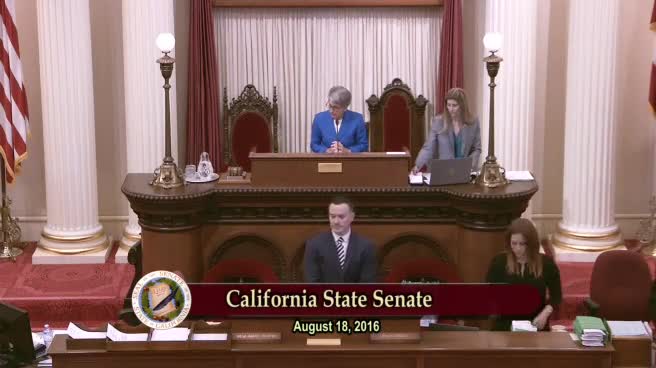 2MIN
Senate Floor
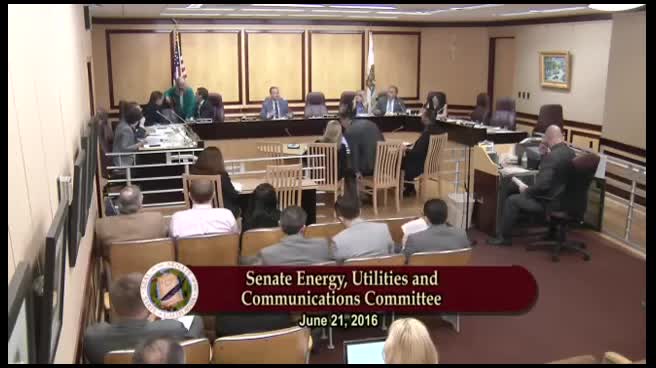 5MIN
Senate Standing Committee on Energy, Utilities and Communications
 5MIN
Assembly Standing Committee on Utilities and Commerce
Bill Author

Bill Co-Author(s):