AB 829: Local government: funding: state-assisted projects.
- Session Year: 2017-2018
- House: Assembly
- Latest Version Date: 2018-09-27
Existing law authorizes a local government to fund all or a part of a housing project or development. Existing law states legislative findings and declarations regarding the need for affordable housing and local authority to approve housing developments.
This bill would prohibit the award, availability, or utilization of state assistance, as defined, for any housing development that is subject to a requirement as a threshold or condition for applying or being eligible for the award of any funding that the development proponent receive a letter of acknowledgment, letter of approval, or similar document from a legislative body of a local agency or from a member of a local legislative body.
Existing law authorizes a local government to fund all or a part of a housing project or development. Existing law states legislative findings and declarations regarding the need for affordable housing and local authority to approve housing developments.
This bill would prohibit a local agency from requiring, the award, availability, or utilization of state assistance, as defined, for any housing development that is subject to a requirement as a threshold or condition for applying or being eligible for the award of any funding for a housing development that will also be receiving state assistance, that the development proponent receive a letter of acknowledgment, letter of approval, or similar document from the a legislative body of that a local agency or from a member of that a local legislative body. The bill would include findings that the changes proposed by this bill address a matter of statewide concern rather than a municipal affair and, therefore, apply to all cities, including charter cities.
Existing law authorizes a local government to fund all or a part of a housing project or development. Existing law states legislative findings and declarations regarding the need for affordable housing and local authority to approve housing developments.
This bill would prohibit a local agency from requiring, as a threshold or condition for applying for the award of any funding for a housing development that will also be receiving state assistance, that the development proponent receive a letter of acknowledgment, letter of approval, or similar document from the legislative body of that local agency or from a member of that legislative body. The bill would include findings that the changes proposed by this bill address a matter of statewide concern rather than a municipal affair and, therefore, apply to all cities, including charter cities.
The Planning and Zoning Law requires a city or county to adopt a general plan for land use development within its boundaries that includes specified mandatory elements, including a housing element. That law requires, after the legislative body of the city or county has adopted all or part of a general plan, that the planning agency provide by April 1 of each year an annual report to the legislative body, the Office of Planning and Research, and the Department of Housing and Community Development that includes specified information.This bill would require that this report additionally include the relationship between jobs and housing, including any imbalance between jobs and housing. The bill would require that this portion of the report include an assessment of any significant increases or decreases in employment since the date of the last annual report.By adding to the duties of local planning officials with respect to preparing this annual report, this bill would impose a state-mandated local program.The California Constitution requires the state to reimburse local agencies and school districts for certain costs mandated by the state. Statutory provisions establish procedures for making that reimbursement.This bill would provide that no reimbursement is required by this act for a specified reason.The Planning and Zoning Law requires a city or county to adopt a general plan for land use development within its boundaries that includes specified mandatory elements, including a housing element. That law requires, after the legislative body of the city or county has adopted all or part of a general plan, that the planning agency provide by April 1 of each year an annual report to the legislative body, the Office of Planning and Research, and the Department of Housing and Community Development that includes specified information.
This bill would require that this report additionally include the relationship between jobs and housing, including any imbalance between jobs and housing. The bill would require that this portion of the report include an assessment of any significant increases or decreases in employment since the date of the last annual report.
By adding to the duties of local planning officials with respect to preparing this annual report, this bill would impose a state-mandated local program.
The California Constitution requires the state to reimburse local agencies and school districts for certain costs mandated by the state. Statutory provisions establish procedures for making that reimbursement.
This bill would provide that no reimbursement is required by this act for a specified reason.
Existing law requires the Department of Housing and Community Development to determine the existing and projected need for housing for each region and the appropriate council of governments, or, for cities and counties without a council of governments, the department, to determine a final regional housing need plan that allocates a share of the regional housing need to each city, county, or city and county. Existing law requires each council of governments or delegate subregion, as applicable, to develop a proposed methodology for distributing the existing and projected regional housing need to cities, counties, and cities and counties within the region or within the subregion, as provided.This bill would make nonsubstantive changes to the latter provision.Existing law requires the Department of Housing and Community Development to determine the existing and projected need for housing for each region and the appropriate council of governments, or, for cities and counties without a council of governments, the department, to determine a final regional housing need plan that allocates a share of the regional housing need to each city, county, or city and county. Existing law requires each council of governments or delegate subregion, as applicable, to develop a proposed methodology for distributing the existing and projected regional housing need to cities, counties, and cities and counties within the region or within the subregion, as provided.
This bill would make nonsubstantive changes to the latter provision.
State assistance shall not be awarded to, or otherwise available to or utilized in, any housing development that is subject to a requirement as a threshold or condition to apply or be eligible for the award of any funding that the development proponent receive a letter of acknowledgment, letter of approval, or similar document from the legislative body of a local agency or from a member of a local legislative body. For purposes of this section, state assistance includes any state funds, a state tax credit, or a federal tax credit administered by the state.
State assistance shall not be awarded to, or otherwise available to or utilized in, any housing development that is subject to a requirement as a threshold or condition to apply or be eligible for the award of any funding that the development proponent receive a letter of acknowledgment, letter of approval, or similar document from the legislative body of a local agency or from a member of a local legislative body. For purposes of this section, state assistance includes any state funds, a state tax credit, or a federal tax credit administered by the state.
A local agency shall not require, State assistance shall not be awarded to, or otherwise available to or utilized in, any housing development that is subject to a requirement as a threshold or condition to apply or be eligible for the award of any funding for a housing development that will also be receiving state assistance, that the development proponent receive a letter of acknowledgment, letter of approval, or similar document from the legislative body of that a local agency or from a member of that a local legislative body. For purposes of this section, state assistance includes any state funds or a tax credit, including a low-income housing credit awarded pursuant to Sections 12206, 17058, and 23610.5 of the Revenue and Taxation Code. funds, a state tax credit, or a federal tax credit administered by the state.
SEC. 2.The Legislature finds and declares that affordable housing is a matter of statewide concern and is not a municipal affair as that term is used in Section 5 of Article XI of the California Constitution. Therefore, Section 1 of this act adding Section 50204 to the Health and Safety Code applies to all cities, including charter cities.A local agency shall not require, as a threshold or condition to apply for the award of any funding for a housing development that will also be receiving state assistance, that the development proponent receive a letter of acknowledgment, letter of approval, or similar document from the legislative body of that local agency or from a member of that legislative body. For purposes of this section, state assistance includes any state funds or a tax credit, including a low-income housing credit awarded pursuant to Sections 12206, 17058, and 23610.5 of the Revenue and Taxation Code.
SEC. 2.The Legislature finds and declares that affordable housing is a matter of statewide concern and is not a municipal affair as that term is used in Section 5 of Article XI of the California Constitution. Therefore, Section 1 of this act adding Section 50204 to the Health and Safety Code applies to all cities, including charter cities.
SECTION 1.Section 65400 of the Government Code is amended to read:65400.(a)After the legislative body has adopted all or part of a general plan, the planning agency shall do both of the following:(1)Investigate and make recommendations to the legislative body regarding reasonable and practical means for implementing the general plan or element of the general plan, so that it will serve as an effective guide for orderly growth and development, preservation and conservation of open-space land and natural resources, and the efficient expenditure of public funds relating to the subjects addressed in the general plan.(2)Provide by April 1 of each year an annual report to the legislative body, the Office of Planning and Research, and the Department of Housing and Community Development that includes all of the following:(A)The status of the plan and progress in its implementation.(B)The progress in meeting its share of regional housing needs determined pursuant to Section 65584 and local efforts to remove governmental constraints to the maintenance, improvement, and development of housing pursuant to paragraph (3) of subdivision (c) of Section 65583.The housing element portion of the annual report, as required by this paragraph, shall be prepared through the use of forms and definitions adopted by the Department of Housing and Community Development pursuant to the rulemaking provisions of the Administrative Procedure Act (Chapter 3.5 (commencing with Section 11340) of Part 1 of Division 3 of Title 2). Prior to and after adoption of the forms, the housing element portion of the annual report shall include a section that describes the actions taken by the local government towards completion of the programs and status of the local governments compliance with the deadlines in its housing element. That report shall be considered at an annual public meeting before the legislative body where members of the public shall be allowed to provide oral testimony and written comments.The report may include the number of units that have been substantially rehabilitated, converted from nonaffordable to affordable by acquisition, and preserved consistent with the standards set forth in paragraph (2) of subdivision (c) of Section 65583.1. The report shall document how the units meet the standards set forth in that subdivision.(C)The degree to which its approved general plan complies with the guidelines developed and adopted pursuant to Section 65040.2 and the date of the last revision to the general plan.(D)The relationship between jobs and housing, including any imbalance between jobs and housing. This portion of the annual report shall include an assessment of any significant increases or decreases in employment since the date of the last annual report.(b)If a court finds, upon a motion to that effect, that a city, county, or city and county failed to submit, within 60 days of the deadline established in this section, the housing element portion of the report required pursuant to subparagraph (B) of paragraph (2) of subdivision (a) that substantially complies with the requirements of this section, the court shall issue an order or judgment compelling compliance with this section within 60 days. If the city, county, or city and county fails to comply with the courts order within 60 days, the plaintiff or petitioner may move for sanctions, and the court may, upon that motion, grant appropriate sanctions. The court shall retain jurisdiction to ensure that its order or judgment is carried out. If the court determines that its order or judgment is not carried out within 60 days, the court may issue further orders as provided by law to ensure that the purposes and policies of this section are fulfilled. This subdivision applies to proceedings initiated on or after the first day of October following the adoption of forms and definitions by the Department of Housing and Community Development pursuant to paragraph (2) of subdivision (a), but no sooner than six months following that adoption.SEC. 2.No reimbursement is required by this act pursuant to Section 6 of Article XIIIB of the California Constitution because a local agency or school district has the authority to levy service charges, fees, or assessments sufficient to pay for the program or level of service mandated by this act, within the meaning of Section 17556 of the Government Code.(a)After the legislative body has adopted all or part of a general plan, the planning agency shall do both of the following:
(1)Investigate and make recommendations to the legislative body regarding reasonable and practical means for implementing the general plan or element of the general plan, so that it will serve as an effective guide for orderly growth and development, preservation and conservation of open-space land and natural resources, and the efficient expenditure of public funds relating to the subjects addressed in the general plan.
(2)Provide by April 1 of each year an annual report to the legislative body, the Office of Planning and Research, and the Department of Housing and Community Development that includes all of the following:
(A)The status of the plan and progress in its implementation.
(B)The progress in meeting its share of regional housing needs determined pursuant to Section 65584 and local efforts to remove governmental constraints to the maintenance, improvement, and development of housing pursuant to paragraph (3) of subdivision (c) of Section 65583.
The housing element portion of the annual report, as required by this paragraph, shall be prepared through the use of forms and definitions adopted by the Department of Housing and Community Development pursuant to the rulemaking provisions of the Administrative Procedure Act (Chapter 3.5 (commencing with Section 11340) of Part 1 of Division 3 of Title 2). Prior to and after adoption of the forms, the housing element portion of the annual report shall include a section that describes the actions taken by the local government towards completion of the programs and status of the local governments compliance with the deadlines in its housing element. That report shall be considered at an annual public meeting before the legislative body where members of the public shall be allowed to provide oral testimony and written comments.
The report may include the number of units that have been substantially rehabilitated, converted from nonaffordable to affordable by acquisition, and preserved consistent with the standards set forth in paragraph (2) of subdivision (c) of Section 65583.1. The report shall document how the units meet the standards set forth in that subdivision.
(C)The degree to which its approved general plan complies with the guidelines developed and adopted pursuant to Section 65040.2 and the date of the last revision to the general plan.
(D)The relationship between jobs and housing, including any imbalance between jobs and housing. This portion of the annual report shall include an assessment of any significant increases or decreases in employment since the date of the last annual report.
(b)If a court finds, upon a motion to that effect, that a city, county, or city and county failed to submit, within 60 days of the deadline established in this section, the housing element portion of the report required pursuant to subparagraph (B) of paragraph (2) of subdivision (a) that substantially complies with the requirements of this section, the court shall issue an order or judgment compelling compliance with this section within 60 days. If the city, county, or city and county fails to comply with the courts order within 60 days, the plaintiff or petitioner may move for sanctions, and the court may, upon that motion, grant appropriate sanctions. The court shall retain jurisdiction to ensure that its order or judgment is carried out. If the court determines that its order or judgment is not carried out within 60 days, the court may issue further orders as provided by law to ensure that the purposes and policies of this section are fulfilled. This subdivision applies to proceedings initiated on or after the first day of October following the adoption of forms and definitions by the Department of Housing and Community Development pursuant to paragraph (2) of subdivision (a), but no sooner than six months following that adoption.
SEC. 2.No reimbursement is required by this act pursuant to Section 6 of Article XIIIB of the California Constitution because a local agency or school district has the authority to levy service charges, fees, or assessments sufficient to pay for the program or level of service mandated by this act, within the meaning of Section 17556 of the Government Code.
SECTION 1.Section 65584.04 of the Government Code is amended to read:65584.04.(a)At least two years prior to a scheduled revision required by Section 65588, each council of governments, or delegate subregion, as applicable, shall develop a proposed methodology for the distribution of the existing and projected regional housing need to cities, counties, and cities and counties within the region or subregion, where applicable pursuant to this section. The methodology shall be consistent with the objectives listed in subdivision (d) of Section 65584.(b)(1)No more than six months prior to the development of a proposed methodology for distributing the existing and projected housing need, each council of governments shall survey each of its member jurisdictions to request, at a minimum, information regarding the factors listed in subdivision (d) that will allow the development of a methodology based upon the factors established in subdivision (d).(2)The council of governments shall seek to obtain the information in a manner and format that is comparable throughout the region and utilize readily available data to the extent possible.(3)The information provided by a local government pursuant to this section shall be used, to the extent possible, by the council of governments, or delegate subregion as applicable, as source information for the methodology developed pursuant to this section. The survey shall state that none of the information received may be used as a basis for reducing the total housing need established for the region pursuant to Section 65584.01.(4)If the council of governments fails to conduct a survey pursuant to this subdivision, a city, county, or city and county may submit information related to the items listed in subdivision (d) prior to the public comment period provided for in subdivision (c).(c)Public participation and access shall be required in the development of the methodology and in the process of drafting and adoption of the allocation of the regional housing needs. Participation by organizations other than local jurisdictions and councils of governments shall be solicited in a diligent effort to achieve public participation of all economic segments of the community. The proposed methodology, along with any relevant underlying data and assumptions, and an explanation of how information about local government conditions gathered pursuant to subdivision (b) has been used to develop the proposed methodology, and how each of the factors listed in subdivision (d) is incorporated into the methodology, shall be distributed to all cities, counties, any subregions, and members of the public who have made a written request for the proposed methodology. The council of governments, or delegate subregion, as applicable, shall conduct at least one public hearing to receive oral and written comments on the proposed methodology.(d)To the extent that sufficient data is available from local governments pursuant to subdivision (b) or other sources, each council of governments, or delegate subregion, as applicable, shall include the following factors to develop the methodology that allocates regional housing needs:(1)Each member jurisdictions existing and projected jobs and housing relationship.(2)The opportunities and constraints to development of additional housing in each member jurisdiction, including all of the following:(A)Lack of capacity for sewer or water service due to federal or state laws, regulations or regulatory actions, or supply and distribution decisions made by a sewer or water service provider other than the local jurisdiction that preclude the jurisdiction from providing necessary infrastructure for additional development during the planning period.(B)The availability of land suitable for urban development or for conversion to residential use, the availability of underutilized land, and opportunities for infill development and increased residential densities. The council of governments may not limit its consideration of suitable housing sites or land suitable for urban development to existing zoning ordinances and land use restrictions of a locality, but shall consider the potential for increased residential development under alternative zoning ordinances and land use restrictions. The determination of available land suitable for urban development may exclude lands where the Federal Emergency Management Agency (FEMA) or the Department of Water Resources has determined that the flood management infrastructure designed to protect that land is not adequate to avoid the risk of flooding.(C)Lands preserved or protected from urban development under existing federal or state programs, or both, designed to protect open space, farmland, environmental habitats, and natural resources on a long-term basis.(D)County policies to preserve prime agricultural land, as defined pursuant to Section 56064, within an unincorporated area.(3)The distribution of household growth assumed for purposes of a comparable period of regional transportation plans and opportunities to maximize the use of public transportation and existing transportation infrastructure.(4)The market demand for housing.(5)Agreements between a county and cities in a county to direct growth toward incorporated areas of the county.(6)The loss of units contained in assisted housing developments, as defined in paragraph (9) of subdivision (a) of Section 65583, that changed to non-low-income use through mortgage prepayment, subsidy contract expirations, or termination of use restrictions.(7)High-housing cost burdens.(8)The housing needs of farmworkers.(9)The housing needs generated by the presence of a private university or a campus of the California State University or the University of California within any member jurisdiction.(10)Any other factors adopted by the council of governments.(e)The council of governments, or delegate subregion, as applicable, shall explain in writing how each of the factors described in subdivision (d) was incorporated into the methodology and how the methodology is consistent with subdivision (d) of Section 65584. The methodology may include numerical weighting.(f)Any ordinance, policy, voter-approved measure, or standard of a city or county that directly or indirectly limits the number of residential building permits issued by a city or county shall not be a justification for a determination or a reduction in the share of a city or county of the regional housing need.(g)In addition to the factors identified pursuant to subdivision (d), the council of governments, or delegate subregion, as applicable, shall identify any existing local, regional, or state incentives, such as a priority for funding or other incentives available to those local governments that are willing to accept a higher share than proposed in the draft allocation to those local governments by the council of governments or delegate subregion pursuant to Section 65584.05.(h)Following the conclusion of the 60-day public comment period described in subdivision (c) on the proposed allocation methodology, and after making any revisions deemed appropriate by the council of governments, or delegate subregion, as applicable, as a result of comments received during the public comment period, each council of governments, or delegate subregion, as applicable, shall adopt a final regional, or subregional, housing need allocation methodology and provide notice of the adoption of the methodology to the jurisdictions within the region, or delegate subregion, as applicable, and to the department.(i)(1)It is the intent of the Legislature that housing planning be coordinated and integrated with the regional transportation plan. To achieve this goal, the allocation plan shall allocate housing units within the region consistent with the development pattern included in the sustainable communities strategy.(2)The final allocation plan shall ensure that the total regional housing need, by income category, as determined under Section 65584, is maintained, and that each jurisdiction in the region receive an allocation of units for low- and very low income households.(3)The resolution approving the final housing need allocation plan shall demonstrate that the plan is consistent with the sustainable communities strategy in the regional transportation plan.(a)At least two years prior to a scheduled revision required by Section 65588, each council of governments, or delegate subregion subregion, as applicable, shall develop a proposed methodology for distributing the distribution of the existing and projected regional housing need to cities, counties, and cities and counties within the region or within the subregion, where applicable pursuant to this section. The methodology shall be consistent with the objectives listed in subdivision (d) of Section 65584.
(b)(1)No more than six months prior to the development of a proposed methodology for distributing the existing and projected housing need, each council of governments shall survey each of its member jurisdictions to request, at a minimum, information regarding the factors listed in subdivision (d) that will allow the development of a methodology based upon the factors established in subdivision (d).
(2)The council of governments shall seek to obtain the information in a manner and format that is comparable throughout the region and utilize readily available data to the extent possible.
(3)The information provided by a local government pursuant to this section shall be used, to the extent possible, by the council of governments, or delegate subregion as applicable, as source information for the methodology developed pursuant to this section. The survey shall state that none of the information received may be used as a basis for reducing the total housing need established for the region pursuant to Section 65584.01.
(4)If the council of governments fails to conduct a survey pursuant to this subdivision, a city, county, or city and county may submit information related to the items listed in subdivision (d) prior to the public comment period provided for in subdivision (c).
(c)Public participation and access shall be required in the development of the methodology and in the process of drafting and adoption of the allocation of the regional housing needs. Participation by organizations other than local jurisdictions and councils of governments shall be solicited in a diligent effort to achieve public participation of all economic segments of the community. The proposed methodology, along with any relevant underlying data and assumptions, and an explanation of how information about local government conditions gathered pursuant to subdivision (b) has been used to develop the proposed methodology, and how each of the factors listed in subdivision (d) is incorporated into the methodology, shall be distributed to all cities, counties, any subregions, and members of the public who have made a written request for the proposed methodology. The council of governments, or delegate subregion, as applicable, shall conduct at least one public hearing to receive oral and written comments on the proposed methodology.
(d)To the extent that sufficient data is available from local governments pursuant to subdivision (b) or other sources, each council of governments, or delegate subregion subregion, as applicable, shall include the following factors to develop the methodology that allocates regional housing needs:
(1)Each member jurisdictions existing and projected jobs and housing relationship.
(2)The opportunities and constraints to development of additional housing in each member jurisdiction, including all of the following:
(A)Lack of capacity for sewer or water service due to federal or state laws, regulations or regulatory actions, or supply and distribution decisions made by a sewer or water service provider other than the local jurisdiction that preclude the jurisdiction from providing necessary infrastructure for additional development during the planning period.
(B)The availability of land suitable for urban development or for conversion to residential use, the availability of underutilized land, and opportunities for infill development and increased residential densities. The council of governments may not limit its consideration of suitable housing sites or land suitable for urban development to existing zoning ordinances and land use restrictions of a locality, but shall consider the potential for increased residential development under alternative zoning ordinances and land use restrictions. The determination of available land suitable for urban development may exclude lands where the Federal Emergency Management Agency (FEMA) or the Department of Water Resources has determined that the flood management infrastructure designed to protect that land is not adequate to avoid the risk of flooding.
(C)Lands preserved or protected from urban development under existing federal or state programs, or both, designed to protect open space, farmland, environmental habitats, and natural resources on a long-term basis.
(D)County policies to preserve prime agricultural land, as defined pursuant to Section 56064, within an unincorporated area.
(3)The distribution of household growth assumed for purposes of a comparable period of regional transportation plans and opportunities to maximize the use of public transportation and existing transportation infrastructure.
(4)The market demand for housing.
(5)Agreements between a county and cities in a county to direct growth toward incorporated areas of the county.
(6)The loss of units contained in assisted housing developments, as defined in paragraph (9) of subdivision (a) of Section 65583, that changed to non-low-income use through mortgage prepayment, subsidy contract expirations, or termination of use restrictions.
(7)High-housing cost burdens.
(8)The housing needs of farmworkers.
(9)The housing needs generated by the presence of a private university or a campus of the California State University or the University of California within any member jurisdiction.
(10)Any other factors adopted by the council of governments.
(e)The council of governments, or delegate subregion, as applicable, shall explain in writing how each of the factors described in subdivision (d) was incorporated into the methodology and how the methodology is consistent with subdivision (d) of Section 65584. The methodology may include numerical weighting.
(f)Any ordinance, policy, voter-approved measure, or standard of a city or county that directly or indirectly limits the number of residential building permits issued by a city or county shall not be a justification for a determination or a reduction in the share of a city or county of the regional housing need.
(g)In addition to the factors identified pursuant to subdivision (d), the council of governments, or delegate subregion, as applicable, shall identify any existing local, regional, or state incentives, such as a priority for funding or other incentives available to those local governments that are willing to accept a higher share than proposed in the draft allocation to those local governments by the council of governments or delegate subregion pursuant to Section 65584.05.
(h)Following the conclusion of the 60-day public comment period described in subdivision (c) on the proposed allocation methodology, and after making any revisions deemed appropriate by the council of governments, or delegate subregion, as applicable, as a result of comments received during the public comment period, each council of governments, or delegate subregion, as applicable, shall adopt a final regional, or subregional, housing need allocation methodology and provide notice of the adoption of the methodology to the jurisdictions within the region, or delegate subregion subregion, as applicable, and to the department.
(i)(1)It is the intent of the Legislature that housing planning be coordinated and integrated with the regional transportation plan. To achieve this goal, the allocation plan shall allocate housing units within the region consistent with the development pattern included in the sustainable communities strategy.
(2)The final allocation plan shall ensure that the total regional housing need, by income category, as determined under Section 65584, is maintained, and that each jurisdiction in the region receive an allocation of units for low- and very low income households.
(3)The resolution approving the final housing need allocation plan shall demonstrate that the plan is consistent with the sustainable communities strategy in the regional transportation plan.
|
Date
|
Status
|
|---|---|
| Sep 27, 2018 | Chaptered by Secretary of State - Chapter 800, Statutes of 2018. |
| Sep 27, 2018 | Approved by the Governor. |
| Sep 6, 2018 | Enrolled and presented to the Governor at 3 p.m. |
| Aug 29, 2018 | Senate amendments concurred in. To Engrossing and Enrolling. |
| Aug 28, 2018 | From committee: That the Senate amendments be concurred in. (Ayes 9. Noes 0.) (August 28). |
| Aug 24, 2018 | Re-referred to Com. on L. GOV. pursuant to Assembly Rule 77.2. |
| Aug 23, 2018 | In Assembly. Concurrence in Senate amendments pending. May be considered on or after August 25 pursuant to Assembly Rule 77. |
| Aug 23, 2018 | Read third time. Passed. Ordered to the Assembly. |
| Aug 21, 2018 | Read second time. Ordered to third reading. |
| Aug 20, 2018 | Read third time and amended. Ordered to second reading. |
| Jul 2, 2018 | Read second time. Ordered to third reading. |
| Jun 28, 2018 | From committee: Do pass. (Ayes 6. Noes 0.) (June 27). |
| Jun 20, 2018 | Re-referred to Com. on GOV. & F. |
| Jun 14, 2018 | From committee chair, with author's amendments: Amend, and re-refer to committee. Read second time, amended, and re-referred to Com. on RLS. |
| Jun 1, 2017 | Referred to Com. on RLS. |
| May 18, 2017 | In Senate. Read first time. To Com. on RLS. for assignment. |
| May 18, 2017 | Read third time. Passed. Ordered to the Senate. (Ayes 69. Noes 0. Page 1617.) |
| May 11, 2017 | Read second time. Ordered to Consent Calendar. |
| May 10, 2017 | From committee: Do pass. To Consent Calendar. (Ayes 17. Noes 0.) (May 10). |
| Apr 27, 2017 | From committee: Do pass and re-refer to Com. on APPR. (Ayes 9. Noes 0.) (April 26). Re-referred to Com. on APPR. |
| Mar 27, 2017 | Re-referred to Com. on L. GOV. |
| Mar 23, 2017 | From committee chair, with author's amendments: Amend, and re-refer to Com. on L. GOV. Read second time and amended. |
| Mar 23, 2017 | Referred to Com. on L. GOV. |
| Feb 17, 2017 | From printer. May be heard in committee March 19. |
| Feb 16, 2017 | Read first time. To print. |
|
Date
|
Description
|
Location
|
Votes
|
|
|---|---|---|---|---|
| Aug 29, 2018 | AB 829 CHIU Concurrence in Senate Amendments | Assembly Floor |
Passed |
|
| Aug 28, 2018 | With recommendation: That Senate amendments be concurred in. | Assembly Standing Committee on Local Government |
Passed |
|
| Aug 23, 2018 | Assembly 3rd Reading AB829 Chiu By Wiener | Senate Floor |
Passed |
|
| Jun 27, 2018 | Do pass | Senate Standing Committee on Governance and Finance |
Passed |
|
| May 18, 2017 | AB 829 CHIU Consent Calendar Second Day Regular Session | Assembly Floor |
Passed |
|
| May 10, 2017 | Do pass. To Consent Calendar. | Assembly Standing Committee on Appropriations |
Passed |
|
| Apr 26, 2017 | Do pass and be re-referred to the Committee on [Appropriations] | Assembly Standing Committee on Local Government |
Passed |
This list shows positions taken on this bill by organizations on the date displayed, which is linked to the original source.
Positions by individuals are not included.
CONCURRENCE IN SENATE AMENDMENTS
CSA2 Bill Id:AB 829
Author:(Chiu)
As Amended Ver:August 20, 2018
Majority vote
ASSEMBLY: | 69-0 | (May 18, 2017) | SENATE: | 35-0 | (August 23, 2018) |
COMMITTEE VOTE: | 9-0 | (August 28, 2018) | RECOMMENDATION: | concur |
(L. Gov.)
Original Committee Reference: L. GOV.
SUMMARY: Prohibits cities and counties from requiring a letter of acknowledgment or similar document prior to applying for state assistance for any housing development.
The Senate amendments delete the Assembly version of this bill, and instead:
- Prohibit state assistance from being awarded to, or otherwise available to or utilized in, any housing development that is subject to a requirement as a threshold or condition to apply or be eligible for the award of any funding that the development proponent receive a letter of acknowledgment, letter of approval, or similar document from the legislative body of a local agency or from a member of a local legislative body.
- Define "state assistance" to include any state funds, a state tax credit, or a federal tax credit administered by the state.
EXISTING LAW:
- Provides that the Legislature may not reallocate, transfer, borrow, appropriate, restrict the use of, or otherwise use the proceeds of any tax imposed or levied by a local government solely for the local government's purposes.
- Allows cities that adopt charters to control their own municipal affairs, but provides that in all other matters, charter cities must follow the general, statewide laws.
- Authorizes state and federal programs to finance affordable housing by the sale of Low Income Housing Tax Credits (LIHTCs).
- Charges the California Tax Credit Allocation Committee with allocating tax credits to affordable housing projects.
- Establishes additional state sources of funding for affordable housing.
FISCAL EFFECT: None
COMMENTS:
- Bill Summary. This bill prohibits cities and counties from requiring a letter of acknowledgment or similar document prior to applying for state assistance for a housing development. The prohibition on a local letter of acknowledgement is based on the eligibility of funding for state or federal tax credits. This bill defines state assistance as any state funds, a state tax credit, or a federal tax credit administered by the state and is sponsored by the Western Center on Law and Poverty.
- Author's Statement. According to the author, "Last year, the Legislature passed SB 3 (Beall) the Veterans and Affordable Housing Act of 2018 which would authorizes $4 billion in funding for affordable housing pending voter approval in November. No Place Like Home will also be on ballot and will create $2 billion in funding for supportive housing. To ensure that this funding as well as locally approved funding are deployed as quickly as possible, our cities and counties must be ready to approve new affordable housing developments. AB 829 would make it clear that local governments cannot condition any funding for state assisted projects with an acknowledgment letter. In at least one case in the state, city council members have the ability to slow or halt projects before they get into the pipeline because the developer is required to receive official sign off from the elected in order to receive local funding. This bill would end that practice for all jurisdictions."
- Arguments in Support. Western Center on Law and Poverty, in support, writes, "Despite the fact that the state has a desperate need for more affordable homes and the Legislature has acted in numerous ways in recent years to ensure that affordable projects can get built where they are needed, and despite the fact that state law clearly prohibits imposing requirements on subsidized affordable housing projects that are not also imposed on non-subsidized housing projects, some local governments continue to place arbitrary hurdles that make it difficult for these projects to move forward. When local governments impose a requirement for affordable housing developments to seek a "letter of acknowledgement" from an individual city council member as a condition for applying for scarce state and local funding, they are essentially giving that individual a 'pocket veto' for a development that could otherwise provide desperately needed affordable homes before it has even had a chance to compete for funding or go through the development review process. AB 829 would prohibit this practice and ensure that affordable housing projects are treated fairly and not subject to requirements that are not broadly applicable to all other housing projects."
- Arguments in Opposition. None on file.
Analysis Prepared by: Puja Navaney / L. GOV. / (916) 319-3958 FN: 0005006
Date of Hearing: August 28, 2018
ASSEMBLY COMMITTEE ON LOCAL GOVERNMENT
Cecilia Aguiar-Curry, Chair
ABPCA Bill Id:AB 829 (
Author:Chiu) – As Amended Ver:August 20, 2018
SUBJECT: Local government: funding: state-assisted projects.
SUMMARY: Prohibits cities and counties from requiring a letter of acknowledgment or similar document prior to applying for state assistance for any housing development.
The Senate amendments delete the Assembly version of this bill, and instead:
- Prohibit state assistance from being awarded to, or otherwise available to or utilized in, any housing development that is subject to a requirement as a threshold or condition to apply or be eligible for the award of any funding that the development proponent receive a letter of acknowledgment, letter of approval, or similar document from the legislative body of a local agency or from a member of a local legislative body.
- Define "state assistance" to include any state funds, a state tax credit, or a federal tax credit administered by the state.
EXISTING LAW:
- Provides that the Legislature may not reallocate, transfer, borrow, appropriate, restrict the use of, or otherwise use the proceeds of any tax imposed or levied by a local government solely for the local government's purposes.
- Allows cities that adopt charters to control their own municipal affairs, but provides that in all other matters, charter cities must follow the general, statewide laws.
- Authorizes state and federal programs to finance affordable housing by the sale of Low Income Housing Tax Credits (LIHTCs).
- Charges the California Tax Credit Allocation Committee with allocating tax credits to affordable housing projects.
- Establishes additional state sources of funding for affordable housing.
FISCAL EFFECT: None
COMMENTS:
- Bill Summary. This bill prohibits cities and counties from requiring a letter of acknowledgment or similar document prior to applying for state assistance for a housing development. The prohibition on a local letter of acknowledgement is based on the eligibility of funding for state or federal tax credits. This bill defines state assistance as any state funds, a state tax credit, or a federal tax credit administered by the state and is sponsored by the Western Center on Law and Poverty.
- Author's Statement. According to the author, "Last year, the Legislature passed SB 3 (Beall) the Veterans and Affordable Housing Act of 2018 which would authorizes $4 billion in funding for affordable housing pending voter approval in November. No Place Like Home will also be on ballot and will create $2 billion in funding for supportive housing.
To ensure that this funding as well as locally approved funding are deployed as quickly as possible, our cities and counties must be ready to approve new affordable housing developments. AB 829 would make it clear that local governments cannot condition any funding for state assisted projects with an acknowledgment letter. In at least one case in the state, city council members have the ability to slow or halt projects before they get into the pipeline because the developer is required to receive official sign off from the elected in order to receive local funding. This bill would end that practice for all jurisdictions.” - Arguments in Support. Western Center on Law and Poverty, in support, writes, "Despite the fact that the state has a desperate need for more affordable homes and the Legislature has acted in numerous ways in recent years to ensure that affordable projects can get built where they are needed, and despite the fact that state law clearly prohibits imposing requirements on subsidized affordable housing projects that are not also imposed on non-subsidized housing projects, some local governments continue to place arbitrary hurdles that make it difficult for these projects to move forward. When local governments impose a requirement for affordable housing developments to seek a "letter of acknowledgement" from an individual city council member as a condition for applying for scarce state and local funding, they are essentially giving that individual a "pocket veto" for a development that could otherwise provide desperately needed affordable homes before it has even had a chance to compete for funding or go through the development review process. AB 829 would prohibit this practice and ensure that affordable housing projects are treated fairly and not subject to requirements that are not broadly applicable to all other housing projects."
- Arguments in Opposition. None on file.
- Substantially Amended. The provisions of this bill have not been heard in an Assembly policy committee this legislative session.
REGISTERED SUPPORT / OPPOSITION:
Support Opposition
Corporation for Supportive Housing [SPONSOR] None on file
California Apartment Association
California Housing Consortium
California Coalition for Rural Housing
California Housing Partnership Corporation
California Rural Assistance Foundation
California YIMBY
Non-Profit Housing Association of Northern California
Public Counsel
Southern California Association of Non-Profit Housing
Western Center on Law and Poverty
Analysis Prepared by: Puja Navaney / L. GOV. / (916) 319-3958
CONCURRENCE IN SENATE AMENDMENTS
CSA1 Bill Id:AB 829
Author:(Chiu)
As Amended Ver:August 20, 2018
Majority vote
ASSEMBLY: | 69-0 | (May 18, 2018) | SENATE: | 35-0 | (August 23, 2018) |
(vote not relevant)
Original Committee Reference: L. GOV.
SUMMARY: Prohibits cities and counties from requiring a letter of acknowledgment or similar document prior to applying for state assistance for any housing development.
The Senate amendments delete the Assembly version of this bill, and instead:
- Prohibit state assistance from being awarded to, or otherwise available to or utilized in, any housing development that is subject to a requirement as a threshold or condition to apply or be eligible for the award of any funding that the development proponent receive a letter of acknowledgment, letter of approval, or similar document from the legislative body of a local agency or from a member of a local legislative body.
- Define "state assistance" to include any state funds, a state tax credit, or a federal tax credit administered by the state.
EXISTING LAW:
- Provides that the Legislature may not reallocate, transfer, borrow, appropriate, restrict the use of, or otherwise use the proceeds of any tax imposed or levied by a local government solely for the local government's purposes.
- Allows cities that adopt charters to control their own municipal affairs, but provides that in all other matters, charter cities must follow the general, statewide laws.
- Authorizes state and federal programs to finance affordable housing by the sale of Low Income Housing Tax Credits (LIHTCs).
- Charges the California Tax Credit Allocation Committee with allocating tax credits to affordable housing projects.
- Establishes additional state sources of funding for affordable housing.
AS PASSED BY THE ASSEMBLY, this bill required the annual progress report to additionally include the relationship between jobs and housing, including any imbalance between jobs and housing, including an assessment of any significant increases or decreases in employment since the date of the last annual report.
FISCAL EFFECT: None
COMMENTS:
- Bill Summary. This bill prohibits cities and counties from requiring a letter of acknowledgment or similar document prior to applying for state assistance for a housing development. The prohibition on a local letter of acknowledgement is based on the eligibility of funding for state or federal tax credits. This bill defines state assistance as any state funds, a state tax credit, or a federal tax credit administered by the state and is sponsored by the Western Center on Law and Poverty.
- Author's Statement. According to the author, "Last year, the Legislature passed SB 3 (Beall) the Veterans and Affordable Housing Act of 2018 which would authorizes $4 billion in funding for affordable housing pending voter approval in November. No Place Like Home will also be on ballot and will create $2 billion in funding for supportive housing. To ensure that this funding as well as locally approved funding are deployed as quickly as possible, our cities and counties must be ready to approve new affordable housing developments. AB 829 would make it clear that local governments cannot condition any funding for state assisted projects with an acknowledgment letter. In at least one case in the state, city council members have the ability to slow or halt projects before they get into the pipeline because the developer is required to receive official sign off from the elected in order to receive local funding. This bill would end that practice for all jurisdictions."
- Arguments in Support. Western Center on Law and Poverty, in support, writes, "Despite the fact that the state has a desperate need for more affordable homes and the Legislature has acted in numerous ways in recent years to ensure that affordable projects can get built where they are needed, and despite the fact that state law clearly prohibits imposing requirements on subsidized affordable housing projects that are not also imposed on non-subsidized housing projects, some local governments continue to place arbitrary hurdles that make it difficult for these projects to move forward. When local governments impose a requirement for affordable housing developments to seek a "letter of acknowledgement" from an individual city council member as a condition for applying for scarce state and local funding, they are essentially giving that individual a "pocket veto" for a development that could otherwise provide desperately needed affordable homes before it has even had a chance to compete for funding or go through the development review process. AB 829 would prohibit this practice and ensure that affordable housing projects are treated fairly and not subject to requirements that are not broadly applicable to all other housing projects."
- Arguments in Opposition. None on file.
- Substantially Amended. The provisions of this bill have not been heard in an Assembly policy committee this legislative session.
Analysis Prepared by: Puja Navaney / L. GOV. / (916) 319-3958 FN: 0004567
Office of Senate Floor Analyses (916) 651-1520 Fax: (916) 327-4478 | AB |
THIRD READING
Bill No: AB 829
:
SENATE GOVERNANCE & FIN. COMMITTEE: 6-0, 6/27/18
AYES: McGuire, Beall, Hernandez, Hertzberg, Lara, Moorlach
NO VOTE RECORDED: Nguyen
ASSEMBLY FLOOR: 69-0, 5/18/17 (Consent) - See last page for vote
SUBJECT: Local government: funding: state-assisted projects
SOURCE: Corporation for Supportive Housing
DIGEST:
This bill prohibits state assistance from being awarded to, or otherwise used or made available to, a housing development that is subject to a requirement to receive a letter of acknowledgement before applying for or being eligible for any funding.
Senate Floor Amendments of 8/20/18 directly prohibit state assistance from being awarded to a housing development that is subject to a requirement to receive a letter of acknowledgment, instead of prohibiting a city or county from requiring a letter of acknowledgement as a condition of awarding funds and make other technical changes.
Existing law:
- Authorizes state and federal programs to finance affordable housing by the sale of Low Income Housing Tax Credits (LIHTCs).
- Tasks the California Tax Credit Allocation Committee (TCAC) with allocating tax credits to affordable housing projects.
- Establishes additional state sources of funding for affordable housing.
This bill:
- Prohibits state assistance from being awarded to, or otherwise available to or utilized in, any housing development that is subject to a requirement as a threshold or condition to apply or be eligible for the award of any funding that the development proponent receive a letter of acknowledgment, letter of approval, or similar document from the legislative body of a local agency or from a member of a local legislative body.
- Defines, “state assistance” to include any state funds, a state tax credit, or a federal tax credit administered by the state.
Background
Financing affordable housing. Developers rely on loans to build housing, repaid by income from the sale or rental of the units. In the case of affordable housing development, this presents a challenge because low-income residents lack the income necessary to fully repay the costs of construction. As a result, affordable housing development relies on subsidies from federal, state, and local fund sources.
A major source of financial assistance for affordable housing is the federal LIHTC program. The LIHTC is an indirect federal subsidy developed in 1986 to encourage the private development of affordable rental housing for low-income households. The federal LIHTC program enables affordable housing sponsors and developers to raise project equity through the allocation of tax benefits to investors. Taxpayers claim LIHTCs approximately equal to a specified percentage of the project’s “basis”—essentially project costs minus land acquisition and transaction costs—over a certain number of years, and start claiming the credit in the taxable year in which the project is placed in service. Projects must remain affordable to residents for 55 years.
In 1987, the Legislature authorized a state LIHTC program to augment the federal tax credit program. State tax credits can only be awarded to projects that have also received, or are concurrently receiving, an allocation of the federal LIHTCs.
Tax Credit Allocation Committee. The TCAC comprising the State Treasurer, the State Controller, the Director of Finance, and three non-voting members, allocates state and federal LIHTCs to projects. Housing developers design projects and apply to TCAC for credits. The TCAC then reviews the application and either denies or grants the project credits. The housing developer then forms partnership agreements with taxpayers that provide project capital for the low-income housing project in exchange for the credits at a discount; the taxpayers reduce their taxes owed by using the credits over 10 years.
The TCAC may allocate LIHTCs to any area of the state; TCAC’s regulations apportion the credits according to geographic regions. Most credit allocation regions span multiple cities and counties, but the City of Los Angeles receives a specific allocation (currently 17.6% of the total tax credits), as does the City and County of San Francisco (3.7%).
Other funding for affordable housing. Historically, the state has funded housing programs through the sale of general obligation bonds and through local redevelopment agencies, which diverted a portion of the property tax to fund economic development and affordable housing. However, redevelopment agencies were eliminated in 2011 and state bond funds are nearly exhausted. To respond to this loss of funding, the Legislature recently enacted several measures to make new funds available for affordable housing and related projects, including the No Place Like Home program, a permanent source of affordable housing adopted in SB 2 (Atkins, Chapter 364, Statutes of 2017), and the Veterans and Affordable Housing Act of 2018, which will be placed before the voters in November 2018.
Local governments have also created new streams of funding for affordable housing. In particular, voters in the City of Los Angeles approved Proposition HHH in 2016, which authorized the sale of $1.2 billion in bonds for permanent supportive housing to be repaid by a local parcel tax.
City of Los Angeles Affordable Housing Managed Pipeline. The City of Los Angeles has established an Affordable Housing Managed Pipepline (AHMP) for the purpose of identifying projects to receive financial assistance from local sources of funding, such as Proposition HHH. In addition, because the City of Los Angeles receives its own allocation of LIHTCs from TCAC, it can be challenging to secure state and federal funds, such as LIHTCs, without going through the AHMP. The AHMP regulations specify the conditions that eligible projects must meet to receive funding, including the types of activities that may be funded, such as property acquisition and rehabilitation of existing housing. The AHMP regulations also lay out certain “threshold conditions” that must be met for a project to be evaluated; projects that don’t meet these threshold conditions are automatically rejected. One such threshold condition has been the subject of recent news reports. Specifically, the AHMP requires a “letter of acknowledgement” from the city council member in whose district the affordable housing development will be located. Without these letters, an affordable housing project in the City of Los Angeles can’t receive local funds, which often stymies the project. Accordingly, city council members can request concessions or project changes from developers, or simply withhold the letter altogether. The Corporation for Supportive Housing wants the Legislature to curb this practice.
Comments
- Purpose of the bill. The Legislature has recently enacted several new funding sources for affordable housing, including: SB 3 (Beall, Chapter 365, Statutes of 2017) the Veterans and Affordable Housing Act of 2018, which places a $4 billion bond for affordable housing before voters in November 2018; No Place Like Home, which will also go before voters in November and will create $2 billion in funding for supportive housing; and SB 2 (Atkins, Chapter 364, Statutes of 2017), which creates a permanent source of funding for affordable housing. To ensure that this funding is effectively spent and results in the rapid construction of much-needed affordable housing, cities and counties must be ready to approve new affordable housing developments. Yet some cities are slowing or stopping these projects through the practice of requiring a letter of acknowledgement before they can be awarded funding. AB 829 discourages local governments from conditioning any affordable housing projects on receipt of an acknowledgment letter by prohibiting state funds from supporting any projects that are subject to this requirement. AB 829 will speed up the process for affordable housing developers and ensure that limited state dollars are not tied up on projects that are being leveraged or stalled at the local level.
- Home rule. Local officials are called upon by their residents to balance multiple competing interests when it comes to deciding what projects can be built in their jurisdictions. These interests include community character, public safety concerns, aesthetics, and others. Accordingly, some local governments have instituted processes that allow the elected official that represents an area to exercise some measure of influence over a project to ensure that it meets the needs of the surrounding community. AB 829 gets in the way of these local processes, with unknown consequences for community residents. Should the Legislature insert itself into local decision-making processes in this manner?
FISCAL EFFECT: Appropriation: Fiscal Com.: Local:
Corporation for Supportive Housing (source)
California Apartment Association
California Coalition for Rural Housing
California Housing Consortium
California Housing Partnership Corporation
California Rural Assistance Foundation
California YIMBY
Non-Profit Housing Association of Northern California
Public Counsel
Southern California Association of Non-Profit Housing
Western Center on Law and Poverty
OPPOSITION: (Verified 8/21/18)
None received
ASSEMBLY FLOOR: 69-0, 5/18/17
AYES: Acosta, Travis Allen, Arambula, Baker, Berman, Bigelow, Bloom, Bocanegra, Bonta, Brough, Burke, Caballero, Cervantes, Chávez, Chen, Chiu, Choi, Chu, Cooley, Cooper, Cunningham, Dababneh, Dahle, Daly, Eggman, Flora, Fong, Gallagher, Cristina Garcia, Eduardo Garcia, Gomez, Gonzalez Fletcher, Gray, Grayson, Harper, Irwin, Jones-Sawyer, Kalra, Kiley, Lackey, Levine, Limón, Low, Maienschein, Mathis, Mayes, McCarty, Medina, Melendez, Muratsuchi, Nazarian, Obernolte, O'Donnell, Patterson, Quirk, Quirk-Silva, Reyes, Ridley-Thomas, Rodriguez, Rubio, Salas, Steinorth, Mark Stone, Thurmond, Ting, Voepel, Waldron, Weber, Wood
NO VOTE RECORDED: Aguiar-Curry, Calderon, Chau, Frazier, Friedman, Gipson, Gloria, Holden, Mullin, Santiago, Rendon
8/21/18 19:20:32
**** END ****
Office of Senate Floor Analyses (916) 651-1520 Fax: (916) 327-4478 | AB |
THIRD READING
Bill No: AB 829
:
SENATE GOVERNANCE & FIN. COMMITTEE: 6-0, 6/27/18
AYES: McGuire, Beall, Hernandez, Hertzberg, Lara, Moorlach
NO VOTE RECORDED: Nguyen
ASSEMBLY FLOOR: 69-0, 5/18/17 (Consent) - See last page for vote
SOURCE: Corporation for Supportive Housing
DIGEST:
This bill prohibits cities and counties from requiring a letter of acknowledgment or similar document prior to applying for local funds.
Existing law:
- Provides, under Article XIII, Section 24 of the California Constitution, that the Legislature may not reallocate, transfer, borrow, appropriate, restrict the use of, or otherwise use the proceeds of any tax imposed or levied by a local government solely for the local government’s purposes.
- Allows, under Article XI, Section 5 of the California Constitution, cities that adopt charters to control their own municipal affairs, but provides that in all other matters, charter cities must follow the general, statewide laws.
- Authorizes state and federal programs to finance affordable housing by the sale of Low Income Housing Tax Credits (LIHTCs).
- Tasks the California Tax Credit Allocation Committee with allocating tax credits to affordable housing projects.
- Establishes additional state sources of funding for affordable housing.
This bill:
- Prohibits a city or county from requiring, as a threshold or condition to apply for the award of any funding for a housing development that will also be receiving state assistance, that the development proponent receive a letter of acknowledgment, letter of approval, or similar document from the legislative body of that local agency or from a member of that legislative body.
- Defines “state assistance” to include any state funds or tax credits, including a state low-income housing credit.
- Provides that the bill applies to all cities, including charter cities.
Background
Financing affordable housing. Developers rely on loans to build housing, repaid by income from the sale or rental of the units. In the case of affordable housing development, this presents a challenge because low-income residents lack the income necessary to fully repay the costs of construction. As a result, affordable housing development relies on subsidies from federal, state, and local fund sources.
A major source of financial assistance for affordable housing is the federal LIHTC program. The LIHTC is an indirect federal subsidy developed in 1986 to encourage the private development of affordable rental housing for low-income households. The federal LIHTC program enables affordable housing sponsors and developers to raise project equity through the allocation of tax benefits to investors. Taxpayers claim LIHTCs approximately equal to a specified percentage of the project’s “basis”—essentially project costs minus land acquisition and transaction costs—over a certain number of years, and start claiming the credit in the taxable year in which the project is placed in service. Projects must remain affordable to residents for 55 years.
In 1987, the Legislature authorized a state LIHTC program to augment the federal tax credit program. State tax credits can only be awarded to projects that have also received, or are concurrently receiving, an allocation of the federal LIHTCs.
Tax Credit Allocation Committee. The TCAC comprising the State Treasurer, the State Controller, the Director of Finance, and three non-voting members, allocates state and federal LIHTCs to projects. Housing developers design projects and apply to TCAC for credits. The TCAC then reviews the application and either denies or grants the project credits. The housing developer then forms partnership agreements with taxpayers that provide project capital for the low-income housing project in exchange for the credits at a discount; the taxpayers reduce their taxes owed by using the credits over 10 years.
The TCAC may allocate LIHTCs to any area of the state; TCAC’s regulations apportion the credits according to geographic regions. Most credit allocation regions span multiple cities and counties, but the City of Los Angeles receives a specific allocation (currently 17.6% of the total tax credits), as does the City and County of San Francisco (3.7%).
Other funding for affordable housing. Historically, the state has funded housing programs through the sale of general obligation bonds and through local redevelopment agencies, which diverted a portion of the property tax to fund economic development and affordable housing. However, redevelopment agencies were eliminated in 2011 and state bond funds are nearly exhausted. To respond to this loss of funding, the Legislature recently enacted several measures to make new funds available for affordable housing and related projects, including the No Place Like Home program, a permanent source of affordable housing adopted in SB 2 (Atkins, Chapter 364, Statutes of 2017), and the Veterans and Affordable Housing Act of 2018, which will be placed before the voters in November 2018.
Local governments have also created new streams of funding for affordable housing. In particular, voters in the City of Los Angeles approved Proposition HHH in 2016, which authorized the sale of $1.2 billion in bonds for permanent supportive housing to be repaid by a local parcel tax.
City of Los Angeles Affordable Housing Managed Pipeline. The City of Los Angeles has established an Affordable Housing Managed Pipepline (AHMP) for the purpose of identifying projects to receive financial assistance from local sources of funding, such as Proposition HHH. In addition, because the City of Los Angeles receives its own allocation of LIHTCs from TCAC, it can be challenging to secure state and federal funds, such as LIHTCs, without going through the AHMP. The AHMP regulations specify the conditions that eligible projects must meet to receive funding, including the types of activities that may be funded, such as property acquisition and rehabilitation of existing housing. The AHMP regulations also lay out certain “threshold conditions” that must be met for a project to be evaluated; projects that don’t meet these threshold conditions are automatically rejected. One such threshold condition has been the subject of recent news reports. Specifically, the AHMP requires a “letter of acknowledgement” from the city council member in whose district the affordable housing development will be located. Without these letters, an affordable housing project in the City of Los Angeles can’t receive local funds, which often stymies the project. Accordingly, city council members can request concessions or project changes from developers, or simply withhold the letter altogether. The Corporation for Supportive Housing wants the Legislature to prohibit this practice.
Comments
- Purpose of the bill. According to the author, “Last year, the Legislature passed SB 3 (Beall) the Veterans and Affordable Housing Act of 2018 which would authorizes $4 billion in funding for affordable housing pending voter approval in November. No Place Like Home will also be on ballot and will create $2 billion in funding for supportive housing. To ensure that this funding as well as locally approved funding are deployed as quickly as possible, our cities and counties must be ready to approve new affordable housing developments. AB 829 would make it clear that local governments cannot condition any funding for state assisted projects with an acknowledgment letter. In at least one case in the state, city council members have the ability to slow or halt projects before they get into the pipeline because the developer is required to receive official sign off from the elected in order to receive local funding. This bill would end that practice for all jurisdictions.”
- Home rule. Local governments impose taxes to fund their operations: the courts call the power of taxation “essential to municipal existence.” Accordingly, the California Constitution prohibits the Legislature from telling local governments how to spend their own tax dollars. This prohibition is especially forceful in the case of charter cities—among which is included the City of Los Angeles—which are afforded special home rule authority over their municipal affairs. While housing has been proven to be a matter of statewide concern, the management and expenditure of funds has been found to be a municipal affair. AB 829 attempts to modify how local governments allocate their funding, including proceeds of parcel taxes in the case of the City of Los Angeles. Given the core municipal nature of taxation and expenditure of funds, it is unclear whether the Legislature may control the distribution of local funds in this manner. Another approach to curb the practice targeted by the bill might be to prohibit certain state funds, such as transportation funds, from supporting projects in a city that employs the type of threshold condition referenced in the bill. The Legislature employed a similar method in SB 922 (Steinberg, 2011), which prohibited state funding from supporting any projects constructed by charter cities that have adopted a blanket ban on project labor agreements.
FISCAL EFFECT: Appropriation: Fiscal Com.: Local:
Corporation for Supportive Housing (source)
California Housing Consortium
California Coalition for Rural Housing
California Housing Partnership Corporation
Non-Profit Housing Association of Northern California
Public Counsel
Southern California Association of Non-Profit Housing
Western Center on Law and Poverty
None received
ASSEMBLY FLOOR: 69-0, 5/18/17
AYES: Acosta, Travis Allen, Arambula, Baker, Berman, Bigelow, Bloom, Bocanegra, Bonta, Brough, Burke, Caballero, Cervantes, Chávez, Chen, Chiu, Choi, Chu, Cooley, Cooper, Cunningham, Dababneh, Dahle, Daly, Eggman, Flora, Fong, Gallagher, Cristina Garcia, Eduardo Garcia, Gomez, Gonzalez Fletcher, Gray, Grayson, Harper, Irwin, Jones-Sawyer, Kalra, Kiley, Lackey, Levine, Limón, Low, Maienschein, Mathis, Mayes, McCarty, Medina, Melendez, Muratsuchi, Nazarian, Obernolte, O'Donnell, Patterson, Quirk, Quirk-Silva, Reyes, Ridley-Thomas, Rodriguez, Rubio, Salas, Steinorth, Mark Stone, Thurmond, Ting, Voepel, Waldron, Weber, Wood
NO VOTE RECORDED: Aguiar-Curry, Calderon, Chau, Frazier, Friedman, Gipson, Gloria, Holden, Mullin, Santiago, Rendon
7/3/18 16:02:24
**** END ****
SENATE COMMITTEE ON GOVERNANCE AND FINANCE
Senator Mike McGuire, Chair
2017 - 2018 Regular
Bill No: | AB 829 | Hearing Date: | 6/27/18 |
Author: | Chiu | Tax Levy: | No |
Version: | 6/14/18 | Fiscal: | No |
Consultant: | Favorini-Csorba | ||
Local government: funding: state-assisted projects
Prohibits cities and counties from requiring a letter of acknowledgment or similar document prior to applying for local funds.
Background
Article XIII, Section 24 of the California Constitution provides that the Legislature may not reallocate, transfer, borrow, appropriate, restrict the use of, or otherwise use the proceeds of any tax imposed or levied by a local government solely for the local government’s purposes.
Charter cities. State law sets out the powers, duties, and responsibilities of cities in the state. General law cities must follow these laws. However, Article XI, Section 5 of the California Constitution allows cities that adopt charters to control their own “municipal affairs.” In all other matters, charter cities must follow the general, statewide laws. Most of the 482 cities in California are general law cities, but 121 cities have adopted charters, including many of the largest cities in the state. In order to adopt a charter, the governing body of the city or a specially established charter commission drafts a charter, or any amendments to a charter, and submits the proposal to the voters for ratification by a majority of its residents. Because they are legislative acts, a charter or charter amendment may also be adopted by voter initiative.
Financing affordable housing. Developers rely on loans to build housing, repaid by income from the sale or rental of the units. In the case of affordable housing development, this presents a challenge because low-income residents lack the income necessary to fully repay the costs of construction. As a result, affordable housing development relies on subsidies from federal, state, and local fund sources.
A major source of financial assistance for affordable housing is the federal Low Income Housing Tax Credit (LIHTC) program. The LIHTC is an indirect federal subsidy developed in 1986 to encourage the private development of affordable rental housing for low-income households. The federal LIHTC program enables affordable housing sponsors and developers to raise project equity through the allocation of tax benefits to investors. Taxpayers claim LIHTCs approximately equal to a specified percentage of the project’s “basis”—essentially project costs minus land acquisition and transaction costs—over a certain number of years, and start claiming the credit in the taxable year in which the project is placed in service. Projects must remain affordable to residents for 55 years.
Two types of federal tax credits are available: the 9% and 4% credits. These terms refer to the approximate percentage of a project’s basis a taxpayer may deduct from his/her annual federal tax liability in each of 10 years. For projects that are not financed with a federal subsidy, the applicable rate is 9%. For projects that are federally subsidized (including projects financed more than 50% with tax-exempt bonds), the applicable rate is 4%.
Each state receives an annual ceiling of 9% federal tax credits; in California they are oversubscribed by a 2:1 ratio. Unlike 9% LIHTC, federal 4% tax credits are not capped, however, they must be used in conjunction with tax-exempt private activity mortgage revenue bonds which are capped and are administered by the California Debt Limit Allocation Committee.
In 1987, the Legislature authorized a state LIHTC program to augment the federal tax credit program. State tax credits can only be awarded to projects that have also received, or are concurrently receiving, an allocation of the federal LIHTCs. The amount of state LIHTC that may be annually allocated by TCAC is limited to $70 million, adjusted for inflation. This year, the total credit amount available for allocation was about $99 million. Current state tax law generally conforms to federal law with respect to the LIHTC, except that it is limited to projects located in California and allows taxpayers to exhaust state credits over four years instead of 10.
Tax Credit Allocation Committee. The California Tax Credit Allocation Committee (TCAC), comprising the State Treasurer, the State Controller, the Director of Finance, and three non-voting members, allocates state and federal LIHTCs to projects. Housing developers design projects and apply to TCAC for credits. The TCAC then reviews the application and either denies or grants the project credits. The housing developer then forms partnership agreements with taxpayers that provide project capital for the low-income housing project in exchange for the credits at a discount; the taxpayers reduce their taxes owed by using the credits over 10 years.
The TCAC may allocate LIHTCs to any area of the state; TCAC’s regulations apportion the credits according to geographic regions. Most credit allocation regions span multiple cities and counties, but the City of Los Angeles receives a specific allocation (currently 17.6% of the total tax credits), as does the City and County of San Francisco (3.7%).
Other funding for affordable housing. Historically, the state has funded housing programs through the sale of general obligation bonds and through local redevelopment agencies, which diverted a portion of the property tax to fund economic development and affordable housing. However, redevelopment agencies were eliminated in 2011 and state bond funds are nearly exhausted. To respond to this loss of funding, the Legislature recently enacted several measures to make new funds available for affordable housing and related projects, including:
- AB 1618 (Committee on Budget, 2016) enacted the No Place Like Home program to dedicate $2 billion in bond proceeds to invest in the development of permanent supportive housing for persons who are in need of mental health services and are experiencing homelessness, chronic homelessness, or who are at risk of chronic homelessness. These bonds would repaid by funding from the Mental Health Services Act. However, the No Place Like Home program is currently being litigated; SB 1206 (De León) would place the No Place Like Home program before the voters in November 2018.
- SB 2 (Atkins, 2017) created an ongoing source of funding for affordable housing by imposing fees of up to $225 on certain real-estate transactions, such as mortgage refinancing SB 2 is expected to raise $1.2 billion over the next five years.
- SB 3 (Beall, 2017), the Veterans and Affordable Housing Act of 2018, places a $4 billion general obligation bond to fund affordable housing before the voters in November 2018.
Local governments have also created new streams of funding for affordable housing. In particular, voters in the City of Los Angeles approved Proposition HHH in 2016, which authorized the sale of $1.2 billion in bonds for permanent supportive housing to be repaid by a local parcel tax.
City of Los Angeles Affordable Housing Managed Pipeline. The City of Los Angeles has established an Affordable Housing Managed Pipepline (AHMP) for the purpose of identifying projects to receive financial assistance from local sources of funding, such as Proposition HHH. In addition, because the City of Los Angeles receives its own allocation of LIHTCs from TCAC, it can be challenging to secure state and federal funds, such as LIHTCs, without going through the AHMP. The AHMP regulations specify the conditions that eligible projects must meet to receive funding, including the types of activities that may be funded, such as property acquisition and rehabilitation of existing housing. The AHMP regulations also lay out certain “threshold conditions” that must be met for a project to be evaluated; projects that don’t meet these threshold conditions are automatically rejected. These threshold conditions include, among others:
- Applications for other funding to leverage local dollars;
- Proof of control of the site for the development;
- Certain environmental reviews; and
- Meeting specified project cost parameters to ensure that project costs are reasonable.
One such threshold condition has been the subject of recent news reports. Specifically, the AHMP requires a “letter of acknowledgement” from the city council member in whose district the affordable housing development will be located. Without these letters, an affordable housing project in the City of Los Angeles can’t receive local funds, which often stymies the project. Accordingly, city council members can request concessions or project changes from developers, or simply withhold the letter altogether. The Coalition for Supportive Housing wants the Legislature to prohibit this practice.
Proposed Law
Assembly Bill 829 prohibits a city or county from requiring, as a threshold or condition to apply for the award of any funding for a housing development that will also be receiving state assistance, that the development proponent receive a letter of acknowledgment, letter of approval, or similar document from the legislative body of that local agency or from a member of that legislative body.
AB 829 defines “state assistance” to include any state funds or tax credits, including a state low-income housing credit, and provides that it applies to all cities, including charter cities.
State Revenue Impact
No estimate.
Comments
1. Purpose of the bill. According to the author, “Last year, the Legislature passed SB 3 (Beall) the Veterans and Affordable Housing Act of 2018 which would authorizes $4 billion in funding for affordable housing pending voter approval in November. No Place Like Home will also be on ballot and will create $2 billion in funding for supportive housing. To ensure that this funding as well as locally approved funding are deployed as quickly as possible, our cities and counties must be ready to approve new affordable housing developments. AB 829 would make it clear that local governments cannot condition any funding for state assisted projects with an acknowledgment letter. In at least one case in the state, city council members have the ability to slow or halt projects before they get into the pipeline because the developer is required to receive official sign off from the elected in order to receive local funding. This bill would end that practice for all jurisdictions.”
2. Home rule. Local governments impose taxes to fund their operations: the courts call the power of taxation “essential to municipal existence.” Accordingly, the California Constitution prohibits the Legislature from telling local governments how to spend their own tax dollars. This prohibition is especially forceful in the case of charter cities—among which is included the City of Los Angeles—which are afforded special home rule authority over their municipal affairs. While housing has been proven to be a matter of statewide concern, the management and expenditure of funds has been found to be a municipal affair. AB 829 attempts to modify how local governments allocate their funding, including proceeds of parcel taxes in the case of the City of Los Angeles. Given the core municipal nature of taxation and expenditure of funds, it is unclear whether the Legislature may control the distribution of local funds in this manner. Another approach to curb the practice targeted by the bill might be to prohibit certain state funds, such as transportation funds, from supporting projects in a city that employs the type of threshold condition referenced in the bill. The Legislature employed a similar method in SB 922 (Steinberg, 2011), which prohibited state funding from supporting any projects constructed by charter cities that have adopted a blanket ban on project labor agreements.
3. Sure, but will it work? The City of Los Angeles’ AHMP regulations specifically provide that successful applicants—which by definition must meet the threshold conditions, including the letter of acknowledgement—will only later be tentatively assigned a time to apply for LIHTCs. But AB 829 only prohibits cities and counties from requiring a letter of acknowledgment for projects that will also be receiving state funding. Since the application for state funding under the AHMP occurs after the letter of acknowledgement is received, it is unclear whether any projects will definitively be receiving state funding. AB 829 may therefore allow cities and counties to continue to require a letter of acknowledgement early on in the process, before TCAC or another state body awards state assistance.
4. Charter city. AB 829 says that its statutory provisions apply to charter cities. To support this assertion, the bill includes a legislative finding and declaration that affordable housing is a matter of statewide concern, not a municipal affair. Because the Constitution doesn't define "municipal affairs," the courts determine whether a topic is a municipal affair or whether it's an issue of statewide concern. Ultimately, the courts may decide whether AB 829’s provisions can apply to a charter city.
5. Gut and amend. As introduced and passed by the Assembly, AB 829 contained provisions relating to the planning and zoning law. The Senate Governance & Finance Committee never heard that version of the bill. The May 14th amendments deleted AB 829’s contents and inserted the current language relating to local funding of affordable housing.
Assembly Actions
Prior vote not relevant to the June 14th version of the bill.
Support and Opposition
(6/22/18)
Support: California Housing Consortium; California Coalition for Rural Housing; California Housing Partnership Corporation; Corporation for Supportive Housing; Non-Profit Housing Association of Northern California; Southern California Association of NonProfit Housing; Western Center on Law and Poverty.
Opposition: Unknown.
-- END --
Date of Hearing: May 10, 2017
ASSEMBLY COMMITTEE ON APPROPRIATIONS
Lorena Gonzalez Fletcher, Chair
ABPCA Bill Id:AB 829
Author:(Chiu) – As Amended Ver:March 23, 2017
Policy Committee: | Local Government | Vote: | 9 - 0 |
|
| ||
|
|
Urgency: No State Mandated Local Program: Yes Reimbursable: No
SUMMARY:
This bill requires a city or county to include, as part of the annual general plan report provided to its legislative body, the Governor’s Office of Planning and Research (OPR), and the Department of Housing and Community Development (HCD), the relationship between jobs and housing, including any imbalance between jobs and housing, as well as an assessment of any significant increases or decreases in employment since the date of the last annual report.
FISCAL EFFECT:
Minor costs to cities and counties. These costs are not reimbursable by the state because cities and counties have the authority to impose fees to cover any costs.
COMMENTS:
- Purpose. This bill seeks to better identify the relationship between jobs and housing in local communities. According to the author, “Local governments are not always able to develop the right fit between available housing types and the income level of residents. As a result there is an imbalance between the types of available housing and the types of jobs available. This imbalance especially affects low and moderate income individuals who cannot afford to live in the same city or county where they work.”
“The lack of job appropriate housing also has a real impact on local governments - it makes it harder to attract quality teachers, emergency responders, and other crucial jobs that are traditionally not high paying. Additionally, it places an unfair burden on neighboring local governments that provide housing for another city's employees.”
- Background. Existing law requires the planning agency of a city or county, after the legislative body has adopted all or part of a general plan, to provide an annual report to the legislative body, OPR, and HCD that includes various information on the progress and implementation of the general plan, including information on the housing element portion of the general plan.
This bill requires additional information on jobs and housing to be included in the annual update.
- Related Legislation. There are a number of bills, in addition to this bill, dealing with the collection and reporting of housing data by local governments, including the following:
AB 852 (Grayson) requires a city or county to additionally include the following information in their annual general plan report: a) The number of housing development applications received in the prior year; b) The number of units included in all development applications in the prior year; and, c) The number of units approved and disapproved in the prior year. This bill is pending on the Assembly Floor Consent Calendar.
AB 879 (Grayson) requires local governments to include, in their housing elements, an expanded analysis of nongovernmental constraints on housing development, as well as efforts to remove those constraints. This bill is also before this Committee today.
AB 1156 (Ting) expands the information required in cities’ and counties’ annual housing element report to HCD by requiring the inclusion of the number of housing units at each income level remaining to be accommodated within the planning period, and an update to the inventory of land suitable for residential development, as specified. This bill is pending a hearing in this Committee.
AB 1423 (Chiu) requires charter cities to submit the annual progress report on housing element implementation. This bill is also before this Committee today.
Analysis Prepared by: Jennifer Swenson / APPR. / (916) 319-2081
Date of Hearing: April 26, 2017
ASSEMBLY COMMITTEE ON LOCAL GOVERNMENT
Cecilia Aguiar-Curry, Chair
ABPCA Bill Id:AB 829 (
Author:Chiu) – As Amended Ver:March 23, 2017
SUBJECT: Planning and zoning: annual report.
SUMMARY: Requires the annual progress report to additionally include the relationship between jobs and housing, including any imbalance between jobs and housing, including an assessment of any significant increases or decreases in employment since the date of the last annual report.
EXISTING LAW:
- Requires cities and counties to adopt a general plan that includes seven mandatory elements: land use, open space, conservation, housing, circulation, noise, and safety.
- Requires the planning agency, after the legislative body has adopted all or part of a general plan, to do both of the following:
- Investigate and make recommendations to the legislative body regarding reasonable and practical means for implementing the general plan or element of the general plan, so that it will serve as an effective guide for orderly growth and development, preservation and conservation of open-space land and natural resources, and the efficient expenditure of public funds relating to the subjects addressed in the general plan; and,
- Provide by April 1 of each year an annual report to the legislative body, the Governor’s Office of Planning and Research (OPR), and the Department of Housing and Community Development (HCD), that includes all of the following:
- The status of the plan and progress in its implementation;
- The progress in meeting its share of regional housing needs, as specified; and,
- The degree to which its approved general plan complies with the guidelines developed and adopted pursuant to Section 65040.2 and the date of the last revision to the general plan.
- Requires, as part of the annual report, a report on the housing element, which shall be prepared through the use of forms and definitions adopted by HCD.
- Requires the housing element portion of the annual report to include a section that describes the actions taken by the local government towards completion of the programs and status of the local government’s compliance with the deadlines in its housing element.
- Requires the housing element portion of the annual report to be considered at an annual public meeting before the legislative body where members of the public shall be allowed to provide oral testimony and written comments.
- Allows the housing element portion of the annual report to include the number of units that have been substantially rehabilitated, converted from nonaffordable to affordable by acquisition, and preserved consistent with the specified standards.
- Specifies that if a court finds, upon a motion to that effect, that a city, county or city and county failed to submit, within 60 days of the deadline, the housing element portion of the report that substantially complies with the requirements, as specified, the court shall issue an order or judgment compelling compliance within 60 days. Specifies that if the city or county fails to comply with the court’s order within 60 days, the plaintiff or petition may move for sanctions, and the court may, upon that motion, grant appropriate sanctions. Allows the court to issue further orders as provided by law to ensure that the purposes and policies of this section are fulfilled, as specified.
FISCAL EFFECT: This bill is keyed fiscal and contains a state-mandated local program.
COMMENTS:
- Bill Summary. This bill requires the annual progress report to additionally include the relationship between jobs and housing, including any imbalance between jobs and housing, including an assessment of any significant increases or decreases in employment since the date of the last annual report.
This bill is sponsored by the author.
- Author’s Statement. According to the author, “Local governments are not always able to develop the right fit between available housing types and the income level of residents. As a result there is an imbalance between the types of available housing and the types of jobs available. This imbalance especially affects low and moderate income individuals who cannot afford to live in the same city or county where they work. They are forced to live further away from their jobs in more affordable housing markets. This displacement causes longer commute times which impacts the environment, causes traffic congestion, and wears out infrastructure. It also causes lower income individuals to spend more money on transportation. Many of these individuals are already considered “rent burdened” which means they spend over a third of their income on housing.
“The lack of job appropriate housing also has a real impact on local governments - it makes it harder to attract quality teachers, emergency responders, and other crucial jobs that are traditionally not high paying. Additionally, it places an unfair burden on neighboring local governments that provide housing for another city's employees.”
- Related Housing Data Legislation. There are a number of bills, in addition to this bill, dealing with increasing housing data, including the following:
- AB 852 (Grayson) – This bill requires, as part of the annual general plan report provided to the legislative body, to OPR, and to HCD, the planning agency of the city or county to include the following information: 1) The number of housing development applications received in the prior year; 2) The number of units included in all development applications in the prior year; and, 3) The number of units approved and disapproved in the prior year. This bill is pending in the Assembly Appropriations Committee.
- AB 879 (Grayson) - This bill requires local governments to include, in their housing elements, an expanded analysis of nongovernmental constraints on housing development, as well as efforts to remove those constraints. This bill is pending in this Committee.
- AB 1156 (Ting) – This bill expands the information required in cities’ and counties’ annual housing element reports to HCD by requiring the inclusion of the number of housing units at each income level remaining to be accommodated within the planning period, and an update to the inventory of land suitable for residential development, as specified. This bill is pending in this Committee.
- AB 1423 (Chiu) – This bill requires charter cities to submit the annual progress report on housing element implementation. This bill is pending in this Committee.
Given that these bills are all related, the Committee may wish to ask the authors to work together on the bills to ensure consistency going forward.
- Arguments in Support. Supporters argue that “Understanding and correcting imbalances in local jobs and housing is imperative. When local communities create more jobs than housing, it forces workers to drive long distances to work each day, spending less quality time with their families. Alternatively, if they are able to locate housing close to their jobs, they will, more than likely, pay a high price for that housing if there is not enough housing to meet local needs.”
- Arguments in Opposition. None on file.
REGISTERED SUPPORT / OPPOSITION:
Support
California Apartment Association
Opposition
None on file
Analysis Prepared by: Debbie Michel / L. GOV. / (916) 319-3958
Discussed in Hearing
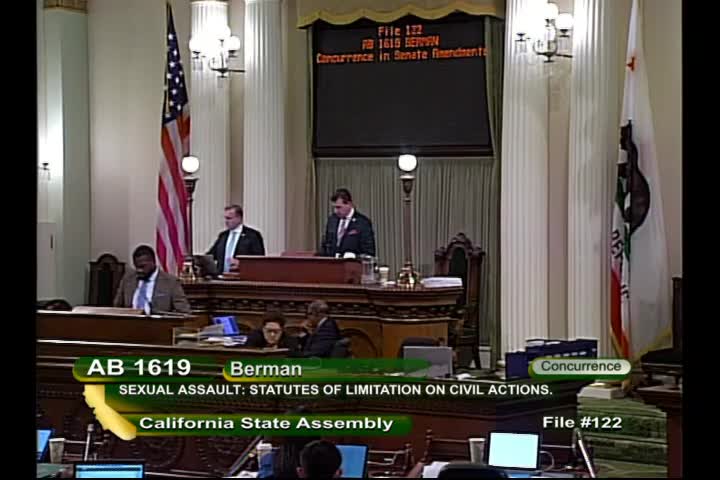 1MIN
Assembly Floor
 3MIN
Assembly Standing Committee on Local Government
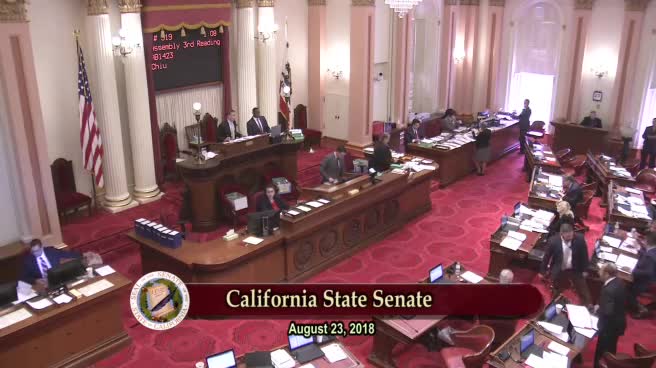 3MIN
Senate Floor
 8MIN
Assembly Standing Committee on Local Government
Bill Author

Bill Co-Author(s):