AB 831: Personal income and corporation taxes: credits: compliance.
- Session Year: 2017-2018
- House: Assembly
- Latest Version Date: 2017-04-25
The Personal Income Tax Law and the Corporation Tax Law allow various credits against the taxes imposed by those laws.
This bill would allow a credit against those taxes for each taxable year beginning on or after January 1, 2017, for qualified small businesses, microbusinesses, as defined, for costs paid or incurred during the taxable year with regard to compliance with state laws and regulations in an amount equal to $25 for each person-hour spent on compliance with state regulations and laws, or $5,000, not to exceed $1,200, or $1,200, as provided.
This bill would take effect immediately as a tax levy.
The Personal Income Tax Law and the Corporation Tax Law allow various credits against the taxes imposed by those laws.
This bill would allow a credit against those taxes for each taxable year beginning on or after January 1, 2017, for qualified small businesses, as defined, for costs paid or incurred during the taxable year with regard to compliance with state laws and regulations in an amount equal to $25 for each man-hour person-hour spent on compliance with state regulations and laws, laws, or $5,000, as provided.
This bill would take effect immediately as a tax levy.
The Personal Income Tax Law and the Corporation Tax Law allow various credits against the taxes imposed by those laws.
This bill would allow a credit against those taxes for each taxable year beginning on or after January 1, 2017, for qualified small businesses, as defined, in an amount equal to $25 for each man-hour spent on compliance with state regulations and laws, as provided.
This bill would take effect immediately as a tax levy.
(a)(1)For each taxable year beginning on or after January 1, 2017, there shall be allowed to a qualified small business microbusiness, as defined in Section 14837 of the Government Code, for costs paid or incurred during the taxable year with regard to compliance with state laws and regulations a credit against the net tax, as defined in Section 17039, in an amount as specified in paragraph (2).
(2)The credit allowed by this section shall either be five thousand dollars ($5,000) one thousand two hundred dollars ($1,200) or an amount equal to twenty-five dollars ($25) per each person-hour spent on compliance with state laws and regulations, as elected by the taxpayer. taxpayer, not to exceed one thousand two hundred dollars ($1,200).
(b)For purposes of this section:
(1)Compliance section, compliance with state laws and regulations means the adherence to laws, regulations, guidelines, and specifications relevant to the taxpayers business and includes, but is not limited to, preparation for, and the providing of, mandatory training for employees, modification of the business premises, and providing required information regarding employee safety.
(2)Qualified small business means a business that:(A)Is independently owned and operated.(B)Is not dominant in its field of operation.(C)Has fewer than 100 employees.(D)Averages annual gross receipts of fifteen million dollars ($15,000,000) or less over the previous three taxable years.(c)In the case where the credit allowed by this section exceeds the net tax, the excess may be carried over to reduce the net tax in the following year, and the six succeeding years if necessary, until the credit is exhausted.
(d)Section 41 does not apply to the credit allowed by this section.
SEC. 2.Section 23686.1 is added to the Revenue and Taxation Code, to read:23686.1.(a)(1)For each taxable year beginning on or after January 1, 2017, there shall be allowed to a qualified small business microbusiness, as defined in Section 14837 of the Government Code, for costs paid or incurred during the taxable year with regard to compliance with state laws and regulations a credit against the tax, as defined in Section 23036, in an amount as specified in paragraph (2).
(2)The credit allowed by this section shall either be five thousand dollars ($5,000) one thousand two hundred dollars ($1,200) or an amount equal to twenty-five dollars ($25) per each person-hour spent on compliance with state laws and regulations, as elected by the taxpayer. taxpayer, not to exceed one thousand two hundred dollars ($1,200).
(b)For purposes of this section:
(1)Compliance section, compliance with state laws and regulations means the adherence to laws, regulations, guidelines, and specifications relevant to the taxpayers business and includes, but is not limited to, preparation for, and the providing of, mandatory training for employees, modification of the business premises, and providing required information regarding employee safety.
(2)Qualified small business means a business that:(A)Is independently owned and operated.(B)Is not dominant in its field of operation.(C)Has fewer than 100 employees.(D)Averages annual gross receipts of fifteen million dollars ($15,000,000) or less over the previous three taxable years.(c)In the case where the credit allowed by this section exceeds the net tax, the excess may be carried over to reduce the net tax in the following year, and the six succeeding years if necessary, until the credit is exhausted.
(d)Section 41 does not apply to the credit allowed by this section.
SEC. 3.This act provides for a tax levy within the meaning of Article IV of the California Constitution and shall go into immediate effect.
(a)(1)For each taxable year beginning on or after January 1, 2017, there shall be allowed to a qualified small business for costs paid or incurred during the taxable year with regard to compliance with state laws and regulations a credit against the net tax, as defined in Section 17039, in an amount equal to twenty-five dollars ($25) per each man-hour spent on compliance with state laws and regulations. as specified in paragraph (2).
(2)The credit allowed by this section shall either be five thousand dollars ($5,000) or an amount equal to twenty-five dollars ($25) per each person-hour spent on compliance with state laws and regulations, as elected by the taxpayer.
(b)For purposes of this section:
(1)Compliance with state laws and regulations means the adherence to laws, regulations, guidelines, and specifications relevant to the taxpayers business and includes, but is not limited to, preparation for, and the providing of, mandatory training for employees, modification of the business premises, and providing required information regarding employee safety.
(2)Qualified small business means a business that:
(A)Is independently owned and operated.
(B)Is not dominant in its field of operation.
(C)Has fewer than 100 employees.
(D)Averages annual gross receipts of fifteen million dollars ($15,000,000) or less over the previous three taxable years.
(c)In the case where the credit allowed by this section exceeds the net tax, the excess may be carried over to reduce the net tax in the following year, and the six succeeding years if necessary, until the credit is exhausted.
(d)Section 41 does not apply to the credit allowed by this section.
SEC. 2.Section 23686.1 is added to the Revenue and Taxation Code, to read:23686.1.(a)(1)For each taxable year beginning on or after January 1, 2017, there shall be allowed to a qualified small business for costs paid or incurred during the taxable year with regard to compliance with state laws and regulations a credit against the tax, as defined in Section 23036, in an amount equal to twenty-five dollars ($25) per each man-hour spent on compliance with state laws and regulations. as specified in paragraph (2).
(2)The credit allowed by this section shall either be five thousand dollars ($5,000) or an amount equal to twenty-five dollars ($25) per each person-hour spent on compliance with state laws and regulations, as elected by the taxpayer.
(b)For purposes of this section:
(1)Compliance with state laws and regulations means the adherence to laws, regulations, guidelines, and specifications relevant to the taxpayers business and includes, but is not limited to, preparation for, and the providing of, mandatory training for employees, modification of the business premises, and providing required information regarding employee safety.
(2)Qualified small business means a business that:
(A)Is independently owned and operated.
(B)Is not dominant in its field of operation.
(C)Has fewer than 100 employees.
(D)Averages annual gross receipts of fifteen million dollars ($15,000,000) or less over the previous three taxable years.
(c)In the case where the credit allowed by this section exceeds the net tax, the excess may be carried over to reduce the net tax in the following year, and the six succeeding years if necessary, until the credit is exhausted.
(d)Section 41 does not apply to the credit allowed by this section.
SEC. 3.This act provides for a tax levy within the meaning of Article IV of the California Constitution and shall go into immediate effect.
(a)For each taxable year beginning on or after January 1, 2017, there shall be allowed to a qualified small business a credit against the net tax, as defined in Section 17039, in an amount equal to twenty-five dollars ($25) per each man-hour spent on compliance with state laws and regulations.
(b)For purposes of this section:
(1)Compliance with state laws and regulations means the adherence to laws, regulations, guidelines, and specifications relevant to the taxpayers business and includes, but is not limited to, preparation for, and the providing of, mandatory training for employees, modification of the business premises, and providing required information regarding employee safety.
(2)Qualified small business means a business that:
(A)Is independently owned and operated.
(B)Is not dominant in its field of operation.
(C)Has fewer than 100 employees.
(D)Averages annual gross receipts of fifteen million dollars ($15,000,000) or less over the previous three taxable years.
(c)In the case where the credit allowed by this section exceeds the net tax, the excess may be carried over to reduce the net tax in the following year, and the six succeeding years if necessary, until the credit is exhausted.
(d)Section 41 does not apply to the credit allowed by this section.
SEC. 2.Section 23686.1 is added to the Revenue and Taxation Code, to read:23686.1.(a)For each taxable year beginning on or after January 1, 2017, there shall be allowed to a qualified small business a credit against the tax, as defined in Section 23036, in an amount equal to twenty-five dollars ($25) per each man-hour spent on compliance with state laws and regulations.
(b)For purposes of this section:
(1)Compliance with state laws and regulations means the adherence to laws, regulations, guidelines, and specifications relevant to the taxpayers business and includes, but is not limited to, preparation for, and the providing of, mandatory training for employees, modification of the business premises, and providing required information regarding employee safety.
(2)Qualified small business means a business that:
(A)Is independently owned and operated.
(B)Is not dominant in its field of operation.
(C)Has fewer than 100 employees.
(D)Averages annual gross receipts of fifteen million dollars ($15,000,000) or less over the previous three taxable years.
(c)In the case where the credit allowed by this section exceeds the net tax, the excess may be carried over to reduce the net tax in the following year, and the six succeeding years if necessary, until the credit is exhausted.
(d)Section 41 does not apply to the credit allowed by this section.
SEC. 3.This act provides for a tax levy within the meaning of Article IV of the California Constitution and shall go into immediate effect.
|
Date
|
Status
|
|---|---|
| Feb 1, 2018 | From committee: Filed with the Chief Clerk pursuant to Joint Rule 56. |
| Jan 31, 2018 | Died pursuant to Art. IV, Sec. 10(c) of the Constitution. |
| May 26, 2017 | In committee: Held under submission. |
| May 3, 2017 | In committee: Set, first hearing. Referred to APPR. suspense file. |
| Apr 26, 2017 | Re-referred to Com. on APPR. |
| Apr 25, 2017 | Read second time and amended. |
| Apr 24, 2017 | From committee: Amend, and do pass as amended and re-refer to Com. on APPR. (Ayes 8. Noes 2.) (April 17). |
| Mar 27, 2017 | In committee: Set, first hearing. Hearing canceled at the request of author. |
| Mar 21, 2017 | Re-referred to Com. on REV. & TAX. |
| Mar 20, 2017 | From committee chair, with author's amendments: Amend, and re-refer to Com. on REV. & TAX. Read second time and amended. |
| Mar 2, 2017 | Referred to Com. on REV. & TAX. |
| Feb 17, 2017 | From printer. May be heard in committee March 19. |
| Feb 16, 2017 | Read first time. To print. |
|
Date
|
Description
|
Location
|
Votes
|
|
|---|---|---|---|---|
| Apr 17, 2017 | Do pass as amended and be re-referred to the Committee on [Appropriations] | Assembly Standing Committee on Revenue and Taxation |
Passed |
This list shows positions taken on this bill by organizations on the date displayed, which is linked to the original source.
Positions by individuals are not included.
Date of Hearing: May 3, 2017
ASSEMBLY COMMITTEE ON APPROPRIATIONS
Lorena Gonzalez Fletcher, Chair
ABPCA Bill Id:AB 831
Author:(Patterson) – As Amended Ver:April 25, 2017
Policy Committee: | Revenue and Taxation | Vote: | 8 - 2 |
|
| ||
|
|
Urgency: No State Mandated Local Program: No Reimbursable: No
SUMMARY:
This bill provides a Personal Income Tax (PIT) and Corporation Tax (CT) credit worth $1,200 to eligible microbusinesses. This credit is available for taxable years beginning on or after January 1, 2017.
FISCAL EFFECT:
Annual General Fund (GF) revenue loss of $2.3 billion in 2017-18, $1.9 billion in 2018-19, and $2.1 billion in 2019-20.
COMMENTS:
- Purpose. According to the author, California’s regulatory climate makes the cost of doing business among the highest in the country. The author notes that many small businesses manage regulatory compliance in-house and, nationally, the average small business spends around 200 hours per year managing and complying with regulations.
- Fiscal implications of tax expenditures. Existing law provides various credits, deductions, exclusions, and exemptions for particular taxpayer groups. These features of tax law are referred to as "expenditures" since they are generally enacted to accomplish some governmental purpose and there is a determinable cost associated with each (in the form of foregone revenues). One ongoing concern about tax expenditures is the lack of control over revenue losses, since the number of taxpayers taking advantage of any given tax expenditure can vary each year. This bill enacts a new tax expenditure program, in the form of a tax credit, for microbusinesses in California.
Recent policy committee amendments reduced the scope of AB 831, but significant costs remain. The introduced version of this bill allowed a much larger credit to a wider range of businesses, resulting in costs in the tens of billions. However, even with the recent amendments that reduced the size of the credit and limited eligibility to just microbusinesses, the revenue loss associated with this proposed credit is quite significant. Moreover, this bill lacks key provisions that help state lawmakers manage the costs of tax expenditures, such as a sunset or a requirement that some type of accounting is done to ensure that this credit works as intended.
Analysis Prepared by: Luke Reidenbach / APPR. / (916) 319-2081
Date of Hearing: April 17, 2017
ASSEMBLY COMMITTEE ON REVENUE AND TAXATION
Sebastian Ridley-Thomas, Chair
ABPCA Bill Id:AB 831 (
Author:Patterson) – As Amended Ver:March 20, 2017
Majority vote. Tax levy. Fiscal committee.
SUBJECT: Personal income and corporation taxes: credits: compliance
SUMMARY: Allows a tax credit, under both the Personal Income Tax (PIT) Law and the Corporation Tax (CT) Law, to a "qualified small business" for costs paid or incurred during the taxable year with regard to "compliance with state laws and regulations", as specified. Specifically, this bill:
- Applies to each taxable year beginning on or after January 1, 2017.
- Provides that the credit shall either be $5,000 or an amount equal to $25 per each person-hour spent on "compliance with state laws and regulations", as elected by the taxpayer.
- Defines a "qualified small business" as a business that:
- Is independently owned and operated;
- Is not dominant in its field of operation;
- Has fewer than 100 employees; and,
- Averages annual gross receipts of $15 million or less over the previous three taxable years.
- Defines "compliance with state laws and regulations" as the adherence to laws, regulations, guidelines, and specifications relevant to the taxpayer's business and includes, but is not limited to, preparation for, and the providing of, mandatory training for employees, modification of the business premises, and providing required information regarding employee safety.
- Provides that in cases where the credit amount exceeds the taxpayer's tax liability, the excess credit amount may be carried over to the following year, and the six succeeding years if necessary, until the credit is exhausted.
- Provides that Revenue and Taxation Code (R&TC) Section 41 does not apply to this credit.
- Takes immediate effect as a tax levy.
EXISTING LAW:
- Allows various tax credits under both the PIT Law and the CT Law. These credits are generally designed to encourage socially beneficial behavior or to provide relief to taxpayers who incur specified expenses.
- Allows taxpayers engaged in a trade or business to deduct all expenses that are considered ordinary and necessary in conducting that trade or business.
- Requires any bill authorizing a new credit to contain all of the following:
- Specific goals, purposes, and objectives that the tax credit will achieve;
- Detailed performance indicators for the Legislature to use when measuring whether the tax credit meets the goals, purposes, and objectives stated in the bill; and,
- Data collection requirements to enable the Legislature to determine whether the tax credit is meeting, failing to meet, or exceeding those specific goals, purposes, and objectives. The requirements shall include the specific data and baseline measurements to be collected and remitted in each year the credit is in effect, for the Legislature to measure the change in performance indicators, and the specific taxpayers, state agencies, or other entities required to collect and remit data. (R&TC Section 41.)
FISCAL EFFECT: The Franchise Tax Board (FTB) estimates that this bill would reduce General Fund revenues by $18 billion in fiscal year (FY) 2017-18, by $14 billion in FY 2018-19, and by $16 billion in FY 2019-20.
COMMENTS:
- The author has provided the following statement in support of this bill:
Small businesses are often paying the costs of implementing the State's interest and struggling to do so. California often receives poor marks from small businesses because [of] the regulatory environment. According to the American Tort Reform Association, California has averaged 827 new laws every year since 2010, making compliance incredibly difficult for small businesses.
The increasing number of laws and regulations are part of the reason that California is unfortunately ranked poorly in CNBC America's Top States for Business 2016 index, where CA is 2nd to worst in cost of doing business, absolute worst in business friendliness, and 4th worst in cost of living. A recent poll by the National Federation of Independent Business lists the cost of compliance as the single greatest regulatory problem for small employers.
Furthermore, the Pacific Research Institute's newest Small Business Regulation Index ranked CA the worst state in the country largely due to California's regulatory environment.
Most small businesses manage regulatory compliance in-house and the owner almost always takes the lead. The average small business nationally spends about 200 hours per year, or 4 hours a week, managing and complying with regulations according [to] the NFIB. That is 200 hours of time dedicated to complying with state interests, burdening small businesses and making it hard to better utilize their time and finances elsewhere in the marketplace. It is expected to be much worse in California.
AB 831 is needed to help small businesses cope with the burden of California's regulatory environment that has become detrimental in growing the California economy.
- This bill is opposed by the California Labor Federation, which notes:
[N]othing in this bill would require the business to actually comply with the law. The tax credit is simply for costs paid or incurred for compliance. If those costs failed to result in compliance with the law, then the business is equally entitled to a tax break as a business that does comply. Essentially the state would reward businesses for breaking the law as long as they made an empty effort to comply.
Lawmakers make laws. The public pays taxes to ensure that those laws are enforced. Most businesses and individuals obey those laws. The state cannot afford to spend scarce taxpayer dollars to create a financial incentive for businesses to obey the law, like every other Californian is already required to do.
- The FTB notes the following implementation and policy concerns in its staff analysis of this bill:
- "This bill uses phrases that are undefined, i.e., 'independently owned and operated,' 'person-hour,' 'not dominant in its field of operation,' and 'compliance with state laws and regulations.' The absence of definitions to clarify these phrases could lead to disputes with taxpayers and would complicate the administration of this bill. For clarity and ease of administration, it is recommended the bill be amended to clearly define these phrases."
- "The bill specifies that to qualify as a 'qualified small business' the business must 'have fewer than 100 employees.' However, the bill fails to specify when the 100 employee count must not be exceeded. It is recommended the bill be amended to specify when the employee count should occur or if the business can never exceed 100 employees during the tax year to keep its qualification as a small business."
- "The bill also specifies a 'qualified small business' averages annual gross receipts of $15 million or less over the previous three taxable years. How does this apply to new businesses or recently moved from out of state businesses? What is the measure of 'gross receipts' for the purposes of this section? Only those 'gross receipts' reportable to this state? It is recommended the bill be amended to specify what 'gross receipts' means."
- "Because wages paid to employees are deductible under current law and may also be eligible under another provision of state tax law for a wage credit, this bill would allow taxpayers to claim multiple tax benefits for the same item of expense."
- Committee staff comments:
- What is a "tax expenditure"? Existing law provides various credits, deductions, exclusions, and exemptions for particular taxpayer groups. In the late 1960s, U.S. Treasury officials began arguing that these features of the tax law should be referred to as "expenditures" since they are generally enacted to accomplish some governmental purpose and there is a determinable cost associated with each (in the form of foregone revenues).
- How is a tax expenditure different from a direct expenditure? As the Department of Finance notes in its annual Tax Expenditure Report, there are several key differences between tax expenditures and direct expenditures. First, tax expenditures are reviewed less frequently than direct expenditures once they are put in place. While this affords taxpayers greater financial predictability, it can also result in tax expenditures remaining a part of the tax code without demonstrating any public benefit. Second, there is generally no control over the amount of revenue losses associated with any given tax expenditure. Finally, it should also be noted that, once enacted, it takes a two-thirds vote to rescind an existing tax expenditure absent a sunset date, effectively resulting in a "one-way ratchet" whereby tax expenditures can be conferred by majority vote, but cannot be rescinded, irrespective of their cost or efficacy, without a supermajority vote.
- What would this bill do? This bill would allow a new credit, under both the PIT Law and the CT Law, to a qualified small business for each person-hour spent on compliance with state law and regulations. Committee staff understands that this bill seeks to defray costs incurred by small businesses complying with existing law. As a tax levy, this bill would become effective immediately upon enactment and would be specifically operative for each taxable year beginning on or after January 1, 2017.
- What is being incentivized? Tax credits are typically conferred, as a matter of legislative grace, to encourage socially beneficial behavior that may not occur absent a financial incentive. The credit this bill proposes, however, takes a decidedly different tact. Rather than seeking to encourage certain behavior, this bill seeks to defray the costs small businesses face in complying with existing law. Proponents note that existing laws and regulations can be difficult to comply with, especially for smaller businesses that lack in-house legal, accounting, and compliance support. That said, the aim and scope of this bill do raise certain questions. First, as critics of this measure note, nothing in this bill affirmatively requires a business to comply successfully with existing law to avail itself of a credit. Second, if the Legislature determines that a particular law or regulation poses an unjustifiable burden to a particular class of individuals, the Legislature has the power to modify the law in question or to craft carefully considered exceptions. Critics of this measure might consider such an approach preferable to a credit that indiscriminately rewards taxpayers for complying with each and every aspect of the state's legal regime. This, in turn, speaks to a more fundamental consideration – namely, whether taxpayers should be financially subsidized for complying with existing law, even in cases where the law is complex and difficult to understand. Each citizen must comply with the law, and if a law is deemed onerous or ill-conceived, it seems that redress might be more appropriately pursued via the electoral or political spheres.
- A note on sunsets: In its current form, this bill allows a tax credit in perpetuity. This Committee, however, has a longstanding policy in favor of sunset dates for new tax expenditure programs to enable periodic legislative review. As such, the author may wish to consider adding an appropriate sunset date to this bill.
- Proposed technical amendments: Committee staff suggests adoption of the following technical amendments to this bill:
- On page 3, line 19, strike "net tax," and insert "tax,"; and,
- On page 3, lines 19 and 20, strike "net tax" and insert "tax".
- What is a "tax expenditure"? Existing law provides various credits, deductions, exclusions, and exemptions for particular taxpayer groups. In the late 1960s, U.S. Treasury officials began arguing that these features of the tax law should be referred to as "expenditures" since they are generally enacted to accomplish some governmental purpose and there is a determinable cost associated with each (in the form of foregone revenues).
REGISTERED SUPPORT / OPPOSITION:
Support
None on file
Opposition
California Labor Federation
California Nurses Association/National Nurses United
California Professional Firefighters
California Tax Reform Association
Analysis Prepared by: M. David Ruff / REV. & TAX. / (916) 319-2098
Discussed in Hearing
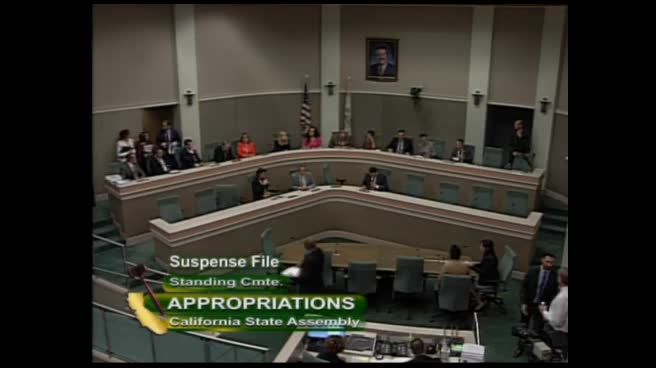 1H
Assembly Standing Committee on Appropriations
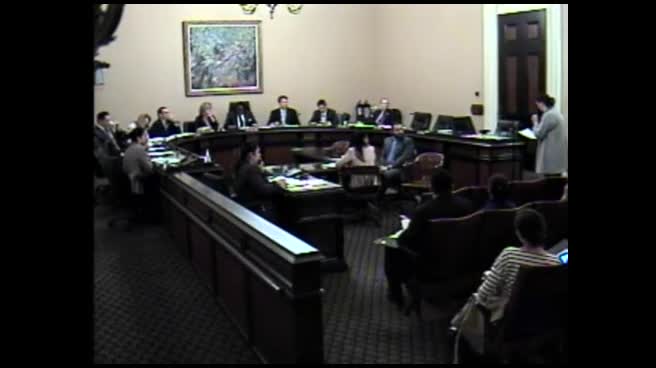 22MIN
Assembly Standing Committee on Revenue and Taxation
Bill Author