AB 838: Pupil instruction: model curriculum: 2016 presidential election.
- Session Year: 2017-2018
- House: Assembly
- Latest Version Date: 2017-05-03
Existing law requires the Instructional Quality Commission to recommend curriculum frameworks to the State Board of Education. Existing law defines curriculum framework as an outline of the components of a given course of study designed to provide state direction to school districts in the provision of instructional programs. Existing law authorizes the state board to consider the adoption of a revised curriculum framework and evaluation criteria for instructional materials in history-social science.
This bill would require the commission, during the next revision of the history-social science curriculum framework after January 1, 2018, to consider including, and recommending for adoption by the state board, high school instruction regarding Russian interference with the 2016 United States presidential election, as appropriate. commission to develop a model curriculum on the 2016 presidential election for pupils enrolled in secondary school government courses, for voluntary use by educators. The bill would specify various topics to be addressed in the model curriculum. The bill would require the state board to adopt, modify, or reject the model curriculum framework recommended by the commission.
The bill, following the adoption by the state board of the model curriculum in accordance with a specified timeline, would require the Superintendent of Public Instruction to post the model curriculum on its Internet Web site for use on a voluntary basis by educators. The bill, beginning in the school year immediately following adoption of the model curriculum by the state board, would encourage local educational agencies and charter schools to use the model curriculum to provide instruction in secondary school government courses.
Existing law requires the Instructional Quality Commission to recommend curriculum frameworks to the State Board of Education. Existing law defines curriculum framework as an outline of the components of a given course of study designed to provide state direction to school districts in the provision of instructional programs. Existing law authorizes the state board to consider the adoption of a revised curriculum framework and evaluation criteria for instructional materials in history-social science.
This bill would require the commission, during the next revision of the history-social science curriculum framework after January 1, 2018, to consider including, and recommending for adoption by the state board, high school instruction regarding Russian interference with the 2016 United States presidential election, as appropriate. The bill would require the state board to adopt, modify, or reject the curriculum framework recommended by the commission.
The Legislature finds and declares all of the following:
(a)Californias history-social science framework, adopted by the State Board of Education in 2016, states that it is the obligation of the State of California to impart upon all students an engaging and relevant history-social science education that will shape how they participate in their world.
(b)The 2016 presidential election was unprecedented in many regards, yet is illustrative of important contemporary issues in American political life, such that it provides unusually rich and engaging content for instructing pupils about the American electoral process.
(c)It is therefore the intent of the Legislature to create a model curriculum, for use in high school government courses, on the American electoral process, using as content the 2016 presidential election.
SEC. 2.Section 33543.7 is added to the Education Code, to read:33543.7.(a)The Instructional Quality Commission shall develop, and the State Board of Education shall adopt, reject, or modify, a model curriculum, for pupils enrolled in secondary school government courses, on the 2016 presidential election, for voluntary use by educators. The curriculum shall identify the ways in which the model curriculum aligns with, and is supportive of, the common core state standards and of the goals of the curriculum framework in history-social science adopted by the state board in 2016.
(b)The model curriculum shall address, but shall not necessarily be limited to, the role of all of the following:
(1)The candidates, including personal histories, and actions and statements during the campaign.
(2)The candidates positions on a range of policy issues.
(3)The campaigns, including candidates statements and use of media, debates, and conventions.
(4)Media coverage of the campaign, including online and social media.
(5)Alleged foreign interference in the American electoral process.
(6)The Electoral College.
(7)Electoral demographics.
(8)Economic and regional labor conditions.
(9)International policy concerns.
(10)Issues of race and ethnicity, gender, age, religious affiliation, and immigration status.
(c)The model curriculum shall provide model lessons and activities for secondary school government courses regarding the content in subdivision (b), and shall identify supporting instructional materials for use in its implementation.
(d)In developing the model curriculum, the Instructional Quality Commission shall convene an advisory group comprised of experts in secondary school government curriculum and instruction. A majority of this group shall be current public school elementary or secondary classroom teachers who have a professional teaching credential that is valid under state law and who have experience or expertise in secondary school government curriculum and instruction.
(e)The Instructional Quality Commission shall hold a minimum of two public hearings in order for the public to provide input on the model curriculum. The public hearings and meetings required by this subdivision shall be held pursuant to the Bagley-Keene Open Meeting Act (Article 9 (commencing with Section 11120) of Chapter 1 of Part 1 of Division 3 of Title 2 of the Government Code).
(f)On or before December 31, 2020, the Instructional Quality Commission shall submit the model curriculum to the state board.
(g)On or before March 31, 2021, the state board shall adopt, reject, or modify the model curriculum submitted by the Instructional Quality Commission, at a public meeting held after the submission of the model curriculum pursuant to subdivision (f).
(h)If the state board modifies the model curriculum submitted by the Instructional Quality Commission, the state board shall explain, in writing, the reasons for the modifications to the Governor and the appropriate fiscal and policy committees of the Legislature.
(i)If the state board modifies the model curriculum, the state board shall, in a meeting conducted pursuant to the Bagley-Keene Open Meeting Act (Article 9 (commencing with Section 11120) of Chapter 1 of Part 1 of Division 3 of Title 2 of the Government Code), provide written reasons for its revisions. The state board shall not adopt the model curriculum at the same meeting at which it provides its written reasons, but, instead, shall adopt these revisions at a subsequent meeting conducted no later than July 31, 2021.
(j)If the state board rejects the model curriculum, the state board shall transmit to the Superintendent, the Governor, and the appropriate policy and fiscal committees of the Legislature a specific written explanation of the reasons for the rejection of the model curriculum.
(k)Following the adoption of the model curriculum, the Superintendent shall post the curriculum on its Internet Web site for use on a voluntary basis by educators.
(l)Beginning in the school year following the adoption of the model curriculum, local educational agencies and charter schools are encouraged to use the curriculum to provide instruction in secondary school government courses.
SECTION 1.This act shall be known, and may be cited, as the Pravda Act of 2017.SEC. 2.The Legislature finds and declares that Russian interference with the 2016 United States presidential election was an important occurrence that must be included in high school history textbooks used in California.SEC. 3.Section 33543.7 is added to the Education Code, to read:33543.7.(a)During the next revision of the history-social science curriculum framework after January 1, 2018, the commission shall consider including, and recommending for adoption by the state board, high school instruction regarding Russian interference with the 2016 United States presidential election, as appropriate.(b)The state board shall adopt, modify, or reject the curriculum framework recommended by the commission pursuant to subdivision (a).This act shall be known, and may be cited, as the Pravda Act of 2017.
SEC. 2.The Legislature finds and declares that Russian interference with the 2016 United States presidential election was an important occurrence that must be included in high school history textbooks used in California.
SEC. 3.Section 33543.7 is added to the Education Code, to read:33543.7.(a)During the next revision of the history-social science curriculum framework after January 1, 2018, the commission shall consider including, and recommending for adoption by the state board, high school instruction regarding Russian interference with the 2016 United States presidential election, as appropriate.
(b)The state board shall adopt, modify, or reject the curriculum framework recommended by the commission pursuant to subdivision (a).
|
Date
|
Status
|
|---|---|
| Feb 1, 2018 | From committee: Filed with the Chief Clerk pursuant to Joint Rule 56. |
| Jan 31, 2018 | Died pursuant to Art. IV, Sec. 10(c) of the Constitution. |
| May 26, 2017 | In committee: Held under submission. |
| May 17, 2017 | In committee: Set, first hearing. Referred to APPR. suspense file. |
| May 4, 2017 | Re-referred to Com. on APPR. |
| May 3, 2017 | Read second time and amended. |
| May 2, 2017 | From committee: Amend, and do pass as amended and re-refer to Com. on APPR. (Ayes 5. Noes 2.) (April 26). |
| Mar 2, 2017 | Referred to Com. on ED. |
| Feb 17, 2017 | From printer. May be heard in committee March 19. |
| Feb 16, 2017 | Read first time. To print. |
|
Date
|
Description
|
Location
|
Votes
|
|
|---|---|---|---|---|
| Apr 26, 2017 | Do pass as amended and be re-referred to the Committee on [Appropriations] | Assembly Standing Committee on Education |
Passed |
This list shows positions taken on this bill by organizations on the date displayed, which is linked to the original source.
Positions by individuals are not included.
Date of Hearing: May 17, 2017
ASSEMBLY COMMITTEE ON APPROPRIATIONS
Lorena Gonzalez Fletcher, Chair
ABPCA Bill Id:AB 838
Author:(Levine) – As Amended Ver:May 3, 2017
Policy Committee: | Education | Vote: | 5 - 2 |
|
| ||
|
|
Urgency: No State Mandated Local Program: No Reimbursable: No
SUMMARY:
This bill requires that the Instructional Quality Commission (IQC) develop a model curriculum on the 2016 presidential election, for voluntary use in secondary government courses. Specifically, this bill:
- Requires the IQC, by December 31, 2020, to develop, and the State Board of Education (SBE), by March 31, 2021, to adopt, reject, or modify a model curriculum for pupils in enrolled in secondary government courses, on the 2016 presidential election, for voluntary use by educators.
- Requires the IQC, in developing the model curriculum, to convene an advisory group comprised of experts in secondary government curriculum and instruction.
- Requires the IQC to hold a minimum of two public hearings in order for the public to provide input on the model curriculum, and that the public hearings and meetings required by this subdivision must be held pursuant to the Bagley-Keene Open Meeting Act.
- Requires that, following the adoption of the model curriculum, the Superintendent of Public Instruction (SPI) post the curriculum on its Internet web site for use on a voluntary basis by educators.
- Beginning in the school year following the adoption of the model curriculum, encourages local educational agencies and charter schools to use the curriculum to provide instruction in secondary government courses.
FISCAL EFFECT:
$798,000 General Fund/Prop 98 to develop model curriculum on the 2016 presidential election. These estimates assume members of the advisory committee are volunteers and will receive no compensation.
No reimbursable mandate costs, as this bill only encourages local educational agencies and charters to use this model curriculum.
COMMENTS:
- Background and Purpose. State law establishes the IQC (formerly called the Curriculum Development and Supplemental Materials Commission) as an advisory body to the SBE on matters related to curriculum, instructional materials, and content standards. California’s public school curriculum is based on content standards in various subjects, including English-Language Arts, Mathematics, Science, History-Social Science, Physical Education, English Language Development, Career Technical Education, Health Education, World Languages, and Visual and Performing Arts. New standards are developed by the IQC through a public process, and are adopted by the SBE. California has developed model curricula on a variety of topics, including the life of Cesar Chavez, human rights and genocide, and most recently, ethnic studies.
The author’s office states that the 2016 presidential election was unlike any other in the history of the United States, citing as an example allegations of foreign interference in the electoral process. The author notes that it is important to ensure students are aware of such history.
- Related and prior legislation. AB 155 (Gomez) requires the IQC to develop a model curriculum in media literacy, and requires the California Department of Education (CDE) to develop an online professional development module to support the model curriculum. The bill will be heard in this committee today.
AB 738 (Limon) requires the development of a model curriculum in Native American studies, and requires school districts which elect to offer one course in Native American studies to make the course available in at least one year during a student’s enrollment in grades 9-12. The bill is currently in the Assembly Appropriations Suspense File.
AB 2016 (Alejo) Chapter 327, Statues of 2016 requires the development of a model curriculum in ethnic studies, and requires school districts which elect to offer one course in ethnic studies to make the course available in at least one year during a student’s enrollment in grades 9-12.
Analysis Prepared by: Daisy Gonzales / APPR. / (916) 319-2081
Date of Hearing: April 26, 2017
ASSEMBLY COMMITTEE ON EDUCATION
Patrick O'Donnell, Chair
ABPCA Bill Id:AB 838 (
Author:Levine) – As Introduced Ver:February 16, 2017
AS PROPOSED TO BE AMENDED
SUBJECT: Pupil instruction: history-social science curriculum framework: Russian interference with 2016 presidential election
SUMMARY: As proposed to be amended, requires that the Instructional Quality Commission (IQC) develop a model curriculum on the 2016 presidential election, for voluntary use secondary government courses. Specifically, this bill:
- Finds and declares that the 2016 presidential election provides unusually rich and engaging content for instructing pupils about the American electoral process.
- Requires the IQC to develop, and the State Board of Education (SBE) to adopt, reject, or modify a model curriculum for pupils in enrolled in secondary government courses, on the 2016 presidential election, for voluntary use by educators.
- Requires that the curriculum identify the ways in which the model curriculum aligns with, and is supportive of, the Common Core State Standards and of the goals of the curriculum framework in history social science adopted by the state board of education in 2016.
- Requires the model curriculum to address, but not be limited to, the role of:
- the candidates, including personal histories, and actions and statements during the campaign
- the candidates’ positions on a range of policy issues
- the campaigns, including candidates’ statements and use of media, debates, and conventions
- media coverage of the campaign, including online and social media
- alleged foreign interference in the American electoral process
- the electoral college
- electoral demographics
- economic and regional labor conditions
- international policy concerns
- issues of race and ethnicity, gender, age, religious affiliation, and immigration status
- Requires that model curriculum provide model lessons and activities for secondary government courses regarding the content specified above, and identify supporting instructional materials for use in its implementation.
- Requires the IQC, in developing the model curriculum, to convene an advisory group comprised of experts in secondary government curriculum and instruction. Requires that a majority of this group be current public school elementary or secondary classroom teachers who have a professional teaching credential that is valid under state law and who have experience or expertise in secondary government curriculum and instruction.
- Requires the IQC to hold a minimum of two public hearings in order for the public to provide input on the model curriculum, and that the public hearings and meetings required by this subdivision shall be held pursuant to the Bagley-Keene Open Meeting Act.
- Requires that, on or before December 31, 2020, the IQC submit the model curriculum to the state board.
- Requires that, on or before March 31, 2021, the SBE adopt, reject, or modify the model curriculum, at a subsequent public meeting.
- Requires that, if the SBE modifies the model curriculum the SBE explain, in writing, the reasons for the modifications to the Governor and the appropriate fiscal and policy committees of the Legislature.
- Requires that, if the SBE modifies the model curriculum, the state board, in a meeting conducted pursuant to the Bagley-Keene Open Meeting Act provide written reasons for its revisions. Requires that the SBE not adopt the model curriculum at the same meeting it provides its written reasons, but, instead, adopt these revisions at a subsequent meeting conducted no later than July 31, 2021.
- Requires that, if the SBE rejects the model curriculum, it transmit to the Superintendent of Public Instruction (SPI), the Governor, and the appropriate policy and fiscal committees of the Legislature a specific written explanation of the reasons for the rejection of the model curriculum.
- Requires that, following the adoption of the model curriculum, the SPI post the curriculum on its Internet web site for use on a voluntary basis by educators.
- Beginning in the school year following the adoption of the model curriculum, encourages local educational agencies and charter schools to use the curriculum to provide instruction in secondary government courses.
EXISTING LAW:
- Establishes the IQC (formerly called the Curriculum Development and Supplemental Materials Commission) as an advisory body to the SBE on matters related to curriculum, instructional materials, and content standards.
- Requires the California Department of Education to develop model curricula on a variety of topics, including the life of Cesar Chavez, human rights and genocide, and ethnic studies.
FISCAL EFFECT: Unknown
COMMENTS:
Need for the bill. The author’s office states that the 2016 presidential election was unlike any other in the history of the United States, citing as an example allegations of foreign interference in the electoral process. The author notes that it is important to ensure students are aware of such history.
Curriculum, standards, frameworks, and model curricula. California’s public school curriculum is based on content standards in various subjects, including English-Language Arts, Mathematics, Science, History-Social Science, Physical Education, English Language Development, Career Technical Education, Health Education, World Languages, and Visual and Performing Arts. These standards are developed by the IQC through a public process, and are adopted by the SBE.
These standards form the basis of California’s curriculum frameworks. The frameworks guide the implementation of these standards, and are used to establish criteria for the evaluation of instructional materials for state adoption for grades kindergarten through grade eight. They also guide district selection of instructional materials for grades nine through twelve.
In addition to developing standards in the above subject areas, the SPI is sometimes directed by law to develop model curricula on different topics, such as those on the life of Cesar Chavez, human rights and genocide, and ethnic studies.
Related and prior legislation. AB 155 (Gomez) of this Session Requires the IQC to develop a model curriculum in media literacy, and requires the California Department of Education (CDE) to develop an online professional development module to support the model curriculum.
SB 135 (Dodd) of this Session would require the IQC to develop, and the SBE to adopt, modify, or revise, a model curriculum in media literacy for social sciences for grades 1 to 12, require the SBE, in the next revision of the curriculum framework in social sciences, to integrate media literacy into the social sciences curriculum, and require the CDE to make a list resources and materials on media literacy available on its website.
SB 203 (Jackson) of this Session would require the CDE to identify best practices and recommendations for instruction in digital citizenship, Internet safety, and media literacy, and requires, beginning in the 2019–20 school year, school districts to annually review their policies and on those topics.
AB 738 (Limon) of this Session requires the development of a model curriculum in Native American studies, and requires school districts which elect to offer one course in Native American studies to make the course available in at least one year during a student’s enrollment in grades 9-12.
AB 2016 (Alejo) Chapter 327, Statues of 2016 requires the development of a model curriculum in ethnic studies, and requires school districts which elect to offer one course in ethnic studies to make the course available in at least one year during a student’s enrollment in grades 9-12.
REGISTERED SUPPORT / OPPOSITION:
Support
None on file
Opposition
None on file
Analysis Prepared by: Tanya Lieberman / ED. / (916) 319-2087
Discussed in Hearing
 1H
Assembly Standing Committee on Appropriations
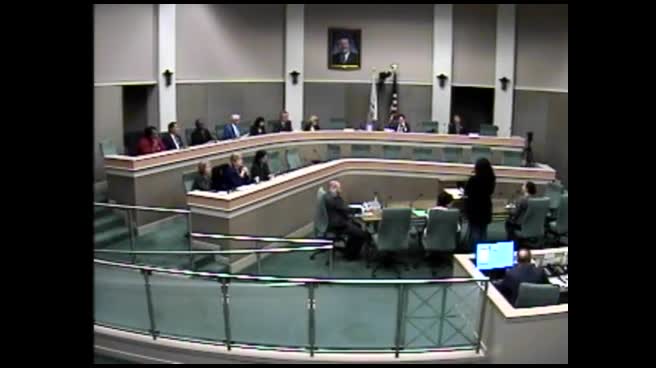 5MIN
Assembly Standing Committee on Education
Bill Author

Bill Co-Author(s):