AB 839: Medi-Cal: targeted case management.
- Session Year: 2017-2018
- House: Assembly
- Latest Version Date: 2017-07-18
Existing law establishes the Medi-Cal program, which is administered by the State Department of Health Care Services, under which qualified low-income individuals receive health care services. The Medi-Cal program is, in part, governed and funded by federal Medicaid program provisions. Existing law establishes the Targeted Case Management Program under the Medi-Cal program, under which targeted case management (TCM) services are provided by local governmental agencies to eligible Medi-Cal beneficiaries in defined target populations to assist those beneficiaries to gain access to needed medical, social, educational, and other services. Existing law authorizes a local governmental agency to contract with the department to provide TCM services, and requires a local governmental agency that elects to provide TCM services to submit an annual cost report certifying, among other things, the expenditure of 100% of the costs incurred for the provision of TCM services from the local governmental agencys general fund or from any other funds allowed under federal law and regulation. Existing law defines a local governmental agency to mean a county or chartered city.
This bill would expand the definition of a local governmental agency for purposes of the TCM Program to include a California Native American Indian tribe, tribal organization, or subgroup of a Native American Indian tribe or trial organization. organization funded by Public Law 93-638 that manages a statewide Medi-Cal administrative activities program. The bill would authorize the department to contract with no more than one local governmental agency that is a California Native American Indian organization funded by Public Law 93-638 that manages a statewide Medi-Cal administrative activities program. The bill would make conforming changes.
Existing law establishes the Medi-Cal program, which is administered by the State Department of Health Care Services, under which qualified low-income individuals receive health care services. The Medi-Cal program is, in part, governed and funded by federal Medicaid program provisions. Existing law establishes the Targeted Case Management Program under the Medi-Cal program, under which targeted case management (TCM) services are provided by local governmental agencies to eligible Medi-Cal beneficiaries in defined target populations to assist those beneficiaries to gain access to needed medical, social, educational, and other services. Existing law authorizes a local governmental agency to contract with the department to provide TCM services, and requires a local governmental agency that elects to provide TCM services to submit an annual cost report certifying, among other things, the expenditure of 100% of the costs incurred for the provision of TCM services from the local governmental agencys general fund or from any other funds allowed under federal law and regulation. Existing law defines a local governmental agency to mean a county or chartered city.
This bill would expand the definition of a local governmental agency for purposes of the TCM Program to include a Native American Indian tribe, tribal organization, or subgroup of a Native American Indian tribe or trial organization. The bill would make conforming changes.
Existing law provides for the Medi-Cal program, which is administered by the State Department of Health Care Services, under which qualified low-income individuals receive health care services. The Medi-Cal program is, in part, governed and funded by federal Medicaid program provisions. Existing law requires the department to implement specified provisions of federal law to provide Medi-Cal benefits to an individual until his or her 26th birthday if he or she was in foster care on his or her 18th birthday or any higher age the state has elected under federal law. Existing law requires the department to implement the federal option to provide Medi-Cal benefits to individuals who were in foster care and enrolled in Medicaid in any state, as provided.This bill would make technical, nonsubstantive changes to these provisions.Existing law provides for the Medi-Cal program, which is administered by the State Department of Health Care Services, under which qualified low-income individuals receive health care services. The Medi-Cal program is, in part, governed and funded by federal Medicaid program provisions. Existing law requires the department to implement specified provisions of federal law to provide Medi-Cal benefits to an individual until his or her 26th birthday if he or she was in foster care on his or her 18th birthday or any higher age the state has elected under federal law. Existing law requires the department to implement the federal option to provide Medi-Cal benefits to individuals who were in foster care and enrolled in Medicaid in any state, as provided.
This bill would make technical, nonsubstantive changes to these provisions.
(a)Targeted case management (TCM), pursuant to Section 1915(g) of the Social Security Act as amended by Public Law 99-272 (42 U.S.C. Sec. 1396n(g)), shall be covered as a benefit, effective January 1, 1995. Nothing in this section shall be construed to require any local governmental agency to implement TCM.
(b)A local governmental agency may contract with the department to provide TCM services. The department may contract with no more than one local governmental agency that is a California Native American Indian organization funded by Public Law 93-638 that manages a statewide Medi-Cal administrative activities program. The department shall not contract with local education agencies to provide case management services under this section.
(c)A local governmental agency may contract with any private or public entity to provide TCM services on its behalf under the conditions specified by the department in regulations.
(d)Each local governmental agency that provides TCM services shall have all of the following:
(1)Established procedures for performance monitoring.
(2)A countywide system to prevent duplication of services and to ensure coordination and continuity of care among providers of case management services provided to beneficiaries who are eligible to receive case management services from two or more programs.
(3)A fee mechanism effective January 1, 1995, specific to TCM services provided, which may vary by program.
(e) Subject to the requirements of federal law and regulations, a local governmental agency or an entity under contract with a local governmental agency may provide TCM services to one or all of the following groups of Medi-Cal beneficiaries, which shall be defined in regulation:
(1)High-risk persons.
(2)Persons who have language or other comprehension barriers.
(3)Persons on probation.
(4)Persons who have exhibited an inability to handle personal, medical, or other affairs.
(5)Persons abusing alcohol or drugs, or both.
(6)Adults at risk of institutionalization.
(7)Adults at risk of abuse or neglect.
(f)(1)A local governmental agency that elects to provide TCM services to the groups specified in subdivision (e) shall, for each fiscal year, for the purpose of obtaining federal Medicaid reimbursement, submit an annual cost report as prescribed by the department that certifies all of the following:
(A)The expenditure of 100 percent of the costs incurred for the provision of TCM services from the local governmental agencys general fund or from any other funds allowed under federal law and regulation.
(B)The amount of funds expended on allowable TCM services.
(C)Its expenditures represent costs that are eligible for federal financial participation.
(D)The costs reflected in the annual cost reports used to determine TCM rates are developed in compliance with the definitions contained in the Office of Management and Budget (OMB) Circular A-87.
(E)Case management services provided in accordance with Section 1396n(g) of Title 42 of the United States Code will not duplicate case management services provided under any home- and community-based services waiver.
(F)Claims for providing case management services pursuant to this section will not duplicate claims made to public agencies or private entities under other program authorities for the same purposes.
(G)The requirements of subdivision (d) have been met.
(2)The department shall deny any claim if it determines that any certification required by this subdivision is not adequately supported for purposes of federal financial participation.
(3)(A)(i)A city that is not a local governmental agency, or any other local public entity that contracts with a local governmental agency pursuant to subdivision (c) and that is located within a county that is a participating local governmental agency pursuant to this section, may submit certification to the local governmental agency of amounts expended for TCM services in accordance with Section 433.51 of Title 42 of the Code of Federal Regulations.
(ii)A city or other local public entity that submits certification pursuant to this paragraph shall comply with the requirements of paragraph (1), with other requirements applicable to local governmental agencies that the department determines, in regulations, to be applicable, and with all applicable federal requirements.
(iii)The local governmental agency shall forward the citys or local public entitys certification to the department for purposes of claiming federal financial participation.
(iv)As applicable, the local governmental agency shall obtain and retain appropriate certifications from the expending city or local public entity, together with documentation of the underlying expenditures, as required by the department.
(B)A California Native American Indian tribe or California tribal organization, as defined in subdivision (m), organization that is not participating in the Targeted Case Management Program as a local governmental agency, may contract with, and submit to, a tribe or tribal organization local governmental agency that contracts with the department pursuant to subdivision (b) certification of amounts expended for TCM services in accordance with Section 433.51 of Title 42 of the Code of Federal Regulations. The tribe or tribal organization local governmental agency receiving the certification shall forward it to the department for purposes of claiming federal financial participation. The certification shall comply with all of the requirements for certification set forth in subparagraph (A).
(g)Except as otherwise provided in paragraph (3) of subdivision (f), only a local governmental agency may submit TCM service claims to the department for the performance of TCM services.
(h)The department, in consultation with local governmental agencies, and consistent with federal regulations, and the State Medicaid Manual of the United States Department of Health and Human Services, Centers for Medicare and Medicaid Services, shall adopt regulations that define TCM services, establish the standards under which TCM services qualify as a Medi-Cal reimbursable service, prescribe the methodology for determining the rate of reimbursement, and establish a claims submission and processing system and method to certify local expenditures.
(i)(1)Notwithstanding any other provision of this section, the state shall be held harmless, in accordance with paragraphs (2) and (3) from any federal audit disallowance and interest resulting from payments made by the federal Medicaid program as reimbursement for claims for providing TCM services pursuant to this section, for the disallowed claim.
(2)To the extent that a federal audit disallowance and interest results from a claim or claims for which any local governmental agency has received reimbursement for TCM services, the department shall recoup from the local governmental agency that submitted that disallowed claim, through offsets or by a direct billing, amounts equal to the amount of the disallowance and interest, in that fiscal year, for the disallowed claim. All subsequent claims submitted to the department applicable to any previously disallowed claim, may be held in abeyance, with no payment made, until the federal disallowance issue is resolved.
(3)Notwithstanding paragraphs (1) and (2), to the extent that a federal audit disallowance and interest results from a claim or claims for which the local governmental agency has received reimbursement for TCM services performed by an entity under contract with, and on behalf of, the participating local governmental agency, the department shall be held harmless by that particular local governmental agency for 100 percent of the amount of any such federal audit disallowance and interest, for the disallowed claim.
(j)The expenditure of local funds required by this section shall not create, lead to, or expand the health care funding obligations or service obligations for current or future years for each local governmental agency, except as required by this section or as may be required by federal law.
(k) Subject to the requirements of federal law and regulations, TCM services are services that assist beneficiaries to gain access to needed medical, social, educational, and other services. Services provided by local governmental agencies, and their subcontractors, shall be defined in regulation, and shall include at least one of the following:
(1)Assessment.
(2)Plan development.
(3)Linkage and consultation.
(4)Assistance in accessing services.
(5)Periodic review.
(6)Crisis assistance planning.
(l)As a condition of participation and in consideration of the joint effort of the local governmental agencies and the department in implementing this section and the ongoing need of local governmental agencies to receive technical support from the department, and assistance in claims processing and program monitoring, the local governmental agencies shall cover the costs of the administrative activities performed by the department. Each local governmental agency shall annually pay a portion of the total costs of administrative activities performed by the department through a mechanism agreed to by the department and the local governmental agencies, or if no agreement is reached by August 1 of each year, directly to the state. The department shall determine and report the staffing requirements upon which projected costs will be based. Projected costs shall include the anticipated salaries, benefits, and operating expenses necessary to administer targeted case management.
(m)For the purposes of this section a local governmental agency means a California county, chartered city, or Native American Indian tribe, tribal organization, or subgroup of a Native American Indian tribe or trial organization, under contract with the department pursuant to subdivision (b). organization funded by Public Law 93-638 that manages a statewide Medi-Cal administrative activities program.
(n)Nothing in this section or in Section 14132.47 shall be construed to prevent any state agency from providing TCM services or from contracting with others to provide these services.
(a)Targeted case management (TCM), pursuant to Section 1915(g) of the Social Security Act as amended by Public Law 99-272 (42 U.S.C. Sec. 1396n(g)), shall be covered as a benefit, effective January 1, 1995. Nothing in this section shall be construed to require any local governmental agency to implement TCM.
(b)A local governmental agency may contract with the department to provide TCM services. The department shall not contract with local education agencies to provide case management services under this section.
(c)A local governmental agency may contract with any private or public entity to provide TCM services on its behalf under the conditions specified by the department in regulations.
(d)Each local governmental agency that provides TCM services shall have all of the following:
(1)Established procedures for performance monitoring.
(2)A countywide system to prevent duplication of services and to ensure coordination and continuity of care among providers of case management services provided to beneficiaries who are eligible to receive case management services from two or more programs.
(3)A fee mechanism effective January 1, 1995, specific to TCM services provided, which may vary by program.
(e) Subject to the requirements of federal law and regulations, a local governmental agency or an entity under contract with a local governmental agency may provide TCM services to one or all of the following groups of Medi-Cal beneficiaries, which shall be defined in regulation:
(1)High-risk persons.
(2)Persons who have language or other comprehension barriers.
(3)Persons on probation.
(4)Persons who have exhibited an inability to handle personal, medical, or other affairs.
(5)Persons abusing alcohol or drugs, or both.
(6)Adults at risk of institutionalization.
(7)Adults at risk of abuse or neglect.
(f)(1)A local governmental agency that elects to provide TCM services to the groups specified in subdivision (e) shall, for each fiscal year, for the purpose of obtaining federal Medicaid reimbursement, submit an annual cost report as prescribed by the department that certifies all of the following:
(A)The expenditure of 100 percent of the costs incurred for the provision of TCM services from the local governmental agencys general fund or from any other funds allowed under federal law and regulation.
(B)The amount of funds expended on allowable TCM services.
(C)Its expenditures represent costs that are eligible for federal financial participation.
(D)The costs reflected in the annual cost reports used to determine TCM rates are developed in compliance with the definitions contained in the Office of Management and Budget (OMB) Circular A-87.
(E)Case management services provided in accordance with Section 1396n(g) of Title 42 of the United States Code will not duplicate case management services provided under any home- and community-based services waiver.
(F)Claims for providing case management services pursuant to this section will not duplicate claims made to public agencies or private entities under other program authorities for the same purposes.
(G)The requirements of subdivision (d) have been met.
(2)The department shall deny any claim if it determines that any certification required by this subdivision is not adequately supported for purposes of federal financial participation.
(3)(A)(i)A city that is not a local governmental agency, or any other local public entity that contracts with a local governmental agency pursuant to subdivision (c) and that is located within a county that is a participating local governmental agency pursuant to this section, may submit certification to the local governmental agency of amounts expended for TCM services in accordance with Section 433.51 of Title 42 of the Code of Federal Regulations.
(B)(ii)A city or other local public entity that submits certification pursuant to this paragraph shall comply with the requirements of paragraph (1), with other requirements applicable to local governmental agencies that the department determines, in regulations, to be applicable, and with all applicable federal requirements.
(C)(iii)The local governmental agency shall forward the citys or local public entitys certification to the department for purposes of claiming federal financial participation.
(D)(iv)As applicable, the local governmental agency shall obtain and retain appropriate certifications from the expending city or local public entity, together with documentation of the underlying expenditures, as required by the department.
(B)A tribe or tribal organization, as defined in subdivision (m), that is not participating in the Targeted Case Management Program as a local governmental agency, may contract with, and submit to, a tribe or tribal organization that contracts with the department pursuant to subdivision (b) certification of amounts expended for TCM services in accordance with Section 433.51 of Title 42 of the Code of Federal Regulations. The tribe or tribal organization receiving the certification shall forward it to the department for purposes of claiming federal financial participation. The certification shall comply with all of the requirements for certification set forth in subparagraph (A).
(g)Except as otherwise provided in paragraph (3) of subdivision (f), only a local governmental agency may submit TCM service claims to the department for the performance of TCM services.
(h)The department, in consultation with local governmental agencies, and consistent with federal regulations, and the State Medicaid Manual of the United States Department of Health and Human Services, Centers for Medicare and Medicaid Services, shall adopt regulations that define TCM services, establish the standards under which TCM services qualify as a Medi-Cal reimbursable service, prescribe the methodology for determining the rate of reimbursement, and establish a claims submission and processing system and method to certify local expenditures.
(i)(1)Notwithstanding any other provision of this section, the state shall be held harmless, in accordance with paragraphs (2) and (3) from any federal audit disallowance and interest resulting from payments made by the federal Medicaid Program program as reimbursement for claims for providing TCM services pursuant to this section, for the disallowed claim.
(2)To the extent that a federal audit disallowance and interest results from a claim or claims for which any local governmental agency has received reimbursement for TCM services, the department shall recoup from the local governmental agency that submitted that disallowed claim, through offsets or by a direct billing, amounts equal to the amount of the disallowance and interest, in that fiscal year, for the disallowed claim. All subsequent claims submitted to the department applicable to any previously disallowed claim, may be held in abeyance, with no payment made, until the federal disallowance issue is resolved.
(3)Notwithstanding paragraphs (1) and (2), to the extent that a federal audit disallowance and interest results from a claim or claims for which the local governmental agency has received reimbursement for TCM services performed by an entity under contract with, and on behalf of, the participating local governmental agency, the department shall be held harmless by that particular local governmental agency for 100 percent of the amount of any such federal audit disallowance and interest, for the disallowed claim.
(j)The expenditure of local funds required by this section shall not create, lead to, or expand the health care funding obligations or service obligations for current or future years for each local governmental agency, except as required by this section or as may be required by federal law.
(k) Subject to the requirements of federal law and regulations, TCM services are services which that assist beneficiaries to gain access to needed medical, social, educational, and other services. Services provided by local governmental agencies, and their subcontractors, shall be defined in regulation, and shall include at least one of the following:
(1)Assessment.
(2)Plan development.
(3)Linkage and consultation.
(4)Assistance in accessing services.
(5)Periodic review.
(6)Crisis assistance planning.
(l)As a condition of participation and in consideration of the joint effort of the local governmental agencies and the department in implementing this section and the ongoing need of local governmental agencies to receive technical support from the department, as well as and assistance in claims processing and program monitoring, the local governmental agencies shall cover the costs of the administrative activities performed by the department. Each local governmental agency shall annually pay a portion of the total costs of administrative activities performed by the department through a mechanism agreed to by the department and the local governmental agencies, or if no agreement is reached by August 1 of each year, directly to the state. The department shall determine and report the staffing requirements upon which projected costs will be based. Projected costs shall include the anticipated salaries, benefits, and operating expenses necessary to administer targeted case management.
(m)For the purposes of this section a local governmental agency means a county or chartered city. county, chartered city, Native American Indian tribe, tribal organization, or subgroup of a Native American Indian tribe or trial organization, under contract with the department pursuant to subdivision (b).
(n)Nothing in this section or in Section 14132.47 shall be construed to prevent any state agency from providing TCM services or from contracting with others to provide these services.
SECTION 1.Section 14005.28 of the Welfare and Institutions Code is amended to read:14005.28.(a)To the extent federal financial participation is available pursuant to an approved state plan amendment, the department shall implement Section 1902(a)(10)(A)(i)(IX) of the federal Social Security Act (42 U.S.C. Sec. 1396a(a)(10)(A)(i)(IX)) to provide Medi-Cal benefits to an individual until his or her 26th birthday if he or she was in foster care on his or her 18th birthday, or any higher age the state has elected under Title IV-E of the federal Social Security Act (42 U.S.C. Sec. 670 et seq.). The department shall also implement the federal option to provide Medi-Cal benefits to individuals who were in foster care and enrolled in Medicaid in any state.(1)A foster care adolescent who was in foster care in this state on his or her 18th birthday, or any higher age the state has elected under Title IV-E of the federal Social Security Act (42 U.S.C. Sec. 670 et seq.), shall be enrolled to receive benefits under this section without any interruption in coverage and without requiring a new application.(2)The department shall develop procedures to identify and enroll individuals who meet the criteria for Medi-Cal eligibility in this subdivision, including, but not limited to, former foster care adolescents who were in foster care on their 18th birthday and who lost Medi-Cal coverage as a result of attaining 21 years of age. The department shall work with counties to identify and conduct outreach to former foster care adolescents who lost Medi-Cal coverage during the 2013 calendar year as a result of attaining 21 years of age, to ensure they are aware of the ability to reenroll under the coverage provided pursuant to this section.(3)(A)The department shall develop and implement a simplified redetermination form for this program. A beneficiary qualifying for the benefits extended pursuant to this section shall fill out and return this form only if information known to the department is no longer accurate or is materially incomplete.(B)The department shall seek federal approval to institute a renewal process that allows a beneficiary receiving benefits under this section to remain on Medi-Cal after a redetermination form is returned as undeliverable and the county is otherwise unable to establish contact. If federal approval is granted, the recipient shall remain eligible for services under the Medi-Cal fee-for-service program until the time contact is reestablished or ineligibility is established, and to the extent federal financial participation is available.(C)The department shall terminate eligibility only after it determines that the recipient is no longer eligible and all due process requirements are met in accordance with state and federal law.(b)Notwithstanding Chapter 3.5 (commencing with Section 11340) of Part 1 of Division 3 of Title 2 of the Government Code, the department may implement, interpret, or make specific this section by means of all-county letters, plan letters, plan or provider bulletins, or similar instructions until the time any necessary regulations are adopted. The department shall adopt regulations by July 1, 2017, in accordance with the requirements of Chapter 3.5 (commencing with Section 11340) of Part 1 of Division 3 of Title 2 of the Government Code. Beginning July 1, 2015, and notwithstanding Section 10231.5 of the Government Code, the department shall provide a status report to the Legislature on a semiannual basis, in compliance with Section 9795 of the Government Code, until regulations have been adopted.(c)This section shall be implemented only if and to the extent that federal financial participation is available.(a)To the extent federal financial participation is available pursuant to an approved state plan amendment, the department shall implement Section 1902(a)(10)(A)(i)(IX) of the federal Social Security Act (42 U.S.C. Sec. 1396a(a)(10)(A)(i)(IX)) to provide Medi-Cal benefits to an individual until his or her 26th birthday if he or she was in foster care on his or her 18th birthday, or such any higher age the state has elected under Title IV-E of the federal Social Security Act (42 U.S.C. Sec. 670 et seq.). In addition, the The department shall also implement the federal option to provide Medi-Cal benefits to individuals who were in foster care and enrolled in Medicaid in any state.
(1)A foster care adolescent who was in foster care in this state on his or her 18th birthday, or such any higher age the state has elected under Title IV-E of the federal Social Security Act (42 U.S.C. Sec. 670 et seq.), shall be enrolled to receive benefits under this section without any interruption in coverage and without requiring a new application.
(2)The department shall develop procedures to identify and enroll individuals who meet the criteria for Medi-Cal eligibility in this subdivision, including, but not limited to, former foster care adolescents who were in foster care on their 18th birthday and who lost Medi-Cal coverage as a result of attaining 21 years of age. The department shall work with counties to identify and conduct outreach to former foster care adolescents who lost Medi-Cal coverage during the 2013 calendar year as a result of attaining 21 years of age, to ensure they are aware of the ability to reenroll under the coverage provided pursuant to this section.
(3)(A)The department shall develop and implement a simplified redetermination form for this program. A beneficiary qualifying for the benefits extended pursuant to this section shall fill out and return this form only if information known to the department is no longer accurate or is materially incomplete.
(B)The department shall seek federal approval to institute a renewal process that allows a beneficiary receiving benefits under this section to remain on Medi-Cal after a redetermination form is returned as undeliverable and the county is otherwise unable to establish contact. If federal approval is granted, the recipient shall remain eligible for services under the Medi-Cal fee-for-service program until the time contact is reestablished or ineligibility is established, and to the extent federal financial participation is available.
(C)The department shall terminate eligibility only after it determines that the recipient is no longer eligible and all due process requirements are met in accordance with state and federal law.
(b)Notwithstanding Chapter 3.5 (commencing with Section 11340) of Part 1 of Division 3 of Title 2 of the Government Code, the department may implement, interpret, or make specific this section by means of all-county letters, plan letters, plan or provider bulletins, or similar instructions until the time any necessary regulations are adopted. The department shall adopt regulations by July 1, 2017, in accordance with the requirements of Chapter 3.5 (commencing with Section 11340) of Part 1 of Division 3 of Title 2 of the Government Code. Beginning six months after the effective date of this section, July 1, 2015, and notwithstanding Section 10231.5 of the Government Code, the department shall provide a status report to the Legislature on a semiannual basis, in compliance with Section 9795 of the Government Code, until regulations have been adopted.
(c)This section shall be implemented only if and to the extent that federal financial participation is available.
|
Date
|
Status
|
|---|---|
| Sep 1, 2017 | In committee: Held under submission. |
| Aug 21, 2017 | In committee: Referred to APPR. suspense file. |
| Jul 18, 2017 | From committee chair, with author's amendments: Amend, and re-refer to committee. Read second time, amended, and re-referred to Com. on APPR. |
| Jul 11, 2017 | In committee: Set, first hearing. Hearing canceled at the request of author. |
| Jun 22, 2017 | From committee: Do pass and re-refer to Com. on APPR. with recommendation: To Consent Calendar. (Ayes 9. Noes 0.) (June 21). Re-referred to Com. on APPR. |
| Jun 8, 2017 | Referred to Com. on HEALTH. |
| May 30, 2017 | In Senate. Read first time. To Com. on RLS. for assignment. |
| May 30, 2017 | Read third time. Passed. Ordered to the Senate. (Ayes 77. Noes 0. Page 1828.) |
| May 26, 2017 | From committee: Do pass. (Ayes 17. Noes 0.) (May 26). |
| May 10, 2017 | In committee: Set, first hearing. Referred to APPR. suspense file. |
| Apr 19, 2017 | From committee: Do pass and re-refer to Com. on APPR. with recommendation: To Consent Calendar. (Ayes 15. Noes 0.) (April 18). Re-referred to Com. on APPR. |
| Mar 27, 2017 | Re-referred to Com. on HEALTH. |
| Mar 23, 2017 | From committee chair, with author's amendments: Amend, and re-refer to Com. on HEALTH. Read second time and amended. |
| Mar 23, 2017 | Referred to Com. on HEALTH. |
| Feb 17, 2017 | From printer. May be heard in committee March 19. |
| Feb 16, 2017 | Read first time. To print. |
|
Date
|
Description
|
Location
|
Votes
|
|
|---|---|---|---|---|
| Aug 21, 2017 | Placed on suspense file | Senate Standing Committee on Appropriations |
Passed |
|
| Jun 21, 2017 | Do pass, but first be re-referred to the Committee on [Appropriations] with the recommendation: To Consent Calendar | Senate Standing Committee on Health |
Passed |
|
| May 30, 2017 | AB 839 GARCIA, E. Assembly Third Reading | Assembly Floor |
Passed |
|
| May 26, 2017 | Do pass. | Assembly Standing Committee on Appropriations |
Passed |
|
| Apr 18, 2017 | Do pass and be re-referred to the Committee on [Appropriations] with recommendation: To Consent Calendar | Assembly Standing Committee on Health |
Passed |
This list shows positions taken on this bill by organizations on the date displayed, which is linked to the original source.
Positions by individuals are not included.
SENATE COMMITTEE ON
Senator Ricardo Lara, Chair
2017 - 2018 Regular Session
AB 839 (Eduardo Garcia) - Medi-Cal: targeted case management
Version: | Policy Vote: |
Urgency: | Mandate: |
Hearing Date: | Consultant: |
This bill meets the criteria for referral to the Suspense File.
Bill Summary:
AB 839 would authorize the Department of Health Care Services to contract with a California Native American Indian organization in order for that organization and its partner tribal organizations to provide targeted case management services to Medi-Cal beneficiaries.
Fiscal Impact:
- Projected annual spending of less than $1 million per year for additional targeted case management services for Medi-Cal beneficiaries who are tribal members (local funds and federal funds). Currently, local governments draw down about $30 million per year in federal funds (which are matched with local funding) to provide targeted case management services. Assuming that targeted case management services are provided to tribal members at roughly the same cost per total covered population as is the case with the overall Medi-Cal population, total annual spending under the bill would be about $500,000 per year. Staff notes that the Department estimates total spending under the bill of about $9 million per year. This appears to assume a much higher level of utilization of targeted case management services under the bill than is the case for targeted case management services currently provided by non-tribal governments.
- Projected annual staff costs of about $250,000 per year for program oversight and audits by the Department of Health Care Services (reimbursements and federal funds). The Department has estimated administrative costs of about $1.5 million per year. However, the administrative workload assumed by the Department is based on the projected size of the program under the bill. As noted above, staff estimates lower spending under the bill than is anticipated by the Department. Therefore, the administrative cost estimates above are based on staff estimates for the overall spending under the bill.
Background:
Under state and federal law, the Department of Health Care Services operates the Medi-Cal program, which provides health care coverage to low income individuals, families, and children. Medi-Cal provides coverage to childless adults and parents with household incomes up to 138% of the federal poverty level and to children with household incomes up to 266% of the federal poverty level. The federal government provides matching funds that vary from 50% to 90% of expenditures depending on the category of beneficiary.
Under current law, local government agencies can contract with the Department of Health Care Services to provide Targeted Case Management services to Medi-Cal beneficiaries. Targeted Case Management services are not medical services, rather they include services such as assessment, plan development, assistance in accessing services, and other services designed to manage the health care needs of certain Medi-Cal beneficiaries. Populations eligible for targeted case management services include children under age 21, medically fragile individuals, individuals at risk of institutionalization, individuals in jeopardy of negative medical or psycho-social outcomes, and individuals with communicable diseases. The Targeted Case Management program is funded with local funds and federal matching funds. Administrative costs incurred by the Department are reimbursed with local and federal funds.
Proposed Law:
AB 839 would authorize the Department of Health Care Services to contract with a California Native American Indian organization in order for that organization and its partner tribal organizations to provide targeted case management services to Medi-Cal beneficiaries.
The bill would authorize a California Native American Indian tribe or California tribal organization that does not contract with the Department to contract with the organization authorized to contract with the Department. In other words, the bill authorizes the Department to contract with one tribal organization which could then subcontract with other tribal organizations to allow those organizations to provide targeted case management services to their members who are Medi-Cal beneficiaries.
Staff Comments:
As noted above, all costs for additional services under the bill would be paid for with tribal funds and federal matching funds, including Department administrative costs. The bill is not anticipated to have any impact on the General Fund.
-- END --
SENATE COMMITTEE ON HEALTH
Senator Ed Hernandez, O.D., Chair
BILL NO: AB 839
AUTHOR: | Eduardo Garcia | ||
VERSION: | March 23, 2017 | ||
HEARING DATE: | June 21, 2017 | ||
CONSULTANT: | Scott Bain | ||
SUBJECT: Medi-Cal: targeted case management
SUMMARY:
Permits a tribe or tribal organization that is not participating in the Medi-Cal Targeted Case Management (TCM) Program as a local governmental agency to contract with, and submit to, a tribe or tribal organization that contracts with the Department of Health Care Services certification of amounts expended for TCM services. Broadens the definition of a local government agency for purposes of TCM Program to include a Native American Indian tribe, tribal organization, or a subgroup of a Native American Indian tribe or trial organization, under contract with DHCS.
Existing law:
- Establishes the Medi-Cal program, administered by the Department of Health Care Services (DHCS), under which qualified low-income individuals receive health care services.
- Establishes a list of covered benefits under the Medi-Cal program, which includes the Targeted Case Management (TCM) Program, under which TCM services are provided by local governmental agencies to eligible Medi-Cal beneficiaries in defined target populations.
- Defines “TCM services” as services that assist beneficiaries to gain access to needed medical, social, educational, and other services. Requires services provided by local governmental agencies, and their subcontractors to be defined in regulation, and to include at least one of the following:
- Assessment;
- Plan development;
- Linkage and consultation;
- Assistance in accessing services;
- Periodic review; or,
- Crisis assistance planning.
- Permits a local governmental agency to contract with DHCS to provide TCM services. Permits a local governmental agency to contract with any private or public entity to provide TCM services on its behalf under the conditions specified by DHCS in regulations. Prohibits DHCS from contracting with local education agencies to provide case management services under the TCM statute.
- Defines a “local governmental agency” for purposes of the TCM statute as a county or chartered city.
This bill:
- Permits a tribe or tribal organization that is not participating in the TCM Program as a local governmental agency to contract with, and submit to, a tribe or tribal organization that contracts with DHCS certification of amounts expended for TCM services in accordance with a specified provision of federal regulation.
- Requires the tribe or tribal organization receiving the certification to forward it to DHCS for purposes of claiming federal financial participation (FFP), and requires the certification to comply with specified existing law requirements.
- Expands the definition of a “local government agency” for purposes of the TCM program statute to include Native American Indian tribe, tribal organization, or subgroup of a Native American Indian tribe or trial (tribal) organization, under contract with DHCS.
FISCAL EFFECT:
According to the Assembly Appropriations Committee:
- Minor administrative staff costs to DHCS, not likely to exceed $50,000 (General Fund /federal) for a state plan amendment, and ongoing costs in a similar range annually.
- Tribes estimate Medi-Cal reimbursement for TCM may be in the range of $1.5 to $2.25 million (reimbursement from tribes/federal).
PRIOR VOTES:
Assembly Floor: | 77 - 0 |
Assembly Appropriations Committee: | 17 - 0 |
Assembly Health Committee: | 15 - 0 |
COMMENTS:
- Author’s statement. According to the author, in my area there are tribes that qualify as disadvantaged communities, we must do all we can to provide greater access to healthcare services for individuals living in these vulnerable and often rural area populations.
- Background on TCM. The TCM Program allows local governments to claim federal reimbursement for case management services that assist Medi-Cal eligible individuals within specified targeted groups access needed medical, social, education, and other services. The five distinct TCM target populations are children under the age of 21, medically fragile individuals, individuals at risk of institutionalization, individuals in jeopardy of negative medical or psych-social outcomes and individuals with a communicable disease. The TCM program is not a provider of medical services and does not include the provision of direct medical care services. The TCM program is funded with a combination of local and federal Medicaid funds. The TCM program reimburses participating counties for the federal share of costs (typically 50%) for case management services provided to Medi-Cal beneficiaries in specific target populations. Participating counties make certified public expenditures (CPEs) using their own funds to draw down federal funds. Federal funds drawn down by local governmental entities in TMC (per the DHCS Medi-Cal May 2017 Estimate) for 2017-18 are estimated to be $51.1 million.
- Support. This bill is sponsored by the California Rural Indian Health Board (CRIHB), which writes that this bill will enable Tribal clinics, operated by federally recognized Tribes in California, to provide case management services modeled after the successful Tribal Medi-Cal Administrative Activities (TMAA) program. CRIHB argues case management services are essential to provide quality health care for Indian people, coordinate specialty care, manage chronic conditions, and to integrate primary care with behavioral health. Disabled tribal members, the home-bound elderly, and other chronic patients living on or near Reservations and Rancherias are in dire need of these services. Federal funds for that purpose operate as a pass-through and the General Fund is not affected by this bill, as Tribes would pick up the required local match, not the State. Tribal entities would recoup 50% of their cost in federal reimbursement for providing effective case management.
- Technical amendment. Subdivision (m) of this bill refers to a “trial” organization when the correct reference should be to a “tribal” organization.
SUPPORT AND OPPOSITION:
Support: California Rural Indian Health Board (sponsor)
Bridgeport Indian Colony
California Consortium for Urban Indian Health
CaliforniaHealth+ Advocates
California Pan-Ethnic Health Network
Cher-Ac Heights Indian Community of the Trinidad Rancheria
Cloverdale Rancheria
Karuk Tribe
Sonoma County Indian Health Project, Inc.
Western Center on Law & Poverty
Oppose: None received
-- END --
ASSEMBLY THIRD READING
ATR Bill Id:AB 839
Author:(Eduardo Garcia)
As Amended Ver:March 23, 2017
Majority vote
Committee | Votes | Ayes | Noes |
Health | 15-0 | Wood, Maienschein, Bonta, Burke, Gallagher, Limón, McCarty, Nazarian, Patterson, Quirk-Silva, Ridley-Thomas, Rodriguez, Santiago, Thurmond, Waldron | |
Appropriations | 17-0 | Gonzalez Fletcher, Bigelow, Bloom, Bocanegra, Bonta, Brough, Calderon, McCarty, Quirk, Fong, Friedman, Gallagher, Eduardo Garcia, Gray, Muratsuchi, Obernolte, Reyes |
|
SUMMARY: Revises the existing definition of local government agency (LGA) to include a Native American Indian Tribe, Tribal organization, or subgroup of a Native American Indian Tribe or Tribal organization, under contract with the Department of Health Care Services (DHCS) to provide Targeted Case Management (TCM) services. Authorizes a Tribe or Tribal organization that is not participating in TCM services as a LGA to contract with, and submit to, a Tribe or Tribal organization that contracts with DHCS to provide TCM services, certification of amounts expended for TCM services, as specified. Requires the Tribe or Tribal organization receiving the certification to forward it to the DHCS for purposes of claiming federal financial participation (FFP). Requires the certification to comply with existing requirements.
FISCAL EFFECT: According to the Assembly Appropriations Committee:
- Minor administrative staff costs to DHCS, not likely to exceed $50,000 (General Fund /federal) for a state plan amendment, and ongoing costs in a similar range annually.
- Tribes estimate Medi-Cal reimbursement for TCM may be in the range of $1.5 to $2.25 million (reimbursement from tribes/federal).
COMMENTS: According to the author, there is a need to provide Tribes greater access to healthcare services for individuals living in these vulnerable and often rural populations. Not all California Tribes operate their own lucrative businesses; they have to rely heavily on the severely underfunded federal Indian Health Service. Tribal health programs are sanctioned by Tribes to provide Medi-Cal services. Providers of TCM services are limited to LGAs under contract with the DHCS, as identified in the California State Plan. The TCM program is funded with a combination of local and federal Medicaid funds. The TCM program reimburses participating counties for the federal share of costs (typically 50%) for case management services provided to Medi-Cal beneficiaries in specific target populations. Case management services are essential to providing the best quality healthcare, coordinate specialty care, and manage chronic conditions. Often times this service is provided to a disabled Tribal member or home-bound elder living in or near reservations and Rancherias. Participating counties use their certified public expenditures (CPEs) to draw down federal funds. Currently, no Tribal organizations contract directly with the State or through subcontracts with LGAs who provide TCM services.
On January 1, 1995, TCM and county-based Medi-Cal administrative activities (CMAA) became covered Medi-Cal benefits. CMAA relates to the activities performed that are necessary for the proper and efficient administration of the Medi-Cal program. TCM consists of case management that assist Medi-Cal eligible individuals with specified targeted groups to access needed medical, social, education, and other services. DHCS is the single state agency responsible for the administration and oversight of the Medi-Cal program. The LGA is the local entity that administers the CMAA and TCM programs to perform activities and provide services to Medi-Cal eligible populations.
LGAs participating in the CMAA program are eligible to receive federal reimbursement for the cost of performing administrative activities that directly support efforts to identify and enroll potential eligible individuals into Medi-Cal. Reimbursable CMAA activities include, but are not limited to, conducting Medi-Cal outreach, facilitating Medi-Cal eligibility, Medi-Cal program planning, and Medi-Cal contract administration. Reimbursements for CMAA are based on CPEs. CPE is a form of Medicaid financing approach by which a governmental entity, including a governmental provider (e.g., county hospital, local education agency), incurs an expenditure eligible for FFP under the state's approved Medicaid state plan. The governmental entity certifies that the funds expended are public funds used to support the full cost of providing the Medicaid-covered service or the Medicaid program administrative activity. Based on this certification, the state then claims FFP.
Conversely, TCM service components include needs assessment, setting needs objectives, individual services planning, service scheduling, crisis assistance planning, and periodic evaluation of service effectiveness. TCM services ensure that the changing needs of those eligible for Medi-Cal are addressed on an ongoing basis and appropriate choices are provided from the widest array of options for meeting those needs. Reimbursable TCM services are provided to Medi-Cal eligible clients in designated targeted populations in existing law. Similar to the CMAA, reimbursement for TCM are based on CPEs for the provision of TCM as disclosed in an annual TCM cost report. This TCM cost report identifies costs for providing TCM to all clients, not just those who are Medi-Cal eligible. These costs are then divided by the number of encounters provided to all clients.
Under the CMAA, an LGA includes a Native American Indian Tribe, Tribal organization, or subgroup when under contract with DHCS. The definition of LGA for purposes of TCM does not include any reference to a Native American Tribe or Tribal organization.
The California Consortium for Urban Indian Health, United Indian Health Services, and Chapa-De Indian Health state in support that this bill would ensure Tribal entities are included in the definition of local entities and enable them to provide TCM services that are essential to delivering high quality health care, coordinating specialty care, and managing chronic conditions, while receiving reimbursement from the federal Medicaid program. The Karuk Tribe, also in support, emphasizes that this bill is budget neutral as Tribes, not the state, would pick up the required local match of 50%.
There is no opposition to this bill.
Analysis Prepared by: Rosielyn Pulmano / HEALTH / (916) 319-2097 FN: 0000789
Date of Hearing: May 10, 2017
ASSEMBLY COMMITTEE ON APPROPRIATIONS
Lorena Gonzalez Fletcher, Chair
ABPCA Bill Id:AB 839
Author:(Eduardo Garcia) – As Amended Ver:March 23, 2017
Policy Committee: | Health | Vote: | 15 - 0 |
Urgency: No State Mandated Local Program: No Reimbursable: No
SUMMARY:
This bill adds tribes to the list of local governmental entities eligible to claim federal financial participation (FFP) for Medi-Cal targeted case management (TCM) services. It also allows tribes that don't participate directly to subcontract with a tribe or tribal organization that does, in order to claim FF through the program.
FISCAL EFFECT:
- Minor administrative staff costs to Department of Health Care Services (DHCS), not likely to exceed $50,000 (GF/federal) for a state plan amendment, and ongoing costs in a similar range annually.
- Tribes estimate Medi-Cal reimbursement for TCM may be in the range of $1.5 to $2.25 million (reimbursement from tribes/federal).
COMMENTS:
- Purpose. This bill intends to allow tribes to access federal funds for Medi-Cal-eligible case management activities. The author notes participating counties can use their certified public expenditures (CPEs) to draw down federal funds for TCM, but tribal organizations are unable to similarly leverage federal funds. The California Rural Indian Health Board is the sponsor.
- Background. Two similar programs allow local government agencies to draw down federal funds for Medi-Cal services and activities. In these programs, DHCS operates as a pass-through and state oversight entity, and state administrative costs are reimbursed by participating local agencies. County-Based Medi-Cal Administrative Activities (CMAA) allows local governments to claim federal reimbursement for specified administrative activities including outreach, eligibility, program planning, and contract administration. Targeted Case Management, or TCM, which this bill addresses, allows local governments to claim federal reimbursement for case management services that assist Medi-Cal eligible individuals within specified targeted groups to access needed medical, social, education, and other services.
Counties participate in both programs. Under state law and the Medi-Cal state plan, tribes are allowed to participate in CMAA but not TCM. According to the Medi-Cal November 2016 Estimate, tribes currently draw down slightly over $1 million annually through the CMAA program. This bill would allow tribes to participate in TCM as well.
Analysis Prepared by: Lisa Murawski / APPR. / (916) 319-2081
Date of Hearing: April 18, 2017
ASSEMBLY COMMITTEE ON HEALTH
Jim Wood, Chair
ABPCA Bill Id:AB 839
Author:(Eduardo Garcia) – As Amended Ver:March 23, 2017
SUBJECT: Medi-Cal: targeted case management.
SUMMARY: Revises the existing definition of local government agency (LGA) to include a Native American Indian Tribe, Tribal organization, or subgroup of a Native American Indian Tribe or Tribal organization, under contract with the Department of Health Care Services (DHCS) to provide Targeted Case Management (TCM) services. Authorizes a Tribe or Tribal organization that is not participating in TCM services as a LGA to contract with, and submit to, a Tribe or Tribal organization that contracts with DHCS to provide TCM services, certification of amounts expended for TCM services, as specified. Requires the Tribe or Tribal organization receiving the certification to forward it to the DHCS for purposes of claiming federal financial participation (FFP). Requires the certification to comply with existing requirements.
EXISTING LAW:
- Authorizes a state, under federal law, to provide case management services which is defined as services which will assist individuals eligible under the plan in gaining access to needed medical, social, educational, and other services.
- Requires that TCM services include at least one of the following:
- Assessment;
- Plan development;
- Linkage and consultation;
- Assistance in accessing services;
- Periodic review; and,
- Crisis assistance planning.
- Authorizes an LGA to contract with the DHCS to provide TCM services.
- Authorizes an LGA to contract with any private or public entity to provider TCM services on its behalf under specified conditions, as established by DHCS.
- Requires each LGA that provides TCM services to have both of the following:
- Established procedures for performance monitoring; and,
- A countywide system to prevent duplication of services and to ensure coordination and continuity of care among providers of case management services provided to beneficiaries who are eligible to receive case management services from two or more programs.
- Authorizes TCM services for one or more of the following groups:
- High-risk persons;
- Persons who have language or other comprehension barriers;
- Persons on probation;
- Persons who have exhibited an inability to handle personal, medical or other affairs;
- Persons abusing alcohol or drugs or both;
- Adults at risk of institutionalization; and,
- Adults at risk of abuse or neglect.
- Authorizes a city that is not a LGA, or any other local public entity that contracts with a LGA, and that is located within a county that is a participating LGA to submit certification to the LGA of the amounts expended for TCM services, as specified.
- Requires a LGA that elects to provide TCM services to submit to DHCS an annual cost report that certifies specified requirements, including the following:
- The expenditures of 100% of the costs incurred for the provision of TCM services from the LGA’s general fund or from any other funds allowed, as specified;
- The amount of funds expended on allowable TCM services;
- Its expenditures represent costs that are eligible for FFP;
- The costs reflected in the annual cost reports used to determine TCM rates are developed in compliance with specified requirement;
- Case management services will not duplicate case management services provided under any home and community-based services waiver; and,
- Claims are not duplicative, as specified.
- Provides LGAs the choice of participating in either or both of the TCM services and Administrative Claiming Process programs (CMAA), at their option.
- Specifies requirements for LGAs, similar to the TCM requirements, to participate in the CMAA.
FISCAL EFFECT: This bill has not yet been analyzed by a fiscal committee.
COMMENTS:
- PURPOSE OF THIS BILL. According to the author, there is a need to provide Tribes greater access to healthcare services for individuals living in these vulnerable and often rural populations. Not all California Tribes operate their own lucrative businesses; they have to rely heavily on the severely underfunded federal Indian Health Service. Tribal health programs are sanctioned by Tribes to provide Medi-Cal services. Providers of TCM services are limited to LGAs under contract with the DHCS, as identified in the California State Plan. The TCM program is funded with a combination of local and federal Medicaid funds. The TCM program reimburses participating counties for the federal share of costs (typically 50%) for case management services provided to Medi-Cal beneficiaries in specific target populations. Case management services are essential to providing the best quality healthcare, coordinate specialty care, and manage chronic conditions. Often times this service is provided to a disabled Tribal member or home-bound elder living in or near reservations and Rancherias. Participating counties use their certified public expenditures (CPEs) to draw down federal funds. Currently, no Tribal organizations contract directly with the State or through subcontracts with LGAs who provide TCM services.
- BACKGROUND. On January 1, 1995, TCM and CMAA became covered Medi-Cal benefits. CMAA relates to the activities performed that are necessary for the proper and efficient administration of the Medi-Cal program. TCM consists of case management that assist Medi-Cal eligible individuals with specified targeted groups to access needed medical, social, education, and other services. DHCS is the single state agency responsible for the administration and oversight of the Medi-Cal program. The LGA is the local entity that administers the CMAA and TCM programs to perform activities and provide services to Medi-Cal eligible populations.
LGAs participating in the CMAA program are eligible to receive federal reimbursement for the cost of performing administrative activities that directly support efforts to identify and enroll potential eligible individuals into Medi-Cal. Reimbursable CMAA activities include, but are not limited to, conducting Medi-Cal outreach, facilitating Medi-Cal eligibility, Medi-Cal program planning, and Medi-Cal contract administration. Reimbursements for CMAA are based on CPEs. CPE is a form of Medicaid financing approach by which a governmental entity, including a governmental provider (e.g., county hospital, local education agency), incurs an expenditure eligible for FFP under the state’s approved Medicaid state plan. The governmental entity certifies that the funds expended are public funds used to support the full cost of providing the Medicaid-covered service or the Medicaid program administrative activity. Based on this certification, the state then claims FFP.
Conversely, TCM service components include needs assessment, setting needs objectives, individual services planning, service scheduling, crisis assistance planning, and periodic evaluation of service effectiveness. TCM services ensure that the changing needs of those eligible for Medi-Cal are addressed on an ongoing basis and appropriate choices are provided from the widest array of options for meeting those needs. Reimbursable TCM services are provided to Medi-Cal eligible clients in designated targeted populations (see 6) above in existing law). Similar to the CMAA, reimbursement for TCM are based on CPEs for the provision of TCM as disclosed in an annual TCM cost report. This TCM cost report identifies costs for providing TCM to all clients, not just those who are Medi-Cal eligible. These costs are then divided by the number of encounters provided to all clients.
Under the CMAA, an LGA includes a Native American Indian Tribe, Tribal organization, or subgroup when under contract with DHCS. The definition of LGA for purposes of TCM does not include any reference to a Native American Tribe or Tribal organization. - SUPPORT. The California Consortium for Urban Indian Health, United Indian Health Services, and Chapa-De Indian Health state in support that this bill would ensure Tribal entities are included in the definition of local entities and enable them to provide TCM services that are essential to delivering high quality health care, coordinating specialty care, and managing chronic conditions, while receiving reimbursement from the federal Medicaid program. The Karuk Tribe, also in support, emphasizes that this bill is budget neutral as Tribes, not the state, would pick up the required local match of 50%.
- RELATED LEGISLATION. AB 834 (O’Donnell) requires the California Department of Education to establish the Office of School-Based Health Programs by July 1, 2018, to among other provisions, improve the operation of, and participation of school-based health programs, in the Medi-Cal Administrative Activities Claiming process and the local educational agency Medi-Cal billing option program. This bill is pending in Health Committee.
- PREVIOUS LEGISLATION. SB 308 (Figueroa), Chapter 253, Statutes of 2003, expanded the definition of participating LGA for purposes of the CMAA, to include a Native American Indian Tribe, Tribal organization, or subgroup of a Native American Indian Tribe or Tribal organization under contract with the DHCS.
REGISTERED SUPPORT / OPPOSITION:
Support
California Rural Indian Health Board (sponsor)
California Consortium for Urban Indian Health
California Pan-Ethnic Health Network
Chapa-De Indian Health
Cloverdale Rancheria
Karuk Tribe
Lone Pine Paiute-Shoshone Reservation
Pit River Health Services, Inc.
Toiyabe Indian Health Project
United Indian Health Services Inc
Western Center on Law & Poverty
Opposition
None on file.
Analysis Prepared by: Rosielyn Pulmano / HEALTH / (916) 319-2097
Discussed in Hearing
View Older Hearings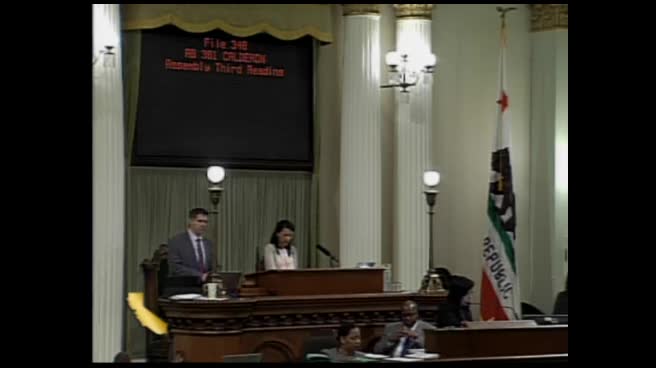

Bill Author

Bill Co-Author(s):
