AB 844: California Marijuana Tax Fund: grants for support system navigation services.
- Session Year: 2017-2018
- House: Assembly
- Latest Version Date: 2017-08-22
(1)Existing law, the Control, Regulate and Tax Adult Use of Marijuana Act (AUMA), an initiative statute approved by the voters at the November 8, 2016, statewide general election as Proposition 64, among other things, establishes the California Marijuana Tax Fund as a continuously appropriated fund consisting of specified taxes, interest, penalties, and other amounts imposed by AUMA. AUMA requires, after other specified disbursements are made from the fund, the Controller to disburse funds to the Governors Office of Business and Economic Development, also known as GO-Biz. AUMA requires GO-Biz, in consultation with other specified state entities, to administer grants to local health departments and qualified community-based nonprofit organizations to support job placement, mental health treatment, substance use disorder treatment, system navigation services, legal services, and linkages to medical care, as specified.
This bill would amend AUMA by requiring GO-Biz to give preference to applicants for grants to provide support system navigation services, as described in AUMA, to that meet specific minimum performance standards as a condition of grant eligibility, standards, including, among other standards, operate capability of providing service 24 hours per day, 7 days a per week, and 365 days a per year. This bill would also establish the Community Reinvestments Grants Program Fund, as a continuously appropriated fund, thereby making an appropriation, and require certain funds distributed to GO-Biz pursuant to AUMA to be deposited into that fund.
(2)AUMA authorizes legislative amendment of its provisions with a2/3 a 2/3 vote of both houses of the Legislature, without submission to the voters, to further its purposes and intent.
This bill would declare that its provisions further specified purposes and intent of the Control, Regulate and Tax Adult Use of Marijuana Act.
(1)Existing law, the Control, Regulate and Tax Adult Use of Marijuana Act (AUMA), an initiative statute approved by the voters at the November 8, 2016, statewide general election as Proposition 64, among other things, establishes the California Marijuana Tax Fund as a continuously appropriated fund consisting of specified taxes, interest, penalties, and other amounts imposed by AUMA. AUMA requires, after other specified disbursements are made from the fund, the Controller to disburse funds to the Governors Office of Business and Economic Development, also known as GO-Biz. AUMA requires GO-Biz, in consultation with other specified state entities, to administer grants to qualified community-based nonprofit organizations to support job placement, mental health treatment, substance use disorder treatment, system navigation services, legal services, and linkages to medical care, as specified.
This bill would amend AUMA by requiring applicants for grants to support system navigation services, as described in AUMA, to meet specific minimum performance standards as a condition of grant eligibility, including, among other standards, operate 24 hours per day, 7 days a week, and 365 days a year.
(2)AUMA authorizes legislative amendment of its provisions with a2/3 vote of both houses of the Legislature, without submission to the voters, to further its purposes and intent.
This bill would declare that its provisions further specified purposes and intent of the Control, Regulate and Tax Adult Use of Marijuana Act.
(a)The Legislature finds and declares all of the following:
(1)The Control, Regulate and Tax Adult Use of Marijuana Act (AUMA) provides for up to ten million dollars ($10,000,000) to be disbursed in the 201819 fiscal year, increasing by ten million dollars ($10,000,000) each fiscal year thereafter, until the 202223 fiscal year, at which time the disbursement will be fifty million dollars ($50,000,000) each year thereafter. AUMA requires these funds to be used to support a community reinvestment grants program and at least 50 percent of these funds to be granted to qualified community-based nonprofit organizations to support job placement, mental health treatment, substance use disorder treatment, system navigation services, legal services, and linkages to medical care, as specified.
(2)The system navigation services funded by AUMA will be the entry point for individuals needing treatment and provide care coordination services that can assist with connecting individuals to various support and treatment providers that can address their issues, based on their own needs.
(3)It is in the best interest of the state to ensure that AUMA grant recipients for system navigation services meet minimum performance standards and AUMA grant dollars are expended most effectively to help the greatest number of individuals consistent with the intent of AUMA. It is also in the best interest of the state to ensure that successful grant applicants have demonstrated experience serving targeted populations and utilize trained professionals to administer system navigation services.
(4)It is in the best interest of the state to ensure that the input of community stakeholders is considered by state entities, including, but not limited to, the Governors Office of Business and Economic Development, during the development and allocation of community reinvestment grants, especially grants to qualified community-based nonprofit organizations pursuant to AUMA.
(b)Applicants The Governors Office of Business and Economic Development shall give preference to applicants for grants to provide support system navigation services, as described in subdivision (d) of Section 34019 of the Revenue and Taxation Code, shall that meet all of the following minimum performance standards as a condition of eligibility to be awarded a grant: standards:
(1)Demonstrated experience serving the targeted population and utilization of trained professionals to administer system navigation services.(2)(1)Capability of providing system navigation services in multiple languages and specific capability of providing system navigation services in languages that are primarily spoken in the geographical area served. and, at a minimum, of providing translation services in all languages spoken by non-English speakers that comprise at least 3 percent or more of the total population of the area proposed to be served, based on the most recent data from the United States Census Bureau. More preference shall be given to applicants that exceed this minimum standard.
(3)Operation(2)Capability of providing service 24 hours per day, 7 days a per week, and 365 days a per year.
(c)(1)The Community Reinvestments Grants Program Fund is hereby established in the State Treasury. Notwithstanding Section 13340 of the Government Code, all moneys in the fund are continuously appropriated, without regard to fiscal year, to the Governors Office of Business and Economic Development for the purposes of implementing subdivision (d) of Section 34019 of the Revenue and Taxation Code.
(2)Funds disbursed to the Governors Office of Business and Economic Development pursuant to Section 34019 of the Revenue and Taxation Code shall be deposited into the Community Reinvestments Grants Program Fund established by paragraph (1).
SEC. 2.The Legislature finds and declares that this act furthers the purposes and intent of the Control, Regulate and Tax Adult Use of Marijuana Act, for the following reason:
This act would ensure that encourage grant recipients applicants for system navigation services, as provided for in the Control, Regulate and Tax Adult Use of Marijuana Act (AUMA), to meet minimum performance standards standards, and therefore this act promotes AUMA grant dollars are being expended most effectively to help the greatest number of individuals consistent with the intent of AUMA.
(a)Applicants The Legislature finds and declares all of the following:
(1)The Control, Regulate and Tax Adult Use of Marijuana Act (AUMA) provides for up to ten million dollars ($10,000,000) to be disbursed in the 201819 fiscal year, increasing by ten million dollars ($10,000,000) each fiscal year thereafter, until the 202223 fiscal year, at which time the disbursement will be fifty million dollars ($50,000,000) each year thereafter. AUMA requires these funds to be used to support a community reinvestment grants program and at least 50 percent of these funds to be granted to qualified community-based nonprofit organizations to support job placement, mental health treatment, substance use disorder treatment, system navigation services, legal services, and linkages to medical care, as specified.
(2)The system navigation services funded by AUMA will be the entry point for individuals needing treatment and provide care coordination services that can assist with connecting individuals to various support and treatment providers that can address their issues, based on their own needs.
(3)It is in the best interest of the state to ensure that AUMA grant recipients for system navigation services meet minimum performance standards and AUMA grant dollars are expended most effectively to help the greatest number of individuals consistent with the intent of AUMA.
(b)Applicants for grants to support system navigation services, as described in subdivision (d) of Section 34019 of the Revenue and Taxation Code, shall meet all of the following minimum performance standards as a condition of eligibility to be awarded a grant:
(1)Demonstrated experience serving the targeted population and utilization of trained professionals to administer system navigation services.
(2)Capability of providing system navigation services in multiple languages and specific capability of providing system navigation services in languages that are primarily spoken in the geographical area served.
(3)Operation 24 hours per day, 7 days a week, and 365 days a year.
SEC. 3.SEC. 2.The Legislature finds and declares that this act furthers the purposes and intent of the Control, Regulate and Tax Adult Use of Marijuana Act, for the following reason:
This act would ensure that grant recipients for system navigation services, as provided for in the Control, Regulate and Tax Adult Use of Marijuana Act (AUMA), meet minimum performance standards and AUMA grant dollars are expended most effectively to help the greatest number of individuals consistent with the intent of AUMA.
REVISIONS: HeadingLine 2.The Legislature finds and declares all of the following:
(a)The Control, Regulate and Tax Adult Use of Marijuana Act (AUMA) provides for up to ten million dollars ($10,000,000) to be disbursed in the 201819 fiscal year, increasing by ten million dollars ($10,000,000) each fiscal year thereafter, until the 202223 fiscal year, at which time the disbursement will be fifty million dollars ($50,000,000) each year thereafter. AUMA requires these funds to be used to support a community reinvestment grants program and at least 50 percent of these funds to be granted to qualified community-based nonprofit organizations to support job placement, mental health treatment, substance use disorder treatment, system navigation services, legal services, and linkages to medical care, as specified.
(b)The system navigation services funded by AUMA will be the entry point for individuals needing treatment and provide care coordination services that can assist with connecting individuals to various support and treatment providers that can address their issues, based on their own needs.
(c)It is in the best interest of the state to ensure that AUMA grant recipients for system navigation services meet minimum performance standards and AUMA grant dollars are expended most effectively to help the greatest number of individuals consistent with the intent of AUMA.
SEC. 2.Section 11761 is added to the Health and Safety Code, to read:11761.(a)Applicants for grants to support system navigation services, as described in subdivision (d) of Section 34019 of the Revenue and Taxation Code, shall meet all of the following minimum performance standards as a condition of eligibility to be awarded a grant:
(1)Demonstrated experience serving the targeted population and utilization of trained professionals to administer system navigation services.
(2)Capability of providing system navigation services in multiple languages and specific capability of providing system navigation services in languages that are primarily spoken in the geographical area served.
(3)Operation 24 hours per day, 7 days a week, and 365 days a year.
SEC. 3.The Legislature finds and declares that this act furthers the purposes and intent of the Control, Regulate and Tax Adult Use of Marijuana Act, for the following reason:
This act would ensure that grant recipients for system navigation services, as provided for in the Control, Regulate and Tax Adult Use of Marijuana Act (AUMA), meet minimum performance standards and AUMA grant dollars are expended most effectively to help the greatest number of individuals consistent with the intent of AUMA.
|
Date
|
Status
|
|---|---|
| Sep 1, 2017 | In committee: Held under submission. |
| Aug 28, 2017 | In committee: Referred to APPR. suspense file. |
| Aug 22, 2017 | From committee chair, with author's amendments: Amend, and re-refer to committee. Read second time, amended, and re-referred to Com. on APPR. |
| Aug 21, 2017 | In committee: Hearing postponed by committee. |
| Jul 11, 2017 | From committee: Do pass and re-refer to Com. on APPR. (Ayes 9. Noes 0.) (July 10). Re-referred to Com. on APPR. |
| Jun 14, 2017 | Referred to Com. on B., P. & E.D. |
| Jun 5, 2017 | In Senate. Read first time. To Com. on RLS. for assignment. |
| Jun 1, 2017 | Read third time. Passed. Ordered to the Senate. (Ayes 75. Noes 0. Page 2043.) |
| May 25, 2017 | Read second time. Ordered to third reading. |
| May 24, 2017 | Coauthors revised. |
| May 2, 2017 | Re-referred to Com. on APPR. |
| May 1, 2017 | Read second time and amended. |
| Apr 27, 2017 | From committee: Amend, and do pass as amended and re-refer to Com. on APPR. (Ayes 15. Noes 0.) (April 25). |
| Mar 27, 2017 | Referred to Com. on HEALTH. |
| Feb 17, 2017 | From printer. May be heard in committee March 19. |
| Feb 16, 2017 | Read first time. To print. |
|
Date
|
Description
|
Location
|
Votes
|
|
|---|---|---|---|---|
| Aug 28, 2017 | Placed on suspense file | Senate Standing Committee on Appropriations |
Passed |
|
| Jul 10, 2017 | Do pass, but first be re-referred to the Committee on [Appropriations] | Senate Standing Committee on Business, Professions and Economic Development |
Passed |
|
| Jun 1, 2017 | AB 844 BURKE Assembly Third Reading | Assembly Floor |
Passed |
|
| May 24, 2017 | Do pass. | Assembly Standing Committee on Appropriations |
Passed |
|
| Apr 25, 2017 | Do pass as amended and be re-referred to the Committee on [Appropriations] | Assembly Standing Committee on Health |
Passed |
This list shows positions taken on this bill by organizations on the date displayed, which is linked to the original source.
Positions by individuals are not included.
SENATE COMMITTEE ON APPROPRIATIONS
Senator Ricardo Lara, Chair
2017 - 2018 Regular Session
AB 844 (Burke) - California Marijuana Tax Fund: grants for support system navigation services
Version: August 22, 2017 | Policy Vote: B., P. & E.D. 9 - 0 |
Urgency: No | Mandate: No |
Hearing Date: August 28, 2017 | Consultant: Robert Ingenito |
This bill does not meet the criteria for referral to the Suspense File.
Bill Summary: AB 844 would require the Governor’s Office of Business and Economic Development (GO-Biz) to give preference to specified applicants with respect to monies that are awarded through a community reinvestments grants program, funded through revenue from the sale of cannabis.
Fiscal Impact: GO-Biz indicates that its costs from the bill would be minor and absorbable.
Background:
California voters legalized non-medical adult use of marijuana in November 2016, through the Control, Regulate and Tax Adult Use of Marijuana Act (AUMA, Proposition 64). AUMA requires funding to be disbursed by GO-Biz through a community reinvestments grants program. The grants must go to local health departments and to community-based organizations to support job placement, mental health treatment, substance use disorder treatment, system navigation services, legal services to address barriers to reentry, and linkages to medical care for communities disproportionately affected by past federal and state drug policies. The Proposition allocates $10 million in 2018-19, increasing by $10 million per year until it reaches $50 million per year.
In 2015, California enacted three bills – Assembly Bill 243 (Wood, Chapter 688, Statutes of 2015); Assembly Bill 266 (Bonta, Chapter 689, Statutes of 2015); and Senate Bill 643 (McGuire, Chapter 719 Statutes of 2015) – that collectively established a comprehensive state regulatory framework for the licensing and enforcement of cultivation, manufacturing, retail sale, transportation, storage, delivery, and testing of medicinal cannabis in California. This regulatory scheme is known as the Medical Cannabis Regulation and Safety Act (MCRSA).
In addition, beginning on January 1, 2018, AUMA makes it legal to sell and distribute cannabis through a regulated business. SB 94 (Committee on Budget and Fiscal Review, Chapter 27, Statutes of 2017) renamed AUMA the Medicinal and Adult-Use Cannabis Regulation and Safety Act (MCRSA).
Proposed Law:
This bill would require GO-Biz to give preference to applicants for grants to provide support system navigation services (as defined) that meet specific minimum performance standards, including (1) specified language capabilities, and (2) operation 24-hours a day, 365 days per year. The bill also would establish the Community Reinvestments Grants Program Fund, as a continuously appropriated fund, and require certain funds distributed to GO-Biz pursuant to AUMA to be deposited into that fund.
-- END --
SENATE COMMITTEE ON
BUSINESS, PROFESSIONS AND ECONOMIC DEVELOPMENT
Senator Jerry Hill, Chair
2017 - 2018 Regular
Bill No: Hearing Date: July 10, 2017
Author: | |||
Version: | May 1, 2017 | ||
Urgency: | No | Fiscal: | Yes |
Consultant: | Sarah Mason | ||
Subject:
SUMMARY:
Establishes criteria for grants awarded through a community reinvestments grants program, funded through revenue from the sale of cannabis pursuant to the Medicinal and Adult-Use Cannabis Regulation and Safety Act (Act), administered by the Governor’s Office of Business and Economic Development (GO-Biz).
Existing law:
- Establishes the Act which creates a comprehensive system to control and regulate the cultivation, distribution, transport, storage, manufacturing, processing, and sale of both of the following: (Business and Professions Code (BPC) § 26000)
- Medicinal cannabis and medicinal cannabis products for patients with valid physician’s recommendations.
- Adult-use cannabis and adult-use cannabis products for adults 21 years of age and over.
- Establishes GO-Biz within the Governor's Office for the purpose of serving as the lead state entity for economic strategy and marketing of California on issues relating to business development, private sector investment and economic growth.
(Government Code §§ 12096 – 12098.5) - Requires the Controller to disburse monies to GO-Biz ($10 million in the 2018–19 fiscal year (FY) and increasing $10 million each FY thereafter until the 2022–23 FY, at which time the disbursement is $50 million each year thereafter) based on sales tax revenue estimates from cannabis sales for GO-Biz to administer a community reinvestments grants program (Grants Program) to local health departments, and at least 50 percent to qualified community-based nonprofit organizations to support job placement, mental health treatment, substance use disorder treatment, system navigation services, legal services to address barriers to reentry, and linkages to medical care for communities disproportionately affected by past federal and state drug policies, in consultation with the Labor and Workforce Development Agency and the State Department of Social Services. (Revenue and Taxation Code § 34019 (d))
- Requires GO-Biz to solicit input from community-based job skills, job placement, and legal service providers with relevant expertise as to the administration of the Grants Program. Requires GO-Biz to periodically evaluate programs it is funding to determine effectiveness. Prohibits GO-Biz from spending more than 4 percent for administrative costs related to implementation, evaluation, and oversight of the Grant Program, and requires GO-Biz to award grants annually, beginning no later than January 1, 2020.
This bill:
- States findings and declarations that:
- The Control, Regulate and Tax Adult Use of Marijuana Act (AUMA) requires funds described in Item #3) and 4) above, to be granted to qualified community-based nonprofit organizations to support job placement, mental health treatment, substance use disorder treatment, system navigation services, legal services, and linkages to medical care, as specified.
- The system navigation services funded by AUMA will be the entry point for individuals needing treatment and provide care coordination services that can assist with connecting individuals to various support and treatment providers that can address their issues, based on their own needs.
- It is in the best interest of the state to ensure that AUMA grant recipients for system navigation services meet minimum performance standards and AUMA grant dollars are expended most effectively to help the greatest number of individuals consistent with the intent of AUMA.
- Specifies that community grants to support system navigation services shall meet all of the following minimum performance standards as a condition of eligibility to be awarded a grant under the Grants Program:
- Demonstrated experience serving the targeted population and utilization of trained professionals to administer system navigation services.
- Capability of providing system navigation services in multiple languages and specific capability of providing system navigation services in languages that are primarily spoken in the geographical area served.
- Operation 24 hours per day, 7 days a week, and 365 days a year.
- States that this measure furthers the purposes and intent of the AUMA because it ensures that grant recipients for system navigation services meet minimum performance standards and AUMA grant dollars are expended most effectively to help the greatest number of individuals consistent with the intent of AUMA.
FISCAL EFFECT: This bill is keyed fiscal by Legislative Counsel. According to the Assembly Committee on Appropriations analysis dated May 24, 2017, this bill will result in negligible state fiscal impact.
COMMENTS:
- Purpose. This bill is sponsored by 2-1-1 California which is a “network of independent 211 centers that provide information and referral services to
37 counties in California.” According to the Author, “current law fails to establish minimum accountability and efficiency standards for grant applicants seeking state funds to perform system navigation services in the community…Prop. 64 set no minimum standards for how these funds will be allocated (accessibility, multilingual capability, experience, etc.). It is in the best interest of the state to make sure that the limited Prop. 64 resources for drug treatment services are expended in a way that maximizes the success of their intended use. Minimum standards for system navigation services will help connect people to the treatment options they need to increase their chances for recovery.”
The Sponsor provided information related to each of the criteria for a grant to support system navigation services, including:
- Citations from the U.S. Census Bureau, that 43.9 percent of Californians speak a language other than English at home, as well as citations from the 2009-13 American Community Survey that 250 languages are spoken in California and 6.8 million Californians age 5 and over speak English less than very well.
- Information from a National Institute on Drug Abuse and Baltimore City Health Department partnership to combat the opioid epidemic that notes a single 24/7 hotline enables callers to get screened and linked to the appropriate behavioral health services, which makes it easier for people to find services and get referrals to treatment.
- Governor's Office of Business and Economic Development (GO-Biz). In February 2010, the Little Hoover Commission undertook a review of the state's economic and workforce development programs. In its final report, Making up for Lost Ground: Creating a Governor's Office of Economic Development, it analyzed the status and effectiveness of current programs since the 2003 demise of the Technology, Trade and Commerce Agency (TTCA) and recommended the creation of a new governmental entity to fill the void left by the dismantled agency.
The report called for a single entity that would promote greater economic development, foster job creation, serve as a policy advisor, and deliver specific services directly to the California business community. In April 2010, Governor Schwarzenegger issued Executive Order S-05-10 as a means to operationalize the report recommendations, which included the creation of the Governor's Office of Economic Development (GOED).
In October 2011, the Governor signed AB 29 (John A. Pérez, Chapter 475, Statutes of 2011), which effectively codified GOED and changed its name to GO-Biz. Since its inception, the office has served thousands of businesses, 95 percent of which are small businesses. The most frequent types of assistance include help with permit streamlining, starting a business, relocation and expansion of businesses, and regulatory challenges.
In March 2012, Governor Brown initiated a reorganization process to realign the state's administrative structure. Key changes include dismantling of the Business, Transportation and Housing Agency and the shifting of a number of key programs to GO-Biz including the Small Business Loan Guarantee Program, the California Travel and Tourism Commission, the California Film Commission, the Film California First Program, and the Infrastructure and Economic Development Bank (I-Bank). GO-Biz administers the “Made In California” program for the purpose of encouraging consumer product awareness and to foster the purchases of products manufactured in California. A key initiative of GO-Biz is the "strike teams" which can be mobilized to help attract and/or retain specific businesses. Among these other programs, GO-Biz also administers the Innovation Hub (iHub) program, an effort to harness and enhance California's innovative spirit. The iHubs aim to improve the state's national and global competitiveness by stimulating partnerships, economic development, and job creation around specific research clusters through state-designated iHubs.
GO-Biz also administers the California Competes Tax Credit Program under which “businesses who want to come, stay, or grow in California”, as noted on the GO-Biz website, can receive and income tax credit. Tax credit agreements are negotiated between GO-Biz and the taxpayer, and approved by a committee, consisting of the State Treasurer, the Director of the Department of Finance, the Director of GO-Biz, and one appointee each by the Speaker of the Assembly and Senate Committee on Rules. Allocations are based on certain specified factors, but mainly focus on the amount of investment, the impact of a project, and the number of jobs the taxpayer will create or retain in California. The program is open to taxpayers of all sizes but creates preferential treatment for “small businesses”, defined as those making less than $2 million in revenue per year.
GO-Biz also has authority for undertaking international trade and foreign investment activities, including establishing any international trade and investment office. GO-Biz has partnered with the Bay Area Council to open a California-China Trade and Investment office (CCTO) in Shanghai's downtown Yangpu district. The 2015 CCTO Annual Report noted that “In fulfilling this mission the CCTO engages with California companies seeking to enter into or expand in the Chinese market as well as with Chinese entities looking to invest in California. The CCTO has had direct engagement with 69 entities between January 2014 and October 2015.” The report outlined efforts to expand opportunities and to increase the state’s presence in China to other cities and provide a broader representation of regions in California.
GO-Biz has a Permit Assistance Unit (Unit) established based on the agency’s statutory authority to provide assistance to businesses in obtaining state and local permits and support small businesses in complying with regulatory requirements, which may include permitting. Current statute does not require GO-Biz to offer permit assistance, statute only authorizes the activity among an array of other actions GO-Biz may take. The Unit provides businesses with comprehensive permit, regulatory, and compliance assistance. The Unit is also responsible for maintaining the California Government Online to Desktops (CalGOLD) website. On this site, businesses can obtain a list of the required federal, state, and local permits, as well as webpage links, addresses, application forms, and other contact information. In July 2015, GO-Biz launched the California Business Portal, which expanded on the utility and availability of a searchable online application that could provide individualized information to businesses.
With the passage of Proposition 64 in 2016, GO-Biz is now tasked with administering the Grants Program this bill seeks to impact.
- 2-1-1. Under its authority over the North American Numbering Plan, the Federal Communications Commission (FCC) establishes several abbreviated dialing codes, including designating three digit numbers such as 9-1-1 for emergency services.
On July 31, 2000, the FCC issued its N11 Third Report and Order assigning the
2-1-1 dialing code as a national abbreviated dialing code to be used for access to community information and referral providers. The FCC noted in its N11 Third Report and Order that the assignment of the 2-1-1 code to information and referral providers satisfies the public interest standards for assignments of N11 codes, and recognizes that a great public need can be met through the implementation of a 2-1-1 dialing program. The FCC noted that the use of the 2-1-1 dialing code has the potential to provide Californians with easy access to information concerning child care services, housing assistance, physical and mental health resources, aging and hospice services, educational and other programs. Such information was not available through the 9-1-1 emergency code or the 3-1-1 police non-emergency code, two previously authorized N11 codes.
2-1-1 is the free telephone number by which Californians can obtain information and referral to health and human service programs. Generally, 2-1-1 provides telephone and web services that promote public safety during nonemergency situations. During emergency or disaster situations, 2-1-1 provides critical public information, such as information on shelters, food distribution, evacuations, road closures and transportation issues, utility outages, school closures, medical and housing assistance, government aid, mitigation and repairs, such as sand bags, emergency alerts, such as riots and looting, as well as public health warnings. Additionally, 2-1-1 service providers offer contact information and access to many local, state and national hotlines, including poison control, suicide, child abuse, adult abuse, teen bullying/cyber-bullying and other crises, domestic violence, veteran issues, immediate shelter, food and health needs, and many other social services that are not currently addressed by either 9-1-1 or 3-1-1 services.
In 2014, over 1.7 million Californians called 2-1-1 for help finding needed community services such as rent and mortgage assistance, food and shelter, healthcare, job training, transportation, childcare, and senior care. For example,
2-1-1 services have been important gateways for enrolling low- and moderate-income families in health insurance programs, including Healthy Families and county-based Children's Health Initiatives. In the same year, over 1 million unique hits were tracked on 2-1-1 websites across the state. 2-1-1 also plays a critical role in providing information and support in times of disaster, such as evacuation, shelter, food, medical and recovery information, and providing public officials with feedback from callers about changing conditions. For example, in 2007 during the San Diego wildfires, local 2-1-1s handled 130,000 calls in five days.
The California Public Utilities Commission (CPUC) authorizes one qualifying local agency in each county the use of the 2-1-1 dial code. This designation allows the lead agency to provide the 2-1-1 referral services for the county. Information and referral centers seeking to utilize the 2-1-1 dial code must apply directly to the CPUC for rights to use this special three digit dialing code. The CPUC has approved 2-1-1 services in 37 counties serving approximately 95 percent of California’s population. Most of these counties have funded their 2-1-1 services via partnerships between local health and human services agencies and nonprofits. For example, Sacramento County notes its program is funded by First 5 Sacramento Commission, Sacramento County Office of Emergency Services, Agency on Aging, Goodwill Industries of Sacramento Valley & Northern Nevada, Sacramento Superior Court, Kaiser and contributions from the community.
- Arguments in Support. Supporters state that 2-1-1s have been providing system navigation services to Californians seeking resources for decades, and in 2015 California’s 2-1-1s handled approximately 150,000 requests related to substance abuse and mental health services. Supporters write that substance abuse is a serious problem impacting communities across California and that people seeking treatment for substance abuse need immediate and effective assistance to connect them with the services they need.
- Arguments in Opposition. According to the Drug Policy Alliance, this bill would limit the efficacy of the California Marijuana Tax Fund by creating a precedent of earmarking portions of grant monies for certain stakeholders, creating a de facto food fight over the revenue allocations. The organization states that it supports “the full funding allotment of the Community Reinvestment Fund to be distributed to GO-Biz as directed by Prop 64 and hope that the office will establish sound means to ensure inclusion and access to those in need.”
- Drafting Issues, Vague Terms and Policy Considerations.
- Reference is still made to the Control, Regulate and Tax Adult Use of Marijuana Act (AUMA) which was recently renamed. In 2015, California enacted three bills – Assembly Bill 243 (Wood, Chapter 688 of the Statutes of 2015); Assembly Bill 266 (Bonta, Chapter 689 of the Statutes of 2015); and Senate Bill 643 (McGuire, Chapter 719 of the Statutes of 2015) – that collectively established a comprehensive state regulatory framework for the licensing and enforcement of cultivation, manufacturing, retail sale, transportation, storage, delivery, and testing of medicinal cannabis in California. This regulatory scheme is known as the Medical Cannabis Regulation and Safety Act (MCRSA).
In November 2016, voters approved Proposition 64, the Adult Use of Marijuana Act (AUMA). Under Proposition 64, adults 21 years of age or older may legally grow, possess, and use cannabis for nonmedicinal purposes, with certain restrictions. In addition, beginning on January 1, 2018, AUMA makes it legal to sell and distribute cannabis through a regulated business.
SB 94 (Committee on Budget and Fiscal Review, Chapter 27, Statutes of 2017) renamed AUMA the Medicinal and Adult-Use Cannabis Regulation and Safety Act (Act). This bill refers to AUMA and should be amended to replace any reference to AUMA with reference to the Act.
- Definitions are lacking and terminology for criteria is vague. This bill states that it is in the best interest of the state to ensure that grant recipients for “system navigation services” meet minimum performance standards, yet “system navigation services” appears to be a term with no definition in California statutes, and that has various meaning in different settings and for different purposes. While California nonprofit organizations may provide programs that guide individuals through different aspects of accessing services, government agency resources and other programs, the term remains undefined and it is not clear what a “grant recipient for system navigation services” as stated in this bill even is. The term is not defined anywhere in California law and “system navigation” only appears in the code relating to the disbursement of cannabis funds, and within a Law Enforcement Assisted Diversion (LEAD) Pilot Project established by SB 843 (Committee on Budget and Fiscal Review, Chapter 33, Statutes of 2016) which created a pilot project within the Board of State and Community Corrections aimed at improving public safety and reducing recidivism by increasing the availability and use of social service resources.
The measure also establishes criteria that grant recipients for system navigation services must meet that are similarly not defined. For example, an entity must have “demonstrated experience” serving the “targeted population” and “utilization of trained professionals” to administer “system navigation services”. It is unclear who will determine that the entity has demonstrated experience. It is unclear what a targeted population is and who defines it. Is it communities disproportionately affected by past federal and state drug policies as outlined in the Grants Program statutory authorit? It is unclear what the training requirements for trained professionals will be – will they be trained by the grant recipient? Will they be trained professionals in the sense that certifying or licensing bodies define training?
This bill requires a grant recipient for system navigation services to have the capability of providing navigation services in “languages that are primarily spoken in the geographical area served.” It is unclear who will determine the languages primarily spoken in a particular area. Is the information based on U.S. Census Bureau data? Do the organizations receiving grants have to first capture language data in their local community to then report the languages spoken in that area?
GO-Biz is required to gather input from certain community-based service providers in its administration of the Grants Program. If the Author’s intention is for GO-Biz to further define the parameters established by this bill, the bill should be amended to clearly provide that direction to GO-Biz.
- Criteria are set forth for only one type of community-based nonprofit organization eligible to receive funding through the Grants Program. The Author has indicated that this bill is intended to guarantee that standards are in place to bring about accountability for the monies being provided by the Grants Program. The Act authorizes grants to organizations to support job placement, mental health treatment, substance use disorder treatment, system navigation services, legal services to address barriers to reentry, and linkages to medical care for communities disproportionately affected by past federal and state drug policies. Yet this bill establishes very broad standards for a potentially limited pool of organizations by only naming system navigation services. In order to ensure clarity and accountability, the Author may wish to instead outline specific, narrow criteria that GO-Biz must consider in providing grants to a broad array of community organizations.
SUPPORT AND OPPOSITION:
Support:
2-1-1- California (Sponsor)
2-1-1 Humboldt
2-1-1 Los Angeles County
California Alliance of Information and Referral Services
Comprehensive Career Services
Eden I & R, Inc. (operator of 2-1-1 Alameda County)
Jefferson Family Resource Center
Humboldt Access and Resource Centers
Humboldt Network of Family Resource Centers
Interface Children & Family Services
United Way of Northern California
Three individuals
Opposition:
Drug Policy Alliance
-- END --
ASSEMBLY THIRD READING
ATR Bill Id:AB 844
Author:(Burke)
As Amended Ver:May 1, 2017
2/3 vote
Committee | Votes | Ayes | Noes |
Health | 15-0 | Wood, Maienschein, Bonta, Burke, Gallagher, Limón, McCarty, Nazarian, Patterson, Quirk-Silva, Ridley-Thomas, Rodriguez, Santiago, Chiu, Waldron | |
Appropriations | 17-0 | Gonzalez Fletcher, Bigelow, Bloom, Bocanegra, Bonta, Brough, Gloria, Chau, Quirk, Fong, Friedman, Gallagher, Eduardo Garcia, Jones-Sawyer, Muratsuchi, Obernolte, Reyes |
|
SUMMARY: Requires applicants for grants to support navigation system services to meet specified requirements. Specifically, this bill:
- Requires applicants for grants to support system navigation services to be disbursed by the Governor's Office of Business and Economic Development (GO-Biz), as specified, to meet all of the following minimum performance standards as a condition of eligibility to be awarded a grant:
- Demonstrated experience serving the targeted population and utilization of trained professionals to administer system navigation services;
- Capability of providing system navigation services in multiple languages and specific capability of providing system navigation services in languages that are primarily spoken in the geographical area served; and,
- Operation 24 hours per day, seven days a week, and 365 days a year.
- Finds and declares that the system navigation services funded by Adult Use of Marijuana Act of 2016 (AUMA) will be the entry point for individuals needing treatment and provide care coordination services that can assist with connecting individuals to various support and treatment providers that can address their issues, based on their own needs.
FISCAL EFFECT: According to the Assembly Appropriations Committee, negligible state fiscal cost.
COMMENTS: According to the author, as drug abuse and addiction continue to plague our communities, it is critical that options and resources for recovery are easily and widely accessible to those who seek them out. With the passage of AUMA, state funds have been made available via competitive grants to community based nonprofits for a variety of services including system navigation services. System navigation services are intended to assist consumers to navigate the various agencies and understand the resources available to them. These services are the first point of contact and entry point for struggling addicts to turn their lives around. As such, it is important that when the state invests its limited resources into system navigation services in the community, it does so with the assurance that the programs are working effectively and available to as many people as possible. In that regard, this bill ensures that limited state resources are used most efficiently and effectively to better connect individuals in need with critical substance abuse and mental health resources. Those in need can only be serviced if they have access to effective referral services to connect them in their time of need. When people reach out for help, their first point of contact must be professional and easily accessible. This can only be guaranteed if there are standards in place. These standards include: having experience serving the targeted population; capability of providing the assistance in a caller's native tongue; and, being accessible to callers in a 24/7 time frame 365 days a year.
AUMA requires the state controller to disburse $10 million beginning fiscal year (FY) 2018-19 and increasing $10 million each FY after until FY 2022-23, at which time the disbursement will remain at $50 million for each year thereafter to GO-Biz, in consultation with the Labor and Workforce Development Agency and the State Department of Social Services, to do administer a community reinvestments grant program to local health departments and at least 50% to qualified community-based nonprofit organizations to support job placement, mental health treatment, substance use disorder treatment, system navigation services, legal services to address barriers to reentry, and linkages to medical care to communities disproportionately affected by past federal and state drug policies. GO-Biz must solicit input from community-based job skills, job placement, and legal service providers with relevant expertise as to the administration of the grants program. GO-Biz must also periodically evaluate the programs it is funding to determine the effectiveness of the programs, cannot spend more than 4% for administrative costs related to implementation, evaluation, and oversight of the programs, and must award grants annually, beginning no later than January 1, 2020.
AUMA established a grant program to qualified community based nonprofit organizations to support system navigation services to communities disproportionately affected by federal and state drug policies. This bill establishes minimum performance standards as a condition of eligibility to receive a grant. However, neither AUMA nor this bill defines system navigation services.
The author points out that the minimum standards for system navigation services will help connect people to the treatment options they need to increase their chances for recovery. This goal is similar to the concept of patient navigation which is aimed at improving outcomes in vulnerable populations by eliminating barriers to timely diagnosis and treatment of cancer and other chronic diseases.
The Drug Policy Alliance, in its opposition indicates that this bill limits the efficacy of the California Marijuana Tax Fund by creating a precedent of earmarking portions of the Community Reinvestment Fund for certain stakeholders, thereby creating a de facto food fight over the revenue allocations. It states that it has called on the Governor to implement the Community Reinvestment Fund by creating a community advisory group, which can help drive investments to communities with high rates of arrest and incarceration, and reflect the priorities and needs of the recipient community. According to the Drug Policy Alliance, this bill circumvents the process and diminishes the level of responsibility and intentionality of the reparative justice illustrated in the AUMA.
Analysis Prepared by: Rosielyn Pulmano / HEALTH / (916) 319-2097 FN: 0000491
Date of Hearing: May 24, 2017
ASSEMBLY COMMITTEE ON APPROPRIATIONS
Lorena Gonzalez Fletcher, Chair
ABPCA Bill Id:AB 844
Author:(Burke) – As Amended Ver:May 1, 2017
Policy Committee: | Health | Vote: | 15 - 0 |
Urgency: No State Mandated Local Program: No Reimbursable: No
SUMMARY:
This bill specifies minimum performance standards for grantees applying for funds to perform "system navigation services," pursuant to the Control, Regulate and Tax Adult Use of Marijuana Act (AUMA, or Proposition 64). Specifically, the standards include:
- Demonstrated experience serving the targeted population and utilization of trained professionals.
- Specified language capabilities.
- Operation 24-hours a day, 365 days per year.
FISCAL EFFECT:
Negligible state fiscal effect.
COMMENTS:
- Purpose. According to the author, system navigation services are intended to assist consumers to navigate the various agencies and understand the resources available to them. As such, it makes sense to have assurance that the system is professional and easily accessible. The bill's sponsor is 2-1-1 California, a network of local 2-1-1 information and referral providers (2-1-1 is a free phone number and online database that connects Californians quickly and effectively to existing health and human service programs, joblessness support and disaster response information).
- Background. Non-medical adult use of marijuana was legalized in November 2016, through AUMA (Proposition 64). It requires funding to be disbursed by the Governor's Office of Business and Economic Development (GO-BIZ) through a community reinvestments grants program. The grants must go to local health departments and to community-based organizations to support job placement, mental health treatment, substance use disorder treatment, system navigation services, legal services to address barriers to reentry, and linkages to medical care for communities disproportionately affected by past federal and state drug policies. Beyond these stipulations and the requirement for GO-BIZ to evaluate the programs, there is little definition or criteria with respect to the services. The proposition allocates $10 million in 2018-19, increasing by $10 million per year until it reaches $50 million per year.
- Support and Opposition. 2-1-1 California, various United Ways, and other referral centers support this bill. The Drug Policy Alliance opposes this bill for creating a precedent of earmarking portions of the grant funding for certain stakeholders.
Analysis Prepared by: Lisa Murawski / APPR. / (916) 319-2081
Date of Hearing: April 25, 2017
ASSEMBLY COMMITTEE ON HEALTH
Jim Wood, Chair
ABPCA Bill Id:AB 844
Author:(Burke) – As Introduced Ver:February 16, 2017
SUBJECT: California Marijuana Tax Fund: funding for support system navigation services: minimum performance standards.
SUMMARY: Requires applicants for grants to support navigation system services to meet specified requirements. Specifically, this bill:
- Requires applicants for grants to support system navigation services to be disbursed by the Governor’s Office of Business and Economic Development (GO-Biz), as specified, to meet all of the following minimum performance standards as a condition of eligibility to be awarded a grant:
- Demonstrated experience serving the targeted population and utilization of trained professionals to administer system navigation services;
- Capability of providing system navigation services in multiple languages and specific capability of providing system navigation services in languages that are primarily spoken in the geographical area served; and,
- Operation 24 hours per day, 7 days a week, and 365 days a year.
- Finds and declares that the system navigation services funded by Adult Use of Marijuana Act of 2016 (AUMA) will be the entry point for individuals needing treatment and provide care coordination services that can assist with connecting individuals to various support and treatment providers that can address their issues, based on their own needs.
EXISTING LAW:
- Enacts the Medical Cannabis Regulation and Safety Act to regulate numerous aspects of medical cannabis in California, including cultivation, transportation, storage, testing, labelling, manufacture and sale codified pursuant to AB 243 (Wood), Chapter 688, Statutes of 2015; AB 266 (Bonta), Chapter 689, Statutes of 2015; and, SB 643 (McGuire), Chapter 719, Statutes of 2015.
- Establishes within the Department of Consumer Affairs the Bureau of Medical Cannabis Regulation for the licensure and regulation of medical cannabis.
- Establishes, through the voter initiative process, Proposition 64 or AUMA which permits adults 21 years of age or older to legally grow, possess, and use cannabis for non-medical purposes, as specified. Authorizes, beginning January 1, 2018, the sale and distribution of cannabis through a regulated business. Renames the Bureau of Medical Marijuana Regulation (now referred to as the Bureau of Medical Cannabis Regulation) as the Bureau of Marijuana Control.
- Establishes, through the AUMA, the California Marijuana Tax Fund (Fund), for purposes of depositing taxes collected from the sale and cultivation of marijuana.
- Establishes the Governor’s Office of Business and Economic Development (GO-Biz) as the lead entity for economic strategy and the marketing of California on issues relating to business development, private sector investment and economic growth.
FISCAL EFFECT: This bill has not yet been analyzed by a fiscal committee
COMMENTS:
- PURPOSE OF THIS BILL. According to the author, as drug abuse and addiction continue to plague our communities, it is critical that options and resources for recovery are easily and widely accessible to those who seek them out. With the passage of AUMA, state funds have been made available via competitive grants to community based nonprofits for a variety of services including system navigation services. System navigation services are intended to assist consumers to navigate the various agencies and understand the resources available to them. These services are the first point of contact and entry point for struggling addicts to turn their lives around. As such, it is important that when the state invests its limited resources into system navigation services in the community, it does so with the assurance that the programs are working effectively and available to as many people as possible. In that regard, this bill ensures that limited state resources are used most efficiently and effectively to better connect individuals in need with critical substance abuse and mental health resources. Those in need can only be serviced if they have access to effective referral services to connect them in their time of need. When people reach out for help, their first point of contact must be professional and easily accessible. This can only be guaranteed if there are standards in place. These standards include: having experience serving the targeted population; capability of providing the assistance in a caller’s native tongue; and, being accessible to callers in a 24/7 time frame 365 days a year.
- BACKGROUND.
- AUMA. AUMA requires the state controller to disburse $10 million beginning fiscal year (FY) 2018-19 and increasing $10 million each FY after until FY 2022-23, at which time the disbursement will remain at $50 million for each year thereafter to GO-Biz, in consultation with the Labor and Workforce Development Agency and the State Department of Social Services, to do administer a community reinvestments grant program to local health departments and at least 50% to qualified community-based nonprofit organizations to support job placement, mental health treatment, substance use disorder treatment, system navigation services, legal services to address barriers to reentry, and linkages to medical care to communities disproportionately affected by past federal and state drug policies. GO-Biz must solicit input from community-based job skills, job placement, and legal service providers with relevant expertise as to the administration of the grants program. GO-Biz must also periodically evaluate the programs it is funding to determine the effectiveness of the programs, cannot spend more than 4% for administrative costs related to implementation, evaluation, and oversight of the programs, and must award grants annually, beginning no later than January 1, 2020.
- Patient navigation services. AUMA established a grant program to qualified community based nonprofit organizations to support system navigation services to communities disproportionately affected by federal and state drug policies. This bill establishes minimum performance standards as a condition of eligibility to receive a grant. However, neither AUMA nor this bill defines system navigation services.
The author points out that the minimum standards for system navigation services will help connect people to the treatment options they need to increase their chances for recovery. This goal is similar to the concept of patient navigation which is aimed at improving outcomes in vulnerable populations by eliminating barriers to timely diagnosis and treatment of cancer and other chronic diseases. - California 2-1-1. California 2-1-1 is the sponsor of this bill and is a provider of system navigation services in California. California 2-1-1- is a free phone number and online database that connects Californians to existing health and human service programs, joblessness support and disaster response information in certain communities. It is available 24 hours a day, seven days a week and provides assistance in 150 different languages. According to its Website, 96% of the state’s population in 35 counties has access to California 2-1-1. In 2014, 1.7 million Californians called California 2-1-1- for help finding needed community services such as rent and mortgage assistance, food and shelter, healthcare, job training, transportation, childcare and senior care. The following counties currently have information and referral providers: Alameda, Contra Costa, Fresno, Kern, Kings, Los Angeles, Marin, Mendocino, Monterey, Napa, Nevada, Orange, Riverside, Sacramento, San Bernardino, San Diego, San Francisco, San Luis Obispo, Santa Barbara, San Luis Obispo, Santa Clara, Solano, Sonoma, Stanislaus, Tulare, and Ventura.
- SUPPORT. California 2-1-1, the sponsor of this bill, United Ways of California, Eden I & R, a 211 operator in Alameda County, Bridgeville Community Center, Community Action Commission of Santa Barbara County, Connecting Point, Interface Children and Family Services, and National Alliance on Mental Illness all state that establishing standards for navigation services will increase individuals’ chances of recovery, and help ensure that organizations providing system navigation services will effectively and best serve people struggling with substance abuse and mental health issues.
- OPPOSITION. The Drug Policy Alliance indicates that this bill limits the efficacy of the California Marijuana Tax Fund by creating a precedent of earmarking portions of the Community Reinvestment Fund for certain stakeholders, thereby creating a de facto food fight over the revenue allocations. It states that it has called on the Governor to implement the Community Reinvestment Fund by creating a community advisory group, which can help drive investments to communities with high rates of arrest and incarceration, and reflect the priorities and needs of the recipient community. According to the Drug Policy Alliance, this bill circumvents the process and diminishes the level of responsibility and intentionality of the reparative justice illustrated in the AUMA.
- RELATED LEGISLATION. AB 1135 (Wood) requires the California Department of Public Health (DPH) and the California Department of Education (CDE) to establish an inclusive public stakeholder process to seek input to determine a disbursement formula for the funds to be distributed by the California Department of Health Care Services (DHCS) for purposes of the Youth Education, Prevention, Early Intervention and Treatment Account established by the AUMA. AB 1135 is pending in Assembly Appropriations Committee.
- TECHNICAL AMENDMENT. AUMA does not include a definition of system navigation services but the intent language of this bill includes a description of what these services are that seems appropriate to codify. The Committee recommends codifying the intent language.
REGISTERED SUPPORT / OPPOSITION:
Support
211 California (sponsor)
Bridgeville Community Center
California Alliance of Information and Referral Services
Community Action Commission of Santa Barbara County
Connecting Point
Eden I&R, Inc.
HCAR
Humboldt Community Access and Resource Centers
Interface Children & Family Services
National Alliance on Mental Illness
National Association of Social Workers
United Way of Northern California
United Way Monterey County
United Ways of California
Women and Children’s Fund Eureka
211 LA County
211 San Diego
Several Individuals
Opposition
Drug Policy Alliance
Analysis Prepared by: Rosielyn Pulmano / HEALTH / (916) 319-2097
Discussed in Hearing
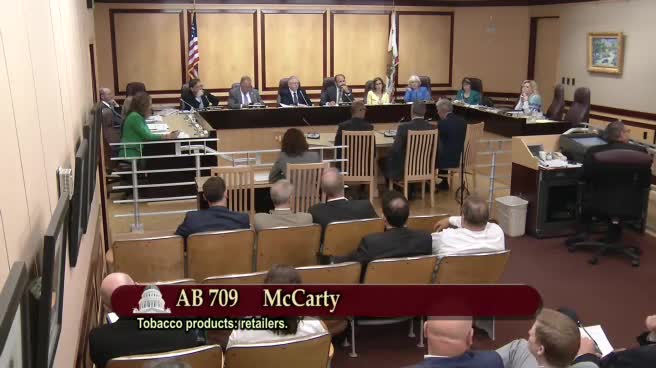 14MIN
Senate Standing Committee on Business, Professions and Economic Development
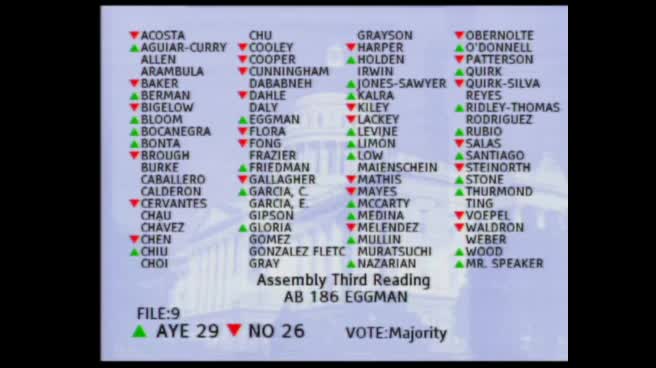 2MIN
Assembly Floor
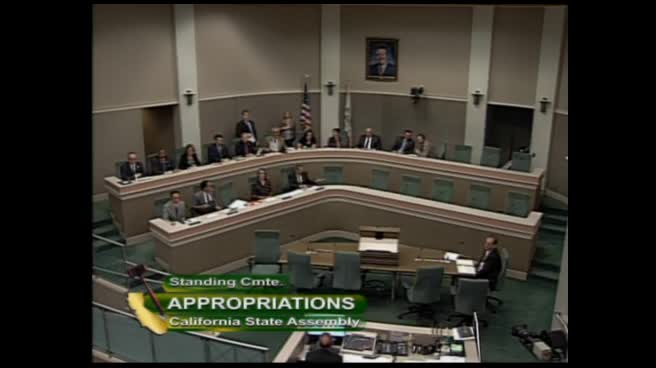 1MIN
Assembly Standing Committee on Appropriations
 8MIN
Assembly Standing Committee on Health
Bill Author