AB 858: Pupil instruction: California Financial Literacy Initiative.
- Session Year: 2017-2018
- House: Assembly
- Latest Version Date: 2017-09-15
Existing law establishes a system of public elementary and secondary education in this state. Under this system, local educational agencies throughout the state provide instruction to pupils in kindergarten and grades 1 to 12, inclusive.
This bill would establish the California Financial Literacy Initiative as a program for improving financial literacy by offering instructional materials for teachers and parents to provide high-quality financial literacy education for pupils in kindergarten and grades 1 to 12, inclusive. The bill would provide that the initiative would be under the administration of the Superintendent of Public Instruction.
The bill would authorize the Superintendent to convene a Financial Literacy Advisory Committee to review materials that could be provided on the Internet in a centralized location for access by local educational agencies, as specified. The bill would require online curricula included in an online library, or otherwise promoted or made available, through this initiative to conform to specified provisions protecting pupil privacy and protecting pupils against marketing directed at them through instructional materials.
The bill would specify that its provisions would be operative in any fiscal year only if an appropriation of sufficient funds for its purposes is enacted in the annual Budget Act or another statute.
Existing law establishes a system of public elementary and secondary education in this state. Under this system, local educational agencies throughout the state provide instruction to pupils in kindergarten and grades 1 to 12, inclusive.
This bill would establish the California Financial Literacy Initiative as a program for improving financial literacy by offering instructional materials for teachers and parents to provide high-quality financial literacy education for pupils in kindergarten and grades 1 to 12, inclusive. The bill would provide that the initiative would be under the administration of the Superintendent of Public Instruction.
The bill would authorize the Superintendent to convene a Financial Literacy Advisory Committee to review materials that could be provided on the Internet in a centralized location for access by local educational agencies, as specified. The bill would require that specified data be collected, by the entities providing these online materials, relating to the online materials being accessed under the initiative, and biennially reported to the Superintendent, as specified. The bill would require the Superintendent to submit a biennial report to the Legislature relating to this data, as specified. The bill would require online curricula included in an online library, or otherwise promoted or made available, through this initiative to conform to specified provisions protecting pupil privacy and protecting pupils against marketing directed at them through instructional materials.
Existing law establishes a system of public elementary and secondary education in this state. Under this system, local educational agencies throughout the state provide instruction to pupils in kindergarten and grades 1 to 12, inclusive.
This bill would establish the California Financial Literacy Initiative as a program for improving financial literacy by offering instructional materials for teachers and parents to provide high-quality financial literacy education for pupils in kindergarten and grades 1 to 12, inclusive. The bill would provide that the initiative would be under the administration of the Superintendent of Public Instruction.
The bill would authorize the Superintendent to convene a Financial Literacy Advisory Committee to review materials that could be provided on the Internet in a centralized location for access by local educational agencies, as specified. The bill would require that specified data be collected, by the entities providing these online materials, relating to the online materials being accessed under the initiative, and biennially reported to the Superintendent, as specified. The bill would require the Superintendent to submit a biennial report to the Legislature relating to this data, as specified.
For purposes of this chapter, initiative means the California Financial Literacy Initiative.
52985.5.(a)The California Financial Literacy Initiative is hereby established as a program for improving financial literacy by offering instructional materials for teachers and parents to provide high-quality financial literacy education for pupils in kindergarten and grades 1 to 12, inclusive.
(b)The initiative shall be administered by the Superintendent.
52986.(a)The goals for the initiative are to accomplish both of the following:
(1)Provide pupils in kindergarten and grades 1 to 12, inclusive, with tools they will need after high school to manage their finances, including tools to protect their financial information from theft.
(2)Promote high-quality programs that provide instruction on pertinent financial literacy issues as determined by the Superintendent.
(b)The Superintendent may do any or all of the following:
(1)Provide an online library of financial literacy resources and materials to be made available for schools, teachers, parents, and pupils.
(2)Coordinate and collaborate with financial institutions, financial services providers, and nonprofit community organizations in collecting and distributing financial literacy materials.
(3)Organize financial literacy materials, to be made available in a manner that ensures that materials are matched to the appropriate grade level.
(c)It is the intent of the Legislature that the materials selected pursuant to this section include one or more curricula designed for pupils with disabilities.
52986.5.(a)The Superintendent may convene a Financial Literacy Advisory Committee to review materials that can be provided on the Internet in a centralized location for access by local educational agencies for purposes of ensuring that pupils in kindergarten and grades 1 to 12, inclusive, have access to grade-level-appropriate financial literacy resources.
(b)The Financial Literacy Advisory Committee may include representatives of the office of the Superintendent, the office of the Treasurer, the Division of Financial Institutions of the Department of Business Oversight, and the office of the Controller. The Superintendent shall ensure that at least 50 percent of the members of the committee are credentialed, current classroom teachers with expertise in financial literacy curriculum and instruction.
52987.In order to protect the privacy of pupil information and to protect pupils from marketing, all online curricula included in the online library, or otherwise promoted or made available, through the initiative shall conform to both of the following:
(a)Pupil privacy protections set forth in Section 22584 of the Business and Professions Code.
(b)Protections against marketing directed at pupils through instructional materials that are currently applicable to other instructional materials by Section 60048, and including, but not necessarily limited to, the guidance authorized by subdivision (b) of Section 60048.
52987.5.It is the intent of the Legislature that state agencies involved in the Financial Literacy Advisory Committee convened pursuant to Section 52986.5 shall actively support the initiative. State agencies in the executive branch of government, including boards, commissions, and agencies headed by constitutional officers, shall use existing resources for support of the initiative if they elect to participate in supporting the initiative.
52987.7.This chapter shall be operative in any fiscal year only if an appropriation of sufficient funds for its purposes is enacted in the annual Budget Act or another statute.
For purposes of this chapter, initiative means the California Financial Literacy Initiative.
52985.5.(a)The California Financial Literacy Initiative is hereby established as a program for improving financial literacy by offering instructional materials for teachers and parents to provide high-quality financial literacy education for pupils in kindergarten and grades 1 to 12, inclusive.
(b)The initiative shall be administered by the Superintendent.
52986.(a)The goals for the initiative are to accomplish both of the following:
(1)Provide pupils in kindergarten and grades 1 to 12, inclusive, with tools they will need after high school to manage their finances, including tools to protect their financial information from theft.
(2)Promote high-quality programs that provide instruction on pertinent financial literacy issues as determined by the Superintendent.
(b)The Superintendent may do any or all of the following:
(1)Provide an online library of financial literacy resources and materials to be made available for schools, teachers, parents, and pupils.
(2)Coordinate and collaborate with financial institutions, financial services providers, and nonprofit community organizations in collecting and distributing financial literacy materials.
(3)Organize financial literacy materials, to be made available in a manner that ensures that materials are matched to the appropriate grade level.
(c)It is the intent of the Legislature that the materials selected pursuant to this section include one or more curricula designed for pupils with disabilities.
52986.5.(a)The Superintendent may convene a Financial Literacy Advisory Committee to review materials that can be provided on the Internet in a centralized location for access by local educational agencies for purposes of ensuring that pupils in kindergarten and grades 1 to 12, inclusive, have access to grade-level-appropriate financial literacy resources.
(b)The Financial Literacy Advisory Committee may include representatives of the office of the Superintendent, the office of the Treasurer, the Division of Financial Institutions of the Department of Business Oversight, and the office of the Controller. The Superintendent shall ensure that at least 50 percent of the members of the committee are credentialed, current classroom teachers with expertise in financial literacy curriculum and instruction.
52987.(a)Financial institutions, financial services providers, nonprofit community organizations, and other publishers whose materials or resources are included in the online library provided pursuant to paragraph (1) of subdivision (b) of Section 52986 may include in those materials a means of collecting data, including, but not necessarily limited to, all of the following:(1)The estimated number of users.(2)The grade levels of the intended users.(3)Whether the person accessing the material is a pupil, teacher, administrator, parent, or other interested person.(4)Any other relevant information that would aid in fulfilling the purposes of this chapter.(b)Beginning with the 2018 calendar year, the data collected pursuant to subdivision (a) shall be reported to the Superintendent biennially on or before August 1 of each even-numbered year. The Superintendent shall prepare a biennial report on the data collected and reported to him or her pursuant to this subdivision, and submit this report to the Legislature on or before the January 1 following the submission to the Superintendent of the data collected pursuant to subdivision (a). The Superintendents biennial report shall be submitted to the Legislature in compliance with Section 9795 of the Government Code.52987.In order to protect the privacy of pupil information and to protect pupils from marketing, all online curricula included in the online library, or otherwise promoted or made available, through the initiative shall conform to both of the following:
(a)Pupil privacy protections set forth in Section 22584 of the Business and Professions Code.
(b)Protections against marketing directed at pupils through instructional materials that are currently applicable to other instructional materials by Section 60048, and including, but not necessarily limited to, the guidance authorized by subdivision (b) of Section 60048.
52987.5.It is the intent of the Legislature that state agencies involved in the Financial Literacy Advisory Committee convened pursuant to Section 52986.5 shall actively support the initiative. State agencies in the executive branch of government, including boards, commissions, and agencies headed by constitutional officers, shall use existing resources for support of the initiative if they elect to participate in supporting the initiative.
For purposes of this chapter, initiative means the California Financial Literacy Initiative.
52985.5.(a)The California Financial Literacy Initiative is hereby established as a program for improving financial literacy by offering instructional materials for teachers and parents to provide high-quality financial literacy education for pupils in kindergarten and grades 1 to 12, inclusive.
(b)The initiative shall be administered by the Superintendent.
52986.(a)The goals for the initiative are to accomplish both of the following:
(1)Provide pupils in kindergarten and grades 1 to 12, inclusive, with tools they will need after high school to manage their finances, including tools to protect their financial information from theft.
(2)Promote high-quality programs that provide instruction on pertinent financial literacy issues as determined by the Superintendent.
(b)The Superintendent may do any or all of the following:
(1)Provide an online library of financial literacy resources and materials to be made available for schools, teachers, parents, and pupils.
(2)Coordinate and collaborate with financial institutions, financial services providers, and nonprofit community organizations in collecting and distributing financial literacy materials.
(3)Organize financial literacy materials, to be made available in a manner that ensures that materials are matched to the appropriate grade level.
52986.5.(a)The Superintendent may convene a Financial Literacy Advisory Committee to review materials that can be provided on the Internet in a centralized location for access by local educational agencies for purposes of ensuring that pupils in kindergarten and grades 1 to 12, inclusive, have access to grade-level-appropriate financial literacy resources.
(b)The Financial Literacy Advisory Committee may include representatives of the office of the Superintendent, the office of the Treasurer, the Division of Financial Institutions of the Department of Business Oversight, and the office of the Controller.
52987.(a)Financial institutions, financial services providers, nonprofit community organizations, and other publishers whose materials or resources are included in the online library provided pursuant to paragraph (1) of subdivision (b) of Section 52986 may include in those materials a means of collecting data, including, but not necessarily limited to, all of the following:
(1)The estimated number of users.
(2)The grade levels of the intended users.
(3)Whether the person accessing the material is a pupil, teacher, administrator, parent, or other interested person.
(4)Any other relevant information that would aid in fulfilling the purposes of this chapter.
(b)Beginning with the 2018 calendar year, the data collected pursuant to subdivision (a) shall be reported to the Superintendent biennially on or before August 1 of each even-numbered year. The Superintendent shall prepare a biennial report on the data collected and reported to him or her pursuant to this subdivision, and submit this report to the Legislature on or before the January 1 following the submission to the Superintendent of the data collected pursuant to subdivision (a). The Superintendents biennial report shall be submitted to the Legislature in compliance with Section 9795 of the Government Code.
52987.5.It is the intent of the Legislature that state agencies involved in the Financial Literacy Advisory Committee convened pursuant to Section 52986.5 shall actively support the initiative. State agencies in the executive branch of government, including boards, commissions, and agencies headed by constitutional officers, shall use existing resources for support of the initiative if they elect to participate in supporting the initiative.
|
Date
|
Status
|
|---|---|
| Jan 12, 2018 | Stricken from file. |
| Jan 3, 2018 | Consideration of Governor's veto pending. |
| Oct 9, 2017 | Vetoed by Governor. |
| Sep 20, 2017 | Enrolled and presented to the Governor at 4:30 p.m. |
| Sep 13, 2017 | Assembly Rule 77(a) suspended. |
| Sep 12, 2017 | In Assembly. Concurrence in Senate amendments pending. May be considered on or after September 14 pursuant to Assembly Rule 77. |
| Sep 11, 2017 | Read third time. Passed. Ordered to the Assembly. |
| Sep 5, 2017 | Read second time. Ordered to third reading. |
| Sep 1, 2017 | From committee: Amend, and do pass as amended. (Ayes 6. Noes 0.) (September 1). |
| Jul 10, 2017 | In committee: Referred to APPR. suspense file. |
| Jun 28, 2017 | From committee: Do pass and re-refer to Com. on APPR. (Ayes 7. Noes 0.) (June 28). Re-referred to Com. on APPR. |
| Jun 14, 2017 | Referred to Com. on ED. |
| Jun 1, 2017 | In Senate. Read first time. To Com. on RLS. for assignment. |
| May 31, 2017 | Read third time. Passed. Ordered to the Senate. (Ayes 67. Noes 10. Page 1926.) |
| May 30, 2017 | Read second time. Ordered to third reading. |
| May 26, 2017 | From committee: Do pass. (Ayes 13. Noes 4.) (May 26). |
| May 3, 2017 | In committee: Set, first hearing. Referred to APPR. suspense file. |
| Apr 19, 2017 | Re-referred to Com. on APPR. |
| Apr 18, 2017 | Read second time and amended. |
| Apr 17, 2017 | From committee: Amend, and do pass as amended and re-refer to Com. on APPR. (Ayes 5. Noes 1.) (April 5). |
| Mar 22, 2017 | In committee: Set, first hearing. Hearing canceled at the request of author. |
| Mar 2, 2017 | Referred to Com. on ED. |
| Feb 17, 2017 | From printer. May be heard in committee March 19. |
| Feb 16, 2017 | Read first time. To print. |
|
Date
|
Description
|
Location
|
Votes
|
|
|---|---|---|---|---|
| Sep 13, 2017 | AB 858 DABABNEH Concurrence in Senate Amendments | Assembly Floor |
Passed |
|
| Sep 11, 2017 | Assembly 3rd Reading AB858 Dababneh By Pan | Senate Floor |
Passed |
|
| Sep 1, 2017 | Do pass as amended | Senate Standing Committee on Appropriations |
Passed |
|
| Jul 10, 2017 | Placed on suspense file | Senate Standing Committee on Appropriations |
Passed |
|
| Jun 28, 2017 | Do pass, but first be re-referred to the Committee on [Appropriations] | Senate Standing Committee on Education |
Passed |
|
| May 31, 2017 | AB 858 DABABNEH Assembly Third Reading | Assembly Floor |
Passed |
|
| May 26, 2017 | Do pass. | Assembly Standing Committee on Appropriations |
Passed |
|
| Apr 5, 2017 | Do pass as amended and be re-referred to the Committee on [Appropriations] | Assembly Standing Committee on Education |
Passed |
This list shows positions taken on this bill by organizations on the date displayed, which is linked to the original source.
Positions by individuals are not included.
GOVERNOR'S VETO
GV Bill Id:AB 858
Author:(Dababneh)
As Enrolled Ver:September 15, 2017
2/3 vote
ASSEMBLY: | 67-10 | (May 31, 2017) | SENATE: | 40-0 | (September 11, 2017) |
ASSEMBLY: | 70-7 | (September 13, 2017) |
Original Committee Reference: ED.
SUMMARY: Establishes the California Financial Literacy Initiative, for the purpose of improving the availability of instructional materials and programs to help students understand how to manage their finances and protect their financial privacy.
The Senate amendments make the provisions of the measure operative only upon an appropriation in the annual Budget Act or another statute.
FISCAL EFFECT: According to the Senate Appropriations Committee, while the California Department of Education (CDE) indicates costs in the low hundreds of thousands of dollars to administer the initiative, the bill's establishment of the initiative would be contingent upon an appropriation provided for this purpose. The CDE's estimate includes the cost to convene an advisory committee and to develop and implement the online financial resource tool.
COMMENTS:
Need for the bill. The author's intent is to increase the availability of curricula to promote the financial literacy of students, thereby increasing students' knowledge and skills in this area. He notes: "In a financial Industry Regulatory Authority survey, only 42% of Californians answered at least four questions correctly on a five question financial literacy quiz. Another 2009 survey found that 80% of the respondents received scores of 60 or lower on financial questions about retirement. Just 20% received what amounted to a passing grade.
The problem of poor financial literacy is even more pressing for youth, minorities, and women. According to the Jump$tart Coalition, the average high school student's score in financial literacy was 48%. However, minority students fared far worse than their white counterparts. 89% of African-Americans and 83% of Latinos failed to score a passing grade on the financial literacy test compared to 64% of white students. In addition, 38% of men, in contrast to 22% of women, correctly answered all three financial literacy questions in a 2014 survey."
This bill would establish the California Financial Literacy Initiative to provide instructional materials for pupils in kindergarten through grade 12.
This bill is unnecessary. The History-Social Science Framework already contains financial literacy content for pupils in kindergarten through grade 12, as well as a financial literacy elective. In addition, the California Department of Education maintains a Web page with financial literacy resources for pupils in kindergarten through grade 12.
Analysis Prepared by: Tanya Lieberman / ED. / (916) 319-2087 FN: 0002443
CONCURRENCE IN SENATE AMENDMENTS
CSA1 Bill Id:AB 858
Author:(Dababneh)
As Amended Ver:September 1, 2017
Majority vote
ASSEMBLY: | 67-10 | (May 31, 2017) | SENATE: | 40-0 | (September 11, 2017) |
Original Committee Reference: ED.
SUMMARY: Establishes the California Financial Literacy Initiative, for the purpose of improving the availability of instructional materials and programs to help students understand how to manage their finances and protect their financial privacy.
The Senate amendments make the provisions of the measure operative only upon an appropriation in the annual Budget Act or another statute.
FISCAL EFFECT: According to the Senate Appropriations Committee, while the California Department of Education (CDE) indicates costs in the low hundreds of thousands of dollars to administer the initiative, the bill's establishment of the initiative would be contingent upon an appropriation provided for this purpose. The CDE's estimate includes the cost to convene an advisory committee and to develop and implement the online financial resource tool.
COMMENTS:
Need for the bill. The author's intent is to increase the availability of curricula to promote the financial literacy of students, thereby increasing students' knowledge and skills in this area. He notes: "In a financial Industry Regulatory Authority survey, only 42% of Californians answered at least four questions correctly on a five question financial literacy quiz. Another 2009 survey found that 80% of the respondents received scores of 60 or lower on financial questions about retirement. Just 20% received what amounted to a passing grade.
"The problem of poor financial literacy is even more pressing for youth, minorities, and women. According to the Jump$tart Coalition, the average high school student's score in financial literacy was 48%. However, minority students fared far worse than their white counterparts. 89% of African-Americans and 83% of Latinos failed to score a passing grade on the financial literacy test compared to 64% of white students. In addition, 38% of men, in contrast to 22% of women, correctly answered all three financial literacy questions in a 2014 survey."
Analysis Prepared by: Tanya Lieberman / ED. / (916) 319-2087 FN: 0001789
Office of Senate Floor Analyses (916) 651-1520 Fax: (916) 327-4478 | AB |
THIRD READING
Bill No: AB 858
Amended: 9/1/17 in Senate
SENATE EDUCATION COMMITTEE: 7-0, 6/28/17
AYES: Allen, Wilk, Galgiani, Leyva, Mendoza, Pan, Vidak
SENATE APPROPRIATIONS COMMITTEE: 6-0, 9/1/17
AYES: Lara, Beall, Bradford, Hill, Nielsen, Wiener
NO VOTE RECORDED: Bates
ASSEMBLY FLOOR: 67-10, 5/31/17 - See last page for vote
DIGEST:
This bill establishes the California Financial Literacy Initiative (the initiative), to be administered by the Superintendent of Public Instruction (SPI), with the purpose of improving financial literacy by offering instructional materials for teachers and parents to provide high-quality financial literacy education for pupils in school.
Existing law:
- Requires that, when the history-social science curriculum framework is revised after January 1, 2017, the Instructional Quality Commission consider including content on financial literacy at least twice in three grade spans (Kindergarten through grade 5, grades 6-8, and grades 9-12), including instruction on:
- Fundamentals of banking for personal use, including, but not limited to, savings and checking.
- Principles of budgeting and personal finance.
- Employment and understanding factors that affect net income.
- Uses and costs of credit, including the relation of debt and interest to credit.
- Uses and costs of loans, including student loans.
- Types and costs of insurance.
- Forms of governmental taxation.
- Principles of investing and building wealth.
- Identity theft and security.
- Planning and paying for postsecondary education.
- Charitable giving.
- Requires that, concurrently with, but not prior to, the next revision of textbooks or curriculum frameworks in the social sciences, health, and mathematics curricula, the State Board of Education (SBE) ensure that these academic areas integrate components of human growth, human development, and human contribution to society across the life course, and also financial literacy, including budgeting and managing credit, student loans, consumer debt, and identity theft security.
- Requires the SPI, with the approval of the SBE, to plan and develop a one-semester course entitled consumer economics, which includes instruction on the uses and costs of credit, for use in schools maintaining any of the seventh to twelfth grades.
- Requires students to complete a one-semester course in economics in order to be eligible to graduate from high school.
- Prohibits an operator of a Web site, online service, online application, or mobile application from knowingly engaging in targeted advertising to students or their parents, using covered information to amass a profile about a K–12 student, selling a student’s information, or disclosing covered information. Requires an operator to implement and maintain reasonable security procedures and practices appropriate to the nature of the covered information, to protect the information from unauthorized access, destruction, use, modification, or disclosure, and to delete a student’s covered information if the school or district requests deletion of data under the control of the school or district.
This bill establishes the initiative, to be administered by the SPI, with the purpose of improving financial literacy by offering instructional materials for teachers and parents to provide high-quality financial literacy education for pupils in school. Specifically, this bill:
- Provides that the goals of the initiative are to accomplish both of the following:
- To provide pupils in kindergarten and grades 1 to 12, inclusive, with tools they will need after high school to manage their finances, including tools to protect their financial information from theft.
- To promote high-quality programs that provide instruction on pertinent financial literacy issues as determined by the SPI.
- Authorizes the SPI to do any or all of the following:
- Provide an online library of financial literacy resources and materials to be made available for schools, teachers, parents, and pupils.
- Coordinate and collaborate with financial institutions, financial services providers, and nonprofit community organizations in collecting and distributing financial literacy materials.
- Organize financial literacy materials, to be made available in a manner that ensures that materials are matched to the appropriate grade level.
- Convene a Financial Literacy Advisory Committee (committee) to review materials that can be provided on the Internet in a centralized location for access by local educational agencies for purposes of ensuring that pupils in kindergarten and grades 1 to 12, inclusive, have access to grade-level-appropriate financial literacy resources. If the committee is convened:
- It is authorized to include representatives of the office of the Superintendent, the office of the Treasurer, the Division of Financial Institutions of the Department of Business Oversight, and the office of the Controller.
- The SPI is required to ensure that at least 50 percent of the members of the committee are credentialed, current classroom teachers with expertise in financial literacy curriculum and instruction.
- Requires all online curricula included in the online library, or otherwise promoted or made available through the initiative, in order to protect the privacy of pupil information and to protect pupils from marketing, to conform to both of the following:
- Pupil privacy protections set forth in the Business and Professions Code.
- Protections against marketing directed at pupils through instructional materials that are currently applicable to other instructional materials, as specified.
- States the intent of the Legislature:
- That the materials selected pursuant to the bill include one or more curricula designed for pupils with disabilities.
- That state agencies involved in the committee, if convened, shall actively support the initiative.
- That state agencies in the executive branch of government, including boards, commissions, and agencies headed by constitutional officers, shall use existing resources for support of the initiative if they elect to participate in supporting the initiative.
- Specifies that its provisions are operative in any fiscal only if an appropriation of sufficient funds for its purposes is enacted in the annual Budget Act or another statute.
Comments
- Need for the bill. According to the author, “In a financial Industry Regulatory Authority survey, only 42% of Californians answered at least four questions correctly on a five question financial literacy quiz. Another 2009 survey found that 80% of the respondents received scores of 60 or lower on financial questions about retirement. Just 20% received what amounted to a passing grade.
The problem of poor financial literacy is even more pressing for youth, minorities, and women. According to the Jump$tart Coalition, the average high school student’s score in financial literacy was 48%. However, minority students fared far worse than their white counterparts. 89% of African-Americans and 83% of Latinos failed to score a passing grade on the financial literacy test compared to 64% of white students. In addition, 38% of men, in contrast to 22% of women, correctly answered all three financial literacy questions in a 2014 survey.”
- Similar to AB 150 (Lieu) from the 2007-08 Regular Session, which was vetoed by Governor Schwarzenegger. In his veto message, Governor Schwarzenegger stated:
Teaching students the principles of money management is a worthy goal. However, this bill would merely authorize the Superintendent of Public Instruction to convene an advisory committee and make financial literacy resources and materials that are grade-level appropriate available online. Superintendent O’Connell already has the authority to do these things, if he so chooses. In addition, many financial institutions and services providers already provide an abundance of information on financial literacy that is readily available on the Internet.
This bill differs from AB 150 in the following ways:
- It states the intent of Legislature that the material selected pursuant to this section include one of more curricula designed for pupils with disabilities.
- Revises the makeup of the Financial Literacy Advisory Committee to require the SPI to ensure that at least 50 percent of the members of the committee are credentialed, current classroom teachers with expertise in financial literacy curriculum and instruction.
- In order to protect the privacy of pupil information and to protect pupils from marketing requires all online curricula included in the online library or otherwise promoted or made available through the Initiative to conform to certain state laws regarding pupil privacy and marketing. Conversely, AB 150 specifically authorized financial institutions, financial services providers, nonprofit community organizations, and other publishers whose materials or resources were included in the online library to include in those materials a means of collecting data, including, but not limited to, all of the following:
- The estimated number of users.
- The grade span of the intended user.
- Whether the person accessing the material is a pupil, teacher, administrator, parent, or another interested person.
- Any other relevant information that would aid in the purpose of this chapter.
- Makes its provisions contingent on an appropriation for its purposes.
While the changes in this bill regarding pupil privacy and marketing to pupils are significant, those issues were not included in Governor Schwarzenegger’s veto message, which focused on the SPI’s existing authority to take similar action.
- California Department of Education (CDE) is already doing something similar. This bill authorizes the SPI to establish provide an online library of financial literacy resources and materials to be made available for schools, teachers, parents, and students. CDE maintains a Web page, (http://www.cde.ca.gov
/eo/in/fl/finlitk12.asp) with nearly 50 financial literacy resources. The Web page was updated as recently as August 8, 2017. According to CDE’s Web site, “This electronic resource library for grades K–12 provides links to programs that are appropriate for use in the classroom or at home as a resource for students, teachers, and parents who want to increase financial literacy. This is a partial list of the wide universe of resources available to the public.” Moreover, the Web site invites the public to submit a financial literacy program for consideration of being included in the electronic resource library.
- New History-Social Science Framework revision addresses financial literacy. The state’s new History-Social Science Framework, adopted in July 2016, contains financial literacy content in at least the following grades:
- Grade 1: Students acquire a beginning understanding of economics, including how people exchange money for goods and services, and how people make choices about how to spend money, including budgeting.
- Grade 2: Students learn basic economic concepts of human wants, scarcity, and choice; the importance of specialization in work today. Students also develop an understanding of their roles as consumers in a complex economy.
- Grade 12 Economics course: Students learn about personal budgeting, banking, debt, credit cards, interest, student loan debt, mortgage debt, saving, and investing. This content is presented in relation to larger economic issues and concepts.
Moreover, pursuant to legislation signed in 2016 (AB 2546, Calderon, Chapter 616) the next revision of the framework will include more financial literacy content. The next adoption of this framework is scheduled to occur in 2024. The state’s health curriculum framework is currently under revision and is due to be adopted in 2019, and may also contain financial literacy content, pursuant to current law.
FISCAL EFFECT: Appropriation: Fiscal Com.: Local:
According to the Senate Appropriations Committee, “While the California Department of Education (CDE) indicates costs in the low hundreds of thousands of dollars to administer the initiative, the bill’s establishments of the initiative would be contingent upon an appropriation provided for this purpose. The CDE’s estimate includes the cost to convene an advisory committee and to develop and implement the online financial resource tool.
California Bankers Association
California Charter Schools Association
California Community Banking Network
California Council for the Social Studies
California Council on Economic Education
California Credit Union League
California Society of CPAs
California State University, San Bernardino, Center for Economics Education
California Teachers Association
Financial Services Institute
San Diego Center for Economics Education at Cuyamaca College
State Board of Equalization member, Fiona Ma
OPPOSITION: (Verified 8/31/17)
None received
ASSEMBLY FLOOR: 67-10, 5/31/17
AYES: Aguiar-Curry, Travis Allen, Arambula, Baker, Berman, Bloom, Bocanegra, Bonta, Brough, Burke, Caballero, Calderon, Cervantes, Chau, Chiu, Chu, Cooley, Cooper, Cunningham, Dababneh, Daly, Flora, Fong, Frazier, Friedman, Cristina Garcia, Eduardo Garcia, Gipson, Gloria, Gomez, Gonzalez Fletcher, Gray, Grayson, Holden, Irwin, Jones-Sawyer, Kalra, Kiley, Lackey, Levine, Limón, Low, Maienschein, McCarty, Medina, Mullin, Muratsuchi, Nazarian, Obernolte, O'Donnell, Patterson, Quirk, Quirk-Silva, Reyes, Ridley-Thomas, Rodriguez, Rubio, Salas, Santiago, Steinorth, Mark Stone, Thurmond, Ting, Waldron, Weber, Wood, Rendon
NOES: Acosta, Bigelow, Chávez, Chen, Dahle, Gallagher, Harper, Mathis, Mayes, Voepel
NO VOTE RECORDED: Choi, Eggman, Melendez
9/2/17 13:37:35
**** END ****
SENATE COMMITTEE ON APPROPRIATIONS
Senator Ricardo Lara, Chair
2017 - 2018 Regular Session
AB 858 (Dababneh) - Pupil instruction: California Financial Literacy Initiative
Version: April 18, 2017 | Policy Vote: ED. 7 - 0 |
Urgency: No | Mandate: No |
Hearing Date: September 1, 2017 | Consultant: Lenin Del Castillo |
Bill Summary:
This bill establishes the California Financial Literacy Initiative, to be administered by the Superintendent of Public Instruction, with the purpose of improving financial literacy by offering instructional materials for teachers and parents to provide high-quality financial literacy education for pupils in school.
*********** ANALYSIS ADDENDUM – SUSPENSE FILE ***********
The following information is revised to reflect amendments
adopted by the committee on September 1, 2017
Fiscal Impact:
While the California Department of Education (CDE) indicates costs in the low hundreds of thousands of dollars to administer the initiative, the bill’s establishment of the initiative would be contingent upon an appropriation provided for this purpose. The CDE’s estimate includes the cost to convene an advisory committee and to develop and implement the online financial resource tool.
Committee Amendments:
Provide that the establishment of the initiative shall be contingent upon an appropriation in the budget or other legislation for this purpose.
-- END --
SENATE COMMITTEE ON
Senator Ricardo Lara, Chair
2017 - 2018 Regular Session
AB 858 (Dababneh) - Pupil instruction: California Financial Literacy Initiative
Version: | Policy Vote: |
Urgency: | Mandate: |
Hearing Date: | Consultant: |
This bill meets the criteria for referral to the Suspense File.
Bill Summary:
This bill establishes the California Financial Literacy Initiative, to be administered by the Superintendent of Public Instruction, with the purpose of improving financial literacy by offering instructional materials for teachers and parents to provide high-quality financial literacy education for pupils in school.
Fiscal Impact:
While the bill’s provisions are permissive and specifies legislative intent that participating state agencies use existing resources, the California Department of Education (CDE) would likely incur costs in the low hundreds of thousands of dollars to administer the initiative. This estimate includes the cost to convene an advisory committee and to develop and implement the online financial resource tool.
Background:
Existing law requires that, when the history-social science curriculum framework is revised after January 1, 2017, the Instructional Quality Commission consider including content on financial literacy at least twice in three grade spans (Kindergarten through grade 5, grades 6-8, and grades 9-12), including instruction on fundamentals of banking for personal use, including, but not limited to, savings and checking and principles of budgeting and personal finance.
The state’s new History-Social Science Framework, adopted in July 2016, contains financial literacy content in at least the following grades:
- Grade 1: Students acquire a beginning understanding of economics, including how people exchange money for goods and services, and how people make choices about how to spend money, including budgeting.
- Grade 2: Students learn basic economic concepts of human wants, scarcity, and choice; the importance of specialization in work today. Students also develop an understanding of their roles as consumers in a complex economy.
- Economics course: Students learn about personal budgeting, banking, debt, credit cards, interest, student loan debt, mortgage debt, saving, and investing. This content is presented in relation to larger economic issues and concepts.
- Elective course outline in financial literacy: Students learn about credit cards and other forms of consumer debt, savings and budgeting, retirement planning, state and federal laws related to personal finance (e.g., bankruptcy), financial credit scores, credit card applications, bank account applications, simple and compound interest calculations, retirement calculations, and mortgage and interest rates. Students also learn about the importance of managing credit and debt, and identity theft security.
The next revision of the framework will include more financial literacy content, with the adoption scheduled to occur in 2024.
Proposed Law:
This bill provides that the goals of the Initiative are to accomplish both of the following: to provide pupils in kindergarten and grades 1 to 12, inclusive, with tools they will need after high school to manage their finances, including tools to protect their financial information from theft; and to promote high-quality programs that provide instruction on pertinent financial literacy issues as determined by the SPI.
This bill authorizes the SPI to do any or all of the following:
- Provide an online library of financial literacy resources and materials to be made available for schools, teachers, parents, and pupils.
- Coordinate and collaborate with financial institutions, financial services providers, and nonprofit community organizations in collecting and distributing financial literacy materials.
- Organize financial literacy materials, to be made available in a manner that ensures that materials are matched to the appropriate grade level.
This bill provides that the SPI may convene a Financial Literacy Advisory Committee to review materials that can be provided on the Internet in a centralized location for access by local educational agencies for purposes of ensuring that pupils in kindergarten and grades 1 to 12, inclusive, have access to grade-level-appropriate financial literacy resources. The committee may include representatives of the office of the Superintendent, the office of the Treasurer, the Division of Financial Institutions of the Department of Business Oversight, and the office of the Controller. The SPI shall ensure that at least 50 percent of the members of the committee are credentialed, current classroom teachers with expertise in financial literacy curriculum and instruction.
This bill requires all online curricula included in the online library, or otherwise promoted or made available through the initiative, in order to protect the privacy of pupil information and to protect pupils from marketing, to conform to both of the following: pupil privacy protections set forth in the Business and Professions Code; and protections against marketing directed at pupils through instructional materials that are currently applicable to other instructional materials, as specified.
This bill specifies legislative intent that all state agencies involved shall actively support the initiative and use existing resources for its support if they elect to participate.
Related Legislation:
SB 583 (Stone) would require the development of a model curriculum for an elective course in financial literacy. SB 583 is pending in the Assembly Appropriations Committee.
AB 2546 (Calderon, Chapter 616, Statutes of 2016) required that, when the history-social science curriculum framework is revised after January 1, 2017, the Instructional Quality Commission (IQC) consider including content on financial literacy at least twice in three grade spans.
-- END --
SENATE COMMITTEE ON EDUCATION
Senator Benjamin Allen, Chair
2017 - 2018 Regular
Bill No: Hearing Date: June 28, 2017
Author: | Dababneh | ||
Version: |
| ||
Urgency: | Fiscal: | ||
Consultant: | |||
Subject:
SUMMARY
This bill establishes the California Financial Literacy Initiative (Initiative), to be administered by the Superintendent of Public Instruction, with the purpose of improving financial literacy by offering instructional materials for teachers and parents to provide high-quality financial literacy education for pupils in school.
BACKGROUND
- Requires that, when the history-social science curriculum framework is revised after January 1, 2017, the Instructional Quality Commission consider including content on financial literacy at least twice in three grade spans (Kindergarten through grade 5, grades 6-8, and grades 9-12), including instruction on:
- Fundamentals of banking for personal use, including, but not limited to, savings and checking.
- Principles of budgeting and personal finance.
- Employment and understanding factors that affect net income.
- Uses and costs of credit, including the relation of debt and interest to credit.
- Uses and costs of loans, including student loans.
- Types and costs of insurance.
- Forms of governmental taxation.
- Principles of investing and building wealth.
- Identity theft and security.
- Planning and paying for postsecondary education.
- Charitable giving.
- Requires that, concurrently with, but not prior to, the next revision of textbooks or curriculum frameworks in the social sciences, health, and mathematics curricula, the State Board of Education (SBE) ensure that these academic areas integrate components of human growth, human development, and human contribution to society across the life course, and also financial literacy, including budgeting and managing credit, student loans, consumer debt, and identity theft security.
- Requires the Superintendent of Public Instruction (SPI), with the approval of the SBE, to plan and develop a one-semester course entitled consumer economics, which includes instruction on the uses and costs of credit, for use in schools maintaining any of the seventh to twelfth grades.
- Requires students to complete a one-semester course in economics in order to be eligible to graduate from high school.
- Prohibits an operator of a website, online service, online application, or mobile application from knowingly engaging in targeted advertising to students or their parents, using covered information to amass a profile about a K–12 student, selling a student’s information, or disclosing covered information. Requires an operator to implement and maintain reasonable security procedures and practices appropriate to the nature of the covered information, to protect the information from unauthorized access, destruction, use, modification, or disclosure, and to delete a student’s covered information if the school or district requests deletion of data under the control of the school or district.
ANALYSIS
This bill establishes the California Financial Literacy Initiative (Initiative), to be administered by the SPI, with the purpose of improving financial literacy by offering instructional materials for teachers and parents to provide high-quality financial literacy education for pupils in school. Specifically, this bill:
1) Provides that the goals of the initiative are to accomplish both of the following:
a) To provide pupils in kindergarten and grades 1 to 12, inclusive, with tools they will need after high school to manage their finances, including tools to protect their financial information from theft.
b) To promote high-quality programs that provide instruction on pertinent financial literacy issues as determined by the SPI.
2) Authorizes the SPI to do any or all of the following:
a) Provide an online library of financial literacy resources and materials to be made available for schools, teachers, parents, and pupils.
b) Coordinate and collaborate with financial institutions, financial services providers, and nonprofit community organizations in collecting and distributing financial literacy materials.
c) Organize financial literacy materials, to be made available in a manner that ensures that materials are matched to the appropriate grade level.
d) Convene a Financial Literacy Advisory Committee (committee) to review materials that can be provided on the Internet in a centralized location for access by local educational agencies for purposes of ensuring that pupils in kindergarten and grades 1 to 12, inclusive, have access to grade-level-appropriate financial literacy resources. If the committee is convened:
i) It is authorized to include representatives of the office of the Superintendent, the office of the Treasurer, the Division of Financial Institutions of the Department of Business Oversight, and the office of the Controller.
ii) The Superintendent of Public Instruction is required to ensure that at least 50 percent of the members of the committee are credentialed, current classroom teachers with expertise in financial literacy curriculum and instruction.
4) Requires all online curricula included in the online library, or otherwise promoted or made available through the initiative, in order to protect the privacy of pupil information and to protect pupils from marketing, to conform to both of the following:
a) Pupil privacy protections set forth in the Business and Professions Code.
b) Protections against marketing directed at pupils through instructional materials that are currently applicable to other instructional materials, as specified.
5) States the intent of the Legislature:
a) That the materials selected pursuant to the bill include one or more curricula designed for pupils with disabilities.
b) That state agencies involved in the committee, if convened, shall actively support the initiative.
c) That state agencies in the executive branch of government, including boards, commissions, and agencies headed by constitutional officers, shall use existing resources for support of the initiative if they elect to participate in supporting the initiative.
STAFF COMMENTS
- Need for the bill. According to the author, “In a financial Industry Regulatory Authority survey, only 42% of Californians answered at least four questions correctly on a five question financial literacy quiz. Another 2009 survey found that 80% of the respondents received scores of 60 or lower on financial questions about retirement. Just 20% received what amounted to a passing grade.
The problem of poor financial literacy is even more pressing for youth, minorities, and women. According to the Jump$tart Coalition, the average high school student’s score in financial literacy was 48%. However, minority students fared far worse than their white counterparts. 89% of African-Americans and 83% of Latinos failed to score a passing grade on the financial literacy test compared to 64% of white students. In addition, 38% of men, in contrast to 22% of women, correctly answered all three financial literacy questions in a 2014 survey.”
- Nearly identical to AB 150 (Lieu) from the 2007-08 Regular Session, which was vetoed by Governor Schwarzenegger. In his veto message, Governor Schwarzenegger stated:
“Teaching students the principles of money management is a worthy goal. However, this bill would merely authorize the Superintendent of Public Instruction to convene an advisory committee and make financial literacy resources and materials that are grade-level appropriate available online. Superintendent O’Connell already has the authority to do these things, if he so chooses. In addition, many financial institutions and services providers already provide an abundance of information on financial literacy that is readily available on the Internet.”
This bill differs from AB 150 in the following ways:
- It states the intent of Legislature that the material selected pursuant to this section include one of more curricula designed for pupils with disabilities.
- Revises the makeup of the Financial Literacy Advisory Committee to require the Superintendent of Public Instruction to ensure that at least 50 percent of the members of the committee are credentialed, current classroom teachers with expertise in financial literacy curriculum and instruction.
- In order to protect the privacy of pupil information and to protect pupils from marketing requires all online curricula included in the online library or otherwise promoted or made available through the Initiative to conform to certain state laws regarding pupil privacy and marketing. Conversely, AB 150 specifically authorized financial institutions, financial services providers, nonprofit community organizations, and other publishers whose materials or resources were included in the online library to include in those materials a means of collecting data, including, but not limited to, all of the following:
i) The estimated number of users.
ii) The grade span of the intended user.
iii) Whether the person accessing the material is a pupil, teacher, administrator, parent, or another interested person.
iv) Any other relevant information that would aid in the purpose of this chapter.
While the changes in this bill regarding pupil privacy and marketing to pupils are significant, those issues were not included in Governor Schwarzenegger’s veto message, which focused on the Superintendent of Public Instruction’s (SPI) existing authority to take similar action. It should be noted that AB 150 was vetoed by the previous administration.
- California Department of Education (CDE) already doing this? This bill authorizes the SPI to establish provide an online library of financial literacy resources and materials to be made available for schools, teachers, parents, and students. CDE maintains a webpage, http://www.cde.ca.gov/eo/in/fl/finlitk12.asp, with nearly 50 financial literacy resources. The webpage was updated as recently as June 16, 2017. According to CDE’s website, “This electronic resource library for grades K–12 provides links to programs that are appropriate for use in the classroom or at home as a resource for students, teachers, and parents who want to increase financial literacy. This is a partial list of the wide universe of resources available to the public.” Moreover, the website invites the public to submit a financial literacy program for consideration of being included in the electronic resource library.
4) New History-Social Science Framework revision addresses financial literacy. The state’s new History-Social Science Framework, adopted in July 2016, contains financial literacy content in at least the following grades:
a) Grade 1: Students acquire a beginning understanding of economics, including how people exchange money for goods and services, and how people make choices about how to spend money, including budgeting.
b) Grade 2: Students learn basic economic concepts of human wants, scarcity, and choice; the importance of specialization in work today. Students also develop an understanding of their roles as consumers in a complex economy.
c) Economics course: Students learn about personal budgeting, banking, debt, credit cards, interest, student loan debt, mortgage debt, saving, and investing. This content is presented in relation to larger economic issues and concepts.
d) Elective course outline in financial literacy: Students learn about credit cards and other forms of consumer debt, savings and budgeting, retirement planning, state and federal laws related to personal finance (e.g., bankruptcy), financial credit scores, credit card applications, bank account applications, simple and compound interest calculations, retirement calculations, and mortgage and interest rates. Students also learn about the importance of managing credit and debt, and identity theft security.
Moreover, pursuant to legislation signed in 2016 (AB 2546, Calderon) the next revision of the framework will include more financial literacy content. The next adoption of this framework is scheduled to occur in 2024. The state’s health curriculum framework is currently under revision and is due to be adopted in 2019, and may also contain financial literacy content, pursuant to current law.
- Fiscal Impact. According to the Assembly Appropriations Committee, “Assuming the California Department of Education (CDE) implements the bill as intended, CDE could incur between $200,000 and $400,000 General Fund in administrative cost. These costs include convening an advisory committee and the development and implementation of the online financial resource tool, which will require substantial technological expertise and maintenance. Convening an advisory committee is not required, CDE confirms that the Advisory Committee is a key component of implementing the intent of this bill. The committee may wish consider whether the activities envisioned by this bill have already largely been accomplished by CDE and the newly revised History-Social Science framework.
- Related and previous legislation. SB 583 (Stone) of this Session would require the development of a model curriculum for an elective course in financial literacy. SB 583 is pending in the Assembly Appropriations Committee.
AB 2546 (Calderon, Chapter 616, Statutes of 2016) required that, when the history-social science curriculum framework is revised after January 1, 2017, the Instructional Quality Commission (IQC) consider including content on financial literacy at least twice in three grade spans.
SB 1296 (Liu) of the 2015-16 Regular Session would have required “consumer and homemaking education” to include financial literacy instruction on subjects including, but not limited to, student loans, credit cards, and investment and retirement accounts. SB 1296 was placed on the inactive file at the request of the author.
AB 166 (Hernández, Chapter 135, Statutes of 2013) required that, concurrently with, but not prior to, the next revision of textbooks or curriculum frameworks in the social sciences, health, and mathematics curricula, the State Board of Education (SBE) ensure that these academic areas integrate components of human growth, human development, and human contribution to society, across the life course, and also financial literacy, including, but not limited to, budgeting and managing credit, student loans, consumer debt, and identity theft security.
AB 391 (Wieckowski) of the 2013-14 Session would have proposed the Common Cents Curriculum Act of 2013, requiring the Superintendent of Public Instruction’s (SPI) and SBE to adopt a one semester course in consumer education, include specified areas of content related to financial literacy, and encouraged financial literacy instruction to be included in the next revision of the history-social science frameworks. AB 391 was held in the Assembly Appropriations Committee.
SB 1080 (Lieu) of the 2011-12 Session would have authorized instruction provided in economics to include personal finances, including budgeting, savings, credit, and identity theft. The bill would have required the CDE to develop a personal finance curriculum in the next cycle in which the mathematics and history-social science curriculum framework were to be adopted. SB 1080 was held in the Assembly Judiciary Committee.
SB 696 (Lieu) of the 2011-12 Session would have encouraged the instruction provided in economics to include instruction related to the understanding of personal finances, including budgeting, savings, credit, and identity theft. The bill would also make several legislative findings and declarations. This bill was not heard in any committee.
SB 779 (Lieu) of the 2011-12 Session would have authorized a school district, as part of providing economics instruction in grades 7-12, to include personal finances, including, but not limited to, budget savings, credit, and identity theft. This bill would have also required the California Department of Education (CDE) to consider developing a personal finance curriculum in the next cycle in which the history/social science curriculum framework would have been adopted. SB 779 was held in the Assembly Appropriations Committee.
SB 223 (Wyland) of the 2009-10 Session would have required that one-half of the economics course required for high school graduation focus on personal finance and financial literacy. SB 223 was held in the Assembly Appropriations Committee.
AB 150 (Lieu) of the 2007-08 Session, was nearly identical to this bill. It would have established the California Financial Literacy Initiative (Initiative), for the purpose of improving the availability of instructional materials and programs to help students understand how to manage their finances and protect their financial privacy, and would have authorized financial institutions to collect information about students who use online curricula which the institutions develop and which are endorsed by the Initiative. AB 150 was vetoed by the Governor.
AB 1502 (Lieu) of the 2007-08 Session would have required the State Board of Education (SBE) and the Curriculum Development and Supplemental Materials Commission (now the IQC) to ensure that information about financial literacy be included in appropriate subject area frameworks, encouraged school districts to include instruction in personal finance, as specified in economics, and authorized the Superintendent of Public Instruction’s (SPI) to accept private donations for the purposes of implementing these provisions. AB 1502 measure was vetoed by Governor Schwarzenegger.
AB 1950 (Lieu) of the 2005-06 Session would have authorized school districts to provide instruction in personal finances in economics courses. AB 1950 was vetoed by Governor Schwarzenegger who stated that school districts already have the flexibility to incorporate money management into their lesson plans and that the state’s content standards are intentionally broad in order to allow instruction on a range of topics.
AB 2435 (Wiggins) of the 2003-04 Session would have school districts to include instruction related to the understanding of personal finances in economics courses. AB 2435 was vetoed by Governor Schwarzenegger who stated that school districts already have the flexibility to incorporate money management into their lesson plans and that the state’s content standards are intentionally broad in order to allow instruction on a range of topics.
SUPPORT
California Bankers Association
California Charter Schools Association
California Community Banking Network
California Council for the Social Studies
California Council on Economic Education
California Credit Union League
California Society of CPAs
California State University, San Bernardino, Center for Economics Education
California Teachers Association
Financial Services Institute
San Diego Center for Economics Education at Cuyamaca College
State Board of Equalization member, Fiona Ma
OPPOSITION
None received
-- END --
ASSEMBLY THIRD READING
ATR Bill Id:AB 858
Author:(Dababneh)
As Amended Ver:April 18, 2017
Majority vote
Committee | Votes | Ayes | Noes |
Education | 5-1 | O'Donnell, Gloria, Kiley, McCarty, Weber | Chávez |
Appropriations | 13-4 | Gonzalez Fletcher, Bloom, Bocanegra, Bonta, Calderon, McCarty, Quirk, Fong, Friedman, Eduardo Garcia, Gray, Muratsuchi, Reyes | Bigelow, Brough, Gallagher, Obernolte |
SUMMARY: Establishes the California Financial Literacy Initiative, to be administered by the Superintendent of Public Instruction, for the purpose of improving the availability of instructional materials and programs to help students understand how to manage their finances and protect their financial privacy. Specifically, this bill:
- Establishes the California Financial Literacy Initiative (Initiative), to be administered by the Superintendent of Public Instruction (SPI), as a program for improving financial literacy by offering instructional materials to teachers and parents to provide high-quality financial literacy education for students in grades Kindergarten through 12th grade.
- States that the goals of the Initiative are to:
- provide students with tools they will need after high school to manage their finances, including tools to protect their financial information from theft
- promote high-quality programs that provide instruction on pertinent financial literacy issues as determined by the SPI
- Authorizes the SPI to:
- provide an online library of financial literacy resources and materials to be made available for schools, teachers, parents, and students
- coordinate and collaborate with financial institutions, financial services providers, and nonprofit community organizations in collecting and distributing financial literacy materials
- organize financial literacy materials, to be made available in a manner that ensures that materials are matched to the appropriate grade level
- States the intent of the Legislature that the materials selected include at least one curriculum designed for students with disabilities.
- Authorizes the SPI to convene a Financial Literacy Advisory Committee (Committee) to review materials that can be provided on the Internet in a centralized location for access by local educational agencies (LEAs) for purposes of ensuring that students have access to grade-level-appropriate financial literacy resources.
- Authorizes the Committee to include representatives of the SPI, the Treasurer, the Division of Financial Institutions of the Department of Business Oversight, and the Controller.
- Requires the SPI to ensure that at least 50% of the members of the Committee are credentialed, current classroom teachers with expertise in financial literacy curriculum and instruction.
- Requires, in order to protect the privacy of student information and to protect students from marketing, all online curricula included in the online library, or otherwise promoted or made available through the Initiative, to conform to current law regarding student privacy and marketing directed at students through instructional materials.
- States the intent of the Legislature that state agencies involved in the Committee actively support the Initiative.
- Require that state agencies use existing resources for support of the Initiative if they elect to participate in supporting the Initiative.
FISCAL EFFECT: According to the Assembly Appropriations Committee, assuming the California Department of Education implements the bill as intended, CDE could incur between $200,000 and $400,000 General Fund in administrative cost. These costs include convening an advisory committee and the development and implementation of the online financial resource tool, which will require substantial technological expertise and maintenance. Convening an advisory committee is not required; CDE confirms that the Advisory Committee is a key component of implementing the intent of this bill.
COMMENTS:
Need for the bill. The author's intent is to increase the availability of curricula to promote the financial literacy of students. He notes: "In a financial Industry Regulatory Authority survey, only 42% of Californians answered at least four questions correctly on a five question financial literacy quiz. Another 2009 survey found that 80% of the respondents received scores of 60 or lower on financial questions about retirement. Just 20% received what amounted to a passing grade.
"The problem of poor financial literacy is even more pressing for youth, minorities, and women. According to the Jump$tart Coalition, the average high school student's score in financial literacy was 48%. However, minority students fared far worse than their white counterparts. 89% of African-Americans and 83% of Latinos failed to score a passing grade on the financial literacy test compared to 64% of white students. In addition, 38% of men, in contrast to 22% of women, correctly answered all three financial literacy questions in a 2014 survey."
Analysis Prepared by: Tanya Lieberman / ED. / (916) 319-2087 FN: 0000680
Date of Hearing: May 3, 2017
ASSEMBLY COMMITTEE ON APPROPRIATIONS
Lorena Gonzalez Fletcher, Chair
ABPCA Bill Id:AB 858
Author:(Dababneh) – As Amended Ver:April 18, 2017
Policy Committee: | Education | Vote: | 5 - 1 |
Urgency: No State Mandated Local Program: No Reimbursable: No
SUMMARY:
This bill establishes the California Financial Literacy Initiative, for the purpose of improving the availability of instructional materials and programs to help students understand how to manage their finances and protect their financial privacy. Specifically, this bill:
Establishes the California Financial Literacy Initiative, to be administered by the Superintendent of Public Instruction (SPI), as a program to improve financial literacy by offering instructional materials for high-quality financial literacy education for K-12 students.
- Authorizes the SPI to do any or all of the following:
- Provide an online library of financial literacy resources and materials to be made available for schools, teachers, parents, and students.
- Coordinate and collaborate with financial institutions, financial services providers, and nonprofit community organizations in collecting and distributing financial literacy materials.
- Organize financial literacy materials, to be made available in a manner that ensures that materials are matched to the appropriate grade level.
- Authorizes the SPI to convene a Financial Literacy Advisory Committee to review materials that can be provided on the internet in a centralized location for access by local educational agencies for purposes of ensuring that students have access to grade-level-appropriate financial literacy resources. The Financial Literacy Advisory Committee may include representatives of the SPI the office of the Treasurer, the Division of Financial Institutions of the Department of Business Oversight, and the Office of the Controller.
- Requires that at least 50 percent of the committee are credentialed, current classroom teachers with expertise in financial literacy curriculum and instruction.
FISCAL EFFECT:
Assuming the California Department of Education implements the bill as intended, CDE could incur between $200,000 and $400,000 General Fund in administrative cost. These costs include convening an advisory committee and the development and implementation of the online financial resource tool, which will require substantial technological expertise and maintenance. Convening an advisory committee is not required, CDE confirms that the Advisory Committee is a key component of implementing the intent of this bill.
COMMENTS:
- Purpose. The author’s intent is to increase the availability of curricula to promote the financial literacy of students, thereby increasing students’ knowledge and skills in this area. He notes: “In a financial Industry Regulatory Authority survey, only 42% of Californians answered at least four questions correctly on a five question financial literacy quiz. Another 2009 survey found that 80% of the respondents received scores of 60 or lower on financial questions about retirement. Just 20% received what amounted to a passing grade. The problem of poor financial literacy is even more pressing for youth, minorities, and women.”
- Staff Comments. This bill authorizes the SPI to establish an online library of financial literacy resources and materials to be made available for schools, teachers, parents, and students. The California Department of Education (CDE) currently maintains a webpage listing with links to free supplemental resources for parents, students and educators to ensure that California’s next generation of consumers are financially responsible. The online clearinghouse/library of financial resources on this site includes financial literacy resources for grades K-12.
- Related and prior legislation. SB 583 (Stone) makes a course in financial literacy a state graduation requirement. That bill is pending in the Senate Education Committee.
AB 150 (Lieu) of the 2007-08 Legislative Session, was nearly identical to this bill. It would have established the California Financial Literacy Initiative (Initiative), for the purpose of improving the availability of instructional materials and programs to help students understand how to manage their finances and protect their financial privacy, and would have authorized financial institutions to collect information about students who use online curricula which the institutions develop and which are endorsed by the Initiative. That bill was vetoed by the Governor Arnold Schwarzenegger. The Governor’s Veto stated: “Teaching students the principles of money management is a worthy goal. However, this bill would merely authorize the SPI to convene an advisory committee and make financial literacy resources and materials that are grade-level appropriate available online. Superintendent O’Connell already has the authority to do these things, if he so chooses. In addition, many financial institutions and services providers already provide an abundance of information on financial literacy that is readily available on the Internet.”
Analysis Prepared by: Daisy Gonzales / APPR. / (916) 319-2081
Date of Hearing: April 5, 2017
ASSEMBLY COMMITTEE ON EDUCATION
Patrick O'Donnell, Chair
ABPCA Bill Id:AB 858 (
Author:Dababneh) – As Introduced Ver:February 16, 2017
SUBJECT: Pupil instruction: California Financial Literacy Initiative
SUMMARY: Establishes the California Financial Literacy Initiative (Initiative), for the purpose of improving the availability of instructional materials and programs to help students understand how to manage their finances and protect their financial privacy. Specifically, this bill:
Establishes the California Financial Literacy Initiative, to be administered by the Superintendent of Public Instruction (SPI), as a program to improve financial literacy by offering instructional materials for high-quality financial literacy education for K-12 students.
- States that the goals of the initiative are to:
- provide students with tools they will need after high school to manage their finances, including tools to protect their financial information from theft
- promote high-quality programs that provide instruction on financial literacy issues
- Authorizes the SPI to do any or all of the following:
- provide an online library of financial literacy resources and materials to be made available for schools, teachers, parents, and students
- coordinate and collaborate with financial institutions, financial services providers, and nonprofit community organizations in collecting and distributing financial literacy materials
- organize financial literacy materials, to be made available in a manner that ensures that materials are matched to the appropriate grade level
- Authorizes the SPI to convene a Financial Literacy Advisory Committee to review materials that can be provided on the internet in a centralized location for access by local educational agencies for purposes of ensuring that students have access to grade-level-appropriate financial literacy resources.
- States that the Financial Literacy Advisory Committee may include representatives of the SPI the office of the Treasurer, the Division of Financial Institutions of the Department of Business Oversight, and the Office of the Controller.
- Authorizes financial institutions, financial services providers, nonprofit community organizations, and other publishers whose materials or resources are included in the online library to include in those materials a means of collecting data, including, but not necessarily limited to, the following:
- the estimated number of users
- the grade levels of the intended users
- whether the person accessing the material is a student, teacher, administrator, parent, or other interested person
- any other relevant information that would aid in fulfilling the purposes of this chapter
- Requires that, beginning with the 2018 calendar year, the data collected be reported to the SPI biennially on or before August 1 of each even-numbered year.
- Requires the SPI to prepare a biennial report on the data collected and submit this report to the Legislature by January 1 following the submission of the data.
- States the intent of the Legislature that state agencies involved in the Financial Literacy Advisory Committee actively support the Initiative. States that executive branch agencies, including boards, commissions, and agencies headed by constitutional officers, must use existing resources for support of the Initiative if they elect to participate in it.
EXISTING LAW:
- Requires that, when the history-social science curriculum framework is revised after January 1, 2017, the Instructional Quality Commission consider including content on financial literacy at least twice in three grade spans (Kindergarten through grade 5, grades 6-8, and grades 9-12), including instruction on:
- fundamentals of banking for personal use, including, but not limited to, savings and checking
- principles of budgeting and personal finance
- employment and understanding factors that affect net income
- uses and costs of credit, including the relation of debt and interest to credit
- uses and costs of loans, including student loans
- types and costs of insurance
- forms of governmental taxation
- principles of investing and building wealth
- identity theft and security
- planning and paying for postsecondary education
- charitable giving
- Requires that, concurrently with, but not prior to, the next revision of textbooks or curriculum frameworks in the social sciences, health, and mathematics curricula, the State Board of Education (SBE) ensure that these academic areas integrate components of human growth, human development, and human contribution to society across the life course, and also financial literacy, including budgeting and managing credit, student loans, consumer debt, and identity theft security.
- Requires the SPI, with the approval of the SBE, to plan and develop a one-semester course entitled consumer economics, which includes instruction on the uses and costs of credit, for use in schools maintaining any of the seventh to twelfth grades.
- Requires students to complete a one-semester course in economics in order to be eligible to graduate from high school.
- Prohibits an operator of a website, online service, online application, or mobile application from knowingly engaging in targeted advertising to students or their parents, using covered information to amass a profile about a K–12 student, selling a student’s information, or disclosing covered information. Requires an operator to implement and maintain reasonable security procedures and practices appropriate to the nature of the covered information, to protect the information from unauthorized access, destruction, use, modification, or disclosure, and to delete a student’s covered information if the school or district requests deletion of data under the control of the school or district.
FISCAL EFFECT: Unknown
COMMENTS:
Need for the bill. The author’s intent is to increase the availability of curricula to promote the financial literacy of students, thereby increasing students’ knowledge and skills in this area. He notes: “In a financial Industry Regulatory Authority survey, only 42% of Californians answered at least four questions correctly on a five question financial literacy quiz. Another 2009 survey found that 80% of the respondents received scores of 60 or lower on financial questions about retirement. Just 20% received what amounted to a passing grade.
The problem of poor financial literacy is even more pressing for youth, minorities, and women. According to the Jump$tart Coalition, the average high school student’s score in financial literacy was 48%. However, minority students fared far worse than their white counterparts. 89% of African-Americans and 83% of Latinos failed to score a passing grade on the financial literacy test compared to 64% of white students. In addition, 38% of men, in contrast to 22% of women, correctly answered all three financial literacy questions in a 2014 survey.”
CDE maintains webpage with financial literacy resources. This bill authorizes the SPI to establish provide an online library of financial literacy resources and materials to be made available for schools, teachers, parents, and students. The California Department of Education (CDE) currently maintains a webpage listing links to nearly 30 financial literacy resources.
Teaching students about how to protect personal information online, while authorizing financial services companies to collect information about students? One of the stated goals of the Initiative established by this bill is to provide students with “tools to protect their financial information from theft.” This bill also authorizes financial institutions, financial services companies, and others to collect information about users, including whether they are students, and “any other relevant information that would aid in fulfilling the purposes of this chapter.”
In recent years this Committee has approved legislation to protect students against the collection of their personal information by online programs in use in schools. Current law now prohibits operators of websites and other online and mobile services from collecting specified information about students, prohibits them from knowingly targeting advertising to students, and requires that they maintain reasonable security procedures appropriate to the nature of the information.
To ensure that any online curriculum endorsed through this initiative conforms to current law regarding the privacy of student information online, staff recommends that the bill be amended to 1) strike the proposed Section 52987, and 2) in its place insert a requirement that all online curriculum or other materials included in the online library or otherwise promoted or made available through this Initiative conform to applicable state law regarding the privacy of student information (Section 22584 of the Business and Professions Code).
Financial literacy curriculum resources, commercial content. There are numerous financial literacy curricula which could be identified through this initiative. Some are produced by non-profit organizations, and some are published by financial institutions, such as banks, credit card companies, and insurance companies. Examples of curricula published by non-profit organizations or governmental agencies include:
- High School Financial Planning Program, published by the National Endowment for Financial Education
- National Standards in K-12 Personal Finance Education, published by the Jump$tart Coalition
- The MoneySmart curriculum published by the Federal Deposit Insurance Corporation (FDIC)
Examples of curricula developed by financial institutions include:
- Hands on Banking and Financial Football, published by Wells Fargo
- Practical Money Skills, published by VISA
- $aveUSA, published by Junior Achievement and Allstate Insurance
There are also financial literacy curricula specifically designed for students with disabilities, such as the My Money curriculum developed by the Florida Department of Financial Services.
Current law requires instructional materials adopted by school districts to be free from unnecessary brand names and logos, in order to prevent the marketing of products or services to students. Since some of the curricula which are chosen to be included in this initiative are produced by commercial institutions, staff recommends that the bill be amended to require that these materials conform to the requirements currently set forth for other instructional materials by Education Code section 60048, including applicable guidance authorized by section 60048(b). And recognizing the importance of financial literacy to the transition of students with disabilities, staff recommends that the bill be amended to include a statement of intent that the curricula identified through the Initiative include some specifically designed for students with disabilities.
Educator representation on Financial Literacy Advisory Committee. This bill would establish a Financial Literacy Advisory Committee, comprised of representatives of the SPI, the office of the Treasurer, the Division of Financial Institutions of the Department of Business Oversight, and the Office of the Controller. While the goal of the Initiative is to identify high quality curriculum and instructional materials, the bill does not require that any educators serve on this Committee. Staff recommends that the bill be amended to require that 50% of the members of the Committee be credentialed, current classroom teachers with expertise in financial literacy curriculum and instruction.
Similar bill vetoed. AB 150 (Lieu) of the 2007-08 Session was nearly identical to this bill. That bill was vetoed by the Governor, who stated:
Teaching students the principles of money management is a worthy goal. However, this bill would merely authorize the Superintendent of Public Instruction to convene an advisory committee and make financial literacy resources and materials that are grade-level appropriate available online. Superintendent O’Connell already has the authority to do these things, if he so chooses. In addition, many financial institutions and services providers already provide an abundance of information on financial literacy that is readily available on the Internet.
New History-Social Science Framework revision addresses financial literacy. The state’s new History Social Science Framework, adopted in July, 2016, contains financial literacy content in
at least the following grades:
- Grade 1: Students acquire a beginning understanding of economics, including how people exchange money for goods and services, and how people make choices about how to spend money, including budgeting.
- Grade 2: Students learn basic economic concepts of human wants, scarcity, and choice; the importance of specialization in work today. Students also develop an understanding of their roles as consumers in a complex economy.
- Economics course: Students learn about personal budgeting, banking, debt, credit cards, interest, student loan debt, mortgage debt, saving, and investing. This content is presented in relation to larger economic issues and concepts.
- Elective course outline in financial literacy: Students learn about credit cards and other forms of consumer debt, savings and budgeting, retirement planning, state and federal laws related to personal finance (e.g., bankruptcy), financial credit scores, credit card applications, bank account applications, simple and compound interest calculations, retirement calculations, and mortgage and interest rates. Students also learn about the importance of managing credit and debt, and identity theft security.
Pursuant to legislation signed in 2016 (AB 2546, Calderon) the next revision of the framework will include more financial literacy content. The next adoption of this framework is scheduled to occur in 2024. The state’s health curriculum framework is currently under revision and is due to be adopted in 2019, and may also contain financial literacy content, pursuant to current law.
Related and prior legislation. SB 583 (Stone) of this Session would make a course in financial literacy a state graduation requirement. That bill is pending in the Senate Education Committee.
AB 2546 (Calderon, Chapter 616, Statutes of 2016) requires that, when the history-social science curriculum framework is revised after January 1, 2017, the IQC consider including content on financial literacy at least twice in three grade spans.
AB 150 (Lieu) of the 2007-08 Session, was nearly identical to this bill. It would have established the California Financial Literacy Initiative (Initiative), for the purpose of improving the availability of instructional materials and programs to help students understand how to manage their finances and protect their financial privacy, and would have authorized financial institutions to collect information about students who use online curricula which the institutions develop and which are endorsed by the Initiative. That bill was vetoed by the Governor.
SB 1296 (Liu) of this Session would require “consumer and homemaking education” to include financial literacy instruction on subjects including, but not limited to, student loans, credit cards, and investment and retirement accounts.
AB 166 (Hernández), Chapter 135, Statutes of 2013 requires that, concurrently with, but not prior to, the next revision of textbooks or curriculum frameworks in the social sciences, health, and mathematics curricula, the SBE ensure that these academic areas integrate components of human growth, human development, and human contribution to society, across the life course, and also financial literacy, including, but not limited to, budgeting and managing credit, student loans, consumer debt, and identity theft security.
AB 391 (Wieckowski) of the 2013-14 Session proposed the Common Cents Curriculum Act of 2013, requiring the SPI and SBE to adopt a one semester course in consumer education, include specified areas of content related to financial literacy, and encouraged financial literacy instruction to be included in the next revision of the history-social science frameworks. This bill was held in the Assembly Appropriations Committee.
SB 1080 (Lieu) of the 2011-12 Session would have authorized instruction provided in economics to include personal finances, including budgeting, savings, credit, and identity theft. The bill would have required the CDE to develop a personal finance curriculum in the next cycle in which the mathematics and history-social science curriculum framework were to be adopted. This was held in the Assembly Judiciary Committee.
SB 696 (Lieu) of the 2011-12 Session would have encouraged the instruction provided in economics to include instruction related to the understanding of personal finances, including budgeting, savings, credit, and identity theft. The bill would also make several legislative findings and declarations. This bill was not heard in any committee.
SB 1080 (Lieu) of the 2011-12 Session would have authorized instruction provided in economics to include personal finances, including, but not limited to, mathematics, budgeting, savings, credit, and identity theft. The bill would have required the CDE to develop a personal finance curriculum in the next cycle in which the mathematics and history-social science curriculum framework were to be adopted. This measure was not heard by this committee and was held in the Assembly Judiciary Committee.
SB 779 (Lieu) of the 2011-12 Session authorized a school district, as part of providing economics instruction in grades 7-12, to include personal finances, including, but not limited to, budget savings, credit, and identify theft. This bill would have also required the CDE to consider developing a personal finance curriculum in the next cycle in which the history/social science curriculum framework would have been adopted. This bill was held in the Assembly Appropriations Committee.
SB 223 (Wyland) of the 2009-10 Session would have required that one-half of the economics course required for high school graduation focus on personal finance and financial literacy. This measure was held in the Assembly Appropriations Committee.
AB 1502 (Lieu) of the 2007-08 Session would have required the SBE and the Curriculum Development and Supplemental Materials Commission (now the IQC) to ensure that information about financial literacy be included in appropriate subject area frameworks, encouraged school districts to include instruction in personal finance, as specified in economics, and authorized the SPI to accept private donations for the purposes of implementing these provisions. This measure was vetoed by Governor Schwarzenegger.
AB 1950 (Lieu) of the 2005-06 Session authorized school districts to provide instruction in personal finances in economics courses. This measure vetoed by Governor Schwarzenegger who stated that school districts already have the flexibility to incorporate money management into their lesson plans and that the state’s content standards are intentionally broad in order to allow instruction on a range of topics.
AB 2435 (Wiggins) of the 2003-04 Session authorized school districts to include instruction related to the understanding of personal finances in economics courses. This measure vetoed by Governor Schwarzenegger who stated that school districts already have the flexibility to incorporate money management into their lesson plans and that the state’s content standards are intentionally broad in order to allow instruction on a range of topics.
REGISTERED SUPPORT / OPPOSITION:
Support
California Charter Schools Association
California Community Banking Network
California Credit Union League
California Society of CPAs
Opposition
None on file
Analysis Prepared by: Tanya Lieberman / ED. / 916) 319-2087
Discussed in Hearing
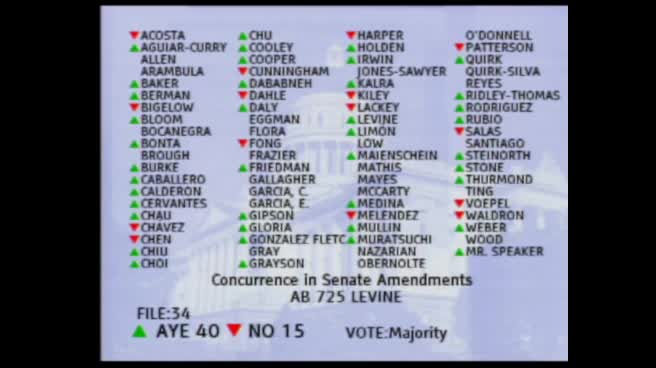 1MIN
Assembly Floor
 3MIN
Senate Floor
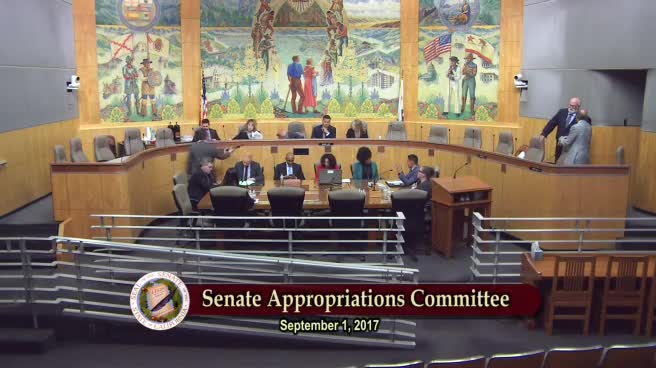 1H
Senate Standing Committee on Appropriations
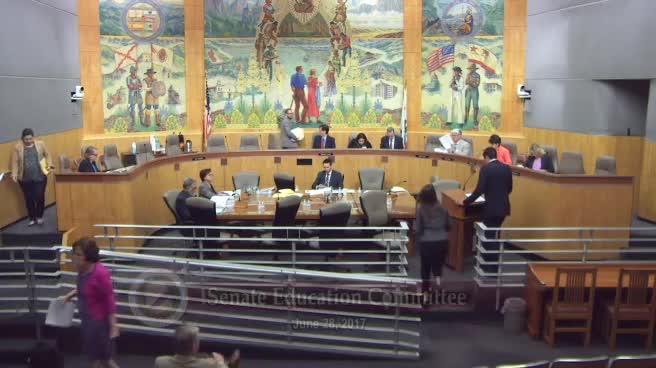 4MIN
Senate Standing Committee on Education
 3MIN
Assembly Floor
 1H
Assembly Standing Committee on Appropriations
 3MIN
Assembly Standing Committee on Education
Bill Author

Bill Co-Author(s):