AB 9: Sales and use taxes: exemption: sanitary napkins: tampons: menstrual sponges and menstrual cups.
- Session Year: 2017-2018
- House: Assembly
- Latest Version Date: 2016-12-05
Existing sales and use tax laws impose a tax on retailers measured by the gross receipts from the sale of tangible personal property sold at retail in this state, or on the storage, use, or other consumption in this state of tangible personal property purchased from a retailer for storage, use, or other consumption in this state. Those laws provide various exemptions from those taxes.
This bill, on and after January 1, 2018, would exempt from those taxes the gross receipts from the sale in this state of, and the storage, use, or other consumption in this state of, tampons, sanitary napkins, menstrual sponges, and menstrual cups.
The Bradley-Burns Uniform Local Sales and Use Tax Law authorizes counties and cities to impose local sales and use taxes in conformity with the Sales and Use Tax Law, and existing laws authorize districts, as specified, to impose transactions and use taxes in accordance with the Transactions and Use Tax Law, which generally conforms to the Sales and Use Tax Law. Amendments to the Sales and Use Tax Law are automatically incorporated into the local tax laws.
Existing law requires the state to reimburse counties and cities for revenue losses caused by the enactment of sales and use tax exemptions.
This bill would provide that, notwithstanding Section 2230 of the Revenue and Taxation Code, no appropriation is made and the state shall not reimburse any local agencies for sales and use tax revenues lost by them pursuant to this bill.
This bill would take effect immediately as a tax levy.
On and after January 1, 2018, there are exempted from the taxes imposed by this part the gross receipts from the sale in this state of, and the storage, use, or other consumption in this state of, tampons, sanitary napkins, menstrual sponges, and menstrual cups.
SEC. 2.Notwithstanding Section 2230 of the Revenue and Taxation Code, no appropriation is made by this act and the state shall not reimburse any local agency for any sales and use tax revenues lost by it under this act.
SEC. 3.This act provides for a tax levy within the meaning of Article IV of the California Constitution and shall go into immediate effect.
REVISIONS: HeadingLines 3 and 4.|
Date
|
Status
|
|---|---|
| Feb 1, 2018 | From committee: Filed with the Chief Clerk pursuant to Joint Rule 56. |
| Jan 31, 2018 | Died pursuant to Art. IV, Sec. 10(c) of the Constitution. |
| Jan 18, 2018 | In committee: Held under submission. |
| May 26, 2017 | In committee: Hearing postponed by committee. |
| May 24, 2017 | In committee: Set, first hearing. Referred to APPR. suspense file. |
| May 17, 2017 | From committee: Do pass and re-refer to Com. on APPR. (Ayes 8. Noes 1.) (May 15). Re-referred to Com. on APPR. |
| Mar 28, 2017 | Coauthors revised. |
| Mar 13, 2017 | In committee: Hearing postponed by committee. |
| Mar 8, 2017 | Coauthors revised. |
| Jan 19, 2017 | Referred to Com. on REV. & TAX. |
| Dec 6, 2016 | From printer. May be heard in committee January 5. |
| Dec 5, 2016 | Read first time. To print. |
|
Date
|
Description
|
Location
|
Votes
|
|
|---|---|---|---|---|
| May 15, 2017 | Do pass and be re-referred to the Committee on [Appropriations] | Assembly Standing Committee on Revenue and Taxation |
Passed |
This list shows positions taken on this bill by organizations on the date displayed, which is linked to the original source.
Positions by individuals are not included.
Date of Hearing: May 24, 2017
ASSEMBLY COMMITTEE ON APPROPRIATIONS
Lorena Gonzalez Fletcher, Chair
ABPCA Bill Id:AB 9
Author:(Cristina Garcia) – As Introduced Ver:December 5, 2016
Policy Committee: | Revenue and Taxation | Vote: | 8 - 1 |
|
| ||
|
|
Urgency: No State Mandated Local Program: No Reimbursable: No
SUMMARY:
This bill establishes a sales and use tax (SUT) exemption for tampons, sanitary napkins, menstrual sponges, and menstrual cups.
FISCAL EFFECT:
Annual GF revenue loss of approximately $10.5 million.
COMMENTS:
- Background. Existing law exempts a number of products from California’s sales tax. Many types of food and prescription medicines, as well as utilities such as gas, water, and electricity, are all exempt. These exemptions are typically referred to as “necessities as life,” but this type of exemption is not applied consistently. For example, feminine hygiene products, toilet paper, clothing, shoes, soap, and diapers are all subject to the sales tax.
- Purpose. According to the author, AB 9 will end an unfair tax that disproportionately harms low-income women. The author notes that California women pay over $20 million annually for taxing tampons and sanitary napkins, even though they are essential health items for women. Exempting these products from the sales and use tax, like other health items such as prescription medication or walkers, will make the tax code more equitable and help low-income women afford these necessities.
- Recent Legislation. AB 1561 (Garcia), of the 2015-16 Legislative Session, would have provided a similar SUT exemption, but included a five-year sunset provision. This bill was vetoed by the governor, whose veto message stated:
“As I said last year, tax breaks are the same as new spending – they both cost the General Fund money. As such, they must be considered during budget deliberations so that all spending proposals are weighed against each other at the same time. This is even more important when the state's budget remains precariously balanced.”
Analysis Prepared by: Luke Reidenbach / APPR. / (916) 319-2081
Date of Hearing: May 15, 2017
ASSEMBLY COMMITTEE ON REVENUE AND TAXATION
Sebastian Ridley-Thomas, Chair
ABPCA Bill Id:AB 9 (
Author:Cristina Garcia) – As Introduced Ver:December 5, 2016
Majority vote. Tax levy. Fiscal committee.
SUBJECT: Sales and use taxes: exemption: sanitary napkins: tampons: menstrual sponges and menstrual cups
SUMMARY: Establishes a sales and use tax (SUT) exemption for tampons, sanitary napkins, menstrual sponges, and menstrual cups. Specifically, this bill:
- Provides that, notwithstanding existing law, the state shall not reimburse any local agency for SUT revenues lost as a result of this exemption.
- Takes immediate effect as a tax levy, but only becomes operative on January 1, 2018.
EXISTING LAW:
- Imposes a sales tax on retailers for the privilege of selling tangible personal property (TPP), absent a specific exemption. The tax is based upon the retailer's gross receipts from TPP sales in this state.
- Imposes a complimentary use tax on the storage, use, or other consumption of TPP purchased out-of-state and brought into California. The use tax is imposed on the purchaser; and unless the purchaser pays the use tax to an out-of-state retailer registered to collect California's use tax, the purchaser remains liable for the tax. The use tax is set at the same rate as the state's sales tax and must generally be remitted to the State Board of Equalization (BOE).
FISCAL EFFECT: The BOE estimates that this bill would reduce state and local revenues by $21.7 million annually.
COMMENTS:
- The author has provided the following statement in support of this bill:
AB 9 is a bipartisan effort to make menstrual products exempt from the sales and use tax at both the state and local level. California women pay over 20 million dollars annually for taxing tampons and sanitary napkins, which are essential health items for women. As a state we should not be taxing women for being born women – our tax code should be gender neutral. The tax is especially unjust for women who are low-income or homeless who struggle to pay for these basic necessities each month for the majority of their adult life. Menstrual products need to be more accessible and eliminating the tax on tampons and sanitary napkins is an important first step in making them more affordable. California's tax code exempts health items like walkers, medical identification tags, and prescription medication, including Viagra®. Tampons and sanitary napkins are not exempt even though women do not have the choice to ignore their periods and are far from being luxuries items. When these items are labelled as "feminine hygiene" products, it makes people forget that the FDA regulates both products as medical devices. There is no equivalent health product that is used only by one gender on a monthly basis for 40 years of life. Across the world, countries as well as states in the US are organizing to repeal the sales tax on feminine hygiene products. California should continue to be a leader by addressing the gender inequality in our tax code and exempt menstrual products.
- The BOE notes the following in its staff analysis of this bill:
- Certain care providers and hospitals would additionally benefit from the proposed exemption: "Since sales of these products to these service enterprises are currently subject to tax, this bill would provide an additional benefit to entities that purchase these products for their clients or patients."
- The bill has no income limitations: "Women of all income levels would receive the benefit of the exemption."
- This exemption does not include all menstrual products: "Tax would still apply to products like period panties and reusable cloth pads."
- Exemptions increase retailers' costs: "Creating a new sales tax exemption on specific items requires retailers to re-program their cash registers and incur additional expenses."
- This bill is supported by the City of West Hollywood, which notes the following:
Enactment of AB 9 would bring an end to the outdated California sales taxes on feminine hygiene products that impose a burden in excess of $20 million upon only one segment of the state's population, California women. This regressive tax especially impacts low wage earners where the sales taxes on these medical necessities constitute a greater proportion of women's income.
Several states (Maryland, Massachusetts, Pennsylvania, Minnesota, and New Jersey) have already exempted feminine hygiene products from sales taxes. By approving AB 9, California will recognize that feminine hygiene products are essential medical items and afforded the same exemption as other medical products.
- This bill is opposed by the California State Association of Counties, which notes the following:
We recognize the intent of this measure but unfortunately AB 9 would result in a direct loss of revenue for counties. The State continues to experience an extended period of economic growth but many counties are still not realizing the same level of economic stability compared to pre-recession standards. In fact, 67% of counties have less total tax revenue now than in 2008, adjusting for population and inflation. California's counties are also preparing for the next inevitable economic downturn and associated demands on county services.
After the past thirty years of changes to sales and use tax allocations, counties now receive almost half of sales and use tax revenues. About two-thirds of that revenue is constitutionally dedicated to providing health and public safety services including social services, incarceration, and rehabilitation.
- Committee Staff Comments
- What is a "tax expenditure"? Existing law provides various credits, deductions, exclusions, and exemptions for particular taxpayer groups. In the late 1960s, U.S. Treasury officials began arguing that these features of the tax law should be referred to as "expenditures" since they are generally enacted to accomplish some governmental purpose and there is a determinable cost associated with each (in the form of foregone revenues).
- How is a tax expenditure different from a direct expenditure? As the Department of Finance notes in its annual Tax Expenditure Report, there are several key differences between tax expenditures and direct expenditures. First, tax expenditures are reviewed less frequently than direct expenditures once they are put in place. Second, there is generally no control over the amount of revenue losses associated with any given tax expenditure. Finally, it should also be noted that, once enacted, it takes a two-thirds vote to rescind an existing tax expenditure absent a sunset date. This effectively results in a "one-way ratchet" whereby tax expenditures can be conferred by majority vote, but cannot be rescinded, irrespective of their efficacy or cost, without a supermajority vote.
- An overview of the SUT Law: California's SUT Law imposes a sales tax on retailers for the privilege of selling TPP, absent a specific exemption. The tax is based upon a retailer's gross receipts from TPP sales in California. The SUT Law also imposes a mirror "use tax" on the storage, use, or other consumption of TPP purchased out-of-state and brought into California. The use tax is imposed on the purchaser, and unless the purchaser pays the use tax to an out-of-state retailer registered to collect California's use tax, the purchaser remains liable for the tax. The use tax is set at the same rate as the state's sales tax and must generally be remitted to the BOE.
- What is a "tax expenditure"? Existing law provides various credits, deductions, exclusions, and exemptions for particular taxpayer groups. In the late 1960s, U.S. Treasury officials began arguing that these features of the tax law should be referred to as "expenditures" since they are generally enacted to accomplish some governmental purpose and there is a determinable cost associated with each (in the form of foregone revenues).
The SUT represents the state's second largest source of General Fund (GF) revenues. Nevertheless, the past 60 years have seen a dramatic reduction in the state's reliance on the SUT and a corresponding increase in its reliance on personal income tax revenues. In fiscal year (FY) 2014-15, SUT revenues were estimated to comprise 23% of the state's GF revenues, down from nearly 60% in FY 1950-51.
- What accounts for the state's reduced reliance on SUT revenues? The SUT Law was enacted in a very different era. In the 1930s, California's economy was largely dominated by manufacturing, and residents mostly bought and sold tangible goods. Thus, in establishing the base for a new consumption tax, it made sense to impose the tax on sales of TPP, defined as personal property that may be "seen, weighed, measured, felt, or touched." Over the past 80 years, however, California's economy has seen dramatic growth in the service and information sectors, resulting in a significant erosion of the SUT base. For example, the Commission on the 21st Century Economy noted that spending on taxable goods represented 34.6% of personal income in 2008, down from 55.4% in 1980. As a result, tax experts and economists from across the political spectrum argue that California should expand its SUT base.
It could be argued that, while well-intentioned, additional SUT exemptions further erode an already shrinking SUT base. This, in turn, increases fiscal pressures to maintain or even increase California's relatively high SUT rate. High rates arguably promote non-compliance and encourage out-of-state purchases, placing California retailers at a competitive disadvantage. High rates also risk impacting consumer decision-making, which runs counter to widely accepted principles of sound tax policy.
- What would this bill do? This bill would provide a complete SUT exemption for tampons, sanitary napkins, menstrual sponges, and menstrual cups.
- An inherently regressive tax: The SUT has been widely criticized as a regressive exaction that most heavily impacts those least able to pay. For example, a survey by the Nevada Legislative Counsel Bureau long ago concluded that in the case of a retail sales tax with food exempt, "the lowest income group would experience the highest ratio of tax to income . . . ." (Survey of Sales Taxes Applicable to Nevada 59 (Bull. No. 3, May, 1948).) Others, however, contend that a degree of progressivity is provided via the various exemptions built into most state SUT laws (i.e., for certain necessities of life such as food, housing, and medical care).
Proponents of this bill might argue that an exemption for sanitary napkins and tampons would further promote a degree of progressivity in an already regressive tax regime. Proponents might also note that to reduce the regressive nature of the SUT tax exemptions have been enacted for numerous necessities of life, including food and prescription medications. Critics, however, might contend that SUT exemptions are a blunt instrument for affecting social policy. While this bill would provide financial relief to low-income women struggling to make ends meet, it would also provide relief indiscriminately to wealthy consumers who might not even notice the exemption.[1]
- A note on sunsets: In its current form, this bill does not include a sunset provision. This Committee has a longstanding policy favoring the inclusion of sunsets to allow periodic legislative review of tax expenditure programs. As such, the author and Committee may wish to consider adding an appropriate sunset provision to this bill.
- Prior legislation: AB 1561 (Garcia), of the 2015-16 Legislative Session, provided a similar SUT exemption, but included a five-year sunset provision. On September 13, 2016, Governor Brown vetoed AB 1561, noting in part:
As I said last year, tax breaks are the same as new spending – they both cost the General Fund money. As such, they must be considered during budget deliberations so that all spending proposals are weighed against each other at the same time. This is even more important when the state's budget remains precariously balanced.
REGISTERED SUPPORT / OPPOSITION:
Support
ACT for Women and Girls
All Rise Alameda
American Academy of Pediatrics, California
American Congress of Obstetricians and
Gynecologists, District IX
Bayer
BOE Member George Runner
CaliforniaHealth+ Advocates
California Manufacturers and Technology
Association
California Retailers Association
California Women's List at UC Davis
City of Berkeley Mayor Jesse Arreguin
City of El Monte
City of Glendale
City of West Hollywood
Courage Campaign
Fem Dems of Sacramento
Hispanas Organized for Political Equality
Indivisible LBC
Junior League of San Francisco
Latino Coalition for a Healthy California
NARAL Pro-Choice California
National Association of Social Workers, California Chapter
National Council of Jewish Women, Los Angeles
Parent Voices Oakland
Planned Parenthood Affiliates of California
State Board of Equalization
Target
21 individuals
Opposition
California State Association of Counties
California Tax Reform Association
League of California Cities
Analysis Prepared by: M. David Ruff / REV. & TAX. / (916) 319-2098
The author's office notes that women in California pay roughly $7 per month on sanitary napkins and tampons. Applying a statewide average SUT rate of 8.21%, purchasers are paying roughly $0.57 per month in SUT on these products. ↑
Date of Hearing: March 13, 2017
ASSEMBLY COMMITTEE ON REVENUE AND TAXATION
Sebastian Ridley-Thomas, Chair
ABPCA Bill Id:AB 9 (
Author:Cristina Garcia) – As Introduced Ver:December 5, 2016
Majority vote. Tax levy. Fiscal committee.
SUBJECT: Sales and use taxes: exemption: sanitary napkins: tampons: menstrual sponges and menstrual cups
SUMMARY: Establishes a sales and use tax (SUT) exemption for tampons, sanitary napkins, menstrual sponges, and menstrual cups. Specifically, this bill:
- Provides that, notwithstanding existing law, the state shall not reimburse any local agency for SUT revenues lost as a result of this exemption.
- Takes immediate effect as a tax levy, but only becomes operative on January 1, 2018.
EXISTING LAW:
- Imposes a sales tax on retailers for the privilege of selling tangible personal property (TPP), absent a specific exemption. The tax is based upon the retailer's gross receipts from TPP sales in this state.
- Imposes a complimentary use tax on the storage, use, or other consumption of TPP purchased out-of-state and brought into California. The use tax is imposed on the purchaser; and unless the purchaser pays the use tax to an out-of-state retailer registered to collect California's use tax, the purchaser remains liable for the tax. The use tax is set at the same rate as the state's sales tax and must generally be remitted to the State Board of Equalization (BOE).
FISCAL EFFECT: The BOE estimates that this bill would reduce state and local revenues by $21.7 million annually.
COMMENTS:
- The author has provided the following statement in support of this bill:
AB 9 is a bipartisan effort to make menstrual products exempt from the sales and use tax at both the state and local level. California women pay over 20 million dollars annually for taxing tampons and sanitary napkins, which are essential health items for women. As a state we should not be taxing women for being born women – our tax code should be gender neutral. The tax is especially unjust for women who are low-income or homeless who struggle to pay for these basic necessities each month for the majority of their adult life. Menstrual products need to be more accessible and eliminating the tax on tampons and sanitary napkins is an important first step in making them more affordable. California's tax code exempts health items like walkers, medical identification tags, and prescription medication, including Viagra®. Tampons and sanitary napkins are not exempt even though women do not have the choice to ignore their periods and are far from being luxuries items. When these items are labelled as "feminine hygiene" products, it makes people forget that the FDA regulates both products as medical devices. There is no equivalent health product that is used only by one gender on a monthly basis for 40 years of life. Across the world, countries as well as states in the US are organizing to repeal the sales tax on feminine hygiene products. California should continue to be a leader by addressing the gender inequality in our tax code and exempt menstrual products.
- The BOE notes the following in its staff analysis of this bill:
- Certain care providers and hospitals would additionally benefit from the proposed exemption: "Since sales of these products to these service enterprises are currently subject to tax, this bill would provide an additional benefit to entities that purchase these products for their clients or patients."
- The bill has no income limitations: "Women of all income levels would receive the benefit of the exemption."
- This exemption does not include all menstrual products: "Tax would still apply to products like period panties and reusable cloth pads."
- Exemptions increase retailers' costs: "Creating a new sales tax exemption on specific items requires retailers to re-program their cash registers and incur additional expenses."
- This bill is supported by the City of West Hollywood, which notes the following:
Enactment of AB 9 would bring an end to the outdated California sales taxes on feminine hygiene products that impose a burden in excess of $20 million upon only one segment of the state's population, California women. This regressive tax especially impacts low wage earners where the sales taxes on these medical necessities constitute a greater proportion of women's income.
Several states (Maryland, Massachusetts, Pennsylvania, Minnesota, and New Jersey) have already exempted feminine hygiene products from sales taxes. By approving AB 9, California will recognize that feminine hygiene products are essential medical items and afforded the same exemption as other medical products.
- This bill is opposed by the California State Association of Counties, which notes the following:
We recognize the intent of this measure but unfortunately AB 9 would result in a direct loss of revenue for counties. The State continues to experience an extended period of economic growth but many counties are still not realizing the same level of economic stability compared to pre-recession standards. In fact, 67% of counties have less total tax revenue now than in 2008, adjusting for population and inflation. California's counties are also preparing for the next inevitable economic downturn and associated demands on county services.
After the past thirty years of changes to sales and use tax allocations, counties now receive almost half of sales and use tax revenues. About two-thirds of that revenue is constitutionally dedicated to providing health and public safety services including social services, incarceration, and rehabilitation.
- Committee Staff Comments
- What is a "tax expenditure"? Existing law provides various credits, deductions, exclusions, and exemptions for particular taxpayer groups. In the late 1960s, U.S. Treasury officials began arguing that these features of the tax law should be referred to as "expenditures" since they are generally enacted to accomplish some governmental purpose and there is a determinable cost associated with each (in the form of foregone revenues).
- How is a tax expenditure different from a direct expenditure? As the Department of Finance notes in its annual Tax Expenditure Report, there are several key differences between tax expenditures and direct expenditures. First, tax expenditures are reviewed less frequently than direct expenditures once they are put in place. Second, there is generally no control over the amount of revenue losses associated with any given tax expenditure. Finally, it should also be noted that, once enacted, it takes a two-thirds vote to rescind an existing tax expenditure absent a sunset date. This effectively results in a "one-way ratchet" whereby tax expenditures can be conferred by majority vote, but cannot be rescinded, irrespective of their efficacy or cost, without a supermajority vote.
- An overview of the SUT Law: California's SUT Law imposes a sales tax on retailers for the privilege of selling TPP, absent a specific exemption. The tax is based upon a retailer's gross receipts from TPP sales in California. The SUT Law also imposes a mirror "use tax" on the storage, use, or other consumption of TPP purchased out-of-state and brought into California. The use tax is imposed on the purchaser, and unless the purchaser pays the use tax to an out-of-state retailer registered to collect California's use tax, the purchaser remains liable for the tax. The use tax is set at the same rate as the state's sales tax and must generally be remitted to the BOE.
- What is a "tax expenditure"? Existing law provides various credits, deductions, exclusions, and exemptions for particular taxpayer groups. In the late 1960s, U.S. Treasury officials began arguing that these features of the tax law should be referred to as "expenditures" since they are generally enacted to accomplish some governmental purpose and there is a determinable cost associated with each (in the form of foregone revenues).
The SUT represents the state's second largest source of General Fund (GF) revenues. Nevertheless, the past 60 years have seen a dramatic reduction in the state's reliance on the SUT and a corresponding increase in its reliance on personal income tax revenues. In fiscal year (FY) 2014-15, SUT revenues were estimated to comprise 23% of the state's GF revenues, down from nearly 60% in FY 1950-51.
- What accounts for the state's reduced reliance on SUT revenues? The SUT Law was enacted in a very different era. In the 1930s, California's economy was largely dominated by manufacturing, and residents mostly bought and sold tangible goods. Thus, in establishing the base for a new consumption tax, it made sense to impose the tax on sales of TPP, defined as personal property that may be "seen, weighed, measured, felt, or touched." Over the past 80 years, however, California's economy has seen dramatic growth in the service and information sectors, resulting in a significant erosion of the SUT base. For example, the Commission on the 21st Century Economy noted that spending on taxable goods represented 34.6% of personal income in 2008, down from 55.4% in 1980. As a result, tax experts and economists from across the political spectrum argue that California should expand its SUT base.
It could be argued that, while well-intentioned, additional SUT exemptions further erode an already shrinking SUT base. This, in turn, increases fiscal pressures to maintain or even increase California's relatively high SUT rate. High rates arguably promote non-compliance and encourage out-of-state purchases, placing California retailers at a competitive disadvantage. High rates also risk impacting consumer decision-making, which runs counter to widely accepted principles of sound tax policy.
- What would this bill do? This bill would provide a complete SUT exemption for tampons, sanitary napkins, menstrual sponges, and menstrual cups.
- An inherently regressive tax: The SUT has been widely criticized as a regressive exaction that most heavily impacts those least able to pay. For example, a survey by the Nevada Legislative Counsel Bureau long ago concluded that in the case of a retail sales tax with food exempt, "the lowest income group would experience the highest ratio of tax to income . . . ." (Survey of Sales Taxes Applicable to Nevada 59 (Bull. No. 3, May, 1948).) Others, however, contend that a degree of progressivity is provided via the various exemptions built into most state SUT laws (i.e., for certain necessities of life such as food, housing, and medical care).
Proponents of this bill might argue that an exemption for sanitary napkins and tampons would further promote a degree of progressivity in an already regressive tax regime. Proponents might also note that, to reduce the regressive nature of the SUT tax, exemptions have been enacted for numerous necessities of life, including food and prescription medications. Critics, however, might contend that SUT exemptions are a blunt instrument for affecting social policy. While this bill would provide financial relief to low-income women struggling to make ends meet, it would also provide relief indiscriminately to wealthy consumers who might not even notice the exemption.[1]
- A note on sunsets: In its current form, this bill does not include a sunset provision. This Committee has a longstanding policy favoring the inclusion of sunsets to allow periodic legislative review of tax expenditure programs. As such, the author and Committee may wish to consider adding an appropriate sunset provision to this bill.
- Prior legislation: AB 1561 (Garcia), of the 2015-16 Legislative Session, provided a similar SUT exemption, but included a five-year sunset provision. On September 13, 2016, Governor Brown vetoed AB 1561, noting in part:
As I said last year, tax breaks are the same as new spending – they both cost the General Fund money. As such, they must be considered during budget deliberations so that all spending proposals are weighed against each other at the same time. This is even more important when the state's budget remains precariously balanced.
REGISTERED SUPPORT / OPPOSITION:
Support
ACT for Women and Girls
American Academy of Pediatrics, California
American Congress of Obstetricians and
Gynecologists
Bayer
BOE Member Fiona Ma
California Manufacturers and Technology
Association
California Retailers Association
City of Glendale
City of West Hollywood
Commission on the Status of Women
NARAL Pro-Choice California
Target
Opposition
California State Association of Counties
California Tax Reform Association
League of California Cities
Analysis Prepared by: M. David Ruff / REV. & TAX. / (916) 319-2098
The author's office notes that women in California pay roughly $7 per month on sanitary napkins and tampons. Applying a statewide average SUT rate of 8.21%, purchasers are paying roughly $0.57 per month in SUT on these products. ↑
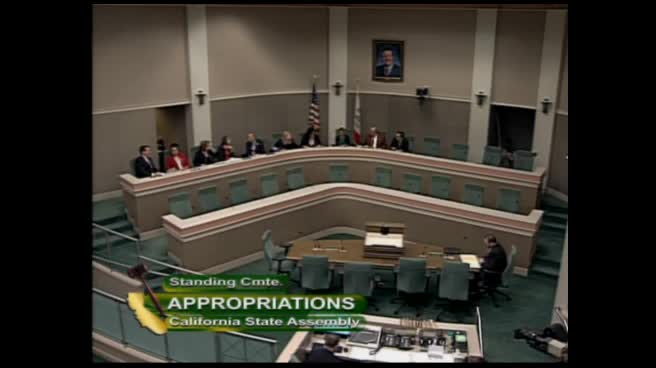
Discussed in Hearing
 21MIN
Assembly Standing Committee on Appropriations
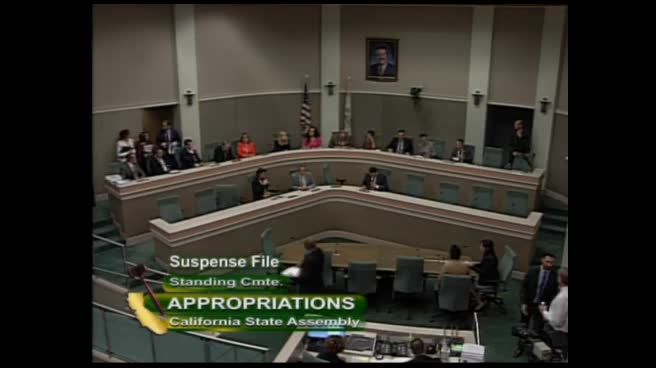 1H
Assembly Standing Committee on Appropriations
 22MIN
Assembly Standing Committee on Revenue and Taxation
Bill Author