AB 943: Land use regulations: local initiatives: voter approval.
- Session Year: 2017-2018
- House: Assembly
- Latest Version Date: 2017-07-19
The Planning and Zoning Law, among other things, authorizes the legislative body of any county or city to adopt ordinances to regulate land use. Existing law also establishes procedures by which city or county ordinances may be enacted or amended by initiative, including requiring that an ordinance proposed by the voters of the city or county be approved by a majority of the votes cast on the ordinance.
This bill, in the case of an ordinance or an amendment of an ordinance that would reduce density or stop development or construction of any parcels located less than one mile from a major transit stop, as defined, within a city, county, or city and county that is proposed by the voters of the city, county, or city and county in accordance with specified law, would require that the proposed ordinance or amendment of an ordinance receive 55% of the votes cast on the ordinance in order to become effective. The bill would exclude from this requirement the proposal and submission to the voters of an ordinance or amendment of an ordinance by the legislative body of the city, county, or city and county and the adoption or amendment of a city, county, or city and county charter, and would limit exclude ordinances that apply to or implement amendments to a city or county general plan pertaining to certain lands specified in that general plan. The bill would also exclude ordinances that apply primarily to lands located outside an established city urban restriction boundary or ordinances that revise or continue previously established city urban restriction boundaries.
This bill would limit application of this requirement to a county or city and county that had a population of 750,000 or more, or a city located within such a county, as of January 1, 2017. The bill would require the county counsel for the county or city and county in which the proposed ordinance or amendment of an ordinance would apply, or the city attorney of the city in which the proposed ordinance or amendment of an ordinance would apply, to determine whether the proposed ordinance or amendment of an ordinance would reduce density or stop development or construction of any parcels located less than one mile from a major transit stop within the city, county, or city and county. The bill would declare that it addresses a matter of statewide concern and would therefore apply to charter cities and charter counties.
By requiring local officials to determine whether a proposed ordinance or amendment of an ordinance would reduce density or stop development or construction of any parcels located less than one mile from a major transit stop within a city, county, or city and county, this bill would impose a state-mandated local program.
The California Constitution requires the state to reimburse local agencies and school districts for certain costs mandated by the state. Statutory provisions establish procedures for making that reimbursement.
This bill would provide that, if the Commission on State Mandates determines that the bill contains costs mandated by the state, reimbursement for those costs shall be made pursuant to the statutory provisions noted above.
The Planning and Zoning Law, among other things, authorizes the legislative body of any county or city to adopt ordinances to regulate land use. Existing law also establishes procedures by which city or county ordinances may be enacted or amended by initiative, including requiring that an ordinance proposed by the voters of the city or county be approved by a majority of the votes cast on the ordinance.
This bill, in the case of an ordinance or an amendment of an ordinance that would reduce density or stop development or construction of any parcels located less than one mile from a major transit stop, as defined, within a city, county, or city and county that is proposed by the voters of the city, county, or city and county in accordance with specified law, would require that the proposed ordinance or amendment of an ordinance receive 55% of the votes cast on the ordinance in order to become effective. The bill would exclude from this requirement the proposal and submission to the voters of an ordinance or amendment of an ordinance by the legislative body of the city, county, or city and county and the adoption or amendment of a city, county, or city and county charter, and would limit application of this requirement to a county or city and county that had a population of 750,000 or more, or a city located within such a county, as of January 1, 2017. The bill would require the county counsel for the county or city and county in which the proposed ordinance or amendment of an ordinance would apply, or the city attorney of the city in which the proposed ordinance or amendment of an ordinance would apply, to determine whether the proposed ordinance or amendment of an ordinance would reduce density or stop development or construction of any parcels located less than one mile from a major transit stop within the city, county, or city and county. The bill would declare that it addresses a matter of statewide concern and would therefore apply to charter cities and charter counties.
By requiring local officials to determine whether a proposed ordinance or amendment of an ordinance would reduce density or stop development or construction of any parcels located less than one mile from a major transit stop within a city, county, or city and county, this bill would impose a state-mandated local program.
The California Constitution requires the state to reimburse local agencies and school districts for certain costs mandated by the state. Statutory provisions establish procedures for making that reimbursement.
This bill would provide that, if the Commission on State Mandates determines that the bill contains costs mandated by the state, reimbursement for those costs shall be made pursuant to the statutory provisions noted above.
The Planning and Zoning Law, among other things, authorizes the legislative body of any county or city to adopt ordinances to regulate land use. Existing law also establishes procedures by which city or county ordinances may be enacted or amended by initiative, including requiring that an ordinance proposed by the voters of the city or county be approved by a majority of the votes cast on the ordinance.
This bill, in the case of an ordinance or an amendment of an ordinance that would reduce density or stop development or construction of any parcels located less than one mile from a major transit stop, as defined, within a city, county, or city and county that is proposed by the voters of the city, county, or city and county in accordance with specified law, would require that the proposed ordinance or amendment of an ordinance receive 55% of the votes cast on the ordinance in order to become effective. The bill would require the county counsel for the county or city and county in which the proposed ordinance or amendment of an ordinance would apply, or the city attorney of the city in which the proposed ordinance or amendment of an ordinance would apply, to determine whether the proposed ordinance or amendment of an ordinance would reduce density or stop development or construction of any parcels located less than one mile from a major transit stop within the city, county, or city and county. The bill would declare that it addresses a matter of statewide concern and would therefore apply to charter cities and charter counties.
By requiring local officials to determine whether a proposed ordinance or amendment of an ordinance would reduce density or stop development or construction of any parcels located less than one mile from a major transit stop within a city, county, or city and county, this bill would impose a state-mandated local program.
The California Constitution requires the state to reimburse local agencies and school districts for certain costs mandated by the state. Statutory provisions establish procedures for making that reimbursement.
This bill would provide that, if the Commission on State Mandates determines that the bill contains costs mandated by the state, reimbursement for those costs shall be made pursuant to the statutory provisions noted above.
The Planning and Zoning Law, among other things, authorizes the legislative body of any county or city to adopt ordinances to regulate land use. Existing law also establishes procedures by which city or county ordinances may be enacted or amended by initiative, including requiring that an ordinance proposed by the voters of the city or county be approved by a majority of the votes cast on the ordinance.
This bill, in the case of an ordinance or an amendment of an ordinance that would expressly reduce density or stop development or construction within a city, county, or city and county that is proposed by the voters of the city, county, or city and county in accordance with specified law, would require that the proposed ordinance or amendment of an ordinance receive 55% of the votes cast on the ordinance in order to become effective. The bill would require the county elections official counsel for the county or city and county in which the proposed ordinance or amendment of an ordinance would apply, or which includes within its territorial boundaries the city attorney of the city in which the proposed ordinance or amendment of an ordinance would apply, to determine whether the proposed ordinance or amendment of an ordinance would expressly reduce density or stop development or construction within the city, county, or city and county. The bill would declare that it addresses a matter of statewide concern. concern and would therefore apply to charter cities and charter counties.
By requiring county elections local officials to determine whether a proposed ordinance or amendment of an ordinance would expressly reduce density or stop development or construction within a city, county, or city and county, this bill would impose a state-mandated local program.
The California Constitution requires the state to reimburse local agencies and school districts for certain costs mandated by the state. Statutory provisions establish procedures for making that reimbursement.
This bill would provide that, if the Commission on State Mandates determines that the bill contains costs mandated by the state, reimbursement for those costs shall be made pursuant to the statutory provisions noted above.
The Planning and Zoning Law, among other things, authorizes the legislative body of any county or city to adopt ordinances to regulate land use. Existing law also establishes procedures by which city or county ordinances may be enacted or amended by initiative, including requiring that an ordinance proposed by the voters or submitted by the legislative body of the city or county be approved by a majority of the votes cast on the ordinance.
This bill, in the case of an ordinance or an amendment of an ordinance that would curb, delay, or deter growth or development expressly stop development or construction within a city, county, or city and county that is proposed by the voters of the city, county, or city and county in accordance with specified law, require that an ordinance proposed by the voters or submitted by the legislative body of the city the proposed ordinance or amendment of an ordinance receive 2/3 55% of the votes cast on the ordinance in order to become effective. The bill would require the county elections official for the county or city and county in which the proposed ordinance or amendment of an ordinance would apply, or which includes within its territorial boundaries the city in which the proposed ordinance or amendment of an ordinance would apply, to determine whether the proposed ordinance or amendment of an ordinance would expressly stop development or construction within the city, county, or city and county. The bill would declare that it addresses a matter of statewide concern.
By requiring county elections officials to determine whether a proposed ordinance or amendment of an ordinance would expressly stop development or construction within a city, county, or city and county, this bill would impose a state-mandated local program.
The California Constitution requires the state to reimburse local agencies and school districts for certain costs mandated by the state. Statutory provisions establish procedures for making that reimbursement.
This bill would provide that, if the Commission on State Mandates determines that the bill contains costs mandated by the state, reimbursement for those costs shall be made pursuant to the statutory provisions noted above.
The Planning and Zoning Law, among other things, authorizes the legislative body of any county or city to adopt ordinances to regulate land use. Existing law also establishes procedures by which city ordinances may be enacted by initiative, including requiring that an ordinance proposed by the voters or submitted by the legislative body of the city be approved by a majority of the votes cast on the ordinance.
This bill, in the case of an ordinance that would curb, delay, or deter growth or development within a city, require that an ordinance proposed by the voters or submitted by the legislative body of the city receive 2/3 of the votes cast on the ordinance in order to become effective. The bill would declare that it addresses a matter of statewide concern.
(a)(1)Notwithstanding any other law, including Sections 9122 and 9217 of the Elections Code, and except as otherwise provided in paragraph (2), if an ordinance or amendment of an ordinance proposed by the voters of a city, county, or city and county pursuant to Article 1 (commencing with Section 9100) of Chapter 2 of Division 9 of the Elections Code, Article 1 (commencing with Section 9200) of Chapter 3 of Division 9 of the Elections Code, or procedures adopted by a city, county, or city and county organized under a charter pursuant to Article XI of the California Constitution, that are consistent with any applicable statutes governing local initiatives, would reduce density or stop development or construction of any parcels located less than one mile from a major transit stop, as defined by Section 21064.3 of the Public Resources Code, within a city, county, or city and county, the proposed ordinance or amendment of an ordinance shall be enacted only if it is approved by at least 55 percent of the votes cast on it at the election.
(2)(A)This section shall not apply in either any of the following circumstances:
(i)The proposal and submission to the voters of an ordinance or amendment of an ordinance by the legislative body of the city, county, or city and county.
(ii)The adoption or amendment of a city, county, or city and county charter.
(iii)Ordinances that apply to, or implement amendments to, a city or county general plan pertaining to lands designated in that city or county general plan as agricultural, open space, or rural.
(iv)Ordinances that apply primarily to lands located outside an established city urban restriction boundary or ordinances that revise or continue previously established city urban restriction boundaries.
(B)This section shall only apply to a county or city and county that had a population of 750,000 or more, or a city located within a county that had a population of 750,000 or more, as of January 1, 2017.
(b)The county counsel for the county or city and county in which the proposed ordinance or amendment of an ordinance would apply, or the city attorney of the city in which the proposed ordinance or amendment of an ordinance would apply, shall determine whether the proposed ordinance or amendment of an ordinance would reduce density or stop development or construction of any parcels located less than one mile from a major transit stop, as defined by Section 21064.3 of the Public Resources Code, within the city, county, or city and county.
(c)Notwithstanding any other law, including Section 9247 of the Elections Code, the Legislature finds and declares that this section addresses a matter of statewide concern and shall therefore apply equally to all cities and counties, including charter cities and charter counties.
SEC. 2.If the Commission on State Mandates determines that this act contains costs mandated by the state, reimbursement to local agencies and school districts for those costs shall be made pursuant to Part 7 (commencing with Section 17500) of Division 4 of Title 2 of the Government Code.
(a)(1)Notwithstanding any other law, including Sections 9122 and 9217 of the Elections Code, and except as otherwise provided in paragraph (2), if an ordinance or amendment of an ordinance proposed by the voters of a city, county, or city and county pursuant to Article 1 (commencing with Section 9100) of Chapter 2 of Division 9 of the Elections Code, Article 1 (commencing with Section 9200) of Chapter 3 of Division 9 of the Elections Code, or procedures adopted by a city, county, or city and county organized under a charter pursuant to Article XI of the California Constitution, that are consistent with any applicable statutes governing local initiatives, would reduce density or stop development or construction of any parcels located less than one mile from a major transit stop, as defined by Section 21064.3 of the Public Resources Code, within a city, county, or city and county, the proposed ordinance or amendment of an ordinance shall be enacted only if it is approved by at least 55 percent of the votes cast on it at the election.
(2)(A)This section shall not apply in either of the following circumstances:
(A)(i)The proposal and submission to the voters of an ordinance or amendment of an ordinance by the legislative body of the city, county, or city and county.
(B)(ii)The adoption or amendment of a city, county, or city and county charter.
(B)This section shall only apply to a county or city and county that had a population of 750,000 or more, or a city located within a county that had a population of 750,000 or more, as of January 1, 2017.
(b)The county counsel for the county or city and county in which the proposed ordinance or amendment of an ordinance would apply, or the city attorney of the city in which the proposed ordinance or amendment of an ordinance would apply, shall determine whether the proposed ordinance or amendment of an ordinance would reduce density or stop development or construction of any parcels located less than one mile from a major transit stop, as defined by Section 21064.3 of the Public Resources Code, within the city, county, or city and county.
(c)Notwithstanding any other law, including Section 9247 of the Elections Code, the Legislature finds and declares that this section addresses a matter of statewide concern and shall therefore apply equally to all cities and counties, including charter cities and charter counties.
SEC. 2.If the Commission on State Mandates determines that this act contains costs mandated by the state, reimbursement to local agencies and school districts for those costs shall be made pursuant to Part 7 (commencing with Section 17500) of Division 4 of Title 2 of the Government Code.
(a)(1)Notwithstanding any other law, including Sections 9122 and 9217 of the Elections Code, and except as otherwise provided in paragraph (2), if an ordinance or amendment of an ordinance proposed by the voters of a city, county, or city and county pursuant to Article 1 (commencing with Section 9100) of Chapter 2 of Division 9 of the Elections Code, Article 1 (commencing with Section 9200) of Chapter 3 of Division 9 of the Elections Code, or procedures adopted by a city, county, or city and county organized under a charter pursuant to Article XI of the California Constitution, that are consistent with any applicable statutes governing local initiatives, would reduce density or stop development or construction of any parcels located less than one mile from a major transit stop, as defined by Section 21064.3 of the Public Resources Code, within a city, county, or city and county, the proposed ordinance or amendment of an ordinance shall be enacted only if it is approved by at least 55 percent of the votes cast on it at the election.
(2)This section shall not apply in either of the following circumstances:
(A)The proposal and submission to the voters of an ordinance or amendment of an ordinance by the legislative body of the city, county, or city and county.
(B)The adoption or amendment of a city, county, or city and county charter.
(b)The county counsel for the county or city and county in which the proposed ordinance or amendment of an ordinance would apply, or the city attorney of the city in which the proposed ordinance or amendment of an ordinance would apply, shall determine whether the proposed ordinance or amendment of an ordinance would reduce density or stop development or construction of any parcels located less than one mile from a major transit stop, as defined by Section 21064.3 of the Public Resources Code, within the city, county, or city and county.
(c)Notwithstanding any other law, including Section 9247 of the Elections Code, the Legislature finds and declares that this section addresses a matter of statewide concern and shall therefore apply equally to all cities and counties, including charter cities and charter counties.
SEC. 2.If the Commission on State Mandates determines that this act contains costs mandated by the state, reimbursement to local agencies and school districts for those costs shall be made pursuant to Part 7 (commencing with Section 17500) of Division 4 of Title 2 of the Government Code.
(a)(1)Notwithstanding any other law, including Sections 9122 and 9217 of the Elections Code, and except as otherwise provided in paragraph (2), if an ordinance or amendment of an ordinance proposed by the voters of a city, county, or city and county pursuant to Article 1 (commencing with Section 9100) of Chapter 2 of Chapter 3 of Division 9 of the Elections Code, Article 1 (commencing with Section 9200) of Chapter 3 of Division 9 of the Elections Code, or procedures adopted by a city, county, or city and county organized under a charter pursuant to Article XI of the California Constitution, that are consistent with any applicable statutes governing local initiatives, would expressly reduce density or stop development or construction within a city, county, or city and county, the proposed ordinance or amendment of an ordinance shall be enacted only if it is approved by at least 55 percent of the votes cast on it at the election.
(2)This section shall not apply in either of the following circumstances:
(A)The proposal and submission to the voters of an ordinance or amendment of an ordinance by the legislative body of the city, county, or city and county.
(B)The adoption or amendment of a city, county, or city and county charter.
(b)The county elections official counsel for the county or city and county in which the proposed ordinance or amendment of an ordinance would apply, or which includes within its territorial boundaries the city attorney of the city in which the proposed ordinance or amendment of an ordinance would apply, shall determine whether the proposed ordinance or amendment of an ordinance would expressly reduce density or stop development or construction within the city, county, or city and county.
(c)Notwithstanding any other law, including Section 9247 of the Elections Code, the Legislature finds and declares that this section addresses a matter of statewide concern and shall therefore apply equally to all cities and counties, including charter cities and charter counties.
SEC. 2.If the Commission on State Mandates determines that this act contains costs mandated by the state, reimbursement to local agencies and school districts for those costs shall be made pursuant to Part 7 (commencing with Section 17500) of Division 4 of Title 2 of the Government Code.
(a)(1)Notwithstanding any other law, including Sections 9122 and 9217 and 9222 of the Elections Code, and except as otherwise provided in paragraph (2), if a proposed an ordinance is submitted to or amendment of an ordinance proposed by the voters of a city, county, or city and county pursuant to either Article 1 (commencing with Section 9100) of Chapter 2 of Chapter 3 of Division 9 of the Elections Code, Article 1 (commencing with Section 9200) of Chapter 3 of Division 9 of the Elections Code Code, or procedures adopted by a city city, county, or city and county organized under a charter pursuant to Section 3 of Article XI of the California Constitution, that are consistent with any applicable statutes governing local initiatives, would curb, delay, or deter growth or development expressly stop development or construction within a city, county, or city and county, the proposed ordinance or amendment of an ordinance shall be enacted only if it is approved by at least two-thirds 55 percent of the votes cast on it at the election.
(2)This section shall not apply in either of the following circumstances:
(A)The proposal and submission to the voters of an ordinance or amendment of an ordinance by the legislative body of the city, county, or city and county.
(B)The adoption or amendment of a city, county, or city and county charter.
(b)The county elections official for the county or city and county in which the proposed ordinance or amendment of an ordinance would apply, or which includes within its territorial boundaries the city in which the proposed ordinance or amendment of an ordinance would apply, shall determine whether the proposed ordinance or amendment of an ordinance would expressly stop development or construction within the city, county, or city and county.
(b)(c)Notwithstanding any other law, including Section 9247 of the Elections Code, the Legislature finds and declares that this section addresses a matter of statewide concern and shall therefore apply equally to all cities, cities and counties, including charter cities. cities and charter counties.
SEC. 2.If the Commission on State Mandates determines that this act contains costs mandated by the state, reimbursement to local agencies and school districts for those costs shall be made pursuant to Part 7 (commencing with Section 17500) of Division 4 of Title 2 of the Government Code.
(a)Notwithstanding any other law, including Sections 9217 and 9222 of the Elections Code, if a proposed ordinance is submitted to the voters of a city, pursuant to either Article 1 (commencing with Section 9200) of Chapter 3 of Division 9 of the Elections Code or procedures adopted by a city organized under a charter pursuant to Section 3 of Article XI of the California Constitution, that would curb, delay, or deter growth or development within a city, the ordinance shall be enacted only if it is approved by at least two-thirds of the votes cast on it at the election.
(b)Notwithstanding any other law, including Section 9247 of the Elections Code, the Legislature finds and declares that this section addresses a matter of statewide concern and shall therefore apply equally to all cities, including charter cities.
|
Date
|
Status
|
|---|---|
| Sep 1, 2017 | In committee: Held under submission. |
| Aug 21, 2017 | In committee: Referred to APPR. suspense file. |
| Jul 19, 2017 | Read second time and amended. Re-referred to Com. on APPR. |
| Jul 18, 2017 | From committee: Amend, and do pass as amended and re-refer to Com. on APPR. (Ayes 4. Noes 0.) (July 12). |
| Jul 5, 2017 | From committee: Do pass and re-refer to Com. on E. & C.A. (Ayes 6. Noes 1.) (July 5). Re-referred to Com. on E. & C.A. |
| Jun 28, 2017 | From committee chair, with author's amendments: Amend, and re-refer to committee. Read second time, amended, and re-referred to Com. on GOV. & F. |
| Jun 8, 2017 | Referred to Coms. on GOV. & F. and E. & C.A. |
| May 30, 2017 | In Senate. Read first time. To Com. on RLS. for assignment. |
| May 30, 2017 | Read third time. Passed. Ordered to the Senate. (Ayes 72. Noes 2. Page 1802.) |
| May 26, 2017 | Read second time. Ordered to third reading. |
| May 25, 2017 | Read second time and amended. Ordered returned to second reading. |
| May 24, 2017 | From committee: Amend, and do pass as amended. (Ayes 16. Noes 0.) (May 24). |
| May 17, 2017 | In committee: Hearing postponed by committee. |
| May 15, 2017 | Re-referred to Com. on APPR. |
| May 11, 2017 | Read second time and amended. |
| May 10, 2017 | From committee: Amend, and do pass as amended and re-refer to Com. on APPR. (Ayes 6. Noes 0.) (May 10). |
| May 8, 2017 | Re-referred to Com. on E. & R. |
| May 4, 2017 | From committee: Do pass and re-refer to Com. on E. & R. (Ayes 8. Noes 0.) (May 3). Re-referred to Com. on E. & R. |
| Mar 2, 2017 | Referred to Coms. on L. GOV. and E. & R. |
| Feb 17, 2017 | From printer. May be heard in committee March 19. |
| Feb 16, 2017 | Read first time. To print. |
|
Date
|
Description
|
Location
|
Votes
|
|
|---|---|---|---|---|
| Aug 21, 2017 | Placed on suspense file | Senate Standing Committee on Appropriations |
Passed |
|
| Jul 12, 2017 | Do pass as amended, but first amend, and re-refer to the Committee on [Appropriations] | Senate Standing Committee on Elections and Constitutional Amendments |
Passed |
|
| Jul 5, 2017 | Do pass, but first be re-referred to the Committee on [Elections and Constitutional Amendments] | Senate Standing Committee on Governance and Finance |
Passed |
|
| May 30, 2017 | AB 943 SANTIAGO Assembly Third Reading | Assembly Floor |
Passed |
|
| May 24, 2017 | Do pass as amended. | Assembly Standing Committee on Appropriations |
Passed |
|
| May 10, 2017 | Do pass as amended and be re-referred to the Committee on [Appropriations] | Assembly Standing Committee on Elections and Redistricting |
Passed |
|
| May 3, 2017 | Do pass and be re-referred to the Committee on [Elections and Redistricting] | Assembly Standing Committee on Local Government |
Passed |
This list shows positions taken on this bill by organizations on the date displayed, which is linked to the original source.
Positions by individuals are not included.
SENATE COMMITTEE ON
Senator Ricardo Lara, Chair
2017 - 2018 Regular Session
AB 943 (Santiago) - Land use regulations: local initiatives: voter approval
Version: | Policy Vote: |
Urgency: | Mandate: |
Hearing Date: | Consultant: |
This bill may meet the criteria for referral to the Suspense File.
Bill Summary:
AB 943 would require 55 percent voter approval for voter initiatives in specified local jurisdictions that reduce density or stop development or construction.
Fiscal Impact:
By requiring the county counsel or city attorney of a local jurisdiction to evaluate a proposed initiative measure to determine whether it would reduce density or stop development or construction, this bill could create a state-mandated local program. To the extent that the Commission on State Mandates determines the provisions of this bill create a new program or impose a higher level of service on local agencies, local agencies could claim reimbursement of those costs (General Fund). The actual costs would depend on the initiative measures that are proposed and the amount of work necessary for a county counsel or city attorney to evaluate them and make the required determination. This amount is unknown, but potentially in excess of $50,000 in a given year.
Background:
Current law requires a county or a city, when it receives an initiative petition that is signed by a specified number of voters, to do one of the following: (1) adopt the initiative without alteration, (2) submit the initiative to the voters, as specified, or (3) order a report on the initiative, to be completed within 30 days, before deciding whether to adopt it or submit it to the voters. Existing law also generally requires a majority of the voters voting on a proposed county or city ordinance to vote in its favor in order for the ordinance to go into effect.
Proposed Law:
This bill would do the following:
- Provide, notwithstanding any other law, if a city or county ordinance placed on the ballot via initiative would (1) reduce density, or (2) stop development or construction of any parcels located less than one mile from a major transit stop within a city or county, the measure would be enacted only if it is approved by at least 55 percent of the votes cast on it at the election.
- Provide that the 55 percent vote threshold requirement shall not apply in specified instances.
- Require the county counsel for the county in which the proposed measure would apply, or the city attorney of the city in which the proposed measure would apply, to determine whether the proposed ordinance would reduce density or stop development or construction of any parcels located less than one mile from a major transit stop, as defined, within the city or county.
- Provide, notwithstanding any other law, that the Legislature finds and declares that the provisions of this bill address a matter of statewide concern and shall therefore apply equally to all cities and counties, including charter cities and charter counties.
Related Legislation:
- AB 890 (Medina) would prohibit voter initiatives from enacting certain pro-growth land use changes, including allowing more intensive development, approving development agreements, and requiring ministerial approvals for projects. The bill has been double referred to the Senate Committees on Governance and Finance and Appropriations.
- SB 35 (Weiner) would establish a ministerial permitting process for housing developments that meet certain affordability requirements, pay a prevailing wage, and comply with a host of other conditions. The bill is pending in the Assembly Rules Committee.
- SB 540 (Roth) would allow local governments to streamline residential permitting in specified portions of their jurisdictions in exchange for planning funding and streamlined environmental review. The bill is pending in the Assembly Appropriations Committee.
Staff Comments:
Analysts generally agree that California faces a shortage in housing units. In its most recent statewide assessment, the Department of Housing and Community Development (HCD) estimated that California needs to build an additional 100,000 units per year over recent trends to meet projected need. Moreover, the Legislative Analyst’s Office (LAO) has concluded that local approval processes are a major cause of the shortfall in housing production; specifically, the LAO found that local governments control most of the decisions about where, when, and how to build new housing, and those governments are quick to respond to vocal community members that oppose new housing projects.
The LAO also notes that local ballot measures on the coast have limited development. One such voter initiative was Measure S in the City of Los Angeles, which appeared on the ballot at the Los Angeles' municipal primary election in March, 2017. Measure S would have imposed a moratorium on construction that increases development density for up to two years, prohibited project-specific amendments to the city's general plan, required a public review of the city's general plan every five years, and required city staff, not developers or project applicants, to perform environmental impact reports. In excess of 70 percent of Los Angeles voters rejected Measure S.
This bill would increase the voting threshold necessary to pass development moratoriums at the local initiative level. The fiscal impact of the bill is unknown, but would be determined by (1) the number of proposed initiatives in counties large enough to be impacted by the bill (750,000 residents as of January 1, 2017), (2) the amount of work necessary for a county counsel or city attorney to evaluate them and determine whether or not they meet the requirements for a 55 percent approval threshold, and (3) the extent to which counties file claims with the Commission on State Mandates.
-- END --
SENATE COMMITTEE ON
ELECTIONS AND CONSTITUTIONAL AMENDMENTS
Senator Henry Stern, Chair
2017 - 2018 Regular
Bill No: AB Hearing Date: 7/12/17
Author: | |||
Version: | 6/28/17 | ||
Urgency: | No | Fiscal: | Yes |
Consultant: | Darren Chesin | ||
Subject: Land use regulations: local initiatives: voter approval
DIGEST
This bill requires a 55% voter approval threshold for initiatives that reduce density or stop development or construction in certain cities and counties, as specified.
ANALYSIS
Existing law:
- Provides, pursuant to the California Constitution, that an initiative statute or referendum approved by a majority of votes thereon takes effect the day after the election unless the measure provides otherwise.
- Provides, pursuant to the California Constitution, that initiative and referendum powers may be exercised by the electors of each city or county under procedures that the Legislature shall provide.
- Requires a county or a city, when it receives an initiative petition that is signed by the required number of voters to qualify for the ballot, to do one of the following:
- Adopt the initiative without alteration;
- Submit the initiative to the voters, or;
- Order a report on the initiative, to be completed within 30 days, before deciding whether to adopt it or submit it to the voters.
- Provides, in general, if a majority of the voters voting on a proposed local ordinance vote in its favor, the ordinance becomes effective in that city or county. However, the California Constitution imposes higher vote thresholds on some types of local ballot measures, specifically:
- Proposition 13 (1978) required counties, cities, and special districts to receive the approval of two-thirds of voters in order to impose any special taxes (taxes to be spent on a specific purpose).
- Proposition 46 (1986) allowed local governments to raise the property tax rate to finance infrastructure bonds if approved by two-thirds of local voters.
- Proposition 62 (1986) required general taxes (taxes not raised for a specific purpose) to be approved by a simple majority of voters, but it did not apply to charter cities.
- Proposition 218 (1996) required certain property-related fees and charges to be approved by property owners prior to being imposed, among other provisions, but also allowed local governments to impose those property-related fees and charges upon approval by two-thirds of voters.
- Proposition 39 (2000), lowered the vote requirement needed to raise property tax rates to pay for certain school facilities bonds from a two-thirds vote to a 55% vote requirement.
- Defines “major transit stop” as a site containing an existing rail transit station, a ferry terminal served by either a bus or rail transit service, or the intersection of two or more major bus routes with a frequency of service interval of 15 minutes or less during the morning and afternoon peak commute periods.
This bill:
- Provides, notwithstanding any other law, if a city or county ordinance placed on the ballot via initiative would reduce density or stop development or construction of any parcels located less than one mile from a major transit stop within a city or county, the measure will be enacted only if it is approved by at least 55% of the votes cast on it at the election.
- Provides that the 55% vote threshold requirement shall not apply in the following circumstances:
- A measure placed on the ballot by the legislative body of the city or county.
- The adoption or amendment of a city or county charter.
- Within a county that had a population less than 750,000 as of January 1, 2017.
- Requires the county counsel for the county in which the proposed measure would apply, or the city attorney of the city in which the proposed measure would apply, to determine whether the proposed ordinance would reduce density or stop development or construction of any parcels located less than one mile from a major transit stop, as defined, within the city or county.
- Provides, notwithstanding any other law, that the Legislature finds and declares that the provisions of this bill address a matter of statewide concern and shall therefore apply equally to all cities and counties, including charter cities and charter counties.
BACKGROUND
California’s Housing Challenges. Most observers agree that California faces a severe housing shortage. In its most recent statewide housing assessment, the California Department of Housing and Community Development (HCD) estimated that California needs to build an additional 100,000 units per year over recent averages of 80,000 units per year to meet the projected need for housing in the state. Recent reports by the Legislative Analyst’s Office (LAO) and others point to local approval processes as a major cause of the shortfall in housing production. They argue that local governments control most of the decisions about where, when, and how to build new housing, and those governments are quick to respond to vocal community members that may not want new neighbors. The LAO also notes that local ballot measures on the coast have limited development. According to the LAO:
“Many significant land use decisions in California’s coastal communities are made by voters. More often than not, voters in California’s coastal communities vote to limit housing development when given the option. Our review of local elections data between 1995-2011 found that voters in California’s coastal metros took a position that limited housing growth -- either by voting ‘yes’ for a measure constraining growth or voting ‘no’ for a measure that would allow growth -- about 55 percent of the time. On average, coastal communities as a whole approved five measures per year limiting housing growth (or rejected measures allowing new building). While most major local jurisdictions throughout the country have some form of an initiative and referendum process, California’s high degree of voter involvement in land use decisions appears to be unique. One review of election results across the country during the November 2000 election found that just under half of all measures related to land use planning and growth management were in California.”
One such voter initiative was Measure S in the City of Los Angeles, which appeared on the ballot at the Los Angeles' municipal primary election on March 7, 2017. Measure S would have imposed a moratorium on construction that increases development density for up to two years, prohibited project-specific amendments to the city's general plan, required a public review of the city's general plan every five years, and required city staff, not developers or project applicants, to perform environmental impact reports.
Opponents of Measure S argued that the proposed moratorium and restrictions on project approval would have put a stop to most development projects in the city, resulting in an even greater housing shortage, economic decline, the loss of thousands of jobs, and the loss of millions in tax revenue for education, parks and other city services. Measure S failed passage, with more than 70% of voters voting against the measure.
Concerned that future voter initiatives will constrain development, the California Apartment Association, which is sponsoring AB 943, wants to make it more difficult for such initiatives to pass.
COMMENTS
- According to the author: A March 2015 report by the state’s non-partisan Legislative Analyst’s Office concludes that the state would need to build millions more homes – including more than a million in Los Angeles County alone – to keep housing prices in line with the rest of the country. Those million construction starts would only just meet the population’s demands for housing.
An additional, compounded problem is that of housing for families. A report in Governing magazine from November 2015 found that in California’s largest urban areas, less than 5% of rental units being constructed consist of 3 or more bedrooms.
In many cities, vacancy rates have dropped dramatically due to the lack of new construction, making it difficult for individuals, students, seniors, and families to find a place to live close to their schools or jobs. In fact, according to CoStar Property Data Systems, the average vacancy rate statewide is 3.8%; a normal vacancy rate is considered to be 5-6%.
While many local governments are devoting large amounts of energy and attention to the issue of increasing housing production, there are others who have been unable to do so – due to either a lack of will by the local legislative body or by constituent groups within those localities. In some areas, attempts have even been made to block future housing developments of various kinds.
A recent article in the Los Angeles Times noted that “in some ways, state lawmakers’ hands are tied on boosting housing supply because cities and counties primarily control building and permitting.” AB 943 attempts to loosen those binds on legislators some by establishing a statewide concern for the development of housing.
In doing so, the measure will limit the abilities of those at the local level to implement development moratoriums or to further stymie statewide efforts to lift Californians out of poverty and into better socio-economic circumstances. - Argument in Opposition. In a letter opposing AB 943, the Ventura County Board of Supervisors state the following:
The California Constitution allows citizens to place measures on the ballot, and then vote to approve or reject these policy and governance measures. These initiatives are approved or rejected on a majority-rule basis, with the only exception being for certain taxes for which voters approved an initiative imposing a 2/3 supermajority vote threshold. AB 943 proposes a legislative restriction on the constitutionally-derived local initiative process for specific land use initiatives, and creates a dangerous and legally questionable precedent by legislatively imposing a supermajority threshold on certain citizen actions.
Ventura County residents have used the initiative process to protect agriculture and open space from development. Known as the Save Our Open Space and Agricultural Resources (SOAR) measures, they require a vote of the people before unincorporated open space and agricultural land can be rezoned for development. SOAR was initially enacted in the city of Ventura in 1995, and in November 2016, SOAR was overwhelmingly reauthorized countywide. SOAR preserves the economic vitality of the County’s agricultural resources and open spaces while promoting infill development within its cities. AB 943 would place a higher burden for approval on SOAR than other citizen initiatives and establish an adverse precedent of undermining the citizens’ constitutional right to majority-rule initiatives.
- Constitutional questions. In 1911, California voters amended the Constitution to provide voters the power to enact initiatives and referenda. The voter initiative is a “reserved power,” it is not a right granted to them, but a power reserved by them. Accordingly, courts jealously guard the ability of voters to enact laws through initiative. The California Supreme Court notes that “the initiative power must be construed liberally so as to promote the democratic process established by the inclusion of the initiative and referendum in the Constitution,” (Rossi v. Brown 9 Cal.4th 688). Courts have held that the power of initiative is generally coextensive with the legislative power of a local body, such as a city council or board of supervisors -- ordinances that a local legislative body can enact may usually also be modified via initiative and referendum (Ortiz v. Board of Supervisors, 107 Cal. App. 3d 866). Furthermore, although Article II, Section 11 allows the Legislature to establish procedures for the exercise of voter initiative and referendum powers, those procedures may not restrict the exercise of that power (Geiger v. Board of Supervisors, 48 Cal. 2d 832). Finally, the California Court of Appeals for the Fourth Appellate District concluded that "the adoption of an initiative measure by a majority of the voters is an integral part of the constitutionally reserved power to act through the initiative; that any regulation requiring a greater number of votes to adopt an initiative ordinance is a limitation upon that power; and that a charter provision requiring a two-thirds vote is ineffective,” (Newport Beach Fire & Police Protective League v. City Council of Newport Beach, 189 Cal. App. 2d 17).
AB 943 potentially runs counter to these principles by requiring a higher vote threshold for a voter initiative than for an identical measure put on the ballot by a legislative body, creating a procedural imbalance between the ability of voters and local legislative bodies that could be seen as restricting the voter initiative power. On the other hand, the Legislature’s authority to restrict local initiatives may be broader than that of a local charter, and the Constitution only prescribes a majority vote requirement for statewide initiatives. However, given the courts’ tendency to protect the power of initiative, it is unclear whether AB 943 would withstand a legal challenge. The author’s office has informed the committee staff that they have requested an opinion from the Legislative Counsel regarding this question. - Goose v. Gander. Supporters of AB 943 argue that cities and counties have professional planning staff and elected representatives whose are specifically delegated the power to make decisions about the future of a community, and that the initiative process takes land use decisions out of their hands. AB 943 attempts to encourage land use proposals to instead go through the traditional local government policy-making process. But the bill doesn’t apply equally to all land use decisions; it only applies to measures that would reduce density or stop development or construction. Yet in some cases developers seek to overturn the recommendations of planning staff or the decisions of elected officials by pursing their own initiatives that increase growth. For example, in a high-profile case in 2007, Walmart qualified a voter initiative in the City of Sonora in order to avoid review of the project under the California Environmental Quality Act. Such a pro-growth measure would not be subject to the higher threshold established by AB 943, despite its intent to circumvent the local decision-making process. If the intent of AB 943 is to preserve the discretion of local governments, should it apply equally to all measures that affect land use?
- Charter cities. The California Constitution allows cities that adopt charters to control their own "municipal affairs." In all other matters, charter cities must follow the general, statewide laws. Because the Constitution doesn't define "municipal affairs," the courts determine whether a topic is a municipal affair or whether it's an issue of statewide concern. AB 943 says that its statutory provisions apply to charter cities. To support this assertion, the bill includes a legislative finding and declaration that it addresses a matter of statewide concern. However, the Constitution allows charter cities to adopt their own procedures governing voter initiatives, potentially setting up a conflict with AB 943. For example, it is unclear whether AB 943’s requirements would prevail over a charter amendment that requires majority approval of growth management initiatives. Ultimately the courts may decide whether AB 943 applies to charter cities.
RELATED/PRIOR LEGISLATION
AB 890 (Medina), which is pending referral in the Senate Rules Committee, takes an opposing approach to voter initiatives that affect land use. AB 890 would prohibit voter initiatives from enacting certain pro-growth land use changes, including allowing more intensive development, approving development agreements, and requiring ministerial approvals for projects.
SB 35 (Weiner), which is pending in the Assembly Housing and Community Development Committee, would establish a ministerial permitting process for housing developments that meet certain affordability requirements, pay a prevailing wage, and comply with a host of other conditions.
SB 540 (Roth), which is pending in the Assembly Natural Resources Committee, would allow local governments to streamline residential permitting in specified portions of their jurisdictions in exchange for planning funding and streamlined environmental review.
PRIOR ACTION
Senate Governance & Finance Committee: 6 - 1
Assembly Floor: | |
Assembly Appropriations Committee: | |
Assembly Elections and Redistricting Committee: Assembly Local Government Committee: | 6 - 0
|
POSITIONS
Sponsor: California Apartment Association
Support: Anaheim Chamber of Commerce
Building Owners and Managers Association of Greater Los Angeles
California Association of Realtors
California Building Industry Association
California Business Properties Association
California Chamber of Commerce
California Council for Affordable Housing
California Housing Consortium
Central City Association of Los Angeles
Downtown Center Business Improvement District
Downtown Women’s Center
Engineering Contractors’ Association
Orange County Business Council
Southern California Leadership Council
Southwest California Legislative Council
State Building and Construction Trades Council of California
Valley Industry and Commerce Association
Oppose: City of Thousand Oaks
League of California Cities
Los Angeles County Business Federation
No Wall on the Waterfront
Tenants Together
Ventura County Board of Supervisors
-- END --
SENATE COMMITTEE ON GOVERNANCE AND FINANCE
Senator Mike McGuire, Chair
2017 - 2018 Regular
Bill No: | AB 943 | Hearing Date: | 7/5/17 |
Author: | Santiago | Tax Levy: | No |
Version: | 6/28/17 | Fiscal: | Yes |
Consultant: | Favorini-Csorba | ||
Land use regulations: local initiatives: voter approval
Requires 55% voter approval for voter initiatives in specified local jurisdictions that reduce density or stop development or construction.
Background
The California Constitution provides that all political power is inherent in the people, and that the initiative is the power of electors to propose statutes and amendments to the Constitution and to adopt or reject them. Statewide initiatives require majority voter approval (Article II, Section 10). The Constitution also allows initiative and referendum powers to be exercised by the electors of each city or county under procedures developed by the Legislature. Charter cities and charter counties may adopt alternative procedures for initiatives.
State law requires a county or a city, when it receives an initiative petition that is signed by the required number of voters to qualify for the ballot, to do one of the following:
- Adopt the initiative without alteration;
- Submit the initiative to the voters, or;
- Order a report on the initiative, to be completed within 30 days, before deciding whether to adopt it or submit it to the voters.
In general, if a majority of the voters voting on a proposed local ordinance vote in its favor, the ordinance becomes effective in that city or county. However, the California Constitution imposes higher vote thresholds on some types of local ballot measures, specifically:
- Proposition 13 (1978) required counties, cities, and special districts to receive the approval of two-thirds of voters in order to impose any special taxes—taxes to be spent on a specific purpose.
- Proposition 46 (1986) allowed local governments to raise the property tax rate to finance infrastructure bonds if approved by two–thirds of local voters.
- Proposition 62 (1986) required general taxes—taxes not raised for a specific purpose—to be approved by a simple majority of voters, but did not apply to charter cities.
- Proposition 218 (1996) required certain property-related fees and charges to be approved by property owners prior to being imposed, among other provisions, but also allowed local governments to impose those property-related fees and charges upon approval by two-thirds of voters.
- Proposition 39 (2000), an initiative constitutional amendment, lowered the vote requirement needed to raise property tax rates to pay for certain school facilities bonds from a two-thirds vote to a 55% vote requirement.
California’s Housing Challenges. California faces a severe housing shortage. In its most recent statewide housing assessment, HCD estimated that California needs to build an additional 100,000 units per year over recent averages of 80,000 units per year to meet the projected need for housing in the state. Recent reports by the Legislative Analyst’s Office (LAO) and others point to local approval processes as a major cause of the shortfall in housing production. They argue that local governments control most of the decisions about where, when, and how to build new housing, and those governments are quick to respond to vocal community members that may not want new neighbors. The LAO also notes that local ballot measures on the coast have limited development. According to the LAO:
“Many significant land use decisions in California’s coastal communities are made by voters. More often than not, voters in California’s coastal communities vote to limit housing development when given the option. Our review of local elections data between 1995–2011 found that voters in California’s coastal metros took a position that limited housing growth—either by voting ‘yes’ for a measure constraining growth or voting ‘no’ for a measure that would allow growth—about 55 percent of the time. On average, coastal communities as a whole approved five measures per year limiting housing growth (or rejected measures allowing new building). While most major local jurisdictions throughout the country have some form of an initiative and referendum process, California’s high degree of voter involvement in land use decisions appears to be unique. One review of election results across the country during the November 2000 election found that just under half of all measures related to land use planning and growth management were in California.”
One such voter initiative was Measure S in the City of Los Angeles, which appeared on the ballot at the Los Angeles' municipal primary election on March 7, 2017. Measure S would have imposed a moratorium on construction that increases development density for up to two years, prohibited project-specific amendments to the city's general plan, required a public review of the city's general plan every five years, and required city staff, not developers or project applicants, to perform environmental impact reports. Opponents of Measure S argued that the proposed moratorium and restrictions on project approval would have put a stop to most development projects in the city, resulting in an even greater housing shortage, economic decline, the loss of thousands of jobs, and the loss of millions in tax revenue for education, parks and other city services. Measure S failed passage, with more than 70% of voters voting against the measure.
Concerned that future voter initiatives will constrain development, the California Apartment Association wants to make it more difficult for such initiatives to pass.
Proposed Law
Assembly Bill 943 provides, notwithstanding any other law, that if a proposed voter initiative would reduce density or stop development or construction of any parcels located less than one mile from a major transit stop, the proposed initiative only becomes effective with approval of 55% of the electorate. AB 943’s provisions only apply to counties with 750,000 or more residents and the cities within those counties.
AB 943 requires the city attorney or county counsel, as applicable, to determine whether a proposed ordinance would reduce density or stop development or construction of any parcels located less than one mile from a major transit stop.
AB 943’s increased voter threshold does not apply to either: (1) the proposal and submission to the voters of an ordinance or amendment of an ordinance by the legislative body of the city, county, or city and county, or (2) the adoption or amendment of a city, county, or city and county charter.
AB 943 includes findings and declarations to support its purposes.
State Revenue Impact
No estimate.
Comments
1. Purpose of the bill. California faces an unprecedented housing crisis. A March 2015 report by the non-partisan LAO concludes that the state would need to build millions more homes—including more than a million in Los Angeles County alone—to keep housing prices in line with the rest of the country. But even when local officials recognize the need to permit new housing, voters often tie their hands by putting initiatives on the ballot that prevent new development or higher-density housing. This process can be abused; one such example is Measure S in Los Angeles, which, had it passed in March of 2017, would have imposed a two-year moratorium on increased density at a time when the state needs more density than ever. The Yes on S campaign received 99% of its $5 million in financial backing from the nonprofit AIDS Healthcare Foundation, illustrating that these measures are not necessarily grassroots efforts driven by local activists. AB 943 seeks to ease the state’s housing crisis by tackling this major obstacle to increased density. It requires local voter initiatives in large counties that would reduce density or stop development on parcels within a mile of a major transit stop to garner 55% voter support in order to pass. It returns control over land use decisions to local leaders, who are elected to make decisions on behalf of the community and who have an appreciation for the complexity of development decisions. AB 943 doesn’t prevent local voters from passing any ordinances; it just makes sure that slow-growth initiatives are only adopted if they are truly in the public’s interest.
2. Constitutional questions. In 1911, California voters amended the Constitution to provide voters the power to enact initiatives and referenda. The voter initiative is a “reserved power”, it is not a right granted to them, but a power reserved by them. Accordingly, courts jealously guard the ability of voters to enact laws through initiative. The California Supreme Court notes that “the initiative power must be construed liberally so as to promote the democratic process established by the inclusion of the initiative and referendum in the Constitution,” (Rossi v. Brown 9 Cal.4th 688). Courts have held that the power of initiative is generally coextensive with the legislative power of a local body, such as a city council or board of supervisors—ordinances that a local legislative body can enact may usually also be modified via initiative and referendum (Ortiz v. Board of Supervisors, 107 Cal. App. 3d 866). Furthermore, although Article II, Section 11 allows the Legislature to establish procedures for the exercise of voter initiative and referendum powers, those procedures may not restrict the exercise of that power (Geiger v. Board of Supervisors, 48 Cal. 2d 832). Finally, the California Court of Appeals for the Fourth Appellate District concluded that "the adoption of an initiative measure by a majority of the voters is an integral part of the constitutionally reserved power to act through the initiative; that any regulation requiring a greater number of votes to adopt an initiative ordinance is a limitation upon that power; and that a charter provision requiring a two-thirds vote is ineffective,” (Newport Beach Fire & Police Protective League v. City Council of Newport Beach, 189 Cal. App. 2d 17). AB 943 potentially runs counter to these principles by requiring a higher vote threshold for a voter initiative than for an identical measure put on the ballot by a legislative body, creating a procedural imbalance between the ability of voters and local legislative bodies that could be seen as restricting the voter initiative power. On the other hand, the Legislature’s authority to restrict local initiatives may be broader than that of a local charter, and the Constitution only prescribes a majority vote requirement for statewide initiatives. However, given the courts’ tendency to protect the power of initiative, it is unclear whether AB 943 would withstand a legal challenge.
3. Murphy’s law. There is general agreement that California needs more affordable housing in urban infill areas, but opinions diverge about whether the state should be encouraging all housing, regardless of affordability or location. There is even less consensus about whether California needs to promote commercial or industrial development. Some land use scholars argue that California’s limitations on local taxing authority, including Proposition 13’s cap on the property tax, has led California’s local governments to preferentially permit commercial development because it demands fewer costly services and generates more tax revenue (through higher sales taxes) than residential development. As a result, local governments permit activity that brings jobs to their communities, but those workers are unable to live in the same community. Although AB 943 is billed as a measure to ease the housing crisis, it raises the threshold for passage of voter initiatives that stop any kind of development, not just the types of development that the state might want to promote. This could lead to several unintended consequences, including to encourage less desirable forms of development, such as:
- Greenfield development that is inconsistent with the state’s goals to reduce greenhouse gas emissions and vehicle miles traveled.
- New commercial development, regardless of whether workforce housing is available in the area.
- Market-rate residential development that displaces older, more affordable housing stock.
In addition, AB 943 doesn’t define what types of ordinances can be considered to stop development or construction; instead it leaves it up to the city attorney or county counsel. Some developers argue that inclusionary zoning requirements make it financially infeasible to build new housing. Could a voter initiative to adopt such an ordinance be found to stop development? AB 943 may not be consistent with the state’s goals and priorities.
4. What’s good for the goose… Supporters of AB 943 argue that cities and counties have professional planning staff and elected representatives whose are specifically delegated the power to make decisions about the future of a community, and that the initiative process takes land use decisions out of their hands. AB 943 attempts to encourage land use proposals to instead go through the traditional local government policy-making process. But the bill doesn’t apply equally to all land use decisions; it only applies to measures that would reduce density or stop development or construction. Yet in some cases developers seek to overturn the recommendations of planning staff or the decisions of elected officials by pursing their own initiatives that increase growth. For example, in a high-profile case in 2007, Walmart qualified a voter initiative in the City of Sonora in order to avoid review of the project under the California Environmental Quality Act. Such a pro-growth measure would not be subject to the higher threshold established by AB 943, despite its intent to circumvent the local decision-making process. If the intent of AB 943 is to preserve the discretion of local governments, should it apply equally to all measures that affect land use?
5. Charter cities? The California Constitution allows cities that adopt charters to control their own "municipal affairs." In all other matters, charter cities must follow the general, statewide laws. Because the Constitution doesn't define "municipal affairs," the courts determine whether a topic is a municipal affair or whether it's an issue of statewide concern. AB 943 says that its statutory provisions apply to charter cities. To support this assertion, the bill includes a legislative finding and declaration that it addresses a matter of statewide concern. However, the Constitution allows charter cities to adopt their own procedures governing voter initiatives, potentially setting up a conflict with AB 943. For example, it is unclear whether AB 943’s requirements would prevail over a charter amendment that requires majority approval of growth management initiatives. Ultimately the courts may decide whether AB 943 applies to charter cities.
6. Mandate. The California Constitution generally requires the state to reimburse local agencies for their costs when the state imposes new programs or additional duties on them. According to the Legislative Counsel’s Office, AB 943 creates a new state-mandated local program because it requires local officials to evaluate whether proposed initiatives would reduce density or stop development or construction. AB 943 says that if the Commission on State Mandates determines that it creates a state-mandated local program, the state must reimburse local agencies by following the existing statutory process for mandate claims.
7. Double-referred. The Senate Rules Committee has ordered a double referral of AB 943: first to the Senate Governance and Finance Committee, which hears bills relating to land use, and then to the Senate Elections and Constitutional Amendments Committee, which has jurisdiction over bills governing the initiative process.
8. Related legislation. AB 890 (Medina), which is pending referral in the Senate Rules Committee, takes an opposing approach to voter initiatives that affect land use. AB 890 would prohibit voter initiatives from enacting certain pro-growth land use changes, including allowing more intensive development, approving development agreements, and requiring ministerial approvals for projects. SB 35 (Weiner), which the Committee approved at its April 26th hearing with a 4-2 vote, would establish a ministerial permitting process for housing developments that meet certain affordability requirements, pay a prevailing wage, and comply with a host of other conditions. SB 35 is currently pending in the Assembly Local Government Committee. SB 540 (Roth), which the Committee approved at its April 5th hearing with a 7-0 vote, would allow local governments to streamline residential permitting in specified portions of their jurisdictions in exchange for planning funding and streamlined environmental review. SB 540 is currently pending in the Assembly Local Government Committee.
Assembly Actions
Assembly Local Government Committee: 8-0
Assembly Elections and Redistricting Committee: 6-0
Assembly Appropriations Committee: 16-0
Assembly Floor: 72-2
Support and Opposition
(6/29/17)
Support: California Apartment Association (sponsor); Anaheim Chamber of Commerce; Building Owners and Managers Association of Greater Los Angeles; California Association of Realtors; California Building Industry Association; California Business Properties Association; California Chamber of Commerce; California Coalition for Affordable Housing; California Housing Consortium; California Professional Association of Specialty Contractors; Central City Association of Los Angeles; Downtown Center Business Improvement District; Downtown Women’s Center; Engineering Contractors Association; Orange County Business Council; Southern California Leadership Council; Southwest California Legislative Council; State Building and Construction Trades Council; Valley Industry and Commerce Association.
Opposition: County of Ventura; League of California Cities; Los Angeles Business Federation.
-- END --
ASSEMBLY THIRD READING
ATR Bill Id:AB 943
Author:(Santiago)
As Amended Ver:May 25, 2017
Majority vote
Committee | Votes | Ayes | Noes |
Local Government | 8-0 | Aguiar-Curry, Bloom, Caballero, Gonzalez Fletcher, Grayson, Lackey, Ridley-Thomas, Voepel | |
Elections | 6-0 | Berman, Calderon, Cunningham, Low, Mullin, Weber | |
Appropriations | 16-0 | Gonzalez Fletcher, Bloom, Bocanegra, Bonta, Brough, Gloria, Chau, Quirk, Fong, Friedman, Gallagher, Eduardo Garcia, Jones-Sawyer, Muratsuchi, Obernolte, Reyes |
SUMMARY: Requires any ordinance proposed by the voters of a city, county, or city and county, submitted to the voters, that would reduce density or stop development or construction on any parcels located less than one mile from a major transit stop, to be approved by at least 55% of the votes cast on it at the election in order to take effect. Specifically, this bill:
- Requires that if an ordinance or amendment of an ordinance proposed by the voters of a city or county, or city and county, or procedures adopted by a city, county, or city and county organized under a charter that would reduce density or stop development or construction on any parcels located less than one mile from a major transit stop, as defined, that the proposed ordinance or amendments shall be enacted only if it is approved by at least 55% of the votes cast on it at the election.
- Provides that 1), above, does not apply in either of the following circumstances:
- The proposal and submission to the voters of an ordinance or amendment of an ordinance by the legislative body of the city, county, or city and county; or,
- The adoption or amendment of a city, county, or city and county charter.
- Requires the county counsel for the county or city and county in which the proposed ordinance or amendment of an ordinance would apply, or the city attorney of the city in which the proposed ordinance or amendment of an ordinance would apply, to determine whether the proposed ordinance or amendment of an ordinance would reduce density or stop development or construction on any parcels located less than one mile from a major transit stop within the city, county, or city and county.
- Finds and declares that the bill's provisions address a matter of statewide concern and shall therefore apply equally to all cities and counties, including charter cities and charter counties.
- Provides that reimbursement to local agencies shall be made if the Commission on State Mandates determines that this act contains costs mandated by the state.
EXISTING LAW:
- Grants, pursuant to the California Constitution, authority to a city to make and enforce within its limits all local, police, sanitary, and other ordinances and regulations not in conflict with general laws.
- Defines "major transit stop" to mean a site containing an existing rail transit station, a ferry terminal served by either a bus or rail transit service, or the intersection of two or more major bus routes with a frequency of service interval of 15 minutes or less during the morning and afternoon peak commute periods.
- Requires every city and county to prepare and adopt a general plan containing seven mandatory elements, including a housing element.
- Provides that the initiative is the power of electors to propose statutes and amendments to the Constitution and to adopt or reject them.
- Provides that initiative powers may be exercised by the electors of each city or county under procedures that the Legislature shall provide.
- Requires a county or a city, when it receives an initiative petition that is signed by a specified number of voters, to do one of the following:
- Adopt the initiative without alteration;
- Submit the initiative to the voters, as specified; or,
- Order a report on the initiative, to be completed within 30 days, before deciding whether to adopt it or submit it to the voters.
- Provides that if a majority of the voters voting on a proposed ordinance vote in its favor, the ordinance shall become a valid and binding ordinance of the city. The ordinance shall be considered as adopted upon the date that the vote is declared by the legislative body, and shall go into effect 10 days after that date.
- Requires a local governing body that chooses to submit an initiative measure to the voters, rather than adopting the initiative without alteration, to call a special election for the voters to consider that initiative measure, if certain conditions are met.
- Allows a county or city to adopt a charter by majority vote of its electors voting on the question. Specifies that the charter is effective when filed with the Secretary of State. Allows a charter to be amended, revised, or repealed in the same manner. Requires a charter, amendment, revision, or repeal thereof to be published in the official state statutes. Specifies that the provisions of a charter are the law of the state and have the force and effect of legislative enactments.
- Allows the governing body or charter commission of a county or city to propose a charter or revision. Specifies that amendment or repeal may be proposed by initiative or by the governing body.
- Specifies that an election to determine whether to draft or revise a charter and elect a charter commission may be required by initiative or by the governing body.
- Specifies that if provisions of two or more measures approved at the same election conflict, those of the measure receiving the highest affirmative vote shall prevail.
FISCAL EFFECT: According to the Assembly Appropriations Committee, this bill contains minor, potentially reimbursable mandates to require the county counsel or city attorney of a local jurisdiction to evaluate a proposed initiative measure to determine whether the measure reduces density or stops development or construction on any parcels located less than one mile from a major transit stop. The actual costs would depend on the specific initiative measures that are proposed and the amount of work necessary for a county counsel or city attorney to evaluate them and make the required determination, as well as whether the Commission on State Mandates determines that these costs are reimbursable.
COMMENTS:
- Bill Summary. This bill requires that if an ordinance or amendment of an ordinance proposed by the voters of a city or county, or city and county, or procedures adopted by a city, county, or city and county organized under a charter, that would reduce density or stop development or construction of any parcels located less than one mile from a major transit stop within a city, county, or city and county, that the proposed ordinance or amendments shall be enacted only if it is approved by at least 55% of the votes cast on it at the election. The bill gives the responsibility to the county counsel of city attorney to determine whether the proposed ordinance or amendments of an ordinance would reduce density or stop development or construction on any parcels located less than one mile from a major transit stop within that city or county. The bill specifies that these provisions apply to charter cities and charter counties and is sponsored by the California Apartment Association.
- Author's Statement. According to the author, "A March 2015 report by the state's non-partisan Legislative Analyst's Office concludes that the state would need to build millions more homes – including more than a million in Los Angeles County alone – to keep housing prices in line with the rest of the country. Those million construction starts would only just meet the population's demands for housing. An additional, compounded problem is that of housing for families. A report in Governing magazine from November 2015 found that in California's largest urban areas, less than 5% of rental units being constructed consist of three or more bedrooms.
"In many cities, vacancy rates have dropped dramatically due to the lack of new construction, making it difficult for individuals, students, seniors, and families to find a place to live close to their schools or jobs. In fact, according to CoStar Property Data Systems, the average vacancy rate statewide is 3.8%; a normal vacancy rate is considered to be 5-6%.
"While many local governments are devoting large amounts of energy and attention to the issue of increasing housing production, there are others who have been unable to do so – due to either a lack of will by the local legislative body or by constituent groups within those localities. In some areas, attempts have even been made to block future housing developments of various kinds.
"A recent article in the Los Angeles Times noted that "in some ways, state lawmakers' hands are tied on boosting housing supply because cities and counties primarily control building and permitting." AB 943 attempts to loosen those binds on Legislators some by establishing a statewide concern for the development of housing. In doing so, the measure will limit the abilities of those at the local level to implement development moratoriums or to further stymie statewide efforts to lift Californians out of poverty and into better socio-economic circumstances.
"There is precedent in California for a different vote threshold for local measures on issues where the state, as a whole, has developed a specified interest. These issue areas include education bonds, parcel taxes, and general taxes levied by school districts and special districts."
- Policy Considerations. The Legislature may wish to consider the following:
- Terminology. The terminology contained in the bill for an ordinance that would "reduce density or stop development or construction" is not defined for purposes of the bill, and assigns this duty to determine on either the county counsel or city attorney. The Legislature may wish to consider the potential of litigation that the bill may present because of the lack of explicit definitions.
- Measure S in Los Angeles. The author points to several examples of local initiatives that would limit growth, including the recent Measure S in Los Angeles. This initiative, known as the Neighborhood Integrity Initiative, would have imposed a moratorium on construction that increases development density for up to two years, prohibiting project-specific amendments to the city's general plan, required a public review of the city's general plan every five years, and required city staff, not developers or project applicants, to perform environmental impact reports. Opponents of Measure S argued that the proposed moratorium and restrictions on project approval would have put a stop to most development projects in the city, resulting in an even greater housing shortage, economic decline, the loss of thousands of jobs, and the loss of millions in tax revenue for education, parks and other city services. On March 7, 2017, nearly 69% of voters voted against the measure.
- Differences in Voter Thresholds and Relevant Case Law. This bill sets up the dynamic that voter-initiated measures must receive a higher voter-threshold than those ordinances initiated by the city or county, even though the city or county-initiated ordinance could also reduce density or stop development or construction. The Legislature may wish to consider whether it is appropriate to have different voter thresholds for approval depending on how the measure gets to the ballot.
In Newport Beach Fire & Police Protective League v. City Council of Newport Beach (1961), 189 Cal. App. 2d 17, the California Court of Appeals for the Fourth Appellate District concluded that "the adoption of an initiative measure by a majority of the voters is an integral part of the constitutionally reserved power to act through the initiative; that any regulation requiring a greater number of votes to adopt an initiative ordinance is a limitation upon that power; and that a charter provision requiring a two-thirds vote is ineffective." The specific question at issue in that case was whether a city charter could require a supermajority requirement for approval of city initiatives, and the city charter provision in question required a two-thirds vote to approve certain city initiative measures, rather than the 55% requirement that is imposed by this bill. In light of those facts, the policy proposed by this bill is distinguishable from the policy considered by the court in the Newport Beach Fire & Policy Protective League case. Nonetheless, the rationale that the court used to reach its conclusion in that case could apply to efforts by the Legislature to require a supermajority vote for the approval of certain local initiative measures, as proposed by this bill.
- Arguments in Support. Supporters believe that this bill will ensure that cities do not unfairly hinder the development of new housing projects within their boundaries, and that the approach in the bill will strike the appropriate balance of respecting local preferences and reducing the barriers to creating new housing.
- Arguments in Opposition. Opponents argue that a better approach would be to consider directing such measures to be placed on a general election ballot where more voters have an opportunity to weigh in.
Analysis Prepared by: Debbie Michel / L. GOV. / (916) 319-3958 FN: 0000517
Date of Hearing: May 24, 2017
ASSEMBLY COMMITTEE ON APPROPRIATIONS
Lorena Gonzalez Fletcher, Chair
ABPCA Bill Id:AB 943
Author:(Santiago) – As Amended Ver:May 11, 2017
Policy Committee: | Local Government | Vote: | 8 - 0 |
Elections | Vote: | 6 - 0 | |
|
|
Urgency: No State Mandated Local Program: Yes Reimbursable: Yes
SUMMARY:
This bill requires an ordinance or amendment to an ordinance that is proposed by an initiative measure and that is submitted to the voters of a city, county, or city and county that would reduce density or stop development or construction to be approved by 55% of the votes cast in order to take effect. Specifically, this bill:
- Requires the county counsel or city attorney of the jurisdiction in which the initiative measure is proposed to determine whether the initiative measure would "reduce density or stop construction or development."
- Raises the vote threshold for initiative measures that are determined to reduce density or stop development or construction. Specifically, these initiative measures must receive at least 55% of the votes cast on it at the election in order to pass.
- Provides that the 55% vote requirement does not apply to measures that are proposed by the legislative body of a city, county, or city and county.
FISCAL EFFECT:
Unknown, potentially reimbursable mandated to require the county counsel or city attorney of a local jurisdiction to evaluate a proposed initiative measure to determine whether the measure reduces density or stops development or construction. The actual costs would depend on the specific initiative measures that are proposed and the amount of work necessary for a county counsel or city attorney to evaluate them and make the required determination, as well as whether the Commission on State Mandates determines that these costs are reimbursable. For example, it may take only a few hours to make the required determination on some initiative measures, while others could require lengthy review and analysis.
COMMENTS:
- Background. Existing law requires a county or a city, when it receives an initiative petition that is signed by a specified number of voters, to do one of the following:
- Adopt the initiative without alteration;
- Submit the initiative to the voters, as specified; or,
- Order a report on the initiative, to be completed within 30 days, before deciding whether to adopt it or submit it to the voters.
Existing law also generally requires a majority of the voters voting on a proposed county or city ordinance to vote in its favor in order for the ordinance to go into effect.
- Purpose. The author notes that the primary purpose of this bill is to allow for more housing construction to meet the significant housing needs in the state. Specifically, the author states that in some jurisdictions there have been attempts to use initiative measures to block housing developments. According to the author, AB 943 would limit the abilities of those at the local level to implement development moratoriums by raising the vote threshold necessary to pass such moratoriums through a local initiative measure.
- Related Legislation. AB 890 (Medina) that is also in this committee requires projects, as defined by California Environmental Quality Act (CEQA), which are proposed by local initiative to be reviewed pursuant to CEQA prior to being placed on the ballot. In addition, AB 890 changes the definition of a project under CEQA to include “an activity proposed by a local initiative measure that amends a public agency’s zoning ordinance, general plan, specific plan, or similar document or creates new ordinances, regulations or planning documents, and that activity eliminates discretionary land use approval for future development.” It appears that the requirements of this bill and AB 890 would apply to many of the same local initiative measures.
- Committee Amendments. In order to reduce the cost, the committee recommends amendments to limit the provisions of the bill to only initiatives that reduce density or stop development within one mile of a major transit stop. Specifically, the committee recommends the following amendment:
On page 2, in line 14, after the word construction, insert:
"Any parcels located less than one mile of a major transit stop, as defined by Section 21064.3 of the Public Resources Code."
Analysis Prepared by: Jessica Peters / APPR. / (916) 319-2081
Date of Hearing: May 10, 2017
ASSEMBLY COMMITTEE ON ELECTIONS AND REDISTRICTING
Marc Berman, Chair
ABPCA Bill Id:AB 943 (
Author:Santiago) – As Amended Ver:May 4, 2017
AS PROPOSED TO BE AMENDED
SUBJECT: Land use regulations: local initiatives: voter approval.
SUMMARY: Requires an ordinance or amendment to an ordinance that is proposed by an initiative measure and that is submitted to the voters of a city, county, or city and county that would reduce density or stop development or construction to be approved by 55 percent of the votes cast in order to take effect. Specifically, this bill:
- Requires, if a proposed ordinance or amendment to an ordinance that reduces density or stops development or construction is submitted to voters of a city, county, or city and county as an initiative measure pursuant to existing law or pursuant to procedures adopted as part of a city or county charter, that the ordinance or amendment must be approved by 55 percent of the votes cast on it at the election.
- Provides that the 55 percent vote requirement does not apply to measures that are proposed by the legislative body of a city, county, or city and county, or to the adoption or amendment of a city, county, or city and county charter.
- Makes the county elections official responsible for determining whether an ordinance or amendment to an ordinance would "reduce density or stop construction or development," for the purposes of this bill, in the following instances:
- For any ordinance or amendment that would apply in the county or city and county of that elections official; and,
- For any ordinance or amendment that would apply in a city that is included in the territorial boundaries of the county of that elections official.
- Finds and declares that this bill's provisions address a matter of statewide concern, and therefore apply equally to all cities and counties, including charter cities and charter counties.
EXISTING LAW:
- Permits a county or a city to provide for its own governance through the adoption of a charter by a majority vote of its electors voting on the question.
- Provides that a legally adopted city charter supersedes all laws inconsistent with that charter with respect to municipal affairs.
- Provides that the people of California reserve to themselves the powers of initiative and referendum. Provides that the initiative is the power of electors to propose statutes and amendments to the Constitution and to adopt or reject them.
- Provides that initiative powers may be exercised by the electors of each city or county under procedures that the Legislature shall provide. Provides that this provision does not affect a city having a charter.
- Requires a county or a city, when it receives an initiative petition that is signed by a specified number of voters, to do one of the following:
- Adopt the initiative without alteration;
- Submit the initiative to the voters, as specified; or,
- Order a report on the initiative, to be completed within 30 days, before deciding whether to adopt it or submit it to the voters.
- Generally requires a majority of the voters voting on a proposed county or city ordinance to vote in its favor in order for the ordinance to go into effect. Provides, pursuant to state statute, that a local government or district measure that imposes a special tax requires a two-thirds vote of the voters voting in an election on the issue. Provides, pursuant to the California Constitution, that the following types of local ballot measures require approval by greater than a majority of voters in order to go into effect:
- Measures that impose ad valorem taxes or special assessments to pay the interest and redemption charges on local government bonds to buy or improve real property. These measures generally require a two-thirds vote of the qualified electors of the jurisdiction, though certain school bonds can be approved with 55 percent of the vote if specified accountability requirements are met;
- County, city, and special district measures that impose a special tax, which require a two-thirds vote of the qualified electors of the jurisdiction. Special taxes are taxes that are levied for a specific purpose or purposes, including parcel taxes; and,
- A measure proposed by a local government that imposes or increases a property-related fee or charge, except for certain specified fees or charges, if the local agency chooses to submit the measure for approval of the electorate residing in the affected area, in which case a two-thirds vote of the electorate is required. The local agency alternately can submit the measure for approval to the property owners of the property subject to the fee or charge, in which case a majority vote of the property owners is required.
FISCAL EFFECT: Unknown. State-mandated local program; contains reimbursement direction. Although this bill is keyed fiscal by the Legislative Counsel, and although the deadline for policy committees to hear and report fiscal bills introduced in their house to the appropriate fiscal committee has passed, this bill nonetheless is eligible to be heard in this committee today pursuant to Joint Rule 61(d), because the Legislative Counsel's digest was changed to indicate reference to a fiscal committee after the relevant deadline had passed.
COMMENTS:
- Author's Amendments: After the committee's deadline for pre-committee author's amendments, the author proposed amendments to change the trigger for the types of local initiative measures that would be subject a 55 percent vote requirement. With these author's amendments, initiative measures that would "reduce density or stop construction or development" would require a 55 percent vote in order to pass, instead of making the 55 percent vote requirement applicable to local initiative measures that would "expressly stop construction or development," as proposed by the version of the bill that is currently in print. This analysis reflects those proposed author's amendments.
- Purpose of the Bill: According to the author:
A March 2015 report by the state's non-partisan Legislative Analyst's Office concludes that the state would need to build millions more homes – including more than a million in Los Angeles County alone – to keep housing prices in line with the rest of the country. Those million construction starts would only just meet the population's demands for housing. An additional, compounded problem is that of housing for families. A report in Governing magazine from November 2015 found that in California's largest urban areas, less than 5% of rental units being constructed consist of 3 or more bedrooms.
In many cities, vacancy rates have dropped dramatically due to the lack of new construction, making it difficult for individuals, students, seniors, and families to find a place to live close to their schools or jobs. In fact, according to CoStar Property Data Systems, the average vacancy rate statewide is 3.8%; a normal vacancy rate is considered to be 5-6%.
While many local governments are devoting large amounts of energy and attention to the issue of increasing housing production, there are others who been unable to do so – due to either a lack of will by the local legislative body or by constituent groups within those localities. In some areas, attempts have even been made to block future housing developments of various kinds.
A recent article in the Los Angeles Times noted that "in some ways, state lawmakers' hands are tied on boosting housing supply because cities and counties primarily control building and permitting." AB 943 attempts to loosen those binds on legislators some by establishing a statewide concern for the development of housing. In doing so, the measure will limit the abilities of those at the local level to implement development moratoriums or to further stymie statewide efforts to lift Californians out of poverty and into better socio-economic circumstances.
There is precedent in California for a different vote threshold for local measures on issues where the State, as a whole, has developed a specified interest. These issue areas include education bonds, parcel taxes, and general taxes levied by school districts and special districts.
- Initiatives vs. Ballot Measures: Although the terms "initiative" and "ballot measure" are sometimes used interchangeably, the two terms are not synonymous. An "initiative" is a proposed law that qualifies to appear on the ballot through the presentation of petitions containing the signatures of a specified number of voters. All initiatives that appear on the ballot are "ballot measures." However, the term "ballot measure" includes not only initiatives, but also includes referenda, recall measures, and measures proposed and placed on the ballot by the Legislature or by the governing body of a local agency. The provisions of this bill that require a 55 percent vote for approval of local measures that reduce density or stop development or construction applies only to initiatives; a measure that reduces density or stops development or construction that is placed on the ballot by the governing body of a local agency generally would still require a simple majority vote for approval.
- Existing Supermajority Vote Requirements: Currently, all state ballot measures require a simple majority to be approved by the voters, regardless of the changes to state law made by the measure. As detailed above, local ballot measures generally also require a majority vote for approval, though certain local measures that impose taxes or that authorize bonded indebtedness require approval by greater than a majority of voters in order to take effect.
The reason that certain local ballot measures require a supermajority vote for approval is that various state ballot measures have required voter approval before local governments could take certain actions, and in some cases, those measures required more than a majority of voters to approve certain actions before they could take effect. Specifically, Proposition 13 of 1978, an initiative constitutional amendment which is best known for setting a maximum property tax rate, also amended the California Constitution to require counties, cities, and special districts to receive the approval of two-thirds of voters in order to impose any special taxes. Proposition 46 of 1986, a legislative constitutional amendment, allowed local governments to raise property tax rates above the limit otherwise imposed by Proposition 13, with the approval of two-thirds of voters, in order to pay the interest and redemption charges on local government bonds to buy or improve real property. Proposition 62 of 1986, an initiative statute, required a local government or district measure that imposes a special tax to receive a two-thirds vote of the voters voting in an election on the issue in order to be approved, among other provisions. Because Proposition 13 already required special taxes levied by counties, cities, and special districts to receive a two-thirds vote for approval, however, the extent to which Proposition 62 imposed a new supermajority vote requirement is unclear. Proposition 218 of 1996, an initiative constitutional amendment, required certain property-related fees and charges to be approved by property owners prior to being imposed, among other provisions, but also allowed local governments to impose those property-related fees and charges upon approval by two-thirds of voters. Finally, Proposition 39 of 2000, an initiative constitutional amendment, lowered the vote requirement needed to raise property tax rates to pay for certain school facilities bonds from a two-thirds vote to a 55 percent vote requirement.
The existing supermajority vote requirements apply equally regardless of whether those actions were initiated by the governing body of a local agency or by an initiative petition. In other words, there is no precedent for having a different vote threshold apply to a measure based on whether that measure was initiated by a governing body of a local agency or by an initiative petition. Furthermore, the existing supermajority vote requirements all were imposed as the result of ballot measures that were approved by the voters of the state; there is no precedent for the Legislature to create a supermajority vote requirement in state statute.
In fact, it is unclear whether it is constitutional for a state statute to impose a supermajority vote requirement for the approval of an initiative measure, given that the imposition of a supermajority vote requirement could serve as a significant limitation on the power of the initiative that is reserved to the voters under the California Constitution. In fact, in at least once instance, a California appellate court found that a requirement that certain local initiatives must receive a supermajority vote in order to be approved was an impermissible limitation on the voters' initiative powers.
In Newport Beach Fire & Police Protective League v. City Council of Newport Beach (1961), 189 Cal. App. 2d 17, the California Court of Appeals for the Fourth Appellate District concluded that "the adoption of an initiative measure by a majority of the voters is an integral part of the constitutionally reserved power to act through the initiative; that any regulation requiring a greater number of votes to adopt an initiative ordinance is a limitation upon that power; and that a charter provision requiring a two-thirds vote is ineffective." The specific question at issue in that case was whether a city charter could require a supermajority requirement for approval of city initiatives, and the city charter provision in question required a two-thirds vote to approve certain city initiative measures, rather than the 55 percent requirement that is imposed by this bill. In light of those facts, the policy proposed by this bill is distinguishable from the policy considered by the court in the Newport Beach Fire & Policy Protective League case. Nonetheless, the rationale that the court used to reach its conclusion in that case could apply to efforts by the Legislature to require a supermajority vote for the approval of certain local initiative measures, as proposed by this bill. - Measure S in Los Angeles. The author points to several examples of local initiatives that would limit growth, including the recent Measure S in Los Angeles, which appeared on the ballot at the City of Los Angeles' municipal primary election on March 7, 2017. This initiative, known as the Neighborhood Integrity Initiative, would have imposed a moratorium on construction that increases development density for up to two years, prohibited project-specific amendments to the city's general plan, required a public review of the city's general plan every five years, and required city staff, not developers or project applicants, to perform environmental impact reports. Opponents of Measure S argued that the proposed moratorium and restrictions on project approval would have put a stop to most development projects in the city, resulting in an even greater housing shortage, economic decline, the loss of thousands of jobs, and the loss of millions in tax revenue for education, parks and other city services. Measure S failed passage, with more than 70 percent of voters voting against the measure.
- Determination of Whether a Measure Reduces Density or Stops Construction or Development and Suggested Amendments: This bill requires the county elections official to make a determination about whether a proposed initiative measure would "reduce density or stop development or construction," and therefore needs to be approved by 55 percent of the votes cast in order to take effect. It is not clear, however, whether the county elections official is the most appropriate person to make this determination. For one thing, with respect to city initiative measures, the county elections official doesn't necessarily conduct the election for such a measure. While counties often conduct elections on behalf of cities, there are circumstances in which cities run their own elections; in such a situation, the county elections official would have only limited involvement with the conduct of an election for a city initiative measure.
Furthermore, under existing law, county elections officials typically are not required to exercise judgment in evaluating the content of proposed initiative measures, as would be required if the elections official were to make a determination about whether an initiative measure reduces density or stops development or construction. By contrast, there are local officials who already are tasked with the responsibility under existing law of exercising judgment in evaluating the content of proposed local initiative measures. Specifically, existing law requires the county counsel (in the case of a county initiative measure) or the city attorney (in the case of a city initiative measure) to prepare the title and summary of a proposed initiative measure. The title and summary of a local initiative measure is required to be a "true and impartial statement of the purpose of the proposed measure in such language that…shall neither be an argument, nor be likely to create prejudice, for or against the proposed measure."
In fact, the California State Association of Counties (CSAC) sent a letter of "concerns" about the requirement in the current version of the bill that the county elections official make the determination of whether an initiative meets the requirements to be subject to the 55 percent threshold for approval. In its letter, CSAC wrote:
We are currently reviewing the amendments dated May 4, 2017, that now apply the provisions of the bill to counties and look forward to reviewing this measure in greater detail. However, we have some immediate concerns in regards to the responsibilities assigned to county elections officials.
Specifically, AB 943 would require a county elections official to determine whether an initiative submitted by petition expressly stops development and therefore is subject to a 55% voter approval threshold. We believe this is beyond the scope of the county elections officials' duties. The determination would be more a suitable assignment for the county counsel, who is already tasked with reviewing ballot initiatives and providing title and summary language as well as an impartial analysis to elections officials to be made available for voters.
In light of these facts, committee staff recommends that this bill be amended to require the county counsel or city attorney to make the determination of whether a proposed initiative measure reduces density or stops development or construction, and to require that determination to be made as part of the preparation of the title and summary of the measure.
- Charter Amendments: While this bill generally applies to most local initiative measures, an initiative measure that amends a city or county charter still would require a simple majority vote in order to pass, even if the charter amendment reduces density or stops development or construction. That's because the California Constitution expressly provides that a charter may be adopted, amended, revised, or repealed by a majority vote of electors voting on the question, and the Constitution further expressly permits charter amendments or the repeal of a charter to be proposed by an initiative measure. In light of this fact, proponents of an initiative that would reduce density or stop development or construction may be able to circumvent the supermajority vote requirements imposed by this bill in charter counties or charter cities by drafting their measure as a charter amendment.
- Arguments in Support: In support of the prior version of this bill, the California Chamber of Commerce wrote:
As you know, California is in the midst of an unprecedented housing crisis caused by a severe lack of new housing construction at all levels of affordability. One of the most significant barriers to the construction of new housing is unjustified local resistance from NIMBY (not in my backyard) groups. Using unreasonable arguments and tactics, "no growth advocates" and NIMBYs have significantly curtailed housing construction, which has worsened the jobs-housing imbalance in our communities. This imbalance causes hardship for many people, especially low-income families in need of housing close to their jobs.
By increasing the vote required to pass an ordinance seeking to curb, delay, or deter growth or development … AB 943 directly limits the impact of NIMBY and "no growth advocates" with regard to development and housing construction. AB 943 will ensure that cities do not unfairly hinder the development of new housing projects within their boundaries, and will assist with the development of new housing construction during crises like the one California faces today.
- Arguments in Opposition: The League of California Cities, which had an "oppose unless amended" position on the prior version of this bill, requested that the author consider amendments to: (1) Restore the principle of majority vote; (2) Limit the bill to voter-initiated measures; (3) Avoid legal debates over terms such as curb, delay, or deter growth or development, and use more neutral language such as "affecting land use;" (4) Consider why the bill is limited to cities; and, (5) Consider directing such measures to be placed on a general election ballot where more voters have an opportunity to weigh in. The most recent amendments to this bill include some of the amendments requested by the League of California Cities, but not all. Perhaps most notably, this bill still requires a greater-than-majority vote on certain local initiative measures. In its letter opposing the prior version of this bill, the League of California Cities expressed the following opposition to the new supermajority vote requirement proposed by this bill:
Cities are democratic forums that rely on majority rule. City officials are elected and can be recalled with a majority vote. They adopt their ordinances and pass their budgets with majority vote. Occasionally, on controversial issues such as whether or not to approve a big-box grocery store, whether to shift to district elections, whether to protect open space or farmland, a matter can be submitted to the voters for their final determination. We are concerned that inserting a two-thirds voter requirement on selected issues conflicts with the principle of majority rule…
Many legislators, no doubt, maintain that the voter's decision to reduce the vote threshold to pass a state budget from two-thirds to a majority was a good thing. Supporters of public school construction appreciate the voter's decisions to reduce the vote threshold for local school construction bonds from two-thirds to fifty-five percent. This measure appears contrary to the philosophy behind other measures pending in the Legislature, and supported by the League, that seek to obtain voter approval to reduce the vote requirement from two-thirds to fifty-five percent for local measures to invest in infrastructure, affordable housing and libraries.
- Related Legislation: AB 765 (Low), which is also being heard in this committee today, eliminates the requirement that a special election be held to vote on a local initiative measure if certain conditions are met, and instead generally provides for the measure to be submitted to voters at a regularly scheduled election.
AB 890 (Medina), which was approved by this committee on a 5-2 vote and is pending in the Assembly Appropriations Committee, prohibits projects that are subject to the California Environmental Quality Act from being considered or approved as part of the local initiative process, except when there is no substantial evidence that the project may have a significant effect on the environment, as specified. - Double-Referral: On May 3, 2017, this bill was approved by the Assembly Local Government Committee on an 8-0 vote. While the author agreed to accept amendments that were suggested by the Local Government Committee, due to timing issues, those amendments were not adopted until the bill reached this committee. Because those amendments came so close to this committee's hearing date on the bill, most of the letters of support or opposition reflected in this analysis are to the prior version of the bill.
REGISTERED SUPPORT / OPPOSITION:
Support
California Apartment Association (sponsor) (prior version)
Anaheim Chamber of Commerce (prior version)
Building Owners and Managers Association of Greater Los Angeles (prior version)
California Association of REALTORS (prior version)
California Building Industry Association (prior version)
California Chamber of Commerce (prior version)
California Council for Affordable Housing
California Housing Consortium (prior version)
Engineering Contractors' Association (prior version)
Los Angeles County Business Federation (prior version)
Orange County Business Council (prior version)
Opposition
League of California Cities (unless amended) (prior version)
Analysis Prepared by: Ethan Jones / E. & R. / (916) 319-2094
Date of Hearing: May 3, 2017
ASSEMBLY COMMITTEE ON LOCAL GOVERNMENT
Cecilia Aguiar-Curry, Chair
ABPCA Bill Id:AB 943 (
Author:Santiago) – As Introduced Ver:February 16, 2017
SUBJECT: Land use regulations: local initiatives: voter approval.
SUMMARY: Requires any ordinance that is submitted to the voters of a city that would curb, delay, or deter growth or development within the city, to be approved by at least two-thirds of the votes cast on it at the election in order to take effect. Specifically, this bill:
- Requires, if a proposed ordinance is submitted to the voters of a city, pursuant to either existing law regarding initiative petitions or procedures adopted by a charter city, pursuant to the California Constitution, that would curb, delay, or deter growth or development within the city, that the ordinance must be approved by at least two-thirds of the votes cast on it at the election.
- Finds and declares that the bill’s provisions address a matter of statewide concern and shall therefore apply equally to all cities, including charter cities.
EXISTING LAW:
- Grants, pursuant to the California Constitution, authority to a city to make and enforce within its limits all local, police, sanitary, and other ordinances and regulations not in conflict with general laws.
- Requires every city and county to prepare and adopt a general plan containing seven mandatory elements, including a housing element.
- Provides that the initiative is the power of electors to propose statutes and amendments to the Constitution and to adopt or reject them.
- Provides that initiative powers may be exercised by the electors of each city or county under procedures that the Legislature shall provide.
- Requires a county or a city, when it receives an initiative petition that is signed by a specified number of voters, to do one of the following:
- Adopt the initiative without alteration;
- Submit the initiative to the voters, as specified; or,
- Order a report on the initiative, to be completed within 30 days, before deciding whether to adopt it or submit it to the voters.
- Provides that if a majority of the voters voting on a proposed ordinance vote in its favor, the ordinance shall become a valid and binding ordinance of the city. The ordinance shall be considered as adopted upon the date that the vote is declared by the legislative body, and shall go into effect 10 days after that date.
- Requires a local governing body that chooses to submit an initiative measure to the voters, rather than adopting the initiative without alteration, to call a special election for the voters to consider that initiative measure, if certain conditions are met.
- Allows a county or city to adopt a charter by majority vote of its electors voting on the question. Specifies that the charter is effective when filed with the Secretary of State. Allows a charter to be amended, revised, or repealed in the same manner. Requires a charter, amendment, revision, or repeal thereof to be published in the official state statutes. Specifies that the provisions of a charter are the law of the state and have the force and effect of legislative enactments.
- Allows the governing body or charter commission of a county or city to propose a charter or revision. Specifies that amendment or repeal may be proposed by initiative or by the governing body.
- Specifies that an election to determine whether to draft or revise a charter and elect a charter commission may be required by initiative or by the governing body.
- Specifies that if provisions of two or more measures approved at the same election conflict, those of the measure receiving the highest affirmative vote shall prevail.
FISCAL EFFECT: None
COMMENTS:
- Bill Summary. This bill requires, if a proposed ordinance is submitted to the voters of a city, pursuant to either existing law regarding initiative petitions or procedures adopted by a charter city, pursuant to the California Constitution, that would curb, delay, or deter growth or development within the city, that the ordinance must be approved by at least two-thirds of the votes cast on it at the election. The bill also specifies that these provisions apply to charter cities.
This bill is sponsored by the California Apartment Association.
- Author’s Statement. According to the author, “A March 2015 report by the state’s non-partisan Legislative Analyst’s Office concludes that the state would need to build millions more homes – including more than a million in Los Angeles County alone – to keep housing prices in line with the rest of the country. Those million construction starts would only just meet the population’s demands for housing. An additional, compounded problem is that of housing for families. A report in Governing magazine from November 2015 found that in California’s largest urban areas, less than 5% of rental units being constructed consist of 3 or more bedrooms.
“In many cities, vacancy rates have dropped dramatically due to the lack of new construction, making it difficult for individuals, students, seniors, and families to find a place to live close to their schools or jobs. In fact, according to CoStar Property Data Systems, the average vacancy rate statewide is 3.8%; a normal vacancy rate is considered to be 5-6%.
“While many local governments are devoting large amounts of energy and attention to the issue of increasing housing production, there are others who have been unable to do so – due to either a lack of will by the local legislative body or by constituent groups within those localities. In some areas, attempts have even been made to block future housing developments of various kinds.
“A recent article in the Los Angeles Times noted that “in some ways, state lawmakers’ hands are tied on boosting housing supply because cities and counties primarily control building and permitting.” AB 943 attempts to loosen those binds on Legislators some by establishing a statewide concern for the development of housing. In doing so, the measure will limit the abilities of those at the local level to implement development moratoriums or to further stymie statewide efforts to lift Californians out of poverty and into better socio-economic circumstances.
“There is precedent in California for a different vote threshold for local measures on issues where the state, as a whole, has developed a specified interest. These issue areas include education bonds, parcel taxes, and general taxes levied by school districts and special districts.”
- Policy Considerations. The Committee may wish to consider the following:
- Growth management. Cities have a variety of growth management tools at their disposal – the general plan, specific plan, zoning ordinances, urban growth boundaries, infrastructure adequacy ordinances, agricultural land and open space preservation tools, development moratoria, and voter-approved growth boundaries or limitations. Any of these tools could be said to “curb, delay, or deter development” within a city.
For instance, an urban growth boundary can be used by a city to delineate the area beyond which it will not extend municipal services such as sewers and street maintenance, and specify the area within the urban growth boundary that will be made available for urban development. Depending on the perspective, an urban growth boundary could be seen as “deterring” development in the outskirts of the city, or instead, seen as a tool to show where that particular jurisdiction intends to focus its growth.
The Committee may wish to consider whether there may be unintended consequences that result from the language in the bill that will be left open to interpretation.
- Vague terminology and implementation concerns. The terminology contained in the bill for an ordinance that would “curb, delay, or deter development” is not defined for purposes of the bill. According to the League of California Cities, this language could presumably include “ordinances affecting local rent control, inclusionary zoning, big box retail, tribal casinos, protecting farmland, protecting view, historical preservation, improving flood control and many other such issues.”
The bill is also silent on who would make this determination that an ordinance would curb, delay or deter growth. Is it the county elections official? The affected jurisdiction? Some other neutral entity?
The Committee may also wish to consider the potential of litigation that the bill may present.
- Measure S in Los Angeles. The author points to several examples of local initiatives that would limit growth, including the recent Measure S in Los Angeles. This initiative, known as the Neighborhood Integrity Initiative, would have imposed a moratorium on construction that increases development density for up to two years, prohibiting project-specific amendments to the city’s general plan, required a public review of the city’s general plan every five years, and required city staff, not developers or project applicants, to perform environmental impact reports. Opponents of Measure S argued that the proposed moratorium and restrictions on project approval would have put a stop to most development projects in the city, resulting in an even greater housing shortage, economic decline, the loss of thousands of jobs, and the loss of millions in tax revenue for education, parks and other city services.
On March 7, 2017, nearly 69% of voters voted against the measure.
- Voter thresholds. The League of California Cities writes that “numerous voter-imposed two-thirds supermajority vote requirements affecting tax increases have been approved by the state’s voters. A two-thirds requirement used to apply to the state budget. In past debates, many legislators have argued that a two-thirds vote requirement is anti-democratic in that it undermines the will of the majority and vests too much power in the hands of a minority….Supporters of public school construction appreciate the voter’s decisions to reduce the vote threshold for local school construction bonds from two-thirds to 55%. This measure appears contrary to the philosophy behind other measures pending in the Legislature, and supported by the League, that seek to obtain voter approval to reduce the vote requirement from two-thirds to 55%.”
- Trends in Elections for Local Governments. The Committee may wish to consider the following bills that are moving away from regular municipal elections or local special elections, and instead are consolidating local elections to coincide with a statewide primary or statewide general election:
- AB 415 (Hueso), Chapter 235, Statutes of 2015, prohibits a local government, beginning January 1, 2018, from holding an election on any date other than a statewide election date if doing so in the past has resulted in turnout that is at least 25 % below the average turnout in that jurisdiction in the last four statewide general elections, as specified.
- AB 254 (Roger Hernández, 2015), would have required general law cities, school districts, community college districts, and special districts to hold their general elections and certain special elections at the same time as the statewide primary or statewide general election, or in June or November of odd-numbered years, beginning in 2020. The bill was vetoed by the Governor.
- AB 765 (Low, 2017) would eliminate the ability of the proponents of a local initiative measure to require the local government to call a special election to vote on the measure, and instead, would generally require that the measure appear on the ballot at a regularly scheduled election in the jurisdiction, as specified, unless the governing body chooses to call a special election for the measure. The measure is currently pending in the Elections and Redistricting Committee.
- Committee Amendments. To address some of the policy considerations above, the Committee may wish to ask the author to accept amendments that would:
- Lower the voter threshold in the bill from two-thirds to 55%.
- Revise language in the bill to instead deal with situations where an initiative “expressly stops development or construction.”
- Assign the county elections official the responsibility of determining whether an initiative expressly stops development.
- Expand the bill to include counties.
Due to timing, amendments will be adopted in the Elections and Redistricting Committee.
- Arguments in Support. Supporters believe that this bill will ensure that cities do not unfairly hinder the development of new housing projects within their boundaries, and that the approach in the bill will strike the appropriate balance of respecting local preferences and reducing the barriers to creating new housing.
- Arguments in Opposition. The League of California Cities has an “Oppose, Unless Amended” position, requests that the author consider amendments that would: (1) Restore the principle of majority vote; (2) Limit the bill to voter-initiated measures; (3) Avoid legal debates over terms such as curb, delay, or deter growth or development, and use more neutral language such as “affecting land use;” (4) Consider why the bill is limited to cities; and, (5) Consider directing such measures to be placed on a general election ballot where more voters have an opportunity to weigh in.
- Double-Referral. This bill is double-referred to the Elections and Redistricting Committee, where it will be heard next, should the bill pass out of this Committee.
REGISTERED SUPPORT / OPPOSITION:
Support
California Apartment Association [SPONSOR]
California Association of Realtors
California Building Industry Association
California Business Properties Association
CalChamber
California Council for Affordable Housing
California Housing Consortium
California Professional Association of Specialty Contractors
Central City Association of Los Angeles
Downtown Center BID
Downtown Women’s Center
Engineering Contractor’s Association
Orange County Business Council
Southwest California Legislative Council
Valley Industry and Commerce Association
Opposition
League of California Cities
Analysis Prepared by: Debbie Michel / L. GOV. / (916) 319-3958
Discussed in Hearing
 8MIN
Senate Standing Committee on Elections and Constitutional Amendments
 13MIN
Senate Standing Committee on Governance and Finance
 45SEC
Assembly Floor
 1MIN
Assembly Standing Committee on Appropriations
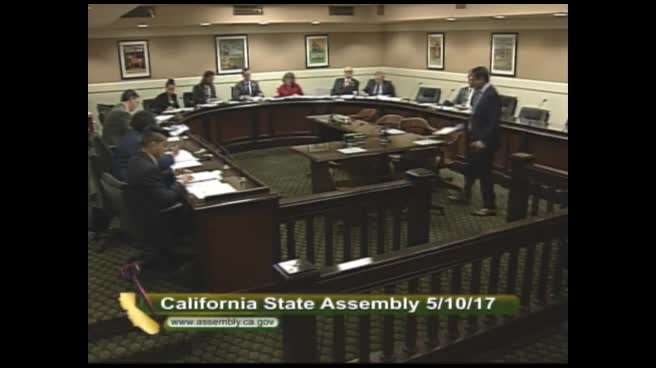 10MIN
Assembly Standing Committee on Elections and Redistricting
Bill Author

Bill Co-Author(s):






