AB 950: Charter schools.
- Session Year: 2017-2018
- House: Assembly
- Latest Version Date: 2017-02-16
Existing law, the Charter Schools Act of 1992, authorizes a charter school petitioner, if the governing board of a school district denies a petition for the establishment of a charter school, to submit the petition to the county board of education, and, if the county board of education denies the petition, to then submit the petition to the State Board of Education. A charter school that is granted its charter through an appeal to the state board is required to submit a petition for renewal of the charter to the governing board of the school district that initially denied the charter.
This bill would instead authorize the petitioner to submit a petition for renewal to either the governing board of the school district that initially denied the charter or directly to the state board.
Existing law authorizes a county board of education to approve a petition for a countywide charter if the county board of education finds, among other things, that the pupil population cannot be served as well by a charter school that operates in only one school district and only if it is reasonably satisfied that the charter school has reasonable justification for why the charter school could not be established by petition to a school district.
This bill would delete those requirements. The bill would require a charter school petition to demonstrate that the charter school will provide a high-quality education program and that it will seek to share best and promising practices of the charter school with other traditional and charter public schools that have low academic performance. The bill would authorize a charter school petitioner, if a county board of education denies or revokes a petition, to submit the petition directly to the state board. To the extent the bill imposes additional duties on county boards of education, the bill would impose a state-mandated local program.
Existing law requires the state board, as a condition of approving a petition for the operation of a charter school, to find that the charter school will provide instructional services of statewide benefit that cannot be provided by the operation of the charter school in only one school district or county.
The bill would delete the requirement that the statewide benefit cannot be provided by a charter school operating in only one school district or county and would instead require, as part of the determination of the statewide benefit, to ensure that the charter school has described the manner in which the charter school will seek to share best and promising practices with other traditional and charter public schools with low academic performance, and would authorize the state board to establish other criteria or conditions to define a statewide benefit.
The California Constitution requires the state to reimburse local agencies and school districts for certain costs mandated by the state. Statutory provisions establish procedures for making that reimbursement.
This bill would provide that, if the Commission on State Mandates determines that the bill contains costs mandated by the state, reimbursement for those costs shall be made pursuant to the statutory provisions noted above.
(a)(1)Except as set forth in paragraph (2), a petition for the establishment of a charter school within a school district may be circulated by one or more persons seeking to establish the charter school. A petition for the establishment of a charter school shall identify a single charter school that will operate within the geographic boundaries of that school district. A charter school may propose to operate at multiple sites within the school district if each location is identified in the charter school petition. The petition may be submitted to the governing board of the school district for review after either of the following conditions is met:
(A)The petition is signed by a number of parents or legal guardians of pupils that is equivalent to at least one-half of the number of pupils that the charter school estimates will enroll in the charter school for its first year of operation.
(B)The petition is signed by a number of teachers that is equivalent to at least one-half of the number of teachers that the charter school estimates will be employed at the charter school during its first year of operation.
(2)A petition that proposes to convert an existing public school to a charter school that would not be eligible for a loan pursuant to subdivision (c) of Section 41365 may be circulated by one or more persons seeking to establish the charter school. The petition may be submitted to the governing board of the school district for review after the petition is signed by not less than 50 percent of the permanent status teachers currently employed at the public school to be converted.
(3)A petition shall include a prominent statement that a signature on the petition means that the parent or legal guardian is meaningfully interested in having his or her child or ward attend the charter school, or in the case of a teachers signature, means that the teacher is meaningfully interested in teaching at the charter school. The proposed charter shall be attached to the petition.
(4)After receiving approval of its petition, a charter school that proposes to establish operations at one or more additional sites shall request a material revision to its charter and shall notify the authority that granted its charter of those additional locations. The authority that granted its charter shall consider whether to approve those additional locations at an open, public meeting. If the additional locations are approved, they there shall be a material revision to the charter schools charter.
(5)A charter school that is unable to locate within the jurisdiction of the chartering school district may establish one site outside the boundaries of the school district, but within the county in which that school district is located, if the school district within the jurisdiction of which the charter school proposes to operate is notified in advance of the charter petition approval, the county superintendent of schools and the Superintendent are notified of the location of the charter school before it commences operations, and either of the following circumstances exists:
(A)The school has attempted to locate a single site or facility to house the entire program, but a site or facility is unavailable in the area in which the school chooses to locate.
(B)The site is needed for temporary use during a construction or expansion project.
(6)Commencing January 1, 2003, a petition to establish a charter school may shall not be approved to serve pupils in a grade level that is not served by the school district of the governing board considering the petition, unless the petition proposes to serve pupils in all of the grade levels served by that school district.
(b)No later than 30 days after receiving a petition, in accordance with subdivision (a), the governing board of the school district shall hold a public hearing on the provisions of the charter, at which time the governing board of the school district shall consider the level of support for the petition by teachers employed by the school district, other employees of the school district, and parents. Following review of the petition and the public hearing, the governing board of the school district shall either grant or deny the charter within 60 days of receipt of the petition, provided, however, that the date may be extended by an additional 30 days if both parties agree to the extension. In reviewing petitions for the establishment of charter schools pursuant to this section, the chartering authority shall be guided by the intent of the Legislature that charter schools are and should become an integral part of the California educational system and that the establishment of charter schools should be encouraged. The governing board of the school district shall grant a charter for the operation of a school under this part if it is satisfied that granting the charter is consistent with sound educational practice. The governing board of the school district shall not deny a petition for the establishment of a charter school unless it makes written factual findings, specific to the particular petition, setting forth specific facts to support one or more of the following findings:
(1)The charter school presents an unsound educational program for the pupils to be enrolled in the charter school.
(2)The petitioners are demonstrably unlikely to successfully implement the program set forth in the petition.
(3)The petition does not contain the number of signatures required by subdivision (a).
(4)The petition does not contain an affirmation of each of the conditions described in subdivision (d).
(5)The petition does not contain reasonably comprehensive descriptions of all of the following:
(A)(i)The educational program of the charter school, designed, among other things, to identify those whom the charter school is attempting to educate, what it means to be an educated person in the 21st century, and how learning best occurs. The goals identified in that program shall include the objective of enabling pupils to become self-motivated, competent, and lifelong learners.
(ii)The annual goals for the charter school for all pupils and for each subgroup of pupils identified pursuant to Section 52052, to be achieved in the state priorities, as described in subdivision (d) of Section 52060, that apply for the grade levels served, or the nature of the program operated, by the charter school, and specific annual actions to achieve those goals. A charter petition may identify additional school priorities, the goals for the school priorities, and the specific annual actions to achieve those goals.
(iii)If the proposed charter school will serve high school pupils, the manner in which the charter school will inform parents about the transferability of courses to other public high schools and the eligibility of courses to meet college entrance requirements. Courses offered by the charter school that are accredited by the Western Association of Schools and Colleges may be considered transferable and courses approved by the University of California or the California State University as creditable under the A to G admissions criteria may be considered to meet college entrance requirements.
(B)The measurable pupil outcomes identified for use by the charter school. Pupil outcomes, for purposes of this part, means the extent to which all pupils of the charter school demonstrate that they have attained the skills, knowledge, and attitudes specified as goals in the charter schools educational program. Pupil outcomes shall include outcomes that address increases in pupil academic achievement both schoolwide and for all groups of pupils served by the charter school, as that term is defined in subparagraph (B) of paragraph (3) of subdivision (a) of Section 47607. The pupil outcomes shall align with the state priorities, as described in subdivision (d) of Section 52060, that apply for the grade levels served, or the nature of the program operated, by the charter school.
(C)The method by which pupil progress in meeting those pupil outcomes is to be measured. To the extent practicable, the method for measuring pupil outcomes for state priorities shall be consistent with the way information is reported on a school accountability report card.
(D)The governance structure of the charter school, including, but not limited to, the process to be followed by the charter school to ensure parental involvement.
(E)The qualifications to be met by individuals to be employed by the charter school.
(F)The procedures that the charter school will follow to ensure the health and safety of pupils and staff. These procedures shall include the requirement that each employee of the charter school furnish it the charter school with a criminal record summary as described in Section 44237.
(G)The means by which the charter school will achieve a racial and ethnic balance among its pupils that is reflective of the general population residing within the territorial jurisdiction of the school district to which the charter petition is submitted.
(H)Admission requirements, if applicable.
(I)The manner in which annual, independent financial audits shall be conducted, which shall employ generally accepted accounting principles, and the manner in which audit exceptions and deficiencies shall be resolved to the satisfaction of the chartering authority.
(J)The procedures by which pupils can be suspended or expelled.
(K)The manner by which staff members of the charter schools will be covered by the State Teachers Retirement System, the Public Employees Retirement System, or federal social security.
(L)The public school attendance alternatives for pupils residing within the school district who choose not to attend charter schools.
(M)The rights of an employee of the school district upon leaving the employment of the school district to work in a charter school, and of any rights of return to the school district after employment at a charter school.
(N)The procedures to be followed by the charter school and the entity granting the charter to resolve disputes relating to provisions of the charter.
(O)The procedures to be used if the charter school closes. The procedures shall ensure a final audit of the charter school to determine the disposition of all assets and liabilities of the charter school, including plans for disposing of any net assets and for the maintenance and transfer of pupil records.
(6)The petition does not contain a declaration of whether or not the charter school shall be deemed the exclusive public employer of the employees of the charter school for purposes of Chapter 10.7 (commencing with Section 3540) of Division 4 of Title 1 of the Government Code.
(c)(1)Charter schools shall meet all statewide standards and conduct the pupil assessments required pursuant to Sections 60605 and 60851 and any other statewide standards authorized in statute or pupil assessments applicable to pupils in noncharter public schools.
(2)Charter schools shall, on a regular basis, consult with their parents, legal guardians, and teachers regarding the charter schools educational programs.
(d)(1)In addition to any other requirement imposed under this part, a charter school shall be nonsectarian in its programs, admission policies, employment practices, and all other operations, shall not charge tuition, and shall not discriminate against a pupil on the basis of the characteristics listed in Section 220. Except as provided in paragraph (2), admission to a charter school shall not be determined according to the place of residence of the pupil, or of his or her parent or legal guardian, within this state, except that an existing public school converting partially or entirely to a charter school under this part shall adopt and maintain a policy giving admission preference to pupils who reside within the former attendance area of that public school.
(2)(A)A charter school shall admit all pupils who wish to attend the charter school.
(B)If the number of pupils who wish to attend the charter school exceeds the charter schools capacity, attendance, except for existing pupils of the charter school, shall be determined by a public random drawing. Preference shall be extended to pupils currently attending the charter school and pupils who reside in the school district except as provided for in Section 47614.5. Other preferences may be permitted by the chartering authority on an individual school basis and only if consistent with the law.
(C)In the event of a drawing, the chartering authority shall make reasonable efforts to accommodate the growth of the charter school and shall not take any action to impede the charter school from expanding enrollment to meet pupil demand.
(3)If a pupil is expelled or leaves the charter school without graduating or completing the school year for any reason, the charter school shall notify the superintendent of the school district of the pupils last known address within 30 days, and shall, upon request, provide that school district with a copy of the cumulative record of the pupil, including a transcript of grades or report card, and health information. This paragraph applies only to pupils subject to compulsory full-time education pursuant to Section 48200.
(e)The governing board of a school district shall not require an employee of the school district to be employed in a charter school.
(f)The governing board of a school district shall not require a pupil enrolled in the school district to attend a charter school.
(g)The governing board of a school district shall require that the petitioner or petitioners provide information regarding the proposed operation and potential effects of the charter school, including, but not limited to, the facilities to be used by the charter school, the manner in which administrative services of the charter school are to be provided, and potential civil liability effects, if any, upon the charter school and upon the school district. The description of the facilities to be used by the charter school shall specify where the charter school intends to locate. The petitioner or petitioners shall also shall be required to provide financial statements that include a proposed first-year operational budget, including startup costs, and cashflow and financial projections for the first three years of operation.
(h)In reviewing petitions for the establishment of charter schools within the school district, the governing board of the school district shall give preference to petitions that demonstrate the capability to provide comprehensive learning experiences to pupils identified by the petitioner or petitioners as academically low achieving pursuant to the standards established by the department under Section 54032, as that section read before July 19, 2006.
(i)Upon the approval of the petition by the governing board of the school district, the petitioner or petitioners shall provide written notice of that approval, including a copy of the petition, to the applicable county superintendent of schools, the department, and the state board.
(j)(1)If the governing board of a school district denies a petition, the petitioner may elect to submit the petition for the establishment of a charter school to the county board of education. The county board of education shall review the petition pursuant to subdivision (b). If the petitioner elects to submit a petition for establishment of a charter school to the county board of education and the county board of education denies the petition, the petitioner may file a petition for establishment of a charter school with the state board, and the state board may approve the petition, in accordance with subdivision (b). A charter school that receives approval of its petition from a county board of education or from the state board on appeal shall be subject to the same requirements concerning geographic location to which it would otherwise be subject if it received approval from the entity to which it originally submitted its petition. A charter petition that is submitted to either a county board of education or to the state board shall meet all otherwise applicable petition requirements, including the identification of the proposed site or sites where the charter school will operate.
(2)In assuming its role as a chartering agency, the state board shall develop criteria to be used for the review and approval of charter school petitions presented to the state board. The criteria shall address all elements required for charter approval, as identified in subdivision (b), and shall define reasonably comprehensive comprehensive, as used in paragraph (5) of subdivision (b) (b), in a way that is consistent with the intent of this part. Upon satisfactory completion of the criteria, the state board shall adopt the criteria on or before June 30, 2001.
(3)A charter school for which a charter is granted by either the county board of education or the state board based on an appeal pursuant to this subdivision shall qualify fully as a charter school for all funding and other purposes of this part.
(4)If either the county board of education or the state board fails to act on a petition within 120 days of receipt, the decision of the governing board of the school district to deny a petition shall be subject to judicial review.
(5)The state board shall adopt regulations implementing this subdivision.
(6)Upon the approval of the petition by the county board of education, the petitioner or petitioners shall provide written notice of that approval, including a copy of the petition to the department and the state board.
(k)(1)The state board may, by mutual agreement, designate its supervisorial and oversight responsibilities for a charter school approved by the state board to any local educational agency in the county in which the charter school is located or to the governing board of the school district that first denied the petition.
(2)The designated local educational agency shall have all monitoring and supervising authority of a chartering agency, including, but not limited to, powers and duties set forth in Section 47607, except the power of revocation, which shall remain with the state board.
(3)A charter school that is granted its charter through an appeal to the state board and elects to seek renewal of its charter shall, before expiration of the charter, submit its petition for renewal either to the governing board of the school district that initially denied the charter. charter or to the state board. If the governing board of the school district denies the charter schools petition for renewal, the charter school may petition the state board for renewal of its charter.
(l)Teachers in charter schools shall hold a Commission on Teacher Credentialing certificate, permit, or other document equivalent to that which a teacher in other public schools would be required to hold. These documents shall be maintained on file at the charter school and are subject to periodic inspection by the chartering authority. It is the intent of the Legislature that charter schools be given flexibility with regard to noncore, noncollege preparatory courses.
(m)A charter school shall transmit a copy of its annual, independent financial audit report for the preceding fiscal year, as described in subparagraph (I) of paragraph (5) of subdivision (b), to its chartering entity, the Controller, the county superintendent of schools of the county in which the charter school is sited, unless the county board of education of the county in which the charter school is sited is the chartering entity, and the department by December 15 of each year. This subdivision does not apply if the audit of the charter school is encompassed in the audit of the chartering entity pursuant to Section 41020.
SEC. 2.Section 47605.6 of the Education Code is amended to read:47605.6.(a)(1)In addition to the authority provided by Section 47605.5, a county board of education may also approve a petition for the operation of a charter school that operates at one or more sites within the geographic boundaries of the county and that provides instructional services that are not generally provided by a county office of education. A county board of education may approve a countywide charter only if it finds, in addition to the other requirements of this section, that the educational services to be provided by the charter school will offer services to a pupil population that will benefit from those services and that cannot be served as well by a charter school that operates in only one school district in the county. services. A petition for the establishment of a countywide charter school pursuant to this subdivision may be circulated throughout the county by any one or more persons seeking to establish the charter school. The petition may be submitted to the county board of education for review after either of the following conditions is met:
(A)The petition is signed by a number of parents or guardians of pupils residing within the county that is equivalent to at least one-half of the number of pupils that the charter school estimates will enroll in the school for its first year of operation and each of the school districts where the charter school petitioner proposes to operate a facility has received at least 30 days notice of the petitioners intent to operate a charter school pursuant to this section.
(B)The petition is signed by a number of teachers that is equivalent to at least one-half of the number of teachers that the charter school estimates will be employed at the school during its first year of operation and each of the school districts where the charter school petitioner proposes to operate a facility has received at least 30 days notice of the petitioners intent to operate a charter school pursuant to this section.
(2)An existing public school shall not be converted to a charter school in accordance with this section.
(3)After receiving approval of its petition, a charter school that proposes to establish operations at additional sites within the geographic boundaries of the county board of education shall notify the school districts where those sites will be located. The charter school shall also request a material revision of its charter by the county board of education that approved its charter and the county board of education shall consider whether to approve those additional locations at an open, public meeting, held no sooner than 30 days following notification of the school districts where the sites will be located. If approved, the location of the approved sites shall be a material revision of the schools approved charter.
(4)A petition shall include a prominent statement indicating that a signature on the petition means that the parent or guardian is meaningfully interested in having his or her child or ward attend the charter school, or in the case of a teachers signature, means that the teacher is meaningfully interested in teaching at the charter school. The proposed charter shall be attached to the petition.
(b)No later than 60 days after receiving a petition, in accordance with subdivision (a), the county board of education shall hold a public hearing on the provisions of the charter, at which time the county board of education shall consider the level of support for the petition by teachers, parents or guardians, and the school districts where the charter school petitioner proposes to place school facilities. Following review of the petition and the public hearing, the county board of education shall either grant or deny the charter within 90 days of receipt of the petition. However, this date may be extended by an additional 30 days if both parties agree to the extension. A county board of education may impose any additional requirements beyond those required by this section that it considers necessary for the sound operation of a countywide charter school. A county board of education may grant a charter for the operation of a school under this part only if it is satisfied that granting the charter is consistent with sound educational practice and that the charter school has reasonable justification for why it could not be established by petition to a school district pursuant to Section 47605. petitioners have demonstrated that the charter school will provide a high-quality educational program. The county board of education shall also ensure that the charter school has described the manner in which the charter school will seek to share best and promising practices of the charter school with other traditional and charter public schools that have low academic performance. The county board of education shall deny a petition for the establishment of a charter school if it finds one or more of the following:
(1)The charter school presents an unsound educational program for the pupils to be enrolled in the charter school.
(2)The petitioners are demonstrably unlikely to successfully implement the program set forth in the petition.
(3)The petition does not contain the number of signatures required by subdivision (a).
(4)The petition does not contain an affirmation of each of the conditions described in subdivision (e).
(5)The petition does not contain reasonably comprehensive descriptions of all of the following:
(A)(i)The educational program of the charter school, designed, among other things, to identify those pupils whom the charter school is attempting to educate, what it means to be an educated person in the 21st century, and how learning best occurs. The goals identified in that program shall include the objective of enabling pupils to become self-motivated, competent, and lifelong learners.
(ii)The annual goals for the charter school for all pupils and for each subgroup of pupils identified pursuant to Section 52052, to be achieved in the state priorities, as described in subdivision (d) of Section 52060, that apply for the grade levels served, or the nature of the program operated, by the charter school, and specific annual actions to achieve those goals. A charter petition may identify additional school priorities, the goals for the school priorities, and the specific annual actions to achieve those goals.
(iii)If the proposed charter school will enroll high school pupils, the manner in which the charter school will inform parents regarding the transferability of courses to other public high schools. Courses offered by the charter school that are accredited by the Western Association of Schools and Colleges may be considered to be transferable to other public high schools.
(iv)If the proposed charter school will enroll high school pupils, information as to the manner in which the charter school will inform parents as to whether each individual course offered by the charter school meets college entrance requirements. Courses approved by the University of California or the California State University as satisfying their prerequisites for admission may be considered as meeting college entrance requirements for purposes of this clause.
(B)The measurable pupil outcomes identified for use by the charter school. Pupil outcomes, for purposes of this part, means the extent to which all pupils of the school demonstrate that they have attained the skills, knowledge, and aptitudes specified as goals in the schools educational program. Pupil outcomes shall include outcomes that address increases in pupil academic achievement both schoolwide and for all groups of pupils served by the charter school, as that term is defined in subparagraph (B) of paragraph (3) of subdivision (a) of Section 47607. The pupil outcomes shall align with the state priorities, as described in subdivision (d) of Section 52060, that apply for the grade levels served, or the nature of the program operated, by the charter school.
(C)The method by which pupil progress in meeting those pupil outcomes is to be measured. To the extent practicable, the method for measuring pupil outcomes for state priorities shall be consistent with the way information is reported on a school accountability report card.
(D)The location of each charter school facility that the petitioner proposes to operate.
(E)The governance structure of the charter school, including, but not limited to, the process to be followed by the charter school to ensure parental involvement.
(F)The qualifications to be met by individuals to be employed by the charter school.
(G)The procedures that the charter school will follow to ensure the health and safety of pupils and staff. These procedures shall include the requirement that each employee of the charter school furnish it with a criminal record summary as described in Section 44237.
(H)The means by which the charter school will achieve a racial and ethnic balance among its pupils that is reflective of the general population residing within the territorial jurisdiction of the school district to which the charter petition is submitted.
(I)The manner in which annual, independent, financial audits shall be conducted, in accordance with regulations established by the state board, and the manner in which audit exceptions and deficiencies shall be resolved.
(J)The procedures by which pupils can be suspended or expelled.
(K)The manner by which staff members of the charter school will be covered by the State Teachers Retirement System, the Public Employees Retirement System, or federal social security.
(L)The procedures to be followed by the charter school and the county board of education to resolve disputes relating to provisions of the charter.
(M)Admission requirements of the charter school, if applicable.
(N)The public school attendance alternatives for pupils residing within the county who choose not to attend the charter school.
(O)The rights of an employee of the county office of education, upon leaving the employment of the county office of education, to be employed by the charter school, and any rights of return to the county office of education that an employee may have upon leaving the employ of the charter school.
(P)The procedures to be used if the charter school closes. The procedures shall ensure a final audit of the school to determine the disposition of all assets and liabilities of the charter school, including plans for disposing of any net assets and for the maintenance and transfer of public records.
(6)A declaration of whether or not the charter school shall be deemed the exclusive public school employer of the employees of the charter school for purposes of the Educational Employment Relations Act (Chapter 10.7 (commencing with Section 3540) of Division 4 of Title 1 of the Government Code).
(7)Any other basis that the county board of education finds justifies the denial of the petition.
(c)A county board of education that approves a petition for the operation of a countywide charter may, as a condition of charter approval, enter into an agreement with a third party, at the expense of the charter school, to oversee, monitor, and report to the county board of education on the operations of the charter school. The county board of education may prescribe the aspects of the charter schools operations to be monitored by the third party and may prescribe appropriate requirements regarding the reporting of information concerning the operations of the charter school to the county board of education.
(d)(1)Charter schools shall meet all statewide standards and conduct the pupil assessments required pursuant to Section 60605 and any other statewide standards authorized in statute or pupil assessments applicable to pupils in noncharter public schools.
(2)Charter schools shall on a regular basis consult with their parents and teachers regarding the charter schools educational programs.
(e)(1)In addition to any other requirement imposed under this part, a charter school shall be nonsectarian in its programs, admission policies, employment practices, and all other operations, shall not charge tuition, and shall not discriminate against any pupil on the basis of ethnicity, national origin, gender, gender identity, gender expression, or disability. Except as provided in paragraph (2), admission to a charter school shall not be determined according to the place of residence of the pupil, or of his or her parent or guardian, within this state.
(2)(A)A charter school shall admit all pupils who wish to attend the charter school.
(B)If the number of pupils who wish to attend the charter school exceeds the schools capacity, attendance, except for existing pupils of the charter school, shall be determined by a public random drawing. Preference shall be extended to pupils currently attending the charter school and pupils who reside in the county except as provided for in Section 47614.5. Other preferences may be permitted by the chartering authority on an individual charter school basis and only if consistent with the law.
(C)In the event of a drawing, the county board of education shall make reasonable efforts to accommodate the growth of the charter school and in no event shall take any action to impede the charter school from expanding enrollment to meet pupil demand.
(f)The county board of education shall not require an employee of the county or a school district to be employed in a charter school.
(g)The county board of education shall not require a pupil enrolled in a county program to attend a charter school.
(h)The county board of education shall require that the petitioner or petitioners provide information regarding the proposed operation and potential effects of the charter school, including, but not limited to, the facilities to be used by the charter school, the manner in which administrative services of the charter school are to be provided, and potential civil liability effects, if any, upon the charter school, any school district where the charter school may operate, and upon the county board of education. The petitioner or petitioners shall also be required to provide financial statements that include a proposed first-year operational budget, including startup costs, and cashflow and financial projections for the first three years of operation.
(i)In reviewing petitions for the establishment of charter schools within the county, the county board of education shall give preference to petitions that demonstrate the capability to provide comprehensive learning experiences to pupils identified by the petitioner or petitioners as academically low achieving pursuant to the standards established by the department under Section 54032, as that section read before July 19, 2006.
(j)Upon the approval of the petition by the county board of education, the petitioner or petitioners shall provide written notice of that approval, including a copy of the petition, to the school districts within the county, the Superintendent, and the state board.
(k)If a county board of education denies a petition, the petitioner may not elect to submit the petition for the establishment of the charter school to the state board. board in accordance with subdivision (j) of Section 47605. If a county board of education does not renew or revokes a petition approved in accordance with this section, the petitioner may submit the petition for appeal to the state board in accordance with Sections 47607 and 47607.5.
(l)Teachers in charter schools shall be required to hold a Commission on Teacher Credentialing certificate, permit, or other document equivalent to that which a teacher in other public schools would be required to hold. These documents shall be maintained on file at the charter school and shall be subject to periodic inspection by the chartering authority. It is the intent of the Legislature that charter schools be given flexibility with regard to noncore, noncollege preparatory courses.
(m)A charter school shall transmit a copy of its annual, independent, financial audit report for the preceding fiscal year, as described in subparagraph (I) of paragraph (5) of subdivision (b), to the county office of education, the Controller, and the department by December 15 of each year. This subdivision does not apply if the audit of the charter school is encompassed in the audit of the chartering entity pursuant to Section 41020.
SEC. 3.Section 47605.8 of the Education Code is amended to read:47605.8.(a)A petition for the operation of a state charter school may be submitted directly to the state board, and the state board shall have the authority to approve a charter for the operation of a state charter school that may operate at one or multiple sites throughout the state. The State Board of Education shall adopt regulations, pursuant to the Administrative Procedure Act (Chapter 5 3.5 (commencing with Section 11500) 11340) of Part 1 of Division 3 of Title 2 of the Government Code) for the implementation of this section. Regulations adopted pursuant to this section shall ensure that a charter school approved pursuant to this section meets all requirements otherwise imposed on charter schools pursuant to this part, except that a state charter school approved pursuant to this section shall not be subject to the geographic and site limitations otherwise imposed on charter schools. The petitioner shall submit a copy of the petition, for notification purposes, to the county superintendent of schools of each county in which the petitioner proposes to operate the state charter school. The petitioner also shall ensure that the governing board of each school district in which a site is proposed to be located is notified no later than 120 days prior to before the commencement of instruction at each site, as applicable.
(b)The state board shall not approve a petition for the operation of a state charter school pursuant to this section unless the petitioners have demonstrated that the charter school will provide a high-quality educational program and the state board makes a finding, based on substantial evidence, finding that the proposed state charter school will provide instructional services of statewide benefit that cannot be provided by a charter school operating in only one school district, or only in one county. benefit. As part of the determination of the statewide benefit, the state board shall ensure that the charter school has described the manner in which the school will seek to share best and promising practices of the charter school with other traditional and charter public schools that have low academic performance. The state board may establish other criteria or conditions to define a statewide benefit. The finding of the state board in this regard shall be made part of the public record of the proceedings of the state board and shall precede the approval of the charter.
(c)The state board, as a condition of charter petition approval, may enter into an agreement with a third party, at the expense of the charter school, to oversee, monitor, and report on, the operations of the state charter school. The state board may prescribe the aspects of the operations of the state charter school to be monitored by the third party and may prescribe appropriate requirements regarding the reporting of information concerning the operations of the state charter school to the state board.
(d)The state board shall not be required to approve a petition for the operation of a state charter school, and may deny approval based on any of the reasons set forth in subdivision (b) of Section 47605.6.
SEC. 4.If the Commission on State Mandates determines that this act contains costs mandated by the state, reimbursement to local agencies and school districts for those costs shall be made pursuant to Part 7 (commencing with Section 17500) of Division 4 of Title 2 of the Government Code.
REVISIONS: HeadingLine 2.|
Date
|
Status
|
|---|---|
| Feb 1, 2018 | From committee: Filed with the Chief Clerk pursuant to Joint Rule 56. |
| Jan 31, 2018 | Died pursuant to Art. IV, Sec. 10(c) of the Constitution. |
| Jun 20, 2017 | Coauthors revised. |
| May 26, 2017 | In committee: Held under submission. |
| May 17, 2017 | In committee: Set, first hearing. Referred to APPR. suspense file. |
| Apr 27, 2017 | From committee: Do pass and re-refer to Com. on APPR. (Ayes 4. Noes 1.) (April 26). Re-referred to Com. on APPR. |
| Mar 2, 2017 | Referred to Com. on ED. |
| Feb 17, 2017 | From printer. May be heard in committee March 19. |
| Feb 16, 2017 | Read first time. To print. |
|
Date
|
Description
|
Location
|
Votes
|
|
|---|---|---|---|---|
| Apr 26, 2017 | Do pass and be re-referred to the Committee on [Appropriations] | Assembly Standing Committee on Education |
Passed |
This list shows positions taken on this bill by organizations on the date displayed, which is linked to the original source.
Positions by individuals are not included.
Date of Hearing: May 17, 2017
ASSEMBLY COMMITTEE ON APPROPRIATIONS
Lorena Gonzalez Fletcher, Chair
ABPCA Bill Id:AB 950
Author:(Rubio) – As Introduced Ver:February 16, 2017
Policy Committee: | Education | Vote: | 4 - 1 |
Urgency: No State Mandated Local Program: Yes Reimbursable: Yes
SUMMARY:
This bill expands the role of a county board of education and the State Board of Education (SBE) in authorizing charter schools; authorizes countywide charter schools to hire non-credentialed teachers for noncore courses; and, authorizes countywide charter schools to appeal the denial of an application to the SBE. Specifically, this bill:
- Deletes the requirement that a countywide charter only be approved if the pupil population cannot be served as well by a charter school that operates in only one school district in the county.
- Deletes the requirement that a countywide charter provide reasonable justification for why it could not be established by petition to a school district.
- Deletes the requirement that the state board of education make a finding, based on substantial evidence that the charter's proposed instructional services cannot be provided by a charter school operating in only one school district or only in one county.
- Authorizes a county board of education to grant a countywide charter school.
- Authorizes the SBE to grant a statewide charter school, and authorizes a charter school that is granted its charter through an appeal to the SBE to submit its petition for renewal to the SBE.
- Authorizes a countywide charter petitioner to appeal an application that has been denied, non-renewed, or revoked by the county board of education to the state board of education.
FISCAL EFFECT:
The bill deletes the existing requirement that countywide benefit charter schools and statewide benefit charter schools serve a countywide and statewide purpose and demonstrate that their educational program cannot be limited to a single school district, or a single county when seeking authorization from the SBE. Without this requirement, county boards and the SBE would authorize an increased number of charter schools under the new limited requirements. This change will have the following fiscal effect:
- Unknown General Fund reimbursable mandate costs pressures likely in the hundreds of thousands of dollars, due to increasing the role of county offices of education for charter authorization. These costs may be offset by existing oversight fees charged to charter schools. COEs are allowed to charge fees for oversight based on actual costs not to exceed 1% or 3% of revenues. However, according to the California County Superintendents Educational Services Association, of the 58 COEs, only 6 COE's have a charter oversight office. Most COEs are too small to even have one dedicated staff person working on charter school authorization and oversight. The limited capacity for COE to authorize charters, will increase demand for additional staff and erode any increased fee revenue and increase the K-12 mandate block grant. The Commission on State Mandates has determined that COE can be reimbursed for workload associate with reviewing, analyzing, and reporting on the charter school’s performance for purposes of charter reconsideration, renewal, revision, evaluation, or revocation by the governing body.
- Unknown cost pressures to CDE for increased workload associated with charter school authorization. To the extent that charter school petitioners pursue approval from the SBE in greater numbers, CDE will experience a significant workload associated with reviewing petitions, preparing documents for the board, conducting oversight and renewing petitions. Presently, CDE oversees 23 charter schools and 1 statewide benefit charter that operates 6 schools. CDE has 6 staff to address charter school authorization repeals. This bill expands the role of the SBE and allows charter petitioners to continue to receive approval from the SBE. Assuming 40 new charter petitions or appeals per year, and using existing charter school-to-staff ratios, CDE estimates a minimum need for 14 additional staff resulting in $1.8 million cost annually. According to CDE, 9 of the positions can be funded from the 1% charter schools fee. Therefore, potentially only 6 positions would result in on-going costs of $757,000. These estimates do not include costs for travel to conduct oversight.
COMMENTS:
- Background: Charter School Authorization. As of 2014-15, there were 1,179 charter schools enrolling approximately 544,900 of the state's 6.2 million students. Existing law establishes the Charter Schools Act of 1992 which authorizes a school district, a county office of education or the SBE to approve or deny a petition for a charter school to operate independently from the existing school district structure as a method of accomplishing, among other things, improved student learning. This bill expands the role of county boards of education and the State Board of Education in authorizing charter schools.
Currently, a petition, identifying single charter school to operate within the geographical boundaries of the school district, must be submitted to the school district. If the governing board of a school district denies a petition for the establishment of a charter school, the petitioner may submit the petition to the county board of education. If the county board of education denies the charter, the petitioner may submit the petition to the SBE. A charter school that is granted its charter through an appeal to the SBE must submit its petition for renewal to the governing board of the school district that initially denied the charter. Existing law does allow for two exemptions. If a school serves a countywide purpose, the petitioner may submit the charter petition directly to the county office of education, and if a school serves a statewide purpose the petitioner may go directly to the SBE.
Charter authority is granted for not more than five years. A charter granted by a school district, county board of education or SBE may be granted one or more renewals by that entity for up to five years each. State law allows a county board of education to approve a countywide charter only if it finds, in addition to the other requirements, that the educational services to be provided by the charter school will offer services to a pupil population that will benefit from those services and that cannot be served as well by a charter school that operates in only one school district in the county. Current law also specifies the state board will not approve a petition for the operation of a state charter school unless the state board makes a finding, based on substantial evidence, that the proposed state charter school will provide instructional services of statewide benefit that cannot be provided by a charter school operating in only one school district.
Charter Schools Oversight. By authorizing a COE and the SBE to dramatically increase oversight of charter schools across the county or the state, oversight of the charter schools could suffer due to the distance between the authorizer and the schools. When a charter school is authorized by the SBE on appeal, CDE must provide oversight to that charter school. Generally, charter school oversight remains at the local district. Oversight responsibilities are most effective when both entities are in close physical proximity. A significant aspect of the oversight process is to visit the charter school, walk classrooms, observe conditions, observe instruction, etc.
Non-Credentialed Teachers in Charter Schools. Existing law establishes that teachers in countywide charter schools are required to hold a Commission on Teacher Credentialing certificate, permit, or other document equivalent to that which a teacher in other public schools would be required to hold. Existing law also authorizes charter schools authorized by local school districts to hire non-credentialed teachers to teach non-core courses and the author intends to extend that same authorization to countywide benefit charter schools. It is unclear which courses would qualify as non-core, non-college prep courses.
- Purpose. According to the author, "In order to secure a countywide benefit or statewide benefit charter, a charter school petition must cross an impossibly high bar for approval: the applicant must justify why the school cannot be established by a petition to a school district. When the Legislature enacted the law to provide for countywide benefit and statewide benefit charter schools, they clearly saw the value in a school that serves a broader mission that transcends school district lines. A prime illustration of the value of a countywide benefit is the Fortune School in Sacramento. Fortune School addresses the substantial academic achievement gap among African American students throughout Sacramento County. Rather than risk unnecessary challenges by piecing together their program through a multitude of school districts in the county, each with a different culture, requirements and competence in the oversight of charter schools, Fortune School successfully petitioned the county board of education for a countywide benefit charter with 5 schools. Fortune’s academic performance proved the schools’ worth and they were recently renewed for another 5-year period.”
The sponsors of the bill, the California Charter Schools Association (CCSA) argue that this bill will streamline the charter school authorization process and save the state money. According to CCSA, “if the same charters met the criteria to be a single statewide or countywide benefit petition, the duplication of process would be eliminated, and the cost for approving the five sites would be around the same cost of a single charter approval…” CCSA believes this bill will result in fewer district approved charters.
Analysis Prepared by: Daisy Gonzales / APPR. / (916) 319-2081
Date of Hearing: April 26, 2017
ASSEMBLY COMMITTEE ON EDUCATION
Patrick O'Donnell, Chair
ABPCA Bill Id:AB 950 (
Author:Rubio) – As Introduced Ver:February 16, 2017
SUBJECT: Charter schools
SUMMARY: Expands the role of a county board of education and the State Board of Education (SBE) in authorizing charter schools; authorizes countywide charter schools to hire non-credentialed teachers for noncore courses; and, authorizes countywide charter schools to appeal the denial of an application to the SBE. Specifically, this bill:
- Deletes the requirement that a countywide charter only be approved if the pupil population cannot be served as well by a charter school that operates in only one school district in the county.
- Deletes the requirement that a countywide charter provide reasonable justification for why it could not be established by petition to a school district.
- Authorizes a county board of education to grant a countywide charter school if a school meets the following:
- The countywide charter petitioners demonstrate that the charter school will provide a high-quality educational program.
- The charter school has described the manner in which the charter school will seek to share best and promising practices of the charter school with other traditional and charter public schools that have low academic performance.
- Deletes the requirement that the state board of education make a finding, based on substantial evidence that the charter's proposed instructional services cannot be provided by a charter school operating in only one school district or only in one county.
- Authorizes the SBE to grant a statewide charter school if a school meets the following, and authorizes the SBE to establish other criteria to define statewide benefit:
- The statewide charter petitioners demonstrate that the charter school will provide a high-quality educational program.
- The charter school has described the manner in which the charter school will seek to share best and promising practices of the charter school with other traditional and charter public schools that have low academic performance.
- Authorizes a charter school that is granted its charter through an appeal to the SBE to submit its petition for renewal to the SBE.
- Authorizes a countywide charter petitioner to appeal an application that has been denied, non-renewed or revoked by the county board of education to the state board of education.
- Specifies that it is the intent of the Legislature that charter schools be given flexibility with the requirement that teachers in charter schools hold a teaching credential with regard to noncore, noncollege preparatory courses.
- Authorizes a statewide charter to operate one site throughout the state.
EXISTING LAW:
- Establishes the Charter Schools Act of 1992 which authorizes a school district, a county office of education or the SBE to approve or deny a petition for a charter school to operate independently from the existing school district structure as a method of accomplishing, among other things, improved student learning.
- Establishes a process for the submission of a petition for the establishment of a charter school. Authorizes a petition, identifying a single charter school to operate within the geographical boundaries of the school district, to be submitted to the school district. Authorizes, if the governing board of a school district denies a petition for the establishment of a charter school, the petitioner to elect to submit the petition to the county board of education. Authorizes, if the county board of education denies the charter, the petitioner to submit the petition to the SBE. Authorizes a school that serves a countywide purpose to submit the charter petition directly to the county office of education. Authorizes a school that serves a statewide purpose to go directly to the SBE.
- Authorizes a charter to be granted for not more than five years. Authorizes a charter granted by a school district, county board of education or SBE to be granted one or more renewals by that entity for five years. Requires the renewals and material revisions of the charter to be based on the same standards for the original charter petition.
- Requires a charter school that is granted its charter through an appeal to the state board to submit its petition for renewal to the governing board of the school district that initially denied the charter.
- Specifies a county board of education may approve a countywide charter only if it finds, in addition to the other requirements, that the educational services to be provided by the charter school will offer services to a pupil population that will benefit from those services and that cannot be served as well by a charter school that operates in only one school district in the county.
- Specifies a county board of education may grant a charter for the operation of a school under this part only if it is satisfied that granting the charter is consistent with sound educational practice and that the charter school has reasonable justification for why it could not be established by petition to a school district pursuant to Section 47605.
- Specifies that if a county board of education denies a petition, the petitioner may not elect to appeal the petition for the establishment of the charter school to the SBE.
- Requires teachers in countywide charter schools to be required to hold a Commission on Teacher Credentialing certificate, permit, or other document equivalent to that which a teacher in other public schools would be required to hold.
- Specifies the state board shall not approve a petition for the operation of a state charter school unless the state board makes a finding, based on substantial evidence, that the proposed state charter school will provide instructional services of statewide benefit that cannot be provided by a charter school operating in only one school district, or only in one county.
FISCAL EFFECT: Unknown
COMMENTS: This bill greatly expands the role of county boards of education and the State Board of Education (SBE) in authorizing charter schools. The bill deletes the existing requirement that countywide benefit charter schools and statewide benefit charter schools serve a countywide and statewide purpose and demonstrate that their educational program cannot be limited to a single school district, or a single county if before the SBE. Without this requirement, county boards and the SBE could authorize any charter school.
This measure makes several policy changes that are concerning:
- Deletes the requirement for countywide and statewide charters to show that they serve a countywide and statewide purpose. This means that county boards of education and the SBE will be authorized to grant any regular charter school and it is unclear whether COEs or the SBE has capacity for this dramatic workload increase. This will reduce local control, increase the distance between the school and the authorizer, and lead to authorizer shopping.
- Limits parent and teacher access to authorizer board meetings due to the increased distance between the school and the authorizer.
- Authorizes a statewide charter school to operate one site. The committee should consider how a charter school with only one location could possibly serve a statewide purpose?
- Allows countywide charter schools that are denied by the county to appeal to the SBE, when the SBE does not have knowledge of the specific county or its unique needs.
- Allows countywide charter schools to hire non-credentialed teachers to teach non-core courses.
- Authorizes any charter school that is granted its charter from the SBE to seek renewal from the SBE instead of their local school district, which will greatly expand the Department of Education's (CDE's) workload.
According to the author, "In order to secure a countywide benefit or statewide benefit charter, a charter school petition must cross an impossibly high bar for approval: the applicant must justify why the school cannot be established by a petition to a school district. When the Legislature enacted the law to provide for countywide benefit and statewide benefit charter schools, they clearly saw the value in a school that serves a broader mission that transcends school district lines. A prime illustration of the value of a countywide benefit is the Fortune School in Sacramento. Fortune School addresses the substantial academic achievement gap among African American students throughout Sacramento County. Rather than risk unnecessary challenges by piecing together their program through a multitude of school districts in the county, each with a different culture, requirements and competence in the oversight of charter schools, Fortune School successfully petitioned the county board of education for a countywide benefit charter with 5 schools. Fortune’s academic performance proved the schools’ worth and they were recently renewed for another 5-year period."
Countywide & Statewide Charter Authorizing Requirements: This bill authorizes a county board of education or the SBE to authorize any charter school that meets these two requirements:
- The charter petitioners demonstrate that the charter school will provide a high-quality educational program.
- The charter school has described the manner in which the charter school will seek to share best and promising practices of the charter school with other traditional and charter public schools that have low academic performance.
Any regular charter school could meet these two requirements and seek authorization from a county board of education or the SBE.
Under existing law, a countywide charter and statewide charter must show that their school program cannot operate under a single district or a single county. In essence, the school must show how they will benefit and serve a community countywide or statewide. This bill eliminates the requirement that a charter demonstrate why they cannot operate under a single district or a single county. If the charter petitioner no longer is required to show how the school will serve the community at the countywide or statewide level, then they are just a regular charter school, without an enhanced geographic mission. This means that any charter school can choose to go to either the school district, county office of education or SBE to get authorized. Charter petitioners will no longer need to go to their local school district first. This will dramatically change the charter authorization process. Further, this bill erodes the definition of a countywide or statewide charter school.
Local Control. This bill authorizes charter schools to choose whether to seek authorization from their local school district, county office of education or the SBE and no longer requires charter schools to first seek approval at the local level. The Legislature has had intense focus on providing local control to school districts through the Local Control Funding Formula and other state policies, and the committee should consider whether removing local control for charter authorizing moves away from that focus.
Countywide & Statewide Benefit Threshold: The sponsors of this bill contend that the threshold for receiving approval as a countywide benefit or statewide benefit school is too difficult. One example contradicts that notion. According to the Ventura County Office of Education (VCOE), a charter school located in a wealthy school district wanted to expand their mission to serve a more diverse student population. The charter school applied for a countywide benefit charter in order to serve students across the county and open sites in lower income areas. According to the VCOE, this clearly met the definition of a charter school that could not operate within a single school district. As the county is relatively segregated with rich districts and poor districts, a charter school that wishes to serve a diverse student population would need to operate on a countywide basis to achieve that goal. It would appear that a charter school located in any county with such segregation would have similar arguments to make in a countywide charter petition.
County Office of Education (COE) & SBE Capacity: It is unclear whether COEs and the SBE have the capacity to dramatically expand their authorizing and oversight of charter schools. According to the California County Superintendents Educational Services Association, of the 58 COEs, approximately 6 COE's have charter oversight offices. Most COEs are too small to have even one dedicated staff person working on charter school authorization and oversight. With this in mind, the committee should consider whether it is prudent to expand charter authorizing at the county level. Currently, it is unknown how many countywide benefit charter schools exist statewide, since data isn't collected.
The Department of Education (CDE) provides oversight to the charter schools approved by the SBE. Currently CDE oversees 23 charter schools and one statewide benefit charter that operates 6 schools. With limited staff, it is unclear whether CDE can expand charter oversight for the SBE. The SBE has approved three statewide benefit charter schools to date, although two of the three have sought authorization at the local level since their original approval by the SBE. One statewide benefit charter authorized by the SBE was the subject of a court case and the California Appellate Court found that Aspire Public Schools did not meet the definition of a state wide benefit charter school.
Oversight for Charter Schools at a Distance. By authorizing a COE and the SBE to dramatically increase oversight of charter schools across the county or the state, oversight of the charter schools could suffer due to the distance between the authorizer and the schools. The further the authorizer is from the schools, the less oversight occurs. A significant aspect of the oversight process is to visit the charter school, walk classrooms, observe conditions, observe instruction, etc. A paper review is not sufficient. Requiring CDE to travel hundreds of miles to conduct oversight will likely not result in improved oversight.
Parent and Teacher Involvement. This bill authorizes charter schools to choose whether to seek authorization from their local school district, county office of education or the SBE. This will result in authorizers being further away from the location of the school. With the authorizer some distance away, it makes it difficult for the parents and teachers at those school sites to have access to the authorizer board meetings. Board meetings need to be easily accessible to parents and teachers.
Renewal for SBE Charter Schools Granted on Appeal: This bill authorizes a charter school that was granted its charter by the State Board of Education (SBE) to either seek renewal of their charter through the local school district that initially denied the charter petition or to seek renewal through the SBE. When a charter school is authorized by the SBE on appeal, the California Department of Education (CDE) with its limited staff, provides oversight to that charter school. It appears that existing law requires charter schools to apply for renewal from their local school district for a couple of reasons. First, if charter schools are granted renewal by a local district, this minimizes the ongoing workload of the CDE for charter oversight. Second, if a charter school is granted renewal by a local district, this returns oversight responsibilities to the local level, which is generally preferable. Oversight responsibilities are most effective when both entities are in close physical proximity. This makes oversight easier when the authorizer makes visits to the school, seeks information from the school and encourages a personal relationship between the authorizer and the school.
Appeal to the State Board of Education for Countywide Charter Denial: This bill authorizes a charter school that is denied by the county office of education for a countywide charter to seek an appeal at the SBE. Since a countywide benefit charter is unique in its mission to serve the county, how would the SBE be equipped to decide whether a countywide charter school would serve that particular county well, without knowing the county geography, demographics, among other things? Countywide charters have a broader mission to serve at the countywide level, and that decision is best determined by county officials.
Flexibility for Hiring Credentialed Teachers: This bill authorizes countywide charter schools to hire non-credentialed teachers to teach non-core courses. Existing law authorizes charter schools authorized by local school districts to hire non-credentialed teachers to teach non-core courses and the author intends to extend that same authorization to countywide benefit charter schools. It is unclear why this authorization is needed to hire non-credentialed teachers. It is also unclear which courses would qualify as non-core, non-college prep courses.
Statewide Charters Schools with One Location: This bill authorizes statewide charter schools to have only one location. How could a charter school with a single location possibly serve a statewide purpose? By its very definition, it seems that a statewide charter school would need multiple locations to serve a statewide purpose. It is unclear why this bill seeks to allow statewide charter schools to have only one location.
Proposition 39 Obligations. Would this measure include Proposition 39 obligations to provide appropriate facilities as well all oversight responsibilities? Is it appropriate to give expanded charter authorizing power to COEs and the SBE if they are not responsible for charter facility obligations? This measure would allow COEs and the SBE to authorize charter schools within the boundaries of existing school districts, however, the districts would not have any input into the charter authorization process; and, districts would still be obligated to provide furnished facilities for these new charters. The committee should consider if it is appropriate to expand authorizing to COEs and the SBE without also taking on the facilities obligations of those schools.
Previous legislation: AB 284 (Garrick) from 2010, which died in the Higher Education Committee, would have allowed the governing board of a community college district (CCD) to authorize a petition to establish a charter school within the county in which the district maintains a campus; authorizes a maximum of ten charter schools be accepted state-wide by the California Community Colleges (CCC); requires these charter schools to be funded directly; and, requires the California Department of Education (CDE) to prepare an analysis of the program by January 1, 2013.
AB 39 (Walters) from 2005 would have authorized a pilot project for the chancellor of a campus of the UC, the president of a campus of the CSU, or the governing board of a community college district to approve a petition submitted to establish a charter school within the county in which that entity is located or maintains a campus. The pilot would have permitted each segment of higher education to administer 1 charter school per campus, not to exceed 10 charter schools per segment. The bill was referred but never heard by the Assembly Education Committee.
AB 2764 (Bates) from 2004 would have authorized a pilot project for the chancellor of a campus of the UC, the president of a campus of the CSU, or the governing board of a community college district to approve a petition submitted to establish a charter school within the county in which that entity is located or maintains a campus. The pilot would have permitted each segment of higher education to administer 1 charter school per campus, not to exceed 10 charter schools per segment. AB 2764 was held on the Assembly Appropriations Suspense File. According to the Assembly Appropriations Committee, AB 2764 (Bates), was analyzed as having “Potentially significant annual General Fund costs, likely in excess of $400,000, to CSU and UC to adhere to the various provisions outlined in the bill, including approval and oversight of charter schools. Significant reallocation of General Fund (Proposition 98) funds, likely in the tens of millions from school districts, to CSU and UC. The actual amount would depend on how many charter schools each of these two segments authorized and the number of students enrolled.”
AB 1464 (Bates) from 2003 would have authorized non-profit charitable organizations, the governing body of a private university or college that offers a specified teacher training program, the chancellor of a campus of the UC, the president of a campus of the CSU, or the governing board of a community college district to approve a petition submitted to establish a charter school within the county in which that entity is located or maintains a campus. That bill would have also authorized the mayor of a city having a population of 250,000, or more, to approve a petition submitted to establish a charter school within that city. AB 1464 was held in the Assembly Education Committee at the request of the author.
REGISTERED SUPPORT / OPPOSITION:
Support
California Charter Schools Association (Sponsor)
Amethod Public Schools
Aplus
Butte County Superintendent of Schools
Five Keys Schools and Programs
Yolo County Board of Education
Individuals
Opposition
California Association of Highway Patrolmen
California Federation of Teachers
California School Boards Association
California School Employees Association
California Teachers Association
Kern County Superintendent of Schools
Los Angeles County Office of Education
Ventura County Office of Education
Analysis Prepared by: Chelsea Kelley / ED. / (916) 319-2087
Discussed in Hearing
 1H
Assembly Standing Committee on Appropriations
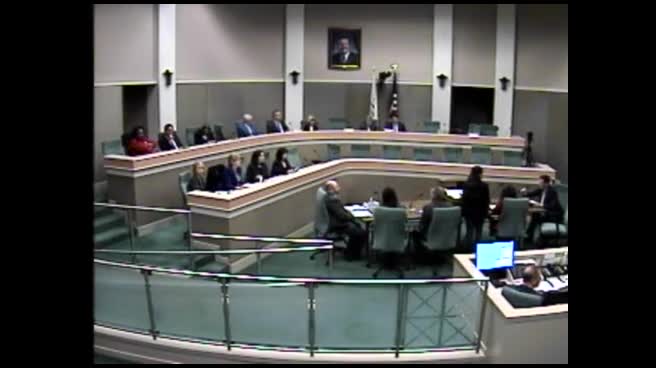 44MIN
Assembly Standing Committee on Education
Bill Author

Bill Co-Author(s):
