AB 957: Higher education regional workforce coordination: California Workforce Development Board.
- Session Year: 2017-2018
- House: Assembly
- Latest Version Date: 2017-10-11
Under existing law, the University of California, under the administration of the Regents of the University of California, and the California State University, under the administration of the Trustees of the California State University, are 2 of the segments of public postsecondary education in this state.
This bill would require the California State University (CSU), and request the University of California (UC), to participate in regional conversations pursuant to the federal Workforce Innovation and Opportunity Act. The bill would require CSU, and request the UC, to submit a summary of those first-year activities to the Legislature on or before May 1, 2019, on specified topics related to regional workforce demands.
Existing law establishes the California Workforce Development Board as the body responsible for assisting the Governor in the development, oversight, and continuous improvement of Californias workforce investment system. Existing law authorizes the Governor to designate as board members state agency officials responsible for education programs and specifies that those officials may include chief executive officers of community colleges and other institutions of higher education.
This bill would specifically include the chief executive officers, or their designees, of institutions of higher education, including the California Community College system, the California State University system, the University of California system, and their respective individual campuses, among those persons who may be on the board.
This bill would incorporate additional changes to Section 14012 of the Unemployment Insurance Code proposed by SB 396 to be operative only if this bill and SB 396 are enacted and this bill is enacted last.
Under existing law, the University of California, under the administration of the Regents of the University of California, and the California State University, under the administration of the Trustees of the California State University, are 2 of the segments of public postsecondary education in this state.
This bill would require the California State University (CSU), and request the University of California (UC), to participate in regional conversations pursuant to the federal Workforce Innovation and Opportunity Act. The bill would require CSU, and request the UC, to submit a summary of those first-year activities to the Legislature on or before May 1, 2019, on specified topics related to regional workforce demands.
Existing law establishes the California Workforce Development Board as the body responsible for assisting the Governor in the development, oversight, and continuous improvement of Californias workforce investment system. Existing law authorizes the Governor to designate as board members state agency officials responsible for education programs and specifies that those officials may include chief executive officers of community colleges and other institutions of higher education.
This bill would specifically include the chief executive officers officers, or their designees, of institutions of higher education, including the California Community College system, the California State University system, the University of California system, and their respective individual campuses, among those persons who may be on the board.
Under existing law, the University of California, under the administration of the Regents of the University of California, and the California State University, under the administration of the Trustees of the California State University, are 2 of the segments of public postsecondary education in this state.
This bill would require the California State University (CSU), and request the University of California (UC), to participate in regional conversations pursuant to the federal Workforce Innovation and Opportunity Act. The bill would require CSU, and request the UC, to submit a report summary of those first-year activities to the Legislature on or before January May 1, 2019, on specified topics related to regional workforce demands.
Existing law establishes the California Workforce Development Board as the body responsible for assisting the Governor in the development, oversight, and continuous improvement of Californias workforce investment system. Existing law authorizes the Governor to designate as board members state agency officials responsible for education programs and specifies that those officials may include chief executive officers of community colleges and other institutions of higher education.
This bill would specifically include the Chancellor of the California State University and presidents of campuses of the California State University chief executive officers of institutions of higher education, including the California Community College system, the California State University system, the University of California system, and their respective individual campuses, among those persons who may be included in the membership of on the board.
Under existing law, the University of California, under the administration of the Regents of the University of California, and the California State University, under the administration of the Trustees of the California State University, are 2 of the segments of public postsecondary education in this state.
This bill would require the California State University (CSU), and request the University of California (UC), to participate in regional conversations pursuant to the federal Workforce Innovation and Opportunity Act. The bill would require CSU, and request UC, to submit a report to the Legislature on or before January 1, 2019, on specified topics related to regional workforce demands.
Existing law establishes the California Workforce Development Board as the body responsible for assisting the Governor in the development, oversight, and continuous improvement of Californias workforce investment system. Existing law authorizes the Governor to designate as board members state agency officials responsible for education programs and specifies that those officials may include chief executive officers of community colleges and other institutions of higher education.
This bill would specifically include the Chancellor of the California State University and presidents of campuses of the California State University among those persons who may be included in the membership of the board.
Under existing law, the University of California, under the administration of the Regents of the University of California, and the California State University, under the administration of the Trustees of the California State University, are 2 of the segments of public postsecondary education in this state.
This bill would require the California State University (CSU), and request the University of California (UC), to participate in regional conversations pursuant to the federal Workforce Innovation and Opportunity Act. The bill would require CSU, and request UC, to submit a report to the Legislature on or before January 1, 2019, on specified topics related to regional workforce demands.
(a)The Legislature finds and declares that, in order to meet the demands of todays regionally based economy, all of Californias institutions of higher education must be involved in geographic workforce development initiatives that seek to align our education system with regional workforce needs.
(b)It is the intent of the Legislature for the University of California to continue its mission in educating our states top students and offering the highest quality of professional degrees, and for the California State University to continue its mission in educating the bulk of our states undergraduate students.
(c)The states policy framework for meeting the needs of business and individuals includes three policy objectives: (1) demand driven skills attainment; (2) enabling upward mobility; and (3) aligning, coordinating, and integrating programs and services. The states higher education systems can play a unique role in researching, innovating, and participating in sector strategies and career pathways in Californias most economically important industry sectors, including advanced manufacturing, biotechnology, information technology, and allied health and science.
SEC. 2.Chapter 1.7 (commencing with Section 99070) is added to Part 65 of Division 14 of Title 3 of the Education Code, to read:1.7.Higher Education Regional Workforce Coordination99070.The California State University shall, and the University of California is requested to, participate in regional conversations pursuant to the federal Workforce Innovation and Opportunity Act. The California State University shall, and the University of California is requested to, submit a summary of those first-year activities to the Legislature on or before May 1, 2019, on both of the following:
(a)Recommendations made, partnerships developed, activities undertaken by individual campuses, programs, or the university system that have substantively included local and regional workforce partners and that were designed to increase the number of degrees or other forms of workforce preparation in high-demand occupations and industry sectors within one or more regions in the state.
(b)Barriers to addressing regional workforce demands and recommendations to overcome these barriers.
SEC. 3.Section 14012 of the Unemployment Insurance Code is amended to read:14012.The board shall be appointed by the Governor to assist in the development of the State Plan and to carry out other functions, as described in Section 14103. The board shall be comprised of the Governor and representatives from the following categories:
(a)Two members of each house of the Legislature, appointed by the appropriate presiding officer of each house.
(b)A majority of board members shall be representatives of business who:
(1)Are owners of businesses, chief executives or operating officers of businesses, and other business executives or employers with optimum policymaking or hiring authority, who, in addition, may be members of a local board described in Section 3122(b)(2)(A)(i) of Title 29 of the United States Code.
(2)Represent businesses, including small businesses, or organizations representing businesses that include high-quality, work-relevant training and development in in-demand industry sectors or occupations in the state.
(3)Are appointed from a group of individuals nominated by state business organizations and business trade associations.
(c)(1)Not less than 20 percent of board members shall be representatives of the workforce within the state, including representatives of labor organizations nominated by state labor federations, who shall not be less than 15 percent of the board membership and who shall include at least one representative that is a member of a labor organization or a training director, from a joint labor-management apprenticeship program, or if no such joint program exists in the state, such a representative of an apprenticeship program in the state.
(2)Representatives appointed pursuant to this subdivision may include:
(A)Representatives of community-based organizations that have demonstrated experience and expertise in addressing the employment, training, or education needs of individuals with barriers to employment, including organizations that serve veterans or that provide or support competitive, integrated employment for individuals with disabilities.
(B)Representatives of organizations that have demonstrated experience and expertise in addressing the employment, training, or education needs of eligible youth, including representatives of organizations that serve out-of-school youth.
(d)The balance of board members:
(1)Shall include representatives of government that are lead state officials with primary responsibility for the core programs and shall include chief elected officials, collectively representing cities, counties, and cities and counties where appropriate.
(2)May include other representatives and officials as the Governor may designate, like any of the following:
(A)State agency officials from agencies that are one-stop partners, not specified in paragraph (1), including additional one-stop partners whose programs are covered by the State Plan, if any.
(B)State agency officials responsible for economic development or juvenile justice programs in the state.
(C)Individuals who represent an Indian tribe or tribal organization, as those terms are defined in Section 3221(b) of Title 29 of the United States Code.
(D)State agency officials responsible for education programs in the state, including chief executive officers, or their designees, of institutions of higher education, including, but not limited to, the California Community College system, the California State University system, the University of California system, and their respective individual campuses.
(e)Other requirements of board membership shall include:
(1)The Governor shall select a chairperson for the board from among the representatives described in subdivision (b).
(2)The members of the board shall represent diverse geographic areas of the state, including urban, rural, and suburban areas.
SEC. 3.5.Section 14012 of the Unemployment Insurance Code is amended to read:14012.The board shall be appointed by the Governor to assist in the development of the State Plan and to carry out other functions, as described in Section 14103. The board shall be comprised of the Governor and representatives from the following categories:
(a)Two members of each house of the Legislature, appointed by the appropriate presiding officer of each house.
(b)A majority of board members shall be representatives of business who:
(1)Are owners of businesses, chief executives or operating officers of businesses, and other business executives or employers with optimum policymaking or hiring authority, who, in addition, may be members of a local board described in Section 3122(b)(2)(A)(i) of Title 29 of the United States Code.
(2)Represent businesses, including small businesses, or organizations representing businesses that include high-quality, work-relevant training and development in in-demand industry sectors or occupations in the state.
(3)Are appointed from a group of individuals nominated by state business organizations and business trade associations.
(c)(1)Not less than 20 percent of board members shall be representatives of the workforce within the state, including representatives of labor organizations nominated by state labor federations, who shall not be less than 15 percent of the board membership and who shall include at least one representative that is a member of a labor organization or a training director, from a joint labor-management apprenticeship program, or if no such joint program exists in the state, such a representative of an apprenticeship program in the state.
(2)Representatives appointed pursuant to this subdivision may include:
(A)Representatives of community-based organizations that have demonstrated experience and expertise in addressing the employment, training, or education needs of individuals with barriers to employment, including organizations that serve veterans, organizations that provide or support competitive, integrated employment for individuals with disabilities, and organizations that serve transgender and gender nonconforming individuals.
(B)Representatives of organizations that have demonstrated experience and expertise in addressing the employment, training, or education needs of eligible youth, including representatives of organizations that serve out-of-school youth.
(d)The balance of board members:
(1)Shall include representatives of government that are lead state officials with primary responsibility for the core programs and shall include chief elected officials, collectively representing cities, counties, and cities and counties where appropriate.
(2)May include other representatives and officials as the Governor may designate, like any of the following:
(A)State agency officials from agencies that are one-stop partners, not specified in paragraph (1), including additional one-stop partners whose programs are covered by the State Plan, if any.
(B)State agency officials responsible for economic development or juvenile justice programs in the state.
(C)Individuals who represent an Indian tribe or tribal organization, as those terms are defined in Section 3221(b) of Title 29 of the United States Code.
(D)State agency officials responsible for education programs in the state, including chief executive officers, or their designees, of institutions of higher education, including, but not limited to, the California Community College system, the California State University system, the University of California system, and their respective individual campuses.
(e)Other requirements of board membership shall include:
(1)The Governor shall select a chairperson for the board from among the representatives described in subdivision (b).
(2)The members of the board shall represent diverse geographic areas of the state, including urban, rural, and suburban areas.
SEC. 4.Section 3.5 of this bill incorporates amendments to Section 14012 of the Unemployment Insurance Code proposed by both this bill and Senate Bill 396. That section shall only become operative if (1) both bills are enacted and become effective on or before January 1, 2018, (2) each bill amends Section 14012 of the Unemployment Insurance Code, and (3) this bill is enacted after Senate Bill 396, in which case Section 3 of this bill shall not become operative.
(a)The Legislature finds and declares that, in order to meet the demands of todays regionally based economy, all of Californias institutions of higher education must be involved in geographic workforce development initiatives that seek to align our education system with regional workforce needs.
(b)It is the intent of the Legislature for the University of California to continue its mission in educating our states top students and offering the highest quality of professional degrees, and for the California State University to continue its mission in educating the bulk of our states undergraduate students.
(c)The states policy framework for meeting the needs of business and individuals includes three policy objectives: (1) demand driven skills attainment; (2) enabling upward mobility; and (3) aligning, coordinating, and integrating programs and services. The states higher education systems can play a unique role in researching, innovating, and participating in sector strategies and career pathways in Californias most economically important industry sectors, including advanced manufacturing, biotechnology, information technology, and allied health and science.
SEC. 2.Chapter 1.7 (commencing with Section 99070) is added to Part 65 of Division 14 of Title 3 of the Education Code, to read:1.7.Higher Education Regional Workforce Coordination99070.The California State University shall, and the University of California is requested to, participate in regional conversations pursuant to the federal Workforce Innovation and Opportunity Act. The California State University shall, and the University of California is requested to, submit a summary of those first-year activities to the Legislature on or before May 1, 2019, on both of the following:
(a)Recommendations made, partnerships developed, activities undertaken by individual campuses, programs, or the university system that have substantively included local and regional workforce partners and that were designed to increase the number of degrees or other forms of workforce preparation in high-demand occupations and industry sectors within one or more regions in the state.
(b)Barriers to addressing regional workforce demands and recommendations to overcome these barriers.
SEC. 3.Section 14012 of the Unemployment Insurance Code is amended to read:14012.The board shall be appointed by the Governor to assist in the development of the State Plan and to carry out other functions, as described in Section 14103. The board shall be comprised of the Governor and representatives from the following categories:
(a)Two members of each house of the Legislature, appointed by the appropriate presiding officer of each house.
(b)A majority of board members shall be representatives of business who:
(1)Are owners of businesses, chief executives or operating officers of businesses, and other business executives or employers with optimum policymaking or hiring authority, who, in addition, may be members of a local board described in Section 3122(b)(2)(A)(i) of Title 29 of the United States Code.
(2)Represent businesses, including small businesses, or organizations representing businesses that include high-quality, work-relevant training and development in in-demand industry sectors or occupations in the state.
(3)Are appointed from a group of individuals nominated by state business organizations and business trade associations.
(c)(1)Not less than 20 percent of board members shall be representatives of the workforce within the state, including representatives of labor organizations nominated by state labor federations, who shall not be less than 15 percent of the board membership and who shall include at least one representative that is a member of a labor organization or a training director, from a joint labor-management apprenticeship program, or if no such joint program exists in the state, such a representative of an apprenticeship program in the state.
(2)Representatives appointed pursuant to this subdivision may include:
(A)Representatives of community-based organizations that have demonstrated experience and expertise in addressing the employment, training, or education needs of individuals with barriers to employment, including organizations that serve veterans or that provide or support competitive, integrated employment for individuals with disabilities.
(B)Representatives of organizations that have demonstrated experience and expertise in addressing the employment, training, or education needs of eligible youth, including representatives of organizations that serve out-of-school youth.
(d)The balance of board members:
(1)Shall include representatives of government that are lead state officials with primary responsibility for the core programs and shall include chief elected officials, collectively representing cities, counties, and cities and counties where appropriate.
(2)May include other representatives and officials as the Governor may designate, like any of the following:
(A)State agency officials from agencies that are one-stop partners, not specified in paragraph (1), including additional one-stop partners whose programs are covered by the State Plan, if any.
(B)State agency officials responsible for economic development or juvenile justice programs in the state.
(C)Individuals who represent an Indian tribe or tribal organization, as those terms are defined in Section 3221(b) of Title 29 of the United States Code.
(D)State agency officials responsible for education programs in the state, including chief executive officers, or their designees, of institutions of higher education, including, but not limited to, the California Community College system, the California State University system, the University of California system, and their respective individual campuses.
(e)Other requirements of board membership shall include:
(1)The Governor shall select a chairperson for the board from among the representatives described in subdivision (b).
(2)The members of the board shall represent diverse geographic areas of the state, including urban, rural, and suburban areas.
SEC. 3.5.Section 14012 of the Unemployment Insurance Code is amended to read:14012.The board shall be appointed by the Governor to assist in the development of the State Plan and to carry out other functions, as described in Section 14103. The board shall be comprised of the Governor and representatives from the following categories:
(a)Two members of each house of the Legislature, appointed by the appropriate presiding officer of each house.
(b)A majority of board members shall be representatives of business who:
(1)Are owners of businesses, chief executives or operating officers of businesses, and other business executives or employers with optimum policymaking or hiring authority, who, in addition, may be members of a local board described in Section 3122(b)(2)(A)(i) of Title 29 of the United States Code.
(2)Represent businesses, including small businesses, or organizations representing businesses that include high-quality, work-relevant training and development in in-demand industry sectors or occupations in the state.
(3)Are appointed from a group of individuals nominated by state business organizations and business trade associations.
(c)(1)Not less than 20 percent of board members shall be representatives of the workforce within the state, including representatives of labor organizations nominated by state labor federations, who shall not be less than 15 percent of the board membership and who shall include at least one representative that is a member of a labor organization or a training director, from a joint labor-management apprenticeship program, or if no such joint program exists in the state, such a representative of an apprenticeship program in the state.
(2)Representatives appointed pursuant to this subdivision may include:
(A)Representatives of community-based organizations that have demonstrated experience and expertise in addressing the employment, training, or education needs of individuals with barriers to employment, including organizations that serve veterans or veterans, organizations that provide or support competitive, integrated employment for individuals with disabilities. disabilities, and organizations that serve transgender and gender nonconforming individuals.
(B)Representatives of organizations that have demonstrated experience and expertise in addressing the employment, training, or education needs of eligible youth, including representatives of organizations that serve out-of-school youth.
(d)The balance of board members:
(1)Shall include representatives of government that are lead state officials with primary responsibility for the core programs and shall include chief elected officials, collectively representing cities, counties, and cities and counties where appropriate.
(2)May include other representatives and officials as the Governor may designate, like any of the following:
(A)State agency officials from agencies that are one-stop partners, not specified in paragraph (1), including additional one-stop partners whose programs are covered by the State Plan, if any.
(B)State agency officials responsible for economic development or juvenile justice programs in the state.
(C)Individuals who represent an Indian tribe or tribal organization, as those terms are defined in Section 3221(b) of Title 29 of the United States Code.
(D)State agency officials responsible for education programs in the state, including chief executive officers of community colleges and other officers, or their designees, of institutions of higher education. education, including, but not limited to, the California Community College system, the California State University system, the University of California system, and their respective individual campuses.
(e)Other requirements of board membership shall include:
(1)The Governor shall select a chairperson for the board from among the representatives described in subdivision (b).
(2)The members of the board shall represent diverse geographic areas of the state, including urban, rural, and suburban areas.
SEC. 4.Section 3.5 of this bill incorporates amendments to Section 14012 of the Unemployment Insurance Code proposed by both this bill and Senate Bill 396. That section shall only become operative if (1) both bills are enacted and become effective on or before January 1, 2018, (2) each bill amends Section 14012 of the Unemployment Insurance Code, and (3) this bill is enacted after Senate Bill 396, in which case Section 3 of this bill shall not become operative.
(a)The Legislature finds and declares that, in order to meet the demands of todays regionally based economy, all of Californias institutions of higher education must be involved in geographic workforce development initiatives that seek to align our education system with regional workforce needs.
(b)It is the intent of the Legislature for the University of California to continue its mission in educating our states top students and offering the highest quality of professional degrees, and for the California State University to continue its mission in educating the bulk of our states undergraduate students.
(c)The states policy framework for meeting the needs of business and individuals includes three policy objectives: (1) demand driven skills attainment; (2) enabling upward mobility; and (3) aligning, coordinating, and integrating programs and services. The states higher education systems can play a unique role in researching, innovating, and participating in sector strategies and career pathways in Californias most economically important industry sectors, including advanced manufacturing, biotechnology, information technology, and allied health and science.
SEC. 2.Chapter 1.7 (commencing with Section 99070) is added to Part 65 of Division 14 of Title 3 of the Education Code, to read:1.7.Higher Education Regional Workforce Coordination99070.The California State University shall, and the University of California is requested to, participate in regional conversations pursuant to the federal Workforce Innovation and Opportunity Act. The California State University shall, and the University of California is requested to, submit a summary of those first-year activities to the Legislature on or before May 1, 2019, on both of the following:
(a)Recommendations made, partnerships developed, activities undertaken by individual campuses, programs, or the university system that have substantively included local and regional workforce partners and that were designed to increase the number of degrees or other forms of workforce preparation in high-demand occupations and industry sectors within one or more regions in the state.
(b)Barriers to addressing regional workforce demands and recommendations to overcome these barriers.
SEC. 3.Section 14012 of the Unemployment Insurance Code is amended to read:14012.The board shall be appointed by the Governor to assist in the development of the State Plan and to carry out other functions, as described in Section 14103. The board shall be comprised of the Governor and representatives from the following categories:
(a)Two members of each house of the Legislature, appointed by the appropriate presiding officer of each house.
(b)A majority of board members shall be representatives of business who:
(1)Are owners of businesses, chief executives or operating officers of businesses, and other business executives or employers with optimum policymaking or hiring authority, who, in addition, may be members of a local board described in Section 3122(b)(2)(A)(i) of Title 29 of the United States Code.
(2)Represent businesses, including small businesses, or organizations representing businesses that include high-quality, work-relevant training and development in in-demand industry sectors or occupations in the state.
(3)Are appointed from a group of individuals nominated by state business organizations and business trade associations.
(c)(1)Not less than 20 percent of board members shall be representatives of the workforce within the state, including representatives of labor organizations nominated by state labor federations, who shall not be less than 15 percent of the board membership and who shall include at least one representative that is a member of a labor organization or a training director, from a joint labor-management apprenticeship program, or if no such joint program exists in the state, such a representative of an apprenticeship program in the state.
(2)Representatives appointed pursuant to this subdivision may include:
(A)Representatives of community-based organizations that have demonstrated experience and expertise in addressing the employment, training, or education needs of individuals with barriers to employment, including organizations that serve veterans or that provide or support competitive, integrated employment for individuals with disabilities.
(B)Representatives of organizations that have demonstrated experience and expertise in addressing the employment, training, or education needs of eligible youth, including representatives of organizations that serve out-of-school youth.
(d)The balance of board members:
(1)Shall include representatives of government that are lead state officials with primary responsibility for the core programs and shall include chief elected officials, collectively representing cities, counties, and cities and counties where appropriate.
(2)May include other representatives and officials as the Governor may designate, like any of the following:
(A)State agency officials from agencies that are one-stop partners, not specified in paragraph (1), including additional one-stop partners whose programs are covered by the State Plan, if any.
(B)State agency officials responsible for economic development or juvenile justice programs in the state.
(C)Individuals who represent an Indian tribe or tribal organization, as those terms are defined in Section 3221(b) of Title 29 of the United States Code.
(D)State agency officials responsible for education programs in the state, including chief executive officers officers, or their designees, of institutions of higher education, including, but not limited to, the California Community College system, the California State University system, the University of California system, and their respective individual campuses.
(e)Other requirements of board membership shall include:
(1)The Governor shall select a chairperson for the board from among the representatives described in subdivision (b).
(2)The members of the board shall represent diverse geographic areas of the state, including urban, rural, and suburban areas.
(a)The Legislature finds and declares that, in order to meet the demands of todays regionally based economy, all of Californias institutions of higher education must be involved in geographic workforce development initiatives that seek to align our education system with regional workforce needs.
(b)It is the intent of the Legislature for the University of California to continue its mission in educating our states top students and offering the highest quality of professional degrees, and for the California State University to continue its mission in educating the bulk of our states undergraduate students.
(c)The states policy framework for meeting the needs of business and individuals includes three policy objectives: (1) demand driven skills attainment; (2) enabling upward mobility; and (3) aligning, coordinating, and integrating programs and services. The states higher education systems can play a unique role in researching, innovating, and participating in sector strategies and career pathways in Californias most economically important industry sectors, including advanced manufacturing, biotechnology, information technology, and allied health and science.
SEC. 2.Chapter 1.7 (commencing with Section 99070) is added to Part 65 of Division 14 of Title 3 of the Education Code, to read:1.7.Higher Education Regional Workforce Coordination99070.The California State University shall, and the University of California is requested to, participate in regional conversations pursuant to the federal Workforce Innovation and Opportunity Act. The California State University shall, and the University of California is requested to, submit a report summary of those first-year activities to the Legislature on or before January May 1, 2019, on both of the following:
(a)Efforts they have made Recommendations made, partnerships developed, activities undertaken by individual campuses, programs, or the university system that have substantively included local and regional workforce partners and that were designed to increase the number of degrees in order to meet regional labor demands. high-demand occupations and industry sectors within one or more regions in the state.
(b)Barriers to addressing regional workforce demands and the progress that is needed recommendations to overcome these barriers.
SEC. 3.Section 14012 of the Unemployment Insurance Code is amended to read:14012.The board shall be appointed by the Governor to assist in the development of the State Plan and to carry out other functions, as described in Section 14103. The board shall be comprised of the Governor and representatives from the following categories:
(a)Two members of each house of the Legislature, appointed by the appropriate presiding officer of each house.
(b)A majority of board members shall be representatives of business who:
(1)Are owners of businesses, chief executives or operating officers of businesses, and other business executives or employers with optimum policymaking or hiring authority, who, in addition, may be members of a local board described in Section 3122(b)(2)(A)(i) of Title 29 of the United States Code.
(2)Represent businesses, including small businesses, or organizations representing businesses that include high-quality, work-relevant training and development in in-demand industry sectors or occupations in the state.
(3)Are appointed from a group of individuals nominated by state business organizations and business trade associations.
(c)(1)Not less than 20 percent of board members shall be representatives of the workforce within the state, including representatives of labor organizations nominated by state labor federations, who shall not be less than 15 percent of the board membership and who shall include at least one representative that is a member of a labor organization or a training director, from a joint labor-management apprenticeship program, or if no such joint program exists in the state, such a representative of an apprenticeship program in the state.
(2)Representatives appointed pursuant to this subdivision may include:
(A)Representatives of community-based organizations that have demonstrated experience and expertise in addressing the employment, training, or education needs of individuals with barriers to employment, including organizations that serve veterans or that provide or support competitive, integrated employment for individuals with disabilities.
(B)Representatives of organizations that have demonstrated experience and expertise in addressing the employment, training, or education needs of eligible youth, including representatives of organizations that serve out-of-school youth.
(d)The balance of board members:
(1)Shall include representatives of government that are lead state officials with primary responsibility for the core programs and shall include chief elected officials, collectively representing cities, counties, and cities and counties where appropriate.
(2)May include other representatives and officials as the Governor may designate, like any of the following:
(A)State agency officials from agencies that are one-stop partners, not specified in paragraph (1), including additional one-stop partners whose programs are covered by the State Plan, if any.
(B)State agency officials responsible for economic development or juvenile justice programs in the state.
(C)Individuals who represent an Indian tribe or tribal organization, as those terms are defined in Section 3221(b) of Title 29 of the United States Code.
(D)State agency officials responsible for education programs in the state, including chief executive officers of campuses of the California community colleges, the Chancellor of the California State University, the presidents of campuses of the California State University, and chief executives of other institutions of higher education. education, including, but not limited to, the California Community College system, the California State University system, the University of California system, and their respective individual campuses.
(e)Other requirements of board membership shall include:
(1)The Governor shall select a chairperson for the board from among the representatives described in subdivision (b).
(2)The members of the board shall represent diverse geographic areas of the state, including urban, rural, and suburban areas.
(a)The Legislature finds and declares that, in order to meet the demands of todays regionally based economy, all of Californias institutions of higher education must be involved in geographic workforce development initiatives that seek to align our education system with regional workforce needs.
(b)It is the intent of the Legislature for the University of California to continue its mission in educating our states top students and offering the highest quality of professional degrees, and for the California State University to continue its mission in educating the bulk of our states undergraduate students.
SEC. 2.Chapter 1.7 (commencing with Section 99070) is added to Part 65 of Division 14 of Title 3 of the Education Code, to read:1.7.Higher Education Regional Workforce Coordination99070.The California State University shall, and the University of California is requested to, participate in regional conversations pursuant to the federal Workforce Innovation and Opportunity Act. The California State University shall, and the University of California is requested to, submit a report to the Legislature on or before January 1, 2019, on both of the following:
(a)Efforts they have made to increase the number of degrees in order to meet regional labor demands.
(b)Barriers to addressing regional workforce demands and the progress that is needed to overcome these barriers.
SEC. 3.Section 14012 of the Unemployment Insurance Code is amended to read:14012.The board shall be appointed by the Governor to assist in the development of the State Plan and to carry out other functions, as described in Section 14103. The board shall be comprised of the Governor and representatives from the following categories:
(a)Two members of each house of the Legislature, appointed by the appropriate presiding officer of each house.
(b)A majority of board members shall be representatives of business who:
(1)Are owners of businesses, chief executives or operating officers of businesses, and other business executives or employers with optimum policymaking or hiring authority, who, in addition, may be members of a local board described in Section 3122(b)(2)(A)(i) of Title 29 of the United States Code.
(2)Represent businesses, including small businesses, or organizations representing businesses that include high-quality, work-relevant training and development in in-demand industry sectors or occupations in the state.
(3)Are appointed from a group of individuals nominated by state business organizations and business trade associations.
(c)(1)Not less than 20 percent of board members shall be representatives of the workforce within the state, including representatives of labor organizations nominated by state labor federations, who shall not be less than 15 percent of the board membership and who shall include at least one representative that is a member of a labor organization or a training director, from a joint labor-management apprenticeship program, or if no such joint program exists in the state, such a representative of an apprenticeship program in the state.
(2)Representatives appointed pursuant to this subdivision may include:
(A)Representatives of community-based organizations that have demonstrated experience and expertise in addressing the employment, training, or education needs of individuals with barriers to employment, including organizations that serve veterans or that provide or support competitive, integrated employment for individuals with disabilities.
(B)Representatives of organizations that have demonstrated experience and expertise in addressing the employment, training, or education needs of eligible youth, including representatives of organizations that serve out-of-school youth.
(d)The balance of board members:
(1)Shall include representatives of government that are lead state officials with primary responsibility for the core programs and shall include chief elected officials, collectively representing cities, counties, and cities and counties where appropriate.
(2)May include other representatives and officials as the Governor may designate, like any of the following:
(A)State agency officials from agencies that are one-stop partners, not specified in paragraph (1), including additional one-stop partners whose programs are covered by the State Plan, if any.
(B)State agency officials responsible for economic development or juvenile justice programs in the state.
(C)Individuals who represent an Indian tribe or tribal organization, as those terms are defined in Section 3221(b) of Title 29 of the United States Code.
(D)State agency officials responsible for education programs in the state, including chief executive officers of campuses of the California community colleges and colleges, the Chancellor of the California State University, the presidents of campuses of the California State University, and chief executives of other institutions of higher education.
(e)Other requirements of board membership shall include:
(1)The Governor shall select a chairperson for the board from among the representatives described in subdivision (b).
(2)The members of the board shall represent diverse geographic areas of the state, including urban, rural, and suburban areas.
(a)The Legislature finds and declares that, in order to meet the demands of todays regionally based economy, all of Californias institutions of higher education must be involved in geographic workforce development initiatives that seek to align our education system with regional workforce needs.
(b)It is the intent of the Legislature for the University of California to continue its mission in educating our states top students and offering the highest quality of professional degrees, and for the California State University to continue its mission in educating the bulk of our states undergraduate students.
SEC. 2.Chapter 1.7 (commencing with Section 99070) is added to Part 65 of Division 14 of Title 3 of the Education Code, to read:1.7.Higher Education Regional Workforce Coordination99070.The California State University shall, and the University of California is requested to, participate in regional conversations pursuant to the federal Workforce Innovation and Opportunity Act. The California State University shall, and the University of California is requested to, submit a report to the Legislature on or before January 1, 2019, on both of the following:
(a)Efforts they have made to increase the number of degrees in order to meet regional labor demands.
(b)Barriers to addressing regional workforce demands and the progress that is needed to overcome these barriers.
|
Date
|
Status
|
|---|---|
| Oct 11, 2017 | Chaptered by Secretary of State - Chapter 661, Statutes of 2017. |
| Oct 11, 2017 | Approved by the Governor. |
| Sep 25, 2017 | Enrolled and presented to the Governor at 12 p.m. |
| Sep 14, 2017 | Senate amendments concurred in. To Engrossing and Enrolling. |
| Sep 14, 2017 | In Assembly. Concurrence in Senate amendments pending. |
| Sep 14, 2017 | Read third time. Passed. Ordered to the Assembly. |
| Sep 12, 2017 | Ordered to special consent calendar. |
| Sep 11, 2017 | Read second time. Ordered to third reading. |
| Sep 7, 2017 | Read third time and amended. Ordered to second reading. |
| Sep 5, 2017 | Read second time. Ordered to third reading. |
| Sep 1, 2017 | From committee: Do pass. (Ayes 7. Noes 0.) (September 1). |
| Jul 10, 2017 | In committee: Referred to APPR. suspense file. |
| Jun 27, 2017 | Read second time and amended. Re-referred to Com. on APPR. |
| Jun 26, 2017 | From committee: Amend, and do pass as amended and re-refer to Com. on APPR. (Ayes 6. Noes 0.) (June 21). |
| Jun 8, 2017 | Referred to Com. on ED. |
| May 30, 2017 | In Senate. Read first time. To Com. on RLS. for assignment. |
| May 30, 2017 | Read third time. Passed. Ordered to the Senate. (Ayes 77. Noes 0. Page 1831.) |
| May 26, 2017 | From committee: Do pass. (Ayes 17. Noes 0.) (May 26). |
| May 17, 2017 | In committee: Set, first hearing. Referred to APPR. suspense file. |
| May 4, 2017 | Re-referred to Com. on APPR. |
| May 3, 2017 | Read second time and amended. |
| May 2, 2017 | From committee: Amend, and do pass as amended and re-refer to Com. on APPR. (Ayes 7. Noes 0.) (April 25). |
| Apr 24, 2017 | Re-referred to Com. on J., E.D., & E. |
| Apr 20, 2017 | From committee chair, with author's amendments: Amend, and re-refer to Com. on J., E.D., & E. Read second time and amended. |
| Apr 19, 2017 | From committee: Do pass and re-refer to Com. on J., E.D., & E. (Ayes 13. Noes 0.) (April 18). Re-referred to Com. on J., E.D., & E. |
| Mar 2, 2017 | Referred to Coms. on HIGHER ED. and J., E.D., & E. |
| Feb 17, 2017 | From printer. May be heard in committee March 19. |
| Feb 16, 2017 | Read first time. To print. |
|
Date
|
Description
|
Location
|
Votes
|
|
|---|---|---|---|---|
| Sep 14, 2017 | Special Consent Calendar # AB957 | Senate Floor |
Passed |
|
| Sep 14, 2017 | AB 957 Levine Special Consent Calendar 1st Day Regular Session | Assembly Floor |
Passed |
|
| Sep 1, 2017 | Do pass | Senate Standing Committee on Appropriations |
Passed |
|
| Jul 10, 2017 | Placed on suspense file | Senate Standing Committee on Appropriations |
Passed |
|
| Jun 21, 2017 | Do pass as amended, but first amend, and re-refer to the Committee on [Appropriations] | Senate Standing Committee on Education |
Passed |
|
| May 30, 2017 | AB 957 LEVINE Assembly Third Reading | Assembly Floor |
Passed |
|
| May 26, 2017 | Do pass. | Assembly Standing Committee on Appropriations |
Passed |
|
| Apr 25, 2017 | Do pass as amended and be re-referred to the Committee on [Appropriations] | Assembly Standing Committee on Jobs, Economic Development, and the Economy |
Passed |
|
| Apr 18, 2017 | Do pass and be re-referred to the Committee on [Jobs, Economic Development, and the Economy] | Assembly Standing Committee on Higher Education |
Passed |
This list shows positions taken on this bill by organizations on the date displayed, which is linked to the original source.
Positions by individuals are not included.
CONCURRENCE IN SENATE AMENDMENTS
CSA1 Bill Id:AB 957
Author:(Levine)
As Amended Ver:September 7, 2017
Majority vote
ASSEMBLY: | 77-0 | (May 30, 2017) | SENATE: | 40-0 | (September 14, 2017) |
Original Committee Reference: HIGHER ED.
SUMMARY: Requires the California State University (CSU), and requests the University of California (UC), to participate in regional conversations pursuant to the Federal Workforce Innovation and Opportunity Act (WIOA) and report to the Legislature. Specifically, this bill:
- Requires the CSU to, and requests the UC to, participate in regional conversations pursuant to the WIOA.
- Requires the CSU to, and requests the UC to, submit a summary of those first-year activities to the Legislature on or before May 1, 2019, on both of the following:
- Recommendations made, partnerships developed, activities undertaken by individual campuses, programs, or the university system that have substantively included local and regional workforce partners and that were designed to increase the number of degrees or other forms of workforce preparation in high-demand occupations and industry sectors within one or more regions in the state.
- Barriers to addressing regional workforce demands and recommendations to overcome these barriers.
- Specifies, for purposes of eligibility for designation by the Governor for membership on the California Workforce Development Board, that state agency officials responsible for education programs in the state include the chief executive officers, or their designees, of institutions of higher education, including, but not limited to, the California Community College system, the CSU system, the UC system, and their respective individual campuses.
- Finds and declares that, in order to meet the demands of today's regionally based economy, all of California's institutions of higher education must be involved in geographic workforce development initiatives that seek to align our education system with regional workforce needs.
- States the intent of the Legislature for the UC to continue its mission in educating our state's top students and offering the highest quality of professional degrees, and for the CSU to continue its mission in educating the bulk of our state's undergraduate students.
- States that the state's policy framework for meeting the needs of business and individuals includes three policy objectives:
- Demand-driven skills attainment.
- Enabling upward mobility.
- Aligning, coordinating, and integrating programs and services.
- States that the state's higher education systems can play a unique role in researching, innovating, and participating in sector strategies and career pathways in California's most economically important industry sectors, including advanced manufacturing, biotechnology, information technology, and allied health and science.
The Senate amendments clarify that the summary of first year activities reported to the Legislature shall include recommendations made to impact both the number of degrees and other forms of workforce preparation in high-demand occupations and industry sectors within one or more regions in the state. Amendments also clarify that the designees of UC, CSU, and CCC chief executive officers may be eligible for designation by the Governor for membership on the CWDB. Amendments also add chaptering out language to avoid potential conflicts with provisions in SB 396 (Lara) of the current legislative session.
FISCAL EFFECT: According to the Senate Appropriations Committee, the CSU estimates costs of approximately $75,000 General Fund in travel and staff time to produce the required report while the UC indicates costs of about $58,000 General Fund and one half of a position for the same activities.
COMMENTS: Workforce Innovation and Opportunities Act (WIOA). Signed into law on July 22, 2014, by President Obama, WIOA supersedes the Workforce Investment Act of 1998 and amends the Adult Education and Family Literacy Act, the Wagner-Peyser Act and the Rehabilitation Act of 1973.
The Act will help job seekers and workers access employment, education, training, and support services to succeed in the labor market and match employers with skilled workers they need to compete in the global economy. Among others, at the state level WIOA aligns establishes unified strategic planning across "core" programs, which include, Title I Adult, Dislocated Worker and Youth programs; Adult Education and Literacy programs; the Wagner-Peyser Employment Service; and Title I of the Rehabilitation Act programs. Additionally, WIOA aligns the performance for core programs, and adds new ones related to services to employers and postsecondary credential attainment. State performance goals must reflect economic conditions and participant characteristics; make available data on training providers' performance outcomes; and, require third party evaluations of programs.
The Act took effect generally, on July 1, 2015, and the State Unified Plans and Common Performance Accountability provisions took effect on July 1, 2016.
Current job shortages. According to a December 2015 report by California Competes, entitled, "Mind the Gap: Delivering on California's Promise for Higher Education," California is facing a 2.4 million degree gap in 2025. California Competes finds that this gap presents a significant challenge to the state and notes that it becomes even more pressing when looking at the disparities underneath the total. The report finds that Black and Latino students are least likely to graduate from a UC and that many more Latino students (and fewer Asians) receive sub-baccalaureate credentials in comparison to bachelor's degrees. Additionally, the report finds that Black students are most likely to receive a credential at a private institution, including for-profits, where tuition costs are higher than in the public segments.
Purpose of the measure. According to the author, current law, as directed by WIOA, requires Community Colleges and K-12s that receive federal funding to participate in regional workforce development conversations. The author states that California, "… is moving towards regional collaboration of career pathways development. The Administration has signaled their support for this shift in the Governor's January Budget proposal, where Governor Brown allocated $200 million to implement the Strong Workforce Program. For Community Colleges, the proposed Budget includes $248 million Proposition 98 General Fund for the Strong Workforce Program. This program builds upon federal Workforce Innovation and Opportunity Act of 2014 (WIOA) funds and provides access to more regionally aligned, career technical education and workforce development programs/courses. As a part of that funding, Community Colleges are expected to collaborate with educational, workforce, labor and civic partners to expand access to career technical education programs to meet their region's workforce needs."
The author argues that, "This outreach should include both the UC and CSU campuses. This bill complements those efforts by bringing the CSU and UC campuses to the table."
Prior legislation. In 2016, AB 2156 (Levine), a similar bill, was held on Suspense in the Assembly Appropriations Committee.
Analysis Prepared by: Kevin J. Powers / HIGHER ED. / (916) 319-3960 FN: 0002192
Office of Senate Floor Analyses (916) 651-1520 Fax: (916) 327-4478 | AB |
THIRD READING
Bill No: AB 957
Amended: 9/7/17 in Senate
SENATE EDUCATION COMMITTEE: 6-0, 6/21/17
AYES: Allen, Galgiani, Leyva, Mendoza, Pan, Vidak
NO VOTE RECORDED: Wilk
SENATE APPROPRIATIONS COMMITTEE: 7-0, 9/1/17
AYES: Lara, Bates, Beall, Bradford, Hill, Nielsen, Wiener
ASSEMBLY FLOOR: 77-0, 5/30/17 - See last page for vote
DIGEST:
This bill requires the California State University (CSU) to, and requests the University of California (UC) to, participate in regional conversations pursuant to the Federal Workforce Innovation and Opportunity Act (WIOA).
Senate Floor Amendments of 9/7/17 add double-jointing language to avoid chaptering issues with SB 396 (Lara).
ANALYSIS: Existing federal law, the WIOA, requires local workforce investment boards and chief elected officials in each planning area to engage in a regional planning process that results in:
- The preparation of a regional plan.
- The establishment of regional service strategies, including the use of cooperative service delivery agreements.
- The development and implementation of sector initiatives for in-demand industry sectors or occupations for the region.
- The collection and analysis of regional labor market data (in conjunction with the state).
- The establishment of administrative cost arrangements, including the pooling of funds for administrative costs, as appropriate, for the region.
- The coordination of transportation and other supportive services, as appropriate, for the region.
- The coordination of services with regional economic development services and providers.
- The establishment of an agreement concerning how the planning region will collectively negotiate and an reach agreement with Governor on local levels of performance for, and report on, the federal performance accountability measures, for local areas or the planning region. (Title 29, United States Code §3121(c)).
Existing state law:
- Establishes the California Workforce Development Board (CWDB), comprised of a nonspecific number of members appointed by the Governor, as well as two Members of each House of the Legislature, who have been appointed by the appropriate presiding officer in each House. Members of the CWDB are required to represent diverse geographic areas of the state, including urban, rural, and suburban areas.
- Designates the CWDB as the state entity responsible for assisting the state in meeting the requirements of the federal WIOA, as well as assisting the Governor in the development, oversight, and continuous improvement of California’s workforce investment system.
- Requires the CWDB to assist the Governor in the development of strategies to support the use of career pathways for the purpose of providing individuals, including low-skilled adults, youth, and individuals with barriers to employment, and including individuals with disabilities, and out-of-school youth, with workforce investment activities, education, and supportive services to enter or retain employment. To the extent permissible under state and federal laws, these policies and strategies should support linkages between kindergarten and grades 1 to 12, inclusive, and community college educational systems in order to help secure educational and career advancement.
- Requires each local board to develop and submit to the Governor a comprehensive four-year local plan in partnership with the appropriate chief local elected official. The local plan is required to be consistent with the required state plan. If the local area is part of a planning region, the local board is required to comply with federal law in the preparation and submission of a regional plan.
- Requires, at the end of the first two-year period of the four-year local plan, each local board to review the local plan and requires the local board, in partnership with the chief elected official, to prepare and submit modifications to the local plan to reflect changes in labor market and economic conditions or in other factors affecting the implementation of the local plan.
This bill:
- Requires the CSU to, and requests the UC to, participate in regional conversations pursuant to the WIOA.
- Requires the CSU to, and requests the UC to, submit a summary of those first-year activities to the Legislature on or before May 1, 2019, on both of the following:
- Recommendations made, partnerships developed, activities undertaken by individual campuses, programs, or the university system that have substantively included local and regional workforce partners and that were designed to increase the number of degrees or other forms of workforce preparation in high-demand occupations and industry sectors within one or more regions in the state.
- Barriers to addressing regional workforce demands and recommendations to overcome these barriers.
- Specifies, for purposes of eligibility for designation by the Governor for membership on the CWDB, that state agency officials responsible for education programs in the state include the chief executive officers, or their designees, of institutions of higher education, including, but not limited to, the California Community College system, the CSU system, the UC system, and their respective individual campuses.
Finds and declares that, in order to meet the demands of today’s regionally based economy, all of California’s institutions of higher education must be involved in geographic workforce development initiatives that seek to align our education system with regional workforce needs.
States the intent of the Legislature for the UC to continue its mission in educating our state’s top students and offering the highest quality of professional degrees, and for the CSU to continue its mission in educating the bulk of our state’s undergraduate students.
- States that the state’s policy framework for meeting the needs of business and individuals includes three policy objectives:
- Demand-driven skills attainment.
- Enabling upward mobility.
- Aligning, coordinating, and integrating programs and services.
- States that the state’s higher education systems can play a unique role in researching, innovating, and participating in sector strategies and career pathways in California’s most economically important industry sectors, including advanced manufacturing, biotechnology, information technology, and allied health and science.
Comments
- Need for the bill. According to the author, “AB 957 aligns higher education pathways with regional workforce demands by incorporating the CSU and the UC campuses into regional workforce development planning. It also authorizes the Chancellor or presidents of the CSU to be included in the California Workforce Development Board (the Board). Without this legislation, CSU and UC are under no obligation to participate in regional workforce development. The CSU campus presence in regional planning and development of career pathways is crucial as the CSU produces nearly half of all Bachelor’s degrees in the state. The intent of this bill is to improve upon the collaborative work that has been done by including the CSU and the UC to more closely align the state’s educational systems with workforce needs. The Public Policy Institute of California projects that California will be short 1.1 million bachelor’s degrees by 2030. According to a 2015 Public Policy Institute of California report, 38% of all California jobs will require a bachelor’s degree in 2030, but only a third of our state’s population will be qualified to fill these types of positions (full report included in attachment). In order to fill this growing degree attainment gap, we must further coordinate the work of our educators with the demand of our workforce. Much of the coordination has been set in motion by the federal WIOA. Under this Federal Law, K-12s and Community Colleges that receive WIOA funding are required to meet with regional employers and Workforce Investment Boards to discuss career development pathways. While UC and CSU participation is not required under this law, we have seen that their engagement has been fruitful. UC and CSU campuses are major contributors to their respective regional economies through their workforce training programs.”
- WIOA and CWDB. Enacted in 2014, WIOA provides states with federal funding for job training and employment investment activities and programs, including work incentive and employment training outreach programs. Distribution of the funds is based on a set formula which includes specified economic and demographic data and flows to the state through three primary programs: Adult, Youth, and Dislocated Worker. Federal law dictates that 85 percent of Adult and Youth formula funds, and 60 percent of Dislocated Worker formula funds, are distributed to local workforce development boards. Funding for the state's discretionary activities is derived from the 15 percent discretionary funds. California received approximately $421.6 million for program year 2016-17, with $358.4 million being allocated to local workforce development boards to provide services for adults, laid-off workers, and youth, and $63.2 million remaining at the state-level for program oversight and discretionary programs.
California's WIOA dollars are overseen by the 49-member CWDB, of which 51 percent of the members represent the private sector, as required by federal law. Among its primary duties, the CWDB provides guidance to local workforce boards and is responsible for the development of a unified, strategic plan to coordinate various education, training, and employment programs that result in an integrated workforce development system that supports economic development. The plan is required to be updated at least every two years in order to address the state’s changing economic, demographic, and workplace needs.
The CWDB submitted its first plan under WIOA to the U.S. Labor Department in 2016, which set three policy objectives: Fostering "demand-driven skills attainment"; enabling upward mobility for all Californians; and aligning, coordinating, and integrating programs and services. These objectives support the accomplishment of the state goals (2017 to 2027) of producing a million "middle-skill" industry-valued and recognized postsecondary credentials, while also doubling the number of people enrolled in apprenticeship programs.
- Local and regional boards. There are 49 local workforce development boards that plan for and oversee the workforce system at the local and regional levels. Local workforce boards are comprised of a range of workforce stakeholders, a majority of which are required to be representatives from business. Each local workforce development board has one or more One-Stop Career Centers, called American Job Centers under federal WIOA, which provide access to career information, counseling, and funding for education, training, and supportive services. There are 14 regional planning units are made up from these 49 local boards. The regional planning units include the Coastal Region, Middle Sierra, Humboldt, North State, Capital Region, East Bay, North Bay, Bay-Peninsula, San Joaquin Valley and Associated Counties, Southern Border, Los Angeles Basin, Orange, Inland Empire, and Ventura.
According to the Economic Development Department, regional plans and partnerships required by WIOA function under California’s state plan as the primary mechanism for aligning educational and training provider services with regional industry sector needs in California’s fourteen WIOA Regional Planning Units (RPUs). California state law requires coordination between the K-12, Community Colleges, and WIOA systems and requires the use of sector strategies as the operational framework for the state’s workforce system. These two state mandated requirements are met under the state plan by making federally required WIOA regional plans and partnerships the primary mechanism for aligning educational and training programs with regional industry sector needs. As such, the main aim of regional plans is the development of “regional sector pathway” programs, by which include the identification, utilization, and servicing of career pathway programs aligned with regional industry sector needs in each of the RPUs. On March 15, 2017, the local workforce boards submitted regional plans that brought together local and regional level data on the workforce needs, skills gaps, and initiatives that are designed to address those needs, including benchmarks. A priority for the state, regional, and local plans is serving individuals who face employment barriers. In the following years, state funding through WIOA will be modified by the U.S. Department of Labor, based on the ability of the state to meet these goals.
Related/Prior Legislation
AB 2156 (Levine, 2016), a nearly identical bill, was held on Suspense in the Assembly Appropriations Committee.
FISCAL EFFECT: Appropriation: Fiscal Com.: Local:
According to the Senate Appropriations Committee, the CSU estimates costs of approximately $75,000 General Fund in travel and staff time to produce the required report while the UC indicates costs of about $58,000 General Fund and one half of a position for the same activities.
California EDGE Coalition
California State Student Association
Fresno Regional Workforce Development Board
Los Angeles Area Chamber of Commerce
Los Angeles County Economic Development Corporation
North Bay Leadership Council
Sonoma County Workforce Investment Board
None received
ASSEMBLY FLOOR: 77-0, 5/30/17
AYES: Acosta, Aguiar-Curry, Travis Allen, Arambula, Baker, Berman, Bigelow, Bloom, Bocanegra, Bonta, Brough, Burke, Caballero, Calderon, Cervantes, Chávez, Chen, Chiu, Chu, Cooley, Cooper, Cunningham, Dababneh, Dahle, Daly, Flora, Fong, Frazier, Friedman, Gallagher, Cristina Garcia, Eduardo Garcia, Gipson, Gloria, Gomez, Gonzalez Fletcher, Gray, Grayson, Harper, Holden, Irwin, Jones-Sawyer, Kalra, Kiley, Lackey, Levine, Limón, Low, Maienschein, Mathis, Mayes, McCarty, Medina, Melendez, Mullin, Muratsuchi, Nazarian, Obernolte, O'Donnell, Patterson, Quirk, Quirk-Silva, Reyes, Ridley-Thomas, Rodriguez, Rubio, Salas, Santiago, Steinorth, Mark Stone, Thurmond, Ting, Voepel, Waldron, Weber, Wood, Rendon
NO VOTE RECORDED: Chau, Choi, Eggman
9/9/17 14:29:11
**** END ****
Office of Senate Floor Analyses (916) 651-1520 Fax: (916) 327-4478 | AB |
THIRD READING
Bill No: AB 957
:
SENATE EDUCATION COMMITTEE: 6-0, 6/21/17
AYES: Allen, Galgiani, Leyva, Mendoza, Pan, Vidak
NO VOTE RECORDED: Wilk
SENATE APPROPRIATIONS COMMITTEE: 7-0, 9/1/17
AYES: Lara, Bates, Beall, Bradford, Hill, Nielsen, Wiener
ASSEMBLY FLOOR: 77-0, 5/30/17 - See last page for vote
DIGEST:
This bill requires the California State University (CSU) to, and requests the University of California (UC) to, participate in regional conversations pursuant to the Federal Workforce Innovation and Opportunity Act (WIOA).
ANALYSIS: Existing federal law, the WIOA, requires local workforce investment boards and chief elected officials in each planning area to engage in a regional planning process that results in:
- The preparation of a regional plan.
- The establishment of regional service strategies, including the use of cooperative service delivery agreements.
- The development and implementation of sector initiatives for in-demand industry sectors or occupations for the region.
- The collection and analysis of regional labor market data (in conjunction with the state).
- The establishment of administrative cost arrangements, including the pooling of funds for administrative costs, as appropriate, for the region.
- The coordination of transportation and other supportive services, as appropriate, for the region.
- The coordination of services with regional economic development services and providers;
- The establishment of an agreement concerning how the planning region will collectively negotiate and an reach agreement with Governor on local levels of performance for, and report on, the federal performance accountability measures, for local areas or the planning region. (Title 29, United States Code §3121(c)).
Existing state law:
- Establishes the California Workforce Development Board (CWDB), comprised of a nonspecific number of members appointed by the Governor, as well as two Members of each House of the Legislature, who have been appointed by the appropriate presiding officer in each House. Members of the CWDB are required to represent diverse geographic areas of the state, including urban, rural, and suburban areas.
- Designates the CWDB as the state entity responsible for assisting the state in meeting the requirements of the federal WIOA, as well as assisting the Governor in the development, oversight, and continuous improvement of California’s workforce investment system.
- Requires the CWDB to assist the Governor in the development of strategies to support the use of career pathways for the purpose of providing individuals, including low-skilled adults, youth, and individuals with barriers to employment, and including individuals with disabilities, and out-of-school youth, with workforce investment activities, education, and supportive services to enter or retain employment. To the extent permissible under state and federal laws, these policies and strategies should support linkages between kindergarten and grades 1 to 12, inclusive, and community college educational systems in order to help secure educational and career advancement.
- Requires each local board to develop and submit to the Governor a comprehensive four-year local plan in partnership with the appropriate chief local elected official. The local plan is required to be consistent with the required state plan. If the local area is part of a planning region, the local board is required to comply with federal law in the preparation and submission of a regional plan.
- Requires, at the end of the first two-year period of the four-year local plan, each local board to review the local plan and requires the local board, in partnership with the chief elected official, to prepare and submit modifications to the local plan to reflect changes in labor market and economic conditions or in other factors affecting the implementation of the local plan.
This bill requires the CSU to, and requests the UC to, participate in regional conversations pursuant to the WIOA. Specifically, this bill:
- Requires the CSU to, and requests the UC to, participate in regional conversations pursuant to the WIOA.
- Requires the CSU to, and requests the UC to, submit a summary of those first-year activities to the Legislature on or before May 1, 2019, on both of the following:
- Recommendations made, partnerships developed, activities undertaken by individual campuses, programs, or the university system that have substantively included local and regional workforce partners and that were designed to increase the number of degrees or other forms of workforce preparation in high-demand occupations and industry sectors within one or more regions in the state.
- Barriers to addressing regional workforce demands and recommendations to overcome these barriers.
- Specifies, for purposes of eligibility for designation by the Governor for membership on the CWDB, that state agency officials responsible for education programs in the state include the chief executive officers, or their designees, of institutions of higher education, including, but not limited to, the California Community College system, the CSU system, the UC system, and their respective individual campuses.
Finds and declares that, in order to meet the demands of today’s regionally based economy, all of California’s institutions of higher education must be involved in geographic workforce development initiatives that seek to align our education system with regional workforce needs.
States the intent of the Legislature for the UC to continue its mission in educating our state’s top students and offering the highest quality of professional degrees, and for the CSU to continue its mission in educating the bulk of our state’s undergraduate students.
- States that the state’s policy framework for meeting the needs of business and individuals includes three policy objectives:
- Demand-driven skills attainment.
- Enabling upward mobility.
- Aligning, coordinating, and integrating programs and services.
- States that the state’s higher education systems can play a unique role in researching, innovating, and participating in sector strategies and career pathways in California’s most economically important industry sectors, including advanced manufacturing, biotechnology, information technology, and allied health and science.
Comments
- Need for the bill. According to the author, “AB 957 aligns higher education pathways with regional workforce demands by incorporating the CSU and the UC campuses into regional workforce development planning. It also authorizes the Chancellor or presidents of the CSU to be included in the California Workforce Development Board (the Board). Without this legislation, CSU and UC are under no obligation to participate in regional workforce development. The CSU campus presence in regional planning and development of career pathways is crucial as the CSU produces nearly half of all Bachelor’s degrees in the state. The intent of this bill is to improve upon the collaborative work that has been done by including the CSU and the UC to more closely align the state’s educational systems with workforce needs. The Public Policy Institute of California projects that California will be short 1.1 million bachelor’s degrees by 2030. According to a 2015 Public Policy Institute of California report, 38% of all California jobs will require a bachelor’s degree in 2030, but only a third of our state’s population will be qualified to fill these types of positions (full report included in attachment). In order to fill this growing degree attainment gap, we must further coordinate the work of our educators with the demand of our workforce. Much of the coordination has been set in motion by the federal WIOA. Under this Federal Law, K-12s and Community Colleges that receive WIOA funding are required to meet with regional employers and Workforce Investment Boards to discuss career development pathways. While UC and CSU participation is not required under this law, we have seen that their engagement has been fruitful. UC and CSU campuses are major contributors to their respective regional economies through their workforce training programs.”
- WIOA and CWDB. Enacted in 2014, WIOA provides states with federal funding for job training and employment investment activities and programs, including work incentive and employment training outreach programs. Distribution of the funds is based on a set formula which includes specified economic and demographic data and flows to the state through three primary programs: Adult, Youth, and Dislocated Worker. Federal law dictates that 85 percent of Adult and Youth formula funds, and 60 percent of Dislocated Worker formula funds, are distributed to local workforce development boards. Funding for the state's discretionary activities is derived from the 15 percent discretionary funds. California received approximately $421.6 million for program year 2016-17, with $358.4 million being allocated to local workforce development boards to provide services for adults, laid-off workers, and youth, and $63.2 million remaining at the state-level for program oversight and discretionary programs.
California's WIOA dollars are overseen by the 49-member CWDB, of which 51 percent of the members represent the private sector, as required by federal law. Among its primary duties, the CWDB provides guidance to local workforce boards and is responsible for the development of a unified, strategic plan to coordinate various education, training, and employment programs that result in an integrated workforce development system that supports economic development. The plan is required to be updated at least every 2 years in order to address the state’s changing economic, demographic, and workplace needs.
The CWDB submitted its first plan under WIOA to the U.S. Labor Department in 2016, which set three policy objectives: Fostering "demand-driven skills attainment"; enabling upward mobility for all Californians; and aligning, coordinating, and integrating programs and services. These objectives support the accomplishment of the state goals (2017 to 2027) of producing a million "middle-skill" industry-valued and recognized postsecondary credentials, while also doubling the number of people enrolled in apprenticeship programs.
- Local and regional boards. There are 49 local workforce development boards that plan for and oversee the workforce system at the local and regional levels. Local workforce boards are comprised of a range of workforce stakeholders, a majority of which are required to be representatives from business. Each local workforce development board has one or more One-Stop Career Centers, called American Job Centers under federal WIOA, which provide access to career information, counseling, and funding for education, training, and supportive services. There are 14 regional planning units are made up from these 49 local boards. The regional planning units include the Coastal Region, Middle Sierra, Humboldt, North State, Capital Region, East Bay, North Bay, Bay-Peninsula, San Joaquin Valley and Associated Counties, Southern Border, Los Angeles Basin, Orange, Inland Empire, and Ventura.
According to the Economic Development Department, regional plans and partnerships required by WIOA function under California’s state plan as the primary mechanism for aligning educational and training provider services with regional industry sector needs in California’s fourteen WIOA Regional Planning Units (RPUs). California state law requires coordination between the K-12, Community Colleges, and WIOA systems and requires the use of sector strategies as the operational framework for the state’s workforce system. These two state mandated requirements are met under the state plan by making federally required WIOA regional plans and partnerships the primary mechanism for aligning educational and training programs with regional industry sector needs. As such, the main aim of regional plans is the development of “regional sector pathway” programs, by which include the identification, utilization, and servicing of career pathway programs aligned with regional industry sector needs in each of the RPUs. On March 15, 2017, the local workforce boards submitted regional plans that brought together local and regional level data on the workforce needs, skills gaps, and initiatives that are designed to address those needs, including benchmarks. A priority for the state, regional, and local plans is serving individuals who face employment barriers. In the following years, state funding through WIOA will be modified by the U.S. Department of Labor, based on the ability of the state to meet these goals.
Related/Prior Legislation
AB 2156 (Levine, 2016), a nearly identical bill, was held on Suspense in the Assembly Appropriations Committee.
FISCAL EFFECT: Appropriation: Fiscal Com.: Local:
According to the Senate Appropriations Committee, the CSU estimates costs of approximately $75,000 General Fund in travel and staff time to produce the required report while the UC indicates costs of about $58,000 General Fund and one half of a position for the same activities.
California EDGE Coalition
California State Student Association
Fresno Regional Workforce Development Board
Los Angeles Area Chamber of Commerce
Los Angeles County Economic Development Corporation
North Bay Leadership Council
Sonoma County Workforce Investment Board
OPPOSITION: (Verified 8/31/17)
None received
ASSEMBLY FLOOR: 77-0, 5/30/17
AYES: Acosta, Aguiar-Curry, Travis Allen, Arambula, Baker, Berman, Bigelow, Bloom, Bocanegra, Bonta, Brough, Burke, Caballero, Calderon, Cervantes, Chávez, Chen, Chiu, Chu, Cooley, Cooper, Cunningham, Dababneh, Dahle, Daly, Flora, Fong, Frazier, Friedman, Gallagher, Cristina Garcia, Eduardo Garcia, Gipson, Gloria, Gomez, Gonzalez Fletcher, Gray, Grayson, Harper, Holden, Irwin, Jones-Sawyer, Kalra, Kiley, Lackey, Levine, Limón, Low, Maienschein, Mathis, Mayes, McCarty, Medina, Melendez, Mullin, Muratsuchi, Nazarian, Obernolte, O'Donnell, Patterson, Quirk, Quirk-Silva, Reyes, Ridley-Thomas, Rodriguez, Rubio, Salas, Santiago, Steinorth, Mark Stone, Thurmond, Ting, Voepel, Waldron, Weber, Wood, Rendon
NO VOTE RECORDED: Chau, Choi, Eggman
9/4/17 12:53:30
**** END ****
SENATE COMMITTEE ON
Senator Ricardo Lara, Chair
2017 - 2018 Regular Session
AB 957 (Levine) - Higher education regional workforce coordination: California Workforce Development Board
Version: | Policy Vote: |
Urgency: | Mandate: |
Hearing Date: | Consultant: |
This bill meets the criteria for referral to the Suspense File.
Bill Summary:
This bill requires the California State University (CSU), and requests the University of California (UC), to participate in regional conversations pursuant to the Federal Workforce Innovation and Opportunity Act (WIOA).
Fiscal Impact:
The CSU estimates costs of approximately $75,000 General Fund in travel and staff time to produce the required report while the UC indicates costs of about $58,000 General Fund and one half of a position for the same activities.
Background:
The federal WIOA requires local workforce investment boards and chief elected officials in each planning area to engage in a regional planning process that results in, among other things, the preparation of a regional plan, the establishment of regional service strategies, including the use of cooperative service delivery agreements, and the development and implementation of sector initiatives for in-demand industry sectors or occupations for the region.
Existing state law establishes the California Workforce Development Board (CWDB), comprised of a nonspecific number of members appointed by the Governor, as well as two Members of each House of the Legislature, who have been appointed by the appropriate presiding officer in each House. Members of the CWDB are required to represent diverse geographic areas of the state, including urban, rural, and suburban areas. Further, existing law designates the CWDB as the state entity responsible for assisting the state in meeting the requirements of the federal WIOA, as well as assisting the Governor in the development, oversight, and continuous improvement of California’s workforce investment system.
There are 49 local workforce development boards that plan for and oversee the workforce system at the local and regional levels. Local workforce boards are comprised of a range of workforce stakeholders, a majority of which are required to be representatives from business. Each local workforce development board has one or more One-Stop Career Centers, called American Job Centers under the federal WIOA, which provide access to career information, counseling, and funding for education, training, and supportive services. There are fourteen WIOA Regional Planning Units (RPUs). are made up from these 49 local boards. The RPUs include the Coastal Region, Middle Sierra, Humboldt, North State, Capital Region, East Bay, North Bay, Bay-Peninsula, San Joaquin Valley and Associated Counties, Southern Border, Los Angeles Basin, Orange, Inland Empire, and Ventura.
According to the Economic Development Department, regional plans and partnerships required by WIOA function under California’s state plan as the primary mechanism for aligning educational and training provider services with regional industry sector needs in California’s fourteen WIOA RPUs. State law requires coordination between the K-12, Community Colleges, and WIOA systems and requires the use of sector strategies as the operational framework for the state’s workforce system. These two state mandated requirements are met under the state plan by making federally required WIOA regional plans and partnerships the primary mechanism for aligning educational and training programs with regional industry sector needs.
Proposed Law:
This bill requires the CSU and requests the UC to participate in regional conversations pursuant to the WIOA. Further, this bill requires the CSU, and requests the UC, to submit a summary of those first-year activities to the Legislature on or before May 1, 2019, on both of the following:
- Recommendations made, partnerships developed, activities undertaken by individual campuses, programs, or the university system that have substantively included local and regional workforce partners and that were designed to increase the number of degrees or other forms of workforce preparation in high-demand occupations and industry sectors within one or more regions in the state.
- Barriers to addressing regional workforce demands and recommendations to overcome these barriers.
This bill specifies, for purposes of eligibility for designation by the Governor for membership on the California Workforce Development Board, that state agency officials responsible for education programs in the state include the chief executive officers of the California Community College system, the California State University (CSU) system, the University of California (UC) system, and their respective individual campuses.
This bill finds and declares that, in order to meet the demands of today’s regionally based economy, all of California’s institutions of higher education must be involved in geographic workforce development initiatives that seek to align our education system with regional workforce needs. It also states the intent of the Legislature for the UC to continue its mission in educating our state’s top students and offering the highest quality of professional degrees, and for the CSU to continue its mission in educating the bulk of our state’s undergraduate students.
Related Legislation:
AB 2156 (Levine, 2016), a nearly identical bill, was held on Suspense in the Assembly Appropriations Committee.
-- END --
SENATE COMMITTEE ON EDUCATION
Senator Benjamin Allen, Chair
2017 - 2018 Regular
Bill No: AB 957 Hearing Date: June 21, 2017
Author: | |||
Version: | May 3, 2017 | ||
Urgency: | No | Fiscal: | Yes |
Consultant: | Brandon Darnell | ||
Subject: Higher education regional workforce coordination: California Workforce Development Board
SUMMARY
This bill requires the California State University (CSU), and requests the University of California (UC), to participate in regional conversations pursuant to the Federal Workforce Innovation and Opportunity Act (WIOA).
BACKGROUND
Existing federal law, the WIOA:
1) Requires local workforce investment boards and chief elected officials in each planning area to engage in a regional planning process that results in:
a) The preparation of a regional plan.
b) The establishment of regional service strategies, including the use of cooperative service delivery agreements.
c) The development and implementation of sector initiatives for in-demand industry sectors or occupations for the region.
d) The collection and analysis of regional labor market data (in conjunction with the state).
e) The establishment of administrative cost arrangements, including the pooling of funds for administrative costs, as appropriate, for the region.
f) The coordination of transportation and other supportive services, as appropriate, for the region.
g) The coordination of services with regional economic development services and providers;
h) The establishment of an agreement concerning how the planning region will collectively negotiate and an reach agreement with Governor on local levels of performance for, and report on, the federal performance accountability measures, for local areas or the planning region. (Title 29, United States Code §3121(c)).
Existing state law:
1) Establishes the California Workforce Development Board (CWDB), comprised of a nonspecific number of members appointed by the Governor, as well as two Members of each House of the Legislature, who have been appointed by the appropriate presiding officer in each House. Members of the CWDB are required to represent diverse geographic areas of the state, including urban, rural, and suburban areas.
2) Designates the CWDB as the state entity responsible for assisting the state in meeting the requirements of the federal workforce innovation and opportunity act (WIOA), as well as assisting the Governor in the development, oversight, and continuous improvement of California’s workforce investment system.
3) Requires the CWDB to assist the Governor in the development of strategies to support the use of career pathways for the purpose of providing individuals, including low-skilled adults, youth, and individuals with barriers to employment, and including individuals with disabilities, and out-of-school youth, with workforce investment activities, education, and supportive services to enter or retain employment. To the extent permissible under state and federal laws, these policies and strategies should support linkages between kindergarten and grades 1 to 12, inclusive, and community college educational systems in order to help secure educational and career advancement.
4) Requires each local board to develop and submit to the Governor a comprehensive four-year local plan in partnership with the appropriate chief local elected official. The local plan is required to be consistent with the required state Plan. If the local area is part of a planning region, the local board is required to comply with federal law in the preparation and submission of a regional plan.
5) Requires, at the end of the first two-year period of the four-year local plan, each local board to review the local plan and requires the local board, in partnership with the chief elected official, to prepare and submit modifications to the local plan to reflect changes in labor market and economic conditions or in other factors affecting the implementation of the local plan.
ANALYSIS
This bill requires the California State University (CSU), and requests the University of California (UC), to participate in regional conversations pursuant to the WIOA. Specifically, this bill:
1) Requires the CSU and requests the UC to participate in regional conversations pursuant to the WIOA.
2) Requires the CSU to, and requests the UC too, submit a summary of those first-year activities to the Legislature on or before May 1, 2019, on both of the following:
a) Recommendations made, partnerships developed, activities undertaken by individual campuses, programs, or the university system that have substantively included local and regional workforce partners and that were designed to increase the number of degrees in high-demand occupations and industry sectors within one or more regions in the state.
b) Barriers to addressing regional workforce demands and recommendations to overcome these barriers.
3) Specifies, for purposes of eligibility for designation by the Governor for membership on the California Workforce Development Board, that state agency officials responsible for education programs in the state include the chief executive officers of the California Community College system, the California State University (CSU) system, the University of California (UC) system, and their respective individual campuses.
4) Finds and declares that, in order to meet the demands of today’s regionally based economy, all of California’s institutions of higher education must be involved in geographic workforce development initiatives that seek to align our education system with regional workforce needs.
5) States the intent of the Legislature for the UC to continue its mission in educating our state’s top students and offering the highest quality of professional degrees, and for the CSU to continue its mission in educating the bulk of our state’s undergraduate students.
6) States that the state’s policy framework for meeting the needs of business and individuals includes three policy objectives:
a) Demand-driven skills attainment.
b) Enabling upward mobility.
c) Aligning, coordinating, and integrating programs and services.
7) States that the state’s higher education systems can play a unique role in researching, innovating, and participating in sector strategies and career pathways in California’s most economically important industry sectors, including advanced manufacturing, biotechnology, information technology, and allied health and science.
STAFF COMMENTS
- Need for the bill. According to the author, “AB 957 aligns higher education pathways with regional workforce demands by incorporating the CSU and the UC campuses into regional workforce development planning. It also authorizes the Chancellor or presidents of the CSU to be included in the California Workforce Development Board (the Board). Without this legislation, CSU and UC are under no obligation to participate in regional workforce development. The CSU campus presence in regional planning and development of career pathways is crucial as the California State University (CSU) produces nearly half of all Bachelor’s degrees in the state. The intent of this bill is to improve upon the collaborative work that has been done by including the CSU and the University of California (UC) to more closely align the state’s educational systems with workforce needs. The Public Policy Institute of California projects that California will be short 1.1 million bachelor’s degrees by 2030. According to a 2015 Public Policy Institute of California report, 38% of all California jobs will require a bachelor’s degree in 2030, but only a third of our state’s population will be qualified to fill these types of positions (full report included in attachment). In order to fill this growing degree attainment gap, we must further coordinate the work of our educators with the demand of our workforce. Much of the coordination has been set in motion by the Federal Workforce Innovation and Opportunity Act (WIOA). Under this Federal Law, K-12s and Community Colleges that receive WIOA funding are required to meet with regional employers and Workforce Investment Boards to discuss career development pathways. While UC and CSU participation is not required under this law, we have seen that their engagement has been fruitful. UC and CSU campuses are major contributors to their respective regional economies through their workforce training programs.”
2) Workforce Innovation Opportunity Act and California Workforce Development Board. Enacted in 2014, WIOA provides states with federal funding for job training and employment investment activities and programs, including work incentive and employment training outreach programs. Distribution of the funds is based on a set formula which includes specified economic and demographic data and flows to the state through three primary programs: Adult, Youth, and Dislocated Worker. Federal law dictates that 85 percent of Adult and Youth formula funds, and 60 percent of Dislocated Worker formula funds, are distributed to local workforce development boards. Funding for the state's discretionary activities is derived from the 15 percent discretionary funds. California received approximately $421.6 million for program year 2016-17, with $358.4 million being allocated to local workforce development boards to provide services for adults, laid-off workers, and youth, and $63.2 million remaining at the state-level for program oversight and discretionary programs.
California's WIOA dollars are overseen by the 49-member California Workforce Development Board (CWDB), of which 51 percent of the members represent the private sector, as required by federal law. Among its primary duties, the CWDB provides guidance to local workforce boards and is responsible for the development of a unified, strategic plan to coordinate various education, training, and employment programs that result in an integrated workforce development system that supports economic development. The plan is required to be updated at least every 2 years in order to address the state’s changing economic, demographic, and workplace needs.
The CWDB submitted its first plan under WIOA to the U.S. Labor Department in 2016, which set three policy objectives: Fostering "demand-driven skills attainment"; enabling upward mobility for all Californians; and aligning, coordinating, and integrating programs and services. These objectives support the accomplishment of the state goals (2017 to 2027) of producing a million "middle-skill" industry-valued and recognized postsecondary credentials, while also doubling the number of people enrolled in apprenticeship programs.
3) Local and regional boards. There are 49 local workforce development boards that plan for and oversee the workforce system at the local and regional levels. Local workforce boards are comprised of a range of workforce stakeholders, a majority of which are required to be representatives from business. Each local workforce development board has one or more One-Stop Career Centers, called American Job Centers under Federal Workforce Innovation and Opportunity Act (WIOA), which provide access to career information, counseling, and funding for education, training, and supportive services. There are 14 regional planning units are made up from these 49 local boards. The regional planning units include the Coastal Region, Middle Sierra, Humboldt, North State, Capital Region, East Bay, North Bay, Bay-Peninsula, San Joaquin Valley and Associated Counties, Southern Border, Los Angeles Basin, Orange, Inland Empire, and Ventura.
According to the Economic Development Department, regional plans and partnerships required by WIOA function under California’s state plan as the primary mechanism for aligning educational and training provider services with regional industry sector needs in California’s fourteen WIOA Regional Planning Units (RPUs). California state law requires coordination between the K-12, Community Colleges, and WIOA systems and requires the use of sector strategies as the operational framework for the state’s workforce system. These two state mandated requirements are met under the state plan by making federally required WIOA regional plans and partnerships the primary mechanism for aligning educational and training programs with regional industry sector needs. As such, the main aim of regional plans is the development of “regional sector pathway” programs, by which include the identification, utilization, and servicing of career pathway programs aligned with regional industry sector needs in each of the RPUs. On March 15, 2017, the local workforce boards submitted regional plans that brought together local and regional level data on the workforce needs, skills gaps, and initiatives that are designed to address those needs, including benchmarks. A priority for the state, regional, and local plans is serving individuals who face employment barriers. In the following years, state funding through WIOA will be modified by the U.S. Department of Labor, based on the ability of the state to meet these goals.
4) First-year activities not necessarily limited to baccalaureate degrees. This bill requires the California State University (CSU), and request the University of California (UC), to submit a summary of first-year activities that were designed to increase the number of degrees in high-demand occupations and industry sectors within one or more regions in the state. However, it would be consistent with the purposes of the WIOA, the state plan, and regional plans if CSU and UC first-year activities that stemmed from their participation in regional planning activities resulted in new or increased certificate programs that weren’t necessarily baccalaureate degrees. Accordingly, staff recommends that the bill be amended on page 3, line 17, to add “or other forms of workforce preparation” after “degrees.” Staff further recommends a technical amendment on page 5 line 9 to add “or their designees” after “education.”
5) Opposition’s concerns not related to this bill. Several organizations have expressed concern with the composition of the California Workforce Development Board (CWDB), but their concerns are specific due to an existing distinction between different types of apprenticeship programs and their representation on the CWDB, which is not the subject of this bill.
6) Previous legislation. AB 2156 (Levine, 2016), a nearly identical bill, was held on Suspense in the Assembly Appropriations Committee.
SUPPORT
California Edge Coaltion
California State Student Association
Fresno Regional Workforce Development Board
Los Angeles Area Chamber of Commerce
Los Angeles County Economic Development Corporation
North Bay Leadership Council
Sonoma County Workforce Investment Board
OPPOSITION
None received
-- END --
ASSEMBLY THIRD READING
ATR Bill Id:AB 957
Author:(Levine)
As Amended Ver:May 3, 2017
Majority vote
Committee | Votes | Ayes | Noes |
Higher Education | 13-0 | Medina, Baker, Arambula, Bloom, Chávez, Choi, Irwin, Kiley, Levine, Low, Quirk-Silva, Santiago, Weber | |
Jobs | 7-0 | Quirk-Silva, Travis Allen, Berman, Cervantes, Grayson, Rodriguez, Steinorth | |
Appropriations | 17-0 | Gonzalez Fletcher, Bigelow, Bloom, Bocanegra, Bonta, Brough, Calderon, McCarty, Quirk, Fong, Friedman, Gallagher, Eduardo Garcia, Gray, Muratsuchi, Obernolte, Reyes |
|
SUMMARY: Requires the California State University (CSU), and requests the University of California (UC), to participate in regional conversations pursuant to the Federal Workforce Innovation and Opportunity Act (WIOA) and report to the Legislature, as specified.
FISCAL EFFECT: According the Assembly Appropriations Committee: approximately $85,000 in costs to the CSU for travel and staff time to produce the report. The UC would incur similar costs, should it agree to comply with this bill.
COMMENTS: Workforce Innovation and Opportunities Act (WIOA). Signed into law on July 22, 2014, by President Obama, WIOA supersedes the Workforce Investment Act of 1998 and amends the Adult Education and Family Literacy Act, the Wagner-Peyser Act and the Rehabilitation Act of 1973.
The Act will help job seekers and workers access employment, education, training, and support services to succeed in the labor market and match employers with skilled workers they need to compete in the global economy. Among others, at the state level WIOA aligns establishes unified strategic planning across "core" programs, which include, Title I Adult, Dislocated Worker and Youth programs; Adult Education and Literacy programs; the Wagner-Peyser Employment Service; and Title I of the Rehabilitation Act programs. Additionally, WIOA aligns the performance for core programs, and adds new ones related to services to employers and postsecondary credential attainment. State performance goals must reflect economic conditions and participant characteristics; make available data on training providers' performance outcomes; and, require third party evaluations of programs.
The Act took effect generally, on July 1, 2015, and the State Unified Plans and Common Performance Accountability provisions took effect on July 1, 2016.
Current job shortages. According to a December 2015 report by California Competes, entitled, "Mind the Gap: Delivering on California's Promise for Higher Education," California is facing a 2.4 million degree gap in 2025. California Competes finds that this gap presents a significant challenge to the state and notes that it becomes even more pressing when looking at the disparities underneath the total. The report finds that Black and Latino students are least likely to graduate from a UC and that many more Latino students (and fewer Asians) receive sub-baccalaureate credentials in comparison to bachelor’s degrees. Additionally, the report finds that Black students are most likely to receive a credential at a private institution, including for-profits, where tuition costs are higher than in the public segments.
Purpose of the measure. According to the author, current law, as directed by WIOA, requires Community Colleges and K-12s that receive federal funding to participate in regional workforce development conversations. The author states that California, "… is moving towards regional collaboration of career pathways development. The Administration has signaled their support for this shift in the Governor's January Budget proposal, where Governor Brown allocated $200 million to implement the Strong Workforce Program. For Community Colleges, the proposed Budget includes $248 million Proposition 98 General Fund for the Strong Workforce Program. This program builds upon federal Workforce Innovation and Opportunity Act of 2014 (WIOA) funds and provides access to more regionally aligned, career technical education and workforce development programs/courses. As a part of that funding, Community Colleges are expected to collaborate with educational, workforce, labor and civic partners to expand access to career technical education programs to meet their region's workforce needs."
The author argues that, "This outreach should include both the UC and CSU campuses. This bill complements those efforts by bringing the CSU and UC campuses to the table."
Prior legislation. In 2016, AB 2156 (Levine), a similar bill, was held on Suspense in the Assembly Appropriations Committee.
Analysis Prepared by: Kevin J. Powers / HIGHER ED. / (916) 319-3960 FN: 0000645
Date of Hearing: May 17, 2017
ASSEMBLY COMMITTEE ON APPROPRIATIONS
Lorena Gonzalez Fletcher, Chair
ABPCA Bill Id:AB 957
Author:(Levine) – As Amended Ver:May 3, 2017
Policy Committee: | Higher Education | Vote: | 13 - 0 |
Jobs, Economic Development, and the Economy | 7 - 0 | ||
|
|
Urgency: No State Mandated Local Program: No Reimbursable: No
SUMMARY:
This bill requires the California State University (CSU), and requests the University of California (UC), to participate in regional conversations pursuant to the Federal Workforce Innovation and Opportunity Act (WIOA). Specifically, this bill:
- Requires the CSU and UC to report to the Legislature by May 1, 2018, on partnerships developed and activities undertaken that have substantively included local and regional workforce partners and that were designed to increase the number of degrees in high-demand occupations and industry sectors within one or more regions in the state.
- Rephrases the provisions relating to state institutions of higher education to clarify that the reference to chief executive officers refers to both the head of the system and the head of an individual campus.
FISCAL EFFECT:
Approximately $85,000 in costs to the CSU for travel and staff time to produce the report. The UC would incur similar costs, should it agree to comply with this bill.
COMMENTS:
- Background and Purpose. Enacted in July 2014, WIOA supersedes the Workforce Investment Act of 1998 and amends the Adult Education and Family Literacy Act, the Wagner-Peyser Act and the Rehabilitation Act of 1973. WIOA establishes unified strategic planning across certain programs, including Title I Adult, Dislocated Worker and Youth programs; Adult Education and Literacy programs; the Wagner-Peyser Employment Service Act; and Title I of the Rehabilitation Act programs. Additionally, WIOA aligns the performance for core programs, and adds new ones related to services to employers and postsecondary credential attainment.
California received approximately $421.6 million for program year 2016-17, with $358.4 million being allocated to local workforce development boards to provide services for adults, laid-off workers, and youth, and $63.2 million remaining at the state-level for program oversight and discretionary programs. According to the author, "…Community Colleges are expected to collaborate regionally with their educational, workforce, labor and civic partners to expand access to career technical education programs that meet each region’s workforce needs…This outreach should include both the UC and CSU campuses.”
- Related Legislation. AB 2156 (Levine), of the 2015-16 Legislative Session, was similar to this bill. The bill was held in Committee on Suspense.
Analysis Prepared by: Daisy Gonzales / APPR. / (916) 319-2081
Date of Hearing: April 25, 2017
ASSEMBLY COMMITTEE ON JOBS, ECONOMIC DEVELOPMENT, AND THE ECONOMY
Sharon Quirk-Silva, Chair
ABPCA Bill Id:AB 957 (
Author:Levine) – As Amended Ver:April 20, 2017
SUBJECT: Public postsecondary education: higher education regional workforce coordination: California Workforce Development Board
SUMMARY: Requires the California State University (CSU), and requests the University of California (UC), to engage in the development of regional workforce development plans, organized under the auspices of the state's implementation of the federal Workforce Innovation and Opportunity Act of 2014 (WIOA). Specifically, this bill:
- Makes the following findings and declarations:
- In order to meet the demands of today’s regionally based economy, all of California’s institutions of higher education must be involved in geographic workforce development initiatives that seek to align our education system with regional workforce needs.
- It is the intent of the Legislature for the UC to continue its mission in educating our state’s top students and offering the highest quality of professional degrees, and for the CSU to continue its mission in educating the greater part of our state’s undergraduate students.
- Expands the illustrative list of higher education partners that the Governor may consider when making appointment to the California Workforce Development Board (CWDB).
- Requires the CSU and requests the UC to participate in regional conversations pursuant to WIOA.
- Requires the CSU and requests the UC to submit a report to the Legislature on or before January 1, 2019, on both of the following:
- Efforts they have made to increase the number of degrees in order to meet regional labor demands.
- Barriers to addressing regional workforce demands and the needed actions to overcome those barriers.
EXISTING LAW:
- Establishes the CWDB, comprised of a nonspecific number of members appointed by the Governor, as well as two Members of each House of the Legislature, who have been appointed by the appropriate presiding officer in each House. Members of the CWDB are required to represent diverse geographic areas of the state, including urban, rural, and suburban areas.
- Designates the CWDB as the state entity responsible for assisting the state in meeting the requirements of the federal WIOA, as well as assisting the Governor in the development, oversight, and continuous improvement of California’s workforce investment system.
- Requires the CWDB to assist the Governor in the development of strategies to support the use of career pathways for the purpose of providing individuals, including low-skilled adults, youth, and individuals with barriers to employment, and including individuals with disabilities, disabilities and out-of-school youth, with workforce investment activities, education, and supportive services to enter or retain employment. To the extent permissible under state and federal laws, these policies and strategies should support linkages between kindergarten and grades 1 to 12, inclusive, and community college educational systems in order to help secure educational and career advancement.
- Requires that the membership of the CWDB be comprised of:
- A majority of board members who:
- Are owners of businesses, chief executives or operating officers of businesses, and other business executives or employers with optimum policymaking or hiring authority. These individuals may also be members of a local board;
- Represent businesses, including small businesses, or organizations representing businesses that include high-quality, work-relevant training and development in in-demand industry sectors or occupations in the state; and
- Are appointed from a group of individuals nominated by state business organizations and business trade associations.
- Not less than 20% of board members can be representatives of the workforce within the state, including representatives of labor organizations nominated by state labor federations, as specified. These individuals may include:
- Representatives of community-based organizations that have demonstrated experience and expertise in addressing the employment, training, or education needs of individuals with barriers to employment, including organizations that serve veterans or that provide or support competitive, integrated employment for individuals with disabilities.
- Representatives of organizations that have demonstrated experience and expertise in addressing the employment, training, or education needs of eligible youth, including representatives of organizations that serve out-of-school youth.
- Individuals, comprising the balance of board members, who:
- Represent government and who are lead state officials with primary responsibility for the core programs; and
- Chief elected officials, collectively representing cities, counties, and cities and counties, where appropriate.
- A majority of board members who:
- Authorizes the Governor to appoint, as part of the non-business majority – after meeting the other appointment representation requirements - other representatives and officials, including any of the following:
- State agency officials from agencies that are one-stop partners, but do not have primary responsibility for any of the core WIOA programs;
- State agency officials responsible for economic development or juvenile justice programs;
- Individuals who represent an Indian tribe or tribal organization, as specified; and
- State agency officials responsible for education programs in the state, including chief executive officers of community colleges and other institutions of higher education.
- Requires workforce development boards to develop local plans that include the following:
- An analysis of the regional economic conditions, including, existing and emerging in-demand industry sectors and occupations and the employment needs of employers;
- An analysis of the knowledge and skills needed to meet the employment needs, as specified;
- An analysis of the workforce in the region, including individuals with barriers to employment;
- An analysis of the workforce development activities and an analysis of the strengths and weaknesses of such services to address the identified education and skill needs of the workforce and the employment needs of employers in the region;
- A description of the local board's strategic vision and goals; and
- Provide a strategy to achieve the strategic vision and goals.
- Requires an annual status report on credential attainment, including training completion, degree attainment, and participant earnings from workforce education and training programs.
- Requires the CWDB to establish an evaluation process for the purpose of designating high performing workforce development boards, which includes, but is not limited to, meeting and exceeding performance goals, demonstration of an inclusive local planning processes, and demonstration of training programs that promote skills development and career ladders relevant to the needs of each workforce investment area’s regional labor market and high-wage industry sectors.
FISCAL EFFECT: Unknown
POLICY FRAMEWORK:
As California continues to transition from the recession, businesses and workers face an economy comprised of highly integrated industry sectors that are also more geographically dispersed. Advances in technology and processes are occurring more rapidly, resulting in competitiveness being increasingly defined in terms of speed, flexibility, specialization, and innovation.
Achieving job growth within globally competitive industries and addressing the state's growing income disparities is triggering changes in how the state deploys community, economic, and workforce development programs and services. Policies and programs are being better coordinated and funding is being blended with other efforts by industry, labor, nonprofits, and governments.
AB 957 proposes a closer alignment between the activities of the CSU and UC system in order to develop stronger articulation of career pathways that lead to middle- and senior-management positons, research and development specialists, teachers, and other professionals in areas of law, business, science, and medicine. The analysis includes information on the California economy, the CSU and UC systems, the state's workforce system, and related legislation. Amendments are discussed in Comment 6.
COMMENTS:
- California Economy: California is home to over 39 million people, providing the state with one of the most diverse populations in the world, often comprising the single largest concentration of nationals outside their native country. In 2015, this diverse group of business owners and workers produced $2.45 trillion in goods and services, ranking the size of the state economy as sixth largest in the world.
The state's significance in the global marketplace results from a variety of factors: including its strategic west coast location; its economically diverse regional economies; its skilled workforce; its broad base of small- and medium-sized businesses; and its culture of innovation and entrepreneurship, particularly in the area of high technology. California has the largest workforce in the nation, comprised of 19.3 million people who are comparatively younger and more educated than the national average. As an example, over 30% of the working age population in California holds at least a bachelor's degree.
Many policy makers and economists describe California as having not a single economy, but having a highly integrated network of regional industry clusters that provide access points to other areas of the U.S. and across the world. While biotech has a comparative advantage in some regions, information technology drives growth in others. Driving this economic vitality are both global fortune 250 companies with California headquarters and other facilities, as well as the state's robust small business sector, which employees half of all workers and comprises more than 98% of all businesses in the state. California's well diversified small business base also provides an economic advantage by meeting the niche needs of the state's dominant and emerging innovation-based industry sectors.
California's largest industry sector, based on employment, is the Trade, Transportation, and Utilities sector, employing 2.9 million people and representing 15.5% of all California jobs. Jobs in this sector also support employment in other industry sectors including Manufacturing (8.1% of state employment), Professional Services (13.1% of state employment), and Financial Activities (4.1%).
Supporting California's continued economic growth and competiveness relative to other states and innovation-developed regions around the world requires an honest assessment of the state's business climate. In recent years, the Legislature and Administration have adopted and funded new initiatives to lower costs for development and expansions of manufacturing and R&D facilities, increased economic analysis of major regulations, and funded technical assistance to help small businesses navigate the state regulatory and permitting environment. With the state's implementation of WIOA, among other policy work, there is a broad, bipartisan movement to add workforce development to the list of aggressive new initiative's California is employing to maintain and expand the state's economic competitiveness.
AB 957 proposes a closer alignment between the activities of the CSU and UC system in order to support the alignment of higher education programs, resulting in better articulated career pathways that lead to middle- and senior-management positons, research and development specialists, teachers, and other professionals in areas of law, business, science, and medicine.
- The California State University System: Created in 1960 under the California Master Plan for Higher Education, the CSU mission has been to draw its students from the top third of the state’s high school graduates and to serve as the state's primary undergraduate teaching institution.
2016 Enrollment
(Total: 474,571)
- Freshman: 95,243 (20.1%)
- Sophomore: 57,535 (12.1%)
- Junior: 112,131 (23.6%)
- Senior: 153,334 (32.3%)
- Post-Baccalaureate: 11,687 (2.5%)
- Graduate: 44,641 (9.4%)
The CSU also educates many students who go on to become skilled professionals in areas such as engineering, law, and science related fields, including health care. More recently, the CSU began offering doctorate degrees at several of its campuses, including a doctor of education, doctor of nursing practice, and doctor of physical therapy programs.
The CSU is the nation’s largest four-year public university system, with 23 campuses and eight off-campus centers. The system educates approximately 474,600 students and employs more than 49,000 faculty and staff. The CSU severs as a key component to the state's overall workforce preparation system. "With more than 100,000 annual graduates, the CSU is the state’s greatest producer of bachelor’s degrees and drives California’s economy in agriculture, information technology, business, hospitality, life sciences, healthcare, public administration, education, media and entertainment . . . In short the CSU educates the most ethnically, economically and academically diverse student body in the nation." according to the CSU 2016 summary of activities.
Other key facts about the CSU include:
- For every $1 the state invests in the CSU, the CSU returns $5.43.
- The CSU sustains more than 150,000 jobs in the state.
- CSU-related expenditures create more than $17 billion in annual economic activity.
- One in ten employees in California is a CSU graduate.
- More than a third of CSU students are first generation college students.
- The CSU awards nearly half of the state’s bachelor’s degrees.
The CSU states that it is committed to serving California’s underserved communities by providing an affordable college option. More than one-third of CSU students are first-generation college students. The CSU grants more than half of all undergraduate degrees earned by California’s Latino, African American, and Native American students. Eighteen of 23 CSUs are currently recognized by the Department of Education as Hispanic Serving Institutions (HSIs), colleges and universities with a Latino student enrollment of at least 25%.
The CSU believes that its high-quality academic programs reflect California’s current and future workforce demands in emerging fields such as cybersecurity, software engineering, sustainable business and environmental technology. AB 957 highlights the importance of including a CSU representative on the CWDB and to encourage CSU participation within regional workforce development discussion.
- University of California System: The UC system is designated by the 1960 Master Plan for Higher Education to admit the top 9% of high school graduates and to serve as the primary state-supported academic agency for research. The University of California is a system of 10 campuses, five medical centers and three affiliated national laboratories. The system is considered a premiere world class research institution.
In 2000, Governor Gray Davis and the Legislature committed to the development to three new world class research institutions to support California's growing economic position in the 21st Century. The institutions would be collectively referred to as the California Institutes for Science and Innovation, with each one combining technological and scientific research with the training and education of future scientists and technology leaders.
The institutions were to be chosen on a competitive basis. Each institute was envisioned to develop programs in cooperation with the private sector and in collaboration with the California's other public and private colleges and universities. The Legislature passed and the Governor signed legislation to provide a framework for the development of the institutions and included $75 million in the 2000-2001 Budget Bill, AB 2883 (Villaraigosa) Chapter 79, Statutes of 2000, and AB 1740 (Assembly Budget Committee) Chapter 52, Statutes of 2000.
One of the statutory requirements for the development of the institutes was that state funding for the construction of the facilities would be matched on a two-to-one basis with federal and private funds. A commitment was also made to provide up to $300 million over four years to complete the project. Operating costs for the institutes was to be annually appropriated through the regular budget review and adoption process.
Six applications were submitted, from which four centers were selected including:
- California Institute for Bioengineering, Biotechnology, and Quantitative Biosciences: This institute, also referred to as a QB3, applies quantitative sciences, including mathematics, physics, chemistry and engineering, to biomedical research that promises to improve human health and create dynamic new technologies. Among its many advantages, the institute maintains state of the art research equipment, such as genome sequencers and super computers, that would be too expensive for a single lab to acquire and maintain. The QB3 is jointly hosted by UC San Francisco, Berkeley, and Santa Cruz.
- California Institute for Telecommunications and Information Technology: This institute, also referred to as Calit2, links UC faculty, researchers, and students with California companies to develop scientific and technological components to create a "new Internet" that can support innovations in transportation, health care, e-commerce, and education. Calit2 is jointly hosted by UC San Diego and Irvine.
- California NanoSystems Institute: This institute, also referred to as CNSI, serves as a catalyst for the development of techniques to manipulate structures atom-by-atom for the purpose of engineering new materials, devices, and systems that can revolutionize the delivery of health care and information technology. CNSI is jointly hosted by UCLA and UC Santa Barbara.
- Center for Information Technology Research in the Interest of Society: This institute, also referred to as CITRIS, examines new ways to use information technology to solve complex issues, including transportation, education, emergency preparedness, and the environment. This fourth institute was not initially funded and Governor Davis had to identify supplemental funding for it to be established. CITRIS is jointly hosted by UC Berkeley, Santa Cruz, Davis, and Merced.
Today, each of these institutes facilitates and encourages the development of new products and processes, as well as providing a focus for deeper primary and applied research. Their initial development, however, was not without its challenges. The Legislative Analyst, in particular, expressed concerns over the cost of the institutes and in 2007 opposed a $20 million appropriation to expand the California Institutes for Science and Innovation and build a petascale supercomputer.
- Workforce Innovation Opportunity Act and California Workforce Board: Enacted in 2014, WIOA provides states with federal funding for job training and employment investment activities and programs, including work incentive and employment training outreach programs. Distribution of the funds is based on a set formula which includes specified economic and demographic data and flows to the state through three primary programs: Adult, Youth, and Dislocated Worker.
California's workforce development funding from the U.S. Department of Labor has declined over the years from a high of $630 million in 2000-01 to $411 million in 2012-13. Federal law dictates that 85% of Adult and Youth formula funds, and 60% of Dislocated Worker formula funds, are distributed to local workforce development boards. Funding for the state's discretionary activities is derived from the 15% discretionary funds.
California received approximately $421.6 million for program year 2016-17, with $358.4 million being allocated to local workforce development boards to provide services for adults, laid-off workers, and youth, and $63.2 million remaining at the state-level for program oversight and discretionary programs.
California's WIOA dollars are overseen by the 49-member CWDB, of which 51% of the members represent the private sector, as required by federal law. The CWDB has 22.9 authorized positions and is currently led by Executive Director Tim Rainey. In 2008, a Green Collar Jobs Council was established to address the workforce development needs of the emerging clean and green economy.
Among its primary duties, the CWDB provides guidance to local workforce boards and is responsible for the development of a unified, strategic plan to coordinate various education, training, and employment programs that result in an integrated workforce development system that supports economic development. The plan is required to be updated at least every 2 years in order to address the state’s changing economic, demographic, and workplace needs.
The CWDB submitted its first plan under WIOA to the U.S. Labor Department in 2016, which set three policy objectives: Fostering "demand-driven skills attainment"; enabling upward mobility for all Californians; and aligning, coordinating, and integrating programs and services. These objectives support the accomplishment of the state goals (2017 to 2027) of producing a million "middle-skill" industry-valued and recognized postsecondary credentials, while also doubling the number of people enrolled in apprenticeship programs.
There are 49 local workforce development boards that plan for and oversee the workforce system at the local and regional levels. Local workforce boards are comprised of a range of workforce stakeholders, a majority of which are required to be representatives from business. Each local workforce development board has one or more One-Stop Career Centers, called American Job Centers under WIOA, which provide access to career information, counseling, and funding for education, training, and supportive services.
On March 15, 2017, the local workforce boards submitted regional plans that brought together local and regional level data on the workforce needs, skills gaps, and initiatives that are designed to address those needs, including benchmarks. A priority for the state, regional, and local plans is serving individuals who face employment barriers. In the following years, state funding through WIOA will be modified by the U.S. Department of Labor, based on the ability of the state to meet these goals.
- The Future of California's Workforce Development System: The federal Workforce Innovation and Opportunity Act of 2014 represents the most significant shift in federal workforce policy in several decades. Among other requirements, the act mandates that the state develop a plan for making workforce investments, set goals, and report on their progress. Future federal funding will be dependent on the state meeting established milestones leading to these goals.
California's Unified Strategic Workforce Development Plan (State Plan) outlines a comprehensive four-year strategy for investing federal workforce training and employment service dollars in a manner that aligns and coordinates six core Workforce Innovation and Opportunity Act funded programs. The state goal (2017 through 2027) is to produce one million "middle-skill" industry valued and recognized postsecondary credentials. In meeting this goal, the State Plan anticipates doubling the number of people enrolled in apprenticeship programs.
The state policy framework includes three policy objectives that are intended to not only guide the specific use of the federal WIOA funds, but also assist in aligning other workforce development strategies and programs. These objectives include: (1) demand driven skills attainment; (2) enabling upward mobility; and (3) aligning, coordinating and integrating programs and services.
The State Plan also identifies seven strategies to help the state meet its WIOA goals, as well as guide and focus workforce and education investments on meeting the future needs of businesses and workers. These strategies include:
- Sector strategies
- Career pathways
- Organizing regionally
- Earn and learn models
- Supportive services
- Building cross-system data capacity
- Integrating services and braiding resources
In putting forth his proposed budget for 2017-18, the Governor made a number of recommendations about how the state university systems could support the advancement of state workforce goals, especially in high skill areas. More specifically he identified the importance of the Extension and Continuing Education programs, the $22 million in Innovation and Entrepreneurship funding, and the Online Master's Program. All of these programs have the ability of advancing career pathways to high-demand industry sectors. AB 957 is in alignment with the Governor's recommendations and could assist in operationalizing his vision of a more fully integrated workforce development system that includes education.
- Proposed Amendments: Below is a list of amendments the Committee may wish to consider in advancing this legislation.
- Add legislative intent to clarify the connection between the CSU and UC and the objectives and strategies in the State Plan.
- Clarify that the purpose of the report is to identify first year activities related to the first-year regional workforce development collaborations.
- Refine the elements of the report to include: Recommendations made, partnerships developed, and activities undertaken by individual campuses, programs, or the system, which substantively included local and regional workforce partners and that were designed to increase the number of degrees in high-demand occupations and industry sectors.
- Narrow the barrier assessment to require recommendations for removing barriers.
- Rephrase the provisions relating to the state institutions of higher education to clarify that the reference to chief executive officers refers to both the head of the system and the head of an individual campus.
- Related Legislation: Below is a list of bills from the current and prior sessions.
- AB 1270 (E. Garcia) California Workforce Innovation and Opportunity Act: This bill aligns California statute with the new requirements of the federal Workforce Innovation and Opportunity Act of 2014. The bill sets the foundation for policy changes in 2016 through SB 45 (Mendoza). Status: Signed by the Governor, Chapter 94, Statutes of 2015.
- AB 2156 (Levine) Higher Education Regional Workforce Engagement: This bill would have required the California State University, and requested the University of California, to participate in regional conversations pursuant to the federal Workforce Innovation and Opportunity Act. Status: Held under submission in the Assembly Appropriations Committee, 2016.
- AB 2664 (Irwin) Entrepreneurship at the University of California: This bill requires the University of California to make one-time expenditures on activities, using the $22 million General Fund provided in the Budget Act of 2016, to expand or accelerate economic development in the state in ways that support innovation and entrepreneurship. Status: Signed by the Governor, Chapter 862, Statutes of 2016.
- SB 66 (Leyva, McGuire) Career Technical Education Metrics: This bill specifies that the performance accountability outcome measures implemented by the Chancellor of the California Community Colleges for the Economic and Workforce Development program should align with the outcome measures for the federal Workforce Innovation and Opportunity Act and authorizes the Department of Consumer Affairs to make specified licensure information available to the chancellor for purposes of evaluating outcomes for students who participate in CCC career technical education programs. Status: Signed by the Governor, Chapter 770, Statutes of 2016.
- SB 118 (Lieu) Education and Workforce Investment Systems: This bill required the California Workforce Investment Board to incorporate specific principles into the state’s strategic plan to align the education and workforce investment systems of the state to the needs of the 21st century economy and promotes a well-educated and highly skilled workforce to meet the state's future workforce needs. Status: Signed by the Governor, Chapter 562, Statutes of 2013.
- Double Referral: The Assembly Rules Committee has referred this measure to the Assembly Committee on Higher Education (HE) and the Assembly Committee on Jobs, Economic Development and the Economy. This measure passed HE on a 13 to 0 vote.
REGISTERED SUPPORT / OPPOSITION:
Support
North Bay Leadership Council
Opposition
None on File
Analysis Prepared by: Toni Symonds / J., E.D., & E. /
Date of Hearing: April 18, 2017
ASSEMBLY COMMITTEE ON HIGHER EDUCATION
Jose Medina, Chair
ABPCA Bill Id:AB 957 (
Author:Levine) – As Introduced Ver:February 16, 2017
[Note: This bill is doubled referred to the Assembly Jobs, Economic Development & The Economy Committee and will be heard by that Committee as it relates to issues under its jurisdiction.]
SUBJECT: Public postsecondary education: higher education regional workforce coordination
SUMMARY: Requires the California State University (CSU), and requests the University of California (UC), to participate in regional conversations pursuant to the Federal Workforce Innovation and Opportunity Act (WIOA). Specifically, this bill:
- Finds and declares the following intent of the Legislature:
- In order to meet the demands of today’s regionally based economy, all of California’s institutions of higher education must be involved in geographic workforce development initiatives that seek to align our education system with regional workforce needs; and,
- For the UC to continue its mission in educating our state’s top students and offering the highest quality of professional degrees, and for the CSU to continue its mission in educating the bulk of our state’s undergraduate students.
- Requires the CSU and requests the UC to participate in regional conversations pursuant to WIOA.
- Requires the CSU and requests the UC to submit a report to the Legislature on or before January 1, 2019, on both of the following:
- Efforts they have made to increase the number of degrees in order to meet regional labor demands; and,
- Identify barriers to addressing regional workforce demands and the progress that is needed to overcome these barriers.
EXISTING LAW: Requires, no later than January 31, 2016, the California Community Colleges (CCC) Chancellor and the Superintendent of Public Instruction (SPI) to submit to the Director of Finance, to the State Board of Education, and, to the Legislature, a plan approved by the Chancellor and the SPI to distribute funds from among others, to the Adult Education Block Grant Program consortia: The federal Adult Education and Family Literacy Act (Title II of the federal Workforce Innovation and Opportunity Act) (Education Code (EC) Section 84915)
FISCAL EFFECT: Unknown.
COMMENTS: Workforce Innovation and Opportunities Act (WIOA). Signed into law on July 22, 2014, by President Obama, WIOA supersedes the Workforce Investment Act of 1998 and amends the Adult Education and Family Literacy Act, the Wagner-Peyser Act and the Rehabilitation Act of 1973.
The Act will help job seekers and workers access employment, education, training, and support services to succeed in the labor market and match employers with skilled workers they need to compete in the global economy. Among others, at the state level WIOA aligns establishes unified strategic planning across "core" programs, which include, Title I Adult, Dislocated Worker and Youth programs; Adult Education and Literacy programs; the Wagner-Peyser Employment Service; and Title I of the Rehabilitation Act programs. Additionally, WIOA aligns the performance for core programs, and adds new ones related to services to employers and postsecondary credential attainment. State performance goals must reflect economic conditions and participant characteristics; make available data on training providers' performance outcomes; and, require third party evaluations of programs.
The Act took effect generally, on July 1, 2015, and the State Unified Plans and Common Performance Accountability provisions took effect on July 1, 2016.
Current job shortages. According to a December 2015 report by California Competes, entitled, "Mind the Gap: Delivering on California's Promise for Higher Education," California is facing a 2.4 million degree gap in 2025. California Competes finds that this gap presents a significant challenge to the state and notes that it becomes even more pressing when looking at the disparities underneath the total. The report finds that Blacks and Latinos are least likely to graduate from a UC and that many more Latino students (and fewer Asians) receive sub-baccalaureate credentials in comparison to bachelor’s degrees. Additionally, the report finds that Blacks are most likely to receive a credential at a private institution, including for-profits, where tuition costs are higher than in the public segments.
Purpose of the measure. According to the author, current law, as directed by WIOA, requires Community Colleges and K-12s that receive federal funding to participate in regional workforce development conversations. The author states that California, "… is moving towards regional collaboration of career pathways development. The Administration has signaled their support for this shift in the Governor’s January Budget proposal, where Governor Brown allocated $200 million to implement the Strong Workforce Program. For Community Colleges, the proposed Budget includes $248 million Proposition 98 General Fund for the Strong Workforce Program. This program builds upon federal Workforce Innovation and Opportunity Act of 2014 (WIOA) funds and provides access to more regionally aligned, career technical education and workforce development programs/courses. As a part of that funding, Community Colleges are expected to collaborate with educational, workforce, labor and civic partners to expand access to career technical education programs to meet their region’s workforce needs.”
The author argues that, "This outreach should include both the UC and CSU campuses. This bill complements those efforts by bringing the CSU and UC campuses to the table."
Policy considerations. As presently drafted, this measure tasks the CSU and requests the UC to participate in regional conversations. It is presently unclear as to what is meant by "participate."
Moving forward, the author may wish to provide clarity as to what is meant by "participate" in order to ensure that the segments fully comply with the requirements established under this measure.
Additionally, the CCC Chancellor's Office is one of the state leaders in ensuring that the state is in compliance with WIOA and collaborating on a regional level.
Moving forward, the author may wish to encourage the CSU and UC to partner with the CCCCO.
Prior legislation. In 2016, AB 2156 (Levine), an identical bill, was held on Suspense in the Assembly Appropriations Committee.
REGISTERED SUPPORT / OPPOSITION:
Support
Fresno Regional Workforce Development Board
Los Angeles County Economic Development Corporation
Sonoma County Workforce Investment Board
Opposition
None on file
Analysis Prepared by: Kevin J. Powers / HIGHER ED. / (916) 319-3960
Discussed in Hearing
 1H
Senate Standing Committee on Appropriations
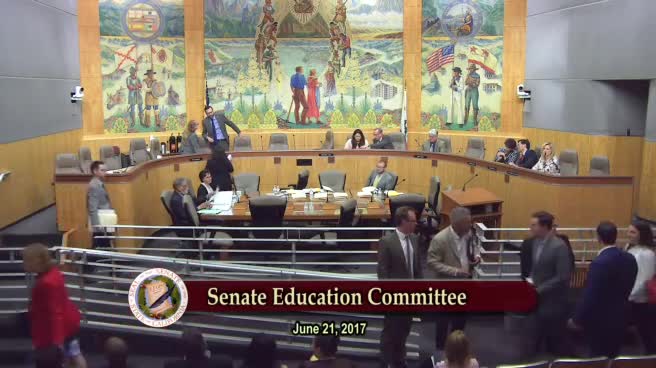 1MIN
Senate Standing Committee on Education
 49SEC
Assembly Floor
 1H
Assembly Standing Committee on Appropriations
 5MIN
Assembly Standing Committee on Jobs, Economic Development, and the Economy
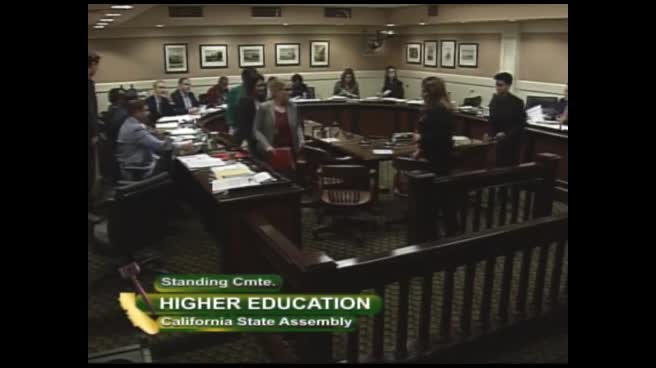 4MIN
Assembly Standing Committee on Higher Education
Bill Author

Bill Co-Author(s):