AB 968: Urban water use: water efficiency.
- Session Year: 2017-2018
- House: Assembly
- Latest Version Date: 2017-04-17
Existing law requires the state to achieve a 20% reduction in urban per capita water use on or before December 31, 2020, and to make incremental progress toward that state target by reducing urban per capita water use by at least 10% on or before December 31, 2015. Existing law requires each urban retail water supplier to develop urban water use targets and an interim urban water use target, in accordance with specified requirements.
This bill would require the Department of Water Resources to submit to the Legislature by December 31, 2018, a report that states preliminary water efficiency targets for 2025 for each of the states hydrologic regions with per capita daily water use targets based on and considering specified factors. The bill would require the department to consult with a representative task force with members designated by the department by July 1, 2018. bill would revise the definitions of gross water use and recycled water for these purposes. The bill would require the Department of Water Resources to reconvene its Urban Stakeholder Committee by April 1, 2018, composed as specified, and would require, by July 1, 2019, the department, in consultation with the committee, to develop certain methodologies. The bill would require the committee, by January 1, 2020, and every 5 years thereafter, to develop a report to provide information and recommendations to the department and the Legislature about new demand management measures, technologies, and approaches, and would require the department to review the committee report and include the departments recommendations and comments in a final report to the Legislature. The bill would require, by December 31, 2025, the committee, in consultation with the department and the State Water Resources Control Board, to submit a report to the Legislature recommending for potential adjustments to water efficiency targets and commercial, industrial, and institutional performance measures, as defined.
The bill would require the department, in consultation with the board, to convene a commercial, industrial, and institutional water use efficiency task force by July 1, 2018, to recommend appropriate water efficiency measures for various segments of the commercial, industrial, and institutional water use sector and would require the task force, by December 31, 2019, in consultation with the department and the board, to submit a specified report to the Legislature.
Existing law, the Urban Water Management Planning Act, requires every public and private urban water supplier that directly or indirectly provides water for municipal purposes to prepare and adopt an urban water management plan and to update its plan once every 5 years on or before December 31 in years ending in 5 and zero, except as specified.
This bill would require each urban retail water supplier to develop a water efficiency target, as defined, for 2025 in its 2020 urban water management plan required to be submitted by July 1, 2021, and to achieve that target. The bill would authorize an urban retail water supplier to adjust and update the water efficiency target, as appropriate, when the supplier reports its compliance in achieving the water efficiency targets and its implementation of the identified performance measures in its 2025 urban water management plan required to be submitted by July 1, 2026. The bill would require each urban retail water supplier to meet its adjusted 2025 water efficiency target by December 31, 2025, unless the supplier makes a certain report to the department.
The bill would require the department, by July 1, 2019, to provide to urban retail water suppliers in electronic form a database of validated aerial imagery and measured irrigable area, as specified, and to conduct a statistically valid review of the accuracy of the information in the database before providing the database to an urban retail water supplier. The bill would extend the deadline for an urban retail water supplier to submit its urban water management plan if the department does not release the database by July 1, 2019, as prescribed.
Existing law requires the state to achieve a 20% reduction in urban per capita water use on or before December 31, 2020, and to make incremental progress toward that state target by reducing urban per capita water use by at least 10% on or before December 31, 2015.
This bill would require the Department of Water Resources to submit to the Legislature by December 31, 2018, a report that states preliminary water efficiency targets for 2025 for each of the states hydrologic regions with per capita daily water use targets based on and considering specified factors. The bill would require the department to consult with a representative task force with members designated by the department by July 1, 2018.
Existing law, the Urban Water Management Planning Act, requires every public and private urban water supplier that directly or indirectly provides water for municipal purposes to prepare and adopt an urban water management plan and to update its plan once every 5 years on or before December 31 in years ending in 5 and zero, except as specified.This bill would make nonsubstantive changes in these provisions.Existing law, the Urban Water Management Planning Act, requires every public and private urban water supplier that directly or indirectly provides water for municipal purposes to prepare and adopt an urban water management plan and to update its plan once every 5 years on or before December 31 in years ending in 5 and zero, except as specified.
This bill would make nonsubstantive changes in these provisions.
The Legislature finds and declares all of the following:
(a)Water is a public resource that the California Constitution protects against waste and unreasonable use.
(b)Growing population, climate change, and the need to protect and grow Californias economy while protecting and restoring our fish and wildlife habitats make it essential that the state manage its water resources as efficiently as possible.
(c)Diverse regional water supply portfolios will increase water supply reliability and reduce dependence on the Delta.
(d)Reduced water use through long-term water use efficiency and conservation provides significant energy and environmental benefits, and can help protect water quality, improve streamflows, and reduce greenhouse gas emissions.
(e)The success of state and local water use efficiency programs to increase efficiency of water use is best determined on the basis of measurable outcomes related to water use or efficiency.
(f)Strengthening local and regional drought resilience is essential to increasing water supply reliability and the sustainable management of the states water resources.
(g)Improvements in technology, infrastructure, and management practices offer the potential for increasing water efficiency in California over time, providing an essential water management tool to meet the need for water for urban, agricultural, and environmental uses.
(h)The Governor has called for implementation of the comprehensive California Water Action Plan.
(i)The factors used to formulate long-term water use efficiency targets can vary significantly from location to location based on factors including weather, climate, patterns of urban and suburban development, water supplies, and past efforts to enhance water use efficiency. Therefore, it is necessary to plan for and implement water use efficiency measures at the regional and local level to reflect and best meet the water supply needs of each community and achieve effective water shortage contingency planning and management.
(j)Per capita water use is one measure of a water providers an urban water suppliers efforts to reduce urban water use improve water use efficiency within its service area. However, per capita water use is less useful for measuring relative water use efficiency between different water providers. Differences in weather, climate, historical patterns of urban and suburban development, and density of housing in a particular location need to be considered when assessing per capita water use as a measure of efficiency.
SEC. 2.Section 10608.45 is added to the Water Code, to read:10608.45.(a)By December 31, 2018, the department shall submit to the Legislature a report that states preliminary water efficiency targets for 2025 for each of the states hydrologic regions. The report shall include per capita daily water use targets based on, and the department shall explain in the report how it considered, factors that include, but are not limited to, all of the following:(1)A uniform statewide standard for per capita indoor water use, based on current conditions affecting indoor water use.(2)Outdoor water use standards that reflect the variable climates, land use densities, and age of building stock within urban retail water suppliers service areas in each hydrologic region.(3)The amount of reductions in water use in each hydrologic region that can be expected as a result of a normal rate of improvement in plumbing facilities and the development of new residential, commercial, and other structures that reflect state-of-the-art water efficiency methods and facilities.(4)The regional target determination methodology used in the states 20x2020 Water Conservation Plan (dated February 2010).(b)In developing the report pursuant to subdivision (a), the department shall consult with a representative task force consisting of academic experts, urban retail water suppliers representing each of the states hydrologic regions, economic development interests, business community representatives, environmental organizations, commercial water users, industrial water users, and institutional water users. The department shall designate the task forces members by July 1, 2018.(c)(1)A report to be submitted pursuant to subdivision (a) shall be submitted in compliance with Section 9795 of the Government Code.(2) Pursuant to Section 10231.5 of the Government Code, this section is repealed on January 1, 2023.SEC. 2.Section 10608.4 of the Water Code is amended to read:10608.4.It is the intent of the Legislature, by the enactment of this part, to do all of the following:
(a)Require all water suppliers to increase the efficiency of promote the efficient use of this essential resource.
(b)Establish a long-term framework to meet the state targets for urban water conservation identified in this part and called for by the Governor. use efficiency.
(c)Measure increased efficiency of urban water use on a per capita basis.(d)Establish a method or methods for urban retail water suppliers to determine targets for achieving increased water use efficiency by the year 2020, in accordance with the Governors goal of a 20-percent reduction.(e)(c)Establish consistent water use efficiency planning and implementation standards for urban water suppliers and agricultural water suppliers.
(f)(d)Promote urban water conservation standards that are use efficiency that is consistent with the California Urban Water Conservation Councils adopted best management practices and the requirements for demand management in Section 10631.
(g)(e)Establish standards that recognize and provide credit to water suppliers that made substantial capital investments in urban water conservation use efficiency, sustainable drought resilient supplies, and emergency supplies since the drought of the early 1990s.
(h)(f)Recognize and account for the investment of urban retail water suppliers in providing recycled water for beneficial uses. both potable and nonpotable beneficial uses, and the need for greater investment in water recycling and other sustainable drought-resilient supplies.
(g)Recognize that water recycling is an efficient use of water and the application of recycled water in landscape irrigation is extensively regulated, which ensures its efficient use.
(i)(h)Require implementation of specified efficient water management practices for agricultural water suppliers.
(j)(i)Support the economic productivity of Californias agricultural, commercial, and industrial sectors.
(k)(j)Advance regional water resources management.
(k)Empower water suppliers to utilize local and regional water use efficiency measures that reflect their unique water supply and demand circumstances that best meet the needs of their individual communities.
(l)Ensure that a water supplier retains the same legal access to its water supplies as the water supplier possessed before January 1, 2018, as provided under law to enhance local and regional water supply reliability and drought resilience as well as to voluntarily contribute to water supply reliability in other regions of the state, as appropriate under law.
SEC. 3.Section 10608.8 of the Water Code is amended to read:10608.8.(a)(1)Nothing in this part alters existing water rights law or authorizes or enhances the authority of the board to alter any existing water rights beyond its powers to do so before January 1, 2018.
(2)Water use efficiency measures adopted and implemented pursuant to this part or Part 2.8 (commencing with Section 10800) are water conservation measures subject to the protections provided under Section 1011.
(2)(3)Because an urban agency is not required to meet its urban water use target until 2020 pursuant to subdivision (b) of Section 10608.24, an urban retail water suppliers failure to meet those targets shall not establish a violation of law for purposes of any state administrative or judicial proceeding prior to January 1, 2021. Nothing in this paragraph limits the use of data reported to the department or the board in litigation or an administrative proceeding. This paragraph shall become inoperative on January 1, 2021.
(4)Because an urban agency is not required to meet its urban water efficiency target until 2025 pursuant to subdivision (d) of Section 10608.25, an urban retail water suppliers failure to meet that target shall not establish a violation of law for purposes of any state administrative or judicial proceeding before January 1, 2026. Nothing in this paragraph limits the use of data reported to the department or the board in litigation or an administrative proceeding.
(3)(5)To the extent feasible, the department and the board shall provide for the use of water conservation reports required under this part to meet the requirements of Section 1011 for water conservation reporting.
(b)This part does not limit or otherwise affect the application of Chapter 3.5 (commencing with Section 11340), Chapter 4 (commencing with Section 11370), Chapter 4.5 (commencing with Section 11400), and Chapter 5 (commencing with Section 11500) of Part 1 of Division 3 of Title 2 of the Government Code.
(c)This part does not require a reduction in the total water used in the agricultural or urban sectors, because other factors, including, but not limited to, changes in agricultural economics or population growth may have greater effects on water use. This part does not limit the economic productivity of Californias agricultural, commercial, or industrial sectors.
(d)The requirements of this part do not apply to an agricultural water supplier that is a party to the Quantification Settlement Agreement, as defined in subdivision (a) of Section 1 of Chapter 617 of the Statutes of 2002, during the period within which the Quantification Settlement Agreement remains in effect. After the expiration of the Quantification Settlement Agreement, to the extent conservation water projects implemented as part of the Quantification Settlement Agreement remain in effect, the conserved water created as part of those projects shall be credited against the obligations of the agricultural water supplier pursuant to this part.
SEC. 4.Section 10608.12 of the Water Code is amended to read:10608.12.Unless the context otherwise requires, the following definitions govern the construction of this part:
(a)Agricultural water supplier means a water supplier, either publicly or privately owned, providing water to 10,000 or more irrigated acres, excluding recycled water. Agricultural water supplier includes a supplier or contractor for water, regardless of the basis of right, that distributes or sells water for ultimate resale to customers. Agricultural water supplier does not include the department.
(b)Base daily per capita water use means any of the following:
(1)The urban retail water suppliers estimate of its average gross water use, reported in gallons per capita per day and calculated over a continuous 10-year period ending no earlier than December 31, 2004, and no later than December 31, 2010.
(2)For an urban retail water supplier that meets at least 10 percent of its 2008 measured retail water demand through recycled water that is delivered within the service area of an urban retail water supplier or its urban wholesale water supplier, the urban retail water supplier may extend the calculation described in paragraph (1) up to an additional five years to a maximum of a continuous 15-year period ending no earlier than December 31, 2004, and no later than December 31, 2010.
(3)For the purposes of Section 10608.22, the urban retail water suppliers estimate of its average gross water use, reported in gallons per capita per day and calculated over a continuous five-year period ending no earlier than December 31, 2007, and no later than December 31, 2010.
(c)Baseline commercial, industrial, and institutional water use means an urban retail water suppliers base daily per capita water use for commercial, industrial, and institutional users.
(d)Commercial water user means a water user that provides or distributes a product or service.
(e)Compliance daily per capita water use means the gross water use during the final year of the reporting period, reported in gallons per capita per day.
(f)Disadvantaged community means a community with an annual median household income that is less than 80 percent of the statewide annual median household income.
(g)Gross water use means the total volume of water, whether treated or untreated, entering the distribution system of an urban retail water supplier, as the distribution system is defined by the urban retail water supplier, excluding all of the following:
(1)Recycled water that is delivered within the service area of an urban retail water supplier or its urban wholesale water supplier. supplier, or recycled water used to augment water supplies, including, but not limited to, recycled water used to augment a surface water reservoir or recycled water percolated or injected into a groundwater basin for the purposes of augmenting the common groundwater supply and then extracted by an urban retail water supplier.
(2)The net volume of water that the urban retail water supplier places into long-term storage.
(3)The volume of water the urban retail water supplier conveys for use by another urban water supplier.
(4)The volume of water delivered for agricultural use, the urban retail water supplier delivers for commercial or noncommercial agricultural purposes, except as otherwise provided in subdivision (f) of Section 10608.24.
(h)Industrial water user means a water user that is primarily a manufacturer or processor of materials as defined by the North American Industry Classification System code sectors 31 to 33, inclusive, or an entity that is a water user primarily engaged in research and development.
(i)Institutional water user means a water user dedicated to public service. This type of user includes, among other users, higher education institutions, schools, courts, churches, hospitals, government facilities, and nonprofit research institutions.
(j)Interim urban water use target means the midpoint between the urban retail water suppliers base daily per capita water use and the urban retail water suppliers urban water use target for 2020.
(k)Locally cost effective means that the present value of the local benefits of implementing an agricultural efficiency water management practice is greater than or equal to the present value of the local cost of implementing that measure.
(l)Performance measures means best management practices that improve the efficiency of water use within the commercial, industrial, and institutional sector, including the use of new technologies and improvements in water management as identified in the report developed pursuant to subdivision (b) of Section 10608.45.
(l)(m)Process water means water used for producing a product or product content or water used for research and development, including, but not limited to, continuous manufacturing processes, water used for testing and maintaining equipment used in producing a product or product content, and water used in combined heat and power facilities used in producing a product or product content. Process water does not mean incidental water uses not related to the production of a product or product content, including, but not limited to, water used for restrooms, landscaping, air conditioning, heating, kitchens, and laundry.
(m)(n)Recycled water means recycled water, as defined in subdivision (n) of Section 13050, that is used to offset potable demand, including including, but not limited to, recycled water supplied for nonpotable reuse, recycled water supplied for the uses identified and defined in Section 13561, or recycled water supplied for direct use and indirect potable reuse, that that, where applicable, meets the following requirements, where applicable: for reservoir augmentation and groundwater recharge, including recharge through spreading basins or injections:
(1)For groundwater recharge, including recharge through spreading basins, water supplies that are all of the following:(A)Metered.(1)The use of the water supply is metered.
(B)(2)Developed through planned investment by the urban water supplier supplier, a water replenishment district, or a wastewater treatment agency.
(C)(3)Treated to a minimum tertiary level.
(D)(4)Delivered within the service area of an urban retail water supplier or its urban wholesale water supplier that helps an urban retail water supplier meet its urban water use target.
(2)For reservoir augmentation, water supplies that meet the criteria of paragraph (1) and are conveyed through a distribution system constructed specifically for recycled water.(n)(o)Regional water resources management means sources of supply resulting from watershed-based planning for sustainable local water reliability or any of the following alternative sources of water:
(1)The capture and reuse of stormwater or rainwater.
(2)The use of recycled water.
(3)The desalination of brackish groundwater.
(4)The conjunctive use of surface water and groundwater in a manner that is consistent with the safe yield of the groundwater basin.
(o)(p)Reporting period means the years for which an urban retail water supplier reports compliance with the urban water use targets.
(p)(q)Urban retail water supplier means a water supplier, either publicly or privately owned, that directly provides potable municipal water to more than 3,000 end users or that supplies more than 3,000 acre-feet of potable water annually at retail for municipal purposes.
(q)(r)Urban water use target means the urban retail water suppliers targeted future daily per capita water use.
(r)(s)Urban wholesale water supplier, means a water supplier, either publicly or privately owned, that provides more than 3,000 acre-feet of water annually at wholesale for potable municipal purposes.
(t)Water efficiency target means the target established by an urban retail water supplier pursuant to Section 10608.25.
(u)Water loss means the difference between the potable distribution system input volume and authorized consumption as consistent with the American Water Works Associations third edition of Water Audits and Loss Control Programs, Manual M36 and subsequent editions in accordance with Section 10608.34.
SEC. 5.Section 10608.20 of the Water Code is amended to read:10608.20.(a)(1)Each urban retail water supplier shall develop urban water use targets and an interim urban water use target by July 1, 2011. Urban retail water suppliers may elect to determine and report progress toward achieving these targets on an individual or regional basis, as provided in subdivision (a) of Section 10608.28, and may determine the targets on a fiscal year or calendar year basis.
(2)It is the intent of the Legislature that the urban water use targets described in paragraph (1) cumulatively result in a 20-percent reduction from the baseline daily per capita water use by December 31, 2020.
(b)An urban retail water supplier shall adopt one of the following methods for determining its 2020 urban water use target pursuant to subdivision (a):
(1)Eighty percent of the urban retail water suppliers baseline base per capita daily water use.
(2)The per capita daily water use that is estimated using the sum of the following performance standards:
(A)For indoor residential water use, 55 gallons per capita daily water use as a provisional standard. Upon completion of the departments 2016 report to the Legislature pursuant to Section 10608.42, this standard may be adjusted by the Legislature by statute.
(B)For landscape irrigated through dedicated or residential meters or connections, water efficiency equivalent to the standards of the Model Water Efficient Landscape Ordinance set forth in Chapter 2.7 (commencing with Section 490) of Division 2 of Title 23 of the California Code of Regulations, as in effect the later of the year of the landscapes installation or 1992. An urban retail water supplier using the approach specified in this subparagraph shall use satellite imagery, site visits, or other best available technology to develop an accurate estimate of landscaped areas.
(C)For commercial, industrial, and institutional uses, a 10-percent reduction in water use from the baseline commercial, industrial, and institutional water use by 2020.
(3)Ninety-five percent of the applicable state hydrologic region target, as set forth in the states draft 20x2020 Water Conservation Plan (dated April 30, 2009). If the service area of an urban water supplier includes more than one hydrologic region, the supplier shall apportion its service area to each region based on population or area.
(4)A method that shall be identified and developed by the department, through a public process, and reported to the Legislature no later than December 31, 2010. The method developed by the department shall identify per capita targets that cumulatively result in a statewide 20-percent reduction in urban daily per capita water use by December 31, 2020. In developing urban daily per capita 2020 water use targets, the department shall do all of the following:
(A)Consider climatic differences within the state.
(B)Consider population density differences within the state.
(C)Provide flexibility to communities and regions in meeting the targets.
(D)Consider different levels of per capita water use according to plant water needs in different regions.
(E)Consider different levels of commercial, industrial, and institutional water use in different regions of the state.
(F)Avoid placing an undue hardship on communities that have implemented conservation measures or taken actions to keep per capita water use low.
(c)If the department adopts a regulation pursuant to paragraph (4) of subdivision (b) that results in a requirement that an urban retail water supplier achieve a reduction in daily per capita water use that is greater than 20 percent by December 31, 2020, an urban retail water supplier that adopted the method described in paragraph (4) of subdivision (b) may limit its urban water use target to a reduction of not more than 20 percent by December 31, 2020, by adopting the method described in paragraph (1) of subdivision (b).
(d)The department shall update the method described in paragraph (4) of subdivision (b) and report to the Legislature by December 31, 2014. An urban retail water supplier that adopted the method described in paragraph (4) of subdivision (b) may adopt a new urban daily per capita water use target pursuant to this updated method.
(e)An urban retail water supplier shall include in its urban water management plan due in 2010 pursuant to Part 2.6 (commencing with Section 10610) the baseline daily per capita water use, urban water use target, interim urban water use target, and compliance daily per capita water use, along with the bases for determining those estimates, including references to supporting data.
(f)When calculating per capita values for the purposes of this chapter, an urban retail water supplier shall determine population using a combination of federal, state, and local population reports and projections.
(g)An urban retail water supplier may update its 2020 urban water use target in its 2015 urban water management plan required pursuant to Part 2.6 (commencing with Section 10610).
(h)(1)The department, through a public process and in consultation with the California Urban Water Conservation Council, shall develop technical methodologies and criteria for the consistent implementation of this part, including, but not limited to, both of the following:
(A)Methodologies for calculating base daily per capita water use, baseline commercial, industrial, and institutional water use, compliance daily per capita water use, gross water use, service area population, indoor residential water use, and landscaped area water use.
(B)Criteria for adjustments pursuant to subdivisions (d) and (e) of Section 10608.24.
(2)The department shall post the methodologies and criteria developed pursuant to this subdivision on its Internet Web site, and make written copies available, by October 1, 2010. An urban retail water supplier shall use the methods developed by the department in compliance with this part.
(i)(1)The department shall adopt regulations for implementation of the provisions relating to process water in accordance with subdivision (l) of Section 10608.12, subdivision (e) of Section 10608.24, and subdivision (d) of Section 10608.26.
(2)The initial adoption of a regulation authorized by this subdivision is deemed to address an emergency, for purposes of Sections 11346.1 and 11349.6 of the Government Code, and the department is hereby exempted for that purpose from the requirements of subdivision (b) of Section 11346.1 of the Government Code. After the initial adoption of an emergency regulation pursuant to this subdivision, the department shall not request approval from the Office of Administrative Law to readopt the regulation as an emergency regulation pursuant to Section 11346.1 of the Government Code.
(j)(1)An urban retail water supplier is granted an extension to July 1, 2011, for adoption of an urban water management plan pursuant to Part 2.6 (commencing with Section 10610) due in 2010 to allow the use of technical methodologies developed by the department pursuant to paragraph (4) of subdivision (b) and subdivision (h). An urban retail water supplier that adopts an urban water management plan due in 2010 that does not use the methodologies developed by the department pursuant to subdivision (h) shall amend the plan by July 1, 2011, to comply with this part.
(2)An urban wholesale water supplier whose urban water management plan prepared pursuant to Part 2.6 (commencing with Section 10610) was due and not submitted in 2010 is granted an extension to July 1, 2011, to permit coordination between an urban wholesale water supplier and urban retail water suppliers.
SEC. 6.Section 10608.24 of the Water Code is amended to read:10608.24.(a)Each urban retail water supplier shall meet its interim urban water use target by December 31, 2015.
(b)Each urban retail water supplier shall meet its 2020 urban water use target by December 31, 2020.
(c)An urban retail water suppliers compliance daily per capita water use shall be the measure of progress toward achievement of its 2020 urban water use target.
(d)(1)When determining compliance daily per capita water use, an urban retail water supplier may consider the following factors:
(A)Differences in evapotranspiration and rainfall in the baseline period compared to the compliance reporting period.
(B)Substantial changes to commercial or industrial water use resulting from increased business output and economic development that have occurred during the reporting period.
(C)Substantial changes to institutional water use resulting from fire suppression services or other extraordinary events, or from new or expanded operations, that have occurred during the reporting period.
(2)If the urban retail water supplier elects to adjust its estimate of compliance daily per capita water use due to one or more of the factors described in paragraph (1), it shall provide the basis for, and data supporting, the adjustment in the report required by Section 10608.40.
(e)When developing the 2020 urban water use target pursuant to Section 10608.20, an urban retail water supplier that has a substantial percentage of industrial water use in its service area may exclude process water from the calculation of gross water use to avoid a disproportionate burden on another customer sector.
(f)(1)An urban retail water supplier that includes agricultural water use in an urban water management plan pursuant to Part 2.6 (commencing with Section 10610) may include the agricultural water use in determining gross water use. An urban retail water supplier that includes agricultural water use in determining gross water use and develops its urban water use target pursuant to paragraph (2) of subdivision (b) of Section 10608.20 shall use a water efficient standard for agricultural irrigation of 100 percent of reference evapotranspiration multiplied by the crop coefficient for irrigated acres.
(2)An urban retail water supplier, that is also an agricultural water supplier, is not subject to the requirements of Chapter 4 (commencing with Section 10608.48), if the agricultural water use is incorporated into its urban water use target pursuant to paragraph (1).
SEC. 7.Section 10608.25 is added to the Water Code, to read:10608.25.(a)After December 31, 2020, an urban retail water supplier shall achieve a water efficiency target as provided for in this section.
(b)Each urban retail water supplier shall develop a water efficiency target for 2025 in its 2020 urban water management plan required to be submitted by July 1, 2021, pursuant to Section 10621. An urban retail water supplier may determine the water efficiency target on a fiscal year or calendar year basis. An urban retail water supplier may adjust and update the water efficiency target, as appropriate, based upon population growth, changes in irrigable landscape acreage, and other changes that affect water use when the supplier reports its compliance in achieving the water efficiency targets and its implementation of the identified performance measures in its 2025 urban water management plan required to be submitted by July 1, 2026, pursuant to Section 10621.
(c)An urban retail water supplier shall adopt one of the following methods for determining its water efficiency target pursuant to subdivision (b):
(1)Seventy-five percent of the urban retail water suppliers base daily per capita water use calculated using the methodology developed by the department pursuant to Section 10608.20.
(2)(A)Establishment of a retail-level water efficiency target that is the sum of the following:
(i)The residential population multiplied by 55 gallons of water use per person per day.
(ii)For irrigable landscape served by a residential or dedicated irrigation meter, an estimate of total irrigation demands within the suppliers service area, based on the following factors:
(I)Evapotranspiration adjustment factor of 1.0 for parcels developed before 1992 and for special landscape areas.
(II)Evapotranspiration adjustment factor of 0.8 for parcels developed between January 1, 1992, and December 31, 2009.
(III)Evapotranspiration adjustment factor of 0.7 for parcels developed between January 1, 2010, and December 31, 2015.
(IV)Evapotranspiration adjustment factor of 0.55 for residential parcels developed after January 1, 2016.
(V)evapotranspiration adjustment factor of 0.45 for commercial parcels developed after January 1, 2016.
(VI)Parcels in commercial or noncommercial agricultural use may be included by the urban retail water supplier, at its sole discretion, using an evapotranspiration factor of 1.0 in the calculation of the water use efficiency target or in the calculation for compliance of the target.
(iii)A volume of water to account for the variances taken by the water supplier due to unique situations within the water suppliers service area and developed pursuant to subdivision (f).
(B)An urban retail water supplier that adopts the method described in subparagraph (A) for determining its water efficiency target shall identify proposed performance measures, as appropriate, for efficient water use by its commercial, industrial, and institutional customers consistent with the recommendations identified in the report required pursuant to subdivision (b) of Section 10608.45 in the water suppliers 2020 urban water management plan.
(3)Ninety percent of the applicable hydrologic region target, as set forth in the states 20x2020 Water Conservation Plan, dated February 2010. If the service area of an urban retail water supplier includes more than one hydrologic region, the supplier shall apportion its service area to each region based on population or area.
(d)Each urban retail water supplier shall meet its adjusted 2025 water efficiency targets by December 31, 2025, unless the supplier reports to the department that economic or hydrologic conditions beyond the water suppliers control rendered it impossible for the water supplier to do so. An urban retail water supplier may elect to determine and report progress toward achieving its 2025 water efficiency target on an individual or regional basis, as provided in subdivision (a) of Section 10608.28. An urban retail water supplier shall report on its compliance with this section in its 2025 urban water management plan required to be submitted by July 1, 2026, pursuant to Section 10621.
(e)An urban retail water supplier shall base its adjusted water efficiency target and compliance with that adjusted target on the best available information concerning population, irrigable landscape acreage, and other factors that affect water use within its service area. An urban retail water supplier shall calculate its compliance with subdivision (d) based on the method by which it set its water efficiency target, as follows:
(1)An urban retail water supplier with a water efficiency target determined pursuant to paragraph (1) of subdivision (c) shall calculate its compliance with subdivision (d) by comparing the adjusted water efficiency target with the urban retail water suppliers compliance daily per capita water use.
(2)An urban retail water supplier with a water efficiency target determined pursuant to paragraph (2) of subdivision (c) shall calculate its compliance with subdivision (d) by comparing the water efficiency target with the total volume of gross water use measured through residential and dedicated irrigation meters during the final year of the reporting period. The urban retail water supplier shall include in its report on compliance with subdivision (d) a report on the urban retail water suppliers implementation of the performance measures for efficiency commercial, industrial, and institutional water use identified in its urban water management plan. If an urban retail water supplier includes parcels in agricultural use in its water efficiency target, the urban retail water supplier shall include water use for those parcels in its compliance calculation.
(3)An urban retail water supplier with a water efficiency target determined pursuant to paragraph (3) of subdivision (c) shall calculate its compliance with subdivision (d) by comparing the adjusted water efficiency target with the urban retail water suppliers compliance daily per capita water use.
(4)Water use or loss caused by conditions of disaster or extreme peril to the safety of persons and property, including, but not limited to, conditions, whether natural or human caused, of fire, flood, storm, drought, epidemic, riot, earthquake, or other condition, shall be excluded from the calculation of compliance with the water efficiency target.
(5)The deadline for an urban retail water supplier to submit its plan pursuant to subdivision (e) of Section 10621 shall be extended if the department does not release the final database pursuant to Section 10608.47 on or before July 1, 2019. The extension shall equal the length of time between July 1, 2019 and the date of the departments release of the final database.
(6)Each urban retail water supplier shall have the discretion to achieve its water efficiency target under this section and to design and utilize any rate structure in any manner consistent with that suppliers legal authority.
(7)Each urban retail water supplier shall have the discretion to measure progress toward achieving its water efficiency target under this section by considering the factors described in subdivisions (d) to (f), inclusive, of Section 10608.24.
(8)Notwithstanding the method used by an urban retail water supplier to calculate compliance with subdivision (c), each urban retail water supplier shall address water loss within its service area pursuant to Section 10608.34.
(f)The department, in consultation with the Urban Stakeholder Committee, shall develop all of the following and any other factors as may be identified by the committee:
(1)Standardized variance methodologies for all of the following:
(A)Livestock.
(B)Swamp coolers.
(C)Significant transient population increases.
(D)Construction water for soil compaction and dust control.
(E)Potable water use to supplement ponds and lakes to sustain wildlife.
(F)Vegetation irrigated for fire protection.
(G)Landscapes irrigated with recycled water having high levels of total dissolved solids.
(H)Other water quality concerns.
(2)A methodology to calculate the irrigable area associated with special landscape areas by aerial imagery or date of parcel establishment so that an urban retail water supplier may develop appropriate water efficiency targets as described in paragraph (2) of subdivision (c).
(3)A process for the submission of supporting documentation for other variances that shall be included into the calculation of the urban retail water suppliers water efficiency target as described in paragraph (2) of subdivision (c).
(g)For purposes of this section, special landscape area means an area of the landscape dedicated solely to edible plants, recreational areas, areas irrigated with recycled water, or water features using recycled water designed within and having the same evapotranspiration adjustment factor as contained in the model water efficient landscape ordinance set forth in Chapter 2.7 (commencing with Section 490) of Division 2 of Title 23 of the California Code of Regulations, adopted on September 15, 2015.
SEC. 8.Section 10608.45 is added to the Water Code, to read:10608.45.(a)By July 1, 2018, the department, in consultation with the board, shall convene a commercial, industrial, and institutional water use efficiency task force to recommend appropriate water efficiency measures for various segments of the commercial, industrial, and institutional water use sector. The task force shall consist of all of the following:
(1)Urban retail water suppliers, including a broad spectrum of commercial, industrial, and institutional customers throughout the state and the representation of combined retail water and wastewater agencies.
(2)Urban wholesale water suppliers.
(3)Academic experts.
(4)Economic development interests.
(5)Business community representatives.
(6)Environmental organizations.
(7)Commercial water users.
(8)Industrial water users.
(9)Institutional water users.
(b)By December 31, 2019, the task force, in consultation with the department and the board, shall submit a report to the Legislature that shall include, but is not limited to, all of the following:
(1)Recommendations of appropriate performance measures for commercial, industrial, or institutional water use that shall rely, to the extent appropriate, on the 2013 report to the Legislature by the CII Task Force entitled Water Use Best Management Practices and support the economic productivity of Californias commercial, industrial, and institutional sectors.
(2)Appropriate commercial, industrial, and institutional classifications that address significant uses of water and are consistent with the classifications and standards developed by the North American Industry Classification System published by the United States Office of Management and Budget.
(3)Recommendations for appropriate thresholds by which urban water suppliers could require commercial, industrial, and institutional water users to participate in audits and the development of water management plans.
(4)An evaluation of feasability criteria and cost-effectiveness of separating mixed-use meters and equivalent technologies and recommendations on when separating mixed-use meters should not be required.
(c)Using available funds, the department shall provide technical and financial assistance to the task force to enable the completion of the report within the required time frame and to assist water suppliers and water users to comply with any new requirements resulting from implementation of the report recommendations.
(d)(1)A report to be submitted pursuant to subdivision (b) shall be submitted in compliance with Section 9795 of the Government Code.
(2)Pursuant to Section 10231.5 of the Government Code, this section is repealed on January 1, 2024.
SEC. 9.Section 10608.46 is added to the Water Code, to read:10608.46.(a)The department shall reconvene its Urban Stakeholder Committee by April 1, 2018. The committee shall consist of a mix of small, medium, and large urban retail water suppliers from throughout the state, including at least one representative from each hydrologic region. The committee shall also include academic experts, urban wholesale water suppliers, business organizations, as well as representation of combined retail water and wastewater agencies.
(b)By July 1, 2019, the department shall consult with the committee to develop the methodologies required by subdivision (f) of Section 10608.25.
(c)By January 1, 2020, and every five years thereafter, the committee shall develop a report to provide information and recommendations to the department and the Legislature about new demand management measures, technologies, and approaches. The department shall review the committee report and include in the final report to the Legislature the departments recommendations and comments regarding the committee process and the committees recommendations.
(d)By December 31, 2025, the committee, in consultation with the department and the board, shall submit a report to the Legislature recommending for potential adjustments to water efficiency targets and commercial, industrial, and institutional performance measures, consistent with the report provided to the Legislature pursuant to subdivision (b) of Section 10608.45, for implementation no sooner than 2030. If the committee recommends a change in the water efficiency targets or performance measures, the report shall do both of the following:
(1)State the technical changes or scientific basis that justifies a change in the targets or performance measures.
(2)Evaluate potential unintended consequences created by the proposed changes that could negatively impact Californias economy, wastewater infrastructure, or local investments in water infrastructure and supplies, including specific impacts to the amount of recycled water or desalinated water available within the state.
(e)Using available funds, the department shall provide technical and financial assistance to the committee to enable the completion of the reports pursuant to this section within the required time frame and assist water suppliers to comply with any new requirements resulting from implementation of the report recommendations.
(f)Nothing in this section authorizes any state agency to establish, change, or otherwise modify the water efficiency targets and commercial, industrial, and institutional performance measures established under this chapter.
(g)A report to be submitted pursuant to subdivision (c) or (d) shall be submitted in compliance with Section 9795 of the Government Code.
SEC. 10.Section 10608.47 is added to the Water Code, to read:10608.47.(a)By July 1, 2019, the department shall provide to urban retail water suppliers, in electronic form, a database of validated aerial imagery and measured irrigable area for all residential, commercial, industrial, and institutional areas within each water suppliers service area. The database shall correlate the relevant irrigable areas with assessor parcels within each water suppliers service area and shall state the year of parcel development. The database shall contain downloadable reference evapotranspiration data with representative climate zones for all urban retail water suppliers. The databases aerial imagery data shall be suitable for determining the appropriate amount of irrigation for a variety of vegetation, including, but not limited to, large trees and irrigable area under native tree canopy. The department shall update the database by December 31, 2025, and every five years thereafter.
(b)To the extent consistent with the California Public Records Act (Chapter 3.5 (commencing with Section 6250) of Division 7 of Title 1 of the Government Code), the department and all urban retail water suppliers shall maintain the confidentiality of the information in the departments database.
(c)Before providing the database to urban retail water suppliers, the department shall conduct a statistically valid review of the accuracy of the information in the database. In conducting this review, the department shall consult with a representative sample of urban retail water suppliers representing each of the states hydrologic regions.
(d)An urban retail water supplier may use its own database of validated aerial imagery, measured irrigable area, and date of parcel development for properties within its service areas for purposes of paragraph (2) of subdivision (c) of Section 10608.25, if the water supplier certifies that its database is of comparable or better quality than the relevant information included in the departments database.
The Legislature finds and declares all of the following:
(a)Water is a public resource that the California Constitution protects against waste and unreasonable use.
(b)Growing population, climate change, and the need to protect and grow Californias economy while protecting and restoring our fish and wildlife habitats make it essential that the state manage its water resources as efficiently as possible.
(c)Diverse regional water supply portfolios will increase water supply reliability and reduce dependence on the Delta.
(d)Reduced water use through long-term water use efficiency and conservation provides significant energy and environmental benefits, and can help protect water quality, improve streamflows, and reduce greenhouse gas emissions.
(e)The success of state and local water conservation use efficiency programs to increase efficiency of water use is best determined on the basis of measurable outcomes related to water use or efficiency.
(f)Strengthening local and regional drought resilience is essential to increasing water supply reliability and the sustainable management of the states water resources.
(f)(g)Improvements in technology technology, infrastructure, and management practices offer the potential for increasing water efficiency in California over time, providing an essential water management tool to meet the need for water for urban, agricultural, and environmental uses.
(g)(h)The Governor has called for a 20 percent per capita reduction in urban water use statewide by 2020. implementation of the comprehensive California Water Action Plan.
(h)(i)The factors used to formulate long-term water use efficiency targets can vary significantly from location to location based on factors including weather, patterns of urban and suburban development, water supplies, and past efforts to enhance water use efficiency. Therefore, it is necessary to implement water use efficiency measures at the regional and local level to reflect and best meet the water supply needs of each community and achieve effective water shortage contingency planning and management.
(i)(j)Per capita water use is a valid one measure of a water providers efforts to reduce urban water use within its service area. However, per capita water use is less useful for measuring relative water use efficiency between different water providers. Differences in weather, historical patterns of urban and suburban development, and density of housing in a particular location need to be considered when assessing per capita water use as a measure of efficiency.
SEC. 2.Section 10608.45 is added to the Water Code, to read:10608.45.(a)By December 31, 2018, the department shall submit to the Legislature a report that states preliminary water efficiency targets for 2025 for each of the states hydrologic regions. The report shall include per capita daily water use targets based on, and the department shall explain in the report how it considered, factors that include, but are not limited to, all of the following:
(1)A uniform statewide standard for per capita indoor water use, based on current conditions affecting indoor water use.
(2)Outdoor water use standards that reflect the variable climates, land use densities, and age of building stock within urban retail water suppliers service areas in each hydrologic region.
(3)The amount of reductions in water use in each hydrologic region that can be expected as a result of a normal rate of improvement in plumbing facilities and the development of new residential, commercial, and other structures that reflect state-of-the-art water efficiency methods and facilities.
(4)The regional target determination methodology used in the states 20x2020 Water Conservation Plan (dated February 2010).
(b)In developing the report pursuant to subdivision (a), the department shall consult with a representative task force consisting of academic experts, urban retail water suppliers representing each of the states hydrologic regions, economic development interests, business community representatives, environmental organizations, commercial water users, industrial water users, and institutional water users. The department shall designate the task forces members by July 1, 2018.
(c)(1)A report to be submitted pursuant to subdivision (a) shall be submitted in compliance with Section 9795 of the Government Code.
(2) Pursuant to Section 10231.5 of the Government Code, this section is repealed on January 1, 2023.
SECTION 1.Section 10610 of the Water Code is amended to read:10610.This part shall be known and may be cited as the Urban Water Management Planning Act.This part shall be known and may be cited as the Urban Urban Water Management Planning Act. Act.
|
Date
|
Status
|
|---|---|
| Feb 1, 2018 | From committee: Filed with the Chief Clerk pursuant to Joint Rule 56. |
| Jan 31, 2018 | Died pursuant to Art. IV, Sec. 10(c) of the Constitution. |
| May 26, 2017 | In committee: Held under submission. |
| May 10, 2017 | In committee: Set, first hearing. Referred to APPR. suspense file. |
| Apr 26, 2017 | From committee: Do pass and re-refer to Com. on APPR. (Ayes 14. Noes 0.) (April 25). Re-referred to Com. on APPR. |
| Apr 18, 2017 | Re-referred to Com. on W.,P., & W. |
| Apr 17, 2017 | From committee chair, with author's amendments: Amend, and re-refer to Com. on W.,P., & W. Read second time and amended. |
| Mar 29, 2017 | Re-referred to Com. on W.,P., & W. |
| Mar 28, 2017 | From committee chair, with author's amendments: Amend, and re-refer to Com. on W.,P., & W. Read second time and amended. |
| Mar 27, 2017 | Referred to Com. on W.,P., & W. |
| Feb 17, 2017 | From printer. May be heard in committee March 19. |
| Feb 16, 2017 | Read first time. To print. |
|
Date
|
Description
|
Location
|
Votes
|
|
|---|---|---|---|---|
| Apr 25, 2017 | Do pass and be re-referred to the Committee on [Appropriations] | Assembly Standing Committee on Water, Parks, and Wildlife |
Passed |
This list shows positions taken on this bill by organizations on the date displayed, which is linked to the original source.
Positions by individuals are not included.
Date of Hearing: May 10, 2017
ASSEMBLY COMMITTEE ON APPROPRIATIONS
Lorena Gonzalez Fletcher, Chair
ABPCA Bill Id:AB 968
Author:(Rubio) – As Amended Ver:April 17, 2017
Policy Committee: | Water, Parks and Wildlife | Vote: | 14 - 0 |
|
| ||
|
|
Urgency: No State Mandated Local Program: No Reimbursable: No
SUMMARY:
This bill establishes a new 2025 water use efficiency requirement for urban retail water suppliers. This bill defines “water efficiency target” as a target developed by an urban retail water supplier for 2025 water efficiency in its 2020 urban water management plan (UWMP). Specifically, this bill:
- Requires each urban retail water supplier to adopt one of the following methods for determining water efficiency targets:
- 75% of the urban retail water suppliers base daily per capita water use, as specified through existing law.
- A water budget efficiency target based on indoor water use, outdoor water use, and variances, as specified.
- 90% of the applicable hydrologic region target, as specified.
- Permits the urban water supplier to adjust and update the water efficiency target when the supplier reports its compliance. Requires the urban water supplier to base adjusted targets on population, irrigable landscape acreage, and other factors that affect water use.
- Maintains the existing exclusion of recycled water from the calculation of base daily per capita water use.
- Requires the Department of Water Resources (DWR) to provide, by July 1, 2019, urban water suppliers with validated aerial imagery and measured irrigable area for areas within each water supplier’s service area. Extends the date by which the 2020 UWMPs are due, if the data required by the DWR by July 1, 2019, is overdue.
- Requires the DWR in consultation with the State Water Resources Control Board (SWRCB) to convene, by July 1, 2018, a task force for the purposes of recommending appropriate performance measures for the commercial, industrial, and institutional sectors, as defined.
- Requires the DWR to reconvene the urban stakeholder committee by April 1, 2018, to develop standardized variances permitted within the retail-level water efficiency target.
- Specifies that failure of an urban water agency to meet its water use efficiency target before January 1, 2026, will not establish a violation.
- Provides that no change authorized by the bill on water use efficiency authorizes or enhances the authority of the SWRCB to alter any existing water right beyond its power to do so before January 1, 2018.
FISCAL EFFECT:
- One-time DWR costs of $3 million (GF) including staffing and contracts.
- One-time SWRCB costs of $630,000 (GF).
COMMENTS:
- Purpose. According to the author, "This bill will establish new water efficiency targets for water suppliers in a manner that accounts for local conditions, while also recognizing and incentivizing sustainable, balanced approaches to water management, including investments in recycled water. AB 968 will establish a collaborative stakeholder process to continue improvement in water use efficiency beyond 2025, and will preserve the Legislature’s authority and oversight over long-term water use target setting while making conservation a way of life in California."
- Background. California experienced the worst drought in modern times from 2012-2016, with the first four years having been estimated to be the driest four-year period in the last 450 years. While the most recent drought was historic, current climate change models predict that severe drought will become a more common occurrence in the future.
The drought had significant impacts on the environment, agricultural water supply, and urban water supply. The years 2014 and 2015 were two of the driest years on record. During the drought, the State Water Project and federal Central Valley Project, which supply water to more than 25 million Californians and 3 million acres of agricultural land, provided limited water deliveries with approximately 15% and zero deliveries respectively in 2015.
In January of 2014, the Governor issued an executive order declaring a drought state of emergency and requesting a voluntary 20% reduction in urban potable water use. For the first time in the state’s history, the Governor issued an executive order in April of 2015, requiring SWRC to implement mandatory restrictions to achieve a 25% statewide reduction in urban potable use, over 2013 levels of use. There are approximately 410 urban water suppliers that serve approximately 90% of the population of the state.
In May of 2015, SWRCB adopted an emergency regulation placing each urban water supplier in a conservation tier ranging between 4% and 36%. In May of 2016, SWRCB adopted an emergency regulation that replaced the percentage reduction requirement with a localized “stress test” requiring urban water suppliers to ensure a three-year supply of water to their customers under drought conditions. The “stress test” requirement mandated monthly reporting by water suppliers to the SWRCB. For the most part, all actions associated with the 2012-2106 drought were ended when the Governor declared the drought emergency over on April 7, 2017.
The actions taken by the SWRCB in 2015 and 2016 were criticized by some as not recognizing past efforts to use water more efficiently, not supporting investments in drought resilient supply, and in some instances not being applied in a way that would produce water savings that could reasonably benefit other regions of the state. The 2016 “stress test” approach was also criticized as not being a meaningful enough step to prevent shortages should 2017 have become another dry year. There was widespread agreement that there could be a better approach moving forward for how the state prepares for and responds to future drought.
In May of 2016, the Governor issued an executive order on “Making Water Conservation a Way of Life.” In broad terms the executive order initiated a public process of five state departments, notably the DWR and the SWRCB, to develop a conservation framework that would advance long-term water use efficiency and develop a meaningful drought response tool.
- Progressing but No Consensus. While there is widespread agreement that progress must be made in the areas of long-term water use efficiency and drought response, there is not yet consensus on the specific requirements that will best achieve progress in each area.
Currently, there are seven policy bills and a budget trailer bill that directly relate to long-term efficiency and drought response. These “Making Water Conservation a Way of Life” bills take several different approaches to the development of long-term efficiency and drought response policy. Because long-term efficiency impacts what the future drought response will be, the two subjects are closely related but are generally addressed separately in the different bills. There is disagreement among the stakeholder community as to whether the policy should be heard through the legislative process or be addressed in a budget trailer bill. There is also disagreement over the extent to which the policies should be developed in legislation or through the regulatory process.
This bill is one approach, of several, on long-term water use efficiency. The general framework of all of the approaches to strengthen long-term efficiency is to require a baseline of water use that must be met, but permits the urban water supplier flexibility in how to meet that baseline. Beyond that general framework, this bill differs from other approaches in several significant ways.
- Three Efficiency Methods. SB 7 X7 (Steinberg), Chapter 4, Statute of 2009, included what is essentially the predecessor version of the three methods this bill permits. One of the methods, the water use budget, is at the core of the proposal in AB 1669 (Friedman), and the budget trailer bill.
The other two other methods of a percentage reduction and hydrologic region target allowed under existing law have been criticized as not rewarding and encouraging efficiency, and for creating a situation where good actors cover for bad actors. This bill develops the water budget method in numerous ways that could help move the discussion forward as to what will allow for an effective methodology. It also would require continued development of this method through two separate task forces.
- Outdoor Irrigation. It appears the single largest sticking point on moving forward with the water budget methodology is how outdoor irrigation will be treated. There is some uncertainty at this point as to how the outdoor irrigation component will be calculated for each urban water suppliers’ budget. Water suppliers’ have questioned how outdoor standards will be developed. This bill would require that basis for those standards being validated.
- Adjustments and Variances. SB 7 X7 allows for adjustments, subject to reporting, to be made. This bill establishes a new process to allow for an adjustment to include population growth, changes in irrigable landscape, and other changes that affect water use. Adjustments to the water target were considered as part of the development of the “Making Water Conservation a Way of Life” report (Report) and there was some stakeholder agreement.
- Management of the Commercial, Industrial, and Institutional Sectors. AB 1669 (Friedman) expressly includes commercial, industrial, and institutional sectors as an area where the SWRCB in consultation with the DWR will develop long-term efficiency regulations. Ab 968, instead, requires the DWR in consultation with the SWRCB to convene a commercial, industrial, and institutional water use efficiency task force. The task force is then required, by December 31, 2019, in consultation with the DWR and the SWRCB, to submit a report to the legislature including, among other things, recommendations on appropriate performance measures, appropriate classifications, and recommendations for appropriate audit thresholds in the commercial, industrial, and institutional sectors.
- Related Legislation. AB 1669 (Friedman) requires the SWRCB, in consultation with the DWR, to adopt long-term standards for urban water conservation and water use by May 20, 2021. This bill is pending in this Committee.
AB 1323 (Weber) requires a stakeholder workgroup to be convened no later than February 1, 2018, to develop, evaluate, and recommend proposals for establishing new water use targets for urban water suppliers. This bill is pending in this Committee.
Analysis Prepared by: Jennifer Galehouse / APPR. / (916) 319-2081
Date of Hearing: April 25, 2017
ASSEMBLY COMMITTEE ON WATER, PARKS, AND WILDLIFE
Eduardo Garcia, Chair
ABPCA Bill Id:AB 968 (
Author:Rubio) – As Amended Ver:April 17, 2017
SUBJECT: Urban water use: water efficiency
SUMMARY: Establishes a new 2025 water use efficiency requirement for urban retail water suppliers. Specifically, this bill:
- Defines “water efficiency target” as a target developed by an urban retail water supplier for 2025 water efficiency in its 2020 urban water management plan (UWMP).
- Requires each urban retail water supplier to adopt one of the following methods for determining water efficiency targets:
- 75 percent of the urban retail water suppliers base daily per capita water use, as specified through existing law.
- A water budget efficiency target based on indoor water use, outdoor water use, and variances, as specified.
- 90 percent of the applicable hydrologic region target, as specified.
- Permits the urban water supplier to adjust and update the water efficiency target when the supplier reports its compliance. Requires the urban water supplier to base adjusted targets on population, irrigable landscape acreage, and other factors that affect water use.
- Maintains the existing exclusion of recycled water from the calculation of base daily per capita water use.
- Requires the department of water resources (DWR) to, by July 1, 2019, provide to urban water suppliers validated aerial imagery and measured irrigable area for areas within each water supplier’s service area. Extends the date by which the 2020 UWMPs are due, if the data required by the DWR by July 1, 2019, is overdue, by the length of time the DWR data is overdue.
- Requires the DWR in consultation with the State Water Resources Control Board (SWRCB) to, by July 1, 2018, convene a task force for the purposes of recommending appropriate performance measures for the commercial, industrial, and institutional sector. Defines performance measures as best management practices that improve the efficiency of water use within the commercial, industrial, and institutional sector.
- Requires the DWR to reconvene the urban stakeholder committee by April 1, 2018, to develop standardized variances permitted within the retail-level water efficiency target.
- Specifies that failure of an urban water agency to meet its water use efficiency target before January 1, 2026, shall not establish a violation.
- Provides that no change authorized by the bill on water use efficiency authorizes or enhances the authority of the SWRCB to alter any existing water right beyond its power to do so before January 1, 2018.
- Makes several findings and declarations, and legislative intent, to the effect of recognizing the importance of local control in meeting water supply needs, efficiency of recycled water, and maintaining legal access to water supplies.
EXISTING LAW:
- Declares that because of the conditions prevailing in this state, the general welfare requires that the water resources of the state be put to beneficial use to the fullest extent of which they are capable, and that the waste or unreasonable use or unreasonable method of use of water be prevented, and that the conservation of such waters is to be excercised with a view to the reasonable and beneficial use thereof in the interest of the people and for the public welfare.
- Requires a 20 percent reduction in urban per capita water use on or before December 31, 2020.
- Requires each urban retail water supplier to develop an urban water use target based on one of the following methods:
- Water use of 80 percent of the urban retail water supplier’s baseline per capita water use.
- A water budget based on indoor use, outdoor use, and commercial, industrial and institutional uses.
- Water use of 95 percent of the applicable state hydrologic region target.
- A method developed by the DWR.
- Defines “base daily per capita water use” as the average of gross water use over a period of time that is no longer than 15 continuous years and no shorter than five continuous years beginning no earlier than December 31, 1989, and ending no later than December 31, 2010. Establishes the standard period to be the 10 continuous years from December 31, 2004, through December 31, 2010. Allows five additional years for an urban water supplier that meets at least 10% of its 2008 retail demand through recycled water.
- Defines “gross water use” as the total volume of water entering the distribution system of an urban retail water supplier, excluding among other things, recycled water.
- Defines “recycled water” as water, which as a result of treatment of waste, is suitable for a direct beneficial use that would not otherwise occur, that is used to offset potable demand.
- Requires the SWRCB to adopt rules requiring an urban retail water suppliers to meet performance standards for the volume of water loss no later than July 1, 2020.
FISCAL EFFECT: Unknown
COMMENTS: This bill establishes a new 2025 water use efficiency requirement for urban retail water suppliers.
Author’s Statement:
This bill will establish new water efficiency targets for water suppliers in a manner that accounts for local conditions, while also recognizing and incentivizing sustainable, balanced approaches to water management, including investments in recycled water. AB 968 will establish a collaborative stakeholder process to continue improvement in water use efficiency beyond 2025, and will preserve the Legislature’s authority and oversight over long-term water use target setting while making conservation a way of life in California.
Background. Water Shortage Response In the Recent Drought. California experienced the worst drought in modern times from 2012-2016, with the first four years having been estimated to be the driest four-year period in the last 450 years. While the most recent drought was historic, current climate change models predict that severe drought will become a more common occurrence in the future.
The drought had significant impacts on the environment, agricultural water supply, and urban water supply. 2014 and 2015 were two of the driest years on record. During the drought, the State Water Project and federal Central Valley Project, which supply water to more than 25 million Californians and 3 million acres of agricultural land, provided limited water deliveries with approximately 15 percent and zero deliveries respectively in 2015.
In January of 2014, the Governor issued an executive order declaring a drought state of emergency and requesting a voluntary 20% reduction in urban potable water use. For the first time in the state’s history, the Governor issued an executive order in April of 2015, requiring the State Water Resources Control Board (SWRCB) implement mandatory restrictions to achieve a 25% statewide reduction in urban potable use, over 2013 levels of use. There are approximately 410 urban water suppliers that serve approximately 90 percent of the population of the state.
In May of 2015, the SWRCB adopted an emergency regulation placing each urban water supplier in a conservation tier ranging between 4% and 36%. In May of 2016, the SWRCB adopted an emergency regulation that replaced the percentage reduction requirement with a localized “stress test” requiring urban water suppliers to ensure a three-year supply of water to their customers under drought conditions. The “stress test” requirement mandated monthly reporting by water suppliers to the SWRCB. For the most part, all actions associated with the 2012-2106 drought were ended when the Governor declared the drought emergency over on April 7, 2017.
Lessons Learned From the Drought. The response to the drought was unprecedented because the severity of the drought was unprecedented. It was evident, from the necessity to have an emergency response, that the water supply system was not as prepared as it needed to be for a drought of the severity experienced in 2012-2016. There is widespread agreement that the SWRCB having to step in on an emergency basis is not an ideal plan for drought response. There is also widespread recognition that climate change will cause the drought of 2012-2016 to become a more typical event in the future.
The actions taken by the SWRCB in 2015 and 2016, were criticized by some, as not recognizing past efforts to use water more efficiently, supporting investments in drought resilient supply, and in some instances not being applied in a way that would produce water savings that could reasonably benefit other regions of the state. The 2016 “stress test” approach was also criticized as not being a meaningful enough step to prevent shortages should 2017 have become another dry year. There was widespread agreement that there could be a better approach moving forward for how the state is prepared for and responds to future drought.
In May of 2016, the Governor issued an executive order on “making water conservation a way of life.” In broad terms the executive order initiated a public process of five state departments, notably the DWR and the SWRCB, to develop a conservation framework that would advance long-term water use efficiency and develop a meaningful drought response tool.
Specifically in relation to drought response, the May 2016 executive order required the DWR to strengthen the requirements for drought response. It required that a WSCA include adequate actions to respond to droughts lasting at least five years, and that the WSCA remain customized for local conditions while also allowing for them to be quickly utilized during drought.
Progressing but No Consensus. While there is widespread agreement that progress must be made in the areas of long-term water use efficiency and drought response, there is not yet consensus on the specific requirements that will best achieve progress in each area. As of this writing, there are seven policy bills and a budget trailer bill that directly relate to long-term efficiency and drought response. These “making water conservation a way of life” bills take several different approaches to the development of long-term efficiency and drought response policy. Because long-term efficiency impacts what future drought response will be, the two subjects are closely related but are generally addressed separately in the different bills. There is disagreement among the stakeholder community as to whether the policy should be heard through the legislative process or be addressed in a budget trailer bill. There is also disagreement over the extent to which the policies should be developed in legislation or through the regulatory process.
This bill is one approach, of several, on long-term water use efficiency. The general framework of all of the approaches to strengthen long-term efficiency is to require a baseline of water use that must be met, but permits the urban water supplier flexibility in how to meet that baseline. Beyond that general framework, this bill differs from other approaches in several significant ways.
Three Efficiency Methods. SB 7 x7 (Steinberg, 2009) included what is essentially the predecessor version of the three methods this bill would permit. One of the methods, the water use budget, is at the core of the proposal in AB 1669 (Friedman), and the budget trailer bill. The other two other methods of a percentage reduction and hydrologic region target allowed under existing law have been criticized as not rewarding and encouraging efficiency, and for creating a situation where good actors cover for bad actors. The bill develops the water budget method in numerous ways that could help move the discussion forward as to what will allow for an effective methodology. It also would require continued development of this method through two separate task forces.
Outdoor Irrigation. It seems as though the single largest sticking point on moving forward with the water budget methodology, is, how outdoor irrigation will be treated. There is some uncertainty at this point as to how the outdoor irrigation component will be calculated for each urban water suppliers’ budget. Water suppliers’ have questioned how outdoor standards will be developed. This bill would require that basis for those standards being validated.
Adjustments and Variances. SB 7 x7 (Steinberg, 2009), allows for adjustments, subject to reporting, be made. Specifically allowing adjustments for differences in evapotranspiration, substantial changes to commercial or industrial use, and for substantial changes from extraordinary events to the water use target . AB 968 would establish a new process to allow for an adjustment to include population growth, changes in irrigable landscape, and other changes that affect water use. What controls these adjustments is not defined and there is no required reporting or verification process with these adjustments. Adjustments to the water target were considered as part of the development of the “making water conservation a way of life” report and there was some stakeholder agreement. The elements that allow for adjustment in AB 968 were discussed in the report and implied to be allowed, though it was implied that the adjustments would be included in a process that would validate the basis for the adjustment. AB 968 would include variances into the water budget methodology; that concept has not been expressed in other proposals. AB 968 would require the DWR to consult with the urban stakeholder committee to develop the variances and would require a process for inclusion of the variances into a water efficiency target.
Management of the Commercial, Industrial, and Institutional Sector. AB 1669 (Friedman) expressly includes commercial, industrial, and institutional sectors as an area where the SWRCB in consultation with the DWR will develop long-term efficiency regulations. This bill, instead, requires the DWR in consultation with the SWRCB to convene a commercial, industrial, and institutional water use efficiency task force. The task force is then required to, by December 31, 2019, in consultation with the DWR and the SWRCB, submit a report to the legislature including, among other things, recommendations on appropriate performance measures, appropriate classifications, and recommendations for appropriate audit thresholds in the commercial, industrial, and institutional sector.
Prior and Related Legislation.
- SB 7 x7 (Steinberg), Chapter 4, Statutes of 2009, Seventh Extraordinary Session, requires the state to achieve a 20 percent reduction in urban per capita water use by December 31, 2020, and promotes expanded development of sustainable water supplies at the regional level.
- AB 1669 (Friedman), 2017, requires the SWRCB in consultation with the DWR to adopt long-term standards for urban water conservation and water use by May 20, 2021.
- AB 1323 (Weber), 2017, requires a stakeholder workgroup to be convened no later than February 1, 2018, to develop, evaluate, and recommend proposals for establishing new water use targets for urban water suppliers.
Supporting Arguments. This bill makes water use efficiency a way of life in California in a manner that accounts for local conditions, while also recognizing and incentivizing sustainable, balanced approaches to water management. The bill would acknowledge that factors used to formulate long-term water use efficiency targets can vary significantly at various location due to many factors. It is therefore optimal to utilize local and regional use efficiency measures that reflect the unique water supply and demand condition that suit the needs of their communities. The bill would establish standards that recognize and provide credit to water suppliers that made substantial capital investments in urban water use efficiency, sustainable drought resilient supplies and emergency supplies since back to 1990. Urban retail suppliers are best equipped to operate their water systems, understand their customer base, and balance actions to achieve greater water use efficiency with protecting the financial position of the water system. The bill will establish a collaborative stakeholder process to continue improvement in water use efficiency beyond 2025. The bill will also preserve the Legislature’s authority and oversight over long-term water use target setting.
Opposing Arguments. This bill directs the DWR to develop preliminary regional water use standards based on California’s hydrologic regions. This will result in some communities being held to a higher standard than others, overall weaker water use targets, and less water efficiency in our state. We are concerned that the regional approach proposed in this bill could allow some communities to continue to use water inefficiently while hiding behind other communities in the same region that are doing their part and investing in programs and projects to improve local water efficiency. To address the fairness and equity concerns that have accompanied past water conservation efforts, we need one standard for every water supplier in the state that can be customized to local conditions.
REGISTERED SUPPORT / OPPOSITION:
Support
Alameda County Water District
Amador Water Agency
Association of California Water Agencies
Bay Area Water Supply and Conservation Agency
Bella Vista Water District
Calaveras County Water District
CalDesal
California Municipal Utilities Association
California Special Districts Association
California Water Association
Camrosa Water District
CA-NV Section of the American Water Works Association
Carlsbad Municipal Water District
Carmichael Water District
Casitas Municipal Water District
Citrus Heights Water District
City of Anaheim
City of Arcata
City of Buena Park
City of Eureka
City of Fairfield
City of Fountain Valley
City of Fullerton
City of Garden Grove
City of Huntington Beach
City of Long Beach Water Department
City of Newport Beach
City of Oceanside
City of Poway
City of Roseville
City of Sacramento
City of Sacramento Department of Utilities
City of San Diego
City of San Diego Public Utilities Department
City of Santa Ana
City of Santa Cruz Water Department
City of Santa Rosa
City of Seal Beach
City of Shasta Lake
City of Tustin
City of Yuba City
Coachella Valley Water District
Contra Costa Water District
Cucamonga Valley Water District
Desert Water Agency
East Orange County Water District
Eastern Municipal Water District
El Dorado Irrigation District
El Toro Water District
Elsinore Valley Municipal Water District
Fallbrook Public Utility District
Helix Water District
Humboldt Bay Municipal Water District
Humboldt Community Services District
Indian Wells Valley Water District
Irvine Ranch Water District (Sponsor)
Jurupa Community Services District
Laguna Beach County Water District
Lakeside Water District
Las Virgenes Municipal Water District
Long Beach Water Department
McKinleyville Community Services District
Mesa Water District
Monte Vista Water District
Monterey Peninsula Water Management District
Mountain Counties Water Resources Association
North Marin Water District
Olivenhain Municipal Water District
Orange County Water District
Otay Water District
Padre Dam Municipal Water District
Placer County Water Agency
Public Water Agencies Group
Regional Water Authority (Sponsor)
Rincon del Diablo Municipal Water District
Rio Linda/Elverta CWD
Sacramento Suburban Water District
San Diego County Water Authority
San Francisco Public Utilities Commission
San Juan Water District
Santa Margarita Water District
Scotts Valley Water District
Serrano Water District
Sonoma-Marin Saving Water Partnership
South Tahoe Public Utility District
Sweetwater Authority
Three Valleys Municipal Water District
Trabuco Canyon Water District
Vallecitos Water District
Valley Center Municipal Water District
Walnut Valley Water District
Western Municipal Water District
Yorba Linda Water District
Yuba City Water District
Zone 7 Water Agency
Opposition
Amigos de los Rios
California Coastal Protection Network
California Coastkeeper Alliance
Clean Water Action
Climate Resolve
Coastal Environmental Rights Foundation
Endangered Habitats League
Los Angeles Waterkeeper
Natural Resources Defense Council
Sierra Club
Surfrider Foundation
SYRCL & Yuba River Waterkeeper
Wholly H2O
Analysis Prepared by: Ryan Ojakian / W., P., & W. /
Discussed in Hearing
 1H
Assembly Standing Committee on Appropriations
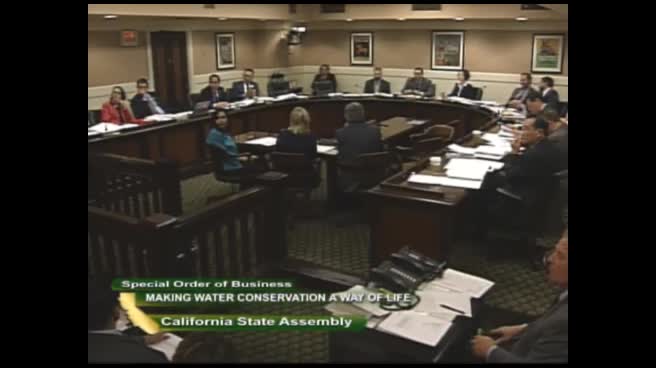 12MIN
Assembly Standing Committee on Water, Parks, and Wildlife
Bill Author

Bill Co-Author(s):