AB 993: Examination of victims of sex crimes.
- Session Year: 2017-2018
- House: Assembly
- Latest Version Date: 2017-09-27
Existing law authorizes, the prosecution to apply for an order that a victims testimony at the preliminary hearing be video recorded and the video recording preserved when the defendant has been charged with certain sex crimes, including rape and sodomy, and the victim is a person 15 years of age or less or is developmentally disabled as a result of an intellectual disability.
This bill would also authorize the prosecution to apply for an order that a victims testimony at the preliminary hearing be video recorded and preserved when the defendant has been charged with aggravated sexual assault of a child under 14 years of age or charged with sexual intercourse, sodomy, sexual penetration, or oral copulation with a child under 10 years of age.
(a)When a defendant has been charged with a violation of Section 220, 243.4, 261, 261.5, 264.1, 269, 273a, 273d, 285, 286, 288, 288a, 288.5, 288.7, 289, or 647.6, and the victim either is a person 15 years of age or younger or is developmentally disabled as a result of an intellectual disability, as specified in subdivision (a) of Section 4512 of the Welfare and Institutions Code, the people may apply for an order that the victims testimony at the preliminary hearing, in addition to being stenographically recorded, be video recorded and the video recording preserved.
(b)The application for the order shall be in writing and made three days prior to the preliminary hearing.
(c)Upon timely receipt of the application, the magistrate shall order that the testimony of the victim given at the preliminary hearing be taken and preserved as a video recording, in addition to being stenographically recorded. The video recording shall be transmitted to the clerk of the court in which the action is pending.
(d)If at the time of trial the court finds that further testimony would cause the victim emotional trauma so that the victim is medically unavailable or unavailable within the meaning of Section 240 of the Evidence Code, the court may admit the video recording of the victims testimony at the preliminary hearing as former testimony under Section 1291 of the Evidence Code.
(e)A video recording that is taken pursuant to this section is subject to a protective order of the court for the purpose of protecting the privacy of the victim. This subdivision does not affect the provisions of subdivision (b) of Section 868.7.
(f)A video recording made pursuant to this section shall be made available to the prosecuting attorney, the defendant, and his or her attorney for viewing during ordinary business hours. A video recording that is made available pursuant to this section is subject to a protective order of the court for the purpose of protecting the privacy of the victim.
(g)The video recording shall be destroyed after five years have elapsed from the date of entry of judgment, except that if an appeal is filed, the video recording shall not be destroyed until a final judgment on appeal has been rendered.
(a)When a defendant has been charged with a violation of Section 220, 243.4, 261, 261.5, 264.1, 269, 273a, 273d, 285, 286, 288, 288a, 288.5, 288.7, 289, or 647.6, and the victim either is a person 15 years of age or younger or is developmentally disabled as a result of an intellectual disability, as specified in subdivision (a) of Section 4512 of the Welfare and Institutions Code, the people may apply for an order that the victims testimony at the preliminary hearing, in addition to being stenographically recorded, be video recorded and the video recording preserved.
(b)The application for the order shall be in writing and made three days prior to the preliminary hearing.
(c)Upon timely receipt of the application, the magistrate shall order that the testimony of the victim given at the preliminary hearing be taken and preserved as a video recording, in addition to being stenographically recorded. The video recording shall be transmitted to the clerk of the court in which the action is pending.
(d)If at the time of trial the court finds that further testimony would cause the victim emotional trauma so that the victim is medically unavailable or otherwise unavailable within the meaning of Section 240 of the Evidence Code, the court may admit the video recording of the victims testimony at the preliminary hearing as former testimony under Section 1291 of the Evidence Code.
(e)A video recording that is taken pursuant to this section is subject to a protective order of the court for the purpose of protecting the privacy of the victim. This subdivision does not affect the provisions of subdivision (b) of Section 868.7.
(f)A video recording made pursuant to this section shall be made available to the prosecuting attorney, the defendant, and his or her attorney for viewing during ordinary business hours. A video recording that is made available pursuant to this section is subject to a protective order of the court for the purpose of protecting the privacy of the victim.
(g)The video recording shall be destroyed after five years have elapsed from the date of entry of judgment, except that if an appeal is filed, the video recording shall not be destroyed until a final judgment on appeal has been rendered.
(a)When a defendant has been charged with a violation of Section 220, 243.4, 261, 261.5, 264.1, 269, 273a, 273d, 285, 286, 288, 288a, 288.5, 288.7, 289, or 647.6, and the victim either is a person 15 years of age or less younger or is developmentally disabled as a result of an intellectual disability, as specified in subdivision (a) of Section 4512 of the Welfare and Institutions Code, the people may apply for an order that the victims testimony at the preliminary hearing, in addition to being stenographically recorded, be video recorded and the video recording preserved.
(b)The application for the order shall be in writing and made three days prior to the preliminary hearing.
(c)Upon timely receipt of the application, the magistrate shall order that the testimony of the victim given at the preliminary hearing be taken and preserved as a video recording, in addition to being stenographically recorded. The video recording shall be transmitted to the clerk of the court in which the action is pending.
(d)If at the time of trial the court finds that further testimony would cause the victim emotional trauma so that the victim is medically unavailable or otherwise unavailable within the meaning of Section 240 of the Evidence Code, the court may admit the video recording of the victims testimony at the preliminary hearing as former testimony under Section 1291 of the Evidence Code.
(e)A video recording that is taken pursuant to this section is subject to a protective order of the court for the purpose of protecting the privacy of the victim. This subdivision does not affect the provisions of subdivision (b) of Section 868.7.
(f)A video recording made pursuant to this section shall be made available to the prosecuting attorney, the defendant, and his or her attorney for viewing during ordinary business hours. A video recording that is made available pursuant to this section is subject to a protective order of the court for the purpose of protecting the privacy of the victim.
(g)The video recording shall be destroyed after five years have elapsed from the date of entry of judgment, except that if an appeal is filed, the video recording shall not be destroyed until a final judgment on appeal has been rendered.
REVISIONS: HeadingLines 2 and 3.|
Date
|
Status
|
|---|---|
| Sep 27, 2017 | Chaptered by Secretary of State - Chapter 320, Statutes of 2017. |
| Sep 27, 2017 | Approved by the Governor. |
| Sep 13, 2017 | Enrolled and presented to the Governor at 4 p.m. |
| Sep 7, 2017 | Senate amendments concurred in. To Engrossing and Enrolling. |
| Aug 31, 2017 | In Assembly. Concurrence in Senate amendments pending. May be considered on or after September 2 pursuant to Assembly Rule 77. |
| Aug 31, 2017 | Read third time. Passed. Ordered to the Assembly. |
| Jul 11, 2017 | Read second time. Ordered to third reading. |
| Jul 10, 2017 | From committee: Be ordered to second reading pursuant to Senate Rule 28.8. |
| Jul 3, 2017 | From committee chair, with author's amendments: Amend, and re-refer to committee. Read second time, amended, and re-referred to Com. on APPR. |
| Jun 20, 2017 | From committee: Do pass and re-refer to Com. on APPR. (Ayes 7. Noes 0.) (June 20). Re-referred to Com. on APPR. |
| May 18, 2017 | Referred to Com. on PUB. S. |
| May 4, 2017 | In Senate. Read first time. To Com. on RLS. for assignment. |
| May 4, 2017 | Read third time. Passed. Ordered to the Senate. (Ayes 76. Noes 0. Page 1393.) |
| Apr 27, 2017 | Read second time. Ordered to Consent Calendar. |
| Apr 26, 2017 | From committee: Do pass. To Consent Calendar. (Ayes 16. Noes 0.) (April 26). |
| Mar 21, 2017 | Coauthors revised. |
| Mar 2, 2017 | Referred to Com. on PUB. S. |
| Feb 17, 2017 | From printer. May be heard in committee March 19. |
| Feb 16, 2017 | Read first time. To print. |
|
Date
|
Description
|
Location
|
Votes
|
|
|---|---|---|---|---|
| Sep 7, 2017 | AB 993 BAKER Concurrence in Senate Amendments | Assembly Floor |
Passed |
|
| Aug 31, 2017 | Assembly 3rd Reading AB993 Baker et al. By Jackson | Senate Floor |
Passed |
|
| Jun 20, 2017 | Do pass, but first be re-referred to the Committee on [Appropriations] | Senate Standing Committee on Public Safety |
Passed |
|
| May 4, 2017 | AB 993 BAKER Consent Calendar Second Day Regular Session | Assembly Floor |
Passed |
|
| Apr 26, 2017 | Do pass. To Consent Calendar. | Assembly Standing Committee on Appropriations |
Passed |
|
| Mar 21, 2017 | Do pass and be re-referred to the Committee on [Appropriations] | Assembly Standing Committee on Public Safety |
Passed |
This list shows positions taken on this bill by organizations on the date displayed, which is linked to the original source.
Positions by individuals are not included.
CONCURRENCE IN SENATE AMENDMENTS
CSA1 Bill Id:AB 993
Author:(Baker)
As Amended Ver:July 3, 2017
Majority vote
ASSEMBLY: | 76-0 | (May 4, 2017) | SENATE: | 39-0 | (August 31, 2017) |
Original Committee Reference: PUB. S.
SUMMARY: Authorizes the prosecution to apply for an order that the victim's at the preliminary hearing be video recorded and the video recording be preserved when the defendant is charged with aggravated sexual assault of a child under the age of 14 years of age, or charged with oral copulation, sexual penetration, rape or sodomy of a child under 10 years of age.
The Senate amendment makes a non-substantive technical change.
EXISTING LAW:
- Provides that when a defendant is charged with specified sex offenses, child abuse, lewd and lascivious acts on a child under the age of 14, or continuous sex abuse of a child, and the victim either is a person 15 years of age or less or is developmentally disabled as a result of an intellectual disability, as specified, the people may apply for an order that the victim's testimony at the preliminary hearing, in addition to being stenographically recorded, be recorded and preserved on videotape.
- States that at the time of trial the court finds that further testimony in any of the qualifying cases would cause the victim emotional trauma so that the victim is medically unavailable or otherwise unavailable within the statutory definition of unavailability, the court may admit the videotape of the victim's testimony at the preliminary hearing, as specified.
- Provides that when a defendant is charged with spousal rape or infliction of corporal injury resulting in a traumatic injury to a spouse, former spouse, or domestic partner, the people may apply for an order that the victim's testimony at the preliminary hearing, in addition to being stenographically recorded, be recorded and preserved on videotape.
- Allows, in cases where a minor, 13 years or younger, will testify that a sexual offense was committed against or with the minor, or that the minor was a victim of a violent felony, as defined, that the minor may testify by way of contemporaneous examination and cross examination in another location and communicated to the courtroom by closed-circuit television if the court finds that the impact on the minor of one or more of the following is shown by clear and convincing evidence to make the minor unavailable as a witness unless closed-circuit television is used:
- Testimony by the minor in the presence of the defendant would result in the child suffering serious emotional distress so that the child would be unavailable as a witness;
- The defendant used a deadly weapon in the commission of the offense;
- Threats of serious bodily injury to be inflicted on the minor or a family member, of incarceration or deportation of the minor or a family member, or of removal of the minor from the family or dissolution of the family in order to prevent or dissuade the minor from attending or giving testimony at any trial or court proceeding or to prevent the minor from reporting the alleged sexual offense or from assisting in the prosecution;
- The defendant inflicted great bodily injury upon the child in the commission of the offense; and,
- The defendant or his or her counsel behaved during the hearing or trial in a way that caused the minor to be unable to continue his or her testimony.
- Provides that when a defendant is charged with specified sex offenses, child abuse, lewd and lascivious acts on a child under the age of 14, or continuous sex abuse of a child, or an attempt to commit one of these crimes upon a person with a disability the court in its discretion may make accommodations to support the person, and the prosecutor may apply for an order that the testimony of the person with a disability at the preliminary hearing, in addition to being stenographically recorded, be recorded and preserved on videotape.
- States that any person who commits any of the following acts upon a child who is under the age of 14 and seven or more years younger than the person is guilty of aggravated sexual assault:
- Rape by force, violence, or threat of future injury;
- Rape or sexual penetration in concert;
- Sodomy by force, violence, or threat of future injury;
- Oral copulation by force, violence, threat of future injury, or by acting in concert
- Sexual penetration by force or violence.
- Provides that any person convicted of aggravated sexual assault is guilty of a felony, punishable by imprisonment in the state prison for a term of 15 years to life.
- Provides that any person 18 years of age or older who engages in sexual intercourse or sodomy with a child who is 10 years of age or younger is guilty of a felony punishable by imprisonment in the state prison of a term of 25 years to life.
- States that any person 18 years of age or older who engages in oral copulation or sexual penetration with a child who is 10 years of age or younger is guilty of a felony punishable by imprisonment in the state prison of a term of 15 years to life.
AS PASSED BY THE ASSEMBLY, this bill authorized the prosecution to apply for an order that the victim's at the preliminary hearing be video recorded and the video recording be preserved when the defendant is charged with aggravated sexual assault of a child under the age of 14 years of age, or charged with oral copulation, sexual penetration, rape or sodomy of a child under 10 years of age.
FISCAL EFFECT: According to the Senate Appropriations Committee, pursuant to Senate Rule 28.8, negligible state costs.
COMMENTS: According to the author, "Children who are victims of sexual crimes may be ordered to testify in criminal cases against their accuser. In taking testimony from a child, the court must take special care to protect the child from harassment, embarrassment, or further trauma. Children are asked to be able to recall events accurately, understand the difference between truth and lies, and understand the importance of testifying truthfully. More psychological harm can be done to a child when the child is required to testify in a room full of strangers and to recall traumatic events. Victims who are 15 years or younger or developmentally disabled have the ability to provide video and stenographic testimony in certain cases of heinous sex crimes. However, there are specific crimes against minors, with specific punishments, where video and stenographic testimony is not allowed. Victims of aggravated sexual assault who are less than 14 years of age, and victims of unlawful sexual intercourse, sodomy, sexual penetration, and oral copulation under the age of 10 do not currently have the ability to request a video and stenographic testimony."
Analysis Prepared by: Gregory Pagan / PUB. S. / (916) 319-3744 FN: 0001118
Office of Senate Floor Analyses (916) 651-1520 Fax: (916) 327-4478 | AB |
THIRD READING
Bill No: AB 993
:
SENATE PUBLIC SAFETY COMMITTEE: 7-0, 6/20/17
AYES: Skinner, Anderson, Bradford, Jackson, Mitchell, Stone, Wiener
SENATE APPROPRIATIONS COMMITTEE: Senate Rule 28.8
ASSEMBLY FLOOR: 76-0, 5/4/17 (Consent) - See last page for vote
SOURCE: Alameda County District Attorney’s Office
DIGEST:
This bill allows prosecutors to request that a victim’s testimony at the preliminary hearing be video recorded and the recording preserved for when the defendant has been charged with specified sex crimes against minors.
Existing law:
- Authorizes a witness to be examined conditionally in cases of human trafficking, domestic violence, and serious felonies if there is evidence that the witness is being dissuaded not to testify by intimidation or physical threats or that the witness’ life is in jeopardy. (Pen. Code, § 1336.)
- States that the defendant has the right to be present in person and with counsel at the conditional examination. (Pen. Code, § 1340, subd. (a).)
- States that the deposition, or a certified copy of it, may be read in evidence, or if the examination was video-recorded, that video-recording may be shown by either party at the trial if the court finds that the witness is statutorily unavailable as a witness. The same objections may be taken to a question or answer contained in the deposition or video-recording as if the witness had been examined orally in court. (Pen. Code, § 1345.)
- Provides that when a defendant is charged with specified sex offenses, child abuse, lewd and lascivious acts on a child under the age of 14, or continuous sex abuse of a child, and the victim is either a person 15 years of age or less or is developmentally disabled as a result of an intellectual disability, as specified, the prosecution may apply for an order that the victim's testimony at the preliminary hearing, in addition to being stenographically recorded, be recorded and preserved on videotape. (Pen. Code, § 1346, subd. (a).)
- States that at the time of trial the court finds that further testimony in any of the qualifying cases would cause the victim emotional trauma so that the victim is medically unavailable or otherwise unavailable within the statutory definition of unavailability, the court may admit the videotape of the victim's testimony at the preliminary hearing, as specified. (Pen. Code, § 1346, subd. (d).)
- Specifies that expert testimony that establishes that physical or mental trauma resulting from an alleged crime has caused harm to a witness of sufficient severity that the witness is physically unable to testify or is unable to testify without suffering substantial trauma may constitute a sufficient showing of unavailability. (Evid. Code, § 240, subd. (c).)
- Provides that any person convicted of aggravated sexual assault is guilty of a felony, punishable by imprisonment in the state prison for a term of 15 years to life. (Pen. Code, § 269, subd. (b).)
- Provides that any person 18 years of age or older who engages in sexual intercourse or sodomy with a child who is 10 years of age or younger is guilty of a felony punishable by imprisonment in the state prison of a term of 25 years to life. (Pen. Code, § 288.7, subd. (a).)
- States that any person 18 years of age or older who engages in oral copulation or sexual penetration with a child who is 10 years of age or younger is guilty of a felony punishable by imprisonment in the state prison of a term of 15 years to life. (Pen. Code, § 288.7, subd. (a).)
This bill adds aggravated sexual assault and specified sex offenses against a child 10 years of age or younger to the existing statute that authorizes the prosecution to apply for an order that the testimony of a victim at the preliminary hearing be video recorded and preserved.
FISCAL EFFECT: Appropriation: Fiscal Com.: Local:
Alameda County District Attorney’s Office (source)
Alameda County Sheriff’s Office
California District Attorneys Association
California Police Chiefs Association
California State Sheriffs’ Association
Child Abuse Prevention Council of Contra Costa County
Children’s Advocacy Centers of California
Crime Victims United
Los Angeles County District Attorney’s Office
Moraga Police Department
San Diego District Attorney’s Office
OPPOSITION: (Verified 7/10/17)
California Public Defenders Association
ASSEMBLY FLOOR: 76-0, 5/4/17
AYES: Acosta, Aguiar-Curry, Arambula, Baker, Berman, Bloom, Bocanegra, Bonta, Brough, Burke, Caballero, Calderon, Cervantes, Chau, Chávez, Chen, Chiu, Choi, Chu, Cooley, Cooper, Cunningham, Dababneh, Dahle, Daly, Eggman, Flora, Fong, Frazier, Friedman, Gallagher, Eduardo Garcia, Gipson, Gloria, Gomez, Gonzalez Fletcher, Gray, Grayson, Harper, Holden, Irwin, Jones-Sawyer, Kalra, Kiley, Lackey, Levine, Limón, Low, Maienschein, Mathis, Mayes, McCarty, Medina, Melendez, Mullin, Muratsuchi, Nazarian, Obernolte, O'Donnell, Quirk, Quirk-Silva, Reyes, Ridley-Thomas, Rodriguez, Rubio, Salas, Santiago, Steinorth, Mark Stone, Thurmond, Ting, Voepel, Waldron, Weber, Wood, Rendon
NO VOTE RECORDED: Travis Allen, Bigelow, Cristina Garcia, Patterson
Prepared by: Stella Choe / PUB. S. /
7/12/17 9:42:35
**** END ****
SENATE COMMITTEE ON PUBLIC SAFETY
Senator Nancy Skinner, Chair
2017 - 2018 Regular
Bill No: AB 993 Hearing Date: June 20, 2017
Author: | Baker | ||
Version: | February 16, 2017 | ||
Urgency: | No | Fiscal: | Yes |
Consultant: | SC | ||
Subject: Examination of Victims of Sex Crimes
HISTORY
Source: Alameda County District Attorney’s Office
Prior Legislation: AB 1900 (Quirk), Ch. 160, Stats. 2014
AB 1610 (Bonta), Ch. 709, Stats. 2014
SB 138 (Maldonado), Ch. 480, Stats. 2005
AB 20 (Lieber), Ch. 823, Stats. 2004
AB 249 (Cunneen), Ch. 19, Stats. 1997
Support: Alameda County Sheriff’s Office; California District Attorneys Association; California Police Chiefs Association; California State Sheriffs’ Association; Child Abuse Prevention Council of Contra Costa County; Children’s Advocacy Centers of California; Crime Victims United; Los Angeles County District Attorney’s Office; Moraga Police Department; San Diego District Attorney’s Office
Opposition: California Public Defenders Association
Assembly Floor Vote: 76 - 0
PURPOSE
The purpose of this bill is to allow prosecutors to request that a victim’s testimony at the preliminary hearing be video recorded and the recording preserved for when the defendant has been charged with specified sex crimes against minors.
Existing law authorizes a witness to be examined conditionally in cases of human trafficking, domestic violence, and serious felonies if there is evidence that the witness is being dissuaded not to testify by intimidation or physical threats or that the witness’ life is in jeopardy. (Pen. Code, § 1336.)
Existing law specifies the following grounds for an application to examine a witness conditionally:
- When a material witness for the defendant, or for the people, is about to leave the state, or is so sick or infirm as to afford reasonable grounds for apprehension that he or she will be unable to attend the trial, or is a person 65 years of age or older, or a dependent adult; or,
- When there is evidence that the life of a witness is in jeopardy. (Pen. Code, § 1336.)
Existing law states that the defendant has the right to be present in person and with counsel at the conditional examination. (Pen. Code, § 1340, subd. (a).)
Existing law provides that if, at the designated time and place, it is shown to the satisfaction of the magistrate that the stated ground for conditional examination is not true or that the application was made to avoid the examination of the witness at the trial, the examination cannot take place. (Pen. Code, § 1341.)
Existing law states that the deposition, or a certified copy of it, may be read in evidence, or if the examination was video-recorded, that video-recording may be shown by either party at the trial if the court finds that the witness is statutorily unavailable as a witness. The same objections may be taken to a question or answer contained in the deposition or video-recording as if the witness had been examined orally in court. (Pen. Code, § 1345.)
Existing law provides that when a defendant is charged with specified sex offenses, child abuse, lewd and lascivious acts on a child under the age of 14, or continuous sex abuse of a child, and the victim is either a person 15 years of age or less or is developmentally disabled as a result of an intellectual disability, as specified, the prosecution may apply for an order that the victim's testimony at the preliminary hearing, in addition to being stenographically recorded, be recorded and preserved on videotape. (Pen. Code, § 1346, subd. (a).)
Existing law states that at the time of trial the court finds that further testimony in any of the qualifying cases would cause the victim emotional trauma so that the victim is medically unavailable or otherwise unavailable within the statutory definition of unavailability, the court may admit the videotape of the victim's testimony at the preliminary hearing, as specified. (Pen. Code, § 1346, subd. (d).)
Existing law provides that "unavailable as a witness" means that the declarant is any of the following:
- Exempted or precluded on the ground of privilege from testifying concerning the matter to which his or her statement is relevant;
- Disqualified from testifying to the matter;
- Dead or unable to attend or to testify at the hearing because of then-existing physical or mental illness or infirmity;
- Absent from the hearing and the court is unable to compel his or her attendance by its process;
- Absent from the hearing and the proponent of his or her statement has exercised reasonable diligence but has been unable to procure his or her attendance by the court's process; or,
- Persistent in refusing to testify concerning the subject matter of the declarant's statement despite having been found in contempt for refusal to testify. (Evid. Code, § 240, subd. (a).)
Existing law states that a declarant is not unavailable as a witness if the exemption, preclusion, disqualification, death, inability, or absence of the declarant was brought about by the procurement or wrongdoing of the proponent of his or her statement for the purpose of preventing the declarant from attending or testifying. (Evid. Code, § 240, subd. (b).)
Existing law specifies that expert testimony that establishes that physical or mental trauma resulting from an alleged crime has caused harm to a witness of sufficient severity that the witness is physically unable to testify or is unable to testify without suffering substantial trauma may constitute a sufficient showing of unavailability. (Evid. Code, § 240, subd. (c).)
Existing law states that any person who commits any of the following acts upon a child who is under the age of 14 and seven or more years younger than the person is guilty of aggravated sexual assault:
- Rape by force, violence, or threat of future injury;
- Rape or sexual penetration in concert;
- Sodomy by force, violence, or threat of future injury;
- Oral copulation by force, violence, threat of future injury, or by acting in concert; or,
- Sexual penetration by force or violence. (Pen. Code, § 269, subd. (a)(1)-(5).)
Existing law provides that any person convicted of aggravated sexual assault is guilty of a felony, punishable by imprisonment in the state prison for a term of 15 years to life. (Pen. Code, § 269, subd. (b).)
Existing law provides that any person 18 years of age or older who engages in sexual intercourse or sodomy with a child who is 10 years of age or younger is guilty of a felony punishable by imprisonment in the state prison of a term of 25 years to life. (Pen. Code, § 288.7, subd. (a).)
Existing law states that any person 18 years of age or older who engages in oral copulation or sexual penetration with a child who is 10 years of age or younger is guilty of a felony punishable by imprisonment in the state prison of a term of 15 years to life. (Pen. Code, § 288.7, subd. (a).)
This bill adds Penal Code sections 269 and 288.7 to the existing statute that authorizes the prosecution to apply for an order that the testimony of a victim, who is under the age of 15 or developmentally disabled as a result of an intellectual disability, at the preliminary hearing be video recorded and preserved when the defendant has been charged with specified sex crimes or child abuse.
COMMENTS
1. Need for This Bill
According to the author:
Children under the age of 14 who have been victims of aggravated sexual assault, and children under the age of 10 who have been victims of unlawful sexual intercourse, sodomy, sexual penetration, and oral copulation will now have the option to submit a request to utilize video and stenographic testimony, should they choose to.
- Preliminary Hearings
The prosecution begins a felony case either by filing a grand jury indictment in the trial court or by filing a complaint with a magistrate. (Cal. Const., art. I, section 14.) If a complaint is filed, a preliminary hearing must be held before a magistrate to endure that there is enough evidence to hold the defendant to answer in the trial court. (Pen. Code, § 872.)
At a preliminary hearing, the prosecution must present sufficient evidence to convince the magistrate that probable cause exists to believe that a crime has been committed and that the defendant committed it. (Pen. Code, §§ 872 & 995.) If the prosecution shows probable cause, the magistrate will hold the defendant to answer to the charge in the trial court. The prosecution must then file an information in the court within 15 days. (Penal Code, §§ 739 and 1382, subd. (a)(1).)
Due to the fact that the vast majority of felony cases settle before trial, the preliminary hearing may be the sole proceeding in the case at which evidence is taken. (San Jose Mercury News v. Municipal Court (1982) 30 Cal 3d 498, 511.) The original purpose of the hearing was to eliminate at an early stage changes that could be substantiated, thus saving the accused the personal and financial hardship of defending groundless charges, and the state the expense of prosecuting.
Prior to preliminary hearings, defense counsel and prosecution are entitled to all discovery materials. Both sides have a clear picture of what the evidence in the case is and can fairly evaluate the weight of that evidence and often settle the matter prior to preliminary hearing.
At a preliminary hearing, the prosecution may present live witnesses, hearsay from qualified law enforcement witnesses, or a combination of the two. (Pen. Code, § 872, subd. (b); Cal. Const., art. I, section 30(b); Whitman v. Superior Court (1991) 54 Cal.3d 1063.) The preliminary hearing transcript, like a civil deposition transcript, can provide a basis for later impeaching a witness at trial if the witness testifies inconsistently. (Evid. Code, § 1235; California v. Green (1970) 399 U.S. 149). Furthermore, the preliminary hearing transcript, because it is subject to cross-examination, may be used at trial when a witness is later unavailable. (Evid. Code, §§ 240, subd. (a)(4) & 1291; California v. Green, supra.)
At preliminary hearings, the defense may cross-examine witnesses for purposes of raising affirmative defenses, negating an element of the offense, or impeaching a witness. (Jennings v. Superior Court (1967) 66 Cal.2d 867; Alford v. Superior Court (1972) 29 Cal. App. 3d 724.) Cross-examination for the purpose of discovery is not allowed. (Penal Code Section 866, subd. (b).) Similarly, the presentation of defense evidence is limited to that which, if believed, is reasonably likely to establish an affirmative defense; negate an element of a crime charged; or impeach a prosecution witness or declarant. (Pen. Code, § 866, subd. (a).)
At a preliminary hearing, defense counsel may move to suppress illegally seized evidence introduced at the hearing by making a written notice. A favorable ruling on a motion to suppress evidence may result in the discharge of part or all of the complaint. (People v. Belknap (1974) 41 Cal. App. 3d 1019.)
This bill would allow the prosecution to apply for an order to have a victim’s testimony at the preliminary hearing be video recorded and the recording preserved when the defendant has been charged with aggravated sexual assault of a victim under the age of 15 or other specified sex crimes against a victim under the age of 11. The video recording would be preserved and if the victim later becomes unavailable to testify at trial, as defined by Evidence Code section 240, the video recording may be admitted into evidence. Existing law authorizes the prosecution to apply for an order to have a victim’s testimony at the preliminary hearing be video recorded and the recording preserved for specified sex offenses and child abuse cases. This bill provides additional crimes to the existing statute that would allow the prosecutor to make this request.
- The Right to Confrontation and Conditional Examinations
As a general rule, state and federal constitutional law requires every defendant on trial be allowed to see, confront and meaningfully cross-examine all the witnesses against him or her. (U.S. Const., 6th Amend; Cal. Const, art. I, § 15.) Under certain circumstances, if the witness is about to leave California, or is so sick or infirm that there is reasonable grounds to believe the witness will be unable to testify at trial, a conditional examination may be conducted in order to preserve the witness's testimony. (Pen. Code, § 1336.) Conditional examinations are usually videotaped before trial and subsequently played for the jury. The defendant is still entitled to cross-examination and confrontation at the time of videotaping thus preserving his or her right to confront and cross-examine the witness. (People v. Rojas (1975) 15 Cal.3d 540.)
Penal Code Section 1336 explicitly lists the instances in which conditional examinations may be ordered. Those instances include: when a material witness for the defendant, or for the people, is about to leave California, or is so sick or infirm as to afford reasonable grounds to believe he or she will be unable to attend the trial, or is a person 65 years of age or older. When the defendant is charged with a serious felony, a conditional examination may be ordered when there is evidence that the life of a witness is in jeopardy. (Pen. Code, § 1336, subds. (a) and (b).) Penal Code Section 1339 provides that "[i]f the court or judge is satisfied that the examination of the witness is necessary, an order must be made that the witness be examined conditionally, at a specified time and place, and before a magistrate designated therein." Usually, the prosecution submits affidavits showing some threat to the witness and the court decides whether to order the conditional examination; although there is no requirement the witness be directly threatened or intimidated. (People v. Jurado (2006) 38 Cal.4th 72, 114.)
The Sixth Amendment requires that the defendant have a "meaningful" cross examination of the witness. (Chambers v. Mississippi (1973) 410 U.S. 284, 295; People v. Patino (1994) 26 Cal.App.4th 1737, 1746.) If the witness states a refusal to testify three weeks after the arrest and a conditional examination is scheduled several months before the trial, the defense attorney may not be fully prepared to cross-examine. Investigation conducted prior to trial may reveal more facts not addressed at the initial recording. Although this is true in all cases of conditional examination, cross-examination is critical at trial because even more than the witness's words, his or her demeanor may significantly impact the jury. Therefore, conditional examinations ought to be used only sparingly and when absolutely necessary in order to protect the integrity of a jury trial.
- Unavailability Generally
Conditional examinations may not be introduced into evidence unless the witness meets the legal definition of "unavailable". Generally, out-of-court statements offered for the truth of the matter asserted are inadmissible as hearsay. However, if the declarant is "unavailable", his or her statement may be admitted as an exception to the hearsay rule. Under existing law, "unavailability" has a specific definition. Evidence Code Section 240 lists several instances in which a declarant may be legally "unavailable". The following grounds create lawful "unavailability": an assertion of the declarant's Fifth Amendment right against self-incrimination, the declarant is disqualified from testifying to the matter, the declarant is dead or unable to attend or testify due to physical or mental illness or infirmity, or the declarant is absent from the hearing and the court or the proponent of his or her statement has exercised reasonable diligence but has been unable to procure his or her attendance by the court's process. (Evid. Code, § 240, subd. (a).)
However, existing law also states the declarant is not considered "unavailable" if the grounds for absence are brought about by the procurement or wrongdoing of the proponent for the purposes of preventing the declarant from attending or testifying. (Evid. Code, § 240, subd. (b).) This means a defendant on trial may not "arrange" for a person to be unavailable and then claim that his or her statements are admissible under the hearsay rule. This is referred to as "forfeiture by wrongdoing," meaning the defendant forfeits his or her right to confrontation as to that witness.
The California Appellate Court further explained this exception to the doctrine of unavailability: "[Section 240 was not intended to apply] when the party, for his or her own supposed advantage, creates the witnesses' or his or her own legal unavailability or is somehow responsible for allowing the unavailability to occur. This distinction has long been acknowledged. (Citations omitted.) It was a principal concern of the Law Revision Commission, as it had been of the Commission on the Uniform Evidence Code, to safeguard against 'sharp practices' in order to assure ‘that unavailability is honest and not planned in order to gain an advantage'." (People v. Allen (1989) 215 Cal.App. 3rd 392, 411.)
Courts have long held that "unavailability" should not be the preferred form of evidence. The California Supreme Court stated, "The fundamental purpose of the unavailability requirement is to ensure that prior testimony is substituted for live testimony, the generally preferred form of evidence, only when necessary. 'Former testimony often is only a weaker substitute for live testimony. . . . If the declarant is available and the same information can be presented to the trier of fact in the form of live testimony, with full cross-examination and the opportunity to view the demeanor of the declarant, there is little justification for relying on the weaker version. When two versions of the same evidence are available, long standing principles of the law of hearsay, applicable as well to Confrontation Clause analysis, favor the better evidence. But if the declarant is unavailable, no “better” version of the evidence exists, and the former testimony may be admitted as a substitute for live testimony on the same point.' (citation omitted). As this court, quoting Wigmore's treatise, has observed, ‘[t]he general principle upon which depositions and former testimony should be resorted to is the simple principle of necessity, - i.e., the absence of any other means of utilizing the witness' knowledge.' (citation omitted)." (People vs. Reed (1996) 13 Cal.4th 219, 225.)
- Argument in Support
The Alameda County District Attorney’s Office, the sponsor of this bill, writes in support:
Penal Code section 1346 allows for the video recording of the preliminary hearing testimony of certain victims in certain types of crimes, including many child molestation crimes. However, section 1346 does not allow for the video recording of children who are the victims of two of the most serious molestation crimes penal code section 288.7 and 269.
AB 993 is important because sometimes the victim becomes unavailable for trial due to emotional trauma, medical reasons, or otherwise, then the Court may admit the video recording of the victim’s preliminary testimony at trial as former testimony under Evidence Code 1291. A video recording allowing the jury to see and hear the victim would likely be a better and more effective way to present the evidence than just having someone read a preliminary hearing transcript. If the victim is under age 12, then the Court may admit the video recording of the victim’s preliminary hearing testimony at trial under Evidence Code section 1360.
- Argument in Opposition
The California Public Defenders Association writes in opposition:
AB 993 would add crimes that are punishable by either 15-life or 25-life to the list of offenses in which a district attorney could apply to have the witness’ preliminary hearing testimony videotaped. Then if the judge found that victim would be further traumatized by testifying in front of a jury, the prosecution could just play the videotape.
AB 993 is not needed and is duplicative. The individual offenses encompassed within Penal Code sections 269 or 288.7 – rape, oral copulation and sodomy with a child 15 years are already covered by Penal Code section 1346. California does not need additional laws that cover matters already addressed.
. . . .
The voters of the state of California balanced the rights of the defendant and the victims when they enacted Penal Code section 872(b) which provided that probable cause at the preliminary hearing could be based on the sworn testimony of law enforcement officer or retired law enforcement officer. (Initiative Proposition 15, June 5, 1990.) In effect, this means that the prosecution does not have to subject the victims to testifying twice, first in the preliminary hearing and then at trial. Thus, AB 993 is unnecessary.
-- END –
Date of Hearing: April 26, 2017
ASSEMBLY COMMITTEE ON APPROPRIATIONS
Lorena Gonzalez Fletcher, Chair
ABPCA Bill Id:AB 993
Author:(Baker) – As Introduced Ver:February 16, 2017
Policy Committee: | Public Safety | Vote: | 7 - 0 |
|
| ||
|
|
Urgency: No State Mandated Local Program: No Reimbursable: No
SUMMARY:
This bill authorizes the prosecution to apply for an order to require the victim's testimony at the preliminary hearing be video recorded and the video recording be preserved when the defendant is charged with aggravated sexual assault of a child under the age of 14 years of age, or charged with oral copulation, sexual penetration, rape or sodomy of a child under 10 years of age.
FISCAL EFFECT:
No additional cost on trial courts.
COMMENTS:
- Background. As a general rule, state and federal constitutional law requires every defendant on trial be allowed to see, confront and meaningfully cross-examine all the witnesses against him or her. Current law explicitly lists the instances in which conditional examinations may be ordered. Those instances include: when a material witness for the defendant, or for the people, is about to leave California, or is so sick or infirm as to afford reasonable grounds to believe he or she will be unable to attend the trial, or is a person 65 years of age or older. The defendant is still entitled to cross-examination and confrontation at the time of videotaping thus preserving his or her right to confront and cross-examine the witness. Also, when the defendant is charged with a serious felony, a conditional examination may be ordered when there is evidence that the life of a witness is in jeopardy.
- Purpose. The author states, “there are specific crimes against minors, with specific punishments, where video and stenographic testimony is not allowed. Victims of aggravated sexual assault who are less than 14 years of age, and victims of unlawful sexual intercourse, sodomy, sexual penetration, and oral copulation under the age of 10 do not currently have the ability to request a video and stenographic testimony.”
The argument for AB 993 is that there may be less harm to a child if the child recalls the traumatic event(s) in front of a camera, instead of a room full of strangers.
Analysis Prepared by: Pedro Reyes / APPR. / (916) 319-2081
Date of Hearing:
Chief Counsel: Gregory Pagan
ASSEMBLY COMMITTEE ON PUBLIC SAFETY
Reginald Byron Jones-Sawyer, Sr., Chair
ABPCA Bill Id:AB 993
Author:(Baker) – As Introduced Ver:February 16, 2017
SUMMARY:
Authorizes the prosecution to apply for an order that the victim's at the preliminary hearing be video recorded and the video recording be preserved when the defendant is charged with aggravated sexual assault of a child under the age of 14 years of age, or charged with oral copulation, sexual penetration, rape or sodomy of a child under 10 years of age.
EXISTING LAW:
- Provides that when a defendant is charged with specified sex offenses, child abuse, lewd and lascivious acts on a child under the age of 14, or continuous sex abuse of a child, and the victim either is a person 15 years of age or less or is developmentally disabled as a result of an intellectual disability, as specified, the people may apply for an order that the victim's testimony at the preliminary hearing, in addition to being stenographically recorded, be recorded and preserved on videotape. (Pen. Code, § 1346, subd. (a).)
- States that at the time of trial the court finds that further testimony in any of the qualifying cases would cause the victim emotional trauma so that the victim is medically unavailable or otherwise unavailable within the statutory definition of unavailability, the court may admit the videotape of the victim's testimony at the preliminary hearing, as specified. (Pen. Code, § 1346, subd. (d).)
- Provides that when a defendant is charged with spousal rape or infliction of corporal injury resulting in a traumatic injury to a spouse, former spouse, or domestic partner, the people may apply for an order that the victim's testimony at the preliminary hearing, in addition to being stenographically recorded, be recorded and preserved on videotape. (Pen. Code, § 1346.1, subd. (a).)
- Allows, in cases where a minor, 13 years or younger, will testify that a sexual offense was committed against or with the minor, or that the minor was a victim of a violent felony, as defined, that the minor may testify by way of contemporaneous examination and cross examination in another location and communicated to the courtroom by closed-circuit television if the court finds that the impact on the minor of one or more of the following is shown by clear and convincing evidence to make the minor unavailable as a witness unless closed-circuit television is used:
- Testimony by the minor in the presence of the defendant would result in the child suffering serious emotional distress so that the child would be unavailable as a witness;
- The defendant used a deadly weapon in the commission of the offense;
- Threats of serious bodily injury to be inflicted on the minor or a family member, of incarceration or deportation of the minor or a family member, or of removal of the minor from the family or dissolution of the family in order to prevent or dissuade the minor from attending or giving testimony at any trial or court proceeding or to prevent the minor from reporting the alleged sexual offense or from assisting in the prosecution;
- The defendant inflicted great bodily injury upon the child in the commission of the offense; and,
- The defendant or his or her counsel behaved during the hearing or trial in a way that caused the minor to be unable to continue his or her testimony. (Pen. Code § 1347, subd, (b).)
- Testimony by the minor in the presence of the defendant would result in the child suffering serious emotional distress so that the child would be unavailable as a witness;
- Provides that when a defendant is charged with specified sex offenses, child abuse, lewd and lascivious acts on a child under the age of 14, or continuous sex abuse of a child, or an attempt to commit one of these crimes upon a person with a disability the court in its discretion may make accommodations to support the person, and the prosecutor may apply for an order that the testimony of the person with a disability at the preliminary hearing, in addition to being stenographically recorded, be recorded and preserved on videotape. (Pen. Code, § 1347.5, subds, (b) & (c).)
- States that any person who commits any of the following acts upon a child who is under the age of 14 and seven or more years younger than the person is guilty of aggravated sexual assault:
- Rape by force, violence, or threat of future injury;
- Rape or sexual penetration in concert;
- Sodomy by force, violence, or threat of future injury;
- Oral copulation by force, violence, threat of future injury, or by acting in concert
- Sexual penetration by force or violence. (Pen. Code, § 269, subd. (a)(1)-(5).)
- Rape by force, violence, or threat of future injury;
- Provides that any person convicted of aggravated sexual assault is guilty of a felony, punishable by imprisonment in the state prison for a term of 15 years to life. (Pen. Code, § 269, subd. (b).)
- Provides that any person 18 years of age or older who engages in sexual intercourse or sodomy with a child who is 10 years of age or younger is guilty of a felony punishable by imprisonment in the state prison of a term of 25 years to life. (Pen. Code, § 288.7, subd. (a).)
- States that any person 18 years of age or older who engages in oral copulation or sexual penetration with a child who is 10 years of age or younger is guilty of a felony punishable by imprisonment in the state prison of a term of 15 years to life. (Pen. Code, § 288.7, subd. (a).)
FISCAL EFFECT:
Unknown
COMMENTS:
- Author's Statement: According to the author, "Children who are victims of sexual crimes may be ordered to testify in criminal cases against their accuser. In taking testimony from a child, the court must take special care to protect the child from harassment, embarrassment, or further trauma. Children are asked to be able to recall events accurately, understand the difference between truth and lies, and understand the importance of testifying truthfully. More psychological harm can be done to a child when the child is required to testify in a room full of strangers and to recall traumatic events. Victims who are 15 years or younger or developmentally disabled have the ability to provide video and stenographic testimony in certain cases of heinous sex crimes. However, there are specific crimes against minors, with specific punishments, where video and stenographic testimony is not allowed. Victims of aggravated sexual assault who are less than 14 years of age, and victims of unlawful sexual intercourse, sodomy, sexual penetration, and oral copulation under the age of 10 do not currently have the ability to request a video and stenographic testimony."
- Conditional Examinations: As a general rule, state and federal constitutional law requires every defendant on trial be allowed to see, confront and meaningfully cross-examine all the witnesses against him or her. [U.S. Const., 6th Amend; Cal. Const, art. I, §15.] Under certain circumstances, if the witness is about to leave California, or is so sick or infirm that there is reasonable grounds to believe the witness will be unable to testify at trial, a conditional examination may be conducted in order to preserve the witness's testimony. (Penal Code Section 1336.) Conditional examinations are usually videotaped before trial and subsequently played for the jury. The defendant is still entitled to cross-examination and confrontation at the time of videotaping thus preserving his or her right to confront and cross-examine the witness. [People vs. Rojas (1975) 15 Cal.3rd 540.]
Penal Code Section 1336 explicitly lists the instances in which conditional examinations may be ordered. Those instances include: when a material witness for the defendant, or for the people, is about to leave California, or is so sick or infirm as to afford reasonable grounds to believe he or she will be unable to attend the trial, or is a person 65 years of age or older. When the defendant is charged with a serious felony, a conditional examination may be ordered when there is evidence that the life of a witness is in jeopardy. [Penal Code Section 1336(a) and (b).] Penal Code Section 1339 provides that "[i]f the court or judge is satisfied that the examination of the witness is necessary, an order must be made that the witness be examined conditionally, at a specified time and place, and before a magistrate designated therein." Usually, the prosecution submits affidavits showing some threat to the witness and the court decides whether to order the conditional examination; although there is no requirement the witness be directly threatened or intimidated. [People vs. Jurado (2006) 38 Cal.4th 72, 114.]
Sixth Amendment case law requires that the defendant have a "meaningful" cross examination of the witness. [Chambers vs. Mississippi (1973) 410 U.S. 284, 295; People vs. Patino (1994) 26 Cal.App.4th 1737, 1746.] If the witness states a refusal to testify three weeks after the arrest and a conditional examination is scheduled several months before the trial, the defense attorney may not be fully prepared to cross-examine. Investigation conducted prior to trial may reveal more facts not addressed at the initial recording. Although this is true in all cases of conditional examination, cross-examination is critical at trial because even more than the witness's words, his or her demeanor may significantly impact the jury. Therefore, conditional examinations ought to be used only sparingly and when absolutely necessary in order to protect the integrity of a jury trial.
- Unavailability and Evidence Code Section 240: Conditional examinations may not be introduced into evidence unless the witness meets the legal definition of "unavailable". Generally, out-of-court statements offered for the truth of the matter asserted are inadmissible as hearsay. However, if the declarant is "unavailable", his or her statement may be admitted as an exception to the hearsay rule. Under existing law, "unavailability" has a specific definition. Evidence Code Section 240 lists several instances in which a declarant may be legally "unavailable". The following grounds create lawful "unavailability": an assertion of the declarant's Fifth Amendment right against self-incrimination, the declarant is disqualified from testifying to the matter, the declarant is dead or unable to attend or testify due to physical or mental illness or infirmity, or the declarant is absent from the hearing and the court or the proponent of his or her statement has exercised reasonable diligence but has been unable to procure his or her attendance by the court's process. [Evidence Code Section 240(a)(1) to (5).]
However, existing law also states the declarant is not considered "unavailable" if the grounds for absence are brought about by the procurement or wrongdoing of the proponent for the purposes of preventing the declarant from attending or testifying. [Evidence Code Section 240(b)]. This means a defendant on trial may not "arrange" for a person to be unavailable and then claim that his or her statements are admissible under the hearsay rule. This is referred to as "forfeiture by wrongdoing," meaning the defendant forfeits his or her right to confrontation as to that witness.
The California Appellate Court in People vs. Allen further explained this exception to the doctrine of unavailability: "[Section 240 was not intended to apply] when the party, for his or her own supposed advantage, creates the witnesses' or his or her own legal unavailability or is somehow responsible for allowing the unavailability to occur. This distinction has long been acknowledged. [citations omitted] It was a principal concern of the Law Revision Commission, as it had been of the Commission on the Uniform Evidence Code, to safeguard against 'sharp practices' in order to assure ''that unavailability is honest and not planned in order to gain an advantage'." [People vs. Allen (1989) 215 Cal.App. 3rd 392, 411.]
Courts have long held that "unavailability" should not be the preferred form of evidence. The California Supreme Court stated, "The fundamental purpose of the unavailability requirement is to ensure that prior testimony is substituted for live testimony, the generally preferred form of evidence, only when necessary. 'Former testimony often is only a weaker substitute for live testimony. . . . If the declarant is available and the same information can be presented to the trier of fact in the form of live testimony, with full cross-examination and the opportunity to view the demeanor of the declarant, there is little justification for relying on the weaker version. When two versions of the same evidence are available, long standing principles of the law of hearsay, applicable as well to Confrontation Clause analysis, favor the better evidence. But if the declarant is unavailable, no 'better' version of the evidence exists, and the former testimony may be admitted as a substitute for live testimony on the same point.' (citation omitted). As this court, quoting Wigmore's treatise, has observed, "[t]he general principle upon which depositions and former testimony should be resorted to is the simple principle of necessity, - i.e., the absence of any other means of utilizing the witness' knowledge.' (citation omitted)." [People vs. Reed (1996) 13 Cal.4th 219, 225.]
REGISTERED SUPPORT / OPPOSITION:
Support
Alameda County District Attorney's Office (Sponsor)
California District Attorneys Association
California Police Chiefs Association
California State Sheriffs Association
Alameda County Sheriff's Office
Crime Victims United California
Child Abuse Prevention Council of Contra Costa County
Opposition
California Public Defenders Association
Analysis Prepared by:
Gregory Pagan / PUB. S. /
Discussed in Hearing
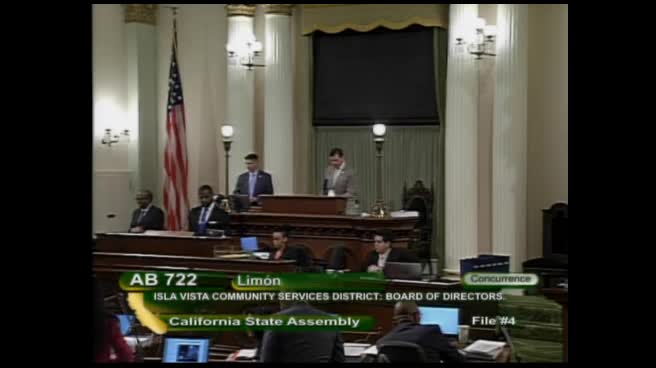 50SEC
Assembly Floor
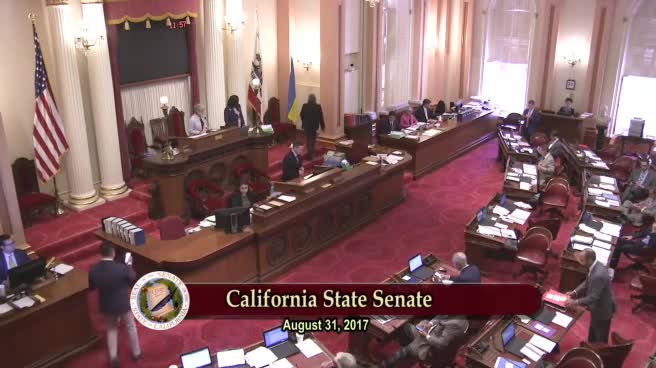 2MIN
Senate Floor
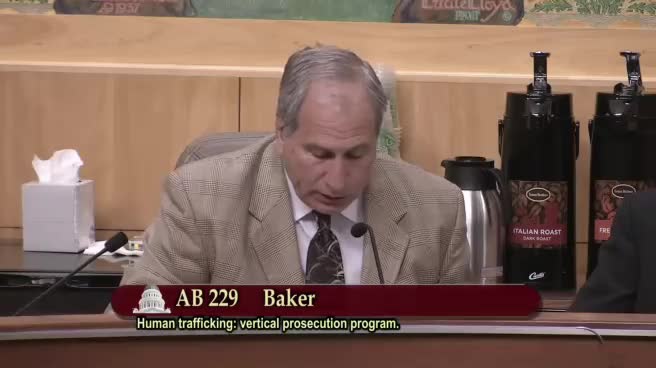 17MIN
Senate Standing Committee on Public Safety
 9MIN