AB 1812: Public employees’ retirement.
- Session Year: 2015-2016
- House: Assembly
- Latest Version Date: 2016-02-08
Existing state and local public retirement systems provide defined benefits based on age at retirement, service credit, and final compensation. Existing law defines final compensation for various employment classifications in connection with the benefits provided by these systems.
This bill would prohibit the retirement benefit paid to a member of any public retirement system whose service is not included in the federal social security system from exceeding $100,000. The bill would prohibit the retirement benefit paid to a member of any public retirement system whose service is included in the federal social security system from exceeding $80,000. The bill would require that those amounts be adjusted annually by each public retirement system using the Consumer Price Index for All Urban Consumers.
This bill would apply the above-described provisions to a public employee who is first employed by a public agency and becomes a member of any public retirement system on or after January 1, 2017.
This bill would specify that if any of these provisions are in conflict with a memorandum of understanding that is current and in effect on January 1, 2017, the memorandum of understanding would be controlling while it remains in effect, but that upon expiration of that memorandum of understanding, these provisions would be controlling and would not be superseded by a subsequent memorandum of understanding.
(a)(1)The retirement benefit paid to a member of any public retirement system whose service is not included in the federal system shall not exceed one hundred thousand dollars ($100,000) per year, adjusted by each system annually for inflation using the Consumer Price Index for All Urban Consumers.
(2)The retirement benefit paid to a member of any public retirement system whose service is included in the federal system shall not exceed eighty thousand dollars ($80,000) per year, adjusted by each system annually for inflation using the Consumer Price Index for All Urban Consumers.
(b)Notwithstanding any other law or any provision of an expired memorandum of understanding, this section shall apply to a public employee who is employed by a public agency for the first time and becomes a member of a public retirement system on or after January 1, 2017.
(c)This section shall not apply to:
(1)Former public employees employed before January 1, 2017, who return to employment in the same public agency on or after January 1, 2017.
(2)State employees hired prior to January 1, 2017, who were subject to Section 20281.5 during the first 24 months of state employment.
(3)Public employees on an approved leave of absence employed prior to January 1, 2017, who return to active employment on or after January 1, 2017.
(d)For purposes of this section, the following definitions shall apply:
(1)Federal system means the old age, survivors, disability, and health insurance provisions of the Social Security Act.
(2)Public agency means the state or a county, city, city and county, district, school district, authority, university, or any public or municipal corporation, political subdivision, or other public agency of the state, or any department, division, bureau, board, commission, agency, or instrumentality of any of these entities.
(3)Public employee means any person employed by any public agency.
(4)Public retirement system means all state and local public retirement systems, excluding the University of California Retirement System and any retirement systems created for a charter city or charter county.
(e)If this section is in conflict with a memorandum of understanding that is current and in effect on January 1, 2017, the memorandum of understanding shall be controlling while it remains in effect. Upon expiration of the memorandum of understanding that is in effect and current on January 1, 2017, this section shall be controlling and shall not be superseded by a subsequent memorandum of understanding.
|
Date
|
Status
|
|---|---|
| Apr 6, 2016 | In committee: Set, first hearing. Hearing canceled at the request of author. |
| Feb 25, 2016 | Referred to Com. on P.E., R., & S.S. |
| Feb 9, 2016 | From printer. May be heard in committee March 10. |
| Feb 8, 2016 | Read first time. To print. |
This list shows positions taken on this bill by organizations on the date displayed, which is linked to the original source.
Positions by individuals are not included.
Date of Hearing: April 6, 2016
ASSEMBLY COMMITTEE ON PUBLIC EMPLOYEES, RETIREMENT, AND SOCIAL SECURITY
Rob Bonta, Chair
ABPCA Bill Id:AB 1812 (
Author:Wagner) – As Introduced Ver:February 8, 2016
SUBJECT: Public employees’ retirement
SUMMARY: Caps the retirement benefit paid to new members of any public retirement system to members of any public retirement system first hired on or after January 1, 2017 at $100,000 for members whose service is not included in Social Security and $80,000 for new members whose service is included in Social Security. Specifically, this bill:
- Limits the annual benefit of public retirement system members to either $80,000 for a pension based on Social Security-covered employment or $100,000 for a pension based on non-covered employment.
- Requires each retirement system to adjust these amounts annually for inflation using the Consumer Price Index for All Urban Consumers.
- Specifies that this cap applies to public employees who is employed by a public agency for the first time and becomes a member of a public retirement system on or after January 1, 2017.
- Exempts from the cap:
- Former public employees employed before January 1, 2017, who return to employment in the same public agency on or after January 1, 2017.
- State employees hired prior to January 1, 2017, who were in the Alternate Retirement Plan during the first 24 months of state employment.
- Public employees on an approved leave of absence employed prior to January 1, 2017, who return to active employment on or after January 1, 2017.
- Former public employees employed before January 1, 2017, who return to employment in the same public agency on or after January 1, 2017.
EXISTING STATE LAW:
- Creates comprehensive public employee pension reform through enactment of Public Employees' Pension Reform Act of 2013 (PEPRA) (and related statutory changes) that apply to all public employers (including public transit agencies) and public pension plans on and after January 1, 2013, excluding the University of California and charter cities and counties that do not participate in a retirement system governed by state statute.
- Under PEPRA, changed the retirement benefit plans that may be offered to new public employees, including:
- Establishing uniform retirement formulas, including a 2% at age 62 formula for non-safety workers and three formulas for safety employees - 2% at age 57; 2.5% at age 57; and, 2.7% at age 57.
- Requiring a three-year final compensation period for determining a pension;
- Requiring employee member contributions equal to 50% of the normal cost of the employee's benefit plan;
- Capping the amount of compensation that can be used to calculate a retirement benefit on for all new members of a public retirement system (currently $117,020 for employees who participate in Social Security or $140,424 for employees who do not participate in Social Security). This amount is adjusted annually based on changes in the Consumer Price Index (CPI) for all Urban Consumers.
- Restricting the pay items that may be included in pensionable compensation.
- Limiting the maximum salary taken into account for any retirement plan to the federal limit established under 401(a)(17) of the Internal Revenue Code (IRC) and prohibit an employer from seeking a federal exemption from the limit.
- Prohibiting an employer from making contributions to any public retirement plan on any amounts of compensation that exceed the 401(a)(17) limit.
- Prohibiting a public employer from offering a benefit replacement plan for any member or survivor who is subject to the federal limit on benefits established by IRC Section 415(b) for an employee first hired on and after January 1, 2013, or to any group of employees that was not offered a benefits replacement plan prior to that date.
- Establishing uniform retirement formulas, including a 2% at age 62 formula for non-safety workers and three formulas for safety employees - 2% at age 57; 2.5% at age 57; and, 2.7% at age 57.
EXISTING FEDERAL LAW:
- Section 401(a)(17) of the IRC limits the amount of annual compensation that can be taken into account under qualified retirement plans. The limit for the 2016 calendar year is $265,000. The compensation limit is only applicable to persons who first became members or participants in a qualified retirement system on or after July 1, 1996. The compensation limit does not limit the salary an employer can pay an employee, but rather limits the amount of compensation taken into account under the retirement plan.
- Section 415 of the IRC limits the amount of retirement benefits that may be paid to a participant in a defined benefit plan. In 2016, the limit for members who retire at age 65 is $210,000.
FISCAL EFFECT: Unknown.
COMMENTS: According to the author, "As of 2014, 19,728 people receive pension of at least $100,000 from the California Public Employees Retirement System, which is a huge jump from the more than 1,800 who reported were getting six-figure pensions in 2005. AB 1812 represents an opportunity to help remedy our growing pension problem in California, as well as a huge cost saver for the state."
Opponents state, "AB 1812 is strongly problematic for members of law enforcement who have dedicated their lives to protecting California's local communities. Furthermore, we believe this is an issue best worked out at the bargaining table. While this measure does not include current officers, this could be a barrier to employment for those looking for a career in law enforcement."
Opponents conclude, "In light of the Public Employee Pension Reform Act that was enacted in 2013, AB 1812 is tone deaf, duplicative, and does not truly address the problem of the unfunded liability. By capping retirement benefits paid to public employees at $100,000 and $80,000 this bill would appear to be more of an attack on the professional class of public employees, rather than an attempt to mitigate future financial troubles, while directly negatively impacts recruitment and retention of state employees."
This bill is similar to AB 1633 (Wagner) of 2012 which would have capped the retirement benefit paid to new members of any public retirement system to members of any public retirement system first hired on or after January 1, 2013 at $100,000 for members whose service is not included in Social Security and $80,000 for new members whose service is included in Social Security. AB 1633, along with 10 other Assembly bills, was moved to interim study by this Committee because the Conference Committee on Public Employee Benefits had been established and was considering the subject matter contained in the bill as part of its deliberations. The final report of the Conference Committee was enacted through AB 340 (Furutani), Chapter 296, Statutes of 2012, which established PEPRA.
REGISTERED SUPPORT / OPPOSITION:
Support
None on file
Opposition
American Federation of State, County and Municipal Employees
Association for Los Angeles Deputy Sheriffs
Association of Orange County Deputy Sheriffs
California Conference Board of the Amalgamated Transit Union
California Conference of Machinists
California Correctional Peace Officers Association
California Federation of Teachers
California Judges Association
California Professional Firefighters
California Statewide Law Enforcement Association
California Teamsters Public Affairs Council
Engineers & Scientists of California, IFPTE Local 20
Fraternal Order of Police
LIUNA Locals 777 & 792
Long Beach Police Officers Association
Los Angeles County Professional Peace Officers Association
Orange County Employees Association
Organization of SMUD Employees
Peace Officers Research Association of California
Professional & Technical Engineers, IFPTE Local 21
Sacramento County Deputy Sheriffs' Association
San Diego County Court Employees Association
San Luis Obispo County Employees Associaton
Union of American Physicians and Dentists
Analysis Prepared by: Karon Green / P.E.,R., & S.S. / (916) 319-3957
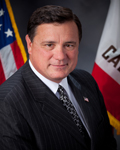
Bill Author
Bill Co-Author(s):