ACR 58: Public schools: history education.
- Session Year: 2017-2018
- House: Assembly
- Latest Version Date: 2017-07-17
This measure would urge the State Board of Education, county offices of education, and local school governing bodies to increase emphasis in their curricula on the bravery, sacrifice, and heroism of the United States and allied forces that engaged in military activity in the China-Burma-India Theater of World War II.
This measure would urge the State Board of Education, county offices of education, and local school governing bodies to increase emphasis in their curricula on the bravery, sacrifice, and heroism of the United States and allied forces that engaged in military activity in the China-Burma-India Theater of World War II.
This measure would urge the State Board of Education, county offices of education, and local school governing bodies to increase emphasis in their curricula on the bravery, sacrifice, and heroism of the United States and allied forces that engaged in military activity in the China-Burma-India Theater of World War II.
WHEREAS, The State Department of Education is charged with ensuring that comprehensive, unbiased, and accurate information is available and taught to all California pupils; and
WHEREAS, It is important for public school curricula to be inclusive and representative of worldwide historical events to enhance students understanding and interpretations of the historical impact of events that take place outside of the United States; and
WHEREAS, World War II was an infamous international conflict that involved over 30 countries, caused over 70 million casualties, and marked unfathomable bravery and sacrifice; and
WHEREAS, Military activity in the Pacific and Asia during World War II is referred to as the Pacific War and accounted for 36 million casualties, one-half of the estimated total number of lives lost in World War II; and
WHEREAS, The China-Burma-India Theater (CBI Theater) of World War II, which included territories in east and south Asia, was active from 1942 to 1945, inclusive; and
WHEREAS, The United States government identified efforts to supply and support Chinese troops as crucial to mitigating threats from Japanese invasions; and
WHEREAS, Due to Japanese occupation of key territories in China, the only way to provide supplies to Chinese troops was through a dirt road in the mountains of Burma; and
WHEREAS, American, Chinese, Indian, and British forces in the CBI Theater orchestrated their military activities to open the supply route in Burma; and
WHEREAS, The forces had limited resources but persisted through immeasurable challenges, including a lack of supplies, inadequate manpower, disease, and attacks from enemy troops; and
WHEREAS, Through American leadership, the forces successfully reclaimed the supply route and built Ledo Road to assist Chinese forces in World War II; and
WHEREAS, The CBI Theater has not been widely researched or covered by literature and history books used in California public schools; and
WHEREAS, California is a diverse state and could be seen as the Pacific corridor to Asia; and
WHEREAS, It is important that California history books instruct pupils about significant efforts, battles, and events that took place in Asia during World War II; now, therefore, be it
Resolved by the Assembly of the State of California, the Senate thereof concurring, That the Legislature urges the State Board of Education, county offices of education, and local school governing bodies to increase emphasis in their curricula on the bravery, sacrifice, and heroism of the United States and allied forces that engaged in military activity in the China-Burma-India Theater; and be it further
Resolved, That the Chief Clerk of the Assembly transmit copies of this resolution to the State Board of Education, the Superintendent of Public Instruction, boards of education and administrators of county offices and school districts, and to the author for distribution.
|
Date
|
Status
|
|---|---|
| Jul 17, 2017 | Chaptered by Secretary of State - Res. Chapter 104, Statutes of 2017. |
| Jul 17, 2017 | Enrolled and filed with the Secretary of State at 4 p.m. |
| Jul 13, 2017 | In Assembly. Ordered to Engrossing and Enrolling. |
| Jul 13, 2017 | Adopted and to Assembly. (Ayes 39. Noes 0. Page 2025.) |
| Jul 11, 2017 | Read second time. Ordered to Consent Calendar. |
| Jul 10, 2017 | From committee: Be placed on second reading file pursuant to Senate Rule 28.8 and ordered to consent calendar. |
| Jun 21, 2017 | From committee: Be adopted, and re-refer to Com. on APPR. with recommendation: To Consent Calendar. (Ayes 6. Noes 0.) (June 21). Re-referred to Com. on APPR. |
| Jun 8, 2017 | Re-referred to Com. on ED. |
| May 31, 2017 | In Senate. To Com. on RLS. |
| May 30, 2017 | Coauthors revised. |
| May 26, 2017 | From committee: Be adopted. Ordered to Third Reading. (Ayes 17. Noes 0.) (May 26). |
| May 17, 2017 | In committee: Referred to APPR. suspense file. |
| Apr 27, 2017 | From committee: Be adopted, and re-refer to Com. on APPR. with recommendation: To Consent Calendar. (Ayes 7. Noes 0.) (April 26). Re-referred to Com. on APPR. |
| Apr 20, 2017 | Referred to Com. on ED. |
| Apr 18, 2017 | From printer. |
| Apr 17, 2017 | Introduced. To print. |
|
Date
|
Description
|
Location
|
Votes
|
|
|---|---|---|---|---|
| Jul 13, 2017 | Consent Calendar 2nd ACR58 | Senate Floor |
Passed |
|
| Jun 21, 2017 | Be adopted, but first be re-referred to the Committee on [Appropriations] with recommendation: To Consent Calendar | Senate Standing Committee on Education |
Passed |
|
| May 30, 2017 | ACR 58 CHU Assembly Third Reading | Assembly Floor |
Passed |
|
| May 26, 2017 | Be adopted. To third reading. | Assembly Standing Committee on Appropriations |
Passed |
|
| Apr 26, 2017 | Be adopted, and re-refer to the Committee on [Appropriations] with recommendation: To Consent Calendar | Assembly Standing Committee on Education |
Passed |
This list shows positions taken on this bill by organizations on the date displayed, which is linked to the original source.
Positions by individuals are not included.
Office of Senate Floor Analyses (916) 651-1520 Fax: (916) 327-4478 | ACR |
CONSENT
Bill No: ACR 58
:
SENATE EDUCATION COMMITTEE: 6-0, 6/21/17
AYES: Allen, Galgiani, Leyva, Mendoza, Pan, Vidak
NO VOTE RECORDED: Wilk
SENATE APPROPRIATIONS COMMITTEE: Senate Rule 28.8
ASSEMBLY FLOOR: 76-0, 5/30/17 - See last page for vote
DIGEST:
This resolution resolves that the Legislature urges the State Board of Education (SBE), county offices of education, and local school governing bodies to increase emphasis in their curricula on the engagement of the United States and allied forces in military activity in the China-Burma-India (CBI) Theater during World War II.
Existing law:
- Requires the adopted course of study for grades 7-12 to offer courses in English; science; mathematics; social sciences, drawing upon the disciplines of anthropology, economics, geography, history, political science, psychology, sociology; and other subjects. (Education Code § 51220)
- Authorizes instruction in the area of social sciences to include instruction on World War II and the American role in that war, and encourages that instruction to include, but not be limited to, a component drawn from personal testimony, especially in the form of oral or video histories, if available, of American soldiers who were involved in World War II and those men and women who contributed to the war effort on the home front. (EC § 51221.3)
- Encourages instruction in the area of social sciences to include instruction on World War II and the role of Filipinos in that war, consisting of an accurate history of the contributions of the Filipino American veterans who fought courageously in the United States Army for freedom and democracy in World War II under the leadership of General Douglas MacArthur. (EC § 51221.3)
- Establishes the Instructional Quality Commission and requires the commission to, among other things:
- Recommend curriculum frameworks to the SBE.
- Study and evaluation of instructional materials submitted for adoption.
- Recommend instructional materials for adoption to the SBE.
- Advise and make recommendations to the SBE, including, but not limited to, what policies and activities are needed to implement the state’s academic content standards, and bring the state’s curriculum frameworks, instructional materials, professional development programs, pupil assessments, and academic accountability systems into alignment with those standards. (EC § 60204)
This resolution resolves that the Legislature urges the SBE, county offices of education, and local school governing bodies to increase emphasis in their curricula on the engagement of the United States and allied forces in military activity in the CBI Theater during World War II. Specifically, this resolution:
- States that the California Department of Education is charged with ensuring that comprehensive, unbiased, and accurate information is available and taught to pupils.
- States that it is important for public school curricula to be inclusive and representative of worldwide historical events to enhance students’ understanding and interpretations of the historical impact of events that take place outside of the United States.
- States that World War II was an infamous international conflict that involved over 30 countries, caused over 70 million casualties, and marked unfathomable bravery and sacrifice.
- States that military activity in the Pacific and Asia during World War II is referred to as the Pacific War and accounted for 36 million casualties, one-half of the estimated total number of lives lost in World War II.
- States that the CBI Theater of World War II, which included territories in east and south Asia, was active from 1942 to 1945.
- States that the United States government identified efforts to supply and support Chinese troops as crucial to mitigating threats from Japanese invasions.
- States that due to Japanese occupation of key territories in China, the only way to provide supplies to Chinese troops was through a dirt road in the mountains of Burma.
- States that American, Chinese, Indian, and British forces in the CBI Theater orchestrated their military activities to open the supply route in Burma.
- States that the forces had limited resources but persisted through immeasurable challenges, including a lack of supplies, inadequate manpower, disease, and attacks from enemy troops.
- States that through American leadership, the forces successfully reclaimed the supply route and built Ledo Road to assist Chinese forces in World War II.
- States that the CBI Theater has not been widely researched or covered by literature and history books used in California public schools.
- States that California is a diverse state and could be seen as the Pacific corridor to Asia.
- States that it is important that California history books instruct pupils about significant efforts, battles, and events that took place in Asia during World War II.
- Resolves, by the Assembly of the State of California, the Senate thereof concurring, that the Legislature urges the SBE, county offices of education, and local school governing bodies to increase emphasis in their curricula on the bravery, sacrifice, and heroism of the United States and allied forces that engaged in military activity in the CBI Theater, and resolves that the Chief Clerk of the Assembly transmit copies of the resolution to specified entities.
Comments
- Need for the resolution. According to the author, “World War II was a devastating event that affected many lives throughout the world. It was also an event that showcased great bravery, sacrifice, and courage. While history books provide many details regarding many memorable battles and victories, there is not enough attention given to military efforts which took place in the Pacific and Asia. The CBI Theater was organized to reclaim the supply route through the mountains of Burma in order to provide Chinese forces with assistance and supplies to beat back Japanese invasions. American troops took the lead with assistance from Chinese, Indian and British forces and were victorious even with the lack of resources and manpower. There are veterans residing in my district that participated in the CBI Theater and helped build the Ledo Road that was used to supply Chinese forces. I believe our children deserve to learn of such bravery and heroism in their history books and this is why I introduced ACR 58.”
- New History-Social Science Framework. The SBE adopted a revised history-social science curriculum framework on July 14, 2016. There does not appear to be a specific reference to the CBI Theater of World War II in the current framework. However, the framework does include the following, which could provide an opportunity to discuss the CBI Theater:
- “How was World War II a total war? How did World War II’s actors, goals, and strategies compare with World War I?”
- “The war itself was truly global and included battlefronts in Europe, Asia, Africa, and the Pacific.”
- “To become oriented to the leading nations in the conflict, students continue to learn about the German, Italian, and Japanese attempts to expand their empires in the 1930s. As in Italy and Germany, Japan’s authoritarian government, increasingly dominated by the military, controlled portions of the economy and furthered imperial ambitions. The expansionist goals of Italy, Germany, and Japan translated into specific instances of military aggression, first in China, then in Europe, and finally in the United States, that drew the Allies into war with these Axis Powers.”
- “Once war broke out in Europe, the Japanese took advantage of Hitler’s conquests in Western Europe to seize European colonies in Asia.”
- “Roosevelt believed that Hitler posed a threat to the world unlike any other and that the United States needed to hold strong against Japan’s territorial aggressions in Asia.”
- “Students can analyze the strategies employed by the Japanese military in their campaign to conquer Asia and the western Pacific and the United States’ response to Japanese aggression, using the question: How did America win the war in the Pacific?”
FISCAL EFFECT: Appropriation: No Fiscal Com.: Yes Local: No
None received
OPPOSITION: (Verified 7/10/17)
None received
ASSEMBLY FLOOR: 76-0, 5/30/17
AYES: Acosta, Aguiar-Curry, Travis Allen, Arambula, Baker, Berman, Bigelow, Bloom, Bocanegra, Bonta, Brough, Burke, Caballero, Calderon, Cervantes, Chávez, Chen, Chiu, Chu, Cooley, Cooper, Cunningham, Dababneh, Dahle, Daly, Flora, Fong, Frazier, Friedman, Gallagher, Cristina Garcia, Eduardo Garcia, Gipson, Gloria, Gomez, Gonzalez Fletcher, Gray, Grayson, Harper, Holden, Irwin, Jones-Sawyer, Kalra, Kiley, Lackey, Levine, Limón, Low, Maienschein, Mathis, Mayes, McCarty, Medina, Melendez, Mullin, Nazarian, Obernolte, O'Donnell, Patterson, Quirk, Quirk-Silva, Reyes, Ridley-Thomas, Rodriguez, Rubio, Salas, Santiago, Steinorth, Mark Stone, Thurmond, Ting,
Voepel, Waldron, Weber, Wood, Rendon
NO VOTE RECORDED: Chau, Choi, Eggman, Muratsuchi
7/12/17 11:32:21
**** END ****
SENATE COMMITTEE ON EDUCATION
Senator Benjamin Allen, Chair
2017 - 2018 Regular
Bill No: ACR 58 Hearing Date: June 21, 2017
Author: | |||
Version: | April 17, 2017 | ||
Urgency: |
| Fiscal: | Yes |
Consultant: | Brandon Darnell | ||
Subject: Public schools: history education
SUMMARY
This resolution resolves that the Legislature urges the State Board of Education (SBE), county offices of education, and local school governing bodies to increase emphasis in their curricula on the engagement of the United States and allied forces in military activity in the China-Burma-India Theater during World War II.
BACKGROUND
Existing law:
1) Requires the adopted course of study for grades 7-12 to offer courses in English; science; mathematics; social sciences, drawing upon the disciplines of anthropology, economics, geography, history, political science, psychology, sociology; and other subjects. (Education Code § 51220)
2) Authorizes instruction in the area of social sciences to include instruction on World War II and the American role in that war, and encourages that instruction to include, but not be limited to, a component drawn from personal testimony, especially in the form of oral or video histories, if available, of American soldiers who were involved in World War II and those men and women who contributed to the war effort on the home front. (EC § 51221.3)
3) Encourages instruction in the area of social sciences to include instruction on World War II and the role of Filipinos in that war, consisting of an accurate history of the contributions of the Filipino American veterans who fought courageously in the United States Army for freedom and democracy in World War II under the leadership of General Douglas MacArthur. (EC § 51221.3)
4) Establishes the Instructional Quality Commission and requires the commission to, among other things:
a) Recommend curriculum frameworks to the SBE.
b) Study and evaluation of instructional materials submitted for adoption.
c) Recommend instructional materials for adoption to the SBE.
d) Advise and make recommendations to the State Board of Education (SBE), including, but not limited to, what policies and activities are needed to implement the state’s academic content standards, and bring the state’s curriculum frameworks, instructional materials, professional development programs, pupil assessments, and academic accountability systems into alignment with those standards. (EC § 60204)
ANALYSIS
This resultion resolves that the Legislature urges the SBE, county offices of education, and local school governing bodies to increase emphasis in their curricula on the engagement of the United States and allied forces in military activity in the China-Burma-India (CBI) Theater during World War II. Specifically, this resolution:
- States that the California Department of Education is charged with ensuring that comprehensive, unbiased, and accurate information is available and taught to pupils.
- States that it is important for public school curricula to be inclusive and representative of worldwide historical events to enhance students’ understanding and interpretations of the historical impact of events that take place outside of the United States.
- States that World War II was an infamous international conflict that involved over 30 countries, caused over 70 million casualties, and marked unfathomable bravery and sacrifice.
- States that military activity in the Pacific and Asia during World War II is referred to as the Pacific War and accounted for 36 million casualties, one-half of the estimated total number of lives lost in World War II.
- States that the CBI Theater of World War II, which included territories in east and south Asia, was active from 1942 to 1945.
- States that the United States government identified efforts to supply and support Chinese troops as crucial to mitigating threats from Japanese invasions.
- States that due to Japanese occupation of key territories in China, the only way to provide supplies to Chinese troops was through a dirt road in the mountains of Burma.
- States that American, Chinese, Indian, and British forces in the CBI Theater orchestrated their military activities to open the supply route in Burma.
- States that the forces had limited resources but persisted through immeasurable challenges, including a lack of supplies, inadequate manpower, disease, and attacks from enemy troops.
- States that through American leadership, the forces successfully reclaimed the supply route and built Ledo Road to assist Chinese forces in World War II.
- States that the China-Burma-India (CBI) Theater has not been widely researched or covered by literature and history books used in California public schools.
- States that California is a diverse state and could be seen as the Pacific corridor to Asia.
- States that it is important that California history books instruct pupils about significant efforts, battles, and events that took place in Asia during World War II.
- Resolves, by the Assembly of the State of California, the Senate thereof concurring, that the Legislature urges the State Board of Education (SBE), county offices of education, and local school governing bodies to increase emphasis in their curricula on the bravery, sacrifice, and heroism of the United States and allied forces that engaged in military activity in the CBI Theater, and resolves that the Chief Clerk of the Assembly transmit copies of the resolution to specified entities.
STAFF COMMENTS
- Need for the resolution. According to the author, “World War II was a devastating event that affected many lives throughout the world. It was also an event that showcased great bravery, sacrifice, and courage. While history books provide many details regarding many memorable battles and victories, there is not enough attention given to military efforts which took place in the Pacific and Asia. The China-Burma-India (CBI) Theater was organized to reclaim the supply route through the mountains of Burma in order to provide Chinese forces with assistance and supplies to beat back Japanese invasions. American troops took the lead with assistance from Chinese, Indian and British forces and were victorious even with the lack of resources and manpower. There are veterans residing in my district that participated in the CBI Theater and helped build the Ledo Road that was used to supply Chinese forces. I believe our children deserve to learn of such bravery and heroism in their history books and this is why I introduced ACR 58.”
- New History-Social Science Framework. The SBE adopted a revised history-social science curriculum framework on July 14, 2016. There does not appear to be a specific reference to the CBI Theater of World War II in the current framework. However, the framework does include the following, which could provide an opportunity to discuss the CBI Theater:
a) “How was World War II a total war? How did World War II’s actors, goals, and strategies compare with World War I?”
b) “The war itself was truly global and included battlefronts in Europe, Asia, Africa, and the Pacific.”
c) “To become oriented to the leading nations in the conflict, students continue to learn about the German, Italian, and Japanese attempts to expand their empires in the 1930s. As in Italy and Germany, Japan’s authoritarian government, increasingly dominated by the military, controlled portions of the economy and furthered imperial ambitions. The expansionist goals of Italy, Germany, and Japan translated into specific instances of military aggression, first in China, then in Europe, and finally in the United States, that drew the Allies into war with these Axis Powers.”
d) “Once war broke out in Europe, the Japanese took advantage of Hitler’s conquests in Western Europe to seize European colonies in Asia.”
e) “Roosevelt believed that Hitler posed a threat to the world unlike any other and that the United States needed to hold strong against Japan’s territorial aggressions in Asia.”
f) “Students can analyze the strategies employed by the Japanese military in their campaign to conquer Asia and the western Pacific and the United States’ response to Japanese aggression, using the question: How did America win the war in the Pacific?”
- Fiscal impact. This resolution has been keyed fiscal by the Office of Legislative Counsel. According to the Assembly Appropriations Committee, there is “no immediate fiscal effect, but future unknown cost pressures. The California Department of Education confirms that the next history content standards update is scheduled for 2024. To implement this resolution, the Instructional Quality Commission (IQC) could add this content to the frameworks at that time” and there are “unknown cost pressures for county offices of education and local governing boards to purchase updated teaching materials, when the IQC releases new standards.”
SUPPORT
None received
OPPOSITION
None received
-- END --
ASSEMBLY THIRD READING
ATR Bill Id:ACR 58
Author:(Chu)
As Introduced Ver:April 17, 2017
Majority vote
Committee | Votes | Ayes | Noes |
Education | 7-0 | O'Donnell, Flora, Gloria, Kiley, McCarty, Thurmond, Weber | |
Appropriations | 17-0 | Gonzalez Fletcher, Bigelow, Bloom, Bocanegra, Bonta, Brough, Calderon, McCarty, Quirk, Fong, Friedman, Gallagher, Eduardo Garcia, Gray, Muratsuchi, Obernolte, Reyes |
|
SUMMARY: Resolves that the Legislature urges the State Board of Education, county offices of education, and local school governing bodies to increase emphasis in their curricula on the engagement of the United States and allied forces in military activity in the China-Burma-India Theater during World War II. Specifically, this resolution:
- States that the California Department of Education is charged with ensuring that comprehensive, unbiased, and accurate information is available and taught to pupils.
- States that it is important for public school curricula to be inclusive and representative of worldwide historical events to enhance students’ understanding and interpretations of the historical impact of events that take place outside of the United States.
- States that World War II was an infamous international conflict that involved over 30 countries, caused over 70 million casualties, and marked unfathomable bravery and sacrifice.
- States that military activity in the Pacific and Asia during World War II is referred to as the Pacific War and accounted for 36 million casualties, one-half of the estimated total number of lives lost in World War II.
- States that the China-Burma-India Theater (CBI Theater) of World War II, which included territories in east and south Asia, was active from 1942 to 1945.
- States that the United States government identified efforts to supply and support Chinese troops as crucial to mitigating threats from Japanese invasions
- States that due to Japanese occupation of key territories in China, the only way to provide supplies to Chinese troops was through a dirt road in the mountains of Burma.
- States that American, Chinese, Indian, and British forces in the CBI Theater orchestrated their military activities to open the supply route in Burma.
- States that the forces had limited resources but persisted through immeasurable challenges, including a lack of supplies, inadequate manpower, disease, and attacks from enemy troops.
- States that through American leadership, the forces successfully reclaimed the supply route and built Ledo Road to assist Chinese forces in World War II.
- States that the CBI Theater has not been widely researched or covered by literature and history books used in California public schools.
- States that California is a diverse state and could be seen as the Pacific corridor to Asia.
- States that it is important that California history books instruct pupils about significant efforts, battles, and events that took place in Asia during World War II.
- Resolves, by the Assembly of the State of California, the Senate thereof concurring, that the Legislature urges the State Board of Education, county offices of education, and local school governing bodies to increase emphasis in their curricula on the bravery, sacrifice, and heroism of the United States and allied forces that engaged in military activity in the China-Burma-India Theater, and resolves that the Chief Clerk of the Assembly transmit copies of the resolution to specified entities.
FISCAL EFFECT: According to the Assembly Appropriations Committee:
- No immediate fiscal effect, but future unknown cost pressures. The California Department of Education (CDE) confirms that the next history content standards update is scheduled for 2024. To implement this resolution, the Instructional Quality Commission (IQC) could add this content to the frameworks at that time.
- Unknown cost pressures for county offices of education and local governing boards to purchase updated teaching materials, when the IQC releases new standards.
COMMENTS:
Need for the resolution. The author states, "World War II was a devastating event that affected many lives throughout the world. It was also an event that showcased great bravery, sacrifice, and courage. While history books provide many details regarding many memorable battles and victories, there is not enough attention given to military efforts which took place in the Pacific and Asia."
The China-Burma-India (CBI) Theater was organized to reclaim the supply route through the mountains of Burma in order to provide Chinese forces with assistance and supplies to beat back Japanese invasions. American troops took the lead with assistance from Chinese, Indian and British forces and were victorious even with the lack of resources and manpower. There are veterans residing in my district that participated in the CBI Theater and helped build the Ledo Road that was used to supply Chinese forces. I believe our children deserve to learn of such bravery and heroism in their history books and this is why I introduced ACR 58."
Analysis Prepared by: Tanya Lieberman / ED. / (916) 319-2087 FN: 0000611
Date of Hearing: May 17, 2017
ASSEMBLY COMMITTEE ON APPROPRIATIONS
Lorena Gonzalez Fletcher, Chair
ABPCA Bill Id:ACR 58
Author:(Chu) – As Introduced Ver:April 17, 2017
Policy Committee: | Education | Vote: | 7 - 0 |
|
| ||
|
|
Urgency: State Mandated Local Program: Reimbursable: No
SUMMARY:
This resolution urges the State Board of Education, county offices of education, and local school governing bodies to increase emphasis in their curricula on the engagement of the United States and allied forces in military activity in the China-Burma-India Theater during World War II, and states that the California Department of Education (CDE) is charged with ensuring that comprehensive, unbiased, and accurate information is available and taught to pupils.
FISCAL EFFECT:
- No immediate fiscal effect, but future unknown cost pressures. The CDE confirms that the next history content standards update is scheduled for 2024. To implement this resolution, the Instructional Quality Commission (IQC) could add this content to the frameworks at that time.
- Unknown cost pressures for county offices of education and local governing boards to purchase updated teaching materials, when the IQC releases new standards.
COMMENTS:
Background and Purpose. Existing law requires local educational agencies to adopt a course of study for grades 7-12 which includes English, mathematics, science, history-social studies, and other subjects. State law also establishes the IQC and requires, upon request by the State Board of Education, that it make recommendations on courses of study.
The author states, “World War II was a devastating event that affected many lives throughout the world. It was also an event that showcased great bravery, sacrifice, and courage. While history books provide many details regarding many memorable battles and victories, there is not enough attention given to military efforts which took place in the Pacific and Asia. The China-Burma-India (CBI) Theater was organized to reclaim the supply route through the mountains of Burma in order to provide Chinese forces with assistance and supplies to beat back Japanese invasions. American troops took the lead with assistance from Chinese, Indian and British forces and were victorious even with the lack of resources and manpower. There are veterans residing in my district that participated in the CBI Theater and helped build the Ledo Road that was used to supply Chinese forces. I believe our children deserve to learn of such bravery and heroism in their history books and this is why I introduced ACR 58.”
Analysis Prepared by: Daisy Gonzales / APPR. / (916) 319-2081
Date of Hearing: April 26, 2017
ASSEMBLY COMMITTEE ON EDUCATION
Patrick O'Donnell, Chair
ABPCA Bill Id:ACR 58 (
Author:Chu) – As Introduced Ver:April 17, 2017
SUBJECT: Public schools: history education
SUMMARY: Resolves that the Legislature urges the State Board of Education, county offices of education, and local school governing bodies to increase emphasis in their curricula on the engagement of the United States and allied forces in military activity in the China-Burma-India Theater during World War II. Specifically, this bill:
- States that the California Department of Education is charged with ensuring that comprehensive, unbiased, and accurate information is available and taught to pupils.
- States that it is important for public school curricula to be inclusive and representative of worldwide historical events to enhance students’ understanding and interpretations of the historical impact of events that take place outside of the United States.
- States that World War II was an infamous international conflict that involved over 30 countries, caused over 70 million casualties, and marked unfathomable bravery and sacrifice.
- States that military activity in the Pacific and Asia during World War II is referred to as the Pacific War and accounted for 36 million casualties, one-half of the estimated total number of lives lost in World War II.
- States that the China-Burma-India Theater (CBI Theater) of World War II, which included territories in east and south Asia, was active from 1942 to 1945.
- States that the United States government identified efforts to supply and support Chinese troops as crucial to mitigating threats from Japanese invasions.
- States that due to Japanese occupation of key territories in China, the only way to provide supplies to Chinese troops was through a dirt road in the mountains of Burma.
- States that American, Chinese, Indian, and British forces in the CBI Theater orchestrated their military activities to open the supply route in Burma.
- States that the forces had limited resources but persisted through immeasurable challenges, including a lack of supplies, inadequate manpower, disease, and attacks from enemy troops.
- States that through American leadership, the forces successfully reclaimed the supply route and built Ledo Road to assist Chinese forces in World War II.
- States that the CBI Theater has not been widely researched or covered by literature and history books used in California public schools.
- States that California is a diverse state and could be seen as the Pacific corridor to Asia.
- States that it is important that California history books instruct pupils about significant efforts, battles, and events that took place in Asia during World War II.
- Resolves, by the Assembly of the State of California, the Senate thereof concurring, that the Legislature urges the State Board of Education, county offices of education, and local school governing bodies to increase emphasis in their curricula on the bravery, sacrifice, and heroism of the United States and allied forces that engaged in military activity in the China-Burma-India Theater, and resolves that the Chief Clerk of the Assembly transmit copies of the resolution to specified entities.
EXISTING LAW:
- Requires local educational agencies to adopt a course of study for grades 7-12 which includes English, mathematics, science, history-social studies, and other subjects.
- Establishes the Instructional Quality Commission and requires, upon request by the State Board of Education, that it make recommendations on courses of study.
FISCAL EFFECT: Unknown
COMMENTS:
Need for the resolution. The author states, “World War II was a devastating event that affected many lives throughout the world. It was also an event that showcased great bravery, sacrifice, and courage. While history books provide many details regarding many memorable battles and victories, there is not enough attention given to military efforts which took place in the Pacific and Asia.
The China-Burma-India (CBI) Theater was organized to reclaim the supply route through the mountains of Burma in order to provide Chinese forces with assistance and supplies to beat back Japanese invasions. American troops took the lead with assistance from Chinese, Indian and British forces and were victorious even with the lack of resources and manpower. There are veterans residing in my district that participated in the CBI Theater and helped build the Ledo Road that was used to supply Chinese forces. I believe our children deserve to learn of such bravery and heroism in their history books and this is why I introduced ACR 58.”
REGISTERED SUPPORT / OPPOSITION:
Support
None on file
Opposition
None on file
Analysis Prepared by: Tanya Lieberman / ED. / (916) 319-2087
Discussed in Hearing
View Older Hearings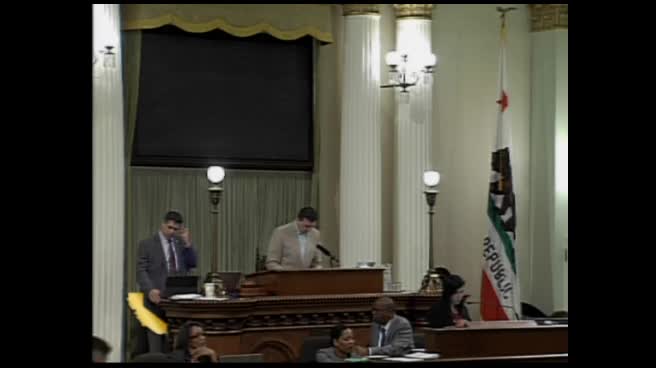

Bill Author

Bill Co-Author(s):