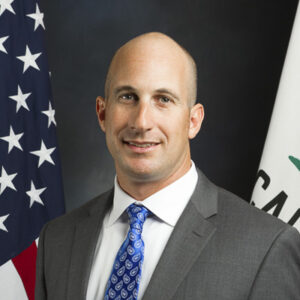
ACR 62: 5G wireless network technology.
- Session Year: 2017-2018
- House: Assembly
- Latest Version Date: 2017-07-03
This measure would urge policymakers in federal, state, and local government to work in cooperation with one another to modernize and streamline the processes that will enable rapid deployment of the small cell wireless infrastructure that supports 5G wireless networks and that will bring the many benefits of this important new technology to communities across California.
This measure would urge policymakers in federal, state, and local government to work in cooperation with one another to modernize and streamline the processes that will enable rapid deployment of the small cell wireless infrastructure that supports 5G wireless networks and that will bring the many benefits of this important new technology to communities across California.
This measure would urge policymakers in federal, state, and local government to work in cooperation with one another to modernize and streamline the processes that will enable rapid deployment of the small cell wireless infrastructure that supports 5G wireless networks and that will bring the many benefits of this important new technology to communities across California.
WHEREAS, Next generation 5G wireless network technology, along with the rapid deployment of the fiber network, promises exponential improvements in the speed, responsiveness, and scale of the online technologies and applications that exist today and those that will exist in the future; and
WHEREAS, The impact of 5G will be especially significant in the fields of public safety, government efficiency, and health care, as it will support a wide range of essential services including: improved public emergency communications services such as Next Generation 911 and text to 911; and improved tools such as real-time video monitoring, predictive analysis, and mobile and hand-held data devices and other mobile-based technologies to enhance the operations of fire, police, and emergency medical services; and
WHEREAS, Enhanced wireless networks and the fiber networks on which they rely for transmission will play a key role in an early warning system for geological disruptions like earthquakes, giving businesses, residents, and the public safety community more time to prepare for natural disasters; and
WHEREAS, 5G will facilitate the use of information and communications technology to improve the efficiency of government services, including transportation and traffic management, public safety, lighting and energy usage, and water and waste management; and
WHEREAS, Innovations in telemedicine, patient monitoring, and data collection in the health care industry using 5G technology will give health care professionals the tools to better control chronic illnesses and improve healthcare outcomes for those affected by them; and
WHEREAS, 5G will serve as an unprecedented platform for innovation and economic development with the potential to help create new industries, products, and services limited only by the imaginations of California visionaries and entrepreneurs; and
WHEREAS, 5G will play an integral role in the creation of smart everything, bringing unparalleled next generation technologies in Smart Communities and every industry, including health care, energy, education, transportation, manufacturing, and agriculture; and
WHEREAS, A study conducted by IHS Economics and IHS Technologies estimates that by 2035, 5G will enable $12.3 trillion in additional global economic output, an amount equal to the total consumer spending in the United States in 2016; and
WHEREAS, California is an acknowledged world leader in technology and must position itself to share in the estimated $200 billion annual investment in network and business application infrastructure, the 22 million new jobs, and the enhanced productivity and long-term economic growth that 5G will support; now, therefore be it
Resolved by the Assembly of the State of California, the Senate thereof concurring, That the Legislature urges policymakers in federal, state, and local government to work in cooperation with one another to establish technology neutral policies and modernize and streamline the processes that will enable rapid deployment of the small cell wireless infrastructure that supports 5G wireless networks and that will bring the many benefits of this important new technology to communities across California; and be it further
Resolved, That the Chief Clerk of the Assembly transmit copies of this resolution to the author for appropriate distribution.
|
Date
|
Status
|
|---|---|
| Jul 3, 2017 | Chaptered by Secretary of State - Res. Chapter 93, Statutes of 2017. |
| Jul 3, 2017 | Enrolled and filed with the Secretary of State at 11 a.m. |
| Jun 27, 2017 | In Assembly. Ordered to Engrossing and Enrolling. |
| Jun 26, 2017 | Adopted and to Assembly. (Ayes 39. Noes 0. Page 1712.) |
| Jun 20, 2017 | Ordered to special consent calendar. |
| Jun 6, 2017 | From committee: Be adopted. Ordered to Third Reading. (Ayes 9. Noes 0.) (June 6). |
| May 24, 2017 | Re-referred to Com. on E., U. & C. |
| May 16, 2017 | In Senate. To Com. on RLS. |
| May 15, 2017 | Coauthors revised. |
| May 10, 2017 | From committee: Be adopted. Ordered to Third Reading. (Ayes 12. Noes 0.) (May 10). |
| Apr 24, 2017 | Referred to Com. on C. & C. |
| Apr 19, 2017 | From printer. |
| Apr 18, 2017 | Introduced. To print. |
|
Date
|
Description
|
Location
|
Votes
|
|
|---|---|---|---|---|
| Jun 26, 2017 | Special Consent ACR62 Quirk et al. By Hueso | Senate Floor |
Passed |
|
| Jun 6, 2017 | Be adopted. Ordered to third reading | Senate Standing Committee on Energy, Utilities and Communications |
Passed |
|
| May 10, 2017 | Be adopted. To third reading. | Assembly Standing Committee on Communications and Conveyance |
Passed |
This list shows positions taken on this bill by organizations on the date displayed, which is linked to the original source.
Positions by individuals are not included.
Office of Senate Floor Analyses (916) 651-1520 Fax: (916) 327-4478 | ACR |
THIRD READING
Bill No: ACR 62
:
SENATE ENERGY, U. & C. COMMITTEE: 9-0, 6/6/17
AYES: Hueso, Morrell, Bradford, Cannella, Hertzberg, Hill, Skinner, Vidak, Wiener
NO VOTE RECORDED: McGuire, Stern
ASSEMBLY FLOOR: Read and adopted, 5/15/17
DIGEST:
This resolution urges policymakers in federal, state, and local government to work in cooperation with one another to modernize and streamline the processes that will enable rapid deployment of the small cell wireless infrastructure that supports 5G wireless networks.
Existing law:
- Establishes specified limitations, preemptions and preservation of local zoning authority in relation to the siting of personal wireless service facilities as part of the many provisions of the Federal Telecommunications Act of 1996.
- Provides that except as noted in the Federal Telecommunications Act of 1996, nothing in the Act shall limit or affect the authority of a state or local government or instrumentality thereof over decisions regarding the placement, construction, and modification of personal wireless service facilities.
- Establishes that the regulation of the placement, construction, and modification of personal wireless service facilities by any state or local government or instrumentality thereof – (a) shall not unreasonably discriminate among providers of functionally equivalent services; and (b) shall not prohibit or have the effect of prohibiting the provision of personal wireless services.
- Establishes that a state or local government shall act on any request for authorization to place, construct, or modify personal wireless service facilities within a reasonable period of time after the request is duly filed with such government, taking into account the nature and scope of such request.
- Requires that any decision by a state or local government to deny a request to place, construct, or modify personal wireless service facilities shall be in writing and supported by substantial evidence contained in a written record.
- Provides that no state or local government may regulate the placement, construction, and modification of personal wireless service facilities on the bases of the environmental effects of radio frequency emissions to the extent that such facilities comply with the Federal Communications Commission (FCC) regulations concerning such emissions. Allows any person adversely affected by an act or failure to act by a state or local government that is inconsistent with the FCC compliance requirements related to radio frequency emissions may petition the FCC for relief.
- Provides that any person adversely affected by any final action or failure to act by a state or local government that is inconsistent with this subparagraph may, within 30 days after such action or failure to act, commence an action in any court of competent jurisdiction. The court shall hear and decide such action on an expedited basis. (47 United States Code §332)
- Provides that no state or local statute or regulation, or other state or local legal requirement, may prohibit or have the effect of prohibiting the ability of any entity to provide any interstate or intrastate telecommunications service. (47 United States Code §253)
- Provides that a state or local government may not deny, and shall approve, any eligible facilities request for a modification of an existing wireless tower or base station that does not substantially change the physical dimensions of such a tower or base station. (47 United States Code §1455 (a))
- Limits the consideration of the environmental effects of radio frequency emissions by the city or county to that authorized by Section 332(c)(7) of Title 47 of the United States Code, as specified. (California Government Code §65850.6)
- Requires the California Public Utilities Commission (CPUC) to establish and enforce the rates, terms, and conditions for pole attachments and rearrangements, as specified, whenever a public utility and a cable television corporation or association of cable television corporations are unable to agree upon the terms, conditions, or annual compensation for pole attachments or the terms, conditions, or costs of rearrangements. (Public Utilities Code §767.5)
- Establishes a framework, process, fees, and procedures governing the attachment of telecommunications facilities to municipal utility poles, providing for safety and reasonable terms and conditions. (Public Utilities Code §9510 et seq.)
- Authorizes a wireless telecommunications collocation facility, as specified, to be subject to a city or county discretionary permit issued on or after January 1, 2007, as specified. (Public Utilities Code §65850.6)
- Authorizes telephone corporations to construct telephone lines along and upon any public road or highway, along or across any of the waters or lands within the state, and may erect poles, posts, piers, or abutments for supporting the insulators, wires, and other necessary fixtures of their lines, in such manner and at such points as not to incommode the public use of the road or highway or interrupt the navigation of the waters. (Public Utilities Code §7901)
- Specifies the intent of the Legislature, that municipalities shall have the right to exercise reasonable control as to the time, place, and manner in which roads, highways, and waterways are accessed, as specified. (Public Utilities Code §7901.1)
This resolution:
- Makes several findings regarding the potential of next generation 5G wireless network technology to provide exponential improvements in speed, responsiveness, and scale of online technologies and applications. As well as, findings specifically regarding the potential of the impact to the fields of public safety, government efficiency, and health care.
- Urges policymakers in federal, state, and local government to work in cooperation with one another to establish technology neutral policies and modernize and streamline the processes that will enable rapid deployment of the small cell wireless infrastructure that supports 5G wireless networks and that will bring the many benefits of this important new technology to communities across California.
Background
Small cell. Small cells are low-powered wireless base stations that function like cells in a mobile wireless network, typically covering targeted indoor or localized outdoor areas ranging in size from homes and offices to stadiums, shopping malls, hospitals, and metropolitan outdoor spaces. Wireless service providers utilize small cells to provide connectivity to their subscribers in areas that present capacity and coverage challenges to traditional wide-area macro cell networks, such as coverage gaps created by buildings, tower siting difficulties, and challenging terrain. Each small cell installation operates exclusively with a corresponding wireless service provider. Unlike larger macro cell large towers, small cells need to be deployed at greater volumes in more concentrated areas. These smaller wireless facilities augment the capacity of the wireless bandwidth of the macro cell towers, thereby, reducing congestion and improving circulation on the local network.
5G. Small cells are needed to support the deployment of fifth generation mobile technology (5G) which are expected to provide mobile speeds of up to 100 times faster than the current network. It is anticipated that the 5G network deployment will involve 10 to 100 times more antenna locations than the 4G or 3G network. To do so, providers of wireless telecommunications services will need to seek local approval to place additional telecommunications equipment, such as antennas and associated equipment, on additional infrastructure, including poles such as street lights, traffic signals, etc.
Federal law. Federal statutes largely preserve the authority of states and local governments to determine decisions regarding the placement, construction, and modification of personal wireless service facilities, with some limitations, even as the statutes largely preempt state and local regulation of wireless services. These limitations include a requirement that the state and local entity does:
- Not unreasonably discriminate among providers of functionally equivalent service;
- Not prohibiting provision of service;
- Act within a reasonable time;
- Deny requests in writing and supported by substantial evidence in a written record; and
- Not regulate based on effects of radiofrequency emissions if the facility complies with FCC rules.
The FCC has taken a strong interest in advancing the deployment of broadband infrastructure, including wireless infrastructure, and has taken steps to streamline siting of wireless communications facilities via various decision and agreements. The FCC continues to explore additional approaches to streamline local permitting process to site communications infrastructure.
Public rights of way. Based on FCC policies, California has established utility pole attachment requirements in rights of way, including those promulgated by the CPUC for investor-owned utilities (IOU) included in General Orders 95 and those for municipally-owned utilities adopted by AB 1027 (Buchanan, Chapter 580, Statutes of 2011). Both the CPUC for IOU poles and statute regarding municipally-owned utility poles, establishes weight limitations and cost-based fees associated with attaching equipment to utility poles. These standards must be maintained to ensure the public safety and ensure utilities are compensated appropriately. Local governments may not block utility pole attachments, but existing law authorizes them to regulate the time, manner, and place of pole attachments in the public right-of-way.
Technology neutral? The resolution speaks to the need to have policymakers work in cooperation to establish technology neutral policies. However, it then urges policymakers to enable rapid deployment of small cells wireless technologies without any reference to rapid deployment of wireline infrastructure. Since this is a resolution, and none of the wireline technologies have requested changes, it seems there is limited harm in focusing this resolution on wireless technology.
Environmental health effects. While not raised specifically on this resolution, other policies promoting the installation of wireless infrastructure has raised concerns by some residents regarding the health impacts from radio frequency/microwave radiation associated with wireless communications. These concerned residents present several studies, as well as a California Medical Association resolution, supporting efforts to reevaluate microwave safety exposure and efforts to implement new safety exposure limits for wireless devices to a level that do not cause harm. While these comments raise very serious concerns, currently, federal law limits the consideration of the environmental effects of radio frequency emissions by states and local governments in so far as a proposed project is in compliance with FCC requirements. However, these concerned residents are not satisfied with the FCC standards.
Related/Prior Legislation
SB 649 (Hueso, 2017) establishes a statewide framework for streamlining the permit siting process of small cell wireless facilities that meet specified requirements. Specifically, the bill requires an administrative permit in lieu of a discretionary permit, limits fees to between $100 and $850 for small cell installations in the utility right-of-way, ensures access to most vertical infrastructure in the utility right-of-way and also within a commercial or industrial zone.
FISCAL EFFECT: Appropriation: No Fiscal Com.: No Local: No
California State Sheriffs’ Association
CTIA
Verizon
None received
ARGUMENTS IN SUPPORT: According to the author:
ACR 62 expresses our commitment to promoting technological advancements and deployment. This resolution is a way for us, as leaders, to express support of the deployment of 5G technology. 5G deployment will bring many benefits to our communities. These benefits include the deployment of new connectivity technology to help our cities, institutions of higher learning, public safety, the technology industry and everyday Californians. Further, 5G technology will make massive investments in our telecommunications infrastructure by adding jobs, improving the communication to, and response from, first responders, and creating more ways for our state’s institutions to use the internet.
6/7/17 13:37:07
**** END ****
SENATE COMMITTEE ON ENERGY, UTILITIES AND COMMUNICATIONS
Senator Ben Hueso, Chair
2017 - 2018 Regular
Bill No: ACR 62 Hearing Date: 6/6/2017
Author: | Quirk | ||
Version: | 4/18/2017 As Introduced | ||
Urgency: |
| Fiscal: | No |
Consultant: | Nidia Bautista | ||
SUBJECT: 5G wireless network technology
DIGEST: This measure would urge policymakers in federal, state, and local government to work in cooperation with one another to modernize and streamline the processes that will enable rapid deployment of the small cell wireless infrastructure that supports 5G wireless networks.
ANALYSIS:
Existing law:
- Establishes specified limitations, preemptions and preservation of local zoning authority in relation to the siting of personal wireless service facilities as part of the many provisions of the Federal Telecommunications Act of 1996.
- Provides that except as noted in the Federal Telecommunications Act of 1996, nothing in the Act shall limit or affect the authority of a state or local government or instrumentality thereof over decisions regarding the placement, construction, and modification of personal wireless service facilities.
- Establishes that the regulation of the placement, construction, and modification of personal wireless service facilities by any state or local government or instrumentality thereof – (i) shall not unreasonably discriminate among providers of functionally equivalent services; and (ii) shall not prohibit or have the effect of prohibiting the provision of personal wireless services.
- Establishes that a state or local government shall act on any request for authorization to place, construct, or modify personal wireless service facilities within a reasonable period of time after the request is duly filed with such government, taking into account the nature and scope of such request.
- Requires that any decision by a state or local government to deny a request to place, construct, or modify personal wireless service facilities shall be in writing and supported by substantial evidence contained in a written record.
- Provides that no state or local government may regulate the placement, construction, and modification of personal wireless service facilities on the bases of the environmental effects of radio frequency emissions to the extent that such facilities comply with the Federal Communications Commission (FCC) regulations concerning such emissions. Allows any person adversely affected by an act or failure to act by a state or local government that is inconsistent with the FCC compliance requirements related to radio frequency emissions may petition the FCC for relief.
- Provides that any person adversely affected by any final action or failure to act by a state or local government that is inconsistent with this subparagraph may, within 30 days after such action or failure to act, commence an action in any court of competent jurisdiction. The court shall hear and decide such action on an expedited basis.
(47 United States Code §332)
- Provides that no state or local statute or regulation, or other state or local legal requirement, may prohibit or have the effect of prohibiting the ability of any entity to provide any interstate or intrastate telecommunications service. (47 United States Code §253)
- Provides that a state or local government may not deny, and shall approve, any eligible facilities request for a modification of an existing wireless tower or base station that does not substantially change the physical dimensions of such a tower or base station. (47 United States Code §1455 (a))
- Limits the consideration of the environmental effects of radio frequency emissions by the city or county to that authorized by Section 332(c)(7) of Title 47 of the United States Code, as specified. (California Government Code §65850.6)
- Requires the California Public Utilities Commission (CPUC) to establish and enforce the rates, terms, and conditions for pole attachments and rearrangements, as specified, whenever a public utility and a cable television corporation or association of cable television corporations are unable to agree upon the terms, conditions, or annual compensation for pole attachments or the terms, conditions, or costs of rearrangements. (Public Utilities Code §767.5)
- Establishes a framework, process, fees, and procedures governing the attachment of telecommunications facilities to municipal utility poles, providing for safety and reasonable terms and conditions. (Public Utilities Code §9510 et seq.)
- Authorizes a wireless telecommunications collocation facility, as specified, to be subject to a city or county discretionary permit issued on or after January 1, 2007, as specified. (Public Utilities Code §65850.6)
- Authorizes telephone corporations to construct telephone lines along and upon any public road or highway, along or across any of the waters or lands within the State, and may erect poles, posts, piers, or abutments for supporting the insulators, wires, and other necessary fixtures of their lines, in such manner and at such points as not to incommode the public use of the road or highway or interrupt the navigation of the waters. (Public Utilities Code §7901)
- Specifies the intent of the Legislature, that municipalities shall have the right to exercise reasonable control as to the time, place, and manner in which roads, highways, and waterways are accessed, as specified. (Public Utilities Code §7901.1)
This resolution:
- Makes several findings regarding the potential of next generation 5G wireless network technology to provide exponential improvements in speed, responsiveness, and scale of online technologies and applications. As well as, findings specifically regarding the potential of the impact to the fields of public safety, government efficiency, and health care.
- Urges policymakers in federal, state, and local government to work in cooperation with one another to establish technology neutral policies and modernize and streamline the processes that will enable rapid deployment of the small cell wireless infrastructure that supports 5G wireless networks and that will bring the many benefits of this important new technology to communities across California.
Background
Small Cell. Small cells are low-powered wireless base stations that function like cells in a mobile wireless network, typically covering targeted indoor or localized outdoor areas ranging in size from homes and offices to stadiums, shopping malls, hospitals, and metropolitan outdoor spaces. Wireless service providers utilize small cells to provide connectivity to their subscribers in areas that present capacity and coverage challenges to traditional wide-area macro cell networks, such as coverage gaps created by buildings, tower siting difficulties, and challenging terrain. Each small cell installation operates exclusively with a corresponding wireless service provider. Unlike larger macro cell large towers, small cells need to be deployed at greater volumes in more concentrated areas. These smaller wireless facilities augment the capacity of the wireless bandwidth of the macro cell towers, thereby, reducing congestion and improving circulation on the local network.
5G. Small cells are needed to support the deployment of fifth generation mobile technology (5G) which are expected to provide mobile speeds of up to 100 times faster than the current network. It is anticipated that the 5G network deployment will involve 10 to 100 times more antenna locations than the 4G or 3G network. To do so, providers of wireless telecommunications services will need to seek local approval to place additional telecommunications equipment, such as antennas and associated equipment, on additional infrastructure, including poles such as street lights, traffic signals, etc.
Federal Law. Federal statutes largely preserve the authority of states and local governments to determine decisions regarding the placement, construction, and modification of personal wireless service facilities, with some limitations, even as the statutes largely preempt state and local regulation of wireless services. These limitations include a requirement that the state and local entity does:
- not unreasonably discriminate among providers of functionally equivalent service;
- not prohibiting provision of service;
- act within a reasonable time;
- deny requests in writing and supported by substantial evidence in a written record; and
- not regulate based on effects of radiofrequency emissions if the facility complies with FCC rules.
The FCC has taken a strong interest in advancing the deployment of broadband infrastructure, including wireless infrastructure, and has taken steps to streamline siting of wireless communications facilities via various decision and agreements. The FCC continues to explore additional approaches to streamline local permitting process to site communications infrastructure.
Public Rights of Way. Based on FCC policies, California has established utility pole attachment requirements in rights of way, including those promulgated by the CPUC for investor-owned utilities (IOU) included in General Orders 95 and those for municipally-owned utilities adopted by AB 1027 (Buchanan, Chapter 580, Statutes of 2011). Both the CPUC for investor-owned utility poles and statute regarding municipally-owned utility poles, establishes weight limitations and cost-based fees associated with attaching equipment to utility poles. These standards must be maintained to ensure the public safety and ensure utilities are compensated appropriately. Local governments may not block utility pole attachments, but existing law authorizes them to regulate the time, manner, and place of pole attachments in the public right-of-way.
Technology Neutral? The resolution speaks to the need to have policymakers work in cooperation to establish technology neutral policies. However, it then urges policymakers to enable rapid deployment of small cells wireless technologies without any reference to rapid deployment of wireline infrastructure. Since this is a resolution, and none of the wireline technologies have requested changes, it seems there is limited harm in focusing this resolution on wireless technology.
Environmental Health Effects. While not raised specifically on this resolution, other policies promoting the installation of wireless infrastructure has raised concerns by some residents regarding the health impacts from radio frequency/microwave radiation associated with wireless communications. These concerned residents present several studies, as well as a California Medical Association resolution, supporting efforts to reevaluate microwave safety exposure and efforts to implement new safety exposure limits for wireless devices to a level that do not cause harm. While these comments raise very serious concerns, currently, federal law limits the consideration of the environmental effects of radio frequency emissions by states and local governments in so far as a proposed project is in compliance with FCC requirements. However, these concerned residents are not satisfied with the FCC standards.
Prior/Related Legislation
SB 649 (Hueso, 2017) would establish a statewide framework for streamlining the permit siting process of small cell wireless facilities that meet specified requirements. Specifically, the bill requires an administrative permit in lieu of a discretionary permit, limits fees to between one hundred and 850 dollars for small cell installations in the utility right-of-way, ensures access to most vertical infrastructure in the utility right-of-way and also within a commercial or industrial zone.
FISCAL EFFECT: Appropriation: Fiscal Com.: No Local:
SUPPORT:
CTIA
California State Sheriffs’ Association
Verizon
OPPOSITION:
None received
ARGUMENTS IN SUPPORT: According to the author:
ACR 62 expresses our commitment to promoting technological advancements and deployment. This resolution is a way for us, as leaders, to express support of the deployment of 5G technology. 5G deployment will bring many benefits to our communities. These benefits include the deployment of new connectivity technology to help our cities, institutions of higher learning, public safety, the technology industry and everyday Californians. Further, 5G technology will make massive investments in our telecommunications infrastructure by adding jobs, improving the communication to, and response from, first responders, and creating more ways for our state’s institutions to use the internet.
-- END --
ASSEMBLY THIRD READING
ATR Bill Id:ACR 62
Author:(Quirk)
As Introduced Ver:April 18, 2017
Majority vote
Committee | Votes | Ayes | Noes |
Communications | 12-0 | Santiago, Obernolte, Bonta, Cervantes, Dababneh, Eduardo Garcia, Holden, Lackey, Low, Maienschein, Rodriguez, Wood |
SUMMARY: Urges policymakers to work in cooperation to establish technology neutral policies and modernize and streamline the processes that will enable rapid deployment of the small cell wireless infrastructure that supports 5G wireless. Specifically, this resolution makes the following legislative findings:
- Next generation 5G wireless network technology, along with the rapid deployment of the fiber network, promises exponential improvements in the speed, responsiveness, and scale of the online technologies and applications that exist today and those that will exist in the future.
- The impact of 5G will be especially significant in the fields of public safety, government efficiency, and health care, as it will support a wide range of essential services including: improved public emergency communications services such as Next Generation 911 and text to 911; and improved tools such as real-time video monitoring, predictive analysis, and mobile and hand-held data devices and other mobile-based technologies to enhance the operations of fire, police, and emergency medical services.
- Enhanced wireless networks and the fiber networks on which they rely for transmission will play a key role in an early warning system for geological disruptions like earthquakes, giving businesses, residents, and the public safety community more time to prepare for natural disasters.
- 5G will facilitate the use of information and communications technology to improve the efficiency of government services, including transportation and traffic management, public safety, lighting and energy usage, and water and waste management.
- Innovations in telemedicine, patient monitoring, and data collection in the health care industry using 5G technology will give health care professionals the tools to better control chronic illnesses and improve healthcare outcomes for those affected by them.
- 5G will serve as an unprecedented platform for innovation and economic development with the potential to help create new industries, products, and services limited only by the imaginations of California visionaries and entrepreneurs.
- 5G will play an integral role in the creation of "smart everything," bringing unparalleled next generation technologies in Smart Communities and every industry, including health care, energy, education, transportation, manufacturing, and agriculture.
- A study conducted by IHS Economics and IHS Technologies estimates that by 2035, 5G will enable $12.3 trillion in additional global economic output, an amount equal to the total consumer spending in the United States in 2016.
- California is an acknowledged world leader in technology and must position itself to share in the estimated $200 billion annual investment in network and business application infrastructure, the 22 million new jobs, and the enhanced productivity and long-term economic growth that 5G will support.
- Urges policymakers in federal, state, and local government to work in cooperation with one another to establish technology neutral policies and modernize and streamline the processes that will enable rapid deployment of the small cell wireless infrastructure that supports 5G wireless networks and that will bring the many benefits of this important new technology to communities across California.
FISCAL EFFECT: Unknown. This resolution is keyed non-fiscal by the Legislative Counsel.
COMMENTS:
- Author's Statement: According to the author, "ACR 62 expresses our commitment to promoting technological advancements and deployment. This resolution is a way for us as leaders to express support of the deployment of 5G technology. 5G deployment brings many benefits to our communities. These benefits include the deployment of new connectivity technology to help our cities, institutions of higher learning, the technology industry and everyday Californians. Further, 5G technology will make massive investments in our telecommunications infrastructure by adding jobs and creating more ways for our state's institutions to use the internet."
- Background: Small cells are low-powered radio access devices that are used to increase cellular network capacity in shorter ranges and more concentrated areas. With the continuing demand for wireless devices, the ability to satisfy subscriber performance expectations will depend on the ability of the existing infrastructure of large macrocell towers to support an increasingly demanding network. Unlike, large macrocell towers, which can be over 200 feet tall, small cells are about 40 feet tall and can be used to provide connectivity to subscribers in areas that might be difficult to reach, such as areas with coverage gaps created by buildings, tower siting difficulties, and challenging terrain. Small cells can augment an existing coverage area by reusing scarce wireless frequencies to deliver greater connectivity.
- 5G Deployment: Small cells are needed to support the deployment of 5G that will provide mobile speeds of up to 100 times faster than the current network. The 5G network deployment will involve 10 to 100 times more antenna locations than the 4G or 3G network. To do so, providers of wireless telecommunications services will need to seek local approval to place additional telecommunications equipment, such as antennas and related devices, on facilities where equipment already exists.
Telecommunications companies have the right to access utility poles in the public right of way. Currently law establishes a framework, process, and procedure governing the attachment of telecommunications facilities to utility poles. The California Public Utilities Commission establishes and enforces rates, terms and conditions for pole attachment. Local governments may not block utility pole attachments, but can regulate the time, manner and place of pole attachments in the right of way. Local governments, however, can continue to impose conditions on other types of wireless facilities and negotiate payments for the use of other infrastructure in the right of way, such as light poles and streetlights. In such cases telecommunication companies must negotiate agreements with local governments to use city infrastructure. With the deployment of 5G, the need, and potentially costs, for telecommunications companies to access local government infrastructure will vastly increase.
This resolution urges policymakers to work in cooperation to establish technology neutral policies and modernize and streamline the processes that will enable rapid deployment of the small cell wireless infrastructure that supports 5G wireless networks.
Analysis Prepared by: Edmond Cheung / C. & C. / (916) 319-2637 FN: 0000329
Date of Hearing: May 10, 2017
ASSEMBLY COMMITTEE ON COMMUNICATIONS AND CONVEYANCE
Miguel Santiago, Chair
ABPCA Bill Id:ACR 62 (
Author:Quirk) – As Introduced Ver:April 18, 2017
SUBJECT: 5G wireless network technology
SUMMARY: Urges policymakers in federal, state, and local government to work in cooperation with one another to establish technology neutral policies and modernize and streamline the processes that will enable rapid deployment of the small cell wireless infrastructure that supports 5G wireless. Specifically, this resolution makes the following legislative findings:
- Next generation 5G wireless network technology, along with the rapid deployment of the fiber network, promises exponential improvements in the speed, responsiveness, and scale of the online technologies and applications that exist today and those that will exist in the future.
- The impact of 5G will be especially significant in the fields of public safety, government efficiency, and health care, as it will support a wide range of essential services including: improved public emergency communications services such as Next Generation 911 and text to 911; and improved tools such as real-time video monitoring, predictive analysis, and mobile and hand-held data devices and other mobile-based technologies to enhance the operations of fire, police, and emergency medical services.
- Enhanced wireless networks and the fiber networks on which they rely for transmission will play a key role in an early warning system for geological disruptions like earthquakes, giving businesses, residents, and the public safety community more time to prepare for natural disasters.
- 5G will facilitate the use of information and communications technology to improve the efficiency of government services, including transportation and traffic management, public safety, lighting and energy usage, and water and waste management.
- Innovations in telemedicine, patient monitoring, and data collection in the health care industry using 5G technology will give health care professionals the tools to better control chronic illnesses and improve healthcare outcomes for those affected by them.
- 5G will serve as an unprecedented platform for innovation and economic development with the potential to help create new industries, products, and services limited only by the imaginations of California visionaries and entrepreneurs.
- 5G will play an integral role in the creation of “smart everything,” bringing unparalleled next generation technologies in Smart Communities and every industry, including health care, energy, education, transportation, manufacturing, and agriculture.
- A study conducted by IHS Economics and IHS Technologies estimates that by 2035, 5G will enable $12.3 trillion in additional global economic output, an amount equal to the total consumer spending in the United States in 2016.
- California is an acknowledged world leader in technology and must position itself to share in the estimated $200 billion annual investment in network and business application infrastructure, the 22 million new jobs, and the enhanced productivity and long-term economic growth that 5G will support.
- Urges policymakers in federal, state, and local government to work in cooperation with one another to establish technology neutral policies and modernize and streamline the processes that will enable rapid deployment of the small cell wireless infrastructure that supports 5G wireless networks and that will bring the many benefits of this important new technology to communities across California.
EXISTING LAW:
- Requires the California Public Utilities Commission (CPUC) to establish and enforce the rates, terms, and conditions for pole attachments and rearrangements, as specified, whenever a public utility and a cable television corporation or association of cable television corporations are unable to agree upon the terms, conditions, or annual compensation for pole attachments or the terms, conditions, or costs of rearrangements. (Public Utilities Code (PUC) Section 767.5)
- Establishes a framework, process, fees, and procedures governing the attachment of telecommunications facilities to municipal utility poles, providing for safety and reasonable terms and conditions. (PUC Section 9510 et seq.)
- Authorizes a wireless telecommunications collocation facility, as specified, to be subject to a city or county discretionary permit issued on or after January 1, 2007, as specified. (PUC Section 65850.6)
- Authorizes telegraph or telephone corporations to construct lines of telegraph or telephone lines along and upon any public road or highway, along or across any of the waters or lands within the State, and may erect poles, posts, piers, or abutments for supporting the insulators, wires, and other necessary fixtures of their lines, in such manner and at such points as not to incommode the public use of the road or highway or interrupt the navigation of the waters. (PUC Section 7901)
- Specifies the intent of the Legislature, that municipalities shall have the right to exercise reasonable control as to the time, place, and manner in which roads, highways, and waterways are accessed, as specified. (PUC Section 7901.1)
FISCAL EFFECT: Unknown. This resolution is keyed non-fiscal by the Legislative Counsel.
COMMENTS:
- Author’s Statement: According to the author, “ACR 62 expresses our commitment to promoting technological advancements and deployment. This resolution is a way for us as leaders to express support of the deployment of 5G technology. 5G deployment brings many benefits to our communities. These benefits include the deployment of new connectivity technology to help our cities, institutions of higher learning, the technology industry and everyday Californians. Further, 5G technology will make massive investments in our telecommunications infrastructure by adding jobs and creating more ways for our state’s institutions to use the internet.”
- Background: Small cells are low-powered radio access devices that are used to increase cellular network capacity in shorter ranges and more concentrated areas. With the continuing demand for wireless devices, the ability to satisfy subscriber performance expectations will depend on the ability of the existing infrastructure of large macrocell towers to support an increasingly demanding network. Unlike, large macrocell towers, which can be over 200 feet tall, small cells are about 40 feet tall and can be used to provide connectivity to subscribers in areas that might be difficult to reach, such as areas with coverage gaps created by buildings, tower siting difficulties, and challenging terrain. Small cells can augment an existing coverage area by reusing scarce wireless frequencies to deliver greater connectivity.
- 5G Deployment: Small cells are needed to support the deployment of fifth generation mobile technology (5G) that will provide mobile speeds of up to 100 times faster than the current network. The 5G network deployment will involve 10 to 100 times more antenna locations than the 4G or 3G network. To do so, providers of wireless telecommunications services will need to seek local approval to place additional telecommunications equipment, such as antennas and related devices, on facilities where equipment already exists.
Telecommunications companies have the right to access utility poles in the public right of way. Currently law establishes a framework, process, and procedure governing the attachment of telecommunications facilities to utility poles. The CPUC establishes and enforces rates, terms and conditions for pole attachment. Local governments may not block utility pole attachments, but can regulate the time, manner and place of pole attachments in the right of way. Local governments, however, can continue to impose conditions on other types of wireless facilities and negotiate payments for the use of other infrastructure in the right of way, such as light poles and streetlights. In such cases telecommunication companies must negotiate agreements with local governments to use city infrastructure. With the deployment of 5G, the need, and potentially costs, for telecommunications companies to access local government infrastructure will vastly increase.
This resolution urges policymakers to work in cooperation with one another to establish technology neutral policies and modernize and streamline the processes that will enable rapid deployment of the small cell wireless infrastructure that supports 5G wireless networks.
- Arguments in Support: According to CTIA, “Small cells enhance capacity on existing 4G LTE wireless networks by efficiently using scarce spectrum and will be required for higher-frequency spectrum that 5G networks will depend on. The benefits provided by 5G are astounding. 5G networks will provide increased capacity to accommodate growing consumer demands and will connect 100 times more devices. Imagine a future where nearly everything is connected to ubiquitous wireless networks at speeds up to 100 times faster than today. Imagine communities that are smarter and more connected. Entire sectors, from public safety to transportation, will be transformed.”
- Related Legislation: SB 649 (Hueso) of 2017 establishes a statewide framework for streamlining the permitting siting process of small cell wireless facilities that meet specified requirements. Status: Pending in the Senate Committee on Appropriations.
REGISTERED SUPPORT / OPPOSITION:
Support
CTIA
Verizon
Opposition
None on file.
Analysis Prepared by: Edmond Cheung / C. & C. / (916) 319-2637
Discussed in Hearing
 1MIN
Assembly Floor
 9MIN
Assembly Standing Committee on Communications and Conveyance
Bill Author

Bill Co-Author(s):