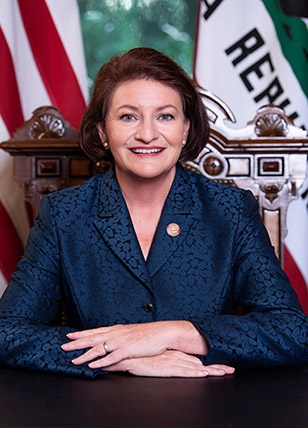
AJR 21: Voting Rights Act of 1965.
- Session Year: 2017-2018
- House: Assembly
- Latest Version Date: 2017-09-12
This measure would recognize August 6, 2017, as the 52nd anniversary of the signing of the federal Voting Rights Act of 1965. This measure would also urge the Congress and President of the United States to continue to secure citizens right to vote and remedy any racial discrimination in voting.
This measure would recognize August 6, 2017, as the 52nd anniversary of the signing of the federal Voting Rights Act of 1965. This measure would also urge the Congress and President of the United States to continue to secure citizens right to vote and remedy any racial discrimination in voting.
WHEREAS, Voting is a fundamental right of United States citizenship, which is necessary to protect; and
WHEREAS, The National American Woman Suffrage Association, which became the League of Women Voters, was established in anticipation of the ratification of the Nineteenth Amendment to the United States Constitution, which gave women the right to vote; and
WHEREAS, Women at that time believed that they had a responsibility to participate in public debate and to educate voters about the important issues of the day; and
WHEREAS, Historically, Although the Fifteenth Amendment to the United States Constitution proclaimed that the right to vote shall not be denied on account of race, color, or previous condition of servitude, both legal and extra-legal means, including violence, have been used to prevent African Americans from accessing their constitutional right to vote; and
WHEREAS, Local organizing efforts by a number of civil rights groups educated federal Department of Justice lawyers about the need for voting rights legislation; andWHEREAS, The Voting Rights Act of 1965 made it easier for southern Blacks to register to vote by outlawing literacy tests, poll taxes, and other impediments imposed to restrict their voting; and
WHEREAS, During 1965, the same year the Voting Rights Act was signed into law, Malcolm X was assassinated, the Selma to Montgomery marches took place, the Watts riots erupted in Los Angeles, and President Johnson issued Executive Order No. 11246, which enforced affirmative action for the first time; andWHEREAS, The Voting Rights Act was not an end, but was the inspiration for new organizing efforts and a new tool for rejuvenating local movements; and
WHEREAS, Americas finest hour in its struggle for civil rights was when citizens acted together to end injustice and bigotry to secure the fundamental right to vote, without which, according to the Supreme Court, other rights, even the most basic, are illusory; and
WHEREAS, Voter discrimination and other abuses in our voting system remain; and
WHEREAS, In the current political climate, voters must be assured that their right to vote is protected, as many recently-enacted laws potentially disenfranchise voters; and
WHEREAS, the 52nd anniversary of the signing of the Voting Rights Act of 1965 is an opportunity to reflect on the importance of voting, to start renew a conversation on voting rights, and to critique those who would move our democracy backwards; and
WHEREAS, The 52nd anniversary of the Voting Rights Act is a strong reminder that every American citizen, 18 years of age and older, must have an equal right to vote; and underscores the need to overcome voter-suppression efforts; now, therefore be it
WHEREAS, When anyone makes it harder for everyday people to vote, those actions strike at the very core of our democracy; andWHEREAS, The right to vote is now facing an assault from President Donald Trump, who has created a Voter Integrity Commission asking for information from every state to determine who can and cannot vote; and WHEREAS, Common sense proposals to increase, not decrease, voter participation include automatic and universal voter registration, a nationwide voting period of 20 days, and repairing the Voting Rights Act after the United States Supreme Courts decision in Shelby County v. Holder, which struck down Section 4 of the Voting Rights Act, the provision that required states and counties identified with voter discrimination to obtain approval from the federal Department of Justice before they could change election laws; now, therefore be itResolved by the Assembly and the Senate of the State of California, jointly, That the Legislature recognizes August 6, 2017, as the 52nd Anniversary of the signing of the Voting Rights Act of 1965, and recognizes the significant progress made by the Voting Rights Act to protect every citizens right to vote; 1965; and be it further
Resolved, That the Legislature honors and remembers those brave women and men who struggled, died, and continue to struggle for this freedom; and be it further freedom.
Resolved, That the Legislature urges Congress and the President of the United States to continue to secure citizens right to vote and remedy any identity-based discriminatory practices in voting; and be it furtherResolved, That the Chief Clerk of the Assembly transmit copies of this resolution to the President and the Vice President of the United States, to the Speaker of the House of Representatives, to the Majority Leader of the United States Senate, and to each Senator and Representative from California in the Congress of the United States.WHEREAS, Historically, both legal and extra-legal means, including violence, have been used to prevent African Americans from accessing their constitutional right to vote; and
WHEREAS, Local organizing efforts by a number of civil rights groups educated federal Department of Justice lawyers about the need for voting rights legislation; and
WHEREAS, The Voting Rights Act of 1965 made it easier for southern Blacks to register to vote by outlawing literacy tests, poll taxes, and other impediments imposed to restrict their voting; and
WHEREAS, During 1965, the same year the Voting Rights Act was signed into law, Malcolm X was assassinated, the Selma to Montgomery marches took place, the Watts riots erupted in Los Angeles, and President Johnson issued Executive Order No. 11246, which enforced affirmative action for the first time; and
WHEREAS, The Voting Rights Act was not an end, but was the inspiration for new organizing efforts and a new tool for rejuvenating local movements; and
WHEREAS, Americas finest hour in its struggle for civil rights was when citizens acted together to end injustice and bigotry to secure the fundamental right to vote, without which, according to the Supreme Court, other rights, even the most basic, are illusory; and
WHEREAS, the 52nd anniversary of the signing of the Voting Rights Act of 1965 is an opportunity to reflect on the importance of voting, to start a conversation on voting rights, and to critique those who would move our democracy backwards; and
WHEREAS, The 52nd anniversary of the Voting Rights Act is a strong reminder that every American citizen, 18 years of age and older, must have an equal right to vote; and
WHEREAS, When anyone makes it harder for everyday people to vote, those actions strike at the very core of our democracy; and
WHEREAS, The right to vote is now facing an assault from President Donald Trump, who has created a Voter Integrity Commission asking for information from every state to determine who can and cannot vote; and
WHEREAS, Common sense proposals to increase, not decrease, voter participation include automatic and universal voter registration, a nationwide voting period of 20 days, and repairing the Voting Rights Act after the United States Supreme Courts decision in Shelby County v. Holder, which struck down Section 4 of the Voting Rights Act, the provision that required states and counties identified with voter discrimination to obtain approval from the federal Department of Justice before they could change election laws; now, therefore be it
Resolved by the Assembly and the Senate of the State of California, jointly, That the Legislature recognizes August 6, 2017, as the 52nd Anniversary of the signing of the Voting Rights Act of 1965, and recognizes the significant progress made by the Voting Rights Act to protect every citizens right to vote; and be it further
Resolved, That the Legislature honors and remembers those brave women and men who struggled, died, and continue to struggle for this freedom; and be it further
Resolved, That the Legislature urges Congress and the President of the United States to continue to secure citizens right to vote and remedy any identity-based discriminatory practices in voting; and be it further
Resolved, That the Chief Clerk of the Assembly transmit copies of this resolution to the President and the Vice President of the United States, to the Speaker of the House of Representatives, to the Majority Leader of the United States Senate, and to each Senator and Representative from California in the Congress of the United States.
|
Date
|
Status
|
|---|---|
| Jan 3, 2018 | In Senate. To Com. on RLS. |
| Sep 15, 2017 | Coauthors revised. |
| Sep 14, 2017 | From committee: Be adopted. Ordered to Third Reading. (Ayes 4. Noes 0.) (September 14). |
| Sep 13, 2017 | Re-referred to Com. on E. & R. |
| Sep 12, 2017 | From committee chair, with author's amendments: Amend, and re-refer to Com. on E. & R. Amended. |
| Aug 28, 2017 | In committee: Hearing cancelled at the request of author. |
| Aug 24, 2017 | Referred to Com. on E. & R. |
| Aug 22, 2017 | From printer. |
| Aug 21, 2017 | Introduced. To print. |
|
Date
|
Description
|
Location
|
Votes
|
|
|---|---|---|---|---|
| Sep 15, 2017 | AJR 21 RUBIO Assembly Third Reading | Assembly Floor |
Passed |
|
| Sep 14, 2017 | Be adopted. To third reading. | Assembly Standing Committee on Elections and Redistricting |
Passed |
This list shows positions taken on this bill by organizations on the date displayed, which is linked to the original source.
Positions by individuals are not included.
ASSEMBLY THIRD READING
ATR Bill Id:AJR 21
Author:(Rubio)
As Amended Ver:September 12, 2017
Majority vote
Committee | Votes | Ayes | Noes |
Elections | 4-0 | Berman, Low, Mullin, Weber |
|
SUMMARY: Recognizes August 6, 2017 as the 52nd anniversary of the signing of the federal Voting Rights Act of 1965 (VRA). Specifically, this resolution:
- Recognizes August 6, 2017 as the 52nd anniversary of the signing of the federal VRA.
- Makes the following findings and declarations:
- Voting is a fundamental right of United States (U.S.) citizenship, which is necessary to protect;
- The National American Woman Suffrage Association, which became the League of Women Voters, was established in anticipation of the ratification of the Nineteenth Amendment of the U.S. Constitution, which gave women the right to vote;
- Women at that time believed that they had a responsibility to participate in public debate and to educate voters about important issues of the day;
- Although the Fifteenth Amendment of the U.S. Constitution proclaimed that the right to vote shall not be denied on account of race, color, or previous condition of servitude, both legal and extra-legal means, including violence, have been used to prevent African Americans from accessing their constitutional right to vote;
- The VRA made it easier for southern Blacks to register to vote by outlawing literacy tests, poll taxes, and other impediments imposed to restrict their voting;
- The VRA was not an end, but was the inspiration for new organizing efforts and a new tool for rejuvenating local movements;
- American's finest hour in its struggle for civil rights was when citizens acted together to end injustice and bigotry to secure the fundamental right to vote, without which, according to the Supreme Court, other rights, even the most basic, are illusory;
- Voter discrimination and other abuses in our voting system remain;
- In the current political climate, voters must be assured that their right to vote is protected, as many recently-enacted laws potentially disenfranchise voters;
- The 52nd anniversary of the signing of the VRA is an opportunity to reflect on the importance of voting, to renew a conversation on voting rights, and to critique those who would move our democracy backwards; and,
- The 52nd anniversary of the VRA underscores the need to overcome voter-suppression efforts.
FISCAL EFFECT: None. This resolution is keyed non-fiscal by the Legislative Counsel.
COMMENTS: According to the author, "It is important that we continue to recognize the Voting Rights Act of 1965, which is why I introduced AJR 21. When President Johnson issued a call for a stronger voting rights law, it was during a time where our country needed to take action following the acts of violence and terrorism against voting-rights activists. When Congress determined that existing anti-discrimination laws were not sufficient, this landmark legislation was enacted and became a historical victory for the civil rights movement. Given the current climate at the federal level, is it critical that we continue to strengthen the protections guaranteed by the Fifteenth Amendment."
Please see the policy committee analysis for a full discussion of this resolution.
Analysis Prepared by: Nichole Becker / E. & R. / (916) 319-2094 FN: 0002364
Date of Hearing: September 14, 2017
ASSEMBLY COMMITTEE ON ELECTIONS AND REDISTRICTING
Marc Berman, Chair
ABPCA Bill Id:AJR 21 (
Author:Rubio) – As Amended Ver:September 12, 2017
SUBJECT: Voting Rights Act of 1965.
SUMMARY: Recognizes August 6, 2017 as the 52nd anniversary of the signing of the federal Voting Rights Act of 1965 (VRA). Specifically, this resolution:
- Recognizes August 6, 2017 as the 52nd anniversary of the signing of the federal VRA.
- Makes the following findings and declarations:
- Voting is a fundamental right of United States (U.S.) citizenship, which is necessary to protect;
- The National American Woman Suffrage Association, which became the League of Women Voters, was established in anticipation of the ratification of the Nineteenth Amendment of the U.S. Constitution, which gave women the right to vote;
- Women at that time believed that they had a responsibility to participate in public debate and to educate voters about important issues of the day;
- Although the Fifteenth Amendment of the U.S. Constitution proclaimed that the right to vote shall not be denied on account of race, color, or previous condition of servitude, both legal and extra-legal means, including violence, have been used to prevent African Americans from accessing their constitutional right to vote;
- The VRA made it easier for southern Blacks to register to vote by outlawing literacy tests, poll taxes, and other impediments imposed to restrict their voting;
- The VRA was not an end, but was the inspiration for new organizing efforts and a new tool for rejuvenating local movements;
- American's finest hour in its struggle for civil rights was when citizens acted together to end injustice and bigotry to secure the fundamental right to vote, without which, according to the Supreme Court, other rights, even the most basic, are illusory;
- Voter discrimination and other abuses in our voting system remain;
- In the current political climate, voters must be assured that their right to vote is protected, as many recently-enacted laws potentially disenfranchise voters;
- The 52nd anniversary of the signing of the VRA is an opportunity to reflect on the importance of voting, to renew a conversation on voting rights, and to critique those who would move our democracy backwards; and,
- The 52nd anniversary of the VRA underscores the need to overcome voter-suppression efforts.
EXISTING LAW:
- Provides, pursuant to the 15th Amendment to the U.S. Constitution, that the right of citizens of the U.S. to vote shall not be denied or abridged by the U.S. or by any state on account of race, color, or previous condition of servitude. Gives Congress the power to enforce this provision by appropriate legislation.
- Prohibits, pursuant to Section 2 of the VRA, voting practices or procedures that discriminate on the basis of race, color, or membership in specified language minority groups.
- Prohibits, pursuant to Section 5 of the VRA, any change with respect to voting from being enforced in specified covered jurisdictions (and political subunits within those covered jurisdictions) unless and until the jurisdiction first obtains a determination by the U.S. Department of Justice (DOJ) or the U.S. District Court for the District of Columbia that the proposed voting change does not deny or abridge the right to vote on account of race, color, or membership in a language minority group.
FISCAL EFFECT: This resolution is keyed non-fiscal by the Legislative Counsel.
COMMENTS:
- Purpose of the Resolution: According to the author:
It is important that we continue to recognize the Voting Rights Act of 1965, which is why I introduced AJR 21. When President Johnson issued a call for a stronger voting rights law, it was during a time where our country needed to take action following the acts of violence and terrorism against voting-rights activists. When Congress determined that existing anti-discrimination laws were not sufficient, this landmark legislation was enacted and became a historical victory for the civil rights movement. Given the current climate at the federal level, is it critical that we continue to strengthen the protections guaranteed by the Fifteenth Amendment.
- Voting Rights Act of 1965: The 15th Amendment to the U.S. Constitution provides, in part, that "[t]he right of citizens of the United States to vote shall not be denied or abridged by the United States or by any state on account of race, color, or previous condition of servitude." Additionally, the 15th Amendment authorizes Congress to enact legislation to enforce its provisions. The 15th Amendment was ratified in February 1870.
In 1965, Congress determined that state officials were failing to comply with the provisions of the 15th Amendment. Congressional hearings found that litigation to eliminate discriminatory election practices was largely ineffective, because states and local jurisdictions would institute new discriminatory practices to replace any such practices that were struck down in court. As a result, Congress passed and President Johnson signed the VRA. The VRA, among other provisions, prohibits any "voting qualification or prerequisite to voting or standard, practice, or procedure" from being imposed by any "State or political subdivision in a manner which results in a denial or abridgement of the right of any citizen of the United States to vote on account of race or color."
Section 5 of the VRA requires certain covered jurisdictions to receive approval for any changes to law and practices affecting voting from the U.S. DOJ or the U.S. District Court for the District of Columbia to ensure that the changes do not have the purpose or effect of "denying or abridging the right to vote on account of race or color." The requirement to obtain approval under Section 5 is commonly referred to as a "preclearance" requirement.
In addition, in 1975 Congress adopted the language minority provisions of Sections 4(f)(4) and 203 of the VRA. Sections 4(f)(4) and 203 of the VRA require certain jurisdictions with significant populations of voting age citizens who belong to a language minority community to provide voting materials in a language other than English. These determinations are based on data from the most recent Census. Specifically, Sections 203 and 4(f)(4) require that when a covered state or political subdivision "[p]rovides registration or voting notices, forms, instructions, assistance, or other materials or information relating to the electoral process, including ballots, it shall provide them in the language of the applicable minority group as well as in the English language." - Constitutionality of Section 5 and Shelby County v. Holder: While much of the VRA is permanent, certain special provisions of the VRA are temporary, including Section 5. When the VRA was enacted, Section 5 was scheduled to expire in five years. Subsequently, Congress extended those provisions for another five years in 1970, an additional seven years in 1975, and an additional 25 years in 1982, and again for an additional 25 years in 2006. As a result, Section 5 currently is scheduled to expire in 2031.
In April 2010, Shelby County in Alabama filed suit in the U.S. District Court for the District of Columbia challenging the constitutionality of Section 5 of the VRA, and of the coverage formulas contained in Section 4(b) of the VRA. Because the State of Alabama was covered under the preclearance requirements of Section 5, Shelby County was also covered as a political subdivision of Alabama. In the lawsuit, Shelby County contended that Congress exceeded its authority under the 15th Amendment and thus violated the 10th Amendment and Article IV of the U.S. Constitution when it voted to reauthorize Section 5 without changing or updating the formulas that determined which jurisdictions were covered under Section 5. The District Court rejected Shelby County's arguments, and upheld the constitutionality of the Section 5 reauthorization and the coverage formulas contained in Section 4(b). On appeal, the U.S. Court of Appeals for the District of Columbia Circuit affirmed the ruling of the District Court, and Shelby County subsequently appealed to the U.S. Supreme Court.
On June 25, 2013, the U.S. Supreme Court, in Shelby County v. Holder, held that the coverage formula in Section 4(b) of the VRA is unconstitutional and can no longer be used as a basis for subjecting jurisdictions to preclearance under Section 5 of the VRA. The Court stated that although the formula was rational and necessary at the time of its enactment, it is no longer responsive to current conditions. The Court, however, did not strike down Section 5, which contains the preclearance conditions. Without Section 4(b), however, no jurisdiction will be subject to Section 5 preclearance unless Congress enacts a new coverage formula.
The effect of the Shelby County decision is that the jurisdictions identified by the coverage formula in Section 4(b) no longer need to seek preclearance from the Attorney General or the U.S. District Court for the District of Columbia before implementing new voting changes, unless they are covered by a separate court order entered under Section 3(c) of the VRA.
All or specific portions of the following states were required to have their voting changes precleared before the U.S. Supreme Court decision in Shelby County: Alabama, Alaska, Arizona, Florida, Georgia, Louisiana, Michigan, Mississippi, New Hampshire, New York, North Carolina, South Carolina, South Dakota, Texas, and Virginia. Also included were the California counties of Kings, Monterey, and Yuba. Merced County previously was subject to the preclearance requirement, but it successfully bailed out from Section 5 coverage in 2012.
According to the U.S. DOJ, the ruling in Shelby County does not affect Section 3(c) of the VRA. Jurisdictions covered by a preclearance requirement pursuant to court orders under Section 3(c) remain subject to the terms of those court orders. Additionally, the Supreme Court's decision states that Section 2 of the VRA, which prohibits discrimination in voting based on race or language minority status, and which applies on a permanent nationwide basis, is unaffected by the decision. Likewise, other provisions of the VRA that prohibit discrimination in voting remain in full force and effect, as do other federal laws that protect voting rights, including the Uniformed and Overseas Citizens Absentee Voting Act, the National Voter Registration Act, and the Help America Vote Act.
- Previous Resolutions: AJR 13 (Ridley-Thomas), Resolution Chapter 193, Statutes of 2015, recognizes August 6, 2015, as the 50th anniversary of the signing of the federal VRA and urges the Congress and President of the U.S. to continue to secure citizens' rights to vote and remedy any racial discrimination in voting.
HR 10 (Jones-Sawyer, et al.) of 2015, commemorates March 7, 2015 in honor of the Foot Soldiers who participated in Bloody Sunday, Turnaround Tuesday, or the final Selma to Montgomery Voting Rights March during March of 1965, which served as a catalyst for the VRA. HR 10 was adopted on the Assembly floor on March 12, 2015.
AJR 15 (Alejo), Resolution Chapter 60, Statutes of 2013, urged the U.S. Supreme Court to affirm the constitutionality of Section 5 of the VRA.
SJR 14 (Yee), Resolution Chapter 133, Statutes of 2013, urged the Congress and the President of the U.S. to enact amendments to the VRA that would restore Section 4 of the VRA with a new coverage formula and update the entire VRA in order to address ongoing violations of voting rights in the states.
REGISTERED SUPPORT / OPPOSITION:
Support
None on file.
Opposition
None on file.
Analysis Prepared by: Nichole Becker / E. & R. / (916) 319-2094
Discussed in Hearing
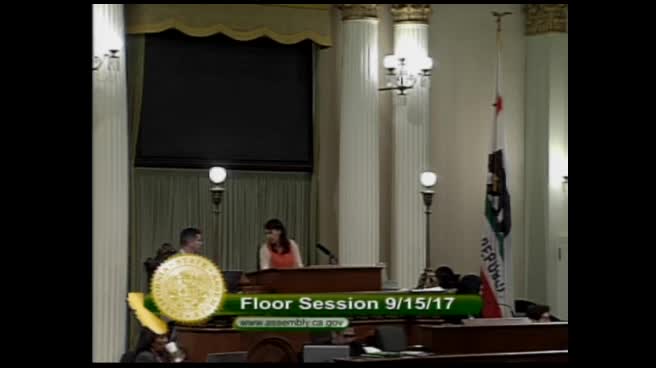 10MIN
Assembly Floor
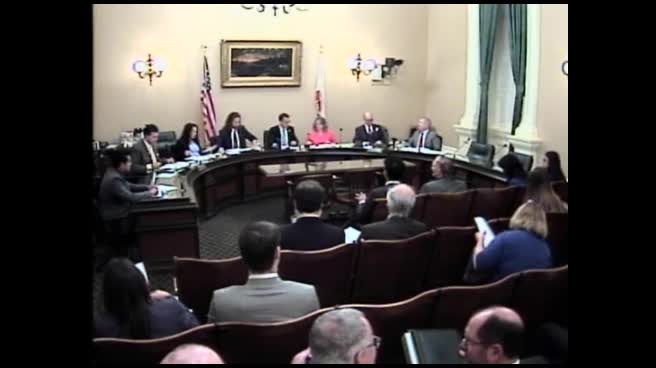 3MIN
Assembly Standing Committee on Elections and Redistricting
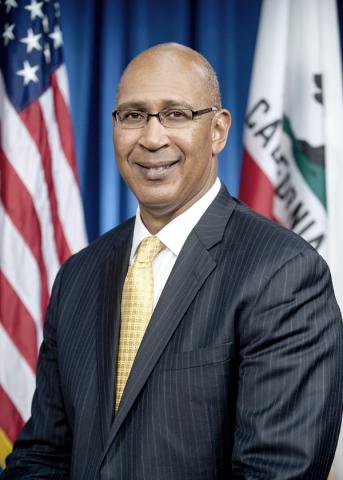

Bill Co-Author(s):