HR 71
- Session Year: 2017-2018
- House: Assembly
- Latest Version Date: 2018-01-16
WHEREAS, January 22, 2018, marks the 45th anniversary of the United States Supreme Courts landmark decision in Roe v. Wade, which affirmed that every woman has a fundamental right to abortion, and is an occasion deserving of celebration; and
WHEREAS, Roe v. Wade has been the cornerstone of the ability of women to control their own bodies, allowing every woman in the United States the right to decide if, when, and with whom to have children; and
WHEREAS, Access to reproductive health care, including abortion, has facilitated and expanded womens economic and societal participation in the United States; and
WHEREAS, Abortion is a medical procedure that nearly one in four women in the United States will access; and
WHEREAS, The State of California, home to nearly 20 million American women, has no state restrictions upon abortion accessibility, and at least 95% of women in California live in a county with an abortion provider; and
WHEREAS, Planned Parenthood health centers across California are the largest providers of safe, affordable, and medically accurate abortion services in the state; and
WHEREAS, Reproductive and sexual health care, and providers like Planned Parenthood, are under serious, unrelenting attack for providing essential reproductive and sexual health care information and procedures, such as abortion; now, therefore, be it
Resolved by the Assembly of the State of California, That the Assembly urges the President of the United States and the Congress of the United States to express their support for the fundamental right to abortion and bodily autonomy, as well as their support for access to comprehensive reproductive and sexual health care, including the services provided by Planned Parenthood; and be it further
Resolved, That the Chief Clerk of the Assembly transmit copies of this resolution to the President and Vice President of the United States, to the Speaker of the House of Representatives, to the Majority Leader of the Senate, to each Senator and Representative from California in the Congress of the United States, and to the author for appropriate distribution.
WHEREAS, Planned Parenthood has provided critical and affordable reproductive health care for millions of women, men, and young people for over a century; andWHEREAS, Services provided by Planned Parenthood include, but are not limited to, contraceptive care, pregnancy tests, cancer screenings, and sexually transmitted disease testing; andWHEREAS, Planned Parenthood has national and international reach. It is present in all 50 states and Washington, D.C., with 56 affiliates that operate 600 health centers throughout the country. Globally, Planned Parenthood has partnered with 12 focus countries in Africa and Latin America and has reached nearly 1.5 million people internationally with reproductive health education and services; andWHEREAS, One in five women in the United States has visited a Planned Parenthood health center. Its Internet Web sites, one of which is written entirely in Spanish, receive an estimated 68 million visits in a single year; andWHEREAS, Planned Parenthood provides compassionate, professional, and culturally sensitive care to people of all ethnicities, socioeconomic statuses, ages, immigration statuses, and faiths. Seventy-five percent of patients have incomes of 150 percent of the federal poverty level or less, which is the equivalent of $36,900 a year for a family of four in 2017. More than one-third of the 2.4 million patients Planned Parenthood affiliates have served are people of color. This includes approximately 500,000 patients that identify themselves as Latino and approximately 360,000 patients that identify themselves as Black; andWHEREAS, Roughly one-half of the federal funding that Planned Parenthood receives nationwide goes to covering the health care and family planning costs of mostly low-income Californians; andWHEREAS, Thanks to a long history of progressive state policies, many of which were put into place 30 years ago under Republican Governor Pete Wilson, California has hosted a friendly environment for Planned Parenthood and people who seek its services. Planned Parenthood has consequently become one of Californias largest health care providers, operating 115 clinics in the state and serving 850,000 patients every year. This is nearly one third of the 2.5 million patients Planned Parenthood serves nationwide; andWHEREAS, Despite providing critical care to millions of patients, and in many cases being the sole provider of care for low-income and minority individuals who could not otherwise afford reproductive care, Planned Parenthood is under siege by the current presidential administration and antiabortion groups. Current federal budget proposals bar Planned Parenthood and other abortion providers from receiving federal funds, either through the form of Medicaid or Title X funding; now, therefore, be itResolved by the Assembly of the State of California, That the Assembly supports Planned Parenthood and all of the women that it serves and will work to protect womens rights; and be it furtherResolved, That the Assembly opposes any change to the United States Supreme Court decision in Roe v. Wade or effort to defund Planned Parenthood; and be it furtherResolved, That the Assembly honors Planned Parenthood, including the pivotal work it does in Californias communities and the countless women it serves who would otherwise have no access to healthcare; and be it furtherResolved, That the Chief Clerk provide copies of this resolution to the author for appropriate distribution.WHEREAS, Planned Parenthood has provided critical and affordable reproductive health care for millions of women, men, and young people for over a century; and
WHEREAS, Services provided by Planned Parenthood include, but are not limited to, contraceptive care, pregnancy tests, cancer screenings, and sexually transmitted disease testing; and
WHEREAS, Planned Parenthood has national and international reach. It is present in all 50 states and Washington, D.C., with 56 affiliates that operate 600 health centers throughout the country. Globally, Planned Parenthood has partnered with 12 focus countries in Africa and Latin America and has reached nearly 1.5 million people internationally with reproductive health education and services; and
WHEREAS, One in five women in the United States has visited a Planned Parenthood health center. Its Internet Web sites, one of which is written entirely in Spanish, receive an estimated 68 million visits in a single year; and
WHEREAS, Planned Parenthood provides compassionate, professional, and culturally sensitive care to people of all ethnicities, socioeconomic statuses, ages, immigration statuses, and faiths. Seventy-five percent of patients have incomes of 150 percent of the federal poverty level or less, which is the equivalent of $36,900 a year for a family of four in 2017. More than one-third of the 2.4 million patients Planned Parenthood affiliates have served are people of color. This includes approximately 500,000 patients that identify themselves as Latino and approximately 360,000 patients that identify themselves as Black; and
WHEREAS, Roughly one-half of the federal funding that Planned Parenthood receives nationwide goes to covering the health care and family planning costs of mostly low-income Californians; and
WHEREAS, Thanks to a long history of progressive state policies, many of which were put into place 30 years ago under Republican Governor Pete Wilson, California has hosted a friendly environment for Planned Parenthood and people who seek its services. Planned Parenthood has consequently become one of Californias largest health care providers, operating 115 clinics in the state and serving 850,000 patients every year. This is nearly one third of the 2.5 million patients Planned Parenthood serves nationwide; and
WHEREAS, Despite providing critical care to millions of patients, and in many cases being the sole provider of care for low-income and minority individuals who could not otherwise afford reproductive care, Planned Parenthood is under siege by the current presidential administration and antiabortion groups. Current federal budget proposals bar Planned Parenthood and other abortion providers from receiving federal funds, either through the form of Medicaid or Title X funding; now, therefore, be it
Resolved by the Assembly of the State of California, That the Assembly supports Planned Parenthood and all of the women that it serves and will work to protect womens rights; and be it further
Resolved, That the Assembly opposes any change to the United States Supreme Court decision in Roe v. Wade or effort to defund Planned Parenthood; and be it further
Resolved, That the Assembly honors Planned Parenthood, including the pivotal work it does in Californias communities and the countless women it serves who would otherwise have no access to healthcare; and be it further
Resolved, That the Chief Clerk provide copies of this resolution to the author for appropriate distribution.
|
Date
|
Status
|
|---|---|
| Jan 22, 2018 | Coauthors revised. |
| Jan 17, 2018 | Re-referred to Com. on JUD. |
| Jan 16, 2018 | From committee chair, with author's amendments: Amend, and re-refer to Com. on JUD. Amended. |
| Jan 16, 2018 | Referred to Com. on JUD. |
| Jan 12, 2018 | Introduced. |
|
Date
|
Description
|
Location
|
Votes
|
|
|---|---|---|---|---|
| Jan 22, 2018 | HR 71 CABALLERO Assembly Third Reading | Assembly Floor |
Passed |
|
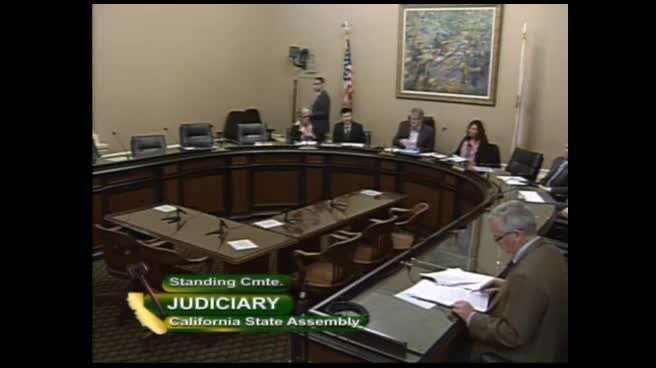
| Jan 17, 2018 | Be adopted. To third reading. | Assembly Standing Committee on Judiciary |
Passed |
This list shows positions taken on this bill by organizations on the date displayed, which is linked to the original source.
Positions by individuals are not included.
Date of Hearing: January 17, 2018
ASSEMBLY COMMITTEE ON JUDICIARY
Mark Stone, Chair
ABPCA Bill Id:HR 71
Author:(Caballero) – As Amended Ver:January 16, 2018
SUBJECT: ROE V. WADE ANNIVERSARY
KEY ISSUE: IN HONOR OF THE 45TH ANNIVERSARY OF THE LANDMARK AND HISTORIC UNITED STATES SUPREME COURT DECISION, ROE V. WADE, SHOULD THE LEGISLATURE URGE THE PRESIDENT AND CONGRESS OF THE UNITED STATES TO SUPPORT A WOMAN’S FUNDAMENTAL RIGHT TO CONTROL HER OWN REPRODUCTIVE DECISIONS?
SYNOPSIS
This resolution, similar to others passed by this Committee in recent years, urges the President and Congress of the United States to express their support for a woman’s fundamental right to control her own reproductive decisions, and to support access to comprehensive reproductive health care, including care provided by Planned Parenthood. This resolution also makes findings regarding the importance of Roe v. Wade, makes findings about the importance of reproductive rights, and reaffirms California’s strong support of a woman’s right to choose.
SUMMARY: Urges the President of the United States and the United States Congress to express their support for the fundamental right to abortion and bodily autonomy, as well as their support for access to comprehensive reproductive health care and sexual health care, including the services provided by Planned Parenthood. Specifically, this resolution makes the following findings:
- January 22, 2018, marks the 45th anniversary of the United States Supreme Court’s landmark decision in Roe v. Wade, which affirmed that every woman has a fundamental right to abortion, and is an occasion deserving of celebration; and
- Roe v. Wade has been the cornerstone of the ability of women to control their own bodies, allowing every woman in the United States the right to decide if, when, and with whom to have children; and
- Access to reproductive health care, including abortion, has facilitated and expanded women’s economic and societal participation in the United States; and
- Abortion is a medical procedure that nearly one in four women in the United States will access; and
- The State of California, home to nearly 20 million American women, has no state restrictions upon abortion accessibility, and at least 95% of women in California live in a county with an abortion provider; and
- Planned Parenthood health centers across California are the largest providers of safe, affordable, and medically accurate abortion services in the state; and
- Reproductive and sexual health care, and providers like Planned Parenthood, are under serious, unrelenting attack for providing essential reproductive and sexual health care information and procedures, such as abortion.
EXISTING LAW:
- Recognizes a right to privacy under the United States Constitution. (Boyd v. United States (1886) 116 U.S. 616; Meyer v. Nebraska (1923) 262 U.S. 390; Griswold v. Connecticut (1965) 381 U.S. 479; Lawrence v. Texas (2003) 539 U.S. 558.)
- Explicitly provides for the right to privacy under the California Constitution. (California Constitution, Article I, Section 1.)
- Holds that the constitutionally protected right to privacy limits a state’s power to restrict a woman’s fundamental right to terminate a pregnancy. (Roe v. Wade (1973) 410 U.S. 113.)
- Holds that if a law’s purpose or effect places a substantial obstacle in the path of a woman seeking a pre-viability abortion, the law is unconstitutional. (Planned Parenthood of Southeastern Pa. v. Casey (1992) 505 U.S. 833, 878; see also Whole Woman’s Health v. Hellerstedt (2016) 579 U.S. ___ [136 S.Ct. 2292, 2300].)
FISCAL EFFECT: As currently in print this resolution is keyed non-fiscal.
COMMENTS: This resolution honors the 45th anniversary of the landmark United States Supreme Court decision, Roe v. Wade (1973) 410 U.S. 113. In Roe, the Supreme Court held that the constitutional right to privacy extends to a woman’s right to terminate her pregnancy and that some state regulation of access to abortion is permissible. There, “Jane Roe” wanted to end her pregnancy under safe and clinical conditions but could not obtain an abortion under Texas law unless her life was threatened by continuation of her pregnancy. Unable to travel to another state for the procedure, she challenged the Texas criminal statute, arguing that the law abridged her right of personal privacy. The Supreme Court struck down the Texas statute, and held that the constitutional right to privacy “is broad enough to encompass a woman’s decision whether or not to terminate her pregnancy.” (Id. at p. 155.)
Roe v. Wade is a natural extension of the constitutional principles under the right to privacy. The United States Supreme Court has long recognized the constitutional protection of the right of privacy. (See, e.g., Boyd v. United States (1886) 116 U.S. 616.) That privacy right has been extended to marital, sexual, and familial matters. (See, e.g., Meyer v. Nebraska (1923) 262 U.S. 390; Griswold v. Connecticut (1965) 381 U.S. 479; Lawrence v. Texas (2003) 539 U.S. 558.) In Roe v. Wade, the Court held that the right to privacy also extends to a woman’s decision to terminate a pregnancy. At the same time, the Court provided two state interests that are sufficiently compelling to justify restrictions on a woman’s right to choose to terminate a pregnancy: (1) a state may regulate the abortion procedure after the first trimester of pregnancy in ways reasonably related to promote a woman’s health; and (2) after the point of fetal viability, a state may, to protect the potential life of the fetus, prohibit abortions that are not necessary to preserve a woman’s life or health.
Roe v. Wade has been the subject of much debate, both political and legal. Indeed, the application and validity of the decision has been frequently challenged in court. In 1992, in Planned Parenthood of Southeastern Pennsylvania v. Casey (1992) 505 U.S. 833, the Supreme Court reaffirmed Roe v. Wade and provided reasoning for once again upholding Roe:
[F]or two decades of economic and social developments, people have organized intimate relationships and made choices that define their views of themselves and their places in society, in reliance on the availability of abortion in the event that contraception should fail. The ability of women to participate equally in the economic and social life of the Nation has been facilitated by their ability to control their reproductive lives. The Constitution serves human values, and while the effect of reliance on Roe cannot be exactly measured, neither can the certain cost of overruling Roe for people who have ordered their thinking and living around that case be dismissed. (Casey at 856 [internal citations omitted].)
Research shows that Roe v. Wade has saved women’s lives. According to an article, “The Public Health Impact of Legal Abortion: 30 Years Later,” published by the Guttmacher Institute:
The number of abortion-related deaths per million live births fell from nearly 40 in 1970 to 8 in 1976. The trend was caused mainly by a decline in the absolute number of deaths from illegal abortion—especially after Roe v. Wade—from 39 in 1972 to two in 1976. After 1975, mortality due to legally induced abortion also fell—from more than three deaths per 100,000 abortions in 1975 to about one in 1976 and even fewer thereafter. (Cates et al., Comment: The Public Health Impact of Legal Abortion: 30 Years Later (January/February 2003) 35 Perspectives on Sexual and Reproductive Health 1.)
Indeed, between 1978 and 2010, the abortion-related mortality rate fell to less than 1 death per 100,000 abortions. (Centers for Disease Control and Prevention, Abortion Surveillance – United States, 2011 (November 28, 2014).) Furthermore, recent studies have documented significant declines in the rates of abortion in the United States, finding that as more women are using highly effective contraceptive methods, fewer women have unintended pregnancies and seek abortions. (Dreweke, New Clarity for the U.S. Abortion Debate: A Steep Drop in Unintended Pregnancy Is Driving Recent Abortion Declines, Guttmacher Institute (March 18, 2016).)
Even in the face of these low rates of maternal mortality and abortions, there have been efforts to restrict reproductive healthcare, including access to contraceptives and abortion, and to limit a woman’s fundamental right to choose. In 2015, the U.S. House of Representatives passed House Resolution 3134, known as the Defund Planned Parenthood Act of 2015, to prohibit Planned Parenthood and its clinics from receiving any federal funds unless it stopped providing abortions (even though existing law already prohibited the use of federal funds to pay for abortion services). In 2015, the state of Texas enacted House Bill 2, which, among other things, required abortion clinics to comply with standards set for ambulatory surgical centers—requirements that would have shut down 75% of the state’s health clinics and significantly limited access for women to clinics in rural areas. (Petition for a Writ of Certiorari at 1-8, Whole Woman’s Health v. Cole (5th Cir. 2015) 790 F.3d 563, No. 14-50928.) Ultimately, the Supreme Court struck down that Texas law—holding that the statute unduly burdened a woman’s fundamental right—and reaffirmed the Court’s holdings in Roe and Casey. (Whole Woman’s Health v. Hellerstedt (2016) 579 U.S. ___ [136 S.Ct. 2292, 2300].)
The fundamental rights of women continue to be under attack. The GOP Administration has made no secret of its plans to cut public access to subsidized healthcare and reproductive health, as well as to limit a woman’s fundamental right to choose and strip federal funds from Planned Parenthood. In presidential debates and in a post-election interview, the president said he would appoint pro-life judges and that those appointments would “automatically” result in Roe v. Wade being overturned. (The 45th President (interview with Lesley Stahl) 60 Minutes (CBS television broadcast, Nov. 13, 2016); Commission on Presidential Debates (Oct. 19, 2016).) Within days of taking office, the president issued a Presidential Memorandum, reinstating the “Mexico City Policy." (Pres. Mem., The Mexico City Policy (January 23, 2017).) The policy requires foreign non-governmental organizations (NGOs) to certify that they will not “perform or actively promote abortion as a method of family planning,” using funds from any source (including non-U.S. funds), as a condition for receiving U.S. government global family planning assistance and, as of Jan. 23, 2017, any other U.S. global health assistance. (http://kff.org/global-health-policy/fact-sheet/mexico-city-policy-explainer/)
More generally, recent federal action on tax reform is likely to threaten access to healthcare. As projected by the Congressional Budget Office, the repeal of the individual mandate under the tax bill will result in higher premiums and the loss in health coverage to over 13 million people. (See Congressional Budget Office, Repealing the Individual Health Insurance Mandate: An Updated Estimate (November 8, 2017).) This loss in coverage will evidently lead to a loss in reproductive health care benefits. While the president has not unequivocally said that he wants Roe v. Wade overturned, his repeated efforts to overturn and undermine Obamacare, along with his recent statements and actions, seems to support this goal. Logically, as these efforts at reducing women’s access to reproductive healthcare succeed, the rate of unintended pregnancies (and abortions) are likely to increase.
Notwithstanding these federal efforts, California continues its long history of protecting the privacy rights of all Californians. Under California’s Constitution, the right to privacy is explicitly protected for all Californians: “All people are by nature free and independent and have inalienable rights. Among these are enjoying and defending life and liberty, acquiring, possessing, and protecting property, and pursuing and obtaining safety, happiness, and privacy.” (Article I, Section 1.) Indeed, this privacy right has been interpreted to provide greater protection of a woman’s right to choose than that provided under the federal Constitution. (American Academy of Pediatrics v. Lungren (1997) 16 Cal.4th 307, 327.) Not surprisingly, the State of California co-authored an amicus brief with other states to support Whole Woman’s Health’s challenge to the Texas law in Whole Woman’s Health v. Hellerstedt.
This resolution would convey that the California Legislature supports a woman’s fundamental right to control her own reproductive decisions and have access to comprehensive reproductive health care, including services provided by Planned Parenthood, and therefore honors the landmark Supreme Court decision in Roe v. Wade. This resolution also calls on the Chief Clerk to transmit copies of this resolution to the President and Vice President of the United States, Speaker of the House of Representatives, Majority Leader of the Senate, and federal legislators from California.
Author’s statement. In support of this resolution, the author states:
HR 71 celebrates January 22nd, 2018 as the 45th anniversary of Roe v. Wade, a pivotal Supreme Court case that secured every woman’s right to access an abortion. Equally as important, this resolution commemorates Planned Parenthood and the education, procedures, and services they provide to women in need all across our state. Access to health care is extremely limited in rural parts of California, and while Planned Parenthood clinics help to fill those gaps, the fundamental right of female reproductive health care is continually put in question.
REGISTERED SUPPORT / OPPOSITION:
Support
Planned Parenthood of California
Opposition
None on file
Analysis Prepared by: Eric Dang / JUD. / (916) 319-2334
Discussed in Hearing
View Older Hearings
Bill Author

Bill Co-Author(s):