AB 1836: Mental health: referral of conservatees.
- Session Year: 2015-2016
- House: Assembly
- Latest Version Date: 2016-09-29
Existing law provides a procedure for the appointment of a conservator for a person who is determined to be gravely disabled as a result of a mental disorder or an impairment by chronic alcoholism. Existing law authorizes certain persons to recommend conservatorship of an individual under his or her care to the officer providing conservatorship investigation in the county of the individuals residence, as specified. Existing law also provides for the establishment of a conservatorship for a person who is unable to properly provide for his or her personal needs or is substantially unable to manage his or her finances.
This bill would authorize the court, if a conservatorship has already been established under the Probate Code, to refer the conservatee for an assessment by the local mental health system or plan to determine if the conservatee has a treatable mental illness, including whether the conservatee is gravely disabled as a result of a mental disorder or impairment by chronic alcoholism, and is unwilling to accept, or is incapable of accepting, treatment voluntarily. The bill would also require the court to appoint counsel to a conservatee if he or she cannot afford counsel. The bill would require the local mental health system or plan to file a copy of the assessment with the court that made the referral.
By increasing county duties, this bill would impose a state-mandated local program.
The California Constitution requires the state to reimburse local agencies and school districts for certain costs mandated by the state. Statutory provisions establish procedures for making that reimbursement.
This bill would provide that, if the Commission on State Mandates determines that the bill contains costs mandated by the state, reimbursement for those costs shall be made pursuant to these statutory provisions.
Existing law provides a procedure for the appointment of a conservator for a person who is determined to be gravely disabled as a result of a mental disorder or an impairment by chronic alcoholism. Existing law authorizes certain persons to recommend conservatorship of an individual under his or her care to the officer providing conservatorship investigation in the county of the individuals residence, as specified. Existing law also provides for the establishment of a conservatorship for a person who is unable to properly provide for his or her personal needs or is substantially unable to manage his or her finances.
This bill would authorize the court, if a conservatorship has already been established under the Probate Code, to refer the conservatee for an assessment by the local mental health system or plan to determine if the conservatee has a treatable mental illness, including whether the conservatee is gravely disabled as a result of a mental disorder or impairment by chronic alcoholism, and is unwilling to accept, or is incapable of accepting, treatment voluntarily. The bill would also require the court to appoint counsel to a conservatee if he or she cannot afford counsel. The bill would require the local mental health system or plan to file a copy of the evaluation assessment with the court that made the referral.
By increasing county duties, this bill would impose a state-mandated local program.
The California Constitution requires the state to reimburse local agencies and school districts for certain costs mandated by the state. Statutory provisions establish procedures for making that reimbursement.
This bill would provide that, if the Commission on State Mandates determines that the bill contains costs mandated by the state, reimbursement for those costs shall be made pursuant to these statutory provisions.
Existing law provides a procedure for the appointment of a conservator for a person who is determined to be gravely disabled as a result of a mental disorder or an impairment by chronic alcoholism, and requires an officer, including a county public guardian or a county mental health program, to conduct a conservatorship investigation and render a written report to the court of his or her investigation. Under existing law, a professional person in charge of an agency providing comprehensive evaluation or a facility providing intensive treatment for a gravely disabled person may recommend a conservatorship for that person, and the agency is required to disclose any records or information that may facilitate an investigation. Existing law requires the officer providing conservatorship investigation, when he or she concurs with the recommendation of the professional person or facility, to petition the superior court in the patients county of residence for a conservatorship. alcoholism. Existing law authorizes certain persons to recommend conservatorship of an individual under his or her care to the officer providing conservatorship investigation in the county of the individuals residence, as specified. Existing law also provides for the establishment of a conservatorship for a person who is unable to properly provide for his or her personal needs or is substantially unable to manage his or her finances.
This bill would authorize the court, if a conservatorship has already been established under the Probate Code, and after a hearing attended by the conservatee, unless he or she waives presence, and the conservatees counsel, to recommend an investigation from the officer providing conservatorship investigation if the court, in consultation with a licensed physician or psychologist, as specified, providing comprehensive evaluation or intensive treatment, determines, in a specified proceeding, that the conservatee may be to refer the conservatee for an assessment by the local mental health system or plan to determine if the conservatee has a treatable mental illness, including whether the conservatee is gravely disabled as a result of a mental disorder or impairment by chronic alcoholism alcoholism, and is unwilling to accept, or is incapable of accepting, treatment voluntarily. The bill would also require the court to appoint counsel to a conservatee if he or she cannot afford counsel. The bill would require the officer providing conservatorship investigation to petition the superior court in the patients county of residence to establish conservatorship if he or she concurs with the recommendation of the professional person providing comprehensive evaluation or intensive treatment or determines after conducting the investigation recommended by the court that the person is gravely disabled, and to file a copy of his or her report with the court. The bill would require a conservator to disclose any records or information that may facilitate the investigation. The bill would also make conforming changes. the local mental health system or plan to file a copy of the evaluation with the court that made the referral.
By expanding the duties of the county officer providing conservatorship investigation, increasing county duties, this bill would impose a state-mandated local program.
The California Constitution requires the state to reimburse local agencies and school districts for certain costs mandated by the state. Statutory provisions establish procedures for making that reimbursement.
This bill would provide that, if the Commission on State Mandates determines that the bill contains costs mandated by the state, reimbursement for those costs shall be made pursuant to these statutory provisions.
Existing law provides a procedure for the appointment of a conservator for a person who is determined to be gravely disabled as a result of a mental disorder or an impairment by chronic alcoholism, and requires an officer, including a county public guardian or a county mental health program, to conduct a conservatorship investigation and render a written report to the court of his or her investigation. Under existing law, a professional person in charge of an agency providing comprehensive evaluation or a facility providing intensive treatment for a gravely disabled person may recommend a conservatorship for that person, and the agency is required to disclose any records or information that may facilitate an investigation. Existing law requires the officer providing conservatorship investigation, when he or she concurs with the recommendation of the professional person or facility, to petition the superior court in the patients county of residence for a conservatorship. Existing law also provides for the establishment of a conservatorship for a person who is unable to properly provide for his or her personal needs or is substantially unable to manage his or her finances.
This bill would authorize the court, if a conservatorship has already been established under the Probate Code, and after a hearing attended by the conservatee, unless he or she waives presence, and the conservatees counsel, to recommend an investigation from the officer providing conservatorship investigation if the court, in consultation with a licensed physician or psychologist, as specified, providing comprehensive evaluation or intensive treatment, determines, in a specified proceeding, that the conservatee may be gravely disabled as a result of a mental disorder or impairment by chronic alcoholism and is unwilling to accept, or is incapable of accepting, treatment voluntarily. The bill would also require the court to appoint counsel to a conservatee if he or she cannot afford counsel. The bill would require the officer providing conservatorship investigation to petition the superior court in the patients county of residence to establish conservatorship if he or she concurs with the recommendation of the professional person providing comprehensive evaluation or intensive treatment or the recommendation of the court, or determines after conducting the investigation recommended by the court that the person is gravely disabled, and to file a copy of his or her report with the court. The bill would require a conservator to disclose any records or information that may facilitate the investigation. The bill would also make conforming changes.
By expanding the duties of the county officer providing conservatorship investigation, this bill would impose a state-mandated local program.
The California Constitution requires the state to reimburse local agencies and school districts for certain costs mandated by the state. Statutory provisions establish procedures for making that reimbursement.
This bill would provide that, if the Commission on State Mandates determines that the bill contains costs mandated by the state, reimbursement for those costs shall be made pursuant to these statutory provisions.
Existing law provides a procedure for the appointment of a conservator for a person who is determined to be gravely disabled as a result of a mental disorder or an impairment by chronic alcoholism, and requires an officer, including a county public guardian or a county mental health program, to conduct a conservatorship investigation and render a written report to the court of his or her investigation. Under existing law, a professional person in charge of an agency providing comprehensive evaluation or a facility providing intensive treatment for a gravely disabled person may recommend a conservatorship for that person, and the agency is required to disclose any records or information that may facilitate an investigation. Existing law requires the officer providing conservatorship investigation, when he or she concurs with the recommendation of the professional person or facility, to petition the superior court in the patients county of residence for a conservatorship. Existing law also provides for the establishment of a conservatorship for a person who is unable to properly provide for his or her personal needs or is substantially unable to manage his or her finances.
This bill would authorize the court, if a conservatorship has already been established under the Probate Code, and after a hearing attended by the conservatee, unless he or she waives presence, and the conservatees counsel, to recommend an investigation from the officer providing conservatorship investigation if the court, in consultation with a licensed physician or psychologist, as specified, providing comprehensive evaluation or intensive treatment, determines, in a specified proceeding, that the conservatee may be gravely disabled as a result of a mental disorder or impairment by chronic alcoholism and is unwilling to accept, or is incapable of accepting, treatment voluntarily. The bill would also require the court to appoint counsel to a conservatee if he or she cannot afford counsel. The bill would require the officer providing conservatorship investigation to petition the superior court in the patients county of residence to establish conservatorship if he or she concurs with the recommendation of the professional person providing comprehensive evaluation or intensive treatment or the recommendation of the court, and to file a copy of his or her report with the court. The bill would require a conservator to disclose any records or information that may facilitate the investigation. The bill would also make conforming changes.
By expanding the duties of the county officer providing conservatorship investigation, this bill would impose a state-mandated local program.
The California Constitution requires the state to reimburse local agencies and school districts for certain costs mandated by the state. Statutory provisions establish procedures for making that reimbursement.
This bill would provide that, if the Commission on State Mandates determines that the bill contains costs mandated by the state, reimbursement for those costs shall be made pursuant to these statutory provisions.
(a)If a conservatorship has already been established under the Probate Code, the court, in a proceeding under the Probate Code, after an evidentiary hearing attended by the conservatee, unless the conservatee waives presence, and the conservatees counsel, may refer the conservatee, in consultation with a licensed physician or licensed psychologist satisfying the conditions of subdivision (c) of Section 2032.020 of the Code of Civil Procedure providing assessment or treatment to the conservatee, for an assessment by the local mental health system or plan to determine if the conservatee has a treatable mental illness, including whether the conservatee is gravely disabled as a result of a mental disorder or impairment by chronic alcoholism, and is unwilling to accept, or is incapable of accepting, treatment voluntarily. If the conservatee cannot afford counsel, the court shall appoint counsel for him or her pursuant to Section 1471 of the Probate Code.
(b)The local mental health system or plan shall file a copy of the assessment with the court that made the referral for assessment in a proceeding under the Probate Code.
SEC. 2.If the Commission on State Mandates determines that this act contains costs mandated by the state, reimbursement to local agencies and school districts for those costs shall be made pursuant to Part 7 (commencing with Section 17500) of Division 4 of Title 2 of the Government Code.
(a)If a conservatorship has already been established under the Probate Code, the court, in a proceeding under the Probate Code, after an evidentiary hearing attended by the conservatee, unless the conservatee waives presence, and the conservatees counsel, may refer the conservatee, in consultation with a licensed physician or licensed psychologist satisfying the conditions of subdivision (c) of Section 2032.020 of the Code of Civil Procedure providing evaluation assessment or treatment to the conservatee, for an assessment by the local mental health system or plan to determine if the conservatee has a treatable mental illness, including whether the conservatee is gravely disabled as a result of a mental disorder or impairment by chronic alcoholism, and is unwilling to accept, or is incapable of accepting, treatment voluntarily. If the conservatee cannot afford counsel, the court shall appoint counsel for him or her pursuant to Section 1471 of the Probate Code.
(b)The local mental health system or plan shall file a copy of the evaluation assessment with the court that made the referral for evaluation assessment in a proceeding under the Probate Code.
SEC. 2.If the Commission on State Mandates determines that this act contains costs mandated by the state, reimbursement to local agencies and school districts for those costs shall be made pursuant to Part 7 (commencing with Section 17500) of Division 4 of Title 2 of the Government Code.
Reasonable attempts shall be made by the county mental health program to notify family members, or any other person designated to receive notice by the person for whom conservatorship is sought, of the time and place of the conservatorship hearing. The person for whom the conservatorship is sought shall be advised by the facility treating the person, or by the court in a proceeding under the Probate Code if the conservatorship investigation order was made pursuant to subdivision (c) of Section 5352, that he or she may request that information about the time and place of the conservatorship hearing not be given to family members if the proposed conservator is not a family member. The request shall be honored by the mental health program. Neither this section nor Section 5350 shall be interpreted to allow the proposed conservatee to request that a proposed conservator not be advised of the time and place of the conservatorship hearing.
SEC. 2.Section 5352 of the Welfare and Institutions Code is amended to read:5352.(a)If the professional person in charge of an agency providing comprehensive evaluation or a facility providing intensive treatment determines that a person in his or her care is gravely disabled as a result of mental disorder or impairment by chronic alcoholism and is unwilling to accept, or incapable of accepting, treatment voluntarily, he or she may recommend conservatorship of the person to the officer providing conservatorship investigation of the persons county of residence before admitting the person as a patient in the facility.
(b)The professional person in charge of an agency providing comprehensive evaluation or a facility providing intensive treatment may recommend conservatorship for a person without the person being an inpatient in the facility if both of the following conditions are met:
(1)The professional person or another professional person designated by him or her has examined and evaluated the person and determined that the person is gravely disabled.
(2)The professional person or another professional person designated by him or her has determined that future examination on an inpatient basis is not necessary for a determination that the person is gravely disabled.
(c)(1)If a conservatorship has already been established under the Probate Code, the court, in a proceeding under the Probate Code, after an evidentiary hearing attended by the conservatee, unless the conservatee waives presence, and the conservatees counsel, may recommend an investigation from the officer providing conservatorship investigation in the persons county of residence if the court, in a proceeding under the Probate Code, in consultation with a licensed physician or licensed psychologist satisfying the conditions of subdivision (c) of Section 2032.020 of the Code of Civil Procedure providing comprehensive evaluation or intensive treatment, determines, based on evidence presented to the court, including medical evidence and an examination of the conservatee, that the conservatee may be gravely disabled as a result of a mental disorder or impairment by chronic alcoholism and is unwilling to accept or is incapable of accepting treatment voluntarily. If the conservatee cannot afford counsel, the court, in a proceeding under the Probate Code, shall appoint counsel for him or her.
(2)The officer providing conservatorship investigation shall file a copy of his or her report with the court making the recommendation for conservatorship in a proceeding under the Probate Code.
(d)If the officer providing conservatorship investigation concurs with the recommendation of the professional person, pursuant to subdivision (a) or (b), or determines after conducting the investigation recommended by the court pursuant to subdivision (c) that the person is gravely disabled, he or she shall petition the superior court in the patients county of residence to establish conservatorship.
(e)If temporary conservatorship is indicated, that fact shall be alternatively pleaded in the petition. The officer providing conservatorship investigation or other county officer or employee designated by the county shall act as the temporary conservator.
SEC. 3.Section 5354 of the Welfare and Institutions Code is amended to read:5354.(a)The officer providing conservatorship investigation shall investigate all available alternatives to conservatorship and shall recommend conservatorship to the court only if no suitable alternatives are available. The officer shall render to the court a written report of investigation before the hearing. The report to the court shall be comprehensive and shall contain all relevant aspects of the persons medical, psychological, financial, family, vocational, and social condition, and information obtained from the persons family members, close friends, social worker, or principal therapist. The report shall also contain all available information concerning the persons real and personal property. The facilities providing intensive treatment or comprehensive evaluation shall disclose any records or information that may facilitate the investigation. If the recommendation for conservatorship was made pursuant to subdivision (c) of Section 5352, the conservator in a proceeding under the Probate Code shall disclose any records or information that may facilitate the investigation. If the officer providing conservatorship investigation recommends against conservatorship, he or she shall set forth all alternatives available. A copy of the report shall be transmitted to the individual who originally recommended conservatorship, or, in a proceeding under the Probate Code, to the court that originally recommended conservatorship, to the person or agency, if any, recommended to serve as conservator, and to the person recommended for conservatorship. The court may receive the report in evidence and may read and consider the contents thereof in rendering its judgment.
(b)Notwithstanding Section 5328, when a court with jurisdiction over a person in a criminal case orders an evaluation of the persons mental condition pursuant to Section 5200, and that evaluation leads to a conservatorship investigation, the officer providing the conservatorship investigation shall serve a copy of the report required under subdivision (a) upon the defendant or the defendants counsel. Upon the prior written request of the defendant or the defendants counsel, the officer providing the conservatorship investigation shall also submit a copy of the report to the court hearing the criminal case, the district attorney, and the county probation department. The conservatorship investigation report and the information contained in that report, shall be kept confidential and shall not be further disclosed to anyone without the prior written consent of the defendant. After disposition of the criminal case, the court shall place all copies of the report in a sealed file, except as follows:
(1)The defendant and the defendants counsel may retain their copy.
(2)If the defendant is placed on probation status, the county probation department may retain a copy of the report for the purpose of supervision of the defendant until the probation is terminated, at which time the probation department shall return its copy of the report to the court for placement into the sealed file.
SEC. 4.Section 5360 of the Welfare and Institutions Code is amended to read:5360.(a)The officer providing conservatorship investigation shall recommend, in his or her report to the court, for or against imposition of a disability set forth in Section 5357 on the basis of the determination of the professional person who recommended conservatorship pursuant to subdivision (a) or (b) of Section 5352, or the determination of the physician or psychologist who presented medical evidence to the court pursuant to subdivision (c) of Section 5352.
(b)The officer providing conservatorship investigation shall recommend in his or her report any of the additional powers of a conservator set forth in Section 2591 of the Probate Code if the needs of the individual patient, or his or her estate, require those powers. In making this determination, the officer providing conservatorship investigation shall consult with the professional person who recommended conservatorship pursuant to subdivision (a) or (b) of Section 5352, or the physician or psychologist who presented medical evidence to the court pursuant to subdivision (c) of Section 5352.
SECTION 1.Section 5350.5 is added to the Welfare and Institutions Code, to read:5350.5.(a)If a conservatorship has already been established under the Probate Code, the court, in a proceeding under the Probate Code, after an evidentiary hearing attended by the conservatee, unless the conservatee waives presence, and the conservatees counsel, may refer the conservatee, in consultation with a licensed physician or licensed psychologist satisfying the conditions of subdivision (c) of Section 2032.020 of the Code of Civil Procedure providing evaluation or treatment to the conservatee, for an assessment by the local mental health system or plan to determine if the conservatee has a treatable mental illness, including whether the conservatee is gravely disabled as a result of a mental disorder or impairment by chronic alcoholism, and is unwilling to accept, or is incapable of accepting, treatment voluntarily. If the conservatee cannot afford counsel, the court shall appoint counsel for him or her pursuant to Section 1471 of the Probate Code.
(b)The local mental health system or plan shall file a copy of the evaluation with the court that made the referral for evaluation in a proceeding under the Probate Code.
SEC. 5.SEC. 2.If the Commission on State Mandates determines that this act contains costs mandated by the state, reimbursement to local agencies and school districts for those costs shall be made pursuant to Part 7 (commencing with Section 17500) of Division 4 of Title 2 of the Government Code.
Reasonable attempts shall be made by the county mental health program to notify family members, or any other person designated to receive notice by the person for whom conservatorship is sought, of the time and place of the conservatorship hearing. The person for whom the conservatorship is sought shall be advised by the facility treating the person, or by the court in a proceeding under the Probate Code if the conservatorship investigation order was made pursuant to subdivision (c) of Section 5352, that he or she may request that information about the time and place of the conservatorship hearing not be given to family members if the proposed conservator is not a family member. The request shall be honored by the mental health program. Neither this section nor Section 5350 shall be interpreted to allow the proposed conservatee to request that a proposed conservator not be advised of the time and place of the conservatorship hearing.
SEC. 2.Section 5352 of the Welfare and Institutions Code is amended to read:5352.(a)If the professional person in charge of an agency providing comprehensive evaluation or a facility providing intensive treatment determines that a person in his or her care is gravely disabled as a result of mental disorder or impairment by chronic alcoholism and is unwilling to accept, or incapable of accepting, treatment voluntarily, he or she may recommend conservatorship of the person to the officer providing conservatorship investigation of the persons county of residence before admitting the person as a patient in the facility.
(b)The professional person in charge of an agency providing comprehensive evaluation or a facility providing intensive treatment may recommend conservatorship for a person without the person being an inpatient in the facility if both of the following conditions are met:
(1)The professional person or another professional person designated by him or her has examined and evaluated the person and determined that the person is gravely disabled.
(2)The professional person or another professional person designated by him or her has determined that future examination on an inpatient basis is not necessary for a determination that the person is gravely disabled.
(c)(1)If a conservatorship has already been established under the Probate Code, the court, in a proceeding under the Probate Code, after an evidentiary hearing attended by the conservatee, unless the conservatee waives presence, and the conservatees counsel, may recommend an investigation from the officer providing conservatorship investigation in the persons county of residence if the court, in a proceeding under the Probate Code, in consultation with a licensed physician or licensed psychologist satisfying the conditions of subdivision (c) of Section 2032.020 of the Code of Civil Procedure providing comprehensive evaluation or intensive treatment, determines, based on evidence presented to the court, including medical evidence, evidence and an examination of the conservatee, that the conservatee may be gravely disabled as a result of a mental disorder or impairment by chronic alcoholism and is unwilling to accept or is incapable of accepting treatment voluntarily. If the conservatee cannot afford counsel, the court, in a proceeding under the Probate Code, shall appoint counsel for him or her.
(2)The officer providing conservatorship investigation shall file a copy of his or her report with the court making the recommendation for conservatorship in a proceeding under the Probate Code.
(d)If the officer providing conservatorship investigation concurs with the recommendation of the professional person, pursuant to subdivision (a) or (b), or the court, determines after conducting the investigation recommended by the court pursuant to subdivision (c), (c) that the person is gravely disabled, he or she shall petition the superior court in the patients county of residence to establish conservatorship.
(e)If temporary conservatorship is indicated, that fact shall be alternatively pleaded in the petition. The officer providing conservatorship investigation or other county officer or employee designated by the county shall act as the temporary conservator.
SEC. 3.Section 5354 of the Welfare and Institutions Code is amended to read:5354.(a)The officer providing conservatorship investigation shall investigate all available alternatives to conservatorship and shall recommend conservatorship to the court only if no suitable alternatives are available. The officer shall render to the court a written report of investigation before the hearing. The report to the court shall be comprehensive and shall contain all relevant aspects of the persons medical, psychological, financial, family, vocational, and social condition, and information obtained from the persons family members, close friends, social worker, or principal therapist. The report shall also contain all available information concerning the persons real and personal property. The facilities providing intensive treatment or comprehensive evaluation shall disclose any records or information that may facilitate the investigation. If the recommendation for conservatorship was made pursuant to subdivision (c) of Section 5352, the conservator in a proceeding under the Probate Code shall disclose any records or information that may facilitate the investigation. If the officer providing conservatorship investigation recommends against conservatorship, he or she shall set forth all alternatives available. A copy of the report shall be transmitted to the individual who originally recommended conservatorship, or, in a proceeding under the Probate Code, to the court that originally recommended conservatorship, to the person or agency, if any, recommended to serve as conservator, and to the person recommended for conservatorship. The court may receive the report in evidence and may read and consider the contents thereof in rendering its judgment.
(b)Notwithstanding Section 5328, when a court with jurisdiction over a person in a criminal case orders an evaluation of the persons mental condition pursuant to Section 5200, and that evaluation leads to a conservatorship investigation, the officer providing the conservatorship investigation shall serve a copy of the report required under subdivision (a) upon the defendant or the defendants counsel. Upon the prior written request of the defendant or the defendants counsel, the officer providing the conservatorship investigation shall also submit a copy of the report to the court hearing the criminal case, the district attorney, and the county probation department. The conservatorship investigation report and the information contained in that report, shall be kept confidential and shall not be further disclosed to anyone without the prior written consent of the defendant. After disposition of the criminal case, the court shall place all copies of the report in a sealed file, except as follows:
(1)The defendant and the defendants counsel may retain their copy.
(2)If the defendant is placed on probation status, the county probation department may retain a copy of the report for the purpose of supervision of the defendant until the probation is terminated, at which time the probation department shall return its copy of the report to the court for placement into the sealed file.
SEC. 4.Section 5360 of the Welfare and Institutions Code is amended to read:5360.(a)The officer providing conservatorship investigation shall recommend, in his or her report to the court, for or against imposition of a disability set forth in Section 5357 on the basis of the determination of the professional person who recommended conservatorship pursuant to subdivision (a) or (b) of Section 5352, or the determination of the physician or psychologist who presented medical evidence to the court pursuant to subdivision (c) of Section 5352.
(b)The officer providing conservatorship investigation shall recommend in his or her report any of the additional powers of a conservator set forth in Section 2591 of the Probate Code if the needs of the individual patient or his estate patient, or his or her estate, require those powers. In making this determination, the officer providing conservatorship investigation shall consult with the professional person who recommended conservatorship pursuant to subdivision (a) or (b) of Section 5352, or the physician or psychologist who presented medical evidence to the court pursuant to subdivision (c) of Section 5352.
SEC. 5.If the Commission on State Mandates determines that this act contains costs mandated by the state, reimbursement to local agencies and school districts for those costs shall be made pursuant to Part 7 (commencing with Section 17500) of Division 4 of Title 2 of the Government Code.
Reasonable attempts shall be made by the county mental health program to notify family members members, or any other person designated to receive notice by the person for whom conservatorship is sought, of the time and place of the conservatorship hearing. The person for whom the conservatorship is sought shall be advised by the facility treating the person person, or by the court in a proceeding under the Probate Code if the conservatorship investigation order was made pursuant to subdivision (c) of Section 5352, that he or she may request that information about the time and place of the conservatorship hearing not be given to family members, in those circumstances where members if the proposed conservator is not a family member. The request shall be honored by the mental health program. Neither this section nor Section 5350 shall be interpreted to allow the proposed conservatee to request that any a proposed conservator not be advised of the time and place of the conservatorship hearing.
SEC. 2.Section 5352 of the Welfare and Institutions Code is amended to read:5352.When (a)If the professional person in charge of an agency providing comprehensive evaluation or a facility providing intensive treatment determines that a person in his or her care is gravely disabled as a result of mental disorder or impairment by chronic alcoholism and is unwilling to accept, or incapable of accepting, treatment voluntarily, he or she may recommend conservatorship of the person to the officer providing conservatorship investigation of the persons county of residence of before admitting the person prior to his admission as a patient in such the facility.
The
(b)The professional person in charge of an agency providing comprehensive evaluation or a facility providing intensive treatment may recommend conservatorship for a person without the person being an inpatient in such facility, the facility if both of the following conditions are met: (a) the
(1)The professional person or another professional person designated by him or her has examined and evaluated the person and determined that he the person is gravely disabled; (b) the disabled.
(2)The professional person or another professional person designated by him or her has determined that future examination on an inpatient basis is not necessary for a determination that the person is gravely disabled.
(c)(1)If a conservatorship has already been established under the Probate Code, the court, in a proceeding under the Probate Code, after an evidentiary hearing attended by the conservatee, unless the conservatee waives presence, and the conservatees counsel, may recommend an investigation from the officer providing conservatorship investigation in the persons county of residence if the court, in a proceeding under the Probate Code, in consultation with a licensed physician or licensed psychologist satisfying the conditions of subdivision (c) of Section 2032.020 of the Code of Civil Procedure providing comprehensive evaluation or intensive treatment, determines, based on evidence presented to the court, including medical evidence, that the conservatee may be gravely disabled as a result of a mental disorder or impairment by chronic alcoholism and is unwilling to accept or is incapable of accepting treatment voluntarily. If the conservatee cannot afford counsel, the court, in a proceeding under the Probate Code, shall appoint counsel for him or her.
(2)The officer providing conservatorship investigation shall file a copy of his or her report with the court making the recommendation for conservatorship in a proceeding under the Probate Code.
If
(d)If the officer providing conservatorship investigation concurs with the recommendation, recommendation of the professional person, pursuant to subdivision (a) or (b), or the court, pursuant to subdivision (c), he or she shall petition the superior court in the patients county of residence of the patient to establish conservatorship.
Where
(e)If temporary conservatorship is indicated, the that fact shall be alternatively pleaded in the petition. The officer providing conservatorship investigation or other county officer or employee designated by the county shall act as the temporary conservator.
SEC. 3.Section 5354 of the Welfare and Institutions Code is amended to read:5354.(a)The officer providing conservatorship investigation shall investigate all available alternatives to conservatorship and shall recommend conservatorship to the court only if no suitable alternatives are available. This The officer shall render to the court a written report of investigation prior to before the hearing. The report to the court shall be comprehensive and shall contain all relevant aspects of the persons medical, psychological, financial, family, vocational, and social condition, and information obtained from the persons family members, close friends, social worker, or principal therapist. The report shall also contain all available information concerning the persons real and personal property. The facilities providing intensive treatment or comprehensive evaluation shall disclose any records or information which that may facilitate the investigation. If the recommendation for conservatorship was made pursuant to subdivision (c) of Section 5352, the conservator in a proceeding under the Probate Code shall disclose any records or information that may facilitate the investigation. If the officer providing conservatorship investigation recommends against conservatorship, he or she shall set forth all alternatives available. A copy of the report shall be transmitted to the individual who originally recommended conservatorship, or, in a proceeding under the Probate Code, to the court that originally recommended conservatorship, to the person or agency, if any, recommended to serve as conservator, and to the person recommended for conservatorship. The court may receive the report in evidence and may read and consider the contents thereof in rendering its judgment.
(b)Notwithstanding Section 5328, when a court with jurisdiction over a person in a criminal case orders an evaluation of the persons mental condition pursuant to Section 5200, and that evaluation leads to a conservatorship investigation, the officer providing the conservatorship investigation shall serve a copy of the report required under subdivision (a) upon the defendant or the defendants counsel. Upon the prior written request of the defendant or the defendants counsel, the officer providing the conservatorship investigation shall also submit a copy of the report to the court hearing the criminal case, the district attorney, and the county probation department. The conservatorship investigation report and the information contained in that report, shall be kept confidential and shall not be further disclosed to anyone without the prior written consent of the defendant. After disposition of the criminal case, the court shall place all copies of the report in a sealed file, except as follows:
(1)The defendant and the defendants counsel may retain their copy.
(2)If the defendant is placed on probation status, the county probation department may retain a copy of the report for the purpose of supervision of the defendant until the probation is terminated, at which time the probation department shall return its copy of the report to the court for placement into the sealed file.
SEC. 4.Section 5360 of the Welfare and Institutions Code is amended to read:5360.(a)The officer providing conservatorship investigation shall recommend, in his or her report to the court, for or against imposition of a disability set forth in Section 5357 on the basis of the determination of the professional person who recommended conservatorship pursuant to subdivision (a) or (b) of Section 5352, or the determination of the physician or psychologist who presented medical evidence to the court pursuant to subdivision (c) of Section 5352.
The
(b)The officer providing conservatorship investigation shall recommend in his or her report any of the additional powers of a conservator set forth in Section 2591 of the Probate Code if the needs of the individual patient or his estate require such those powers. In making such this determination, the officer providing conservatorship investigation shall consult with the professional person who recommended conservatorship pursuant to subdivision (a) or (b) of Section 5352, or the physician or psychologist who presented medical evidence to the court pursuant to subdivision (c) of Section 5352.
SEC. 5.If the Commission on State Mandates determines that this act contains costs mandated by the state, reimbursement to local agencies and school districts for those costs shall be made pursuant to Part 7 (commencing with Section 17500) of Division 4 of Title 2 of the Government Code.
|
Date
|
Status
|
|---|---|
| Sep 8, 2016 | Enrolled and presented to the Governor at 4 p.m. |
| Aug 30, 2016 | Senate amendments concurred in. To Engrossing and Enrolling. (Ayes 79. Noes 0. Page 6483.). |
| Aug 30, 2016 | Assembly Rule 63 suspended. (Page 6474.) |
| Aug 30, 2016 | In Assembly. Concurrence in Senate amendments pending. |
| Aug 30, 2016 | Senate amendments concurred in. To Engrossing and Enrolling. |
| Aug 30, 2016 | Assembly Rule 63 suspended. |
| Aug 29, 2016 | Read third time. Passed. Ordered to the Assembly. (Ayes 39. Noes 0. Page 5484.). |
| Aug 29, 2016 | Read third time. Passed. Ordered to the Assembly. |
| Aug 15, 2016 | Read second time. Ordered to third reading. |
| Aug 11, 2016 | From committee: Do pass. (Ayes 7. Noes 0.) (August 11). |
| Aug 8, 2016 | Referred to APPR. suspense file. |
| Aug 2, 2016 | Read second time and amended. Re-referred to Com. on APPR. |
| Aug 1, 2016 | From committee: Amend, and do pass as amended and re-refer to Com. on APPR. (Ayes 7. Noes 0.) (June 28). |
| Jun 15, 2016 | From committee chair, with author's amendments: Amend, and re-refer to committee. Read second time, amended, and re-referred to Com. on JUD. |
| Jun 9, 2016 | Referred to Com. on JUD. |
| Jun 2, 2016 | In Senate. Read first time. To Com. on RLS. for assignment. |
| Jun 1, 2016 | Read third time. Passed. Ordered to the Senate. (Ayes 80. Noes 0. Page 5081.) |
| Jun 1, 2016 | Read third time. Passed. Ordered to the Senate. (Ayes 80. Noes 0.) |
| Jun 1, 2016 | Read third time. Passed. Ordered to the Senate. |
| May 27, 2016 | Read second time. Ordered to third reading. |
| May 27, 2016 | From committee: Do pass. (Ayes 20. Noes 0.) (May 27). |
| Apr 6, 2016 | In committee: Set, first hearing. Referred to APPR. suspense file. |
| Apr 4, 2016 | Re-referred to Com. on APPR. |
| Mar 31, 2016 | From committee chair, with author's amendments: Amend, and re-refer to Com. on APPR. Read second time and amended. |
| Mar 29, 2016 | From committee: Do pass and re-refer to Com. on APPR. (Ayes 10. Noes 0.) (March 29). Re-referred to Com. on APPR. |
| Mar 16, 2016 | From committee: Do pass and re-refer to Com. on JUD. (Ayes 15. Noes 0.) (March 15). Re-referred to Com. on JUD. |
| Feb 25, 2016 | Referred to Coms. on HEALTH and JUD. |
| Feb 10, 2016 | From printer. May be heard in committee March 11. |
| Feb 9, 2016 | Read first time. To print. |
|
Date
|
Description
|
Location
|
Votes
|
|
|---|---|---|---|---|
| Aug 30, 2016 | AB 1836 MAIENSCHEIN Concurrence in Senate Amendments | Assembly Floor |
Passed |
|
| Aug 29, 2016 | Assembly 3rd Reading AB1836 Maienschein By Hertzberg | Senate Floor |
Passed |
|
| Aug 11, 2016 | Do pass | Senate Standing Committee on Appropriations |
Passed |
|
| Aug 8, 2016 | Placed on suspense file | Senate Standing Committee on Appropriations |
Passed |
|
| Jun 28, 2016 | Do pass as amended, but first amend, and re-refer to the Committee on [Appropriations] | Senate Standing Committee on Judiciary |
Passed |
|
| Jun 1, 2016 | AB 1836 MAIENSCHEIN Assembly Third Reading | Assembly Floor |
Passed |
|
| May 27, 2016 | Do pass. | Assembly Standing Committee on Appropriations |
Passed |
|
| Mar 29, 2016 | Do pass and be re-referred to the Committee on [Appropriations] | Assembly Standing Committee on Judiciary |
Passed |
|
| Mar 15, 2016 | Do pass and be re-referred to the Committee on [Judiciary] | Assembly Standing Committee on Health |
Passed |
This list shows positions taken on this bill by organizations on the date displayed, which is linked to the original source.
Positions by individuals are not included.
(Without Reference to File)
CONCURRENCE IN SENATE AMENDMENTS
CSA1 Bill Id:AB 1836
Author:(Maienschein)
As Amended Ver:August 2, 2016
Majority vote
ASSEMBLY: | 80-0 | (June 1, 2016) | SENATE: | 39-0 | (August 29, 2016) |
Original Committee Reference: HEALTH
SUMMARY: Permits a probate court to recommend a Lanterman-Petris-Short (LPS) conservatorship for an individual for whom a conservatorship has been established under the Probate Code, subject to a hearing attended by the proposed conservatee or the proposed conservatee's counsel, as specified.
The Senate amendments:
- Permit a court, in a proceeding regarding a probate conservatorship and where a conservatorship has already been established, to refer a conservatee for an assessment by the local mental health system or plan to determine if the conservatee has a treatable mental illness, including whether the conservatee is gravely disabled as a result of a mental disorder or impairment by chronic alcoholism, and is unwilling or incapable of accepting voluntary treatment. The referral must be done in consultation with a licensed physician or licensed psychologist, as specified and must be done after an evidentiary hearing attended by the conservatee takes place.
- Require, if the conservatee cannot afford counsel, the court to appoint counsel for them.
- Require the local mental health system or plan to file a copy of the assessment with the court that made the referral for assessment in a proceeding under the Probate Code.
EXISTING LAW:
- Provides for the involuntary commitment and treatment of individuals with specified mental disorders and for the protection of committed individuals, with the declared goal of ending inappropriate, indefinite, and involuntary commitment of mentally disordered persons, developmentally disabled persons, and persons impaired by chronic alcoholism.
- Creates a series of processes for individuals to be taken into custody, upon probable cause that they are a danger to self, a danger to others, or gravely disabled as a result of a mental health disorder, for a period of up to 72 hours, as specified, known as a "5150 hold".
- Permits any interested person to petition the court for the appointment of a "conservator of the person" for a person who is unable to provide properly for his or her personal needs for physical health, food, clothing, or shelter. Permits the appointment of a "conservator of the estate" for a person who is unable to manage his or her financial resources or resist fraud or undue influence.
- Permits a conservator under the Probate Code to place a conservatee in a locked facility only if there is clear and convincing evidence of all of the following:
- The conservatee has dementia;
- The conservatee lacks capacity to give informed consent, as specified, to this placement;
- The conservatee would benefit from this placement; and,
- The court determines that placement in a locked facility is the least restrictive placement given the needs of the conservatee.
FISCAL EFFECT: According to the Senate Appropriations Committee:
- County mental health assessments: Potentially significant ongoing local costs, potentially state-reimbursable (General Fund), in the hundreds of thousands of dollars annually for county mental health departments to conduct LPS assessments of probate conservatees and file copies of the assessments with the referring courts.
- Public guardians: Potential increase in workload costs to public guardians (Local Funds) resulting from probate court recommendations to county conservatorship investigators for LPS conservatorships based on county mental health assessments. Any increase in local costs is not estimated to be eligible for state reimbursement as the Commission on State Mandates (CSM) has determined that activities conducted by public guardians are prompted only after a county's discretionary decision to establish the office of the public guardian, as specified.
- LPS conservatorship placements and services: Potentially significant to major increases in non-reimbursable local costs (Local Funds) to county behavioral health and mental health departments for additional LPS placements, services, and treatment. The magnitude of these costs would be dependent on the number of new conservatorships and the level of services and treatment provided to each conservatee, which is unknown at this time. To the extent a number of LPS conservatees are Medi-Cal eligible could result in increases in medically necessary specialty mental health services including but not limited to crisis residential treatment and medication support services, resulting in increased Medi-Cal program costs (Federal Fund/General Fund).
- DSH placements: For LPS conservatorship placements into Department of State Hospital (DSH) facilities, counties would be responsible for all treatment costs. The counties are also billed for actual bed usage according to the bed rate structure developed by DSH.
- Court-appointed counsel: Potential increase in county counsel costs (General Fund*) to provide counsel to conservatees unable to afford counsel.
*Trial Court Trust Fund
COMMENTS: According to the author, probate courts today are hampered in their ability to ensure proper care and treatment of conservatees who suffer from a mental illness, and there are a significant number of people who are not getting the care and treatment they need. Under the LPS Act, the individuals authorized to initiate conservatorship proceedings do not include probate judges or family members. The author contends that this creates a gap in treatment availability, making it harder for individuals who are not already hospitalized but whose problems stem from mental illness, alcoholism, or drug abuse, and thus cannot qualify for treatment under the Probate Code. By allowing probate judges to initiate LPS conservatorship proceedings, this bill is intended to remove obstacles to treatment for these individuals.
California has two types of conservatorships. Probate conservatorships – established under the Probate Code – are established for adults who cannot adequately care for basic personal needs. Most probate conservatee are elderly persons, but can also include younger adults with severe developmental disabilities. Conservatorships established under the LPS Act, on the other hand, are for persons who are gravely disabled by mental illness or who pose a threat to themselves or others. LPS conservatorships are created when a psychiatric facility in which the prospective conservatee is held makes a recommendation to the county conservatorship investigator, who in turn may petition a superior court for the conservatorship.
Conservatorships governed by the Probate Code are the most common type of conservatorship. Probate conservatorships can be established for adults who are unable to provide properly for their personal needs for physical health, food, clothing, or shelter. A petition for probate conservatorship can be filed by a spouse, domestic partner, or family member of the proposed conservatee, any interested state or local agency, the conservatee himself or herself, or any other interested person or friend. For conservatees with dementia, current law allows the conservator to place the conservatee in a locked nursing or residential care facility and authorize the administration of medications to treat dementia, provided that the court makes specified findings. However, current law does not contain provisions that allow a probate conservator to place a conservatee in a locked facility for any reason other than dementia.
An LPS conservatorship, which lasts for a year before it must be reinitiated and reapproved, is typically sought after an individual has received 72-hour evaluation and treatment and 14-day intensive treatment and continues to be gravely disabled. The process begins when the professional staff of the psychiatric facility, after having evaluated and treated the individual, makes a recommendation of conservatorship to the county conservatorship investigator. The county conservatorship investigator is then required to conduct a comprehensive investigation and file a petition for conservatorship only if, after considering all available alternatives to conservatorship, there are no suitable alternatives available.
The sponsors of this bill, the Conference of California Bar Associations, write in support that this bill will help close a gap in existing law that prevents existing probate conservatees who have become gravely disabled and/or a "danger to themselves or others" from being evaluated for possible LPS conservatorship because they cannot enter the LPS process through the traditional (Welfare and Institutions Code Sections) "5150" process. This bill would do this by permitting a court, after considering medical evidence at a hearing which the proposed conservatee has a right to attend, to order evaluation for a probate conservatee to determine whether an LPS conservatorship is appropriate.
The Coalition for Elder and Dependent Adult Rights argue in opposition to this bill stating that it opens yet another door for expensive investigations, assessments, and many billable hours for conservators and attorneys and that conservatorships are fraught with abuse and that courts fail to provide oversight.
Analysis Prepared by: Paula Villescaz / HEALTH / (916) 319-2097 FN: 0004162 0003217
Office of Senate Floor Analyses (916) 651-1520 Fax: (916) 327-4478 | AB |
THIRD READING
Bill No: AB 1836
:
SENATE JUDICIARY COMMITTEE: 7-0, 6/28/16
AYES: Jackson, Moorlach, Anderson, Hertzberg, Leno, Monning, Wieckowski
SENATE APPROPRIATIONS COMMITTEE: 7-0, 8/11/16
AYES: Lara, Bates, Beall, Hill, McGuire, Mendoza, Nielsen
ASSEMBLY FLOOR: 80-0, 6/1/16 - See last page for vote
SOURCE: Conference of California Bar Associations
DIGEST: This bill authorizes the probate court, after an evidentiary hearing attended by a probate conservatee and his or her counsel, to refer a conservatee to the county mental health system or for an assessment to determine whether the conservatee has a treatable mental illness, or is gravely disabled and unwilling or unable to accept treatment voluntarily.
Existing law:
- Provides that if a person is gravely disabled as a result of mental illness, or a danger to self or others, then a peace officer, staff of a designated treatment facility or crisis team, or other professional person designated by the county, may, upon probable cause, take that person into custody for a period of up to 72 hours for assessment, evaluation, crisis intervention, or placement in a designated treatment facility. (Welf. & Inst. Code Sec. 5150.)
- Provides that a person who has been detained for 72 hours may be detained for up to 14 days of intensive treatment if the person continues to pose a danger to self or others, or to be gravely disabled, and the person has been unwilling or unable to accept voluntary treatment. Existing law further provides that a person who has been detained for 14 days of intensive treatment may be detained for up to 30 additional days of intensive treatment if the person remains gravely disabled and is unwilling or unable to voluntarily accept treatment. (Welf. & Inst. Code Secs. 5250, 5270.15.)
- Allows the professional person in charge of a facility providing 72-hour, 14-day, or 30-day treatment to recommend an LPS (Lanterman-Petris-Short) conservatorship to the county conservatorship investigator for a person who is gravely disabled and is unwilling or unable to voluntarily accept treatment, and requires the conservatorship investigator, if he or she concurs with the recommendation, to petition the superior court to establish an LPS conservatorship. (Welf. & Inst. Code Sec. 5350 et seq.)
- Gives the LPS conservator the right, if specified in the court order, to require the conservatee to receive treatment related specifically to remedying or preventing the recurrence of the conservatee’s being gravely disabled. (Welf. & Inst. Code Secs. 5358, 5358.2.)
- Permits any interested person to petition the court for the appointment of a “conservator of the person” for a person who is unable to provide properly for his or her personal needs for physical health, food, clothing, or shelter, and permits the appointment of a “conservator of the estate” for a person who is unable to manage his or her financial resources or resist fraud or undue influence. (Prob. Code Sec. 1801 (a)-(b).)
- Permits a conservator under the Probate Code to place a conservatee in a locked facility only if there is clear and convincing evidence of all of the following:
- The conservatee has dementia;
- The conservatee lacks capacity to give informed consent, as specified, to this placement;
- The conservatee would benefit from this placement; and
- The court determines that placement in a locked facility is the least restrictive placement given the needs of the conservatee. (Prob. Code Sec. 2356.5.)
This bill:
- Authorizes the probate court, in consultation with a licensed physician or psychologist, to refer a conservatee, after an evidentiary hearing attended by the conservatee, unless the conservatee waives presence, and the conservatee’s counsel, to refer the conservatee, for an assessment by the local mental health system to determine if the conservatee has a treatable mental illness, including whether the conservatee is gravely disabled as a result of a mental disorder or impairment by chronic alcoholism, and is unwilling to accept, or is incapable of accepting, treatment voluntarily.
- Provides that if the conservatee cannot afford counsel, the court shall appoint counsel for him or her.
- Requires the local mental health system or plan shall file a copy of the assessment with the court that made the referral for assessment.
Background
The Probate Code sets forth a statutory scheme governing the appointment of conservators for adults who cannot take care of themselves or their finances. These conservatees are often elderly people, but can also be younger people who have been seriously impaired. A conservator of the person is appointed to make decisions about personal matters for the conservatee, including decisions about food, clothing, and residence, and a conservator of the estate is responsible for handling the financial affairs of the conservatee. A conservator generally has the power to collect the conservatee’s assets, pay bills, and make investments, but must seek court supervision for major transactions, such as the purchase or sale of real property, borrowing money, and gifting of assets.
The Lanterman-Petris-Short (LPS) Act, additionally provides a statutory process under which gravely disabled individuals can be involuntarily held and treated in a mental health facility in a manner that safeguards their constitutional rights. A person is “gravely disabled” if he or she, as a result of a metal disorder, is unable to provide for his or her basic personal needs for food, clothing, or shelter. The LPS Act was intended to balance the goals of maintaining the constitutional right to personal liberty and choice in mental health treatment, with the goal of safety when an individual may be a danger to oneself or others. The LPS Act authorizes the superior court to appoint a conservator of a gravely disabled person, so that he or she may receive individualized treatment, supervision, and placement.
Under the LPS Act, anyone who, as a result of a mental health disorder, is either a danger to self or to others or is gravely disabled can be involuntarily hospitalized in a facility for 72 hours of evaluation and treatment without court intervention. In the case of individuals who are a danger to themselves or others, a peace officer, professional person in charge of an evaluation facility, staff member, or other specified professional who has probable cause, may take the person into custody. If there is probable cause to believe that a person is gravely disabled, any person may make the application to the responsible county agency or person. If specified criteria are met, the initial 72-hour hold may be extended up to 30 days. Upon the recommendation of the professional person in charge of the evaluation, a conservatorship investigator must investigate all available alternatives to an LPS conservatorship, and recommend to the superior court, for or against conservatorship. As a means of bringing individuals under probate conservatorships who have become gravely disabled or a danger to self or others to the attention of the county, this bill allows a probate court, who is overseeing a conservatorship, to refer a conservatee to a county mental health plan for an LPS assessment.
FISCAL EFFECT: Appropriation: Fiscal Com.: Local:
According to the Senate Appropriations Committee:
- County mental health assessments: Potentially significant ongoing local costs, potentially state-reimbursable (General Fund), in the hundreds of thousands of dollars annually for county mental health departments to conduct LPS assessments of probate conservatees and file copies of the assessments with the referring courts.
- Public guardians: Potential increase in workload costs to public guardians (Local Funds) resulting from probate court recommendations to county conservatorship investigators for LPS conservatorships based on county mental health assessments. Any increase in local costs is not estimated to be eligible for state reimbursement as the Commission on State Mandates has determined that activities conducted by public guardians are prompted only after a county’s discretionary decision to establish the office of the public guardian, as specified.
- LPS conservatorship placements and services: Potentially significant to major increases in non-reimbursable local costs (Local Funds) to county behavioral health and mental health departments for additional LPS placements, services, and treatment. The magnitude of these costs would be dependent on the number of new conservatorships and the level of services and treatment provided to each conservatee, which is unknown at this time. To the extent a number of LPS conservatees are Medi-Cal eligible could result in increases in medically necessary specialty mental health services including but not limited to crisis residential treatment and medication support services, resulting in increased Medi-Cal program costs (Federal Fund/General Fund).
- DSH placements: For LPS conservatorship placements into Department of State Hospital (DSH) facilities, counties would be responsible for all treatment costs. The counties are also billed for actual bed usage according to the bed rate structure developed by DSH.
- Court-appointed counsel: Potential increase in county counsel costs (General Fund*) to provide counsel to conservatees unable to afford counsel.
*Trial Court Trust Fund
Conference of California Bar Associations (source)
OPPOSITION: (Verified 8/12/16)
Coalition for Elder and Dependent Adult Rights
ARGUMENTS IN SUPPORT: The Conference of California Bar Associations, sponsor, argues that “AB 1836 will help close a gap in existing law that prevents existing probate conservatees who have become gravely disabled and/or a “danger to themselves or others” from being evaluated for possible LPS conservatorship because they cannot enter the LPS process through the traditional “5150” process. AB 1836 would do this by permitting a court, after considering medical evidence at a hearing which the proposed conservatee has a right to attend, to order an evaluation for a probate conservatee to determine whether an LPS conservatorship is appropriate.”
ARGUMENTS IN OPPOSITION: Opponents argue that this bill “circumvents the legal process” under the LPS Act and infringes on potential LPS conservatees’ due process rights. In opposition, the Coalition for Elder and Dependent Adult Rights (CEDAR) argue:
There is no need for AB 1836. A mentally ill conservatee has access to mental health services, the same as any California resident. Nothing prevents a conservatee from entering an LPS conservatorship via a 5150 hold. […]
Many conservatorships are fraught with abuse. Courts fail to provide oversight or curb abuse by conservators. CEDAR documented abuse in every county we have examined, including San Bernardino, San Diego, Orange, Los Angeles, Monterey, Santa Clara, Alameda, San Francisco, San Joaquin, Stanislaus, and Sacramento Counties. Some elder care professionals refer to San Bernardino County as the elder abuse capitol of the state, including some that live and work in San Bernardino. […]
Costs of investigations and disputes are borne by the conservatee’s estate and the family seeking protection for their abused loved one. AB 1836 opens yet another door for expensive investigations, assessments, and many billable hours for conservators and the attorneys whom are the sponsors of AB‐1836. Win or lose, the conservatee’s estate pays these costs.
ASSEMBLY FLOOR: 80-0, 6/1/16
AYES: Achadjian, Alejo, Travis Allen, Arambula, Atkins, Baker, Bigelow, Bloom, Bonilla, Bonta, Brough, Brown, Burke, Calderon, Campos, Chang, Chau, Chávez, Chiu, Chu, Cooley, Cooper, Dababneh, Dahle, Daly, Dodd, Eggman, Frazier, Beth Gaines, Gallagher, Cristina Garcia, Eduardo Garcia, Gatto, Gipson, Gomez, Gonzalez, Gordon, Gray, Grove, Hadley, Harper, Roger Hernández, Holden, Irwin, Jones, Jones-Sawyer, Kim, Lackey, Levine, Linder, Lopez, Low, Maienschein, Mathis, Mayes, McCarty, Medina, Melendez, Mullin, Nazarian, Obernolte, O'Donnell, Olsen, Patterson, Quirk, Ridley-Thomas, Rodriguez, Salas, Santiago, Steinorth, Mark Stone, Thurmond, Ting, Wagner, Waldron, Weber, Wilk, Williams, Wood, Rendon
Prepared by: Nichole Rapier / JUD. / (916) 651-4113
8/15/16 20:17:21
**** END ****
SENATE COMMITTEE ON APPROPRIATIONS
Senator Ricardo Lara, Chair
2015 - 2016 Regular Session
AB 1836 (Maienschein) - Mental health: referral of conservatees
Version: August 2, 2016 | Policy Vote: JUD. 7 - 0 |
Urgency: No | Mandate: Yes |
Hearing Date: August 8, 2016 | Consultant: Jolie Onodera |
This bill meets the criteria for referral to the Suspense File.
Bill Summary:
AB 1836 would authorize the probate court, after an evidentiary hearing, to refer a probate conservatee to the county mental health system for an assessment to determine whether the conservatee has a treatable mental illness, including whether the conservatee is gravely disabled and unwilling or unable to accept treatment voluntarily. This bill would require the county mental health system to file a copy of the assessment with the court that made the referral for assessment.
Fiscal Impact:
- County mental health assessments: Potentially significant ongoing local costs, potentially state-reimbursable (General Fund), in the hundreds of thousands of dollars annually for county mental health departments to conduct LPS assessments of probate conservatees and file copies of the assessments with the referring courts.
- Public guardians: Potential increase in workload costs to public guardians (Local Funds) resulting from probate court recommendations to county conservatorship investigators for LPS conservatorships based on county mental health assessments. Any increase in local costs is not estimated to be eligible for state reimbursement as the Commission on State Mandates (CSM) has determined that activities conducted by public guardians are prompted only after a county’s discretionary decision to establish the office of the public guardian, as specified.
- LPS conservatorship placements and services: Potentially significant to major increases in non-reimbursable local costs (Local Funds) to county behavioral health and mental health departments for additional LPS placements, services, and treatment. The magnitude of these costs would be dependent on the number of new conservatorships and the level of services and treatment provided to each conservatee, which is unknown at this time. To the extent a number of LPS conservatees are Medi-Cal eligible could result in increases in medically necessary specialty mental health services including but not limited to crisis residential treatment and medication support services, resulting in increased Medi-Cal program costs (Federal Fund/General Fund).
- DSH placements: For LPS conservatorship placements into Department of State Hospital (DSH) facilities, counties would be responsible for all treatment costs. The counties are also billed for actual bed usage according to the bed rate structure developed by DSH.
- Court-appointed counsel: Potential increase in county counsel costs (General Fund*) to provide counsel to conservatees unable to afford counsel.
*Trial Court Trust Fund
Background:
Existing law pursuant to the Probate Code sets forth the judicial procedure required in order to establish a probate conservatorship, for cases in which someone is no longer able to handle his or her own financial and/or personal affairs, and the court appoints an individual (the conservator) to act on behalf of the incapacitated person (the conservatee). The establishment of a conservatorship restricts the conservatee’s powers over financial and/or personal care decisions. (Probate Code §§ 1800-2893.)
Alternatively, LPS conservatorships are established under the Lanterman-Petris-Short Act and are governed by the Welfare and Institutions Code (WIC). For this type of conservatorship, a conservator is appointed to represent a person who is "gravely disabled" as a result of a mental disorder or impairment by chronic alcoholism, and is unwilling to accept or is incapable of accepting treatment voluntarily. Existing law defines "gravely disabled" to mean that a person is, as a result of a mental disorder or, as a result of impairment by chronic alcoholism, unable to provide for their basic personal needs for food, clothing or shelter.
Under existing law anyone who, as a result of a mental health disorder, is either a danger to self or to others or is gravely disabled, can be involuntarily hospitalized in a facility for 72 hours of evaluation and treatment without court intervention (WIC § 5150.) In the case of individuals who are a danger to themselves or others, a peace officer, professional person in charge of a facility, staff member, or other specified professional who has probable cause, may take the person into custody. If there is probable cause to believe that a person is gravely disabled, any person may make the application to the responsible county agency or person. If specified criteria are met, the initial 72-hour hold may be extended up to 30 days.
An LPS conservatorship can only be recommended to a conservatorship investigator by a professional from a county agency or facility providing intensive treatment or evaluation services. A conservatorship investigator must investigate all available alternatives to an LPS conservatorship, and make a recommendation to the court for or against conservatorship. This bill would allow a probate court that is overseeing a probate conservatorship to refer a conservatee to a county mental health plan or system for assessment to determine if the conservatee meets the criteria for an LPS conservatorship. This bill does not permit the court to establish an LPS conservatorship, but would permit the court to make a recommendation, based on the mental health assessment, to the county conservatorship investigator.
Proposed Law:
This bill would authorize a probate court to refer a probate conservatee to the county mental health plan or system for an LPS assessment, as follows:
- Authorizes the court, if a probate conservatorship has already been established, in a proceeding under the Probate Code, after an evidentiary hearing attended by the conservatee, unless the conservatee waives presence, and the conservatee’s counsel, to refer the conservatee, in consultation with a licensed physician or licensed psychologist, for an assessment by the local mental health system or plan to determine if the conservatee has a treatable mental illness, including whether the conservatee is gravely disabled as a result of a mental disorder or impairment by chronic alcoholism, and is unwilling to accept, or is incapable of accepting, treatment voluntarily.
- Requires the court to appoint counsel for the conservatee if the conservatee cannot afford counsel, as specified.
- Requires the local mental health system or plan to file a copy of the evaluation with the court that made the referral for evaluation.
Related Legislation:
AB 193 (Maienschein) 2015 was similar to this bill but would have authorized a probate court to order an investigation of a probate conservatee and recommend an LPS conservatorship. AB 193 was vetoed by the Governor with the following message:
I am returning Assembly Bill 193 without my signature. This bill would authorize a probate court to order an investigation for a Lanterman-Petris-Short conservatorship for an individual currently under probate conservatorship.
Currently, professionals in charge of county mental health facilities are responsible for recommending an investigation for a Lanterman-Petris-Short conservatorship. This bill bypasses the clinical expertise of these professionals and for that reason I can't support it.
Prior Legislation: AB 1725 (Maienschein) 2014 was similar to AB 193 (Maienschein) 2015. AB 1725 was held on the Suspense File of the Assembly Committee on Appropriations.
Staff Comments:
By authorizing a court to refer a probate conservatee to a county mental health plan for an LPS assessment and requiring the county mental health plan to provide a copy of the assessment to the referring court, this bill could potentially impose a higher level of service on county mental health systems. While it is unknown with certainty how many referrals for LPS assessments will result should this bill be enacted, it is estimated that costs for additional assessments could cost in the hundreds of thousands of dollars annually.
This bill may result in additional recommendations by the probate court to public guardians for investigations into LPS conservatorships based on the county mental health assessments received from county mental health plans. Public guardians may incur additional investigation and administrative costs, however, the completed LPS assessment should alleviate workload to some degree. Staff notes that any increase in local costs to public guardians is not considered to be eligible for state reimbursement, as the CSM determined in its statement of decision of Public Guardianship Omnibus Conservatorship Reform (07-TC-05), that although the provisions of the statute did in fact impose new duties on county public guardians, they are triggered by the county’s discretionary decision to create the office of public guardian and therefore, the requirements do not create a state-mandated program within the meaning of Article XIIIB, section 6 of the California Constitution.
Specifically, Government Code § 27430 states the following: (a) In any county the board of supervisors may by ordinance create the office of the public guardian and subordinate position which may be necessary and fix compensation therefor; and, (b) The board of supervisors may by ordinance terminate the office of public guardian.
The decision to create the office of public guardian is a local discretionary decision based on the county’s parens patriae power “to protect incompetent persons.” Local legislative bodies have broad discretion in the exercise of their powers, both in determining what the interests of the public require and what measures are reasonably necessary for the protection of those interests. The courts have determined that reimbursement is not required when requirements are triggered by local government’s voluntary decision to participate in a program.
In addition to the county investigation and administrative costs, this bill could potentially result in a greater number of LPS conservatorships established, subsequently resulting in an increased number of LPS conservatees requiring facility placement and the provision of services and intensive treatment. It is unknown how many investigations initiated by referral of the probate court will ultimately result in a county investigator recommendation for an LPS conservatorship, but placement and services/treatment costs for even a few individuals is likely to exceed several hundred thousand dollars annually. To the extent a percentage of the newly established LPS conservatees is eligible for the Medi-Cal program could also result in increased federal and state funding for these costs for services provided in appropriate settings.
-- END --
Senator Hannah-Beth Jackson, Chair
2015-2016 Regular Session
Bill No: AB 1836 (Author:Maienschein)
Version: June 15, 2016
Hearing Date: June 28, 2016
Fiscal: Yes
Urgency: No
Consultant: NR
SUBJECT
Mental health: referral of conservatees
DESCRIPTION
This bill would authorize the probate court, after an evidentiary hearing attended by a probate conservatee and his or her counsel, to refer a conservatee to the county mental health system or for an assessment to determine whether the conservatee has a treatable mental illness, or is gravely disabled and unwilling or unable to accept treatment voluntarily.
(This analysis reflects amendments to be taken in Committee.)
BACKGROUND
The Probate Code sets forth a statutory scheme governing the appointment of conservators for adults who cannot take care of themselves or their finances. These conservatees are often elderly people, but can also be younger people who have been seriously impaired. A conservator of the person is appointed to make decisions about personal matters for the conservatee, including decisions about food, clothing, and residence, and a conservator of the estate is responsible for handling the financial affairs of the conservatee. A conservator generally has the power to collect the conservatee’s assets, pay bills, and make investments, but must seek court supervision for major transactions, such as the purchase or sale of real property, borrowing money, and gifting of assets.
The Lanterman-Petris-Short (LPS) Act, additionally provides a statutory process under which gravely disabled individuals can be involuntarily held and treated in a mental health facility in a manner that safeguards their constitutional rights. A person is “gravely disabled” if he or she, as a result of a metal disorder, is unable to provide for his or her basic personal needs for food, clothing, or shelter. The LPS Act was intended to balance the goals of maintaining the constitutional right to personal liberty and choice in mental health treatment, with the goal of safety when an individual may be a danger to oneself or others. The LPS Act authorizes the superior court to appoint a conservator of a gravely disabled person, so that he or she may receive individualized treatment, supervision, and placement.
Under the LPS Act, anyone who, as a result of a mental health disorder, is either a danger to self or to others or is gravely disabled can be involuntarily hospitalized in a facility for 72 hours of evaluation and treatment without court intervention. In the case of individuals who are a danger to themselves or others, a peace officer, professional person in charge of an evaluation facility, staff member, or other specified professional who has probable cause, may take the person into custody. If there is probable cause to believe that a person is gravely disabled, any person may make the application to the responsible county agency or person. If specified criteria are met, the initial 72-hour hold may be extended up to 30 days. Upon the recommendation of the professional person in charge of the evaluation, a conservatorship investigator must investigate all available alternatives to an LPS conservatorship, and recommend to the superior court, for or against conservatorship. As a means of bringing individuals under probate conservatorships who have become gravely disabled or a danger to self or others to the attention of the county, this bill would allow a probate court, who is overseeing a conservatorship, to refer a conservatee to a county mental health plan for an LPS assessment.
CHANGES TO EXISTING LAW
Existing law provides that if a person is gravely disabled as a result of mental illness, or a danger to self or others, then a peace officer, staff of a designated treatment facility or crisis team, or other professional person designated by the county, may, upon probable cause, take that person into custody for a period of up to 72 hours for assessment, evaluation, crisis intervention, or placement in a designated treatment facility. (Welf. & Inst. Code Sec. 5150.)
Existing law provides that a person who has been detained for 72 hours may be detained for up to 14 days of intensive treatment if the person continues to pose a danger to self or others, or to be gravely disabled, and the person has been unwilling or unable to accept voluntary treatment. Existing law further provides that a person who has been detained for 14 days of intensive treatment may be detained for up to 30 additional days of intensive treatment if the person remains gravely disabled and is unwilling or unable to voluntarily accept treatment. (Welf. & Inst. Code Secs. 5250, 5270.15.)
Existing law allows the professional person in charge of a facility providing 72-hour, 14-day, or 30-day treatment to recommend an LPS conservatorship to the county conservatorship investigator for a person who is gravely disabled and is unwilling or unable to voluntarily accept treatment, and requires the conservatorship investigator, if he or she concurs with the recommendation, to petition the superior court to establish an LPS conservatorship. (Welf. & Inst. Code Sec. 5350 et seq.)
Existing law gives the LPS conservator the right, if specified in the court order, to require the conservatee to receive treatment related specifically to remedying or preventing the recurrence of the conservatee’s being gravely disabled. (Welf. & Inst. Code Secs. 5358, 5358.2.)
Existing law permits any interested person to petition the court for the appointment of a “conservator of the person” for a person who is unable to provide properly for his or her personal needs for physical health, food, clothing, or shelter, and permits the appointment of a “conservator of the estate” for a person who is unable to manage his or her financial resources or resist fraud or undue influence. (Prob. Code Sec. 1801 (a)-(b).)
Existing law permits a conservator under the Probate Code to place a conservatee in a locked facility only if there is clear and convincing evidence of all of the following:
- the conservatee has dementia;
- the conservatee lacks capacity to give informed consent, as specified, to this placement;
- the conservatee would benefit from this placement; and
- the court determines that placement in a locked facility is the least restrictive placement given the needs of the conservatee. (Prob. Code Sec. 2356.5.)
This bill would authorize the probate court, in consultation with a licensed physician or psychologist, to refer a conservatee, after an evidentiary hearing attended by the conservatee, unless the conservatee waives presence, and the conservatee’s counsel, to refer the conservatee, for an assessment by the local mental health system to determine if the conservatee has a treatable mental illness, including whether the conservatee is gravely disabled as a result of a mental disorder or impairment by chronic alcoholism, and is unwilling to accept, or is incapable of accepting, treatment voluntarily.
This bill would provide that if the conservatee cannot afford counsel, the court shall appoint counsel for him or her.
This bill would require the local mental health system or plan shall file a copy of the assessment with the court that made the referral for assessment.
COMMENT
- Stated need for the bill
According to the author:
Probate Courts today are hampered in their ability to ensure proper care and treatment of conservatees who suffer from a mental illness, and there currently are a significant number of people who are not getting the care and treatment they need. Under the LPS Act, probate judges and family members are precluded from recommending a conservatorship. Different counties are becoming more and more reluctant to initiate the necessary conservatorship proceedings as they hold the singular “key” that unlocks the door for conservatorship. It can rapidly become difficult for the family to provide any support or assistance because the gravely disabled person refuses to be medication compliant and will not accept treatment and the “treatment” for the gravely disabled person becomes a revolving door through the mental health system. This becomes an even greater issue with gravely disabled homeless persons who have no additional help or anyone to be a proponent for their wellbeing. They are continually dependent on other services that have limited availability for their survival and are unable to receive the assistance they really need.
- Due process rights of potential LPS conservatees
This bill would authorize a probate court to refer current probate conservatee for an LPS assessment by the local mental health system. The recommendation must be made at an evidentiary hearing in which the probate conservatee is represented by counsel, and where the court has consulted with a medical or psychological professional. This bill would not authorize a court to establish the LPS conservatorship on its own motion. Rather, it would allow the court to refer a conservatee to the county conservatorship investigator. It would then be determined by the county investigator whether to act on that referral and petition a superior court for an LPS conservatorship.
Opponents argue that this bill “circumvents the legal process” under the LPS Act and infringes on potential LPS conservatees’ due process rights. In opposition, the California State Association of Public Administrators, Public Guardians, and Public Conservators write:
The law mandates that a county investigator must explore all possible alternatives to LPS conservatorship. Because an LPS Conservatorship severely restricts a person’s civil rights, it is established only as a last resort. Ultimately, if the investigating officer believes an LPS conservatorship is appropriate, they petition the court for conservatorship. The court uses the investigation report as the basis to order or deny an LPS conservatorship. An LPS conservatorship cannot be established unless the investigating officer and the court agree, thereby creating a “checks and balance” system.
Staff notes that by allowing a Probate court to refer a conservatee to the local mental health system for an assessment, this bill would create an avenue to have an LPS investigation without a potential conservatee being held under a 3, 14, or 30 day hold. (See Background.) Thus, the need to file a writ of habeas corpus may not be present. Persons placed in a temporary LPS conservatorship, which can last anywhere from 30 days to 6 months, may file a writ at any time, and those in a permanent LPS conservatorship (lasting 1 year and renewable) may instead request a re-hearing on the conservatorship every six months. In addition, because this bill requires that a potential LPS conservatee is represented by counsel, his or her due process rights will arguably be protected.
The Conference of California Bar Associations, sponsor, argues that “AB 1836 will help close a gap in existing law that prevents existing probate conservatees who have become gravely disabled and/or a “danger to themselves or others” from being evaluated for possible LPS conservatorship because they cannot enter the LPS process through the traditional “5150” process. AB 1836 would do this by permitting a court, after considering medical evidence at a hearing which the proposed conservatee has a right to attend, to order an evaluation for a probate conservatee to determine whether an LPS conservatorship is appropriate.”
- Distinctions between this bill and last year’s AB 193
As introduced, this bill was substantially similar to AB 193 (Maienschein, 2015), which was vetoed by Governor Brown and opposed by a number of groups including the California State Association of Counties, the County Behavioral Health Directors Association of California, and the Urban Counties Caucus. That bill would have authorized the probate court to “recommend” an LPS conservatorship, and order the county officer providing conservatorship to conduct an investigation. The county officer would have also been required, if the investigation supported the recommendation of the court, to petition the appropriate superior court to establish the LPS conservatorship.
In contrast, the most recent amendments to this bill would instead allow a court to refer a probate conservatee to the county mental health system for an assessment. The bill would not require an assessment or require the county to recommend an LPS conservatorship. It would instead arguably bring individuals to the attention of the county who might not otherwise be noticed, because of the support system they currently have in place. The sponsor argues that this bill “may actually result in a reduction in mental health costs because the patient will be triaged earlier than later (before additional harm to himself and others and involvement of law enforcement), and it addresses a population that already has a support system in place through the probate conservatorship that will continue to be available. It provides a means whereby individuals who are current probate conservatees can obtain immediate treatment that they almost certainly would receive eventually – but only after many unnecessary intervening expenditures for law enforcement, incarceration, and treatment.”
- Author’s technical amendments
The author offers the following amendment: Replace “evaluation” with “assessment” throughout the bill.
Support: None Known
Opposition: Coalition for Elder and Dependent Adult Abuse; California State Association of State Public Administrators, Public Guardians, and Public Conservators; Urban Counties Caucus; Ventura County Board of Supervisors
HISTORY
Source: Conference of California Bar Associations
Related Pending Legislation: None Known
Prior Legislation:
AB 193 (Maienschein, 2015) was substantially similar to this bill. AB 193 was vetoed by Governor Brown who argued that the bill bypasses the clinical expertise of the professionals in charge of county mental health facilities.
SB 364 (Steinberg, Ch. 567, Stats. 2013), broadens the types of facilities that can be used for purposes of a 72-hour treatment and evaluation under the LPS Act and permits county mental health directors to develop procedures for the designation and training of professionals that carry out functions related to 72-hour holds.
SB 677 (Lanterman-Petris, Short, Ch. 1667, Stats. 1967), expressed Legislative intent to end the inappropriate, indefinite, and involuntary commitment of persons with mental health disorders and provide for the prompt evaluation and treatment of persons with serious mental disorders.
Prior Vote:
Assembly Floor (Ayes 80, Noes 0)
Assembly Appropriations Committee (Ayes 20, Noes 0)
Assembly Judiciary Committee (Ayes 10, Noes 0)
Assembly Health Committee (Ayes 15, Noes 0)
**************
ASSEMBLY THIRD READING
ATR Bill Id:AB 1836
Author:(Maienschein)
As Amended Ver:March 31, 2016
Majority vote
Committee | Votes | Ayes | Noes |
Health | 15-0 | Wood, Maienschein, Burke, Campos, Cooley, Roger Hernández, Lackey, Nazarian, Olsen, Ridley-Thomas, Rodriguez, Santiago, Steinorth, Thurmond, Waldron | |
Judiciary | 10-0 | Mark Stone, Wagner, Alejo, Chau, Chiu, Gallagher, Cristina Garcia, Holden, Maienschein, Ting | |
Appropriations | 20-0 | Gonzalez, Bigelow, Bloom, Bonilla, Bonta, Calderon, Chang, Daly, Eggman, Gallagher, Eduardo Garcia, Roger Hernández, Holden, Jones, Obernolte, Quirk, Santiago, Wagner, Weber, Wood |
|
SUMMARY: Permits a probate court to recommend a Lanterman-Petris-Short (LPS) conservatorship for an individual for whom a conservatorship has been established under the Probate Code, subject to a hearing attended by the proposed conservatee or the proposed conservatee's counsel, as specified. Specifically, this bill:
- Authorizes a court to recommend an investigation in a proceeding under the Probate Code, as specified, if a conservatorship has already been established under the Probate Code and after an evidentiary hearing has been attended by the conservatee and the conservatee's counsel, and if the court, in consultation with a licensed physician or psychologist providing comprehensive evaluation or intensive treatment, determines, based on evidence presented to the court, including medical evidence, that the conservatee may be gravely disabled as a result of a mental disorder or impairment by chronic alcoholism and is unwilling to accept, or is incapable of accepting, treatment voluntarily
- Requires the court to appoint counsel if a conservatee cannot afford counsel relating to the proceedings in 1) above.
- Requires the officer providing conservatorship investigation to file a copy of his or her report with the court making the recommendation for conservatorship in 1) above.
- Authorizes the officer providing conservatorship investigation to petition the superior court in the patient's county of residence to establish conservatorship pursuant to an investigation conducted pursuant to 1) above.
- Requires a conservator to disclose any records that may facilitate an investigation pursuant to 1) above and requires a copy of the investigation report to be transmitted to the recommending court.
FISCAL EFFECT: According to the Assembly Appropriations Committee:
- Potential state-reimbursable mandate costs, conservatively in the hundreds of thousands of dollars annually, as this bill is likely to compel a greater number of conservatorship investigations and reports. These costs are likely to be state-reimbursable.
- In addition, counties could incur significant unknown costs associated with a larger number of conservatees, potentially resulting in cost shifting from one segment of local government to another. These costs are not state- reimbursable.
COMMENTS: According to the author, probate courts today are hampered in their ability to ensure proper care and treatment of conservatees who suffer from a mental illness, and there are a significant number of people who are not getting the care and treatment they need. Under the LPS Act, the individuals authorized to initiate conservatorship proceedings do not include probate judges or family members. The author contends that this creates a gap in treatment availability, making it harder for individuals who are not already hospitalized but whose problems stem from mental illness, alcoholism, or drug abuse, and thus cannot qualify for treatment under the Probate Code. By allowing probate judges to initiate LPS conservatorship proceedings, this bill is intended to remove obstacles to treatment for these individuals.
California has two types of conservatorships. Probate conservatorships – established under the Probate Code – are established for adults who cannot adequately care for basic personal needs. Most probate conservatee are elderly persons, but can also include younger adults with severe developmental disabilities. Conservatorships established under the LPS Act, on the other hand, are for persons who are gravely disabled by mental illness or who pose a threat to themselves or others. LPS conservatorships are created when a psychiatric facility in which the prospective conservatee is held makes a recommendation to the county conservatorship investigator, who in turn may petition a superior court for the conservatorship.
Conservatorships governed by the Probate Code are the most common type of conservatorship. Probate conservatorships can be established for adults who are unable to provide properly for their personal needs for physical health, food, clothing, or shelter. A petition for probate conservatorship can be filed by a spouse, domestic partner, or family member of the proposed conservatee, any interested state or local agency, the conservatee himself or herself, or any other interested person or friend. For conservatees with dementia, current law allows the conservator to place the conservatee in a locked nursing or residential care facility and authorize the administration of medications to treat dementia, provided that the court makes specified findings. However, current law does not contain provisions that allow a probate conservator to place a conservatee in a locked facility for any reason other than dementia.
An LPS conservatorship, which lasts for a year before it must be reinitiated and reapproved, is typically sought after an individual has received 72-hour evaluation and treatment and 14-day intensive treatment and continues to be gravely disabled. The process begins when the professional staff of the psychiatric facility, after having evaluated and treated the individual, makes a recommendation of conservatorship to the county conservatorship investigator. The county conservatorship investigator is then required to conduct a comprehensive investigation and file a petition for conservatorship only if, after considering all available alternatives to conservatorship, there are no suitable alternatives available.
The sponsors of this bill, the Conference of California Bar Associations, write in support that this bill will help close a gap in existing law that prevents existing probate conservatees who have become gravely disabled and/or a "danger to themselves or others" from being evaluated for possible LPS conservatorship because they cannot enter the LPS process through the traditional (Welfare & Institutions Code Sections) "5150" process. This bill would do this by permitting a court, after considering medical evidence at a hearing which the proposed conservatee has a right to attend, to order evaluation for a probate conservatee to determine whether an LPS conservatorship is appropriate.
The Coalition for Elder and Dependent Adult Rights argue in opposition to this bill stating that it opens yet another door for expensive investigations, assessments, and many billable hours for conservators and attorneys and that conservatorships are fraught with abuse and that courts fail to provide oversight.
Analysis Prepared by: Paula Villescaz/ HEALTH / (916) 319-2097 FN: 0003217
Date of Hearing: April 6, 2015
ASSEMBLY COMMITTEE ON APPROPRIATIONS
Lorena Gonzalez, Chair
ABPCA Bill Id:AB 1836
Author:(Maienschein) – As Amended: Ver:March 31, 2016
Policy Committee: | Health | Vote: | 15 - 0 |
Judiciary | 10 - 0 |
Urgency: No State Mandated Local Program: Yes Reimbursable: Yes
SUMMARY:
This bill allows a probate court to recommend a Lanterman-Petris-Short (LPS) conservatorship for an individual for whom a conservatorship has been established under the Probate Code, subject to a hearing attended by the proposed conservatee or the proposed conservatee’s counsel, as specified.
It also requires the officer providing conservatorship investigation to file a copy of his or her report with the court making the recommendation in the probate conservatorship within 30 days of the recommendation.
FISCAL EFFECT:
- Potential state-reimbursable mandate costs, conservatively in the hundreds of thousands of dollars annually, as this bill is likely to compel a greater number of conservatorship investigations and reports. These costs are likely to be state-reimbursable.
- In addition, counties could incur significant unknown costs associated with a larger number of conservatees, potentially resulting in cost shifting from one segment of local government to another. These costs are not state- reimbursable.
COMMENTS:
- Purpose. According to the author, many seriously mentally ill persons who might benefit from an LPS conservatorship cannot obtain it because their condition does not rise to the level of creating a "danger to themselves or others," as is required to trigger the "5150" and the eventual LPS process. This bill, therefore, would create an additional means by which an LPS conservatorship may be recommended to the county conservatorship investigator.
- Background. California has two types of conservatorships. Probate conservatorships – established under the Probate Code – are established for adults who cannot adequately care for basic personal needs. Most probate conservatee are elderly persons, but can also include younger adults with severe developmental disabilities. Conservatorships established under the Lanterman-Petris-Short (LPS) Act, on the other hand, are for persons who are gravely disabled by mental illness or who pose a threat to themselves or others. LPS conservatorships are created when a psychiatric facility in which the prospective conservatee is held makes a recommendation to the county conservatorship investigator, who in turn may petition a superior court for the conservatorship.
A probate conservatorship does not allow the conservator to compel medical treatment on behalf of the conservatee if the conservatee refuses. The LPS conservator, on the other hand, may, ordered by the court, compel psychiatric treatment and placement in a locked facility for a conservatee who is unwilling to accept voluntary treatment.
Individuals can only enter an LPS conservatorship through a the "5150 hold" process, specified in Welfare and Institutions Code 5150, whereby an officer or clinician may involuntarily detain a person suspected to have a mental disorder that makes him or her a danger to self, a danger to others, and/or is gravely disabled. An individual enters into an LPS conservatorship via an initial 72-hour 5150 hold for assessment, evaluation, and crisis intervention, which is then extended for a period of 14 or 30 days. After this period, if warranted, an authorized individual may recommend that the county conservatorship investigator petition the superior court for a year-long LPS conservatorship. For someone already in a probate conservatorship, this bill would bypass the requirement for a 5150 hold and associated statutory protections by allowing a probate court to directly recommend an LPS conservatorship to the county conservatorship investigator.
It is important to note this bill does not permit the court to establish an LPS conservatorship on its own motion; rather, this bill permits the court to make a recommendation, based on medical evidence, to the county conservatorship investigator. It would still be up to the investigator, if he or she concurs with the court, to act on that recommendation and petition a superior court for an LPS conservatorship.
- Opposition. The California State Association of Counties (CSAC) and the California Behavioral Health Directors Association (CBHDA), and the Urban Counties Caucus oppose this bill, citing primarily workload and cost burdens on an overburdened public guardian system. Opposition believes the probate court authority to compel investigations will be used liberally and lead to many more unnecessary and inappropriate investigations.
- Prior Legislation.
- AB 193 (Maienschein) of 2015 was similar to this bill and was vetoed by the Governor, who stated:
“I am returning Assembly Bill 193 without my signature. This bill would authorize a probate court to order an investigation for a Lanterman-Petris-Short conservatorship for an individual currently under probate conservatorship. Currently, professionals in charge of county mental health facilities are responsible for recommending an investigation for a Lanterman-Petris-Short conservatorship. This bill bypasses the clinical expertise of these professionals and for that reason I can't support it.”
- AB 1725 (Maienschein) of 2014 was similar to this bill. It was held on the Suspense File of this committee.
- AB 987 (Maienschein) of 2014, which died without a hearing in the Assembly Health Committee, would have required the conservatorship investigator to petition for conservatorship if specified professional staff of a treatment facility recommends conservatorship, thereby eliminating the conservatorship investigator’s discretion to not concur with the professional staff’s recommendation.
Analysis Prepared by: Lisa Murawski / APPR. / (916) 319-2081
Date of Hearing: March 29, 2016
ASSEMBLY COMMITTEE ON JUDICIARY
Mark Stone, Chair
ABPCA Bill Id:AB 1836
Author:(Maienschein) – As Introduced Ver:February 9, 2016
SUBJECT: Mental health: conservatorship hearings
KEY ISSUE: Should a probate court, after hearing medical evidence and consulting with appropriate experts, be authorized to recommend a Lanterman-Petris-Short conservatorship for a probate conservatee who is gravely disabled by mental illness?
SYNOPSIS
California has two types of conservatorship. Probate conservatorships are established for adults who cannot adequately care for basic personal needs. Conservatorships established under the Lanterman-Petris-Short (LPS) Act, on the other hand, are for persons gravely disabled by mental illness. LPS conservatorships originate when a director (or other authorized professional) of a psychiatric facility in which the prospective conservatee is held makes a recommendation to a conservatorship investigator. The investigator, if he or she concurs with the recommendation, may petition a superior court to create an LPS conservatorship. A critical difference between a probate conservatorship and an LPS conservatorship is that the former only allows the conservator to consent to medical treatment on behalf of the conservatee; the probate conservator cannot, with one exception, compel treatment if the conservatee refuses. The LPS conservator, on the other hand, may, with a court order, compel psychiatric treatment and placement in a locked facility for a conservatee who is unwilling to accept voluntary treatment.
According to the author, many mentally ill persons who might benefit from an LPS conservatorship and treatment cannot obtain it because they are not "gravely disabled" or a "danger to self or other" and, as such, never find their way into a psychiatric facility where an authorized professional may recommend an LPS conservatorship. This bill would allow a probate court to also make a recommendation for an LPS conservatorship to the county investigator, but only if the person is already under a probate conservatorship and the court has consulted with psychiatric experts and heard medical evidence supporting the recommendation. This bill does not permit the court to establish an LPS conservatorship on its own motion. The investigator may still act, or not act, upon that recommendation in accordance with all of the requirements of existing law. Last year, the author's virtually identical AB 193 passed out of this Committee unanimously. Governor Brown vetoed AB 193 for reasons discussed in the analysis. This year's bill passed out of the Assembly Health Committee unanimously, as did AB 193 last year.
SUMMARY: Permits a probate court to recommend an LPS conservatorship to a county conservatorship investigator, as specified. Specifically, this bill:
- Permits a court, after a hearing attended by the proposed conservatee, unless the conservatee waives presence, and the proposed conservatee's counsel, to recommend an investigation by the county officer providing conservatorship investigations, if the court, in consultation with a licensed physician or psychologist determines, based on medical and other evidence presented to the court showing that a person for whom a probate conservatorship has been established may be gravely disabled as a result of mental disorder or chronic alcoholism and is unwilling to accept, or incapable of accepting treatment voluntarily. Specifies that if the probate conservatee cannot afford counsel, the court shall appoint counsel for him or her.
- Provides that if the officer providing the conservatorship investigation concurs with the recommendation of the court, he or she shall petition the appropriate superior court to establish the LPS conservatorship.
- Requires the officer providing the conservatorship investigation to file a report with the court that made the conservatorship investigation. Specifies, consistent with existing law, that the investigator shall investigate all available alternatives to conservatorship and shall recommend a conservatorship to the court only if no suitable alternatives are available.
- Requires an existing probate conservator, if the conservatorship is recommended by the court, to disclose any records or information that may facilitate the investigation to the county investigator.
EXISTING LAW:
- Provides that if a person is gravely disabled as a result of mental illness, or is determined to be a danger to self or others, then a peace officer, the staff of a designated treatment facility or crisis team, or other professional person designated by the county, may, upon probable cause, take that person into custody for a period of up to 72 hours for assessment, evaluation, crisis intervention, or placement in a designated treatment facility. (Welfare & Institutions Code Section 5150.)
- Provides that a person who has been detained for 72 hours, pursuant to the above, may be detained for an additional 14 days of intensive treatment if the person continues to pose a danger to self or others, or to be gravely disabled, and the person has been unwilling or unable to accept voluntary treatment. A person who has been detained for 14 days of intensive treatment may be detained for up to 30 days of intensive treatment if the person remains gravely disabled and is unwilling or unable to accept treatment voluntarily. (Welfare & Institutions Code Sections 5250, 5270.15.)
- Allows the professional person in charge of a facility providing 72-hour, 14-day, or 30-day treatment to recommend an LPS conservatorship to the county conservatorship investigator for a person who is gravely disabled and is unwilling or unable to accept voluntary treatment. Requires the conservatorship investigator, if he or she concurs with the recommendation, to petition the superior court to establish an LPS conservatorship. (Welfare & Institutions Code Sections 5350 et seq.)
FISCAL EFFECT: As currently in print this bill is keyed fiscal.
COMMENTS: California has two types of conservatorships. Probate conservatorships (established under the Probate Code) are for adults who cannot adequately care for their basic personal needs or manage their financial resources. Most probate conservatees are elderly persons or younger adults with severe developmental disabilities. A petition for a probate conservatorship can be filed by any interested person, though the petitioner is often a spouse or family member, or by a local social welfare agency that has dealt with the proposed conservatee in some capacity. Conservatorships established under the Lanterman-Petris-Short (LPS) Act, on the other hand, are for persons who are gravely disabled by mental illness and who were committed to a psychiatric facility for 72 hours because they were deemed a threat to self or others. After the initial 72-hour evaluation in a psychiatric treatment facility (a so-called "5150" hold) the person may be placed on an additional 14-day hold. At the end of this 14-day period the facility director, or some other authorized professional of the psychiatric facility, may recommend that the county conservatorship investigator (known variously as the "Public Guardian" or "County Conservatorship Officer") conduct an investigation and, if warranted, petition the superior court for a year-long LPS conservatorship.
A key difference between a probate conservatorship and an LPS conservatorship is that the probate conservatorship, as a general rule, only allows the conservator to consent to medical treatment on behalf of the conservatee. The probate conservator cannot, however, compel treatment if the conservatee refuses. One exception to this rule is that, if the conservatee suffers from dementia or a related condition, the conservator can compel commitment and appropriate treatment in a locked nursing facility. (Probate Code Section 2356.5.) The LPS conservator, on the other hand, may compel treatment for a conservatee who is unwilling to accept voluntary treatment, including forced placement in a locked psychiatric facility and, under certain circumstances, compel administration of psychotropic drugs.
According to the author, many seriously mentally ill persons who might benefit from an LPS conservatorship cannot obtain one because their condition does not rise to the level of creating a "danger to themselves or others," as is required to trigger the initial "5150" hold in a psychiatric facility, which is, in turn, a prerequisite to initiate the LPS process. Thus the probate conservatees with whom the author is concerned may never be committed to a psychiatric facility where an authorized professional will recommend an LPS conservatorship. To account for this situation, this bill would create an additional means by which the LPS conservatorship may be recommended to the county conservatorship investigator. While existing law only allows the director or other authorized professional of a psychiatric facility to recommend an LPS conservatorship, this bill would allow a probate court to make a recommendation to the county investigator, but only if the candidate for an LPS conservatorship is already under a probate conservatorship and the court has heard medical evidence supporting its recommendation. In addition – and quite significant in light of opposition claims that this measure will allow the court to bypass psychiatric experts – the bill would require the court to consult with a licensed physician or licensed clinical psychologist who, at a minimum, holds a doctoral degree in psychology and has had at least five years of clinical experience in the diagnosis of emotional and mental disorders. (See Code of Civil Procedure Section 2032.020, cross-referenced in this bill, and setting forth the requirements for conducting a mental examination.)
Bill Maintains Existing Due Process. Significantly, this bill does not permit the court to establish the LPS conservatorship on its own motion or to command the county investigator to seek a conservatorship; rather, this bill permits the court to "recommend" that the county investigator conduct an conservatorship investigation. It would still be up to the investigator, if he or she concurs with the court, to act on that recommendation and petition a superior court for an LPS conservatorship. Although opponents claim that this bill "bypasses" the LPS Act and the corresponding due process that it affords, this does not appear to be the case. The only thing that this bill does is to allow a probate court (in addition to the director of a psychiatric facility) to make a recommendation. As previously noted, the recommendation can only be made at a hearing in which the probate conservatee is represented by counsel, where medical testimony supporting recommendation has been provided, and where the court has consulted with a licensed physician or psychologist with experience in diagnosing and treating mental illness. Once this recommendation has been made, the county investigator responds in the same way that he or she would have responded to a recommendation made by a professional in a psychiatric facility. The investigator may or may not concur in the recommendation. If the investigator concurs, then he or she would petition the court in the same manner provided by existing law, and the court process for creating an LPS would be exactly the same as it is now.
As noted in the opposition arguments below, the Coalition for Elder & Dependent Adult Rights implies that this measure will lead to more violations of the rights of elders and dependent adults. However, the problems alleged in CEDAR's letter of opposition are examples of conservatorships created under existing law. For example, CEDAR's letter details the experience of a woman in San Bernardino County who was allegedly placed under an LPS conservatorship, involuntarily confined, and forced to take medications. CEDAR further claims that this person's conservator never filed a plan with the court, as required by law, and that the county investigator failed to make an adequate effort to contact the person's family and friends. However, if these allegations are true, these shortcomings apparently took place under the existing system and after an investigation had already been initiated by a professional at a psychiatric facility – as that is the only method in which an LPS can be initiated under the existing law. This bill does not change anything as to the manner in which an investigation is conducted, the judicial process that follows a county investigator's recommendation, or the powers of the conservator.
To reiterate, the only thing that this bill does is add an additional means by which a recommendation for investigation may be made to a county public guardian or conservatorship officer. Under existing law, only a director, or other authorized professional, of a psychiatric facility can make the recommendation to the county investigator; under this bill, a recommendation can also be made by a probate judge, but only where the person is already under a probate conservatorship; only where the court has heard medical evidence at a proceeding attended by the conservatee and the conservatee's attorney; and only where the court has consulted with a licensed physician or psychologist who regularly provides psychiatric evaluation and treatment. Once the recommendation is made, it is then up to county guardian or conservatorship officer to make an investigation, including an investigation of "all available alternatives to conservatorship." If, and only if, the officer conducting the investigation concludes that an LPS conservatorship is warranted, and there are no alternatives to an LPS conservatorship, the officer petitions the superior court in the patient's county of residence. Nothing in the procedures subsequent to the recommendation, and none of the corresponding due process, is altered by this bill.
Bill Covers a Seemingly Narrow Group of People. This bill would affect what seems to be a relatively small group of persons. Because the probate court could only recommend the LPS conservatorship for someone who is already under a probate conservatorship, this bill will only affect those persons who satisfy the criteria for both the probate and LPS conservatorship. This relatively small universe would seem to mitigate the concerns raised by the opposition that this bill will greatly increase the costs and workloads of county investigators, public conservators, and public guardians. Indeed, one argument raised by the opposition is that this bill may be unnecessary because probate conservatees with mental illness will "likely touch the county mental health system and concurrently may be referred by that system for an LPS conservatorship." If this is in fact the case, this bill will not increase the number of persons recommended for a conservatorship at all; rather, by the opposition's reckoning, many of the conservatees recommended under this bill would eventually be recommended through the existing system. At any rate, questions of costs and workload will be taken up by the Assembly Appropriations Committee, where this bill will go should it pass out of this committee.
Governor's Veto of AB 193: Governor Brown vetoed last year's nearly identical AB 193 because, the Governor claimed, the bill "bypasses" the "clinical expertise" provided by the existing process for appointing LPS conservators. The Committee respectfully concludes however, as it did last year and the year before that, that this bill does not bypass the existing process so much as create an alternative means for reaching that process. It cannot be stressed enough that this bill does not allow a judge to appoint an LPS conservator. Rather, it allows a judge, after hearing relevant medical evidence and in consultation with experts, to "recommend" an LPS conservatorship to a Public Guardian. This recommendation is no more, or no less, than the recommendation made under existing law by authorized professionals at a psychiatric facility. The Public Guardian (or similarly titled official with the same authority) will still have the choice to act, or not act, upon that recommendation. Nor does the bill bypass "clinical expertise;" rather, it requires the court to act in consultation with the same professionals who would make the recommendation pursuant to existing law.
ARGUMENTS IN SUPPORT: According to the author and sponsor, "Probate Courts today are hampered in their ability to ensure proper care and treatment of conservatees who suffer from a mental illness, and there currently are a significant number of people who are not getting the care and treatment they need." In particular, the author and sponsor point to the provision in existing law providing that "only a professional from the agency or facility providing intensive treatment or evaluation services may make a recommendation to the conservatorship investigator for an LPS conservatorship. If an individual is not receiving such intensive treatment or evaluation services, no such recommendation can be made, and no LPS conservatorship may be contemplated." Even though many probate conservatees suffer from a significant mental illness that would justify an LPS conservatorship, they cannot possibly obtain an LPS conservatorship unless they are first committed to a psychiatric facility on a 72-hour hold. The author and sponsor believe that "AB 1836 would allow a judge presiding over a probate conservatorship to recommend to the county investigating officer the establishment of a LPS conservatorship when there is evidence of grave disability as a result of a mental disorder."
ARGUMENTS IN OPPOSITION: Opponents generally make two arguments against this bill, one based on potential increases in costs and workload, and the other based on concerns about the rights of elders and dependent adults. First, associations representing the counties, behavioral health directors, and public conservators and guardians contend that this bill will "compel the [county] conservatorship officer to conduct a conservatorship investigation and report back to the Probate Court their findings. This will increase the number of LPS conservatorships referrals and increase the county costs." For example, the Ventura County Board of Supervisors writes that "AB 1836 does not require the [conservatorship officer] to recommend the Superior Court but it does compel the [conservatorship officer] to conduct a conservatorship investigation." As such it will "increase workload, as well as increase costs."
While the groups representing county officials stress the issue of costs and workload, the Coalition for Elder & Dependent Adult Rights (CEDAR) contends that AB 1836 will increase opportunities for abuse and lead to more involuntary confinements and forced treatments. CEDAR points to the case of a woman in San Bernardino County that was allegedly ordered into involuntary confinement, denied visitation, forced to take anti-psychotic medication, and died while under this "temporary" conservatorship. Given these existing abuses, CEDAR believes that now "is not the time to expanding conservatorship or to expand powers within conservatorship."
REGISTERED SUPPORT / OPPOSITION:
Support
Conference of California Bar Associations (sponsor)
Opposition
Coalition for Elder and Dependent Adult Abuse
California Behavioral Health Directors Association of California
California State Association of Counties
California State Association of State Public Administrators, Public Guardians, and Public Conservators
Urban Counties Caucus
Ventura County Board of Supervisors
Analysis Prepared by: Thomas Clark / JUD. / (916) 319-2334
Date of Hearing: March 15, 2016
ASSEMBLY COMMITTEE ON HEALTH
Jim Wood, Chair
ABPCA Bill Id:AB 1836
Author:(Maienschein) – As Introduced Ver:February 9, 2016
SUBJECT: Mental health: conservatorship hearings.
SUMMARY: Permits a judge presiding over an established probate conservatorship to recommend an investigation for the establishment of a Lanterman-Petris-Short (LPS) conservatorship. Specifically, this bill:
- Authorizes a court to recommend an investigation in a proceeding under the Probate Code, as specified, if a conservatorship has already been established under the Probate Code and after an evidentiary hearing has been attended by the conservatee and the conservatee’s counsel, and if the court, in consultation with a licensed physician or psychologist providing comprehensive evaluation or intensive treatment, determines, based on evidence presented to the court, including medical evidence, that the conservatee may be gravely disabled as a result of a mental disorder or impairment by chronic alcoholism and is unwilling to accept, or is incapable of accepting, treatment voluntarily
- Requires the court to appoint counsel if a conservatee cannot afford counsel relating to the proceedings in 1) above.
- Requires the officer providing conservatorship investigation to file a copy of his or her report with the court making the recommendation for conservatorship in 1) above.
- Authorizes the officer providing conservatorship investigation to petition the superior court in the patient’s county of residence to establish conservatorship pursuant to an investigation conducted pursuant to 1) above.
- Requires a conservator to disclose any records that may facilitate an investigation pursuant to 1) above. Requires a copy of the investigation report to be transmitted to the court specified in 1) above.
- Makes other related and conforming changes.
EXISTING LAW:
- Provides for the involuntary commitment and treatment of individuals with specified mental disorders and for the protection of committed individuals, with the declared goal of ending inappropriate, indefinite, and involuntary commitment of mentally disordered persons, developmentally disabled persons, and persons impaired by chronic alcoholism.
- Creates a series of processes for individuals to receive mental health treatment while being held involuntarily, known as a "5150 hold", including:
- A process for a person to be taken into custody, upon probable cause that they are a danger to self, a danger to others, or gravely disabled as a result of a mental health disorder, for a period of up to 72 hours, as specified;
- For a person who has been detained for 72 hours, a process for the person to be detained for up to14 days of intensive treatment if the person continues to pose a danger to self or others, or to be gravely disabled, and the person has been unwilling or unable to accept voluntary treatment;
- For a person who has been detained for 14 days of intensive treatment, a process for the person to be detained for up to 30 days of intensive treatment if the person remains gravely disabled and is unwilling or unable to accept treatment voluntarily, or up to 180 days if the person presents a demonstrated danger to others;
- A process for the appointment of a conservator, known as LPS conservatorship, for a person who has been involuntarily detained and is gravely disabled as a result of a mental disorder or impairment by chronic alcoholism, to provide individualized treatment, supervision, and placement. Specifies the following for purposes of an LPS conservatorship:
- Allows the professional person in charge of a facility providing 72-hour, 14-day, or 30-day treatment to recommend conservatorship to the conservatorship investigator for a person who is gravely disabled and is unwilling or unable to accept voluntary treatment;
- The conservatorship investigator, if he or she concurs with the recommendation, may petition the superior court to establish LPS conservatorship or temporary (up to 30 days) conservatorship;
- Requires the conservatorship investigator to investigate all available alternatives and recommend conservatorship only if no suitable alternatives are available. Requires the investigator to provide a report to the court that includes all relevant aspects of the person’s medical, psychological, financial, family, vocational and social condition, and information obtained from the person’s family members, close friends, and social worker or principal therapist;
- Allows the report provided for in iii) to recommend for or against giving the conservatee the right to: obtain a driver’s license; enter into contracts; vote; refuse or consent to medical treatment; and, possess a firearm;
- Requires LPS conservatorships to terminate after one year, but allows the conservator, if he or she determines that conservatorship is still required, to petition the court for additional one-year periods;
- Allows the initiation of LPS conservatorship proceedings upon the recommendation of the medical director of a state hospital, a professional person in charge of a local mental health facility, a local mental health director, or the Chief Deputy Secretary for Juvenile Justice, to the conservatorship investigator, under specified circumstances;
- Requires counties to designate the agency or agencies to provide conservatorship investigation. Allows counties to designate that conservatorship services be provided by the public guardian or agency providing public guardian services;
- Permits the person for whom conservatorship is sought the right to demand a court or jury trial on the issue of whether he or she is gravely disabled;
- Provides that a person cannot be appointed an LPS conservator if the person can survive safely with the help of responsible family, friends, or others who indicate in writing that they are willing and able to help provide food, clothing, or shelter; and,
- Requires the facility treating a person for whom LPS conservatorship is sought to advise the person that he or she may request that information about the time and place of the conservatorship hearing not be given to family members, in those circumstances where the proposed conservator is not a family member.
- Allows the professional person in charge of a facility providing 72-hour, 14-day, or 30-day treatment to recommend conservatorship to the conservatorship investigator for a person who is gravely disabled and is unwilling or unable to accept voluntary treatment;
- Permits any interested person to petition the court for the appointment of a “conservator of the person” for a person who is unable to provide properly for his or her personal needs for physical health, food, clothing, or shelter. Permits the appointment of a “conservator of the estate” for a person who is unable to manage his or her financial resources or resist fraud or undue influence.
- Permits a conservator under the Probate Code to place a conservatee in a locked facility only if there is clear and convincing evidence of all of the following:
- The conservatee has dementia;
- The conservatee lacks capacity to give informed consent, as specified, to this placement;
- The conservatee would benefit from this placement; and,
- The court determines that placement in a locked facility is the least restrictive placement given the needs of the conservatee.
FISCAL EFFECT: This bill has not yet been analyzed by a fiscal committee.
COMMENTS:
- PURPOSE OF THIS BILL. According to the author, probate courts today are hampered in their ability to ensure proper care and treatment of conservatees who suffer from a mental illness, and there are a significant number of people who are not getting the care and treatment they need. Under the LPS Act, the individuals authorized to initiate conservatorship proceedings do not include probate judges or family members. The author contends that some counties are becoming more and more reluctant to initiate necessary conservatorship proceedings. This becomes an even greater issue with gravely disabled homeless persons who have no additional help or anyone to be a proponent for their well-being. They are continually dependent on other services that have limited availability for their survival and are unable to receive the assistance they really need.
The author contends that this creates a gap in treatment availability, making it harder for individuals who are not already hospitalized but whose problems stem from mental illness, alcoholism, or drug abuse, and thus cannot qualify for treatment under the Probate Code. By allowing probate judges to initiate LPS conservatorship proceedings, this bill is intended to remove obstacles to treatment for these individuals.
- BACKGROUND.
- LPS conservatorship process. The LPS Act creates a series of processes for the involuntary treatment of individuals who are unwilling or unable to accept necessary mental health treatment, generally conditional upon the person being gravely disabled or posing a danger to self or others. An LPS conservatorship, which lasts for a year before it must be reinitiated and reapproved, is typically sought after an individual has received 72-hour evaluation and treatment and 14-day intensive treatment and continues to be gravely disabled. The process begins when the professional staff of the psychiatric facility, after having evaluated and treated the individual, makes a recommendation of conservatorship to the county conservatorship investigator (typically designated as an office in the county, such as the Public Guardian’s Office or the Office of the Public Conservator). The county conservatorship investigator is then required to conduct a comprehensive investigation and file a petition for conservatorship only if, after considering all available alternatives to conservatorship, there are no suitable alternatives available.
- Probate conservatorships. Conservatorships governed by the Probate Code are the most common type of conservatorship. Probate conservatorships can be established for adults who are unable to provide properly for their personal needs for physical health, food, clothing, or shelter. These conservatees are often elderly people, but can also be seriously impaired younger people. A petition for probate conservatorship can be filed by a spouse, domestic partner, or family member of the proposed conservatee, any interested state or local agency, the conservatee himself or herself, or any other interested person or friend. Current law contains provisions related to conservatees who are unable to give informed consent for medical treatment and gives the conservator the exclusive authority to make health care decisions for the conservatee, including requiring the conservatee to receive health care, whether or not the conservatee objects. For conservatees with dementia, current law allows the conservator to place the conservatee in a locked nursing or residential care facility and authorize the administration of medications to treat dementia, provided that the court makes specified findings. However, current law does not contain provisions that allow a probate conservator to place a conservatee in a locked facility for any reason other than dementia.
- LPS conservatorship process. The LPS Act creates a series of processes for the involuntary treatment of individuals who are unwilling or unable to accept necessary mental health treatment, generally conditional upon the person being gravely disabled or posing a danger to self or others. An LPS conservatorship, which lasts for a year before it must be reinitiated and reapproved, is typically sought after an individual has received 72-hour evaluation and treatment and 14-day intensive treatment and continues to be gravely disabled. The process begins when the professional staff of the psychiatric facility, after having evaluated and treated the individual, makes a recommendation of conservatorship to the county conservatorship investigator (typically designated as an office in the county, such as the Public Guardian’s Office or the Office of the Public Conservator). The county conservatorship investigator is then required to conduct a comprehensive investigation and file a petition for conservatorship only if, after considering all available alternatives to conservatorship, there are no suitable alternatives available.
- SUPPORT. The sponsors of this bill, the Conference of California Bar Associations, write in support that this bill will help close a gap in existing law that prevents existing probate conservatees who have become gravely disabled and/or a "danger to themselves or others" from being evaluated for possible LPS conservatorship because they cannot enter the LPS process through the traditional (Welfare & Institutions Code §) “5150” process. This bill would do this by permitting a court, after considering medical evidence at a hearing which the proposed conservatee has a right to attend, to order evaluation for a probate conservatee to determine whether an LPS conservatorship is appropriate.
- OPPOSITION. The Coalition for Elder and Dependent Adult Rights argue in opposition to this bill stating that it opens yet another door for expensive investigations, assessments, and many billable hours for conservators and attorneys and that conservatorships are fraught with abuse and that courts fail to provide oversight.
- PREVIOUS LEGISLATION.
- AB 193 (Maienschein) of 2015, would have permitted a judge presiding over a probate conservatorship to recommend to the county investigating officer the establishment of a LPS conservatorship when there is evidence of grave disability as a result of a mental disorder or impairment by chronic alcoholism. AB 193 was vetoed, by the Governor stating:
“I am returning Assembly Bill 193 without my signature. This bill would authorize a probate court to order an investigation for a Lanterman-Petris-Short conservatorship for an individual currently under probate conservatorship. Currently, professionals in charge of county mental health facilities are responsible for recommending an investigation for a Lanterman-Petris-Short conservatorship. This bill bypasses the clinical expertise of these professionals and for that reason I can't support it.”
- AB 987 (Maienschein) of 2014, which died without a hearing in the Assembly Health Committee, would have required the conservatorship investigator to petition for conservatorship if specified professional staff of a treatment facility recommends conservatorship, thereby eliminating the conservatorship investigator’s discretion to not concur with the professional staff’s recommendation.
- SB 364 (Steinberg), Chapter 567, Statutes of 2013, broadens the types of facilities that can be used for purposes of a 72-hour treatment and evaluation under the LPS Act and permits county mental health directors to develop procedures for the designation and training of professionals that carry out functions related to 72-hour holds.
- AB 1424 (Thomson), Chapter 506, Statutes of 2001, makes various changes to the LPS Act to: increase the involvement of family members in commitment hearings for the mentally ill; require more use of a patient’s medical and psychiatric records in these hearings; and, prohibit health plans and insurers from using the commitment status of a mentally ill person to determine eligibility for claim reimbursement.
- SB 665 (Petris), Chapter 681, Statutes of 1991, establishes the right, under the LPS Act, to refuse antipsychotic medication and establishes hearing procedures to determine a person’s capacity to refuse treatment with antipsychotic medication.
- AB 2541 (Bronzan and Mojonnier), Chapter 1286, Statutes of 1985, authorizes county mental health programs to initiate services to various target populations, requires various studies and planning activities, and prohibits mental health personnel from instructing law enforcement personnel to take individuals detained for mental health evaluations to jail solely due to the unavailability of a mental health facility bed.
- SB 677 (Lanterman, Petris, and Short), Chapter 1667, Statutes of 1967, enacts the LPS Act, which governs involuntary civil commitment for individuals with mental illness, with the intent to end inappropriate, indefinite, and involuntary commitment and provide for prompt evaluation and treatment.
- DOUBLE REFERRAL. This bill is double referred, upon passage of this Committee, it will be referred to the Assembly Committee on Judiciary.
- COMMENTS. This bill is substantially similar to AB 193 (Maienschein), which was vetoed by the Governor because it bypasses the clinical expertise of treating professionals in recommending an investigation. The Committee may wish to clarify how the author will address the concerns raised in the Governor's veto.
REGISTERED SUPPORT / OPPOSITION:
Support
Conference of California Bar Associations (sponsor)
Opposition
Coalition for Elder & Dependent Adult Rights
California Behavioral Health Directors Association of California
California State Association of Counties
California State Association of State Public Administrators, Public Guardians,
and Public Conservators
Urban Counties Caucus
Analysis Prepared by: Paula Villescaz / HEALTH / (916) 319-2097
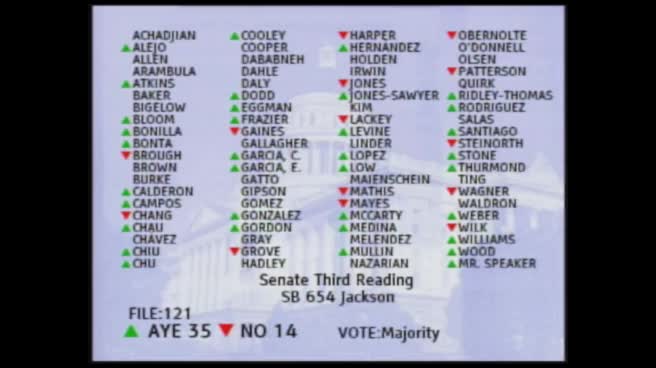

Bill Author

Bill Co-Author(s):