SB 102: California Beverage Container Recycling and Litter Reduction Act: state property.
- Session Year: 2017-2018
- House: Senate
- Latest Version Date: 2017-06-12
(1)Existing law generally authorizes the Director of General Services, with the consent of the agency concerned, to let any real property owned by the state for a period not to exceed 5 years. Existing law authorizes the Department of General Services to acquire real property to operate and maintain motor vehicle parking facilities, as specified. Existing law authorizes the department to enter into arrangements with other public and state agencies for joint use of these parking facilities, as specified. Existing law requires the department to deposit revenues received from parking fees at motor vehicle parking facilities owned by the department or other state agencies in the General Fund for expenditure by the department for the construction, operation, and maintenance of motor vehicle parking facilities under the jurisdiction of the department or any other state agency, and thereby creates a continuously appropriated fund.
This bill would authorize the department to enter into one or more leases, as lessor or lessee, and other related agreements with the Capitol Area Development Authority (CADA) under which CADA will be responsible for developing a parking structure and retail space that is located on specified property located in the City of Sacramento. The bill would require the R Street parking structure project to comply with specified requirements. The bill would authorize CADA to enter into a financing arrangement for the development, design, and construction of the R Street parking structure project through the California Infrastructure and Economic Development Bank, subject to specified requirements. The bill would authorize the department to charge state employees and the general public for use of the structure. The bill would require the department to deposit parking revenues into the Motor Vehicle Parking Facilities Money Account. By depositing additional revenue into a continuously appropriated fund, this bill would make an appropriation. The bill would provide that funds deposited into the Motor Vehicle Parking Facilities Money Account are available, upon appropriation by the Legislature, to the department to make specified lease payments, and then to be used consistent with the purposes of the Motor Vehicle Parking Facilities Money Account.
(2)The California Beverage Container Recycling and Litter Reduction Act requires dealers within a convenience zone where no recycling location has been established to submit an affidavit to the Department of Resources Recycling and Recovery stating that the dealer has met specified standards for redemption, including, among others, that the dealer is redeeming all empty beverage container types at all open cash registers or at one designated location on the dealers premises, during all hours that the dealer is open for business. If the dealer does not submit that affidavit, existing law requires the dealer to pay $100 per day to the department, for deposit in the California Beverage Container Recycling Fund, until a recycling location is established or until the dealer meets the standards for redemption specified in the affidavit provision.
This bill would change the requirements imposed on a dealer who chooses not to pay, to require the dealer to redeem up to 24 empty beverage containers per consumer per day and to require the dealer to redeem those containers at a minimum of one designated location. The bill would apply these convenience zone redemption duties only to dealers with gross annual sales of $2,000,000 or more.
(3)Under the act, the department is required to calculate a processing fee for each beverage container with a specified scrap value, which is required to be paid by beverage manufacturers for each beverage container sold or transferred to a distributor or dealer. The department is required to calculate the processing fee in a specified manner, so that the actual processing fee generally equals 65% of the processing payment that the department is required to pay to processors if the scrap value of the container having a refund value pursuant to the act is less than the cost of recycling. The department is required to determine the statewide weighted average cost to recycle each beverage container type by conducting a survey, as specified. The department is required to establish a processing fee account in the continuously appropriated California Beverage Container Recycling Fund for each material type and to deposit processing fees and other amounts in the applicable account.
This bill would, for purposes of calculating processing payments on and after July 1, 2017, require the department, until January 1, 2020, to use the actual cost of recycling that was in effect on December 30, 2015, to calculate processing fees. The bill would make an appropriation by changing the terms and conditions under which the department is authorized to make payments from a continuously appropriated fund. The bill would provide that the processing fees shall not be higher than they would be absent these new provisions. The bill would require the department to suspend any surveys and calculations of recycling costs until January 1, 2019, and would authorize the department to redirect any contract funds approved as of the effective date of the bill for cost surveys and calculations to provide for a specified assessment and to utilize any contract funds available as of the effective date of the bill for the development of amendments to be recommended to the Legislature regarding specified provisions of the act.
(4)The act continuously appropriates to the department the amount necessary to pay handling fees to certain types of recyclers to provide an incentive for the redemption of empty beverage containers in convenience zones. The act also continuously appropriates moneys in the fund to the department for expenditure for various purposes relating to beverage container recycling, including, until January 1, 2018, market development payments for empty plastic beverage containers.
The bill would authorize the department to offer a handling fee payment to certain certified recyclers within unserved convenience zones. The bill would make an appropriation by changing the terms and conditions under which the department is authorized to make payments from a continuously appropriated fund. The bill, until July 1, 2020, would require the handling fee to be set at the rate in effect on July 1, 2015. The bill would authorize the department, until July 1, 2020, to annually expend money from the fund for specified supplemental handling fee payments to low-volume recycling centers, and would extend the authority for market development payments for empty plastic beverage containers until January 1, 2019. By authorizing the expenditure of a continuously appropriated fund for a new purpose and by extending the term of a continuous appropriation, this bill would make an appropriation.
(5)Existing law requires the department to annually designate convenience zones and requires that at least one certified recycling center that meets certain requirements be located within every convenience zone, with exemptions. Existing law prohibits the department from making handling fee payments to more than one certified recycling center within a convenience zone. Existing law defines convenience zone as either the area within a 1/2 mile radius of a supermarket or the area designated by the department.
This bill would redefine convenience zone to mean the area within a one-mile radius of a supermarket or the area designated by the department. The bill would provide that certain recycling centers that received a handling fee for a specified reporting period that would be affected by the larger convenience zone will continue to be eligible to receive handling fee payments.
(6)This bill would declare that it is to take effect immediately as a bill providing for appropriations related to the Budget Bill.
This bill would express the intent of the Legislature to enact statutory changes relating to the Budget Act of 2017.This bill would express the intent of the Legislature to enact statutory changes relating to the Budget Act of 2017.
(a)The Legislature finds and declares all of the following:
(1)Recycling is critical to reducing the amount of materials sent to landfills and reducing the amount of virgin materials necessary to produce new products.
(2)The states beverage container recycling program, the California Beverage Container Recycling and Litter Reduction Act (the act), has achieved significant success over the decades since it was enacted, including a recycling rate as high as 85 percent in 201213.
(3)However, that success has experienced recent challenges, including a fall in scrap prices by as much as 50 percent since 2013, reducing scrap revenue for Californias recycling infrastructure by more than $60 million annually.
(4)Provisions of the act provide that processing payments shall be established to cover the average net cost of recycling whenever the scrap value is insufficient to do so in order to maintain a marketplace where it is profitable to establish sufficient recycling centers and locations to provide consumers with convenient recycling opportunities.
(5)Beginning in January 2016, a series of reductions in the cost basis for state recycling payments have cost public and private recyclers as much as $30 million, undermining this legislative intent and the financial viability of Californias recycling infrastructure.
(6)The Department of Resources Recycling and Recovery (CalRecycle) has reported that more than 560 recycling centers25 percent of those that were operating in 2015have closed, along with 17 percent of certified processors.
(7)In May 2016 and April 2017 reports to the Legislature, the Legislative Analysts Office concluded that declining scrap prices and program underpayments are the cause of the massive closure of recycling centers.
(8)CalRecycle has reported that beverage container recycling rates in 2016 fell below 80 percent for the first time since 2008. Rates for the last six months of 2016when the full impact of center closures hitwas a full 3 percentage points lower than the same period in 2015. Despite increased sales, 1.6 million fewer containers per day were recycled during the last six months of 2016, compared to the same period in 2015.
(9)Paragraph (2) of subdivision (a) of Section 14580 of the Public Resources Code authorizes the department to maintain a reserve for contingencies, which shall not be greater than an amount equal to 5 percent of the total amount paid to processors pursuant to Section 14573 [of the Public Resources Code] during the preceding calendar year. The latest quarterly report to the Legislature indicates that the projected balance in the California Beverage Container Recycling Fund on July 1, 2017, will be greater than 18 percent of the amount paid to processors in 2016.
(b)It is the intent of the Legislature to provide a limited-scope temporary measure to maintain Californias recycling success by supporting the infrastructure and preserving customer access to recycling using existing funds in excess of those required for a reserve pursuant to Section 14580 of the Public Resources Code.
(c)It is the intent of the Legislature that the department work with all stakeholders to develop recommendations to the Legislature for updating the act, as necessary.
SEC. 2.Section 14678.7 is added to the Government Code, to read:14678.7.(a)For purposes of this section:
(1)8th and 9th Street property means property that the department is authorized to acquire, in partnership with CADA, pursuant to Item 7760-301-0666 of Section 2.00 the Budget Act of 2017.
(2)CADA means the Capitol Area Development Authority.
(3)IBank means the California Infrastructure and Economic Development Bank.
(4)R Street property means state-owned property located at 805 R Street (APN 006-0266-014) in the City of Sacramento.
(5)R Street parking structure project means the project authorized by this section for the design and construction of a parking structure and retail space for the purpose of allowing the development of a parking structure for state employees and the general public as well as to compliment local efforts to increase evening and weekend visitation in downtown Sacramento.
(b)Notwithstanding Section 14670, the department may enter into one or more leases, as lessor or lessee, and other related agreements with CADA under which CADA will be responsible for developing a parking structure with approximately 800 parking spaces and retail space that is located on the R Street property and the 8th and 9th Street property, subject to the following requirements:
(1)CADA shall demolish any improvements currently located on the R Street property.
(2)The total State costs for the R Street parking structure project, excluding any financing costs, shall not exceed thirty million dollars ($30,000,000).
(3)The Department of Finance shall approve the terms of any lease and related agreements entered into pursuant to this section related to the R Street parking structure project.
(4)The amount of any lease payments that the department makes to CADA pursuant to this section shall be commensurate with CADAs costs of development and financing of the R Street parking structure project.
(5)The director shall notify the chairperson of the committee in each house that considers appropriations and the Chairperson of the Joint Legislative Budget Committee, or his or her designee, in writing of the directors intention to enter into the leases or agreements authorized by this section no later than 30 days before entering into the leases or agreements, or not sooner than any lesser time as the Chairperson of the Joint Legislative Budget Committee, or his or her designee, may determine.
(c)After having secured the necessary leasing and contractual arrangements with the department for development, financing, and operations, CADA may enter into a financing arrangement for the development, design, and construction of the R Street parking structure project through the IBank utilizing the IBanks Infrastructure State Revolving Fund Program, subject to the following requirements:
(1)The project shall be subject to all requirements of the Bergeson-Peace Infrastructure and Economic Development Bank Act (Division 1 (commencing with Section 63000) of Title 6.7) and the Criteria, Priorities and Guidelines established by IBank.
(2)The repayment terms of the financing arrangement shall not exceed 30 years. Upon full repayment of any financial arrangement entered into pursuant to this subdivision, any lease entered into between the department and CADA shall cease and title to the R Street parking structure shall vest in the state.
(d)Upon completion of the R Street parking structure, the department may charge state employees and the general public for use of the parking structure. The department shall deposit all revenues generated from the R Street parking structure into the Motor Vehicle Parking Facilities Money Account. Notwithstanding Section 14678, all funds deposited into the Motor Vehicle Parking Facilities Money Account are available, upon appropriation by the Legislature, to the department to be used, until any financing arrangement entered into pursuant to subdivision (c) is repaid in full, to make lease payments to CADA, and, after that event, to the department to be used consistent with the Motor Vehicle Parking Facilities Money Account and Section 14678.
SEC. 3.Section 14509.4 of the Public Resources Code is amended to read:14509.4.Convenience zone means either of the following:
(a)The area within a one-half a one mile radius of a supermarket.
(b)The area designated by the department pursuant to Section 14571.5.
SEC. 4.Section 14549.2 of the Public Resources Code is amended to read:14549.2.(a)For purposes of this section, the following definitions shall apply:
(1)Certified entity means a recycling center, processor, or dropoff or collection program certified pursuant to this division.
(2)Product manufacturer means a person who manufactures a plastic product in this state.
(b)In order to develop California markets for empty plastic beverage containers collected for recycling in the state, the department may, consistent with Section 14581 and subject to the availability of funds, pay a market development payment to a certified entity or product manufacturer for empty plastic beverage containers collected and managed pursuant to this section.
(c)The department shall make a market development payment to a certified entity or product manufacturer in accordance with this section, only if the plastic beverage container is collected and either recycled or used in manufacturing, in the state, as follows:
(1)The department shall make a market development payment to a certified entity for empty plastic beverage containers that are collected for recycling in the state, that are subsequently washed and processed by a certified entity into a flake, pellet, or other form in the state, and made usable for the manufacture of a plastic product by a product manufacturer.
(2)The department shall make a market development payment to a product manufacturer for empty plastic beverage containers that are collected for recycling in the state, that are subsequently washed and processed into a flake, pellet, or other form in the state, and used by that product manufacturer to manufacture a product in this state.
(3)The department shall determine the amount of the market development payment, which may be set at a different level for a certified entity and a product manufacturer, but shall not exceed one hundred fifty dollars ($150) per ton. In setting the amount of the market development payment for both certified entities and product manufacturers, the department shall consider all of the following:
(A)The minimum funding level needed to encourage the in-state washing and processing of empty plastic beverage containers collected for recycling in this state.
(B)The minimum funding level needed to encourage the in-state manufacturing that utilizes empty plastic beverage containers collected for recycling in this state.
(C)The total amount of funds projected to be available for plastic market development payments and the desire to maintain the minimum funding level needed throughout the year.
(4)The department may make a market development payment to both a certified entity and a product manufacturer for the same empty plastic beverage container.
(d)This section shall remain in effect only until January 1, 2018, 2019, and as of that date is repealed, unless a later enacted statute, that is enacted before January 1, 2018, 2019, deletes or extends that date.
SEC. 5.Section 14571.6 of the Public Resources Code is amended to read:14571.6.In (a)Except as provided in subdivision (b), in any convenience zone where no recycling location has been established which that satisfies the requirements of Section 14571, and in any convenience zone which that has exceeded the 60-day period for the establishment of a recycling center pursuant to Section 14571.7, all dealers within that zone shall, until a recycling location has been established in that zone, do one of the following:
(a)(1)Submit to the department an affidavit form provided by the department stating that all of the following standards are being met by the dealer:
(1)(A)The dealer redeems all up to 24 empty beverage container containers per consumer per day of all types at all open cash registers or a minimum of one designated location on the dealers premises, during all hours that the dealer is open for business.
(2)(B)The dealer has posted signs which that meet the size and location requirements specified in subdivision (b) of Section 14570, and which that conform to paragraph (2) of that subdivision.
(3)(C)The dealer is delivering, or having delivered, all empty beverage containers received from the public to a certified recycling center or processor for recycling.
(b)(2)Pay to the department for deposit in the fund the sum of one hundred dollars ($100) per day until a recycling location is established or until the standards for redemption specified in subdivision (a) paragraph (1) are met.
(b)This section shall apply only to a dealer with gross annual sales of two million dollars ($2,000,000) or more.
SEC. 6.Section 14575.2 is added to the Public Resources Code, to read:14575.2.(a)Notwithstanding Section 14575, for purposes of calculating processing payments on and after July 1, 2017, the department shall use the actual costs of recycling that were in effect on December 30, 2015. Consistent with Section 14575, the department shall adjust the recycling costs on July 1, 2017, and at least once annually thereafter to reflect changes in the cost of living from December 30, 2015, as measured by the Bureau of Labor Statistics of the United States Department of Labor or a successor agency of the United States government.
(b)Notwithstanding subdivisions (d) and (e) of Section 14575, on and after July 1, 2017, the department shall not impose a processing fee on a beverage manufacturer that is higher than the processing fee that would be imposed without this section.
(c)(1)Notwithstanding subdivision (c) of Section 14575, the department shall suspend any surveys and calculations of recycling costs until at least January 1, 2019.
(2)The department may redirect any contract funds already approved for cost surveys and calculations as of the effective date of this section into an updated contract to utilize data collected for the 2015 processing payment to provide the department with an assessment of variations in the average cost of recycling based on, at a minimum, each of the following:
(A)Recycling location monthly average volume.
(B)Recycling location geographic area.
(C)Recycling location distance to end-use market.
(3)The department may utilize any contract funds available as of the effective date of this section for the analysis and development of recommendations to the Legislature of amendments to subdivisions (b) and (c) of Section 14575 to satisfy the legislative intent expressed in subdivision (f) of Section 14501 to create and maintain a marketplace where it is profitable to establish sufficient recycling centers and locations to provide consumers with convenient recycling opportunities through the establishment of minimum refund values and processing fees and, through the proper application of these elements, to enhance the profitability of recycling centers, recycling locations, and other beverage container recycling programs.
(d)This section shall remain in effect only until January 1, 2020, and as of that date is repealed.
SEC. 7.Section 14581 of the Public Resources Code is amended to read:14581.(a)Subject to the availability of funds and in accordance with subdivision (b), the department shall expend the moneys set aside in the fund, pursuant to subdivision (c) of Section 14580, for the purposes of this section in the following manner:
(1)For each fiscal year, the department may expend the amount necessary to make the required handling fee payment pursuant to Section 14585.
(2)Fifteen million dollars ($15,000,000) shall be expended annually for payments for curbside programs and neighborhood dropoff programs pursuant to Section 14549.6.
(3)(A)Ten million five hundred thousand dollars ($10,500,000) may be expended annually for payments of five thousand dollars ($5,000) to cities and ten thousand dollars ($10,000) for payments to counties for beverage container recycling and litter cleanup activities, or the department may calculate the payments to counties and cities on a per capita basis, and may pay whichever amount is greater, for those activities.
(B)Eligible activities for the use of these funds may include, but are not necessarily limited to, support for new or existing curbside recycling programs, neighborhood dropoff recycling programs, public education promoting beverage container recycling, litter prevention, and cleanup, cooperative regional efforts among two or more cities or counties, or both, or other beverage container recycling programs.
(C)These funds shall not be used for activities unrelated to beverage container recycling or litter reduction.
(D)To receive these funds, a city, county, or city and county shall fill out and return a funding request form to the department. The form shall specify the beverage container recycling or litter reduction activities for which the funds will be used.
(E)The department shall annually prepare and distribute a funding request form to each city, county, or city and county. The form shall specify the amount of beverage container recycling and litter cleanup funds for which the jurisdiction is eligible. The form shall not exceed one double-sided page in length, and may be submitted electronically. If a city, county, or city and county does not return the funding request form within 90 days of receipt of the form from the department, the city, county, or city and county is not eligible to receive the funds for that funding cycle.
(F)For the purposes of this paragraph, per capita population shall be based on the population of the incorporated area of a city or city and county and the unincorporated area of a county. The department may withhold payment to any city, county, or city and county that has prohibited the siting of a supermarket site, caused a supermarket site to close its business, or adopted a land use policy that restricts or prohibits the siting of a supermarket site within its jurisdiction.
(4)One million five hundred thousand dollars ($1,500,000) may be expended annually in the form of grants for beverage container recycling and litter reduction programs.
(5)(A)The department shall expend the amount necessary to pay the processing payment established pursuant to Section 14575. The department shall establish separate processing fee accounts in the fund for each beverage container material type for which a processing payment and processing fee are calculated pursuant to Section 14575, or for which a processing payment is calculated pursuant to Section 14575 and a voluntary artificial scrap value is calculated pursuant to Section 14575.1, into which account shall be deposited both of the following:
(i)All amounts paid as processing fees for each beverage container material type pursuant to Section 14575.
(ii)Funds equal to the difference between the amount in clause (i) and the amount of the processing payments established in subdivision (b) of Section 14575, and adjusted pursuant to paragraph (2) of subdivision (c) of, and subdivision (f) of, Section 14575, to reduce the processing fee to the level provided in subdivision (e) of Section 14575, or to reflect the agreement by a willing purchaser to pay a voluntary artificial scrap value pursuant to Section 14575.1.
(B)Notwithstanding Section 13340 of the Government Code, the moneys in each processing fee account are hereby continuously appropriated to the department for expenditure without regard to fiscal years, for purposes of making processing payments pursuant to Section 14575.
(6)Up to five million dollars ($5,000,000) may be annually expended by the department for the purposes of undertaking a statewide public education and information campaign aimed at promoting increased recycling of beverage containers.
(7)Up to ten million dollars ($10,000,000) may be expended annually by the department for quality incentive payments for empty glass beverage containers pursuant to Section 14549.1.
(8)(A)Up to ten million dollars ($10,000,000) may be expended annually by the department for market development payments for empty plastic beverage containers pursuant to Section 14549.2, until January 1, 2018. 2019.
(B)In addition to the amount specified in subparagraph (A), the department may expend the amount calculated pursuant to subparagraph (C) for market development payments for empty plastic beverage containers pursuant to Section 14549.2.
(C)The department shall calculate the amount authorized for expenditure pursuant to subparagraph (B) in the following manner:
(i)The department shall annually determine, on or before January 1, whether the amount of funds estimated to be necessary pursuant to clause (ii) of subparagraph (A) of paragraph (5) for deposit to a processing fee account established by the department for plastic beverage containers to make processing payments for plastic beverage containers for the current calendar year is less than the total amount of funds that were estimated to be necessary the previous calendar year pursuant to clause (ii) of subparagraph (A) of paragraph (5) for deposit to that processing fee account.
(ii)If the amount estimated to be necessary for the current calendar year, as specified in clause (i), is less than the amount estimated to be necessary for the previous calendar year, the department shall calculate the amount of that difference.
(iii)The department shall expend an amount that is not greater than 50 percent of the amount calculated pursuant to clause (ii) for purposes of subparagraph (B).
(iv)If the department determines that the amount of funds authorized for expenditure pursuant to this subparagraph is not needed to make plastic market development payments pursuant to subparagraph (B) in the calendar year for which that amount is allocated, the department may expend those funds during the following year.
(v)If the department determines that there are insufficient funds to both make the market development payments pursuant to subparagraph (B) and to deposit the amount required by clause (ii) of subparagraph (A) of paragraph (5), for purposes of making the processing payments and reducing the processing fees pursuant to Section 14575 for plastic beverage containers, the department shall suspend the implementation of this subparagraph and subparagraph (B).
(D)Subparagraphs (B) and (C) shall remain operative only until January 1, 2018.
(b)(1)If the department determines, pursuant to a review made pursuant to Section 14556, that there may be inadequate funds to pay the payments required by this division, the department shall immediately notify the appropriate policy and fiscal committees of the Legislature regarding the inadequacy.
(2)On or before 180 days, but not less than 80 days, after the notice is sent pursuant to paragraph (1), the department may reduce or eliminate expenditures, or both, from the funds as necessary, according to the procedure set forth in subdivision (c).
(c)If the department determines that there are insufficient funds to make the payments specified pursuant to this section and Section 14575, the department shall reduce all payments proportionally.
(d)Before making an expenditure pursuant to paragraph (6) of subdivision (a), the department shall convene an advisory committee consisting of representatives of the beverage industry, beverage container manufacturers, environmental organizations, the recycling industry, nonprofit organizations, and retailers to advise the department on the most cost-effective and efficient method of the expenditure of the funds for that education and information campaign.
(e)Subject to the availability of funds, the department shall retroactively pay in full any payments provided in this section that have been proportionally reduced during the period of January 1, 2010, through June 30, 2010.
SEC. 8.Section 14585 of the Public Resources Code is amended to read:14585.(a)The department shall adopt guidelines and methods for paying handling fees to supermarket sites, nonprofit convenience zone recyclers, or rural region recyclers to provide an incentive for the redemption of empty beverage containers in convenience zones. The guidelines shall include, but not be limited to, all of the following:
(1)Handling fees shall be paid on a monthly basis, in the form and manner adopted by the department. The department shall require that claims for the handling fee be filed with the department not later than the first day of the second month following the month for which the handling fee is claimed as a condition of receiving any handling fee.
(2)The department shall determine the number of eligible containers per site for which a handling fee will be paid in the following manner:
(A)Each eligible sites combined monthly volume of glass and plastic beverage containers shall be divided by the sites total monthly volume of all empty beverage container types.
(B)If the quotient determined pursuant to subparagraph (A) is equal to, or more than, 10 percent, the total monthly volume of the site shall be the maximum volume which is eligible for a handling fee for that month.
(C)If the quotient determined pursuant to subparagraph (A) is less than 10 percent, the department shall divide the volume of glass and plastic beverage containers by 10 percent. That quotient shall be the maximum volume that is eligible for a handling fee for that month.
(3)(A)On and after the effective date of the act amending this section during the 201112 Regular Session, and until March 1, 2013, the department shall pay a handling fee per eligible container in the amount determined pursuant to subdivisions (f) and (g).(B)On and after July 1, 2014, the(3)The department shall pay a handling fee per eligible container in the amount determined pursuant to subdivision (f).
(4)If the eligible volume in any given month would result in handling fee payments that exceed the allocation of funds for that month, as provided in subdivision (b), sites with higher eligible monthly volumes shall receive handling fees for their entire eligible monthly volume before sites with lower eligible monthly volumes receive any handling fees.
(5)(A)If a dealer where a supermarket site, nonprofit convenience zone recycler, or rural region recycler is located ceases operation for remodeling or for a change of ownership, the operator of that supermarket site site, nonprofit convenience zone recycler, or rural region recycler shall be eligible to apply for handling fees for that site for a period of three months following the date of the closure of the dealer.
(B)Every supermarket site operator, nonprofit convenience zone recycler, or rural region recycler shall promptly notify the department of the closure of the dealer where the supermarket site, nonprofit convenience zone recycler, or rural region recycler is located.
(C)Notwithstanding subparagraph (A), any operator who fails to provide notification to the department pursuant to subparagraph (B) shall not be eligible to apply for handling fees.
(b)The department may allocate the amount authorized for expenditure for the payment of handling fees pursuant to paragraph (1) of subdivision (a) of Section 14581 on a monthly basis and may carry over any unexpended monthly allocation to a subsequent month or months. However, unexpended monthly allocations shall not be carried over to a subsequent fiscal year for the purpose of paying handling fees but may be carried over for any other purpose pursuant to Section 14581.
(c)(1)The department shall not make handling fee payments to more than one certified recycling center in a convenience zone. If a dealer is located in more than one convenience zone, the department shall offer a single handling fee payment to a supermarket site located at that dealer. This handling fee payment shall not be split between the affected zones. The department shall stop making handling fee payments if another recycling center certifies to operate within the convenience zone without receiving payments pursuant to this section, if the department monitors the performance of the other recycling center for 60 days and determines that the recycling center is in compliance with this division. Any recycling center that locates in a convenience zone, thereby causing a preexisting recycling center to become ineligible to receive handling fee payments, is ineligible to receive any handling fee payments in that convenience zone.
(2)The department shall offer a single handling fee payment to a rural region recycler located anywhere inside a convenience zone, if that convenience zone is not served by another certified recycling center and the rural region recycler does either of the following:
(A)Operates a minimum of 30 hours per week in one convenience zone.
(B)Serves two or more convenience zones, and meets all of the following criteria:
(i)Is the only certified recycler within each convenience zone.
(ii)Is open and operating at least eight hours per week in each convenience zone and is certified at each location.
(iii)Operates at least 30 hours per week in total for all convenience zones served.
(3)In a convenience zone that, as of July 1, 2017, has been continuously unserved by a certified recycling location for at least six months, the department shall offer a handling fee payment to a recycler certified on or after July 1, 2017, located within the convenience zone that operates a minimum of 30 hours per week at the same physical location within that convenience zone.
(d)The department may require the operator of a supermarket site site, or the operator of a rural region recycler recycler, receiving handling fees to maintain records for each location where beverage containers are redeemed, and may require the supermarket site or rural region recycler to take any other action necessary for the department to determine that the supermarket site or rural region recycler does not receive an excessive handling fee.
(e)The department may determine and utilize a standard container per pound rate, for each material type, for the purpose of calculating volumes and making handling fee payments.
(f)(1)On or before January 1, 2008, and every two years thereafter, the department shall conduct a survey pursuant to this subdivision of a statistically significant sample of certified recycling centers that receive handling fee payments to determine the actual cost incurred for the redemption of empty beverage containers by those certified recycling centers. The department shall conduct these cost surveys in conjunction with the cost surveys performed by the department pursuant to subdivision (b) of Section 14575 to determine processing payments and processing fees. The department shall include, in determining the actual costs, only those allowable costs contained in the regulations adopted pursuant to this division that are used by the department to conduct cost surveys pursuant to subdivision (b) of Section 14575.
(2)Using the information obtained pursuant to paragraph (1), the department shall then determine the statewide weighted average cost incurred for the redemption of empty beverage containers, per empty beverage container, at recycling centers that receive handling fees.
(3)Except as provided in subdivision (g), the The department shall determine the amount of the handling fee to be paid for each empty beverage container by subtracting the amount of the statewide weighted average cost per container to redeem empty beverage containers by recycling centers that do not receive handling fees from the amount of the statewide weighted average cost per container determined pursuant to paragraph (2).
(4)The department shall adjust the statewide average cost determined pursuant to paragraph (2) for each beverage container annually to reflect changes in the cost of living, as measured by the Bureau of Labor Statistics of the United States Department of Labor or a successor agency of the United States government.
(5)The cost information collected pursuant to this section at recycling centers that receive handling fees shall not be used in the calculation of the processing payments determined pursuant to Section 14575.
(6)Notwithstanding paragraphs (2) and (3), for the period of July 1, 2017, to July 1, 2020, inclusive, the handling fee shall be set at the rate in effect on July 1, 2015.
(g)(1)On and after the effective date of the act amending this section during the 201112 Regular Session, and until March 1, 2013, the per-container handling fee shall not be less than the amount of the per-container handling fee that was in effect on July 1, 2011.(2)(g)The department may update the methodology and scrap values used for calculating the handling fee from the most recent cost survey if it finds that the handling fee resulting from the most recent cost survey does not accurately represent the actual cost incurred for the redemption of empty beverage containers by those certified recycling centers.
(h)(1)The department may expend up to three million dollars ($3,000,000) annually from the fund for supplemental handling fee payments to low-volume recycling centers and recyclers willing to open a recycling center in a convenience zone that has recently become unserved. The department shall allocate the amount authorized for these supplemental handling fee payments into 12 equal monthly allotments.
(2)Supplemental handling fee payments shall be distributed once per month in equal amounts to recycling centers that are eligible for handling fees pursuant to subdivision (a), subject to all of the following requirements:
(A)A recycling center receiving a handling fee pursuant to this subdivision shall have no more than 600,000 beverage containers eligible for handling fees per month.
(B)Priority shall be given to recycling centers with the lowest volumes of beverage containers that are located in rural regions.
(C)(i)Payments shall be distributed first to no more than 100 recycling centers with the lowest volumes of beverage containers that are located in rural regions, in order of lowest volume.
(ii)After payments are distributed pursuant to clause (i), payments shall be distributed to other recycling centers with the lowest volumes of beverage containers, in order of lowest volume.
(3)No more than 400 recycling centers shall receive supplemental handling fee payments pursuant to this subdivision.
(4)The department may make the supplemental handling fee payments authorized pursuant to this subdivision by augmenting handling fee payments received by recyclers pursuant to subdivision (f).
(5)This subdivision shall become inoperative on July 1, 2020, and, as of January 1, 2021, is repealed.
(i)Notwithstanding the amendment to Section 14509.4 in the 201718 Regular Session, a recycling center that received a handling fee for the June 2017 reporting period shall continue to be eligible to receive handling fee payments after the effective date of the act that added this subdivision if it meets all other applicable requirements.
SEC. 9.This act is a bill providing for appropriations related to the Budget Bill within the meaning of subdivision (e) of Section 12 of Article IV of the California Constitution, has been identified as related to the budget in the Budget Bill, and shall take effect immediately.
SECTION 1.It is the intent of the Legislature to enact statutory changes relating to the Budget Act of 2017.It is the intent of the Legislature to enact statutory changes relating to the Budget Act of 2017.
|
Date
|
Status
|
|---|---|
| Jun 12, 2017 | From committee with author's amendments. Read second time and amended. Re-referred to Com. on BUDGET. |
| Jun 5, 2017 | Referred to Com. on BUDGET. |
| May 11, 2017 | In Assembly. Read first time. Held at Desk. |
| May 11, 2017 | Read third time. Passed. (Ayes 26. Noes 9. Page 1035.) Ordered to the Assembly. |
| May 9, 2017 | Read second time. Ordered to third reading. |
| May 8, 2017 | Withdrawn from committee. (Ayes 26. Noes 11. Page 982.) |
| Jan 19, 2017 | Referred to Com. on B. & F.R. |
| Jan 12, 2017 | From printer. May be acted upon on or after February 11. |
| Jan 11, 2017 | Introduced. Read first time. To Com. on RLS. for assignment. To print. |
|
Date
|
Description
|
Location
|
Votes
|
|
|---|---|---|---|---|
| May 11, 2017 | Senate 3rd Reading SB102 B. & F.R. | Senate Floor |
Passed |
This list shows positions taken on this bill by organizations on the date displayed, which is linked to the original source.
Positions by individuals are not included.
Office of Senate Floor Analyses (916) 651-1520 Fax: (916) 327-4478 | SB 102 |
THIRD READING
Bill No: SB 102
Author: Committee on Budget and Fiscal Review
Introduced: 1/11/17
DIGEST:
This bill expresses the intent of the Legislature to enact statutory changes relating to the Budget Act of 2017.
ANALYSIS: Senate Bills 82 through 99, inclusive, and Senate Bills 101 through 122, inclusive, are to be considered as vehicles for the 2017-78 Budget Trailer Bills.
FISCAL EFFECT: Appropriation: No Fiscal Com.: No Local: No
None received
None received
Prepared by: Jonas Austin / SFA / (916) 651-1520
5/9/17 16:24:49
**** END ****
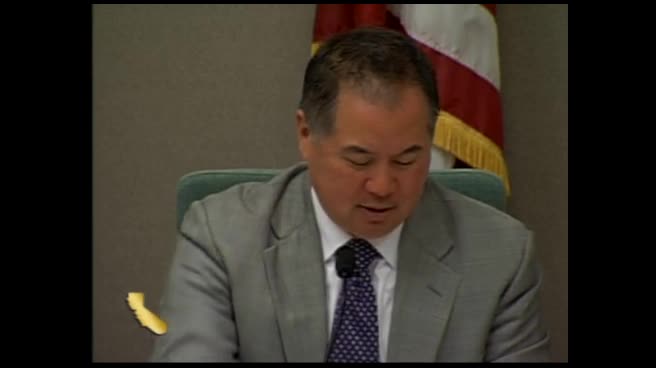
Bill Author
Bill Co-Author(s):