SB 1038: California Fair Employment and Housing Act: violations: personal liability.
- Session Year: 2017-2018
- House: Senate
- Latest Version Date: 2018-06-25
Existing law prohibits discrimination and harassment in employment based on certain factors, including race, religious creed, gender, or sex. Existing law prohibits discharging or discriminating against a person who has opposed any practices prohibited by these provisions or has filed a complaint, testified, or assisted in any proceeding for a violation of these provisions.
This bill would impose joint and several liability on an employee of an entity subject to these provisions for violating, with specified intent, personal liability on specified employees for certain actions in connection with violating the prohibition against discharging or discriminating against a person who has opposed any practices prohibited by these provisions or has filed a complaint, testified, or assisted in any proceeding for a violation, regardless of whether the employer or covered entity knew or should have known of the conduct. violation.
Existing law prohibits discrimination and harassment in employment based on certain factors, including race, religious creed, gender, or sex. Existing law prohibits discharging or discriminating against a person who has opposed any practices prohibited by these provisions or has filed a complaint, testified, or assisted in any proceeding for a violation of these provisions.
This bill would impose personal joint and several liability on an employee of an entity subject to these provisions for violating violating, with specified intent, the prohibition against discharging or discriminating against a person who has opposed any practices prohibited by these provisions or has filed a complaint, testified, or assisted in any proceeding for a violation, regardless of whether the employer or covered entity knew or should have known of the conduct.
Existing law prohibits discrimination and harassment in employment based on certain factors, including race, religious creed, gender, or sex. Existing law prohibits discharging or discriminating against a person who has opposed any practices prohibited by these provisions or has filed a complaint, testified, or assisted in any proceeding for a violation of these provisions.
This bill would impose personal liability on an employee of an entity subject to these provisions for violating the prohibition against discharging or discriminating against a person who has opposed any practices prohibited by these provisions or has filed a complaint, testified, or assisted in any proceeding for a violation, regardless of whether the employer or covered entity knew or should have known of the conduct.
This bill would declare that it is declaratory of existing law.Existing law prohibits discrimination and harassment in employment based on certain factors, including race, religious creed, gender, or sex. Existing law prohibits discharging or discriminating against a person who has opposed any practices prohibited by these provisions or has filed a complaint, testified, or assisted in any proceeding for a violation of these provisions.
This bill would impose personal liability on an employee of an entity subject to these provisions for violating the prohibition against discharging or discriminating against a person who has opposed any practices prohibited by these provisions or has filed a complaint, testified, or assisted in any proceeding for a violation, regardless of whether the employer or covered entity knew or should have known of the conduct.
This bill would declare that it is declaratory of existing law.
It is an unlawful employment practice, unless based upon a bona fide occupational qualification, or, except where based upon applicable security regulations established by the United States or the State of California:
(a)For an employer, because of the race, religious creed, color, national origin, ancestry, physical disability, mental disability, medical condition, genetic information, marital status, sex, gender, gender identity, gender expression, age, sexual orientation, or military and veteran status of any person, to refuse to hire or employ the person or to refuse to select the person for a training program leading to employment, or to bar or to discharge the person from employment or from a training program leading to employment, or to discriminate against the person in compensation or in terms, conditions, or privileges of employment.
(1)This part does not prohibit an employer from refusing to hire or discharging an employee with a physical or mental disability, or subject an employer to any legal liability resulting from the refusal to employ or the discharge of an employee with a physical or mental disability, if the employee, because of a physical or mental disability, is unable to perform the employees essential duties even with reasonable accommodations, or cannot perform those duties in a manner that would not endanger the employees health or safety or the health or safety of others even with reasonable accommodations.
(2)This part does not prohibit an employer from refusing to hire or discharging an employee who, because of the employees medical condition, is unable to perform the employees essential duties even with reasonable accommodations, or cannot perform those duties in a manner that would not endanger the employees health or safety or the health or safety of others even with reasonable accommodations. Nothing in this part shall subject an employer to any legal liability resulting from the refusal to employ or the discharge of an employee who, because of the employees medical condition, is unable to perform the employees essential duties, or cannot perform those duties in a manner that would not endanger the employees health or safety or the health or safety of others even with reasonable accommodations.
(3)Nothing in this part relating to discrimination on account of marital status shall do either of the following:
(A)Affect the right of an employer to reasonably regulate, for reasons of supervision, safety, security, or morale, the working of spouses in the same department, division, or facility, consistent with the rules and regulations adopted by the commission.
(B)Prohibit bona fide health plans from providing additional or greater benefits to employees with dependents than to those employees without or with fewer dependents.
(4)Nothing in this part relating to discrimination on account of sex shall affect the right of an employer to use veteran status as a factor in employee selection or to give special consideration to Vietnam-era veterans.
(5)(A)This part does not prohibit an employer from refusing to employ an individual because of the individuals age if the law compels or provides for that refusal. Promotions within the existing staff, hiring or promotion on the basis of experience and training, rehiring on the basis of seniority and prior service with the employer, or hiring under an established recruiting program from high schools, colleges, universities, or trade schools do not, in and of themselves, constitute unlawful employment practices.
(B)The provisions of this part relating to discrimination on the basis of age do not prohibit an employer from providing health benefits or health care reimbursement plans to retired persons that are altered, reduced, or eliminated when the person becomes eligible for Medicare health benefits. This subparagraph applies to all retiree health benefit plans and contractual provisions or practices concerning retiree health benefits and health care reimbursement plans in effect on or after January 1, 2011.
(b)For a labor organization, because of the race, religious creed, color, national origin, ancestry, physical disability, mental disability, medical condition, genetic information, marital status, sex, gender, gender identity, gender expression, age, sexual orientation, or military and veteran status of any person, to exclude, expel, or restrict from its membership the person, or to provide only second-class or segregated membership or to discriminate against any person because of the race, religious creed, color, national origin, ancestry, physical disability, mental disability, medical condition, genetic information, marital status, sex, gender, gender identity, gender expression, age, sexual orientation, or military and veteran status of the person in the election of officers of the labor organization or in the selection of the labor organizations staff or to discriminate in any way against any of its members or against any employer or against any person employed by an employer.
(c)For any person to discriminate against any person in the selection, termination, training, or other terms or treatment of that person in any apprenticeship training program, any other training program leading to employment, an unpaid internship, or another limited duration program to provide unpaid work experience for that person because of the race, religious creed, color, national origin, ancestry, physical disability, mental disability, medical condition, genetic information, marital status, sex, gender, gender identity, gender expression, age, sexual orientation, or military and veteran status of the person discriminated against.
(d)For any employer or employment agency to print or circulate or cause to be printed or circulated any publication, or to make any nonjob-related inquiry of an employee or applicant, either verbal or through use of an application form, that expresses, directly or indirectly, any limitation, specification, or discrimination as to race, religious creed, color, national origin, ancestry, physical disability, mental disability, medical condition, genetic information, marital status, sex, gender, gender identity, gender expression, age, sexual orientation, or military and veteran status, or any intent to make any such limitation, specification, or discrimination. This part does not prohibit an employer or employment agency from inquiring into the age of an applicant, or from specifying age limitations, if the law compels or provides for that action.
(e)(1)Except as provided in paragraph (2) or (3), for any employer or employment agency to require any medical or psychological examination of an applicant, to make any medical or psychological inquiry of an applicant, to make any inquiry whether an applicant has a mental disability or physical disability or medical condition, or to make any inquiry regarding the nature or severity of a physical disability, mental disability, or medical condition.
(2)Notwithstanding paragraph (1), an employer or employment agency may inquire into the ability of an applicant to perform job-related functions and may respond to an applicants request for reasonable accommodation.
(3)Notwithstanding paragraph (1), an employer or employment agency may require a medical or psychological examination or make a medical or psychological inquiry of a job applicant after an employment offer has been made but prior to the commencement of employment duties, provided that the examination or inquiry is job related and consistent with business necessity and that all entering employees in the same job classification are subject to the same examination or inquiry.
(f)(1)Except as provided in paragraph (2), for any employer or employment agency to require any medical or psychological examination of an employee, to make any medical or psychological inquiry of an employee, to make any inquiry whether an employee has a mental disability, physical disability, or medical condition, or to make any inquiry regarding the nature or severity of a physical disability, mental disability, or medical condition.
(2)Notwithstanding paragraph (1), an employer or employment agency may require any examinations or inquiries that it can show to be job related and consistent with business necessity. An employer or employment agency may conduct voluntary medical examinations, including voluntary medical histories, which are part of an employee health program available to employees at that worksite.
(g)For any employer, labor organization, or employment agency to harass, discharge, expel, or otherwise discriminate against any person because the person has made a report pursuant to Section 11161.8 of the Penal Code that prohibits retaliation against hospital employees who report suspected patient abuse by health facilities or community care facilities.
(h)(1)For any employer, labor organization, employment agency, or person to discharge, expel, or otherwise discriminate against any person because the person has opposed any practices forbidden under this part or because the person has filed a complaint, testified, or assisted in any proceeding under this part.
(2)An employee of an entity subject to this subdivision is jointly and severally liable for any action prohibited by paragraph (1) that is perpetrated by the employee with the intent to retaliate, regardless of whether the employer or covered entity knows or should have known of the conduct and fails to take immediate and appropriate corrective action.(i)For any person to aid, abet, incite, compel, or coerce the doing of any of the acts forbidden under this part, or to attempt to do so.
(j)(1)For an employer, labor organization, employment agency, apprenticeship training program or any training program leading to employment, or any other person, because of race, religious creed, color, national origin, ancestry, physical disability, mental disability, medical condition, genetic information, marital status, sex, gender, gender identity, gender expression, age, sexual orientation, or military and veteran status, to harass an employee, an applicant, an unpaid intern or volunteer, or a person providing services pursuant to a contract. Harassment of an employee, an applicant, an unpaid intern or volunteer, or a person providing services pursuant to a contract by an employee, other than an agent or supervisor, shall be unlawful if the entity, or its agents or supervisors, knows or should have known of this conduct and fails to take immediate and appropriate corrective action. An employer may also be responsible for the acts of nonemployees, with respect to sexual harassment of employees, applicants, unpaid interns or volunteers, or persons providing services pursuant to a contract in the workplace, if the employer, or its agents or supervisors, knows or should have known of the conduct and fails to take immediate and appropriate corrective action. In reviewing cases involving the acts of nonemployees, the extent of the employers control and any other legal responsibility that the employer may have with respect to the conduct of those nonemployees shall be considered. An entity shall take all reasonable steps to prevent harassment from occurring. Loss of tangible job benefits shall not be necessary in order to establish harassment.
(2)The provisions of this subdivision are declaratory of existing law, except for the new duties imposed on employers with regard to harassment.
(3)An employee of an entity subject to this subdivision is personally liable for any harassment prohibited by this section that is perpetrated by the employee, regardless of whether the employer or covered entity knows or should have known of the conduct and fails to take immediate and appropriate corrective action. The employee is also personally liable for any action prohibited by subdivision (h) in connection with the harassment prohibited by this section that is perpetrated by the same employee.
(4)(A)For purposes of this subdivision only, employer means any person regularly employing one or more persons or regularly receiving the services of one or more persons providing services pursuant to a contract, or any person acting as an agent of an employer, directly or indirectly, the state, or any political or civil subdivision of the state, and cities. The definition of employer in subdivision (d) of Section 12926 applies to all provisions of this section other than this subdivision.
(B)Notwithstanding subparagraph (A), for purposes of this subdivision, employer does not include a religious association or corporation not organized for private profit, except as provided in Section 12926.2.
(C)For purposes of this subdivision, harassment because of sex includes sexual harassment, gender harassment, and harassment based on pregnancy, childbirth, or related medical conditions. Sexually harassing conduct need not be motivated by sexual desire.
(5)For purposes of this subdivision, a person providing services pursuant to a contract means a person who meets all of the following criteria:
(A)The person has the right to control the performance of the contract for services and discretion as to the manner of performance.
(B)The person is customarily engaged in an independently established business.
(C)The person has control over the time and place the work is performed, supplies the tools and instruments used in the work, and performs work that requires a particular skill not ordinarily used in the course of the employers work.
(k)For an employer, labor organization, employment agency, apprenticeship training program, or any training program leading to employment, to fail to take all reasonable steps necessary to prevent discrimination and harassment from occurring.
(l)(1)For an employer or other entity covered by this part to refuse to hire or employ a person or to refuse to select a person for a training program leading to employment or to bar or to discharge a person from employment or from a training program leading to employment, or to discriminate against a person in compensation or in terms, conditions, or privileges of employment because of a conflict between the persons religious belief or observance and any employment requirement, unless the employer or other entity covered by this part demonstrates that it has explored any available reasonable alternative means of accommodating the religious belief or observance, including the possibilities of excusing the person from those duties that conflict with the persons religious belief or observance or permitting those duties to be performed at another time or by another person, but is unable to reasonably accommodate the religious belief or observance without undue hardship, as defined in subdivision (u) of Section 12926, on the conduct of the business of the employer or other entity covered by this part. Religious belief or observance, as used in this section, includes, but is not limited to, observance of a Sabbath or other religious holy day or days, reasonable time necessary for travel prior and subsequent to a religious observance, and religious dress practice and religious grooming practice as described in subdivision (q) of Section 12926. This subdivision shall also apply to an apprenticeship training program, an unpaid internship, and any other program to provide unpaid experience for a person in the workplace or industry.
(2)An accommodation of an individuals religious dress practice or religious grooming practice is not reasonable if the accommodation requires segregation of the individual from other employees or the public.
(3)An accommodation is not required under this subdivision if it would result in a violation of this part or any other law prohibiting discrimination or protecting civil rights, including subdivision (b) of Section 51 of the Civil Code and Section 11135 of this code.
(4)For an employer or other entity covered by this part to, in addition to the employee protections provided pursuant to subdivision (h), retaliate or otherwise discriminate against a person for requesting accommodation under this subdivision, regardless of whether the request was granted.
(m)(1)For an employer or other entity covered by this part to fail to make reasonable accommodation for the known physical or mental disability of an applicant or employee. Nothing in this subdivision or in paragraph (1) or (2) of subdivision (a) shall be construed to require an accommodation that is demonstrated by the employer or other covered entity to produce undue hardship, as defined in subdivision (u) of Section 12926, to its operation.
(2)For an employer or other entity covered by this part to, in addition to the employee protections provided pursuant to subdivision (h), retaliate or otherwise discriminate against a person for requesting accommodation under this subdivision, regardless of whether the request was granted.
(n)For an employer or other entity covered by this part to fail to engage in a timely, good faith, timely and good faith interactive process with the employee or applicant to determine effective reasonable accommodations, if any, in response to a request for reasonable accommodation by an employee or applicant with a known physical or mental disability or known medical condition.
(o)For an employer or other entity covered by this part, to subject, directly or indirectly, any employee, applicant, or other person to a test for the presence of a genetic characteristic.
(p)Nothing in this section shall be interpreted as preventing the ability of employers to identify members of the military or veterans for purposes of awarding a veterans preference as permitted by law.
It is an unlawful employment practice, unless based upon a bona fide occupational qualification, or, except where based upon applicable security regulations established by the United States or the State of California:
(a)For an employer, because of the race, religious creed, color, national origin, ancestry, physical disability, mental disability, medical condition, genetic information, marital status, sex, gender, gender identity, gender expression, age, sexual orientation, or military and veteran status of any person, to refuse to hire or employ the person or to refuse to select the person for a training program leading to employment, or to bar or to discharge the person from employment or from a training program leading to employment, or to discriminate against the person in compensation or in terms, conditions, or privileges of employment.
(1)This part does not prohibit an employer from refusing to hire or discharging an employee with a physical or mental disability, or subject an employer to any legal liability resulting from the refusal to employ or the discharge of an employee with a physical or mental disability, if the employee, because of a physical or mental disability, is unable to perform the employees essential duties even with reasonable accommodations, or cannot perform those duties in a manner that would not endanger the employees health or safety or the health or safety of others even with reasonable accommodations.
(2)This part does not prohibit an employer from refusing to hire or discharging an employee who, because of the employees medical condition, is unable to perform the employees essential duties even with reasonable accommodations, or cannot perform those duties in a manner that would not endanger the employees health or safety or the health or safety of others even with reasonable accommodations. Nothing in this part shall subject an employer to any legal liability resulting from the refusal to employ or the discharge of an employee who, because of the employees medical condition, is unable to perform the employees essential duties, or cannot perform those duties in a manner that would not endanger the employees health or safety or the health or safety of others even with reasonable accommodations.
(3)Nothing in this part relating to discrimination on account of marital status shall do either of the following:
(A)Affect the right of an employer to reasonably regulate, for reasons of supervision, safety, security, or morale, the working of spouses in the same department, division, or facility, consistent with the rules and regulations adopted by the commission.
(B)Prohibit bona fide health plans from providing additional or greater benefits to employees with dependents than to those employees without or with fewer dependents.
(4)Nothing in this part relating to discrimination on account of sex shall affect the right of an employer to use veteran status as a factor in employee selection or to give special consideration to Vietnam-era veterans.
(5)(A)This part does not prohibit an employer from refusing to employ an individual because of the individuals age if the law compels or provides for that refusal. Promotions within the existing staff, hiring or promotion on the basis of experience and training, rehiring on the basis of seniority and prior service with the employer, or hiring under an established recruiting program from high schools, colleges, universities, or trade schools do not, in and of themselves, constitute unlawful employment practices.
(B)The provisions of this part relating to discrimination on the basis of age do not prohibit an employer from providing health benefits or health care reimbursement plans to retired persons that are altered, reduced, or eliminated when the person becomes eligible for Medicare health benefits. This subparagraph applies to all retiree health benefit plans and contractual provisions or practices concerning retiree health benefits and health care reimbursement plans in effect on or after January 1, 2011.
(b)For a labor organization, because of the race, religious creed, color, national origin, ancestry, physical disability, mental disability, medical condition, genetic information, marital status, sex, gender, gender identity, gender expression, age, sexual orientation, or military and veteran status of any person, to exclude, expel, or restrict from its membership the person, or to provide only second-class or segregated membership or to discriminate against any person because of the race, religious creed, color, national origin, ancestry, physical disability, mental disability, medical condition, genetic information, marital status, sex, gender, gender identity, gender expression, age, sexual orientation, or military and veteran status of the person in the election of officers of the labor organization or in the selection of the labor organizations staff or to discriminate in any way against any of its members or against any employer or against any person employed by an employer.
(c)For any person to discriminate against any person in the selection, termination, training, or other terms or treatment of that person in any apprenticeship training program, any other training program leading to employment, an unpaid internship, or another limited duration program to provide unpaid work experience for that person because of the race, religious creed, color, national origin, ancestry, physical disability, mental disability, medical condition, genetic information, marital status, sex, gender, gender identity, gender expression, age, sexual orientation, or military and veteran status of the person discriminated against.
(d)For any employer or employment agency to print or circulate or cause to be printed or circulated any publication, or to make any nonjob-related inquiry of an employee or applicant, either verbal or through use of an application form, that expresses, directly or indirectly, any limitation, specification, or discrimination as to race, religious creed, color, national origin, ancestry, physical disability, mental disability, medical condition, genetic information, marital status, sex, gender, gender identity, gender expression, age, sexual orientation, or military and veteran status, or any intent to make any such limitation, specification, or discrimination. This part does not prohibit an employer or employment agency from inquiring into the age of an applicant, or from specifying age limitations, if the law compels or provides for that action.
(e)(1)Except as provided in paragraph (2) or (3), for any employer or employment agency to require any medical or psychological examination of an applicant, to make any medical or psychological inquiry of an applicant, to make any inquiry whether an applicant has a mental disability or physical disability or medical condition, or to make any inquiry regarding the nature or severity of a physical disability, mental disability, or medical condition.
(2)Notwithstanding paragraph (1), an employer or employment agency may inquire into the ability of an applicant to perform job-related functions and may respond to an applicants request for reasonable accommodation.
(3)Notwithstanding paragraph (1), an employer or employment agency may require a medical or psychological examination or make a medical or psychological inquiry of a job applicant after an employment offer has been made but prior to the commencement of employment duties, provided that the examination or inquiry is job related and consistent with business necessity and that all entering employees in the same job classification are subject to the same examination or inquiry.
(f)(1)Except as provided in paragraph (2), for any employer or employment agency to require any medical or psychological examination of an employee, to make any medical or psychological inquiry of an employee, to make any inquiry whether an employee has a mental disability, physical disability, or medical condition, or to make any inquiry regarding the nature or severity of a physical disability, mental disability, or medical condition.
(2)Notwithstanding paragraph (1), an employer or employment agency may require any examinations or inquiries that it can show to be job related and consistent with business necessity. An employer or employment agency may conduct voluntary medical examinations, including voluntary medical histories, which are part of an employee health program available to employees at that worksite.
(g)For any employer, labor organization, or employment agency to harass, discharge, expel, or otherwise discriminate against any person because the person has made a report pursuant to Section 11161.8 of the Penal Code that prohibits retaliation against hospital employees who report suspected patient abuse by health facilities or community care facilities.
(h)(1)For any employer, labor organization, employment agency, or person to discharge, expel, or otherwise discriminate against any person because the person has opposed any practices forbidden under this part or because the person has filed a complaint, testified, or assisted in any proceeding under this part.
(2)An employee of an entity subject to this subdivision is personally jointly and severally liable for any action prohibited by paragraph (1) that is perpetrated by the employee, employee with the intent to retaliate, regardless of whether the employer or covered entity knows or should have known of the conduct and fails to take immediate and appropriate corrective action.
(i)For any person to aid, abet, incite, compel, or coerce the doing of any of the acts forbidden under this part, or to attempt to do so.
(j)(1)For an employer, labor organization, employment agency, apprenticeship training program or any training program leading to employment, or any other person, because of race, religious creed, color, national origin, ancestry, physical disability, mental disability, medical condition, genetic information, marital status, sex, gender, gender identity, gender expression, age, sexual orientation, or military and veteran status, to harass an employee, an applicant, an unpaid intern or volunteer, or a person providing services pursuant to a contract. Harassment of an employee, an applicant, an unpaid intern or volunteer, or a person providing services pursuant to a contract by an employee, other than an agent or supervisor, shall be unlawful if the entity, or its agents or supervisors, knows or should have known of this conduct and fails to take immediate and appropriate corrective action. An employer may also be responsible for the acts of nonemployees, with respect to sexual harassment of employees, applicants, unpaid interns or volunteers, or persons providing services pursuant to a contract in the workplace, if the employer, or its agents or supervisors, knows or should have known of the conduct and fails to take immediate and appropriate corrective action. In reviewing cases involving the acts of nonemployees, the extent of the employers control and any other legal responsibility that the employer may have with respect to the conduct of those nonemployees shall be considered. An entity shall take all reasonable steps to prevent harassment from occurring. Loss of tangible job benefits shall not be necessary in order to establish harassment.
(2)The provisions of this subdivision are declaratory of existing law, except for the new duties imposed on employers with regard to harassment.
(3)An employee of an entity subject to this subdivision is personally liable for any harassment prohibited by this section that is perpetrated by the employee, regardless of whether the employer or covered entity knows or should have known of the conduct and fails to take immediate and appropriate corrective action.
(4)(A)For purposes of this subdivision only, employer means any person regularly employing one or more persons or regularly receiving the services of one or more persons providing services pursuant to a contract, or any person acting as an agent of an employer, directly or indirectly, the state, or any political or civil subdivision of the state, and cities. The definition of employer in subdivision (d) of Section 12926 applies to all provisions of this section other than this subdivision.
(B)Notwithstanding subparagraph (A), for purposes of this subdivision, employer does not include a religious association or corporation not organized for private profit, except as provided in Section 12926.2.
(C)For purposes of this subdivision, harassment because of sex includes sexual harassment, gender harassment, and harassment based on pregnancy, childbirth, or related medical conditions. Sexually harassing conduct need not be motivated by sexual desire.
(5)For purposes of this subdivision, a person providing services pursuant to a contract means a person who meets all of the following criteria:
(A)The person has the right to control the performance of the contract for services and discretion as to the manner of performance.
(B)The person is customarily engaged in an independently established business.
(C)The person has control over the time and place the work is performed, supplies the tools and instruments used in the work, and performs work that requires a particular skill not ordinarily used in the course of the employers work.
(k)For an employer, labor organization, employment agency, apprenticeship training program, or any training program leading to employment, to fail to take all reasonable steps necessary to prevent discrimination and harassment from occurring.
(l)(1)For an employer or other entity covered by this part to refuse to hire or employ a person or to refuse to select a person for a training program leading to employment or to bar or to discharge a person from employment or from a training program leading to employment, or to discriminate against a person in compensation or in terms, conditions, or privileges of employment because of a conflict between the persons religious belief or observance and any employment requirement, unless the employer or other entity covered by this part demonstrates that it has explored any available reasonable alternative means of accommodating the religious belief or observance, including the possibilities of excusing the person from those duties that conflict with the persons religious belief or observance or permitting those duties to be performed at another time or by another person, but is unable to reasonably accommodate the religious belief or observance without undue hardship, as defined in subdivision (u) of Section 12926, on the conduct of the business of the employer or other entity covered by this part. Religious belief or observance, as used in this section, includes, but is not limited to, observance of a Sabbath or other religious holy day or days, reasonable time necessary for travel prior and subsequent to a religious observance, and religious dress practice and religious grooming practice as described in subdivision (q) of Section 12926. This subdivision shall also apply to an apprenticeship training program, an unpaid internship, and any other program to provide unpaid experience for a person in the workplace or industry.
(2)An accommodation of an individuals religious dress practice or religious grooming practice is not reasonable if the accommodation requires segregation of the individual from other employees or the public.
(3)An accommodation is not required under this subdivision if it would result in a violation of this part or any other law prohibiting discrimination or protecting civil rights, including subdivision (b) of Section 51 of the Civil Code and Section 11135 of this code.
(4)For an employer or other entity covered by this part to, in addition to the employee protections provided pursuant to subdivision (h), retaliate or otherwise discriminate against a person for requesting accommodation under this subdivision, regardless of whether the request was granted.
(m)(1)For an employer or other entity covered by this part to fail to make reasonable accommodation for the known physical or mental disability of an applicant or employee. Nothing in this subdivision or in paragraph (1) or (2) of subdivision (a) shall be construed to require an accommodation that is demonstrated by the employer or other covered entity to produce undue hardship, as defined in subdivision (u) of Section 12926, to its operation.
(2)For an employer or other entity covered by this part to, in addition to the employee protections provided pursuant to subdivision (h), retaliate or otherwise discriminate against a person for requesting accommodation under this subdivision, regardless of whether the request was granted.
(n)For an employer or other entity covered by this part to fail to engage in a timely, good faith, interactive process with the employee or applicant to determine effective reasonable accommodations, if any, in response to a request for reasonable accommodation by an employee or applicant with a known physical or mental disability or known medical condition.
(o)For an employer or other entity covered by this part, to subject, directly or indirectly, any employee, applicant, or other person to a test for the presence of a genetic characteristic.
(p)Nothing in this section shall be interpreted as preventing the ability of employers to identify members of the military or veterans for purposes of awarding a veterans preference as permitted by law.
It is an unlawful employment practice, unless based upon a bona fide occupational qualification, or, except where based upon applicable security regulations established by the United States or the State of California:
(a)For an employer, because of the race, religious creed, color, national origin, ancestry, physical disability, mental disability, medical condition, genetic information, marital status, sex, gender, gender identity, gender expression, age, sexual orientation, or military and veteran status of any person, to refuse to hire or employ the person or to refuse to select the person for a training program leading to employment, or to bar or to discharge the person from employment or from a training program leading to employment, or to discriminate against the person in compensation or in terms, conditions, or privileges of employment.
(1)This part does not prohibit an employer from refusing to hire or discharging an employee with a physical or mental disability, or subject an employer to any legal liability resulting from the refusal to employ or the discharge of an employee with a physical or mental disability, if the employee, because of a physical or mental disability, is unable to perform the employees essential duties even with reasonable accommodations, or cannot perform those duties in a manner that would not endanger the employees health or safety or the health or safety of others even with reasonable accommodations.
(2)This part does not prohibit an employer from refusing to hire or discharging an employee who, because of the employees medical condition, is unable to perform the employees essential duties even with reasonable accommodations, or cannot perform those duties in a manner that would not endanger the employees health or safety or the health or safety of others even with reasonable accommodations. Nothing in this part shall subject an employer to any legal liability resulting from the refusal to employ or the discharge of an employee who, because of the employees medical condition, is unable to perform the employees essential duties, or cannot perform those duties in a manner that would not endanger the employees health or safety or the health or safety of others even with reasonable accommodations.
(3)Nothing in this part relating to discrimination on account of marital status shall do either of the following:
(A)Affect the right of an employer to reasonably regulate, for reasons of supervision, safety, security, or morale, the working of spouses in the same department, division, or facility, consistent with the rules and regulations adopted by the commission.
(B)Prohibit bona fide health plans from providing additional or greater benefits to employees with dependents than to those employees without or with fewer dependents.
(4)Nothing in this part relating to discrimination on account of sex shall affect the right of an employer to use veteran status as a factor in employee selection or to give special consideration to Vietnam-era veterans.
(5)(A)This part does not prohibit an employer from refusing to employ an individual because of the individuals age if the law compels or provides for that refusal. Promotions within the existing staff, hiring or promotion on the basis of experience and training, rehiring on the basis of seniority and prior service with the employer, or hiring under an established recruiting program from high schools, colleges, universities, or trade schools do not, in and of themselves, constitute unlawful employment practices.
(B)The provisions of this part relating to discrimination on the basis of age do not prohibit an employer from providing health benefits or health care reimbursement plans to retired persons that are altered, reduced, or eliminated when the person becomes eligible for Medicare health benefits. This subparagraph applies to all retiree health benefit plans and contractual provisions or practices concerning retiree health benefits and health care reimbursement plans in effect on or after January 1, 2011.
(b)For a labor organization, because of the race, religious creed, color, national origin, ancestry, physical disability, mental disability, medical condition, genetic information, marital status, sex, gender, gender identity, gender expression, age, sexual orientation, or military and veteran status of any person, to exclude, expel, or restrict from its membership the person, or to provide only second-class or segregated membership or to discriminate against any person because of the race, religious creed, color, national origin, ancestry, physical disability, mental disability, medical condition, genetic information, marital status, sex, gender, gender identity, gender expression, age, sexual orientation, or military and veteran status of the person in the election of officers of the labor organization or in the selection of the labor organizations staff or to discriminate in any way against any of its members or against any employer or against any person employed by an employer.
(c)For any person to discriminate against any person in the selection, termination, training, or other terms or treatment of that person in any apprenticeship training program, any other training program leading to employment, an unpaid internship, or another limited duration program to provide unpaid work experience for that person because of the race, religious creed, color, national origin, ancestry, physical disability, mental disability, medical condition, genetic information, marital status, sex, gender, gender identity, gender expression, age, sexual orientation, or military and veteran status of the person discriminated against.
(d)For any employer or employment agency to print or circulate or cause to be printed or circulated any publication, or to make any nonjob-related inquiry of an employee or applicant, either verbal or through use of an application form, that expresses, directly or indirectly, any limitation, specification, or discrimination as to race, religious creed, color, national origin, ancestry, physical disability, mental disability, medical condition, genetic information, marital status, sex, gender, gender identity, gender expression, age, sexual orientation, or military and veteran status, or any intent to make any such limitation, specification, or discrimination. This part does not prohibit an employer or employment agency from inquiring into the age of an applicant, or from specifying age limitations, if the law compels or provides for that action.
(e)(1)Except as provided in paragraph (2) or (3), for any employer or employment agency to require any medical or psychological examination of an applicant, to make any medical or psychological inquiry of an applicant, to make any inquiry whether an applicant has a mental disability or physical disability or medical condition, or to make any inquiry regarding the nature or severity of a physical disability, mental disability, or medical condition.
(2)Notwithstanding paragraph (1), an employer or employment agency may inquire into the ability of an applicant to perform job-related functions and may respond to an applicants request for reasonable accommodation.
(3)Notwithstanding paragraph (1), an employer or employment agency may require a medical or psychological examination or make a medical or psychological inquiry of a job applicant after an employment offer has been made but prior to the commencement of employment duties, provided that the examination or inquiry is job related and consistent with business necessity and that all entering employees in the same job classification are subject to the same examination or inquiry.
(f)(1)Except as provided in paragraph (2), for any employer or employment agency to require any medical or psychological examination of an employee, to make any medical or psychological inquiry of an employee, to make any inquiry whether an employee has a mental disability, physical disability, or medical condition, or to make any inquiry regarding the nature or severity of a physical disability, mental disability, or medical condition.
(2)Notwithstanding paragraph (1), an employer or employment agency may require any examinations or inquiries that it can show to be job related and consistent with business necessity. An employer or employment agency may conduct voluntary medical examinations, including voluntary medical histories, which are part of an employee health program available to employees at that worksite.
(g)For any employer, labor organization, or employment agency to harass, discharge, expel, or otherwise discriminate against any person because the person has made a report pursuant to Section 11161.8 of the Penal Code that prohibits retaliation against hospital employees who report suspected patient abuse by health facilities or community care facilities.
(h)(1)For any employer, labor organization, employment agency, or person to discharge, expel, or otherwise discriminate against any person because the person has opposed any practices forbidden under this part or because the person has filed a complaint, testified, or assisted in any proceeding under this part.
(2)An employee of an entity subject to this subdivision is personally liable for any action prohibited by paragraph (1) that is perpetrated by the employee, regardless of whether the employer or covered entity knows or should have known of the conduct and fails to take immediate and appropriate corrective action.
(i)For any person to aid, abet, incite, compel, or coerce the doing of any of the acts forbidden under this part, or to attempt to do so.
(j)(1)For an employer, labor organization, employment agency, apprenticeship training program or any training program leading to employment, or any other person, because of race, religious creed, color, national origin, ancestry, physical disability, mental disability, medical condition, genetic information, marital status, sex, gender, gender identity, gender expression, age, sexual orientation, or military and veteran status, to harass an employee, an applicant, an unpaid intern or volunteer, or a person providing services pursuant to a contract. Harassment of an employee, an applicant, an unpaid intern or volunteer, or a person providing services pursuant to a contract by an employee, other than an agent or supervisor, shall be unlawful if the entity, or its agents or supervisors, knows or should have known of this conduct and fails to take immediate and appropriate corrective action. An employer may also be responsible for the acts of nonemployees, with respect to sexual harassment of employees, applicants, unpaid interns or volunteers, or persons providing services pursuant to a contract in the workplace, if the employer, or its agents or supervisors, knows or should have known of the conduct and fails to take immediate and appropriate corrective action. In reviewing cases involving the acts of nonemployees, the extent of the employers control and any other legal responsibility that the employer may have with respect to the conduct of those nonemployees shall be considered. An entity shall take all reasonable steps to prevent harassment from occurring. Loss of tangible job benefits shall not be necessary in order to establish harassment.
(2)The provisions of this subdivision are declaratory of existing law, except for the new duties imposed on employers with regard to harassment.
(3)An employee of an entity subject to this subdivision is personally liable for any harassment prohibited by this section that is perpetrated by the employee, regardless of whether the employer or covered entity knows or should have known of the conduct and fails to take immediate and appropriate corrective action.
(4)(A)For purposes of this subdivision only, employer means any person regularly employing one or more persons or regularly receiving the services of one or more persons providing services pursuant to a contract, or any person acting as an agent of an employer, directly or indirectly, the state, or any political or civil subdivision of the state, and cities. The definition of employer in subdivision (d) of Section 12926 applies to all provisions of this section other than this subdivision.
(B)Notwithstanding subparagraph (A), for purposes of this subdivision, employer does not include a religious association or corporation not organized for private profit, except as provided in Section 12926.2.
(C)For purposes of this subdivision, harassment because of sex includes sexual harassment, gender harassment, and harassment based on pregnancy, childbirth, or related medical conditions. Sexually harassing conduct need not be motivated by sexual desire.
(5)For purposes of this subdivision, a person providing services pursuant to a contract means a person who meets all of the following criteria:
(A)The person has the right to control the performance of the contract for services and discretion as to the manner of performance.
(B)The person is customarily engaged in an independently established business.
(C)The person has control over the time and place the work is performed, supplies the tools and instruments used in the work, and performs work that requires a particular skill not ordinarily used in the course of the employers work.
(k)For an employer, labor organization, employment agency, apprenticeship training program, or any training program leading to employment, to fail to take all reasonable steps necessary to prevent discrimination and harassment from occurring.
(l)(1)For an employer or other entity covered by this part to refuse to hire or employ a person or to refuse to select a person for a training program leading to employment or to bar or to discharge a person from employment or from a training program leading to employment, or to discriminate against a person in compensation or in terms, conditions, or privileges of employment because of a conflict between the persons religious belief or observance and any employment requirement, unless the employer or other entity covered by this part demonstrates that it has explored any available reasonable alternative means of accommodating the religious belief or observance, including the possibilities of excusing the person from those duties that conflict with the persons religious belief or observance or permitting those duties to be performed at another time or by another person, but is unable to reasonably accommodate the religious belief or observance without undue hardship, as defined in subdivision (u) of Section 12926, on the conduct of the business of the employer or other entity covered by this part. Religious belief or observance, as used in this section, includes, but is not limited to, observance of a Sabbath or other religious holy day or days, reasonable time necessary for travel prior and subsequent to a religious observance, and religious dress practice and religious grooming practice as described in subdivision (q) of Section 12926. This subdivision shall also apply to an apprenticeship training program, an unpaid internship, and any other program to provide unpaid experience for a person in the workplace or industry.
(2)An accommodation of an individuals religious dress practice or religious grooming practice is not reasonable if the accommodation requires segregation of the individual from other employees or the public.
(3)An accommodation is not required under this subdivision if it would result in a violation of this part or any other law prohibiting discrimination or protecting civil rights, including subdivision (b) of Section 51 of the Civil Code and Section 11135 of this code.
(4)For an employer or other entity covered by this part to, in addition to the employee protections provided pursuant to subdivision (h), retaliate or otherwise discriminate against a person for requesting accommodation under this subdivision, regardless of whether the request was granted.
(m)(1)For an employer or other entity covered by this part to fail to make reasonable accommodation for the known physical or mental disability of an applicant or employee. Nothing in this subdivision or in paragraph (1) or (2) of subdivision (a) shall be construed to require an accommodation that is demonstrated by the employer or other covered entity to produce undue hardship, as defined in subdivision (u) of Section 12926, to its operation.
(2)For an employer or other entity covered by this part to, in addition to the employee protections provided pursuant to subdivision (h), retaliate or otherwise discriminate against a person for requesting accommodation under this subdivision, regardless of whether the request was granted.
(n)For an employer or other entity covered by this part to fail to engage in a timely, good faith, interactive process with the employee or applicant to determine effective reasonable accommodations, if any, in response to a request for reasonable accommodation by an employee or applicant with a known physical or mental disability or known medical condition.
(o)For an employer or other entity covered by this part, to subject, directly or indirectly, any employee, applicant, or other person to a test for the presence of a genetic characteristic.
(p)Nothing in this section shall be interpreted as preventing the ability of employers to identify members of the military or veterans for purposes of awarding a veterans preference as permitted by law.
SEC. 2.The amendment of Section 12940 of the Government Code made by this act does not constitute a change in, but is declaratory of, existing law.It is an unlawful employment practice, unless based upon a bona fide occupational qualification, or, except where based upon applicable security regulations established by the United States or the State of California:
(a)For an employer, because of the race, religious creed, color, national origin, ancestry, physical disability, mental disability, medical condition, genetic information, marital status, sex, gender, gender identity, gender expression, age, sexual orientation, or military and veteran status of any person, to refuse to hire or employ the person or to refuse to select the person for a training program leading to employment, or to bar or to discharge the person from employment or from a training program leading to employment, or to discriminate against the person in compensation or in terms, conditions, or privileges of employment.
(1)This part does not prohibit an employer from refusing to hire or discharging an employee with a physical or mental disability, or subject an employer to any legal liability resulting from the refusal to employ or the discharge of an employee with a physical or mental disability, if the employee, because of a physical or mental disability, is unable to perform the employees essential duties even with reasonable accommodations, or cannot perform those duties in a manner that would not endanger the employees health or safety or the health or safety of others even with reasonable accommodations.
(2)This part does not prohibit an employer from refusing to hire or discharging an employee who, because of the employees medical condition, is unable to perform the employees essential duties even with reasonable accommodations, or cannot perform those duties in a manner that would not endanger the employees health or safety or the health or safety of others even with reasonable accommodations. Nothing in this part shall subject an employer to any legal liability resulting from the refusal to employ or the discharge of an employee who, because of the employees medical condition, is unable to perform the employees essential duties, or cannot perform those duties in a manner that would not endanger the employees health or safety or the health or safety of others even with reasonable accommodations.
(3)Nothing in this part relating to discrimination on account of marital status shall do either of the following:
(A)Affect the right of an employer to reasonably regulate, for reasons of supervision, safety, security, or morale, the working of spouses in the same department, division, or facility, consistent with the rules and regulations adopted by the commission.
(B)Prohibit bona fide health plans from providing additional or greater benefits to employees with dependents than to those employees without or with fewer dependents.
(4)Nothing in this part relating to discrimination on account of sex shall affect the right of an employer to use veteran status as a factor in employee selection or to give special consideration to Vietnam-era veterans.
(5)(A)This part does not prohibit an employer from refusing to employ an individual because of the individuals age if the law compels or provides for that refusal. Promotions within the existing staff, hiring or promotion on the basis of experience and training, rehiring on the basis of seniority and prior service with the employer, or hiring under an established recruiting program from high schools, colleges, universities, or trade schools do not, in and of themselves, constitute unlawful employment practices.
(B)The provisions of this part relating to discrimination on the basis of age do not prohibit an employer from providing health benefits or health care reimbursement plans to retired persons that are altered, reduced, or eliminated when the person becomes eligible for Medicare health benefits. This subparagraph applies to all retiree health benefit plans and contractual provisions or practices concerning retiree health benefits and health care reimbursement plans in effect on or after January 1, 2011.
(b)For a labor organization, because of the race, religious creed, color, national origin, ancestry, physical disability, mental disability, medical condition, genetic information, marital status, sex, gender, gender identity, gender expression, age, sexual orientation, or military and veteran status of any person, to exclude, expel, or restrict from its membership the person, or to provide only second-class or segregated membership or to discriminate against any person because of the race, religious creed, color, national origin, ancestry, physical disability, mental disability, medical condition, genetic information, marital status, sex, gender, gender identity, gender expression, age, sexual orientation, or military and veteran status of the person in the election of officers of the labor organization or in the selection of the labor organizations staff or to discriminate in any way against any of its members or against any employer or against any person employed by an employer.
(c)For any person to discriminate against any person in the selection, termination, training, or other terms or treatment of that person in any apprenticeship training program, any other training program leading to employment, an unpaid internship, or another limited duration program to provide unpaid work experience for that person because of the race, religious creed, color, national origin, ancestry, physical disability, mental disability, medical condition, genetic information, marital status, sex, gender, gender identity, gender expression, age, sexual orientation, or military and veteran status of the person discriminated against.
(d)For any employer or employment agency to print or circulate or cause to be printed or circulated any publication, or to make any nonjob-related inquiry of an employee or applicant, either verbal or through use of an application form, that expresses, directly or indirectly, any limitation, specification, or discrimination as to race, religious creed, color, national origin, ancestry, physical disability, mental disability, medical condition, genetic information, marital status, sex, gender, gender identity, gender expression, age, sexual orientation, or military and veteran status, or any intent to make any such limitation, specification, or discrimination. This part does not prohibit an employer or employment agency from inquiring into the age of an applicant, or from specifying age limitations, if the law compels or provides for that action.
(e)(1)Except as provided in paragraph (2) or (3), for any employer or employment agency to require any medical or psychological examination of an applicant, to make any medical or psychological inquiry of an applicant, to make any inquiry whether an applicant has a mental disability or physical disability or medical condition, or to make any inquiry regarding the nature or severity of a physical disability, mental disability, or medical condition.
(2)Notwithstanding paragraph (1), an employer or employment agency may inquire into the ability of an applicant to perform job-related functions and may respond to an applicants request for reasonable accommodation.
(3)Notwithstanding paragraph (1), an employer or employment agency may require a medical or psychological examination or make a medical or psychological inquiry of a job applicant after an employment offer has been made but prior to the commencement of employment duties, provided that the examination or inquiry is job related and consistent with business necessity and that all entering employees in the same job classification are subject to the same examination or inquiry.
(f)(1)Except as provided in paragraph (2), for any employer or employment agency to require any medical or psychological examination of an employee, to make any medical or psychological inquiry of an employee, to make any inquiry whether an employee has a mental disability, physical disability, or medical condition, or to make any inquiry regarding the nature or severity of a physical disability, mental disability, or medical condition.
(2)Notwithstanding paragraph (1), an employer or employment agency may require any examinations or inquiries that it can show to be job related and consistent with business necessity. An employer or employment agency may conduct voluntary medical examinations, including voluntary medical histories, which are part of an employee health program available to employees at that worksite.
(g)For any employer, labor organization, or employment agency to harass, discharge, expel, or otherwise discriminate against any person because the person has made a report pursuant to Section 11161.8 of the Penal Code that prohibits retaliation against hospital employees who report suspected patient abuse by health facilities or community care facilities.
(h)(1)For any employer, labor organization, employment agency, or person to discharge, expel, or otherwise discriminate against any person because the person has opposed any practices forbidden under this part or because the person has filed a complaint, testified, or assisted in any proceeding under this part.
(2)An employee of an entity subject to this subdivision is personally liable for any action prohibited by paragraph (1) that is perpetrated by the employee, regardless of whether the employer or covered entity knows or should have known of the conduct and fails to take immediate and appropriate corrective action.
(i)For any person to aid, abet, incite, compel, or coerce the doing of any of the acts forbidden under this part, or to attempt to do so.
(j)(1)For an employer, labor organization, employment agency, apprenticeship training program or any training program leading to employment, or any other person, because of race, religious creed, color, national origin, ancestry, physical disability, mental disability, medical condition, genetic information, marital status, sex, gender, gender identity, gender expression, age, sexual orientation, or military and veteran status, to harass an employee, an applicant, an unpaid intern or volunteer, or a person providing services pursuant to a contract. Harassment of an employee, an applicant, an unpaid intern or volunteer, or a person providing services pursuant to a contract by an employee, other than an agent or supervisor, shall be unlawful if the entity, or its agents or supervisors, knows or should have known of this conduct and fails to take immediate and appropriate corrective action. An employer may also be responsible for the acts of nonemployees, with respect to sexual harassment of employees, applicants, unpaid interns or volunteers, or persons providing services pursuant to a contract in the workplace, if the employer, or its agents or supervisors, knows or should have known of the conduct and fails to take immediate and appropriate corrective action. In reviewing cases involving the acts of nonemployees, the extent of the employers control and any other legal responsibility that the employer may have with respect to the conduct of those nonemployees shall be considered. An entity shall take all reasonable steps to prevent harassment from occurring. Loss of tangible job benefits shall not be necessary in order to establish harassment.
(2)The provisions of this subdivision are declaratory of existing law, except for the new duties imposed on employers with regard to harassment.
(3)An employee of an entity subject to this subdivision is personally liable for any harassment prohibited by this section that is perpetrated by the employee, regardless of whether the employer or covered entity knows or should have known of the conduct and fails to take immediate and appropriate corrective action.
(4)(A)For purposes of this subdivision only, employer means any person regularly employing one or more persons or regularly receiving the services of one or more persons providing services pursuant to a contract, or any person acting as an agent of an employer, directly or indirectly, the state, or any political or civil subdivision of the state, and cities. The definition of employer in subdivision (d) of Section 12926 applies to all provisions of this section other than this subdivision.
(B)Notwithstanding subparagraph (A), for purposes of this subdivision, employer does not include a religious association or corporation not organized for private profit, except as provided in Section 12926.2.
(C)For purposes of this subdivision, harassment because of sex includes sexual harassment, gender harassment, and harassment based on pregnancy, childbirth, or related medical conditions. Sexually harassing conduct need not be motivated by sexual desire.
(5)For purposes of this subdivision, a person providing services pursuant to a contract means a person who meets all of the following criteria:
(A)The person has the right to control the performance of the contract for services and discretion as to the manner of performance.
(B)The person is customarily engaged in an independently established business.
(C)The person has control over the time and place the work is performed, supplies the tools and instruments used in the work, and performs work that requires a particular skill not ordinarily used in the course of the employers work.
(k)For an employer, labor organization, employment agency, apprenticeship training program, or any training program leading to employment, to fail to take all reasonable steps necessary to prevent discrimination and harassment from occurring.
(l)(1)For an employer or other entity covered by this part to refuse to hire or employ a person or to refuse to select a person for a training program leading to employment or to bar or to discharge a person from employment or from a training program leading to employment, or to discriminate against a person in compensation or in terms, conditions, or privileges of employment because of a conflict between the persons religious belief or observance and any employment requirement, unless the employer or other entity covered by this part demonstrates that it has explored any available reasonable alternative means of accommodating the religious belief or observance, including the possibilities of excusing the person from those duties that conflict with the persons religious belief or observance or permitting those duties to be performed at another time or by another person, but is unable to reasonably accommodate the religious belief or observance without undue hardship, as defined in subdivision (u) of Section 12926, on the conduct of the business of the employer or other entity covered by this part. Religious belief or observance, as used in this section, includes, but is not limited to, observance of a Sabbath or other religious holy day or days, reasonable time necessary for travel prior and subsequent to a religious observance, and religious dress practice and religious grooming practice as described in subdivision (q) of Section 12926. This subdivision shall also apply to an apprenticeship training program, an unpaid internship, and any other program to provide unpaid experience for a person in the workplace or industry.
(2)An accommodation of an individuals religious dress practice or religious grooming practice is not reasonable if the accommodation requires segregation of the individual from other employees or the public.
(3)An accommodation is not required under this subdivision if it would result in a violation of this part or any other law prohibiting discrimination or protecting civil rights, including subdivision (b) of Section 51 of the Civil Code and Section 11135 of this code.
(4)For an employer or other entity covered by this part to, in addition to the employee protections provided pursuant to subdivision (h), retaliate or otherwise discriminate against a person for requesting accommodation under this subdivision, regardless of whether the request was granted.
(m)(1)For an employer or other entity covered by this part to fail to make reasonable accommodation for the known physical or mental disability of an applicant or employee. Nothing in this subdivision or in paragraph (1) or (2) of subdivision (a) shall be construed to require an accommodation that is demonstrated by the employer or other covered entity to produce undue hardship, as defined in subdivision (u) of Section 12926, to its operation.
(2)For an employer or other entity covered by this part to, in addition to the employee protections provided pursuant to subdivision (h), retaliate or otherwise discriminate against a person for requesting accommodation under this subdivision, regardless of whether the request was granted.
(n)For an employer or other entity covered by this part to fail to engage in a timely, good faith, interactive process with the employee or applicant to determine effective reasonable accommodations, if any, in response to a request for reasonable accommodation by an employee or applicant with a known physical or mental disability or known medical condition.
(o)For an employer or other entity covered by this part, to subject, directly or indirectly, any employee, applicant, or other person to a test for the presence of a genetic characteristic.
(p)Nothing in this section shall be interpreted as preventing the ability of employers to identify members of the military or veterans for purposes of awarding a veterans preference as permitted by law.
SEC. 2.The amendment of Section 12940 of the Government Code made by this act does not constitute a change in, but is declaratory of, existing law.
|
Date
|
Status
|
|---|---|
| Aug 27, 2018 | Ordered to inactive file on request of Assembly Member Calderon. |
| Jul 5, 2018 | Read second time. Ordered to third reading. |
| Jul 3, 2018 | From committee: Do pass. (Ayes 10. Noes 0.) (July 3). |
| Jun 25, 2018 | From committee with author's amendments. Read second time and amended. Re-referred to Com. on JUD. |
| Jun 18, 2018 | Referred to Com. on JUD. |
| May 31, 2018 | In Assembly. Read first time. Held at Desk. |
| May 30, 2018 | Read third time. Passed. (Ayes 21. Noes 13.) Ordered to the Assembly. |
| May 29, 2018 | Read second time. Ordered to third reading. |
| May 25, 2018 | From committee: Do pass as amended. (Ayes 5. Noes 2.) (May 25). |
| May 18, 2018 | Set for hearing May 25. |
| May 7, 2018 | May 7 hearing: Placed on APPR. suspense file. |
| Apr 27, 2018 | Set for hearing May 7. |
| Apr 19, 2018 | Read second time and amended. Re-referred to Com. on APPR. |
| Apr 18, 2018 | From committee: Do pass as amended and re-refer to Com. on APPR. (Ayes 4. Noes 2.) (April 17). |
| Mar 29, 2018 | Set for hearing April 17. |
| Feb 22, 2018 | Referred to Coms. on JUD. and APPR. |
| Feb 9, 2018 | From printer. May be acted upon on or after March 11. |
| Feb 8, 2018 | Introduced. Read first time. To Com. on RLS. for assignment. To print. |
|
Date
|
Description
|
Location
|
Votes
|
|
|---|---|---|---|---|
| Jul 3, 2018 | Do pass. | Assembly Standing Committee on Judiciary |
Passed |
|
| May 30, 2018 | Senate 3rd Reading SB1038 Leyva | Senate Floor |
Passed |
|
| May 25, 2018 | Do pass as amended | Senate Standing Committee on Appropriations |
Passed |
|
| May 7, 2018 | Placed on suspense file | Senate Standing Committee on Appropriations |
Passed |
|
| Apr 17, 2018 | Do pass as amended, but first amend, and re-refer to the Committee on [Appropriations] | Senate Standing Committee on Judiciary |
Passed |
This list shows positions taken on this bill by organizations on the date displayed, which is linked to the original source.
Positions by individuals are not included.
SENATE THIRD READING
STR Bill Id:SB 1038
Author:(Leyva)
As Amended Ver:June 25, 2018
Majority vote
SENATE VOTE: 21-13
Committee | Votes | Ayes | Noes |
Judiciary | 10-0 | Mark Stone, Cunningham, Chau, Chiu, Holden, Kalra, Kiley, Maienschein, Reyes, Gonzalez Fletcher |
|
SUMMARY: Provides that an employee is personally liable for an act of retaliation, as provided in the Fair Employment and Housing Act (FEHA), in connection with an act of harassment that is perpetrated by the same employee.
EXISTING LAW:
- Makes it an unlawful employment practice for an employer or labor organization to discriminate against any person in hiring, training, compensation, or other terms of employment because of that person's race, religious creed, color, national origin, ancestry, physical disability, mental disability, medical condition, genetic information, marital status, sex, gender, gender identity, gender expression, age, sexual orientation, or military and veteran status. (Government Code Section (GOV) 12940(a) and (b).)
- Makes it an unlawful employment practice for an employer, labor organization, employment agency, training program, or any other person, to harass an employee, applicant, unpaid intern or volunteer, or independent contractor on the basis of race, religious creed, color, national origin, ancestry, physical disability, mental disability, medical condition, genetic information, marital status, sex, gender, gender identity, gender expression, age, sexual orientation, or military and veteran status. (GOV 12940(j).)
- Makes it an unlawful employment practice for an employer, labor organization, employment agency, or person to retaliate against any person because the person has opposed any unlawful employment practices under (FEHA), or who has filed a complaint, testified, or assisted in any FEHA proceeding. (GOV 12940(h).)
- Holds that individual employees cannot be personally liable for retaliation under FEHA. (Jones v. Lodge at Torrey Pines Partnership (2008) 42 Cal.4th 1158.)
FISCAL EFFECT: None
COMMENTS: Under the California's Fair Employment and Housing Act (FEHA), it is unlawful for an employer to discriminate against or harass an employee on the basis of the employee's race, religious creed, color, national origin, ancestry, physical disability, mental disability, medical condition, genetic information, marital status, sex, gender, gender identity, gender expression, age, sexual orientation, or military and veteran status. An employer is responsible for the acts of harassment committed by employees and certain non-employees if the employer knew or should have known about the conduct and failed to do anything about it. FEHA also makes it unlawful for an employer to retaliate against any employee who has complained, filed a complaint, testified, or otherwise objected to workplace discrimination and harassment. Courts have generally held employers liable for their own unlawful conduct, as well as the conduct of employees and others that they knew or should have known about; however, employees, except as discussed below, are generally not personally liable for violations under FEHA. (An employee's conduct may be civilly actionable on other grounds, however, such as the common law of tort.) This bill would specify, however, that an employee may be liable for retaliation under FEHA – at least to the extent that the act of retaliation was related to an act of harassment committed by the same employee. In doing so, the bill would effectively codify the dissenting opinion in Jones v. Lodge at Torrey Pines Partnership (2008) 42 Cal. 4th 1158.
Variations in Personal Liability for Discrimination, Harassment, and Retaliation: The heart of FEHA is GOV 12940. Understanding this bill requires a quick dive into three subdivisions of that section and the way that courts have interpreted those subdivisions. Briefly, subdivision (a) makes it unlawful for an "employer" to discriminate against an employee or applicant on the basis of race, gender, or one of the other protected classifications. Subdivision (j) makes it unlawful for an "employer . . . or any other person" to harass an employee or applicant because of those characteristics. This subdivision specifies that employers are also liable for their employee's conduct if they knew or should have known about the conduct and did nothing. Finally, subdivision (h) makes it unlawful for "any employer . . . or person" to retaliate against another person because that person has opposed any practices made unlawful under FEHA, or because that person has filed a complaint, testified, or assisted in any proceeding under FEHA. It is worth stressing that subdivision (a), prohibiting "discrimination," applies only to an "employer" (which is defined in another section to include the employer's agent). Subdivision (j), prohibiting "harassment" and subdivision (h) prohibiting "retaliation," on the other hand, apply to an employer and other listed entities (including labor unions and employment agencies, for example), as well as to any other "person." On its face, it is unclear whether the other "person" referenced in (j) and (h) refers to other entities similar to those listed (labor union, employment agency, etc.), or if "person" is also intended to include a fellow employee. How one interprets the varied wording in these three subdivisions determines the extent to which employers, as well as employees, are liable for discrimination, harassment, and retaliation, respectively, under existing law.
The California Supreme Court has assigned liability under these subdivisions as follows. In Reno v. Baird (1988) 18 Cal. 4th 670, the Court considered whether an employee could be held personally liable for unlawful discrimination. The Court held that "although an employer may be held liable for discrimination under [FEHA] nonemployers are not personally liable for discrimination." [Emphasis added.] In short, under subdivision (a), only employers are liable for unlawful discrimination. A decade later, in Carrisales v. Dept. of Corrections (1999) 21 Cal. 4th 1132, the court considered whether an employee could be personally liable for harassment under subdivision (j). The Court held that non-supervisory co-workers could not be personally liable for harassment, apparently relying, in part, on Reno v. Baird to conclude that FEHA only makes employers liable. In response to Carrisales, however, the Legislature enacted AB 1856 (Kuehl) Chapter 1047, Statutes of 2000), which amended subdivision (j) to specify that an employee is personally liable for harassment, regardless of whether the employer knew or should have known of the conduct. [The language added to FEHA by AB 1856 can be found in paragraph (3) of subdivision (j), which can be found on page six, lines 36-40 of the bill in print.]
Thus, under existing law, only an employer is personally liable for discrimination, while both an employer and an employee may be personally liable for harassment. Who, then, can be personally liable for retaliation? In Part Three of our trilogy, Jones v. Lodge at Torrey Pines Partnership (2008) 42 Cal. 4th 1158, the California Supreme Court considered just this question: Can an employee be held personally liable for retaliation under FEHA? Despite the plaintiff's reasonable argument that because subdivision (h) on retaliation clearly referred to "an employer . . . or person" – whereas subdivision (a) on discrimination only referred to "an employer" – then it made sense that another "person" would include a fellow employee who committed an act of retaliation. However the Court, by a 4-3 vote, rejected this argument. Instead, the Court held that FEHA, unless otherwise provided, applied to unlawful employment practices committed by an employer. The Court noted that discrimination and retaliation were both different from harassment, in that discrimination and retaliation required a certain degree of power or authority over employees, whereas an employee could harass a co-worker even though the employee did not have the power to discriminate or retaliate. At any rate, the Court reasoned, if the Legislature wanted to extend personal liability to employees, it could have done so when, in enacting AB 1856, in which the Legislature extended personal liability to employees for harassment. The three dissenting justices would have extended personal liability to employees for retaliation, because the clear language of subdivision (h) included an employer or any "person," while subdivision (a) on discrimination only referred to "an employer."
On one critical point on which the majority and the dissenters agreed: the Legislature could resolve the issue by amending the statute to expressly make employees personally liable for retaliation, just as it had amended the law earlier with AB 1856 to make employees personally liable for harassment. That is exactly what this bill does. It provides that an employee is personally liable for an act of retaliation, as provided in the Fair Employment and Housing Act (FEHA). As recently amended, the bill clarifies that the employee is only personally liable for retaliation if that same employee also committed the underlying act of harassment that prompted the complaint.
Analysis Prepared by: Thomas Clark / JUD. / (916) 319-2334 FN: 0003715
Date of Hearing: July 3, 2018
ASSEMBLY COMMITTEE ON JUDICIARY
Mark Stone, Chair
SBPCA Bill Id:SB 1038
Author:(Leyva) – As Amended Ver:June 25, 2018
SENATE VOTE: 21-13
SUBJECT: California Fair Employment and Housing Act: violations: personal liability
KEY ISSUE: should an employee be personally liable for retaliating against a co-worker who files a complaint or otherwise objects to workplace harassment, so long as the employee who committed the act of retaliation is the same employee who committed the underlying act of harassment?
SYNOPSIS
California's Fair Employment and Housing Act (FEHA) makes it an "unlawful employment practice" for an employer to harass or discriminate against an employee because of the employee's race, religion, ethnicity, gender, or some other protected characteristic. FEHA also prohibits retaliation against an employee who has complained about, filed a complaint, or otherwise opposed unlawful harassment or discrimination in the workplace. In Jones v Lodge at Torrey Pines (2008), the California Supreme Court held that only an employer, not an employee, is liable for retaliation under FEHA. This bill would effectively negate that decision by stating that an employee may be personally liable for retaliation, so long as the employee who commits the act of retaliation also committed the underlying act of harassment. This bill is co-sponsored the California Employment Lawyers Association and Equal Rights Advocates. An earlier version of this bill was opposed by the California Society for Human Resources Management (SHRM), the Chamber of Commerce, and several other business and employer groups. However, the most recent amendments appear to have removed this opposition.
SUMMARY: Provides that an employee is personally liable for an act of retaliation, as provided in the Fair Employment and Housing Act (FEHA), in connection with an act of harassment that is perpetrated by the same employee.
EXISTING LAW:
- Makes it an unlawful employment practice for an employer or labor organization to discriminate against any person in hiring, training, compensation, or other terms of employment because of that person’s race, religious creed, color, national origin, ancestry, physical disability, mental disability, medical condition, genetic information, marital status, sex, gender, gender identity, gender expression, age, sexual orientation, or military and veteran status. (Government Code Section 12940 (a) and (b).)
- Makes it an unlawful employment practice for an employer, labor organization, employment agency, training program, or any other person, to harass an employee, applicant, unpaid intern or volunteer, or independent contractor on the basis of race, religious creed, color, national origin, ancestry, physical disability, mental disability, medical condition, genetic information, marital status, sex, gender, gender identity, gender expression, age, sexual orientation, or military and veteran status. (Government Code Section 12940 (j).)
- Makes it an unlawful employment practice for an employer, labor organization, employment agency, or person to retaliate against any person because the person has opposed any unlawful employment practices under (FEHA), or who has filed a complaint, testified, or assisted in any FEHA proceeding. (Government Code Section 12940 (h).)
- Holds that individual employees cannot be personally liable for retaliation under FEHA. (Jones v. Lodge at Torrey Pines Partnership (2008) 42 Cal.4th 1158.)
FISCAL EFFECT: As currently in print this bill is keyed non-fiscal.
COMMENTS: Under the California's Fair Employment and Housing Act (FEHA), it is unlawful for an employer to discriminate against or harass an employee on the basis of the employee's race, religious creed, color, national origin, ancestry, physical disability, mental disability, medical condition, genetic information, marital status, sex, gender, gender identity, gender expression, age, sexual orientation, or military and veteran status. An employer is responsible for the acts of harassment committed by employees and certain non-employees if the employer knew or should have known about the conduct and failed to do anything about it. FEHA also makes it unlawful for an employer to retaliate against any employee who has complained, filed a complaint, testified, or otherwise objected to workplace discrimination and harassment. Courts have generally held employers liable for their own unlawful conduct, as well as the conduct of employees and others that they knew or should have known about; however, employees, except as discussed below, are generally not personally liable for violations under FEHA. (An employee's conduct may be civilly actionable on other grounds, however, such as the common law of tort.) This bill would specify, however, that an employee may be liable for retaliation under FEHA – at least to the extent that the act of retaliation was related to an act of harassment committed by the same employee. In doing so, the bill would effectively codify the dissenting opinion in Jones v. Lodge at Torrey Pines Partnership (2008) 42 Cal. 4th 1158.
Variations in Personal Liability for Discrimination, Harassment, and Retaliation: The heart of FEHA is Government Code Section 12940. Understanding this bill requires a quick dive into three subdivisions of that section and the way that courts have interpreted those subdivisions. Briefly, subdivision (a) makes it unlawful for an "employer" to discriminate against an employee or applicant on the basis of race, gender, or one of the other protected classifications. Subdivision (j) makes it unlawful for an "employer . . . or any other person" to harass an employee or applicant because of those characteristics. This subdivision specifies that employers are also liable for their employee's conduct if they knew or should have known about the conduct and did nothing. Finally, subdivision (h) makes it unlawful for "any employer . . . or person" to retaliate against another person because that person has opposed any practices made unlawful under FEHA, or because that person has filed a complaint, testified, or assisted in any proceeding under FEHA. It is worth stressing that subdivision (a), prohibiting "discrimination," applies only to an "employer" (which is defined in another section to include the employer's agent). Subdivision (j), prohibiting "harassment" and subdivision (h) prohibiting "retaliation," on the other hand, apply to an employer and other listed entities (including labor unions and employment agencies, for example), as well as to any other "person." On its face, it is unclear whether the other "person" referenced in (j) and (h) refers to other entities similar to those listed (labor union, employment agency, etc.), or if "person" is also intended to include a fellow employee. How one interprets the varied wording in these three subdivisions determines the extent to which employers, as well as employees, are liable for discrimination, harassment, and retaliation, respectively, under existing law.
The California Supreme Court has assigned liability under these subdivisions as follows. In Reno v. Baird (1988) 18 Cal. 4th 670, the Court considered whether an employee could be held personally liable for unlawful discrimination. The Court held that "although an employer may be held liable for discrimination under [FEHA] nonemployers are not personally liable for discrimination." [Emphasis added.] In short, under subdivision (a), only employers are liable for unlawful discrimination. A decade later, in Carrisales v. Dept. of Corrections (1999) 21 Cal. 4th 1132, the court considered whether an employee could be personally liable for harassment under subdivision (j). The Court held that non-supervisory co-workers could not be personally liable for harassment, apparently relying, in part, on Reno v. Baird to conclude that FEHA only makes employers liable. In response to Carrisales, however, the Legislature enacted AB 1856 (Kuehl, Chap. 1047, Stat. 2000), which amended subdivision (j) to specify that an employee is personally liable for harassment, regardless of whether the employer knew or should have known of the conduct. [The language added to FEHA by AB 1856 can be found in paragraph (3) of subdivision (j), which can be found on page 6, lines 36-40 of the bill in print.]
Thus, under existing law, only an employer is personally liable for discrimination, while both an employer and an employee may be personally liable for harassment. Who, then, can be personally liable for retaliation? In Part Three of our trilogy, Jones v. Lodge at Torrey Pines Partnership (2008) 42 Cal. 4th 1158, the California Supreme Court considered just this question: Can an employee be held personally liable for retaliation under FEHA? Despite the plaintiff's reasonable argument that because subdivision (h) on retaliation clearly referred to "an employer . . . or person" – whereas subdivision (a) on discrimination only referred to "an employer" – then it made sense that another "person" would include a fellow employee who committed an act of retaliation. However the Court, by a 4-3 vote, rejected this argument. Instead, the Court held that FEHA, unless otherwise provided, applied to unlawful employment practices committed by an employer. The Court noted that discrimination and retaliation were both different from harassment, in that discrimination and retaliation required a certain degree of power or authority over employees, whereas an employee could harass a co-worker even though the employee did not have the power to discriminate or retaliate. At any rate, the Court reasoned, if the Legislature wanted to extend personal liability to employees, it could have done so when, in enacting AB 1856, in which the Legislature extended personal liability to employees for harassment. The three dissenting justices would have extended personal liability to employees for retaliation, because the clear language of subdivision (h) included an employer or any "person," while subdivision (a) on discrimination only referred to "an employer."
On one critical point on which the majority and the dissenters agreed: the Legislature could resolve the issue by amending the statute to expressly make employees personally liable for retaliation, just as it had amended the law earlier with AB 1856 to make employees personally liable for harassment. That is exactly what this bill does.
Recent Amendments Appear to Address Opposition Concerns: Prior to the most recent amendments, several groups representing businesses, employers, and human resource managers opposed this bill because it would place supervisory employees in a difficult position. For example, if a supervisory employee fired or took some other adverse action against the employee – even if the supervisory employee did so at the behest of the employer – that employee could be jointly liable with the employer, even if the supervisor did not know about the alleged wrongful conduct. More generally, opponents argued that the bill would have an unreasonably chilling effect on the ability of supervisors to take reasonable disciplinary actions if they knew that they could be personally liable for retaliation for doing so. The prior version of the bill did not require that the supervisor had committed the unlawful harassment or even knew of it; it only required that the supervisory employee took the adverse action.
The most recent amendments to this bill clarify that an employee is only personally liable for an act of retaliation if the same employee committed the act of harassment about which the employee complained, filed a complaint, or otherwise opposed. The scenario that the bill seeks to address is concisely laid out by Justice Moreno in his dissenting opinion in the Torrey Pines case. Moreno argued that the majority opinion, by failing to hold an employee personally liable for retaliation, perversely "incentivizes supervisors who harass (and thus face the risk of personal liability) . . . to also retaliate against employees who oppose the harassment in an effort to dissuade their victims from reporting the conduct – under the majority's view, the supervisor risks no additional liability for retaliating and might avoid liability for harassment as well, if he or she successfully 'discourages' the employee from pursuing such a claim." Justice Moreno added: "I cannot conclude that the Legislature intended such a perverse and irrational result. I therefore dissent and urge the Legislature to clarify the circumstances under which individuals may be held personal liable for retaliation."
Ten years on, awakened by too many revelations of sexual harassment and the voices of the #MeToo movement, the Legislature is belatedly heeding the advice of the both the majority and dissenting opinions in Torrey Pines.
Because of the amendment clarifying that an employee is only personally liable for retaliation if that same employee committed the underlying act of harassment, the Committee has received letters from the California Society of Human Resource Managers and the California Chamber of Commerce removing their opposition. (However, it is not clear at the time of this writing if all of the organizations that signed onto the Chamber's letter have removed their opposition to the bill in print.)
Arguments in Support: According to the author, "the #MeToo and #WeSaidEnough movements" demonstrate that "threats of retaliation are one of the biggest barriers for women and men who wish to speak out or file complaints about sexual harassment. In order to deter this kind of retaliatory conduct, individuals need to understand that they will be held to account if they try to interfere with or threaten someone who has a sexual harassment claim or opposes such practices." The author believes that SB 1038 will simply clarify "that, like claims for harassment, individuals may be held personally liable for retaliating against an individual, as prohibited under the Fair Employment and Housing Act. This bill will discourage individuals, by holding them personally accountable, from taking retaliatory action against workers who are trying to exercise their legal rights under FEHA."
ARGUMENTS IN OPPOSITION: [As noted above, the recent amendments appear to have addressed most if not all opposition concerns. Most of the arguments made by the opposition concerned the chilling impact that the bill could have on the ability supervisory employers to take appropriate disciplinary action and that it would unfairly expose supervisors to liability for conduct that they did not commit or were not aware of. The recent amendment clarifying that an employee is only liable for retaliation if that same employee committed the underlying harassment would seem to address these concerns. The opposition listed below wrote in opposition to the May 25, 2018, version of the bill only. The SHRM organizations have withdrawn their opposition. The California Chamber of Commerce has also withdrawn its letter of opposition, although it is not clear if all of the organizations listed on the original letter by the Chamber have similarly moved to a neutral position.]
REGISTERED SUPPORT / OPPOSITION:
Support
California Employment Lawyers Association (co-sponsor)
Equal Rights Advocates (co-sponsor)
California Women’s Law Center
Child Care Law Center
Church State Council
Citizens for Choice – Nevada County
Coalition of Labor Union Women – California Chapter
Consumer Attorneys of California
Legal Aid at Work
National Council of Jewish Women – California Chapter
Public Counsel
Tradeswomen, Inc.
Women Lawyers of Sacramento
Women’s Foundation of California
Opposition (to May 25, 2018 version only)
Associated General Contractors
Bay Area Human Resources Executives Council
California Ambulance Association
California Apartment Association
California Association of Joint Powers Authorities
California Bankers Association
California Business Properties Association
California Chamber of Commerce
California Fresh Fruit Association
California Hotel and Lodging Association
California Manufacturers and Technology Association
California Restaurant Association
California Retailers Association
California Special Districts Association
California State Association of Counties
California State Council of the Society of Human Resource Management
California Trucking Association
Central California Society of Human Resource Managers
Central Coast Human Resources Association
Central Valley Human Resources Management Association
Cerritos Regional Chamber of Commerce
CSAC Excess Insurance Authority
Culver City Chamber of Commerce
Far West Equipment Dealers Association
Gateway Chambers Alliance
Greater Coachella Valley Chamber of Commerce
Greater Riverside Chambers of Commerce
Human Resources Association of Central California
Inland Empire Society for Human Resources Association Management
North Orange County Chamber
Northstate Society of Human Resource Managers
Oceanside Chamber of Commerce
Palm Desert Area Chamber of Commerce
Professionals in Human Resources Association
Rancho Cordova Chamber of Commerce
Sacramento Area Human Resources Association
San Diego Society of Human Resource Management
San Joaquin Human Resource Association
Santa Ana Chamber of Commerce
Santa Barbara Human Resources Association
Sierra Human Resources Association
Society of Human Resource Managers Northern California
Society of Human Resource Managers of Tulare/Kings/County
Southern California Wine Country Society of Human Resource Managers
Analysis Prepared by: Thomas Clark / JUD. / (916) 319-2334
Office of Senate Floor Analyses (916) 651-1520 Fax: (916) 327-4478 | SB |
THIRD READING
Bill No: SB 1038
:
SENATE JUDICIARY COMMITTEE: 4-2, 4/17/18
AYES: Jackson, Monning, Stern, Wieckowski
NOES: Moorlach, Anderson
NO VOTE RECORDED: Hertzberg
SENATE APPROPRIATIONS COMMITTEE: 5-2, 5/25/18
AYES: Lara, Beall, Bradford, Hill, Wiener
NOES: Bates, Nielsen
SOURCE: California Employment Lawyers Association
Equal Rights Advocates
DIGEST:
This bill makes individual employees jointly and severally liable if they intentionally retaliate against others for complaining about, reporting, testifying about, cooperating with an investigation about, or otherwise opposing workplace discrimination and harassment. Existing California Supreme Court precedent extends liability for such retaliation only to employers, labor organizations, and employment agencies, but not to an individual employee who retaliates unless, possibly, the person retaliating also committed the harassment in question.
Existing law:
- Makes it an unlawful employment practice, with specified exceptions, for an employer or labor organization to discriminate against any person in hiring, training, compensation, or in the terms, conditions, or privileges of employment, on account of the person’s race, religious creed, color, national origin, ancestry, physical disability, mental disability, medical condition, genetic information, marital status, sex, gender, gender identity, gender expression, age, sexual orientation, or military and veteran status. (Gov. Code Sec. 12940(a) and (b).)
- Makes it an unlawful employment practice for an employer, labor organization, employment agency, training program, or any other person, to harass an employee, applicant, unpaid intern or volunteer, or independent contractor on the basis of race, religious creed, color, national origin, ancestry, physical disability, mental disability, medical condition, genetic information, marital status, sex, gender, gender identity, gender expression, age, sexual orientation, or military and veteran status. (Gov. Code Sec. 12940(j)(1).)
- Makes it an unlawful employment practice for an employer, labor organization, employment agency, or person to retaliate against any person because the person has opposed any practices, such as workplace discrimination and harassment, forbidden under the California Fair Employment and Housing Act (FEHA), by doing things like filing a complaint, testifying, or assisting in any investigation or enforcement proceeding. (Gov. Code Sec. 12940(h).)
- Holds that individual employees cannot be made personally liable for retaliating against others who have opposed practices, such as workplace discrimination and harassment, that are forbidden under FEHA, with the possible exception of individuals who are also personally liable for the very harassment that the plaintiff reported or opposed. (Jones v. Lodge at Torrey Pines Partnership (2008) 42 Cal.4th 1158.)
This bill makes an individual employee jointly and severally liable if that employee intentionally retaliates against another person for opposing practices forbidden by FEHA, such as workplace discrimination and harassment, regardless of whether the employer knew or should have known of the retaliation and failed to take immediate and appropriate corrective action.
Background
Fear of retaliation is a major reason why victims choose not to report discrimination and harassment in the workplace. Yet current California law does not clearly hold individual employees accountable for such retaliation.
California’s workplace civil rights law, FEHA, prohibits discrimination on the basis of race, religious creed, color, national origin, ancestry, physical disability, mental disability, medical condition, genetic information, marital status, sex, gender, gender identity, gender expression, age, sexual orientation, or military and veteran status. (Gov. Code Sec. 12940(a).) FEHA also prohibits harassment inflicted based upon those same protected categories. (Gov. Code Sec. 12940(j).) Finally, FEHA prohibits retaliation against any person because that person has complained about, reported, testified about, cooperated with an investigation about, or otherwise taken action to oppose FEHA violations, including workplace discrimination and harassment. (Gov. Code Sec. 12940(h).)
While FEHA outlaws all three unfair employment practices -- workplace discrimination, harassment, and retaliation – FEHA treats the three types of unfair employment practices differently in terms of whom it holds liable for the violation. Existing law is clear and settled that employers[1] may be sued for discrimination, but their employees may not. (Gov. Code Sec. 12940(a); Reno v. Baird, (1998) 18 Cal.4th 640, 643-5.) Existing law is also clear and settled that both employers and individual employees can be sued for harassment. (Gov. Code Sec. 12940(j).) What is less clear, and only partially settled, is who may be sued for retaliation.
The FEHA clause governing retaliation, Government Code Section 12940(h), indicates that it is an unlawful employment practice:
[f]or any employer, labor organization, employment agency, or person to discharge, expel, or otherwise discriminate against any person because the person has opposed any practices forbidden under this part or because the person has filed a complaint, testified, or assisted in any proceeding under this part.
Confronted with the task of determining whether individual employees can be held personally liable for retaliation under this statute, the California Supreme Court in Jones v. Lodge at Torrey Pines Partnership (2008) 42 Cal.4th 1158 ruled that, as a general matter, they cannot. At the same time, however, the majority opinion explicitly left open the question of whether a harasser can be held liable for retaliating against someone who opposes or reports that harasser’s conduct. Moreover, three justices vehemently disagreed with the majority’s overall conclusion in Torrey Pines and urged the Legislature to clarify the statute.
This bill abrogates the holding of Torrey Pines and makes it clear that all individual employees may be held jointly and severally liable if they intentionally retaliate against others for opposing workplace discrimination and harassment. In this way, this bill seeks to inhibit retaliation and empower victims to come forward without fear of retribution.
FISCAL EFFECT: Appropriation: Fiscal Com.: Local:
According to the Senate Appropriations Committee:
- The Department of Justice estimates ongoing personnel and equipment costs of about $350,000 annually in anticipation of a larger workload in representing and advising the various state entities due to an increase in the number of defendants who may be held liable. These costs would be reimbursable to the Department through billing to the client agency. (Special Fund*)
- Unknown cost pressures to the court to adjudicate new lawsuits filed against the individual retaliatory employee or longer-lasting suits against the employer because of the addition of another party. While the superior courts are not funded on a workload basis, an increase in workload could result in delayed court services and would put pressure on the General Fund to fund additional staff and resources. (General Fund**)
- The Department of Fair Employment and Housing anticipate the added workload caused by this bill to be absorbable within existing resources. (General Fund)
*Legal Services Revolving Fund
**Trial Court Trust Fund
California Employment Lawyers Association (co-source)
Equal Rights Advocates (co-source)
California Women’s Law Center
Child Care Law Center
Church State Council
Citizens for Choice – Nevada County
Coalition of Labor Union Women – California Chapter
Consumer Attorneys of California
Legal Aid at Work
National Council of Jewish Women – California Chapter
Public Counsel
Tradeswomen, Inc.
Women Lawyers of Sacramento
Women’s Foundation of California
OPPOSITION: (Verified 5/25/18)
Associated General Contractors
Bay Area Human Resources Executives Council
California Ambulance Association
California Apartment Association
California Association of Joint Powers Authorities
California Bankers Association
California Business Properties Association
California Chamber of Commerce
California Fresh Fruit Association
California Hotel and Lodging Association
California Manufacturers and Technology Association
California Restaurant Association
California Retailers Association
California Special Districts Association
California State Association of Counties
California State Council of the Society of Human Resource Management
California Trucking Association
Central California Society of Human Resource Managers
Central Coast Human Resources Association
Central Valley Human Resources Management Association
Cerritos Regional Chamber of Commerce
CSAC Excess Insurance Authority
Culver City Chamber of Commerce
Far West Equipment Dealers Association
Gateway Chambers Alliance
Greater Coachella Valley Chamber of Commerce
Greater Riverside Chambers of Commerce
Human Resources Association of Central California
Inland Empire Society for Human Resources Association Management
North Orange County Chamber
Northstate Society of Human Resource Managers
Oceanside Chamber of Commerce
Palm Desert Area Chamber of Commerce
Professionals in Human Resources Association
Rancho Cordova Chamber of Commerce
Sacramento Area Human Resources Association
San Diego Society of Human Resource Management
San Joaquin Human Resource Association
Santa Ana Chamber of Commerce
Santa Barbara Human Resources Association
Sierra Human Resources Association
Society of Human Resource Managers Northern California
Society of Human Resource Managers of Tulare/Kings/County
Southern California Wine Country Society of Human Resource Managers
ARGUMENTS IN SUPPORT: According to the author:
SB 1038 simply clarifies that, like claims for harassment, individuals may be held personally liable for retaliating against an individual, as prohibited under FEHA. This bill would also discourage individuals, by holding them personally accountable, from taking retaliatory action against workers who are trying to exercise their legal rights under FEHA.
As we have seen in the #MeToo and #WeSaidEnough movement, threats of retaliation are one of the biggest barriers for women and men who wish to speak out or file sexual harassment complaints. Individuals need to understand that they will be held accountable if they try to interfere with or threaten someone who has made a sexual harassment claim or opposes such practices.
In support, the California Employment Lawyers Association and Equal Rights Advocates jointly write:
One of the biggest barriers to effectively combating sexual harassment is the threat of retaliation many women (and men) face when trying to speak out or file sexual harassment complaints. As many as 85% of women say they have experienced sexual harassment. However, 75% of those who have experienced it never report it. The fear of retaliation, including a reduction in pay or work schedule, potential loss of employment and/or blacklisting, plagues workers of all wage levels, but is even more acute for low wage workers who do not have the financial resources to absorb such consequences. And this fear is not unfounded. One study found that 75% of employees who spoke out against workplace mistreatment faced some form of retaliation. […]
SB 1038 will address this barrier to victims coming forward by holding individuals accountable if they try to interfere with or threaten someone who has made a sexual harassment claim or opposes such practices. (Citations omitted.)
In further support, the Consumer Attorneys of California write:
Without holding an individual liable for retaliation, those who harass (and thus face the risk of personal liability) have an incentive to retaliate and try to prevent the victim from reporting the underlying harassment.
ARGUMENTS IN OPPOSITION: In opposition to this bill, the California State Council of the Society for Human Resource Management writes:
[Our] Human Resources members are committed to and actively involved in preventing any form of unlawful harassment, discrimination and retaliation in the workplace, and to ensuring that any personnel management decision are made for lawful reasons. However… our members are specifically tasked with making sometimes tough personnel management decisions and, while they endeavor to ensure these decision are made for lawful reasons, they cannot always guarantee that an individual will not subjectively disagree with the decision reached.
[A] uniform line of California and federal authorities creates a general rule of blanket immunity, even if the employee alleges unlawful behavior. And with good reason. […] The decision to immunize supervisors from liability for personnel-related decisions… rested on a fundamental public interest: avoiding the creating of a conflict of interest between supervisors and employers each time the supervisor faced a tough personnel decision. […] An immunity rule may occasionally spare misbehaving supervisors, but societal interests favor this result rather than the chilling effect flowing from the prospect of frequent litigation against supervisors to ferret out the guilty. Paralyzing supervisors through the fear of litigation advances no appreciable public policy interest, but only predictably leads to more adverse results, including inappropriately safeguarding underperforming employees. [Internal citations omitted.]
In further opposition to the bill, the California Chamber of Commerce writes:
[SB 1038] seeks to impose personal liability onto individual supervisors who make management decisions, overturns the California Supreme Court, and simply allows a plaintiff to seek two judgments against an employer instead of one.
[…][H]olding an individual supervisor personally liable for performing his or her job does not provide any better recovery to the plaintiff. An individual supervisor rarely will have the financial means available to pay for his or her own attorney, legal costs, a settlement, or ultimately a judgment. It would financially ruin the supervisor.
Finally, under Labor Code Section 2802, an employer is legally obligated to “indemnify” an employee for liability created from carrying out his or her duties. This means that the notion of “personal liability” is potentially an empty threat. The employee held “personally liable” could simply sue his/her employer for legal costs, fees, and judgment incurred, thereby eliminating any personal responsibility on behalf of the supervisor.
5/29/18 8:45:48
**** END ****
FEHA defines an employer as: “any person regularly employing five or more persons, or any person acting as an agent of an employer, directly or indirectly, the state or any political or civil subdivision of the state, and cities, except as follows: ‘Employer’ does not include a religious association or corporation not organized for private profit.” (Gov. Code Sec. 12926(d).) ↑
SENATE COMMITTEE ON APPROPRIATIONS
Senator Ricardo Lara, Chair
2017 - 2018 Regular Session
SB 1038 (Leyva) - California Fair Employment and Housing Act: violations: personal liability
Version: April 19, 2018 | Policy Vote: JUD. 4 - 2 |
Urgency: No | Mandate: No |
Hearing Date: May 25, 2018 | Consultant: Shaun Naidu |
*********** ANALYSIS ADDENDUM – SUSPENSE FILE ***********
The following information is revised to reflect amendments
adopted by the committee on May 25, 2018
Bill Summary:
SB 1038 would make an employee, whose employer is subject to the California Fair Employment and Housing Act (FEHA), personally liable for retaliating against another because the person suffering retaliation opposes practices prohibited by FEHA or has filed a complaint, testified, or assisted in any proceeding under FEHA.
Fiscal Impact:
- The Department of Justice (DOJ) estimates ongoing personnel and equipment costs of about $350,000 annually in anticipation of a larger workload in representing and advising the various state entities due to an increase in the number of defendants who may be held liable. These costs would be reimbursable to the department through billing to the client agency. (Special Fund*)
- Unknown cost pressures to the court to adjudicate new lawsuits filed against the individual retaliatory employee or longer-lasting suits against the employer because of the addition of another party. While the superior courts are not funded on a workload basis, an increase in workload could result in delayed court services and would put pressure on the General Fund to fund additional staff and resources. (General Fund**)
- The Department of Fair Employment and Housing (DFEH) anticipate the added workload caused by this bill to be absorbable within existing resources. (General Fund)
*Legal Services Revolving Fund
**Trial Court Trust Fund
Author Amendments:
Specify that the employee is jointly and severally liable and that the employee must act with intent to retaliate.
-- END --
SENATE COMMITTEE ON
Senator Ricardo Lara, Chair
2017 - 2018 Regular Session
SB 1038 (Leyva) - California Fair Employment and Housing Act: violations: personal liability
Version: | Policy Vote: |
Urgency: | Mandate: |
Hearing Date: | Consultant: |
This bill meets the criteria for referral to the Suspense File.
Bill Summary:
SB 1038 would make an employee, whose employer is subject to the California Fair Employment and Housing Act (FEHA), personally liable for retaliating against another because the person suffering retaliation opposes practices prohibited by FEHA or has filed a complaint, testified, or assisted in any proceeding under FEHA.
Fiscal Impact:
- The Department of Justice (DOJ) estimates ongoing personnel and equipment costs of about $350,000 annually in anticipation of a larger workload in representing and advising the various state entities due to an increase in the number of defendants who may be held liable. These costs would be reimbursable to the department through billing to the client agency. (Special Fund*)
- Unknown cost pressures to the court to adjudicate new lawsuits filed against the individual retaliatory employee or longer-lasting suits against the employer because of the addition of another party. While the superior courts are not funded on a workload basis, an increase in workload could result in delayed court services and would put pressure on the General Fund to fund additional staff and resources. (General Fund**)
- The Department of Fair Employment and Housing (DFEH) anticipate the added workload caused by this bill to be absorbable within existing resources. (General Fund)
*Legal Services Revolving Fund
**Trial Court Trust Fund
Background:
The Fair Employment and Housing Act applies to public- and private-sector employers, labor organizations, apprentice training programs, employment agencies, and licensing boards. It does not apply to the federal government or non-profit religious associations or corporations. The act prohibits three general categories of conducts: discrimination, harassment, and retaliation. Specifically, it prohibits discrimination on the basis of race, religious creed, color, national origin, ancestry, physical disability, mental disability, medical condition, genetic information, marital status, sex, gender, gender identity, gender expression, age, sexual orientation, or military and veteran status. The prohibition against discrimination applies to those entities with five or more employees. The act also prohibits harassment inflicted based upon those same protected categories. Harassment is prohibited in all workplaces, even those with only one employee or independent contractor on staff. Finally, FEHA prohibits retaliation against any person because that person has complained about, reported, testified about, cooperated with an investigation about, or otherwise taken action to oppose FEHA violations, including workplace discrimination and harassment.
A person who has been discriminated against or harassed may, in addition to filing a civil lawsuit (after following specified procedures), file a complaint with DFEH, which in turn investigates the complaint and seeks resolution and redress if appropriate. Additionally, an aggrieved person may file a complaint with the federal Equal Employment Opportunity Commission with respect to violations of specified federal workplace protections.
Proposed Law:
This bill would impose personal liability on an employee of an employer that is subject to FEHA for violating the prohibition against discharging or discriminating against a person who has opposed any practices prohibited by FEHA or has filed a complaint, testified, or assisted in any proceeding for a violation, regardless of whether the employer knew or should have known of the conduct.
Related Legislation:
SB 1300 (Jackson, 2018) would make a series of changes to FEHA designed to deter against discrimination, harassment, and retaliation. SB 1300 is pending in this Committee.
SB 419 (Portantino, 2017) would explicitly extend FEHA protections to legislative employees and lobbyists with respect to sexual and related forms of harassment. SB 419 is pending in the Assembly.
AB 1856 (Kuehl, Ch. 1047, Stats. 2000) imposed personal liability on individual employees for harassment.
Staff Comments:
The Employment and Administrative Mandate Section (EAM) of DOJ represent, counsels, and defends state government agencies in employment matters in state and federal courts and in administrative tribunals. These cases usually involve claims of discrimination, harassment, or unlawful retaliation under FEHA. The section anticipates a larger workload resulting from SB 1038 due to an increase in the number of defendants who could be held liable. The department indicates that there may be potential conflict issues between the individual employee-defendant and the client agency-defendant that EAM would have to analyze. Additionally, EAM believes it likely would have to devote attorney time in representing the interests of the employee-defendant prior to trial, during discovery, and in the dispositive motions at trial. Settlement negotiations involving additional defendants could further complicate and extend the amount of involvement of EAM. Due to these factors, DOJ anticipates it would require the additional staffing of 1.0 Deputy Attorney General and 1.0 Legal Secretary, in addition to the associated operating expenses and equipment. The department also estimates that its Civil Rights Enforcement Section also may see an absorbable increase in appeals workload.
-- END --
Senator Hannah-Beth Jackson, Chair
2017-2018 Regular Session
Bill No: SB 1038 (Author:Leyva)
Version: February 8, 2018
Hearing Date: April 17, 2018
Fiscal: No
Urgency: No
Consultant: TSG
SUBJECT
California Fair Employment and Housing Act: violations: personal liability
DESCRIPTION
This bill would make individual employees personally liable if they retaliate against others for complaining about, reporting, testifying about, cooperating with an investigation about, or otherwise opposing workplace discrimination and harassment. Existing California Supreme Court precedent extends liability for such retaliation only to employers, labor organizations, and employment agencies, but not to an individual employee who retaliates unless, possibly, the person retaliating also committed the harassment in question.
BACKGROUND
Fear of retaliation is a major reason why victims choose not to report discrimination and harassment. Yet current California law does not clearly hold individuals accountable for retaliation.
To explain, California’s workplace civil rights law, the Fair Employment and Housing Act (FEHA), prohibits discrimination on the basis of race, religious creed, color, national origin, ancestry, physical disability, mental disability, medical condition, genetic information, marital status, sex, gender, gender identity, gender expression, age, sexual orientation, or military and veteran status. (Gov. Code Sec. 12940(a).) FEHA also prohibits harassment inflicted based upon those same protected categories. (Gov. Code Sec. 12940(j).) Finally, FEHA prohibits retaliation against any person because that person has complained about, reported, testified about, cooperated with an investigation about, or otherwise taken action to oppose FEHA violations, including workplace discrimination and harassment. (Gov. Code Sec. 12940(h).)
While FEHA outlaws all three unfair employment practices -- workplace discrimination, harassment, and retaliation – FEHA treats the three types of unfair employment practices differently in terms of whom it holds liable for the violation. Existing law is clear and settled that employers[1] may be sued for discrimination, but their employees may not. (Gov. Code Sec. 12940(a); Reno v. Baird, (1998) 18 Cal.4th 640, 643-5.) Existing law is also clear and settled that both employers and individual employees can be sued for harassment. (Gov. Code Sec. 12940(j).) What is less clear and only partially settled, is who may be sued for retaliation.
The FEHA clause governing retaliation, Government Code Section 12940(h), indicates that it is an unlawful employment practice:
[f]or any employer, labor organization, employment agency, or person to discharge, expel, or otherwise discriminate against any person because the person has opposed any practices forbidden under this part or because the person has filed a complaint, testified, or assisted in any proceeding under this part.
Confronted with the task of determining whether individual employees can be held personally liable for retaliation under this statute, the California Supreme Court in Jones v. Lodge at Torrey Pines Partnership (2008) 42 Cal.4th 1158 ruled that, as a general matter, they cannot. At the same time, however, the majority opinion explicitly left open the question of whether a harasser can be held liable for retaliating against someone who opposes or reports that harasser’s conduct. Moreover, three justices vehemently disagreed with the majority’s overall conclusion in Torrey Pines and urged the Legislature to clarify the statute.
This bill would abrogate the holding of Torrey Pines and make it clear that all individual employees may be held personally liable if they retaliate against others for opposing workplace discrimination and harassment. In this way, the bill seeks to inhibit retaliation and empower victims to come forward without fear of retribution.
CHANGES TO EXISTING LAW
Existing law makes it an unlawful employment practice, with specified exceptions, for an employer or labor organization to discriminate against any person in hiring, training, compensation, or in the terms, conditions, or privileges of employment, on account of the person’s race, religious creed, color, national origin, ancestry, physical disability, mental disability, medical condition, genetic information, marital status, sex, gender, gender identity, gender expression, age, sexual orientation, or military and veteran status. (Gov. Code Sec. 12940(a) and (b).)
Existing law makes it an unlawful employment practice for an employer, labor organization, employment agency, training program, or any other person, to harass an employee, applicant, unpaid intern or volunteer, or independent contractor on the basis of race, religious creed, color, national origin, ancestry, physical disability, mental disability, medical condition, genetic information, marital status, sex, gender, gender identity, gender expression, age, sexual orientation, or military and veteran status. (Gov. Code Sec. 12940(j)(1).)
Existing law makes it an unlawful employment practice for an employer, labor organization, employment agency, or person to retaliate against any person because the person has opposed any practices, such as workplace discrimination and harassment, forbidden under the California Fair Employment and Housing Act, by doing things like filing a complaint, testifying, or assisting in any investigation or enforcement proceeding. (Gov. Code Sec. 12940(h).)
Existing law holds that individual employees cannot be made personally liable for retaliating against others who have opposed practices, such as workplace discrimination and harassment, that are forbidden under the California Fair Employment and Housing Act, with the possible exception of individuals who are also personally liable for the very harassment that the plaintiff reported or opposed. (Jones v. Lodge at Torrey Pines Partnership (2008) 42 Cal.4th 1158.)
This bill would make an individual employee personally liable if that employee retaliates against another person for opposing practices forbidden by FEHA, such as workplace discrimination and harassment, regardless of whether the employer knew or should have known of the retaliation and failed to take immediate and appropriate corrective action.
COMMENT
1. Stated need for the bill
According to the author:
SB 1038 simply clarifies that, like claims for harassment, individuals may be held personally liable for retaliating against an individual, as prohibited under FEHA. This bill would also discourage individuals, by holding them personally accountable, from taking retaliatory action against workers who are trying to exercise their legal rights under FEHA.
As we have seen in the #MeToo and #WeSaidEnough movement, threats of retaliation are one of the biggest barriers for women and men who wish to speak out or file sexual harassment complaints. Individuals need to understand that they will be held accountable if they try to interfere with or threaten someone who has made a sexual harassment claim or opposes such practices.
In support, the California Employment Lawyers Association and Equal Rights Advocates jointly write:
One of the biggest barriers to effectively combating sexual harassment is the threat of retaliation many women (and men) face when trying to speak out or file sexual harassment complaints. As many as 85% of women say they have experienced sexual harassment. However, 75% of those who have experienced it never report it. The fear of retaliation, including a reduction in pay or work schedule, potential loss of employment and/or blacklisting, plagues workers of all wage levels, but is even more acute for low wage workers who do not have the financial resources to absorb such consequences. And this fear is not unfounded. One study found that 75% of employees who spoke out against workplace mistreatment faced some form of retaliation. […]
SB 1038 will address this barrier to victims coming forward by holding individuals accountable if they try to interfere with or threaten someone who has made a sexual harassment claim or opposes such practices. (Citations omitted.)
In further support, the Consumer Attorneys of California write:
Without holding an individual liable for retaliation, those who harass (and thus face the risk of personal liability) have an incentive to retaliate and try to prevent the victim from reporting the underlying harassment.
2. Concerns expressed about the bill
In opposition to the bill, the California State Council of the Society for Human Resources Management writes:
[Our] Human Resources members are committed to and actively involved in preventing any form of unlawful harassment, discrimination and retaliation in the workplace, and to ensuring that any personnel management decision are made for lawful reasons. However… our members are specifically tasked with making sometimes tough personnel management decisions and, while they endeavor to ensure these decision are made for lawful reasons, they cannot always guarantee that an individual will not subjectively disagree with the decision reached.
[A] uniform line of California and federal authorities creates a general rule of blanket immunity, even if the employee alleges unlawful behavior. And with good reason. […] The decision to immunize supervisors from liability for personnel-related decisions… rested on a fundamental public interest: avoiding the creating of a conflict of interest between supervisors and employers each time the supervisor faced a tough personnel decision. […] An immunity rule may occasionally spare misbehaving supervisors, but societal interests favor this result rather than the chilling effect flowing from the prospect of frequent litigation against supervisors to ferret out the guilty. Paralyzing supervisors through the fear of litigation advances no appreciable public policy interest, but only predictably leads to more adverse results, including inappropriately safeguarding underperforming employees. [Internal citations omitted.]
In further opposition to the bill, the California Chamber of Commerce writes:
[SB 1038] seeks to impose personal liability onto individual supervisors who make management decisions, overturns the California Supreme Court, and simply allows a plaintiff to seek two judgments against an employer instead of one.
[…][H]olding an individual supervisor personally liable for performing his or her job does not provide any better recovery to the plaintiff. An individual supervisor rarely will have the financial means available to pay for his or her own attorney, legal costs, a settlement, or ultimately a judgment. It would financially ruin the supervisor.
Finally, under Labor Code Section 2802, an employer is legally obligated to “indemnify” an employee for liability created from carrying out his or her duties. This means that the notion of “personal liability” is potentially an empty threat. The employee held “personally liable” could simply sue his/her employer for legal costs, fees, and judgment incurred, thereby eliminating any personal responsibility on behalf of the supervisor.
In further opposition to the bill, the California Association of Joint Powers Authorities writes:
This measure puts public taxpayer dollars at risk by holding public entities financially responsible for employee’s retaliatory actions that were completely outside of the employer’s knowledge, influence or ability to stop. […] Although seemingly a deterrent for retaliatory actions, it is the public employer who pays the liability of the employee, even if the employer has no reason to know of an employee’s retaliatory act. The public entity ultimately becomes the liable party for acts that it had no reason to know were occurring and no ability to stop such activities.
The proponents of the bill respond that:
public entities are already financially responsible for a supervisor’s retaliatory actions. SB 1038 does not change the analysis of establishing a claim for retaliation against the employer -- it simply ensures that the individual who engaged in the retaliatory conduct is also held accountable, jointly and severally with the employer, for his or her actions.
Furthermore, under current law, an employer’s duty to defend or indemnify is not triggered until it is determined that the employee was in fact acting in the course and scope of his or her employment. (Labor Code Section 2802; Jacobus v. Krambo Corp. (2000) 78 Cal.App.4th 1096, 1100). This is true even in the case of public entities, which may reserve its rights not to pay any judgment or settlement until it is established that the employee was actually acting in the course and scope of their employment. (Government Code Sections 825-825.6).
3. The California Supreme Court’s Holding in Jones v. Lodge at Torrey Pines
In 1987, the California Legislature added the word “person” to the list of potential defendants subject to FEHA’s anti-retaliation provision, Government Code Section 12940(h). (AB 1167, Bradley, Ch. 605, Stats. 1987.) For the next two decades, most courts addressing the issue assumed that the Legislature’s inclusion of the word “person” in the statute meant that individual employees – or individual supervisors, at least – could be held personally liable if they retaliated against others for reporting or otherwise opposing FEHA violations. (See, e.g., Winarto v. Toshiba America Electronics Components (9th Cir. 2001) 274 F.3d 1276, 1288; Peterson v. Santa Clara Valley 810*810 Medical Center, 2000 WL 98262 (N.D.Cal. 2000); Soo v. United Parcel Serv., Inc., 73 F.Supp.2d 1126 (N.D.Cal.1999); Liberto-Blanck v. City of Arroyo Grande, 33 F.Supp.2d 1241 (C.D.Cal.1999); Kaminski v. Target Stores, 1998 WL 575097 (N.D.Cal.1998); see also Page v. Superior Court, 31 Cal.App.4th 1206, 37 Cal.Rptr.2d 529, 533 (1995) (“As to supervisors ... the language of FEHA is unambiguous in imposing personal liability for harassment or retaliation in violation of FEHA.”); Fisher v. San Pedro Peninsula Hosp. (1989) 214 Cal.App.3d 590 (implying that the 1987 amendment of the retaliation provision to add the word “person” indicates a legislative intent to extend liability to individuals); Taylor v. City of Los Angeles DWP (2006), 51 Cal.Rptr.3d 206 (“We also hold that a supervisor can be held personally liable for retaliation under the FEHA (§ 12940, subd. (h)”).)
Then, in 2008, the California Supreme Court took up the issue and came to a very different conclusion. In Jones v. Lodge at Torrey Pines Partnership, a longtime, successful restaurant manager, Scott Jones, became the target of repeated homophobic insults and commentary at the hands of his supervisor, Jean Weiss and one of Weiss’ colleagues, Jerry Steen. Both Weiss and Steen engaged in sexually explicit commentary about some of the women on staff as well. Jones first complained to Weiss about Steen’s behavior. Weiss responded by threatening to fire Jones if he “aired any dirty laundry.” Jones then reported Weiss’ behavior to human resources on behalf of himself and his female co-workers. Almost immediately thereafter, Weiss began issuing Jones warnings for alleged workplace violations as well as negative performance write-ups demanding improvements, with the assistance and backing of the human resources department to which Jones had reported the harassment. Eventually, Jones resigned. (Torrey Pines (2008) 42 Cal.4th 1158, 1177-1181.)
In addition to suing his employer, Jones sued Weiss as an individual, for harassment and retaliation. (Id. at 1161 and 1168, fn. 4.) The trial court ruled that Weiss’ conduct toward Jones did not amount to actionable harassment. (Id. at 1168 fn. 4.), but the jury concluded that Weiss had retaliated against Jones for reporting FEHA violations and awarded Jones $155,000 from Weiss in compensation. (Id. at 1161.) Weiss appealed, arguing that, despite the Legislature’s inclusion of the word “person” in the statute, FEHA’s anti-retaliation provision nonetheless does not impose personal liability on an individual employee who retaliates. (Id. at 1162.)
The California Supreme Court agreed with Weiss. The majority ruled that the Legislature’s use of the word “person” was not, in context, plain language indicating that individual employees are personally liable for retaliation. Instead, through statutory interpretation, an examination of the legislative history, and an analysis of the public policy concerns implicated, the Court concluded that the Legislature’s addition of the word “person” in FEHA’s anti-retaliation provision was merely a technical, non-substantive change. (Torrey Pines at 1173.) Accordingly, the Court determined that individual employees cannot be held personally liable for retaliation under FEHA. It overturned the jury’s verdict against Weiss.
4. The Torrey Pines dissent
Three justices, Justice Moreno, Justice Werdegar and Justice Kennard, vigorously dissented from the majority holding in Torrey Pines.
Justice Moreno excoriated the majority for its finding that “person” in the context of FEHA’s retaliation statute did not, in fact, mean “person” for purposes of liability:
I conclude, as has every other state and federal published opinion to have considered the issue, that the language of section 12940, subdivision (h) unambiguously imposes individual liability on any “person” who retaliates. I presume that the Legislature meant what it said when it added the word “person” to the FEHA’s retaliation provision. Just as subdivision (h) unquestionably imposes liability on an employer, labor organization, and employment agency that retaliates, subdivision (h) similarly imposes liability on a “person” who retaliates. Such an interpretation is consistent with established canons of statutory construction—when a statute’s language is clear, our inquiry ends. (Torrey Pines, supra, 42 Cal.4th 1158, 1175-6, Moreno, J. dissenting. Internal citations omitted.)
He urged the Legislature to rectify the situation:
Fortunately, the majority’s adoption of an interpretation of the statute that has no support in its language or legislative history is not the final word on the meaning of the statute. The Legislature can, and should, clarify that meaning.” (Torrey Pines, 42 Cal.4th 1158, 1194, Moreno, J. dissenting.)
Writing separately, Justice Werdegar agreed with Justice Moreno’s refutation of the majority’s “tortured reasoning,” and joined him in “commending the Legislature’s attention to this area of the law.” (Torrey Pines, supra, 42 Cal.4th 1158, 1175, Werdegar, J. dissenting.)
5. Issues left unaddressed by Torrey Pines
While holding that individual employees could not ordinarily be held personally liable for acts of retaliation, the Torrey Pines majority dropped a significant caveat into a footnote:
[b]ecause the issue is not presented, we express no opinion on whether an individual who is personally liable for harassment might also be personally liable for retaliating against someone who opposes or reports that same harassment. Torrey Pines, 42 Cal.4th 1158, 1168 fn. 4.)
Thus, Torrey Pines’ ruling that individuals cannot be held personally liable for retaliation extends only applies for certain when the person retaliating is not doing so in order to cover up that person’s own harassing conduct. The law remains unsettled as to whether personal liability might extend to an individual employee who retaliated against someone else in order to try to protect themselves.
6. Policy considerations behind attaching individual liability to retaliation
Both the majority opinion and dissents in the Torrey Pines case invoked public policy rationales for their respective views. Since the Court was deciding whether or not individual employees should be subjected to personal liability for retaliation in much the same way that the Legislature is doing in considering enactment of this bill, a summary of the justices’ policy differences in the case may be helpful to the Legislature now.
To the Torrey Pines majority, imposing personal liability for retaliation on individual employees would greatly interfere with necessary human resources management decisions. “[S]upervisors can avoid harassment but cannot avoid personnel decisions,” the Court observed. If supervisors have to worry about being sued every time they make personnel decisions, their personal interest might diverge from that of the company:
[I]t is manifest that if every personnel manager risked losing his or her home, retirement savings, hope of children’s college education, etc., whenever he or she made a personnel management decision, management of industrial enterprises and other economic organizations would be seriously affected… It would coerce the supervisory employee not to make the optimum lawful decision for the employer. Instead, the supervisory employee would be pressed to make whatever decision was least likely to lead to a claim of discrimination against the supervisory employee personally, or likely to lead only to that discrimination claim which would most easily be defended.” (Torrey Pines, supra, 42 Cal.4th 1158, 1165-6. Internal citations omitted.)
In fact, the Court surmised, imposing individual liability for retaliation might make managers especially afraid to discipline those most prone to report problems. “If an employee gains a reputation as a complainer, supervisors might be particularly afraid to impose discipline on that employee or make other lawful personnel decisions out of fear the employee might claim the action was retaliation for complaining.” (Torrey Pines, 42 Cal.4th 1158, 1167.)
In contrast, the dissenting justices argued that the majority’s holding would chill victims and witnesses of discrimination and harassment from coming forward. Knowing that they cannot be held liable gives employees a free pass to retaliate, they argued. Worse, according to Justice Moreno, immunizing individual employees from personal liability for retaliation actually:
incentivizes supervisors who harass (and thus face the risk of personal liability to also retaliate against employees who oppose the harassment in an effort to dissuade their victims from reporting the conduct – under the majority’s view, the supervisor risks no additional liability for retaliating and might avoid liability for harassment as well, if he or she successfully “discourages” the employee from pursuing a claim. (Internal citations omitted.)
Justice Werdegar went further. By enabling a workplace world in which supervisors and other individual employees can retaliate with impunity, the majority’s rule eliminating individual personal liability for retaliation “undermines the entire purpose of the FEHA.” (Torrey Pines, supra, 42 Cal.4th 1158 at 1175, Werdegar, J. dissenting.)
7. How Other Jurisdictions Handle Individual Personal Liability for Retaliation
Across the nation, different states have approached the issue of individual liability for workplace civil rights violations differently. Most, but not all, appear to hold individual employees liable for retaliation. A non-exhaustive sample follows.
- States that do impose individual liability on employees for retaliation
In Arkansas, the courts have held that the anti-retaliation provision of that state’s civil rights laws applies to a human being or an entity that is recognized by a law as having the rights and duties of a human being. Accordingly, an individual supervisor can be held personally liable for alleged acts of retaliation prohibited under the civil rights laws. (Calaway v. Practice Management Services, 2010 Ark. 432.)
Connecticut courts have held that the prohibition against retaliation under that state’s civil rights laws applies not only to employers, but also individual employees or supervisory employees. (Cherniak v. Conn. Post Newspaper Co. (Super.Ct. Dec. 12, 2005, No. CV040412889) 2005 Conn. Super. LEXIS 3378.)
In Kentucky, “[i]ndividuals can be held liable for unlawful retaliation” under the state’s civil rights laws. (See Morris v. Oldham County Fiscal Court (6th Cir.2000) 201 F.3d 784, 794.)
Michigan courts have ruled that its civil rights statutes “could not be drafted in a manner that is any more clear or unambiguous: a ‘person,’ which by statute and necessity includes an individual, shall not retaliate, and the term invokes individual liability. (Rymal v. Baergen (2004) 262 Mich.App. 274, 297 [686 N.W.2d 241, 254].)
In New Hampshire, the state’s civil rights laws impose individual employee liability for retaliation in the workplace. (U.S. EEOC v. Fred Fuller Oil Co. (2016) 168 N.H. 606 [134 A.3d 17].)
In Washington State, supervisors may be held liable as individuals for employment discrimination that violates Washington law. This includes retaliation claims. (Renz v. Spokane Eye Clinic, PS, 60 P. 3d 106; Purcell v. American Legion (E.D. Washington 2014) 44 F. Supp. 3d 1051).
- States that do not impose individual liability on employees for retaliation
In Illinois, the courts have ruled that in cases where retaliation is charged under the state’s civil rights statutes, “where the action is undertaken by a company official in the name of the employer, the charge must be against the employer and not against the official personally.” (See In re Binghay, Ill. Hum. Rts. Comm’n (May 27, 1994) 1991 CN 2356. (Emphasis added.) Rule affirmed in Watkins v. Office of State Appellate Def., (2012) 976 N.E.2d 387, 399.)
“It is well established in Texas that an individual cannot be held personally liable” under the state’s civil rights laws, which include an anti-retaliation provision. (Winters v. Chubb & Son, Inc. (Tex.Ct.App. 2004) 132 S.W.3d 568, 580. Emphasis added.)
8. Varying structures for imposing individual liability for retaliation
This bill would apply individual liability for retaliation broadly. Any person who retaliated would be liable, regardless of their position within the company and irrespective of whether the person perpetrated the underlying civil rights violation that the plaintiff opposed. This broad scope has the salutary effect of providing the maximum protection to victims, witnesses, and everyone else who stands up in opposition to civil rights violations in the workplace.
As some of the examples above suggest, however, individual liability for retaliation could be structured more narrowly. For example, some other states seem to limit individual liability for retaliation to those in supervisory positions. This would have the advantage of restricting the potential for individual liability to those in some position of authority and power and, arguably, a correspondingly higher level of responsibility for their actions. As a practical matter, moreover, supervisors may be the only employees who could be held liable for retaliation anyway, since a cause of action for retaliation requires showing that an adverse employment action was taken, and supervisors are, generally speaking, the only ones with the authority to take such action. On the other hand, limiting individual liability to supervisors would not address the policy concerns of the Torrey Pines majority: that taking adverse action against employees is part and parcel of what it means to be a supervisor and that personnel decisions are frequently the result of collective action. For example, should a supervisor be held individually liable for retaliation if that supervisor discharges a subordinate based on orders from above?
Alternatively, the possibility of individual liability for retaliation could be restricted only to those who had themselves committed the civil rights violation which the plaintiff opposed. As Justice Moreno pointed out in his Torrey Pines dissent, such a rule, at least as applied to retaliation for reporting harassment, would minimize the Torrey Pines majority’s worry about interference with normal personnel decisions, since harassment is conduct outside the scope of necessary job performance. (Torrey Pines at 1191, fn. 13.)
9. Proposed amendments
In light of the fact that this bill would abrogate the California Supreme Court’s holding in Jones v. Lodge at Torrey Pines Partnership (2008) 42 Cal.4th 1158, the author proposes to offer the following amendment in committee. In summary form, the amendment would:
- acknowledge that this bill, if enacted, would change some aspects of California law.
The specific proposed amendment is:
Amendment 1
On page 9, strike out lines 12 to 14, inclusive
Support: California Women’s Law Center; Child Care Law Center; Church State Council; Citizens for Choice – Nevada County; Coalition of Labor Union Women – California Chapter; Consumer Attorneys of California; Legal Aid at Work; National Council of Jewish Women – California Chapter; Public Counsel; Tradeswomen Inc.; Women Lawyers of Sacramento; the Women’s Foundation of California
Opposition: Associated General Contractors; Bay Area Human Resources Executives Council; California Ambulance Association; California Apartment Association; California Association of Joint Powers Authorities; California Bankers Association; California Business Properties Association; California Chamber of Commerce; California Fresh Fruit Association; California Hotel and Lodging Association; California Manufacturers and Technology Association; California Restaurant Association; California Retailers Association; California Special Districts Association; California State Association of Counties; CSAC Excess Insurance Authority; The California State Council of the Society of Human Resource Managers; California Trucking Association; Central California Society of Human Resource Managers ; Central Coast Human Resources Association; Central Valley Human Resources Management Association; Cerritos Regional Chamber of Commerce; Culver City Chamber of Commerce; Far West Equipment Dealers Association; Gateway Chambers Alliance; Greater Coachella Valley Chamber of Commerce; Greater Riverside Chambers of Commerce; Human Resources Association of Central California; Inland Empire Society for Human Resources Association Management; North Orange County Chamber; Northstate Society of Human Resource Managers; Oceanside Chamber of Commerce; Palm Desert Area Chamber of Commerce; Professionals in Human Resources Association; Rancho Cordova Chamber of Commerce; Sacramento Area Human Resources Association; Santa Ana Chamber of Commerce; San Diego Society of Human Resource Management; San Joaquin Human Resource Association; Santa Barbara Human Resources Association; Society of Human Resource Managers of Tulare/Kings/County; Society of Human Resource Managers Northern California; Sierra Human Resources Association; Southern California Wine Country Society of Human Resource Managers
HISTORY
Source: California Employment Lawyers Association; Equal Rights Advocates
Related Pending Legislation:
SB 1300 (Jackson, 2018) would make a series of changes to the Fair Employment and Housing Act designed to strengthen that statute’s deterrent effect against discrimination, harassment and retaliation. Specifically, the bill would: (1) establish that employers may be held liable for any form of unlawful harassment that their employees endure at the hands of third-party non-employees; (2) make employers liable if they fail to take all reasonable steps to try to stop unwelcome, potentially harassing conduct from becoming so severe and pervasive as to meet the legal definition of harassment; (3) provide guidance to the courts on application of the legal standard for unlawful harassment; (4) expand the scope and content of workplace sexual harassment prevention training; (5) restrict the use of contractual provisions that require workers to waive their civil rights as a condition of employment or continued employment; (6) prevent the preemptive use of contractual non-disparagement clauses, at the time of hire or as a condition of continued employment, to deny employees the right to disclose information about unlawful acts in the workplace, including sexual harassment; and (7) clarify that people seeking to enforce their civil rights in good faith, including the right to be free from sexual harassment, should not be deterred by the concern that they may be forced to pay attorneys’ fees. SB 1300 is currently pending consideration before the Senate Committee on Judiciary.
SB 419 (Portantino, 2017) would, with regard to sexual and related forms of harassment, explicitly apply the anti-retaliation protections of the California Fair Employment and Housing Act (FEHA) to legislative employees and lobbyists. It thus underscores that FEHA prohibits the Legislature from taking adverse action against a lobbyist or legislative employee who: files a sexual harassment complaint with the Department of Fair Employment and Housing (DFEH); testifies or assists in any proceeding related to such a complaint; or otherwise acts to oppose any practice forbidden under FEHA.
Prior Legislation:
AB 403 (Melendez, Ch. 2, Stats. 2018) provided whistleblower protections for employees and Members of the Legislature. It would authorize the whistleblower to submit a complaint with either house of the Legislature pursuant to its rules alleging a violation of the house ethics rules or retaliatory conduct by the Member for attempting to file the complaint. AB 403 also provided a right of action for a legislative employee who has made a protected disclosure and suffered an adverse action for making that disclosure.
AB 1856 (Kuehl, Ch. 1047, Stats. 2000) imposed personal liability on individual employees for harassment.
AB 1167 (Author, Stats. 1987, Ch. 605) added the word “person” to the list of potential defendants in FEHA’s anti-retaliation provision. Previously, the statute only made it unlawful for “any employer, labor organization, or employment agency” to retaliate.
**************
FEHA defines an employer as: “any person regularly employing five or more persons, or any person acting as an agent of an employer, directly or indirectly, the state or any political or civil subdivision of the state, and cities, except as follows: ‘Employer’ does not include a religious association or corporation not organized for private profit.” (Gov. Code Sec. 12926(d).) ↑
Discussed in Hearing
 7MIN
Assembly Standing Committee on Judiciary
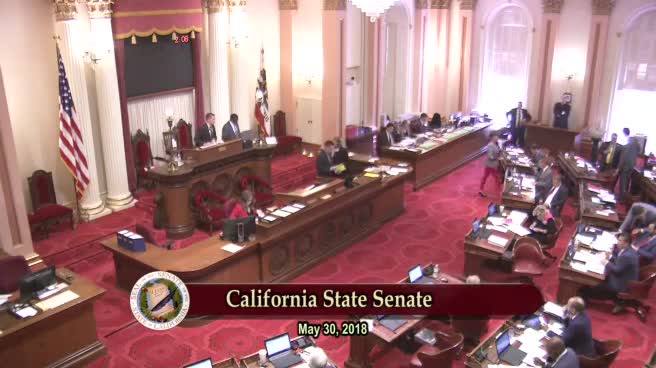 3MIN
Senate Floor
 43MIN
Senate Standing Committee on Judiciary
Bill Author

Bill Co-Author(s):