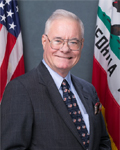
SB 1053: Presentation of claims: local public entities: childhood sexual abuse.
- Session Year: 2017-2018
- House: Senate
- Latest Version Date: 2018-07-20
The Government Claims Act sets forth the general procedure for the presentation of claims as a prerequisite to commencement of actions for money or damages against local public entities, as defined.
The act exempts certain claims against local public entities from the presentation procedures of the act, including, but not limited to, claims made pursuant to a specific provision of the Code of Civil Procedure for the recovery of damages suffered as a result of childhood sexual abuse and arising out of conduct occurring on or after January 1, 2009. Under the act, claims against a local public entity for money or damages that are exempted and that are not governed by any other statutes or regulations expressly relating thereto, are authorized to be governed by the procedure prescribed in an enactment adopted by the local public entity.
This bill would specifically exempt from that authorization for procedures prescribed by local enactment claims against a local public entity made pursuant to the above-described existing law for the recovery of damages suffered as a result of childhood sexual abuse.
The Government Claims Act sets forth the general procedure for the presentation of claims as a prerequisite to commencement of actions for money or damages against local public entities, as defined.
The act exempts certain claims against local public entities from the presentation procedures of the act, including, but not limited to, claims made pursuant to a specific provision of the Code of Civil Procedure for the recovery of damages suffered as a result of childhood sexual abuse and arising out of conduct occurring on or after January 1, 2009. Under the act, claims against a local public entity for money or damages which that are exempted and which that are not governed by any other statutes or regulations expressly relating thereto, are authorized to be governed by the procedure prescribed in an enactment adopted by the local public entity.
This bill would specifically exempt from that authorization for procedures prescribed by local enactment claims against a local public entity made pursuant to the above-described existing law for the recovery of damages suffered as a result of childhood sexual abuse.
The California Constitution requires the state to reimburse local agencies and school districts for certain costs mandated by the state. Statutory provisions establish procedures for making that reimbursement.This bill would provide that, if the Commission on State Mandates determines that the bill contains costs mandated by the state, reimbursement for those costs shall be made pursuant to the statutory provisions noted above.The Government Claims Act sets forth the general procedure for the presentation of claims as a prerequisite to commencement of actions for money or damages against local public entities, as defined.
The act exempts certain claims against local public entities from the presentation procedures of the act, including, but not limited to, claims made pursuant to a specific provision of the Code of Civil Procedure for the recovery of damages suffered as a result of childhood sexual abuse and arising out of conduct occurring on or after January 1, 2009. Under the act, claims against a local public entity for money or damages which are exempted and which are not governed by any other statutes or regulations expressly relating thereto, are authorized to be governed by the procedure prescribed in an enactment adopted by the local public entity.
This bill would specifically exempt from that authorization procedures prescribed by local enactment claims against a local public entity made pursuant to the above-described existing law for the recovery of damages suffered as a result of childhood sexual abuse.
The California Constitution requires the state to reimburse local agencies and school districts for certain costs mandated by the state. Statutory provisions establish procedures for making that reimbursement.
This bill would provide that, if the Commission on State Mandates determines that the bill contains costs mandated by the state, reimbursement for those costs shall be made pursuant to the statutory provisions noted above.
(a)Claims against a local public entity for money or damages which are excepted by Section 905 from Chapter 1 (commencing with Section 900) and Chapter 2 (commencing with Section 910) of this part, and which are not governed by any other statutes or regulations expressly relating thereto, shall be governed by the procedure prescribed in any charter, ordinance, or regulation adopted by the local public entity.
(b)The procedure so prescribed may include a requirement that a claim be presented and acted upon as a prerequisite to suit thereon. If such a requirement is included, any action brought against the public entity on the claim shall be subject to Sections 945.6 and 946.
(c)The procedure so prescribed shall not require a shorter time for presentation of any claim than the time provided in Section 911.2.
(d)The procedure so prescribed shall not provide a longer time for the board to take action upon any claim than the time provided in Section 912.4.
(e)When a claim required by the procedure to be presented within a period of less than one year after the accrual of the cause of action is not presented within the required time, an application may be made to the public entity for leave to present such claim. Subdivision (b) of Section 911.4, Sections 911.6 to 912.2, inclusive, and Sections 946.4 and 946.6 are applicable to all such claims, and the time specified in the charter, ordinance, or regulation shall be deemed the time specified in Section 911.2 within the meaning of Sections 911.6 and 946.6.
(f)Any procedure authorized to be prescribed by this section does not apply to claims of childhood sexual abuse made as described in subdivision (m) of Section 905. This subdivision is declaratory of existing law.
(a)Claims against a local public entity for money or damages which are excepted by Section 905 from Chapter 1 (commencing with Section 900) and Chapter 2 (commencing with Section 910) of this part, and which are not governed by any other statutes or regulations expressly relating thereto, shall be governed by the procedure prescribed in any charter, ordinance, or regulation adopted by the local public entity.
(b)The procedure so prescribed may include a requirement that a claim be presented and acted upon as a prerequisite to suit thereon. If such a requirement is included, any action brought against the public entity on the claim shall be subject to Section Sections 945.6 and Section 946.
(c)The procedure so prescribed shall not require a shorter time for presentation of any claim than the time provided in Section 911.2.
(d)The procedure so prescribed shall not provide a longer time for the board to take action upon any claim than the time provided in Section 912.4.
(e)When a claim required by the procedure to be presented within a period of less than one year after the accrual of the cause of action is not presented within the required time, an application may be made to the public entity for leave to present such claim. Subdivision (b) of Section 911.4, Sections 911.6 to 912. 2, 912.2, inclusive, and Sections 946.4 and 946.6 are applicable to all such claims, and the time specified in the charter, ordinance, or regulation shall be deemed the time specified in Section 911.2 within the meaning of Sections 911.6 and 946.6.
(f)Any procedure authorized to be prescribed by this section does not apply to claims of childhood sexual abuse made as described in subdivision (m) of Section 905. This subdivision is declaratory of existing law.
REVISIONS: HeadingLine 4.(a)Claims against a local public entity for money or damages which are excepted by Section 905 from Chapter 1 (commencing with Section 900) and Chapter 2 (commencing with Section 910) of this part, and which are not governed by any other statutes or regulations expressly relating thereto, shall be governed by the procedure prescribed in any charter, ordinance ordinance, or regulation adopted by the local public entity.
(b)The procedure so prescribed may include a requirement that a claim be presented and acted upon as a prerequisite to suit thereon. If such a requirement is included, any action brought against the public entity on the claim shall be subject to Section 945.6 and Section 946.
(c)The procedure so prescribed shall not require a shorter time for presentation of any claim than the time provided in Section 911.2.
(d)The procedure so prescribed shall not provide a longer time for the board to take action upon any claim than the time provided in Section 912.4.
(e)When a claim required by the procedure to be presented within a period of less than one year after the accrual of the cause of action is not presented within the required time, an application may be made to the public entity for leave to present such claim. Subdivision (b) of Section 911.4, Sections 911.6 to 912. 2, inclusive, and Sections 946.4 and 946.6 are applicable to all such claims, and the time specified in the charter, ordinance ordinance, or regulation shall be deemed the time specified in Section 911.2 within the meaning of Sections 911.6 and 946.6.
(f)Any procedure authorized to be prescribed by this section does not apply to claims of childhood sexual abuse made as described in subdivision (m) of Section 905.
SEC. 2.If the Commission on State Mandates determines that this act contains costs mandated by the state, reimbursement to local agencies and school districts for those costs shall be made pursuant to Part 7 (commencing with Section 17500) of Division 4 of Title 2 of the Government Code.(a)Claims against a local public entity for money or damages which are excepted by Section 905 from Chapter 1 (commencing with Section 900) and Chapter 2 (commencing with Section 910) of this part, and which are not governed by any other statutes or regulations expressly relating thereto, shall be governed by the procedure prescribed in any charter, ordinance or regulation adopted by the local public entity.
(b)The procedure so prescribed may include a requirement that a claim be presented and acted upon as a prerequisite to suit thereon. If such requirement is included, any action brought against the public entity on the claim shall be subject to the provisions of Section 945.6 and Section 946.
(c)The procedure so prescribed may shall not require a shorter time for presentation of any claim than the time provided in Section 911.2.
(d)The procedure so prescribed may shall not provide a longer time for the board to take action upon any claim than the time provided in Section 912.4.
(e)When a claim required by the procedure to be presented within a period of less than one year after the accrual of the cause of action is not presented within the required time, an application may be made to the public entity for leave to present such claim. Subdivision (b) of Section 911.4, Sections 911.6 to 912. 2, inclusive, and Sections 946.4 and 946.6 are applicable to all such claims, and the time specified in the charter, ordinance or regulation shall be deemed the time specified in Section 911.2 within the meaning of Sections 911.6 and 946.6.
(f)Any procedure authorized to be prescribed by this section does not apply to claims of childhood sexual abuse made as described in subdivision (m) of Section 905.
SEC. 2.If the Commission on State Mandates determines that this act contains costs mandated by the state, reimbursement to local agencies and school districts for those costs shall be made pursuant to Part 7 (commencing with Section 17500) of Division 4 of Title 2 of the Government Code.
|
Date
|
Status
|
|---|---|
| Jul 20, 2018 | Chaptered by Secretary of State. Chapter 153, Statutes of 2018. |
| Jul 20, 2018 | Approved by the Governor. |
| Jul 11, 2018 | Enrolled and presented to the Governor at 4 p.m. |
| Jul 2, 2018 | Assembly amendments concurred in. (Ayes 37. Noes 0.) Ordered to engrossing and enrolling. |
| Jun 25, 2018 | In Senate. Concurrence in Assembly amendments pending. |
| Jun 25, 2018 | Read third time. Passed. Ordered to the Senate. |
| Jun 13, 2018 | Read second time. Ordered to third reading. |
| Jun 12, 2018 | Coauthors revised. |
| May 24, 2018 | From committee with author's amendments. Read second time and amended. Re-referred to Com. on JUD. |
| Apr 30, 2018 | Referred to Com. on JUD. |
| Apr 23, 2018 | In Assembly. Read first time. Held at Desk. |
| Apr 23, 2018 | Read third time. Passed. (Ayes 38. Noes 0.) Ordered to the Assembly. |
| Apr 19, 2018 | Read second time. Ordered to third reading. |
| Apr 18, 2018 | Withdrawn from committee. |
| Apr 13, 2018 | Set for hearing April 23. |
| Apr 12, 2018 | From committee with author's amendments. Read second time and amended. Re-referred to Com. on APPR. |
| Apr 11, 2018 | From committee: Do pass and re-refer to Com. on APPR. (Ayes 7. Noes 0.) (April 10). Re-referred to Com. on APPR. |
| Mar 22, 2018 | Set for hearing April 10. |
| Feb 22, 2018 | Referred to Com. on JUD. |
| Feb 13, 2018 | From printer. May be acted upon on or after March 15. |
| Feb 12, 2018 | Introduced. Read first time. To Com. on RLS. for assignment. To print. |
|
Date
|
Description
|
Location
|
Votes
|
|
|---|---|---|---|---|
| Jul 2, 2018 | Unfinished Business SB1053 Beall et al. Concurrence | Senate Floor |
Passed |
|
| Jun 25, 2018 | SB 1053 Beall Senate Third Reading By REYES | Assembly Floor |
Passed |
|
| Jun 12, 2018 | Do pass. | Assembly Standing Committee on Judiciary |
Passed |
|
| Apr 23, 2018 | Senate 3rd Reading SB1053 Beall et al. | Senate Floor |
Passed |
|
| Apr 10, 2018 | Do pass, but first be re-referred to the Committee on [Appropriations] | Senate Standing Committee on Judiciary |
Passed |
This list shows positions taken on this bill by organizations on the date displayed, which is linked to the original source.
Positions by individuals are not included.
Office of Senate Floor Analyses (916) 651-1520 Fax: (916) 327-4478 | SB |
UNFINISHED BUSINESS
Bill No: SB 1053
:
SENATE JUDICIARY COMMITTEE: 7-0, 4/10/18
AYES: Jackson, Moorlach, Anderson, Hertzberg, Monning, Stern, Wieckowski
SENATE FLOOR: 38-0, 4/23/18
AYES: Allen, Anderson, Atkins, Bates, Beall, Berryhill, Bradford, Cannella, De León, Dodd, Fuller, Gaines, Galgiani, Glazer, Hernandez, Hertzberg, Hill, Hueso, Jackson, Lara, Leyva, McGuire, Mitchell, Monning, Moorlach, Newman, Nguyen, Nielsen, Pan, Portantino, Roth, Skinner, Stern, Stone, Vidak, Wieckowski, Wiener, Wilk
NO VOTE RECORDED: Morrell
ASSEMBLY FLOOR: 74-0, 6/25/18 - See last page for vote
SOURCE: Consumer Attorneys of California
DIGEST:
This bill provides that the procedures authorized to be prescribed by Section 935 of the Government Code relating to claims for money or damages against local public entities do not apply to claims of childhood sexual abuse made as described in Section 905(m) of the Government Code.
Assembly Amendments
indicate that this provision is declaratory of existing law.
Existing law:
- Provides that in an action for recovery of damages suffered as a result of childhood sexual abuse, the time for commencement of the action shall be within eight years of the date the plaintiff attains the age of majority or within three years of the date the plaintiff discovers or reasonably should have discovered that psychological injury or illness occurring after the age of majority was caused by the sexual abuse, whichever period expires later, for specified actions for childhood sexual abuse. (Code Civ. Proc. Sec. 340.1(a).)
- Provides that the actions described above against persons or entities other than the person who committed an act of childhood sexual abuse must be commenced before the plaintiff’s 26th birthday. However, this restriction does not apply if the person or entity knew or had reason to know, or was otherwise on notice, of any unlawful sexual conduct by an employee, volunteer, representative, or agent, and failed to take reasonable steps, and to implement reasonable safeguards, to avoid acts of unlawful sexual conduct in the future by that person, including, but not limited to, preventing or avoiding placement of that person in a function or environment in which contact with children is an inherent part of that function or environment. Existing law states that providing or requiring counseling is not sufficient, in and of itself, to constitute a reasonable step or reasonable safeguard as used therein. (Code Civ. Proc. Sec. 340.1(b).)
- Defines “childhood sexual abuse” as used in the above provisions to include any act committed against the plaintiff that occurred when the plaintiff was under the age of 18 years and that would have been proscribed by Section 266j of the Penal Code; Section 285 of the Penal Code; paragraph (1) or (2) of subdivision (b), or of subdivision (c), of Section 286 of the Penal Code; subdivision (a) or (b) of Section 288 of the Penal Code; paragraph (1) or (2) of subdivision (b), or of subdivision (c), of Section 288a of the Penal Code; subdivision (h), (i), or (j) of Section 289 of the Penal Code; Section 647.6 of the Penal Code; or any prior laws of this state of similar effect at the time the act was committed. (Code Civ. Proc. Sec. 340.1(e).)
- Provides that claims for money or damages against local public entities must be presented in accordance with specified procedures, unless specifically exempted. (Gov. Code Sec. 905.) A written claim relating to a cause of action for death or for injury to person or to personal property shall be presented not later than six months after the accrual of the cause of action with the ability to file an application to present an untimely claim up to one year after the accrual of the cause of action. (Gov. Code Secs. 911.2, 911.4.) A claim relating to any other cause of action shall be presented not later than one year after the accrual of the cause of action. (Gov. Code Sec. 911.2.) “Local public entity” includes a county, city, district, public authority, public agency, and any other political subdivision or public corporation in the State, but does not include the State. (Gov. Code Sec. 900.4.)
- Provides numerous exceptions to the claims presentation requirements including claims made pursuant to Section 340.1 of the Code of Civil Procedure for the recovery of damages suffered as a result of childhood sexual abuse. This exception only applies to claims arising out of conduct occurring on or after January 1, 2009. (Gov. Code Sec. 905(m).)
- Provides that claims against a local public entity for money or damages which are excepted by Section 905 from claims presentation requirements, and which are not governed by any other statutes or regulations expressly relating thereto, shall be governed by the procedure prescribed in any charter, ordinance or regulation adopted by the local public entity. The procedure so prescribed may include a requirement that a claim be presented and acted upon as a prerequisite to suit thereon. (Gov. Code Sec. 935.)
This bill provides that the procedures prescribed by Section 935 of the Government Code do not apply to claims of childhood sexual abuse made as described in Section 905(m) of the Government Code. It provides that this is declaratory of existing law.
Background
In 2002, the Legislature enacted SB 1779 (Burton, Chapter 149, Statutes of 2002), to provide that an action for recovery of damages suffered as a result of childhood sexual abuse may be commenced on or after the plaintiff’s 26th birthday if the third party defendant person or entity knew, had reason to know, or was otherwise on notice, of any unlawful sexual conduct by an employee, volunteer, representative, or agent, and failed to take reasonable steps and implement reasonable safeguards to avoid future acts of unlawful sexual conduct. (See Code Civ. Proc. (CCP) Sec. 340.1(b)(2).)
The Government Tort Claims Act (the Act) generally governs damage claims brought against public entities. (Gov. Code Sec. 815 et seq.) In addition to any time limitations placed by other statutes on such claims, the Act requires that a claim that is brought against a public entity relating to a cause of action for death or for injury to a person be presented in writing to the public entity not later than six months after accrual of the cause or causes of action. (Gov. Code Sec. 911.2.)
In Shirk v. Vista Unified School District (2007) 42 Cal.4th 201, the California Supreme Court held that, notwithstanding CCP Section 340.1 and its delayed discovery provisions, a timely claim to a public entity pursuant to the Act is a prerequisite to maintaining an action for childhood sexual abuse against a public entity school district. The Court based its holding primarily on its finding that nothing in the express language of SB 1779 or the bill’s legislative history indicated an intent by the Legislature to exempt Section 340.1 claims from the Act and its six-month claim presentation requirement.
To address this loophole, SB 640 (Simitian, Chapter 383, Statutes of 2008) added an explicit exception to the claims presentation requirements to Section 905 of the Act for “[c]laims made pursuant to Section 340.1 for the recovery of damages suffered as a result of childhood sexual abuse.” (Gov. Code Sec. 905(m).) Section 905(m) applied to claims arising out of conduct occurring on or after January 1, 2009.
Despite this additional legislation making it clear the Legislature intended CCP Section 340.1 to apply to claims against local public entities, numerous public entities, including school districts, have been using another statute, Section 935 of the Government Code, to circumvent and undermine SB 640 and Section 905(m) of the Government Code. These public entities are attempting to defeat lawsuits alleging claims of childhood sexual abuse based on claims-presentations requirements the local public entities have set in their own charter, ordinance, or regulation. This bill explicitly prohibits this practice and effectuates the intent of the Legislature in enacting SB 640, thereby ensuring the delayed discovery provisions in Section 340.1 apply to all childhood sexual abuse claims against local public entities.
Comments
The author writes:
Child sexual abuse is a hidden but significant problem in every community in America. Experts estimate that one in four girls and one in six boys will be sexually abused before their eighteenth birthday, and less than one in ten will tell. Civil claims for these cases have an extended statute of limitations in California because victims of child sexual abuse may not recognize or report the abuse until years later. Due to lack of clarity in current law, some victims are discouraged from seeking justice.
SB 1053 codifies and clarifies existing law that protects victims of childhood sexual abuse. This bill clarifies that victims who couldn’t speak up sooner will do so later, making it more difficult for predators and their employers to hide evidence, conceal crimes, intimidate victims, and threaten witnesses. This bill is aimed at protecting the civil legal rights of those injured through childhood sexual abuse, and allows them to seek compensation from public or private entities responsible.
Effectuating the intent of the Legislature to exempt childhood sexual abuse claims from any government tort claims requirements
An analysis of the legislative history of SB 640 makes clear that the Legislature intended to apply the provisions of Section 340.1 of the Code of Civil Procedure to all claims of childhood sexual abuse against local public entities. The Assembly Judiciary Committee Analysis of SB 640 stated its understanding of the intent of the bill: “This bill is intended to address the Shirk decision by expressly providing that childhood sexual abuse actions against public entities are exempted from government tort claims requirements and the six-month notice requirement.” Therefore, it seems clear that the Legislature, in unanimously passing this bill, intended the provisions of Section 340.1 of the Code of Civil Procedure to apply to all claims for childhood sexual abuse regardless of the status of the defendant or any tort claims requirements.
While SB 640 was not analyzed by a Senate policy committee, the Senate Floor analysis of the bill cross-referenced the Senate Judiciary Committee’s analysis of SB 1339, a substantially identical bill. The analysis stated that “childhood sexual abuse claims especially should be exempted from government tort claim requirements because more often than not the emotional and psychological injuries from the abuse do not manifest themselves until well into adulthood.” The analysis states that the bill, if enacted, “would apply to such public entities as school districts.”
In recent years, local public entities have tried to circumvent the intent of SB 640 and the delayed discovery provisions of CCP Section 340.1. They have relied on Section 935 of the Government Code, which provides in relevant part: “Claims against a local public entity for money or damages which are excepted by Section 905, and which are not governed by any other statutes or regulations expressly relating thereto, shall be governed by the procedure prescribed in any charter, ordinance or regulation adopted by the local public entity.” In several noted cases, defendant school districts have pointed to their own policies providing for six-month claim presentation requirements in demurring to plaintiffs’ claims of childhood sexual abuse. They argue that Section 935 controls.
This bill makes clear that Section 935 of the Government Code does not apply to claims of childhood sexual abuse, ensuring the clear intent of SB 640 is effectuated and the delayed discovery provisions of CCP Section 340.1 control.
Determining whether local public entities can utilize Section 935 to block the claims of childhood sexual abuse victims under current law
In 2016, the California Legislative Counsel, this Legislature’s legal counsel, was asked to render an opinion regarding the topic relevant here: whether a school district could adopt a procedure governing the presentation of claims for childhood abuse through Section 935 of the Government Code. The opinion of Legislative Counsel pointed to the plain language of Section 935. The statute allows for the adoption of procedures for presentation of claims excepted by Section 905 of the Government Code if, and only if, the claims “are not governed by any other statutes or regulations expressly relating thereto.” (Gov. Code Sec. 935; Legislative Counsel Opinion #1601887, p. 2, Mar. 11, 2016.)
The opinion then addresses the operative question: “whether excepted childhood sexual abuse claims are governed by a statute or regulation”:
It is fundamental that when the language of a statute is clear, its plain meaning should be followed. Government Code section 935, subdivision (a) identifies the class of excepted claims subject to a local public entity’s claims procedure by referring to the exceptions listed in section 905, but excludes from this class excepted claims that are expressly governed by a statute. Section 905 lists childhood sexual abuse claims among its exceptions, and defines those claims in terms of the statute that establishes the timeframe for victims of childhood sexual abuse to file lawsuits—that is, “[c]laims made pursuant to Section 340.1.” By definition, then, such claims are expressly governed by statute. It follows necessarily that such claims do not fall within the class of claims excepted by section 905 for which a local public entity may adopt its own claims procedure. Therefore, we conclude, based upon the plain language of the relevant statutes, that a school district may not adopt its own claim presentation procedure applicable to claims for damages suffered as a result of childhood sexual abuse.
(Legislative Counsel Opinion #1601887, p. 3, Mar. 11, 2016.) The opinion then further bolsters its conclusion with an analysis of the legislative history of SB 640.
Several cases have been squarely presented with this question, with courts coming down on both sides. One recent case, Big Oak Flat-Groveland Unified School Dist. v. Superior Court (Feb. 22, 2018) ___Cal.App.5th___ (2018 Cal. App. LEXIS 213), involved a student that alleged she was molested by a teacher when she was 15 years-old. In the trial court, the defendant school district demurred, asserting that, although section 905(m) exempted the plaintiff’s claims from the claim presentation requirements of the Act, Section 935 of the Government Code authorized a local public entity, such as the district, to impose its own claim presentation requirement on claims exempted by section 905; the district had enacted a policy and regulation imposing such a claim presentation requirement, and the plaintiff had failed to comply with it. (Id. at *4.) The trial court overruled the demurrer.
In reviewing the trial court’s decision, the appellate court found the legislative history behind SB 640 and the enactment of Section 905(m) irrelevant. As the Legislative Counsel opinion did, it turned to the application of the phrase “not governed by any other statutes or regulations expressly relating thereto” in Section 935(a). However, the court applied an extremely narrow interpretation of the phrase, finding it only “refers to statutes or regulations expressly addressing local public entity claim procedures,” rather than other statutes or regulations relating to childhood sexual abuse claims and their applicable statutes of limitations or dates of accrual. (Id. at *18-19.) Based on this narrow interpretation, the court found in favor of the defendant school district. The case has been appealed to the Supreme Court of California.
This bill provides that this newly added provision is declaratory of existing law.
FISCAL EFFECT: Appropriation: Fiscal Com.: Local:
Consumer Attorneys of California (source)
Barron Law Corporation
California Catholic Conference
California Coalition Against Sexual Assault
California Nurses’ Association
California Protective Parents Association
California State PTA
Children’s Advocacy Institute
Courage Campaign
John Burton Advocates for Youth
National Center for Youth Law
Peace Officers Research Association of California
OPPOSITION: (Verified 6/27/18)
California Association of Joint Powers Authorities
Schools Excess Liability Fund
ARGUMENTS IN SUPPORT: The California Nurses Association states that the bill “will codify and clarify current law that governs when a victim of childhood sexual abuse may file a claim against a public entity and seek justice through the civil courts.” It argues that “it is imperative to remove any cumbersome hurdles that may preclude victims from coming forward, and to provide this much needed clarity in the law.”
ARGUMENTS IN OPPOSITION: The California Association of Joint Powers Authorities and Schools Excess Liability Fund write in opposition to the bill. They argue the bill would “dramatically increase the taxpayers’ cost of such claims.”
ASSEMBLY FLOOR: 74-0, 6/25/18
AYES: Acosta, Aguiar-Curry, Travis Allen, Arambula, Baker, Berman, Bigelow, Bloom, Bonta, Burke, Caballero, Calderon, Carrillo, Chau, Chávez, Chen, Chiu, Chu, Cooley, Cooper, Cunningham, Dahle, Daly, Eggman, Flora, Fong, Frazier, Friedman, Gabriel, Gallagher, Cristina Garcia, Eduardo Garcia, Gipson, Gloria, Gonzalez Fletcher, Gray, Grayson, Holden, Irwin, Jones-Sawyer, Kalra, Kiley, Lackey, Levine, Limón, Low, Maienschein, Mathis, Mayes, McCarty, Medina, Melendez, Mullin, Muratsuchi, Nazarian, O'Donnell, Patterson, Quirk, Quirk-Silva, Reyes, Rivas, Rodriguez, Rubio, Salas, Santiago, Steinorth, Mark Stone, Thurmond, Ting, Voepel, Waldron, Weber, Wood, Rendon
NO VOTE RECORDED: Brough, Cervantes, Choi, Harper, Kamlager-Dove, Obernolte
6/27/18 16:02:08
**** END ****
SENATE THIRD READING
STR Bill Id:SB 1053
Author:(Beall)
As Amended Ver:May 24, 2018
Majority vote
SENATE VOTE: 38-0
Committee | Votes | Ayes | Noes |
Judiciary | 9-0 | Mark Stone, Cunningham, Chau, Chiu, Kalra, Kiley, Maienschein, Reyes, Gonzalez Fletcher |
|
SUMMARY: Specifically exempts claims of childhood sexual abuse against a local public entity from being subject to additional procedures prescribed by the local public entity. Specifically, this bill exempts claims of childhood sexual abuse against a local public entity, which are already exempt from the Government Tort Claims Act (GTCA) early presentation of claims procedures, from being governed by procedures prescribed in any charter, ordinance, or regulation adopted by the local public entity; and states that this is declarative of existing law.
EXISTING LAW:
- Provides that the time for commencing a civil action based on injuries resulting from childhood sexual abuse, as defined, is eight years after the plaintiff reaches majority (i.e., until 26 years of age) or within three years of the date the plaintiff discovers or reasonably should have discovered that the psychological injury or illness occurring after the age of majority was caused by the abuse, whichever occurs later. (Code of Civil Procedure Section (CCP) 340.1 (a).)
- Allows suit against the perpetrator or specified third parties, but prohibits suit against third parties after the plaintiff's 26th birthday, unless the person or entity knew or had reason to know, or was otherwise on notice, of any unlawful sexual conduct by an employee, volunteer, representative, or agent, and failed to take reasonable steps, and to implement reasonable safeguards, to avoid acts of unlawful sexual conduct in the future by that person, as specified. (CCP 340.1 (b).)
- Provides, under the GTCA, that a claim relating to a cause of action for death or injury to a person against a public entity must be presented in writing, as specified, to the public entity not later than six months after the accrual of the cause of action. Provides that the date of accrual of a cause of action is the date upon which the cause of action would be deemed to have accrued within the meaning of the applicable statute of limitations if no claim presentation were required before a court action could be commenced. (Government Code Sections 901, 911.2, 915.)
- Exempts, from the GTCA, certain claims presentation requirements including claims for childhood sexual abuse against a local public entity arising out of conduct occurring on or after January 1, 2009. (Government Code Section 905.)
- Provides that claims against a local public entity for money or damages which are exempted by 4), above, from claims presentation requirements, and which are not governed by any other statutes or regulations expressly relating to them, are governed by the procedure prescribed in any charter, ordinance, or regulation adopted by the local public entity. Allows the procedure so prescribed to include a requirement that a claim be presented and acted upon as a prerequisite to filing suit. (Government Code Section 935.)
FISCAL EFFECT: None
COMMENTS: All too often, victims of childhood sexual abuse fail to report their abuse timely or fail to report it at all. While the victims almost always know their abusers, they often fail to come forward timely because of being threaten with harm for doing so, being ashamed, blaming themselves, fearing their claims will not be considered credible, failing to fully appreciate the wrongfulness of the conduct, or suppressing very painful memories. As a result, it may take years for victims to come forward, if they come forward at all, in order to bring civil (or seek criminal) actions against both direct perpetrators of child sexual abuse and those who allowed the abuse to occur and continue.
To address this sad reality and ensure that child victims of sexual abuse can eventually seek redress, California has an extended statute of limitations for these claims. However before 2009, under the GTCA, public agencies could avoid the extended statute of limitations by still requiring that claims be presented to the agency within six months of occurrence of the abuse. The Legislature, recognizing the harm that the GTCA was doing to these victims, specifically exempted childhood sexual abuse claims from the GTCA in SB 640 (Simitian), Chapter 383, Statutes of 2008. However, a number of public agencies have tried to get around the extended statute of limitations and the clear legislative prohibition in SB 640, and still require early claims presentation; and a recent appellate court has upheld this. This bill seeks to uphold the original legislative intent of SB 640 and exempt childhood claims of sexual abuse from any requirement of early claims presentation to a local public entity.
Prior legislation exempted childhood sexual abuse from early claims presentation requirement under the GTCA. The GTCA generally governs damage claims brought against public entities. The GTCA requires that a claim relating to a cause of action for death or for injury to a person be presented in writing to the public entity not later than six months after the date upon which the cause of action would be deemed to have accrued within the meaning of the applicable statutes of limitation. In Shirk v. Vista Unified School District (2007) 42 Cal.4th 201, the California Supreme Court held that, notwithstanding the childhood sexual abuse statute of limitations timeframes in CCP 340.1 and its delayed discovery rule, an abuse victim must follow the six-month presentation rule in the GTCA and cannot, without having done so, take advantage of the delayed-discovery rule otherwise applicable to abuse victims.
However, the Legislature in 2008 specifically waived, on a prospective basis, the local government six-month notice of claim limitation requirement that applies to all other tort claims for victims of child sexual abuse. (SB 640) Thus, beginning in 2009, California law has provided that victims have the same time period to file a claim against local public entities as against private institutions, and are not subject to the GTCA's time limit for presenting claims.
When considering SB 640, the Assembly Judiciary Committee's analysis noted that the GTCA could "effectively nullify[] delayed discovery claims against a responsible public entity by adults suffering severe emotional and psychological trauma as a result of childhood sexual abuse." To prevent that result, the Assembly Judiciary Committee wrote that SB 640 was specifically "intended to address the Shirk decision by expressly providing that childhood sexual abuse actions against public entities are exempted from government tort claims requirements and the six-month notice requirement."
Some local public entities are still requiring early claims presentation, relying on a different code section and effectively circumventing SB 640. Despite the clear intent of SB 640 to waive the GTCA for claims of childhood sexual abuse against public entities, some of these entities, including school districts, have tried to circumvent the intent of SB 640 and the delayed discovery provisions that apply to childhood sexual abuse claims under Code of Civil Procedure Section 340.1. They have relied on the Government Code Section 935, which provides in relevant part: "Claims against a local public entity for money or damages which are excepted by [Government Code] Section 905, and which are not governed by any other statutes or regulations expressly relating thereto, shall be governed by the procedure prescribed in any charter, ordinance or regulation adopted by the local public entity." In several noted cases, defendant school districts have pointed to their own policies, providing for six-month claim presentation requirements, in demurring to plaintiffs' claims of childhood sexual abuse. They argue that Government Code Section 935 controls the time limit for presenting claims.
A Legislative Counsel opinion agrees that SB 640 was intended to prevent early claims presentation by local public entities. In 2016, Legislative Counsel was asked whether, despite SB 640, a school district could adopt a procedure governing the presentation of claims for childhood abuse through Government Code Section 935. The Opinion of Legislative Counsel pointed to the plain language of Government Code Section 935. The statute allows for the adoption of procedures for presentation of claims excepted by Government Code Section 905 if, and only if, the claims "are not governed by any other statutes or regulations expressly relating thereto."
The Opinion then addressed the operative question: "whether excepted childhood sexual abuse claims are governed by a statute or regulation":
It is fundamental that when the language of a statute is clear, its plain meaning should be followed. Government Code Section 935, subdivision (a) identifies the class of excepted claims subject to a local public entity's claims procedure by referring to the exceptions listed in [Government Code] Section 905, but excludes from this class excepted claims that are expressly governed by a statute. [Government Code] Section 905 lists childhood sexual abuse claims among its exceptions, and defines those claims in terms of the statute that establishes the timeframe for victims of childhood sexual abuse to file lawsuits—that is, "[c]laims made pursuant to [Code of Civil Procedure] Section 340.1." By definition, then, such claims are expressly governed by statute. It follows necessarily that such claims do not fall within the class of claims excepted by section 905 for which a local public entity may adopt its own claims procedure. Therefore, we conclude, based upon the plain language of the relevant statutes, that a school district may not adopt its own claim presentation procedure applicable to claims for damages suffered as a result of childhood sexual abuse.
(Legislative Counsel Opinion #1601887, p. 3, Mar. 11, 2016.) The Opinion then further bolsters its conclusion with an analysis of the legislative history of SB 640 and its intent to prohibit a public agency's early claims presentation requirement for childhood sexual abuse.
Analysis Prepared by: Leora Gershenzon / JUD. / (916) 319-2334 FN: 0003478
Date of Hearing: June 12, 2018
ASSEMBLY COMMITTEE ON JUDICIARY
Mark Stone, Chair
SBPCA Bill Id:SB 1053
Author:(Beall) – As Amended Ver:May 24, 2018
SENATE VOTE: 38-0
SUBJECT: local public entities: PRESENTATION OF childhood sexual abuse CLAIMS
KEY ISSUE: SHOULD THE LAW BE CLARIFIED TO ENSURE THAT a CLAIM OF CHILDHOOD SEXUAL ABUSE AGAINST a LOCAL PUBLIC AGENCY, including a school, IS GOVERNED BY THE EXISTING LONGER STATUTE OF LIMITATIONS for childhood sexual abuse CLAIMS AND NOT BY ANY EARLIER CLAIMS PRESENTATION REQUIREMENT DEVISED BY THE AGENCY, which THE LEGISLATURE DECIDED IN 2008 by enacting SB 640 (sIMITIAN)?
SYNOPSIS
All too often, victims of childhood sexual abuse fail to report their abuse timely or sometimes fail to report it at all. While the victims almost always know their abusers, they often fail to come forward timely because of being threaten with harm for doing so, being ashamed, blaming themselves, fearing their claims will not be considered credible, failing to fully appreciate the wrongfulness of the conduct, or suppressing very painful memories. As a result, it may take years for victims to come forward, if they come forward at all, in order to bring civil (or seek criminal) actions against both direct perpetrators of child sexual abuse and those who allowed the abuse to occur and continue.
To address this sad reality and ensure that child victims of sexual abuse can eventually seek redress, California has an extended statute of limitations for these claims. However before 2009, under the Government Tort Claims Act (GTCA), public agencies could avoid the extended statute of limitations by still requiring that claims be presented to the agency within six months of occurrence of the abuse. The Legislature, recognizing the harm that the GTCA was doing to these victims, specifically exempted childhood sexual abuse claims from the GTCA in SB 640 (Simitian), Chap. 383, Stats. 2008. However, a number of public agencies have tried to avoid the extended statute of limitations and clear legislative prohibition in SB 640 by still requiring early claims presentation; and a recent appellate court has upheld this practice. This bill, sponsored by Consumer Attorneys of California, seeks to uphold the original legislative intent of SB 640 and exempt childhood claims of sexual abuse from any requirement of early claims presentation to a local public entity.
This bill is supported by a numerous advocacy organizations, including the California Nurses Association, the California State PTA, Children's Advocacy Institute, the Courage Campaign, and the National Center for Youth Law, who write that child sexual abuse is a "hidden but significant problem" in California and that this bill will help victims who can't speak up earlier and will make it harder for "predators and their employers to hide evidence, conceal crimes, intimidate victims, and threaten witnesses." The bill is opposed by the California Association of Joint Powers Authorities and the Schools Excess Liability Fund who believe that this bill will "deny California public entities the right to promptly receive notice and initiate investigations and settlement negotiations early in such suits" and as a result will hurt "not only the parties involved, but the California taxpayers who rely on government services."
SUMMARY: Specifically exempts claims of childhood sexual abuse against a local public entity from being subject to additional procedures prescribed by the local public entity. Specifically, this bill exempts claims of childhood sexual abuse against a local public entity, which are already exempt from the Government Tort Claims Act (GTCA) early presentation of claims procedures, from being governed by procedures prescribed in any charter, ordinance, or regulation adopted by the local public entity; and states that this is declarative of existing law.
EXISTING LAW:
- Provides that the time for commencing a civil action based on injuries resulting from childhood sexual abuse, as defined, is eight years after the plaintiff reaches majority (i.e., until 26 years of age) or within three years of the date the plaintiff discovers or reasonably should have discovered that the psychological injury or illness occurring after the age of majority was caused by the abuse, whichever occurs later. (Code of Civil Procedure Section 340.1 (a).)
- Allows suit against the perpetrator or specified third parties, but prohibits suit against third parties after the plaintiff’s 26th birthday, unless the person or entity knew or had reason to know, or was otherwise on notice, of any unlawful sexual conduct by an employee, volunteer, representative, or agent, and failed to take reasonable steps, and to implement reasonable safeguards, to avoid acts of unlawful sexual conduct in the future by that person, as specified. (Code of Civil Procedure Section 340.1 (b).)
- Provides, under the GTCA, that a claim relating to a cause of action for death or injury to a person against a public entity must be presented in writing, as specified, to the public entity not later than six months after the accrual of the cause of action. Provides that the date of accrual of a cause of action is the date upon which the cause of action would be deemed to have accrued within the meaning of the applicable statute of limitations if no claim presentation were required before a court action could be commenced. (Government Code Sections 901, 911.2, 915.)
- Exempts, from the GTCA, certain claims presentation requirements including claims for childhood sexual abuse against a local public entity arising out of conduct occurring on or after January 1, 2009. (Government Code Section 905.)
- Provides that claims against a local public entity for money or damages which are exempted by 4), above, from claims presentation requirements, and which are not governed by any other statutes or regulations expressly relating to them, are governed by the procedure prescribed in any charter, ordinance, or regulation adopted by the local public entity. Allows the procedure so prescribed to include a requirement that a claim be presented and acted upon as a prerequisite to filing suit. (Government Code Section 935.)
FISCAL EFFECT: As currently in print this bill is keyed non-fiscal.
COMMENTS: All too often, victims of childhood sexual abuse fail to report their abuse timely or fail to report it at all. While the victims almost always know their abusers, they often fail to come forward timely because of being threaten with harm for doing so, being ashamed, blaming themselves, fearing their claims will not be considered credible, failing to fully appreciate the wrongfulness of the conduct, or suppressing very painful memories. As a result, it may take years for victims to come forward, if they come forward at all, in order to bring civil (or seek criminal) actions against both direct perpetrators of child sexual abuse and those who allowed the abuse to occur and continue.
To address this sad reality and ensure that child victims of sexual abuse can eventually seek redress, California has an extended statute of limitations for these claims. However before 2009, under the GTCA, public agencies could avoid the extended statute of limitations by still requiring that claims be presented to the agency within six months of occurrence of the abuse. The Legislature, recognizing the harm that the GTCA was doing to these victims, specifically exempted childhood sexual abuse claims from the GTCA in SB 640 (Simitian), Chap. 383, Stats. 2008. However, a number of public agencies have tried to get around the extended statute of limitations and the clear legislative prohibition in SB 640, and still require early claims presentation; and a recent appellate court has upheld this. This bill seeks to uphold the original legislative intent of SB 640 and exempt childhood claims of sexual abuse from any requirement of early claims presentation to a local public entity.
In support of the bill, the author states:
Child sexual abuse is a hidden but significant problem in every community in America. Experts estimate that one in four girls and one in six boys will be sexually abused before their eighteenth birthday, and less than one in ten will tell. Civil claims for these cases have an extended statute of limitations in California because victims of child sexual abuse may not recognize or report the abuse until years later. Due to lack of clarity in current law, some victims are discouraged from seeking justice. The Government Tort Claims Act generally governs damage claims brought against public entities. The Act requires that a claim relating to death or injury to a person be presented in writing to the public entity no later than six months after the incident occurred. When a parent or guardian discovers sexual abuse of a minor, there is often a period of shock and pain. Initial efforts are usually focused on criminal prosecution and counseling to address the emotional and psychological trauma caused by childhood sexual abuse. It is unfair and unrealistic to expect that a victim of childhood sexual abuse and their family will always be able to file a claim within six months of such a traumatizing experience.
Recognizing the unique nature of childhood sexual abuse cases, the Legislature explicitly intended to exempt childhood sexual abuse claims arising out of molestation after January 1, 2009 (SB 640, Simitian) from the strict claims process. Legislative Counsel confirmed in a 2016 opinion that “a school district may not adopt a claim presentation procedure with respect to claims for damages suffered as a result of childhood sexual abuse.” Despite statutory language, and a Legislative Counsel opinion stating school districts may not adopt a claim presentation procedure for damages resulted by childhood sexual abuse, some school districts continue to challenge current law. SB 1053 codifies and clarifies existing law that protects victims of childhood sexual abuse. This bill clarifies that victims who couldn’t speak up sooner will do so later, making it more difficult for predators and their employers to hide evidence, conceal crimes, intimidate victims, and threaten witnesses. This bill is aimed at protecting the civil legal rights of those injured through childhood sexual abuse, and allows them to seek compensation from public or private entities responsible.
Childhood sexual abuse claims often have extended statutes of limitation. As a result of the uniqueness of childhood sexual abuse and the difficulty younger victims may have fully understanding the abuse, coming to terms with what has occurred, and then coming forward in a timely fashion, many states have special, extended statutes of limitations for childhood sexual abuse. Eight jurisdictions — Alaska, Connecticut, Delaware, Florida, Illinois, Maine, Minnesota, and Guam — have gone as far as to eliminate the civil statute of limitations with respect to some or all claims based on childhood sexual abuse. Other states allow for very lengthy discovery periods in adulthood, including Oregon, which permits claims to be filed until the victim is 40 years old or within five years of discovery.
California law, as amended in 1990, requires that such actions be brought within eight years of the age of majority (generally up to 26 years old) or within three years of the date the plaintiff discovers or reasonably should have discovered that psychological injury or illness occurring after the age of majority was caused by the sexual abuse, whichever period expires later. (SB 108 (Lockyer), Chap. 1578, Stats. 1990.) The latter provision — within three years of making the relevant connection — is called a “delayed discovery” rule.
This statute of limitations has been amended repeatedly as it applies to third parties. Prior to 1998, actions against third parties who were the legal cause of the abuse had to be commenced within a year of the plaintiff’s 18th birthday. In 1998, the law was amended to allow the same time limits against third parties as against the abuser, provided that the suits were commenced before the plaintiff’s 26th birthday. (AB 1651 (Ortiz), Chap. 1032, Stats. 1998.) In 2002, the law was amended again to allow, among other things, delayed-discovery suits against such third parties after the plaintiff’s 26th birthday under limited conditions. (SB 1779 (Burton), Chap. 149, Stats. 2002.)
AB 3120 (Gonzalez Fletcher), which the Assembly passed last month, would, among other provisions, extend the civil statute of limitations for childhood sexual assault to 14 years from an act of sexual assault, or 5 years from discovery of the act.
Prior legislation exempted childhood sexual abuse from early claims presentation requirement under the GTCA. The Government Tort Claims Act (GTCA) generally governs damage claims brought against public entities. The GTCA requires that a claim relating to a cause of action for death or for injury to a person be presented in writing to the public entity not later than six months after the date upon which the cause of action would be deemed to have accrued within the meaning of the applicable statutes of limitation. In Shirk v. Vista Unified School District (2007) 42 Cal.4th 201, the California Supreme Court held that, notwithstanding the childhood sexual abuse statute of limitations timeframes in Code of Civil Procedure Section 340.1 and its delayed discovery rule, an abuse victim must follow the six-month presentation rule in the GTCA and cannot, without having done so, take advantage of the delayed-discovery rule otherwise applicable to abuse victims.
However, the Legislature in 2008 specifically waived, on a prospective basis, the local government six-month notice of claim limitation requirement that applies to all other tort claims for victims of child sexual abuse. (SB 640 (Simitian), Chap. 383, Stats. 2008.) Thus, beginning in 2009, California law has provided that victims have the same time period to file a claim against local public entities as against private institutions, and are not subject to the GTCA’s time limit for presenting claims.
When considering SB 640, this Committee’s analysis noted that the GTCA could “effectively nullify[] delayed discovery claims against a responsible public entity by adults suffering severe emotional and psychological trauma as a result of childhood sexual abuse.” To prevent that result, the Committee wrote that SB 640 was specifically “intended to address the Shirk decision by expressly providing that childhood sexual abuse actions against public entities are exempted from government tort claims requirements and the six-month notice requirement.”
Some local public entities are still requiring early claims presentation, relying on a different code section and effectively circumventing SB 640. Despite the clear intent of SB 640 to waive the GTCA for claims of childhood sexual abuse against public entities, some of these entities, including school districts, have tried to circumvent the intent of SB 640 and the delayed discovery provisions that apply to childhood sexual abuse claims under Code of Civil Procedure Section 340.1. They have relied on Section 935 of the Government Code, which provides in relevant part: “Claims against a local public entity for money or damages which are excepted by [Government Code] Section 905, and which are not governed by any other statutes or regulations expressly relating thereto, shall be governed by the procedure prescribed in any charter, ordinance or regulation adopted by the local public entity.” In several noted cases, defendant school districts have pointed to their own policies, providing for six-month claim presentation requirements, in demurring to plaintiffs’ claims of childhood sexual abuse. They argue that Government Code Section 935 controls the time limit for presenting claims.
A Legislative Counsel opinion agrees that SB 640 was intended to prevent early claims presentation by local public entities. In 2016, Legislative Counsel was asked whether, despite SB 640, a school district could adopt a procedure governing the presentation of claims for childhood abuse through Section 935 of the Government Code. The Opinion of Legislative Counsel pointed to the plain language of Section 935. The statute allows for the adoption of procedures for presentation of claims excepted by Section 905 of the Government Code if, and only if, the claims “are not governed by any other statutes or regulations expressly relating thereto.”
The Opinion then addressed the operative question: “whether excepted childhood sexual abuse claims are governed by a statute or regulation”:
It is fundamental that when the language of a statute is clear, its plain meaning should be followed. Government Code section 935, subdivision (a) identifies the class of excepted claims subject to a local public entity’s claims procedure by referring to the exceptions listed in section 905, but excludes from this class excepted claims that are expressly governed by a statute. Section 905 lists childhood sexual abuse claims among its exceptions, and defines those claims in terms of the statute that establishes the timeframe for victims of childhood sexual abuse to file lawsuits—that is, “[c]laims made pursuant to Section 340.1.” By definition, then, such claims are expressly governed by statute. It follows necessarily that such claims do not fall within the class of claims excepted by section 905 for which a local public entity may adopt its own claims procedure. Therefore, we conclude, based upon the plain language of the relevant statutes, that a school district may not adopt its own claim presentation procedure applicable to claims for damages suffered as a result of childhood sexual abuse.
(Legislative Counsel Opinion #1601887, p. 3, Mar. 11, 2016.) The Opinion then further bolsters its conclusion with an analysis of the legislative history of SB 640 and its intent to prohibit a public agency's early claims presentation requirement for childhood sexual abuse.
A recent appellate court case sides with a school district and against a victim of childhood sexual abuse. A recent unpublished appellate court case, Big Oak Flat-Groveland Unified School Dist. v. Superior Court (2018) (2018 Cal. App. Unpub. LEXIS 1145), unfortunately shows the immediate need for this bill. That case involved a student who alleged she was molested by a teacher when she was 15 years old. In the trial court, the defendant school district demurred, asserting that, although Government Code Section 905 exempted the plaintiff’s claims from the claim presentation requirements of the GTCA, Government Code Section 935 authorized a local public entity, such as the district, to impose its own claim presentation requirement on claims exempted by Section 905. The district had enacted a policy and regulation imposing such a claim presentation requirement, and the plaintiff had failed to comply with it. The trial court rejected the school district's demurrer.
In reviewing the trial court’s decision, the appellate court found the legislative history behind SB 640 and the enactment of Section 905(m) to be irrelevant. As the Legislative Counsel Opinion did, it turned to the application of the phrase “not governed by any other statutes or regulations expressly relating thereto” in Section 935(a). However, the court applied an extremely narrow interpretation of the phrase, finding it only “refers to statutes or regulations expressly addressing local public entity claim procedures,” rather than other statutes or regulations relating to childhood sexual abuse claims and their applicable statutes of limitations or dates of accrual. (Id. at p. 19.) Based on this narrow interpretation, the court found in favor of the defendant school district. The case has been appealed to the California Supreme Court.
This issue is also being litigated in other cases, including cases arising in the New Haven Unified School District in Alameda County.
This Committee typically does not want to legislate when there is ongoing litigation, but this bill raises an important issue concerning the legislative intent of prior legislation. While this Committee is loath to consider an issue if it is the subject of ongoing litigation, preferring instead to wait until the particular case is resolved in court before weighing in, this case warrants an exception. The Legislature, including this Committee, in SB 640 specifically prohibited local public entities from creating an early claims presentation requirement in an attempt to defeat the longer statute of limitations for childhood sexual abuse in Code of Civil Procedure Code Section 340.1. Unfortunately, some local school districts, bolstered by the unpublished Big Oak Flat-Groveland Unified School District decision, are attempting to render SB 640 effectively moot by arguing that another code section – Government Code Section 935 – effectively overturns the clear legislative action in SB 640. This bill simply clarifies that claims of childhood sexual abuse are specifically exempted from an early claims presentation requirement under the GTCA. By stating that this bill is declarative of existing law, this bill simply clarifies the legislative directive passed a decade ago in SB 640.
ARGUMENTS IN SUPPORT: The Consumer Attorneys of California, the bill’s sponsor, writes in support of the bill:
This bill simply clarifies and codifies what the Legislature already has declared: that childhood sexual abuse claims are exempted from the strict government claims process that requires claims to be presented within six months of accrual. The Legislature passed SB 640 (Simitian) in 2008 with full bi-partisan support, but a few rogue school districts are claiming that each district can create its own special claims filing procedure, which is both contrary to clear statutory language and legislative intent and horribly harmful to children who have been sexually abused. . . .
The law needs clarity and it needs it now. It is absurd for a school district to require a six month claims process for childhood sexual abuse claims. Further, the position of these school districts is frankly shocking. When a child victim has been abused, there is a period of shock and pain, with efforts focused on criminal prosecution and physical and emotional treatment. A six month filing deadline never will accommodate the emotional and psychological trauma caused by childhood sexual abuse. It is unreasonable to expect a child to inform an adult of abuse, and the child’s injuries are not immediately visible. Further, victims of childhood sexual abuse may not recognize or report the abuse for years. According to the U.S. Department of Justice, nine out of ten child sexual abuse victims are abused by someone close to them, and may be hesitant to report them. Many initially feel it is their fault or they will not be believed. For others it may take years, or even decades, to come to terms with what happened and to tell others about it. A six month deadline to notify a district is absurd under these circumstances.
Supporters, including the California State PTA, add that this bill "clarifies that victims who couldn’t speak up sooner will do so later. It will make it harder for predators and their employers to hide evidence, conceal crimes, intimidate victims, and threaten witnesses." Also in support, the California Nurses Association states that “it is imperative to remove any cumbersome hurdles that may preclude victims from coming forward, and to provide this much needed clarity in the law.”
ARGUMENTS IN OPPOSITION: The California Association of Joint Powers Authorities and Schools Excess Liability Fund write in opposition to the bill. They first object to the attempt to overturn the decision in the Big Oak Flat-Groveland Unified School District case. They then object to not being able to resolve cases of childhood sexual abuse on their time schedule, despite the extended statute of limitations provided in Code of Civil Procedure Section 340.1 and SB 640:
Although the Government Code exempts certain claims from the general requirement of notice, the Code recognizes the importance of the procedure allowing a public entity to adopt its own claims presentation requirements. SB 1053 would cost the public many taxpayer dollars by depriving public entities from the opportunity to investigate and settle claims in an efficient and timely manner.
We fully acknowledge the rights of alleged victims of childhood sexual assault. However, to deny California public entities the right to promptly receive notice and initiate investigations and settlement negotiations early in such suits hurts not only the parties involved, but the California taxpayers who rely on government services.
Current and Prior Related Legislation: AB 3120 (Gonzalez Fletcher, 2018) extends the civil statute of limitations for childhood sexual assault for 14 years or 5 years from discovery, revives old claims, including against local public agencies, and increases certain penalties for childhood sexual assault. That bill passed the Assembly and is now before the Senate Judiciary Committee.
SB 926 (Beall), Chap. 921, Stats. 2014, extended the statute of limitations for felony child sex crimes until the victim is 40 years old.
SB 924 (Beall, 2014) would have extended the statute of limitations for civil childhood sexual abuse until age 40 and would have exempted those claims brought against a local public entity from the Government Tort Claims Act. That bill was vetoed by the Governor.
SB 131 (Beall, 2013) would have made prior extensions of the statute of limitations for childhood sexual abuse retroactive and would have revived certain claims for a year. That bill was vetoed by the Governor.
AB 1628 (Beall, 2012) would have extended the statute of limitations in civil cases involving child sex abuse to 35 years of age, prohibited confidential settlements, and imposed new duties on private entities. That bill died in the Senate Appropriations Committee.
SB 640 (Simitian), Chap. 383, Stats. 2008, provided that child sex abuse claims arising out of conduct on or after January 1, 2009 are not subject to the Government Tort Claims Act, which requires that a claim against a public entity be presented within 6 months of its accrual.
SB 1779 (Burton and Escutia), Chap. 149, Stats. 2002, provided that claims against a third party do not lapse when the plaintiff turned 26, but only if specified requirements are met. It also revived certain expired claims for one year.
SB 674 (Ortiz), Chap. 120, Stats. 1999, made the then-current statutes of limitations for childhood sexual abuse cases against third parties retroactive.
AB 1651 (Ortiz), Chap. 1021, Stats. 1998, extended the statute of limitations in actions against third parties. However, any action against a third party had to be commenced before the plaintiff’s 26th birthday.
REGISTERED SUPPORT / OPPOSITION:
Support
Consumer Attorneys of California (sponsor)
Barron Law Corporation
California Catholic Conference
California Coalition Against Sexual Assault
California Nurses Association
California Protective Parents Association
California State PTA
Children's Advocacy Institute
Courage Campaign
John Burton Advocates for Youth
National Center for Youth Law
Peace Officers Research Association of California
Stop Educator Sexual Abuse, Misconduct and Exploitation
Opposition
California Association of Joint Powers Authorities
Schools Excess Liability Fund
Analysis Prepared by: Leora Gershenzon / JUD. / (916) 319-2334
Office of Senate Floor Analyses (916) 651-1520 Fax: (916) 327-4478 | SB |
THIRD READING
Bill No: SB 1053
:
SENATE JUDICIARY COMMITTEE: 7-0, 4/10/18
AYES: Jackson, Moorlach, Anderson, Hertzberg, Monning, Stern, Wieckowski
SOURCE: Consumer Attorneys of California
DIGEST:
This bill provides that the procedures authorized to be prescribed by Section 935 of the Government Code relating to claims for money or damages against local public entities do not apply to claims of childhood sexual abuse made as described in Section 905(m) of the Government Code.
Existing law:
- Provides that in an action for recovery of damages suffered as a result of childhood sexual abuse, the time for commencement of the action shall be within eight years of the date the plaintiff attains the age of majority or within three years of the date the plaintiff discovers or reasonably should have discovered that psychological injury or illness occurring after the age of majority was caused by the sexual abuse, whichever period expires later, for specified actions for childhood sexual abuse. (Code Civ. Proc. Sec. 340.1(a).)
- Provides that the actions described above against persons or entities other than the person who committed an act of childhood sexual abuse must be commenced before the plaintiff’s 26th birthday. However, this restriction does not apply if the person or entity knew or had reason to know, or was otherwise on notice, of any unlawful sexual conduct by an employee, volunteer, representative, or agent, and failed to take reasonable steps, and to implement reasonable safeguards, to avoid acts of unlawful sexual conduct in the future by that person, including, but not limited to, preventing or avoiding placement of that person in a function or environment in which contact with children is an inherent part of that function or environment. Existing law states that providing or requiring counseling is not sufficient, in and of itself, to constitute a reasonable step or reasonable safeguard as used therein. (Code Civ. Proc. Sec. 340.1(b).)
- Defines “childhood sexual abuse” as used in the above provisions to include any act committed against the plaintiff that occurred when the plaintiff was under the age of 18 years and that would have been proscribed by Section 266j of the Penal Code; Section 285 of the Penal Code; paragraph (1) or (2) of subdivision (b), or of subdivision (c), of Section 286 of the Penal Code; subdivision (a) or (b) of Section 288 of the Penal Code; paragraph (1) or (2) of subdivision (b), or of subdivision (c), of Section 288a of the Penal Code; subdivision (h), (i), or (j) of Section 289 of the Penal Code; Section 647.6 of the Penal Code; or any prior laws of this state of similar effect at the time the act was committed. (Code Civ. Proc. Sec. 340.1(e).)
- Provides that claims for money or damages against local public entities must be presented in accordance with specified procedures, unless specifically exempted. (Gov. Code Sec. 905.) A written claim relating to a cause of action for death or for injury to person or to personal property shall be presented not later than six months after the accrual of the cause of action with the ability to file an application to present an untimely claim up to one year after the accrual of the cause of action. (Gov. Code Secs. 911.2, 911.4.) A claim relating to any other cause of action shall be presented not later than one year after the accrual of the cause of action. (Gov. Code Sec. 911.2.) “Local public entity” includes a county, city, district, public authority, public agency, and any other political subdivision or public corporation in the State, but does not include the State. (Gov. Code Sec. 900.4.)
- Provides numerous exceptions to the claims presentation requirements including claims made pursuant to Section 340.1 of the Code of Civil Procedure for the recovery of damages suffered as a result of childhood sexual abuse. This exception only applies to claims arising out of conduct occurring on or after January 1, 2009. (Gov. Code Sec. 905(m).)
- Provides that claims against a local public entity for money or damages which are excepted by Section 905 from claims presentation requirements, and which are not governed by any other statutes or regulations expressly relating thereto, shall be governed by the procedure prescribed in any charter, ordinance or regulation adopted by the local public entity. The procedure so prescribed may include a requirement that a claim be presented and acted upon as a prerequisite to suit thereon. (Gov. Code Sec. 935.)
This bill provides that the procedures prescribed by Section 935 of the Government Code do not apply to claims of childhood sexual abuse made as described in Section 905(m) of the Government Code.
Background
In 2002, the Legislature enacted SB 1779 (Burton, Chapter 149, Statutes of 2002), to provide that an action for recovery of damages suffered as a result of childhood sexual abuse may be commenced on or after the plaintiff’s 26th birthday if the third party defendant person or entity knew, had reason to know, or was otherwise on notice, of any unlawful sexual conduct by an employee, volunteer, representative, or agent, and failed to take reasonable steps and implement reasonable safeguards to avoid future acts of unlawful sexual conduct. (See Code Civ. Proc. (CCP) Sec. 340.1(b)(2).)
The Government Tort Claims Act (the Act) generally governs damage claims brought against public entities. (Gov. Code Sec. 815 et seq.) In addition to any time limitations placed by other statutes on such claims, the Act requires that a claim that is brought against a public entity relating to a cause of action for death or for injury to a person be presented in writing to the public entity not later than six months after accrual of the cause or causes of action. (Gov. Code Sec. 911.2.)
In Shirk v. Vista Unified School District (2007) 42 Cal.4th 201, the California Supreme Court held that, notwithstanding CCP Section 340.1 and its delayed discovery provisions, a timely claim to a public entity pursuant to the Act is a prerequisite to maintaining an action for childhood sexual abuse against a public entity school district. The Court based its holding primarily on its finding that nothing in the express language of SB 1779 or the bill’s legislative history indicated an intent by the Legislature to exempt Section 340.1 claims from the Act and its six-month claim presentation requirement.
To address this loophole, SB 640 (Simitian, Chapter 383, Statutes of 2008) added an explicit exception to the claims presentation requirements to Section 905 of the Act for “[c]laims made pursuant to Section 340.1 for the recovery of damages suffered as a result of childhood sexual abuse.” (Gov. Code Sec. 905(m).) Section 905(m) applied to claims arising out of conduct occurring on or after January 1, 2009.
Despite this additional legislation making it clear the Legislature intended CCP Section 340.1 to apply to claims against local public entities, numerous public entities, including school districts, have been using another statute, Section 935 of the Government Code, to circumvent and undermine SB 640 and Section 905(m) of the Government Code. These public entities are attempting to defeat lawsuits alleging claims of childhood sexual abuse based on claims-presentations requirements the local public entities have set in their own charter, ordinance, or regulation. This bill explicitly prohibits this practice and effectuates the intent of the Legislature in enacting SB 640, thereby ensuring the delayed discovery provisions in Section 340.1 apply to all childhood sexual abuse claims against local public entities.
Comments
The author writes:
Child sexual abuse is a hidden but significant problem in every community in America. Experts estimate that one in four girls and one in six boys will be sexually abused before their eighteenth birthday, and less than one in ten will tell. Civil claims for these cases have an extended statute of limitations in California because victims of child sexual abuse may not recognize or report the abuse until years later. Due to lack of clarity in current law, some victims are discouraged from seeking justice. The Government Tort Claims Act generally governs damage claims brought against public entities. The Act requires that a claim relating to death or injury to a person be presented in writing to the public entity no later than six months after the incident occurred. When a parent or guardian discovers sexual abuse of a minor, there is often a period of shock and pain. Initial efforts are usually focused on criminal prosecution and counseling to address the emotional and psychological trauma caused by childhood sexual abuse. It is unfair and unrealistic to expect that a victim of childhood sexual abuse and their family will always be able to file a claim within six months of such a traumatizing experience.
Recognizing the unique nature of childhood sexual abuse cases, the Legislature explicitly intended to exempt childhood sexual abuse claims arising out of molestation after January 1, 2009 (SB 640, Simitian) from the strict claims process. Legislative Counsel confirmed in a 2016 opinion that “a school district may not adopt a claim presentation procedure with respect to claims for damages suffered as a result of childhood sexual abuse.” Despite statutory language, and a Legislative Counsel opinion stating school districts may not adopt a claim presentation procedure for damages resulted by childhood sexual abuse, some school districts continue to challenge current law. SB 1053 codifies and clarifies existing law that protects victims of childhood sexual abuse. This bill clarifies that victims who couldn’t speak up sooner will do so later, making it more difficult for predators and their employers to hide evidence, conceal crimes, intimidate victims, and threaten witnesses. This bill is aimed at protecting the civil legal rights of those injured through childhood sexual abuse, and allows them to seek compensation from public or private entities responsible.
Effectuating the intent of the Legislature to exempt childhood sexual abuse claims from any government tort claims requirements
An analysis of the legislative history of SB 640 makes clear that the Legislature intended to apply the provisions of Section 340.1 of the Code of Civil Procedure to all claims of childhood sexual abuse against local public entities. The Assembly Judiciary Committee Analysis of SB 640 laid out the author’s intent:
This bill is essential to ensure that victims severely damaged by childhood sexual abuse are able to seek compensation from those responsible, whether those responsible are private or public entities. . . . Such an event occurred for Linda Shirk, the plaintiff in Shirk v. Vista Unified School District. Linda Shirk had been sexually abused by a public school teacher when she was 15 years old in the late 1970’s. In 2001, her 15-year-old daughter attended the same school, the teacher who had abused her was still there, and admitted to the past acts of abuse. . . . [The] California Supreme Court held, in determining the interaction between Section 340.1 and the requirement for government tort claims that a claim be presented to the public entity within six months of when the injury occurred, that the six-month claim requirement superseded the delayed discovery provisions of Section 340.1. . . .
SB 1339[1] would respond to the Shirk decision by specifically exempting Section 340.1 civil actions for childhood sexual abuse from government tort claim requirements, thereby treating Section 340.1 actions against public entities the same as those against private entities.
The analysis reiterated its understanding of the intent of the bill: “This bill is intended to address the Shirk decision by expressly providing that childhood sexual abuse actions against public entities are exempted from government tort claims requirements and the six-month notice requirement.” Therefore, it seems clear that the Legislature, in unanimously passing this bill, intended the provisions of Section 340.1 of the Code of Civil Procedure to apply to all claims for childhood sexual abuse regardless of the status of the defendant or any tort claims requirements.
While SB 640 was not analyzed by a Senate policy committee, the Senate Floor analysis of the bill cross-referenced the Senate Judiciary Committee’s analysis of SB 1339, a substantially identical bill. The analysis stated that “childhood sexual abuse claims especially should be exempted from government tort claim requirements because more often than not the emotional and psychological injuries from the abuse do not manifest themselves until well into adulthood.” The analysis states that the bill, if enacted, “would apply to such public entities as school districts.”
In recent years, local public entities have tried to circumvent the intent of SB 640 and the delayed discovery provisions of CCP Section 340.1. They have relied on Section 935 of the Government Code, which provides in relevant part: “Claims against a local public entity for money or damages which are excepted by Section 905, and which are not governed by any other statutes or regulations expressly relating thereto, shall be governed by the procedure prescribed in any charter, ordinance or regulation adopted by the local public entity.” In several noted cases, defendant school districts have pointed to their own policies providing for six-month claim presentation requirements in demurring to plaintiffs’ claims of childhood sexual abuse. They argue that Section 935 controls.
This bill makes clear that Section 935 of the Government Code does not apply to claims of childhood sexual abuse, ensuring the clear intent of SB 640 is effectuated and the delayed discovery provisions of CCP Section 340.1 control.
Determining whether local public entities can utilize Section 935 to block the claims of childhood sexual abuse victims under current law
In 2016, the California Legislative Counsel, this Legislature’s legal counsel, was asked to render an opinion regarding the topic relevant here: whether a school district could adopt a procedure governing the presentation of claims for childhood abuse through Section 935 of the Government Code. The opinion of Legislative Counsel pointed to the plain language of Section 935. The statute allows for the adoption of procedures for presentation of claims excepted by Section 905 of the Government Code if, and only if, the claims “are not governed by any other statutes or regulations expressly relating thereto.” (Gov. Code Sec. 935; Legislative Counsel Opinion #1601887, p. 2, Mar. 11, 2016.)
The opinion then addresses the operative question: “whether excepted childhood sexual abuse claims are governed by a statute or regulation”:
It is fundamental that when the language of a statute is clear, its plain meaning should be followed. Government Code section 935, subdivision (a) identifies the class of excepted claims subject to a local public entity’s claims procedure by referring to the exceptions listed in section 905, but excludes from this class excepted claims that are expressly governed by a statute. Section 905 lists childhood sexual abuse claims among its exceptions, and defines those claims in terms of the statute that establishes the timeframe for victims of childhood sexual abuse to file lawsuits—that is, “[c]laims made pursuant to Section 340.1.” By definition, then, such claims are expressly governed by statute. It follows necessarily that such claims do not fall within the class of claims excepted by section 905 for which a local public entity may adopt its own claims procedure. Therefore, we conclude, based upon the plain language of the relevant statutes, that a school district may not adopt its own claim presentation procedure applicable to claims for damages suffered as a result of childhood sexual abuse.
(Legislative Counsel Opinion #1601887, p. 3, Mar. 11, 2016.) The opinion then further bolsters its conclusion with an analysis of the legislative history of SB 640.
Several cases have been squarely presented with this question, with courts coming down on both sides. One recent case, Big Oak Flat-Groveland Unified School Dist. v. Superior Court (Feb. 22, 2018) ___Cal.App.5th___ (2018 Cal. App. LEXIS 213), involved a student that alleged she was molested by a teacher when she was 15 years-old. In the trial court, the defendant school district demurred, asserting that, although section 905(m) exempted the plaintiff’s claims from the claim presentation requirements of the Act, Section 935 of the Government Code authorized a local public entity, such as the district, to impose its own claim presentation requirement on claims exempted by section 905; the district had enacted a policy and regulation imposing such a claim presentation requirement, and the plaintiff had failed to comply with it. (Id. at *4.) The trial court overruled the demurrer.
In reviewing the trial court’s decision, the appellate court found the legislative history behind SB 640 and the enactment of Section 905(m) irrelevant. As the Legislative Counsel opinion did, it turned to the application of the phrase “not governed by any other statutes or regulations expressly relating thereto” in Section 935(a). However, the court applied an extremely narrow interpretation of the phrase, finding it only “refers to statutes or regulations expressly addressing local public entity claim procedures,” rather than other statutes or regulations relating to childhood sexual abuse claims and their applicable statutes of limitations or dates of accrual. (Id. at *18-19.) Based on this narrow interpretation, the court found in favor of the defendant school district. The case has been appealed to the Supreme Court of California.
FISCAL EFFECT: Appropriation: Fiscal Com.: Local:
Consumer Attorneys of California (source)
Barron Law Corporation
California Catholic Conference
California Coalition Against Sexual Assault
California Nurses’ Association
California Protective Parents Association
California State PTA
Children’s Advocacy Institute
Courage Campaign
John Burton Advocates for Youth
National Center for Youth Law
Peace Officers Research Association of California
OPPOSITION: (Verified 4/19/18)
California Association of Joint Powers Authorities
Schools Excess Liability Fund
ARGUMENTS IN SUPPORT: The California Nurses Association states that the bill “will codify and clarify current law that governs when a victim of childhood sexual abuse may file a claim against a public entity and seek justice through the civil courts.” It argues that “it is imperative to remove any cumbersome hurdles that may preclude victims from coming forward, and to provide this much needed clarity in the law.”
ARGUMENTS IN OPPOSITION: The California Association of Joint Powers Authorities and Schools Excess Liability Fund write in opposition to the bill. They argue the bill would “dramatically increase the taxpayers’ cost of such claims.”
4/20/18 11:02:52
SB 1339 (Simitian, 2008) was a substantially identical bill to SB 640 that was held in the Senate Appropriations Committee earlier in the year. ↑
Senator Hannah-Beth Jackson, Chair
2017-2018 Regular Session
Bill No: SB 1053 (Author:Beall)
Version: February 12, 2018
Hearing Date: April 10, 2018
Fiscal: Yes
Urgency: No
Consultant: CK
SUBJECT
Presentation of claims: local public entities: childhood sexual abuse
DESCRIPTION
This bill would provide that the procedures authorized to be prescribed by Section 935 of the Government Code relating to claims for money or damages against local public entities do not apply to claims of childhood sexual abuse made as described in Section 905(m) of the Government Code.
BACKGROUND
In 2002, the Legislature enacted SB 1779 (Burton, Chapter 149, Statutes of 2002), to provide that an action for recovery of damages suffered as a result of childhood sexual abuse may be commenced on or after the plaintiff’s 26th birthday if the third party defendant person or entity knew, had reason to know, or was otherwise on notice, of any unlawful sexual conduct by an employee, volunteer, representative, or agent, and failed to take reasonable steps and implement reasonable safeguards to avoid future acts of unlawful sexual conduct. (Code Civ. Proc. (CCP) Sec. 340.1(b)(2).) SB 1779 also enacted Section 340.1(c) to allow a claim under Section 340.0(b)(2) to be brought within a one-year window, January 1, 2003, to December 31, 2003, even if that claim would otherwise be time barred as of January 1, 2003, because of an applicable statute of limitations.
The Government Tort Claims Act (the Act) generally governs damage claims brought against public entities. (Gov. Code Sec. 815 et seq.) In addition to any time limitations placed by other statutes on such claims, the Act requires that a claim that is brought against a public entity relating to a cause of action for death or for injury to a person be presented in writing to the public entity not later than six months after accrual of the cause or causes of action. (Gov. Code Sec. 911.2.)
In Shirk v. Vista Unified School District (2007) 42 Cal.4th 201, the California Supreme Court held that, notwithstanding CCP Section 340.1 and its delayed discovery provisions, a timely claim to a public entity pursuant to the Act is a prerequisite to maintaining an action for childhood sexual abuse against a public entity school district. The Court based its holding primarily on its finding that nothing in the express language of SB 1779 or the bill’s legislative history indicated an intent by the Legislature to exempt Section 340.1 claims from the Act and its six-month claim presentation requirement. Essentially, many claims for childhood sexual abuse against a public entity could not benefit from the change to CCP Section 340.1 because the six-month presentation requirement for such claims was not addressed by SB 1779.
To address this loophole for childhood sexual abuse claims against public entities, SB 640 (Simitian, Ch. 383, Stats. 2008) was enacted into law. It added an explicit exception to the claims presentation requirements to Section 905 of the Act for “[c]laims made pursuant to Section 340.1 of the Code of Civil Procedure for the recovery of damages suffered as a result of childhood sexual abuse.” (Gov. Code Sec. 905(m).) Section 905(m) applied to claims arising out of conduct occurring on or after January 1, 2009.
Despite this additional legislation making it clear the Legislature intended CCP Section 340.1 to apply to claims against local public entities, numerous public entities, including school districts, have been using another statute, Section 935 of the Government Code, to circumvent and undermine SB 640 and Section 905(m) of the Government Code. These public entities are attempting to defeat lawsuits alleging claims of childhood sexual abuse based on claims-presentations requirements the local public entities have set in their own charter, ordinance, or regulation. This bill would explicitly prohibit this practice and effectuate the intent of the Legislature in enacting SB 640, thereby ensuring the delayed discovery provisions in Section 340.1 apply to all childhood sexual abuse claims against local public entities.
CHANGES TO EXISTING LAW
Existing law provides that in an action for recovery of damages suffered as a result of childhood sexual abuse, the time for commencement of the action shall be within eight years of the date the plaintiff attains the age of majority or within three years of the date the plaintiff discovers or reasonably should have discovered that psychological injury or illness occurring after the age of majority was caused by the sexual abuse, whichever period expires later, for any of the following actions:
- an action against any person for committing an act of childhood sexual abuse;
- an action for liability against any person or entity who owed a duty of care to the plaintiff, where a wrongful or negligent act by that person or entity was a legal cause of the childhood sexual abuse which resulted in the injury to the plaintiff; or,
- an action for liability against any person or entity where an intentional act by that person or entity was a legal cause of the childhood sexual abuse which resulted in the injury to the plaintiff. (Code Civ. Proc. Sec. 340.1(a).)
Existing law provides that the actions described above against persons or entities other than the person who committed an act of childhood sexual abuse must be commenced before the plaintiff’s 26th birthday. However, this restriction does not apply if the person or entity knew or had reason to know, or was otherwise on notice, of any unlawful sexual conduct by an employee, volunteer, representative, or agent, and failed to take reasonable steps, and to implement reasonable safeguards, to avoid acts of unlawful sexual conduct in the future by that person, including, but not limited to, preventing or avoiding placement of that person in a function or environment in which contact with children is an inherent part of that function or environment. Existing law states that providing or requiring counseling is not sufficient, in and of itself, to constitute a reasonable step or reasonable safeguard as used therein. (Code Civ. Proc. Sec. 340.1(b).)
Existing law defines “childhood sexual abuse” as used in the above provisions to include any act committed against the plaintiff that occurred when the plaintiff was under the age of 18 years and that would have been proscribed by Section 266j of the Penal Code; Section 285 of the Penal Code; paragraph (1) or (2) of subdivision (b), or of subdivision (c), of Section 286 of the Penal Code; subdivision (a) or (b) of Section 288 of the Penal Code; paragraph (1) or (2) of subdivision (b), or of subdivision (c), of Section 288a of the Penal Code; subdivision (h), (i), or (j) of Section 289 of the Penal Code; Section 647.6 of the Penal Code; or any prior laws of this state of similar effect at the time the act was committed. (Code Civ. Proc. Sec. 340.1(e).)
Existing law provides that claims for money or damages against local public entities must be presented in accordance with specified procedures, unless specifically exempted. (Gov. Code Sec. 905.) A written claim relating to a cause of action for death or for injury to person or to personal property shall be presented not later than six months after the accrual of the cause of action with the ability to file an application to present an untimely claim up to one year after the accrual of the cause of action. (Gov. Code Secs. 911.2, 911.4.) A claim relating to any other cause of action shall be presented not later than one year after the accrual of the cause of action. (Gov. Code Sec. 911.2.) “Local public entity” includes a county, city, district, public authority, public agency, and any other political subdivision or public corporation in the State, but does not include the State. (Gov. Code Sec. 900.4.)
Existing law provides numerous exceptions to the claims presentation requirements including claims made pursuant to Section 340.1 of the Code of Civil Procedure for the recovery of damages suffered as a result of childhood sexual abuse. This exception only applies to claims arising out of conduct occurring on or after January 1, 2009. (Gov. Code Sec. 905(m).)
Existing law provides that claims against a local public entity for money or damages which are excepted by Section 905 from claims presentation requirements, and which are not governed by any other statutes or regulations expressly relating thereto, shall be governed by the procedure prescribed in any charter, ordinance or regulation adopted by the local public entity. The procedure so prescribed may include a requirement that a claim be presented and acted upon as a prerequisite to suit thereon. (Gov. Code Sec. 935.)
This bill would provide that the procedures prescribed by Section 935 of the Government Code do not apply to claims of childhood sexual abuse made as described in Section 905(m) of the Government Code.
COMMENT
1. Stated need for the bill
According to the author:
Child sexual abuse is a hidden but significant problem in every community in America. Experts estimate that one in four girls and one in six boys will be sexually abused before their eighteenth birthday, and less than one in ten will tell. Civil claims for these cases have an extended statute of limitations in California because victims of child sexual abuse may not recognize or report the abuse until years later. Due to lack of clarity in current law, some victims are discouraged from seeking justice. The Government Tort Claims Act generally governs damage claims brought against public entities. The Act requires that a claim relating to death or injury to a person be presented in writing to the public entity no later than six months after the incident occurred. When a parent or guardian discovers sexual abuse of a minor, there is often a period of shock and pain. Initial efforts are usually focused on criminal prosecution and counseling to address the emotional and psychological trauma caused by childhood sexual abuse. It is unfair and unrealistic to expect that a victim of childhood sexual abuse and their family will always be able to file a claim within six months of such a traumatizing experience.
Recognizing the unique nature of childhood sexual abuse cases, the Legislature explicitly intended to exempt childhood sexual abuse claims arising out of molestation after January 1, 2009 (SB 640, Simitian) from the strict claims process. Legislative Counsel confirmed in a 2016 opinion that “a school district may not adopt a claim presentation procedure with respect to claims for damages suffered as a result of childhood sexual abuse.” Despite statutory language, and a Legislative Counsel opinion stating school districts may not adopt a claim presentation procedure for damages resulted by childhood sexual abuse, some school districts continue to challenge current law. SB 1053 codifies and clarifies existing law that protects victims of childhood sexual abuse. This bill clarifies that victims who couldn’t speak up sooner will do so later, making it more difficult for predators and their employers to hide evidence, conceal crimes, intimidate victims, and threaten witnesses. This bill is aimed at protecting the civil legal rights of those injured through childhood sexual abuse, and allows them to seek compensation from public or private entities responsible.
2. Effectuating the intent of the Legislature to exempt childhood sexual abuse claims
from any government tort claims requirements
An analysis of the legislative history of SB 640 (Simitian, Ch. 383, Stats. 2008) makes clear that the Legislature intended to apply the provisions of Section 340.1 of the Code of Civil Procedure to all claims of childhood sexual abuse against local public entities.
The Assembly Judiciary Committee Analysis of SB 640 laid out the author’s intent:
This bill is essential to ensure that victims severely damaged by childhood sexual abuse are able to seek compensation from those responsible, whether those responsible are private or public entities. For many victims, the emotional and psychological trauma from childhood sexual abuse does not manifest itself until well into adulthood, when some event in their current life triggers remembrance of the past abuse and brings on the trauma (CCP Section 340.1’s delayed discovery provisions recognize this). Such an event occurred for Linda Shirk, the plaintiff in Shirk v. Vista Unified School District. Linda Shirk had been sexually abused by a public school teacher when she was 15 years old in the late 1970’s. In 2001, her 15-year-old daughter attended the same school, the teacher who had abused her was still there, and admitted to the past acts of abuse. . . . [The] California Supreme Court held, in determining the interaction between Section 340.1 and the requirement for government tort claims that a claim be presented to the public entity within six months of when the injury occurred, that the six-month claim requirement superseded the delayed discovery provisions of Section 340.1. . . .
SB 1339[1] would respond to the Shirk decision by specifically exempting Section 340.1 civil actions for childhood sexual abuse from government tort claim requirements, thereby treating Section 340.1 actions against public entities the same as those against private entities.
The analysis reiterated its understanding of the intent of the bill: “This bill is intended to address the Shirk decision by expressly providing that childhood sexual abuse actions against public entities are exempted from government tort claims requirements and the six-month notice requirement.” Therefore, it seems clear that the Legislature, in unanimously passing this bill, intended the provisions of Section 340.1 of the Code of Civil Procedure to apply to all claims for childhood sexual abuse regardless of the status of the defendant or any government tort claims requirements.
While SB 640 was not analyzed by a Senate policy committee, the Senate Floor analysis of the bill cross-referenced the Senate Judiciary Committee’s analysis of SB 1339, a substantially identical bill. In that analysis, this Committee made clear that “the interests of justice and fairness favor excepting childhood sexual abuse claims” from the six-month claim presentation requirements that otherwise applied to claims against public entities. The analysis, citing the author and those in support, stated that “childhood sexual abuse claims especially should be exempted from government tort claim requirements because more often than not the emotional and psychological injuries from the abuse do not manifest themselves until well into adulthood.”
The analysis states that the bill, if enacted, “would apply to such public entities as school districts.”
In recent years, school districts, among other local public entities, have tried to circumvent the intent of SB 640 and the delayed discovery provisions of CCP Section 340.1. They have relied on Section 935 of the Government Code, which provides in relevant part: “Claims against a local public entity for money or damages which are excepted by Section 905, and which are not governed by any other statutes or regulations expressly relating thereto, shall be governed by the procedure prescribed in any charter, ordinance or regulation adopted by the local public entity.” In several noted cases, defendant school districts have pointed to their own policies providing for six-month claim presentation requirements in demurring to plaintiffs’ claims of childhood sexual abuse. They argue that Section 935 controls.
This bill would make clear that the provisions of Section 935 of the Government Code do not apply to claims of childhood sexual abuse, ensuring the clear intent of SB 640 is effectuated and the delayed discovery provisions of CCP Section 340.1 control.
3. Determining whether local public entities can utilize Section 935 to block the claims
of childhood sexual abuse victims under current law
In 2016, the California Legislative Counsel, this Legislature’s legal counsel, was asked to render an opinion regarding the topic relevant here: whether a school district could adopt a procedure governing the presentation of claims for childhood abuse through Section 935 of the Government Code. The opinion of Legislative Counsel pointed to the plain language of Section 935. The statute allows for the adoption of procedures for presentation of claims excepted by Section 905 of the Government Code if, and only if, the claims “are not governed by any other statutes or regulations expressly relating thereto.” (Gov. Code Sec. 935; Legislative Counsel Opinion #1601887, p. 2, Mar. 11, 2016.)
The opinion then addresses the operative question: “whether excepted childhood sexual abuse claims are governed by a statute or regulation”:
It is fundamental that when the language of a statute is clear, its plain meaning should be followed. Government Code section 935, subdivision (a) identifies the class of excepted claims subject to a local public entity’s claims procedure by referring to the exceptions listed in section 905, but excludes from this class excepted claims that are expressly governed by a statute. Section 905 lists childhood sexual abuse claims among its exceptions, and defines those claims in terms of the statute that establishes the timeframe for victims of childhood sexual abuse to file lawsuits—that is, “[c]laims made pursuant to Section 340.1.” By definition, then, such claims are expressly governed by statute. It follows necessarily that such claims do not fall within the class of claims excepted by section 905 for which a local public entity may adopt its own claims procedure. Therefore, we conclude, based upon the plain language of the relevant statutes, that a school district may not adopt its own claim presentation procedure applicable to claims for damages suffered as a result of childhood sexual abuse.
(Legislative Counsel Opinion #1601887, p. 3, Mar. 11, 2016.) The opinion then further bolsters its conclusion with an analysis of the legislative history of SB 640.
Several cases have been squarely presented with this question, with courts coming down on both sides. One recent case, Big Oak Flat-Groveland Unified School Dist. v. Superior Court (Feb. 22, 2018) ___Cal.App.5th___ (2018 Cal. App. LEXIS 213), involved a student that alleged she was molested by a teacher when she was 15 years-old. In the trial court, the defendant school district demurred, asserting that, although section 905(m) exempted the plaintiff’s claims from the claim presentation requirements of the Act, Section 935 of the Government Code authorized a local public entity, such as the district, to impose its own claim presentation requirement on claims exempted by section 905; the district had enacted a policy and regulation imposing such a claim presentation requirement, and the plaintiff had failed to comply with it. (Id. at *4.) The trial court overruled the demurrer.
In reviewing the trial court’s decision, the appellate court found the legislative history behind SB 640 and the enactment of Section 905(m) irrelevant. As the Legislative Counsel opinion did, it turned to the application of the phrase “not governed by any other statutes or regulations expressly relating thereto” in Section 935(a). However, the court applied an extremely narrow interpretation of the phrase, finding it only “refers to statutes or regulations expressly addressing local public entity claim procedures,” rather than other statutes or regulations relating to childhood sexual abuse claims and their applicable statutes of limitations or dates of accrual. (Id. at *18-19.) Based on this narrow interpretation, the court found in favor of the defendant school district. The case has been appealed to the Supreme Court of California.
4. Arguments in support and opposition
The Consumer Attorneys of California, the bill’s sponsor, writes in support of the bill:
This bill simply clarifies and codifies what the Legislature already has declared: that childhood sexual abuse claims are exempted from the strict government claims process that requires claims to be presented within six months of accrual. The Legislature passed SB 640 (Simitian) in 2008 with full bi-partisan support, but a few rogue school districts are claiming that each district can create its own special claims filing procedure, which is both contrary to clear statutory language and legislative intent and horribly harmful to children who have been sexually abused.
...
The law needs clarity and it needs it now. It is absurd for a school district to require a six month claims process for childhood sexual abuse claims. Further, the position of these school districts is frankly shocking. When a child victim has been abused, there is a period of shock and pain, with efforts focused on criminal prosecution and physical and emotional treatment. A six month filing deadline never will accommodate the emotional and psychological trauma caused by childhood sexual abuse. It is unreasonable to expect a child to inform an adult of abuse, and the child’s injuries are not immediately visible. Further, victims of childhood sexual abuse may not recognize or report the abuse for years. According to the U.S. Department of Justice, nine out of ten child sexual abuse victims are abused by someone close to them, and may be hesitant to report them. Many initially feel it is their fault or they will not be believed. For others it may take years, or even decades, to come to terms with what happened and to tell others about it. A six month deadline to notify a district is absurd under these circumstances.
Also in support, the California Nurses Association states that the bill “will codify and clarify current law that governs when a victim of childhood sexual abuse may file a claim against a public entity and seek justice through the civil courts.” It argues that “it is imperative to remove any cumbersome hurdles that may preclude victims from coming forward, and to provide this much needed clarity in the law.”
The California Association of Joint Powers Authorities and Schools Excess Liability Fund write in opposition to the bill. They argue the bill would “dramatically increase the taxpayers’ cost of such claims.”
Support: California Nurses’ Association; California Protective Parents Association; John Burton Advocates for Youth; National Center for Youth Law
Opposition: California Association of Joint Powers Authorities; Schools Excess Liability Fund
HISTORY
Source: Consumer Attorneys of California
Related Pending Legislation: AB 3120 (Gonzalez Fletcher, 2018) would expand the definition of childhood sexual abuse in Section 340.1 of the Code of Civil Procedure and instead use the phrase “childhood sexual assault.” The bill would also eliminate the time restrictions on bringing such actions, increase the penalties, and revive certain claims. The change in definition would also apply to Section 1002 of the Code of Civil Procedure relating to nondisclosure provisions in specified settlement agreements. This bill is currently in the Assembly Judiciary Committee.
Prior Legislation:
SB 640 (Simitian, Ch. 383, Stats. 2008) See Background.
SB 1339 (Simitian, 2008) See Comment 2.
SB 1779 (Burton, Ch. 149, Stats. 2002) See Background.
**************
SB 1339 (Simitian, 2008) was a substantially identical bill to SB 640 that was held in the Senate Appropriations Committee earlier in the year. ↑
Discussed in Hearing
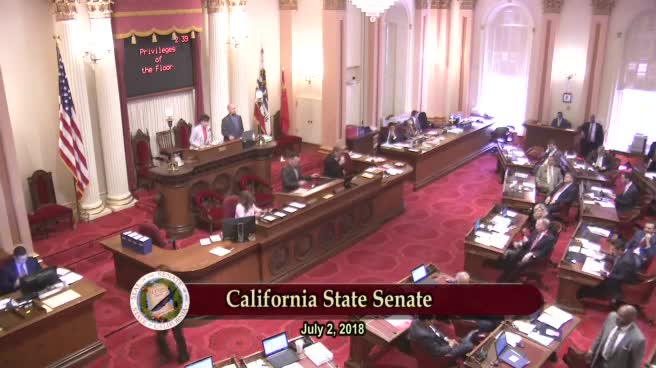 1MIN
Senate Floor
 15MIN
Assembly Standing Committee on Judiciary
 1MIN
Senate Floor
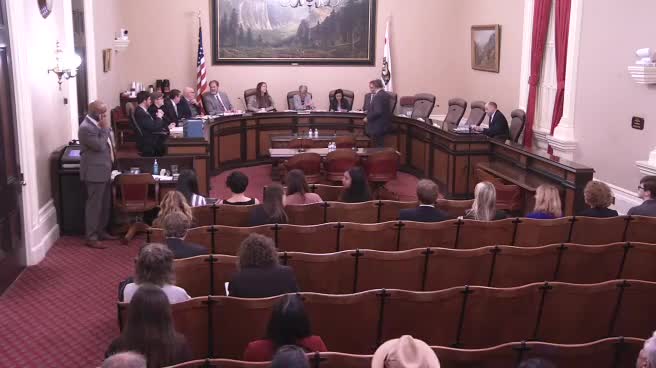 20MIN
Senate Standing Committee on Judiciary
Bill Author