SB 1072: Regional Climate Collaborative Program: technical assistance.
- Session Year: 2017-2018
- House: Senate
- Latest Version Date: 2018-09-13
Existing law creates the Transformative Climate Communities Program, which is administered by the Strategic Growth Council. Existing law requires the council to award competitive grants to specified eligible entities for the development and implementation of neighborhood-level transformative climate community plans that include greenhouse gas emissions reduction projects that provide local economic, environmental, and health benefits to disadvantaged communities, as defined. Existing law requires the California Environmental Protection Agency to provide assistance in performing outreach to disadvantaged communities and assessing the environmental justice benefits of project awards.
The Administrative Procedure Act generally governs the procedure for the adoption, amendment, or repeal of regulations by state agencies and for the review of those regulatory actions by the Office of Administrative Law.
This bill, until October 1, 2029, would establish a regional climate collaborative program, to be administered by the council, to assist under-resourced communities, as defined, in a region to access statewide public and other grant moneys, as specified, for climate change mitigation and adaptation projects by establishing collaboratives, as specified. The bill would authorize the council to award specified annual grants to collaboratives for specified activities.
This bill, by July 1, 2020, would require the council to develop technical assistance guidelines that a state agency would be authorized to use in delivering its technical assistance resources or in developing additional technical assistance policies, standards, or guidelines, as specified.
This bill would exempt the above-described provisions from the Administrative Procedure Act.
Existing law creates the Transformative Climate Communities Program, which is administered by the Strategic Growth Council. Existing law requires the council to award competitive grants to specified eligible entities for the development and implementation of neighborhood-level transformative climate community plans that include greenhouse gas emissions reduction projects that provide local economic, environmental, and health benefits to disadvantaged communities, as defined. Existing law requires the California Environmental Protection Agency to provide assistance in performing outreach to disadvantaged communities and assessing the environmental justice benefits of project awards.
The Administrative Procedure Act generally governs the procedure for the adoption, amendment, or repeal of regulations by state agencies and for the review of those regulatory actions by the Office of Administrative Law.
This bill, until October 1, 2029, would establish a regional climate collaborative program, to be administered by the council, to assist under-resourced communities, as defined, in a region to access statewide public and other grant moneys, as specified, for climate change mitigation and adaptation projects by establishing collaboratives, as specified. The bill would authorize the council to award specified annual grants to collaboratives for specified activities.
This bill also would require a state agency or department that administers a funding program that contains a targeted mechanism for funding under-resourced communities to develop policies and standards for technical assistance, as defined, according to specified guidelines developed and adopted by the council.This bill, by July 1, 2020, would require the council to develop technical assistance guidelines that a state agency would be authorized to use in delivering its technical assistance resources or in developing additional technical assistance policies, standards, or guidelines, as specified.
This bill would exempt the above-described provisions from the Administrative Procedure Act.
Existing law creates the Transformative Climate Communities Program, which is administered by the Strategic Growth Council. Existing law requires the council to award competitive grants to specified eligible entities for the development and implementation of neighborhood-level transformative climate community plans that include greenhouse gas emissions reduction projects that provide local economic, environmental, and health benefits to disadvantaged communities, as defined. Existing law requires the California Environmental Protection Agency to provide assistance in performing outreach to disadvantaged communities and assessing the environmental justice benefits of project awards.
This bill bill, until October 1, 2029, would establish a regional climate collaborative program, to be administered by the council, to assist under-resourced communities, as defined, in a region to access statewide public and other grant moneys, as specified, for climate mitigation and adaptation projects by establishing collaboratives, as specified. The bill would authorize the council to award specified grants to collaboratives for specified activities.
This bill also would require a state agency or department that administers a funding program that contains a targeted mechanism for funding under-resourced communities to develop policies and standards for technical assistance, as defined, according to specified guidelines developed and adopted by the council.
Existing law creates the Transformative Climate Communities Program, which is administered by the Strategic Growth Council. Existing law requires the council to award competitive grants to specified eligible entities for the development and implementation of neighborhood-level transformative climate community plans that include greenhouse gas emissions reduction projects that provide local economic, environmental, and health benefits to disadvantaged communities, as defined. Existing law requires the California Environmental Protection Agency to provide assistance in performing outreach to disadvantaged communities and assessing the environmental justice benefits of project awards.
This bill would establish a regional climate collaborative program, to be administered by the council, to assist under-resourced communities, as defined, in a region to access statewide public and other grant moneys, as specified, for climate mitigation and adaptation projects by establishing collaboratives, as specified. The bill would authorize the council to award specified grants to collaboratives for specified activities.
This bill also would require a state agency or department that administers a funding program that contains a targeted mechanism for funding under-resourced communities to develop policies and standards for technical assistance, as defined, according to specified guidelines developed and adopted by the council.
Existing law creates the Transformative Climate Communities Program, which is administered by the Strategic Growth Council. Existing law requires the council to award competitive grants to specified eligible entities for the development and implementation of neighborhood-level transformative climate community plans that include greenhouse gas emissions reduction projects that provide local economic, environmental, and health benefits to disadvantaged communities, as defined. Existing law requires the California Environmental Protection Agency to provide assistance in performing outreach to disadvantaged communities and assessing the environmental justice benefits of project awards.
The California Global Warming Solutions Act of 2006 designates the State Air Resources Board as the state agency charged with monitoring and regulating sources of emissions of greenhouse gases. The act authorizes the state board to include the use of market-based compliance mechanisms. Existing law requires all moneys, except for fines and penalties, collected by the state board from a market-based compliance mechanism to be deposited in the Greenhouse Gas Reduction Fund and to be available upon appropriation.This bill would establish the Regional Climate Collaborative Program, a regional climate collaborative program, to be administered by the council, to assist under-resourced communities communities, as defined, in a region to access statewide public and other grant moneys, as specified, for climate mitigation and adaptation projects by establishing regional climate collaboratives, as specified. The bill would authorize the council to award specified grants to collaboratives for specified activities. The bill would authorize moneys from the Greenhouse Gas Reduction Fund to be used to implement the program.
This bill also would require a state agency or department that administers a funding program that contains a targeted mechanism for funding under-resourced communities to develop policies and standards for technical assistance, as defined, according to specified guidelines developed and adopted by the council.
Existing law creates the Transformative Climate Communities Program, which is administered by the Strategic Growth Council. Existing law requires the council to award competitive grants to specified eligible entities for the development and implementation of neighborhood-level transformative climate community plans that include greenhouse gas emissions reduction projects that provide local economic, environmental, and health benefits to disadvantaged communities, as defined. Existing law requires the California Environmental Protection Agency to provide assistance in performing outreach to disadvantaged communities and assessing the environmental justice benefits of project awards.
The California Global Warming Solutions Act of 2006 designates the State Air Resources Board as the state agency charged with monitoring and regulating sources of emissions of greenhouse gases. The act authorizes the state board to include the use of market-based compliance mechanisms. Existing law requires all moneys, except for fines and penalties, collected by the state board from a market-based compliance mechanism to be deposited in the Greenhouse Gas Reduction Fund and to be available upon appropriation.
This bill would establish the Regional Climate Collaborative Program, to be administered by the council, to assist under-resourced communities to access statewide public and other grant moneys, as specified, by establishing regional climate collaboratives, as specified. The bill would authorize the council to award specified grants to collaboratives for specified activities. The bill would authorize moneys from the Greenhouse Gas Reduction Fund to be used to implement the program.
This bill also would require a state agency or department that administers a funding program that contains a targeted mechanism for funding under-resourced communities to develop policies and standards for technical assistance, as defined, according to specified guidelines developed and adopted by the council.
The Legislature finds and declares all of the following:
(a)The state is creating a national model for prioritizing investments in communities most impacted by pollution and poverty and most vulnerable to the effects of climate change.
(b)The state recognizes that under-resourced communities, rural, urban, and suburban, have a large potential to contribute to the states goals of reducing greenhouse gas emissions, transitioning away from fossil fuels, and reaping economic development and jobs through renewable energy, energy efficiency, and other sustainable infrastructure investments.
(c)As the state pursues multiple strategies to meet its greenhouse gas emissions reduction goals while advancing social equity, it becomes increasingly necessary to coordinate and align technical assistance resources to ensure that every community has the same opportunity to compete for the funding that is available to meet those goals.
(d)Local municipalities, nonprofits, and other eligible entities in under-resourced communities often lack the resources, staff capacity, implementation experience, and technical expertise to apply for and secure competitive statewide targeted grant funding.
(e)In managing programs that allocate funding to under-resourced communities, state agencies and departments often lack the budget, staff, or guidance to provide the technical assistance necessary to support funding applications from under-resourced communities. Under-resourced communities should have access to capacity building and technical assistance to develop competitive funding proposals that will maximize multiple benefits, including climate adaptation benefits, for each dollar requested.
(f)Some regions and jurisdictions have existing programs and organizations in place to build local capacity, leadership, and technical expertise for multibenefit community projects, and any additional investments should support and leverage existing efforts to be effective and efficient.
SEC. 2.Part 3.6 (commencing with Section 71130) is added to Division 34 of the Public Resources Code, to read:3.6.Regional Climate Collaborative Program71130.For purposes of this part, the following terms have the following meanings:
(a)Capacity building is the process of strengthening local coordination, leadership, knowledge, skills, expertise, and access to resources in under-resourced communities with the goal of helping to develop or increase the ability of that community to independently compete for grants and implement projects in the future. Capacity building activities include, but are not limited to, identifying and planning for needed climate change mitigation and adaptation projects in a given region and identifying the tools and resources needed to successfully access, apply for, and receive grant funding.
(b)Collaborative means a coordinated body of regional stakeholder groups that are located in, serve, and represent the needs of the under-resourced communities within that region and that provide capacity building to those under-resourced communities within its region to access statewide public and other grant moneys for climate change mitigation and adaptation projects that maximize the benefits for the region.
(c)Council means the Strategic Growth Council.
(d)Nonprofit organization means a nonprofit corporation qualified to do business in the state and qualified under Section 501(c)(3) of the Internal Revenue Code.
(e)Stakeholder includes, but is not limited to, community-based organizations, nonprofits, businesses, faith-based organizations, interested individuals, elected officials, and local government agencies.
(f)Technical assistance means the process of providing the necessary education and resources for climate change mitigation and adaptation projects for any of the following:
(1)Project development.
(2)Grant development and writing for state and federal grant programs.
(3)The successful and appropriate expenditure of grant moneys for the successful completion of climate change mitigation and adaptation projects.
(4)Post-application and project implementation assistance.
(g)Under-resourced community means a community identified pursuant to Section 39711 of the Health and Safety Code, subdivision (d) of Section 39713 of the Health and Safety Code, or subdivision (g) of Section 75005.
71131.(a)A regional climate collaborative program is hereby established to be administered by the council to assist under-resourced communities within a region to access statewide public and other grant moneys.
(b)The council shall do all of the following in identifying eligible under-resourced communities and in selecting collaboratives:
(1)Adopt program guidelines that establish criteria for the selection of communities eligible for assistance in developing a collaborative. The program guidelines shall prioritize statewide geographic diversity and shall consider the regions proportion of under-resourced communities and the regions previous success in receiving competitive state climate change mitigation and adaptation moneys.
(2)Post the guidelines outlining the criteria on the councils Internet Web site and solicit public comment.
(3)Hold at least one public hearing before selecting a community.
(4)Allow at least three months between the solicitation announcement and the selection of a collaborative by the council.
(5)Perform at least three outreach activities between the solicitation announcement and the selection of a collaborative by the council to provide information and assistance to a potential collaborative. The outreach activities shall be made available using advanced forms of technology to the extent possible.
(6)Establish collaboratives a minimum of two times over the course of the program established pursuant to this section.
(c)After selecting communities for collaboratives, the council shall award annual grants as moneys are appropriated by the Legislature to the council for the purposes of this part.
(d)Eligible applicants for a collaborative include, but need not be limited to, any of the following:
(1)Community-based organizations.
(2)Nonprofits and foundations.
(3)Small businesses.
(4)Local government agencies.
(5)Joint powers authorities.
(6)Tribal governments.
(7)Other organizations with a history of providing community-based outreach and technical assistance.
(e)Eligible applicants shall form a regional collaborative stakeholder structure and shall collectively submit one application based on a shared vision. With the application, the applicants shall collectively submit a memorandum of understanding that describes the governance and organization of the collaborative stakeholder structure.
(f)In selecting a collaborative, the council shall give priority to proposals that demonstrate strong and diverse partnerships, including with community-based organizations and other stakeholder groups.
(g)After being selected by the council, a collaborative shall provide capacity building services to assist in building the community-driven leadership, knowledge, skills, experience, and resources to identify and access public funding for climate change mitigation and adaptation projects within the under-resourced community. Where feasible, a collaborative shall leverage, complement, and build on existing regional efforts and resources for capacity building and technical assistance. Except if the council, in consultation with a collaborative, determines that an activity is unnecessary, a collaborative shall conduct at least all of the following activities for the region it serves:
(1)Conduct outreach and build awareness of competitive grant programs.
(2)Convene stakeholders to discuss community needs regarding potential climate change mitigation and adaptation projects eligible for statewide competitive grant programs with specific allocations for under-resourced communities.
(3)Develop community and project plans, including climate action plans, demonstrating local needs and identifying multiple-benefit projects for implementation.
(4)Support the development of partnerships between stakeholders and potential public and private funding sources.
(5)Provide policy, program, and technical advice to stakeholders to develop and align multibenefit projects with potential funding sources.
(6)Serve as an intermediary between community stakeholders and technical assistance programs within relevant agencies and coordinate scientific and technical support from outside experts.
(7)Coordinate and implement assistance and training to stakeholders in grant application development, project management, implementation, and monitoring.
(8)Assist in the development of local job training and anti-displacement programs and policies.
(h)Each collaborative shall select a managing stakeholder that can demonstrate the organizational capacity to complete projects and the financial capacity to receive and be accountable for moneys provided pursuant to this part. A managing stakeholder may include, but need not be limited to, a local government agency, community-based organization, foundation, small business, joint powers authority, tribal government, or other organization with a history of providing community-based outreach and technical assistance.
(i)The council shall provide advance payments of grant awards, over a period of not more than three years, to recipients to initiate and implement the collaboratives in a timely manner. In consultation with the Department of Finance, the council shall adopt guidelines imposing additional requirements relating to the provision of advance payments and the use of the advance payments by the grant recipient to ensure that the moneys are used properly.
(j)(1)Collaboratives shall submit to the council an annual report that includes, but need not be limited to, all of the following:
(A)The members of the collaborative.
(B)Populations served.
(C)An outline of all the activities conducted, including, but not limited to, all of the following:
(i)Technical assistance.
(ii)Capacity building.
(iii)Project and grant development, application, and completion.
(D)Meetings and actions taken by the collaborative.
(E)An accounting of the administration of and expenditures made by the collaborative.
(F)The outcome of each activity, including, but not limited to, all of the following:
(i)The efficacy of capacity building within the region.
(ii)Technical assistance provided.
(iii)Success of grants applied for.
(iv)Projects commenced and completed.
(2)(A)The council shall post the annual reports on its Internet Web site and provide the reports to the relevant policy and fiscal committees of the Legislature.
(B)A report to be submitted pursuant to this subdivision shall be submitted in compliance with Section 9795 of the Government Code.
(k)(1)By October 1, 2019, the council shall adopt guidelines implementing this section.
(2)The Administrative Procedure Act (Chapter 3.5 (commencing with Section 11340) of Part 1 of Division 3 of Title 2 of the Government Code) shall not apply to this section.
(l)This section shall become inoperative on October 1, 2029, and, as of January 1, 2030, is repealed.
71132.(a)By July 1, 2020, the council shall develop technical assistance guidelines that a state agency may use in delivering its technical assistance resources or in developing additional internal technical assistance policies, standards, or guidelines specific to the agencys programs. The technical assistance guidelines may support established technical assistance programs and build upon best practices. The councils technical assistance guidelines shall include, but need not be limited to, all of the following:
(1)Procedures and standards for state agencies providing direct technical assistance to under-resourced communities.
(2)Measures to provide efficient technical assistance across multiple programs, where applicable.
(b)The council shall consult with relevant state entities during the development of the technical assistance guidelines required pursuant to subdivision (a).
(c)The technical assistance guidelines required pursuant to subdivision (a) shall identify grants that would benefit from technical assistance policies, standards, or guidelines.
(d)The Administrative Procedure Act (Chapter 3.5 (commencing with Section 11340) of Part 1 of Division 3 of Title 2 of the Government Code) shall not apply to this section.
The Legislature finds and declares all of the following:
(a)The state is creating a national model for prioritizing investments in communities most impacted by pollution and poverty. poverty and most vulnerable to the effects of climate change.
(b)The state recognizes that under-resourced communities, rural, urban, and suburban, have a large potential to contribute to the states goals of reducing greenhouse gas emissions, transitioning away from fossil fuels, and reaping economic development and jobs through renewable energy, energy efficiency, and other sustainable infrastructure investments.
(c)As the state pursues multiple strategies to meet its greenhouse gas emissions reduction goals while advancing social equity, it becomes increasingly necessary to coordinate and align technical assistance resources to ensure that every community has the same opportunity to compete for the funding that is available to meet those goals.
(d)Local municipalities, nonprofits, and other eligible entities in under-resourced communities often lack the resources, staff capacity, implementation experience, and technical expertise to apply for and secure competitive statewide targeted grant funding.
(e)In managing programs that allocate funding to under-resourced communities, state agencies and departments often lack the budget, staff, or guidance to provide the technical assistance necessary to support funding applications from under-resourced communities. Under-resourced communities should have access to capacity building and technical assistance to develop competitive funding proposals that will maximize multiple benefits, including climate adaptation benefits, for each dollar requested.
(f)Some regions and jurisdictions have existing programs and organizations in place to build local capacity, leadership, and technical expertise for multibenefit community projects, and any additional investments should support and leverage existing efforts to be effective and efficient.
SEC. 2.Part 3.6 (commencing with Section 71130) is added to Division 34 of the Public Resources Code, to read:3.6.Regional Climate Collaborative Program71130.For purposes of this part, the following terms have the following meanings:
(a)Capacity building is the process of strengthening local coordination, leadership, knowledge, skills, expertise, and resources to better develop applications for and receive grant funding for climate change mitigation and adaptation-related projects that serve the communities within that region, and helping to develop or increase the ability of that community to compete for grants and conduct projects in the future on its own.(b)Collaborative means a coordinated body of regional stakeholder groups that are located in, serve, and represent the needs of the under-resourced communities within that region.(a)Capacity building is the process of strengthening local coordination, leadership, knowledge, skills, expertise, and access to resources in under-resourced communities with the goal of helping to develop or increase the ability of that community to independently compete for grants and implement projects in the future. Capacity building activities include, but are not limited to, identifying and planning for needed climate change mitigation and adaptation projects in a given region and identifying the tools and resources needed to successfully access, apply for, and receive grant funding.
(b)Collaborative means a coordinated body of regional stakeholder groups that are located in, serve, and represent the needs of the under-resourced communities within that region and that provide capacity building to those under-resourced communities within its region to access statewide public and other grant moneys for climate change mitigation and adaptation projects that maximize the benefits for the region.
(c)Council means the Strategic Growth Council.
(d)Nonprofit organization means a nonprofit corporation qualified to do business in the state and qualified under Section 501(c)(3) of the Internal Revenue Code.
(e)Stakeholder includes, but is not limited to, community-based organizations, nonprofits, businesses, faith-based organizations, interested individuals, elected officials, and local government agencies.
(f)Technical assistance means the process of providing the necessary education and resources for climate change mitigation and adaptation projects for any of the following:
(1)Project development.
(2)Grant development and writing for state and federal grant programs.
(3)The successful and appropriate expenditure of grant moneys for the successful completion of climate change mitigation and adaptation projects.
(4)Postapplication Post-application and project implementation assistance.
(g)Under-resourced community means a community identified pursuant to Section 39711 of the Health and Safety Code Code, subdivision (d) of Section 39713 of the Health and Safety Code, or subdivision (g) of Section 75005.
71131.(a)A regional climate collaborative program is hereby established to be administered by the council to assist under-resourced communities within a region to access statewide public and other grant moneys. A collaborative is a regional partnership that provides capacity building to those under-resourced communities within its region to access statewide public and other grant moneys for climate mitigation and adaptation projects that maximize the benefits for the region.
(b)The council shall do all of the following in selecting communities in the state to place a collaborative: identifying eligible under-resourced communities and in selecting collaboratives:
(1)Adopt program guidelines that establish criteria for the selection of communities eligible for assistance in developing a collaborative. The program guidelines shall prioritize statewide geographic diversity and shall consider the regions proportion of under-resourced communities and the regions previous success in receiving competitive state climate change mitigation and adaptation moneys.
(2)Post the guidelines outlining the criteria on the councils Internet Web site and solicit public comment.
(3)Hold at least one public hearing before selecting a collaborative. community.
(4)Allow at least three months between the solicitation announcement and the selection of a collaborative by the council.
(5)Perform at least three outreach activities between the solicitation announcement and the selection of a collaborative by the council to provide information and assistance to a potential collaborative. The outreach activities shall be made available using advanced forms of technology to the extent possible.
(6)Establish collaboratives a minimum of two times over the course of the program established pursuant to this section.
(c)After selecting communities for collaboratives, the council shall award annual grants as moneys are appropriated by the Legislature to the council for the purposes of this part.
(d)Eligible applicants for a collaborative include, but need not be limited to, any of the following:
(1)Community-based organizations.
(2)Nonprofits.(2)Nonprofits and foundations.
(3)Small businesses.
(4)Local government agencies.
(5)Joint powers authorities.
(6)Tribal governments.
(7)Other organizations with a history of providing community-based outreach and technical assistance.
(e)Eligible applicants shall form a regional collaborative stakeholder structure and shall collectively submit one application based on a shared vision. With the application, the applicants shall collectively submit a memorandum of understanding that describes the governance and organization of the collaborative stakeholder structure.
(f)In selecting a collaborative, the council shall give priority to proposals that demonstrate strong and diverse partnerships, including with community-based organizations and other stakeholder groups.
(g)After being selected by the council, a collaborative shall provide capacity-building services to assist in building the community-driven leadership, knowledge, skills, experience, and resources to access public funding for sustainable and equitable infrastructure investments. Except if the council, in consultation with a collaborative, determines that an activity is unnecessary and not required to be conducted, a collaborative, for the region it serves, shall conduct at least all of the following activities:(g)After being selected by the council, a collaborative shall provide capacity building services to assist in building the community-driven leadership, knowledge, skills, experience, and resources to identify and access public funding for climate change mitigation and adaptation projects within the under-resourced community. Where feasible, a collaborative shall leverage, complement, and build on existing regional efforts and resources for capacity building and technical assistance. Except if the council, in consultation with a collaborative, determines that an activity is unnecessary, a collaborative shall conduct at least all of the following activities for the region it serves:
(1)Conduct outreach and spread build awareness of statewide competitive grant program resources to stakeholders. programs.
(2)Convene stakeholders to discuss community needs regarding potential climate change mitigation and adaptation projects and activities eligible for statewide competitive grant programs with specific allocations for under-resourced communities.
(3)Develop community and project plans, including climate action plans, demonstrating local needs and identifying multiple-benefit projects for implementation.
(4)Support the development of partnerships between stakeholders and potential public and private funding sources.
(5)Provide policy, program, and technical advice to stakeholders to develop and align multibenefit projects with local, statewide, and federal competitive grant programs. potential funding sources.
(6)Serve as an intermediary between community stakeholders and technical assistance programs within relevant agencies and coordinate scientific and technical support from outside experts.
(7)Coordinate and implement assistance and training to stakeholders in grant application development, project management, implementation, and monitoring.
(8)Assist in the development of local job training and anti-displacement programs and policies. Where feasible, a collaborative will leverage, complement, and build on existing regional efforts and resources for capacity building and technical assistance.
(h)Each collaborative shall select a managing stakeholder that can demonstrate the organizational capacity to complete projects and the financial capacity to receive and be accountable for moneys provided pursuant to this part. A managing stakeholder may include, but need not be limited to, a local government agency, community-based organization, foundation, small business, joint powers authority, tribal government, or other organization with a history of providing community-based outreach and technical assistance.
(i)(1)Grants awarded pursuant to this part shall provide program moneys directly proportionate to the activities for which the grants are awarded and the needs of the region in which the activities will be carried out. The aggregate amount of grant moneys awarded may be distributed in a manner to promote geographic investments throughout all of the regions of the state and to address the needs of the most under-resourced communities.(2)Before awarding a grant pursuant to this subdivision, the council shall develop and adopt a regulation for guidelines and selection criteria for program implementation. In adopting guidelines, the council shall solicit public comments and conduct outreach to under-resourced communities to encourage comments on the draft guidelines.(3)(i)The council shall provide advance payments of grant awards, over a period of not more than three years, to recipients to initiate and implement the collaboratives in a timely manner. In consultation with the Department of Finance, the council shall adopt guidelines imposing additional requirements relating to the provision of advance payments and the use of the advance payments by the grant recipient to ensure that the moneys are used properly.
(j)(1)Collaboratives shall submit to the council an annual report that includes, but need not be limited to, all of the following:
(A)The members of the collaborative.
(B)Populations served.
(C)An outline of all the activities conducted, including, but not limited to, all of the following:
(i)Technical assistance.
(ii)Capacity building.
(iii)Project and grant development, application, and completion.
(D)Meetings and actions taken by the collaborative.
(E)An accounting of the administration of and expenditures made by the collaborative.
(F)The outcome of each activity, including, but not limited to, all of the following:
(i)The efficacy of capacity building within the region.
(ii)Technical assistance provided.
(iii)Success of grants applied for.
(iv)Projects commenced and completed.
(2)(A)The council shall post the annual reports on its Internet Web site and provide the reports to the relevant policy and fiscal committees of the Legislature.
(B)A report to be submitted pursuant to this subdivision shall be submitted in compliance with Section 9795 of the Government Code.
(k)(1)By October 1, 2019, the council shall adopt guidelines implementing this section.
(2)The Administrative Procedure Act (Chapter 3.5 (commencing with Section 11340) of Part 1 of Division 3 of Title 2 of the Government Code) shall not apply to this section.
(l)This section shall become inoperative on October 1, 2029, and, as of January 1, 2030, is repealed.
71132.(a)(1)A state agency or department that administers a funding program that contains a targeted mechanism for funding under-resourced communities shall develop technical assistance policies and standards, with activities to be funded with a minimum of 3 percent, not to exceed two hundred fifty thousand dollars ($250,000) annually, of its grant program funding, according to the guidelines developed and adopted by the council pursuant to subdivision (b).(2)A state agency or department that administers funding programs with allocations for under-resourced communities shall develop and adopt technical assistance guidelines consistent with the guidelines developed and adopted by the council pursuant to subdivision (b) after holding at least one public meeting to consider public comments.(b)The council shall develop technical assistance guidelines that a state agency shall use in developing its internal technical assistance programs and policies. The technical assistance guidelines may support established technical assistance programs and build upon best practices. The councils technical assistance guidelines shall include, but need not be limited to, all of the following:(1)Procedures and minimum standards for state agencies providing direct technical assistance to communities and collaboratives.(2)Measures to streamline and align grant application requirements, where practicable, and provide efficient technical assistance across multiple programs, where applicable.(3)Requirements for relevant state agencies and departments to annually report to the council on technical assistance activities, including identified quantitative performance measures and standards for sharing best practices with the council, across state agencies, and nationally.(c)For the purposes of this section, state agencies and departments that administer funding programs with allocations for under-resourced communities include, but are not limited to, all of the following:(1)The council.(2)Natural Resources Agency.(3)Department of Conservation.(4)Department of Forestry and Fire Protection.(5)Department of Transportation.(6)State Energy Resources Conservation and Development Commission.(7)State Air Resources Board.(8)Department of Water Resources.(9)State Water Resources Control Board.(10)Department of Resources Recycling and Recovery.(d)Activities conducted by state agencies and departments in implementing technical assistance for under-resourced communities and collaboratives pursuant to this section may include, but need not be limited to, any of the following:(1)Outreach and awareness of the state agencys and departments competitive grant program resources.(2)Direct technical assistance to applicants in the development of eligible projects and the completion of grant applications.(3)Support to successful applicants in project management, implementation, and evaluation.(4)Engagement with collaboratives to share best practices, outreach materials, and policy knowledge and to receive referrals.71132.(a)By July 1, 2020, the council shall develop technical assistance guidelines that a state agency may use in delivering its technical assistance resources or in developing additional internal technical assistance policies, standards, or guidelines specific to the agencys programs. The technical assistance guidelines may support established technical assistance programs and build upon best practices. The councils technical assistance guidelines shall include, but need not be limited to, all of the following:
(1)Procedures and standards for state agencies providing direct technical assistance to under-resourced communities.
(2)Measures to provide efficient technical assistance across multiple programs, where applicable.
(b)The council shall consult with relevant state entities during the development of the technical assistance guidelines required pursuant to subdivision (a).
(c)The technical assistance guidelines required pursuant to subdivision (a) shall identify grants that would benefit from technical assistance policies, standards, or guidelines.
(d)The Administrative Procedure Act (Chapter 3.5 (commencing with Section 11340) of Part 1 of Division 3 of Title 2 of the Government Code) shall not apply to this section.
The Legislature finds and declares all of the following:
(a)The state is creating a national model for prioritizing investments in communities most impacted by pollution and poverty.
(b)The state recognizes that under-resourced communities, rural, urban, and suburban, have a large potential to contribute to the states goals of reducing greenhouse gas emissions, transitioning away from fossil fuels, and reaping economic development and jobs through renewable energy, energy efficiency, and other sustainable infrastructure investments.
(c)As the state pursues multiple strategies to meet its greenhouse gas emissions reduction goals while advancing social equity, it becomes necessary to coordinate and align technical assistance resources to ensure that every community has the same opportunity to compete for the funding that is available to meet those goals.
(d)Local municipalities, nonprofits, and other eligible entities in under-resourced communities often lack the resources, staff capacity, implementation experience, and technical expertise to apply for and secure competitive statewide targeted grant funding.
(e)In managing programs that allocate funding to under-resourced communities, state agencies and departments often lack the budget, staff, or guidance to provide the technical assistance necessary to support funding applications from under-resourced communities. Under-resourced communities should have access to capacity building and technical assistance to develop competitive funding proposals that will maximize multiple benefits, including climate adaptation benefits, for each dollar requested.
(f)Some regions and jurisdictions have existing programs and organizations in place to build local capacity, leadership, and technical expertise for multibenefit community projects, and any additional investments should support and leverage existing efforts to be effective and efficient.
SEC. 2.Part 3.6 (commencing with Section 71130) is added to Division 34 of the Public Resources Code, to read:3.6.Regional Climate Collaborative Program71130.For purposes of this part, the following terms have the following meanings:
(a)Capacity building is the process of strengthening local coordination, leadership, knowledge, skills, expertise, and resources, resources to better develop applications for and receive grant funding for climate change mitigation and adaptation-related projects that serve the communities within that region, and helping to develop or increase the ability of that community to compete for grants and conduct projects in the future on its own.
(b)(1)Collaborative means a coordinated body of regional stakeholder groups that are located in, serve, and represent the needs of the under-resourced communities within that region.
(2)For the purpose of the part, each collaborative shall select a managing stakeholder, such as a local government, community-based organization, small business, local government agency, joint powers authority, tribal government, or other organization with a history of providing community-based outreach and technical assistance, that can demonstrate the organizational capacity to complete projects and the financial capacity to receive and be accountable for funds provided pursuant to the chapter.(c)Council means the Strategic Growth Council.
(d)Nonprofit organization means a nonprofit corporation qualified to do business in the state and qualified under Section 501(c)(3) of the Internal Revenue Code.
(e)Stakeholder includes, among others, but is not limited to, community-based organizations, nonprofits, businesses, faith-based organizations, interested individuals, elected officials, and local government agencies.
(f)Technical assistance means the process of providing the necessary education and resources for climate mitigation and adaptation projects for any of the following:
(1)Project development.
(2)Grant development and writing for state and federal grant programs.
(3)The successful and appropriate expenditure of grant funds moneys for the successful completion of climate mitigation and adaptation projects.
(4)Postapplication and implementation assistance.
(g)Under-resourced community means a community identified pursuant to Section 39711 of the Health and Safety Code or subdivision (g) of Section 75005.
71131.(a)A regional climate collaborative program is hereby established to be administered by the council to assist under-resourced communities within a region to access statewide public and other grant moneys. A collaborative is a regional partnership that provides capacity building to those under-resourced communities within its region to access statewide public and other grant moneys for climate mitigation and adaptation projects that maximize the benefits for the region.
(b)The council shall do all of the following in selecting communities in the state to place a collaborative:
(1)Adopt program guidelines that establish criteria for the selection of communities eligible for assistance in developing a collaborative.
(2)Post the guidelines outlining the criteria on the councils Internet Web site and solicit public comment.
(3)Hold at least one public hearing before selecting a collaborative.
(4)Allow at least three months between the solicitation announcement and the selection of a collaborative by the council.
(5)Perform at least three outreach activities between the solicitation announcement and the selection of a collaborative by the council to provide information and assistance to a potential collaborative. The outreach activities shall be made available using advanced forms of technology to the extent possible.
(6)Establish collaboratives a minimum of two times over the course of the program established pursuant to this section.
(c)After selecting communities for collaboratives, the council shall award annual grants as moneys are appropriated by the Legislature to the council for the purposes of this part.
(d)Eligible applicants for a collaborative include, but need not be limited to, any of the following:
(1)Community-based organizations.
(2)Nonprofits.
(3)Small businesses.
(4)Local government agencies.
(5)Joint powers authorities.
(6)Tribal governments.
(7)Other organizations with a history of providing community-based outreach and technical assistance.
(e)Eligible applicants shall form a regional collaborative stakeholder structure and shall collectively submit one application based on a shared vision. With the application, the applicants shall collectively submit a memorandum of understanding that describes the governance and organization of the collaborative stakeholder structure.
(f)In selecting a collaborative, the council shall give priority to proposals that demonstrate strong and diverse partnerships, including with community-based organizations and other stakeholder groups.
(g)After being selected by the council, a collaborative shall provide capacity-building services to assist in building the community-driven leadership, knowledge, skills, experience, and resources to access public funding for sustainable and equitable infrastructure investments. A collaborative Except if the council, in consultation with a collaborative, determines that an activity is unnecessary and not required to be conducted, a collaborative, for the region it serves, shall conduct at least all of the following activities, except the council may determine that an activity is unnecessary, and therefore not required to be conducted, for the region served by the collaborative: activities:
(1)Conduct outreach and spread awareness of statewide competitive grant program resources to stakeholders.
(2)Convene stakeholders to discuss community needs regarding potential climate projects and activities eligible for statewide competitive grant programs with specific allocations for under-resourced communities.
(3)Develop community and project plans, including climate action plans, demonstrating local needs and identifying multiple-benefit projects for implementation.
(4)Support the development of partnerships between stakeholders and potential public and private funding sources.
(5)Provide policy, program, and technical advice to stakeholders to develop and align multibenefit projects with local, statewide, and federal competitive grant programs.
(6)Serve as an intermediary between community stakeholders and technical assistance programs within relevant agencies and coordinate scientific and technical support from outside experts.
(7)Coordinate and implement assistance and training to stakeholders in grant application development, project management, implementation, and monitoring.
(8)Assist in the development of local job training and anti-displacement programs and policies. Where feasible, a collaborative will leverage, complement, and build on existing regional efforts and resources for capacity building and technical assistance.
(h)Each collaborative shall select a managing stakeholder that can demonstrate the organizational capacity to complete projects and the financial capacity to receive and be accountable for moneys provided pursuant to this part. A managing stakeholder may include, but need not be limited to, a local government agency, community-based organization, small business, joint powers authority, tribal government, or other organization with a history of providing community-based outreach and technical assistance.
(h)(i)(1)Grants awarded pursuant to this part shall provide program moneys directly proportionate to the activities for which the grants are awarded and the needs of the region in which the activities will be carried out. The aggregate amount of grant moneys awarded should may be distributed in a manner to promote geographic investments throughout all of the regions of the state and to address the needs of the most under-resourced communities.
(2)Before awarding a grant pursuant to this subdivision, the council shall develop and adopt a regulation for guidelines and selection criteria for program implementation. In adopting guidelines, the council shall solicit public comments and conduct outreach to under-resourced communities to encourage comments on the draft guidelines.
(3)The council shall provide advance payments of grant awards, over a period of not more than three years, to recipients to initiate and implement the collaboratives in a timely manner. In consultation with the Department of Finance, the council shall adopt regulations guidelines imposing additional requirements relating to the provision of advance payments and the use of the advance payments by the grant recipient to ensure that the moneys are used properly.
(i)(j)(1)Collaboratives shall submit to the council an annual report that includes, but need not be limited to, all of the following:
(A)The members of the collaborative.
(B)Populations served.
(C)An outline of all the activities conducted, including, but not limited to, all of the following:
(i)Technical assistance.
(ii)Capacity building.
(iii)Project and grant development, application, and completion.
(D)Meetings and actions taken by the collaborative.
(E)An accounting of the administration of and expenditures made by the collaborative.
(F)The outcome of each activity, including, but not limited to, all of the following:
(i)The efficacy of capacity building within the region.
(ii)Technical assistance provided.
(iii)Success of grants applied for.
(iv)Projects commenced and completed.
(2)(A)The council shall post the annual reports on its Internet Web site and provide the reports to the relevant policy and fiscal committees of the Legislature.
(B)A report to be submitted pursuant to this subdivision shall be submitted in compliance with Section 9795 of the Government Code.
(j)(k)By July October 1, 2019, the council shall adopt regulations guidelines implementing this section.
(l)This section shall become inoperative on October 1, 2029, and, as of January 1, 2030, is repealed.
71132.(a)(1)A state agency or department that administers a funding program that contains a targeted mechanism for funding under-resourced communities shall develop technical assistance policies and standards, with activities to be funded with a minimum of 3 percent, not to exceed two hundred fifty thousand dollars ($250,000) annually, of its grant program funding, according to the guidelines developed and adopted by the council pursuant to subdivision (b).
(2)A state agency or department that administers funding programs with allocations for under-resourced communities shall develop and adopt technical assistance guidelines consistent with the guidelines developed and adopted by the council pursuant to subdivision (b) after holding at least one public meeting to consider public comments.
(b)The council shall develop technical assistance guidelines that a state agency shall use in developing its internal technical assistance programs and policies. The technical assistance guidelines should may support established technical assistance programs and build upon best practices. The councils technical assistance guidelines shall include, but need not be limited to, all of the following:
(1)Procedures and minimum standards for state agencies providing direct technical assistance to communities and collaboratives.
(2)Measures to streamline and align grant application requirements, where practicable, and provide efficient technical assistance across multiple programs, where applicable.
(3)Requirements for relevant state agencies and departments to annually report to the council on technical assistance activities, including identified quantitative performance measures and standards for sharing best practices with the council, across state agencies, and nationally.
(c)For the purposes of this section, state agencies and departments that administer funding programs with allocations for under-resourced communities include, but are not limited to, all of the following:
(1)The council.
(2)Natural Resources Agency.
(3)Department of Conservation.
(4)Department of Forestry and Fire Protection.
(5)Department of Transportation.
(6)State Energy Resources Conservation and Development Commission.
(7)State Air Resources Board.
(8)Department of Water Resources.
(9)State Water Resources Control Board.
(10)Department of Resources Recycling and Recovery.
(d)Activities conducted by state agencies and departments in implementing technical assistance for under-resourced communities and collaboratives pursuant to this section may include, but need not be limited to, any of the following:
(1)Outreach and awareness of the state agencys and departments competitive grant program resources.
(2)Direct technical assistance to applicants in the development of eligible projects and the completion of grant applications.
(3)Support to successful applicants in project management, implementation, and evaluation.
(4)Engagement with collaboratives to share best practices, outreach materials, and policy knowledge and to receive referrals.
The Legislature finds and declares all of the following:
(a)The state is creating a national model for prioritizing investments in communities most impacted by pollution and poverty.
(b)The state recognizes that under-resourced communities, rural, urban, and suburban, have a large potential to contribute to the states goals of reducing greenhouse gas emissions, transitioning away from fossil fuels, and reaping economic development and jobs through renewable energy, energy efficiency, and other sustainable infrastructure investments.
(c)As the state pursues multiple strategies to meet its greenhouse gas emissions reduction goals while advancing social equity, it becomes necessary to coordinate and align technical assistance resources to ensure that every community has the same opportunity to compete for the funding that is available to meet those goals.
(d)Local municipalities, nonprofits, and other eligible entities in under-resourced communities often lack the resources, staff capacity, implementation experience, and technical expertise to apply for and secure competitive statewide targeted grant funding.
(e)In managing programs that allocate funding to under-resourced communities, state agencies and departments often lack the budget, staff, or guidance to provide the technical assistance necessary to support funding applications from under-resourced communities. Under-resourced communities should have access to capacity building and technical assistance to develop competitive funding proposals that will maximize multiple benefits, including climate adaptation benefits, for each dollar requested.
(f)Some regions and jurisdictions have existing programs and organizations in place to build local capacity, leadership, and technical expertise for multibenefit community projects, and any additional investments should support and leverage existing efforts to be effective and efficient.
SEC. 2.Part 3.6 (commencing with Section 71130) is added to Division 34 of the Public Resources Code, to read:3.6.Regional Climate Collaborative Program71130.For purposes of this part, the following terms have the following meanings:
(a)Capacity building is the process of strengthening local coordination between multiple stakeholders within a region to better access and coordination, leadership, knowledge, skills, expertise, and resources, to better develop applications for and receive grant funding for climate change mitigation and adaptation-related projects that serve the communities within that region, and helping to develop or increase the ability of that community to compete for grants and conduct projects in the future on its own.
(b)(1)Collaborative means a coordinated body of regional stakeholder groups that are located in, serve, and represent the needs of the under-resourced communities within that region.
(2)For the purpose of the part, each collaborative shall have a least one local government from within the region select a managing stakeholder, such as a local government, community-based organization, small business, local government agency, joint powers authority, tribal government, or other organization with a history of providing community-based outreach and technical assistance, that can demonstrate the organizational capacity to complete projects and the financial capacity to receive and be accountable for funds provided pursuant to the chapter.
(c)Council means the Strategic Growth Council.
(d)Nonprofit organization means a nonprofit corporation qualified to do business in the state and qualified under Section 501(c)(3) of the Internal Revenue Code.
(e)Stakeholder includes, among others, community-based organizations, nonprofits, businesses, faith-based organizations, interested individuals, elected officials, and local government agencies.
(f)Technical assistance means the process of providing the necessary education and resources for climate mitigation and adaptation projects for any of the following:
(1)Project development.
(2)Grant development and writing for state and federal grant programs.
(3)The successful and appropriate expenditure of grant moneys for those projects. funds for the successful completion of climate mitigation and adaptation projects.
(4)Postapplication and implementation assistance.
(g)Under-resourced community means a community identified pursuant to Section 39711 of the Health and Safety Code or subdivision (g) of Section 75005.
71131.(a)A regional climate collaborative program is hereby established to be administered by the council to assist under-resourced communities within a region to access statewide public and other grant moneys. A collaborative, as defined in subdivision (b) of Section 71130, collaborative is a coordinated body of regional stakeholder groups regional partnership that provides capacity-building capacity building to those under-resourced communities within its region to access statewide public and other grant moneys for climate mitigation and adaptation projects that maximize the benefits for the region.
(b)The council shall do all of the following in selecting communities in the state to place a collaborative:
(1)Adopt a regulation program guidelines that establishes establish criteria for the selection of communities eligible for assistance in developing a collaborative.
(2)Post the regulation guidelines outlining the criteria on the councils Internet Web site and solicit public comment.
(3)Hold at least one public hearing before selecting a collaborative.
(c)After selecting communities for collaboratives, the council shall award annual grants as moneys are appropriated for by the Legislature to the council for the purposes of this part.
(d)Eligible applicants for a collaborative include, but need not be limited to, any of the following:
(1)Community-based organizations.
(2)Nonprofits.
(3)Small businesses.
(4)Local government agencies.
(5)Joint powers authorities.
(6)Tribal governments.
(7)Other organizations with a history of providing community-based outreach and technical assistance.
(e)Eligible applicants shall form a collaborative stakeholder structure and shall collectively submit one application based on a shared vision. With the application, the applicants shall collectively submit a memorandum of understanding that describes the governance and organization of the collaborative stakeholder structure.
(e)(f)In selecting a collaborative, the council shall give priority to proposals that demonstrate strong and diverse partnerships, including with community-based organizations and other stakeholder groups.
(f)(g)After being selected by the council, a collaborative shall provide capacity-building services to assist in building the community-driven leadership, knowledge, skills, experience, and resources to access public funding for sustainable and equitable infrastructure investments. A collaborative shall conduct, as needed for the region in which it serves, conduct at least all of the following activities: activities, except the council may determine that an activity is unnecessary, and therefore not required to be conducted, for the region served by the collaborative:
(1)Conduct outreach and spread awareness of statewide competitive grant program resources to stakeholders.
(2)Convene stakeholders to discuss community needs regarding potential climate projects and activities eligible for statewide competitive grant programs with specific allocations for under-resourced communities.
(3)Develop community and project plans, including climate action plans, demonstrating local needs and identifying multiple-benefit projects for implementation.
(4)Support the development of partnerships between stakeholders and potential public and private funding sources.
(5)Provide policy, program, and technical advice to stakeholders to develop and align multibenefit projects with local, statewide, and federal competitive grant programs.
(6)Serve as an intermediary between community stakeholders and technical assistance programs within relevant agencies and coordinate scientific and technical support from outside experts.
(7)Coordinate and implement assistance and training to stakeholders in grant application development, project management, implementation, and monitoring.
(8)Assist in the development of local job training and anti-displacement programs and policies. Where feasible, a collaborative will leverage, complement complement, and build on existing regional efforts and resources for capacity building and technical assistance.
(g)(h)(1)Grants awarded pursuant to this part shall provide moneys program moneys directly proportional proportionate to the activities for which the grants are awarded and shall not exceed a regions per capita portion of the annual grant moneys appropriated by the Legislature. the needs of the region in which the activities will be carried out. The aggregate amount of grant moneys awarded should be distributed in a manner to promote geographic investments throughout all of the regions of the state and to address the needs of the most under-resourced communities.
(2)Before awarding a grant pursuant to this subdivision, the council shall develop and adopt a regulation for guidelines and selection criteria for program implementation. In adopting guidelines, the council shall solicit public comments and conduct outreach to under-resourced communities to encourage comments on the draft guidelines.
(3)The council shall provide advance payments of grant awards, over a period of not more than three years, to recipients to initiate and implement the collaboratives in a timely manner. In consultation with the Department of Finance, the council shall adopt regulations imposing additional requirements relating to the provision of advance payments and the use of the advance payments by the grant recipient to ensure that the moneys are used properly.
(h)(i)(1)Collaboratives shall submit to the council an annual report that includes, but need not be limited to, all of the following:
(A)The members of the collaborative.
(B)Populations served.
(B)(C)An outline of all the activities conducted, including, but not limited to, all of the following:
(i)Technical assistance.
(ii)Capacity building.
(iii)Project and grant development, application, and completion.
(C)(D)Meetings and actions taken by the collaborative.
(D)(E)An accounting of the administration of and expenditures made by the collaborative.
(E)(F)The outcome of each activity, including, but not limited to, all of the following:
(i)The efficacy of capacity building within the region.
(ii)Technical assistance provided.
(iii)Success of grants applied for.
(iv)Projects commenced and completed.
(2)(A)The council shall post the annual reports on its Internet Web site and provide the reports to the relevant policy and fiscal committees of the Legislature.
(B)A report to be submitted pursuant to this subdivision shall be submitted in compliance with Section 9795 of the Government Code.
(i)(j)By July 1, 2019, the board council shall adopt regulations implementing this section.
71132.(a)(1)A state agency or department that administers a funding program that contains a targeted mechanism for funding under-resourced communities shall develop technical assistance policies and standards, with activities to be funded with a minimum of three 3 percent, not to exceed two hundred fifty thousand dollars ($250,000) annually, of its grant program funding, according to the guidelines developed and adopted by the council pursuant to subdivision (b).
(2)A state agency or department that administers funding programs with allocations for under-resourced communities shall develop and adopt technical assistance guidelines consistent with the guidelines developed and adopted by the council pursuant to subdivision (b) after holding at least one public meeting to consider public comments.
(b)The council shall develop technical assistance guidelines that a state agency shall use in developing its internal technical assistance programs and policies. The technical assistance guidelines should support established technical assistance programs and build upon best practices. The councils technical assistance guidelines shall include, but need not be limited to, all of the following:
(1)Procedures and minimum standards for state agencies providing direct technical assistance to communities and collaboratives.
(2)Measures to streamline and align grant application requirements, where practicable, and provide efficient technical assistance across multiple programs, where applicable.
(3)Requirements for relevant state agencies and departments to annually report to the council on technical assistance activities, including identified quantitative performance measures and standards for sharing best practices with the council, across state agencies, and nationally.
(c)For the purposes of this section, state agencies and departments that administer funding programs with allocations for under-resourced communities include, but are not limited to, all of the following:
(1)The council.
(2)Natural Resources Agency.
(3)Department of Conservation.
(4)Department of Forestry and Fire Protection.
(5)Department of Transportation.
(6)State Energy Resources Conservation and Development Commission.
(7)State Air Resources Board.
(8)Department of Water Resources.
(9)State Water Resources Control Board.
(10)Department of Resources Recycling and Recovery.
(d)Activities conducted by state agencies and departments in implementing technical assistance for under-resourced communities and collaboratives pursuant to this section may include, but need not be limited to, any of the following:
(1)Outreach and awareness of the state agencys and departments competitive grant program resources.
(2)Direct technical assistance to applicants in the development of eligible projects and the completion of grant applications.
(3)Support to successful applicants in project management, implementation, and evaluation.
(4)Engagement with collaboratives to share best practices, outreach materials, and policy knowledge and to receive referrals.
The Legislature finds and declares all of the following:
(a)The state is creating a national model for prioritizing investments in communities most impacted by pollution and poverty.
(b)The state recognizes that under-resourced communities, rural, urban, and suburban, have a large potential to contribute to the states goals of reducing greenhouse gas emissions, transitioning away from fossil fuels, and reaping economic development and jobs through renewable energy, energy efficiency, and other sustainable infrastructure investments.
(c)As the state pursues multiple strategies to meet its greenhouse gas emissions reduction goals while advancing social equity, it becomes necessary to coordinate and align technical assistance resources to ensure that every community has the same opportunity to compete for the funding that is available to meet those goals.
(d)Local municipalities, nonprofits, and other eligible entities in under-resourced communities often lack the resources, staff capacity, implementation experience, and technical expertise to apply to for and secure competitive statewide targeted grant funding.
(e)In managing programs that allocate funding to under-resourced communities, state agencies and departments often lack the budget, staff staff, or guidance to provide the technical assistance necessary to support funding applications from under-resourced communities. Under-resourced communities should have access to capacity building and technical assistance to develop competitive funding proposals that will maximize multiple benefits, including climate adaptation benefits, for each dollar requested.
(f)Some regions and jurisdictions have existing programs and organizations in place to build local capacity, leadership, and technical expertise for multibenefit community projects, and any additional investments should support and leverage existing efforts to be effective and efficient.
SEC. 2.Part 3.6 (commencing with Section 71130) is added to Division 34 of the Public Resources Code, to read:3.6.Regional Climate Collaborative Program71130.For purposes of this part, the following terms have the following meanings:
(a)Capacity building is the process of communities identifying, obtaining, strengthening, and maintaining the capabilities to set and achieve development objectives over time, including the growth of leadership, knowledge, skills, experience, and resources.(a)Capacity building is the process of strengthening local coordination between multiple stakeholders within a region to better access and develop applications for and receive grant funding for climate change mitigation and adaptation-related projects that serve the communities within that region, and helping to develop or increase the ability of that community to compete for grants and conduct projects in the future on its own.
(b)(b)(1)Collaborative means a coordinated body of regional stakeholder groups that are located in, serve, and represent the needs of the under-resourced communities within that region.
(2)For the purpose of the part, each collaborative shall have a least one local government from within the region to receive and be accountable for funds provided pursuant to the chapter.
(c)Council means the Strategic Growth Council.
(c)(d)Nonprofit organization means a nonprofit corporation qualified to do business in the state and qualified under Section 501(c)(3) of the Internal Revenue Code.
(d)Collaborative means a regional climate collaborative selected pursuant to this part.(e)Stakeholder includes, among others, community-based organizations, nonprofits, businesses, faith-based organizations, interested individuals, elected officials, and local government agencies.
(f)Technical assistance means the process of sharing information and connecting groups to expertise, instruction, skills training, transmission of working knowledge, and resources for application completion, project planning, development, delivery, and evaluation.(f)Technical assistance means the process of providing the necessary education and resources for climate mitigation and adaptation projects for any of the following:
(1)Project development.
(2)Grant development and writing for state and federal grant programs.
(3)The successful and appropriate expenditure of grant moneys for those projects.
(g)Under-resourced community means a community identified pursuant to Section 39711 of the Health and Safety Code or subdivision (g) of Section 75005.
71131.(a)(1)The Regional Climate Collaborative Program A regional climate collaborative program is hereby established to be administered by the Strategic Growth Council council to assist under-resourced communities within a region to access statewide public and other grant moneys. A collaborative may be, but need not be limited to, a community-based partnership providing capacity-building to under-resourced communities to access statewide public and other grant moneys for sustainable and equitable multibenefit infrastructure projects. A collaborative, as defined in subdivision (b) of Section 71130, is a coordinated body of regional stakeholder groups that provides capacity-building to those under-resourced communities within its region to access statewide public and other grant moneys for climate mitigation and adaptation projects that maximize the benefits for the region.
(2)Moneys from the Greenhouse Gas Reduction Fund, created pursuant to Section 16428.8 of the Government Code, shall be available, upon appropriation by the Legislature, to implement the program.(b)The council shall do all of the following in selecting communities in the state to place a collaborative:
(1)Develop a policy for selecting communities.(1)Adopt a regulation that establishes criteria for the selection of communities eligible for assistance in developing a collaborative.
(2)Post the policy regulation outlining the criteria on the councils Internet Web site and solicit public comment.
(3)Hold at least one public hearing before selecting a collaborative.
(c)After selecting communities for collaboratives, the council shall annually award between three million dollars ($3,000,000) and five million dollars ($5,000,000) in grants to eligible collaboratives through a competitive application process. award annual grants as moneys are appropriated for by the Legislature to the council for the purposes of this part.
(d)Eligible applicants for a collaborative include, but need not be limited to, any of the following:
(1)Community-based organizations.
(2)Nonprofits.
(3)Small businesses.
(4)Local government agencies.
(5)Joint powers authorities.
(6)Tribal governments.
(7)Other organizations with a history of providing community-based outreach and technical assistance.
(e)In selecting a collaborative, the council shall give priority to proposals that demonstrate strong and diverse partnerships, including with community-based organizations and other stakeholder groups.
(f)After being selected by the council, a collaborative shall provide capacity-building services to assist in building the community-driven leadership, knowledge, skills, experience, and resources to access public funding for sustainable and equitable infrastructure investments. A collaborative shall conduct at least two of conduct, as needed for the region in which it serves, at least all the following activities:
(1)Conduct outreach and spread awareness of statewide competitive grant program resources to stakeholders.
(2)Convene stakeholders to discuss community needs regarding potential climate projects and activities eligible for statewide competitive grant programs with specific allocations for under-resourced communities.
(3)Develop community and project plans, including climate action plans, demonstrating local needs and identifying multiple-benefit projects for implementation.
(4)Support the development of partnerships between stakeholders and potential public and private funding sources.
(5)Provide policy, program, and technical advice to stakeholders to develop and align multibenefit projects with local, statewide, and federal competitive grant programs.
(6)Serve as an intermediary between community stakeholders and technical assistance programs within relevant agencies and coordinate scientific and technical support from outside experts.
(7)Coordinate and implement assistance and training to stakeholders in grant application development, project management, implementation, and monitoring.
(8)Assist in the development of local job training and anti-displacement programs and policies. Where feasible, a collaborative will leverage, complement and build on existing regional efforts and resources for capacity building and technical assistance.
(g)(1)The council may award to a collaborative a grant not to exceed eight hundred thousand dollars ($800,000) a year over a period of not more than three years.(g)(1)Grants awarded pursuant to this part shall provide moneys directly proportional to the activities for which the grants are awarded and shall not exceed a regions per capita portion of the annual grant moneys appropriated by the Legislature.
(2)Before awarding a grant pursuant to this subdivision, the council shall develop and adopt a regulation for guidelines and selection criteria for program implementation. In adopting guidelines, the council shall solicit public comments and conduct outreach to under-resourced communities to encourage comments on the draft guidelines.
(h)Collaboratives shall submit to the council an annual report documenting quantitative assessments of individual collaborative effectiveness.(h)(1)Collaboratives shall submit to the council an annual report that includes, but need not be limited to, all of the following:
(A)The members of the collaborative.
(B)An outline of all the activities conducted, including, but not limited to, all of the following:
(i)Technical assistance.
(ii)Capacity building.
(iii)Project and grant development, application, and completion.
(C)Meetings and actions taken by the collaborative.
(D)An accounting of the administration of and expenditures made by the collaborative.
(E)The outcome of each activity, including, but not limited to, all of the following:
(i)The efficacy of capacity building within the region.
(ii)Technical assistance provided.
(iii)Success of grants applied for.
(iv)Projects commenced and completed.
(2)(A)The council shall post the annual reports on its Internet Web site and provide the reports to the relevant policy and fiscal committees of the Legislature.
(B)A report to be submitted pursuant to this subdivision shall be submitted in compliance with Section 9795 of the Government Code.
(i)(1)By July 1, 2019, the board shall adopt emergency regulations implementing this section.
(2)Emergency regulations adopted pursuant to this subdivision shall be adopted in accordance with the rulemaking provisions of the Administrative Procedure Act (Chapter 3.5 (commencing with Section 11340) of Part 1 of Division 3 of Title 2 of the Government Code). The adoption of emergency regulations shall be deemed an emergency and necessary for the immediate preservation of the public peace, health, and safety, or general welfare.71132.(a)(1)A state agency or department that administers a funding program that contains a targeted mechanism for funding under-resourced communities shall develop a technical assistance policies and standards, with activities to be funded with a minimum of three percent, not to exceed two hundred fifty thousand dollars ($250,000) annually, of its grant program funding, according to the guidelines developed and adopted by the council pursuant to subdivision (b).
(2)A state agency or department that administers funding programs with allocations for under-resourced communities shall develop and adopt technical assistance guidelines consistent with the guidelines developed and adopted by the council pursuant to subdivision (b) after holding at least one public meeting to consider public comments.
(b)The council shall develop technical assistance guidelines that a state agency shall use in developing its internal technical assistance programs and policies. The councils technical assistance guidelines shall include, but need not be limited to, all of the following:
(1)Procedures and minimum standards for state agencies providing direct technical assistance to communities and collaboratives.
(2)Measures to streamline and align grant application requirements, where practicable, and provide efficient technical assistance across multiple programs, where applicable.
(3)Requirements for relevant state agencies and departments to annually report to the council on technical assistance activities, including identified quantitative performance measures and standards for sharing best practices with the council, across state agencies, and nationally.
(c)For the purposes of this section, state agencies and departments that administer funding programs with allocations for under-resourced communities include, but are not limited to, all of the following:
(1)The council.
(2)Natural Resources Agency.
(3)Department of Conservation.
(4)Department of Forestry and Fire Protection.
(5)Department of Transportation.
(6)State Energy Resources Conservation and Development Commission.
(7)State Air Resources Board.
(8)Department of Water Resources.
(9)State Water Resources Control Board.
(d)Activities conducted by state agencies and departments in implementing technical assistance for under-resourced communities and collaboratives pursuant to this section may include, but need not be limited to, any of the following:
(1)Outreach and awareness of the state agencys and departments competitive grant program resources.
(2)Direct technical assistance to applicants in the development of eligible projects and the completion of grant applications.
(3)Support to successful applicants in project management, implementation, and evaluation.
(4)Engagement with collaboratives to share best practices, outreach materials, and policy knowledge and to receive referrals.
The Legislature finds and declares all of the following:
(a)The state is creating a national model for prioritizing investments in communities most impacted by pollution and poverty.
(b)The state recognizes that under-resourced communities, rural, urban, and suburban, have a large potential to contribute to the states goals of reducing greenhouse gas emissions, transitioning away from fossil fuels, and reaping economic development and jobs through renewable energy, energy efficiency, and other sustainable infrastructure investments.
(c)As the state pursues multiple strategies to meet its greenhouse gas emissions reduction goals while advancing social equity, it becomes necessary to coordinate and align technical assistance resources to ensure that every community has the same opportunity to compete for the funding that is available to meet those goals.
(d)Local municipalities, nonprofits, and other eligible entities in under-resourced communities often lack the resources, staff capacity, implementation experience, and technical expertise to apply to and secure competitive statewide targeted grant funding.
(e)In managing programs that allocate funding to under-resourced communities, state agencies and departments often lack the budget, staff or guidance to provide the technical assistance necessary to support funding applications from under-resourced communities. Under-resourced communities should have access to capacity building and technical assistance to develop competitive funding proposals that will maximize multiple benefits, including climate adaptation benefits, for each dollar requested.
(f)Some regions and jurisdictions have existing programs and organizations in place to build local capacity, leadership, and technical expertise for multibenefit community projects, and any additional investments should support and leverage existing efforts to be effective and efficient.
SEC. 2.Part 3.6 (commencing with Section 71130) is added to Division 34 of the Public Resources Code, to read:3.6.Regional Climate Collaborative Program71130.For purposes of this part, the following terms have the following meanings:
(a)Capacity building is the process of communities identifying, obtaining, strengthening, and maintaining the capabilities to set and achieve development objectives over time, including the growth of leadership, knowledge, skills, experience, and resources.
(b)Council means the Strategic Growth Council.
(c)Nonprofit organization means a nonprofit corporation qualified to do business in the state and qualified under Section 501(c)(3) of the Internal Revenue Code.
(d)Collaborative means a regional climate collaborative selected pursuant to this part.
(e)Stakeholder includes, among others, community-based organizations, nonprofits, businesses, faith-based organizations, interested individuals, elected officials, and local government agencies.
(f)Technical assistance means the process of sharing information and connecting groups to expertise, instruction, skills training, transmission of working knowledge, and resources for application completion, project planning, development, delivery, and evaluation.
71131.(a)(1)The Regional Climate Collaborative Program is hereby established to be administered by the Strategic Growth Council to assist under-resourced communities to access statewide public and other grant moneys. A collaborative may be, but need not be limited to, a community-based partnership providing capacity-building to under-resourced communities to access statewide public and other grant moneys for sustainable and equitable multibenefit infrastructure projects.
(2)Moneys from the Greenhouse Gas Reduction Fund, created pursuant to Section 16428.8 of the Government Code, shall be available, upon appropriation by the Legislature, to implement the program.
(b)The council shall do all of the following in selecting communities in the state to place a collaborative:
(1)Develop a policy for selecting communities.
(2)Post the policy on the councils Internet Web site and solicit public comment.
(3)Hold at least one public hearing before selecting a collaborative.
(c)After selecting communities for collaboratives, the council shall annually award between three million dollars ($3,000,000) and five million dollars ($5,000,000) in grants to eligible collaboratives through a competitive application process.
(d)Eligible applicants for a collaborative include, but need not be limited to, any of the following:
(1)Community-based organizations.
(2)Nonprofits.
(3)Small businesses.
(4)Local government agencies.
(5)Joint powers authorities.
(6)Tribal governments.
(7)Other organizations with a history of providing community-based outreach and technical assistance.
(e)In selecting a collaborative, the council shall give priority to proposals that demonstrate strong and diverse partnerships, including with community-based organizations and other stakeholder groups.
(f)After being selected by the council, a collaborative shall provide capacity-building services to assist in building the community-driven leadership, knowledge, skills, experience, and resources to access public funding for sustainable and equitable infrastructure investments. A collaborative shall conduct at least two of the following activities:
(1)Conduct outreach and spread awareness of statewide competitive grant program resources to stakeholders.
(2)Convene stakeholders to discuss community needs regarding potential climate projects and activities eligible for statewide competitive grant programs with specific allocations for under-resourced communities.
(3)Develop community and project plans, including climate action plans, demonstrating local needs and identifying multiple-benefit projects for implementation.
(4)Support the development of partnerships between stakeholders and potential public and private funding sources.
(5)Provide policy, program, and technical advice to stakeholders to develop and align multibenefit projects with local, statewide, and federal competitive grant programs.
(6)Serve as an intermediary between community stakeholders and technical assistance programs within relevant agencies and coordinate scientific and technical support from outside experts.
(7)Coordinate and implement assistance and training to stakeholders in grant application development, project management, implementation, and monitoring.
(8)Assist in the development of local job training and anti-displacement programs and policies. Where feasible, a collaborative will leverage, complement and build on existing regional efforts and resources for capacity building and technical assistance.
(g)(1)The council may award to a collaborative a grant not to exceed eight hundred thousand dollars ($800,000) a year over a period of not more than three years.
(2)Before awarding a grant pursuant to this subdivision, the council shall develop and adopt guidelines and selection criteria for program implementation. In adopting guidelines, the council shall solicit public comments and conduct outreach to under-resourced communities to encourage comments on the draft guidelines.
(h)Collaboratives shall submit to the council an annual report documenting quantitative assessments of individual collaborative effectiveness.
(i)(1)By July 1, 2019, the board shall adopt emergency regulations implementing this section.
(2)Emergency regulations adopted pursuant to this subdivision shall be adopted in accordance with the rulemaking provisions of the Administrative Procedure Act (Chapter 3.5 (commencing with Section 11340) of Part 1 of Division 3 of Title 2 of the Government Code). The adoption of emergency regulations shall be deemed an emergency and necessary for the immediate preservation of the public peace, health, and safety, or general welfare.
71132.(a)(1)A state agency or department that administers a funding program that contains a targeted mechanism for funding under-resourced communities shall develop a technical assistance policies and standards, with activities to be funded with a minimum of three percent, not to exceed two hundred fifty thousand dollars ($250,000) annually, of its grant program funding, according to the guidelines developed and adopted by the council pursuant to subdivision (b).
(2)A state agency or department that administers funding programs with allocations for under-resourced communities shall develop and adopt technical assistance guidelines consistent with the guidelines developed and adopted by the council pursuant to subdivision (b) after holding at least one public meeting to consider public comments.
(b)The council shall develop technical assistance guidelines that a state agency shall use in developing its internal technical assistance programs and policies. The councils technical assistance guidelines shall include, but need not be limited to, all of the following:
(1)Procedures and minimum standards for state agencies providing direct technical assistance to communities and collaboratives.
(2)Measures to streamline and align grant application requirements, where practicable, and provide efficient technical assistance across multiple programs, where applicable.
(3)Requirements for relevant state agencies and departments to annually report to the council on technical assistance activities, including identified quantitative performance measures and standards for sharing best practices with the council, across state agencies, and nationally.
(c)For the purposes of this section, state agencies and departments that administer funding programs with allocations for under-resourced communities include, but are not limited to, all of the following:
(1)The council.
(2)Natural Resources Agency.
(3)Department of Conservation.
(4)Department of Forestry and Fire Protection.
(5)Department of Transportation.
(6)State Energy Resources Conservation and Development Commission.
(7)State Air Resources Board.
(8)Department of Water Resources.
(9)State Water Resources Control Board.
(d)Activities conducted by state agencies and departments in implementing technical assistance for under-resourced communities and collaboratives pursuant to this section may include, but need not be limited to, any of the following:
(1)Outreach and awareness of the state agencys and departments competitive grant program resources.
(2)Direct technical assistance to applicants in the development of eligible projects and the completion of grant applications.
(3)Support to successful applicants in project management, implementation, and evaluation.
(4)Engagement with collaboratives to share best practices, outreach materials, and policy knowledge and to receive referrals.
|
Date
|
Status
|
|---|---|
| Sep 13, 2018 | Chaptered by Secretary of State. Chapter 377, Statutes of 2018. |
| Sep 13, 2018 | Approved by the Governor. |
| Sep 6, 2018 | Enrolled and presented to the Governor at 4 p.m. |
| Aug 30, 2018 | Assembly amendments concurred in. (Ayes 28. Noes 10.) Ordered to engrossing and enrolling. |
| Aug 29, 2018 | In Senate. Concurrence in Assembly amendments pending. |
| Aug 29, 2018 | Read third time. Passed. Ordered to the Senate. |
| Aug 21, 2018 | Read second time. Ordered to third reading. |
| Aug 20, 2018 | Read second time and amended. Ordered to second reading. |
| Aug 16, 2018 | From committee: Do pass as amended. (Ayes 12. Noes 1.) (August 16). |
| Aug 8, 2018 | August 8 set for first hearing. Placed on suspense file. |
| Jul 2, 2018 | Read second time and amended. Re-referred to Com. on APPR. |
| Jun 28, 2018 | From committee: Do pass as amended and re-refer to Com. on APPR. (Ayes 9. Noes 1.) (June 25). |
| Jun 18, 2018 | From committee with author's amendments. Read second time and amended. Re-referred to Com. on NAT. RES. |
| Jun 11, 2018 | Referred to Com. on NAT. RES. |
| May 29, 2018 | In Assembly. Read first time. Held at Desk. |
| May 29, 2018 | Read third time. Passed. (Ayes 27. Noes 10.) Ordered to the Assembly. |
| May 25, 2018 | From committee: Do pass. (Ayes 5. Noes 2.) (May 25). |
| May 23, 2018 | Set for hearing May 25. |
| May 22, 2018 | May 22 hearing: Placed on APPR. suspense file. |
| May 15, 2018 | Set for hearing May 22. |
| May 14, 2018 | May 14 hearing postponed by committee. |
| May 4, 2018 | Set for hearing May 14. |
| Apr 25, 2018 | Read second time and amended. Re-referred to Com. on APPR. |
| Apr 24, 2018 | From committee: Do pass as amended and re-refer to Com. on APPR. (Ayes 7. Noes 2. Page 4787.) (April 24). |
| Apr 23, 2018 | From committee: Do pass as amended and re-refer to Com. on APPR. (Ayes 7. Noes 2.) (April 24). |
| Apr 18, 2018 | From committee: Do pass and re-refer to Com. on N.R. & W. (Ayes 5. Noes 2.) (April 18). Re-referred to Com. on N.R. & W. |
| Apr 13, 2018 | Set for hearing April 24 in N.R. & W. pending receipt. |
| Apr 6, 2018 | Set for hearing April 18. |
| Apr 3, 2018 | April 4 set for first hearing canceled at the request of author. |
| Mar 20, 2018 | Set for hearing April 4. |
| Feb 22, 2018 | Referred to Coms. on EQ. and N.R. & W. |
| Feb 13, 2018 | From printer. May be acted upon on or after March 15. |
| Feb 12, 2018 | Introduced. Read first time. To Com. on RLS. for assignment. To print. |
|
Date
|
Description
|
Location
|
Votes
|
|
|---|---|---|---|---|
| Aug 30, 2018 | Unfinished Business SB1072 Leyva et al. Concurrence | Senate Floor |
Passed |
|
| Aug 29, 2018 | SB 1072 Leyva Senate Third Reading By REYES | Assembly Floor |
Passed |
|
| Aug 16, 2018 | Do pass as amended. | Assembly Standing Committee on Appropriations |
Passed |
|
| Jun 25, 2018 | Do pass as amended and be re-referred to the Committee on [Appropriations] | Assembly Standing Committee on Natural Resources |
Passed |
|
| May 29, 2018 | Senate 3rd Reading SB1072 Leyva | Senate Floor |
Passed |
|
| May 25, 2018 | Do pass | Senate Standing Committee on Appropriations |
Passed |
|
| May 22, 2018 | Placed on suspense file | Senate Standing Committee on Appropriations |
Passed |
|
| Apr 24, 2018 | Do pass as amended, but first amend, and re-refer to the Committee on [Appropriations] | Senate Standing Committee on Natural Resources and Water |
Passed |
|
| Apr 18, 2018 | Do pass, but first be re-referred to the Committee on [Natural Resources and Water] | Senate Standing Committee on Environmental Quality |
Passed |
This list shows positions taken on this bill by organizations on the date displayed, which is linked to the original source.
Positions by individuals are not included.
Office of Senate Floor Analyses (916) 651-1520 Fax: (916) 327-4478 | SB |
UNFINISHED BUSINESS
Bill No: SB 1072
:
SENATE ENVIRONMENTAL QUALITY COMMITTEE: 5-2, 4/18/18
AYES: Wieckowski, Hill, Lara, Skinner, Stern
NOES: Stone, Gaines
SENATE NATURAL RES. & WATER COMMITTEE: 7-2, 4/24/18
AYES: Hertzberg, Allen, Hueso, Jackson, McGuire, Monning, Stern
NOES: Stone, Vidak
SENATE APPROPRIATIONS COMMITTEE: 5-2, 5/25/18
AYES: Lara, Beall, Bradford, Hill, Wiener
NOES: Bates, Nielsen
SENATE FLOOR: 27-10, 5/29/18
AYES: Allen, Atkins, Beall, Bradford, De León, Dodd, Galgiani, Glazer, Hernandez, Hertzberg, Hill, Hueso, Jackson, Lara, Leyva, McGuire, Mitchell, Monning, Newman, Nguyen, Pan, Portantino, Roth, Skinner, Stern, Wiener, Wilk
NOES: Anderson, Bates, Cannella, Fuller, Gaines, Moorlach, Morrell, Nielsen, Stone, Vidak
NO VOTE RECORDED: Berryhill, Wieckowski
ASSEMBLY FLOOR: 63-14, 8/29/18 - See last page for vote
SOURCE: The Greenlining Institute
Trust for Public Land
DIGEST:
This bill establishes a regional climate collaborative program to be administered by the Strategic Growth Council (SGC) to assist disadvantaged and low-income communities in gaining access to statewide public and other grant moneys.
Assembly Amendments
authorize the SGC to develop technical assistance guidelines that may be used by state agencies in delivering technical assistance resources. Amendments additionally exempt guideline development for the Regional Climate Collaborative Program (RCCP), as well as the development of technical assistance guidelines for state agencies by the SGC, from the Administrative Procedures Act.
Existing law:
1) Establishes the SGC to encourage the development of sustainable communities and, among other things, administer the Transformative Climate Communities (TCC) Program. (Public Resources Code (PRC) §75121 et seq.)
2) Requires that state agencies shall work to maximize, where applicable and feasible, regional collaborative planning efforts to address regional climate change impacts and adaptation strategies. (PRC §71154)
3) Establishes the Integrated Climate Adaptation and Resiliency Program through the Governor’s Office of Planning and Research (OPR) to coordinate regional and local adaptation efforts with state climate adaptation strategies. (PRC §71356)
4) Establishes the Administrative Procedure Act (APA) which provides rulemaking procedures and standards for state agencies in California. The requirements set forth in the APA are designed to provide the public with a meaningful opportunity to participate in the adoption of state regulations and to ensure that regulations are clear, necessary and legally valid. (Government Code, section 11340 et seq.)
This bill:
- Defines the following terms: capacity building, collaborative, and technical assistance.
- Establishes the RCCP to be administered by the SGC to assist disadvantaged and low-income communities in gaining access to statewide public and other grant moneys.
- Requires SGC to develop guidelines for selecting communities eligible for the RCCP, without specification.
- Specifies “applicants” that are eligible to establish a collaborative include, but are not limited to: (a) community-based organizations, (b) nonprofits and foundations, (c) small businesses, (d) local government agencies, (e) joint powers authorities, (f) tribal governments, and (g) other organizations with a history of providing community-based outreach and technical assistance.
- Authorizes the SGC to award grants to collaboratives for specific activities that provide capacity-building and technical assistance.
- Requires collaboratives that have received a grant to submit an annual report to the SGC.
- Requires the SGC to develop technical assistance guidelines that state agencies may adopt in delivering technical assistance resources or in developing additional internal technical assistance policies.
Background
Affordable Housing and Sustainable Communities Program (AHSC) with Technical Assistance Pilot. SB 862 (Senate Budget and Fiscal Review Committee, Chapter 862, Statutes of 2014), among other things, continuously appropriates 20% of cap-and-trade auction revenues to the AHSC. The first round of AHSC awards raised concerns that they were disproportionally benefitting communities in the Bay Area and Southern California. In response, SGC who administers the program created a technical assistance pilot program to support applications from disadvantaged communities. The University of California, Davis (UC Davis) was commissioned to analyze the success, or lack of success, of the technical assistance provided as a part of the AHSC pilot. The report found that applications for projects serving disadvantaged communities were less likely to make it to the full application stage without technical assistance, and that applicants who received comprehensive technical assistance overwhelmingly outcompeted those who did not.
The report also found that “imperfect coordination between state agencies and technical assistance providers was a barrier to effective technical assistance.” Nearly every technical assistance provider that was interviewed noted that there were significant challenges in coordination with the state agencies that oversaw the application process: SGC, Air Resources Board, and the Department of Housing and Community Development. Several specific issues were raised, including the lack of a formal opportunity for technical assistance providers to meet with state agencies and clarify the guidelines of the program at the outset of the process and a limited time frame between contract start times and application due dates.
TCC Program. AB 2722 (Burke, Chapter 371, Statutes of 2016), among other things, established the TCC program, as administered by the SGC, to award competitive grants to eligible entities for the development and implementation of neighborhood-level transformative climate community plans. These plans include greenhouse gas emissions reduction projects that provide local economic, environmental, and health benefits to disadvantaged communities, as defined in HSC §39711. Similar to the RCCP, the TCC program outlines that “eligible applicants must form a Collaborative Stakeholder Structure” in its guidelines.
The Local Government Commission (LGC) and the Alliance for Regional Climate Collaboratives (ARCCA). The LGC is a non-profit organization led by a board of fifteen elected California city and county elected officials; the total membership includes over seven hundred local leaders from California and the greater U.S. The ARCCA is a network of leading regional collaboratives from across California that work together to advance climate adaptation statewide and increase local capacity to build community resilience. Existing ARCCA collaboratives that are coordinated by the LGC encompass 80% of the state’s population, with OPR serving as an ex-officio member. As of March 2018, ARCCA has five established regional collaboratives covering the Capitol region, Bay Area, Los Angeles, San Diego, and Sierra CAMP. There are three emerging collaboratives in the Central Coast, North Coast and Inland Empire. ARCCA is also actively engaging with Central Valley and Imperial Valley stakeholders to establish collaboratives in these regions. Each collaborative has an unique structure and works to enhance public health, protect natural systems, build economies, and create resilient, livable communities, with region specific efforts.
Comments
Effective coordination of technical assistance. The results of the report generated by UC Davis on the Technical Assistance Pilot for the AHSC Program clearly indicate that technical assistance was essential to increase the competiveness of project applications from disadvantaged communities. However, the UC Davis report also concluded that short-comings in the coordination of technical assistance providers and state agencies created barriers to effective technical assistance.
If the goal of SB 1072 is to provide good technical assistance at the community level, a question arises as to how the program proposed in the bill would overcome these identified barriers. The structure of the policy in this bill may only exacerbate the communication deficits between technical assistance providers and state agencies due to the lack of centralization. This is of particular concern when there is no requirement for state agencies to adopt technical assistance guidelines developed by the SGC.
Duplicative structures. Over the past six years, ARCCA has identified that a key component for the successful establishment and function of regional climate collaboratives is flexibility in their membership. It is concerning, therefore, that the prescriptive direction taken in this bill for determining collaborative structure may block the evolution that is necessary for long-term success.
As noted in the background, the ARCCA regional collaboratives, which to date have cost the state nothing to implement, cover 80% of the state with more collaboratives emerging. If the scope of the program proposed in this bill is to establish regional climate collaboratives then it is duplicative of the ARCCA collaboratives, and does so at a great cost to the state. In background material provided to the Senate Environmental Quality Committee, the author stated that, “ARCCA is primarily focused on regional climate adaptation and resiliency, and convenes a mix of stakeholders including significant local government representation. SB 1072, by contrast, is focused on implementation and building the capacity of local community-based organizations as well as municipalities to apply for competitive climate funding.”
If it is the author’s intention to work at the community level, a question arises as to why SB 1072 establishes regional collaboratives and not community-level climate collaboratives.
Unfortunately, working at the community level is still duplicative of existing efforts. As noted in the background, TCC awards competitive grants to eligible entities for the development and implementation of neighborhood-level transformative climate community plans. Similar to the program proposed in SB 1072, the TCC Program outlines that “eligible applicants must form a Collaborative Stakeholder Structure” in its guidelines. The list of applicants eligible for forming a “collaborative” under the TCC program guidelines is nearly identical to those listed in SB 1072.
Given that ARCCA is already working on climate adaptation at the regional level and the TCC Program is already focused on community-level climate adaptation, the only portion of this bill that is not duplicative of existing work is the intention to create a permanent structure to provide technical assistance to some subset of communities.
Transparency. SB 1072 gives broad discretionary authority to the SGC by exempting guideline development for the RCCP from the APA regulatory process. Specifications for RCCP guidelines that will determine community eligibility and collaborative selection for technical assistance grants are not provided in the bill. Additionally, exemption from the APA regulatory process is extended to the development of technical assistance guidelines that may be used by state agencies in delivering technical assistance resources.
A question arises as to why a program that intends to address social equity injustices by serving under resourced communities will be developed in a manner that precludes meaningful public input.
FISCAL EFFECT: Appropriation: Fiscal Com.: Local:
According to the Assembly Appropriations Committee: (1) unknown, potentially-major cost pressures in the millions of dollars (GF or special funds), (2) increased ongoing annual SGC costs of approximately $380,000, and (3) increased ongoing annual Air Resources Board costs of approximately $780,000 (GGRF).
The Greenlining Institute (co-source)
Trust for Public Land (co-source)
350 Bay Area
Advancement Project
American Lung Association
Amigos de los Rios
ArborPro
Asian Pacific Environmental Network
Bay Area Urban Forest Ecosystem Council
Butte Environmental Council
California Association of Local Conservation Corps
California Association of Resource Conservation Districts
California Environmental Justice Alliance
California League of Conservation Voters
California Park & Recreation Society
California ReLeaf
California State Parks Foundation
California Urban Forest Council
Canopy
Center for Environmental Health
Central Coast Energy Services
Central Coast Urban Forests Council
City and County of San Francisco
City of Santa Monica
City of Stockton
Clean South Bay
Climate Plan
Climate resolve
Coalition for Clean Air
Conservation Corps of Long Beach
EarthTeam
East Bay Regional Parks
Environment California
Environmental Defense Fund
FACES
Fathers & Families of San Joaquin
Foundation for California Community Colleges
Fresno Local Conservation Corps
Friends of Harbors, Beaches and Parks
Friends of the Los Angeles River
Friends of the Urban Forest
From Lot to Spot
Greater Valley Conservation Corps
Green for All
Green Tech Education Hills for Everyone
Huntington Beach Tree Society
Inland Urban Forest Council
Just One Tree
Keep Eureka Beautiful
Leadership Counsel for Justice and Accountability
Los Angeles Beautification Team
Los Angeles Conservation Corps
Los Angeles Neighborhood Land Trust
Mallika Nair
Midpeninsula Regional Open Space District
Natural Resources Defense Council
North East Trees
Our City Forest
Pacoima Beautiful
Parent Pioneers
Planting Justice
Policy Link
Public Advocates
Regional Urban Forest Council
Richmond Trees
Rising Sun Energy Center
Roseville Urban Forest Foundation
Rural County Representatives of California
Sacramento Tree Foundation
Sacramento Urban Forest Council
Safe Routes to Schools
San Diego Regional Urban Forests Council
San Francisco Conservation Corps
San Francisco Recreation and Parks
San Joaquin Urban Forest Council
Save Our Forest Committee Fallbrook Land Conservancy
SCOPE
Sequoia Community Corps
Sunnyvale Urban Forest Advocates
The Nature Conservancy
Third City Coalition
Tree Davis
Tree Foundation of Kern
Tree Fresno
Tree Partners Foundation
Tree San Diego
TreePeople
Union of Concerned Scientists
Urban Ecos
Urban ReLeaf
Victoria Avenue Forever
West Hollywood Tree Preservation Society
Woodland Tree Foundation
OPPOSITION: (Verified 8/28/18)
None received
ASSEMBLY FLOOR: 63-14, 8/29/18
AYES: Acosta, Aguiar-Curry, Arambula, Baker, Berman, Bloom, Bonta, Burke, Caballero, Calderon, Carrillo, Cervantes, Chau, Chiu, Chu, Cooley, Cooper, Cunningham, Daly, Eggman, Flora, Frazier, Friedman, Gabriel, Cristina Garcia, Eduardo Garcia, Gipson, Gloria, Gonzalez Fletcher, Gray, Grayson, Harper, Holden, Irwin, Jones-Sawyer, Kalra, Kamlager-Dove, Lackey, Levine, Limón, Low, Maienschein, Mathis, McCarty, Medina, Mullin, Muratsuchi, Nazarian, O'Donnell, Quirk, Quirk-Silva, Reyes, Rivas, Rodriguez, Rubio, Salas, Santiago, Mark Stone, Thurmond, Ting, Weber, Wood, Rendon
NOES: Travis Allen, Bigelow, Brough, Chávez, Chen, Choi, Dahle, Gallagher, Kiley, Melendez, Obernolte, Patterson, Steinorth, Waldron
NO VOTE RECORDED: Fong, Mayes, Voepel
Prepared by: Magdalena Gutowska,
8/30/18 10:16:32
SENATE THIRD READING
STR Bill Id:SB 1072
Author:(Leyva)
As Amended Ver:
Majority vote
SENATE VOTE: 27-10
Committee | Votes | Ayes | Noes |
Natural Resources | 9-1 | Muratsuchi, Acosta, Chau, Eggman, Flora, Limón, McCarty, Mark Stone, Reyes | Melendez |
Appropriations | 12-1 | Gonzalez Fletcher, Bloom, Bonta, Calderon, Carrillo, Chau, Eggman, Friedman, Eduardo Garcia, Nazarian, Quirk, Reyes | Gallagher |
SUMMARY: Creates the Regional Climate Collaborative Program (RCCP) to provide technical assistance with state funding programs and project implementation related to climate change mitigation and adaptation to collaboratives representing under-resourced communities, as defined.
EXISTING LAW:
- Establishes the Greenhouse Gas Reduction Fund (GGRF) in the State Treasury, and requires all moneys, except for funds and penalties, collected as part of a market-based greenhouse gas (GHG) reduction program to be deposited into the fund.
- Requires the GGRF investment plan to allocate a minimum of 25% of collected funds to projects that benefit disadvantaged communities, and 10% of collected funds to projects located within disadvantaged communities.
- Establishes the Strategic Growth Council (SGC), consisting of the Director of the Governor's Office of Planning and Research (OPR), the Secretary of the Natural Resources Agency (NRA), the Secretary for Environmental Protection, the Secretary of Transportation, the Secretary of California Health and Human Services, the Secretary of Business, Consumer Services, and Housing, the Secretary of Food and Agriculture, three members of the public selected independently by the Speaker of the Assembly, the Senate Committee on Rules, and the Governor. Specifies that the SGC shall:
- Identify and review activities and funding programs of state agencies that may be coordinated to improve air and water quality, improve natural resources protection, increase the availability of affordable housing, improve transportation, meet the goals of the California Global Warming Solutions Act [AB 32 (Nuñez), Chapter 488, Statutes of 2006], encourage sustainable land use planning, and revitalize urban and community centers in a sustainable manner.
- Require the public members to have a background in land use planning, local government, resource protection and management, or community development or revitalization.
- Requires the SGC to administer the Transformative Climate Communities (TCC) Program.
- Requires state agencies to maximize, where applicable and feasible, regional collaborative planning efforts to address regional climate change impacts and adaptation strategies.
- Establishes the Integrated Climate Adaptation and Resiliency Program (ICARP) in OPR to coordinate regional, local and state efforts to adapt to climate change. Requires ICARP to:
- Pursue an emphasis on climate equity across sectors and strategies that benefit both GHG emissions reductions and adaptation efforts;
- Requires program efforts including, but not limited to, working with and coordinating state, local, and regional efforts for climate adaptation and resilience; and,
- Maintain a continued data clearinghouse (clearinghouse) on climate change and climate adaptation for the purposes of facilitating educated state and local policy decisions.
THIS BILL:
- States a number of declarations and findings related to prioritizing investments in disadvantaged communities including:
- Acknowledging that under-resourced communities have the potential to contribute to the state's goals of reducing GHG emissions.
- Acknowledging that efforts to meet GHG reduction goals while advancing social equity requires greater coordination between entities to align technical assistance resources to increase the ability of under-resourced communities to secure funding for and implement state programs.
- Acknowledging that state agencies and departments often do not have the capacity to provide technical assistance to under-resourced communities.
- Defines a number of terms related to this bill, including:
- Capacity Building: the process of strengthening local coordination, leadership, knowledge, skills, expertise, and resources, to better develop applications for and receive grant funding for climate change mitigation and adaptation-related projects that serve the communities within that region, and helping to develop or increase the ability of that community to compete for grants and conduct projects in the future on its own.
- Stakeholder: includes, but is not limited to, community-based organizations, nonprofits, businesses, faith-based organizations, interested individuals, elected officials, and local government agencies.
- Collaborative: a coordinated body of regional stakeholder groups that are located in, serve, and represent the needs of the under-resourced communities within that region.
- Specifies that a selected collaborative shall build on existing efforts to the extent feasible.
- Specifies that each collaborative shall select a managing stakeholder with a history of providing community-based outreach and technical assistance, that can demonstrate the organizational capacity to complete projects and the financial capacity to receive and be accountable for funds.
- Technical assistance: the process of providing the necessary education and resources for climate mitigation and adaptation for project development, grant writing, fund expenditures, and project implementation.
- Under-resourced community: a disadvantaged community identified pursuant to Section 39711 or Section 75005 of the Health and Safety Code.
- Establishes the RCCP under the SGC to assist under-resourced communities within a region to access statewide funds and other grant moneys and requires the SGC to do the following:
- Adopt program guidelines that establish criteria for selection;
- Post guidelines on their website and solicit public comment;
- Hold at least one public hearing before selecting a collaborative for the RCCP;
- Following collaborative selection, award grants as appropriated;
- Consider the following categories of groups, and others not specified, as eligible applicants for a collaborative: community-based organizations, nonprofits, small businesses, local government agencies, joint powers authorities, tribal governments, and other organizations with a history of providing community-based outreach and technical assistance;
- Require eligible applicants to form a collaborative stakeholder structure and collectively submit one application;
- Select collaboratives with strong and diverse partnerships;
- Develop and adopt regulations for guidelines and selection criteria for RCCP implementation, with public comment and input from under-resourced communities;
- Provide advance payments to collaboratives for implementation; and,
- By July 1, 2019, adopt regulations implementing the provisions in the bill.
- Requires selected collaboratives to provide capacity-building services including the following activities, except where the SGC deems that an activity is not relevant to the region served by the collaborative:
- Conduct outreach around statewide grant programs to stakeholders;
- Convene stakeholder meetings regarding potential climate-related projects, and statewide grant applications with specific allocations for under-resourced communities;
- Develop community and project plans and support partnership development between stakeholders and funding sources;
- Provide policy, program and technical support to stakeholders, assist in grant application development, and serve as an intermediary between community stakeholders and agencies; and,
- To the extent feasible, assist in the development of local job training and anti-displacement programs and policies, building on existing efforts.
- Specifies that funds allocated pursuant to this bill be proportionate to the activities proposed and the needs of the region. Further specifies that awards should promote geographic investments throughout all of the regions of the state.
- Requires collaboratives to submit annual reports to the SGC that detail membership, populations served, activities and outcomes.
- Requires SGC to post annual reports on its website and provide reports to relevant policy and fiscal committees in the Legislature.
- Requires SGC, by October 1, 2019, to adopt technical assistance guidelines, in consultation with relevant state entities, that an agency may use that build upon existing technical assistance programs and build upon existing best practices.
- Requires that the guidelines shall include, but not be limited to:
- Procedures and standards for providing direct technical assistance to under-resourced communities; and,
- Measures to provide assistance across multiple programs, where applicable.
- Requires that the guidelines shall include, but not be limited to:
FISCAL EFFECT: According to the Assembly Appropriations Committee, costs are unknown, with potentially-major cost pressures in the millions of dollars for annual grants to fund collaboratives from the General Fund (GF) or Special Funds; increased ongoing annual SGC costs of approximately $380,000 (3 Personnel Year (PY)) to develop regulations and administer the program from the GF or GGRF; and, increased ongoing annual Air Resources Board (ARB) costs of approximately $680,000 (4PY) and $100,000 in contracts to train state agencies and SCG in using ARB's climate quantification methodologies so they can train regional collaboratives and develop and implement technical assistance programs with funds from GGRF.
COMMENTS:
- Author's statement:
California has made significant commitments to address systemic inequities and pollution through targeted investments to low income communities. Low-income communities, however, are often the very same communities with the least resources and capacity to compete for funding. For the State to meet its commitment to our most vulnerable areas and reach our climate goals, every community in California, small and large, must have equitable opportunity and access to the resources that lead to local transformations. SB 1072 represents a well-supported step toward this goal.
While it is uncertain if all administrative avenues have been exhausted, experience shows that legislation is needed to make sure technical assistance is provided, to coordinate and align, and for California to commit to not leave any community behind as we speed towards a cleaner future. This is why SB 1072 is needed and an administrative approach lacks the direct mandate needed to make this happen. Conversations between the author's office and affected state agencies have reflected this sentiment.
- Existing programs and their impact. At the state level, technical assistance efforts are underway, largely at the level of individual grant programs. Technical assistance is important because the often stringent reporting requirements for funding sources like GGRF can be difficult for small, less resourced groups to handle with in-house expertise and staffing levels. If capacity building services to meet the needs of under-resourced areas are not developed in a robust manner, it may be challenging to meet the requirements for 25% of GGRF funds benefitting disadvantaged communities and 10% of GGRF funds being spent directly in disadvantaged communities.
Pursuant to SB 862 (Senate Budget and Fiscal Review Committee), Chapter 36, Statutes of 2014, 20% of cap-and-trade auction revenues collected in the GGRF are appropriated to the Affordable Housing and Sustainable Communities Program (AHSC), administered by SGC and the Department of Housing and Community Development. Under the AHSC, 50% of funding is required for the construction of affordable housing projects with demonstrated GHG reductions, and 50% of funding is required to benefit disadvantaged communities. To date, the AHSC has received $915 million. In response to the first round of AHSC funding, where it was perceived that areas with existing technical capacity were more competitive in the granting process, SGC created a technical assistance pilot program. This pilot ultimately provided $500,000 spread across three teams of technical assistance providers. In 2016, SGC contracted with UC Davis to evaluate the program, which found that comprehensive technical assistance for groups serving disadvantaged communities significantly increased the competitiveness of their applications. Further, technical assistance providers identified substantial challenges in coordinating with the state agencies involved with the granting process. These findings highlight the need to expand technical assistance capacity for both community groups and state agencies.
The Transformative Climate Communities Program (TCC), established by AB 2722 (Burke), Chapter 371, Statutes of 2016, is administered by SGC, and funds community-led development and infrastructure projects that achieve environmental, health, and economic benefits in disadvantaged communities. In the 2016-17 fiscal year, TCC awarded a total of $140m, with $70 million going to the City of Fresno, $35 million to the Watts neighborhood in Los Angeles, and $35 million to the City of Ontario. These projects are required to form a Collaborative Stakeholder Structure to develop a shared vision for community transformation. Specifically, TCC projects are required to reduce GHG emissions significantly over time, leverage additional funding sources, and provide additional health, environmental, and economic benefits. Award recipients that implement a TCC-funded program are required to monitor and report emissions reductions and specified co-benefits associated with their project. SGC released its TCC Draft Program Guidelines for the 2018-2019 fiscal year in June 2018, and is gathering written public comment and is convening public comment meetings on the draft in Oakland and Los Angeles.
In addition to the TCC and the AHSC, SGC engages in other activities related to technical assistance for disadvantaged communities, and received $2 million for the 2016-2017 Budget to provide support for applicants across a range of GGRF-funded programs. In March 2018, the SGC convened a Community Leadership Summit focused on Best Practices for Building Successful Projects. The aim of this summit was to connect communities with information about state funding opportunities. In addition to these state programs, the Alliance of Regional Collaboratives for Climate Adaptation (ARCCA), a coalition within the Local Government Commission, works to foster collaboration related to climate adaptation and resiliency at the local and regional level. ARCCA is comprised of five existing collaboratives representing the Sacramento, Bay Area, Los Angeles, San Diego, and Sierra regions.
Analysis Prepared by: Dylan Chapple / NAT. RES. / (916) 319-2092 FN: 0004328
Date of Hearing: August 8, 2018
ASSEMBLY COMMITTEE ON APPROPRIATIONS
Lorena Gonzalez Fletcher, Chair
SBPCA Bill Id:SB 1072
Author:(Leyva) – As Amended Ver:July 2, 2018
Policy Committee: | Natural Resources | Vote: | 9 - 1 |
|
| ||
|
|
Urgency: No State Mandated Local Program: No Reimbursable: No
SUMMARY:
This bill, until October 1, 2029, establishes the Regional Climate Collaborative Program (Program), to be administered by the Strategic Growth Council (SGC), to assist under-resourced communities to access public and other grant monies for climate change and adaptation programs and projects by establishing collaboratives, upon appropriation by the Legislature, for specified activities.
In addition, state agencies or departments that administer a funding program containing a mechanism for funding under-resourced communities must develop policies and standards for technical assistance, according to the guidelines SGC develops and adopts. These administering agencies must fund technical assistance activities with a minimum of 3% (not to exceed $250,000 annually) of the state agency or department grant program funding. The administering agency or department must also develop and adopt technical assistance guidelines, consistent with the SGC guidelines.
FISCAL EFFECT:
- Unknown, potentially-major cost pressures in the millions of dollars for annual grants to fund collaboratives (GF or special funds).
- Increased ongoing annual SGC costs of approximately $380,000 (3 PY) to develop regulations and administer the program (GF or Greenhouse Gas Reduction Fund, (GGRF).
- Increased ongoing annual Air Resources Board (ARB) costs of approximately $680,000 (4PY) and $100,000 in contracts to train state agencies and SCG in using ARB’s climate quantification methodologies so they can train regional collaboratives and develop and implement technical assistance programs (GGRF).
This bill expands the scope of technical assistance and establishes an ongoing program for which ARB will need to provide guidance, track projects, and report on outcomes, consistent with other climate programs.
COMMENTS:
- Purpose. According to the author:
California has made significant commitments to address systemic inequities and pollution through targeted investments to low income communities. Low-income communities, however, are often the very same communities with the least resources and capacity to compete for funding. For the State to meet its commitment to our most vulnerable areas and reach our climate goals, every community in California, small and large, must have equitable opportunity and access to the resources that lead to local transformations. SB 1072 represents a well-supported step toward this goal.
- Technical Assistance Helps Communities Access State Funds. At the state level, technical assistance efforts are underway, largely at the level of individual grant programs.
For example, SB 862 (Senate Budget and Fiscal Review Committee), Chapter 862, Statutes of 2014, appropriated 20% of cap-and-trade auction revenues collected in the GGRF to the Affordable Housing and Sustainable Communities Program (AHSC), administered by SGC and the Department of Housing and Community Development. Under the AHSC, 50% of funding is required for the construction of affordable housing projects with demonstrated GHG reductions, and 50% of funding is required to benefit disadvantaged communities.
To date, the AHSC has received $915 million. In response to the first round of AHSC funding, where it was perceived that areas with existing technical capacity were more competitive in the granting process, SGC created a technical assistance pilot program. This pilot ultimately provided $500,000 spread across three teams of technical assistance providers. In 2016, SGC contracted with UC Davis to evaluate the program, which found that comprehensive technical assistance for groups serving disadvantaged communities significantly increased the competitiveness of their applications. Further, technical assistance providers identified substantial challenges in coordinating with state agencies involved with the granting process. These findings highlight the need to expand technical assistance capacity for both community groups and state agencies.
Analysis Prepared by: Jennifer Galehouse / APPR. / (916) 319-2081
Date of Hearing: June 25, 2018
ASSEMBLY COMMITTEE ON NATURAL RESOURCES
Al Muratsuchi, Acting Chair
SBPCA Bill Id:SB 1072
Author:(Leyva) – As Amended Ver:June 18, 2018
SENATE VOTE: 27-10
SUBJECT: Regional Climate Collaborative Program: technical assistance
SUMMARY: Creates the Regional Climate Collaborative Program (RCCP) to provide technical assistance with state funding programs and project implementation related to climate change mitigation and adaptation to collaboratives representing under-resourced communities, as defined.
EXISTING LAW:
- Establishes the Greenhouse Gas Reduction Fund (GGRF) in the State Treasury, and requires all moneys, except for funds and penalties, collected as part of a market-based greenhouse gas (GHG) reduction program to be deposited into the fund.
- Requires the GGRF investment plan to allocate a minimum of 25% of collected funds to projects that benefit disadvantaged communities, and 10% of collected funds to projects located within disadvantaged communities.
- Establishes the Strategic Growth Council (SGC), consisting of the Director of the Governor’s Office of Planning and Research (OPR), the Secretary of the Natural Resources Agency (NRA), the Secretary for Environmental Protection, the Secretary of Transportation, the Secretary of California Health and Human Services, the Secretary of Business, Consumer Services, and Housing, the Secretary of Food and Agriculture, three members of the public selected independently by the Speaker of the Assembly, the Senate Committee on Rules, and the Governor. Specifies that the SGC shall:
- Identify and review activities and funding programs of state agencies that may be coordinated to improve air and water quality, improve natural resources protection, increase the availability of affordable housing, improve transportation, meet the goals of the California Global Warming Solutions Act [AB 32 (Nuñez), Chapter 488, Statutes of 2006], encourage sustainable land use planning, and revitalize urban and community centers in a sustainable manner.
- Require the public members to have a background in land use planning, local government, resource protection and management, or community development or revitalization.
- Requires the SGC to administer the Transformative Climate Communities (TCC) Program.
- Requires state agencies to maximize, where applicable and feasible, regional collaborative planning efforts to address regional climate change impacts and adaptation strategies.
- Establishes the Integrated Climate Adaptation and Resiliency Program (ICARP) in OPR to coordinate regional, local and state efforts to adapt to climate change. Requires ICARP to:
- Pursue an emphasis on climate equity across sectors and strategies that benefit both GHG emissions reductions and adaptation efforts;
- Requires program efforts including, but not limited to, working with and coordinating state, local, and regional efforts for climate adaptation and resilience; and,
- Maintain a continued data clearinghouse (clearinghouse) on climate change and climate adaptation for the purposes of facilitating educated state and local policy decisions.
THIS BILL:
- States a number of declarations and findings related to prioritizing investments in disadvantaged communities including:
- Acknowledging that under-resourced communities have the potential to contribute to the state’s goals of reducing GHG emissions.
- Acknowledging that efforts to meet GHG reduction goals while advancing social equity requires greater coordination between entities to align technical assistance resources to increase the ability of under-resourced communities to secure funding for and implement state programs.
- Acknowledging that state agencies and departments often do not have the capacity to provide technical assistance to under-resourced communities.
- Defines a number of terms related to the bill, including:
- Capacity Building: the process of strengthening local coordination, leadership, knowledge, skills, expertise, and resources, to better develop applications for and receive grant funding for climate change mitigation and adaptation-related projects that serve the communities within that region, and helping to develop or increase the ability of that community to compete for grants and conduct projects in the future on its own.
- Stakeholder: includes, but is not limited to, community-based organizations, nonprofits, businesses, faith-based organizations, interested individuals, elected officials, and local government agencies.
- Collaborative: a coordinated body of regional stakeholder groups that are located in, serve, and represent the needs of the under-resourced communities within that region.
- Specifies that each collaborative shall select a managing stakeholder with a history of providing community-based outreach and technical assistance, that can demonstrate the organizational capacity to complete projects and the financial capacity to receive and be accountable for funds.
- Technical assistance: the process of providing the necessary education and resources for climate mitigation and adaptation for project development, grant writing, fund expenditures, and project implementation.
- Under-resourced community: a disadvantaged community identified pursuant to Section 39711 or Section 75005 of the Health and Safety Code.
- Establishes the RCCP under the SGC to assist under-resourced communities within a region to access statewide funds and other grant moneys and requires the SGC to do the following:
- Adopt program guidelines that establish criteria for selection;
- Post guidelines on their website and solicit public comment;
- Hold at least one public hearing before selecting a collaborative for the RCCP;
- Following collaborative selection, award grants as appropriated;
- Consider the following categories of groups, and others not specified, as eligible applicants for a collaborative: community-based organizations, nonprofits, small businesses, local government agencies, joint powers authorities, tribal governments, and other organizations with a history of providing community-based outreach and technical assistance;
- Require eligible applicants to form a collaborative stakeholder structure and collectively submit one application;
- Select collaboratives with strong and diverse partnerships;
- Develop and adopt regulations for guidelines and selection criteria for RCCP implementation, with public comment and input from under-resourced communities;
- Provide advance payments to collaboratives for implementation; and,
- By July 1, 2019, adopt regulations implementing the provisions in the bill.
- Requires selected collaboratives to provide capacity-building services including the following activities, except where the SGC deems that an activity is not relevant to the region served by the collaborative:
- Conduct outreach around statewide grant programs to stakeholders;
- Convene stakeholder meetings regarding potential climate-related projects, and statewide grant applications with specific allocations for under-resourced communities;
- Develop community and project plans and support partnership development between stakeholders and funding sources;
- Provide policy, program and technical support to stakeholders, assist in grant application development, and serve as an intermediary between community stakeholders and agencies; and,
- To the extent feasible, assist in the development of local job training and anti-displacement programs and policies, building on existing efforts.
- Specifies that funds allocated pursuant to this bill be proportionate to the activities proposed and the needs of the region. Further specifies that awards should promote geographic investments throughout all of the regions of the state.
- Requires collaboratives to submit annual reports to the SGC that detail membership, populations served, activities and outcomes.
- Requires SGC to post annual reports on its website and provide reports to relevant policy and fiscal committees in the Legislature.
- Requires state agencies or departments that administer funding programs that contain targeted mechanisms for funding under-resourced communities to develop technical assistance policies and standards that include holding at least one public meeting to consider public comment. Activities related to this requirement shall be funded with a minimum of 3%, not to exceed $250,000 of funds appropriated for a program that contains a targeted mechanism for funding under-resourced communities.
- Requires SGC to adopt guidelines to guide agency guidelines that build on existing technical assistance programs and build upon existing best practices.
- Specifies that the guidelines include procedures and standards, measures to streamline and align grant application requirements and reporting requirements.
- Specifies a list of agencies and departments that administer funding programs with allocations for under-resourced communities.
- Lists activities conducted by state agencies and departments related to implementing technical assistance for under-resourced communities, including, but not limited to: outreach and awareness of state competitive grant program resources; direct technical assistance for project applications; implementation support for successful applications; and, engagement with collaboratives to share best practices, outreach materials and policy knowledge.
- Requires SGC to adopt guidelines to guide agency guidelines that build on existing technical assistance programs and build upon existing best practices.
- Directs state agencies, among other efforts related to climate change, to encourage regional collaborative planning.
FISCAL EFFECT: According to the Senate Appropriations Committee, costs are unknown, with potentially-major cost pressures in the millions of dollars for annual grants to eligible program participants. Absent a funding source for grants specified in the bill, it is presumed that the Legislature would appropriate annual grant moneys to the SGC from the General Fund, with workload costs of about $200,000 to the SGC associated with developing regulations and administering the RCCP.
COMMENTS:
- Author’s statement:
California has made significant commitments to address systemic inequities and pollution through targeted investments to low income communities. Low-income communities, however, are often the very same communities with the least resources and capacity to compete for funding. For the State to meet its commitment to our most vulnerable areas and reach our climate goals, every community in California, small and large, must have equitable opportunity and access to the resources that lead to local transformations. SB 1072 represents a well-supported step toward this goal.
While it is uncertain if all administrative avenues have been exhausted, experience shows that legislation is needed to make sure technical assistance is provided, to coordinate and align, and for California to commit to not leave any community behind as we speed towards a cleaner future. This is why SB 1072 is needed and an administrative approach lacks the direct mandate needed to make this happen. Conversations between the author’s office and affected state agencies have reflected this sentiment.
- Existing programs. At the state level, technical assistance efforts are underway, largely at the level of individual grant programs. Technical assistance is important because the often stringent reporting requirements for funding sources like GGRF can be difficult for small, less resourced groups to handle with in-house expertise and staffing levels. If capacity building services to meet the needs of under-resourced areas are not developed in a robust manner, it may be challenging to meet the requirements for 25% of GGRF funds benefitting disadvantaged communities and 10% of GGRF funds being spent directly in disadvantaged communities.
Pursuant to SB 862 (Senate Budget and Fiscal Review Committee), Chapter 862, Statutes of 2014, 20% of cap-and-trade auction revenues collected in the GGRF are appropriated to the Affordable Housing and Sustainable Communities Program (AHSC), administered by SGC and the Department of Housing and Community Development. Under the AHSC, 50% of funding is required for the construction of affordable housing projects with demonstrated GHG reductions, and 50% of funding is required to benefit disadvantaged communities. To date, the AHSC has received $915 million. In response to the first round of AHSC funding, where it was perceived that areas with existing technical capacity were more competitive in the granting process, SGC created a technical assistance pilot program. This pilot ultimately provided $500,000 spread across three teams of technical assistance providers. In 2016, SGC contracted with UC Davis to evaluate the program, which found that comprehensive technical assistance for groups serving disadvantaged communities significantly increased the competitiveness of their applications. Further, technical assistance providers identified substantial challenges in coordinating with the state agencies involved with the granting process. These findings highlight the need to expand technical assistance capacity for both community groups and state agencies.
The Transformative Climate Communities Program (TCC), established by AB 2722 (Burke), Chapter 371, Statutes of 2016, is administered by SGC, and funds community-led development and infrastructure projects that achieve environmental, health, and economic benefits in disadvantaged communities. In the 2016-17 fiscal year, TCC awarded a total of $140m, with $70 million going to the City of Fresno, $35 million to the Watts neighborhood in Los Angeles, and $35 million to the City of Ontario. These projects are required to form a Collaborative Stakeholder Structure to develop a shared vision for community transformation. Specifically, TCC projects are required to reduce GHG emissions significantly over time, leverage additional funding sources, and provide additional health, environmental, and economic benefits. Award recipients that implement a TCC-funded program are required to monitor and report emissions reductions and specified co-benefits associated with their project. SGC released its TCC Draft Program Guidelines for the 2018-2019 fiscal year in June 2018, and is gathering written public comment and is convening public comment meetings on the draft in Oakland and Los Angeles.
In addition to the TCC and the AHSC, SGC engages in other activities related to technical assistance for disadvantaged communities, and received $2 million for the 2016-2017 Budget to provide support for applicants across a range of GGRF-funded programs. In March 2018, the SGC convened a Community Leadership Summit focused on Best Practices for Building Successful Projects. The aim of this summit was to connect communities with information about state funding opportunities. In addition to these state programs, the Alliance of Regional Collaboratives for Climate Adaptation (ARCCA), a coalition within the Local Government Commission, works to foster collaboration related to climate adaptation and resiliency at the local and regional level. ARCCA is comprised of five existing collaboratives representing the Sacramento, Bay Area, Los Angeles, San Diego, and Sierra regions.
- Suggested Amendments: As it is currently worded, the bill requires eligible applicants to form a collaborative stakeholder structure and collectively submit one application. This language does not clearly specify that eligible applicants should be from a cohesive region with shared or overlapping goals. The committee may wish to consider an amendment to clarify the scope of the collaborative application structure.
Since the lack of institutional capacity is a persistent problem in small, under-resourced community groups and is one of the central problems this legislation aims to address, the committee may wish to adopt amendments to increase the ability of under-resourced groups to access RCCP funds including: allow at least three months of lead time between the announcement of the program call for proposals and the due date; add a requirement to perform outreach activities across the state or remotely available between the program announcement and the application due date to provide assistance with the program application; add a sunset for the program; and, requiring at least two requests for proposals to be released over the course of the program.
- Related Legislation:
AB 2252 (Limón, 2018) would establish a state grant administrator who is designated by the Governor to serve as the state’s primary point of contact for information on grants provided by state agencies.
AB 2377 (Irwin, 2018) seeks to establish a technical assistance grant program at CDFA.
REGISTERED SUPPORT / OPPOSITION:
SUPPORT
The Greenlining Institute (co-sponsor)
Trust for Public Land (co-sponsor)
350 Bay Area
Advancement Project
American Lung Association
Amigos de los Rios
ArborPro
Asian Pacific Environmental Network
Bay Area Urban Forest Ecosystem Council
Butte Environmental Council
California Association of Local Conservation Corps
California Bicycle Coalition
California Environmental Justice Alliance
California League of Conservation Voters
California Park & Recreation Society
California ReLeaf
California State Parks Foundation
California Urban Forests Council
California Walks
Canopy
Center for Environmental Health
Central Coast Energy Services
Central Coast Urban Forests Council
Circulate San Diego
City and County of San Francisco
City of Santa Monica
City of Stockton
Clean South Bay
Climate Plan
Climate Resolve
Coalition for Clean Air
Conservation Corps of Long Beach
EarthTeam
East Bay Regional Parks
Environment California
Environmental Defense Fund
FACES
Fathers & Families of San Joaquin
Foundation for California Community Colleges
Fresno Local Conservation Corps
Friends of Harbors, Beaches and Parks
Friends of the Los Angeles River
Friends of the Urban Forest
From Lot to Spot
Greater Valley Conservation Corps
Green for All
Green Tech Education
Growing Together
Hills for Everyone
Huntington Beach Tree Society
Inland Urban Forest Council
Just One Tree
Keep Eureka Beautiful
Leadership Counsel for Justice and Accountability
Los Angeles Beautification Team
Los Angeles Conservation Corps
Los Angeles Conservation Corps
Los Angeles Neighborhood Land Trust
Los Angeles/Orange County Regional Urban Forest Council
Natural Resources Defense Council
North East Trees
Our City Forest
Pacific Forest Trust
Pacoima Beautiful
Parent Pioneers
Planting Justice
Policy Link
Public Advocates
Richmond Trees
Rising Sun Energy Center
Roseville Urban Forest Foundation
Rural County Representatives of California
Sacramento Tree Foundation
Sacramento Urban Forest Council
Safe Routes to Schools
San Diego Regional Urban Forests Council
San Francisco Conservation Corps
San Francisco Recreation and Parks
San Joaquin Urban Forest Council
Save Our Forest Committee Fallbrook Land Conservancy
SCOPE
Sequoia Community Corps
Sierra Business Council
Silicon Valley Leadership Group
Sunnyvale Urban Forest Advocates
The Nature Conservancy
The San Diego Unified Port District
Third City Coalition
Tree Davis
Tree Foundation of Kern
Tree Fresno
Tree Partners Foundation
Tree San Diego
TreePeople
Union of Concerned Scientists
Urban Ecos
Urban ReLeaf
Victoria Avenue Forever
West Hollywood Tree Preservation Society
Woodland Tree Foundation
Your Children’s Trees
OPPOSITION
None received
Analysis Prepared by: Dylan Chapple / NAT. RES. /
Office of Senate Floor Analyses (916) 651-1520 Fax: (916) 327-4478 | SB |
THIRD READING
Bill No: SB 1072
:
SENATE ENVIRONMENTAL QUALITY COMMITTEE: 5-2, 4/18/18
AYES: Wieckowski, Hill, Lara, Skinner, Stern
NOES: Stone, Gaines
SENATE NATURAL RES. & WATER COMMITTEE: 7-2, 4/24/18
AYES: Hertzberg, Allen, Hueso, Jackson, McGuire, Monning, Stern
NOES: Stone, Vidak
SENATE APPROPRIATIONS COMMITTEE: 5-2, 5/25/18
AYES: Lara, Beall, Bradford, Hill, Wiener
NOES: Bates, Nielsen
SOURCE: The Greenlining Institute
Trust for Public Land
DIGEST:
This bill establishes a regional climate collaborative program to be administered by the Strategic Growth Council (SGC) to assist disadvantaged and low-income communities in gaining access to statewide public and other grant moneys.
Existing law:
1) Establishes the SGC to encourage the development of sustainable communities and, among other things, administer the Transformative Climate Communities (TCC) Program. (Public Resources Code (PRC) §75121 et seq.)
2) Requires that state agencies shall work to maximize, where applicable and feasible, regional collaborative planning efforts to address regional climate change impacts and adaptation strategies. (PRC §71154)
3) Established the Integrated Climate Adaptation and Resiliency Program through the Governor’s Office of Planning and Research (OPR) to coordinate regional and local adaptation efforts with state climate adaptation strategies. (PRC §71356)
This bill:
- Defines the following terms: capacity building, collaborative, and technical assistance.
- Establishes a regional climate collaborative program (RCCP) to be administered by the SGC to assist disadvantaged and low-income communities in gaining access to statewide public and other grant moneys.
- Requires SGC to develop regulations for selecting communities eligible for the RCCP, without specification.
- Specifies that collaboratives include, but are not limited to, “a community-based partnership providing capacity-building to under-resourced communities to access statewide public and other grant moneys for sustainable and equitable multibenefit infrastructure projects” and that eligible “applicants” establish a collaborative to include, but are not limited to: (a) community-based organizations, (b) nonprofits, (c) small businesses, (d) local government agencies, (e) joint powers authorities, (f) tribal governments, and (g) other organizations with a history of providing community-based outreach and technical assistance.
- Authorizes the SGC to award grants to collaboratives for specific activities that provide capacity-building and technical assistance.
- Requires collaboratives that have received a grant to submit an annual report to the SGC.
- Requires that state agencies or departments that administer a funding program that contains a targeted mechanism for funding “under-resourced communities” shall fund technical assistance activities with a set amount of their grant program funding.
- Requires that the SGC develops technical assistance guidelines that state agencies are required to adopt.
- Lists state agencies and departments that administer funding programs with allocations for “under-resourced” communities.
Background
Affordable Housing and Sustainable Communities Program (AHSC) with Technical Assistance Pilot. SB 862 (Senate Budget and Fiscal Review Committee, Chapter 862, Statutes of 2014), among other things, continuously appropriates 20% of cap-and-trade auction revenues to the Affordable Housing and Sustainable Communities (AHSC) Program. AHSC is administered by the SGC and the Department of Housing and Community Development (HCD). In addition to a requirement that half of the funding must go to affordable housing projects that demonstrate a reduction in greenhouse gases (GHGs), 50% of the funding must also benefit disadvantaged communities. This program follows the criteria defined in “Cap-and-Trade Auction Proceeds: Funding Guidelines for Agencies that Administer California Climate Investments” that evaluates whether a project provides a benefit to disadvantaged communities. The AHSC Program has received $915M to date to support the development of compact affordable housing near transit, biking and walking options.
The first round of AHSC awards raised concerns that they were disproportionally benefitting communities in the Bay Area and Southern California that already enjoy good transit networks and walkable urban infrastructure, and had sufficient technical capacity to prepare a competitive grant. In response, SGC created a technical assistance pilot program to support applications from disadvantaged communities. $500,000 was awarded to three lead teams of technical assistance providers: Estolano LeSar Perez Advisors, the San Joaquin Council of Governments, and the Southern California Association of Governments.
The applicants who were eligible for this pilot had to have submitted an unsuccessful Round 1 proposal and their project had to serve a disadvantaged community. The actual ecosystem of technical assistance providers that supported the applicants in the pilot was complex and multi-faceted. In addition to the three lead teams, there were many sub-contractors that offered comprehensive, subsidized services, as well as, “Other Private” providers that offered more targeted services and generally charged a fee.
UC Davis evaluation of the Technical Assistance Pilot for AHSC Grant Program. The SGC commissioned UC Davis to analyze the success, or lack of success, of the technical assistance provided as a part of AHSC pilot. The report found that applications for projects serving disadvantaged communities were less likely to make it to the full application stage without technical assistance, and that applicants who received comprehensive technical assistance overwhelmingly outcompeted those who did not.
The report also found that “imperfect coordination between state agencies and technical assistance providers was a barrier to effective technical assistance.” Nearly every technical assistance provider that was interviewed noted that there were significant challenges in coordination with the state agencies that oversaw the application process: SGC, Air Resources Board, and HCD. Several specific issues were raised, including the lack of a formal opportunity for technical assistance providers to meet with state agencies and clarify the guidelines of the program at the outset of the process and a limited time frame between contract start times and application due dates.
The report also noted that the coordination challenges described above contributed to widespread discrepancies and inconsistencies in the GHG qualifications that were submitted in applications because applicants heavily relied on technical assistance providers to complete the requirement to quantify GHG emission reductions.
TCC Program. AB 2722 (Burke, Chapter 371, Statutes of 2016), among other things, established the TCC program, as administered by the SGC, to award competitive grants to eligible entities for the development and implementation of neighborhood-level transformative climate community plans. These plans include GHG emissions reduction projects that provide local economic, environmental, and health benefits to disadvantaged communities, as defined in HSC §39711. Similar to the RCCP, the TCC program outlines that “eligible applicants must form a Collaborative Stakeholder Structure” in its guidelines. Three community collaborative projects have been funded through the TCC program as of March 2018 with $140M to complete climate adaptation projects in select neighborhoods in the cities of Fresno, Los Angeles and Ontario.
The Local Government Commission (LGC) and the Alliance for Regional Climate Collaboratives (ARCCA). The LGC is a non-profit organization led by a board of fifteen elected California city and county elected officials; the total membership includes over seven hundred local leaders from California and the greater U.S.
The LGC is involved in a number of projects that assist local elected officials and other dedicated community leaders in creating healthy, walkable and resource-efficient communities, among these is the Alliance for Regional Climate Collaboratives (ARCCA). ARCCA is a network of leading regional collaboratives from across California that work together to advance climate adaptation statewide and increase local capacity to build community resilience. Existing ARCCA collaboratives encompass 80% of the state’s population, with OPR serving as an ex-officio member. As of March 2018, ARCCA has five established regional collaboratives covering the Capitol region, Bay Area, Los Angeles, San Diego, and Sierra CAMP. There are three emerging collaboratives in the Central Coast, North Coast and Inland Empire. ARCCA is also actively engaging with Central Valley and Imperial Valley stakeholders to establish collaboratives in these regions. Each collaborative has an unique structure and works to enhance public health, protect natural systems, build economies, and create resilient, livable communities, with region specific efforts.
Comments
Purpose of Bill. According to the author, “many of our state’s most polluted areas are small disadvantaged and under-resourced communities – areas with higher rates of poverty and elevated levels of asthma and cancer. California has prioritized climate investments for communities such as these. Unfortunately, they often lack the technical expertise, infrastructure, partnerships, resources, and implementation experience to compete for funding. Currently, there is minimal support for small communities, non-profits, and businesses to organize and develop critical resources to competitively apply for state and regional resources. SB 1072 helps these communities by providing necessary technical assistance and incentivizing the local collaboration needed to successfully access programs and funding. In order for the state to meet its climate goals and commitment to disadvantaged and under-resourced communities, every community in California must have equitable opportunity and access to available tools and funding. SB 1072 is critical to meeting this mission.”
Effective coordination of technical assistance. The results of the report generated by UC Davis on the Technical Assistance Pilot for the AHSC Program clearly indicate that technical assistance was essential to increase the competiveness of project applications from disadvantaged communities. However, the UC Davis report also concluded that short-comings in the coordination of technical assistance providers and state agencies created barriers to effective technical assistance.
The lack of a formal opportunity for technical assistance providers to meet with state agencies and clarify the guidelines of the program at the outset of the process and a limited time frame between contract start times and application due dates was a significant barrier to effective technical assistance.
The report also noted that the coordination challenges described above contributed to widespread discrepancies and inconsistencies in the GHG qualifications that were submitted in applications because applicants heavily relied on technical assistance providers to complete the requirement to quantify GHG emission reductions.
If the goal of SB 1072 is to provide good technical assistance at the community level, a question arises as to how the program proposed in the bill would overcome these identified barriers. The structure of the policy in this bill may only exacerbate the communication deficits between technical assistance providers and state agencies due to the lack of centralization.
Duplicative structures. Over the past six years, ARCCA has identified that a key component for the successful establishment and function of regional climate collaboratives is flexibility in their membership. It is concerning, therefore, that the prescriptive direction taken in this bill for determining collaborative structure may block the evolution that is necessary for long-term success.
As noted in the background, the ARCCA regional collaboratives, which to date have cost the state nothing to implement, cover 80% of the state with more collaboratives emerging. If the scope of the program proposed in this bill is to establish regional climate collaboratives then it is duplicative of the ARCCA collaboratives, and does so at a great cost to the state. In doing so, it must be noted that every dollar spent by the state establishing duplicative collaboratives and proving ineffective technical assistance is a dollar not being spent to mitigate or adapt to climate change, including in disadvantaged communities.
In background material provided to the Senate Environmental Quality Committee, the author stated that, “ARCCA is primarily focused on regional climate adaptation and resiliency, and convenes a mix of stakeholders including significant local government representation. SB 1072, by contrast, is focused on implementation and building the capacity of local community-based organizations as well as municipalities to apply for competitive climate funding.”
If it is the author’s intention to work at the community level, a question arises as to why SB 1072 establishes regional collaboratives and not community-level climate collaboratives.
Unfortunately, working at the community level is still duplicative of existing efforts. As noted in the background, TCC awards competitive grants to eligible entities for the development and implementation of neighborhood-level transformative climate community plans. These plans include GHG emissions reduction projects that provide local economic, environmental, and health benefits to disadvantaged communities. Similar to the program proposed in SB 1072, the TCC Program outlines that “eligible applicants must form a Collaborative Stakeholder Structure” in its guidelines. The list of applicants eligible for forming a “collaborative” under the TCC program guidelines is nearly identical to those listed in SB 1072.
Given that ARCCA is already working on climate adaptation at the regional level and the TCC Program is already focused on community-level climate adaptation, the only portion of this bill that is not duplicative of existing work is the intention to create a permanent structure to provide technical assistance to some subset of communities.
FISCAL EFFECT: Appropriation: Fiscal Com.: Local:
According to the Senate Appropriations Committee, (1) unknown, potentially-major cost pressures in the millions of dollars for annual grants to eligible program participants. Absent a funding source for grants specified in the bill, it is presumed that the Legislature would appropriate annual grant moneys to the SGC from the General Fund, and (2) workload costs of about $200,000 to the SGC associated with developing regulations and administering the program (General Fund).
The Greenlining Institute (co-source)
Trust for Public Land (co-source)
350 Bay Area
Advancement Project
American Lung Association
Amigos de los Rios
ArborPro
Asian Pacific Environmental Network
Bay Area Urban Forest Ecosystem Council
Butte Environmental Council
California Association of Local Conservation Corps
California Association of Resource Conservation Districts
California Environmental Justice Alliance
California League of Conservation Voters
California Park & Recreation Society
California ReLeaf
California State Parks Foundation
California Urban Forest Council
Canopy
Center for Environmental Health
Central Coast Energy Services
Central Coast Urban Forests Council
City and County of San Francisco
City of Santa Monica
City of Stockton
Clean South Bay
Climate Plan
Climate resolve
Coalition for Clean Air
Conservation Corps of Long Beach
EarthTeam
East Bay Regional Parks
Environment California
Environmental Defense Fund
FACES
Fathers & Families of San Joaquin
Foundation for California Community Colleges
Fresno Local Conservation Corps
Friends of Harbors, Beaches and Parks
Friends of the Los Angeles River
Friends of the Urban Forest
From Lot to Spot
Greater Valley Conservation Corps
Green for All
Green Tech Education Hills for Everyone
Huntington Beach Tree Society
Inland Urban Forest Council
Just One Tree
Keep Eureka Beautiful
Leadership Counsel for Justice and Accountability
Los Angeles Beautification Team
Los Angeles Conservation Corps
Los Angeles Neighborhood Land Trust
Mallika Nair
Natural Resources Defense Council
North East Trees
Our City Forest
Pacoima Beautiful
Parent Pioneers
Planting Justice
Policy Link
Public Advocates
Regional Urban Forest Council
Richmond Trees
Rising Sun Energy Center
Roseville Urban Forest Foundation
Rural County Representatives of California
Sacramento Tree Foundation
Sacramento Urban Forest Council
Safe Routes to Schools
San Diego Regional Urban Forests Council
San Francisco Conservation Corps
San Francisco Recreation and Parks
San Joaquin Urban Forest Council
Save Our Forest Committee Fallbrook Land Conservancy
SCOPE
Sequoia Community Corps
Sunnyvale Urban Forest Advocates
The Nature Conservancy
Third City Coalition
Tree Davis
Tree Foundation of Kern
Tree Fresno
Tree Partners Foundation
Tree San Diego
TreePeople
Union of Concerned Scientists
Urban Ecos
Urban ReLeaf
Victoria Avenue Forever
West Hollywood Tree Preservation Society
Woodland Tree Foundation
OPPOSITION: (Verified 5/25/18)
None received
Prepared by: Magdalena Gutowska,
5/26/18 16:57:55
SENATE COMMITTEE ON
Senator Ricardo Lara, Chair
2017 - 2018 Regular Session
SB 1072 (Leyva) - Regional Climate Collaborative Program: technical assistance
Version: | Policy Vote: |
Urgency: | Mandate: |
Hearing Date: | Consultant: |
This bill meets the criteria for referral to the Suspense File.
Bill Summary:
- SB 1072 would establish a regional climate collaborative program to be administered by the Strategic Growth Council (SGC) to assist under-resourced communities access statewide public and other grant moneys.
Fiscal Impact:
- Unknown, potentially-major cost pressures in the millions of dollars for annual grants to eligible program participants. Absent a funding source for grants specified in the bill, it is presumed that the Legislature would appropriate annual grant moneys to the council from the General Fund. (General Fund)
- Workload costs of about $200,000 to the council associated with developing regulations and administering the program. (General Fund)
Background:
The California Global Warming Solutions Act of 2006 (referred to as AB 32) requires the California Air Resources Board (ARB) to determine the 1990 statewide greenhouse gas (GHG) emissions level, to approve a statewide GHG emissions limit equivalent to that level that will be achieved by 2020, and to adopt GHG emissions reductions measures by regulation. ARB is authorized to include the use of market-based mechanisms to comply with the regulations. Under this authority, the ARB initiated the cap-and-trade program.
The Legislature enacted the Transformative Climate Communities Program, which is administered by SGC. The Transformative Climate Communities Program is designed to assist specified eligible entities, through a competitive grant process, with the development and implementation of neighborhood-level transformative climate community plans that include greenhouse gas emissions reduction projects that provide local economic, environmental, and health benefits to disadvantaged communities.
Disadvantaged Communities. SB 535 (de León, Chapter 830, Statutes of 2012) requires the Department of Finance, in the investment plan, to allocate at least 25 percent of available moneys in the Greenhouse Gas Reduction Fund to projects that provide benefits to disadvantaged communities and at least 10 percent to projects located within disadvantaged communities.
To meet the SB 535 mandate, the Office of Environmental Health Hazard Assessment, under the California Environmental Protection Agency’s (CalEPA) guidance, developed a tool (termed CalEnviroScreen) to assess and rank census tracts across the state that are disproportionately affected by multiple types of pollution and areas with vulnerable populations. CalEPA has designated 25 percent of census tracts in California as disadvantaged communities for the purpose of investing cap-and-trade proceeds.
Budget allocations. SB 862 (Committee on Budget and Fiscal Review, Chapter 36, Statutes of 2014) established a long-term cap-and-trade expenditure plan by continuously appropriating portions of the funds for designated programs or purposes. The legislation appropriates 25 percent for the state’s high-speed rail project, 20 percent for affordable housing and sustainable communities grants, 10 percent to the Transit and Intercity Rail Capital Program, and 5 percent for low-carbon transit operations. The remaining 40 percent is available for annual appropriation by the Legislature.
The Governor’s 2017-18 proposed budget proposes the following $2.2 billion expenditure plan: (1) $900 million continuously appropriated for state transit assistance ($75 million), transit and intercity rail ($150 million), the Sustainable Communities Strategy ($300 million), and the state’s high-speed rail project ($375 million), and; (2) $1.3 billion in discretionary funding for a variety of projects. This includes $500 million for the Governor’s transportation package and $363 for the Air Resources Board’s Low Carbon Transportation Program, as well as $392 million for a variety of other greenhouse gas reducing programs.
Proposed Law:
This bill would:
- Establish a regional climate collaborative program to be administered by SGC to assist under-resourced communities in a region to access statewide public and other grant moneys for climate mitigation and adaption projects by establishing collaboratives.
- Allow SGC to award grants annually as moneys are appropriated for by the Legislature to the council for the purposes of regional climate collaborative programs.
- Require SGC to:
- Adopt a regulation that establishes criteria for the selection of communities eligible for assistance in developing a collaborative.
- Post the regulation on its website, solicit public comment, and hold at least one public hearing before selecting a collaborative.
- Specify that eligible collaborative applicants include, but do not have to be limited to, any of the following:
- Community-based organizations;
- Nonprofits;
- Small businesses;
- Local government agencies;
- Joint powers authorities;
- Tribal governments; or,
- Other organizations with a history of providing community-based outreach and technical assistance.
- Require that grants awarded pursuant to this bill must provide moneys directly proportional to the activities for which the grants are awarded and cannot exceed a region’s per capita portion of the annual grant moneys appropriated by the Legislature.
- Require collaboratives to submit to the council an annual report that includes at least all of the following:
- The members of the collaborative.
- An outline of all the activities conducted, including at least all of the following:
- Technical assistance;
- Capacity building; and,
- Project and grant development, application, and completion.
- Meetings and actions taken by the collaborative.
- An accounting of the administration of and expenditures made by the collaborative.
- The outcome of each activity, including at least all of the following:
- The efficacy of capacity building within the region;
- Technical assistance provided;
- Success of grants applied for; and,
- Projects commenced and completed.
- Require state agencies and departments that administer a funding program that contains a targeted mechanism for funding under-resourced communities, or funding programs with allocations for under-resourced communities, to develop technical assistance policies and standards, as specified, according to guidelines developed and adopted by SGC.
- Require SGC to develop technical assistance guidelines, which must include specified elements, that a state agency must use in developing its internal technical assistance programs and policies.
- List state agencies and departments that administer funding programs with allocations for under-resourced communities.
-- END --
SENATE COMMITTEE ON NATURAL RESOURCES AND WATER
Senator Robert Hertzberg, Chair
2017 - 2018 Regular
Bill No: SB Hearing Date: April 24, 2018
Author: | |||
Version: |
| ||
Urgency: | Fiscal: | ||
Consultant: | |||
Subject: Regional Climate Collaborative Program: technical assistance
BACKGROUND AND EXISTING LAW
- Existing law establishes the Strategic Growth Council (council) – with specified membership - in state government (SB 732 (Steinberg, Chapter 729, Statutes of 2008), and Public Resources Code (PRC) §75121).
- The council has certain statutory duties, including to encourage the development of sustainable communities, among other things.
- Existing law creates the Transformative Climate Communities Program, which is administered by the council.
- The council is required to award competitive grants to specified eligible entities for the development and implementation of neighborhood-level transformative climate community plans that include greenhouse gas emissions reduction projects that provide local economic, environmental, and health benefits to disadvantaged communities, as defined.
- Existing law requires the California Environmental Protection Agency (CalEPA) to provide assistance in performing outreach to disadvantaged communities and assessing the environmental justice benefits of project awards.
- Existing law, the California Global Warming Solutions Act of 2006 (AB 32 (Pavley, Chapter 488, Statutes of 2006) and Health and Safety Code (HSC §§38500 et seq.)), designates the State Air Resources Board (ARB) as the state agency charged with monitoring and regulating sources of emissions of greenhouse gases.
- Existing law, allows ARB, until December 31, 2030, to adopt regulations that utilize market-based compliance mechanisms (i.e. cap-and-trade).
- The Greenhouse Gas Reduction Fund (GGRF) is established in the State Treasury, and all moneys, except for fines and penalties, collected pursuant to a market-based mechanism are to be deposited in the fund.
- Monies in the GGRF are available, subject to appropriation, by the Legislature. However, the state is prohibited from approving allocations for a measure or program using GGRF moneys except after determining that the use of those moneys furthers the regulatory purposes of AB 32. Monies in the GGRF are required to be used to facilitate the achievement of required greenhouse gas emissions reductions.
- The GGRF investment plan requires the allocation of a minimum of 25% of the monies to projects that benefit disadvantaged communities and 10% of the funds to projects located within disadvantaged communities. ARB, in consultation with CalEPA, is required to develop funding guidelines for administering agencies receiving GGRF monies that include information for how funding agencies should maximize benefits to disadvantaged communities.
- Many communities, community groups and other stakeholders do not necessarily have the capacity to submit competitive grant applications for programs that they are otherwise eligible for. There is increasing acknowledgement that technical assistance is an important component of grant programs. For example, AB 109 (Ting, Chapter 249, Statutes of 2017) includes language authorizing the Wildlife Conservation Board’s Climate Adaptation and Resiliency Program to provide technical assistance to natural and working land managers for applicable project proposals.
- Recently, a UC Davis graduate student reviewed the effectiveness of a technical assistance pilot program for the council’s Affordable Housing & Sustainable Communities grant program at the council’s request. The review found that applications for projects serving disadvantaged communities were less likely to make it to the full application stage without technical assistance. Applicants who received comprehensive technical assistance overwhelmingly outcompeted those who did not. The review also highlighted coordination problems between the three state agencies involved in this particular grant program, and identified process elements that could be improved.
PROPOSED LAW
- This bill would establish the Regional Climate Collaborative Program to be administered by the council. Specifically, this bill would:
- Establish the Regional Climate Collaborative Program (program) to be administered by the council to assist under-resourced communities to access statewide public and other grant moneys.
- A collaborative may include a community-based partnership providing capacity-building to under-resourced communities.
- GGRF moneys shall be available, upon legislative appropriation, to implement the program.
- Emergency regulations implementing the program must be obtained by July 1, 2019.
- Require the council to select communities for the location of a collaborative through the development of a selection policy with public input, as specified.
- Require the council to annually award $3 million - $5 million in grants to eligible collaboratives through a competitive process after the communities for said collaboratives are established.
- The council may not award a collaborative a grant exceeding $800,000 annually for a period of more than three years.
- The council must develop guidelines and selection criteria for program implementation prior to awarding a grant.
- Authorize a broad range of entities – from community-based organizations to local government agencies, joint powers authorities and tribal governments – to be eligible applicants for a collaborative.
- Require the council to give priority to proposals to form a collaborative that demonstrate strong and diverse partnerships, as specified.
- Require a selected collaborative to provide capacity-building services, as specified, to assist in building the community-driven leadership and other qualities to obtain public funding for sustainable and equitable infrastructure investments.
- Collaboratives are required to perform at least two of multiple activities as part of that effort, such as, for example, conducting outreach and spreading awareness, and convening stakeholders to discuss community needs, among others.
- Require collaboratives to annually submit a report to the council documenting effectiveness, as specified.
- Require the council to develop technical assistance guidelines for applicable state agencies to use in developing internal technical assistance programs and policies, as specified.
- These guidelines include procedures and minimum standards, among other things, and required state agency activities include outreach and technical assistance support to collaboratives.
- A state agency or department that administers a funding program that contains a targeted mechanism for funding under-resourced communities is required to develop technical assistance policies and standards consistent with the council’s guidelines.
- Additionally, a minimum of 3% of the grant program funding, but not more than $250,000 annually, shall be used for these purposes, as specified.
- Further, a state agency or department that administers funding programs with allocations for under-resourced communities is required to develop and adopt technical assistance guidelines consistent with the council’s guidelines.
- Make appropriate and relevant legislative findings and define various terms.
ARGUMENTS IN SUPPORT
According to the author, “[m]any of our state’s most polluted areas are small disadvantaged and under-resourced communities – areas with higher rates of poverty and elevated levels of asthma and cancer. California has prioritized climate investments for communities such as these. Unfortunately, they often lack the technical expertise, infrastructure, partnerships, resources, and implementation experience to compete for funding. Currently, there is minimal support for small communities, non-profits, and businesses to organize and develop critical resources to competitively apply for state and regional resources.”
“SB 1072 helps these communities by providing necessary technical assistance and incentivizing the local collaboration needed to successfully access programs and funding.”
“In order for the state to meet its climate goals and commitment to disadvantaged and under-resourced communities, every community in California must have equitable opportunity and access to available tools and funding. SB 1072 is critical to meeting this mission.”
ARGUMENTS IN OPPOSITION
None received.
COMMENTS
Senate Environmental Quality Committee amendments. The bill was double-referred to both the Senate Environmental Quality Committee and this Committee. Due to the short time between this bill’s hearing before the Senate Environmental Quality Committee and this Committee’s hearing, it was not possible for the amendments the author agreed to in the Senate Environmental Quality Committee to cross the Senate Desk. Those amendments are included here, and will be crossed should the bill pass the Committee today. [Amendment 1]
Please see the Senate Environmental Quality Committee’s bill analysis for a full discussion of the rationale for the amendments. Briefly, these amendments do the following:
- Narrow the definitions of “capacity building” and “technical assistance” to be specific to this effort, and specify that a regional program must be for climate mitigation and adaptation projects that maximize benefits for the region served by the collaborative.
- Recast the “collaborative” to be a coordinated body of regional stakeholders, as specified, and require that each collaborative have at least one local government from within the region to receive and be accountable for any program funds disbursed to it.
- Define “under-resourced” using existing definitions of disadvantaged communities.
- Remove references to GGRF and specific funding amounts, replace them with more general language making amounts subject to appropriation by the Legislature, and put proportional limits on the technical assistance grants, as specified.
- Require the council to develop criteria by regulation for the selection of communities eligible for assistance in developing a regional collaborative. Retain the July 1, 2019 deadline, and delete the authority to seek emergency regulations.
- Require the collaborative to provide all services, as needed, to the region – not just any two of a long list.
- Require the council to develop guidelines and selection criteria by regulation for program implementation.
- Further specify the contents of the annual reports and require that the council post them on-line and provide them to the Legislature.
- Make additional technical and clarifying amendments.
This bill is a work-in-progress. The author may wish, should the bill pass the Committee, to further clarify some of the bill’s provisions. These include, for example, clarifying the entity issuing the regulations pursuant to proposed PRC §71130(i) (the council?), providing guidance in statute for the guidelines and selection criteria for program implementation to be developed via regulation, and specifying deadlines or timelines for certain activities required by the bill beyond those already provided to help ensure timely council or other agency action, among other things.
The council is an appropriate location for the development of guidelines and criteria for technical assistance for climate mitigation and adaptation projects. Additionally, as noted above, effective technical assistance can make a distinct difference in the ability of under-resourced applicants to obtain competitive grants. That written, it is a fair point that some of the concerns raised in the UC Davis study may not be readily solved by legislation as they depend upon effective and timely communication between the parties involved.
Another recent model for technical assistance. For AB 617’s community air monitoring systems (CAMs) and community emissions reduction programs (CERPs), the ARB is authorized to provide grants to community-based organizations, as defined, for technical assistance and to support participation in and implementation of the CAMs and CERPs. (AB 617, C. Garcia, Chapter 136, Statutes of 2017).
Shared jurisdiction. As noted above, this Committee shares jurisdiction over the program proposed in this bill with the Senate Environmental Quality Committee. Elements of the bill under that Committee’s jurisdiction are included here for context and completeness only.
Recent related legislation
AB 2434 (Bloom, 2018) would establish the Health in All Policies Program at the Strategic Growth Council. (This bill is pending before the Assembly Natural Resources Committee.)
AB 2252 (Limón, 2018) would establish a state grant administrator, designated by the Governor, to serve as the state’s primary point of contract for information on grants provided by state agencies.
SB 263 (Levya, 2017) would have created Climate Assistance Centers. (The bill was held on the suspense file in the Senate Appropriations Committee.)
AB 2293 (C. Garcia, 2016) would have established the Green Assistance Program, as specified, to provide technical assistance, among other things. (This bill was held on the suspense file in the Assembly Appropriations Committee.)
SB 398 (Leyva, 2015) would have established the Green Assistance Program, as specified, to provide, among other things, technical assistance to small businesses, small nonprofits and disadvantaged communities applying for Greenhouse Gas Reduction Fund grants. (This bill was held on the suspense file in the Assembly Appropriations Committee.)
SB 246 (Wieckowski, Chapter 606, Statutes of 2015) established the Integrated Climate Adaptation and Resiliency Program at the Office of Planning and Research, among other things.
AB 1482 (Gordon, Chapter 603, Statutes of 2015) requires state agencies to encourage regional collaborative planning efforts, as specified, to address vulnerabilities identified in the Safeguarding California plan.
SUGGESTED AMENDMENTS
AMENDMENT 1
Please see the Senate Environmental Quality Committee’s amendments in the mock-up below.
SB 1072 (Leyva) draft mock-up with the amendments accept before the Senate Environmental Quality Committee on April 18, 2018.
The people of the State of California do enact as follows:
SECTION 1. The Legislature finds and declares all of the following:
(a) The state is creating a national model for prioritizing investments in communities most impacted by pollution and poverty.
(b) The state recognizes that under-resourced communities, rural, urban, and suburban, have a large potential to contribute to the state’s goals of reducing greenhouse gas emissions, transitioning away from fossil fuels, and reaping economic development and jobs through renewable energy, energy efficiency, and other sustainable infrastructure investments.
(c) As the state pursues multiple strategies to meet its greenhouse gas emissions reduction goals while advancing social equity, it becomes necessary to coordinate and align technical assistance resources to ensure that every community has the same opportunity to compete for the funding that is available to meet those goals.
(d) Local municipalities, nonprofits, and other eligible entities in under-resourced communities often lack the resources, staff capacity, implementation experience, and technical expertise to apply to and secure competitive statewide targeted grant funding.
(e) In managing programs that allocate funding to under-resourced communities, state agencies and departments often lack the budget, staff or guidance to provide the technical assistance necessary to support funding applications from under-resourced communities. Under-resourced communities should have access to capacity building and technical assistance to develop competitive funding proposals that will maximize multiple benefits, including climate adaptation benefits, for each dollar requested.
(f) Some regions and jurisdictions have existing programs and organizations in place to build local capacity, leadership, and technical expertise for multibenefit community projects, and any additional investments should support and leverage existing efforts to be effective and efficient.
SEC. 2. Part 3.6 (commencing with Section 71130) is added to Division 34 of the Public Resources Code, to read:
PART 3.6. Regional Climate Collaborative Program
71130. For purposes of this part, the following terms have the following meanings:
“Capacity building” is the process of communities identifying, obtaining, strengthening, and maintaining the capabilities to set and achieve development objectives over time, including the growth of leadership, knowledge, skills, experience, and resources. strengthening local coordination between multiple stakeholders within a region of in order to better access, develop applications for and achieve grant funding for climate change mitigation and adaptation related projects that serve the communities within that region, and help to develop or increase the ability of that community to compete for grants and conduct projects in the future on its own.
(b) “Council” means the Strategic Growth Council.
(c) “Nonprofit organization” means a nonprofit corporation qualified to do business in the state and qualified under Section 501(c)(3) of the Internal Revenue Code.
(d) “Collaborative” means a regional climate collaborative selected pursuant to this part. coordinated body of regional stakeholder groups that are located in, serve and represent the needs of the under-resourced communities within that region. Each regional collaborative, for the purpose of the part, shall have a least one local government from within the region to receive and be accountable for funds provided pursuant to the chapter.
(e) “Stakeholder” includes, among others, community-based organizations, nonprofits, businesses, faith-based organizations, interested individuals, elected officials, and local government agencies.
(f) “Technical assistance” means the all of the following: process of sharing information and connecting groups to expertise, instruction, skills training, transmission of working knowledge, and resources for application completion, project planning, development, delivery, and evaluation. Providing help to a regional collaborative the process of providing the necessary education and resources for 1) project development, 2) grant development and writing for state and federal grant programs and 3)the successful and appropriate expenditure of grant funds for the successful completion of climate mitigation and adaptation projects.
(e) “Under resourced” means a community identified pursuant to Section 39711 of the Health and Safety Code subdivision (g) of Section 75005. {SNRW note – latter reference to the Public Resources Code}.
71131. (a) (1) The Regional Climate Collaborative Program a regional climate collaborative program is hereby established to be administered by the Strategic Growth Council to assist under-resourced communities within a region to access statewide public and other grant moneys. A collaborative may be, but need not be limited to, is a community-based regional partnership providing capacity-building to under-resourced communities within the region to access statewide public and other grant moneys for sustainable and equitable multibenefit infrastructure projects. Climate mitigation and adaptation projects that maximize the benefits for the region the collaborative serves.
(2) Moneys from the Greenhouse Gas Reduction Fund, created pursuant to Section 16428.8 of the Government Code, shall be available, upon appropriation by the Legislature, to implement the program.
(b) The council shall do all of the following in selecting communities in the state to place a collaborative:
- Develop
a policy for selecting communities.by regulation, criteria for the selection of communities eligible for assistance in developing a regional collaborative.
(2) Post the policy criteria and regulation on the council’s Internet Web site and solicit public comment.
(3) Hold at least one public hearing before selecting a collaborative.
(c) After selecting communities for collaboratives, the council shall annually award between three million dollars ($3,000,000) and five million dollars ($5,000,000) in grants to eligible collaboratives through a competitive application process. Make annual grants as appropriated for by the Legislature.
(d) Eligible applicants for a collaborative include, but need not be limited to, any of the following:
(1) Community-based organizations.
(2) Nonprofits.
(3) Small businesses.
(4) Local government agencies.
(5) Joint powers authorities.
(6) Tribal governments.
(7) Other organizations with a history of providing community-based outreach and technical assistance.
(e) In selecting a collaborative, the council shall give priority to proposals that demonstrate strong and diverse partnerships, including with community-based organizations and other stakeholder groups.
(f) After being selected by the council, a collaborative shall provide capacity-building services to assist in building the community-driven leadership, knowledge, skills, experience, and resources to access public funding for sustainable and equitable infrastructure investments. A collaborative shall conduct at least two all of the following activities as needed for the region in which it serves:
(1) Conduct outreach and spread awareness of statewide competitive grant program resources to stakeholders.
(2) Convene stakeholders to discuss community needs regarding potential climate projects and activities eligible for statewide competitive grant programs with specific allocations for under-resourced communities.
(3) Develop community and project plans, including climate action plans, demonstrating local needs and identifying multiple-benefit projects for implementation.
(4) Support the development of partnerships between stakeholders and potential public and private funding sources.
(5) Provide policy, program, and technical advice to stakeholders to develop and align multibenefit projects with local, statewide, and federal competitive grant programs.
(6) Serve as an intermediary between community stakeholders and technical assistance programs within relevant agencies and coordinate scientific and technical support from outside experts.
(7) Coordinate and implement assistance and training to stakeholders in grant application development, project management, implementation, and monitoring.
(8) Assist in the development of local job training and anti-displacement programs and policies. Where feasible, a collaborative will leverage, complement and build on existing regional efforts and resources for capacity building and technical assistance.
(g) (1) Grant awards shall provide specified funds directly proportional to the activities for which the awards are granted and shall not exceed the region’s per capita portion of the annual grant fund appropriated by the Legislature. The council may award to a collaborative a grant not to exceed eight hundred thousand dollars ($800,000) a year over a period of not more than three years.
(2) Before awarding a grant pursuant to this subdivision, the council shall develop and adopt by regulation guidelines and selection criteria for program implementation. In adopting guidelines, the council shall solicit public comments and conduct outreach to under-resourced communities to encourage comments on the draft guidelines.
(h) Collaboratives shall submit to the council an annual report that includes at least all of the following: documenting quantitative assessments of individual collaborative effectiveness. 1) Identification of members of the collaborative, 2) an outline of all activities conducted, including but not limited to technical assistance, capacity building, project and grant development, application and completion, 3) meetings and actions taken by the collaborative, 4) an accounting of the administration of and expenditures made by the collaborative and 5) the outcome of each activity, including but not limited to the efficacy of capacity building within the region and technical assistance provided, success of grants applied for, and projects commenced and completed.
(i) The council shall post annual reports to its website and provide copies to the budget and relevant policy committees of the Legislature.
(i) (1) By July 1, 2019, the board shall adopt emergency regulations implementing this section.
(2) Emergency regulations adopted pursuant to this subdivision shall be adopted in accordance with the rulemaking provisions of the Administrative Procedure Act (Chapter 3.5 (commencing with Section 11340) of Part 1 of Division 3 of Title 2 of the Government Code). The adoption of emergency regulations shall be deemed an emergency and necessary for the immediate preservation of the public peace, health, and safety, or general welfare.
71132. (a) (1) A state agency or department that administers a funding program that contains a targeted mechanism for funding under-resourced communities shall develop a technical assistance policies and standards, with activities to be funded with a minimum of three percent, not to exceed two hundred fifty thousand dollars ($250,000) annually, of its grant program funding, according to the guidelines developed and adopted by the council pursuant to subdivision (b).
(2) A state agency or department that administers funding programs with allocations for under-resourced communities shall develop and adopt technical assistance guidelines consistent with the guidelines developed and adopted by the council pursuant to subdivision (b) after holding at least one public meeting to consider public comments.
(b) The council shall develop technical assistance guidelines that a state agency shall use in developing its internal technical assistance programs and policies. The council’s technical assistance guidelines shall include, but need not be limited to, all of the following:
(1) Procedures and minimum standards for state agencies providing direct technical assistance to communities and collaboratives.
(2) Measures to streamline and align grant application requirements, where practicable, and provide efficient technical assistance across multiple programs, where applicable.
(3) Requirements for relevant state agencies and departments to annually report to the council on technical assistance activities, including identified quantitative performance measures and standards for sharing best practices with the council, across state agencies, and nationally.
(c) For the purposes of this section, state agencies and departments that administer funding programs with allocations for under-resourced communities include, but are not limited to, all of the following:
(1) The council.
(2) Natural Resources Agency.
(3) Department of Conservation.
(4) Department of Forestry and Fire Protection.
(5) Department of Transportation.
(6) State Energy Resources Conservation and Development Commission.
(7) State Air Resources Board.
(8) Department of Water Resources.
(9) State Water Resources Control Board.
(d) Activities conducted by state agencies and departments in implementing technical assistance for under-resourced communities and collaboratives pursuant to this section may include, but need not be limited to, any of the following:
(1) Outreach and awareness of the state agency’s and department’s competitive grant program resources.
(2) Direct technical assistance to applicants in the development of eligible projects and the completion of grant applications.
(3) Support to successful applicants in project management, implementation, and evaluation.
(4) Engagement with collaboratives to share best practices, outreach materials, and policy knowledge and to receive referrals.
SUPPORT
The Greenlining Institute (co-sponsor)
Trust for Public Land (co-sponsor)
350 Bay Area
American Lung Association
Amigos de los Rios
ArborPro
Asian Pacific Environmental Network
Bay Area Urban Forest Ecosystem Council
Butte Environmental Council
California Association of Local Conservation Corps
California Association of Resource Conservation Districts
California Environmental Justice Alliance
California League of Conservation Voters
California Park & Recreation Society
California ReLeaf
California State Parks Foundation
California Urban Forest Council
Canopy
Center for Environmental Health
Central Coast Energy Services
Central Coast Urban Forests Council
City and County of San Francisco
City of Stockton
Clean South Bay
Climate Plan
Climate resolve
Coalition for Clean Air
Conservation Corps of Long Beach
EarthTeam
East Bay Regional Parks
Environment California
Environmental Defense Fund
FACES
Fathers & Families of San Joaquin
Foundation for California Community Colleges
Fresno Local Conservation Corps
Friends of Harbors, Beaches and Parks
Friends of the Los Angeles River
Friends of the Urban Forest
From Lot to Spot
Greater Valley Conservation Corps
Green for All
Green Tech Education
Hills for Everyone
Huntington Beach Tree Society
Inland Urban Forest Council
Just One Tree
Keep Eureka Beautiful
Leadership Counsel for Justice and Accountability
Los Angeles Beautification Team
Los Angeles Conservation Corps
Los Angeles Conservation Corps
Los Angeles Neighborhood Land Trust
Mallika Nair
Natural Resources Defense Council
North East Trees
Our City Forest
Pacoima Beautiful
Parent Pioneers
Planting Justice
Policy Link
Public Advocates
Regional Urban Forest Council
Richmond Trees
Rising Sun Energy Center
Roseville Urban Forest Foundation
Rural County Representatives of California
Sacramento Tree Foundation
Sacramento Urban Forest Council
Safe Routes to Schools
San Diego Regional Urban Forests Council
San Francisco Conservation Corps
San Francisco Recreation and Parks
San Joaquin Urban Forest Council
Save Our Forest Committee Fallbrook Land Conservancy
SCOPE
Sequoia Community Corps
Sunnyvale Urban Forest Advocates
The Nature Conservancy
Third City Coalition
Tree Davis
Tree Foundation of Kern
Tree Fresno
Tree Partners Foundation
Tree San Diego
TreePeople
Union of Concerned Scientists
Urban Ecos
Urban ReLeaf
Victoria Avenue Forever
West Hollywood Tree Preservation Society
Woodland Tree Foundation
Your Children’s Trees
OPPOSITION
None Received
-- END --
SENATE COMMITTEE ON ENVIRONMENTAL QUALITY
Senator Wieckowski, Chair
2017 - 2018 Regular
Bill No: SB 1072
Author: | Leyva | ||
Version: | 3/23/2018 | Hearing Date: | 4/4/2018 |
Urgency: | No | Fiscal: | Yes |
Consultant: | Magdalena Gutowska and David Ernest García | ||
SUBJECT: Regional Climate Collaborative Program: technical assistance
ANALYSIS:
Existing law:
- Under the California Global Warming Solutions Act of 2006 (also known as AB 32), requires the California Air Resources Board (ARB) to determine the 1990 statewide greenhouse gas (GHG) emissions level and approve a statewide GHG emissions limit that is equivalent to that level, to be achieved by 2020, and to adopt GHG emissions reductions measures by regulation. ARB is authorized to include the use of market-based mechanisms to comply with these regulations. (Health and Safety Code (HSC) §38500 et seq.)
- Requires ARB to ensure that statewide GHG emissions are reduced to at least 40% below the 1990 level by December 31, 2030 (i.e., SB 32). (HSC §38566)
- Allows ARB, until December 31, 2030, to adopt regulations that utilize market-based compliance mechanisms. (HSC §38562)
- Requires ARB to prepare and approve a scoping plan to achieve maximum technologically feasible and cost-effective reductions in GHG emissions at least once every five years, as specified. (HSC §38561)
- Establishes the Greenhouse Gas Reduction Fund (GGRF) in the State Treasury, requires all moneys, except for fines and penalties, collected pursuant to a market-based mechanism be deposited in the fund. (Government Code (GOV) §16428.8)
- Prohibits the state from approving allocations for a measure or program using GGRF moneys except after determining that the use of those moneys furthers the regulatory purposes of AB 32, and requires moneys from the GGRF be used to facilitate the achievement of reductions of GHG emissions in California. (HSC §39712)
- Requires the GGRF investment plan to allocate a minimum of 25% of the funds to projects that benefit disadvantaged communities and to allocate 10% of the funds to projects located within disadvantaged communities. (HSC §39713)
- Requires the ARB, in consultation with the California Environmental Protection Agency (CalEPA), to develop funding guidelines for administering agencies receiving allocations of GGRF funds that include a component for how agencies should maximize benefits to disadvantaged communities. (HSC §39715)
- Establishes the Strategic Growth Council (SGC) to encourage the development of sustainable communities and, among other things, administer the Transformative Climate Communities (TCC) Program. (Public Resources Code (PRC) §75121 et seq.)
- Requires that state agencies shall work to maximize, where applicable and feasible, regional collaborative planning efforts to address regional climate change impacts and adaptation strategies. (PRC §71154)
- Established the Integrated Climate Adaptation and Resiliency Program through the Governor’s Office of Planning and Research (OPR) to coordinate regional and local adaptation efforts with state climate adaptation strategies. (PRC §71356)
- Establishes the Administrative Procedure Act (APA) which provides rulemaking procedures and standards for state agencies in California. The requirements set forth in the APA are designed to provide the public with a meaningful opportunity to participate in the adoption of state regulations and to ensure that regulations are clear, necessary and legally valid. (Government Code, section 11340 et seq.)
This bill:
- Establishes the Regional Climate Collaborative Program (RCCP) to be administered by the SGC to assist under-resourced communities to access statewide public and other grant moneys.
- Specifies that GGRF moneys will be used to implement the program.
- Requires SGC to develop policy for selecting communities eligible for the RCCP, without specification.
- Specifies that collaboratives include, but are not limited to, “a community-based partnership providing capacity-building to under-resourced communities to access statewide public and other grant moneys for sustainable and equitable multibenefit infrastructure projects” and that eligible “applicants” establish a collaborative to include, but are not limited to:
- Community-based organizations.
- Nonprofits.
- Small businesses.
- Local government agencies.
- Joint powers authorities.
- Tribal governments.
- Other organizations with a history of providing community-based outreach and technical assistance.
- Authorizes the SGC to award grants to collaboratives for specific activities that provide capacity-building and technical assistance.
- Requires that state agencies or departments that administer a funding program that contains a targeted mechanism for funding “under-resourced communities” shall fund technical assistance activities with a set amount of their grant program funding.
- Requires that the SGC develops technical assistance guidelines that state agencies are required to adopt.
- Lists state agencies and departments that administer funding programs with allocations for under-resourced communities.
Background
- Implementing AB 32: The California Global Warming Solutions Act of 2006. In 2006, AB 32 (Núñez and Pavley, Chapter 488, Statutes of 2006) was signed into law, which requires ARB to determine the 1990 statewide GHG emission level and achieve a reduction in GHG emissions to that level by 2020. In addition to calling on ARB to inventory GHGs in California (including carbon dioxide, methane, nitrous oxide, hydrofluorocarbons, perfluorocarbons, and sulfur hexafluoride) and approve the aforementioned statewide GHG emissions limit, AB 32 also requires ARB to (1) implement regulations that achieve the maximum technologically feasible and cost-effective reduction of GHG emissions, (2) identify and adopt regulations for discrete early-action measures, and (3) prepare and approve a scoping plan, to be updated at least once every five years, to achieve the maximum technologically feasible and cost-effective reduction of GHG emissions. Due to a variety of factors, most importantly being the great recession that started in 2008, California will achieve the goals of AB 32 in advance of the 2020 deadline.
In 2016, the Legislature approved, and the Governor signed, SB 32 (Pavley, Chapter 249, Statutes of 2016), which requires ARB to ensure that statewide GHG emissions are reduced to at least 40% below the 1990 level by December 31, 2030. This new goal is known as the SB 32 target.
The following year, AB 398 (E. Garcia, Chapter 135, Statutes of 2017) was enacted to extend the authority of ARB to implement a cap-and-trade program to reduce GHG emissions throughout the state. AB 398 specified a variety of requirements on the post-2020 cap-and-trade program, most notable are (1) requiring the banking of allowances from the current cap-and-trade program into the post-2020 program, (2) specifying industry assistance factors for the post-2020 program, and (3) requiring that all GHG rules and regulations adopted by ARB must be consistent with the updated scoping plan. - Cap-and-Trade. The cap-and-trade program was recommended in the initial Scoping Plan as a market-based compliance mechanism to reduce GHG emissions over time. Pursuant to legal authority under AB 32, ARB adopted cap-and-trade regulations and those regulations were approved on December 13, 2011.
Sources of GHG emissions included under the cap are termed “covered” entities and must surrender one “compliance instrument” for every emissions unit (i.e., metric ton of carbon dioxide equivalent or MTCO2e) that it emits at the end of a compliance period. Revenues are generated from the sale of those compliance instruments. Two forms of compliance instruments are used: allowances and offsets.
Since November 2012, ARB has conducted eight California-only, 13 joint California-Québec, and one joint California-Québec-Ontario cap-and-trade auctions. To date, $7.2 billion has been generated by the cap-and-trade auctions and deposited into the GGRF. - Use of Cap-and-Trade Auction Revenue. State law specifies that the auction revenues must be used to facilitate the achievement of measurable GHG emissions reductions and outlines various categories of allowable expenditures. Statute further requires the Department of Finance, in consultation with ARB and any other relevant state agency, to develop a three-year investment plan for the auction proceeds, which are deposited in the GGRF. ARB is required to develop guidance for administering agencies on reporting and quantifying methodologies for programs and projects funded through the GGRF to ensure the investments further the regulatory purposes of AB 32.
Several bills have provided legislative direction for the expenditure of cap-and-trade auction proceeds to help California achieve its climate goals and provide benefits to disadvantaged communities (see Related/Prior Legislation). - Legal Consideration of Cap-and-Trade Auction Revenues. Policy committees in both the Senate and Assembly have written about the legal constraints of spending GGRF moneys for various purposes; those constraints include Proposition 13 (1978), Proposition 26 (2010), and the Third District Court of Appeal decision in California Chamber of Commerce v. State Air Resources Bd., the latter of which is the current controlling determination.
The Third District Court of Appeal opinion held “that the auction sales do not equate to a tax” explaining that “the hallmarks of a tax are: 1) that it is compulsory; and 2) that the payor receives nothing of particular value for payment of the tax, that is, the payor receives nothing of specific value for the tax itself. Contrary to plaintiffs’ view, the purchase of allowances is a voluntary decision driven by business judgments as to whether it is more beneficial to the company to make the purchase than to reduce emissions …these twin aspects of the auction system, voluntary participation and purchase of a specific thing of value, preclude a finding that the auction system has the hallmarks of a tax.”
The appellate court also found that “the purchase of emissions allowances, whether directly from the Board at auction or on the secondary market, is a business driven decision, not a governmentally compelled decision [and] unlike any other tax … the purchase of an emissions allowance conveys a valuable property interest—the privilege to pollute California’s air—that may be freely sold or traded on the secondary market.”
As a result, the appellate court found that “the Sinclair Paint test is not applicable [to the cap-and-trade program], because the auction system is unlike other governmental charges that may raise the “tax or fee” question resolved thereby. The system is the voluntary purchase of a valuable commodity and not a tax under any test.” - Legislative Counsel Opinion. In a written opinion on March 20, 2018, Legislative Counsel opined on the lawful appropriation of GGRF moneys in light of the recently approved AB 398 (E. Garcia, Chapter 135, Statutes of 2017). Legislative Counsel determined that AB 398 satisfied two parts of the three part “benefit or privilege exemption” test to determine whether a charge is a fee or a tax (a fee requires a lower vote threshold to pass and puts a special trust on the money, which then cannot be used for general fund purposes). In determining that AB 398 passed the first two parts of the test, Legislative Counsel wrote, “because the payment of the cost to purchase an emissions allowance confers a valuable property interest that consists of the privilege to pollute air, we conclude that the cap-and-trade charge is imposed for the granting of a privilege and therefore satisfies,” part one of the test and part two is satisfied because, “under the cap-and-trade program, the privilege of being a large emitter of GHGs ‘is not provided to those not charged.’”
As for whether the requirement that a charge not exceed the reasonable costs to the State of granting the privilege to the payer, Legislative Counsel wrote, “in determining whether a charge was imposed for revenue purposes, courts generally look to the authorized uses of those funds. In particular, the generation of general fund revenue signals that a charge was imposed for revenue purposes and is therefore a tax … we note that a portion of the revenue from the auction of emission allowances [under AB 398] is required to be transferred from [GGRF] to the General Fund on an annual basis … in addition, the transfers from the GGRF to the General Fund must be made in amounts identical to the amount of revenue loss to the state attributable to the tax exemptions provided or extended by AB 398, some of which do not bear a reasonable relationship to reducing GHG … accordingly, it is our opinion that AB 398 imposed a tax pursuant to article XIIIA, section 3.”
As for the nature of cap-and-trade auction revenues, Legislative counsel wrote, “In the context of AB 398, it is our view that the Legislature changed the character of the cap-and-trade charge from a fee to a tax by granting new authority for the cap-and-trade charge and changing the purposes for which the revenue from the charge may be appropriated to incorporate General Fund expenditures. Moreover, because the bill received a two-thirds vote in each house of the Legislature, it is a validly enacted tax.
As for when the conversion from special fund to general fund moneys occurs, Legislative Counsel wrote, “by granting new authority for the charge for the period of January 1, 2021, through December 31, 2030 … [and] because this new authority does not commence until January 1, 2021 … it is our opinion that the operative date of the tax imposed by AB 398 is January 1, 2021, when the regulations that make programmatic changes to the cap-and-trade program become operative.”
With regard to revenues raised prior to January 1, 2021, Legislative Counsel determined, “that the revenue generated by the cap-and-trade charge before January 1, 2021, is special fund revenue that may be expended only for purposes that reasonably relate to the reduction of GHG emissions. On and after January 1, 2021, the revenue generated by the cap-and-trade charge constitutes General Fund revenue that may be appropriated for any lawful purpose.” (Emphasis added.) - Affordable Housing and Sustainable Communities Program (AHSC) with Technical Assistance Pilot. SB 862 (Senate Budget and Fiscal Review Committee, Chapter 862, Statutes of 2014), among other things, continuously appropriates 20% of cap-and-trade auction revenues to the Affordable Housing and Sustainable Communities (AHSC) Program. AHSC is administered by the SGC and the Department of Housing and Community Development (HCD). In addition to a requirement that half of the funding must go to affordable housing projects that demonstrate a reduction in GHGs, 50% of the funding must also benefit disadvantaged communities. This program follows the criteria defined in “Cap-and-Trade Auction Proceeds: Funding Guidelines for Agencies that Administer California Climate Investments” that evaluates whether a project provides a benefit to disadvantaged communities. The AHSC Program has received $915M to date to support the development of compact affordable housing near transit, biking and walking options.
The first round of AHSC awards raised concerns that they were disproportionally benefitting communities in the Bay Area and Southern California that already enjoy good transit networks and walkable urban infrastructure, and had sufficient technical capacity to prepare a competitive grant. In response, SGC created a technical assistance pilot program to support applications from disadvantaged communities. $500,000 was awarded to three lead teams of technical assistance providers: Estolano LeSar Perez Advisors, the San Joaquin Council of Governments (SJCOG), and the Southern California Association of Governments (SACOG).
The applicants who were eligible for this pilot had to have submitted an unsuccessful Round 1 proposal and their project had to serve a disadvantaged community. The actual ecosystem of technical assistance providers that supported the applicants in the pilot was complex and multi-faceted. In addition to the three lead teams, there were many sub-contractors that offered comprehensive, subsidized services, as well as, “Other Private” providers that offered more targeted services and generally charged a fee. - UC Davis evaluation of the Technical Assistance Pilot for AHSC Grant Program. The SGC commissioned UC Davis to analyze the success, or lack of success, of the technical assistance provided as a part of AHSC pilot. The report found that applications for projects serving disadvantaged communities were less likely to make it to the full application stage without technical assistance, and that applicants who received comprehensive technical assistance overwhelmingly outcompeted those who did not.
The report also found that “imperfect coordination between state agencies and technical assistance providers was a barrier to effective technical assistance.” Nearly every technical assistance provider that was interviewed noted that there were significant challenges in coordination with the state agencies that oversaw the application process: SGC, ARB, and HCD. Several specific issues were raised, including the lack of a formal opportunity for technical assistance providers to meet with state agencies and clarify the guidelines of the program at the outset of the process and a limited time frame between contract start times and application due dates.
The report also noted that the coordination challenges described above contributed to widespread discrepancies and inconsistencies in the GHG qualifications that were submitted in applications because applicants heavily relied on technical assistance providers to complete the requirement to quantify GHG emission reductions. - Transformative Climate Communities Program (TCC). AB 2722 (Burke, Chapter 371, Statutes of 2016) among other things, established the TCC program, as administered by the SGC, to award competitive grants to eligible entities for the development and implementation of neighborhood-level transformative climate community plans. These plans include GHG emissions reduction projects that provide local economic, environmental, and health benefits to disadvantaged communities, as defined in HSC §39711. Similar to the RCCP, the TCC program outlines that “eligible applicants must form a Collaborative Stakeholder Structure” in its guidelines. Three community collaborative projects have been funded through the TCC program as of March 2018 with $140M to complete climate adaptation projects in select neighborhoods in the cities of Fresno, Los Angeles and Ontario.
- The Local Government Commission (LGC) and the Alliance for Regional Climate Collaboratives (ARCCA). The LGC is a non-profit organization in Sacramento that has worked on issues of local environmental sustainability, economic prosperity, and social equity for over 35 years. The LGC is led by a board of fifteen elected California city and county elected officials; the total membership includes over seven hundred local leaders from California and the greater U.S.
The LGC is involved in a number of projects that assist local elected officials and other dedicated community leaders in creating healthy, walkable and resource-efficient communities. Among these are the Local Government Sustainable Energy Coalition, the Water-Energy Community Action Network in the San Joaquin Valley, and the Alliance for Regional Climate Collaboratives (ARCCA).
ARCCA is a network of leading regional collaboratives from across California that work together to advance climate adaptation statewide and increase local capacity to build community resilience. Existing ARCCA collaboratives encompass 80% of the state’s population, with OPR serving as an ex-officio member. As of March 2018, ARCCA has five established regional collaboratives covering the Capitol region, Bay Area, Los Angeles, San Diego, and Sierra CAMP. There are three emerging collaboratives in the Central Coast, North Coast and Inland Empire. ARCCA is also actively engaging with Central Valley and Imperial Valley stakeholders to establish collaboratives in these regions.
Each collaborative has an unique structure and works to enhance public health, protect natural systems, build economies, and create resilient, livable communities, with region specific efforts. Members of the Los Angeles Climate collaborative, for example, have put together “an action-oriented, cross-jurisdictional and innovative framework” that organizes all of their projects. This framework provides best practices that allow economically disadvantaged communities to benefit from coordinated planning, inclusion in strategy and project development, and reinvestment to meet sustainable community goals.
More tangibly, the Los Angeles Climate Collaborative is helping the LA County Department of Public Health and the County’s Chief Sustainability Officer develop partnerships that lessen the impacts of climate change on health. Their strategy includes increasing surveillance on climate-related illnesses and deaths by establishing criteria and metrics for mandatory reporting.
In more rural regions by contrast, the Sierra Climate Adaptation and Mitigation Partnership (CAMP) is providing information about grant programs. Specifically, Rural Development Emergency Community Water Assistance Grants that fund water source infrastructure for low-income areas and communities facing imminent decline and shortage of water.
In the capitol region, collaborative members are working together with Sacramento Regional Transit and multiple stakeholders to improve, expand and electrify the local transit system. This work is part of a broader initiative from the collaborative to make the Sacramento region carbon neutral.
Comments
- Purpose of Bill. According to the author, “many of our state’s most polluted areas are small disadvantaged and under-resourced communities – areas with higher rates of poverty and elevated levels of asthma and cancer. California has prioritized climate investments for communities such as these. Unfortunately, they often lack the technical expertise, infrastructure, partnerships, resources, and implementation experience to compete for funding. Currently, there is minimal support for small communities, non-profits, and businesses to organize and develop critical resources to competitively apply for state and regional resources.
“SB 1072 helps these communities by providing necessary technical assistance and incentivizing the local collaboration needed to successfully access programs and funding.
“In order for the state to meet its climate goals and commitment to disadvantaged and under-resourced communities, every community in California must have equitable opportunity and access to available tools and funding. SB 1072 is critical to meeting this mission.” - Funding source. As noted in the background, state law specifies that auction revenues from the cap-and-trade program must be used to reduce GHG emissions and outlines categories of allowable expenditures. Since AB 398 (E. Garcia, Chapter 135, Statutes of 2017) was signed into law, questions have arisen as to whether the nature of cap-and-trade auction revenues has changed, and, therefore, the lawful use of GGRF moneys. Legislative Council has provided a written opinion on the lawful appropriation of GGRF moneys, stating “that the revenue generated by the cap-and-trade program before January 1, 2021, is special fund revenue that may be expended only for purposes that reasonably relate to the reduction of GHG emissions”.
Additionally, the bill requires SGC to annually award $3-5 million in grants to collaboratives for the purposes of capacity building, but does not specify how the money should be used. These grants are not necessarily going to projects that ultimately benefit the community, nor will they reduce GHG emissions. Further, the bill specifies that SGC may award a single collaborative a grant up to $800K over a period of not more than three years, but the bill does not specify what the money must be used for. Conceivably, since the bill discusses capacity building, this money would be used for that purpose. Is this an appropriate use of state money? Is $2.4 million necessary to build capacity?
Furthermore, the act of providing technical assistance does not reduce GHG emissions. When considering a successful applicant who has received technical assistance, care must be taken to distinguish the project that ultimately is carried out using GGRF moneys, which must reduce GHG emissions to be a lawful use of GGRF moneys, and the application process considering that project, which does not reduce GHG emissions. While one can labor to draw a connection between GHG emissions reductions and any technical assistance provided to a successful project applicant, such a connection is tenuous at best and falls apart completely when considering applicants who are not successful. In those cases, because the projects are not implemented, no GHG emissions are reduced and any GGRF money spent on technical assistance has been used in a manner that provided no furtherance of the goals of AB 32 or SB 32. Such an expenditure is unlawful.
Additionally, much of the technical assistance provided by this bill is not related to GHG emissions reductions.
Therefore, an amendment is needed to strike GGRF as a funding source from the bill and the provisions specifying grant sizes and amounts. - Definition of program eligibility criteria. This bill contains prescriptive detail of program implementation, but is missing details about who the bill is meant to help almost entirely.
For example, the bill requires SGC to “(1) Develop a policy for selecting communities. (2) Post the policy on the council’s Internet Web site and solicit public comment. (3) Hold at least one public hearing before selecting a collaborative.”
But what constitutes a community and which communities is SGC supposed to target?
The bill also requires collaboratives, once they are established, to do at least two of the following:- Conduct outreach and spread awareness of statewide competitive grant program resources to stakeholders.
- Convene stakeholders to discuss community needs regarding potential climate projects and activities eligible for statewide competitive grant programs with specific allocations for under-resourced communities.
- Develop community and project plans, including climate action plans, demonstrating local needs and identifying multiple-benefit projects for implementation.
- Support the development of partnerships between stakeholders and potential public and private funding sources.
- Provide policy, program, and technical advice to stakeholders to develop and align multibenefit projects with local, statewide, and federal competitive grant programs.
- Serve as an intermediary between community stakeholders and technical assistance programs within relevant agencies and coordinate scientific and technical support from outside experts.
- Coordinate and implement assistance and training to stakeholders in grant application development, project management, implementation, and monitoring.
- Assist in the development of local job training and anti-displacement programs and policies. Where feasible, a collaborative will leverage, complement and build on existing regional efforts and resources for capacity building and technical assistance.
Why would a collaborative only be required to provide two of the listed activities? Shouldn’t a collaborative provide ALL of the above activities that a community needs?
An amendment is needed to require that collaboratives provide the assistance needed to the region it serves.
- Under-resourced communities. While the bill is prescriptive about what the responsibilities of a collaborative are, it needs to more clearly define the criteria for eligible communities. As written, the bill gives SGC the authority to pick and choose as it prefers.
Therefore, amendments are needed to set clear criteria for which communities are eligible.
The only criteria in the bill about which communities are being targeted by this bill is the repeated use of the term under-resourced. However, that phrase is not defined in law.
Similar measures in the past have targeted disadvantaged communities. One example is SB 535 (de León, Chapter 830, Statutes of 2012), which requires that 25% of GGRF moneys be used to benefit disadvantaged communities and requires that 10% of auction revenue be invested in disadvantaged communities. Another is AB 1550 (Gomez, Chapter 369, Statutes of 2016), which requires a minimum of 25% of GGRF moneys be spent on projects located within and benefiting disadvantaged communities and an additional minimum of 10% of GGRF moneys be spent on projects that benefit low-income households or are within, and benefit low-income communities.
The term disadvantaged community is defined in statute and, thus, has legal meaning.
Given the author’s apparent intention to target communities that have received less federal and state grant money for climate-related projects, an amendment is needed to define “under-resourced communities” as disadvantaged communities pursuant to HSC §39711 that have received proportionally less federal and state grant moneys. - Effective coordination of technical assistance. The results of the report generated by UC Davis on the Technical Assistance Pilot for the AHSC Program clearly indicate that technical assistance was essential to increase the competiveness of project applications from disadvantaged communities. However, the UC Davis report also concluded that short-comings in the coordination of technical assistance providers and state agencies created barriers to effective technical assistance.
The lack of a formal opportunity for technical assistance providers to meet with state agencies and clarify the guidelines of the program at the outset of the process and a limited time frame between contract start times and application due dates was a significant barrier to effective technical assistance.
The report also noted that the coordination challenges described above contributed to widespread discrepancies and inconsistencies in the GHG qualifications that were submitted in applications because applicants heavily relied on technical assistance providers to complete the requirement to quantify GHG emission reductions.
If the goal of SB 1072 is to provide good technical assistance at the community level, a question arises as to how the program proposed in the bill would overcome these identified barriers. The structure of the policy in this bill may only exacerbate the communication deficits between technical assistance providers and state agencies due to the lack of centralization. - Duplicative structures. Over the past six years, ARCCA has identified that a key component for the successful establishment and function of regional climate collaboratives is flexibility in their membership. It is concerning, therefore, that the prescriptive direction taken in this bill for determining collaborative structure may block the evolution that is necessary for long-term success.
As noted in the background, the ARCCA regional collaboratives, which to date have cost the state nothing to implement, cover 80% of the state with more collaboratives emerging. If the scope of the program proposed in this bill is to establish regional climate collaboratives then it is duplicative of the ARCCA collaboratives, and does so at a great cost to the state. In doing so, it must be noted that every dollar spent by the state establishing duplicative collaboratives and proving ineffective technical assistance is a dollar not being spent to mitigate or adapt to climate change, including in disadvantaged communities.
In background material provided to the Committee, the Author stated that, “ARCCA is primarily focused on regional climate adaptation and resiliency, and convenes a mix of stakeholders including significant local government representation. SB 1072, by contrast, is focused on implementation and building the capacity of local community-based organizations as well as municipalities to apply for competitive climate funding.”
If it is the author’s intention to work at the community level, a question arises as to why SB 1072 establishes regional collaboratives and not community-level climate collaboratives.
Unfortunately, working at the community level is still duplicative of existing efforts. As noted in the background, TCC awards competitive grants to eligible entities for the development and implementation of neighborhood-level transformative climate community plans. These plans include GHG emissions reduction projects that provide local economic, environmental, and health benefits to disadvantaged communities. Similar to the program proposed in SB 1072, the TCC Program outlines that “eligible applicants must form a Collaborative Stakeholder Structure” in its guidelines. The list of applicants eligible for forming a “collaborative” under the TCC program guidelines is nearly identical to those listed in SB 1072.
Given that ARCCA is already working on climate adaptation at the regional level and the TCC Program is already focused on community-level climate adaptation, the only portion of this bill that is not duplicative of existing work is the intention to create a permanent structure to provide technical assistance to some subset of communities.
Therefore, this bill should be amended to ensure that the support provided to regional collaboratives by this bill is complementary and not duplicative, overlapping, or conflicting with the work already being done in the state. - Emergency regulations. SB 1072 calls for SGC to adopt emergency regulations implementing this bill by July 1, 2019. Emergency regulation authority is granted for emergencies. The process of adopting emergency regulations is truncated and does not fully allow for thorough public participation and should only be used when absolutely necessary. While this may be a worthwhile effort, it does not rise to the level of an emergency, jeopardizing a transparent process.
Therefore, an amendment is needed to remove emergency regulation authority from the bill. - Who? What? Where? And Why? The author of the bill states that, “many of our state’s most polluted areas are small disadvantaged and under-resourced communities – areas with higher rates of poverty and elevated levels of asthma and cancer. California has prioritized climate investments for communities such as these. Unfortunately, they often lack the technical expertise, infrastructure, partnerships, resources, and implementation experience to compete for funding. Currently, there is minimal support for small communities, non-profits, and businesses to organize and develop critical resources to competitively apply for state and regional resources.
“SB 1072 helps these communities by providing necessary technical assistance and incentivizing the local collaboration needed to successfully access programs and funding.”
However, SB 1072 lacks the necessary clarity and specificity, as noted in above comments, to properly meet this goal, resulting in language that is vague and essentially provides the SGC with blanket authority to decide who receives grants for which activities in order to accomplish what end goals.
When creating a program that allocates state funds clarity, accountability and transparency are necessary in order to ensure the appropriate expenditure of the state’s monies for proper, fair and transparent purposes.
Therefore additional amendments are needed as follows:
- Definitions. The definitions of “capacity building”, “collaborative” and “technical assistance” are entirely too vague making it unclear as to how they function within the context of this bill and may have far reaching implications in other areas of statute that reference these terms.
- “Capacity building” is defined in the bill as: “is the process of communities identifying, obtaining, strengthening, and maintaining the capabilities to set and achieve development objectives over time, including the growth of leadership, knowledge, skills, experience, and resources.”
Because the bill aims to strengthen local coordination between multiple stakeholders within a region of under-resourced communities in order to better access, develop applications and achieve grant funding for climate change mitigation and adaptation related projects that serve the communities within that region, and help to develop or increase the ability of that community to compete for grants in the future on its own, that is what the definition should say.
Additionally, what is meant by development objectives? As used here is implies the goal of fostering more building development within the community. It is not the role of a climate program to encourage further development, but rather smarter and more environmentally sustainable building when needed not just desired.
- “Collaborative” is defined as a regional climate collaborative selected pursuant to this part.
This definition does not provide a definition what a collaborative is but a amorphous group specified by SGC.
As the author wants to create a coordinated body of regional stakeholder groups that are located, serve and represent the needs of the under-resourced communities targeted by this bill, that is what the definition should say.
- “Technical assistance” means the process of sharing information and connecting groups to expertise, instruction, skills training, transmission of working knowledge, and resources for application completion, project planning, development, delivery, and evaluation.
The purpose of providing technical assistance in under-resourced communities, as the stated purpose of this bill, is to provide the necessary education for project and grant development and writing, advocacy for state and federal grant programs and successful and appropriate expenditure of the grant for successful completion of climate mitigation and adaptation projects.
As the end goal is the best projects in the most needed regions of the state, the definition of technical assistance and the purpose of that technical assistance are crucial.
- The bill states that SGC shall select communities in the state to place a collaborative by development of a “policy”.
The act of determining, presumably criteria, although the bill does not state it, for the placement of a collaborative and thereby creating the expectation of state funding is a broad discretionary authority being granted to SGC.
Discretionary authority of this nature is intended to be conducted in a transparent and thorough manner through the APA regulatory process.
An amendment is needed to replace “policy” with “regulation”.
- Accountability. The bill requires collaboratives to “submit to SGC an annual report documenting quantitative assessments of individual collaborative efforts.”
How do you quantify effort? Further, when expending state grant dollars programs require auditing and expenditure reporting. This type of reporting, similar to other grant programs, should be required for this program especially because the activities of this program are not funding the specific projects but the activities that will hopefully lead to the successful funding and completion of a project.
Related/Prior Legislation
SB 535 (de León, Chapter 830, Statutes of 2012) requires that 25% of GGRF moneys be used to benefit disadvantaged communities and requires that 10% of auction revenue be invested in disadvantaged communities.
AB 1532 (J. Pérez, Chapter 807, Statutes of 2012) directs the Department of Finance to develop and periodically update a three-year investment plan that identifies feasible and cost-effective GHG emission reduction investments to be funded with cap-and-trade auction revenues and specifies that reduction of GHG emissions through strategic planning and development of sustainable infrastructure projects, are eligible investments of GGRF.
SB 1018 (Committee on Budget and Fiscal Review, Chapter 39, Statutes of 2012) created the GGRF, into which all auction revenue is to be deposited. The legislation requires that before departments can spend moneys from the GGRF, they must prepare a record specifying: (1) how the expenditures will be used, (2) how the expenditures will further the purposes of AB 32 (Núñez and Pavley, Chapter 488, Statutes of 2006), (3) how the expenditures will achieve GHG emission reductions, (4) how the department considered other non-GHG-related objectives, and (5) how the department will document the results of the expenditures.
SB 862 (Committee on Budget and Fiscal Review, Chapter 36, Statutes of 2014) established a long-term cap-and-trade expenditure plan by continuously appropriating portions of the funds for designated programs or purposes. The legislation appropriates 25% for the state’s high-speed rail project, 20% for affordable housing and sustainable communities grants, 10% to the Transit and Intercity Rail Capital Program, and 5% for low-carbon transit operations. The remaining 40% is available for annual appropriation by the Legislature.
AB 1550 (Gomez, Chapter 369, Statutes of 2016) requires a minimum of 25% of GGRF moneys be spent on projects located within and benefiting disadvantaged communities and an additional minimum of 10% of GGRF moneys be spent on projects that benefit low-income households or are within, and benefit low-income communities.
SB 246 (Wieckowski, Chapter 606, Statutes of 2015) establishes the Integrated Climate Adaptation and Resiliency Program through OPR to coordinate regional and local adaptation efforts with state climate adaptation strategies.
AB 2722 (Burke, Chapter 371, Statutes of 2016) among other things, established the TCC program, as administered by the SGC, to award competitive grants to eligible entities for the development and implementation of neighborhood-level transformative climate community plans.
AB 2252 (Limón, 2018) would establish, within the State Clearinghouse, a state grant administrator who is designated by the Governor to serve as the state’s primary point of contact for information on grants provided by state agencies.
AB 2377 (Irwin, 2018) seeks to establish technical assistance grant program at CA Department of Food and Agriculture (CDFA).
SB 263 (Leyva, 2017) would have required the SGC to establish ten regional centers to provide technical assistance to small business, nonprofits, and other entities in disadvantaged communities for the purpose of applying for grants and administering the programs funded by those grants, and requires the ARB to report on the effectiveness of the regional centers. SB 263 was held in the Senate Appropriations Committee.
AB 2293 (Garcia, 2016) would have would have established the Green Assistance Program at CalEPA to provide technical support to small businesses and nonprofits for the purpose of applying for GGRF moneys. AB 2293 was held in the Assembly Appropriations Committee.
SB 398 (Leyva, 2015) would have established the Green Assistance Program at CalEPA to accomplish many of the same goals as this will, including providing technical support to small businesses, nonprofits, and disadvantaged communities for the purpose of applying for GGRF moneys. SB 398 was held in the Assembly Appropriations Committee.
AB 156 (Perea, 2015) would have required the GGRF Investment Plan to allocate technical assistance funds to the ARB for the purposes of establishing a technical assistance program for eligible applicants assisting disadvantaged communities and other communities as specified. AB 156 was subsequently amended in the Senate Rules Committee to deal with ammunition and ultimately died on the Senate Inactive File.
AB 1179 (Rendon, 2015) would have required ARB to prepare and post on its Internet Web site a report on the funded projects that provide benefits to, or are located within, disadvantaged communities. AB 1179 was held in the Assembly Appropriations Committee.
DOUBLE REFERRAL:
If this measure is approved by the Senate Environmental Quality Committee, the do pass motion must include the action to re-refer the bill to the Senate Natural Resources and Water Committee.
SOURCE:
The Greenlining Institute
The Trust for Public Land
SUPPORT:
350 Bay Area
American Lung Association
Amigos de los Rios
Arbor Pro
Asian Pacific Environmental Network
Bay Area Urban Forest Ecosystem Council
Butte Environmental Council
California Association of Resource Conservation Districts
California League of Conservation Voters
California Parks and Recreation Society
California ReLeaf
California Urban Forests Council
California Walks
Canopy
Center for Environmental Health
Central Coast Energy Services
Central Coast Urban Forests Council
Clean South Bay
Climate Resolve
Coalition for Clean Air
Conservation Corps of Long Beach
EarthTeam
East Bay Regional Parks
Environment California
Environmental Defense Fund
Fathers and Families of San Joaquin
Fresno Local Conservation Corps
Friends of Harbors, Beaches and Parks
Friends of the Los Angeles River
Friends of the Urban Forest
From Lot to Spot
Greater Valley Conservation Corps
Green for All
Green Tech Education
Growing Together
Hills for Everyone
Huntington Beach Tree Society
Inland Urban Forest Council
Just One Tree
Keep Eureka Beautiful
Leadership Counsel for Justice and Accountability
Los Angeles Beautification Team
Los Angeles Conservation Corps
Los Angeles/Orange County Regional Urban Forest Council
North East Trees
Our City Forest
Pacoima Beautiful
Parent Pioneers
Planting Justice
Policy Link
Public Advocates
Richmond Trees
Rising Sun Energy Center
Roseville Urban Forest Foundation
Sacramento Tree Foundation
Sacramento Urban Forest Council
Safe Routes to School
San Diego Regional Forests Council
San Francisco Recreation and Parks
San Joaquin Urban Forest Council
Save our Forest Committee Fallbrook Land Conservancy
SCOPE
Sequoia Community Corps
SF Conservation Corps
Sunnyvale Urban Forest Advocates
The Nature Conservancy
Third City Coalition
Tree Davis
Tree Foundation of Kern
Tree Fresno
Tree Partners Foundation
Tree People
Tree San Diego
Union of Concerned Scientists
Urban Ecos
Urban ReLeaf
Victoria Avenue Forever
West Hollywood Tree Preservation Society
Woodland Tree Foundation
Your Children’s Trees
OPPOSITION:
None on file
-- END --
Discussed in Hearing
 3MIN
Senate Floor
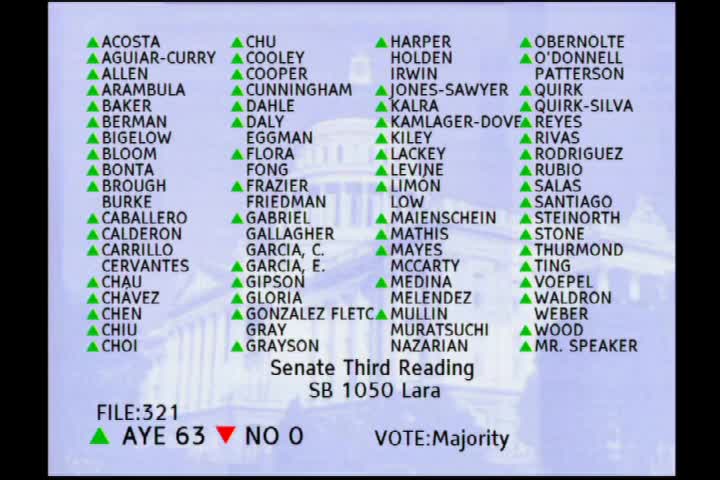 1MIN
Assembly Floor
 1H
Assembly Standing Committee on Appropriations
 3MIN
Senate Floor
 10MIN
Senate Standing Committee on Natural Resources and Water
 12MIN
Senate Standing Committee on Environmental Quality
Bill Author


